
PART 1: THE DAUGHTER WHO COULD EARN HER OWN
My mother smiled before the lawyer had even finished opening my grandfather’s will.
That was the first thing I remember clearly.
Not the mahogany conference table.
Not the rain sliding down the tall windows of Bennett & Shore.
Not the smell of old leather, coffee, and expensive perfume.
My mother’s smile.
It was calm.
Certain.
Victorious.
She already believed she knew how the morning would end.
I sat alone at the far end of the table while my younger sister, Chloe, tapped one manicured nail against the edge of her phone.
Mom wore pearls.
Dad wore the gray suit he reserved for funerals, weddings, and meetings involving large amounts of money.
Chloe had spent most of the fifteen minutes before the reading complaining about parking.
No one had asked how I was doing.
That seemed appropriate.
They rarely did.
Mr. Bennett adjusted his glasses and looked down at the documents in front of him.
He had been my grandfather Harold Miller’s attorney for more than thirty years. He was thin, silver-haired, and so careful with words that every sentence sounded as though it had been reviewed by three other lawyers before leaving his mouth.
“Before we begin,” he said, “I want to remind everyone that Mr. Miller revised several portions of his estate plan during the last year of his life.”
My mother waved one hand.
“Yes, yes. Harold was always changing little things.”
Mr. Bennett looked at her.
Something about his expression made me sit a little straighter.
“Some of the changes were not little.”
Mom’s hand stopped.
Only for a second.
Then she smiled again.
“Of course.”
I looked down at the black leather briefcase beside my chair.
Inside were documents my family had never seen.
My military identification.
My orders.
A folder containing retirement projections I had started reviewing six months earlier.
And a photograph I kept tucked inside one of the inner pockets.
Grandpa and me.
I was twenty-six in the picture, standing outside a small restaurant near Fort Bragg after returning from my first deployment.
I wasn’t in uniform.
Grandpa had asked me not to be.
“You spend enough time being what the Army needs,” he had told me. “Come to dinner as my granddaughter.”
He had been one of the only people who understood the distinction.
My family thought I worked in federal logistics.
That was technically true.
It was simply incomplete.
For almost twenty years, I had served in the United States Army.
I had worked supply chains where failure meant people went hungry, vehicles stopped moving, or equipment failed to arrive where it was needed.
I had spent birthdays overseas.
Christmases in secure compounds.
Thanksgivings eating food from plastic trays beside people who had become closer to me than most of my relatives.
I had commanded soldiers.
Managed operations across multiple countries.
Briefed generals.
Walked into rooms where every person knew exactly why I was there.
Three years earlier, I had been promoted to colonel.
Nobody in my immediate family knew.
Not because I had created some elaborate lie.
Not because I was ashamed.
Because they had never cared enough to ask.
My mother would say, “How’s that government job?”
I would answer, “Busy.”
Dad would ask whether I was still considering “doing something in the private sector.”
Chloe once introduced me at a party as “my sister who does paperwork for the government.”
I had corrected her exactly once.
“Army logistics.”
She had laughed.
“Same thing.”
After that, I stopped explaining.
Grandpa had noticed.
Grandpa noticed everything.
The first time he suspected the truth was when he saw a government vehicle drop me off outside my apartment more than a decade earlier.
The second time was when he visited unexpectedly and saw a garment bag hanging in my bedroom.
It hadn’t been zipped completely.
He saw the edge of my dress uniform.
Saw the ribbons.
Saw the rank.
He didn’t ask questions.
He simply looked at me for a long moment.
Then he said, “Do they know?”
“No.”
“You want them to?”
“No.”
He nodded.
That was it.
Later, while we drank coffee in my kitchen, he told me something I remembered for the rest of my life.
“People deserve to know only what you decide they deserve.”
Grandpa never betrayed that confidence.
Now he was dead.
And three days before his death, he had left me a voicemail.
I had listened to it fourteen times.
His voice sounded weaker than usual, but his mind had been sharp.
“Evie, if things become complicated after I’m gone, keep your head down. Listen carefully. Trust paperwork over people.”
Then a pause.
A faint breath.
“And don’t let anyone rush you.”
That was all.
At the time, I thought he was talking about grief.
Sitting in that conference room, I knew better.
Mr. Bennett began reading.
There were charitable gifts.
A scholarship fund.
A donation to the veterans’ center Grandpa had supported for years.
Several smaller bequests.
Then Mr. Bennett reached Chloe.
“To my granddaughter, Chloe Anne Miller, I leave the sum of ten million dollars—”
Chloe inhaled sharply.
Mom’s smile widened.
Dad gave a satisfied nod.
Chloe covered her mouth with both hands.
“Oh my God.”
Mr. Bennett continued, but Mom spoke over him.
“I knew Harold would take care of her.”
Mr. Bennett stopped.
“Mrs. Miller—”
“She was always special to him.”
I watched Chloe turn toward me.
There was something almost apologetic in her expression.
Almost.
Then it disappeared.
Mom looked at me.
The smile changed.
It became the smile she had worn throughout my childhood whenever she believed she was about to teach me a lesson.
“Evelyn will be fine,” she said.
Nobody had asked.
Dad cleared his throat.
“Of course she will.”
Mom reached for her water.
“Evelyn can earn her own.”
The words landed softly.
That made them worse.
Chloe stared at her phone.
Dad didn’t look at me.
I felt something old move inside my chest.
Not anger.
Not yet.
Recognition.
I was twelve again, standing in the kitchen after Chloe received a horse for her birthday while I got a set of luggage because Mom said I was “the practical one.”
I was seventeen again, watching my parents take Chloe on a graduation trip while telling me I had always been “more independent.”
I was twenty-two, commissioning into the Army while my father asked whether I had considered a “real career path.”
I had spent decades watching favoritism disguise itself as confidence in my abilities.
Chloe needed help.
Evelyn was strong.
Chloe needed encouragement.
Evelyn didn’t care what people thought.
Chloe deserved support.
Evelyn could earn her own.
I looked at Mom.
“You seem pleased.”
She blinked.
“Well, naturally.”
“With Grandpa’s decision?”
“With Chloe being secure.”
Dad leaned back.
“Your grandfather believed you needed character.”
That almost made me laugh.
I had been shot at in two countries.
I had written letters to families after losing soldiers.
I had stood in command briefings knowing hundreds of people would live with the consequences of decisions I made.
But apparently Harold Miller had withheld ten million dollars from me so I could develop character.
Mr. Bennett closed the folder.
“Actually,” he said, “Mr. Miller expressed no such belief.”
Dad frowned.
Mom’s glass stopped halfway to her mouth.
Mr. Bennett reached beneath the first folder.
And removed a second one.
It was dark blue.
Sealed.
The atmosphere in the room changed immediately.
I felt it before I understood why.
My mother did too.
Her face lost just enough color for me to notice.
Mr. Bennett placed the folder in front of himself.
“There is an additional directive.”
Mom set down her water.
“What directive?”
“This document was executed separately.”
“When?”
“Six weeks before Harold’s death.”
My mother’s eyes sharpened.
“I wasn’t told about that.”
“No,” Mr. Bennett said. “You were not.”
Something cold moved through me.
Mr. Bennett broke the seal.
He removed several pages.
Then looked directly at me.
“Harold Miller establishes an irrevocable controlling trust holding fifty-one percent of Miller Storage Solutions.”
Dad leaned forward.
“What?”
Mr. Bennett continued.
“The shares are transferred outside the residuary estate and are subject to the governance provisions specified here.”
Mom’s voice rose.
“Who controls it?”
Mr. Bennett didn’t look at her.
He looked at me.
“Primary beneficiary and trustee: Evelyn Grace Miller.”
For several seconds, nobody moved.
Even I didn’t understand what I had heard.
Miller Storage Solutions was not some neighborhood warehouse company.
Grandpa had started with two rented buildings forty-three years earlier.
By the time I was in college, the company owned industrial storage sites across six states.
By the time he died, it controlled distribution yards, document-storage facilities, secured warehouses, and commercial real estate worth hundreds of millions.
Fifty-one percent meant control.
Not ten million dollars.
Control.
My father stared at the lawyer.
“There must be a mistake.”
“There is not.”
Mom stood so quickly her chair struck the wall.
“No.”
Mr. Bennett remained seated.
“The documents are valid.”
“You don’t understand,” she said. “Harold would never give Evelyn the company.”
I looked at her.
The company.
Not shares.
Not responsibility.
The company.
As if it already belonged to her.
Mr. Bennett’s expression didn’t change.
“He did not give Colonel Miller the company.”
Mom froze.
So did I.
Mr. Bennett glanced briefly toward me.
Then continued.
“He placed a controlling interest in trust.”
Mom missed the word.
Chloe didn’t.
She looked at me.
“Colonel?”
But Mr. Bennett wasn’t finished.
“There is a second provision.”
Dad rubbed one hand across his mouth.
“What provision?”
“All distributions from the estate, including the ten-million-dollar bequest to Chloe Miller, are suspended pending completion of a forensic audit.”
Silence.
Chloe’s face changed first.
“What?”
Mr. Bennett read directly from the document.
“The audit shall include Miller Storage Solutions, all family trusts, affiliated entities, management-controlled vendors, distributions, loans, transfers, reimbursements, and asset movements occurring during the seven years preceding Mr. Miller’s death.”
Chloe lowered her phone.
Dad turned toward Mom.
And that was when I saw it.
Fear.
Not irritation.
Not outrage.
Fear.
My mother’s left hand closed around the back of her chair.
Her knuckles whitened.
Mr. Bennett continued reading.
“The audit shall be commissioned by and report directly to the trustee.”
He looked at me.
“That means you.”
I didn’t answer.
My mother did.
“This is absurd.”
Mr. Bennett reached into the folder again.
This time, he removed a small brass key.
There was a rectangular metal tag attached to it.
He slid it across the table toward me.
“Your grandfather also granted you access to Safe Deposit Box 417 at First Commonwealth Bank.”
My fingertips touched the key.
“And,” Mr. Bennett said, “a private storage unit held under an entity controlled exclusively by Mr. Miller.”
Mom slammed both hands onto the table.
“You will not open that unit.”
The room went silent.
Nobody breathed.
Nobody shifted.
Even the rain seemed quieter.
I looked at my mother.
Then at my father.
Then at Chloe.
Dad looked confused.
Chloe looked frightened.
Mom looked trapped.
That was the moment everything became clear.
Not what Grandpa had found.
Not yet.
But that he had found something.
Mr. Bennett lifted one final envelope.
It had Grandpa’s handwriting across the front.
FOR EVELYN.
The lawyer opened it carefully.
“There is an instruction accompanying the trust.”
He unfolded a single page.
Then read.
“If Evelyn is hearing this, Diane has likely already tried to stop the audit.”
My mother went white.
Dad whispered her name.
“Diane?”
She didn’t look at him.
Mr. Bennett placed another envelope in front of me.
“This one is personal.”
I opened it.
Grandpa’s handwriting was unsteady in places.
But unmistakable.
Evie,
I kept your secret because you asked me to.
Your parents think you wasted your life.
Chloe thinks you are the disappointing sister.
Let them.
People often reveal themselves when they believe the quiet person has no power.
I still remember seeing you in uniform.
I had never been prouder.
My vision blurred.
I blinked once.
Hard.
Across the table, Mom stared at me.
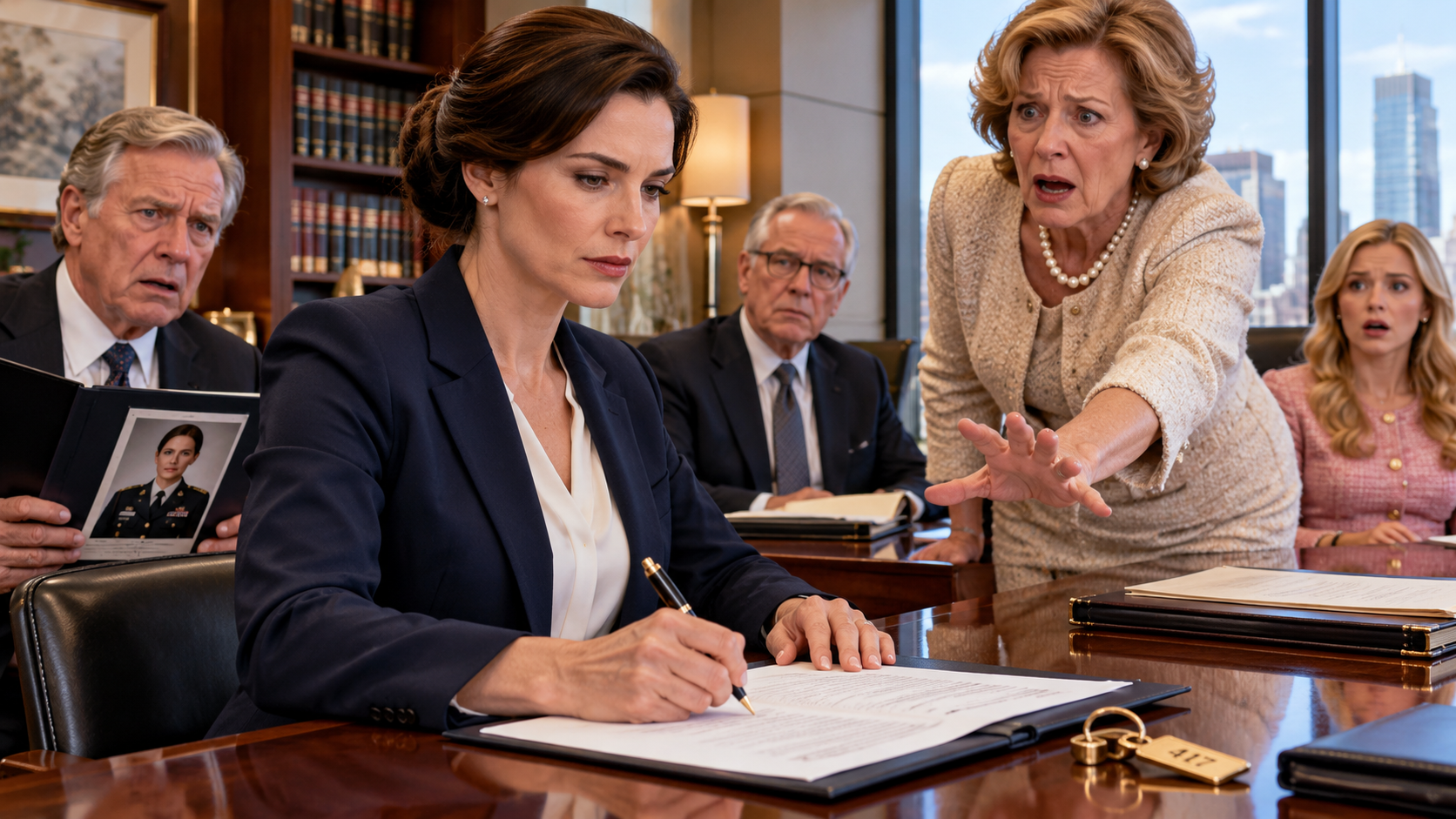
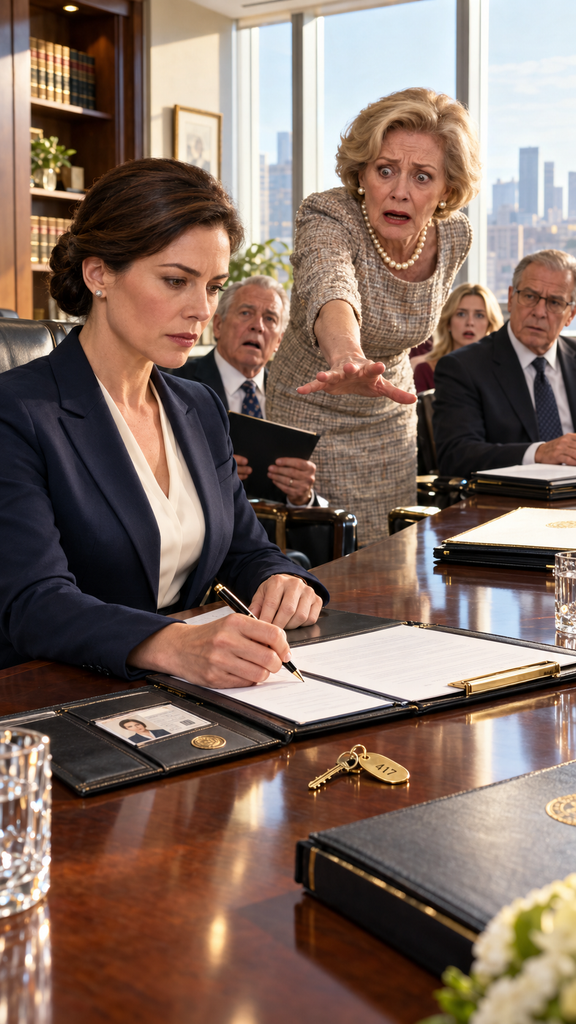
“What uniform?”
I closed the letter.
For twenty years, I had protected that part of myself from people who treated everything important to me as an inconvenience.
Now Grandpa had chosen the moment for the truth.
I reached into my briefcase.
Pulled out my identification folder.
And placed it on the table.
Dad reached for it first.
His eyes moved across the page.
Then stopped.
Colonel Evelyn G. Miller.
United States Army.
He looked at me as if I had become a stranger.
“You’re a colonel?”
“Yes.”
Chloe gave a nervous laugh.
“That’s fake.”
“No.”
“But you said you worked in logistics.”
“I do.”
“For the government.”
“Yes.”
Her mouth opened.
Then closed.
Mom stepped backward.
For the first time in my life, she looked uncertain around me.
Mr. Bennett pushed a document across the table.
“As trustee, Colonel Miller, you have authority to initiate the audit immediately.”
My mother’s voice changed.
“Evelyn.”
I looked at her.
“Don’t sign that.”
She wasn’t ordering me anymore.
She was begging.
I thought about Grandpa’s voicemail.
Keep your head down.
Listen carefully.
Trust paperwork over people.
I picked up the pen.
Mom moved toward me.
“You don’t understand what you’re doing.”
I signed my name.
Mr. Bennett took the page.
“The audit begins immediately.”
My mother screamed.
Not loudly.
Just my name.
“Evelyn!”
I slid the brass key into my pocket.
Then stood.
“You have no idea what you just did,” she said.
I looked directly at her.
“No, Mom.”
Then I thought of Grandpa.
“But I think he did.”
And judging by the terror on her face, whatever waited inside Safe Deposit Box 417 was about to explain everything.
PART 2: BOX 417
My mother called me seventeen times before I reached the bank.
I answered none of them.
My father called twice.
Chloe sent eleven messages.
The first three were angry.
The next four were confused.
The last four were scared.
EVELYN WHAT IS HAPPENING?
MOM SAYS GRANDPA WAS CONFUSED.
PLEASE CALL ME.
DID YOU KNOW ABOUT THIS?
WHAT’S IN THE BOX?
I didn’t respond.
Mr. Bennett rode with me.
Neither of us spoke for the first ten minutes.
I watched the city move past the passenger window and tried to force my brain into the place I had trained it to go whenever emotion threatened to interfere with judgment.
Facts first.
Emotion later.
Grandpa had created a controlling trust.
He had ordered a seven-year forensic audit.
He had predicted Mom would try to stop it.
He had left me access to a safe deposit box and a private storage unit.
Mom knew enough about the storage unit to be terrified of it.
Those were facts.
Everything else was noise.
Mr. Bennett finally spoke.
“Your grandfather thought highly of you.”
I kept looking out the window.
“He was the only person in my family who knew what I actually did.”
“I know.”
I turned.
“You knew?”
“He told me only what was legally necessary.”
That sounded like Grandpa.
“Did he know what was in the storage unit?”
“Yes.”
“Do you?”
Mr. Bennett paused.
“Some of it.”
That answer bothered me.
“What does that mean?”
“It means Harold did not want any one person to possess the complete picture before the audit began.”
I almost smiled.
“That also sounds like him.”
“He became increasingly cautious during the last eighteen months.”
“Because of my mother?”
Mr. Bennett looked forward.
“Because of discrepancies.”
That word landed heavily.
“What kind?”
“He believed funds had moved through entities in ways he did not authorize.”
“Believed?”
“He had enough information to be concerned. He wanted professionals to establish the full facts.”
That was the difference between Grandpa and Mom.
Mom decided first and found evidence later.
Grandpa collected evidence until the truth had nowhere left to hide.
The bank manager met us personally.
When she saw the paperwork Mr. Bennett carried, her tone became formal.
We were taken downstairs.
Two signatures.
Identification.
A secured corridor.
A steel door.
Then a private viewing room.
The manager returned carrying a long metal box.
She placed it on the table.
My brass key opened one lock.
Her key opened the other.
Then she left.
I stared at the box.
For the first time since the will reading, my hands shook.
Mr. Bennett noticed.
“You don’t have to rush.”
I almost laughed.
Grandpa had said the same thing.
Don’t let anyone rush you.
I lifted the lid.
There was no cash.
No jewelry.
No secret second will.
There were folders.
Six of them.
Each labeled in Grandpa’s handwriting.
SHARE OWNERSHIP.
TRUST TRANSFERS.
VENDOR PAYMENTS.
DIANE.
ROBERT.
CHLOE.
My father’s name was Robert.
I stared at the last three folders.
Mr. Bennett said nothing.
I opened SHARE OWNERSHIP first.
Original stock certificates.
Board resolutions.
Transfer documents.
Copies of corporate bylaws.
Everything showing Grandpa had legally controlled the majority of Miller Storage Solutions before placing fifty-one percent into the trust.
No ambiguity.
No hidden loophole.
No claim Mom could make later that he lacked authority.
Grandpa had anticipated that.
The second folder contained trust documents.
The third contained tables.
Dates.
Amounts.
Entity names.
Cross-references.
Grandpa had highlighted transactions in yellow.
Many were six figures.
Several were seven.
I recognized almost none of the companies.
Stonebridge Advisory.
Hartwell Property Management.
North Lake Consulting.
DGM Holdings.
I pointed to the last one.
“What is DGM?”
Mr. Bennett’s jaw tightened.
“I was hoping the auditors would tell us.”
I opened the folder labeled DIANE.
The first page was a corporate registration.
DGM Holdings LLC.
Registered agent: Diane Grace Miller.
My mother.
I felt the room narrow.
Below it were copies of invoices.
Consulting.
Executive services.
Strategic advisory.
Property coordination.
Millions of dollars over seven years.
All paid by businesses connected to Miller Storage Solutions.
Some payments had been approved by my father.
Others carried signatures I didn’t recognize.
I flipped faster.
There were handwritten notes from Grandpa.
Why duplicate service?
No supporting agreement.
Ask Robert.
Diane denies control?
Registration says otherwise.
Transfer authorized while I was hospitalized.
I stopped.
Grandpa had spent nine days in the hospital two years earlier after cardiac surgery.
Mom had been at his house constantly afterward.
She told everyone she was “helping with the business.”
I looked at Mr. Bennett.
“Did Grandpa know she owned this company?”
“Not initially.”
“How is that possible?”
“The ownership was not disclosed to him.”
I opened the folder labeled ROBERT.
My father.
The documents were different.
Authorization pages.
Expense approvals.
Loan documents.
Emails printed from Grandpa’s account.
One note appeared again and again.
Robert says Diane handles details.
Another:
Robert signed without review.
Then:
Robert refuses to believe this is material.
I sat back.
Dad might not have designed what happened.
But he had signed.
He had enabled it.
Whether through laziness, loyalty, denial, or all three, his name was everywhere.
Then I opened Chloe’s folder.
My stomach tightened.
There were no secret companies.
No signatures.
No suspicious contracts.
Instead there were payments.
A condo down payment.
A failed boutique investment.
Credit-card debt.
A luxury vehicle.
A personal loan.
Another personal loan.
Then another.
All covered through family entities.
Chloe had apparently received almost three million dollars over seven years without understanding—or perhaps without asking—where it came from.
At the bottom of the folder, Grandpa had written one sentence.
Chloe may not know. Do not assume guilt because someone benefited.
I closed my eyes.
Even while building a case against his own family, Grandpa had tried to be fair.
That hurt more than anything.
Underneath the folders was a small digital recorder.
A note was taped to it.
Evie,
Listen alone.
I looked at Mr. Bennett.
He stood immediately.
“I’ll wait outside.”
When the door closed, I pressed play.
For several seconds, there was only static.
Then Grandpa’s voice filled the room.
“Evie.”
I covered my mouth.
The sound of him was almost unbearable.
“If you’re hearing this, I’m probably gone, and Diane probably hates me.”
A faint chuckle.
“She’ll survive.”
My eyes burned.
“I need you to understand something. I did not put you in control because you’re my favorite. I don’t have favorites. That was your mother’s habit.”
I let out a broken laugh.
“I chose you because you know what responsibility costs.”
Silence.
Then his voice became weaker.
“I built that company to hold things safely. That sounds simple, but simple things matter. People trust you with what belongs to them. You protect it. You don’t use it because you can. You don’t confuse access with ownership.”
I stared at the folders.
“Your mother forgot that.”
My throat tightened.
“Your father saw pieces of it and decided peace at home mattered more than asking difficult questions.”
Another pause.
“Chloe benefited. I don’t know what she understood.”
He coughed.
“I began finding transfers after the surgery. I asked questions. Diane gave me answers that didn’t match documents. So I stopped asking her and started keeping documents.”
Trust paperwork over people.
“I don’t know how far it goes. That is why I ordered the audit. Not because I want revenge.”
His voice sharpened.
“Do not turn this into revenge, Evelyn.”
I sat very still.
“If money was improperly taken, recover it. If people lied, document it. If laws were broken, let the proper people decide what follows. But do not become cruel simply because they were cruel to you.”
A tear slipped down my face.
Of course that was what he would tell me.
Not destroy them.
Not punish them.
Do the job.
“I left Chloe the ten million because what other people did around her should not automatically become her punishment.”
I looked at her folder.
“But I suspended it because ten million dollars should not leave the estate while nobody knows where the rest went.”
He breathed slowly.
“Your mother will accuse you of stealing what belongs to her. Remember: control is not ownership. The trust exists to protect the company until the facts are established.”
Then the part that broke me.
“You have spent your whole life believing your family didn’t see you.”
His voice shook.
“I saw you.”
I lowered my head.
“I saw the discipline. I saw what you gave up. I saw you come home tired and pretend you weren’t. I saw you make yourself smaller at family dinners because correcting them was more exhausting than letting them misunderstand you.”
I wiped my face.
“You never disappointed me.”
The recording went silent for several seconds.
Then:
“Now go open the storage unit.”
The message ended.
I sat there alone.
Colonel Evelyn Miller.
Twenty years of service.
Thousands of decisions.
Hundreds of people under my authority.
And I cried like a child in a bank basement because one dead old man had finally said the sentence I had spent my life pretending I didn’t need.
You never disappointed me.
When I stepped into the hallway, Mr. Bennett looked at my face and politely pretended not to notice.
“Ready?”
I nodded.
“For the storage unit?”
“Yes.”
My phone rang again.
Mom.
This time I answered.
“What?” I said.
She didn’t greet me.
“Do not go there.”
I stopped walking.
“Why?”
“Because your grandfather was paranoid.”
“That isn’t an answer.”
“He had become suspicious of everyone.”
“Then why are you afraid of what he kept?”
Silence.
I could hear her breathing.
“Evelyn,” she said carefully, “families survive by knowing what not to expose.”
I felt something inside me go cold.
“That sounds like something people say when the truth is expensive.”
“You think you’re so clever now because you have that title?”
“This has nothing to do with my rank.”
“It has everything to do with it. You walk into one room in a uniform and suddenly you think you’re better than us.”
“You didn’t know about the uniform an hour ago.”
She had no answer.
I continued.
“Grandpa told me not to make this personal.”
Her voice hardened.
“He left you fifty-one percent and you think it isn’t personal?”
“He left a trust fifty-one percent.”
“Same thing.”
“No. It isn’t.”
That distinction mattered.
Maybe more than anything.
Mom had always believed control meant possession.
Grandpa had understood that control meant responsibility.
“I’m opening the unit,” I said.
Her voice dropped almost to a whisper.
“If you do this, you will destroy this family.”
I looked through the bank lobby toward the gray afternoon beyond the glass doors.
“No, Mom.”
My hand closed around Grandpa’s key.
“If the truth destroys something, I’m not the person who built it wrong.”
Then I ended the call.
Two hours later, I stood in front of a steel roll-up door at a private storage facility on the edge of the city.
Unit 214.
Mr. Bennett entered the code.
I inserted the second key.
The lock clicked.
We lifted the door.
And I understood why my mother had begged me not to come.
Grandpa hadn’t stored furniture.
He had built an archive.
Seven years of the family’s secrets were sitting in numbered boxes.
Waiting for me.
PART 3: TRUST PAPERWORK OVER PEOPLE
There were eighty-three boxes.
I counted them twice.
That was habit.
The Army had trained me to distrust estimates when exact numbers were available.
Each box had a label.
Each label had a date range.
Inside were copies of contracts, invoices, internal emails, bank statements, meeting notes, expense reports, and handwritten timelines.
Grandpa had built the storage unit like an evidence room.
Not dramatically.
Methodically.
That frightened me more than any hidden safe full of cash could have.
He had not made one furious discovery and reacted.
He had investigated quietly for more than a year.
I stood between two rows of boxes while Mr. Bennett handed me a handwritten inventory.
“He updated this three weeks before his death.”
“Who helped him?”
“Very few people.”
“Names?”
“A retired controller named Martin Hale helped him reconstruct some older transactions. I handled the legal documents. His outside accountant preserved certain records.”
“So Mom didn’t know this existed?”
“She knew Harold had begun reviewing things.”
“But not the scale.”
“No.”
That explained her reaction.
I walked deeper into the unit.
One box was labeled DUPLICATE VENDORS.
Another: MANAGEMENT LOANS.
Another: PROPERTY TRANSFERS.
One simply said QUESTIONS FOR DIANE.
I stared at that one.
Mr. Bennett noticed.
“You don’t need to read everything yourself.”
“I know.”
“You’ll need forensic accountants.”
“I know.”
“Corporate counsel.”
“I know.”
“A valuation team may also—”
“I know.”
He stopped.
Then smiled faintly.
“Your grandfather said you would say that.”
For the first time that day, I smiled too.
By evening, I had made three decisions.
First, every document would be digitally imaged by an independent records company.
Second, the physical boxes would remain secured until counsel established a formal chain of custody.
Third, nobody in the family—including me—would remove a single page.
I didn’t want power over the evidence.
I wanted the evidence protected from power.
The next morning, the calls began.
Not from family.
From executives.
Miller Storage Solutions had apparently learned about the trust before breakfast.
The chief financial officer wanted clarification.
The operations director wanted reassurance.
Two board members wanted to know whether I intended to replace management.
One vice president tried to explain the company to me in the tone people use with elderly relatives learning online banking.
I let him speak for six minutes.
Then I asked him three questions about warehouse utilization, long-term lease exposure, and cross-state insurance risk.
There was a long silence.
“How do you know about that?”
“I work in logistics.”
Not technically a lie.
He didn’t patronize me again.
At noon, I convened the first formal trustee meeting.
Mom arrived with her own attorney.
Dad came without one.
Chloe arrived twenty minutes late wearing sunglasses even though we were indoors.
Mr. Bennett sat beside me.
Across the room were two representatives from the forensic accounting firm I had retained that morning.
Mom stared at them.
“You moved quickly.”
“I was authorized yesterday.”
“You didn’t even consult us.”
“The directive doesn’t require family approval.”
“I am Harold’s daughter.”
“Yes.”
“This company has been part of my life since I was a child.”
“And the audit will establish exactly how it has been managed.”
Her attorney placed one hand on her forearm.
A warning.
Mom ignored it.
“You’re enjoying this.”
That was the first trap.
I recognized it immediately.
If I denied it emotionally, she controlled the room.
If I attacked her, she proved her argument.
So I answered the question she should have asked.
“The audit scope will follow Grandpa’s written directive. All records will be preserved. No conclusions will be announced before the work is complete.”
Dad looked at me.
“You sound like you’re giving a briefing.”
“I am.”
Chloe removed her sunglasses.
Her eyes were swollen.
“Am I under investigation?”
“No.”
Mom turned to her.
“Don’t answer questions.”
“I asked Evelyn.”
I looked at Chloe.
“The transactions involving money paid for your benefit will be reviewed.”
Her face crumpled.
“I didn’t steal anything.”
“I didn’t say you did.”
“You think I did.”
“I don’t know what happened yet.”
She looked startled by the answer.
Maybe she had expected accusation.
Maybe she was used to Mom deciding the truth for everyone.
I continued.
“Grandpa wrote that he did not want anyone to assume your guilt simply because you benefited.”
Chloe stared at me.
“He wrote that?”
“Yes.”
Her eyes filled.
Mom cut in immediately.
“This is exactly why this audit is unnecessary. Harold knew Chloe did nothing wrong.”
“That sentence proves the opposite.”
Mom frowned.
“It proves he wanted facts.”
The accountants started collecting records that afternoon.
And facts began arriving quickly.
Some supported Grandpa’s concerns.
Others made them worse.
DGM Holdings had received more than eight million dollars from affiliated companies during the seven-year review period.
Several invoices described work already performed by existing employees.
Some had no work product attached at all.
Stonebridge Advisory had received nearly four million more.
Its ownership structure led through two entities before ending with a trust whose beneficiary was my mother.
Hartwell Property Management had collected fees on buildings already managed internally.
A warehouse had been sold to a related entity below an independent appraisal and leased back to Miller Storage Solutions at a higher rate.
Every discovery created another question.
Every question created another document request.
Mom stopped calling me directly.
Her attorney began communicating instead.
Dad did the opposite.
He called me one night at eleven thirty.
I was sitting in Grandpa’s old office reviewing a transaction timeline.
I almost ignored him.
Then I answered.
“Hi, Dad.”
For several seconds, he said nothing.
Then:
“Did I help her steal from him?”
The word steal sounded unnatural in his voice.
I leaned back.
“I don’t know what the final findings will say.”
“That’s not what I asked.”
“You signed approvals.”
“I know.”
“Did you understand the ownership of those vendors?”
“No.”
“Did you review the invoices?”
Silence.
“No.”
“Did Grandpa ask you about them?”
A longer silence.
“Yes.”
I closed my eyes.
“What did you tell him?”
“That Diane handled that side.”
Exactly what Grandpa’s notes said.
“Why?”
Dad breathed out.
“Because every time I questioned your mother about money, we fought.”
“That’s your explanation?”
“I’m not proud of it.”
Something hot moved through me.
I stood.
“You signed millions of dollars because you didn’t want an argument?”
“I trusted my wife.”
“No. Trust is when you know enough to make a decision. You chose not to know.”
He said nothing.
I hated the harshness in my own voice.
Mostly because it was true.
“I thought your grandfather was becoming obsessed,” he said.
“With unexplained transfers?”
“With control.”
I almost laughed.
“Did Mom tell you that?”
Silence answered for him.
Dad’s voice broke slightly.
“I should have looked.”
“Yes.”
“I thought keeping the peace mattered.”
“Peace for whom?”
He didn’t answer.
I sat back down.
On the desk in front of me was an old photograph of Grandpa standing beside the company’s first truck.
I stared at it.
“Dad, I’m not trying to destroy you.”
“I know.”
“I’m not trying to destroy Mom either.”
He gave a tired sound that might have been a laugh.
“She doesn’t believe that.”
“What she believes doesn’t change the records.”
He was quiet for a long time.
Then he asked the question I had been expecting since the will reading.
“Why didn’t you tell us?”
“About the Army?”
“Yes.”
I looked toward the dark windows.
“I did.”
“What?”
“I told you I joined.”
“That’s not what I mean.”
“I told you when I became a captain. You said that was nice and asked Chloe about graduate school.”
Silence.
“I told Mom when I made major. She asked whether that meant I had to move again.”
He didn’t speak.
“I invited both of you to my lieutenant colonel promotion ceremony.”
Dad whispered, “I don’t remember that.”
“I know.”
That hurt more than anger would have.
I continued.
“When I was selected for colonel, I thought about telling you.”
“Why didn’t you?”
“Because by then I knew what would happen.”
“What?”
“You would be impressed for a day.”
His breathing changed.
“And then Chloe would walk into the room and everything would return to normal.”
“That isn’t fair.”
“Maybe not.”
I looked at the financial records.
“But it’s accurate.”
The audit continued.
Week one became week two.
Week two became week five.
I temporarily rearranged my military schedule and took authorized leave where necessary, carefully separating my Army responsibilities from the trust.
I did not use my rank to threaten anyone.
I did not wear my uniform to company meetings.
I did not turn the audit into the dramatic public reckoning Mom seemed to expect.
I simply kept asking for records.
That was what finally broke her composure.
People who build their power on emotion often struggle against procedure.
You can argue with an accusation.
You can cry over a family conflict.
You can manipulate a conversation.
You cannot charm a bank reconciliation.
On the thirty-sixth day, the forensic accountants found the pattern Grandpa had been searching for.
DGM Holdings was not the center.
It was one spoke.
Over seven years, more than twenty-two million dollars had moved through related entities connected directly or indirectly to Mom.
Not all of it was necessarily improper.
Some services had genuinely been performed.
Some payments were arguably authorized.
But millions could not be supported by normal documentation.
Several transfers had occurred while Grandpa was hospitalized.
Others had been approved through delegated authority he later revoked.
And the below-market property sale had cost the company several million dollars in value.
I was reading the preliminary report when Chloe walked into my office.
She didn’t knock.
“Did Mom use me?”
I looked up.
She was holding a folder.
One of the auditors stood behind her.
“What happened?”
Chloe threw the folder onto my desk.
Inside were records from a family trust.
Her condo.
Her car.
Her boutique.
The money had not come from Grandpa’s personal gifts as Mom always claimed.
It had come through entities now under review.
“She told me Grandpa wanted me to have those things.”
I didn’t answer.
“She told me he approved everything.”
The auditor spoke quietly.
“We have not found documentation showing Mr. Miller approved several of the payments.”
Chloe looked at me.
“So I spent stolen money?”
“We don’t know that yet.”
“Stop saying that.”
“Saying what?”
“That we don’t know. You always say that.”
“Because we don’t.”
She started crying.
“I want you to tell me I didn’t do anything wrong.”
I stood.
“I can tell you that Grandpa did not assume you did.”
“That isn’t the same.”
“No.”
Her shoulders shook.
And for the first time, I saw my sister not as the favored child.
Not as the girl who received everything I was expected to earn.
But as someone raised to believe generosity required no questions.
Mom had taught Chloe that love looked like money appearing whenever she wanted something.
Dad had taught her never to ask where the money came from.
And I had resented her for accepting the rules they built around her.
“I should have asked,” she whispered.
“Probably.”
She flinched.
I softened my voice.
“But benefiting from something is not the same as designing it.”
She wiped her face.
“Are you going to take the ten million away?”
“It isn’t mine to take.”
“You control the trust.”
“The trust doesn’t make Grandpa’s estate my personal property.”
She stared at me.
That idea seemed almost foreign to her.
Control is not ownership.
Grandpa had known exactly which lesson this family needed.
Before Chloe left, she turned at the door.
“Mom says you’re doing this because you hate us.”
I looked at her.
“Do you believe her?”
Chloe hesitated.
Then shook her head.
“No.”
“Why?”
“Because if you hated me, you would have told everyone those records were mine.”
I said nothing.
She looked down.
“And you didn’t.”
After she left, Mr. Bennett entered through the side door.
He placed a sealed document on my desk.
“What’s this?”
“Something from the storage archive.”
I frowned.
“I thought everything had been logged.”
“It was. This was held separately because Harold marked it for release only after the auditors independently identified the related-entity pattern.”
My pulse changed.
Grandpa had created checkpoints.
He hadn’t wanted his own suspicions to lead the investigation.
He wanted the auditors to reach the same place without being guided.
I opened the envelope.
Inside was a letter.
One page.
At the top, Grandpa had written:
IF THEY FOUND THE TWENTY-TWO MILLION, OPEN BOX 61.
I looked at Mr. Bennett.
“Where is Box 61?”
He gave me a grim expression.
“In the storage unit.”
An hour later, we stood in front of it.
The box was heavier than the others.
I cut the seal.
Inside were three binders.
And on top of them was a handwritten note from Grandpa.
Evie,
This is where Diane’s story and the paperwork stop agreeing.
PART 4: WHAT MY MOTHER THOUGHT SHE OWNED
The first binder contained emails.
The second contained meeting notes.
The third contained copies of bank records and signed acknowledgments.
None of them revealed a dramatic new conspiracy.
They revealed something worse.
Intent.
For weeks, Mom’s attorneys had maintained that the questionable transfers were administrative mistakes.
Poor documentation.
Confusing family arrangements.
Old-fashioned bookkeeping inside a privately held business.
That argument became harder to believe after Box 61.
Grandpa had confronted Mom eleven months before his death.
Not vaguely.
Not emotionally.
In writing.
He had listed specific transactions.
Specific companies.
Specific amounts.
He had demanded records supporting the payments.
Mom had replied.
I read the email three times.
Dad was copied.
Harold,
You are overreacting to normal family financial planning. You told me for years this company was ultimately for us. I have acted accordingly.
Grandpa’s response was beneath it.
For us does not mean yours to distribute.
Mom answered:
I have spent my entire life helping this family. Evelyn disappeared into government work and Chloe is the one who remained close. I will not apologize for making sure the people who actually showed up are protected.
I stopped reading.
There it was.
Not just money.
Me.
Even in a financial dispute with Grandpa, Mom had measured my worth against Chloe’s.
I continued.
Grandpa:
This has nothing to do with Evelyn or Chloe. Produce the records.
Mom:
Everything becomes about Evelyn when you decide to punish the rest of us for not worshiping her choices.
My jaw tightened.
I had never asked Grandpa to defend me.
I hadn’t even known this conversation existed.
The next page was worse.
Mom had written:
You always respected Robert less because he isn’t you, and you respected Evelyn because she left. Chloe and I are the ones who kept this family together. If assets are being moved to protect our future, that is not theft. It is common sense.
Grandpa’s reply was one sentence.
Assets are not yours merely because you expect to inherit them.
I leaned back.
That was the entire conflict.
Mom had not thought of herself as stealing.
She had thought of herself as collecting early.
In her mind, Grandpa was old.
The company would eventually pass to the family.
She was his daughter.
Therefore, moving wealth toward herself and Chloe wasn’t really taking.
It was arranging.
Protecting.
Correcting what she believed the future already owed her.
That belief was more dangerous than greed.
Greedy people sometimes know they are crossing a line.
Entitled people erase the line.
The records showed Grandpa had formally ordered the transactions stopped.
Several did stop.
Others changed shape.
Payments that had gone to DGM moved through a different entity.
A management fee became a property fee.
A loan became an advance.
Nothing in the binders proved every transfer was illegal.
That determination belonged to lawyers, auditors, and potentially regulators.
But it destroyed the argument that Mom had no idea Grandpa objected.
She knew.
And she continued.
Dad knew he objected too.
That evening, I called both of them to a meeting.
No extended family.
No company executives.
No spectacle.
Just Mom, Dad, Chloe, Mr. Bennett, counsel, and me.
Mom arrived last.
She looked smaller than she had at the will reading.
Not physically.
Some people lose size when certainty leaves them.
She sat across from me.
Her attorney placed a legal pad in front of her.
Dad sat beside Chloe instead of beside Mom.
Mom noticed.
I did too.
Mr. Bennett began.
“The audit has reached preliminary findings sufficient for trustee action.”
Mom stared at me.
“Your action.”
“The trust’s action.”
“Stop hiding behind words.”
“They matter.”
“They matter to lawyers.”
“They mattered to Grandpa.”
Her mouth tightened.
I slid a copy of the report across the table.
“More than twenty-two million dollars moved through related entities connected to you during the audit period.”
Mom didn’t touch the paper.
“Gross payments.”
“Yes.”
“Not theft.”
“I didn’t call it theft.”
“You’ve let everyone treat me like a criminal.”
“No. The auditors treated the transfers like transactions requiring documentation.”
Her attorney interrupted.
“My client disputes any suggestion that these payments were unauthorized.”
“Then the supporting documents will matter.”
“They exist.”
“Some do.”
Mom’s eyes flashed.
“You always did enjoy sounding superior.”
“No, Mom. I learned to be precise.”
“From your precious Army?”
“Among other places.”
She laughed bitterly.
“You think a uniform makes you special?”
“No.”
“Your grandfather did.”
I felt the insult.
Then let it pass.
This meeting was not about twenty years of family resentment.
That was exactly where she wanted it to go.
“Grandpa asked you to stop specific transfers.”
Mom looked at Mr. Bennett.
Then at her attorney.
I opened Box 61’s first binder.
“He documented it.”
For the first time, she had no immediate answer.
Dad looked at her.
“You told me he approved the restructuring.”
Mom turned.
“He did initially.”
“The emails say he revoked it.”
“He was angry.”
“That isn’t the same as approval.”
Her voice sharpened.
“You signed those documents too, Robert.”
Dad looked as if she had slapped him.
“Yes.”
That one word changed the room.
Mom blinked.
Dad continued.
“I signed them.”
“Exactly.”
“And I should not have.”
She stared at him.
“You’re blaming me?”
“No.”
His face looked exhausted.
“I’m finally not blaming anyone else for what I signed.”
Mom pushed away from the table.
“This is unbelievable.”
Chloe spoke.
“Did Grandpa approve the money for my condo?”
Mom froze.
Chloe’s voice shook.
“You told me it came from Grandpa.”
“He wanted you taken care of.”
“That isn’t what I asked.”
“He would have wanted it.”
“Did he approve it?”
Mom looked at me.
“See what you’ve done?”
Chloe stood.
“No. Look at me.”
Mom’s face changed.
Chloe had probably never spoken to her that way.
“Did Grandpa approve it?”
Mom’s silence answered.
Chloe covered her mouth.
“Oh my God.”
“I did everything for you.”
“I didn’t ask you to lie to me.”
“I was protecting you.”
“From what?”
“From needing anyone.”
The words echoed.
I understood them immediately.
Mom believed dependence was weakness.
Except she had spent decades creating it in Chloe.
Cars.
Homes.
Money.
Rescues.
Every gift kept Chloe attached.
Every problem solved before Chloe could learn how to solve it herself.
And me?
I had been the opposite experiment.
No help.
No rescue.
No softness.
Then Mom called my independence proof that I needed nothing.
“You told me Evelyn didn’t care about us,” Chloe whispered.
Mom’s expression hardened.
“She didn’t.”
I finally spoke.
“You never checked.”
Mom turned toward me.
“You left.”
“I joined the Army.”
“You chose that life over this family.”
“I was twenty-two.”
“You missed birthdays.”
“Yes.”
“Holidays.”
“Yes.”
“Your father’s retirement dinner.”
“I was deployed.”
“There was always a reason.”
“Yes, Mom.”
My voice stayed quiet.
“There usually was.”
She shook her head.
“Chloe stayed.”
“Because every time she tried to leave, you paid for a reason to come back.”
Chloe flinched.
Mom stood.
“That is enough.”
“No.”
The word came from Dad.
We all looked at him.
He stared at the table.
“No, Diane. It isn’t.”
Mom’s face went still.
Dad took a breath.
“I let you turn everything into sides. Your father against you. Evelyn against Chloe. Anyone who questioned you against the family.”
“That’s ridiculous.”
“I agreed because it was easier.”
“Robert—”
“I signed documents I didn’t read because it was easier.”
His voice broke.
“I let my daughter think I didn’t care about her career because paying attention would have meant admitting how little I knew about her life.”
He looked at me.
“I am sorry.”
The apology hit me strangely.
I had imagined hearing those words many times.
In my imagination, they fixed something.
In reality, they only made visible what had been broken.
“I appreciate that,” I said.
It was all I could honestly give him.
Mom looked from Dad to Chloe to me.
She saw the room slipping away.
And then she did what she had always done when control failed.
She attacked the person she believed least entitled to resist.
“You think you won?”
I said nothing.
“You got the company.”
“No.”
“The trust.”
“Yes.”
“Your grandfather chose you.”
“He chose a process.”
“He humiliated me.”
“He gave you opportunities to answer questions before he died.”
“You don’t know what it was like with him.”
“No. I know what he documented.”
Her face twisted.
“There it is again. Paperwork.”
“Yes.”
“You would choose paper over your own mother?”
I thought of Grandpa’s voicemail.
Trust paperwork over people.
I finally understood that he hadn’t meant paper was morally superior to family.
He meant evidence should outrank pressure.
Facts should outrank fear.
The truth should not become negotiable simply because the person asking you to ignore it shares your blood.
“When the paperwork shows what people did,” I said, “yes.”
Mom stared at me.
For a moment, I saw fury.
Then something beneath it.
Grief.
Not remorse.
Not yet.
But grief over losing the future she had assumed was hers.
Her father’s company.
His wealth.
Her authority over Chloe.
Her certainty that I would always remain at the edge of the family, useful only as comparison.
Her attorney leaned close and whispered something.
Mom sat again.
The negotiations began the following week.
I refused to handle them privately.
Everything went through counsel.
Everything was documented.
Mom’s side disputed several audit findings.
Our side acknowledged places where authorization was ambiguous.
The forensic accountants separated weak findings from strong ones.
Some transactions were removed from dispute.
Others remained impossible to justify.
That mattered to me.
I did not want a report designed to condemn my mother.
I wanted one strong enough to survive her.
Three months after Grandpa’s death, the final audit was completed.
The findings were not as dramatic as Mom feared.
They were worse in a different way.
They were credible.
Millions in related-party payments lacked adequate authorization or support.
The property transaction required corrective action.
Several family entities owed repayment.
Certain governance procedures had been bypassed.
Dad’s signatures created responsibility, even where there was no evidence he personally benefited.
Chloe’s position was different.
The auditors found no evidence that she had directed transfers, controlled entities, falsified documentation, or participated in the company decisions.
She had accepted money.
A lot of it.
But Grandpa had been right.
Benefit was not proof of design.
Her ten-million-dollar inheritance would remain suspended until the estate’s claims were resolved, but it had not vanished.
When I told her, Chloe cried.
Not because she was getting the money.
Because Grandpa had believed enough in her innocence to make the distinction.
“What happens to Mom?” she asked.
I looked at the final report.
“That depends on what she agrees to fix and what other people decide.”
“Are you sending her to prison?”
“I don’t send anyone to prison.”
“But the report—”
“Counsel has obligations. The company has obligations. If anything requires referral, it will be referred.”
She looked scared.
I reached across the table.
For years, I had avoided touching my sister because affection between us always felt tangled in competition.
This time I took her hand.
“I’m not protecting her from consequences.”
Chloe nodded.
“I know.”
“But I’m not creating extra ones either.”
She squeezed my fingers.
“Grandpa told you not to.”
I smiled faintly.
“How do you know?”
“You keep sounding like him.”
That almost made me cry.
The final family meeting occurred five months after the will reading.
Mom entered without pearls.
I noticed that.
I didn’t know why.
Maybe they had always been armor.
Maybe I was assigning meaning to jewelry.
She sat across from me.
Her attorney placed a settlement framework on the table.
Related entities would repay a negotiated amount.
Certain assets would be returned.
The disputed property arrangement would be unwound.
Mom would resign from any management or advisory role connected to Miller Storage Solutions.
Dad would surrender signing authority and cooperate with governance reforms.
Independent directors would be added.
The company would adopt formal conflict-of-interest rules that should have existed years ago.
The trust would remain controlling for the period Grandpa had specified.
Not forever.
Long enough.
Mom read the document.
Then looked at me.
“So this is what you wanted.”
“No.”
“You expect me to believe that?”
“What I wanted was for Grandpa to still be alive.”
Her expression flickered.
“This is what he wanted.”
“No. I think what he wanted was not to need it.”
That silenced her.
For the first time, I wondered whether Mom had ever allowed herself to grieve him.
Maybe outrage was easier.
Maybe anger let her avoid the fact that her father had died not trusting her.
She picked up the pen.
Then stopped.
“Did he hate me?”
The question surprised everyone.
Even her attorney.
I answered carefully.
“No.”
“How can you know?”
“Because if he hated you, he could have disinherited you and done nothing else.”
She looked down.
“He gave you control.”
“He gave me responsibility.”
Her eyes filled.
“I was his daughter.”
“I know.”
“He built everything while I was growing up. The company got every hour. Every weekend. Every vacation. Then one day he got old and suddenly I was supposed to pretend none of it had cost me anything.”
There it was.
The motive Grandpa’s spreadsheets could never fully capture.
Resentment.
Mom had spent her childhood competing with the company for her father’s attention.
Then she grew up believing the company owed her compensation.
Money for weekends.
Ownership for absence.
Authority for being the daughter who stayed close.
Her pain might have been real.
Her solution was still wrong.
“You should have told him that,” I said.
“I did.”
“Then you should have kept telling him.”
“He never listened.”
“Maybe.”
I could give her that much.
“But the company wasn’t payment for your childhood.”
A tear slid down her cheek.
“You sound just like him.”
“No.”
I thought of everything Grandpa had done differently with me.
“He listened to me.”
Mom closed her eyes.
Then she signed.
The sound of the pen moving across paper was almost nothing.
But when she finished, the war was over.
Not the damage.
Not the consequences.
Not the family history.
Just the fight over whether the facts were allowed to exist.
They were.
And that changed everything.
PART 5: WHAT GRANDPA REALLY LEFT ME
Nine months after the will reading, Miller Storage Solutions held its first board meeting under the new governance structure.
I sat at the head of the table.
I hated the symbolism.
So at the next meeting, I moved to the side.
Control did not require a special chair.
That lesson had become important to me.
The company survived.
More than survived.
Once the audit was complete, the uncertainty that had frightened lenders, managers, and employees began to ease.
We hired a permanent independent chief financial officer.
Related-party contracts required review.
No single family member could authorize major transfers.
Board minutes became detailed enough that Grandpa would have either been proud or complained we were wasting paper.
Probably both.
I did not leave the Army to run the business.
That surprised everyone.
Especially Mom.
“You have fifty-one percent control and you’re going back to your government job?”
We were standing outside Bennett & Shore after signing one of the final documents.
“Army.”
She looked uncomfortable.
“Army.”
“Yes.”
“But the company—”
“Has professional management.”
“You could make more money here.”
“I’m sure.”
“Then why wouldn’t you?”
I almost smiled.
Because for the first time, she was asking the question she should have asked twenty years ago.
Why had I chosen this life?
I looked at her.
“Because I love my work.”
She stared at me.
That simple answer seemed to confuse her.
Not status.
Not money.
Not escape.
Service.
Responsibility.
Purpose.
Things that didn’t fit easily into the way my family had always measured success.
Mom and I did not become close.
That would have been dishonest.
There was no tearful embrace that erased decades.
No magical apology.
No Sunday dinners where we suddenly became the family Grandpa wished we were.
We learned something more difficult.
Distance without cruelty.
Mom attended counseling.
I only knew because Chloe told me, and I told Chloe not to give me details.
Dad started calling once a week.
At first our conversations were painfully awkward.
“How’s work?”
“Busy.”
“What kind of busy?”
That second question mattered.
So I answered.
Not classified details.
Not things he didn’t need to know.
But enough.
I told him about training exercises.
Leadership challenges.
Young officers I mentored.
The strange combination of boredom and pressure that filled military life.
One evening he said, “I looked up what a colonel actually does.”
I laughed.
“You could have asked me.”
“I’m learning.”
That was enough.
Chloe changed the most.
Her inheritance was eventually released after the estate and company claims were resolved.
Not immediately.
Not without conditions from the estate administration.
But Grandpa’s ten-million-dollar gift remained hers.
When the transfer finally cleared, she called me.
“I’m terrified.”
I laughed.
“Of ten million dollars?”
“Yes.”
“That’s probably healthier than being excited.”
She hired an independent financial adviser.
Not Mom.
Not Dad.
Independent.
Six months later she sold the car Mom had bought through one of the family entities.
“I hated that thing anyway,” she told me.
“You posted forty-three pictures of it.”
“I was young.”
“You were thirty.”
“Emotionally young.”
That made me laugh harder than I had in months.
Our relationship was not suddenly perfect either.
Sometimes I still resented how easy her life had been.
Sometimes she still became defensive when I mentioned our childhood.
But now we talked about it.
That was new.
One night she came to my apartment carrying a bottle of wine and an old cardboard box.
“What’s that?”
“Things from Grandpa’s house.”
The estate had finally finished sorting his personal belongings.
Inside were photographs.
Birthday cards.
Old receipts.
A broken watch.
A stack of letters.
Near the bottom, Chloe found the photograph Grandpa had kept of me after my first deployment.
The same dinner.
The same restaurant.
But not the photograph in my briefcase.
This one had been taken outside.
I was walking toward Grandpa.
I had not seen the camera.
I was tired.
Thinner than usual.
Carrying my garment bag.
On the back, Grandpa had written:
Evelyn home safe.
Proudest day.
Chloe read the words twice.
Then handed the picture to me.
For a moment, neither of us spoke.
“I used to think he liked you more,” she said.
I looked at her.
“You did?”
“Yeah.”
“That’s funny.”
“Why?”
“I thought he liked you more.”
She laughed softly.
“I guess Mom was talented.”
“At what?”
“Making everyone feel like love was a competition.”
That sentence stayed with me.
Grandpa had never left me fifty-one percent because he wanted me to defeat Chloe.
He had left Chloe ten million and left me control of a trust.
Different gifts.
Different responsibilities.
Mom had taught us to compare them.
Grandpa had not.
The most valuable thing he left me was not the trust.
It was permission to stop measuring my life against my sister’s.
A year after his death, I visited his grave alone.
I was in uniform.
Not dress uniform.
Nothing ceremonial.
Just the uniform I had spent most of my adult life wearing.
The cemetery was quiet.
Cold wind moved through the bare trees.
I stood in front of the stone with my hands in my pockets.
“Hate to tell you this,” I said, “but your filing system was excessive.”
The wind moved through the grass.
I smiled.
“The company is fine.”
Nothing.
“Chloe is fine.”
I looked at the stone.
“Dad is trying.”
That one felt important.
“Mom…”
I stopped.
There was no need to lie to a dead man.
“Mom is Mom.”
I smiled again.
“But she’s trying too. I think.”
I reached into my coat and removed a folded copy of his letter.
The original was locked somewhere safe.
I carried the copy because sometimes even colonels needed reminders.
I still remember seeing you in uniform.
I had never been prouder.
For most of my life, I thought strength meant not needing anyone to say things like that.
I had been wrong.
Strength was not the absence of need.
It was knowing that needing love did not make you weak.
And knowing that being denied it did not make you worthless.
I looked at Grandpa’s name.
“You know what they said that morning?”
Of course he didn’t answer.
“Mom said Chloe could have the ten million because I could earn my own.”
I laughed quietly.
“She was right about one thing.”
I had earned my own life.
Not money.
Not inheritance.
A life.
I had earned the respect of soldiers who had no obligation to flatter me.
I had earned promotions through years of work nobody in my family had bothered to understand.
I had earned scars I rarely discussed.
Friendships forged thousands of miles from home.
Responsibility.
Discipline.
Purpose.
None of it depended on whether my mother finally approved.
But Grandpa had not left me nothing.
He had left me something more dangerous than money.
He had left me authority tied to evidence.
A truth nobody could shout down.
A trust designed so that control could not be quietly converted into ownership.
A set of documents that forced people who had spent years rewriting reality to finally live inside the facts.
And one final lesson.
People reveal themselves when they believe the quiet person has no power.
Mom had revealed herself at the will reading.
Dad had revealed the cost of choosing comfort over courage.
Chloe had revealed that being favored did not mean being responsible for the favoritism.
And I had revealed something to myself.
I had spent twenty years keeping my achievements private because I told myself I valued humility.
Some of that was true.
But some of it was protection.
If my family never knew who I had become, they could never dismiss that woman too.
Grandpa had understood.
He kept my secret until keeping it no longer protected me.
Then, at exactly the right moment, he let the truth walk into the room.
Months after everything ended, I asked Mr. Bennett one question I had avoided.
“Did Grandpa know Mom would say I could earn my own?”
Mr. Bennett smiled.
“Not those exact words.”
“But?”
“He expected something similar.”
“How?”
Mr. Bennett removed his glasses.
“Because she had been saying versions of it your entire life.”
That answer should have hurt.
Instead, I laughed.
Grandpa really had noticed everything.
I put the letter back into my coat.
Then rested my hand against the top of his headstone.
“Thank you.”
The words disappeared into the wind.
I turned to leave.
My phone buzzed.
A message from Chloe.
Family dinner Sunday. Dad is cooking. Mom promises not to discuss money. I make no promises about her asking twenty questions about the Army.
I stared at the screen.
Then another message appeared.
Also Dad bought a book about military ranks and now he is unbearable.
I laughed out loud.
For a few seconds, I considered saying no.
Family dinners were still complicated.
Mom and I could still wound each other with three words if we weren’t careful.
Dad’s guilt sometimes made him try too hard.
Chloe and I were still figuring out what sisterhood looked like without Mom standing between us holding a scoreboard.
Nothing was fixed.
That mattered.
Because real endings are rarely clean.
Justice doesn’t erase history.
An apology doesn’t return missed birthdays.
Money doesn’t restore trust.
And the truth does not automatically make people better.
It only gives them the chance to stop living inside a lie.
I typed back.
I’ll be there.
Then I walked toward my car.
A year earlier, I had entered a lawyer’s office believing I was the least important person at the table.
My sister had inherited ten million dollars.
My mother had smiled.
My father had said Grandpa wanted me to develop character.
And I had almost believed the old story again.
The story where Chloe was valuable because she was cherished.
Where I was valuable only because I could survive without being cherished.
Then Grandpa’s second folder appeared.
Not to make me rich.
Not to crown me the winner.
To put responsibility in the hands of the one person he believed would not confuse it with entitlement.
I finally understood why.
The Army had taught me something my mother never had.
Authority is temporary.
Rank is temporary.
Control is temporary.
What matters is what you protect while you have it.
Grandpa knew that.
Maybe that was why he trusted me.
Not because I was a colonel.
Not because I was stronger than Chloe.
Not because I deserved more.
Because when he handed me the key, he believed I would open the door without pretending everything behind it belonged to me.
I reached my car.
Before getting in, I looked back once toward the cemetery.
Then I heard Grandpa’s voice in my memory.
Keep your head down.
Listen carefully.
Trust paperwork over people.
I smiled.
“You forgot one thing, Grandpa.”
The wind moved through the trees.
I opened the car door.
“Sometimes, after the paperwork tells you the truth, you still have to decide what kind of person you’re going to be.”
I got inside.
And drove home.
For the first time in my life, home no longer meant the place where my family decided what I was worth.
It meant wherever I no longer needed their permission to know it.
And that was the real inheritance Grandpa left me.
Leave a Reply