
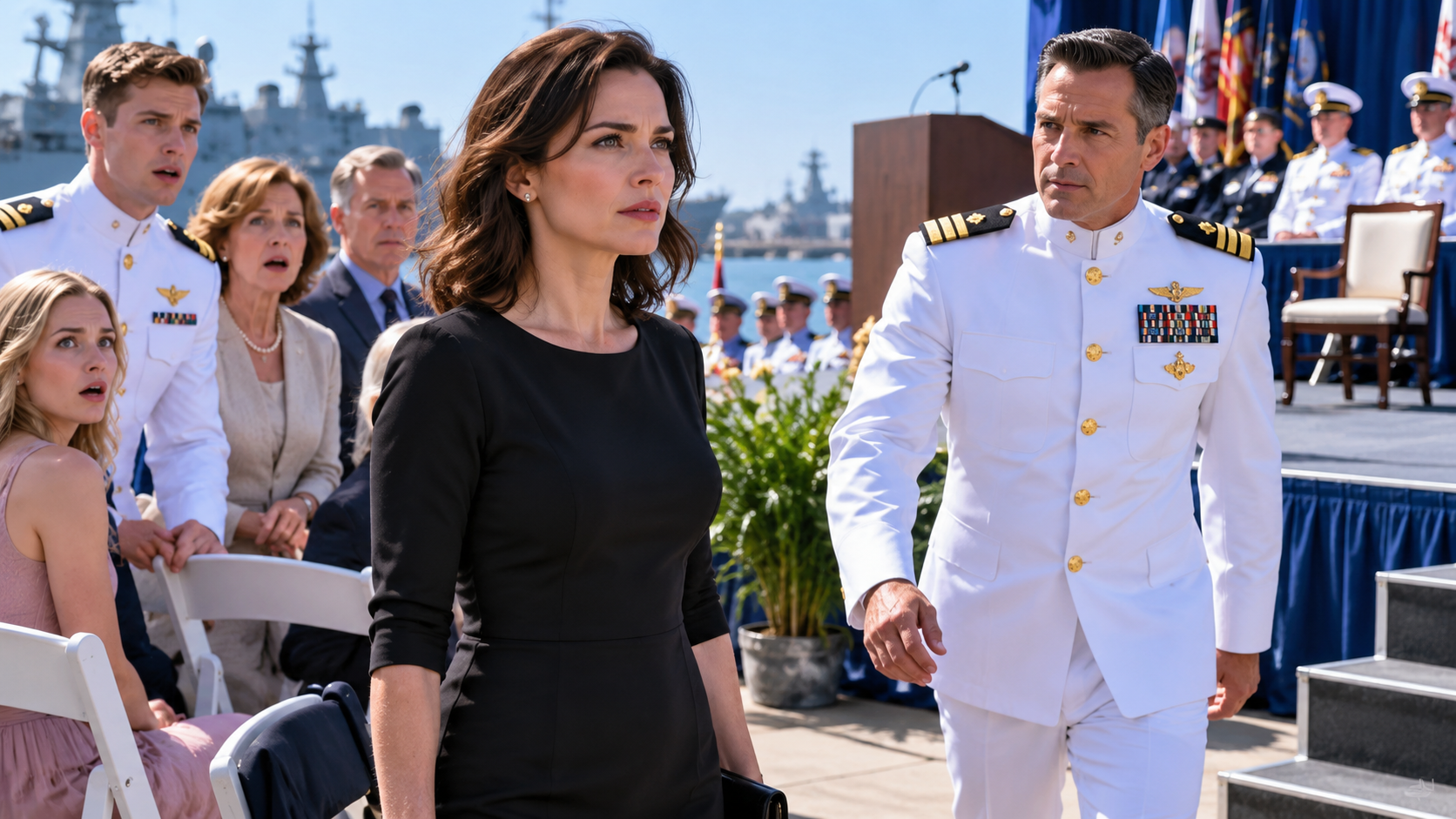
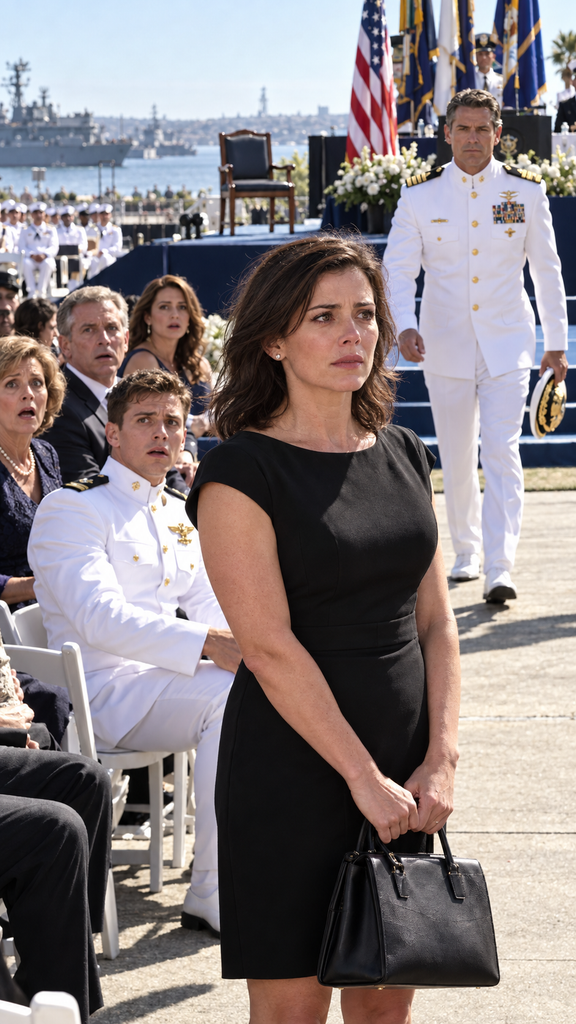
My family said I wasn’t important enough to sit near the front at my brother’s Navy ceremony. They didn’t know the empty reserved chair beside the stage had my last name on it.
PART 1: SHE’S JUST HIS SISTER
My mother told security I wasn’t important enough to sit near the front at my brother’s Navy SEAL Trident ceremony.
Twenty minutes later, my brother warned me not to embarrass him.
Then several members of my own family laughed when I quietly took a seat behind them.
None of them knew there was an empty reserved chair beside the stage with my last name on it.
I had driven almost six hours through the night to reach Naval Amphibious Base Coronado because I refused to miss the proudest day of my brother Ryan’s life.
My flight out of Phoenix had been canceled after midnight because of a mechanical problem. The airline offered to put me on a flight the following afternoon.
Ryan’s ceremony started at nine.
So at one in the morning, I rented the last midsize sedan available, threw my bag into the passenger seat, bought the worst gas-station coffee I had ever tasted, and started driving west.
I crossed into California while the sky was still black.
By the time I reached San Diego, my eyes burned from exhaustion and my shoulders felt like stone.
I changed clothes in the restroom of a twenty-four-hour diner because there wasn’t time to check into my hotel. I splashed cold water on my face, pulled my hair back, and put on the only dress I had packed—a simple black knee-length dress with long sleeves.
It wasn’t festive.
It wasn’t glamorous.
It was clean, conservative, and appropriate.
More importantly, I was there.
That should have been enough.
I arrived at the base with thirteen minutes to spare.
Ryan was standing less than twenty feet away in dress whites when I first saw him.
For a second, everything else disappeared.
The years of training.
The injuries.
The phone calls where he sounded so exhausted he could barely finish sentences.
The times he had wanted to quit and pretended he didn’t.
The Thanksgiving dinner when our father had raised a glass and announced to everyone that Ryan was going to become “the first real hero in the Carter family.”
All of it narrowed into one image.
My little brother standing straight beneath the California morning sun, shoulders squared, face serious, waiting for the gold Trident he had fought so hard to earn.
I felt something tighten in my throat.
Whatever existed between Ryan and me, I was proud of him.
I was genuinely, painfully proud.
He looked older than the boy I remembered.
Harder around the eyes.
Lean.
Controlled.
But for just a moment, when he turned his head and saw me, I thought I caught the younger Ryan underneath all of it.
The kid who used to bang on my bedroom door during thunderstorms.
The twelve-year-old who once made me promise that if he joined the military someday, I would come to his graduation.
I had promised.
That promise was the reason I had spent the night behind the wheel.
Ryan walked toward me.
I smiled.
“Hey.”
He didn’t smile back.
His eyes moved over my black dress, my plain shoes, the overnight bag strap still leaving a mark across my shoulder.
Then he leaned closer.
“Don’t embarrass me today, Emily.”
For a second, I honestly thought I had misheard him.
“What?”
“You heard me.”
His voice was low enough that nobody else could hear.
I stared at him.
There were a dozen things I could have said.
I could have asked him what exactly he imagined I planned to do.
I could have reminded him that I had driven all night to be there.
I could have asked why my presence, by itself, seemed to embarrass him.
Instead, I folded my hands in front of me.
“Congratulations, Ryan.”
Something flashed across his face.
I couldn’t tell whether it was guilt or irritation.
Then my mother called his name, and he turned away.
That was when I knew how the morning was going to go.
My silence had always bothered my family more than anger.
Anger gave them something to fight.
Silence gave them nothing.
When I was younger, I used to defend myself.
I explained.
Argued.
Corrected.
I tried to make them understand why I missed holidays, why I couldn’t always answer questions about work, why there were months when I came home exhausted and distant.
Eventually, I learned the truth.
People who had already decided what you were rarely listened when you told them who you actually were.
So I stopped explaining.
My mother noticed my dress almost immediately.
She was standing beside Aunt Patricia and my cousin Madison near the family seating section.
Her eyes dropped from my face to my shoes.
“You wore black?”
I looked down at myself.
“Yes.”
“To your brother’s Trident ceremony?”
“My flight was canceled. I drove.”
“That isn’t what I asked.”
Aunt Patricia made a sympathetic little sound.
“Oh, Linda. Leave her alone.”
Then she looked at me and added, “I’m sure Emily didn’t realize how important today was.”
They both laughed.
Not loudly.
That almost made it worse.
I looked toward my father.
He had heard them.
I knew because his jaw tightened.
But he stared toward the stage and pretended he hadn’t.
My father had spent most of my adult life pretending not to notice things that would have required him to choose a side.
When Ryan won something, Dad was loud.
When Ryan succeeded, Dad made speeches.
When I was hurt, exhausted, absent, or struggling, Dad became very interested in the television, his phone, or whatever happened to be outside the nearest window.
To my family, Ryan had always been easy to understand.
Football captain.
Popular.
Disciplined.
Navy.
SEAL candidate.
Now, SEAL.
Every stage of his life could be explained in one sentence.
Mine couldn’t.
I had left college before finishing my degree.
At least, that was the version they knew.
I disappeared for months at a time.
I missed Christmas twice.
One year, I arrived at Thanksgiving with a healing cut above my eyebrow and bruising along my ribs.
When my mother asked what happened, I told her there had been an accident at work.
She assumed I had fallen down stairs.
I let her.
My father loved introducing us.
“This is Ryan. He serves the country.”
Then he would gesture toward me.
“And this is Emily. She’s still figuring things out.”
The first few times, it hurt.
After a while, it became almost interesting.
I started watching how strangers reacted.
Nobody ever asked what “figuring things out” meant.
They simply looked at Ryan with admiration and at me with polite uncertainty.
My father never knew that years earlier, when I had told him I was thinking about joining the Navy, he had laughed.
Not cruelly.
That might have been easier.
He laughed because he genuinely thought the idea was ridiculous.
“You?” he asked. “Emily, you can barely decide what you want for dinner.”
I was twenty at the time.
I smiled.
Then I never brought it up again.
By the time they realized I had taken “some government job,” the details were already none of their business.
Eventually, the details became things I wasn’t always allowed to discuss anyway.
That morning, all those years of assumptions followed me straight to the security checkpoint.
A young petty officer sat behind a folding table checking identification against a tablet.
My father went through first.
Then my mother.
Patricia and Madison.
When it was my turn, I handed over my ID.
The petty officer glanced at it.
Then at me.
Then back at the screen.
His expression changed.
“Ma’am, are you—”
My mother stepped back toward us.
“She’s with us.”
The petty officer looked at her.
Then at me.
“Yes, ma’am, but I have—”
“She’s just his sister,” Mom said.
I felt my stomach tighten.
“Linda,” my father murmured.
But she continued.
“She doesn’t need any special seating. She’s not important.”
The petty officer froze.
His eyes flicked toward mine.
I almost laughed.
Not because it was funny.
Because I knew exactly what he had just seen.
There were two seating rosters.
One for family members and ordinary guests.
Another for official invitees.
My family expected my name to appear on the first.
It didn’t.
Because my name was on the second.
I had received the invitation three weeks earlier.
Heavy cream paper.
Official letterhead.
Lieutenant Commander Emily Carter.
Naval Special Warfare Command.
I had stared at it for a long time after opening it.
Ryan had never told me I was being invited officially.
I doubted he even knew.
The invitation had come from the command.
And when I walked toward the seating area that morning, I noticed something else.
A chair near the stage.
Not in the family rows.
Beside them.
Reserved.
A small white card was fixed neatly to the back.
CARTER.
The petty officer lowered his voice.
“Ma’am, Commander Hayes has you listed—”
“It’s fine,” I said.
He stopped.
I gave him a small nod.
“The family section is fine.”
He hesitated.
That hesitation told me he understood exactly what I was asking.
Not to announce me.
Not to correct my mother.
Not to turn Ryan’s ceremony into something else.
Finally, his posture straightened.
“Yes, ma’am.”
My mother was already walking away.
She didn’t notice his tone.
She didn’t notice the way he stood a little straighter when I passed.
She didn’t notice him glance toward the empty reserved chair.
She was too busy fixing Ryan’s collar for photographs.
I took my seat with the family.
Because I had not driven through the night to compete with my brother.
I had come to watch him earn his Trident.
I wanted the day to belong to Ryan.
Unfortunately, my family seemed determined to make my presence the most interesting thing about it.
My cousin Madison twisted around from the row in front of me.
She was twenty-six, perfectly dressed, perfectly made up, and had inherited Aunt Patricia’s talent for turning insults into questions.
“Emily?”
“Yes?”
“Why are you even here?”
I looked at her.
“I’m family.”
She smiled.
“I said this section was for supportive family.”
Patricia laughed.
My mother tried to hide a smile.
And then I saw Ryan.
He had heard.
He was standing several feet away talking to another candidate.
His eyes met mine.
I waited.
One sentence.
That was all it would have taken.
Knock it off.
She’s my sister.
I’m glad she came.
Anything.
Instead, the corner of Ryan’s mouth moved.
Barely.
But it was there.
A smile.
I don’t think he even meant to be cruel.
Somehow, that made it worse.
He had spent so long absorbing my parents’ version of me that my humiliation had become normal to him.
Maybe even deserved.
I looked down at my hands.
My father sat beside me.
A moment later, he leaned closer.
“Emily.”
“What?”
“You probably shouldn’t come to the reception afterward.”
I slowly turned my head.
“Why?”
He sighed like I was making things difficult.
“It’s going to be a military crowd.”
“So?”
“People will ask questions.”
“About?”
“You.”
I almost smiled.
“Why would they ask about me?”
Dad’s face tightened.
“Where you work. Where you’ve been. Why you never talk about anything. Your mother doesn’t want this turning into one of those awkward situations.”
“One of what situations?”
“You know what I mean.”
I did.
He meant situations where my life failed to fit into the explanation he preferred.
Mom leaned over from his other side.
“Today is about Ryan, Emily. Don’t make it strange.”
I looked at my brother.
“I drove here for Ryan.”
Ryan had heard that too.
He turned around.
His face was expressionless.
“No,” he said.
The people closest to us went quiet.
“You drove here to be seen.”
For one ugly second, I almost reached into my purse.
The invitation was still inside.
Heavy cream paper.
Official seal.
My full name.
My rank.
My command.
A reception invitation.
And a handwritten note from Commander Nathaniel Hayes.
I hope you’ll allow us to recognize you properly this time.
I could have taken it out.
I could have placed it in my father’s lap.
I could have watched my mother’s face change.
But Ryan’s Trident ceremony would forever become the day his sister humiliated the family.
So I left the invitation in my purse.
“Okay,” I said.
Ryan stared at me.
Then he turned away.
The ceremony began.
Commander Nathaniel Hayes stepped behind the podium.
I focused on Ryan.
On the rows of men who had endured something most people could barely imagine.
On the families wiping away tears.
On the Tridents waiting to be pinned.
Commander Hayes spoke about duty.
Sacrifice.
Humility.
Responsibility.
He reminded the new SEALs that the insignia they were about to receive did not make them better than anyone else.
It made them responsible for more than themselves.
I remember thinking Ryan needed to hear that.
Then Commander Hayes stopped in the middle of a sentence.
At first, I thought something was wrong with the microphone.
His eyes moved toward the empty chair beside the stage.
Then toward the security officer.
Then across the family section.
Until they found me.
Nathaniel Hayes and I had not seen each other in almost eighteen months.
But I recognized the exact second he realized where I was sitting.
His entire expression changed.
My mother noticed.
Ryan followed the commander’s stare.
Slowly, my brother turned toward me.
Commander Hayes stepped away from the microphone.
Walked down from the stage.
And started coming directly toward the woman my family had spent all morning calling unimportant.
PART 2: THE WOMAN IN THE WRONG SEAT
The strangest thing about public humiliation is how loud silence becomes when the direction of it changes.
Two minutes earlier, nobody near us had cared whether I existed.
Now every head in the section turned as Commander Hayes walked down the aisle.
My mother straightened.
Aunt Patricia stopped smiling.
Madison looked over her shoulder.
My father whispered, “What’s happening?”
I knew.
I wished I didn’t.
Hayes stopped at the end of our row.
For one second, neither of us spoke.
He was taller than I remembered, though maybe it was the uniform. The last time I had seen him, both of us had been wearing dusty clothes under bad fluorescent lights while a medic argued with me about whether I needed stitches.
His eyes dropped to my dress.
Then to the row.
Then to me.
“Lieutenant Commander Carter.”
My mother inhaled.
Not loudly.
But I heard it.
I stood.
“Commander.”
Hayes looked at the empty chair beside the stage.
Then back at me.
“I was wondering whether you’d decided not to attend.”
“I’m here.”
“I can see that.”
A tiny line formed between his eyebrows.
“Why are you sitting back here?”
Nobody in my family moved.
I could feel their eyes on me.
There was still a chance to keep this quiet.
“Personal choice.”
Hayes understood immediately.
That was one thing I had always respected about him.
He knew when not to ask unnecessary questions.
His gaze briefly passed over my mother, father, Ryan, and the other relatives.
Then it returned to me.
“We reserved a seat for you.”
“I saw it.”
“And you decided not to use it.”
“Yes, sir.”
He was silent for half a second.
Then he smiled.
“Still stubborn.”
Despite myself, I smiled back.
“Occasionally.”
That broke something in the tension.
A few people nearby laughed softly.
Hayes nodded toward the front.
“Come sit where you belong.”
My mother found her voice.
“I’m sorry.”
Hayes turned toward her.
She looked pale.
“Are you… are you talking about Emily?”
His expression remained polite.
“Yes, ma’am.”
“My daughter Emily?”
I wanted to disappear.
Hayes glanced at me.
I gave him the smallest shake of my head.
Don’t.
He understood that too.
But some truths were already impossible to put back.
“Lieutenant Commander Carter is an official guest of the command.”
My father stared at me.
“Lieutenant Commander?”
The words sounded foreign in his mouth.
I had imagined that moment before.
Not at Ryan’s ceremony.
Not in public.
But sometimes, on difficult nights, I had wondered what my father’s face would look like if he ever learned the truth.
I expected satisfaction.
Vindication.
Maybe anger.
Instead, I felt tired.
“Dad,” I said quietly. “Not now.”
Commander Hayes gestured toward the front.
I could have refused again.
But at that point, refusing would have created more attention than accepting.
I stepped out of the row.
As I passed Ryan, our eyes met.
His face had gone completely still.
I couldn’t tell what he was thinking.
I walked toward the reserved seat.
Every step felt too loud.
The white card seemed almost ridiculous when I reached it.
CARTER.
No rank.
No title.
Just the same last name all of us shared.
I sat.
Commander Hayes returned to the podium.
For the first time that morning, my family had nothing to say.
Hayes did not explain who I was.
He didn’t pause the ceremony to introduce me.
I was grateful for that.
He simply continued his speech.
“Humility,” he said after a moment, “is not thinking less of yourself. It is understanding that service is larger than recognition.”
His eyes moved briefly toward the candidates.
“Some of the finest people I’ve served with have done work their own families will never fully understand.”
My throat tightened.
I didn’t know whether he had added that line because of me.
I hoped he hadn’t.
Ryan’s face was unreadable.
One by one, the candidates stepped forward.
Families cheered.
People cried.
Then Ryan’s name was called.
Everything inside me softened.
Whatever he had said to me twenty minutes earlier no longer mattered in that moment.
He walked toward the stage.
Straight.
Controlled.
Proud.
I remembered him at seventeen, standing in our parents’ driveway after breaking his collarbone during a football game, furious because the doctor said he couldn’t play for eight weeks.
“I hate being told I can’t do something,” he had said.
“You’re going to have a difficult life,” I told him.
He laughed.
“Good.”
That stubbornness had taken him here.
When the gold Trident was pinned to his chest, my eyes filled before I could stop them.
I clapped harder than anyone.
Ryan looked toward our parents first.
Mom was crying openly.
Dad looked like he might burst with pride.
Then Ryan’s gaze moved toward me.
I expected him to look away.
He didn’t.
For several seconds, my brother stared at me sitting in the chair beside the stage.
And I watched the first crack appear in the story he had been told about me.
After the ceremony, I stayed seated until the crowd started moving.
Families rushed forward for pictures.
Ryan was swallowed by hugs.
I intended to leave quietly.
That had been my plan from the beginning.
Show up.
Watch.
Congratulate him.
Disappear.
I had almost reached the edge of the seating area when someone called my name.
“Commander Carter.”
I stopped.
One of the instructors was approaching me.
Behind him were two men I vaguely recognized and one I didn’t.
The instructor extended his hand.
“Ma’am. Good to see you.”
“You too.”
“You remember Chief Lawson?”
I did.
We shook hands.
Then another man stepped forward.
“You probably don’t remember me.”
I studied his face.
Something about the eyes.
Then it clicked.
“Ramirez?”
His grin widened.
“Yes, ma’am.”
I smiled.
“You grew a beard.”
“My wife hates it.”
“She has good judgment.”
He laughed.
From the corner of my eye, I could see my family watching.
Madison whispered something to Patricia.
Ryan stood motionless.
Ramirez shook his head.
“I heard you were coming.”
“Apparently everyone knew except my family.”
The words slipped out before I could stop them.
His smile faded slightly.
I immediately regretted saying it.
“Forget that.”
He nodded.
Then his expression changed.
More serious.
“I never got to thank you.”
I knew what he meant.
“You don’t need to.”
“Yes, ma’am. I do.”
“No.”
His jaw tightened.
“Commander—”
“You came home. That’s enough.”
Behind him, my father had stepped closer.
So had Ryan.
I saw the question forming on Ryan’s face.
Ramirez followed my gaze.
He looked at my brother.
Then at the Trident on his uniform.
“Your brother?”
“Yes.”
Ramirez smiled and held out a hand.
“Congratulations.”
Ryan shook it automatically.
“Thank you.”
Ramirez glanced between us.
“You’ve got a hell of a standard to live up to.”
The words landed like a dropped weight.
Ryan blinked.
I closed my eyes for half a second.
“Ramirez.”
“What?”
“Go find your wife.”
He understood.
“Yes, ma’am.”
He walked away.
Ryan looked at me.
“What did he mean?”
“Not today.”
His eyes narrowed.
“Emily.”
“Today is yours.”
“Why did he say that?”
I could hear the edge in his voice.
Not anger.
Something closer to fear.
Fear that an entire version of reality might be breaking apart.
I took a breath.
“We can talk later.”
My mother appeared beside him.
“No. We can talk now.”
I looked at her.
She was staring at me as if I had become a stranger in the last twenty minutes.
“What is going on?”
“Mom.”
“Lieutenant Commander?”
“Yes.”
“You’re in the Navy?”
I almost laughed.
“You knew I worked for the Navy.”
“No, you said you worked with the Navy.”
“I said I worked for the Department of the Navy.”
“That’s not the same thing.”
“It is literally what I told you.”
My father’s face changed.
A memory.
Years old.
“You said you were considering enlisting.”
“I was.”
“And then?”
“And then I did something else.”
“What?”
I looked around.
People were everywhere.
New SEALs.
Families.
Instructors.
Photographers.
“This isn’t the place.”
Mom folded her arms.
“Why not?”
“Because this is Ryan’s ceremony.”
Ryan let out a short breath.
“That didn’t seem to bother you when you took the commander’s reserved seat.”
I stared at him.
“I didn’t take his seat.”
“You know what I mean.”
“No, actually, I don’t.”
His face flushed.
“You show up, sit with us like nothing is going on, then suddenly the commanding officer walks into the crowd to escort you to the front.”
“I tried not to sit there.”
Ryan went quiet.
My mother looked confused.
I continued.
“The security officer tried to tell you.”
Her face changed.
I saw her remember.
She’s just his sister. She’s not important.
For the first time all morning, my mother looked ashamed.
Only for a moment.
Then pride rushed in to protect her.
“Well, how were we supposed to know?”
I stared at her.
“You could have asked.”
That silenced her.
Ryan looked away.
And then Commander Hayes called to him.
“Carter.”
Both Ryan and I turned.
Hayes was standing beside the stage.
His eyes moved between us.
“Reception starts in twenty.”
Ryan nodded.
“Yes, sir.”
Hayes looked at me.
“You’re staying.”
It wasn’t a question.
My father started to speak.
I beat him to it.
“I wasn’t planning to.”
Hayes raised one eyebrow.
“Then change your plan.”
I almost smiled.
Ryan didn’t.
Hayes walked away.
My father stared after him.
Then at me.
The irony was impossible to miss.
An hour earlier, he had told me not to attend the reception because the military crowd might ask embarrassing questions about what I did.
Now the commander himself had just ordered me to come.
Ryan’s jaw tightened.
“Fine.”
He turned away.
“Come to the reception.”
There was no warmth in the invitation.
Only confusion.
And something else.
Something I recognized because I had felt it many times myself.
Humiliation.
Ryan had spent years believing he was the only person in our family connected to that world.
Now he had discovered that everyone around him seemed to know his sister except him.
I could have enjoyed that.
Part of me wanted to.
Instead, I felt sorry for him.
Because I knew the worst part was still coming.
Ryan hadn’t yet learned why Commander Hayes had reserved that chair.
PART 3: WHAT THEY NEVER ASKED
The reception was held in a nearby hall overlooking the water.
By the time I arrived, the room was full of white uniforms, proud families, cameras, laughter, and the kind of exhausted happiness that comes after surviving something brutal.
I stood near the back with a glass of water.
My family formed a small island twenty feet away.
Nobody came to stand beside me.
That wasn’t surprising.
What surprised me was that my mother kept looking over.
Not angry anymore.
Watching.
Studying.
As if she could solve me by staring long enough.
My father had gone quiet.
Madison and Patricia whispered to each other.
Ryan was moving through the room accepting congratulations, but every few minutes his eyes found me.
I knew what he wanted.
Answers.
I also knew he didn’t want to ask for them.
That was a Carter family trait.
We would rather bleed quietly than admit there was something we didn’t know.
“Emily.”
I turned.
Commander Hayes held two cups of coffee.
He handed one to me.
“You look terrible.”
I took it.
“Thank you.”
“I mean exhausted.”
“That improves it.”
“You drove?”
“My flight got canceled.”
“From Phoenix?”
“Yes.”
He shook his head.
“Still stubborn.”
“So I’ve been told.”
We stood in silence for a moment.
Then he looked toward my family.
“You never told them.”
“Not much.”
“Clearly.”
I drank the coffee.
It was terrible.
Military coffee had always tasted as if someone made it from burned rope and resentment.
Hayes lowered his voice.
“You okay?”
“I’m fine.”
“That answer still means no.”
“I’m fine enough.”
He nodded.
I appreciated that he didn’t push.
We had learned long ago that there were questions you asked once.
Then you waited.
Across the room, Ryan was watching us.
Hayes noticed.
“Your brother looks angry.”
“He’s confused.”
“Same face?”
“In this family, yes.”
Hayes smiled.
Then his expression softened.
“I didn’t invite you to make things difficult.”
“I know.”
“I invited you because you belong here.”
I looked down at the coffee.
“That’s what made it difficult.”
He understood.
A few seconds later, Ryan approached.
“Sir.”
Hayes turned.
“Carter.”
Ryan’s eyes flicked toward me.
“Can I ask you something?”
“You just did.”
Ryan almost smiled.
Almost.
Hayes waited.
“My sister.”
“Yes?”
“How do you know her?”
I closed my eyes.
“Ryan.”
“No. I want to know.”
Hayes looked at me.
Not asking permission exactly.
Giving me the choice.
I stared at Ryan.
His Trident gleamed under the lights.
He looked proud.
Young.
Wounded.
And suddenly I understood that protecting him from the truth was no longer kindness.
It was just another form of silence.
“You know Naval intelligence supports special operations,” I said.
Ryan nodded cautiously.
“Yes.”
“That’s what I do.”
His brow furrowed.
“You’re intelligence?”
“Yes.”
“For Naval Special Warfare?”
“Among other assignments.”
“How long?”
“Twelve years.”
He stared at me.
“Twelve?”
“Yes.”
“That’s impossible.”
“Why?”
“Because you were twenty-three when you—”
“When I stopped coming home regularly?”
He went silent.
I nodded.
“Yes.”
Ryan looked at Hayes.
“Sir?”
Hayes folded his arms.
“Your sister is very good at her job.”
“That doesn’t explain the chair.”
“No.”
Ryan swallowed.
“What does?”
Hayes looked at me again.
I shook my head.
He sighed.
“You two really are related.”
Then he looked at Ryan.
“A few years ago, I commanded a team during an operation overseas. Your sister was assigned to the intelligence cell supporting us.”
Ryan’s posture changed.
I stared into my coffee.
Hayes continued.
“We received information suggesting our planned approach was compromised.”
Ryan looked at me.
“Emily caught it?”
Hayes nodded.
“She found inconsistencies in the reporting.”
“That was my job.”
Hayes ignored me.
“She pushed for the route to be changed.”
Ryan’s expression hardened with concentration.
“What happened?”
“The original route was hit.”
The room seemed to disappear around me.
I hated that memory.
Even after all those years.
Hayes’s voice became quieter.
“We still took contact. Things went bad.”
I could smell dust again.
Metal.
Smoke.
A medic shouting.
Someone bleeding through a bandage that wouldn’t stay white.
I forced myself back into the room.
Ryan was staring at the thin scar near my wrist.
He had seen it dozens of times.
He had never asked.
Hayes said, “Your sister wasn’t supposed to leave the operations center.”
“Hayes.”
“She did.”
Ryan’s eyes moved to mine.
“Why?”
“Because people were hurt.”
Hayes answered before I could.
“Because our extraction plan broke down.”
“That is not the whole story.”
“It’s enough.”
Ryan looked from Hayes to me.
“You were out there?”
“For part of it.”
“You told Mom you got hurt in a car accident.”
“I said there had been an accident.”
“That’s not the same thing.”
“No.”
“What happened?”
I hesitated.
Then I gave him the simplest version.
“A vehicle was damaged during the extraction. I was close to it.”
“How close?”
“Too close.”
His face drained.
The bruise across my ribs.
The cut above my eyebrow.
Thanksgiving.
Suddenly Ryan remembered.
I could see it.
“You came home two weeks after that.”
“Yes.”
“You could barely sit down.”
“Yes.”
“And Dad made jokes because you wouldn’t help move the table.”
I didn’t answer.
Ryan looked toward our father.
Then back at me.
“Why didn’t you say anything?”
“Because I couldn’t.”
“You could have said something.”
“I said I was injured at work.”
“You let us think—”
“I didn’t let you do anything.”
My voice sharpened.
Ryan went still.
I took a breath.
“I told you what I was allowed to tell you. All of you decided the rest.”
That sentence reached farther than Ryan.
My mother was standing several feet away.
So was Dad.
They had moved close enough to hear.
Patricia and Madison hovered behind them.
My father looked older than he had that morning.
Mom’s eyes were wet.
“You could have trusted us,” she said.
I turned toward her.
“I tried.”
“With what?”
I laughed once.
Not because it was funny.
“Do you remember when I told Dad I was considering the Navy?”
Dad closed his eyes.
Mom looked at him.
I continued.
“He laughed.”
My father’s voice was barely audible.
“I thought you were joking.”
“I wasn’t.”
“I didn’t know.”
“That was the point.”
He flinched.
I hated that.
I didn’t want revenge.
I wanted them to understand the difference between not knowing and never bothering to ask.
Ryan looked at Hayes.
“So the chair was because she helped your team?”
Hayes considered his answer.
“Partly.”
“Partly?”
I knew where this was going.
“Nathaniel.”
His eyes moved to mine.
“You asked me to invite you. You didn’t ask me to pretend.”
Ryan’s brow tightened.
“Pretend what?”
Hayes set his coffee down.
“That your sister is respected here.”
The words were simple.
That was why they landed so hard.
No medals.
No dramatic titles.
No exaggerated praise.
Just respected.
My mother covered her mouth.
Hayes continued.
“Carter, today is yours. Nobody is taking that from you.”
Ryan stared at him.
“Yes, sir.”
“But one of the things you need to understand about the community you just joined is that you will rarely know every person who made your mission possible.”
Ryan nodded slowly.
“You won’t know who found the pattern that kept you off a compromised road. You won’t know who stayed up thirty hours checking information everyone else dismissed. You won’t always know whose name belongs to the voice that tells you the threat is real.”
My throat tightened.
Hayes looked toward me.
“Sometimes that person is your sister.”
Ryan lowered his eyes.
Hayes picked up his coffee.
“I’m going to leave before this becomes a family therapy session.”
Despite everything, I laughed.
He looked at Ryan.
“Congratulations.”
“Thank you, sir.”
Hayes walked away.
For several seconds, none of us spoke.
Madison was the first to break.
“I had no idea.”
I looked at her.
“That was obvious.”
She flushed.
Patricia looked offended on her daughter’s behalf, but for once she had enough sense not to say anything.
My mother stared at my dress.
The black dress she had mocked.
Then at my face.
“Why black?”
It was such an absurd question that I nearly laughed.
“My flight was canceled. This was in my bag.”
“That’s all?”
“That’s all.”
She looked down.
Dad rubbed his jaw.
“Emily.”
I waited.
He seemed to search for words.
“I’m sorry.”
I had imagined hearing that for years.
It should have felt better.
Instead, I realized apologies could arrive too late to repair things instantly.
But late was not the same as worthless.
I nodded.
“Okay.”
His face fell slightly.
Maybe he expected more.
Forgiveness on command.
Relief.
A hug.
I couldn’t give him that yet.
Ryan still hadn’t looked at me.
Finally, he said, “Can we talk?”
I looked around.
“Now?”
“Outside.”
Something in his voice made me follow.
We walked through the side doors toward a quiet stretch overlooking the water.
For a while, Ryan said nothing.
The wind moved off the bay.
He stood with both hands at his sides, staring ahead.
Then he asked the question that had been waiting all day.
“Why didn’t you tell me?”
I could have answered with policy.
Classification.
Assignments.
Operational security.
All of that was true.
But it wasn’t the entire truth.
So I told him the part that hurt.
“Because you stopped asking.”
PART 4: MY BROTHER FINALLY ASKED
Ryan turned toward me.
“That’s not fair.”
“No?”
“No.”
I leaned against the railing.
“When was the last time you asked me what I did?”
He opened his mouth.
Nothing came out.
“That doesn’t mean I didn’t care.”
“Maybe not.”
“You always changed the subject.”
“Because there were things I couldn’t talk about.”
“Exactly.”
“So eventually you decided there was nothing worth asking.”
Ryan looked away.
I could see anger rising in him.
Not at me.
At himself.
At our parents.
At the gap between what he remembered and what had actually happened.
“You knew I was trying for the teams,” he said.
“Yes.”
“You knew what it meant.”
“Yes.”
“And you still never told me you worked with Naval Special Warfare?”
“I told you I worked in defense.”
“That could mean anything.”
“Yes.”
“Why not tell me more once I was cleared?”
“Because your clearance doesn’t entitle you to my assignments.”
“I don’t mean classified details.”
I studied him.
His voice dropped.
“I mean you.”
That stopped me.
Ryan swallowed.
“You could have told me you understood.”
I looked out at the water.
“I tried.”
“When?”
“Do you remember the night you called me after Hell Week?”
His face changed.
“I barely remember anything from that week.”
“You called at three in the morning.”
He nodded slowly.
“You told me you didn’t know if you were good enough.”
Ryan stared at me.
Memory returned.
I continued.
“I told you nobody earns difficult things by feeling ready. You earn them by showing up after the part of you that wanted applause has already quit.”
His eyes narrowed.
“You said that.”
“Yes.”
“I thought you read it somewhere.”
Despite myself, I laughed.
“So did I, after I said it.”
He almost smiled.
Then the expression disappeared.
“I was awful to you today.”
“Yes.”
He flinched.
I could have softened it.
I didn’t.
“You let Madison humiliate me.”
“I know.”
“You smiled.”
“I know.”
“You told me I came here to be seen.”
His jaw tightened.
“I know.”
“And the worst part is I still sat there because I didn’t want to take one second of this from you.”
Ryan looked down at the Trident on his chest.
For the first time that morning, he didn’t look proud of it.
I reached out.
Touched his arm.
“Don’t.”
He looked at me.
“Don’t what?”
“Don’t turn this into something ugly.”
His brow tightened.
“You earned that.”
I pointed to the insignia.
“You suffered for it. You worked for it. Today matters.”
“I acted like an ass.”
“Yes.”
That almost made him laugh.
I continued.
“But you being wrong about me doesn’t erase what you accomplished.”
He stared at me for a long time.
“You really mean that?”
“Yes.”
He rubbed his face.
“God.”
I waited.
Then he said, “Mom told me you almost weren’t coming.”
“My flight got canceled.”
“No. Before that.”
I frowned.
“What?”
“She said you were probably too busy.”
“I never said that.”
“She said you hadn’t even confirmed.”
“I confirmed with the command.”
Ryan looked confused.
“You didn’t RSVP to Mom?”
“The invitation didn’t come from Mom.”
Silence.
Then his eyes widened.
“Commander Hayes invited you?”
“Yes.”
“Personally?”
“He wrote a note.”
Ryan laughed once in disbelief.
“That’s insane.”
“It’s paper.”
“You know what I mean.”
I smiled.
For the first time all day, he smiled back.
It vanished quickly.
“Was I the reason?”
“For the invitation?”
“Yes.”
“Partly.”
“What was the other part?”
I hesitated.
Ryan’s gaze sharpened.
“What?”
“Hayes wanted me here because this is the first Trident ceremony I’ve attended since the operation he told you about.”
Ryan’s expression changed.
“You don’t like these?”
“It’s complicated.”
“Because of what happened?”
“Yes.”
The wind moved between us.
After a moment, Ryan asked, “Did anyone die?”
I looked at him.
He saw the answer before I gave it.
“Yes.”
His face tightened.
“How many?”
“That part isn’t something I want to discuss today.”
He nodded.
No argument.
No demand.
Just acceptance.
For the first time, my brother understood that a boundary wasn’t the same thing as a secret designed to insult him.
He looked toward the reception hall.
“Do Mom and Dad know?”
“No.”
“About any of it?”
“Pieces.”
Ryan shook his head.
“How did we get this wrong?”
I thought about it.
Then answered carefully.
“Because the version of me you all believed was convenient.”
He winced.
I continued.
“Dad liked having one child he could understand. Mom liked having one child she could brag about without explaining anything. You liked being the successful one.”
“That sounds horrible.”
“It’s also human.”
He looked at me.
“You’re defending us?”
“No.”
I smiled sadly.
“I’m explaining why I stayed away.”
Ryan leaned against the railing beside me.
“When Dad said you were still figuring things out, I believed him.”
“I know.”
“You never corrected him.”
“I did. At first.”
“What happened?”
“He didn’t listen.”
Ryan looked down.
“I should have.”
“Yes.”
Another direct answer.
Another flinch.
But this time, Ryan didn’t retreat.
“I’m sorry.”
I breathed in slowly.
There it was.
Not shouted.
Not dramatic.
Not performed in front of the family.
Just my brother looking at the ground and admitting he had hurt me.
“I’m sorry I laughed,” he said. “I’m sorry I let them talk to you like that. And I’m sorry I made you feel like you didn’t belong here.”
I stared at the water.
“Thank you.”
“That’s it?”
I looked at him.
“What do you want?”
“I don’t know. Yell at me.”
“I’m tired.”
“Emily.”
“I drove all night.”
That finally made him laugh.
A real laugh.
I smiled.
Then his expression softened.
“You really drove six hours?”
“Five hours and forty-three minutes.”
“You timed it?”
“I was angry.”
He laughed again.
Then he became serious.
“You could have called me.”
“At two in the morning on your Trident day?”
“Yes.”
“You needed sleep.”
“So did you.”
“I wasn’t receiving a Trident.”
Ryan looked at me.
“You would have come if you had to drive ten hours, wouldn’t you?”
I shrugged.
“Probably.”
“Why?”
The question surprised me.
“Because you’re my brother.”
He looked away fast.
I realized he was trying not to cry.
That nearly broke me.
The little boy from the thunderstorms was suddenly visible again.
Ryan cleared his throat.
“Do you remember when I was twelve?”
“Unfortunately.”
“I told you I wanted to join the Navy.”
“You also wanted to be an astronaut.”
“I was twelve.”
“You wanted to be a Navy SEAL astronaut.”
“That would have been impressive.”
“It would have been medically concerning.”
He smiled.
Then he said, “You promised you’d come.”
I nodded.
“I remember.”
He looked at me.
“So do I.”
For a while, neither of us spoke.
Then the door behind us opened.
Dad stepped outside.
He stopped when he saw us.
“Am I interrupting?”
Ryan glanced at me.
I shook my head.
Dad came closer.
He looked uncomfortable.
My father was comfortable giving speeches.
Apologies were harder.
“I owe you one,” he said.
“You already apologized.”
“No.”
He shook his head.
“That was for this morning.”
I waited.
He looked toward the water.
“When you were twenty, you told me you wanted to join the Navy.”
“Yes.”
“I laughed.”
“Yes.”
“I remember exactly where I was sitting.”
That surprised me.
Dad swallowed.
“You were standing by the kitchen counter. You had that blue sweatshirt from college.”
I remembered it too.
“I thought you were drifting. You’d changed majors twice. You seemed unhappy.”
“I was.”
“I mistook unhappy for incapable.”
The words settled between us.
I didn’t know what to say.
Dad continued.
“Then Ryan came along with this clear plan. Football. Navy. SEALs. Everything had a label.”
He looked at me.
“You didn’t.”
“No.”
“And instead of admitting I didn’t understand your life, I treated your life like there was nothing to understand.”
My throat tightened.
Dad’s eyes were wet.
“I’m sorry, Em.”
He hadn’t called me Em in years.
I looked away.
“I needed you to be proud of me before you knew what my rank was.”
“I know.”
“That’s the problem.”
“I know.”
There was no defense in his voice.
That mattered.
I looked at him again.
He nodded slowly.
“I can’t fix that today.”
“No.”
“But maybe I can stop making it worse.”
It wasn’t a perfect apology.
Perfect apologies don’t exist.
But it was honest.
I reached out.
Dad hugged me.
It was awkward.
Too tight.
A little late.
I hugged him anyway.
When we pulled apart, Ryan was pretending to study the ocean.
Dad wiped his face.
“Your mother wants to talk to you.”
I sighed.
Dad almost smiled.
“She’s having a harder time with humility.”
“That does run in the family.”
Ryan coughed.
Dad glanced at him.
“So does arrogance.”
Ryan raised both hands.
“I already apologized.”
Dad actually laughed.
For a moment, we were almost normal.
Then my mother appeared in the doorway.
She looked at Dad.
Then Ryan.
Then me.
“I suppose everyone has had their turn except me.”
I folded my arms.
“Apparently.”
Mom walked outside.
Her makeup was still perfect except around her eyes.
She stopped in front of me.
“I told that security officer you weren’t important.”
“Yes.”
Her mouth tightened.
“I keep hearing it in my head.”
I said nothing.
“You could have corrected me.”
“I know.”
“Why didn’t you?”
I thought about the answer.
“Because I wanted to know if it bothered you to say it.”
She stared at me.
That hurt her.
I saw it.
Good.
Not because I wanted revenge.
Because some pain teaches.
Her eyes filled.
“It didn’t.”
“No.”
“I didn’t even think about it.”
“I know.”
She looked down.
“That might be worse.”
“It is.”
Ryan shifted uncomfortably.
Dad touched his arm.
“Come on.”
They went back inside.
Mom and I were alone.
She looked suddenly smaller.
“You always seemed so distant.”
I shook my head.
“No, Mom. I became distant.”
“What’s the difference?”
“One is who I am. The other is what happened.”
She looked at me for a long time.
Then she nodded.
“I suppose I deserved that.”
“I’m not trying to punish you.”
“I know.”
Her voice broke.
“I think that makes it worse.”
I looked away.
Mom reached for my hand.
Then stopped before touching me.
For once, she waited.
I closed the distance myself.
She held my hand.
“I’m sorry,” she whispered.
I believed her.
That didn’t erase the morning.
It didn’t erase years.
But belief was a beginning.
Inside the hall, someone called Ryan’s name for photographs.
Mom wiped her eyes.
“You should be in them.”
I almost said no.
Then Ryan opened the door.
“Emily.”
I looked at him.
He pointed inside.
“Family photo.”
I hesitated.
His eyes held mine.
“Supportive family,” he said.
It took me half a second to understand.
Then I laughed.
“You’re terrible.”
“I learned from Madison.”
From inside the room, Madison shouted, “I heard that.”
Ryan grinned.
And for the first time that day, I followed my brother back inside without feeling like I had to prove I belonged there.
PART 5: THE NAME ON THE CHAIR
The photographer arranged us in front of a Navy backdrop.
Mom wanted Ryan in the center.
Of course she did.
Dad stood on one side.
Mom on the other.
Patricia and Madison moved toward the edge.
I started to do the same.
Ryan caught my wrist.
“No.”
I looked at him.
He moved me beside him.
“Here.”
Mom watched.
She didn’t argue.
The photographer lifted his camera.
“Everyone ready?”
Ryan leaned closer.
“You still look terrible.”
I smiled.
“I’ve been awake thirty hours.”
“Your dress is depressing.”
“You sound like Mom.”
“That’s horrifying.”
The camera flashed while I was laughing.
It became my favorite picture from that day.
Not because I looked good.
I didn’t.
My hair was messy.
My eyes were exhausted.
Ryan looked like he hadn’t slept in a year.
Dad was blinking.
Mom was halfway between crying and smiling.
But it was real.
No one was performing.
After the pictures, several people approached Ryan.
He introduced me differently each time.
At first, awkwardly.
“This is my sister, Emily.”
Then, after a pause:
“She works with Naval Special Warfare.”
The third time, he stopped himself.
He looked at me.
“What am I allowed to say?”
I smiled.
“That I’m your sister works.”
He nodded.
Then he introduced me again.
“This is my sister.”
Nothing more.
I realized that was the introduction I had wanted all along.
Not Commander Carter.
Not intelligence officer.
Not official guest.
Not the woman with the reserved chair.
His sister.
Enough by itself.
Near the end of the reception, Commander Hayes found me one last time.
“You leaving?”
“Yes.”
“Hotel?”
“Eventually.”
He looked at me.
“Do not drive back tonight.”
“I wasn’t planning to.”
“That means you were considering it.”
“Possibly.”
He shook his head.
Then he glanced toward Ryan.
“He’ll be okay.”
“I know.”
“Good kid.”
“He is.”
“Needs work.”
“So do most men who just got handed a Trident.”
Hayes smiled.
“You keeping the invitation?”
“I haven’t decided.”
“Keep it.”
“Why?”
He looked toward the seating area outside.
“Because one day you may need proof that there was always a chair for you.”
That sounded suspiciously poetic coming from Nathaniel Hayes.
I stared at him.
“Did somebody write that for you?”
“Get out.”
I laughed.
He shook my hand.
Then, more quietly, he said, “I’m glad you came.”
“So am I.”
Before I left, I walked back toward the ceremony area.
Most of the chairs had already been folded.
A few sailors were cleaning up.
The reserved row was nearly empty.
One chair remained.
Mine.
The white card was still attached.
CARTER.
I stood in front of it.
That name had meant so many different things throughout my life.
To my father, it had meant expectations.
To my mother, appearances.
To Ryan, competition.
To me, for years, it had meant a family I loved from a distance because being close hurt too much.
But looking at that chair, I realized something.
The seat had never been the point.
I could have sat there from the beginning.
I had the rank.
The invitation.
The official reason.
The commander’s respect.
I had every right to walk past my family and take the place that had been reserved for me.
I chose not to.
Not because I believed what my mother said.
Not because I thought I was unimportant.
Because I knew exactly who I was.
I didn’t need to ruin Ryan’s moment to prove it.
That distinction mattered.
For years, my family mistook my silence for shame.
They mistook privacy for failure.
Absence for selfishness.
Exhaustion for aimlessness.
And I had spent too much of my life quietly hoping they would someday realize they were wrong.
That morning, they finally did.
But the strangest part was that by then, I no longer needed the victory the way I once had.
I was proud of my brother.
I was proud of myself.
Those two things could exist in the same room.
One did not diminish the other.
I reached for the name card.
“Ma’am?”
I turned.
It was the young petty officer from security.
He stood several feet away.
“Yes?”
“We’re cleaning up.”
“Sorry.”
“No problem.”
His eyes moved toward the card in my hand.
Then he smiled slightly.
“For what it’s worth, Commander, I tried to tell her.”
I laughed.
“I know.”
He hesitated.
“Your mother is…”
I waited.
He clearly reconsidered several career-ending adjectives.
“…very confident.”
I laughed harder.
“That is an excellent survival instinct, Petty Officer.”
“Yes, ma’am.”
He walked away.
I slipped the name card into my purse beside the cream invitation.
When I reached the parking area, Ryan was leaning against my rental car.
I stopped.
“Aren’t you supposed to be celebrating?”
“I am.”
“With my car?”
“I wanted to make sure you didn’t disappear.”
The words hit harder than he meant them to.
He saw it immediately.
“I didn’t mean—”
“I know.”
He shoved his hands into his pockets.
“Dinner tonight?”
I raised an eyebrow.
“I thought I was banned from military gatherings.”
Ryan grimaced.
“Dad told you that?”
“He was very concerned people might ask what I do.”
Ryan closed his eyes.
“Oh God.”
“He had a difficult morning.”
“We all did.”
He looked at me.
“Dinner?”
I pretended to consider it.
“Depends.”
“On what?”
“Will Madison be there?”
“Yes.”
“I’ll come.”
He frowned.
“Why does Madison make you more likely to come?”
“I enjoy watching her suffer.”
Ryan laughed.
Then he stepped forward and hugged me.
No warning.
No hesitation.
I froze for half a second.
Then wrapped my arms around him.
His voice was quiet beside my ear.
“Thank you for coming.”
I closed my eyes.
“You’re welcome.”
“I mean it.”
“I know.”
He pulled back.
Then, almost shyly, he touched the gold Trident on his chest.
“Are you proud of me?”
The question broke my heart.
After everything.
All the arrogance.
All the cruelty.
All the assumptions.
Underneath it was still my little brother asking the same question people spend their whole lives asking the people they love.
Do you see me?
Does this matter?
Am I enough?
I reached up and straightened his collar.
“Ryan, I drove through the night because my plane got canceled.”
He smiled.
“That’s not an answer.”
“Yes, I’m proud of you.”
His eyes turned glassy.
I smiled.
“Extremely.”
He nodded.
“Good.”
Then he looked embarrassed.
I laughed.
“Now go before your new SEAL friends see you having emotions.”
“Shut up.”
“Very elite.”
“Emily.”
“Highly classified feelings.”
He pointed at me.
“This is why nobody invited you.”
I reached into my purse.
Pulled out the official cream invitation.
Held it up.
Ryan stared at it.
Then he started laughing.
I laughed with him.
That night, I went to dinner.
Nobody asked why I was there.
Nobody asked me to explain my life.
Aunt Patricia barely spoke to me.
Madison apologized twice, once sincerely and once because her mother was watching.
Dad spent most of dinner listening instead of talking.
Mom asked whether I wanted to sit beside her.
And Ryan, still wearing the pride of the day in the way he carried himself, made a toast.
Not to me.
I was grateful for that.
He raised his glass to the men he had trained with.
To the instructors who had pushed them.
To the families who had supported them.
Then, at the end, his eyes found mine.
“And to the people who show up,” he said, “even when we don’t make it easy for them.”
Nobody laughed.
Nobody needed an explanation.
I raised my glass.
Ryan gave me the smallest nod.
That was enough.
Much later, alone in my hotel room, I emptied my purse onto the desk.
Wallet.
Keys.
Phone.
Official invitation.
And the small white card from the chair beside the stage.
CARTER.
I stared at it for a long time.
Then I placed the invitation and the card together inside my suitcase.
Not because they proved I was important.
I had spent years learning that importance was a dangerous thing to let other people define.
I kept them because they reminded me of something else.
That morning, my mother had told security I did not belong near the front.
My father had asked me to stay away from the reception.
My cousin had questioned whether I belonged with the family.
And my own brother had accused me of showing up only because I wanted to be seen.
Twenty minutes later, a commander walked off the stage to find me.
But that wasn’t the moment that mattered most.
The moment that mattered came hours later in a parking lot, when Ryan asked me not to disappear.
Because recognition from strangers can feel good.
Respect from colleagues can keep you standing.
A rank can open doors.
A reserved chair can prove somebody expected you.
But none of those things can repair a family.
People have to do that themselves.
Slowly.
Awkwardly.
Sometimes years too late.
My family did not become perfect after that day.
My mother still worried too much about appearances.
My father still sometimes spoke before listening.
Ryan and I still fought.
I still couldn’t tell them everything.
There were assignments I never discussed, places I never named, memories I kept locked behind answers like I’m fine and work was busy.
The difference was that they stopped assuming silence meant there was nothing behind it.
Dad never again introduced me as the daughter who was “still figuring things out.”
Mom stopped apologizing for me before I entered a room.
And Ryan?
Ryan started calling.
Not because he needed advice.
Not because something had gone wrong.
Sometimes he simply asked, “Where are you?”
If I could answer, I did.
If I couldn’t, he would say, “Okay. Call when you can.”
Then, after a pause:
“Be safe.”
Months after his ceremony, Ryan sent me a photograph.
He had framed a picture from that day.
The terrible one.
My messy hair.
Dad blinking.
Mom crying.
Ryan with his new Trident.
Me laughing beside him.
Underneath, he had written one sentence.
Supportive family.
I stared at the message until my vision blurred.
Then I sent him a picture of the little white card I had kept.
CARTER.
His reply came seconds later.
You should’ve taken the seat.
I smiled.
Then I wrote back:
I was exactly where I needed to be.
And this time, when my brother replied, there was no argument.
Only three words.
I know now.
Leave a Reply