
I Came Home With Flowers for My Mother. Five Seconds Later, I Saw Who My Wife Really Was.
PART 1: THE WOMAN AT THE FOOT OF THE STAIRS
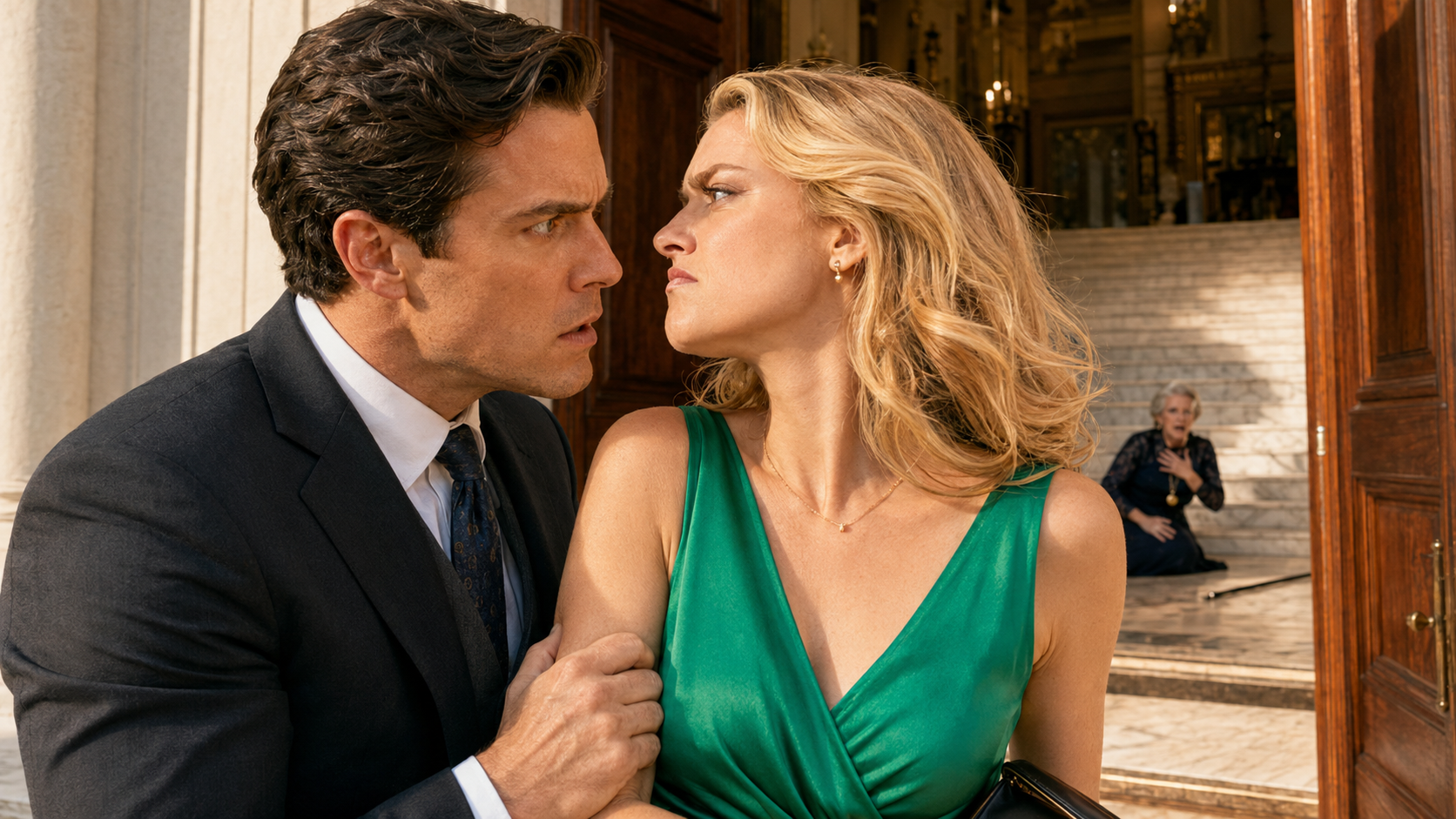
I came home carrying my dying mother’s favorite wildflowers and found my wife standing over her with one hand raised.
“Sign the papers,” Victoria screamed, “or you won’t live long enough to regret it!”
For one terrible second, I couldn’t move.
My mind simply refused to understand what my eyes were seeing.
The front door was still open behind me. Late-afternoon sunlight stretched across the marble foyer, touching the toes of my shoes and the bouquet in my hand.
Yellow buttercups.
Tiny purple asters.
White daisies.
My mother loved wildflowers because, according to her, roses knew they were beautiful and behaved accordingly.
Wildflowers had more character.
I had stopped at a roadside stand specifically because I knew she had been feeling tired lately.
I had expected her smile.
Instead, my mother was on the floor.
Florence Harrington—seventy-six years old, proud enough to argue with doctors and stubborn enough to refuse help getting out of a car—lay crumpled beneath the mahogany staircase.
Her silver-handled cane had rolled several feet away.
One side of her face was already turning red.
Her gray hair had come loose from its pins.
Her hands were raised weakly over her head as if she were trying to protect herself.
And above her stood Victoria.
My wife.
The woman I had slept beside for two years.
The woman whose hand I had held while promising before a room full of people that I would love her for the rest of my life.
She wore an emerald-green dress.
Diamond earrings flashed beneath the chandelier.
Her blonde hair was immaculate.
Her face wasn’t.
I had never seen rage like that on her before.
Not irritation.
Not anger.
Rage.
“Give it to me!” Victoria shouted.
She seized my mother’s arm.
“You selfish old woman. Sign the transfer!”
My mother shook her head.
“No.”
Her voice was almost nothing.
“That money was never meant for you.”
Victoria’s expression changed.
Her hand rose again.
“Then maybe you don’t deserve to be alive long enough to give it away.”
The flowers slipped from my fingers.
They hit the marble softly.
A ridiculous sound.
Barely anything.
But Victoria heard it.
She turned.
Her face went completely white.
“Edward—”
I was already moving.
“GET AWAY FROM HER!”
My voice exploded through the foyer.
I crossed the distance between us in seconds, caught Victoria by the shoulders, and pulled her away.
She stumbled backward.
“What the hell are you doing?” she shouted.
I stared at her.
“What am I doing?”
I barely recognized my own voice.
“You were attacking my mother.”
Victoria opened her mouth.
Then closed it.
For perhaps the first time since I had known her, she had no answer ready.
I dropped to my knees.
“Mom.”
The rage vanished the instant I touched Florence.
“Mom, look at me.”
Her eyelids fluttered.
Then her eyes found mine.
Something inside me broke.
She looked frightened.
That alone would have been enough.
But it wasn’t surprise I saw in her face.
It was recognition.
Familiar fear.
The kind that comes when something you have been expecting finally happens.
I put one hand behind her shoulders.
“Did you hit your head?”
“I’m all right.”
“You’re on the floor.”
“I slipped.”
Victoria seized on the words instantly.
“There. You heard her.”
My head snapped around.
“Don’t.”
“She slipped, Edward.”
“I said don’t.”
Victoria’s jaw tightened.
I turned back to my mother.
“Tell me what happened.”
Florence looked past me toward Victoria.
Her fingers found the front of my jacket and closed around it.
“She knows.”
I frowned.
“Knows what?”
My mother’s lips trembled.
“She found my medical records.”
I felt cold despite the warmth pouring through the open door.
“What medical records?”
Florence didn’t answer.
Then she added, almost soundlessly, “And she found the safe.”
My stomach tightened.
“Mom, what are you talking about?”
Behind me, Victoria laughed.
Not warmly.
Not nervously.
It was a brittle, bitter little sound.
“Oh, come on.”
I turned slowly.
Victoria wiped the corner of her mouth with one finger.
“Tell him, Florence.”
My mother looked away.
Victoria’s smile sharpened.
“Go ahead. Tell your precious son why you’ve been sneaking off to the hospital.”
My heart seemed to stop between one beat and the next.
“Hospital?”
Florence closed her eyes.
“Edward—”
“No.”
I looked at her.
“You told me your checkup was fine.”
She said nothing.
Victoria folded her arms.
“She has cancer.”
Silence swallowed the room.
I looked at my wife.
Then at my mother.
Then back at Victoria.
“No.”
Florence’s fingers tightened on my jacket.
“Edward…”
“No.”
I shook my head.
“You had tests last year. You said they were clear.”
“I didn’t want you worrying.”
“How bad is it?”
She lowered her eyes.
I already knew.
I just needed her to tell me I was wrong.
“How bad?”
Victoria answered instead.
“Terminal.”
I stared at her.
She didn’t even soften the word.
“She has months,” Victoria said. “Maybe less.”
My chest tightened until breathing hurt.
My mother had been dying.
She had been going to hospitals alone.
Receiving test results alone.
Planning for death alone.
And I had been ten minutes away in an office, believing her when she told me she was tired because she had spent too much time in the garden.
“Why didn’t you tell me?” I whispered.
Florence touched my arm.
“I wanted you to live your life.”
“You are my life.”
Her eyes filled.
I had to look away before mine did.
That was when I saw the papers.
A leather folder lay open near the staircase.
Several pages had spilled across the floor.
One had a bright yellow adhesive tab beside a signature line.
The anger returned so fast it almost made me dizzy.
I stood.
“What were you trying to make her sign?”
Victoria’s eyes shifted.
“That isn’t what happened.”
“I heard you.”
“You heard one sentence.”
“I saw you standing over her.”
“She fell.”
“I saw your hand raised.”
“Because she grabbed me first.”
I almost laughed.
My seventy-six-year-old mother could barely cross the foyer without a cane.
Victoria had been a competitive tennis player through college.
“You expect me to believe that?”
Victoria’s gaze hardened.
Then she walked to the leather folder, scooped it up, and pulled out several pages.
“Fine.”
She threw them onto the marble between us.
“Your mother has been hiding millions of dollars.”
I stared at the papers.
“What?”
“A private trust.”
She pointed toward Florence.
“She changed her estate plan.”
I looked at my mother.
Florence didn’t deny it.
Victoria laughed bitterly.
“This house. The land outside Ashford. The investment accounts. The family holdings. Almost everything.”
Her voice climbed higher.
“She was going to give it away.”
“To whom?”
“A foundation.”
My mother finally spoke.
“To several charities.”
Victoria spun toward her.
“Charities?”
She said the word like Florence had confessed to setting fire to the mansion.
“You were going to leave strangers everything while your own son gets scraps?”
I looked at my mother.
“Is that true?”
“I made provisions for you.”
“I didn’t ask that.”
Florence understood what I meant.
“Yes,” she said quietly. “Most of it is designated for charitable trusts.”
I nodded once.
Then I stepped between Victoria and her.
“I don’t care.”
Victoria stared at me.
“What?”
“It’s hers.”
For several seconds she simply looked at me.
Then she laughed.
“You cannot be serious.”
“It’s her money.”
“It’s our future.”
“No.”
I heard the change in my own voice.
Cold.
Controlled.
Dangerously calm.
“It was never yours.”
Victoria’s expression tightened.
“You have no idea what she’s doing.”
“I understand what you were doing.”
I pointed toward my mother.
“You were threatening a sick seventy-six-year-old woman because she wouldn’t give you money.”
“I was protecting us.”
“From what?”
“Being robbed.”
“By the woman who owns what you want?”
Victoria stepped closer to me.
“This family name means something.”
“To you.”
“To you too!”
She struck one finger against my chest.
“You were born in this house. You grew up under paintings worth more than most people make in twenty years. Your family owns land, companies, trusts. Your grandfather spent his entire life building what Florence is throwing away.”
“My grandfather left it to my mother.”
“So she could preserve it.”
“So she could decide what to do with it.”
“You’re going to let a dying woman make an emotional decision that destroys your future?”
I stared at her.
There are moments when a familiar face changes without physically changing at all.
Her eyes were the same pale blue.
Her mouth was the same mouth I had kissed that morning.
I could still smell her perfume.
But I felt as though I were speaking to a stranger.
“You knew she was dying,” I said.
Victoria didn’t respond.
“How long?”
Her eyes moved away.
“How long have you known?”
Nothing.
My mother began crying quietly behind me.
That sound frightened me more than Victoria’s silence.
I turned.
“Mom?”
Florence was reaching beneath the collar of her blouse.
Her fingers were trembling so badly that she struggled with the chain.
Finally she pulled it free.
A small antique golden key hung against her chest.
I recognized it.
My grandmother had worn it.
Before her, my great-grandmother.
I had seen it perhaps five times in my life.
Victoria saw it too.
Her entire face changed.
“Give me that.”
Florence closed her fist.
Victoria stepped forward.
“Florence.”
“No.”
“Give me the key.”
“No.”
Then Victoria lost control.
“GIVE ME THAT!”
She lunged.
I intercepted her before she reached my mother.
Victoria slammed into me, clawing at my arm.
“Edward, move!”
I caught her wrists.
“What does it open?”
“Nothing.”
She answered far too quickly.
I looked at my mother.
Florence stared at Victoria.
“The second safe.”
Victoria went still.
I released her slowly.
“What second safe?”
“The one she couldn’t open.”
The color disappeared from Victoria’s face.
And suddenly I understood something that frightened me more than anything I had seen so far.
This was not simply about inheritance.
Victoria had searched for something.
She had found one safe.
She knew there was another.
And whatever was inside it terrified her.
“What’s in the safe?” I asked.
My mother’s fingers closed tightly around the golden key.
“She thought I was hiding jewelry.”
Victoria backed one step toward the hall.
“But that isn’t what’s inside.”
Another step.
I watched her.
“So what is?”
Florence looked at me.
For the first time since I had entered the house, fear was no longer the strongest thing in her eyes.
Anger was.
“The proof.”
Victoria stopped.
“Proof of what?”
My mother pointed directly at my wife.
“Proof that Victoria never married you because she loved you.”
The world seemed to tilt beneath my feet.
I turned toward Victoria.
She was reaching for her purse.
“Victoria?”
Florence tightened her fist around the key.
“And Edward…”
Victoria looked toward the open front door.
My mother’s next words made her run.
“She isn’t who she told you she was.”
Victoria bolted for the entrance.
And for one stunned second, I almost let her go.
Then I ran after my wife.
Because whatever waited inside that second safe, Victoria was suddenly more afraid of it than she was of me.
PART 2: THE SECOND SAFE
I caught Victoria before she reached the front steps.
“Let go of me!”
She twisted hard enough to nearly tear the strap of her purse.
“Where are you going?”
“Away from you.”
“Why?”
“Because you’ve already decided I’m guilty.”
“I walked in while you were threatening my mother.”
“That woman has hated me since our wedding.”
I tightened my hold on her arm.
“Don’t call her that woman.”
Victoria jerked herself free.
“You always do this.”
“Do what?”
“Become her little boy the second she looks wounded.”
I stared at her.
My mother was lying on the marble inside the house.
Her face was bruising.
Victoria was somehow making herself the victim.
I took out my phone.
Her expression changed.
“Who are you calling?”
“An ambulance.”
“Edward, she doesn’t need—”
“And the police.”
She froze.
“Don’t be ridiculous.”
“You threatened her.”
“Do you have any idea what this will look like?”
That sentence told me everything about where her mind was.
Not Is Florence all right?
Not Please let me explain.
Not even I’m sorry.
What will this look like?
I stepped back inside and called for help.
Victoria followed.
I expected her to leave.
Instead she stood near the doorway, gripping her purse with both hands.
Watching us.
Watching the key around my mother’s neck.
Florence refused to let go of it.
Even while I helped her onto the lower stair.
Even while she winced in pain.
Even while I pressed a cold cloth to her cheek.
“Mom,” I whispered, “what is going on?”
She looked toward Victoria.
“Not here.”
“I’m standing right here,” Victoria snapped.
“That is precisely the problem.”
“Florence—”
“Don’t speak to her,” I said.
Victoria’s eyes flashed toward me.
“You don’t get to order me around.”
“No. But I can stop you from touching my mother again.”
Something passed through her face then.
For one moment I saw the woman I knew.
Or thought I knew.
Her lower lip trembled.
“Edward, please.”
Two words.
Softly spoken.
They almost reached me.
That was the worst part.
Two years of instinct told me to go to her.
To calm her.
To listen.
Marriage teaches your body habits your mind doesn’t immediately forget.
I remembered mornings when Victoria had brought coffee to my desk without being asked.
The way she used to curl against me while we watched old movies.
The way she had cried at our wedding.
The way she whispered, “Finally,” after I slipped the ring onto her finger.
I had thought she meant finally we belonged to each other.
Standing in that foyer, I wondered what she had really meant.
Sirens sounded faintly in the distance.
Victoria heard them too.
Her face hardened again.
“You’ll regret humiliating me like this.”
The words were quiet.
I looked at her.
“Did you know my mother was dying?”
She didn’t answer.
“Did you?”
“Yes.”
My stomach clenched.
“How long?”
“A few weeks.”
Florence made a small sound behind me.
I turned.
My mother was shaking her head.
“No.”
I looked between them.
“What?”
Florence swallowed.
“She knew before that.”
Victoria’s jaw tightened.
“How much before?” I asked.
Florence answered without looking away from her.
“Three months.”
Three months.
I counted backward automatically.
Three months ago Victoria had persuaded me to take an extended business trip to Singapore.
Three months ago she had insisted Florence would be more comfortable with space because we had been “hovering” too much after one of her dizzy spells.
Three months ago Victoria had suddenly become fascinated by family trusts.
She had asked casual questions over dinner.
Who technically owned the house?
Could trustees override a beneficiary?
Had my grandfather placed the land into a separate holding company?
I had teased her about becoming a tax lawyer.
She had kissed my cheek and laughed.
I hadn’t noticed how carefully she listened to the answers.
“How did you find out?” I asked.
Victoria crossed her arms.
“She left papers out.”
Florence’s laugh was thin.
“I left nothing out.”
“You’re confused.”
“I have cancer, Victoria. Not dementia.”
That shut her up.
Florence looked at me.
“She went through my study.”
“No.”
“She found the hospital letter in a locked drawer.”
“Florence is guessing.”
“The drawer was forced.”
“I told you, the lock stuck.”
“And after that,” Florence continued, “she began asking me about the trust.”
Victoria looked at me.
“Because I was worried about you.”
“Stop saying that.”
“I am your wife.”
“Then why did you run when she mentioned the safe?”
She went silent.
Paramedics arrived moments later.
The foyer filled with movement.
Questions.
Medical equipment.
Gloves snapping into place.
My mother, who disliked fuss of any kind, complained that everyone was behaving as though she had been hit by a truck.
One paramedic asked if she had lost consciousness.
Another examined her arm.
When they asked how she had fallen, Florence looked at Victoria.
“She pulled me.”
Victoria stepped forward.
“That is not what happened.”
I moved between them again.
“I saw enough.”
Police arrived while the paramedics were preparing to transport Florence.
Victoria immediately transformed.
I watched it happen.
Her shoulders relaxed.
Her voice softened.
She became composed.
Elegant.
Reasonable.
She told them there had been “a family dispute.”
She said Florence had become agitated.
She claimed my mother had tried to snatch documents from her hand and lost her balance.
Then one officer asked what the documents were.
Victoria hesitated.
I handed him the transfer papers.
He read the first page.
His expression changed.
“These transfer authority over financial assets?”
“My mother refused to sign.”
Victoria spoke quickly.
“They were part of an estate discussion.”
“Why were you handling them?”
“I’m family.”
My mother, already on the stretcher, turned her head.
“No, you are not.”
I will never forget the silence after that.
Victoria stared at her.
Florence stared back.
My mother had always disliked confrontation.
She could defeat you politely without raising her voice.
This was different.
She was done being polite.
Before the paramedics took her out, Florence beckoned me closer.
I bent beside her.
She pressed the golden key into my palm.
It was warm from her skin.
“North library,” she whispered.
I frowned.
“Behind your grandfather’s Atlas of the World.”
“I know the shelf.”
“There’s a panel.”
“Mom—”
“Listen to me.”
Her fingers closed around mine.
“If Victoria leaves this house, let her.”
I looked toward my wife.
“But do not let her near that safe.”
“What’s inside?”
Florence’s eyes filled again.
“The reason I changed everything.”
Then they wheeled her away.
I rode to the hospital with my mother.
I didn’t care where Victoria went.
At least I told myself I didn’t.
But during the ride, while Florence rested with her eyes closed, I kept thinking about the second safe.
About my wife running.
About the questions she had asked for months.
And about the antique key digging into my palm.
At the hospital, scans showed no fracture and no serious head injury.
The doctor was more concerned by something I hadn’t been prepared to hear.
Florence’s cancer had progressed.
Not months, perhaps.
He refused to give me a number.
Doctors learn quickly not to make promises to dying families.
But I heard what he didn’t say.
Time was short.
I sat beside my mother after midnight.
The room was dark except for the machines.
“You should have told me,” I said.
“I know.”
“Why didn’t you?”
Florence looked toward the window.
“Because when your father died, you stopped living for almost a year.”
My throat tightened.
“That was different.”
“No.”
She turned back to me.
“Grief always tells us it is different this time.”
I lowered my head.
“I could have gone with you.”
“I know.”
“You shouldn’t have been alone.”
“I wasn’t always.”
“Who knew?”
“My lawyer. My doctor.”
“And Victoria.”
Florence’s expression changed.
“She wasn’t supposed to.”
I waited.
After a moment she continued.
“I began investigating her six months ago.”
I stared at her.
“Investigating my wife?”
“I hoped I was wrong.”
“About what?”
“About the way she watched this family.”
I almost argued.
Old reflex.
Defend Victoria.
Explain her.
Find the harmless interpretation.
But I couldn’t erase what I had seen.
“What did you find?”
My mother looked at my closed hand.
I had been holding the key for hours.
“Go home,” she said.
“Open the safe.”
“I’m not leaving you.”
“You will tonight.”
“Mom.”
“Edward.”
There was enough command in her voice that for an instant she sounded twenty years younger.
“You need to see it without me telling you what to think.”
I stared at her.
“Why?”
“Because you love her.”
I looked away.
“I don’t know what I feel.”
“Yes, you do.”
She took my hand.
“You love the woman you thought she was.”
The words hurt because they were true.
My mother closed my fingers around the key.
“Now you need to find out whether that woman ever existed.”
So at one-thirty in the morning, I drove back to the house where my marriage had begun to fall apart.
Victoria’s car was gone.
Her clothes were not.
Neither were her jewelry cases.
She had taken only a suitcase, her passport, and several folders from the desk in our bedroom.
I noticed something else.
The drawer where we kept our marriage certificate was open.
Empty.
I stood there for a long moment.
Then I went to the north library.
My grandfather’s Atlas of the World was exactly where it had always been.
I removed it.
Behind the book was a narrow brass lever I had never noticed.
I pressed it.
A wooden panel released.
Inside the wall sat a small black safe.
I inserted the antique key.
For one second, I couldn’t turn it.
Not because it was stuck.
Because some part of me still wanted to put the book back.
Call Victoria.
Hear an explanation.
Wake up tomorrow and discover that there was a version of events in which my mother had misunderstood everything and my wife had simply panicked.
Then I remembered Victoria standing over Florence.
Sign the papers, or you won’t live long enough to regret it.
I turned the key.
The safe opened.
Inside was no jewelry.
No cash.
No secret will.
There was only a thick brown envelope with my name written across the front in my mother’s handwriting.
And beneath my name were six words.
EDWARD—READ THIS BEFORE YOU TRUST HER AGAIN.
PART 3: THE WOMAN I MARRIED
I carried the envelope to my grandfather’s desk.
For several minutes, I did nothing.
The mansion was unnaturally quiet.
At night, old houses make their own noises.
Wood settles.
Pipes murmur.
Wind catches windows.
That night every small sound felt like someone moving behind me.
I poured a glass of water and forgot to drink it.
Then I opened the envelope.
The first thing I found was a photograph of Victoria.
At least, I thought it was Victoria.
Her hair was darker.
Shorter.
She looked younger.
But there was no mistaking her face.
She was standing outside a courthouse beside a gray-haired man I had never seen.
Under the photograph was a photocopy of a public marriage record.
The bride’s name stopped me.
Victoria Bell.
Not Victoria Sloan.
Sloan was the maiden name she had given me.
The name I had engraved inside her wedding ring.
I read the record twice.
Then a third time.
She had married twelve years before she met me.
She had told me she had never been married.
I turned the page.
A divorce judgment.
Three years later.
Property settlement attached.
Then another marriage record.
Different wealthy man.
Different county.
Different version of her surname.
That marriage lasted eighteen months.
Another settlement followed.
I sat back.
My hands had begun to shake.
There was nothing illegal in those pages.
People marry.
People divorce.
People make mistakes.
But Victoria had told me a very specific story about herself.
She said she had spent her twenties building a career in luxury-event consulting.
She said she had never found anyone she trusted enough to marry.
She said I had been the first man who made commitment feel safe.
I remembered the night she told me.
We had been drinking wine on my apartment balcony.
Rain was falling over the city.
She had looked almost embarrassed.
“You’re the first person I’ve ever wanted a family with,” she whispered.
I had believed her.
The investigator’s report was next.
My mother had hired a private firm quietly.
Not because Victoria spent money.
Not because she came from a different background.
The first page explained exactly what had started Florence’s suspicion.
Four months after our wedding, Victoria had asked Florence whether my grandfather’s trust contained a survivorship provision.
Florence found the question strange.
Victoria laughed it off.
Then she began asking about voting rights in the family company.
Then mineral rights on the western property.
Then whether assets passed automatically to spouses if a beneficiary died without children.
Questions I had barely noticed.
Florence had.
The investigator discovered Victoria’s previous marriages through public records.
Both men had substantial wealth.
Both divorces ended in settlements.
The report was careful not to accuse her of fraud.
It didn’t need to.
The timeline was enough.
Before each marriage, Victoria had entered the same circles.
Charity events.
Private auctions.
Foundation dinners.
Invitation-only cultural boards.
Places where wealthy families met one another under the respectable glow of philanthropy.
That was exactly how she met me.
At the Harrington Children’s Hospital gala.
I remembered seeing her beside a sculpture display.
Emerald eyes.
Gold dress.
A glass of champagne in one hand.
She had smiled and said, “You look as bored as I feel.”
I laughed.
We talked for two hours.
I thought it had been chance.
According to the investigator, Victoria had attended three Harrington Foundation events before that night.
She had never mentioned them.
Then I reached a folder labeled:
BACKGROUND REPRESENTATIONS.
Inside were copies of documents showing other lies.
Her parents were alive.
She had told me they died when she was twenty-three.
She claimed to have grown up outside Boston.
She had actually grown up in Connecticut.
Her education was real.
Her career existed.
Not everything had been invented.
That somehow made it worse.
A total fantasy would have been easier to reject.
Victoria had built herself from real pieces.
She simply rearranged them whenever necessary.
A true university.
A false childhood.
A real job.
Two hidden marriages.
A dead mother who was actually alive.
A maiden name borrowed from an ex-husband’s family.
Truth mixed carefully with lies until no one thought to separate them.
I kept reading.
There was a copy of a letter my mother had apparently written to her attorney.
One line was underlined.
I do not intend to punish Edward for marrying her. I intend to prevent my assets from becoming the reward for deceiving him.
I covered my face.
That was when the anger finally turned inward.
How had I missed it?
How had I known so little about my own wife?
Then another thought came.
Maybe my mother had been wrong too.
Maybe Victoria had lied because she was ashamed.
Maybe she had been through ugly divorces.
Maybe she had wanted a new beginning.
People hide pain.
People reinvent themselves.
Nothing inside the safe, so far, proved she had targeted me.
It proved she had lied.
That was terrible.
But love can exist beside terrible things.
I hated that I still wanted to believe that.
Then I found the final envelope.
It had been sealed separately.
On the front my mother had written:
THIS IS WHY I CHANGED THE TRUST.
Inside were photographs taken over several weeks.
Victoria leaving Florence’s lawyer’s office building.
Victoria speaking to a receptionist outside my mother’s oncology clinic.
Victoria photographing documents in Florence’s study through the gap of a half-open door.
My breath caught.
The last photograph showed her holding the medical folder Florence claimed had been locked away.
A note from the investigator explained that Florence had asked him to document Victoria’s movements only after discovering the damaged drawer.
Again, the report did not claim to know exactly what Victoria had done inside those buildings.
It simply documented where she had been.
Then came the timeline.
The date Florence received her terminal diagnosis.
Two days later, Victoria visited the office building where Florence’s estate attorney worked.
One week later, Victoria began asking me whether I had ever considered taking a more active role in managing my mother’s affairs.
Two weeks after that, she asked whether Florence had given me financial power of attorney.
I had laughed.
“Mother would sooner give her checkbook to a raccoon.”
Victoria had laughed too.
I remember that.
I remember kissing her forehead afterward.
My stomach turned.
A month later Florence discovered the drawer forced.
Within days, Victoria somehow knew the cancer was terminal.
Then came her sudden enthusiasm for my Singapore trip.
I looked down at the final pages.
They were copies of draft transfer documents.
Not the ones I had found downstairs.
Earlier versions.
My mother’s attorney had apparently obtained copies after Florence told him Victoria had begun pressuring her privately.
Victoria wanted broad authority transferred into a new family investment entity.
On paper, the language looked complicated.
The investigator’s summary made it simple.
If Florence signed, control would ultimately flow to me.
And through spousal rights and a second agreement Victoria had prepared for me to sign later, she intended to place herself in the position to influence nearly everything.
Not own it instantly.
Victoria was smarter than that.
She had built a staircase.
One document at a time.
One signature at a time.
Florence was simply refusing to take the first step.
I sat alone in the library until almost dawn.
The entire marriage rearranged itself inside my memory.
Victoria encouraging me to reconcile with distant relatives whenever money was involved.
Victoria teasing me about my “allergic reaction to paperwork.”
Victoria offering to organize files.
Victoria suggesting we renovate the east wing of the mansion before it technically belonged to us.
Victoria asking whether my mother had ever discussed “what happens after.”
I had mistaken interest for belonging.
Perhaps some of it had been.
That was the question destroying me.
I took out my phone.
There were seventeen missed calls from Victoria.
Nine messages.
The first ones were angry.
You had no right to involve the police.
Then defensive.
Your mother attacked me first and you know how manipulative she is.
Then frightened.
Please don’t open anything Florence gives you until you hear my side.
Then soft.
Edward, I love you. Whatever she showed you, please remember that.
The final message had arrived six minutes earlier.
I’m outside.
I looked toward the library door.
A floorboard creaked in the hall.
Then Victoria’s voice came through the darkness.
“Edward?”
My eyes moved to the open safe.
The files were spread across the desk.
And for the first time in two years, when my wife entered the room, I did not stand to greet her.
She stopped in the doorway.
Her eyes went to the photographs.
The marriage records.
The reports.
The open safe.
Her face changed.
Not surprise.
Recognition.
She knew exactly what I had found.
“Edward,” she whispered.
I picked up the first marriage certificate.
“Who is Victoria Bell?”
She said nothing.
I held it higher.
“Who is she?”
Victoria closed the library door behind her.
Then she looked at me and said the sentence that ended the last piece of the marriage I still wanted to save.
“She was me before I learned better.”
PART 4: EVERYTHING SHE CALLED LOVE
I stared at Victoria across my grandfather’s desk.
“What does that mean?”
She took off her coat slowly and placed it over a chair.
It was such an ordinary movement that I almost hated her for it.
The house felt as though it were collapsing around us, and she was hanging up her coat.
“It means I had a life before you.”
“You told me you had never been married.”
“I lied.”
The bluntness shocked me.
No explanation.
No hesitation.
“I can see that.”
“Then why ask?”
“Because I want to hear you say it.”
Her jaw tightened.
“Fine. I lied.”
“Twice?”
She glanced at the records.
“Those marriages were mistakes.”
“Both of them?”
“Yes.”
“And your parents?”
She looked away.
“Alive.”
“Why did you tell me they were dead?”
“Because we don’t speak.”
“That wasn’t what I asked.”
“Because saying they were dead was easier than explaining them.”
“So Sloan isn’t your maiden name.”
“No.”
“It belonged to your first husband’s family.”
“Yes.”
I laughed once.
There was no humor in it.
“Do I know anything true about you?”
Her face finally showed pain.
“You know me.”
“I know a woman named Victoria who told me certain stories. I’m asking whether she exists.”
“I am standing in front of you.”
“Are you?”
She flinched.
That should have satisfied me.
It didn’t.
I pointed toward the report.
“You attended three Harrington Foundation events before the night we met.”
She said nothing.
“You told me you had never heard of my family.”
“I knew the name.”
“You said you didn’t.”
“I didn’t want you thinking I cared about the money.”
“Did you?”
Her silence answered first.
I stood.
“Did you come to that gala because you knew I would be there?”
Victoria walked toward the window.
Dawn was beginning to turn the sky gray.
“Edward…”
“Yes or no.”
“Yes.”
It hurt more than I expected.
Perhaps because some memories become sacred without our permission.
The first night we met had been one of mine.
I had replayed it at our wedding.
I told the story in speeches.
I believed some invisible hand had put us in the same room.
Chance.
Timing.
Luck.
There had been no chance.
Victoria had known exactly where I would be.
“Did you know who I was when you spoke to me?”
“Yes.”
“Did you know about the trust?”
“Not details.”
“But you knew my family had money.”
“Everyone knew that.”
“Were you looking for a wealthy husband?”
Victoria closed her eyes.
“Don’t make it sound cheap.”
I almost couldn’t believe what I was hearing.
“How should I make it sound?”
“I wanted security.”
“So you researched men with money?”
“I researched a life I wanted.”
“And I was part of that research?”
“You became more than that.”
I stared at her.
There it was.
The defense I had feared because some part of me desperately wanted to accept it.
She turned toward me.
“When I met you, yes, I knew who you were. I knew the family. I knew you were unmarried. I knew you were wealthy.”
I said nothing.
“I thought you would be arrogant.”
“Sorry to disappoint you.”
“Stop.”
“No, keep going. This is the first honest conversation we’ve had.”
Her eyes filled.
“You weren’t what I expected.”
“Meaning?”
“You were kind.”
I looked away.
“You listened to me. You remembered things. You made me laugh. You didn’t treat waiters like furniture. You called your mother every morning when your father’s birthday came around because you knew she struggled with it.”
“Don’t use my mother to prove you love me.”
“I’m not.”
“She is in a hospital because of you.”
“I did not mean for her to fall.”
“You had your hand raised.”
Victoria went silent.
I stepped closer.
“Were you going to hit her?”
“She pushed me too far.”
The answer came before she could stop it.
I felt something in me go cold.
“So yes.”
“I was angry.”
“So yes.”
“I don’t know.”
“You know.”
She looked at me.
For a moment, her face was naked.
No polish.
No calculation.
Just fear.
“I lost control.”
“You threatened to kill her.”
“I didn’t mean it literally.”
“She is terminally ill, Victoria.”
“I know.”
“Exactly.”
I picked up the transfer papers.
“You knew she had very little time, and instead of helping her, you saw a deadline.”
“That’s not fair.”
“It is the fairest sentence I have said all night.”
Victoria’s face twisted.
“You think I wanted her cancer?”
“I think you saw what it could do for you.”
“No.”
“You started pressing her after you found out.”
“Because she was changing everything!”
“There.”
I pointed at her.
“There it is.”
“What?”
“The thing underneath all your excuses.”
I moved around the desk.
“You still think she was doing something to you.”
“She was.”
“She was giving away her own property.”
“She was punishing me.”
“She didn’t trust you.”
“Because she never liked me!”
“Maybe she had a reason.”
Victoria laughed harshly.
“Oh, now Florence is a saint?”
“I never said that.”
“She judged me from the beginning.”
“She investigated you because you asked questions about our estate that even I couldn’t answer.”
“So curiosity is a crime now?”
“No. Assaulting my mother is.”
Victoria looked toward the door.
I saw it again.
Calculation.
Not whether she should apologize.
Whether she could still get out.
“Where is the original transfer agreement?” I asked.
“What?”
“The papers downstairs were copies.”
She stared at me.
“How do you know?”
“Because my mother’s initials weren’t on the first page.”
A tiny detail.
One my father had taught me when I was young.
Florence initialed every legal document she reviewed, even drafts she rejected.
The pages downstairs were clean.
Victoria said nothing.
“Where is the original?”
“I don’t know.”
“You took folders when you left.”
Her head snapped toward me.
I had checked.
She hadn’t expected that.
“What did you take?”
“Personal documents.”
“Our marriage certificate?”
Her face changed again.
“Why?”
“I thought I might need it.”
“For what?”
“To prove we’re married.”
“To whom?”
No answer.
I stepped closer.
“Victoria.”
Her shoulders sagged.
“I was scared.”
“Of what?”
“That Florence would convince you to abandon me.”
“You attacked her.”
“I panicked!”
“Before or after I came home?”
She started crying.
Real tears.
I knew the difference.
Or at least I thought I did.
“Edward, I know how this looks.”
I almost laughed.
“How it looks?”
“I made mistakes.”
“You built our marriage on a false identity.”
“I changed my name. I did not change my soul.”
“You lied about your family.”
“Yes.”
“Your marriages.”
“Yes.”
“How we met.”
“Yes.”
“You searched my mother’s room.”
“I was trying to understand what she was planning.”
“You took her medical information.”
“I found it.”
“You pressured a dying woman to sign away control of her estate.”
Victoria’s voice rose.
“For us!”
“There is no us in those documents.”
“Yes, there is!”
“No.”
I looked at her.
“There is you.”
Silence.
It was the first moment all night when she had no defense.
I continued more quietly.
“If you loved me, why didn’t you tell me what my mother was doing?”
“Because I knew you’d agree with her.”
“Then you knew what you were doing was wrong.”
“No. I knew you were sentimental.”
I stared at her.
She heard herself.
Too late.
The tears stopped.
The mask slipped again.
And suddenly I saw the argument from her side exactly as she did.
My mother was dying.
An enormous estate was moving out of reach.
I was too loyal to Florence to be useful.
So Victoria had gone around me.
She had tried persuasion.
Then pressure.
Then intimidation.
Then force.
Maybe she had loved me in whatever way she understood love.
But love, to Victoria, had always existed beside acquisition.
People and possessions lived in the same room.
You kept what made your life secure.
You controlled what might leave.
“I want you gone,” I said.
Her face went still.
“Don’t do this.”
“Leave.”
“You’re upset.”
“Leave my house.”
“Our house.”
“No.”
Her eyes flashed.
“We are married.”
“For the moment.”
She walked toward me.
“Edward, I love you.”
I stepped back.
That hurt her.
Good.
Perhaps I’m not proud of thinking that.
But I did.
“I love you,” she repeated.
“Then answer one question.”
“Anything.”
“If my mother had no money, would you have gone to that gala?”
She opened her mouth.
Nothing came out.
I waited.
The answer was in the silence.
Victoria began crying again.
“This isn’t fair.”
“It’s the only question that matters.”
“You don’t know what could have happened.”
“No. I know what did happen.”
She wiped her cheek angrily.
“So that’s it?”
“No.”
I looked toward the files.
“That is not it.”
Something in my tone frightened her.
“What are you going to do?”
“Protect my mother.”
“From me?”
“Yes.”
Her mouth tightened.
“And the money?”
“Will go wherever she chooses.”
“You would really let her give away everything your family built?”
“Yes.”
The answer came easily.
That seemed to disturb Victoria more than anything else.
“You’re insane.”
“Maybe.”
“You’ll regret it.”
“Maybe.”
“She’ll be dead, Edward.”
The words hit me like a fist.
Victoria realized immediately that she had gone too far.
“Edward, I didn’t mean—”
“Yes, you did.”
“No.”
“You always mean it for half a second.”
“What?”
“The ugly thing.”
I looked directly at her.
“You just spend the next minute dressing it up.”
Her face hardened.
“So now you hate me.”
I thought about it.
“No.”
That seemed to surprise both of us.
“I don’t hate you.”
My voice cracked despite my effort to control it.
“I wish I did.”
Because hate would have been simple.
I still remembered loving her.
That was the wound.
I opened the library door.
“Go.”
She stood motionless.
Then she picked up her coat.
At the door, she turned.
“If I leave now, Florence wins.”
“No.”
I looked at the open safe.
“She was never competing with you.”
Victoria said nothing.
I continued.
“That’s the part you never understood.”
She left.
I heard the front door close five minutes later.
Then I stood alone in the library and finally allowed myself to break.
Not loudly.
There was no dramatic collapse.
I simply sat in my grandfather’s chair and pressed both hands against my face.
I cried for the wife I had thought I had.
For my mother.
For the time we didn’t have.
For every memory I could no longer trust.
And when the sun finally rose over the trees, my phone rang.
It was the hospital.
My mother had taken a sudden turn.
I grabbed the golden key and ran.
PART 5: WHAT MY MOTHER WAS REALLY LEAVING ME
Florence was awake when I reached the hospital.
Barely.
Her face looked smaller against the pillow.
For the first time in my life, my mother looked old.
Not elegant-old.
Not silver-haired-family-matriarch old.
Simply tired.
Human.
Temporary.
I hated it.
Her eyes opened when I sat down.
“You opened it.”
Not a question.
I nodded.
“Yes.”
“And?”
I looked at the window.
“Most of it was true.”
Florence’s expression softened.
“I’m sorry.”
“Were you?”
She frowned slightly.
“Sorry?”
“Were you hoping you were wrong?”
“Every day.”
I believed her.
That hurt too.
I took out the photograph from Victoria’s first marriage.
“I keep trying to decide which part bothers me most.”
“The lies?”
“No.”
I looked down at the photograph.
“That I would have forgiven some of them.”
Florence said nothing.
“If she had told me she’d been married before, I wouldn’t have cared.”
“I know.”
“If she had said her family was complicated, I would have understood.”
“I know.”
“If she had said she knew exactly who I was the night we met…”
My throat tightened.
“I might even have gotten over that.”
Florence reached for my hand.
“The individual lies are not the problem.”
“I know.”
It was the structure.
The intention beneath them.
Each lie by itself could be explained.
Together, they built a road leading directly to me.
And eventually to Florence’s money.
“Did she admit it?” my mother asked.
“Enough.”
I told Florence what had happened in the library.
Not every word.
Some things were still too raw.
When I reached the question I had asked Victoria—whether she would have attended the gala if my family had no money—my mother closed her eyes.
“She didn’t answer?”
“No.”
“I’m sorry.”
I looked at her.
“Stop apologizing for her.”
“I’m apologizing because you’re hurting.”
For several minutes, we sat quietly.
Then I remembered the trust.
“Why charities?”
My mother smiled faintly.
“Finally.”
“Finally what?”
“You’ve asked about something other than Victoria.”
I almost smiled.
Almost.
“Why change everything?”
“I had been thinking about it before I became ill.”
“To punish her?”
“No.”
“To protect me?”
“Partly.”
I frowned.
Florence squeezed my hand.
“Your grandfather believed inheritance should provide freedom, not identity.”
“That sounds like him.”
“He worried we had too much.”
I laughed softly.
“He hid that concern remarkably well.”
“He enjoyed his cars.”
“And the boat.”
“He hated the boat.”
“He bought three.”
“He hated all three.”
For several seconds, we were ourselves again.
Mother and son.
The hospital disappeared.
The cancer disappeared.
Victoria disappeared.
Then Florence continued.
“When I received the diagnosis, I understood something I had spent years avoiding.”
“What?”
“Money is most dangerous when everyone assumes it must remain where it is.”
I waited.
“You are provided for,” she said. “More than provided for. You will never have to fear poverty. Your children, if you have them someday, will have education trusts. The family company remains protected. But most of the liquid estate and several properties will fund the foundation.”
“What foundation?”
She looked almost embarrassed.
“The paperwork is unfinished.”
“Mom.”
Her smile returned.
“The Harrington Community Care Foundation.”
I waited for more.
“Cancer treatment assistance. Hospice care. Home nursing. Transportation for patients whose families can’t leave work.”
My chest tightened.
I understood then.
All those hospital visits she had made without me.
All those waiting rooms.
All those people she had met while keeping her illness secret.
“You saw people struggling.”
“Yes.”
“And you decided to give them what we have.”
“Some of it.”
“Most of it.”
She raised an eyebrow.
“You sound like Victoria.”
I stared at her.
Then my mother laughed.
It hurt her ribs, and she immediately regretted it, but for several seconds we were both laughing.
I hadn’t realized how badly I needed that sound.
Then she grew serious.
“Edward, I need you to promise me something.”
“What?”
“Do not destroy yourself trying to punish her.”
My jaw tightened.
“She hurt you.”
“Yes.”
“She threatened you.”
“Yes.”
“She lied to me for years.”
“Yes.”
“And you want me to let it go?”
“No.”
Her eyes sharpened.
“I want you to understand the difference between justice and revenge.”
I looked away.
“She should answer for what she did.”
“She should.”
“I’m going to make sure she does.”
“Good.”
That surprised me.
Florence lifted one shoulder weakly.
“I’m dying, not becoming foolish.”
I squeezed her hand.
“She’ll never come near you again.”
“I know.”
“How?”
“Because now you have seen her.”
That sentence stayed with me.
Over the next several days, I did what I should have done the moment Victoria began asking questions I couldn’t answer.
I paid attention.
I stopped assuming.
I sat beside my mother while her attorney explained every document.
Florence formally withdrew every transfer Victoria had prepared.
Access permissions were changed.
Locks were replaced.
Medical information was restricted.
I supplied the authorities with my statement about what I had witnessed.
Florence gave hers.
Victoria attempted to contact me repeatedly.
First by phone.
Then through messages.
Then through a lawyer.
She insisted the confrontation had been misunderstood.
She claimed the transfer documents represented legitimate family planning.
She said Florence had manipulated me.
I did not respond.
Then, one evening, a handwritten letter arrived.
I almost threw it away.
Instead, I read it at the kitchen table.
For once, Victoria did not pretend everything had been innocent.
She admitted she had known who I was before we met.
She admitted she had hidden her marriages.
She admitted money had been part of what attracted her to me.
Then she wrote the sentence I had expected.
But I did love you.
I stared at those words for a long time.
Maybe she did.
That was the hardest conclusion.
People want villains to be clean.
Pure greed.
Pure evil.
Pure lies.
Real people are messier.
Maybe Victoria had approached me for money and later loved me.
Maybe she loved me while lying.
Maybe she loved me while planning how to secure the estate.
Maybe she genuinely believed securing wealth for us was a form of devotion.
None of it changed what she had done to Florence.
Love does not become harmless simply because the person feeling it calls it love.
I folded the letter.
I never answered.
Weeks passed.
My mother came home.
We moved a hospital bed into the sunroom because she refused to spend her last weeks staring at a ceiling.
She wanted the garden.
So I gave her the garden.
I moved meetings home.
Then I canceled most of them.
For the first time since my father died, I stopped measuring my life in obligations.
Florence and I ate breakfast together every morning.
Sometimes she could manage toast.
Sometimes only tea.
We talked about my father.
About my childhood.
About the stupid boat.
About the foundation.
About Victoria too, when I was ready.
One afternoon, I asked the question I had avoided.
“Why didn’t you show me the evidence sooner?”
Florence looked toward the garden.
“Because you would have chosen her.”
I wanted to deny it.
I couldn’t.
“I would have listened.”
“You would have listened while deciding how to prove me wrong.”
That was accurate enough to make me wince.
“You loved her,” Florence continued. “And I was your mother. Every warning would have sounded like jealousy.”
“So you waited?”
“I investigated.”
“And if she had never gone after the trust?”
Florence thought about it.
“I might have told you eventually.”
“Might?”
“I had no desire to ruin your marriage because your wife had an ugly past.”
“It was more than an ugly past.”
“I know that now.”
I studied her face.
“You really would have left it alone?”
“If she had loved you well?”
“Yes.”
The answer startled me.
Florence smiled.
“I did not need your wife to be perfect, Edward. I needed her not to destroy you.”
I swallowed.
“And when you found out you were dying?”
“I changed the trust.”
“Because you knew she would inherit through me eventually.”
“Because I knew she was waiting.”
That was the phrase that stayed with me.
She was waiting.
Victoria hadn’t needed Florence dead.
She hadn’t caused the cancer.
She hadn’t created the deadline.
She had simply seen time running out and tried to get ahead of it.
That was dark enough.
Nothing else needed to be invented.
The final legal separation from Victoria happened quietly.
There was no dramatic courtroom battle.
No last-minute confession.
No hidden accomplice.
No shocking person waiting behind her.
I had already received my shock.
I filed for divorce.
Victoria fought some of the terms, then stopped.
The evidence of her lies did not magically erase our marriage.
Life is rarely that convenient.
But it erased my willingness to remain in it.
The assault against Florence moved through the legal process separately.
I refused to turn that process into entertainment.
My mother deserved more dignity than that.
Victoria was kept away from her.
That was what mattered.
And I thought the worst was over.
Then, on a warm morning near the end of summer, I entered the sunroom with a bunch of wildflowers.
My mother looked at them.
Then at me.
“You finally learned.”
“Learned what?”
“No roses.”
I smiled.
“Roses are arrogant.”
“Exactly.”
I placed the bouquet beside her.
Yellow.
Purple.
White.
The same colors that had scattered across the marble the day everything changed.
Florence touched one white daisy.
“Beautiful.”
“So are you.”
“Don’t become sentimental.”
“You’re dying. I’m allowed.”
“Terrible excuse.”
I sat beside her.
She looked out toward the garden for a long time.
Then she said, “Edward?”
“Yes?”
“Open the windows.”
I did.
Warm air entered the room.
Birdsong.
The smell of cut grass.
Lavender from the edge of the garden.
I sat beside her again.
She took my hand.
“Do you regret it?”
“What?”
“Losing the inheritance.”
I almost laughed.
“You’re still alive and already asking me how I feel about inheriting less?”
“I like to plan ahead.”
“I noticed.”
She waited.
I understood she wanted the real answer.
“No.”
“Not even a little?”
“I regret what it revealed.”
“That isn’t the same thing.”
“No.”
I looked around the house.
The paintings.
The furniture.
Everything Victoria had treated as proof that we belonged to a different category of human being.
“I used to think this was the inheritance.”
Florence glanced at me.
“The house?”
“All of it.”
“And now?”
I looked at her hand in mine.
“Now I think it was having enough time to understand you.”
Her eyes filled.
Mine did too.
Neither of us mentioned it.
We were Harringtons.
We preferred emotional devastation with excellent posture.
Florence died eleven days later.
I was beside her.
The windows were open.
There were wildflowers on the table.
And the little antique golden key was around my neck.
PART 6: WHAT THE KEY OPENED
Three months after my mother died, I stood in the foyer beneath the mahogany staircase.
For a long time, I couldn’t look at the place where I had found her.
The marble had been cleaned that same night.
Of course it had.
There was no mark.
No stain.
Nothing to prove the worst moment of my life had happened there.
But I could still see it.
My mother on the floor.
Victoria above her.
Wildflowers scattered between them.
Sometimes I wondered what would have happened if I had come home ten minutes later.
Would Florence have signed?
No.
I knew my mother.
She would have endured almost anything before surrendering because she was afraid.
Would Victoria actually have hurt her worse?
I didn’t know.
I eventually stopped asking.
There are questions that teach you nothing after the danger has passed.
The foundation opened its first office the following spring.
We funded transportation for cancer patients.
Home-care grants.
Hospice support.
Emergency lodging for families who lived hours from treatment centers.
I became more involved than Florence had expected.
Or perhaps exactly as involved as she expected.
With my mother, it was difficult to know.
The first time I visited one of the programs, a woman took my hand and told me the transportation grant meant she no longer had to choose between missing chemotherapy and losing her job.
I walked to my car afterward and sat behind the wheel for ten minutes without moving.
Victoria had called the money wasted.
Strangers.
That was the word she used.
As though needing help was disqualifying unless you shared blood.
Florence had understood something I hadn’t.
Money could sit in a house.
Or it could move.
It could become a ride to a hospital.
A nurse beside someone’s bed.
A night in a hotel for a frightened family.
A little more time.
Florence had bought me time all my life.
At the end, she decided to buy it for strangers.
I understood why.
Victoria and I spoke only once more.
It happened nearly a year after the day in the foyer.
I was leaving my attorney’s office when I saw her across the lobby.
She looked almost exactly as she had the first night we met.
Beautiful.
Composed.
Impossibly polished.
For one disorienting second, my body remembered before my mind did.
Then she saw me.
“Edward.”
I stopped.
She approached slowly.
“I heard about the foundation.”
I nodded.
“Mother would have liked it.”
“She got what she wanted.”
There was no anger in Victoria’s voice.
Only exhaustion.
“No,” I said.
Victoria looked at me.
“She didn’t want any of this.”
“You really believe that?”
“Yes.”
“She investigated me.”
“After you gave her reasons.”
“You’ll always defend her.”
“I’m not defending her.”
I thought about it.
“I’m finally understanding her.”
Victoria looked down.
“I think about that day all the time.”
I didn’t answer.
“I was angry.”
“I know.”
“I felt everything disappearing.”
I knew what she meant.
The estate.
The future she had imagined.
Me.
Control.
“All I could think was that if she signed, I would have time to fix the rest.”
“What rest?”
“You.”
The answer surprised me.
Victoria looked directly at me.
“You were pulling away.”
“I didn’t know anything.”
“You did. Some part of you did.”
Maybe she was right.
In the weeks before that day, I had noticed tension.
I had noticed Victoria’s questions.
The way she went silent whenever Florence entered a room.
The way my mother watched her.
I had chosen not to examine it.
Victoria continued.
“I thought if she signed, the panic would stop.”
“That’s not an excuse.”
“I know.”
It was the first time I had ever heard her say those words without immediately adding but.
I looked at her more carefully.
There were lines around her eyes I didn’t remember.
Life had reached her too.
“I did love you,” she said.
I felt the old wound.
Not open.
Just ache.
“I believe you.”
Victoria looked startled.
“You do?”
“Yes.”
Her eyes filled.
“Then why—”
“Because it isn’t enough.”
She stopped.
For a moment neither of us spoke.
Then I said the thing I had learned too late.
“You can love someone and still use them.”
Victoria looked away.
“You can love someone and still lie to them.”
Silence.
“You can love someone and still become dangerous when they stop giving you what you want.”
Her lips trembled.
“I never wanted to be that person.”
“No one does.”
That was the closest thing to forgiveness I could give her.
Not absolution.
Not reconciliation.
Recognition.
She looked at the chain around my neck.
The antique key rested against my shirt.
“You still wear it.”
“Yes.”
“What will you do with the safe?”
I had never told her.
I smiled faintly.
“It’s empty.”
Victoria frowned.
“Empty?”
“I took everything out.”
“Then why keep the key?”
I looked down at it.
For months, I had asked myself the same question.
At first I wore it because it had belonged to my mother.
Then because it reminded me of the truth.
Eventually I realized the truth was larger than Victoria.
“The safe wasn’t the important thing.”
She looked at me.
I touched the key.
“This opened something else.”
Victoria’s face changed.
She understood.
Maybe not completely.
Enough.
She nodded.
Then she walked away.
I watched her cross the lobby.
I felt grief.
But no desire to follow.
That was how I knew I was finally free.
That evening I drove back to the mansion.
The sun was setting behind the trees.
I left my car near the front steps and walked toward the garden.
The house was quieter without Florence.
I suspected it always would be.
But it no longer felt haunted.
Near the garden wall, wildflowers had spread beyond the bed where my mother originally planted them.
Yellow blooms leaned over the path.
Purple asters pushed between stones.
White daisies turned toward the fading sun.
Florence would have loved the disorder.
I picked a small handful.
Then I walked inside.
Across the foyer.
Past the place where the flowers had fallen.
Up the staircase.
Into the north library.
My grandfather’s Atlas of the World still sat on the same shelf.
I pulled it free and pressed the hidden lever.
The panel opened.
The safe waited behind it.
Empty now.
No photographs.
No reports.
No secret documents.
No evidence.
I had placed those elsewhere long ago.
I inserted the golden key anyway.
Turned it.
Opened the door.
Inside was one thing.
A small photograph of Florence.
Not the elegant portrait displayed in the drawing room.
This one had been taken in the garden.
She was laughing.
Her hair was being destroyed by the wind.
One hand was raised as though she were telling the photographer to stop.
Wildflowers surrounded her.
I had found the picture weeks after her death.
On the back, in my father’s handwriting, were six words:
The only fortune I ever needed.
The first time I read them, I cried.
Now I smiled.
I closed the safe.
Put the Atlas back.
And carried the flowers downstairs.
For two years, I thought Victoria had married into my family because she loved me.
Then I believed discovering the truth had destroyed everything.
I was wrong about that too.
The truth destroyed a marriage built partly on lies.
It destroyed my certainty.
It destroyed the future I thought I had.
But it saved my mother from surrendering her final choice.
It gave us the last months of her life without Victoria standing between us.
And it taught me something I should have understood long before a bouquet hit the marble floor.
Inheritance is not what the dead leave in your hands.
It is what they leave in the person you become after they are gone.
Victoria had wanted the house.
The land.
The accounts.
The family holdings.
She had looked at Florence and seen a dying woman standing between her and a fortune.
But my mother had never been protecting money.
She had been protecting me.
And in the end, Florence left me exactly what she intended.
Enough money to live freely.
Enough truth to live carefully.
And a tiny golden key that once opened a hidden safe—
but eventually taught me which things in life should never have a price.
Để lại một bình luận