Category: Entertainment

  • REMEMBER THIS MOMENT

    REMEMBER THIS MOMENT

    My Family Humiliated Me at My Sister’s Wedding. Then My Husband Walked Through the Doors.

    PART 1: THE PUNCHLINE

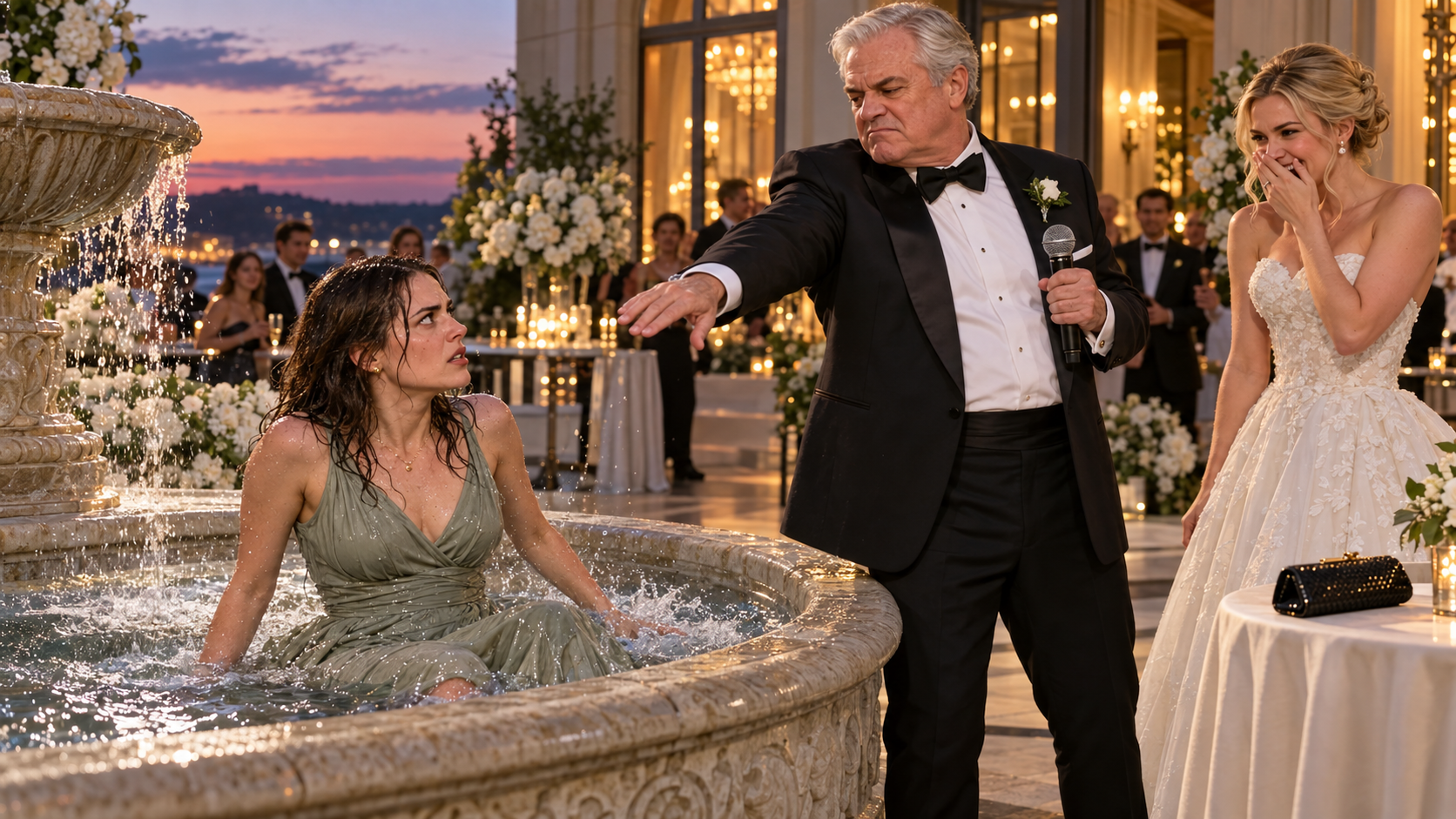
    My father shoved me into a fountain at my sister’s wedding, and four hundred people applauded.

    That was the moment I stopped being his daughter.

    Not when he raised the microphone twenty minutes earlier and announced to a ballroom full of people that I had arrived alone.

    Not when my younger sister, Allison, covered her mouth with one manicured hand and laughed beside her new husband.

    Not when people at tables decorated with white roses and crystal candles turned in their chairs to look at me.

    Not even when my mother gave me that familiar warning stare from across the room—the one that said, Please don’t make this difficult, Meredith.

    No.

    It was the applause.

    That was what finally broke something cleanly enough that it could never be put back together.

    I had spent thirty-two years surviving humiliation by telling myself my family didn’t understand what they were doing.

    That my father, Richard Hale, was simply blunt.

    That Allison had been spoiled too young to know better.

    That my mother had spent so many years smoothing over my father’s cruelty that silence had become a reflex.

    That maybe I was too sensitive.

    Too serious.

    Too difficult.

    Too abrasive.

    Too unwilling to laugh at jokes when I was the joke.

    I had swallowed those explanations for three decades.

    Then I heard applause while freezing water soaked through my dress.

    And I understood.

    They knew.

    They had always known.

    They simply believed I would keep taking it.

    The wedding had been designed to communicate perfection from the moment I arrived.

    The Grand Briar Hotel looked less like a hotel that night and more like a palace someone had rented from a European monarchy. White flowers spilled from stone urns. Gold lettering directed guests toward the ballroom. A string quartet played beneath an arched ceiling painted with clouds.

    My sister’s name appeared everywhere.

    ALLISON & GRANT.

    On the menus.

    On the napkins.

    Projected across a twenty-foot wall behind the cake.

    Even the cocktail stirrers had their initials.

    My father had spent eighteen months telling anyone who would listen that his younger daughter deserved nothing less.

    “The wedding of the decade,” he had called it.

    For once, he wasn’t exaggerating.

    There were business executives, attorneys, doctors, politicians, real estate developers, old family friends and people whose names I recognized from society pages.

    Four hundred guests.

    Allison had always been good at collecting an audience.

    I had always been good at disappearing inside one.

    I arrived alone at six forty-two.

    Not because I was single.

    That was the first lie everyone believed.

    I arrived alone because my husband had asked me one final time that afternoon whether I truly wanted him to stay away.

    Daniel had stood in the doorway of our bedroom while I fastened the small diamond earrings he had given me for our second anniversary.

    “You know I hate this,” he’d said.

    “I know.”

    “You know I’m not embarrassed to be seen with you.”

    “I know.”

    “You know I’m one sentence away from telling your father exactly what I think of him.”

    That had almost made me smile.

    “Several sentences.”

    “Several paragraphs.”

    I turned toward him.

    Daniel Reyes was leaning against the doorframe in shirtsleeves, his charcoal suit jacket folded over one arm.

    He had already dressed.

    Even though I’d told him he wasn’t coming.

    Even though we’d had this argument three times.

    His dark eyes stayed on mine.

    “Meredith.”

    “I just need tonight to be about Allison.”

    “It hasn’t been about Allison for weeks. It’s been about your father reminding you where he thinks you belong.”

    I looked away.

    Because he was right.

    And because I wasn’t ready to admit why that frightened me.

    Daniel knew enough about my family to understand that they used information as ammunition.

    That was the reason I had protected him for three years.

    Protected us.

    When Daniel and I first became serious, I had planned to tell my parents.

    Then my father had mocked a boyfriend of Allison’s friend over dinner because the young man had been nervous.

    “He’ll never make it in business,” Dad had announced after the man left the table. “No spine.”

    Everyone laughed.

    I remember Daniel sitting beside me later that night in our small apartment, listening as I told him the story.

    Then he asked a question no one had ever asked me before.

    “Why do you keep giving them access to things you love?”

    The question hurt because I had no answer.

    My family had mocked my clothes, my career choices, my friends, my apartments, my hair, my laugh, my refusal to drink too much, my refusal to date men Dad approved of, and my supposed inability to “lighten up.”

    Every soft part of me eventually became a target.

    So I kept Daniel away.

    At first, only until I trusted the relationship.

    Then until we became engaged.

    Then until after our private courthouse wedding.

    Then for three whole years.

    It sounds ridiculous when I say it plainly.

    Three years.

    I had been married for three years, and my parents believed I had never managed to keep a relationship longer than a few months.

    Only two friends knew.

    Daniel’s sister knew.

    His mother knew.

    My family did not.

    At first the secrecy had made me feel safe.

    Eventually it made me feel ashamed.

    Not ashamed of Daniel.

    Never Daniel.

    Ashamed that my father still had enough power over me that I believed hiding my happiest relationship was easier than defending it.

    That afternoon before Allison’s wedding, Daniel finally said, “I’m not asking you to make a scene. I’m asking whether hiding me still protects us, or whether it just protects them.”

    I had no answer.

    So I kissed him.

    “I’ll call you when I’m leaving.”

    He didn’t kiss me back immediately.

    Then his hand touched my cheek.

    “One phone call,” he said. “That’s all it takes.”

    I nodded.

    I had no intention of making it.

    Three hours later, I was sitting in a fountain.

    But the evening had begun with smaller cuts.

    It always did.

    My mother spotted me during cocktail hour.

    Her gaze traveled over my pale green dress.

    “You wore that color?”

    “Hello to you too, Mom.”

    “Don’t start.”

    “I said hello.”

    She lowered her voice. “Allison’s bridesmaids are in sage.”

    “This isn’t sage.”

    “It’s close.”

    “It isn’t.”

    My mother exhaled.

    That tiny exhausted sound.

    As though my existence required administrative management.

    Then her eyes moved past me.

    “Where’s your date?”

    I took a sip of champagne.

    “Didn’t bring one.”

    Her face changed immediately.

    Not sympathy.

    Alarm.

    “You came alone?”

    “Yes.”

    “Oh, Meredith.”

    I had heard those two words in that tone my entire life.

    Oh, Meredith.

    When I cried because Allison cut the hair off my favorite doll.

    When I refused to let Dad read my diary aloud after finding it in my bedroom.

    When I left Thanksgiving early because he made a joke about my weight.

    When I skipped a family vacation after Allison invited an ex-boyfriend of mine because she thought “it would be funny.”

    Oh, Meredith.

    Translation: Why can’t you make yourself easier to mistreat?

    “I am perfectly capable of attending a wedding alone,” I said.

    “That’s not the point.”

    “What is the point?”

    She glanced toward the ballroom.

    “Your father has been telling people you were bringing someone.”

    I almost laughed.

    “Why?”

    “He assumed.”

    “No. Dad never assumes anything good about me.”

    “Please don’t do this tonight.”

    “Do what?”

    “Turn everything into a confrontation.”

    That was when Allison appeared.

    My sister looked beautiful.

    There was no point pretending otherwise.

    Her wedding gown shimmered under the chandeliers, fitted through the waist before falling in soft layers of ivory silk. Her blond hair had been swept into an elegant knot. Diamonds flashed at her throat.

    For one second, looking at her, I remembered the little girl who used to crawl into my bed during thunderstorms.

    The sister who once cried for an hour when I left for college.

    The sister I had loved before our family turned affection into competition.

    Then Allison looked around me and grinned.

    “You actually came alone?”

    There it was.

    I felt something tighten behind my ribs.

    “Congratulations on your wedding.”

    “You told me you were seeing someone.”

    “I said I was happy.”

    “So there isn’t anyone?”

    I looked at her.

    “You’re getting married in twenty minutes. Why do you care?”

    She laughed.

    “Because you were so mysterious about it.”

    “Maybe I enjoy privacy.”

    Allison leaned closer.

    “You know what Dad says. You use privacy when reality isn’t impressive.”

    I should have walked away.

    Instead I smiled.

    “Enjoy your wedding, Allison.”

    Her expression flickered.

    She had always disliked when I refused to perform the reaction she wanted.

    I turned toward the ballroom.

    Behind me, she called softly, “Try not to look miserable in the pictures.”

    I kept walking.

    That was the first moment I thought about Daniel’s words.

    Does hiding me protect us, or does it protect them?

    Then the ceremony began.

    And for almost an hour, I managed to forget myself.

    Allison married Grant beneath an arch of white roses.

    She cried.

    He cried.

    Mom cried.

    Even Dad wiped his eyes.

    I stood near the back and let myself feel something uncomplicated.

    My sister was happy.

    Whatever existed between us, whatever our parents had twisted, I still wanted that for her.

    When she kissed Grant and the ballroom erupted in applause, I clapped too.

    I meant it.

    That mattered to me later.

    Because when the same people applauded something else, I knew the difference.

    Dinner began.

    Speeches followed.

    Grant’s father spoke first.

    Then the maid of honor.

    Then Dad.

    He was good with a microphone.

    Always had been.

    Richard Hale could make a room love him in five minutes.

    He told stories about Allison as a child.

    How she’d insisted on wearing sparkly shoes to kindergarten.

    How she’d once announced that she planned to marry a prince.

    “How close she came!” Dad declared, raising his glass toward Grant.

    Laughter.

    Grant grinned.

    Allison glowed.

    Then Dad started talking about fatherhood.

    “Raising daughters teaches a man patience,” he said.

    People chuckled.

    My stomach tightened.

    I knew that tone.

    “And God knows, I had my patience tested.”

    More laughter.

    Dad scanned the room.

    Then he found me.

    His smile widened.

    My body went cold before he even said my name.

    “Speaking of tests—look, there’s Meredith!”

    Hundreds of faces turned.

    I kept my champagne glass perfectly still.

    Dad pointed.

    “All by her lonesome!”

    Someone laughed.

    Then another.

    “Couldn’t even scrounge up a single date for her sister’s big day!”

    The laughter spread.

    It traveled through the ballroom like fire finding dry grass.

    My cheeks burned.

    I heard someone near me whisper, “Oh my God.”

    But they were laughing too.

    Dad wasn’t finished.

    “We love her anyway!”

    That earned an even bigger response.

    I looked at Allison.

    For one impossible second, I hoped she would stop him.

    Instead, she was laughing into Grant’s shoulder.

    My mother stared at her plate.

    Dad raised his glass in my direction.

    “To Meredith. Proof there’s hope for everyone!”

    That was the moment I stood.

    Not dramatically.

    I didn’t throw anything.

    Didn’t shout.

    I simply pushed back my chair and walked through the doors to the terrace.

    Behind me, the laughter faded.

    Outside, the night air hit my face.

    I could hear music through the doors.

    I walked toward the fountain because it was the darkest place on the terrace.

    Stone angels poured water into a circular basin illuminated from below.

    I stood there and breathed.

    Just breathe.

    Five minutes.

    Then leave.

    I could go home.

    Daniel would say nothing.

    He would wrap me in one of his old shirts and make tea even though I hated tea when I was upset.

    He would sit beside me until I spoke.

    I closed my eyes.

    Then I heard the terrace door open.

    “You’ve got to be kidding me.”

    My father’s voice.

    I turned.

    He still had the microphone.

    Apparently he’d followed me without even setting it down.

    “Dad, go back inside.”

    “What are you doing?”

    “Leaving.”

    “No, you’re not.”

    I laughed once.

    It sounded strange.

    “Watch me.”

    His expression hardened.

    “Your sister has spent a fortune on tonight.”

    “You spent a fortune.”

    “Don’t be petty.”

    “You humiliated me in front of four hundred people.”

    “It was a joke.”

    “I wasn’t laughing.”

    “There it is.”

    “What?”

    “That face.”

    He pointed at me.

    “That miserable, superior expression you’ve worn since you were twelve.”

    My throat tightened.

    “You followed me outside to tell me my face is wrong?”

    “I followed you because people noticed you storming off.”

    “I didn’t storm.”

    “Meredith, for once in your life, stop making everything about yourself.”

    I stared at him.

    Through the glass doors behind him, I could see silhouettes turning toward us.

    Somebody had noticed.

    Of course they had.

    There was always an audience when my father wanted one.

    He stepped closer.

    “Go clean yourself up.”

    “I’m leaving.”

    “Don’t embarrass your sister.”

    “You already handled the embarrassment.”

    His jaw tightened.

    “Stop sulking. You’re ruining the aesthetic.”

    Then he placed both hands on my shoulders.

    I thought he intended to turn me toward the doors.

    Instead, he pushed.

    Not violently.

    That somehow made it worse.

    It was casual.

    Dismissive.

    Like moving furniture.

    Like rolling a shopping cart out of the way.

    My heel struck wet stone.

    I lost balance.

    For half a second, there was nothing under me.

    Then freezing water swallowed my body.

    My shoulder hit the basin.

    My breath exploded from my lungs.

    My pale green dress darkened instantly, chiffon twisting around my legs like weeds.

    I surfaced choking.

    And heard applause.

    Not everyone.

    I know that now.

    Some people stood frozen.

    Some looked horrified.

    Some turned away.

    But enough clapped.

    Enough laughed.

    Enough believed Richard Hale had delivered another charming joke at his difficult older daughter’s expense.

    My father stood above me.

    Microphone in one hand.

    Smiling.

    Then I looked at him.

    Really looked.

    And thirty-two years of noise disappeared.

    Something inside me became completely still.

    I rose slowly in the fountain.

    Water streamed from my hair.

    My makeup was running.

    My dress clung to my body.

    I didn’t care.

    Dad’s smile started to fade.

    I stepped toward the edge.

    He reached down automatically.

    I ignored his hand and climbed out myself.

    Then I stood inches from him.

    “Remember this moment,” I whispered.

    His eyebrows drew together.

    “What?”

    I spoke louder.

    “Remember exactly what you just did to me.”

    The people near the doors fell quiet.

    “Meredith—”

    “Because I promise you, I will.”

    For the first time that night, my father’s smile disappeared.

    I walked past him.

    Across the terrace.

    Through the ballroom.

    Past hundreds of staring faces.

    My shoes squelched against marble.

    Water dripped behind me.

    No one laughed now.

    I reached the lobby restroom, locked myself inside a stall and pulled my ruined dress over my head.

    My hands weren’t shaking.

    That surprised me.

    I had expected tears.

    Hysteria.

    Something.

    Instead, I felt terrifyingly calm.

    I’d brought another dress because being Richard Hale’s daughter had taught me to prepare for humiliation the way other people prepared for rain.

    A black cocktail dress.

    Simple.

    Sharp.

    Unforgiving.

    I put it on.

    Dried my hair as best I could beneath the hand dryer.

    Reapplied my makeup.

    Then I painted my lips red.

    My phone had survived inside my purse, though the screen flickered at one corner.

    I opened one contact.

    Three years of secrecy sat behind a single name.

    Daniel.

    I typed two words.

    Come now.

    The reply appeared less than ten seconds later.

    On my way.

    I stared at the screen.

    Then I looked at my reflection.

    For three years, my family had laughed at the pathetic spinster who couldn’t keep a man.

    They had no idea I was married.

    They had no idea what kind of man I had married.

    Most importantly, they had no idea that tonight I had finally stopped protecting them from the truth.

    I put my phone away.

    Daniel Reyes was coming.

    And the illusion my family had built around me was about to burn.


    PART 2: THE SECRET I KEPT FOR THREE YEARS

    When I returned to the ballroom in black, conversations stopped in waves.

    I could feel people noticing me.

    The dry dress.

    The red lipstick.

    The fact that I had come back.

    My father was near the head table speaking quietly with my mother.

    Allison saw me first.

    Her eyes widened.

    Then narrowed.

    I walked toward my seat.

    “Meredith,” Mom whispered when I reached them. “Thank God. We were worried.”

    “No, you weren’t.”

    Her face tightened.

    “Your father got carried away.”

    Dad turned.

    “Can we not do this right now?”

    I almost admired the sentence.

    I was standing there because he had pushed me into a fountain, and somehow I was the person threatening to create an unpleasant scene.

    “No,” I said. “We can’t.”

    He glanced around.

    “Lower your voice.”

    “Why? You had a microphone when you wanted to talk about me.”

    Allison stood.

    “Can both of you stop?”

    I looked at her.

    She glanced toward the guests.

    “This is my wedding.”

    “I know.”

    “You’re making everyone uncomfortable.”

    That nearly made me laugh.

    “You watched Dad shove me into a fountain.”

    “He was joking.”

    “He pushed me.”

    “You slipped.”

    “No, I didn’t.”

    Allison’s eyes flickered toward Dad.

    That tiny movement told me she knew exactly what had happened.

    But she said, “You always make things sound worse than they are.”

    There it was.

    Our family’s sacred language.

    It wasn’t that bad.

    You misunderstood.

    You’re too sensitive.

    You’re making a scene.

    I had spent half my life translating cruelty into misunderstandings just so I could keep loving the people responsible for it.

    I was tired.

    “Allison,” I said quietly, “did you think it was funny?”

    Her expression changed.

    “What?”

    “When they laughed at me.”

    “Meredith—”

    “Did you?”

    She crossed her arms.

    “Dad was making a joke.”

    “That wasn’t my question.”

    Grant stood beside her now.

    He looked uncomfortable.

    Allison glanced around again.

    That mattered more to her than my face.

    “It was supposed to be harmless.”

    “So yes.”

    “I didn’t say that.”

    “You didn’t need to.”

    Mom touched my arm.

    “Please.”

    I removed her hand.

    Dad stepped closer.

    His voice dropped.

    “You’ve made your point.”

    “No. I haven’t.”

    “What exactly do you want? An apology?”

    The contempt in his voice made the answer easy.

    “No.”

    That surprised him.

    “Then what?”

    “Nothing.”

    His mouth opened.

    I continued.

    “I don’t want anything from you anymore.”

    Something moved across his face.

    Not regret.

    Fear.

    Small.

    Almost invisible.

    But I saw it.

    Because in our family, demands could be negotiated.

    Tears could be dismissed.

    Anger could be punished.

    But indifference?

    Indifference meant losing control.

    Dad leaned closer.

    “Don’t be dramatic.”

    My phone vibrated.

    I looked down.

    Daniel: Ten minutes.

    My pulse jumped.

    For three years I had imagined this moment.

    Not at Allison’s wedding.

    Not like this.

    In my imagination, I told my family about Daniel over dinner.

    Maybe Dad would make a crude remark.

    Maybe Allison would tease me.

    Maybe Mom would ask why I’d hidden him.

    Then Daniel would take my hand beneath the table, and I would survive it.

    But now?

    Now there would be no gentle introduction.

    They had earned the truth without cushioning.

    I looked back at Dad.

    “I need ten minutes.”

    “For what?”

    “You’ll see.”

    His eyes narrowed.

    “What did you do?”

    That question almost broke my heart.

    Not Are you okay?

    Not What do you need?

    Not even Where are you going?

    What did you do?

    As though I must be planning something because he could not imagine the possibility that I possessed a life beyond his awareness.

    I walked away.

    My first year with Daniel had begun because he hated an expensive restaurant.

    That is the truth.

    I met him at a charity dinner I had attended for work.

    I was thirty.

    He was thirty-four.

    The restaurant had served something described as “deconstructed seasonal vegetables,” which turned out to be three carrots on a plate.

    Daniel stared at it for five seconds.

    Then he leaned toward me and whispered, “If this carrot had a lawyer, it could sue for emotional distress.”

    I laughed so hard champagne nearly came out my nose.

    That was our beginning.

    Not fireworks.

    Not some impossible cinematic collision.

    One stupid joke about a carrot.

    After dinner, he asked if I wanted coffee.

    I said no.

    He asked whether that was because I didn’t like him.

    I said, “I don’t drink coffee after eight.”

    He smiled.

    “Then breakfast.”

    I should have said no again.

    Instead I said yes.

    Daniel was different from the men my father liked.

    Dad respected performance.

    Titles.

    Connections.

    Confidence sharp enough to cut people with.

    Daniel was confident, but quiet about it.

    He listened.

    That was the first thing I loved.

    When I spoke, his face didn’t become impatient while he waited for his turn.

    He listened all the way to the end.

    Our first real argument happened four months into dating.

    I canceled dinner because my father had summoned me to a last-minute family event.

    Daniel asked, “Do you want to go?”

    I said, “It doesn’t matter.”

    He said, “That’s not what I asked.”

    I got angry.

    He stayed calm.

    Eventually, I admitted I didn’t want to go.

    “So don’t.”

    “You don’t understand my family.”

    “You’re right.”

    That stopped me.

    Most people, when challenged, insisted they understood perfectly.

    Daniel didn’t.

    He said, “I don’t understand them. But I’m starting to understand what happens to you around them.”

    “What happens?”

    “You disappear.”

    I hated him for saying it.

    Mostly because it was true.

    For days after every family gathering, I would become brittle.

    I apologized for tiny things.

    I overexplained.

    I asked Daniel whether he was angry when he was simply tired.

    I had been trained to scan rooms for danger.

    Daniel noticed.

    And he never used it against me.

    Sixteen months after we met, he proposed in our kitchen while pasta water boiled over behind him.

    I laughed so hard I cried.

    Then I said yes.

    We married four months later at the county courthouse.

    No flowers.

    No giant ballroom.

    No guest list.

    Daniel wore a navy suit.

    I wore cream.

    His sister Elena cried.

    My closest friend, Natalie, took pictures.

    Afterward we ate tacos because the elegant restaurant Daniel had booked lost our reservation.

    It was the best day of my life.

    And I told no one in my family.

    At first Daniel accepted it.

    “Your story,” he said. “Your timing.”

    But after a year, he started asking why.

    Not accusing.

    Asking.

    I gave him reasons.

    Dad would make it about himself.

    Allison would feel threatened.

    Mom would be hurt.

    The longer I waited, the stranger it would seem.

    Then Allison became engaged.

    Mom plunged into wedding planning.

    Dad spent months talking about his “one daughter settling down.”

    I heard that sentence at Thanksgiving.

    “It’s nice knowing at least one of my girls is giving me grandchildren someday.”

    Daniel wasn’t there.

    I smiled tightly.

    My wedding ring was on a chain beneath my sweater.

    That night, I went home and cried in the bathroom so Daniel wouldn’t hear me.

    He heard me anyway.

    He sat on the floor outside the door.

    “You don’t have to keep proving you can survive them,” he said.

    I opened the door.

    “I don’t know how to stop.”

    He looked at me for a long time.

    “Start by deciding what they don’t get to take from you.”

    For three years, my answer had been him.

    They didn’t get Daniel.

    They couldn’t criticize his laugh.

    Couldn’t reduce his achievements.

    Couldn’t ask why he’d chosen me.

    Couldn’t turn my marriage into another family sport.

    I told myself secrecy was strength.

    Standing in Allison’s ballroom ten minutes after being shoved into a fountain, I finally understood the truth.

    I had confused hiding with protecting.

    My family didn’t know about Daniel because I was afraid.

    And I was done letting fear make my decisions.

    A shadow appeared beside me.

    Grant.

    He had loosened his bow tie.

    “Hey.”

    I looked at him.

    “Hey.”

    He shoved his hands into his pockets.

    For a moment neither of us spoke.

    Then he said, “What your dad did was messed up.”

    I studied him.

    “Did you tell Allison that?”

    His face tightened.

    “I tried.”

    “Tried?”

    “It’s complicated.”

    “No. It really isn’t.”

    He nodded slowly.

    “Fair.”

    I looked toward my sister.

    She was talking to a bridesmaid, smiling too brightly.

    Grant followed my gaze.

    “She thinks if she admits your father crossed a line, it ruins the night.”

    “And if she pretends he didn’t?”

    “She gets to keep the night she planned.”

    I almost felt sorry for her.

    Almost.

    “Then she can keep it.”

    Grant looked back at me.

    “What happens in ten minutes?”

    I said nothing.

    He glanced toward the doors.

    Then toward my family.

    “Oh.”

    I raised an eyebrow.

    “What?”

    Grant gave a tiny shake of his head.

    “Nothing. Just…you look like someone who’s waiting for reinforcements.”

    I smiled for the first time all evening.

    “No.”

    He frowned.

    “No?”

    “I’m not waiting for reinforcements.”

    My phone vibrated again.

    Daniel: Lobby.

    I looked toward the ballroom doors.

    “I’m waiting for my husband.”

    Grant stared at me.

    I walked away before he could answer.


    PART 3: DANIEL REYES

    I found Daniel in the hotel lobby.

    The second I saw him, the rage I had been holding together almost cracked.

    He stood beneath the chandelier wearing the charcoal suit he’d been dressed in earlier.

    No tie now.

    He must have removed it in the car.

    His dark hair was slightly out of place, and his jaw was tight in a way I had learned to recognize.

    Daniel angry was never loud.

    That was one of the things that made his anger frightening.

    He became still.

    Focused.

    His gaze found me.

    Then moved over my black dress.

    My damp hair.

    The bruise beginning to darken near my shoulder.

    He crossed the lobby in six long strides.

    “What happened?”

    I had rehearsed a dozen versions on the way out.

    None survived his face.

    “My father pushed me into a fountain.”

    Daniel stopped breathing for a second.

    “He what?”

    “I fell backward.”

    “Did you hit your head?”

    “No.”

    “Are you hurt?”

    “My shoulder.”

    His hand lifted, then stopped before touching me.

    “Can I see?”

    That nearly undid me.

    Even furious, he asked.

    I nodded.

    He touched the edge of the bruise gently.

    His eyes darkened.

    “I’m taking you home.”

    “No.”

    He looked at me.

    “Meredith.”

    “I need to go back.”

    “Why?”

    “Because if I leave right now, they get another version of the story.”

    “I don’t care what version they tell.”

    “I do.”

    His jaw tightened.

    I continued before he could argue.

    “For thirty-two years, I’ve left rooms so they could decide what happened after I was gone.”

    He was silent.

    “I need to walk back in.”

    Daniel’s expression changed.

    The anger remained, but something else moved beneath it.

    Understanding.

    “Okay.”

    “One condition.”

    His eyebrow lifted.

    “You have conditions?”

    “I need you not to handle this for me.”

    He stared.

    “Your father physically pushed you.”

    “I know.”

    “People applauded.”

    “I know.”

    “I am having difficulty with your condition.”

    Despite everything, I almost smiled.

    “I need to say it.”

    “All of it?”

    “All of it.”

    Daniel exhaled.

    Then nodded.

    “I’ll stand beside you.”

    “That’s all I need.”

    “I’m still allowed to hate him.”

    “Enthusiastically.”

    That earned the smallest curve of his mouth.

    Then he looked at my face.

    “You’re sure?”

    I reached beneath the neckline of my dress.

    For three years, my wedding ring had hung from a delicate gold chain whenever I visited my family.

    I pulled it free.

    Daniel’s gaze dropped.

    Slowly, I unclasped the necklace.

    I slid the ring onto my left hand.

    It fit exactly as it always had.

    For a moment, I stared at it.

    Then I held out my hand to my husband.

    “I’m sure.”

    Daniel took it.

    We walked toward the ballroom together.

    The doors were closed.

    Music pulsed faintly behind them.

    Just before I reached for the handle, Daniel spoke.

    “Meredith.”

    I looked up.

    “Whatever happens in there, you don’t have to earn the right to leave.”

    My throat tightened.

    I squeezed his hand.

    Then I opened the doors.

    I don’t know why entrances change rooms.

    Maybe human beings are simply wired to notice when something shifts.

    Maybe it was the black dress after the green one.

    Maybe it was Daniel.

    Maybe it was my hand locked with his.

    But as we entered the ballroom, conversation began to die.

    Not all at once.

    Table by table.

    Person by person.

    People turned.

    I kept walking.

    My father saw us from across the room.

    I watched confusion move across his face.

    Then suspicion.

    Allison turned next.

    Her mouth opened.

    My mother simply stared at our joined hands.

    We reached the dance floor.

    Dad came toward us.

    “Meredith.”

    I stopped.

    Daniel stopped beside me.

    Dad looked him up and down.

    Then back at me.

    “Who’s this?”

    I had imagined answering that question for three years.

    In my imagination my voice always shook.

    It didn’t.

    “This is Daniel Reyes.”

    Dad waited.

    I let him.

    Finally he said, “And?”

    I looked at my sister.

    At my mother.

    At the people nearest us pretending not to listen.

    Then I lifted my left hand.

    My wedding ring caught the ballroom light.

    “My husband.”

    Silence.

    True silence.

    The kind I had wanted after I hit the water.

    Allison actually laughed once.

    Not because something was funny.

    Because the truth did not fit inside her understanding of reality.

    “Your what?”

    “My husband.”

    Mom’s face went pale.

    Dad looked at my hand again.

    Then at Daniel.

    “How long?”

    Daniel stayed silent.

    He was keeping his promise.

    This was mine.

    “Three years.”

    Mom made a small sound.

    Allison stared at me.

    “You’ve been married for three years?”

    “Yes.”

    “That isn’t possible.”

    The words came out so quickly I almost smiled.

    “It’s legally possible, Allison.”

    “You never told us.”

    “No.”

    “Why?”

    That question moved through me.

    Why?

    Because you mocked every man I dated.

    Because Dad asked whether one boyfriend was “emotionally defective” because he worked in education.

    Because Allison once tracked down an ex of mine after our breakup and invited him to Christmas.

    Because Mom believed peace mattered more than dignity.

    Because every piece of happiness I carried into my family eventually returned dented.

    But I didn’t say all of that.

    Not yet.

    I said, “Because I wanted one part of my life you couldn’t touch.”

    My mother’s eyes filled.

    “Meredith.”

    I looked at her.

    “You hid your marriage from your mother?”

    “I hid it from all of you.”

    Dad recovered first.

    He always did.

    He gave a short, disbelieving laugh.

    “This is ridiculous.”

    I looked at him.

    “Is it?”

    “For God’s sake, if he’s your husband, why wasn’t he invited?”

    “He was.”

    That stopped him.

    Allison’s face changed.

    “What?”

    “His name was on my response card.”

    It had been.

    I’d written Meredith Hale + Daniel Reyes.

    Two weeks later, Mom called and said Allison had decided against “unconfirmed plus-ones.”

    I hadn’t argued.

    Another clue that had been there from the beginning.

    Mom frowned.

    “No, it wasn’t.”

    “Yes, it was.”

    “I handled those cards.”

    “Allison called me afterward.”

    My sister went very still.

    I turned to her.

    “You remember.”

    Her lips parted.

    “Meredith—”

    “What happened?”

    She glanced at Dad.

    I knew then.

    Not every detail.

    But enough.

    Allison swallowed.

    “I thought Daniel was…”

    “What?”

    “A joke.”

    The room around us felt strangely far away.

    “A joke.”

    “You’ve invented boyfriends before.”

    “No, I haven’t.”

    “You implied things.”

    “I said I was seeing someone.”

    “And then no one ever met him!”

    I laughed softly.

    “Because I didn’t let you.”

    She shook her head.

    “You could have explained.”

    “I shouldn’t have needed to prove he existed.”

    Dad made an impatient sound.

    “Okay, fine. You’re married. Congratulations. Strange way to announce it.”

    I looked at him.

    There was my father.

    Presented with a fact that overturned three years of ridicule, he simply rearranged reality so that I was still the problem.

    “You spent dinner making fun of me for being alone.”

    “How was I supposed to know?”

    “You weren’t.”

    He stared.

    “That was the point.”

    Daniel’s fingers tightened around mine.

    Dad finally looked directly at him.

    “So you’ve been part of this deception?”

    Daniel spoke for the first time.

    “If by deception you mean respecting my wife’s decision about her family, yes.”

    Dad’s expression changed at the word wife.

    Not much.

    Enough.

    “You think this is normal?”

    Daniel’s voice stayed calm.

    “No.”

    For one second Dad seemed satisfied.

    Then Daniel continued.

    “I don’t think anything about the way Meredith has been treated tonight is normal.”

    Several heads turned.

    My father lowered his voice.

    “This is a family matter.”

    Daniel looked down at our joined hands.

    “She is my family.”

    The words struck somewhere deep inside me.

    Not because I needed saving.

    Because I had spent my entire life being told family meant tolerating anything.

    Daniel said it like family meant the opposite.

    Safety.

    Respect.

    Choice.

    Dad’s face reddened.

    “Don’t come into my daughter’s wedding and lecture me.”

    I stepped forward.

    “Daniel isn’t lecturing you.”

    My father looked at me.

    “I am.”

    He stared.

    Behind him, I saw the band had stopped playing.

    We had everyone’s attention again.

    The difference was that this time I had chosen it.

    I walked toward the microphone stand near the head table.

    Dad realized what I intended.

    “No.”

    I picked up the microphone.

    “Meredith.”

    I turned it on.

    The click echoed through the ballroom.

    My father’s own weapon felt strangely light in my hand.

    “I think,” I said, “everyone has heard enough jokes about me tonight.”

    No one moved.

    “So I won’t make one.”

    Dad came closer.

    “Give me the microphone.”

    “No.”

    “Meredith.”

    “For once, you’re going to listen.”

    And judging by the expression on his face, those six words humiliated him more than the fountain had humiliated me.

    Good.

    Not because I wanted revenge.

    Because for the first time in my life, he couldn’t edit me while I was speaking.

    I turned toward the room.

    “My father told all of you tonight that I couldn’t find a date.”

    A few people shifted.

    “My sister laughed. A lot of you laughed too.”

    Several faces dropped.

    “Then I went outside because I didn’t want to ruin Allison’s wedding by reacting.”

    I looked directly at my sister.

    “That part matters.”

    Her face crumpled slightly.

    “My father followed me. He put his hands on my shoulders and pushed me. I fell into the fountain.”

    Dad interrupted.

    “She slipped.”

    I looked at him.

    “No.”

    The microphone carried the word everywhere.

    “You pushed me.”

    “It was harmless.”

    “I hit stone.”

    “I barely touched you.”

    “Then why are you trying so hard to minimize it?”

    His mouth snapped shut.

    I held his gaze.

    “You want to know why I hid my husband?”

    No answer.

    “Because this is what you do.”

    I looked toward my mother.

    “All of you.”

    Mom flinched.

    “You take something painful and call it harmless. You take something cruel and call it a joke. When I react, you call me dramatic. When I leave, you call me difficult. When I protect something, you call me secretive.”

    I looked at Allison.

    “And when I finally stop explaining myself, you act shocked.”

    My voice trembled then.

    I hated it for half a second.

    Then I let it.

    I wasn’t trying to appear invulnerable anymore.

    “I have spent my entire life wondering what was wrong with me.”

    No laughter now.

    “I thought if I became quieter, easier, less sensitive, less angry, less…me, eventually you would stop treating me like the family punchline.”

    Dad stared at the floor.

    “But you didn’t.”

    I glanced at Daniel.

    He wasn’t watching my father.

    He was watching me.

    “I met someone who never asked me to make myself smaller so he could love me.”

    My throat tightened.

    “I married him.”

    Daniel’s expression softened.

    “And I hid him from you because I was afraid you would teach me to feel ashamed of that too.”

    My mother covered her mouth.

    That hurt more than I expected.

    Because I loved her.

    That was the terrible thing.

    I loved them.

    Love did not disappear simply because truth arrived.

    Sometimes truth just taught you what love could no longer excuse.

    I lowered the microphone slightly.

    “Tonight, Dad pushed me into a fountain, and people applauded.”

    My father’s eyes closed.

    “That is a sentence I never imagined I would say about my own family.”

    Allison whispered, “Meredith, I’m sorry.”

    I looked at her.

    She was crying.

    A year earlier, those tears might have ended everything.

    I would have comforted her.

    Made it easier.

    Said I knew she didn’t mean it.

    Not anymore.

    “Are you sorry it happened,” I asked, “or sorry everyone’s looking at you?”

    Her face went white.

    I didn’t say it cruelly.

    That was the worst part.

    I genuinely wanted to know.

    She opened her mouth.

    Nothing came out.

    I nodded.

    “That’s what I thought.”

    I switched off the microphone.

    Then Dad spoke.

    “You’re going to destroy your sister’s wedding over this?”

    I turned.

    “No.”

    His face twisted with frustration.

    “This entire spectacle—”

    “I’m leaving.”

    He stopped.

    I handed him the microphone.

    “You can tell whatever story you want after I go.”

    I slipped my hand back into Daniel’s.

    “But I’ll never stay in a room again just so you can tell it while I’m standing there.”

    We started toward the doors.

    Then Allison called my name.

    I stopped.

    Not because Dad had ordered me.

    Not because Mom had asked.

    Because Allison had.

    I turned.

    She stood beneath thousands of dollars of flowers, tears streaking down perfect makeup.

    “You’re really leaving?”

    “Yes.”

    “On my wedding night?”

    I looked at her for a long moment.

    Then I said the only truth I had left.

    “You should have asked Dad that before he pushed me.”

    And Daniel and I walked out.


    PART 4: WHAT HAPPENS AFTER THE AUDIENCE LEAVES

    The strange thing about finally standing up to your family is that the next morning still comes.

    Movies never tell you that.

    They end at the ballroom doors.

    Music rises.

    The heroine walks away.

    Justice has been served.

    But real life gives you 7:14 a.m. sunlight through bedroom curtains and forty-three unread messages.

    I woke beside Daniel with my shoulder aching.

    For several seconds I didn’t remember why.

    Then I moved.

    Pain shot down my arm.

    The wedding returned all at once.

    The microphone.

    The fountain.

    My father’s face.

    Allison crying.

    Daniel’s hand around mine.

    I reached for my phone.

    Daniel’s hand closed over my wrist.

    “No.”

    I looked at him.

    His eyes were still closed.

    “You’re awake?”

    “I felt you reach for trouble.”

    “I have forty-three messages.”

    “You have forty-three opportunities to ruin breakfast.”

    Despite myself, I smiled.

    “That isn’t how phones work.”

    “It is exactly how families work.”

    I lay back.

    For ten minutes, I resisted.

    Then eleven.

    Then twelve.

    At minute thirteen, I grabbed the phone.

    Daniel groaned into the pillow.

    “Traitor.”

    The messages were worse than I expected.

    And better.

    My mother had sent nine.

    Please call me.

    Your father is upset.

    Allison is devastated.

    Then, two minutes later:

    I know you are upset too.

    That word.

    Too.

    As though my pain had been added as an administrative afterthought.

    Dad sent one message.

    When you’re ready to discuss this like adults, call me.

    I stared at it.

    Then laughed.

    Daniel rolled over.

    “What?”

    I handed him the phone.

    He read Dad’s message.

    His face went blank.

    “That man has extraordinary confidence.”

    I took the phone back.

    Allison had sent seven messages.

    The first three were angry.

    You humiliated me at my own wedding.

    Everyone was talking about you after you left.

    You could have told me about Daniel before making some huge reveal.

    Then, around three in the morning, the tone changed.

    I keep thinking about the fountain.

    Then:

    I saw Dad push you.

    Then:

    I laughed before it happened. I don’t know why I laughed.

    And finally:

    I’m sorry.

    I stared at that message longest.

    Daniel watched me.

    “You don’t have to answer.”

    “I know.”

    “What do you want to do?”

    That question again.

    Not what should I do?

    Not what would a good daughter do?

    What do I want?

    “I don’t know.”

    “Then don’t answer until you do.”

    I set the phone down.

    For two days, I spoke to no one in my family.

    On the third day, Mom came to our apartment.

    She had never been there.

    Obviously.

    She didn’t know I lived with anyone.

    When I opened the door, she looked past me and took in the photographs.

    Daniel and me hiking.

    Daniel and me at Christmas.

    Daniel kissing my cheek in Rome.

    Our courthouse wedding portrait framed on the bookcase.

    Three years of my life.

    Evidence everywhere.

    Her face changed.

    “Oh.”

    That single sound contained more than any speech.

    I crossed my arms.

    “How did you get the address?”

    “Emergency contact information from your office.”

    Of course.

    “That’s inappropriate.”

    “I know.”

    I almost closed the door.

    Then she said, “Please.”

    I let her in.

    Daniel was at work.

    I was grateful.

    Not because I needed him gone.

    Because this needed to be between my mother and me.

    She sat on the couch and stared at our wedding photograph.

    “You looked beautiful.”

    “Thank you.”

    “I would have liked to be there.”

    “I know.”

    The words hurt her.

    I saw it.

    For once, I did not immediately try to repair the hurt.

    She touched the edge of her purse.

    “Three years.”

    “Yes.”

    “Why didn’t you tell me?”

    “You know why.”

    “I know why you didn’t tell your father.”

    I said nothing.

    Her eyes lifted to mine.

    The realization arrived slowly.

    “Oh.”

    “Yes.”

    “Meredith, I never—”

    “You watched.”

    She stopped.

    “You watched him mock me my entire life.”

    “I tried to keep the peace.”

    “For whom?”

    Her mouth opened.

    No answer.

    “You always told me to let it go.”

    “I was trying to protect you.”

    “From what?”

    “From your father.”

    The admission hung between us.

    It was the first truly honest thing she had said.

    I sat across from her.

    “Mom, if you have to teach one child not to react so another adult won’t hurt them, you’re not protecting the child.”

    Tears filled her eyes.

    “I know that now.”

    “Do you?”

    She looked at the wedding photo again.

    “I didn’t know you’d hidden an entire marriage from us.”

    “That should tell you something.”

    “It does.”

    For a long time, neither of us spoke.

    Then she said, “Your father hasn’t apologized.”

    “I know.”

    “He says everyone is overreacting.”

    “Of course he does.”

    “He says you slipped.”

    “He pushed me.”

    “I saw.”

    That surprised me.

    I looked at her.

    Mom’s face folded.

    “I saw him put his hands on you.”

    My throat tightened.

    “And you said nothing.”

    “I froze.”

    “You always freeze.”

    She nodded.

    No defense.

    That was somehow worse and better at once.

    “I have spent thirty-four years managing Richard’s moods,” she whispered. “I told myself that was marriage. Then I taught you and Allison to manage them too.”

    I looked at her.

    She wiped her cheeks.

    “I am sorry.”

    Not I’m sorry you were hurt.

    Not I’m sorry the wedding became unpleasant.

    Just:

    “I am sorry.”

    I believed she meant it.

    Believing an apology did not erase what caused it.

    That was another lesson Daniel had taught me.

    You could accept remorse without restoring access.

    I said, “I need space.”

    Mom nodded.

    “How much?”

    “I don’t know.”

    She flinched.

    I continued.

    “And I’m not keeping Daniel hidden anymore.”

    “You shouldn’t.”

    “If Dad insults him—”

    “I understand.”

    “No, Mom. I need you to hear this. If Dad insults him, mocks him, questions why he married me, or uses him to get at me, I am gone.”

    She nodded again.

    “And if you tell me to let it go, I am gone from you too.”

    Her eyes closed.

    When they reopened, she said, “Okay.”

    She left twenty minutes later.

    At the door, she turned.

    “I really did like your dress.”

    I frowned.

    “The black one?”

    A sad smile.

    “The wedding dress.”

    I looked toward the photograph.

    For a moment, I imagined her there three years earlier.

    Helping with my hair.

    Crying when Daniel said his vows.

    Standing beside me.

    The image was beautiful.

    And impossible.

    “Thank you,” I said.

    She left.

    Allison came a week later.

    She didn’t warn me.

    Apparently boundaries were going to be a family learning project.

    I opened the door and found her holding a paper bag.

    “What is that?”

    “Pastries.”

    “You think croissants fix emotional abuse?”

    “They’re very good croissants.”

    I almost laughed.

    She saw it.

    “Can I come in?”

    I hesitated.

    Then stepped aside.

    She looked different without the wedding machinery around her.

    Hair tied back.

    No makeup.

    Jeans and a sweater.

    My little sister again.

    She set the bag on the counter.

    “I’ve watched the video twenty times.”

    My stomach tightened.

    “What video?”

    “Someone filmed Dad pushing you.”

    Of course someone had.

    Four hundred guests.

    A hundred phones.

    I didn’t want to see it.

    I shook my head.

    “No.”

    “I won’t show you.”

    “Thank you.”

    Allison sat.

    “I kept thinking maybe I remembered it wrong.”

    I leaned against the counter.

    “You didn’t.”

    “I know.”

    She twisted her wedding ring.

    “I laughed.”

    “Yes.”

    “Before he pushed you.”

    “Yes.”

    “And afterward.”

    I looked at her.

    She swallowed.

    “For maybe two seconds.”

    “I know.”

    “I keep seeing your face.”

    I waited.

    “I’ve been trying to understand why.”

    “Why you laughed?”

    She nodded.

    I had my own answer.

    Because everyone else did.

    Because Dad rewarded cruelty with belonging.

    Because Allison had learned early that being beside him was safer than being beneath him.

    But I wanted her answer.

    She stared at her hands.

    “When we were kids, Dad would make jokes about you at dinner.”

    “I remember.”

    “And if I laughed, he’d look at me like I was clever.”

    My chest tightened.

    “If I didn’t laugh, sometimes he’d start teasing me.”

    There it was.

    Not an excuse.

    A motive.

    A pattern.

    Allison’s voice broke.

    “I think I learned that as long as he was laughing at you, he wasn’t laughing at me.”

    I closed my eyes.

    For years, I had believed Allison enjoyed being the golden child.

    Maybe she had.

    But gold can still be a cage.

    “You were a child,” I said.

    She nodded.

    “I’m not anymore.”

    “No.”

    “And I still did it.”

    “Yes.”

    She wiped her face.

    “I am so sorry.”

    I looked at her.

    She did not ask me to forgive her.

    That mattered.

    She did not mention the ruined wedding.

    That mattered too.

    Finally she said, “Why Daniel?”

    “What?”

    “Why did you hide him from me too?”

    I crossed my arms.

    “You invited Ethan to Christmas.”

    Her face went blank.

    Then horrified.

    “That was seven years ago.”

    “You invited my ex-boyfriend to Christmas three months after he dumped me.”

    “I thought you were over him.”

    “You never asked.”

    She looked down.

    I continued.

    “You read messages over my shoulder. You told Dad how much the men I dated earned. You joked that my last boyfriend looked disappointed in photos with me.”

    Allison’s face crumpled.

    “I don’t remember saying that.”

    “I do.”

    Silence.

    “I didn’t trust you with him.”

    She nodded slowly.

    “Okay.”

    Just that.

    No defense.

    No counterargument.

    Okay.

    She took a breath.

    “Can I meet him properly?”

    “Not today.”

    Her eyes flickered with disappointment.

    Then she nodded.

    “Okay.”

    Again.

    I watched my little sister pick up her purse.

    At the door, she paused.

    “Meredith?”

    “Yes?”

    “I told Dad he owes you an apology.”

    I almost smiled.

    “How’d that go?”

    “He told me marriage had made me disloyal.”

    I raised an eyebrow.

    “And?”

    She looked at me.

    “I told him maybe marriage made me notice things.”

    Something changed inside me.

    Not forgiveness.

    Not yet.

    But maybe the shape of a door.

    Then Allison left.

    My father did not call for nineteen days.

    When he finally did, he didn’t apologize.

    He invited me to dinner.

    I almost declined.

    Then I realized I wanted to see him.

    Not to reconcile.

    To know whether the man I had feared my entire life could sit across from me without an audience.

    I said yes.

    On one condition.

    Daniel came too.


    PART 5: REMEMBER THIS MOMENT

    My father chose a private restaurant.

    Of course he did.

    No ballroom.

    No microphone.

    No four hundred witnesses.

    Just a quiet table in the back.

    Dad was already seated when Daniel and I arrived.

    Mom sat beside him.

    Allison and Grant were there too.

    I stopped when I saw them.

    Dad stood.

    “I thought it would be easier if everyone talked.”

    A month earlier, I would have sat down automatically.

    That night, I remained standing.

    “You told me dinner.”

    “It is dinner.”

    “You didn’t tell me Allison would be here.”

    Allison started to stand.

    “I can leave.”

    Dad frowned.

    “No one is leaving.”

    I looked at him.

    He heard himself.

    To my surprise, he looked away first.

    Allison said, “Seriously. I can go.”

    I considered it.

    Then sat.

    “Stay.”

    Daniel took the chair beside mine.

    Dad’s eyes moved toward him.

    This was only the second time they had met.

    “Daniel.”

    “Richard.”

    No sir.

    No performance.

    I felt Daniel’s knee brush mine under the table.

    Dad cleared his throat.

    “I suppose we should start with the obvious.”

    I waited.

    He looked at me.

    “I regret that the wedding got out of hand.”

    There it was.

    Not an apology.

    A weather report.

    “The wedding didn’t get out of hand,” I said.

    Dad’s jaw tightened.

    “Meredith.”

    “You pushed me.”

    “I was fooling around.”

    “You pushed me.”

    “You slipped because you were wearing heels.”

    “You pushed me.”

    His hand flattened against the table.

    “Do you want me to say I’m some kind of monster?”

    “No.”

    “Then what do you want?”

    “The truth.”

    “I just gave it to you.”

    “No. You gave me the version where something happened to me without anyone causing it.”

    Dad leaned back.

    “You always do this.”

    I felt my old reflex awaken.

    The urge to question myself.

    To soften.

    To explain.

    Then I remembered cold water.

    Applause.

    Remember this moment.

    I looked at my father.

    “Do what?”

    “Turn everything into an indictment.”

    I nodded.

    “Okay.”

    He frowned.

    “Okay?”

    “If that’s what you believe, then there’s nothing to talk about.”

    I pushed back my chair.

    Mom whispered, “Meredith.”

    Dad looked startled.

    “You’re leaving?”

    “Yes.”

    “We just sat down.”

    “I told you what I needed.”

    “You didn’t give me a chance.”

    “I gave you thirty-two years.”

    The table went silent.

    Then Dad said, “Fine.”

    One word.

    Sharp.

    Angry.

    He looked away.

    I waited.

    His throat moved.

    When he spoke again, the volume had changed.

    “I pushed you.”

    I sat still.

    He looked at the tablecloth.

    “I didn’t think you’d fall.”

    No one moved.

    “I thought…”

    His face tightened.

    “I thought people would laugh.”

    My chest hurt.

    Not because I was surprised.

    Because hearing him admit it made the cruelty real in a way even the fountain hadn’t.

    “You wanted them to laugh at me.”

    Dad rubbed both hands over his face.

    “It was what I do.”

    “Yes.”

    “I make jokes.”

    “Yes.”

    “I didn’t think—”

    “No.”

    He looked at me.

    I had never interrupted him so quietly.

    “No, you didn’t.”

    His eyes reddened.

    He hated that.

    I knew him well enough to know tears humiliated him.

    He blinked them back.

    “When you were young, you were so serious.”

    I said nothing.

    “You challenged everything.”

    “You mean I challenged you.”

    His mouth tightened.

    “Yes.”

    There.

    Another truth.

    “Allison would laugh. You would argue.”

    “I was a child.”

    “I know.”

    “You punished me for not finding you funny.”

    He looked away.

    “Maybe.”

    “No. Not maybe.”

    His eyes returned to mine.

    For a moment I saw anger.

    Then exhaustion.

    “Yes.”

    I breathed out.

    That admission didn’t heal anything.

    But it made the room feel solid.

    Dad swallowed.

    “I was cruel to you.”

    Mom began crying beside him.

    Allison covered her mouth.

    I felt nothing for a second.

    Then too much.

    Dad continued.

    “And I became used to calling it humor because everyone let me.”

    My mother flinched.

    He glanced at her.

    “That’s not your fault.”

    Mom shook her head.

    “I helped.”

    Dad looked at me again.

    “I am sorry I pushed you.”

    My eyes burned.

    “I am sorry I embarrassed you.”

    I stayed silent.

    “And I’m sorry I spent years making you believe…” His voice cracked.

    He stopped.

    I waited.

    Daniel didn’t move.

    No one rescued Dad from the sentence.

    He had to finish it himself.

    “Making you believe there was something wrong with you.”

    The tears came then.

    Mine.

    One.

    Then another.

    I wiped them away.

    Dad stared at me.

    “I don’t expect you to forgive me.”

    “Good.”

    He nodded.

    That hurt him.

    I let it.

    Not because I wanted revenge.

    Because consequences were not cruelty.

    That was the final lesson.

    I said, “I don’t forgive you yet.”

    Dad’s shoulders dropped.

    “I understand.”

    “I don’t know if I will.”

    Another nod.

    “And I’m never going back to how things were.”

    “I know.”

    “No jokes about my marriage.”

    “Okay.”

    “No jokes about me being difficult.”

    “Okay.”

    “No talking about my life at family gatherings like I’m entertainment.”

    He swallowed.

    “Okay.”

    “If I say stop, you stop.”

    “Okay.”

    “If you don’t, I leave.”

    He looked at me.

    Then, very slowly, nodded.

    “Okay.”

    I looked toward Mom.

    She nodded too.

    Then Allison.

    She wiped her cheeks.

    “Yes.”

    Grant nodded.

    Daniel stayed quiet.

    This was still mine.

    Dad glanced toward my left hand.

    My wedding ring.

    “I suppose I’ve missed three anniversaries.”

    I almost laughed.

    “Three.”

    He nodded.

    “Daniel.”

    My husband looked at him.

    Dad seemed to search for the right words.

    Apparently Richard Hale had spent so much of his life knowing exactly what to say that sincerity left him almost speechless.

    Finally he said, “I’m sorry I treated your wife like that.”

    Daniel’s expression didn’t soften.

    But he answered.

    “Thank you for saying it.”

    Dad waited.

    Maybe for reassurance.

    Daniel gave none.

    I loved him for that too.

    Dinner was awkward.

    There was no miraculous transformation.

    Dad did not become gentle overnight.

    Allison and I did not instantly become best friends.

    Mom still apologized too quickly whenever silence lasted longer than ten seconds.

    But for the first time in my life, nobody made a joke about me.

    That absence felt enormous.

    Three months later, Allison invited Daniel and me to dinner at her house.

    When we arrived, she hugged me.

    Then she turned to Daniel.

    “So you’re the mysterious husband.”

    I stiffened automatically.

    She saw it.

    Her face changed.

    “Sorry.”

    Daniel smiled.

    “Technically, I was only mysterious because none of you knew about me.”

    Allison laughed.

    Then stopped herself.

    I laughed instead.

    The tension broke.

    Dinner was strange.

    Then comfortable.

    Then almost normal.

    Dad wasn’t there.

    That helped.

    Six months after the wedding, my father called me on a Tuesday.

    “I was thinking about the fountain.”

    I sat down at my desk.

    “What about it?”

    Silence.

    Then he said, “You told me to remember that moment.”

    “Yes.”

    “I do.”

    I waited.

    “I remember your face.”

    My fingers tightened around the phone.

    “I don’t think I understood it then.”

    “What do you understand now?”

    “That you were done.”

    I looked out the window.

    “Yes.”

    Dad exhaled.

    “I thought you were threatening me.”

    “In a way, I was.”

    “With what?”

    “The truth.”

    He went quiet.

    I continued.

    “I was threatening to stop pretending it didn’t hurt.”

    Another silence.

    “That turned out to be worse than anything I imagined,” he said.

    There was almost humor in the sentence.

    Almost.

    But he didn’t turn it into a joke.

    “That was the point,” I said.

    After we hung up, I sat there for a long time.

    Then Daniel came home.

    He found me in the kitchen wearing sweatpants and chopping onions badly.

    “Why are you crying?”

    “Onions.”

    “You’re holding a bell pepper.”

    I looked down.

    He was right.

    I started laughing.

    He crossed the kitchen.

    “What happened?”

    “Dad called.”

    Daniel’s expression changed.

    “Are you okay?”

    “Yes.”

    That surprised both of us.

    I thought about it.

    Then I said it again.

    “Yes.”

    Daniel kissed my forehead.

    A year after Allison’s wedding, we had our own celebration.

    Not another ceremony.

    We didn’t need one.

    Our courthouse marriage had always been real.

    But we invited the people who had earned a place in our life.

    Elena.

    Natalie.

    A few close friends.

    Allison and Grant.

    Mom.

    And, after weeks of thought, Dad.

    I didn’t invite him because he had become a different person.

    People rarely transform that neatly.

    He still interrupted.

    Still liked attention.

    Still occasionally drifted toward humor when discomfort threatened him.

    But now, when I said, “Dad,” in a certain tone, he stopped.

    Every time.

    That mattered.

    At dinner, Daniel stood to make a toast.

    I groaned.

    “No.”

    He grinned.

    “Oh yes.”

    “Daniel.”

    “Meredith.”

    Everyone laughed.

    I did too.

    Not because I was the target.

    Because I was safe.

    Daniel lifted his glass.

    “Three years ago, Meredith married me in a courthouse and then made me keep the best secret of my life.”

    Allison smiled.

    Dad looked embarrassed.

    Good.

    A little embarrassment was healthy.

    Daniel continued.

    “I used to think she hid our marriage because she was afraid.”

    I looked at him.

    “Then I realized that wasn’t quite right.”

    My throat tightened.

    “She was protecting something.”

    His eyes found mine.

    “Eventually she learned that the thing she needed to protect wasn’t our marriage.”

    He reached for my hand.

    “It was herself.”

    The room went quiet.

    I looked down at my wedding ring.

    Once I had worn it on a chain beneath my clothes.

    Now it caught the candlelight.

    Daniel lifted his glass higher.

    “To Meredith.”

    Everyone repeated my name.

    Dad too.

    For years, hearing my name spoken at family gatherings had made my stomach tighten because I expected whatever came next to hurt.

    That night, it didn’t.

    Later, after everyone left, Daniel and I sat barefoot on the floor surrounded by empty glasses and flower petals.

    He leaned against the couch.

    I rested my head on his shoulder.

    “Do you regret coming that night?” I asked.

    “To the wedding?”

    “Yes.”

    He thought about it.

    “No.”

    “Even though my father hated you?”

    “He didn’t know me well enough to hate me.”

    “He definitely tried.”

    Daniel laughed.

    Then his voice softened.

    “Do you regret calling me?”

    I looked at my ring.

    “No.”

    “Do you regret waiting three years?”

    That answer was harder.

    I thought about all the moments I’d hidden.

    The chain beneath my sweater.

    The photographs I never posted.

    The times I had allowed my family to pity me because pity felt safer than scrutiny.

    Finally I said, “Yes.”

    Daniel kissed the top of my head.

    I continued.

    “But I think I needed to become the person who could walk through those doors with you.”

    “You already were.”

    “No.”

    I lifted my head.

    “I was becoming her.”

    He studied me.

    Then nodded.

    Maybe both things were true.

    Sometimes strength exists before you know how to use it.

    Sometimes all it takes is one moment that makes staying the same more painful than changing.

    For me, that moment happened in a fountain.

    Cold water.

    Ruined chiffon.

    Four hundred witnesses.

    My father’s hands.

    Applause.

    For years, I had believed humiliation was something another person could give you and you simply had to carry.

    Now I knew better.

    People could embarrass you.

    Betray you.

    Mock you.

    Reduce you to a joke inside their version of the world.

    But humiliation only became identity when you agreed to keep living inside that version.

    I didn’t.

    That night, sitting in freezing water, I looked at my father and said, “Remember this moment.”

    At the time, I thought I meant:

    Remember what you did to me.

    I understand it differently now.

    I meant:

    Remember the last moment you ever got to do it.

    Because when I climbed out of that fountain, I left something behind in the water.

    Not my dignity.

    They had never taken that.

    I left behind the woman who believed keeping the peace was the price of being loved.

    The woman who hid her husband so nobody could mock her happiness.

    The woman who confused endurance with loyalty.

    The woman who kept waiting for people to treat her better instead of deciding what would happen when they didn’t.

    My family thought Daniel Reyes was the secret that would shock them.

    He wasn’t.

    Daniel was simply the man waiting outside the doors when I finally chose to stop hiding.

    The real secret was me.

    The woman they thought they knew had been disappearing for years.

    And by the time they noticed, she was already gone.

  • THE DISAPPOINTING SISTER

    THE DISAPPOINTING SISTER

    They Made Me Sit in the Back at My Brother’s Navy SEAL Trident Ceremony—Then His Commander Saluted Me


    PART 1: NOT IMPORTANT

    The first thing my brother said to me on the morning he became a Navy SEAL was:

    “Don’t embarrass me today, Emily.”

    He didn’t hug me.

    He didn’t say he was glad I had come.

    He didn’t ask why I looked like I hadn’t slept.

    He stood twenty feet from the family seating area at Naval Amphibious Base Coronado, dressed in immaculate white, shoulders straight beneath the California sun, and looked at my plain black dress as if I had arrived carrying a protest sign.

    His new gold Trident wasn’t pinned on yet.

    That would happen during the ceremony.

    But in everyone’s mind, Ryan Carter already had it.

    My mother had been telling people for six months.

    “My son is becoming a Navy SEAL.”

    Not trying to.

    Not training to become one.

    Becoming one.

    As if she had personally negotiated the outcome with the Department of Defense.

    I shifted the strap of my purse higher onto my shoulder.

    “I’m not here to embarrass you.”

    Ryan’s jaw tightened.

    “That’s what you always say.”

    I almost laughed.

    Not because it was funny.

    Because I couldn’t remember ever saying that before.

    But Ryan had gotten very good at arguing with versions of me that existed only in his head.

    Behind him, Dad was shaking hands with another family.

    Mom had already found three people who needed to know that Ryan had been captain of his high school football team.

    Aunt Patricia stood beside her in a wide-brimmed white hat, nodding proudly at everything Mom said as if she had personally contributed to national security by attending Thanksgiving dinners.

    My cousin Madison was taking pictures.

    All of them looked polished.

    Prepared.

    Celebratory.

    I looked like exactly what I was.

    A woman who had driven six hours through the night after getting off a plane less than twelve hours before that.

    The dark circles under my eyes were impossible to hide.

    The scar beneath my left collarbone showed slightly above the neckline of my dress.

    I had considered wearing something higher.

    Then I decided I was too tired to care.

    Ryan looked at the scar.

    Then away.

    He had never asked about it.

    None of them had.

    That was the strange thing about my family.

    They complained constantly that I never told them anything.

    But whenever my life left physical evidence, they looked away.

    I folded my hands in front of me.

    “I drove here for you.”

    Ryan gave a short, humorless breath.

    “No. You drove here to be seen.”

    That landed harder than I expected.

    Maybe because I had spent most of my adult life doing the exact opposite.

    I looked past him toward the rows of folding chairs beneath the white canopy.

    Some were marked with small cards.

    FAMILY.

    COMMAND.

    INSTRUCTORS.

    SPECIAL GUESTS.

    One chair near the front had a card I could see even from where I stood.

    RESERVED.

    I knew who it was for.

    Ryan didn’t.

    Neither did my mother.

    That was probably for the best.

    “Go get ready,” I said.

    His eyes narrowed as if my calmness offended him.

    Then he turned away.

    My family always hated my silence most.

    Not my arguments.

    Not my tears.

    My silence.

    Because silence meant I had already decided how little of myself they deserved.

    And the truth was, I had learned years ago that explaining myself to people who had already decided who I was only gave them more material to misunderstand.

    So I stopped explaining.

    That choice had consequences.

    By the time I was thirty-two, my family had built an entire biography for me out of empty spaces.

    Emily dropped out of college.

    Emily disappears for months.

    Emily never brings anyone home.

    Emily changes phone numbers.

    Emily misses Christmas.

    Emily can’t discuss her job.

    Emily shows up with bruises.

    Emily once came home with three broken ribs and claimed she had fallen.

    Emily has no real career.

    Emily is still figuring things out.

    Some of those statements were technically true.

    That was the useful thing about partial truths.

    They required very little maintenance.

    Mom approached before I reached the seating area.

    She looked me up and down.

    Her eyes stopped at my dress.

    Black.

    Knee-length.

    Simple.

    Appropriate for a military ceremony.

    Apparently not appropriate for her.

    “She wore black,” she said to Aunt Patricia.

    She didn’t lower her voice.

    “To her own brother’s proudest day.”

    Aunt Patricia glanced at me.

    “Maybe she thought it was formal.”

    Madison laughed.

    “It looks like a funeral.”

    I could have told them black had been the only dress in my apartment that wasn’t still in a garment bag from a memorial service three months earlier.

    I could have told them I had landed at Miramar after midnight and had gone home only long enough to shower.

    I could have told them I had been awake for thirty-one hours.

    Instead, I said, “Good morning.”

    Mom’s lips tightened.

    That irritated her even more.

    She adjusted the pearls around her neck.

    They had belonged to my grandmother.

    Mom wore them whenever she wanted to look like the kind of woman who never raised her voice.

    She had mastered making cruelty sound socially acceptable.

    “You could have made an effort.”

    “I’m here.”

    “That’s not the same thing.”

    Dad joined us.

    He gave me a brief nod.

    “Emily.”

    “Dad.”

    His hug lasted half a second.

    His attention had already moved beyond me toward Ryan.

    “Big day.”

    “Yes.”

    “For all of us.”

    I looked at him.

    He didn’t notice.

    A security petty officer stood near the entrance checking passes.

    When it was my turn, I handed him mine.

    His expression changed.

    Not dramatically.

    Just enough.

    He checked the card.

    Then checked a printed list on the clipboard beside him.

    Then looked at me again.

    “Ma’am?”

    Mom heard the hesitation and immediately stepped forward.

    “There’s been a mistake.”

    The petty officer looked at her.

    “I’m sorry?”

    “She’s Ryan Carter’s sister.”

    He glanced back at the list.

    “Yes, ma’am.”

    “She belongs with us.”

    Another pause.

    His eyes moved toward me.

    I gave him the smallest shake of my head.

    Mom mistook the pause for confusion.

    “She’s just his sister,” she said. “Not important.”

    The petty officer’s face became perfectly blank.

    I recognized the expression immediately.

    Military professionalism.

    The art of hearing something outrageous and giving it nowhere to land.

    He looked at me again.

    “Ma’am, your pass has you in—”

    “Family seating is fine,” I said.

    His eyes stayed on mine.

    There was a question in them.

    Are you sure?

    I nodded.

    “Yes.”

    He hesitated.

    Then stepped aside.

    “Understood.”

    Mom took my elbow and moved me along as if she had rescued me from humiliation.

    “You see?” she whispered. “You always make simple things complicated.”

    I nearly turned around.

    Not to argue.

    To leave.

    For one second, I imagined walking back to my car, taking off the shoes that had started cutting into my heels, and driving north until Coronado disappeared behind me.

    But then I saw Ryan.

    He stood with the other men who had survived one of the most brutal military training pipelines in the world.

    He looked older than he had six months earlier.

    Harder.

    Thinner around the face.

    Proud.

    Nervous, though he would have hated anyone noticing.

    He was my little brother.

    No matter what had happened between us, no matter what my parents had allowed our relationship to become, I remembered teaching him how to ride a bicycle.

    I remembered sitting on the bathroom floor when he broke his wrist at thirteen.

    I remembered him at seventeen, standing in my doorway after our grandfather died, pretending he had come in because he needed my phone charger.

    I remembered him before ambition turned every room into a competition.

    So I stayed.

    Our seats were several rows back from the front.

    Mom objected immediately.

    “The family members of the graduates should be closer.”

    The petty officer checked.

    “This is your assigned section, ma’am.”

    Mom pointed toward the front.

    “There are empty seats.”

    “Those are reserved.”

    “For whom?”

    “Guests of command.”

    Mom gave an irritated sigh.

    Then she noticed my pass again.

    It had a thin blue marking across the bottom.

    Different from theirs.

    Her eyes narrowed.

    “Why is yours different?”

    “Administrative.”

    “What does that mean?”

    “It means someone used a different printer.”

    Madison snorted.

    I sat down before Mom could continue.

    The ceremony had not started yet.

    Families were talking around us.

    Parents were adjusting cameras.

    Children were waving little flags.

    There was a low electricity under the tent, the particular energy of people who knew they were about to witness something earned through pain.

    Mom leaned toward Aunt Patricia.

    “I still don’t know why she came.”

    Aunt Patricia murmured something I couldn’t hear.

    Madison twisted around in her chair.

    “Emily?”

    “Yes?”

    “Why are you even here?”

    I looked at her.

    “This section is for supportive family.”

    “I am family.”

    She smiled.

    “I said supportive.”

    Aunt Patricia laughed.

    Dad stared straight ahead.

    And Ryan—

    Ryan heard it.

    He was close enough.

    He was speaking with another graduate when Madison said it.

    His eyes flicked toward us.

    For one second, our gaze met.

    The corner of his mouth moved.

    Almost a smile.

    That hurt more than the joke.

    Because Madison had always been cruel in the casual way of people who rarely paid consequences for it.

    Ryan knew better.

    Or once had.

    I looked down at my hands.

    There was a white line across my right palm from an old cut.

    Another pale scar disappeared beneath my watch.

    I had spent years learning how not to react when fear was useful to someone else.

    Funny that none of that training helped with family.

    Dad leaned toward me.

    “After this, don’t come to the private reception unless Ryan invites you.”

    I turned my head slowly.

    “What?”

    “It’s a military crowd.”

    I waited.

    Dad looked uncomfortable.

    “People will ask questions.”

    “What questions?”

    “You know.”

    “I don’t.”

    He lowered his voice.

    “What you do. Where you’ve been. Why you never talk about it.”

    Mom joined in.

    “Today is about Ryan. Don’t make it strange.”

    The thing inside me that had been tired all morning went still.

    I glanced at Ryan again.

    He was laughing with another candidate.

    No.

    Not candidate anymore.

    SEAL.

    He had made it.

    I had wanted that for him.

    Even when he stopped answering my calls.

    Even when Mom told me he had said he didn’t want me visiting during training because I “brought weird energy.”

    Even when Dad suggested I skip graduation unless I could “act normal.”

    I had wanted this for him.

    “I drove here for Ryan,” I said.

    Mom sighed.

    “You always say everything like it has some second meaning.”

    Before I could answer, a shadow fell across our row.

    Ryan had come back.

    His face was controlled.

    His voice wasn’t.

    “No,” he said. “You drove here to be seen.”

    Several nearby conversations softened.

    People weren’t openly listening.

    But they were listening.

    I stared at my brother.

    He folded his arms.

    “If you wanted to support me, you would have been around.”

    My throat tightened.

    “You think I didn’t want to be?”

    “I think you always have some excuse.”

    “I never gave you an excuse.”

    “Exactly.”

    I looked at him.

    For years I had believed I was protecting my family by refusing to explain.

    Operational security.

    Compartmentalization.

    Need-to-know.

    Those ideas become habits.

    Eventually you stop knowing where the classified information ends and ordinary human intimacy begins.

    I had told myself Ryan would understand someday.

    Now he looked at me like a stranger who had arrived at his celebration uninvited.

    I reached toward my purse.

    Inside was a folded copy of the protocol email.

    I could have placed it in Dad’s lap.

    Could have pointed to the header.

    COMMAND PROTOCOL.

    Could have shown them my full name.

    My rank.

    The designation beside it.

    Could have watched every expression change.

    Instead, I stopped.

    Because if I had to prove my worth to my own family by producing official stationery, I had already lost something much larger than the argument.

    I withdrew my hand.

    Ryan shook his head.

    “There. That thing you do.”

    “What thing?”

    “You act like you know something everyone else doesn’t.”

    I nearly smiled.

    This time, there was no humor in it at all.

    “You should get back to your unit.”

    His face hardened.

    “Don’t tell me what to do.”

    “I’m not.”

    “Ryan,” Dad said quietly. “Go. We’ll handle this.”

    We’ll handle this.

    As though I were a problem requiring containment.

    Ryan left.

    I looked toward the stage.

    Commander Nathaniel Hayes had reached the podium.

    I knew Hayes.

    Not well.

    Well enough.

    He had more gray at his temples than the last time I had seen him.

    His posture was the same.

    Controlled.

    Sharp.

    The posture of a man who had spent his life entering rooms already aware of every exit.

    He began his remarks.

    I listened.

    At first.

    Then exhaustion started pressing behind my eyes.

    The audience disappeared into patches of white uniforms and blue sky.

    Hayes spoke about sacrifice.

    Discipline.

    Teamwork.

    The families who endured uncertainty beside the men standing in formation.

    Mom smiled proudly.

    Dad lifted his chin.

    I stared at the empty reserved chair beside the stage.

    Someone had placed a bottle of water beneath it.

    A printed program sat on the seat.

    On top of the program was a small card.

    CAPT. E. CARTER.

    I looked away.

    I had emailed at 4:17 that morning.

    Delayed. Will attend. Please do not alter ceremony.

    Apparently Hayes had decided that did not mean what I thought it meant.

    His voice stopped.

    At first I assumed he was pausing for effect.

    Then the silence lasted too long.

    I looked up.

    Commander Hayes was staring into the family section.

    Once.

    Twice.

    Then directly at me.

    My mother noticed.

    Her smile disappeared.

    Hayes looked toward the empty chair beside the stage.

    Then at the petty officer near the aisle.

    Then back at me.

    I felt every muscle in my body tighten.

    No.

    Nathaniel.

    Do not.

    Ryan followed his commander’s gaze.

    His face changed.

    Confusion first.

    Then something close to alarm.

    Commander Hayes stepped away from the podium.

    One of the senior chiefs looked at him.

    Hayes said something I couldn’t hear.

    The chief glanced toward me.

    Then straightened.

    Another officer did the same.

    Under the tent, conversation faded into silence.

    Hayes walked down the center aisle.

    Toward us.

    Mom sat rigid.

    Dad looked around as though expecting the commander to stop at another row.

    He didn’t.

    Hayes stopped in front of my chair.

    I rose automatically.

    Years of conditioning.

    Years my family knew nothing about.

    His shoes came together.

    His shoulders squared.

    Then Commander Nathaniel Hayes raised his right hand in a sharp salute.

    For a heartbeat, nobody moved.

    I could hear the flag snapping in the coastal wind.

    I returned the salute.

    His eyes held mine.

    And in a voice loud enough for my entire family to hear, he said:

    “Captain Carter.”

    My mother inhaled.

    Ryan went completely still.

    Hayes lowered his hand.

    Then he smiled.

    Not broadly.

    Hayes never smiled broadly.

    “Ma’am,” he said, “we’ve been waiting for you.”


    PART 2: THE EMPTY CHAIR

    There are moments when a room changes shape without anything physically moving.

    That was one of them.

    The tent was exactly where it had been.

    The rows of chairs remained aligned.

    The podium stood beneath the Navy insignia.

    The Pacific wind still carried salt through the open sides.

    But my family’s understanding of the world had shifted so abruptly that I could almost feel it.

    Mom stared at me.

    Not at Commander Hayes.

    At me.

    Her eyes dropped to my dress, then my watch, then the visitor pass clipped discreetly inside my purse.

    Dad’s face had lost color.

    Madison’s mouth was slightly open.

    Aunt Patricia looked like she had missed a sentence in a foreign language.

    Ryan was the hardest to look at.

    He was standing with the other graduates.

    He couldn’t leave formation.

    He couldn’t demand an explanation.

    He couldn’t interrupt.

    For perhaps the first time in his life, Ryan had to stand still while something important happened around him that he did not understand.

    I lowered my salute.

    “Commander.”

    Hayes looked at the chair behind me.

    Then at the front.

    “I believe somebody placed you in the wrong section.”

    The petty officer who had checked our passes appeared two steps behind him.

    “Sir, Captain Carter elected to sit with the family section.”

    Hayes’s left eyebrow moved.

    That was all.

    But I knew the expression.

    Of course she did.

    “Captain,” he said.

    “I’m fine here.”

    “No, ma’am.”

    A few heads turned.

    Hayes’s voice remained respectful.

    But this was not a request.

    “We reserved your seat.”

    “I didn’t want to interrupt.”

    “You are part of the program.”

    That sentence landed like a dropped plate.

    Mom spoke before she could stop herself.

    “The program?”

    Hayes looked at her.

    He had the polished expression of someone who had just realized he was standing inside a family disaster.

    “Yes, ma’am.”

    Mom gave a nervous laugh.

    “There must be some confusion. Emily is Ryan’s sister.”

    Hayes looked at me.

    Then back at her.

    “I’m aware.”

    The silence afterward was unbearable.

    I wanted to disappear.

    Not because I was ashamed.

    Because I knew exactly what was happening.

    The truth wasn’t coming out the way I wanted it to.

    It was exploding.

    Dad cleared his throat.

    “Captain?”

    He said the word carefully.

    As though testing whether it belonged to me.

    I closed my eyes for half a second.

    Then opened them.

    Hayes stepped aside.

    “Ma’am.”

    The aisle waited.

    So did everyone else.

    I picked up my purse.

    Mom touched my wrist.

    “Emily.”

    I looked down at her hand.

    She let go.

    “What is this?”

    I wanted to answer.

    I really did.

    But years of silence had created a wall between us, and walls do not vanish because one side suddenly realizes it wants a door.

    “Later.”

    I followed Hayes toward the front.

    The walk could not have been more than thirty feet.

    It felt like thirty miles.

    People watched.

    Some recognized me.

    That was worse.

    A senior chief near the stage gave me a nod I knew immediately.

    Respect.

    Memory.

    Shared history.

    Another officer whispered something to the man beside him.

    I looked straight ahead.

    The reserved chair seemed impossibly bright under the sun.

    Hayes waited until I sat.

    Then returned to the podium.

    For three seconds, nobody spoke.

    Then he adjusted the microphone.

    “For those of you wondering,” he said, “Captain Emily Carter was expected as a guest of command this morning.”

    A current moved through the audience.

    I looked at him sharply.

    Hayes ignored me.

    “She asked that her attendance not distract from today’s graduates.”

    I could practically feel my mother’s stare against the back of my head.

    Hayes continued.

    “And because I have known Captain Carter long enough to understand what she means when she asks not to be recognized, I had intended to honor that request.”

    A few quiet laughs.

    Not mocking.

    Warm.

    I wanted to kill him.

    He glanced at me.

    The corner of his mouth moved.

    He knew.

    Then his expression changed.

    Serious again.

    “But no member of this community who has earned the respect she has earned should ever be treated as though she arrived here by accident.”

    The air went out of my lungs.

    Hayes didn’t look toward my family.

    He didn’t need to.

    My entire body became rigid.

    He was protecting me.

    And exposing them.

    At the same time.

    “Today,” he continued, “belongs to our newest SEALs. So I will save Captain Carter’s history for another occasion.”

    Thank God.

    “But I will say this.”

    No.

    “Several men standing here today entered training because someone taught them that service is not about applause.”

    His gaze moved across the graduates.

    Then paused on Ryan.

    “It is about what you do when nobody sees you.”

    Ryan stared straight ahead.

    I knew that look.

    He was holding himself together.

    Hayes returned to his prepared remarks.

    The ceremony resumed.

    But nothing was normal anymore.

    I barely heard the first names called.

    I watched the Tridents pinned to uniforms one by one.

    Some by commanders.

    Some by fathers.

    Some by mentors.

    Men embraced.

    Families cried.

    Applause rolled through the tent.

    Then Ryan’s name was called.

    “Ryan James Carter.”

    Mom stood instantly.

    Dad raised his phone.

    Ryan stepped forward.

    He looked exactly as he had imagined looking for years.

    Strong.

    Disciplined.

    Earned.

    Whatever had happened between us, I felt pride hit me so hard it hurt.

    I remembered him at eight years old, running down the beach with a plastic snorkel and announcing that he was going to become a Navy SEAL.

    Dad had laughed.

    Mom had said, “You can be anything.”

    Ryan had believed her.

    Maybe that was one of the differences between us.

    Nobody had ever told him wanting something made him selfish.

    His instructor pinned the Trident to his uniform.

    Ryan’s jaw tightened.

    Applause erupted.

    I stood with everyone else.

    I clapped until my hands hurt.

    Ryan looked toward our family.

    Mom was crying.

    Dad was grinning.

    Then Ryan’s eyes moved to me.

    I saw something fracture behind them.

    Pride was still there.

    But now there was confusion.

    Anger.

    Embarrassment.

    Maybe betrayal.

    As if my hidden life had been done to him personally.

    The rest of the ceremony passed in a blur.

    When it ended, the tent erupted into movement.

    Families poured toward graduates.

    Cameras came out.

    Children ran between chairs.

    Senior officers formed clusters.

    I stayed seated for a moment.

    I knew what would happen the second I stood.

    I was right.

    “Emily.”

    Mom reached me first.

    Not Ryan.

    Mom.

    She stopped in front of me.

    Dad stood beside her.

    Madison and Aunt Patricia hovered behind them.

    Mom’s face was tight.

    “What did he call you?”

    I looked at her.

    “You heard him.”

    “Captain.”

    “Yes.”

    Dad stared.

    “Captain of what?”

    I almost smiled.

    “Navy.”

    His face changed.

    Mom shook her head.

    “No.”

    It was such a strange response that I blinked.

    “No?”

    “You’re not in the Navy.”

    I looked at her for a long moment.

    “I am.”

    “For how long?”

    “Fourteen years.”

    Dad took a step back.

    Aunt Patricia whispered, “Fourteen?”

    Mom’s voice rose.

    “That is impossible.”

    “Why?”

    “You left college.”

    “Yes.”

    “To travel.”

    “No.”

    “That’s what you said.”

    “I said I was leaving school.”

    “To do what?”

    I watched her.

    The memory returned with painful clarity.

    I was eighteen.

    Standing in the kitchen.

    An acceptance packet open on the counter.

    Mom furious because I had declined the university scholarship she had spent a year bragging about.

    Dad telling me not to throw away my future.

    Ryan, fifteen, listening from the hallway.

    I had said:

    I’m taking another path.

    They had assumed that meant failure.

    I had let them.

    “I enlisted,” I said.

    Dad sat down.

    Actually sat down.

    Right there in the reserved row.

    Mom stared at me.

    “You enlisted?”

    “Yes.”

    “You never told us.”

    “I tried.”

    Her expression sharpened.

    “No, you didn’t.”

    “I told you I had joined.”

    “You said you were working for the government.”

    “I said the Navy.”

    Mom’s mouth opened.

    Then closed.

    I remembered the phone call.

    Boot camp.

    A noisy pay phone.

    Mom distracted because Ryan had a regional football semifinal that night.

    I told her.

    She said, “That’s nice, honey. We’ll talk later.”

    We never did.

    Years later, when I received my commission, I sent them an invitation.

    Dad called the ceremony “some work thing.”

    They didn’t come.

    Eventually, I stopped correcting assumptions.

    A shadow fell across us.

    Ryan.

    His Trident shone against his chest.

    Mom turned.

    “Ryan, did you know?”

    He was looking at me.

    “No.”

    The word was quiet.

    That hurt too.

    Because this part was partly my fault.

    Ryan had known I served.

    Once.

    When he was young.

    But my assignments became increasingly sensitive.

    I stopped discussing deployments.

    Stopped posting photographs.

    Stopped wearing uniforms home.

    By the time he started college, my career had become a blank space.

    He filled it with whatever Mom and Dad told him.

    Ryan walked closer.

    “You’re a captain?”

    “Yes.”

    “In the Navy.”

    “Yes.”

    His eyes went to Hayes.

    Then back to me.

    “What do you do?”

    My stomach tightened.

    There it was.

    The question Dad had been afraid strangers would ask.

    The question my family had avoided for more than a decade.

    What do you do?

    Not accusing.

    Not mocking.

    For once, Ryan actually wanted the answer.

    “I work in special operations support.”

    His expression shifted.

    “What does that mean?”

    “It means exactly as much as I can tell you standing here.”

    Ryan stared at me.

    “You work with SEALs?”

    Sometimes.

    Often.

    For years.

    On nights when he thought I was “finding myself,” I had sat in windowless rooms tracking men moving across countries that never appeared on our family Christmas cards.

    I had flown into places my mother could not point to on a map.

    I had coordinated recovery missions.

    I had carried names of dead men home in my head.

    I had scars because sometimes plans break and people bleed.

    But none of that belonged beneath a tent after my brother’s ceremony.

    So I said:

    “Yes.”

    Ryan looked like I had struck him.

    Before he could respond, Commander Hayes approached.

    “Captain.”

    “Nathaniel.”

    He glanced at Ryan’s Trident.

    “Congratulations, Carter.”

    Ryan straightened automatically.

    “Thank you, sir.”

    Hayes’s gaze shifted between us.

    I could see the exact moment he understood.

    He hadn’t known Ryan was my brother.

    Of course he hadn’t.

    Carter wasn’t uncommon.

    And I never talked about family at work.

    His eyebrows lifted.

    “Wait.”

    I closed my eyes briefly.

    Hayes looked at Ryan.

    “Captain Carter is your sister?”

    Ryan swallowed.

    “Yes, sir.”

    Hayes turned slowly toward me.

    “You didn’t mention that.”

    “You didn’t ask.”

    He almost laughed.

    Then stopped himself.

    Ryan looked between us.

    “You know each other.”

    Hayes’s expression lost its humor.

    “Yes.”

    “How?”

    I spoke quickly.

    “Ryan.”

    But Hayes was already looking at me.

    The question in his eyes was simple.

    How much?

    I shook my head once.

    Not here.

    He understood.

    “Professionally,” he said.

    Ryan’s jaw flexed.

    “That’s all?”

    Hayes studied him.

    Then his eyes went to the Trident.

    Something in his face hardened—not anger exactly, but expectation.

    “You’ve had a long morning, Petty Officer Carter.”

    “Yes, sir.”

    “Enjoy the ceremony.”

    Ryan didn’t move.

    “Sir.”

    Hayes paused.

    Ryan looked at me.

    Then at him.

    “Why was she part of the program?”

    There were questions that could be ignored.

    That wasn’t one of them.

    Hayes looked at me again.

    I wanted to say no.

    I wanted one more day.

    One more hour.

    One more moment where my brother’s achievement belonged only to him.

    But my silence had already done enough damage.

    I gave Hayes a small nod.

    His face became solemn.

    Then he looked at Ryan.

    “Because three years ago,” he said, “your sister brought my men home.”


    PART 3: WHAT I NEVER TOLD THEM

    Ryan stopped breathing.

    At least, that was how it looked.

    Mom sat down beside Dad.

    Madison no longer had her phone out.

    Aunt Patricia’s face had gone pale.

    I wanted Hayes to stop.

    Not because what he said was false.

    Because truth, once released, has no respect for timing.

    “Nathaniel.”

    His gaze moved to me.

    I kept my voice low.

    “That’s enough.”

    Ryan stepped between us.

    “No.”

    I looked at him.

    He had never used that tone with me.

    Not like this.

    Not with fear underneath it.

    “No,” he repeated. “It isn’t enough.”

    People were beginning to notice.

    A few graduates stood nearby with their families.

    Hayes gestured toward a quieter space beside the stage.

    “We’re not doing this in the aisle.”

    My family followed.

    For the first time all morning, nobody complained about where they were being seated.

    We gathered beneath the edge of a smaller canopy reserved for command staff.

    Ryan remained standing.

    I sat because suddenly my legs felt heavy.

    Hayes stayed near me.

    Dad spoke first.

    “What did you mean?”

    Hayes looked at me.

    I exhaled.

    There are stories you tell because you want people to know you.

    And there are stories you avoid because telling them makes you live them again.

    This was the second kind.

    “It was an operation,” I said.

    Ryan’s eyes never left my face.

    “Where?”

    “I can’t tell you.”

    “When?”

    “Three years ago.”

    “What happened?”

    I looked at my hands.

    The scar across my palm had gone white beneath the sun.

    “We had a team in a bad position.”

    Hayes spoke quietly.

    “Very bad.”

    I gave him a warning glance.

    He ignored it.

    Ryan looked at him.

    “What does that mean?”

    Hayes took a slow breath.

    “It means we were not supposed to get out.”

    The surrounding sounds seemed to fade.

    I could smell dust.

    Not Coronado.

    Another place.

    Another sky.

    A room lit by screens.

    Voices in my headset.

    Coordinates changing too fast.

    A team pinned down beyond the point where the first recovery plan had failed.

    The memory always came in pieces.

    Never a continuous film.

    A map.

    Red indicators.

    Someone yelling for air support.

    Static.

    Blood on my sleeve.

    The weight of a headset pressed against one ear.

    A voice saying:

    Carter, we need another route.

    I swallowed.

    “We found another route.”

    Hayes looked at me.

    “You found another route.”

    “We.”

    “You.”

    I hated when he did that.

    Turned collaborative work into personal heroism.

    Nobody survives operations like that alone.

    Not the people in the field.

    Not the pilots.

    Not the analysts.

    Not the medics.

    Not the voices nobody remembers afterward.

    Ryan’s face was rigid.

    “And you were there?”

    “Near enough.”

    His eyes went to the scar beneath my collarbone.

    He had looked at it earlier with annoyance.

    Now his gaze stayed.

    “What happened to you?”

    I looked away.

    “Nothing you need to worry about.”

    His face twisted.

    “You keep saying things like that.”

    “Because it’s true.”

    “No, because you don’t want to answer.”

    I met his eyes.

    He was right.

    That was the worst part.

    Mom whispered, “Were you injured?”

    I didn’t answer immediately.

    Her face changed.

    For the first time that morning, the expression I saw wasn’t anger.

    It was fear.

    Old fear.

    Mother fear.

    The kind that survives even resentment.

    “Yes.”

    Her hand went to her mouth.

    Dad stared at my collarbone.

    “That scar?”

    “One of them.”

    Mom closed her eyes.

    Aunt Patricia looked away.

    I felt no satisfaction.

    None.

    For years I had imagined what it might feel like if they finally understood.

    I had imagined vindication.

    Relief.

    Maybe even triumph.

    Instead, I felt tired.

    Because the moment people realize they underestimated you does not restore the years they spent doing it.

    Hayes spoke carefully.

    “Captain Carter remained on task after being injured.”

    I looked at him.

    “Nathaniel.”

    He stopped.

    Ryan didn’t.

    “How bad?”

    I said nothing.

    “How bad, Emily?”

    My throat tightened.

    “Bad enough.”

    His eyes filled with something I had not seen since we were young.

    Not tears.

    Ryan almost never cried.

    Something before tears.

    The place where anger and grief become indistinguishable.

    “And none of us knew?”

    I almost said, You never asked.

    The words reached my tongue.

    I swallowed them.

    That would have been cruel.

    And not entirely true.

    They had asked.

    Sometimes.

    Not well.

    Not persistently.

    But I had become skilled at disappearing behind vague answers.

    Fine.

    Busy.

    Work.

    Can’t talk about it.

    Maybe next Christmas.

    Maybe next month.

    I had punished them for misunderstanding me while refusing to give them enough truth to understand.

    Not all of this belonged to them.

    But not all of it belonged only to me either.

    “No,” I said. “You didn’t know.”

    Ryan turned away.

    His hand went to the back of his neck.

    The new Trident gleamed in the sunlight.

    For the first time, it looked heavy.

    Mom’s voice trembled.

    “Why didn’t you tell us?”

    That question could have broken something open inside me.

    Instead, I laughed once.

    Quietly.

    Mom flinched.

    “You want the real answer?”

    “Yes.”

    I looked at Dad.

    Then her.

    “You didn’t want to know.”

    “That’s not fair.”

    “I called from boot camp.”

    Mom froze.

    “I told you I enlisted.”

    She frowned.

    “When?”

    “The week Ryan played Westview in the regional semifinal.”

    Ryan looked at Mom.

    Her face shifted.

    She remembered.

    Not the conversation.

    The football game.

    Of course.

    I continued.

    “You said you were busy and you’d call me back.”

    Mom said nothing.

    “I invited you to my commissioning.”

    Dad’s eyes dropped.

    He remembered that one.

    “You called it a work ceremony.”

    He rubbed his forehead.

    “I didn’t understand what it was.”

    “I know.”

    “Why didn’t you explain?”

    “I did.”

    “No, you—”

    “I sent you the invitation, Dad. It said United States Navy on the front.”

    Silence.

    His shoulders lowered.

    I hadn’t said those words out loud in years.

    They sounded smaller than the hurt had felt.

    Ryan sat down across from me.

    His face was different now.

    Not softer.

    More exposed.

    “What about the deployments?”

    “I couldn’t tell you most of it.”

    “What about the rest?”

    I looked at him.

    “You stopped asking.”

    He flinched.

    “I was a kid.”

    “At first.”

    He looked down.

    That was the truth neither of us could avoid.

    Ryan had been young when I left.

    Then high school consumed him.

    Then college.

    Then training.

    Every time we spoke, conversation circled back to him.

    His goals.

    His injuries.

    His applications.

    His failures.

    His victories.

    I had allowed it because I loved him.

    Then, little by little, he had learned the family language.

    Emily is difficult.

    Emily is secretive.

    Emily thinks she’s better than us.

    He had started speaking it too.

    Hayes looked at the time.

    I could tell he wanted to leave us alone.

    He placed one hand briefly against my shoulder.

    “Reception starts in twenty.”

    “I know.”

    Then he looked at Ryan.

    “Petty Officer Carter.”

    Ryan stood automatically.

    “Yes, sir.”

    Hayes’s voice was quiet.

    “The Trident does not make you the most important person in a room.”

    Ryan’s face tightened.

    “No, sir.”

    “It does not make your suffering more legitimate than someone else’s.”

    “No, sir.”

    “It does not give you permission to assume you understand sacrifice because you have experienced your own.”

    Ryan swallowed.

    Hayes glanced at me once.

    Then back to my brother.

    “But today is still your day. You earned what is on your chest. Don’t let anything that happened here convince you otherwise.”

    Something in Ryan’s expression broke.

    “Thank you, sir.”

    Hayes nodded.

    Then left.

    I watched him walk away.

    Ryan remained standing for a moment.

    Then sat again.

    Nobody spoke.

    Finally, Madison whispered:

    “I’m sorry.”

    Everyone turned toward her.

    She looked horrified to have said anything.

    Her cheeks reddened.

    “For what I said earlier.”

    I studied her.

    For most of my life, I would have made it easy for her.

    Would have said it was fine.

    Would have rescued her from the discomfort of knowing she had been cruel.

    I didn’t.

    “Thank you.”

    That was all.

    Aunt Patricia cleared her throat.

    “I was joking.”

    I looked at her.

    “No. You were laughing.”

    She looked away.

    Mom’s eyes filled.

    “Emily, please.”

    “Not today.”

    Her face crumpled slightly.

    “I need to understand.”

    “No. Ryan needs to celebrate.”

    Ryan looked at me.

    I stood.

    My knees were steadier now.

    “This ceremony is about him.”

    Mom reached for me.

    I stepped back.

    Not dramatically.

    Just enough.

    “We can talk another time.”

    Dad said quietly, “Will we?”

    The question stopped me.

    For years, I had assumed they didn’t care enough to change.

    Maybe they hadn’t.

    Maybe being embarrassed in public was the only reason they cared now.

    I didn’t know.

    And I was too tired to decide.

    “If you actually want to,” I said.

    Dad nodded.

    Mom began to say something.

    Then Ryan spoke.

    “Emily.”

    I looked at him.

    He stared at the ground.

    “I said you came here to be seen.”

    “Yes.”

    His jaw tightened.

    “I was wrong.”

    I waited.

    He raised his eyes.

    “I’m sorry.”

    It was the first clean apology anyone in my family had given me that day.

    No explanation.

    No defense.

    No joke.

    Something inside me loosened.

    Not healed.

    Just loosened.

    “I know.”

    Ryan nodded once.

    Then he looked at the private reception building.

    “Come with me.”

    I frowned.

    “What?”

    “To the reception.”

    “You don’t have to invite me because you feel guilty.”

    “I’m not.”

    His eyes met mine.

    Then, with a trace of the stubborn little brother I remembered, he said:

    “You drove six hours for me.”

    I nearly corrected him.

    More than six.

    Flight before that.

    Different state before that.

    Too many hours.

    But I didn’t.

    Ryan glanced at his Trident.

    “I want my sister there.”

    My chest tightened.

    For one second I couldn’t answer.

    Then Mom whispered, “All of us?”

    Ryan looked toward her.

    The warmth disappeared from his face.

    “You were already invited.”

    Mom looked wounded.

    I understood what he meant.

    I understood why.

    Still, I said, “Ryan.”

    He looked at me.

    “Today is yours. Don’t spend it punishing people for me.”

    His eyes narrowed.

    “I’m not.”

    “Yes, you are.”

    “You defended them after what they did?”

    “No.”

    “Then what?”

    I stepped closer.

    “You spent years earning that Trident. If you turn today into a trial, you’ll remember the anger instead of what you accomplished.”

    Ryan stared at me.

    I touched the edge of his sleeve.

    “Celebrate.”

    His throat moved.

    “You sound like you’ve done this before.”

    I smiled faintly.

    “What?”

    “Walked into a disaster and told everyone else to stay focused.”

    “That might be in my job description.”

    For the first time that day, Ryan laughed.

    A real laugh.

    Short.

    Surprised.

    And just like that, for half a second, he was my little brother again.


    PART 4: THE RECEPTION

    I almost didn’t go inside.

    The reception building was cool after the heat outside, filled with uniforms, families, framed photographs, and the soft roar of a hundred conversations.

    I stopped near the entrance.

    Ryan noticed.

    “You okay?”

    “Yes.”

    “You look like you want to escape.”

    “I often want to escape rooms with this many people.”

    “That explains Thanksgiving.”

    I looked at him.

    He smiled cautiously.

    I did too.

    It was strange.

    Fragile.

    Like speaking through a wall where someone had removed one brick.

    Mom and Dad entered behind us.

    They had become unusually quiet.

    Madison stayed close to Aunt Patricia.

    Nobody made a joke about my dress.

    That somehow made the morning feel even more surreal.

    Ryan was pulled away almost immediately by teammates.

    People slapped his shoulder.

    Congratulated him.

    Asked for pictures.

    He deserved that attention.

    I stayed near the back.

    This time, by choice.

    A server passed with glasses of water.

    I took one.

    I had barely swallowed before a voice behind me said:

    “Carter.”

    I turned.

    Master Chief Daniel Ruiz stood there.

    He had put on weight.

    Not much.

    Just enough that the hollow look I remembered from our last encounter had disappeared.

    His hair had more gray.

    His eyes were exactly the same.

    “Master Chief.”

    He looked offended.

    “After everything, I’m still Master Chief?”

    “In public.”

    He opened his arms.

    I hesitated.

    Then let him hug me.

    It was brief.

    Strong.

    When he stepped back, he studied my face.

    “You look terrible.”

    “Good to see you too.”

    “When did you land?”

    “Late.”

    “How late?”

    “Daniel.”

    He grinned.

    “Still incapable of answering basic questions.”

    “Operational habit.”

    “Personality flaw.”

    A laugh escaped me.

    Behind him, I saw Ryan watching.

    Ruiz noticed.

    “That him?”

    “Yes.”

    “Your brother?”

    I nodded.

    Ruiz whistled softly.

    “He made it.”

    “He did.”

    “You proud?”

    “Very.”

    Ruiz looked at me for a moment.

    Then said, “You told me once he wanted this.”

    I had forgotten.

    Years ago.

    Some aircraft hangar at 2:00 a.m.

    Ruiz had asked why I kept an old photograph tucked inside a notebook.

    Ryan at seventeen.

    A cheap surfboard under one arm.

    That impossible grin.

    My family at a beach cookout before everything became complicated.

    I had said:

    My brother wants to be one of you.

    Ruiz had laughed.

    Tell him he needs better judgment.

    Now he nodded toward Ryan.

    “Introduce us.”

    I stiffened.

    “Daniel.”

    “What?”

    “Don’t.”

    He understood immediately.

    “No war stories.”

    “No stories.”

    “Not even the good ones?”

    “Especially the good ones.”

    His smile faded.

    “You know he’s going to find out some things eventually.”

    “Not from you.”

    Ruiz studied me.

    Then nodded.

    “Your call.”

    Ryan approached.

    His posture changed instinctively when he recognized Ruiz’s rank.

    I introduced them.

    “Ryan, Master Chief Ruiz.”

    Ryan extended his hand.

    “Master Chief.”

    Ruiz took it.

    “Congratulations.”

    “Thank you.”

    They talked briefly about training.

    Nothing sensitive.

    Nothing about me.

    Ruiz kept his promise.

    Then another operator approached.

    Then another.

    Each greeted me.

    Not dramatically.

    No speeches.

    Just the small signs of familiarity Ryan could not miss.

    A nod.

    A handshake.

    A quiet, “Good to see you, Captain.”

    One man touched two fingers to his heart before walking away.

    Ryan saw that too.

    After fifteen minutes, his face had changed again.

    The disbelief was wearing off.

    Reality was replacing it.

    The sister he had believed was drifting through life had roots in the exact world he had spent years trying to enter.

    Not fame.

    Not celebrity.

    Something more complicated.

    Belonging.

    Ryan pulled me aside.

    “How many people here know you?”

    “Some.”

    “That means a lot when you say it.”

    “I’m being accurate.”

    He shook his head.

    “You’re impossible.”

    “I’ve been told.”

    He leaned against the wall.

    For a while, we watched his teammates celebrate.

    Then he said:

    “Did you ever know I was applying?”

    “Yes.”

    His head turned sharply.

    “How?”

    “Mom told me.”

    “When?”

    “Before you submitted everything.”

    His brow furrowed.

    “She said you didn’t care.”

    I stared ahead.

    Of course she had.

    “What exactly did she say?”

    “That she told you I wanted to go SEAL, and you said I was being reckless.”

    I thought back.

    There had been a phone call.

    Mom upset.

    Ryan had changed plans after college.

    She wanted me to convince him not to attempt special warfare.

    I had said:

    If he understands the cost and still wants it, it has to be his decision.

    Mom had replied:

    So you’re encouraging this?

    I said:

    No. I’m respecting it.

    Apparently that became reckless.

    “I never said that.”

    Ryan’s jaw tightened.

    “What did you say?”

    I told him.

    He looked down.

    A long silence followed.

    Then:

    “Did you know how hard it would be?”

    “Yes.”

    “Did you think I’d make it?”

    Political? no. Could be evaluative but fictional. Fine.

    I looked at him.

    “I thought you could.”

    His eyes lifted.

    “That’s not the same answer.”

    “No.”

    “Did you think I would?”

    I smiled faintly.

    “I hoped you would.”

    He absorbed that.

    Then nodded.

    “That sounds more like you.”

    “What does?”

    “Annoyingly precise.”

    “I prefer accurate.”

    We stood together without talking.

    It was almost peaceful.

    Then Mom appeared.

    “Emily.”

    My shoulders tightened.

    Ryan noticed.

    “I’ll stay.”

    “No.”

    “You sure?”

    “Yes.”

    He hesitated.

    Then walked away.

    Mom stood beside me.

    For several seconds, she said nothing.

    Her pearls looked slightly crooked now.

    That was how I knew the morning had shaken her.

    My mother could survive emotional devastation without smearing lipstick.

    But crooked pearls meant crisis.

    “I owe you an apology,” she said.

    I looked toward her.

    She was staring at the floor.

    Not me.

    “I shouldn’t have told security you weren’t important.”

    “No.”

    Her eyes filled.

    “I thought—”

    “I know what you thought.”

    “That you would make today about you.”

    I nodded.

    “Yes.”

    She flinched.

    “I was wrong.”

    “Yes.”

    Her face tightened.

    “Are you going to keep doing that?”

    “Doing what?”

    “Answering like I’m on trial.”

    I turned fully toward her.

    “You asked me to leave the front because you thought I was unimportant.”

    She looked down.

    “You laughed when Patricia mocked me.”

    “I know.”

    “You told Dad I would embarrass Ryan.”

    “I know.”

    “You let this family describe me as a failure for years.”

    Her eyes snapped up.

    “I didn’t know.”

    “That’s the problem.”

    “I didn’t know because you never told me.”

    Something inside me hardened.

    “No.”

    My voice remained quiet.

    “You do not get to put all of that on me.”

    She opened her mouth.

    I continued.

    “I stopped telling you things because every conversation became about Ryan.”

    “That isn’t true.”

    “When I enlisted, Ryan had football.”

    She closed her eyes.

    “When I commissioned, Ryan had college visits.”

    “Emily—”

    “When I came home after my first deployment, Dad asked why I was so thin, and before I could answer you spent forty minutes explaining Ryan’s shoulder injury.”

    Tears gathered in her eyes.

    “I didn’t realize.”

    “I know.”

    “When you missed Christmas—”

    “I was deployed.”

    “You said you were working.”

    “I was.”

    “We thought you didn’t care enough to come home.”

    “I know.”

    Her voice cracked.

    “Why would you let us believe that?”

    The question hurt because I had asked myself the same thing.

    Why had I?

    Pride.

    Habit.

    Resentment.

    Security.

    Fear.

    Maybe even punishment.

    If they cared so little, I would show them how little I needed them.

    Except people can spend years acting independent while quietly wishing someone would insist on knowing them.

    “I got tired,” I said.

    Mom’s face changed.

    “Of what?”

    “Competing with Ryan for the right to matter.”

    She shook her head rapidly.

    “You never had to compete.”

    “I know that now.”

    “No, I mean we never—”

    “Yes, you did.”

    She went silent.

    I looked across the room.

    Ryan stood laughing with Ruiz.

    Dad was nearby listening.

    He looked happy.

    Proud.

    Exactly the way a father should look.

    “I never wanted what Ryan had,” I said. “I didn’t want football trophies on the mantel. I didn’t want you bragging about me at dinner parties. I just wanted you to stop using him as proof that I had failed.”

    Mom covered her mouth.

    I felt tears burn behind my eyes.

    I refused them.

    Not because crying was weakness.

    Because I had already cried over this years ago.

    “I wasn’t lost,” I said. “I was serving. And every time you told someone I was still figuring things out, you made my life sound empty because you couldn’t see it.”

    She whispered, “I’m sorry.”

    This time, I believed she meant it.

    That did not mean everything was fixed.

    Meaning an apology and repairing damage are different skills.

    But it was something.

    I nodded.

    “Okay.”

    She looked at me desperately.

    “That’s all?”

    “For now.”

    “Can I hug you?”

    The question surprised me.

    Mom had never asked permission for affection in her life.

    I looked at her.

    Then opened my arms.

    She hugged me carefully at first.

    Then harder.

    Her face pressed against my shoulder.

    I felt her shaking.

    And despite everything, my hands came up around her.

    Because she was still my mother.

    Because love can survive places trust cannot.

    Because anger and tenderness are not opposites.

    Sometimes they live in the same body for years.

    When she stepped away, she wiped beneath her eyes.

    “Your father wants to talk too.”

    “I assumed.”

    “He’s afraid.”

    “Of me?”

    “Of what you’re going to say.”

    I almost laughed.

    “He should be.”

    Mom gave me a watery smile.

    Then she looked at my collarbone.

    Her expression changed again.

    “Does it hurt?”

    I knew what she meant.

    “The scar?”

    She nodded.

    “Sometimes.”

    Her face crumpled.

    I softened.

    “Mostly when it’s cold.”

    “I’m your mother.”

    “I know.”

    “I should have known.”

    I looked at her.

    Maybe this was the truth she needed.

    “No. You should have listened.”

    She absorbed the distinction.

    Then nodded.

    “Yes.”

    Across the room, someone called for photographs.

    Ryan waved.

    “Emily!”

    Mom and I looked over.

    “Family picture!”

    Madison was holding a phone.

    Aunt Patricia stood uncertainly near Dad.

    I raised an eyebrow.

    Mom almost smiled.

    “Apparently we’re supportive family now.”

    I looked at her.

    That was dangerously close to a joke.

    A real one.

    Not cruel.

    “Let’s not get ahead of ourselves.”

    She laughed.

    And for the first time in years, I laughed with her.


    PART 5: WHAT THE TRIDENT MEANT

    The picture almost didn’t happen.

    Dad stood on Ryan’s right.

    Mom on his left.

    Aunt Patricia and Madison tried to stay at the edge.

    I stood several feet away.

    Ryan looked at me.

    “Get over here.”

    “I’m here.”

    “No. Here.”

    He pointed beside him.

    I moved closer.

    “Bossy.”

    “I’m a Navy SEAL now.”

    I stared at him.

    “That is going to become unbearable, isn’t it?”

    He grinned.

    “There she is.”

    The words hit me unexpectedly.

    There she is.

    Not Captain Carter.

    Not ma’am.

    Not the mysterious woman his commander knew.

    Not the disappointing sister.

    Me.

    Emily.

    His sister.

    Madison lifted the phone.

    “Everybody smile.”

    The first picture caught Ryan looking at me.

    The second caught me laughing.

    The third was the one Mom would eventually frame.

    I know because months later, when I finally visited the house again, it was sitting on the mantel where Ryan’s football trophies used to dominate the room.

    Not replacing them.

    Beside them.

    That mattered.

    But before that came Dad.

    He found me outside after the reception.

    The sun had started lowering.

    Coronado was bright in that late-afternoon way that makes every surface look sharper.

    I stood near the water with my shoes in one hand.

    My feet hurt.

    My head hurt.

    My body was finally realizing how long I had been awake.

    Dad approached slowly.

    He had taken off his tie.

    For my father, that was nearly emotional nakedness.

    “Can we talk?”

    I looked toward the building.

    Ryan was still inside.

    “You’re missing the party.”

    “So are you.”

    “I’ve had enough people for one day.”

    Dad nodded.

    We stood in silence.

    Then he said:

    “I failed you.”

    No preamble.

    No defense.

    My grip tightened around my shoes.

    Dad stared at the water.

    “When you were little, you were easy.”

    I frowned.

    “That is not how Mom remembers it.”

    He smiled faintly.

    “I mean you handled things yourself.”

    That was true.

    “You never needed much.”

    That part wasn’t.

    I didn’t correct him yet.

    “Ryan needed coaching,” Dad continued. “He needed pushing. He needed rides everywhere. He needed someone at every game telling him to keep going.”

    “He liked it.”

    “Yes.”

    Dad swallowed.

    “And you…”

    “I learned not to ask.”

    His face tightened.

    There.

    He heard it.

    The difference.

    “You think we ignored you.”

    “I think you mistook independence for not needing parents.”

    He looked at me.

    I had never seen my father look old before.

    Not really.

    That afternoon, he did.

    “I used to tell people Ryan served the country.”

    I said nothing.

    “And then I’d say you were figuring things out.”

    “Yes.”

    His voice broke slightly.

    “I said that to your face.”

    “Yes.”

    He pressed his lips together.

    “I’m ashamed of that.”

    I believed him.

    That didn’t make it disappear.

    But I believed him.

    “I don’t know what you want me to do.”

    “I don’t want you to do anything today.”

    “How do I fix it?”

    “You don’t fix fourteen years in one conversation.”

    He nodded.

    “That’s fair.”

    “Stop calling everything fair when it hurts.”

    A startled laugh escaped him.

    “Sorry.”

    I smiled despite myself.

    Then he grew serious again.

    “Will you tell me about your life?”

    The automatic answer rose instantly.

    Can’t.

    Classified.

    Busy.

    Later.

    I swallowed it.

    “Some of it.”

    His eyes filled.

    “Some would be more than I know now.”

    I nodded.

    “Okay.”

    We stood together for a while.

    He asked where I lived.

    He should have known.

    He didn’t.

    I told him.

    He asked whether I liked my work.

    That question was harder.

    “Sometimes.”

    He waited.

    I explained that liking the work was not the same as liking what required the work to exist.

    He listened.

    Actually listened.

    He did not interrupt with a story about Ryan.

    He did not offer advice.

    He did not tell me to find something safer.

    When I finished, he nodded.

    Then he asked:

    “Are you staying tonight?”

    “I have a hotel.”

    His face fell.

    “At least have breakfast with us tomorrow.”

    I considered it.

    My flight wasn’t until afternoon.

    “Okay.”

    He smiled.

    Small.

    Careful.

    “Okay.”

    When we went back inside, most guests had begun leaving.

    Ryan stood alone near a display case.

    He looked at the Trident reflected in the glass.

    I approached.

    “You avoiding your own party?”

    He glanced at me.

    “Learning from you.”

    “Bad habit.”

    He looked back at the reflection.

    For a few seconds neither of us spoke.

    Then he asked:

    “Did you know Hayes would do that?”

    “Walk into the audience?”

    “Yeah.”

    “No.”

    “Were you mad?”

    “Yes.”

    Ryan smiled.

    “I could tell.”

    “He’ll pay for it later.”

    “You outrank him?”

    I gave him a look.

    He laughed.

    “Right. Classified.”

    “Not everything is classified.”

    “Could’ve fooled me.”

    I leaned against the wall.

    The gold Trident on his chest caught the light.

    “It looks good.”

    His expression softened.

    “Thanks.”

    “You earned it.”

    He looked down.

    “I thought hearing about you would ruin today.”

    I waited.

    He continued.

    “When Hayes said what you did…I thought everybody would look at me like I was just your little brother.”

    “Nobody thinks that.”

    “I did.”

    I understood.

    Ryan had built his identity around earning something difficult.

    Then, at the exact moment he reached the summit, he discovered his sister had been climbing a different mountain for years.

    “That isn’t what happened,” I said.

    “I know that now.”

    He touched the Trident.

    “I was angry at you.”

    “For not telling you?”

    “For making me feel stupid.”

    I raised an eyebrow.

    “Interesting apology.”

    He winced.

    “That came out wrong.”

    “Yes.”

    He exhaled.

    “I spent years thinking you didn’t understand me.”

    “I know.”

    “Whenever training got bad, I’d think, Emily would quit.”

    That one hurt.

    He saw it.

    “I’m sorry.”

    I looked away.

    He continued.

    “I thought I was the one who did hard things.”

    I swallowed.

    Ryan stepped closer.

    “And I liked that.”

    There was the truth.

    Ugly.

    Human.

    “I liked being the one Mom and Dad were proud of.”

    “I know.”

    “I liked thinking you were jealous.”

    “That part I didn’t know.”

    He rubbed his forehead.

    “It made everything easy.”

    “How?”

    “If you were jealous, then I didn’t have to wonder why you stopped coming home.”

    That silenced me.

    Ryan looked at me.

    “I thought you hated us.”

    “I didn’t.”

    “You acted like you did.”

    “I was angry.”

    “At me?”

    “At everyone.”

    He nodded slowly.

    “You could’ve called.”

    “So could you.”

    “I know.”

    We let that sit between us.

    No winner.

    No innocent party.

    Just years.

    Then Ryan surprised me.

    He reached behind his neck and unclasped a small chain.

    A plain metal tag hung from it.

    I recognized it immediately.

    Not military issue.

    An old stamped tag I had given him when he graduated high school.

    Three words.

    STAY IN THE FIGHT.

    I stared.

    “You still have that?”

    He looked embarrassed.

    “Yeah.”

    “I thought you lost it.”

    “I told everyone I did.”

    “Why?”

    “Because Madison said it was cheesy.”

    I laughed.

    He grinned.

    Then his expression grew serious.

    “I wore it through training.”

    My throat tightened.

    “Ryan.”

    “When I wanted to quit, I’d touch it.”

    I looked down.

    The edges were scratched.

    Worn smooth in places.

    Something inside me broke open.

    All those years I thought I had disappeared from his life.

    I hadn’t.

    Not completely.

    “I hated you sometimes,” he said.

    “Sibling tradition.”

    “But I still heard your voice.”

    I looked at him.

    His eyes were wet now.

    Mine probably were too.

    He gave a broken laugh.

    “God, this is awful.”

    “What?”

    “I become a SEAL and cry in front of my sister four hours later.”

    “I’m absolutely telling everyone.”

    “You wouldn’t.”

    “I know people here now, apparently.”

    That made him laugh.

    Then, without warning, he hugged me.

    Hard.

    The way he used to when he was seventeen and pretending not to need anyone.

    I closed my eyes.

    For a moment, Coronado disappeared.

    No Trident.

    No commander.

    No family humiliation.

    No fourteen years.

    Just my little brother.

    “I’m proud of you,” I whispered.

    His arms tightened.

    “I’m proud of you too.”

    That was when I cried.

    Quietly.

    Against his shoulder.

    I had received awards before.

    Commendations.

    Promotions.

    Letters written in formal language about courage and duty and performance under pressure.

    None of them had ever reached the part of me those five words reached.

    I’m proud of you too.

    We separated before either of us became too embarrassed.

    Ryan wiped his face.

    “Never mention this.”

    “Classified.”

    “Finally something useful.”

    We walked outside.

    Mom and Dad were waiting near the parking area.

    Aunt Patricia and Madison had already left.

    The base was quieter now.

    The ceremony chairs were being folded.

    The reserved sign had been removed from the seat where I was supposed to sit.

    For some reason, I stopped and looked at the empty space.

    That morning, I had believed sitting with my family was an act of loyalty.

    Maybe part of me had also wanted to test them.

    To see whether they would treat me differently without knowing who I was.

    They had.

    The result had hurt.

    But the more I thought about it, the less the salute mattered.

    That sounds strange.

    It was the moment everything changed.

    It was dramatic.

    Public.

    Impossible for them to ignore.

    But Commander Hayes saluting me did not make me important.

    I had been important before he walked down that aisle.

    I had been important when my mother called me an embarrassment.

    I had been important when Dad warned me not to attend the reception.

    I had been important when Madison laughed.

    I had been important when Ryan accused me of wanting attention.

    The uniform hidden in my closet did not create my value.

    The rank on a protocol sheet did not create it.

    My family’s sudden respect did not create it either.

    That was the part I needed to understand.

    For years, I had told myself I didn’t care what they thought.

    That was a lie.

    If I hadn’t cared, their contempt could not have wounded me so deeply.

    What I finally understood was that caring about someone’s opinion and needing their opinion to define you are different things.

    I could love my family.

    I could want their respect.

    I could mourn the years we had lost.

    And I could still know who I was without their permission.

    Ryan walked beside me.

    “Breakfast tomorrow?”

    “Dad already negotiated.”

    “He did?”

    “Very cautiously.”

    Ryan grinned.

    “He’s terrified of you.”

    “He should be.”

    Mom heard that as we reached them.

    “Emily.”

    I looked at her.

    She tried to appear stern.

    It lasted two seconds.

    Then she laughed.

    Dad opened the car door.

    “Where are you parked?”

    “Visitor lot.”

    “We’ll drive you.”

    “I can walk.”

    Three people answered at once.

    “No.”

    I stared at them.

    Ryan shrugged.

    “We’re supportive family now.”

    I groaned.

    “Please never say that again.”

    He laughed.

    Mom covered her face.

    Even Dad smiled.

    And there, beneath the fading California light, standing on a Navy base after one of the worst and best mornings my family had ever survived, I realized something strange.

    Nothing was fixed.

    Not really.

    There were still questions they would ask that I could not answer.

    There were wounds an apology would not erase.

    There were years none of us could return to.

    Mom would have to learn that loving me meant listening when the answer wasn’t comfortable.

    Dad would have to stop confusing self-sufficiency with invulnerability.

    Ryan and I would have to rebuild a relationship between two adults instead of clinging to old roles—the golden son and the disappointing sister.

    And I would have to change too.

    I would have to stop using silence as both shield and weapon.

    I would have to decide when privacy protected me and when it merely kept people out.

    Healing was not a salute.

    It was not an apology.

    It was not one family photograph.

    It was what happened afterward.

    Slowly.

    Awkwardly.

    Deliberately.

    The next morning, I met them for breakfast.

    Mom asked what she was allowed to tell people about my work.

    I said, “Very little.”

    She nodded.

    Then surprised me.

    “Can I tell them you’re my daughter?”

    I looked at her.

    “That information is not classified.”

    Ryan nearly choked on his coffee.

    Dad laughed so loudly that people turned around.

    And just like that, we had our first new family joke.

    Not one built on humiliating someone.

    Not one that required a target.

    One we could all share.

    Two months later, Ryan called me after his first assignment.

    He couldn’t tell me much.

    I didn’t ask him to.

    For the first time, he understood what that kind of silence meant.

    Before hanging up, he said:

    “I get it now.”

    “What?”

    “Why you never knew what to say when we asked about work.”

    I smiled.

    “Yeah.”

    Another pause.

    Then:

    “Still should’ve called more.”

    I laughed.

    “So should you.”

    “Fair.”

    “Stop saying fair when it hurts.”

    He went silent.

    Then started laughing.

    “You really are never letting Dad forget that, are you?”

    “Classified.”

    Months became a year.

    Things changed.

    Not magically.

    Honestly.

    Mom learned to ask about my life without demanding details.

    Dad started calling once a week.

    Sometimes we talked for ten minutes.

    Sometimes forty.

    Ryan and I argued.

    A lot.

    That part of our relationship recovered quickly.

    But now, when we fought, neither of us disappeared afterward.

    That mattered.

    And whenever someone asked Dad about his children, he stopped saying:

    Ryan serves the country.

    Emily is figuring things out.

    Instead he said:

    “My son is in the Navy.”

    Then he would smile.

    “My daughter is too.”

    He never added rank.

    I asked him not to.

    He never described what I did.

    He couldn’t.

    But he finally understood that pride did not require a résumé.

    Years later, what I remembered most clearly about Ryan’s Trident ceremony was not the salute.

    It wasn’t Mom’s face when Hayes called me Captain.

    It wasn’t Aunt Patricia going silent.

    It wasn’t even Ryan learning what I had done.

    What I remembered was a moment afterward.

    The crowd had gone.

    The folding chairs were disappearing.

    The sun was lowering over Coronado.

    Ryan stood beside me wearing the symbol he had sacrificed years to earn.

    He reached up, touched the Trident, and said quietly:

    “You know what I kept thinking during training?”

    “What?”

    “That I had to become someone important.”

    I looked at him.

    He smiled.

    “Turns out that wasn’t the point.”

    I understood exactly what he meant.

    “No,” I said.

    “It wasn’t.”

    We walked toward our family together.

    And for once, neither of us was ahead.

    Neither behind.

    Neither golden.

    Neither disappointing.

    Just brother and sister.

    And that was enough.

  • HE TRIED TO THROW ME OUT OF HIS PROMOTION PARTY—THEN HIS COMMANDER SALUTED ME

    HE TRIED TO THROW ME OUT OF HIS PROMOTION PARTY—THEN HIS COMMANDER SALUTED ME

    PART 1: GET OUT. NOW.

    “Who let you in? Get out. Now. You’re humiliating me in front of my unit.”

    My younger brother Nolan was smiling when he said it.

    That was the part I remember most clearly.

    Not the pressure of his fingers around my arm. Not the music playing softly through the hotel ballroom. Not the rows of dress uniforms, polished shoes, medals, ribbons, and champagne glasses glittering beneath the chandeliers.

    His smile.

    To anyone watching from across the room, Lieutenant Colonel Nolan Hart looked like a gracious officer having a private conversation with his older sister.

    Only I could hear his teeth grinding behind that smile.

    “Nolan,” I said quietly, “take your hand off me.”

    His grip tightened.

    “You shouldn’t even be here.”

    “Mom invited me.”

    “I know.”

    “Then I’m not sure what the problem is.”

    “The problem is you.”

    There were times in my life when those four words would have hurt.

    At sixteen, maybe.

    At twenty-three, certainly.

    By forty-eight, I had learned that sometimes an insult revealed more about the person delivering it than the person receiving it.

    So I simply looked down at his hand.

    Nolan noticed.

    He released me immediately.

    For half a second, something almost like embarrassment crossed his face. Then he straightened the front of his dress uniform and glanced over my shoulder toward a group of officers near the bar.

    “People keep asking who you are,” he whispered.

    “And?”

    “And I don’t know what to tell them.”

    I stared at him.

    That answer was so absurd I almost laughed.

    “I’m your sister.”

    “You know what I mean.”

    Unfortunately, I did.

    Most people in my family knew I worked for the government.

    That was the phrase they had settled on years earlier because it was simple, vague, and apparently required no follow-up questions.

    Evelyn works for the government.

    Evelyn travels a lot.

    Evelyn does something with planning.

    Evelyn can’t talk about work much.

    It had never seemed important enough to them to ask for details.

    Not even when there were details I was perfectly free to share.

    Nolan looked at the dark navy suit I had worn instead of a dress.

    “You look like you’re here to audit somebody.”

    “I came directly from a meeting.”

    “That’s exactly what I mean.”

    I folded my hands in front of me.

    “What would you have preferred?”

    “I don’t know. Something normal?”

    The ballroom behind him erupted with laughter.

    Someone had apparently told a joke near the banquet tables.

    Nolan immediately glanced toward the sound.

    That was Nolan.

    Even while humiliating his own sister, some part of him was monitoring the room, measuring reactions, calculating how he appeared.

    He had been doing it since childhood.

    Nolan understood audiences before he understood algebra.

    When he was six, he could walk into a room full of adults and make them laugh within five minutes.

    When he was twelve, coaches loved him even when he sat on the bench.

    When he was seventeen, teachers remembered him years after he left their classrooms.

    My father called it leadership.

    I called it gravity.

    People bent toward Nolan.

    Our family most of all.

    “You’re making this bigger than it is,” he said.

    “I haven’t said anything.”

    “That’s part of the problem. You’re standing around looking…”

    He stopped himself.

    “Looking what?”

    “Intense.”

    I almost smiled.

    “I’m standing next to a ficus.”

    “You know what I mean.”

    Again, unfortunately, I did.

    I had spent my entire life knowing what Nolan meant.

    Quiet meant strange.

    Reserved meant unfriendly.

    Serious meant difficult.

    Independent meant cold.

    Successful, apparently, only counted if other people could easily understand the success.

    Across the ballroom, our father lifted a bourbon glass while talking to two retired officers. His face was animated, proud.

    I couldn’t hear the conversation, but I didn’t need to.

    I knew the story.

    Nolan had made lieutenant colonel.

    Nolan had been selected for greater responsibility.

    Nolan had always been destined for leadership.

    Our mother stood nearby in a silver dress, accepting congratulations with the expression of a woman who had personally negotiated the promotion.

    I loved them.

    That was important.

    People imagine families like mine in simple terms. Cruel parents. Golden child. Forgotten daughter.

    Reality is rarely that clean.

    My parents had never starved me, beaten me, abandoned me, or told me they hated me.

    They simply understood Nolan instinctively in a way they had never understood me.

    He wanted applause.

    They knew how to applaud.

    I wanted questions.

    They rarely asked them.

    Nolan leaned closer.

    “This is my night, Ev.”

    “I’m aware.”

    “Then why can’t you just make it easy?”

    I looked at him carefully.

    “What exactly would make it easy?”

    He lowered his voice.

    “Leave.”

    There it was.

    Not move to another table.

    Not loosen up.

    Not smile.

    Leave.

    I felt something old and familiar move through me.

    Not anger.

    Not yet.

    It was the sensation of becoming seventeen again, standing at the edge of our living room while my father showed neighbors Nolan’s newest baseball trophy.

    I had brought home a statewide mathematics award the same afternoon.

    Mine sat in a paper bag beside the stairs for three days before Mom asked what was inside.

    Nolan’s trophy had been placed in the center of the mantel before dinner.

    Strangely, the memory that came next was not painful.

    It was Grandpa Walter.

    He had found me on his porch later that evening.

    Grandpa had spent more than thirty years in the Army. He had served long enough to stop being impressed by uniforms and short enough to remain impressed by people.

    He never cared whether I was popular.

    Never asked why I didn’t smile more.

    Never suggested I should make myself easier for other people to understand.

    He would hand me one of his terrible glasses of weak lemonade and ask the same question.

    “What did you fix today?”

    Not, What did you win?

    Not, Who noticed you?

    What did you fix?

    That evening, when I was fourteen and Nolan received a baseball trophy for a season in which he had spent half his time on the bench, Grandpa had watched me stare across the yard toward our house.

    Dad’s laughter came through the open windows.

    “He didn’t even play most games,” I had muttered.

    Grandpa took a sip of lemonade.

    “That bothering you?”

    “No.”

    “Liar.”

    I looked down.

    “I’m happy for him.”

    “You can be happy for somebody and still wish somebody was happy for you.”

    I remember turning toward him.

    He had a way of saying things without making you feel weak for needing to hear them.

    Then he looked at me for a long moment.

    “Evelyn, one day your family is going to understand exactly who you are.”

    I laughed.

    Even then, I knew better.

    “And what if they never do?”

    Grandpa leaned forward in his chair.

    “Then make sure you do.”

    I had carried that sentence into classrooms where professors talked over me.

    Into briefing rooms where men ten years older than I was assumed I had come to take notes.

    Into deployments.

    Into command posts.

    Into meetings where I was the lowest-ranking officer in the room.

    And later, into meetings where I was the highest-ranking officer in the room and nobody realized it until I introduced myself.

    You could waste a lifetime begging people to recognize your value.

    Or you could build a life that remained valuable whether they recognized it or not.

    That lesson was the reason I did not fight Nolan in the ballroom.

    I didn’t need to.

    I looked toward our parents again.

    Dad had noticed us.

    His eyes went first to Nolan.

    Then to me.

    And there it was.

    The look.

    Don’t ruin this for your brother.

    He didn’t have to say a word.

    He had been giving me that look for more than thirty years.

    At birthday parties.

    At graduations.

    At family dinners.

    At Nolan’s wedding rehearsal, when he forgot an important document and somehow everyone expected me to solve it.

    At Christmas, when Nolan arrived three hours late and Dad told me not to make a big deal out of it.

    The look said that Nolan’s moments were delicate things requiring protection.

    Mine, apparently, could survive anything.

    I turned back to my brother.

    “I came because Mom asked me to come.”

    “She didn’t think you actually would.”

    That hurt more than I expected.

    Nolan saw it.

    For one second, his expression changed.

    Then pride returned.

    “Ev, please. I’ve worked years for this.”

    “So have I.”

    He blinked.

    I had not meant it as a challenge.

    But he heard it that way.

    “This isn’t about you.”

    “I know.”

    “Then stop acting like it is.”

    Something in me went still.

    I had stood in rooms with senators, cabinet officials, combat commanders, ambassadors, defense executives, and foreign generals.

    I had been questioned aggressively, publicly challenged, and blamed for problems created years before I arrived.

    None of those situations made me feel as small as my brother could make me feel with one sentence.

    That was the humiliating thing about family.

    They knew where the old doors were.

    Sometimes they could open them by accident.

    Nolan looked toward the exit.

    “Please.”

    I followed his gaze.

    Then I looked back at him.

    “All right.”

    His shoulders relaxed instantly.

    I reached for my coat on the back of a nearby chair.

    And then the room changed.

    It happened so gradually at first that I thought I imagined it.

    The laughter nearest the entrance disappeared.

    A glass touched a table.

    Someone stopped speaking in the middle of a sentence.

    One officer straightened.

    Then another.

    Conversations collapsed outward from the doorway until the ballroom seemed to inhale and hold its breath.

    Nolan noticed it too.

    His eyes moved past me.

    The relief disappeared from his face.

    Colonel Marcus Reed had just entered the room.

    Nolan’s brigade commander.

    I had known Marcus professionally for almost four years.

    Nolan had no idea.

    Marcus took three steps inside the ballroom while an aide followed behind him.

    Then he saw me.

    His eyes moved briefly to Nolan.

    Then to Nolan’s hand, which had somehow found my elbow again.

    Marcus stopped.

    The atmosphere changed instantly.

    His shoulders squared.

    His heels came together.

    And in front of my brother, my parents, and half the officers in Nolan’s brigade, Colonel Marcus Reed came to attention and rendered a sharp salute.

    I returned it.

    Nolan’s hand fell away from me.

    Nobody spoke.

    Marcus crossed the floor.

    His expression was controlled, but I knew him well enough to see the question in his eyes.

    What is happening here?

    He stopped in front of us.

    “General.”

    The word struck Nolan like a physical blow.

    Marcus looked at him.

    Then at me.

    “Is there a problem?”

    For the first time in my life, my younger brother had absolutely nothing to say.

    And my father’s bourbon glass stopped halfway to his mouth.


    PART 2: THE NAME THEY NEVER BOTHERED TO LEARN

    For several seconds, Nolan simply stared.

    Not at my uniform, because I wasn’t wearing one.

    Not at an insignia, because there wasn’t one.

    At my face.

    It was almost as though he expected to find proof of the mistake somewhere in my expression.

    Then he looked at Colonel Reed.

    Then back at me.

    “General?” he said.

    His voice sounded smaller than I had ever heard it.

    Behind him, officers had begun pretending not to watch.

    They were failing badly.

    My mother came toward us first.

    Dad followed a few steps behind.

    “Evelyn?” Mom said.

    She touched the necklace at her throat. “Did he just call you General?”

    Nolan laughed.

    It was quick and nervous.

    “No. Wait.”

    Marcus’s eyes shifted toward him.

    Nolan realized his mistake immediately, but momentum had already taken over.

    “There has to be some misunderstanding.”

    Marcus Reed was not a dramatic man.

    He had commanded troops long enough to develop the kind of stillness that made raised voices unnecessary.

    He looked directly at my brother.

    “Lieutenant Colonel Hart.”

    Nolan straightened.

    “Yes, sir.”

    “Your sister is Major General Evelyn Hart.”

    Nobody moved.

    Marcus continued.

    “She was confirmed for her second star six weeks ago.”

    Mom’s fingers froze against her necklace.

    Dad lowered his glass.

    I could almost see the family history rearranging itself behind their eyes.

    Nolan stared at me.

    “You’re a two-star general?”

    “Yes.”

    The word came out more gently than he deserved.

    His mouth opened.

    Closed.

    Then opened again.

    “When?”

    “Six weeks ago.”

    Dad stepped forward.

    “Six weeks?”

    I looked at him.

    “Yes.”

    Something uncomfortable passed over his face.

    I knew exactly what he was remembering.

    The email.

    I had sent it to both of my parents.

    The subject line had been simple.

    Promotion Ceremony.

    Inside was the date, the location, and a short note.

    I would be honored if you could attend.

    Mom responded twenty-three minutes later with a thumbs-up emoji.

    Dad called that evening.

    Not to ask about the promotion.

    He wanted to know whether I had heard that Nolan might be moving to brigade staff.

    I had waited through nine minutes of conversation for him to circle back to my news.

    He never did.

    Three days before my ceremony, Mom texted to say they could not make the trip because things were busy at home and they were trying to keep the following month free for Nolan’s promotion celebration.

    I had replied, Of course. I understand.

    And I had.

    Understanding did not mean it hadn’t hurt.

    On the morning of my promotion, I stood inside an auditorium in Washington surrounded by people who had served with me for years.

    Commanders.

    Staff officers.

    Civilians.

    Friends.

    People from assignments I had almost forgotten.

    Grandpa Walter had been dead for nine years.

    My parents were absent.

    Nolan had never responded to the invitation at all.

    When the second star was pinned to my shoulders, I had wondered what Grandpa would have said.

    Probably nothing sentimental.

    He would have inspected the star, nodded once, and asked, “So what are you going to fix now?”

    That thought had kept me smiling.

    Now Dad looked at me as though I had hidden the entire thing deliberately.

    “You never said it was this kind of promotion.”

    I stared at him.

    “What kind did you think it was?”

    He looked away.

    That answer told me everything.

    He had never thought about it.

    Mom found her voice.

    “I thought you were moving departments.”

    Nolan looked sharply at her.

    “You knew?”

    “She sent something.”

    “Something?”

    Mom’s cheeks colored.

    “I get a lot of emails.”

    I almost admired the absurdity of it.

    Colonel Reed was still standing beside us.

    That seemed to make the situation harder for them.

    Family denial works best in private.

    It becomes more difficult when a senior Army officer is standing five feet away confirming that reality exists.

    Marcus looked at me.

    “Ma’am, I didn’t realize you would be here tonight.”

    “My mother invited me.”

    Mom visibly flinched.

    Marcus nodded.

    “I’m glad you came.”

    That simple sentence did something Nolan’s entire conversation with me had failed to do.

    It made me feel welcome.

    Nolan heard it too.

    He cleared his throat.

    “Sir, I didn’t realize—”

    Marcus looked at him.

    Nolan stopped.

    I could see the calculation beginning in his eyes.

    What had Marcus seen?

    How much had he heard?

    Had anyone else heard him tell me to leave?

    Would this affect him professionally?

    I knew my brother well enough to recognize the sequence.

    Shock.

    Embarrassment.

    Fear.

    And finally, damage control.

    “Evelyn and I were just talking,” he said.

    I said nothing.

    Marcus looked at my arm.

    The skin where Nolan had gripped me was already turning pink.

    “About what?”

    Nolan’s jaw moved.

    “It was family business.”

    “That’s true,” I said.

    Marcus looked at me.

    I gave him the slightest shake of my head.

    This was not a military matter.

    Not yet.

    He understood.

    “Of course, ma’am.”

    Then he did something I knew would make Nolan even more uncomfortable.

    He smiled at me.

    “I was actually hoping to speak with you tonight.”

    Nolan looked between us.

    “You two know each other?”

    Marcus raised an eyebrow.

    “Yes.”

    “How?”

    I almost answered.

    Marcus beat me to it.

    “Professionally.”

    That single word landed heavily.

    Nolan had spent most of his adult life in the Army.

    He understood what it meant for a brigade commander to say he knew a major general professionally.

    It meant meetings.

    Commands.

    Decisions.

    Work at levels Nolan had apparently never associated with me.

    His confusion deepened.

    “What do you do?”

    I looked at him.

    Of all the questions he could have asked, that one hurt the most.

    What do you do?

    My own brother.

    Forty-two years old.

    An Army officer.

    Asking me for the first time what I did.

    I could have embarrassed him.

    I could have listed assignments, commands, deployments, citations, positions.

    I could have made the room understand every year he had ignored.

    But Grandpa had taught me something else too.

    Rank was useful.

    Humiliation was not leadership.

    So I answered simply.

    “I work in force development and readiness.”

    Nolan frowned.

    “That’s… Pentagon?”

    “Among other places.”

    Marcus gave a short laugh.

    “Among other places is one way to put it.”

    I glanced at him.

    He stopped smiling.

    Nolan’s eyes narrowed.

    “What does that mean?”

    Marcus hesitated.

    I could see him realizing he had stepped into family territory.

    I could also see something else.

    He was genuinely confused that Nolan did not know.

    “Your sister chaired the readiness modernization group that designed the brigade integration model we’ve been using for the last three years.”

    Silence.

    This time the reaction on Nolan’s face was different.

    Recognition.

    Not of me.

    Of the words.

    I knew immediately why.

    He had heard of the program.

    Of course he had.

    His brigade had lived inside it.

    Nolan looked at Marcus.

    “The Sentinel framework?”

    Marcus nodded.

    “Yes.”

    Then Nolan looked at me.

    “You worked on Sentinel?”

    “I led the team.”

    His face changed again.

    That was the moment I realized exactly how much he knew about my work without knowing I was the one doing it.

    “The Hart model?” one of the officers behind us said before apparently realizing he had spoken aloud.

    I turned.

    A major standing near the bar looked mortified.

    Marcus glanced at him.

    The major swallowed.

    “Sorry, sir.”

    I almost smiled.

    The name had never been official.

    People in certain planning circles had called an early version of the readiness matrix the Hart model because I had been relentless about testing it before implementation.

    I hated the nickname.

    Apparently it had traveled farther than I realized.

    Nolan heard it.

    His eyes widened.

    “No.”

    I could almost see memories arriving.

    Briefings.

    Slides.

    Charts.

    Directives.

    Readiness reviews.

    Training changes.

    New authorities.

    Additional resources.

    All with names he had probably skimmed while focusing on the parts that affected his unit.

    He looked at me as though I had stepped out from behind a wall that had been standing in front of him his entire life.

    “That was you?”

    “Yes.”

    His promotion party suddenly felt very small.

    And I could tell Nolan had begun remembering exactly how much of his promotion package had been built on what happened after Sentinel arrived.


    PART 3: THE WORK BEHIND HIS SUCCESS

    Nolan stopped trying to send me home.

    For the next twenty minutes, he barely spoke to me at all.

    Which, under the circumstances, was probably wise.

    The official ceremony continued because official ceremonies always continue.

    There were remarks.

    Applause.

    A presentation.

    Nolan stood in front of the room while his commanding officer spoke about his performance over the previous three years.

    I stood near the back.

    That had been my original plan anyway.

    I had never wanted attention.

    What surprised me was how different the speech sounded once Nolan knew I was listening.

    Colonel Reed spoke about his leadership during a difficult training cycle.

    Nolan kept his eyes forward.

    He spoke about improved maintenance readiness.

    Nolan’s shoulders stiffened.

    He mentioned the brigade’s successful adoption of the Sentinel integration process.

    For the first time, Nolan looked directly at me.

    Only for a second.

    But I saw it.

    His promotion had not come from me.

    That distinction mattered enormously.

    I had never recommended him.

    Never influenced his rating chain.

    Never made a phone call.

    Never even told the people working with his brigade that he was my brother.

    His career belonged to him.

    But the environment in which he had distinguished himself?

    I had helped build it.

    Three years earlier, the Army had been dealing with a readiness problem that looked simple on briefing slides and ugly in reality.

    Units trained on one timeline.

    Maintenance ran on another.

    Personnel systems communicated badly with operational planners.

    Equipment arrived too early, too late, or not at all.

    Commanders were spending extraordinary amounts of energy solving coordination failures rather than training soldiers.

    My team had been assigned to develop a better model.

    There had been nothing glamorous about it.

    Months of interviews.

    Thousands of pages of data.

    Visits to installations.

    Arguments over authorities.

    Budget battles.

    Pilot programs that failed before they worked.

    I had spent so many nights in windowless rooms that I once went three days without seeing daylight except through a government vehicle windshield.

    We called the program Sentinel because somebody insisted every initiative needed a memorable name.

    I had wanted to call it Readiness Integration Reform.

    Apparently that was not exciting enough.

    The first pilot had nearly collapsed.

    The second produced promising results.

    The third changed everything.

    By the end of the first year, units using the model were reducing maintenance delays, improving personnel forecasting, and giving junior commanders greater flexibility to solve problems before they reached crisis level.

    Then the program expanded.

    One of the brigades selected for the next phase was Colonel Reed’s.

    Nolan’s brigade.

    At the time, I knew he served somewhere under that division.

    I did not know his exact assignment.

    That might sound strange to people with close families.

    It was normal for ours.

    We knew headlines about each other.

    Nolan is deploying.

    Evelyn is traveling.

    Nolan got a new position.

    Evelyn works in Washington now.

    There had been years when my mother knew more about the neighbor’s daughter’s divorce than about my command assignments.

    I stopped resenting it long before that night.

    Or at least I thought I had.

    During the reception after the ceremony, people began approaching me.

    Some I knew.

    Some I didn’t.

    A lieutenant colonel from another battalion thanked me for pushing through a maintenance authority change.

    A major told me the personnel forecasting model had prevented his company from losing an entire training cycle.

    An older command sergeant major shook my hand and said, “Ma’am, some of us cursed your name for six months.”

    I smiled.

    “Only six?”

    He laughed.

    “Then it started working.”

    Nolan stood ten feet away listening.

    Every conversation seemed to remove another piece of certainty from his face.

    My mother hovered near the dessert table.

    Dad drank his bourbon much more slowly.

    Eventually Marcus found me again.

    “Do you have a minute?”

    “Of course.”

    He led me toward a quieter hallway outside the ballroom.

    I knew Nolan would follow.

    He waited perhaps fifteen seconds before doing exactly that.

    “Sir?”

    Marcus turned.

    Nolan had abandoned the party smile.

    “Can I ask something?”

    “You can.”

    Nolan looked at me.

    Then at Marcus.

    “My evaluation mentioned Sentinel implementation several times.”

    “Yes.”

    “And the brigade readiness award last year…”

    “Was partly based on improvements made through the same framework.”

    Nolan swallowed.

    “So my sister…”

    I interrupted him.

    “Did not get you promoted.”

    He looked at me.

    I needed him to understand that immediately.

    “I had nothing to do with your board, your evaluations, your assignments, or your selection.”

    Marcus nodded.

    “That’s correct.”

    Nolan seemed relieved for half a second.

    Then Marcus continued.

    “But General Hart’s work changed what this brigade was capable of doing.”

    The relief vanished.

    Marcus folded his arms.

    “When Sentinel came in, your battalion was one of the weakest in the brigade on equipment availability.”

    Nolan glanced toward me.

    I knew that.

    Not because he had told me.

    Because I had seen the data.

    Names had been removed from most of the planning documents, but unit performance was visible.

    Marcus continued.

    “You took advantage of the new system better than most.”

    Nolan straightened slightly.

    “That was your accomplishment. Nobody is taking that away from you.”

    I watched my brother absorb that.

    It was important.

    He had earned his success.

    But earning success and understanding its foundations were different things.

    Marcus looked at him.

    “You were given tools. You used them well.”

    Nolan’s eyes moved to me.

    “And she built the tools.”

    “She and her team built the system that delivered them.”

    I corrected him.

    “My team built it.”

    Marcus smiled faintly.

    “Of course.”

    That mattered to me too.

    Hundreds of people had contributed.

    Analysts.

    Logisticians.

    Commanders.

    Civilians.

    Junior officers who understood problems senior leaders could not see from headquarters.

    I had led them.

    I had not done it alone.

    Nolan leaned against the wall.

    For the first time all evening, he looked less like Lieutenant Colonel Hart and more like my younger brother.

    “When did you become a general?”

    “Three years ago.”

    He stared.

    “You’ve been a general for three years?”

    “Brigadier general.”

    “And nobody told me?”

    I looked at him.

    “I did.”

    His expression tightened.

    “When?”

    “Christmas.”

    He searched his memory.

    I helped him.

    “You were talking about your selection for battalion command.”

    He closed his eyes briefly.

    The memory had arrived.

    I remembered that Christmas well.

    Nolan had come home late on December twenty-third.

    Dad opened a bottle of expensive bourbon.

    Mom had made his favorite roast.

    At dinner, Nolan announced he had been selected for battalion command.

    Dad stood up and hugged him.

    Mom cried.

    I waited until dessert.

    Then I said I had been selected for promotion to brigadier general.

    Dad had smiled.

    “That’s great, sweetheart.”

    Mom asked if it meant I would still be living near Washington.

    Thirty seconds later, Nolan started telling a story about a training exercise.

    The conversation never returned to me.

    I had not been angry.

    Not then.

    I had gone upstairs, closed the bedroom door, and laughed.

    Not because anything was funny.

    Because the alternative was crying.

    Nolan opened his eyes.

    “Oh God.”

    “You remember.”

    “I thought you said brigade.”

    “No.”

    “I thought you were moving to some brigade-level staff job.”

    “I know.”

    “How?”

    “Because you congratulated me on my new job.”

    His face went red.

    Marcus looked suddenly fascinated by a framed landscape painting on the wall.

    I almost felt sorry for him.

    Almost.

    Nolan rubbed a hand over his face.

    “What else don’t I know?”

    That was a dangerous question.

    Not because my career contained secrets.

    Because the answer was almost everything.

    He did not know about my first command.

    He did not know Grandpa had attended my commissioning.

    He did not know I had deployed twice before he deployed once.

    He did not know I had spent eight months leading a planning team overseas while our mother told relatives I was “doing administrative stuff.”

    He did not know about the officer who had once told me women were too emotional for operational planning, then presented my analysis as his own three months later.

    He did not know I had nearly resigned after that.

    He did not know Grandpa talked me out of it.

    He did not know that after Grandpa died, I kept one of his old challenge coins in the top drawer of every desk I occupied.

    He did not know because he had never asked.

    But the strangest truth was this:

    I did not know him very well either.

    I knew his achievements because our parents broadcast them.

    But I did not know what frightened him.

    What kept him awake.

    Whether command had changed him.

    Whether he was happy.

    Whether his marriage had survived his ambition or merely adapted around it.

    A family could remain connected by holidays, photographs, and last names while knowing almost nothing that mattered.

    “What do you want me to say?” I asked.

    Nolan looked at the floor.

    “I don’t know.”

    Marcus quietly excused himself.

    “I should get back inside.”

    When he was gone, Nolan and I stood alone in the hallway.

    The ballroom music sounded distant.

    He looked toward my arm.

    “I grabbed you.”

    “Yes.”

    His face tightened.

    “I shouldn’t have done that.”

    “No.”

    “I’m sorry.”

    I believed he meant that part.

    But apologies have layers.

    Some come from understanding.

    Some come from shame.

    Nolan was not yet sure which one this was.

    “You thought I was embarrassing you,” I said.

    He looked away.

    “I was under pressure.”

    “So you tried to throw me out.”

    “I know how it sounds.”

    “It sounds exactly like what happened.”

    He exhaled sharply.

    “You don’t understand.”

    I almost laughed.

    That sentence.

    After everything else, that sentence.

    “What don’t I understand?”

    He looked toward the ballroom.

    “My entire career, I’ve been compared to people in rooms like this. Every job. Every school. Every command. You walk in and everybody is evaluating you.”

    “I know.”

    “No, you—”

    He stopped.

    His eyes met mine.

    For perhaps the first time in his life, Nolan heard what he was saying while he was saying it.

    Of course I knew.

    I knew better than he did.

    His shoulders dropped.

    “Right.”

    I waited.

    He spoke more quietly.

    “I wanted tonight to be perfect.”

    “And you decided I made it less perfect.”

    He winced.

    “Yes.”

    “Why?”

    He had no answer.

    Then, finally, he gave me the most truthful one.

    “Because I thought people would think you were strange.”

    There it was.

    I nodded slowly.

    “And now?”

    He looked miserable.

    “Now I think they’re wondering what kind of idiot doesn’t know his own sister is a major general.”

    Despite myself, I laughed.

    Just once.

    Nolan looked at me.

    Then he laughed too.

    It didn’t fix anything.

    But it broke something open.

    Before either of us could say more, Dad appeared at the end of the hallway.

    “Evelyn.”

    His voice was serious.

    Too serious.

    He walked toward us.

    Mom followed behind him.

    Dad stopped in front of me.

    “We need to talk.”

    I looked at Nolan.

    Then at my parents.

    For one strange second, I felt fourteen again.

    Standing outside the living room.

    Holding an award nobody had asked to see.

    But Grandpa’s voice returned just as clearly as it had all those years ago.

    Then make sure you do.

    I straightened.

    “All right,” I said.

    “Let’s talk.”


    PART 4: WHAT SUCCESS LOOKED LIKE FROM THE OTHER SIDE

    Dad wanted privacy.

    We ended up in a small conference room beside the ballroom.

    Someone had left a stack of banquet menus on the table.

    Mom sat first.

    Nolan remained standing.

    Dad closed the door.

    Then everyone looked at me.

    I had spent years briefing rooms full of hostile people.

    Nothing prepared you for three members of your own family looking at you as though you were an unanswered question.

    Dad spoke first.

    “Why didn’t you tell us?”

    I actually thought he was joking.

    His expression told me he wasn’t.

    “I did.”

    “No, Evelyn. I mean really tell us.”

    “What does that mean?”

    “Sit us down. Explain it.”

    I stared at him.

    “You needed me to schedule a briefing?”

    His jaw tightened.

    “That’s not what I’m saying.”

    “It sounds like it.”

    Mom intervened.

    “Your father means we didn’t understand.”

    “I know.”

    “You always made everything sound so ordinary.”

    I sat back.

    That stopped me.

    Because it was true.

    I had.

    When Mom asked what I was doing, I said, “Planning.”

    When Dad asked how work was, I said, “Busy.”

    When Nolan asked whether I was still at the Pentagon, I said, “Mostly.”

    I had made myself easy to ignore.

    But there was a reason.

    “When I tried to talk about work,” I said, “nobody was interested.”

    Dad frowned.

    “That’s not fair.”

    “It’s exactly fair.”

    “Evelyn—”

    “No. You asked why.”

    My voice remained calm.

    That made Dad more uncomfortable than anger would have.

    “When I made captain, you asked if that was good.”

    He looked down.

    “When I made major, Mom asked whether I would have to move.”

    Mom opened her mouth.

    Then closed it.

    “When I was selected for battalion command, Nolan had just gotten engaged, so we spent dinner talking about wedding venues.”

    Nolan looked at me.

    “I didn’t know you commanded a battalion.”

    “I know.”

    The words hit him hard.

    I continued.

    “When I made colonel, Dad told me Nolan was probably only a few years behind.”

    Dad looked ashamed.

    I remembered the exact conversation.

    I had called him from a parking lot after learning I had been selected.

    He congratulated me.

    Then said, “You know, Nolan’s doing really well too. Wouldn’t surprise me if he caught you someday.”

    At the time, I had laughed.

    I had told myself he meant nothing by it.

    Maybe he didn’t.

    Sometimes people can wound you without intending to.

    The wound does not disappear because the blade was careless.

    Mom looked near tears.

    “Why didn’t you ever tell us this bothered you?”

    I thought about that.

    “Because I did.”

    “When?”

    “Hundreds of small times.”

    She shook her head.

    “No. I mean clearly.”

    I leaned forward.

    “Mom, do you remember my first deployment?”

    “Of course.”

    “Where did I go?”

    Her eyes moved.

    I waited.

    She looked at Dad.

    Dad could not answer either.

    Nolan stared at the floor.

    “I told you.”

    My voice softened.

    “I sent pictures. I called when I could. I told you about my team. I told you when one of my soldiers was injured. I told you when I came home.”

    Mom’s eyes filled.

    “I remember you coming home.”

    “I know.”

    That was the tragedy.

    They remembered the family version of my life.

    Not the life itself.

    Dad sat down across from me.

    “You’re saying we ignored you.”

    “I’m saying you understood Nolan because he made his life easy for you to celebrate.”

    Nolan looked up.

    I turned toward him.

    “That isn’t criticism.”

    He looked surprised.

    “You told everyone what you wanted. You talked about every school, every assignment, every selection. You brought people into your life.”

    Then I looked at our parents.

    “And they loved being brought in.”

    Mom wiped under one eye.

    “I should have asked more.”

    “Yes.”

    There was no purpose in pretending otherwise.

    Dad’s face tightened.

    “What was I supposed to do? Drag information out of you?”

    “No.”

    “Then what?”

    “Be curious.”

    That silenced him.

    I could see anger fighting with shame.

    Dad had always loved us through action.

    He fixed cars.

    Paid bills.

    Showed up when called.

    Taught Nolan to throw a baseball.

    Taught me to change a tire.

    He was not an unloving man.

    But he had mistaken practical love for complete love.

    He believed that because he would drive six hours to rescue me from a broken-down car, he knew me.

    He didn’t.

    “I never needed a parade,” I said.

    Dad looked at me.

    “I needed you to ask a second question.”

    Nobody spoke.

    I could hear muffled applause through the wall.

    Someone inside the ballroom had begun another toast.

    Nolan finally sat beside Mom.

    “When did Grandpa know?”

    I looked at him.

    “Always.”

    “About the Army?”

    “He was at my commissioning.”

    Nolan blinked.

    “He was?”

    “Yes.”

    Dad looked startled.

    “You never said that.”

    I laughed quietly.

    “You were there.”

    Dad’s face changed.

    He remembered.

    It had been a small ceremony.

    Nolan had a baseball tournament that weekend.

    Dad left immediately afterward to make the drive.

    Mom left with him.

    Grandpa stayed.

    He took me to lunch in his old sedan.

    I still remembered the way he looked at my uniform.

    Not proud exactly.

    Grandpa was too practical for that kind of performance.

    Satisfied.

    Like he had been waiting for me to understand something.

    At lunch, I asked if he thought I would make a good officer.

    He shook his head.

    “No idea.”

    I was offended.

    He laughed.

    “Good officers are made by decisions, not commissions.”

    Then he tapped the new gold bars on my shoulders.

    “These mean people have to listen to your orders. They don’t mean they have to respect you.”

    I had spent the next twenty-six years learning the difference.

    Mom smiled through tears.

    “He loved you.”

    “He loved all of us.”

    “But you were special to him.”

    I shook my head.

    “No.”

    I thought about it.

    Then corrected myself.

    “Maybe he understood me better.”

    Nolan leaned forward.

    “What did you mean earlier?”

    “About what?”

    “When you said Sentinel wasn’t the whole story.”

    I studied him.

    I had not actually said that aloud.

    But he had clearly realized there was more.

    He was right.

    “There were two times the program nearly got canceled.”

    He waited.

    “The first pilot had mixed results. The second was expensive. People wanted to end it.”

    “What happened?”

    “I defended it.”

    “In front of who?”

    “People who controlled whether it lived.”

    Nolan almost smiled.

    “That sounds intentionally vague.”

    “It is.”

    He nodded.

    “Fair.”

    I continued.

    “After the next phase succeeded, the program expanded. Your division was selected partly because its commanders were willing to test difficult changes.”

    Nolan listened closely.

    “Colonel Reed?”

    “He supported it early.”

    “And you knew I was in his brigade?”

    “Not when the selection was made.”

    He seemed relieved.

    “Later?”

    “Yes.”

    “Did that affect anything?”

    “No.”

    The answer was immediate.

    His eyes searched my face.

    “If anything,” I said, “I stayed farther away than I normally would have.”

    “Why?”

    “Because I never wanted your career questioned because of me.”

    That seemed to hurt him more than everything else.

    Perhaps because it forced him to compare our behavior that evening.

    I had spent years quietly protecting him from the appearance of favoritism.

    He had spent the first ten minutes of my arrival trying to protect himself from the appearance of having an awkward sister.

    Mom covered her mouth.

    Dad looked away.

    Nolan spoke softly.

    “You knew my unit was struggling.”

    “Yes.”

    “And you never called Reed?”

    “Not about you.”

    “Never said I was your brother?”

    “No.”

    “Why not?”

    “Because you deserved to succeed or fail on your own.”

    He looked down.

    I let the silence stay.

    Then I added the part he deserved to hear.

    “You succeeded.”

    He looked up.

    “Sentinel gave your brigade opportunities. You used them. Your evaluations were strong because your work was strong. I didn’t make you lieutenant colonel.”

    Something inside his expression loosened.

    “But,” I said, “you did spend three years praising a system built by someone you apparently found too embarrassing to have at your party.”

    He closed his eyes.

    Mom whispered, “Evelyn.”

    “No. He needs to hear that.”

    Nolan opened his eyes again.

    “I do.”

    That surprised all of us.

    He sat quietly for several seconds.

    Then he said, “We used to complain about Sentinel constantly.”

    I smiled.

    “Everyone did.”

    “I called whoever designed the initial reporting cycle a sadist.”

    “That might have been me.”

    For the first time, Dad laughed.

    It was brief and uncomfortable.

    But human.

    Nolan almost smiled.

    Then the smile disappeared.

    “I’ve probably sat in ten briefings where someone mentioned General Hart.”

    “Probably.”

    “I never…”

    He stopped.

    “You never connected it.”

    “No.”

    “Why would you?”

    I did not mean it cruelly.

    He heard the sadness anyway.

    He stood.

    Walked toward the window.

    Then turned back.

    “I need to say something.”

    I waited.

    “When I saw you tonight, I thought you looked out of place.”

    I said nothing.

    “I thought people were going to judge me because you weren’t socializing.”

    He rubbed his forehead.

    “And then Major Kendall asked who you were.”

    I remembered the major near the bar.

    “What did you say?”

    “That you were my sister and worked in government.”

    Of course.

    “And he asked where.”

    “I didn’t know.”

    That, apparently, had embarrassed Nolan.

    Instead of wondering why he didn’t know his sister’s work, he had resented me for exposing the gap.

    “He looked surprised,” Nolan continued. “I thought he was judging me.”

    “He probably wasn’t.”

    “I know that now.”

    I waited.

    Nolan faced me.

    “So I came over here angry at you because I didn’t know the answer to a question I should have been able to answer.”

    There it was.

    Not an excuse.

    An understanding.

    A small one.

    But real.

    “I’m sorry,” he said.

    This time the apology sounded different.

    “I’m not asking you to forget it.”

    “Good.”

    He almost laughed.

    “But I am sorry.”

    I nodded.

    “Thank you.”

    Dad cleared his throat.

    “I owe you one too.”

    I looked at him.

    He had tears in his eyes.

    I had seen my father cry only twice.

    At Grandpa Walter’s funeral.

    And the day Nolan left for his first deployment.

    “I was proud of him in ways I knew how to show,” Dad said.

    His voice broke slightly.

    “With you, I think…”

    He stopped.

    I waited.

    “I think I assumed you didn’t need it.”

    That sentence found the deepest place.

    Because it was true.

    Dependable children become dangerous illusions for families.

    They do not ask for help, so people assume they do not need help.

    They do not demand praise, so people assume they do not need praise.

    They solve their own problems, so everyone quietly assigns them more.

    Eventually competence becomes invisibility.

    “I needed it,” I said.

    Dad nodded.

    “I know that now.”

    “No.”

    I shook my head.

    “You know I needed it then.”

    He looked at me.

    “What matters is what you do with that now.”

    The room became quiet again.

    And for the first time that night, I did not feel like a daughter asking to be seen.

    I felt like myself.

    Nothing more.

    Nothing less.

    Then there was a knock on the door.

    Colonel Reed stepped in.

    He looked immediately concerned.

    “Sorry to interrupt.”

    Nolan stood.

    “What is it, sir?”

    Marcus looked at me.

    “Ma’am, they’re about to do the final toast.”

    I glanced toward the ballroom.

    “All right.”

    Then Marcus smiled.

    “And apparently half the brigade now knows you’re here.”

    I sighed.

    Nolan looked at me.

    “What does that mean?”

    Marcus’s smile widened.

    “It means your sister is no longer going to be allowed to hide next to the ficus.”

    For once, Nolan looked more amused than embarrassed.

    “Good,” he said.

    Then he turned to me.

    “Come back in?”

    It was only three words.

    But they mattered.

    Not because I needed permission.

    Because half an hour earlier, he had told me to leave.

    Now he was asking me to return.

    I picked up my coat.

    “All right.”

    We walked back into the ballroom together.

    And that was when the evening finally became difficult for Nolan in a way rank could never solve.

    Because the officers were not interested in my stars.

    They were interested in the work.

    And one by one, they began telling my brother what that work had meant to them.


    PART 5: WHAT MY BROTHER FINALLY SAW

    The first person to approach us was Major Kendall.

    He was the same officer who had apparently asked Nolan about me earlier.

    Now he looked as though he wanted the floor to open beneath him.

    “General Hart.”

    “At ease, Major.”

    “Yes, ma’am.”

    He glanced at Nolan.

    Then back at me.

    “I’m sorry. I didn’t realize you were Colonel Hart’s sister.”

    I smiled.

    “That makes two of us.”

    Nolan groaned softly.

    Kendall tried not to laugh.

    Failed.

    The tension broke.

    He began telling me about a training rotation two years earlier.

    His unit had been scheduled to lose critical personnel less than a month before deployment validation.

    Under the old system, the losses would have been identified too late.

    Sentinel’s forecasting process flagged the issue months earlier.

    The brigade had time to adjust.

    “We complained about those personnel projections every week,” Kendall said. “Then they saved us.”

    “They didn’t save you,” I said. “Your people acted on the information.”

    “Yes, ma’am, but we had the information.”

    Nolan listened.

    Another officer joined us.

    Then another.

    A maintenance captain told a story about finally being able to identify a parts bottleneck before it crippled his fleet.

    A command sergeant major spoke about training schedules becoming predictable enough that soldiers could actually plan family time.

    That one mattered more to me than any readiness metric.

    The purpose of a system was not to produce beautiful slides.

    It was to make people’s work possible.

    Nolan stood beside me silently.

    At some point Dad moved closer.

    Mom did too.

    I watched their faces as strangers told them stories about my life they had never heard.

    Not dramatic stories.

    No battles.

    No rescues.

    No movie moments.

    Just work.

    Years of it.

    Decisions stacked on decisions.

    Problems solved by people whose names would never appear in newspapers.

    The kind of accomplishment Grandpa Walter understood.

    What did you fix today?

    Eventually Colonel Reed stepped onto the small stage.

    The room quieted.

    “I promise this is the final interruption before we allow Lieutenant Colonel Hart to actually enjoy his own promotion party.”

    People laughed.

    Nolan shook his head.

    Marcus lifted his glass.

    “I had remarks prepared about leadership tonight.”

    He looked toward Nolan.

    “And I meant every word of them.”

    Nolan straightened.

    “But leadership has an inconvenient habit of presenting lessons when you aren’t expecting them.”

    I became immediately suspicious.

    Marcus looked at me.

    I gave him a warning expression.

    He ignored it.

    “For the last three years, this brigade has worked under systems developed by teams led by someone standing in this room tonight.”

    Every head turned toward me.

    I hated him a little.

    Marcus continued.

    “Major General Evelyn Hart would be the first person to tell you that no system succeeds because of one person.”

    Thank you.

    “And she would also be the first person to move credit toward everyone else in the room.”

    Less thank you.

    Several people smiled.

    “But some of you know how difficult the early years of Sentinel were. Some of you know how many people wanted to abandon it.”

    He lifted his glass.

    “So before we finish celebrating one Hart tonight, I think we can acknowledge another.”

    The applause started before he finished.

    I did not know what to do with my hands.

    That sounds ridiculous.

    I had stood at promotion ceremonies.

    Award ceremonies.

    Formal events.

    I had delivered speeches to thousands of people.

    But I had always understood why I was there.

    This was different.

    This was Nolan’s night.

    I looked at him.

    For one terrible second, I thought the applause would humiliate him.

    Then he did something I did not expect.

    He stepped forward.

    Raised his own glass.

    And said, loudly enough for the room to hear:

    “To my sister.”

    The applause grew.

    I stared at him.

    Nolan looked directly at me.

    There was no party smile now.

    No performance.

    Just my brother.

    “To Major General Evelyn Hart,” he said, “who apparently has been doing more than ‘government stuff’ for the last twenty-five years.”

    The room laughed.

    Even I did.

    Then his expression changed.

    “And who I should have known better.”

    The laughter faded.

    I felt my chest tighten.

    Nolan continued.

    “I’m serious.”

    He looked around the room.

    “I found out tonight that I’ve spent years using systems she helped build, serving in organizations her work helped improve, and benefiting from opportunities that existed because people like her fought to create them.”

    He paused.

    “My promotion is mine.”

    He glanced toward me.

    “She made that very clear.”

    A few people smiled.

    “But nobody’s success happens alone. Sometimes we know who built the road we’re walking on.”

    His voice lowered.

    “Sometimes we don’t.”

    The room had become completely silent.

    “I didn’t.”

    He looked at me again.

    “And that was my failure, not hers.”

    My eyes burned.

    I hated crying in public.

    Grandpa would have teased me mercilessly.

    Nolan raised his glass.

    “So this one is for the person I should have asked more questions about a long time ago.”

    He stopped.

    Then added:

    “Thank you, Ev.”

    Everyone lifted their glasses.

    I could not speak for several seconds.

    When the toast ended, Nolan stepped down.

    We stood facing each other.

    He looked uncertain.

    That was new.

    Nolan had always known what to do around people.

    Now he had no script.

    Neither did I.

    So I did the simplest thing.

    I hugged him.

    He froze.

    Then his arms came around me.

    “I’m still angry with you,” I whispered.

    “I figured.”

    “You were awful.”

    “I know.”

    “You bruised my arm.”

    He immediately pulled back.

    “I did?”

    “Probably.”

    His face fell.

    I almost smiled.

    “It’ll heal.”

    “I’m really sorry.”

    “I know.”

    He looked toward our parents.

    Dad was wiping his eyes with the side of one finger while pretending not to.

    Mom had stopped pretending completely.

    Nolan looked back at me.

    “Will you tell me?”

    “Tell you what?”

    “About your career.”

    I studied him.

    “All of it?”

    He looked alarmed.

    “How long will that take?”

    “Twenty-six years.”

    He laughed.

    “Maybe the highlights.”

    “That sounds manageable.”

    His smile faded.

    “Start with Grandpa.”

    That surprised me.

    “What about him?”

    “What did he say when you told him you wanted to join?”

    I smiled.

    “That I was too stubborn to do anything else.”

    Nolan laughed.

    “That sounds like him.”

    “He also said the Army would either teach me patience or prove it was impossible.”

    “Which one happened?”

    “I’m still conducting the study.”

    For the first time that evening, talking to my brother felt easy.

    Not healed.

    Not fixed.

    Easy.

    There is a difference.

    Families do not repair thirty years in a ballroom.

    A salute does not erase neglect.

    A rank cannot force intimacy.

    Public embarrassment cannot magically create understanding.

    The truth was more complicated.

    Nolan had spent most of our lives assuming he knew me because he knew my place in the family.

    Older sister.

    Quiet one.

    Serious one.

    Government job.

    Helpful when something went wrong.

    Dad had assumed the same.

    Mom had too.

    And I had helped them.

    Every time they failed to ask, I had learned to say less.

    Every time they celebrated Nolan, I had told myself I did not need celebration.

    Every time they misunderstood my life, I had decided correcting them would make me look needy.

    Eventually silence became a habit.

    Then identity.

    That night did not change the past.

    It changed what could happen next.

    Three weeks later, Nolan called me.

    Not texted.

    Called.

    I was leaving a meeting when my phone rang.

    I nearly ignored it.

    Then I saw his name.

    “Hey.”

    “Are you busy?”

    “Yes.”

    “Oh.”

    “But I have ten minutes.”

    He laughed.

    “Very generous, General.”

    “Careful, Lieutenant Colonel.”

    There was a pause.

    Then he asked, “What was your first command?”

    I stopped walking.

    Of all the questions I expected, that was not one.

    So I told him.

    Not everything.

    Ten minutes became thirty.

    Two weeks after that, Dad called.

    He wanted to understand what a two-star general actually did.

    I told him it depended on the assignment.

    He asked another question.

    Then another.

    The conversation lasted nearly an hour.

    Mom began sending fewer thumbs-up emojis.

    More actual sentences.

    The strangest change happened at Christmas.

    We were back in the same white house with green shutters where Nolan and I had grown up.

    The mantel still held some of his old trophies.

    Mom had added photographs over the years.

    Grandchildren.

    Weddings.

    Graduations.

    Near the center was a new picture.

    My promotion ceremony.

    I stood in uniform beneath two silver stars.

    I stared at the photograph long enough that Mom noticed.

    “I should have been there,” she said quietly.

    I looked at her.

    “Yes.”

    She nodded.

    No excuses.

    That mattered.

    Later that evening, Nolan and I sat outside on Grandpa Walter’s old porch.

    The original chairs were gone.

    The boards had been replaced twice.

    But in the winter darkness, with light spilling through the kitchen windows, I could almost see him sitting across from us.

    Nolan held a glass of bourbon.

    I had lemonade.

    Stronger than Grandpa used to make it.

    Nolan looked toward the yard.

    “Do you think he knew?”

    “Knew what?”

    “That we’d eventually figure this out.”

    I smiled.

    “Grandpa thought everybody could figure everything out if they were forced to sit still long enough.”

    Nolan laughed.

    Then his expression grew serious.

    “I’ve been thinking about that night.”

    “I assumed you might.”

    “I keep hearing myself tell you to leave.”

    I said nothing.

    He stared into his glass.

    “I don’t like the person I was in that moment.”

    I looked at him.

    “One moment doesn’t tell you everything about a person.”

    “No.”

    “But it tells you something.”

    He nodded.

    “That’s what scares me.”

    I understood that.

    There are moments in life when a mirror appears without warning.

    Sometimes it shows you something beautiful.

    Sometimes it doesn’t.

    The important part is what you do after looking.

    “You were scared of being judged,” I said.

    He nodded.

    “So you judged me first.”

    He closed his eyes.

    “Yeah.”

    “At least now you know.”

    He looked at me.

    “Is that supposed to make me feel better?”

    “No.”

    That made him laugh.

    We sat quietly.

    Then Nolan said, “I’m proud of you.”

    The sentence should not have mattered.

    I had heard versions of it from soldiers, commanders, friends, colleagues.

    I had received letters.

    Awards.

    Ceremonies.

    Formal recognition signed by people with titles far larger than my brother’s.

    But family praise obeys different laws.

    It reaches places professional recognition cannot.

    So I let myself feel it.

    “Thank you.”

    He looked at me carefully.

    “You believe me?”

    “Yes.”

    “Good.”

    I sipped my lemonade.

    Then I said, “I’m proud of you too.”

    He smiled.

    “I know.”

    I raised an eyebrow.

    He immediately corrected himself.

    “Sorry. Old habit.”

    I laughed so hard I nearly spilled my drink.

    Later, after everyone had gone to bed, I stayed on the porch alone.

    The house was quiet.

    Cold air moved through the trees.

    For years, I had imagined what it might feel like if my family finally understood me.

    In those old fantasies, there was always some grand moment.

    A revelation.

    An apology.

    A room full of stunned faces.

    I suppose, technically, I got that.

    My brother had tried to throw me out of his promotion party.

    His commander had walked in.

    He had saluted me.

    And in less than a minute, my entire family learned that their quiet, serious daughter and sister was not the person they had assumed she was.

    But standing on Grandpa’s porch months later, I understood something the younger version of me had never known.

    Being revealed was not the same as being known.

    The salute revealed my rank.

    Colonel Reed revealed my work.

    The officers revealed my impact.

    But those things were still only facts.

    Being known happened afterward.

    It happened when Nolan called and asked about my first command.

    When Dad asked what part of my work frustrated me most.

    When Mom wanted to hear about the people on my team instead of asking when I would next visit.

    It happened through second questions.

    Then third ones.

    It happened slowly.

    The way most important things do.

    I looked at the empty place where Grandpa’s chair used to sit.

    I could hear his voice as clearly as I had the night Nolan received that baseball trophy.

    One day your family is going to understand exactly who you are.

    I smiled into the darkness.

    “You were right,” I whispered.

    Then I thought about it.

    “No.”

    I shook my head.

    “That wasn’t the important part, was it?”

    The important part had been the rest.

    And what if they never do?

    Then make sure you do.

    For more than twenty years, that lesson had carried me through rooms where nobody knew my name.

    It carried me through every promotion my family barely noticed.

    Every difficult assignment.

    Every meeting where someone underestimated me.

    Every moment when I had been tempted to confuse recognition with worth.

    By the time Colonel Reed saluted me in front of my brother, I no longer needed Nolan’s surprise to prove who I was.

    I already knew.

    That was why I had been able to stand still while he tried to push me out.

    That was why I did not need revenge when the truth came out.

    And that was why, when my brother finally saw me clearly, I was able to see him clearly too.

    Not as the golden child.

    Not as the selfish younger brother.

    Not as Lieutenant Colonel Hart.

    Just Nolan.

    Flawed.

    Proud.

    Embarrassed.

    Trying.

    My brother.

    Inside the house, I heard him laugh at something Dad said.

    For once, the sound did not make me feel invisible.

    I finished my lemonade, stood, and went inside.

    Not because anyone had finally made room for me.

    Because I had stopped waiting for permission to take my place a long time ago.

  • THE NIGHT MY MOTHER-IN-LAW ORDERED THE MILITARY POLICE TO ARREST ME

    THE NIGHT MY MOTHER-IN-LAW ORDERED THE MILITARY POLICE TO ARREST ME

    PART 1: THE WOMAN SHE THOUGHT I WAS

    My mother-in-law pointed across the Admiral’s Winter Ball and ordered the Military Police to arrest me for impersonating an officer.

    My husband went white.

    Not because he thought I was in danger.

    Because Helen had no idea what the identification card inside my dress-white jacket was about to prove.

    For seven years, she had reduced my twenty-two years in the United States Navy to a “little desk job.”

    She had said it so many times that the phrase had become part of the family vocabulary.

    “Oh, Evelyn works at a desk.”

    “Evelyn handles schedules.”

    “Evelyn does administrative things.”

    She said those words lightly, with the particular confidence of someone who had never once considered the possibility that she might be wrong.

    The first few times, I corrected her.

    Politely.

    “I’m a naval officer, Helen.”

    She would wave one manicured hand.

    “Yes, dear. I know. But what do you actually do?”

    That was the trap.

    If I answered vaguely, she assumed there was nothing important to tell.

    If I gave more detail, she interrupted before I reached the second sentence.

    There were parts of my work I could not discuss in casual conversation. There were other parts I simply did not want to turn into a performance for her approval.

    My career had never been something I used to win dinner-table arguments.

    So eventually, I stopped correcting her.

    That was my first mistake.

    Or maybe it was the best decision I ever made.

    At Thanksgiving the year before the ball, Helen had invited sixteen people to her house in Virginia.

    Her dining room looked like something staged for a magazine. Silver napkin rings. Crystal water glasses. Place cards written in dark green ink. Candles that smelled faintly of cedar and orange.

    Frank sat beside me.

    His older sister, Caroline, sat across from us with her husband.

    Helen was at the head of the table.

    The subject turned to work sometime between the turkey and the cranberry sauce.

    Caroline’s husband had been promoted at his law firm.

    Helen practically glowed.

    Then someone asked Frank about his most recent assignment.

    Frank was a lieutenant commander in the Navy then, accomplished, disciplined, and good at what he did.

    Helen listened to every word with reverence.

    When he finished, she leaned toward the woman beside her.

    “Frank has always been ambitious.”

    Her eyes moved to me.

    “Evelyn prefers something quieter.”

    Frank’s fork stopped.

    I kept cutting my turkey.

    The woman smiled at me.

    “What do you do, Evelyn?”

    Before I could answer, Helen did it for me.

    “She works in administration.”

    I looked up.

    “I’m an officer.”

    “Oh, of course.”

    Helen laughed as though I had objected to the color of the napkins.

    Then she looked at me with a bright, teasing expression.

    “Does your work at least come with free parking?”

    The table laughed.

    Not cruelly.

    That almost made it worse.

    Most of them thought Helen was joking.

    Frank did not.

    I felt his knee touch mine beneath the table.

    I smiled.

    “Yes,” I said. “On good days.”

    That earned another laugh.

    Helen moved on.

    Frank apologized in the car.

    “She doesn’t understand.”

    I stared out the passenger-side window at the cold blur of highway lights.

    “She’s had seven years to ask.”

    “I know.”

    “She doesn’t want to know.”

    He was quiet for a moment.

    “She’s proud of me.”

    “That isn’t the problem.”

    “I know.”

    I turned toward him.

    “No, Frank. I don’t think you do.”

    He tightened his grip on the steering wheel.

    I hated hurting him.

    Helen was his mother.

    And despite everything, he loved her.

    But love did not make blindness noble.

    “She’s proud of you,” I said. “So she’s decided there can’t be room for both of us to have accomplished something.”

    Frank exhaled slowly.

    “That’s not how she sees it.”

    “No. That’s how she needs to see it.”

    He had no answer to that.

    At Christmas, she gave Frank a pair of antique gold cufflinks that had belonged to his grandfather.

    They were beautiful.

    She handed them to him in a velvet box.

    “My father wore these when he was promoted,” she said. “I always knew they should go to you.”

    Frank was touched.

    So was I.

    I understood what family heirlooms meant.

    Then Helen handed me my present.

    It was a candle from a department store clearance collection.

    The price sticker was still half-attached to the bottom.

    $11.99.

    Marked down from $34.

    Lavender Rain.

    I knew because the label was enormous.

    “Something for your office,” Helen said.

    Frank looked at the cufflinks in his hand.

    Then at my candle.

    “Mom.”

    “What?”

    “Nothing.”

    I touched his arm.

    “It’s fine.”

    Helen smiled.

    “You’re so easy to shop for, Evelyn.”

    I smiled back.

    “That’s what everyone says.”

    It became a pattern.

    At garden parties, military charity luncheons, retirement celebrations, and summer dinners, Helen introduced me with the same thin smile.

    “This is Evelyn. She does administrative work.”

    Sometimes she added, “For the Navy.”

    Sometimes she didn’t.

    If someone asked which command, she changed the subject.

    If someone addressed me as Captain because they knew me professionally, Helen assumed they were being informal or joking.

    Once, at a charity auction, a retired rear admiral crossed the room to shake my hand.

    “Captain Whitmore.”

    “Admiral.”

    Helen watched the exchange.

    After he left, she frowned.

    “Why did he call you captain?”

    I looked at her.

    “Because that’s my rank.”

    She stared at me for half a second.

    Then laughed.

    “Oh. I assumed he was using one of those naval nicknames.”

    Frank nearly choked on his drink.

    I should have understood then that facts were no longer the issue.

    Helen had built a version of me that supported the architecture of her world.

    Frank was the impressive one.

    Frank was the uniform.

    Frank was the accomplished officer.

    Frank was the son she could present to her friends like polished silver.

    And I was his wife.

    Competent enough to be respectable.

    Unimportant enough not to compete.

    The truth had been standing in front of her for years.

    She simply refused to look at it.

    Then, three weeks before the Admiral’s Winter Ball, the invitation arrived.

    Heavy cream paper.

    Embossed seal.

    Formal script.

    Frank was in the kitchen when I opened it.

    I read the card once.

    Then set it on the counter.

    He picked it up.

    His eyes stopped halfway down.

    Captain Evelyn Whitmore, United States Navy, and Commander Franklin Whitmore.

    He stared at it.

    Then at me.

    “My mother will be there.”

    “I know.”

    The invitation had come from Vice Admiral Thomas Hargrove and his wife, Anne.

    It was one of those formal Navy events where everyone understood exactly who everyone else was.

    Rank mattered.

    Protocol mattered.

    Introductions mattered.

    Not because people were obsessed with hierarchy, but because in a military institution, rank defined responsibilities that could involve hundreds or thousands of people.

    Helen loved those events.

    She especially loved the uniforms.

    Frank tapped the invitation against the countertop.

    “Do you want me to tell her?”

    I took the card from him and slid it back into its envelope.

    “No.”

    He watched me.

    “Evelyn.”

    “No.”

    “You know how she gets.”

    “I do.”

    “She’ll be embarrassed.”

    I looked at him.

    “By what?”

    He paused.

    “That she was wrong.”

    “Then she’ll survive.”

    He rubbed a hand over his face.

    “I don’t want tonight turning into some kind of confrontation.”

    “The ball is three weeks away.”

    “You know what I mean.”

    I did.

    I walked over and put both hands on the counter.

    “For seven years, Frank, your mother has introduced me as though I answer phones for a living.”

    “There’s nothing wrong with answering phones.”

    “That isn’t the point.”

    “I know.”

    “Does she?”

    Silence.

    I softened my voice.

    “I have never asked you to choose between us.”

    “No.”

    “I have never asked you to fight with her.”

    “No.”

    “I have never even asked you to correct her publicly after those first few years.”

    He looked ashamed at that.

    I hadn’t intended him to.

    But it was true.

    “So this time,” I said, “don’t rescue her.”

    “From what?”

    I met his eyes.

    “From herself.”

    He studied my face.

    Then he looked down at the cream envelope.

    “What exactly are you planning?”

    “Nothing.”

    That answer worried him more than any elaborate plan could have.

    I smiled slightly.

    “I’m going to attend the ball.”

    “In uniform?”

    “For the procession.”

    He blinked.

    “You’re changing there?”

    “Yes.”

    Most senior officers involved in the formal procession were doing the same. Civilian attire for the opening reception. Dress uniforms for the formal sequence.

    Frank knew that.

    Then he understood.

    “Oh, God.”

    I picked up my coffee.

    “What?”

    “My mother is going to spend the first hour telling everyone you organize filing cabinets.”

    “That would be unfortunate.”

    “You’re enjoying this.”

    “No.”

    That was true.

    I wasn’t.

    I had spent twenty-two years learning that public humiliation was rarely as satisfying as people imagined.

    I did not want Helen destroyed.

    I wanted something much simpler.

    I wanted her to encounter reality without Frank softening it for her.

    He watched me for a long moment.

    Finally, he sighed.

    “I love you.”

    “I know.”

    “I also think this could be a disaster.”

    “That isn’t mutually exclusive.”

    For the first time that morning, he laughed.

    Then his expression grew serious again.

    “What if she asks before the ball?”

    “I’ll answer.”

    “And if she doesn’t?”

    I folded the invitation carefully.

    “Then she’ll learn in a room full of witnesses.”

    I did not realize then just how many witnesses there would be.

    Or how far Helen would go to defend the version of me she had invented.

    PART 2: THE WINTER BALL

    The night of the Admiral’s Winter Ball, I arrived in a midnight-blue gown.

    It was simple, sleeveless, and formal enough not to draw attention.

    Exactly what I wanted.

    My dress whites were already upstairs in one of the rooms assigned for officers participating in the procession.

    I had arrived early.

    Frank had been delayed at the base and would come later.

    The ballroom occupied the main floor of a historic waterfront hotel used regularly for military functions.

    Crystal chandeliers hung over polished floors.

    White candles glowed against brass fixtures.

    A string quartet played near the windows.

    Outside, the harbor was black and glassy.

    Inside, uniforms, evening gowns, medals, and formal jackets moved beneath the lights.

    I knew perhaps a third of the room personally.

    Another third knew me.

    The final third would recognize my name once the formal introductions began.

    But in a gown, without insignia, I was simply another guest unless someone already knew who I was.

    For one hour, that was exactly how I wanted it.

    Not because I was setting a trap.

    That mattered to me.

    I had no intention of baiting Helen.

    I wanted her to have every chance to behave differently.

    Maybe the invitation had made her curious.

    Maybe she had finally asked Frank.

    Maybe she had remembered all the times officers senior to her son had greeted me by rank and realized she had missed something obvious.

    People could change.

    I had seen sailors change.

    I had seen officers change.

    I had seen frightened nineteen-year-olds become people I would trust with my life.

    Surely a sixty-eight-year-old woman could ask one honest question.

    Helen arrived at 6:27.

    I noticed her immediately.

    She wore silver.

    Of course she wore silver.

    Elegant gown, pearl earrings, white-blond hair arranged perfectly.

    She entered with two women I recognized from a Navy spouses’ charity board.

    Her eyes moved around the ballroom.

    Then she saw me.

    Her smile appeared.

    Not warmth.

    Recognition.

    Possession.

    There you are.

    She came straight toward me.

    “Evelyn.”

    “Helen.”

    She kissed the air beside my cheek.

    “You look lovely.”

    “Thank you. So do you.”

    “Where’s Frank?”

    “Running late.”

    A flicker of disappointment.

    “He said he would be here by six-thirty.”

    “He had work.”

    “Well.”

    That single word managed to communicate that Frank’s work was serious enough to excuse anything.

    She glanced toward the bar.

    “Come. I want you to meet Margaret Jennings.”

    I knew Margaret Jennings.

    Everyone in our professional world knew Margaret Jennings.

    Her husband had retired as a three-star general from the Army.

    I had met them both twice.

    Helen did not know that.

    She guided me across the room.

    “Margaret, this is my daughter-in-law, Evelyn Whitmore.”

    Margaret looked at me.

    Recognition began in her eyes.

    I saw the exact second it happened.

    “Captain—”

    Helen spoke over her.

    “Frank’s wife.”

    Margaret paused.

    Her gaze went from Helen to me.

    I gave the smallest possible shake of my head.

    Not a warning.

    Just a request.

    Let her continue.

    Margaret was experienced enough to understand.

    She smiled.

    “How lovely to see you again, Evelyn.”

    “You too.”

    Helen blinked.

    “You’ve met?”

    “At a reception last spring,” Margaret said.

    “One of Frank’s events?”

    I looked at Margaret.

    She looked at me.

    “No,” Margaret said carefully. “Not exactly.”

    Helen was already looking past us.

    She spotted another friend.

    “Excuse me. I need to say hello to Barbara.”

    She moved away.

    Margaret waited until she was out of earshot.

    Then looked directly at me.

    “Does she not know?”

    I picked up a glass of sparkling water from a passing tray.

    “She knows what she prefers to know.”

    Margaret’s eyebrows rose.

    “That sounds exhausting.”

    “It has moments.”

    “Are you in the procession?”

    “Yes.”

    “Oh.”

    Her expression became almost amused.

    “I see.”

    “Please don’t.”

    “I didn’t say anything.”

    “You’re enjoying this.”

    “Immensely.”

    I laughed despite myself.

    That was when Helen returned with Barbara.

    Barbara had no idea who I was.

    Helen handled the introduction.

    “This is Evelyn. She’s married to my son, Frank. He’s a Navy commander.”

    Barbara smiled.

    “How wonderful.”

    “Yes. We’re very proud of him.”

    Then the inevitable.

    “And you, Evelyn? Are you military too?”

    I opened my mouth.

    Helen beat me to it.

    “She works somewhere in scheduling.”

    My fingers tightened around my glass.

    Margaret looked at the floor.

    Barbara said, “Oh, how interesting.”

    “Very behind-the-scenes,” Helen added.

    There it was.

    The little diminishing phrase.

    Not merely different.

    Less.

    I could have ended it then.

    Three words.

    I’m a captain.

    Instead, I studied Helen.

    Her face was bright.

    Pleased.

    Completely certain.

    That was when I realized something.

    She was not misunderstanding me.

    Misunderstanding requires uncertainty.

    Helen was actively maintaining a story.

    Every time reality threatened it, she edited reality.

    Someone called me Captain?

    Nickname.

    A senior officer greeted me?

    Probably knew Frank.

    Formal Navy invitation carried my title?

    Perhaps ceremonial language.

    She had protected the version of me she preferred for seven years.

    And now she was doing it again.

    A few minutes later, I watched her tell a retired general that Frank had “always been the accomplished one.”

    She did not know I was close enough to hear.

    “He was such a driven boy,” she said.

    General Collins glanced toward me.

    “And Evelyn?”

    “Oh, Evelyn isn’t ambitious like Frank.”

    I almost laughed.

    Not because it was funny.

    Because somewhere during my twenty-two years in uniform, apparently I had achieved the rank of captain by avoiding ambition.

    “She enjoys stability,” Helen said.

    General Collins looked at me over Helen’s shoulder.

    Our eyes met.

    He knew exactly who I was.

    I could see the question in his face.

    Should I correct her?

    I gave another slight shake of my head.

    Let her speak.

    And Helen did.

    For nearly forty minutes.

    She told a senator’s wife I worked “somewhere in scheduling.”

    She told three women from the spouses’ association that I was private about my career because “it wasn’t very impressive.”

    She mentioned, more than once, that Frank was likely to “go very far.”

    That part I agreed with.

    Frank was excellent.

    What hurt was not her pride in him.

    It was her conviction that pride had to be rationed.

    As though respecting me might somehow diminish her son.

    At 7:03, Frank arrived.

    He found me near one of the tall windows.

    One look at my face and his shoulders dropped.

    “How bad?”

    “Your mother has promoted me from administrative work to scheduling.”

    He closed his eyes.

    “Jesus.”

    “She told General Collins I lack ambition.”

    Frank looked horrified.

    “You’re joking.”

    “I wish.”

    “Does Collins know who you are?”

    “Yes.”

    “Oh, God.”

    “He survived.”

    Frank scanned the room.

    “Where is she?”

    “Circulating.”

    He muttered something under his breath.

    I touched his sleeve.

    “Don’t.”

    “Evelyn, this has gone far enough.”

    “Not yet.”

    “You wanted her to show you who she was. She has.”

    “Yes.”

    “Then let me tell her.”

    “No.”

    He stared at me.

    “Why?”

    Because for seven years, every confrontation had happened privately.

    Every correction had been softened.

    Every embarrassment had been prevented.

    Helen had never experienced the natural consequence of dismissing someone she did not think mattered.

    “She won’t believe you,” I said.

    Frank’s mouth opened.

    Then closed.

    Because we both knew I was right.

    At 7:16, the first formal signal sounded.

    The music changed.

    Guests began shifting toward the main ballroom.

    Frank glanced at the clock.

    “You need to go.”

    “I know.”

    He leaned closer.

    “For what it’s worth, I’m sorry.”

    I studied him.

    “Tonight isn’t your fault.”

    “Some of it is.”

    That surprised me.

    His face was serious.

    “I kept thinking if I ignored it, she’d stop.”

    I said nothing.

    “She didn’t.”

    “No.”

    “I should have corrected her every time.”

    “You did sometimes.”

    “Not enough.”

    There was no self-pity in his voice.

    Only recognition.

    I squeezed his hand.

    At exactly 7:20, Lieutenant Benson, one of Admiral Hargrove’s aides, approached us.

    He was young, precise, and incapable of looking informal even when holding a champagne glass.

    “Captain Whitmore.”

    Helen happened to be three feet away.

    Her head snapped toward him.

    Benson continued.

    “The Admiral is ready for the formal procession.”

    I saw Helen’s expression change.

    Confusion first.

    Then amusement.

    “Captain?” she repeated.

    Benson glanced at her.

    “Yes, ma’am.”

    Helen laughed.

    Not loudly.

    But loudly enough.

    “Do they call everyone captain at these events?”

    The people nearest us went quiet.

    Benson’s expression did not change by a millimeter.

    “No, ma’am.”

    Helen looked at me.

    For one second, something uncertain entered her eyes.

    I almost thought she would finally ask.

    Evelyn, what does he mean?

    Instead she smiled.

    “Well, Navy traditions.”

    I felt something inside me settle.

    Not anger.

    Decision.

    I handed Frank my clutch.

    “I’ll see you downstairs.”

    Helen frowned.

    “Where are you going?”

    I looked at her.

    “To change.”

    Then I followed Lieutenant Benson upstairs.

    PART 3: THE UNIFORM

    There are moments when a uniform feels like fabric.

    And there are moments when it feels like history.

    That night, when I closed the door of the upstairs changing room and looked at my dress whites hanging against the wall, I felt every year that had brought me there.

    Twenty-two years.

    More than two decades of early mornings, long watches, temporary duty, evaluations, command responsibility, funerals, promotions, mistakes, impossible decisions, and names I still remembered.

    I thought of my first uniform.

    It had felt enormous.

    Not physically.

    Morally.

    I had been young enough to believe rank was mostly about authority.

    The Navy cured me of that quickly.

    Rank meant responsibility.

    The higher you climbed, the more mistakes belonged to you.

    Not only your own.

    Everyone’s.

    A junior sailor missed something, and you asked what training had failed.

    A department broke down, and you asked what leader had allowed it.

    A mission succeeded, and you credited your people.

    A mission failed, and you stood at the front.

    That was command.

    That was what Helen never understood.

    Maybe because she saw rank only as status.

    Her father had been military.

    She had grown up around medals and formal events.

    She respected insignia.

    She understood seating charts, protocol, promotion ceremonies, prestige.

    She simply could not imagine that I possessed any of it.

    I changed slowly.

    White trousers.

    White jacket.

    Ribbons aligned.

    Devices checked.

    Shoes polished.

    I fixed my hair.

    Then I looked into the mirror.

    Captain Evelyn Whitmore.

    United States Navy.

    Nothing about the woman in the reflection had changed in the previous ten minutes.

    That was the absurdity of it.

    I had been the same person downstairs in the blue gown.

    Same record.

    Same command experience.

    Same years.

    Same responsibilities.

    Same Evelyn.

    Only the packaging had changed.

    But I already knew the uniform would make people like Helen believe facts they had refused to accept from my mouth.

    Lieutenant Benson waited outside.

    “Ready, Captain?”

    “Yes.”

    We started downstairs.

    The first reaction came before I reached the ballroom.

    A commander coming up the staircase stepped aside automatically.

    “Ma’am.”

    I nodded.

    “Commander.”

    At the landing, a Marine colonel I knew from a joint assignment saw me.

    “Whitmore.”

    “Colonel.”

    “Been a while.”

    “Too long.”

    He moved past us.

    None of it was theatrical.

    That was what made it powerful.

    No announcement.

    No staged reveal.

    No one gasped.

    Professional respect simply followed the uniform and the rank it displayed.

    When I entered the ballroom, conversations nearest the doorway shifted.

    Not because everyone was looking at me.

    Because the formal procession was beginning.

    Officers moved into position.

    Admiral Hargrove’s staff straightened.

    A commander stepped aside to let me pass.

    A senior civilian official nodded.

    One of the admiral’s aides said, “Captain,” and indicated my place.

    And from across the room, I saw Helen.

    She was standing beside the bar.

    Frank was next to her.

    Helen stared at me.

    Not at my face.

    At my shoulder boards.

    Then at my ribbons.

    Then back at my face.

    She looked as if she were trying to solve a puzzle whose answer offended her.

    Frank said something to her.

    She ignored him.

    I could not hear what they were saying.

    But I could read Frank’s expression.

    He had finally done what I had asked him not to do earlier.

    He was explaining.

    Helen shook her head.

    Frank pointed toward me.

    She shook her head again.

    Then I saw his mouth form the words.

    Navy captain.

    Helen’s face hardened.

    That startled me.

    I had expected shock.

    Maybe embarrassment.

    Possibly even pride, once she recovered.

    Instead, she looked angry.

    Not surprised.

    Offended.

    As though my rank were something I had done to her.

    The formal procession began.

    Names were announced.

    Officers moved in order.

    When mine was called, I stepped forward.

    “Captain Evelyn Whitmore, United States Navy.”

    The words carried through the ballroom.

    There was no possibility of misunderstanding.

    No nickname.

    No casual title.

    No ambiguity.

    I saw Helen standing rigidly beside Frank.

    Her face had gone pale.

    For a moment, I thought it was over.

    Surely no one could deny it now.

    The ceremony continued.

    I focused on protocol.

    On the admiral.

    On the people around me.

    Afterward, guests resumed their conversations.

    Several officers stopped me.

    A retired captain asked about an old colleague.

    Margaret Jennings passed with her husband.

    She said only, “Lovely uniform.”

    The look in her eyes said considerably more.

    I almost smiled.

    Frank reached me about five minutes later.

    He looked exhausted.

    “Mom wants to leave.”

    “That might be wise.”

    “She thinks we humiliated her.”

    “We?”

    “She says I should have warned her.”

    “You tried.”

    “She says you intentionally deceived her.”

    I stared at him.

    “How?”

    “By not wearing your uniform when you arrived.”

    I glanced around the ballroom.

    Several officers had changed upstairs exactly as I had.

    Frank knew how ridiculous the accusation was.

    He rubbed his temple.

    “I know.”

    “I arrived according to protocol.”

    “I know.”

    “She received the invitation.”

    “I know.”

    “You’ve told her my rank before.”

    “I know.”

    “Then what exactly did I conceal?”

    He looked at me helplessly.

    “Nothing.”

    Across the room, Helen was speaking to Caroline, who had apparently arrived late.

    Caroline looked from her mother to me.

    Her eyes widened.

    Then she looked at Frank.

    He mouthed something.

    Caroline covered her mouth.

    At least she looked shocked rather than angry.

    Frank said, “I’m going to take Mom home.”

    “That’s probably best.”

    He hesitated.

    “You’re staying?”

    “I have to.”

    “Right.”

    He kissed my cheek.

    “I’ll call you.”

    Then Helen turned.

    She looked directly at me.

    Our eyes met across fifty feet of polished floor.

    For one fraction of a second, I saw humiliation.

    Raw.

    Unprotected.

    I understood it.

    Nobody enjoys discovering that they have spent years being publicly wrong.

    I might even have felt sorry for her.

    Then she turned toward the security podium.

    There was a Military Police officer standing beside it.

    Helen started walking toward him.

    Fast.

    I watched her cross the ballroom.

    My stomach tightened.

    Frank saw it too.

    “Mom?”

    She did not stop.

    “Helen,” I said, though there was no chance she could hear me.

    She reached the MP.

    Grabbed his sleeve.

    And pointed at me.

    PART 4: “ARREST HER”

    The officer was Staff Sergeant Caleb Morris.

    I did not know him personally then.

    I learned his name later.

    In that moment, all I saw was a uniformed Military Police officer gently removing my mother-in-law’s fingers from his sleeve.

    Helen pointed across the ballroom.

    “That woman in white does not belong here.”

    The nearest conversations stopped.

    I felt silence spread outward in uneven circles.

    Frank looked at his mother as though he no longer recognized her.

    “Mom.”

    Helen ignored him.

    “She came in wearing a gown,” she told Sergeant Morris. “Now she’s wearing an officer’s uniform.”

    “Yes, ma’am.”

    “She is not a captain.”

    Frank stepped between them.

    “She is.”

    “No.”

    “Mom, I just told you.”

    “You’ve been deceived too.”

    I could not hear every word from where I stood.

    But Helen’s voice carried.

    Especially the next sentence.

    “Remove her.”

    Silence deepened.

    A few people turned fully toward us.

    Helen lifted her chin.

    “Arrest her if necessary.”

    Frank’s face drained of color.

    It was the expression of a man watching a door slam shut behind him.

    “Mother.”

    She looked at him.

    “She is impersonating someone.”

    That was when I understood the scale of what she had done.

    Until that moment, this had been a family humiliation.

    Ugly, yes.

    But personal.

    By accusing me of impersonating an officer, Helen had crossed into something else.

    Military impersonation was not an accusation made lightly.

    Sergeant Morris knew that.

    His demeanor changed.

    Not dramatically.

    Professionally.

    He looked at Helen.

    “Ma’am, are you formally reporting that you believe this individual is falsely representing herself as a commissioned officer?”

    Helen hesitated.

    Only for half a second.

    “Yes.”

    Frank closed his eyes.

    “Mom, stop.”

    “I know my daughter-in-law.”

    Frank’s voice broke.

    “Apparently you don’t.”

    That line traveled farther through the room than anything Helen had said.

    She stared at him.

    He stared back.

    And for the first time that evening, I saw something in Frank that I should have demanded years earlier.

    Not loyalty.

    He had always loved me.

    Not anger.

    He had been angry before.

    Clarity.

    He finally understood that this was not harmless snobbery.

    His mother did not merely underestimate me.

    She needed me to be lesser.

    So badly that she was willing to accuse me of a crime rather than accept evidence in front of her eyes.

    Sergeant Morris turned toward me.

    Then began crossing the ballroom.

    Every step seemed louder than it should have been.

    People moved aside.

    A fork stopped halfway to a plate.

    Someone set down a glass.

    The quartet continued playing for several seconds before one musician noticed the disturbance and lowered her instrument.

    Then the music died.

    I stood still.

    I had been inspected by admirals.

    Questioned during investigations.

    Briefed senior officials.

    Delivered bad news to families.

    I had dealt with emergencies where a wrong decision carried consequences far beyond embarrassment.

    But I had never stood in a ballroom while my mother-in-law accused me of stealing my own rank.

    Sergeant Morris stopped in front of me.

    His expression was controlled.

    “Ma’am.”

    I nodded.

    “Sergeant.”

    “A complaint has been made.”

    “I heard.”

    “I need to verify your credentials.”

    Behind him, Helen smiled.

    That was the part I remember most clearly.

    The smile.

    She thought the silence belonged to her.

    She thought everyone was watching me because I had been exposed.

    Frank stood about fifteen feet behind the MP.

    His lips moved.

    “Evelyn, I’m sorry.”

    I did not answer.

    Not because I blamed him.

    Because at that moment, words were unnecessary.

    I reached inside my jacket.

    My fingers touched the edge of my military identification card.

    For one strange second, I thought of the clearance candle.

    Lavender Rain.

    Eleven dollars and ninety-nine cents.

    I thought of Thanksgiving.

    Free parking.

    I thought of garden parties.

    Administrative work.

    Scheduling.

    Behind-the-scenes.

    Not very impressive.

    Seven years of being made smaller in rooms where I had chosen not to defend myself.

    I took out my ID.

    Placed it in Sergeant Morris’s hand.

    Helen’s smile widened.

    He looked down.

    Once.

    Then again.

    His shoulders squared.

    His chin lifted.

    He handed the card back.

    “Thank you, Captain.”

    He saluted.

    The room changed.

    There are silences created by confusion.

    There are silences created by fear.

    And there are silences created when everyone understands the truth at exactly the same moment.

    This was the third kind.

    I returned the salute.

    “At ease, Sergeant.”

    Across the room, Admiral Hargrove pushed back his chair.

    Helen’s smile disappeared.

    The admiral walked toward us.

    He was in his early sixties, silver-haired, controlled, the kind of man who rarely needed to raise his voice because everyone listened before he did.

    He stopped beside Sergeant Morris.

    “What’s going on?”

    Morris answered.

    “Sir, I received a complaint alleging Captain Whitmore was falsely representing herself as a naval officer. I verified her identification. The complaint is unfounded.”

    Admiral Hargrove looked at me.

    Then at Helen.

    He knew Helen socially.

    That became obvious from his expression.

    “Mrs. Whitmore?”

    Helen swallowed.

    “I was concerned.”

    “About what?”

    “She changed into a uniform.”

    The admiral glanced around the ballroom.

    “So did half the officers participating in the procession.”

    Helen’s cheeks turned red.

    “I had never seen her wear that uniform before.”

    Admiral Hargrove looked at me.

    Then back at Helen.

    “That seems unlikely to be Captain Whitmore’s fault.”

    No one laughed.

    But several people suddenly became very interested in their drinks.

    Helen drew herself up.

    “I have known Evelyn for seven years.”

    The admiral’s eyes narrowed slightly.

    “Then I’m surprised this is news to you.”

    “I was told she did administrative work.”

    This time someone did make a sound.

    A sharp exhale.

    I could not tell who.

    Admiral Hargrove looked almost puzzled.

    “Captain Whitmore has held multiple leadership assignments.”

    Helen looked at me.

    The anger in her face had finally broken.

    What replaced it was uncertainty.

    “I didn’t know.”

    I spoke for the first time since Sergeant Morris approached.

    “You never asked.”

    Her mouth opened.

    “You told me you couldn’t discuss your work.”

    “Some of it.”

    “So how was I supposed to know?”

    “By believing me when I told you my rank.”

    She looked around.

    Every face was turned toward her.

    That was when humiliation overtook defensiveness.

    She lowered her voice.

    “This should have been explained to me privately.”

    Frank stepped forward.

    “It was.”

    Helen looked at him.

    He sounded tired.

    “I told you she was an officer.”

    “That isn’t the same as—”

    “I told you she outranked me.”

    Her face changed.

    Frank continued.

    “Three years ago, after Dad’s memorial dinner.”

    I remembered.

    Helen had introduced me to one of her father’s old military friends as “Frank’s wife who helps with logistics.”

    Frank had corrected her in the car afterward.

    He had told her directly.

    Helen had dismissed it.

    I had nearly forgotten.

    Frank had not.

    “You laughed,” he said.

    “I thought you meant professionally, not literally.”

    Frank stared at her.

    “In the military, rank is literally rank.”

    Helen looked cornered.

    Then she did what people sometimes do when shame becomes unbearable.

    She looked for someone else to blame.

    Her eyes found me.

    “You enjoyed this.”

    I felt the accusation hit.

    “You enjoyed letting me make a fool of myself.”

    “No.”

    “You could have stopped me.”

    “Yes.”

    The answer surprised her.

    It surprised Frank too.

    I continued.

    “I could have corrected you tonight.”

    “Then why didn’t you?”

    “Because I corrected you for years.”

    She went still.

    “You ignored me.”

    Her eyes flickered.

    “Frank corrected you. You ignored him.”

    I stepped closer.

    “Senior officers greeted me by rank in front of you. You decided it was a nickname.”

    A faint murmur moved through the crowd.

    I kept my voice low.

    “I received an invitation addressed to Captain Evelyn Whitmore.”

    “You could have shown me.”

    “It wasn’t my responsibility to submit evidence to you until you agreed I had earned my own life.”

    Her face tightened.

    “That’s unfair.”

    “Is it?”

    “Yes.”

    I looked at her.

    “Helen, you asked whether my twenty-two-year career came with free parking.”

    Her eyes dropped.

    “You introduced me tonight as someone who works in scheduling.”

    “I misunderstood.”

    “You told people I wasn’t ambitious.”

    “I didn’t mean—”

    “You told people my work wasn’t impressive.”

    Her face was now deep red.

    “I was trying to make conversation.”

    “No. You were trying to make me smaller.”

    Frank said quietly, “Evelyn.”

    Not to stop me.

    Just my name.

    A reminder that he was there.

    I breathed.

    The admiral remained silent.

    So did Sergeant Morris.

    I looked at Helen.

    “I don’t need you to be impressed by me.”

    Her chin trembled.

    That was the first moment I saw genuine emotion beneath the pride.

    “I never did.”

    I lowered my voice further.

    “I needed you to stop disrespecting me.”

    Her eyes glistened.

    For one moment, I thought she might apologize.

    Instead she whispered, “You embarrassed me.”

    And there it was.

    The center of everything.

    Not what she had said.

    Not what she had done.

    Not that she had ordered Military Police to arrest her daughter-in-law.

    She was still focused on how she felt.

    I nodded slowly.

    “Yes.”

    Her eyes snapped to mine.

    “You embarrassed yourself.”

    PART 5: WHAT THE ID PROVED

    Admiral Hargrove ended the spectacle before it became cruel.

    That mattered to me.

    He did not publicly berate Helen.

    He did not order her removed.

    He did not turn the room into a tribunal.

    He simply looked toward one of his aides.

    “Lieutenant Benson.”

    “Sir.”

    “Please escort Mrs. Whitmore somewhere private and see that she has whatever she needs.”

    Helen stiffened.

    “I do not need to be escorted anywhere.”

    Frank spoke.

    “I’ll take her.”

    The admiral looked at him.

    “You’re sure?”

    “Yes, sir.”

    Helen started to protest.

    Frank turned to her.

    “Mom.”

    Something in his voice stopped her.

    I had heard Frank command people before.

    That was the voice he used now.

    Quiet.

    Final.

    “We’re leaving.”

    She looked at me.

    I do not know what she expected to find.

    Triumph, perhaps.

    Satisfaction.

    I felt neither.

    Mostly I felt tired.

    She looked away.

    Frank approached me before following her.

    “I’m sorry.”

    This time I answered.

    “I know.”

    “No.”

    He shook his head.

    “I mean for all of it.”

    Around us, people were beginning to move again.

    The room was breathing.

    Conversation returned in whispers.

    The quartet started playing.

    Frank glanced toward his mother.

    Caroline had joined her now.

    “She called an MP on you.”

    “I noticed.”

    His mouth tightened.

    “I don’t know what to say.”

    “You don’t have to say anything tonight.”

    “I should have stopped this years ago.”

    I looked at him.

    He needed forgiveness in that moment.

    But easy forgiveness would have been another version of pretending.

    “You should have.”

    He flinched.

    I touched his hand.

    “But we can talk about that tomorrow.”

    He nodded.

    Then leaned forward and kissed my forehead.

    “I love you.”

    “I love you too.”

    He turned and walked away.

    Helen did not look back.

    The ballroom doors closed behind them.

    For several seconds, I stood alone.

    Then Admiral Hargrove appeared at my shoulder.

    “You all right?”

    “Yes, sir.”

    “That was a stupid question.”

    “A little.”

    He gave me the faintest smile.

    “I’ve asked worse.”

    Margaret Jennings joined us.

    She handed me a glass of champagne.

    “I believe you’ve earned this.”

    I took it.

    “Thank you.”

    She looked toward the doors.

    “I’m trying very hard not to say what I’m thinking.”

    “Please continue trying.”

    “I admire your discipline.”

    Admiral Hargrove raised an eyebrow.

    “You encouraged this?”

    “I observed history, Tom.”

    He sighed.

    I laughed.

    And just like that, the worst moment of the evening began to shrink.

    Not disappear.

    Shrink.

    That is what perspective does.

    At 7:47, I had been accused of impersonating an officer in front of half the room.

    At 8:05, I was discussing training requirements with another captain.

    At 8:30, I was introduced to two visiting officers.

    At 9:10, Admiral Hargrove gave his remarks.

    The Navy continued.

    Life continued.

    That mattered more than I expected.

    Humiliation feels enormous while you are inside it.

    Then the world keeps moving.

    I stayed through the formal dinner.

    I stayed through the speeches.

    I stayed because leaving would have made Helen’s behavior the defining event of my evening.

    I refused to give it that power.

    Near ten, I changed back into my blue gown.

    When I looked at the dress whites hanging in the changing room, I thought again about the strange transformation the uniform had created in Helen’s eyes.

    Same woman.

    Different fabric.

    I folded the jacket carefully.

    My ID was still in the inside pocket.

    The card had proved my rank.

    But the more I thought about it, the less that seemed like the important thing it had proved.

    Helen had never lacked evidence.

    She had lacked willingness.

    The ID had not transformed me into something worthy of respect.

    It had only removed her final excuse for withholding it.

    Frank was waiting at home.

    Helen was not.

    He sat at the kitchen table in shirtsleeves, tie removed, staring at a mug of coffee that looked untouched.

    I set my garment bag down.

    “How is she?”

    He gave a short laugh without humor.

    “Furious.”

    “At me?”

    “At everyone.”

    “That sounds efficient.”

    He almost smiled.

    Then his eyes dropped.

    “She says you planned the whole thing.”

    “I planned to attend a military ball.”

    “I know.”

    “She thinks you set her up.”

    “I let her speak.”

    “I know.”

    “She thinks that’s the same thing.”

    He rubbed both hands over his face.

    “I took her back to the hotel. Caroline stayed with her.”

    I sat across from him.

    For a while, neither of us said anything.

    Then Frank spoke.

    “When did it get this bad?”

    “It’s been bad.”

    “I know, but…”

    He stopped.

    I waited.

    He looked at me.

    “I didn’t see it.”

    “You saw pieces.”

    “I told myself she was being old-fashioned.”

    “Sometimes she was.”

    “I told myself she didn’t understand the Navy.”

    “She understands enough.”

    “I told myself she was proud of me and clumsy about expressing it.”

    I said nothing.

    He swallowed.

    “I think I liked being the accomplished one.”

    That surprised me.

    He looked ashamed.

    “Not more accomplished than you. I knew better. But with her…”

    He searched for the words.

    “I liked that she looked at me like I was the center of the room.”

    I understood that better than he expected.

    Most children never completely outgrow the part of themselves that wants a parent to look at them with pride.

    “You didn’t ask her to demean me.”

    “No.”

    “But I didn’t stop her either.”

    “Not enough.”

    He nodded.

    “I’m sorry.”

    There was no defense attached.

    No explanation.

    That mattered.

    I reached across the table.

    He took my hand.

    The following morning, Helen called.

    I let it ring twice before answering.

    “Hello?”

    “Evelyn.”

    Her voice sounded smaller than usual.

    “Good morning, Helen.”

    A pause.

    “May I come over?”

    I looked toward Frank.

    He was standing by the kitchen counter.

    He heard.

    His eyebrows rose.

    “When?”

    “Now.”

    I almost said no.

    Then I remembered the ballroom.

    The ID.

    The salute.

    The way she had looked when her certainty collapsed.

    “All right.”

    She arrived twenty minutes later.

    No makeup.

    No pearls.

    No carefully chosen coat.

    Just gray slacks, a dark sweater, and the same woman I had known for seven years looking suddenly older.

    Frank opened the door.

    “Mom.”

    “Frank.”

    She entered.

    Her eyes found me.

    For several seconds, no one spoke.

    Then Helen sat at the kitchen table.

    I stayed standing.

    She folded her hands.

    “I owe you an apology.”

    I waited.

    “I should not have involved the Military Police.”

    It was a beginning.

    Not enough.

    I sat.

    “No.”

    She looked down.

    “I panicked.”

    “Why?”

    “I thought…”

    She stopped.

    Frank leaned against the counter.

    “What did you think, Mom?”

    Helen looked at him.

    “That she had lied.”

    “About twenty-two years in the Navy?”

    She winced.

    “I know how that sounds.”

    “How did it sound last night?”

    “Frank.”

    “No. I want to understand.”

    Helen looked at me again.

    “I thought perhaps the title was honorary. Or that I had misunderstood something.”

    “Why was that easier to believe than the truth?”

    She stared at her hands.

    For the first time in seven years, Helen seemed to have no immediate answer.

    Then she said something I did not expect.

    “Because Frank was supposed to be the successful one.”

    The room became still.

    Frank’s expression changed.

    Helen continued.

    “His father was always worried he’d struggle when he was young. He was restless. He hated school. Then the Navy gave him direction.”

    Frank stared at her.

    “You never told me Dad thought I’d struggle.”

    “He worried. I worried.”

    She looked at me.

    “When he became an officer, I was so proud.”

    “You should be.”

    “I am.”

    Her voice cracked slightly.

    “And then he married you.”

    Frank straightened.

    “Mom.”

    She raised one hand.

    “No. I need to say it.”

    She faced me.

    “You were already established. Confident. People respected you. You knew things I didn’t understand.”

    I listened.

    “I think I told myself your job was less important because…”

    She stopped.

    Her eyes filled.

    “Because if it wasn’t, then Frank wasn’t the impressive one anymore.”

    Frank looked hurt.

    “That’s insane.”

    “Yes.”

    She gave a weak, humorless laugh.

    “Yes, it is.”

    I felt some of my anger shift.

    Not vanish.

    But become clearer.

    This was never really about the Navy.

    The Navy was the stage.

    The wound was somewhere else.

    Helen had made her son’s achievements part of her identity.

    My success had felt to her like competition.

    Instead of questioning that feeling, she had reduced me until the world felt safe again.

    “I never competed with Frank,” I said.

    “I know that now.”

    “I outrank him.”

    She flinched.

    I continued gently.

    “That does not mean I’m better than him.”

    “I know.”

    “He is good at his job.”

    “I know.”

    “So am I.”

    Her eyes met mine.

    “Yes.”

    The word came quietly.

    But it came.

    I waited.

    Helen inhaled.

    “I was cruel to you.”

    Frank looked at her.

    I did too.

    That was the first accurate sentence she had spoken about the past seven years.

    “I made jokes.”

    “Yes.”

    “I dismissed you.”

    “Yes.”

    “I ignored things because they didn’t fit what I wanted to believe.”

    “Yes.”

    Her voice became unsteady.

    “And last night I accused you of a crime because admitting I was wrong felt more humiliating than accusing you.”

    That one hurt.

    Because it was so cleanly true.

    I nodded.

    “Yes.”

    She looked at me for a long moment.

    “I am sorry, Evelyn.”

    I believed she meant it.

    That did not mean everything was fixed.

    Apologies do not erase patterns.

    They only create the possibility of changing them.

    “I accept your apology,” I said.

    Helen’s shoulders lowered.

    “But.”

    She looked at me.

    “If this is going to change, it has to actually change.”

    “It will.”

    “No.”

    I kept my voice calm.

    “Don’t promise fast. Listen first.”

    She nodded slowly.

    “I will.”

    “You don’t have to call me Captain.”

    A faint smile touched Frank’s mouth.

    Helen almost smiled too.

    “But you do have to stop treating my life like background scenery for your son.”

    Her smile disappeared.

    “I understand.”

    “And if you don’t understand something about my work, ask me.”

    “All right.”

    “I may not be able to answer.”

    “I know.”

    “That doesn’t mean there’s nothing to answer.”

    She nodded.

    “I know.”

    Frank crossed the kitchen and sat beside me.

    Helen looked at both of us.

    “I have been very proud of Frank.”

    “He deserves that,” I said.

    She turned to me.

    “I should have been proud of you too.”

    I considered that.

    “You didn’t need to be proud of me.”

    Her brow furrowed.

    “You needed to respect me.”

    She absorbed that.

    Then nodded.

    “Yes.”

    Three weeks later, Helen invited us to Sunday lunch.

    I almost declined.

    Frank did not pressure me.

    That was part of the change too.

    In the end, I went.

    Caroline was there.

    So was her husband.

    The meal was quiet at first.

    Normal conversation.

    Weather.

    Travel.

    A leaking pipe in Caroline’s house.

    Then Caroline’s husband asked about an upcoming naval exercise.

    Before I answered, I saw Helen inhale.

    Some old reflex was preparing to speak for me.

    Then she stopped herself.

    She looked at me.

    “Evelyn can explain it better than I can.”

    I glanced at her.

    Our eyes met.

    It was small.

    Almost nothing.

    But rebuilding respect usually is.

    Not speeches.

    Repetition.

    Choice.

    Correction.

    One moment at a time.

    Several months later, we attended another formal event.

    This one was much smaller.

    No ballroom.

    No chandeliers.

    No dramatic procession.

    Helen stood beside me when an acquaintance approached.

    “This must be Frank’s wife,” the woman said.

    Helen smiled.

    I waited.

    “This is Evelyn,” she said.

    There was the smallest pause.

    Then, naturally:

    “She’s a Navy captain.”

    No exaggeration.

    No performance.

    No apology.

    Just truth.

    The woman turned to me.

    “How long have you served?”

    “Twenty-two years.”

    Her eyebrows rose.

    “That’s extraordinary.”

    Before I could answer, Helen said nothing.

    She let me have the moment.

    I smiled.

    “It’s been a career.”

    Later, Frank found me near the window.

    “You heard that?”

    “I did.”

    “Progress.”

    “Yes.”

    He slipped his hand into mine.

    Across the room, Helen was speaking to someone else.

    She glanced toward us.

    For years, I had imagined what it might feel like when she finally understood.

    I thought I would feel vindicated.

    Powerful.

    Maybe even victorious.

    I didn’t.

    I felt something quieter.

    Relief.

    The night of the Winter Ball became family history, though no one told it as a funny story.

    Not for a long time.

    Helen never again joked about me “working in scheduling.”

    She never asked whether my job came with free parking.

    The clearance candle disappeared from my office after it burned down to the glass.

    The antique cufflinks stayed with Frank.

    As they should have.

    And my military ID stayed where it had always been.

    Inside my wallet.

    A plain card.

    Nothing magical.

    Nothing dramatic.

    It did not make me a captain.

    Twenty-two years of service had done that.

    It did not give me authority.

    The Navy had entrusted me with that.

    It did not create my worth.

    Helen’s opinion had never controlled that in the first place.

    But on one winter night, in a ballroom full of witnesses, that small piece of identification did something I had been unable to do in seven years.

    It forced a woman who had spent years refusing to see me to confront the difference between what she believed and what was true.

    Sergeant Morris looked at the card.

    Once.

    Then again.

    He straightened.

    He saluted.

    And in the silence that followed, my mother-in-law finally understood.

    She had not discovered that I had become important.

    She had discovered that I had been telling her the truth all along.

  • THEY CALLED ME A NAVY DROPOUT—UNTIL A FOUR-STAR GENERAL STOPPED THE CEREMONY FOR ME

    THEY CALLED ME A NAVY DROPOUT—UNTIL A FOUR-STAR GENERAL STOPPED THE CEREMONY FOR ME

    PART 1: THE DAUGHTER WHO QUIT

    My brother called me a Navy dropout at his SEAL ceremony and smirked.

    “Must be hard watching someone actually make it all the way to the end.”

    My father heard every word.

    He said nothing.

    That silence hurt more than Daniel’s insult.

    It shouldn’t have.

    I was thirty-four years old. I had sat inside windowless rooms while people discussed operations that could destabilize governments. I had crossed borders under names that didn’t belong to me. I had spent nights listening to gunfire roll across cities whose names would never appear on any résumé I was allowed to show.

    I had learned how to stop bleeding with one hand.

    How to sleep sitting upright.

    How to identify a lie before the person speaking it had finished their sentence.

    I should have been beyond caring whether my father defended me.

    But there are wounds that don’t care how old you are.

    Some part of me was still seventeen, standing in our kitchen while Captain Robert Hayes looked at Daniel’s report card and smiled, then looked at mine and found the one grade that wasn’t perfect.

    Some part of me was still twenty-two, coming home after leaving the Navy program my father had bragged about to anyone who would listen.

    Some part of me was still standing in that doorway while he asked the question that shaped the next twelve years of my life.

    “You quit?”

    I hadn’t answered.

    Not because the truth was shameful.

    Because the truth was classified.

    That distinction had destroyed almost everything.

    And now I stood near the rear wall of a naval auditorium in Coronado wearing charcoal slacks, a gray blazer, low black heels, and a visitor badge clipped to my lapel.

    No medals.

    No ribbons.

    No uniform.

    Nothing to suggest I belonged anywhere near the men and women gathered beneath the flags at the front of the room.

    That was deliberate.

    Daniel stood thirty yards away in dress whites.

    The lights caught the new trident pinned above his left breast.

    My mother, Elaine, had cried when it was placed there.

    Dad hadn’t cried.

    He wasn’t that kind of man.

    But I knew him well enough to recognize what emotion did to his posture.

    His shoulders had moved half an inch higher.

    His chin had lifted.

    He looked ten years younger.

    Retired Navy Captain Robert Hayes had waited his entire life for that moment.

    Not his own moment.

    His son’s.

    “My son,” he kept saying.

    He said it to old officers.

    He said it to Daniel’s teammates.

    He said it to a commander I didn’t recognize.

    “My son just finished training.”

    “My son earned his trident today.”

    “My son.”

    Never my children.

    Never my daughter served too.

    To be fair, he could not say much about my service because he believed there was almost nothing to say.

    That had been the point.

    The room buzzed around me with photographs, handshakes, relieved laughter, and families trying to preserve a moment that had cost years of pain to reach.

    I understood their pride.

    Whatever else existed between Daniel and me, earning that trident mattered.

    He had worked for it.

    He had bled for it.

    He had failed evolutions, repeated them, rebuilt himself, and gone back.

    I knew enough to respect that.

    Which was why I had come.

    Not because Mom begged.

    Not because Dad had sent me a text three weeks earlier that said simply:

    Daniel graduates Friday. If you can make it.

    Not even because Daniel had invited me.

    He hadn’t.

    I came because Daniel was my brother.

    Family could be cruel.

    Family could be unfair.

    Family could decide who you were years ago and refuse to learn anything new.

    But he was still my brother.

    And I knew what it meant to finish something no one else could finish for you.

    I had been standing quietly near the back for almost twenty minutes when Daniel finally noticed me.

    His expression changed.

    Not dramatically.

    Just a slight tightening around the mouth.

    Then that familiar smirk.

    He broke away from three men in white uniforms and walked toward me.

    Dad saw him moving.

    Mom did too.

    She gave me a nervous smile.

    That smile told me she already knew what was coming.

    Daniel stopped in front of me.

    His eyes went from my shoes to my blazer.

    “No uniform?”

    “Congratulations, Daniel.”

    “That wasn’t what I asked.”

    “I heard you.”

    One of his teammates stood close enough to hear. Then another joined him.

    Daniel glanced toward them.

    The smirk deepened.

    “Didn’t think you’d actually show up.”

    “I said I would.”

    “You’ve said things before.”

    Mom’s face tightened.

    “Daniel.”

    He ignored her.

    I looked at the trident on his chest.

    “You earned it. That’s what matters today.”

    Something about my refusal to fight irritated him.

    Daniel had always preferred opponents who swung back.

    If you stayed calm, he hit harder.

    “You know,” he said, adjusting one cuff, “I kept thinking about you during training.”

    Dad was standing six feet away now.

    He heard every word.

    I knew because his eyes flicked toward me.

    Daniel continued.

    “There were days I wanted to walk.”

    His friends went quiet.

    “I thought, I could just stop. I could decide this isn’t for me and go home.” He smiled. “Then I remembered how that looked on you.”

    My mother whispered his name again.

    He wasn’t finished.

    “Guess I should thank you.”

    “For what?”

    “For being the example of what not to do.”

    The words landed exactly where he intended them to.

    Dad’s jaw tightened.

    For one second, I thought he might finally say something.

    Daniel gave a quiet laugh.

    “Must feel weird watching someone actually finish what they started.”

    I looked at my father.

    He looked away.

    There it was.

    Twelve years condensed into one movement.

    Not cruelty.

    Something worse.

    Agreement.

    For twelve years, they had repeated the same version of my story.

    Samantha couldn’t handle the pressure.

    Samantha quit.

    Samantha embarrassed her father.

    Samantha walked away when things became difficult.

    At first, I had tried correcting little pieces.

    “I didn’t exactly quit.”

    “What does that mean?” Dad would demand.

    “I was reassigned.”

    “To what?”

    “I can’t discuss it.”

    He hated that answer.

    My father had spent twenty-eight years in the Navy. Rank and structure were how he understood the world.

    In his mind, if something legitimate had happened to me, he should have known.

    If he didn’t know, then I was hiding failure behind secrecy.

    Eventually I stopped defending myself.

    That made things easier.

    For them.

    Not for me.

    Daniel stepped closer.

    “So?” he asked. “Nothing to say?”

    I was about to answer when I felt the vibration against my ribs.

    Not my personal phone.

    The other one.

    The secure device sat inside a fitted holster beneath my blazer.

    I had almost left it outside in the controlled vehicle.

    Almost.

    But there were six people in the world who knew where I was that morning, and one of them had said, Keep it on you until we close the operation.

    So I had.

    I looked past Daniel.

    “Excuse me.”

    His eyebrows rose.

    “That’s it?”

    I walked away.

    I could feel his disbelief behind me.

    The nearest hallway was crowded, so I kept moving until I reached an alcove near a service exit.

    Then I pulled out the phone.

    No recognizable number appeared.

    Only a protected channel.

    One encrypted message filled the screen.

    EXTRACTION CONFIRMED.

    ALL PERSONNEL ACCOUNTED FOR.

    I closed my eyes.

    For three seconds, the noise of the auditorium disappeared.

    Fourteen people.

    A burned intelligence network.

    A compromised route.

    Seventy-two hours during which every contingency had failed one after another.

    Fourteen people had been trapped behind a border that was officially closed and unofficially lethal.

    Three of them had children.

    One was injured.

    One had refused to leave without destroying equipment that could have exposed every asset we had spent six years building.

    Two nights earlier, I had been sitting inside a secure communications suite outside Washington, directing pieces on three continents while commanders argued over options.

    That morning, I had flown west only because my deputy told me I was useless once the extraction aircraft crossed the final checkpoint.

    “Go see your brother,” he had said.

    I had almost laughed.

    Instead, I had gotten on the plane.

    Now I stared at those four words.

    ALL PERSONNEL ACCOUNTED FOR.

    Nobody in the auditorium knew what they meant.

    Nobody could.

    That was how it had to be.

    I typed one response.

    CONFIRMED.

    Then deleted the local display, locked the device, and slid it under my blazer.

    “You always were dramatic.”

    Daniel’s voice came from behind me.

    I turned.

    He had followed me.

    “What?”

    “The secret phone thing.” He leaned against the wall. “What are you supposed to be now? Some kind of contractor?”

    I looked at him for a second.

    “Go back to your ceremony.”

    “You know Dad still thinks you’re embarrassed.”

    “Daniel.”

    “He won’t say it. But he does.”

    “I know.”

    That answer caught him off guard.

    He straightened.

    “You could’ve at least tried again.”

    “You don’t know what I tried.”

    “Because you never tell anyone anything.”

    “I can’t.”

    He laughed once.

    “There. That. You’ve been using that line for twelve years.”

    “It’s not a line.”

    “Sure.”

    A door opened behind us.

    One of Daniel’s teammates leaned through.

    “Hayes, group photo.”

    Daniel pushed off the wall.

    Before leaving, he looked back at me.

    “You know what your problem is, Sam?”

    I didn’t answer.

    “You always need everyone to think there’s some secret explanation.”

    His expression softened just enough to become almost pitying.

    “Sometimes quitting is just quitting.”

    He disappeared through the door.

    I stood there after he left.

    Then I whispered to the empty hallway,

    “And sometimes silence is the price.”

    I returned to the auditorium.

    The atmosphere changed less than five minutes later.

    The band near the front stopped mid-conversation.

    Two senior officers straightened almost simultaneously.

    People turned toward the main entrance.

    I noticed because noticing rooms had become second nature to me.

    Then I saw him.

    General Thomas Carter.

    Four stars.

    Dress uniform.

    Silver hair.

    A scar at the edge of his jaw.

    He walked with the easy, dangerous calm of someone who never needed to announce authority because everyone else did it for him.

    Dad’s entire face transformed.

    He knew Carter by reputation.

    Almost everyone in uniform did.

    My father immediately moved toward Daniel.

    “Stand straight,” he murmured.

    Daniel looked confused.

    Then he saw the general.

    Dad adjusted Daniel’s shoulder without thinking.

    My mother’s eyes widened.

    I knew exactly what my father was imagining.

    A photograph.

    Retired Captain Hayes.

    His newly minted SEAL son.

    General Thomas Carter.

    The kind of picture that would sit in his office forever.

    Carter entered the reception area with two aides and a Navy commander beside him.

    Dad stepped forward.

    “General Carter.”

    Carter gave him a brief nod.

    “Captain.”

    Dad smiled at being recognized.

    “This is my son, Daniel Hayes. He graduated today.”

    Daniel moved forward.

    “Sir.”

    Carter looked at him.

    “Congratulations.”

    “Thank you, sir.”

    Dad’s pride radiated from him.

    Then Carter kept walking.

    Past Daniel.

    Past my father.

    Straight toward me.

    Every step seemed to remove sound from the room.

    He stopped three feet away.

    His expression was formal.

    But his eyes weren’t.

    He knew.

    I knew.

    And suddenly the twelve years between my family and me felt as fragile as glass.

    “Samantha Hayes.”

    Daniel turned.

    Mom stared.

    Dad’s smile disappeared.

    I nodded once.

    “General.”

    Carter’s eyes dropped briefly toward the hidden secure phone beneath my blazer.

    Then he asked the question no one in my family was prepared to hear.

    “Did Washington confirm the extraction?”

    I could feel my father looking at me.

    “All personnel accounted for,” I said.

    Carter exhaled.

    For the first time that morning, some of the tension left his shoulders.

    “Thank God.”

    He reached inside his dress coat.

    When his hand came out, it held a sealed black folder.

    The room had gone completely silent.

    General Carter held the folder toward me.

    “This came through final approval thirty-seven minutes ago.”

    I looked at the seal.

    Then at him.

    “What is it?”

    His expression changed.

    Not quite a smile.

    “Something that has been twelve years overdue.”

    Behind him, my father whispered,

    “Samantha?”

    And for the first time in my life, he said my name like he had no idea who I was.

    PART 2: THE STORY THEY CHOSE TO BELIEVE

    I did not take the folder immediately.

    That probably confused everyone watching.

    My father had spent my childhood teaching Daniel and me that when a senior officer handed you something, you accepted it first and asked questions second.

    But General Carter wasn’t just some senior officer to me.

    He had been there at the beginning.

    Before the false story.

    Before the silence.

    Before my father decided I had embarrassed him.

    “You did this here?” I asked.

    Carter lowered his voice.

    “I didn’t choose the timing.”

    His eyes moved briefly toward my family.

    “But I’m beginning to think the timing chose itself.”

    That was very Carter.

    He could turn a sentence into both an answer and a warning.

    I accepted the folder.

    It was heavier than it looked.

    Dad stepped closer.

    “General Carter, forgive me.”

    Carter turned.

    My father hesitated.

    I had almost never seen Robert Hayes hesitate in front of anyone.

    “You know my daughter?”

    Carter studied him.

    “Yes.”

    One word.

    It destroyed twelve years.

    Daniel glanced at me.

    Then at the folder.

    Then back at Carter.

    “From where?” he asked.

    Dad shot him a look.

    Daniel stiffened.

    “Sir.”

    Carter did not seem offended.

    He seemed curious.

    “Your sister and I have worked together.”

    Daniel frowned.

    “In the Navy?”

    My pulse quickened.

    There were limits.

    Even now.

    Especially now.

    Carter understood them too.

    “Across several assignments,” he said.

    Dad stared at me.

    “What assignments?”

    “I can’t discuss operational details here.”

    The old anger flickered across his face.

    For a second, I saw the same man from twelve years ago.

    What does that mean?

    Reassigned where?

    Who authorized it?

    Why wasn’t I told?

    Then he remembered he was questioning a four-star general.

    His mouth closed.

    Carter looked at me.

    “Open it.”

    I slid one finger beneath the seal.

    The black folder unfolded.

    Inside was a single cream-colored document backed by an embossed cover.

    The first line carried my legal name.

    SAMANTHA ELIZABETH HAYES.

    Below it were words I had seen in drafts but never expected to see publicly.

    Not fully.

    Not like this.

    The citation itself had been sanitized.

    No country names.

    No unit designation.

    No operation title.

    No dates beyond a broad range.

    But it acknowledged leadership during “multiple national security operations conducted under conditions of extreme personal risk.”

    It mentioned protection of American personnel.

    Coordination of joint assets.

    Intelligence recovery.

    Lives saved.

    And at the bottom was the authorization for a decoration that had been delayed because the operations remained compartmented.

    I read it once.

    Then again.

    My throat tightened.

    I hated that.

    Emotion in public had always made me uncomfortable.

    Carter saw it.

    Of course he did.

    “You can breathe, Hayes.”

    The old form of address hit me harder than the citation.

    I looked up.

    “You told me once none of this needed a medal.”

    “It doesn’t.”

    “Then why?”

    “Because classified does not have to mean forgotten.”

    The sentence cut through me.

    My mother covered her mouth.

    I heard someone behind Daniel quietly ask, “What the hell?”

    Dad looked from the document to Carter.

    “What decoration?”

    Carter answered him.

    Dad went still.

    He knew enough to understand what the words meant.

    Not the details.

    But the level.

    The significance.

    The fact that whatever his daughter had been doing for twelve years had not consisted of filing paperwork at some contractor office.

    Daniel’s face changed more slowly.

    He was still trying to fit new information into the shape he already had for me.

    That shape did not bend easily.

    “That doesn’t make sense,” he said.

    Mom whispered, “Daniel.”

    But he looked at me.

    “You left.”

    I closed the folder.

    “Yes.”

    “You left the program.”

    “Yes.”

    “So how—”

    “Daniel.”

    Dad’s voice was sharp now.

    Not because he was defending me.

    Because Daniel was questioning a general’s reality in public.

    Carter glanced at me.

    He was asking without asking.

    Do you want this private?

    I should have said yes.

    For twelve years, privacy had been my instinct.

    Protect the mission.

    Protect the compartment.

    Protect the people.

    Absorb everything else.

    But something inside me was tired.

    Not reckless.

    Not angry enough to violate an oath.

    Just tired enough to stop protecting my family from the consequences of assumptions they had chosen to make.

    “You can tell them the part they’re cleared to know,” I said.

    Carter’s eyebrows rose slightly.

    Dad caught the phrase.

    “Cleared to know?”

    I looked at him.

    “That’s the problem, Dad. You always thought if you weren’t allowed to know, it meant there was nothing worth knowing.”

    His face tightened.

    “That’s not fair.”

    I almost laughed.

    Twelve years.

    And fairness had finally entered the conversation.

    Carter gestured toward a side conference room.

    “This isn’t the place.”

    Dad nodded immediately.

    Daniel didn’t.

    “This is my ceremony.”

    The words came out harder than he probably intended.

    For a second nobody spoke.

    Then I understood.

    Underneath his shock was something I recognized.

    Fear.

    The room had belonged to him five minutes earlier.

    His achievement.

    His father’s pride.

    His teammates.

    His day.

    Now people were staring at me.

    I didn’t want that from him.

    I had not come to steal his moment.

    I turned toward Carter.

    “Not here.”

    He nodded.

    “We’ll use the conference room.”

    Then I looked at Daniel.

    “This is still your day.”

    He stared at me.

    I meant it.

    “You earned what’s on your chest. Nothing about me changes that.”

    Something uncertain moved across his face.

    Dad looked between us.

    Mom began crying again, but these tears were different.

    Carter started toward the conference room.

    His aides stayed outside.

    My parents followed.

    Daniel remained where he was.

    I paused.

    “You coming?”

    His jaw clenched.

    “Yes.”

    Inside, Carter closed the door.

    The room contained a polished table, twelve chairs, a wall-mounted screen, and a framed photograph of a carrier cutting through dark water.

    Dad remained standing.

    So did I.

    Carter sat at the head of the table.

    “Captain Hayes,” he said, “I need to be precise. There are things your daughter has done that I cannot disclose. There are locations I cannot name, programs I cannot confirm, and people whose identities remain protected.”

    Dad nodded.

    “I understand classified information.”

    I almost looked away.

    Carter did not.

    “I’m sure you do. But what happened with Samantha was unusual.”

    Dad’s gaze moved to me.

    Carter continued.

    “Twelve years ago, your daughter did not leave naval service because she could not handle pressure.”

    Silence.

    My mother gripped the back of a chair.

    Daniel’s eyes narrowed.

    “What happened?”

    Carter looked at me.

    I answered.

    “I was selected out.”

    Daniel blinked.

    “For what?”

    “A program.”

    “What kind of program?”

    “The kind nobody was supposed to know existed.”

    He gave a disbelieving laugh.

    “That sounds convenient.”

    Dad turned on him.

    “Enough.”

    I held up a hand.

    “No. Let him ask.”

    Daniel’s eyes locked on mine.

    “You expect me to believe you were secretly recruited out of your pipeline?”

    “Yes.”

    “Why you?”

    That one hurt.

    Not because it was unfair.

    Because it was honest.

    Why me?

    For years, my family had believed the most important thing about me was that I had failed where Daniel later succeeded.

    Now Daniel was being asked to imagine that someone had looked at the same woman and seen something valuable enough to remove her from the path entirely.

    I pulled out a chair and sat down.

    “When I entered the Navy, I tested into language tracks almost nobody cared about. I spoke Arabic from college. I picked up Dari faster than expected. I had signals training. Pattern analysis. And I’d spent two summers overseas with a humanitarian logistics group before I enlisted.”

    Daniel frowned.

    “I knew about the language stuff.”

    “You made fun of the language stuff.”

    His face hardened.

    I continued.

    “During an assessment exercise, I identified a compromised communications pattern that wasn’t part of the exercise.”

    Dad’s eyes sharpened.

    That was the officer in him.

    “What kind of compromise?”

    “I still can’t tell you.”

    He exhaled through his nose.

    I ignored it.

    “The people evaluating us thought I had gotten lucky. So they tested me again.”

    Carter spoke.

    “She didn’t get lucky.”

    I looked down at my hands.

    “They pulled me for interviews. Then additional screening. Then more screening. Polygraphs. Psychological evaluation. Languages. Surveillance detection. Field work.”

    Daniel’s expression slowly changed.

    “You were intelligence?”

    “Among other things.”

    Dad finally sat.

    “You told me you were being reassigned.”

    “I was.”

    “You let me believe you quit.”

    “No.”

    His head snapped up.

    “I told you I could not discuss the reassignment.”

    “You knew what I thought.”

    “Yes.”

    “Then why didn’t you correct me?”

    “With what?”

    The room went still.

    I leaned forward.

    “What exactly was I supposed to say? ‘Dad, I didn’t fail. I’ve been recruited into a compartmented program and I’m prohibited from telling you what it is, where I’m going, who I’ll work with, or whether I’m even still technically attached to the organization you think I left’?”

    His face went pale.

    “I would have understood.”

    “No. You wouldn’t.”

    “You don’t know that.”

    “I do because I tried.”

    A memory rose before I could stop it.

    Our kitchen.

    My father in khakis.

    His coffee untouched.

    Me with a travel bag upstairs already packed.

    “You asked me if I quit,” I said quietly. “I told you no.”

    Dad frowned.

    “I don’t remember that.”

    “I do.”

    He opened his mouth.

    I kept going.

    “I told you I had been reassigned.”

    “You wouldn’t say where.”

    “I wasn’t allowed.”

    “You said you couldn’t explain anything.”

    “That was true.”

    “You disappeared for eight months!”

    “And when I came back, you asked me if I was ready to admit I couldn’t make it.”

    He stopped.

    Mom looked at him.

    “Robert.”

    He rubbed one hand over his mouth.

    I remembered every second.

    Dad had stood near the sink.

    Daniel had been home from college.

    Mom had made lasagna because she thought food could fix tension.

    I had returned eight hours earlier from an assignment I still couldn’t discuss.

    I had lost eleven pounds.

    I hadn’t slept for more than three consecutive hours in months.

    Dad had looked at me and said,

    Maybe now you understand that wanting something and being strong enough for it are different things.

    I had gone upstairs.

    Daniel followed.

    For one beautiful second, I thought he was going to comfort me.

    Instead he leaned against my bedroom door and said,

    At least Dad finally has one kid who won’t embarrass him.

    Daniel looked away now.

    He remembered too.

    I could tell.

    Carter folded his hands on the table.

    “Captain Hayes, your daughter was placed in a position where revealing the truth to defend her pride could have compromised people.”

    My father swallowed.

    “And she chose not to.”

    Carter nodded.

    “For twelve years.”

    Mom sat beside me.

    Her hand moved toward mine, then stopped short.

    “I asked you so many times what you did for work.”

    “You did.”

    “You said consulting.”

    “It was the closest legal answer.”

    Her voice cracked.

    “And all those trips?”

    “Work.”

    “Jordan?”

    “Some of the places I told you were real.”

    She stared at me.

    That answer told her enough.

    Daniel paced toward the window.

    “What about Dad’s retirement?”

    I knew which day he meant.

    “I was there.”

    He turned.

    “No, you weren’t.”

    “I was in Norfolk.”

    “You missed the ceremony.”

    “Yes.”

    “So you weren’t there.”

    “I was forty minutes away.”

    Dad stared.

    “Why?”

    I hesitated.

    Even sanitized, the answer tasted dangerous.

    “There was an active threat investigation involving personnel connected to the base.”

    My father’s expression changed.

    “What threat?”

    “Nothing reached the ceremony.”

    “That isn’t what I asked.”

    “I know.”

    He stared at me for several seconds.

    Then he understood the boundaries again.

    “You were working.”

    “Yes.”

    The anger drained out of his face.

    It left something worse behind.

    Regret.

    Daniel stopped pacing.

    “What about my college graduation?”

    I looked at him.

    “That one I missed.”

    He laughed bitterly.

    “Of course.”

    “I was in a hospital.”

    His expression froze.

    Mom made a sound.

    “A hospital?”

    “I was fine.”

    “What happened?”

    “I was injured.”

    “How?”

    “I can’t tell you.”

    Dad’s hand tightened around the edge of the table.

    “How badly?”

    I hesitated.

    Daniel noticed.

    “How badly, Sam?”

    “Bad enough that they wouldn’t let me fly.”

    My mother covered her face.

    I had not meant to hurt her.

    That was the problem with truth.

    People imagined disclosure as relief.

    Sometimes it was an explosion.

    Carter watched us without interrupting.

    Finally Dad asked,

    “Why now?”

    Carter understood the question.

    Why the folder?

    Why this acknowledgment?

    Why at Daniel’s ceremony?

    “The operation Samantha was supporting reached a major closure point today. Several connected activities have been declassified enough for a sanitized recognition package to be authorized.”

    Daniel looked toward the secure phone beneath my blazer.

    “The extraction.”

    Nobody answered him.

    He looked at me.

    “You were working during my ceremony.”

    “I was monitoring the final phase.”

    “And you still came.”

    “Yes.”

    “Why?”

    The question was so simple that it almost broke me.

    “Because you’re my brother.”

    He looked down.

    For the first time that day, Daniel had nothing to say.

    Then someone knocked on the conference room door.

    One of Carter’s aides stepped inside.

    “Sir.”

    The general looked at him.

    The aide handed over a small note.

    Carter read it.

    His expression sharpened.

    Then he looked at me.

    “Washington wants you on a secure line.”

    Dad stared at me.

    “When?”

    Carter rose.

    “Now.”

    And just like that, the family conversation ended.

    Because somewhere beyond those walls, there were people who knew exactly who Samantha Hayes was.

    And they needed me.

    PART 3: THE LIFE THEY NEVER SAW

    The secure call lasted eleven minutes.

    I took it alone in a communications room two corridors away while an officer waited outside.

    Washington did not congratulate me.

    That was not how those calls worked.

    We reviewed the extraction.

    A medical issue.

    A damaged package.

    Two individuals requiring relocation.

    One intelligence concern that would need immediate containment.

    Then my deputy said, “You saw the confirmation?”

    “Yes.”

    “Everyone’s breathing again.”

    “So am I.”

    A pause.

    “Your brother graduate?”

    I looked through the narrow window in the door.

    Daniel stood fifty feet away with Dad.

    “Yes.”

    “How’d that go?”

    I almost smiled.

    “You don’t have clearance.”

    He laughed once.

    Then the line disconnected.

    For several seconds I remained alone.

    That was the strange part of my life.

    One minute, fourteen people getting out alive felt like the only thing in the world that mattered.

    The next, I was thinking about something my brother had said when we were both nearly children.

    I returned to the hall.

    Dad was waiting by himself.

    He had taken off his service-style blazer and held it over one arm.

    Without the posture, without the practiced expression, he looked older.

    “Samantha.”

    I stopped.

    “Where’s everyone?”

    “Your mother took Daniel back to the reception.”

    “That’s where he should be.”

    Dad nodded.

    “General Carter is speaking with the base commander.”

    I started toward the auditorium.

    Dad fell into step beside me.

    After a few seconds, he said, “I owe you an apology.”

    I kept walking.

    “I’m not doing this here.”

    “I know.”

    “Today is Daniel’s.”

    “I know.”

    We reached the corner.

    He stopped.

    I did too.

    My father looked at me with a kind of helplessness I had never associated with him.

    “When?”

    “When what?”

    “When did you stop trying to tell me?”

    I knew immediately what he meant.

    I wished I didn’t.

    “Years ago.”

    “How many?”

    “Does it matter?”

    “Yes.”

    I studied him.

    “Twelve years ago I tried to tell you the reassignment was real.”

    He closed his eyes briefly.

    “After that?”

    “Eight years ago, I tried again.”

    He frowned.

    “When?”

    “Christmas.”

    Memory moved between us.

    Daniel had just announced he was considering the SEAL pipeline.

    Dad had opened a bottle of expensive bourbon.

    At dinner he made a joke about the Hayes family finally getting another shot at finishing something difficult.

    I had set down my fork.

    Dad, you don’t actually know what happened with me.

    He had laughed.

    Not cruelly.

    That would have been easier.

    He laughed as if I were trying to rewrite history to save face.

    Then tell me, Samantha.

    I can’t.

    Exactly.

    Conversation over.

    “I remember,” he whispered.

    “So do I.”

    He looked toward the floor.

    “I thought you were hiding behind classified language.”

    “You thought I was lying.”

    “Yes.”

    The admission surprised me.

    He did not soften it.

    He did not defend himself.

    “I thought you were embarrassed and had found a way to make it impossible for anyone to challenge your explanation.”

    I crossed my arms.

    “That’s what you thought of me?”

    “At the time.”

    “For twelve years?”

    His jaw tightened.

    “I was angry.”

    “Why?”

    “Because I had told people about you.”

    There it was.

    The truth under the truth.

    Dad looked ashamed before I said anything.

    “I told people my daughter was going places. I bragged about you. I told admirals. Former shipmates. Everyone.” He swallowed. “Then suddenly you were out of the pipeline, and when people asked what happened, I didn’t know what to say.”

    “So you decided I had humiliated you.”

    “Yes.”

    The word came quietly.

    I felt something inside me go cold.

    “You weren’t ashamed because I failed.”

    “No.”

    “You were ashamed because you couldn’t explain me.”

    He flinched.

    That was answer enough.

    I turned away.

    Dad reached for my arm, then stopped before touching me.

    “I was wrong.”

    “That doesn’t give me twelve years back.”

    “I know.”

    “No. You don’t.”

    My voice rose for the first time.

    A few people farther down the corridor glanced at us.

    I lowered it immediately.

    “You got to tell yourself a story where you were disappointed because I quit. Do you know what I got?”

    He said nothing.

    “I got birthdays where Daniel asked whether I had finally found a real career. Christmas dinners where you compared his promotions to my ‘consulting work.’ Mom sending me articles about resilience because she thought I was still ashamed of failing.”

    Dad looked sick.

    “I got you introducing him as your son while standing ten feet from me.”

    His face crumpled for half a second before he recovered.

    “I didn’t mean—”

    “That’s the problem. You didn’t have to mean it anymore.”

    He absorbed that.

    I had spent years imagining this conversation.

    In those fantasies, I destroyed him.

    One sentence after another.

    Perfectly delivered.

    He would finally understand.

    I would finally feel free.

    Reality was uglier.

    He was my father.

    Seeing pain on his face didn’t heal mine.

    It only added another kind.

    “I loved you,” he said.

    I stared at him.

    “Don’t use the past tense.”

    His eyes widened.

    “I love you.”

    “Then you should have trusted me.”

    He looked away.

    “I should have.”

    The corridor fell quiet.

    Finally he asked, “Were you ever in danger?”

    I almost smiled because it was such a father question.

    Everything else had collapsed, and underneath Captain Robert Hayes was simply a man who wanted to know whether his daughter had been hurt.

    “Yes.”

    “How often?”

    “I’m not answering that.”

    He nodded.

    “Were you alone?”

    “No.”

    “Good.”

    That single word nearly broke my composure.

    Not congratulations.

    Not what rank are you.

    Not who do you work for.

    Just good.

    Because whatever else he had failed to understand, my father understood the terror of dangerous work.

    He had buried friends too.

    I looked toward the auditorium.

    “You should go back to Daniel.”

    Dad hesitated.

    “He said terrible things to you.”

    “He learned some of them from somewhere.”

    My father closed his eyes.

    “I know.”

    “But today still matters.”

    “You’re defending him.”

    “No.”

    I looked at him.

    “I’m refusing to become him.”

    Then I walked away.

    The reception was quieter than before.

    News moved fast in military spaces even when no one actually knew anything.

    People knew General Carter had spoken to me.

    They knew I had been pulled for a secure call.

    They knew my father looked like he had seen a ghost.

    That was enough to generate whispers.

    I hated whispers.

    I found Mom near the refreshments.

    She pulled me into a hug before I could prepare.

    For a moment I stood stiffly.

    Then I hugged her back.

    She cried into my shoulder.

    “I’m sorry.”

    “Mom.”

    “I’m so sorry.”

    “We’re not doing this here.”

    “I know.”

    “You’re getting makeup on my blazer.”

    She laughed through tears.

    It was such an ordinary sound that I almost cried too.

    When she pulled away, she touched my face.

    “You were hurt.”

    “I’m okay.”

    “You said hospital.”

    “Twelve years is a long time. People get hurt.”

    “You make jokes exactly like your father.”

    “That might be the worst thing anyone has said to me today.”

    She laughed again.

    Daniel stood across the room watching us.

    Our eyes met.

    He looked away first.

    The reception ended an hour later.

    People drifted toward photographs outside.

    Families separated into groups.

    Daniel’s teammates pulled him into conversation.

    I stayed at the edges.

    Exactly where I preferred to be.

    Then one of the men who had heard Daniel mock me earlier approached.

    Tall.

    Dark hair.

    A lieutenant from Daniel’s class.

    He glanced toward my brother.

    “Ma’am?”

    I nearly smiled.

    “Please don’t.”

    He looked embarrassed.

    “Sorry. Samantha.”

    “That’s better.”

    He hesitated.

    “I wanted to apologize.”

    “For what?”

    “I laughed earlier.”

    I remembered.

    Not loudly.

    But yes.

    When Daniel called me the example of what not to do, this man had smiled.

    “You didn’t know.”

    “No.”

    “You were backing your teammate.”

    He nodded.

    “Still.”

    I appreciated that he did not try to excuse it.

    “Accepted.”

    He looked at me curiously.

    “Can I ask you something?”

    “Depends.”

    “Were you military?”

    “Technically, that answer is complicated.”

    He grinned.

    “I figured.”

    “What did you want to ask?”

    He looked toward Daniel again.

    “How did he not know?”

    I followed his gaze.

    Daniel was laughing with two teammates.

    For the first time all day, he looked like the man he had worked so hard to become.

    I answered quietly.

    “Because he was more comfortable with the answer he already had.”

    The lieutenant absorbed that.

    Then he nodded.

    “I think I know what you mean.”

    After he left, Daniel came over.

    He stood beside me without speaking.

    Thirty seconds passed.

    Then a minute.

    Finally he said, “Everyone thinks I’m an asshole.”

    I almost laughed.

    “That seems like a problem you should discuss with everyone.”

    His mouth twitched.

    Then flattened again.

    “I didn’t know.”

    “No.”

    “You could’ve told me something.”

    “We already covered this.”

    “Not classified stuff. Just…” He struggled. “Something.”

    “What did you want me to say?”

    “I don’t know.”

    “That’s always been the issue.”

    He looked at me.

    “Did you ever hate me?”

    The question surprised me.

    “For what?”

    “For being the one Dad…”

    He stopped.

    I finished it.

    “Was proud of?”

    His face tightened.

    “I didn’t say that.”

    “You didn’t have to.”

    He looked down.

    I thought about lying.

    I chose not to.

    “Sometimes.”

    He nodded slowly.

    “Fair.”

    “But mostly I hated how easy it was for you to believe the worst version of me.”

    His eyes met mine.

    “Dad believed it.”

    “So?”

    “I was twenty-two.”

    “So was I.”

    That landed.

    He rubbed a hand over the back of his neck.

    “I spent years thinking you quit because it got hard.”

    “I know.”

    “I used you during training.”

    “What?”

    “When things sucked.”

    His face reddened with embarrassment.

    “I’d tell myself I wasn’t going to do what you did.”

    I stared at him.

    “That’s twisted.”

    “I know.”

    “No, seriously. You built your motivational strategy around insulting me?”

    “When you say it like that—”

    “How else would I say it?”

    He gave the smallest laugh.

    Then his eyes turned serious.

    “I’m sorry.”

    I waited.

    No explanation followed.

    No but.

    No defense.

    Just the words.

    “I’m sorry I said that today. I’m sorry I’ve said it before. I’m sorry I didn’t ask whether the story made sense.”

    I looked at him.

    “What changed?”

    He glanced toward the place where Carter had stood.

    “A four-star general calling you by name helped.”

    I laughed before I could stop myself.

    Daniel smiled.

    Then I shook my head.

    “That’s not enough.”

    His smile faded.

    “What?”

    “You shouldn’t need a general to tell you your sister deserves basic respect.”

    He went still.

    I continued.

    “You don’t get credit for believing me now that someone powerful validated me.”

    He swallowed.

    “You’re right.”

    I had not expected agreement.

    He looked toward his trident.

    “I think I spent a long time needing you to be the one who failed.”

    The honesty startled me.

    “Why?”

    “Because then I was the one who succeeded.”

    There it was.

    Not just Dad.

    Not just family mythology.

    Identity.

    Daniel had built part of his image of himself against the shadow of the sister who supposedly couldn’t finish.

    “If you weren’t the quitter,” he said quietly, “then I had to figure out who I was without that.”

    I looked at his chest.

    “You’re the man who earned that.”

    He followed my gaze.

    “You don’t need me underneath you for it to mean something.”

    His eyes grew wet.

    He looked away immediately.

    “Yeah.”

    I touched his shoulder.

    “Go take pictures.”

    He nodded.

    Then he stopped.

    “Sam?”

    “What?”

    “What exactly was the extraction?”

    I gave him a flat look.

    He smiled for real.

    “Worth a shot.”

    He walked away.

    I watched him join his team.

    And for the first time all day, I began to think maybe the truth did not have to destroy everything.

    Then General Carter appeared beside me.

    “You ready?”

    “For what?”

    “The second reason I came.”

    My stomach tightened.

    “I thought the folder was the second reason.”

    “No.”

    He handed me another sealed envelope.

    This one was smaller.

    No ceremony.

    No audience.

    Only my name on the front.

    I looked at him.

    “What is this?”

    Carter’s expression turned serious.

    “A decision.”

    PART 4: THE THING I HAD BEEN RUNNING FROM

    I opened the envelope in the parking lot.

    Carter waited beside a black government sedan while families moved around us carrying flowers and garment bags.

    Inside was a one-page memorandum.

    I read it once.

    Then stared at the general.

    “No.”

    “That was quick.”

    “You already know my answer.”

    “I knew your answer six months ago.”

    “Then why are we standing here?”

    “Because six months ago you were still confusing punishment with duty.”

    I folded the paper.

    “I’m not having this conversation.”

    “Then listen.”

    I looked toward the auditorium.

    Dad, Mom, and Daniel were still inside.

    “What exactly do you think I’m punishing myself for?”

    Carter’s expression softened.

    “That is the wrong question.”

    “Convenient.”

    “You have spent twelve years accepting assignments nobody else wanted, extending rotations, volunteering for forward work, and avoiding anything that would put your name on a door.”

    “I like field work.”

    “You like disappearing.”

    I said nothing.

    He pointed toward the envelope.

    The memorandum offered me a senior leadership position in Washington.

    Not glamorous.

    Not public.

    But significant.

    For the first time in my career, I would lead a permanent interagency operations cell instead of moving between temporary commands.

    More responsibility.

    Less field exposure.

    A real office.

    A real team.

    A version of life that might contain weekends.

    I hated it immediately.

    Carter knew why.

    “You think staying still makes you vulnerable,” he said.

    “That’s very psychological of you.”

    “I read your evaluations.”

    “That feels invasive.”

    “I sign some of them.”

    “Still invasive.”

    His mouth almost twitched.

    Then he became serious again.

    “You are not twenty-two anymore, Samantha.”

    “I’m aware.”

    “Are you?”

    I looked down at the memorandum.

    He continued.

    “You built a life where nobody could accuse you of quitting again because you never stopped.”

    That hit harder than anything my family had said.

    I looked at him.

    “You don’t know that.”

    “I’ve watched you for twelve years.”

    “My work matters.”

    “Yes.”

    “I’m good at it.”

    “Yes.”

    “Then stop making this about my father.”

    “I’m making it about you.”

    I turned away.

    He lowered his voice.

    “The operation that closed today almost killed three people.”

    “I know.”

    “One of them was you four months ago.”

    I went still.

    Carter continued.

    “You were not supposed to be on that leg.”

    “The team needed—”

    “Someone. The team needed someone. You decided it had to be you.”

    I looked toward the cars.

    Nobody nearby could hear us.

    “I got them out.”

    “Yes.”

    “You’re welcome.”

    “That reflex is exactly why you’re being offered command.”

    I hated when he did that.

    Turned my argument into his evidence.

    “I need an answer by Monday.”

    “I have three days?”

    “You’ve had six months.”

    “You said the position wasn’t approved.”

    “I lied.”

    I stared at him.

    “That’s comforting.”

    “I wanted you to decide based on whether you were ready, not whether the slot existed.”

    “That’s manipulative.”

    “Yes.”

    At least he was consistent.

    Carter opened the sedan door.

    Before getting in, he paused.

    “You don’t owe your family an explanation.”

    “I know.”

    “You also don’t owe them continued punishment.”

    “I know.”

    “And you do not have to keep risking your life to prove to people who misunderstood you that you can endure pain.”

    I looked at the envelope again.

    That one stayed with me.

    He got into the car.

    Then lowered the window.

    “Monday.”

    The sedan pulled away.

    I remained there for several minutes.

    By the time my family came outside, I had hidden the memorandum inside the same black folder as the citation.

    Mom noticed my expression.

    “What happened?”

    “Work.”

    Dad looked at the folder.

    “More classified?”

    “Mostly.”

    Daniel laughed.

    It was the first time the word classified did not sound like an accusation in my family.

    We went to dinner.

    That had been Mom’s plan from the beginning.

    A waterfront restaurant.

    Private room.

    Cake with Daniel’s name on it.

    Dad had invited several friends, but after the events at the ceremony, he quietly canceled the larger gathering.

    So there were only four of us.

    The Hayes family.

    For the first time in years, nobody knew the script.

    Usually our dinners followed predictable lines.

    Dad asked Daniel about work.

    Mom asked me whether I was seeing anyone.

    Daniel teased me about consulting.

    I changed the subject.

    That night, silence sat with us like a fifth person.

    Finally Daniel raised his glass.

    “To surviving family dinners.”

    Mom kicked him under the table.

    “Ow.”

    I laughed.

    Dad did too.

    The sound startled all of us.

    Then Dad lifted his glass.

    “To Daniel.”

    We followed.

    Dad looked at his son.

    “What you accomplished today belongs to you. Nobody can take that away.”

    Daniel’s expression softened.

    “Thanks, Dad.”

    Then my father looked at me.

    I felt my shoulders tighten.

    He did not raise his glass again.

    He simply said, “And I’m sorry I made your life into a competition.”

    Mom inhaled quietly.

    Daniel stared at the table.

    Dad continued.

    “I did it when you were children. I did it when you were adults. I praised one of you in ways that diminished the other.”

    I had never heard my father speak like that.

    “I told myself competition made both of you stronger.”

    He shook his head.

    “It made me lazy. It meant I didn’t have to understand either of you separately.”

    Daniel looked at him.

    Dad’s voice roughened.

    “I am proud of you because you earned your trident.”

    Then he looked at me.

    “And I should have been proud of you before I knew what was in that folder.”

    I could not speak.

    That was the sentence.

    Not the medal.

    Not Carter.

    Not the extraction.

    That.

    I should have been proud of you before I knew.

    My eyes burned.

    I looked toward the window until the feeling passed.

    Mom reached across the table and took my hand.

    For once, I let her.

    After dinner, Daniel left to meet his teammates.

    Mom went ahead with him to take photographs outside.

    Dad and I remained in the private room.

    He stared at the folded napkin in front of him.

    “Can I ask one question?”

    “You can ask.”

    “Will you answer?”

    “Depends.”

    He nodded.

    “Were you happy?”

    Of all the questions he could have asked, I had not expected that one.

    I thought about twelve years.

    Safe houses.

    Airports.

    Secure rooms.

    People whose names I still remembered even though I was required to pretend I had never known them.

    The rush of solving impossible problems.

    The cost.

    The loneliness.

    The times I came home to an apartment that looked exactly as I had left it because no one knew when I would return.

    The nights I sat outside my own family’s celebrations in rental cars while finishing calls.

    The pride.

    The anger.

    The purpose.

    “Sometimes,” I said.

    Dad nodded.

    “Are you happy now?”

    I looked at the black folder beside me.

    “I don’t know.”

    “That sounds like something worth figuring out.”

    I smiled faintly.

    “You getting philosophical in retirement?”

    “I have a lot of unused wisdom.”

    “Mostly unused.”

    He smiled.

    Then his expression changed.

    “I need to tell you something.”

    I waited.

    “Every year after you left, I kept expecting you to ask me for help.”

    I frowned.

    “With what?”

    “Your career. Money. A recommendation. Anything.”

    “I never needed it.”

    “I know.”

    His eyes dropped.

    “I resented you for that too.”

    I stared at him.

    “Why?”

    “Because part of me wanted proof that you had made a mistake.”

    The admission was ugly.

    Which made me believe it.

    He continued.

    “If you came back and needed me, then I could be right and still be your father.”

    I said nothing.

    “You never did.”

    “No.”

    “And instead of wondering whether that meant I misunderstood what was happening, I decided you were stubborn.”

    “That sounds like you.”

    He smiled sadly.

    “Yes.”

    I leaned back.

    “Dad, I don’t know what happens after today.”

    “I know.”

    “We’re not fixing twelve years over dinner.”

    “I know.”

    “I’m still angry.”

    “You should be.”

    “And Daniel saying sorry doesn’t erase anything.”

    “No.”

    I studied him.

    “You’re agreeing with me a lot. It’s disturbing.”

    That got a real laugh.

    Then he looked at me.

    “I’m trying something new.”

    “What?”

    “Listening.”

    I nodded.

    It was not forgiveness.

    But it was a beginning.

    That night, I stayed at a hotel instead of my parents’ house.

    I needed space.

    At 2:17 a.m., I woke from a dream I could not remember.

    My hand was already reaching beneath the pillow for a weapon that wasn’t there.

    I sat upright in darkness.

    For several seconds, I did not know what country I was in.

    Then the air conditioner hummed.

    A car passed outside.

    San Diego.

    Safe.

    I rubbed both hands over my face.

    On the desk across the room sat the black folder.

    Beside it, the memorandum.

    The command offer.

    I got out of bed and opened it again.

    Lead the cell.

    Build the team.

    Stop being the person always sent through the door.

    Become the person responsible for deciding whether anyone needed to go through it at all.

    I thought of Carter’s words.

    You built a life where nobody could accuse you of quitting again because you never stopped.

    I hated how true they felt.

    At 2:24 a.m., my personal phone lit up.

    A text from Daniel.

    You awake?

    I typed:

    Unfortunately.

    Three dots appeared.

    Then:

    Can I ask you something classified?

    I smiled despite myself.

    Try me.

    His answer came quickly.

    Did you actually think I could make it?

    I stared at the screen.

    That question reached further back than anything else.

    Daniel at sixteen, trying to beat my swim time.

    Daniel at nineteen, calling me from college because he was failing calculus.

    Daniel at twenty-four, telling Dad he wanted to become a SEAL.

    Daniel earlier that day, standing in white beneath bright lights.

    I typed:

    Yes.

    Then another message.

    I always did.

    The dots appeared.

    Disappeared.

    Returned.

    Finally:

    Even when I was being an asshole?

    I wrote:

    Unfortunately.

    His reply was a single sentence.

    I wish I’d done the same for you.

    I sat in the dark for a long time.

    Then I opened the command memorandum one final time.

    At the bottom was a secure contact number.

    I picked up the other phone.

    And made my decision.

    PART 5: WHAT FINISHING REALLY MEANS

    Monday morning, General Carter answered on the second ring.

    “Hayes.”

    “I’ll take it.”

    No greeting.

    No buildup.

    Silence.

    Then:

    “The command?”

    “Yes.”

    “Say it again.”

    I frowned.

    “Why?”

    “Because I’ve waited six months.”

    “I’ll take the command.”

    I could hear satisfaction in the pause.

    “Good.”

    “You’re enjoying this too much.”

    “I’m four-star. I’m allowed hobbies.”

    “When do I start?”

    “Transition immediately. Full authority in thirty days.”

    I looked around my apartment.

    For years, I had kept it almost intentionally temporary.

    Minimal furniture.

    No photographs in the living room.

    Two packed emergency bags.

    Documents arranged so I could disappear within thirty minutes.

    Thirty days.

    “Carter?”

    “Yes?”

    “The field restriction.”

    “It’s not a prison sentence.”

    “That wasn’t my question.”

    “You will still travel when the mission requires it.”

    “And when it doesn’t?”

    “You stay home like a functional adult.”

    “That may be beyond my training.”

    “You’ll adapt.”

    I smiled.

    Then his voice became quieter.

    “You made the right decision.”

    I looked out the window.

    “I don’t know yet.”

    “No.”

    He paused.

    “That’s why it’s a decision.”

    The line ended.

    Three weeks later, I returned to Washington.

    The office they gave me had no windows.

    Some things did not change.

    But my name was on the door.

    Not the whole truth.

    Never the whole truth.

    Just:

    S. HAYES
    DIRECTOR

    I stood staring at it longer than I should have.

    My deputy appeared beside me.

    “You planning to go inside?”

    “Considering it.”

    “It’s your office.”

    “That’s what worries me.”

    He handed me a stack of briefing folders.

    “Congratulations on becoming management.”

    “I already regret this.”

    “You’ll hate the meetings.”

    “I already hate meetings.”

    “You’ll be excellent.”

    “That sounds threatening.”

    He walked away laughing.

    I entered.

    On my desk sat a small package.

    No return address.

    Inside was a wooden display case.

    I opened it.

    A photograph.

    Daniel in dress whites on graduation day.

    Mom beside him.

    Dad on the other side.

    And me.

    I had forgotten we took it.

    Someone—probably Mom—had caught me just before I left.

    In the photograph, I still wore the gray blazer.

    Visitor badge.

    No uniform.

    No visible rank.

    Nothing that would tell a stranger who I was.

    Daniel’s trident shone under the light.

    Dad stood between us.

    For once, his hands rested on both our shoulders.

    Inside the lid, Daniel had written a note.

    Turns out finishing doesn’t always look the way you think.

    I stared at it for a long time.

    Then I put the photograph on my desk.

    The first personal object in the room.

    Things did not become perfect after that.

    Dad and I still fought.

    The first time he asked whether I could “at least tell him what region” I was traveling to, I hung up on him.

    He called back ten minutes later and apologized.

    Mom developed a habit of asking, “Is this a question you’re allowed to answer?” before asking anything about work.

    It made me laugh every time.

    Daniel became worse in a completely different way.

    Now whenever anyone in the family tried to praise him at my expense, he stopped them.

    At Thanksgiving, one of my uncles raised a glass and said, “Daniel finally gave Robert the military legacy he wanted.”

    Daniel put down his fork.

    “Actually, Sam served too.”

    Dad looked at me.

    I said nothing.

    My uncle frowned.

    “I thought she left.”

    Daniel’s eyes met mine across the table.

    Then he smiled.

    “No. We were wrong about that.”

    We.

    Not they.

    That mattered.

    He did not expose anything.

    He did not boast.

    He simply corrected the lie.

    Months passed.

    My new team took shape.

    For the first time, younger officers and analysts came into my office asking questions I used to carry alone.

    One afternoon, a woman named Lieutenant Maya Brooks remained behind after a briefing.

    She was twenty-five.

    Sharp.

    Quiet.

    The kind of person who saw the entire room before most people noticed the door.

    “You wanted something?” I asked.

    She hesitated.

    “I’m considering leaving the pipeline.”

    The phrase stopped me.

    “What pipeline?”

    She told me.

    Not my old one.

    Nothing close.

    But demanding.

    Prestigious.

    Something her family had built expectations around.

    “Why?”

    “I got offered another assignment.”

    “Do you want it?”

    “Yes.”

    “Then what’s the problem?”

    “My father thinks leaving means I couldn’t make it.”

    For one second, the room disappeared.

    I saw my father’s kitchen.

    His coffee.

    His disappointment.

    You quit?

    Maya continued.

    “He told everyone I was going to finish.”

    I leaned back.

    “What do you think?”

    “I think the other assignment fits me better.”

    “Then take it.”

    She looked surprised.

    “That simple?”

    “No.”

    I folded my hands.

    “It may cost you something.”

    Her expression tightened.

    “Family?”

    “Maybe.”

    “Did that happen to you?”

    I looked at the photograph on my desk.

    Daniel’s trident.

    Mom’s smile.

    Dad’s hand on my shoulder.

    Me in a gray blazer with a visitor badge.

    “Yes.”

    “What did you do?”

    “For a long time?”

    I smiled faintly.

    “I confused endurance with strength.”

    She waited.

    I continued.

    “They’re not always the same.”

    Her eyes dropped to the desk.

    “What if people think I quit?”

    “People will think whatever lets them preserve the story they already understand.”

    “That doesn’t bother you?”

    “It used to control me.”

    “And now?”

    I considered the question.

    “Now I try to care whether I made the right decision, not whether everyone understands it.”

    Maya nodded.

    Then she left with the application packet.

    I sat alone after she was gone.

    On the wall beside my desk hung the sanitized citation Carter had handed me at Daniel’s ceremony.

    I had resisted putting it up.

    It felt strange displaying something that represented events no visitor could ever fully understand.

    But Carter insisted.

    “People need evidence that invisible work is still work,” he had said.

    I thought that sounded suspiciously sentimental for him.

    Still, I hung it.

    Dad saw the office six months later.

    He had business in Washington and asked if we could have lunch.

    For the first time in my career, I was allowed to bring him through the unclassified section of the building.

    He passed security.

    Surrendered his phone.

    Signed forms.

    Complained about the visitor badge.

    “Looks familiar,” I told him.

    He gave me a look.

    Then we reached my office.

    He saw the name on the door.

    Stopped.

    Read it.

    S. HAYES
    DIRECTOR

    His face changed.

    Not with the explosive pride I had seen at Daniel’s ceremony.

    Something quieter.

    He stepped inside.

    Then he saw the photograph.

    His eyes remained on it.

    “You kept that?”

    “Daniel sent it.”

    He nodded.

    Then he noticed the citation.

    Dad moved closer.

    He did not touch it.

    “May I read it?”

    “You’re allowed.”

    He read every word.

    Slowly.

    When he finished, he stood with his back to me.

    “I spent years wishing you had something like this to prove you hadn’t failed.”

    I felt my stomach tighten.

    He turned.

    “Now I understand that was the failure.”

    I said nothing.

    “You never should have needed proof.”

    There it was again.

    The sentence beneath everything.

    He looked at the citation.

    “I’m proud of this.”

    Then at me.

    “But I’m trying to learn to be proud of the things I don’t understand too.”

    My throat tightened.

    “You’re getting better.”

    “High praise.”

    “Don’t get used to it.”

    He smiled.

    We went to lunch.

    He did not ask where I traveled.

    He did not ask what operations I ran.

    He did not ask who worked for me.

    Instead, halfway through his sandwich, he asked,

    “Are you happy?”

    I remembered our dinner after Daniel’s ceremony.

    “I think I’m getting there.”

    Dad nodded.

    “That’s good.”

    A year after Daniel earned his trident, he called me on the anniversary.

    I answered from my office.

    “You remembered,” I said.

    “How could I forget the day I publicly humiliated myself in front of a four-star general?”

    “I thought it was the day you became a SEAL.”

    “That too.”

    I laughed.

    He was quiet for a moment.

    Then he said, “I’ve been thinking about what I said to you.”

    “You’ve apologized.”

    “I know.”

    “You don’t need to keep doing it.”

    “I’m not apologizing.”

    “Then what are you doing?”

    He exhaled.

    “Trying to explain something.”

    I waited.

    “When I said it must be hard watching someone finish what they started…”

    I leaned back.

    “I remember.”

    “I thought finishing meant staying on the same path no matter what.”

    His voice became thoughtful.

    “I don’t think that anymore.”

    I looked at the folders across my desk.

    Outside my office, members of my team moved through the operations floor.

    Some were military.

    Some civilian.

    Some intelligence.

    All carrying pieces of stories most people would never hear.

    “What do you think it means now?” I asked.

    Daniel paused.

    “Finishing means completing the thing that actually became yours.”

    For once, my little brother said something smarter than I expected.

    “Careful,” I said. “People might think you’ve matured.”

    “Don’t spread it around.”

    “I can classify it.”

    “That would be helpful.”

    We laughed.

    After we hung up, I looked at that photograph again.

    For twelve years, my family thought my story ended when I walked away from the path they recognized.

    They thought I quit because they could not see what came next.

    Maybe I had helped them believe it by staying silent.

    Maybe there had been moments when I could have pushed harder.

    Maybe secrecy became more than an obligation.

    Maybe it became armor.

    But I had learned something since Daniel’s ceremony.

    You can spend half your life trying to force people to understand you.

    Or you can live long enough, honestly enough, that eventually the truth no longer depends on their permission.

    My brother had earned his trident.

    I was proud of him.

    My father had been wrong about me.

    He was learning to live with that.

    My mother was learning that loving someone did not require access to every part of their life.

    And I was learning that I did not need to disappear just because disappearing was something I knew how to do.

    Sometimes courage meant walking through a door.

    Sometimes it meant staying in the room.

    Sometimes finishing meant refusing to abandon a mission.

    And sometimes it meant realizing the mission had changed.

    I reached for the secure phone as a message appeared.

    Nothing dramatic.

    No emergency.

    Just an operational update from one of my teams.

    I read it.

    Approved the recommendation.

    Then set the phone down.

    On my desk, beside the classified folders, stood the photograph from my brother’s ceremony.

    Gray blazer.

    Visitor badge.

    No medals.

    No visible proof.

    For years, I thought that photograph captured the moment my family finally discovered who I really was.

    I was wrong.

    That happened later.

    In quieter ways.

    My father asking instead of assuming.

    My mother listening instead of worrying.

    Daniel defending my name when I was not in the room.

    Me choosing a life because I wanted it instead of because I needed to prove I could survive it.

    General Carter had handed me a black folder that day.

    But the folder was never the real revelation.

    The real revelation was that I had spent twelve years waiting for my family to learn the truth about me while avoiding a truth of my own.

    I had nothing left to prove.

    Not to Daniel.

    Not to my father.

    Not to anyone who had ever mistaken silence for failure.

    And most importantly—

    not to myself.

  • THEY DRAGGED ME BEFORE THE TRIBUNAL TO STRIP AWAY MY RANK—UNTIL THE DEFENSE SECRETARY SAW THE CODE BURNED INTO MY GLOVE

    THEY DRAGGED ME BEFORE THE TRIBUNAL TO STRIP AWAY MY RANK—UNTIL THE DEFENSE SECRETARY SAW THE CODE BURNED INTO MY GLOVE

    PART 1: THE HAND THEY WANTED ME TO HIDE

    The massive oak doors of the Tribunal chamber crashed shut behind me like the lid of a coffin.

    Two military police officers held my upper arms as they marched me down the center aisle.

    I did not fight them.

    I did not straighten my shoulders.

    I did not even look toward the gallery, though I could feel every pair of eyes following me.

    Three days earlier, I had been Captain Sarah Jenkins, commanding officer of a classified recovery team attached to a Tier-One operation in the mountains near the eastern border.

    Now I was apparently a coward.

    A deserter.

    A disgrace.

    That was what the whispers said.

    My tactical uniform hung from me in shredded strips. Mud had dried hard across my knees and thighs. Ash had worked itself into every seam of the fabric. There were dark stains along my left side that nobody had bothered to clean before dragging me out of medical confinement.

    Some of the blood was mine.

    Some of it belonged to Corporal Marcus Thorne.

    My left leg dragged with every second step because pieces of metal were still buried inside my thigh.

    The doctors had wanted to operate.

    General Thomas Vance had ordered them to wait until after the hearing.

    Evidence preservation, they called it.

    I knew punishment when I saw it.

    But my leg was not the part of me that hurt the most.

    That was my right hand.

    I kept it curled against my chest while the MPs forced me toward the polished mahogany table beneath the judges’ platform.

    My glove was still fused to the burned flesh beneath it.

    Kevlar.

    Leather.

    Skin.

    One ruined mass.

    Every movement sent needles of pain through my wrist and forearm.

    I had refused to let the surgeons remove it.

    Vance thought that was stubbornness.

    He was wrong.

    The glove was the only reason I had survived long enough to walk into that room.

    And the only reason he was about to lose everything.

    I just did not know it yet.

    “Captain Sarah Jenkins.”

    General Vance’s voice rolled through the chamber.

    I raised my eyes.

    He sat in the center chair of the tribunal panel beneath the seal of the Department of Defense.

    To his left and right sat four senior officers, all men who outranked me by years, stars, and political protection.

    Vance looked immaculate.

    That was the first thing I noticed.

    His dress uniform had been pressed so sharply the sleeves looked capable of cutting skin. His silver hair had been combed perfectly into place. His ribbons formed neat rows across his chest.

    Not a speck of mud.

    Not a drop of blood.

    Not one visible reminder of the mountain where men under his command had screamed into dead radios while he calculated how much of the truth he could afford to leave buried in the snow.

    He adjusted the gold-rimmed glasses on his nose.

    That tiny gesture almost made me laugh.

    Almost.

    I had served under him for eleven months.

    Long enough to learn his habits.

    Whenever Vance was completely certain of himself, he barely moved.

    Whenever he was lying, his right hand found those glasses.

    “Captain Jenkins,” he repeated, “you are charged with gross insubordination, dereliction of duty, unauthorized abandonment of a Tier-One objective, destruction of classified intelligence without authorization, and refusal to obey a lawful extraction order.”

    A murmur moved through the gallery.

    I saw uniforms.

    Civilian officials.

    Legal officers.

    Members of command I recognized only from photographs.

    And journalists?

    No.

    Not journalists.

    The hearing was classified.

    These were observers from intelligence oversight, defense committees, special operations command.

    People important enough to witness my destruction but apparently not important enough to ask how I had arrived covered in somebody else’s blood.

    Vance looked down at me.

    “Do you understand the charges?”

    “Yes, sir.”

    My voice sounded rough.

    Too many hours breathing smoke.

    Too many minutes screaming into a radio that nobody answered.

    He leaned forward.

    “And how do you plead?”

    My assigned counsel shifted beside me.

    Major Evelyn Ross had met me for the first time twenty-six minutes earlier.

    She had been given ninety-three pages of classified allegations and almost none of the operational files.

    When she saw me, she had whispered, “Captain, I need you to let me request a delay.”

    I had told her no.

    Not because I believed the tribunal would be fair.

    Because I was afraid Vance would find a way to destroy the glove before another set of eyes saw it.

    “Captain?” Vance prompted.

    I stared directly at him.

    “Not guilty.”

    A faint smile touched the corner of his mouth.

    He had expected that.

    Vance believed the facts belonged to whoever controlled the paperwork.

    And as far as he knew, he controlled all of it.

    He turned toward a display embedded in the wall.

    “Operation Winter Glass commenced seventy-two hours ago following intelligence that hostile forces had penetrated a secure communications relay and obtained material capable of compromising multiple covert assets.”

    Images appeared.

    Satellite maps.

    Snow-covered ridgelines.

    A black square indicating the abandoned listening station we had been ordered to secure.

    “Our mission,” Vance continued, “required Captain Jenkins’s team to recover the encrypted core from the station and deliver it to extraction point Falcon.”

    The next image showed a helicopter route.

    Then a red X.

    “Instead, Captain Jenkins abandoned the objective, broke command protocol, destroyed the core, diverted her team, and caused the loss of a military aircraft.”

    My jaw tightened.

    Caused the loss.

    That was how he described it.

    As though I had taken a match to the helicopter myself.

    As though the missile had not come from coordinates his command had declared secure.

    As though the extraction corridor had not been compromised before we ever reached it.

    Major Ross rose.

    “General, the defense has not received the complete communications record for Winter Glass.”

    Vance barely looked at her.

    “Operational security.”

    “You are prosecuting my client using an operation she is prohibited from discussing because you have classified the evidence needed to defend her.”

    “We will disclose what is legally necessary.”

    Ross’s voice hardened.

    “And who decides what is necessary?”

    “I do.”

    There it was.

    The entire case in two words.

    I do.

    I heard Buster crying again.

    Not in the room.

    Inside my head.

    High.

    Sharp.

    Desperate.

    My fingers curled around my ruined glove.

    Suddenly I was back in the snow.

    Marcus lay beneath me with one hand pressed against his abdomen.

    His blood was black in the night-vision glow.

    Buster circled him, whining, licking the scar along Marcus’s jaw the way he always did when artillery or gunfire shook the air.

    “Stay with me,” I had ordered.

    Marcus had tried to smile.

    “Talking to me or the dog?”

    “Both.”

    “Good.”

    His teeth had been stained red.

    Buster shoved his muzzle under Marcus’s hand.

    Marcus managed to touch the dog’s head.

    Then the radio cracked alive.

    Vance.

    “Jenkins, status.”

    “Thorne is hit. We have wounded. Extraction bird is down. Request immediate alternate recovery.”

    There had been a pause.

    Too long.

    “Negative.”

    I had stared at the radio.

    “Repeat?”

    “Proceed to Falcon Two.”

    “Thorne cannot move.”

    “Then leave him.”

    For half a second I thought I had misunderstood.

    The wind had been screaming around us.

    Gunfire echoed from the ridge.

    “Sir?”

    “Collateral damage, Captain. Extract immediately. The K9 unit is expendable.”

    Buster had been staring at me.

    As if he understood every word.

    Maybe he did.

    I looked at Marcus.

    Then at the smoke from the helicopter burning against the snow.

    Then at the mountains we were being ordered to cross.

    I pressed the transmit switch.

    “Negative, sir.”

    Silence.

    “Captain Jenkins, that is a direct order.”

    “I heard the order.”

    “Then obey it.”

    “No, sir.”

    That was the moment my career ended.

    But it was not the moment Vance decided to destroy me.

    That had happened earlier.

    I just had not realized it yet.

    “Captain Jenkins.”

    The tribunal snapped back into focus.

    Vance was watching me.

    “Are you paying attention?”

    “Yes, sir.”

    “Then place both hands flat on the table.”

    My heart stopped.

    Major Ross turned toward me.

    “Captain?”

    Standard protocol.

    The accused kept their hands visible during formal proceedings involving classified evidence.

    Vance knew that.

    He also knew I had been protecting my right hand since they brought me into custody.

    Maybe he believed it was vanity.

    Maybe he wanted the room to see how damaged I was.

    Maybe he simply wanted to humiliate me.

    At the far end of the judges’ platform sat Secretary of Defense Arthur Pendelton.

    Until that moment, he had barely moved.

    He was older than anyone else on the dais.

    Thin shoulders.

    Deep lines around his mouth.

    A silver-handled cane resting against his chair.

    But his eyes were different.

    He had spent half the hearing watching Vance.

    The other half watching me.

    I remembered learning years earlier that Pendelton had served as an infantry officer before entering public life.

    Not behind a desk.

    On the ground.

    Maybe that was why his gaze kept returning to the dried blood on my sleeve.

    Vance’s voice sharpened.

    “Your hands, Captain.”

    I slowly pulled my right arm away from my chest.

    The pain came instantly.

    Hot.

    Blinding.

    My breath caught.

    I placed my left hand on the table.

    Then the right.

    The burned glove made a soft scraping sound against the mahogany.

    Someone in the gallery inhaled sharply.

    The leather was blackened.

    Split.

    Melted around my fingers.

    And in the center of the palm, cut deeply into the material, were seven characters.

    0-7-K-9-E-X-V

    Vance glanced at them.

    His face twisted.

    “Disgusting.”

    Major Ross looked down.

    “What is that?”

    I said nothing.

    I had promised myself I would not speak the meaning unless someone in that room already knew it.

    If nobody recognized it, I would know the system itself had been compromised.

    Vance leaned back.

    “A disgrace to the uniform.”

    Then I heard a sound stop.

    Tap.

    Tap.

    Tap.

    The rhythm of Secretary Pendelton’s cane.

    Silence spread across the room.

    I looked toward him.

    He had gone completely still.

    His eyes were fixed on my hand.

    Not the burns.

    Not the blood.

    The code.

    0-7-K-9-E-X-V.

    Pendelton rose so quickly his chair scraped backward.

    Vance frowned.

    “Mr. Secretary?”

    Pendelton did not answer him.

    He descended the steps slowly, gripping his cane.

    Tap.

    Tap.

    Tap.

    Each strike against the marble sounded louder than the last.

    He stopped across the table from me.

    His face had lost its color.

    “Captain,” he said quietly, “where did you get that code?”

    I swallowed.

    “I didn’t get it, sir.”

    His gaze lifted to mine.

    “I carved it.”

    The entire chamber seemed to stop breathing.

    Pendelton looked back at the glove.

    “Why?”

    I felt snow against my face.

    Marcus’s weight over my shoulder.

    Buster’s harness cutting into my burned fingers.

    The smell of thermite.

    The radio going silent after Vance ordered me to abandon them.

    “Because I had no secure communications left,” I said. “And because I believed command had been compromised.”

    Pendelton closed his eyes for one second.

    When he opened them again, something in him had changed.

    He turned toward the dais.

    Vance’s hand moved toward his glasses.

    Pendelton lifted his cane.

    Pointed the silver handle directly at him.

    “Seal the doors.”

    Nobody moved.

    Then Pendelton’s voice became steel.

    “Detain General Vance and every commanding officer sitting on this panel. Now.”

    For the first time since the mountain, I saw fear enter Thomas Vance’s eyes.

    And for the first time since Marcus fell into the snow, I allowed myself to believe I might live long enough to tell the truth.

    PART 2: THE ORDER I REFUSED

    Chaos erupted inside the chamber.

    Two MPs moved toward the doors.

    Another pair hesitated near the judges’ platform.

    General Vance shot to his feet.

    “This is absurd.”

    Pendelton did not even look at him.

    “Lieutenant Colonel Harris.”

    A military police commander near the rear wall snapped to attention.

    “Sir.”

    “Secure all exits. No electronic communication leaves this chamber. Confiscate every device belonging to members of this panel. Nobody deletes anything. Nobody calls anyone.”

    Vance’s face darkened.

    “You have no basis—”

    Pendelton turned.

    “I have a 07 emergency field cipher carved into the hand of a wounded officer your tribunal intended to convict before she received access to her mission logs.”

    Vance froze.

    Pendelton continued.

    “I have a K9 distress marker. An EX abandonment designation. And your command identifier.”

    A ripple moved through the officers on the dais.

    One of them looked toward Vance.

    That frightened me more than anger would have.

    He did not look confused.

    He looked exposed.

    Pendelton saw it too.

    “Detain them.”

    This time the MPs moved.

    Vance stepped backward.

    “You cannot possibly accept the word of a disgraced captain over a general officer.”

    Pendelton’s eyes hardened.

    “I haven’t accepted anyone’s word.”

    He pointed toward my glove.

    “I am accepting the existence of a code Captain Jenkins should not even know unless she received the sealed ground-operations annex attached to Winter Glass.”

    My throat tightened.

    That annex.

    Marcus had joked about it before insertion.

    A paper booklet inside an anti-tamper pouch, handed to team commanders and opened only if normal command authentication failed.

    Most of it contained emergency frequencies.

    One page contained contingency identifiers so obscure I had assumed they would never be used.

    Black site compromised.

    K9.

    Handler and working asset down.

    EX.

    Friendly forces deliberately abandoned outside authorized casualty protocol.

    And the final letter.

    Command identifier.

    V.

    Vance.

    We had been ordered to memorize the combinations and destroy the booklet before crossing the border.

    I had done exactly that.

    I never imagined I would have to cut one into my own skin-covered glove.

    The MPs reached Vance.

    He did not resist.

    Not physically.

    Men like him rarely did.

    They fought with authority.

    “This tribunal was convened under lawful special-operations review.”

    Pendelton nodded.

    “Then the investigation will confirm that.”

    “You are damaging national security.”

    “If national security depends on preventing a wounded captain from explaining why her team was abandoned, then we have a larger problem than this hearing.”

    Vance looked at me.

    That stare contained nothing human.

    No regret.

    No doubt.

    Only calculation.

    He still believed he could survive this.

    And that meant whatever he had done was bigger than a cruel order over a radio.

    I watched the MPs remove him.

    One by one, the other officers followed.

    The oak doors opened.

    Then closed again.

    Pendelton remained standing across from me.

    “Captain Jenkins.”

    “Yes, sir.”

    “I need you to tell me whether Corporal Thorne is alive.”

    The question struck harder than any accusation Vance had made.

    My mouth went dry.

    “I don’t know.”

    Pendelton’s expression changed.

    Not softened.

    But became more personal.

    “Start at the beginning.”

    Major Ross pulled out the chair beside me.

    “Mr. Secretary, my client requires medical treatment.”

    “I agree.”

    I shook my head.

    “After.”

    Ross stared at me.

    “Captain, your hand—”

    “After.”

    She lowered her voice.

    “You are bleeding through the glove.”

    “I’ve been bleeding through it for three days.”

    Pendelton watched me carefully.

    Then he ordered a medical team into the chamber but allowed me to remain seated.

    A doctor wrapped my wrist and administered pain medication without disturbing the glove.

    I waited until he stepped away.

    Then I began.

    “Winter Glass started wrong.”

    Pendelton sat down opposite me.

    “How?”

    “The intelligence package said the listening station had been abandoned twelve hours before we entered the area.”

    I closed my eyes.

    The memory came back in pieces.

    White mountains.

    A black helicopter.

    Marcus across from me checking Buster’s harness.

    The dog calm and alert between his knees.

    Marcus had been thirty-one.

    Lean.

    Dark hair cut close.

    A jagged scar crossed the right side of his jaw from an operation two years before.

    Buster loved that scar.

    Nobody knew why.

    Any time Marcus became tense, the dog would stretch up and lick it.

    Marcus pretended to hate it.

    He never stopped him.

    “You nervous, Captain?” Marcus had asked over the engine noise.

    “No.”

    “Liar.”

    Buster looked at me.

    I pointed at him.

    “Control your handler.”

    Marcus grinned.

    “See? She likes you better than me.”

    Buster thumped his tail once.

    That memory hurt more than the shrapnel.

    I opened my eyes.

    “We landed four kilometers south of the facility. No resistance. Too quiet.”

    Pendelton nodded.

    “What did you find?”

    “Recent tracks.”

    “How recent?”

    “Hours. Maybe less.”

    “Hostile?”

    “Mixed.”

    He frowned.

    “Mixed?”

    “Some military-pattern boots. Some appeared to match our own issue.”

    Major Ross stopped writing.

    Pendelton leaned forward.

    “You reported that?”

    “Yes.”

    “To whom?”

    “Operations command. Vance responded personally.”

    “What did he say?”

    “That allied reconnaissance teams had passed through the area.”

    “Had you been briefed on allied teams?”

    “No.”

    The secretary’s jaw tightened.

    “Continue.”

    We had moved into the facility through the lower access tunnel.

    The first thing I smelled was burned plastic.

    The second was blood.

    The station had not been abandoned cleanly.

    Someone had fought inside it.

    Shell casings covered the communications room.

    A server cabinet had been ripped open.

    The encrypted core we were sent to recover was still there.

    That had bothered me immediately.

    If hostile forces had penetrated the site deeply enough to kill personnel and tear apart the communications systems, why leave the most valuable intelligence package behind?

    Marcus had crouched beside Buster near the corridor.

    The dog growled.

    “What is it?” I asked.

    Marcus touched the floor.

    “Blood trail.”

    “Fresh?”

    He looked at his fingertips.

    “Very.”

    Buster pulled toward a sealed side room.

    Inside, we found one of our missing station technicians.

    Alive.

    Barely.

    He had been shot through the shoulder.

    Before losing consciousness, he grabbed my vest.

    “Not outside,” he whispered.

    “What?”

    His eyes moved wildly.

    “They came from inside.”

    Then he passed out.

    I reported the survivor.

    Vance ordered me to leave him.

    “Mission priority is the core,” he said.

    “He has intelligence.”

    “He is medically nonrecoverable.”

    “He’s breathing.”

    “Captain, retrieve the core and proceed.”

    That was the first order I disobeyed.

    Not openly.

    I assigned one of my medics to stabilize the technician while the rest of us secured the core.

    Then our communications began failing.

    Not jamming.

    Authentication failures.

    Our own network refused our credentials.

    Marcus looked at me.

    “That’s not hostile interference.”

    “I know.”

    Ten minutes later, the first explosion hit the eastern tunnel.

    Then gunfire erupted from the ridge above the station.

    They knew exactly where we were.

    Exactly where we planned to exit.

    And exactly when we were moving.

    I told Pendelton all of it.

    When I finished that part, he asked only one question.

    “When did General Vance order the intelligence destroyed?”

    “He didn’t.”

    I looked down at my burned hand.

    “He ordered me to bring it out.”

    Pendelton’s gaze sharpened.

    “So destroying it was your decision?”

    “Yes.”

    “Why?”

    “Because I realized whoever was attacking us already knew the extraction route.”

    I could hear Vance in my memory.

    Proceed to Falcon.

    Do not deviate.

    Falcon was the route they were waiting on.

    I had understood then.

    The core was never supposed to reach safety.

    It was supposed to be captured.

    And we were supposed to die carrying it.

    “So I used thermite,” I said.

    “The blast burned your hand?”

    “Partly.”

    “What happened after?”

    I looked toward the closed doors where Vance had disappeared.

    “After I destroyed the core, our extraction helicopter arrived six minutes early.”

    Pendelton frowned.

    “Early?”

    “Yes.”

    “Who changed the flight timing?”

    “I don’t know.”

    I paused.

    “But the enemy did.”

    The room went quiet.

    I continued.

    “They fired before the aircraft finished its approach.”

    The missile struck the tail.

    The helicopter rotated once in the air.

    Then it came down.

    I still remembered the impact.

    Metal folding.

    Fuel igniting.

    Men screaming.

    Marcus threw Buster behind a rock shelf and ran toward two surviving crewmen.

    That was when the sniper fired.

    One round.

    Marcus jerked.

    For a second he remained standing.

    Then he looked down at the blood spreading across his abdomen.

    Buster screamed.

    Not barked.

    Screamed.

    Marcus fell.

    I crawled to him under fire.

    I called for emergency extraction.

    That was when Vance gave me the order.

    Leave him.

    Leave the dog.

    Leave the wounded.

    Get yourself to Falcon Two.

    I refused.

    Pendelton stared at me.

    “And then?”

    I drew a slow breath.

    “Then Vance terminated our command channel.”

    Major Ross stopped writing again.

    “Terminated?”

    “Yes.”

    “He cut communications?”

    “Yes.”

    Pendelton stood.

    “Are you certain?”

    I looked him directly in the eyes.

    “I heard the authentication tone.”

    The secretary became very still.

    Every operational officer knew that tone.

    Not signal loss.

    Not interference.

    A deliberate command-level severance.

    Vance had not lost contact with us.

    He had abandoned us.

    On purpose.

    Pendelton looked at the coded glove again.

    EX.

    Friendly forces abandoned.

    Now he understood.

    But there was still one question none of us could answer.

    Why?

    PART 3: THROUGH THE WHITEOUT

    After the channel died, I had fourteen people alive.

    Three could walk normally.

    Five were injured.

    Two were critically wounded.

    Four were scattered near the helicopter wreck and unreachable under direct fire.

    Marcus was dying against a boulder with Buster pressed against his chest.

    We had no aircraft.

    No command communications.

    No safe extraction route.

    And the temperature was dropping.

    I had two choices.

    Obey the last valid order and move toward Falcon Two.

    Or assume Falcon Two was another trap.

    I chose the second.

    “Captain.”

    Marcus’s voice was barely audible.

    I leaned close.

    “What?”

    “Take Buster.”

    “Shut up.”

    “Sarah.”

    It was the first time he had used my first name during an operation.

    That frightened me.

    “Take him.”

    “You’re coming with him.”

    He laughed once, then groaned.

    “You always this stubborn?”

    “Yes.”

    Buster pushed against him, licking his jaw.

    Marcus closed his eyes.

    “Good dog.”

    I ripped open his medical pouch.

    The bullet had entered low on the right side.

    Too much blood.

    But not instantly fatal.

    Not if I could stop the bleeding.

    I packed the wound while another soldier returned fire.

    Marcus screamed through clenched teeth.

    “Sorry.”

    “Don’t apologize.”

    “I’m not.”

    “Liar.”

    Even then.

    Even bleeding into snow.

    He was still Marcus.

    I tied the dressing.

    “Can you stand?”

    “No.”

    “Can you complain?”

    “Apparently.”

    “Then you’re not dead.”

    I called the surviving team together.

    Our medic pointed toward the burning helicopter.

    “We can’t stay.”

    “I know.”

    Falcon Two lay west.

    I chose east.

    Nobody argued.

    That may have saved us.

    We moved through a ravine where the satellite maps showed an old maintenance route.

    Marcus could not walk.

    So I carried him.

    He was bigger than me.

    He knew it.

    “You’ll rupture something.”

    “Quiet.”

    “You have shrapnel in your leg.”

    “I said quiet.”

    Buster walked beside us.

    Every few minutes he looked up to make sure Marcus was still there.

    The storm grew worse.

    Within an hour, visibility dropped below twenty meters.

    The same whiteout that threatened to kill us also hid us from the men hunting us.

    Two kilometers from the station, one of my soldiers picked up a faint emergency beacon.

    Old.

    Burst transmission.

    Military.

    We followed it to a buried survival shelter built into the mountainside decades earlier.

    Inside we found medical supplies.

    A generator.

    An encrypted short-range transmitter.

    And something else.

    A metal storage case containing obsolete hard-copy emergency protocols.

    That was when I remembered the 07 system.

    The transmitter was damaged.

    It could receive but not authenticate outgoing messages.

    I tried three times.

    Every attempt failed.

    Then a burst transmission came through.

    “Jenkins, respond.”

    Vance.

    I nearly answered.

    Marcus caught my wrist.

    His skin was gray.

    “No.”

    I looked at him.

    “We need extraction.”

    “He cut us off.”

    “He may have reestablished—”

    “No.”

    Buster growled at the radio.

    Marcus gave a weak smile.

    “Even he knows.”

    Vance transmitted again.

    “Captain Jenkins, command has restored contact. Proceed immediately to Falcon Two. Rescue forces are standing by.”

    I stared at the speaker.

    Maybe he was telling the truth.

    Maybe I was about to let wounded soldiers die because I no longer trusted command.

    That was the worst decision of my life.

    Not because I chose incorrectly.

    Because there was no way to know.

    Leadership sounds heroic when people describe it afterward.

    In the moment, it often feels like guessing which person you are willing to kill.

    I asked the communications specialist, “Can you identify the transmission relay?”

    She studied the equipment.

    Then her face changed.

    “It’s local.”

    “How local?”

    “Within fifteen kilometers.”

    Vance was not transmitting from headquarters.

    The signal was being rebroadcast inside the operational zone.

    Someone had brought a command repeater into the mountains.

    Someone Vance controlled.

    And Falcon Two was ten kilometers west.

    I keyed the microphone but did not speak.

    “Jenkins?” Vance said immediately.

    He could hear the connection open.

    I looked at Marcus.

    He shook his head.

    Vance’s next words removed the last doubt.

    “Captain, the intelligence package remains priority one. Confirm it is intact.”

    Not my wounded.

    Not the helicopter crew.

    Not the technician.

    The core.

    He believed I still had it.

    I released the microphone.

    “That’s why,” I whispered.

    Marcus opened his eyes.

    “What?”

    “He needs the core.”

    I understood the operation at last.

    We had not been sent into a compromised site to rescue intelligence.

    We had been sent to move it.

    To make it capturable.

    Whether Vance was acting for money, leverage, or something else, I did not know.

    I did not need to know.

    The moment he prioritized that core over every life on the mountain, I knew enough.

    I removed the thermite charge from my pack.

    Marcus stared at it.

    “What are you doing?”

    “Finishing the mission.”

    Outside the shelter, behind a stone wall, I placed the encrypted core in a shallow depression.

    Thermite burns hotter than most people understand.

    It does not look dramatic at first.

    Then everything becomes light.

    I triggered it.

    The core disappeared under a fountain of white heat.

    A fragment of burning material struck my glove.

    I tried to pull away.

    Too late.

    The leather softened against my palm.

    Pain exploded through my hand.

    I fell backward.

    Buster barked.

    Someone smothered the flames.

    When I could see again, part of the glove had melted into my skin.

    The medic reached for it.

    “Don’t.”

    “Captain—”

    “Leave it.”

    I knew what I had to do.

    The 07 protocol required physical preservation if electronic communication was impossible.

    Something that could not be remotely deleted.

    Something command could not erase.

    I heated the point of my combat knife over the thermite’s dying edge.

    Then I carved.

    The pain almost made me vomit.

    My hand shook.

    K.

    Buster sat beside me, watching.

    I thought of Marcus.

    E.

    I thought of every wounded soldier Vance had ordered left behind.

    X.

    I thought of Falcon Two.

    V.

    I carved the final letter deeper than the rest.

    Then I dropped the knife.

    Nobody spoke.

    Marcus had dragged himself close enough to see.

    “You know what happens if nobody recognizes that?”

    I stared at the ruined glove.

    “Yes.”

    “They’ll think you lost your mind.”

    “Yes.”

    He nodded.

    “Good plan.”

    I laughed.

    I actually laughed.

    Maybe because the alternative was screaming.

    The storm lasted until morning.

    We stabilized Marcus as best we could.

    Two soldiers were deteriorating.

    The station technician drifted in and out of consciousness.

    At dawn, Buster began barking toward the east passage.

    We raised weapons.

    Then heard rotor blades.

    I thought Vance had found us.

    Instead, an unmarked medical recovery helicopter appeared through the white haze.

    No command markings.

    No standard operation frequency.

    They had picked up the emergency shelter beacon.

    We fired a signal flare.

    The helicopter landed.

    I remember very little after that.

    Medics taking Marcus from me.

    Buster refusing to leave the stretcher.

    Someone asking where the encrypted core was.

    Me saying, “Destroyed.”

    The person’s face changing.

    Then blackness.

    When I woke, I was in a military hospital.

    My hand had been wrapped.

    My leg immobilized.

    A colonel I had never met stood beside the bed.

    “You are under arrest pending operational review.”

    I asked about Marcus.

    No answer.

    Buster.

    No answer.

    The rest of the team.

    No answer.

    They removed me from the hospital before surgery.

    For three days, I sat under guard while officers asked the same questions.

    Why did you disobey?

    Why did you destroy the core?

    Why did you abandon Falcon?

    Why did you compromise the operation?

    Never once:

    Why did Vance cut your channel?

    Never once:

    Why was the enemy waiting at the extraction site?

    Never once:

    Why did the station survivor say the attack came from inside?

    That was how I knew.

    The tribunal was not an investigation.

    It was a burial.

    And I was the body.

    PART 4: THE GENERALS BEHIND THE TABLE

    Secretary Pendelton listened without interrupting.

    When I finished, the tribunal chamber felt different.

    It was still cold.

    Still windowless.

    Still guarded.

    But the room no longer belonged to Vance.

    Pendelton ordered an independent special investigations team to seize the Winter Glass communications servers.

    He did not ask permission from anyone on Vance’s staff.

    He did not notify them first.

    That mattered.

    For six hours I remained in the building while teams moved through operations command.

    The doctors finally removed fragments from my leg.

    They wanted to take the glove.

    I refused until Pendelton personally signed an evidence chain order placing it under joint medical and investigative custody.

    When the surgeon separated the burned material from my skin, I bit through a folded strap.

    I did not scream.

    Not because I was strong.

    Because I had no voice left.

    The glove went into a sealed evidence container.

    The code remained visible.

    0-7-K-9-E-X-V.

    By evening, the first results arrived.

    Major Ross entered my hospital room carrying a secure tablet.

    She closed the door.

    “You were right.”

    I stared at her.

    “About what?”

    “The command channel.”

    My heart began beating faster.

    “Vance terminated it manually.”

    She sat beside the bed.

    “Timestamp matches your account within four seconds.”

    I looked away.

    For three days I had known what I heard.

    But knowing and proving are different things.

    “What else?”

    Ross hesitated.

    “The official mission record said communications were lost due to weather interference.”

    I laughed without humor.

    “Of course it did.”

    “There’s more.”

    She rotated the tablet.

    A sequence of flight orders appeared.

    The extraction helicopter had not arrived early by accident.

    Its departure time had been changed nineteen minutes before launch.

    Authorization code: Vance.

    The secure corridor had also been modified.

    Again, Vance.

    “He moved the aircraft into the ambush window,” I whispered.

    Ross nodded.

    “We can prove he changed the timing. We cannot yet prove he knew there would be an ambush.”

    I understood.

    We had to be precise.

    I had spent too long being accused through conclusions disguised as facts.

    I would not do the same to him.

    “What about Falcon Two?”

    Her expression darkened.

    “No rescue team was there.”

    I shut my eyes.

    I already knew.

    Still, hearing it hurt.

    If I had obeyed Vance, I would have carried wounded men for ten kilometers through a blizzard toward an empty clearing.

    And whoever was hunting us would have known exactly where to wait.

    Ross continued.

    “Satellite review shows armed vehicles entered the Falcon Two area twenty-seven minutes after Vance ordered you there.”

    I opened my eyes.

    “Hostile?”

    “Unidentified.”

    “But they weren’t ours.”

    “No.”

    My stomach turned.

    Marcus had saved us when he stopped my hand from answering the radio.

    A man bleeding to death had seen the trap more clearly than I had.

    “Have they found him?”

    Ross did not answer immediately.

    I gripped the blanket.

    “Major.”

    “He’s alive.”

    Everything inside me stopped.

    “What?”

    “He’s alive.”

    The room blurred.

    I turned my face away, but the tears came anyway.

    For three days I had prepared myself for the possibility that Marcus had died after they took him from me.

    I had imagined Buster waiting outside a hospital room for a man who would never walk out.

    “Where?”

    “Military medical center. Surgical isolation. He lost a lot of blood. There were complications.”

    “Can I see him?”

    “Not yet.”

    “Buster?”

    Ross smiled for the first time since we met.

    “Apparently the dog threatened three surgeons.”

    A sound escaped me.

    Half laugh.

    Half sob.

    “Sounds right.”

    “He refused to leave Thorne until someone from the K9 unit physically carried him out.”

    I covered my face with my left hand.

    Marcus alive.

    Buster alive.

    The fact felt too large to fit inside my body.

    Then Ross’s smile disappeared.

    “There’s something else you need to know.”

    I lowered my hand.

    “The officers on the tribunal panel did not all know what Vance had done.”

    I frowned.

    “Then why detain them?”

    “Because some approved the restricted evidence package used against you. Pendelton didn’t know which ones had seen the original mission data.”

    That made sense.

    Not a conspiracy assumed.

    A chain of responsibility being examined.

    “How many?”

    “Two appear to have received altered summaries. One objected to the speed of your tribunal but signed the order anyway.”

    “And the other?”

    Ross looked down at the tablet.

    “One accessed the raw channel termination log yesterday.”

    My chest tightened.

    “And said nothing.”

    “No.”

    That was worse than being fooled.

    Silence after knowledge.

    Ross stood.

    “Pendelton wants to speak with you.”

    “He knows about Marcus?”

    “Yes.”

    “Bring him.”

    “Who?”

    “The secretary.”

    Minutes later, Pendelton entered alone.

    Without the dais beneath him and without a room full of generals watching, he looked older.

    Tired.

    He sat beside the window.

    For a few seconds neither of us spoke.

    Then he said, “Corporal Thorne is expected to survive.”

    “I heard.”

    “The station technician too.”

    My breath caught.

    “He woke?”

    “Briefly.”

    “What did he say?”

    Pendelton studied me.

    “That General Vance made an unannounced inspection of the site two weeks before Winter Glass.”

    I felt something cold move through me.

    Pendelton raised one hand.

    “That does not prove betrayal by itself.”

    “I know.”

    “But it places him there.”

    “Yes.”

    “The technician also claims access restrictions changed after Vance’s visit.”

    I stared at the wall.

    All the pieces.

    The tracks.

    The false allied team.

    The authentication failures.

    The changed helicopter schedule.

    The empty extraction point.

    The terminated channel.

    None of them alone proved the entire story.

    Together, they formed something difficult to dismiss.

    Pendelton leaned on his cane.

    “Captain, I need to ask you a question that may sound insulting.”

    “Ask it.”

    “Why didn’t you report your suspicions before Winter Glass?”

    “Because I didn’t have them.”

    He watched me.

    “I disliked Vance. I thought he cared more about outcomes than people. I thought he was arrogant.”

    I paused.

    “But I did not believe he was willing to sacrifice his own personnel to conceal an operation.”

    “That distinction matters.”

    “Yes, sir.”

    He nodded slowly.

    “You did not build a story around a man you already hated.”

    “No.”

    “You built it while trying to survive his orders.”

    “Yes.”

    Pendelton looked toward my bandaged hand.

    “The code you carved saved this investigation.”

    I shook my head.

    “No, sir.”

    He frowned.

    “Marcus did.”

    “How?”

    “If he hadn’t stopped me from trusting Vance’s restored transmission, we would have gone to Falcon Two.”

    Pendelton considered that.

    “And Buster found the shelter.”

    “Yes.”

    “Then perhaps all three of you did.”

    I looked down.

    For the first time, I allowed myself to ask the question I had buried since the hearing.

    “What happens to me?”

    Pendelton did not offer comfort.

    I respected him for that.

    “The destruction of the intelligence core will be reviewed. So will every order you disobeyed.”

    My stomach tightened.

    “But?”

    “But military duty does not require blind compliance with an order when an officer reasonably believes that order will directly enable hostile capture or unlawfully abandon recoverable personnel.”

    He leaned forward.

    “You will not be convicted in a room where the evidence has been selected by the man whose conduct you reported.”

    That was not absolution.

    It was something better.

    A fair process.

    I nodded.

    Pendelton stood.

    At the door, he stopped.

    “There will be another hearing.”

    I looked at him.

    “This time,” he said, “you won’t be the only person answering questions.”

    PART 5: WHAT THE SNOW GAVE BACK

    Two weeks later, I walked into the same tribunal chamber.

    This time nobody held my arms.

    I used a cane.

    Not Pendelton’s elegant silver-handled one.

    A plain medical cane with a rubber tip.

    My right hand was wrapped in white bandages.

    The glove sat inside a transparent evidence case on a table near the center of the room.

    0-7-K-9-E-X-V.

    It looked smaller than I remembered.

    Strange how something so small could hold so much.

    The gallery was closed.

    Only authorized personnel were present.

    General Thomas Vance sat at a separate table under guard.

    No medals.

    No polished authority.

    Just a man in uniform facing questions he had expected me to answer for him.

    He looked at me when I entered.

    I looked back.

    I felt no triumph.

    That surprised me.

    I had imagined rage.

    Maybe satisfaction.

    Instead, I felt tired.

    Anger had kept me alive in the mountains.

    I no longer wanted to live inside it.

    Secretary Pendelton chaired the proceeding.

    Major Ross sat beside me.

    The investigation had not discovered some magical confession.

    There was no single document where Vance had written down his intentions.

    Reality rarely provides villains that conveniently.

    What the investigators had found was a chain.

    Vance had ordered the Winter Glass timetable changed.

    He had overridden objections about the extraction route.

    He had personally demanded the encrypted core be transported rather than remotely destroyed.

    He had concealed the existence of the surviving technician.

    He had terminated my unit’s command channel.

    He had directed me toward Falcon Two even though no rescue force had been assigned there.

    After the mission, he had approved a report claiming weather had caused the communication loss.

    Then he had restricted access to the raw logs before convening my tribunal.

    Each fact had a timestamp.

    Each order had an authentication record.

    Each alteration had a person attached to it.

    Vance’s defense argued that he had been making decisions under extreme pressure.

    Some of that was true.

    They argued that changing the flight schedule had been operational necessity.

    Possible.

    They argued that Falcon Two had been intended as an emergency rally point, not a rescue site.

    Possible.

    They argued that terminating communications had protected the network after compromise.

    Possible.

    Then Marcus testified.

    He entered in a wheelchair.

    Buster walked beside him wearing a working harness.

    The entire room changed when I saw them.

    Marcus looked thinner.

    Pale.

    A healing incision disappeared beneath his uniform.

    The scar along his jaw was still there.

    Buster saw me before Marcus did.

    His ears lifted.

    For one second he remained in perfect working posture.

    Then his discipline vanished.

    He pulled toward me.

    The handler holding his lead nearly lost balance.

    “Buster.”

    The dog ignored him.

    I crouched as much as my injured leg allowed.

    He pressed his head into my chest.

    My left arm went around him.

    “Hey, boy.”

    His body trembled.

    So did mine.

    Marcus watched us.

    “You know he’s going to become impossible now.”

    I laughed.

    “Too late.”

    Buster licked my bandaged hand.

    Then my chin.

    Then he returned to Marcus as if embarrassed by the display.

    Pendelton allowed us that moment.

    Nobody objected.

    When Marcus took the witness position, his voice was weak but clear.

    He confirmed Vance’s final order.

    Leave him.

    Leave the dog.

    Move to Falcon Two.

    Vance’s attorney challenged him.

    “You had sustained major blood loss at that point, correct?”

    “Yes.”

    “You were under medication?”

    “Not enough.”

    A few people almost smiled.

    The attorney continued.

    “Your recollection could be impaired.”

    Marcus nodded.

    “Parts of it.”

    “Then how can you be certain General Vance used the term expendable?”

    Marcus looked toward Buster.

    “Because Captain Jenkins’s face changed when he said it.”

    The room fell quiet.

    The attorney frowned.

    “That is not an answer.”

    “It is the answer.”

    Marcus looked directly at Vance.

    “I had served with Captain Jenkins long enough to know what she looked like under fire. I had seen her angry. I had seen her afraid. I had never seen her look at a radio like she wanted to reach through it and drag the person on the other end into the snow.”

    I lowered my eyes.

    Marcus continued.

    “And then she told him no.”

    The attorney sat down.

    The station technician testified remotely.

    He described the breach.

    The unexplained credential changes.

    The security access altered after Vance’s visit.

    He could not say why Vance had been there.

    He did not pretend he could.

    That mattered.

    Truth does not become stronger when you decorate it.

    It becomes easier to attack.

    The investigators also confirmed that the hostile force had attempted to recover fragments from the destroyed intelligence core.

    That was why they had continued pursuing us after the helicopter crash.

    They believed we still had something usable.

    My decision to burn it had denied them that.

    The destruction charge against me was withdrawn.

    The abandonment charge followed.

    Then dereliction.

    Then insubordination related to the extraction order.

    Each accusation disappeared, not because Pendelton waved them away, but because the evidence no longer supported Vance’s version of events.

    The proceeding lasted most of the day.

    Near sunset, Pendelton asked me to stand.

    My leg protested.

    I stood anyway.

    “Captain Jenkins,” he said, “the review board has determined that your actions during Operation Winter Glass were taken under a reasonable belief that your command structure and extraction route had been compromised.”

    I stared straight ahead.

    “You preserved the lives of surviving personnel, denied sensitive intelligence to hostile forces, recovered wounded members of your unit, and used an authorized emergency field-identification protocol when ordinary communication was unavailable.”

    I could hear my heartbeat.

    “The pending administrative action to remove you from service is rescinded.”

    My lungs finally emptied.

    I had not realized I was holding my breath.

    Pendelton’s gaze moved toward the evidence case.

    “Your rank is restored.”

    Behind me, Marcus exhaled.

    Buster’s claws clicked against the floor.

    I looked toward Vance.

    For the first time, his gaze fell away from mine.

    His case would continue separately.

    Some allegations had been proven internally.

    Others would require further investigation.

    I did not know whether he would spend years in prison, lose his pension, or face charges I had never heard of.

    And strangely, I no longer needed to know that day.

    I had spent too much time believing justice meant watching him suffer exactly as I had suffered.

    It did not.

    Justice meant the truth could no longer be buried by his rank.

    It meant Marcus was alive.

    It meant Buster had not been abandoned on a mountain because someone in a warm command room called him expendable.

    It meant the men who followed me into that storm would not have their names attached to a false report.

    It meant the next captain ordered to leave wounded soldiers behind might have a record proving that obedience and duty were not always the same thing.

    After the hearing, I found Marcus outside the chamber.

    He sat beneath a tall window where late sunlight stretched across the marble floor.

    Buster lay beside his wheelchair.

    I stopped in front of them.

    Marcus looked at my cane.

    “Nice.”

    “Don’t start.”

    “Very distinguished.”

    “You’re in a wheelchair.”

    “Temporary.”

    “So is the cane.”

    He grinned.

    For a moment we were back in the helicopter before everything went wrong.

    Then his expression became serious.

    “You okay?”

    I almost said yes.

    Soldiers learn that answer early.

    You okay?

    Fine.

    You hurt?

    I’m good.

    You scared?

    Never.

    But the lie felt unnecessary now.

    “No.”

    Marcus nodded.

    “Me neither.”

    Buster lifted his head.

    I sat on the bench beside them.

    For a while none of us spoke.

    Finally Marcus glanced at my bandaged hand.

    “You really carved the whole code into the glove?”

    “Yes.”

    “With the knife?”

    “Yes.”

    He winced.

    “That was stupid.”

    “It worked.”

    “Still stupid.”

    “You told me it was a good plan.”

    “I was bleeding to death. My judgment was impaired.”

    I laughed.

    Buster’s tail struck the floor once.

    Then Marcus became quiet.

    “I thought you were going to leave me.”

    The words erased my smile.

    “What?”

    “After Vance gave the order.”

    He looked down at his hands.

    “Not because I thought you wanted to.”

    I waited.

    “Because there were other wounded. You had the whole team. One man can’t be more important than everybody.”

    “You weren’t.”

    He looked up.

    I continued.

    “You were one of us. That was enough.”

    His jaw tightened.

    Buster stood and rested his chin on Marcus’s knee.

    Marcus touched the dog’s head.

    “He said we were expendable.”

    “I know.”

    “I keep hearing it.”

    “So do I.”

    Marcus looked toward the chamber doors.

    “How does somebody get like that?”

    I thought about Vance.

    About the polished uniform.

    The controlled voice.

    The belief that people became numbers once they interfered with the objective.

    “I don’t know.”

    That was the truth.

    Maybe he had once cared.

    Maybe he had spent so many years moving symbols across maps that he forgot each one contained a heartbeat.

    Maybe power had convinced him consequences were things that happened to other people.

    I no longer cared which explanation made him easier to understand.

    Some choices did not need to be mysterious.

    He had ordered us to leave Marcus.

    I refused.

    That difference was enough.

    A security officer approached carrying the evidence case.

    “Captain Jenkins?”

    I stood.

    “Yes?”

    “Secretary Pendelton authorized the return of this after documentation.”

    He held out the case.

    Inside was my ruined glove.

    I stared at it.

    “I don’t want it.”

    The officer paused.

    “You’re entitled to retain it after the case closes.”

    I looked at Marcus.

    Then Buster.

    Maybe one day people would expect me to put the glove in a display case.

    A symbol of courage.

    A story told at ceremonies.

    But when I looked at it, I did not see courage.

    I saw fire.

    Blood.

    Marcus collapsing.

    Buster crying into the wind.

    Men calling for help through radios that had been deliberately silenced.

    I touched the clear lid with my left hand.

    “Send it to the training archive.”

    The officer raised an eyebrow.

    “Ma’am?”

    “Emergency field protocols.”

    I looked at the carved letters.

    “Make sure officers know why they exist.”

    He nodded.

    “Yes, ma’am.”

    As he walked away, I watched the code disappear down the corridor.

    0-7.

    Black site compromised.

    K-9.

    Handler and asset down.

    EX.

    Friendly forces abandoned.

    V.

    Vance.

    Seven crude marks cut into burned leather.

    That was all.

    But sometimes survival comes down to something that small.

    A code remembered when everything else fails.

    A dog refusing to leave his handler.

    A wounded man recognizing a trap.

    A captain saying no when obedience would be easier.

    Months later, after another surgery and more physical therapy than I care to remember, I returned to limited duty.

    I did not return unchanged.

    None of us did.

    Marcus eventually walked again.

    Slowly at first.

    Then without assistance.

    Buster returned to service beside him after veterinary clearance.

    The first time I watched them train together again, Buster performed every command perfectly until Marcus stopped moving.

    Then the dog jumped up and licked the scar along his jaw.

    Marcus pushed him away.

    “Professional standards, Buster.”

    Buster did it again.

    I laughed from across the training field.

    Marcus pointed at me.

    “Don’t encourage him.”

    “Wouldn’t dream of it.”

    He shook his head.

    The sun was warm.

    No snow.

    No gunfire.

    No burning helicopter.

    For a moment, that simple peace felt impossible.

    Then Buster ran toward me with his tongue hanging out, and I realized something I had not understood in the tribunal chamber.

    Vance had nearly taken my rank.

    He had almost taken my career.

    He had tried to take my name and replace it with coward, deserter, disgrace.

    But those were never the things I had fought hardest to protect.

    I had fought for the man bleeding into the snow.

    For the dog who would not leave him.

    For the soldiers watching me decide whether an order mattered more than their lives.

    Rank could be restored.

    A uniform could be replaced.

    A tribunal could correct a record.

    But once you leave someone behind when you could have carried them, there is no ceremony in the world that can undo that choice.

    That was why, when General Thomas Vance told me the K9 unit was expendable, I said no.

    It was why I carried Marcus through a blizzard with shrapnel buried in my leg.

    It was why Buster followed us through the storm.

    It was why I destroyed intelligence rather than deliver it into a trap.

    And it was why, with my hand burning and communications dead, I carved seven characters into a ruined glove and trusted that somewhere, someday, someone honorable would understand what they meant.

    Someone did.

    And when the truth finally reached that tribunal chamber, it did not arrive wearing medals.

    It did not carry stars on its shoulders.

    It did not need a general’s permission to speak.

    It lay burned into the palm of my hand.

    Waiting for the right person to look closely enough.

    Waiting for someone to ask the question Vance had tried so desperately to prevent.

    What really happened on that mountain?

    The answer cost me blood.

    Marcus nearly paid for it with his life.

    Buster crossed the storm beside us.

    But in the end, the snow gave the truth back.

    And this time, nobody could bury it.

  • AT 30,000 FEET, I WATCHED MY MOTHER MAKE MY INJURED WIFE CRAWL

    AT 30,000 FEET, I WATCHED MY MOTHER MAKE MY INJURED WIFE CRAWL

    PART 1: THE FORTY-SEVEN SECONDS

    At thirty thousand feet, I watched my mother take my wife’s crutches away from her.

    I didn’t understand what I was seeing at first.

    Maybe that sounds impossible. Maybe you think a man should recognize cruelty the second it appears on a screen.

    But cruelty looks different when it has your mother’s face.

    I had been staring at spreadsheets for almost forty minutes, trying to prepare for the corporate summit waiting for me in Chicago, when my phone buzzed against the tray table.

    The in-flight Wi-Fi was barely working.

    A message from my cousin Sarah appeared.

    Watch this the second you land. Do NOT call your mother until you’ve seen it.

    Underneath was a forty-seven-second video.

    I almost ignored it.

    Sarah could be dramatic. My family could turn a missing serving spoon into a constitutional crisis, and my mother, Phyllis, had probably annoyed someone about Sunday dinner again.

    Then I saw the thumbnail.

    My wife was on the floor.

    I pressed play.

    The camera was slightly tilted, as if Sarah were holding her phone down by her hip.

    My mother stood in our kitchen wearing the pale blue blouse she always wore when company was coming. Her gray-streaked hair was pinned neatly behind her head. The barbecue sauce was simmering in a pot beside her.

    And Clara—my wife of eight years—was sitting on the tile floor.

    Both legs were in casts.

    Five days earlier, a distracted driver had slammed into the side of the rideshare vehicle bringing her home from work.

    The surgeons had called us lucky.

    I had hated that word.

    Lucky meant she hadn’t lost either leg.

    Lucky meant no spinal damage.

    Lucky meant several fractures instead of death.

    But when I looked at my wife after surgery, pale and trembling under hospital blankets, I hadn’t felt lucky.

    I had felt terrified.

    The orthopedic surgeon had been painfully clear.

    No weight on either leg.

    No unnecessary movement.

    No standing without assistance.

    Keep both legs elevated.

    Pain medication on schedule.

    Call immediately if swelling increased or if she experienced numbness, discoloration, sudden severe pain, or another fall.

    Before leaving for the airport that morning, I had arranged everything around the living room sofa.

    Water.

    Medication.

    Her charger.

    Blankets.

    A portable tray.

    Her phone.

    Her crutches.

    I had kissed her forehead three times before leaving.

    “You call me if you need anything.”

    She had smiled.

    “I’m not dying, Marcus.”

    “I know.”

    “You’re acting like you’re leaving for six months.”

    “I’m going to Chicago overnight.”

    “Exactly.”

    I had crouched beside her.

    “If Mom gets exhausting, tell her to go home.”

    Clara had given me a look I should have understood.

    I didn’t.

    “I’ll survive your mother.”

    I kissed her again.

    That sentence came back to me while I watched the video.

    On the screen, Clara reached toward her crutches.

    My mother snatched them first.

    “If you have to crawl, you crawl,” Phyllis said. “But dinner will be on the table before the family gets here.”

    My hand tightened around my phone.

    Clara’s voice was weak.

    “The orthopedic surgeon said I can’t put any weight on my legs or move without assistance.”

    “The surgeon doesn’t have to feed fourteen people today.”

    My mother leaned the crutches against the opposite wall.

    Out of reach.

    Clara stared at them.

    Then she looked toward Sarah’s camera.

    Not directly.

    Just close enough that I saw her face.

    There are expressions you never forget.

    The face of someone trying not to cry because crying would give another person satisfaction is one of them.

    My wife looked humiliated.

    Worse than that, she looked familiar with the feeling.

    I watched the entire clip without breathing.

    Sarah’s voice came from behind the camera.

    “Aunt Phyllis, what are you doing?”

    My mother didn’t look ashamed.

    “Doing what nobody else in this family has the guts to do.”

    “She can’t stand.”

    “Then she can cook sitting down.”

    Clara whispered, “Please, Phyllis. Just give me back my crutches.”

    My mother walked into the hallway.

    She carried the crutches with her.

    Then she returned and kicked a sack of potatoes across the kitchen floor.

    It stopped inches from Clara’s cast.

    “And hurry it up.”

    The video ended.

    For several seconds, all I heard was the steady hum of the engines.

    A businessman across the aisle laughed at something on his laptop.

    Somebody behind me opened a bag of pretzels.

    A flight attendant pushed a cart past my row.

    The normality of everything around me made what I had just seen feel unreal.

    I replayed it.

    Then again.

    By the third viewing, the shock had hardened into something colder.

    I flagged down a flight attendant.

    “Excuse me.”

    She stopped.

    “Is there a problem?”

    “I need to know the fastest way I can get back to Austin.”

    She blinked.

    “We’re already more than halfway to Chicago.”

    “I know.”

    “Is there a family emergency?”

    I looked at the frozen image of Clara on the kitchen floor.

    “Yes.”

    She helped me check possibilities.

    There was no magical way to turn the plane around. I knew that. So I bought the first available flight from Chicago back to Texas before I even landed.

    Then I texted Sarah.

    Stay with her. Do not leave her side. I’m coming home today.

    Three dots appeared.

    I won’t.

    Then another message came.

    Marcus, it’s worse than the video.

    My stomach tightened.

    I typed:

    Is Clara hurt?

    Sarah answered immediately.

    She says no new injury. I got her off the floor. I found her phone on top of the refrigerator. Your mom put it there.

    I stared at those words.

    On top of the refrigerator.

    My mother was five-foot-four.

    Clara, even healthy, could barely reach the back of the top shelf without a chair.

    With two casts, it might as well have been on the roof.

    I typed:

    Call the surgeon. Tell them exactly what happened.

    Already did. They want her checked today if her pain gets worse. I’m watching her.

    Then:

    Your mom is furious that I interfered.

    I started to write several different replies.

    Delete them.

    Started again.

    Finally, I wrote:

    Don’t argue with her. Just keep Clara safe.

    Then I opened another message thread.

    My attorney, Daniel Mercer, had handled contracts for my consulting firm and helped Clara and me prepare our estate documents a year earlier.

    I sent him the video.

    Call me as soon as you can. I need advice about removing someone from my home and preserving evidence.

    I didn’t call my mother.

    I wanted to.

    God, I wanted to.

    I wanted to hear her explain why my wife was crawling across our kitchen floor five days after a major accident.

    I wanted her to lie.

    I wanted her to tell me the video looked worse than it was so I could hear exactly how far she was willing to go.

    But something stopped me.

    Maybe Sarah’s warning.

    Maybe Clara’s expression.

    Or maybe some instinct I should have listened to years earlier.

    I replayed the video a fourth time.

    This time I didn’t watch my mother.

    I watched Clara.

    The way she avoided eye contact.

    The way she seemed to know that arguing would make things worse.

    The way she apologized while asking for her own crutches.

    Then, near the end of the clip, Sarah’s hand shifted.

    The frame widened.

    And I saw something behind Clara.

    Something on the narrow shelf beside the pantry door.

    A small ceramic bowl.

    Yellow, with a chipped blue rim.

    I froze the video.

    For a moment, I couldn’t understand why it bothered me.

    Then I remembered.

    Thanksgiving.

    Six years earlier.

    Our second year of marriage.

    Clara had dropped that bowl.

    That was what she told me.

    I had come into my mother’s kitchen and found Clara kneeling beside broken ceramic pieces, one hand pressed to her cheek.

    My mother had stood by the sink.

    “What happened?” I had asked.

    Clara had answered too quickly.

    “I dropped it.”

    I remembered the red mark on her face.

    I remembered asking about that too.

    She’d laughed.

    “I opened the cabinet too fast.”

    My mother had said, “She’s always rushing.”

    I had believed them.

    The bowl in Sarah’s video wasn’t broken.

    It had been repaired.

    Carefully.

    Gold-colored adhesive ran through the old cracks.

    My mother had kept it.

    Displayed it.

    I stared at that bowl for so long that the screen dimmed.

    And suddenly I remembered other things.

    Clara coming home quiet after helping my mother prepare Christmas dinner.

    Clara refusing to explain why she stopped going shopping alone with Phyllis.

    Clara asking me, casually, whether I thought family loyalty meant tolerating disrespect.

    Clara laughing off comments that weren’t funny.

    My mother saying Clara was “sensitive.”

    My mother saying Clara “misunderstood tone.”

    My mother saying she had always treated Clara “like a daughter.”

    And Clara—again and again—saying:

    “It’s fine, Marcus.”

    I had thought those words meant nothing was wrong.

    At thirty thousand feet, for the first time, I wondered whether they had meant the opposite.

    I wondered whether my wife had been protecting me from my mother for years.

    And I wondered what else I had refused to see.

    My phone rang.

    Daniel.

    I answered immediately.

    “Marcus?”

    “Yes.”

    “I watched the video.”

    He paused.

    Then his professional voice disappeared.

    “What the hell is going on?”

    “I’m trying to find out.”

    “Whose house?”

    “Mine.”

    “Your mother live there?”

    “No.”

    “Does she have a key?”

    “Yes.”

    “Change the locks.”

    “I will.”

    “Does she have any legal authority over your wife? Medical power of attorney? Caregiver designation?”

    “No.”

    “Then she has no business withholding mobility equipment or preventing Clara from contacting people. Save the original video. Tell Sarah not to edit it. Back everything up.”

    “I already bought a flight home.”

    “Good.”

    I looked again at the frozen yellow bowl.

    “Daniel.”

    “Yeah?”

    “I think this has been happening for a long time.”

    Silence.

    “How long?”

    “I don’t know.”

    That answer scared me more than anything else had.

    Because it was the truth.

    I didn’t know.

    And suddenly I needed to.

    Before the plane landed, I sent one more message to Sarah.

    Don’t let Mom know I’m coming back.

    Sarah replied:

    She thinks you’re in Chicago until tomorrow night.

    Then another message.

    Clara keeps asking me not to tell you more until you get home.

    I stared at it.

    More about what?

    Sarah took almost a minute to answer.

    She said she doesn’t want to destroy your family.

    I looked out the airplane window at the clouds below us.

    For eight years, I had believed my wife was part of my family.

    That message made me realize she had never been allowed to feel that way.

    And when I replayed the forty-seven seconds one final time, the part that frightened me most was no longer my mother’s cruelty.

    It was Clara’s lack of surprise.


    PART 2: THE THINGS I HADN’T SEEN

    My mother had always been good at being kind in front of witnesses.

    That was the first truth I had to admit.

    Phyllis Bennett was the woman neighbors called when someone had surgery.

    She organized meal trains.

    She remembered birthdays.

    She brought flowers to funerals and stayed afterward to stack chairs.

    She volunteered twice a month at church.

    When Clara and I got married, my mother gave a speech about finally having “the daughter I never had.”

    People cried.

    Clara cried too.

    I had taken it as proof that everything would be fine.

    For the first few years, whenever tension came up between them, I interpreted it the way sons like me often do when we don’t want to be dragged into conflict.

    Personality differences.

    Generational differences.

    Miscommunication.

    My mother was direct.

    Clara was private.

    My mother liked traditions.

    Clara liked boundaries.

    No villain.

    No victim.

    Just two women I loved learning to share space.

    That explanation had been convenient.

    Convenient explanations can survive for years if they protect you from having to make a difficult choice.

    When we landed in Chicago, I didn’t leave the terminal.

    I changed gates.

    My luggage continued without me somewhere into the airline system, and I didn’t care.

    Daniel called again while I was walking.

    “Any update?”

    “Sarah has Clara safe.”

    “Good.”

    “She found Clara’s phone hidden.”

    “That matters.”

    “I know.”

    “You need to hear me on something.”

    I stopped beside a window overlooking the runway.

    “Okay.”

    “When you get home, don’t turn this into a screaming match.”

    I almost laughed.

    “You think I’m calm right now?”

    “No. That’s exactly why I’m telling you. Your priority is Clara. Medical care first. Documentation second. Confrontation last.”

    I rubbed my forehead.

    “I want my mother out of my house.”

    “Then tell her to leave. If she refuses, you call law enforcement. Don’t physically remove her yourself.”

    “I understand.”

    “And Marcus?”

    “Yeah?”

    “Ask your wife what she wants.”

    That sentence landed harder than I expected.

    “What do you mean?”

    “I mean this happened to her.”

    “I know that.”

    “Knowing it intellectually and behaving like it are different things.”

    He wasn’t accusing me.

    That almost made it worse.

    “She may want to report it. She may not. She may want distance. She may want to tell you things you don’t want to hear.”

    I watched a plane taxi toward the runway.

    “Understood.”

    “Your job is to listen.”

    After we hung up, I opened my messages with Clara.

    The last text from her was from that morning.

    Board safely. Stop worrying about me. Love you.

    I had replied with a heart.

    That was it.

    I typed:

    I’m coming home. Sarah sent me the video. I’m not calling Mom. I just need you to know I love you, and none of this is your fault.

    I deleted the last sentence.

    It sounded like something people say when they already understand everything.

    I didn’t understand anything.

    I tried again.

    I’m coming home. Sarah sent me the video. I’m not calling Mom. I love you. I should have been there.

    Three minutes passed.

    Then Clara answered.

    Please don’t do anything reckless.

    Of course that was what she said.

    Not I’m scared.

    Not your mother hurt me.

    Not even come home.

    She was managing me.

    From a sofa.

    With two broken legs.

    After being forced to crawl on a kitchen floor.

    I called.

    Sarah answered Clara’s phone.

    “Marcus?”

    “Put her on.”

    A pause.

    Then Clara.

    “Hey.”

    Her voice broke me.

    It was too normal.

    “Hey.”

    “You shouldn’t miss the summit.”

    I closed my eyes.

    “Clara.”

    “I mean it. You worked for months—”

    “Stop.”

    Silence.

    I lowered my voice.

    “Please stop protecting everybody for ten seconds.”

    Another silence.

    Then I heard a shaky breath.

    “I wasn’t protecting everybody.”

    “Who were you protecting?”

    She didn’t answer.

    I knew before she said it.

    “You.”

    Something inside me dropped.

    “From what?”

    “Your mother.”

    I leaned against the window.

    People passed behind me pulling suitcases.

    “How long?”

    “Marcus…”

    “How long?”

    “I don’t want to do this on the phone.”

    My mouth went dry.

    “How long?”

    When she finally answered, her voice was barely audible.

    “Since before we were married.”

    I looked down at my shoes.

    Eight years of marriage.

    Ten years together.

    My mother had known Clara for almost a decade.

    “What happened?”

    “We’ll talk when you get here.”

    “Did she ever hit you?”

    The silence on the line changed.

    I felt it instantly.

    “Clara.”

    “Not the way you mean.”

    “What does that mean?”

    “She shoved me once.”

    My pulse jumped.

    “When?”

    “Years ago.”

    “The bowl.”

    I heard her inhale sharply.

    “What?”

    “The yellow bowl.”

    No answer.

    “I saw it in the video.”

    Still nothing.

    “The one you said you dropped.”

    “Marcus—”

    “She did something to you that day.”

    “I don’t want you confronting her while you’re furious.”

    “That is not an answer.”

    “She slapped me.”

    The airport disappeared.

    All I could hear was blood in my ears.

    “What?”

    “It was once.”

    “Once?”

    “I mean—”

    “What do you mean, once?”

    Clara started crying.

    Quietly.

    The way she always cried when she was trying to make sure nobody else had to deal with it.

    And suddenly I hated myself.

    Not because I had slapped her.

    Not because I had taken her crutches.

    Because I had created a marriage where my wife believed telling me the truth would damage me more than hiding her pain.

    I lowered my voice.

    “I’m sorry.”

    “Marcus, don’t.”

    “No. I’m sorry.”

    “You didn’t do it.”

    “I didn’t notice.”

    “You noticed some things.”

    “I explained them away.”

    “She’s your mother.”

    “And you’re my wife.”

    “I know.”

    “Then why didn’t you tell me?”

    It came out wrong.

    Too sharp.

    Clara went quiet.

    I corrected myself immediately.

    “No. Forget that. That sounded like blame. I’m not blaming you. I’m trying to understand.”

    Her voice trembled.

    “She always knew exactly how much to do.”

    I didn’t speak.

    “If she called me lazy in front of you, she smiled afterward. If she insulted my family, she said she was joking. If she grabbed my arm, she did it in another room. If she said something cruel, then later she’d bring over soup or give us some gift so I’d feel insane for being upset.”

    I remembered every one of those patterns.

    Not individually.

    Together.

    That was the horror.

    Once you put the pieces beside each other, they stopped looking small.

    “She told me early on that if I made you choose between us, I would lose.”

    My throat tightened.

    “She said that?”

    “Yes.”

    “When?”

    “Before our wedding.”

    I had to sit down.

    I found an empty chair by the gate.

    “She said you’d had enough conflict in your life. That your father leaving had nearly destroyed you. That you needed stability. She said if I loved you, I wouldn’t drag you into petty fights between women.”

    My father.

    There it was.

    Another silence.

    My father had left when I was twenty-three.

    At least, that was how I had always described it.

    He had packed his things after one last fight with my mother and moved to Oklahoma.

    For the first year, I called him.

    He called me too.

    Then less.

    Then almost never.

    Eventually, silence.

    My mother rarely mentioned him except to say, “Some people are good at leaving.”

    I swallowed.

    “What does Dad have to do with this?”

    “Nothing.”

    Clara said it too quickly.

    I sat straighter.

    “Clara.”

    “Please. We’ll talk when you get home.”

    “Does he have something to do with this?”

    “I don’t know.”

    That answer was different.

    She wasn’t hiding certainty.

    She was hiding suspicion.

    “Tell me.”

    “Your mother used him as an example.”

    “What kind of example?”

    Clara hesitated.

    “She told me that people who challenge her eventually disappear from the family.”

    I stared through the terminal glass.

    “What exactly did she say?”

    Clara’s voice dropped.

    “She said, ‘Ask Marcus how often he hears from his father now.’”

    A boarding announcement crackled above me.

    For years, I had believed my father had simply stopped trying.

    Suddenly, I remembered things I had never questioned.

    Birthday cards that stopped arriving.

    An email account I changed after my mother warned me Dad was “sending manipulative messages.”

    A Christmas package that arrived damaged and empty.

    My mother telling me he had forgotten my promotion.

    My mother somehow always knowing whether he had called.

    I rubbed my face.

    No.

    I wasn’t going to create another story in my head without evidence.

    One disaster at a time.

    “Clara, listen to me. Sarah stays with you until I get there.”

    “She’s here.”

    “Do you need the hospital?”

    “My pain is bad, but the surgeon’s office said we can monitor it unless the swelling changes.”

    “Take your medication.”

    “I did.”

    “And my mother?”

    Clara exhaled.

    “She’s in the dining room.”

    “What is she doing?”

    “Setting the table.”

    I almost thought I misheard her.

    “For dinner?”

    “Yes.”

    After everything.

    After Sarah caught her.

    After Clara had been put back on the sofa.

    My mother was still preparing Sunday dinner.

    Of course she was.

    Because somewhere in her mind, she hadn’t done anything wrong.

    She believed the world would continue around her as long as she kept acting like it should.

    “Are people still coming?”

    “Apparently.”

    That gave me an idea.

    Not revenge.

    Not yet.

    Witnesses.

    “Let them.”

    Clara went silent.

    “What?”

    “Don’t cancel dinner.”

    “Marcus…”

    “Sarah can make sure you’re safe?”

    “Yes.”

    “Then don’t warn anybody.”

    “What are you planning?”

    “I’m coming home.”

    “That’s not an answer.”

    “It’s the only one I have right now.”

    Our flight began boarding.

    Before I hung up, Clara said my name.

    “Marcus?”

    “Yes?”

    “If I tell you everything…”

    She stopped.

    I waited.

    “Don’t hate yourself.”

    That was when I understood there was more.

    Much more.

    And the flight back to Texas became the longest two hours of my life.


    PART 3: SUNDAY DINNER

    By the time I reached Austin, Sunday dinner had already started.

    Sarah sent me updates while I rode from the airport.

    Your mom told everyone Clara had a pain episode and got dramatic.

    Then:

    She told Uncle Ray that Clara tried to cook after being told not to.

    Then:

    She’s changing the story already.

    That didn’t surprise me.

    What surprised me was how familiar the tactic suddenly felt.

    Control the story first.

    Make the other person defensive.

    Turn harm into misunderstanding.

    By the time anyone hears the truth, they’re already tired of the subject.

    I texted Sarah:

    Don’t correct her yet.

    She answered:

    Why?

    Because I want to hear what she says when she thinks I’m not here.

    My rideshare pulled into our driveway at 7:18 p.m.

    Through the front windows I could see people moving around the dining room.

    My family.

    Uncle Ray.

    Aunt Denise.

    Two cousins.

    My mother’s sister.

    Sarah.

    Everyone sitting around the long table I had bought with Clara three years earlier.

    I stood outside my own house for almost a minute.

    I was angry enough to kick the door in.

    Instead, I unlocked it quietly.

    Voices drifted from the dining room.

    My mother was talking.

    “…and of course Clara got emotional. The pain medication makes people unreasonable.”

    Someone murmured agreement.

    I stepped into the hallway.

    Nobody saw me yet.

    My mother continued.

    “I told her all morning to rest. You know Clara. Stubborn girl.”

    Sarah’s voice cut in.

    “That’s not what happened.”

    “Sarah, sweetheart, you saw forty seconds.”

    “I saw enough.”

    “You saw a frustrated caregiver dealing with someone who refused to listen.”

    I nearly laughed.

    That was impressive.

    In less than seven hours, my mother had transformed herself from the person withholding the crutches into the responsible caregiver trying to enforce rest.

    Then Aunt Denise spoke.

    “Where is Clara?”

    “In the living room,” Phyllis said. “Sulking.”

    Sarah’s chair scraped.

    “She is not sulking. She’s injured.”

    “I didn’t say she wasn’t.”

    “You made her crawl.”

    Someone gasped.

    My mother sighed.

    Actually sighed.

    “There it is. The dramatic version.”

    That was when I walked in.

    “No,” I said. “The dramatic version is on video.”

    Silence hit the room.

    Every face turned toward me.

    My mother went white.

    “Marcus?”

    I placed my backpack beside the wall.

    She stood.

    “What are you doing here?”

    “I live here.”

    “I mean Chicago.”

    “I came back.”

    Her eyes flicked toward Sarah.

    Just once.

    That one glance told me exactly whom she blamed.

    Not herself.

    Sarah.

    The witness.

    My mother recovered quickly.

    “Then you’ve obviously had a long day. Sit down. We’ll talk after dinner.”

    “No.”

    “Marcus.”

    “Where’s my wife?”

    Nobody spoke.

    I walked into the living room.

    Clara was on the sofa exactly where I had left her that morning.

    Except now she looked exhausted.

    Her legs rested on pillows.

    Her eyes were swollen.

    I knelt beside her.

    For a few seconds, neither of us spoke.

    Then she touched my face.

    “You really came back.”

    I almost broke.

    “Of course I came back.”

    “You shouldn’t have had to.”

    I leaned forward and kissed her forehead.

    “I should have been here before.”

    My mother appeared in the doorway.

    “Can we please stop turning this into a tragedy?”

    I stood.

    Clara grabbed my wrist.

    That tiny movement stopped me from saying something I would regret.

    I looked at my mother.

    “Leave.”

    Her expression changed.

    “What?”

    “Get your purse. Leave my house.”

    “You cannot be serious.”

    “I am completely serious.”

    “Over a video taken out of context?”

    “Tell me the context.”

    She folded her arms.

    “She was being stubborn.”

    “She has two fractured legs.”

    “She was sitting on the floor.”

    “Because you took her crutches.”

    “She didn’t need them while she was sitting.”

    Aunt Denise had followed us into the hall.

    “Phyllis…”

    My mother raised one hand.

    “No. Everyone needs to stop acting hysterical.”

    I pulled out my phone.

    Then I played the video.

    Not for myself.

    For the room.

    Nobody spoke while my mother’s recorded voice filled the house.

    If you have to crawl, you crawl.

    When the clip ended, I looked directly at her.

    “What context fixes that?”

    Her jaw tightened.

    “You have no idea what she said before Sarah started recording.”

    I turned toward Clara.

    “What did you say?”

    Clara stared at her hands.

    “I said I couldn’t make the pie.”

    My mother scoffed.

    “She said more than that.”

    “What?”

    “She had an attitude.”

    I almost admired the weakness of the answer.

    “An attitude.”

    “Yes.”

    “So you took mobility equipment from a woman with two broken legs.”

    “I was trying to make a point.”

    “You made it.”

    Her face hardened.

    “This is exactly what she wanted.”

    Clara looked up.

    My mother pointed at her.

    “She has been trying to separate you from me for years.”

    There it was.

    The sentence behind everything.

    I glanced at Clara.

    She looked more tired than shocked.

    My mother continued.

    “She resents how close we are. She resents this family. She always has.”

    Clara’s voice was quiet.

    “I never asked Marcus to stop seeing you.”

    “You didn’t have to.”

    “Mom.”

    She turned to me.

    “Don’t call me that way.”

    “What way?”

    “Like I’m some criminal.”

    I thought of Clara crawling.

    “Did you slap her six years ago?”

    The room froze.

    My mother’s eyes shifted.

    That was answer enough.

    Aunt Denise whispered, “Phyllis?”

    My mother laughed once.

    “Oh, for heaven’s sake.”

    “Did you?”

    “She’s bringing up something from years ago?”

    “I’m bringing it up.”

    My mother looked at Clara with open disgust.

    “You told him?”

    “No,” I said. “I figured it out.”

    For the first time, uncertainty entered my mother’s face.

    I showed her the paused frame from Sarah’s video.

    The yellow bowl.

    “I saw that.”

    My mother looked at it.

    “So?”

    “Clara said she dropped it.”

    “She did.”

    I turned toward Clara.

    She shook her head.

    My mother’s expression sharpened.

    “Don’t you dare.”

    Those three words changed the room.

    Clara flinched.

    Everyone saw it.

    Noticed it.

    My mother noticed them noticing.

    That was the moment she lost control.

    Not because anyone had proven everything.

    Because fear cannot be rehearsed.

    Clara’s reaction was too immediate.

    Too practiced.

    I sat beside her.

    “What happened that Thanksgiving?”

    She looked at me.

    “You really want this now?”

    “Yes.”

    My mother stepped forward.

    “No, what we’re not going to do is hold some family tribunal—”

    “Leave if you don’t want to hear it.”

    “It is my family.”

    “It is my house.”

    My mother went silent.

    Clara took a breath.

    “I was making sweet potatoes.”

    Her hands trembled.

    “Your mother kept criticizing how I was doing everything. I finally told her that if she wanted it done exactly her way, she could do it herself.”

    A tiny, sad smile crossed her face.

    “That was apparently the wrong answer.”

    “What did she do?”

    “She slapped me.”

    My uncle looked down.

    Aunt Denise covered her mouth.

    “She hit the bowl afterward. It fell and broke.”

    My mother interrupted.

    “She got in my face.”

    Clara stared at her.

    “I was twenty-eight. You were insulting my mother because I used her recipe.”

    “You told me to shut up.”

    “I told you to stop.”

    “You were disrespectful.”

    I stood again.

    “There is no sentence Clara could have said that makes slapping her acceptable.”

    My mother’s voice rose.

    “Oh, grow up, Marcus. Families fight.”

    “Did you threaten her afterward?”

    Silence.

    Clara closed her eyes.

    I looked down.

    “What did she say?”

    Clara whispered, “She told me not to make you choose.”

    My mother rolled her eyes.

    “That is not a threat.”

    “She said if I loved you, I would learn which problems were worth bringing to you.”

    “That sounds like good advice.”

    Aunt Denise stared at her sister.

    “Phyllis.”

    “What?”

    “You hit her.”

    “One time.”

    My blood went cold.

    One time.

    Exactly what Clara had said.

    A phrase people use when they want violence converted into an accounting problem.

    I looked at my mother.

    “How many times did you put your hands on her?”

    “I just said—”

    “No. You said you slapped her once. How many times did you grab her? Shove her? Block a door? Take something from her?”

    My mother didn’t answer.

    Clara did.

    “Enough.”

    That single word was worse than a number.

    I sat beside her again.

    “Tell me.”

    She shook her head.

    “I don’t remember every time.”

    My chest hurt.

    “How could I not know?”

    My mother seized the opening.

    “Because none of this was important until she decided to weaponize it.”

    Clara stared at her.

    And something changed.

    I had spent the whole evening watching my wife shrink whenever my mother raised her voice.

    Now, suddenly, she stopped.

    Maybe there is a point where fear gets tired.

    Clara looked directly at Phyllis.

    “I never weaponized anything.”

    My mother opened her mouth.

    Clara continued.

    “I covered for you.”

    That shut her up.

    “I lied for you when you bruised my arm.”

    Phyllis’s face changed.

    “I told Marcus I bumped into a door when you shoved me into the pantry because I told you we weren’t changing our Christmas plans.”

    “Clara—”

    “I told him I lost his grandmother’s necklace when you took it from my jewelry box because you said I hadn’t earned the right to wear it.”

    I jerked toward her.

    “What?”

    Clara looked at me.

    “She gave it back months later.”

    My mother said, “It belonged to my mother.”

    “And Grandma left it to me,” I said.

    “She would have wanted family to have it.”

    “Clara is family.”

    My mother laughed bitterly.

    “To you.”

    The room went silent again.

    There it was.

    Clearer than anything else she had said all night.

    Clara had never been her daughter.

    She had never even been fully human in my mother’s hierarchy.

    She was an outsider who had taken possession of something Phyllis believed belonged to her.

    Me.

    My attention.

    My loyalty.

    My home.

    My future.

    I looked around at my relatives.

    “Did anyone know?”

    No one answered.

    Sarah did.

    “I knew she was cruel to Clara. I didn’t know how far it went.”

    Aunt Denise began crying.

    “I saw Phyllis grab her once.”

    My head snapped toward her.

    “When?”

    “Christmas. Maybe four years ago.”

    “And you said nothing?”

    Aunt Denise looked ashamed.

    “Clara told me not to.”

    I turned to Clara.

    She couldn’t meet my eyes.

    My uncle spoke quietly.

    “I heard them arguing once.”

    “Did you ask what happened?”

    “No.”

    “Why?”

    He looked at my mother.

    Then away.

    And suddenly I understood something that had nothing to do with Clara.

    This wasn’t merely a secret.

    It was a family system.

    My mother exploded.

    “This is ridiculous. All of you sitting there acting afraid of me.”

    Nobody responded.

    She spread her hands.

    “Look at yourselves.”

    Still nobody.

    My mother’s face slowly changed.

    She finally saw what I saw.

    Adults in their forties, fifties, sixties.

    All silent.

    All waiting for her mood.

    All measuring words.

    My father’s name entered my mind again.

    I looked at Aunt Denise.

    “When Dad left…”

    She looked at me immediately.

    My mother said, “Don’t.”

    I stared at her.

    That one word answered a question I hadn’t even fully asked.

    “What?”

    “Your father has nothing to do with this.”

    Aunt Denise whispered, “Marcus…”

    My mother swung toward her.

    “Denise.”

    A warning.

    The same tone she used on Clara.

    The same tone I suddenly remembered hearing my entire childhood.

    I looked at my aunt.

    “What about my father?”

    Denise began to cry harder.

    “He didn’t stop trying to talk to you.”

    My mother went absolutely still.

    And I felt the floor shift beneath me.


    PART 4: YEARS OF SILENCE

    I wish I could say I handled that revelation well.

    I didn’t.

    “What do you mean, he didn’t stop trying?”

    My aunt wiped her face.

    “Marcus, this isn’t the time.”

    “When is the time? It’s been fourteen years.”

    My mother stepped between us.

    “Your father abandoned this family.”

    Aunt Denise said, “That’s not the whole truth.”

    “Enough.”

    “No,” I said. “Not enough.”

    My mother looked at me.

    For the first time that night, I saw fear.

    Not remorse.

    Fear.

    That distinction mattered.

    “Denise,” I said. “Tell me.”

    My aunt looked at Clara first.

    Then me.

    “Your dad called me for years asking if you were okay.”

    I couldn’t speak.

    “He said you stopped answering.”

    “I did answer.”

    “At first.”

    “I changed my number.”

    My mother interrupted.

    “Because he harassed you.”

    I looked at her.

    “You told me he was harassing me.”

    “He was.”

    Denise shook her head.

    “He was trying to reach his son.”

    “What else?”

    My mother said, “Marcus, you are not going to rewrite your childhood because your wife is angry with me.”

    I ignored her.

    “What else, Aunt Denise?”

    “He mailed letters.”

    My chest tightened.

    “I never got letters.”

    “I know.”

    My mother walked away.

    Not far.

    Just toward the dining room.

    But the movement was enough.

    I followed.

    “Where are they?”

    She turned.

    “What?”

    “The letters.”

    “What letters?”

    “The ones Dad sent me.”

    “I don’t know what Denise is talking about.”

    I thought of the video.

    Not my mother.

    The background.

    The yellow bowl.

    My mind moved through images.

    Old holidays.

    Boxes.

    Cabinets.

    The narrow shelf near the pantry.

    My father’s handwriting.

    Something flickered in memory.

    Years earlier, after Clara and I bought the house, my mother had brought over several boxes she said contained “your childhood junk.”

    One box had stayed unopened in our hall closet for months.

    Then disappeared.

    I assumed Clara had donated it.

    “Clara.”

    She looked at me.

    “The box Mom brought when we moved in. Brown cardboard. My old college stuff.”

    Clara frowned.

    “I put it in the garage.”

    “When?”

    “Years ago.”

    “What happened to it?”

    “I don’t know.”

    My mother laughed nervously.

    “Now we’re investigating cardboard boxes?”

    Sarah stood.

    “Aunt Phyllis.”

    “What?”

    “What was in your car this morning?”

    My mother stared at her.

    Sarah’s face changed as if she had just remembered something.

    “When I got here, your trunk was open. There was a brown storage box inside.”

    My mother’s lips parted.

    Nobody moved.

    I asked, “Is it still there?”

    My mother grabbed her purse.

    I stepped in front of the hallway.

    “I’m leaving.”

    “Fine.”

    “Move.”

    “Give me the car keys first.”

    Her face twisted.

    “You have lost your mind.”

    “Then call the police.”

    That landed.

    Daniel had told me not to physically restrain her.

    So I moved aside.

    “I’m not stopping you. But if that box contains my property, I’m reporting it.”

    She stared at me.

    Then toward the relatives behind us.

    She was calculating.

    My mother had spent her life winning private battles.

    Public uncertainty weakened her.

    Sarah spoke.

    “I took a picture of the box when I came in.”

    My mother turned on her.

    “Why?”

    “Because after I saw Clara on the floor, I started paying attention.”

    Sarah raised her phone.

    “I have the license plate and the open trunk.”

    My mother’s composure cracked.

    “You sneaky little—”

    “Stop,” I said.

    Sarah didn’t flinch.

    That mattered too.

    My mother looked at the room and realized nobody was coming to save her.

    She opened her purse.

    Pulled out the keys.

    Threw them onto the table.

    “Go ahead.”

    I picked them up.

    The box was in her trunk.

    Sarah came outside with me.

    For a moment, I stood over it under the driveway light.

    My name was written across the top.

    Not in my mother’s handwriting.

    My father’s.

    MARCUS — PERSONAL

    I couldn’t open it.

    My hands stopped working.

    Sarah quietly said, “Do you want me to?”

    I shook my head.

    Then forced my fingers under the cardboard flap.

    Inside were books.

    Old photographs.

    A college sweatshirt.

    A baseball glove.

    And letters.

    Dozens.

    Some opened.

    Some still sealed.

    All addressed to me.

    Most sent to my mother’s old house.

    Some were forwarded to addresses where Clara and I had lived later.

    One envelope had been sent only three years earlier.

    My father had never stopped knowing where I was.

    I picked up that letter.

    The envelope had been opened.

    Inside was one page.

    I read only the first lines.

    Marcus,

    I don’t know whether you read these anymore. I keep writing because the alternative feels like agreeing to disappear.

    I sat down on the driveway.

    Sarah crouched beside me.

    I couldn’t continue for a while.

    Fourteen years.

    Not total silence.

    Stolen silence.

    Manufactured silence.

    I thought of Clara telling me Phyllis had warned her that people who challenged her disappeared from the family.

    It hadn’t been a metaphor.

    My father had tried.

    My mother had controlled the channel.

    Maybe not every call.

    Maybe not every year.

    Maybe my father had also failed me in his own ways.

    I didn’t suddenly know the full history of my parents’ marriage.

    But one fact was sitting in my hands.

    He had written.

    And my mother had hidden the letters.

    I carried the box inside.

    When Phyllis saw it, all color left her face.

    I placed it on the dining table.

    “You opened them.”

    She said nothing.

    “Some of these were sealed. Some weren’t.”

    Still nothing.

    “Why?”

    Her chin lifted.

    “He upset you.”

    “So you decided I couldn’t hear from him?”

    “He manipulated you.”

    “You read my mail?”

    “I protected you.”

    The words were so familiar that Clara made a sound behind me.

    Not a laugh.

    Not exactly.

    Something bitter.

    I looked at her.

    She looked back.

    My mother noticed.

    “What?”

    Clara shook her head.

    “Nothing.”

    “No. Say it.”

    Clara’s eyes hardened.

    “You always call control protection.”

    Phyllis stared at her.

    Clara continued.

    “You took Marcus’s father away to protect him. You took my phone away to help me rest. You took my crutches away to teach me strength. Every cruel thing you do becomes love after you rename it.”

    My mother looked as if Clara had struck her.

    It was the first time all night I saw a wound land.

    Because it was true.

    I turned toward Phyllis.

    “Did Dad know you kept these?”

    “No.”

    “Did he think I ignored him?”

    She looked away.

    That answer was yes.

    I thought of a man somewhere in Oklahoma writing letters to a son who never answered.

    Then I thought of myself.

    How many times had Clara tried to tell me something indirectly?

    How many small openings had I missed?

    How many people had given up speaking because my mother had trained us all to believe silence was easier?

    My anger changed.

    Until then, it had been hot.

    Personal.

    Explosive.

    Now it became precise.

    “Give me your house key.”

    My mother looked at me.

    “What?”

    “My key.”

    “You gave it to me.”

    “I’m taking it back.”

    She reached into her purse.

    Dropped it onto the table.

    “Fine.”

    “You’re not coming back here.”

    “Marcus.”

    “No unannounced visits. No calls to Clara. No messages. No asking relatives to contact us for you.”

    Her eyes widened.

    “You’re cutting off your own mother?”

    “I’m protecting my wife.”

    “You hear yourself?”

    “Yes.”

    “After everything I did for you?”

    I looked at the box of letters.

    “Yes.”

    “You ungrateful—”

    “Stop.”

    My voice wasn’t loud.

    She stopped anyway.

    Maybe because she had never heard me speak to her without fear.

    “I am not debating this.”

    Her face crumpled.

    Real tears.

    Maybe.

    I don’t know.

    That was one of the saddest parts.

    By then, I no longer trusted myself to recognize my mother’s tears as proof of anything.

    “You’re choosing her.”

    Clara stiffened.

    I answered carefully.

    “This is not a competition.”

    “It always has been.”

    “No. It has been for you.”

    My mother looked at Clara.

    Hatred flashed across her face.

    That was the last mistake she made in my house.

    I stepped between them.

    “You will never look at my wife like that in her own home again.”

    “This isn’t her home. You bought—”

    “Our home.”

    Silence.

    My mother grabbed her coat.

    Nobody stopped her.

    At the door, she turned to the rest of the family.

    “Are all of you seriously letting him do this?”

    Uncle Ray looked down.

    Aunt Denise said nothing.

    Sarah stood beside Clara.

    Nobody moved.

    My mother laughed bitterly.

    “Cowards.”

    Then she left.

    The front door closed.

    Nobody spoke for several seconds.

    Clara began crying.

    I rushed toward her.

    But she held up a hand.

    “Wait.”

    I stopped.

    She took several breaths.

    Then looked at the family.

    “I need everyone to leave.”

    Sarah immediately nodded.

    “Of course.”

    Aunt Denise approached.

    “Clara, I’m sorry.”

    Clara’s expression softened, but only slightly.

    “Thank you.”

    “I should have said something.”

    “Yes.”

    Denise flinched.

    Clara didn’t rescue her from it.

    I loved my wife a little differently in that moment.

    Not more.

    Differently.

    I finally saw how much strength it had taken to survive quietly.

    One by one, everyone left.

    Sarah stayed until last.

    She hugged Clara.

    Then me.

    At the door, she whispered, “I’m sorry I didn’t record sooner.”

    “You recorded when it mattered.”

    She shook her head.

    “No. It mattered before today too.”

    Then she left.

    I locked the door.

    For the first time in years, the silence inside my house felt honest.


    PART 5: WHAT SILENCE COST US

    Clara and I talked until almost three in the morning.

    Not continuously.

    There were pauses.

    Medication.

    Ice packs.

    Tears.

    Long stretches where one of us simply stared at the floor.

    The truth didn’t arrive like a confession.

    It came in fragments.

    My mother criticizing Clara’s clothes before family events.

    My mother telling her I had always dated “softer women.”

    My mother warning her not to delay children, even though Clara and I had privately decided we weren’t ready.

    Phyllis reading mail left on our kitchen counter.

    Moving things in our house and denying it.

    Making comments about Clara’s salary.

    Mocking her mother’s accent.

    Grabbing her wrist during an argument.

    Blocking a doorway.

    Telling her she was lucky I was patient.

    Every incident alone could be minimized.

    Together, they formed a pattern so obvious I felt sick.

    “Why did you stay silent?” I asked eventually.

    This time, I tried to make the question gentle.

    Clara stared at the blanket over her knees.

    “At first because I thought I could handle her.”

    I nodded.

    “Then?”

    “Because she convinced me you already knew what she was like.”

    I looked at her.

    “She said you chose not to challenge her because it wasn’t worth the fallout.”

    My stomach turned.

    “I didn’t know.”

    “I know that now.”

    “Why now?”

    “Because of your face tonight.”

    She looked at me.

    “You were shocked.”

    That hurt more than I expected.

    “All these years, I thought some part of you knew.”

    “No.”

    “I thought you saw her comments. You saw me go quiet. You saw me stop going places alone with her.”

    “I saw it.”

    My voice cracked.

    “I just didn’t understand what I was seeing.”

    Clara’s eyes filled.

    “That’s the part I was angry about.”

    “I know.”

    “No, Marcus. I need to say this.”

    “Okay.”

    “I was angry at you.”

    I nodded.

    “You should have been.”

    “Sometimes I hated you for making me explain every small thing before you would believe it was part of something bigger.”

    My throat tightened.

    She continued.

    “You’d say, ‘Maybe she didn’t mean it that way.’ Or, ‘That’s just how Mom talks.’ Or, ‘She loves you, she just has a difficult personality.’”

    Each sentence was mine.

    I remembered saying all of them.

    “I’m sorry.”

    “I know.”

    “No. I need you to hear me. I am sorry.”

    Clara wiped her cheek.

    “I do.”

    I reached for her hand.

    She let me take it.

    “I’m not asking you to forgive me tonight.”

    “I know.”

    “I’m not asking you to make me feel better.”

    “I know.”

    “I want to be different.”

    She looked at me for a long time.

    “Then believe me the first time.”

    I nodded.

    “I will.”

    It was such a small sentence.

    Such a huge promise.

    The next morning, I took Clara for imaging.

    No new fractures.

    No displacement.

    The doctor told us she was fortunate the crawling had not caused more damage.

    I hated hearing the word fortunate again.

    Daniel helped us document everything.

    Clara chose to make a formal report.

    I followed her lead.

    Not because I wanted less.

    Because I had finally understood what Daniel meant.

    It happened to her.

    Justice couldn’t become another man deciding what should happen to Clara’s life.

    We changed the locks that afternoon.

    Installed cameras.

    Blocked my mother’s number on Clara’s phone.

    I didn’t block her on mine immediately.

    That surprised Clara.

    It surprised me too.

    “I need one channel,” I explained.

    “For what?”

    “In case she says something we need documented.”

    Clara studied me.

    “You talked to Daniel.”

    “Yes.”

    “You’re learning.”

    “Slowly.”

    For two weeks, my mother sent messages.

    First angry.

    Then wounded.

    Then nostalgic.

    Then religious.

    Then threatening.

    Then apologetic.

    Except none of the apologies named what she had done.

    I’m sorry everyone misunderstood me.

    I’m sorry Sarah turned a stressful moment into something ugly.

    I’m sorry Clara feels unsafe around me.

    Finally:

    I’m sorry you’ve chosen to believe the worst about your own mother.

    I stopped replying.

    A month later, I called my father.

    His number was in one of the letters.

    I had stared at it for days.

    When I finally dialed, a man answered on the fourth ring.

    “Hello?”

    I couldn’t speak.

    “Hello?”

    “Dad?”

    Silence.

    Then breathing.

    “Marcus?”

    My eyes closed.

    He recognized my voice.

    After fourteen years.

    We did not magically fix everything.

    That matters.

    Life is not one of those stories where a hidden box of letters repairs a father and son in a single phone call.

    He had failures too.

    He admitted them.

    He had left the house.

    He had stopped showing up in person after my mother threatened to call the police.

    He had eventually remarried and built another life.

    He had assumed, after years without answers, that I hated him.

    “I should’ve tried harder,” he said.

    “So should I.”

    “You were my son.”

    “I’m still your son.”

    He started crying.

    So did I.

    We talked for three hours.

    When I told Clara afterward, she hugged me carefully from her wheelchair.

    “Was it good?”

    “I don’t know yet.”

    “That’s fair.”

    “I think it could be.”

    She smiled.

    “That’s enough for today.”

    My mother eventually stopped leaving voicemails.

    Not because she suddenly understood.

    Because consequences are sometimes the only boundary certain people respect.

    Months passed.

    Clara’s casts came off.

    Then came the walking boot.

    Then physical therapy.

    Her first steps without support happened in our living room.

    I stood several feet away while her therapist watched.

    Clara moved cautiously.

    One step.

    Then another.

    Then another.

    She looked at me.

    “Don’t you dare cry.”

    “I’m not.”

    “You absolutely are.”

    “I have allergies.”

    “In December?”

    “Severe ones.”

    She laughed.

    It was the first time I had heard her laugh that freely in months.

    That night, we ordered dinner.

    No family gathering.

    No pecan pie.

    No expectations.

    Just takeout on the coffee table and Clara’s feet elevated beside me.

    At some point, she fell asleep with her head on my shoulder.

    I looked around the room.

    My eyes landed on a shelf.

    The repaired yellow bowl sat there.

    Clara had almost thrown it away.

    I asked her not to.

    Not because I wanted a trophy of what happened.

    Because the bowl had become something different to me.

    For years, I had looked at cracks and accepted the story someone gave me about how they got there.

    Now I knew better.

    Things break for reasons.

    People go quiet for reasons.

    Families stop speaking for reasons.

    And sometimes the person explaining all those reasons is the very person who benefits from your believing them.

    I still think about that forty-seven-second video.

    I think about what would have happened if Sarah had arrived ten minutes later.

    I think about what would have happened if she had been afraid to record.

    I think about the skillet on the stove.

    The potatoes on the floor.

    My wife’s crutches against the hallway wall.

    But most of all, I think about Clara’s face.

    Not surprise.

    Recognition.

    That was the clue I almost missed.

    The bowl in the background opened the door.

    The letters explained another silence.

    But Clara’s face explained the worst one.

    She had been telling me for years.

    Not with accusations.

    With hesitation.

    With canceled plans.

    With careful wording.

    With the way her shoulders tightened when my mother entered a room.

    With the phrase I had heard a hundred times and never translated correctly.

    It’s fine, Marcus.

    It had never meant it was fine.

    It meant she had learned that telling the truth carried a price.

    The most important thing I did after that Sunday wasn’t throwing my mother out.

    It wasn’t changing the locks.

    It wasn’t calling a lawyer.

    It wasn’t even opening those letters.

    It was learning to stop asking the people I loved to prove their pain before I took it seriously.

    Almost a year after the accident, Clara and I hosted dinner again.

    Only six people.

    Sarah came early.

    Dad drove down from Oklahoma.

    He stood awkwardly on our porch holding a bottle of sparkling cider because he remembered Clara didn’t drink much.

    When I opened the door, neither of us knew what to do.

    Then he hugged me.

    I was forty years old.

    And for a few seconds, I felt twenty-three again.

    But this time, nobody was standing between us deciding what we were allowed to hear.

    Clara came down the hallway without crutches.

    Dad smiled.

    “You must be Clara.”

    She smiled back.

    “And you must be the man whose handwriting I’ve been staring at for a year.”

    He laughed.

    Then he cried.

    Sarah arrived fifteen minutes later with dessert.

    Not pecan pie.

    Chocolate cake.

    “New tradition,” she announced.

    Clara looked at me.

    I looked at her.

    “New tradition,” I agreed.

    During dinner, nobody was required to earn a place at the table.

    Nobody was punished for sitting down.

    Nobody measured loyalty by obedience.

    Nobody had to crawl.

    And when Clara reached under the table and squeezed my hand, I squeezed back.

    Because families are not held together by silence.

    They are held together by safety.

    I learned that too late to save us from every wound.

    But not too late to stop passing those wounds forward.

    And every now and then, when I look at that repaired yellow bowl, I remember the moment at thirty thousand feet when the world I thought I knew cracked open.

    I had bought the first flight home because I thought I was going back to confront my mother.

    I didn’t understand yet that I was returning to something much harder.

    The truth.

    About her.

    About my father.

    About my marriage.

    And about myself.

    Forty-seven seconds showed me my wife crawling across a kitchen floor.

    It took the rest of my life to understand how many years she had spent trying not to.

  • SHE THREW ICE WATER IN MY FACE IN THE HOUSE I PAID FOR

    SHE THREW ICE WATER IN MY FACE IN THE HOUSE I PAID FOR

    She thought I was a tired old man sleeping on her sofa.

    She didn’t know I owned the sofa.

    Or the house.

    Or that, by the time she finally understood what she had done, the one person she had spent months humiliating was the only reason she had a roof over her head.

    PART 1: THE GLASS OF ICE WATER

    “It’s nine in the morning and you’re still lying there like a useless slob!”

    I opened my eyes just in time to see Valeria standing over me with a glass in her hand.

    “Get out of bed!”

    The ice water hit me directly in the face.

    For half a second, I couldn’t breathe.

    The shock was so violent that my body reacted before my mind did. My shoulders jerked. My hands shot upward. Freezing water ran through my thinning gray hair, into my ears, beneath the collar of my undershirt, and down my back.

    Three cubes of ice landed beside my pillow.

    Another bounced onto the floor.

    Valeria stared down at me with complete disgust.

    “My clients are arriving in less than an hour,” she snapped. “And this house smells like a butcher shop.”

    Behind her stood my son.

    Julian.

    My only child.

    He was forty years old, six feet tall, broad-shouldered like I had been at his age, and at that moment he looked smaller than I had ever seen him.

    His eyes were fixed on the carpet.

    I wiped water from my face.

    “Tell her something, Julian.”

    My voice came out hoarse.

    I had been awake for almost twenty-four hours.

    I had just finished an overnight emergency shift at Sterling Prime Meats, the refrigerated distribution company I had built from one rented freezer unit and an old delivery van nearly thirty years earlier.

    One of our compressors had gone down just after midnight.

    If we had lost refrigeration in that section, we could have lost almost a quarter-million dollars in inventory before sunrise.

    So I stayed.

    At sixty-eight years old, I stayed beside men half my age, moving crates, checking temperatures, helping transfer product, making phone calls, and drinking burnt warehouse coffee until the replacement unit stabilized.

    I arrived home shortly after five in the morning.

    I showered.

    I lay down.

    And four hours later, my daughter-in-law threw ice water in my face.

    Julian finally looked up.

    His mouth opened.

    Nothing came out.

    Valeria gave a short, humorless laugh.

    “Of course he’s not going to say anything. He’s embarrassed too.”

    She slammed the empty glass onto my nightstand.

    “Mop that up.”

    I looked at the water dripping from my blanket onto the hardwood floor.

    “You threw it.”

    “And you’re the one lying in it.”

    She turned toward the door.

    Then she paused.

    “And please shower before you come downstairs. I’m serious about the smell.”

    The door closed behind her.

    Julian remained.

    For a few seconds, neither of us spoke.

    There had been a time when my son could barely sleep if he knew I was upset with him.

    When he was nine, he broke one of Eleanor’s porcelain dishes while playing baseball indoors.

    He waited on the front steps for two hours because he was too afraid to come inside.

    I found him there after work.

    He was crying.

    I sat beside him.

    “You made a mistake,” I had told him. “A mistake isn’t the same thing as being a bad person.”

    He had hugged me so tightly I could barely breathe.

    Now that same boy was a grown man standing in the doorway while his wife’s ice water dripped from my chin.

    “Dad…”

    I waited.

    He rubbed the back of his neck.

    “Valeria’s under a lot of pressure right now.”

    I stared at him.

    That was his answer.

    Not Are you okay?

    Not I’m sorry.

    Not Don’t ever treat my father that way again.

    Valeria was under pressure.

    I swung my legs out of bed.

    My knees complained immediately.

    “Go downstairs, Julian.”

    “Dad, I—”

    “Go.”

    He left.

    I sat there for another minute.

    Then I picked up the mop.

    That was the moment Valeria made her first mistake.

    She confused silence with surrender.

    I had spent three decades in refrigerated warehouses, loading docks, supplier meetings, bank offices, health inspections, union negotiations, and restaurant kitchens where chefs screamed because one tenderloin arrived twelve minutes late.

    I had survived the collapse of my first distributor.

    I had survived a warehouse fire in 2003.

    I had survived the recession.

    I had survived losing Eleanor.

    I knew the difference between being weak and choosing not to strike back too soon.

    At the time, however, I wasn’t thinking about revenge.

    I was thinking about peace.

    That was still what I wanted.

    Peace.

    I wanted my son to be happy.

    That desire had already cost me more than I understood.

    Eight years earlier, after Eleanor died from ovarian cancer, the house became unbearable.

    Every room contained her.

    Her reading glasses sat in a drawer beside the couch.

    Her favorite mug was still chipped near the handle.

    The upstairs hallway had a faint scratch where she once dragged a Christmas tree stand against the wall and insisted I not repaint it because it made her laugh.

    I almost sold the place.

    Julian stopped me.

    “Mom loved this house,” he said.

    So I stayed.

    A few years later, Julian married Valeria.

    At first, I liked her.

    She was ambitious, polished, energetic.

    She worked at a high-end beauty salon in River North and talked constantly about opening her own boutique studio.

    Eleanor would have admired that hunger.

    At least, I thought she would.

    When their apartment lease ended during the pandemic, I offered them my upstairs guest rooms.

    “Six months,” Julian promised.

    Six months became a year.

    Then two.

    Valeria began seeing private clients from the house.

    I told myself it was temporary.

    She redecorated the guest bedroom.

    Then the upstairs sitting room.

    Then the dining room became a consultation space twice a week.

    I rarely objected.

    I worked odd hours.

    The house was large.

    And Julian was my son.

    There is a peculiar blindness that comes with loving your children.

    You can see every flaw in strangers and explain away the same flaw in your own blood.

    At ten that morning, Valeria’s first clients arrived.

    I brewed coffee in the kitchen while women in expensive coats walked through my living room complimenting Valeria on “her beautiful property.”

    She never corrected them.

    One woman glanced at me.

    “Oh,” she said. “Is that your father?”

    Valeria smiled.

    “My husband’s father.”

    The distinction was deliberate.

    I drank my coffee.

    Ate half a turkey sandwich.

    Then drove back to the warehouse.

    When I returned that evening, my bedroom door would not open.

    At first I thought I had the wrong key.

    I tried again.

    Nothing.

    Then I noticed the brass lock was new.

    Valeria was in the hallway filing her nails.

    “You changed my lock.”

    She didn’t even look embarrassed.

    “I need the room.”

    “For what?”

    “My VIP appointments.”

    I stared at her.

    “My bedroom?”

    “It has the best natural light in the house, Arthur. The south-facing windows are perfect for color matching and photography.”

    I put my hand on the doorknob.

    “That is my bedroom.”

    “You’re hardly here.”

    “It is still my bedroom.”

    She sighed like she was speaking to a difficult child.

    “You can sleep on the sofa for a few weeks.”

    “No.”

    Her eyes finally lifted to mine.

    “No?”

    “No.”

    Something cold entered her expression.

    “You know, this is exactly the problem.”

    “What problem?”

    “You don’t understand what Julian and I are trying to build.”

    I nearly laughed.

    “You mean your salon?”

    “Our future.”

    “In my bedroom?”

    “You have all this space and do nothing with it.”

    I looked around the hallway.

    Eleanor had selected the wallpaper there.

    Pale cream with faint silver vines.

    Valeria had complained about it repeatedly.

    I wondered how long before she ripped it down.

    Julian came home an hour later.

    I waited in the kitchen.

    He knew immediately why I was there.

    “Dad…”

    “Your wife locked me out of my bedroom.”

    He put his briefcase down.

    “She told me.”

    “And?”

    He exhaled.

    “It’s temporary.”

    I stared at him.

    “She needs the room to grow her business.”

    “And I need my bed.”

    “You sleep at the warehouse half the time anyway.”

    That wasn’t true.

    Sometimes I rested there between shifts.

    Sometimes I stayed overnight during inventory.

    But I lived here.

    This was my home.

    My wife had died in the room Valeria had just taken from me.

    I stepped closer to Julian.

    “Do you remember where your mother spent her final night?”

    His face changed.

    “Dad…”

    “Do you?”

    “Yes.”

    “That room.”

    He swallowed.

    “I know.”

    “No. I don’t think you do.”

    I walked past him.

    That night, I slept on the sofa.

    Three days later, Javier Morales, one of my longest-serving warehouse supervisors, approached me during lunch.

    He looked uncomfortable.

    “Mr. Sterling?”

    “Arthur.”

    After fifteen years, he still called me Mr. Sterling.

    He held out his phone.

    “I don’t know if I should show you this.”

    That sentence is almost always followed by something a man wishes he had never seen.

    I took the phone.

    Valeria’s Instagram page was open.

    There I was.

    Asleep on my sofa.

    My mouth slightly open.

    One shoe still on because I had been too exhausted to remove it.

    The photograph had been taken from above.

    Over it Valeria had written:

    LIVING WITH SOMEONE WHO CONTRIBUTES ZERO TO THE HOUSEHOLD AND SLEEPS UNTIL NOON.

    There were dozens of comments.

    Maybe hundreds.

    One woman wrote:

    Why are you supporting him?

    Another:

    Old men love acting helpless.

    Someone else wrote:

    Put grandpa in assisted living 😂

    I kept scrolling.

    My chest felt strangely empty.

    Not angry.

    Empty.

    Then I saw Valeria’s reply beneath one comment.

    Trust me, I’m working on it.

    I handed the phone back.

    Javier’s jaw tightened.

    “I’m sorry.”

    “Send me the screenshot.”

    “Arthur—”

    “Please.”

    He sent it.

    I saved it in a folder on my phone.

    I named the folder HOUSE.

    Then I returned to work.

    I told myself I was documenting disrespect.

    I still wasn’t planning anything.

    Not yet.

    A few days later, I came home early after a delivery route.

    My personal belongings were in the garage.

    Shirts.

    Shoes.

    Three boxes of tax documents.

    My old leather briefcase.

    A stack of books Eleanor had given me.

    And on the concrete floor, tipped onto its side, was Eleanor’s cedar memory box.

    The lid had opened.

    Photographs were scattered everywhere.

    I saw Christmas mornings.

    Birthdays.

    Our trip to Mackinac Island.

    Julian’s high school graduation.

    A picture of Eleanor holding our son in the hospital the morning after he was born.

    Then I saw our wedding portrait.

    The frame was broken.

    A crack ran across the glass directly through Eleanor’s face.

    I knelt.

    My knees hit the concrete harder than I intended.

    For several seconds, I couldn’t move.

    I touched the edge of the photograph.

    Forty-two years of marriage.

    Reduced to something dumped in a garage because my daughter-in-law needed more storage space.

    Behind me, the door opened.

    Julian stepped inside.

    “Dad?”

    He saw the boxes.

    Then the photograph.

    His face went pale.

    “What the hell?”

    I looked up at him.

    “You tell me.”

    He crouched beside me.

    “Dad, I didn’t know.”

    I believed him.

    That was the worst part.

    If he had been cruel, I could have hated him.

    If he had planned it, I could have fought him.

    But Julian looked genuinely horrified.

    He simply hadn’t bothered to know.

    He lived in the same house.

    Slept beside the woman doing this.

    Watched me disappear room by room.

    And chose not to look closely enough to stop it.

    “Dad…”

    He reached for the photograph.

    I pulled it away.

    “Don’t.”

    His hand froze.

    “She shouldn’t have done this.”

    “No.”

    “I’ll talk to her.”

    I stood slowly.

    “You’ve been talking for months.”

    “I mean it.”

    I studied my son.

    “So did I, every time I told your mother I would protect this family.”

    He looked down.

    I gathered the photographs myself.

    One by one.

    A week later, I went for my annual medical checkup.

    The receptionist typed my information into her computer.

    Then frowned.

    “Mr. Sterling?”

    “Yes?”

    She clicked again.

    “Do you have another insurance card?”

    “No.”

    “Your policy is showing canceled.”

    I thought she was mistaken.

    “That can’t be right.”

    She checked again.

    “It says the coverage terminated approximately six weeks ago.”

    Six weeks.

    My health insurance premiums had been paid through the same family account for years.

    I stepped outside.

    Sat in my truck.

    Called the insurer.

    The receptionist had been right.

    The policy had been canceled after the automatic payment authorization was changed.

    I called Julian.

    He answered on the fourth ring.

    “Dad?”

    “My health insurance was canceled.”

    Silence.

    Not confusion.

    Silence.

    And in that silence, I understood he knew something.

    “Julian.”

    He sighed.

    “Valeria was reorganizing expenses.”

    “My health insurance?”

    “She gave me a stack of papers. Household budget stuff. Account authorizations. I signed them.”

    “Did you read them?”

    Another silence.

    “No.”

    I closed my eyes.

    Cars moved through the medical complex parking lot around me.

    Somewhere nearby, an ambulance siren started.

    “You signed documents affecting my finances without reading them.”

    “I didn’t realize—”

    “Why did she have access to those documents?”

    “Dad, she handles most of the household money now.”

    I opened my eyes.

    “No.”

    “What?”

    “She handles the money you can see.”

    He didn’t understand.

    Not yet.

    Neither did Valeria.

    I hung up.

    Then I called Carolina Reyes.

    Carolina had managed the accounting side of Sterling Prime Meats for nine years.

    She was fifty-three, painfully thorough, unimpressed by drama, and one of the few people I trusted to tell me bad news without softening it.

    She answered immediately.

    “Arthur?”

    “Carolina, I need an audit.”

    “Business?”

    “Everything.”

    A pause.

    “What does everything mean?”

    “The household accounts. My personal account authorizations. Any business cards connected to Julian. Vendor accounts. Transfers. Automatic payments. Anything with my name, Julian’s name, or Valeria’s name attached.”

    Her voice became serious.

    “How far back?”

    I looked through the windshield.

    From the parking lot, I could almost imagine the second-story windows of my house several miles away.

    The bedroom that was no longer mine.

    The house Valeria thought she controlled because I had been too tired, too grieving, and too forgiving to remind her whose name was on the deed.

    “To the bedrock,” I said.

    Carolina was quiet for a beat.

    Then she said, “All right.”

    I returned home that afternoon.

    Valeria was in the living room on speakerphone.

    “Yes, I’m thinking second location,” she said brightly. “Maybe West Loop. Something more luxury. I’m ready to scale.”

    She saw me enter.

    Her gaze passed over me like I was furniture.

    “Exactly,” she continued. “You have to stop thinking small.”

    I hung my coat by the door.

    For the first time in months, I almost smiled.

    Because Valeria was right about one thing.

    It was time to stop thinking small.

    She believed she had humiliated a tired, uneducated old man into submission.

    She had no idea she had just awakened the man who spent thirty years building every single thing she planned on taking.

    And now I was finally going to find out exactly how much she had already tried to take.

    PART 2: FOLLOW THE MONEY

    Carolina called me two days later.

    Her first words were not reassuring.

    “Can you come in?”

    I was standing beside Dock Four watching a refrigerated truck back into position.

    “What did you find?”

    “I’d rather show you.”

    “Tell me one thing.”

    She hesitated.

    “Arthur…”

    “One thing, Carolina. Am I overreacting?”

    “No.”

    That answer stayed with me for the rest of the morning.

    At noon, I drove to our administrative office.

    Carolina had covered the conference table with printed statements, authorization forms, copies of canceled checks, and spreadsheets.

    She closed the door.

    “Sit down.”

    “I’d rather stand.”

    She looked at me for a long moment.

    Then nodded.

    “Your health insurance cancellation wasn’t an accident.”

    I had expected that.

    It still hurt.

    Carolina slid a form across the table.

    The request had been submitted through the household account administration portal.

    Julian’s electronic signature was attached.

    “Valeria prepared it?”

    “That appears to be the case.”

    “Julian signed it.”

    “Yes.”

    “Keep going.”

    Carolina tapped another page.

    “For roughly eleven months, household expenses categorized as business development have increased substantially.”

    “How substantially?”

    “Enough that I noticed them last year.”

    I looked up sharply.

    “Why didn’t you tell me?”

    “I did.”

    I frowned.

    She pulled up an email.

    I remembered it.

    Carolina had asked whether I approved a series of unusually large transfers.

    I had forwarded the email to Julian because he had told me he and Valeria were handling household expenses.

    Julian replied that they were renovating and expanding Valeria’s client space.

    I had written:

    If Julian approves it, that’s fine.

    Fourteen words.

    Fourteen careless words.

    Carolina continued.

    “Furniture, photography equipment, high-end lighting systems, cosmetic storage, web design, marketing consultants, client gifts, salon deposits.”

    “How much?”

    She gave me the number.

    I sat down.

    Not because the amount would ruin me.

    It wouldn’t.

    But because of what it represented.

    Nearly every dollar had come from an account I had funded.

    Valeria liked telling people I contributed nothing.

    In reality, I had been financing the image she used to humiliate me.

    “The spending isn’t illegal on its face,” Carolina said carefully. “You had given Julian broad permission to manage the household account. But there’s more.”

    She showed me several monthly transfers.

    “Those went where?”

    “An account connected to Valeria’s salon.”

    I rubbed my jaw.

    “Did I authorize that?”

    “Not directly.”

    “Julian?”

    “His signature appears on an authorization allowing recurring transfers.”

    “He says he doesn’t read what she gives him.”

    Carolina’s expression hardened.

    “That’s not a defense accountants particularly enjoy hearing.”

    “No.”

    We both sat silently.

    Then she pushed another document toward me.

    “This concerns Sterling Prime.”

    That changed everything.

    My grief disappeared.

    My anger sharpened.

    “What?”

    “Julian still has access to a company expense card from when he helped with client relations.”

    Julian had worked at Sterling Prime for six years after college.

    He was good with customers but hated warehouse operations.

    Eventually, he left to work in commercial real estate.

    I had never canceled his secondary expense card.

    Why would I?

    He was my son.

    Carolina pointed to several charges.

    Restaurants.

    Printing.

    A hotel meeting room.

    Photography services.

    None were enormous individually.

    Together, they formed a pattern.

    “These were categorized as client development.”

    “Were they?”

    “I checked.”

    She turned the paper around.

    “Most appear connected to Valeria’s salon launch events.”

    I leaned back.

    My first instinct was to defend Julian.

    Maybe he had mixed up the cards.

    Maybe it was convenience.

    Maybe he intended to repay it.

    Then I remembered Eleanor’s broken photograph.

    I remembered the ice water.

    I remembered lying on the sofa while strangers online laughed at me for contributing nothing.

    “How much?”

    Carolina told me.

    Again, not enough to threaten the company.

    Enough to matter.

    Enough to show entitlement.

    “Any vendor accounts?”

    “A few attempts to open purchasing arrangements using Sterling Prime references.”

    “For meat?”

    “No. Commercial furnishings and hospitality supplies.”

    I stared at her.

    “She used my company’s credit reputation.”

    “It looks like she used the company name as a business reference. I have not found evidence that Sterling Prime guaranteed any debt.”

    “Good.”

    “There’s another issue.”

    Of course there was.

    Carolina turned her laptop toward me.

    Valeria had been discussing a second salon location.

    That part I knew.

    What I didn’t know was that she had prepared financial projections listing reduced housing costs because she expected to continue operating much of her private-client business from my home.

    My home.

    My bedroom.

    My dining room.

    My living room.

    In one projected expense sheet, the house was described as:

    OWNER-OCCUPIED FAMILY PROPERTY / NO COMMERCIAL RENT OBLIGATION.

    I laughed.

    I couldn’t help it.

    It was the first laugh I had made in that conference room.

    Carolina looked at me cautiously.

    “What?”

    “Nothing.”

    “Arthur?”

    “She thinks the house is theirs.”

    “Is it?”

    “No.”

    That answer surprised her.

    The house had been paid off fifteen years earlier.

    After Eleanor died, I transferred title into the Sterling Family Property Trust as part of my estate planning.

    I was the trustee.

    Julian was the eventual beneficiary.

    Eventual.

    Not present.

    Not owner.

    The difference was about to become important.

    Carolina folded her hands.

    “What do you want to do?”

    That was the question.

    I could freeze the accounts that afternoon.

    Cancel cards.

    Remove permissions.

    Confront Julian.

    Throw Valeria out.

    Every angry part of me wanted immediate action.

    But thirty years in business had taught me something anger never learns on its own.

    Before you shut a door, make sure you know what is standing behind it.

    “Keep auditing.”

    “For how long?”

    “Until you can explain every dollar.”

    “And the accounts?”

    “Do nothing yet.”

    Carolina studied me.

    “You want them to keep behaving normally.”

    “Yes.”

    I stood.

    “And cancel nothing without telling me first.”

    When I returned home, Valeria was directing two men who were carrying a white leather treatment chair up the stairs.

    “Careful!” she shouted. “That cost four thousand dollars.”

    One of the men nearly collided with me.

    “Sorry, sir.”

    I stepped aside.

    Valeria frowned.

    “Arthur, can you not block the stairs?”

    I looked at the chair.

    Then at her.

    “Four thousand?”

    “It’s professional equipment.”

    “Where are you putting it?”

    “In the upstairs room.”

    “My bedroom.”

    She rolled her eyes.

    “Not this again.”

    I said nothing.

    That bothered her more than an argument would have.

    “Why are you staring at me?”

    “I’m not.”

    “You’ve been acting strange.”

    “I’m tired.”

    “You’re always tired.”

    She walked past me.

    I watched her climb the stairs behind furniture purchased with money I had indirectly supplied, headed toward the bedroom where my wife had died.

    Something inside me became very still.

    That evening, Julian found me in the garage restoring Eleanor’s wedding photograph.

    I had carefully removed the broken glass.

    The picture itself had survived.

    He stood in the doorway.

    “You can have the bedroom back next month.”

    I kept working.

    “Can I?”

    “Valeria found a commercial studio she likes.”

    “West Loop?”

    He looked surprised.

    “How did you know?”

    “She talks loudly.”

    He gave a nervous laugh.

    I didn’t.

    “Dad, things have just been stressful.”

    “For whom?”

    “For everyone.”

    I set the frame down.

    “Are you happy, Julian?”

    The question caught him off guard.

    “What?”

    “Are you happy?”

    “Of course.”

    “You don’t look happy.”

    He shoved his hands into his pockets.

    “Marriage is complicated.”

    “Cowardice is simple.”

    His face tightened.

    “That’s not fair.”

    I looked at him.

    “No?”

    “You think I enjoy being stuck between you two?”

    “You aren’t stuck between us.”

    “Yes, I am.”

    “No. You’re hiding between us.”

    He stared at me.

    For a moment, I saw anger.

    Good.

    Anger at least meant he was awake.

    “You’ve never liked her,” he said.

    “That isn’t true.”

    “You judge her because she wants more.”

    “I built a company from nothing, Julian. I don’t judge ambition.”

    “Then what do you judge?”

    I looked toward the broken frame.

    “People who confuse ambition with permission.”

    He walked away.

    The following morning, I received another screenshot from Javier.

    Valeria had posted a video.

    She was standing inside my bedroom—now converted into a luxury treatment space.

    Behind her, I could still see the corner of Eleanor’s old dresser.

    Valeria smiled into the camera.

    “When you stop letting dead weight control your environment, everything expands.”

    My stomach tightened.

    Then she turned the camera, revealing the new treatment chair.

    She had added text across the video:

    CLAIM YOUR SPACE.

    I watched it twice.

    Not because I enjoyed suffering.

    Because I was beginning to understand her.

    Valeria did not merely want success.

    She needed a story in which success proved she was stronger than everyone who stood in her way.

    And I had become useful to that story.

    The old man.

    The burden.

    The obsolete father-in-law.

    If she could push me out, publicly mock me, take my room, and still keep the house, then every humiliation became evidence that she had won.

    The following week, she made the mistake of saying it aloud.

    I came home after dinner and heard voices in the kitchen.

    Valeria.

    Julian.

    I stopped before entering.

    “We cannot keep organizing our lives around your father,” she said.

    “He owns the house.”

    “For now.”

    My hand tightened around my keys.

    Julian lowered his voice.

    “What does that mean?”

    “It means eventually it’s yours.”

    “That doesn’t mean now.”

    “It means we need to stop acting like guests.”

    There was a pause.

    Then Valeria continued.

    “He’s sixty-eight, Julian. He works insane hours. He barely takes care of himself. How long is he realistically going to keep managing all of this?”

    My body went cold.

    Not because she was threatening my life.

    She wasn’t.

    The cruelty was subtler.

    She was planning around my disappearance.

    My decline.

    My eventual death.

    She had already placed herself on the other side of it.

    Julian said, “Don’t talk about him like that.”

    For one second, I felt something close to relief.

    Then Valeria replied, “Then start thinking like an adult.”

    Julian went silent.

    Again.

    Always silence.

    I stepped backward before they saw me.

    That night, I did not sleep.

    At four in the morning, I sat in my truck outside Sterling Prime with a cup of gas-station coffee cooling between my hands.

    I called my attorney, Michael Hanley.

    He had handled my estate planning since Eleanor died.

    He answered after several rings.

    “Arthur?”

    “Sorry to call this early.”

    “Is everything all right?”

    “No.”

    He became alert immediately.

    “What happened?”

    “I need you to review the Sterling Family Property Trust.”

    “Okay.”

    “And I need to know exactly what is required to terminate a permissive occupancy arrangement.”

    There was a long silence.

    “Julian?”

    “And Valeria.”

    Michael exhaled.

    “Are you sure?”

    I stared at the warehouse lights reflected in my windshield.

    “No.”

    That was the truth.

    Then I thought about the health insurance.

    The broken photograph.

    The bedroom lock.

    The video.

    The ice water.

    And my son’s lowered eyes.

    I corrected myself.

    “Yes.”

    PART 3: WHAT SILENCE COSTS

    Michael did not dramatize things.

    That was why I had kept him as my attorney for twenty years.

    He explained the situation plainly.

    Julian and Valeria had no ownership interest in the house.

    They did not pay rent.

    There was no lease transferring possession.

    They were living there with my permission.

    That permission could be revoked through the proper legal process.

    “You cannot simply throw their belongings onto the sidewalk,” Michael warned.

    “I wasn’t planning to.”

    “Good.”

    “I’m not Valeria.”

    He paused.

    “Arthur, before we do anything, I want to ask you one question.”

    “Go ahead.”

    “Is your goal to punish them or protect yourself?”

    I looked through his office window at downtown Chicago.

    The question irritated me because it forced me to separate two emotions I preferred to keep together.

    “I don’t know.”

    “That matters.”

    “She canceled my health insurance.”

    “I know.”

    “She has been using the house like her own commercial property.”

    “I know.”

    “She threw water in my face.”

    Michael’s expression changed.

    “That I didn’t know.”

    “She took my bedroom.”

    “Arthur—”

    “And my son watched.”

    That last sentence hurt more than the others.

    Michael leaned back.

    “I’m sorry.”

    I nodded.

    “What I want,” I said slowly, “is to stop being treated like I’m already dead.”

    He studied me.

    “Then we can do that.”

    Carolina completed the audit four days later.

    The final report was worse emotionally than financially.

    Valeria had not emptied my accounts.

    She had not stolen millions.

    There was no cinematic hidden vault.

    The truth was more ordinary.

    And because it was ordinary, it felt more believable.

    She had simply lived as though everything connected to me was available for her use.

    Household funds became salon funds.

    My room became client space.

    My company card became a convenient expense account when Julian allowed it.

    My insurance became a line item that could be removed.

    My furniture became décor.

    My home became a business address.

    My son’s future inheritance became part of her present planning.

    The common thread was not theft.

    It was entitlement.

    Carolina sat across from me.

    “I can shut off Julian’s company card today.”

    “Do it.”

    “And remove both of them from household account authority?”

    “Yes.”

    “Should we restore the insurance?”

    “Already handled.”

    She looked relieved.

    I had opened a new personal account and transferred my recurring payments there.

    For the first time in decades, no one else had access.

    “Anything else?” she asked.

    “Yes.”

    I slid a sheet of paper toward her.

    “From now on, any expense tied to my house or company requires my written approval.”

    She nodded.

    Then she asked, “Are you going to tell them?”

    “Not yet.”

    My reason arrived the following Saturday.

    Valeria hosted a launch brunch at the house.

    I had not been asked.

    I discovered it because I came home from work and found a valet sign outside.

    VALE BEAUTY PRIVATE PREVIEW.

    Her salon brand.

    At my address.

    Cars lined the street.

    Music came from inside.

    Women carrying champagne glasses stood in my living room.

    A photographer was positioned near the staircase.

    For a moment, I wondered whether I had gone to the wrong house.

    Then I saw Eleanor’s silver-framed family photograph missing from the entry table.

    In its place stood a white floral display beneath Valeria’s logo.

    I entered.

    Valeria saw me immediately.

    Her smile vanished.

    “What are you doing here?”

    I looked around.

    “I live here.”

    Her eyes darted toward the guests.

    “Arthur, please.”

    “Please what?”

    “Not now.”

    A woman near us smiled awkwardly.

    Valeria lowered her voice.

    “I told you I had an event.”

    “No, you didn’t.”

    “Yes, I did.”

    “No.”

    She clenched her jaw.

    “Can you just stay in the garage or go somewhere for a few hours?”

    I stared at her.

    “You want me to leave my house so strangers can drink champagne in it?”

    “Do not start this.”

    A photographer turned his camera toward us.

    Valeria noticed.

    Her face changed instantly.

    The anger vanished.

    She smiled.

    That was when I realized how practiced she had become.

    She slipped her arm through mine.

    “Arthur’s my father-in-law,” she announced brightly. “He’s very traditional.”

    A few people laughed politely.

    I gently removed her arm.

    “Enjoy your event.”

    Relief flashed across her face.

    She thought she had won.

    I walked upstairs.

    The door to my old bedroom was open.

    The room no longer resembled the place where Eleanor and I had slept.

    My bed was gone.

    The curtains had been replaced.

    The nightstand had disappeared.

    The silver crucifix was missing.

    I froze.

    The crucifix.

    It had belonged to Eleanor’s mother.

    Eleanor kept it beside the bed until the day she died.

    After the funeral, I never moved it.

    I opened drawers.

    Nothing.

    The closet.

    Nothing.

    A cabinet.

    Nothing.

    I walked downstairs.

    Valeria was posing for photographs.

    “Where is Eleanor’s crucifix?”

    She glanced at me.

    “What?”

    “The silver crucifix from my nightstand.”

    “Arthur, not now.”

    “Where is it?”

    People were watching.

    Her smile tightened.

    “I put some of your old things in storage.”

    “Where?”

    “The garage, probably.”

    Probably.

    I turned.

    She grabbed my wrist.

    “Do not embarrass me.”

    I looked down at her hand.

    Then into her eyes.

    “Let go.”

    Something in my voice made her obey.

    I searched the garage.

    The crucifix was inside a cardboard box beneath salon packaging, wrapped in an old towel.

    I sat on a folding chair and held it in my palm.

    For the first time since Eleanor died, I spoke to her out loud.

    “I’m sorry.”

    My voice cracked.

    “I let this go too far.”

    The garage door opened.

    Julian stepped inside.

    He had heard me.

    “Dad?”

    I closed my fist around the crucifix.

    He looked at the boxes.

    “What are you doing out here?”

    “Looking for your mother.”

    His face fell.

    “Dad…”

    “No.”

    I stood.

    “This is the last time.”

    “What is?”

    “The last time you say Dad and expect that word to erase what you refuse to do.”

    His eyes filled with frustration.

    “What do you want from me?”

    I almost shouted.

    Instead, I spoke quietly.

    “I wanted you to stand beside me one time.”

    “I have a wife.”

    “And you had a father.”

    “Had?”

    The word landed.

    Good.

    He needed to hear it.

    “You stand three feet away while she humiliates me, and then you come find me afterward to explain why I should understand her.”

    “That’s not fair.”

    “It is exactly fair.”

    “She’s my wife. What am I supposed to do? Throw her out every time you disagree?”

    “This stopped being disagreement the morning she threw ice water in my face.”

    He looked away.

    “I should’ve said something.”

    “Yes.”

    “I know.”

    “No, Julian. You know now because there are consequences coming.”

    His eyes snapped back to me.

    “What consequences?”

    I opened my hand.

    Eleanor’s crucifix rested in my palm.

    “I’m done.”

    His face changed.

    “Done with what?”

    Before I could answer, Valeria stormed into the garage.

    “There you are. Julian, tell your father to stop wandering through the event looking miserable. People are asking questions.”

    I looked at her.

    “I found the crucifix.”

    She glanced at it.

    “Okay?”

    That single word decided everything.

    Not the money.

    Not the social media.

    Not even the ice water.

    Okay?

    As if Eleanor’s last possession meant nothing.

    As if my grief was clutter.

    As if every memory in that house existed only until Valeria needed the shelf.

    I slipped the crucifix into my pocket.

    “Your guests should leave by seven.”

    She laughed.

    “Excuse me?”

    “Seven.”

    “This event ends at nine.”

    “No. It ends at seven.”

    She folded her arms.

    “You don’t control my business.”

    “No.”

    I looked around the garage.

    “But I control where it operates.”

    She stared at me.

    Julian whispered, “Dad…”

    I walked past them.

    At seven fifteen, the last guest left.

    At seven thirty, I changed the Wi-Fi password.

    It was petty.

    I admit it.

    But after months of finding strangers using my internet while I slept on my couch, I enjoyed the silence.

    At eight, Valeria shouted from upstairs.

    “Why isn’t the Wi-Fi working?”

    I was seated at the kitchen table with Michael Hanley.

    Beside him was a folder.

    Julian entered first.

    He saw Michael and stopped.

    “What’s going on?”

    Valeria came behind him.

    She looked from Michael to the papers.

    Her face tightened.

    “Who is this?”

    “My attorney,” I said.

    She laughed nervously.

    “Your attorney?”

    Michael stood.

    “Michael Hanley.”

    “I know who you are,” Julian said.

    He looked at me.

    “Dad, what did you do?”

    I folded my hands.

    “For the past several months, I’ve been trying to understand something.”

    Valeria leaned against the counter.

    “Oh, please.”

    I continued.

    “I wanted to understand why I felt like a guest in the house Eleanor and I spent thirty years paying for.”

    No one spoke.

    “I wanted to understand why my insurance disappeared. Why business expenses connected to Valeria were charged through accounts I funded. Why my bedroom became a salon. Why my belongings were moved to the garage.”

    Valeria’s confidence slipped.

    Only slightly.

    Then she recovered.

    “This is ridiculous. Julian and I live here too.”

    “Yes.”

    “And we manage the household.”

    “You did.”

    Her eyes narrowed.

    “What does that mean?”

    I slid two canceled account authorizations across the table.

    “As of yesterday, neither of you has access to my personal accounts.”

    Julian looked stunned.

    “Dad…”

    “The Sterling Prime company card in your name has been canceled.”

    His face flushed.

    “I barely use that.”

    “You used it enough.”

    Valeria stepped forward.

    “This is insane.”

    I looked at her.

    “My health insurance is restored under an account you cannot touch.”

    Her mouth opened.

    She looked toward Julian.

    He whispered, “You told me those were restructuring forms.”

    “They were!”

    “One canceled his insurance.”

    “I didn’t know that exact payment—”

    “Stop,” I said.

    Both of them went silent.

    I turned the folder around.

    “And this is formal notice that your permission to occupy this property is being revoked.”

    For the first time since I had known her, Valeria had absolutely nothing to say.

    She stared at the papers.

    Then at me.

    “What?”

    Michael spoke calmly.

    “The property is held by the Sterling Family Property Trust. Mr. Sterling is the trustee and current lawful controller of the property. You and your husband have no ownership interest.”

    Valeria laughed.

    But there was no humor in it.

    “That’s not true.”

    I almost pitied her.

    “Julian,” she said. “Tell him.”

    Julian was reading the document.

    His face had gone gray.

    “Dad…”

    “Tell me this is some scare tactic,” Valeria demanded.

    Julian looked at her.

    “It’s his house.”

    She shook her head.

    “No. It’s family property.”

    “Yes.”

    “That means yours.”

    “Eventually,” I said.

    She turned toward me.

    The fury arrived.

    “You can’t do this.”

    “I can.”

    “You’re throwing out your own son?”

    I looked at Julian.

    “No.”

    His eyes lifted hopefully.

    “I’m giving my son the first honest choice he has made in a long time.”

    Valeria frowned.

    I continued.

    “Julian can live wherever he chooses.”

    Then I looked directly at him.

    “But he cannot use me as the price of keeping his marriage peaceful anymore.”

    PART 4: THE HOUSE WAS NEVER HERS

    Valeria did not accept reality gracefully.

    At first, she attacked the paperwork.

    Then she attacked Michael.

    Then she attacked me.

    “This is abuse.”

    Michael remained calm.

    “It is a property notice.”

    “He’s doing this because I run a business.”

    “No,” I said. “I’m doing this because you run your business as if my life is an inconvenience attached to the building.”

    She pointed at me.

    “You hated me from the beginning.”

    “I helped fund your first salon equipment.”

    Her hand dropped.

    Julian looked at her.

    “What?”

    She turned toward him.

    “It was a loan from household money.”

    “It was my money,” I said.

    She spun back.

    “You told us we could manage the account!”

    “For household expenses.”

    “We are a household!”

    “My insurance was also a household expense.”

    Silence.

    Julian sat down.

    He looked sick.

    “What else did you cancel?”

    Valeria’s voice hardened.

    “Don’t do this.”

    “What else?”

    “Nothing important.”

    I watched my son react to those words.

    Nothing important.

    His father’s health insurance.

    Nothing important.

    I saw something change in him.

    Not courage.

    Not yet.

    But shame was finally becoming heavier than fear.

    Valeria began pacing.

    “This entire thing is being blown out of proportion because Arthur doesn’t respect boundaries.”

    I nearly smiled.

    “My boundaries?”

    “You walk around while I have clients.”

    “In my house.”

    “You interrupt business events.”

    “In my house.”

    “You refuse to adapt.”

    “In my house.”

    She slammed her hand onto the counter.

    “Stop saying that!”

    I looked at her.

    “Why?”

    Her eyes filled with tears.

    For one dangerous second, I almost softened.

    Then she said, “Because you use that house to control us.”

    I thought about it.

    Was she right?

    Had I used generosity to avoid difficult conversations?

    Yes.

    Had I allowed Julian to depend on me long past the point that dependence was healthy?

    Yes.

    Had I confused providing for my son with protecting him from adulthood?

    Probably.

    But ownership was not abuse simply because someone disliked hearing about it.

    “I should have established rules years ago,” I said.

    Valeria stopped.

    “You’re admitting it.”

    “I’m admitting my mistake.”

    I looked at Julian.

    “I made your life too easy.”

    He flinched.

    “I let you live here without rent. I let you manage money you didn’t earn. I left a company card active because I trusted you. Every time you failed to take responsibility, I gave you another excuse.”

    “Dad…”

    “And when Valeria entered this family, she found a door already open.”

    Valeria stared at me.

    “So this is Julian’s fault now?”

    “No.”

    I stood.

    “Your behavior belongs to you.”

    For the next twenty minutes, she argued every possible angle.

    The salon.

    Her clients.

    Her reputation.

    The second location.

    The money she had invested in converting rooms.

    The inconvenience.

    The embarrassment.

    The unfairness.

    Not once did she apologize for throwing ice water in my face.

    Not once did she apologize for the photograph.

    Not once did she apologize for Eleanor’s possessions.

    That told me everything.

    Finally, she folded her arms.

    “Fine. We’ll leave.”

    Julian looked at her.

    “Valeria—”

    “No. If your father wants to destroy this family, let him.”

    She walked upstairs.

    A door slammed.

    Michael gathered his papers.

    “I’ll let you handle the personal part.”

    He left.

    Julian remained at the kitchen table.

    For a long time, he said nothing.

    I poured myself coffee.

    It was almost ten at night.

    I had been awake since four.

    Old habits.

    “Did you really audit everything?” he asked.

    “Yes.”

    He rubbed his face.

    “How bad?”

    “Financially?”

    He nodded.

    “Recoverable.”

    His shoulders dropped slightly.

    “Emotionally?”

    He looked up.

    I took a sip of coffee.

    “That depends on you.”

    He stared at the table.

    “I didn’t know about some of it.”

    “I believe you.”

    “That doesn’t make it better.”

    “No.”

    “I thought she was better with money.”

    “She is.”

    He frowned.

    “That’s the problem.”

    I sat opposite him.

    “She knew exactly where money could be moved because you gave her everything without reading.”

    He swallowed.

    “I trusted my wife.”

    “Trust does not require blindness.”

    He nodded slowly.

    For the first time in years, he looked like the boy from the front steps after breaking Eleanor’s dish.

    “I kept telling myself I was keeping the peace.”

    I said nothing.

    “But there was never peace, was there?”

    “No.”

    “There was just you absorbing it.”

    That sentence surprised me.

    I looked at him.

    His eyes were wet.

    “I’m sorry, Dad.”

    I had imagined hearing those words.

    In those imaginary versions, they healed something.

    Reality was different.

    The apology mattered.

    But damage did not disappear because someone finally named it.

    “I love you,” I said.

    He began crying.

    I continued.

    “But I do not trust you.”

    His face crumpled.

    “I understand.”

    “Good.”

    That was the beginning.

    Not forgiveness.

    The beginning of accountability.

    Over the next three weeks, the house transformed.

    Valeria canceled home appointments.

    The treatment chair disappeared.

    Boxes filled the hallway.

    She barely spoke to me.

    When she did, every sentence sounded like a legal deposition.

    Julian found a short-term apartment.

    I didn’t ask whether Valeria was going with him.

    That was their marriage.

    Their decision.

    One evening, I returned from work and found Valeria standing in the living room.

    Alone.

    Her boxes were stacked near the door.

    “You ruined my expansion,” she said.

    I removed my coat.

    “No.”

    “My investor backed off.”

    That was new information.

    I said nothing.

    “She said my operating costs were too unstable now.”

    I understood.

    Without free space in Lincoln Park and without household money cushioning expenses, the second location probably looked different on paper.

    Valeria laughed bitterly.

    “Happy?”

    “No.”

    “You expect me to believe that?”

    “Yes.”

    She stepped closer.

    “You wanted me to fail.”

    “No.”

    “You took everything.”

    “I stopped giving you mine.”

    Her face tightened.

    “That’s the same thing.”

    “No, Valeria.”

    I looked around the living room.

    “This is the first lesson you still haven’t learned.”

    She stared at me.

    “What?”

    “Losing access to someone else’s property is not the same as having your property stolen.”

    She looked away.

    I continued.

    “Your salon is yours.”

    “Not anymore.”

    “The business is still yours.”

    “I can’t afford the expansion.”

    “Then you cannot afford the expansion.”

    Her eyes filled with anger again.

    “You have no idea what it’s like to build something.”

    For a moment, I thought I had misheard her.

    Then I laughed.

    Actually laughed.

    Not cruelly.

    Just in disbelief.

    Valeria’s cheeks reddened.

    “What?”

    “I started Sterling Prime with sixteen thousand dollars, a used Ford van, and a freezer unit that leaked every time it rained.”

    She rolled her eyes.

    “Here we go.”

    “No. You said I had no idea.”

    I sat on the arm of the sofa.

    “So let me tell you.”

    She didn’t leave.

    Maybe curiosity kept her there.

    Maybe anger.

    “My first year, I made deliveries at four in the morning and invoices at midnight. Your mother-in-law handled our books at the kitchen table. Julian slept in a basket under the desk because we couldn’t afford childcare every day.”

    Valeria’s expression shifted slightly.

    “I lost our largest customer in year three.”

    She remained silent.

    “I nearly lost the company in year five. In year seven, a refrigeration failure destroyed enough inventory that Eleanor and I stopped paying ourselves for three months so our employees could get checks.”

    I pointed toward the staircase.

    “That house came later.”

    Her jaw tightened.

    “Your company is worth millions now.”

    “Yes.”

    “But that’s exactly my point.”

    “No. Your point is that you see the result and call it privilege.”

    I stood.

    “You wanted the result before you had built the foundation.”

    She said nothing.

    “And instead of admitting the numbers didn’t work yet, you treated my house, my accounts, and my son’s future inheritance as part of your business model.”

    “That isn’t fair.”

    “It’s in your projections.”

    Her face went still.

    That was when she realized exactly how much I knew.

    “You saw those?”

    “Yes.”

    “Julian showed you?”

    “No.”

    I let the silence answer.

    Her voice became quieter.

    “You really audited us.”

    “I audited me.”

    She swallowed.

    “That’s not how it feels.”

    “I’m sure.”

    For the first time, the anger left her.

    What remained was fear.

    Real fear.

    Not fear of homelessness.

    She and Julian had options.

    Fear of losing the image she had constructed.

    The beautiful Lincoln Park house.

    The luxury client experience.

    The effortless rise.

    The appearance that she had already arrived.

    Without my home behind her photographs, success looked smaller.

    More fragile.

    More expensive.

    She sat down.

    “I grew up in a two-bedroom apartment with three sisters.”

    I said nothing.

    “My mother cleaned offices at night. My father left when I was eleven.”

    I knew parts of this.

    Not all.

    “I hated being the poor girl.”

    Her voice shook.

    “I hated watching people walk into school with things I could never afford.”

    For a moment, I saw the person behind the performance.

    Not a villain.

    A frightened girl who had become so terrified of powerlessness that she mistook possession for safety.

    “I understand wanting more,” I said.

    “No, you don’t.”

    “Yes, Valeria. I do.”

    She looked at me.

    “What I don’t understand is why you needed me to be less.”

    That broke something.

    Her eyes filled.

    She looked away.

    “You made me feel like I was living in your wife’s museum.”

    The words stung.

    But I listened.

    “Everything was Eleanor. Eleanor’s room. Eleanor’s furniture. Eleanor’s traditions. Eleanor’s house.”

    “It was her house.”

    “And I never felt like I belonged.”

    I nodded slowly.

    “That may be true.”

    She looked surprised.

    “But belonging is not created by erasing the dead.”

    Her lips trembled.

    I continued.

    “You could have asked me to change things.”

    “You would’ve said no.”

    “Maybe.”

    “You would.”

    “Maybe,” I repeated. “But you never asked.”

    She wiped beneath one eye angrily.

    “You always looked at me like I wasn’t her.”

    “No one is her.”

    “That’s exactly it.”

    “No.”

    I shook my head.

    “That is not an insult.”

    We sat there in silence.

    For the first time, I understood some of the pressure driving her.

    Understanding did not erase what she had done.

    But it made the shape of it clearer.

    People rarely become cruel for no reason.

    The reason simply does not excuse the cruelty.

    Finally, Valeria stood.

    “Julian says he’s getting therapy.”

    “Good.”

    “He wants us to go together.”

    “That’s between you.”

    She nodded.

    Then she walked toward the door.

    Her hand rested on the knob.

    “Arthur?”

    “Yes?”

    She did not turn around.

    “I shouldn’t have thrown the water.”

    I waited.

    “And the picture,” she whispered. “Posting you sleeping.”

    I felt my throat tighten.

    “That was cruel.”

    “Yes.”

    “I knew you had worked all night.”

    That hurt more than I expected.

    She had known.

    Of course she had.

    “I’m sorry.”

    I did not say it was okay.

    It wasn’t.

    I said, “Thank you for saying it.”

    Then she left.

    PART 5: THE BEDROOM

    The house was quiet after they moved out.

    Too quiet at first.

    For years, I had complained internally about noise.

    Valeria’s clients.

    Her phone calls.

    Julian’s late-night television.

    Doors closing.

    Footsteps upstairs.

    Then suddenly there was nothing.

    Silence has different meanings depending on what came before it.

    Sometimes it is peace.

    Sometimes it is absence.

    For the first week, mine felt like both.

    I slept on the sofa even though I no longer needed to.

    Habit, I suppose.

    Or fear.

    The bedroom upstairs had become unfamiliar.

    The white treatment lights were gone.

    The salon shelving had been removed.

    But my old bed was still in storage, and the walls had been painted a color Eleanor would have hated.

    One Saturday morning, Javier helped me bring the furniture back.

    “You sure this goes here?” he asked, carrying the wooden nightstand.

    “Other side.”

    He set it beside the bed.

    I placed Eleanor’s silver crucifix on top.

    Exactly where it had been.

    Then I hung our repaired wedding photograph on the wall.

    The frame was new.

    The photograph still had a faint crease across one corner.

    I could have had it professionally restored.

    I chose not to.

    Some damage should remain visible.

    Not because we worship pain.

    Because forgetting how something broke makes it easier to break again.

    Julian began visiting on Sundays.

    At first, our conversations were awkward.

    He never used his old key.

    He rang the bell.

    That mattered to me.

    The first Sunday, we drank coffee for twenty minutes and discussed football.

    The second Sunday, he asked about the warehouse.

    The third, he apologized again.

    This time more specifically.

    “I let her disrespect you because I was scared of conflict.”

    I listened.

    “I told myself I was protecting my marriage.”

    He stared into his cup.

    “But really I was protecting myself from uncomfortable conversations.”

    “That sounds closer to the truth.”

    He nodded.

    “Every time you absorbed the consequence, it became easier for me not to act.”

    I looked at my son.

    “That was partly my fault too.”

    He frowned.

    “How?”

    “I raised you to believe I could fix everything.”

    “You were my dad.”

    “I still am.”

    He smiled faintly.

    “But being your father did not mean I should remove every consequence from your life.”

    He nodded.

    He and Valeria stayed together.

    For a while, I wasn’t sure they would.

    Julian never shared details, and I didn’t ask.

    From what little he said, they attended counseling.

    Valeria moved her salon entirely into commercial space.

    Smaller than the luxury second location she had imagined.

    But hers.

    Truly hers.

    No free rooms.

    No family accounts.

    No inherited backdrop.

    Months later, I saw one of her posts.

    Javier did not show it to me.

    I looked myself.

    The photo showed a modest but polished studio.

    Valeria stood beside two employees.

    The caption read:

    BUILD SLOW. BUILD RIGHT. BUILD WHAT YOU CAN ACTUALLY CARRY.

    I read it twice.

    Then closed the app.

    Maybe people change.

    Maybe they simply become more careful.

    Time tells the difference.

    As for Sterling Prime, I made changes there too.

    I stopped working sixteen-hour overnight shifts unless there was a genuine emergency.

    That decision was harder than evicting my son.

    Work had become the place where I could avoid grief without admitting I was avoiding anything.

    For years after Eleanor died, I told myself the company needed me.

    Sometimes it did.

    Often, I needed it more.

    Carolina convinced me to hire another operations manager.

    Javier accepted a promotion.

    The first Friday I left before five in the afternoon, half the warehouse stared at me as if I had announced retirement.

    “Go home,” Javier said.

    “What am I supposed to do there at five?”

    He laughed.

    “Normal people figure it out.”

    I drove home.

    Cooked steak.

    Opened a bottle of red wine.

    Sat in the backyard.

    And discovered the world did not end because Arthur Sterling stopped working for one evening.

    My insurance remained active.

    My accounts stayed under my control.

    The company card system was revised.

    No family exceptions.

    No vague authorizations.

    No access based purely on trust.

    I had spent most of my life believing paperwork was for people who did not trust each other.

    I finally understood something Carolina had known for years.

    Good boundaries protect trust.

    They do not destroy it.

    Nearly eight months after the morning Valeria threw ice water in my face, she returned to the house.

    Alone.

    I saw her through the front window carrying a box.

    When I opened the door, she looked nervous.

    “Hi.”

    “Hello.”

    She lifted the box slightly.

    “I found some things.”

    I let her inside.

    We stood in the entryway.

    She opened the box.

    Inside were several items that had gone missing during the bedroom conversion.

    Eleanor’s old jewelry tray.

    Two framed family photographs.

    A ceramic bowl.

    And a handwritten recipe book I had not realized was gone.

    My throat tightened when I saw it.

    Eleanor’s handwriting covered the pages.

    Measurements.

    Notes.

    Small jokes in the margins.

    Too much salt last time, Arthur complained for three days.

    I ran my thumb across the cover.

    “Where was this?”

    “In one of my storage cabinets.”

    Valeria looked embarrassed.

    “I packed things too quickly.”

    I nodded.

    “Thank you.”

    She looked around the house.

    “You changed it back.”

    “Some of it.”

    The family photograph had returned to the entry table.

    The salon logo was gone.

    But I had also made changes.

    New paint in the living room.

    Different curtains.

    A new rug.

    I had realized something important after our confrontation.

    Preserving Eleanor did not require freezing the house on the day she died.

    Valeria had been wrong to erase her.

    I had also been wrong to treat every change like a betrayal.

    Valeria noticed.

    “The walls are different.”

    “Yes.”

    She gave a small smile.

    “Eleanor would’ve liked that color?”

    “No.”

    That surprised a laugh out of both of us.

    For one moment, the tension disappeared.

    Then she became serious.

    “I wanted to tell you something.”

    I waited.

    “I used to think you were holding Julian back.”

    “How?”

    “You always gave him a safety net.”

    “That part may be true.”

    “I thought if you would just get out of the way, he’d become more ambitious.”

    “And?”

    She looked down.

    “I was wrong about what ambition looks like.”

    I said nothing.

    “I kept pushing him because I thought being satisfied meant being weak.”

    She looked toward the stairs.

    “I think I was scared.”

    “Of what?”

    “Going backward.”

    I understood immediately.

    Back to the two-bedroom apartment.

    Back to watching other people have more.

    Back to feeling powerless.

    “I still want more,” she said.

    “That’s not a crime.”

    “I know.”

    She looked at me.

    “But I’m trying to figure out when more becomes enough.”

    I smiled faintly.

    “When you solve that, tell me.”

    She laughed softly.

    Then her expression became serious again.

    “I also wanted to say something without Julian here.”

    I waited.

    “You didn’t deserve what I did.”

    The words were simple.

    No explanations.

    No defense.

    No childhood.

    No pressure.

    No business.

    Just responsibility.

    “You’re right,” I said.

    She nodded.

    “I know you may never forgive me.”

    “Forgiveness isn’t a switch.”

    “I know.”

    “But I don’t want to spend the rest of my life hating you.”

    Her eyes filled.

    “That’s more than I expected.”

    I looked at the recipe book in my hands.

    “Your mother-in-law could hold a grudge for approximately forty-five minutes.”

    Valeria smiled through tears.

    “That short?”

    “Unless I forgot our anniversary.”

    “What happened then?”

    “Three days.”

    She laughed.

    I did too.

    Then I walked Valeria to the door.

    Before she left, she turned.

    “Are you coming Sunday?”

    “For what?”

    “Dinner.”

    I frowned.

    She looked almost embarrassed.

    “Julian said he invited you.”

    “He didn’t.”

    Her eyes narrowed.

    “That sounds like him.”

    I smiled.

    “What time?”

    “Six.”

    “I’ll think about it.”

    “You could just say yes.”

    “I could.”

    She shook her head.

    “Still stubborn.”

    “This is my house. I’m allowed.”

    This time, when she laughed, there was no cruelty in it.

    After she drove away, I carried Eleanor’s recipe book upstairs.

    Sunlight was coming through the bedroom window.

    The same natural light Valeria had once said was too valuable to waste on an old man sleeping.

    I sat on the edge of my bed.

    My bed.

    Not because I needed to possess it.

    Because I had finally learned the difference between generosity and surrender.

    For months, I had believed my greatest mistake was allowing Valeria into my house.

    It wasn’t.

    My greatest mistake was allowing disrespect to grow because confrontation frightened me almost as much as it frightened my son.

    I had told myself I was preserving family peace.

    But peace without boundaries is only silence.

    And silence can become permission.

    The morning Valeria threw ice water in my face, she believed she knew exactly who I was.

    An exhausted sixty-eight-year-old man.

    A widower.

    A burden.

    Someone who slept too much.

    Someone who contributed nothing.

    Someone waiting quietly for the world to move around him.

    She had no idea that the house was still mine.

    That the business was mine.

    That the accounts were mine.

    But more importantly, neither of us understood that my life was still mine.

    That was the thing I had almost surrendered.

    Not the bedroom.

    Not the money.

    Not the property.

    My place in my own life.

    I picked up the wedding photograph from the nightstand.

    Eleanor was twenty-five in the picture.

    So was I.

    We looked impossibly young.

    She was laughing because the photographer had told me to smile and I had whispered that my rented shoes were two sizes too small.

    I touched the repaired frame.

    “I finally handled it,” I told her.

    The room remained quiet.

    But I could almost hear what she would have said.

    Took you long enough.

    I smiled.

    Then my phone rang.

    Julian.

    I answered.

    “Hello?”

    “Dad.”

    “Yes?”

    “Valeria says she invited you Sunday.”

    “She did.”

    “Are you coming?”

    I looked around the room.

    The crucifix.

    The photograph.

    The nightstand.

    The sunlight.

    “I might.”

    He groaned.

    “Dad.”

    I laughed.

    “Yes, Julian. I’ll come.”

    There was a pause.

    Then his voice softened.

    “Good.”

    I almost hung up.

    Then he said, “Dad?”

    “Yes?”

    “I’m glad you made us leave.”

    I stopped.

    “What?”

    “I hated you for it at first.”

    “I assumed.”

    “But if you hadn’t…”

    He exhaled.

    “I think I would’ve kept hiding forever.”

    I sat back down.

    “You still might sometimes.”

    “I know.”

    “So might I.”

    Another pause.

    “We’re trying.”

    “That’s all you can do.”

    “No.”

    His voice became firmer.

    “That’s what I used to say when I didn’t want to change anything.”

    I smiled.

    “Fair point.”

    “We’re changing.”

    “I see that.”

    “Sunday at six?”

    “I’ll be there.”

    We hung up.

    I sat alone for another minute.

    Then I stood and opened the bedroom window.

    Cool Chicago air moved through the curtains.

    Down on the street, cars passed.

    A dog barked.

    Someone shouted from across the block.

    Life continued.

    For years, I had imagined justice as something dramatic.

    A slammed door.

    A ruined career.

    A public humiliation equal to the one I suffered.

    But when justice finally came, it looked different.

    It looked like canceled account permissions.

    A restored insurance policy.

    A son learning to speak.

    A woman learning that ambition did not entitle her to someone else’s life.

    A house becoming a home again.

    And an old man finally sleeping in his own bed without asking anyone’s permission.

    Valeria had once written online that I contributed zero to the household.

    In one sense, she eventually got what she wanted.

    I stopped contributing to hers.

    No free home.

    No unrestricted accounts.

    No company card.

    No bedroom converted into a salon.

    No invisible financial safety net.

    She had to stand on what she had actually built.

    So did Julian.

    And so did I.

    It turned out all three of us needed that.

    That Sunday, I arrived at their apartment at six fifteen.

    Julian opened the door.

    “You’re late.”

    “I’m retired from being ordered around.”

    “You’re not retired.”

    “Working on it.”

    He hugged me.

    A real hug.

    The kind he had not given me in years.

    From the kitchen, Valeria called, “Dinner’s getting cold!”

    Julian looked at me.

    I looked at him.

    For half a second, the old fear flashed across his face.

    Then he smiled.

    “Tell her something, Dad.”

    I raised an eyebrow.

    “No.”

    He laughed.

    Then he turned toward the kitchen.

    “Valeria, we’ll eat when Dad gets his coat off.”

    There it was.

    Tiny.

    Ordinary.

    A sentence no one else would have noticed.

    But I noticed.

    Because eight months earlier, I had looked at the same man while ice water ran down my face and begged him to speak.

    He had looked at his shoes.

    Now he didn’t.

    I removed my coat.

    Walked into the kitchen.

    And sat at their table.

    Not as an owner.

    Not as a bank account.

    Not as an inheritance.

    Not as a burden.

    As Arthur.

    As a father.

    As a man whose generosity finally had boundaries.

    And for the first time in a very long time, that was enough.

  • HE CUT MY HAIR IN FRONT OF HIS MISTRESS. I GAVE HIM FIVE DAYS

    HE CUT MY HAIR IN FRONT OF HIS MISTRESS. I GAVE HIM FIVE DAYS

    PART 1: THE HAIR ON THE FLOOR

    The first thing I heard was the sound of the scissors.

    Not Vanessa’s laughter.

    Not my husband’s drunken breathing.

    Not even my own gasp.

    The scissors.

    A dry, ugly crunch beside my ear.

    Then twelve inches of my hair slid over my shoulder and landed on the hardwood floor.

    For several seconds, I couldn’t move.

    Julian still had my ponytail wrapped around his fist.

    The dull kitchen shears hung open in his other hand.

    He stared at the damage he had done with the satisfied expression of a man who had finally won an argument no one else knew they were having.

    “Now you finally look like the maid you’ve always been,” he said.

    Vanessa exploded into laughter from my sofa.

    My sofa.

    She was barefoot, with one leg tucked underneath her, holding a glass of the cabernet I had been saving for my birthday.

    “Oh my God,” she said between laughs. “She looks like a literal scarecrow.”

    Julian grinned.

    “I told you she needed a makeover.”

    I lifted one hand slowly and touched the back of my head.

    My fingers found jagged ends.

    Some sections barely reached my shoulders. Others hung several inches longer. Julian had hacked straight through the ponytail without caring where the blades landed.

    I had spent twenty-eight years touching other women’s hair.

    I knew the sensation of damaged ends before I saw them.

    I knew what tension did to a strand.

    I knew how hair behaved when it was cut with a sharp professional blade and how it tore when someone used cheap kitchen shears.

    And I knew exactly what Julian had intended.

    This wasn’t drunken stupidity.

    It wasn’t a prank.

    He had wanted to humiliate me.

    Hair had been my profession since I was eighteen years old.

    It was the one thing in my life he knew I treated with almost ceremonial respect.

    And he had cut mine off while his mistress watched.

    My name is Elena Morales.

    I was forty-six years old that night.

    I had been a professional stylist in Austin for more than twenty years.

    At eighteen, I started as a shampoo girl in a downtown salon owned by a woman named Clara Bennett. I swept hair, folded towels, cleaned color bowls, answered phones, and studied every movement Clara made.

    She was the first person who ever looked at me and saw more than a working-class girl trying to pay rent.

    My father was an electrician.

    My mother died when I was eleven.

    After that, there had never been much room in my life for softness.

    We survived.

    We worked.

    We kept moving.

    Clara taught me something different.

    She taught me that helping a woman feel beautiful wasn’t shallow.

    It could be intimate.

    Restorative.

    Sometimes even defiant.

    “A woman’s hair is her crown, Elena,” she used to tell me. “Anyone who touches it without respect is trying to steal her dignity.”

    I used to laugh at how dramatic she sounded.

    That night, kneeling beside my own hair, I finally understood exactly what she meant.

    Julian tossed the kitchen shears onto the coffee table.

    Vanessa lifted her wine.

    “To the new Elena.”

    She smiled at me over the rim.

    I looked at her.

    Twenty-nine years old.

    Marketing coordinator at Julian’s pharmaceutical company.

    Perfect blond waves.

    Expensive lashes.

    A silk blouse I recognized because Julian had once told me a “client” had spilled champagne on him at a hotel bar the same night I found a receipt from the boutique where Vanessa bought most of her clothes.

    For almost three months, I had watched the affair assemble itself piece by piece.

    Midnight messages.

    Business trips extended by a day.

    His phone suddenly face-down everywhere.

    A second cologne I had never bought him.

    Her perfume on his shirts.

    One evening, I found a long blond strand caught inside the passenger-side seat belt of his car.

    When I held it up, Julian looked at me and laughed.

    “You run salons, Elena. There’s probably hair all over you.”

    It was such a ridiculous explanation that I nearly admired his confidence.

    But I said nothing.

    That had been my advantage.

    Julian had always mistaken silence for stupidity.

    When he brought Vanessa into our home two weeks earlier, he stopped pretending entirely.

    At first, he introduced her as a coworker who was “too tipsy to drive.”

    Then she stayed until morning.

    Two nights later, she came back.

    By the end of the week, Vanessa was opening my refrigerator without asking.

    She wore Julian’s shirts.

    She sprayed my perfume on her wrists.

    Once, she stood in front of the framed wedding photograph in our hallway and said, “You looked different then.”

    I was standing three feet away.

    Julian laughed.

    I didn’t.

    I started recording.

    Not every moment.

    Just the ones that mattered.

    I documented dates.

    Times.

    Messages I could lawfully access from devices Julian had left open in front of me.

    I photographed what happened inside my own home.

    I spoke to an attorney.

    And I stopped trying to save my marriage.

    Julian didn’t know any of that.

    He thought I was enduring him.

    That had always been the part of me he understood least.

    I could endure almost anything if I believed endurance was buying me time.

    And I had been buying time.

    Until the scissors.

    I lowered myself to the floor.

    Neither of them expected that.

    Vanessa’s laughter softened.

    I picked up the thick section of dark hair Julian had cut from my head.

    It was still tied with the black elastic I had used before bed.

    For a moment, I remembered every morning I had brushed it.

    Every conditioning treatment.

    Every trim.

    Every gray strand I had decided not to hide because I had finally reached the age when I no longer needed to apologize for looking like myself.

    Then I stood.

    Julian tilted his head.

    “What?”

    I looked straight at him.

    “I’m giving you five days.”

    His smile faded slightly.

    “Five days for what?”

    “Five days.”

    I set the severed ponytail on the coffee table.

    “Then we’re going to see who the real servant in this house actually is.”

    Vanessa gave a nervous laugh.

    Julian stared at me.

    I could see the calculation beginning behind his eyes.

    Then arrogance rescued him.

    It always did.

    He smirked.

    “Are you threatening me?”

    “No.”

    I walked toward the staircase.

    Behind me, Vanessa said, “Oh, she thinks she’s scary now.”

    I stopped with one hand on the railing.

    I wanted to turn around.

    I wanted to scream.

    I wanted to throw the wineglass against the wall and tell Julian exactly what I knew.

    Instead, I said, “Enjoy the cabernet.”

    Then I went upstairs.

    I locked the bedroom door.

    Only then did my hands start shaking.

    I stood in front of the bathroom mirror beneath the unforgiving white light.

    The damage looked worse than it had felt.

    One side was almost six inches shorter than the other.

    The ends were torn.

    My face looked naked in a way I wasn’t prepared for.

    For one terrible minute, I stopped seeing a forty-six-year-old businesswoman.

    I saw the girl I had been at eighteen.

    Poor.

    Tired.

    Invisible.

    Trying desperately not to take up space.

    I gripped the edge of the sink.

    “No,” I whispered.

    My reflection stared back at me.

    Julian wanted me small.

    That was what all of this had been about.

    Not Vanessa.

    Not the affair.

    Not even the hair.

    For eight years, he had been sanding me down.

    A joke here.

    A correction there.

    A little contempt disguised as humor.

    “My wife cuts hair.”

    “She has her cute little salon.”

    “She wouldn’t understand corporate finance.”

    “She leaves the serious decisions to me.”

    I had spent years thinking the insults were too small to justify destroying a marriage.

    Now I understood.

    He had never needed one large weapon because he had been using a thousand small ones.

    My phone buzzed on the counter.

    I looked down.

    It was a message from my attorney, Rachel Kim.

    Everything is ready. Do not engage with him tonight. Call me first thing tomorrow.

    I closed my eyes.

    Five days.

    I had chosen the number for a reason.

    On Friday morning—five days from now—the largest financial transaction of my professional life was scheduled to close.

    A loan I had spent almost nine months arranging.

    Not a desperate loan.

    An expansion loan.

    My company had been approved to acquire the building that housed my flagship salon and the two commercial units beside it.

    For years, I had paid rent to someone else.

    After Friday, provided closing went as scheduled, the property would belong to my company.

    My salons would no longer be three rented storefronts Julian could dismiss as a “cute little hobby.”

    They would sit inside a business structure with property, payroll, contracts, retained earnings, and a value even Julian’s favorite corporate friends would understand.

    He knew none of it.

    He didn’t know I had a general manager.

    He didn’t know twelve people depended on my company for their salaries.

    He didn’t know I earned roughly three times what he did.

    He didn’t know my attorney had already prepared a formal separation letter.

    And he definitely didn’t know about the audio file sitting in two different cloud accounts.

    The recording from three nights earlier.

    The one in which Julian, after too much bourbon, had told Vanessa exactly what he planned to do if I ever stopped tolerating him.

    I stared at myself again.

    Then I picked up my professional shears.

    My good ones.

    Sharp.

    Balanced.

    Precise.

    I had fixed disasters for twenty years.

    Chemical burns.

    Home bleach accidents.

    Wedding-week breakdowns.

    Children with gum tangled into six inches of curls.

    Women who came in shaking because someone had cut their hair without consent and they couldn’t bear to look in the mirror.

    I knew what to do.

    I separated my hair into sections.

    And slowly, carefully, I began cutting away what Julian had ruined.

    By three in the morning, my hair sat just below my jaw in a dark, angled bob.

    It was shorter than I had worn it since my twenties.

    But it was deliberate.

    Clean.

    Mine.

    I stared at myself.

    Then I smiled.

    Downstairs, I could still hear Julian and Vanessa laughing.

    They thought the worst thing that had happened that night was my haircut.

    They had no idea that, in five days, Julian was going to receive a letter.

    His own voice was going to come back to haunt him.

    And the business he had spent eight years ridiculing was about to become the one thing he could no longer pretend not to see.


    PART 2: FOUR DAYS

    Julian didn’t notice my haircut the next morning.

    That sounds impossible, but it’s true.

    He noticed that my hair was shorter.

    He did not notice that I had fixed it.

    There is a difference.

    He walked into the kitchen wearing a charcoal suit, stopped when he saw me drinking coffee, and laughed.

    “Wow. You actually tried to salvage it.”

    I looked up.

    “Good morning.”

    He opened the refrigerator.

    Vanessa had apparently gone home sometime before dawn.

    I hadn’t heard her leave.

    “You know,” he said, reaching for orange juice, “you could stand to loosen up.”

    I set down my mug.

    “About what?”

    “Last night.”

    “You cut my hair without my permission.”

    His mouth twisted.

    “Jesus, Elena. It grows back.”

    There it was.

    The sentence every person uses when they want the victim of something to carry the responsibility of making it harmless.

    It grows back.

    It was only a joke.

    You’re too sensitive.

    You’re overreacting.

    I watched him pour juice into a glass.

    “Do you remember what I said?”

    He glanced at me.

    “About what?”

    “Five days.”

    He laughed.

    “Oh, that.”

    “Yes.”

    “What happens in five days?”

    I smiled.

    “Friday.”

    He frowned.

    “That’s very helpful.”

    Then his phone buzzed.

    His entire face changed before he even looked at the screen.

    A tiny smile.

    Soft.

    Private.

    The kind he had stopped giving me years ago.

    Vanessa.

    I didn’t need to see the name.

    Julian typed something quickly and slipped the phone into his jacket.

    “I’m probably working late.”

    “Of course.”

    He paused at the doorway.

    There was something almost disappointed in his expression.

    I realized he wanted a fight.

    He wanted jealousy.

    He wanted tears.

    Anything that confirmed he still had power over me.

    Instead, I picked up my coffee.

    “Have a good day.”

    He left without answering.

    I waited until his car disappeared down the street.

    Then I called Rachel.

    “You’re sure?” she asked.

    “Yes.”

    “Because once the letter is delivered, the tone changes.”

    “The tone changed when he put scissors through my hair.”

    Silence.

    Then Rachel said, “All right.”

    I had met Rachel six weeks earlier through one of my clients, a cardiologist who had been sitting in my chair when I finally admitted that my marriage was collapsing.

    Hair salons are strange places.

    People imagine we spend our days talking about celebrities and vacations.

    Sometimes we do.

    But stylists also hear about biopsies before families do.

    Divorces before husbands know.

    Pregnancies before anyone buys the test twice.

    Grief.

    Affairs.

    Debt.

    Loneliness.

    We stand behind people while they look at themselves in a mirror and tell us things they cannot say face-to-face.

    My client had listened quietly.

    Then she gave me Rachel’s number.

    “Call her before you think you need her.”

    I did.

    At first, I felt ridiculous.

    Julian hadn’t hit me.

    He hadn’t emptied our bank accounts.

    He hadn’t threatened my life.

    Back then, I still needed catastrophe before I believed I had permission to protect myself.

    Rachel corrected me.

    “You don’t need to wait for things to become worse before you take them seriously.”

    So I started preparing.

    Not plotting revenge.

    Preparing.

    There is a difference.

    I gathered financial records.

    Business documents.

    Household statements.

    Tax filings.

    Insurance information.

    Anything connected to our shared life.

    Rachel’s office drafted a formal notice stating that I intended to separate, that future communication regarding finances should be documented, and that neither of us was to dispose of significant marital assets while the legal process began.

    The letter did not scream.

    It didn’t threaten.

    It didn’t need to.

    It simply told Julian the one thing he had never expected to hear from me.

    I was done.

    “Delivery tomorrow morning,” Rachel told me.

    “Good.”

    “And Elena?”

    “Yes?”

    “Keep the recording backed up.”

    “I have three copies.”

    “Good.”

    After I hung up, I drove to my flagship salon.

    The sign outside read:

    ELENA HOUSE

    Julian had once called the name pretentious.

    Clara cried when I installed it.

    The first location had four chairs when I opened it at thirty.

    I had signed the lease with shaking hands and eleven thousand dollars left in my savings.

    The first year nearly killed me.

    The second year paid me almost nothing.

    By the fourth, I had a waiting list.

    By the sixth, I opened another location.

    Then a third.

    I learned payroll because I had to.

    Inventory.

    Contracts.

    Commercial leases.

    Hiring.

    Termination.

    Insurance.

    Marketing.

    Debt service.

    Taxes.

    I sat through meetings where men in suits explained numbers to me that I already understood better than they did.

    And then I went home to Julian, who would kiss my forehead and ask whether I had “played with hair all day.”

    For years, I told myself there was something peaceful about having one person in my life who didn’t care about the business.

    Eventually, I understood he did care.

    He cared very much.

    He simply needed it to be small.

    My general manager, Priya Shah, looked up from the reception desk when I walked in.

    Her eyes widened.

    “Oh.”

    I touched my new bob.

    “Bad?”

    “Are you kidding?”

    She walked around the desk.

    “Elena, you look incredible.”

    Then she saw my face.

    The smile disappeared.

    “What happened?”

    I hadn’t planned to tell her.

    But Priya had worked beside me for nine years.

    She had been my second hire.

    She knew when I was lying.

    “Julian cut it.”

    Her expression went completely still.

    “He what?”

    “With kitchen scissors.”

    “On purpose?”

    “Yes.”

    “Were you asleep?”

    “No.”

    That somehow made it worse.

    Priya’s eyes filled with a kind of fury that was almost protective.

    “Elena—”

    “I’m handling it.”

    “How?”

    “Friday.”

    She stared at me.

    Then understanding flickered across her face.

    “The closing?”

    I nodded.

    Priya knew about the loan because she had helped prepare half the operational documents.

    The expansion was not a secret inside my company.

    It was only a secret at home.

    Not because I had deliberately hidden it.

    I had mentioned the possible purchase to Julian once, months earlier.

    He had barely looked up from his phone.

    “Elena, commercial property is serious money. Stick to what you know.”

    So I did.

    I stuck to what I knew.

    I hired a commercial real estate attorney.

    I met lenders.

    I produced three years of financial statements.

    I negotiated.

    I studied the building inspection.

    I argued over interest rates.

    I worked.

    When the financing was approved, I told myself I would share the news when the closing was final.

    But by then, I had discovered Vanessa.

    And I stopped sharing anything with him.

    Priya lowered her voice.

    “Does he know how much the company is worth?”

    “No.”

    “Anything?”

    “No.”

    She blinked.

    “Elena, how is that possible?”

    “Because he never asked.”

    That afternoon, I cut hair.

    It was exactly what I needed.

    My first client was a sixty-two-year-old judge who wanted her silver pixie cleaned up.

    My second was a bride.

    My third had been coming to me since before my first salon had a website.

    No one treated me like a maid.

    No one laughed when I spoke.

    No one seemed to think the world had ended because my hair was short.

    By six, I almost felt normal.

    Then my phone rang.

    Julian.

    I stared at his name.

    “Hello?”

    “What did you do?”

    His voice was sharp.

    I stepped into my office and shut the door.

    “What are you talking about?”

    “My credit card.”

    I sat down.

    “What about it?”

    “It was declined at dinner.”

    I knew immediately.

    Not because I had done anything to his credit card.

    I hadn’t.

    But three days earlier, after reviewing our finances with Rachel, I had removed myself as an authorized user from one of Julian’s cards and moved my business expenses entirely onto company accounts.

    The card he was talking about was his.

    His balance.

    His problem.

    “I didn’t do anything.”

    “Bullshit.”

    “Call the bank.”

    “I did. Apparently the payment didn’t clear.”

    “Then transfer the money.”

    Silence.

    “Elena.”

    “Yes?”

    “Where’s the money from the household account?”

    My stomach tightened.

    “I moved my business income out.”

    “You what?”

    “My business income. It goes into my business account now.”

    “You can’t just do that.”

    “It was never your salary.”

    “It’s our money.”

    “Then use our money. Not company money.”

    For years, I had transferred distributions from the salons into our household account whenever we needed them.

    Julian had grown accustomed to a cushion he never bothered identifying.

    Vacations.

    Home renovations.

    Restaurant bills.

    His club membership.

    He assumed his salary funded our life because it was easier on his ego.

    The truth was sitting in the bank statements the entire time.

    He had simply never looked closely enough to see it.

    “Elena,” he said, “stop playing games.”

    “I’m not.”

    “Vanessa is sitting here humiliated because our dinner card got declined.”

    I almost laughed.

    Instead I said, “That sounds difficult.”

    “You think this is funny?”

    “No.”

    But I did.

    Not because the card was declined.

    Because for the first time in eight years, Julian was experiencing the difference between having money and having access to mine.

    He lowered his voice.

    “What are you doing?”

    “Four days.”

    He went silent.

    Then he hung up.

    I sat alone in my office.

    My hands were cold.

    I wasn’t enjoying this as much as I thought I would.

    That surprised me.

    I had imagined leaving Julian would feel like freedom.

    Instead, at first, it felt like standing at the edge of a roof after realizing the building behind me was already burning.

    There was no going back.

    Only forward.

    My phone buzzed again.

    Not Julian.

    Rachel.

    Letter goes out tomorrow at 9:00 a.m.

    I stared at the message.

    Four days.

    And for the first time, I wondered what Julian would do when he finally understood that I meant it.


    PART 3: THE LETTER

    The letter arrived at Julian’s office at 9:17 on Tuesday morning.

    I know because he called me at 9:24.

    Seven times.

    I didn’t answer.

    At 9:31, he texted.

    WHAT THE HELL IS THIS?

    At 9:32:

    CALL ME NOW.

    At 9:34:

    YOU SENT A LAWYER TO MY OFFICE?

    At 9:40:

    YOU’RE EMBARRASSING ME.

    That one almost made me smile.

    Not because I wanted him embarrassed.

    Because the irony was so perfect it seemed written by someone else.

    At 10:03, he called the salon.

    Priya answered.

    I watched her face change.

    “No,” she said calmly. “Elena is with a client.”

    Pause.

    “No, I’m not interrupting her.”

    Another pause.

    Priya’s eyebrows rose.

    Then she said, “You may want to lower your voice.”

    She hung up.

    “He seems upset.”

    “So I gathered.”

    “He said you’re destroying your marriage over a haircut.”

    I kept sectioning my client’s hair.

    “No.”

    My client looked at me in the mirror.

    She was one of the few people who already knew something was wrong at home.

    I continued.

    “The haircut just happened to be the moment I stopped pretending the marriage wasn’t already destroyed.”

    At noon, Julian came to the salon.

    That was historic.

    Eight years married.

    Three locations.

    Not once had he walked through my front door during business hours.

    On Tuesday, he stormed in wearing a navy suit and fury.

    Conversation quieted.

    Hair dryers kept running, but everyone noticed.

    He looked around as though he had accidentally entered someone else’s country.

    Twenty styling stations.

    Polished concrete floors.

    Custom mirrors.

    A retail wall carrying products available through limited professional distribution.

    Reception staff.

    Assistants.

    Clients.

    Employees.

    Movement.

    The place was alive.

    And Julian looked confused.

    Not impressed.

    Confused.

    As if the salon had committed some kind of personal betrayal by existing without his permission.

    “Elena.”

    I was finishing a blowout.

    I didn’t turn.

    “Give me fifteen minutes.”

    “Now.”

    I looked at his reflection in the mirror.

    My client’s eyes widened.

    I set down the dryer.

    “Fifteen minutes.”

    Julian’s face reddened.

    Priya appeared beside him.

    “Sir, she’s with a client.”

    “I’m her husband.”

    “And she’s with a client.”

    The entire salon became very quiet without technically becoming silent.

    Julian looked at Priya.

    Then at me.

    He suddenly realized there were witnesses.

    That changed him.

    His shoulders relaxed.

    His voice softened.

    “There’s obviously been a misunderstanding.”

    I smiled at my client’s reflection.

    “There hasn’t.”

    He waited.

    To his credit, he actually waited.

    For eleven minutes.

    Then I led him into my office and shut the door.

    He threw Rachel’s letter onto my desk.

    “Explain this.”

    “You read it.”

    “You want a separation?”

    “Yes.”

    “Because I cut your hair?”

    “No.”

    “Then because of Vanessa?”

    “Yes. And no.”

    He laughed bitterly.

    “What does that even mean?”

    “It means Vanessa is a symptom.”

    “Of what?”

    “Of the fact that you stopped respecting me years ago.”

    He stared at me.

    That answer bothered him more than accusation would have.

    I think he had prepared for jealousy.

    He had prepared explanations.

    Denials.

    Maybe even apologies.

    He had not prepared for irrelevance.

    “She means nothing,” he said.

    I looked at him.

    “Do you know how insulting that is?”

    “What?”

    “You bring a woman into our home, sleep with her, let her mock me, and then tell me she means nothing as if that makes it better.”

    He opened his mouth.

    I kept going.

    “You blew up an eight-year marriage for someone you claim means nothing.”

    “It wasn’t like that.”

    “Then what was it like?”

    He paced to the window.

    “This marriage hasn’t exactly been perfect.”

    “No.”

    “You’re always at work.”

    “So are you.”

    “You care more about these salons than anything.”

    I nodded.

    “There it is.”

    “What?”

    “The word.”

    “What word?”

    “Salons.”

    I gestured around my office.

    “You’ve spent eight years saying it like it’s something dirty.”

    He rolled his eyes.

    “Oh, come on.”

    “No. Look around.”

    He did.

    For the first time, really.

    My office had financial reports stacked beside my computer.

    A whiteboard with revenue targets.

    Framed photographs of all three teams.

    Awards.

    Licenses.

    A map marking client density around Austin.

    On one wall hung a photograph of Clara and me taken the day I opened my first location.

    Julian’s gaze landed on a folder stamped with the name of the commercial lender handling Friday’s closing.

    He looked back at me.

    “What’s that?”

    “None of your concern.”

    His eyes narrowed.

    “Everything you do is my concern. We’re married.”

    “You should have remembered that before you brought Vanessa into my house.”

    “Our house.”

    I leaned back in my chair.

    “Fine.”

    His jaw tightened.

    “Our house.”

    For several seconds, neither of us spoke.

    Then Julian changed tactics.

    “Elena, come on.”

    His voice softened.

    He pulled out the chair opposite me.

    “We’re angry.”

    “I’m not.”

    “You are.”

    “No. I was angry three months ago.”

    He stared.

    “Three months?”

    “That’s when I figured out you were sleeping with her.”

    His face changed.

    “You knew?”

    “Yes.”

    “For three months?”

    “Yes.”

    “Why didn’t you say anything?”

    I almost felt sorry for him.

    Because the question was genuine.

    He honestly could not understand how I had watched him lie and had not demanded that he stop.

    “I wanted to know who I was married to when he thought no one was watching.”

    His mouth opened.

    Then closed.

    I reached for my phone.

    His eyes dropped to it.

    “What did you do, Elena?”

    “Three days.”

    “What happens Friday?”

    “You’ll find out.”

    He stood so quickly the chair scraped backward.

    “This little countdown isn’t cute.”

    “Neither were the scissors.”

    He moved toward the door.

    Then stopped.

    “You’re going to regret making this ugly.”

    The sentence settled between us.

    I looked at him.

    “I didn’t make it ugly.”

    For the first time since he arrived, something uncertain passed over his face.

    He left.

    That evening, he didn’t come home.

    I was grateful.

    I slept for almost seven hours.

    On Wednesday morning, I found thirty-two missed messages.

    Some angry.

    Some apologetic.

    Some almost romantic.

    We can fix this.

    You’re making decisions while emotional.

    I’m sorry about your hair.

    Vanessa shouldn’t have been there.

    I miss my wife.

    That last one stayed with me.

    Not because I believed it.

    Because I realized he did miss something.

    He missed the version of me who made his life comfortable.

    The wife who remembered his mother’s birthday.

    Who sent his suits to the cleaner.

    Who transferred money when the joint account ran low.

    Who stood beside him at corporate dinners while he made jokes at her expense.

    Who laughed politely.

    Who never embarrassed him.

    That woman had existed.

    I had loved him.

    That was the hardest truth.

    I hadn’t married Julian because I was stupid.

    He had once been kind.

    Or at least kind enough.

    When my father had surgery, Julian sat in the waiting room with me for nine hours.

    When my first salon flooded during a storm, he brought me coffee at two in the morning while I helped clean.

    When Clara died, he held me while I cried.

    People like simple stories.

    They want villains to have always been villains.

    They want the first date to contain a warning sign bright enough to make every future wound avoidable.

    Real life isn’t always so generous.

    Julian had not become cruel overnight.

    Contempt had entered our marriage quietly.

    Then it became a habit.

    Then humor.

    Then entitlement.

    Then Vanessa.

    Then scissors.

    I spent Wednesday afternoon at the lender’s office signing preliminary documents.

    As I walked through the glass conference-room doors, the loan officer stood and shook my hand.

    “Friday morning,” he said. “Assuming final title confirmation, we’re set.”

    I ran my fingers over the edge of the folder.

    For nine months, I had worked toward that moment.

    “This building changes everything,” Priya said when we stepped outside.

    “No.”

    She glanced at me.

    “What?”

    I looked back at the office tower.

    “It doesn’t change anything.”

    She waited.

    “It proves something that was already true.”

    Priya smiled.

    Then my phone buzzed.

    A message from Julian.

    We need to talk tonight. Vanessa will not be there.

    I looked at the screen.

    Then I remembered the recording.

    The one Julian still didn’t know existed.

    I typed back.

    8 p.m.

    Wednesday night would be two days before Friday.

    And I had decided it was time to let him hear himself.


    PART 4: HIS OWN VOICE

    Julian was waiting in the living room when I came home.

    No Vanessa.

    No wine.

    No music.

    He had cleaned.

    That disturbed me more than the mess ever had.

    A bouquet of white roses sat on the coffee table.

    My favorite flowers.

    Or what he remembered as my favorite flowers.

    They had been my mother’s favorite.

    I had told him that once on our second date.

    For years, he bought them whenever he wanted forgiveness.

    “Elena.”

    He stood.

    “You look nice.”

    I put my bag down.

    “Thank you.”

    He glanced at my hair.

    “I mean it. The short hair actually suits you.”

    I nearly laughed.

    He must have heard himself because embarrassment crossed his face.

    “That came out wrong.”

    “Yes.”

    He rubbed his hands together.

    “I ended things with Vanessa.”

    I said nothing.

    “I told her this was a mistake.”

    Still nothing.

    “She won’t be coming here anymore.”

    “Good.”

    Julian watched me carefully.

    “That’s it?”

    “What do you want me to say?”

    “I don’t know. Something.”

    “All right. Thank you for not bringing your girlfriend into our marital home anymore.”

    His face tightened.

    “I said it’s over.”

    “And I said good.”

    He walked toward me.

    I stepped back.

    He noticed.

    That hurt him.

    Good.

    I wasn’t proud of that thought, but it was true.

    “We had eight years,” he said.

    “Yes.”

    “Does that mean nothing to you?”

    “No.”

    “Then why are you acting like this?”

    “Like what?”

    “Cold.”

    I studied him.

    There was real emotion in his face.

    That was what made leaving difficult.

    If he had been a monster every minute, there would have been nothing to mourn.

    But standing in front of me was the man I had once loved, wearing the same expression he had worn outside the hospital when my father survived his operation.

    For a second, some part of me wanted to go backward.

    Not to him.

    To the time before I knew.

    That is one of the cruelest parts of betrayal.

    You don’t only lose the future.

    You lose your understanding of the past.

    “I’m not cold,” I said.

    “I’m tired.”

    “Then let’s fix this.”

    “You cut my hair.”

    He flinched.

    “I was drunk.”

    “You held me still.”

    “Elena—”

    “You held my ponytail in your fist and cut it while she laughed.”

    “I know.”

    “No. You remember. That isn’t the same as knowing.”

    He looked away.

    I walked to the armchair and sat.

    “You want to know why Friday matters?”

    His eyes came back to me.

    “Yes.”

    I took out my phone.

    “But first, I want you to hear something.”

    His face changed immediately.

    “What?”

    I opened the audio file.

    The recording began.

    At first there was only the low murmur of voices.

    Then Vanessa laughed.

    Her voice was unmistakable.

    She seriously has no idea?

    Julian’s voice answered.

    Slightly slurred.

    Elena doesn’t understand half of what happens around her.

    My husband went pale.

    I kept the phone on the table.

    The recording continued.

    I remembered the night clearly.

    I had been upstairs.

    They thought I was asleep.

    I had gone halfway down the stairs after hearing my name.

    Then I stopped in the dark and pressed record.

    Vanessa’s voice:

    What if she finally gets sick of us?

    Julian laughed.

    She won’t leave.

    How do you know?

    Because Elena needs stability. She’s been poor before. People like that don’t walk away from a nice house.

    My throat tightened even though I had heard it dozens of times.

    Vanessa said something too quiet for the microphone.

    Then Julian again.

    Besides, she thinks those salons make her independent. They don’t. She plays businesswoman, but if things ever got serious, she’d panic.

    The recording ended.

    Silence filled the room.

    Julian stared at the phone.

    “That’s what this is about?”

    I couldn’t believe it.

    “That’s your response?”

    “I was drunk.”

    I laughed.

    It came out sharper than I intended.

    “Apparently alcohol turns you into a very consistent person.”

    “You recorded me in my own house?”

    “Our house.”

    He looked at me.

    I let the phrase sit there.

    His face hardened.

    “You were spying on me.”

    “You were discussing me with the woman you were sleeping with.”

    “You took it out of context.”

    “Then give me the context.”

    He paced away.

    “Elena, people say things when they’re joking.”

    “You weren’t joking.”

    “You don’t know that.”

    “I know you.”

    The words stopped him.

    For a moment, neither of us moved.

    Then he said, “So what? You’re going to play that for a judge?”

    “I’m going to give it to my attorney.”

    His anger rose.

    “You already have an attorney.”

    “Yes.”

    “And you’ve been planning this.”

    “I’ve been preparing.”

    “There’s no difference.”

    “There is when one person is cheating.”

    He dragged both hands down his face.

    “This is insane.”

    “No.”

    I stood.

    “This is the first sane thing I’ve done in years.”

    He laughed once, bitterly.

    “You really think you’re some kind of CEO now?”

    I looked at him.

    There it was.

    Even now.

    Even after the affair.

    Even after the letter.

    Even after hearing his own voice.

    His deepest instinct was still to make me smaller.

    “What do you think I do all day?”

    “You run salons.”

    “Yes.”

    “You cut hair.”

    “Yes.”

    “And suddenly I’m supposed to believe you’re running some Fortune 500 company?”

    “No.”

    I walked toward my bag.

    “You don’t have to believe anything.”

    I pulled out a copy of the loan commitment.

    Not the complete package.

    Just the first page.

    The company name.

    The property address.

    The approved commercial financing amount.

    Julian took it.

    At first, he skimmed.

    Then he stopped.

    His eyes went back to the number.

    Then to me.

    “This is a loan application?”

    “Commitment.”

    “For how much?”

    “You can read.”

    He looked again.

    “This is almost a million dollars.”

    “Yes.”

    “For a salon?”

    “For the building.”

    His eyes lifted.

    “What building?”

    “The flagship location.”

    “You’re buying that entire property?”

    “My company is.”

    He stared at the page.

    “You can’t qualify for this.”

    I smiled.

    “Apparently I can.”

    “No, I mean—”

    He stopped.

    Because he heard it.

    The contempt.

    Even in disbelief, he had reached automatically for the assumption that I couldn’t possibly have done something significant without him.

    I took the paper back.

    “The lender has my financials.”

    “How much are you making?”

    I said nothing.

    “Elena.”

    “No.”

    “I’m your husband.”

    “For two more days, maybe.”

    His face drained.

    “What does that mean?”

    “It means Friday is closing day.”

    His eyes narrowed.

    “And?”

    “And my attorney asked me not to discuss anything else with you tonight.”

    He stared at me.

    I picked up my bag.

    “You’re leaving?”

    “For the guest room.”

    He followed me into the hallway.

    “Elena.”

    I stopped.

    “What?”

    “What happens after Friday?”

    I looked at him.

    “Reality.”

    That night, I heard him on the phone for almost an hour.

    I didn’t need to know who he was calling.

    Vanessa.

    A lawyer.

    His accountant.

    Maybe all three.

    It didn’t matter.

    At 11:18, my phone buzzed.

    A number I didn’t recognize.

    This is Vanessa. We need to talk. He lied to me too.

    I stared at the message.

    Then another came.

    Please.

    I didn’t answer.

    Not immediately.

    Ten minutes later, she sent a third.

    I thought you knew.

    That one got my attention.

    I opened the bedroom door.

    Julian’s voice was still low in the living room.

    I closed it again and typed:

    Knew what?

    The typing bubble appeared.

    Disappeared.

    Returned.

    Then her answer came.

    That he told people you didn’t really own the salons.

    I sat down slowly.

    She sent another message.

    He said they were mostly funded by him and that you just managed them.

    For a second, I couldn’t breathe.

    Not because it was true.

    Because suddenly, dozens of moments rearranged themselves in my memory.

    Corporate dinners.

    The way his colleagues spoke to me.

    The strange compliment one of them had given me two years earlier:

    “You must be grateful Julian supports your passion.”

    I had thought he was being condescending.

    Maybe he had simply believed what Julian told him.

    Vanessa continued.

    He told me you barely made money.

    Then:

    He said if you two divorced, you’d probably lose the business because you couldn’t afford it alone.

    I read the messages twice.

    Then I looked at the closed bedroom door.

    The recording had been worse than I thought.

    Not because Julian had privately mocked me.

    Because he had built an entire version of our marriage in which he was the provider and I was a dependent woman playing entrepreneur with his permission.

    He hadn’t merely looked down on my work.

    He had used it as a prop for his own image.

    My phone buzzed again.

    I’m not asking you to forgive me. I just thought you should know what he said.

    I typed back:

    Thank you. Do not contact me again.

    She responded almost immediately.

    Understood.

    I set the phone down.

    Then I did something I had not done since the night Julian cut my hair.

    I cried.

    Quietly.

    Not for the affair.

    Not for Vanessa.

    Not even for the lies.

    I cried because I finally understood how long I had been invisible inside my own marriage.

    And then, sometime after midnight, I stopped.

    Friday was one day away.


    PART 5: DAY FIVE

    Friday morning arrived clear and bright.

    I woke at 5:43 without an alarm.

    For several seconds, I didn’t remember why the date mattered.

    Then I touched the ends of my short hair.

    Friday.

    Five days.

    I showered.

    Did my makeup.

    Put on a cream suit I had bought for the closing.

    Then I went downstairs.

    Julian was sitting at the kitchen island.

    Still in yesterday’s shirt.

    A mug of untouched coffee sat in front of him.

    He looked terrible.

    “Elena.”

    I opened the refrigerator.

    “We need to talk before you go.”

    “No.”

    “Please.”

    That stopped me.

    Julian rarely said please when he was frightened.

    I closed the refrigerator.

    “What?”

    He looked down.

    “I called someone.”

    “Who?”

    “An attorney.”

    “Good.”

    His head lifted.

    “That’s it?”

    “Yes. You should have representation.”

    He laughed weakly.

    “You’ve really thought this through.”

    “Yes.”

    He studied me.

    “Is there anything I can say?”

    There were a thousand answers I could have given.

    No.

    Too late.

    You should have thought of that before Vanessa.

    Before the scissors.

    Before eight years of jokes.

    Instead, I told him the truth.

    “I don’t know.”

    He looked surprised.

    “I don’t know what you could say that would make me trust you again.”

    He swallowed.

    “I’m sorry.”

    “I believe you.”

    That surprised him even more.

    I continued.

    “I think you are sorry.”

    He leaned forward.

    “Then—”

    “But I don’t think you’re sorry for the same thing I am.”

    His face tightened.

    “What does that mean?”

    “You’re sorry I’m leaving.”

    He said nothing.

    “I’m sorry I stayed long enough to let you think I never would.”

    I picked up my bag.

    “Elena.”

    I turned.

    His eyes moved over my suit.

    “Where are you going?”

    I almost smiled.

    “To work.”

    The closing took ninety-one minutes.

    I signed my name so many times my hand cramped.

    Elena Morales.

    Elena Morales.

    Elena Morales.

    Each signature felt like reclaiming something.

    The commercial property included the salon, a vacant unit beside it, and a smaller office suite upstairs.

    My plan was to convert the empty unit into an education space for apprentices and advanced training.

    The upstairs suite would become our administrative office.

    No more running payroll from the corner of my styling station.

    No more lease renewals hanging over my head every few years.

    The building wasn’t an empire.

    It wasn’t a skyscraper.

    It wouldn’t impress people who measured success in corporate titles.

    But it was mine.

    Ours, really.

    Mine and the people who had helped me build the company.

    When the final document was signed, the attorney slid the closing packet toward me.

    “Congratulations, Ms. Morales.”

    I stared at the keys on the table.

    My eyes burned.

    Priya squeezed my hand.

    “You did it.”

    I shook my head.

    “We did.”

    When I walked into the salon that afternoon, the entire staff was waiting.

    Someone had bought a cake.

    Someone else had taped a paper sign across the mirrors:

    THE LANDLADY HAS ENTERED THE BUILDING.

    I laughed so hard I cried.

    For two hours, I forgot about Julian.

    That was the best part of the day.

    Not revenge.

    Not anticipation.

    Forgetting.

    At three thirty, Rachel called.

    “Your husband’s attorney contacted me.”

    I stepped into my office.

    “All right.”

    “He has acknowledged the separation notice.”

    I exhaled.

    “And?”

    “And we proceed from here.”

    “That’s it?”

    “That’s it for today.”

    No thunder.

    No police sirens.

    No dramatic courtroom.

    Just paperwork.

    Reality is often quieter than fantasy.

    But Rachel wasn’t finished.

    “There’s one other thing.”

    “What?”

    “Julian requested full copies of the financial disclosures.”

    I almost smiled.

    “Did he?”

    “Yes.”

    “He finally wants to know what I make.”

    Rachel laughed softly.

    “I suspect he does.”

    “When does he get them?”

    “When appropriate.”

    I leaned against my desk.

    For eight years, Julian could have asked me anything.

    How is the business doing?

    What are your plans?

    Are you proud of it?

    Can I see one of your locations?

    He could have walked through the door.

    He never did.

    Now a lawyer would explain my business to him in a spreadsheet.

    There was something tragic about that.

    At 5:12, Julian texted.

    Come home. Please.

    I looked around the salon.

    The staff had gone back to work.

    Clients talked beneath the hum of dryers.

    Sunlight poured across the floor.

    My new keys sat beside the computer.

    Five days earlier, my severed hair had been lying on hardwood beneath Vanessa’s feet.

    Now I owned the floor beneath mine.

    I drove home.

    Julian was in the living room.

    So was Vanessa.

    I stopped in the doorway.

    For one instant, fury rose so fast I could taste metal.

    Julian stood.

    “She came here on her own.”

    Vanessa was pale.

    She wasn’t drinking my wine now.

    She wasn’t laughing either.

    “I wanted to apologize,” she said.

    I looked at Julian.

    “You said it was over.”

    “It is.”

    Vanessa folded her arms.

    “He called me last night.”

    Julian glared at her.

    “Vanessa.”

    “No.”

    She stood.

    “You told me you were leaving her.”

    He closed his eyes.

    She looked at me.

    “He told me your marriage had been dead for years.”

    I said nothing.

    “He said you were staying because you needed him financially.”

    Julian snapped, “Enough.”

    Vanessa laughed bitterly.

    “No, I think she deserves to hear it.”

    “I already know,” I said.

    That stopped both of them.

    Vanessa blinked.

    “You do?”

    “Yes.”

    She looked embarrassed.

    For the first time since I met her, she looked her age.

    Young.

    Not innocent.

    But suddenly less certain of herself.

    “I was horrible to you.”

    “Yes.”

    Her face reddened.

    “The hair…”

    I waited.

    She looked down.

    “I laughed.”

    “Yes.”

    “I don’t know why.”

    “I do.”

    She looked at me.

    “Because you thought I was weak.”

    Vanessa’s eyes filled.

    I felt no satisfaction.

    That surprised me too.

    For days, I had imagined this moment.

    Vanessa humiliated.

    Julian exposed.

    Me standing above them.

    But when it happened, all I saw were three adults in a living room that no longer felt like a home.

    One marriage dead.

    One affair collapsing.

    One woman trying to apologize for cruelty she had enjoyed less than a week earlier.

    Real consequences are rarely as elegant as revenge fantasies.

    Vanessa picked up her purse.

    “I’m sorry.”

    I believed she meant it.

    I also knew meaning it did not erase anything.

    “Thank you for saying it.”

    She nodded.

    Then she looked at Julian.

    “We’re done.”

    His face hardened.

    “We already were.”

    “No,” she said. “You were still calling me.”

    He looked at me.

    That was almost funny.

    Even now, caught between two women he had lied to, his first concern was which version I believed.

    Vanessa left.

    The door closed.

    Julian and I were alone.

    For perhaps the last time.

    He looked exhausted.

    “So.”

    “So.”

    “What happened today?”

    I understood what he was asking.

    I took the new building keys from my bag and placed them on the coffee table.

    His eyes dropped.

    “What are those?”

    “The building.”

    He stared at me.

    “You closed?”

    “Yes.”

    He sat down slowly.

    “How much is the business actually worth?”

    I looked at him.

    There it was.

    The question he should have asked years ago for a completely different reason.

    “Enough.”

    “Elena.”

    “No.”

    “We’re getting divorced. I’m going to find out.”

    “Then let the professionals handle it.”

    His jaw tightened.

    “Do you enjoy this?”

    “No.”

    “You look like you do.”

    “I enjoy not needing your permission.”

    That silenced him.

    He looked at the keys again.

    Then at my hair.

    And something changed in his face.

    Not admiration.

    Not exactly.

    Recognition.

    As if, after eight years, he was finally seeing the scale of the mistake he had made.

    “You really didn’t need me.”

    The words were so quiet I almost missed them.

    I sat across from him.

    “Julian, I wanted you.”

    He looked up.

    “That should have mattered more.”

    His face crumpled for half a second before he controlled it.

    I continued.

    “I didn’t marry you for your salary. I didn’t stay because of the house. I didn’t need you to fund my business.”

    He looked away.

    “I stayed because I loved you.”

    He pressed his lips together.

    “And somewhere along the way, you decided being wanted wasn’t enough. You needed me to be beneath you.”

    “That’s not fair.”

    “Isn’t it?”

    “No.”

    I nodded toward the coffee table.

    “Five nights ago, you cut my hair while your mistress laughed.”

    His eyes closed.

    “You called me a maid.”

    “I know.”

    “You spent years telling people my work was a hobby.”

    He said nothing.

    “You told Vanessa I depended on you.”

    Still nothing.

    “I brought in more money than you did for most of our marriage.”

    His eyes opened.

    That finally landed.

    I hadn’t planned to say it.

    But I was glad I did.

    “What?”

    “My business income has exceeded your salary for years.”

    He stared.

    “How much?”

    I laughed softly.

    “Still the wrong question.”

    He looked around the room.

    The furniture.

    The kitchen.

    The renovated floors.

    The artwork.

    Maybe he was mentally revisiting every purchase we had made.

    Every vacation.

    Every dinner.

    Every year he had assumed he was carrying us.

    His face changed.

    “You let me think—”

    “No.”

    My voice sharpened.

    “I did not let you think anything.”

    He flinched.

    “You chose not to ask.”

    “Elena—”

    “You made jokes whenever I talked about work. You changed the subject when I mentioned expansion. You never visited a location. Not once.”

    “I was busy.”

    “So was I.”

    He had no answer.

    I leaned back.

    “This is the part you need to understand.”

    He looked at me.

    “I didn’t hide my life from you.”

    My voice shook then, but I kept going.

    “You refused to look at it.”

    Silence.

    Outside, a car passed.

    Somewhere down the block, a dog barked.

    Julian stared at the floor.

    “What happens now?”

    “We separate.”

    “And the house?”

    “Our attorneys handle it.”

    “And the business?”

    “Our attorneys handle whatever they need to handle.”

    “And us?”

    I swallowed.

    “There is no us right now.”

    He nodded slowly.

    Then he looked up.

    “I’m sorry about your hair.”

    This time, there was no defense attached.

    No alcohol.

    No joke.

    No “it grows back.”

    Just the words.

    I touched the ends.

    “I know.”

    “Will you ever forgive me?”

    I thought about Clara.

    A woman’s hair is her crown.

    Anyone who touches it without respect is trying to steal her dignity.

    For five days, I had believed the answer was punishment.

    Make him hurt.

    Make him ashamed.

    Make him see.

    But sitting there, I realized my dignity had never been in Julian’s hands.

    That was the lie behind humiliation.

    The belief that another person could reduce you merely by treating you as though you were small.

    He had cut my hair.

    He had mocked my work.

    He had betrayed our vows.

    Those things were real.

    But he had not made me less.

    I had done that part to myself each time I accepted his version of me over my own.

    “I don’t know if I’ll forgive you,” I said.

    He nodded.

    “But I’m not going to spend the rest of my life hating you either.”

    His eyes filled.

    I stood.

    “Rachel will contact your attorney Monday.”

    “Elena.”

    I looked back.

    He glanced at my hair.

    “For what it’s worth…”

    I waited.

    “You look beautiful.”

    There was a time when those words from him would have determined my whole day.

    That evening, they were simply words.

    “Goodbye, Julian.”

    I went upstairs and packed a suitcase.


    PART 6: WHAT GREW BACK

    Six months later, my hair had grown nearly three inches.

    I measured once.

    Then laughed at myself and stopped measuring.

    The divorce was still being finalized.

    There had been arguments.

    Paperwork.

    Financial disclosures.

    Several miserable meetings.

    Julian learned exactly what my business earned.

    I learned things about our shared finances that I should have paid more attention to years earlier.

    There was no single spectacular courtroom moment.

    No judge slammed a gavel and declared me victorious.

    Life rarely provides music at the right places.

    But the separation held.

    Vanessa transferred to another department and eventually left Julian’s company.

    I never spoke to her again.

    Julian and I communicated mostly through attorneys at first.

    Later, when the worst anger cooled, we managed short, practical messages without trying to reopen what was finished.

    He apologized again.

    Once in writing.

    I kept the letter for a week.

    Then I put it away.

    Not as evidence.

    Not as a trophy.

    Just as something that had happened.

    The building changed more than I expected.

    Not because ownership made me important.

    Because it allowed me to build the thing Clara and I used to talk about when I was twenty-two and cleaning color bowls after closing.

    A training program.

    Paid apprenticeships.

    Real education for young stylists who couldn’t afford expensive private academies.

    The vacant unit beside the salon became a bright classroom with twelve stations, two shampoo bowls, and a wall of mirrors.

    I hung Clara’s photograph near the entrance.

    Underneath it, I placed a small brass plaque.

    SKILL CREATES OPPORTUNITY. RESPECT CREATES DIGNITY.

    Priya cried when she saw it.

    “You’re getting sentimental in your old age.”

    “I’m forty-six.”

    “Ancient.”

    I threw a towel at her.

    My father came to the opening.

    He was seventy-two by then, slower than he used to be, but still incapable of entering a building without examining the electrical work.

    He walked through every room.

    Opened the breaker panel.

    Asked three questions no one else understood.

    Then he stood in the middle of the education space and looked at me.

    “Your mother would’ve liked this.”

    That almost broke me.

    “She would’ve complained about the mirrors.”

    He smiled.

    “She absolutely would have complained about the mirrors.”

    At the official opening, more than a hundred people came through.

    Clients.

    Employees.

    Friends.

    Vendors.

    Former apprentices.

    Women whose hair I had cut for twenty years.

    A local business association sent flowers.

    So did Rachel.

    The card said:

    To building things no one gets to call little.

    I put it on my desk.

    Near the end of the evening, I found myself standing alone in front of one of the salon mirrors.

    Music drifted from the classroom.

    People laughed behind me.

    For a moment, I remembered another laugh.

    Vanessa on my sofa.

    Julian holding the scissors.

    My hair falling.

    That memory would probably never disappear completely.

    But it had changed.

    For months, I had remembered myself as humiliated.

    Now I remembered what happened afterward.

    I remembered kneeling.

    Picking up the hair.

    Standing.

    Five days.

    I touched the ends of my bob.

    One of my newest apprentices, a nineteen-year-old named Mia, came up behind me.

    “Ms. Morales?”

    “Elena.”

    She smiled nervously.

    “Elena.”

    “Yes?”

    She held up a pair of professional shears.

    “Can you show me that slide-cut technique again?”

    “Of course.”

    She stepped beside me.

    I took the shears from her hand.

    “First rule?”

    She thought.

    “Keep your wrist relaxed?”

    “No.”

    “Use proper tension?”

    “No.”

    She frowned.

    I smiled.

    “Respect the person in your chair.”

    Mia nodded.

    “Right.”

    “Technique matters. But respect comes first.”

    I handed the shears back.

    She practiced the movement in the air.

    I watched her and thought of Clara.

    Of the girl I had been.

    Of the wife I had become.

    Of the woman standing here now.

    People sometimes ask when my marriage really ended.

    Was it the affair?

    The lies?

    Vanessa coming into my house?

    The recording?

    The scissors?

    I don’t have a perfect answer.

    Maybe marriages don’t always end in one moment.

    Maybe sometimes they erode quietly until one final act makes the damage impossible to ignore.

    But I know when I came back to myself.

    It happened on the floor of my living room.

    My hair in my hand.

    Two people laughing at me.

    I had looked at Julian and said five days.

    At the time, he thought I was threatening him.

    I wasn’t.

    I was making myself a promise.

    Five days until the letter.

    Five days until the recording mattered.

    Five days until the loan closed.

    Five days until I stopped allowing someone else’s contempt to define the size of my life.

    Julian thought cutting my hair would make me look ridiculous.

    Vanessa thought no one would take me seriously.

    They both believed dignity was something they could remove from me with a pair of kitchen scissors.

    They were wrong.

    Hair grows back.

    But that wasn’t the lesson.

    The lesson was that I had spent years growing something far more important in silence.

    A business.

    A reputation.

    A life.

    And finally, the courage to protect all three.

    I looked at myself in the mirror.

    Short dark hair.

    A few silver strands.

    A face with more lines than the woman Julian married eight years earlier.

    I didn’t look like a princess.

    I didn’t look like a maid.

    I looked like me.

    And for the first time in a very long while, that was more than enough.

  • THE POLICY THAT STARTED TWO DAYS AFTER I CAME HOME

    THE POLICY THAT STARTED TWO DAYS AFTER I CAME HOME

    PART 1: THE ROOM AT THE END OF THE HALL

    When I pushed open the bedroom door at the far end of the hallway, I realized the worst thing a person could discover was not that someone had lied to them.

    It was discovering how carefully they had prepared the lie.

    My seventy-one-year-old mother was lying on a stained mattress beneath a window with yellowed blinds.

    A strip of torn cloth was wrapped around her waist and tied to the metal bedframe.

    Her lips were cracked.

    Her cheeks had collapsed inward.

    Her silver hair, once brushed every morning no matter how much pain she was in, hung in greasy knots around her face.

    Two cockroaches crawled across the wall beside a plastic plate containing what looked like several-day-old mashed potatoes.

    For a moment, I couldn’t breathe.

    “Mom?”

    My voice came out so softly I barely heard it myself.

    Rose Morales opened her eyes.

    I had spent thirty-four months imagining this moment.

    Sometimes during my lunch break in Doha, I would sit behind the luxury hotel where I worked and imagine walking through the front door in Florida without warning.

    Mom would be sitting near the window.

    She would see me.

    She would cry.

    I would cry.

    I would kneel beside her chair and bury my face in her lap the way I had when I was ten years old.

    Instead, when my mother saw me standing in the doorway, she recoiled.

    Actually recoiled.

    Her body pressed against the thin pillow.

    Her hands came up protectively.

    “Mom, it’s me.”

    Her eyes moved past me.

    Toward the hallway.

    “Don’t untie me yet,” she whispered.

    I stared at her.

    “What?”

    Her voice was so dry that every word sounded painful.

    “Look under the mattress first.”

    Behind me, footsteps thundered up the staircase.

    “Elena!”

    My husband’s voice.

    Mark.

    I didn’t turn around.

    Two hours earlier, I had landed in Miami after an eighteen-hour journey from Doha.

    Nobody knew I was coming.

    Not Mark.

    Not his mother, Brenda.

    Not his sister, Heather.

    That had been deliberate.

    For almost three years, I had worked as a housekeeping supervisor at a luxury hotel in Qatar.

    The job paid better than anything I could find in Florida.

    It came with staff housing.

    Overtime.

    Health coverage.

    And, most importantly, the ability to send enough money home to pay for my mother’s care.

    Three years earlier, Mom had fallen outside her apartment building and shattered her hip.

    The surgery was complicated.

    Recovery would be slow.

    Doctors told me she would need months of physical therapy and probably long-term assistance afterward.

    At first, I had suggested a rehabilitation facility.

    Mark had objected immediately.

    “Don’t do that to her, Elena.”

    We had been sitting at our kitchen table then.

    I still remembered the way he reached across and covered my hand with his.

    “My mom’s house has plenty of room. Heather’s there half the time anyway. We’ll take care of Rose.”

    I hesitated.

    Mark squeezed my fingers.

    “She’ll be family.”

    That sentence destroyed my life.

    Because I believed it.

    When the Qatar contract became available through an old coworker, Mark encouraged me to take it.

    “It’s temporary,” he said. “You can make enough to pay off the medical bills and get your mother whatever she needs.”

    I cried the night before I left.

    Mom cried too.

    She was still recovering from surgery, sitting in a wheelchair beside Brenda’s living-room window.

    Brenda hugged me at the airport and promised, “You take care of your future. We’ll take care of Rose.”

    For thirty-four months, I wired money home.

    Every payday.

    Never late.

    When Mark told me Mom needed specialized physical therapy, I sent more.

    When Brenda said insurance wouldn’t cover a motorized hospital bed, I worked two extra weekend shifts.

    When Heather texted that Mom needed prescription supplements, adult care supplies, new bedding, and a private home health aide three mornings a week, I skipped vacations.

    I stopped buying new clothes.

    I ate in the staff cafeteria because it was free.

    I saved every possible dollar.

    And every month, Mark sent photographs.

    Mom in a gray sweater beside the window.

    Mom wearing a blue blanket beside the same window.

    Mom holding a mug beside that same window.

    Sometimes she smiled.

    But even then, something bothered me.

    Her smile never reached her eyes.

    Whenever I asked to video call her, there was always a reason it couldn’t happen.

    Mom was sleeping.

    Mom had a migraine.

    Mom was at physical therapy.

    Mom was confused that day.

    Mom’s phone wasn’t charged.

    The Wi-Fi wasn’t working.

    The excuses came slowly enough that I didn’t see the pattern at first.

    Until eight days before I came home.

    I had just finished inspecting a suite on the twenty-seventh floor of the hotel when my phone vibrated.

    A voice note from my mother’s number.

    Three seconds.

    That was all.

    I played it.

    A loud thud.

    A breath.

    Then Mom’s voice.

    Trembling.

    Terrified.

    “Don’t sign anything—”

    The message disappeared.

    Deleted.

    I stared at the screen.

    Thirty seconds later, Mark called.

    It was three in the morning in Qatar.

    He sounded irritated, not worried.

    “Elena?”

    “What happened to Mom?”

    “What are you talking about?”

    “She sent me a message.”

    Silence.

    Then a sigh.

    “You need to stop panicking every time she gets confused.”

    “She said, ‘Don’t sign anything.’”

    “She doesn’t know what she’s saying anymore.”

    “Put her on the phone.”

    “She’s asleep.”

    “She just sent me a message.”

    “Elena.”

    His tone changed.

    Lower.

    Controlled.

    The voice he used whenever he wanted me to believe he was the reasonable one.

    “Your mother’s getting paranoid. She’s old. She wakes up confused. Sometimes she thinks people are stealing things.”

    My heart pounded.

    “What things?”

    “Exactly. You’re doing it again.”

    “Doing what?”

    “Turning everything into some catastrophe because you’re thousands of miles away.”

    Then he said the sentence I would remember for the rest of my life.

    “Don’t turn this into a tragedy from five thousand miles away.”

    I went quiet.

    Mark mistook my silence for surrender.

    That was his first mistake.

    “Okay,” I whispered.

    “You understand?”

    “Yes.”

    “I’ll send you a picture tomorrow.”

    “Okay.”

    “I love you.”

    I closed my eyes.

    “I love you too.”

    Then I ended the call.

    Within ten minutes, I contacted Clara Benitez, a family-law attorney in Miami recommended by another Filipino-American supervisor at my hotel who had dealt with financial abuse in her own family.

    I told Clara only the essentials.

    My mother was dependent.

    My husband controlled access to her.

    Money was disappearing.

    My mother had sent a frightened message.

    Clara did not accuse anyone.

    She simply said, “If you genuinely believe your mother may be in danger, do not announce your return.”

    So I didn’t.

    I took emergency leave.

    Booked the first available flight.

    Moved the majority of my remaining savings out of the joint account Mark knew about and into an account only I controlled.

    Then I came home.

    When I entered Brenda’s house that morning, I knew something was wrong before anyone spoke.

    The living room had been renovated.

    A television larger than the hotel screens I inspected in Doha hung on the wall.

    New leather furniture.

    A polished espresso machine.

    Designer lamps.

    Decorative glassware.

    A cabinet filled with expensive figurines.

    Brenda walked out of the kitchen wearing a gold pendant around her neck.

    My mother’s pendant.

    The one my father had bought Rose for their twentieth anniversary.

    My stomach turned cold.

    Then Mark stepped into the foyer.

    His face lost all color.

    “What… what are you doing here?”

    Not welcome home.

    Not I missed you.

    Not thank God you’re here.

    What are you doing here?

    “I came to get my mother.”

    Nobody moved.

    Then I heard it.

    A scraping sound.

    Upstairs.

    Soft.

    Rhythmic.

    Something dragging over wood.

    I dropped my carry-on and ran.

    “Elena!”

    Mark followed.

    At the end of the upstairs hallway, a heavy wooden dresser had been pushed directly in front of a closed bedroom door.

    That image told me everything before I even moved it.

    I shoved.

    The dresser barely moved.

    Mark grabbed my arm.

    “Wait.”

    I spun on him.

    “Take your hand off me.”

    “Elena, you’re emotional.”

    “Take your hand off me.”

    He let go.

    I shoved again.

    The dresser scraped across the floor.

    Then I opened the door.

    And found my mother.

    Now Mark stood behind me as I knelt beside the stained mattress.

    I pulled out my phone and started recording.

    Then I dialed 911.

    “My mother is being restrained in a bedroom,” I told the dispatcher. “She’s elderly. She’s severely underweight. There is furniture blocking the door. Please send police and an ambulance.”

    Mark stepped inside.

    “Elena, put the phone down.”

    I looked directly at him.

    “No.”

    “You don’t understand what’s happening.”

    “Good. Explain it to the camera.”

    His expression changed.

    Just slightly.

    But I saw it.

    Fear.

    Mom touched my wrist.

    Her fingers felt frighteningly light.

    “The mattress,” she whispered.

    I remembered.

    Carefully, I lifted one corner.

    A sealed plastic folder had been wedged between the mattress and box spring.

    Inside were copies of wire-transfer receipts.

    Dozens of them.

    My driver’s license.

    Medical forms.

    Pages containing signatures resembling mine.

    One document was a power-of-attorney authorization.

    I stared at the signature.

    It looked almost perfect.

    Except for the E.

    I always looped mine backward.

    This one didn’t.

    “I never signed this.”

    Mark said nothing.

    I turned another page.

    Then another.

    And found the insurance folder.

    My name appeared near the top.

    INSURED: ELENA MORALES VANCE.

    PRIMARY BENEFICIARY: MARK VANCE.

    I stopped breathing.

    Then I saw the effective date.

    Two days from now.

    My hands went numb.

    Behind me, Mark whispered, “Elena, listen to me.”

    I turned slowly.

    He was trembling.

    “I can explain.”

    Mom shook her head weakly.

    “Elena.”

    I leaned close.

    She whispered, “Don’t drink anything they give you.”

    From downstairs came the unmistakable sound of my suitcase being opened.

    A zipper.

    Then another.

    Heather’s voice rose from the foyer.

    “Mark!”

    Silence.

    Then:

    “The money isn’t in her bag!”

    Mark closed his eyes.

    I stared at him.

    I had spent the flight home wondering whether I was being paranoid.

    Whether stress had distorted everything.

    Whether there was some innocent explanation waiting for me.

    There wasn’t.

    But there was something Mark, Brenda, and Heather still didn’t know.

    The money they expected me to bring home was nowhere in that house.

    And hidden in the front pocket of my carry-on was a tiny wireless camera I had bought at the airport electronics shop before boarding my connection.

    It had been recording since I stepped through Brenda’s front door.

    Every word.

    Every reaction.

    Every panicked question.

    Including Heather asking where my money was.

    Then, somewhere outside, sirens began to scream.

    And for the first time since I opened that bedroom door, Mark stopped trying to explain.

    He turned toward the window.

    And looked afraid.


    PART 2: EVERYTHING THEY SAID BEFORE THE POLICE ARRIVED

    Sirens sound different when you’re waiting for help.

    For years, I had associated them with accidents.

    Emergencies.

    Other people’s worst days.

    That morning, the sound moving closer through Brenda’s neighborhood felt like something alive.

    Something coming for us.

    Mark heard it too.

    His shoulders stiffened.

    “Elena,” he said quietly, “we need to talk before they get here.”

    I kept my phone pointed toward him.

    “No. We really don’t.”

    Brenda appeared behind him.

    She looked furious.

    Not frightened.

    Not ashamed.

    Furious.

    “What have you done?”

    I almost laughed.

    What had I done?

    My mother was tied to a bed behind her.

    “What have I done?”

    Brenda pointed toward Rose.

    “She falls.”

    Mom flinched.

    Brenda continued.

    “She gets up at night, she forgets where she is, and she falls. The restraints are for her safety.”

    “Then why was the door blocked?”

    No answer.

    “Where’s the hospital bed I paid for?”

    Brenda looked at Mark.

    “Where is the home health aide?”

    “Elena—”

    “Where is the wheelchair ramp?”

    “Elena.”

    “Where is the physical therapist?”

    Mark lowered his voice.

    “Stop.”

    I stood.

    My entire body shook.

    Not from fear anymore.

    From rage.

    “You sent me invoices.”

    “We paid expenses.”

    “You sent me photographs.”

    “Because you demanded updates constantly.”

    “Of my mother sitting in one chair.”

    “She liked that chair.”

    Mom gave a tiny sound from the mattress.

    A sound that was almost a laugh but contained no humor.

    Mark glanced at her.

    That single glance made my skin crawl.

    Mom looked away immediately.

    I saw it.

    So did my camera.

    I stepped between them.

    “Don’t look at her.”

    “Elena, you’re being insane.”

    “No. I’m finally paying attention.”

    Heather came upstairs carrying my open handbag.

    She froze when she saw my phone.

    For a second, nobody spoke.

    Then Heather dropped the bag onto the hallway floor.

    “I was looking for your passport.”

    “Why?”

    “You travel. I thought maybe you’d need it.”

    “My passport is in my purse.”

    Her eyes flicked toward Mark.

    A tiny movement.

    One second.

    But there it was again.

    A contradiction.

    A crack.

    I had spent almost three years trusting photographs.

    Now I was studying faces.

    Mom’s fingers closed around mine.

    “Water,” she whispered.

    I reached toward a plastic cup on the nightstand.

    Mom grabbed me surprisingly hard.

    “No.”

    I looked at her.

    “Not that.”

    Her eyes filled with tears.

    “The bottle.”

    There was an unopened bottle of water on the floor beneath the nightstand.

    I opened it carefully and helped her drink.

    She took only two small sips.

    Then coughed.

    I wanted to untie her immediately, but the dispatcher had instructed me not to disturb more than necessary unless she was in immediate danger, because police and paramedics needed to see the condition of the room.

    So I stayed beside her.

    That might have been the hardest thing I ever did.

    To sit inches away from my mother while cloth cut into her waist and force myself to wait.

    I kept telling her:

    “They’re coming.”

    Again.

    “They’re coming.”

    Again.

    “You’re not alone.”

    Finally, heavy footsteps pounded up the stairs.

    Two police officers entered first.

    Then paramedics.

    Everything moved quickly after that.

    Questions.

    Names.

    Instructions.

    Photographs.

    The dresser.

    The restraints.

    The condition of the room.

    One paramedic knelt beside Mom while another cut the cloth from around her waist.

    When they lifted it away, I saw bruising beneath.

    Old yellow bruises.

    New purple ones.

    My knees nearly failed.

    The paramedic asked, “Ma’am, do you know where you are?”

    Mom nodded.

    “Do you know what day it is?”

    She gave the correct day.

    “Do you know who this is?”

    She looked at me.

    “My daughter.”

    Her voice broke.

    “My Elena.”

    I covered my mouth.

    Mark had told me for months that she was confused.

    Paranoid.

    Losing touch with reality.

    But Mom answered every orientation question.

    Her full name.

    Her age.

    The president.

    The city.

    The year.

    She knew all of it.

    One officer separated me from Mark.

    Another spoke to Brenda and Heather downstairs.

    I handed over my phone.

    Then the folder.

    Then I told them about the hidden camera.

    The officer’s expression sharpened.

    “You’ve been recording since you entered?”

    “Yes.”

    “Did you tell them?”

    “No.”

    He glanced toward the staircase.

    “Keep that device secure.”

    I nodded.

    They loaded Mom onto a stretcher.

    As the paramedics carried her toward the stairs, her hand shot out toward me.

    “Elena.”

    “I’m here.”

    “Come with me.”

    “I’m coming.”

    Mark stepped forward.

    “I’ll follow you to the hospital.”

    Mom screamed.

    It wasn’t loud.

    She didn’t have enough strength for loud.

    But the terror inside it silenced the room.

    “No.”

    Everyone froze.

    Mom grabbed the paramedic’s sleeve.

    “No Mark.”

    I looked at my husband.

    His face hardened.

    Not much.

    Just enough.

    Then he noticed me watching and softened it again.

    “Rose, I’m not going to hurt you.”

    She closed her eyes.

    I turned to the officer.

    “He doesn’t come near her.”

    The officer nodded.

    “We’ll handle it.”

    Outside, neighbors were standing on lawns.

    Curtains moved.

    A dog barked.

    Brenda kept insisting there had been a misunderstanding.

    Heather cried.

    Mark followed me to the ambulance.

    “Elena.”

    I kept walking.

    “Elena, please.”

    I stopped.

    Maybe some part of me needed to see whether he would finally tell the truth.

    “I made mistakes,” he said.

    My heart dropped.

    Not because it was an admission.

    Because it was so small.

    Mistakes.

    A stained mattress.

    Restraints.

    Forged signatures.

    A blocked door.

    A life insurance policy.

    Mistakes.

    “You need to hear me out.”

    “No.”

    “Your mother’s condition got worse.”

    “Stop.”

    “We couldn’t manage her.”

    “Stop.”

    “Your money wasn’t enough.”

    I stared at him.

    I had sent more money home every month than many families earned.

    “You told me it was.”

    “Things cost more than you think.”

    “What things?”

    He looked at me.

    “The house. Food. Utilities. Everything.”

    “The house?”

    He realized what he had said.

    Too late.

    I stepped closer.

    “How much of my mother’s care money did you use on this house?”

    “Elena—”

    “How much?”

    He glanced toward the officer near the doorway.

    Then lowered his voice.

    “You abandoned us for three years.”

    That sentence hit harder than I expected.

    “You think I wanted to leave?”

    “You chose the job.”

    “For her.”

    “For money.”

    “For her!”

    “You weren’t here!”

    “And you were!”

    My voice cracked across the driveway.

    I pointed toward the second floor.

    “You were here.”

    Mark’s face changed.

    His anger disappeared.

    In its place came something colder.

    “You have no idea what it was like.”

    “What?”

    “Living with her.”

    For one second, I heard it.

    The truth beneath everything.

    Resentment.

    Not helplessness.

    Not exhaustion.

    Resentment.

    Mom had become a burden.

    And instead of telling me that they could no longer care for her, they had kept taking my money.

    Because my money was useful.

    Even if my mother wasn’t.

    A paramedic called my name.

    I turned away.

    Mark grabbed my elbow.

    The officer moved instantly.

    “Sir, step back.”

    Mark released me.

    Before I climbed into the ambulance, he said, “You don’t know what you’re doing.”

    I looked at him.

    “No,” I said. “For three years, I didn’t.”

    Then the ambulance doors closed.

    At the hospital, doctors discovered that Mom was severely dehydrated and malnourished.

    She had pressure sores.

    Her muscles had weakened from lack of movement.

    Her medications were inconsistent.

    Some prescriptions in her medical file should have been refilled months earlier.

    Others, according to Mom, were pills Brenda gave her without explaining what they were.

    A social worker sat beside me while a nurse cleaned Mom’s hair.

    Every few minutes, I found myself staring at Mom’s hands.

    They looked so small.

    My mother had raised me after my father died.

    She had worked cafeteria shifts at an elementary school.

    Cleaned offices at night.

    Sold homemade empanadas on weekends.

    I once watched her walk home in the rain because she had given me her bus money so I could pay for a school field trip.

    And while she lay upstairs tied to a bed, I had been polishing marble floors beneath chandeliers in Doha so Brenda could buy an espresso machine.

    I went into the hospital bathroom and vomited.

    Then I washed my face.

    When I returned, Mom was awake.

    “Elena.”

    I sat beside her.

    “I’m sorry.”

    She frowned.

    “For what?”

    “For leaving you.”

    Her expression tightened.

    “No.”

    “I should’ve known.”

    “No.”

    “I should’ve come back.”

    “You sent what they asked for.”

    “I believed him.”

    “So did I.”

    That silenced me.

    Mom looked toward the closed hospital door.

    Then whispered, “They wanted signatures.”

    “What signatures?”

    “Papers.”

    My stomach tightened.

    “What papers?”

    “I don’t know all of them. They said you sent them.”

    “I didn’t.”

    “I knew.”

    “How?”

    She almost smiled.

    “You always explain everything ten times.”

    Despite everything, I laughed.

    Then I cried.

    Mom continued.

    “Mark brought papers. Said you needed me to sign because you were overseas.”

    “What kind?”

    “Medical forms. Bank things. Something about the house.”

    “Did you sign?”

    “Some.”

    My heart sank.

    “Mom—”

    “I didn’t understand at first.”

    She closed her eyes.

    “Then I saw your signature on something.”

    “The power of attorney?”

    “I don’t know. But it wasn’t yours.”

    She looked at me.

    “I told him.”

    “What did he say?”

    “He said I was confused.”

    I swallowed.

    “And after that?”

    “They stopped letting me call you alone.”

    There it was.

    Not one sudden act.

    A process.

    Control.

    First the phone.

    Then the money.

    Then the documents.

    Then the door.

    Then the restraints.

    “What about the insurance policy?”

    Mom’s eyes changed.

    Fear returned.

    “I heard them talking.”

    “Who?”

    “Mark and Brenda.”

    “About me?”

    She nodded.

    “They knew you might come home.”

    “How?”

    “Heather saw an airline alert on something. Maybe an account. I don’t know.”

    That didn’t make sense.

    Then I remembered the old shared travel email address Mark and I had used for years.

    I had changed the booking contact information before flying, but perhaps something had still synced to an old account.

    “When?”

    “Yesterday.”

    My blood turned cold.

    “They knew before I arrived?”

    “Maybe.”

    “But Mark looked shocked.”

    “He didn’t know exactly when.”

    I thought about the effective date on the insurance policy.

    Two days in the future.

    “Mom, what did you hear?”

    She hesitated.

    “Brenda said, ‘If she comes back early, everything changes.’”

    My skin prickled.

    “What else?”

    “Mark said they just had to keep things normal.”

    “Normal?”

    Mom nodded.

    Then she whispered:

    “Heather asked what would happen after the policy started.”

    I gripped the bedrail.

    “What did Mark say?”

    Mom’s eyes filled with tears.

    “He told her not to talk about it around me.”

    A knock sounded.

    I jumped.

    Clara Benitez stepped into the room carrying a leather bag.

    I had never met her in person.

    She looked from me to Mom.

    Then she said, “I spoke with the responding officer.”

    I stood.

    “Is Mark being arrested?”

    “Things are moving quickly, but we need to separate what we know from what we fear.”

    Her calmness steadied me.

    I nodded.

    Clara placed a folder on the table.

    “The forged documents matter. The conditions your mother was found in matter. The financial records matter.”

    “And the insurance policy?”

    “Potentially very much.”

    “It’s in my name.”

    “I understand.”

    “I never applied for it.”

    “That is what we need to establish.”

    She looked at me carefully.

    “Do not confront your husband privately.”

    “I won’t.”

    “Do not sign anything.”

    “I won’t.”

    “Do not return to the house alone.”

    “I won’t.”

    Mom made a sound.

    Clara turned.

    Rose was staring at me.

    “What?” I asked.

    Mom’s lips trembled.

    “The tea.”

    My stomach tightened.

    “What tea?”

    “When Mark called you that night.”

    “What night?”

    “The night I sent the voice message.”

    She swallowed.

    “They were downstairs.”

    “Who?”

    “All three.”

    “What were they doing?”

    “Talking about when you came home.”

    She looked directly into my eyes.

    “And Brenda said they already knew what you drank every morning.”

    I felt the room tilt.

    Coffee.

    Every morning of my adult life.

    Coffee.

    Black when I was tired.

    With cream when I was home.

    Brenda knew that.

    Heather knew that.

    Mark knew that.

    I remembered Mom’s warning upstairs.

    Don’t drink anything they give you.

    Clara’s voice became very quiet.

    “Elena, did you consume anything inside that house today?”

    “No.”

    “Are you sure?”

    Then I remembered.

    The kitchen.

    Before I ran upstairs.

    Brenda had seen me standing in the foyer.

    After the shock wore off, she’d said something I barely registered at the time.

    You must be exhausted. I’ll make you coffee.

    I had said no.

    Because I wanted my mother.

    Nothing else.

    I stared at Clara.

    “No.”

    She nodded once.

    “Good.”

    My phone rang.

    Unknown number.

    I almost ignored it.

    Clara said, “Answer on speaker.”

    I did.

    “Hello?”

    A man’s voice responded.

    “Mrs. Vance? This is Daniel Keller with Meridian Life Services. I’m calling regarding the verification appointment scheduled for your policy.”

    I stopped breathing.

    “What verification appointment?”

    A pause.

    “Your husband indicated you’d be available Friday morning to finalize the remaining acknowledgement.”

    Friday.

    Two days away.

    The exact date the policy was supposed to become effective.

    I looked at Clara.

    She was already writing something down.

    I forced myself to remain calm.

    “Can you tell me when this application was submitted?”

    Another pause.

    “I’ll need to verify your identity before discussing account details.”

    “I understand.”

    I stared through the hospital window at the parking lot below.

    Then I said:

    “Before we do that, there’s something you need to know.”

    “What is it?”

    “I never applied for a life insurance policy.”

    Silence.

    Then the man’s voice changed completely.

    “Mrs. Vance…”

    I closed my eyes.

    “Yes?”

    “Please don’t sign anything.”

    And suddenly, my mother’s three-second message made perfect sense.


    PART 3: THE MONEY TRAIL

    By sunset, my marriage had become evidence.

    Photographs.

    Bank statements.

    Recorded conversations.

    Transfer receipts.

    Digital messages.

    Forms.

    Dates.

    What had once been a life together was being dismantled page by page.

    Clara sat with me in a small family consultation room at the hospital while an investigator reviewed copies of the documents found under Mom’s mattress.

    The first thing we discovered was that the insurance policy had not yet fully activated.

    That mattered.

    The application existed.

    My personal information was on it.

    Mark was listed as beneficiary.

    But a final verification step remained incomplete.

    Someone had apparently expected me to complete that step after returning to Florida.

    Without understanding what I was approving.

    I kept staring at the page.

    “How?”

    Clara looked at me.

    “How what?”

    “How could they think I would sign something like this?”

    “People sign digital documents without reading them every day.”

    I remembered how many forms Mark had emailed me over the years.

    Tax documents.

    Household paperwork.

    Insurance renewals.

    Bank notices.

    He would text:

    Need this tonight.

    Or:

    Just routine paperwork.

    Or:

    Sign page four and send it back.

    How many times had I trusted him?

    My stomach clenched.

    The investigator asked, “Mrs. Vance, have you ever given your husband authorization to sign on your behalf?”

    “No.”

    “Have you ever granted him power of attorney?”

    “No.”

    “Have you ever discussed purchasing additional life insurance?”

    I shook my head.

    “Never.”

    “Did your husband know your identifying information?”

    I gave a bitter laugh.

    “He’s my husband. Social Security number. Birthday. Passport details. Driver’s license. Everything.”

    The investigator nodded.

    “And he had access to copies?”

    “Yes.”

    I thought about the folder under Mom’s mattress.

    My license photocopy.

    Forms.

    Signatures.

    Suddenly I understood why Mom had hidden everything there.

    “Why didn’t they find the papers?” I asked her later.

    Mom was propped upright in the hospital bed.

    “Because Brenda never changes the sheets.”

    I stared at her.

    Mom smiled faintly.

    It was the first joke she had made since I found her.

    I laughed so hard that tears ran down my cheeks.

    For a few seconds, she laughed too.

    Then her face tightened from pain.

    I held her hand.

    “How did you get the folder?”

    “I collected things.”

    “What things?”

    “Whatever they left where I could reach it.”

    “You couldn’t walk.”

    “No.”

    “So how?”

    She looked almost embarrassed.

    “I dropped my comb a lot.”

    I frowned.

    She demonstrated weakly with her hand.

    “They’d leave papers on the dresser. I couldn’t reach the dresser. So I would drop something. Heather would get annoyed. Sometimes she’d put things on the bed while she picked it up.”

    “You stole paperwork from them?”

    “Borrowed.”

    I laughed again.

    My seventy-one-year-old mother, malnourished and tied to a bed, had built an evidence file one dropped comb at a time.

    That was Rose Morales.

    She had always been stubborn.

    For the first time in years, I was grateful for it.

    “What about the transfer receipts?”

    “Brenda printed them.”

    “Why?”

    “She kept a binder.”

    “For Mom’s expenses?”

    “No.”

    Mom looked away.

    “For the house.”

    I went still.

    “What do you mean?”

    “The renovations.”

    My mouth went dry.

    “She talked about every payment you sent.”

    Mom closed her eyes, remembering.

    “Whenever money arrived, she’d say what they could finally buy.”

    The television.

    The sofas.

    The coffee machine.

    The decorations.

    The pendant around Brenda’s neck.

    I had sent money labeled physical therapy.

    Home aide.

    Medication.

    Medical equipment.

    And they had apparently treated it like household income.

    “How long?”

    Mom whispered, “Most of the time you were gone.”

    I felt something inside me collapse.

    Not loudly.

    Quietly.

    Like the final support beam of a damaged building.

    Mom must have seen it in my face.

    “Elena.”

    “I gave them everything.”

    “I know.”

    “I worked Christmas.”

    “I know.”

    “I missed your birthday twice.”

    “I know.”

    “I missed your follow-up surgery.”

    Her fingers squeezed mine.

    “You were trying to take care of me.”

    “But I wasn’t.”

    “That is not the same thing.”

    I looked down.

    Mom waited until I met her eyes.

    “The people who hurt me were in the house with me.”

    Her voice shook.

    “You were five thousand miles away trying to help.”

    I wanted to believe her.

    I wasn’t ready yet.

    Maybe someday.

    That night, police obtained the hidden camera from my carry-on.

    The footage began the moment I entered the house.

    It showed Brenda touching Mom’s gold pendant when she saw me.

    Mark demanding to know why I had returned.

    Heather whispering, “She wasn’t supposed to be here until later.”

    That sentence had barely registered when it happened.

    Now it mattered.

    The camera captured Mark grabbing my arm upstairs.

    It captured Brenda describing Mom’s restraints as necessary.

    It captured Heather opening my luggage.

    Most importantly, it captured Heather shouting:

    “The money isn’t in her bag!”

    The investigator replayed the line.

    “What money was she expecting?”

    “I don’t know.”

    But I did know one thing.

    Before I returned, I had moved my savings.

    During the final year in Doha, I had accumulated more than Mark realized.

    Because after Mom’s voice message, something inside me told me to protect it.

    Not because I understood the entire situation.

    Because I no longer trusted him.

    Mark believed I was bringing home cash.

    Or perhaps access to accounts.

    Why?

    That question became the center of everything.

    Clara requested records connected to our joint finances.

    I provided years of transfer confirmations.

    Payment references.

    Messages from Mark.

    Screenshots from Brenda.

    Requests from Heather.

    The amounts made me sick when I saw them together.

    A few hundred here.

    Two thousand there.

    Four thousand for the motorized hospital bed.

    Money for a therapist who apparently never existed.

    Money for a private aide who, according to Mom, came only once.

    Money for medical supplies.

    Money for prescriptions.

    Money for a wheelchair ramp that had never been built.

    Every payment came with a story.

    Every story came with urgency.

    Mom needs it.

    Insurance won’t cover it.

    The doctor says it’s necessary.

    Please, Elena.

    I had been so afraid of failing my mother that they had learned exactly which words opened my wallet.

    The following morning, Detective Samuel Ortiz visited the hospital.

    He placed several printed photographs on the table.

    One showed Brenda’s renovated living room.

    Another showed the bedroom where Mom had been kept.

    Another showed unopened boxes in the garage.

    Adult care supplies.

    Still sealed.

    A folded wheelchair.

    Never assembled.

    And leaning behind several storage bins—

    the missing motorized bed frame.

    I stared at the picture.

    “You found it?”

    “In the garage.”

    “Why wasn’t she using it?”

    “We’re still documenting statements.”

    I covered my face.

    Mom had slept on a filthy mattress while the bed I bought her gathered dust fifteen yards away.

    Detective Ortiz continued.

    “We also found medication bottles.”

    Mom tensed.

    “What kind?”

    “That’s being evaluated.”

    He did not speculate.

    I appreciated that.

    I had spent twenty-four hours imagining terrible possibilities.

    But imagination wasn’t evidence.

    Evidence was stronger.

    And there was enough.

    I asked, “Is Mark in custody?”

    “He’s been interviewed.”

    “That isn’t what I asked.”

    Ortiz looked at me.

    “I can’t discuss every procedural detail. But the circumstances involving your mother’s condition are being treated seriously.”

    I leaned forward.

    “What about Brenda and Heather?”

    “Same answer.”

    I hated the calmness.

    Then I understood.

    He wasn’t there to satisfy me.

    He was there to build something that could survive scrutiny.

    So I forced myself to stop asking for immediate punishment.

    Instead, I asked:

    “What do you need from me?”

    That question changed everything.

    For the next several days, I became useful.

    I created a spreadsheet of every transfer I had made.

    Date.

    Amount.

    Purpose.

    Who requested it.

    What documentation they provided.

    I searched years of messages.

    Physical therapy invoice — sent by Mark.

    Medication increase — sent by Brenda.

    Private aide emergency — sent by Heather.

    I found repeated names.

    Repeated numbers.

    Repeated excuses.

    Clara helped organize everything.

    One invoice supposedly came from a rehabilitation provider.

    The address listed on it was wrong.

    Another receipt contained the same typo three months apart.

    A home-care company name appeared on multiple documents, but Mom had no memory of consistent visits.

    None of these facts alone proved the entire scheme.

    Together, they formed a pattern.

    Then Clara found something else.

    “Elena.”

    We were sitting in the hospital cafeteria.

    I had not slept properly in four days.

    “What?”

    “Look at these.”

    She placed three documents side by side.

    One was a medical authorization.

    One was the power of attorney.

    One was part of the insurance application.

    My signature appeared on all three.

    They looked convincing.

    But once they were aligned, I saw it.

    The same exact shape.

    The same angle.

    The same tiny break between the first and last name.

    “It’s copied.”

    Clara nodded.

    “Possibly a scanned signature inserted onto multiple forms.”

    I felt cold.

    “How long have they been doing this?”

    “We don’t know yet.”

    “When was the oldest one?”

    She pointed.

    “Fourteen months ago.”

    Fourteen months.

    This wasn’t panic after Mom sent the message.

    This wasn’t a sudden desperate plan.

    Whatever they had been doing had evolved over time.

    Maybe it began with stealing care money.

    Then lying.

    Then forged paperwork.

    Then control.

    Then insurance.

    Each step made the next one easier.

    My phone rang.

    Mark.

    I stared at his name.

    Clara noticed.

    “Has he contacted you before?”

    “Messages.”

    “What does he say?”

    “Mostly that we need to talk.”

    “Do you want to answer?”

    “No.”

    Then I reconsidered.

    Not because I wanted closure.

    Because I wanted information.

    I looked at Clara.

    “Can I record?”

    Florida recording laws were something I was not about to guess about.

    Clara shook her head slightly.

    “Don’t improvise. Let investigators handle evidence collection appropriately.”

    So I rejected the call.

    Seconds later, a message arrived.

    Please stop this before you destroy everyone.

    I read it twice.

    Then another.

    Your mother needs help. She doesn’t understand what’s happening.

    Then:

    Come home. Alone. We can fix this.

    I handed the phone to Clara.

    She read the messages.

    “What do you want to say?”

    I thought about it.

    Then typed nothing.

    Silence had protected Mark for three years.

    Now it could work for me.

    That afternoon, Mom told me something else.

    “The photographs.”

    “What about them?”

    “The ones they sent you.”

    “Yes?”

    “They took a lot on the same day.”

    I stared at her.

    “What?”

    “The sweaters. The blanket. The mug.”

    My chest tightened.

    “They changed my clothes.”

    “When?”

    “I don’t remember exactly. A long time ago.”

    “All those pictures?”

    “They told me to smile.”

    My eyes burned.

    Mom continued.

    “Mark said they needed enough so you wouldn’t worry while everyone was busy.”

    The same window.

    The same light.

    The same chair.

    Different clothes.

    I had noticed.

    But I had chosen the explanation that hurt less.

    I opened my phone and scrolled through every picture Mark had sent.

    Once I knew what to look for, it was obvious.

    The angle of the sunlight barely changed.

    A plant behind Mom had the same bent leaf in image after image.

    A magazine on the table remained open to the same page.

    In one photograph, Mom wore a gray sweater.

    In another, supposedly taken six weeks later, she wore blue.

    But the clock on the wall behind her showed the same time.

    10:17.

    My hands trembled.

    They hadn’t just neglected her.

    They had staged proof of care.

    I forwarded everything to Detective Ortiz.

    That evening, as the sun turned the hospital window orange, Mom asked me a question.

    “Are you going back to him?”

    I looked at her.

    “To Mark?”

    She nodded.

    “No.”

    She studied my face.

    “You loved him.”

    I swallowed.

    “Yes.”

    “You may still love part of who you thought he was.”

    I started crying before I could stop myself.

    “That makes me stupid.”

    “No.”

    “Mom—”

    “It makes you married.”

    Despite myself, I smiled.

    Then she became serious.

    “But don’t confuse grief with doubt.”

    I knew exactly what she meant.

    I could mourn my husband.

    I could mourn my marriage.

    I could mourn the future I thought we had.

    But none of those feelings changed what I had found behind the blocked bedroom door.

    The next morning, Clara called.

    Her voice was different.

    “Elena, the insurance company preserved the application records.”

    I sat up.

    “And?”

    “There was an emergency contact number associated with the submission.”

    “Whose?”

    “Mark’s.”

    I closed my eyes.

    “And an email address.”

    “His?”

    “No.”

    My heart jumped.

    “Brenda?”

    “Not Brenda.”

    I tightened my grip on the phone.

    “Whose?”

    “Heather’s.”

    For several seconds, I said nothing.

    Then Clara continued.

    “They were both involved in communications connected to the application.”

    The three people who had promised to care for my mother.

    Mark.

    Brenda.

    Heather.

    I looked through the hospital-room door at Mom sleeping.

    Then I asked the question I had been avoiding.

    “Why was the effective date two days after I came home?”

    Clara was silent.

    “We don’t know yet.”

    But now we had something better than guesses.

    We had a timeline.

    And somewhere inside it was the answer.


    PART 4: THE DAY THE POLICY WAS SUPPOSED TO BEGIN

    Friday morning arrived beneath a clear blue Florida sky.

    It was the day my life insurance policy was supposed to become effective.

    Instead of waking in Brenda’s house beside my husband, I woke in a vinyl hospital chair beside my mother.

    For the first time in days, that felt like victory.

    Mom was improving.

    Slowly.

    Her hydration levels were better.

    She had eaten half a bowl of oatmeal the night before.

    A physical therapist had helped her sit upright for several minutes.

    The damage from neglect would not disappear quickly, but her doctors believed rehabilitation could help.

    I held on to that.

    At 8:12 a.m., my phone rang.

    Detective Ortiz.

    “We need to speak with you.”

    My stomach tightened.

    “About what?”

    “The insurance application.”

    I looked at Mom.

    She was awake.

    Watching me.

    “When?”

    “As soon as you’re available.”

    “I’m available now.”

    Two hours later, I sat in a conference room with Ortiz, another investigator, Clara, and a representative from the insurance company connected by video call.

    The representative explained carefully.

    The policy application had been started weeks earlier.

    Personal identifying information had been submitted.

    The beneficiary was Mark.

    The coverage amount was significant.

    Large enough to make my mouth go dry.

    I stared at the figure.

    “That much?”

    “Yes.”

    “I never agreed to that.”

    “We understand.”

    The representative continued.

    Certain steps had already been completed electronically.

    But the process still required confirmation associated with me.

    The appointment scheduled for that morning was intended to finalize outstanding documentation before full activation.

    “Who scheduled the appointment?”

    A pause.

    “Communications came through contact information associated with the application.”

    “Mark?”

    “We’ve preserved the records for investigators.”

    That answer told me enough.

    I leaned back.

    “And if I had gone home?”

    Nobody answered.

    Because that wasn’t something anyone could prove.

    Not yet.

    Maybe Mark intended to pressure me into signing.

    Maybe he planned to hide the insurance language among other papers.

    Maybe Brenda would put a stack of “routine forms” beside my morning coffee.

    Maybe nothing physical would have happened to me at all.

    Maybe the entire plan depended only on deception.

    But Mom’s warning echoed in my head.

    Don’t drink anything they give you.

    I forced myself to focus on facts.

    “Did they know I was returning?”

    Ortiz slid a printout toward me.

    It was from the old travel email account Mark and I had once shared.

    An airline notification.

    My itinerary.

    Not the full booking details.

    But enough.

    Arrival in Florida.

    Week of return.

    They knew approximately when I was coming.

    Not because I told them.

    Because they still had access to an account I had forgotten existed.

    A mistake.

    My mistake.

    But not permission.

    “So they knew.”

    “Yes.”

    “And the policy was scheduled around my return?”

    Ortiz said, “The dates are close enough to be relevant. We are documenting the sequence.”

    I nodded.

    Again, he would not give me conclusions.

    Only facts.

    Then Clara placed another page in front of me.

    A message recovered from an account voluntarily provided through the investigation.

    I couldn’t see everything.

    Only the portion legally shown to me.

    The conversation was between Mark and Heather.

    Heather:

    Is she bringing the savings home?

    Mark:

    She usually keeps emergency cash when she travels.

    Heather:

    Mom says don’t ask too soon.

    Mark:

    I know.

    I read it three times.

    “What savings?”

    Clara looked at me.

    “The money Heather was searching for may have been related to your personal savings.”

    “Why would they expect cash?”

    “No one knows yet.”

    I thought about their behavior when I entered the house.

    Shock.

    Then Brenda offering coffee.

    Then Mark trying to control the conversation.

    Then Heather opening my luggage.

    They hadn’t expected me at that exact moment.

    But they had expected me soon.

    And they had a plan.

    That was the part I couldn’t escape.

    Not every detail was clear.

    But there was a plan.

    “How much money had you told Mark you saved?” Ortiz asked.

    “Not the exact amount.”

    “Did he have access?”

    “To our joint account, yes. But I had personal savings from overtime.”

    “Where?”

    “In an account he didn’t control.”

    “Did he know?”

    “He knew it existed. Not the details.”

    Ortiz nodded.

    Everything fit into another pattern.

    My mother’s care funds had become household money.

    My identity had become paperwork.

    My return had become an opportunity.

    I felt ashamed all over again.

    Then anger replaced it.

    They had counted on me being tired.

    Trusting.

    Guilty.

    Jet-lagged.

    They expected the Elena who had spent three years saying yes.

    Yes, send more.

    Yes, sign here.

    Yes, I trust you.

    Yes, take care of Mom.

    That woman had walked through Brenda’s front door.

    But she didn’t survive the upstairs hallway.

    At noon, Mark’s attorney contacted Clara.

    Mark wanted to speak through counsel.

    Not privately.

    Not at the house.

    Not without documentation.

    For the first time, I agreed.

    The conversation happened in a conference room with attorneys present.

    I had imagined confronting Mark a thousand times since finding Mom.

    In every version, I screamed.

    In reality, when he walked into the room, I felt strangely calm.

    He looked exhausted.

    Unshaven.

    His eyes were red.

    For one dangerous second, my body remembered him as my husband.

    The man who carried me into the kitchen after I sprained my ankle.

    The man who once drove six hours overnight because my father had been hospitalized.

    The man who used to leave ridiculous notes in my lunchbox.

    Love does not disappear simply because truth arrives.

    Sometimes love remains after respect is gone.

    That’s what hurts.

    Mark sat across from me.

    “Elena.”

    I said nothing.

    His attorney spoke first.

    The conversation remained careful.

    Controlled.

    No dramatic confessions.

    No theatrical accusations.

    Just positions.

    Explanations.

    Disputes.

    Mark claimed Mom had become increasingly difficult to care for.

    He claimed Brenda and Heather were overwhelmed.

    He claimed household expenses blended with caregiving expenses.

    He said the restraint was intended to prevent falls.

    He said the blocked door was temporary.

    He said he had not known the severity of Mom’s condition.

    I listened.

    Then I asked:

    “Where was the home health aide?”

    Mark looked at his attorney.

    I continued.

    “Where was the physical therapist?”

    “Elena—”

    “Where were the prescriptions?”

    His attorney interrupted.

    I raised my hand.

    “I’m not asking for legal conclusions. I’m asking my husband a question.”

    Mark looked at me.

    “We were trying.”

    “No.”

    His eyes hardened.

    “You weren’t here.”

    There it was again.

    His favorite defense.

    I nodded.

    “You’re right.”

    He looked surprised.

    “I wasn’t here.”

    Silence.

    “I was in Doha.”

    He said nothing.

    “I was cleaning rooms while you told me my mother was receiving physical therapy.”

    “Elena—”

    “I was inspecting bathrooms at midnight so I could send you extra money for a hospital bed.”

    He looked down.

    “I missed Christmas.”

    No answer.

    “I missed Mom’s birthday.”

    Nothing.

    “I missed our anniversary.”

    His jaw tightened.

    “Because you said we needed the money.”

    “I never forced you to stay.”

    I smiled.

    A sad, exhausted smile.

    “No. You just gave me reasons.”

    He looked away.

    Then I placed a photograph on the table.

    Mom’s room.

    The mattress.

    The restraints.

    The stained wall.

    “You had thirty-four months to tell me you couldn’t care for her.”

    He said nothing.

    “One phone call.”

    Silence.

    “One sentence.”

    I leaned forward.

    “We can’t do this anymore, Elena.”

    Mark’s face changed.

    “That was all you had to say.”

    His eyes became wet.

    “I thought I could fix it.”

    “By hiding her?”

    “No.”

    “By lying?”

    “No.”

    “By forging my signature?”

    “I didn’t—”

    His attorney touched his arm.

    Mark stopped.

    I nodded.

    There.

    Another crack.

    Then I placed the insurance policy on the table.

    Mark stared at it.

    “Explain this.”

    He didn’t touch it.

    “It wasn’t what you think.”

    “What do I think?”

    He remained silent.

    I waited.

    Finally he said, “We needed security.”

    “For what?”

    “Our future.”

    I almost laughed.

    “Our future?”

    “You had been away almost three years.”

    “That policy lists you as beneficiary.”

    “I know.”

    “I never applied for it.”

    “I know.”

    The room went still.

    His attorney closed his eyes briefly.

    Mark seemed to realize what he had admitted.

    But I didn’t move.

    “You knew.”

    He rubbed his face.

    “Elena—”

    “You knew I didn’t apply for it.”

    “It wasn’t finished.”

    “That isn’t what I asked.”

    He looked at me.

    And for the first time since I came home, he stopped trying to persuade me that I had misunderstood reality.

    “Yes.”

    The word was barely audible.

    But I heard it.

    Everyone did.

    I swallowed.

    “Why?”

    He stared at the table.

    “I thought once you were home, I could explain.”

    “Explain what?”

    “That we needed protection.”

    “From what?”

    “What if something happened to you?”

    My skin crawled.

    “Why would something happen to me?”

    “Nothing. That’s not what I meant.”

    Mom’s warning echoed again.

    Don’t drink anything they give you.

    But I refused to make an accusation I could not prove.

    Instead, I asked the question that mattered.

    “Why did you need my signature after I came home?”

    Mark didn’t answer.

    I already knew.

    They needed me physically present because something remained incomplete.

    Maybe a verification.

    Maybe an acknowledgement.

    Whatever it was, they planned to put it in front of me.

    And they expected me to comply.

    I stared at the man I had married.

    “You thought I would sign it.”

    He whispered, “You trusted me.”

    There are sentences that end marriages.

    That was ours.

    Not because it was cruel.

    Because it was true.

    He had not merely benefited from my trust.

    He had built his plan around it.

    I stood.

    Mark looked up.

    “Elena.”

    I collected the policy.

    “Don’t.”

    I stopped.

    He looked terrified.

    “Don’t throw everything away because of one horrible situation.”

    I stared at him.

    “One?”

    His face collapsed.

    For once, he had no answer.

    I walked toward the door.

    “Elena.”

    I turned.

    Mark’s voice broke.

    “I did love you.”

    I believed him.

    That was the tragedy.

    I believed he had loved me.

    Maybe part of him still did.

    But love without honesty had become permission.

    Love without responsibility had become exploitation.

    Love without protection had left my mother tied to a bed.

    So I answered:

    “That should have mattered sooner.”

    And I walked out.

    That afternoon, formal proceedings accelerated.

    The details would take months to resolve.

    Financial investigation.

    Elder-abuse allegations.

    Questions involving forged documents.

    Questions involving the insurance application.

    Questions involving misuse of funds.

    I stopped expecting one dramatic arrest to repair everything.

    Real justice moved slower.

    Paper by paper.

    Interview by interview.

    Bank record by bank record.

    But for the first time, the truth was moving too.

    And they could no longer block the door.


    PART 5: WHAT WAS UNDER THE MATTRESS

    Three months later, Mom stood for eleven seconds.

    I know because I counted every one.

    “One,” I whispered.

    Her hands gripped the rehabilitation bars.

    “Two.”

    Her knees shook.

    “Three.”

    The therapist stayed beside her.

    “Four.”

    Mom glared at me.

    “Stop counting.”

    I laughed.

    “Five.”

    “Elena.”

    “Six.”

    She started laughing too.

    “Seven.”

    By eleven, she lowered herself back into the wheelchair.

    Her face was pale.

    Sweat covered her forehead.

    But she was smiling.

    Really smiling.

    Not the staged smile from those photographs.

    Not the smile she had been ordered to give beside Brenda’s window.

    Hers.

    I crouched in front of her.

    “You did it.”

    “Eleven seconds.”

    “That’s eleven more than last month.”

    She reached up and touched my cheek.

    “You look tired.”

    “So do you.”

    “I’m seventy-one.”

    “What’s my excuse?”

    “Bad taste in husbands.”

    I stared at her.

    Then burst out laughing.

    Mom did too.

    People sometimes imagine recovery as a beautiful straight line.

    It wasn’t.

    Mom had nightmares.

    She panicked when doors were locked.

    She refused tea for weeks.

    She hid crackers beneath her pillow because part of her still feared food might disappear.

    Some mornings she woke disoriented.

    Not because Mark had been right about her dementia.

    Because trauma and illness had consequences.

    I had consequences too.

    I couldn’t sleep if I heard furniture scrape across a floor.

    I checked every document before signing.

    Then checked it again.

    Whenever someone said trust me, my entire body tensed.

    I began therapy.

    So did Mom.

    We rented a small accessible apartment not far from her rehabilitation center.

    Nothing luxurious.

    Two bedrooms.

    A tiny balcony.

    A kitchen with cabinets Mom complained were too high.

    I bought her a plant.

    She named it Brenda.

    “Why?”

    “So I can neglect it.”

    “Mom!”

    She grinned.

    Then watered it anyway.

    That was Rose.

    The legal cases were still developing.

    Some parts moved faster than others.

    Investigators traced significant portions of the money I had sent for Mom’s care into household spending.

    Not every dollar.

    Life had expenses.

    Care did cost money.

    But enough records existed to challenge the story I had been told.

    The medical equipment in the garage mattered.

    The inconsistent care records mattered.

    The forged documents mattered.

    The photographs mattered.

    The hidden camera mattered.

    Most of all, Mom’s condition when police entered the room mattered.

    Reality had witnesses now.

    Brenda stopped wearing Mom’s pendant after police documented it.

    Eventually, it was returned.

    The first time I held it again, I couldn’t give it directly to Mom.

    My hands shook too badly.

    So I placed it on the table.

    She stared at it for a long time.

    Then pushed it toward me.

    “No.”

    “It’s yours.”

    “It was.”

    “Dad gave it to you.”

    “And one day I was going to give it to you.”

    “Not like this.”

    “No.”

    Her expression softened.

    “Not like this.”

    I placed it around her neck myself.

    She touched the gold pendant.

    Then whispered, “Later.”

    “What?”

    “Later, I’ll give it to you properly.”

    I understood.

    She wanted one thing in our lives not to be transferred through fear.

    Not stolen.

    Not recovered as evidence.

    Given.

    Freely.

    So I nodded.

    “Later.”

    My divorce from Mark became its own kind of grief.

    People asked whether I hated him.

    The truth was more complicated.

    I hated what he had done.

    I hated every false photograph.

    Every excuse.

    Every time he told me Mom was comfortable while she was trapped upstairs.

    I hated that he had used my guilt as a tool.

    I hated that he had allowed resentment to become cruelty.

    But hatred was exhausting.

    Eventually, I wanted something else.

    Distance.

    Clarity.

    A life in which his name did not control my blood pressure.

    Mark sent letters through his attorney.

    At first, I didn’t read them.

    Then one day I did.

    He wrote that he had never planned to hurt me physically.

    He insisted the insurance policy was financial planning taken too far.

    He said he had been drowning in debt.

    He said Brenda pushed him.

    He said Heather complicated things.

    He said Mom’s care overwhelmed everyone.

    He said he panicked.

    He said he made decisions he could not defend.

    Maybe some of those things were true.

    Maybe all of them were.

    None changed the room at the end of the hallway.

    That became my test.

    Whenever explanations became complicated, I returned mentally to the simplest fact.

    A seventy-one-year-old woman was tied to a stained bed behind a barricaded door.

    Everything else came after that.

    One afternoon, Clara visited our apartment.

    Mom was at therapy.

    Clara carried copies of documents related to ongoing proceedings.

    I made coffee.

    Then laughed when I realized what I was doing.

    “What’s funny?” she asked.

    “Coffee.”

    She understood.

    “You okay?”

    “Yes.”

    I poured it myself.

    That mattered.

    We sat at the small kitchen table.

    Clara updated me.

    I won’t pretend everything ended with one perfect courtroom speech.

    It didn’t.

    Some allegations were contested.

    Some financial records required experts.

    Different legal issues followed different paths.

    Statements contradicted one another.

    Mark blamed Brenda.

    Brenda blamed Mark.

    Heather claimed she did not understand the full situation.

    Maybe she didn’t.

    But she understood enough to search my luggage for money.

    And she understood enough to be connected to communications surrounding the insurance application.

    Responsibility would be determined through the proper process.

    I no longer needed to decide everyone’s fate myself.

    I had already done my job.

    I came home.

    I opened the door.

    I called for help.

    I preserved evidence.

    I believed my mother.

    That was enough.

    Before leaving, Clara handed me a sealed plastic evidence copy.

    “What is this?”

    “Something your mother asked whether you could keep.”

    Inside was a photocopy of the first page from the folder she had hidden.

    The insurance policy.

    My name.

    Mark’s name.

    The date.

    The date that had once terrified me more than anything else.

    I stared at it.

    “Why would Mom want me to keep this?”

    Clara smiled slightly.

    “You’ll have to ask her.”

    So I did.

    That night, Mom sat on our balcony beneath a pale Florida sunset.

    Traffic hummed below.

    She wore a cardigan around her shoulders.

    The gold pendant rested against her chest.

    I placed the copy on the table.

    “Why this?”

    Mom looked at it.

    Then at me.

    “Because it saved us.”

    I shook my head.

    “That thing didn’t save us.”

    “It made you understand.”

    “You already tried to warn me.”

    “You were still going to need proof.”

    Her fingers moved across the plastic sleeve.

    “They kept telling me I was confused.”

    Her voice became quieter.

    “They said nobody would believe me.”

    I felt my throat tighten.

    “They were wrong.”

    “I know.”

    Then she looked toward the balcony rail.

    “I started hiding papers because I thought if something happened to me, maybe someday you’d find them.”

    I couldn’t speak.

    Mom continued.

    “I didn’t know when.”

    Her voice broke.

    “I didn’t know if you’d come home while I was still alive.”

    “Mom.”

    “But I knew you.”

    I wiped my eyes.

    She smiled.

    “You always look under things when you clean.”

    I laughed through my tears.

    “So your master plan depended on me having worked housekeeping?”

    “Yes.”

    “Terrible plan.”

    “It worked.”

    We both laughed.

    Then I asked the question I had avoided for months.

    “Were you really afraid something would happen to me?”

    Her smile disappeared.

    “Yes.”

    “Because of the insurance?”

    “Partly.”

    “What else?”

    She stared at her hands.

    “They were desperate.”

    “For money?”

    “Yes.”

    “And because I was coming home?”

    “Yes.”

    I waited.

    Mom looked at me.

    “They were afraid you’d see me.”

    That simple sentence explained almost everything.

    They had built their lives around my absence.

    My money arrived.

    My questions could be delayed.

    My mother could be controlled.

    Photographs could replace reality.

    Documents could carry signatures I never wrote.

    As long as I remained far away, the system worked.

    My return threatened the entire structure.

    The renovated house.

    The missing care money.

    The forged paperwork.

    Mom’s condition.

    Everything.

    “What do you think they would have done?” I whispered.

    Mom shook her head.

    “I don’t know.”

    Neither did I.

    And I eventually accepted that I might never know.

    Maybe the insurance policy represented greed.

    Maybe desperation.

    Maybe something darker.

    But there was no need to invent horrors when the truth was already terrible enough.

    They had taken a vulnerable woman entrusted to their care and isolated her.

    They had lied to me for years.

    They had used money intended for her.

    They had created documents in my name.

    They had prepared an insurance policy I never requested.

    Those facts were enough.

    A year after I came home, Mom walked thirty-seven steps with a walker.

    Again, I counted.

    Again, she told me to stop.

    Again, I didn’t.

    My old employer in Qatar offered me another contract.

    More money.

    Better title.

    This time, I declined.

    Not because I was afraid to leave Mom.

    Not because Qatar had been the mistake.

    The mistake had been believing that sending money was the same as seeing the truth.

    Instead, I found work in Florida.

    The salary was smaller.

    Our apartment was smaller.

    My life became smaller in some ways.

    And infinitely larger in others.

    I was there for breakfast.

    I drove Mom to physical therapy.

    I learned the names of her nurses.

    I attended appointments.

    We argued about salt.

    She cheated at cards.

    She complained about television commercials.

    Ordinary life became precious.

    One evening, almost exactly a year after the morning I opened that bedroom door, Mom called me into her room.

    She was wearing the gold pendant.

    “Sit.”

    I sat.

    She unclasped the chain.

    “Mom.”

    “Don’t argue.”

    “You said later.”

    “It’s later.”

    She placed the pendant in my palm.

    I stared at it.

    My father’s gift to her.

    Brenda had worn it while Mom was imprisoned upstairs.

    Police had recovered it.

    Mom had reclaimed it.

    Now she was giving it to me.

    Properly.

    Freely.

    “Are you sure?”

    “Yes.”

    She closed my fingers around the gold.

    “When people take something from you,” she said, “sometimes you spend too much time thinking about the taking.”

    I looked at her.

    “What should I think about?”

    “Who gets to decide what happens next.”

    My eyes filled.

    “And who decides?”

    She smiled.

    “You do.”

    That night, after Mom went to sleep, I sat alone at our kitchen table.

    The pendant rested against my chest.

    My laptop was open.

    On the screen were old photographs Mark had sent from Florida.

    Mom in gray.

    Mom in blue.

    Mom beneath a blanket.

    Same window.

    Same clock.

    Same bent leaf.

    For months, I couldn’t look at them.

    Now I studied each one.

    Not to punish myself.

    To remember.

    The warning signs had been there.

    But so had something else.

    Mom’s eyes.

    In every photograph, she was looking directly at the camera.

    Not smiling with her eyes.

    Watching.

    Waiting.

    Surviving.

    I reached the final photograph.

    The last one Mark sent before her voice message.

    Mom wore the blue blanket.

    Her hands rested in her lap.

    The room looked clean.

    Peaceful.

    Normal.

    But near the bottom corner of the photograph, barely visible beneath the blanket, one of her fingers pointed downward.

    Toward the mattress.

    I had never noticed it before.

    I stared at the image for a long time.

    Then I began to cry.

    She had been trying to tell me.

    Even then.

    Not with words.

    Not with messages they could delete.

    With whatever she still controlled.

    Her eyes.

    Her hands.

    Her memory.

    Her refusal to give up.

    The folder beneath the mattress had not been just evidence.

    It had been a message.

    If I ever came home.

    If I ever opened the right door.

    If I ever stopped trusting the photographs.

    Look closer.

    So I did.

    I closed the laptop.

    Then I walked down the hallway toward Mom’s room.

    Her door was open.

    It would always be open unless she chose otherwise.

    I stood there for a moment listening to her breathe.

    No restraints.

    No barricade.

    No staged photograph.

    Just my mother asleep beneath a clean blanket.

    Alive.

    I touched the pendant around my neck.

    For thirty-four months, I believed love meant working harder, sending more, sacrificing more, trusting the people who promised to care for someone in my place.

    I know better now.

    Sometimes love means questioning the photograph.

    Sometimes it means showing up without warning.

    Sometimes it means turning on a camera.

    Sometimes it means calling the police before anyone can talk you out of what your own eyes are seeing.

    And sometimes the difference between losing someone and saving them is one frightened whisper sent across an ocean before somebody deletes it.

    Don’t sign anything.

    They thought the message disappeared.

    They thought the evidence was hidden.

    They thought my mother was too weak to fight.

    They thought I was too far away to see what they had done.

    They were wrong.

    Because beneath the mattress of a room they had tried to hide from me, my mother had preserved the truth.

    And once I lifted that mattress, none of us could ever bury it again.