Category: Entertainment

  • THE RANK HE SAID I WOULD NEVER WEAR

    THE RANK HE SAID I WOULD NEVER WEAR

    PART 1: THE BROKEN GLASS

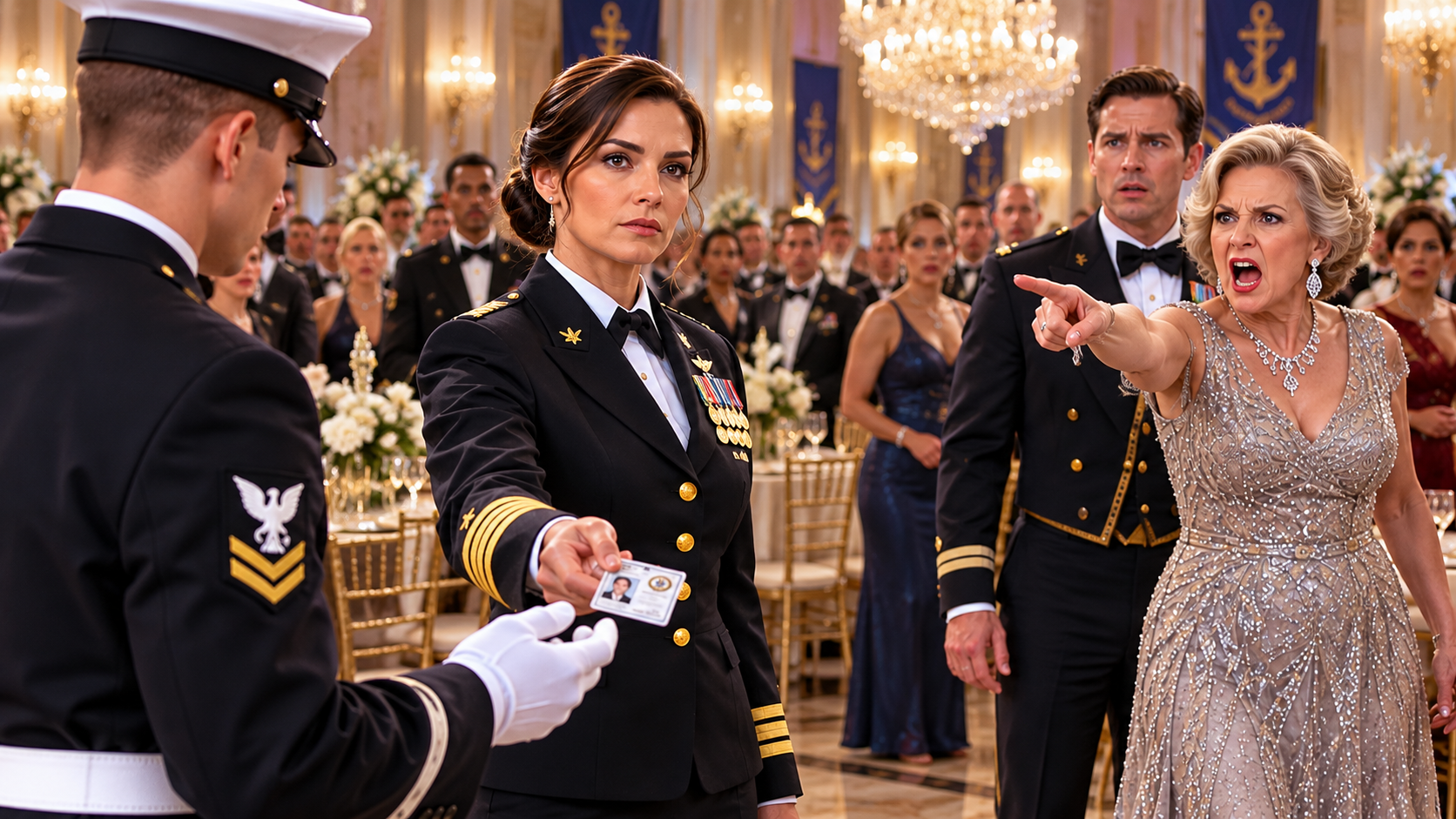
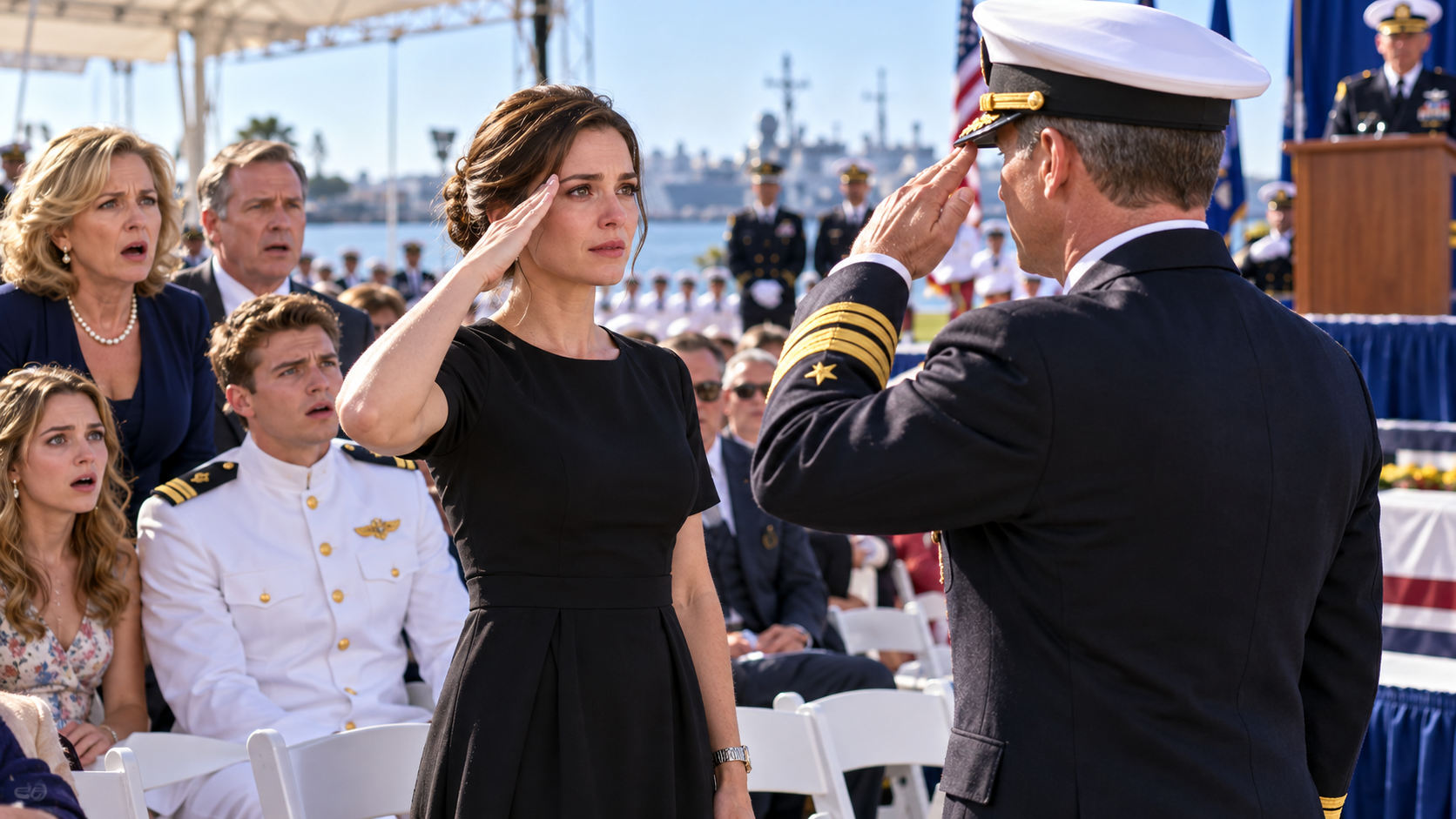
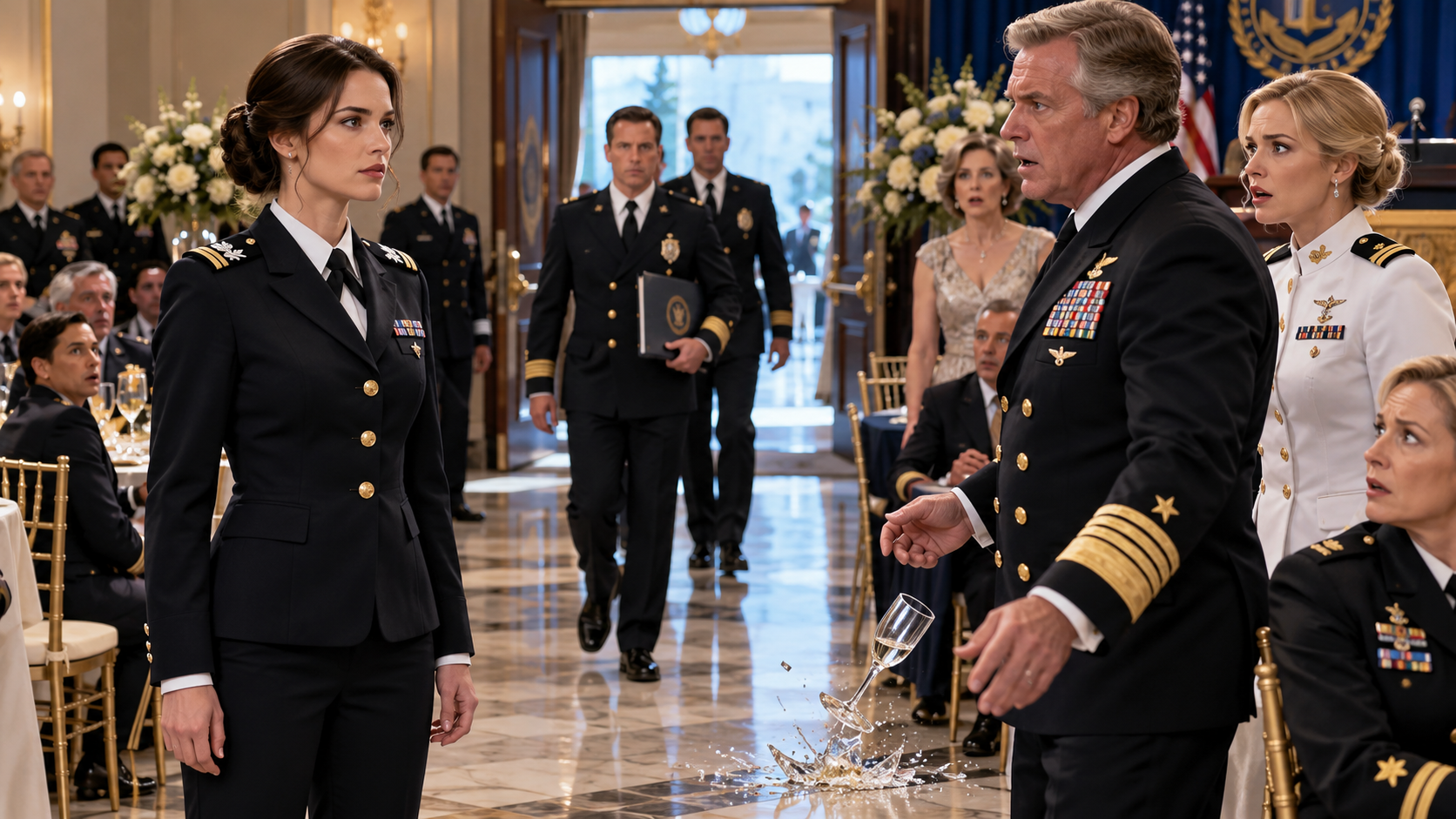
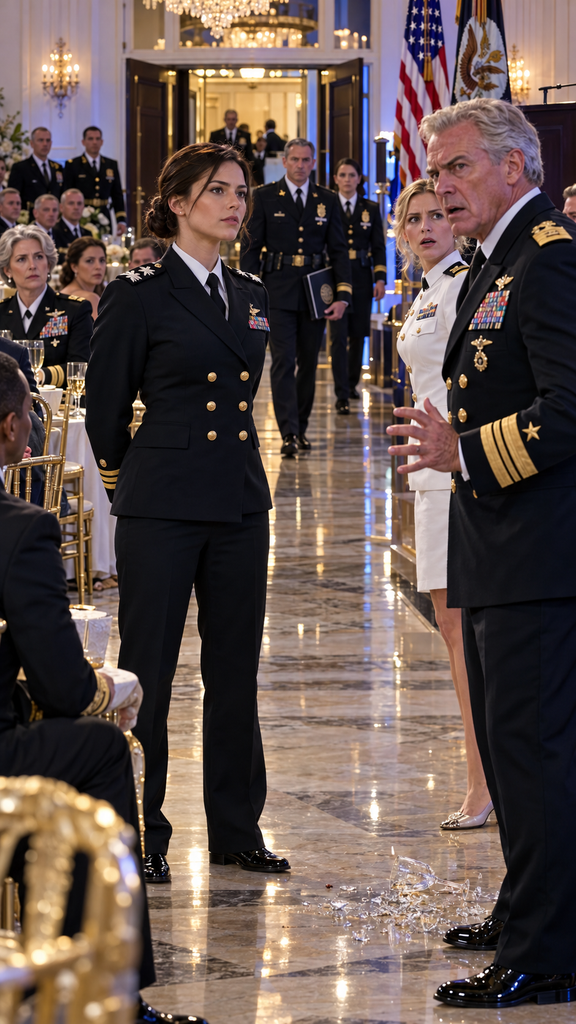
    My father was raising a champagne glass to my stepsister when I walked into the Navy reception wearing the exact rank he had told everyone I would never receive.

    Admiral Marcus Vale stood beneath a row of blue-and-gold command banners, one hand resting proudly on Tessa’s shoulder while photographers crowded near the stage.

    “To Commander Tessa Vale,” he said, his voice carrying effortlessly through the reception hall. “The youngest commander in our family.”

    People applauded.

    Tessa smiled.

    My stepmother, Claire, dabbed at the corner of one eye as though she were watching a wedding.

    Then my father saw me.

    His glass slipped from his hand.

    It struck the polished floor and shattered.

    The applause died almost immediately.

    I had imagined that moment more times than I wanted to admit.

    Sometimes, in the weaker versions of the fantasy, Marcus crossed the room and hugged me.

    Sometimes he simply stared at the silver oak leaves on my shoulders before giving the smallest nod, the one he reserved for officers who had finally met some invisible standard.

    But I had never imagined the question he actually asked.

    “Who authorized that rank?”

    He didn’t sound confused.

    He sounded offended.

    That distinction mattered.

    For several seconds, no one moved.

    I stood halfway down the center aisle in dress whites, surrounded by people who suddenly found the floor, the ceiling, and their champagne glasses fascinating.

    Tessa was still standing beside him.

    Her smile had not completely disappeared, but it had changed shape.

    She kept looking from my face to my shoulders.

    Commander.

    The same rank she wore.

    The same rank Marcus had spent the evening celebrating as though it belonged exclusively to her.

    “This is not your stage, Rowan,” my father said.

    His voice was cold and controlled.

    I had known that voice all my life.

    At home, he used it instead of shouting.

    When I was sixteen and challenged him at dinner, he used it.

    When I chose the Naval Academy instead of the civilian university he preferred at the time, he used it.

    When I selected operational duty instead of the staff assignment he had arranged through one of his old friends, he used it.

    Marcus never needed volume.

    He could turn a family conversation into a disciplinary hearing with six words and a look.

    For years, that had been enough to make me start explaining myself before anyone had even accused me of anything.

    That night, something inside me finally refused.

    “I never said it was,” I replied.

    His eyes hardened.

    Behind him, Claire stepped toward the edge of the stage.

    “Rowan,” she said softly.

    There was warning in her voice.

    I ignored it.

    My father had spent most of my adult life as one of those men whose reputation entered rooms before he did.

    Admiral Marcus Vale.

    Thirty-five years of service.

    Decorations.

    Command appointments.

    Strategy panels.

    Pentagon assignments.

    Photographs with people whose names appeared in newspapers.

    He knew personnel officials, senior officers, selection-board veterans, detailers, and people who could change the direction of a career through a five-minute conversation that never appeared in an official record.

    Growing up, I had believed that kind of influence was proof of importance.

    By the time I was thirty, I understood that influence could also become a weapon.

    Tessa accepted his mentoring.

    I didn’t.

    That was the fracture line between us.

    My stepsister was fourteen months older than me, although because our parents married when we were teenagers, strangers often assumed we were biological sisters.

    Tessa was disciplined, intelligent, polished, and very good at knowing which doors mattered.

    Marcus loved that about her.

    He advised her on every assignment.

    Which headquarters job would look right.

    Which admiral she should work for.

    Which professional association dinner she should attend.

    Which officers were worth calling after a promotion board.

    Tessa listened.

    And, to be fair, she worked hard.

    Her career wasn’t fake.

    She earned her qualifications and her evaluations.

    But Marcus had built a road around her and installed signs every hundred yards.

    I took a different road.

    Operational tours.

    Deployments.

    Uncomfortable commands.

    Assignments that didn’t put me near the people Marcus believed mattered.

    I wanted to know whether I could stand on my own.

    To my father, that wasn’t independence.

    It was defiance.

    “You were passed over,” he said.

    The words struck harder than his first question.

    Something shifted in the room.

    Admiral Joanna Price, seated near the front table, slowly lifted her eyes toward him.

    Captain Miles Arden, standing near the wall with two other officers from my former command, stopped moving entirely.

    Tessa turned toward our father.

    That was when my stomach tightened.

    She hadn’t merely assumed I failed to promote.

    Someone had told her.

    Marcus had told her.

    I looked directly at him.

    “Was I?”

    His expression barely changed.

    “I saw your status.”

    There was absolute certainty in his voice.

    The same certainty he had carried into every argument we had ever had.

    For a moment I was seventeen again, standing in our kitchen while he told me exactly what I thought, exactly what I wanted, exactly why I was wrong.

    Except I wasn’t seventeen.

    I wasn’t standing in his kitchen.

    And I wasn’t asking his permission.

    “You saw what you expected to see,” I said.

    His jaw tightened.

    Before he could answer, the master of ceremonies touched his earpiece.

    His expression changed.

    He looked toward the double doors behind me.

    They opened.

    Two uniformed officers entered.

    I recognized the insignia and the identification badges before I recognized either face.

    Inspector General.

    The senior investigator carried a sealed Navy folder beneath one arm.

    I turned toward my father.

    Marcus stared at that folder for one second too long.

    Not surprise.

    Recognition.

    Fear.

    It vanished quickly, buried under irritation, but I had already seen it.

    “Admiral Vale,” the investigator said.

    His voice was professional and quiet.

    “We need to speak with you.”

    Marcus didn’t move.

    Instead, he looked directly at me.

    “What did you do?”

    There it was.

    Not congratulations.

    Not confusion.

    Not even concern.

    Accusation.

    As if my appearance in commander insignia and the arrival of two investigators had to be parts of the same conspiracy against him.

    I almost laughed.

    Instead, I said nothing.

    “Admiral,” the investigator repeated.

    Marcus turned toward him.

    “This is a private reception.”

    “No, sir,” the investigator replied. “It is an official Navy function.”

    A few people looked down.

    Marcus knew he’d been corrected.

    That made what happened next worse.

    His face tightened, and he looked back at my shoulders.

    “Those promotion results weren’t supposed to be released until Monday.”

    Silence.

    Not awkward silence.

    Not family silence.

    Operational silence.

    The kind that falls when everyone in a room realizes something important has just happened.

    Admiral Price stood.

    Captain Arden lowered his eyes for a moment.

    Tessa stared at Marcus.

    Even Claire seemed to stop breathing.

    Until that sentence, people could have believed my father was simply shocked by an unexpected promotion.

    Maybe embarrassed that he had announced the wrong thing publicly.

    Maybe hurt that his daughter hadn’t told him.

    But now every senior officer in the room was thinking the same question.

    How did Admiral Marcus Vale know when my promotion result was supposed to become public?

    I let the silence stretch.

    Then I said, “My promotion was approved forty-three days ago.”

    Tessa looked at me.

    I continued.

    “My orders were issued last week.”

    My father’s expression hardened.

    “And my date of rank is three weeks before Tessa’s.”

    Tessa actually stepped down from the stage.

    “What?”

    The word came out barely above a whisper.

    She looked at my insignia again.

    Then at Marcus.

    “She was promoted before me?”

    Nobody answered.

    Tessa’s face changed slowly as the implications reached her.

    “You told me she was passed over.”

    “Tessa,” Marcus said. “Not now.”

    “You said the board rejected her.”

    Claire moved forward quickly.

    “There has obviously been some administrative misunderstanding.”

    Admiral Price turned toward her.

    “No, Mrs. Vale.”

    Her voice was calm.

    “That possibility was eliminated several weeks ago.”

    Several weeks.

    The words landed inside me differently from everything else.

    Several weeks.

    I knew there had been an inquiry.

    I knew personnel had reviewed an irregular hold attached to my file.

    I knew Captain Arden had been interviewed.

    I knew Admiral Price had told me, cryptically, that my promotion status was valid and that I should not discuss the matter outside official channels.

    What I had not known was how far the investigation had gone.

    Or who it had reached.

    The senior investigator stepped closer.

    “Admiral Vale, we need you to come with us.”

    Marcus stared at me.

    “What did you do?”

    This time his voice was lower.

    Almost dangerous.

    I reached inside my jacket.

    For one absurd second, half the room seemed to watch my hand.

    I removed a folded copy of my promotion orders.

    I didn’t give them to my father.

    I walked past him and handed them to Admiral Price.

    She looked at the first page, then passed them directly to the investigator without the slightest surprise.

    That was the moment Marcus understood.

    My commander insignia wasn’t the reason the Inspector General had entered the room.

    They had been investigating something before I walked through those doors.

    Long before his champagne glass shattered.

    And when the sealed folder was placed on the table beside the broken pieces of crystal, I realized the question was no longer whether my father had tried to interfere with my promotion.

    It was what the Navy had already found inside that file.

    PART 2: THE STORY MY FATHER TOLD ABOUT ME

    Six months earlier, Marcus had told me I was ruining my career over coffee.

    He had invited me to breakfast at a private club near the Pentagon, the kind of place where everyone pretended not to notice rank while noticing absolutely nothing else.

    I almost didn’t go.

    Then he texted me three times.

    Family breakfast.

    Important.

    Don’t be difficult.

    That last message was vintage Marcus.

    I went.

    He was already seated when I arrived.

    No uniform.

    Dark suit.

    Coffee untouched.

    A folder beside his elbow.

    For the first ten minutes, we discussed weather, Claire’s upcoming charity event, and Tessa’s latest assignment.

    Then he opened the folder.

    Inside was a printed career timeline.

    Mine.

    “You’re reaching the point where choices become consequences,” he said.

    I stared at him.

    “Good morning to you too.”

    “I’m serious.”

    “I know.”

    He slid the paper toward me.

    “You’ve had strong operational evaluations, but you’ve made yourself difficult to place.”

    “That’s an interesting way to describe deployments.”

    “Don’t be childish.”

    There it was.

    I leaned back.

    He tapped the page.

    “You turned down Halsey’s staff.”

    “I declined to compete for it.”

    “You embarrassed him.”

    “No. I told his aide I wanted another sea-duty assignment.”

    “Exactly.”

    He said it as though I had confessed to sabotage.

    “You keep choosing hard assignments because you think hardship proves something.”

    “I choose jobs I want.”

    “You choose jobs that isolate you from the people who make decisions.”

    That sentence stayed with me.

    Not because I believed him.

    Because he believed himself.

    Marcus saw careers as maps of relationships.

    Performance mattered, of course.

    Competence mattered.

    But access mattered too.

    I had watched him spend years cultivating people.

    Birthdays remembered.

    Retirements attended.

    Recommendations made.

    Calls returned.

    Favors accumulated.

    He wasn’t corrupt.

    At least, I hadn’t believed he was.

    He simply understood institutions the way navigators understood currents.

    And he believed refusing to use those currents was arrogance.

    “You’re up for commander soon,” he said.

    “I know.”

    “This board matters.”

    “They all matter.”

    “Don’t do that.”

    “Do what?”

    “Pretend you don’t understand what I’m saying.”

    I folded my arms.

    “Then say it plainly.”

    He studied me for a long moment.

    “You need advocates.”

    “I have advocates.”

    “You have commanding officers who respect your work. That isn’t the same thing.”

    I almost smiled.

    “You mean I don’t have your friends.”

    “I mean you’ve spent ten years proving you don’t want help.”

    “Maybe I want to know what I can earn without it.”

    His expression cooled.

    “That sentence is exactly your problem.”

    I looked toward the window.

    Outside, people were moving through the morning rain.

    “What do you want from me, Dad?”

    It was one of the last times I called him that without thinking.

    “I want you to stop treating experience as control.”

    “You mean your experience.”

    “Yes.”

    At least he was honest.

    He reached for his coffee.

    “Tessa understands this.”

    I laughed once.

    Of course she did.

    Marcus frowned.

    “What?”

    “Nothing.”

    “Say it.”

    “You always get to Tessa eventually.”

    “This isn’t about Tessa.”

    “It becomes about Tessa every time.”

    “She listens.”

    “And I don’t.”

    “You resist advice simply because it comes from me.”

    “No. I resist instructions disguised as advice.”

    His eyes narrowed.

    “Your board will see a record with unnecessary risk.”

    “My board will see my record.”

    “Boards see what they’re given.”

    I looked at him.

    Something about the way he said it bothered me.

    Not enough to understand why.

    Not then.

    I pushed the career timeline back toward him.

    “I’ll take my chances.”

    Marcus stared at the paper between us.

    “Stubbornness eventually sends a bill, Rowan.”

    I stood.

    “Then I’ll pay mine.”

    As I walked away, he said my name.

    I turned.

    For just a second, he looked less like an admiral and more like my father.

    Tired.

    Frustrated.

    Almost afraid.

    “You think I’m trying to run your life.”

    “Aren’t you?”

    “No.”

    He paused.

    “I’m trying to stop you from learning too late that institutions do not reward people simply because they deserve it.”

    I remember that sentence because, months later, I realized it had been both a warning and a confession.

    At the time, I just left.

    The board convened four months later.

    I tried not to think about it.

    That was impossible.

    Every officer says the same thing during promotion season.

    You can’t control the board.

    Focus on your job.

    Whatever happens, happens.

    Then everyone checks their phone every six minutes when results approach.

    I was serving as executive officer on an operational planning staff when the first strange thing happened.

    Captain Miles Arden called me into his office.

    Miles had been my commanding officer during one of the hardest deployments of my career.

    He rarely wasted words.

    That afternoon, he closed the door before speaking.

    “Has anyone contacted you regarding an administrative review?”

    I frowned.

    “No, sir.”

    “Anyone in personnel?”

    “No.”

    “Legal?”

    “No.”

    He leaned back.

    “Your father?”

    That surprised me.

    “No.”

    Miles watched my face.

    “Why?”

    He didn’t answer immediately.

    “An inquiry came through yesterday requesting documentation related to an evaluation from four years ago.”

    I almost laughed.

    “Four years?”

    “Yes.”

    “Which evaluation?”

    He named it.

    I remembered the deployment instantly.

    We had been operating under brutal conditions.

    During a logistics crisis, I had authorized a change in schedule that delayed one exercise but protected maintenance hours for exhausted personnel.

    The decision had been reviewed.

    Approved.

    Documented.

    My final evaluation had praised my judgment.

    “What are they reviewing?”

    “That,” Miles said, “is what I asked.”

    “And?”

    “No clear answer.”

    I sat still.

    “Is this connected to the board?”

    “I don’t know.”

    Miles had a way of saying I don’t know that meant he had theories he wasn’t willing to share yet.

    He folded his hands.

    “Did your father ever discuss that incident with you?”

    My stomach tightened.

    Once.

    At Christmas.

    Marcus had called the decision “operationally defensible but professionally visible.”

    I had asked what that meant.

    He told me senior officers remembered officers who created complications.

    I told him exhausted sailors weren’t complications.

    The argument lasted twenty minutes.

    “Yes,” I said.

    Miles nodded once.

    “That’s all I needed.”

    “Sir.”

    He stopped.

    “Am I under investigation?”

    “No.”

    “Then what is happening?”

    “I don’t know yet.”

    That was the first lie Miles ever told me.

    A protective lie, maybe.

    But still a lie.

    Two weeks later, my father called.

    “You heard anything?”

    I was standing outside a briefing room.

    “About?”

    “The board.”

    “No.”

    A pause.

    Then Marcus said, “Prepare yourself.”

    Every muscle in my shoulders tightened.

    “For what?”

    “Disappointment.”

    I felt cold.

    “Why would you say that?”

    “Because I know how these things work.”

    “That isn’t an answer.”

    “Rowan.”

    “No. You called me. Tell me what you’re talking about.”

    His voice changed.

    “Your record has vulnerabilities.”

    “You’ve been saying that for years.”

    “And you’ve been refusing to listen for years.”

    “Do you know something?”

    Silence.

    Not long.

    Maybe two seconds.

    But I heard it.

    Then he said, “I know enough.”

    The call ended badly.

    Most calls with Marcus did.

    Three days later, Tessa texted me.

    I didn’t know what had happened between you and Dad, but you don’t have to turn everything into a war.

    I stared at the message.

    Then typed:

    What did he tell you?

    The typing indicator appeared.

    Disappeared.

    Appeared again.

    Finally:

    Nothing. Forget it.

    I called her.

    She didn’t answer.

    The next morning, an administrative hold appeared in my personnel account.

    No explanation.

    No accusation.

    Just a code.

    Temporary review.

    I sat at my desk staring at the screen until the letters blurred.

    Then I called personnel.

    The lieutenant who answered sounded uncomfortable almost immediately.

    “Commander—”

    “I’m not a commander.”

    A pause.

    “Right. Sorry. Lieutenant Commander Vale.”

    My heart jumped.

    Why had he said commander?

    “What is the hold?”

    “I’m not authorized to discuss the underlying review.”

    “What review?”

    “I can tell you it’s administrative.”

    “Based on what?”

    “I don’t have that information.”

    “Who initiated it?”

    Another pause.

    “I can’t provide that.”

    I thanked him because training dies hard, disconnected, and sat completely still.

    Five minutes later, Admiral Joanna Price called me.

    I had met her only twice.

    She was three levels above me in my reporting chain.

    “Lieutenant Commander Vale.”

    “Yes, ma’am.”

    “You’ve seen the hold.”

    It wasn’t a question.

    “Yes, ma’am.”

    “Do not contact outside personnel channels about it.”

    I frowned.

    “Ma’am?”

    “Do not call anyone privately. Do not ask family members to make inquiries. Do not engage with anyone who claims they can fix it.”

    My mouth went dry.

    “I wasn’t planning to.”

    “I know.”

    Her tone softened by half a degree.

    “Continue performing your duties.”

    “Yes, ma’am.”

    “And Rowan?”

    It was the first time she had used my first name.

    “Yes?”

    “Keep copies of everything.”

    The line disconnected.

    That night, Marcus called again.

    I watched the phone ring.

    Then stop.

    He called a second time.

    I answered.

    “What?”

    He didn’t react to my tone.

    “I heard there’s an issue.”

    Every instinct in my body sharpened.

    “What issue?”

    “With your record.”

    “Where did you hear that?”

    “People talk.”

    “Which people?”

    “Don’t interrogate me.”

    “Then stop calling with information you shouldn’t have.”

    His silence told me more than his words.

    Finally, he said, “This is what I warned you about.”

    I looked at the dark window of my apartment.

    “What exactly did you warn me about?”

    “That eventually your choices would be reviewed by people who don’t share your interpretation of them.”

    “My interpretation?”

    “You’ve always assumed good intentions excuse poor positioning.”

    There was something beneath the sentence.

    Something ugly.

    For years, I had heard criticism from my father and translated it into concern.

    High standards.

    Tough love.

    Generational differences.

    That night, for the first time, I wondered whether I had been translating him incorrectly.

    “Did you have something to do with this?”

    The silence was different now.

    Longer.

    Then he laughed once.

    “You think I control Navy personnel?”

    “I think you know a lot of people.”

    “So do you.”

    “Not like you.”

    “Be careful, Rowan.”

    My grip tightened around the phone.

    “Is that advice?”

    “Yes.”

    “It sounds like a threat.”

    “That says more about you than me.”

    He hung up.

    I stood in my apartment for a long time with the phone still pressed to my ear.

    Three days later, Inspector General personnel requested an interview.

    That was when everything changed.

    PART 3: WHAT HE KNEW

    The investigator’s name was Commander Ethan Ross.

    He didn’t tell me what the investigation concerned.

    He told me what it did not concern.

    “You are not the subject.”

    We were sitting in a secure conference room with no windows.

    A legal officer sat beside him taking notes.

    I placed my phone in a lockbox outside before entering.

    “Then why am I here?”

    “To establish a timeline.”

    “Of what?”

    Ross studied me.

    “Any conversations you’ve had with Admiral Vale concerning your promotion board, personnel status, assignments, evaluations, or administrative record during the last twelve months.”

    Hearing my father’s name made something inside me go still.

    I had suspected.

    I hadn’t wanted to be right.

    “You’re investigating my father.”

    “I didn’t say that.”

    “You didn’t have to.”

    His expression didn’t change.

    “Start with the earliest relevant conversation you remember.”

    So I did.

    The breakfast.

    The career timeline.

    The discussion about advocates.

    His warning that boards saw what they were given.

    The Christmas argument about my old deployment decision.

    His call telling me to prepare for disappointment.

    His claim that he “knew enough.”

    Ross interrupted only to clarify times and dates.

    When I finished, he asked, “Did Admiral Vale ever offer to contact anyone on your behalf?”

    “Many times.”

    “For this promotion cycle?”

    “Yes.”

    “What did you say?”

    “No.”

    “Every time?”

    “Yes.”

    “Why?”

    I looked at him.

    “Because he’s my father.”

    Ross waited.

    “That isn’t illegal.”

    “I didn’t say it was.”

    “I wanted my record considered on its own.”

    He wrote something.

    “Did Admiral Vale object?”

    “Yes.”

    “How?”

    “He called me stubborn.”

    “Anything else?”

    I almost smiled.

    “You want the complete list?”

    The legal officer lowered her eyes, hiding what might have been amusement.

    Ross didn’t smile.

    “Yes.”

    So I gave it to him.

    Difficult.

    Naive.

    Proud.

    Self-sabotaging.

    Ungrateful.

    Idealistic.

    Professionally immature.

    Most had been delivered in calm tones over expensive dinners.

    Ross finally closed his notebook.

    “One more question.”

    “All right.”

    “Did Admiral Vale ever tell you that you had been passed over?”

    “No.”

    Not yet.

    “Did he imply it?”

    “Yes.”

    “When?”

    “The call I mentioned.”

    “Exact words?”

    “Prepare yourself. I asked what for. He said disappointment.”

    Ross nodded.

    The interview ended.

    I walked outside feeling as though someone had opened a door in my family and shown me a room that had always been there.

    I still didn’t know what was inside.

    But I couldn’t pretend the wall was solid anymore.

    Weeks passed.

    The administrative hold remained.

    Marcus called twice.

    I didn’t answer.

    Claire texted me once.

    Your father is under enormous stress. Whatever disagreement you two are having, please don’t make it worse.

    I stared at that message for several minutes.

    Then I deleted it.

    Not because I hated Claire.

    I didn’t.

    She had spent twenty years trying to smooth every sharp edge in our family.

    When Marcus insulted me, she translated.

    He worries about you.

    When I fought back, she softened it for him.

    Rowan is under pressure.

    When Tessa and I became competitive, Claire called it sibling tension.

    Nothing was ever what it was.

    Everything had another name.

    I was tired of renamed wounds.

    A week before the reception, Admiral Price summoned me.

    This time we met in her office.

    She pointed to the chair opposite her desk.

    I sat.

    “Your promotion status has been cleared.”

    For several seconds, I forgot how to speak.

    “Ma’am?”

    “The administrative review found no basis to delay your advancement.”

    My heart slammed once against my ribs.

    “Was I selected?”

    Price looked at me.

    “Yes.”

    The room went very quiet.

    I had spent months telling myself I could accept either result.

    That promotion did not define competence.

    That careers ended.

    That boards were imperfect.

    That I had chosen my path with open eyes.

    None of those truths stopped the rush of relief.

    I looked down at my hands.

    “When?”

    “Your selection was approved thirty-six days ago.”

    I looked up sharply.

    “Thirty-six?”

    “Yes.”

    “Then why wasn’t I told?”

    “Because your name was temporarily withheld pending administrative review.”

    The pieces began moving.

    Marcus telling me to prepare for disappointment.

    His strange certainty.

    The unexplained hold.

    “Who initiated the review?”

    Price’s expression became unreadable.

    “I can’t discuss an active Inspector General matter.”

    My pulse quickened.

    “Is it connected to my father?”

    She paused.

    That pause was enough.

    “Ma’am.”

    “Lieutenant Commander Vale, what I can tell you is that your record was independently reviewed. The underlying issue raised against you was determined to have no material basis.”

    “What issue?”

    “The judgment call during your deployment under Captain Arden.”

    I almost laughed.

    “That was four years ago.”

    “I know.”

    “It was already reviewed.”

    “I know.”

    “My evaluation praised the decision.”

    “I know.”

    I looked at her.

    “Then why was it raised now?”

    Price folded her hands.

    “That is part of the inquiry.”

    I felt anger then.

    Not the explosive kind.

    The cold kind.

    The kind that makes everything sharpen.

    “Someone used that incident to hold my promotion.”

    “Someone caused it to be reexamined.”

    “And it delayed notification.”

    “Yes.”

    “Could it have stopped the promotion?”

    “If the review had found actionable material, your status could have remained withheld.”

    I looked away.

    Outside her office, the Navy continued functioning.

    Phones rang.

    Doors opened.

    People moved down corridors.

    Inside that room, my entire understanding of the previous six months changed.

    “What happens now?”

    “Your orders will be issued.”

    “And the investigation?”

    “Continues.”

    I looked back at her.

    “Do I need to do anything?”

    “Yes.”

    “What?”

    “Do your job.”

    I almost laughed again.

    Price’s expression softened.

    “And attend the reception next Friday.”

    My stomach tightened.

    Tessa’s reception.

    It had been planned for weeks.

    Marcus had practically turned her promotion into a family ceremony.

    “I don’t think that’s a good idea.”

    “I didn’t ask whether it was comfortable.”

    That sounded like something Marcus would say, but without the control behind it.

    Price continued.

    “You were invited before your promotion status was resolved.”

    “Yes.”

    “You remain invited.”

    “Yes, ma’am.”

    “Your date of rank will precede Commander Tessa Vale’s by three weeks.”

    I stared at her.

    She let me absorb that.

    Then she added, “Wear the appropriate uniform.”

    I understood immediately.

    “You want me to wear commander insignia.”

    “I want you to wear the rank you hold.”

    “Does my father know?”

    “I cannot discuss what Admiral Vale knows.”

    There was something strange in her tone.

    Not evasive.

    Careful.

    I stood to leave.

    At the door, she stopped me.

    “Rowan.”

    I turned.

    “If anyone asks you questions concerning the investigation, do not speculate.”

    “Yes, ma’am.”

    “And if someone reacts badly to your promotion, allow them to react.”

    I frowned.

    “Ma’am?”

    “Do not protect people from the consequences of their own words.”

    I thought about that sentence while dressing for the reception.

    I thought about it while fastening the silver oak leaves to my uniform.

    I thought about it while sitting in my car outside the venue, hands resting on the steering wheel.

    Part of me wanted to leave.

    Not because I was ashamed.

    Because I knew exactly what Marcus would see when I walked inside.

    Not my achievement.

    Disobedience.

    I almost texted Tessa.

    I didn’t.

    Then I remembered being twenty-three and calling Marcus after earning my warfare qualification.

    He had congratulated me.

    Then immediately asked how I ranked against the other officers.

    I remembered earning my first department-head recommendation.

    He asked why it hadn’t come six months earlier.

    I remembered returning from deployment exhausted and proud, waiting for him to ask what I had learned.

    Instead, he told me Tessa had been selected for a prestigious staff billet.

    For years, I had believed there was some achievement large enough to cross the distance between us.

    One more qualification.

    One more strong evaluation.

    One more deployment.

    One more rank.

    Sitting in that car, I understood something painful.

    The distance had never been created by my lack of achievement.

    It came from my refusal to let him own it.

    So I got out.

    I walked into the reception.

    And his champagne glass hit the floor.

    PART 4: INSIDE THE FOLDER

    After Marcus’s remark about the Monday release, the reception effectively ended without anyone announcing it.

    The music stopped.

    The photographer lowered his camera.

    Someone quietly moved junior officers away from the center of the room.

    Tessa remained near the stage, staring at our father.

    Marcus finally turned toward the investigator.

    “I assume you have written authorization for whatever this is.”

    Commander Ross answered, “Yes, sir.”

    I recognized him immediately.

    The same investigator who had interviewed me.

    That realization made my chest tighten.

    Marcus glanced toward me.

    He saw recognition in my face.

    His own expression changed.

    “You knew.”

    “No,” I said.

    “You knew they were coming.”

    “I knew there was an investigation.”

    Claire made a small sound.

    Tessa stared at me.

    “You knew Dad was being investigated?”

    “I knew there was an investigation connected to my personnel hold.”

    Marcus stepped toward me.

    “Be very careful what you imply.”

    For the first time in my life, his anger did not make me afraid.

    Maybe because there were too many witnesses.

    Maybe because the insignia on my shoulders felt heavier than his voice.

    Or maybe because I finally understood the mechanism.

    Marcus had always possessed power over me partly because I believed he knew more.

    About the Navy.

    About people.

    About my career.

    About what was possible.

    Once I realized he had been using certainty as a substitute for truth, the spell broke.

    “I don’t have to imply anything,” I said.

    Ross stepped between us without making the movement dramatic.

    “Admiral Vale, we’ll continue this conversation elsewhere.”

    Marcus looked toward Admiral Price.

    “Joanna.”

    She didn’t respond.

    “You allowed this?”

    Price’s face remained calm.

    “I complied with the Inspector General.”

    “At my daughter’s promotion event.”

    “Tessa’s promotion event,” Price corrected.

    A flicker of humiliation crossed his face.

    He looked around the room.

    People were watching.

    For Marcus, that might have been the worst part.

    Not the investigation.

    Not the accusation.

    The audience.

    He had spent decades controlling how rooms understood him.

    That night, the room was forming its own opinion.

    Tessa moved closer.

    “Dad, tell me the truth.”

    “Tessa, go home.”

    “No.”

    His head turned sharply.

    She almost stepped back.

    Almost.

    Then she said, “You told me Rowan failed the board.”

    “I told you what I believed.”

    “No.”

    Her voice cracked.

    “You told me you knew.”

    He didn’t answer.

    Tessa’s face went pale.

    I had spent years resenting her for being the daughter Marcus celebrated.

    In that moment, I saw something I had missed.

    She had been living inside his system too.

    The difference was that she had followed the rules.

    That didn’t mean she understood who had written them.

    Claire touched Marcus’s arm.

    “We should go.”

    He pulled away.

    Ross lifted the sealed folder.

    “Sir.”

    Marcus stared at it.

    “What exactly are you alleging?”

    “I am not discussing findings in this room.”

    “Then stop creating theater.”

    Ross’s expression remained neutral.

    “I asked to speak with you privately twice.”

    Several officers looked away.

    Marcus had no answer.

    He walked out with the investigators.

    Claire followed.

    Before leaving, she looked at me.

    There was fear in her expression.

    And something else.

    Not anger.

    Not quite.

    Recognition.

    As though some argument she had been having with herself for years had finally become impossible to avoid.

    The doors closed behind them.

    For several seconds, nobody spoke.

    Then Tessa turned toward me.

    “Did you know?”

    I shook my head.

    “Not that he was the focus.”

    “But you suspected.”

    “Yes.”

    She looked down.

    “Why didn’t you tell me?”

    I nearly said, Because you never asked.

    The sentence reached my mouth.

    I stopped it.

    Because that would have been Marcus speaking through me.

    So I gave her the truth instead.

    “Because I didn’t know what was true yet.”

    She looked toward the doors.

    “He told me you were passed over two weeks ago.”

    My stomach tightened.

    “Two weeks?”

    “Yes.”

    That was before my orders were issued.

    Before the public release.

    Before anyone in our family should have known the result.

    “What exactly did he say?”

    Tessa swallowed.

    “We were having dinner. I asked whether you’d heard anything. He said your name wasn’t moving forward.”

    “Those words?”

    “Yes.”

    “Did he say how he knew?”

    “He said he had checked.”

    Admiral Price had approached quietly.

    Tessa looked at her.

    “Is that important?”

    Price answered carefully.

    “It may be.”

    Tessa’s eyes filled.

    She blinked hard.

    “I thought she lost.”

    The confession was barely audible.

    Then she looked at me.

    “And part of me was relieved.”

    I appreciated that more than an apology.

    Because it was true.

    We had been turned into a competition so gradually neither of us remembered when it began.

    Every milestone compared.

    Every assignment measured.

    Every compliment balanced.

    Marcus had never needed to tell us we were competing.

    He simply placed our achievements side by side until we learned to do it ourselves.

    “I know,” I said.

    Tessa looked startled.

    “I was jealous of you too.”

    “For what?”

    I almost laughed.

    “For being easy for him to love.”

    Her face broke.

    Not dramatically.

    Just enough.

    “Oh, Rowan.”

    That was the first time I understood she had never felt easy either.

    Admiral Price gave us a moment, then said, “Commander Vale.”

    Both Tessa and I looked at her.

    For one absurd second, she almost smiled.

    “Rowan.”

    “Yes, ma’am.”

    “You may be contacted for another interview.”

    “I understand.”

    “Tessa may be as well.”

    Tessa nodded.

    Price left.

    Captain Arden approached next.

    He had remained near the wall through everything.

    “You all right?” he asked.

    “No.”

    “Good answer.”

    I looked at him.

    “You knew more than you told me.”

    “Yes.”

    “How much?”

    “Enough to know the review smelled wrong.”

    “Why?”

    “Because the question they asked about your old deployment decision didn’t come through normal channels at first.”

    My stomach tightened.

    “What do you mean?”

    “Someone called me privately.”

    “Who?”

    Miles hesitated.

    “An officer on Admiral Vale’s staff.”

    I felt cold.

    “He called you?”

    “Asked whether I’d ever had concerns about your judgment.”

    “Before the administrative review?”

    “Yes.”

    “How long before?”

    “Two days.”

    That was the moment the last part of me that wanted an innocent explanation finally went quiet.

    “What did you say?”

    “I said your decision had been reviewed four years ago and I considered the matter closed.”

    “And then?”

    “He asked whether I’d be willing to put concerns in writing.”

    My jaw tightened.

    “Concerns you didn’t have.”

    “Correct.”

    “Why didn’t you tell me?”

    “Because I reported the contact.”

    “To Price?”

    “Eventually.”

    He looked toward the doors.

    “Rowan, I didn’t know where it would go. At first I thought someone was doing an overly aggressive records check. Then another officer called.”

    “Who?”

    “Personnel.”

    He lowered his voice.

    “They asked why I had raised concerns about you.”

    I stared at him.

    “But you hadn’t.”

    “No.”

    “So somebody told personnel you had.”

    Miles nodded.

    That was worse.

    Not because it was more dramatic.

    Because it was more precise.

    Someone had tried to manufacture the appearance of concern.

    Not fabricate an incident.

    The incident was real.

    That was what made the strategy clever.

    Take a documented decision.

    Strip away context.

    Suggest unresolved questions.

    Trigger a review.

    Delay the promotion.

    Nothing obvious enough to look like sabotage from a distance.

    Everything deniable.

    “Was it him?” I asked.

    Miles held my gaze.

    “That is what the Inspector General has been determining.”

    I looked toward the table where Marcus’s broken champagne glass had been cleared away.

    The sealed folder was gone.

    For the first time, I wanted desperately to know what was inside it.

    Three days later, I found out.

    Commander Ross called me back.

    Same secure room.

    Same legal officer.

    This time Admiral Price was present.

    Ross placed a folder on the table.

    Not the original.

    A working copy.

    “We have concluded the portion of the inquiry concerning your promotion status.”

    I sat very still.

    “What did you find?”

    Ross opened the folder.

    “Admiral Vale accessed pre-release promotion information through an authorized system available to his office for official personnel-planning purposes.”

    I felt my heartbeat in my throat.

    “Was he allowed to see my result?”

    “His office had access to the broader data set.”

    “That isn’t what I asked.”

    “No.”

    Ross looked directly at me.

    “There was no official requirement for him to query your individual status.”

    I said nothing.

    He continued.

    “Records show your promotion status was accessed from his credentials eleven days before he told Commander Tessa Vale that you had been passed over.”

    My mouth went dry.

    “But I wasn’t passed over.”

    “No.”

    “Then why did he tell her that?”

    “We cannot establish motive as fact.”

    Price spoke next.

    “What we can establish is sequence.”

    Ross turned a page.

    “Your name was selected.”

    Another page.

    “Admiral Vale accessed the pre-release list.”

    Another.

    “Within forty-eight hours, a member of his staff contacted Captain Arden regarding the deployment decision in your record.”

    Another page.

    “Two days later, an informal personnel query was made asking whether unresolved judgment concerns existed.”

    Another.

    “Personnel interpreted the query as originating from a legitimate senior-level concern and initiated a temporary administrative review.”

    I stared at the pages.

    Each event alone could be explained.

    Together, they formed a line.

    A line leading directly from my father seeing my selection to my promotion being withheld.

    “Did he order his staff officer to call Captain Arden?”

    Ross paused.

    “Yes.”

    The word hurt more than I expected.

    I looked down.

    For months, part of me had hoped Marcus had simply heard rumors.

    Maybe someone had misunderstood.

    Maybe his arrogance had made him overconfident.

    Maybe he had meddled without understanding the effect.

    That last possibility disappeared.

    “What exactly did he ask his staff to do?”

    “Determine whether the deployment decision reflected a pattern of judgment concerns that had not been adequately documented.”

    I almost laughed.

    There was no humor in it.

    “He knew it didn’t.”

    Ross didn’t respond.

    “He knew because I argued with him about the report. He knew Miles had defended the decision.”

    Still no response.

    I looked at Price.

    “He wasn’t checking.”

    “No,” she said quietly.

    “He was looking for something.”

    “Yes.”

    “After he found out I had been selected.”

    Price did not answer.

    She didn’t need to.

    Ross continued.

    “We also recovered correspondence showing Admiral Vale contacted a personnel official after the hold was created.”

    My fingers curled against my knees.

    “What correspondence?”

    “He asked whether the review could remain in place through the public release date.”

    For several seconds, I heard nothing.

    No ventilation.

    No pen moving.

    Nothing.

    I looked at Ross.

    “Why?”

    “He stated that releasing your selection while questions remained could create institutional embarrassment.”

    I felt something inside me collapse.

    Institutional embarrassment.

    Marcus had spent my entire life taking personal desires and dressing them in respectable language.

    Control became guidance.

    Criticism became standards.

    Favoritism became mentorship.

    And now sabotage had become concern for institutional embarrassment.

    “Did the personnel official agree?”

    “No.”

    Ross turned another page.

    “The request was considered unusual and was referred upward. That referral contributed to the Inspector General review.”

    I looked at Price.

    “So that’s how you got involved.”

    “Yes.”

    “Did he ask anyone to remove me from the list?”

    Ross chose his words carefully.

    “We found no evidence that Admiral Vale attempted to alter the selection board’s vote or falsify the official result.”

    I exhaled.

    That distinction mattered.

    “However,” he continued, “we found evidence that after learning you had been selected, he used his position to initiate scrutiny outside ordinary channels and subsequently advocated extending the resulting hold.”

    There it was.

    Not a dramatic conspiracy.

    Not a forged document.

    Something more believable.

    My father had found out I had succeeded without him.

    And he had tried to create enough doubt to stop the success from becoming visible.

    I thought of the breakfast.

    Boards see what they’re given.

    I thought of his warning.

    Prepare yourself.

    I thought of his call after the hold appeared.

    This is what I warned you about.

    My stomach turned.

    He hadn’t predicted the consequence.

    He had helped create it.

    “Why did he think I was passed over?”

    Ross answered.

    “We believe he assumed the hold would remain through the release cycle.”

    “So when he told Tessa I had been rejected…”

    “He could not have known that from official results,” Ross said.

    “Because it wasn’t true.”

    “Correct.”

    I sat back.

    That was why he had looked at my insignia as though it were an administrative error.

    His plan had failed somewhere he hadn’t expected.

    The hold had been reviewed.

    The allegation had collapsed.

    My promotion had cleared.

    And nobody had told him in time.

    His shock at the reception had been genuine.

    Just not for the reason anyone initially thought.

    Price closed the folder.

    “There is another matter.”

    I looked at her.

    “Tessa’s promotion.”

    My body tensed.

    “What about it?”

    “There is no evidence Admiral Vale improperly influenced her selection.”

    Relief came so quickly I almost felt guilty.

    Tessa had earned it.

    Whatever else existed between us, I didn’t want her career destroyed because Marcus had built too much of his identity around it.

    Price continued.

    “Her record and selection are not part of the misconduct finding.”

    I nodded.

    “Good.”

    Ross looked at me.

    “You may be asked to provide testimony during subsequent administrative proceedings.”

    “What happens to him?”

    “I can’t predict final disposition.”

    Of course he couldn’t.

    The Navy moves carefully when careers, due process, and senior officers are involved.

    Real accountability rarely arrives with dramatic music.

    It arrives through memoranda.

    Statements.

    Reviews.

    Recommendations.

    Findings.

    Signatures.

    But before I left, Ross said one thing I would remember for the rest of my life.

    “Commander Vale.”

    I turned.

    “Your promotion was not restored.”

    I frowned.

    He continued.

    “It was never his to take.”

    I walked out of that building wearing silver oak leaves that suddenly felt lighter.

    PART 5: THE RANK WAS NEVER THE POINT

    Marcus called me that night.

    I almost let it ring.

    Then I answered.

    “Rowan.”

    His voice sounded tired.

    Not weak.

    Marcus never sounded weak.

    But something had been stripped from him.

    “What do you want?”

    “We need to talk.”

    “We are talking.”

    “Not by phone.”

    “No.”

    A pause.

    “I’m still your father.”

    For years, those words would have worked.

    Not because they meant anything specific.

    Because they carried obligation.

    Family.

    History.

    Guilt.

    This time I heard the sentence differently.

    “I know who you are.”

    He inhaled slowly.

    “You’ve heard their version.”

    I closed my eyes.

    “Their version?”

    “The Inspector General has reduced months of legitimate concern into a narrative.”

    “You accessed my result.”

    Silence.

    “You had your staff call Captain Arden.”

    Silence.

    “You triggered a review of something that had been resolved four years earlier.”

    “I raised a concern.”

    “After you found out I was selected.”

    “You don’t understand the responsibility senior leaders have.”

    I almost laughed.

    There he was.

    Back behind the uniform.

    “I understand perfectly.”

    “No, you don’t.”

    His voice sharpened.

    “Your record contained a decision that could have been interpreted differently under board scrutiny.”

    “The board had already selected me.”

    “That doesn’t make the decision irrelevant.”

    “It made it irrelevant to you until you saw the result.”

    Silence.

    I continued.

    “You didn’t question that decision when I made commander candidate lists.”

    “You don’t know what I questioned.”

    “You didn’t question it when I deployed again.”

    “Rowan—”

    “You didn’t question it when I received my evaluation.”

    “Stop.”

    “You didn’t question it until you found out I had been selected without taking the path you built for me.”

    “Stop.”

    For the first time, he raised his voice.

    I went silent.

    He breathed heavily into the phone.

    Then, quieter, he said, “You think this was about punishing you.”

    “What was it about?”

    “You were becoming exactly the officer I warned you not to become.”

    I stared at the wall.

    “Meaning?”

    “Talented. Respected. And convinced talent protects you from politics.”

    “So you tried to teach me a lesson.”

    “No.”

    “You tried to delay my promotion.”

    “I tried to make sure the institution had examined the whole record.”

    “By extending the hold past public release.”

    He said nothing.

    “They found the message, Marcus.”

    I called him by his first name deliberately.

    He noticed.

    “Don’t.”

    “Why?”

    “I am your father.”

    “And I am an officer whose personnel status you accessed without a legitimate reason.”

    His breath caught.

    Not much.

    Enough.

    “You don’t get to switch between those identities depending on which one gives you power.”

    “That is an outrageous thing to say.”

    “No. It’s accurate.”

    I stood and walked toward the window.

    The city outside was scattered with lights.

    “You told Tessa I failed.”

    “I believed the hold would—”

    “You lied to her.”

    “I believed—”

    “You knew the board selected me.”

    Silence.

    “You knew.”

    More silence.

    “You saw the list.”

    Finally, he said, “Yes.”

    The word settled between us.

    I expected anger.

    Instead, I felt something close to grief.

    Not because I had lost my father that night.

    Because I realized how long ago I had been losing him.

    Piece by piece.

    Every achievement turned into criticism.

    Every disagreement treated as insubordination.

    Every independent choice interpreted as rejection.

    Marcus didn’t want me to fail in life.

    That would have been simpler.

    He wanted me to succeed in a way that proved he had been right.

    When I succeeded differently, the success itself became threatening.

    “Why?” I asked.

    He didn’t answer.

    “Why did it matter so much?”

    “You don’t understand.”

    “Then explain it.”

    Another long pause.

    When he finally spoke, his voice was lower.

    “I spent my career learning how this institution works. I tried to give you everything I knew.”

    “I didn’t want everything.”

    “That was the insult.”

    There it was.

    Small.

    Human.

    Ugly.

    Not strategy.

    Not institutional concern.

    Not leadership.

    Hurt pride.

    I closed my eyes.

    “I wasn’t insulting you.”

    “You rejected every opportunity I created.”

    “I chose my own opportunities.”

    “You made a point of it.”

    “Because every time I accepted your help, it became proof that I owed you the next decision.”

    “That isn’t true.”

    “It is.”

    “You always needed someone to fight.”

    “No.”

    My voice stayed calm.

    “I needed a father who could watch me choose differently without treating it as betrayal.”

    He said nothing.

    So I said the thing I had spent years trying not to admit.

    “I kept thinking there would be one achievement big enough for you.”

    His breathing changed.

    “One qualification. One deployment. One evaluation. One promotion. Something that would finally make you proud without adding a correction afterward.”

    “Rowan—”

    “But there wasn’t.”

    “That isn’t fair.”

    “I made commander.”

    Silence.

    “Your first question was who authorized it.”

    He had no answer.

    That hurt more than I expected.

    Eventually, he said, “I was shocked.”

    “No.”

    I looked at my reflection in the glass.

    “You were angry.”

    “You walked into Tessa’s reception wearing an unreleased promotion.”

    “It was my rank.”

    “You knew what it would do.”

    I almost smiled.

    There it was again.

    My achievement transformed into an action against him.

    “I walked into a Navy reception wearing the uniform I was ordered to wear.”

    “You could have told me.”

    “You told everyone I had been passed over.”

    He went quiet.

    Then he said something astonishing.

    “I was trying to protect the family.”

    I actually laughed.

    One short sound.

    “From what?”

    He didn’t answer.

    “From having two commanders?”

    “Don’t be ridiculous.”

    “From Tessa not being first?”

    “This had nothing to do with Tessa.”

    “Then what were you protecting?”

    His silence answered.

    His story.

    The family Marcus had built in his head had roles.

    He was the architect.

    Tessa was the daughter who listened and succeeded.

    I was the daughter who resisted and eventually learned the cost.

    If I succeeded without learning his lesson, the story broke.

    He had needed me to fail long enough to make the lesson true.

    “You weren’t protecting us,” I said.

    “You were protecting your version of us.”

    He disconnected.

    Three weeks later, the Navy announced that Admiral Marcus Vale had been temporarily reassigned from duties involving personnel oversight while administrative proceedings continued.

    The wording was careful.

    It always is.

    Months later, the findings became final.

    He received formal administrative action for misuse of position, improper involvement in a subordinate personnel process, and unauthorized use of pre-release information for a purpose unrelated to his official duties.

    There was no dramatic courtroom.

    No handcuffs.

    No public confession.

    His stars weren’t ripped from his uniform in front of cameras.

    Real institutions rarely deliver justice that way.

    But he lost the advisory role that had given him access to personnel systems.

    He was removed from several panels.

    His retirement, already approaching, came earlier than he had planned.

    People who once returned his calls immediately began taking longer.

    Some never called back.

    For a man like Marcus, that may have been the punishment he understood best.

    Tessa called me the day the findings were finalized.

    We met at a small restaurant halfway between our apartments.

    No uniforms.

    No parents.

    No champagne.

    For the first ten minutes, we talked about nothing important.

    Then she put down her fork.

    “I owe you an apology.”

    “You don’t owe me his apology.”

    “No.”

    She looked at me.

    “I owe you mine.”

    I waited.

    “I liked being the one he approved of.”

    I appreciated the precision of the sentence.

    She continued.

    “I knew he compared us. I knew it hurt you. And sometimes I let it happen because being on the winning side felt good.”

    I looked down at my glass.

    “I did things too.”

    “Like what?”

    “I assumed everything came easily to you.”

    She smiled sadly.

    “It didn’t.”

    “I know that now.”

    Tessa leaned back.

    “He planned my entire career.”

    “You let him.”

    “I thought that was what love looked like.”

    That sentence hurt.

    Because I had thought the opposite.

    I believed love from Marcus looked like pressure.

    Tessa believed it looked like direction.

    Neither of us had understood that love wasn’t supposed to require obedience.

    “Are you angry about the date of rank?” I asked.

    She blinked.

    Then laughed.

    For real.

    The sound surprised both of us.

    “God, yes.”

    I laughed too.

    “Three weeks.”

    “Twenty-one days.”

    “I know.”

    “Of course you know.”

    We sat there laughing over the stupidest part of the entire disaster.

    Then Tessa’s expression softened.

    “But I’m glad.”

    “For what?”

    “That you were selected.”

    I studied her.

    She held my gaze.

    “I mean it.”

    “I know.”

    And I did.

    That mattered.

    Claire took longer.

    She sent me several messages I didn’t answer.

    Then, one Sunday afternoon, she arrived outside my apartment.

    I almost didn’t open the door.

    When I did, she looked older.

    “I won’t stay.”

    “Okay.”

    She held her purse with both hands.

    “I knew he made calls.”

    My chest tightened.

    “How much did you know?”

    “Not enough.”

    “That isn’t an answer.”

    She nodded.

    “I knew he was worried about your promotion. I knew he spoke to people. I thought he was trying to help.”

    “After I told him not to?”

    Claire looked down.

    “Yes.”

    “Did you know he found out I was selected?”

    “No.”

    “Did you know he caused the review?”

    “No.”

    I believed her.

    Mostly because Claire had spent her life avoiding direct knowledge of anything that would force her to choose a side.

    “But when he told everyone I was passed over?”

    Her eyes filled.

    “I believed him.”

    “You didn’t ask me.”

    “I know.”

    “Neither did Tessa.”

    “I know.”

    I stepped back from the door.

    For once, Claire didn’t try to translate Marcus.

    She didn’t say he loved me.

    Didn’t say he was under pressure.

    Didn’t say families were complicated.

    She simply said, “I should have asked you.”

    It wasn’t enough to repair twenty years.

    But it was true.

    Sometimes truth is where repair starts.

    Marcus and I didn’t speak for nearly a year.

    People expected that to bother me more than it did.

    Maybe I had spent too many years in conversation with him while never actually being heard.

    Silence, by comparison, was uncomplicated.

    I made commander officially.

    There was a small pinning ceremony at my command.

    Captain Arden attended.

    Admiral Price sent a handwritten note.

    Tessa stood beside me.

    I had the right to choose who pinned the insignia onto my uniform.

    For weeks, I avoided thinking about it.

    Tradition made the answer feel obvious.

    Parents.

    Mentors.

    Family.

    In the end, I asked two sailors who had served under me during the deployment Marcus later tried to use against me.

    One had been a young petty officer during that maintenance crisis four years earlier.

    The other had been the chief who told me, quietly, that half the watch team was too exhausted to keep pretending everything was fine.

    They were the reason I made the decision Marcus called professionally dangerous.

    When they pinned the silver oak leaves onto my shoulders, I remembered exactly why I had chosen the harder path.

    Not because hardship made me noble.

    Not because suffering proved independence.

    Because leadership had to mean something when nobody important was watching.

    After the ceremony, I stood alone for a few minutes in the empty room.

    I touched the insignia on my collar.

    For most of my career, I had imagined rank as evidence.

    Evidence that I belonged.

    Evidence that Marcus had underestimated me.

    Evidence that my choices had been right.

    But the strangest thing about finally wearing commander insignia was realizing I didn’t need it to prove any of those things.

    The board had selected me.

    The Navy had investigated the interference.

    The facts had survived.

    That mattered.

    But the deeper victory happened before the reception.

    It happened when I put on my uniform knowing Marcus might disapprove and walked through the door anyway.

    Nearly eighteen months after the broken champagne glass, I saw him again at another Navy event.

    He was retired by then.

    No uniform.

    Dark suit.

    Silver hair.

    For once, no cluster of officers around him.

    He saw me across the room.

    I saw the hesitation.

    Then he walked over.

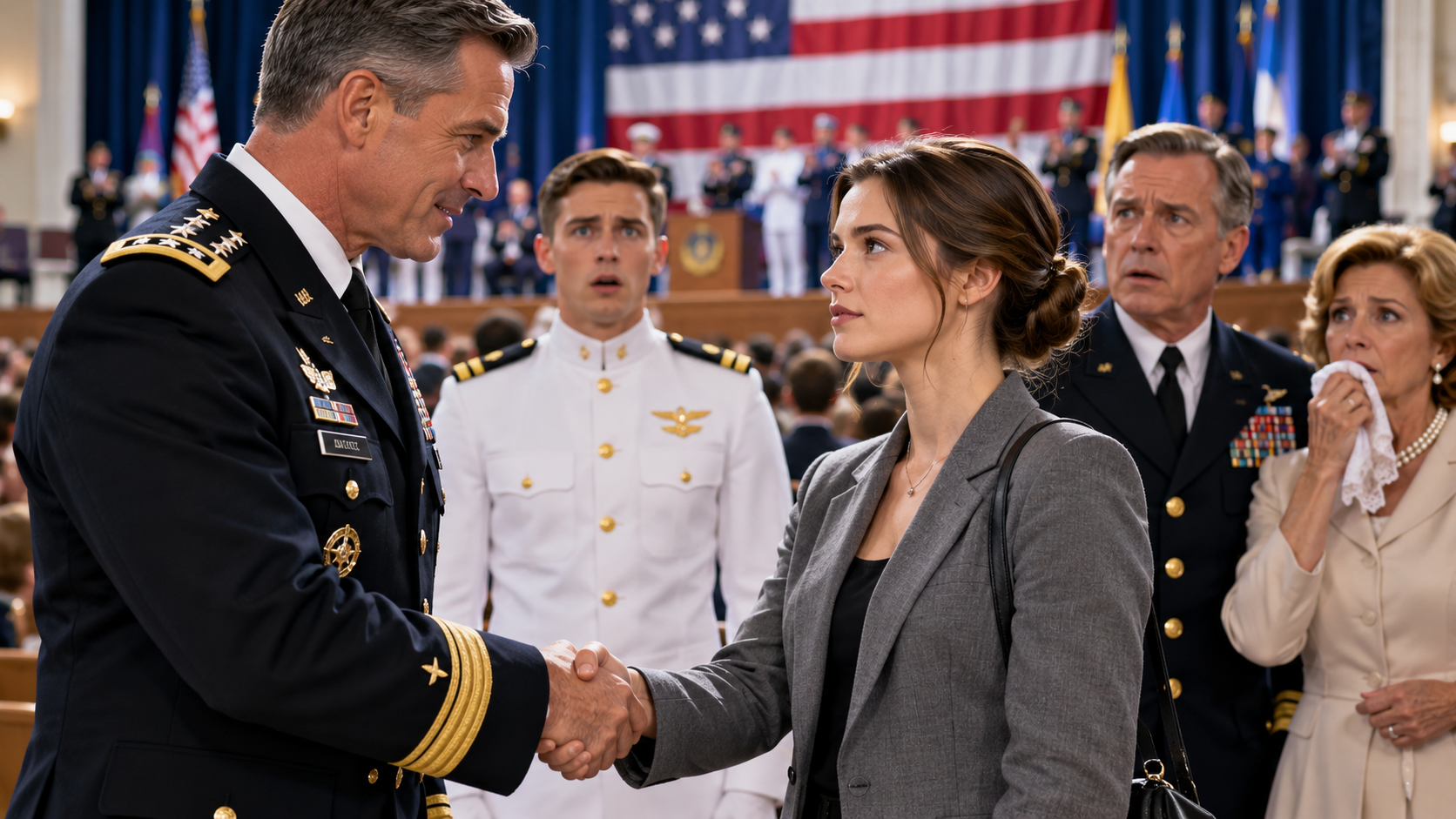
    “Commander.”

    It was the first time he had used my rank without irony.

    “Admiral.”

    “Retired.”

    “I know.”

    We stood facing each other.

    Neither of us seemed to know what came next.

    Finally, he looked at my shoulders.

    “You’re doing well.”

    “I am.”

    “I’ve heard.”

    Of course he had.

    Marcus always heard.

    He nodded.

    “I was wrong.”

    Three words.

    No speech.

    No excuse.

    I had imagined hearing them many times.

    In my imagination, they healed something.

    Reality was quieter.

    “About what?” I asked.

    He looked at me.

    The old Marcus might have become angry.

    This version seemed to understand why I was asking.

    “About believing that if you didn’t follow the path I understood, you were choosing the wrong one.”

    I waited.

    “And?”

    His jaw tightened.

    Even retired, even diminished, apology did not come naturally.

    “And I had no right to interfere with your promotion.”

    There it was.

    Not perfect.

    Not enough to erase anything.

    But true.

    “Thank you.”

    He nodded.

    For a moment, I thought he might hug me.

    He didn’t.

    I was glad.

    Some endings shouldn’t be forced into shapes they haven’t earned.

    He started to walk away.

    “Marcus.”

    He stopped.

    I had one thing left to say.

    “When I walked into Tessa’s reception, you asked who authorized my rank.”

    His face tightened.

    “I remember.”

    “I spent years thinking you were the person who had to.”

    He looked at me.

    “The promotion board?”

    “No.”

    I touched the silver oak leaf on my shoulder.

    “My life.”

    Neither of us spoke.

    Then I said, “You weren’t.”

    Something in his face changed.

    Pain, maybe.

    Understanding, if I was generous.

    He gave one slow nod.

    Then he walked away.

    I watched him disappear into the crowd.

    For years, I had wanted to defeat my father in some final confrontation.

    I had imagined exposing him, proving him wrong, watching him regret every comparison and criticism.

    But standing there, I understood that revenge had never been what I wanted.

    I wanted ownership.

    Of my career.

    Of my choices.

    Of my failures.

    Of my success.

    Of the story Marcus had spent years trying to narrate for me.

    That was what he had nearly taken.

    Not the promotion.

    Not the rank.

    The right to decide what my own life meant.

    He failed.

    The silver oak leaf on my shoulder caught the light as I turned back toward the reception.

    This time, no glass shattered.

    No room went silent.

    No one demanded to know who had authorized me to stand there.

    And for the first time in my life, I didn’t look for my father’s face to see whether I had done enough.

    I already knew.

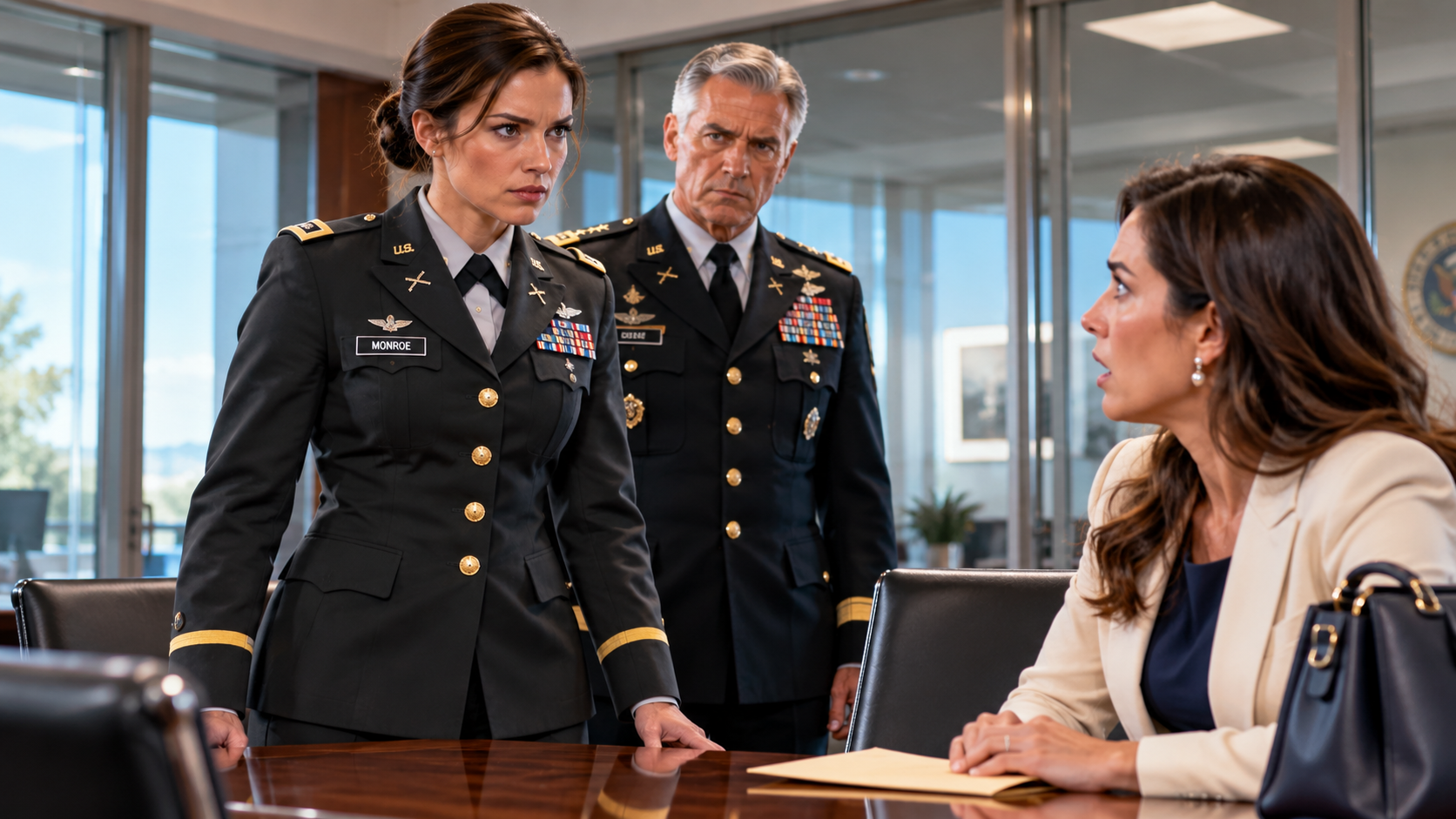
    The rank had never been his to give me.

    Neither had the permission.
  • CRY BABY! THEY CUT MY UNIFORM WITH A TRAINING KNIFE—THEN I ENDED THE TEST IN ONE MOVE

    CRY BABY! THEY CUT MY UNIFORM WITH A TRAINING KNIFE—THEN I ENDED THE TEST IN ONE MOVE

    PART 1: STAY STILL, SWEETHEART

    “Stay still, sweetheart, or this gets a lot worse for you.”

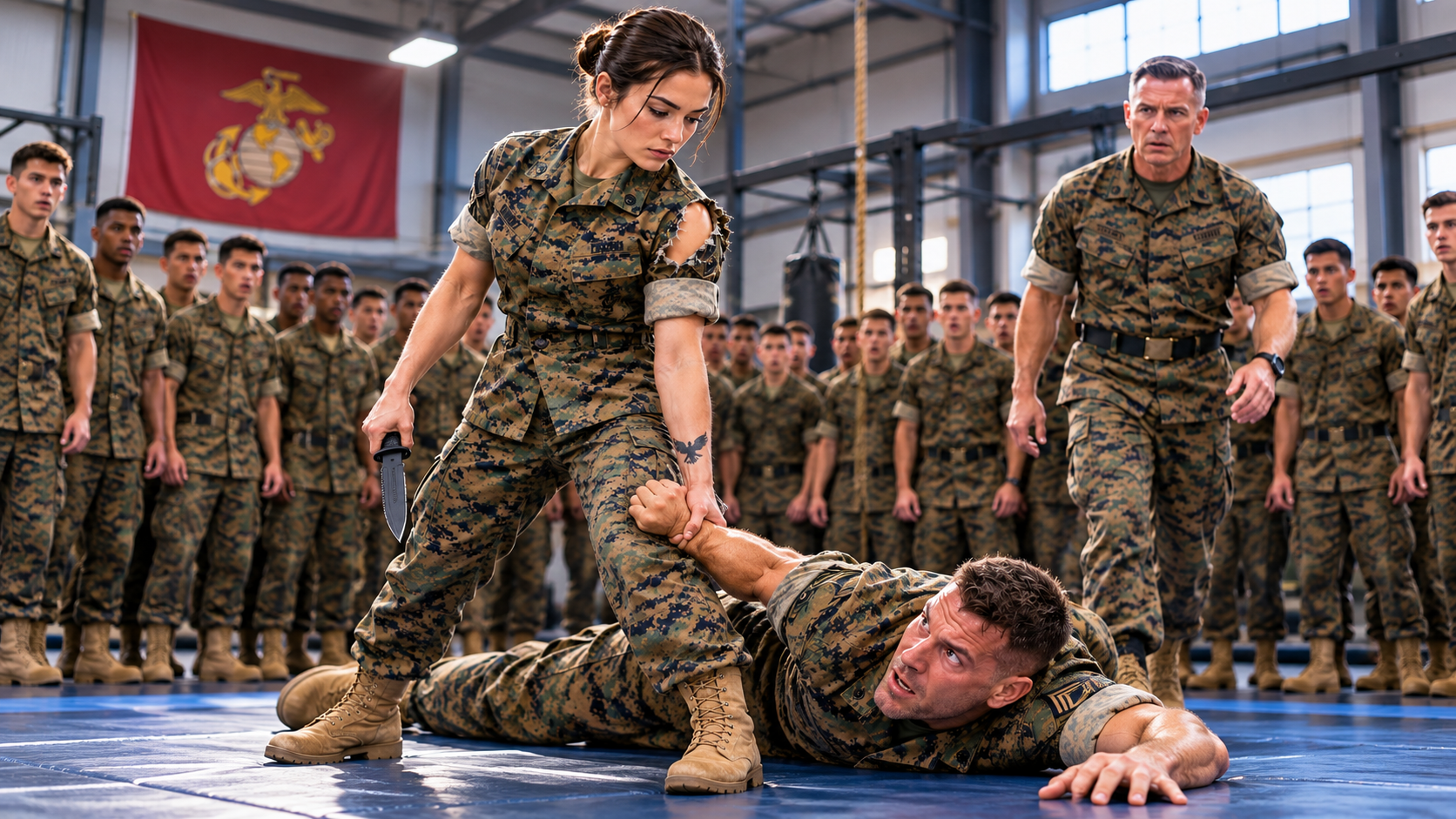
    The training knife pressed against the side of my throat.

    Gunnery Sergeant Kyle Vance had one knee driven into my ribs and one hand twisted into the collar of my blouse. My right arm was trapped underneath me. My left wrist was pinned against the mat hard enough that my fingers had started to go numb.

    Thirty Marines stood around us in a rough circle.

    Nobody moved.

    Nobody spoke.

    They thought they were watching a stress test.

    I knew I was watching a man make a mistake.

    A very large one.

    The rubber mat smelled like sweat, disinfectant, and old canvas. Vance’s breath came hard through his nose. Not because he was tired. He wasn’t. He was angry.

    That was worse.

    I stared past his shoulder at the overhead lights and counted my options.

    His weight was too far forward.

    His right elbow was locked.

    His left foot had shifted six inches outside his base.

    The knife was rubber-edged composite, stiff enough to bruise and sharp enough along the serrated practice spine to rip cloth if enough pressure was applied.

    Two seconds.

    Maybe less.

    That was all I needed.

    But I didn’t move.

    Not yet.

    “Lieutenant,” Vance said, loud enough for everyone to hear, “you planning to do something?”

    A few Marines shifted uncomfortably.

    Nobody laughed.

    They had been laughing ten minutes earlier.

    That had stopped when the drill stopped looking like a drill.

    I swallowed carefully against the pressure at my throat.

    “I’m evaluating the position, Gunnery Sergeant.”

    That made his mouth twitch.

    “Evaluating.”

    He repeated the word like it offended him.

    Then his gaze dropped to the strip of fabric he had already cut through near the shoulder of my camouflage blouse.

    “This isn’t a staff meeting, ma’am.”

    The knife hooked beneath another fold of my uniform.

    Fabric tore.

    A sharp ripping sound cracked across the warehouse.

    Someone behind him inhaled.

    Vance looked at me.

    “You freeze like this outside a training room, somebody goes home in a bag.”

    I felt the heat rise into my face.

    Not fear.

    Not exactly.

    Memory.

    Four names.

    Four voices.

    Four faces I had spent years learning how not to see every time someone used the word bag.

    My left sleeve had pulled upward during the struggle, exposing the small black eagle tattooed on the inside of my wrist.

    Its wings were spread.

    Its talons were extended.

    Vance didn’t notice it.

    Almost nobody ever did.

    And even when they did, they never knew what it meant.

    That was the point.

    He leaned closer.

    “Nothing to say?”

    “No, Gunnery Sergeant.”

    “Maybe Headquarters should’ve sent somebody who actually knows how to fight.”

    I heard a boot scrape behind him.

    Someone wanted to intervene.

    No one did.

    At the far end of the mat, Lieutenant Colonel Marcus Breerlin had stopped holding his coffee.

    He was staring at us.

    Until that morning, I had never seen surprise on his face.

    I had been at Quantico for four days.

    Four days of silence.

    Four days of sideways looks.

    Four days of people reading the version of my personnel file they had been authorized to see.

    First Lieutenant Mara Tannin.

    Twenty-six years old.

    Five feet six inches.

    Logistics officer.

    MOS 0402.

    No combat decorations beyond what looked normal for an officer of my age and service history.

    No visible deployment résumé that justified my assignment.

    No famous instructor certifications.

    No reason anyone at the Marine Corps Martial Arts Center of Excellence could understand why Headquarters Marine Corps had ordered them to put me on an advanced combatives integration team.

    Especially not Vance.

    From the moment I arrived, he had looked at me as if I were an administrative problem wearing lieutenant bars.

    I understood why.

    That didn’t make him right.

    At 0545 that morning, I had stood at the edge of the main training floor watching his Marines cycle through ground-fighting drills beneath hard industrial lights.

    Quantico was still dark outside.

    The training complex wasn’t glamorous. Nothing about it was supposed to be. Exposed ductwork crossed the ceiling. Heavy bags hung from steel frames. Grappling dummies were stacked against one wall. The mats had been patched so many times that some sections were more tape than original surface.

    It smelled honest.

    Sweat.

    Rubber.

    Coffee.

    Effort.

    Places like that usually told the truth about people.

    Vance had stood in the center of the room calling cadence.

    Thirty-five years old.

    Built like somebody had carved a human being out of an armored vehicle.

    Two Purple Hearts.

    Eight deployments.

    A Silver Star nobody mentioned around him because he apparently hated people mentioning it.

    Third-degree black belt instructor.

    A combat record that could silence almost any room in the Corps.

    He deserved respect.

    That was what made the rest of it complicated.

    I respected him.

    I just didn’t fear him.

    He could tell.

    Men like Vance often could.

    He finished the drill, dismissed the squad to water, then walked toward me.

    “Morning, Lieutenant.”

    “Gunnery Sergeant.”

    His eyes traveled from my boots to my collar.

    “Ready to teach us how Headquarters fights?”

    There had been no humor in it.

    “I’m here to integrate the curriculum they assigned me.”

    “That what we’re calling it?”

    I looked at him.

    “What would you call it?”

    His jaw shifted.

    “An experiment.”

    Behind him, two corporals suddenly became very interested in their water bottles.

    I had been warned not to take the bait.

    My orders were simple.

    Observe.

    Evaluate.

    Introduce selected modules only after the schoolhouse demonstrated its existing baseline.

    Do not disclose restricted training history unless specifically authorized.

    That last instruction was the one that mattered.

    Because the service record Vance had seen was true.

    It just wasn’t complete.

    I had been a logistics officer.

    I had run convoys, inventories, movement schedules, maintenance reports, and enough supply reconciliation to make a person question every decision that had led them to adulthood.

    But for fourteen months, I had also belonged to a Marine Forces Special Operations Command pilot program that technically did not exist outside restricted funding lines and a handful of classified personnel records.

    We had not been told we were special.

    We had been told we were replaceable.

    Then instructors had spent fourteen months proving it.

    Selection had begun with candidates from multiple specialties.

    The program wanted people who could move unnoticed between conventional support roles and specialized close-protection environments.

    It had been less about brute strength than judgment.

    When to move.

    When not to move.

    How to think while exhausted.

    How to control panic.

    How to protect someone without turning every room into a battlefield.

    Six men washed out before I completed the final phase.

    I never considered that proof that I was better than they were.

    I considered it proof that selection did not care what anyone thought they deserved.

    Vance knew none of that.

    He saw a logistics officer assigned to his schoolhouse because somebody in an office had signed a directive.

    And by the fourth morning, he had apparently decided to find out how quickly I would break.

    He started with ordinary pressure.

    Drills.

    Rotations.

    Questions designed to expose hesitation.

    Then he paired me with increasingly aggressive instructors.

    I gave them exactly what the drill required.

    No more.

    That bothered him.

    “You keep disengaging,” he told me after the third rotation.

    “The objective is control and separation.”

    “The objective is survival.”

    “In this drill, the objective is control and separation.”

    He stared at me.

    “Real violence doesn’t follow lesson plans, ma’am.”

    “No. Which is why people need to know when not to escalate.”

    That was when I saw the change in his eyes.

    To him, I was lecturing him about violence.

    A twenty-six-year-old lieutenant with a logistics MOS.

    He had buried friends.

    I could see the insult landing before he said anything.

    “Put your gear back on.”

    The room went quieter.

    “For what?”

    “Pressure evaluation.”

    Lieutenant Colonel Breerlin stepped out of his office.

    “Gunny.”

    Vance turned.

    “Sir.”

    “Keep it professional.”

    A beat passed.

    “Yes, sir.”

    That should have been the end of it.

    Instead, fifteen minutes later, I was on my back with Vance’s knee against my ribs and a practice blade touching my throat.

    He had escalated gradually enough that every individual decision had looked almost reasonable.

    Harder resistance.

    More pressure.

    A simulated weapon.

    Verbal distraction.

    Then the insults started.

    “Come on, Lieutenant.”

    Pressure.

    “You wanted to teach Marines?”

    More pressure.

    “Fight.”

    I had tried to reset twice.

    He followed.

    The third time, he hooked my arm and drove me down.

    I let him.

    That was important.

    I needed to know whether he could recognize the moment when a training partner stopped contesting the drill.

    He didn’t.

    Or he chose not to.

    Now the practice knife scraped across my blouse again.

    Vance looked down at me.

    “Cry baby.”

    Nobody laughed.

    The words themselves barely registered.

    What mattered was his hand.

    His breathing.

    The angle of the knife.

    The pressure on my ribs.

    The way the Marines around us had stopped watching technique and started watching him.

    He had lost the room.

    He just hadn’t realized it yet.

    Vance lowered his voice.

    “Maybe you should tell Headquarters this billet isn’t for you.”

    Something inside me went completely still.

    For fourteen months, instructors had tried to make me angry.

    They failed.

    People thought anger made you faster.

    Sometimes it did.

    Mostly, it made you obvious.

    The best thing one of my instructors ever taught me was that control was not the absence of violence.

    Control was having the capacity for violence and deciding exactly how much of it the moment deserved.

    I looked directly into Vance’s eyes.

    “Gunnery Sergeant.”

    “What?”

    “This drill is over.”

    His face hardened.

    “You don’t decide that.”

    “Yes,” I said quietly. “I do.”

    Then he shifted the knife.

    And I moved.

    The Marines around us never saw the beginning.

    They only saw the end.

    One second Vance was above me.

    The next, the knife was in my hand.

    His arm was controlled against his own chest.

    His balance disappeared underneath him.

    And all two hundred-plus pounds of Gunnery Sergeant Kyle Vance hit the mat face-first with a sound that silenced thirty Marines at once.

    I was on my feet before his brain caught up with the fall.

    The training knife rested loosely in my right hand.

    His wrist was controlled in my left.

    I could have driven him back down.

    I could have locked the joint.

    I could have embarrassed him.

    I did none of those things.

    I released him immediately and stepped away.

    Nobody breathed.

    Vance rolled onto one knee.

    His expression wasn’t anger anymore.

    It was disbelief.

    I placed the knife on the mat between us.

    Then I pulled my torn sleeve down over the eagle tattoo.

    “Now,” I said, “the drill is over.”

    Behind me, Lieutenant Colonel Breerlin finally set his coffee down.

    And Vance stared at me as if he had just realized the personnel file he had been reading was missing pages.

    PART 2: THE FILE THEY WERE ALLOWED TO SEE

    Nobody said anything for several seconds.

    Thirty Marines can create an astonishing amount of silence when they all decide at once that speaking would be dangerous.

    Vance stood slowly.

    His face had gone red, though I couldn’t tell whether it came from anger, embarrassment, or the impact.

    Probably all three.

    He flexed his right hand.

    I watched the movement.

    Not because I expected him to attack again.

    Because habit had taught me never to assume a confrontation was finished simply because everyone wanted it to be.

    Breerlin crossed the mat.

    “Lieutenant.”

    “Sir.”

    “Gunny.”

    “Sir.”

    His eyes dropped to my torn blouse.

    Then to the practice knife.

    Then back to Vance.

    “What happened?”

    Vance answered immediately.

    “Pressure testing, sir.”

    Breerlin’s voice stayed level.

    “I was watching.”

    That hurt more than shouting would have.

    Vance’s jaw tightened.

    I said nothing.

    Breerlin turned to the formation.

    “Everybody except instructors, take ten. North classroom.”

    Nobody needed to be told twice.

    The Marines filed out.

    Most avoided looking at me.

    A few didn’t.

    One corporal near the back gave me a strange, almost cautious glance.

    Not admiration.

    Recalculation.

    I knew that look.

    I had seen it before.

    It was the expression people wore when a category in their head stopped working.

    When the last Marine disappeared through the door, only Breerlin, Vance, two senior instructors, and I remained.

    Breerlin pointed toward the knife.

    “Whose decision was the blade?”

    “Mine,” Vance said.

    “Cutting her uniform?”

    No answer.

    Breerlin waited.

    Vance finally said, “The exercise escalated.”

    “That wasn’t my question.”

    “No, sir.”

    “Then answer the one I asked.”

    Vance looked straight ahead.

    “My decision, sir.”

    Breerlin nodded once.

    Then he turned to me.

    “Did you tell him to stop?”

    “Yes, sir.”

    “When?”

    “Twice during the last sequence. The third time I stated the drill was over.”

    Vance looked at me.

    “You weren’t injured.”

    I met his eyes.

    “That isn’t the standard.”

    His expression sharpened.

    Breerlin lifted a hand.

    “That’s enough.”

    Again, silence.

    Then he looked at me in a way he hadn’t during my first four days at Quantico.

    Not suspiciously.

    Carefully.

    “Lieutenant, where did you learn that reversal?”

    There it was.

    The question I had been ordered not to answer unless authorized.

    “I’m not cleared to discuss portions of my previous training in an open setting, sir.”

    One of the instructors actually blinked.

    Vance gave a short laugh with no amusement in it.

    “Previous training.”

    I looked at him.

    “Yes.”

    “You expect us to believe there’s some classified combatives school hiding in your logistics record?”

    “No, Gunnery Sergeant.”

    His brows pulled together.

    “I don’t expect you to believe anything.”

    That was the wrong answer if I wanted to make peace.

    I knew it as soon as I said it.

    But I was tired.

    My ribs hurt.

    My blouse was torn open at the shoulder.

    And four days of being treated like someone’s political experiment had finally cost me some patience.

    Vance took one step toward me.

    Breerlin moved between us.

    Not dramatically.

    He didn’t need to.

    “Gunny, go cool off.”

    “Sir—”

    “That was not a suggestion.”

    Vance’s eyes stayed on me.

    Then he turned and walked away.

    I watched him disappear into the corridor.

    Part of me expected satisfaction.

    I had put him down in front of his own Marines.

    The man who had called me a cry baby had barely seen me move.

    That should have felt good.

    It didn’t.

    Humiliation was a terrible teaching tool.

    I knew because I had been given enough of it.

    Breerlin studied me.

    “Come to my office.”

    The torn fabric at my shoulder moved in the air-conditioning as I followed him.

    His office overlooked part of the training floor through reinforced glass.

    There were almost no decorations.

    A framed MCMAP emblem.

    Two deployment photographs.

    A shelf of binders.

    A coffee mug that looked older than I was.

    Breerlin closed the door.

    “Sit.”

    I remained standing.

    “With respect, sir, I’d rather stand.”

    His eyes dropped briefly to my ribs.

    “That bad?”

    “No, sir.”

    “That means yes.”

    I said nothing.

    He sat behind his desk and opened a folder.

    My name was on the tab.

    I recognized the visible portion immediately.

    It was the sanitized file.

    Logistics.

    Staff assignments.

    Routine qualifications.

    Enough truth to be convincing.

    Not enough truth to explain anything.

    Breerlin tapped the folder.

    “You know what I received before you arrived?”

    “Yes, sir.”

    “You do?”

    “A restricted assignment notice, abbreviated service history, and a directive telling you I was authorized to evaluate advanced close-protection modules without explaining why.”

    His eyebrows rose.

    “That’s exactly what I received.”

    I almost smiled.

    Almost.

    He leaned back.

    “You see my problem.”

    “Yes, sir.”

    “My senior instructor sees a junior logistics officer sent here under headquarters authority to change his curriculum.”

    “I understand.”

    “Do you?”

    “Yes.”

    His eyes narrowed.

    “Then why didn’t you tell me enough to prevent what just happened?”

    Because I had tried that once.

    Not at Quantico.

    Somewhere else.

    A different program.

    A different room.

    I had disclosed more than I was required to because I thought honesty would create trust.

    It created resentment instead.

    One of the candidates spent the next two weeks trying to prove the instructors had lowered the standard for me.

    He pushed too hard during a movement exercise.

    Someone ended up with a fractured wrist.

    After that, I learned something unpleasant.

    Sometimes telling people your credentials did not make them respect you.

    It only told them where to aim.

    “My orders restricted disclosure, sir.”

    Breerlin leaned forward.

    “Your orders also tell you to exercise judgment.”

    “Yes, sir.”

    “So exercise it.”

    I hesitated.

    Then I rolled my left sleeve above my wrist.

    The eagle appeared.

    Breerlin looked at it.

    “That mean something?”

    “Yes.”

    “What?”

    I stared at the ink.

    Four names existed behind that bird.

    Not written on my skin.

    I never wanted strangers asking me to read them.

    The eagle was enough.

    “It reminds me why control matters.”

    Breerlin waited.

    I knew he wanted more.

    I gave him what I was allowed to give.

    “Fourteen months ago, I completed a restricted MARSOC developmental program focused on close protection, confined-space control, weapons retention, and decision-making under pressure.”

    His face changed.

    Only slightly.

    But I saw it.

    “How restricted?”

    “Enough that it was omitted from the file you were given.”

    “And your role?”

    “Candidate, then operational evaluator.”

    “Deployment?”

    “I can’t discuss locations.”

    His eyes stayed on me.

    “Real-world application?”

    “Yes, sir.”

    That one word settled heavily between us.

    Breerlin exhaled.

    “So Headquarters sends me someone with advanced training, hides the training, and tells me to integrate her into a schoolhouse already hostile to outside interference.”

    “That appears to be what happened.”

    “Wonderful.”

    Despite everything, I almost laughed.

    He rubbed a hand over his face.

    “Vance is one of the best instructors I’ve ever had.”

    “I believe that.”

    “He thinks this place is being turned into a laboratory.”

    “I know.”

    “He also crossed a line.”

    “Yes, sir.”

    “Do you want to file a formal complaint?”

    The question hit me harder than I expected.

    Not because I hadn’t considered it.

    Because I had.

    The moment the knife cut my uniform, Vance stopped merely testing me.

    He had made the exercise personal.

    I could report it.

    There would be statements.

    Reviews.

    Questions.

    Maybe disciplinary action.

    Maybe removal.

    And perhaps that was appropriate.

    But I also remembered his face before the drill.

    The anger had not begun with me.

    I represented something.

    A threat to standards he had spent years protecting.

    He was wrong about me.

    That did not make every fear underneath his anger imaginary.

    “I want the training reviewed,” I said.

    “That wasn’t what I asked.”

    “I know.”

    Breerlin leaned back.

    “I’m not asking what makes the schoolhouse comfortable, Lieutenant.”

    Neither was I.

    “I don’t want this buried. Document the stop calls. Document the knife. Document the uniform. Document the escalation.”

    “And Vance?”

    “I want him in the room when we review it.”

    Breerlin watched me for a long moment.

    “You planning to make a point?”

    “Yes, sir.”

    “What point?”

    “That he wasn’t wrong about everything.”

    That surprised him.

    “He was wrong about you.”

    “Yes.”

    “He was wrong to continue after you stopped the drill.”

    “Yes.”

    “He was wrong to cut your uniform.”

    “Yes.”

    I lowered my sleeve.

    “But he was right about one thing.”

    Breerlin waited.

    “Real violence doesn’t follow lesson plans.”

    He stared at me.

    Then, slowly, he nodded.

    Before he could respond, someone knocked on the door.

    Vance stood outside.

    His face was controlled again.

    Professional.

    Almost.

    Breerlin opened the door.

    “You need something?”

    Vance looked past him at me.

    “Yes, sir.”

    “What?”

    “I want a rematch.”

    I actually thought I had misheard him.

    Breerlin’s expression went flat.

    “No.”

    Vance didn’t move.

    “Not like before.”

    “No.”

    “I want to see the technique.”

    I studied him.

    The anger was still there.

    But something else had joined it.

    Doubt.

    Not doubt in me.

    Doubt in himself.

    For men like Vance, that could be worse.

    Breerlin said, “Gunny, go home.”

    Vance looked at me.

    “You caught me once.”

    There it was.

    The sentence that told me everything.

    He still thought the important question was whether I could beat him.

    I stood.

    “No, Gunnery Sergeant.”

    His eyes narrowed.

    “I didn’t catch you.”

    I stepped closer.

    “You stopped paying attention.”

    His face hardened.

    “And you still are.”

    I left the office before he could answer.

    But as I walked down the corridor, I understood something that made my ribs ache less important.

    The real test hadn’t ended on the mat.

    It had just changed.

    PART 3: THE FOUR NAMES

    The bruise appeared by noon.

    Purple along my ribs.

    Another dark line near my collarbone.

    Medical cleared me for duty with the predictable advice to avoid hard contact for forty-eight hours.

    I lasted six.

    At 1830, I was alone in the training room working through footwork when the lights over the far mats came on.

    Vance walked in.

    No uniform blouse.

    Just boots, trousers, and an olive-green undershirt.

    He carried no training weapon.

    I stopped.

    “If you’re here for the rematch, Colonel Breerlin said no.”

    “I heard him.”

    “Then we’re done.”

    He stayed where he was.

    For the first time since I arrived, he didn’t look at my rank insignia before he spoke.

    “My guys think I lost control.”

    I said nothing.

    “Did I?”

    It would have been easy to say yes.

    I could have used the moment.

    Pressed the wound.

    Made him admit what everyone had seen.

    Instead I asked, “Why did you cut my blouse?”

    His jaw worked.

    “To increase pressure.”

    “That’s the official answer.”

    “It’s the answer.”

    “No. Pressure was the knife at my throat. Pressure was the pin. Pressure was thirty people watching.”

    He looked away.

    “The uniform was something else.”

    His silence confirmed it.

    I took a breath.

    “What did you think I represented?”

    His eyes returned to mine.

    “You really want to know?”

    “Yes.”

    “A standard being lowered until everyone can say it stayed the same.”

    There it was.

    Not hatred.

    Fear.

    Hard, ugly, defensible-in-his-own-mind fear.

    He walked toward the mat but stopped several feet away.

    “I’ve watched people die because somebody wasn’t ready.”

    “So have I.”

    His face changed.

    Not much.

    Enough.

    I continued.

    “You thought I was sent here because somebody wanted a symbol.”

    “You came with a logistics MOS and a sealed directive.”

    “That’s not an answer.”

    “Yes,” he said.

    The word dropped between us.

    “Yes. That’s what I thought.”

    I nodded.

    “At least now we’re being honest.”

    “You could’ve told me.”

    “I couldn’t.”

    “You could’ve shown me something.”

    “Why?”

    His brow furrowed.

    “Because you were evaluating my program.”

    “No. Why did I need to prove I deserved basic professionalism before you gave it to me?”

    His face tightened.

    “That’s not what happened.”

    “You used a training knife to cut my uniform after I called stop.”

    “I know.”

    “You called me sweetheart.”

    Silence.

    “You called me a cry baby.”

    More silence.

    “Would you have done that to Captain Hollis?”

    Captain Hollis was one of his male instructors.

    Six feet two.

    Former infantry platoon commander.

    Vance did not answer.

    That was answer enough.

    I folded my arms.

    “This isn’t about whether I can beat you.”

    “I never said it was.”

    “You asked for a rematch.”

    That shut him up.

    For a moment, neither of us moved.

    Then his eyes dropped to my left wrist.

    I had changed into a short-sleeved training shirt.

    The eagle was visible.

    “What’s the tattoo?”

    I almost covered it automatically.

    I didn’t.

    “Four people.”

    “Family?”

    “No.”

    “Team?”

    I looked down at the bird.

    I could still see them when I wanted to.

    And sometimes when I didn’t.

    Mason complaining about coffee.

    Ruiz tapping his fingers against his leg whenever he was thinking.

    Hale laughing at exactly the wrong moments.

    Keating telling me, during the worst week of selection, that pain was information and panic was just bad interpretation.

    They were the reason I had stopped caring whether strangers thought toughness had a particular shape.

    “They were people who taught me things I didn’t understand until later.”

    Vance’s expression changed.

    “You lose them overseas?”

    “I can’t talk about it.”

    He nodded.

    For once, he didn’t push.

    I stared at the tattoo.

    The four of them had died during an assignment I could never discuss openly.

    Not all at once.

    Not dramatically.

    There had been no perfect final words.

    No cinematic sacrifices.

    Just bad minutes in a place where bad minutes lasted forever.

    Afterward, I had carried a question that no training could answer.

    Why had I survived?

    The program psychologist hated that question.

    Said it pretended survival was a reward handed out according to merit.

    It wasn’t.

    Sometimes you survived because you were positioned three feet to the left.

    Sometimes because someone else moved first.

    Sometimes because chaos pointed somewhere else.

    The eagle had been Keating’s idea.

    Not the tattoo.

    The symbol.

    During selection, he had drawn one on the corner of a wet notebook and said, “Everybody thinks the talons are the dangerous part. They aren’t. It’s the eyes. The bird wins before it touches anything because it sees first.”

    After the fourth funeral, I put the bird on my wrist.

    Not because I thought I was an eagle.

    Because I needed to remember to see.

    Especially when I was angry.

    Vance sat on the edge of the mat.

    His shoulders looked heavier than they had that morning.

    “I shouldn’t have said what I said.”

    I looked at him.

    That was not quite an apology.

    He knew it.

    “I shouldn’t have continued after the stop call.”

    Closer.

    “And I shouldn’t have cut your uniform.”

    There it was.

    I nodded once.

    “No. You shouldn’t have.”

    He rubbed his jaw.

    “You could’ve broken my arm.”

    “Yes.”

    The speed of my answer made him look up.

    “You could’ve?”

    “Yes.”

    “But you didn’t.”

    “No.”

    “Why?”

    “Because the drill was over.”

    He stared at me.

    Then he laughed once.

    Quietly.

    Not because anything was funny.

    Because he finally understood what I had been trying to tell him.

    Control.

    Not domination.

    Not humiliation.

    Control.

    “You know what bothers me most?” he asked.

    “What?”

    “I didn’t even see what you did.”

    “You weren’t supposed to.”

    He looked toward the empty room.

    “Show me.”

    I hesitated.

    Then I walked onto the mat.

    “No rematch.”

    “Fine.”

    “No winning.”

    He frowned.

    “What does that mean?”

    “It means you’re still thinking in the wrong language.”

    I positioned him where he had been that morning.

    Then I lay down carefully because my ribs protested.

    “Your weight was here.”

    I touched the side of his knee.

    “Your elbow was here.”

    I adjusted his arm.

    “Your attention was here.”

    I tapped the imaginary blade position beside my neck.

    “What were you watching?”

    “You.”

    “No. What were you watching?”

    He thought about it.

    Then his expression changed.

    “My face.”

    “Why?”

    “To see if you were scared.”

    I nodded.

    “That’s why you lost.”

    He looked offended for half a second.

    Then he realized I was right.

    “You were waiting for an emotional result,” I said. “You wanted me to prove your theory about me.”

    He slowly sat back.

    “So I stopped reading the rest of you.”

    “Yes.”

    I stood.

    “That’s what bias does in a fight. It tells you the answer before the other person moves.”

    The door opened behind us.

    Breerlin walked in.

    He looked from me to Vance.

    Then to the mat.

    “I told you no rematch.”

    Vance stood.

    “It wasn’t one, sir.”

    Breerlin looked at me.

    I nodded.

    “He’s telling the truth.”

    Breerlin sighed.

    “I hate when that happens.”

    For the first time, Vance smiled around me.

    Barely.

    Then Breerlin’s expression became serious.

    “Good. Because Headquarters sent the access authorization.”

    My stomach tightened.

    “For what?”

    “Your supplemental file.”

    Vance’s smile disappeared.

    Breerlin held up a sealed folder.

    “And tomorrow morning, the three of us are going to discuss why you were actually sent here.”

    PART 4: WHAT HEADQUARTERS REALLY WANTED

    At 0600 the next morning, Lieutenant Colonel Breerlin locked his office door.

    Vance sat to my left.

    I sat across from Breerlin.

    The sealed folder rested on the desk between us.

    For four days, that folder had been the invisible object in every room I entered.

    Now that it was physically there, I wanted it opened less than I expected.

    Breerlin read the cover page.

    Then the second.

    Then he stopped.

    His eyes lifted toward me.

    “You completed the full cycle?”

    “Yes, sir.”

    “All fourteen months?”

    “Yes.”

    Vance said nothing.

    Breerlin continued reading.

    His expression became progressively harder to interpret.

    The program had been experimental.

    Not because anyone was trying to invent super-soldiers.

    Nothing that ridiculous.

    The objective was far more practical.

    Modern protection assignments had exposed gaps between traditional martial arts instruction and the kind of close-range judgment required in crowded, ambiguous environments.

    Not every threat could be answered with maximum force.

    Not every attacker presented cleanly.

    Sometimes civilians were inches away.

    Sometimes the person you were protecting complicated everything.

    Sometimes the “enemy” was a confused ally.

    Sometimes the most dangerous person in the room was the one who panicked first.

    The pilot program trained candidates to operate inside that uncertainty.

    And Headquarters wanted selected concepts introduced into conventional combatives instruction.

    Which meant they needed someone who understood both worlds.

    Someone junior enough to train.

    Senior enough to evaluate.

    Conventional enough to understand the institution.

    And experienced enough to know what happened when a training room lied to itself.

    That was why they sent me.

    Not to replace Vance.

    Not to lower standards.

    To identify where the existing system assumed a fight would behave more cleanly than real violence did.

    Breerlin finished reading.

    Then he slid one page toward Vance.

    Vance looked at it.

    I watched his eyes move.

    Whatever was written there changed the set of his shoulders.

    He looked at me.

    “You were an evaluator?”

    “Yes.”

    “Operational?”

    “Yes.”

    His eyes dropped to the page again.

    “And they still list you as logistics?”

    “That’s my primary specialty.”

    “Why go back?”

    The question didn’t offend me.

    Most people would have asked it.

    “Because logistics is still my job.”

    He stared.

    “That’s it?”

    “Were you expecting a speech?”

    He almost smiled.

    Breerlin closed the folder.

    “Headquarters wants the pilot curriculum trial to begin Monday.”

    Vance leaned back.

    “So she takes over?”

    “No.”

    His expression tightened.

    Breerlin pointed at both of us.

    “You do.”

    Neither of us spoke.

    Breerlin continued.

    “Together.”

    Vance looked at me.

    I looked at him.

    The silence lasted long enough to become absurd.

    Finally Vance said, “Sir, with respect—”

    “No.”

    Breerlin didn’t raise his voice.

    “I know what comes after ‘with respect’ when you say it.”

    Vance closed his mouth.

    Breerlin turned to me.

    “Lieutenant, your advanced experience does not make you an expert in running this schoolhouse.”

    “No, sir.”

    “Gunny, your experience does not give you permission to reject anything unfamiliar.”

    Vance’s jaw tightened.

    “No, sir.”

    “The two of you managed to demonstrate the entire problem in less than a week.”

    That stung because it was true.

    Breerlin stood.

    “By Friday, I want a joint block of instruction ready for evaluation.”

    Vance stared at him.

    “A week?”

    “Five days.”

    “That’s not enough.”

    “Then stop wasting time arguing.”

    He unlocked the door.

    Meeting over.

    Vance and I walked into the corridor together.

    Neither of us spoke until we reached the training floor.

    Then he said, “I hate this idea.”

    “I know.”

    “You hate it too.”

    “Yes.”

    That stopped him.

    He looked at me.

    “Why?”

    “Because now if it fails, neither of us gets to blame the other.”

    A slow grin appeared.

    It was the first real one I had seen.

    “Maybe you do understand Marines.”

    “Unfortunately.”

    We started that morning.

    The first hours were ugly.

    Vance taught from experience.

    I taught from problems.

    He wanted clean sequences.

    I wanted interrupted sequences.

    He wanted repetition until response became instinctive.

    I wanted trainees to recognize when instinct had become inappropriate.

    Neither approach was wrong.

    That was the problem.

    We argued over almost everything.

    “Too many variables,” he said.

    “Real environments have variables.”

    “You can’t teach beginners chaos.”

    “You can’t teach them certainty either.”

    “They need fundamentals.”

    “Then teach the fundamentals and test their judgment.”

    He stared at the whiteboard.

    “That’s annoyingly reasonable.”

    “Thank you.”

    “It wasn’t a compliment.”

    “Still taking it.”

    By Wednesday, something changed.

    We stopped defending territory.

    We started solving the problem.

    Vance took one of his standard weapon-retention drills.

    I added a second trainee whose only job was to create confusion without attacking.

    The first attempt was a disaster.

    One Marine shoved the non-threat so hard he nearly sent him off the mat.

    Vance blew the whistle.

    “What happened?”

    The Marine looked embarrassed.

    “He was in my way.”

    “Was he attacking you?”

    “No, Gunnery Sergeant.”

    “Then why’d you treat him like an attacker?”

    The Marine didn’t answer.

    Vance looked at me.

    I said nothing.

    He turned back.

    “Again.”

    The second attempt was better.

    The third was better still.

    By Thursday, the Marines were beginning to understand.

    Not every obstacle was a threat.

    Not every aggressive movement required maximum response.

    And sometimes someone who looked harmless was the person you should have been watching first.

    During a break, the same corporal who had stared at me after Vance’s takedown approached.

    “Ma’am?”

    “Yes?”

    “Can I ask something?”

    “If it’s about the tattoo, probably not.”

    His eyes widened.

    I smiled.

    “Go ahead.”

    He glanced toward Vance.

    “Did you know you could take Gunny down before the drill started?”

    I thought about it.

    “No.”

    He looked disappointed.

    I continued.

    “I knew I could create an opportunity if he made certain mistakes.”

    “That sounds like yes.”

    “It isn’t.”

    He frowned.

    I picked up a water bottle.

    “The fastest way to lose a fight is to decide you already know how it ends.”

    His eyes moved toward Vance.

    I knew exactly what he was thinking.

    “That applies to me too,” I added.

    The corporal nodded.

    Then he left.

    Vance had heard the entire exchange.

    “Good answer,” he said.

    “Don’t sound so surprised.”

    “I’m adjusting.”

    Friday arrived.

    So did observers from Headquarters.

    Not many.

    No ceremony.

    No cameras.

    That was how you knew something actually mattered.

    Breerlin briefed the group.

    Vance ran the fundamentals.

    Then I introduced the uncertainty sequences.

    The last event was simple.

    One trainee.

    One simulated protectee.

    Three people entering a confined space.

    Only one was the threat.

    No one knew which.

    The first Marine failed because he attacked the most aggressive-looking person.

    The second failed because he froze.

    The third succeeded.

    Not because he was faster.

    Because he watched.

    He saw.

    Afterward, one of the Headquarters evaluators asked Vance, “What changed?”

    I expected him to talk about curriculum.

    Instead, he looked across the room at me.

    “Attention.”

    The evaluator waited.

    Vance continued.

    “We train people to recognize threats. Sometimes we don’t train them enough to recognize their own assumptions.”

    I said nothing.

    He didn’t need my help.

    The evaluator nodded and wrote something down.

    The block ended at 1600.

    No applause.

    No dramatic announcement.

    The observers left with their notes.

    The Marines began cleaning the mats.

    I was carrying training gear toward storage when Vance stepped into my path.

    He held something in his hand.

    A folded piece of woodland MARPAT fabric.

    I looked at it.

    “What’s that?”

    “Your blouse.”

    The one he had cut.

    It had been repaired.

    Not perfectly.

    A visible seam crossed the shoulder.

    “You had it fixed?”

    “Best I could do.”

    I took it from him.

    The stitching was rough.

    “You did this?”

    “My wife helped.”

    I looked at him.

    “Mostly my wife.”

    “That sounds more believable.”

    He nodded.

    Then his expression became serious.

    “I owe you something better than what I gave you Tuesday.”

    I waited.

    “I judged you before you walked onto the mat.”

    “Yes.”

    “I told myself I was protecting standards.”

    He paused.

    “Some of that was true.”

    “I know.”

    “Some of it wasn’t.”

    I said nothing.

    He looked at the repaired fabric.

    “I’m sorry, Lieutenant.”

    No excuses.

    No “if.”

    No “but.”

    Just the words.

    That mattered.

    I folded the blouse over my arm.

    “Thank you, Gunnery Sergeant.”

    He nodded.

    Then he started to leave.

    “Vance.”

    He stopped.

    I almost never used his name.

    He turned.

    “You were right too.”

    His expression puzzled.

    “About what?”

    “Pressure matters.”

    A faint smile appeared.

    “Careful. People might think we’re learning something.”

    Then he walked away.

    I looked down at the repaired cut.

    The seam would always show.

    Strangely, I didn’t mind.

    Some damage deserved to remain visible.

    Not because you wanted to live inside the moment forever.

    Because pretending it never happened was another kind of lie.

    PART 5: THE EYES BEFORE THE TALONS

    Three weeks later, I stood at the same edge of the same mat where I had first watched thirty Marines train under predawn lights.

    Only now nobody wondered why I was there.

    At least not openly.

    The pilot block had been approved for an extended evaluation period.

    Not adopted.

    Not declared revolutionary.

    Military institutions rarely changed because of one dramatic moment.

    They changed through paperwork, repetition, argument, testing, and somebody somewhere signing a form after everyone involved had become exhausted enough to agree.

    I preferred it that way.

    Vance remained the senior instructor.

    Breerlin remained professionally allergic to unnecessary enthusiasm.

    I remained a logistics officer with an incomplete public record.

    The world had not transformed.

    But the room had.

    That morning, Vance stood in front of a new group.

    Twenty-eight Marines.

    Most had never met me.

    He gestured in my direction.

    “Lieutenant Tannin is assisting with this phase.”

    A Marine near the front glanced at my rank.

    Then at my size.

    I recognized the calculation immediately.

    Too young.

    Too small.

    Officer.

    Probably staff.

    I almost smiled.

    Vance saw it too.

    His eyes met mine.

    He didn’t rescue me.

    Good.

    I didn’t need him to.

    “Today,” he continued, “we’re talking about control.”

    One Marine raised a hand.

    “Control as in restraints, Gunnery Sergeant?”

    Vance shook his head.

    “Control as in not letting your ego make tactical decisions.”

    That got their attention.

    He looked toward me.

    “Lieutenant?”

    I stepped onto the mat.

    My repaired blouse fit normally.

    The seam at the shoulder was barely visible unless you knew where to look.

    My sleeve covered the eagle.

    “For the next two hours,” I said, “some of you are going to win the physical problem and fail the exercise.”

    Several Marines exchanged glances.

    One smiled skeptically.

    “Others are going to look like they’re losing and actually be in control.”

    The smile disappeared.

    I continued.

    “Your job is to learn the difference.”

    We began.

    An hour later, I watched a nineteen-year-old lance corporal stop himself halfway through an aggressive response because he realized the person in front of him was not actually the threat.

    He changed direction.

    Created distance.

    Protected his partner.

    Completed the drill without throwing a single strike.

    Vance blew the whistle.

    “Good.”

    The Marine looked confused.

    “I didn’t take him down.”

    “You didn’t need to.”

    The Marine looked at me.

    I nodded.

    Something clicked behind his eyes.

    There it was.

    That was why Headquarters had sent me.

    Not for the takedown.

    Not for the classified file.

    Not because I had once survived a selection course that had broken other people.

    And certainly not because I had put Gunnery Sergeant Kyle Vance face-first on a mat.

    Those were details.

    The lesson was smaller.

    And harder.

    Knowing what you could do was only half of competence.

    Knowing what you should do was the rest.

    At the end of the session, the Marines filed out.

    One stayed behind.

    The skeptical one from earlier.

    “Ma’am?”

    “Yes?”

    “Gunny says you two had some kind of disagreement when you got here.”

    From across the room, Vance suddenly became extremely interested in reorganizing training pads.

    I looked at him.

    Then back at the Marine.

    “You could call it that.”

    “Who won?”

    Vance stopped moving.

    I stared at the young Marine.

    Three weeks earlier, I might have answered differently.

    Maybe I would have said the question was wrong.

    Maybe I would have turned it into a lesson.

    Instead, I thought about the knife.

    The torn uniform.

    The thirty silent Marines.

    The office.

    The arguments.

    The apology.

    The new curriculum.

    And the four names behind the eagle on my wrist.

    “Nobody,” I said.

    The Marine frowned.

    “But I heard you dropped him.”

    “I did.”

    “So you won.”

    I shook my head.

    “The moment a training partner forgets the purpose of the training, nobody wins.”

    Behind him, Vance gave a single approving nod.

    The Marine considered that.

    Then he left.

    When the door closed, Vance walked toward me.

    “You’re getting soft, Lieutenant.”

    “Careful.”

    “Why?”

    “I know your weakness.”

    He raised an eyebrow.

    “What weakness?”

    “You watch faces.”

    He laughed.

    I picked up a training knife from the edge of the mat and tossed it to him.

    He caught it.

    For half a second, we were back there.

    Same room.

    Same blade.

    Same people, almost.

    But not the same lesson.

    Vance looked at the knife, then at the repaired seam on my shoulder.

    “You know,” he said, “I still think I could stop that reversal if you tried it again.”

    I stared at him.

    He waited.

    I let the silence stretch.

    Then I smiled.

    “Still not paying attention.”

    His expression changed.

    He looked down.

    I was already holding the second training knife.

    He swore under his breath.

    I laughed.

    Not because I had beaten him.

    Because this time he laughed too.

    Later that evening, after everyone left, I stood alone beside the darkened mat.

    Sunset burned orange through the high warehouse windows.

    Quantico had gone quiet.

    I rolled up my left sleeve.

    The eagle looked exactly the same as it had before I arrived.

    Black wings.

    Open talons.

    Four invisible names.

    I touched the ink with my thumb.

    For years, I had thought the tattoo reminded me of the dead.

    Standing there, I finally understood that wasn’t entirely true.

    It reminded me of the moment before action.

    The space where choice still existed.

    Keating had been right.

    Everybody noticed the talons.

    They noticed strength after it became visible.

    The strike.

    The takedown.

    The weapon.

    The person hitting the floor.

    That was what stories remembered.

    But the dangerous part had always been the eyes.

    Seeing before moving.

    Understanding before judging.

    Recognizing the difference between fear and caution.

    Between pride and principle.

    Between somebody who looked weak—

    and somebody who was simply choosing not to hurt you.

    On my first week at Quantico, thirty Marines had watched Gunnery Sergeant Kyle Vance pin a twenty-six-year-old logistics officer beneath his knee.

    They had watched him press a training knife against my throat.

    They had heard him call me sweetheart.

    They had heard him call me a cry baby.

    They had watched him cut my uniform while I stayed still.

    And every person in that room had assumed the same thing.

    That I wasn’t fighting because I couldn’t.

    They were wrong.

    I stayed still because I was watching.

    I was counting.

    I was waiting.

    I was deciding how much force the moment deserved.

    And when the moment finally crossed the line, I needed less than two seconds to end it.

    The takedown was never the part that mattered.

    The choice was.

    I pulled my sleeve back over the eagle, turned off the training-floor lights, and walked toward the door.

    Behind me, the mats disappeared into darkness.

    Tomorrow morning, another class would arrive.

    Another group of Marines would walk into that room believing strength meant moving first, hitting hardest, and never backing down.

    Vance and I would spend the day teaching them something harder.

    Sometimes the strongest person in the room is the one everyone has underestimated.

    And sometimes the most dangerous move they can make—

    is deciding they already know who that person is.

  • THE WOMAN WHO STOLE THE GENERAL’S DAUGHTER

    THE WOMAN WHO STOLE THE GENERAL’S DAUGHTER

    PART 1: THE WOMAN WHO WAS ME

    The guard at the command annex outside Arlington looked like he’d already had a long day, and it wasn’t even nine-thirty.

    Mirrored sunglasses. Sunburned neck above a stiff collar. One hand resting beside the keyboard as if boredom itself had been issued to him along with the desk.

    He took my military ID between two fingers.

    Looked at it.

    Looked at me.

    Then looked at the screen.

    “Captain Monroe,” he said.

    He dragged out my last name like he recognized it but didn’t consider that recognition important.

    “You don’t have a meeting on the schedule.”

    “I’m not here for a meeting.”

    His eyebrow moved.

    “I’m here to see General David Monroe.”

    That got something.

    Not respect.

    Not alarm.

    Amusement.

    His mouth twitched.

    “Ma’am,” he said, leaning back, “I see the general’s daughter every day.”

    For a moment I thought I had misunderstood him.

    I stared through the glass at my own reflection.

    Thirty-two years old. Army uniform. Hair pulled back tightly enough to give me a headache. Three years of deployments, temporary assignments, bad sleep, and stubbornness written around my eyes.

    The guard laughed once.

    Short.

    Dry.

    He pointed beyond me toward the secured glass doors.

    “No offense, Captain, but unless the general suddenly grew another one, you’re wasting your time.”

    I opened my mouth.

    Then the doors behind him released.

    And a woman stepped through.

    She moved like the building belonged to her.

    Mid-thirties, maybe. Dark blonde hair twisted into a smooth knot. Navy dress beneath a cream jacket. Low heels. Small leather bag tucked under one arm.

    She didn’t reach for identification.

    She didn’t slow down.

    A receptionist glanced up and smiled.

    Not the polite smile you give a visitor.

    The lazy, familiar smile you give someone you’ve seen so many times you stopped noticing them.

    The guard nodded toward her.

    “See?”

    My heart missed a beat.

    The woman didn’t look at me.

    Why would she?

    I was just another officer standing near security.

    She passed close enough that I caught the faint smell of citrus perfume.

    Then she disappeared through the lobby.

    I could have stopped her.

    I could have said my name.

    I could have put my identification on the counter and made the guard read every line.

    I could have demanded that somebody call upstairs.

    But anger is loud.

    Training is quiet.

    And after twelve years in uniform, I had learned one thing about lies.

    If you announce yourself too early, people start cleaning them up.

    So I smiled.

    “Understood.”

    The guard seemed almost disappointed.

    I stepped aside.

    There was a small waiting area beside a coffee machine, three plastic chairs, a dead television mounted near the ceiling, and a stack of outdated military newspapers nobody had touched in months.

    I sat.

    The chair cut into the backs of my thighs through my uniform trousers.

    The coffee smelled burned.

    I placed my phone facedown on my knee.

    And I watched.

    Not her.

    Not exactly.

    I watched everyone else watching her.

    That mattered more.

    Ten minutes later she came back through the secured doors.

    A colonel joined her from a side corridor.

    He didn’t ask her name.

    He didn’t request identification.

    He simply fell into step beside her.

    They exchanged a few words I couldn’t hear.

    She smiled.

    He smiled back.

    At the reception desk, a civilian assistant lifted a folder.

    “Ms. Monroe?”

    Every muscle in my body went still.

    The woman turned.

    “Yes?”

    The assistant hurried over.

    I couldn’t hear the rest.

    I didn’t need to.

    Ms. Monroe.

    She had answered to it.

    Not daughter.

    Not family friend.

    Not some misunderstanding invented by a bored security guard.

    My name.

    My father’s name.

    My life.

    For three years, I had refused to walk through one particular door.

    Apparently someone else had walked through it for me.

    The last time I had seen my father, we had been standing in my mother’s kitchen two weeks after her funeral.

    The flowers had already begun dying.

    Every flat surface in the house was covered with condolence cards.

    My father had spent most of the funeral receiving people instead of grieving.

    At least that was what I had told myself.

    He had shaken hands.

    Accepted embraces.

    Thanked senators and officers and neighbors.

    He had stood beside my mother’s coffin like a monument dedicated to a man who would rather be shot than seen bleeding.

    I hated him for it.

    Maybe because I needed someone to hate.

    Maybe because grief feels easier when it has a uniform.

    Our argument started over something stupid.

    A box of my mother’s belongings.

    It ended with me shouting that he had been a better general than a husband and that he had spent my whole childhood commanding everyone except himself.

    He had stared at me for a long time.

    Then he said, “If that’s what you believe, there’s nothing useful I can say right now.”

    I left.

    Two months later, I deployed.

    Then another assignment came.

    Then another.

    There were birthdays with no calls.

    Christmases with short texts.

    Messages typed and deleted.

    Pride hardening into habit.

    Habit hardening into silence.

    Three years.

    And now another woman was answering to Monroe.

    My Monroe.

    I stopped thinking about the past.

    The woman was moving again.

    I watched access points instead.

    The main scanner slowed everybody down.

    The side hallway near the service desk didn’t.

    People moved through the annex like water that had memorized the shape of the building.

    Civilian analysts.

    Officers carrying folders.

    Contractors pushing equipment.

    Nobody wandered.

    Everybody belonged somewhere.

    Repetition creates confidence.

    Confidence creates blind spots.

    The first time the inner door opened, I stayed seated.

    The second time, I didn’t move.

    On the third cycle, two analysts approached while discussing briefing packets. A contractor maneuvered a cart from the opposite direction. The guard glanced toward him.

    I picked up an abandoned visitor folder from the chair beside me.

    Stood.

    Joined the movement.

    One badge touched the reader.

    The lock released.

    The analysts continued their conversation.

    I walked with them.

    Shoulders straight.

    Eyes forward.

    Like I had somewhere to be.

    “Ma’am?”

    Someone called from behind me.

    The door closed.

    I was inside.

    My pulse slammed once against my throat.

    I knew exactly how stupid what I had just done was.

    I also knew I was past turning around.

    The hallway smelled like cold air-conditioning and floor wax.

    Framed command photographs lined one wall. Offices sat behind glass partitions on the other.

    I caught sight of the cream jacket twenty yards ahead.

    The woman turned left.

    I followed.

    Not close.

    Not hurried.

    She entered a wider corridor where three people greeted her.

    “Morning, Erin.”

    I stopped walking.

    My first name hit harder than Monroe had.

    Erin.

    She smiled at the man who’d said it.

    “Morning.”

    My vision narrowed.

    I had expected fraud.

    I had not expected the sound of my own first name coming out of somebody else’s life.

    A young lieutenant stepped from an office holding a stack of papers.

    “Your father moved the eleven o’clock again.”

    She sighed.

    “Of course he did.”

    The lieutenant laughed.

    “You know him.”

    The woman smiled.

    “I do.”

    That was when my anger changed.

    Until then it had been hot.

    Personal.

    Humiliating.

    Now it became cold.

    Because the woman hadn’t simply told a receptionist a lie.

    She had built routines around it.

    She knew my father’s schedule.

    She knew his staff.

    She knew when meetings moved.

    She knew how to behave when someone said, You know him.

    And everybody around her believed she did.

    She continued down the corridor.

    I followed.

    At the end was a wooden door with a small metal plaque.

    GENERAL DAVID MONROE

    She didn’t enter.

    Instead she stopped at the assistant’s desk outside.

    The seat was empty.

    She glanced left.

    Then right.

    For the first time since I’d seen her, the confidence slipped.

    Only for a second.

    She opened one of the desk drawers.

    My stomach tightened.

    She removed a thin brass key.

    Unlocked the general’s office.

    And went inside.

    My father had spent my childhood teaching me never to confuse confidence with legitimacy.

    People who belong somewhere, he used to say, rarely need you to know they belong there.

    I stood ten yards away staring at his closed door.

    Then I heard footsteps behind me.

    “Captain?”

    I turned.

    A major stood at the intersection.

    Late forties. Graying temples. Dark green eyes.

    For half a second neither of us spoke.

    Then his face changed.

    “Erin?”

    I recognized him.

    Major Daniel Mercer.

    He had been a captain assigned to my father’s staff when I was nineteen.

    He had eaten Thanksgiving dinner at our house twice.

    He had once driven three hours because my father was stuck overseas and my mother refused to let me change a flat tire in freezing rain.

    Mercer looked from me to the closed office.

    Then back to me.

    His expression lost all color.

    “Oh,” he whispered.

    I didn’t answer.

    He stepped closer.

    “What are you doing here?”

    I pointed at my father’s door.

    “Apparently finding out who I am.”

    His jaw tightened.

    That was all I needed.

    “You know about her.”

    His eyes moved toward the office.

    “I know someone’s been coming here saying she’s you.”

    “How long?”

    He hesitated.

    “Erin—”

    “How long?”

    “Six months.”

    The hallway seemed to tilt.

    “Six months?”

    “I thought your father knew.”

    “Have you seen them together?”

    Mercer said nothing.

    “Daniel.”

    “No.”

    The office door opened.

    We both looked.

    The woman stepped out carrying something.

    Not classified material.

    Not a folder.

    An envelope.

    Cream paper.

    My father’s handwriting across the front.

    Even from the end of the corridor, I recognized it.

    Because he wrote capital E’s the same way he had since I was a child.

    Angular.

    Too large.

    The woman slipped the envelope into her bag.

    I could just make out the name written across it.

    ERIN.

    My breath stopped.

    She locked the office.

    Returned the key.

    Turned toward us.

    And saw me.

    For the first time, the woman wearing my name looked directly into my face.

    The smile vanished.

    She knew exactly who I was.

    And that was when I realized this had never been a misunderstanding.


    PART 2: THE THINGS SHE KNEW ABOUT ME

    There is a particular kind of silence that comes before a lie collapses.

    It lasts less than a second.

    But once you’ve heard it, you never mistake it for anything else.

    The woman froze.

    Her fingers tightened around the strap of her bag.

    Mercer stood beside me.

    I watched her eyes move from my face to my uniform.

    Then to the name tape over my chest.

    MONROE.

    She recovered quickly.

    Too quickly.

    “Captain,” she said.

    Not Erin.

    Not Who are you?

    Captain.

    “You took something from General Monroe’s office,” I said.

    Her gaze flicked toward Mercer.

    “I was asked to pick up correspondence.”

    “By whom?”

    She smiled.

    It looked painful now.

    “My father.”

    Mercer inhaled.

    I felt something inside me go very still.

    She had a chance.

    One chance.

    All she had to do was look confused.

    All she had to do was tell me there had been a mistake.

    Instead she looked me in the eye and called my father hers.

    I stepped forward.

    Mercer touched my arm.

    Not restraining me.

    Reminding me where we were.

    Secure building.

    Cameras.

    Uniform.

    Consequences.

    The woman noticed.

    Confidence returned to her face.

    She had survived by understanding institutions.

    People behave differently inside them.

    They lower their voices.

    Respect procedure.

    Avoid scenes.

    She thought that protected her.

    Maybe it had.

    “What’s your name?” I asked.

    Her lips curved.

    “You already know.”

    “Say it.”

    She didn’t.

    That told me something too.

    A door opened behind us.

    Two civilian employees stepped into the corridor.

    The woman’s expression transformed instantly.

    Warm.

    Normal.

    Embarrassed, even.

    Like we were having an awkward family conversation.

    “I don’t think this is the place,” she said softly.

    It was good.

    Very good.

    She understood audiences.

    Mercer did too.

    “Erin,” he said quietly to me, “come with me.”

    The other woman’s eyes flashed when he used my name.

    I saw it.

    So did Mercer.

    He guided me toward an empty conference room.

    I went because I wanted answers more than I wanted satisfaction.

    Behind us, the woman remained where she was.

    For three steps.

    Then four.

    I looked back.

    She was already walking quickly toward the exit corridor.

    “Someone needs to stop her.”

    “She has legitimate building credentials,” Mercer said.

    “What?”

    “Not as you.”

    That made me turn.

    “What does that mean?”

    He closed the conference-room door.

    “Her name is Vanessa Cole.”

    I stared at him.

    “She’s a contractor.”

    “What kind?”

    “Administrative records support. She started here about eight months ago. Different directorate. Then somewhere along the way people started referring to her as General Monroe’s daughter.”

    “And nobody checked?”

    “You know how these things work.”

    “No. Explain it to me.”

    Mercer rubbed a hand across his jaw.

    “She never used that relationship for her actual clearance. Her credential says Vanessa Cole. Her access comes from the contract.”

    “But everyone calls her Erin.”

    “Not everyone.”

    “Enough.”

    He had no answer.

    I paced once across the room.

    “What did she tell you?”

    “Nothing directly.”

    “You just let a stranger walk around pretending to be me?”

    His face hardened.

    “That’s not fair.”

    I laughed.

    It sounded ugly.

    “Fair?”

    “I met you more than a decade ago, Erin. I hadn’t seen you since your mother’s funeral. I saw Vanessa twice in passing. Someone said she was Monroe’s daughter. I assumed—”

    “That I had changed my face?”

    “That I misunderstood.”

    He stopped.

    “You and your father haven’t exactly made your relationship public.”

    That hit because it was true.

    My father rarely discussed me.

    I rarely discussed him.

    We had the same last name, but Monroe wasn’t exactly rare inside the Army.

    And I had spent years building a career in which I was Captain Monroe first and General Monroe’s daughter only when somebody happened to connect the dots.

    That had always been intentional.

    I wanted my own work.

    My own mistakes.

    My own reputation.

    I just hadn’t imagined someone else would take the part of my identity I had left unattended.

    “Does my father know her?”

    “Yes.”

    The answer cut deeper than I expected.

    “How?”

    “Professionally.”

    Mercer saw my expression.

    “Not like that.”

    “I didn’t say anything.”

    “You didn’t need to.”

    I looked away.

    “When was the last time she was in a room with him?”

    “I don’t know.”

    “Find out.”

    He studied me.

    “You broke through a controlled access point ten minutes ago.”

    “I’m aware.”

    “You could turn this into a much larger problem for yourself.”

    “Then report me.”

    He sighed.

    I walked toward the door.

    Mercer spoke behind me.

    “Wait.”

    I stopped.

    He looked older than I remembered.

    “Something has bothered me about her for months.”

    I turned.

    “She knows his schedule too well.”

    My pulse changed.

    “What do you mean?”

    “She’s never here when he’s here.”

    That sentence rearranged the entire room.

    I said nothing.

    Mercer continued.

    “I hadn’t thought about it until now. She comes through in the mornings when he’s at the Pentagon. Afternoons when he’s off-site. Days he’s traveling. She’s always carrying something. Returning something. Picking something up. Nobody questions it because everyone thinks…”

    He didn’t finish.

    Because everyone thinks she’s me.

    “Today?”

    “Your father was supposed to be at Fort Belvoir until noon.”

    “Supposed to be?”

    “The meeting was canceled twenty minutes ago.”

    My heart kicked.

    “Where is he?”

    “On his way back.”

    I looked toward the wall as if I could see through it.

    Vanessa knew his schedule.

    But apparently she hadn’t learned it had changed.

    For the first time since I walked into the annex, we had an advantage.

    “Don’t tell her,” I said.

    Mercer stared at me.

    “Erin.”

    “Don’t warn anyone who might warn her.”

    “This isn’t an investigation you can run yourself.”

    “I’m not asking to.”

    That wasn’t entirely true.

    “I’m asking for fifteen minutes.”

    He folded his arms.

    “For what?”

    “To understand what she took.”

    “Absolutely not.”

    “She stole a letter with my name on it.”

    “I saw.”

    “That makes it personal.”

    “That makes it evidence.”

    The word landed between us.

    Evidence.

    Until then, part of me had still treated this like a grotesque family humiliation.

    Evidence made it something else.

    Mercer opened the door.

    “Stay here.”

    “Daniel—”

    “Stay.”

    He left.

    I lasted twenty seconds.

    Then I followed.

    Not into the hallway.

    To the glass panel beside the door.

    From there I could see the assistant’s desk outside my father’s office.

    A woman had returned to it.

    Late fifties. Gray bob. Reading glasses.

    She opened a drawer.

    Stopped.

    Looked inside again.

    Then stood.

    Mercer approached her.

    They spoke.

    Her face changed.

    She looked toward the general’s office.

    Then toward the hall Vanessa had taken.

    A few minutes later Mercer returned.

    “His executive assistant says Vanessa has never been authorized to enter his office alone.”

    “The key?”

    “Shouldn’t have been in that drawer.”

    “But it was.”

    “Yes.”

    “Why?”

    “We’ll find out.”

    “And the letters?”

    Mercer hesitated.

    “What?”

    “He writes to you.”

    For one second I forgot about Vanessa.

    Forgot about security.

    Forgot about everything.

    “What did you say?”

    “He writes to you.”

    I stared at him.

    “How would you know?”

    “Because Mrs. Alvarez sometimes types his personal correspondence.”

    “My father doesn’t dictate personal letters.”

    “No. These are handwritten.”

    Mercer’s voice softened.

    “He never sends them.”

    I felt heat climb into my face.

    “How many?”

    “I don’t know.”

    The answer came from the doorway.

    Mrs. Alvarez stood there.

    “Twenty-three.”

    My throat closed.

    She looked at my face and immediately understood that I hadn’t known.

    “I’m sorry, Captain.”

    “Twenty-three?”

    She nodded.

    “He started after Mrs. Monroe died.”

    My mother.

    Three years.

    Twenty-three letters.

    I had received none.

    “Why are they here?”

    “General Monroe keeps them in a locked file in his private cabinet.”

    I looked toward the hallway.

    Vanessa had opened his office with a key.

    “Who knew?”

    Mrs. Alvarez frowned.

    “About the letters?”

    “Yes.”

    “I did. Major Mercer knew there were some. Colonel Webb probably knows. Your father.”

    “And Vanessa?”

    “She shouldn’t.”

    Shouldn’t.

    I thought of the envelope disappearing into her bag.

    “How much does Vanessa know about me?”

    Mrs. Alvarez looked uncomfortable.

    “What do you mean?”

    “What has she told people?”

    The older woman slowly removed her glasses.

    “That you were in Germany last year.”

    I had been.

    “That you hate peaches.”

    I did.

    “That your mother used to call you Birdie.”

    My knees almost gave out.

    Nobody outside my family knew that.

    Nobody.

    Not friends.

    Not soldiers.

    Not men I had loved.

    Birdie belonged to my mother.

    She had called me that because as a child I used to wake before sunrise and talk before anyone else wanted to.

    My father had used it twice.

    Both times when I was sick.

    After my mother died, the nickname died with her.

    Or I thought it had.

    Mrs. Alvarez looked horrified.

    “She said your father told her.”

    I whispered, “He didn’t.”

    And suddenly I understood what Vanessa had been stealing.

    Not information from databases.

    Not facts from public biographies.

    Letters.

    My father’s letters.

    Memories.

    Apologies.

    Pieces of me.

    That was how she knew how to answer questions.

    How she knew family stories.

    How she knew his habits.

    She had been reading the words he wrote to his real daughter and using them to build a better counterfeit.

    A telephone rang somewhere outside.

    Mrs. Alvarez answered it.

    Listened.

    Then covered the receiver.

    “General Monroe is five minutes out.”

    Mercer looked at me.

    I looked toward the elevator.

    Somewhere in that building, Vanessa Cole still believed my father wouldn’t arrive before noon.

    I should have felt victorious.

    Instead I felt afraid.

    Because three years is a long time.

    Long enough for anger to become certainty.

    Long enough to convince yourself someone stopped loving you.

    Long enough for a stranger to learn twenty-three letters’ worth of things you never had the courage to ask.

    I had come to the annex prepared to expose an impostor.

    I had not prepared myself to see my father.


    PART 3: TWENTY-THREE UNSENT LETTERS

    My father arrived at 10:17.

    I knew before I saw him.

    The building changed.

    Conversations shortened.

    People straightened without realizing they were straightening.

    Footsteps acquired purpose.

    That was the strange gravity my father had always carried.

    General David Monroe could enter a room without raising his voice and somehow make everyone remember what they were supposed to be doing.

    As a child, I thought all fathers did that.

    By sixteen, I hated him for it.

    By twenty-five, I had started doing it myself.

    I stood inside the small conference room with my arms folded.

    Mercer was beside the door.

    Mrs. Alvarez had gone to meet him.

    I heard his voice before I saw him.

    Low.

    Controlled.

    Asking why a schedule change hadn’t been reflected in his briefing packet.

    Then he appeared through the glass.

    Three years collapsed.

    His hair had gone almost entirely gray.

    That surprised me.

    The lines beside his mouth had deepened.

    His shoulders looked the same.

    His walk looked the same.

    But there was something in his face I had never seen before.

    Age.

    Not old age.

    Just time.

    Time I had not been there to witness.

    He handed a folder to Alvarez.

    Said something.

    Then looked through the glass.

    Saw me.

    Stopped.

    For one terrible second, neither of us moved.

    His face did not soften.

    That hurt more than I expected.

    He opened the conference-room door.

    “Captain Monroe.”

    Formal.

    Of course.

    “General.”

    Mercer suddenly found the carpet fascinating.

    My father stepped inside.

    The door closed.

    His eyes moved over my uniform, my ribbons, my face.

    “You’re supposed to be at Fort Riley.”

    “I transferred three weeks ago.”

    “I know.”

    I almost laughed.

    “You know?”

    “Yes.”

    “How?”

    His jaw tightened.

    “I still know where my daughter is assigned.”

    Daughter.

    The word cracked something open.

    I forced it shut.

    “We have a problem.”

    His gaze went to Mercer.

    “What problem?”

    Mercer began.

    “Sir, a contractor assigned to administrative support has apparently—”

    “I want to hear it from Erin.”

    Mercer stopped.

    My father looked at me.

    So I told him.

    The guard.

    The woman.

    My name.

    His schedule.

    His office key.

    The envelope.

    He didn’t interrupt once.

    That frightened me more than anger would have.

    When I finished, he asked one question.

    “What was the name of the contractor?”

    “Vanessa Cole.”

    Nothing changed in his expression.

    But his voice became quiet.

    “I know Ms. Cole.”

    My stomach dropped.

    “How well?”

    “Professionally.”

    “That’s what Mercer said.”

    “She assisted with administrative records during the command transition. I’ve spoken to her perhaps six times.”

    “Did you tell people she was your daughter?”

    His eyes sharpened.

    “No.”

    “Did you give her permission to enter your office?”

    “No.”

    “Did you give her your private letters?”

    “No.”

    I swallowed.

    “Did you tell her Mom called me Birdie?”

    That did it.

    His face changed.

    Not dramatically.

    My father didn’t do anything dramatically.

    But the color left it.

    “No.”

    We stood in silence.

    Then he turned to Mercer.

    “Find her.”

    Mercer reached for the door.

    My father added, “Quietly.”

    Mercer nodded and left.

    I almost smiled.

    Same instinct I’d had downstairs.

    Don’t announce yourself before you understand the lie.

    My father looked at me.

    “You came here without warning.”

    “I did.”

    “Why?”

    The question irritated me.

    “Does it matter?”

    “Yes.”

    “I needed to talk to you.”

    “After three years.”

    There it was.

    Not anger.

    Worse.

    Fact.

    “After three years,” I repeated.

    His gaze dropped briefly.

    Then lifted.

    “Why today?”

    I had rehearsed that conversation during the train ride.

    At least twenty times.

    None of those versions included another woman stealing my name.

    “I got orders.”

    His expression changed slightly.

    “Where?”

    “Brussels.”

    “When?”

    “Six weeks.”

    “How long?”

    “Two years.”

    He absorbed that.

    “I thought…”

    I stopped.

    “What?”

    I hated how young I sounded.

    “I thought if I left again without seeing you, then maybe we’d stop pretending there was still something to fix.”

    My father’s jaw flexed.

    “Is that what you think I’ve been doing?”

    “I don’t know what you’ve been doing.”

    His eyes moved toward his office.

    I thought about twenty-three envelopes.

    “You could have called.”

    He looked back at me.

    “So could you.”

    Old anger rose instantly.

    “Right.”

    “Erin.”

    “No, that’s fair. We can count failures later.”

    “This is not how I wanted—”

    “To see me?”

    His silence answered too much.

    I hated myself for asking.

    A knock interrupted us.

    Mrs. Alvarez entered carrying a rectangular metal document box.

    “Sir.”

    My father looked at it.

    She set it on the table.

    “The lock was damaged.”

    Something tightened around his eyes.

    He lifted the lid.

    Inside were envelopes.

    Cream.

    White.

    A few yellow legal sheets folded in half.

    All handwritten.

    All addressed to me.

    I stared.

    Twenty-three.

    The first envelope had a date from thirty-four months earlier.

    The newest had been written eleven days ago.

    My father looked embarrassed.

    I had never seen that expression on him.

    Not once.

    “Why didn’t you send them?”

    He closed the box.

    “Because I’m a coward.”

    The answer was so immediate that I thought I had misheard him.

    My father met my eyes.

    “I can give you a longer explanation if you want one.”

    I said nothing.

    “But that’s the accurate version.”

    My throat burned.

    He placed one hand on the lid.

    “Every time I wrote one, it sounded like an argument.”

    “Maybe because you were angry.”

    “I was.”

    “At me?”

    “At myself.”

    I looked away.

    He continued.

    “Your mother spent twenty-seven years telling me I could solve almost any problem except the ones that required me to admit I was hurt.”

    Despite everything, a laugh nearly escaped me.

    That sounded exactly like her.

    “I wrote to you after the funeral.”

    “Why didn’t you send it?”

    “I read it the next morning.”

    “And?”

    “It sounded like a general explaining why a soldier was wrong.”

    I looked back at him.

    “So you wrote another.”

    “Yes.”

    “And another.”

    “Yes.”

    “Twenty-three times.”

    “Yes.”

    “And not one phone call.”

    His mouth tightened.

    “No.”

    I wanted to stay angry.

    It would have been easier.

    Then I saw the handwriting.

    One envelope had been addressed and crossed out twice.

    Another was creased as if it had been carried in a pocket.

    This wasn’t indifference.

    It was worse in some ways.

    It was love made useless by pride.

    I understood that kind of uselessness.

    I had inherited it.

    Mrs. Alvarez cleared her throat.

    “Sir.”

    She was holding one envelope separately.

    “This one was returned to the box.”

    My father took it.

    I recognized the date.

    My birthday.

    Two years ago.

    He opened it.

    Read the first lines.

    His face hardened.

    “What?”

    He handed it to me.

    I read.

    Birdie,

    I don’t know whether you still hate peaches, but your mother would have made that ridiculous chocolate cake you liked and complained the entire time that adults should choose more sophisticated birthday desserts.

    My vision blurred.

    I stopped reading.

    “Vanessa knew about the peaches,” I said.

    My father nodded.

    “And Birdie.”

    He looked at the box.

    “She’s been reading them.”

    The violation changed when he said it.

    Until then, I had thought of Vanessa as stealing from me.

    Now I saw what she had stolen from him too.

    Words he had been too ashamed to send.

    Grief.

    Memories of my mother.

    Private admissions.

    He had locked them away because he couldn’t bear to give them to me.

    Vanessa had opened them and helped herself.

    Mercer returned.

    “She’s still in the building.”

    My father straightened.

    “Where?”

    “Second-floor administrative conference room. She’s meeting with a representative from the Monroe Veterans Initiative.”

    I looked at him.

    My father’s eyes narrowed.

    The initiative was a small scholarship and transition program my mother had helped establish years earlier.

    “What does Vanessa have to do with it?” I asked.

    “Nothing,” my father said.

    Mercer handed him a visitor sheet.

    “She’s been attending planning meetings for four months.”

    “As me?”

    Mercer nodded.

    My father read the page.

    I watched anger arrive.

    Not the explosive kind.

    David Monroe’s anger became quieter the worse it got.

    “She’s been representing herself as my daughter to a private charitable organization.”

    “Yes, sir.”

    “For what purpose?”

    “We don’t know yet.”

    I looked at the meeting sheet.

    There were names.

    Event planning.

    Veteran scholarship dinner.

    Speaking invitations.

    Donor correspondence.

    Nothing secret.

    Nothing classified.

    That almost made it uglier.

    Vanessa wasn’t pretending to be me because she needed to break into a vault.

    She was doing it because being the daughter of General David Monroe opened ordinary doors.

    People returned calls.

    Invited her into rooms.

    Listened when she spoke.

    Maybe that had been enough.

    I thought of all the years I had spent refusing to use that exact privilege.

    Someone else had picked it up from the floor.

    “What now?” Mercer asked.

    My father looked at me.

    I realized he was waiting.

    Not because I outranked anyone.

    Not because I controlled security.

    Because she had stolen my identity.

    He was asking what I wanted.

    “Let the meeting continue,” I said.

    Mercer frowned.

    “Why?”

    “Because I want to hear her explain who she is when she thinks nobody can challenge her.”

    My father studied me.

    Then nodded once.

    “All right.”

    For the first time that morning, he wasn’t treating me like a captain.

    He was treating me like his daughter.

    And for the first time in three years, I wasn’t sure whether that made me want to cry or run.


    PART 4: MY FATHER’S OTHER DAUGHTER

    The conference room had glass walls with privacy shades that could be lowered electronically.

    We stood in the adjoining office while Vanessa talked.

    No hidden microphones.

    No spy-movie nonsense.

    The connecting wall simply carried sound better than anyone had apparently noticed.

    Her voice came through clearly.

    Confident.

    Measured.

    Mine, if you had never heard mine.

    “My father feels strongly that the next dinner should focus less on senior leadership and more on junior families.”

    I looked at my father.

    His face did not move.

    Vanessa continued.

    “He’s always believed the institution forgets spouses until it needs them.”

    That sentence came from somewhere.

    I knew because my father shut his eyes for half a second.

    “Letter?” I whispered.

    He nodded.

    My anger deepened.

    She wasn’t just taking facts.

    She had memorized his thoughts.

    Across the wall, somebody laughed.

    A man said, “Your father sounds softer when you describe him.”

    Vanessa laughed too.

    “You should have seen him when I was sixteen.”

    I almost opened the door.

    My father touched my arm.

    I looked down at his hand.

    He removed it immediately.

    Old instincts.

    Old distance.

    I stayed.

    Vanessa kept going.

    “He missed my high-school graduation rehearsal because he was overseas. My mother nearly killed him.”

    That was true.

    “He tried to make up for it by buying me a car.”

    Not true.

    My father whispered, “I offered.”

    I stared at him.

    “You did?”

    “You refused.”

    “I thought you were joking.”

    “I was not.”

    Despite myself, I nearly smiled.

    Vanessa had read that too.

    A woman in the meeting said, “You military children have unbelievable memories.”

    Vanessa answered softly.

    “When your father is gone as much as mine was, you remember everything.”

    That one hurt because it was mine.

    Not from a letter.

    From my life.

    Maybe my father had written it.

    Maybe she had reconstructed it.

    Either way, she spoke the sentence with practiced sadness.

    A version of my childhood performed for strangers.

    I couldn’t listen anymore.

    I opened the connecting door.

    Every head turned.

    Vanessa was sitting at the far end of the table.

    Her face emptied.

    I stepped inside.

    No shouting.

    No accusation.

    I simply walked to the table.

    “Sorry to interrupt.”

    Vanessa stood.

    The representatives from the foundation looked between us.

    One of them recognized the name on my uniform.

    Confusion spread.

    I looked directly at Vanessa.

    “You were telling them about your father.”

    She didn’t answer.

    “Go on.”

    “Erin,” she said quietly.

    There was something almost pleading in it.

    Hearing her say my first name made my skin crawl.

    One of the men frowned.

    “You two know each other?”

    “No,” I said.

    Vanessa spoke at the same time.

    “Yes.”

    Silence.

    I smiled without humor.

    “Interesting.”

    She pushed her chair back.

    “I think we should talk privately.”

    “I’ve spent three years not talking to my father privately. Apparently that gave you a lot of free time.”

    Her face went pale.

    The foundation representatives stared.

    Then the connecting door opened again.

    My father entered.

    Vanessa looked at him.

    And I saw the exact moment she understood everything was over.

    Her shoulders fell.

    Not much.

    Maybe half an inch.

    But the performance left her body.

    “General.”

    My father closed the door.

    He looked at the visitors.

    “I apologize. This meeting is concluded.”

    Nobody argued.

    Folders closed.

    Chairs moved.

    Within thirty seconds, everyone except my father, Vanessa, Mercer, and me had gone.

    Mercer remained near the door.

    Vanessa stared at my father.

    “I can explain.”

    He looked at her for a long time.

    Then he said, “I have one daughter.”

    Four words.

    That was all.

    Something inside me broke.

    Not painfully.

    Not exactly.

    For three years I had imagined every possible version of my father’s judgment.

    That he was ashamed of me.

    That he had decided life was easier without me.

    That distance had hardened him permanently.

    I had never imagined I needed to hear him claim me.

    Vanessa looked at me.

    Her eyes were wet now.

    “I wasn’t trying to hurt you.”

    I almost laughed.

    “You used my name.”

    “I never used your identification.”

    “That’s your defense?”

    “No.”

    “You let people call you Erin.”

    “Yes.”

    “You called him your father.”

    “Yes.”

    “You entered his office.”

    Her voice weakened.

    “Yes.”

    “You read his letters to me.”

    She looked down.

    There it was.

    Not denial.

    Shame.

    My father spoke.

    “How did you get the key?”

    Vanessa swallowed.

    “The assistant’s desk.”

    “That key is not normally kept there.”

    “No.”

    “Then how?”

    She hesitated.

    “I had a copy made.”

    Mercer shifted.

    My father’s face hardened.

    Vanessa quickly added, “Months ago.”

    “You removed a controlled office key and copied it.”

    “Yes.”

    My father’s voice became colder.

    “Why?”

    Vanessa looked at me.

    I hated that.

    “Stop looking at her,” my father said.

    She looked at him.

    “Answer me.”

    Vanessa pressed both hands against the edge of the table.

    “At first I wasn’t pretending to be anyone.”

    Nobody spoke.

    “I was just working here. Nobody knew my name. I processed schedules and files and sat in rooms where people talked around me like I was furniture.”

    “So you became my daughter?” I asked.

    “No.”

    She shook her head.

    “It didn’t happen like that.”

    “How did it happen?”

    She took a breath.

    “One morning I was bringing documents to this floor. Somebody at security asked if I was family because I’d been waiting outside your office.”

    She looked at my father.

    “I said no.”

    “Then?”

    “A few weeks later someone else assumed it.”

    “Why?”

    “I don’t know.”

    “That’s a lie.”

    Her face tightened.

    “I resemble the photograph.”

    “What photograph?”

    My father knew.

    His eyes closed briefly.

    “The one in my office.”

    A family photograph.

    I remembered it.

    My mother at fifty.

    My father beside her.

    Me at twenty-four with dark blonde hair, before I started wearing it shorter.

    Vanessa’s coloring was similar.

    Not enough to fool my father.

    Enough for somebody who had never met me.

    “I corrected them the first few times,” Vanessa said.

    I stared at her.

    “The first few?”

    She nodded.

    “Then one day I didn’t.”

    “Why?”

    Her answer was so quiet I almost missed it.

    “Because they treated me differently.”

    The room went silent.

    “They smiled. They remembered me. Colonels returned emails. People invited me to lunch. Nobody talked over me anymore.”

    I felt no sympathy.

    But I understood the logic.

    That almost made me angrier.

    “So you liked it.”

    “Yes.”

    “Then you found the letters.”

    She looked at my father.

    “I was in your office returning a file.”

    “With your copied key.”

    “Yes.”

    “You opened my private cabinet.”

    Vanessa nodded.

    “I saw Erin’s name.”

    My father said nothing.

    “I read one.”

    “Why?”

    “I don’t know.”

    “You always know,” I said.

    She looked at me.

    “Because I was curious.”

    That sounded true.

    “It was the birthday letter. You wrote about her mother and the cake and the peaches.”

    I felt sick.

    “And after that?”

    “I read another.”

    “And another.”

    “Yes.”

    “You studied me.”

    Her mouth opened.

    Closed.

    “Yes.”

    That single word hurt more than every excuse.

    I walked closer.

    “You didn’t steal my identity because you wanted money.”

    “No.”

    “You didn’t do it because someone forced you.”

    “No.”

    “You did it because you liked the way strangers looked at you when they thought you were me.”

    Tears slid down her face.

    “Yes.”

    I thought that confession would satisfy me.

    It didn’t.

    I looked at the woman who had spent six months wearing the most complicated part of my life like a borrowed jacket.

    She had taken the father I refused to speak to.

    The mother I couldn’t speak to anymore.

    The childhood I was still angry about.

    The nickname I had buried.

    And she had turned all of it into access.

    “You know the strangest part?” I said.

    She shook her head.

    “I spent most of my adult life trying not to be known as General Monroe’s daughter.”

    My father looked at me.

    I kept my eyes on Vanessa.

    “I changed assignments without calling him. I asked commanders not to mention the relationship. I got angry when people connected us. I thought using his name would mean I hadn’t earned my own.”

    Vanessa’s voice trembled.

    “I know.”

    “Of course you know. You read the letters.”

    She flinched.

    “And you wanted the exact thing I hated.”

    I stepped closer.

    “The attention.”

    She said nothing.

    “The invitations.”

    Nothing.

    “The name.”

    Nothing.

    “The father.”

    Her face collapsed.

    “I didn’t want your father.”

    “Yes, you did.”

    “No.”

    “You wanted the version of him available to people who admired him.”

    That stopped her.

    “You wanted the general.”

    I pointed toward my father.

    “You didn’t want the man who forgot my school play because a plane broke down in Kuwait. You didn’t want the father who answered emotional questions with logistics. You didn’t want the man who could write twenty-three letters and be too stubborn to mail one.”

    My father lowered his eyes.

    “You wanted the polished version.”

    Vanessa cried silently.

    I felt tired suddenly.

    “Congratulations,” I whispered. “So did I.”

    The anger left the room.

    Not all of it.

    Enough.

    Mercer spoke quietly.

    “Sir, security is outside.”

    My father nodded.

    Vanessa looked toward the door.

    Fear replaced grief.

    “What happens now?”

    My father’s expression changed back into the one I remembered from command ceremonies.

    Controlled.

    Impersonal.

    “That will depend on the findings.”

    “I didn’t take classified material.”

    “That is not for you to determine.”

    “I never hurt anyone.”

    I laughed once.

    She looked at me.

    Then at the box of letters Mercer had brought into the room.

    Understanding crossed her face.

    For the first time, she seemed to realize harm did not require blood.

    Two security personnel entered.

    Vanessa picked up her bag.

    Before they took her out, she turned toward me.

    “I’m sorry.”

    I believed she meant it.

    That didn’t mean I forgave her.

    She walked through the door.

    The same smooth walk I had watched in the lobby was gone.

    Nobody moved out of her way.

    Nobody smiled.

    Nobody called her Ms. Monroe.

    When the door shut, I realized my hands were shaking.

    My father noticed.

    He moved as though he might reach for me.

    Then stopped.

    Three years stood between us.

    A distance too big for one afternoon.

    “What happens to her?” I asked.

    “Her access will be suspended while the matter is investigated.”

    “And after that?”

    “I don’t know.”

    That answer surprised me.

    The old version of my father always seemed to know.

    Maybe he had finally learned not to pretend.

    I looked at the box.

    “Twenty-three?”

    “Yes.”

    “You kept count?”

    “No.”

    “Mrs. Alvarez did.”

    That sounded right.

    I touched the top envelope.

    “Can I read them?”

    His expression softened.

    “They were always yours.”

    I looked at him.

    “No.”

    He frowned.

    “You wrote them to me.”

    “Yes.”

    “But you kept them.”

    He understood.

    There are truths families avoid because saying them feels cruel.

    Sometimes not saying them is crueler.

    “You’re right,” he said.

    That was another sentence I had almost never heard from him.

    “They were mine until I gave them to you.”

    He pushed the box toward me.

    “I’m giving them to you now.”

    I rested both hands on it.

    Three years of silence weighed almost nothing.


    PART 5: THE DAUGHTER HE ACTUALLY HAD

    My father and I did not repair three years in one conversation.

    That would make a better story.

    It would also be a lie.

    We sat in his office until almost two in the afternoon.

    The photograph was still there.

    The one Vanessa had mentioned.

    My mother stood between us, laughing at something outside the frame.

    I remembered that afternoon.

    My father didn’t.

    That felt strangely fair.

    I read the first letter.

    Not all twenty-three.

    Just one.

    The first.

    He had written it eighteen days after our fight.

    Erin,

    You were right about one thing and wrong about another.

    I was not the husband your mother deserved as often as I should have been.

    But you were wrong if you believed I did not love her enough to understand what I lost.

    I stopped.

    My father was sitting across from me.

    He didn’t ask what I thought.

    Good.

    I continued.

    The letter was clumsy.

    Defensive.

    Painfully formal in places.

    Then, halfway through, his handwriting changed.

    Less controlled.

    He wrote about my mother falling asleep during bad movies.

    About the way she always stole the blanket.

    About how every room in the house seemed too large after she died.

    Then he wrote:

    You looked at me after the funeral and saw a man who wasn’t grieving. I looked at you and saw your mother leaving me twice.

    I stopped again.

    This time I couldn’t keep reading.

    My father looked toward the window.

    “I should not have written that.”

    “Why?”

    “It wasn’t your burden.”

    “It was true.”

    He looked at me.

    “Yes.”

    I wiped my eyes with the heel of my hand.

    Very dignified.

    Captain Monroe.

    United States Army.

    Reduced to eight years old by one sentence.

    “I thought you didn’t care that I left.”

    “I cared too much.”

    “That’s not the same as doing something.”

    “No.”

    “You could have called.”

    “Yes.”

    “You could have sent one letter.”

    “Yes.”

    “You let three years happen.”

    He nodded.

    “Yes.”

    I waited for an excuse.

    None came.

    So I gave him one of my own.

    “I let them happen too.”

    He looked at me.

    “That doesn’t excuse me.”

    “No.”

    “Or you.”

    “No.”

    We sat there.

    It was the first honest conversation we’d had since my mother died.

    Possibly before.

    A knock came at the door.

    The security guard from downstairs stepped inside.

    No sunglasses now.

    His sunburn looked worse indoors.

    He glanced at me.

    Then at my father.

    Then back to me.

    “Captain Monroe.”

    I waited.

    He swallowed.

    “I owe you an apology.”

    My father’s eyebrow lifted.

    The guard visibly reconsidered every life choice that had brought him into that office.

    I almost felt sorry for him.

    Almost.

    He continued.

    “I should have verified the situation instead of making assumptions.”

    “Yes,” I said.

    “I was disrespectful.”

    “Yes.”

    He looked at my father.

    My father said nothing.

    I saved the man.

    “You were also dealing with someone who’d spent months teaching everyone around here not to question her.”

    The guard nodded.

    “That doesn’t excuse it.”

    “No.”

    He seemed surprised that I agreed.

    Then I smiled slightly.

    “For what it’s worth, you were correct about one thing.”

    He blinked.

    “What?”

    “The general didn’t suddenly grow another daughter.”

    My father made a sound.

    Tiny.

    Almost a laugh.

    The guard looked relieved enough to collapse.

    After he left, my father stared at the door.

    “You enjoyed that.”

    “A little.”

    “You always were vindictive.”

    “Mom said I got that from you.”

    “She was wrong.”

    “She said you’d say that too.”

    This time he actually laughed.

    It didn’t fix anything.

    But it sounded familiar.

    Later, Mercer brought us the preliminary access review.

    Vanessa had never held credentials in my name.

    That was the only good news.

    Her actual building access had been legitimate under her employer.

    Everything else had grown through assumption and repetition.

    One person thought someone else had verified her.

    Another thought the general’s office had sponsored her.

    Another saw officers greeting her and assumed she belonged.

    The lie had survived because every person who encountered it saw evidence that somebody before them believed it.

    No single dramatic failure.

    Just small failures stacked neatly on top of each other.

    The copied key was different.

    So were the private documents.

    Those would be handled formally.

    I didn’t ask for details.

    I had spent enough of the day inside Vanessa Cole’s choices.

    Before I left, my father handed me the document box.

    “You’ll take these?”

    “Yes.”

    “All of them?”

    “There are twenty-three.”

    “I’m aware.”

    “I might decide you were wrong twenty-three separate times.”

    “That seems statistically likely.”

    I looked at him.

    He was trying to make a joke.

    Badly.

    My mother would have been proud.

    At the door I stopped.

    “When do you leave today?”

    “Six.”

    “Actually six?”

    “Approximately.”

    “That means eight.”

    “Probably.”

    I nodded.

    “There’s a Thai place near my hotel.”

    He became very still.

    “It isn’t good.”

    “How do you know?”

    “Mercer goes there.”

    From somewhere outside the office Mercer shouted, “I can hear you, sir.”

    I laughed.

    My father smiled.

    Then the smile disappeared.

    “Dinner?”

    The word sounded more dangerous than most of the things either of us had faced professionally.

    “Dinner,” I said.

    “Seven-thirty?”

    “Eight. We both know you’ll be late.”

    “I won’t.”

    “You absolutely will.”

    “I outrank you.”

    “Not at dinner.”

    He almost argued.

    Then stopped himself.

    Progress.

    I walked back through the annex carrying twenty-three unsent letters against my chest.

    People looked at me differently now.

    Some knew what had happened.

    Some didn’t.

    That no longer mattered as much.

    At the security desk, the same guard opened the exit.

    This time he checked my identification carefully.

    Very carefully.

    I waited.

    He handed it back.

    “Have a good afternoon, Captain Monroe.”

    I took the card.

    “Thank you.”

    Then he hesitated.

    “Ma’am?”

    I turned.

    “For the record…”

    He looked embarrassed.

    “I know who General Monroe’s daughter is now.”

    Six hours earlier, that sentence would have satisfied something angry in me.

    Now it didn’t.

    Because the truth was stranger.

    For years, I had treated being David Monroe’s daughter like a label somebody might use to erase everything else I had earned.

    Vanessa treated it like a prize.

    My father treated it like something so precious he had been afraid to touch it after he thought he had broken it.

    All three of us had been wrong in different ways.

    A name isn’t a life.

    A title isn’t a relationship.

    And being someone’s daughter is not something another woman can truly steal by walking confidently through the right door.

    She could borrow the stories.

    She could memorize the letters.

    She could repeat the memories.

    She could make strangers believe.

    But she could never remember my mother standing barefoot in the kitchen at midnight eating cake directly from the refrigerator.

    She could never know what my father’s hand felt like wrapped around mine the first time he took me to Arlington and tried unsuccessfully to explain death to a seven-year-old.

    She could never understand why I hated peaches or why the word Birdie could still destroy me.

    Those things weren’t information.

    They were mine.

    Outside, the afternoon sun had burned the last gray out of the sky.

    I walked toward the parking lot.

    The box felt heavier with every step.

    My phone rang.

    I looked at the screen.

    DAD.

    For a second I only stared.

    Three years ago I would have answered without thinking.

    Two years ago I might have ignored it.

    Yesterday I would not have known what to do.

    I answered.

    “What?”

    His voice came through.

    “You left one letter.”

    I looked down at the box.

    “No, I didn’t.”

    “There are twenty-two in the box.”

    I stopped walking.

    “Where’s the other one?”

    A pause.

    “I have it.”

    “Why?”

    “Because I wrote it this morning.”

    I said nothing.

    Before I arrived.

    Before he knew I was coming.

    Before Vanessa was exposed.

    My father cleared his throat.

    “I’ll give it to you tonight.”

    I closed my eyes.

    “Dinner?”

    “Yes.”

    “You’re going to be late.”

    “I am not going to be late.”

    “You’re already emotionally three years late.”

    Silence.

    Then he laughed.

    A real laugh this time.

    The kind I remembered from before rank and grief and pride complicated everything.

    “I deserved that.”

    “Yes, you did.”

    “Eight o’clock.”

    “Eight.”

    I ended the call.

    Then I stood in the parking lot with twenty-two letters in my arms and one waiting for me that evening.

    Someone had spent six months pretending to be General David Monroe’s daughter.

    She had learned my memories.

    Used my name.

    Read words meant for me.

    Walked through doors that opened because people believed she belonged to him.

    But the strangest part was that she hadn’t stolen my life.

    She had led me back to it.

    And that night, for the first time in three years, my father and I sat across from each other without uniforms between us.

    He gave me the twenty-third letter.

    I didn’t read it there.

    Some things deserved privacy.

    Some words deserved to arrive unopened.

    And when I left for Brussels six weeks later, my father stood at the airport pretending he had something in his eye.

    I let him pretend.

    We were both still learning.

    Still stubborn.

    Still damaged.

    Still ours.

    I had spent years believing that walking away from his shadow was the only way to become myself.

    It took a stranger wearing my name to teach me the difference between independence and absence.

    I was Captain Erin Monroe.

    I had earned that.

    I was also my mother’s Birdie.

    And I was General David Monroe’s only daughter.

    No guard needed to believe it.

    No receptionist needed to recognize me.

    No stranger needed to move aside when I walked through a door.

    Because by then I finally understood something Vanessa never had.

    Belonging isn’t convincing a room that you have a place in someone’s life.

    It’s knowing the place is yours even after you’ve been gone.

    And choosing to come home anyway.

  • “ARREST HER!” MY MOTHER-IN-LAW SCREAMED AT THE MILITARY BALL

    “ARREST HER!” MY MOTHER-IN-LAW SCREAMED AT THE MILITARY BALL

    She Thought I Was Just Her Son’s Wife With a Government Job—Until I Handed Security My Military ID

    PART 1: THE PLACE SHE PUT ME

    “Arrest her!”

    My mother-in-law’s voice cut across the ballroom so sharply that conversations stopped in waves.

    A champagne glass froze halfway to someone’s mouth.

    A lieutenant near the dance floor turned his head.

    Two uniformed security personnel standing beside the entrance looked toward us.

    And Helen Hansen, wearing silver silk and the expression of a woman who had finally caught someone committing the crime she had always suspected them capable of, pointed directly at me.

    “She is impersonating an officer.”

    For perhaps three seconds, nobody moved.

    Then every instinct fourteen years of military service had drilled into me took over.

    Do not react before you understand the threat.

    Do not raise your voice because someone else has lost control of theirs.

    Observe first.

    Respond second.

    Helen’s hand was trembling.

    Frank stood beside her, pale.

    And I knew, before he said a word, that this moment was not really about the uniform I was wearing.

    It was about every moment before it.

    Every dinner where Helen had introduced me as “Frank’s wife.”

    Every question about when I planned to stop working.

    Every joke about my “little government position.”

    Every time Frank had remained silent because correcting his mother seemed more uncomfortable than watching her diminish me.

    One of the security officers began walking toward us.

    I did not move.

    I simply reached into the inside pocket of my mess dress jacket and removed my identification.

    But before I tell you what happened when I handed it to him, you need to understand how a woman could know me for years and still believe I had no right to wear a United States Navy uniform.

    It began long before Helen Hansen entered my life.

    My father used to keep navigation charts on our kitchen table the way other fathers kept Sunday newspapers.

    They were always spread flat beneath coffee mugs, salt shakers, unopened mail, or the little brass compass he never let me touch without permission.

    Our house in Newport stood several streets from the water, but somehow those charts always smelled faintly of salt.

    At least they did in my memory.

    At night, when the neighborhood went soft and blue behind drawn curtains, my father would stand over them with his sleeves rolled to his elbows, tracing routes with one finger.

    When I was ten, I asked him why he kept staring at lines he had already studied a hundred times.

    He tapped one tiny mark on the paper.

    “Every mark matters, Katie.”

    I leaned closer.

    “It’s tiny.”

    “That’s the problem with tiny things. People decide they don’t matter.”

    He looked at me.

    “A small mistake can become a very large problem if you ignore it long enough.”

    I did not know then that most disasters in my life would begin exactly that way.

    Not with explosions.

    Not with betrayal announced loudly enough to recognize.

    With small silences.

    Small assumptions.

    Small moments when somebody should have spoken and decided not to.

    My mother left when I was seven.

    There was no screaming match that I remember.

    No shattered plate.

    No goodbye at the front door.

    One morning her perfume still lingered in the hallway.

    A week later most of her clothes were gone.

    My father never spoke badly of her.

    Captain James Rose believed some forms of pain became worse when given too much ceremony.

    Instead, he packed lunches.

    Signed permission slips.

    Learned how to braid my hair badly enough that I eventually learned to do it myself.

    He polished his shoes every Sunday evening and taught me to polish mine beside him.

    He gave me structure where there had been absence.

    He gave me discipline where there might have been resentment.

    Most importantly, he taught me that competence was not something you announced.

    It was something that showed up when pressure arrived.

    He never told me to be impressive.

    He told me to be ready.

    So I became ready.

    At eighteen, I entered the United States Naval Academy.

    Plebe Summer stripped everyone down quickly.

    Names became surnames.

    Comfort became weakness.

    Sleep became currency.

    And assumptions became visible.

    I learned that being smaller, quieter, and female meant some people expected me to fail in ways they did not expect from the men standing beside me.

    I also learned something useful.

    People underestimate quiet people because silence gives them space to fill in the blanks.

    Sometimes they fill those blanks with the truth.

    Sometimes they fill them with whatever makes them feel superior.

    I stopped trying to control which one they chose.

    I ran until my lungs burned.

    Studied until equations blurred.

    Memorized what needed memorizing.

    Kept my boots cleaner than required.

    Learned when to speak and, more importantly, when not to.

    By graduation, I understood that recognition often came late.

    Sometimes it never came at all.

    That did not bother me.

    The mission remained important whether anyone applauded.

    Naval intelligence suited me.

    Not because it was glamorous.

    It was almost never glamorous.

    Civilian movies would have people believe intelligence work consisted of dim rooms, dramatic revelations, and people whispering classified information while mysterious music played in the background.

    Mostly, it meant stale coffee at two in the morning.

    Windowless rooms.

    Briefings revised fourteen times because one word carried the wrong implication.

    Encrypted systems.

    Satellite images.

    Reports.

    Patterns hidden inside patterns.

    And the strange loneliness of knowing things you could not explain to the people closest to you.

    I became comfortable with silence.

    Maybe too comfortable.

    I met Frank Hansen at a Fleet Week reception in San Diego in October 2016.

    I remember the exact month because I had spent most of that year sleeping badly and working worse hours.

    I had nearly skipped the reception.

    A colleague named Ramirez convinced me to go.

    “You have two settings,” he told me.

    “Working and pretending you’re not working.”

    “I sleep.”

    “That’s just unconscious working.”

    I went because he would not stop bothering me.

    Frank was standing near one of the high tables when Ramirez introduced us.

    He was handsome, but that was not the first thing I noticed.

    The first thing I noticed was that he was listening.

    Really listening.

    At military receptions, people often perform attention while waiting for an opportunity to talk about themselves.

    Frank did not.

    After Ramirez mentioned that I had contributed to an operational briefing earlier that week, Frank looked at me and asked, “Which section was yours?”

    That question should not have mattered as much as it did.

    But it did.

    He did not ask where I was from first.

    Did not ask whether being a woman in the Navy was difficult.

    Did not ask whether I planned to stay in.

    Did not make one of the jokes I had heard a hundred times.

    He asked about my work.

    I could not tell him much.

    He accepted that.

    We talked for forty minutes.

    Then for three years.

    Our relationship grew through deployments, unstable connections, delayed messages, time differences, security restrictions, and the strange arithmetic military couples learn without realizing it.

    How many weekends before one person leaves.

    How many months until orders change.

    How many hours until a call becomes impossible because someone is on watch.

    Frank never complained when I said, “I can’t discuss that.”

    He would simply nod.

    Then ask something he knew I could answer.

    “Did you eat?”

    “Barely.”

    “Does coffee count?”

    “No.”

    “Then no.”

    He would smile.

    Or he would ask whether Newport still smelled like rain when I missed home.

    By late 2018, when he proposed, I believed I had found someone who understood the parts of me he could not fully see.

    My father met Frank twice before offering an opinion.

    Dad trusted time more than charm.

    After the second dinner, Frank collected the plates without being asked and started washing them.

    Dad watched him for a moment.

    Later, while Frank was outside taking a call, my father dried his hands on a dish towel.

    “He asks the right questions,” he said.

    Coming from my father, that was practically poetry.

    Then I met Helen Hansen.

    Frank’s mother lived in Greenwich, Connecticut, in a house so controlled that even the flowers looked as though they had been told where to stand.

    The entryway smelled like lemon oil and white lilies.

    The paintings on the walls looked expensive in the old-money way that required expensive things to pretend they were not trying.

    Helen greeted me in pearls and pale cashmere.

    “Katherine,” she said.

    She held my hand exactly one second longer than necessary.

    “Frank has told us so little.”

    The words were welcoming.

    The tone was inventory.

    I had brought flowers.

    She thanked me.

    Handed them to a housekeeper.

    Never looked at them again.

    At dinner, she asked about my father.

    Then my mother.

    Then why my mother had left.

    Then whether being raised by “such a military father” had made childhood difficult.

    I answered each question politely.

    I had been interviewed by people with far more authority and considerably less charm.

    Helen Hansen did not frighten me.

    But she interested me.

    People reveal themselves most clearly when they believe they are being subtle.

    Halfway through dessert, she put down her spoon.

    “And after the wedding?”

    I looked at her.

    “What about it?”

    “Will you keep that government job?”

    Beside me, Frank shifted slightly.

    I waited.

    Government job.

    I could have corrected her.

    I could have said that I was an active-duty naval officer.

    I could have explained that I had graduated from Annapolis.

    I could have told her that what she called a job had already taken me across oceans, into operations she would never hear about, and into rooms where decisions carried consequences far beyond a dinner table in Greenwich.

    But I did not.

    Because none of that should have been necessary for basic respect.

    “I intend to continue my career,” I said.

    Helen smiled.

    “How modern.”

    Frank lowered his eyes to his coffee.

    It was a tiny thing.

    The kind of thing most people would forget by the next morning.

    But I remembered my father’s voice.

    Every mark matters.

    And across that candlelit table, I understood with cold certainty that Helen had already decided where I belonged in her family.

    Not beside her son.

    Below him.

    What I did not understand yet was that Frank had decided it was easier to let her.

    And that silence would eventually follow us into a ballroom full of admirals.


    PART 2: FRANK’S WIFE WITH THE GOVERNMENT JOB

    Helen did not openly insult me after the wedding.

    That would have been easier.

    Open hostility gives you something solid to push against.

    Helen specialized in something softer.

    Correction disguised as concern.

    Condescension delivered through hospitality.

    Erasure wrapped in compliments.

    At our wedding reception, she introduced me to one of her friends by saying, “This is Katherine. Frank’s bride. She works for the government.”

    I was standing in my Navy dress uniform.

    The woman looked at the insignia on my shoulder, then at Helen, confused.

    I almost laughed.

    Instead I held out my hand.

    “Katherine Rose.”

    “Hansen now,” Helen corrected cheerfully.

    I had legally hyphenated my name.

    Helen knew that.

    I let the moment go.

    A small mark.

    At Thanksgiving the next year, she asked whether I was “still commuting to Washington for that defense work.”

    “At the moment.”

    “You must be exhausted.”

    “Sometimes.”

    She touched Frank’s sleeve.

    “At least his career has a clear path.”

    Frank gave an uncomfortable laugh.

    I waited for him to say something.

    Anything.

    He did not.

    I told myself it was harmless.

    Part of that was discipline.

    Part of it was pride.

    And part of it was a mistake I did not recognize until much later.

    I believed that because Helen’s opinion could not change my reality, her opinion did not matter.

    I underestimated what repeated disrespect does inside a marriage when only one person is expected to absorb it.

    At work, my responsibilities continued to grow.

    I was promoted.

    Then given command responsibilities inside a joint intelligence organization whose official description sounded considerably less interesting than the actual work.

    I worked with Navy personnel, Air Force analysts, Marines, civilian specialists, and officers from partner agencies.

    Some weeks, I saw Frank mostly through sleepy conversations in the kitchen.

    Some months, we barely managed that.

    He had his own career.

    His own deployments.

    His own ambitions.

    For the first several years of our marriage, the difficulty of our schedules made certain problems easy to postpone.

    You cannot argue properly about your mother-in-law when one person has a 0430 brief and the other leaves for sea duty in six days.

    So we learned to defer.

    Then deferring became habit.

    Frank knew what I did in the ways a spouse was permitted to know.

    He knew my rank.

    He knew when I was promoted.

    He knew when my command responsibilities changed.

    He knew that my inability to discuss work was not secrecy from him but a professional boundary.

    Yet around Helen, he reduced all of that to vague language.

    “Katherine has something at the Pentagon.”

    “Katherine is busy with work.”

    “She’s on travel.”

    “She’s with Defense.”

    At first, I thought he was protecting my privacy.

    Later, I realized he was protecting himself from his mother’s questions.

    There was a difference.

    The first time I understood how completely Helen had built a false version of me in her mind came at a charity dinner in New York.

    Frank could not attend.

    Helen had purchased a table and insisted I come because, as she put it, “People keep asking whether Frank is actually married.”

    I wore a dark blue dress and arrived fifteen minutes early.

    Helen kissed the air beside my cheek.

    “You look lovely.”

    “Thank you.”

    “And very civilian.”

    I looked at her.

    She laughed.

    “A joke.”

    Of course.

    During dinner, a retired Marine colonel seated across from us asked how Frank and I had met.

    “Fleet Week,” I said.

    His eyes brightened.

    “Were you working the event?”

    “In a manner of speaking.”

    Helen answered before I could continue.

    “Katherine does administrative work connected to the government.”

    My fork stopped.

    Administrative work.

    The retired colonel glanced at me.

    Maybe he saw something in my expression.

    “What agency?” he asked.

    “Navy,” I said.

    Helen smiled as though I had confirmed her description.

    “What field?”

    “Intelligence.”

    His posture changed slightly.

    Not because intelligence made me important.

    Because military people recognize certain kinds of answers.

    He understood there were follow-up questions he should not ask.

    “How long have you been in?”

    I opened my mouth.

    Helen laughed.

    “Oh, she isn’t in.”

    I turned toward her.

    She was still smiling.

    The colonel looked between us.

    I said calmly, “I’m an active-duty officer.”

    Silence.

    Helen blinked.

    “You are?”

    “Yes.”

    “But Frank said you worked in defense.”

    “I do.”

    “For the Navy?”

    “Yes.”

    “As a civilian?”

    “No.”

    The retired colonel suddenly became fascinated by his wine.

    Helen stared at me.

    Then smiled again.

    “Well. Frank has never explained any of this properly.”

    I thought that would end it.

    It did not.

    Two weeks later, Helen called Frank and told him I had embarrassed her.

    He told me about it while we were unloading groceries.

    “How?”

    “She said you made her look foolish in front of Colonel Matheson.”

    “I answered his question.”

    “I know.”

    “She told him I did administrative work.”

    “I know.”

    I put a carton of milk on the counter.

    “Why does your mother think I’m a civilian employee?”

    Frank sighed.

    “Because I don’t discuss your work with her.”

    “My branch and rank aren’t classified.”

    “I know.”

    “Then why?”

    He opened the refrigerator.

    “Because once she starts asking questions, she doesn’t stop.”

    “That sounds like your problem.”

    “Katherine.”

    “No. Really. Explain it.”

    He closed the refrigerator door.

    “My mother cares about status.”

    “I noticed.”

    “And when we first started dating, I didn’t want her turning you into some competition.”

    “Competition with whom?”

    He hesitated.

    That hesitation told me.

    “With you?”

    “No.”

    “Frank.”

    He rubbed his forehead.

    “She spent my whole childhood talking about what I would become. Annapolis. Command. My career. The family name. All of it.”

    “So you let her assume I had some minor office job because that kept things easier?”

    “I didn’t tell her that.”

    “You also didn’t tell her otherwise.”

    His jaw tightened.

    “I thought you didn’t care what she thought.”

    That sentence landed harder than he intended.

    “I don’t care whether she’s impressed by me.”

    “Then—”

    “But I care whether my husband allows his mother to disrespect me because correcting her would inconvenience him.”

    He stared at me.

    The kitchen was suddenly very quiet.

    I could hear the refrigerator humming.

    Frank leaned against the counter.

    “I’ll talk to her.”

    “When?”

    “Soon.”

    That word.

    Soon.

    The refuge of people who want credit for an intention without accepting the discomfort of action.

    I looked at him for several seconds.

    Then I put the groceries away.

    He did eventually speak to Helen.

    At least he said he did.

    For several months, her comments became less direct.

    Then another holiday arrived, another gathering, another opportunity.

    “Katherine’s schedule is so mysterious.”

    “Katherine has one of those government positions nobody understands.”

    “Frank is the real sailor in the family.”

    The last one came during Christmas dinner.

    I looked directly at Frank.

    He heard it.

    I know he did.

    He picked up his water glass.

    Small mistakes.

    Ignored long enough.

    I should have confronted the problem then.

    Instead, I made the same mistake my husband was making.

    I chose peace in the moment over truth in the relationship.

    Because there was always a deployment coming.

    An evaluation.

    A family emergency.

    A reason not to turn dinner into a battle.

    And because, professionally, silence had always protected me.

    I did not understand that in marriage, silence could also become consent.

    Then came the invitation.

    It was for an annual Military Ball in Washington, D.C., attended by personnel from several services, defense officials, foreign liaison officers, spouses, and senior leadership.

    I had attended similar events before.

    Formal military functions were part ceremony, part networking, part reunion, part endurance exercise conducted in uncomfortable shoes.

    This year was different.

    The joint intelligence task force I commanded had recently completed a demanding operational cycle.

    Nothing about the details would be discussed publicly.

    But several members of my team were being recognized.

    Attendance was not technically mandatory.

    For me, it might as well have been.

    Frank was also invited through his own command.

    When Helen learned about the event, she became enthusiastic.

    Frank’s father, Robert, had been ill the year before and did not like large functions anymore, but Helen had always loved formal military occasions.

    She treated uniforms as social currency.

    She had photographs of Frank’s commissioning displayed more prominently than most families displayed wedding portraits.

    “My mother wants to come,” Frank told me.

    I looked up from my laptop.

    “To the ball?”

    “Yes.”

    “Why?”

    He gave me a look.

    “You know why.”

    I did.

    Helen liked rooms where rank could be seen.

    She understood symbols better than service.

    I returned to the document on my screen.

    “Fine.”

    Frank remained standing there.

    “What?”

    “She asked what you’re wearing.”

    I looked at him.

    He looked genuinely uncomfortable.

    I almost smiled.

    “And what did you tell her?”

    “That you’d figure it out.”

    “Frank.”

    “I didn’t know what else to say.”

    “My mess dress.”

    His expression changed.

    It was slight.

    But I saw it.

    “What?”

    “Nothing.”

    “Why did your face do that?”

    “My face didn’t do anything.”

    “Your face just filed a casualty report.”

    He sat opposite me.

    “Mom might be surprised.”

    I closed the laptop.

    “Does your mother still think I’m a civilian?”

    “No.”

    I said nothing.

    Frank looked away.

    “Not exactly.”

    I laughed once.

    There was no humor in it.

    “Five years, Frank.”

    “I told her you were an officer.”

    “When?”

    “A while ago.”

    “What rank does she think I am?”

    He rubbed his jaw.

    “I don’t know.”

    “That means you know.”

    “Katherine.”

    “What does she think?”

    He exhaled.

    “She thinks you were maybe a reservist.”

    I stared at him.

    “A reservist.”

    “I corrected her.”

    “Clearly.”

    “She doesn’t understand how your career works.”

    “She doesn’t have to.”

    “I know.”

    “No, Frank. She doesn’t have to understand my career. She only has to understand that when I tell her something about my own life, she doesn’t get to replace it with a version she likes better.”

    “I’ll speak to her before the ball.”

    I watched him.

    The same promise.

    The same wordless request that I trust him to fix something his silence had helped build.

    This time I did not argue.

    “Do that.”

    The morning of the ball, I received a message from work.

    A briefing had been moved.

    The timing was bad enough that I would no longer be able to arrive with Frank.

    He was already dressing when I told him.

    “How late?”

    “Not sure.”

    “Should we wait?”

    “No. Take your mother. I’ll meet you there.”

    He hesitated.

    Then nodded.

    I left in uniform under a long dark coat.

    The final briefing lasted ninety minutes longer than planned.

    By the time I reached the hotel hosting the ball, the opening reception had already begun.

    I checked my phone before getting out of the car.

    Three messages from Frank.

    Where are you?

    Mom keeps asking.

    Then, six minutes later:

    Please call me before you come upstairs.

    I stared at that final message.

    Something cold settled in my stomach.

    I called him.

    He did not answer.

    I tried again.

    Nothing.

    So I stepped out of the car, buttoned my coat, and walked toward the entrance.

    Whatever Frank had failed to say before that night, I was about to find out.


    PART 3: THE UNIFORM SHE THOUGHT I STOLE

    The hotel lobby glowed with polished marble and warm gold light.

    Men and women in uniforms from different branches moved toward the ballroom beneath chandeliers reflected in the floor.

    Formal gowns.

    Mess dress.

    Miniature medals.

    White gloves on ceremonial personnel.

    The low sound of hundreds of conversations layered together.

    I checked my coat.

    Straightened my jacket.

    Then walked through the reception doors.

    I had worn the uniform hundreds of times in one form or another.

    That night, I became conscious of every piece of it.

    The insignia.

    The ribbons.

    The rank.

    The warfare device.

    The years compressed into small pieces of metal and cloth.

    Deployments.

    Assignments.

    Promotions.

    People I had worked beside.

    People I had lost.

    Decisions I still thought about at three in the morning.

    None of it felt decorative to me.

    That was probably why Helen’s expression hit so hard.

    I saw Frank first.

    He stood near a high table with two officers from his command.

    Helen stood beside him in a silver gown.

    Her eyes moved through the crowd.

    Then found me.

    She stopped speaking.

    At first, I thought Frank had finally explained everything.

    I thought I was watching surprise.

    Then she looked at my uniform again.

    Her mouth tightened.

    Frank followed her gaze.

    His face went pale.

    Not proud.

    Not relieved.

    Alarmed.

    That was when I knew.

    He had not told her.

    Not really.

    I walked toward them.

    One of Frank’s colleagues, Lieutenant Commander Bell, recognized me first.

    “Commander Rose-Hansen.”

    “Good evening.”

    He smiled.

    “Didn’t know you were making it.”

    “Brief ran late.”

    “Of course it did.”

    His wife stepped forward.

    “Katherine, right?”

    “Yes.”

    We had met once before.

    She hugged me lightly.

    Helen stared at us.

    Then at Frank.

    Then back at me.

    “What,” she said softly, “are you wearing?”

    The people around us went still in the particular way people do when they realize a private argument may become public.

    I looked at her.

    “My uniform.”

    “I can see that.”

    Frank stepped in.

    “Mom.”

    “No.”

    Her voice remained quiet, but something dangerous had entered it.

    She turned toward him.

    “You told me she worked with the Navy.”

    “She does.”

    “You told me she worked in intelligence.”

    “She does.”

    “You did not tell me she was entitled to dress like this.”

    Entitled.

    I felt Lieutenant Commander Bell shift beside us.

    I kept my voice even.

    “Helen, I am a naval officer.”

    “No.”

    She said it immediately.

    Not as disagreement.

    As correction.

    The same way she had corrected my name after the wedding.

    “No,” she repeated. “You said you had a government job.”

    “I have never described myself that way.”

    “You let me believe—”

    “I told you I was active duty.”

    “Once. At that dinner. And afterward Frank explained that your position was complicated.”

    I looked at Frank.

    His eyes dropped.

    Something inside me broke quietly.

    Not dramatically.

    There was no sudden rage.

    Just a final piece sliding into place.

    “What,” I asked him, “did you explain?”

    “Katherine, not here.”

    That answer was enough.

    Helen pointed at the insignia on my uniform.

    “What rank is that supposed to be?”

    I heard Bell inhale.

    Frank said, “Mom, stop.”

    “What rank, Katherine?”

    “Commander.”

    She actually laughed.

    A short, disbelieving sound.

    “You expect me to believe you are a commander?”

    I could feel people beginning to notice.

    A Navy captain several feet away looked over.

    Two civilians turned.

    Frank reached for his mother’s arm.

    “Mom.”

    She pulled away.

    “My son has served for years. I know what officers’ careers look like.”

    “So do I.”

    “And those medals?”

    “Miniatures.”

    “I know what they are called.”

    “Then why did you ask?”

    Her face flushed.

    “That is not what I meant.”

    “I know.”

    Frank moved between us slightly.

    “Katherine, can we just go somewhere private?”

    I looked at him.

    That was his solution.

    Still.

    After years of this.

    Remove me.

    Reduce the scene.

    Protect Helen from the consequences of her own behavior.

    I felt strangely calm.

    “No.”

    His eyes widened.

    Helen said, “You see? This is exactly the attitude.”

    “What attitude?”

    “This need to compete.”

    “With whom?”

    “With Frank.”

    There it was.

    The thing he had avoided saying years earlier in our kitchen.

    Helen looked around as if searching for support.

    “My son has earned his career. He has worked for every bit of recognition he has received. And you come in here dressed like—”

    She stopped.

    “Like what?”

    She did not answer.

    I waited.

    “Say it.”

    Frank whispered, “Katherine.”

    “No. I want her to finish.”

    Helen’s chin lifted.

    “Like someone pretending to be more important than she is.”

    The sentence should have hurt.

    Instead, it clarified everything.

    This had never been about whether I was military.

    It was about what Helen believed a wife was allowed to be in relation to her son.

    If I had been a junior officer, she could have tolerated it.

    A support role, perhaps.

    Something respectable but safely beneath Frank.

    Something she could describe at luncheons without rearranging the story she had written for him.

    But Commander?

    Task force commander?

    Senior responsibility?

    That violated the hierarchy in her head.

    “I am not pretending anything,” I said.

    Helen turned to Frank.

    “Tell her.”

    He swallowed.

    “Mom, she’s telling you the truth.”

    Helen stared at him.

    “What?”

    “She is a commander.”

    Silence.

    “And you knew?”

    “Yes.”

    “For how long?”

    He looked almost confused by the question.

    “Since she was promoted.”

    Helen’s face changed.

    Not toward me.

    Toward him.

    “You lied.”

    “I didn’t lie.”

    “You let me make a fool of myself.”

    That sentence told me more about Helen than any apology later could.

    Her first concern was not that she had insulted me for years.

    It was that other people might now know she had been wrong.

    She looked at my uniform again.

    Then her eyes stopped on the decorations.

    Maybe the truth was becoming too large to absorb.

    Maybe admitting one mistake would force her to reconsider too many others.

    So she did what frightened people often do when reality threatens a belief they have built their pride around.

    She doubled down.

    “How do I know those are real?”

    Frank’s head snapped toward her.

    “Mom.”

    “You can buy anything online now.”

    Lieutenant Commander Bell stepped forward.

    “Mrs. Hansen—”

    Helen ignored him.

    “There are laws against this.”

    I stared at her.

    “You believe I bought a Navy officer’s uniform, rank insignia, qualification devices, and medals to attend a military function filled with people who would immediately recognize that I was lying?”

    Her lips tightened.

    “People do disturbed things for attention.”

    Frank closed his eyes.

    I almost felt sorry for him.

    Almost.

    Several people nearby had fully stopped pretending not to listen.

    Then a woman I did not know murmured to someone beside her, “Should we get security?”

    Helen heard it.

    That was all she needed.

    “Yes.”

    Her voice rose.

    “Yes, perhaps we should.”

    I looked at Frank.

    “Stop this.”

    He turned toward his mother.

    “Mom, enough.”

    But Helen had crossed the point where backing down felt possible.

    Humiliation was closing around her.

    And rather than step out of it, she decided to drag me in.

    She looked toward the ballroom entrance.

    Two security personnel were standing there.

    One civilian hotel security officer.

    One Navy master-at-arms.

    Helen raised her hand.

    “Excuse me!”

    Frank grabbed her wrist.

    She pulled away.

    “Helen,” I said.

    She turned toward me.

    For one second, I gave her an opportunity.

    Not because she deserved one.

    Because Frank was my husband.

    Because I did not want this moment to become the one that defined all of us.

    “Do not do this.”

    Maybe something in my face should have stopped her.

    It did not.

    She pointed directly at me.

    “Security!”

    The master-at-arms looked over.

    “This woman needs to be removed.”

    The ballroom around us seemed to contract.

    Frank whispered, “Oh, God.”

    The security officer approached.

    “Ma’am, is there a problem?”

    Helen’s voice rang out clearly enough that people twenty feet away heard it.

    “She’s impersonating a naval officer.”

    The master-at-arms looked at me.

    Then at Helen.

    Then at me again.

    Helen’s breathing had become fast.

    “She is not who she claims to be.”

    “Helen,” Frank said.

    But she was past hearing him.

    “She should be arrested.”

    A few people turned completely toward us.

    I heard the first notes of music from inside the ballroom.

    Helen took one step toward security.

    “Arrest her!”

    And I finally understood that there was nothing left for me to explain.

    So I stopped trying.

    I reached into my jacket.

    Removed my identification.

    And handed it to the master-at-arms.


    PART 4: LET THE ID SPEAK

    The young petty officer who took my ID could not have been older than twenty-five.

    To his credit, his expression barely changed.

    He looked at the card.

    Then at me.

    Then back at the card.

    I watched recognition move through his face.

    Not because my name was famous.

    It was not.

    Most intelligence officers who do their jobs well never become names anyone outside their professional circles would know.

    But rank is simple.

    Branch is simple.

    A military identification card is simple.

    The truth, after years of unnecessary confusion, took him less than five seconds.

    His posture straightened.

    He handed the card back to me.

    “Commander Rose-Hansen.”

    “Yes.”

    “Thank you, ma’am.”

    Then he stepped back.

    Helen stared.

    “That’s it?”

    The petty officer looked at her.

    “Ma’am?”

    “You’re just giving it back?”

    “Yes, ma’am.”

    “Did you verify it?”

    Frank covered his face briefly with one hand.

    The petty officer remained professional.

    “Yes, ma’am.”

    “And?”

    He hesitated.

    I could almost see him choosing words that would not turn a family disaster into an official incident.

    “And the commander’s identification is valid.”

    Helen looked at me.

    The color had drained from her face.

    The surrounding silence deepened.

    I thought that might be the end.

    It should have been.

    Then a familiar voice came from behind me.

    “Rose-Hansen.”

    I turned.

    Rear Admiral Thomas Mercer stood several feet away.

    He was not part of my direct chain of command at the time, but we had worked together during the previous operational cycle.

    He was accompanied by his wife and two senior officers.

    In any other circumstances, I would have been pleased to see him.

    That night, I nearly laughed at the absurdity of the timing.

    “Admiral.”

    I came to attention instinctively before the social setting softened the interaction.

    He looked from me to Frank, then Helen, then the security officer.

    “Everything all right?”

    Before I could answer, Helen spoke.

    “Admiral, perhaps you can clarify something.”

    Frank whispered, “Mom, please.”

    Mercer’s expression did not change.

    Helen gestured toward me.

    “This woman says she is a Navy commander.”

    Mercer looked at me.

    Then back at Helen.

    “Yes.”

    One word.

    Helen blinked.

    “You know her?”

    “I do.”

    “How?”

    There was a pause.

    The admiral did not owe her an answer.

    He gave one anyway.

    “Commander Rose-Hansen leads one of the joint intelligence task forces that supported our last operational cycle.”

    Helen’s mouth opened.

    No sound came out.

    Mercer continued, not cruelly, not dramatically.

    Just factually.

    “She and her people have done exceptional work.”

    The floor beneath me seemed suddenly too solid.

    For years, Helen had treated my career as a vague little job that existed around Frank’s more legitimate service.

    Now a flag officer had described it in one sentence.

    I did not feel triumphant.

    That surprised me.

    I had imagined moments like this in weaker moods.

    Moments where Helen would finally understand.

    Where someone impressive enough would say the words she refused to hear from me.

    I thought vindication would feel warm.

    It did not.

    It felt sad.

    Because she believed him immediately.

    That was the wound.

    Not that she had doubted my rank.

    That my own word had never been enough.

    Helen looked at Frank.

    “You knew this?”

    “Yes.”

    “You knew all of this?”

    “Most of it.”

    Her gaze returned to me.

    “Why didn’t you tell me?”

    I almost answered.

    Then stopped.

    Rear Admiral Mercer looked toward the ballroom.

    “We’re about to begin.”

    His tone made clear that whatever this was, it was not going to consume the evening.

    He nodded to me.

    “Commander.”

    “Admiral.”

    Then he and his party moved on.

    The petty officer followed after asking quietly whether anything else was required.

    “No,” I said.

    “Thank you.”

    He left.

    And suddenly, the spectacle was gone.

    No arrest.

    No exposure.

    No dramatic punishment.

    Only four adults standing amid the debris of choices that had been years in the making.

    Helen’s voice dropped.

    “You humiliated me.”

    I stared at her.

    Frank said, “Mom, you literally called security.”

    “She allowed it to happen.”

    Something inside me went cold.

    “I allowed it?”

    “You could have explained.”

    “I did.”

    “Not like this.”

    “How many times was I supposed to explain myself before you believed me?”

    She opened her mouth.

    I did not let her answer.

    “At dinner with Colonel Matheson, I told you I was active duty.”

    “You were vague.”

    “I told you I served in naval intelligence.”

    “You never said you commanded anything.”

    “You never asked.”

    “You never said you were this senior.”

    “That should not have mattered.”

    “It matters when someone walks into a ball wearing—”

    “What?”

    She stopped.

    I stepped closer, lowering my voice so only our small group could hear.

    “If I were an ensign, would you have respected me?”

    Helen stared.

    “If I were a civilian analyst, would calling me a liar have been acceptable?”

    “That isn’t what I meant.”

    “If I worked in an administrative office, would you have been entitled to introduce me incorrectly for years?”

    “Katherine.”

    “No.”

    My voice remained calm.

    “That is the part neither of you understands.”

    I looked at Frank.

    He flinched.

    “This is not about whether my rank is high enough to justify respect.”

    Helen’s eyes moved away.

    “I should not need an admiral to confirm that I deserve to be believed when I tell you who I am.”

    Nobody spoke.

    Music drifted from the ballroom.

    The master of ceremonies was asking guests to begin taking their seats.

    Frank finally said, “We should go inside.”

    I looked at him.

    He knew instantly that he had said the wrong thing.

    “Of course,” I said.

    His shoulders fell.

    “Katherine, I didn’t mean—”

    “I know.”

    That was the tragedy of Frank.

    I almost always knew what he meant.

    He rarely intended harm.

    He did not wake each morning wondering how he could disrespect his wife.

    He loved me.

    I still believed that.

    But love does not erase cowardice.

    And cowardice does not require malice to cause damage.

    For years, Frank had treated every conflict with his mother as a storm we could avoid by moving a few degrees around it.

    Tonight, the storm had found us anyway.

    Helen touched his arm.

    “Frank, I think I should leave.”

    He looked at me.

    I surprised both of them.

    “No.”

    Helen frowned.

    “What?”

    “You wanted to attend the Military Ball.”

    I met her eyes.

    “Attend it.”

    “I can’t possibly stay after this.”

    “Why?”

    People were still entering the ballroom around us.

    Some recognized me.

    Some recognized Frank.

    Most had no idea what had happened.

    Within minutes, the room would move on.

    Because that is what the world usually does after your private catastrophe.

    It moves on.

    “You were wrong,” I said. “That is uncomfortable. It is not fatal.”

    Her face tightened.

    “You expect me to sit there while everyone talks about me?”

    “Most people will be discussing themselves.”

    Frank made a small sound that might have been a laugh if the situation had been different.

    I continued.

    “Leaving turns this into a performance. Staying means accepting that you made a mistake and surviving the embarrassment.”

    Helen looked at me for several long seconds.

    Something changed in her expression.

    Not an apology.

    Not yet.

    But perhaps the beginning of recognition.

    She lifted her chin.

    “Fine.”

    We entered the ballroom.

    Our table assignment placed Frank and me together.

    Helen sat two seats away.

    For the first twenty minutes, she barely spoke.

    Then the ceremony began.

    Colors were presented.

    The anthem played.

    Everyone stood.

    For those few minutes, personal conflict disappeared beneath ritual.

    I had always respected that about military ceremony.

    It reminds people that the room contains something larger than any individual.

    After dinner came formal recognition of several teams.

    I knew my people were on the list.

    I had not known I was.

    The master of ceremonies began reading citations connected to the previous operational cycle.

    Most details were necessarily broad.

    Contributions.

    Coordination.

    Readiness.

    Joint support.

    Then I heard my name.

    “Commander Katherine Rose-Hansen.”

    Frank turned toward me.

    I looked toward the stage.

    I had received no warning.

    That irritated me almost as much as it embarrassed me.

    A colleague at the next table grinned.

    “You’re up, Commander.”

    I stood.

    Applause moved through the ballroom.

    I walked toward the stage.

    I did not look at Helen.

    Not until I had accepted the recognition and turned to return to my seat.

    Then I saw her.

    She was standing with everyone else.

    Clapping.

    Her face was unreadable.

    Beside her, Frank applauded too.

    Our eyes met.

    And for the first time that evening, I saw something in my husband’s face that hurt more than his silence.

    Shame.

    Not shame of me.

    Shame of himself.

    I returned to my seat.

    He leaned toward me.

    “I’m sorry.”

    I looked straight ahead.

    “We are not doing this here.”

    He nodded.

    For the rest of the evening, Helen did not mention my career.

    She did not introduce me to anyone.

    She did not ask questions.

    Near the end, while Frank was across the room speaking with an old classmate, she came to stand beside me.

    “Katherine.”

    I turned.

    Her hands were clasped in front of her.

    “I truly did not know.”

    I waited.

    She looked frustrated by my silence.

    “I didn’t.”

    “I believe you.”

    Relief flickered across her face.

    Then I finished.

    “The question is why.”

    The relief disappeared.

    “What is that supposed to mean?”

    “You knew me for years.”

    “Yes.”

    “You had years to know me.”

    She looked toward the dance floor.

    “I suppose Frank could have explained better.”

    I laughed softly.

    “No.”

    Her eyes returned to mine.

    “He has responsibility for his silence.”

    I paused.

    “You have responsibility for what you chose to believe.”

    She looked away.

    That was where I left it.

    Because there was one more conversation I needed to have.

    And it was not with Helen.


    PART 5: THE COST OF SILENCE

    Frank and I did not argue in the car.

    That would have been easier too.

    We drove home through Washington in silence.

    Streetlights moved across the windshield.

    My formal shoes hurt.

    The collar of my uniform suddenly felt too tight.

    Frank kept both hands on the steering wheel.

    Three times, I saw him inhale like he was about to speak.

    Three times, he stopped.

    When we reached home, I went upstairs and changed.

    I hung the uniform carefully.

    Removed the miniature medals.

    Placed everything where it belonged.

    Ritual before emotion.

    My father had taught me that too.

    When I came downstairs, Frank was sitting at the kitchen table.

    He had loosened his tie.

    Two glasses of water sat between us.

    I took the chair opposite him.

    For a while, neither of us spoke.

    Then he said, “I failed you.”

    Not, My mother went too far.

    Not, Tonight got out of hand.

    Not, I’m sorry you were embarrassed.

    I failed you.

    It was the first fully honest sentence he had said about the situation.

    I folded my hands.

    “Yes.”

    He nodded as if he had expected nothing less.

    “I kept thinking I was protecting everyone.”

    “From what?”

    “Conflict.”

    “And how did that work?”

    He gave a humorless laugh.

    “Poorly.”

    I waited.

    He rubbed both palms across his face.

    “When I was growing up, my mother made everything a measurement.”

    I knew parts of this.

    Not all of it.

    “Grades. Teams. Schools. Promotions. Which family’s kid got into which academy. Who had what job. Who married whom. Everything meant something about the family.”

    He stared at the table.

    “When I met you, I knew exactly what she would do.”

    “What?”

    “Compare us.”

    I said nothing.

    “She would ask who promoted first. Who had better orders. Who had more responsibility. She would turn our marriage into some competition I never wanted.”

    “So you made me smaller.”

    He flinched.

    “Yes.”

    The honesty hurt.

    But less than evasion.

    “I told myself I was keeping her out of our life.”

    He looked at me.

    “But really, I gave her a version of you that made her comfortable.”

    “Why?”

    He did not answer immediately.

    When he finally did, his voice was quiet.

    “Because some part of me was comfortable with it too.”

    There it was.

    The answer I had not wanted.

    I felt my throat tighten.

    He continued before I could speak.

    “Not because I think I’m better than you.”

    “That is not a very high bar tonight.”

    “I know.”

    He looked exhausted.

    “I was proud of you. I am proud of you.”

    “But?”

    “But when your career accelerated…”

    He stopped.

    I waited.

    “You became the person senior officers called. The person leading teams. The person people listened to. And I was happy for you.”

    His jaw tightened.

    “I was also insecure.”

    That surprised me more than I wanted it to.

    Frank had never seemed jealous.

    Not openly.

    “I never wanted you to be less successful,” he said quickly. “I need you to believe that.”

    “I believe you.”

    He looked relieved.

    “Don’t.”

    His face changed.

    “I believe you did not consciously want me to fail. That does not mean your insecurity was harmless.”

    He nodded.

    “When Mom reduced your work to some government job, it removed the comparison.”

    “So you let her.”

    “Yes.”

    “And every time she spoke down to me—”

    “I told myself you didn’t care.”

    “You needed me not to care.”

    “Yes.”

    Silence filled the kitchen.

    I thought of all the classified briefings where we had examined failures by tracing them backward.

    Not to assign blame.

    To understand the chain.

    A missed signal.

    An assumption.

    A report not forwarded.

    A concern not raised.

    Disasters often look inevitable from the end.

    They rarely are.

    They are built one tolerated decision at a time.

    “I have spent my entire career understanding the value of silence,” I said.

    Frank looked at me.

    “There are things I can never tell you. Places where discretion protects people. Operations where one careless sentence could cause damage.”

    I leaned back.

    “But silence is not automatically honorable.”

    He swallowed.

    “Sometimes silence is just fear.”

    “Yes.”

    He looked down.

    “I was afraid to confront her.”

    “And I was arrogant.”

    That made him look up.

    “You?”

    “Yes.”

    “How?”

    “I kept telling myself Helen’s opinion didn’t matter.”

    “It shouldn’t.”

    “That is not the same thing.”

    I searched for the right words.

    “I thought because she couldn’t damage my career, she couldn’t damage me.”

    Frank said nothing.

    “I knew who I was. My people knew who I was. My command knew. My father knew. You knew.”

    My voice tightened.

    “So every time she dismissed me, I decided I was above responding.”

    I looked toward the dark kitchen window.

    “But I wasn’t protecting my peace. I was avoiding a boundary.”

    Frank nodded slowly.

    “You shouldn’t have had to fight my mother alone.”

    “No.”

    “You shouldn’t have had to fight her at all.”

    “No.”

    His eyes were wet now.

    Frank was not a man who cried easily.

    Neither was I.

    “I love you,” he said.

    I closed my eyes briefly.

    “I love you too.”

    He looked almost relieved again.

    “But that does not solve this.”

    “I know.”

    “If tonight had ended with your mother simply being embarrassed, we could move past that.”

    He listened.

    “But tonight showed me something about our marriage I can’t ignore.”

    His face tightened.

    “When conflict happens between your mother and me, you manage me because you think I’m safer to disappoint.”

    Frank looked down.

    The accuracy of it sat between us.

    “You know I won’t scream.”

    I continued.

    “You know I won’t create a scene. You know I’ll analyze the circumstances. You know I’ll keep functioning.”

    I paused.

    “So I become the person expected to absorb the damage.”

    “I never thought of it that way.”

    “I know.”

    That was the problem.

    For the first time all night, my anger arrived.

    Not explosive.

    Hot.

    Precise.

    “You were standing next to your mother when she accused your wife of impersonating a military officer.”

    “I know.”

    “You knew who I was.”

    “I know.”

    “And you still asked me to go somewhere private.”

    He closed his eyes.

    “I know.”

    “Do you understand what that felt like?”

    His voice broke slightly.

    “Yes.”

    “No.”

    I shook my head.

    “You understand what you did. I’m asking whether you understand what it felt like.”

    He looked at me.

    I could see him trying.

    Finally, he said, “Like I was protecting her from you instead of protecting you from what she was doing.”

    The anger softened slightly.

    “Yes.”

    He stared at the table.

    “I’m sorry.”

    This time I believed the apology.

    That did not mean I trusted the problem to disappear.

    “We need help,” I said.

    He looked up.

    “Counseling?”

    “Yes.”

    “Okay.”

    “And boundaries.”

    “With Mom.”

    “Yes.”

    “Whatever you want.”

    “No.”

    He frowned.

    “That is exactly what I do not want.”

    “What do you mean?”

    “I do not want to become the new authority you obey because it’s easier than making a choice.”

    I leaned toward him.

    “You need boundaries with your mother because you believe they belong there. Not because your wife issued orders.”

    He absorbed that.

    Then nodded.

    “You’re right.”

    “I know.”

    He almost smiled.

    So did I.

    Almost.

    The next morning, Helen called.

    I let it ring.

    Frank looked at the phone.

    Then at me.

    “You don’t have to answer.”

    “I know.”

    The voicemail arrived a minute later.

    Frank did not listen to it until I left the room.

    That afternoon, he drove to see her.

    I did not go.

    Whatever happened between them needed to happen without me serving as subject, referee, or excuse.

    He returned that evening.

    “How was it?” I asked.

    “Bad.”

    “Useful?”

    “I think so.”

    That was enough.

    For a while.

    Helen and I did not speak for nearly six weeks.

    Then a handwritten envelope arrived.

    Not flowers.

    Not a gift.

    A letter.

    I opened it at the kitchen table.

    Her handwriting was precise.

    Very Helen.

    She began badly.

    I am sorry that what happened at the ball became so public.

    I nearly stopped reading.

    Then the next paragraph changed.

    That is what I was going to write.

    I continued.

    Frank told me that apologizing for the scene is not the same as apologizing for what caused it.

    I read more slowly.

    She wrote that she had spent years assuming she understood people based on the categories she placed them in.

    Family.

    Career.

    Education.

    Rank.

    Money.

    Status.

    She did not suddenly transform into a different woman on paper.

    I would not have trusted the letter if she had.

    Instead, she admitted something smaller and more believable.

    She admitted that my career had unsettled the picture she carried of her son.

    She admitted that rather than examine that discomfort, she had minimized me.

    Then she wrote the sentence that mattered.

    I believed an admiral immediately when I should have believed you years earlier.

    I sat with that for a long time.

    The last paragraph read:

    I do not expect you to forget what I did, and I understand if forgiveness takes longer than an apology. But I am sorry, Katherine. Not Commander Rose-Hansen. Not Frank’s wife. Katherine.

    I folded the letter.

    Then unfolded it.

    Read it once more.

    Frank came into the kitchen.

    “Well?”

    “It is a real apology.”

    He nodded.

    “You don’t have to respond.”

    I looked at him.

    He caught himself.

    “Sorry.”

    That made me laugh.

    A small laugh.

    But real.

    I wrote back three days later.

    Not because everything was fixed.

    It was not.

    Forgiveness is not a reset button.

    And respect established only after public humiliation is fragile until tested privately.

    But I had spent too much of my life believing strength meant carrying every injury without acknowledging its weight.

    Sometimes strength means allowing someone the opportunity to do better.

    Helen did.

    Slowly.

    Imperfectly.

    At the next Thanksgiving, one of her friends asked how Frank and I were doing.

    Helen smiled.

    “Busy. Both of them.”

    Then she looked at me.

    “Katherine, how much can I say about your work?”

    The question was simple.

    It almost undid me.

    “Not much.”

    “Then I’ll say you’re very good at it.”

    “That’s safe.”

    She smiled.

    No performance.

    No explanation.

    Just enough.

    Frank changed too.

    Counseling was uncomfortable.

    That was probably why it helped.

    He had to recognize how often he treated avoidance as diplomacy.

    I had to recognize how often I treated endurance as communication.

    Neither of us liked discovering that some of our greatest professional strengths became liabilities at home.

    His instinct was to stabilize.

    Mine was to compartmentalize.

    Useful under pressure.

    Terrible for intimacy if left unchecked.

    A year after the ball, my father came to visit.

    We were sitting at the same old kitchen table in Newport where the charts used to live.

    He was retired by then.

    The brass compass still sat on a shelf nearby.

    I told him the entire story.

    Not the polished version.

    Everything.

    Helen.

    Frank.

    The arrest accusation.

    The admiral.

    The letter.

    Counseling.

    All of it.

    Dad listened without interrupting.

    When I finished, he took a sip of coffee.

    “You remember what I told you about charts?”

    I smiled.

    “Every mark matters.”

    He nodded.

    “But?”

    I waited.

    “There’s another part.”

    “You never told me another part.”

    “I was saving it.”

    “For thirty years?”

    “Timing is part of navigation.”

    I rolled my eyes.

    He smiled.

    Then his expression softened.

    “A navigator doesn’t study small mistakes so she can spend the whole voyage staring behind her.”

    I said nothing.

    “She studies them so she can correct course.”

    I looked down at my coffee.

    Outside, Newport was gray with approaching rain.

    For years, I thought silence meant strength.

    Sometimes it does.

    There are missions that depend on it.

    People whose lives depend on it.

    Truths that belong behind secure doors.

    But silence is a tool.

    Nothing more.

    Used correctly, it protects.

    Used carelessly, it creates empty spaces other people fill with whatever story serves them best.

    Helen filled my silence with inferiority.

    Frank filled his silence with avoidance.

    I filled mine with pride.

    And all three of us eventually had to face what those stories cost.

    People occasionally ask whether I enjoyed seeing Helen’s face when the security officer returned my ID.

    They expect me to say yes.

    They expect some story about revenge.

    A dramatic victory.

    The arrogant mother-in-law humiliated before a ballroom full of military officers while the underestimated daughter-in-law is finally revealed to be powerful.

    That is the simple version.

    It is also the least important version.

    Because my rank did not make Helen wrong.

    My command did not make her wrong.

    The admiral knowing my name did not make her wrong.

    She was wrong before any of those things were revealed.

    She was wrong because she decided another human being’s worth depended on where that person fit inside her hierarchy.

    And Frank was wrong because he knew better and remained quiet.

    So was I, in my own way, for allowing disrespect to become tradition because I thought responding to it would make me look weak.

    The night Helen screamed, “Arrest her,” I did not argue.

    I did not raise my voice.

    I did not list my assignments.

    I did not explain my medals.

    I did not tell the ballroom what I had sacrificed.

    I simply handed over my identification.

    The petty officer checked it.

    Returned it.

    And called me by my rank.

    But the most important thing that happened that night came later.

    Not when an admiral confirmed who I was.

    Not when people applauded.

    Not when Helen realized the truth.

    It came in my kitchen after midnight, when my husband finally stopped saying that he had been trying to keep the peace.

    And admitted whose peace he had been protecting.

    That was the truth we needed.

    Because a uniform can prove your rank.

    An identification card can prove your name.

    An admiral can confirm your position.

    But none of those things can make the people closest to you respect you.

    They have to choose that themselves.

    And if they refuse?

    You have to choose what you will accept.

    My father was right.

    Every mark matters.

    Every silence.

    Every assumption.

    Every moment you let something small continue because confronting it seems harder than enduring it.

    A small mistake can become a very large problem if you ignore it long enough.

    But he was right about something else too.

    Once you see where you have drifted, you can still correct course.

    You just have to be willing to admit you are off course first.

    And sometimes the first person who needs to admit that is you.

  • THEY TOLD ME TO REMEMBER MY PLACE. THEN A COLONEL STOOD UP AND SALUTED ME

    THEY TOLD ME TO REMEMBER MY PLACE. THEN A COLONEL STOOD UP AND SALUTED ME

    PART 1: THE GLASS OF WATER

    My younger sister slid a glass of water toward my empty place setting and smiled.

    “That will be enough for Eleanor.”

    The waiter froze.

    For a second, I thought I had misheard her.

    Around us, crystal glasses caught the golden light from the chandeliers. Silverware rested on white linen. Somewhere behind me, a pianist was playing something soft and expensive-sounding while people murmured over wine that probably cost more than my first monthly paycheck in the Army.

    There were five people at our table.

    My father.

    My mother.

    My younger sister, Claire.

    Claire’s boyfriend, Andrew.

    And me.

    Claire had just ordered four lobster dinners.

    I stared at the water glass she had pushed toward me.

    The waiter looked from Claire to me.

    “And for the lady, ma’am?”

    Claire didn’t even glance in my direction.

    “She’s fine.”

    I turned slowly toward my mother.

    Mom lowered her eyes to the menu.

    Then I looked at Dad.

    “Seriously?”

    My father’s expression tightened instantly, as if I were the one creating the uncomfortable situation.

    “Eleanor.”

    That tone.

    I had heard it my entire life.

    It meant don’t argue.

    Don’t embarrass us.

    Don’t make things difficult.

    Don’t force us to acknowledge what we’re doing.

    I leaned back in my chair.

    “Did Claire just order dinner for everyone except me?”

    Andrew shifted awkwardly beside her.

    Claire rolled her eyes.

    “Oh, come on. Don’t be dramatic.”

    “I asked a question.”

    “You said you weren’t very hungry.”

    “I said I hadn’t eaten since this morning.”

    She gave a little laugh.

    “Well, then water should help.”

    The waiter looked horrified.

    My mother finally spoke.

    “Eleanor, please.”

    “Please what?”

    She glanced around the restaurant.

    “Not here.”

    That was when my father leaned toward me.

    His voice was low enough that only our table could hear him.

    “We brought you somewhere nice. Don’t embarrass the family.”

    I looked at him.

    He continued.

    “And remember your place.”

    Something inside me went very still.

    Not angry.

    Not yet.

    Just still.

    Years of training had taught me what happened when emotion entered a room before judgment did. I had sat through briefings while people shouted. I had made decisions after forty hours without real sleep. I had listened to officers twice my age argue with me while lives, equipment, schedules, and entire operations depended on what happened next.

    I knew how to remain calm.

    Unfortunately, my family had always mistaken my calmness for weakness.

    I reached for the glass of water Claire had pushed toward me.

    “Understood.”

    The waiter hesitated another second.

    I could see him debating whether he should say something.

    I gave him a small nod.

    “It’s all right.”

    It wasn’t.

    But none of this was his fault.

    He left.

    Claire smiled as if she had won something.

    That was the moment I understood why I should never have come.

    My name is Eleanor Hayes.

    I was twenty-eight years old, and for most of my adult life my family had described my career in one sentence.

    “Eleanor works for the military.”

    Technically, that was true.

    It was also like saying a surgeon “works at a hospital.”

    My parents knew I had joined the Army.

    They knew I had spent years moving from one assignment to another.

    They knew there were long stretches when I couldn’t tell them where I was.

    They knew I missed holidays.

    They knew I sometimes answered my phone at two in the morning and disappeared for weeks afterward.

    What they didn’t know were the predawn command briefings.

    They didn’t know about the aircraft waiting on runways while my team reviewed contingency plans.

    They didn’t know about secure rooms where phones were left outside.

    They didn’t know about operations whose names I would never repeat at a family dinner.

    They didn’t know how many officers waited for my decisions before moving forward.

    Part of that ignorance came with my job.

    Some things could not be shared.

    But most of it came from something much simpler.

    My family had never cared enough to ask.

    Claire was the daughter they understood.

    Claire was twenty-five, beautiful, social, and gifted at making ordinary things look important.

    She wore designer dresses.

    She attended charity galas.

    She knew the names of expensive restaurants before they opened.

    She posted photographs beside people with impressive job titles and vague connections to wealth.

    If she attended a fundraiser where a CEO happened to stand twenty feet away from her, my father told people she was “networking with industry leaders.”

    If someone with a recognizable last name followed her on social media, my mother called it an important connection.

    Claire knew how to perform success.

    My parents loved the performance.

    Mom kept photographs of Claire at events on her phone and showed them to anyone willing to look.

    Dad bragged about her “circle.”

    People frequently asked what his other daughter did.

    He would shrug.

    “She’s still doing that Army thing.”

    Still.

    As if I had spent the last decade going through a phase.

    When my mother called three days after I returned from my latest assignment, I almost ignored the invitation.

    “We hardly see you anymore,” she had said.

    “I’ve been busy.”

    “You’re always busy.”

    There had been something in her voice that sounded almost hurt.

    “Come have dinner with your family. Claire will be there. Your father wants to see you.”

    For one foolish moment, I believed her.

    I believed maybe they had finally noticed my absence.

    So I agreed.

    I arrived at seven wearing a simple navy dress, black heels, small pearl earrings, and the watch I had owned for six years.

    No uniform.

    No ribbons.

    No insignia.

    No visual evidence that I was anything other than the daughter my family had already decided I was.

    Claire’s eyes moved over me when I approached the table.

    “You seriously wore that?”

    I looked down at myself.

    “It’s a dress.”

    “This is one of the best restaurants in the city.”

    “I’m aware.”

    She touched the sleeve of her own dress.

    “It just looks very… practical.”

    “It is.”

    Mom sighed.

    Dad barely looked away from the wine list.

    “Your sister understands that appearance matters.”

    I sat down.

    That should have been my warning.

    Instead, I stayed.

    Maybe because I had spent too many years hoping they would eventually become the family I kept imagining.

    Or maybe because people who endure difficult things professionally sometimes become strangely tolerant of small cruelties personally.

    You learn to survive explosions and then sit quietly while someone chips pieces off you with a teaspoon.

    I had done that for years.

    Claire ordered the meal without asking anyone what they wanted.

    Chef’s appetizer selection.

    Reserve wine.

    Four lobster dinners.

    Dessert.

    Then the water glass.

    Now the appetizers arrived.

    Four plates.

    The waiter avoided my eyes when he set them down.

    Claire began talking immediately.

    “So Andrew and I were invited to Victor Delaney’s event next month.”

    Dad looked impressed.

    “The real estate guy?”

    Claire smiled.

    “His family.”

    “That’s excellent.”

    “It’s very selective.”

    Andrew gave a small nod.

    “My company does some work with one of their subsidiaries.”

    Claire touched his arm.

    “You’re being modest.”

    Then she looked at me.

    “You wouldn’t understand that world.”

    I took a sip of water.

    “No?”

    “It’s relationships. Influence. Being around people who actually matter.”

    I almost smiled.

    Three nights earlier, I had been in a secure conference room listening to people debate the movement of resources across three regions.

    But I said nothing.

    Claire continued.

    “That’s the difference between having a job and building a life.”

    Mom nodded.

    “She has a point.”

    I looked at my mother.

    “A point about what?”

    “Visibility.”

    I waited.

    She gestured toward me.

    “No one knows what you do.”

    “That doesn’t mean I don’t do anything.”

    “I didn’t say that.”

    “You didn’t have to.”

    Dad exhaled impatiently.

    “Why does everything have to become an argument?”

    I almost laughed.

    I hadn’t ordered four dinners for five people.

    But somehow the conflict belonged to me.

    The lobster arrived ten minutes later.

    Four gleaming red shells arranged across large white plates.

    Melted butter.

    Vegetables.

    Potatoes.

    The smell hit me harder than I expected.

    I had eaten almost nothing all day.

    A schedule change at work had turned breakfast into coffee and lunch into another cup of coffee.

    Claire lifted her fork.

    “This looks incredible.”

    She glanced at my empty place.

    Then at me.

    Her smile was small.

    Deliberate.

    Dad noticed.

    He did nothing.

    That hurt more than Claire’s cruelty.

    Because Claire had always competed with me.

    Dad had taught her she could.

    When we were children, she was the pretty one.

    Later, the social one.

    Then the successful one.

    Every compliment given to Claire seemed to require a comparison with me.

    Why can’t you dress more like your sister?

    Why don’t you smile more?

    Claire understands people.

    Claire knows how to make connections.

    Claire has ambition.

    Meanwhile, every achievement I earned became something vague.

    Training.

    Army stuff.

    Another transfer.

    Another assignment.

    Nothing they understood, therefore nothing they valued.

    Claire cut into her lobster.

    “What do you even do all day?”

    I watched her for a moment.

    “Work.”

    She laughed.

    “No, really.”

    “That was a real answer.”

    “You disappear for months. You never post anything. You don’t talk about promotions. You don’t know anyone important.”

    I looked at her.

    “You’re certain of that?”

    She paused.

    Then smiled.

    “Name one.”

    “Why?”

    “Because you can’t.”

    Mom intervened.

    “At some point, Eleanor, you do need to think about a real career.”

    My fingers stopped around the water glass.

    “A real career?”

    She looked uncomfortable, but continued.

    “You know what I mean.”

    “No. Tell me.”

    Claire swirled her wine.

    “She means something with status.”

    I looked at her.

    “Status.”

    “Yes.”

    She leaned back.

    “You know what your problem is?”

    Andrew murmured, “Claire…”

    She ignored him.

    “You think wearing Army boots makes you important.”

    I studied my sister’s face.

    “I’ve never said I was important.”

    “That’s because you’re not.”

    And then, behind me, a chair scraped across the floor.

    Not loudly.

    But sharply enough that I turned.

    A man was rising from a table near the far side of the dining room.

    Tall.

    Gray at the temples.

    Straight-backed even in a dark civilian suit.

    I recognized him immediately.

    Colonel Nathaniel Brooks.

    And he had recognized me.

    PART 2: THE SALUTE

    For one irrational second, I hoped Colonel Brooks would simply nod from across the restaurant.

    He didn’t.

    He stood completely.

    The woman seated across from him looked up in surprise.

    Brooks said something to her, stepped away from his table, and started walking toward us.

    Claire noticed him approaching.

    She sat straighter.

    She always recognized confidence before she recognized people.

    “Who is that?” Mom whispered.

    Andrew glanced over his shoulder.

    “No idea.”

    Claire smiled automatically.

    The smile she used for important strangers.

    When Colonel Brooks reached our table, she turned toward him.

    “Good evening.”

    He walked straight past her.

    Past Andrew.

    Past my mother.

    Past my father.

    Then he stopped beside me.

    I stood.

    His posture changed.

    Not dramatically.

    Not theatrically.

    It was the tiny shift soldiers recognized immediately—the transition from civilian movement to military precision.

    Colonel Brooks came to attention.

    Then he saluted.

    Crisp.

    Immediate.

    Instinctive.

    My family stopped breathing.

    I returned the salute.

    “Colonel Brooks.”

    “Ma’am.”

    Claire’s expression changed first.

    The smile disappeared.

    My father slowly lowered his fork.

    Brooks relaxed slightly.

    “I wasn’t aware you were back in town, ma’am.”

    “Only briefly.”

    “I heard about the latest assignment.”

    His expression warmed.

    “Congratulations.”

    “Thank you, Colonel.”

    “Well deserved.”

    I could feel my father staring at me.

    Brooks glanced toward the table.

    For the briefest moment, his eyes landed on my empty place setting.

    Then on the four lobster plates.

    He was too disciplined to react visibly.

    Almost.

    His gaze returned to me.

    “I won’t interrupt your evening.”

    “You’re not.”

    “It’s an honor to see you again, ma’am.”

    He gave a respectful nod.

    “Likewise, Colonel.”

    Then he turned and walked back to his table.

    Nobody at mine spoke.

    Not Claire.

    Not Mom.

    Not Dad.

    Even Andrew seemed afraid to breathe too loudly.

    I sat down.

    Picked up my water.

    Took another sip.

    Claire stared at me.

    “What was that?”

    I set the glass down.

    “What was what?”

    “He saluted you.”

    “Yes.”

    “Why?”

    “You saw him do it.”

    Her cheeks flushed.

    “That isn’t what I asked.”

    Dad finally spoke.

    His voice sounded different.

    Careful.

    “What rank are you, Eleanor?”

    I looked at him.

    There it was.

    The first serious question he had asked about my career in years.

    Not because he suddenly cared about the years I had given to it.

    Not because he wanted to understand my work.

    Because another man’s respect had made him curious.

    I looked down at the lobster on his plate.

    Then at Claire’s.

    Then at my empty setting.

    “You want to know now?”

    Dad’s jaw tightened.

    “I’ve always wanted to know.”

    “No.”

    Mom whispered, “Eleanor…”

    “No, Mom.”

    I kept my voice level.

    “He hasn’t.”

    Dad’s face hardened.

    “That’s not fair.”

    I nearly smiled.

    “Tonight probably isn’t the evening to discuss fairness.”

    Claire leaned forward.

    “Are you an officer?”

    I looked at her.

    “You told me ten minutes ago Army boots don’t make people important.”

    “That isn’t an answer.”

    “No.”

    She stared at me.

    “Why would a colonel call you ma’am?”

    I said nothing.

    There were answers I could give.

    There were answers I was permitted to give.

    And there were things that had only recently become public enough to discuss outside secure spaces.

    But suddenly I didn’t want to explain anything.

    Not because it was classified.

    Because they hadn’t earned the explanation.

    For years, they had been comfortable believing the smallest version of me possible.

    Now one salute had made them desperate to redraw the picture.

    Mom reached toward me.

    “Eleanor, sweetheart—”

    I stood.

    Her hand stopped.

    “I have an early briefing.”

    Dad pushed his chair back.

    “Sit down.”

    “No.”

    “We are talking about this.”

    I picked up my coat from the back of my chair.

    “For the first time tonight?”

    His eyes narrowed.

    “What is that supposed to mean?”

    I looked at the table.

    “It means you ordered dinner for everyone except me.”

    Dad looked toward Claire.

    “That was your sister being childish.”

    “And you told me not to make a scene.”

    “We didn’t know—”

    He stopped.

    I looked at him.

    The words stayed between us.

    We didn’t know who you were.

    That was what he had nearly said.

    My chest tightened.

    “You didn’t know what?”

    Dad didn’t answer.

    I did it for him.

    “You didn’t know somebody important might respect me?”

    His expression changed.

    “That isn’t what I meant.”

    “Then what did you mean?”

    Silence.

    Claire folded her arms.

    “This is ridiculous. If you have some big title, why did you never tell us?”

    I turned toward her.

    “You never asked.”

    “We asked what you did.”

    “No. You made jokes about what I did.”

    “That’s not the same thing.”

    “You’re right.”

    I slipped my coat over my arm.

    “It isn’t.”

    Mom looked close to tears.

    “Please don’t leave like this.”

    I stared at her.

    For one moment, I almost sat down.

    Not because I wanted to.

    Because this was what I always did.

    I made things easier.

    I absorbed the insult.

    I accepted the half-apology.

    I told myself keeping peace was the mature thing.

    Then I looked at the water glass sitting alone beside my untouched silverware.

    “No.”

    Dad stood.

    “Eleanor.”

    I met his eyes.

    “The problem isn’t that you didn’t know my rank.”

    His face changed.

    “The problem is how you treated me when you thought I didn’t have one worth respecting.”

    Nobody answered.

    I turned and walked away.

    For the first time that evening, no one told me to remember my place.

    I passed Colonel Brooks’s table on my way out.

    He looked up.

    Our eyes met.

    He understood immediately that something had happened.

    He didn’t ask.

    He simply gave me the smallest nod.

    I returned it and kept walking.

    Outside, cold air hit my face.

    The city glowed around me—headlights, restaurant windows, reflected neon on wet pavement.

    My stomach hurt from hunger.

    But the emptiness I felt had very little to do with food.

    I walked three blocks before I realized my hands were shaking.

    Not because Claire had humiliated me.

    I could handle Claire.

    Not because my father had insulted me.

    He had done worse with fewer words.

    It was because, stupidly, some part of me had gone to dinner hoping they missed me.

    I found a small twenty-four-hour diner two streets away.

    Plastic booths.

    Coffee that smelled burned.

    A tired waitress named Marcy who called everyone honey.

    I sat at the counter in a navy dress that had apparently failed Claire’s standards and ordered grilled cheese with tomato soup.

    Marcy brought it eight minutes later.

    She placed the bowl in front of me.

    “Careful, sweetheart. It’s hot.”

    “Thank you.”

    “Need anything else?”

    I looked down at the food.

    “No.”

    Then I changed my mind.

    “Actually?”

    “Yeah?”

    “Could I get some water?”

    “Of course.”

    She returned with a full glass.

    Set it beside my plate.

    And walked away without using it to humiliate me.

    For some reason, that nearly broke me.

    I ate slowly.

    My phone vibrated twice.

    Then six times.

    Then twelve.

    Mom.

    Dad.

    Claire.

    Dad again.

    I turned it face down.

    At 5:30 the next morning, it would stop being their problem.

    I had a briefing.

    And there were people waiting for decisions that actually mattered.

    PART 3: THE NAME ON THE SCREEN

    My alarm went off at 4:15.

    I had slept for three hours.

    That wasn’t unusual.

    I showered, dressed, pinned my hair back, and stood in front of the mirror while fastening the final pieces of my uniform.

    The woman looking back at me was different from the one my family had seen at dinner.

    Not because the uniform changed me.

    Because it revealed what they had refused to see.

    Every insignia on it represented years they had dismissed.

    Every ribbon carried a memory I rarely discussed.

    Long flights.

    Dust.

    Cold command centers.

    Burned coffee.

    Maps spread across tables at impossible hours.

    People whose faces I would remember for the rest of my life.

    Decisions made with incomplete information and no luxury of hesitation.

    Sacrifices my family had reduced to “that Army thing.”

    I stared at myself for another moment.

    Then I left.

    By 5:20, I was inside the operations building.

    Phones were already ringing.

    A captain hurried toward me holding a tablet.

    “Morning, ma’am.”

    “Morning.”

    “Updated packet from overnight.”

    “Changes?”

    “Two. Page seven and the logistics appendix.”

    “Briefing team?”

    “In place.”

    “Brooks?”

    “Already here.”

    Of course he was.

    Colonel Nathaniel Brooks had been one of the most reliable officers I had worked with.

    He was old enough to be my father.

    More experienced than almost everyone in the room.

    And unlike my actual father, he had never confused age with authority or authority with worth.

    He had known me before my latest appointment.

    He had watched me handle one of the most difficult operational crises of my career without losing control of the people around me.

    He had disagreed with me more than once.

    Sometimes loudly.

    But disagreement had never become disrespect.

    That distinction mattered.

    When I entered the briefing room, conversations quieted.

    People stood.

    I hated the unnecessary drama of rooms suddenly becoming silent when I entered, but some traditions had lives of their own.

    “At ease.”

    Everyone sat.

    Colonel Brooks was near the far end of the table.

    For half a second, his expression asked a question.

    You all right?

    I gave him a nearly invisible nod.

    Yes.

    That was enough.

    We went to work.

    For the next three hours, I forgot my family.

    Not completely.

    Pain doesn’t disappear merely because duty arrives.

    But there was a relief in competence.

    In clear objectives.

    In people who said what they meant.

    We reviewed schedules, personnel changes, transport risks, contingency timelines, communications issues, and a dozen other details that would have sounded unbearably boring to Claire.

    She would never understand that real responsibility rarely resembled a glamorous photograph.

    Most of it looked like fluorescent lighting and difficult choices made before sunrise.

    At 8:37, the briefing ended.

    People began collecting folders.

    Brooks waited.

    I knew he would.

    When the room cleared, he approached.

    “Ma’am.”

    “Nathaniel.”

    His eyebrow lifted.

    I almost never used his first name at work.

    “You want to ask about last night.”

    “I’m trying very hard not to.”

    “Your restraint is heroic.”

    He smiled briefly.

    Then his expression became serious.

    “I didn’t mean to complicate anything.”

    “You didn’t.”

    “I saw you. Training took over.”

    “I noticed.”

    He hesitated.

    “I also noticed you didn’t have any food.”

    I looked away.

    Of course he had.

    Colonel Brooks noticed everything.

    “It was a family dinner.”

    “That explains absolutely nothing.”

    Despite myself, I laughed.

    He waited.

    I leaned one hip against the conference table.

    “My sister ordered four dinners.”

    “There were five of you.”

    “Yes.”

    “And your family allowed that?”

    “Yes.”

    Brooks’s jaw moved once.

    He looked angrier than I felt.

    I lifted a hand.

    “Don’t.”

    “I didn’t say anything.”

    “You’re about to.”

    “I was about to say that your family has an unusual understanding of hospitality.”

    “That’s the diplomatic version?”

    “The nondiplomatic version would cause paperwork.”

    I smiled again.

    Then his eyes softened.

    “They don’t know, do they?”

    “Know what?”

    “Most of it.”

    I shook my head.

    “How much?”

    “They know I’m in the Army.”

    Brooks stared at me.

    “That’s all?”

    “Pretty much.”

    “They don’t know your current appointment?”

    “No.”

    “Your promotion?”

    “No.”

    He paused.

    “The ceremony?”

    “They weren’t there.”

    His expression changed.

    “You didn’t invite them?”

    “I did.”

    That silenced him.

    I remembered the phone call perfectly.

    Six months earlier.

    I had told Mom there was a ceremony.

    She asked whether it was important.

    I said it mattered to me.

    She told me Claire had a charity launch that same weekend and everyone had already committed.

    Dad sent a text later.

    Proud of you. Rain check.

    They never asked what the ceremony was for.

    Brooks exhaled.

    “I’m sorry.”

    “Don’t be.”

    “You’re allowed to be angry.”

    “I am angry.”

    “You hide it well.”

    “That’s literally part of the job.”

    He looked toward the blank presentation screen.

    “You know the public-affairs release goes live this morning.”

    I nodded.

    “I know.”

    “The updated command page too.”

    “I know.”

    He looked back at me.

    “So unless your family has collectively sworn off the internet…”

    “They’ll know soon.”

    At that exact moment, my phone began vibrating in my pocket.

    Once.

    Twice.

    Again.

    Brooks glanced down.

    “Your father?”

    I pulled out the phone.

    Twenty-one missed notifications.

    Three texts from Mom.

    Five from Claire.

    Seven from Dad.

    Several links.

    The first message from my father had been sent at 8:41.

    WHAT IS THIS?

    The next contained a link to an official Army page.

    Then:

    ELEANOR CALL ME.

    Then:

    NOW.

    I opened the link.

    There I was.

    Official photograph.

    Uniform.

    Name.

    Rank.

    Appointment.

    BRIGADIER GENERAL ELEANOR HAYES ASSUMES NEW JOINT COMMAND RESPONSIBILITIES.

    I stared at the headline.

    The announcement itself wasn’t dramatic.

    Military public affairs writing rarely was.

    It outlined my new position, my responsibilities, previous assignments that could be mentioned publicly, and the formal transition that had taken place days earlier.

    But to my father, it must have read like a document written in another language.

    He had spent years telling people his eldest daughter was “still doing that Army thing.”

    Now an official United States Army page showed his daughter wearing a general officer’s star.

    At twenty-eight, my path had been unusual from the beginning—accelerated assignments, exceptional circumstances, responsibilities arriving faster than anyone in my family ever understood.

    My career had never followed the simple version of military life they imagined.

    But that was not what interested me as I read the page.

    One sentence did.

    The final line.

    Hayes will oversee a joint operational planning and response element responsible for coordinating high-level contingency readiness across multiple commands.

    There it was.

    The position.

    The thing Colonel Brooks had congratulated me for.

    The reason officers older than me waited for my decisions.

    The reason my schedule was controlled in minutes instead of days.

    The reason my phone could ring in the middle of Christmas dinner and I would have to leave without explanation.

    My father had finally discovered it.

    Not because I told him.

    Because the Army did.

    Another message appeared.

    Dad:

    WHY DIDN’T YOU TELL US?

    I stared at those words for several seconds.

    Then typed four.

    I tried for years.

    I did not send them.

    Instead, I locked my phone.

    Brooks watched me.

    “Well?”

    “They found it.”

    His expression was almost sympathetic.

    “Good luck.”

    I slipped my phone back into my pocket.

    “I’d rather redo the entire briefing.”

    “That can be arranged.”

    “Don’t tempt me.”

    The door opened.

    A lieutenant stepped inside.

    “Ma’am, the nine o’clock call is ready.”

    I straightened.

    “Thank you.”

    Brooks moved toward the door.

    Before leaving, he stopped.

    “For what it’s worth?”

    I looked at him.

    “That salute last night had nothing to do with the star.”

    I knew that.

    Still, I waited.

    Brooks continued.

    “I would have shown you the same respect five years ago.”

    He gave me one final nod.

    Then left.

    My phone vibrated again.

    I didn’t look.

    Not yet.

    For once, my family could wait.

    PART 4: THE POSITION THEY NEVER ASKED ABOUT

    At 11:52, I finally called my father.

    He answered before the first ring had fully finished.

    “Eleanor.”

    “Dad.”

    “What the hell is going on?”

    I almost laughed.

    “Good morning to you too.”

    “Don’t do that.”

    “Do what?”

    “Act like this is normal.”

    “It is normal for me.”

    Silence.

    I heard him exhale.

    “Your mother is here.”

    Of course she was.

    “And Claire?”

    Another pause.

    “Yes.”

    I pictured them sitting around the kitchen table.

    The same kitchen where Dad had once told a neighbor I was “between postings or whatever they call it.”

    The same kitchen where Mom displayed framed photographs of Claire at charity dinners but kept my commissioning photograph in a drawer because she said the frame didn’t match the room.

    “What exactly do you want to know?” I asked.

    Dad lowered his voice.

    “Are you really a general?”

    I closed my eyes.

    Of all the questions.

    “Yes.”

    Another silence.

    “When?”

    “The formal transition was earlier this month.”

    “How?”

    “What do you mean, how?”

    “You’re twenty-eight.”

    “I’m aware.”

    “I mean… that’s…”

    “Unusual?”

    “Yes.”

    “It is.”

    “How does that happen?”

    I leaned back in my chair.

    There were parts I could explain.

    There were parts I couldn’t.

    My career had been a chain of assignments that fed into one another—specialized training, operational roles, joint planning responsibilities, emergency authorities, increasingly senior appointments.

    I had been in the right place during several very difficult situations.

    Or the wrong place, depending on perspective.

    Each time, I had done the job in front of me.

    Then somebody gave me a harder one.

    I had never pursued rank for the sake of rank.

    Rank was simply what became necessary when responsibility outgrew the authority I previously held.

    “I worked,” I said.

    Dad went quiet.

    Behind him I heard Claire whisper something.

    Then she was suddenly on the line.

    “You worked?”

    Her voice was sharp.

    “That’s all you’re going to say?”

    “Yes.”

    “You became a freaking general and didn’t think that was worth mentioning?”

    “I mentioned a ceremony.”

    Mom spoke somewhere in the background.

    “What ceremony?”

    I felt something cold settle in my chest.

    “Six months ago.”

    Silence.

    Then Mom said quietly, “Claire had that foundation event.”

    “Yes.”

    “Oh.”

    Just one syllable.

    But I could hear memory arriving.

    The invitation.

    The date.

    The fact that I had said it mattered to me.

    Dad cleared his throat.

    “You should have explained.”

    I stared at the wall.

    “I told Mom I had a ceremony.”

    “You didn’t say why.”

    “She didn’t ask.”

    “That’s not fair.”

    “There’s that word again.”

    Nobody spoke.

    I continued.

    “You want to know something funny? Colonel Brooks knew about it. He sent a handwritten note because he couldn’t attend.”

    Claire interrupted.

    “Why did he salute you?”

    “Because that’s customary.”

    “So because you outrank him?”

    “That was part of it.”

    Claire went silent.

    I could almost hear the arithmetic happening in her head.

    Colonel.

    General.

    Status.

    Hierarchy.

    All the things she understood.

    Finally she said, “You could have told me.”

    I laughed once.

    “Claire, last night you told me I didn’t know anyone important.”

    “I was joking.”

    “You ordered food for everyone except me.”

    “That was—”

    “What?”

    She stopped.

    “Funny?”

    No answer.

    “Was it supposed to be funny?”

    Mom came onto the line.

    “Eleanor, what Claire did was wrong.”

    I waited.

    “We all agree.”

    “Now?”

    “Don’t say it like that.”

    “How should I say it?”

    “We didn’t understand your situation.”

    There it was again.

    I closed my eyes.

    “My situation.”

    “We thought…”

    Mom stopped.

    I opened my eyes.

    “Say it.”

    “Eleanor—”

    “Say what you thought.”

    Her voice became smaller.

    “We thought you were struggling.”

    I almost couldn’t believe it.

    “Based on what?”

    “You never talked about money.”

    “Because I don’t discuss money.”

    “You wear the same clothes all the time.”

    “I like my clothes.”

    “You drive an old car.”

    “It works.”

    “You don’t go anywhere.”

    “I have traveled more in five years than Claire probably will in twenty. I just can’t post photographs from most of those places.”

    “That isn’t what I meant.”

    “No. What you mean is that because I didn’t display success in a language you recognized, you assumed I didn’t have any.”

    Nobody responded.

    I could hear my own heartbeat.

    This conversation had been waiting for years.

    Not the revelation.

    The truth.

    Dad finally spoke.

    “We were wrong.”

    The words surprised me.

    My father did not apologize easily.

    But I wasn’t ready to release him just because he had managed one sentence.

    “Yes.”

    He sounded almost offended by my agreement.

    “That’s all you’re going to say?”

    “What do you want me to say?”

    “I’m telling you we were wrong.”

    “And I’m agreeing.”

    “We’re trying to fix this.”

    “No. You’re trying to fix how you feel after discovering something about me that changes your opinion.”

    “That isn’t true.”

    “Then answer one question.”

    Silence.

    “If that announcement had never appeared this morning, would what Claire did last night still be wrong?”

    Dad answered immediately.

    “Yes.”

    I wasn’t finished.

    “Would you have called her and told her that?”

    A longer silence.

    “Dad?”

    “I don’t know.”

    “Exactly.”

    Mom started crying quietly.

    That almost weakened me.

    Almost.

    But tears were not accountability.

    “I don’t want you feeling guilty because your daughter turned out to have a title you respect,” I said. “I want you to understand that the woman sitting at that table deserved dinner before you knew anything about her rank.”

    Mom whispered, “You’re right.”

    “The daughter wearing a plain navy dress deserved respect.”

    “Yes.”

    “The soldier you thought had an unimpressive job deserved respect.”

    “Yes.”

    “The version of me you believed was unsuccessful still deserved a seat at that table.”

    Mom was crying harder now.

    “Yes.”

    I looked down at my desk.

    There was a knock at the door, but whoever it was saw me on the phone through the glass and moved away.

    Dad spoke.

    “Can we see you?”

    “Why?”

    “Because we’re your family.”

    “That wasn’t an answer.”

    “Because I want to apologize in person.”

    I said nothing.

    Then he added something I didn’t expect.

    “And because I think I owe you the chance to say whatever you haven’t said.”

    That sounded more like my father.

    Not good.

    Not enough.

    But real.

    “I finish at six,” I said.

    “We’ll come to you.”

    “No.”

    “Why not?”

    “You don’t get access to my workplace because you suddenly became curious.”

    Silence again.

    “There’s a coffee shop on Madison,” I said. “Across from the park.”

    “I know it.”

    “Six-thirty.”

    “We’ll be there.”

    “And Dad?”

    “Yes?”

    “No lobster.”

    He let out a breath that might have been a laugh or something close to pain.

    “Understood.”

    For the rest of the afternoon, I worked.

    At 6:26, I entered the coffee shop.

    Dad was already there.

    Mom beside him.

    Claire across the table.

    No Andrew.

    Good.

    This needed to stay inside the family that had created it.

    They all stood when I approached.

    Not because of rank.

    At least I hoped not.

    I was in civilian clothes again.

    Gray trousers.

    Black sweater.

    No visible insignia.

    Dad pulled out the empty chair.

    I looked at it.

    Then at him.

    “I can manage.”

    “I know.”

    That mattered more than it should have.

    I sat.

    Nobody knew how to begin.

    Finally Claire spoke.

    “So.”

    I looked at her.

    “So.”

    Her eyes were red.

    She looked younger without the confidence she wore like jewelry.

    “I’m sorry.”

    I waited.

    “For dinner.”

    I kept waiting.

    Her expression tightened.

    “And for everything I said.”

    Still I waited.

    Claire looked down.

    “I was awful.”

    “Yes.”

    She flinched.

    A younger version of me would have rescued her.

    No, you weren’t awful.

    It’s okay.

    Forget it.

    But I had spent years helping people survive the consequences of difficult choices.

    Consequences mattered.

    Claire swallowed.

    “I thought you looked down on me.”

    That surprised me.

    “What?”

    “You never seemed impressed.”

    “With what?”

    “My friends. Events. People I knew.”

    “I wasn’t unimpressed. I just didn’t care about status as much as you did.”

    “That felt like the same thing.”

    I studied her.

    For the first time, I saw something beneath the cruelty.

    Insecurity.

    Not an excuse.

    But an explanation.

    Claire rubbed her palms together.

    “Mom and Dad always compared us.”

    My mother inhaled sharply.

    Claire looked at her.

    “You did.”

    Then she looked at Dad.

    “You too.”

    Neither denied it.

    Claire continued.

    “When I was little, Eleanor was the smart one. The serious one. The one teachers loved. Then she joined the Army and suddenly nobody knew what she was doing.”

    Her eyes returned to mine.

    “And I finally had something I was better at.”

    “Attention?”

    She gave a miserable little laugh.

    “Yeah.”

    I leaned back.

    “You didn’t need to beat me, Claire.”

    “I know that now.”

    “You shouldn’t have needed an Army website to figure it out.”

    “I know.”

    Mom reached across the table but stopped before touching my hand.

    “I failed both of you.”

    Claire and I looked at her.

    Mom’s face crumpled.

    “We made everything a competition.”

    Dad stared at the table.

    Mom continued.

    “If Claire dressed well, we asked why you didn’t. If you got good grades, we asked why Claire didn’t. Then when you left, we started praising everything about Claire and making your life sound…”

    She searched for the word.

    “Smaller.”

    I nodded.

    “Yes.”

    Dad finally looked at me.

    “I did that.”

    “Yes.”

    “I don’t know why.”

    “I do.”

    He frowned.

    “You understood Claire’s world.”

    He listened.

    “You understood money. Cars. Clothes. Business titles. Restaurants. You didn’t understand mine. Instead of admitting that, you decided it wasn’t important.”

    His face changed.

    He knew I was right.

    “I should have asked.”

    “Yes.”

    He looked down.

    “I’m sorry.”

    This time I believed him.

    Not completely.

    Apologies are not magic.

    They don’t rebuild years in one sentence.

    But the man saying it was no longer defending himself.

    That was a beginning.

    Then Claire whispered, “Can I ask something?”

    I looked at her.

    “What?”

    “What do you actually do?”

    For the first time in my life, my sister sounded genuinely curious.

    Not mocking.

    Not competitive.

    Curious.

    I smiled faintly.

    “I can tell you some of it.”

    She leaned forward.

    So did Mom.

    Dad too.

    I noticed.

    And for the next twenty minutes, I told my family what I was allowed to tell them.

    Not everything.

    Never everything.

    But enough.

    I told them about training.

    About planning.

    About coordinating people who lived in different time zones and sometimes saw the same problem completely differently.

    About responsibility.

    About making decisions when every option had consequences.

    About leadership that had less to do with giving orders than accepting blame.

    They listened.

    Actually listened.

    Dad didn’t interrupt once.

    When I finished, Claire stared at me.

    “Okay.”

    “What?”

    She shook her head slowly.

    “I’m an idiot.”

    I almost smiled.

    “That’s not classified.”

    She laughed.

    Mom did too.

    Even Dad.

    It was the first honest sound at the table.

    PART 5: REMEMBER YOUR PLACE

    Things did not magically become perfect after that conversation.

    I wouldn’t trust a story that claimed they did.

    People don’t spend twenty years building habits and dismantle them over coffee.

    My mother still slipped into old patterns.

    Two weeks later she mentioned that Claire had attended a fundraising dinner with the vice president of a technology company.

    Then she immediately looked at me and stopped herself.

    “I was about to compare.”

    “Yes.”

    “I’m working on it.”

    “I know.”

    Dad was more awkward.

    He started reading Army articles.

    Too many Army articles.

    For several weeks, he texted me links to stories I had already read, sometimes explaining basic military concepts to me as if I hadn’t devoted my adult life to them.

    I finally called.

    “Dad.”

    “Yes?”

    “You can stop studying.”

    “I’m not studying.”

    “You sent me an article titled ‘Understanding the U.S. Army Rank Structure.’”

    “It was informative.”

    “I know the rank structure.”

    Silence.

    Then, quietly, he said, “I’m trying to understand your world.”

    That took the irritation out of me.

    “Then ask me.”

    So he did.

    Sometimes I answered.

    Sometimes I told him I couldn’t.

    For the first time, “I can’t discuss that” did not become evidence that my career was vague or unimportant.

    He simply said, “Okay.”

    Claire changed more slowly.

    Maybe because her cruelty had been more personal.

    About a month after the dinner, I learned from Andrew that she had deleted several social-media posts bragging about my new position.

    I hadn’t known she posted them.

    That angered me.

    I called her.

    “Did you use my rank online?”

    She went quiet.

    “Only once.”

    “Claire.”

    “Twice.”

    “Take everything down.”

    “I already did.”

    “Why?”

    She hesitated.

    “Because I realized I was doing the same thing Mom and Dad always did.”

    “What?”

    “Using someone else’s achievements to make myself look important.”

    I had no response.

    She continued.

    “And because you probably would’ve killed me.”

    “I wouldn’t have killed you.”

    “Professionally?”

    “I don’t know what that means.”

    “Neither do I.”

    I laughed despite myself.

    Then she said something serious.

    “I’m sorry.”

    “I know.”

    “No. I mean for all of it.”

    My smile faded.

    “I know.”

    Three months after the lobster dinner, my mother invited everyone out again.

    This time I chose the restaurant.

    A little Italian place near my apartment.

    Nothing fashionable.

    Nothing exclusive.

    Red-checkered tablecloths.

    Wooden chairs.

    Garlic bread that arrived in a basket before anyone ordered.

    Claire stared around when she walked in.

    “This is where you picked?”

    “Yes.”

    She sat down.

    “I like it.”

    “That sounded painful.”

    “I’m growing.”

    Dad arrived next.

    Then Mom.

    Andrew came with Claire.

    The waiter brought menus.

    For one brief moment, I felt an old tension return.

    Memory is strange that way.

    A water glass.

    A menu.

    A family sitting together.

    Sometimes that is enough to pull an entire night back into the room.

    The waiter smiled.

    “Can I start everyone with something to drink?”

    Before Claire could speak, Dad looked at me.

    “Eleanor?”

    I raised an eyebrow.

    “What?”

    “You first.”

    I understood.

    So did he.

    I looked at the waiter.

    “I’ll have sparkling water.”

    “Great.”

    “And I’m definitely eating.”

    Claire covered her face.

    “Oh, God.”

    Andrew laughed.

    Mom tried not to.

    Dad failed completely.

    Even I smiled.

    The waiter looked confused.

    “Did I miss something?”

    “Family joke,” Claire said.

    A bad one, once.

    But no longer a weapon.

    We ordered dinner.

    Five meals.

    For five people.

    Nobody counted aloud.

    Nobody needed to.

    Halfway through dinner, my father put down his fork.

    “I told someone about you yesterday.”

    I looked up.

    My guard returned automatically.

    “What did you say?”

    His face reddened.

    “That my daughter was in the Army.”

    I waited.

    “That’s it?”

    “That’s it.”

    “What about my rank?”

    “I didn’t mention it.”

    “Why?”

    Dad smiled slightly.

    “Because you said respect shouldn’t depend on it.”

    Something shifted inside me.

    Quietly.

    Not forgiveness all at once.

    Nothing that simple.

    But movement.

    “That’s good,” I said.

    He nodded.

    “I thought so.”

    Claire pointed her fork at him.

    “Personal growth.”

    “Eat your dinner.”

    She grinned.

    Later, when dessert arrived, Mom looked across the table.

    “Do you remember what your father said that night?”

    I did.

    Of course I did.

    Remember your place.

    Dad’s expression tightened.

    “I wish I could take that back.”

    “You can’t.”

    “I know.”

    He looked directly at me.

    “What I should have said was that you always had a place with us.”

    I held his gaze.

    “But I didn’t.”

    The truth hurt him.

    I could see it.

    I said it anyway.

    “Not really.”

    Mom’s eyes filled.

    Claire looked down.

    Dad nodded.

    “No. I guess you didn’t.”

    He took a breath.

    “I hope we can change that.”

    I thought about all the times I had been asked to become smaller so someone else could feel larger.

    All the holidays I had missed and nobody asked about.

    All the accomplishments dismissed because they couldn’t be photographed beside champagne.

    All the conversations where my silence had been interpreted as emptiness.

    And I thought about Colonel Brooks crossing that restaurant.

    The salute had lasted barely two seconds.

    Two seconds.

    That was all it took to destroy the version of me my family had invented.

    But the salute had not created my worth.

    My promotion had not created it.

    My command had not created it.

    The star on my uniform had not created it.

    That was the lesson I needed them to understand.

    Maybe the lesson I needed to understand too.

    “I don’t want a place at this table because of what I became,” I said.

    Dad nodded slowly.

    “I know.”

    “I want one because I’m your daughter.”

    “You have one.”

    I looked at him.

    “Then protect it.”

    He swallowed.

    “I will.”

    That was enough for that night.

    Not forever.

    Not proof.

    But enough.

    When we finished, everyone stood outside the restaurant beneath the yellow glow of the awning.

    Claire hugged me before leaving.

    She whispered, “For the record?”

    “What?”

    “If anyone ever gives you only water again, I’ll fight them.”

    I laughed.

    “You were the person who gave me only water.”

    “Exactly. I know what kind of monster we’re dealing with.”

    I pushed her shoulder.

    “Go home.”

    She grinned and joined Andrew.

    Mom hugged me next.

    Dad remained.

    For a moment, neither of us spoke.

    Then he said, “Early briefing tomorrow?”

    “Five-thirty.”

    He shook his head.

    “That’s terrible.”

    “Finally, something about my career you understand.”

    He laughed.

    Then his expression grew serious.

    “I’m proud of you.”

    I waited.

    He must have seen something in my face because he quickly continued.

    “And not because you’re a general.”

    That mattered.

    “What are you proud of, then?”

    He thought about it.

    “That you became someone strong enough not to let us decide who you were.”

    I looked at him for a long moment.

    Then I hugged him.

    Briefly.

    When I pulled away, he seemed surprised.

    “Goodnight, Dad.”

    “Goodnight, Eleanor.”

    I walked home alone.

    The air was cool.

    My heels clicked against the pavement.

    Tomorrow I would put the uniform back on.

    I would enter another room full of maps, screens, questions, and people waiting for decisions.

    Someone would call me General.

    Someone would call me ma’am.

    Someone would salute.

    And then we would get to work.

    But that night, walking beneath the city lights, I understood something I should have known years earlier.

    My family had spent most of my life telling me where I belonged.

    Behind Claire.

    Outside their understanding.

    Somewhere beneath the people they considered successful.

    That restaurant had simply made the message visible.

    Four plates.

    Five people.

    One glass of water.

    Then Colonel Brooks stood.

    He crossed the room.

    And in one brief salute, he forced my family to confront a truth they had ignored for years.

    The daughter they had mocked had never been unsuccessful.

    She had never been insignificant.

    She had never been lost.

    They simply had not been looking.

    But the greatest revelation was not theirs.

    It was mine.

    For years, whenever my father said, “Remember your place,” I thought my task was to prove that my place was higher than he believed.

    I was wrong.

    My place was never above my sister.

    Never beneath my parents.

    Never determined by a uniform, a title, an appointment, or the number of people who stood when I entered a room.

    My place was wherever I could stand without making myself smaller for someone else’s comfort.

    That was the position I had earned long before anyone in my family bothered to recognize it.

    And this time, I intended to keep it.

  • THE DAUGHTER THEY CALLED A FAILURE

    THE DAUGHTER THEY CALLED A FAILURE

    PART 1: THE NAME HE NEVER EXPECTED TO HEAR

    My brother spent twelve years telling everyone I was the Mercer family failure.

    Then, at his Navy SEAL ceremony, a senior general walked past my father, ignored my mother, stopped in front of me, and said, “Oh wow. You actually came?”

    The entire room went silent.

    And my brother’s face changed.

    Not slowly.

    Not with confusion.

    Instantly.

    Like a man who had just realized the joke he had been telling for twelve years had always been about him.

    My name is Claire Mercer.

    That morning, I stood near the rear exit of a crowded auditorium in a gray blazer, black slacks, and low heels while my younger brother, Luke, waited to receive his SEAL trident beneath a ceiling draped with American flags.

    I had deliberately chosen a place where almost nobody would notice me.

    Rear of the room.

    Near an exit.

    Clear sight lines.

    Old habits.

    My parents sat in the first row.

    Dad had taken the aisle seat.

    Of course he had.

    Even six years after retirement, Captain Edward Mercer still sat like a man expecting someone to call the room to attention.

    His back was straight.

    His silver hair was trimmed close.

    His dark suit looked nearly military.

    One hand rested on his knee while the other gripped the program.

    He had circled Luke’s name in blue ink.

    I knew that because I had seen him do it before taking his seat.

    Mom sat beside him in pale blue, already holding the monogrammed handkerchief she brought to graduations, weddings, military ceremonies, funerals, and apparently anything else she considered important enough to cry at.

    Neither of them had looked back at me.

    They knew I was there.

    Mom had seen me enter.

    Our eyes had met for less than two seconds.

    She gave me the small, careful smile she used with distant relatives and people she felt sorry for.

    Then she turned back around.

    That was normal.

    For twelve years, I had been the disappointment.

    The daughter who had gone to the Naval Academy and failed to finish.

    The one everyone had expected too much from.

    The warning story.

    The almost.

    Luke made sure nobody forgot.

    “Claire couldn’t take the pressure.”

    That was his favorite version.

    Sometimes he said it with a laugh.

    Sometimes he shrugged, as if my failure was simply one of those unfortunate truths a family learned to live with.

    Sometimes, after enough drinks, he called me a dropout.

    Dad never corrected him.

    Mom occasionally did, but only in the weakest possible way.

    “Luke, don’t tease your sister.”

    Tease.

    As if humiliation became harmless when you gave it a smaller name.

    I learned a long time ago not to react.

    Reaction gave people something to work with.

    Silence gave them nothing.

    So when Luke’s name was announced, I stood with everyone else.

    Dad shot to his feet.

    “That’s my boy!”

    A few people laughed warmly.

    Mom started crying before Luke even reached center stage.

    My brother stepped forward in spotless white.

    He looked good.

    There was no bitterness in admitting that.

    Luke had spent years earning the right to stand there.

    He had been cold, exhausted, injured, tested, deprived of sleep, pushed beyond limits most people would never voluntarily approach.

    Whatever existed between us did not erase that.

    When the trident was pinned to his uniform, the auditorium erupted.

    Dad clapped hard enough that his palms turned red.

    Mom pressed the handkerchief over her mouth.

    Luke’s face held the expression I remembered from childhood whenever he won something.

    Pride.

    Relief.

    And the need to know everyone had seen him win.

    I applauded too.

    Quietly.

    Then the secure phone inside my blazer vibrated against my ribs.

    One hard pulse.

    Two short ones.

    Every muscle in my body changed before my expression did.

    Priority traffic.

    I slipped one hand inside my blazer and pulled out the device.

    It looked ordinary.

    It wasn’t.

    I turned slightly toward the wall and checked the encrypted message.

    PACKAGE RECOVERED.

    ALL PERSONNEL ACCOUNTED FOR.

    PHASE THREE AUTHORIZED.

    For one second, the noise around me faded.

    Twenty-seven hours earlier, six people had been trapped beyond a collapsing extraction corridor in Eastern Europe.

    Their primary route had failed.

    Their secondary route was compromised.

    Communications were unreliable.

    Weather had closed one option.

    Political restrictions had eliminated another.

    By the time the problem reached my desk, people in three different rooms were already using words like impossible, unacceptable risk, and contingency loss.

    I hated that last phrase.

    Contingency loss.

    It sounded clean.

    Administrative.

    Like six human beings could become a line in a briefing slide.

    I had spent fourteen hours rebuilding the extraction around an assumption everyone else had treated as fixed.

    It wasn’t fixed.

    Very few things were.

    By hour nineteen, we had a route.

    By hour twenty-two, people far braver than me were moving through it.

    And now they were out.

    All six.

    Alive.

    I read the message twice.

    Not because I doubted it.

    Because sometimes relief needed a moment to become real.

    Then I deleted the message and returned the device to the inner pocket of my blazer.

    My breath eased.

    The ceremony continued.

    Nobody around me knew.

    That was the point.

    My parents believed I processed insurance claims in a government office near Arlington.

    Mom occasionally mailed me links to federal clerical positions because she worried I had “stalled professionally.”

    Dad once asked whether I had considered getting an accounting certificate.

    Luke told people I had found “a safe desk job after the Academy thing.”

    I never corrected them.

    Some careers depended on people not knowing what you actually did.

    Other truths were classified.

    And some truths became private simply because the people closest to you had proven they did not deserve them.

    I looked toward the stage again.

    That was when Luke noticed me.

    Our eyes met.

    His smile cracked for half a second.

    Then the familiar smirk appeared.

    I knew that smile.

    Three weeks earlier, he had called me.

    Not to ask whether I was coming.

    To warn me how to behave when I did.

    “This is formal, Claire.”

    “I know.”

    “There’s a dress code.”

    “I’m familiar with dress codes.”

    He had laughed.

    “This isn’t one of your office mixers.”

    I remember looking through the glass wall of a secure conference room while a two-star admiral argued with an intelligence director twelve feet away.

    “I’ll manage,” I said.

    “And don’t start talking about the Academy.”

    I went quiet.

    Luke continued.

    “Today isn’t about old failures.”

    Old failures.

    My hand had tightened around the phone.

    “Understood.”

    He mistook restraint for surrender.

    People did that a lot.

    Now the ceremony ended.

    Families surged forward.

    Chairs scraped.

    Voices rose.

    Cameras appeared.

    Children ran into aisles.

    Parents embraced sons.

    Wives embraced husbands.

    Friends shouted congratulations.

    I stayed where I was.

    I had attended because Luke was my brother.

    I had not come to compete.

    I had not come to punish him.

    And I certainly had not come to turn his ceremony into a referendum on me.

    I planned to wait until the crowd thinned, congratulate him privately, and leave.

    Then the room shifted.

    It happened the way it always did when someone important entered a space already filled with military people.

    Conversations lowered.

    Spines straightened.

    Heads turned.

    A senior officer crossed the auditorium from a side entrance.

    Major General Marcus Hale.

    Two aides followed several steps behind.

    Dad noticed him immediately.

    So did Luke.

    General Hale was the kind of man people recognized even if they had never met him.

    Broad shoulders.

    Close-cropped gray hair.

    A face that looked calm because he had spent decades learning the difference between urgency and panic.

    Dad stepped subtly away from the crowd surrounding Luke.

    I knew what he was doing.

    Making himself available.

    He had done the same thing at every military event of my childhood.

    Position yourself where the senior officer can notice you.

    Not enough to look desperate.

    Just enough to create opportunity.

    General Hale approached.

    Dad smiled.

    “General.”

    Hale gave him a polite nod.

    Then kept walking.

    Luke straightened.

    The general passed him too.

    That got everyone’s attention.

    He moved directly toward the rear of the room.

    Toward me.

    I felt the blood drain slightly from my face.

    Not because I was afraid of him.

    Because General Hale was not supposed to make my life complicated.

    He stopped three feet in front of me.

    For a second he simply stared.

    Then his professional expression broke.

    Genuine surprise.

    “Oh wow,” he said. “You actually came?”

    Silence rolled outward from us.

    I could feel people turning.

    My father.

    My mother.

    Luke.

    Former officers.

    Current officers.

    Families who had never heard my name.

    I gave Hale a look that I hoped communicated several things at once.

    Mostly: Please do not do this here.

    He either failed to understand it or chose to ignore it.

    Probably the second.

    “I said I would try,” I replied.

    “I thought you were still tied up.”

    “Finished earlier than expected.”

    Something flickered in his eyes.

    He understood exactly what I meant.

    “Good outcome?”

    “All accounted for.”

    The general exhaled.

    “Outstanding.”

    Behind him, I saw Luke’s expression change from confusion to alarm.

    General Hale extended his hand.

    “Major Mercer.”

    That title hit my family harder than any accusation I could have made.

    Mom’s handkerchief stopped halfway to her face.

    Dad stared at me.

    Luke’s mouth opened.

    Closed.

    Opened again.

    I shook the general’s hand.

    “Sir.”

    “You look exhausted.”

    “I’ve looked worse.”

    “That is unfortunately true.”

    A few people nearby laughed uncertainly.

    Nobody in my family did.

    General Hale glanced over my shoulder toward the exit.

    “Were you planning to disappear before I found you?”

    “That was the idea.”

    “Typical.”

    Then his gaze shifted toward Luke.

    He recognized the trident.

    His expression warmed.

    “This must be your brother.”

    There was no way out now.

    I turned.

    Luke stood ten feet away.

    For perhaps the first time in his life, my younger brother looked at me as though he had no idea who I was.

    “Luke,” I said quietly, “this is Major General Marcus Hale.”

    Luke recovered enough to step forward.

    “Yes, ma’am—sir.”

    Hale smiled slightly.

    “Congratulations.”

    “Thank you, General.”

    Luke looked from Hale to me.

    Then back.

    His eyes stopped on the general.

    “Did you call her Major?”

    No one breathed.

    Hale’s eyebrows rose.

    “I did.”

    Dad stepped closer.

    “General, forgive me.”

    His voice had changed.

    The booming retired-captain certainty was gone.

    “What exactly is my daughter a major in?”

    I closed my eyes for half a second.

    There were moments when classified information was easier than family.

    This was one of them.

    Hale looked at me.

    Not for permission.

    For guidance.

    I answered before he could.

    “The Marine Corps.”

    Dad went completely still.

    Luke stared at me.

    Mom whispered my name.

    “Claire?”

    I forced myself to meet their eyes.

    “Yes.”

    Dad’s face tightened.

    “No.”

    One word.

    Flat.

    Certain.

    As though reality had submitted paperwork incorrectly.

    “You left the Academy.”

    “I did.”

    “You never received a commission.”

    “I did.”

    “When?”

    “Later.”

    His voice rose.

    “Later when?”

    People were watching now.

    I hated that.

    Luke had earned this ceremony.

    Whatever came next should not happen in the middle of it.

    “Not here.”

    Dad laughed once.

    There was no humor in it.

    “You’re standing in front of a general who just called you Major Mercer, and you expect me to accept ‘not here’?”

    General Hale stepped in gently.

    “Captain Mercer.”

    Dad looked at him.

    The old rank landed differently coming from Hale.

    “I realize this is unexpected,” the general said. “But I can tell you one thing without crossing any lines.”

    Dad waited.

    Hale looked at me.

    Then back at my father.

    “Your daughter did not fail the United States Navy.”

    The silence became absolute.

    “And she did not leave because she couldn’t handle the pressure.”

    Luke’s face changed again.

    This time there was no confusion left.

    Only the slow arrival of something much worse.

    Memory.

    Twelve years of jokes.

    Twelve years of stories.

    Twelve years of repeating a version of my life he had never once bothered to verify.

    General Hale gave me a final nod.

    “I’ll let you handle the family briefing.”

    I almost laughed.

    “Thank you, sir.”

    “That wasn’t sympathy, Major.”

    “I know.”

    He shook Luke’s hand.

    “Congratulations again.”

    Then he left.

    People gradually started talking.

    Not normally.

    In whispers.

    Dad stared at me.

    Mom looked close to tears for an entirely different reason.

    Luke stood frozen.

    Finally he said, “You’re a major?”

    “Yes.”

    “An actual major?”

    I looked at him.

    “What other kind is there?”

    His cheeks flushed.

    Under any other circumstances, I might have regretted the answer.

    I didn’t.

    Dad lowered his voice.

    “We need to talk.”

    Mom nodded quickly.

    “Yes.”

    Luke said nothing.

    I looked at the trident on his uniform.

    Then at my brother’s face.

    “I came here for one reason.”

    He swallowed.

    “What?”

    “To tell you congratulations.”

    He flinched.

    I don’t think he had expected kindness.

    That made two of us.

    I held his gaze.

    “You earned today, Luke.”

    Then I turned toward the exit.

    Dad caught my arm.

    Not hard.

    But enough.

    “Claire.”

    I stopped.

    For twelve years, I had let them believe I was the family failure because duty required silence.

    But duty had never required me to accept cruelty.

    That part had been my choice.

    And as I looked at my father’s hand on my arm, I realized something I should have understood years earlier.

    The classified part of my life was not what stood between us anymore.

    The unclassified part was.

    I gently removed his hand.

    “You want to know what happened?”

    Dad nodded.

    Luke didn’t move.

    Mom whispered, “Please.”

    I looked at all three of them.

    “Then for once, you’re going to hear the version nobody ever asked me for.”

    And twelve years after I walked away from Annapolis, my family finally learned that I had never walked away from service at all.

    PART 2: THE STORY THEY PREFERRED

    The first time Luke called me a dropout, I had been home less than forty-eight hours.

    I was twenty-one.

    He was seventeen.

    Dad was furious.

    Mom was terrified.

    And I was under written orders not to explain why I had left the Naval Academy.

    People imagine major turning points arrive with dramatic music.

    They don’t.

    Sometimes they arrive in a beige office with fluorescent lights and a document pushed across a table.

    Mine began four weeks before I left Annapolis.

    I had been in my third year.

    Until then, I had done exactly what everyone expected of a Mercer.

    I performed well.

    Not brilliantly enough to draw attention.

    Not poorly enough to invite concern.

    I ran when I was supposed to run.

    Studied when I was supposed to study.

    Passed inspections.

    Followed orders.

    Learned navigation.

    Leadership.

    Systems.

    History.

    Ethics.

    The thousand visible things the Academy teaches you.

    And then there were the things people noticed when they were trying to figure out what kind of officer you might become.

    Under pressure, I got quieter.

    When everyone else accelerated, I slowed down.

    I liked problems with missing information.

    I liked finding the assumption nobody had questioned.

    I liked exercises where the obvious plan failed.

    During one joint planning simulation, our team was given a deteriorating situation involving a stranded diplomatic group, limited air access, hostile surveillance, and a narrow time window.

    It was supposed to be unwinnable.

    That was the lesson.

    Recognize constraints.

    Accept losses.

    Prioritize.

    I hated the premise.

    So I broke one of the assumptions.

    Not a rule.

    An assumption.

    The exercise controllers had treated a damaged coastal transport route as unusable.

    I asked whether unusable meant physically impossible or merely operationally undesirable.

    Nobody knew.

    So I rebuilt the plan around it.

    We finished the simulation with every notional civilian recovered and no notional friendly casualties.

    Afterward, while everyone else went to dinner, I was told to report to an administrative building.

    I expected disciplinary questions.

    Instead, there were three people waiting.

    One was a Navy captain.

    One was a civilian woman who never gave me her job title.

    The third was Lieutenant Colonel Marcus Hale.

    Years before he became General Hale.

    He looked younger then.

    Not young.

    Just less tired.

    They asked me to explain my reasoning.

    I did.

    They changed variables.

    I adapted.

    They asked why I had ignored the consensus.

    “I didn’t ignore it.”

    Hale watched me.

    “What did you do?”

    “I checked whether it was based on facts.”

    The civilian woman smiled.

    That should have warned me.

    Three interviews followed.

    Then six.

    I completed assessments I was not allowed to discuss.

    Languages.

    Pattern recognition.

    Operational planning.

    Stress interviews.

    Psychological screening.

    Background investigations so deep that people from my elementary school years later told Mom someone had asked about me.

    She assumed it was routine clearance work.

    It wasn’t.

    At the end, they offered me a path I had never heard of.

    A compartmented joint program.

    A tiny one.

    The kind that used military people, intelligence officers, analysts, planners, language specialists, and operators from different branches without caring much what the public thought their job titles meant.

    There was a problem.

    My path through the Academy was too visible.

    My family was too connected.

    Dad knew too many people.

    The program required a different educational route, a separate commissioning process later, and a personnel record that would make questions boring enough that most people stopped asking.

    Administrative withdrawal.

    No scandal.

    No misconduct.

    No dramatic explanation.

    Just gone.

    I remember staring at the paperwork.

    “What am I supposed to tell my family?”

    The civilian woman looked at Hale.

    He answered.

    “As little as possible.”

    “My father is a Navy captain.”

    “Which is exactly why he cannot be casually read into this.”

    “He’ll think I failed.”

    Hale’s eyes stayed on mine.

    “That is possible.”

    Possible.

    I almost laughed.

    I knew my father.

    It was inevitable.

    I asked for two days to decide.

    That night I barely slept.

    The Academy had been my father’s dream before it became mine.

    He had graduated decades earlier.

    Our house was full of ship photographs, challenge coins, plaques, framed citations, and one picture of Dad as a young officer standing on a flight deck with a grin I almost never saw in adulthood.

    He had raised Luke and me inside the mythology of service.

    Duty mattered.

    Sacrifice mattered.

    Honor mattered.

    Mission before self.

    I believed him.

    That was the problem.

    Because when I was finally asked to sacrifice something he cared about, I understood that the words were easier than the act.

    If I stayed, I could finish Annapolis.

    Wear the uniform.

    Make Dad proud.

    Follow a respectable career everyone could understand.

    If I left, I could enter a world I already knew fit the way my mind worked.

    I could become useful in ways I had never imagined.

    But nobody I loved would clap for it.

    That terrified me more than any test they gave me.

    I accepted anyway.

    Dad did not come to help me pack.

    He sent Mom.

    His exact words, relayed by her while we folded clothes into cardboard boxes, were, “She made the decision. She can live with it.”

    Mom kept asking what happened.

    I told her I couldn’t explain.

    She mistook couldn’t for wouldn’t.

    “Did someone hurt you?”

    “No.”

    “Were your grades bad?”

    “No.”

    “Did you violate something?”

    “No.”

    “Then why, Claire?”

    I looked at my mother and wanted more than anything to tell her.

    Instead I said, “It’s complicated.”

    She cried in the car.

    When we reached home, Dad was in his study.

    He waited until dinner.

    Luke kept staring at me.

    He had spent his entire childhood following me.

    When I joined the swim team, he joined.

    When I wanted Annapolis, suddenly he talked about special operations.

    He loved me.

    I knew that.

    But siblings can love you and still build their identity by trying to beat you.

    Dad put his fork down.

    “You understand what you threw away?”

    “Yes.”

    “I don’t think you do.”

    I said nothing.

    “What happened?”

    “I can’t discuss everything.”

    His expression hardened.

    “You can’t discuss it with your own father?”

    “No.”

    “Claire.”

    “Dad.”

    “Was it discipline?”

    “No.”

    “Academic?”

    “No.”

    “Then tell me.”

    “I can’t.”

    His jaw tightened.

    “Then I have to assume the worst.”

    That sentence stayed with me for twelve years.

    Not because he was wrong to be confused.

    Because he chose the worst.

    Luke made his first joke two days later.

    A family friend stopped by.

    He asked why I was home.

    Before I could answer, Luke said, “Academy finally broke her.”

    He laughed.

    I looked at him.

    He grinned.

    Dad heard.

    He did not correct him.

    That was how stories begin.

    Not with proof.

    With silence.

    Three months later, people in our community had a version.

    Claire Mercer couldn’t handle Annapolis.

    Six months later, it became:

    Claire washed out.

    A year later:

    Claire cracked under pressure.

    By the time Luke entered his own military path, my failure had become part of his origin story.

    “My sister tried the Academy,” he told people. “It wasn’t for her.”

    Then came the smile.

    “I guess one of us had to finish what we started.”

    Meanwhile, I finished my degree through the route the program arranged.

    I completed training in buildings with no signs.

    I learned how to brief people who outranked me by decades.

    I learned what information looked like when six agencies each owned a different piece of it.

    I learned how quickly elegant plans died when they touched the real world.

    I learned to build alternatives.

    Then alternatives to the alternatives.

    I received my commission through a path my family never saw.

    Marine Corps.

    The branch choice surprised people who knew me then.

    It made perfect sense to me.

    The Marines gave me a professional home.

    The joint world gave me my actual work.

    My first promotion happened quietly.

    So did the next.

    When I made captain, Mom called me that evening to tell me Luke had completed another training milestone.

    I congratulated him.

    She asked about my office.

    “Still doing insurance?”

    “Something like that.”

    “Have you thought about applying for management?”

    “I’ll consider it.”

    When I made major, Dad mailed me a newspaper clipping about federal retirement benefits.

    I kept it.

    I don’t know why.

    Maybe because pain sometimes becomes funny if you preserve it long enough.

    Or maybe because some part of me kept waiting for the day I could tell them.

    That day never came.

    There was always another assignment.

    Another restriction.

    Another reason.

    And eventually, something inside me changed.

    At first, I kept the truth because I had sworn to.

    Later, I kept it because I had learned something about my family I didn’t want to admit.

    They treated me differently when they believed I had no impressive title.

    Dad interrupted me more.

    Luke mocked me freely.

    Mom pitied me.

    At reunions, people asked about Luke’s career before they asked whether I was still living in Virginia.

    And I began wondering:

    If respect only appeared after they knew my rank, what exactly would that respect be worth?

    So I stopped wanting to tell them.

    Not forever.

    Just not for them.

    Which was how I ended up twelve years later, sitting in a private lounge near the auditorium while my father paced in front of me like he was preparing for a board of inquiry.

    Luke stood by the window.

    Mom sat on a couch with her handkerchief twisted between both hands.

    Nobody spoke for almost thirty seconds.

    Dad broke first.

    “Start at the beginning.”

    I looked at him.

    “No.”

    His eyebrows lifted.

    “What?”

    “I’m not giving you a classified briefing because General Hale accidentally used my rank in public.”

    “I am not asking for classified material.”

    “You’re asking me to justify my life.”

    “I’m asking my daughter how she secretly became a Marine Corps major.”

    “Those are different questions.”

    Dad stopped pacing.

    Luke finally turned around.

    “Were you really doing government insurance work?”

    I looked at him.

    “No.”

    He let out a breath.

    Mom whispered, “Then what do you do?”

    “I work in joint operational planning.”

    Dad’s stare sharpened.

    “For whom?”

    “I’m not answering that.”

    “Where?”

    “I’m not answering that either.”

    Luke folded his arms.

    “You expect us to believe this?”

    That almost made me smile.

    “You watched a major general call me by rank.”

    “I know what I saw.”

    “Then why are you asking me to prove it?”

    His face tightened.

    Because proof was not really what he wanted.

    He wanted the world to go back to making sense.

    In that world, Luke was the success.

    I was the cautionary tale.

    He had just received one of the proudest symbols of his career.

    And somehow, in less than five minutes, a single word had shattered the hierarchy our family had lived inside for more than a decade.

    Major.

    Mom stared at me.

    “Were you deployed?”

    “Sometimes.”

    Her face went pale.

    “Overseas?”

    “Mom.”

    “Were you in danger?”

    I softened.

    “Sometimes.”

    She covered her mouth.

    Dad looked away.

    Luke said, “You said you worked near Arlington.”

    “I often do.”

    “You let us think you filed claims.”

    “I told you I worked for the government.”

    “You never corrected us.”

    “No.”

    His voice rose.

    “For twelve years?”

    I felt something old wake up inside me.

    Not rage.

    Rage burns hot.

    This was colder.

    “For twelve years,” I said, “you never asked me a question you didn’t already think you knew the answer to.”

    Luke stared at me.

    “That’s not fair.”

    “Isn’t it?”

    “I asked what happened at the Academy.”

    “No. You told me what happened.”

    “I was seventeen.”

    “At first.”

    That landed.

    “You were eighteen when you repeated it at Dad’s retirement dinner.”

    Luke looked down.

    “Nineteen when you told your friends I cracked under pressure.”

    Silence.

    “Twenty-one when you said I couldn’t hack military life.”

    His jaw tightened.

    “Twenty-four when you introduced me to your girlfriend as ‘the Mercer who washed out.’”

    Mom whispered, “Luke.”

    I kept going.

    “And three weeks ago, you told me not to talk about old failures at your ceremony.”

    He looked at me.

    I had never seen my brother without an answer before.

    It should have felt good.

    It didn’t.

    It felt tired.

    Dad stepped between us emotionally if not physically.

    “That still doesn’t explain why you didn’t tell me.”

    I turned toward him.

    “You really want that answer?”

    “Yes.”

    “No, Dad.”

    My voice was calm.

    “You want an answer that leaves you innocent.”

    His face changed.

    I saw the officer rise in him.

    The man who could command.

    Control.

    Correct.

    “What is that supposed to mean?”

    “It means the first time I came home, I told you there were things I couldn’t explain.”

    “You were twenty-one.”

    “Yes.”

    “You had just abandoned the Academy.”

    “I transferred out of a visible path.”

    “I did not know that.”

    “Exactly.”

    He opened his mouth.

    I continued.

    “You didn’t know. So you made a choice.”

    “What choice?”

    “To assume the worst.”

    His own words.

    Twelve years later.

    Returned intact.

    Dad went silent.

    Mom began crying.

    Not loudly.

    That would have been easier.

    She just sat there with tears slipping down her cheeks.

    I looked away because I could handle anger better.

    Luke pushed away from the window.

    “Why did General Hale know about whatever happened yesterday?”

    I turned back.

    He had caught that.

    Of course he had.

    He was trained now to notice fragments.

    I almost felt proud.

    “He’s in my chain of professional relationships.”

    “What happened yesterday?”

    “I can’t tell you.”

    “Were people in danger?”

    I hesitated.

    “Yes.”

    “And you were involved?”

    “Yes.”

    “How?”

    “Planning.”

    He stared at me for a long moment.

    “Did it work?”

    I thought of the message.

    ALL PERSONNEL ACCOUNTED FOR.

    “Yes.”

    “How many?”

    I should not have answered.

    Maybe I was tired.

    Maybe I wanted my brother to understand one inch of the world he had mocked.

    “Six.”

    Luke looked toward the floor.

    When he raised his eyes again, the arrogance was gone.

    Not permanently.

    People do not transform in seconds.

    But it had cracked.

    “What kind of planning?”

    “The kind where mistakes come home in flag-covered boxes.”

    Mom made a small sound.

    I immediately regretted the line.

    Dad sat down.

    For the first time since entering the room, he looked his age.

    Luke touched the trident on his chest.

    Then he looked at me differently.

    Not as his failed sister.

    Not even as Major Mercer.

    As someone whose work had suddenly become adjacent to his own future.

    “You plan missions for people like us?”

    I chose my words carefully.

    “Sometimes.”

    He swallowed.

    The room fell quiet.

    Then he said the one thing I had not expected.

    “Why did you come today?”

    I frowned.

    He looked genuinely confused.

    “After everything I said.”

    My throat tightened.

    “You’re my brother.”

    “That’s it?”

    “That’s enough.”

    His face twisted slightly.

    I recognized shame.

    Real shame.

    Not embarrassment over being exposed.

    Something deeper.

    He looked away.

    And for the first time that day, I realized the revelation might hurt Luke more than I had intended.

    Because my rank had not merely proven him wrong.

    It had forced him to see exactly what kind of man he had been while he thought I was beneath him.

    PART 3: WHAT THE TRUTH COST

    The reception was worse.

    Not because anyone insulted me.

    Because suddenly everyone wanted to be kind.

    I preferred the insults.

    Insults were honest.

    Kindness that appeared after people discovered your rank had to be examined carefully.

    Dad’s old friends drifted toward me one by one.

    Men and women who had spent years asking whether I had “found my footing.”

    Now they shook my hand differently.

    One retired commander remembered meeting me when I was a teenager.

    Another told me he had “always suspected there was more to the story.”

    There wasn’t.

    He had once asked Dad, in front of me, whether some people simply weren’t built for service.

    Dad had answered, “Apparently.”

    Nobody mentioned that.

    Luke stayed surrounded by his teammates and instructors.

    As he should have.

    I kept my distance.

    I did not want to steal his day.

    But rumors move faster than orders in a military room.

    Within thirty minutes, enough people had heard that Luke Mercer’s dropout sister was actually Major Claire Mercer that I began catching glances everywhere I turned.

    I hated it.

    The secure phone remained silent.

    That helped.

    It meant the situation overseas remained stable.

    Mom found me near a table of coffee and untouched pastries.

    “Can we talk?”

    I nodded.

    We stepped into a corridor.

    For a moment she only looked at me.

    Then she said, “I sent you job listings.”

    I almost smiled.

    “Yes.”

    “For clerical positions.”

    “Yes.”

    “Oh God.”

    “Mom.”

    “I told Aunt Susan you were afraid to apply for management because the Academy damaged your confidence.”

    That one was new.

    I blinked.

    “You said what?”

    Her face crumpled.

    “I thought I was defending you.”

    “From whom?”

    “People talked.”

    “And your solution was to invent a reason?”

    “I didn’t know.”

    There it was again.

    The family motto.

    We didn’t know.

    As if ignorance removed responsibility for everything people did with it.

    I leaned against the wall.

    “I understand that you didn’t know what I was doing.”

    She wiped her face.

    “But?”

    “But you knew me.”

    Her eyes filled again.

    “You knew I wasn’t lazy.”

    She nodded.

    “You knew I had never run away from hard things.”

    Another nod.

    “You knew I told you there were things I couldn’t explain.”

    “Yes.”

    “And somehow the version everyone chose was that I failed and was too ashamed to admit it.”

    Mom closed her eyes.

    “I should have defended you.”

    “Yes.”

    The word hurt her.

    I let it.

    Forgiveness that arrives before truth is just another form of avoidance.

    She whispered, “I’m sorry.”

    It was the first apology anyone in my family had offered that day.

    Not an explanation.

    Not a justification.

    Not confusion.

    An apology.

    I looked at my mother.

    “I believe you.”

    She seemed startled.

    “That doesn’t mean everything is fixed.”

    “I know.”

    “But I believe you’re sorry.”

    She nodded.

    Then, because she was still my mother, she reached toward me and stopped halfway.

    “Can I hug you?”

    That nearly broke me.

    For years she had hugged me out of pity.

    This was the first time she had asked permission.

    I stepped forward.

    She wrapped her arms around me.

    I held her carefully.

    For a few seconds, I was twenty-one again.

    Standing in my old bedroom.

    Cardboard boxes on the floor.

    My mother asking what she had done wrong.

    Me unable to answer.

    Then I stepped back.

    She looked at my blazer.

    “Do you ever wear a uniform?”

    “Yes.”

    “I’ve never seen you in it.”

    “No.”

    Her voice broke.

    “Could I someday?”

    I hesitated.

    Then nodded.

    “Maybe.”

    She smiled through tears.

    It was enough.

    Dad’s apology did not come so easily.

    I found him ten minutes later standing alone near a display case.

    He was staring at photographs of special operations teams from previous classes.

    “Your mother says I owe you an apology.”

    I stopped beside him.

    “Do you?”

    He looked at me.

    “I don’t appreciate the tone.”

    I almost laughed.

    There he was.

    Captain Mercer.

    “I’m not one of your junior officers, Dad.”

    “I am aware.”

    “Then don’t talk to me like one.”

    His jaw flexed.

    He stared at the photographs again.

    “I was angry when you left.”

    “I know.”

    “You humiliated me.”

    That sentence surprised me.

    Not because I had never suspected it.

    Because he said it aloud.

    I turned.

    “Humiliated you?”

    “People asked questions.”

    “You mean people asked why your daughter left the Academy.”

    “Yes.”

    “And that humiliated you.”

    “You don’t understand what it was like.”

    For twelve years, I had trained myself not to need his approval.

    That sentence proved I still did.

    Because it hurt.

    I lowered my voice.

    “You’re right. I don’t.”

    He looked at me.

    “I was the one who left.”

    Dad flinched.

    “I was twenty-one years old, Dad. I lost my classmates, my routine, my public identity, the path I thought I was taking. I went into a program where I knew almost nobody. I was told I couldn’t explain myself to the people closest to me. And the first thing you worried about was what your friends thought.”

    “That is not fair.”

    “It’s exactly what you just said.”

    He turned fully toward me.

    “I thought you had thrown your future away.”

    “You thought.”

    “You gave me no alternative explanation.”

    “I told you I couldn’t.”

    “That was not enough.”

    “It should have been enough for you not to help Luke turn me into a family joke.”

    Dad said nothing.

    There are arguments where winning feels powerful.

    This wasn’t one.

    This felt like excavating a grave.

    After several seconds, he said, “I never told Luke to say those things.”

    “You laughed.”

    “I did not.”

    “At Dad Mercer’s retirement barbecue?”

    He froze.

    He remembered.

    Luke had been twenty.

    A family friend asked what I was doing.

    Luke said, “Mostly proving why Mercers shouldn’t quit halfway.”

    People laughed.

    Dad had smiled into his beer.

    I remembered because I had watched him.

    “I didn’t stop him,” Dad said finally.

    “No.”

    His voice lowered.

    “I should have.”

    “Yes.”

    He looked older again.

    Then something happened I had not expected.

    My father’s eyes filled.

    He did not cry.

    Edward Mercer did not cry in public.

    But they filled.

    “When did you make major?”

    “Eight months ago.”

    He nodded slowly.

    “I didn’t know.”

    “No.”

    “Did anyone attend?”

    I looked at him.

    The promotion ceremony had been small.

    General Hale pinned one side.

    Colonel Ramirez pinned the other.

    Three members of my team attended.

    So did a civilian director who had flown in from another city.

    Afterward we ate bad cake in a secure conference room.

    I had been happy.

    But that night I sat alone in my apartment with a glass of wine and looked at the one photograph I was allowed to keep.

    For ten minutes, I almost called Mom.

    I didn’t.

    “There were people there,” I said.

    Dad absorbed that.

    “People who mattered?”

    “They matter to me.”

    He nodded.

    Another blow.

    Not intentional.

    But true.

    “You built an entire life without us.”

    “No.”

    I shook my head.

    “You chose not to see the life I was allowed to show you.”

    He looked at me.

    “That’s different.”

    We stood in silence.

    Finally he said, “I was proud of Luke because his path made sense to me.”

    I waited.

    “I think somewhere along the way, I punished you because yours didn’t.”

    That was closer to an apology.

    Not perfect.

    But closer.

    He looked down.

    “I’m sorry, Claire.”

    I had waited twelve years.

    The strange thing was, when it came, I did not feel victorious.

    I felt tired.

    “Thank you.”

    He looked almost disappointed.

    Maybe he wanted absolution.

    I wasn’t ready to give it.

    Neither of us pretended otherwise.

    Then Luke appeared at the far end of the corridor.

    He waited until Dad walked away.

    For several seconds, my brother and I stood facing each other.

    His trident caught the light.

    He looked like every photograph Dad had imagined.

    Strong.

    Disciplined.

    Successful.

    And miserable.

    “I need to ask you something.”

    “Go ahead.”

    “How much of what I said did you hear?”

    I stared at him.

    “You’re going to have to be more specific.”

    He winced.

    “That bad?”

    “Luke.”

    He rubbed a hand over the back of his neck.

    “I told people stories.”

    “I know.”

    “I mean a lot of people.”

    “I know.”

    “Teammates. Instructors. Friends.”

    “I know.”

    “How?”

    “You repeated the same jokes for years.”

    “No, I mean today.”

    I glanced toward the reception room.

    “People talk.”

    He looked sick.

    I almost felt sorry for him.

    Almost.

    “I never thought—”

    “I know.”

    He stopped.

    Maybe he finally heard how useless those words sounded.

    He tried again.

    “I thought you quit.”

    “I did leave the Academy.”

    “You know what I mean.”

    “Yes.”

    He looked at the floor.

    “When I was a kid, everything was Claire.”

    That surprised me.

    I said nothing.

    “You got better grades. Dad talked about your Academy application constantly. Coaches liked you. Teachers liked you. You always knew what you wanted.”

    “That’s not true.”

    “It felt true.”

    He swallowed.

    “When you came home, it was the first time I saw you fail at something.”

    There was the word.

    Fail.

    “I think I liked it.”

    The honesty stopped me.

    Luke’s voice dropped.

    “That sounds terrible.”

    “It is terrible.”

    “I know.”

    He accepted it.

    No defense.

    No joke.

    No counterattack.

    Just accepted it.

    “I finally had something you didn’t.”

    I looked at his trident.

    “And eventually,” he continued, “I think I needed you to stay the failure because it made me feel like the successful one.”

    My anger shifted.

    Not disappeared.

    Shifted.

    Luke stared at me.

    “Then today Hale called you Major.”

    “General Hale.”

    A tiny, humorless smile touched his mouth.

    “Right.”

    He exhaled.

    “And suddenly every story I’ve told about you makes me look like an idiot.”

    I shook my head.

    “That’s not the problem.”

    His eyes narrowed.

    “What is?”

    “The problem is you thought those stories were acceptable when you believed they were true.”

    He went still.

    “If I really had cracked under pressure, would I have deserved twelve years of humiliation?”

    “No.”

    “If I really had failed, would that have made you better?”

    “No.”

    “If I really processed insurance claims for a living, would that make my work worthy of your contempt?”

    He closed his eyes.

    “No.”

    “That’s the part you need to understand.”

    He nodded.

    Slowly.

    “I do.”

    “No. You’re starting to.”

    He looked at me.

    I could see that he wanted forgiveness.

    I loved him enough not to fake it.

    “I’m proud of what you did to earn that trident,” I said.

    His eyes dropped.

    “But I am not ready to pretend the last twelve years disappeared because you’re embarrassed today.”

    “I know.”

    “You may have to sit with this.”

    “I know.”

    For once, he really seemed to.

    He turned to leave.

    Then stopped.

    “Claire?”

    “Yes?”

    “Those six people.”

    I waited.

    “You said they got out.”

    “Yes.”

    “Because of your plan?”

    I considered the question.

    “No operation belongs to one person.”

    “That’s not what I asked.”

    I looked at my brother.

    The future SEAL.

    The man who might someday be on the other side of a plan written by someone like me.

    “My plan gave them a route.”

    He nodded.

    Then he touched the trident on his chest.

    Not proudly this time.

    Thoughtfully.

    “I spent years calling you weak.”

    “Yes.”

    “I’m sorry.”

    He walked away before I could answer.

    And for the first time that day, I believed he understood the size of what he had done.

    PART 4: THE LIFE THEY NEVER SAW

    After Luke’s ceremony, nothing magically became normal.

    Truth doesn’t work that way.

    It doesn’t enter a room, reveal itself, and repair everything it exposes.

    Sometimes truth is the demolition crew.

    Repair comes later.

    For the first two weeks, my family overcorrected.

    Mom called almost every day.

    She asked what I could tell her about work.

    Usually the answer was not much.

    She asked anyway.

    Dad sent articles about Marine Corps history as if I had somehow missed the subject during my career.

    Then he sent me a text that said:

    I realize you probably know this already.

    That was progress.

    Luke went silent.

    I expected that.

    He had more to process than anyone.

    Then one evening, three weeks after the ceremony, my phone rang.

    My normal phone.

    Luke.

    I considered letting it go to voicemail.

    Then answered.

    “Hey.”

    “Hey.”

    Silence.

    I waited.

    He said, “I corrected somebody today.”

    “What?”

    “One of the guys called you the Academy dropout.”

    I leaned back in my chair.

    “What did you say?”

    “I told him I was wrong.”

    That was all.

    No dramatic speech.

    No demand for praise.

    I looked out my apartment window at the lights across Arlington.

    “Thank you.”

    “I should’ve done it years ago.”

    “Yes.”

    Another silence.

    Then Luke said, “I don’t actually know what to tell people.”

    “Tell them I left the Academy and you don’t know the details.”

    “That’s it?”

    “That’s the truth.”

    “You don’t want me telling them you’re a major?”

    “No.”

    He laughed softly.

    “Of course you don’t.”

    “What does that mean?”

    “You spent twelve years not caring whether anyone knew you were successful.”

    “That is absolutely not true.”

    He went quiet.

    I smiled despite myself.

    “I cared.”

    “Really?”

    “Luke, I’m human.”

    “I guess I thought—”

    “That I’m some emotionally invincible classified robot?”

    “Maybe.”

    “I cared every time.”

    His voice changed.

    “Oh.”

    “I cared when Dad didn’t stand up for me. I cared when Mom sent me job listings. I cared when you made jokes.”

    I paused.

    “I just had work that mattered more than correcting you.”

    He absorbed that.

    “I’m sorry.”

    “I know.”

    It became our strange new pattern.

    Not forgiveness.

    Reconstruction.

    He stopped using me as a punchline.

    Then he started calling without needing anything.

    Sometimes he asked about Dad.

    Sometimes Mom.

    Once he asked me what I thought leadership looked like when everyone around you was exhausted.

    That question meant more to me than he knew.

    I answered as carefully as I could.

    “People remember whether you made their hardest day about the mission or about your ego.”

    Luke went silent.

    Then said, “That sounded targeted.”

    “It was free advice.”

    He laughed.

    A real laugh.

    Not at me.

    With me.

    I had missed that sound.

    Dad took longer.

    He invited me to dinner six weeks after the ceremony.

    Just the two of us.

    A steakhouse he liked outside Annapolis.

    I almost declined.

    Then I decided some doors only remain open if someone walks through them.

    He arrived ten minutes early.

    I arrived exactly on time.

    Old Mercer habits.

    For most of dinner, we talked about safe things.

    Traffic.

    Mom’s garden.

    Luke.

    The Orioles.

    Then Dad put down his fork.

    “I found an old box.”

    I waited.

    “Your Academy things.”

    My chest tightened.

    “I thought Mom had those.”

    “She gave them to me years ago.”

    He reached into his jacket and placed something on the table.

    A photograph.

    Me at nineteen.

    White uniform.

    Dark hair pulled back.

    Squinting slightly into the sun.

    Dad standing beside me.

    One arm around my shoulder.

    Both of us smiling.

    I picked it up.

    “I remember this.”

    “Your first year.”

    “Yes.”

    He looked at the photograph.

    “I used to think this was the last version of you I was proud of.”

    I said nothing.

    “I was wrong.”

    The restaurant noise continued around us.

    Glasses.

    Silverware.

    Muted conversation.

    Dad looked directly at me.

    “I keep thinking about something you said.”

    “What?”

    “That if respect only appeared after we learned your rank, it wasn’t worth much.”

    I had not said those exact words to him.

    But apparently he had understood anyway.

    He continued.

    “I don’t want to be proud of you because you’re a major.”

    My throat tightened.

    “I want to figure out how to be your father even when I don’t understand what you’re doing.”

    That was the apology I had needed.

    Not because it erased anything.

    Because it addressed the actual wound.

    I placed the photograph down.

    “You could start by not telling Mom to send me job postings.”

    He smiled.

    “I deserve that.”

    “Yes.”

    Then the smile faded.

    “Can I ask one question?”

    “Depends.”

    “When you left the Academy…”

    I waited.

    “Were you scared?”

    Nobody had ever asked me that.

    Not once.

    For twelve years, people had asked why I left.

    Whether I regretted leaving.

    Whether I could have stayed.

    Whether the Academy had been too hard.

    Nobody asked whether I had been afraid.

    “Yes,” I said.

    Dad’s expression softened.

    “Terrified.”

    “Why?”

    “Because I knew you’d be disappointed.”

    His eyes closed.

    Just for a moment.

    “That’s difficult to hear.”

    “It was difficult to live.”

    “I know.”

    “No.”

    I shook my head gently.

    “You’re starting to.”

    He nodded.

    The phrase had become useful.

    Starting to.

    Maybe most apologies lived there.

    Months passed.

    My work remained what it had always been.

    Long hours.

    Rooms without windows.

    Problems arriving with insufficient time and incomplete information.

    Most days were not dramatic.

    That surprises people.

    Secret work is mostly still work.

    Reading.

    Planning.

    Checking assumptions.

    Arguing over logistics.

    Updating contingencies.

    Finding one person who knows the thing five agencies forgot to ask.

    Then occasionally, the phone vibrates.

    One hard pulse.

    Two short ones.

    And an ordinary Tuesday becomes something else.

    I thought about Luke more often after his ceremony.

    Not because I was worried about him every second.

    That would have driven me insane.

    But because his world and mine were no longer abstractly connected.

    He was becoming one of the people who would execute plans people like me helped build.

    That knowledge changed the way I reviewed certain briefing slides.

    Names became heavier.

    Timelines became personal.

    Margins mattered more.

    One afternoon, I sat in a planning room while an officer presented an operation with three possible recovery windows.

    The second option carried a higher risk.

    Someone suggested accepting it to preserve schedule.

    I heard Luke’s voice in my head.

    I thought of Mom’s handkerchief.

    Dad sitting at the aisle.

    The trident on my brother’s uniform.

    “Why are we accepting that assumption?” I asked.

    The room went quiet.

    The presenter turned.

    “What assumption?”

    “That the schedule is fixed.”

    He frowned.

    “It is.”

    “According to whom?”

    Ten minutes later, we discovered it wasn’t.

    I smiled to myself.

    Some things never changed.

    I had built an entire career on asking one more question.

    Maybe my family finally learning to do the same was the closest thing we were going to get to healing.

    PART 5: THE DAY MY BROTHER FINALLY SAW ME

    Seven months after Luke’s ceremony, my family gathered for dinner at my parents’ house.

    Nothing important was supposed to happen.

    That was what made it important.

    For twelve years, every Mercer family event had contained an invisible ranking system.

    Dad’s career.

    Luke’s achievements.

    My failure.

    Even when nobody said it aloud, it sat at the table with us.

    That night, it wasn’t there.

    Dad grilled steaks.

    Mom argued with him about overcooking mine.

    Luke arrived late carrying beer and apologized without blaming traffic.

    Small miracle.

    I wore jeans.

    No blazer.

    No secure phone against my ribs.

    The device was locked somewhere it belonged.

    For one evening, I wanted to be Claire.

    Not Major Mercer.

    Not the dropout.

    Not the secret.

    Just Claire.

    Halfway through dinner, Dad’s neighbor stopped by.

    Mr. Callahan had known our family for almost twenty years.

    He leaned through the open patio door and saw Luke.

    “There’s the hero!”

    Luke laughed.

    Dad stood to greet him.

    Callahan shook Luke’s hand.

    Then noticed me.

    “Claire. Haven’t seen you in forever.”

    “Hi, Mr. Callahan.”

    He smiled.

    “Still doing that government office work?”

    There it was.

    The old question.

    I felt everyone at the table tense.

    Seven months earlier, I might have answered:

    Something like that.

    Instead, before I could speak, Luke said, “She works in national security.”

    Callahan’s eyebrows rose.

    “Oh?”

    Luke nodded.

    “That’s all I’m allowed to say because, unlike me, she knows how to keep her mouth shut.”

    I looked at him.

    He grinned.

    Then the grin softened.

    “And I used to tell people Claire left the Academy because she couldn’t handle it.”

    Callahan glanced between us.

    Luke continued.

    “I was wrong.”

    Simple.

    Public.

    No excuse.

    No attempt to make himself look better.

    Just wrong.

    Mr. Callahan looked uncomfortable.

    “Well, families misunderstand things.”

    Luke shook his head.

    “No. I was a jerk.”

    Mom stared very hard at her plate, trying not to smile.

    Dad cleared his throat.

    Callahan left two minutes later.

    The instant the door closed, I looked at Luke.

    “You didn’t have to do that.”

    “Yes, I did.”

    “No, you really didn’t.”

    He shrugged.

    “I spent twelve years telling the wrong story.”

    His expression became serious.

    “I can spend a little time correcting it.”

    Something in my chest shifted.

    Not healed.

    That word was too clean.

    But shifted.

    Later that night, Luke and I stood alone on the back porch.

    The air was cool.

    Inside, Dad was loading the dishwasher badly while Mom complained about it.

    Luke leaned against the railing.

    “I leave next week.”

    I looked at him.

    “For training?”

    He gave me the look.

    Right.

    A question he could not answer.

    I nodded.

    “Understood.”

    He laughed.

    “See? That’s annoying now.”

    “What is?”

    “You knowing how this works.”

    “I’ve known how this works for a while.”

    “Yeah.”

    His smile faded.

    He looked into the yard.

    “Can I ask you something?”

    “You keep asking permission to ask questions.”

    “I’m trying this new thing called respect.”

    “Sounds exhausting.”

    “Terrible.”

    We both smiled.

    Then he looked at me.

    “Were you proud of me that day?”

    The question was so quiet I almost missed it.

    “At the ceremony?”

    He nodded.

    I thought of him standing beneath the flags.

    Dad shouting.

    Mom crying.

    My secure phone vibrating.

    General Hale crossing the room.

    All of it.

    “Yes.”

    “Even after what I said to you?”

    “Yes.”

    Luke looked down.

    “How?”

    “Because love and disappointment can exist at the same time.”

    He absorbed that.

    “You were proud of what I did.”

    “Yes.”

    “But not who I was being.”

    “That’s fair.”

    He nodded.

    Then he laughed faintly.

    “You know what the worst part was?”

    “What?”

    “After Hale called you Major, for maybe thirty seconds I thought the entire day had been ruined.”

    I said nothing.

    “Then I realized you’d spent twelve years having family events ruined by people talking about you like you were a failure.”

    His jaw tightened.

    “And you still came.”

    “I told you why.”

    “Because I’m your brother.”

    “Yes.”

    He looked at me.

    “I don’t think I deserved that.”

    “Probably not.”

    He laughed.

    Then his eyes turned serious again.

    “But you came anyway.”

    “I did.”

    We stood in silence.

    Finally, Luke asked, “Do you ever wish you’d told us sooner?”

    That question had followed me for years.

    I used to answer it privately with anger.

    No.

    They didn’t deserve to know.

    Then with sadness.

    Yes.

    Maybe everything would have been different.

    But the truth was more complicated.

    “I wish I could have told you,” I said.

    “That’s not the same thing.”

    “No.”

    “Would you have, if you were allowed?”

    “At twenty-one?”

    “Yes.”

    I did not hesitate.

    “Immediately.”

    He nodded.

    “What about later?”

    I looked through the window at Dad and Mom.

    Dad had put a plate in the wrong cabinet.

    Mom was moving it.

    He rolled his eyes.

    She smiled.

    “Later,” I said, “I stopped wanting to.”

    Luke lowered his head.

    “Because of us.”

    “Yes.”

    “I get it.”

    “I know.”

    And this time I thought he actually did.

    My phone buzzed in my pocket.

    Normal phone.

    I checked it.

    A message from General Hale.

    Saw Luke’s training update. Tell him not to embarrass the family.

    I laughed.

    Luke looked over.

    “What?”

    “Hale says not to embarrass the family.”

    My brother stared.

    Then pointed at me.

    “You text a general?”

    “He texted me.”

    “That is somehow worse.”

    I slipped the phone away.

    Luke shook his head.

    “I still can’t get used to this.”

    “You don’t need to.”

    He stared at the yard for another moment.

    Then said, “Major Mercer.”

    I turned.

    The first time he had said it.

    There was no sarcasm.

    No disbelief.

    No threat.

    Just respect.

    I raised an eyebrow.

    “Don’t make it weird.”

    He smiled.

    “Too late.”

    Then he straightened slightly.

    Not to attention.

    Not formally.

    Just enough that the gesture carried meaning.

    “I’m glad you came that day.”

    I looked at my younger brother.

    The golden child.

    The man who had spent years defining himself against a version of me that never existed.

    The SEAL who had learned that surviving physical pressure was not the same as having character.

    The brother I had been angry with.

    The brother I still loved.

    “So am I.”

    Luke nodded.

    Then went inside.

    I stayed on the porch for another minute.

    For twelve years, my family had called me the Mercer failure.

    For twelve years, I let them.

    Not because they were right.

    Not because I was ashamed.

    Because the truth belonged to work that demanded silence.

    I had learned to live without applause.

    Without explanations.

    Without the satisfaction of correcting every person who underestimated me.

    There is freedom in that.

    But there is loneliness too.

    People imagine secrets are powerful because they give you something other people don’t know.

    Sometimes the opposite is true.

    Sometimes a secret gives everyone else permission to invent you.

    Weak.

    Lost.

    Broken.

    Failed.

    And if you cannot correct them, you discover something painful about the people around you.

    You discover who treats you with dignity when they believe you have no status to offer them.

    Who respects you without a title.

    Who loves you without understanding.

    My family had failed that test.

    So had Luke.

    So had I, in ways I was still learning to admit.

    Because somewhere along the line, silence stopped being only my duty.

    It became armor.

    And armor protects you.

    But it also makes it harder for anyone to get close.

    Inside the house, Dad called my name.

    “Claire! Your brother says you’re helping with dishes.”

    “I said no such thing!” Luke shouted.

    Mom laughed.

    I smiled.

    Then my normal phone vibrated again.

    For half a second, my body reacted automatically.

    One hard pulse?

    No.

    Just a text.

    Nothing urgent.

    Nothing classified.

    I slid the phone back into my pocket and opened the door.

    Luke was at the sink.

    Dad was drying.

    Mom was putting away plates.

    There was space beside them.

    I stepped inside.

    No uniform.

    No rank.

    No secret briefing.

    No explanation required.

    Just family.

    Messy.

    Late.

    Still learning.

    Months earlier, at Luke’s ceremony, General Hale had looked at me near the rear exit and said, “Oh wow. You actually came?”

    At the time, I thought he meant the ceremony.

    Maybe he did.

    But standing in my parents’ kitchen, watching my brother hand me a wet plate while Dad complained that nobody stacked dishes correctly, the words returned to me differently.

    You actually came.

    After the jokes.

    After the humiliation.

    After twelve years of being misunderstood.

    After becoming successful in a world they could not see.

    I came anyway.

    Not because they had earned the truth.

    Not because rank suddenly made me worthy of their respect.

    And not because one apology could erase twelve years.

    I came because I had spent my career learning that sometimes the route everyone declares closed is not actually closed.

    Sometimes you check again.

    You question the assumption.

    You find another way through.

    That was how six people had come home from Eastern Europe.

    It was how I had built a life after leaving Annapolis.

    And maybe, slowly, it was how the Mercer family would find its way back to one another.

    Luke passed me another plate.

    “Careful, Major.”

    I elbowed him.

    He laughed.

    Dad looked over.

    Mom shook her head.

    And for the first time in twelve years, nobody in the room was looking at me like the daughter who failed.

    They were just looking at me.

    Claire Mercer.

    That was enough.

  • THEY CALLED ME THE DISAPPOINTING SISTER—UNTIL THE SEAL COMMANDER SALUTED ME

    THEY CALLED ME THE DISAPPOINTING SISTER—UNTIL THE SEAL COMMANDER SALUTED ME

    PART 1: THE SEAT THEY SAID I DIDN’T DESERVE

    The morning my family called me an embarrassment at my brother’s Navy SEAL Trident ceremony, I had been awake for thirty-one hours.

    I didn’t tell them that.

    I didn’t tell them where I had been the night before.

    I didn’t explain the bandage hidden beneath the sleeve of my black dress or why every time I shifted in the folding chair, pain pulled beneath my left ribs.

    I had learned a long time ago that explanations were wasted on people who had already decided who you were.

    So when my mother looked at me and said, “Emily, honestly, couldn’t you have worn something appropriate?” I only folded my hands in my lap.

    The sun over Naval Amphibious Base Coronado was already hot.

    The white canopy above us trapped the warmth instead of blocking it. Beyond the rows of chairs, the Pacific flashed silver-blue in the distance, and somewhere farther down the base, I could hear a helicopter.

    My brother Ryan stood twenty feet away in dress whites.

    Straight-backed.

    Broad-shouldered.

    Proud.

    His new gold Trident caught the morning light.

    For most of my childhood, Ryan had been the person I would have walked through fire for.

    Maybe that was why his words hurt more than anyone else’s.

    He had passed me near the entrance twenty minutes earlier.

    He looked immaculate.

    I probably looked exhausted.

    His eyes traveled over my black dress, my flat shoes, and the dark circles beneath my eyes.

    Then he leaned close enough that no one else could hear.

    “Don’t embarrass me today, Emily.”

    I stared at him.

    For half a second, I thought he might smile.

    He didn’t.

    “Congratulations, Ryan,” I said.

    His jaw tightened.

    “That’s all?”

    “What else would you like me to say?”

    “I don’t know. Something normal.”

    I almost laughed.

    Normal.

    In our family, normal meant pretending everything was fine as long as it made my parents comfortable.

    Normal meant Ryan’s achievements were family achievements.

    My failures were mine alone.

    Normal meant smiling when Mom introduced him as “our Navy SEAL” and then gestured vaguely in my direction if someone asked about her other child.

    Emily?

    Oh, Emily is still figuring things out.

    I was thirty-four.

    Apparently, I had been figuring things out for sixteen years.

    Ryan glanced over his shoulder toward a group of men in uniform.

    “Just… don’t make today about you.”

    “I drove here for you.”

    His mouth twisted.

    “No. You drove here to be seen.”

    Then he walked away.

    I stood there with my purse in one hand and the folded cream-colored invitation inside it.

    My name was embossed beneath the Naval Special Warfare insignia.

    CAPT. EMILY CARTER.

    It was followed by three letters my mother had never bothered asking about.

    I could have taken the invitation out.

    I could have shown Ryan.

    Instead, I put my purse over my shoulder and followed the signs toward the ceremony.

    That had always been my problem.

    Or, according to my family, my defining flaw.

    Silence.

    My mother hated it most.

    Not arguments.

    Not tears.

    Not anger.

    Silence.

    Because silence meant I had stopped trying to convince her.

    And once I stopped trying, she lost control of the story.

    Mom was sitting beside Aunt Patricia when I found the family section.

    Her pearls rested perfectly at the base of her throat.

    She saw my dress and immediately leaned toward my aunt.

    “She wore black,” she whispered, loudly enough for three rows to hear. “To her own brother’s proudest day.”

    Aunt Patricia glanced at me.

    “At least it’s not ripped jeans.”

    They laughed.

    I looked down at myself.

    The dress was simple.

    Knee-length.

    High neckline.

    No jewelry except a narrow silver watch.

    The dress wasn’t mourning black.

    It was the only formal clothing I had in my car.

    I had left San Diego six days earlier thinking I would be gone for forty-eight hours.

    Things changed.

    Things always changed.

    When I finally got back to California, there hadn’t been time to go home.

    So I drove through the night.

    Six hours.

    Two energy drinks.

    One gas-station coffee.

    A headache behind my right eye.

    And exactly enough time to shower at a small hotel near the base and put on the dress I kept folded in an emergency garment bag.

    My mother knew none of that.

    She knew almost nothing about my life.

    To her, I was still Emily Carter.

    The daughter who had dropped out of college at nineteen.

    The daughter who disappeared for weeks or months.

    The daughter who sometimes missed Christmas.

    The daughter who never posted vacation photos.

    The daughter who came home with scars nobody dared ask about because asking would require caring about the answer.

    Ryan was different.

    Ryan had always been easy to explain.

    Football captain.

    Homecoming king.

    State semifinalist.

    Scholarship.

    Then the Navy.

    Then training.

    Then selection.

    Then the teams.

    My father loved talking about Ryan.

    “Ryan serves the country,” he would say at barbecues.

    Then someone would inevitably ask, “And what about your daughter?”

    Dad would glance toward me.

    “Emily is still figuring things out.”

    Sometimes people laughed.

    Sometimes they gave me that polite smile reserved for adults whose lives had apparently failed to launch.

    I stopped correcting them years ago.

    At the security checkpoint that morning, the young petty officer had taken my identification and frowned.

    “Ma’am?”

    “Yes?”

    He checked the screen again.

    Then his posture changed.

    “Captain Carter?”

    My mother, standing beside me, laughed.

    “Oh, there must be some mistake. She’s just his sister.”

    The petty officer looked from her to me.

    I gave him the smallest shake of my head.

    He understood immediately.

    Professional people usually did.

    He looked back at his screen.

    “Your visitor pass is marked for—”

    “She’s with us,” Mom interrupted.

    Then she lowered her voice as though explaining something embarrassing.

    “Just family. Nothing important.”

    The petty officer’s expression went blank.

    I had seen that expression a thousand times.

    The military version of I heard what you said, and I’m choosing not to respond.

    He handed me my identification.

    “Yes, ma’am.”

    My pass was printed with a different color stripe from everyone else’s.

    Mom didn’t notice.

    Dad didn’t notice.

    Ryan was already ahead of us.

    When we reached the seating area, a security guard directed my parents toward the family section.

    Then he looked at my badge.

    “Ma’am, your seat is—”

    “My daughter sits with us,” Mom said.

    The guard hesitated.

    “Mrs. Carter, she’s assigned—”

    “She’s Ryan’s sister. She belongs with family.”

    Then Mom looked at me.

    “Unless you’re trying to make some kind of statement.”

    I should have corrected her.

    I should have said that the empty chair beside the stage had my name on it.

    I should have said I had not requested that chair.

    I should have said Commander Nathaniel Hayes had personally insisted.

    Instead, I looked at the family seating.

    Then at the stage.

    Then back at the guard.

    “It’s fine.”

    “Ma’am—”

    “It’s fine.”

    He hesitated before stepping aside.

    That was how I ended up in the third row beside my cousin Madison, who spent five minutes complaining that the ocean breeze was ruining her hair.

    She eventually looked at me.

    “Emily, why are you even here?”

    I turned.

    “What?”

    “This section is for supportive family.”

    “I am family.”

    She smiled.

    “I said supportive.”

    Aunt Patricia laughed from the row ahead of us.

    Dad heard it.

    He said nothing.

    Then I saw Ryan.

    He had heard it too.

    The corner of his mouth moved.

    Not quite a smile.

    But close enough.

    That hurt more than Madison’s joke.

    Maybe because I remembered another Ryan.

    A little boy with scraped knees who used to knock on my bedroom door during thunderstorms.

    A fourteen-year-old who cried into my shoulder after Dad screamed at him for missing a game-winning catch.

    An eighteen-year-old who hugged me at the airport and whispered, “Promise you’ll come back.”

    I always came back.

    Apparently, that had never been enough.

    Dad leaned toward me.

    “After this, don’t come to the private reception unless Ryan specifically invites you.”

    I looked at him.

    “Why?”

    “It’s a military crowd.”

    “So?”

    “People will ask questions.”

    “What questions?”

    He sighed.

    “What you do. Where you’ve been. Why you never talk about anything.”

    Mom gave a small laugh.

    “Today is about Ryan. Don’t make it strange.”

    “I drove here for Ryan.”

    Ryan turned then.

    He was close enough to hear.

    “No,” he said. “You drove here to be seen.”

    Something inside me went still.

    Not broken.

    Still.

    There is a difference.

    Broken things hurt when they move.

    Still things stop moving at all.

    For one ugly second, I wanted to pull the invitation from my purse.

    I wanted to place it in my father’s lap.

    I wanted to watch the confusion spread across his face when he saw my rank.

    I wanted my mother to understand why security had hesitated.

    I wanted Madison to stop smiling.

    I wanted Ryan to know that whatever story he had told himself about me, it had never been true.

    But this was his day.

    I had promised myself that before I came.

    His day.

    His Trident.

    His accomplishment.

    Whatever Ryan thought of me, he had earned what was pinned to his uniform.

    I wasn’t going to take that away from him.

    So I turned toward the stage.

    Commander Nathaniel Hayes was speaking.

    I knew his voice before I properly looked at him.

    I had heard it over encrypted radios.

    In briefing rooms.

    Through static.

    Once through the metallic echo of a field hospital corridor when neither of us had slept for nearly two days.

    He was halfway through a sentence about responsibility.

    Then he stopped.

    Not paused.

    Stopped.

    His eyes moved across the audience.

    Once.

    Twice.

    Then they locked on me.

    My stomach dropped.

    No.

    Please don’t.

    Not here.

    Mom noticed first.

    Her smile disappeared.

    Commander Hayes looked toward the empty reserved chair beside the stage.

    Then at the security officer.

    Then back at me.

    Ryan’s expression changed.

    The commander stepped away from the podium.

    One of the senior chiefs moved with him.

    Then another.

    The entire tent seemed to quiet by instinct.

    Hundreds of people watched as Commander Nathaniel Hayes walked past rows of officers, families, instructors, and newly pinned SEALs.

    Straight toward me.

    Mom shifted in her seat.

    Aunt Patricia sat rigidly upright.

    Madison whispered, “What is happening?”

    I didn’t answer.

    Hayes stopped directly in front of my chair.

    His polished shoes came together.

    His shoulders squared.

    Then he raised his right hand in a sharp salute.

    My family stared.

    I stood.

    Pain pulled beneath my ribs.

    I ignored it and returned the salute.

    Hayes lowered his hand.

    There was something almost amused in his eyes.

    “Captain Carter,” he said.

    My mother made a tiny sound beside me.

    Hayes looked at the empty seat near the stage.

    Then back at me.

    “Ma’am,” he said, loud enough for everyone beneath the canopy to hear, “we’ve been waiting for you.”

    And for the first time in my life, my family had absolutely nothing to say.


    PART 2: THE NAME THEY NEVER BOTHERED TO ASK ABOUT

    I wished I could say I enjoyed their faces.

    I didn’t.

    Shock looks strangely similar on people, whether they love you or not.

    Eyes widen.

    Mouths part.

    The body goes still while the mind searches frantically for an explanation that will preserve whatever it believed five seconds earlier.

    My mother recovered first.

    “Captain?”

    The word came out as a whisper.

    Commander Hayes glanced at her.

    Then at me.

    I gave him the look.

    He knew the look.

    We had worked together long enough.

    Don’t.

    His expression said something equally clear.

    Too late.

    “Your seat is up front, ma’am,” he said.

    “I’m fine here.”

    “I’m sure you are.”

    That almost made me smile.

    Hayes turned to the security officer standing near the aisle.

    “Chief?”

    “Yes, sir.”

    “Captain Carter’s seat.”

    The chief looked relieved.

    “Front row, adjacent to the stage, sir.”

    Hayes looked at me again.

    “I believe we reserved it for a reason.”

    I lowered my voice.

    “Nathaniel.”

    “Emily.”

    That was when Ryan moved.

    “Sir?”

    Commander Hayes turned.

    Ryan’s posture was perfect, but I knew my brother.

    The tension in his jaw gave him away.

    “Yes, Carter?”

    Ryan looked at me.

    Then at Hayes.

    Then at the seat by the stage.

    “I didn’t know my sister was…”

    He stopped.

    Hayes waited.

    Ryan swallowed.

    “Military, sir.”

    I could feel every member of my family staring at me.

    Hayes did not rescue him.

    “No,” he said. “I imagine you didn’t.”

    The words weren’t cruel.

    That made them worse.

    Ryan’s face reddened.

    I stepped into the aisle before Hayes could say anything else.

    “Commander, this is Ryan’s ceremony.”

    “I’m aware.”

    “He earned today.”

    “Yes, ma’am.”

    “Then finish it.”

    For a second, we simply looked at each other.

    Something shifted in his expression.

    Approval, maybe.

    Or understanding.

    Then he nodded.

    “As you wish.”

    He gestured toward the front.

    I picked up my purse.

    Mom grabbed my wrist.

    Not hard.

    Just enough.

    “Emily.”

    I looked down at her hand.

    She released me immediately.

    “What is this?”

    “Not now.”

    “What does Captain mean?”

    Aunt Patricia turned around so quickly her chair squeaked.

    “You’re a captain?”

    Madison stared at my visitor badge.

    Dad said nothing.

    His face had gone pale.

    I looked at Ryan.

    He was watching me as though I had become a stranger in less than a minute.

    Maybe I had.

    Or maybe he was seeing me clearly for the first time.

    “I’ll talk to you after,” I said.

    Then I followed Commander Hayes toward the front.

    Every step felt louder than it should have.

    I hated public attention.

    That was not false modesty.

    It was survival.

    Attention meant questions.

    Questions meant details.

    Details meant names.

    Places.

    Operations.

    People who had not come home.

    I had spent years building walls around that part of my life.

    My family mistook those walls for emptiness.

    I never corrected them.

    The reserved chair sat at the edge of the stage.

    A small white card had been placed on it.

    CAPT EMILY CARTER.

    I removed the card before sitting.

    Hayes noticed.

    Of course he did.

    He leaned slightly toward me.

    “You could have told them.”

    “So could you.”

    “I tried.”

    That was true.

    Three weeks earlier, he had called me.

    I almost let it go to voicemail.

    “Emily.”

    “Nathaniel.”

    “Ryan Carter.”

    I had gone silent.

    There were thousands of Carters in the military.

    I had known instantly which one he meant.

    “He’s your brother.”

    “Yes.”

    “He’s completing.”

    “I know.”

    Another pause.

    “Does he know about you?”

    “No.”

    Hayes had exhaled slowly.

    “Why?”

    Because the first time I told my mother I was going back to school, she asked how long I thought that phase would last.

    Because when I completed officer training, Dad said, “Is that like basic training?”

    Because when I tried to explain what I actually did, Mom interrupted me to tell Aunt Patricia that Ryan had been accepted into an elite football camp.

    Because later, when the work became classified, silence became easier.

    Because eventually, the people who wanted to know asked.

    And the people who didn’t never noticed the difference.

    “I don’t discuss work with family,” I had said.

    “That’s one way of describing it.”

    “What do you want, Nathaniel?”

    “I want you at the ceremony.”

    “I was planning to attend.”

    “Not in the audience.”

    “No.”

    “Emily.”

    “No.”

    “You know what your presence would mean.”

    “It would mean my brother spends the day answering questions about me.”

    “He might survive.”

    “I said no.”

    There had been another long pause.

    Then Hayes said, “I’m reserving the chair anyway.”

    I should have known.

    Now I sat in that chair while he returned to the podium.

    Ryan stood with the other candidates.

    His eyes found mine.

    This time, there was no contempt in them.

    Only confusion.

    The ceremony continued.

    Hayes spoke about the Trident.

    Not as jewelry.

    Not as a finish line.

    As obligation.

    He talked about the men who had earned it before them and the standard they were expected to carry after today.

    He talked about humility.

    That word landed hard.

    I watched Ryan’s face.

    He looked straight ahead.

    When his turn came, a senior operator stepped forward to pin the gold insignia onto his uniform.

    Applause broke across the tent.

    My parents stood.

    So did I.

    Whatever had happened between us, pride rose in my chest.

    Complicated.

    Painful.

    But real.

    That was my little brother.

    He had done something hard.

    He had refused to quit.

    And for a few seconds, I let that be enough.

    Then Hayes returned to the microphone.

    “There’s one more thing before we conclude.”

    I closed my eyes.

    No.

    Around me, people settled back into their chairs.

    Hayes looked directly at me.

    I gave him a warning stare.

    He ignored it.

    Of course.

    “Today is about the men receiving their Tridents,” he said. “And I intend to keep it that way.”

    I relaxed slightly.

    Then he continued.

    “But none of these men arrived here alone.”

    Families shifted proudly.

    Parents smiled.

    Hayes glanced toward Ryan.

    “Some were shaped by parents. Some by instructors. Some by teammates. Some by people they may not even realize were walking ahead of them.”

    Ryan looked at me.

    My stomach tightened.

    Hayes continued.

    “I’m not going to discuss Captain Carter’s assignments. I’m not going to discuss places, units, or operational details. What I will say is that there are people standing under this canopy today who are alive because she did her job when doing her job carried a price.”

    The entire space went silent.

    I stopped breathing.

    He had cleared that line.

    I knew immediately.

    He would never say it otherwise.

    Hayes touched two fingers lightly against the edge of the podium.

    “Six years ago, during an operation overseas, a team under my command lost its planned extraction and communications became unreliable. Captain Carter was part of the command element coordinating what came next.”

    Images moved through my mind before I could stop them.

    Dust.

    Blood.

    A map illuminated beneath red light.

    A voice shouting grid coordinates.

    A helicopter that couldn’t land.

    A second route.

    A convoy.

    A medic pressing gauze into my side while I kept one hand on a radio.

    Hayes’s voice pulled me back.

    “She remained at her station after being ordered to receive treatment because she had information no one else had yet connected.”

    I looked down at my hands.

    The scar beneath my ribs began to ache as if memory itself had nerves.

    “She found a route through a situation that did not appear to have one.”

    Hayes paused.

    “I was on that team.”

    A ripple moved through the audience.

    I hated it.

    Every second.

    My family had wanted to know why I missed holidays?

    That was why.

    They wanted to know why I disappeared?

    Sometimes people needed disappearing places.

    They wanted to know why I never talked about my scars?

    Because some stories were not mine alone to tell.

    Hayes looked at the newly pinned men.

    “This profession contains enough ego without us feeding it. So understand what I am saying. Heroism is an overused word. Competence is not. Discipline is not. Loyalty is not. Sometimes service looks like a Trident. Sometimes it looks like a person no one notices sitting behind a radio making sure someone else gets home.”

    My throat tightened.

    Then Hayes smiled faintly.

    “Captain Carter also threatened me before this ceremony if I embarrassed her.”

    A few people laughed.

    Even I did.

    He looked at me.

    “I’m willing to accept the consequences.”

    More laughter.

    The tension broke.

    Then he returned his attention to the class.

    “Remember the people whose names may never appear beside yours.”

    He stepped back.

    “Congratulations, gentlemen.”

    The ceremony ended.

    Applause exploded.

    People stood.

    Chairs scraped.

    Families surged toward the newly pinned men.

    I remained seated.

    For three seconds.

    Five.

    Ten.

    Then I picked up my purse and started toward the side exit.

    I almost made it.

    “Emily.”

    My father’s voice.

    I stopped.

    Slowly, I turned around.

    My entire family stood behind him.

    Dad.

    Mom.

    Aunt Patricia.

    Madison.

    And Ryan.

    Ryan had removed his cover.

    His Trident gleamed against his chest.

    He looked like the same brother who had told me not to embarrass him an hour ago.

    And nothing like him at all.

    Mom stared at me.

    “You saved his life?”

    I looked past her toward Hayes, who was being cornered by several families.

    “That isn’t exactly what he said.”

    “He said they’re alive because of you.”

    “He said I did my job.”

    Dad’s voice was quieter.

    “You’re a Navy captain?”

    “Yes.”

    “For how long?”

    “Three years.”

    Dad flinched.

    Three years.

    My own father had not known what I did for a living for three years.

    Then Mom asked the question I should have expected.

    “Why didn’t you tell us?”

    I looked at her.

    For a moment, nobody moved.

    Then I asked softly, “When?”

    Her brow furrowed.

    “What?”

    “When should I have told you?”

    “Emily—”

    “When I called after officer training and you put me on speaker because you were frosting Ryan’s graduation cake?”

    Her face changed.

    “When I came home after my first deployment and Dad spent dinner asking Ryan about football?”

    Dad looked away.

    “When I showed you the scar on my shoulder because you asked why I couldn’t lift a suitcase, and you told me not to be dramatic?”

    Mom’s lips parted.

    “I didn’t know—”

    “No. You didn’t.”

    I felt no anger when I said it.

    That was what frightened her.

    Anger could be dismissed.

    Calm was harder.

    “You didn’t know because you never asked long enough to hear the answer.”

    Silence.

    Then Ryan spoke.

    “What do you actually do?”

    I turned toward him.

    His voice was different now.

    No sarcasm.

    No accusation.

    Just a question.

    A real one.

    I looked at the gold Trident on his chest.

    “Some of it I can tell you.”

    His eyes dropped.

    “And some you can’t.”

    “That’s how it works.”

    He nodded slowly.

    Then he said the one thing I wasn’t ready for.

    “I thought you quit.”

    My chest tightened.

    “Quit what?”

    “Everything.”

    No one spoke.

    Ryan looked almost ashamed.

    “You dropped out. You disappeared. Every time someone asked about you, Mom said you were between things. Dad said you couldn’t stick with anything.”

    I looked at my parents.

    Neither defended themselves.

    Ryan swallowed.

    “I believed them.”

    The pain that landed then was quieter than anger.

    Ryan hadn’t invented the story.

    He had inherited it.

    But he had still chosen to believe it.

    And that choice belonged to him.

    “You could have asked me,” I said.

    He nodded.

    “I know.”

    Then Mom stepped forward.

    “We were protecting him.”

    “From what?”

    She hesitated.

    “Distraction.”

    I almost laughed.

    “Me?”

    “You always complicated things.”

    “How?”

    “You left school.”

    “So I could enlist.”

    Mom froze.

    Ryan’s head snapped up.

    Dad stared at me.

    I had almost forgotten.

    Of course.

    They didn’t even know that.

    “I didn’t drop out because I failed,” I said. “I withdrew.”

    “To enlist?” Dad asked.

    “Yes.”

    Mom shook her head.

    “No. You said you were leaving.”

    “I did.”

    “You never said—”

    “I tried.”

    Memory hit me.

    Nineteen years old.

    Standing in the kitchen.

    Recruitment paperwork folded inside my backpack.

    Mom on the phone with Aunt Patricia.

    Ryan racing through the house because scouts were coming to his next game.

    Dad yelling from the garage.

    I had said, “I need to talk to you.”

    Mom had covered the receiver and said, “Not now, Emily. Your brother has something important happening.”

    Not now.

    There had always been a not now.

    Until eventually, I stopped asking for one.

    “I tried,” I repeated.

    Nobody answered.

    A shadow fell across us.

    Commander Hayes.

    He looked at me.

    “Reception.”

    “I’m aware.”

    “You’re coming.”

    Dad cleared his throat.

    “We were told it was private.”

    Hayes looked at him.

    “It is.”

    Then he looked at me.

    “Captain Carter is the guest I personally asked to attend.”

    Madison stared at the ground.

    Aunt Patricia suddenly seemed fascinated by her purse.

    My mother lifted her chin.

    “Well, of course we’ll all—”

    “No,” Ryan said.

    Every head turned.

    Ryan looked at Mom.

    Then at me.

    His face tightened.

    “Emily comes with me.”

    Mom blinked.

    “But we’re family.”

    Ryan’s gaze didn’t move from mine.

    “So is she.”

    For the first time that day, I saw something in my brother’s face I recognized.

    Not pride.

    Not shame.

    The boy who used to knock on my door during thunderstorms.

    He wasn’t gone.

    But he had a lot to answer for.

    So did I.

    And I had no intention of making it easy.

    “Fine,” I said.

    Ryan exhaled.

    Then I added, “But we’re talking first.”

    His expression fell.

    “Yeah.”

    I nodded toward a quiet stretch beyond the tent.

    “Now.”


    PART 3: WHAT SILENCE COST US

    We walked toward the water.

    Not all the way.

    Just far enough that the voices behind us blurred together.

    For a while, neither of us spoke.

    Ryan held his white cover in one hand.

    I could tell he wanted to say something.

    I let him struggle.

    He had earned the discomfort.

    Finally he said, “Captain.”

    I looked at him.

    He gave a humorless laugh.

    “I don’t even know what to call you right now.”

    “Emily usually works.”

    He looked toward the ocean.

    “Why didn’t you tell me?”

    I almost gave him the answer I had given Mom.

    You never asked.

    It was true.

    But not complete.

    “You want the simple answer?”

    “Yes.”

    “I was angry.”

    That surprised him.

    “At me?”

    “At everyone.”

    I folded my arms carefully, avoiding pressure against my ribs.

    “When I left college, Mom told everyone I couldn’t handle it. Dad told people I was wasting my life. You were sixteen.”

    Ryan stared down at his cover.

    “I remember some of that.”

    “Do you remember asking where I was going?”

    “No.”

    “I do.”

    He looked up.

    “You said, ‘Are you coming to my game Friday?’”

    His face fell.

    “I didn’t know.”

    “You were sixteen. You weren’t supposed to know.”

    That mattered.

    I needed him to hear it.

    “I don’t blame sixteen-year-old you.”

    He swallowed.

    “What about now?”

    “Now you’re twenty-eight.”

    The words landed.

    “You told me not to embarrass you.”

    “I know.”

    “You listened while Madison said I wasn’t supportive.”

    “I know.”

    “You heard Dad tell me not to come to your reception because people might ask what I do.”

    “I know.”

    “And you smiled.”

    Ryan closed his eyes.

    “For half a second.”

    “I saw it.”

    “I know.”

    Silence stretched between us.

    Then he said, “I’m sorry.”

    I looked at him.

    There were different kinds of apologies.

    I had learned that too.

    There were apologies people offered because they wanted the discomfort to stop.

    There were apologies offered because consequences had arrived.

    And there were apologies that cost something.

    Ryan’s voice was low.

    “I’m not sorry because Hayes saluted you.”

    That got my attention.

    He stared out toward the water.

    “I mean, I am humiliated that he did it right after I treated you like that. But that’s not why I’m sorry.”

    “Then why?”

    “Because if he never walked over, I would still think I was right.”

    That hurt.

    But I respected it.

    Ryan turned toward me.

    “If nobody had told me who you were, I would’ve gone to that reception and let everyone keep laughing at you.”

    His eyes reddened.

    “I would have let you drive six hours home thinking your own brother was ashamed you showed up.”

    I said nothing.

    He shook his head.

    “That’s disgusting.”

    “Ryan.”

    “No. It is.”

    He took a breath.

    “I spent years thinking you didn’t care about us.”

    I looked at him.

    “Because I missed things?”

    “You missed my college graduation.”

    “I was deployed.”

    His mouth closed.

    “You missed Christmas twice.”

    “Deployed once. Hospital the other time.”

    His head snapped toward me.

    “Hospital?”

    I nodded.

    “For what?”

    I hesitated.

    “A vehicle accident.”

    That was technically true.

    It omitted the part where the vehicle had stopped being fully recognizable as a vehicle.

    Ryan seemed to understand from my expression not to push.

    “You missed Mom’s fiftieth birthday.”

    “I was in training.”

    “Dad said you forgot.”

    “I sent flowers.”

    Ryan stared.

    “What?”

    “I sent flowers.”

    His face changed.

    “Mom said Aunt Patricia sent them.”

    I went still.

    “Excuse me?”

    “The white roses.”

    I remembered those roses.

    I had ordered them from another state at two in the morning after fourteen straight hours of training.

    The card had said:

    Happy birthday, Mom. I’m sorry I can’t be there. I love you. —Emily.

    “She said Patricia sent them,” Ryan repeated.

    Something cold moved through me.

    That was new.

    Not a secret operation.

    Not a classified mission.

    A bouquet of flowers.

    An ordinary act of love.

    Erased.

    Why?

    I looked back toward the ceremony tent.

    Mom stood in the distance talking animatedly to two women.

    Probably explaining.

    Mom always explained.

    She could turn any fact into a version that protected her.

    “Did she read the card?” I asked.

    “I never saw one.”

    Of course.

    Ryan rubbed a hand over his face.

    “What else don’t I know?”

    “A lot.”

    “Tell me.”

    “No.”

    He looked hurt.

    I softened slightly.

    “Not like this.”

    “Why?”

    “Because you don’t get ten years of my life in fifteen minutes just because you suddenly discovered you were wrong about me.”

    He stared at me.

    That landed harder than I expected.

    Good.

    It needed to.

    “You want to know me?” I said. “Then know me slowly.”

    He nodded.

    “Okay.”

    “And don’t make me perform my life so you can decide whether I deserved respect.”

    His jaw tightened.

    “Okay.”

    “You should have respected me this morning even if I was unemployed.”

    He closed his eyes.

    “Yeah.”

    “Even if I had failed college.”

    “Yeah.”

    “Even if I had spent ten years doing absolutely nothing you admired.”

    “I know.”

    “No, Ryan. That’s the point. You didn’t.”

    I watched that sink in.

    The commander’s salute had changed my status in my family’s eyes.

    But status should never have been the price of basic decency.

    That was the lesson I refused to let them miss.

    I didn’t want my mother apologizing because I was suddenly impressive.

    I wanted her to understand she had been cruel before she knew whether I was impressive.

    Otherwise, nothing had changed.

    Ryan looked at the Trident on his uniform.

    “I feel like an idiot.”

    “You should.”

    That startled a laugh out of him.

    A real one.

    The sound hit something old inside me.

    For one second we were kids again.

    Then he grew serious.

    “Did you know Hayes would do that?”

    “No.”

    “He said he reserved your chair.”

    “He told me he would.”

    “And you sat with us anyway.”

    “Yes.”

    “Why?”

    “Because Mom told security I belonged with family.”

    Ryan stared at me.

    “That’s why?”

    “I thought it was funny.”

    He blinked.

    “It was not funny.”

    “I have a dark sense of humor.”

    He shook his head.

    Then his expression shifted.

    “The black dress.”

    “What about it?”

    “Mom said you wore it to make some kind of statement.”

    “I wore it because it was in my car.”

    “You drove straight here?”

    “Basically.”

    “From where?”

    I looked at him.

    He corrected himself quickly.

    “Right. You can’t tell me.”

    “I can tell you I was tired.”

    His eyes moved over my face.

    Then down.

    His attention stopped at my left arm.

    A small red stain had begun to appear near the inside of my sleeve.

    Damn.

    “Emily.”

    “It’s nothing.”

    “You’re bleeding.”

    “It’s a scratch.”

    “That is what people say right before somebody takes them to a hospital.”

    “I’ve already been to one.”

    Ryan went pale.

    “What happened?”

    “Work.”

    His eyes widened.

    “You drove six hours after being injured?”

    “I was cleared.”

    “When?”

    “This morning.”

    His mouth opened.

    Closed.

    Then he looked toward the tent again.

    “You’re insane.”

    “Possibly.”

    “For my ceremony?”

    “Yes.”

    Something changed in his face.

    The shame remained.

    But beneath it was grief.

    He looked down.

    “You almost didn’t come.”

    “I always intended to come.”

    “Even after what I texted you?”

    I frowned.

    “What text?”

    Ryan froze.

    “What do you mean?”

    “I mean what text?”

    He reached for his phone.

    Opened the conversation.

    Turned the screen toward me.

    Three days earlier.

    Ryan:
    Mom says you probably can’t make it. Don’t worry about it. We all understand work is more important to you than family.

    I stared.

    “I never got that.”

    His brow furrowed.

    “It says delivered.”

    I took out my phone.

    Our message thread ended twelve days earlier.

    Me:
    Proud of you. I’ll be there.

    Ryan:
    K.

    Nothing else.

    Ryan stared at my screen.

    “What the hell?”

    Then I remembered.

    Three days earlier I had been unreachable for nearly twenty hours.

    My mother had called before I left.

    I had told her my phone would be locked away.

    She knew.

    When I got it back, there were missed calls but no message from Ryan.

    Someone had deleted it?

    No.

    Too dramatic.

    And unnecessary.

    There were simpler possibilities.

    A sync issue.

    A different device.

    A blocked message.

    But Ryan’s expression said he was already thinking something worse.

    “Don’t,” I said.

    “What?”

    “Build a conspiracy because you feel guilty.”

    “But—”

    “Technology fails. People misunderstand each other. Not everything has a villain.”

    He looked at me strangely.

    “You really don’t want revenge, do you?”

    I almost smiled.

    “On our mother?”

    “On all of us.”

    “No.”

    “Why not?”

    I thought about it.

    “Because revenge means I still need you to hurt for me to feel okay.”

    He said nothing.

    “I don’t.”

    That was true.

    Mostly.

    A small, human part of me had enjoyed my mother’s face when Hayes called me Captain.

    I wasn’t a saint.

    But I didn’t need to destroy anyone.

    I needed something simpler.

    The truth.

    Then a voice behind us said, “Captain.”

    We turned.

    A young lieutenant stood several feet away.

    “Commander Hayes asked me to let you know the reception is starting.”

    “Thank you.”

    He nodded to Ryan.

    “Congratulations.”

    Ryan straightened.

    “Thank you, sir.”

    The lieutenant left.

    Ryan looked at me.

    “You’re really going?”

    “You want me there?”

    “Yes.”

    I studied him.

    “This morning you didn’t.”

    “I was wrong.”

    “Very.”

    “I know.”

    I adjusted the strap of my purse.

    “Then we go.”

    Ryan exhaled.

    As we started walking, he said, “Emily?”

    “What?”

    “If Mom says something—”

    “I can handle Mom.”

    “I know.”

    He looked embarrassed.

    “That’s becoming increasingly clear.”

    I laughed despite myself.

    Then he stopped walking.

    “There’s something else.”

    I turned.

    His face had become serious again.

    “Dad told me you weren’t proud of me.”

    My smile disappeared.

    “What?”

    “Last year.”

    The air seemed to change.

    “He said he invited you to my graduation from the qualification course and you said you had better things to do.”

    I stared at him.

    “I was never invited.”

    Ryan’s face drained.

    Neither of us moved.

    There it was.

    Not a grand conspiracy.

    Something sadder.

    Years of small edits.

    Small assumptions.

    Small resentments.

    A family story built sentence by sentence until Ryan and I were standing inside completely different versions of our own relationship.

    He thought I never came because I didn’t care.

    I thought he stopped asking because he didn’t want me.

    And somewhere between those two misunderstandings, my parents had filled every silence with whatever explanation was easiest.

    Ryan whispered, “Oh my God.”

    I looked toward the reception building.

    Mom and Dad had already gone inside.

    “We’re not doing this here,” I said.

    “When?”

    “After.”

    “No.”

    I looked at him.

    Ryan’s jaw hardened.

    “For once, I don’t want after.”

    Something in his voice sounded like me.

    That stopped me.

    He pointed toward the reception.

    “For once, we ask now.”


    PART 4: THE STORY MY FAMILY TOLD ABOUT ME

    The reception was held in a large room overlooking the water.

    White tablecloths.

    Coffee.

    Small plates of food.

    Officers, instructors, families, and new SEALs moving between groups.

    The moment I entered with Ryan, conversations shifted.

    Not stopped.

    Shifted.

    Military people are good at pretending not to stare.

    Families are not.

    Commander Hayes saw us.

    He started toward me.

    Then noticed Ryan’s face.

    He changed direction without a word.

    That was another reason I respected him.

    He knew when not to interfere.

    Mom stood near a table with Dad and Aunt Patricia.

    She smiled when she saw us.

    Too brightly.

    “There you are.”

    Ryan stopped in front of her.

    “Did you tell me Emily didn’t come to my graduation because she had better things to do?”

    Mom’s smile faded.

    Dad went rigid.

    Aunt Patricia took one step backward.

    “Ryan,” Mom said quietly, “not here.”

    “Yes or no?”

    “Today is your day.”

    “That isn’t an answer.”

    Dad stepped in.

    “Son, don’t let emotions ruin the ceremony.”

    “The ceremony is over.”

    “Then don’t ruin the reception.”

    Ryan laughed once.

    It wasn’t a happy sound.

    “You told Emily not to come.”

    Dad looked at me.

    I held his gaze.

    “I said she shouldn’t come unless you invited her.”

    “You told me she didn’t want to be at my graduation.”

    “That was different.”

    “How?”

    Dad’s jaw tightened.

    “It was a stressful time.”

    “For who?”

    “Ryan,” Mom whispered.

    “No.”

    People nearby had begun to notice.

    I hated public scenes.

    Mom knew that.

    She lowered her voice.

    “Please.”

    For a second, I almost gave in.

    Old habit.

    Protect the family from embarrassment.

    Absorb the discomfort privately.

    Leave quietly.

    Then I remembered what I had told Ryan.

    You should have respected me even if I had done nothing impressive.

    This wasn’t about revenge.

    It was about ending the story.

    “Let’s go outside,” I said.

    Ryan shook his head.

    “No more sending Emily away so nobody has to hear.”

    “Ryan.”

    He looked at our parents.

    “You let me hate my sister.”

    Mom’s eyes filled.

    “That is not fair.”

    “You told me she didn’t care.”

    “Because she never called!”

    “I called,” I said.

    Mom turned toward me.

    I kept my voice calm.

    “I called a lot.”

    “When?”

    “Birthdays. Holidays. Before Ryan shipped out. After Dad’s surgery.”

    Dad looked at me.

    “You didn’t call after my surgery.”

    “I called the hospital twice.”

    His expression changed.

    “You were asleep the first time. Mom answered the second.”

    Every eye turned toward her.

    Mom’s face tightened.

    “I had a lot happening.”

    “I know.”

    “Then why are you making me sound like some monster?”

    “I’m not.”

    “You are!”

    “No. I’m telling the truth.”

    “That’s the same thing in your mind, isn’t it?”

    There it was.

    The real wound.

    My mother didn’t fear lies.

    She feared losing control over which truths mattered.

    I set my purse on the table.

    “Mom, I don’t think you’re a monster.”

    Her eyes flickered.

    “I think you decided a long time ago that Ryan was the child who made sense to you.”

    She said nothing.

    “He was social. Successful in obvious ways. He brought home trophies. He told you what was happening in his life.”

    I touched my own chest.

    “I was harder.”

    “That’s not—”

    “I was.”

    I could admit that.

    “I hated being questioned. I kept things to myself. I left suddenly. Later, my job made secrecy normal.”

    I looked at Dad.

    “And both of you filled in the gaps.”

    Dad’s expression hardened defensively.

    “What were we supposed to think?”

    “You could have asked.”

    “We did.”

    “No. You asked questions you had already answered.”

    Dad frowned.

    “What does that mean?”

    “It means there’s a difference between ‘What are you doing with your life?’ and ‘Tell me about your life.’”

    He looked away.

    Ryan stood beside me.

    Quiet.

    Listening.

    I continued.

    “Every time I tried to tell you something that didn’t fit the version of me you understood, it became inconvenient.”

    Mom’s eyes shone.

    “You’re remembering this very differently.”

    “Probably.”

    That surprised her.

    “Memory is imperfect,” I said. “Mine too.”

    I picked up my purse.

    “But I know what happened today.”

    No one moved.

    “Today, you told security I wasn’t important.”

    Mom flinched.

    “I didn’t mean—”

    “You said it.”

    “I meant you weren’t part of the ceremony.”

    “I was.”

    “You never told me!”

    “That doesn’t change what you said.”

    Her face crumpled.

    I hated seeing it.

    That was the worst part of loving people who hurt you.

    Their pain still reached you.

    Even when they caused it.

    “I’m sorry,” Mom whispered.

    I waited.

    “For what?”

    She looked confused.

    It was a harsh question.

    A necessary one.

    “For… for not knowing.”

    “That’s part of it.”

    Her mouth trembled.

    “For embarrassing you.”

    I shook my head.

    “It isn’t the embarrassment.”

    “Then what do you want from me?”

    Finally.

    The right question.

    Not what do you want me to admit.

    Not what do you want me to apologize for.

    What do you want?

    “I want you to stop deciding who I am when I’m not in the room.”

    She went still.

    “If you don’t know something about my life, say you don’t know.”

    I looked at Dad.

    “Don’t tell people I failed because that’s easier than admitting you never asked what happened.”

    Then at Mom.

    “Don’t tell Ryan I don’t care because I miss an event.”

    My voice tightened.

    “Don’t take the things I do manage to send and give the credit to someone else.”

    Mom’s face drained.

    Ryan spoke.

    “The flowers.”

    She closed her eyes.

    Aunt Patricia looked horrified.

    “What flowers?”

    Mom whispered, “Please.”

    “No,” Ryan said. “Why did you say Patricia sent Emily’s flowers?”

    Patricia’s mouth fell open.

    “I never sent white roses.”

    Mom looked trapped.

    For the first time in my life, she had no graceful exit.

    “They came without a card,” she said.

    “They had a card,” I replied.

    She stared at me.

    “I called the florist afterward because I worried it might have gotten lost.”

    Her shoulders sank.

    Dad looked at her.

    “Margaret?”

    She pressed her lips together.

    Then something surprising happened.

    She stopped defending herself.

    “I was angry.”

    The words were almost inaudible.

    I said nothing.

    Mom looked at me.

    “You had missed Christmas.”

    “I know.”

    “You missed Thanksgiving before that.”

    “I know.”

    “You called from places you wouldn’t name. You never told me anything. You would disappear and then send flowers like that was supposed to fix it.”

    Her voice cracked.

    “I was your mother, Emily.”

    For the first time that day, I heard pain beneath the anger.

    Not justification.

    Pain.

    “You kept leaving.”

    My own anger softened around the edges.

    “I had a job.”

    “I didn’t know that.”

    “You didn’t want to know.”

    She shook her head.

    “I wanted you home.”

    “That isn’t the same thing.”

    Mom looked down.

    No one spoke.

    Then she whispered, “I thought if Ryan stopped expecting you, he would stop being disappointed.”

    Ryan stared at her.

    “So you told me she didn’t care?”

    “I thought I was protecting you.”

    “From my sister?”

    “From being hurt.”

    “You made me hurt her.”

    Mom covered her mouth.

    That line broke something.

    Not in me.

    In her.

    Tears spilled down her face.

    Aunt Patricia touched her arm.

    Mom pulled away.

    “No.”

    She wiped her cheeks.

    “No, he’s right.”

    I had never heard her say that before.

    Maybe Ryan hadn’t either.

    Dad remained silent.

    I looked at him.

    “What about you?”

    His shoulders sagged.

    “What do you want me to say?”

    “The truth would be interesting.”

    He gave me a tired look.

    “You always did that.”

    “What?”

    “Talk like you don’t care.”

    I felt my back straighten.

    Dad continued.

    “That little dry voice. Like nothing gets to you.”

    He pointed toward the room.

    “Even today. Everyone is shocked. Your mother is crying. Ryan is upset. And you stand there like you’re briefing somebody.”

    My instinct was immediate.

    Defend.

    Attack.

    Leave.

    Instead, I asked, “Do you know why?”

    Dad frowned.

    “Because if I get angry, you call me dramatic.”

    He stopped.

    “If I cry, Mom says I’m making everything about me.”

    Mom looked down.

    “If I defend myself, you tell me to stop arguing.”

    My throat tightened.

    “So I learned to be quiet.”

    No one breathed.

    “And then you hated that too.”

    Dad’s face changed.

    I had never said it aloud before.

    Maybe I hadn’t even understood it until that moment.

    Silence had protected me.

    But it had also helped create the distance.

    Not because silence made their behavior my fault.

    It didn’t.

    But walls have two sides.

    I had spent years waiting for my family to prove they cared enough to climb mine.

    They had spent years assuming the wall meant I wanted them gone.

    My father looked suddenly older.

    “I thought you didn’t need us.”

    That hurt more than almost anything else.

    “I didn’t need you to rescue me.”

    He stared at me.

    “That’s not the same as not needing you.”

    Dad rubbed a hand over his mouth.

    Behind us, the reception continued.

    Glasses clinked.

    Someone laughed.

    Life moved around the four of us as if ours had not cracked open.

    Ryan finally said, “I have a question.”

    I looked at him.

    “Okay.”

    He gestured to the Trident on his chest.

    “Did you really come just for this?”

    I stared.

    “What kind of question is that?”

    “I need to hear it.”

    Something in his face made me answer seriously.

    “Yes.”

    “Even after everything?”

    “Yes.”

    “Why?”

    I looked at my brother.

    The golden son.

    The arrogant idiot who had humiliated me.

    The boy who had once believed monsters lived under his bed.

    The man standing in front of me wearing something he had suffered to earn.

    “Because I’m proud of you.”

    Ryan’s eyes filled immediately.

    He looked away.

    I continued.

    “I’m angry with you.”

    He nodded.

    “I’m disappointed in you.”

    Another nod.

    “You were cruel to me.”

    “I know.”

    “But none of that changes what you accomplished.”

    I reached out.

    For the first time that day, I touched the gold Trident on his uniform.

    “You earned this.”

    Ryan swallowed hard.

    “Hayes said it’s about responsibility.”

    “It is.”

    His eyes met mine.

    “I think I screwed that up before I even got started.”

    “Then start again.”

    He stared.

    “That easy?”

    “No.”

    I stepped back.

    “Nothing worth earning is.”

    A voice came from behind us.

    “Captain Carter.”

    Commander Hayes stood several feet away.

    He had clearly approached slowly enough to give us a chance to stop talking.

    “Sir,” Ryan said immediately.

    Hayes ignored him.

    He was looking at me.

    “Everything all right?”

    I considered the question.

    Then looked at my family.

    Mom’s makeup was streaked.

    Dad looked shaken.

    Ryan looked like someone had pulled the floor out from under him.

    Aunt Patricia had quietly disappeared.

    Madison was nowhere in sight.

    “No,” I said.

    Hayes nodded once.

    “Good.”

    Dad blinked.

    I almost laughed.

    Hayes added, “Means something honest probably happened.”

    Ryan stared at him.

    Hayes turned toward my brother.

    “Carter.”

    “Sir.”

    “You ready to enjoy the rest of your day?”

    Ryan glanced at me.

    “Yes, sir.”

    Hayes looked at him for another second.

    “Then act like it.”

    “Yes, sir.”

    As he turned away, I said, “Nathaniel.”

    He stopped.

    “Thank you.”

    He looked genuinely surprised.

    “For embarrassing you?”

    “For stopping the ceremony.”

    His expression softened.

    “I wasn’t going to let you sit in the wrong seat.”

    I nodded.

    “I know.”

    Then he left.

    Ryan watched him go.

    After several seconds, he said, “He likes you.”

    “He tolerates me.”

    “Pretty sure that’s military for likes you.”

    A laugh escaped me.

    Dad smiled weakly.

    Mom almost did.

    It wasn’t forgiveness.

    Not yet.

    But it was the first moment all morning that did not feel like war.

    Then my phone vibrated.

    I looked down.

    A message.

    I read it once.

    Then again.

    Ryan noticed my expression.

    “What is it?”

    I locked the screen.

    “Work.”

    “You have to leave.”

    It wasn’t a question.

    I looked at the room.

    My family.

    The ocean beyond the windows.

    The ceremony I had nearly missed.

    Years ago, I would have left without explaining.

    Maybe that had been necessary then.

    Maybe not anymore.

    “Not yet,” I said.

    Ryan looked surprised.

    “I have twenty minutes.”

    Mom wiped her eyes.

    “For what?”

    I looked at her.

    “For cake.”

    Her mouth trembled into a smile.

    It was small.

    Fragile.

    Real.

    So I stayed.

    For twenty minutes.


    PART 5: THE PLACE I CHOSE FOR MYSELF

    The cake was terrible.

    Ryan agreed.

    “It tastes like drywall.”

    “You’ve eaten drywall?”

    “Training.”

    “I’m not asking.”

    “Good.”

    We stood near the windows with paper plates.

    Mom was talking quietly with Dad across the room.

    They kept looking toward me.

    For once, they didn’t come over.

    I appreciated that.

    Ryan took another bite of cake and immediately regretted it.

    “So.”

    “So.”

    “How much of what Hayes said was true?”

    “All of it.”

    “Can you tell me what happened?”

    “Not all of it.”

    “The scars?”

    “Some.”

    “The shoulder?”

    “Training.”

    “The ribs?”

    I looked at him.

    He raised both hands.

    “Right. Classified mystery woman.”

    I gave him a look.

    He smiled faintly.

    Then his expression turned serious.

    “I used to make fun of you for wearing that watch.”

    I glanced at the narrow silver watch on my wrist.

    “You said it looked like something an accountant would wear.”

    “I was seventeen.”

    “You were an idiot.”

    “Still developing.”

    “That process appears ongoing.”

    He laughed.

    Then touched the edge of his Trident.

    “I remember when you gave me your old running shoes.”

    I looked at him.

    That memory had been buried deep.

    He had been fifteen.

    Dad refused to buy expensive cleats and training shoes after Ryan outgrew another pair within months.

    I had just started receiving steady pay.

    So I bought myself cheap shoes and sent Ryan the better pair.

    “They were too big,” I said.

    “I stuffed socks in the toes.”

    “I know.”

    His eyes narrowed.

    “How?”

    “I saw.”

    “You came to that game?”

    I went quiet.

    Ryan stared.

    “You were there?”

    “For the second half.”

    “You never said.”

    “You were busy.”

    He laughed in disbelief.

    “Oh my God.”

    “What?”

    “How many things did you show up for without telling us?”

    I thought about it.

    “Enough.”

    “Why?”

    I looked out toward the water.

    “Sometimes it was easier.”

    “For who?”

    That was a good question.

    I took a breath.

    “For me.”

    Ryan nodded slowly.

    At least now I could admit my part.

    “I got used to expecting nothing,” I said.

    He listened.

    “That way, when nobody noticed, it didn’t hurt as much.”

    His smile disappeared.

    “But it also meant I never gave anyone a chance to notice.”

    “You shouldn’t have had to beg.”

    “No.”

    I looked at him.

    “But I could have spoken.”

    Ryan considered that.

    “So we were all terrible at this.”

    “Some more than others.”

    “Fair.”

    He looked at me for a long time.

    Then said, “I want to know you.”

    I did not answer immediately.

    He seemed nervous.

    That surprised me.

    My brother had just endured one of the hardest military pipelines in existence, and apparently asking his sister to have a relationship with him frightened him more.

    Finally I said, “Okay.”

    His shoulders loosened.

    “Okay?”

    “Start with coffee.”

    “What?”

    “When I’m back.”

    “From wherever classified people disappear to?”

    “Ryan.”

    “Sorry.”

    I smiled despite myself.

    “When I’m back, we get coffee.”

    He nodded.

    “No family.”

    “No family.”

    “No Mom.”

    “Especially no Mom.”

    “Can I ask questions?”

    “Yes.”

    “Will you answer them?”

    “Some.”

    He grinned.

    “I’ll take it.”

    The twenty minutes ended too quickly.

    They always did.

    I found Commander Hayes near the exit.

    “I have to go.”

    He nodded.

    “I figured.”

    “Thanks for the chair.”

    “You didn’t sit in it voluntarily.”

    “I got there eventually.”

    He looked toward Ryan.

    “He’s good.”

    “I know.”

    “He’ll need to become better.”

    “I know that too.”

    Hayes studied me.

    “You did the right thing.”

    “Which part?”

    “Coming.”

    I glanced toward my family.

    “I almost didn’t.”

    “But you did.”

    I looked back at him.

    “You could have finished the ceremony without making a scene.”

    “I considered it.”

    “Liar.”

    “Briefly.”

    I shook my head.

    He smiled.

    Then his expression became serious.

    “You’re allowed to be known, Emily.”

    The words irritated me instantly.

    Probably because they were true.

    “I’m known.”

    “By people who work with you.”

    “That counts.”

    “It does.”

    He nodded toward my family.

    “But it isn’t the same.”

    I didn’t answer.

    Hayes knew better than to push.

    “Safe travels, Captain.”

    “You too, Commander.”

    I turned toward the door.

    “Emily!”

    Mom hurried toward me.

    For a second I tensed.

    Then forced myself to stay.

    She stopped several feet away.

    Not touching me.

    A small change.

    But I noticed.

    “You’re leaving.”

    “Yes.”

    “For work?”

    “Yes.”

    Her eyes went to the faint stain on my sleeve.

    Fear crossed her face.

    I expected questions.

    Where?

    Why?

    What happened?

    How long?

    Instead, she asked, “Can I call you?”

    I looked at her.

    “When?”

    “When you can answer.”

    Another small change.

    Not demand.

    Permission.

    “Yes.”

    Her eyes filled again.

    “I don’t know how to fix this.”

    “You can’t fix ten years today.”

    She nodded.

    “What can I do?”

    I thought about it.

    “Next time somebody asks what I do…”

    She looked ashamed.

    “Say you don’t know.”

    “Yes.”

    “And maybe say you’re hoping I’ll tell you.”

    Her mouth trembled.

    “I am.”

    I believed her.

    That did not erase anything.

    But belief was a beginning.

    Dad approached more slowly.

    He put his hands in his pockets.

    I waited.

    He looked uncomfortable.

    Good.

    “I owe you an apology,” he said.

    “Yes.”

    Mom glanced at me.

    Dad almost smiled.

    “Still sharp.”

    “I’ve had coffee.”

    He looked down.

    “I was proud of Ryan because I understood what he was doing.”

    I said nothing.

    “With you, I didn’t.”

    He swallowed.

    “And instead of admitting that, I acted like it meant there was nothing to be proud of.”

    My chest tightened.

    Dad met my eyes.

    “That was wrong.”

    Simple.

    No excuse.

    No explanation.

    Just wrong.

    I nodded.

    “Thank you.”

    He exhaled.

    “Are you safe?”

    I almost gave him the answer I always gave.

    Fine.

    Instead I said, “Usually.”

    His face tightened.

    Not the answer he wanted.

    But the truth.

    He nodded anyway.

    “Okay.”

    Ryan joined us.

    He had put his cover back on.

    For the first time all day, he looked happy.

    Not triumphant.

    Happy.

    “There she is,” he said.

    “The disappointing sister.”

    Mom winced.

    Ryan immediately looked horrified.

    “I meant it as—”

    I laughed.

    He stopped.

    Mom stared at me.

    I shook my head.

    “Too soon.”

    “Way too soon,” Ryan said.

    “Possibly ten years too soon.”

    “Understood.”

    I hugged him.

    That surprised both of us.

    His arms came around me automatically.

    Then he felt me stiffen.

    He released me immediately.

    “Injury?”

    “A little.”

    His face darkened.

    “Emily.”

    “Don’t start.”

    He lowered his voice.

    “Thank you for coming.”

    I looked at the Trident on his chest one last time.

    “I wouldn’t have missed it.”

    Ryan swallowed.

    “I almost made you wish you had.”

    “Yes.”

    “I’m sorry.”

    “I know.”

    “Coffee?”

    “Coffee.”

    He nodded.

    A promise.

    Small enough to keep.

    I said goodbye.

    Then I walked toward the parking lot alone.

    The afternoon sun was brighter now.

    My dress stuck to my back.

    My ribs hurt.

    My eyes burned from exhaustion.

    And somewhere behind me, my family was probably beginning the long process of reconstructing a story they had told about me for years.

    I knew something they didn’t.

    Truth does not arrive like lightning.

    Most of the time, it arrives slowly.

    One corrected sentence.

    One admitted mistake.

    One question asked differently.

    One silence finally broken.

    I reached my car and opened the door.

    Then I heard footsteps behind me.

    I turned.

    Ryan was running across the pavement.

    “Emily!”

    “What?”

    He stopped, breathing hard.

    For one terrified second, I thought something was wrong.

    Then he held out a folded piece of paper.

    My reserved-seat card.

    CAPT EMILY CARTER.

    I stared at it.

    “You left this.”

    “I took it off the chair.”

    “I know.”

    “Why?”

    I looked at the card.

    “Didn’t feel like I needed it.”

    Ryan smiled.

    “Take it anyway.”

    “Why?”

    His expression changed.

    Not ashamed now.

    Not shocked.

    Proud.

    “For your seat.”

    I looked at him.

    He pointed back toward the ceremony hall.

    “All morning everybody kept deciding where you belonged.”

    My throat tightened.

    Ryan held the card closer.

    “You should keep the one that actually had your name on it.”

    For several seconds, I couldn’t speak.

    Then I took it.

    “Thanks.”

    He nodded.

    “See you when you’re back.”

    I got into my car.

    Ryan stepped away.

    I placed the card on the passenger seat.

    For years, my family had called me lost because they did not know where I was going.

    They called me unsuccessful because they did not understand what I had achieved.

    They called me distant because they never noticed how many times I had tried to come home.

    And that morning, my own mother had told security I was not important.

    The strangest part was that Commander Hayes’s salute did not change who I was.

    His speech did not make me worthy.

    My rank did not make the insults wrong.

    My scars did not prove I deserved respect.

    I had deserved it before they knew any of those things.

    That was what I finally understood as I started the engine.

    The real victory was not watching my family discover that the disappointing daughter had become someone important.

    It was realizing I had never needed to become important to deserve a place among them.

    Ryan had earned his Trident.

    I was proud of him.

    My parents had made mistakes.

    Maybe they would change.

    Maybe they wouldn’t.

    And I had spent years using silence as armor because armor was easier than telling people they had hurt me.

    Maybe I could change too.

    I pulled out of the parking lot.

    At the checkpoint, the same young petty officer from that morning recognized my car.

    He stepped forward.

    Then smiled.

    “Have a good afternoon, Captain.”

    I returned the smile.

    “You too.”

    As the gate lifted, my phone connected to the car.

    A new message appeared from Ryan.

    Coffee when you’re back. No excuses.

    A second message arrived.

    Also, for the record, you did not embarrass me.

    Then a third.

    I embarrassed myself.

    I laughed.

    Actually laughed.

    Then I dictated a reply.

    Good. Saves me from having to explain it.

    Three dots appeared immediately.

    Still mean.

    I smiled.

    Still your sister.

    This time, his answer took longer.

    When it appeared, I had already turned toward the highway.

    Yeah. You are.

    I looked once at the folded card on the passenger seat.

    Captain Emily Carter.

    For years, I had thought the only way to survive my family was to ask nothing from them.

    No understanding.

    No curiosity.

    No apology.

    No place.

    That morning taught me something different.

    You can stop begging for a seat at someone else’s table without pretending you don’t care whether they save one for you.

    You can forgive slowly.

    You can love someone and still require better from them.

    You can walk away without disappearing.

    And sometimes the most important moment is not when a room full of people finally sees who you are.

    Sometimes it is when you do.

    I merged onto the highway.

    Behind me, Naval Amphibious Base Coronado disappeared in the mirror.

    Ahead of me waited another assignment.

    Another flight.

    Another place I could not talk about.

    But for the first time in years, leaving did not feel like vanishing.

    Because somewhere behind me, my brother knew I was coming back.

    And this time, he would be waiting.

  • THE MAINTENANCE MAN BLAKE HARON SHOULD NEVER HAVE CHALLENGED

    THE MAINTENANCE MAN BLAKE HARON SHOULD NEVER HAVE CHALLENGED

    He thought humiliating my thirteen-year-old son would make him look strong. Then he asked me to step onto the mat.

    PART 1: NOBODY IN THIS ROOM CAN BEAT ME

    My thirteen-year-old son was lying on a gym floor struggling to breathe while his martial arts instructor stood over him smiling like he’d just won a championship.

    That was the moment I knew we were done.

    Not just with the class.

    With him.

    “Nobody in this room can beat me.”

    Blake Haron said it loudly enough for every parent along the wall to hear.

    He was twenty-nine years old, built like a magazine cover, and had five state kickboxing championship banners hanging above the far end of the gym. His name was printed on the windows. His face was on the flyers near the entrance.

    HARON COMBAT ACADEMY.

    DISCIPLINE. CONFIDENCE. STRENGTH.

    I stared at those three words while my son gasped for air beneath them.

    Evan was curled on his right side with his knees drawn slightly toward his chest. His face had gone red. One hand clutched his ribs where Blake’s heel had landed.

    It hadn’t been an accident.

    I knew that immediately.

    I’d seen enough accidental violence in my life to recognize the difference.

    An accident had surprise in it.

    Regret.

    A moment where the person responsible realized they’d crossed a line.

    Blake had none of that.

    He’d chosen Evan for the demonstration because Evan was the smallest kid in the advanced youth class.

    Then he’d told the room he was going to demonstrate why hesitation got people hurt.

    Evan had barely gotten his hands up before Blake spun.

    His heel drove into my son’s ribs with a sound I felt in my teeth.

    Evan flew sideways.

    Hit the mat.

    And Blake turned toward the parents before Evan had even managed his first breath.

    He checked the audience.

    That was what bothered me most.

    Not the kick.

    The audience.

    At least six parents had phones raised because Blake encouraged filming during demonstrations. He liked social media. He liked clips of himself moving faster than students half his size. He liked dramatic speeches about toughness.

    And as Evan lay on the floor, Blake wasn’t looking at him.

    He was looking at the cameras.

    “That’s what happens,” Blake said, “when fear controls you.”

    I stood.

    The folding chair beneath me scraped softly across the floor.

    Nobody else moved.

    A woman two seats away lowered her phone.

    Another father looked at me, then at Blake, then suddenly found something interesting about the floor.

    I didn’t blame them.

    People were strange around men like Blake.

    They confused confidence with authority.

    They thought because somebody spoke loudly, had trophies and owned the building, that challenging him would create more trouble than enduring him.

    I’d made that mistake before.

    A long time ago.

    I walked onto the mat.

    Blake glanced at me.

    “Give him a second,” he said.

    I ignored him.

    I knelt beside Evan.

    “Easy,” I whispered.

    His eyes found mine.

    “Dad—”

    “Don’t talk yet. Breathe with me.”

    I placed one hand lightly against his shoulder.

    “Slow.”

    He tried.

    The first breath caught.

    The second went deeper.

    I watched the rise of his chest.

    “Again.”

    His face tightened.

    “Hurts.”

    “I know.”

    My hands moved carefully along his side. No obvious deformity. No sharp instability that I could feel. No blood in his mouth. His breathing was painful, but it was improving.

    “Look at me.”

    He did.

    “Can you take another breath?”

    He inhaled.

    His eyes watered.

    But he got the air in.

    “All right.”

    I stayed beside him until the panic began leaving his face.

    I’d learned years ago that pain was rarely the first enemy.

    Fear was.

    Pain told you something was wrong.

    Fear convinced you everything was wrong.

    Evan swallowed.

    Around us, the room remained silent.

    Then he whispered something that hit me harder than Blake’s kick ever could have.

    “I’m just not strong enough, Dad.”

    I stared at him.

    He wasn’t crying because his ribs hurt.

    He was crying because forty strangers had watched him get knocked across a mat by a grown man he trusted.

    There are moments when a parent realizes that whatever he says next may stay inside his child for years.

    I could have told him Blake was a jerk.

    I could have told him we’d go home.

    I could have promised pizza and a movie and acted as if none of this mattered.

    But Evan wasn’t asking me about dinner.

    He was asking me something bigger.

    He was asking whether what had just happened proved something about him.

    I squeezed his shoulder.

    “Being hurt doesn’t mean you’re weak.”

    His jaw trembled.

    I leaned closer.

    “And somebody stronger choosing to hurt you doesn’t make them strong.”

    He looked toward Blake.

    I followed his eyes.

    Blake had moved back toward the center of the floor.

    He was bouncing lightly on his toes.

    Impatient.

    Like my conversation with my injured son was delaying his class.

    Something old shifted inside me.

    I pushed it down.

    For nine years I’d been pushing it down.

    I helped Evan sit.

    “You dizzy?”

    He shook his head.

    “Nauseous?”

    “No.”

    “Good.”

    I reached into my pocket and handed him the keys to my Chevy Silverado.

    “Wait for me in the truck.”

    His eyes widened.

    “What are you doing?”

    “Finishing the conversation.”

    “Dad.”

    “I’ll be there in a minute.”

    He hesitated.

    I gave him the look every parent develops eventually.

    He stood slowly.

    One of the mothers helped him toward the door.

    Blake watched him leave.

    Then he laughed.

    “Come on, Damon.”

    I looked at him.

    His smile widened.

    “You’re acting like I hospitalized him.”

    “You hit a thirteen-year-old boy full-force.”

    “He’s in a combat sport.”

    “He’s in a youth martial arts class.”

    Blake spread his arms.

    “This is exactly what’s wrong with parents now.”

    A few people shifted uncomfortably.

    He kept going.

    “You want confidence without pressure. Strength without pain. You want kids to feel like warriors without ever being tested.”

    I looked at him for a long second.

    “Apologize to my son.”

    The smile faded slightly.

    “Excuse me?”

    “Apologize to Evan.”

    I pointed toward the front desk.

    “Then refund this month’s fee.”

    Someone near the bleachers whispered, “Good.”

    Blake heard it.

    His jaw tightened.

    There it was.

    The real wound.

    Not my anger.

    Not Evan’s pain.

    His pride.

    He looked me over slowly.

    Faded jeans.

    Gray work shirt with DAMON’S PLUMBING & REPAIR stitched over the pocket.

    Calloused hands.

    Forty-two years old.

    A little gray beginning near my temples.

    Work boots that had spent the morning underneath a restaurant sink full of grease and things I preferred not to identify.

    To Blake, I wasn’t dangerous.

    I was a tired single father who fixed toilets.

    Which, for the last nine years, was exactly what I’d wanted people to see.

    “You’re acting,” Blake announced, “like a parent who can’t accept that his kid needs toughening up.”

    Several parents looked away.

    I didn’t.

    “Your definition of tough is picking someone who can’t hurt you back.”

    His face changed.

    Only slightly.

    But I saw it.

    “You think you could?”

    “I didn’t say that.”

    “You implied it.”

    “No. I said you’re a grown man who hit a kid too hard because people were watching.”

    A few murmurs moved through the room.

    Blake turned toward them.

    Then back to me.

    He pointed at my chest.

    “If you think you know more than I do, step onto the floor and prove it.”

    I stared at him.

    “Are you sure?”

    His grin returned.

    “Full contact.”

    Nobody spoke.

    “No point system,” he added.

    I studied his face.

    He thought I was afraid.

    Part of me wished I was.

    Fear would have made leaving easier.

    But fear wasn’t what I felt.

    What I felt was recognition.

    I knew men like Blake.

    I’d met them in bars, training compounds, war zones and briefing rooms.

    Men who needed everybody nearby to understand where they stood in the hierarchy.

    Men who believed restraint meant weakness because they’d never met anyone powerful enough to afford restraint.

    Blake lifted his hands.

    “Well?”

    I looked at the door where Evan had disappeared.

    Walking away would have been easier.

    Maybe even smarter.

    But I could already hear my son’s voice.

    I’m just not strong enough, Dad.

    If I left without answering what had happened, Evan might learn the wrong lesson.

    He might think strength meant being the person who could hurt everybody else.

    Or worse, that when a bully was bigger, stronger, louder and more decorated, your only choice was to accept whatever he did.

    I couldn’t teach him that.

    So I walked back to my chair.

    I sat.

    And I began unlacing my work boots.

    A laugh escaped Blake.

    Some of the parents joined him nervously.

    I removed the first boot.

    Then the second.

    Placed them neatly side by side.

    I pulled off my flannel overshirt, folded it once and set it on the chair.

    Then I stepped onto the mat in my socks.

    Blake laughed harder.

    “You serious?”

    “Whenever you’re ready.”

    High in the bleachers, an older man wearing a faded Marine Corps cap leaned forward.

    I had noticed him earlier.

    Late sixties, maybe early seventies.

    Broad shoulders gone softer with age.

    White hair.

    He’d been sitting alone with both hands resting on a wooden cane.

    Until now, he’d looked bored.

    He wasn’t bored anymore.

    Blake raised his fists.

    “Ready, maintenance man?”

    I let my arms hang loose.

    “Whenever you are.”

    His expression hardened.

    Then he exploded toward me.

    His right hand came fast.

    Much faster than anything he’d thrown during the class.

    I didn’t block it.

    I simply moved my head.

    His knuckles passed less than an inch from my cheek.

    Blake had committed too much weight.

    As his shoulder crossed my centerline, my left foot shifted.

    Barely six inches.

    My hips turned.

    My body slipped outside his power.

    Nothing dramatic.

    Nothing the parents would understand.

    But the old man in the Marine cap understood.

    He stood so quickly his cane fell against the bleacher bench.

    His face went pale.

    One hand covered his mouth.

    He whispered something to the man beside him.

    I only heard two words.

    “Oh, God.”

    Blake turned back toward me.

    He hadn’t heard.

    But I had.

    And I knew, from the veteran’s face, that he recognized exactly what I had spent nine years pretending I no longer was.

    PART 2: THE MAN I BURIED

    For nine years, nobody in Cedar Falls had asked enough questions.

    That was one of the reasons I liked the place.

    People knew me as Damon Cole.

    Plumber.

    Widower.

    Single dad.

    The guy who would answer his phone at two in the morning if your basement was filling with water.

    I coached Little League for one season until Evan decided baseball was boring.

    I changed faucets for elderly neighbors at cost.

    I owned one truck, one small house and a business that made enough money to keep both of us comfortable without making anybody curious.

    That life wasn’t fake.

    That mattered to me.

    It was the most real life I’d ever had.

    But it wasn’t my first one.

    Before Cedar Falls, there had been another Damon.

    A man whose last name had appeared on documents most people would never see.

    A man who spent sixteen years in the Naval Special Warfare community, including years assigned to a Tier 1 unit.

    I had been trained to enter rooms where everyone inside wanted me dead.

    I had learned how quickly confidence disappeared when lights went out.

    How loud fear sounded through a radio.

    How little medals mattered when somebody beside you stopped breathing.

    By the time I left, I didn’t feel like a warrior.

    I felt tired.

    Then Evan’s mother died.

    Cancer did in fourteen months what bullets, explosives and bad decisions had failed to do in sixteen years.

    It took the only person who knew both versions of me and loved the one underneath them.

    Evan had been four.

    After the funeral, I sat on the floor beside his bed while he slept and made myself a promise.

    No more deployments.

    No more phone calls from numbers I couldn’t explain.

    No more disappearing.

    No more living in a world where dying for strangers was considered honorable while leaving your own child fatherless was simply called duty.

    I moved to Cedar Falls.

    Bought a struggling plumbing business from a man retiring to Arizona.

    And buried the rest.

    At least, I thought I had.

    Now Blake Haron was standing six feet away from me, rolling his shoulders.

    He smiled.

    “Lucky.”

    I said nothing.

    He threw a jab.

    Then another.

    Both quick.

    I moved just enough.

    Not fast.

    Not flashy.

    That was the first thing people misunderstood about real fighting.

    Movies taught people to look for speed.

    Spinning attacks.

    Flying knees.

    Ten punches in two seconds.

    But the best men I’d ever trained beside didn’t waste movement.

    They moved an inch because two inches were unnecessary.

    Blake’s third jab missed.

    His smile vanished.

    The parents stopped whispering.

    He kicked low.

    I lifted my leg enough that his shin hit nothing important.

    He reset.

    I kept my breathing steady.

    “You going to fight back?” he asked.

    “Do I need to?”

    Someone behind me made a choking sound that might have been laughter.

    Bad choice.

    Blake heard it.

    He came forward harder.

    Left jab.

    Right cross.

    Hook.

    Low kick.

    The combination was excellent.

    Technically clean.

    Fast.

    Years of competition lived inside it.

    I gave ground once.

    Twice.

    On the hook, I dropped under his shoulder, pivoted outside him and placed one hand lightly against the middle of his back.

    He stumbled three steps.

    The room gasped.

    I hadn’t pushed hard.

    I didn’t need to.

    His own momentum did the work.

    Blake turned.

    His face was red.

    “Stop running.”

    “I haven’t left the mat.”

    “You know what I mean.”

    “I do.”

    The older Marine was still standing.

    His eyes hadn’t left my feet.

    That made me uncomfortable.

    Not because I feared him.

    Because memory works strangely.

    You can forget voices.

    Dates.

    Faces.

    But the moment somebody looks at you the way people used to look at you in another life, that life comes back.

    A desert at 3:00 a.m.

    Dust inside my teeth.

    Rotor wash.

    A hand squeezing my shoulder before a door breach.

    A voice through my headset.

    Cole, you’re first.

    I blinked once.

    The gym returned.

    Blake stepped closer.

    “Come on.”

    He tapped his own jaw.

    “Hit me.”

    “I didn’t come here to hurt you.”

    His laugh was sharp.

    “That’s convenient.”

    “I came here for an apology.”

    “You came here because your son embarrassed you.”

    That one landed.

    Not physically.

    Somewhere more important.

    Blake saw it.

    And smiled.

    “He froze.”

    I stared at him.

    “He got scared, didn’t he?”

    “Don’t.”

    “You parents always blame the instructor.”

    “Blake.”

    “But your kid froze.”

    My hands remained loose.

    “He froze because he knew he wasn’t built for this.”

    I heard the gym door open behind me.

    I didn’t turn.

    I knew.

    Maybe fathers always know.

    Evan had come back.

    I caught his reflection in the long mirror near the wall.

    He stood near the entrance holding his ribs.

    He’d left the truck.

    His eyes were fixed on me.

    Blake hadn’t noticed.

    “He’s soft,” Blake said.

    Something cold settled through my chest.

    For sixteen years, I’d relied on anger when necessary.

    Then I’d spent nine learning not to.

    Because anger was useful only if you could decide what it was allowed to touch.

    Blake stepped toward me.

    “You know what kids like Evan need?”

    I finally raised my hands.

    Not fists.

    Hands.

    His smile faltered.

    “They need someone who doesn’t let them quit.”

    I looked directly into his eyes.

    “And men like you need somebody to tell you when you’ve confused cruelty with discipline.”

    The room went silent.

    Blake attacked.

    No warning this time.

    He drove forward with a right cross, then turned immediately into a left roundhouse.

    I slipped the punch.

    Caught the kick against my forearm.

    Controlled the leg for half a second.

    And let go.

    Blake hopped backward.

    He looked surprised.

    That surprised me.

    He had expected resistance.

    He hadn’t expected choice.

    He charged again.

    This time I stepped inside.

    My shoulder met his chest.

    One hand controlled his upper arm.

    My foot touched behind his ankle.

    I turned.

    Blake hit the mat.

    Hard.

    But safely.

    I made sure of that.

    His eyes widened.

    Before he could react, I stepped away.

    I didn’t mount him.

    Didn’t strike.

    Didn’t celebrate.

    I simply waited.

    The old Marine whispered, “Jesus Christ.”

    Blake jumped to his feet.

    “That was a trip.”

    “Yes.”

    “This is kickboxing.”

    “You said full contact.”

    His nostrils flared.

    “You’re a wrestler?”

    “No.”

    “Jiu-jitsu?”

    “No.”

    “What are you?”

    That question hung between us.

    I heard Evan shift near the door.

    The old veteran answered before I could.

    “He’s not a sport fighter.”

    Every head in the gym turned.

    The old man slowly descended the bleachers.

    His cane clicked against each step.

    Blake frowned.

    “Stay out of this, Walt.”

    So they knew each other.

    Walt reached the floor.

    He wasn’t looking at Blake.

    He was looking at me.

    More specifically, at the scar along the inside of my forearm.

    It was faint now.

    But apparently not faint enough.

    “Where’d you serve?” he asked.

    I didn’t answer.

    Blake laughed.

    “Oh, come on.”

    Walt ignored him.

    “I said where did you serve?”

    “Long time ago.”

    “That wasn’t what I asked.”

    I studied him.

    Marine cap.

    Vietnam service pin near the brim.

    Purple Heart pin below it.

    Age meant he’d likely served decades before my time.

    But veterans talked.

    More importantly, they watched.

    “I was Navy.”

    Walt’s eyes narrowed.

    “That’s not regular Navy movement.”

    Blake rolled his eyes.

    “Great. We’re doing war stories now?”

    Walt snapped his head toward him.

    “No.”

    The single word shut him up.

    Then Walt looked back at me.

    “I’ve seen that entry before.”

    I felt my jaw tighten.

    “Have you?”

    “Camp Lejeune. Two thousand nine. Joint training demonstration.”

    I remembered.

    Not him.

    The place.

    “Those boys wouldn’t tell us what unit they were from.”

    “That sounds right.”

    “One of them moved exactly like you just did.”

    I said nothing.

    Walt stepped closer.

    “They called him Cole.”

    The room suddenly felt much smaller.

    Behind me, Evan whispered, “Dad?”

    Blake heard him.

    He looked from Evan to me.

    Then he laughed again.

    But there was something different in it now.

    Uncertainty.

    “Okay,” he said. “Cute story.”

    Walt’s face hardened.

    “Son, I spent twenty-seven years in the Marine Corps.”

    “Congratulations.”

    “And I’m telling you that man is letting you stay conscious.”

    Nobody moved.

    Blake’s eyes met mine.

    His pride had been challenged publicly.

    That meant there were only two paths left.

    He could stop.

    Or he could double down.

    I knew which one men like him usually chose.

    He spit out his mouthguard.

    “Then let’s find out.”

    He raised his fists again.

    This time, he wasn’t smiling.

    PART 3: FULL CONTACT

    I should have stopped it there.

    I’ve thought about that many times.

    A wiser man might have put his boots on, taken Evan home, scheduled an X-ray and called the gym owner in the morning.

    Maybe I’d have slept better.

    But wisdom is easier to recognize after a thing is over.

    In the moment, I was standing across from the man who had humiliated my son, and my son was watching.

    That mattered.

    Not because I wanted Evan to see me hurt Blake.

    The opposite.

    I needed him to see something I’d failed to teach him clearly enough.

    There is a difference between being capable of violence and wanting violence.

    A very large difference.

    Blake wiped sweat from his mouth.

    “Let’s go.”

    I looked toward Evan.

    His face was pale.

    “Dad, you don’t have to.”

    “I know.”

    That was for him.

    But it was also for me.

    I turned back to Blake.

    “One more time.”

    “What?”

    “Apologize.”

    His mouth curled.

    “No.”

    “Then stop talking.”

    His right leg fired toward my body.

    I stepped inside the arc.

    The kick lost most of its power before it reached me.

    My forearm trapped his thigh for an instant.

    My palm touched his chest.

    I turned my hips.

    Blake went down again.

    This time he rolled and came up quickly.

    Better.

    He adapted.

    That deserved respect.

    He closed distance with punches instead of kicks.

    I let the first touch my shoulder.

    Slipped the second.

    Blocked the third.

    Then he caught me.

    A short left hook clipped the side of my jaw.

    Several parents shouted.

    Blake grinned.

    “There we go.”

    I ran my tongue along the inside of my cheek.

    No blood.

    He’d landed clean enough to hurt.

    Not enough to matter.

    And now he was excited.

    That was dangerous for him.

    Confidence makes good fighters dangerous.

    Excitement makes them careless.

    He came again.

    I moved backward.

    He read it as fear.

    His hands dropped half an inch.

    I saw it.

    Old instincts saw everything.

    Weight distribution.

    Shoulder rotation.

    Breath timing.

    Where his eyes moved before his feet did.

    Part of me hated how natural it still felt.

    Nine years.

    And the machine had never really left.

    Blake threw the right.

    I parried.

    His elbow passed my chest.

    I tapped the nerve above his forearm just hard enough to loosen the hand.

    Controlled the wrist.

    Turned.

    Suddenly his arm was across his own body.

    My shoulder was behind his.

    One more inch of pressure and pain would force him down.

    Two more and I could damage the joint.

    I used half of one.

    Blake dropped to one knee.

    A gasp moved through the room.

    I released immediately.

    He spun around.

    “What the hell was that?”

    “A choice.”

    “What?”

    “My choice.”

    I stepped back.

    “You still have both arms because I decided you should.”

    His face twisted.

    “Don’t threaten me.”

    “That wasn’t a threat.”

    I nodded toward Evan.

    “That was the lesson you were supposed to teach him.”

    Blake lunged.

    Not a technique.

    Not anymore.

    Anger.

    His shoulder drove toward my stomach.

    I sprawled just enough to break his posture, circled behind him and let him stumble forward.

    He caught himself.

    Turned.

    His face was burning.

    Every eye was on him.

    And suddenly I understood the trap he had built for himself.

    Blake’s entire authority inside that gym depended on being unbeatable.

    Not respected.

    Unbeatable.

    He had built a business around his personal dominance.

    That was why he’d hit Evan so hard.

    Why he picked smaller students for demonstrations.

    Why parents tolerated him.

    Why kids feared disappointing him.

    He wasn’t teaching confidence.

    He was renting people access to his.

    And now, in front of the same cameras he’d wanted filming my son’s humiliation, that illusion was breaking.

    “Turn those phones off,” Blake said.

    Nobody moved.

    “I said turn them off!”

    A woman near the wall lowered hers.

    Another man didn’t.

    Blake pointed.

    “You. Put it away.”

    The father shook his head.

    “No.”

    Blake stared at him.

    That single word did more damage than anything I’d done.

    Because once one person stopped being afraid, others remembered they didn’t have to be.

    “You hit my daughter too hard last month,” a woman said.

    Blake turned.

    “What?”

    “You said it was to teach her defense.”

    Another parent spoke.

    “My son came home with bruises after your private lesson.”

    Blake looked around the gym.

    “This is martial arts!”

    “No,” I said.

    His head snapped toward me.

    “This is you losing control of the room.”

    His eyes went cold.

    Then he did something I hadn’t expected.

    He attacked before I had fully reset.

    Fast.

    A straight right toward my throat.

    Not my face.

    My throat.

    It wasn’t a competition strike.

    It was meant to hurt.

    Badly.

    My body reacted before thought arrived.

    I deflected his wrist.

    Stepped outside.

    My other hand caught behind his triceps.

    My foot blocked his ankle.

    I turned and drove him down.

    Not onto his head.

    Not onto his neck.

    Flat.

    Controlled.

    The air burst from his lungs.

    I followed him this time.

    One knee beside his shoulder.

    His arm trapped.

    My hand around his wrist.

    Blake struggled.

    Nothing happened.

    He tried again.

    Still nothing.

    The room disappeared.

    For a fraction of a second, the gym became somewhere else.

    Concrete beneath my knees.

    Shouting behind a wall.

    A man reaching beneath a jacket.

    Someone screaming my name.

    I tightened my grip.

    Blake gasped.

    Then I heard Evan.

    “Dad.”

    One word.

    Small.

    Afraid.

    The gym returned.

    I looked down.

    Blake’s face was pressed against the mat.

    He was breathing hard.

    I released him instantly.

    Stood.

    Backed away.

    My hands shook once.

    Barely.

    I closed them.

    Opened them again.

    That was exactly why I’d buried this life.

    Not because I was ashamed of what I’d done.

    Because I knew how quickly the past could convince you it still belonged in the present.

    Blake rolled onto his back.

    He stared at me.

    For the first time since I’d known him, he had nothing to say.

    I looked toward Evan.

    His expression wasn’t admiration.

    That relieved me.

    It was confusion.

    Maybe even fear.

    That hurt.

    I walked to Blake and extended my hand.

    He stared at it.

    “Get up.”

    He didn’t take it.

    I lowered my hand.

    “Fine.”

    Blake pushed himself upright.

    His chest heaved.

    Walt stood a few feet away.

    He looked at me with an expression I remembered from old teammates.

    Recognition mixed with questions.

    I didn’t want either.

    Blake staggered to his feet.

    “You think this proves something?”

    “No.”

    “You think you’re better than me?”

    “No.”

    “You come into my gym—”

    “I paid you to teach my son.”

    “You challenged me.”

    “You challenged me.”

    His mouth opened.

    Closed.

    I continued.

    “And you’ve had enough.”

    “I decide when I’ve had enough.”

    “No.”

    My voice remained quiet.

    “That is the first thing you’ve been wrong about all afternoon.”

    He lifted his fists again.

    Walt stepped forward.

    I raised one hand toward him.

    “It’s all right.”

    Blake laughed weakly.

    “You hear that? He thinks he’s protecting me.”

    “I am.”

    That stopped the laugh.

    I looked directly at him.

    “Because if you attack me again, you’re not doing it as an instructor during a demonstration.”

    His eyes narrowed.

    “You’ll be a man attacking another man because you’re embarrassed.”

    I pointed toward the cameras.

    “And everybody here will know it.”

    He looked around.

    Twenty phones.

    Twenty witnesses.

    Parents who had stopped looking away.

    Students standing along the wall.

    Evan near the door.

    For the first time, Blake wasn’t controlling how the room saw him.

    He lowered his hands.

    Slowly.

    Then someone clapped.

    One sound.

    Sharp.

    Blake turned.

    A boy from the youth class had done it.

    Maybe fifteen.

    He immediately looked terrified.

    Then another parent clapped.

    Then another.

    I hated it.

    The applause.

    It made the whole thing feel like exactly what Blake had wanted.

    A show.

    “Stop.”

    My voice cut through it.

    People quieted.

    I looked around the room.

    “This isn’t something to cheer for.”

    Nobody spoke.

    I pointed toward the mat where Evan had fallen.

    “A kid got hurt because an adult wanted an audience.”

    Then I pointed toward Blake.

    “And now another adult got hurt because he didn’t know when to stop.”

    Blake’s eyes dropped.

    “The only useful thing anybody can take from this is that both things should have been avoided.”

    Walt nodded slowly.

    One of the mothers lowered her phone.

    I turned toward Evan.

    His eyes met mine.

    Then Blake spoke.

    Softly.

    “You military?”

    I didn’t answer.

    Walt did.

    “He was.”

    Blake looked at him.

    “How do you know?”

    Walt studied me another second.

    Then a strange expression crossed his face.

    “Because I remember his name now.”

    My stomach tightened.

    Walt pointed toward my right forearm.

    “That scar.”

    I said, “Walt.”

    He ignored the warning.

    “I was at Camp Lejeune when a special operations team came through for a joint close-quarters program.”

    Blake’s face had gone blank.

    Walt continued.

    “Most of them used first names only.”

    I could feel every parent listening.

    “One of the instructors called this man Cole.”

    Evan looked at me.

    I saw the question in his eyes.

    Walt stepped closer.

    “Later, one of the Marines told me who those men were.”

    I exhaled.

    “That’s enough.”

    Walt looked at me.

    Maybe he heard something in my voice.

    Something private.

    He stopped.

    Blake didn’t.

    “Who were they?”

    Walt remained silent.

    Blake asked again.

    “Who?”

    I answered because I wanted the mystery dead before it became larger than the truth.

    “Navy.”

    Blake laughed once.

    Nervously.

    “SEAL?”

    I looked at Evan.

    His lips parted.

    I’d never lied to him.

    Not exactly.

    When he was younger and asked what I’d done before plumbing, I’d told him I served in the Navy.

    That was true.

    When he asked if I fought, I told him sometimes.

    Also true.

    I just never gave him the pieces required to build the whole picture.

    “Yes,” I said.

    The gym became completely silent.

    Blake swallowed.

    “Regular team?”

    I held his gaze.

    “No.”

    Walt closed his eyes briefly, like the answer confirmed something he had already known.

    Blake stared at me.

    His face changed.

    Not into respect.

    Not yet.

    Into calculation.

    He was replaying every moment.

    Every missed punch.

    Every time I’d stepped away instead of striking.

    Every time I’d let him stand.

    The realization reached him slowly.

    I hadn’t beaten him because I wanted people to see how dangerous I was.

    I’d spent the entire fight trying not to show them.

    And somehow, that seemed to frighten him more.

    PART 4: THE APOLOGY

    The gym owner arrived three minutes later.

    Her name was Carla Ruiz.

    I had met her twice.

    She owned the building and a minority stake in Haron Combat Academy. Blake handled instruction and branding. Carla handled payroll, rent and everything Blake considered boring.

    She came out of the back office holding a folder.

    “What happened?”

    Nobody answered at first.

    Then everybody did.

    Voices collided.

    “He kicked a kid—”

    “Blake challenged him—”

    “It was full contact—”

    “Evan couldn’t breathe—”

    “People have video—”

    Carla raised both hands.

    “Stop.”

    The room quieted.

    She looked at Blake.

    “What happened?”

    He wiped his mouth.

    “Damon disrupted class.”

    A few parents made angry noises.

    Carla’s gaze shifted toward me.

    I said nothing.

    Blake continued.

    “His kid got hit during a demonstration. Damon overreacted.”

    “Full-power kick,” someone said.

    Blake turned.

    “You don’t know what full power looks like.”

    “I recorded it.”

    That came from the mother who had helped Evan toward the door.

    She held up her phone.

    “So did I,” another father said.

    “And me.”

    Carla’s expression tightened.

    “Blake.”

    He spread his hands.

    “What? We’re teaching fighting.”

    “To children.”

    “They signed waivers.”

    I saw Carla flinch.

    That answer told me more than anything else.

    She’d heard a version of this before.

    Maybe not this bad.

    But close enough.

    Carla looked toward Evan.

    “Are you hurt?”

    He glanced at me.

    “I’m okay.”

    His voice was quiet.

    I walked to him.

    “Still hurts breathing?”

    “A little.”

    “We’re getting you checked.”

    He nodded.

    Carla took a breath.

    “I’m sorry.”

    Before I could answer, Blake said, “For what?”

    She turned toward him.

    He was actually confused.

    That might have been the saddest part.

    “For one of our instructors injuring a student.”

    “I’m not one of your instructors.”

    Her expression hardened.

    “You own forty percent of this business.”

    “So?”

    “So today I own the other sixty.”

    A small murmur moved across the room.

    Blake stared at her.

    “What’s that supposed to mean?”

    “It means you’re done teaching for today.”

    He laughed.

    “You’re suspending me?”

    “I said today.”

    “No.”

    Carla blinked.

    “No?”

    “You don’t get to shut down my class because some plumber got emotional.”

    The insult barely registered anymore.

    Carla looked at the phones.

    At the parents.

    At Evan.

    Then at Blake.

    “You’re done.”

    Something in her tone changed.

    So did his face.

    “Carla.”

    “Give me your keys.”

    “You’re kidding.”

    “I am not.”

    He stepped toward her.

    I moved between them without thinking.

    Not aggressively.

    Just enough.

    Blake stopped.

    His eyes met mine.

    I could see how much he hated the fact that he stopped.

    Carla noticed.

    “Keys.”

    His hand went into his pocket.

    He pulled out a ring and threw it across the mat.

    It slid to her shoes.

    Then he looked at me.

    “This is what you wanted?”

    “No.”

    “Bull.”

    “All I wanted was an apology to my son and this month’s fee refunded.”

    He laughed bitterly.

    “Well, congratulations.”

    “On what?”

    “Winning.”

    I shook my head.

    “You still don’t understand.”

    “Then explain it.”

    His voice cracked at the edges.

    For the first time, he sounded less like an instructor and more like a twenty-nine-year-old man whose identity had just collapsed in public.

    So I told him.

    “You think strength means nobody can beat you.”

    His jaw tightened.

    “You say it every week. The kids repeat it. The parents laugh. Maybe it sells memberships.”

    I glanced at the championship banners.

    “But that sentence is poison.”

    Blake stared.

    “Because eventually somebody will beat you.”

    He looked away.

    “Age will do it if nobody else does.”

    Nobody moved.

    “And if your whole identity depends on being the toughest person in the room, what happens when you’re not?”

    His eyes came back to mine.

    “You panic.”

    I pointed toward the mat.

    “You stop teaching. You start proving.”

    Blake swallowed.

    “And then a thirteen-year-old kid becomes useful because hurting him makes you feel big.”

    His face went red.

    “I wasn’t trying to hurt him.”

    “Yes, you were.”

    Silence.

    He looked at me.

    I didn’t raise my voice.

    “You didn’t mean to injure him.”

    That distinction mattered.

    “But you meant to hurt him.”

    Blake’s mouth opened.

    Nothing came out.

    “You wanted him to feel the kick. You wanted him to fall. You wanted everybody watching to understand what happens when somebody doesn’t move fast enough against you.”

    His eyes dropped.

    “And that is why you need to apologize.”

    For the first time all afternoon, I saw shame.

    Real shame.

    Not embarrassment.

    Those are different too.

    Embarrassment cares about witnesses.

    Shame cares about truth.

    Blake looked toward Evan.

    My son stiffened.

    Blake took one step.

    I moved slightly.

    He stopped.

    “Can I?”

    He was asking me.

    I looked at Evan.

    “This is your choice.”

    Evan hesitated.

    Then nodded.

    Blake walked toward him.

    Not bouncing now.

    Not performing.

    His shoulders looked strangely narrow without the attitude holding them up.

    He stopped several feet away.

    “Evan.”

    My son said nothing.

    Blake rubbed one hand over the back of his neck.

    “I hit you too hard.”

    Evan glanced at me.

    I kept my face neutral.

    This belonged to him.

    Blake continued.

    “I knew I was throwing hard.”

    The room remained silent.

    “I wanted to make a point.”

    He swallowed.

    “And your dad is right.”

    That sounded painful.

    “I cared more about how the demonstration looked than whether you were ready for it.”

    Evan’s eyes narrowed.

    “You laughed.”

    Blake looked down.

    “Yes.”

    “When I couldn’t breathe.”

    A long pause.

    “Yes.”

    “Why?”

    Blake had no prepared answer.

    That was good.

    Prepared apologies are often just another performance.

    Finally he said, “Because I wanted everyone to think I was in control.”

    Evan frowned.

    “But you were.”

    Blake looked at him.

    “I thought I was.”

    That was the first honest thing I’d heard from him.

    He took a breath.

    “I’m sorry.”

    Evan did not say it was okay.

    I was proud of him for that.

    Too many children are taught that accepting an apology means erasing what happened.

    Instead he said, “You made me think I was weak.”

    Blake’s face changed.

    “I know.”

    “No. I don’t think you do.”

    The room went quiet again.

    My son looked at him.

    His voice trembled, but he kept going.

    “I’ve been coming here for eleven months.”

    Blake nodded.

    “I practice at home.”

    “I know.”

    “I do the drills.”

    “I know.”

    “I stayed even when I hated sparring.”

    Blake’s eyes lowered.

    “And then you kicked me across the room in front of everybody and acted like it proved something about me.”

    I felt my throat tighten.

    Evan looked at the floor.

    “So maybe I wasn’t scared because I’m weak.”

    Blake said nothing.

    “Maybe I was scared because you’re a grown man trying to hurt me.”

    Walt exhaled quietly.

    Blake’s eyes closed.

    When they opened, he nodded.

    “You’re right.”

    Evan looked at me.

    I didn’t realize until that moment how badly I had wanted him to hear those words from Blake himself.

    Not because Blake’s opinion mattered.

    Because the wound had come from him.

    Sometimes the person who puts doubt inside you is the only person who can expose the lie clearly enough for you to see it.

    Carla stepped forward.

    “Damon, you’ll receive a full refund.”

    “This month is enough.”

    “No.”

    She shook her head.

    “All of it.”

    I started to argue.

    She lifted a hand.

    “Please.”

    I let it go.

    Then she looked toward the class.

    “We are closing for the rest of the day.”

    A few parents nodded.

    “We will contact every family before the next session.”

    Blake laughed bitterly.

    “There won’t be a next session.”

    Carla looked at him.

    “That depends on what happens next.”

    “What, you’re firing me?”

    “I don’t know yet.”

    He looked stunned by the answer.

    She continued.

    “But I know you’re not teaching children until I understand how many times something like this has happened.”

    Several parents immediately began talking.

    Carla’s face changed as she listened.

    That was when Blake seemed to understand the consequences were bigger than losing a fight.

    A mother mentioned bruises.

    A father mentioned his son being forced to continue sparring after asking to stop.

    Another parent said Blake had called her daughter “fragile” in front of the class after she cried.

    Nothing criminal.

    Nothing dramatic enough to become a different story.

    Just a pattern.

    A man mistaking humiliation for motivation.

    Pressure for leadership.

    Fear for respect.

    Blake sat down on the edge of the mat.

    Nobody looked at him like a champion anymore.

    I almost felt sorry for him.

    Almost.

    Walt approached me.

    “Cole.”

    I sighed.

    “Damon.”

    “Right.”

    He extended a hand.

    “Walter Mercer.”

    We shook.

    His grip was still strong.

    “Marine?”

    “Once a Marine, always a Marine.”

    “Fair enough.”

    He nodded toward Evan.

    “Good kid.”

    “Best thing I ever did.”

    Evan heard and rolled his eyes.

    That was reassuringly normal.

    Walt looked at me again.

    “You really were with—”

    I cut him off softly.

    “Not here.”

    He understood.

    “Right.”

    He glanced toward Evan.

    “You haven’t told him?”

    “Not much.”

    “Maybe today’s the day.”

    I looked at my son.

    He was standing five feet away pretending not to listen.

    “Yeah.”

    I picked up my boots.

    My flannel.

    The keys Carla handed back after someone retrieved them from Evan.

    Then I looked at Blake one last time.

    He was sitting alone beneath five championship banners.

    For the first time, they looked less like proof and more like decorations.

    He lifted his eyes.

    “You could’ve hurt me.”

    It wasn’t a question.

    “Yes.”

    “How bad?”

    I thought about lying.

    Didn’t.

    “Bad.”

    He nodded slowly.

    “Why didn’t you?”

    Evan looked at me.

    So did Walt.

    So did half the room.

    I answered the only person who mattered.

    “My son was watching.”

    PART 5: WHAT STRONG ACTUALLY MEANS

    The urgent care doctor confirmed Evan had badly bruised ribs but no fracture.

    Three weeks without contact training.

    Ice.

    Anti-inflammatory medication.

    Come back if breathing worsened.

    The usual.

    We stopped for burgers afterward.

    Evan barely touched his fries.

    I knew what was coming.

    Parents learn the weather patterns of their children.

    Silence doesn’t mean there is nothing to say.

    Sometimes it means the words are gathering.

    We sat in a corner booth beneath a broken neon sign.

    For several minutes he pushed ketchup around his plate.

    Then he looked at me.

    “You were a Navy SEAL?”

    I took a sip of coffee.

    “Yes.”

    “Like actually?”

    “Yes.”

    He stared.

    “Like the guys from movies?”

    “No.”

    “What does that mean?”

    “It means movies are movies.”

    He frowned.

    “So what did you do?”

    “Things I don’t talk about much.”

    “Because they’re classified?”

    “Some.”

    His eyes widened.

    “And some because I don’t want to.”

    That brought him back down.

    “Oh.”

    I set the cup aside.

    “I wasn’t hiding it because I don’t trust you.”

    “You kind of were.”

    Fair.

    “I was hiding it because I wanted you to know me without it.”

    He looked confused.

    “Why?”

    I leaned back.

    Because how do you explain to your thirteen-year-old son that people treat you differently when they think you’ve done difficult things?

    That some admire you for the wrong reasons.

    Some fear you.

    Some ask questions because violence is exciting when it belongs to somebody else.

    And some expect you to remain the person you had to become during the worst years of your life.

    “I wanted to be your dad,” I said.

    “You are my dad.”

    “I know.”

    “Being a SEAL doesn’t change that.”

    “It changed how other people looked at me.”

    He considered this.

    “So you became a plumber?”

    I smiled.

    “I like plumbing.”

    He stared at me.

    “You went from special operations to unclogging toilets?”

    “Pipes make sense.”

    That got the first laugh since the gym.

    I continued.

    “When a pipe breaks, you find the break and repair it. Pipes don’t lie. They don’t send you to another country. They don’t wake you up at three in the morning because somebody you care about didn’t come home.”

    The humor disappeared from his face.

    “Mom?”

    I looked down at my coffee.

    “Your mom helped me decide.”

    Evan knew some of this.

    Not all.

    “She wanted you to quit?”

    “No.”

    I smiled faintly.

    “Your mother never told me what to do. She was too smart for that.”

    He smiled too.

    “But after she got sick, everything changed.”

    I rubbed my thumb along the edge of the coffee mug.

    “When she died, I realized I’d spent years telling myself I was protecting people while leaving you with babysitters, relatives and a mother who was already fighting for her life.”

    Evan looked down.

    “You were serving.”

    “I was.”

    “You make that sound bad.”

    “It wasn’t bad.”

    I chose my next words carefully.

    “But good things can cost too much if you don’t know when to stop paying.”

    He thought about that.

    Then his eyes narrowed.

    “Did you kill people?”

    There it was.

    I could have expected nothing else.

    I looked at him.

    “Yes.”

    He stopped moving.

    I didn’t explain.

    Didn’t dress it up.

    Didn’t justify it.

    He deserved truth, but not details he was too young to carry.

    “Were they bad?”

    “Some.”

    “And the others?”

    I breathed slowly.

    “War is more complicated than good people and bad people.”

    He stared at his plate.

    “I don’t think I want to know.”

    “You don’t have to.”

    Another long silence.

    Then he looked at me.

    “Were you going to kill Blake?”

    “No.”

    The answer came quickly enough that he believed it.

    “Were you mad enough to?”

    That took longer.

    “I was very angry.”

    His eyes stayed on mine.

    “But being angry isn’t permission.”

    I saw him remember Blake on the floor.

    “You scared me.”

    I nodded.

    “I know.”

    “For a second.”

    “I know.”

    “When you had his arm.”

    I looked down.

    “That scared me too.”

    He blinked.

    “You?”

    “Yes.”

    “Why?”

    “Because I remembered how easy it used to be.”

    He waited.

    I wasn’t sure how much to say.

    Then I realized this was the conversation I’d been avoiding for nine years.

    Not the SEAL part.

    The strength part.

    “I spent a long time learning how to hurt people who were trying to hurt me.”

    I leaned forward.

    “That training doesn’t disappear because you stop using it.”

    “So you could still…”

    “Yes.”

    He swallowed.

    “That doesn’t make me proud.”

    He looked surprised.

    “Why not?”

    “Because being capable of something isn’t the same as being good because of it.”

    I pointed gently toward his ribs.

    “Blake is capable of kicking harder than almost everyone in that gym.”

    “Yeah.”

    “Did that make him strong today?”

    Evan stared at me.

    “No.”

    “Why?”

    He understood before answering.

    “Because he used it on me.”

    “Exactly.”

    I let the silence sit.

    “Strength isn’t what you can do when nobody can stop you.”

    He looked at me.

    “It’s what you choose not to do.”

    He said it slowly.

    I nodded.

    “That’s part of it.”

    He stabbed one fry with another.

    Then said, “I still want to learn martial arts.”

    I smiled.

    “Good.”

    “But not there.”

    “Also good.”

    “Can you teach me?”

    That was the question I’d been afraid of.

    I could teach him.

    More than Blake ever could.

    But most of what I knew wasn’t designed for trophies, belts or children.

    “I can teach you some things.”

    His face brightened.

    “But.”

    He groaned.

    “There’s always a but.”

    “Because dads are wise.”

    “You unclog toilets.”

    “Exactly. Wisdom.”

    He laughed.

    I continued.

    “I’ll teach you awareness. Balance. How to move. How to stay calm when you’re scared.”

    “Fighting?”

    “A little.”

    “How little?”

    “Enough.”

    He rolled his eyes.

    Then he became serious.

    “Dad?”

    “Yeah?”

    “Was I weak?”

    I knew he’d ask eventually.

    I put both forearms on the table.

    “No.”

    “Even though I froze?”

    “Freezing is something bodies do when they believe danger is bigger than the options available.”

    “So I was scared.”

    “Yes.”

    He looked disappointed.

    I shook my head.

    “Being brave isn’t the absence of fear.”

    “I know.”

    “No, you know the sentence.”

    I leaned closer.

    “Today you stood in front of the man who hurt you and told him what he’d done to you.”

    He looked at me.

    “You think that was easy?”

    “No.”

    “You were afraid?”

    “A little.”

    “And you did it anyway.”

    His expression shifted.

    There.

    That was the lesson.

    Not me putting Blake on the mat.

    Not Walt recognizing an old movement.

    Not five championship banners suddenly meaning less.

    Evan speaking while afraid.

    That mattered.

    “You were strong before you walked into that gym,” I told him.

    “You’ll be strong after the bruises fade.”

    He looked down, embarrassed in the way boys get when something reaches them deeply.

    “Okay.”

    We finished dinner.

    Two days later, Carla called.

    Blake was no longer teaching youth classes.

    A week after that, she called again.

    He’d resigned from the academy entirely.

    I heard through Walt that Blake eventually started training at another gym across town.

    Not teaching.

    Training.

    As a student.

    I liked that ending better than ruin.

    People expected me to want revenge.

    I didn’t.

    Blake had been wrong.

    Dangerously wrong.

    But destroying him wouldn’t teach Evan anything useful either.

    Sometimes justice is losing exactly what your pride convinced you could never lose.

    Sometimes it’s being forced back to the beginning.

    No microphone.

    No students.

    No crowd.

    Just you and the truth.

    Carla renamed the gym.

    Removed Blake’s banners.

    Hired two new instructors.

    She offered Evan a year of free training.

    We declined.

    He wasn’t ready to walk back into that room.

    Maybe someday.

    Instead, every Saturday morning, we trained in my garage.

    Nothing dramatic.

    Footwork.

    Breathing.

    Balance.

    Basic defense.

    How to fall safely.

    How to watch shoulders instead of fists.

    How to create distance.

    How to leave before leaving becomes impossible.

    I never taught him to chase a fight.

    I taught him that escape was victory if violence could be avoided.

    That pride was not worth a broken tooth.

    That nobody wins a street fight just because he is the last one standing.

    Walt started coming by.

    Mostly for coffee.

    At least, that was what he claimed.

    The first Saturday he watched Evan practice, he sat on an old lawn chair near my toolbox wearing the same Marine cap.

    Evan missed a step and nearly fell.

    Walt shouted, “Outstanding!”

    Evan glared at him.

    “You’re making fun of me.”

    “Marine encouragement.”

    “Dad?”

    “Don’t look at me.”

    Walt laughed.

    Over the next few months, Evan changed.

    Not physically.

    Not at first.

    He was still one of the smaller kids in his grade.

    He still hated milk.

    Still left socks everywhere.

    Still forgot to charge his phone.

    But something in his posture changed.

    He stopped trying to look tough.

    That was how I knew he’d begun becoming tougher.

    One afternoon in November, I picked him up from school and noticed a bruise near his shoulder.

    I pulled into our driveway.

    “What happened?”

    He hesitated.

    “Nothing.”

    “Try again.”

    “A kid shoved Mason.”

    Mason was his friend.

    Small kid.

    Glasses.

    Loved astronomy.

    I waited.

    “I told him to stop.”

    “And?”

    “He pushed me.”

    My stomach tightened.

    “What did you do?”

    Evan looked through the windshield.

    “Backed up.”

    “Good.”

    “He came again.”

    “And?”

    “I told him I didn’t want to fight.”

    “Good.”

    “And then a teacher saw.”

    I studied him.

    “You didn’t hit him?”

    “No.”

    “Could you have?”

    Evan looked at me.

    A small smile appeared.

    “Probably.”

    I smiled back.

    “Better answer.”

    He opened the truck door.

    Then paused.

    “Dad?”

    “Yeah?”

    “That thing Blake said.”

    “What thing?”

    “Nobody in this room can beat me.”

    I remembered.

    Hard not to.

    Evan leaned against the door.

    “I think that’s kind of a stupid thing to say.”

    I laughed.

    “Yeah.”

    “Because there’s always somebody better.”

    “Usually.”

    “And even if there isn’t, eventually there will be.”

    “Definitely.”

    He nodded.

    “Walt said gravity is undefeated.”

    “He would.”

    Evan grinned.

    Then his expression turned serious.

    “You know what I think?”

    “What?”

    “I think if you need everybody to know you can beat them, you’re probably scared they won’t respect you otherwise.”

    I stared at him.

    Thirteen years old.

    Bruised ribs healed.

    Confidence rebuilding.

    Understanding something some grown men never did.

    “That’s pretty good,” I said.

    He narrowed his eyes.

    “Pretty good?”

    “I’m your father. I can’t let your ego get out of control.”

    He laughed and climbed out.

    I sat in the truck for a few seconds after he went inside.

    My hands rested on the steering wheel.

    For years, I had believed the best thing I could do for Evan was hide the man I’d been.

    Maybe I was wrong.

    Maybe children don’t need perfect versions of their parents.

    Maybe they need honest ones.

    Not the medals.

    Not the stories.

    Not the mythology.

    The choices.

    The mistakes.

    The reasons you stopped being one person and tried to become another.

    I still fix pipes.

    I still answer emergency calls.

    My work boots are still scuffed.

    Most people in Cedar Falls still know me only as Damon the plumber.

    That’s fine.

    I prefer it.

    Every now and then somebody who saw the video recognizes me.

    The clip spread farther than I wanted.

    Not because I knocked Blake down.

    Because of what happened afterward.

    People seemed surprised that I stopped the applause.

    That I helped the man who’d kicked my son.

    That I refused interviews when a local reporter called.

    That I didn’t open a fighting school or start selling self-defense courses online.

    There was nothing mysterious about it.

    I had spent sixteen years in a world where violence sometimes solved problems because every better option had already failed.

    I had no desire to bring that world home.

    One evening months later, Evan and I were closing the garage after training when he asked the question I knew would come someday.

    “Dad?”

    “Yeah?”

    “If Blake had apologized before the fight, would you really have walked away?”

    I considered it.

    “Yes.”

    “Even after he hurt me?”

    “Yes.”

    Evan looked almost disappointed.

    “Why?”

    I shut off the light.

    The garage went dark except for the yellow porch lamp.

    “Because the goal wasn’t to beat Blake.”

    “What was it?”

    I picked up my old work boots from beside the door.

    “The goal was to make sure you understood what happened wasn’t proof that you were weak.”

    He thought about that.

    “And if he apologized, that would’ve done it?”

    “It would’ve been a start.”

    Evan nodded.

    We walked toward the house.

    Behind us, the garage door lowered slowly.

    “Dad?”

    I sighed dramatically.

    “Yes?”

    “If I ever tell a room full of people nobody can beat me…”

    “I’ll worry.”

    He grinned.

    “What if I’m joking?”

    “I’ll still worry.”

    “What if I actually can beat everybody?”

    I opened the back door.

    “Then I’ll remind you that you’re thirteen and I control the Wi-Fi password.”

    He laughed so hard he grabbed his ribs out of habit, even though they hadn’t hurt in months.

    I watched him disappear into the kitchen.

    Then I stood alone beneath the porch light.

    For a moment, I remembered Blake standing on the mat.

    The trophies.

    The cameras.

    The certainty in his voice.

    Nobody in this room can beat me.

    He had thought strength meant standing above everybody else.

    I used to think strength meant surviving things other people couldn’t.

    Evan taught me something better.

    Strength was being afraid and still telling the truth.

    It was knowing exactly how much damage you could do and choosing less.

    It was walking away when your pride begged you to stay.

    It was protecting someone without teaching them to hate.

    It was getting knocked down in front of forty strangers and finding the courage to stand in front of the man who did it and say:

    You were wrong about me.

    My son had done that.

    Blake hadn’t beaten him.

    Not really.

    And neither had I saved him.

    Evan had saved something far more important on his own.

    His understanding of who he was.

    I had only helped him see it.

    That night I set my battered work boots beside the door.

    The same boots Blake had laughed at.

    The same boots I’d quietly removed before stepping onto his mat.

    I looked at them for a second.

    Then I switched off the porch light.

    I had spent nine years trying to bury the man I’d once been.

    That day, for a few minutes, I let him return.

    Not to prove I was dangerous.

    Not to win applause.

    Not even to punish Blake.

    I brought him back for one reason.

    So my son would never confuse cruelty with strength again.

    And once Evan understood that, I was more than happy to become the plumber again.

  • THE OFFICER WHO PUT A GUN TO A GENERAL’S HEAD

    THE OFFICER WHO PUT A GUN TO A GENERAL’S HEAD

    He thought I was alone on a forgotten Georgia highway. He had no idea my wife was already calling the Pentagon.

    PART 1: THE GUN AGAINST MY SKULL

    The first thing I remember clearly is the sound of Officer Brett Cheney taking the slack out of his trigger.

    It was almost nothing.

    A tiny metallic pressure.

    A soft mechanical click beneath the roar of passing traffic.

    But after three combat tours, I knew exactly what it meant.

    His Glock was pressed against the base of my skull.

    My face was grinding into sun-baked asphalt on the shoulder of a highway outside Carthage, Georgia. Blood from my cheek had begun to drip across the pavement. Cheney’s boot was planted between my shoulder blades, and every time I breathed, his weight drove the rough gravel deeper into my skin.

    Ten feet away, Sergeant Calvin Hendry was on his knees with his hands locked behind his head.

    “Don’t move, General!” he shouted.

    Cheney pressed the pistol harder against me.

    “Tell your boy to shut his mouth.”

    I stared at a crushed soda can lying inches from my face and forced myself to breathe.

    In.

    Out.

    Slow.

    Controlled.

    The same way I had taught young officers to breathe when mortars were falling close enough to shake dust from the ceiling.

    Only this wasn’t Baghdad.

    It wasn’t Kandahar.

    There were no insurgents hiding in a marketplace.

    No incoming rounds.

    No fog of war.

    There was only a county police officer standing over an unarmed American citizen who had complied with every command he’d given.

    And I understood something terrifying.

    Cheney wanted me afraid.

    More than that, he wanted me to give him something.

    A sudden movement.

    An angry word.

    A hand lifting from the pavement.

    Anything he could turn into justification.

    “Officer Cheney,” I said slowly, reading the name stitched above his badge when he’d first approached our vehicle, “my hands are visible. Sergeant Hendry’s hands are visible. We are complying with your instructions.”

    “I said shut up.”

    His boot shifted against my spine.

    Pain shot through my ribs.

    I gritted my teeth.

    My name is Nathaniel Langford.

    At the time, I was fifty-four years old, a Major General in the United States Army. Two stars. Thirty-one years in uniform. Three combat tours between Iraq and Afghanistan. More funerals than I care to remember. More letters to mothers and wives than any commander should ever have to write.

    None of that should have mattered on the side of that highway.

    A general is not above the law.

    Neither is a police officer.

    That was precisely why I had told Hendry, before we left Fort Harmon that morning, that I did not want an escort convoy.

    I was visiting my mother.

    Not attending a ceremony.

    Not inspecting troops.

    My mother was eighty-two and recovering from hip surgery. She lived outside Savannah with my younger sister, and she had made one request when I called three nights earlier.

    Come as my son.

    Not as a general.

    So I left the official sedan behind.

    No flags.

    No security detail.

    No advance team.

    Just my civilian SUV and Sergeant Calvin Hendry, my aide for the previous eighteen months, who had volunteered to drive because he knew I’d been awake most of the night finishing operational reports.

    I was still in uniform because I had come directly from headquarters.

    Hendry had been teasing me twenty minutes earlier.

    “Sir, your mother is going to make you change clothes before she lets you sit on her couch.”

    “She’ll make you change too.”

    “I’m not the one wearing two stars into her living room.”

    “She knew me before the stars.”

    “Exactly why she’s dangerous.”

    I had laughed.

    Then the blue lights appeared.

    Hendry checked the speedometer.

    “Fifty in a fifty-five.”

    “I see it.”

    “You want me to pull over?”

    “It’s a police car, Sergeant. Yes.”

    He signaled immediately and eased onto the gravel shoulder.

    Both hands went to the top of the steering wheel before Cheney had even stepped out of his cruiser.

    That habit came from years of military travel.

    Make your hands visible.

    Be respectful.

    Don’t escalate.

    I lowered my passenger window.

    Cheney approached slowly, his right hand resting near his holster.

    He was perhaps thirty-eight. Broad shoulders. Mirrored sunglasses. Shaved head. A jaw that seemed permanently clenched.

    He stopped behind Hendry’s window instead of mine.

    “License and registration.”

    Hendry handed him both documents along with his military identification.

    Cheney barely glanced at the ID.

    “Is there a problem, Officer?” Hendry asked.

    Cheney leaned toward the open window.

    His nostrils flared theatrically.

    Then he said four words that changed everything.

    “I smell marijuana.”

    Hendry looked at me.

    I looked at him.

    For half a second, neither of us understood.

    Our SUV had been detailed the previous afternoon.

    Neither of us smoked.

    Neither of us used marijuana.

    There was nothing in that vehicle except two bottles of water, my briefcase, a garment bag, and a small wrapped gift for my mother.

    “Officer,” Hendry said carefully, “there is no marijuana in this vehicle.”

    Cheney’s hand dropped to his pistol.

    “Step out.”

    “Certainly. May I unbuckle—”

    “STEP OUT!”

    His weapon came up.

    Not pointed toward the ground.

    Not at low ready.

    Straight through the window.

    Straight at my face.

    I remember seeing my own reflection in the side of the slide.

    “Both of you! Hands where I can see them!”

    Everything after that happened fast.

    Hendry unbuckled slowly.

    I opened my door.

    Before my second foot touched the pavement, Cheney rounded the rear of the SUV and seized me by the collar.

    “Officer—”

    He yanked me forward.

    I lost my balance.

    My knees struck asphalt.

    Then my face.

    White light flashed through my vision.

    I tasted blood.

    Cheney twisted my arm behind me.

    “Stop resisting!”

    “I am not resisting.”

    “Stop resisting!”

    “I’m complying.”

    He drove his knee between my shoulders.

    Then his boot replaced it.

    I heard Hendry shouting.

    “He’s not resisting! Sir, don’t move!”

    Cheney drew the Glock again.

    That was when I told him who I was.

    Not because rank made me more deserving of safety than anyone else.

    I told him because I thought it might force him to realize the scale of the mistake he was making.

    “Officer, I am Major General Nathaniel Langford, United States Army.”

    He laughed.

    Actually laughed.

    “I don’t give a damn if you’re the President of the United States, boy.”

    The last word was deliberate.

    I felt it more sharply than the gravel cutting my cheek.

    Then he racked the slide.

    The Glock touched my skull.

    “Move one inch,” he whispered, “and I’ll end you right here.”

    That was when I stopped believing this was a traffic stop gone wrong.

    This man knew exactly what he was doing.

    And somewhere beyond the pain, beyond the humiliation, beyond the cold muzzle against my skin, another thought rose.

    My wife.

    Eleanor.

    I had called her when we left the base.

    She knew our route.

    She knew we should have reached my mother’s house before noon.

    More importantly, she knew something else.

    My SUV’s emergency system was still connected.

    And my phone had begun transmitting the moment Hendry pressed the emergency button hidden beside the steering column.

    I didn’t know whether the signal had gone through.

    I didn’t know who had received it.

    But I knew my wife.

    If Eleanor believed something was wrong, she would not stop with a local dispatcher.

    She knew exactly whom to call.

    Cheney did not.

    He pulled me to my feet and shoved me toward his cruiser.

    “You’re under arrest.”

    “For what?”

    “Possession. Resisting. Threatening an officer.”

    “You haven’t searched the vehicle.”

    His mouth curled into a smile.

    “Not yet.”

    That smile told me everything.

    I looked at Hendry.

    He saw it too.

    And for the first time that morning, I wasn’t afraid of what Cheney might find.

    I was afraid of what he intended to put there.


    PART 2: THE PRECINCT

    Cheney handcuffed us both.

    Tight.

    Far tighter than necessary.

    When Hendry complained that his fingers were going numb, Cheney gave the cuffs another click.

    “You military boys always this sensitive?”

    Hendry looked at me.

    I shook my head once.

    Do not engage.

    Cheney placed us in separate vehicles after a second patrol car arrived.

    The other officer’s name was Deputy Mason Pike.

    Younger.

    Maybe twenty-six.

    Unlike Cheney, Pike looked nervous.

    He kept staring at my uniform.

    Then at the stars on my shoulders.

    Then back at Cheney.

    “Boss,” Pike said quietly, “you sure about this?”

    Cheney turned.

    “What?”

    “The vehicle. The IDs. Maybe we ought to call—”

    “You calling me a liar?”

    “No.”

    “Then search the SUV.”

    Pike didn’t move.

    Cheney stepped closer.

    “I said search it.”

    I watched from the back of the cruiser.

    There are moments when an organization tells you what it is without saying a word.

    Pike’s shoulders dropped.

    He put on gloves.

    Then he obeyed.

    That frightened me more than Cheney’s shouting.

    A dangerous man is one problem.

    A system that has learned to accommodate him is another.

    Cheney drove me to the Carthage Police Precinct, a low brick building tucked behind a gas station and an auto-parts shop.

    Population signs told me Carthage was a town of fewer than six thousand people.

    The precinct parking lot contained five patrol vehicles.

    No cameras were visible inside the rear corridor where Cheney took me.

    He noticed me looking.

    “Something interesting?”

    “Just observing.”

    “Army teach you that?”

    “Life did.”

    He shoved me through a steel door.

    The booking room smelled of stale coffee, disinfectant, and sweat.

    Behind the desk sat a heavyset officer with silver hair and reading glasses.

    His nameplate read LIEUTENANT RUSSELL VANE.

    He looked up.

    First at Cheney.

    Then at me.

    Then slowly at my uniform.

    His expression changed.

    “Brett.”

    “Traffic stop.”

    Vane removed his glasses.

    “What happened?”

    “Vehicle smelled like weed. Driver got mouthy. This one interfered.”

    “I did not interfere,” I said.

    Cheney shoved me into a chair.

    Vane looked at the stars on my shoulders.

    “Sir, are those genuine?”

    “Yes.”

    Cheney laughed.

    “Oh, come on.”

    Vane ignored him.

    “Name?”

    “Major General Nathaniel James Langford.”

    Vane’s face went still.

    He knew the name.

    I saw it instantly.

    Maybe from news reports.

    Maybe from a local military ceremony.

    Maybe because any competent law-enforcement officer in Georgia understood that several major Army installations operated within the state.

    “Brett,” he said, much more quietly, “come into my office.”

    “I’m booking him.”

    “Office.”

    For half a second I thought the situation might turn.

    Then Cheney leaned toward him.

    “They had product in the vehicle.”

    Vane froze.

    I watched their eyes meet.

    Not surprise.

    Recognition.

    Something passed between them.

    Something practiced.

    Vane looked toward the hallway where Pike had just entered carrying a clear evidence bag.

    Inside it was a small plastic pouch containing what appeared to be marijuana.

    Pike’s face had gone pale.

    Cheney smiled at me.

    “There it is.”

    I stared at the bag.

    Then at Pike.

    “Where exactly did you find that?”

    Pike opened his mouth.

    Cheney answered first.

    “Under the passenger seat.”

    “My seat?”

    “That’s right.”

    Interesting.

    He had chosen me.

    Not Hendry.

    Maybe because of the uniform.

    Maybe because humiliating the more senior man pleased him.

    “Then you’ll have body-camera footage of the discovery.”

    Nobody spoke.

    I looked at Cheney’s chest.

    No body camera.

    Then Pike’s.

    He had one.

    A small green light was blinking.

    Cheney followed my eyes.

    His face changed.

    “Pike.”

    The young deputy swallowed.

    “Yeah?”

    “Turn that thing off.”

    “Department policy says—”

    “Turn it off.”

    Pike hesitated.

    Then reached toward the camera.

    “Deputy,” I said.

    Every man in the room looked at me.

    “If that camera has recorded what happened today, I strongly advise you not to alter, delete, disable, or destroy any portion of it.”

    Cheney crossed the room in two strides.

    He grabbed me by the front of my uniform.

    “You don’t advise anybody in my building.”

    I looked directly into his eyes.

    “Then consider it a warning.”

    His fist hit me beneath the ribs.

    Hard.

    The chair nearly tipped.

    Hendry, being brought through the doorway at that moment, saw it happen.

    “Get your hands off him!”

    Two officers grabbed Hendry.

    Cheney turned.

    “Put him in holding.”

    “Sir!” Hendry shouted to me.

    “I’m all right.”

    “General—”

    “Sergeant.”

    He stopped struggling immediately.

    Training.

    Discipline.

    Trust.

    They took him away.

    Cheney leaned over me.

    “You think those stars mean something here?”

    “No.”

    That surprised him.

    I continued.

    “They mean something to me. They remind me of people I’m responsible for. But in this room, under the Constitution, you and I are citizens subject to the same law.”

    His jaw tightened.

    “Don’t lecture me.”

    “I’m not.”

    I lowered my voice.

    “I’m telling you that you still have time to stop.”

    For the first time, there was something behind his arrogance.

    Not fear.

    Not yet.

    But uncertainty.

    It vanished almost immediately.

    He turned toward Vane.

    “Book him.”

    Vane didn’t move.

    “Brett—”

    “I said book him.”

    I spent the next forty minutes in a holding room without knowing whether anyone outside that precinct knew where I was.

    There was no clock.

    No window.

    Only a concrete bench bolted to the wall.

    My cheek had swollen.

    My ribs hurt when I inhaled deeply.

    Blood had dried along the collar of my uniform.

    I tested my fingers.

    No fracture.

    Probably bruised ribs.

    I had experienced worse.

    But war wounds made sense.

    This didn’t.

    That was the part I could not reconcile.

    I kept replaying the stop.

    The false claim about marijuana.

    The unnecessary firearm.

    The way Cheney had immediately chosen language that created an official narrative: resisting, threatening, possession.

    The bag Pike carried inside.

    Vane’s reaction.

    Not shock.

    Recognition.

    I had spent enough of my career evaluating command failures to understand a pattern.

    One bad actor could do enormous damage.

    But sustained misconduct required silence.

    Sometimes fear.

    Sometimes convenience.

    Sometimes complicity.

    A door opened.

    Lieutenant Vane stepped inside alone.

    He closed it behind him.

    For several seconds, neither of us spoke.

    Then he placed my wallet on the bench.

    Inside it were my driver’s license and military identification.

    “I verified who you are.”

    “I assumed you would.”

    He rubbed his forehead.

    “This has become complicated.”

    “No, Lieutenant. It’s actually very simple.”

    He looked at me.

    “An officer claimed probable cause based on a smell that did not exist. He pointed a loaded firearm at two compliant men, assaulted me, threatened to kill me, and apparently manufactured narcotics evidence.”

    “You need to be careful making accusations like that.”

    “And you need to be careful deciding what happens next.”

    His eyes hardened.

    “Is that a threat?”

    “No.”

    I leaned forward despite the pain in my ribs.

    “It’s advice from one commander to another.”

    He stared at me.

    I continued.

    “Whatever happened before I entered this building is now outside your control. What happens after I entered it is not.”

    Vane looked toward the door.

    I saw his throat move.

    “You don’t know Brett.”

    “No. But you do.”

    Silence.

    That was my answer.

    I lowered my voice.

    “How many times have you cleaned up after him?”

    His eyes snapped toward me.

    I hadn’t known.

    Not for certain.

    But leadership teaches you to recognize shame.

    He looked away.

    Then something vibrated on his belt.

    His phone.

    He checked the screen.

    The blood drained from his face.

    “What is it?” I asked.

    He didn’t answer.

    The phone began ringing again almost immediately.

    He silenced it.

    Then another telephone started ringing somewhere outside.

    Then another.

    Voices rose in the corridor.

    I heard someone say, “State office.”

    Another voice: “No, sir, we do not have confirmation—”

    Then the main desk phone rang continuously.

    Vane stared through the small window in the door.

    “What did you do?” he whispered.

    “Nothing.”

    “What did you do?”

    “I was sitting in a vehicle when your officer put a gun in my face.”

    A dispatcher appeared outside the glass.

    She looked terrified.

    “Lieutenant?”

    Vane opened the door.

    “What?”

    “There’s somebody from Army headquarters asking for General Langford.”

    Vane turned slowly toward me.

    I said nothing.

    The dispatcher continued.

    “And the Georgia State Patrol is asking whether he’s in our custody.”

    Vane’s mouth opened.

    No words came.

    Then, faintly, from somewhere beyond the concrete walls, I heard a sound I had known most of my adult life.

    At first it was only a distant rhythmic vibration.

    Whump.

    Whump.

    Whump.

    The dispatcher looked toward the ceiling.

    The sound grew louder.

    Whump-whump-whump-whump.

    Rotor blades.

    More than one aircraft.

    Vane walked toward the front of the precinct.

    I stood.

    My wrists were still cuffed.

    He looked back at me.

    “You stay here.”

    Then someone outside screamed:

    “Lieutenant, you need to see this.”

    The rotor noise became thunder.

    And for the first time since Officer Brett Cheney had pressed a gun to my skull, I allowed myself to believe that Eleanor had found me.


    PART 3: MY WIFE’S PHONE CALL

    What I learned later was that Eleanor knew something was wrong nineteen minutes after the traffic stop began.

    My wife had spent twenty-seven years married to an Army officer.

    That meant she understood silence.

    Deployments teach families strange kinds of mathematics.

    How many days since the last call.

    How long a satellite connection normally lasts.

    Which delays are ordinary.

    Which aren’t.

    That morning, I had told Eleanor I would call when we passed Carthage.

    I didn’t.

    At first, she assumed I was talking to Hendry.

    Then my SUV’s emergency notification reached her phone.

    The system had been installed because of my position, though I rarely thought about it.

    Hendry did.

    When Cheney ordered us out of the vehicle, Calvin had pressed the concealed distress switch beneath the steering column before raising his hands.

    The system transmitted our coordinates.

    Eleanor called me.

    No answer.

    She called Hendry.

    No answer.

    Then she called the operations duty officer at my command.

    “Something is wrong with Nate.”

    According to Eleanor, the captain initially tried to reassure her.

    “Ma’am, the general may just be tied up—”

    “My husband’s emergency locator activated on a highway in Georgia. His phone is not moving. His aide’s phone is not moving. Find out why.”

    There are people who shout when they are frightened.

    Eleanor becomes quieter.

    That is far more effective.

    Within minutes, headquarters was trying our phones.

    Then local dispatch.

    Then county dispatch.

    Nobody could initially explain where we were.

    The duty officer elevated it.

    My chief of staff was contacted.

    Military law enforcement was notified because a senior Army commander had triggered an emergency alert and disappeared from communication.

    Eleanor called again.

    This time the question was different.

    “Have you found him?”

    “We’re working on it, ma’am.”

    “Work faster.”

    By then someone had traced the location to the Carthage jurisdiction.

    A call went to the precinct.

    The person answering reportedly said there was no one named Langford in custody.

    That statement changed everything.

    Because I had already been booked.

    They had my identification.

    They knew exactly who I was.

    The false denial traveled upward through official channels faster than Cheney could have imagined.

    Army operations personnel requested immediate verification.

    State authorities were alerted.

    A nearby military aviation unit already had aircraft in the air on scheduled training.

    Those aircraft were redirected—not for an assault, not to storm a civilian police station, but to establish contact, provide rapid military liaison and medical support, and confirm the location of a senior officer whose emergency beacon had activated and whose detention was being denied.

    Eleanor, meanwhile, had made another call.

    Not to some secret red telephone.

    Not directly to a room full of generals waiting for her command.

    Reality is usually less theatrical than rumor.

    But the effect was nearly the same.

    She contacted an emergency operations number she had been given years earlier for family contingencies connected to my command responsibilities.

    From there, the notification moved through Army channels, including personnel at the Pentagon.

    By the time Cheney returned to the precinct carrying paperwork meant to transform his roadside assault into an official arrest, senior officials in multiple agencies already knew my name.

    And they knew something did not match.

    I did not know any of this as I stood in the holding room listening to helicopters approach.

    All I knew was that Lieutenant Vane was suddenly sweating.

    The front door opened.

    A uniformed officer rushed through the hallway.

    “Three helicopters!”

    Vane snapped, “What?”

    “Three. Maybe four.”

    The building vibrated.

    Loose papers stirred on a desk as rotor wash hammered the parking lot.

    Someone outside shouted.

    Through the narrow holding-room window I saw officers moving toward the front entrance.

    Cheney appeared at the end of the corridor.

    He looked annoyed rather than frightened.

    “What the hell is going on?”

    Vane turned on him.

    “Did you tell dispatch we didn’t have him?”

    Cheney stopped.

    “Have who?”

    “Him!”

    Vane pointed at me.

    Cheney looked through the glass.

    Then back at Vane.

    “I don’t know what you’re talking about.”

    “The Army called. State Patrol called. Now there are helicopters outside.”

    Cheney’s expression changed.

    Only slightly.

    But I saw it.

    Fear.

    He walked to the front window.

    The color left his face.

    “What did this son of a—”

    Vane grabbed his arm.

    “Stop.”

    Cheney looked at him.

    It may have been the first time anyone inside that building had said that word to him and meant it.

    “Stop,” Vane repeated.

    Cheney jerked his arm free.

    “This is my arrest.”

    “No.”

    “Russ—”

    “No.”

    The front doors opened again.

    A Carthage officer stepped backward into the lobby with both hands visible.

    Behind him stood a Georgia State Patrol captain and two troopers.

    Outside, beyond the glass, I caught glimpses of military helicopters settling into an open field beside the municipal building.

    Dust rolled across the lot in brown clouds.

    The rotor wash bent young pine trees nearly sideways.

    People from nearby businesses had stepped outside.

    Phones were raised.

    Traffic had stopped.

    Cheney stared at the scene as though reality itself had betrayed him.

    The State Patrol captain entered.

    “Who’s in charge?”

    Vane raised one hand.

    “I am.”

    “I’m Captain Marcus Hale. We received a request to locate Major General Nathaniel Langford.”

    Vane swallowed.

    “He’s here.”

    “Is he injured?”

    Vane didn’t answer quickly enough.

    Hale’s eyes narrowed.

    “Where is he?”

    Vane led him toward my room.

    When the door opened, Hale saw the cuffs first.

    Then the blood on my collar.

    Then the bruising on my face.

    His expression hardened.

    “General Langford?”

    “Yes.”

    “Sir, are you in need of medical attention?”

    “I’d appreciate having these cuffs removed first.”

    Vane reached for his key.

    Cheney pushed forward.

    “He’s under arrest.”

    Every head turned.

    Hale looked at him.

    “For what?”

    “Narcotics possession. Resisting arrest. Threatening an officer.”

    “Was a weapon recovered?”

    “No.”

    “Contraband?”

    “Yes.”

    “Where?”

    “In the vehicle.”

    “Who recovered it?”

    Cheney hesitated.

    “Pike.”

    “Where is Deputy Pike?”

    Nobody answered.

    Hale looked around.

    “Get him.”

    Cheney stepped closer.

    “Captain, this is a local investigation.”

    Hale’s voice remained calm.

    “So investigate it. Nobody is interfering with lawful authority.”

    He pointed toward me.

    “But a senior military officer triggered an emergency signal, his command was initially told he was not in your custody, and I am looking at him bleeding while handcuffed in a holding room. I intend to establish what occurred.”

    Cheney laughed bitterly.

    “So because he’s a general, everybody comes running.”

    I spoke for the first time.

    “No.”

    He looked at me.

    “This isn’t about me being a general.”

    I raised my cuffed hands.

    “This is about whether your story is true.”

    Vane unlocked the cuffs.

    The pressure left my wrists.

    I rubbed the circulation back into my hands.

    “Where is Sergeant Hendry?”

    Vane pointed toward another room.

    “Release him.”

    Cheney snapped, “Don’t.”

    Vane ignored him.

    That was the moment Cheney realized he was losing control.

    He lunged toward the evidence desk.

    I saw it immediately.

    So did Hale.

    “Officer.”

    Cheney stopped.

    “Step away from the evidence.”

    “I was securing it.”

    “Step away.”

    Two State Patrol troopers moved subtly apart.

    Not threatening.

    Positioning.

    Cheney’s hand hovered near his belt.

    Old instincts tightened my stomach.

    I had seen that posture before.

    The body chooses before the mind admits what it has chosen.

    “Cheney,” I said.

    He looked at me.

    “Don’t.”

    His face twisted.

    “You shut your mouth.”

    Hale said, “Hands away from your weapon.”

    “I haven’t done anything.”

    “Then there won’t be a problem.”

    For several seconds, the room held its breath.

    Then a young voice came from the hallway.

    “Captain?”

    Deputy Mason Pike stood there.

    His body camera was still attached to his chest.

    Cheney looked at it.

    Pike looked at Cheney.

    Hale’s eyes moved between them.

    “Deputy, was your camera active during the vehicle search?”

    Pike’s lips parted.

    Cheney said, “Don’t answer that.”

    Hale did not raise his voice.

    “Officer Cheney, you will not instruct a witness.”

    “I’m his supervisor.”

    “Not in this inquiry.”

    Pike’s hands began trembling.

    He reached toward the body camera.

    For a moment I thought he was going to remove it.

    Instead, he placed both hands at his sides.

    “Yes, sir.”

    Cheney stared at him.

    Pike swallowed.

    “It was running.”

    Nobody moved.

    Hale asked the next question.

    “Did you recover marijuana from General Langford’s vehicle?”

    Pike looked at the floor.

    Cheney’s face turned scarlet.

    “Mason.”

    Pike closed his eyes.

    When he opened them, he looked at me.

    There was shame in his face.

    And fear.

    “No, sir.”

    The room went silent.

    Hale waited.

    Pike’s voice broke.

    “It was already in the evidence bag when Officer Cheney gave it to me.”

    Cheney moved.

    Fast.

    His hand went toward his holster.

    Three people shouted at once.

    “Hands!”

    “Don’t move!”

    “Cheney!”

    I was closest.

    Too close.

    His fingers touched the grip of his Glock.

    I stepped toward him, seized his wrist with both hands, and drove it against the wall before he could clear leather.

    Pain exploded through my injured ribs.

    Cheney cursed and swung his free arm.

    Hale and one of the troopers slammed into him.

    The Glock fell to the floor.

    A trooper kicked it away.

    Seconds later, Brett Cheney was face-down.

    Hands behind his back.

    For a strange moment, the symmetry of it sickened me.

    His cheek pressed to the tile.

    His arms pulled behind him.

    Officers surrounding him.

    He turned his head toward me.

    Hatred poured from his eyes.

    “You think you won because you brought an army?”

    I was breathing hard.

    My ribs felt like broken glass.

    “No.”

    I looked down at him.

    “You lost because one man finally told the truth.”

    Behind me, Deputy Pike began to cry.

    Outside, the helicopters were still turning.

    But the storm was no longer coming.

    It had arrived.


    PART 4: THE VIDEO

    The body-camera footage lasted thirty-seven minutes.

    I watched it two days later.

    I almost wished I hadn’t.

    There are things you experience once with your body and then again with your mind.

    The second time can hurt more.

    The investigation moved quickly after Cheney was detained.

    The Georgia Bureau of Investigation became involved.

    Military authorities coordinated because Hendry and I were active-duty personnel, but I made one thing clear from the beginning.

    I wanted no special jurisdiction invented for me.

    No shortcuts.

    No pressure on investigators.

    No one protecting me because of my rank.

    “If the evidence clears him,” I told the investigators, “then clear him.”

    The lead investigator looked at my bruised face.

    “And if it doesn’t?”

    “Follow it wherever it goes.”

    Hendry sat beside me when we watched the recording.

    Eleanor sat on my other side.

    She had arrived at the hospital the evening of the incident.

    I had been standing beside the examination table when she entered.

    She crossed the room without speaking.

    Then she slapped me.

    Not hard.

    More insult than injury.

    I stared at her.

    She immediately wrapped both arms around me.

    “You scared ten years off my life.”

    “I was busy.”

    “Apparently.”

    She stepped back and looked at my bruises.

    Her eyes filled.

    “Did he really put a gun to your head?”

    I nodded.

    Eleanor touched the bandage on my cheek with two fingers.

    Then she turned away.

    My wife almost never cries in front of other people.

    That evening, she did.

    Now, forty-eight hours later, we sat in a secure conference room as an investigator played Pike’s body-camera recording.

    The video began when he arrived at the roadside.

    The image bounced as he stepped from his cruiser.

    Cheney stood beside our SUV.

    Hendry and I were already on the ground.

    My stomach tightened.

    On the screen, Cheney shouted:

    “Suspects are noncompliant.”

    Hendry’s voice answered immediately.

    “We are complying with every order.”

    I watched myself lying face-down on the road.

    Cheney’s boot was on my back.

    The gun was in his hand.

    Pike approached.

    “Boss, what’s going on?”

    “Vehicle reeks of weed.”

    The microphone captured Pike inhaling near the open door.

    Then silence.

    “Smell it?” Cheney asked.

    A long pause.

    “Not really.”

    Cheney looked directly at him.

    “Smell it?”

    Another pause.

    Then Pike said quietly, “Yeah.”

    Beside me, Hendry whispered, “There.”

    I nodded.

    The footage continued.

    Cheney ordered Pike to search.

    Pike put on gloves.

    He opened the driver’s side door.

    Checked the console.

    The rear seat.

    The cargo area.

    Then the passenger side.

    Nothing.

    He returned to Cheney.

    “Clean.”

    Cheney glanced toward us.

    Then toward Pike.

    “You didn’t check properly.”

    “I checked.”

    Cheney walked to his patrol car.

    The body camera showed him opening the trunk.

    His back blocked the view for perhaps three seconds.

    Then he turned around.

    Something small was concealed in his palm.

    My hands clenched.

    Eleanor reached over and placed her hand on mine.

    Cheney walked to Pike.

    “Search under the passenger seat again.”

    Pike stared at him.

    “I already did.”

    “Do it again.”

    Then Cheney’s hand moved.

    Quick.

    Subtle.

    The camera caught it.

    He slipped the small packet into the young deputy’s gloved hand.

    Pike froze.

    Even knowing what had happened, watching the moment was almost unbearable.

    Cheney leaned toward him.

    “Now find it.”

    The video continued.

    Pike stood completely still.

    “Boss…”

    “Do your job.”

    Pike looked toward me.

    Then at the packet in his hand.

    Then toward the camera on his own chest.

    Cheney followed his gaze.

    That was the first time his confidence cracked.

    “Turn that off.”

    Pike didn’t.

    The recording showed him walking to the SUV.

    But he did not place the packet beneath the seat.

    Instead, he stood beside the open passenger door for nearly twenty seconds.

    Then he walked back.

    “Found it.”

    Cheney smiled.

    “Where?”

    “Under the passenger seat.”

    Watching it, I understood something I had missed that day.

    Pike had lied.

    But he had refused to complete the full lie.

    He never planted the drugs inside my vehicle.

    He kept the bag in his hand.

    That distinction did not absolve him.

    But it mattered.

    The video later captured our arrival at the precinct.

    It captured Vane asking questions.

    It captured Cheney striking me.

    It captured me warning Pike not to disable his camera.

    Then it captured something none of us expected.

    Because Pike never actually switched it off.

    He only covered the lens briefly when Cheney ordered him to.

    Audio continued.

    We heard Cheney and Vane speaking in the hallway.

    Vane’s voice:

    “You’ve gone too far this time.”

    Cheney:

    “Don’t start.”

    “You pulled a gun on him.”

    “He reached.”

    “The deputy says he didn’t.”

    “Whose side are you on?”

    Then Vane said the sentence that ended his career.

    “The same side I’ve been on every other time I cleaned up your mess.”

    No one in the conference room moved.

    The investigator paused the footage.

    Eleanor looked at me.

    I stared at the frozen image.

    Every other time.

    That was the clue I had sensed in the booking room.

    This wasn’t an isolated collapse of judgment.

    It was a pattern.

    The inquiry widened.

    Complaints that had been dismissed were reopened.

    Traffic stops were reviewed.

    Arrest reports were compared against camera recordings.

    Evidence logs were audited.

    Not every accusation against Cheney proved true.

    That mattered too.

    Justice is not replacing one assumption with another.

    But enough was verified.

    There had been previous allegations of unlawful searches.

    A motorist had complained that Cheney threatened him after he questioned a search.

    A young woman had filed a complaint about property seized from her vehicle that never appeared in an evidence log.

    Another man had accused Cheney of inventing the smell of marijuana as probable cause.

    The complaint had been marked “unsubstantiated.”

    Lieutenant Vane had signed the review.

    When investigators asked him why, he eventually stopped defending himself.

    He admitted he had known Cheney was aggressive.

    He admitted he had ignored inconsistencies.

    He admitted he had accepted explanations he would never have accepted from another officer.

    Why?

    At first Vane called it loyalty.

    Then pressure.

    Then protecting the department.

    Eventually, under questioning, he said the only honest thing.

    “I was afraid of what would happen if I challenged him.”

    When I heard that, I felt no satisfaction.

    Only anger.

    Fear is human.

    Cowardice becomes institutional when a leader asks subordinates to pay the price for his fear.

    Pike reached a cooperation agreement.

    He admitted lying at the scene.

    He admitted falsely saying he smelled marijuana after Cheney pressured him.

    He admitted carrying the evidence bag.

    But the body-camera footage supported his claim that he had not planted it and had preserved the recording rather than destroying it.

    I met him once before the formal proceedings.

    He requested it.

    I almost declined.

    Then I remembered the hallway.

    His shaking hands.

    His decision to speak.

    We met in a plain interview room.

    Pike entered wearing civilian clothes.

    He looked younger without the uniform.

    “General.”

    “Mr. Pike.”

    He sat across from me.

    For a while, he stared at his hands.

    Then he said, “I should’ve stopped him on the road.”

    “Yes.”

    He flinched.

    Maybe he expected reassurance.

    I wasn’t going to lie to make him feel better.

    “You should have.”

    He nodded.

    “I knew something was wrong.”

    “I know.”

    “I was scared.”

    “So was Sergeant Hendry.”

    Pike looked up.

    “So was I.”

    His eyes widened slightly.

    “You?”

    “I had a loaded gun pressed against my skull. Of course I was afraid.”

    He looked down again.

    “I thought generals didn’t—”

    “Feel fear?”

    He nodded.

    “Fear isn’t the difference between courage and cowardice.”

    I leaned forward.

    “What you do next is.”

    His jaw tightened.

    “I keep thinking about all the other people.”

    I understood.

    The people who hadn’t been generals.

    The people whose wives didn’t know emergency Army numbers.

    The people who had no command center trying to locate them.

    The people who couldn’t summon state investigators merely by being recognized.

    That truth had haunted me from the beginning.

    “What happened to me became visible because of who I am,” I said. “But what happened was wrong before anyone knew my rank.”

    Pike wiped his eyes.

    “I’m sorry.”

    “I believe you.”

    He looked up.

    “That doesn’t erase it.”

    “No.”

    I stood.

    “But telling the truth prevented him from finishing the lie.”

    As I reached the door, Pike spoke again.

    “General?”

    I turned.

    “If the helicopters hadn’t come… what do you think would’ve happened?”

    I thought about the gun.

    The evidence bag.

    The booking room.

    Cheney’s certainty.

    Then I answered truthfully.

    “I don’t know.”

    That uncertainty stayed with me longer than the bruises.

    Because the helicopters had come.

    The calls had been made.

    People had responded.

    I had been found.

    But I couldn’t stop thinking about the people whose emergency beacon had never existed.


    PART 5: WHEN THE ROTORS STOPPED

    Six months later, I returned to Carthage.

    Not in uniform.

    No stars.

    No aide.

    No helicopters.

    I drove myself.

    The highway looked exactly the same.

    That disturbed me.

    The place where a man points a gun at your head should look different afterward.

    It should carry some mark.

    A scar.

    A burned patch of earth.

    Something.

    Instead, sunlight lay across the pavement.

    Cars passed.

    Pine trees moved in the breeze.

    A family in a minivan drove by without slowing.

    I pulled onto the same gravel shoulder where Hendry and I had been stopped.

    For several minutes, I remained behind the wheel.

    Cheney had been indicted on multiple charges arising from my stop and from conduct uncovered during the broader investigation.

    The courts would determine the exact legal consequences.

    I had testified.

    Hendry had testified.

    Pike had testified.

    Vane had resigned and faced his own proceedings for actions related to evidence handling and official reporting.

    The town government had brought in outside oversight and begun reviewing policies on searches, cameras, complaints, and evidence storage.

    People called that justice.

    Maybe part of it was.

    But justice is a word people like to use when punishment begins.

    I had learned to think about it differently.

    Justice starts much earlier.

    It starts when someone tells the truth before punishment is certain.

    When a deputy leaves his camera running.

    When a supervisor refuses to alter a report.

    When a dispatcher records an uncomfortable call.

    When a citizen asks why.

    When an institution chooses embarrassment over concealment.

    When a person with authority remembers that authority is borrowed.

    I stepped out of the SUV.

    The September air was warm, though nothing like the brutal heat of that first day.

    I walked toward the patch of shoulder where Cheney had forced me down.

    I could not identify the exact spot.

    Perhaps that was good.

    My phone rang.

    Eleanor.

    I answered.

    “Where are you?”

    “On the highway.”

    A pause.

    “That highway?”

    “Yes.”

    “Nate.”

    “I’m fine.”

    “You always say that when you’re somewhere doing something you didn’t tell me about.”

    I smiled.

    “Thirty years and you’ve learned nothing.”

    “Thirty years is exactly why I know.”

    I looked down the road toward Carthage.

    “Do you regret making the calls?”

    “What kind of question is that?”

    “People said the response was excessive.”

    “People weren’t there.”

    “Neither were you.”

    “No.”

    Her voice softened.

    “But I heard your emergency alert. You disappeared. Local authorities told the Army you weren’t in custody when you were. What exactly was I supposed to do?”

    I knew the answer.

    Still, I asked.

    “What would you have done if nobody listened?”

    She didn’t hesitate.

    “Called the next person.”

    “And then?”

    “The next.”

    “And then?”

    “The next.”

    I laughed quietly.

    “That’s what I thought.”

    “Nathaniel.”

    “Yes?”

    “If a man puts a gun against my husband’s head, I am not worrying about whether my phone calls inconvenience his afternoon.”

    I closed my eyes.

    For the first time in weeks, the memory of the Glock against my skull did not come with rage.

    It came with her voice.

    Steady.

    Uncompromising.

    Alive.

    “I love you,” I said.

    “I love you too. Now get off the side of the highway before some officer pulls over to ask what you’re doing.”

    I laughed.

    “That isn’t funny.”

    “It was a little funny.”

    I ended the call.

    A few minutes later another vehicle pulled onto the shoulder behind mine.

    My body reacted before my mind did.

    Heart rate rising.

    Shoulders tightening.

    Hands visible.

    Then I saw who stepped out.

    Calvin Hendry.

    He had no business being there.

    Which meant Eleanor had called him.

    I should have known.

    He walked toward me wearing jeans and a polo shirt.

    “You stalking me, Sergeant?”

    “No, sir.”

    “Then what are you doing here?”

    “Mrs. Langford said you were having one of your dramatic introspective moments.”

    I stared at him.

    “She said that?”

    “Not those words.”

    “What words did she use?”

    “I value my career, sir.”

    He stood beside me.

    For a while we watched traffic.

    Then Hendry said, “I still dream about it.”

    I looked at him.

    He kept his eyes on the highway.

    “The gun.”

    I nodded.

    “So do I.”

    “I thought he was going to kill you.”

    “So did I.”

    Hendry finally looked at me.

    “You never said that.”

    “I didn’t think I needed to.”

    “You were so calm.”

    “No. I was controlled.”

    “What’s the difference?”

    “Calm means you’re not afraid.”

    I looked toward the patch of asphalt.

    “Control means you’re afraid and decide what you’re going to do anyway.”

    Hendry nodded slowly.

    We stood there another minute.

    Then he said, “You ever think about what would’ve happened if I hadn’t hit the emergency button?”

    “Yes.”

    “Me too.”

    I turned toward him.

    “Calvin.”

    “Sir?”

    “You did exactly what you were trained to do.”

    “I almost didn’t.”

    “Why?”

    “I thought it might make things worse.”

    I understood that immediately.

    People imagine courage as certainty.

    Most of the time, courage is pressing the button while wondering whether you shouldn’t.

    “You pressed it anyway.”

    “Yes, sir.”

    “That’s the part that matters.”

    He looked toward Carthage.

    “People keep telling the story like the helicopters saved us.”

    “They didn’t.”

    Hendry gave me a surprised look.

    I smiled.

    “The helicopters were impressive.”

    “Very.”

    “But by the time they arrived, the most important things had already happened.”

    He thought about that.

    Then nodded.

    He had pressed the emergency button.

    Eleanor had refused to accept silence.

    The duty officer had escalated the call.

    Someone had noticed the precinct’s false denial.

    Pike had left his camera running.

    Tiny decisions.

    Each made before anyone knew how the story would end.

    That was what brought Cheney down.

    Not rank.

    Not spectacle.

    Not rotors over a police station.

    Choices.

    We drove into Carthage together.

    The old precinct building was still there, but the sign had changed.

    Temporary leadership had taken over during the investigation.

    New cameras had been installed in booking areas and hallways.

    Body-camera rules had been rewritten so individual officers could not casually order subordinates to disable recording during enforcement actions.

    The town had invited me to speak at a public meeting.

    I had resisted for weeks.

    Eventually I agreed under one condition.

    No military uniform.

    No honor guard.

    No introduction listing medals or commands.

    I wanted to speak as the man who had been lying on the highway.

    The meeting was held inside a high-school auditorium.

    Nearly every seat was filled.

    Some people applauded when I entered.

    Others did not.

    I was glad for both.

    Applause wasn’t the point.

    At the front sat town officials, state investigators, police representatives, and residents.

    Deputy Pike sat near the back.

    When he saw me, he nodded once.

    I nodded back.

    I stepped to the microphone.

    For a moment, I looked across the room.

    I had addressed thousands of soldiers.

    Briefed cabinet officials.

    Spoken at memorials.

    Given orders in rooms where lives depended on clarity.

    Still, this felt different.

    “My name is Nathaniel Langford.”

    No rank.

    Just my name.

    “Several months ago, on a highway outside this town, a police officer put a loaded weapon against the back of my head.”

    The auditorium became completely silent.

    “I have been asked many times what I thought in that moment.”

    I paused.

    “The truth is, I thought I might die.”

    A woman in the front row lowered her eyes.

    “I did not think about my rank. I did not think about medals. I did not think about commands. I thought about my wife. My mother. My children. I thought about how quickly a lie can become an official story when the person telling it has authority.”

    Nobody moved.

    “I was fortunate.”

    I looked toward Pike.

    “Someone preserved a recording.”

    Then toward the town officials.

    “People outside the building asked questions.”

    Then toward the audience.

    “And when inconsistencies appeared, investigators followed them.”

    I gripped the sides of the lectern.

    “But I want to be absolutely clear about something.”

    I felt again the asphalt against my cheek.

    The boot between my shoulders.

    The steel against my skull.

    “What happened to me would have been wrong if I had been unemployed.”

    A murmur moved through the room.

    “It would have been wrong if I had been nineteen.”

    Another pause.

    “If I had been homeless.”

    Silence.

    “If I had been difficult.”

    I looked across the audience.

    “If I had been afraid and angry.”

    My voice hardened.

    “The law does not become more important because the victim has two stars on his shoulders.”

    Someone began applauding.

    I raised a hand.

    The room quieted.

    “And law enforcement does not become dishonorable because one officer violated his oath.”

    Several uniformed officers looked up.

    “The answer to abused authority is not hatred of all authority. The answer is accountability.”

    That time, the applause came slowly.

    Not explosive.

    Not theatrical.

    Better.

    Honest.

    After the meeting, people approached me one at a time.

    Some shook my hand.

    Some told me stories.

    A few defended officers who had served the town honorably for years and resented being judged because of Cheney.

    I told them I understood.

    One elderly man came forward last.

    He wore mechanic’s coveralls.

    His hands were permanently darkened by grease.

    “You probably don’t remember me,” he said.

    “I don’t believe we’ve met.”

    “No.”

    He glanced toward the exit.

    “Cheney stopped my boy two years ago.”

    I waited.

    “Said he smelled weed.”

    My stomach tightened.

    “He didn’t find anything. But he kept my son on the road almost two hours. Threw everything he owned onto the shoulder.”

    The man’s eyes filled.

    “My boy complained.”

    “What happened?”

    “Nothing.”

    He gave a bitter laugh.

    “They told him the officer acted within procedure.”

    I didn’t know what to say.

    The man looked directly at me.

    “When I saw those helicopters on television, I thought, that’s what it takes.”

    “What?”

    “For somebody to listen.”

    The words hit harder than Cheney’s fist had.

    I stepped away from the lectern.

    “No.”

    The man frowned.

    I shook my head.

    “That cannot be what it takes.”

    He stared at me.

    Then slowly held out his hand.

    I took it.

    Outside, evening had fallen over Carthage.

    Hendry waited beside my SUV.

    Eleanor had driven down that afternoon and was talking with a group of residents near the entrance.

    When she saw me, she excused herself and walked over.

    “How did it go?”

    “I think I talked too long.”

    “You always talk too long.”

    “I’m a general.”

    “Not tonight.”

    I smiled.

    “Apparently not.”

    She took my hand.

    The three of us stood there beneath the parking-lot lights.

    For a moment, the town was quiet.

    No sirens.

    No rotor blades.

    No shouting.

    Just insects buzzing beneath lamps and cars moving along the highway in the distance.

    I thought about Brett Cheney.

    The first time I’d seen him, he had been walking toward our SUV convinced he controlled everything that would happen next.

    He controlled the uniform.

    The badge.

    The gun.

    The arrest report.

    The door to the cell.

    He thought that meant he controlled the truth.

    That was his fatal mistake.

    Truth does not always arrive dramatically.

    Sometimes it comes from a blinking green light on a frightened deputy’s chest.

    Sometimes from a wife refusing to stop dialing.

    Sometimes from a sergeant pressing an emergency switch beneath a dashboard.

    Sometimes from one lieutenant finally admitting that he’d been afraid.

    And yes, sometimes it arrives beneath the thunder of military helicopters descending into a dusty field beside a tiny police precinct.

    But the helicopters were never the real power.

    The truth was.

    As Eleanor and I walked toward the SUV, I heard an aircraft somewhere high above us.

    Not a helicopter.

    Probably a commercial jet.

    Still, I looked up.

    For months, rotor noise had taken me back to that holding room.

    To Vane’s pale face.

    To Cheney standing in the corridor as the world he controlled suddenly became much larger than his badge.

    That night, the sound meant something different.

    I squeezed Eleanor’s hand.

    She looked at me.

    “What?”

    “Nothing.”

    “You have that look.”

    “What look?”

    “The one where you’re turning something into a speech.”

    “I’m not.”

    “Liar.”

    Hendry opened the driver’s door, then caught himself.

    “Nope. I’m off duty.”

    He tossed me the keys.

    I caught them.

    Eleanor laughed.

    I climbed behind the wheel.

    Before starting the engine, I looked one last time at the town.

    Brett Cheney had believed power meant making another human being helpless.

    He was wrong.

    Real power was the ability to make someone helpless—and choosing restraint.

    Real strength was being afraid—and telling the truth anyway.

    Real leadership was not protecting your people from consequences.

    It was making sure no one was placed beyond them.

    I started the SUV.

    Eleanor rested her hand on my arm.

    Hendry buckled himself into the back seat.

    We pulled onto the highway and headed south toward my mother’s house.

    Six months late, in a way.

    She still had the wrapped birthday present I had never delivered that afternoon.

    When I finally gave it to her, she opened it, looked at the watch inside, and shook her head.

    “You went through all that trouble for this?”

    “I didn’t exactly schedule the arrest, Mom.”

    She looked at the scar on my cheek.

    Then at Eleanor.

    Then at Hendry.

    Finally she reached across the table and took my hand.

    “You’ve spent your whole life commanding soldiers.”

    “Yes, ma’am.”

    “And you’re still learning.”

    “Learning what?”

    She smiled.

    “That nobody survives alone.”

    I had no answer for that.

    So I sat beside my mother, with my wife across from me and the sergeant who had saved my life arguing with my sister about football, and I listened to the ordinary noise of people I loved.

    Months earlier, I had lain on a highway with a weapon pressed against my skull while a corrupt officer whispered that one movement would end my life.

    He believed the moment belonged to him.

    For a few terrifying minutes, perhaps it did.

    But he had not counted on the people beyond that highway.

    He had not counted on a recording.

    He had not counted on a frightened deputy finding enough courage to speak.

    He had not counted on my aide pressing a button.

    And most of all, he had not counted on Eleanor Langford picking up a telephone.

    By the time Brett Cheney understood what he had unleashed, the rotor blades were already beating across the Georgia sky.

    And the truth was on its way.

  • THE RANK HE TRIED TO BURY

    THE RANK HE TRIED TO BURY

    PART 1: THE MICROPHONE

    My father told two hundred Army families that I had been dishonorably discharged.

    Then he smiled.

    Not a nervous smile.

    Not the embarrassed expression of a man who had let something private slip in public.

    It was the small, satisfied smile I had seen across dinner tables, promotion ceremonies, Christmas photographs, and hospital waiting rooms for most of my life.

    The smile meant he believed he had finally won.

    “She was dishonorably discharged,” Colonel Marshall Kincaid, United States Army retired, announced into the microphone.

    His voice carried beneath the pavilion at Fort Huachuca and spilled out toward the parking lot.

    “My own daughter couldn’t serve with honor, and she’s been lying to all of you ever since.”

    The entire pavilion seemed to inhale.

    Then nothing.

    No conversation.

    No laughter from the children near the picnic tables.

    No scraping of plastic forks against paper plates.

    Somewhere beyond the pavilion roof, the Arizona wind moved across the post, and a metal halyard tapped against a flagpole.

    Clink.

    Clink.

    Clink.

    I looked at the untouched brisket on my plate.

    Barbecue sauce had begun to harden along one edge.

    For some reason, that was what I noticed.

    Not the two hundred people.

    Not the faces turning toward me.

    Not the wives and husbands who knew my father by reputation.

    Not the young soldiers who had probably heard stories about Colonel Kincaid before they ever shook his hand.

    I watched a fly land beside my cornbread.

    Across the pavilion, my mother had gone completely still.

    Her fingers tightened around a plastic cup of water.

    Beside her sat my younger brother.

    Major Garrett Kincaid.

    Dress greens.

    Straight shoulders.

    Perfect ribbons.

    Gold oak leaf catching the last orange light coming off the mountains.

    Garrett did not look at me.

    Neither did my mother.

    That hurt more than my father’s accusation.

    It should not have.

    I was forty-one years old.

    I had spent enough nights under hostile skies to understand that danger did not always announce itself with explosions.

    Sometimes danger wore your last name.

    Sometimes it raised you.

    Sometimes it called what it did love.

    My father adjusted the microphone.

    “She works for some contractor now,” he continued.

    A few uncomfortable chuckles moved through the crowd and died immediately.

    “No real unit. No real record. No honorable service.”

    My jaw tightened.

    There were records.

    Thousands of pages of them, probably.

    The problem was that almost nobody standing beneath that pavilion had the clearance to read the interesting ones.

    My father knew that.

    Or at least he knew enough to use the silence surrounding my work against me.

    That had always been his talent.

    He could turn whatever I was forbidden to explain into proof that I had nothing worth explaining.

    “She claims she deployed,” he said.

    My mother whispered something.

    He ignored her.

    “But somehow there are never any photographs, are there?”

    More silence.

    “No stories. No medals she can discuss. No unit buddies she brings around. No record anybody here can verify.”

    That almost made me laugh.

    Almost.

    Instead, I lifted my water bottle and took a drink.

    My hand did not shake.

    I was proud of that.

    On the collar of my charcoal blazer sat a bronze pin no larger than my thumbnail.

    Most people probably assumed it was decorative.

    My father certainly did.

    It had been given to a small group of us after a communications recovery operation that technically had never happened in a location I was still not permitted to name.

    There had been no public ceremony.

    No photographer.

    No hometown newspaper.

    No proud father pinning anything to my chest.

    Just a conference room with reinforced walls, eight exhausted people, bad coffee, and a senior officer who had looked around the table and said:

    “If this network had stayed down another hour, people would have died.”

    Then he handed each of us a pin.

    I had worn mine exactly three times.

    That afternoon was the third.

    My father lifted his drink.

    “She wanted all of you to believe she was some kind of operator.”

    There it was.

    Operator.

    He said the word with contempt.

    My father had spent his career in conventional commands.

    Battalion photographs.

    Change-of-command ceremonies.

    Flags.

    Speeches.

    Visible authority.

    He understood a world where rank stood on your chest and accomplishments could be printed in a biography and read aloud at retirement dinners.

    I had chosen communications.

    Then network operations.

    Then work that slowly became less visible the better I got at it.

    He hated that.

    When I was twenty-five, he called it hiding behind computers.

    When I was thirty, he called it avoiding real command.

    When I deployed somewhere I could not discuss, he called it convenient.

    When I returned exhausted and ten pounds lighter, he asked why there were no photographs.

    When Garrett deployed with an infantry support element, my father printed a map and put pins in it.

    When I deployed six months later, he told relatives I was “traveling for work.”

    I had learned not to correct him.

    Correction only gave him another surface to strike.

    So I remained seated.

    He wanted me standing.

    He wanted tears.

    Anger.

    A shouted denial.

    Anything he could later describe as instability.

    And that word mattered.

    Stable.

    Stable enough.

    I had heard it before.

    Not from him.

    From a recording.

    My father had made two calls months earlier to officers in my chain of command.

    Two calls he apparently believed would remain private.

    On the first recording he said:

    “My daughter needs correction.”

    On the second:

    “I have serious concerns about her judgment. Her loyalty. Frankly, whether she is stable enough for increased responsibility.”

    Both calls had been made during periods when I was being evaluated for promotion to Major.

    I had been passed over twice.

    Garrett had been selected on his first look.

    My father toasted him with eighteen-year-old Scotch.

    Then he asked me, in front of twelve relatives, whether I had considered that maybe the Army had finally figured me out.

    Three months later, after the second non-selection, I left active service with an honorable characterization and moved directly into defense network support work.

    My father turned that into abandonment.

    Then failure.

    Then disgrace.

    And finally, dishonorable discharge.

    A lie became easier for him every time nobody challenged it.

    Under the pavilion, he looked directly at me.

    “So, Adelaide,” he said.

    He used my name like a summons.

    “If I’m wrong, stand up and tell everybody.”

    My mother finally looked at me.

    Her face was pale.

    Garrett remained motionless.

    I set my water bottle down.

    I could have stood.

    I could have told them about the honorable separation certificate in my locked desk at home.

    I could have told them about the personnel review currently examining outside interference in my promotion process.

    I could have told them about the two recordings.

    I could have told Garrett that some of the communications architecture his unit had trusted overseas carried my authorization code through its original fielding package.

    I could have explained why, during one terrible night he had once described at Thanksgiving, his redundant network had remained available after the primary system failed.

    I could have told him that I had spent eleven straight hours in a windowless operations center three countries away helping keep that architecture alive.

    Instead, I looked at my father.

    “No,” I said.

    His eyebrows rose.

    “No?”

    “I’m not doing this with you.”

    His smile widened.

    Then somebody behind me spoke.

    “Colonel Kincaid?”

    The voice was quiet.

    It did not need to be louder.

    Certain people spend enough years commanding rooms that volume becomes unnecessary.

    My father lowered the microphone.

    Several soldiers near the pavilion entrance stood automatically.

    I turned.

    A senior officer in dress uniform had stopped just inside the shade.

    Two people accompanied him, but I barely noticed them.

    I knew his face.

    Not personally.

    Not well.

    But I had seen it on secure video conferences and at the far end of briefing rooms where people like me sat near the wall until somebody needed an answer nobody else could provide.

    Lieutenant General Nathaniel Mercer.

    He was supposed to have been across the installation at another event.

    Apparently plans had changed.

    His eyes moved toward the podium.

    Then toward Garrett.

    Then they reached me.

    For half a second, nothing happened.

    Then his attention dropped to the bronze pin on my collar.

    His expression changed.

    Not dramatically.

    Just recognition.

    He walked toward my table.

    My father frowned.

    Garrett finally lifted his head.

    General Mercer stopped several feet from me.

    “Ma’am.”

    I rose.

    “General.”

    My father looked between us.

    Mercer’s gaze returned to my pin.

    “Haven’t seen one of those in a while.”

    “No, sir.”

    “You were with the recovery cell?”

    I felt every eye in the pavilion move toward me.

    There were questions I could answer and questions I could not.

    “Yes, sir.”

    General Mercer nodded once.

    Then he turned toward my father.

    “Sir,” he said carefully, “before you say another word about your daughter’s record, you may want to know whose signature is attached to the network authority your son’s unit used in theater.”

    My father stared at him.

    The microphone remained in his hand.

    Nobody moved.

    Mercer looked at me.

    And Garrett slowly turned in his chair.

    For the first time that afternoon, my brother looked afraid.

    Not of me.

    Of what he was beginning to understand.

    “Adelaide?” he said.

    General Mercer answered before I could.

    “Captain Kincaid.”

    My father’s face changed at the word Captain.

    The lie he had told depended on making everyone believe I had left the Army in disgrace.

    Mercer continued.

    “She was one of the officers responsible for validating the contingency architecture your unit depended on.”

    Garrett stood.

    “What architecture?”

    Mercer looked at him.

    “You know exactly which one, Major.”

    Garrett went pale.

    And I knew he did.

    Because three years earlier, sitting across from me at Thanksgiving, my brother had told our family about the worst night of his deployment.

    He just had never known I was part of it.

    Until now.


    PART 2: THE CHILD HE COULD DISPLAY

    My father did not always hate my career.

    At first, he simply believed it belonged to him.

    That was the difference I understood too late.

    When I commissioned, he stood straighter than anyone at the ceremony.

    He corrected people who called me Lieutenant before the oath was finished.

    He told strangers that military service was “in the blood.”

    The photographs from that day are still in my mother’s house.

    My father in dress uniform.

    Me beside him.

    Garrett, still in college, grinning at the camera.

    My mother crying because she cried at everything important.

    For a while, I thought my father was proud.

    Then I realized he was proud of the version of me he expected to exist.

    That version followed his path.

    That version asked for his advice.

    That version chose assignments he understood.

    That version made decisions he could explain to his friends.

    I did not.

    My first mistake, according to my father, was discovering I was good at something he considered secondary.

    Systems.

    Networks.

    Communications architecture.

    I liked the logic of it.

    Not because machines were easier than people.

    They were not.

    Anyone who says that has never tried to restore a damaged operational network while exhausted officers are shouting for service and three organizations are blaming one another for the outage.

    I liked it because systems did not care about family mythology.

    A packet either reached its destination or it did not.

    A network either had redundancy or it did not.

    A vulnerability either existed or it did not.

    Competence could hide for a while.

    But eventually, under enough pressure, it revealed itself.

    People were different.

    My father could be wrong for twenty years and still sound convincing.

    My first deployment was ordinary enough that I could tell my parents where I had been.

    The second was less simple.

    By the third, my work had crossed into compartments I learned not to discuss outside secure spaces.

    That was when my father began telling people I had become secretive.

    He said it like a character flaw.

    “You used to tell us what you were doing,” he complained once.

    “I used to be allowed to.”

    He leaned back in his chair.

    “That’s convenient.”

    I remember staring at him.

    “What does that mean?”

    “It means every time somebody asks what you’ve accomplished, the answer is classified.”

    My mother had been setting plates on the dinner table.

    She stopped.

    “Marshall.”

    “What?”

    “You know she can’t discuss her work.”

    He shrugged.

    “I know what she says.”

    Garrett laughed awkwardly.

    I looked at him.

    He immediately focused on his plate.

    That was how the family worked.

    My father pushed.

    My mother softened.

    Garrett disappeared.

    I resisted.

    Then everyone blamed me for making dinner uncomfortable.

    Garrett and I had been close as children.

    That was the part nobody understood when they eventually saw us as adults.

    He was four years younger.

    When we were kids, I was the person who taught him to ride a bicycle, helped him hide a broken garage window, and picked him up after his first girlfriend dumped him.

    I went to his high school games when my father was overseas.

    I edited his college essays.

    The night before he commissioned, Garrett called me from his hotel room because he was convinced he had made a mistake.

    “What if I’m bad at this?” he asked.

    “You’ll learn.”

    “Dad makes it sound like you either have command presence or you don’t.”

    “Dad makes everything sound hereditary.”

    Garrett laughed.

    Then became quiet.

    “You think I can do it?”

    “Yes.”

    I meant it.

    For years, I was his safest person.

    Then we both became officers.

    My father found a new way to divide us.

    At first, the comparisons were small.

    Garrett had the better evaluation.

    Garrett had the tougher assignment.

    Garrett’s commander had called him a natural leader.

    Why couldn’t I get a command position like his?

    Why did I keep taking technical roles?

    Why was my career so difficult to explain?

    Then Garrett made Captain.

    My father threw a dinner.

    When I made Captain, I got a text message.

    Proud of you. Keep pushing.

    That was all.

    I told myself it did not matter.

    By thirty-five, I had become excellent at telling myself things did not matter.

    The work mattered.

    That was what I repeated.

    The people depending on the systems mattered.

    The mission mattered.

    Recognition did not.

    Then came the first promotion board for Major.

    My record was strong.

    Not perfect.

    Nobody’s is.

    But strong.

    My senior rater told me I was competitive.

    A colonel I respected said he expected my name on the list.

    It was not.

    I remember opening the result alone.

    There were thousands of names.

    I searched twice.

    Then a third time.

    Nothing.

    The disappointment was physical.

    Not dramatic.

    Just heavy.

    Like somebody had set a sandbag behind my ribs.

    That evening, Garrett called.

    “I’m sorry.”

    “Thanks.”

    “Dad says not to worry. Lots of good officers get picked up second look.”

    I closed my eyes.

    “Did I ask what Dad said?”

    “No.”

    “Then why are you telling me?”

    Silence.

    “Adelaide—”

    “Sorry.”

    “No. I get it.”

    He did not get it.

    But he was trying.

    That was still the old Garrett.

    The second board changed everything.

    Between the two boards, my assignments became more sensitive.

    I helped certify field network configurations, reviewed emergency communications authorities, and spent months supporting deployments nobody at home knew about.

    During one assignment, a senior officer asked me to brief a room full of commanders because an established architecture had a failure point nobody wanted to acknowledge.

    I was the junior person in the room.

    I told them anyway.

    The plan changed.

    Later, a colonel pulled me aside.

    “You know half the room hated you for ten minutes.”

    “I noticed.”

    “You were right.”

    “That usually helps.”

    He laughed.

    “You’re ready for field grade.”

    I remembered that sentence when my second promotion result came out.

    Again, my name was missing.

    I stared at the screen until the letters blurred.

    Two non-selections.

    Depending on timing and circumstances, careers can narrow very quickly after that.

    Mine did.

    I received the usual professional language.

    Needs of the Army.

    Competitive process.

    Continued service options.

    Transition planning.

    Nothing in the paperwork said dishonorable.

    Nothing said misconduct.

    Nothing said unstable.

    I was separated honorably and moved into work supporting defense communications programs where my experience was still useful.

    My father treated it like exile.

    Garrett made Major six months later.

    That promotion dinner was when the distance between us became permanent.

    My father stood with a glass in his hand.

    “To Major Garrett Kincaid,” he said.

    Everyone cheered.

    I did too.

    Garrett deserved his promotion.

    That fact mattered.

    I had never wanted his success taken away.

    My anger had never been about Garrett wearing the oak leaf.

    It was about the way my father looked at me while he toasted him.

    “You see?” he said later when only the family remained.

    I knew immediately what he meant.

    “See what?”

    “When you keep your head down, do your job, and stop trying to prove you’re smarter than everyone, the institution rewards you.”

    Garrett looked uncomfortable.

    “Dad.”

    “What?”

    “Not tonight.”

    My father ignored him.

    He looked at me.

    “The Army is very good at identifying character eventually.”

    I put my wineglass down.

    My mother whispered, “Marshall, please.”

    I stood.

    My father smiled.

    “Running away?”

    “No.”

    “Looks like it.”

    I walked toward the door.

    Then stopped.

    “You know what’s interesting?”

    He waited.

    “You’ve never once asked me what my commanders said about why I wasn’t selected.”

    He gave a dismissive shrug.

    “Results speak.”

    “Do they?”

    “Yes.”

    I looked at Garrett.

    He stared at the table.

    That hurt.

    Then I left.

    Months passed.

    My father began retelling the story.

    At first he said I had been forced out.

    Then he said I had been removed.

    Then he said the Army had “ended my service.”

    By the time extended family heard it, I had apparently been discharged for undisclosed reasons.

    I corrected my mother once.

    Only once.

    “Mom, my discharge was honorable.”

    “I know.”

    “Then why do you let him say otherwise?”

    Her eyes filled with tears.

    “Because arguing with him makes everything worse.”

    “For who?”

    She had no answer.

    That was the moment I understood my mother’s silence was not neutrality.

    Silence protected the loudest person in the room.

    The truth began to surface eleven months later.

    I was at work when Colonel Miriam Reyes called me.

    She had been in my chain during my final active-duty years.

    We had not spoken since I left.

    Her voice sounded strange.

    Careful.

    “Adelaide, are you somewhere private?”

    I closed my office door.

    “Yes, ma’am.”

    “I need to ask you a question.”

    “Okay.”

    “Did you know your father contacted members of your chain of command before your promotion boards?”

    My hand froze around my phone.

    “What?”

    There was a pause.

    “Colonel Kincaid contacted at least two officers.”

    I sat down.

    I remember the hum of the ventilation system.

    The fluorescent light above my desk.

    A notification appearing on my computer monitor.

    Everything ordinary.

    Everything suddenly different.

    “What did he say?”

    Reyes exhaled.

    “I’m not going to summarize something you may be able to hear yourself.”

    “Hear?”

    “Two of the conversations were preserved.”

    My stomach turned cold.

    “Why?”

    “One officer had already received concerning outside communications related to personnel matters and was documenting them. The other call became part of a later review.”

    I did not speak.

    Reyes continued.

    “Adelaide, I need you to listen carefully. I am not telling you those calls alone determined either board result. Promotion decisions involve multiple factors. Nobody can responsibly promise you a direct causal line.”

    “I understand.”

    “But the contacts were improper enough that questions are being asked.”

    I swallowed.

    “What exactly did my father say?”

    Another pause.

    Then she told me one sentence.

    My daughter needs correction.

    I closed my eyes.

    For the first time in years, I felt like I was sixteen again.

    Standing in our kitchen.

    My father explaining that humiliation was instruction.

    That obedience was maturity.

    That resistance proved he had been right to punish me.

    Reyes spoke again.

    “There’s more.”

    “What?”

    “He questioned your judgment.”

    I waited.

    “Your loyalty.”

    My fingers tightened around the phone.

    “And your emotional stability.”

    There it was.

    The word.

    Stable.

    The word my father used whenever anger made him uncomfortable.

    The word he used to transform my reaction to his behavior into proof that his behavior was necessary.

    I looked at the wall of my office.

    “Who is reviewing this?”

    She told me.

    I listened.

    Then I made a decision.

    I did not call my father.

    I did not call Garrett.

    I did not confront my mother.

    Instead, I submitted the documentation I had.

    Evaluation reports.

    Promotion counseling.

    Deployment records.

    Commendations.

    Correspondence.

    Every piece of the career my father had spent years pretending did not exist.

    Then I signed the formal request for review.

    If he wanted my record examined, it would be examined properly.

    All of it.

    That process was still underway when my mother called and asked me to attend the family event at Fort Huachuca.

    “Garrett will be there,” she said.

    “I assumed.”

    “Your father is speaking.”

    “That is not helping your case.”

    “Adelaide.”

    I closed my eyes.

    She sounded tired.

    “Please.”

    So I went.

    I wore a charcoal blazer.

    I sat at the back.

    I tried to be invisible.

    And my father took the microphone.


    PART 3: THE NIGHT GARRETT REMEMBERED

    General Mercer did not raise his voice.

    That made my father’s silence worse.

    Garrett had stood so quickly his chair scraped backward against the concrete.

    “What network?” he asked again.

    Mercer studied him.

    “The emergency contingency architecture used by your task force after the primary relay failure.”

    I watched my brother’s face.

    He knew.

    Of course he knew.

    Soldiers forget ordinary nights.

    They do not forget the night everything almost goes dark.

    Garrett looked at me.

    “You were involved with that?”

    I felt two hundred people listening.

    I hated it.

    My father had turned my private service into public theater, and now even the truth felt contaminated by the stage he had built.

    “I helped validate part of the architecture before your deployment,” I said.

    Garrett shook his head.

    “That system had been in place for months.”

    “Yes.”

    “But the night the primary went down—”

    “I know.”

    He stopped.

    My father finally found his voice.

    “This is absurd.”

    General Mercer turned.

    “Sir?”

    “Adelaide worked communications. That does not mean she was somehow responsible for my son’s mission.”

    “I didn’t say I was responsible for his mission.”

    My father looked at me.

    I continued.

    “I said I helped keep a system available.”

    Garrett was still staring at me.

    “You knew about that night?”

    I could hear his voice from three years earlier.

    Thanksgiving.

    My mother’s dining room.

    Garrett had just returned from deployment.

    He had talked more that night than usual because my father kept asking questions.

    The story began with a communications failure.

    Their primary path went down during a rapidly deteriorating situation.

    Backup capability had carried traffic long enough for his element to coordinate movement, pass updated positions, and maintain contact when losing communications would have made an already dangerous situation worse.

    Garrett had described it in the clean, compressed language soldiers use around family.

    It got bad.

    We lost primary.

    Backup held.

    We got everyone out.

    My father had clapped him on the shoulder.

    “That’s why redundancy matters.”

    I had almost laughed.

    Instead, I asked Garrett one question.

    “What package were you running?”

    He told me.

    I went quiet.

    He had not noticed.

    Now, beneath the pavilion, he remembered.

    “You asked me about it,” he said.

    “Yes.”

    “At Thanksgiving.”

    “Yes.”

    His mouth opened.

    Closed.

    “You already knew.”

    “I recognized the architecture.”

    “Why didn’t you tell me?”

    I looked at my father.

    “Because I wasn’t allowed to tell you what I had done.”

    General Mercer watched us without interrupting.

    Garrett stepped closer.

    “Were you there?”

    That question was more complicated.

    “No.”

    His shoulders dropped slightly.

    Then I added, “Not where you were.”

    He looked confused.

    “I was supporting from another location.”

    “How close?”

    “Garrett.”

    He understood the warning in my voice.

    There were details I still could not discuss.

    Even now.

    Even here.

    Especially here.

    He nodded slowly.

    “But you were working the outage?”

    I hesitated.

    “Yes.”

    His face changed.

    The pavilion disappeared for me.

    For a moment, it was just my brother and me.

    He looked younger.

    Like the twenty-two-year-old who had called me from his hotel room the night before commissioning.

    “What did you do?”

    “Nothing dramatic.”

    My father scoffed.

    General Mercer looked sharply at him.

    I continued.

    “The primary route failed. The contingency path started carrying more load than expected. We had instability across part of the network.”

    Garrett’s eyes narrowed.

    “You’re saying you were one of the people on the other end.”

    “Yes.”

    I could still remember that night.

    The room had been cold.

    Operations centers are always either freezing or suffocating.

    There is apparently no middle temperature available to national defense.

    Three monitors in front of me.

    Two headsets.

    Half a cup of coffee I never finished.

    The first alert came shortly after 0200 local.

    A path degradation.

    Then another.

    Then the primary relay dropped.

    Traffic shifted.

    Too much of it.

    Alarms multiplied.

    A civilian engineer beside me cursed under his breath.

    Someone behind us said, “If the secondary fails, they lose reachback.”

    I was already moving.

    We had designed the contingency route for exactly that kind of failure, but no plan survives first contact with actual demand.

    The system began choking.

    Not collapsing.

    Not yet.

    But close.

    I spent the next eleven hours working with people whose names Garrett would never know.

    Engineers.

    Signal officers.

    Network controllers.

    Operations staff.

    Nobody kicked down a door.

    Nobody fired a weapon.

    Nobody received applause.

    We moved traffic.

    Rebalanced loads.

    Protected critical channels.

    Cut nonessential demand.

    Restored paths.

    Watched capacity.

    Argued about priorities.

    Made decisions with partial information.

    And somewhere far away, my brother’s unit stayed connected.

    I had known he was in that theater.

    I had not known his exact unit was on the network when the outage started.

    Then a task-force identifier flashed across one of the coordination messages.

    I recognized it.

    For one terrible second, I stopped breathing.

    Garrett.

    I remember gripping the desk.

    The engineer beside me looked over.

    “You good?”

    “Yes.”

    I was not.

    But the network did not care whose brother was on it.

    So I worked.

    That was the night I stopped thinking of communications as invisible support.

    Invisible did not mean unimportant.

    Silence could save lives.

    Redundancy could save lives.

    A green status light on a screen could mean somebody, somewhere, was still able to call for what they needed.

    I came off shift eleven hours later and sat alone in a stairwell.

    I could not call Garrett.

    I could not call my mother.

    I could not tell my father.

    So I put my face in my hands and cried for exactly four minutes.

    Then I went back upstairs.

    Weeks later came the pin.

    General Mercer had been part of the senior review that followed.

    That was why he recognized it.

    Under the pavilion, Garrett rubbed a hand across his mouth.

    “I thought the backup just worked.”

    I almost smiled.

    “That’s usually the goal.”

    A few people laughed softly.

    The tension shifted.

    My father felt it.

    I could see the moment he realized the room was no longer his.

    He raised the microphone.

    “So she worked on a network.”

    My mother whispered, “Marshall, stop.”

    He continued.

    “That hardly changes the facts.”

    I looked at him.

    “What facts?”

    “You were removed from service.”

    “No.”

    “Passed over twice.”

    “Yes.”

    “And separated.”

    “Honorably.”

    His jaw tightened.

    “Because the Army did not promote you.”

    “Yes.”

    He spread one hand toward the crowd.

    “Then what exactly am I lying about?”

    I stared at him.

    There it was.

    The trick.

    My father could move a line an inch at a time until suddenly everyone was standing somewhere else.

    Dishonorably discharged became separated.

    Lying about deployment became admitting I had served.

    No real record became a debate about promotion.

    He survived by constantly shrinking his accusation after it was disproven.

    Usually people became too exhausted to follow.

    I was not tired anymore.

    “You said I was dishonorably discharged.”

    His face hardened.

    “A technical distinction.”

    “No.”

    The word came out louder than I intended.

    The pavilion went silent again.

    I stepped away from my table.

    “A dishonorable discharge is not a technical distinction. You know that better than almost anyone here.”

    He lowered the microphone slightly.

    I kept walking until only a few yards separated us.

    “You know exactly what that phrase means. You knew it when you said it. You knew it every time you said it before today.”

    My mother stood.

    “Adelaide—”

    “No, Mom.”

    She froze.

    I looked at my father.

    “I was honorably separated. You know that.”

    He stared at me.

    “You also know why my promotion history is under review.”

    That changed him.

    It was small.

    But I saw it.

    His left hand tightened around the microphone.

    Garrett saw it too.

    “What review?” he asked.

    My father looked toward him.

    “Nothing that concerns you.”

    Garrett’s expression changed.

    For the first time in my life, I saw my brother look at our father the way I had looked at him for years.

    Not as an authority.

    As a man capable of lying.

    “What review?” Garrett repeated.

    I answered.

    “A review into outside interference with my chain of command.”

    My father’s face flushed.

    “That is not what happened.”

    “Then tell him what happened.”

    “This is neither the time nor the place.”

    A bitter laugh escaped me.

    “You chose the time and the place.”

    Nobody moved.

    My father looked around the pavilion as if suddenly remembering the audience he had gathered.

    “That’s enough.”

    “No.”

    The word felt strange.

    Not because I had never said it.

    Because this time I did not care what came afterward.

    “You wanted everyone here to hear about my record. They can hear all of it.”

    His eyes narrowed.

    “Adelaide.”

    “You called two officers in my chain before my promotion boards.”

    Garrett went still.

    My mother covered her mouth.

    My father shook his head.

    “I spoke to colleagues.”

    “You spoke about me.”

    “I had concerns.”

    “You told one of them I needed correction.”

    His face drained.

    That sentence had not been public.

    Until then.

    He knew immediately what its existence meant.

    “You don’t know what was said.”

    “Yes, I do.”

    “How?”

    “The calls were recorded.”

    My mother sat down hard.

    Garrett whispered, “Jesus.”

    My father looked at General Mercer.

    Mercer’s expression gave him nothing.

    Then my father looked back at me.

    “You listened to private conversations?”

    I almost laughed.

    He had publicly accused me of dishonorable service in front of two hundred strangers, and somehow privacy had become sacred.

    “The conversations are part of an official review.”

    “I was trying to help you.”

    There it was.

    The sentence I had expected.

    The sentence I had heard my entire life.

    I was trying to help you.

    When he read my private letters because he worried about my judgment.

    When he called a college professor because he thought I was being disrespectful.

    When he contacted my first company commander after commissioning to “offer perspective” about how I handled criticism.

    Every boundary he crossed was assistance.

    Every wound was instruction.

    Every humiliation was love.

    “You questioned my loyalty,” I said.

    His mouth tightened.

    “You were becoming difficult.”

    “You questioned my stability.”

    “I said I had concerns.”

    “To my chain of command.”

    “I am your father.”

    “You were a retired colonel trying to influence officers evaluating me.”

    His voice rose.

    “I knew you better than they did!”

    “No.”

    That stopped him.

    For years, I had argued with my father using facts.

    That afternoon I finally understood the argument had never been about facts.

    It was about ownership.

    “You knew your daughter,” I said. “You did not know Captain Kincaid.”

    The microphone lowered.

    I could hear wind moving through the open sides of the pavilion.

    I continued.

    “You never sat in one of my operations centers. You never read my evaluations. You never watched me brief a commander. You never saw me work a network failure. You never deployed with me. You never saw the things I was responsible for because you were not cleared to see them.”

    His eyes flicked toward the people watching.

    I took another step.

    “And instead of accepting that there were parts of my life you did not control, you decided those parts did not exist.”

    My father’s mouth opened.

    Garrett interrupted.

    “Dad.”

    He sounded sick.

    My father looked at him.

    Garrett asked the question I had been too afraid to ask for months.

    “Did you contact her commanders before both boards?”

    My father said nothing.

    “Dad.”

    “I spoke to people.”

    Garrett stared at him.

    “Why?”

    “Because she was heading in the wrong direction.”

    “What direction?”

    “She challenged authority.”

    I laughed once.

    My father pointed toward me.

    “That. That attitude. You think because you’re technically competent, normal standards don’t apply to you.”

    General Mercer spoke for the first time in several minutes.

    “Colonel.”

    My father turned.

    Mercer’s voice remained controlled.

    “I would be very careful about characterizing professional disagreement as instability.”

    My father stiffened.

    “You don’t know the family history.”

    “No, sir.”

    Mercer looked at me.

    “But I know enough of Captain Kincaid’s professional history to say competence was never her problem.”

    The sentence hit me harder than I expected.

    I looked away.

    For years I had imagined vindication as something triumphant.

    It was not.

    It hurt.

    Because hearing somebody say the truth out loud showed me exactly how long I had lived without hearing it.

    Garrett came toward me.

    Slowly.

    “Adelaide.”

    I looked at him.

    His eyes were wet.

    “I didn’t know.”

    “I know.”

    “I swear to God, I didn’t know he called anyone.”

    “I know.”

    “I thought…”

    He stopped.

    “What?”

    He looked ashamed.

    “I thought you were bitter because I made Major.”

    That hurt.

    I nodded anyway.

    “Part of me was.”

    His eyes dropped.

    “But not because you didn’t deserve it.”

    He looked up.

    “I was angry because every time Dad celebrated you, he used your success as evidence that I was a failure.”

    Garrett closed his eyes.

    “I let him.”

    “Yes.”

    He flinched.

    I did not take it back.

    “I let him do it to me too,” I said.

    Garrett looked at our father.

    Then at the oak leaf on his own shoulder.

    Something in his expression broke.

    “Did my unit really use her system?” he asked Mercer.

    General Mercer answered carefully.

    “Major, no operational capability belongs to one person. A great many people built, fielded, maintained, and protected that architecture.”

    Garrett nodded.

    Mercer continued.

    “But your sister’s name is on the authorization package for the contingency configuration, and she was part of the team that kept the wider network functioning during the incident you’re referring to.”

    Garrett swallowed.

    “So when I came home talking about how that backup saved us…”

    “She already knew.”

    My brother looked at me.

    I nodded.

    His voice dropped.

    “Why didn’t you say anything?”

    “Because service isn’t always a story you get to tell.”

    My father made a disgusted sound.

    I turned.

    “What?”

    He shook his head.

    “This entire thing is theater now.”

    The irony was so complete that several people visibly reacted.

    My mother stood again.

    This time she looked at him.

    Not me.

    “Marshall.”

    He ignored her.

    She said his name louder.

    “Marshall.”

    He turned.

    My mother had spent forty-four years lowering her voice around my father.

    That afternoon, for the first time I could remember, she did not.

    “Did you interfere with her career?”

    He stared at her.

    “I tried to protect this family.”

    “From what?”

    His face tightened.

    “From embarrassment.”

    No one breathed.

    My mother’s expression changed.

    It was not anger.

    Anger would have been easier.

    It was recognition.

    The kind that arrives years late and makes you reinterpret your entire life at once.

    She looked at me.

    Then back at him.

    “You embarrassed her.”

    My father straightened.

    “I protected the Kincaid name.”

    Garrett gave a short, broken laugh.

    “The Kincaid name?”

    My father looked at him.

    Garrett took off his service cap and set it on the table.

    “I was alive on that deployment partly because people like her did jobs you couldn’t brag about at dinner.”

    My father’s face went red.

    “That is enough.”

    Garrett shook his head.

    “No.”

    My brother looked at me.

    Then he said something I would remember long after the pavilion, the review, and every promotion list had faded into memory.

    “I think it’s the first time it isn’t.”


    PART 4: WHAT THE RECORD SAID

    The crowd did not erupt.

    Real life rarely gives you that kind of clean satisfaction.

    Nobody applauded.

    Nobody booed my father.

    There was no cinematic wave of people choosing sides.

    There were only two hundred uncomfortable witnesses realizing they had been invited into something deeply private.

    Some looked away.

    Some stared.

    A few quietly gathered their children.

    General Mercer stepped toward my father and held out one hand.

    “Sir, I think the microphone has served its purpose.”

    For a second, I thought my father might refuse.

    Then he handed it over.

    The gesture looked like surrender.

    It was not.

    Men like my father did not surrender in public.

    They retreated and rewrote.

    I knew before the evening ended that he would tell himself a different version of what had happened.

    In his version, I ambushed him.

    General Mercer humiliated him.

    Garrett became emotional.

    My mother misunderstood.

    The recordings lacked context.

    The audience had been biased.

    Anything except the possibility that he had done exactly what everyone saw.

    General Mercer switched off the microphone.

    Then he looked at me.

    “Captain, a word?”

    We walked beyond the pavilion.

    The sunset had faded behind the mountains.

    Heat still rose from the pavement.

    For a moment, neither of us spoke.

    Then Mercer said, “I’m sorry that happened publicly.”

    “Thank you, sir.”

    “I also need to be clear about something.”

    “Yes, sir.”

    “What I said in there should not be interpreted as prejudging the personnel review.”

    “I understand.”

    “Promotion processes are complicated. There are limits to what anyone can reconstruct after the fact.”

    “I understand.”

    He studied me.

    “You filed the request yourself?”

    “Yes.”

    “Good.”

    That single word mattered.

    Not because I needed him to save me.

    Because he understood I had not been waiting for someone to ride into a pavilion and rescue me.

    The truth was already moving before he walked in.

    I had moved it.

    Slowly.

    Quietly.

    Through the proper channels.

    I had submitted documents.

    Written statements.

    Dates.

    Names.

    Evaluations.

    I had sat through interviews where people asked whether I had ever given my father permission to discuss my career.

    I had answered humiliating questions because they were necessary.

    I had listened to the first recording in a secure office with Colonel Reyes sitting beside me.

    My father’s voice came through the speakers clearly.

    Calm.

    Professional.

    Almost warm.

    That was the worst part.

    He sounded reasonable.

    “I’m speaking as her father, but also as someone who understands the institution.”

    Then:

    “Adelaide has always had difficulty accepting correction.”

    Then:

    “She is capable, certainly, but increased authority may reinforce some very troubling tendencies.”

    Then:

    “My daughter needs correction.”

    I had not cried until later.

    The second call was worse.

    He questioned whether certain sensitive assignments had “distorted my sense of my own importance.”

    He used the words judgment.

    Loyalty.

    Stability.

    He never explicitly said, Do not promote her.

    He was too smart for that.

    He simply planted doubt in places where doubt could grow.

    Maybe it changed nothing.

    Maybe it changed everything.

    That uncertainty was part of the damage.

    I would never know whether I would have made Major without him.

    That was what he had taken.

    Not only rank.

    Not only time.

    Certainty.

    He had contaminated every explanation.

    General Mercer looked toward the pavilion.

    “You know your father approached me once.”

    I turned.

    “What?”

    “Years ago. Not formally.”

    My stomach tightened.

    “He asked about your work.”

    “What did you tell him?”

    “That I wasn’t going to discuss an officer’s classified responsibilities with a family member.”

    Despite everything, I laughed.

    Mercer almost smiled.

    “He did not enjoy that answer.”

    “No. He wouldn’t.”

    Mercer’s expression became serious again.

    “Captain Kincaid, your work stood on its own before today. It will stand on its own after today.”

    I looked away toward the mountains.

    “Sometimes it didn’t feel like it.”

    “I imagine not.”

    He started to leave.

    Then stopped.

    “One more thing.”

    “Yes, sir?”

    “That pin?”

    I touched the bronze at my collar.

    “You earned it.”

    My throat tightened.

    “I know.”

    “Good.”

    Then he walked away.

    I stayed outside another minute.

    When I returned to the pavilion, most people had resumed moving.

    Not normally.

    But enough.

    My father was gone.

    My mother sat alone.

    Garrett stood several feet away talking to another officer.

    When he saw me, he ended the conversation and came over.

    “Dad left.”

    “I assumed.”

    “He told Mom you set him up.”

    “Of course he did.”

    Garrett rubbed the back of his neck.

    “You knew he was going to say that stuff?”

    “No.”

    “You didn’t invite Mercer?”

    I stared at him.

    “No.”

    “Sorry.”

    “You should be.”

    He nodded.

    “I am.”

    We stood in silence.

    Then he said, “I need to ask you something.”

    “Okay.”

    “Did you ever hate me?”

    The question surprised me.

    “No.”

    “Not even after the promotion?”

    “I hated being compared to you.”

    “That’s not what I asked.”

    I looked at him.

    There had been nights when his face on my father’s mantel felt unbearable.

    Moments when his success became a blade even though he had not sharpened it.

    Times when I saw the gold oak leaf on his uniform and felt something ugly move inside me.

    “I resented you sometimes.”

    He nodded.

    “I think I resented you too.”

    “For what?”

    “You could leave.”

    I stared at him.

    Garrett looked toward our mother.

    “You would fight with Dad and then leave. I stayed.”

    “You were an adult.”

    “I know.”

    “That’s not an excuse.”

    “I know.”

    He sounded tired.

    “I kept thinking if I did everything right, he’d stop comparing us.”

    I almost smiled.

    “Did it work?”

    “No.”

    “What did he compare?”

    “Different things.”

    “Like?”

    Garrett hesitated.

    “You were smarter.”

    I laughed.

    “I’m serious.”

    “I’m not smarter than you.”

    “He said you thought you were.”

    “That sounds more like him.”

    Garrett nodded.

    “He’d tell me not to get arrogant like Adelaide. Not to question senior people like Adelaide. Not to get distracted by technical rabbit holes like Adelaide.”

    I stared at him.

    My father had used me against Garrett too.

    Not as a failure.

    As a warning.

    I had spent years imagining my brother safely occupying the favored position.

    Maybe there was no favored position.

    Maybe there were only different methods of control.

    Garrett looked at me.

    “The night overseas.”

    I waited.

    “I don’t talk about all of it.”

    “You don’t have to.”

    “Our primary communications went down at exactly the wrong time.”

    “I know.”

    “We had people moving. We had incomplete information. Everyone was trying to figure out what was happening.”

    He swallowed.

    “When the backup came up, I remember hearing a voice over the net and thinking it was the best sound I’d ever heard.”

    I felt pressure behind my eyes.

    Garrett continued.

    “If that system had failed too…”

    He stopped.

    I did not fill in the sentence.

    Neither of us needed to.

    He looked at me.

    “You were awake somewhere working on it.”

    “Yes.”

    “And I came home and let Dad call you a failure.”

    My voice softened.

    “You didn’t know.”

    “I knew enough to ask.”

    That was true.

    I said nothing.

    He took a breath.

    “I’m sorry.”

    Not the quick apology people use to end discomfort.

    A real one.

    “I’m sorry I never asked what happened after your second board. I’m sorry I believed him because believing him was easier than calling you. I’m sorry I sat there today.”

    I looked toward our mother.

    She was watching us.

    “I needed you to say something.”

    “I know.”

    “You didn’t.”

    “I know.”

    That mattered too.

    Apologies did not erase facts.

    They acknowledged them.

    I nodded.

    “Okay.”

    Garrett looked surprised.

    “Okay?”

    “It means I heard you.”

    “Are we okay?”

    “No.”

    His face fell.

    I touched his arm.

    “But maybe we can be.”

    My mother came toward us.

    She looked older than she had that morning.

    “Adelaide.”

    I turned.

    Her voice shook.

    “I should have stopped him.”

    “Yes.”

    She closed her eyes.

    “I kept telling myself I was keeping the family together.”

    “I know.”

    “I thought if I didn’t challenge him, things would calm down.”

    “They didn’t.”

    “No.”

    Tears slipped down her face.

    I wanted to comfort her.

    That instinct was automatic.

    I resisted it.

    For once, my mother needed to remain inside the discomfort of what she had chosen.

    “I knew your discharge was honorable,” she said.

    “Yes.”

    “And I still let him say it wasn’t.”

    “Yes.”

    “I’m sorry.”

    I nodded.

    Behind her, families were leaving.

    The pavilion lights had come on.

    Insects circled the bulbs.

    Plastic tablecloths lifted in the evening wind.

    The stage where my father had tried to erase me looked suddenly small.

    My mother reached for my hand.

    I let her hold it.

    Not because everything was forgiven.

    Because I still loved her.

    Those two truths were allowed to exist at the same time.

    Three weeks later, I received the first formal letter.

    The review found no evidence of misconduct supporting my father’s description of my separation.

    That part had never been seriously in question.

    My characterization of service was honorable.

    My record said so plainly.

    The more difficult question concerned the contacts before my promotion boards.

    The review could document that the calls occurred.

    It could document what my father said.

    It could document that his status as a retired senior officer gave his words weight they would not have carried from an ordinary parent.

    What it could not do was prove precisely how much those words affected every decision that followed.

    I read that sentence five times.

    Then I closed the document.

    For two days, I was furious.

    I wanted certainty.

    I wanted somebody to write:

    Your father cost you Major.

    I wanted a clean villain.

    A clean injury.

    A clean correction.

    Instead I got institutional language.

    Potentially prejudicial.

    Improper external communication.

    Material concern.

    Insufficient basis to determine specific causal effect.

    On the third day, Colonel Reyes called.

    “How are you doing?”

    “You want the professional answer?”

    “No.”

    “I hate uncertainty.”

    “So does everyone.”

    “I want to know if he did it.”

    “You know what he did.”

    “That’s not the same thing.”

    “No.”

    I stared out my office window.

    She continued.

    “You may never know whether you would have been selected.”

    “I know.”

    “But you do know he tried to influence people evaluating you.”

    “Yes.”

    “You know that was wrong.”

    “Yes.”

    “And now it is documented.”

    I said nothing.

    Reyes lowered her voice.

    “Don’t let the absence of a perfect answer become another thing he gets to control.”

    I leaned back in my chair.

    That sentence stayed with me.

    A month later, I was notified that portions of my record would receive additional review and that I was eligible for reconsideration through the appropriate process.

    No promise.

    No guarantee.

    Just another look.

    This time without my father standing invisibly behind the board.

    I submitted.

    Then I went back to work.


    PART 5: THE OAK LEAF

    My father did not call me for four months.

    He sent messages.

    That was different.

    The first arrived two days after the pavilion.

    You humiliated me publicly.

    I deleted it.

    The second came the following week.

    There are two sides to every story.

    Deleted.

    Then:

    Someday you will understand that everything I did was to protect you.

    I did not delete that one immediately.

    I stared at it for a long time.

    Then I typed:

    Protect me from what?

    I never sent it.

    Because I finally knew the answer.

    He had not been protecting me.

    He had been protecting his idea of me.

    The daughter he could explain.

    The officer whose career reflected his judgment.

    The child whose success confirmed his authority.

    When I stopped fitting that shape, he treated my independence as betrayal.

    My mother began seeing me alone.

    At first the lunches were awkward.

    She kept trying to give me updates about my father.

    I stopped her.

    “I don’t need reports.”

    “He misses you.”

    “That may be true.”

    “He’s very hurt.”

    “That may also be true.”

    “He thinks—”

    “Mom.”

    She stopped.

    “I’m not asking you to choose between us. But I’m not discussing him every time we meet.”

    She nodded.

    Slowly, she learned.

    Garrett called every Sunday.

    Not long conversations.

    Sometimes ten minutes.

    Sometimes forty.

    At first he asked careful questions about my work and became frustrated when I could not answer.

    Eventually he learned to ask better questions.

    Do you like what you’re doing?

    Are they treating you well?

    Are you sleeping?

    Do you miss active duty?

    That last question was complicated.

    “Yes,” I told him.

    “Would you go back?”

    “I don’t know.”

    “You loved it.”

    “I loved parts of it.”

    “Do you regret leaving?”

    “Some days.”

    He was quiet.

    Then he said, “I used to think getting out meant you quit.”

    I smiled without humor.

    “I know.”

    “I was wrong.”

    “Yes.”

    He sighed.

    “You really enjoy making me work for forgiveness.”

    “I’ve waited years. You can survive a few months.”

    He laughed.

    That sound felt familiar.

    Like my little brother had briefly returned.

    Six months after the pavilion, Garrett asked me to meet him for coffee.

    He arrived in civilian clothes carrying a small envelope.

    “What’s that?”

    “Nothing dramatic.”

    I raised an eyebrow.

    He slid it across the table.

    Inside was a photograph.

    His unit overseas.

    Rows of tired faces.

    Dust.

    Equipment.

    Garrett near the center.

    On the back he had written a date.

    The date of the network failure.

    I looked at him.

    “I wanted you to have it.”

    “Why?”

    “Because you said there were never photographs.”

    My throat tightened.

    “That’s not exactly what I said.”

    “I know.”

    He tapped the picture.

    “You’re not in it.”

    “No.”

    “But you were part of that night.”

    I looked down again.

    For years, my father had treated the absence of photographs as proof that I had not been there.

    Garrett had given me a photograph precisely because I was not in it.

    Because invisible did not mean absent.

    I slipped it back into the envelope.

    “Thank you.”

    He nodded.

    Then his expression changed.

    “There’s something else.”

    “What?”

    “Dad called me.”

    My body tightened automatically.

    “When?”

    “Yesterday.”

    “What did he want?”

    “He asked me to talk to you.”

    “Of course.”

    “I told him no.”

    I looked at him.

    Garrett stared into his coffee.

    “He said you’re destroying the family.”

    “What did you say?”

    “That he should probably stop assigning one person responsibility for whatever happens to all four of us.”

    I laughed.

    Garrett smiled.

    Then became serious.

    “He still thinks he was right.”

    “I know.”

    “You don’t seem angry.”

    “I am.”

    “You hide it well.”

    “No.”

    I shook my head.

    “I just finally realized anger doesn’t require access.”

    “What does that mean?”

    “It means I can be angry at him without letting him back into my life just so he can watch.”

    Garrett sat with that.

    Then nodded.

    The reconsideration board met that winter.

    I told almost nobody.

    Not my mother.

    Not Garrett.

    Definitely not my father.

    Colonel Reyes knew.

    A few people at work knew because I needed documents.

    Then I waited.

    Waiting for promotion results when you are twenty-eight feels exciting.

    Waiting at forty-one feels different.

    You know too much.

    You understand selection is not a verdict on human worth.

    You understand exceptional officers can be passed over and mediocre officers can slip through.

    You understand institutions are made of people, and people carry bias, pressure, incomplete information, good intentions, bad instincts, and limited time.

    Still, when the email arrived, my hands shook.

    I was sitting at my kitchen table.

    6:17 in the morning.

    Coffee beside me.

    The subject line looked ordinary.

    I opened the message.

    Read the first paragraph.

    Then the second.

    I stopped breathing.

    Selected.

    I read it again.

    Selected for promotion to Major following reconsideration.

    For several seconds, I did nothing.

    No music.

    No cheering.

    No general walking into the room.

    Just morning light through the blinds.

    A refrigerator humming.

    My bare feet against the kitchen floor.

    I covered my mouth.

    Then I cried.

    Not because a gold oak leaf suddenly proved my father wrong.

    He had been wrong before the board ever met.

    Not because Major made me more honorable than Captain.

    It did not.

    I cried for the years I had spent wondering.

    For the version of myself who opened two promotion lists and searched for a name that was not there.

    For the officer who believed maybe her father knew something everyone else saw.

    For the woman sitting under a pavilion while two hundred people watched her family turn her career into a public accusation.

    I cried because the record had finally moved.

    Not back to where it would have been.

    There was no way to recover that timeline.

    But forward.

    My phone rang.

    Colonel Reyes.

    I answered.

    “You saw it?”

    “Yes.”

    “And?”

    I laughed through tears.

    “Yes.”

    “Congratulations, Major.”

    That was the first time anyone called me that.

    I closed my eyes.

    “Thank you.”

    “You earned the reconsideration.”

    “That sounds carefully worded.”

    “It is.”

    I laughed again.

    She continued.

    “What happens next will involve administrative decisions and options. Don’t make any choices today.”

    “I won’t.”

    “Celebrate.”

    “I’m not good at that.”

    “Learn.”

    After we hung up, I sat in silence.

    Then I called Garrett.

    He answered half asleep.

    “Hello?”

    “I made Major.”

    Nothing.

    Then a crash.

    “What?”

    “I made Major.”

    He shouted so loudly I pulled the phone away from my ear.

    “You’re serious?”

    “Yes.”

    “Adelaide!”

    I started laughing.

    He was laughing too.

    For thirty seconds we sounded like children.

    Then he became quiet.

    “I’m proud of you.”

    The words hit me unexpectedly.

    “Thanks.”

    “Does Mom know?”

    “No.”

    “Can I tell her?”

    “Yes.”

    A pause.

    Then:

    “Dad?”

    “No.”

    Garrett did not argue.

    “Okay.”

    My mother cried when she called.

    Of course she did.

    That evening, she came over with a small cake.

    Garrett joined by video because he was away.

    We ate at my kitchen table.

    There were no speeches.

    No expensive Scotch.

    No comparison.

    No one said finally.

    That word would have made the years before feel like failure.

    They were not.

    My mother asked whether there would be a ceremony.

    “Probably something small.”

    “I’d like to come.”

    I looked at her.

    “I’d like that.”

    Garrett leaned toward the camera.

    “I’m coming too.”

    “You don’t know the date.”

    “I’ll figure it out.”

    I smiled.

    My mother hesitated.

    Then asked the question she had clearly been carrying all evening.

    “Will your father be invited?”

    Silence.

    I looked down at my plate.

    Six months earlier, I would have felt guilty.

    A year earlier, terrified.

    Five years earlier, I probably would have invited him automatically and spent the entire ceremony watching his face.

    Now the answer was simple.

    “No.”

    My mother nodded.

    No argument.

    No tears.

    Just acceptance.

    The ceremony happened in a secure facility conference room that looked almost offensively ordinary.

    Twenty-three chairs.

    A podium.

    A flag.

    Bad carpet.

    Garrett sat in the front row.

    My mother beside him.

    Colonel Reyes attended.

    So did several people from my current work.

    General Mercer was not there.

    He did not need to be.

    This was not his victory.

    It was mine.

    Before the ceremony, Garrett found me in the hallway.

    He wore his uniform.

    So did I.

    For the first time, we stood facing each other with matching gold oak leaves.

    He looked at my shoulder.

    Then at his.

    “Dad would have made this unbearable.”

    I laughed.

    “Yes.”

    “He’d have found a way to compare dates of rank.”

    “Probably.”

    “Or assignments.”

    “Definitely.”

    Garrett smiled.

    Then reached into his pocket.

    “I brought something.”

    He handed me the bronze pin.

    My bronze pin.

    I stared at it.

    “You left it at Mom’s after the pavilion,” he said. “She found it under the tablecloth.”

    I had assumed I lost it later.

    I rolled it between my fingers.

    Small.

    Unimpressive.

    Heavy with memory.

    “I thought you might want it today.”

    Regulations meant it was not something I could simply place wherever I wanted on the uniform.

    So I closed my fist around it.

    “Thanks.”

    Garrett nodded toward the oak leaf.

    “How does it feel?”

    I thought about the question.

    “Quieter than I expected.”

    He smiled.

    “Good quiet?”

    “Yes.”

    When the ceremony began, I stood at the front of the room.

    The orders were read.

    My mother came forward.

    So did Garrett.

    For years, my father had imagined that if I ever reached Major, he would be part of it.

    I knew because he once told me.

    “When you finally get that oak leaf,” he had said, “I’ll pin it on myself.”

    At the time, I assumed he meant it affectionately.

    Only later did I understand the sentence.

    Even my future achievement belonged to him.

    Not this one.

    My mother stood on one side.

    Garrett on the other.

    Their hands were careful.

    When they finished, I looked down.

    Major.

    The rank my father had tried to make evidence of my inadequacy.

    The rank my brother had worn while I pretended not to hurt.

    The rank I once believed might prove I deserved to exist in the same family photograph.

    Now it meant something different.

    It meant my record had been reconsidered.

    Nothing more.

    Nothing less.

    And strangely, that was enough.

    Afterward, we took photographs.

    Many photographs.

    My mother insisted.

    Garrett complained and then posed for every one.

    In the last picture, we stood side by side.

    Major Garrett Kincaid.

    Major Adelaide Kincaid.

    Same rank.

    Different careers.

    Different wounds.

    Neither one evidence against the other.

    A week later, an envelope arrived at my house.

    No return address.

    I recognized my father’s handwriting.

    I almost threw it away.

    Instead, I opened it.

    The letter was four pages.

    He wrote about sacrifice.

    Family.

    Legacy.

    Respect.

    Misunderstanding.

    He said the calls had been made out of concern.

    He said he regretted “how events unfolded.”

    He said he had never intended to harm my career.

    He said he hoped my promotion would allow me to “move beyond old resentment.”

    There was no apology.

    Not really.

    No sentence that said:

    I lied.

    I interfered.

    I hurt you.

    I was wrong.

    At the end he wrote:

    You will always be my daughter.

    I sat at my kitchen table with the letter in front of me.

    Years earlier, that sentence would have trapped me.

    Now I understood something.

    Being his daughter did not make him my commanding officer.

    It did not give him authority over my career.

    My memory.

    My anger.

    My boundaries.

    Or the truth.

    I folded the pages.

    Placed them back into the envelope.

    Then put the envelope in a drawer.

    I did not write back.

    Maybe someday I would.

    Maybe not.

    That was mine to decide.

    Months later, Fort Huachuca hosted another event.

    I almost declined the invitation.

    Then I went.

    Not because I wanted to reclaim anything.

    Because avoidance was beginning to feel like another way my father occupied space.

    The same mountains stood beyond the installation.

    The same dry air.

    The same evening light.

    Different pavilion.

    Different people.

    I wore civilian clothes.

    The bronze pin sat on my collar.

    A young captain approached me after a technical panel.

    “Major Kincaid?”

    “Yes?”

    “I heard you worked on some of the early contingency network architecture.”

    I smiled.

    “Some of it.”

    “My unit uses descendants of that system.”

    “Hopefully better versions.”

    He laughed.

    Then looked at the bronze pin.

    “What’s that?”

    For years, questions like that made me defensive.

    I had spent too much time believing that if I could not explain everything, people would assume there was nothing to explain.

    I touched the pin.

    “Something from an old assignment.”

    The captain waited.

    I smiled.

    “That’s about all I can tell you.”

    He nodded.

    “No problem, ma’am.”

    And that was it.

    No suspicion.

    No accusation.

    No demand that I prove myself by violating obligations I had kept for years.

    He simply accepted the boundary.

    I watched him walk away.

    My phone vibrated.

    A message from Garrett.

    Dinner Sunday?

    I typed:

    Only if you’re cooking.

    His response came immediately.

    Coward.

    I laughed.

    Then I looked toward the mountains.

    For most of my life, I thought vindication would sound like a room full of people admitting my father had lied.

    I thought justice would mean certainty.

    A document proving exactly what he cost me.

    An apology.

    A public reversal.

    Maybe even shame equal to what he had given me.

    I got some of those things.

    Not all.

    What I received instead was more useful.

    My official record said honorable.

    My work had mattered even when my family could not see it.

    The systems I helped maintain had carried voices through dangerous nights.

    My brother had come home.

    My promotion had been reconsidered.

    My mother had finally stopped treating silence as peace.

    Garrett and I were learning how to be siblings without standing on opposite sides of our father’s approval.

    And me?

    I stopped trying to win a trial my father had been holding in his head since I was young.

    That was the part nobody under the pavilion could have understood when he took the microphone.

    He thought my career could be erased because he had spent years narrating it.

    He thought rank belonged to whoever spoke loudest.

    He thought secrecy meant emptiness.

    He thought my silence meant surrender.

    He was wrong.

    Some of the most important things I ever did happened in rooms my family would never see.

    Some of the people who depended on my work would never know my name.

    For years, that invisibility wounded me because my father taught me that if something could not be displayed, it did not count.

    I know better now.

    The night Garrett’s network nearly failed, nobody cared what rank I would wear years later.

    Nobody cared whether my father approved of me.

    Nobody cared whether there would ever be a photograph.

    The system either stayed alive or it did not.

    We kept it alive.

    My brother came home.

    And years later, when my father tried to erase me beneath an Arizona pavilion, the truth did not need me to shout.

    It was already there.

    In the record.

    In the recordings.

    In the signature on the network authority.

    In Garrett’s memory of a voice returning over the net when he thought the connection might be gone.

    And in a small bronze pin my father had looked at without ever understanding what it meant.

    He had spent years believing my silence proved I had nothing to say.

    The truth was simpler.

    I had served in places he could not follow.

    And I no longer needed his permission for that service to count.