Category: Entertainment

  • NOBODY CARES ABOUT YOUR NAVY CAREER

    NOBODY CARES ABOUT YOUR NAVY CAREER

    PART 1: THE MESSAGE

    “Nobody gives a damn about your Navy career,” my dad texted.

    Funny.

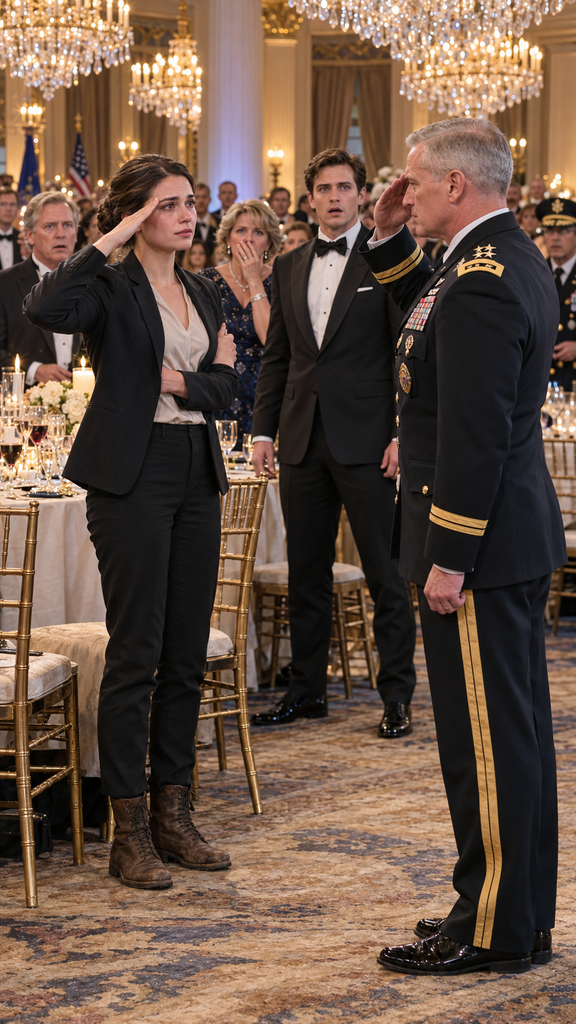
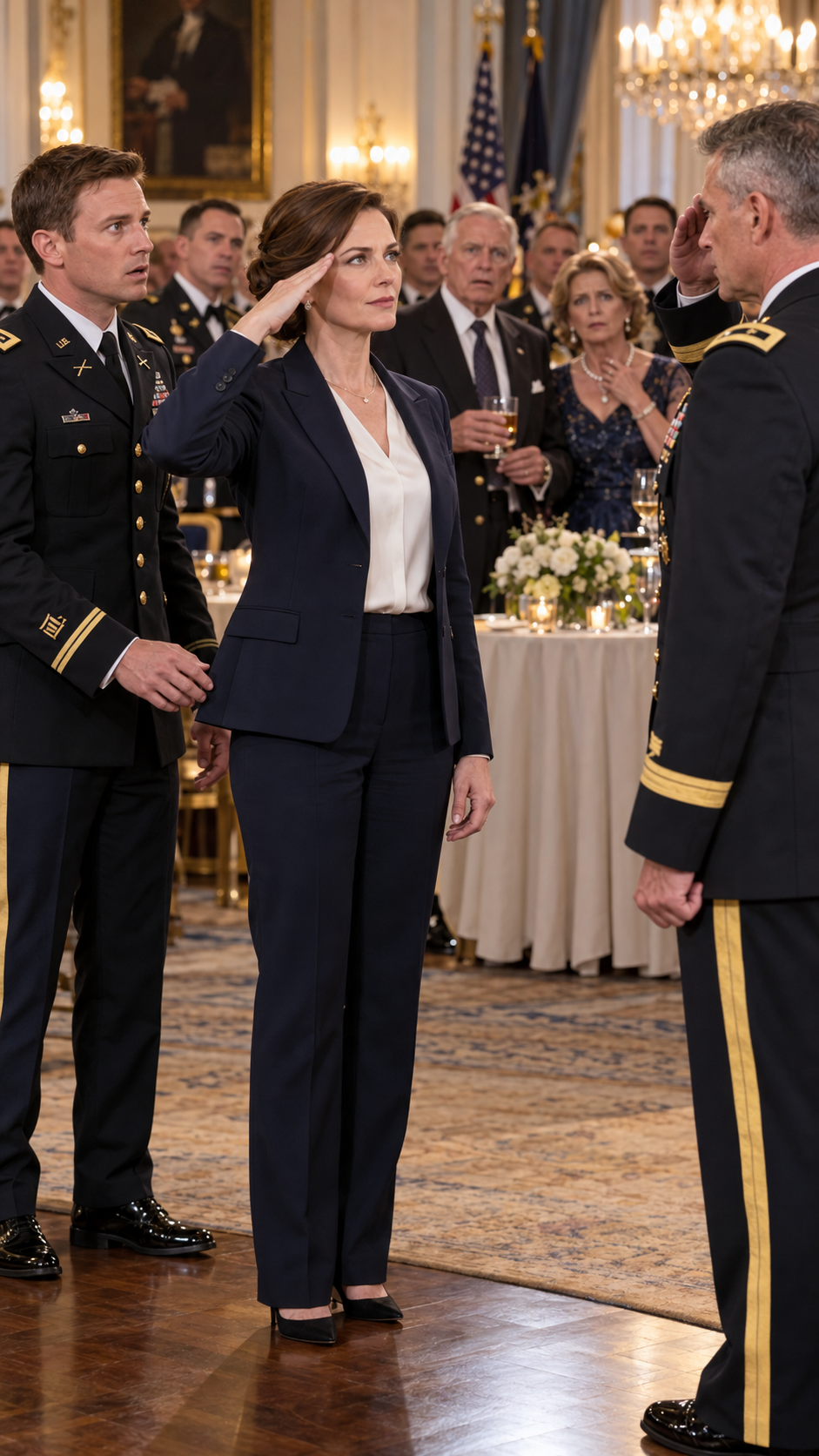
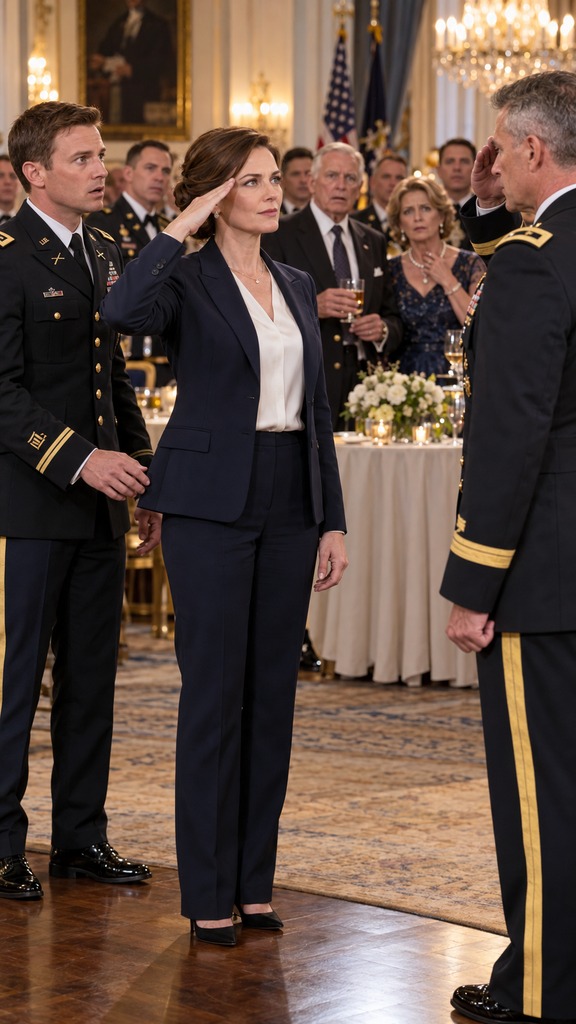
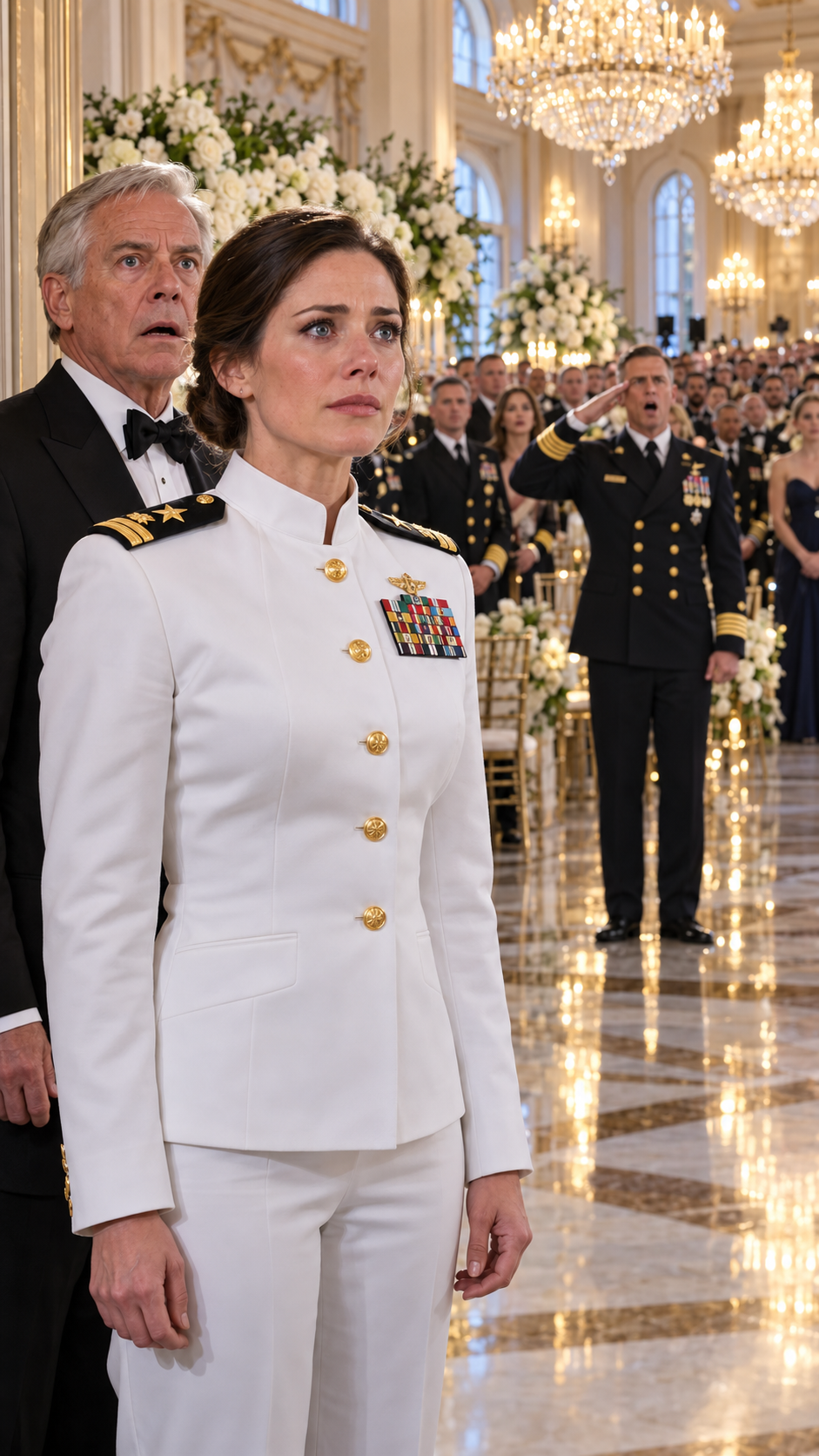
    Because the second I walked into my sister’s wedding, nearly three hundred battle-hardened SEALs rose to their feet.

    A commander called out, “ADMIRAL ON DECK!”

    And then—

    complete silence.

    But that happened later.

    Three hours earlier, I was standing beneath the flickering arrivals board at Norfolk International Airport when my father sent the message that finally broke the last fragile thread still holding us together.

    My name is Rebecca Hale, and I was thirty-four years old when I came home from eight months overseas to attend my younger sister’s wedding.

    I had been back on American soil for exactly seventeen minutes.

    My phone vibrated while I waited beside baggage claim.

    Dad.

    For one stupid second, I smiled.

    I thought maybe he was asking whether I had landed safely.

    Instead, I read:

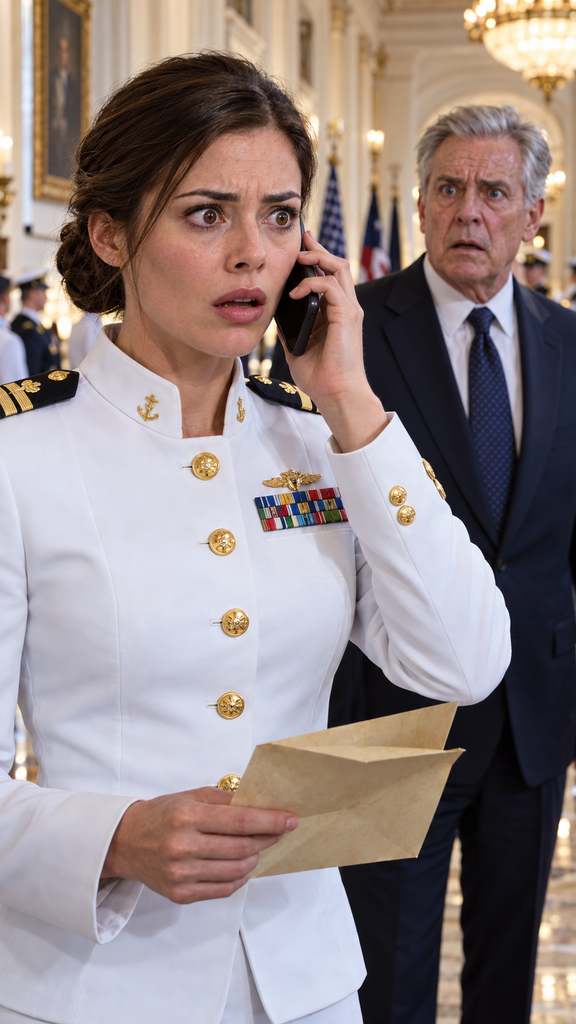
    Make sure you don’t wear your uniform today. Nobody cares about your Navy career. The groom’s family expects high society, not government employees.

    I read it twice.

    Around me, suitcase wheels clattered across tile. A toddler cried beside a vending machine. Somewhere behind the security doors, an announcement crackled through the terminal.

    Every time the automatic doors opened, damp pine and jet fuel swept inside and mixed with the smell of burnt airport coffee.

    I stared at my father’s message until the screen dimmed.

    Eight months.

    That was how long I had been gone.

    Eight months sleeping in two-hour stretches.

    Eight months eating meals while standing over maps.

    Eight months living around encrypted briefings, secure rooms, satellite calls, intelligence updates, casualty reports, weather windows, extraction plans, and names I still sometimes heard in my head when everything around me became too quiet.

    The location where I had spent most of those months wasn’t something I could discuss.

    Neither was the work.

    What I could say was that I had served alongside a Naval Special Warfare task force.

    I could say there were nights when the decisions made in a windowless room determined whether men came home before sunrise.

    I could say there were people whose wives, husbands, children, and parents would never know how close they had come to receiving a knock at the door.

    And I could say I had learned long ago that real responsibility rarely looked impressive from the outside.

    My father told people I did “computer work for the Navy.”

    He had never bothered to ask what kind.

    Maybe that was the strangest part.

    Not that he misunderstood my career.

    That would have been forgivable.

    He simply wasn’t interested.

    To Dad, success had a visible price tag.

    A corner office.

    A private club membership.

    A house with enough square footage to make other people jealous.

    A watch someone recognized from across a dinner table.

    My younger sister Madison was marrying into the Ellison family that afternoon.

    Her fiancé, Grant Ellison, helped oversee part of his family’s investment company.

    That was all my father needed to know.

    The Ellisons had money.

    Old money, according to my mother, who said the words as if she were describing a hereditary title.

    For the past year, every conversation about Madison’s wedding had somehow become a conversation about impressing them.

    The flowers had to be imported.

    The invitations had to be letterpressed.

    The wine had to come from a vineyard whose name my father suddenly pronounced with an accent.

    And apparently I had to hide my uniform.

    My duffel finally appeared on the carousel.

    Then my suitcase.

    Inside it was a black garment bag holding my dress whites.

    It was the one formal outfit I had carried across an ocean because my little sister was getting married.

    I ran my fingers over the garment bag.

    My phone buzzed again.

    For a moment, I expected an apology.

    Instead:

    Rebecca, I’m serious. Don’t make today about you.

    I almost laughed.

    There in the middle of baggage claim, after twenty-one hours of travel and eight months away, I almost laughed until I cried.

    Because I had spent most of my life trying not to make anything about me.

    When Madison and I were children, she had been the bright one in the family.

    Not academically.

    Emotionally.

    She filled rooms.

    She sang while brushing her teeth. She named stray cats. She cried when cartoons ended because she worried the characters would be lonely after the credits.

    We built forts beneath the maple tree behind our childhood home.

    She drew treasure maps in purple marker, and I led us through the backyard while the neighbor’s sprinkler became incoming enemy fire.

    “Captain Rebecca!” she’d yell.

    “Stay behind me!”

    “Why?”

    “Because I’m older.”

    “By three years!”

    “Still older.”

    She would salute me with a crooked grin.

    Back then, protecting Madison had been easy.

    Stand in front.

    Take the hit first.

    As we grew older, things became more complicated.

    Dad learned that Madison hated conflict, and he used it.

    Mom learned that Madison wanted approval, and she used that too.

    I left home at eighteen.

    Madison stayed close.

    I joined the Navy.

    Madison learned how to keep everyone happy.

    For years, I kept telling myself that survival came in different forms.

    Mine involved leaving.

    Hers involved adapting.

    Maybe that was why I still loved her fiercely even when I didn’t always recognize the woman she had become.

    I didn’t answer Dad’s message.

    Outside, rain covered the pavement in silver.

    I loaded my duffel, suitcase, and garment bag into a rideshare.

    “Where to?” the driver asked.

    “Bellmere Country Club.”

    He glanced at me in the mirror.

    “Wedding?”

    “My sister’s.”

    “You’re cutting it close.”

    I checked the time.

    1:03 p.m.

    Ceremony at two-thirty.

    “I’ve had closer calls.”

    He laughed.

    I didn’t.

    Bellmere appeared through the rain twenty minutes later, sitting behind black iron gates and manicured hedges.

    Gray stone walls.

    Tall windows.

    White roses everywhere.

    Valets hurried beneath umbrellas while florists carried arrangements through massive carved wooden doors.

    The driver pulled up beneath the awning.

    I stepped out wearing jeans, boots, and a gray sweater.

    One of the valets looked at my duffel.

    Then at me.

    Then pointed toward the side of the building.

    “Service entrance is around there.”

    I looked toward the entrance.

    Then back at him.

    “The main entrance is over here.”

    His face changed immediately.

    “Of course, ma’am. Sorry.”

    I could have been angry.

    Instead, I was tired.

    At 1:26 p.m., I signed the guest book.

    The woman behind the table scanned my name.

    “Hale… Hale…”

    Her finger stopped.

    “Oh. Bride’s sister.”

    “Yes.”

    She looked over my clothes.

    “You’re in the wedding?”

    “No.”

    That had been another decision made while I was deployed.

    Madison had told me it would be “too complicated” because no one knew whether I would make it home.

    I had said I understood.

    And I did.

    Mostly.

    A brass sign pointed toward the bridal suite.

    I followed it down a hallway filled with framed oil paintings and flower arrangements.

    Before I reached the doors, I heard laughter.

    Then the sharp pop of a champagne cork.

    I knocked once and entered.

    The entire room went silent.

    Madison sat in front of a mirror wearing a white silk robe. Her veil was already secured in her hair.

    My mother stood behind her.

    Three bridesmaids held champagne glasses.

    Dad stood beside the window.

    For a moment, nobody moved.

    Madison’s reflection stared at mine.

    Her eyes widened.

    “You really came.”

    Not hello.

    Not thank God you’re home.

    Not I missed you.

    Just surprise.

    I swallowed.

    “Of course I came.”

    Mom crossed the room and kissed my cheek without touching me enough to wrinkle anything.

    “You look exhausted.”

    “Twenty-one hours of travel.”

    “You could have put on some makeup.”

    I almost smiled.

    There were things so predictable they became comforting.

    Then Dad noticed the garment bag.

    His eyes narrowed.

    “You got my message.”

    “I did.”

    He nodded toward the bag.

    “Then leave that at coat check.”

    Madison’s smile disappeared.

    One bridesmaid suddenly became fascinated with her champagne.

    I looked at Dad.

    “I’m changing.”

    “Into what?”

    He knew.

    I let the silence answer him.

    His mouth tightened.

    “Rebecca.”

    Madison turned slightly in her chair.

    “Dad—”

    He ignored her.

    “Today is about your sister. Grant’s family doesn’t need some kind of military spectacle.”

    A faucet dripped steadily in the bathroom beside us.

    One bridesmaid adjusted the same bracelet twice.

    I stared at my father.

    I had been yelled at by people with stars on their shoulders.

    I had sat across from men who had survived things no person should survive.

    I had received casualty reports before breakfast.

    Yet somehow my father’s disappointment still knew exactly where to cut.

    Maybe because parents get the first map of you.

    They learn where everything hurts before you learn how to protect it.

    I looked at Madison.

    “Do you want me here?”

    Her lips parted.

    Dad answered first.

    “Of course she does. Just behave appropriately.”

    I didn’t look away from my sister.

    “Madison?”

    Her eyes met mine through the mirror.

    For one second, I saw the little girl beneath the maple tree.

    Then she looked toward my garment bag.

    “I just need everything to go smoothly today.”

    That hurt more than Dad’s text.

    I nodded.

    “Understood.”

    I picked up my bag.

    “Rebecca,” Madison said.

    I stopped.

    But she didn’t finish.

    So I walked out.

    I found the women’s lounge at the far end of the corridor and locked myself inside.

    For several seconds, I stood with both hands braced against the marble counter.

    Then I opened my duffel.

    My folded travel orders were inside.

    I looked at the release stamp.

    9:40 a.m.

    Dad’s first message had arrived at 12:08.

    Less than three hours separated the official order sending me home from the message telling me to hide who I was.

    I stared at my reflection.

    My eyes were tired.

    My face was thinner than it had been eight months earlier.

    There was a pale line near my temple from an accident I didn’t discuss.

    I thought about changing into the navy-blue dress my mother had insisted on buying for me months earlier.

    It was still at my parents’ house.

    I could have asked someone to bring it.

    I could have worn civilian clothes.

    I could have disappeared into the back row and made everyone comfortable.

    I had spent years doing exactly that.

    Not because I was ashamed of my service.

    Because explaining it was exhausting.

    Dad once introduced me at a Christmas party by saying, “Rebecca works with computers for the government.”

    I had been a captain then.

    I didn’t correct him.

    At Thanksgiving, one of his friends asked whether I planned to “get a real job eventually.”

    Dad laughed.

    I didn’t correct him.

    When I was selected for flag rank, I told my mother.

    Her response had been:

    “That’s wonderful, sweetheart. Madison just chose her venue.”

    I didn’t correct that either.

    Standing inside Bellmere’s empty lounge, I finally understood something.

    Silence could be dignity.

    But silence could also become permission.

    I unzipped the garment bag.

    My dress whites waited inside.

    I changed slowly.

    Not because I wanted attention.

    Not because I wanted revenge.

    Because I had earned every stripe.

    Every sleepless night.

    Every responsibility.

    Every name that returned to me whenever a room became too quiet.

    When I finished, I looked at myself once.

    Then I opened the door.

    At 1:52 p.m., I stepped into the hallway.

    Dad was waiting outside the ballroom.

    His expression hardened the instant he saw me.

    “What did I tell you?”

    I stopped.

    “That nobody cared.”

    “Take it off.”

    “No.”

    His eyes widened slightly.

    I rarely told my father no.

    Not because I feared him.

    Because fighting with him had always felt like trying to reason with weather.

    He stepped closer.

    “Rebecca, do not embarrass this family.”

    The quartet inside the ballroom began playing.

    Guests were taking their seats beneath crystal chandeliers.

    I could see white roses lining the aisle.

    Grant stood near the front speaking to one of the groomsmen.

    Dad lowered his voice.

    “You walk in there dressed like that and people will think you’re trying to upstage your sister.”

    “I’m attending her wedding in my formal uniform.”

    “You were specifically asked not to.”

    “By you.”

    “By this family.”

    Something inside me went very still.

    “No,” I said. “By you.”

    His face reddened.

    He reached toward my sleeve.

    I lowered my eyes to his hand.

    He stopped.

    Then slowly pulled it back.

    I looked toward the ballroom.

    “I’m going to watch my sister get married.”

    And I walked inside alone.

    I didn’t know that within thirty seconds, everything my father believed about me was about to collapse.


    PART 2: ADMIRAL ON DECK

    At first, nobody noticed anything except a woman in a white uniform.

    A few heads turned.

    Someone whispered.

    Grant’s mother paused near the front row.

    Behind me, I heard Dad following.

    His shoes struck the floor quickly.

    “Rebecca.”

    I kept walking.

    Then a broad-shouldered man sitting near the aisle looked up.

    I recognized him immediately.

    Commander Daniel Mercer.

    His expression changed.

    His chair slammed backward.

    He stood.

    The man beside him looked at Mercer, then at me.

    He rose too.

    Another followed.

    Then five.

    Ten.

    Twenty.

    The sound spread through the ballroom like distant thunder.

    Chair legs scraped against polished wood.

    Conversations stopped.

    Heads turned.

    Men I knew by face, reputation, call sign, or casualty report began rising.

    Some wore dark suits.

    Some wore uniforms.

    Some had scars visible above their collars.

    One walked with a carbon-fiber prosthetic below his right knee.

    Another had his left hand resting protectively over the shoulder of a teenage son.

    These weren’t men who stood because someone was wealthy.

    They weren’t impressed by country clubs.

    They didn’t care about floral arrangements.

    They stood because protocol mattered.

    Because service mattered.

    Because the insignia on my shoulders meant something they understood.

    Nearly three hundred Naval Special Warfare personnel and veterans were in that ballroom through overlapping circles of service, family, and the groom’s community.

    Until that moment, I hadn’t realized how many would be there.

    I stopped walking.

    Mercer snapped to attention.

    His voice hit the room like a command on a flight deck.

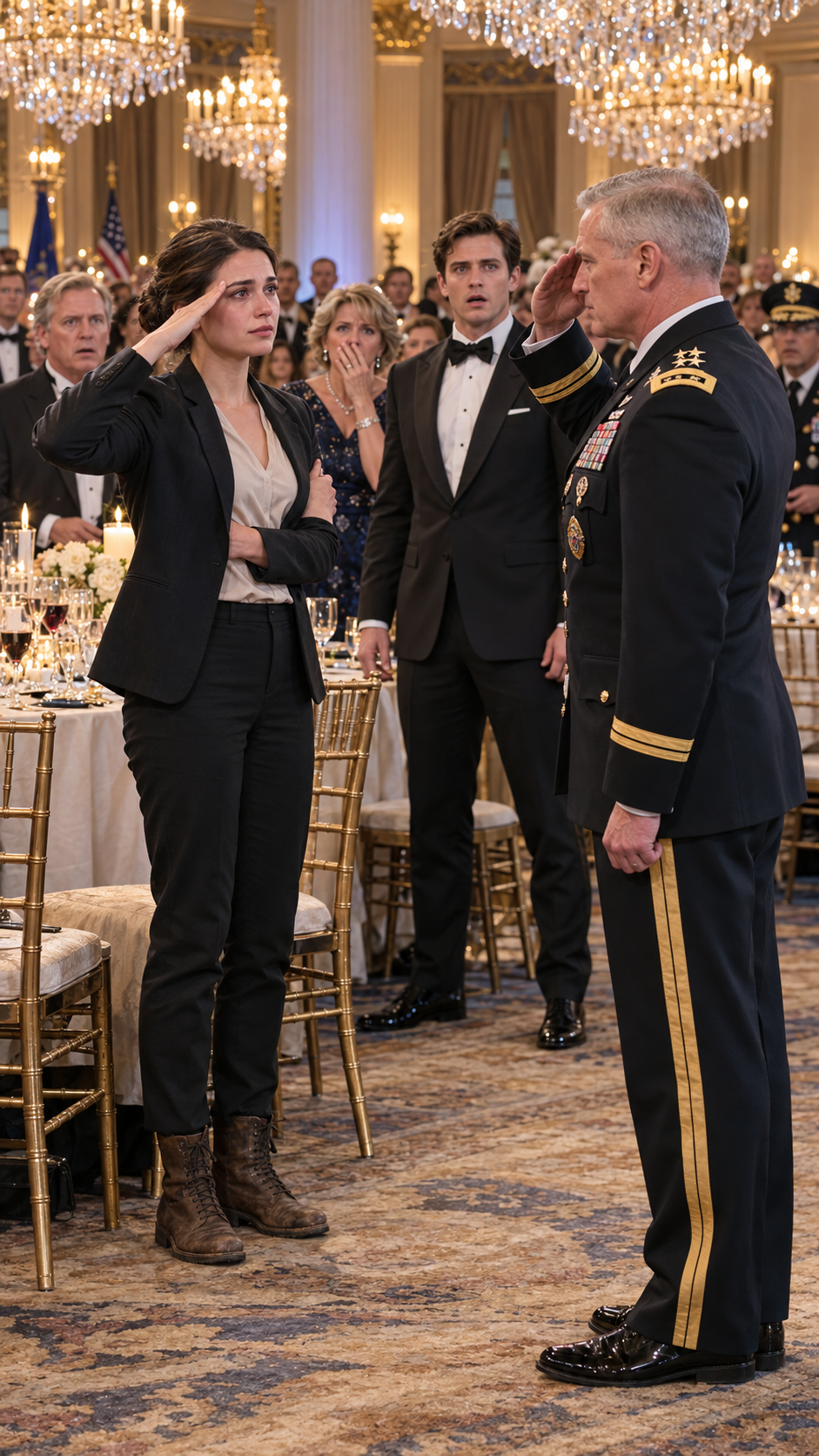
    “ADMIRAL ON DECK!”

    Silence.

    Absolute silence.

    My father’s footsteps stopped behind me.

    I could feel him there.

    For one strange second, all I heard was the chandelier humming faintly above us.

    Then training took over.

    “As you were.”

    The room moved again.

    Not completely.

    People sat, but the atmosphere had changed.

    Whispers traveled from row to row.

    “Admiral?”

    “That’s Madison’s sister.”

    “I thought she worked in IT.”

    “Rebecca Hale?”

    Someone farther back said my name with recognition.

    I wanted the floor to open.

    Not because I was ashamed.

    Because this was exactly what I had not wanted.

    My sister’s wedding had become a revelation about me.

    I turned.

    Dad stood six feet away.

    His face had lost all color.

    His eyes moved from my shoulders to the rows of men returning to their seats.

    Then back to me.

    “Admiral?”

    He whispered the word as though he’d never heard it before.

    I looked at him.

    “You told me nobody cared.”

    His mouth opened.

    Nothing came out.

    Before either of us could speak again, a hand touched my arm.

    Grant.

    He looked stunned.

    Not angry.

    Stunned.

    “Rebecca?”

    “Yes?”

    “You’re Rear Admiral Hale?”

    I studied his face.

    Apparently Madison hadn’t told him either.

    “I am.”

    His eyebrows rose.

    Then, unexpectedly, he laughed once under his breath.

    “My God.”

    “Grant, I’m sorry. I didn’t mean for—”

    “No.”

    His expression became serious.

    “Don’t apologize.”

    He looked over my shoulder toward Dad.

    Then back at me.

    “Please don’t apologize.”

    Something in his voice made me stop.

    Grant glanced toward the front.

    “We’re about to start, but after the ceremony, I want to talk to you.”

    “About what?”

    He hesitated.

    “About why half the men in this room seem to know exactly who you are while your own family apparently doesn’t.”

    Before I could answer, the quartet shifted into the opening bars of the processional.

    Grant squeezed my shoulder once.

    “Sit. Please.”

    I took a seat near the front.

    Dad sat beside Mom two rows ahead.

    He turned around three times before the ceremony began.

    Each time, I pretended not to notice.

    Then the doors opened.

    Madison appeared.

    Everything else disappeared.

    She stood at the end of the aisle in her wedding dress, holding Dad’s arm.

    She was beautiful.

    Not because of the silk.

    Not because of the veil.

    Because for one second, she smiled exactly like the girl with the purple treasure maps.

    Then she saw me.

    Her eyes dropped to my uniform.

    She froze.

    Dad murmured something to her.

    Madison looked around.

    She noticed the men in the room.

    She noticed Mercer.

    She noticed the sudden awareness in the faces of Grant’s relatives.

    Then she looked back at me.

    Her expression changed.

    I couldn’t name it.

    Shock.

    Fear.

    Confusion.

    Maybe shame.

    The ceremony began.

    I tried to focus.

    I really did.

    Grant took Madison’s hands.

    The officiant spoke about commitment.

    About standing beside someone when life stripped away the polished surfaces.

    About choosing truth over convenience.

    The words landed harder than they were supposed to.

    When Madison said, “I do,” her voice trembled.

    Grant’s didn’t.

    They kissed.

    Everyone applauded.

    I stood with everyone else.

    And for a few minutes, I allowed myself to be only Madison’s sister.

    I cried.

    Quietly.

    Because whatever else had happened, she was still my little sister.

    At the reception, that illusion lasted eleven minutes.

    Then Dad cornered me beside a marble column.

    “What exactly are you?”

    I stared at him.

    “What?”

    “What rank are you?”

    “Dad.”

    “I asked you a question.”

    I almost laughed.

    “You could have asked me any time in the last sixteen years.”

    “Rebecca.”

    “Rear admiral.”

    He blinked.

    “Since when?”

    I looked at him for a long moment.

    “Fourteen months.”

    His face changed.

    Fourteen months.

    Which meant Christmas.

    Thanksgiving.

    Madison’s engagement party.

    Mom’s birthday.

    The family reunion.

    All those dinners where he’d asked Grant about quarterly earnings and never once asked me what I was doing.

    He swallowed.

    “You never told me.”

    “I did.”

    His expression hardened defensively.

    “No, you didn’t.”

    “I called Mom the day I found out.”

    Mom had approached behind him.

    Her face tightened.

    “You said you’d been promoted.”

    “Yes.”

    “You didn’t say admiral.”

    “I said I had been selected for flag rank.”

    Mom blinked.

    Dad looked at her.

    She shrugged helplessly.

    “I didn’t know what that meant.”

    For a second, none of us spoke.

    Then Dad said the sentence that ended whatever patience I had left.

    “Well, you should have explained it better.”

    I stared at him.

    There it was.

    Even now.

    Even standing beneath the evidence of years he had chosen not to see, my father needed my invisibility to be my fault.

    I felt something loosen inside me.

    Not break.

    Breakage hurt.

    This felt different.

    It felt like putting down something heavy.

    “I shouldn’t have needed to make my life impressive enough for you to ask about it.”

    Dad’s face hardened.

    “Don’t start.”

    “I didn’t.”

    I glanced around the ballroom.

    “You did.”

    Mom whispered, “Rebecca, please. Not today.”

    I looked at her.

    “That’s what everyone keeps saying.”

    She lowered her voice.

    “Your sister is already upset.”

    My stomach tightened.

    “About what?”

    Mom looked toward Madison.

    “She thinks you deliberately did this.”

    I stared at her.

    “Did what?”

    “Made an entrance.”

    I almost couldn’t believe it.

    “I walked into a room.”

    “In that uniform.”

    “Which Dad told me not to wear because he was embarrassed by it.”

    “That’s not what he meant.”

    I turned toward him.

    “Then what did you mean?”

    Dad’s jaw tightened.

    “This isn’t the place.”

    “Convenient.”

    I walked away.

    I needed air.

    Instead, I found Madison.

    She was standing in the hallway outside the bridal suite.

    Alone.

    Still wearing her veil.

    Waiting for me.

    “Rebecca.”

    I stopped.

    She folded her arms.

    “Did you know?”

    “Know what?”

    “That all those men would stand.”

    “No.”

    “You expect me to believe that?”

    “Yes.”

    Her eyes filled.

    “This was supposed to be my day.”

    The words hit me harder than they should have.

    I lowered my voice.

    “It is your day.”

    “Then why couldn’t you just wear a dress?”

    There are moments when anger arrives hot.

    This wasn’t one of them.

    Mine arrived cold.

    “I came home from deployment this morning.”

    “I know.”

    “No, Madison. You knew I was traveling. You don’t know where I came from. You don’t know what the last eight months were.”

    “You never tell me anything.”

    I stared at her.

    “Do you ask?”

    She flinched.

    I regretted it immediately.

    But I didn’t take it back.

    She looked away.

    “Dad said you would do something like this.”

    “Like what?”

    “Make a point.”

    I laughed once.

    It sounded exhausted.

    “I didn’t even know who was on the guest list.”

    She said nothing.

    “I came because you’re my sister.”

    “You could have changed.”

    “I did change.”

    “You know what I mean.”

    “Yes,” I said quietly. “I do.”

    Madison wiped beneath one eye before the tear could ruin her makeup.

    “I’ve spent a year trying to make today perfect.”

    “I know.”

    “You don’t know what that’s like.”

    I stared at her.

    “No. I suppose I don’t.”

    The cruelty of my answer landed immediately.

    Madison’s face tightened.

    I closed my eyes.

    “I’m sorry.”

    She didn’t respond.

    I took a breath.

    “I don’t want to fight with you on your wedding day.”

    “Then why won’t you just admit you wanted Dad to feel stupid?”

    That stopped me.

    I looked at her.

    “Is that what you think?”

    She didn’t answer.

    “Madison.”

    Her silence was enough.

    I nodded.

    “Okay.”

    I turned away.

    Then she said, “Rebecca.”

    I stopped.

    Her voice cracked.

    “Why didn’t you tell me?”

    I looked back.

    “Tell you what?”

    “That you were an admiral.”

    I stared at my little sister.

    And suddenly I understood that this wasn’t only about my father.

    Somewhere along the way, all of us had become strangers who still used the word family.

    Before I could answer, Commander Mercer appeared at the end of the hallway.

    He saw us and immediately stopped.

    “Ma’am. Sorry.”

    “What is it?”

    “The presentation is ready.”

    Madison frowned.

    “What presentation?”

    Mercer looked at me.

    Then at her.

    His expression changed.

    “You don’t know?”

    I felt the first real unease of the afternoon.

    “Know what?”

    He hesitated.

    Then he said:

    “The reason so many of us are here.”


    PART 3: THE THINGS THEY NEVER ASKED

    I stared at Mercer.

    “What do you mean?”

    He looked genuinely confused.

    “The recognition.”

    “I didn’t authorize a recognition.”

    “No, ma’am. You weren’t supposed to know.”

    Madison looked between us.

    “What recognition?”

    Mercer rubbed the back of his neck.

    For a man who had once briefed senior officers without blinking, he suddenly looked deeply uncomfortable.

    “It was supposed to happen after the formal reception. Quietly.”

    I narrowed my eyes.

    “Daniel.”

    He knew that tone.

    “Yes, ma’am.”

    “Explain.”

    He exhaled.

    Several members of the task force had learned I would be attending the wedding.

    Word spread.

    A number of men already had connections to guests through the sprawling military community around Hampton Roads. Others had arranged to attend the evening portion with the knowledge of Grant and his family.

    Not to interrupt Madison’s wedding.

    Not to create a spectacle.

    They had planned a private acknowledgment afterward.

    Nothing elaborate.

    A plaque.

    A few words.

    A chance for people I had served beside to say goodbye before reassignment pulled us in different directions.

    I stared at Mercer.

    “You brought three hundred people for a plaque?”

    His mouth twitched.

    “Ma’am, you know how these things go.”

    Unfortunately, I did.

    One person tells five.

    Five tell fifty.

    Then someone starts a group chat.

    Madison was staring at him.

    “Why?”

    Mercer’s expression softened.

    “Because your sister brought people home.”

    I felt my entire body tense.

    “Commander.”

    He stopped.

    There were details he could not discuss.

    He knew it.

    I knew it.

    Madison didn’t.

    Mercer chose his words carefully.

    “There were operations during the deployment where Admiral Hale’s judgment directly affected whether our people made it back safely.”

    Madison looked at me.

    I looked at the floor.

    Mercer continued.

    “She doesn’t like being thanked for doing her job.”

    “Daniel.”

    “Yes, ma’am.”

    “Enough.”

    He nodded.

    But before leaving, he looked at Madison.

    “With respect, Mrs. Ellison, nobody stood in that ballroom because of rank alone.”

    Then he walked away.

    Madison and I remained in the hallway.

    For several seconds, she didn’t speak.

    Then:

    “You saved them?”

    I shook my head.

    “It’s more complicated than that.”

    “He said—”

    “I heard him.”

    “How many?”

    “I can’t discuss it.”

    “Rebecca.”

    “I can’t.”

    She stared at me.

    I watched frustration move across her face.

    Then something else.

    Understanding.

    Not of what I had done.

    Of why she didn’t know.

    “You really can’t tell us.”

    “No.”

    “All these years…”

    “Some things, yes. I could have told you more.”

    “Why didn’t you?”

    That question deserved an honest answer.

    So I gave her one.

    “At first, because I was busy. Then because every time I came home, nobody seemed interested.”

    She looked down.

    I continued quietly.

    “Dad would ask about Grant’s work for forty minutes. Mom would ask whether I was seeing anyone. You’d tell me what was happening here.”

    “You could have interrupted.”

    “I could have.”

    “Why didn’t you?”

    “Because I got tired of auditioning for my own family.”

    Madison closed her eyes.

    That was when Grant appeared.

    He had removed his jacket.

    His tie was slightly crooked.

    “There you are.”

    He kissed Madison’s temple.

    Then he looked at me.

    “Everything okay?”

    “No,” Madison said.

    Grant looked between us.

    She took a breath.

    “But maybe it can be.”

    Grant nodded slowly.

    “Your father is telling people he always knew Rebecca was an admiral.”

    I stared at him.

    Madison closed her eyes.

    “Oh God.”

    “He’s also explaining that he encouraged her military career.”

    I actually laughed.

    I couldn’t help it.

    Grant smiled reluctantly.

    “Thought you should know.”

    Of course.

    Dad had recovered.

    The shame had passed.

    Now came reinvention.

    If I had been a low-level government employee, I was embarrassing.

    As an admiral recognized by hundreds of elite service members, I had suddenly become valuable.

    I knew exactly what would happen next.

    He would introduce me.

    He would tell stories.

    He would transform my career into evidence of his parenting.

    For the first time that day, I became angry.

    Not wounded.

    Angry.

    I walked back into the ballroom.

    Dad was standing with three members of Grant’s extended family.

    He saw me approaching.

    His smile widened.

    “Here she is.”

    He placed a hand toward me as though presenting an acquisition.

    “My daughter, Rear Admiral Rebecca Hale.”

    One of the men smiled.

    “Quite an accomplishment.”

    “Thank you.”

    Dad laughed.

    “She gets that determination from me.”

    I looked at him.

    He kept going.

    “We always knew Rebecca would do something extraordinary. I told her from the beginning—”

    “Dad.”

    He stopped.

    The guests looked at me.

    I kept my voice calm.

    “Could I speak to you?”

    “Of course.”

    “Privately.”

    His smile tightened.

    We stepped toward the windows.

    Rain streaked the glass.

    I turned to him.

    “Don’t.”

    “Don’t what?”

    “Rewrite this.”

    His face hardened.

    “I was making conversation.”

    “You told me less than two hours ago that nobody gave a damn about my Navy career.”

    His eyes darted around.

    “Lower your voice.”

    “I am speaking quietly.”

    “You’re misunderstanding what I meant.”

    “No. For once, I’m not.”

    He crossed his arms.

    “I was trying to protect your sister.”

    “From my uniform?”

    “From exactly what happened.”

    “You mean people respecting me?”

    “I mean attention shifting away from Madison.”

    I studied him.

    “If nobody cared, how was my uniform going to steal attention?”

    He had no answer.

    I continued.

    “You weren’t protecting Madison. You were embarrassed because you thought the Ellisons would look down on me.”

    “That is ridiculous.”

    “Is it?”

    He looked away.

    There it was.

    I nodded slowly.

    “You thought I made you look unsuccessful.”

    “Rebecca—”

    “You didn’t know my rank.”

    He said nothing.

    “You didn’t know what I did.”

    Nothing.

    “You didn’t know I’d been promoted fourteen months ago.”

    His jaw worked.

    “I have a lot going on.”

    “So do I.”

    “You’ve always been secretive.”

    “Classified isn’t secretive.”

    “You know what I mean.”

    “No, Dad. I don’t think I ever did.”

    He stared at me.

    For the first time, he looked older.

    Not weak.

    Not defeated.

    Just older.

    “I wanted better for you.”

    I almost couldn’t believe what I had heard.

    “Better?”

    “A stable life. Family. Something outside that institution.”

    “The institution you were ashamed to have me represent an hour ago?”

    He flinched.

    I hadn’t raised my voice.

    I didn’t need to.

    “You think this is about rank,” I said. “It isn’t.”

    “Then what is it about?”

    “You didn’t respect me when you thought I was ordinary.”

    He looked at me.

    I continued.

    “And now that you know other people consider me important, suddenly you’re proud.”

    His mouth opened.

    I shook my head.

    “That’s the part I can’t forget.”

    For once, my father had nothing to say.

    I walked away.

    Near the dance floor, Mom intercepted me.

    “What did you say to him?”

    “The truth.”

    “He looks devastated.”

    I stared at her.

    “Mom, he texted me while I was coming home from deployment and told me to hide my uniform because the Ellisons expected high society.”

    Her eyes lowered.

    “You know how he gets.”

    “Yes.”

    “You could be more understanding.”

    That sentence nearly made me smile.

    “Of him?”

    “He’s your father.”

    “And I’m his daughter.”

    She looked at me.

    I waited.

    Nothing.

    Then I asked the question I had never asked before.

    “Mom, what do I do?”

    She blinked.

    “What?”

    “In the Navy. What do I do?”

    She looked confused.

    “Well… leadership.”

    “What kind?”

    “Rebecca, I don’t understand all the terminology.”

    “Where was I stationed before this deployment?”

    She hesitated.

    “Virginia?”

    “Before Virginia.”

    Silence.

    “What was my last command?”

    Her face reddened.

    I nodded.

    “What’s Madison’s wedding florist?”

    She frowned.

    “What does that have to do with anything?”

    “What’s the name?”

    “Fleur de Lis.”

    “The caterer?”

    “Barrington.”

    “The photographer?”

    “Celia Marston.”

    “Grant’s job title?”

    “Senior vice president.”

    I let the silence sit between us.

    Mom’s eyes filled.

    “That isn’t fair.”

    “No,” I said softly. “It isn’t.”

    Then I walked away before I started crying.

    I found a quiet balcony overlooking the golf course.

    Rain tapped against the awning.

    For the first time since arriving, I was alone.

    I gripped the railing.

    I had faced harder things than this.

    Objectively, I knew that.

    But pain isn’t a competition.

    You can survive a storm and still bleed from a paper cut if the hand holding the paper belongs to someone you love.

    The balcony door opened.

    Madison stepped outside.

    She had removed her veil.

    For a moment, neither of us spoke.

    Then she stood beside me.

    “Remember the maple tree?”

    I looked at her.

    She smiled faintly.

    “I drew the maps.”

    “You always forgot to mark where the treasure was.”

    “I was seven.”

    “You were terrible at cartography.”

    She laughed.

    A real laugh.

    Small.

    Wet-eyed.

    But real.

    Then she became serious.

    “I knew.”

    My stomach tightened.

    “Knew what?”

    “That Dad sent you that message.”

    I stared at her.

    “He showed it to Mom before he sent it.”

    “And you said nothing.”

    Madison looked down.

    “I told myself it wasn’t my fight.”

    The rain grew harder.

    “I told myself he was stressed. That he just wanted everything to go well. That you wouldn’t care because you never care what people think.”

    I almost interrupted.

    She continued.

    “But that’s not true, is it?”

    I didn’t answer.

    “You care.”

    “Yes.”

    Her eyes filled.

    “You just don’t beg people to care back.”

    That hurt because it was true.

    Madison wiped her cheek.

    “I should have stopped him.”

    I looked out across the wet golf course.

    “Why didn’t you?”

    Her answer came quietly.

    “Because I’ve spent my whole life being afraid that if I disappoint Dad, he’ll stop loving me.”

    I turned toward her.

    There it was.

    The truth beneath everything.

    Not greed.

    Not cruelty.

    Fear.

    Madison had learned a different survival skill than I had.

    I escaped pressure by becoming independent.

    She survived it by becoming agreeable.

    Neither of us had walked away untouched.

    “I thought marrying Grant would make Dad relax,” she whispered. “Instead, it made everything worse. Every choice became about what his family would think.”

    “What does Grant think?”

    She gave a sad laugh.

    “That’s the stupid part.”

    “What?”

    “Grant doesn’t care.”

    I frowned.

    “He wanted barbecue at the reception.”

    I laughed.

    “He hates this club.”

    Now I really laughed.

    Madison covered her face.

    “I spent eleven months trying to impress people who weren’t asking to be impressed.”

    “Why?”

    “Because Dad kept telling me I had one chance to prove I belonged.”

    I looked through the glass doors toward our father.

    Suddenly the wedding looked different.

    This wasn’t only what he had done to me.

    It was what his obsession with status had done to all of us.

    Madison touched my sleeve.

    “I’m sorry.”

    I looked at her.

    “For what?”

    “For being surprised you came.”

    My throat tightened.

    She continued.

    “For not asking about your life. For letting Dad talk about you like your career was some embarrassing hobby. And for what I said in the hallway.”

    “You were overwhelmed.”

    “That doesn’t make it okay.”

    No excuse.

    No deflection.

    Just responsibility.

    It was more than I’d gotten from either of our parents.

    I nodded.

    “Thank you.”

    She looked at my uniform.

    Then smiled faintly.

    “You look terrifying.”

    “Good.”

    “And kind of amazing.”

    “Better.”

    She laughed.

    Then she held out her arms.

    For a second, I saw the little girl beneath the maple tree.

    I hugged my sister.

    Carefully at first.

    Then tightly.

    She whispered into my shoulder:

    “I missed you.”

    I closed my eyes.

    “I missed you too.”

    The balcony door opened again.

    Grant leaned outside.

    “Sorry to interrupt.”

    Madison pulled away.

    “What?”

    He looked at me.

    “Commander Mercer says they’re ready.”

    I sighed.

    “I told him no spectacle.”

    Grant smiled.

    “He said you’d say that.”

    “I’m going to court-martial him.”

    “Apparently he also predicted that.”

    Madison looked at me.

    “Go.”

    “This is your reception.”

    “And I’m telling you to go.”

    “Madison—”

    She took my hand.

    “Rebecca. Please.”

    I studied her face.

    She meant it.

    So we went inside.

    I thought the hardest part of the day was over.

    I was wrong.

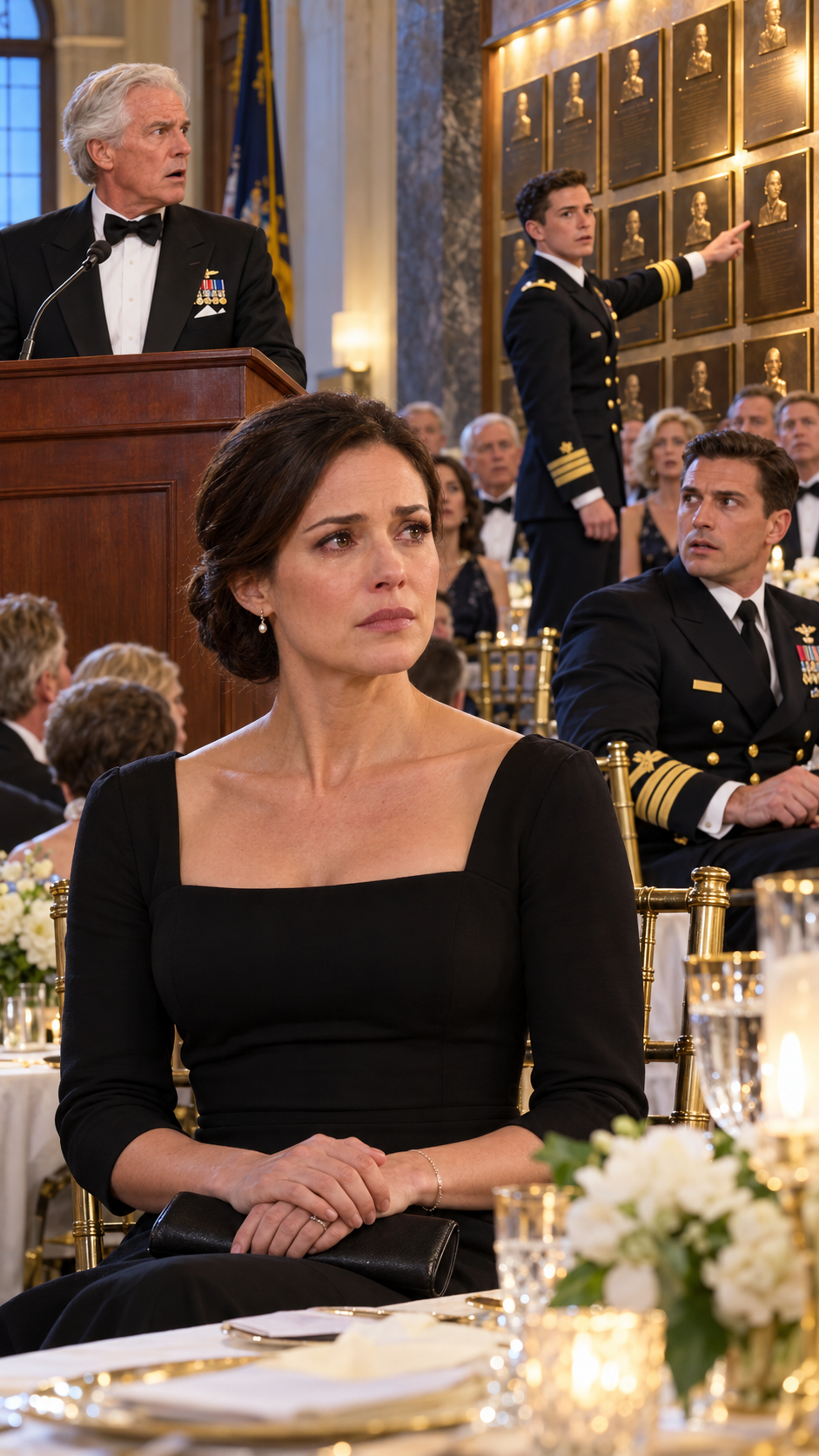
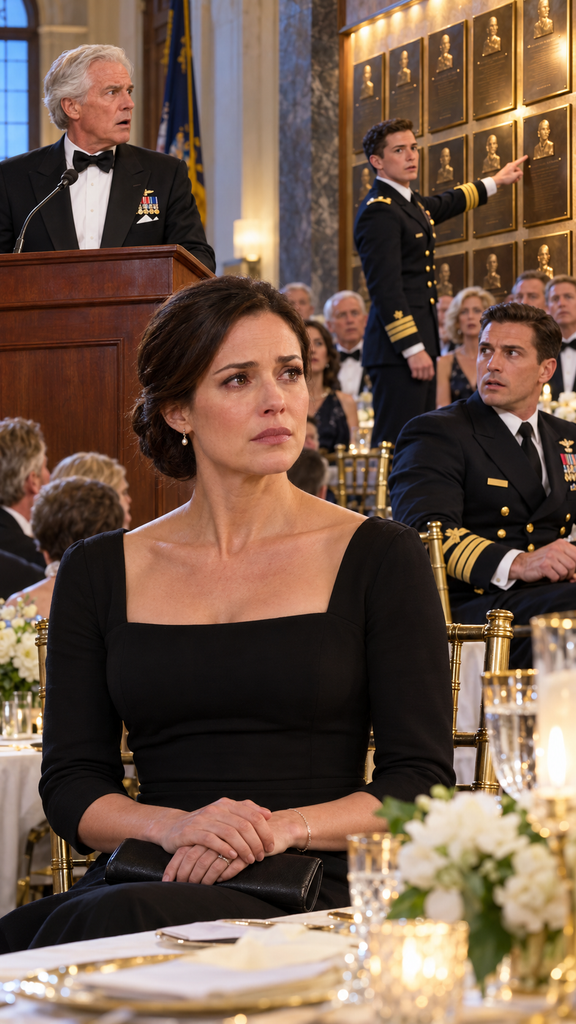
    Because my father was standing beside the microphone.

    And he was about to make one final mistake.


    PART 4: WHAT RESPECT REALLY COSTS

    Dad tapped the microphone.

    The room quieted.

    I stopped walking.

    Madison whispered, “Oh no.”

    Grant muttered something under his breath.

    Dad smiled at the guests.

    “As father of the bride, I wanted to say a few words.”

    That part was normal.

    The speech began normally too.

    He talked about Madison as a child.

    Her kindness.

    Her determination.

    How proud he was of the woman she had become.

    I relaxed slightly.

    Maybe I had misjudged him.

    Then he looked at me.

    “And today we’ve had another wonderful family surprise.”

    My stomach dropped.

    Madison closed her eyes.

    Dad smiled broadly.

    “My older daughter Rebecca, as many of you apparently already know, has achieved the extraordinary rank of admiral in the United States Navy.”

    Applause began.

    I wanted to disappear.

    Dad raised his glass.

    “I’ve always taught my daughters that excellence matters.”

    Something inside me went cold.

    He continued.

    “I pushed them because I knew what they were capable of. Sometimes children don’t appreciate that pressure when they’re young, but eventually—”

    “Dad.”

    My voice wasn’t loud.

    But the microphone carried enough silence that he heard me.

    Everyone did.

    He looked at me.

    I walked toward him.

    Madison didn’t stop me.

    Neither did Grant.

    Dad’s smile tightened.

    “Rebecca, I was just—”

    “I know.”

    I reached the microphone.

    Then I looked around the room.

    Hundreds of faces stared back.

    This was the exact kind of attention I hated.

    But some moments become choices.

    You either speak.

    Or your silence becomes somebody else’s version of the truth.

    I took the microphone.

    “My father is right about one thing.”

    The room was silent.

    “I have been fortunate in my career.”

    Dad smiled cautiously.

    I continued.

    “But rank is not a measure of human worth.”

    His smile disappeared.

    “I’ve known sailors with no decorations whose courage humbled me. I’ve known junior enlisted personnel who carried responsibilities far beyond what anyone outside the service understood. I’ve known spouses who held families together through deployments without receiving a medal, a title, or public recognition.”

    Mercer watched from the front.

    I looked toward him.

    “The people who stood when I entered this room didn’t stand because I was more valuable than anyone else here.”

    I paused.

    “They stood because service has traditions. Because rank carries responsibility. And because many of us have shared difficult days.”

    I turned slightly toward Dad.

    “Respect that appears only after discovering someone’s title isn’t respect.”

    The silence deepened.

    Dad looked down.

    I could have humiliated him.

    For one sharp second, part of me wanted to.

    I could have read his text aloud.

    I could have told everyone exactly what he’d said.

    I could have watched his carefully maintained image collapse in front of the people he had spent months trying to impress.

    But that would have made me exactly what he had accused me of being.

    Someone who came to my sister’s wedding to make a point.

    So I didn’t.

    Instead, I looked at Madison.

    “Today belongs to my sister and her husband.”

    Madison’s eyes filled.

    “I’ve missed more birthdays, holidays, dinners, and ordinary afternoons than I can count. Today, I got to be here.”

    My voice almost broke.

    “That is enough.”

    I handed the microphone back to Dad.

    He didn’t take it at first.

    Then he did.

    I returned to my seat.

    No applause.

    I was grateful.

    The silence was better.

    Dad finished his speech in less than thirty seconds.

    When he sat down, he didn’t look at me.

    The reception continued.

    Dinner was served.

    The champagne flowed.

    The first dance began.

    Madison rested her head against Grant’s chest.

    I watched from my table.

    Mercer sat down beside me.

    “Permission to speak freely, ma’am?”

    “No.”

    He smiled.

    “Understood.”

    I glanced at him.

    “What?”

    “You handled that better than I would have.”

    “That’s why I’m the admiral.”

    “Fair.”

    We sat quietly.

    Then he slid a small rectangular case across the table.

    “What is this?”

    “The thing we actually wanted to give you.”

    I opened it.

    Inside was a simple metal challenge coin.

    No expensive engraving.

    No dramatic inscription.

    Just the task force emblem on one side.

    On the other were four words:

    You brought us home.

    I stared at it.

    My throat closed.

    “Daniel.”

    “Before you say it, yes, I know. It wasn’t just you.”

    “It wasn’t.”

    “We know.”

    “Then why—”

    “Because leaders get blamed when things go wrong.”

    He looked at me.

    “They should occasionally hear when something went right.”

    I closed the case.

    For several seconds, I couldn’t speak.

    Then I said, “Thank you.”

    Mercer nodded.

    That was all.

    No ceremony.

    No applause.

    Exactly the way I wanted it.

    He stood to leave.

    Then paused.

    “Ma’am?”

    “Yes?”

    “Your father doesn’t know you.”

    I looked at him.

    “But that’s his failure.”

    He walked away before I could answer.

    I turned the case over in my hands.

    A few minutes later, someone sat beside me.

    Dad.

    Neither of us spoke.

    The music continued.

    Finally he said:

    “I was wrong.”

    I waited.

    He looked at his hands.

    “I shouldn’t have sent that message.”

    “No.”

    “I thought…”

    He stopped.

    I waited again.

    “I thought the Ellisons would judge us.”

    “For me.”

    He winced.

    “Yes.”

    “Why?”

    His answer took a long time.

    “Because I didn’t understand what you did.”

    I looked at him.

    “And instead of asking, you decided it wasn’t important.”

    “Yes.”

    There was no defense this time.

    That mattered.

    Not enough to erase anything.

    But enough for me to keep listening.

    He rubbed his thumb over his wedding ring.

    “When you joined the Navy, I thought it was a phase.”

    “I know.”

    “When you stayed, I thought you’d eventually realize you could make more money somewhere else.”

    “I know.”

    “When you got promoted…” He exhaled. “I didn’t understand the ranks. And I was too proud to admit I didn’t understand.”

    That surprised me.

    He continued.

    “So I minimized it.”

    I looked toward the dance floor.

    “That was easier than learning.”

    “Yes.”

    The word was barely audible.

    He looked at me.

    “I embarrassed you.”

    I shook my head.

    “No.”

    His brow furrowed.

    “You hurt me.”

    The distinction seemed to land harder.

    I continued.

    “Embarrassment passes. What you did told me something about how you valued me.”

    He swallowed.

    “I don’t know how to fix that.”

    “You don’t.”

    His face fell.

    “Not tonight.”

    I turned toward him.

    “And not with one apology.”

    He nodded slowly.

    “I understand.”

    “No,” I said. “But maybe you can.”

    He looked at me.

    “For starters, stop telling people you always supported my career.”

    His face reddened.

    “Fair.”

    “And stop using my rank to impress people.”

    Another nod.

    “And don’t ever tell Madison she has to earn the right to belong in her own marriage.”

    His head snapped toward me.

    I held his gaze.

    “She told you?”

    “She didn’t have to tell me much.”

    He looked toward the dance floor.

    Madison was laughing at something Grant had said.

    Dad’s expression changed.

    “I thought I was helping her.”

    “I know.”

    That was the tragedy.

    He often did.

    He just never asked whether the help was wanted.

    After a moment, he said:

    “I don’t know what you do.”

    “No.”

    “Will you tell me?”

    The question should have made me happy.

    Instead, it made me sad.

    Because I had wanted him to ask it for sixteen years.

    “Some of it.”

    He nodded.

    “Whenever you’re ready.”

    Then he stood.

    He took two steps before turning back.

    “Rebecca?”

    “Yes?”

    “I’m glad you came home.”

    My eyes burned.

    I hated that six words could still do that to me.

    “Me too.”

    He walked away.

    I looked down at the challenge coin.

    I wanted to believe that was the beginning of something.

    But beginnings are cheap.

    Change is expensive.

    And my father had spent a lifetime measuring value by the wrong currency.


    PART 5: THE UNIFORM

    The reception lasted until nearly midnight.

    By ten, my feet hurt.

    By eleven, Commander Mercer had somehow convinced Grant’s eighty-year-old aunt to dance with him.

    By eleven-thirty, Madison had abandoned her heels.

    It was the first time all day she looked completely happy.

    I was standing near the terrace doors when she approached me barefoot, carrying two pieces of wedding cake.

    “One for you.”

    “Is this a peace offering?”

    “No. Peace offerings get corner pieces. That’s a center slice.”

    I took it.

    “Then we’re clearly still fighting.”

    “Obviously.”

    We sat together near the windows.

    For a while, we ate cake in silence.

    Then Madison asked:

    “When do you leave?”

    “Two weeks.”

    Her fork stopped.

    “That soon?”

    “I have follow-on orders.”

    “Where?”

    I gave her a look.

    “Right.”

    She smiled sadly.

    “Classified.”

    “Some of it.”

    She pushed frosting around her plate.

    “Can we do something before you go?”

    “Like what?”

    “I don’t know.”

    She thought.

    “Build a fort?”

    I laughed.

    “We’re in our thirties.”

    “So?”

    “My knees have changed.”

    She laughed too.

    Then her expression softened.

    “Dinner.”

    “Dinner sounds safer.”

    “No Dad. No Mom. No Grant.”

    “Poor Grant.”

    “He’ll survive.”

    “Okay.”

    “Tuesday?”

    “Tuesday.”

    She smiled.

    “Good.”

    Then she leaned against my shoulder.

    I looked across the ballroom.

    Dad stood alone near the bar.

    For once, he wasn’t networking.

    He wasn’t telling anyone about his admiral daughter.

    He was watching Madison dance with Grant.

    Mom joined him.

    They spoke quietly.

    Then Mom looked toward me.

    Our eyes met.

    She didn’t wave.

    Neither did I.

    Not everything needed to be repaired in one night.

    Maybe some things never would be.

    I had spent too many years believing forgiveness meant pretending something hadn’t happened.

    It didn’t.

    Forgiveness, when it came at all, could exist beside boundaries.

    Love could exist beside disappointment.

    Family could be complicated without being abandoned.

    But respect required truth.

    Around midnight, I went to change.

    I stood in the same women’s lounge where I had put on my uniform ten hours earlier.

    The woman in the mirror looked different now.

    Not because anything visible had changed.

    The same tired eyes.

    The same insignia.

    The same pale scar near my temple.

    But the weight I had carried into Bellmere was gone.

    I had thought the choice was between keeping peace and defending myself.

    It wasn’t.

    The real choice had been between performing a smaller version of myself for my family’s comfort and allowing them to face the truth.

    I changed back into jeans and my gray sweater.

    Then I carefully folded the uniform.

    Before placing it into the garment bag, I touched the shoulder board.

    Admiral.

    The word still felt strange sometimes.

    Ranks change.

    Commands end.

    Uniforms eventually go into closets.

    None of those things were supposed to become a person’s entire identity.

    That was what my father had misunderstood in both directions.

    In the morning, he had thought my uniform made me less important.

    By afternoon, he thought my rank made me more important.

    Both were wrong.

    I was the same woman at 12:08 p.m. when he told me nobody cared as I was at 1:53 when three hundred men stood.

    Their respect didn’t create my worth.

    His contempt hadn’t erased it.

    That realization mattered more than the salute.

    When I stepped back into the hallway, Dad was there.

    For one awful second, I thought we were going to repeat the afternoon.

    Then he looked at the garment bag.

    “You changed.”

    “The reception’s over.”

    He nodded.

    “Can I carry that?”

    I almost said no.

    My instinct was immediate.

    I had carried my own weight for a long time.

    Then I handed him the garment bag.

    He took it carefully.

    We walked toward the entrance together.

    Outside, the rain had stopped.

    The pavement reflected the lights from Bellmere’s windows.

    Madison and Grant stood beneath the awning while guests prepared sparklers for their departure.

    Grant saw me.

    He crossed the driveway.

    “Leaving?”

    “Soon.”

    He hugged me.

    “I’m glad you’re my sister.”

    “In-law.”

    “Technicality.”

    I smiled.

    “Take care of her.”

    He looked toward Madison.

    “With everything I’ve got.”

    “Good answer.”

    Then his expression became more serious.

    “And Rebecca?”

    “Yes?”

    “For what it’s worth, my family never thought you were embarrassing.”

    I looked at him.

    “I know that now.”

    He smiled.

    “My mother spent dinner telling everyone she shook hands with an admiral.”

    I groaned.

    Grant laughed.

    “She is never going to recover.”

    “Wonderful.”

    Madison called my name.

    I turned.

    She hurried toward me, gathering her dress in both hands.

    Then she stopped in front of Dad.

    Her eyes dropped to the garment bag he was carrying.

    Something passed across her face.

    Dad noticed.

    He looked down at it too.

    Then back at us.

    “I’ve got it,” he said quietly.

    Madison met my eyes.

    I don’t know why that nearly broke me.

    Maybe because all day, Dad had wanted me to hide the uniform.

    Now he was carrying it.

    Not displaying it.

    Not bragging about it.

    Just carrying it.

    A small act.

    Maybe meaningless.

    Maybe not.

    Madison hugged me.

    “Tuesday.”

    “Tuesday.”

    “Don’t cancel.”

    “I won’t.”

    “You always say that.”

    “I’ll be there.”

    She pulled back.

    “Promise?”

    I looked at my sister.

    “I promise.”

    She smiled.

    Then the guests formed two lines.

    Sparklers ignited.

    Grant took Madison’s hand.

    Music spilled through the open doors.

    They ran laughing beneath a tunnel of gold sparks toward the waiting car.

    For the first time that day, nobody was looking at me.

    And I was grateful.

    I stood beside my parents as Madison climbed into the car.

    She lowered the window.

    “Rebecca!”

    “What?”

    She saluted me.

    Badly.

    Crooked hand.

    Wrong angle.

    Exactly the way she had when she was seven years old.

    “Captain Rebecca!”

    I laughed so hard my eyes filled.

    “Still doing it wrong!”

    “Don’t care!”

    The car pulled away.

    I watched the taillights disappear beyond Bellmere’s iron gates.

    Dad stood beside me holding my uniform.

    After a while, he said:

    “Captain?”

    I smiled.

    “Old story.”

    He nodded.

    “I’d like to hear it sometime.”

    I looked at him.

    Maybe once I would have rushed to tell him.

    Maybe I would have treated the question like proof that everything was repaired.

    I knew better now.

    So I simply said:

    “Maybe.”

    And that was enough.

    Two weeks later, before I left Virginia, Dad drove me to the base.

    We didn’t discuss the wedding.

    Not directly.

    He asked questions.

    Real ones.

    Where had I gone to school after commissioning?

    What had my first assignment been?

    When had I decided to make the Navy a career?

    What did “flag rank” actually mean?

    Some answers took thirty seconds.

    Others took twenty minutes.

    A few I couldn’t give him.

    When I said, “I can’t talk about that,” he didn’t complain.

    He simply nodded and asked something else.

    At the gate, I reached for my bag.

    He stopped me.

    “Rebecca.”

    I looked at him.

    He seemed uncomfortable.

    My father had always been good at speeches when he knew what he wanted people to think.

    Honesty made him awkward.

    “I’ve been thinking about what you said.”

    “Which part?”

    “That I didn’t respect you until I knew other people did.”

    I waited.

    He looked through the windshield.

    “You were right.”

    There was no excuse attached.

    No but.

    No explanation.

    Just the words.

    I nodded.

    “Thank you.”

    He looked at me.

    “I don’t expect that to fix anything.”

    “It doesn’t.”

    “I know.”

    I opened the door.

    Then he said:

    “But I’d like to do better.”

    I paused.

    “Then do better.”

    He nodded.

    I stepped out.

    There was no dramatic embrace.

    No instant reconciliation.

    No promise that we would suddenly become the family we should have been all along.

    Life rarely gives you endings that clean.

    What it gives you are opportunities.

    Doors.

    Questions.

    Choices.

    I lifted my bag over my shoulder.

    Dad lowered the passenger window.

    “Rebecca.”

    I turned.

    He smiled.

    “I’m proud of you.”

    For years, I had imagined those words.

    I thought they would heal something.

    They didn’t.

    Not completely.

    But they no longer had the power to define me either.

    I smiled back.

    “I’m proud of me too.”

    Then I walked toward the gate.

    Months later, the moment everyone in my family still remembered from Madison’s wedding was the instant Commander Mercer stood.

    Dad remembered the chairs scraping backward.

    Mom remembered the silence.

    Grant remembered my expression.

    Madison remembered nearly three hundred men rising at once.

    But that wasn’t the moment I remembered most.

    I remembered standing alone in the women’s lounge before the ceremony, holding my uniform in both hands.

    I remembered having a choice.

    Hide it.

    Or wear it.

    Shrink.

    Or walk through the door exactly as I was.

    My father had texted me:

    Nobody cares about your Navy career.

    He had been wrong about the Navy.

    But more importantly, I had spent too many years believing that whether he cared determined whether what I had done mattered.

    It didn’t.

    The men in that ballroom didn’t give me my dignity when they stood.

    My father didn’t take it away when he told me to hide.

    The uniform was never the point.

    The rank was never the point.

    Even the salute wasn’t the point.

    The point was that when someone I loved asked me to make myself smaller so he could feel bigger—

    I finally said no.

    And walked into the room anyway.
  • AT MY FATHER’S CHRISTMAS GALA, HE ORDERED ME TO TAKE OFF MY UNIFORM

    AT MY FATHER’S CHRISTMAS GALA, HE ORDERED ME TO TAKE OFF MY UNIFORM

    Then He Slapped Me—and My SEAL Fiancé Said Eight Words That Made the Entire Ballroom Stand

    PART 1: THE UNIFORM HE COULDN’T CONTROL

    I knew my father hated my uniform before he said a single word.

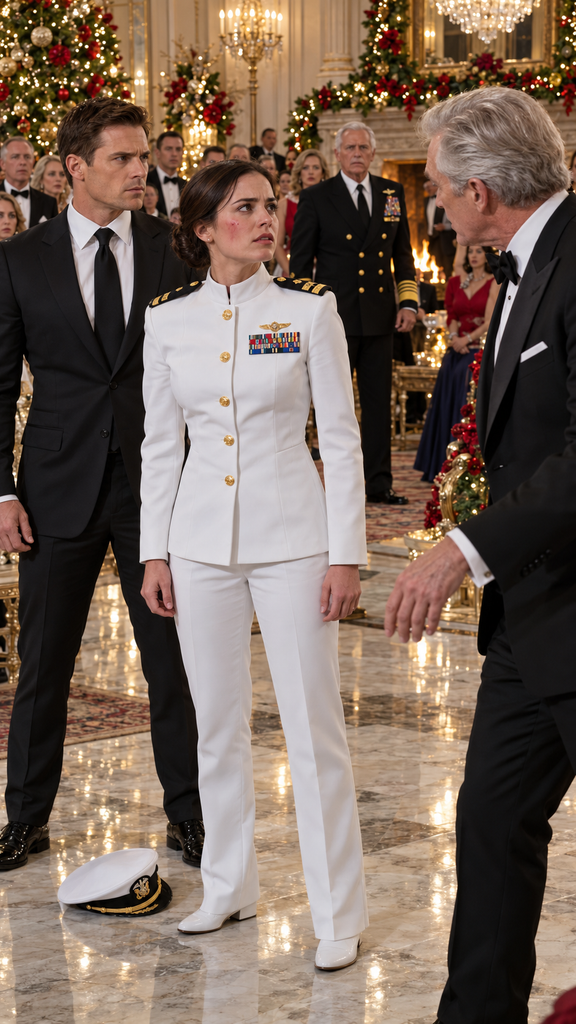
    He stood beneath the balcony of his own ballroom with a glass of bourbon in his right hand, the ice melting slowly, his eyes fixed on the rows of ribbons across my chest as if they were stains.

    Around him, one hundred and fifty guests floated through the Parker Christmas Gala in tuxedos, silk gowns, diamonds, and polite laughter.

    The twelve-foot Christmas tree near the fireplace shimmered gold and red. A string quartet played “Have Yourself a Merry Little Christmas” like nothing ugly could happen in a room this expensive.

    But ugly things had always happened beautifully in my father’s house.

    My name is Captain Elaine Parker, United States Navy.

    I had survived deployments, triage tents, casualty reports, and briefings that began with names and ended with folded flags. I had stood beneath a desert sun while sweat crawled down my spine and salt dried against my lips. I had learned how to make decisions while people screamed around me.

    Yet standing in my childhood home beneath garlands arranged by a florist from Manhattan, I felt seventeen again.

    The red dress my father wanted me to wear still hung upstairs in my old bedroom.

    I had seen it when I arrived.

    Deep crimson velvet. Expensive. Elegant. Carefully chosen.

    Beside it sat a pair of nude heels in size seven and a half, though I had spent most of the year in boots and regulation pumps.

    On the dresser was a note in my father’s sharp handwriting.

    Wear this. Tonight matters.

    No Merry Christmas.

    No Welcome home.

    No I’m glad you’re safe.

    Just instructions.

    So I put on my dress whites.

    Not to provoke him.

    Not to embarrass him.

    Not even to make a statement.

    I wore them because they were mine.

    Because every ribbon meant something.

    Because the woman who had returned to this house was not the girl who used to change dresses because her father frowned at the color.

    Logan arrived beside me wearing a black suit that fit his shoulders as though it had been tailored around the possibility of violence.

    Lieutenant Commander Logan Hayes.

    Navy SEAL.

    My fiancé.

    And the only man I had ever loved without feeling I had to become smaller first.

    His hand rested briefly against the small of my back before we entered the ballroom.

    “You okay?” he murmured.

    I watched my father’s eyes narrow across the room.

    “Ask me in ten minutes.”

    Logan didn’t smile.

    He simply looked around.

    Exits.

    Faces.

    Distance.

    Tension.

    People imagined SEALs as loud men overflowing with aggression.

    Logan was the opposite.

    He noticed everything.

    He wasted nothing.

    My brothers saw me next.

    Grant, the oldest, stood beside two Parker Global board members near the champagne tower. His tuxedo was midnight blue, his cuff links probably cost more than my first car, and he wore the calm expression of a man who had inherited both money and permission.

    His gaze dropped to my ribbons.

    Then to Logan.

    Then away.

    Drew, my younger brother, lifted his glass toward me from across the room, but the gesture froze halfway.

    His smile disappeared.

    The guests began noticing too.

    Conversations thinned as I crossed the marble floor.

    A woman in emerald sequins whispered behind her hand.

    A senator’s wife looked me up and down, then pretended she hadn’t.

    Somewhere near the bar, a man chuckled under his breath.

    I smelled cinnamon, pine, expensive perfume, and the faint metallic tang of my own nerves.

    Then my father started walking toward me.

    Charles Parker moved as though he owned the oxygen in every room he entered.

    CEO of Parker Global Systems.

    Billionaire.

    Philanthropist.

    Donor.

    Widower.

    A man whose face appeared in business magazines beneath headlines containing words like discipline, legacy, leadership, and American innovation.

    To me, he was the man who once made a ten-year-old girl redo all her birthday thank-you notes because her handwriting “lacked pride.”

    He stopped three feet in front of me.

    For a moment, he said nothing.

    His gaze traveled from my polished shoes to the cap tucked beneath my arm before settling on my face.

    “Elaine.”

    His voice was low.

    “What are you wearing?”

    “My uniform.”

    “I can see that.”

    “Then why ask?”

    His jaw tightened.

    Behind him, several guests suddenly became fascinated with the ornaments on the tree.

    My father leaned closer.

    Bourbon and wintergreen mints.

    “You were given a dress.”

    “I saw it.”

    “And?”

    “And I chose this.”

    His nostrils flared.

    “Go upstairs.”

    “No.”

    One word.

    Quietly spoken.

    That was all it took.

    His eyes changed.

    I knew that look.

    My brothers knew it too.

    It was the look that had controlled our childhood.

    Not rage exactly.

    Something colder.

    The certainty that disobedience was temporary because eventually Charles Parker always got his way.

    “You will change,” he said.

    “I won’t.”

    “Elaine, this gala is not about you.”

    “I never said it was.”

    “Then stop making a spectacle of yourself.”

    My fingers tightened around my cap.

    Logan shifted half an inch beside me.

    I could feel him without looking.

    Waiting.

    But this was mine.

    I had spent years wishing someone would rescue me from my father.

    I no longer needed rescuing from words.

    So I met Charles Parker’s eyes.

    “I’m not making a spectacle. I’m attending your Christmas gala.”

    “In that?”

    “In my uniform.”

    His voice hardened.

    “Take it off.”

    The nearest conversations stopped completely.

    I heard the quartet continue playing.

    I heard a waiter set down a tray.

    I heard ice click against the inside of my father’s glass.

    Then he said it louder.

    “Take off that uniform. You’re embarrassing me.”

    The sentence crossed the ballroom.

    Heads turned.

    My face became hot.

    Not because I was ashamed of the uniform.

    Because for one terrible second, I was fourteen again, standing at the bottom of our staircase while my father criticized my posture in front of guests.

    Then another memory followed.

    A field hospital.

    A nineteen-year-old sailor gripping my wrist while we waited for a helicopter.

    Blood on my gloves.

    His voice asking me not to leave.

    The flag at his memorial.

    The family I had stood beside afterward.

    I looked down at my uniform.

    Then back at my father.

    “No.”

    The word came easier the second time.

    His face reddened.

    “You are in my home.”

    “And I’m still a naval officer.”

    “You’re my daughter first.”

    There it was.

    Not love.

    Ownership.

    I swallowed.

    “I’m both.”

    His mouth twisted.

    “You always were difficult.”

    Grant appeared behind him.

    “Elaine,” he said quietly. “Just change. Please.”

    I turned toward him.

    He wouldn’t meet my eyes.

    “Why?”

    “Because this is Dad’s night.”

    “Christmas is Dad’s night?”

    “You know what I mean.”

    “Yes,” I said. “I do.”

    That was the problem.

    I had always known.

    Birthdays were Dad’s night.

    Graduations were Dad’s night.

    Mom’s charity dinners had been Dad’s night.

    My acceptance into Annapolis had somehow become a discussion about what my decision would do to Dad.

    Even my mother’s funeral had been managed like a corporate event.

    Everything in our family orbited Charles Parker.

    And anyone who stepped out of orbit was accused of causing chaos.

    My father lowered his voice.

    “Go upstairs now, Elaine.”

    “No.”

    “You are humiliating this family.”

    I felt something inside me finally become still.

    “I am this family.”

    His eyes flickered.

    “Not dressed like that.”

    That hurt.

    More than I wanted it to.

    But I didn’t look away.

    Logan’s hand brushed mine.

    Not pulling.

    Not directing.

    Just there.

    My father noticed.

    His gaze shifted toward Logan.

    “This is family business.”

    Logan answered evenly.

    “Then speak to your daughter with respect.”

    The temperature of the room seemed to drop.

    My father stared at him.

    “You are a guest in my home, Commander.”

    “Lieutenant Commander.”

    “I don’t care.”

    “I know.”

    Two words.

    Calm.

    Almost gentle.

    They landed harder than an insult.

    My father stepped closer to Logan.

    I moved between them.

    “Dad.”

    His eyes snapped toward me.

    “What?”

    “I said no.”

    Then I did something that terrified me more than any deployment briefing ever had.

    I turned my back on him.

    “Come on, Logan.”

    We had taken two steps when my father spoke.

    “If you walk away from me, don’t bother coming back.”

    I stopped.

    There are sentences that sound new when you hear them but are actually decades old.

    That was one of them.

    He had been saying it my entire life without words.

    Obey me or lose me.

    Become what I approve of or lose the family.

    Wear the dress.

    Smile for the photograph.

    Choose the right school.

    Date the right man.

    Take the right job.

    Live the life I designed.

    Or stand outside.

    I turned around slowly.

    The whole ballroom was watching now.

    My father seemed to realize it too.

    But instead of backing down, he lifted his chin.

    He thought an audience strengthened him.

    It always had.

    I walked back until only a few feet separated us.

    “You want to know why I wore this uniform tonight?”

    His eyes were cold.

    “No. I want you to remove it.”

    “I wore it because I’m proud of it.”

    “Enough.”

    “I’m proud of the people I serve with.”

    “Elaine.”

    “I’m proud of what I earned.”

    “I said enough.”

    “And for once in my life, I wanted to walk into this house as myself.”

    His face changed.

    Something cracked through the polished CEO expression.

    “You selfish little—”

    His hand moved.

    I saw it.

    But I didn’t believe it.

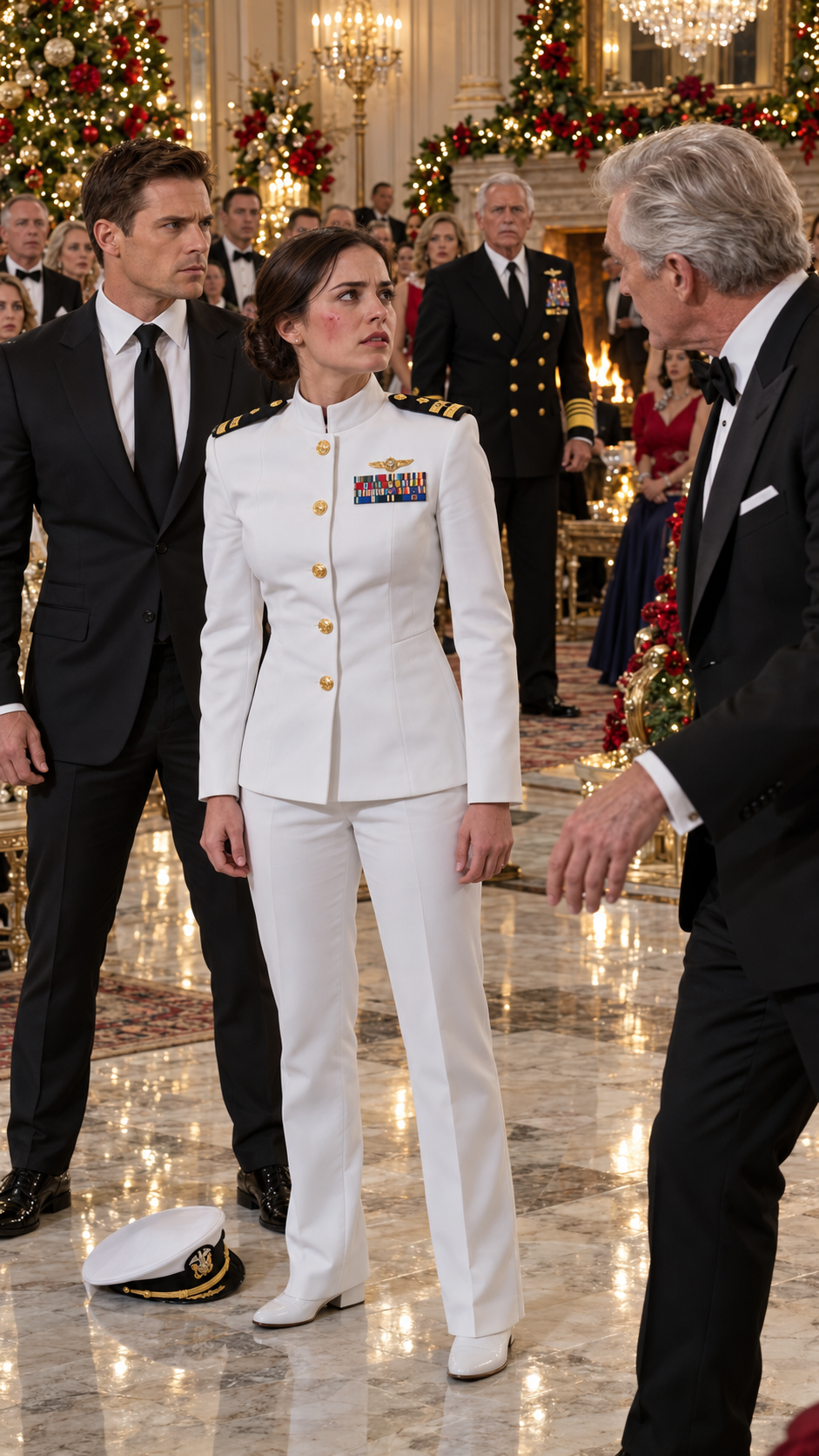
    Not until his palm struck my face.

    The sound was sharp.

    Clean.

    Shockingly small.

    My head snapped sideways.

    My cap fell from my hand and hit the marble.

    The quartet stopped.

    No one breathed.

    For several seconds, I stared at the floor.

    I could taste blood where my teeth had caught the inside of my cheek.

    My left ear rang.

    I had been yelled at by senior officers.

    I had been thrown against the inside of a transport vehicle.

    I had worked under incoming fire.

    Nothing prepared me for my father slapping me in front of one hundred and fifty people.

    Slowly, I raised my head.

    Charles Parker’s hand was still half lifted.

    And for the first time, I saw uncertainty in his face.

    Then Logan stepped forward.

    He did not touch my father.

    He did not threaten him.

    He didn’t raise his voice.

    He simply placed himself beside me, looked Charles Parker directly in the eyes, and said eight words.

    “You just struck a United States Navy officer.”

    Silence.

    Then a chair scraped against the floor.

    An elderly man near the fireplace stood.

    Then another guest stood.

    Then another.

    Across the ballroom, men and women began rising from their chairs.

    A retired admiral.

    A former Marine.

    A gray-haired woman I recognized as an Army surgeon.

    A businessman who had served in Afghanistan.

    Then people who had never worn a uniform stood too.

    Spouses.

    Executives.

    Donors.

    Waiters along the wall.

    Grant.

    Drew.

    One by one, the entire room rose.

    Not for Logan.

    For me.

    My father looked around.

    His face went pale.

    And suddenly, for the first time in my life, Charles Parker understood what it felt like to stand alone.

    PART 2: WHEN THE ROOM STOPPED BELONGING TO HIM

    Nobody applauded.

    That would have made it easier.

    Applause would have turned the moment into theater.

    Instead, everyone simply stood.

    Silently.

    My father looked from face to face.

    People who had laughed at his jokes twenty minutes earlier would not meet his eyes.

    The retired admiral near the fireplace gave me a small nod.

    I knew him vaguely.

    Rear Admiral Thomas Mercer, retired.

    My father had once bragged about having him on the gala guest list.

    Now Mercer looked at Charles with something colder than anger.

    Disappointment.

    My father finally lowered his hand.

    “This has been misunderstood.”

    Nobody answered.

    He looked at me.

    “Elaine.”

    I bent down and picked up my cap.

    My fingers were shaking.

    I hated that they were shaking.

    Logan noticed.

    He didn’t take the cap from me.

    That mattered.

    He knew the difference between helping me and taking over.

    “Are you hurt?” he asked.

    “I’m fine.”

    It was automatic.

    The answer military people gave when they absolutely were not fine.

    Logan studied my face.

    “Elaine.”

    “I said I’m fine.”

    His jaw tightened, but he nodded.

    My father recovered enough to straighten his jacket.

    “This was a private family disagreement.”

    Admiral Mercer spoke from across the room.

    “Not after you made it public, Charles.”

    My father’s eyes flashed.

    “With respect, Admiral, this does not concern you.”

    Mercer’s expression did not change.

    “You invited me.”

    My father opened his mouth.

    Mercer continued.

    “And you spent half an hour before Captain Parker arrived speaking about patriotism, service, sacrifice, and Parker Global’s commitment to military families.”

    That sentence seemed to move through the room without anyone speaking.

    I looked at my father.

    Of course he had.

    There were American flags incorporated into the gala decorations. A charity display near the ballroom entrance described donations to veterans’ programs.

    My father loved service when it could be printed on a banner.

    He just hated what service had done to his daughter.

    It had taught me that rank could be earned.

    That respect did not have to be begged for.

    That authority came with responsibility.

    And that sometimes the correct answer to an order was no.

    My father looked at Mercer.

    “I have supported military families for twenty years.”

    Mercer nodded.

    “Then perhaps you should start with your own.”

    My throat tightened.

    I turned away.

    I did not want to cry.

    Not there.

    Not in front of my father.

    Especially not in front of my father.

    Logan leaned toward me.

    “We can leave.”

    I looked toward the doors.

    Every instinct told me to go.

    Escape.

    Recover privately.

    Pretend I didn’t care.

    That was how I had survived Charles Parker for thirty-six years.

    But something stopped me.

    Maybe it was seeing Grant standing near the champagne tower.

    Maybe it was Drew.

    Maybe it was remembering the red dress upstairs.

    If I left now, my father would rewrite what had happened before midnight.

    Elaine arrived emotional.

    Elaine caused a scene.

    Elaine’s fiancé threatened me.

    Elaine embarrassed the family.

    He had rewritten our entire childhood that way.

    I looked at Logan.

    “Not yet.”

    He searched my face.

    Then nodded.

    My father heard me.

    “What exactly do you intend to do?”

    I faced him.

    “Stay.”

    His eyebrows lifted.

    “This gala is over for you.”

    “No.”

    His face hardened again.

    “I’m asking you to leave my house.”

    A strange calm came over me.

    “Then say it.”

    “What?”

    “Say why.”

    His eyes narrowed.

    “You’re being ridiculous.”

    “No. Tell everyone why you’re throwing me out.”

    “Elaine—”

    “Because I wore my Navy uniform?”

    Silence.

    “Because I refused the dress you selected?”

    His mouth compressed.

    “Or because you hit me and I didn’t pretend it was acceptable?”

    “Stop.”

    That word used to work.

    It didn’t anymore.

    My cheek burned.

    I could feel the shape of his hand without touching it.

    I looked around the ballroom.

    “I’m sorry your evening was interrupted.”

    My father stared at me in disbelief.

    I continued.

    “But I am not sorry for this uniform. I will never apologize for it.”

    Someone near the back whispered, “Good.”

    My father heard.

    His face tightened.

    Then Grant approached.

    For a moment I expected him to ask me again to leave.

    Instead, he stopped beside me.

    “Dad.”

    Charles looked at his eldest son.

    “Fix this.”

    Grant went still.

    I almost laughed.

    Even now.

    Even with the entire room watching.

    Fix this.

    Not I’m sorry.

    Not Elaine, are you all right?

    Not I shouldn’t have done that.

    Just fix this.

    Grant looked at me.

    Then at our father.

    “I can’t.”

    “What do you mean?”

    “I mean you hit her.”

    My father stared at him.

    “She provoked me.”

    A sound escaped my throat.

    Not quite laughter.

    Not quite disbelief.

    Grant’s expression changed.

    “No.”

    “Excuse me?”

    “She argued with you,” Grant said. “She embarrassed you. She refused to change clothes. Whatever. But you hit her.”

    “I will not be lectured by my own children in my own house.”

    Drew appeared beside Grant.

    “Then maybe stop giving us reasons.”

    My father turned slowly.

    Drew had always been the easiest of us.

    The peacemaker.

    The son who could make Dad laugh.

    The one who learned early that survival meant turning tension into a joke.

    But Drew wasn’t smiling now.

    My father looked at his three children standing together.

    I wondered whether he could see Mom in us.

    I could.

    Grant had her eyes.

    Drew had her smile.

    I had been told I had her stubbornness.

    My father had always called it defiance.

    Mom had called it a spine.

    The memory came so suddenly that I nearly lost my breath.

    I was sixteen.

    Mom was sitting on the edge of my bed after Dad and I had fought about college.

    “He loves you,” she had whispered.

    “Then why does loving him hurt so much?”

    She had looked toward the closed door.

    Then back at me.

    “Because your father sometimes confuses love with being obeyed.”

    At sixteen, I hadn’t understood.

    At thirty-six, standing in that ballroom with his handprint forming on my cheek, I finally did.

    My father’s voice cut through the memory.

    “You three have no idea what I built for this family.”

    Grant answered quietly.

    “We know.”

    “You have had every advantage.”

    “We know.”

    “Everything you have came from me.”

    That was when I spoke.

    “Not everything.”

    His gaze shifted to me.

    I touched the ribbons over my chest.

    “You didn’t give me these.”

    He stared.

    “You didn’t give me my commission. You didn’t give me my rank. You didn’t give me the respect of the people I serve beside.”

    My voice almost broke.

    I forced it steady.

    “And you didn’t give me Logan.”

    My father’s eyes moved toward him.

    Logan said nothing.

    “He chose me,” I said. “Without asking what I could do for his name. Without asking whether I looked right standing beside him. Without asking me to become smaller.”

    My father’s face twisted.

    “You think this man knows you better than your own father?”

    I answered before fear could stop me.

    “Yes.”

    The word hit harder than the slap.

    My father looked as if I had struck him.

    Then he set his bourbon glass on a passing tray.

    His hand was shaking.

    Only slightly.

    But I saw it.

    So did Logan.

    My father looked around his ballroom.

    “Everyone sit down.”

    Nobody moved.

    He said it again.

    “Please.”

    Still no one moved.

    Finally, Admiral Mercer spoke.

    “I believe Captain Parker was saying something.”

    My father stared at him.

    Then at me.

    For once, the room was waiting for my voice instead of his.

    And I realized I had no idea what I wanted to say.

    Not because there was nothing inside me.

    Because there was too much.

    PART 3: EVERYTHING I HAD NEVER SAID

    I could have destroyed him in that moment.

    Not financially.

    Not professionally.

    I didn’t have that kind of power.

    But emotionally?

    Yes.

    I knew where every body was buried in the Parker family.

    Not literal bodies.

    Worse, sometimes.

    Christmas mornings ruined because Grant received a B.

    Dinners where Drew was mocked until he learned to mock himself first.

    My engagement announcement, when my father’s first question had been whether Logan planned to leave the Navy.

    My Annapolis graduation, when Dad complained that my mother cried too much in photographs.

    The day I received my commission and he whispered, “You’ll grow out of this.”

    I had not grown out of it.

    I had grown into it.

    And maybe that was what he could not forgive.

    I looked around the ballroom.

    “I don’t want anyone to stand because they feel sorry for me.”

    Nobody sat.

    “I mean it.”

    Admiral Mercer answered.

    “We’re not.”

    I swallowed.

    That almost broke me.

    My father looked toward the floor.

    I had never seen him do that.

    Not once.

    “I wore this uniform tonight,” I said, “because I wanted my family to see me.”

    My voice echoed farther than I expected.

    “I’ve spent most of my life trying to earn something from my father that I thought would come if I just achieved enough.”

    Charles looked up.

    I kept going.

    “When I was little, I thought it was good grades. Then I thought it was the right school. Then maybe the right career.”

    A bitter smile touched my mouth.

    “Obviously, I made a mistake on that one.”

    A few uncomfortable laughs moved through the room.

    My father did not smile.

    “I thought maybe if I became excellent at something, he would look at me and see something besides the daughter who didn’t fit the picture he had in his head.”

    “Elaine,” he said quietly.

    “No.”

    I surprised both of us.

    “You’ve had thirty-six years to speak. Let me finish.”

    His face went still.

    I continued.

    “When I was deployed, I stopped caring about impressing you. Not all at once. I wish I could say there was some heroic moment where I suddenly became free.”

    I shook my head.

    “There wasn’t.”

    My mind went somewhere hot and dusty.

    A medical station lit by harsh white lamps.

    A young sailor named Petty Officer Daniel Reyes lying on a table.

    Twenty-one years old.

    Scared.

    Trying not to show it.

    I had treated him after an accident during an operation. For forty minutes, he had apologized for bleeding on my uniform.

    I kept telling him the same thing.

    “You have nothing to apologize for.”

    He recovered.

    Months later, his mother sent our unit Christmas cookies.

    I still remembered the note.

    Thank you for bringing my son home.

    That note meant more to me than every newspaper clipping my father had ever framed.

    I looked at Charles.

    “I learned there were things more important than being impressive.”

    His expression shifted.

    “And I learned there were people who could respect me without controlling me.”

    My eyes found Logan.

    His face softened.

    My father followed my gaze.

    Something bitter passed through his expression.

    “So this is about him.”

    “No.”

    I shook my head.

    “That’s what you still don’t understand. Logan didn’t change me.”

    I looked back at my father.

    “He met me after I had already changed myself.”

    Logan’s eyes lowered briefly.

    That was as close as he came to showing emotion in a crowded room.

    My father said, “You’re making me sound like some kind of monster.”

    “No.”

    “Then what are you saying?”

    “I’m saying you hurt people when they stop obeying you.”

    His face hardened.

    “I gave you everything.”

    “You gave us opportunities.”

    I nodded toward my brothers.

    “You gave us education. Security. A beautiful home. More money than most families could imagine.”

    I took a breath.

    “And every gift came with an invisible string.”

    “That is absurd.”

    Grant spoke.

    “No, it isn’t.”

    My father turned.

    Grant loosened his bow tie.

    “I joined Parker Global because you told me it was my responsibility.”

    “You wanted to join the company.”

    “I was twenty-two.”

    “You begged me for the position.”

    “Because you spent my entire childhood telling me the company was my future.”

    Charles stared at him.

    Grant’s voice shook.

    “I don’t even know whether I ever wanted it.”

    The room seemed to shrink.

    I looked at my brother.

    That was new.

    Drew looked shocked too.

    Our father’s face lost color again.

    “Grant, not here.”

    Grant laughed once.

    “Where, Dad?”

    No answer.

    “When do we talk about anything real?” Grant asked. “At the office? You’re my boss. At home? You’re hosting someone. On vacation? You’re taking calls.”

    His eyes became wet.

    He looked away immediately.

    “We don’t talk. You issue instructions.”

    My father’s mouth opened.

    Drew cut in.

    “And I make jokes.”

    We all looked at him.

    He shrugged, but there was no humor in it.

    “That’s my job, right? Grant obeys. Elaine fights. I make everybody laugh so nobody has to admit we’re miserable.”

    “Enough,” my father whispered.

    Drew shook his head.

    “Not tonight.”

    My father looked suddenly older.

    Not weak.

    Not yet.

    But older.

    The perfect architecture around him—the marble, the chandeliers, the staircase, the enormous tree—seemed ridiculous.

    All that money.

    All that control.

    And none of it could make his children stop telling the truth.

    Then he looked at me.

    His eyes settled on my cheek.

    The mark must have been visible.

    Something moved in his face.

    Regret, maybe.

    But then pride buried it.

    “You deliberately defied me in front of my guests.”

    There it was again.

    The escape hatch.

    I nodded slowly.

    “Yes.”

    He seemed startled by my agreement.

    “I did.”

    “And you admit it?”

    “I refused to change my clothes because you ordered me to.”

    “Exactly.”

    “But Dad…”

    I stepped closer.

    “You’re still talking about my dress while everyone else is talking about your hand.”

    He went silent.

    “You think those things are equal,” I said. “They aren’t.”

    His eyes dropped to his hand.

    I watched him look at it.

    Really look.

    For the first time that evening, his anger seemed to leave him.

    And underneath it was something I had almost never seen in Charles Parker.

    Fear.

    Not fear of police.

    Not fear of scandal.

    Not fear of losing money.

    Fear that maybe he had crossed a line his money could not move.

    I wanted him to apologize.

    God, I wanted it.

    A part of me was still that little girl waiting at the top of the stairs.

    Say it.

    Tell me you’re proud of me.

    Tell me you were wrong.

    Tell me you love me more than you love winning.

    My father lifted his eyes.

    “I think this evening should end.”

    My heart sank.

    Not because I was surprised.

    Because some childish part of me still had been hoping.

    He looked toward the quartet.

    “Thank you, everyone, for coming.”

    People began glancing at one another.

    I nodded.

    “All right.”

    Logan touched my elbow.

    We turned toward the entrance.

    Then my father spoke behind me.

    “Elaine.”

    I stopped.

    “Leave the uniform upstairs.”

    The room froze again.

    I slowly turned around.

    “What?”

    “You keep civilian clothes here. Change before you leave.”

    I stared at him.

    Even after everything.

    He still needed one last victory.

    One last command.

    My sadness disappeared.

    Something harder took its place.

    “No.”

    His eyes narrowed.

    “You will not walk out of this house dressed like that.”

    I looked at him for a long moment.

    Then I understood.

    He didn’t hate the uniform because it embarrassed him.

    He hated it because it was proof.

    Proof that I belonged to something he had not created.

    Proof that I had earned an identity outside his name.

    Proof that Charles Parker could order his daughter to remove it—

    and she could say no.

    I tucked my cap beneath my arm.

    Then I walked toward the front doors.

    This time, I did not stop.

    PART 4: THE CHRISTMAS I WALKED AWAY

    Cold air struck my face the moment Logan opened the front door.

    Snow had started falling.

    Not heavily.

    Just small white flakes drifting beneath the lights along the circular driveway.

    I stood beneath the portico and breathed.

    For several seconds, I couldn’t move.

    Then my knees started shaking.

    Logan caught my elbow.

    “I’ve got you.”

    Those three words did what the slap hadn’t.

    I cried.

    Not gracefully.

    Not quietly.

    I covered my mouth and bent forward while months—years—of anger broke loose inside me.

    Logan pulled me against him.

    He didn’t tell me to stop.

    He didn’t say my father didn’t deserve my tears.

    He didn’t try to turn pain into a lesson.

    He just held me.

    “I hate this,” I whispered.

    “I know.”

    “I hate that he can still do this to me.”

    Logan pulled back enough to look at me.

    “He didn’t do this because you’re weak.”

    I wiped my face.

    “Don’t give me a motivational speech.”

    “I wasn’t planning to.”

    Despite everything, I laughed.

    It came out broken.

    He brushed a tear from beneath my eye.

    “You want to know what I saw in there?”

    “What?”

    “You stood your ground.”

    “He slapped me.”

    “And you stood your ground.”

    “My brothers had to defend me.”

    “You stood your ground.”

    “The whole room—”

    “Elaine.”

    I stopped.

    “You stood your ground.”

    I looked away.

    Snow collected along the dark shoulders of his suit.

    Finally I whispered, “Thank you.”

    “For what?”

    “The eight words.”

    His mouth twitched.

    “You counted?”

    “I’m a Navy officer. Of course I counted.”

    That got an actual smile from him.

    Then the front door opened.

    We both turned.

    Grant stepped outside.

    Drew followed.

    Neither wore an overcoat.

    Grant held mine.

    “I thought you might want this.”

    He offered it to me.

    I took it.

    “Thanks.”

    For a few seconds, the three Parker children stood beneath the portico like strangers who shared the same childhood.

    Drew rubbed his arms.

    “Well. Merry Christmas.”

    I laughed.

    Grant did too.

    It was awful and perfect.

    Then Grant’s face became serious.

    “I’m sorry.”

    I frowned.

    “For what?”

    “For asking you to change.”

    “You didn’t hit me.”

    “No.”

    He looked toward the house.

    “But I’ve been helping him do this for years.”

    I wanted to tell him it wasn’t his fault.

    But that would have been too easy.

    We had all participated in the Parker family system in different ways.

    I fought.

    Grant complied.

    Drew distracted.

    Mom softened.

    Dad controlled.

    Maybe surviving a family meant doing things you later had to unlearn.

    So I said, “Then stop.”

    Grant looked at me.

    I shrugged into my coat.

    “Stop helping him.”

    His eyes held mine.

    Then he nodded.

    “Okay.”

    Drew shoved his hands into his pockets.

    “What happens now?”

    I looked through the tall windows.

    Inside, guests were collecting coats.

    My father stood alone near the Christmas tree.

    For once, nobody surrounded him.

    “I go home.”

    “I mean with Dad.”

    “So do I.”

    That was the truth.

    I had imagined confronting him so many times.

    In those fantasies, he always understood immediately.

    He apologized.

    He cried.

    He explained.

    We hugged.

    Real life was uglier.

    People didn’t become different because you finally found the perfect sentence.

    Sometimes the only person your boundary changed was you.

    Logan’s car was brought around.

    Before I got in, Grant hugged me.

    He almost never hugged me.

    Our family preferred handshakes, cheek kisses, and expensive gifts.

    His arms tightened around me.

    “I am proud of you,” he whispered.

    I closed my eyes.

    Three words I had wanted all night.

    Just not from him.

    Still, they mattered.

    “I’m proud of you too.”

    Drew hugged me next.

    Then he whispered, “For the record, the uniform looks terrifying.”

    I pulled back.

    “Terrifying?”

    “In a patriotic way.”

    I shoved him lightly.

    He smiled.

    Then his expression softened.

    “Call me tomorrow?”

    “I will.”

    Logan and I drove away.

    I watched my childhood home disappear behind falling snow.

    For the first time, I did not look back twice.

    Christmas morning was quiet.

    Logan and I spent it in his apartment.

    No ballroom.

    No quartet.

    No champagne tower.

    He made coffee.

    I burned cinnamon rolls.

    He claimed they were edible.

    I accused him of violating Navy integrity standards.

    At 8:17 a.m., my phone rang.

    Dad.

    I stared at the screen.

    Logan sat across the kitchen island.

    “You don’t have to answer.”

    “I know.”

    The phone kept ringing.

    I let it stop.

    Thirty seconds later, it rang again.

    Dad.

    I declined it.

    Then a message appeared.

    We need to talk.

    I stared at the words.

    Not I’m sorry.

    We need to talk.

    An order wearing civilian clothes.

    I put the phone facedown.

    At 9:03, Grant called.

    His voice sounded strange.

    “Did Dad call you?”

    “Twice.”

    “He called me too.”

    “What happened?”

    A pause.

    “I resigned.”

    I sat straighter.

    “What?”

    “From Parker Global.”

    “Grant.”

    “I didn’t sleep.”

    He exhaled.

    “I kept hearing what I said last night. About not knowing whether I ever wanted it.”

    My chest tightened.

    “What are you going to do?”

    “I have no idea.”

    There was fear in his voice.

    But beneath it was something else.

    Relief.

    Then he laughed.

    “I’m thirty-nine years old and I have no idea what I want to be when I grow up.”

    I smiled.

    “Welcome to freedom.”

    “Is it supposed to feel this nauseating?”

    “Usually.”

    He laughed again.

    Then his voice dropped.

    “Dad thinks you turned us against him.”

    Of course he did.

    “That’s easier than wondering whether you made your own decision.”

    “Exactly.”

    After we hung up, I sat quietly.

    Logan poured more coffee into my mug.

    “Grant resigned?”

    I nodded.

    “Because of last night?”

    “Because of thirty-nine years.”

    Logan considered that.

    “Fair.”

    My phone buzzed.

    This time it was Drew.

    A photograph.

    Dad’s Christmas tree.

    Beneath it sat three unopened gifts.

    One for Grant.

    One for Drew.

    One for me.

    Drew’s message read:

    First Christmas rebellion officially underway.

    I smiled.

    Then another message arrived.

    From Dad.

    Elaine. Please.

    I stared at that word.

    Please.

    My father rarely used it.

    I still didn’t answer.

    Not because I wanted to punish him.

    Because I finally understood that immediate access to me was another thing he had always assumed he owned.

    At noon, Logan and I exchanged gifts.

    His was small.

    A simple velvet box.

    Inside was a compass.

    Not decorative.

    A real one.

    Engraved on the back were four words.

    Choose your own direction.

    My eyes filled.

    “You’re really leaning into the symbolism.”

    “I had it engraved three months ago.”

    “That makes it worse.”

    He grinned.

    I turned the compass over in my hand.

    Then I looked at him.

    “Yesterday, when you stepped forward…”

    His smile disappeared.

    “Yes?”

    “Were you going to hit him?”

    “No.”

    The answer was immediate.

    I raised an eyebrow.

    He sighed.

    “I considered several unhelpful options.”

    “Logan.”

    “I wasn’t going to hit your father.”

    “Why not?”

    “Because you didn’t need me to become another man deciding what happened next.”

    That silenced me.

    He reached across the island.

    “I wanted to make sure he never touched you again. But I also knew if I turned that ballroom into a fight, your father would make the story about me.”

    I thought about that.

    He was right.

    Charles Parker would have loved that version.

    Aggressive SEAL attacks billionaire host.

    Poor Charles.

    Troubled daughter.

    Violent fiancé.

    Instead, Logan had given him nothing.

    Eight words.

    Then silence.

    He had forced my father to stand inside the truth of what he had done.

    I squeezed Logan’s hand.

    “I love you.”

    “I love you too.”

    My phone rang again.

    Dad.

    This time, I answered.

    “Hello?”

    For several seconds, neither of us spoke.

    Then my father said, “Merry Christmas.”

    His voice sounded unfamiliar.

    Smaller.

    “Merry Christmas.”

    “I would like to see you.”

    “I’m not coming over.”

    Silence.

    “All right.”

    I almost dropped the phone.

    My father had accepted a no.

    It might have been a Christmas miracle.

    Then he said, “May I come to you?”

    I looked at Logan.

    He could hear enough to understand.

    His expression told me the choice was mine.

    I looked down at the compass in my hand.

    “No.”

    My father inhaled.

    I continued before he could react.

    “Not today.”

    Another pause.

    “All right.”

    My eyes burned.

    “Dad?”

    “Yes?”

    “If we talk, you don’t get to explain why you hit me.”

    He said nothing.

    “You don’t get to tell me what I did to cause it.”

    Still nothing.

    “You don’t get to blame Logan. Or the uniform. Or the guests. Or Grant. Or alcohol.”

    His breathing changed.

    “And if you can’t do that, we have nothing to discuss.”

    For the longest time, I heard only silence.

    Then he said, “I understand.”

    I wasn’t sure he did.

    But for the first time, he was trying to speak my language instead of forcing me to speak his.

    I ended the call.

    And Christmas continued.

    PART 5: WHAT MY FATHER FINALLY SAW

    I didn’t see my father for three weeks.

    That was the longest we had gone without speaking in my entire life.

    He sent messages.

    Not many.

    That surprised me.

    The first few were stiff.

    I hope you are well.

    I would still like to speak when you are ready.

    Then, ten days after Christmas:

    I owe you an apology.

    I stared at that one for a long time.

    I didn’t answer.

    An apology announced in advance was not the same as one given.

    But it was something.

    Grant did not return to Parker Global.

    Dad tried to persuade him.

    Then pressure him.

    Then negotiate.

    Grant held firm.

    Drew started seeing our father less too.

    Not as punishment.

    He simply stopped automatically appearing every time Dad summoned him.

    It was strange how quickly the Parker family changed once one person discovered that no was a complete sentence.

    Three weeks after the gala, I agreed to meet my father.

    Not at his house.

    Not at his office.

    A small restaurant near the water.

    Neutral ground.

    I arrived first.

    No uniform this time.

    Jeans, sweater, coat.

    My choice.

    My father entered five minutes later.

    For once, no assistant accompanied him.

    No driver waited visibly outside.

    No one rushed to greet him.

    He sat across from me.

    “You look well.”

    “So do you.”

    It was a lie.

    He looked tired.

    His face seemed thinner.

    For a few moments, neither of us knew what to say.

    Then he placed both hands on the table.

    “I’m sorry I struck you.”

    I waited.

    His jaw tightened.

    I could see the next word trying to come.

    But.

    I had heard that word my whole life.

    I’m sorry, but you embarrassed me.

    I’m sorry, but you should have listened.

    I’m sorry, but you know how difficult you can be.

    His mouth opened.

    Then closed.

    He looked down.

    When he spoke again, his voice was quieter.

    “There is no excuse.”

    Something inside my chest shifted.

    Not healed.

    Just moved.

    He continued.

    “I have replayed that moment more times than I can count.”

    I said nothing.

    “I saw your face afterward.”

    His eyes lifted.

    “And I saw everyone stand.”

    There it was.

    The moment he had turned pale.

    For weeks I had wondered what had frightened him most.

    The witnesses?

    The scandal?

    The judgment?

    Now I understood.

    It had been isolation.

    Charles Parker had built his entire life around the certainty that if he stood tall enough, everyone else would follow.

    That night, he had given an order.

    And the entire room had stood against it.

    He rubbed his thumb across his knuckles.

    “I thought they were humiliating me.”

    “Were they?”

    He looked at me.

    “No.”

    I waited.

    “I had humiliated myself.”

    My throat tightened.

    That sentence cost him something.

    I could hear it.

    “I don’t expect you to forgive me because I said the correct words.”

    “That’s good.”

    His mouth almost smiled.

    Almost.

    “I spoke with Grant.”

    “I know.”

    “He believes I controlled his career.”

    “Did you?”

    My father stared out the window.

    “Yes.”

    I had not expected the answer.

    “He was talented,” Dad said. “I thought that meant he belonged at Parker Global.”

    “That’s not the same thing as wanting to be there.”

    “I know that now.”

    I leaned back.

    “And Drew?”

    His mouth tightened.

    “He says he has been afraid of disappointing me since he was eight.”

    “He probably has.”

    “I never wanted my children afraid of me.”

    I thought of my childhood.

    “That doesn’t mean we weren’t.”

    Pain moved across his face.

    For once, I didn’t rescue him from it.

    That was another habit I had inherited from Mom.

    Tell the truth, then soften it before Dad had to feel the edges.

    I was done doing that.

    He looked at me.

    “Why didn’t you ever tell me?”

    I almost laughed.

    Then I saw he genuinely didn’t know.

    “We did.”

    “When?”

    “Every time Grant went quiet.”

    He frowned.

    “Every time Drew made a joke when you were angry.”

    His face changed.

    “Every time I fought with you.”

    I leaned forward.

    “You thought we were all reacting differently because we were different children. We were reacting differently to the same father.”

    He stared at me.

    For several seconds, he looked devastated.

    Then he whispered, “Your mother knew.”

    It wasn’t a question.

    “Yes.”

    He looked away.

    “She tried to tell me.”

    That surprised me.

    “When?”

    “Many times.”

    His voice became rough.

    “I thought she was too soft with you.”

    A sad smile touched my mouth.

    “She was.”

    He looked back.

    “And I loved her for it.”

    “So did I.”

    We sat quietly.

    Mom had been gone seven years.

    For the first time since her funeral, we talked about her without my father controlling the memory.

    “She would have hated what I did,” he said.

    “Yes.”

    He winced.

    I did not take it back.

    Then, unexpectedly, he laughed.

    A tiny sound.

    “She would have told me to stop feeling sorry for myself.”

    “That sounds like Mom.”

    He nodded.

    Another silence.

    Finally, he said, “May I ask something?”

    “You can ask.”

    “Why that night?”

    “What?”

    “The uniform.”

    I looked at him.

    “I know what you said at the gala. But why did wearing it matter so much?”

    I thought about the red dress.

    The note.

    Wear this. Tonight matters.

    Then I realized I had an answer.

    “Because I knew if I put on that dress, I’d spend the whole evening pretending I was still someone you could dress.”

    His face tightened.

    “I wasn’t trying to—”

    He stopped himself.

    That mattered too.

    I continued.

    “You always said you were proud of me.”

    “I am.”

    “You were proud of my accomplishments as long as you didn’t have to look at what they changed.”

    He frowned.

    “The Navy changed you.”

    “Yes.”

    “You used to need me.”

    There it was.

    The truth beneath everything.

    Not politics.

    Not class.

    Not appearances.

    Fear.

    My father was terrified that if his children didn’t need his control, they wouldn’t need him at all.

    I softened slightly.

    “Dad, being needed isn’t the same as being loved.”

    His eyes became wet.

    He looked away quickly.

    For a long moment, neither of us spoke.

    Then he nodded.

    “I think I know that now.”

    I wanted to believe him.

    But trust is not rebuilt by one lunch.

    So I didn’t promise anything.

    I didn’t forgive everything.

    I didn’t pretend Christmas had been necessary or secretly good for us.

    Pain doesn’t become noble just because something useful grows afterward.

    Before we left, my father stood beside the table.

    “I have one more thing.”

    He reached into his coat.

    My body tensed before I could stop it.

    He noticed.

    The hurt on his face nearly undid me.

    He removed an envelope.

    “I found this in your mother’s things.”

    I opened it.

    Inside was an old photograph.

    My Annapolis graduation.

    I stood in uniform, younger, smiling so hard my cheeks hurt.

    Mom stood beside me.

    Dad was on the other side.

    I remembered that day.

    Or thought I did.

    I turned the photograph over.

    My mother’s handwriting covered the back.

    Elaine finally found the place where nobody can make her smaller. I pray Charles learns to be proud of that before he loses her.

    I stopped breathing.

    Dad looked at the table.

    “I never saw that until last week.”

    My fingers trembled against the photograph.

    “She knew,” I whispered.

    “Yes.”

    I blinked hard.

    Dad swallowed.

    “She knew both of us better than we knew ourselves.”

    I looked at the picture again.

    Then at him.

    “What are you going to do?”

    He understood the question.

    Not about the photograph.

    About us.

    “I don’t know.”

    For once, Charles Parker did not pretend to have a plan.

    “But I would like to learn.”

    I nodded slowly.

    “That takes time.”

    “I know.”

    “And you don’t get to decide how much.”

    His mouth tightened.

    Then relaxed.

    “All right.”

    We walked outside together.

    At the curb, he stopped.

    “Elaine?”

    I turned.

    His gaze dropped briefly to the photograph in my hand.

    Then he looked at me.

    “I was wrong about your uniform.”

    I waited.

    “You looked…”

    He struggled.

    I could almost see him trying to find a word that wasn’t about beauty.

    Not elegant.

    Not appropriate.

    Not feminine.

    Not impressive.

    Finally, he found it.

    “You looked strong.”

    My eyes burned.

    “I am.”

    He nodded.

    “Yes.”

    And this time, there was no argument.

    Six months later, Logan and I got married.

    Small ceremony.

    No ballroom.

    No corporate guest list.

    No press.

    Grant came without a title attached to his name.

    Drew gave a speech that made half the room laugh and the other half cry.

    My father came alone.

    He did not make demands about the flowers.

    He did not alter the seating chart.

    He did not ask to approve the menu.

    The morning of the wedding, I found a note beneath my hotel room door.

    For one terrifying second, the handwriting transported me back to Christmas.

    Wear this. Tonight matters.

    But this note said something else.

    Elaine,

    Your mother would be proud.

    So am I.

    Dad.

    I read it three times.

    Then folded it carefully.

    Healing did not happen all at once after that.

    My father still slipped.

    Sometimes he offered advice like an order.

    Sometimes Grant had to remind him that leaving Parker Global was not temporary.

    Sometimes Drew still joked when he should have spoken honestly.

    And sometimes I still heard criticism where none had been intended because my body remembered battles my mind had already left.

    But we were learning.

    All of us.

    At the reception, I stood outside for a few minutes after sunset.

    Logan found me overlooking the water.

    “You okay?”

    The same question he had asked before we entered my father’s gala.

    This time, I smiled.

    “Ask me in ten minutes.”

    He laughed.

    Then he slipped his hand into mine.

    Inside, music began.

    Through the windows, I could see my brothers.

    Grant was dancing badly.

    Drew was making fun of him.

    My father stood nearby.

    For a moment, he looked toward me.

    Months earlier, that look would have made me wonder what I had done wrong.

    Now I simply looked back.

    He lifted his glass.

    Not a command.

    Not an instruction.

    Just a quiet acknowledgment.

    I lifted mine.

    Then Logan and I went inside.

    Sometimes people ask me whether the moment I finally stood up to my father was when I refused to change out of my uniform.

    It wasn’t.

    It wasn’t when he slapped me either.

    And it wasn’t when Logan stepped forward and said the eight words that changed the room.

    “You just struck a United States Navy officer.”

    Those words mattered.

    The people standing mattered.

    My brothers choosing me mattered.

    But the moment that changed my life came afterward.

    It was when my father ordered me to leave the uniform upstairs.

    And I walked out wearing it anyway.

    Because courage is not always running toward gunfire.

    Sometimes it is walking through your childhood home with your cheek burning, your heart breaking, and your father’s voice behind you—

    and refusing to turn around.

    For years, Charles Parker had taught me that family meant obedience.

    The Navy taught me something different.

    Duty without integrity is only compliance.

    Authority without accountability is only power.

    And love without freedom is not the kind of love I wanted anymore.

    That Christmas, my father lost control of his daughter.

    But eventually, slowly, painfully, he began to know her.

    And I finally stopped waiting for permission to become the woman I already was.

  • MY FATHER CALLED MY BROTHER “THE FUTURE OF THE NAVY.”THEN AN OFFICER POINTED TO MY NAME ON THE WALL

    MY FATHER CALLED MY BROTHER “THE FUTURE OF THE NAVY.”THEN AN OFFICER POINTED TO MY NAME ON THE WALL

    PART 1: THE DAUGHTER WHO WAS “HERE TONIGHT”

    “And my youngest daughter, Elizabeth… who is here tonight.”

    My father smiled vaguely in my direction.

    Two hundred people applauded.

    Politely.

    I sat beneath the chandeliers of the Naval War College reception hall with my hands folded over a black clutch, listening to the applause fade around me.

    That was how retired Vice Admiral Theodore Scully introduced me at the biggest military ceremony of his post-Navy life.

    Not Captain Elizabeth Scully.

    Not former commanding officer of two guided-missile destroyers.

    Not the woman whose crew had once pulled forty-three sailors from a burning merchant vessel in the Arabian Sea while ammunition cooked off inside the hull.

    Not the officer whose name was engraved on the bronze wall thirty feet behind him.

    Just his youngest daughter.

    Who was apparently there.

    Across the table, my brother Jackson lowered his champagne glass just enough for me to see his smile.

    He knew.

    Maybe not everything.

    But he knew exactly what Dad had done.

    And he enjoyed it.

    I had been disappearing inside my own family for twenty-three years.

    That night, someone finally turned on the lights.

    But to understand what happened after my father finished that sentence, you have to understand how much work my family had put into not knowing me.

    Three weeks earlier, my mother called while I was standing barefoot in my kitchen in Norfolk, eating cold turkey directly from a plastic container.

    My apartment looked temporary because most of my life had been temporary.

    Two moving boxes still sat unopened beside the couch.

    Deployment folders covered the breakfast counter.

    A half-dead plant leaned toward the window like it was trying to escape.

    On the refrigerator, held beneath a USS Porter magnet, was a photograph of my old command team standing on the bridge wing in Bahrain.

    Twenty-three people.

    Sunburned.

    Exhausted.

    Proud.

    My mother had seen that photograph twice.

    She had never asked who they were.

    My phone buzzed.

    MOM.

    I answered with my shoulder while scanning a maintenance report.

    “Hi.”

    “Libby, honey!”

    Mom always sounded cheerful right before assigning me something.

    “Your brother made commander.”

    I stopped chewing.

    “I know.”

    “You know?”

    “He texted me.”

    “Oh. Well, we’re having a little celebration Friday at the River House.”

    Friday.

    I glanced at the schedule inside the folder beside me.

    Four-hour classified briefing in the afternoon.

    Flight north afterward, assuming the weather cooperated.

    Return Saturday morning.

    “I’ll try.”

    Silence.

    Not disappointed silence.

    Judgment silence.

    “You’ll try?”

    “I’m working, Mom.”

    “You’re always working.”

    I looked at the photograph on my refrigerator.

    For a second, I remembered standing on a bridge at 0300 with the entire ship vibrating beneath my boots while a storm turned the horizon into a black wall.

    I remembered young sailors looking at me for decisions because there was nobody else to look at.

    I remembered going thirty-six hours without sleep.

    My mother thought I worked at a desk.

    “Dad’s Navy League ceremony is the following Friday,” she continued. “That one is important.”

    “I know.”

    “He’s receiving the Distinguished Service Award.”

    “I know.”

    “You missed the retirement dinner last year.”

    “I was deployed.”

    Another pause.

    Then she said the sentence I had heard in different forms for years.

    “You work in logistics, Libby. Surely someone can cover for you occasionally.”

    I closed my eyes.

    Logistics.

    The word had become family mythology.

    Years earlier, after one of my transfers, Mom had asked what I was doing.

    I’d been tired and distracted and answered, “Operational logistics and surface planning.”

    Technically true.

    Also technically useless.

    It was like describing open-heart surgery as “working with sharp objects.”

    But the phrase stuck.

    At Thanksgiving, Uncle Gary asked about my “supply job.”

    At Christmas, Jackson introduced me to one of his Academy friends by saying I worked “somewhere in Navy bureaucracy.”

    Dad once asked if I could advise his consulting company about commercial shipping procurement because, in his words, “That’s basically your world.”

    I had commanded a nine-thousand-ton warship.

    Nobody had asked enough questions to discover that.

    Or perhaps I should say nobody had listened long enough.

    Friday evening, I arrived at the River House twelve minutes late.

    Portsmouth was damp and cold. Gray water slapped against the docks, and the wind coming off the harbor carried that sharp metallic smell that had followed me through most of my adult life.

    Salt.

    Fuel.

    Rain.

    Home, in a strange way.

    I parked between a Tesla and a black Suburban and checked myself in the rearview mirror.

    No uniform.

    Jeans.

    Boots.

    Navy sweater.

    Family camouflage.

    The moment I entered, Mom stood.

    “Libby!”

    She huggedged me.

    Chanel perfume.

    White wine.

    Concern.

    The family trinity.

    “You look exhausted.”

    “Good to see you too.”

    Jackson laughed from the far end of the table.

    “She always looks exhausted.”

    My brother had Dad’s jaw, Dad’s posture, and Dad’s talent for occupying more space than the furniture technically allowed.

    His wife, Brittany, sat beside him in a cream dress with one hand resting on his shoulder.

    Dad checked his watch.

    “You’re late.”

    “I’m here.”

    His expression was the same one he had once used on junior officers delivering incomplete reports.

    Jackson lifted his glass.

    “Anyway, as I was saying—Pentagon.”

    Mom actually clapped.

    “Tell her.”

    “Strategic planning staff,” Jackson said. “Starting August.”

    “That’s great.”

    “Flag-level visibility.”

    Dad nodded approvingly.

    “Excellent stepping stone.”

    Jackson leaned back.

    “If I play it right, I could have command by forty.”

    I drank some water.

    I was thirty-nine.

    I had received my first command at thirty-six.

    No one at the table reacted.

    Because no one at the table knew.

    Or remembered.

    Dinner continued the way family dinners had continued for years.

    Jackson talked.

    Dad advised.

    Mom praised.

    Brittany amplified.

    I ate salmon.

    Then Brittany turned to me.

    “So, logistics still good?”

    “Still good.”

    “Do you ever think about leaving the Navy?”

    Before I could answer, Jackson smirked.

    “Why would she? Government benefits. Easy hours.”

    I nearly laughed.

    Two weeks earlier, I had slept eleven hours total across four nights during an operational readiness exercise.

    Dad cut into his steak.

    “Not everybody wants command pressure.”

    I looked at him.

    For half a second, I genuinely thought he was joking.

    He wasn’t.

    “No,” I said quietly. “Not everybody does.”

    Jackson should have stopped there.

    He didn’t.

    “You know, Libby was always smart,” he told Brittany. “Just never competitive.”

    I put down my fork.

    Dad nodded.

    “She took the unconventional route.”

    There it was.

    Unconventional.

    Twenty-one years earlier, I had chosen the University of Rhode Island and NROTC instead of Annapolis.

    Dad had reacted as though I had joined a pirate crew.

    Jackson went to the Naval Academy.

    Jackson followed the approved path.

    Jackson became proof that Dad’s way worked.

    I became the footnote.

    Over coffee, Dad mentioned his ceremony.

    “Vice Admiral Boone will be there.”

    Jackson straightened immediately.

    “Really?”

    “You should speak with him.”

    Then Dad looked at me.

    “You’ll attend?”

    “Yes.”

    “Black tie.”

    “I read the invitation.”

    He hesitated.

    “Try to look presentable.”

    Brittany hid a smile behind her wineglass.

    I felt heat move under my collar.

    Years earlier, that kind of remark would have hurt.

    Now it mostly exhausted me.

    I paid the bill before Dad could reach for it.

    Nine hundred and eighteen dollars.

    Mom protested for six seconds.

    Then she let me.

    Outside, Jackson followed me into the wet parking lot.

    “Hey.”

    I unlocked my SUV.

    “What?”

    “You okay?”

    “Fine.”

    “You get weird when Dad talks about my career.”

    I stopped.

    Turned.

    “Excuse me?”

    He shoved his hands into his coat pockets.

    “You know what I mean.”

    “No. Explain it.”

    His confidence slipped slightly.

    “I mean… you could’ve done the same stuff.”

    The marina lights shimmered in puddles between us.

    A loose halyard struck a mast somewhere near the water.

    Clang.

    Clang.

    Clang.

    “I did,” I said.

    Jackson frowned.

    “Did what?”

    For one dangerous second, twenty-three years of swallowed explanations rose into my throat.

    I could have told him.

    I could have listed ships.

    Commands.

    Awards.

    Deployments.

    The sailors whose parents had written me letters.

    The families I had called after emergencies.

    The nights when people twice my age had waited for my orders because my decisions would determine whether everyone made it home.

    Instead, I looked at my brother and finally understood something.

    My family didn’t lack information.

    They lacked curiosity.

    There is a difference.

    “Never mind.”

    I got into my SUV and drove away.

    The following week, my life looked nothing like the version they imagined.

    Monday, I briefed an admiral on Iranian fast-boat tactics.

    Tuesday, I reviewed deployment readiness for Carrier Strike Group One.

    Wednesday, I spoke by secure video with officers preparing for operations in the Philippine Sea.

    Thursday afternoon, Vice Admiral Marcus Boone called me personally.

    “You coming to Newport tomorrow?”

    “My father would probably send Shore Patrol if I didn’t.”

    Boone laughed.

    “You wearing whites?”

    “No.”

    Silence.

    “Why not?”

    “It’s his night.”

    “Elizabeth.”

    “I’m serious.”

    “You earned every ribbon on that uniform.”

    “I know.”

    “Does your family?”

    I looked across the room.

    My dress whites hung inside the open closet.

    Four rows of ribbons.

    Surface Warfare Officer pin.

    Captain’s eagles.

    A uniform that answered every question my family had never bothered to ask.

    “They know enough,” I said.

    Boone was quiet.

    He knew I was lying.

    So did I.

    Friday afternoon, I drove north.

    Newport smelled like rain and salt water.

    The Naval War College rose over Narragansett Bay in gray stone and red brick, solid enough to make history look permanent.

    I knew those buildings well.

    I had lectured there twice.

    Once on maritime interdiction.

    Once on command decisions under asymmetric threat.

    Dad didn’t know that either.

    Inside the ceremony hall, bronze plaques covered one wall.

    I walked past them.

    Then slowed.

    There it was.

    CAPTAIN ELIZABETH SCULLY.

    DISTINGUISHED SERVICE RECOGNITION.

    I had received the recognition following an operation I still could not discuss in detail.

    I had told Dad about the award.

    I remembered exactly where I had been when I called him.

    Hotel room.

    San Diego.

    Shoes kicked off.

    Feet aching.

    I had said, “Dad, I got selected for Distinguished Service Recognition.”

    His response?

    “That’s nice, honey. Did Jackson tell you he got department head?”

    My brain kept receipts.

    At seven, the ceremony began.

    Shortly after eight, my father stepped onto the stage.

    He was good up there.

    Of course he was.

    Forty years in uniform had taught him how to own a room.

    He thanked the Navy.

    He thanked former commanders.

    He thanked Mom.

    Then he looked at Jackson.

    “My son followed in my footsteps and has made me prouder than I can say.”

    Jackson sat taller.

    “Recently promoted to commander. Heading to the Pentagon. The future of our Navy.”

    Applause filled the room.

    Then Dad looked toward me.

    For one second, I watched him search his mind.

    Not for the right words.

    For information.

    Anything.

    “And my youngest daughter, Elizabeth… who is here tonight.”

    That was all he had.

    People clapped.

    I smiled.

    And then a voice came from the back.

    “Sir?”

    Dad paused.

    A lieutenant commander stood beside the bronze wall.

    He looked confused.

    Then uncomfortable.

    Then committed.

    “Sir, your daughter’s name is already on this plaque.”

    Dad stared at him.

    “What?”

    The officer pointed.

    “Captain Elizabeth Scully. 2019 recipient.”

    Nobody moved.

    Jackson’s chair scraped backward.

    Dad turned slowly toward the wall.

    And for the first time in twenty-three years, my father started reading my name.

    PART 2: THE NAME ON THE WALL

    There are silences that mean nothing.

    And there are silences that rearrange a family.

    This was the second kind.

    My father stepped away from the podium.

    At first, I thought he might laugh.

    Dad had always been good at recovering from awkward moments. Forty years of command had taught him how to convert uncertainty into authority before anyone noticed the difference.

    But he didn’t laugh.

    He walked toward the bronze wall.

    The lieutenant commander stepped aside.

    Dad leaned closer.

    I could see his lips moving.

    CAPTAIN ELIZABETH SCULLY.

    His face changed.

    Not dramatically.

    Dad was too disciplined for that.

    But I knew him.

    I saw the moment his mind rejected what his eyes were telling him.

    Then he looked across the room at me.

    “Captain?”

    He didn’t have a microphone anymore.

    He didn’t need one.

    The room was quiet enough.

    I met his eyes.

    “Yes.”

    Jackson turned sharply.

    “You’re a captain?”

    I looked at him.

    “Yes.”

    Mom whispered, “Libby…”

    Vice Admiral Boone was seated two tables away.

    He leaned back in his chair, crossed his arms, and watched.

    Dad looked from me to the plaque.

    “When?”

    It was such a ridiculous question that for a second I didn’t know how to answer it.

    “When did I become a captain?”

    “Yes.”

    “Three years ago.”

    Mom’s hand went to her chest.

    “Three years?”

    I nodded.

    Dad’s eyebrows drew together.

    “You never told us.”

    Something inside me went very still.

    “I did.”

    He stared.

    “No, you didn’t.”

    “I called you.”

    His expression hardened automatically.

    “When?”

    “The afternoon the promotion list was released.”

    “I would remember that.”

    I almost smiled.

    Of course.

    Theodore Scully’s memory could not possibly be the problem.

    “I called you at home,” I said. “Mom answered first. She handed you the phone.”

    Mom looked at Dad.

    Dad looked at Mom.

    “And what did I say?” he asked.

    “You said congratulations.”

    A tiny flash of relief crossed his face.

    Then I continued.

    “And then you spent ten minutes telling me Jackson had been selected for executive officer.”

    The relief vanished.

    Nobody spoke.

    I wished I felt victorious.

    I didn’t.

    I felt tired.

    The master of ceremonies approached the microphone.

    “Ladies and gentlemen, perhaps we should—”

    Vice Admiral Boone stood.

    “No.”

    Everyone looked at him.

    Boone smiled mildly.

    “I think Admiral Scully has just discovered we failed to properly recognize one of tonight’s guests.”

    My stomach tightened.

    “Sir,” I said quietly.

    He ignored me.

    Of course he did.

    Boone looked toward Dad.

    “The plaque is only part of it, Ted.”

    Dad turned.

    “What do you mean?”

    Boone glanced at me.

    I knew that look.

    I had seen it from commanding officers right before they did something they considered good for me that I considered horrifying.

    “Elizabeth commanded the Porter.”

    Jackson blinked.

    “The destroyer?”

    Boone looked at him.

    “Yes, Commander. The destroyer.”

    My father’s face had gone strangely blank.

    Boone continued.

    “Then she commanded the Farragut.”

    I could feel every eye in the room turning toward me.

    My pulse hammered in my ears.

    This was exactly why I had not worn my uniform.

    I hadn’t wanted Dad’s ceremony to become mine.

    But there was another truth underneath that one.

    I hadn’t wanted to explain myself.

    Not anymore.

    Dad stared at me.

    “Two commands?”

    “Yes.”

    “You had command at sea?”

    “Yes.”

    “When?”

    I took a breath.

    “Porter three years ago. Farragut afterward.”

    Jackson gave a short laugh.

    It wasn’t amusement.

    It was disbelief trying to disguise itself.

    “You commanded two destroyers?”

    “Yes.”

    “Why didn’t I know?”

    I looked at him.

    “You never asked.”

    His face reddened.

    Dad turned back toward the audience.

    For the first time that evening, he looked old.

    The master of ceremonies tactfully called for a short intermission.

    Chairs moved.

    Conversations erupted instantly, though people tried to keep their voices low.

    Mom reached me first.

    “Libby.”

    I stood.

    She grabbed both my hands.

    “Why didn’t you tell us?”

    “I did.”

    “No, I mean really tell us.”

    I looked down at her hands.

    That question hurt more than Dad’s introduction.

    Because it carried an accusation.

    As though information only counted if I had forced them to care.

    “I shouldn’t have had to submit a briefing package to my own family.”

    Mom flinched.

    “Elizabeth.”

    “What?”

    “You know what I mean.”

    “No, Mom. I don’t.”

    Jackson approached.

    Brittany trailed behind him, pale and silent.

    He looked at me like I had committed some kind of fraud.

    “Captain.”

    I nodded.

    He shook his head.

    “This makes no sense.”

    “What part?”

    “You’re thirty-nine.”

    “So are plenty of captains.”

    “You said you were doing operational logistics.”

    “I was.”

    “You let us think—”

    “I let you think what?”

    His mouth closed.

    I stepped closer.

    “Finish that sentence.”

    He didn’t.

    I did it for him.

    “That I wasn’t important?”

    “That’s not what I meant.”

    “That I had a desk job?”

    “Libby—”

    “That I couldn’t handle command pressure?”

    Dad had reached us.

    His face tightened.

    “That comment was not meant as an insult.”

    I turned toward him.

    “I know.”

    That stopped him.

    Because I meant it.

    “You weren’t trying to hurt me,” I said. “You genuinely believed it.”

    Dad’s jaw flexed.

    People nearby pretended not to listen.

    He lowered his voice.

    “Why would I believe my daughter had never held command if she had?”

    “Because every time I tried to tell you about my career, you changed the subject to Jackson.”

    “That is not true.”

    “Dad.”

    “Don’t ‘Dad’ me. If you commanded two ships, I would know.”

    I looked at him for several seconds.

    Then I reached into my clutch and pulled out my phone.

    I didn’t need to search long.

    I had stopped deleting family messages years ago.

    Maybe some part of me had known I would need evidence someday.

    I opened an old thread.

    “June fourteenth, three years ago.”

    Dad looked at the screen.

    My message read:

    Took command today. Ceremony went well. Wish you and Mom could have been here. I’ll send pictures when I get them.

    His reply sat beneath it.

    Proud of you. Jackson has his XO screening board next week. Keep him in your thoughts.

    Dad stopped breathing for a second.

    Mom covered her mouth.

    I scrolled.

    “Seven months later.”

    Another message.

    Porter deployment complete. Bringing everyone home. Long seven months.

    Dad’s response:

    Great. Your mother says you may be able to make Thanksgiving. Jackson might have news about his next billet.

    I scrolled again.

    “Farragut change of command.”

    This time there was a photograph.

    Me in dress whites.

    Captain’s eagles.

    Standing beside the ship.

    Dad had reacted with a thumbs-up.

    Then sent me an article about Jackson.

    Jackson stared at the screen.

    “That’s…”

    He didn’t finish.

    “That’s what?” I asked.

    He looked away.

    Dad said nothing.

    For years, I had imagined confronting him.

    In some versions I yelled.

    In others, he apologized.

    Sometimes he finally understood everything.

    But reality was smaller.

    Quieter.

    Crueler.

    My father stood in a room full of naval officers looking at proof that I had repeatedly told him exactly who I was.

    And he had repeatedly failed to notice.

    Vice Admiral Boone approached us.

    “Ted.”

    Dad straightened automatically.

    “Marcus.”

    Boone’s gaze moved between us.

    Then he looked at me.

    “You all right?”

    “I’m fine, sir.”

    “You always say that.”

    Dad noticed the familiarity.

    “How well do you two know each other?”

    Boone raised an eyebrow.

    “Elizabeth worked for me twice.”

    Dad stared at him.

    “She did?”

    “She was one of my best surface officers.”

    I wanted the floor to open.

    Boone apparently wanted the opposite.

    He looked at Jackson.

    “Your sister’s Arabian Sea rescue is still used in leadership discussions.”

    Jackson frowned.

    “What rescue?”

    And there it was again.

    Not malice.

    Ignorance.

    Forty-three sailors.

    Smoke.

    Flames.

    A sea black with fuel.

    Men screaming through radios.

    One of the hardest nights of my life.

    My brother had never heard of it.

    Boone’s expression changed.

    He finally understood.

    “Oh,” he said softly.

    That single syllable contained more judgment than anything else spoken all evening.

    Dad looked at me.

    “What happened in the Arabian Sea?”

    I stared at him.

    For twenty-three years, I had wanted him to ask me that kind of question.

    Now that he finally had, I didn’t know if I wanted to answer.

    The master of ceremonies announced that the program would resume in five minutes.

    I slipped my phone back into my clutch.

    “We should sit down.”

    “Elizabeth.”

    “Tonight is your ceremony.”

    Dad’s voice dropped.

    “I’m asking you.”

    I looked at him.

    “No,” I said.

    His face hardened.

    “No?”

    “Not here.”

    Then I walked back to the table.

    Behind me, for the first time in my life, my father followed.

    PART 3: FORTY-THREE SAILORS

    The ceremony resumed.

    Nobody at our table heard a word of it.

    Dad sat rigidly beside Mom.

    Jackson kept looking at me as though I might suddenly reveal I had also been to the moon.

    Brittany didn’t touch her champagne again.

    When the final applause ended, I stood immediately.

    “Libby,” Mom said.

    “I have an early drive.”

    Dad rose.

    “No.”

    I looked at him.

    It was the old command voice.

    The one that had once made ensigns stand straighter.

    It no longer worked on me.

    “No what?”

    “We’re going somewhere private.”

    “I’m tired.”

    “So am I.”

    “Then go to bed.”

    Jackson whispered, “Jesus.”

    Dad’s face darkened.

    “Elizabeth.”

    Vice Admiral Boone appeared beside us.

    “There’s a conference room down the hall.”

    Of course there was.

    Ten minutes later, my entire family sat around a polished table designed for strategy meetings.

    Dad at one end.

    Me at the other.

    Some habits survived retirement.

    For several seconds, nobody spoke.

    Then Dad said, “Tell me about the rescue.”

    I stared at him.

    “Why?”

    His expression flickered.

    “Because I’m asking.”

    “That’s not an answer.”

    “I want to know.”

    “Tonight?”

    “Yes.”

    “Because a room full of officers embarrassed you?”

    Mom whispered, “Libby.”

    I looked at her.

    “No. We’re not doing that.”

    “Doing what?”

    “Pretending this is about my attitude.”

    Dad leaned back.

    “Then what is it about?”

    I almost laughed.

    “Twenty-three years.”

    His eyes narrowed.

    I felt something crack open inside me.

    Not rage.

    Something older.

    “When I got my warfare pin, I called you.”

    Dad said nothing.

    “When I made lieutenant commander, I called you.”

    Mom looked down.

    “When I became executive officer, I told you at Christmas dinner. You nodded and asked Jackson whether he had heard back about department head.”

    Jackson rubbed his face.

    “When I screened for command, I sent both of you the selection announcement.”

    Dad looked at Mom.

    She whispered, “I remember something about that.”

    “Something?”

    Her eyes filled.

    I hated that it made me feel guilty.

    I kept going anyway.

    “When I took Porter, I invited you to the ceremony.”

    Dad frowned.

    “I don’t remember an invitation.”

    “I do.”

    “Why didn’t we go?”

    “Jackson’s promotion ceremony was the same week.”

    Silence.

    Jackson looked up.

    His face changed.

    He remembered.

    Mom whispered, “Oh my God.”

    I nodded.

    “You flew to San Diego for him.”

    Dad looked down at the table.

    “I didn’t realize your event was command.”

    “You didn’t ask.”

    “I thought it was some transfer ceremony.”

    “You didn’t ask.”

    The words landed harder the second time.

    Jackson leaned forward.

    “Why didn’t you say something?”

    I turned on him.

    “I did.”

    “No, I mean why didn’t you tell us how big it was?”

    “How big did I need to make it?”

    He opened his mouth.

    I continued.

    “Did I need balloons? A press release? Should I have written ‘THIS IS IMPORTANT’ in capital letters so everybody would understand?”

    “That’s not fair.”

    “No?”

    He pushed back from the table.

    “You always act like you don’t care.”

    That one reached me.

    I went still.

    Jackson saw it.

    He kept going.

    “You never brag. You never talk about yourself. Half the time when somebody asks what you do, you give a five-word answer.”

    I stared at him.

    “Do you know why?”

    He shook his head.

    “Because every time I tried, Dad turned it into a comparison with you.”

    Jackson looked at our father.

    I remembered being twenty-four.

    Home on leave.

    Excited because I had qualified as Officer of the Deck.

    Dad listened for thirty seconds before saying, “Good. Jackson will have an advantage there because Academy training starts earlier.”

    I remembered being twenty-seven.

    Telling him about leading a boarding operation.

    He asked whether Jackson had called me about his fitness report.

    Thirty.

    Department head.

    Dad wanted to discuss Jackson’s graduate school options.

    Thirty-three.

    Executive officer.

    Dad spent dinner explaining how Jackson should position himself for command.

    Eventually, I stopped volunteering information.

    Not because I didn’t care.

    Because I cared too much.

    Dad’s voice was quieter now.

    “The rescue.”

    I closed my eyes briefly.

    Then I told him.

    “We were in the Arabian Sea. Merchant vessel reported an engine-room fire.”

    Dad’s attention sharpened.

    Professional instinct.

    “We were the nearest ship?”

    “Yes.”

    “Sea state?”

    “Rough enough to complicate small-boat operations.”

    He nodded.

    For the first time that night, we were speaking the same language.

    “The fire spread faster than their crew could contain it,” I continued. “By the time we reached them, they’d lost propulsion and internal communications were failing.”

    I could smell it again.

    Burning fuel.

    Hot metal.

    Salt.

    Smoke.

    “We initially prepared to assist firefighting operations. Then there was an explosion.”

    Mom’s face went pale.

    “Were you close?”

    “Close enough.”

    I didn’t tell her how the blast had rattled windows on my bridge.

    How one sailor beside me had whispered, “Holy God.”

    How I had wanted to say the same thing.

    “Their captain ordered abandon ship. Some made lifeboats. Others went into the water.”

    “How many?” Dad asked.

    “Forty-three recovered by us.”

    Jackson stared.

    “All alive?”

    I looked at him.

    “Forty-three we recovered alive.”

    He understood what I hadn’t said.

    Dad leaned forward.

    “What was your call?”

    “Approach despite the secondary explosion risk.”

    He nodded slowly.

    “Fuel in the water?”

    “Yes.”

    “Ammunition?”

    “Unknown cargo at first.”

    “And you closed anyway.”

    “We had people in the water.”

    For the first time all night, Dad didn’t have a response.

    I remembered my bridge team.

    Young faces lit by red instruments.

    Reports coming too quickly.

    Small boats launching.

    Medical teams ready.

    The burning vessel glowing against the night.

    I remembered knowing that if I made the wrong decision, I could turn one disaster into two.

    That was command pressure.

    The thing Dad had told me I had never wanted.

    “We recovered the last survivor shortly before the vessel was abandoned completely,” I said. “Three of our sailors were treated for smoke exposure. Nobody from my crew was seriously injured.”

    Mom was crying silently.

    I looked away.

    Dad asked, “And the award?”

    “Partly connected.”

    “The plaque?”

    “Yes.”

    He leaned back.

    Something in his face collapsed.

    Not pride.

    Not yet.

    Recognition.

    And recognition can be painful when it arrives years late.

    Jackson stared at the tabletop.

    Finally he said, “I made fun of your hours.”

    I said nothing.

    “I told Brittany your job was easy.”

    “Yes.”

    His face tightened.

    “Why didn’t you ever shut me up?”

    “I just did.”

    He almost smiled.

    Almost.

    Then Dad said, “I failed you.”

    The room became still.

    I had waited my entire adult life to hear something like that.

    It didn’t feel the way I had imagined.

    I looked at him.

    “Yes.”

    Mom inhaled sharply.

    Dad flinched.

    But I refused to rescue him from the truth.

    He nodded.

    “Yes,” he repeated.

    I stood.

    “I need air.”

    Dad started to rise.

    I shook my head.

    “Not yet.”

    I walked out alone.

    Outside, Narragansett Bay was almost black.

    The wind cut through my dress.

    I stood beneath a stone archway and listened to water moving in the darkness.

    A few minutes later, footsteps approached.

    Jackson.

    He stopped beside me.

    For once, he didn’t make a joke.

    “I thought you were jealous of me.”

    I looked toward the bay.

    “I know.”

    “I liked thinking that.”

    That surprised me enough to make me turn.

    He swallowed.

    “Because Dad always talked about you like you’d taken an easier route. And I…”

    He exhaled.

    “I needed to believe it.”

    “Why?”

    “Because you scared me.”

    I almost laughed.

    “Jackson.”

    “I’m serious.”

    He looked miserable.

    “You never needed Dad the way I did.”

    “That’s not true.”

    “It looked true.”

    He shoved his hands into his pockets.

    “You went to URI even after he told you not to. You picked surface warfare. You moved wherever you wanted. Every time he pushed you, you just got quieter.”

    “That wasn’t strength.”

    “It looked like strength to me.”

    The wind moved between us.

    Then Jackson said something I had never expected.

    “I followed Dad because I didn’t know who I was without his approval.”

    I looked at my brother.

    For the first time, I saw something beneath the arrogance.

    Pressure.

    Not the same pressure I had carried.

    But real.

    He had been the favorite.

    And being the favorite had come with chains I had never noticed.

    “That doesn’t excuse how you treated me,” I said.

    “I know.”

    I believed him.

    Not because he sounded sincere.

    Because for once, he didn’t defend himself.

    Then the door behind us opened.

    Dad stood there.

    He had my phone in his hand.

    And his face told me he had found something.

    PART 4: THE MESSAGES HE NEVER REALLY READ

    “You left this.”

    Dad held out my phone.

    I took it.

    “Thanks.”

    He didn’t move.

    Jackson glanced between us.

    “I’ll give you two a minute.”

    Dad stopped him.

    “No.”

    Jackson frowned.

    Dad looked at both of us.

    “I want you here.”

    We went back inside, but not to the conference room.

    Dad led us to the bronze wall.

    The hall was nearly empty now.

    Staff members were clearing glasses and folding programs.

    My name caught the light.

    Dad stood in front of it.

    “I spent forty years telling young officers that leadership begins with attention.”

    I said nothing.

    “I told them to know their people. Know their capabilities. Know what they’ve done. Know what they need.”

    He looked at me.

    “And I didn’t know my own daughter.”

    I could have softened it.

    I didn’t.

    “No.”

    He nodded.

    “I thought I did.”

    “That was the problem.”

    He looked back at the plaque.

    “I thought because you weren’t asking me for advice, you didn’t need it.”

    “I stopped asking because you weren’t listening.”

    “I know that now.”

    “Do you?”

    He faced me.

    I felt twenty-three years standing between us.

    “You want to know the worst part?” I asked.

    His expression tightened.

    “It wasn’t that you preferred Jackson.”

    Jackson looked down.

    “It wasn’t Annapolis. It wasn’t the promotions. It wasn’t even tonight.”

    Dad waited.

    “It was that I kept thinking the next thing would be enough.”

    My voice broke slightly.

    I hated that.

    But I kept going.

    “When I got my warfare pin, I thought you’d finally see me as a real officer.”

    Dad closed his eyes.

    “When I made department head, I thought maybe then.”

    I pointed toward the wall.

    “When I got this, I thought maybe this.”

    My throat tightened.

    “When I took command, I thought there was no way you could overlook that.”

    Dad’s face had gone pale.

    “But you did.”

    He whispered, “Elizabeth…”

    “And then I realized there was no achievement big enough to make someone curious about you.”

    That hurt him.

    I saw it.

    For years, I would have stopped there to protect him.

    That night I didn’t.

    “So I quit trying.”

    Dad stared at the plaque.

    “I’m sorry.”

    The words were simple.

    No speech.

    No excuse.

    That made them harder to dismiss.

    I looked at him.

    “For what?”

    He understood the question.

    Not because I needed details.

    Because apologies without understanding were useless.

    He took his time.

    “For treating your career like a lesser version of mine.”

    I waited.

    “For assuming Jackson’s path was more serious because it looked like my path.”

    Jackson stared at him.

    Dad continued.

    “For hearing you without listening.”

    My eyes burned.

    “And?”

    He looked directly at me.

    “For making you believe you had to earn my interest.”

    That was the one.

    I turned away.

    The bronze wall blurred.

    I had stood on a bridge while men were burning in the water and kept my voice steady.

    I had notified families after accidents.

    I had relieved officers I respected because command required it.

    I had stood alone in my cabin after making decisions that affected hundreds of people and forced myself to sleep because morning would come whether I was ready or not.

    But six words from my father nearly broke me.

    You had to earn my interest.

    Dad stepped toward me.

    Then stopped.

    He didn’t touch me.

    That mattered.

    For once, he let me decide the distance.

    After a moment, I turned back.

    “You can’t fix twenty-three years tonight.”

    “I know.”

    “You can’t suddenly become proud and expect that to erase it.”

    “I know.”

    “And I don’t want you introducing me to people tomorrow like I’m some trophy you just discovered.”

    His mouth tightened.

    “I deserve that.”

    “This isn’t punishment.”

    “What is it?”

    “A boundary.”

    He nodded.

    “All right.”

    Jackson leaned against the wall.

    “So what happens now?”

    I looked at both of them.

    “Now you learn how to ask questions.”

    Jackson gave a short, embarrassed laugh.

    Dad almost did too.

    Then he looked at my plaque again.

    “What did the 2019 recognition actually say?”

    I studied him.

    For the first time, the question did not sound like interrogation.

    It sounded like curiosity.

    So I told him what I could.

    Not everything.

    Some operational details were still restricted.

    But I told him enough.

    He listened.

    Really listened.

    No interruption.

    No comparison.

    No mention of Jackson.

    When I finished, he asked another question.

    Then another.

    Where had Porter deployed?

    What had been my hardest command decision?

    What had changed between my first command and second?

    Which sailors had surprised me?

    What did I miss about being at sea?

    At one point, I realized I was answering questions I had wanted my father to ask for fifteen years.

    That realization frightened me more than anger had.

    Because hope is dangerous when you have already learned how to live without it.

    Eventually, Mom joined us.

    Her eyes were red.

    She apologized differently.

    Mom’s failure had never been competition.

    It had been convenience.

    Jackson talked about his life, so she knew his life.

    I didn’t, so she accepted not knowing.

    “I thought you were private,” she said.

    “I became private.”

    She nodded through tears.

    “I see the difference.”

    Brittany came last.

    She stood awkwardly beside Jackson.

    “I owe you an apology too.”

    I looked at her.

    “For what?”

    She grimaced.

    “The easy-hours comment.”

    “That was Jackson.”

    “I laughed.”

    Fair enough.

    “I thought you worked in supply.”

    “I know.”

    She glanced at Jackson.

    “He told me that.”

    I looked at my brother.

    He raised both hands.

    “I’m having a terrible night.”

    For the first time, I laughed.

    A real laugh.

    Small.

    Unexpected.

    But real.

    Dad watched me.

    Then his gaze drifted once more to the plaque.

    “Captain Elizabeth Scully,” he said.

    I stiffened.

    He immediately noticed.

    “No,” he said. “Not for anyone else.”

    I waited.

    “I just wanted to say it once.”

    Something inside my chest loosened.

    Barely.

    But enough.

    PART 5: WHAT CAME AFTER THE APPLAUSE

    Families do not change because of one dramatic night.

    That is something stories often get wrong.

    Nobody wakes up the next morning healed.

    My father did not become a different man because he discovered my name on a bronze wall.

    Jackson did not lose twenty years of arrogance before breakfast.

    My mother did not suddenly remember every deployment she had ignored.

    And I did not become the daughter who could trust them again simply because they finally understood what they had done.

    Real change was slower.

    More awkward.

    Less cinematic.

    It started three days later.

    Dad called me.

    I stared at his name on my phone for five rings before answering.

    “Hi.”

    “Are you busy?”

    I almost laughed.

    He had never asked that before.

    “I have ten minutes.”

    “All right.”

    Silence.

    Then:

    “What are you working on today?”

    Not “How’s logistics?”

    Not “Have you spoken to Jackson?”

    What are you working on?

    I sat back in my chair.

    “Readiness planning.”

    “For which group?”

    I told him what I could.

    He listened.

    Nine minutes later, he said, “I’ll let you get back to work.”

    No advice.

    No correction.

    No story about himself.

    I sat staring at the phone after the call ended.

    A week later, Mom texted.

    Can you send me a picture from your first command ceremony?

    I found one.

    Me standing on the pier.

    White uniform.

    Sun in my eyes.

    The ship behind me.

    I sent it.

    Three dots appeared.

    Then:

    You look so happy.

    I stared at those words.

    I had been happy.

    Terrified too.

    But happy.

    She had finally noticed.

    Jackson was harder.

    Two weeks after the ceremony, he called at 11:30 p.m.

    “I need advice.”

    “Are you drunk?”

    “Two beers.”

    “So yes.”

    “Basically.”

    I smiled despite myself.

    “What’s wrong?”

    He had been given an assignment at the Pentagon and was already obsessing over how it would affect his next promotion.

    He talked for fifteen minutes.

    Normally, I would have listened and said something supportive.

    Instead I asked, “Do you actually want the job?”

    Silence.

    “What?”

    “Do you want it?”

    “It’s good for my career.”

    “That wasn’t my question.”

    Another silence.

    Finally he said, “I don’t know.”

    It was the first honest career conversation we had ever had.

    We talked until one in the morning.

    Not as the golden son and the invisible daughter.

    Not as competitors.

    As two Navy officers who had spent their entire adult lives reacting to the same father in opposite ways.

    Before hanging up, Jackson said, “For what it’s worth, I told Brittany the whole rescue story.”

    “The whole story?”

    “What I know.”

    “So about twelve percent.”

    “Probably.”

    I smiled.

    “She thinks you’re cooler than me now.”

    “She has excellent judgment.”

    “Don’t get used to it.”

    Some things did not need to change.

    Three months later, Dad asked whether he could visit Norfolk.

    That alone made me suspicious.

    “What for?”

    “I’d like to see where you work.”

    I nearly said no.

    Then I remembered the bronze wall.

    Not because I owed him anything.

    Because I wanted to know whether his curiosity would survive after the embarrassment faded.

    “Okay.”

    He arrived on a Thursday.

    No entourage.

    No admiral friends.

    No consulting colleagues.

    Just Dad.

    For the first hour, he slipped into old habits.

    He evaluated.

    Compared.

    Corrected.

    Then he caught himself.

    We were standing near the waterfront when a young lieutenant saw me.

    “Captain Scully.”

    “Morning, Harris.”

    He stopped.

    “Ma’am, I wanted to tell you—the readiness recommendation got approved.”

    “Good work.”

    “Thank you, ma’am.”

    He hurried off.

    Dad watched him.

    “He respects you.”

    It was not a question.

    “He should respect the position.”

    “That isn’t what I said.”

    I looked at Dad.

    He had a small smile.

    Not proud in the loud way he had always been proud of Jackson.

    Something quieter.

    “I know,” I said.

    Later, we walked along the pier.

    A destroyer sat across the water, gray hull catching the afternoon light.

    Dad stopped.

    “Do you miss command?”

    “Every day.”

    “Would you do it again?”

    “In a heartbeat.”

    He nodded.

    Then asked, “What was your favorite part?”

    I looked at the ship.

    Nobody had ever asked me that.

    “The moment before sunrise.”

    Dad waited.

    “At sea,” I explained. “Around four-thirty or five. Bridge is quiet. Most of the crew is sleeping. Horizon starts turning gray. You can feel the ship moving under you, and for maybe five minutes, everything feels…”

    I searched for the word.

    “Possible.”

    Dad looked out at the water.

    “I remember.”

    Of course he did.

    For the first time, we had found something that belonged to both of us without belonging more to him.

    Months passed.

    Our family did not become perfect.

    Dad still bragged about Jackson.

    But he started bragging about me too, until I told him to stop.

    “I thought you wanted recognition.”

    “I wanted your attention. Not a public relations campaign.”

    He looked genuinely surprised.

    Then laughed.

    “Understood.”

    At Thanksgiving, Uncle Gary asked me how “the supply job” was going.

    Before I could answer, Dad opened his mouth.

    I gave him a look.

    He closed it.

    That was progress.

    I smiled at my uncle.

    “Actually, Gary, I spent several years commanding destroyers.”

    His fork stopped halfway to his mouth.

    “You what?”

    Across the table, Jackson started laughing.

    Mom poured more wine.

    Dad said nothing.

    He simply watched me tell my own story.

    That was progress too.

    The following spring, I returned to Newport for a professional symposium.

    I arrived early.

    The halls were quiet.

    Without meaning to, I found myself walking toward the bronze wall.

    My plaque was still there.

    Of course it was.

    CAPTAIN ELIZABETH SCULLY.

    2019 RECIPIENT.

    For years, I had thought that plaque represented something I needed from my father.

    Proof.

    Validation.

    Evidence that I had mattered.

    Standing there alone, I finally understood something else.

    My career had been real before he knew about it.

    My command had been real before he respected it.

    The sailors who trusted me had trusted me whether my family understood my rank or not.

    The forty-three people we pulled from the Arabian Sea had been alive whether Dad remembered the story or not.

    Nothing about my life became more valuable because my father finally saw it.

    He had not given me my worth that night.

    He had merely discovered it.

    Footsteps sounded behind me.

    I turned.

    Dad.

    For a second, I thought I was imagining him.

    “What are you doing here?”

    He lifted the symposium program.

    “Boone invited me.”

    “Of course he did.”

    Dad came to stand beside me.

    Neither of us spoke for a while.

    Then he looked at the plaque.

    “I hate this wall.”

    I laughed.

    “That’s dramatic.”

    “It humiliated me.”

    “You humiliated yourself.”

    He nodded.

    “Fair.”

    We stood shoulder to shoulder.

    Then he said, “I’m glad it happened.”

    I looked at him.

    He kept his eyes on the bronze.

    “I wish I had learned another way.”

    “So do I.”

    “But I’m glad I learned.”

    That was as close as my father came to talking about regret without trying to solve it.

    I could live with that.

    We started walking toward the auditorium.

    Halfway down the hall, a young officer approached.

    He recognized Dad first.

    “Admiral Scully, sir. It’s an honor.”

    Dad shook his hand.

    “Thank you.”

    The officer looked at me.

    Then his eyes widened.

    “Captain Scully?”

    I smiled.

    “Yes.”

    “I attended your lecture on asymmetric command decisions two years ago.”

    Dad glanced at me.

    The officer continued enthusiastically.

    “It changed how I approached my department-head tour.”

    “I’m glad it helped.”

    He thanked me and moved on.

    Dad and I resumed walking.

    After several steps, he said, “You lectured here?”

    “Twice.”

    He stopped.

    I kept walking.

    “Elizabeth.”

    I turned.

    “What?”

    “Twice?”

    I smiled.

    “Ask better questions, Admiral.”

    He stared at me for a second.

    Then he laughed.

    Not the controlled laugh he used at ceremonies.

    Not the polite laugh he gave donors.

    My father actually laughed.

    He caught up.

    “All right, Captain. What were the lectures about?”

    So I told him.

    And this time, he listened.

    Years earlier, I had believed the most satisfying moment of my life would be standing on a stage while my father finally told everyone he was proud of me.

    I had imagined applause.

    Recognition.

    Maybe even an apology big enough to compensate for all the years I had spent being reduced to “the daughter who works in logistics.”

    I had been wrong.

    The moment that mattered happened in an almost empty hallway.

    There was no audience.

    No microphone.

    No champagne.

    Just an old admiral walking beside his daughter, asking about the career he should have asked about decades earlier.

    And me deciding, one question at a time, how much of myself I was willing to let him know.

    I never needed my father to put my name on a wall.

    The Navy had already done that.

    I never needed him to give me a rank.

    I had earned it.

    I never needed him to make my career real.

    Thousands of days at sea had already done that.

    What I had wanted was much simpler.

    I wanted my father to look at me and wonder who I had become.

    It took him twenty-three years.

    A room full of strangers.

    One uncomfortable lieutenant commander.

    And a bronze plaque he could no longer ignore.

    But eventually, Theodore Scully learned to ask.

    And eventually, I learned that answering him was my choice.

    We reached the auditorium doors.

    Dad held one open for me.

    “After you, Captain.”

    I stopped.

    Looked at him.

    There was a time when hearing that word from him would have meant everything.

    Now it meant something different.

    Not approval.

    Not permission.

    Recognition.

    I smiled.

    “Thanks, Dad.”

    Then I walked through the door first.

  • MY SISTER SHREDDED MY ARMY UNIFORM BEFORE MY PENTAGON INTERVIEW—THEN A GENERAL FOUND THE $1.8 MILLION FRAUD

    MY SISTER SHREDDED MY ARMY UNIFORM BEFORE MY PENTAGON INTERVIEW—THEN A GENERAL FOUND THE $1.8 MILLION FRAUD

    PART 1: THE UNIFORM

    My uniform was hanging in two pieces.

    At 5:06 a.m., I stood in the guest room of my parents’ Virginia house with one sleeve in my left hand and the jacket in my right.

    The cuts were clean.

    Not torn.

    Not snagged.

    Cut.

    Someone had opened the garment bag, taken kitchen shears to eleven years of service, and carefully zipped the evidence back inside.

    My ribbons lay across the carpet.

    Bronze.

    Blue.

    White.

    Red.

    Tiny rectangles that represented deployments, classified assignments, dead friends, missed Christmases, and years my family had reduced to “Elena’s Army thing.”

    My Pentagon interview started at ten.

    For several seconds, I didn’t move.

    Then training took over.

    I photographed everything.

    The open garment bag.

    The severed sleeve.

    The cut across the back panel.

    The ribbons scattered beneath the bed.

    A loose thread on the zipper.

    I photographed the clock.

    5:07.

    I had driven four hours from Fort Meade the previous afternoon because my mother, Diane, had called three times about Callie’s engagement dinner.

    The first call had been pleasant.

    The second had contained guilt.

    By the third, she had deployed the sentence she had used on me since I was seventeen.

    “Family shows up for family.”

    Apparently that policy covered my younger sister’s engagement dinner.

    It did not cover my career.

    I carried the ruined jacket downstairs.

    Callie was sitting at the kitchen island wearing cream Alo Yoga leggings and scrolling beneath a sponsored skincare reel. Her fiancé, Brett Hollis, leaned against the Sub-Zero refrigerator in loafers and a quarter-zip embroidered with the logo of one of his dealerships.

    My mother loaded a Nespresso capsule.

    My father, Robert, read The Wall Street Journal like it had issued him a personal assignment.

    I dropped the jacket on the marble.

    “Who did this?”

    My mother flinched.

    My father lowered the paper.

    Brett looked confused.

    Callie looked at the ribbons.

    Then at me.

    That fraction of a second answered the first question.

    She lifted her coffee.

    “Maybe don’t leave expensive things lying around.”

    “It was zipped inside a garment bag in my room.”

    Brett smirked.

    “Is that uniform even expensive?”

    “More than your personality.”

    My mother exhaled.

    “Elena, not before breakfast.”

    “Someone cut it apart.”

    “It’s fabric,” she said. “You’re acting like somebody died.”

    I pushed the ribbons toward her.

    “This one came from an assignment where people did.”

    The kitchen went silent.

    My father folded his newspaper.

    “Enough. Your sister has a wedding in six weeks. We are not turning this house into one of your interrogations.”

    I looked at Callie.

    A thread of dark blue wool clung beneath her pale pink thumbnail.

    “Where are the scissors?”

    She smiled.

    It was the smile she had used since childhood whenever she knew our parents would make consequences disappear.

    “I have no idea what you’re talking about.”

    I photographed the jacket.

    The ribbons.

    The thread beneath her nail.

    Then every face in the kitchen.

    Brett straightened.

    “Why are you taking pictures?”

    “Because people get more accurate when evidence exists.”

    That was when I noticed the envelope beside Callie’s Saint Laurent handbag.

    American Express letterhead.

    My name showed through the address window.

    Captain Elena Marsh.

    I picked it up.

    Callie snatched it away.

    “Wrong address.”

    “The address is correct. The account isn’t mine.”

    Brett laughed.

    “Probably marketing.”

    “AmEx doesn’t send marketing in a delinquency envelope.”

    His jaw shifted.

    I had spent eleven years studying what people did before they lied.

    Brett had just given me a defensive joke followed by unnecessary detail.

    My father stood.

    “This is ridiculous.”

    “No,” I said. “It’s documented.”

    Callie slid off the stool.

    “You make everything sound classified because you can’t stand that normal people have lives.”

    “Normal people don’t open credit accounts in their sister’s name.”

    My mother’s hand froze over her mug.

    I turned toward her.

    “You knew.”

    “I knew Callie had paperwork sent here. I didn’t inspect it.”

    “You opened my mail last month.”

    “That was different.”

    “How?”

    “It looked important.”

    The family system had always been simple.

    Callie created the emergency.

    My parents financed it.

    I absorbed the damage because competence supposedly made me immune.

    My phone showed 5:18.

    “Give me the envelope.”

    Callie crossed her arms.

    “No.”

    “Then I call American Express from the driveway.”

    Brett stepped between us.

    He was six-two, gym-built, and accustomed to salesmen laughing before he finished jokes.

    “You need to calm down.”

    “You’re obstructing a federal officer retrieving mail addressed to her. Decide whether that sounds impressive in a police report.”

    He moved.

    Callie threw the envelope onto the counter.

    The balance was $84,611.37.

    The account had been delinquent ninety days.

    Charges included bridal deposits, designer boutiques, a Miami hotel, and a wire to Hollis Automotive Consulting.

    My Social Security number appeared in the reference section.

    My mother whispered, “Callie.”

    Callie snapped toward her.

    “You said she’d never see it.”

    I read that sentence twice.

    Then I photographed the statement.

    Brett reached for it.

    I put it inside my leather portfolio.

    “Touch my bag and I call 911.”

    Callie recovered first.

    “It was temporary. Brett’s accountants are moving things around before the wedding.”

    “Using my identity?”

    “You have perfect credit. You barely use it.”

    “That may be the dumbest defense I’ve heard outside an interrogation room.”

    My father pointed upstairs.

    “Go change, attend your interview, and we will discuss the money tonight.”

    I stared at him.

    “Discuss?”

    “Yes.”

    “Dad, somebody stole my identity.”

    “Your sister made a mistake.”

    “Eighty-four thousand dollars is not a mistake.”

    “She’ll repay it.”

    “With what?”

    Brett pushed away from the refrigerator.

    “You don’t understand how business financing works.”

    “No. But I understand fraud.”

    His face changed.

    Only slightly.

    But enough.

    I looked at Callie.

    Then at the ruined uniform.

    And suddenly the two things stopped feeling separate.

    The fraud mattered.

    The sabotage mattered more.

    Callie had not merely borrowed my credit.

    She had tried to keep me away from the one room where my work could change my life.

    What Callie never understood was that the interview was not ceremonial.

    I was one of six candidates for an intelligence task force coordinating Defense Department and financial-crimes analysts. The billet came with a promotion track, Pentagon access, and authority to brief senior leadership.

    Major General Richard Ashworth had personally reviewed the final candidate files.

    Missing the interview would not end my career.

    But it would hand my seat to someone who arrived.

    Callie had cut the uniform because she wanted absence, not humiliation.

    I gathered every ribbon from the carpet.

    My grandfather Walter had taught me never to leave evidence behind.

    I sealed them inside a sandwich bag.

    Then I pinned the jacket together with safety pins.

    My mother watched me.

    “You cannot seriously be going like that.”

    “I’m going.”

    “Elena, people will see you.”

    “That’s generally how interviews work.”

    I ordered an Uber Black because Brett had parked his Range Rover behind my Tesla and suddenly could not find his keys.

    At 5:52, I stepped into the cold morning.

    Callie followed me onto the porch.

    “You’re really going dressed like that?”

    The American flag beside the door lifted in the wind.

    “Yes.”

    “You’ll embarrass yourself.”

    I opened the car door.

    “Callie, by noon, embarrassment will be the least expensive thing you own.”

    I thought I was angry.

    I wasn’t.

    Not yet.

    Anger came later.

    What I felt in that moment was clarity.

    And clarity is far more dangerous.

    PART 2: THE GENERAL

    The Pentagon does not care whether your family had a bad morning.

    That is one of the things I have always respected about institutions built around mission.

    You arrive.

    You identify yourself.

    You perform.

    Whatever exploded in your kitchen before sunrise remains outside the security checkpoint.

    Usually.

    At 8:31, I stepped from the car wearing my ruined dress blues beneath a dark civilian overcoat.

    I had stopped at Fort Myer on the way and exhausted every realistic option.

    There was no miracle replacement uniform waiting in my size.

    No tailor could reconstruct a dress jacket before ten.

    A supply sergeant I knew offered me his wife’s sewing kit and a look that told me he understood there were questions he should not ask.

    I had repaired what I could.

    The sleeve held.

    Barely.

    The cut across the back remained hidden beneath my coat.

    The ribbons were another matter.

    Some were bent.

    One had been cut through the center.

    I carried them in the sandwich bag.

    At the security desk, Sergeant First Class Molina looked at my temporary access paperwork, then at my coat.

    “Captain Marsh?”

    “Yes.”

    “You’re early.”

    “I prefer it.”

    He smiled.

    Then his eyes dropped to the dark blue fabric visible beneath the coat.

    “Ma’am, is your jacket—”

    “Yes.”

    He wisely stopped there.

    By 9:12, I was sitting outside a conference room with five other candidates.

    Four men.

    One woman.

    All immaculate.

    All decorated.

    All pretending not to assess one another.

    Lieutenant Colonel Hayes from Army Cyber sat two chairs down. His uniform looked like it had been assembled by a committee of perfectionists.

    He glanced at my coat.

    “Cold?”

    “Extremely.”

    The woman beside him smiled.

    Nobody asked why I kept it buttoned indoors.

    At 9:38, a civilian aide opened the conference-room door.

    “Captain Marsh?”

    I stood.

    The safety pin under my left arm pulled.

    I felt the jacket separate by half an inch.

    Wonderful.

    The interview panel consisted of four people.

    A Defense Intelligence Agency civilian.

    A colonel from Army Intelligence.

    A Treasury liaison.

    And Major General Richard Ashworth.

    Two stars.

    Silver hair.

    Reading glasses low on his nose.

    He did not waste words.

    “Captain.”

    “Sir.”

    “Remove your coat.”

    There are moments when life gives you several bad options and expects you to choose the one that lets you respect yourself afterward.

    I removed the coat.

    Nobody spoke.

    The jacket looked worse under fluorescent light.

    The left sleeve was visibly stitched.

    The lower seam was held by three black safety pins.

    My ribbon rack was absent.

    Ashworth’s eyes traveled from my collar to my chest.

    “Captain Marsh, explain.”

    “My dress jacket was deliberately cut approximately five hours ago, sir.”

    The colonel frowned.

    “By whom?”

    “I have evidence suggesting a family member.”

    The Treasury liaison looked up from her folder.

    “And you came anyway?”

    “My appointment remained scheduled.”

    Ashworth leaned back.

    “Why not report a personal emergency?”

    “Because I didn’t have one, sir.”

    One eyebrow lifted.

    “Your uniform was destroyed.”

    “My uniform was destroyed. My ability to answer questions was not.”

    The civilian on the panel hid a smile.

    Ashworth didn’t.

    For the next fifty-two minutes, nobody mentioned my jacket.

    They gave me a hypothetical involving procurement anomalies, foreign-linked shell companies, dealer networks, layered payments, and incomplete intelligence.

    I explained how I would separate suspicious behavior from provable misconduct.

    They challenged my assumptions.

    I changed two of them.

    They asked what I did when evidence contradicted command expectations.

    I said, “Update the assessment.”

    “What if your superior dislikes the update?” Ashworth asked.

    “Then they can dislike an accurate assessment, sir.”

    The colonel actually coughed.

    At 10:47, Ashworth closed my file.

    “One final question. Why this task force?”

    “Because money creates patterns people cannot hide with ideology.”

    The Treasury liaison leaned forward.

    “Explain.”

    “People can lie about beliefs. They can lie about loyalties. They can lie about relationships. But if they’re moving equipment, paying intermediaries, buying access, hiding assets, or funding operations, eventually value changes hands. Financial activity creates structure.”

    Ashworth watched me.

    “And structure creates?”

    “Something you can follow.”

    The room was silent.

    Then he nodded.

    “Thank you, Captain.”

    I stood.

    My portfolio slipped from the chair.

    It hit the floor.

    The clasp opened.

    The sandwich bag containing my severed ribbons slid across the carpet.

    It stopped beside General Ashworth’s shoe.

    I closed my eyes for approximately half a second.

    He bent down before I could reach it.

    His expression changed when he saw the cut ribbon.

    He picked up the bag.

    “These were on the uniform?”

    “Yes, sir.”

    “Cut at the same time?”

    “Yes.”

    “May I ask why?”

    “I don’t know yet.”

    Yet.

    That word mattered.

    Ashworth looked at me over the top of his glasses.

    “You intend to find out.”

    “Yes, sir.”

    The Treasury liaison pointed toward my portfolio.

    “Is that an American Express statement?”

    I looked down.

    The delinquency notice had partially slid out.

    My name and the balance were visible.

    I pushed it back inside.

    “Personal matter.”

    Ashworth handed me the bag.

    “Captain.”

    “Sir?”

    “When personal matters intersect with financial misconduct, security clearances tend to become professional matters.”

    He was right.

    And I hated that he was right.

    I explained only what I knew.

    Unauthorized account.

    My identity.

    Approximately eighty-four thousand dollars.

    A payment to a company connected to my sister’s fiancé.

    Ashworth did not interrupt.

    When I finished, he asked, “Have you reported the identity theft?”

    “Not yet. I discovered it at 5:18 this morning.”

    “Why not cancel the interview?”

    “Because I had an interview.”

    Something almost resembling approval passed across his face.

    The Treasury liaison asked for Brett’s company name.

    “Hollis Automotive Consulting.”

    Her pen stopped.

    “Spell Hollis.”

    I did.

    She looked at Ashworth.

    He looked at her.

    The atmosphere in the room changed so quickly I felt it before I understood it.

    “Captain Marsh,” Ashworth said, “wait outside.”

    “Sir?”

    “That is not a reprimand.”

    I left.

    Twenty-three minutes later, the Treasury liaison came out carrying a legal pad.

    “Captain, I’m Andrea Sloan. I need to ask you some questions unrelated to your interview.”

    “About Brett?”

    “Yes.”

    “What did he do?”

    “I don’t know yet.”

    That answer was too careful.

    She took me into a smaller office.

    “Does Mr. Hollis own dealerships?”

    “His family does. Three, I think.”

    “Does he have access to your personal information?”

    “He shouldn’t.”

    “Has your sister ever had access to your tax returns?”

    “My mother keeps copies of old family documents.”

    “Passport?”

    “Possibly.”

    “Previous addresses?”

    “Yes.”

    “Security clearance forms?”

    “No.”

    That answer came fast.

    Too fast.

    Andrea noticed.

    “You’re certain?”

    “My clearance paperwork is secured.”

    “What about draft information? Employment history? Overseas dates?”

    I thought of Christmas two years earlier.

    Callie asking where I’d lived before Fort Meade because she was “making a family address book.”

    My mother asking for a copy of my W-2 because her accountant was “fixing an old dependent filing issue.”

    Brett joking about how people with government jobs always had “gold-plated credit.”

    I felt something cold move through my chest.

    “What are you seeing?” I asked.

    Andrea folded her hands.

    “We’ve seen Hollis Automotive Consulting before.”

    “Where?”

    “I can’t discuss an active matter.”

    “You just asked me about my Social Security number.”

    “Because your name appeared this morning in connection with a company already on our radar.”

    My pulse slowed.

    That happened when I was afraid.

    People assumed fear made the heart race.

    Sometimes training did the opposite.

    It narrowed everything.

    “What kind of radar?”

    She hesitated.

    Then General Ashworth entered carrying my severed ribbons.

    He placed them on the desk between us.

    “Captain Marsh, how well do you know your future brother-in-law’s business?”

    “Not well.”

    “You may need to learn quickly.”

    “Why?”

    Andrea opened a folder.

    The first page contained a transaction summary.

    I saw my name.

    Then a number.

    $1,807,442.

    I stared at it.

    “That isn’t mine.”

    “We know,” Andrea said.

    I looked at her.

    “How?”

    “Because some of the transactions occurred while you were overseas on government orders.”

    For the first time that morning, the destroyed uniform stopped feeling like the worst thing Callie had done.

    Ashworth tapped the page once.

    “Your name isn’t attached to one fraudulent account, Captain.”

    He turned the next page.

    It was attached to seven.

    PART 3: SEVEN ACCOUNTS

    By 12:15, I had learned enough to understand why Callie had needed me to miss the interview.

    Not everything.

    But enough.

    The $84,611 American Express balance was only the account stupid enough to send paper mail.

    The others were buried behind businesses.

    Hollis Automotive Consulting.

    Blue Ridge Fleet Services.

    Potomac Luxury Transport.

    Three financing entities I had never heard of.

    Two business lines of credit.

    A vehicle-floor-plan loan.

    A commercial equipment account.

    And one revolving credit facility opened using a variation of my name.

    Elena R. Marsh.

    E. Rose Marsh.

    Captain Elena Marsh.

    My middle name was Rose.

    The total exposure tied directly or indirectly to identifiers belonging to me was just over $1.8 million.

    Some of the money had moved through legitimate Hollis family businesses.

    Some had gone elsewhere.

    Andrea refused to tell me where.

    She did tell me something worse.

    “This did not start with the wedding.”

    “How long?”

    “The oldest application we’re examining was submitted eighteen months ago.”

    Eighteen months.

    I thought backward.

    Eighteen months earlier, Brett had been introduced to us at my parents’ anniversary dinner.

    Callie had arrived wearing a green dress and an expression I recognized immediately.

    She was in love with being envied.

    Brett had been charming.

    Expensive watch.

    Easy laugh.

    A black Mercedes.

    He had asked me about the Army.

    Not what I did.

    How long I had been in.

    Where I had lived.

    Whether military personnel received special mortgage rates.

    Whether my clearance affected credit.

    At the time, I’d assumed he was making conversation.

    Now I understood he had been inventorying me.

    “What exactly did they use my identity for?” I asked.

    Andrea’s expression remained neutral.

    “That’s what investigators will determine.”

    “They?”

    “Federal law enforcement.”

    I looked toward Ashworth.

    He had remained for part of the discussion, which told me the issue had grown beyond ordinary consumer fraud.

    “Sir, is my clearance at risk?”

    “An unreported financial problem can affect a clearance.”

    “I learned about it seven hours ago.”

    “Which is why you’re reporting it now.”

    “I didn’t create this debt.”

    “I know.”

    The words hit harder than they should have.

    I know.

    Two words.

    No argument.

    No family meeting.

    No request to be reasonable.

    No reminder that Callie was getting married.

    Someone had looked at the evidence and simply accepted reality.

    Ashworth continued.

    “What matters from this point forward is documentation and disclosure.”

    “Yes, sir.”

    “Do not conduct your own investigation.”

    I almost smiled.

    “Sir.”

    “That was not a suggestion.”

    “Yes, sir.”

    He studied me.

    “Your face says you are going to conduct your own investigation.”

    “My face is outside my control.”

    “Captain.”

    “I will not interfere with federal investigators.”

    That was the most accurate promise I could give him.

    By 1:30, I had filed an identity-theft report, contacted the appropriate security office, frozen my credit, and spoken to two investigators.

    Special Agent Marcus Bell was broad-shouldered, soft-spoken, and impossible to rush.

    His partner, Agent Priya Shah, had the kind of eyes that made lying seem like unpaid labor.

    They asked about Callie.

    Then Brett.

    Then my parents.

    “Did your parents know?” Bell asked.

    “I know my mother knew paperwork was coming to their house.”

    “Did she know it was fraudulent?”

    “I don’t know.”

    “Your father?”

    “I don’t know.”

    “Did your sister have financial problems?”

    “Constantly.”

    “Debts?”

    “Yes.”

    “Amount?”

    “My parents never told me.”

    “Why?”

    “Because I ask follow-up questions.”

    Priya glanced at Bell.

    He wrote that down.

    At 2:07, my phone began vibrating.

    MOM.

    I declined.

    CALLIE.

    Declined.

    DAD.

    Declined.

    Then Brett.

    I let that one ring.

    Thirty seconds later, a text arrived.

    We need to handle this privately before you create problems you don’t understand.

    I stared at it.

    Priya held out her hand.

    “May I?”

    I gave her the phone.

    She photographed the message.

    “Do not respond.”

    Another message appeared.

    Your sister is hysterical.

    Then:

    This could destroy your family.

    I almost laughed.

    Not because it was funny.

    Because Brett still believed the family was the hostage.

    He thought if he threatened the thing I had spent my life protecting, I would negotiate.

    He did not understand that the moment Callie cut my uniform, she had already told me what our family was worth to her.

    At 3:41, General Ashworth’s aide found me.

    “The general would like a word.”

    I followed him upstairs.

    Ashworth was standing beside his window when I entered.

    My interview file lay on his desk.

    “Sit.”

    I sat.

    He remained standing.

    “The panel completed its rankings before we learned about your personal situation.”

    I said nothing.

    “You were selected.”

    For one strange second, I couldn’t process the sentence.

    “Sir?”

    “The billet is yours, pending final administrative approval.”

    I looked at my damaged sleeve.

    “Understood.”

    “That is not the customary response.”

    I swallowed.

    “Thank you, sir.”

    “Better.”

    He sat across from me.

    “You arrived wearing a sabotaged uniform because you believed the appointment mattered.”

    “Yes.”

    “Do not romanticize that decision. There are circumstances in which staying home is appropriate.”

    “Yes, sir.”

    “But this was not one of them.”

    “No, sir.”

    He glanced at the bag of ribbons.

    “Get the uniform replaced.”

    “I will.”

    “And Captain?”

    “Sir?”

    “Stop apologizing with your posture.”

    I realized my shoulders had drawn inward.

    I straightened.

    “Understood.”

    At 4:16, I finally called my mother.

    She answered before the first ring finished.

    “Elena, what have you done?”

    Not hello.

    Not are you okay.

    What have you done?

    “I reported identity theft.”

    “Callie is beside herself.”

    “Good.”

    “Elena.”

    “What?”

    “Brett says you’ve involved federal investigators.”

    “Brett appears unusually well informed for an innocent man.”

    My mother’s breathing changed.

    “Your father wants everyone home.”

    “No.”

    “We need to discuss this as a family.”

    “No.”

    “You cannot refuse to speak to us.”

    “I am speaking to you.”

    “Come home.”

    “Is Brett there?”

    Silence.

    “Mom.”

    “Yes.”

    “Then absolutely not.”

    “He says this is all a misunderstanding with business paperwork.”

    “He used my identity.”

    “Callie says she signed some things because Brett told her it was temporary.”

    I closed my eyes.

    There it was.

    Not denial.

    Not anymore.

    Mitigation.

    “How many things?”

    “I don’t know.”

    “How much?”

    “I don’t know.”

    “Did Callie cut my uniform?”

    Silence again.

    Longer this time.

    “Mom.”

    “She was upset.”

    My hand tightened around the phone.

    “That wasn’t my question.”

    “She thought if you missed the interview, you’d have time to talk before doing anything drastic.”

    The hallway around me seemed to disappear.

    “So she knew I might discover the account this morning.”

    “I think Brett was worried the bank would call you.”

    “And her solution was to destroy my uniform.”

    “She panicked.”

    “Where did she get the scissors?”

    “Elena, please.”

    “Where?”

    “The kitchen.”

    I looked through the glass wall of the office.

    Agent Priya Shah was standing twenty feet away.

    Watching me.

    “Did you see her do it?”

    My mother started crying.

    That answered me too.

    “You watched her.”

    “I told her to stop.”

    “But you didn’t stop her.”

    “She said it was only a jacket.”

    I felt something inside me become very still.

    “Put Dad on.”

    My father came on thirty seconds later.

    His voice was hard.

    “You have made your point.”

    “No, Dad. Federal agents are making theirs.”

    “This can still be corrected.”

    “Did you know about the accounts?”

    “I knew Brett had arranged financing.”

    “In my name?”

    “I didn’t ask.”

    “That isn’t an answer.”

    His silence lasted three seconds.

    Three seconds is a long time when your entire childhood is waiting inside it.

    Then he said, “I knew Callie used your credit profile as a temporary guarantor.”

    I sat down.

    “Without my permission.”

    “He assured us the debt would be transferred.”

    “How much did you know about?”

    “Not this amount.”

    “How much?”

    “Perhaps two hundred thousand.”

    My eyes closed.

    My father had known.

    Maybe not all of it.

    But enough.

    “Why didn’t you tell me?”

    “Because you would have reacted exactly like this.”

    That sentence ended something.

    Not loudly.

    No dramatic crack.

    Just a clean internal separation.

    Like scissors through wool.

    “Dad, I have to go.”

    “Elena, don’t you dare hang up on—”

    I ended the call.

    Priya approached.

    “You okay?”

    “No.”

    “Good answer.”

    I looked at her.

    She sat across from me.

    “People waste a lot of energy saying they’re fine when they’re clearly not.”

    I handed her my notes from the call.

    “My father admits knowing my sister used my credit profile.”

    Her expression sharpened.

    “Did he consent on your behalf?”

    “He couldn’t.”

    “Correct.”

    She took the notes.

    Then my phone buzzed again.

    This time the message came from Callie.

    One sentence.

    If you don’t stop this, Brett says Dad could go to prison too.

    I showed Priya.

    She read it once.

    Then again.

    “Don’t answer.”

    “I wasn’t going to.”

    But I understood something then.

    Callie wasn’t threatening me.

    She was warning me.

    And for the first time since sunrise, I wondered whether my sister was still protecting Brett—or had finally realized she needed protection from him.

    PART 4: WHAT CALLIE KNEW

    Federal agents told me not to go home.

    So naturally, my mother spent the next four hours trying to make me go home.

    She called eleven times.

    My father called four.

    Callie called once.

    Brett did not call again.

    That bothered me more than if he had.

    At 8:17 p.m., Priya asked me to come downstairs.

    Callie was waiting in a government office wearing the same cream outfit from breakfast.

    No makeup.

    No Saint Laurent bag.

    No fiancé.

    She looked younger without the performance.

    Twenty-eight instead of thirty-five pretending to be twenty-four.

    She stood when I entered.

    “Elena.”

    I stopped six feet away.

    Agents Bell and Shah remained in the room.

    Callie looked at them.

    “Can we talk alone?”

    “No,” I said.

    Her eyes filled.

    “You really hate me.”

    “No.”

    That seemed to surprise her.

    “I don’t trust you.”

    She sat down.

    For most of our lives, Callie had mistaken love for exemption.

    If you loved her, you covered the bill.

    You accepted the apology.

    You rearranged the weekend.

    You pretended the lie had been smaller than it was.

    Now she was sitting in a room where love had no jurisdiction.

    She folded her hands.

    “Brett told me the accounts were bridge financing.”

    “Using my identity.”

    “He said spouses and family members did it all the time.”

    “We aren’t spouses.”

    “I know.”

    “You didn’t this morning.”

    Her mouth tightened.

    “Elena, I know I screwed up.”

    “You cut my uniform apart.”

    “I was scared.”

    “So was I.”

    “I didn’t know what else to do.”

    “You could have not committed another crime.”

    She flinched.

    Good.

    Bell spoke quietly.

    “Ms. Marsh, tell your sister why you came.”

    Callie stared at the table.

    “Brett left.”

    “What?”

    “He packed a bag after you left this morning. He said he had meetings.”

    “Where?”

    “I don’t know.”

    “Did he take documents?”

    “Yes.”

    My attention sharpened.

    “What documents?”

    “Files from his office.”

    “What kind?”

    “I don’t know.”

    “Callie.”

    She looked at me.

    “I really don’t know. He kept them locked.”

    I leaned back.

    “How did he get my information?”

    Her lower lip trembled.

    That was the first question she had truly feared.

    “From me.”

    I had expected it.

    It still hurt.

    “What did you give him?”

    “Your Social Security number.”

    “Where did you get it?”

    “Mom’s tax folder.”

    “My date of birth?”

    “Yes.”

    “Previous addresses?”

    “Yes.”

    “Employment history?”

    “Some.”

    “Signature?”

    She looked away.

    My stomach turned.

    “Callie.”

    “I had birthday cards.”

    For a second, nobody spoke.

    Then I understood.

    “You practiced my signature.”

    “No.”

    “You copied it.”

    “Brett had someone digitize it.”

    Agent Bell wrote something.

    I stared at my sister.

    “How many applications did you sign?”

    “Four.”

    “Seven accounts used my information.”

    “I only knew about four.”

    That landed differently.

    Priya noticed it too.

    “Which four?”

    Callie named the American Express account, a business credit line, a fleet-services account, and one dealership financing agreement.

    She had never heard of the others.

    “What did Brett tell you the money was for?” Priya asked.

    “Inventory. Cash flow. Expansion.”

    “Why use Elena?”

    “Because Brett had a tax issue.”

    “What kind?”

    “He said it was temporary.”

    “What kind?”

    “I don’t know.”

    I almost laughed again.

    Temporary.

    The word people use when they want consequences to feel impolite.

    Callie started crying.

    “I thought we’d pay everything back after the wedding.”

    “With what money?”

    “Brett said the dealership sale was closing.”

    “What dealership sale?”

    She blinked.

    “He was selling one of the locations.”

    Bell and Priya exchanged a look.

    I caught it.

    “There is no sale,” I said.

    Nobody answered.

    Callie looked between us.

    “What?”

    I turned toward Bell.

    “Is there?”

    He chose his words carefully.

    “We haven’t identified a pending dealership transaction matching that description.”

    Callie went white.

    “No. He showed me documents.”

    “Documents can be created,” Priya said.

    “No.”

    Her voice cracked.

    “No, he had lawyers.”

    “Names?”

    Callie gave them.

    One was a real estate attorney.

    The other was a man Brett played golf with.

    Neither represented the dealership group.

    For the first time, I watched my sister realize that the man she had helped defraud me had probably been defrauding her too.

    It did not erase what she had done.

    It made it sadder.

    “Why destroy my uniform?” I asked.

    She wiped her face.

    “Brett got a notification last night that one of the accounts was being reviewed. He thought they might contact you.”

    “So you knew before dinner.”

    “Yes.”

    “You smiled at me through dinner.”

    Her eyes dropped.

    “Yes.”

    “You toasted me.”

    “I know.”

    “You told everyone how proud you were of your big sister.”

    “I know.”

    “Then after I went to bed, you went into my room with scissors.”

    “I thought if you couldn’t go to the Pentagon, you’d stay here.”

    “And then?”

    “We’d explain.”

    “No. You’d pressure me.”

    She said nothing.

    “Mom would cry. Dad would tell me family mattered more than money. Brett would promise to refinance everything. You’d tell me I was ruining your wedding.”

    Callie covered her face.

    Because that had been the plan.

    I could see every step.

    The family meeting.

    The guilt.

    The emergency.

    The deadline.

    The promise.

    The same machine they had used for years, just scaled from unpaid rent and wrecked cars to federal fraud.

    “What changed?” I asked.

    She lowered her hands.

    “Brett said Dad could be charged.”

    “You already texted me that.”

    “He said if I didn’t keep you under control, he’d tell investigators Dad authorized everything.”

    “Did Dad?”

    “Not everything.”

    There it was again.

    Not everything.

    The most dangerous phrase in my family.

    “How much did Dad authorize?”

    “Two loans.”

    “Using my identity?”

    “He thought you would agree afterward.”

    I stared at her.

    “That isn’t authorization.”

    “I know that now.”

    “You knew it then.”

    She started crying harder.

    I didn’t comfort her.

    Some truths should not be softened.

    Priya placed a photograph on the table.

    It showed Brett entering a bank branch.

    Date stamped nine months earlier.

    Callie stared at it.

    “Why are you showing me this?”

    “Because that transaction used an account opened under your sister’s identity,” Priya said. “And you told us you had never been to that bank.”

    “I haven’t.”

    “Mr. Hollis had.”

    Callie looked at me.

    Then at the photograph.

    Something in her expression finally broke.

    Not fear.

    Loyalty.

    “He has a storage unit.”

    Bell stopped writing.

    “Where?”

    “Alexandria.”

    “What is stored there?”

    “I don’t know. He told me it was dealership records.”

    “Who has access?”

    “Brett.”

    “Anyone else?”

    She hesitated.

    “I do.”

    That night, investigators obtained the information they needed to pursue the lead properly.

    I did not go with them.

    I did not kick down a door.

    I did not dramatically discover a ledger under a floorboard.

    Real investigations are slower than revenge fantasies and much less interested in satisfying family narratives.

    But shortly after midnight, Agent Bell called me.

    “We located records.”

    “What kind?”

    “Financial.”

    “Mine?”

    “Among others.”

    I sat upright in the hotel bed.

    “Others?”

    A pause.

    “Your identity was not the only one used.”

    I stared at the dark window.

    “How many?”

    “We’re still determining that.”

    “Brett did this to other people.”

    “Yes.”

    “Callie knew?”

    “We don’t currently have evidence that she knew the full scope.”

    I pressed my fingers against my forehead.

    The $1.8 million suddenly changed shape.

    It was still attached to my name.

    But it was no longer about me.

    Brett had not seen my credit as a solution.

    He had seen my identity as an asset.

    And apparently, I was not his first.

    The next morning, my father arrived at the federal building with an attorney.

    My mother arrived without one.

    That told me more than either of them intended.

    Dad would not look at me.

    Mom tried to hug me.

    I stepped aside.

    She stopped.

    “Elena.”

    “No.”

    Her face crumpled.

    “You’re my daughter.”

    “I was yesterday too.”

    That shut her up.

    My father finally spoke.

    “This has gotten completely out of proportion.”

    Agent Priya Shah, standing behind him, said calmly, “Mr. Marsh, we’re discussing alleged financial fraud exceeding one million dollars.”

    Dad’s face reddened.

    “I was speaking to my daughter.”

    “And I’m speaking to you,” Priya said.

    I almost liked her too much.

    Dad looked at me.

    “You think these people care about you?”

    “They care whether the documents are accurate.”

    “Family is different.”

    “Yes,” I said. “Family knew exactly whose life they were damaging.”

    He flinched.

    For the first time, I saw it.

    Not anger.

    Shame.

    Small.

    Late.

    But real.

    My mother whispered, “We thought Brett would fix it.”

    “You thought I would absorb it.”

    “No.”

    “Yes.”

    She shook her head.

    “You’ve always been so strong.”

    There it was.

    The sentence people use when they want strength to become consent.

    I looked at her.

    “Being able to survive what you do to me does not give you permission to do it.”

    She began crying.

    I walked away.

    PART 5: THE MONEY TRAIL

    Three weeks later, I reported to my new assignment.

    My replacement dress blues fit better than the old ones.

    I hated them.

    Not because there was anything wrong with them.

    Because the first time I put them on, I stood in front of the mirror expecting history to appear.

    It didn’t.

    The fabric was perfect.

    The ribbons were properly mounted.

    Every seam was intact.

    But I knew what had happened to the other jacket.

    General Ashworth knew too.

    On my first Monday, I found a small archival box on my desk.

    Inside was my damaged ribbon rack.

    Not the replacement.

    The original.

    One ribbon still bore the diagonal cut from Callie’s scissors.

    A note rested beneath it.

    Keep the evidence. Lose the damage.

    —R.A.

    I read it twice.

    Then locked the ribbons in my desk.

    The investigation moved faster after the storage unit.

    Brett had kept copies of applications, bank records, financing agreements, signature files, and spreadsheets.

    He had been careful enough to build layers.

    Not careful enough to destroy the map.

    Investigators found that Hollis Automotive Consulting had been used to move money among several accounts.

    Some transactions were legitimate business payments.

    Others were not.

    Funds had been shifted through consulting fees, vehicle purchases, vendor invoices, and temporary transfers designed to make liabilities look like revenue.

    My identity had been useful because my credit history was clean.

    My military employment was stable.

    My income was verifiable.

    And, according to one application, I was a “silent financial partner” in Hollis Automotive Consulting.

    I had never set foot in its office.

    Callie had signed paperwork saying otherwise.

    My father had signed two documents as a witness.

    My mother had provided copies of tax records.

    Each of them had participated at a different level.

    That mattered legally.

    It mattered more emotionally.

    My parents had spent the first week insisting they had only been helping Callie.

    By the second, their lawyers had stopped them from calling me.

    By the third, my mother sent me a handwritten letter.

    I did not open it.

    Not immediately.

    Callie cooperated.

    That did not make her innocent.

    It made her useful.

    She provided passwords.

    Messages.

    Dates.

    Names.

    She admitted opening accounts.

    She admitted copying my signature.

    She admitted destroying the uniform.

    She admitted Brett had told her the night before my interview that if I reached the Pentagon and mentioned the account to anyone with financial-intelligence experience, the entire structure could collapse.

    That was the part I had not understood.

    The uniform wasn’t destroyed merely to delay me.

    Brett knew what billet I was interviewing for.

    Callie had told him.

    He knew I would be sitting in front of people whose professional lives revolved around exactly the kind of financial pattern he was trying to hide.

    He did not know General Ashworth would see the ribbons.

    He did not know the Treasury liaison had already encountered Hollis Automotive Consulting in a separate review.

    He did not know one delinquency notice would slide from my portfolio.

    He had simply wanted me somewhere else for one morning.

    Twelve hours.

    That was all.

    Sometimes a criminal scheme does not collapse because of a brilliant operation.

    Sometimes it collapses because somebody cuts the wrong jacket.

    Brett was located in North Carolina two days after the storage-unit search.

    He had not fled the country.

    He had not disappeared into some dramatic offshore hideout.

    He had checked into a business hotel under his own name and apparently believed his attorney could negotiate the situation before anyone treated him like a suspect.

    That detail suited him.

    Brett had always confused confidence with immunity.

    Agents traced additional funds and accounts.

    The $1.8 million connected to my stolen identity became one piece of a larger investigation involving fraudulent applications and misrepresented business transactions.

    I was careful not to ask for information I was not entitled to receive.

    That boundary became important.

    For eleven years, my professional life had taught me that information was not the same thing as permission.

    Being curious did not mean I had the right to know.

    Being angry did not mean I had the right to interfere.

    So I waited.

    And while I waited, I worked.

    The new task force consumed me.

    Briefings.

    Financial networks.

    Procurement anomalies.

    Interagency meetings where everyone had a different acronym for the same problem.

    For the first time in years, my family became background noise.

    Then Callie asked to see me.

    I almost refused.

    Her attorney sent the request through mine.

    Neutral location.

    No discussion of active investigative details.

    I agreed.

    We met at a coffee shop in Arlington.

    She was already sitting in the corner when I arrived.

    No designer handbag.

    No engagement ring.

    No sponsored skincare reel.

    Just Callie.

    She looked exhausted.

    I sat across from her.

    “You have twenty minutes.”

    She nodded.

    “I deserve that.”

    “Don’t do that.”

    “What?”

    “Perform accountability. Just talk.”

    Her face tightened.

    Then she nodded again.

    “I was jealous of you.”

    I waited.

    “You were always the one who didn’t need anything.”

    “That isn’t true.”

    “It felt true.”

    “That doesn’t make it true.”

    “I know.”

    She wrapped both hands around her coffee.

    “When we were kids, if I messed up, Mom fixed it. If you messed up, you fixed it. Then everyone started acting like that was who we were. I was the disaster. You were the competent one.”

    “So you punished me for being competent.”

    “At first? No.”

    Her eyes filled.

    “Then maybe yes.”

    I said nothing.

    “Brett made me feel like I wasn’t the disaster anymore. He had businesses. Cars. Plans. People listened to him. He told me I was good with people. He told me we could build something.”

    “And then he asked for my Social Security number.”

    “Not at first.”

    “Does the timeline make it better?”

    “No.”

    She looked down.

    “He started with one account. He said your credit would only guarantee it for thirty days. He showed me projections. He said he’d remove you before anything reported.”

    “And when he didn’t?”

    “I believed the next explanation.”

    “And the next.”

    “Yes.”

    “And the next.”

    “Yes.”

    I leaned back.

    “What about the American Express card?”

    She closed her eyes.

    “That one was mine.”

    The answer surprised me.

    “You opened it?”

    “Yes.”

    “For the wedding?”

    “Yes.”

    “Eighty-four thousand dollars.”

    “I know.”

    “Why?”

    Her mouth trembled.

    “Because by then everything was collapsing, and I thought if the wedding happened, Brett would still marry me, and if he married me, he’d fix everything.”

    I stared at her.

    It was pathetic.

    And painfully human.

    She had committed fraud to finance the appearance of a future she was already losing.

    “That doesn’t make me feel better,” I said.

    “I know.”

    “Stop saying you know.”

    “Okay.”

    We sat in silence.

    Then I asked the question I had been carrying for weeks.

    “When you cut my uniform, did you know what those ribbons meant?”

    She looked at me.

    “No.”

    That hurt more than yes.

    “You never asked.”

    “No.”

    “Eleven years.”

    “I know.”

    I almost corrected her.

    Then stopped.

    She really did know now.

    Not what the ribbons meant.

    What ignorance had cost.

    She reached into her bag.

    My first instinct was suspicion.

    She placed something on the table.

    A pair of kitchen shears sealed inside a clear evidence-style property bag.

    Not official evidence.

    Just plastic.

    I stared at them.

    “Why do you have those?”

    “The investigators released some things from the house that weren’t needed. Mom was going to throw them away.”

    “And you brought them here?”

    “I thought you should decide.”

    I looked at the scissors.

    Then at her.

    “No.”

    She blinked.

    “No?”

    “You decide.”

    “I don’t understand.”

    “You used them.”

    Her face went still.

    “You keep them. Throw them away. Melt them. Frame them. I don’t care. I’m done storing consequences for you.”

    She started crying.

    Quietly this time.

    No performance.

    No request.

    I stood.

    “Elena.”

    I looked down at her.

    “I’m sorry.”

    I believed she meant it.

    That was not the same as forgiveness.

    “I hope someday that sentence costs you enough to become true.”

    Then I left.

    PART 6: WHAT SURVIVED

    Six months after the morning my uniform was destroyed, I briefed General Ashworth in the Pentagon.

    Different conference room.

    Different jacket.

    Same man.

    I finished my presentation and waited while he reviewed the final slide.

    “Good work, Captain.”

    “Thank you, sir.”

    He closed the folder.

    Then looked at my ribbon rack.

    “The originals?”

    “No, sir.”

    “Still have them?”

    “Yes.”

    “Good.”

    He started gathering his papers.

    I hesitated.

    “Sir?”

    He looked up.

    “I’ve been meaning to ask something.”

    “That is rarely a promising opening.”

    “The morning of my interview. When you saw the damaged uniform. Did you think I was unprofessional?”

    He considered the question.

    “At first?”

    “Yes.”

    “Yes.”

    I laughed before I could stop myself.

    Ashworth almost smiled.

    “Then you explained.”

    “And that changed your mind?”

    “No.”

    I frowned.

    He continued.

    “Your answers changed my mind.”

    That stayed with me.

    Not the uniform.

    Not the family disaster.

    Not the dramatic arrival.

    The work.

    I had spent years believing strength meant carrying everything without allowing it to alter my performance.

    My family had taken advantage of that belief.

    Ashworth had seen something different.

    The damage did not qualify me.

    Showing up did not qualify me.

    Knowing my job did.

    The investigation eventually established enough of the financial trail to separate the debts that belonged to me from the debts created in my name.

    Cleaning my credit took months.

    Every disputed account required documentation.

    Every institution wanted forms.

    Affidavits.

    Reports.

    Dates.

    Signatures.

    Ironically, after someone stole my identity, I spent half a year proving I existed.

    Brett faced federal charges connected to the financial scheme.

    Callie faced consequences for her own participation and cooperation did not erase them.

    My father learned that calling fraud “temporary financing” did not change the documents he had signed.

    My mother’s involvement was treated according to what investigators could actually establish, not according to what I wanted to believe about her.

    That distinction mattered.

    I stopped trying to decide their guilt emotionally.

    The evidence could do that.

    My relationship with them was a separate question.

    My father sent three letters.

    I returned the first two unopened.

    I read the third.

    It contained four pages about how difficult the situation had been for him.

    I did not answer.

    My mother eventually stopped asking me to “bring the family back together.”

    There was no together to bring back.

    There was only a system in which Callie broke things, my parents concealed the breakage, and I was expected to pay whatever remained.

    Once I stopped participating, the system did not heal.

    It simply stopped functioning.

    That was enough.

    Callie and I spoke occasionally.

    Never casually.

    There was no return to Sunday brunches and birthday selfies.

    Trust is not restored because somebody cries correctly.

    But over time, she stopped asking me to rescue her.

    That was the first real change I saw.

    She found a job.

    A normal one.

    No luxury branding.

    No fiancé’s company.

    No promises of easy money.

    The first time she called to tell me she had been promoted, she did not ask me for anything afterward.

    I congratulated her.

    Then we hung up.

    It felt strangely enormous.

    One year after the interview, I was promoted.

    My mother heard through someone else.

    Callie sent a text.

    Proud of you. I know I don’t get to claim any part of this. Congratulations.

    I stared at the message for a long time.

    Then typed:

    Thank you.

    Nothing more.

    Nothing less.

    That evening, I opened the bottom drawer of my desk.

    The archival box was still there.

    Inside lay the ribbons Callie had cut from my old uniform.

    I took them out one by one.

    Some had been repaired.

    One never could be.

    The diagonal cut remained visible through its center.

    For years, ribbons had meant achievement to me.

    Deployments.

    Service.

    Assignments.

    Recognition.

    That damaged one meant something different.

    It reminded me of a morning when four people in a kitchen believed my competence made me easier to exploit.

    My sister believed I would miss the interview.

    My mother believed I would protect Callie.

    My father believed I would accept the debt once it became inconvenient enough to challenge.

    Brett believed my identity was simply another financial instrument.

    They were all wrong for the same reason.

    They confused restraint with weakness.

    I had spent years choosing not to fight my family.

    That was different from being unable to.

    The following week, General Ashworth passed my office and noticed the archival box open on my desk.

    He stopped.

    “You kept them.”

    “Yes, sir.”

    “The damaged ones.”

    “Yes.”

    “Why?”

    I looked at the cut ribbon.

    “Evidence.”

    He nodded once.

    “Of the fraud?”

    “No, sir.”

    He waited.

    “Of the morning I stopped negotiating with people about what they had done to me.”

    For once, the general had nothing to add.

    He simply nodded and continued down the corridor.

    I closed the box.

    Then my phone buzzed.

    Unknown number.

    For a second, old instinct tightened my chest.

    Another bank?

    Another creditor?

    Another piece of Brett’s scheme?

    I answered.

    “Captain Marsh.”

    A woman’s voice introduced herself from an investigative office.

    She had a final update regarding one of the accounts opened in my name.

    The institution had completed its review.

    The balance had been removed from my credit profile.

    My liability was zero.

    I thanked her.

    Then I sat very still.

    Zero.

    Not $1.8 million.

    Not $84,611.37.

    Zero.

    I thought about the kitchen at 5:18 that morning.

    Callie holding the envelope.

    Brett smirking beside the refrigerator.

    My father telling me to go change.

    My mother saying the uniform was only fabric.

    They had all expected the same ending.

    I would panic.

    I would stay home.

    We would have a family meeting.

    Brett would explain.

    Dad would minimize.

    Mom would cry.

    Callie would apologize.

    And somehow, by the time everyone finished talking, the damage would become mine to carry.

    Instead, I had picked up my ribbons.

    I had pinned my jacket together.

    And I had gone to the Pentagon.

    That was all.

    No master plan.

    No revenge strategy.

    No knowledge that a Treasury liaison would recognize Brett’s company.

    No idea that federal investigators would uncover seven accounts.

    No way of knowing the trail would reach $1.8 million.

    I had simply refused to miss the appointment.

    Sometimes justice does not begin with power.

    Sometimes it begins with refusing to cooperate with the lie.

    I placed the phone down and opened the archival box one final time.

    My grandfather Walter had once told me that uniforms were never about the cloth.

    I had been nineteen and impatient when he said it.

    He had served before I was born, and I assumed he was giving me another one of his speeches about discipline.

    “A uniform can burn,” he had told me. “It can tear. Somebody can take it away from you. If the uniform is the only thing making you honorable, you never were.”

    I hadn’t understood him then.

    Now I did.

    Callie had cut through wool.

    She had cut through thread.

    She had cut through ribbons.

    She had even helped put my name on debts that could have followed me for years.

    But she had never possessed the thing she was trying to destroy.

    Neither had Brett.

    I put the damaged ribbon back inside the box.

    Then I closed the drawer and walked toward the briefing room.

    My new uniform was immaculate.

    My credit was finally clearing.

    My sister’s wedding had never happened.

    Brett’s dealership logo had disappeared from Callie’s life.

    And the family that once demanded I absorb every emergency had learned something they should have understood years earlier.

    I would show up for family.

    I had done it my entire life.

    But “showing up” had never meant lying for them.

    It had never meant financing them.

    It had never meant surrendering my name so they could protect themselves from consequences.

    And it certainly did not mean missing the future I had earned because my sister took kitchen shears to my past.

    At 9:58 a.m., I entered the conference room for my briefing.

    General Ashworth glanced at the clock.

    Two minutes early.

    He looked at me.

    Then at my perfectly intact jacket.

    “Captain Marsh.”

    “Sir.”

    “Ready?”

    I thought about the ruined uniform hanging in two pieces.

    The $84,611 statement.

    Seven accounts.

    $1.8 million.

    My mother’s silence.

    My father’s excuses.

    Callie’s scissors.

    Brett’s message telling me I was creating problems I didn’t understand.

    He had been right about exactly one thing.

    That morning, I had not understood the problem.

    I had thought someone was trying to destroy my interview.

    In reality, they had spent eighteen months betting that I would never force them to answer for what they had done.

    I opened my briefing folder.

    “Yes, sir.”

    And this time, when every person in the room looked at me, I did not feel embarrassed.

    I felt seen.

  • THEY CAME TO HONOR MY BROTHER. THEN THE ENTIRE HALL WAS ORDERED TO STAND FOR ME

    THEY CAME TO HONOR MY BROTHER. THEN THE ENTIRE HALL WAS ORDERED TO STAND FOR ME

    PART 1: DON’T EMBARRASS YOUR BROTHER

    “Don’t embarrass your brother today.”

    My mother said it without looking at me.

    Her eyes were fixed on Daniel.

    They had been fixed on him since the moment we entered the grand hall.

    I stood in the center aisle in my dress uniform, shoulders square, white gloves resting against the seams of my trousers, and watched my mother straighten a wrinkle that didn’t exist on my brother’s sleeve.

    Around us, hundreds of officers filled the rows.

    Gold buttons caught the overhead lights.

    Medals flashed whenever someone shifted.

    Flags hung motionless above the stage.

    The entire room carried that strange military silence that wasn’t really silence at all—the quiet clearing of throats, the controlled movement of chairs, the rustle of programs being folded precisely in half.

    My mother leaned toward me again.

    “You heard me, Emily?”

    “Yes, Mom.”

    “This is important to Daniel.”

    I almost smiled.

    Of course it was.

    Everything important had always belonged to Daniel.

    My brother turned around.

    At thirty-six, Lieutenant Colonel Daniel Carter looked exactly like the son my mother had spent her life believing she had raised: tall, polished, decorated, confident.

    He gave me a quick glance.

    Not cruel.

    Daniel had rarely been cruel.

    That almost made it worse.

    Cruelty would have been easier to hate.

    Instead, he had simply grown accustomed to being the sun around which the Carter family revolved.

    “You okay?” he asked.

    “I’m fine.”

    “You look tense.”

    “I’m at attention.”

    He laughed softly.

    Mom didn’t.

    “Emily,” she whispered sharply.

    Apparently even my posture had found a way to embarrass him.

    I looked toward the stage.

    Three senior officers sat behind the podium. Two I recognized immediately.

    The third avoided looking at me.

    That was deliberate.

    I appreciated it.

    My mother noticed none of this.

    Why would she?

    To her, I was only Major Emily Carter, thirty-three years old, unmarried, frequently absent, and somehow perpetually failing to convert my career into something she considered impressive.

    Daniel, meanwhile, had given her things she understood.

    Photographs.

    Ceremonies.

    Promotions she could announce to friends.

    Awards she could pronounce.

    I had given her long silences.

    Missed Christmases.

    Phone calls from places I wasn’t allowed to name.

    Answers like, “I’m working.”

    Or, “I can’t discuss it.”

    Or, “I don’t know when I’ll be home.”

    Secrecy had protected my work.

    It had not protected my place in my family.

    My mother interpreted every silence as absence of achievement.

    Eventually, I stopped correcting her.

    The ceremony began at 0900.

    Names were called.

    Officers crossed the stage.

    Applause rose and fell in disciplined waves.

    Then Daniel’s name was announced.

    My mother inhaled sharply beside me.

    I watched my brother walk toward the podium.

    He deserved the applause.

    That mattered.

    Whatever existed between my mother and me, Daniel had served well. He had worked hard. He had earned the ribbon they were about to pin to his uniform.

    I stood with everyone else.

    I applauded.

    And I meant it.

    When Daniel reached the center of the stage, the presiding general shook his hand.

    Then came the surprise.

    “Lieutenant Colonel Carter,” the general said, “we understand your mother is with us today.”

    My mother’s hand flew to her chest.

    Daniel smiled.

    “Sir, yes, sir.”

    “Mrs. Carter, would you join us?”

    My mother looked twenty years younger.

    She stepped into the aisle.

    Before she passed me, she whispered, “Hold my purse.”

    She handed it to me.

    Then she walked onto the stage.

    The general gave her the ribbon.

    Her hands trembled as she pinned it to Daniel’s chest.

    When she finished, she placed both palms against his uniform.

    She looked at him the way some people looked at flags.

    With reverence.

    Then she said, loudly enough for the nearest microphone to catch it:

    “Now that is what an officer should look like.”

    There was warm laughter.

    A few people applauded again.

    I stood below the stage holding my mother’s purse.

    Something inside me went very still.

    Not broken.

    That had happened years ago.

    This was simply the familiar ache of pressing a bruise and discovering it still hurt.

    I looked toward the senior officers.

    The third officer finally met my eyes.

    Brigadier General Marcus Hale.

    His expression tightened.

    I gave the smallest possible shake of my head.

    Don’t.

    He understood.

    This wasn’t the place.

    My mother came down glowing.

    She took her purse from me without saying thank you.

    “Did you get a picture?”

    “No.”

    Her smile disappeared.

    “Emily.”

    “There are official photographers everywhere.”

    “That isn’t the point.”

    Daniel returned to us a few minutes later.

    Mom touched his new ribbon three times in the next sixty seconds.

    I counted.

    Daniel noticed.

    He looked uncomfortable.

    “Mom.”

    “What?”

    “Leave it alone.”

    “I’m proud of you.”

    “I know.”

    “You should be proud of yourself.”

    Then her eyes moved to me.

    “And perhaps you can inspire your sister.”

    Daniel sighed.

    “Mom.”

    “What? I’m encouraging her.”

    “You have an interesting definition of encouragement.”

    I almost thanked him.

    Almost.

    Then he leaned toward me.

    His voice dropped.

    “Mom says you’re being transferred.”

    I turned my head slightly.

    “She does?”

    “She said you got orders.”

    I looked at my mother.

    She was talking to another officer’s wife, already telling the story of Daniel’s promotion as though she had personally planned the operation.

    Daniel continued.

    “Where are you going?”

    “I can’t say.”

    His eyebrows lifted.

    “Again?”

    “Yes.”

    “Emily, come on.”

    “I really can’t.”

    He studied me.

    Then he smiled.

    Not mockingly.

    Sympathetically.

    That was worse.

    “You know you don’t have to make everything sound classified.”

    I stared at him.

    “I don’t.”

    He shifted.

    “I didn’t mean—”

    “Mom doesn’t know why I’m here.”

    Daniel glanced toward her.

    “What does that mean?”

    Before I could answer, the lights above the stage dimmed.

    A microphone clicked on.

    The hall fell quiet.

    The presiding general returned to the podium.

    He looked down at the prepared remarks.

    Then up at the audience.

    “The final recognition this morning differs from those preceding it.”

    A strange pressure filled my chest.

    I had known this moment was coming.

    Knowing did not make it easier.

    “For operational and security reasons,” he continued, “the identity of one officer being recognized today has been withheld from the public program and from most attendees until this morning.”

    The room changed.

    I felt it.

    Hundreds of people became perfectly still.

    My mother turned toward the stage.

    Daniel stopped breathing beside me.

    The general continued.

    “The officer served in assignments whose details remain restricted. What can be stated publicly is that her actions, judgment, and leadership directly contributed to the successful completion of operations involving American personnel under extraordinary conditions.”

    My mother frowned.

    She whispered, “Who is it?”

    I said nothing.

    The general lowered his eyes to the paper.

    “There is one officer whose identity has been withheld until this morning.”

    Then he looked directly at me.

    “Major Emily Carter.”

    Silence dropped like a blade.

    My mother froze.

    Daniel turned.

    I felt both of them looking at me.

    I kept my eyes on the stage.

    For one irrational second, I remembered being seventeen.

    Daniel had come home with a state championship medal.

    Mom had bought a cake.

    I had come home the same afternoon with an appointment letter to West Point.

    She had placed it under a stack of mail because guests were coming.

    “Not today, Emily,” she had said.

    I remembered being twenty-two.

    Commissioning day.

    Mom cried when Daniel saluted me.

    Later she told everyone how handsome he looked in uniform.

    I remembered being twenty-eight and calling home from a place nine time zones away.

    Daniel had just been promoted.

    Mom talked for forty-three minutes.

    She never asked where I was.

    “Major Carter,” the general said.

    My hands remained folded in my lap.

    “Please stand.”

    Chairs scraped.

    But not mine.

    Not yet.

    Because everyone else stood first.

    Hundreds of officers rose as one.

    Colonels.

    Majors.

    Captains.

    Enlisted leaders.

    Men and women whose respect could not be manufactured by family mythology.

    The sound of them standing filled the hall.

    My mother’s face had lost all color.

    Daniel’s mouth opened.

    No words came.

    Then I stood.

    Slowly.

    My mother took one step toward me.

    “Emily?”

    My brother said my name differently.

    Not like a sister.

    Like a question he was suddenly afraid to ask.

    I looked at neither of them.

    I looked straight ahead.

    At the flag.

    At the stage.

    At the room that had never seen me coming.

    And for the first time in my life, my mother had nothing to say.


    PART 2: THE DAUGHTER WHO NEVER HAD ANYTHING TO SAY

    People imagine that humiliation makes you weak.

    Sometimes it does.

    Sometimes it teaches you how to become invisible.

    I learned invisibility early.

    Daniel was three years older than me.

    Growing up, he was louder, warmer, easier.

    I was the child who watched before speaking.

    He made friends before learning their last names.

    I remembered their birthdays six months later.

    He liked football.

    I liked maps.

    He brought people home.

    I disappeared into books.

    Our father understood me better.

    Colonel Thomas Carter had spent twenty-seven years in the Army, and when I was a child, he never told me war stories.

    He taught me other things.

    How to polish boots.

    How to read terrain.

    How to remain quiet when everyone else wanted to fill silence.

    How to distinguish confidence from noise.

    “Anybody can be impressive when people are watching,” he told me once. “Character is what you do when no one will ever know.”

    I was fourteen.

    I remembered that sentence for the rest of my life.

    Dad died when I was nineteen.

    A heart attack.

    Sudden.

    No warning.

    Daniel was already in college.

    I was home.

    I found Mom sitting on the kitchen floor after the hospital called.

    Something changed in her after that.

    Maybe something had changed before and I had been too young to see it.

    She clung to Daniel.

    He looked like Dad.

    He laughed like Dad.

    He had Dad’s shoulders.

    I had his silences.

    And silence, to my mother, looked too much like distance.

    When I chose the Army, she accused me of trying to imitate my father.

    When Daniel joined three years later, she said Dad would have been proud.

    I noticed the difference.

    I pretended I didn’t.

    That became another skill.

    After my name was announced in the hall, the citation was read.

    Not all of it.

    Enough.

    Words like “exceptional leadership.”

    “Operational judgment.”

    “Personal courage.”

    “Protection of American personnel.”

    There were entire paragraphs represented by phrases carefully stripped of identifying details.

    I listened as though they were describing someone else.

    The strangest part of receiving recognition for classified work is hearing your life reduced to language vague enough to be safe.

    There were no names.

    No coordinates.

    No mention of the night I thought I would not see sunrise.

    No mention of the voices over the radio.

    No mention of the people whose faces I still remembered when I closed my eyes.

    Only clean words in a clean hall.

    My mother stared at me through all of it.

    When I walked onto the stage, General Hale shook my hand.

    His grip tightened.

    “About time,” he murmured.

    “Sir.”

    “You could smile, Carter.”

    “I am smiling.”

    He looked at my face.

    “No, you’re not.”

    I almost did then.

    The general presenting the recognition spoke quietly as the medal was placed.

    “Well earned, Major.”

    “Thank you, sir.”

    I turned.

    The hall stood again.

    I saw Daniel immediately.

    His expression had changed.

    Pride was there.

    But so was confusion.

    And something close to shame.

    Mom looked smaller.

    For years, I had imagined moments when she would finally understand.

    In those private fantasies, I was never gracious.

    I said everything.

    Every sentence I had swallowed.

    Every birthday she forgot because Daniel had an exercise.

    Every Christmas dinner where she explained my own career to relatives incorrectly.

    Every time she introduced me as “also in the Army” after listing Daniel’s accomplishments.

    But standing on that stage, I felt no triumph.

    Only exhaustion.

    Because I suddenly understood something I should have understood years earlier.

    A medal could prove what I had done.

    It could not repair what my mother had chosen not to see.

    The ceremony ended forty minutes later.

    I made it approximately twelve seconds into the reception before Daniel found me.

    “Emily.”

    I kept walking.

    “Emily.”

    I stopped.

    He came around in front of me.

    “What the hell was that?”

    I raised an eyebrow.

    “Which part?”

    “Don’t do that.”

    “Do what?”

    “That thing where you act like you don’t understand the question.”

    “I understand the question.”

    “Then answer it.”

    Officers moved around us carrying coffee and shaking hands.

    I saw my mother twenty feet away.

    She was watching.

    Daniel lowered his voice.

    “What operation were they talking about?”

    “You know I can’t answer that.”

    “How long have you been doing this?”

    “This?”

    “Whatever this is.”

    I studied my brother.

    For the first time, he looked angry.

    Not at me.

    At the empty space where his understanding of me used to be.

    “You thought I was processing paperwork somewhere?” I asked.

    His jaw tightened.

    “I didn’t say that.”

    “You didn’t have to.”

    “Emily—”

    “You knew my assignments.”

    “I knew the locations you told us.”

    “Exactly.”

    He looked away.

    That landed.

    Then he asked the question that mattered.

    “Why didn’t you tell me?”

    I almost laughed.

    “Tell you what?”

    “That you were doing something like this.”

    “I wasn’t permitted to.”

    “You could have said something.”

    “I said I couldn’t talk about my work.”

    “That’s not the same.”

    “It is exactly the same, Daniel.”

    His face changed.

    Behind him, Mom approached.

    “Emily.”

    I turned.

    Her voice was soft.

    I had spent my whole life wanting softness from her.

    Now that I had it, I didn’t trust it.

    She stopped in front of me.

    Her eyes dropped to the medal.

    Then rose again.

    “Why didn’t you tell me?”

    There it was again.

    Not congratulations.

    Not I’m proud of you.

    Why didn’t you tell me?

    I removed my white gloves one finger at a time.

    “What would you like me to have told you?”

    “That this was happening.”

    “I was ordered not to.”

    “You could have told your mother.”

    “No.”

    The word came out harder than I intended.

    Her eyebrows lifted.

    I continued more quietly.

    “No, Mom. I couldn’t.”

    She looked around, perhaps suddenly conscious of the uniforms surrounding us.

    “I’m not asking you to break regulations.”

    “You are.”

    “I’m asking why I had to find out like everyone else.”

    I held her gaze.

    “You didn’t.”

    She frowned.

    “What?”

    “You found out after everyone else.”

    Daniel whispered, “Emily.”

    But I was tired.

    Not angry.

    Tired.

    “There were people in this room who knew exactly why I was here,” I said. “They simply respected the fact that it wasn’t theirs to tell.”

    My mother stared at me.

    Then she did something I had not expected.

    She looked hurt.

    “You wanted to humiliate me.”

    “No.”

    “You let me stand there and say—”

    “I didn’t make you say anything.”

    Her lips parted.

    Daniel closed his eyes.

    Mom’s voice dropped.

    “You knew what was coming.”

    “Yes.”

    “And you let me praise your brother while saying those things to you.”

    “Yes.”

    “Why?”

    That question hurt more than everything else.

    Because she genuinely didn’t know.

    I looked at her.

    “Because I wanted Daniel to have his day.”

    Daniel’s head came up.

    I continued.

    “He earned his recognition. Whatever happened afterward had nothing to do with that.”

    My mother looked from him to me.

    “You could have stopped me.”

    “I’ve been trying to stop you for fifteen years.”

    Her face changed.

    The words hung between us.

    Then someone approached.

    “Major Carter?”

    I turned.

    General Hale stood behind me.

    “Yes, sir.”

    “We need you upstairs.”

    “Now?”

    “Now.”

    His expression told me enough.

    My family disappeared from my mind.

    Duty replaced everything.

    I nodded.

    “Yes, sir.”

    Mom reached for my arm.

    “Emily, we’re not finished.”

    I looked at her hand.

    Then at her.

    “No,” I said. “We aren’t.”

    I followed General Hale toward the restricted corridor.

    Behind me, Daniel called my name.

    I did not turn around.

    Because whatever my family had just learned about me, there was something they still didn’t understand.

    The ceremony had never been the most important reason I was in that building.

    And my transfer wasn’t a punishment.

    It was a promotion into a world I still couldn’t explain.


    PART 3: WHAT SILENCE COSTS

    General Hale waited until the secure conference-room door closed.

    Then he exhaled.

    “Family?”

    “Sir?”

    “That looked painful.”

    “I’ve had worse briefings.”

    He almost smiled.

    Almost.

    Then he pushed a folder across the table.

    There were no dramatic secrets inside.

    No conspiracy.

    No shocking new enemy.

    Just orders.

    My orders.

    The same ones my mother had somehow heard about without understanding them.

    A reassignment.

    Expanded responsibility.

    A position I had worked toward for years without ever allowing myself to assume I would receive it.

    I read the page twice.

    “You knew?” I asked.

    Hale leaned back.

    “I recommended you.”

    I looked up.

    “Why?”

    “Don’t insult me, Carter.”

    “I’m serious.”

    “So am I.”

    He tapped the folder.

    “You think leadership is medals?”

    “No, sir.”

    “You think it’s speeches?”

    “No.”

    “Good. Because most of the people I trust least love speeches.”

    That earned a small smile.

    He continued.

    “You were given impossible conditions. You made decisions. You took responsibility for them. When things went right, you gave credit downward. When things went wrong, you looked upward and said they were yours.”

    I said nothing.

    “That,” he said, “is why.”

    I closed the folder.

    “Thank you.”

    “Don’t thank me yet. The job is miserable.”

    “I assumed.”

    “Your mother really thought you were being transferred because of a problem?”

    Apparently generals heard everything.

    “Yes.”

    “And you let her?”

    “It was easier.”

    Hale studied me for several seconds.

    Then he said something I did not want to hear.

    “Easier isn’t always the same as right.”

    I looked at him.

    “With respect, sir, my family isn’t an operational problem.”

    “No. Which is probably why you’re worse at handling them.”

    I almost objected.

    Then I realized he was right.

    That irritated me more.

    He stood.

    “You’ve got forty-eight hours before the next phase starts.”

    “Understood.”

    “Use them.”

    “For what?”

    He nodded toward the door.

    “For whatever is waiting downstairs.”

    I found Daniel outside the building.

    Alone.

    His uniform jacket was unbuttoned.

    His new ribbon remained perfectly straight.

    Mom was nowhere in sight.

    “Where is she?”

    “She went back to the hotel.”

    I nodded.

    Daniel shoved his hands into his pockets.

    We stood in silence.

    Finally he said, “I’m sorry.”

    I looked at him.

    “For what?”

    He laughed once.

    There was no humor in it.

    “I don’t know where to start.”

    “Then don’t.”

    “No. I think that’s been the problem.”

    A car passed behind us.

    Daniel stared toward the parking lot.

    “When Mom compared us, I knew it bothered you.”

    I said nothing.

    “I told myself it wasn’t my responsibility.”

    “It wasn’t.”

    His head turned.

    “That’s not what I expected you to say.”

    “It wasn’t your responsibility to control Mom.”

    “But it was my responsibility not to enjoy it.”

    That surprised me.

    Daniel swallowed.

    “I enjoyed being the good one.”

    “You were good.”

    “You know what I mean.”

    I did.

    “I liked being the one Dad would have been proud of.”

    My chest tightened.

    “Daniel.”

    “I know. I know what you’re going to say.”

    “No, you don’t.”

    He waited.

    “Dad was proud of both of us.”

    Daniel looked away.

    “He never saw me commission.”

    “He didn’t need to.”

    “How can you know?”

    “Because he told me.”

    My brother became very still.

    I had never planned to tell him.

    Maybe that had been another mistake.

    “The night before he died,” I said, “we were talking in the kitchen. He asked whether you were still thinking about joining.”

    Daniel’s voice was barely audible.

    “What did he say?”

    “He said he hoped you did it for yourself.”

    Daniel looked at me.

    “And?”

    “And he said you had the kind of heart people would follow if you learned not to need applause.”

    Daniel laughed shakily.

    “That sounds like Dad.”

    “Yes.”

    “What did he say about you?”

    I smiled faintly.

    “That I needed to learn the opposite.”

    “What?”

    “To let people see me.”

    For a moment neither of us spoke.

    Then Daniel rubbed a hand across his face.

    “Well.”

    “Well.”

    “Looks like neither of us listened.”

    That time we both laughed.

    Quietly.

    It didn’t fix everything.

    But it was the first honest conversation we had had in years.

    Then he said, “Mom is crying.”

    My laughter disappeared.

    “Okay.”

    “That’s all you’ve got?”

    “What do you want me to do?”

    “I don’t know.”

    “Neither do I.”

    “She thinks you hate her.”

    I looked toward the hotel across the street.

    “I don’t.”

    “I know.”

    “Does she?”

    Daniel hesitated.

    “No.”

    I sighed.

    “Then I guess I should tell her.”

    Mom opened the hotel-room door and stared at me.

    She had changed clothes.

    Her makeup was gone.

    I had almost forgotten what she looked like without armor.

    “Can I come in?”

    She stepped aside.

    Daniel remained in the hallway.

    “You’re not coming?”

    He shook his head.

    “Above my pay grade.”

    Then he left.

    Coward.

    I entered.

    Mom sat on the edge of the bed.

    I took the chair near the window.

    Neither of us spoke.

    Finally she said, “I called three people after the ceremony.”

    I waited.

    “I told them about your medal.”

    Something in me recoiled.

    She saw it.

    “I know,” she said quickly. “I know how that sounds.”

    “Do you?”

    “Yes.”

    She looked at her hands.

    “I wanted them to know.”

    “Why?”

    “Because I was proud.”

    I studied her.

    “Were you?”

    Her eyes lifted.

    The question hurt her.

    Good.

    I hated that I thought that.

    But I did.

    “I am,” she said.

    “That isn’t what I asked.”

    She went silent.

    Then, after a long time:

    “No.”

    The answer startled me.

    She continued.

    “I was embarrassed.”

    I felt my jaw tighten.

    “Of me?”

    “Of myself.”

    I said nothing.

    She looked toward the window.

    “When everyone stood up, I realized they knew you.”

    “Some of them.”

    “They respected you.”

    “Yes.”

    “And I didn’t even know why.”

    “No.”

    Her eyes filled.

    “I felt like the worst mother in that room.”

    I could have comforted her.

    Old Emily would have.

    Old Emily would have taken responsibility for her mother’s pain because that was easier than asking her mother to carry it.

    I stayed silent.

    Mom wiped her cheek.

    “I kept thinking about all the times you said you couldn’t talk about work.”

    I waited.

    “I thought you were trying to sound important.”

    That one went deep.

    “I know.”

    “You knew?”

    “Mom, you weren’t subtle.”

    She winced.

    “I’m sorry.”

    Two words.

    Simple.

    I had imagined them so many times they should have felt enormous.

    Instead, they felt small.

    Necessary.

    But small.

    “I don’t know what to do with that yet,” I said.

    Her face crumpled slightly.

    “I understand.”

    “No, I don’t think you do.”

    She looked at me.

    “You don’t get to apologize this afternoon and have me become the daughter you suddenly discovered this morning.”

    She inhaled sharply.

    “I know.”

    “I spent years trying to earn something Daniel received just by walking into a room.”

    “That isn’t fair.”

    “No. It wasn’t.”

    She closed her eyes.

    I leaned forward.

    “I don’t want you to feel guilty because I got a medal.”

    “Emily—”

    “I want you to understand that the medal is irrelevant.”

    She opened her eyes.

    “I was still your daughter yesterday.”

    That broke her.

    She covered her mouth.

    I felt tears burn behind my own eyes.

    I hated crying.

    Dad used to tell me that was stupid.

    “Tears are hydraulics,” he once said when I was twelve. “Pressure has to go somewhere.”

    I let one fall.

    Then another.

    My mother whispered, “I’m sorry.”

    This time, I believed she meant it.

    That still did not make everything okay.

    And maybe that was the first adult thing either of us had understood about forgiveness.

    An apology was not a reset button.

    It was permission to begin repair.

    If both people wanted to.

    Mom looked at me.

    “Are you really being transferred?”

    I laughed through my tears.

    “Yes.”

    Her face tightened.

    “Because of what happened?”

    “No.”

    “Then why?”

    I hesitated.

    There were limits.

    There would always be limits.

    But General Hale’s words returned to me.

    Let people see you.

    I could not tell her everything.

    Maybe I could tell her enough.

    “It’s a promotion.”

    Her eyes widened.

    “Oh.”

    I smiled.

    “Yeah.”

    Then she asked the question I had waited half my life to hear.

    “Are you happy?”

    Not where are you going.

    Not what rank.

    Not whether Daniel knew.

    Not whether she could tell her friends.

    Are you happy?

    I looked down at my hands.

    “I think I am.”

    She nodded.

    And for once, she did not make my answer about anyone else.


    PART 4: THE THINGS WE NEVER SAID

    That evening, Daniel insisted on dinner.

    “No uniforms,” he said.

    “Why?”

    “Because I’ve had enough military symbolism for one day.”

    Mom almost smiled.

    We went to a small restaurant six blocks from the hotel.

    Nothing fancy.

    Daniel ordered steak.

    Mom ordered salmon.

    I ordered pasta because after spending the day being publicly recognized for courage, I wanted carbohydrates.

    For the first twenty minutes, nobody knew how to behave.

    Mom kept looking at me.

    Daniel kept catching her.

    “Stop staring at her.”

    “I’m not staring.”

    “You’re absolutely staring.”

    “I’m looking at my daughter.”

    “You’ve had thirty-three years.”

    “Daniel.”

    I laughed.

    They both stopped.

    Mom stared again.

    This time I let her.

    Eventually Daniel lifted his glass.

    “To Major Carter.”

    I raised an eyebrow.

    “Which one?”

    He grimaced.

    “Right. That used to work better.”

    Mom smiled.

    “To both of you.”

    We touched glasses.

    For a moment, I saw the family we might have been.

    Then I stopped myself.

    There was no point mourning imaginary lives.

    We had this one.

    That had to be enough.

    Halfway through dinner, Mom asked, “Were you scared?”

    I knew exactly what she meant.

    I set down my fork.

    “Yes.”

    Daniel looked at me.

    “You can say that?”

    “I can say I was scared.”

    “When?”

    I smiled slightly.

    “Frequently.”

    Mom frowned.

    “But you always seem so calm.”

    “That doesn’t mean I’m not scared.”

    Dad had taught me that too.

    Courage was never absence of fear.

    It was deciding which thing mattered more.

    I did not tell them details.

    I told them fragments.

    Not operational information.

    Human information.

    I told them about sleeping in boots.

    About drinking coffee so bad it could legally qualify as a weapon.

    About missing home.

    About the ridiculous birthday cake my team once made from protein bars.

    About the Christmas when someone found a string of battery-powered lights and hung them inside a windowless room.

    Daniel laughed.

    Mom cried.

    Then laughed because she was crying.

    The distance between us did not disappear.

    It became visible.

    That was different.

    You can cross a distance once you admit it exists.

    When dinner ended, Daniel walked ahead to call his wife.

    Mom and I followed slowly.

    At the hotel entrance, she touched my arm.

    I stopped.

    “There’s something I need to tell you.”

    I waited.

    “When your father died, I was angry with him.”

    That surprised me.

    “For dying?”

    “For leaving.”

    Her voice cracked.

    “I know how irrational that sounds.”

    “It doesn’t.”

    She looked at me.

    “You were so much like him.”

    I said nothing.

    “Every time you put on that uniform, I saw him.”

    Understanding came slowly.

    Painfully.

    “You pushed me away because I reminded you of Dad.”

    She shook her head.

    “That would be an excuse.”

    I waited.

    “I think I pushed you away because loving you frightened me.”

    My throat tightened.

    “Daniel served too.”

    “Yes.”

    “But Daniel talked to me. He complained. He told me things. You disappeared behind closed doors and classified assignments, and every time the phone rang late at night…”

    She stopped.

    I finally understood something.

    Not enough to erase the past.

    Enough to see its shape.

    “You thought if you expected less from me, losing me would hurt less.”

    Her eyes filled.

    “I think so.”

    I breathed out.

    “That was a terrible plan.”

    A broken laugh escaped her.

    “Yes.”

    “It hurt anyway.”

    “I know.”

    “No, Mom. It hurt me.”

    Her smile vanished.

    “I know.”

    I looked at her for a long moment.

    Then I did something I had not done in years.

    I hugged my mother.

    She held me too tightly.

    I let her.

    The next morning, Daniel knocked on my door at 0600.

    I opened it wearing sweatpants and holding coffee.

    He looked disappointed.

    “What?”

    “I thought secret heroes slept in uniform.”

    “Get out.”

    He grinned.

    “There she is.”

    He had brought breakfast.

    We sat by the window.

    For a while, we talked about nothing important.

    Then he pulled something from his pocket.

    Dad’s old challenge coin.

    I recognized it immediately.

    “Where did you get that?”

    “Mom gave it to me when I commissioned.”

    I had known he had it.

    I had pretended not to care.

    Daniel placed it on the table.

    “I think you should have it.”

    I shook my head.

    “No.”

    “Emily.”

    “Dad gave it to Mom.”

    “And Mom gave it to me.”

    “Yes.”

    “So now I’m giving it to you.”

    “Why?”

    He leaned back.

    “Because for years I thought it meant I was the one carrying on his legacy.”

    My eyes dropped to the coin.

    Daniel continued.

    “Yesterday I realized that was stupid.”

    “Daniel, you don’t need to give me Dad’s things because I got recognized.”

    “That isn’t why.”

    “Then why?”

    “Because I don’t need it anymore.”

    I looked at him.

    He smiled.

    “I know Dad was proud of me.”

    My chest tightened.

    “And you should have something that reminds you he was proud of you too.”

    I pushed the coin back.

    “No.”

    His expression fell.

    I picked it up.

    Then I placed it between us.

    “We share it.”

    He stared at me.

    “That is wildly impractical.”

    “Family heirlooms usually are.”

    “So what, alternating weekends?”

    “Christmases.”

    “Odd years or even?”

    “You’re older. You’ll probably die first. I’ll get it eventually.”

    Daniel stared at me.

    Then burst out laughing.

    Mom knocked while he was still laughing.

    “What happened?”

    “Your daughter threatened my mortality.”

    “I stated actuarial probability.”

    Mom looked between us.

    For the first time, she smiled at me exactly the way she smiled at Daniel.

    Not because I had earned a medal.

    Not because a room had stood.

    Because I was being difficult before breakfast.

    It was strangely perfect.

    Then my phone rang.

    I looked at the screen.

    General Hale.

    The warmth left the room.

    I answered.

    “Carter.”

    His voice was brief.

    Professional.

    Plans had changed.

    I was needed sooner.

    “How soon?”

    “Two hours.”

    I looked at my family.

    Daniel knew immediately.

    Mom did too.

    I ended the call.

    “I have to go.”

    Mom’s face changed.

    Old fear.

    The fear she had finally admitted.

    But this time she did not hide it behind criticism.

    She simply asked:

    “Will you call when you can?”

    “Yes.”

    “Even if you can’t tell me where you are?”

    “Yes.”

    “Even if you can’t tell me what you’re doing?”

    I smiled.

    “Yes.”

    She nodded.

    “Then that’s enough.”

    And that sentence nearly broke me more than anything she had said the day before.

    Because for the first time, my silence was not being mistaken for failure.

    It was simply part of me.

    And she was choosing to love me through it.


    PART 5: WHEN THE ROOM STOOD

    Six months later, I found myself in another hall.

    Smaller.

    Quieter.

    No grand ceremony.

    No rows of spectators.

    I was there for Daniel.

    He was taking command.

    Mom sat beside me.

    This time, when someone asked which officer was her child, she pointed at Daniel.

    “That one.”

    Then she pointed at me.

    “And that one.”

    No comparison.

    No explanation.

    Just pride.

    I looked at her.

    She pretended not to notice.

    Daniel caught my eye from across the room.

    He smiled.

    I smiled back.

    The past had not disappeared.

    There were still moments when Mom slipped.

    Moments when Daniel overcompensated.

    Moments when I shut down rather than explain myself.

    Families do not heal like wounds in training manuals.

    There is no clean timeline.

    No predictable sequence.

    No certificate of completion.

    They heal badly.

    Unevenly.

    With scar tissue.

    With mistakes.

    With apologies that have to be repeated through actions.

    But they can heal.

    After Daniel’s ceremony, we stood outside beneath a gray winter sky.

    Mom fussed with his collar.

    I watched.

    Then she turned toward me.

    My instinct was to brace.

    Instead she adjusted my scarf.

    “You’ll freeze.”

    “I’m fine.”

    “You always say that.”

    “Usually because I am.”

    She looked at me.

    Then smiled.

    “I know.”

    Those two words carried more weight than she realized.

    Maybe more than any medal ever could.

    People sometimes ask me about the ceremony where the entire hall stood.

    They assume that was the moment everything changed.

    It wasn’t.

    The room standing was dramatic.

    It was public.

    It was satisfying in the way public recognition always is.

    For a few seconds, everyone saw what my family had failed to see.

    But the moment that mattered came later.

    It came in a hotel room when my mother admitted she had been wrong.

    It came on a sidewalk when my brother admitted he had enjoyed being favored.

    It came over bad restaurant coffee and uncomfortable questions.

    It came when I admitted that secrecy had become more than professional discipline.

    I had used it as armor.

    If nobody knew me, nobody could dismiss the real me.

    But nobody could love the real me either.

    Dad had known that years before I did.

    Character is what you do when no one will ever know.

    He had been right.

    But there was another truth I had needed longer to learn.

    Sometimes you have to let the people who love you know enough to find you.

    I still have Dad’s challenge coin.

    So does Daniel.

    Technically it lives in a small wooden box at Mom’s house now.

    Our compromise.

    Nobody owns it.

    All of us do.

    My medal is in a drawer.

    Mom hates that.

    She thinks it should be framed.

    I told her if she framed every military award in the family, her house would look like a recruiting office.

    Daniel agreed.

    Mom framed his.

    Mine remains in the drawer.

    That surprises people.

    It shouldn’t.

    The medal matters.

    The people behind it matter more.

    The ones who trusted me.

    The ones who followed me.

    The ones who came home.

    That is the part I carry.

    Sometimes, late at night, I remember that first ceremony.

    I can still hear the microphone click.

    I can still hear my name.

    Major Emily Carter.

    I can still hear hundreds of chairs scraping backward.

    For years, I had thought I wanted my mother to see me.

    That morning, an entire hall did.

    And when everyone stood, I expected victory.

    Instead, I felt grief.

    Grief for all the years I had spent measuring my worth against someone else’s attention.

    Grief for the girl who thought achievement could force love to become fair.

    Grief for my mother, who had let fear turn into favoritism.

    Grief for Daniel, who had been placed on a pedestal he never asked to build.

    But grief is not the same thing as regret.

    I do not regret the silence that duty required.

    I do not regret serving.

    I do not regret letting Daniel have his moment before mine.

    And I do not regret refusing to save my mother from the consequences of her own words.

    She needed to hear them.

    So did I.

    The last time we spoke about that day, she asked me a question.

    We were sitting on her porch.

    Daniel and his family had just left.

    Mom had grown quieter with age.

    So had I, though for different reasons.

    “Emily?”

    “Hmm?”

    “When they told you to stand that morning, why did you wait?”

    I looked at her.

    “What do you mean?”

    “Everyone else stood before you did.”

    I remembered.

    Of course I remembered.

    The sound had never left me.

    “I don’t know.”

    She gave me the look mothers give when they know their children are lying.

    I smiled.

    “All right.”

    I looked across the yard.

    “I think I needed to hear it.”

    “Hear what?”

    “The chairs.”

    She frowned.

    I tried to explain.

    “My whole life, I thought recognition was something you had to chase. Something you had to demand. Something you had to prove you deserved.”

    She listened.

    “That morning, I didn’t ask anyone to stand.”

    “No.”

    “I didn’t even know they were going to.”

    “No.”

    “They just did.”

    Mom looked down.

    I continued.

    “And for one second, I understood that the work had already spoken.”

    Her eyes filled.

    “So you waited.”

    “Yes.”

    She nodded.

    Then she said quietly, “I wish I had stood for you sooner.”

    I looked at my mother.

    There were a hundred answers I could have given.

    A younger version of me would have chosen the sharpest one.

    You should have.

    Why didn’t you?

    It’s too late.

    Instead I reached across the space between our chairs and took her hand.

    “You’re standing now.”

    She squeezed my fingers.

    That was enough.

    Not because the past no longer mattered.

    Because it did.

    Not because she had finally become the perfect mother.

    She hadn’t.

    Not because I had become the perfect daughter.

    I certainly hadn’t.

    It was enough because we had stopped pretending love could survive indefinitely without truth.

    The morning of that ceremony, my mother had told me not to embarrass my brother.

    By noon, she had learned that my success did not diminish his.

    His recognition did not diminish mine.

    We had never been competing.

    Only she had made us believe we were.

    And perhaps, for a while, Daniel and I had helped her.

    Not anymore.

    Years later, whenever someone asks which Carter child followed our father into the Army, Mom gives the same answer.

    “Both of them.”

    If they ask which one made her proudest, she has learned to smile.

    “They did different things.”

    Then she changes the subject.

    It took her long enough.

    But she learned.

    And so did I.

    Because the greatest lesson of that day wasn’t that hundreds of officers stood when my name was called.

    It was that I finally stopped waiting for one person to stand before I believed I deserved my place.

    I had already earned it.

    Long before the medal.

    Long before the applause.

    Long before my mother understood.

    I just hadn’t understood it myself.

    That morning, when the microphone clicked and the general said my name, my mother froze.

    My brother stared.

    The entire hall rose.

    And I remained seated for one final heartbeat.

    Then I stood.

    Not for them.

    Not for the medal.

    Not even for the room.

    I stood for the woman I had become when nobody was watching.

    And this time, I did not need anyone’s permission.

  • THE UNIFORM MY FATHER TOLD ME TO HIDE

    THE UNIFORM MY FATHER TOLD ME TO HIDE

    PART 1: ADMIRAL ON DECK

    The morning my father ordered me to hide my Navy uniform, I realized something I should have understood years ago.

    He wasn’t embarrassed by my career.

    He was afraid of what that uniform represented.

    At 6:42 a.m. on a Friday in Washington, D.C., I stood in front of the mirror in my hotel room, adjusting the collar of my dress whites when my phone vibrated against the dresser.

    My father.

    Adrian Hale.

    A retired businessman who could command a room full of executives without raising his voice, who had built companies, bought houses, negotiated contracts worth more money than I would make in a lifetime—

    and who had somehow never learned how to tell his only daughter, “I’m proud of you.”

    His first message was short.

    “Make sure you don’t wear your uniform today.”

    I read it twice.

    Before I could decide whether to answer, another message appeared.

    “Nobody is there to celebrate your Navy career, Rebecca.”

    Then a third.

    “Wear something normal. Don’t make this about yourself.”

    I stared at the screen.

    I was thirty-four years old.

    I had spent more than half my adult life serving in the United States Navy. I had crossed oceans while my father complained that I missed Thanksgiving. I had spent birthdays in windowless operational spaces, slept four hours in forty-eight, signed orders that affected hundreds of sailors, and learned how to sound calm over a radio when every instinct inside me was screaming.

    Yet three messages from Adrian Hale could still make me feel twelve years old.

    Twelve years old, standing in our kitchen with a report card full of A’s while he glanced at it and asked why I had gotten a B-plus in algebra.

    Seventeen, telling him I wanted a military career and hearing him say, “You’ll grow out of it.”

    Eighteen, leaving home with two suitcases while he stood in the doorway and told me there was still time to choose a normal life.

    My mother had hugged me that day.

    She had whispered into my hair, “Don’t let anyone make you smaller just because your courage makes them uncomfortable.”

    Sixteen years later, I could still hear her voice.

    Beside me, laid carefully across the bed, was my white uniform jacket.

    Gold buttons.

    Shoulder boards.

    Ribbons aligned perfectly.

    Medals representing years my father had never asked about.

    Deployments he could not name.

    Commands he had never visited.

    People whose names he had never heard.

    Sacrifices I had stopped trying to explain.

    I picked up my phone.

    Typed:

    Why does it bother you so much?

    Deleted it.

    Typed:

    Today matters to me, even if it doesn’t matter to you.

    Deleted that too.

    Then I wrote:

    I’ll see you there.

    I didn’t send it.

    I turned the phone face down.

    And put on my uniform.

    By 8:15, Washington had become a sheet of polished gray beneath a thin September sky. The city had that strange early-morning mixture of urgency and ceremony—black SUVs at intersections, tourists taking photographs, officers moving between buildings with coffee cups and folders tucked under their arms.

    The National Naval Officers Hall stood beyond a row of flags snapping sharply in the wind.

    I stopped outside.

    For one second, I considered taking off my jacket.

    Not because I was ashamed.

    Because some wounds become reflexes.

    You learn to protect yourself before anyone has even struck.

    Then I thought of my mother.

    Don’t let anyone make you smaller.

    I walked inside.

    The hall was already crowded.

    Families stood beneath portraits of admirals and photographs of ships. Children tugged at sleeves. Spouses adjusted collars and straightened ribbons. Senior officers moved through the room exchanging quiet greetings.

    I recognized faces from commands, deployments, Pentagon briefings, joint operations.

    There were officers from surface warfare.

    Aviation.

    Intelligence.

    Special operations.

    Near the front, several Navy SEAL officers were talking beside a display case.

    I entered alone.

    A young lieutenant near the doorway was laughing at something his wife had said.

    Then he saw me.

    His smile disappeared.

    His eyes went first to my uniform.

    Then to my face.

    His posture changed instantly.

    “Ma’am.”

    The officer beside him turned.

    Then another.

    The change moved across the room almost invisibly at first.

    A conversation stopping.

    A head turning.

    Someone lowering a coffee cup.

    Then a chair scraped against the floor.

    One officer stood.

    Another followed.

    Then five.

    Then twenty.

    My steps slowed.

    Across the hall, the SEAL officers straightened.

    Every one of them.

    A strange pressure filled my chest.

    I had stood before sailors before.

    I had walked onto decks where hundreds came to attention.

    I understood protocol.

    I understood rank.

    But this felt different.

    Because somewhere inside me, I was still hearing my father’s message.

    Nobody is there to celebrate your Navy career.

    More chairs moved.

    Within seconds, nearly everyone in the hall was standing.

    For me.

    For the daughter Adrian Hale had spent years treating as if she had chosen an elaborate hobby instead of a life.

    I swallowed hard.

    Then Captain Michael Torres stepped away from the front row.

    Michael and I had served together years earlier. He had once spent thirty-six straight hours coordinating an operation with me and later claimed my ability to survive on terrible coffee was the most frightening thing he had ever witnessed.

    Now there was no humor in his face.

    He stood at attention.

    His voice thundered across the hall.

    “Admiral on deck!”

    Silence.

    Absolute silence.

    I had known the promotion was coming.

    Of course I had.

    The paperwork, the confirmation, the calls, the formalities—I had lived through all of it.

    But hearing the word spoken like that still hit me with unexpected force.

    Admiral.

    My mother should have been there.

    That was my first thought.

    Not my father.

    My mother.

    I breathed once and continued forward.

    Then I saw him.

    Near the back of the room.

    Dark suit.

    Silver hair.

    One hand resting on the back of a chair.

    Adrian Hale.

    My father.

    His face had gone pale.

    He was staring at me as though I had walked into the room wearing someone else’s face.

    For the first time in my life, he wasn’t looking at me with criticism.

    He wasn’t disappointed.

    He wasn’t irritated.

    He wasn’t searching for something I had done wrong.

    He looked shocked.

    Almost frightened.

    And I knew immediately that his fear had nothing to do with my rank.

    The ceremony passed in fragments.

    An oath.

    Applause.

    Hands on my shoulders.

    Photographs.

    Congratulations.

    Michael leaned close afterward and said, “Your mother would have torn the roof off this place.”

    I froze.

    He immediately looked uncomfortable.

    “I’m sorry.”

    “No.”

    I forced a smile.

    “You’re right.”

    My mother, Evelyn Hale, had been gone sixteen years.

    People used different words for it.

    Passed.

    Lost.

    Gone.

    My father had always preferred gone.

    I had eventually learned to prefer it too.

    It hurt less than dead.

    After the ceremony, I slipped away from the crowd and found my father waiting in a quiet hallway lined with old photographs.

    For several seconds, neither of us spoke.

    Then he said my name.

    “Rebecca.”

    “What?”

    His eyes moved slowly over my uniform.

    The stars.

    The ribbons.

    The medals.

    “I didn’t know.”

    Something inside me tightened.

    “Didn’t know what?”

    “That it was…” He swallowed. “This serious.”

    I almost laughed.

    Instead, I stared at him.

    “Serious?”

    “I didn’t mean—”

    “Did you think I was playing sailor for sixteen years?”

    “No.”

    “You never asked what I did.”

    “I knew what you did.”

    “No, Dad. You knew where I worked.”

    He looked away.

    I stepped closer.

    “You didn’t know my rank?”

    Silence.

    “You didn’t know I’d been selected?”

    His jaw tightened.

    “Rebecca—”

    “You didn’t know what any of these mean, did you?”

    I touched the ribbons over my heart.

    His eyes followed my hand.

    “I knew enough.”

    “No. You didn’t.”

    The words came out more quietly than I intended.

    “Because you never asked.”

    That hurt more than anger would have.

    His shoulders dropped slightly.

    For a moment, he looked old.

    Not retired.

    Not tired.

    Old.

    Then something changed in his expression.

    The shame disappeared.

    Fear replaced it.

    “Rebecca, there’s something you need to know about today.”

    My anger vanished.

    “What?”

    He glanced toward the ballroom.

    People were still talking beyond the doors.

    He lowered his voice.

    “I hoped this would never happen.”

    “What would never happen?”

    “You getting this far.”

    The words hit me like a slap.

    He saw it.

    “No. That’s not what I meant.”

    “Then explain it.”

    He reached inside his suit jacket.

    His hand trembled.

    My father’s hands never trembled.

    Not even at my mother’s funeral.

    He pulled out an envelope.

    Old.

    Yellowed slightly along the edges.

    My name was written across the front.

    Rebecca.

    One word.

    I recognized the handwriting immediately.

    My mother’s.

    The hallway seemed to tilt.

    “Where did you get this?”

    He didn’t answer.

    I took it from him.

    The paper felt fragile beneath my fingers.

    The seal had already been broken.

    I looked at him.

    “You opened it.”

    He closed his eyes.

    “Sixteen years ago.”

    My pulse began pounding.

    Inside was a single sheet.

    One sentence.

    Nothing more.

    Rebecca, if your father ever tries to stop you from becoming who you were meant to be, it means he knows what happened that night.

    I read it again.

    Then again.

    My mouth went dry.

    “What night?”

    My father said nothing.

    I looked up.

    “What night, Dad?”

    His face had gone colorless.

    Then he stepped backward.

    “Not here.”

    “You carried this for sixteen years.”

    “Rebecca—”

    “You told me Mom was dead.”

    His eyes flicked toward mine.

    And that tiny movement told me something I had never allowed myself to question.

    I felt cold all over.

    “You told me she died.”

    “I told you she was gone.”

    I stared at him.

    “What does that mean?”

    He turned away.

    “Dad!”

    He started walking.

    I followed.

    “Stop.”

    He didn’t.

    “What happened that night?”

    Still nothing.

    “Dad!”

    He reached the corner.

    Then my phone rang.

    The sound was so sudden that both of us stopped.

    I looked down.

    Unknown number.

    But beneath it, my phone displayed a name pulled from an old contact I had never deleted.

    A name I had kept for sixteen years even though there had never been any reason to keep it.

    Mom.

    For several seconds, I forgot how to breathe.

    My father turned.

    He saw the screen.

    And whatever was left of the color in his face disappeared.

    “Don’t answer that,” he whispered.

    I looked at him.

    Then I pressed the green button.

    “Hello?”

    For three seconds, there was only static.

    Then a woman inhaled.

    And said the name nobody except one person had ever called me.

    “Becca?”

    My knees nearly gave out.

    Because my mother was dead.

    And my mother was on the phone.


    PART 2: THE WOMAN WHO WAS SUPPOSED TO BE DEAD

    I could hear my heartbeat louder than the voice on the phone.

    “Becca?”

    No one had called me that since I was eighteen.

    Not Michael.

    Not my father.

    Not friends.

    Not anyone.

    Rebecca was what the Navy called me.

    Rebecca was who I had become.

    Becca belonged to a kitchen that no longer existed, to Saturday mornings, cinnamon toast, my mother singing badly to old songs while sunlight came through yellow curtains.

    I gripped the phone.

    “Who is this?”

    Silence.

    Then:

    “You know who it is.”

    My father moved toward me.

    “Hang up.”

    I stepped away.

    “Who is this?”

    The woman’s voice broke.

    “It’s Mom.”

    The hallway disappeared.

    Sixteen years collapsed into two words.

    I remembered a closed casket.

    Rain against black umbrellas.

    My father standing beside me like stone.

    I remembered asking why I couldn’t see her.

    He said the accident had been too severe.

    I remembered asking where it happened.

    He told me details didn’t matter.

    I remembered screaming at him.

    I remembered leaving for training three weeks later because staying in that house felt like drowning.

    “You’re dead,” I whispered.

    My father flinched.

    The voice on the phone went quiet.

    “No,” she finally said. “I’m not.”

    I looked at him.

    He wouldn’t meet my eyes.

    My hand began shaking.

    “You knew.”

    “Rebecca—”

    “You knew she was alive.”

    “It’s complicated.”

    I almost laughed.

    Sixteen years of grief.

    Sixteen birthdays.

    Sixteen Christmases.

    Sixteen years of visiting a grave.

    Complicated.

    “Where are you?” I asked.

    My mother hesitated.

    “Not far.”

    “Where?”

    “Becca, before you come, I need you to understand something.”

    “No.”

    My voice hardened automatically.

    Command voice.

    The one sailors obeyed.

    The one my father had apparently never heard.

    “No more half-truths. No more protecting me. No more deciding what I can handle. Tell me where you are.”

    She gave me the name of a small hotel less than twenty minutes away.

    Room 814.

    “I’ll be there.”

    “Come alone.”

    My eyes moved to my father.

    “Why?”

    “Because your father has already had sixteen years to tell his version.”

    The line went dead.

    I lowered the phone.

    My father stood motionless.

    I wanted to hit him.

    I had never struck another person out of anger in my life.

    But in that moment, I understood how rage could become physical.

    “How long?”

    He rubbed a hand over his face.

    “How long have you known she was alive?”

    “Since the beginning.”

    Something inside me cracked.

    I stepped backward.

    “You buried an empty coffin?”

    “No.”

    “What?”

    “It wasn’t empty.”

    The words stopped me.

    “Then who was in it?”

    “A woman who died in the crash.”

    My stomach turned.

    “What crash?”

    He closed his eyes.

    “The crash your mother survived.”

    I felt suddenly sick.

    “You let me bury a stranger.”

    “We never identified the body to you.”

    “You told me it was Mom.”

    “I let you believe it.”

    “That is the same thing.”

    “No.”

    His voice rose.

    “It isn’t.”

    Several people at the far end of the corridor turned.

    My father lowered his voice again.

    “I made mistakes.”

    “Mistakes?”

    “Rebecca.”

    “No. A mistake is forgetting my birthday. A mistake is missing a flight. You watched your eighteen-year-old daughter put flowers on a stranger’s grave for sixteen years.”

    His face tightened.

    “You don’t understand what was happening.”

    “Then make me understand.”

    He stared at me.

    And for one moment, I thought he would.

    Instead he said, “Ask your mother.”

    I shook my head.

    “You’re coming with me.”

    “She asked you to come alone.”

    “I don’t care.”

    “I do.”

    Something in his voice made me stop.

    He looked toward the ballroom.

    “Today is yours. Go back inside.”

    I couldn’t believe what I was hearing.

    “You think I can go pose for photographs now?”

    “You earned this.”

    “You told me not to wear the uniform.”

    His expression collapsed.

    “That was before.”

    “Before what?”

    “Before I knew she was coming.”

    There it was.

    I stared at him.

    “You knew she might come today.”

    He didn’t answer.

    “The message this morning wasn’t about me embarrassing you.”

    “No.”

    “You were trying to keep her away.”

    His silence confirmed it.

    I looked down at the uniform.

    Suddenly I understood.

    He hadn’t been afraid of the stars on my shoulders.

    He had been afraid they would act like a beacon.

    A signal.

    A reason for someone who had stayed hidden for sixteen years to finally step out of hiding.

    “My promotion brought her back.”

    “Yes.”

    “Why?”

    His eyes filled with something I had almost never seen there.

    Regret.

    “Because it proved I failed.”

    Before I could ask what he meant, he walked away.

    This time, I let him.

    Twenty-five minutes later, still wearing my dress whites, I stood outside room 814.

    My hand hovered near the door.

    I had faced moments in my career when hesitation could cost lives.

    But I couldn’t knock.

    Because as long as the door stayed closed, my mother existed only as a voice.

    A possibility.

    If I opened it, one of two things would happen.

    Either she would be there.

    Or the last piece of my childhood would disappear forever.

    I knocked.

    Nothing.

    Then footsteps.

    The lock turned.

    The door opened.

    A woman stood inside.

    She was sixty-three.

    Her hair, once dark brown, was almost completely silver.

    There were lines around her eyes that hadn’t existed sixteen years ago.

    A thin scar ran from her left temple toward her ear.

    She looked smaller.

    Older.

    Different.

    And exactly the same.

    Her eyes were mine.

    Or mine were hers.

    For a long moment, neither of us spoke.

    Then she lifted one trembling hand toward my face.

    “My God.”

    I couldn’t move.

    “You became exactly who you said you would.”

    That broke me.

    Not gently.

    Completely.

    Sixteen years of discipline disappeared.

    I stepped into the room and wrapped my arms around her.

    She made a sound against my shoulder that I had never heard another human being make.

    Half sob.

    Half apology.

    I held her tighter.

    Then anger came back.

    I pulled away.

    “You were alive.”

    “Yes.”

    “You were alive.”

    “I know.”

    “You let me think you were dead.”

    Tears filled her eyes.

    “Yes.”

    “Why?”

    She sat slowly on the edge of the bed.

    I remained standing.

    “I need to tell you about the night I left.”

    “The accident?”

    “Yes.”

    “What happened?”

    She looked at my uniform.

    “Your father and I had been fighting about you.”

    I frowned.

    “Me?”

    “You had been accepted into your military program. You were leaving home. Your father hated it.”

    “I knew that.”

    “No. You knew he disapproved. You didn’t know why.”

    She folded her hands.

    “Your father had planned your life since you were a child. College. Business school. Eventually his company. He believed he was giving you security.”

    “That sounds like him.”

    “He believed the military would take you away from him.”

    I almost smiled bitterly.

    “It did.”

    “No, Becca. He thought I was the reason you wanted to go.”

    I stared at her.

    “You encouraged me.”

    “I did.”

    “Because you wanted me away from him?”

    “No.”

    She shook her head.

    “Because you came alive whenever you talked about serving. I saw it. He saw it too. That was what frightened him.”

    She took a breath.

    “The night before the accident, I discovered he had tried to interfere with your future.”

    My body went still.

    “How?”

    “He made calls.”

    “To whom?”

    “People he knew. People he thought might convince someone to reconsider an appointment, delay paperwork, create enough trouble that you would give up.”

    I stared at her.

    “He tried to sabotage me?”

    “Yes.”

    The room felt suddenly too small.

    “I confronted him.”

    She looked down.

    “We fought. I told him if he interfered with your life again, I would leave him.”

    “What happened?”

    “He told me I was destroying the family.”

    Her mouth trembled.

    “I told him the family was already being destroyed because he couldn’t understand that loving a child and owning a child were not the same thing.”

    I sat across from her.

    “And then?”

    “I left.”

    “That night?”

    “Yes.”

    “In the car?”

    “Yes.”

    She touched the scar near her temple.

    “It was raining. I was angry. I shouldn’t have been driving.”

    I waited.

    “There was another vehicle. I remember headlights. Glass. Then nothing.”

    “And the woman who died?”

    “In the other car.”

    My stomach tightened.

    “I woke in the hospital two days later.”

    “Dad was there?”

    “Yes.”

    “Did he tell me?”

    “No.”

    “Why?”

    Her eyes met mine.

    “Because I asked him not to.”

    That answer hurt almost as much as his lie.

    I stood.

    “You asked him?”

    “Yes.”

    “You let him tell me you were dead?”

    “No. I told him I needed time. I was injured. I was confused. I was furious. I thought I would recover and contact you myself.”

    “But you didn’t.”

    “No.”

    “Sixteen years.”

    “I know.”

    “Why?”

    She looked toward the window.

    “Because by the time I was strong enough to come back, you were already gone.”

    “Gone where?”

    “Training. Your new life. Your father told me you blamed me.”

    I frowned.

    “For what?”

    “For leaving that night.”

    My breath caught.

    “He said you knew?”

    “He told me you had discovered we fought because of you. That you said you never wanted to see me again.”

    “I never said that.”

    “I know that now.”

    I stared at her.

    “He told you I hated you?”

    “Yes.”

    “And he told me you were dead.”

    “Yes.”

    The shape of the betrayal became visible between us.

    Not one lie.

    Two.

    Perfectly placed.

    One for each of us.

    Each designed to keep the other away.

    My mother reached for something on the table.

    An old photograph.

    Me at seventeen in a Navy sweatshirt, grinning beside her.

    “I wrote you dozens of letters.”

    My eyes lifted.

    “What?”

    “I sent the first one to the house.”

    “The one Dad gave me?”

    She nodded.

    “I sent others.”

    “I never received them.”

    “I know.”

    “How?”

    “Because years later, one was returned. Your father had redirected the mail.”

    My jaw tightened.

    “Why didn’t you find me?”

    “I tried.”

    “You could have found me.”

    “Yes.”

    She didn’t defend herself.

    That mattered.

    She looked directly at me.

    “I could have tried harder. I could have refused to believe him. I could have shown up at a gate somewhere and demanded to see you. I could have done a hundred things differently.”

    Her voice cracked.

    “But I was ashamed.”

    “Of what?”

    “Leaving.”

    Tears slipped down her face.

    “And every year I waited made coming back harder.”

    I understood that more than I wanted to.

    Shame does that.

    It turns a mistake into a prison, then convinces you the locked door is protecting everyone outside.

    “But why today?”

    She looked at my uniform.

    “Because three weeks ago I saw your name.”

    “Where?”

    “An announcement.”

    My promotion.

    She nodded.

    “Rear Admiral Rebecca Hale.”

    Her smile broke through tears.

    “I read it twenty times.”

    I looked away.

    “I knew then that your father had failed to stop you.”

    My mother stood.

    “And I realized something else.”

    “What?”

    “If you had become this despite believing I was dead, then maybe you were strong enough to hear that I wasn’t.”

    I should have felt comfort.

    Instead, I remembered my father’s words.

    Because it proved I failed.

    I looked toward the door.

    “There’s something you’re not telling me.”

    My mother became very still.

    “What?”

    “The letter.”

    She said nothing.

    “You wrote that if Dad ever tried to stop me from becoming who I was meant to be, it meant he knew what happened that night.”

    “Yes.”

    “You didn’t mean the accident.”

    “No.”

    The room seemed to darken.

    “What happened before the accident?”

    My mother’s eyes filled with fear.

    Then someone knocked on the door.

    Three slow knocks.

    My mother went pale.

    I stood.

    “Are you expecting someone?”

    “No.”

    The knock came again.

    Then my father’s voice.

    “Evelyn.”

    My mother closed her eyes.

    And whispered:

    “He finally came.”


    PART 3: WHAT HAPPENED THAT NIGHT

    My father entered the room without waiting to be invited.

    For sixteen years, I had imagined impossible versions of this moment.

    My parents reunited.

    My mother alive.

    My father explaining everything.

    But there was nothing beautiful about watching them look at each other.

    They looked like survivors standing on opposite sides of the same wreckage.

    My mother spoke first.

    “You kept the letter.”

    “Yes.”

    “You opened it.”

    “Yes.”

    “You never gave it to her.”

    “Not until today.”

    My mother laughed once.

    There was no humor in it.

    “Sixteen years late.”

    My father looked at me.

    “I knew this day might come.”

    “You keep saying that.”

    I stepped between them.

    “Tell me what happened before the accident.”

    Neither answered.

    I looked at my mother.

    “You said there was more.”

    My father interrupted.

    “Evelyn.”

    “No.”

    She faced him.

    “You’ve had sixteen years.”

    His jaw tightened.

    “You think telling her now fixes anything?”

    “No,” my mother said. “But continuing to lie guarantees nothing ever gets fixed.”

    I looked between them.

    “What happened?”

    My mother walked to the window.

    “The night I left, your father and I weren’t only arguing because he made calls about your career.”

    My father stared at the floor.

    “He had prepared documents.”

    “What documents?”

    “For you.”

    I looked at him.

    “What did you do?”

    His voice was low.

    “I had arranged a place for you at a business program.”

    “I never applied to a business program.”

    “I did it for you.”

    “You applied for me?”

    “I believed once you saw the opportunity—”

    “You mean once you destroyed my other option.”

    He looked up sharply.

    “I never destroyed anything.”

    “You tried.”

    “Yes.”

    The word landed harder because he didn’t deny it.

    He took a breath.

    “I called people. I asked questions. I tried to delay things.”

    “Why?”

    “Because you were eighteen.”

    “So?”

    “You thought you understood the world.”

    “I understood what I wanted.”

    “You wanted danger.”

    “I wanted service.”

    “You wanted to leave.”

    His voice cracked.

    There it was.

    Not patriotism.

    Not career.

    Not practicality.

    Abandonment.

    My father had built his whole life around control because he was terrified of people leaving him.

    And in trying to stop it, he had driven everyone away.

    My mother turned from the window.

    “That night I told him I would expose everything he had done.”

    “Expose it to whom?”

    “To you.”

    My father flinched.

    “I had copies of the calls he made. Notes. Names. I was going to tell you before you left.”

    “And then you crashed.”

    “Yes.”

    “What happened to the documents?”

    My father answered.

    “I destroyed them.”

    I stared at him.

    “You destroyed evidence that you tried to interfere with my career?”

    “Yes.”

    “Why?”

    “Because I was ashamed.”

    I laughed bitterly.

    “No. Shame makes you admit something. Fear makes you destroy proof.”

    His eyes met mine.

    For the first time that day, he looked at me not as his daughter but as an officer trained to hear what people avoided saying.

    “You were afraid Mom would tell me.”

    “Yes.”

    “So when she woke up and asked for time, you saw an opportunity.”

    He said nothing.

    “You told her I hated her.”

    His face tightened.

    “Not immediately.”

    “That’s your defense?”

    “No.”

    I stepped closer.

    “When did you tell me she was dead?”

    “After you left.”

    “Why?”

    His eyes reddened.

    “Because you kept asking for her.”

    I felt as if the floor had shifted.

    “That’s why?”

    “I thought she would come back.”

    “But she didn’t.”

    “No.”

    “So you decided for both of us.”

    He looked down.

    “I thought if you believed she had chosen to leave you, it would destroy you.”

    “And apparently believing she was dead was better?”

    “At the time, I thought grief would heal.”

    My mother stared at him.

    “And hatred wouldn’t?”

    He turned toward her.

    “You asked me not to tell her you survived.”

    “For weeks, Adrian. Not forever.”

    “You disappeared.”

    “Because you told me she despised me.”

    “And you believed me!”

    His voice broke.

    Silence followed.

    That was the first time I understood something uncomfortable.

    My father had committed the greater betrayal.

    But my mother had made choices too.

    Fear had done what anger could not.

    It had separated us.

    I sat down.

    For years I had imagined grief as something that happened to me.

    Now I saw it as something constructed.

    Brick by brick.

    Lie by lie.

    Silence by silence.

    “Why did you keep trying to stop my career after Mom was gone?”

    My father looked at my uniform.

    “I didn’t.”

    I stared at him.

    “You criticized every promotion.”

    “Yes.”

    “You told me to resign after my first deployment.”

    “Yes.”

    “You called my career a phase for ten years.”

    “Yes.”

    “That sounds like trying to stop me.”

    He swallowed.

    “I was trying to stop you from becoming her.”

    I turned toward my mother.

    “What does that mean?”

    She seemed confused too.

    My father sat in the chair near the door.

    “Your mother was the brave one.”

    She stared at him.

    “Adrian—”

    “No. She should know.”

    He looked at me.

    “When I met your mother, she had plans. Graduate school. Public service. Work that mattered to her. Then we married. I started the company. You were born.”

    His mouth tightened.

    “She kept giving things up.”

    My mother shook her head.

    “I made choices.”

    “Yes,” he said. “Choices I was happy to let you make because they benefited me.”

    No one spoke.

    “I watched Rebecca become exactly like you. Determined. Independent. Impossible to control.”

    His eyes moved toward me.

    “And I knew eventually she would look at me the way you did that night.”

    My anger softened by one degree.

    Not forgiveness.

    Understanding.

    They are not the same thing.

    “So every time I advanced…”

    “I knew I was losing the ability to pretend I had been right.”

    “And today?”

    His eyes went to the stars on my shoulders.

    “Today there was nowhere left to hide.”

    I finally understood the fear in his face at the ceremony.

    Hundreds of officers had stood for me.

    People he had never met knew what I had accomplished.

    He couldn’t dismiss it anymore.

    Couldn’t call it a phase.

    Couldn’t reduce it.

    And if my mother saw it too, the entire structure of his sixteen-year lie would collapse.

    My mother folded her arms.

    “You texted her this morning.”

    He nodded.

    “How did you know I was coming?”

    “I received a message yesterday.”

    “From whom?”

    “You.”

    My mother froze.

    “I didn’t message you.”

    He reached for his phone.

    Then stopped.

    “What?”

    My mother shook her head.

    “I never contacted you.”

    A new silence entered the room.

    I looked at my father.

    “What did the message say?”

    He opened his phone.

    Showed me.

    One sentence.

    Tomorrow she becomes what you tried to prevent.

    No name.

    No signature.

    My pulse quickened.

    “Who sent this?”

    “I assumed Evelyn.”

    My mother stared at the number.

    “That isn’t mine.”

    I took a screenshot.

    “Did you respond?”

    “No.”

    “Call?”

    “The number was disconnected this morning.”

    My mother looked at me.

    Then suddenly covered her mouth.

    “What?”

    “There’s only one person who knew.”

    “Knew what?”

    “That I was coming.”

    “Who?”

    She looked toward my father.

    Then back at me.

    “Michael Torres.”

    I stared at her.

    “Captain Torres?”

    “He found me.”

    My father stood.

    “What?”

    My mother nodded.

    “Six months ago.”

    “How?”

    “He was trying to put together a private collection of photographs and messages for Rebecca’s promotion.”

    I remembered Michael emailing former friends, commanders and family contacts.

    I had ignored most of it.

    “He found an old address connected to me,” she continued. “He wrote a letter. I answered.”

    My throat tightened.

    “Michael knew you were alive?”

    “Yes.”

    “For six months?”

    “He promised me he wouldn’t tell you until I was ready.”

    Anger flared again.

    “Everyone keeps deciding when I’m ready.”

    “I know.”

    My mother lowered her head.

    “I told him last week I was coming.”

    I walked to the door.

    “Where are you going?”

    “To find Michael.”

    My father called after me.

    “Rebecca.”

    I turned.

    He looked at me with an expression I couldn’t read.

    “What?”

    “There’s one more thing.”

    Of course there was.

    He reached into his jacket again.

    This time he removed a small brass key.

    I stared at it.

    “What is that?”

    “Your mother left a box in the car the night of the accident.”

    My mother turned sharply.

    “You told me it was destroyed.”

    “I lied.”

    He held the key toward me.

    “I kept it.”

    “Where is the box?”

    “At the house.”

    “Why?”

    His answer was barely audible.

    “Because it contains every reason you should never forgive me.”


    PART 4: THE BOX

    We drove to my father’s house in silence.

    Not the house where I grew up.

    He had sold that one nine years earlier.

    This was a narrow brick townhouse in Georgetown filled with expensive furniture and almost no evidence that anyone actually lived there.

    My mother sat in the back.

    I sat beside my father.

    No one spoke.

    Three people who had once been a family.

    Sixteen years separated us even though our shoulders were only inches apart.

    My father led us upstairs.

    His study smelled like leather and old paper.

    He walked to a built-in cabinet, removed several books, and pressed a small release hidden behind the shelf.

    A compartment opened.

    Inside was a metal box.

    My mother made a sound.

    “That’s it.”

    My father set it on the desk.

    I used the brass key.

    The lock clicked.

    Inside were papers.

    Dozens of them.

    Letters.

    Copies of phone records.

    My original acceptance documents.

    My mother’s handwriting.

    And photographs.

    I picked up the first letter.

    Becca,

    Your father told me you don’t want to hear from me. I understand why you’re angry, but please know that leaving the house was never leaving you.

    The next.

    Becca,

    I called again today. Your father says you’re doing well. He says you’ve asked me not to contact your command.

    Another.

    Becca,

    I don’t know whether these letters are reaching you.

    Another.

    Becca,

    If silence is what you need, I will respect it. But I need you to know I have never stopped loving you.

    I couldn’t continue.

    I put the letter down.

    There were twenty-seven.

    Twenty-seven letters.

    My father had kept every one.

    “You read them?”

    “Yes.”

    “Every one?”

    “Yes.”

    “Why keep them?”

    He stared at the box.

    “I don’t know.”

    “Yes, you do.”

    His eyes filled.

    “Because destroying them would have made the lie permanent.”

    I looked at him.

    “It was permanent to me.”

    “I know.”

    “No. I don’t think you do.”

    I held up the letters.

    “These were years.”

    My voice shook.

    “This wasn’t one decision. Every time a letter arrived, you made the decision again.”

    “Yes.”

    “Every birthday.”

    “Yes.”

    “Every deployment.”

    “Yes.”

    “Every time I came home.”

    “Yes.”

    “Every time you watched me visit her grave.”

    He closed his eyes.

    “Yes.”

    My mother began crying quietly.

    I turned away from both of them.

    Then I noticed another envelope at the bottom.

    It was addressed to my father.

    Adrian.

    My mother recognized it.

    “What is that?”

    He didn’t answer.

    I opened it.

    Inside was a short letter.

    Adrian,

    I know what you told Rebecca.

    If you still love our daughter at all, tell her the truth before your fear becomes the only thing she remembers about you.

    Evelyn.

    I looked at my father.

    “When was this?”

    “Fourteen years ago.”

    Two years after the accident.

    He had known.

    Not suspected.

    Known.

    My mother had discovered at least part of his lie and demanded that he correct it.

    He hadn’t.

    I put the letter down.

    “Why?”

    He sat heavily.

    “Because by then you were doing well.”

    I stared at him.

    “That’s your answer?”

    “You were advancing. You were focused. Strong.”

    “So you thought the truth would ruin me.”

    “I thought it would take everything away from you.”

    “No.”

    I shook my head.

    “You thought it would take me away from you.”

    He looked up.

    That was the truth.

    Finally.

    Simple.

    Ugly.

    Human.

    He had already lost his wife.

    If I discovered what he had done, he believed he would lose his daughter too.

    So he preserved the lie.

    And lost me anyway.

    My phone vibrated.

    Michael.

    I answered.

    “Where are you?”

    His voice came quickly.

    “Rebecca, are you with your mother?”

    “Yes.”

    A pause.

    “And your father?”

    “Yes.”

    Another pause.

    “Then you found the box.”

    I looked at it.

    “You knew about it?”

    “No. Evelyn suspected it still existed.”

    “Did you send my father that message?”

    “Yes.”

    Anger rose.

    “Why?”

    “Because I needed him to show up today.”

    “You manipulated him.”

    “Yes.”

    “Why?”

    “Because your mother was afraid she would lose her nerve.”

    I closed my eyes.

    “Michael.”

    “I know.”

    “No, you don’t. Everyone has spent sixteen years making decisions for me.”

    He went quiet.

    Then he said, “You’re right.”

    The immediate admission disarmed me.

    “I should have told you.”

    “Yes.”

    “But your mother asked me not to.”

    “She asked my father not to once too.”

    “I know.”

    Silence.

    Then Michael said, “There’s something else you need to know.”

    I almost laughed.

    Apparently that sentence was following me now.

    “What?”

    “The promotion reception begins in forty minutes.”

    “I’m not going.”

    “You should.”

    “I just discovered my mother is alive.”

    “I know.”

    “My father buried sixteen years of letters.”

    “I know.”

    “And you think I should go smile for photographs?”

    “No.”

    His voice softened.

    “I think you should go because your entire life, other people have made your choices about them.”

    I said nothing.

    “Your father made your career about his fear. Your mother made her silence about her shame. I made today about forcing a confrontation.”

    He paused.

    “But the ceremony was always about you.”

    I looked down at my uniform.

    For the first time that day, I saw it differently.

    Not as something my father hated.

    Not something my mother had encouraged.

    Mine.

    Every button.

    Every ribbon.

    Every year.

    Mine.

    “What do you want me to do?” my father asked after I ended the call.

    I looked at him.

    “I don’t know.”

    “I’ll do anything.”

    “That’s the problem.”

    He frowned.

    “You always want to do something. Fix something. Control something.”

    I closed the box.

    “You can’t fix this.”

    His shoulders fell.

    “I know.”

    “No. You need to actually know it.”

    I handed the box to my mother.

    Then reconsidered.

    I took it back.

    “These letters were written to me.”

    She nodded.

    “They’re yours.”

    I turned toward the door.

    My mother called my name.

    “Becca?”

    I stopped.

    “Will I see you again?”

    I looked at her.

    There were a thousand possible answers.

    Angry ones.

    Loving ones.

    Cruel ones.

    Forgiving ones.

    I wasn’t ready for any of them.

    So I gave her the only honest answer I had.

    “Yes.”

    She covered her mouth.

    “But not because sixteen years disappears today.”

    “I understand.”

    “We start with the truth.”

    “Yes.”

    “No more disappearing.”

    “No more disappearing.”

    I looked at my father.

    “And no more deciding what’s best for me.”

    He nodded.

    I walked downstairs.

    Outside, the afternoon sun had broken through the clouds.

    I stood on the sidewalk holding sixteen years of letters against my white uniform.

    Then my father came outside.

    “Rebecca.”

    I turned.

    He remained several feet away.

    “I am proud of you.”

    I had waited my entire life to hear those words.

    I thought they would heal something.

    They didn’t.

    Not yet.

    Maybe some words arrive too late to be medicine.

    But they can still be a beginning.

    I nodded once.

    “Then learn who I am.”

    And I walked away.


    PART 5: THE THINGS WE CHOOSE TO CARRY

    I returned to the Naval Officers Hall forty-three minutes late.

    No one asked why.

    That is one thing military people understand better than most.

    Sometimes a person walks into a room carrying something invisible.

    You don’t always need to ask them to name it.

    Michael met me near the entrance.

    He looked at the metal box under my arm.

    Then at my face.

    “I’m sorry.”

    “I know.”

    “Are you angry?”

    “Yes.”

    “Fair.”

    I almost smiled.

    “You sent the message.”

    “Yes.”

    “You scared ten years off my father’s life.”

    “That part may have been intentional.”

    I gave him a look.

    He straightened.

    “Poor judgment, Admiral.”

    “Extremely.”

    We walked inside.

    The reception was still crowded.

    People applauded when they saw me.

    For once, I didn’t feel embarrassed by the attention.

    I let it happen.

    Not because rank made me important.

    Because for years I had minimized every accomplishment before my father could minimize it first.

    I had learned to say things like:

    It was just a promotion.

    Just another assignment.

    Just doing my job.

    I had become so good at protecting myself from his indifference that I had started practicing it on myself.

    Not anymore.

    That evening, after everyone left, I sat alone in my hotel room.

    The uniform jacket hung beside the window.

    The box rested on the bed.

    I read every letter.

    Twenty-seven.

    I cried through fourteen.

    Got angry during six.

    Could barely finish three.

    One made me laugh.

    In another, my mother described seeing a woman in a grocery store who walked like me.

    The last was written nine years earlier.

    Becca,

    I don’t know whether I have the right to call myself your mother anymore.

    But I know this: you were never abandoned because you were unwanted.

    You were lost because two frightened people made terrible choices and then became too ashamed to undo them.

    If I ever see you again, I won’t ask you to forgive me.

    I’ll only ask for the chance to know the woman you became.

    Love,

    Mom.

    I folded the letter.

    Then I called her.

    She answered on the first ring.

    “Becca?”

    “I read them.”

    Silence.

    “All of them?”

    “Yes.”

    “I’m sorry.”

    “I know.”

    Another silence.

    “Mom?”

    “Yes?”

    “Tell me something true.”

    She began crying.

    “What?”

    “Anything.”

    She thought for several seconds.

    Then said:

    “When you were seven, you told your teacher you wanted to command a ship.”

    I laughed despite myself.

    “I remember.”

    “She told you girls could be anything.”

    “I remember that too.”

    “You came home furious.”

    “Why?”

    “Because you said, ‘I know that. Why does everyone keep telling me?’”

    I covered my eyes.

    That sounded like me.

    My mother laughed through her tears.

    “You’ve always been impossible.”

    “Dad said something similar.”

    “He probably meant it differently.”

    “He did.”

    We talked for two hours.

    Not about the accident.

    Not about betrayal.

    Not mostly.

    We talked about ordinary things.

    Her apartment.

    My terrible cooking.

    Her arthritis.

    My first command.

    Books.

    Coffee.

    The kind of things mothers and daughters are supposed to accumulate naturally over years.

    We were trying to compress sixteen lost years into one night.

    Eventually I stopped us.

    “We don’t have to do everything today.”

    “No.”

    “We have time.”

    She became quiet.

    “Yes.”

    That word hurt beautifully.

    Time.

    For sixteen years, I thought we had none.

    Now we did.

    The next morning, I met my father in the hotel lobby.

    He looked as though he hadn’t slept.

    Maybe he hadn’t.

    He sat across from me.

    For once, he didn’t begin with an explanation.

    That helped.

    “I’m not going to forgive you today,” I said.

    “I know.”

    “I may never forgive everything.”

    “I know.”

    “I’m going to be angry for a long time.”

    “You should be.”

    I studied him.

    “But I want to understand something.”

    “What?”

    “Why did you come yesterday?”

    He frowned.

    “To the ceremony?”

    “Yes.”

    “You told me not to wear my uniform. You were terrified Mom might appear. You knew everything could come apart. Why come at all?”

    He looked down at his hands.

    “Because I thought it might be the last time you let me see you.”

    That answer stayed with me.

    Not because it excused anything.

    It didn’t.

    But because for the first time, my father had given me an answer without turning fear into authority.

    He had simply admitted he was afraid.

    “I spent my life trying to keep people from leaving,” he said.

    His eyes lifted.

    “And I never noticed I was giving them reasons to.”

    I didn’t rescue him from that realization.

    Some truths should hurt.

    That is how we know we finally touched them.

    Three months later, my mother attended a Navy dinner with me.

    She stood beside Michael when I entered.

    The room came to attention.

    She cried.

    Not quietly.

    I pretended not to notice until she shouted, “That’s my daughter.”

    Everyone laughed.

    I did too.

    My father was there.

    He stood farther back.

    For once, he hadn’t asked where he should sit.

    Hadn’t tried to manage the evening.

    Hadn’t offered advice about what I should wear.

    He simply came.

    Afterward, the three of us stood outside beneath the winter lights.

    It was awkward.

    Painfully so.

    My mother and father still had decades of unresolved history between them.

    I had stopped imagining that one conversation could turn us back into a family.

    There was no back.

    Only forward.

    My mother touched my sleeve.

    “You cold?”

    “I’m fine.”

    My father almost said something.

    Then stopped himself.

    I noticed.

    “So,” my mother said, “Christmas?”

    I looked at her.

    Then at him.

    My father waited.

    That mattered too.

    “We’ll see.”

    My mother smiled.

    “We’ll see is good.”

    She hugged me.

    My father didn’t.

    He had learned to ask.

    “May I?”

    I nodded.

    He hugged me briefly.

    When he stepped away, he looked at the stars on my shoulders.

    Months earlier, the sight of them had terrified him.

    Now he smiled.

    Not proudly enough to erase the past.

    But honestly enough that I believed him.

    I thought about that Friday morning.

    6:42 a.m.

    My father’s message.

    Make sure you don’t wear your uniform today.

    For years I believed the deepest wound between us was that he wasn’t proud of me.

    I had been wrong.

    Pride had never been the real problem.

    Fear was.

    My father feared losing control.

    My mother feared facing what she had done.

    I feared discovering that I had never mattered enough for either of them to come back and tell me the truth.

    All three of us had been wrong.

    The uniform my father wanted me to hide did not expose some shameful secret about me.

    It exposed his.

    It represented every choice he had tried to make on my behalf.

    Every future he had tried to redirect.

    Every lie he had used to keep his world from changing.

    And ultimately, it represented his failure to stop me.

    I became myself anyway.

    Not because I was never afraid.

    Not because I was never hurt.

    Not because I had somehow escaped the damage my parents caused.

    I became myself because eventually I learned something neither of them had understood when I was eighteen.

    Love does not give another person ownership of your future.

    Fear does not become wisdom just because it comes from a parent.

    And forgiveness, when it comes at all, does not require pretending the wound never happened.

    A year after my promotion, I visited the cemetery where I had spent sixteen years mourning my mother.

    My father came with me.

    So did she.

    The three of us stood in front of the grave.

    The stone still carried Evelyn Hale’s name.

    My mother stared at it for a long time.

    “Well,” she finally said, “that’s unsettling.”

    I laughed.

    Then she did.

    Even my father smiled.

    But after a moment, his expression changed.

    “I’ll have it corrected.”

    My mother looked at him.

    “No.”

    He frowned.

    “No?”

    She touched the stone.

    “Leave it for now.”

    “Why?”

    She looked at me.

    “Because someone did die that night.”

    The smile left my face.

    My mother took my hand.

    “The family we were.”

    My father lowered his eyes.

    She continued.

    “We spent sixteen years pretending we could preserve it by lying about what happened.”

    She squeezed my fingers.

    “We couldn’t.”

    I understood.

    We would never recover the family from before the crash.

    The mother I remembered was gone.

    The father I thought I knew had never entirely existed.

    And the eighteen-year-old girl who had stood beside this grave begging for one more conversation with her mother was gone too.

    Maybe healing wasn’t bringing dead things back.

    Maybe it was finally letting them be dead.

    I placed the last copy of my mother’s first letter beneath a small stone near the marker.

    The original remained in my apartment.

    Not hidden.

    Not locked away.

    Not destroyed.

    I wanted the truth where I could see it.

    My father watched me.

    “Rebecca?”

    “Yes?”

    “I should have asked you years ago.”

    “Asked me what?”

    He looked at my uniform.

    I had come directly from an official event, still wearing my service dress.

    His eyes moved over the ribbons.

    But this time there was no fear in them.

    “What do they mean?”

    I looked down.

    For a moment, I didn’t understand.

    Then I did.

    My medals.

    My ribbons.

    All the pieces of my life he had never bothered to ask about.

    I touched the first one.

    “This one?”

    He nodded.

    So I told him.

    Then the next.

    And the next.

    He listened.

    My mother interrupted twice because she had questions.

    For nearly an hour, we stood beside the grave of a woman who wasn’t dead while I told my parents about the life I had built while both of them were absent from it.

    When I finished, my father was crying.

    He wiped his eyes quickly.

    The old Adrian Hale would have pretended it was the wind.

    This one didn’t.

    “I missed a lot,” he said.

    “Yes.”

    “I’m sorry.”

    “I know.”

    He looked at me.

    “I can’t change that.”

    “No.”

    “What can I do?”

    I thought about it.

    Then I gave him the answer I wished he had understood when I was eighteen.

    “Be here for what comes next.”

    He nodded.

    My mother slipped her arm through mine.

    We started toward the cemetery gates.

    My father walked beside us.

    Not ahead.

    Not directing.

    Not deciding where we should go.

    Just beside us.

    And for the first time in my life, that was enough.

    Because I finally understood what my uniform represented.

    Not rank.

    Not medals.

    Not the ceremony where hundreds of officers stood when I entered a room.

    It represented choice.

    Mine.

    The right to become the person I had chosen to become.

    My father had spent years trying to protect himself from that truth.

    My mother had spent years believing she had lost the right to witness it.

    And I had spent years believing their silence meant I had not been worth seeing.

    We were all wrong.

    I had been seen.

    By sailors who trusted me.

    By officers who stood beside me.

    By people whose lives had crossed mine across oceans, commands, deployments, failures, and victories.

    And eventually, finally, by my parents.

    But the most important person who had learned to see me was the woman staring back from the mirror each morning.

    That was why, when my father texted me one year later before another ceremony, I stopped in the hotel room and stared at the message for a long time.

    For a second, I remembered that Friday morning.

    The command.

    Hide your uniform.

    Wear something normal.

    Don’t make this about yourself.

    Then I opened his new message.

    It said:

    “Your mother says I’m supposed to remind you not to forget your cover. Apparently admirals can still forget things.”

    I laughed.

    A second message appeared.

    “And Rebecca?”

    I waited.

    The third arrived.

    “Wear the uniform.”

    I looked at myself in the mirror.

    Gold buttons.

    Ribbons.

    Stars.

    History.

    Scars.

    Choices.

    Mine.

    I picked up my cover.

    Then I walked out the door.

  • WHATEVER YOU DO, DON’T OPEN THE HALLWAY CLOSET

    WHATEVER YOU DO, DON’T OPEN THE HALLWAY CLOSET

    PART 1: THREE DAYS ALONE

    My duffel hit the floor the second I saw Lily.

    For one strange second, I thought I had walked into the wrong house.

    The front door had opened with my key. My family photographs were still on the entryway wall. Derek’s muddy running shoes were still kicked beneath the little bench I had ordered before deployment.

    But the house smelled wrong.

    Rotten food.

    Old garbage.

    Something sour and damp.

    Then I saw my daughter sitting cross-legged on the hardwood floor between the living room and the kitchen.

    She was clutching a dirty cereal bowl against her chest.

    Her blond hair was tangled around her face. She wore the same purple pajamas I remembered from one of our video calls, except now there was something brown smeared across one sleeve.

    She stared at me.

    “Mama?”

    My heart stopped.

    “Are you really here?”

    I dropped to my knees so fast they hit the floor hard enough to hurt.

    “It’s me, baby.”

    She didn’t run to me.

    That frightened me more than anything.

    Lily had always launched herself at me like a missile. Every time I came home from training, even if I’d only been gone for two nights, she would scream “Mama!” and jump into my arms.

    Now she just stared.

    Her tiny hand lifted slowly.

    She touched my cheek.

    Then my nose.

    Then the collar of my uniform.

    Like she needed physical proof.

    Her lower lip trembled.

    And then she started crying without making a sound.

    I pulled her against me.

    Her body felt too light.

    That was the first thing I noticed.

    The second was how tightly she held on.

    I’m Major Hannah Nolan, an Army intelligence officer, and three hours earlier I had been grinning like an idiot in the back of a government sedan because I had managed to return to Chesapeake, Virginia, three weeks ahead of schedule.

    I hadn’t told Derek.

    I hadn’t told anyone except my commanding officer and the transportation personnel who arranged the last leg home.

    I wanted it to be a surprise.

    Six months overseas had taught me not to romanticize homecomings, but I had done it anyway.

    I had imagined Derek opening the door.

    I had imagined Lily screaming.

    I had imagined pizza on the couch, a hot shower, and my daughter falling asleep on my chest while Derek complained that she was getting too big to do that anymore.

    Instead, I was holding a child whose ribs I could feel through her pajama shirt.

    “Where’s Daddy?”

    She sniffled against my shoulder.

    “On the giant ship.”

    I went still.

    “What giant ship?”

    “The one with the water slides.”

    I looked toward the kitchen.

    Trash overflowed from the bin.

    A pizza box sat open on the counter with gray-green spots growing across the crust. Two glasses containing something cloudy stood beside the sink.

    Cabinet doors hung open.

    There were cereal flakes all over the floor.

    The refrigerator door was not completely closed.

    I carried Lily into the kitchen.

    “Who’s been staying with you?”

    She pointed toward the hallway.

    “No one.”

    My mouth went dry.

    “Grandma?”

    Lily shook her head.

    “A babysitter?”

    Another shake.

    “Daddy’s friend?”

    “No.”

    “Who gives you food?”

    She looked at the bowl in her hands.

    “I got cereal.”

    My voice almost failed me.

    “When?”

    “I don’t know.”

    I forced myself to stay calm.

    This was not a battlefield.

    There was no incoming fire.

    No hostile surveillance.

    No armed threat.

    But every instinct I had developed over fifteen years in uniform was screaming at me that something was catastrophically wrong.

    “Did Mrs. Price come over?”

    Mrs. Price was Evelyn Price, our neighbor from across the street. Retired elementary school teacher. Sixty-eight years old. Sweet enough to remember Lily’s birthday every year.

    Lily nodded.

    “Grandma said Mrs. Price would bring crackers.”

    “Did she?”

    “She knocked.”

    “What happened?”

    “Daddy talked from the bell.”

    The doorbell camera.

    I stared at her.

    “Daddy talked to Mrs. Price through the camera?”

    Lily nodded.

    “She went away.”

    I took my phone out.

    My hands were shaking so badly I almost dropped it.

    I called 911.

    I gave the dispatcher my address.

    I identified myself.

    Then I said the sentence that made the entire situation become real.

    “My four-year-old daughter appears to have been left alone in the residence.”

    The dispatcher’s voice changed immediately.

    “How long has she been alone?”

    I looked at Lily.

    “Baby, when did Daddy leave?”

    She held up three fingers.

    Three.

    “Three days?” I whispered.

    She nodded.

    “He said sleep three times and then Grandma comes back.”

    I had spent six months reading intelligence reports about people who lied professionally.

    I knew how to separate emotion from information.

    I knew how to establish timelines.

    I knew how to recognize inconsistencies.

    None of that training prepared me for my four-year-old daughter casually explaining that her father had left her alone long enough to count the nights.

    “Approximately seventy-two hours,” I told the dispatcher.

    Then I sat on the kitchen floor with Lily in my lap and waited for the sirens.

    I found a sealed pouch of applesauce in the emergency snacks I kept in my field bag.

    I gave her two careful spoonfuls.

    She tried to grab the pouch.

    “Slowly, sweetheart.”

    “I’m hungry.”

    Those words nearly broke me.

    “I know.”

    “I can have more?”

    “Yes. But slowly.”

    I gave her tiny sips of water.

    Then the police arrived.

    Officer Marcus Bell entered first, followed by another officer and two paramedics.

    The paramedics immediately took Lily.

    She screamed when I tried to put her down.

    “No! Mama!”

    “I’m right here.”

    I crouched beside her while they checked her.

    Officer Bell walked through the house.

    “Major Nolan?”

    “Yes.”

    “You’re certain your husband was supposed to be caring for her?”

    “Yes.”

    “No custody arrangement? No caregiver scheduled?”

    “No. I’m deployed. He’s her father. He lives here.”

    Bell’s jaw tightened.

    “When did you last speak with him?”

    “Two nights ago.”

    “And did you speak to your daughter?”

    “No.”

    The answer landed like a punch.

    Derek had told me Lily was asleep.

    I remembered the conversation perfectly.

    Long day, babe. Lily wore herself out. She’s already down.

    I had smiled.

    I had believed him.

    Officer Bell continued checking rooms.

    I opened Derek’s social media.

    The first photograph answered one question and created a dozen more.

    There he was.

    My husband.

    Smiling on the deck of a Caribbean cruise ship.

    Sunglasses.

    Linen shirt.

    Drink in his hand.

    His mother, Patricia, stood beside him.

    His sister Jenna was behind them.

    Two cousins.

    An aunt.

    Another couple I recognized from Derek’s side of the family.

    The caption read:

    FAMILY ESCAPE! Finally living a little!

    Posted four hours ago.

    I stared at it.

    My daughter had been rationing dry cereal while her father posed beside a swimming pool.

    Then I noticed the bracelet on his wrist.

    Cruise line.

    I opened our banking app.

    My stomach dropped.

    I refreshed the screen.

    Once.

    Twice.

    Nearly nineteen thousand dollars was gone.

    My most recent military pay.

    Our household emergency fund.

    The savings we kept for medical expenses, repairs, and Lily.

    Charges had begun appearing almost two weeks earlier.

    Cruise reservations.

    Excursions.

    Restaurants.

    Transfers to Derek’s personal credit card.

    More charges.

    Then more.

    Officer Bell came back into the kitchen.

    “Ma’am?”

    I held out my phone.

    “I think he paid for the trip with our joint money.”

    Bell looked without touching the screen.

    “Document everything. Don’t delete anything.”

    A paramedic called my name.

    “Major Nolan, we’d like to take your daughter in for evaluation.”

    “Is she okay?”

    “She’s alert. That’s good. But given her age, the time she may have been alone, and her apparent dehydration, we don’t want to take chances.”

    Before I could answer, the front door opened.

    Evelyn Price rushed inside.

    “Hannah!”

    Her face was white.

    “I saw the police. I saw your car. Oh God.”

    She looked at Lily.

    Then she covered her mouth.

    “I knew something was wrong.”

    “What happened?”

    “I came yesterday.”

    “Why?”

    “Patricia called me.”

    That made me turn.

    “Patricia?”

    “She said Derek had to go away unexpectedly and asked if I could ‘keep an eye on the house.’ I thought she meant check the mail, watch for packages. Then I saw Lily standing at the front window.”

    My blood went cold.

    “You saw her?”

    “Yes. I came over immediately.”

    “What happened?”

    “I rang the bell. No one answered. I knocked. Then Derek spoke through the doorbell camera.”

    Officer Bell stepped closer.

    “What did he say?”

    “He said Lily’s babysitter was upstairs giving her a bath. He said Lily had wandered downstairs and I shouldn’t disturb them.”

    “There was no babysitter,” Bell said.

    Evelyn stared at him.

    Then at me.

    “I should have called someone.”

    Her eyes filled.

    “I should have known.”

    “You couldn’t have known.”

    But Derek had known.

    Patricia had known enough to call Evelyn.

    And somebody had deliberately created the illusion that Lily was being supervised.

    My phone rang.

    Derek.

    Everyone looked at it.

    I answered and put him on speaker.

    “Hannah?”

    He sounded confused.

    Then irritated.

    “Why are you home early?”

    Behind him I heard music.

    People laughing.

    Glasses clinking.

    “Where is our daughter’s caregiver?”

    Silence.

    Then:

    “What?”

    “Who is watching Lily?”

    Another pause.

    “She canceled.”

    I closed my eyes.

    Officer Bell was recording notes.

    “Who canceled?”

    “The sitter.”

    “Name.”

    “What?”

    “Give me her name.”

    “Hannah, why are you doing this?”

    “Because I’m standing in our kitchen with two police officers and paramedics while our four-year-old is being treated for dehydration.”

    The background laughter seemed to disappear.

    “What did you do?”

    The question was so unbelievable that for a moment I couldn’t respond.

    “What did I do?”

    “You weren’t supposed to be home.”

    “You left Lily alone.”

    “No, I didn’t. Mom arranged—”

    “Your mother is on the cruise with you.”

    “She asked Evelyn to watch the house.”

    “Evelyn was never told she was responsible for Lily.”

    “Hannah, lower your voice.”

    My hand tightened around the phone.

    “We’ll be home Sunday,” he continued. “We’ll straighten everything out.”

    “The police are standing in our living room.”

    Silence.

    Absolute silence.

    Then his breathing changed.

    “Hannah.”

    It was the first time he sounded afraid.

    “Listen to me carefully.”

    Officer Bell looked at me.

    “Don’t let them search the house.”

    My anger suddenly became something colder.

    “This is my property.”

    “Hannah.”

    “Give me one reason they shouldn’t.”

    His voice cracked.

    “Stay away from the hallway linen closet.”

    Everyone turned.

    I followed their eyes.

    The closet stood at the end of the hall between Lily’s room and the guest bathroom.

    A heavy brass padlock hung across the handles.

    I had never seen it before.

    Officer Bell moved toward it.

    Derek heard something through the phone.

    “What’s happening?”

    Nobody answered.

    “Hannah?”

    Bell examined the lock.

    “What’s in here?”

    Derek shouted.

    “DON’T!”

    Lily flinched.

    I covered her ear.

    Derek’s voice came through distorted.

    “If you open that lock, you’re going to destroy everything!”

    My entire body went cold.

    The cruise stopped mattering.

    The missing money stopped mattering.

    Even the imaginary babysitter became smaller.

    Because Derek was terrified.

    Not embarrassed.

    Not angry.

    Terrified.

    Officer Bell looked at me.

    “Major Nolan, do you consent to us opening this closet?”

    I stared at the brass lock.

    Six months overseas.

    Six months of Derek telling me everything was fine.

    Six months of him telling me Lily was happy.

    Six months of deposits going into our accounts while I trusted the man I married to protect our child and our home.

    “Yes,” I said.

    Derek screamed my name.

    Officer Bell reached for the bolt cutters.

    And for the first time since walking through my front door, I understood something worse than the abandonment itself.

    My husband hadn’t simply taken a vacation.

    He had been preparing for something.

    And whatever it was, he had hidden it twenty feet from our daughter’s bedroom.


    PART 2: BEHIND THE LOCK

    The padlock snapped on the second cut.

    Derek was still shouting through the phone.

    “Hannah, stop them!”

    Officer Bell pulled the broken lock away.

    “What is in there?” I asked.

    Derek went quiet.

    Bell opened the closet.

    At first, I didn’t understand what I was looking at.

    The linen closet I remembered had been boring.

    Towels.

    Sheets.

    Extra toilet paper.

    A vacuum attachment Derek always complained he could never find.

    All of that was gone.

    The shelves were packed with boxes.

    Plastic document bins.

    Envelopes.

    A small locking file case.

    Three shopping bags.

    A stack of unopened mail bound together with rubber bands.

    My name was written on almost everything.

    HANNAH.

    H. NOLAN.

    MAJ. HANNAH NOLAN.

    I stepped forward.

    Officer Bell lifted one hand.

    “Don’t touch anything yet.”

    My phone was still connected.

    Derek whispered, “Please.”

    It was the first time I had heard him use that word.

    Bell looked at the phone.

    “Mr. Nolan, I’m Officer Marcus Bell with Chesapeake Police. Your wife has given consent for us to enter the closet. I recommend you stop making statements about its contents.”

    Derek hung up.

    That frightened me more than the screaming had.

    Bell photographed the closet before removing anything.

    The first box contained financial statements.

    Not one or two.

    Dozens.

    Credit card bills.

    Bank notices.

    Loan correspondence.

    Most of it had been addressed to me.

    Some envelopes were months old.

    Some had never been opened.

    Others had been opened carefully and then resealed.

    I stared at them.

    “I never saw these.”

    Bell glanced at me.

    “None?”

    “No.”

    I picked up an envelope only after he told me I could.

    My name.

    Our address.

    Three months old.

    Inside was a statement showing a balance I didn’t recognize.

    My chest tightened.

    “There has to be a mistake.”

    Another statement.

    Another account.

    Another balance.

    Then a folder containing photocopies.

    My military identification.

    Driver’s license.

    Passport.

    Social Security card.

    Bank information.

    Deployment orders.

    Even an old signature page from our mortgage paperwork.

    My skin crawled.

    “Why does he have all of this together?”

    Bell didn’t answer.

    He didn’t need to.

    The next folder held printouts of account transfers.

    Some corresponded to charges I had just seen.

    Others went back months.

    Small amounts at first.

    Two hundred dollars.

    Three hundred.

    Then larger.

    A thousand.

    Two thousand.

    The cruise hadn’t started the problem.

    It had only made it impossible to hide.

    I sat down on the hallway floor.

    For six months, Derek had controlled the mail.

    For six months, he had known exactly when I was paid.

    For six months, I had been operating under the assumption that the person at home was managing our household in good faith.

    A memory surfaced.

    Three months earlier, I had asked him why our emergency fund seemed lower than I expected.

    Home repairs, he’d said.

    Water heater.

    Pest treatment.

    Lily’s preschool fees.

    I had apologized for questioning him.

    I actually apologized.

    Officer Bell opened another container.

    Inside were photographs.

    Not secret photographs.

    Family photographs.

    Pictures of me and Lily.

    Pictures of Derek and Lily.

    A photograph from our wedding.

    But some had been removed from frames.

    I recognized the empty spots downstairs.

    I hadn’t noticed them when I came in because I had only been looking at Lily.

    Beneath the photographs were labeled bags containing jewelry.

    My jewelry.

    My grandmother’s bracelet.

    My college ring.

    A necklace Derek had given me on our fifth anniversary.

    “Why are these in here?”

    Bell looked around the closet.

    “Did you put them here?”

    “No.”

    “Were you planning to move?”

    “No.”

    “Were you separating?”

    “No.”

    That answer came out more quietly.

    At least I hadn’t known we were separating.

    The final container explained the rest.

    Not perfectly.

    But enough.

    It contained household paperwork sorted into two piles.

    KEEP.

    REMOVE.

    Under REMOVE were copies of my personal records, several of my photographs, old letters, and lists of household property.

    Under KEEP were Derek’s records and documents relating to the house.

    There was also a handwritten sheet.

    Not a legal document.

    Just Derek’s handwriting.

    I knew it instantly.

    Things to handle before H gets back.

    Accounts.

    Mail.

    Closet.

    Storage.

    Lily schedule.

    Change passwords.

    Talk to Mom.

    I read the list twice.

    Then a third time.

    The room seemed to tilt.

    “He knew I was coming back eventually,” I whispered.

    Officer Bell nodded.

    “He was preparing.”

    “For what?”

    Bell didn’t speculate.

    But I did.

    Derek had been reorganizing our life while I was gone.

    My documents.

    My money.

    My possessions.

    My access.

    And somewhere in that plan, our four-year-old daughter had been reduced to two words.

    Lily schedule.

    I looked toward the living room.

    She was lying against a paramedic’s shoulder, exhausted.

    Her eyes were half closed.

    Something inside me changed.

    Until that moment, part of me had still been trying to understand Derek.

    That instinct died.

    I didn’t need to understand him yet.

    I needed to protect Lily.

    I stood.

    “I’m going with my daughter to the hospital.”

    Officer Bell nodded.

    “That’s where you should be.”

    “What happens with this?”

    “We document what’s relevant to our investigation. You should also contact your bank and an attorney regarding the financial issues.”

    I looked into the closet.

    “My husband is on a ship.”

    “For now.”

    That sentence stayed with me.

    For now.

    At the hospital, the doctors told me Lily was dehydrated and underfed, but stable.

    Stable.

    I held onto that word like a rope.

    They gave her fluids.

    They asked questions gently.

    A social worker arrived.

    Then another officer.

    I answered everything.

    Yes, I had been deployed.

    Yes, Derek was the primary caregiver while I was away.

    No, I had never authorized him to leave Lily unattended.

    No, there was no arrangement under which Evelyn was responsible for her.

    No, I had not known about the cruise.

    No, I had not authorized nineteen thousand dollars to be spent on it.

    No, I had not seen the financial correspondence in the closet.

    Every answer made my marriage sound less like a marriage.

    Around midnight, Lily woke.

    I was sitting beside her hospital bed.

    She looked at me.

    “Mama?”

    “I’m here.”

    “You’re not going on the giant ship?”

    “No.”

    “You promise?”

    “I promise.”

    She considered that.

    Then she whispered, “Daddy said I was a big girl.”

    I swallowed.

    “You are a big girl.”

    “He said big girls don’t cry when they’re alone.”

    I turned my face away for one second.

    Just one.

    Because I didn’t want her to see what that sentence did to me.

    When I looked back, I touched her hair.

    “Listen to me. Big girls can cry. Grown-ups can cry too.”

    “He said there was food.”

    “What food?”

    “Cereal.”

    “Anything else?”

    “Crackers. But I couldn’t reach.”

    I closed my eyes.

    There were crackers on top of the refrigerator.

    I had seen them.

    Five feet above her head.

    “Did Daddy tell you when he was coming back?”

    “After the ship.”

    “Did he tell you to call anyone?”

    She shook her head.

    “Did Grandma?”

    “Grandma said Daddy knows.”

    Patricia.

    The woman who had spent years telling me motherhood should come before my career.

    The woman who had once looked across my Thanksgiving table and said, “Children remember who was actually there.”

    She had boarded the cruise knowing Derek’s childcare plan had collapsed.

    Maybe she had convinced herself Evelyn would handle it.

    Maybe Derek had lied to her too.

    I didn’t know.

    But I was going to find out.

    My phone buzzed.

    A message from Jenna.

    Hannah, please don’t overreact. Derek is freaking out. Lily is okay, right? Mom thought Evelyn was checking in. This doesn’t need to become some huge legal thing.

    I read it twice.

    Lily is okay, right?

    As if that erased seventy-two hours.

    As if survival transformed neglect into a misunderstanding.

    I took a screenshot.

    Then another message arrived.

    From Patricia.

    We need to discuss what you found in that closet before you make assumptions.

    My pulse slowed.

    Not sped up.

    Slowed.

    Because there was something chilling about the wording.

    Not what Derek put in the closet.

    What you found.

    She knew.

    I typed four words.

    What was Derek planning?

    The typing bubble appeared.

    Disappeared.

    Appeared again.

    Finally:

    This is complicated.

    I stared at the screen.

    Then I called her.

    She declined.

    I called again.

    Declined.

    On the third attempt, she answered.

    “Hannah.”

    Music hummed faintly in the background.

    “Tell me.”

    “This is not the time.”

    “My daughter is in a hospital.”

    “I know, and I am horrified.”

    “Then tell me what was in the closet.”

    “Derek has been under pressure.”

    “From whom?”

    Silence.

    “Patricia.”

    “Financial pressure.”

    I looked at Lily.

    “What did he do?”

    “I don’t know everything.”

    “You knew enough to tell me not to make assumptions.”

    “He was trying to organize things.”

    “Organize what?”

    “Your finances. Your household. Your return.”

    “My return?”

    She sighed.

    “Hannah, you have been gone for six months.”

    “I was deployed.”

    “I know that.”

    “Then say what you mean.”

    Her voice hardened.

    “My son has been raising a child alone while you were on the other side of the world.”

    There it was.

    The accusation she had been storing for years.

    “He was not alone. He was her father.”

    “You know what I mean.”

    “No. I don’t.”

    “He was overwhelmed.”

    “So he went on a cruise?”

    “He needed a break.”

    “And Lily?”

    “Evelyn was supposed to help.”

    “Evelyn was told to watch the house.”

    Another silence.

    I heard Patricia breathe.

    Then she said something I would remember for the rest of my life.

    “We thought someone would notice if Lily needed anything.”

    I stood so quickly my chair scraped across the hospital floor.

    “You thought someone would notice?”

    “Hannah—”

    “You left a four-year-old alone because you assumed a neighbor would eventually notice?”

    “That is not what happened.”

    “It is exactly what happened.”

    “You are emotional.”

    “My child was hungry.”

    “We’re coming home.”

    “No.”

    “What?”

    “Do not come to my house.”

    “Hannah, that is my son’s home too.”

    “Not tonight.”

    “You cannot make decisions like this by yourself.”

    I looked at Lily.

    At the IV taped to her tiny hand.

    At the dark circles beneath her eyes.

    “Yes,” I said. “I can.”

    I ended the call.

    A minute later, Officer Bell called.

    His voice was controlled.

    “Major Nolan, I wanted to let you know we found something else.”

    I gripped the phone.

    “What?”

    “Another handwritten page inside the locked file case.”

    “What does it say?”

    He paused.

    “It appears to be a timeline.”

    “For what?”

    “For the period between your deployment and your scheduled return.”

    My mouth went dry.

    “And?”

    “Your return date is circled.”

    I waited.

    Bell continued.

    “Next to it, your husband wrote: Everything needs to be finished before Hannah comes home.”

    I stared through the hospital window into the dark parking lot.

    Three weeks.

    I had come home three weeks early.

    And suddenly I understood why Derek had sounded less afraid of the police than he was of that closet.

    I hadn’t caught him after his plan failed.

    I had interrupted it before he finished.


    PART 3: THE LIFE HE BUILT WHILE I WAS GONE

    I didn’t sleep.

    By sunrise, I had created three timelines.

    It was what I knew how to do.

    When emotion becomes too large, facts become handholds.

    I wrote down every transfer I could see.

    Every suspicious charge.

    Every conversation I remembered.

    Every time Derek had discouraged me from checking an account because he was “handling it.”

    Every time he told me mail had gotten lost.

    Every time he asked when my exact return date was.

    That question bothered me most.

    I had mistaken his interest for love.

    Can’t wait to get you home, babe. Any chance they move your date?

    I had thought he missed me.

    Now I wondered whether he had simply needed a deadline.

    By midmorning, Lily was eating toast cut into tiny squares.

    She insisted I eat one too.

    “You need breakfast, Mama.”

    I nearly cried again.

    “I do.”

    She handed me a piece.

    We ate together.

    Later, while she watched cartoons, I called our bank.

    I froze what I could.

    Changed passwords.

    Flagged transactions.

    Then I contacted the appropriate financial offices and explained that I had discovered records I did not recognize.

    I did not accuse Derek of anything I couldn’t prove.

    I didn’t have to.

    The documents could speak for themselves.

    I called an attorney next.

    Not because I wanted revenge.

    Because I finally understood that I had spent six months assuming my marriage still operated under rules Derek had apparently stopped following.

    The attorney’s first question was simple.

    “Where is your daughter?”

    “With me.”

    “Keep her with you.”

    The second was:

    “Where is your husband?”

    “On a Caribbean cruise.”

    There was a pause.

    “With the family members who were aware of the childcare situation?”

    “At least some of them.”

    Another pause.

    “Save every message.”

    “I already am.”

    “Good.”

    By afternoon, Derek began calling.

    I didn’t answer.

    Twenty-three calls.

    Then thirty-one.

    Then the messages started.

    You don’t understand.

    Call me.

    Mom made things worse.

    The closet looks bad but it isn’t what you think.

    I was going to fix the money.

    I never meant for Lily to be alone that long.

    That one stopped me.

    That long.

    Not:

    I never meant for Lily to be alone.

    That long.

    I took a screenshot.

    Then Derek sent:

    The sitter really did cancel.

    I replied for the first time.

    What is her name?

    No answer.

    I waited.

    Nothing.

    There had never been a sitter.

    That evening, Evelyn visited the hospital.

    She brought Lily a stuffed rabbit.

    Lily hugged it immediately.

    Evelyn stood beside the bed crying.

    “I’m so sorry.”

    “You were lied to.”

    “I should have trusted my instincts.”

    I understood why she blamed herself.

    But responsibility had a name.

    Derek.

    And maybe Patricia.

    Not Evelyn.

    “What exactly did Patricia say when she called you?”

    Evelyn thought.

    “She said they were leaving town for a few days. She asked whether I could keep an eye on things.”

    “Did she mention Lily?”

    “Not directly.”

    “Not at all?”

    “She said something like, ‘Derek has everything arranged for Lily, but you know how children are.’ I assumed there was a caregiver.”

    That was important.

    Patricia had known enough to reassure Evelyn that Lily had arrangements.

    But she had not asked Evelyn to provide them.

    “What happened when you saw Lily?”

    “She was at the window. I waved. She didn’t wave back.”

    Evelyn’s face crumpled.

    “That bothered me.”

    “So you came over.”

    “Yes.”

    “And Derek answered remotely.”

    “Yes.”

    “Could he see you?”

    “Through the camera, I assume.”

    “What exactly did he say?”

    Evelyn closed her eyes, remembering.

    “He said, ‘Mrs. Price, everything is fine. Lily’s sitter is upstairs. She’s giving Lily a bath. Please don’t confuse her by knocking.’”

    My stomach turned.

    He hadn’t improvised.

    He had constructed a lie specifically designed to send help away.

    “Did you see Lily again?”

    “Later. At the window.”

    “Why didn’t you come back?”

    “I texted Patricia.”

    My eyes snapped toward her.

    “What did she say?”

    Evelyn pulled out her phone.

    She still had the messages.

    She handed it to me.

    Evelyn: I saw Lily again. Is the sitter definitely there?

    Patricia: Yes. Derek handled it. Please don’t worry yourself.

    I read it twice.

    “Can I photograph this?”

    “Of course.”

    I documented the conversation.

    Then I sent it to the investigator handling the case.

    That night, Patricia called again.

    This time I answered.

    “You spoke to Evelyn,” she said.

    Not hello.

    Not how is Lily.

    “You told her a sitter was there.”

    “Because that’s what Derek told me.”

    “Then why did you tell me you thought someone would notice if Lily needed anything?”

    Silence.

    I waited.

    “Hannah, this family is falling apart.”

    “No. My daughter was left alone. Those are different things.”

    “Derek is terrified.”

    “He should be.”

    “He made a mistake.”

    “A mistake is forgetting a preschool pickup.”

    “You’ve never made mistakes?”

    “Not one that required my four-year-old to feed herself for three days.”

    Patricia started crying.

    I felt nothing.

    That scared me.

    Once, her tears would have made me soften.

    Now I heard only Lily saying, I’m hungry.

    “He didn’t want the trip canceled,” Patricia whispered.

    There it was.

    I said nothing.

    “He had paid for everyone.”

    “With my money.”

    “He said it was family money.”

    “Our emergency fund.”

    “I didn’t know that.”

    “Did you know the sitter canceled?”

    Patricia didn’t answer.

    “Did you?”

    “Yes.”

    The word was barely audible.

    “When?”

    “The morning we left.”

    I closed my eyes.

    “And you still boarded the ship.”

    “Derek said he would solve it.”

    “How?”

    “He said someone would check on Lily.”

    “Who?”

    “I assumed Evelyn.”

    “No. Who did Derek name?”

    Silence.

    “He didn’t.”

    That was the truth.

    Ugly and simple.

    Nobody had been responsible for Lily because Derek had never actually arranged anyone.

    He had assumed a four-year-old could survive inside a locked house while a neighbor occasionally noticed her through a window.

    “Why didn’t you stay?”

    Patricia began crying harder.

    “I thought Derek knew what he was doing.”

    “He told Evelyn there was a sitter.”

    “I know.”

    “You knew that too?”

    “He told us after we left port.”

    I felt physically sick.

    She had known.

    Maybe not at first.

    But she had known enough afterward.

    And she had protected the lie.

    “What was in the closet, Patricia?”

    She stopped crying.

    That silence told me more than her tears.

    “What was Derek trying to finish before I came home?”

    “I don’t know.”

    “Yes, you do.”

    “He was angry.”

    “At me?”

    “At everything.”

    “What does that mean?”

    “You were gone. He was unhappy. The bills were piling up.”

    “Bills I didn’t know existed.”

    “He started moving money around.”

    “And?”

    “He talked about changing things before you came back.”

    “What things?”

    “I told him not to do anything permanent.”

    My heartbeat became loud in my ears.

    “What permanent thing?”

    “He said he was tired of living like your dependent.”

    I almost laughed.

    Derek had never been my dependent.

    He worked in commercial insurance.

    He earned a salary.

    We had bought the house together.

    But over the last year, he had begun making comments about my career.

    About my rank.

    About people introducing him as “Major Nolan’s husband.”

    I had thought it was insecurity.

    I hadn’t understood how much resentment had grown beneath it.

    “He wanted control of the accounts,” Patricia continued.

    “He had access.”

    “He wanted them separated before you returned.”

    I looked at the hospital room door.

    “And my things in the closet?”

    “I don’t know.”

    “Patricia.”

    “He talked about putting some things in storage.”

    “Whose things?”

    Silence.

    Mine.

    Of course.

    The boxes weren’t random.

    They were preparation.

    Derek had been dismantling my place in our home one document, one account, one photograph at a time.

    And because I was deployed, he believed he had three more weeks to finish.

    The cruise was supposed to be his celebration before the confrontation.

    Maybe he intended to come home, move the remaining things, rearrange the money, change passwords, and present me with a finished reality when I walked through the door.

    I would have arrived exhausted.

    Disoriented.

    Desperate to see Lily.

    And Derek would have controlled the information.

    Except I had come home early.

    I had found Lily before he could create an explanation.

    I had found the bank account before he could refill it.

    And the police had opened the closet before he could empty it.

    My phone buzzed.

    Derek.

    This time, the message contained no excuses.

    Please wait until I get home. I can explain everything face-to-face.

    I stared at it.

    Then typed:

    You had six months to tell me the truth.

    His reply came immediately.

    I was scared of what you’d do.

    I looked at Lily sleeping beside me.

    And for the first time, I knew exactly what I would do.

    I would stop allowing his fear to become my daughter’s danger.


    PART 4: WHEN DEREK CAME HOME

    Derek came home early.

    Not Sunday.

    Friday night.

    Apparently the family had abandoned the rest of the cruise after learning how serious the situation had become.

    He called from the airport.

    I didn’t answer.

    He called again.

    Then Patricia.

    Then Jenna.

    I ignored all three.

    By then, Lily and I were back home.

    I had considered staying somewhere else, but after speaking with the people advising me and making sure I understood the situation, I decided I was not going to let Derek’s actions drive Lily from the only home she knew.

    The house had been cleaned.

    Not erased.

    Cleaned.

    There was a difference.

    The rotten food was gone.

    The trash was gone.

    Lily’s room had fresh sheets.

    But the locked closet remained exactly as investigators had documented it.

    I did not put the towels back.

    I did not hide the boxes.

    I needed to see what had happened.

    I needed to stop minimizing it.

    At 9:17 p.m., headlights swept across the front windows.

    Lily was asleep upstairs.

    I looked through the curtain.

    Derek stepped out of a rideshare with one suitcase.

    He stood on the sidewalk for several seconds staring at the house.

    Then he walked toward the door.

    He tried his key.

    It didn’t work.

    He knocked.

    “Hannah?”

    I stayed where I was.

    “Hannah, please.”

    Another knock.

    “I know you’re in there.”

    I called Officer Bell.

    I had been told to contact police if Derek appeared and I felt unsafe.

    I didn’t know whether I felt unsafe.

    But I knew I did not want to face him alone.

    A patrol car arrived several minutes later.

    Only then did I open the door.

    Derek looked different.

    Not because three days had changed him.

    Because I had.

    The man standing on my porch was the same man I had kissed goodbye six months earlier.

    Same brown hair.

    Same narrow scar on his chin.

    Same wedding ring.

    But the assumptions surrounding him were gone.

    Trust had been the lighting that made him familiar.

    Without it, I saw details I had ignored.

    The tightness in his mouth.

    The way his eyes went immediately past me toward the hallway.

    The way his first question was not about Lily.

    “Did they take the documents?”

    I stared at him.

    He realized what he had said.

    “How is she?”

    I almost smiled.

    Too late.

    “She’s sleeping.”

    “I need to see her.”

    “No.”

    “I’m her father.”

    “And you left her alone for three days.”

    His face tightened.

    “I didn’t know it would be three days.”

    There it was again.

    Not denial.

    Duration.

    “How long was acceptable, Derek?”

    He looked toward the officer.

    “Can we not do this here?”

    “Answer me.”

    “The sitter canceled at the last minute.”

    “What was her name?”

    His jaw moved.

    “You keep asking that like—”

    “Because she doesn’t exist.”

    “She existed.”

    “Name.”

    Silence.

    “Phone number.”

    Nothing.

    “Agency?”

    Nothing.

    “Email?”

    Nothing.

    He rubbed his face.

    “Fine. I hadn’t finalized it.”

    “You told me she canceled.”

    “I was trying to explain.”

    “You told Evelyn she was upstairs.”

    “I panicked.”

    “You were on a ship.”

    “I panicked on a ship.”

    I stared at him.

    For years, I had believed Derek was charming under pressure.

    Now I realized he was simply quick at producing whatever version of reality benefited him.

    “What was supposed to happen to Lily?”

    “My mom said Evelyn could check on her.”

    “Your mother never asked Evelyn to care for her.”

    “She was right across the street.”

    “She didn’t know she was responsible for a child.”

    “I thought Mom explained it.”

    “Your mother thought you handled it.”

    He looked away.

    There it was.

    The entire system.

    Derek told Patricia.

    Patricia assumed Derek.

    Both vaguely pointed toward Evelyn.

    And a four-year-old sat alone in the middle.

    Everyone believed someone else would carry the responsibility.

    Except Lily.

    She had no one to pass it to.

    Derek lowered his voice.

    “I screwed up.”

    “Yes.”

    “I know that.”

    “No, you know you got caught.”

    His face changed.

    “Hannah.”

    “What was the closet?”

    He looked past me again.

    “I was organizing.”

    “My passport?”

    “You never use it here.”

    “My Social Security card?”

    “For financial paperwork.”

    “My jewelry?”

    “I was protecting valuables.”

    “My photographs?”

    “We needed space.”

    “My bank statements?”

    “You were overseas.”

    “My unopened mail?”

    “I was handling things.”

    “The accounts I didn’t recognize?”

    Silence.

    I stepped closer.

    “What were you planning to finish before I came home?”

    His eyes flashed.

    “You went through everything?”

    “The police opened a locked closet in my house after you begged me not to let them.”

    “You had no right.”

    For a second, nobody spoke.

    Then I said, very quietly:

    “My daughter had to stand on a chair to reach a box of cereal while you drank cocktails on a cruise I helped pay for, and you want to discuss my right to open a closet?”

    He looked down.

    His shoulders sagged.

    “I was going to put the money back.”

    “How?”

    “Work.”

    “When?”

    “I don’t know.”

    “Before or after I came home?”

    “Hannah, things haven’t been good between us.”

    “That is not an answer.”

    “You’re never here.”

    I felt the old guilt reflex rise.

    Then I killed it.

    “I was deployed.”

    “You volunteered for this life.”

    “So did you when you married me.”

    “I didn’t know it would always be like this.”

    “It wasn’t always like this.”

    “It became like this.”

    His voice rose.

    “I became the guy at home. The guy packing lunches. The guy everyone asks about you. How’s Hannah? When’s Hannah getting promoted? Is Hannah coming home? Hannah, Hannah, Hannah.”

    There it was.

    Not justification.

    But motive.

    Resentment.

    He had felt diminished.

    Instead of telling me, he had tried to manufacture control.

    “You could have told me you were unhappy.”

    “You would’ve tried to fix it.”

    “That is generally what spouses do.”

    “You would’ve made a plan. Counseling. Schedules. Another spreadsheet. You solve everything.”

    He laughed bitterly.

    “I didn’t want you to solve me.”

    “So you emptied our accounts?”

    “I wanted something that was mine.”

    “You spent it on your family.”

    “They respect me.”

    The words came out before he could stop them.

    I studied him.

    “Is that what the cruise was?”

    He said nothing.

    “You wanted to be the man paying for everybody.”

    His eyes filled with anger.

    “You don’t understand.”

    “I think I finally do.”

    “Hannah—”

    “You felt powerless.”

    His expression changed.

    “You resented my career.”

    “Stop analyzing me.”

    “You wanted control of the money.”

    “I said stop.”

    “You wanted control of the house.”

    “Hannah.”

    “And when I came home, you wanted everything already changed so I would have to react to decisions you had made.”

    He stared at me.

    That was my answer.

    Not a confession.

    Something better.

    Recognition.

    I looked toward the hallway.

    “The closet wasn’t where you hid one secret.”

    He followed my gaze.

    “It was where you hid the life you were rearranging behind my back.”

    His face collapsed.

    “I wasn’t trying to hurt you.”

    “You were trying to remove me from my own life without having to face me.”

    “That’s not fair.”

    “Was Lily part of your plan?”

    He looked shocked.

    “Of course not.”

    “Then why is her name on your list?”

    “What?”

    “‘Lily schedule.’”

    He closed his eyes.

    “That was childcare.”

    “For after I came home?”

    He didn’t answer.

    “Were you planning to leave?”

    “I didn’t know.”

    “With Lily?”

    “I didn’t know!”

    His voice cracked.

    From upstairs came a sound.

    “Mama?”

    I turned instantly.

    Lily stood at the top of the stairs.

    Her stuffed rabbit hung from one hand.

    Derek looked up.

    “Lily.”

    She froze.

    I saw it happen.

    Her shoulders tightened.

    Not joy.

    Not relief.

    Fear.

    “Daddy?”

    Derek moved toward the stairs.

    She stepped backward.

    That one movement destroyed whatever argument he had left.

    He stopped.

    “Sweetheart.”

    Lily looked at me.

    “Mama, is Daddy going on the ship again?”

    “No.”

    “Am I staying with you?”

    “Yes.”

    Her face relaxed.

    Derek covered his mouth.

    Maybe that was the moment it became real for him.

    Not the police.

    Not the money.

    Not the closet.

    His daughter was afraid he would leave her again.

    He started crying.

    “I’m sorry, Lily.”

    She didn’t answer.

    I walked upstairs.

    She lifted her arms.

    I carried her back to bed.

    Behind me, Derek said my name.

    I didn’t turn around.

    Because the confrontation I had imagined on the hospital floor suddenly seemed irrelevant.

    I didn’t need him to understand everything.

    I didn’t need him to suffer enough.

    I didn’t need the perfect sentence that would make him recognize what he had done.

    I needed Lily to feel safe.

    Everything else came second.


    PART 5: WHAT WAS REALLY IN THE CLOSET

    The truth about the closet turned out to be less dramatic than a body, a weapon, or some impossible secret.

    It was worse in a different way.

    It was evidence of hundreds of small decisions.

    That was what destroyed our marriage.

    Not one monstrous act committed in a moment.

    A pattern.

    Derek had spent months intercepting financial mail.

    Moving money.

    Sorting documents.

    Collecting my personal records.

    Separating belongings.

    Preparing accounts.

    Making lists.

    Planning conversations he never had with me.

    He had not completed whatever final version of the plan existed in his head.

    My early return prevented that.

    And maybe that was why there was never one clean answer to the question:

    What was Derek going to do?

    He himself seemed not to know exactly.

    Leave?

    Force a separation?

    Take control of the house?

    Separate our finances before confronting me?

    Move my belongings into storage?

    Make me return to a life that had already been rearranged without my consent?

    Different days apparently produced different versions.

    But the direction was unmistakable.

    Control first.

    Explanation later.

    The cruise fit that pattern perfectly.

    Derek wanted to pay.

    He wanted to be celebrated.

    He wanted his family to see him as successful and generous.

    So he took money from accounts he knew I was not actively monitoring while deployed.

    Then the childcare arrangement collapsed.

    He could have canceled.

    He could have stayed home.

    Patricia could have stayed.

    Jenna could have stayed.

    Anyone could have stayed.

    Instead, Derek created a fiction.

    There was a sitter.

    Evelyn was checking.

    Everything was handled.

    Each person accepted the version that allowed the vacation to continue.

    And Lily paid the price.

    The legal process did not happen in one cinematic courtroom scene.

    Real consequences rarely do.

    There were interviews.

    Statements.

    Documents.

    Attorneys.

    Financial reviews.

    Custody proceedings.

    Investigations.

    Forms.

    More forms.

    Questions I answered repeatedly.

    Sometimes I wished life worked like the stories people tell afterward.

    One villain.

    One revelation.

    One punishment.

    Done.

    It doesn’t.

    Consequences arrive slowly.

    But they arrived.

    The most important consequence was immediate.

    Lily stayed with me.

    For the first few weeks, she followed me everywhere.

    Bathroom.

    Kitchen.

    Laundry room.

    If I walked outside to get the mail, she stood at the door.

    If I went upstairs, she came upstairs.

    If I went downstairs, she came downstairs.

    The first time I closed the bathroom door, she screamed.

    So I stopped closing it.

    At night, she slept beside me.

    Sometimes she woke and touched my face.

    Exactly the way she had the day I came home.

    “Are you really here?”

    “Yes.”

    “You’re staying?”

    “Yes.”

    “For how many sleeps?”

    “All the sleeps I can.”

    I eventually took leave and worked through the necessary channels regarding my family situation.

    I stopped pretending I could solve trauma by being efficient.

    I could make appointments.

    I could document.

    I could plan.

    But Lily needed something simpler.

    Consistency.

    Breakfast at the same time.

    Her shoes in the same place.

    A night-light that stayed on.

    A mother who said, “I’ll be back in five minutes,” and actually returned in five minutes.

    Evelyn became part of that consistency too.

    But this time, nobody assumed.

    We asked.

    We confirmed.

    We wrote things down.

    The first time I left Lily with Evelyn for twenty minutes while I went to the pharmacy, Lily cried.

    I almost canceled.

    Evelyn knelt beside her.

    “Your mama told you where she’s going.”

    Lily nodded.

    “She told you when she’s coming back.”

    Another nod.

    “And I told your mama I’m staying right here with you.”

    Lily looked at me.

    “You come back?”

    “Yes.”

    I returned in eighteen minutes.

    Lily ran into my arms.

    After that, twenty minutes became thirty.

    Then an hour.

    Healing was not dramatic.

    It was repetition.

    Promise.

    Return.

    Promise.

    Return.

    Months later, I finally emptied the hallway closet.

    I had avoided it after everything necessary had been documented.

    The broken brass padlock sat on the top shelf.

    I picked it up.

    It was heavier than it looked.

    For months I had thought about Derek’s scream.

    Whatever you do, don’t open the hallway closet.

    At first I believed he had been afraid of what we would find.

    Eventually I understood he had been afraid of something deeper.

    He was afraid the separate realities he had built would touch.

    The version of our marriage he showed me.

    The version he showed his mother.

    The version he showed his friends.

    The version he showed himself.

    The financial reality.

    The childcare reality.

    The resentment.

    The lies.

    The plans.

    The moment that closet opened, all of those versions had to exist in the same room.

    And they couldn’t.

    I threw the lock away.

    Then I put the towels back.

    White towels on the top shelf.

    Blue towels beneath them.

    Extra sheets.

    Toilet paper.

    Lily’s beach towels with cartoon dolphins.

    Ordinary things.

    I wanted the closet to become boring again.

    One Saturday morning, Lily wandered down the hallway while I was folding laundry.

    She stopped in front of it.

    “Is that Daddy’s secret door?”

    My hands froze.

    “No.”

    “What is it?”

    I opened it.

    “Towels.”

    She looked inside suspiciously.

    Then she laughed.

    “That’s silly.”

    “Yes.”

    She grabbed the dolphin towel.

    “Can I make a cape?”

    “Absolutely.”

    She ran through the house with it tied around her shoulders.

    I sat on the hallway floor and watched her.

    For the first time, that part of the house didn’t frighten me.

    Derek and I eventually communicated only through the channels necessary for Lily and the ongoing proceedings.

    He apologized many times.

    Some apologies blamed stress.

    Some blamed resentment.

    Some blamed Patricia.

    Some blamed our marriage.

    A few were genuine enough to hurt.

    But an apology is not a time machine.

    It cannot put food in a four-year-old’s stomach three months earlier.

    It cannot make a frightened child forget three nights alone.

    It cannot transform deception into trust simply because the person who lied finally regrets being discovered.

    Patricia wrote me a long letter.

    She said she had spent her life rescuing Derek from consequences.

    When he forgot homework, she brought it.

    When he overspent, she loaned him money.

    When he lied, she explained what he “really meant.”

    When he said the sitter canceled, she believed he would solve it because believing that was easier than forcing him to solve it in front of her.

    She admitted something I never expected.

    She had been cruel about my military career because blaming my absence allowed her to avoid questioning her son.

    I read the letter once.

    Then I put it away.

    Maybe one day Lily will ask about all of this.

    When she does, I will tell her the truth in a way appropriate for her age.

    I will not teach her to hate her father.

    I will not make her responsible for my anger.

    But I will never teach her that love requires pretending something dangerous was harmless.

    That lesson cost too much.

    About six months after I came home, Lily and I were eating breakfast when she pushed her cereal bowl away.

    “I’m full.”

    “Okay.”

    She hopped down.

    Then she stopped.

    “Mama?”

    “Yes?”

    “Can I have cereal later?”

    “Of course.”

    She thought about that.

    “And applesauce?”

    “Yes.”

    “And crackers?”

    “Yes.”

    Her eyes moved toward the refrigerator.

    “Even if I can’t reach?”

    Something inside my chest cracked open.

    I knelt.

    “If you can’t reach something, you ask me.”

    “What if you’re not here?”

    “Then the grown-up taking care of you helps you.”

    “What if there isn’t one?”

    I held her face gently.

    “There will be.”

    She studied me with the serious expression children sometimes wear when deciding whether adults deserve to be believed.

    “Promise?”

    I knew better now than to promise that nothing bad would ever happen.

    Parents cannot promise that.

    Soldiers certainly cannot.

    So I promised the thing I could control.

    “I promise I will never knowingly leave you without someone responsible for you.”

    She nodded.

    Apparently satisfied.

    Then she ran toward the living room.

    I stayed kneeling beside the kitchen table.

    Sunlight came through the windows.

    The house smelled like coffee and toast.

    No rotten food.

    No overflowing trash.

    No silence that felt wrong.

    Just home.

    My homecoming had not been the one I imagined.

    There had been no balloons.

    No beautiful airport reunion.

    No photograph of Derek holding Lily while I ran toward them.

    Instead, I had walked into a nightmare three weeks early.

    For a long time, I tortured myself with the opposite possibility.

    What if I hadn’t?

    What if the deployment had ended on schedule?

    What if I had arrived three weeks later?

    What would have happened to Lily?

    I learned to stop asking.

    There are questions that contain no useful answer.

    I came home when I came home.

    I opened the door.

    I saw my daughter.

    I called for help.

    I opened the closet.

    And when the truth came out, I did not close the door again.

    That was enough.

    One evening, nearly a year later, Lily climbed into my lap while I sat on the porch.

    She was five now.

    Heavier.

    Healthier.

    Loud again.

    Very loud.

    I had never been so grateful for noise.

    She leaned against me.

    “Mama?”

    “Hmm?”

    “Remember when you surprised me?”

    I looked down at her.

    She remembered the day differently now.

    Not as the day she had been found starving.

    Not as the day police filled the house.

    Not as the day her father’s lies collapsed.

    She remembered one thing.

    I came home.

    “Yes,” I said.

    “You came early.”

    “I did.”

    She smiled.

    “That was a good surprise.”

    My throat tightened.

    I kissed the top of her head.

    “Yes, baby.”

    I looked through the open front door.

    From the porch, I could see straight down the hallway.

    The closet door stood slightly open.

    No padlock.

    No boxes.

    No hidden documents.

    Just towels, sheets, and a ridiculous dolphin beach towel Lily still wore as a cape.

    For months, I had believed the worst thing Derek had hidden in that closet was his plan.

    I was wrong.

    The worst thing he had hidden was the truth about who he had become while I was gone.

    Opening the closet didn’t destroy everything.

    The things worth keeping had already been endangered by the lies.

    Opening it simply showed me what was real.

    And once I knew that, I could finally protect the one thing that mattered more than my marriage, my money, my house, or every promise Derek had ever broken.

    My daughter.

    Lily shifted sleepily against me.

    “You’re here, right?”

    I wrapped both arms around her.

    “I’m here.”

    This time, she didn’t need to touch my face to make sure.

    She already believed me.

  • MY BROTHER CALLED ME AN ARMY CLERK—THEN A FOUR-STAR GENERAL SALUTED ME

    MY BROTHER CALLED ME AN ARMY CLERK—THEN A FOUR-STAR GENERAL SALUTED ME

    PART 1: THE CHEAP SEATS

    “Not everyone can afford luxury, Clara.”

    My brother Ethan slid his platinum credit card across the table like he was dealing the winning card in a poker game.

    His friends laughed.

    My mother looked at my boots.

    My father looked at Ethan.

    Nobody looked at the fresh bullet wound under my jacket.

    “Some people,” Ethan continued, leaning back in his chair, “are just built to watch successful people from the cheap seats.”

    I picked up my water glass.

    Condensation made my fingers wet.

    I took one slow drink.

    Then I put it back down.

    That was all he got from me.

    My name is Clara Miller.

    I was twenty-eight years old that night, a captain in Army intelligence, and three weeks earlier I had nearly died in a ditch thousands of miles from that ballroom.

    My family thought I was a clerk.

    I had stopped correcting them years ago.

    The gala was being held inside the Grand Hyatt in Washington, D.C., the kind of place where the chandeliers looked expensive enough to require their own insurance policies.

    Valets moved German sedans through the driveway.

    Politicians posed near a flower wall.

    Executives in tuxedos checked watches worth more than my truck.

    The air smelled like perfume, grilled steak, polished wood, and money.

    I almost hadn’t come.

    My surgeon had told me not to travel unnecessarily.

    My physical therapist had used the phrase “limited range of motion” three times.

    My commanding officer had used a shorter phrase.

    “Stay home.”

    Then Mom called.

    “Ethan’s receiving another business award.”

    Of course he was.

    “He specifically asked whether you’d attend.”

    That surprised me.

    It shouldn’t have.

    Ethan never wanted me around because he missed me.

    He wanted an audience.

    So I put on a dark blazer that hid the bandage on my left shoulder, swallowed two pain pills I hated needing, and drove into Washington.

    Mom spotted me before I’d made it ten feet into the ballroom.

    Her eyes dropped immediately to my brown leather boots.

    “You wore those?”

    “Hi, Mom.”

    “You knew this was formal.”

    “They’re clean.”

    She sighed.

    That was my mother’s favorite response to my existence.

    Dad came over carrying bourbon.

    He gave me half a hug, careful mostly because he didn’t want to spill his drink.

    “Still overseas?”

    “Recently returned.”

    “Doing what exactly?”

    “Army work.”

    He nodded like I’d confirmed I cleaned photocopiers.

    That was partly my fault.

    There were things I couldn’t tell them.

    Operations.

    Locations.

    Names.

    Intelligence.

    Things that never belonged in family group chats.

    But there were plenty of things I could have told them.

    I could have told them when I made first lieutenant.

    I could have explained what my unit did.

    I could have mentioned the commendations.

    I could have told them that the word “intelligence” in my job title didn’t mean I spent eight hours a day alphabetizing reports.

    Once, I had tried.

    Dad interrupted me to ask Ethan about his MBA application.

    Another time, Mom said, “That’s wonderful, sweetheart,” then spent forty minutes describing Ethan’s promotion.

    Eventually I learned something useful.

    People who want to know you ask questions.

    People who don’t want to know you make assumptions.

    I stopped correcting assumptions.

    Silence saved time.

    Ethan appeared ten minutes later wearing a Tom Ford tuxedo and the smile he normally reserved for investors.

    “Well, look who’s alive.”

    “Barely.”

    He laughed.

    I didn’t.

    He had no idea how accurate I’d been.

    Growing up, Ethan had always been the family project.

    He was three years older.

    Quarterback.

    Honor society.

    Business school.

    Country-club internship.

    Dad called him “the closer.”

    Mom framed every newspaper clipping that mentioned his name.

    I joined ROTC.

    Dad asked whether I was “still doing that military thing.”

    I graduated.

    Ethan received a BMW.

    I received a card with fifty dollars inside.

    I made captain.

    Mom posted Ethan’s promotion to senior partner on Facebook.

    She forgot my promotion entirely.

    I told myself it didn’t matter.

    For a long time, I even believed it.

    Ethan eventually built Miller Logistics Group with investor money, Dad’s contacts, and an ego large enough to qualify as commercial real estate.

    To hear him tell it, he had reinvented transportation.

    Mostly, his company moved medical equipment, electronics, and corporate freight.

    He loved saying words like scalability.

    He loved saying seven figures even more.

    That night, he was surrounded by investors, consultants, and two men I’d seen on cable financial shows.

    When he brought me over, one of them asked who I was.

    Ethan put his hand on my good shoulder.

    “My little sister.”

    His hand stayed there just long enough to hurt.

    “She does paperwork for the Army.”

    I looked at him.

    He didn’t notice.

    Or maybe he did.

    Either way, I let him have the sentence.

    Then dinner started.

    Filet.

    Truffle potatoes.

    Asparagus arranged like someone had used a ruler.

    Halfway through the main course, Ethan started discussing a potential Department of Defense logistics contract.

    “Forty million over the initial term,” he said.

    Dad’s face practically glowed.

    Mom touched Ethan’s arm.

    “You always said you’d go national.”

    Ethan smiled.

    “It’s about relationships.”

    Then he looked at me.

    “You wouldn’t understand.”

    “Probably not.”

    One of his friends laughed.

    “What’s your job again?”

    Before I could answer, Ethan did it for me.

    “Data processing. Reports. Administrative stuff.”

    He waved his fork.

    “Basically government clerical work with camouflage.”

    The table laughed.

    My shoulder pulsed.

    For half a second, the ballroom disappeared.

    I remembered heat.

    Dust.

    Rounds cracking over my head.

    Sergeant Cole screaming that Ramirez wasn’t moving.

    The armored vehicle on its side.

    Smoke so thick I couldn’t see my own gloves.

    My blood soaking through my uniform.

    I remembered crawling toward Ramirez because standing would have turned me into a target.

    I remembered getting one hand beneath his vest and dragging.

    Five yards.

    Ten.

    Twenty.

    Every pull sent fire through my shoulder.

    Rounds punched the dirt around us.

    Someone was shouting my name.

    I couldn’t tell who.

    All I knew was that Ramirez was breathing.

    And the encrypted intelligence drive was still clipped inside my vest.

    That drive contained confirmed coordinates for a planned attack against an American battalion.

    If it disappeared, people died.

    So I stayed awake.

    Stayed armed.

    Stayed useful.

    Twenty minutes later, air support arrived.

    Three soldiers survived because our team didn’t break.

    Two weeks later, at Landstuhl, General Marcus Vance personally visited my room.

    I hadn’t told my family.

    Ethan’s voice pulled me back.

    “I actually considered offering Clara a job.”

    He leaned toward one of his investors.

    “We always need entry-level administrative people.”

    Mom smiled.

    “That would be wonderful.”

    “For her,” Ethan clarified.

    Dad chuckled.

    I sliced my steak.

    Slowly.

    Ethan wasn’t done.

    “She probably couldn’t handle corporate pressure, though. No offense.”

    “None taken.”

    “You’re very quiet tonight.”

    “My shoulder hurts.”

    Mom frowned.

    “You slept wrong?”

    I almost laughed.

    Instead, I said, “Something like that.”

    Then Ethan pulled out his platinum card.

    The waiter approached.

    “Dinner’s on me.”

    He looked straight at me.

    “Not everyone can afford luxury, Clara. Nothing to be ashamed of.”

    There it was.

    His little performance.

    The wealthy brother.

    The broke sister.

    The proud parents.

    The friends watching.

    I felt something inside me finally go flat.

    Not break.

    Flat.

    Like a switch had been turned off.

    Then the ballroom doors opened.

    Conversation dropped almost instantly.

    Four uniformed officers entered.

    Behind them walked General Marcus Vance.

    Four stars.

    Full dress uniform.

    More than thirty years of command.

    Even civilians recognized him.

    Ethan nearly knocked over his champagne.

    “Oh, my God.”

    Dad straightened.

    “What?”

    “That’s General Vance.”

    Ethan wiped his mouth.

    “He oversees the logistics modernization initiative.”

    I watched him calculate the room.

    Contract.

    Access.

    Money.

    Status.

    He stood.

    “This is huge.”

    Then he leaned toward me.

    “Watch how adults network.”

    He walked away before I could respond.

    Dad grinned.

    “That’s your brother.”

    I looked at my father.

    “Yes.”

    Ethan intercepted General Vance near the VIP section.

    I couldn’t hear everything at first.

    Then Ethan raised his voice.

    “General Vance. Ethan Miller. Miller Logistics Group.”

    The general stopped.

    Ethan extended his hand.

    “I’ve followed your department’s supply-chain modernization strategy closely. My firm is actually preparing a proposal.”

    General Vance glanced at his hand.

    Didn’t take it.

    “I’m not discussing procurement tonight.”

    Ethan’s smile twitched.

    “Of course. Completely understood. I only wanted to introduce myself because we’ve positioned our company around military values.”

    That caught my attention.

    Military values?

    Ethan had once called my deployment “government camping.”

    General Vance’s face remained unreadable.

    “I see.”

    “We’re a military family, actually.”

    I stopped breathing for about half a second.

    Ethan continued.

    “My sister serves.”

    Now I understood why he’d wanted me there.

    I wasn’t family tonight.

    I was marketing material.

    General Vance looked past him.

    His eyes moved across the ballroom.

    Then they landed on me.

    His expression changed immediately.

    He walked straight toward our table.

    Mom stood.

    Dad stood.

    Ethan followed behind him, smiling again.

    I pushed my chair back.

    Standing hurt.

    I did it anyway.

    General Marcus Vance stopped three feet in front of me.

    Then the highest-ranking officer in the room snapped to attention.

    He saluted.

    “Captain Miller.”

    Nobody laughed anymore.

    I returned the salute.

    “General.”

    His voice carried through the room.

    “It is damn good to see you on your feet.”

    Ethan went white.

    Mom whispered, “Captain?”

    And the general hadn’t even opened the velvet box yet.

    PART 2: THE THINGS I NEVER TOLD THEM

    For several seconds, nobody at our table moved.

    It was strange what I noticed.

    Not Ethan’s face.

    Not Mom’s open mouth.

    Not Dad slowly lowering his bourbon.

    I noticed the music.

    A string quartet was still playing near the far wall.

    Soft.

    Elegant.

    Completely wrong for the moment.

    General Vance lowered his salute.

    “So they finally released you.”

    “Yes, sir.”

    “Against medical advice, I’m guessing.”

    “Not exactly.”

    His eyebrow lifted.

    That was enough to tell him everything.

    He looked at my boots.

    Then at the way I was holding my left arm close to my body.

    “You’re supposed to be resting.”

    “Yes, sir.”

    “Apparently that’s a flexible concept in your vocabulary.”

    A few officers behind him smiled.

    I did too.

    Barely.

    Then Vance turned toward my family.

    “I’m sorry. I should introduce myself.”

    Ethan recovered first.

    “General, Ethan Miller. We just—”

    “I remember.”

    Two words.

    Nothing rude about them.

    Nothing warm either.

    Ethan stopped.

    My father stepped forward.

    “Robert Miller. Clara’s father.”

    The general studied him for a moment.

    Then shook his hand.

    “You must be very proud.”

    Dad looked at me.

    It was a small movement.

    But I saw it.

    He didn’t know what answer he was supposed to give.

    “We are.”

    General Vance nodded.

    “Good.”

    Mom found her voice.

    “I’m Linda. Her mother.”

    “Ma’am.”

    Then Mom looked at me.

    “Clara, why didn’t you tell us you knew General Vance?”

    I almost answered.

    The general did it for me.

    “We met in Germany.”

    Mom smiled uncertainly.

    “Germany?”

    “Landstuhl.”

    The color left her face.

    Most civilians don’t know every military base.

    But everyone in a military family eventually learns what Landstuhl means.

    Hospital.

    Wounded.

    Evacuation.

    Something bad happened before you got there.

    Mom’s eyes moved immediately to my shoulder.

    “You were in a hospital?”

    “Yes.”

    “For what?”

    I looked around the table.

    Twenty minutes earlier, they’d been laughing about government clerical work.

    Now everyone was waiting for me to speak.

    “I got hurt.”

    Mom stared.

    “How?”

    “Mom.”

    “How?”

    General Vance looked at me.

    He wasn’t going to answer unless I wanted him to.

    That mattered.

    More than my family would ever understand.

    I had spent three weeks with people making decisions about my body.

    Surgeons.

    Nurses.

    Commanders.

    Physical therapists.

    For once, someone was letting me decide what became public.

    I nodded once.

    The general understood.

    He turned toward my family.

    “Captain Miller was wounded during an attack while supporting an intelligence operation.”

    Ethan’s mouth opened.

    No sound came out.

    Vance continued.

    “Her team came under sustained fire. Their vehicle was disabled. Several personnel were wounded.”

    I could smell the smoke again.

    I looked at the white tablecloth.

    “Captain Miller had already been hit when she left cover to recover one of her soldiers.”

    Mom put a hand over her mouth.

    “Ramirez,” I said quietly.

    General Vance glanced at me.

    “Sergeant Ramirez.”

    The room around us seemed to shrink.

    “He couldn’t move,” I said.

    My voice sounded far away.

    “I could.”

    That was how I’d thought about it in the moment.

    Nothing heroic.

    Nothing complicated.

    He couldn’t move.

    I could.

    So I moved.

    General Vance looked at Ethan.

    “Your sister crossed exposed ground under direct fire, recovered a wounded soldier, maintained control of classified intelligence critical to an imminent threat, and continued transmitting until support arrived.”

    Nobody at our table said anything.

    One of Ethan’s investors slowly put down his wineglass.

    The general continued.

    “Information Captain Miller protected contributed to disrupting an attack that could have cost American lives.”

    Dad’s bourbon trembled slightly in his hand.

    I wished the general would stop.

    Not because anything he said was wrong.

    Because I could feel every eye in the room shifting toward me.

    I’d never wanted this.

    I hadn’t dragged Ramirez because someday people in tuxedos might be impressed.

    I had done it because Ramirez had a wife named Elena and a four-year-old son whose dinosaur drawings covered the inside of his locker.

    I had protected the drive because somewhere beyond that ditch were soldiers who didn’t know someone was preparing to kill them.

    There had been no audience.

    No chandelier.

    No applause.

    Just dirt and blood and fear.

    That had been enough.

    General Vance seemed to sense my discomfort.

    His voice softened.

    “Captain.”

    “Sir.”

    “I had intended to do this privately.”

    My stomach tightened.

    One of the officers behind him stepped forward.

    He carried a small velvet box.

    Dark blue.

    Suddenly I understood.

    “No, sir.”

    General Vance almost smiled.

    “That sounded dangerously close to refusing an order.”

    A few people laughed nervously.

    I looked at the box.

    Then at him.

    “You said privately.”

    “I said intended.”

    He took the box.

    “My plans changed.”

    “Sir—”

    “Captain Miller.”

    That tone ended the argument.

    “Yes, sir.”

    He opened it.

    Inside was a medal.

    Silver against dark velvet.

    For a moment, I couldn’t hear the ballroom at all.

    I had been told paperwork was moving.

    Nothing more.

    No date.

    No ceremony.

    No certainty.

    Just paperwork.

    General Vance looked at me.

    “This isn’t the formal presentation. That will come when your unit can be present.”

    Relief hit me.

    Then he added, “But I was asked to make sure you understood something before you disappeared into recovery and convinced yourself that what happened was merely part of your job.”

    That sounded uncomfortably accurate.

    He held the open box where I could see it.

    “Your actions mattered.”

    My throat tightened.

    I looked away.

    Bad idea.

    Mom was crying.

    Dad looked stunned.

    Ethan looked like someone had erased the language he normally spoke.

    General Vance lowered his voice.

    “Three soldiers came home because people on that ground refused to quit. You were one of them.”

    I thought of Ramirez.

    Cole.

    The medic pressing gauze against my shoulder while swearing at me for trying to stand.

    I swallowed.

    “Yes, sir.”

    The general closed the box and placed it in my hand.

    It was heavier than it looked.

    Then applause started somewhere behind us.

    I hated it immediately.

    Not because it was cruel.

    Because it wasn’t.

    People stood.

    One table.

    Then another.

    The sound spread across the ballroom.

    I wanted the floor to open.

    I wanted to be back in my truck.

    I wanted Ramirez there so I could hand him half the applause.

    Instead, I stood beneath a chandelier with my cheap boots planted on expensive carpet and my brother staring at me like he’d never met me before.

    General Vance waited until the noise faded.

    Then he looked at Ethan.

    “I believe you were telling me your company is built around military values.”

    Ethan’s face tightened.

    “Yes, General.”

    “Which values?”

    Ethan blinked.

    “Sir?”

    “Which military values?”

    “Integrity. Service. Excellence.”

    The general’s expression didn’t change.

    “Those aren’t marketing language, Mr. Miller.”

    “No, sir.”

    “They’re obligations.”

    “Yes, sir.”

    Ethan glanced at me.

    For the first time that night, he looked afraid of saying the wrong thing.

    General Vance continued.

    “And one more point.”

    “Yes?”

    “Your sister is not an administrative clerk.”

    Ethan swallowed.

    “No.”

    “She is an Army intelligence officer.”

    “I understand.”

    “Do you?”

    Silence.

    Then Ethan said, “I do now.”

    General Vance looked at me.

    I knew that look.

    He was giving me a choice.

    He could leave it there.

    Or I could speak.

    For years, I’d chosen silence because it was easier.

    That night, standing with a medal box in my hand and a healing bullet wound under my jacket, silence suddenly felt different.

    It didn’t feel peaceful.

    It felt expensive.

    I looked at my brother.

    “You wanted me here because I was useful to your pitch.”

    Ethan’s eyes widened.

    “Clara, that’s not—”

    “You told him we’re a military family.”

    “We are.”

    “You’ve spent ten years making fun of my career.”

    His friends stared at their plates.

    Dad whispered, “Clara.”

    I didn’t stop.

    “You introduced me as someone who does paperwork because that made you feel bigger. Then the second you saw a four-star general who mattered to your contract, suddenly my service became part of your résumé.”

    Ethan’s jaw tightened.

    “This isn’t the place.”

    I looked around the ballroom.

    “No. Apparently this is exactly the place.”

    And for once, Ethan Miller had nothing to say.

    PART 3: WHAT FIFTY YARDS COST

    General Vance excused himself a few minutes later.

    Before he left, he touched my good shoulder.

    “Go home soon.”

    “Yes, sir.”

    “I mean it.”

    “Yes, sir.”

    “You’re lying.”

    “Yes, sir.”

    That finally made him laugh.

    Then he moved on.

    The room slowly returned to normal.

    Or pretended to.

    Conversations resumed.

    Glasses clinked.

    The quartet kept playing.

    But nothing at our table was normal anymore.

    Mom sat down first.

    She stared at me.

    “How bad was it?”

    I knew what she meant.

    The wound.

    The attack.

    The hospital.

    All of it.

    “I’ll be okay.”

    “That isn’t what I asked.”

    “No.”

    Her voice broke.

    “It isn’t.”

    I looked at my hands.

    The velvet box sat between them.

    I had spent years wishing my family would ask questions.

    Now that they finally were, I discovered I didn’t know how to answer.

    Dad cleared his throat.

    “Why didn’t anyone call us?”

    “I asked them not to.”

    Mom looked hurt.

    “You asked them not to?”

    “Yes.”

    “Why?”

    Because I didn’t want to hear you ask whether Ethan had gotten his contract while I was waiting for surgery.

    The thought came fast.

    Cruel.

    I didn’t say it.

    Instead I said, “I didn’t want you worrying until we knew what was happening.”

    “That makes no sense. We’re your parents.”

    “I know.”

    Mom flinched.

    I regretted the way it sounded.

    But I didn’t take it back.

    Ethan pushed his chair away from the table.

    “I need some air.”

    Nobody tried to stop him.

    He walked toward the terrace.

    Dad watched him go.

    Then, incredibly, he turned to me.

    “You embarrassed your brother.”

    I stared at him.

    Mom said, “Robert.”

    “What? She did.”

    Something in me became very calm.

    “Dad, he mocked me in front of his friends for an hour.”

    “He didn’t know.”

    “He didn’t know because he never asked.”

    “He was joking.”

    “So was I supposed to laugh?”

    Dad rubbed his forehead.

    “This is Ethan’s night.”

    There it was.

    The sentence beneath every sentence.

    Ethan’s night.

    Ethan’s award.

    Ethan’s opportunity.

    Ethan’s success.

    I had spent my whole life being told, directly or indirectly, that Ethan occupied the center and the rest of us were supposed to arrange ourselves around him.

    I stood.

    Pain shot through my shoulder.

    Mom reached for me.

    “Clara.”

    “I’m fine.”

    “You’re obviously not.”

    “No. I’m not.”

    The words surprised even me.

    I looked at Dad.

    “I got shot three weeks ago.”

    His face changed.

    “I know.”

    “No, you know now. There’s a difference.”

    He looked down.

    “I spent hours in surgery. I woke up in Germany. I couldn’t lift my arm. I didn’t know whether Ramirez was alive until the next morning.”

    Mom was crying again.

    I hated that.

    But I kept going.

    “And tonight, the first thing you said to me was, ‘Still overseas?’”

    Dad’s mouth opened.

    Nothing came out.

    “The first thing Mom noticed was my boots.”

    Mom closed her eyes.

    “And Ethan used me as a prop to impress a general.”

    “Clara,” Dad said quietly.

    “I don’t need you to feel guilty.”

    That was true.

    Guilt had never interested me much.

    Guilt was emotion without movement.

    “I just need all of you to stop pretending this happened because I didn’t explain myself well enough.”

    I picked up the velvet box.

    “You didn’t know me because you didn’t try.”

    Then I walked toward the terrace.

    Ethan was standing outside near the railing.

    Washington spread below us in lights.

    He didn’t turn around when I approached.

    “I suppose you’re enjoying this.”

    I almost laughed.

    “You really think I’m enjoying this?”

    “You made me look like an idiot.”

    “You did that yourself.”

    He turned.

    There he was.

    My brother.

    Not the businessman.

    Not the closer.

    Not the man with the platinum card.

    Just Ethan.

    Angry.

    Humiliated.

    And underneath that, something else.

    “You could have told me.”

    “I tried.”

    “When?”

    “Pick a year.”

    He frowned.

    “I didn’t know you were intelligence.”

    “You never asked what I did.”

    “You always said ‘Army work.’”

    “After you stopped listening.”

    His jaw worked.

    I could see him searching for the argument that would put him back in control.

    He found one.

    “You liked it.”

    “What?”

    “Keeping it secret.”

    I stared at him.

    “You liked letting us think you were ordinary because someday you could do exactly this.”

    For a second, I couldn’t believe him.

    Then I realized he believed what he was saying.

    That was worse.

    “You think I got shot so I could embarrass you at a hotel?”

    “That’s not what I said.”

    “It’s close.”

    He looked away.

    The city lights reflected against the glass doors.

    “I built everything I have.”

    I waited.

    “You think Mom and Dad handed it to me?”

    “I think Dad introduced you to your first investors.”

    “That doesn’t mean they built my company.”

    “I didn’t say it did.”

    “I worked for this.”

    “I know.”

    He looked back at me.

    Maybe that answer surprised him.

    I stepped closer.

    “You think I hate your success. I don’t.”

    “Could’ve fooled me.”

    “I hate what you do with it.”

    He said nothing.

    “You need everyone around you to know you’re winning.”

    “That’s business.”

    “No. That’s insecurity.”

    His face hardened.

    “Don’t psychoanalyze me.”

    “Then stop making me your comparison.”

    Silence.

    I leaned against the railing with my right arm.

    My shoulder was burning now.

    I should have left twenty minutes earlier.

    But some conversations take ten years to arrive.

    You don’t walk away when they finally show up.

    Ethan glanced at the velvet box.

    “What is it?”

    I handed it to him.

    He hesitated before taking it.

    He opened the lid.

    His face changed.

    For the first time all night, he wasn’t performing.

    “What did you do?”

    I looked out over the city.

    “Exactly what General Vance told you.”

    “You crossed open ground?”

    “Yes.”

    “While you were shot?”

    “Yes.”

    “Why?”

    “Ramirez was out there.”

    He waited for more.

    There wasn’t more.

    Finally he said, “You could have died.”

    “Yes.”

    His eyes lifted to mine.

    Maybe that was the first moment he truly understood.

    Not the rank.

    Not the general.

    Not the medal.

    The possibility.

    There had been a version of that month in which his little sister never came home.

    He closed the box.

    “I called it government camping.”

    “Yes.”

    He looked ashamed.

    I let him.

    Some feelings should not be rescued too quickly.

    After a while he said, “I’m sorry.”

    I had imagined hearing that from Ethan more times than I wanted to admit.

    In my imagination it always felt enormous.

    Vindicating.

    Healing.

    In reality, it was just two words spoken on a cold hotel terrace.

    Necessary words.

    But not magic.

    “Okay.”

    He frowned.

    “Okay?”

    “What do you want me to say?”

    “I don’t know.”

    “Neither do I.”

    He handed the box back.

    Then he rubbed both hands over his face.

    “I did ask you here because of the contract.”

    “I know.”

    His head snapped up.

    “You knew?”

    “I figured it out when you told General Vance we’re a military family.”

    He looked toward the ballroom.

    “I thought it would help.”

    “That’s the problem.”

    “What?”

    “You didn’t think of me as your sister. You thought of me as proof.”

    He looked down.

    “I wasn’t going to lie.”

    “You didn’t need to. You just needed me standing nearby.”

    He didn’t deny it.

    That mattered more than another apology.

    Then he asked a question I wasn’t expecting.

    “Did you know Vance would be here?”

    “No.”

    “You didn’t arrange any of that?”

    I stared at him.

    “No, Ethan.”

    He nodded.

    Then his mouth twisted into a humorless smile.

    “Of course you didn’t.”

    “What does that mean?”

    “It means I spent all night trying to make myself look important in front of people who could help me.”

    He glanced at the medal box.

    “You walked in wearing old boots and didn’t tell anyone anything.”

    I said nothing.

    He looked at me.

    “And somehow you’re the person the four-star general knows.”

    There was the old Ethan again.

    Still comparing.

    Still measuring.

    But this time he heard himself.

    He stopped.

    “God.”

    “Yeah.”

    “I really am an ass.”

    “A little.”

    He almost smiled.

    Then the terrace door opened.

    Dad stepped outside.

    “Ethan, one of your partners is looking for you.”

    Ethan nodded.

    “I’ll be there in a minute.”

    Dad stayed.

    His eyes moved between us.

    “Everything all right?”

    “No,” I said.

    Ethan said the same thing at exactly the same time.

    For some reason, that made us both laugh.

    It hurt my shoulder.

    I winced.

    Ethan’s smile disappeared.

    “You need a doctor?”

    “No.”

    “You sure?”

    “Yes.”

    He nodded.

    Then, quietly, he said, “I’ll get your coat.”

    He went inside.

    Dad watched him leave.

    Then he looked at me.

    “You two used to be close.”

    I shook my head.

    “No, Dad.”

    “We have pictures.”

    “We were children.”

    He frowned.

    “You always followed him around.”

    “Because I wanted him to like me.”

    That hit harder than I intended.

    Dad looked toward the city.

    After a while he said, “I thought you didn’t need us.”

    I stared at him.

    “What?”

    “You were always independent.”

    I laughed once.

    Not because it was funny.

    “That’s what people say about the child they don’t check on.”

    His face tightened.

    “I don’t think that’s fair.”

    “No. It isn’t.”

    He looked at me.

    I let the meaning sit between us.

    Then Dad did something unusual.

    He didn’t defend himself.

    He didn’t mention Ethan.

    He didn’t explain.

    He simply asked, “Were you scared?”

    The terrace disappeared.

    For one second, I was back in the dirt.

    Ramirez wasn’t moving.

    My shoulder was wet.

    The radio wouldn’t stop screaming.

    I remembered thinking that I wanted my mother.

    Not my commanding officer.

    Not the medic.

    My mother.

    I had been twenty-eight years old, bleeding under enemy fire, and somewhere deep inside me there had still been a little girl wanting her mother.

    I swallowed.

    “Yes.”

    Dad’s eyes filled.

    I looked away.

    “Yes,” I repeated. “I was terrified.”

    And that was when my father finally stopped seeing a soldier he didn’t understand and started seeing his daughter.

    PART 4: THE PRICE OF MILITARY VALUES

    I should have gone home.

    Instead, I stayed another forty minutes.

    Mostly because Mom refused to let me drive until she was convinced the pain medication hadn’t made me dizzy.

    She sat beside me in a quiet hallway outside the ballroom while Dad found coffee.

    For once, neither of us knew what to say.

    Finally she touched the toe of my boot.

    “I hate these things.”

    I looked at her.

    She gave a watery laugh.

    “I really do.”

    “They’re comfortable.”

    “They’re terrible.”

    “They cost eighty dollars.”

    “I can tell.”

    I smiled despite myself.

    Then she became serious.

    “I shouldn’t have said anything.”

    “About the boots?”

    “About any of it.”

    I waited.

    She folded her hands.

    “I kept thinking Ethan needed encouragement because his world was competitive. Every promotion, every deal, every award—he made everything sound like it might disappear if we didn’t celebrate it enough.”

    That sounded like Ethan.

    “And you,” she continued, “always seemed steady.”

    “Mom.”

    “I know.”

    She shook her head.

    “I know how that sounds now.”

    I didn’t help her.

    She needed to finish it herself.

    “I mistook quiet for not needing anything.”

    There it was.

    A small truth.

    Not enough to repair twenty years.

    Enough to begin.

    “I didn’t need a BMW,” I said.

    She looked confused.

    “When I graduated.”

    Her face fell.

    “Oh, Clara.”

    “I didn’t even want one.”

    “Then why—”

    “I wanted you to be as proud of me as you were of him.”

    She covered her mouth.

    I looked away before her tears could become my responsibility.

    “I was proud.”

    “You didn’t show it.”

    “No.”

    A long silence.

    Then she said, “I’m sorry.”

    I nodded.

    Not forgiveness.

    Not yet.

    But acknowledgment.

    Dad returned with coffee.

    Ethan followed with my coat.

    He held it open for me.

    I almost made a joke.

    Then I saw his face.

    Something had happened.

    “What?”

    He shook his head.

    “Nothing.”

    “Ethan.”

    His eyes moved toward our parents.

    “One of the consultants heard what Vance said.”

    “About what?”

    “Military values.”

    I waited.

    Ethan exhaled.

    “Apparently everyone heard.”

    I almost smiled.

    “You were standing in the middle of a ballroom.”

    “I know.”

    “So?”

    “So nothing.”

    He rubbed his jaw.

    “He reminded me that procurement has formal rules. Relationships don’t get you around them.”

    “That seems healthy.”

    He gave me a look.

    “I’m serious.”

    “So am I.”

    His shoulders dropped.

    “The proposal still has to stand on its own.”

    “Yes.”

    He stared at me as though waiting for something else.

    “What?”

    “I thought you’d be happy.”

    “If your company loses?”

    “Yes.”

    “No.”

    He looked suspicious.

    “I don’t want you to lose a contract because you’re my brother.”

    “After tonight?”

    “Especially after tonight.”

    He didn’t understand.

    I tried again.

    “If Miller Logistics is qualified, compete. If it isn’t, don’t. My uniform shouldn’t help you, and our argument shouldn’t hurt you.”

    For several seconds, he said nothing.

    Then he nodded.

    “That sounds like something Vance would say.”

    “It sounds like something the Army would say.”

    He looked embarrassed again.

    Right.

    Military values.

    This time he understood the phrase differently.

    He had been using service as decoration.

    For me, service had never been decorative.

    It was paperwork at 0200.

    It was missed birthdays.

    It was telling a frightened nineteen-year-old soldier that training would take over when fear arrived.

    It was checking information twice because a mistake on a spreadsheet could become a coffin somewhere else.

    And sometimes it was fifty yards of open ground.

    Ethan looked toward the ballroom.

    “I think I should go back.”

    “Then go.”

    “What are you doing?”

    “Going home.”

    He nodded.

    Then he surprised me.

    “Can I call you tomorrow?”

    “You know my number.”

    “I mean actually call.”

    I studied him.

    “Okay.”

    He went back inside.

    My parents drove me home.

    That had not happened since college.

    Dad drove my truck because Mom refused to let me.

    She sat in the passenger seat.

    I sat behind them like a teenager.

    Nobody turned on the radio.

    Halfway to my apartment, Dad said, “What does Army intelligence actually do?”

    I looked at the back of his head.

    There were a hundred possible answers.

    Most of them classified.

    Some boring.

    Some complicated.

    I smiled.

    “Now you ask.”

    He nodded.

    “Now I ask.”

    So I told him what I could.

    Not about operations.

    Not names.

    Not locations.

    I explained analysis.

    Threat assessments.

    Information.

    How intelligence didn’t mean knowing everything.

    It meant gathering fragments and trying to understand what they meant before someone else paid for what you missed.

    Mom turned around in her seat.

    “Do you like it?”

    That question almost hurt more than the wound.

    Nobody in my family had ever asked me that.

    “Yes.”

    “Why?”

    I thought about it.

    “Because it matters.”

    Dad nodded.

    No joke.

    No comparison to Ethan.

    No dismissal.

    Just a nod.

    When we reached my apartment, Dad carried my bag.

    Mom carried leftovers from the gala I hadn’t asked for.

    At my door, she tried to hug me and froze.

    “Which side?”

    I showed her.

    She hugged me carefully.

    Dad stood awkwardly behind her.

    Then he said, “I’m proud of you.”

    I looked at him.

    The sentence I’d wanted for years had finally arrived.

    And like Ethan’s apology, it wasn’t magic.

    It couldn’t travel backward in time.

    It couldn’t sit in the empty chair at my commissioning.

    It couldn’t remember promotions already forgotten.

    But it was real.

    And real things don’t have to fix everything to matter.

    “Thank you.”

    After they left, I locked the door.

    The apartment was silent.

    I set the velvet box on the kitchen counter.

    Then I took off my blazer.

    The bandage beneath my shirt had a small pink stain near one edge.

    Too much standing.

    Too much pretending.

    Too much family.

    I sat on the floor because suddenly the couch felt too far away.

    And I cried.

    Not dramatically.

    Not beautifully.

    I cried like someone whose body had finally decided the emergency was over.

    I cried for Ramirez.

    For the ditch.

    For the fear.

    For the little girl who kept trying to impress people who had already decided which child was exceptional.

    Then I slept for eleven hours.

    PART 5: ON MY FEET

    Ethan called the next morning.

    At 8:13.

    I stared at his name on my phone until the fourth ring.

    Then I answered.

    “You’re calling before nine on a Saturday. Should I contact emergency services?”

    “Very funny.”

    His voice sounded tired.

    “How’s your shoulder?”

    “Attached.”

    “That’s not what I asked.”

    I smiled.

    Apparently that sentence ran in the family now.

    “It hurts.”

    “Do you need anything?”

    “No.”

    A pause.

    Then he said, “Okay.”

    He didn’t push.

    That was new.

    For several seconds neither of us spoke.

    Finally Ethan cleared his throat.

    “I’ve been thinking about last night.”

    “Dangerous hobby.”

    “Can you stop being funny for thirty seconds?”

    “No promises.”

    He exhaled.

    Then his voice changed.

    “I’m sorry I introduced you that way.”

    I didn’t speak.

    “And I’m sorry about the boots.”

    “That might be harder to forgive.”

    “Clara.”

    “Continue.”

    “I’m sorry I made your career into a joke.”

    His voice tightened.

    “And I’m sorry I used you to make myself look connected to the military.”

    That was better.

    Specific apologies usually are.

    “I appreciate that.”

    “I don’t expect you to just forget it.”

    “Good.”

    Another pause.

    Then he said, “I withdrew the military-family language from our presentation.”

    I sat up.

    “What?”

    “It was in the company background section.”

    Of course it was.

    Not technically a lie.

    Just carefully polished truth.

    “Our consultant had written something about my family’s tradition of service.”

    I closed my eyes.

    “Tradition?”

    “I know.”

    “We have one person in uniform.”

    “I know.”

    “Me.”

    “I know, Clara.”

    I let him suffer another second.

    “What did you change it to?”

    “Nothing.”

    That surprised me.

    “I deleted it.”

    “Good.”

    “The company should get the contract based on the company.”

    “Yes.”

    “And if we don’t get it, we don’t.”

    I leaned back.

    “That sounds almost mature.”

    “Don’t ruin the moment.”

    “I wouldn’t dream of it.”

    Then he asked, “Can I come to the formal ceremony?”

    I stopped smiling.

    “What?”

    “The medal ceremony. Vance said there’d be one with your unit.”

    I looked toward the velvet box on my counter.

    “I don’t know when it is yet.”

    “When you know.”

    I didn’t answer immediately.

    A month earlier, I would have said no.

    A week earlier, definitely no.

    But the previous night had changed something.

    Not enough.

    Something.

    “You can come if you come for me.”

    “I will.”

    “Not to meet generals.”

    “I understand.”

    “Not to network.”

    “I understand.”

    “No business cards.”

    He groaned.

    “Fine.”

    “And wear cheap shoes.”

    “Now you’re abusing your power.”

    “Absolutely.”

    He laughed.

    And for the first time in years, I heard my brother rather than his résumé.

    Recovery took longer than I wanted.

    There were mornings when lifting a coffee mug felt like an argument.

    Physical therapy was humiliating in ways combat hadn’t been.

    In combat, nobody expects grace.

    Recovery makes you fight battles measured in inches.

    Raise the arm.

    Hold.

    Breathe.

    Again.

    The first time I managed a full movement without pain stopping me, I almost cheered.

    Instead, my therapist said, “Again.”

    Naturally.

    Ramirez called from Texas two weeks later.

    His voice sounded stronger.

    “You hear they’re giving you hardware?”

    “They’re giving us hardware.”

    “Don’t start that.”

    “Start what?”

    “That humble-officer nonsense.”

    “You were there too.”

    “Yeah, lying in the dirt being incredibly unhelpful.”

    I laughed so hard my shoulder hurt.

    “You owe me fifty yards.”

    “I’ll buy you dinner.”

    “Fifty yards is worth more than dinner.”

    “Two dinners.”

    “Now we’re negotiating.”

    We talked for an hour.

    About nothing important.

    Which made it one of the most important conversations I’d had.

    When the ceremony date finally arrived, I sent it to my parents.

    Then I stared at Ethan’s name.

    I remembered the ballroom.

    The platinum card.

    Cheap seats.

    Army clerk.

    Then I remembered him asking whether I needed anything.

    I sent him the date.

    He replied almost immediately.

    I’ll be there.

    He was.

    All three of them were.

    Mom cried before the ceremony even started.

    Dad wore the same suit he’d worn to Ethan’s first major business award.

    Ethan wore an ordinary navy suit.

    I checked his pockets.

    “No business cards?”

    He raised both hands.

    “Search me, Captain.”

    “Don’t tempt me.”

    He looked down at my boots.

    I had worn the same brown pair.

    He smiled.

    “You did that on purpose.”

    “Maybe.”

    “They’re still terrible.”

    “Careful.”

    “Yes, ma’am.”

    The ceremony wasn’t about humiliation.

    It wasn’t about Ethan.

    It wasn’t about proving my family wrong.

    That surprised me.

    For weeks, part of me had imagined some final moment where they would see the medal pinned to my uniform and finally understand everything.

    But standing beside the soldiers who had been there, I realized they could never understand everything.

    And they didn’t need to.

    Neither did the people in that ballroom.

    The medal didn’t make what I’d done valuable.

    General Vance’s salute hadn’t transformed me from an insignificant clerk into someone important.

    I had been the same person before he walked through those doors.

    That was the part I had missed.

    My worth had not changed when the room learned my rank.

    Only their perception had.

    General Vance pinned the medal to my uniform.

    He stepped back.

    Saluted.

    I returned it.

    This time my arm didn’t shake.

    Afterward, Ramirez found my family before I could.

    He still walked with a slight limp.

    Mom hugged him like she’d known him for years.

    Dad shook his hand.

    Then Ethan stood in front of him.

    “You’re Ramirez.”

    Ramirez looked at me.

    “Oh, you’ve been talking about me?”

    “Only the embarrassing parts.”

    “Excellent.”

    Ethan held out his hand.

    Ramirez took it.

    “My sister dragged you fifty yards.”

    “So she claims.”

    “I have witnesses,” I said.

    Ramirez grinned.

    Then Ethan’s expression became serious.

    “I’m glad you’re here.”

    Ramirez understood what he meant.

    “So am I.”

    Later, while everyone else talked, General Vance stepped beside me.

    “How’s the shoulder?”

    “Better, sir.”

    “That’s not an answer.”

    “Seventy percent.”

    “Your therapist says sixty-five.”

    I stared at him.

    “Sir.”

    He smiled.

    “Intelligence works both ways, Captain.”

    I shook my head.

    Then his gaze moved toward my family.

    “They came.”

    “Yes, sir.”

    “Good.”

    I watched Ethan listening to Ramirez tell a story.

    For once, Ethan wasn’t interrupting.

    Wasn’t selling.

    Wasn’t trying to be the most important man in the conversation.

    He was listening.

    “People can surprise you,” Vance said.

    “Sometimes.”

    “And sometimes they disappoint you.”

    “Yes, sir.”

    “The trick is knowing which one you’re looking at.”

    I thought about that.

    Then I looked down at the medal.

    “Sir?”

    “Yes?”

    “Why did you do it at the gala?”

    He knew exactly what I meant.

    The velvet box.

    The salute.

    The public recognition.

    His expression became thoughtful.

    “I saw how you were standing.”

    I frowned.

    “My shoulder?”

    “No.”

    He looked toward Ethan.

    “You were making yourself smaller.”

    That landed harder than I expected.

    “I wasn’t.”

    “You were.”

    I started to argue.

    He raised an eyebrow.

    I stopped.

    “You had the same expression in Germany when people called you brave,” he continued. “Like accepting respect would somehow take something away from everyone else who was there.”

    I looked at Ramirez.

    General Vance lowered his voice.

    “Humility is useful, Captain. Disappearing is not.”

    I didn’t have an answer.

    Maybe that was why I remembered the sentence.

    He saluted once more before leaving.

    Not formal this time.

    Almost personal.

    Then he walked away.

    Ethan approached a minute later.

    “What did he say?”

    “Classified.”

    His eyes widened.

    I let him suffer for three seconds.

    Then I smiled.

    He groaned.

    “You’re enjoying rank way too much.”

    “Maybe.”

    He looked at the medal.

    Then at me.

    “I meant what I said.”

    “Which part?”

    “That I’m proud of you.”

    I studied him.

    “You didn’t say that.”

    His face changed.

    “Oh.”

    “No.”

    He laughed awkwardly.

    “Well, then I’m saying it now.”

    I waited.

    He straightened.

    No audience.

    No investors.

    No platinum card.

    Just my brother.

    “I’m proud of you, Clara.”

    This time, the words felt different.

    Maybe because he finally knew what they meant.

    “Thank you.”

    He glanced down at my boots again.

    “But I’m buying you new shoes.”

    “No.”

    “Please.”

    “No.”

    “They’re an insult to civilization.”

    “I survived enemy fire in these.”

    His mouth dropped open.

    “You wore those overseas?”

    “Not during the attack.”

    “Thank God.”

    I laughed.

    Mom called us over for a picture.

    Ethan started toward her, then noticed I wasn’t moving.

    “You coming?”

    I looked at them.

    My mother.

    My father.

    My brother.

    Imperfect people who had hurt me.

    People I had shut out too.

    Nobody had become a different person overnight.

    Dad still talked too much about business.

    Mom still cared more about clothes than any reasonable person should.

    Ethan was still Ethan.

    And I still had things I wasn’t ready to forgive.

    Healing wasn’t forgetting.

    It wasn’t pretending humiliation hadn’t happened.

    It wasn’t letting an apology erase a pattern.

    Healing was deciding what happened next.

    So I walked over.

    Mom arranged us like we were twelve years old.

    “Clara, center.”

    Ethan immediately objected.

    “Why does she get the center?”

    Mom stared at him.

    He held up both hands.

    “Kidding.”

    Dad laughed.

    I stood between them.

    The photographer raised the camera.

    “Everybody ready?”

    Ethan leaned toward me.

    “Hey, Clara?”

    “What?”

    His eyes dropped to my boots.

    I narrowed mine.

    He smiled.

    “Nothing.”

    The flash went off.

    For once, I didn’t stand at the edge of the picture.

    And months later, when Ethan’s company submitted its defense proposal, he never asked me to make a call.

    Never asked for General Vance’s number.

    Never asked me to mention his name.

    I never asked whether the contract was worth forty million anymore.

    That wasn’t my business.

    What mattered was that Ethan finally understood something money had never taught him.

    Service wasn’t a word you put in a presentation.

    Respect wasn’t something you gave only after learning someone’s title.

    And worth wasn’t measured by a credit limit, a tailored tuxedo, a corner office, or whether a four-star general knew your name.

    The night at the Grand Hyatt, my brother thought he was introducing me to powerful people.

    He thought I was the cheap sister.

    The quiet sister.

    The Army clerk.

    Then General Marcus Vance crossed the ballroom, stopped in front of me, and saluted.

    Everyone thought that was the moment the truth came out.

    It wasn’t.

    The real truth took me longer to understand.

    I hadn’t become important when the general recognized me.

    I hadn’t become successful when the medal box opened.

    I hadn’t become worthy when my parents finally said they were proud.

    I had been all of those things before anyone in that ballroom knew.

    Three weeks earlier, I had been bleeding in the dirt with one functioning arm, dragging another soldier toward cover.

    There had been no applause.

    No expensive watches.

    No chandeliers.

    No one asking what my clothes cost.

    Just fifty yards of open ground.

    A wounded man who needed me.

    Information that had to survive.

    And a choice.

    Keep moving.

    So I did.

    Maybe that was why, when I looked at the photograph from the ceremony months later, I didn’t notice the medal first.

    I noticed my boots.

    Old.

    Brown.

    Scuffed.

    Completely wrong for the occasion.

    I kept them.

    Because every time I looked at them, I remembered the night Ethan slid his platinum card across a white tablecloth and told me not everyone could afford luxury.

    He had been right.

    Not everyone could.

    But I had learned something better.

    The most valuable things I carried into that ballroom hadn’t cost me a dollar.

    And none of them could be bought.

  • MY BROTHER TRIED TO THROW ME OUT OF HIS PROMOTION PARTY—THEN HIS COMMANDER SALUTED ME

    MY BROTHER TRIED TO THROW ME OUT OF HIS PROMOTION PARTY—THEN HIS COMMANDER SALUTED ME

    PART 1: THE WOMAN WHO DIDN’T BELONG

    “Who let you in? Get out. Now. You’re humiliating me in front of my unit.”

    My younger brother Nolan was smiling when he said it.

    That was the part I remember most clearly.

    Not the anger in his voice. Not the pressure of his fingers around my upper arm. Not even the fact that nearly forty officers and their spouses were standing only a few yards away.

    It was the smile.

    The polished, practiced smile Nolan had learned to wear whenever people were watching.

    To everyone else in the room, Lieutenant Colonel Nolan Hart looked like a decorated officer quietly helping an awkward relative find the exit.

    Only I could hear what he was saying through clenched teeth.

    “You need to leave, Evelyn.”

    His fingers tightened.

    I looked down at his hand.

    Then I looked back at him.

    “Take your hand off me.”

    My voice was quiet.

    That seemed to make him angrier.

    Nolan had always confused volume with strength. Our father had taught him that without ever saying it directly. The person telling the funniest story at dinner was important. The person holding the biggest trophy was successful. The person everyone turned to when he entered a room mattered.

    I had spent most of my life being the opposite.

    I was the person who noticed the leaking pipe before the ceiling collapsed.

    The person who remembered that Mom’s car registration expired on Tuesday.

    The person who balanced Dad’s business accounts when he was recovering from surgery.

    The person who read every page before signing anything.

    Useful.

    Reliable.

    Forgettable.

    At least to my family.

    “You shouldn’t even be here,” Nolan whispered.

    I glanced toward the ballroom behind him.

    The promotion reception was being held in a private event hall near Fort Belvoir. There were white tablecloths, polished glasses, framed photographs from Nolan’s deployments, and a large display near the podium documenting his career from ROTC to lieutenant colonel.

    Our mother had helped arrange it.

    Naturally, there were more photographs of Nolan in that room than there were photographs of me in my parents’ entire house.

    “This is a family event,” I said. “Mom invited me.”

    “That was before.”

    “Before what?”

    His jaw tightened.

    “Before I realized you were going to show up like this.”

    I looked at myself.

    Dark navy suit. White blouse. Black heels. Hair pinned neatly behind my head.

    Nothing unusual.

    “What exactly is wrong with how I showed up?”

    “You look like you’re attending a congressional hearing.”

    Despite myself, I almost smiled.

    He had no idea how close that was to being funny.

    “I came straight from work.”

    “That’s exactly what I mean.”

    “What does that mean?”

    “People keep asking who you are.”

    “And?”

    “And I don’t know what to tell them.”

    That hurt more than his hand.

    I didn’t show it.

    Twenty years earlier, I would have.

    At eighteen, I might have demanded to know how my own brother could say something like that.

    At twenty-five, I might have explained myself.

    At thirty-five, I might even have listed accomplishments, hoping that one of them would finally make my family look at me differently.

    At forty-six, I simply said, “You could tell them I’m your sister.”

    Nolan stared at me.

    “You know that’s not what I mean.”

    Unfortunately, I did.

    Across the room, Dad was holding a glass of bourbon and talking to two retired officers.

    Even from where I stood, I could hear pieces of his story.

    “…knew from the time he was ten…”

    “…natural leader…”

    “…always had something special…”

    Dad had been telling versions of that story for decades.

    Nolan made varsity baseball.

    Natural leader.

    Nolan became class president.

    Natural leader.

    Nolan joined ROTC.

    Born for command.

    Nolan commissioned into the Army.

    Destined for greatness.

    Meanwhile, when I left home, Dad described it as Evelyn getting “one of those government jobs.”

    That description followed me for years.

    Evelyn works in Washington.

    Evelyn does government stuff.

    Evelyn can’t really talk about her job.

    Eventually the family stopped asking.

    That had made things easier.

    It had also allowed them to construct an entire version of my life that existed only in their imagination.

    In that version, I worked behind a desk somewhere.

    I attended meetings.

    I wrote reports.

    I was probably reasonably competent.

    And because I never corrected them, they assumed there was nothing to correct.

    Dad noticed us.

    His eyes moved from Nolan’s face to the hand gripping my arm.

    Then he looked at me.

    I knew that expression.

    Don’t ruin this for your brother.

    He had given me the same look at birthday parties, graduations, baseball banquets, Thanksgiving dinners, and once at my own college graduation when Nolan announced that he had been accepted into the ROTC program he wanted.

    I had learned to read that look before I learned to drive.

    Be easy, Evelyn.

    Be mature.

    Don’t make a scene.

    Let your brother have this.

    Nolan followed my gaze.

    “See?” he whispered. “Dad understands.”

    That was when something inside me went very still.

    Not angry.

    Still.

    There is a point when disappointment becomes so familiar that it stops surprising you.

    I had reached that point with my family years ago.

    The only person who had ever understood what silence cost me was my grandfather.

    Walter Hart.

    Dad’s father.

    Thirty-three years in the Army.

    He had retired before Nolan and I were old enough to understand what the ribbons in the shadow box on his wall meant.

    To us, he was simply Grandpa Walter.

    He lived in a white house with green shutters outside Staunton, Virginia, about fifteen minutes from ours. His porch leaned slightly on the left side, the screen door never closed properly, and every summer he made lemonade so weak that Nolan used to complain it tasted like water that had heard about lemons.

    Grandpa would laugh.

    Then he would ask me the same question.

    “What did you fix today?”

    Not what grade did you get.

    Not did you win.

    Not who praised you.

    What did you fix?

    When I was fourteen, Nolan received a baseball trophy at the end of a season in which he had spent more time on the bench than on the field.

    Dad acted as if the Baltimore Orioles had called.

    He invited neighbors over.

    Mom bought a cake.

    Nolan carried that trophy around all evening.

    I had received the highest score in the county mathematics competition two days earlier.

    Dad had said, “That’s great, honey,” without looking up from the newspaper.

    That night, I slipped out and walked to Grandpa’s.

    He was sitting on the porch.

    He looked at my face and moved his chair aside without asking what happened.

    I sat beside him.

    After a while, he said, “Your father is proud of Nolan.”

    “I noticed.”

    “He should be.”

    I looked at him sharply.

    Grandpa took a sip of lemonade.

    “He should also be proud of you.”

    I stared at the yard.

    “He isn’t.”

    “Your father understands things he can see.”

    “What does that mean?”

    “It means some people need a trophy before they recognize an achievement.”

    I hated that answer.

    “It’s not fair.”

    “No.”

    That surprised me.

    Adults usually told children that life was fair in some complicated way they simply didn’t understand yet.

    Grandpa never did.

    “No,” he repeated. “It isn’t.”

    My eyes burned.

    “Then what am I supposed to do?”

    He looked at me for a long moment.

    “Become the kind of person who doesn’t need a room to clap before she knows what she’s worth.”

    I didn’t understand how difficult that would be.

    Not then.

    Before I left, he said something else.

    “One day your family is going to understand exactly who you are.”

    I laughed.

    “And what if they never do?”

    Grandpa leaned toward me.

    “Then make sure you do.”

    Thirty-two years later, standing in that ballroom with Nolan’s fingers digging into my arm, I heard Grandpa’s voice as clearly as if he were standing beside me.

    Then the room changed.

    The laughter stopped first.

    Not all at once.

    It disappeared in pieces.

    A conversation behind Nolan faded.

    A glass touched a table.

    Someone near the podium straightened.

    Then another officer did the same.

    Nolan noticed.

    His grip loosened.

    He looked over my shoulder toward the entrance.

    Colonel Marcus Reed had entered the room.

    Nolan’s brigade commander.

    I had known Marcus professionally for almost three years. We weren’t friends, exactly, but we had sat in secure conference rooms together, argued over readiness assessments, reviewed force modernization problems, and once spent six miserable hours waiting for weather to clear at an airfield in Germany.

    Nolan did not know any of that.

    Marcus looked across the room.

    He saw me.

    Then he saw Nolan’s hand on my arm.

    His entire expression changed.

    He stopped.

    Came to attention.

    And saluted.

    Instinct took over.

    I returned the salute.

    Nolan’s hand fell from my arm.

    Marcus crossed the room.

    Nobody spoke.

    He stopped in front of me.

    His eyes flicked once toward Nolan.

    “General,” he said, “is there a problem?”

    I could feel Nolan staring at me.

    Dad had stopped talking.

    Mom was moving toward us.

    For several seconds, my brother looked from Marcus to me and back again, as if there had been some administrative mistake reality would correct if he waited long enough.

    Dad reached us first.

    “Evelyn?”

    I turned.

    His bourbon glass was still in his hand.

    “Did he just call you General?”

    Mom touched the necklace at her throat.

    Nolan gave a nervous laugh.

    “No. Wait. There has to be some misunderstanding.”

    Marcus’s face hardened.

    Nolan realized immediately what he had done.

    “Sir, I didn’t mean—”

    “Lieutenant Colonel Hart.”

    Two words.

    Nothing loud about them.

    But Nolan straightened.

    Marcus looked directly at him.

    “Your sister is Major General Evelyn Hart.”

    Nolan stopped moving.

    Marcus continued.

    “She was confirmed for her second star six weeks ago.”

    Mom whispered, “Second star?”

    Nolan looked at me.

    “You’re a two-star general?”

    “Yes.”

    One word.

    That was all I gave him.

    I watched disbelief become memory.

    I knew exactly what he was remembering.

    The email.

    Six weeks earlier, I had sent Mom and Dad the formal announcement.

    Mom replied with a thumbs-up emoji.

    Dad answered fifteen minutes later.

    Good for you, Ev. Nolan’s promotion ceremony is October 18. Hope you can make it.

    Neither of them attended my ceremony.

    Neither asked what the promotion meant.

    Neither even called.

    Now my mother stared at me as if she had just discovered I spoke another language.

    “Why didn’t you tell us?”

    I looked at her.

    “I did.”

    Her face changed.

    Before she could answer, Nolan spoke.

    “But how?”

    I almost asked what he meant.

    How had I become a general?

    How had I done it without his permission?

    How had I lived an entire professional life beyond the limits of his curiosity?

    Marcus glanced at me.

    He understood enough to know this was no longer a military conversation.

    “I’ll give you some space, ma’am.”

    “Thank you, Colonel.”

    He started to turn.

    Then Nolan said, “Sir.”

    Marcus stopped.

    My brother swallowed.

    “How long have you known her?”

    Marcus looked at me before answering.

    “Professionally?”

    “Yes, sir.”

    “Several years.”

    Nolan stared.

    Several years.

    Two simple words, and I watched another piece of his certainty collapse.

    Then Marcus added something I wished he hadn’t.

    “General Hart’s office has influenced a significant amount of the work this brigade has been doing.”

    Nolan looked at me.

    “What work?”

    Marcus hesitated.

    That was when I knew the evening was no longer going to end with a salute.

    Because Nolan had finally asked a question about my work.

    And once he started asking, there were answers waiting for him that were going to hurt far more than discovering my rank.

    PART 2: WHAT MY FAMILY NEVER ASKED

    My mother was the first to recover.

    “We should sit down.”

    It was such a Mom response that for one absurd second I almost laughed.

    As though chairs could make the situation smaller.

    As though putting four people around a table would transform years of indifference into a misunderstanding that could be cleared up before dessert.

    Dad looked around.

    People were pretending not to watch.

    Military officers are often very good at maintaining professional expressions.

    Their spouses were less successful.

    “Nolan,” Dad said quietly, “maybe we should go somewhere private.”

    “No.”

    My brother’s answer came too quickly.

    He was still looking at me.

    “What did Colonel Reed mean?”

    “Nolan.”

    “What work?”

    I could see the panic underneath his anger.

    He had spent his entire adult life understanding hierarchy.

    Rank.

    Authority.

    Command.

    Reputation.

    Now the sister he had just tried to physically remove from his promotion party occupied a position in that hierarchy he had never imagined.

    But rank wasn’t what frightened him most.

    It was the possibility that our lives had intersected without his knowledge.

    I looked around the room.

    “This is your reception.”

    “You were leaving anyway.”

    That landed badly.

    Even Dad winced.

    I studied my brother’s face.

    “All right.”

    Mom whispered, “Evelyn.”

    “No. He wants an answer.”

    Nolan folded his arms.

    I noticed that he had shifted from embarrassment to defensiveness.

    That was familiar too.

    When Nolan was cornered, he attacked the shape of the corner.

    “What did you think I did?” I asked.

    He frowned.

    “What?”

    “All these years. What did you think my job was?”

    “You worked for the government.”

    “Doing what?”

    “I don’t know.”

    “Exactly.”

    His face reddened.

    “That’s not fair. You never talked about it.”

    “You never asked.”

    “That’s because you always said you couldn’t talk about it.”

    “Sometimes I couldn’t.”

    “So what was I supposed to do?”

    “Ask what I could tell you.”

    Silence.

    Dad shifted his weight.

    Mom looked down.

    That answer had reached more than Nolan.

    I had not planned this confrontation.

    I had not attended my brother’s promotion reception intending to reveal anything.

    I had come because Mom called three weeks earlier and said, “Please come, Evelyn. It would mean a lot to your brother.”

    Apparently, nobody had asked Nolan whether that was true.

    I had even considered not attending.

    My schedule was brutal. I had returned from Europe forty-eight hours earlier and had a Monday briefing I still needed to prepare for.

    But I came.

    Because family invitations had a strange power over me.

    No matter how old I became, some small part of me still hoped the next gathering might be different.

    That perhaps Dad would ask about my life before telling me about Nolan’s.

    Perhaps Mom would remember an important date without Facebook reminding her.

    Perhaps Nolan would introduce me with pride instead of confusion.

    Hope can be remarkably stubborn.

    Nolan gestured toward Marcus.

    “He said your office influenced our brigade.”

    “It did.”

    “How?”

    “Readiness restructuring. Logistics integration. Deployment modeling. A number of modernization programs.”

    His expression changed slightly.

    He knew those words.

    Of course he did.

    He had lived inside their consequences.

    “Our logistics overhaul?”

    “Partly.”

    “The rotational readiness framework?”

    “I was involved.”

    Nolan stared.

    Dad looked completely lost.

    Mom asked, “What does that mean?”

    Nolan didn’t answer her.

    His eyes remained fixed on mine.

    “The framework that changed our pre-deployment cycle?”

    “Yes.”

    “You worked on that?”

    “Yes.”

    “How much?”

    I paused.

    “Enough.”

    He shook his head.

    “No. Don’t do that.”

    “Do what?”

    “That thing where you give half an answer and act like everyone else is stupid for not knowing the rest.”

    For the first time that evening, anger moved through me.

    Clean and sharp.

    “I have never thought you were stupid, Nolan.”

    “Then why didn’t you tell me?”

    “Because you never asked.”

    “There it is again.”

    “Because it’s true.”

    His jaw flexed.

    I lowered my voice.

    “Do you remember Christmas four years ago?”

    He stared at me.

    “What?”

    “At Mom and Dad’s house. You had just come back from Germany.”

    “I guess.”

    “You talked for almost an hour about your unit’s readiness problems.”

    Something flickered in his expression.

    I remembered every minute.

    Dad had opened an expensive bottle of whiskey.

    Nolan sat beside the fireplace describing equipment shortages, maintenance delays, training schedules, and a reporting system that punished commanders for problems they couldn’t control.

    Dad understood almost none of it.

    He nodded anyway.

    I had asked Nolan three questions.

    He answered the first.

    Interrupted the second.

    Then laughed and said, “Trust me, Ev, this stuff would put you to sleep.”

    Two weeks later, I carried several of his observations—stripped of identifying details—into a working group already examining the same structural problems across multiple commands.

    Nolan had not created the solution.

    Neither had I.

    That was not how large institutions worked.

    Hundreds of people contributed.

    Commanders.

    Analysts.

    Logisticians.

    Policy staff.

    Soldiers.

    Civilian experts.

    But I had remembered what my brother said because underneath his arrogance, he had been right about several things.

    And because good ideas did not become bad ideas simply because the person who voiced them underestimated you.

    “You told me the reporting system was hiding problems instead of solving them,” I said.

    Nolan’s arms slowly dropped.

    “You remember that?”

    “I remember most things.”

    He knew that.

    Everyone in the family did.

    I continued.

    “You said commanders were spending too much energy protecting readiness numbers instead of identifying what they actually needed. You complained that maintenance data arrived too late and that units were training to satisfy calendars rather than operational requirements.”

    His face had gone still.

    “I raised similar concerns in a working group.”

    “You used what I told you?”

    “I used an observation that aligned with evidence we were already seeing elsewhere.”

    Nolan’s voice changed.

    “And that became the new framework?”

    “No. Dozens of people worked on that framework. I was one of the senior officers responsible for moving parts of it forward.”

    He looked around the ballroom.

    The displays celebrating his career suddenly seemed to make him uncomfortable.

    “Why didn’t you tell me?”

    “Would you have listened?”

    “Yes.”

    I said nothing.

    His eyes dropped.

    We both knew the answer.

    Mom stepped toward me.

    “Evelyn, honey, we didn’t know.”

    There it was.

    The sentence I had expected.

    I turned to her.

    “You didn’t know because you didn’t ask.”

    Her eyes filled immediately.

    I hated that.

    Not because I wanted her to hurt.

    Because tears had always ended difficult conversations in our family.

    Mom cried.

    Dad defended her.

    Nolan changed the subject.

    I apologized for being too harsh.

    The machine reset.

    Not tonight.

    Dad set his bourbon on a nearby table.

    “Well, you have to admit you kept things pretty private.”

    I looked at him.

    “Dad, I invited you to my promotion.”

    His mouth opened.

    “You said it was some ceremony in Washington.”

    “Yes.”

    “We thought it was work-related.”

    “It was my promotion to major general.”

    He looked genuinely confused.

    “I didn’t know that was what two stars meant.”

    That answer hurt more than I expected.

    My father had spent my entire childhood worshiping military accomplishment because his own father had served.

    He knew what two stars meant.

    Or at least he had once.

    He had simply never connected that knowledge to me.

    Mom whispered, “I thought the stars were some kind of department level.”

    Nolan closed his eyes.

    He understood exactly how absurd that sounded.

    I could have humiliated them.

    For one brief, ugly second, part of me wanted to.

    I wanted to list every ceremony they had missed.

    Every promotion they had minimized.

    Every holiday dinner when they spent hours discussing Nolan’s career and less than five minutes asking about mine.

    Every time Dad had introduced Nolan as “my son, the Army officer,” then introduced me as “our daughter Evelyn—she works in government.”

    But Grandpa Walter had taught me something else.

    Rank did not make you taller by making someone else smaller.

    So I said only, “You didn’t know.”

    Dad looked relieved.

    Until I finished.

    “But you had opportunities to know.”

    That silence was harder.

    Behind us, the reception had begun moving again.

    Quiet conversations resumed.

    Someone turned the music slightly louder.

    Marcus had deliberately crossed to the opposite side of the room.

    He was giving us privacy.

    Nolan stared toward the display documenting his career.

    Then he said, “The battalion command recommendation.”

    I knew immediately what he meant.

    My stomach tightened.

    “Nolan.”

    His eyes snapped toward me.

    “Were you involved?”

    “No.”

    He exhaled.

    But I wasn’t finished.

    “I was asked about you.”

    The relief vanished.

    “By who?”

    “I’m not discussing names.”

    “When?”

    “Before your command selection.”

    His face changed.

    “What did you say?”

    “The truth.”

    “What truth?”

    “That you were capable. Operationally strong. Good under pressure. That you had a tendency to care too much about how senior leaders perceived you.”

    He flinched.

    Dad said, “Evelyn.”

    I ignored him.

    Nolan stepped closer.

    “You said that?”

    “Yes.”

    “And they still selected me?”

    There was so much disbelief in his voice that I almost felt sorry for him.

    “I also said you listened to your soldiers when it mattered, learned quickly after mistakes, and had the ability to become a very good commander if you stopped treating every room like an audition.”

    His face turned dark red.

    “That’s what you think of me?”

    “That’s what I thought then.”

    “And now?”

    I looked at the faint red marks his fingers had left on my arm.

    Nolan followed my eyes.

    His face drained.

    For the first time all evening, he looked ashamed.

    He opened his mouth.

    Before he could speak, an older retired officer approached.

    Brigadier General Samuel Avery.

    Retired.

    One of Dad’s guests.

    I had met him years earlier.

    He nodded to me.

    “General Hart.”

    “General Avery.”

    Then he smiled at Nolan.

    “Congratulations, Colonel.”

    “Thank you, sir.”

    Avery looked between us.

    “I suppose tonight’s a proud night for the Hart family.”

    Nobody answered.

    His smile faded slightly.

    Then his eyes landed on a photograph near the display.

    Nolan receiving an award several years earlier.

    Avery chuckled.

    “You know, your sister gave me an earful about that assignment.”

    Nolan went rigid.

    I felt the floor drop beneath the conversation.

    “Avery.”

    He looked at me.

    Too late.

    Nolan turned.

    “What assignment?”

    Avery realized immediately that he had stepped into something.

    He cleared his throat.

    “Well…”

    “What assignment, sir?”

    I closed my eyes for half a second.

    There were some truths I had hoped Nolan would never need to know.

    Not because I was ashamed of them.

    Because I had never wanted him to believe his career belonged to me.

    It didn’t.

    But families have strange ways of turning help into debt.

    And I had spent years making sure Nolan never owed me anything.

    Avery looked at me.

    I gave the smallest nod.

    He sighed.

    “Germany.”

    Nolan stared at him.

    “My Germany assignment?”

    “Yes.”

    “What did she do?”

    Avery glanced at me again.

    “She didn’t get you the assignment, if that’s what you’re asking.”

    Nolan’s shoulders loosened.

    “But,” Avery continued, “your name had been pushed toward a staff slot after your previous evaluation. Your sister argued that officers with strong field instincts shouldn’t automatically be buried behind a desk because their paperwork wasn’t elegant enough.”

    Nolan looked at me.

    I remembered the conversation.

    I had never asked anyone to select him.

    I would never have done that.

    I had argued against a broader personnel habit that I believed was wasting capable officers.

    Nolan happened to be one of several cases under discussion.

    His record did the rest.

    Still, the distinction would not matter emotionally.

    Not tonight.

    Avery continued.

    “She said, ‘Put him where consequences are real. He’ll either grow up or wash out.’”

    Nolan stared at me.

    Dad stared too.

    I almost smiled.

    “That sounds harsher when you repeat it.”

    Avery laughed once.

    “It worked.”

    Then he noticed nobody else was laughing.

    His expression sobered.

    “I should probably congratulate someone across the room.”

    He disappeared.

    Nolan remained motionless.

    Germany had changed his career.

    We all knew that.

    It was where he earned the evaluations that later positioned him for battalion command.

    Where he met mentors who advocated for him.

    Where he gained the operational credibility Dad had spent years bragging about.

    Finally Nolan whispered, “How many times?”

    I knew what he meant.

    “How many times what?”

    “How many times have you done that?”

    I didn’t answer.

    His eyes widened.

    “Oh my God.”

    “Nolan.”

    “How many?”

    “Not the way you’re thinking.”

    “Then tell me.”

    I looked at my brother—the golden child, the decorated officer, the man who had spent his entire life believing he had climbed alone.

    And I realized that discovering my rank had only embarrassed him.

    This truth could break him.

    Because the worst thing you can tell a proud man is not that someone is more successful than he thought.

    It is that someone he dismissed once stood quietly between him and a closed door.

    PART 3: THE THINGS I NEVER TOOK CREDIT FOR

    “I never built your career.”

    I said it before Nolan could ask again.

    His eyes stayed on mine.

    “Then what did you do?”

    “Occasionally, your name crossed my professional field of view.”

    “How often?”

    “Not often.”

    “How many times, Evelyn?”

    “Enough that I was careful.”

    That answer did not help.

    Nolan laughed once, but there was nothing amused in it.

    “Careful?”

    “Yes.”

    “About what?”

    “About never giving you something you hadn’t earned.”

    His face tightened.

    I continued before he could interrupt.

    “I never ordered anyone to promote you. I never manipulated a selection board. I never asked anyone to falsify an evaluation, move you ahead of someone more qualified, or create a position for you.”

    “Then why did Avery say—”

    “Because your name came up during a larger personnel discussion. I gave an opinion.”

    “You defended me.”

    “I defended an assignment philosophy.”

    “That included me.”

    “Yes.”

    “So you helped me.”

    The words sounded like an accusation.

    I nodded.

    “In that instance, probably.”

    Dad stepped between us slightly.

    “Isn’t that a good thing?”

    Nolan turned on him.

    “You don’t understand.”

    Dad recoiled.

    “No, Dad. You don’t understand. My entire career—”

    “Is yours,” I said.

    Nolan looked at me.

    “Don’t.”

    “It is.”

    “You don’t get to decide how this feels.”

    That stopped me.

    He was right.

    So I waited.

    His voice lowered.

    “Do you know what Germany meant to me?”

    “Yes.”

    “No. You know what it did for my record. That’s not the same thing.”

    He looked toward the photographs.

    “When I got those orders, I thought somebody had finally seen what I could do.”

    “They had.”

    “Did they?”

    “Yes.”

    “How can I know that?”

    “Because one conversation cannot sustain a twenty-year career.”

    He said nothing.

    “You passed every evaluation after that. You led soldiers. You made decisions. You deployed. You made mistakes and recovered from them. You earned command. I was not standing behind you during any of that.”

    “But you were in the room before I got there.”

    That sentence stayed with me.

    Because beneath the anger, I finally understood what he was afraid of.

    Nolan had built his identity around earning Dad’s admiration.

    He needed to believe every step upward proved something.

    Not only that he was good.

    That he was special.

    If my unseen influence existed anywhere in the story, then he feared the whole story was contaminated.

    I softened my voice.

    “Nolan, listen to me.”

    He looked away.

    “I could open a door. I could not make you survive what was on the other side.”

    His jaw moved.

    “You think I opened doors?”

    Dad asked.

    Nobody answered him.

    I almost felt sorry for him.

    Almost.

    Mom touched Nolan’s shoulder.

    He pulled away.

    “Did you know?”

    She looked startled.

    “Know what?”

    “About Evelyn.”

    “No.”

    “Any of it?”

    Mom’s eyes moved toward me.

    “No.”

    Nolan laughed again.

    “Unbelievable.”

    Dad bristled.

    “Watch your tone.”

    That was when I saw something shift in my brother.

    He looked at Dad.

    Really looked at him.

    Perhaps for the first time that evening, Nolan was seeing our father not as the man who had always believed in him, but as the man who had somehow failed to notice that his daughter had become a major general.

    “How did you not know?” Nolan asked.

    Dad’s face hardened.

    “She didn’t tell us.”

    “I sent announcements,” I said.

    Dad shot me a look.

    Nolan noticed.

    “When was her first star?”

    Dad said nothing.

    “Dad?”

    “I don’t remember.”

    Nolan turned to Mom.

    She looked down.

    “Three years ago,” I said.

    Nolan stared.

    “You were a general three years ago?”

    “Yes.”

    “Were we invited then too?”

    I hesitated.

    “Yes.”

    His face crumpled for only a second.

    “Where were we?”

    I remembered exactly.

    “Your change-of-command weekend.”

    Nolan stopped.

    Dad said quickly, “That had been planned for months.”

    “I know.”

    “You told us you understood.”

    “I did.”

    And I had.

    That was the terrible part.

    I had understood everything.

    Nolan’s ceremony mattered.

    His guests were coming.

    Dad had already booked rooms.

    Mom had ordered food.

    My ceremony came with less notice.

    So when they said they couldn’t attend, I told them not to worry.

    Grandpa Walter had been dead eleven years by then.

    I remember sitting alone in my quarters the night before that ceremony, holding the old brass compass he had given me when I commissioned.

    He had engraved four words inside the lid.

    KNOW WHO YOU ARE.

    I had carried it through every assignment.

    Every promotion.

    Every deployment.

    Every lonely room.

    The next afternoon, when the star was pinned on my uniform, I smiled for photographs.

    My family was not there.

    I told myself it didn’t matter.

    Maybe it didn’t.

    But that didn’t mean I had felt nothing.

    Nolan whispered, “You missed your family being at your first-star ceremony because of me.”

    “No.”

    “Yes.”

    “They made a choice.”

    Dad stiffened.

    “We supported both of you.”

    Nolan turned.

    “Did you?”

    Dad’s face changed.

    It was the first time I had ever heard my brother ask that question.

    Not for himself.

    For me.

    Mom began crying quietly.

    I wanted to stop the conversation.

    Old habits.

    Protect Mom.

    Protect Dad.

    Protect Nolan.

    Absorb the discomfort.

    I almost did.

    Then I remembered Grandpa.

    Know who you are.

    So I let the silence stand.

    Dad looked at me.

    “We were proud of you.”

    “Then why didn’t you ever say it?”

    He opened his mouth.

    Nothing came.

    I had not meant to ask that.

    It escaped before I could stop it.

    Once spoken, it changed the room more than Marcus’s salute had.

    Dad’s shoulders dropped.

    “I thought you knew.”

    I stared at him.

    Maybe that was the saddest answer possible.

    He thought I knew.

    He thought pride could exist without attention.

    Love without curiosity.

    Support without presence.

    Maybe, in his mind, it could.

    I nodded slowly.

    “I didn’t.”

    Mom covered her mouth.

    Dad looked down.

    Nolan walked away.

    Not out of the hall.

    Just toward the far wall.

    I watched him stop beside the career display Mom had built.

    There was a photograph of him as a young lieutenant.

    Another from Afghanistan.

    Another from Germany.

    Another from his battalion command ceremony.

    A life arranged in frames.

    Visible.

    Documented.

    Celebrated.

    I wondered whether he was seeing those photographs differently now.

    I followed him.

    He heard my footsteps but didn’t turn.

    After a while, he said, “Was Grandpa proud of you?”

    The question surprised me.

    “Yes.”

    “More than me?”

    “No.”

    He looked at me then.

    “He was proud of us differently.”

    Nolan swallowed.

    “I always thought I was his favorite.”

    I smiled faintly.

    “You probably were.”

    That almost made him laugh.

    “He gave you the compass.”

    I looked at him.

    “How do you know about that?”

    “I saw it once.”

    I had forgotten.

    He must have been sixteen.

    He had gone through my desk looking for batteries and found the compass.

    “What did it say?” he asked.

    “Know who you are.”

    Nolan looked back at the photographs.

    “He knew, didn’t he?”

    “Knew what?”

    “That you were going to do something big.”

    “I don’t think that’s what he meant.”

    “What did he mean?”

    “That I shouldn’t need you to know.”

    The words landed between us.

    I regretted them immediately.

    Not because they were false.

    Because Nolan looked as though I had struck him.

    “I’m sorry,” he said.

    It was so quiet I almost didn’t hear it.

    “For tonight?”

    “For not knowing.”

    I had imagined apologies from my family before.

    In those imaginary conversations, they were dramatic.

    Dad confessed everything.

    Mom cried.

    Nolan admitted he had been jealous.

    I delivered some perfect speech that made everyone understand exactly what they had done.

    Real apologies are rarely that satisfying.

    They are small.

    Awkward.

    Incomplete.

    And sometimes they arrive before the person apologizing even understands the full shape of the wound.

    I nodded.

    Then Nolan looked at the marks on my arm.

    “And for grabbing you.”

    “That too.”

    He rubbed both hands over his face.

    “I thought you were embarrassing me.”

    “I know.”

    “I told you to leave.”

    “Yes.”

    “I told my commanding general’s commanding—”

    He stopped.

    I raised an eyebrow.

    “Don’t try to calculate it. You’ll hurt yourself.”

    He laughed.

    A real laugh this time.

    Brief.

    Humiliated.

    Human.

    Then his expression became serious again.

    “Why did Reed say your office influenced our brigade?”

    I answered carefully.

    “Because it did.”

    “No, I mean specifically.”

    I looked toward Marcus.

    He was speaking to another officer but watching us occasionally.

    “There are things I can discuss and things I can’t.”

    “Tell me what you can.”

    That was new.

    Not tell me why you matter.

    Not prove it.

    Tell me what you can.

    So I did.

    I explained my current role in broad terms.

    Strategic readiness.

    Force integration.

    Operational planning.

    The boring words behind enormous consequences.

    I told him about years spent moving between field commands and staff positions, overseas assignments and Washington, command tours and policy work.

    He listened.

    Actually listened.

    Then I mentioned a deployment support initiative his brigade had used the previous year.

    Nolan’s expression froze.

    “What?”

    I stopped.

    “That initiative.”

    “Yes?”

    “The one that accelerated our equipment replacement?”

    “Yes.”

    He stared at me.

    “That kept us from losing almost six weeks.”

    “I know.”

    “How?”

    “Because I read the reports.”

    “No.”

    His voice had changed.

    I waited.

    He looked pale again.

    “Evelyn, that delay would have gutted our training cycle.”

    “I know.”

    “We were told the request was dead.”

    “I know.”

    “Then forty-eight hours later it came back approved for review.”

    I said nothing.

    His eyes widened.

    “You.”

    “Not me alone.”

    “But you touched it.”

    “Yes.”

    “What did you do?”

    “I asked why a readiness-critical request supported by the data had been stalled at an administrative level.”

    “And?”

    “And people answered.”

    He stared.

    I shrugged.

    “Sometimes asking the right question from the right chair helps.”

    Nolan turned away.

    I knew what he was remembering.

    His battalion had received the equipment.

    His soldiers had trained.

    His evaluation from that period had been exceptional.

    Later, at Christmas, he had told Dad that he had “fought through bureaucracy” and saved the training cycle.

    I had been sitting six feet away.

    I had smiled.

    I never corrected him.

    Now he remembered too.

    “You knew.”

    “Yes.”

    “You sat there while I took credit.”

    “You did fight for it.”

    “But you were the reason—”

    “I was one reason the issue received another look.”

    “Why didn’t you say something?”

    “Because it wasn’t about me.”

    He stared at me.

    I continued.

    “It was about your soldiers getting what they needed.”

    That was when Nolan’s eyes filled.

    He looked away immediately.

    I pretended not to notice.

    For his sake.

    Then he asked the question that finally brought Grandpa Walter back into the room.

    “Why would you do that for me?”

    I looked at my younger brother.

    At the man who had grabbed my arm.

    At the boy who once waved a baseball trophy around our kitchen while I slipped quietly out the back door.

    At the officer who had spent years taking up all the space our family willingly gave him.

    And I answered with the simplest truth I had.

    “Because you’re my brother.”

    PART 4: THE SPEECH THAT CHANGED

    The reception should have ended there.

    In another family, perhaps it would have.

    We could have gone home, slept badly, and spent the next several months deciding what all of it meant.

    But Nolan still had a speech to give.

    At eight-thirty, one of his officers approached and quietly reminded him that the formal remarks were scheduled in ten minutes.

    Nolan looked toward the podium.

    Then at me.

    “I can’t do this.”

    “Yes, you can.”

    He gave me a disbelieving look.

    “You think I can stand up there after this?”

    “You’ve stood in worse places.”

    “Not in front of my family.”

    I almost smiled.

    “That may be the most dramatic thing you’ve said all night.”

    He shook his head.

    “I had a whole speech.”

    “I assumed.”

    “I thank Dad.”

    I waited.

    “And Mom.”

    I waited.

    His face tightened.

    “You’re not in it.”

    There it was.

    Another wound.

    Small compared with everything else.

    But real.

    I could have lied.

    I could have said it didn’t matter.

    Instead I said, “I figured.”

    He looked ashamed again.

    “God.”

    “Nolan.”

    “I’m such an ass.”

    “Frequently.”

    He stared at me.

    Then laughed despite himself.

    It sounded like us.

    Not General Hart and Lieutenant Colonel Hart.

    Evelyn and Nolan.

    For the first time all evening, I saw my little brother.

    He rubbed the back of his neck.

    “What am I supposed to say?”

    “The truth.”

    “That seems dangerous tonight.”

    “It usually is.”

    The officer near the podium signaled.

    Five minutes.

    Nolan inhaled.

    Then he looked at me.

    “Stay.”

    One word.

    It meant more than it should have.

    I nodded.

    “I’ll stay.”

    The room gathered around the podium.

    Mom and Dad stood near the front.

    I moved toward the back.

    Habit.

    Nolan noticed.

    He almost said something, then didn’t.

    Colonel Reed gave the introductory remarks.

    He spoke about Nolan’s leadership, his operational experience, his battalion command, and the responsibilities that came with his new position.

    Nothing excessive.

    Nothing unearned.

    I watched Nolan listening.

    Earlier, he would have absorbed every compliment like sunlight.

    Now he seemed almost uncomfortable.

    When Marcus finished, Nolan stepped to the podium.

    Applause filled the room.

    He waited.

    Then looked down at his prepared notes.

    For a long moment, he said nothing.

    Finally, he folded the pages.

    “I wrote a speech.”

    A few people laughed.

    Nolan looked at the folded pages.

    “It was a pretty good speech.”

    More laughter.

    “It thanked the people I thought had helped me get here.”

    His eyes found Dad.

    Then Mom.

    Then me.

    “The problem is, I discovered tonight that I don’t know as much about that as I thought I did.”

    The room went silent.

    My stomach tightened.

    I had told him to tell the truth.

    I was beginning to regret it.

    Nolan continued.

    “Most of you know my sister is here.”

    Heads turned.

    I wanted to disappear.

    “Some of you apparently knew considerably more about my sister than I did.”

    A few officers smiled.

    Marcus did not.

    He understood what this cost Nolan.

    “My sister is Major General Evelyn Hart.”

    This time the applause came quickly.

    I hated it.

    Not because it wasn’t kind.

    Because I did not want Nolan’s night to become mine.

    I shook my head slightly.

    He saw.

    “I’m not going to turn my promotion reception into hers,” he said. “She’d probably have me reassigned.”

    Laughter broke the tension.

    I gave him a look.

    He almost smiled.

    Then his face became serious.

    “But I am going to correct something.”

    He gripped the podium.

    “For years, I’ve introduced my sister by saying she works for the government.”

    People laughed again.

    Nolan didn’t.

    “I said that because I never bothered to understand what she actually did.”

    Dad lowered his eyes.

    “So tonight, when she showed up, I treated her like she didn’t belong here.”

    My chest tightened.

    “Nolan.”

    He heard me.

    He continued anyway.

    “I was wrong.”

    No excuses.

    No explanation.

    Just that.

    “I was wrong.”

    The room became completely still.

    “My sister has spent her career doing something I’m only beginning to understand. She solves problems most people never know existed. She helps people who may never know her name. And apparently, on more than one occasion, I was one of those people.”

    He looked at me.

    I shook my head.

    He nodded.

    “I know. She doesn’t want credit.”

    His voice roughened.

    “That’s probably why I should give her some.”

    I looked down.

    For one dangerous second, I was fourteen again.

    Sitting on Grandpa’s porch.

    Watching through the trees as lights glowed from our house where Dad was celebrating Nolan’s baseball trophy.

    I heard Grandpa.

    One day your family is going to understand exactly who you are.

    I had stopped waiting for that day.

    Maybe that was why it hurt when it finally came.

    Nolan finished his speech without turning it into an apology performance.

    He thanked his soldiers.

    His mentors.

    Mom.

    Dad.

    And me.

    Not for his career.

    For being his sister.

    That distinction mattered.

    When the applause ended, I stayed where I was.

    Dad approached first.

    For once, he had no story.

    No joke.

    No explanation.

    He stood beside me for several seconds.

    Then said, “I failed you.”

    I looked at him.

    I had expected defensiveness.

    That sentence disarmed me more effectively than any argument could have.

    “Dad.”

    “No.”

    His voice trembled.

    “I did.”

    Mom came to stand beside him.

    Dad stared at the floor.

    “My father used to tell me you were going to surprise us.”

    I smiled faintly.

    “He told me something similar.”

    “I thought he meant you’d get some big job.”

    Despite everything, I laughed.

    Dad smiled sadly.

    “I guess I still don’t know how to say this right.”

    “You don’t need to.”

    “Yes, I do.”

    He looked at me.

    “I paid attention to what was easy for me to understand.”

    That was exactly it.

    Nolan’s accomplishments came in forms Dad recognized.

    Uniforms.

    Commands.

    Ceremonies.

    Stories.

    My path had been quieter, partly by necessity and partly by personality.

    Instead of becoming curious, Dad had treated what he didn’t understand as less important.

    “I should have asked,” he said.

    “Yes.”

    The word hurt him.

    But I would not lie to make the truth easier.

    “I should have come to your ceremony.”

    “Yes.”

    Mom was crying again.

    This time nobody rushed to rescue her from the conversation.

    She reached for my hand.

    “I saw the invitation.”

    I looked at her.

    “I know.”

    “I read the first few lines, and I thought…”

    She stopped.

    “What?”

    “I thought there would be another ceremony.”

    I closed my eyes.

    Of course.

    Nolan’s events had always been urgent.

    Mine could wait.

    Mom squeezed my hand.

    “I’m sorry.”

    I nodded.

    “I believe you.”

    That was not the same as saying it was fixed.

    She understood.

    Later, when the crowd had thinned, Marcus approached me.

    “Interesting evening.”

    “That’s one word for it.”

    He looked toward Nolan.

    “He all right?”

    “He will be.”

    Marcus nodded.

    “He’s a good officer.”

    “I know.”

    “He’s also occasionally an idiot.”

    I looked at him.

    “Colonel.”

    “Professionally speaking, ma’am.”

    I laughed.

    He lowered his voice.

    “For what it’s worth, nobody in this room thinks less of him because of what happened.”

    “He thinks they do.”

    “He’s a lieutenant colonel. Thinking everyone is evaluating him is practically part of the job description.”

    I smiled.

    Then Marcus grew serious.

    “You handled that with more grace than I would have.”

    “I’ve had practice.”

    He seemed to understand there was more behind that sentence.

    He didn’t ask.

    That was one of the reasons I respected him.

    Across the room, Nolan was dismantling the display with Mom.

    Dad was carrying gifts to the car.

    For the first time in my life, nobody expected me to handle the logistics.

    I stood there doing nothing.

    It felt strangely luxurious.

    Then Nolan came toward me holding one of the framed photographs.

    It was the Germany picture.

    He handed it to me.

    “What am I supposed to do with this?”

    “Keep it?”

    He shook his head.

    “I mean with what I know now.”

    I studied the photograph.

    He was younger.

    Thinner.

    Standing beside a vehicle, smiling like a man who believed his life was finally beginning.

    “You remember what Grandpa used to ask me?”

    “What did you fix today?”

    I looked at him, surprised.

    “You remember?”

    “He asked me something too.”

    “What?”

    Nolan looked at the photograph.

    “What did you learn today?”

    That sounded exactly like Grandpa.

    I smiled.

    “What did you tell him?”

    “Usually nothing useful.”

    “That also sounds right.”

    He laughed.

    Then he became serious.

    “So what do I do with this?”

    I tapped the photograph.

    “You learn.”

    He looked at me.

    “Your career is still yours, Nolan.”

    “But you helped.”

    “Yes.”

    “Why is it so hard for me to accept that?”

    “Because Dad taught you being helped meant you hadn’t earned something.”

    Nolan looked toward our father.

    I immediately regretted saying it so bluntly.

    But Nolan nodded.

    “Probably.”

    “Everyone gets helped.”

    “You?”

    “Of course.”

    “By who?”

    “Hundreds of people.”

    “Grandpa?”

    “Yes.”

    “Mentors?”

    “Yes.”

    “People I don’t know?”

    “Most of them.”

    He considered that.

    “Did you ever feel like it made your achievements less yours?”

    “No.”

    “Why?”

    “Because help is not the same as carrying.”

    He looked down at the photograph.

    Then he nodded.

    That was the moment I thought the night had finally exhausted all its surprises.

    I was wrong.

    Because Nolan looked at me and asked one last question.

    “Was the equipment request the biggest thing you ever did for my unit?”

    I hesitated.

    Too long.

    His eyes narrowed.

    “Evelyn.”

    I sighed.

    “No.”

    “What was?”

    I looked toward Marcus.

    He saw my expression.

    And from across the room, he slowly shook his head.

    Nolan noticed.

    “What?”

    “Nolan, leave it.”

    “No.”

    “This is exactly the problem. You’ve spent years deciding what I should and shouldn’t know.”

    “That isn’t why.”

    “Then tell me.”

    I looked at him.

    There was no arrogance in his face now.

    Only a need to understand.

    So I made a decision.

    Not to tell him everything.

    Some things still belonged to secure rooms.

    But enough.

    “There was a deployment plan two years ago.”

    His expression sharpened.

    “Which one?”

    “You know which one.”

    He did.

    I saw it immediately.

    His brigade had been scheduled into an operational rotation under a timeline many officers privately considered dangerously compressed.

    The schedule changed late in the process.

    At the time, Nolan had called it a miracle.

    It wasn’t.

    PART 5: WHAT I FIXED

    We moved away from the remaining guests.

    Marcus joined us after I waved him over.

    Nolan looked between us.

    “The rotation change?”

    I nodded.

    His face became serious.

    “That came from above.”

    “Yes.”

    “How far above?”

    Marcus said, “Be careful, Nolan.”

    My brother straightened automatically.

    “Yes, sir.”

    I chose my words.

    “The original timeline created readiness concerns.”

    “We knew that.”

    “So did we.”

    Nolan stared.

    “We sent reports.”

    “I read them.”

    His mouth opened.

    I continued.

    “The problem was that each report looked manageable in isolation. Personnel shortages here. Maintenance problems there. Training compression somewhere else. Nobody had put the whole picture together.”

    “You did?”

    “My team did.”

    That distinction mattered.

    Always.

    “We modeled what happened when those problems interacted.”

    Nolan’s face slowly changed.

    I could see him remembering those months.

    The exhaustion.

    The uncertainty.

    The pressure commanders had been under to meet a timeline they privately feared.

    “We concluded the schedule created unnecessary operational risk.”

    “And you stopped it.”

    “I recommended a delay.”

    “To who?”

    I gave him a look.

    He nodded.

    “Right. Can’t tell me.”

    “I can tell you the recommendation was challenged.”

    “By who?”

    “Nolan.”

    “Right.”

    He rubbed his forehead.

    “How bad was it?”

    I looked at Marcus.

    He answered.

    “Bad enough.”

    Nolan went quiet.

    Then he looked at me.

    “Did you know my unit was part of it when you made the recommendation?”

    “Yes.”

    His face tightened.

    I knew what he was thinking.

    “You weren’t the reason I made it.”

    He blinked.

    “I was going to ask.”

    “I know.”

    “Would you have done the same thing if I wasn’t there?”

    “Yes.”

    Immediately.

    No hesitation.

    That answer mattered more to him than if I had said I did it to protect him.

    He nodded slowly.

    “Good.”

    I understood.

    He did not want a sister who used stars to protect her little brother.

    He wanted to know the officer standing in front of him would have protected any unit facing the same unnecessary risk.

    That was who I wanted to be too.

    “But,” I said, “knowing you were there made it harder.”

    His eyebrows drew together.

    “Why?”

    “Because I knew if I recommended the delay, people could accuse me of exactly what you just worried about.”

    He stared at me.

    “So you almost stayed out of it?”

    “No.”

    “Why not?”

    “Because the data was right.”

    Grandpa would have understood that.

    What did you fix today?

    Sometimes fixing something meant touching a problem that could hurt you.

    Sometimes it meant refusing to touch it for the wrong reason.

    The hardest part was knowing the difference.

    Nolan leaned against the wall.

    “For two years I thought some anonymous staff officer finally listened.”

    Marcus smiled faintly.

    “Anonymous is a little insulting.”

    Nolan looked at me.

    “You never told me.”

    “No.”

    “You never told anyone.”

    “People involved knew.”

    “You know what I mean.”

    “Yes.”

    “Why?”

    I thought about it.

    “Because if you knew, what would it have changed?”

    “I would have thanked you.”

    “That wasn’t necessary.”

    “I would have respected you.”

    There it was.

    The sentence that hurt most.

    Nolan realized it as soon as he said it.

    His face collapsed.

    “I didn’t mean—”

    “Yes, you did.”

    “Evelyn.”

    “It’s all right.”

    “No, it isn’t.”

    Marcus quietly walked away.

    Smart man.

    Nolan looked miserable.

    “I should have respected you without knowing any of this.”

    “Yes.”

    “I should have respected you because you were my sister.”

    “Yes.”

    “And tonight I put my hands on you because I thought you made me look bad.”

    I said nothing.

    “I don’t know how to fix that.”

    Finally, a question Grandpa would have liked.

    I looked at him.

    “You don’t fix twenty years tonight.”

    He nodded.

    “You start tomorrow.”

    “How?”

    “Ask questions.”

    “That’s it?”

    “No. Listen to the answers.”

    He almost smiled.

    Then he nodded.

    “Okay.”

    We left shortly before ten.

    Mom hugged me in the parking lot.

    Not the quick sideways hug she usually gave me while asking when I would visit again.

    She held on.

    Dad stood beside the car with his hands in his pockets.

    Before I got into mine, he called my name.

    “Evelyn.”

    I turned.

    “Your next ceremony.”

    I waited.

    “We’ll be there.”

    I studied his face.

    There were many answers I could have given.

    You said that before.

    There may not be another one.

    You shouldn’t need a ceremony.

    Instead I said, “Then I’ll save you seats.”

    Dad nodded.

    That was enough.

    For now.

    Nolan remained beside my car after everyone else moved away.

    “Can I ask you something?”

    “You’ve developed quite a habit tonight.”

    He ignored that.

    “When did you know?”

    “Know what?”

    “That you wanted this career.”

    I leaned against the car.

    Nobody in my family had ever asked me that.

    Not once.

    So I told him.

    I told him about Grandpa taking me to a military museum when I was seventeen.

    About the female officer we met there who spoke to me for twenty minutes.

    About the first time I realized service could involve solving problems, not just leading charges in movies.

    About college.

    My commission.

    The first platoon that terrified me because thirty people suddenly expected me to know what I was doing.

    The mentor who taught me that saying “I don’t know” was acceptable if followed by “I’ll find out.”

    The first soldier I lost.

    The first command I almost turned down because I was afraid I wasn’t ready.

    The years when I considered leaving.

    The years when staying became a choice instead of momentum.

    Nolan listened.

    The parking lot emptied around us.

    At one point he asked, “Why didn’t I know any of this?”

    I looked at him.

    He raised a hand.

    “Right. I didn’t ask.”

    “Yes.”

    He nodded.

    “Still hurts.”

    “It should.”

    He accepted that.

    Then he asked, “Do you hate me?”

    “No.”

    “Were you ever jealous of me?”

    That answer was harder.

    “Yes.”

    His eyes widened.

    “When?”

    “When we were younger.”

    “Because Dad liked me more?”

    I considered correcting him.

    Then decided not to.

    “Yes.”

    He looked away.

    “I didn’t know.”

    “I know.”

    “I was jealous of you too.”

    That surprised me.

    “For what?”

    “You could leave.”

    I stared.

    He shrugged.

    “You went to college and suddenly you had this whole life nobody understood. Grandpa respected you. Dad never knew what to say to you, which meant he couldn’t tell you what to do.”

    I almost laughed.

    “You thought that was freedom?”

    “From where I was standing.”

    “What were you standing in?”

    Nolan looked toward the building.

    “Expectations.”

    I had never considered that.

    Dad’s favoritism had hurt me.

    But perhaps it had also built a cage around Nolan.

    A beautiful cage.

    Full of trophies.

    Still a cage.

    “He loved everything I did,” Nolan said. “As long as it was the thing he expected me to do.”

    I stayed quiet.

    “I don’t know if I joined the Army because I wanted it or because Grandpa had served and Dad lit up every time I talked about it.”

    “Do you want to be there now?”

    “Yes.”

    The answer was immediate.

    “Then the beginning doesn’t matter as much as what you choose now.”

    He smiled faintly.

    “Is that general advice?”

    “No. Sister advice.”

    “Which is more expensive?”

    “You can’t afford general advice.”

    He laughed.

    Then, unexpectedly, he hugged me.

    Nolan and I were not huggers.

    Our family had always used sarcasm where healthier people used affection.

    For a second, I stood stiffly.

    Then I hugged him back.

    “I’m sorry,” he whispered.

    “I know.”

    “I mean it.”

    “I know.”

    He pulled away.

    “Are we okay?”

    “No.”

    He looked startled.

    I smiled.

    “But I think we can be.”

    That was the truth.

    And the truth was better than an easy ending.

    The next morning, at 7:12, my phone buzzed.

    A message from Nolan.

    Are you awake?

    I stared at it.

    Then replied.

    I’m a general. We don’t sleep.

    Three dots appeared.

    That sounds medically concerning.

    I smiled.

    Then another message arrived.

    What did you fix today?

    I stopped breathing for a moment.

    Grandpa.

    The porch.

    Weak lemonade.

    A fourteen-year-old girl trying not to cry because nobody had noticed what she had accomplished.

    I typed slowly.

    It’s 7:12 in the morning.

    Give me time.

    His answer came immediately.

    Fair.

    Then:

    What are you trying to fix today?

    I looked out my apartment window at Washington waking beneath a gray October sky.

    Traffic beginning.

    Lights appearing in offices.

    Thousands of people starting lives I would never fully know.

    I thought about my family.

    About Dad promising to come next time.

    About Mom’s unread invitation.

    About Nolan standing at a podium and throwing away the speech he had planned.

    About the red marks his fingers had left on my arm.

    Apologies did not erase those marks.

    Love did not erase years of neglect.

    Rank did not heal childhood.

    And a salute from a colonel could not magically turn my family into people they had never learned to be.

    But maybe revelation did not have to repair everything at once.

    Maybe it only had to make pretending impossible.

    For the first time, Nolan knew me.

    Not completely.

    But enough to understand how much he had missed.

    For the first time, Dad had looked at the daughter standing in front of him instead of the son beside her.

    For the first time, Mom understood that an invitation ignored was still an absence remembered.

    And for the first time, I did not feel responsible for making their guilt disappear.

    That might have been the most important change of all.

    I typed my answer to Nolan.

    Us, maybe.

    The three dots appeared.

    Then disappeared.

    Then appeared again.

    Finally:

    I’d like that.

    Three weeks later, Nolan called me on a Sunday afternoon.

    Not because he needed something.

    Not because Mom had asked him to.

    Not because there was a ceremony.

    He called to ask about my week.

    The first time, it was awkward.

    He interrupted twice.

    Caught himself both times.

    The second call was better.

    By Christmas, he had developed a habit of asking me questions so specific that I suspected he was preparing beforehand.

    Dad changed too, though more slowly.

    He began forwarding articles about military policy with messages like:

    Is this the kind of thing you work on?

    Usually the answer was no.

    Once, hilariously, the article was about naval procurement.

    I called him.

    “Dad, I’m in the Army.”

    “I know that.”

    “Do you?”

    He laughed.

    It was imperfect.

    But it was effort.

    Mom framed one of the photographs from my second-star ceremony.

    She put it in the living room.

    Right beside Nolan’s battalion command photograph.

    When I visited at Christmas, I stood looking at those two frames longer than I meant to.

    Dad noticed.

    “Too much?”

    I shook my head.

    “No.”

    Nolan came up behind me holding two glasses.

    He handed me one.

    Lemonade.

    I took a sip.

    It was terrible.

    Weak.

    Almost flavorless.

    I looked at him.

    “Did you make this?”

    “Grandpa’s recipe.”

    “He didn’t have a recipe. He was just cheap with lemons.”

    Nolan laughed.

    Dad heard us from the kitchen.

    “Your grandfather made perfectly good lemonade.”

    “No, he didn’t,” Nolan and I said together.

    For a moment, the house became that old white place outside Staunton.

    Green shutters.

    Crooked porch.

    Summer heat.

    Grandpa Walter sitting between two grandchildren who had no idea what adulthood would do to them.

    I could almost hear him.

    What did you fix today?

    For most of my life, I thought fixing meant solving the problem.

    Stopping the leak.

    Correcting the numbers.

    Changing the plan.

    Finding the weakness before it became failure.

    But families are not machines.

    You cannot repair them by replacing one broken part.

    Sometimes all you can do is tell the truth and refuse to return to the old arrangement.

    Sometimes you give people the chance to meet you again.

    And sometimes they surprise you.

    Later that evening, Dad raised his glass.

    I braced myself for another speech about Nolan.

    Instead he said, “To my children.”

    Both of us looked at him.

    Dad smiled.

    “To Lieutenant Colonel Nolan Hart.”

    Nolan lifted his glass.

    Then Dad turned to me.

    “And Major General Evelyn Hart.”

    He paused.

    “My daughter, who apparently does considerably more than ‘government stuff.’”

    Everyone laughed.

    I did too.

    Then Dad’s expression softened.

    “To Evelyn.”

    Mom raised her glass.

    Nolan raised his.

    I looked around the table.

    Once, I would have needed that moment desperately.

    I would have stored it like proof.

    Proof that I mattered.

    Proof that they finally saw me.

    Proof that Grandpa had been right.

    But standing there, I discovered something strange.

    I no longer needed it.

    I appreciated it.

    I loved them for trying.

    But I did not need their recognition to complete the story of my life.

    Grandpa had been right in a different way.

    One day your family is going to understand exactly who you are.

    And what if they never do?

    Then make sure you do.

    That had been the real lesson.

    Not that someday everyone who underestimated me would be forced to watch someone salute.

    Not that rank would make them regret ignoring me.

    Not that success was revenge.

    The lesson was that I had needed to know who I was before anyone else recognized me.

    Because if Colonel Reed had never entered that ballroom, I still would have been Major General Evelyn Hart.

    If Nolan had succeeded in pushing me through the door, I still would have been the woman who had spent decades serving soldiers he would never know I had helped.

    If Dad had never understood what two stars meant, those stars would not have become lighter.

    If Mom had never framed my photograph, the ceremony would still have happened.

    Their recognition changed our relationship.

    It did not change my worth.

    That difference had taken me most of my life to understand.

    Nolan clinked his glass gently against mine.

    “What?” he asked.

    I realized I had been staring at him.

    “Nothing.”

    “You’ve got the general face.”

    “What general face?”

    “The one where you look like you know something everyone else doesn’t.”

    “I usually do.”

    He rolled his eyes.

    There was my brother.

    I smiled.

    Then he leaned closer.

    “By the way, Colonel Reed called me yesterday.”

    “Oh?”

    “He said I should tell you he still expects that readiness assessment Monday.”

    I laughed.

    “He would.”

    Nolan hesitated.

    “Can I ask you one professional question?”

    “One.”

    “Do you think I’m ready for what comes next?”

    I looked at him.

    Months earlier, he would have wanted praise.

    Reassurance.

    A prediction.

    Now he looked like a man prepared to hear an answer he might not enjoy.

    That was growth.

    So I gave him the answer Grandpa would have respected.

    “I think you have things to learn.”

    Nolan nodded.

    “And?”

    “And so do I.”

    He smiled.

    “That’s it?”

    “That’s it.”

    “No secret general wisdom?”

    “Ask better questions.”

    He laughed.

    “I walked into that one.”

    “Yes, you did.”

    He started to turn away.

    “Nolan.”

    He looked back.

    “I am proud of you.”

    His expression changed.

    Not dramatically.

    Just enough.

    “Thanks, Ev.”

    Then he nodded toward the two photographs on the wall.

    “I’m proud of you too.”

    For once, neither of us made a joke.

    Outside, evening settled over the house.

    Inside, Dad was arguing with Mom about dinner, Nolan was complaining about the lemonade, and two photographs stood side by side on the living-room shelf.

    No golden child.

    No invisible daughter.

    Just two complicated people who had spent years misunderstanding what the other carried.

    I touched the old brass compass in my pocket.

    I still carried it sometimes.

    My thumb found the engraving without needing to look.

    KNOW WHO YOU ARE.

    I smiled.

    Grandpa had known the answer long before I did.

    The most important promotion of my life had never been the first star.

    Or the second.

    It was the day I stopped waiting for the people I loved to tell me I mattered.

    Everything after that was simply recognition.

  • HE TOLD ME TO LEAVE MY OWN HOUSE ON CHRISTMAS SO HIS “REAL FAMILY” COULD CELEBRATE

    HE TOLD ME TO LEAVE MY OWN HOUSE ON CHRISTMAS SO HIS “REAL FAMILY” COULD CELEBRATE

    PART 1: THE EMPTY PLACE AT MY OWN TABLE

    My husband told me to stay away from my own house on Christmas because his ex-wife was coming over.

    “The kids’ real mother is going to be here,” Harrison said. “It’ll just be easier if you aren’t around.”

    For several seconds, I honestly thought he was making a terrible joke.

    I stood at the kitchen island with a roll of gold ribbon in one hand and Valerie’s Christmas present in the other.

    Her present.

    A cashmere scarf I had picked out myself.

    The dining room beyond Harrison’s shoulder looked exactly the way I had imagined it when I started planning Christmas three weeks earlier. Evergreen branches ran down the center of the table between brass candleholders. Six linen napkins rested beside six plates. I had polished my mother’s old silverware the night before until my fingers cramped.

    Six places.

    One for Harrison.

    One for me.

    One for Connor.

    One for Maya.

    One for Valerie.

    And one extra because Connor had mentioned he might bring the woman he had been seeing, although he still refused to call her his girlfriend.

    There had never been a version of Christmas Eve in which Valerie was unwelcome.

    I had invited her.

    “You want me to leave?” I asked.

    Harrison blew across his coffee.

    “Just for tonight.”

    I put the ribbon down.

    “You’re asking me not to be here on Christmas Eve.”

    “I’m asking you not to turn this into a bigger thing than it is.”

    “I haven’t turned it into anything yet.”

    His jaw tightened.

    That should have warned me.

    For months, Harrison had developed a habit of sounding defensive before I had even accused him of something.

    “Valerie is going to be here,” he repeated. “Connor and Maya haven’t had a Christmas with both their parents in the same room in years. I thought maybe they could have one evening where things feel… normal.”

    “Normal.”

    “You know what I mean.”

    “No. I don’t think I do.”

    He finally looked at me.

    “Their family.”

    The words landed differently than he intended.

    Or maybe exactly as he intended.

    I had been married to Harrison for seven years.

    I met Connor when he was seventeen and Maya when she was fifteen. They had never needed another mother, and I had never tried to audition for the job.

    Their mother was alive, involved, stubborn, occasionally infuriating, fiercely protective, and very much their mother.

    Valerie and I were never best friends. We were simply two women who eventually decided Harrison’s children deserved better than adults keeping score.

    When Maya got into a minor car accident at nineteen and Harrison was trapped on a work trip, Valerie was two hours away helping her sister after surgery.

    I sat beside Maya in urgent care until almost three in the morning.

    When Valerie arrived, pale with worry and still wearing house slippers, I handed her the paperwork and moved out of the chair beside her daughter.

    There had been no competition.

    When Connor got fired from his first serious job, he came to our house furious and humiliated.

    Harrison told him he needed to toughen up.

    I made coffee, opened Connor’s résumé on my laptop, and spent four hours helping him rewrite it.

    When either of them complained about Valerie, I never joined in.

    “Call your mother,” I would say.

    “She won’t understand.”

    “Then explain it better.”

    Sometimes they listened.

    Sometimes they rolled their eyes.

    But I never tried to make myself important by making Valerie less important.

    That was why Harrison’s words felt so strange.

    Not just cruel.

    Wrong.

    “Did Connor ask you to tell me not to come?” I asked.

    Harrison’s eyes dropped to his coffee.

    “No. Not exactly.”

    “Did Maya?”

    He didn’t answer.

    “So this was your idea.”

    “I’m just trying to make things comfortable.”

    “For everyone except your wife.”

    “It’s only one evening, Clara.”

    “One evening I planned.”

    “No one is denying that.”

    “One evening in my house.”

    His expression changed immediately.

    There it was.

    A small flicker of resentment.

    I noticed it because I had seen it before.

    The house had belonged to me before Harrison and I married.

    My father helped me buy it when I was thirty-two, years before Harrison entered my life. He was an accountant, the kind of man who kept receipts from appliances he no longer owned and believed paperwork was a love language.

    When he helped me with the down payment, he insisted we place the property into a family trust.

    At the time, I laughed.

    “Dad, I’m buying a three-bedroom house outside Seattle. I’m not acquiring an empire.”

    “People only think paperwork is pointless until the day they need it,” he replied.

    So I signed everything.

    The trust remained.

    After Harrison and I married, he occasionally teased me about it.

    “Your father really thought somebody was going to steal your suburban castle?”

    I usually laughed.

    I never changed the paperwork.

    A year earlier, Harrison had suggested refinancing and putting both our names directly on the property.

    I declined because the existing arrangement worked perfectly well.

    He called me overly cautious.

    Now, standing in the same kitchen my father had helped me buy, I heard Harrison say, “Do you always have to call it your house when we argue?”

    “I don’t.”

    “You just did.”

    “Because you’re asking me to leave it.”

    “For one night.”

    “So your real family can be comfortable.”

    “I did not say real family.”

    “You said their real mother.”

    “That is not the same thing.”

    “Isn’t it?”

    He rubbed a hand over his face.

    “Clara, please. Why are you making this difficult?”

    I almost laughed.

    The question was so absurd that for a moment I didn’t know what to do with it.

    I looked through the kitchen doorway.

    At the table.

    At the greenery I had cut and arranged.

    At the candles.

    At the six places.

    The refrigerator was full of food I had spent two days preparing. The turkey was brining. The potatoes were peeled. Two pies sat beneath glass covers. Valerie’s scarf was waiting to be wrapped.

    I had orchestrated every detail of the Christmas from which my husband was now politely removing me.

    Something inside me went very still.

    “Fine,” I said.

    Harrison blinked.

    “Fine?”

    “I’ll go.”

    Relief crossed his face.

    It happened too quickly for him to hide it.

    His shoulders loosened.

    He exhaled.

    And that hurt more than the request itself.

    If he had looked ashamed, maybe I would have argued.

    If he had reached for me, maybe I would have demanded answers.

    Instead, he looked relieved that I was disappearing.

    “All right,” he said softly. “Good.”

    Good.

    I walked upstairs.

    My overnight bag was on the top shelf of the closet.

    I took it down and packed slowly.

    Toothbrush.

    Sweater.

    Clean shirt.

    Jeans.

    Phone charger.

    Underwear.

    Medication.

    I moved with a strange calm that frightened me more than tears would have.

    From downstairs, I heard Harrison moving around the kitchen.

    At one point, a cupboard opened.

    Then another.

    He was already continuing with the day.

    By the time I came downstairs, he was checking something on his phone.

    “I’ll get a hotel,” I said.

    He nodded.

    “Probably best.”

    Another warning.

    He didn’t ask which hotel.

    He didn’t offer to pay.

    He didn’t tell me to come back after dinner.

    He simply wanted me gone.

    A few months earlier, Harrison had taken over most of our day-to-day finances.

    At the time, it seemed harmless.

    He was already paying the utility bills, he said. He might as well monitor the shared accounts, credit card balances, insurance payments, and automatic withdrawals.

    “It’s stupid for both of us to waste time checking the same statements.”

    I gave him my banking passwords.

    He had access to the shared email account where transaction alerts were sent.

    I still had my salary deposited into my personal account, but we moved a portion of both incomes into a joint household account.

    Harrison watched all of it.

    Whenever I asked whether there was anything I needed to review, he would kiss my forehead and say, “I’ve got it.”

    And I believed him.

    Trust has a humiliating quality when you finally realize it may have been misplaced.

    Not because trusting someone makes you stupid.

    But because betrayal forces you to revisit every ordinary moment and wonder when ordinary stopped being real.

    At the front door, Harrison stepped toward me and kissed my cheek.

    “Thank you for understanding.”

    I looked directly at him.

    His face was familiar.

    Seven years familiar.

    The faint line between his eyebrows.

    The silver beginning at his temples.

    The little scar near his chin from falling off a bike when he was nine.

    A face I had trusted so completely I had stopped studying it.

    “I understand a lot more than you think,” I said.

    His smile faltered.

    I stepped outside.

    The cold hit me immediately.

    Seattle had been trapped in a brutal freeze for two days, and the driveway glittered beneath a skin of ice. Christmas lights glowed along the eaves of neighboring houses, strangely cheerful against the gray morning.

    I put my bag in the car.

    Then I stood there with my hand on the driver’s door.

    A hotel.

    That was what Harrison expected.

    Some quiet room downtown where I would order room service, watch television, and wait until his chosen version of his family finished celebrating inside my house.

    The thought made my chest tighten.

    I opened the car.

    But I didn’t drive toward any hotel.

    I drove downtown.

    Straight to Safe Haven Lodge.

    I had volunteered there off and on for nearly four years.

    Safe Haven wasn’t glamorous. It operated out of an old brick building squeezed between a medical office and a parking structure. It housed women, children, and families temporarily displaced by domestic violence, eviction, sudden unemployment, medical crises, or the thousand other disasters capable of turning an address into a luxury.

    Three weeks earlier, Miriam, the shelter director, had asked if I could help with Christmas Eve dinner.

    “We’ll probably be short-handed,” she warned me.

    I apologized.

    “I’m hosting my family.”

    Miriam smiled.

    “Then feed them well.”

    Plans change.

    When I walked through Safe Haven’s front doors at eleven forty that morning carrying an overnight bag, Miriam was standing behind the reception counter arguing with a supplier on the phone.

    She looked up.

    Her eyebrows rose.

    I waited.

    She finished her call.

    Then her eyes moved from my face to my bag.

    “Everything all right?”

    It was the first kind question anyone had asked me that morning.

    That almost broke me.

    I swallowed.

    “My plans changed.”

    Miriam studied me for another second.

    She was in her late fifties, with silver-threaded hair and the unnerving ability to recognize pain without forcing people to explain it.

    She didn’t ask another question.

    She reached beneath the counter.

    Then she tossed me a commercial apron.

    “We really need help peeling the potatoes.”

    For the first time that day, I smiled.

    “Perfect.”

    I tied the apron around my waist.

    And for the next few hours, I tried very hard not to think about the six places waiting at a table in my house.

    At 3:12 p.m., my phone buzzed.

    Maya.

    Her message contained only thirteen words.

    Where are you? Dad said you decided to give us some family time.

    I stared at the screen.

    Read it once.

    Then again.

    Something cold moved through me that had nothing to do with the weather.

    I called her.

    She answered immediately.

    “Clara?”

    “Did you ask your father to tell me not to come home?”

    Silence.

    Then:

    “What?”

    “Did you ask him?”

    “No. Of course not.”

    “Did Connor?”

    “No way. Why would we—”

    “What exactly did your dad tell you?”

    Maya’s voice changed.

    “He said you decided to volunteer tonight because the shelter was short-staffed. He said you thought Mom being there might be awkward, so you were giving us family time.”

    I leaned against the stainless-steel counter.

    Around me, volunteers chopped carrots and carried trays.

    “He said I decided that?”

    “Yes.”

    Harrison hadn’t simply asked me to leave.

    He had rewritten the story before I even walked out the door.

    He had turned my humiliation into generosity.

    His decision into mine.

    My exclusion into a sacrifice I had supposedly volunteered to make.

    “Clara,” Maya whispered, “what happened?”

    I closed my eyes.

    “Your father asked me not to be there tonight.”

    Another silence.

    This one was heavier.

    “What?”

    “He said it would be easier if I wasn’t around.”

    “Oh my God.”

    “He said your real mother was coming.”

    Maya made a sound that was half gasp, half curse.

    “No.”

    “It’s okay.”

    “No, it isn’t.”

    “I know.”

    “Come home.”

    Her voice cracked.

    “Clara, please come home.”

    I wanted to.

    For one raw second, I wanted to untie the apron, drive back to my house, walk into that dining room, and force Harrison to explain himself in front of everyone.

    But then I imagined Connor furious.

    Maya crying.

    Valerie confused.

    Harrison defensive.

    Christmas Eve turning into a courtroom.

    His children standing in the middle of a marriage they had not broken.

    “No,” I said.

    “Why?”

    “Because I’m not making you and Connor referee this.”

    “You wouldn’t be.”

    “Yes, I would.”

    “Then I’m leaving.”

    “Maya.”

    “I mean it.”

    “Please don’t.”

    “Why are you protecting him?”

    “I’m not protecting him.”

    I looked around the shelter kitchen.

    “I’m protecting you from having to spend Christmas Eve choosing which adult to believe.”

    Her voice went very quiet.

    “I already know which one I believe.”

    That hurt in a completely different way.

    “Stay,” I told her. “Have dinner. Be with Connor. Be with your mom.”

    “What about you?”

    I watched Miriam carry three aluminum trays toward the ovens.

    “I’m staying here tonight.”

    “Clara—”

    “You didn’t cause this.”

    “But Dad—”

    “I’ll deal with your father.”

    “When?”

    I looked at the clock.

    “After Christmas.”

    I believed that when I said it.

    But the truth had already started moving.

    And before the night was over, it would reach me faster than I was ready for.

    PART 2: THE CHRISTMAS DINNER I WASN’T SUPPOSED TO SEE

    At 4:07, Connor called.

    I let it ring twice before answering.

    “Hey.”

    “Where are you?”

    His voice was tight.

    “At Safe Haven.”

    “Maya told me.”

    I closed my eyes.

    Of course she had.

    “Connor—”

    “Dad said you wanted to volunteer.”

    “I know.”

    “He said you thought Mom might feel weird having you there.”

    “I know.”

    “Mom doesn’t feel weird.”

    “I know that too.”

    “Then what the hell is going on?”

    Across the kitchen, a little boy wearing a sweater with a plastic reindeer sewn to the front was trying to steal a dinner roll.

    His mother caught him.

    He froze.

    She raised one eyebrow.

    Slowly, he returned the roll to the basket.

    Under any other circumstances, I would have laughed.

    Instead, I lowered my voice.

    “Your father and I are having a problem.”

    “What kind of problem?”

    “A marriage problem.”

    “Because he told you to leave?”

    “Among other things.”

    There was a pause.

    “What other things?”

    I looked down at the steel countertop.

    I didn’t know yet.

    That was the terrifying part.

    “I’m not sure.”

    Connor was quiet for so long I thought the call had dropped.

    Then he said, “Clara, Dad’s been acting weird for months.”

    Every muscle in my back tightened.

    “How?”

    “I don’t know. Just… weird.”

    “Connor.”

    “I’m trying to explain it.”

    I waited.

    “He keeps talking about money.”

    “What about it?”

    “He asked me two months ago what I thought the house was worth.”

    The noise in the kitchen seemed to fade.

    “What house?”

    “Yours.”

    Mine.

    I gripped the phone.

    “What exactly did he say?”

    “He asked if I knew what houses in your neighborhood were selling for. I told him I had no idea. Then he said you two were thinking about restructuring some things.”

    My mouth went dry.

    “Restructuring?”

    “That was the word.”

    I remembered Harrison standing in our bedroom almost a year earlier with mortgage paperwork in his hand.

    We could refinance.

    We could put both names directly on the property.

    It would be simpler.

    More equal.

    More normal.

    I had said no.

    Not because I expected my marriage to fail.

    Because my father had spent half his life teaching me that good paperwork was not an accusation.

    It was preparation.

    “Harrison never told me we were restructuring anything,” I said.

    Connor swore softly.

    “Maybe I misunderstood.”

    “Maybe.”

    But I didn’t believe that.

    Not anymore.

    “Don’t confront him about that,” I said.

    “Why?”

    “Because I need to know what’s happening before he knows I’m looking.”

    The sentence surprised me.

    So did the woman who said it.

    Until that morning, I had been trying to understand my husband.

    Now I was thinking about what information he had.

    What information I had.

    And what I needed to protect.

    Connor must have heard the change in my voice.

    “Okay,” he said.

    “Have dinner.”

    “I don’t think anybody’s having dinner.”

    “Connor.”

    “I’m serious.”

    “Your mother came all the way over there.”

    “Mom’s furious.”

    My heart sank.

    “At me?”

    He almost laughed.

    “No.”

    Before I could ask another question, someone called his name in the background.

    Then I heard Valerie.

    Not clearly.

    Just my name.

    Connor sighed.

    “She wants to talk to you.”

    “Connor, don’t—”

    Too late.

    “Clara?”

    Valerie’s voice came through the phone.

    I had known that woman for almost a decade.

    I had heard her irritated, amused, exhausted, angry, impatient, relieved.

    I had never heard her sound like that.

    “Hi, Valerie.”

    “What did he say to you?”

    I leaned against the counter.

    “Maybe we should talk tomorrow.”

    “No.”

    “Valerie.”

    “No. Harrison told me you were volunteering because you wanted the kids to have Christmas with both of us.”

    I shut my eyes.

    Of course he had.

    “He said you insisted,” she continued.

    “I didn’t.”

    “He said you thought I’d be uncomfortable.”

    “I invited you.”

    “I know you invited me. That’s why I thought it was strange.”

    I could hear her breathing.

    Then she said, very quietly, “I almost didn’t come.”

    “Why?”

    “Because I didn’t want you to think I was taking your place.”

    Those words hurt more than I expected.

    I pressed my fingers against my forehead.

    “You weren’t.”

    “I know that now.”

    “You never were.”

    “I know.”

    Behind her, I heard Harrison’s voice.

    “Valerie, can we not do this?”

    Then Maya:

    “Don’t tell her what to do.”

    Connor said something I couldn’t make out.

    I straightened.

    “Valerie, please. I don’t want this turning into a fight.”

    She gave a short, humorless laugh.

    “You’re a little late for that.”

    “Please don’t let the kids—”

    “The kids?”

    Her voice sharpened.

    “Clara, they’re adults. And right now they’re asking their father why he lied to every person in this house.”

    My house.

    I pictured them standing in my kitchen.

    Valerie near the island.

    Maya probably with her arms folded.

    Connor pacing because he always paced when he was angry.

    Harrison trapped between them.

    For seven years, I had tried to keep peace in that family without demanding credit for it.

    Now Harrison had apparently used that instinct against me.

    He had counted on me being quiet.

    He had counted on Valerie being polite.

    He had counted on his children accepting the version of events he gave them.

    He had counted on all of us staying in our assigned places.

    The mistake he made was lying to us separately about the same thing.

    “Clara,” Valerie said, “I’m leaving.”

    “You don’t have to.”

    “Yes, I do.”

    “Please don’t leave because of me.”

    “I’m not.”

    Her voice softened.

    “I’m leaving because I refuse to sit at a table you set, eat food you cooked, in a house you were told to leave, while Harrison pretends that makes us a family.”

    I couldn’t speak.

    Then Valerie said something I never forgot.

    “He doesn’t get to use me to humiliate you.”

    My eyes filled.

    I turned away from the volunteers.

    “Thank you.”

    “No,” she said. “Don’t thank me for meeting the minimum requirement of being a decent person.”

    Despite everything, I laughed once.

    It came out broken.

    Valerie sighed.

    “I’ll call you tomorrow.”

    “All right.”

    “And Clara?”

    “Yes?”

    “The scarf is beautiful.”

    I froze.

    “You opened it?”

    “No. It’s sitting on the island with my name on it.”

    Of course it was.

    I had left it there unfinished, gold ribbon beside it.

    Valerie’s voice cracked.

    “You bought me a Christmas present, and that idiot told you I was the reason you couldn’t be in your own home.”

    A tear slipped down my cheek.

    “Take the scarf.”

    “I will.”

    We hung up.

    For a while, I stood there staring at my phone.

    Then Miriam appeared beside me.

    She didn’t ask what had happened.

    She handed me a clean dish towel.

    “Your mascara.”

    I wiped beneath my eyes.

    “Thanks.”

    “Do you need to leave?”

    I thought about it.

    Then shook my head.

    “No.”

    “Good. Because seventy-three people are expecting turkey and our carving volunteer has disappeared.”

    I stared at her.

    “Seventy-three?”

    “Seventy-two if the little boy in the reindeer sweater keeps stealing bread and explodes before dinner.”

    I laughed again.

    A real laugh this time.

    “Give me the knife.”

    For the next two hours, I carved turkey.

    I spooned mashed potatoes.

    I carried trays.

    I poured gravy.

    I found crayons for three children who had started arguing over a plastic truck.

    At 6:41, Maya sent me a photograph.

    The dining table.

    The candles were lit.

    The greenery was exactly where I had placed it.

    But no one was sitting down.

    Valerie’s chair was empty.

    Connor’s was empty.

    Maya’s was empty.

    And the chair Harrison had asked me to vacate sat at the head of an untouched place setting.

    Under the picture, Maya had written:

    Nobody wanted the Christmas Dad created.

    A minute later, another message arrived.

    We left.

    I stared at those two words.

    We left.

    Not me.

    Them.

    The family Harrison had supposedly been protecting from my presence had walked out because of my absence.

    My phone rang again.

    This time it was Harrison.

    I watched his name glow on the screen.

    I didn’t answer.

    He called again.

    Then a third time.

    Finally, a text appeared.

    This has gotten completely out of control. Come home so we can fix it.

    I read the message twice.

    Not I’m sorry.

    Not I lied.

    Not I hurt you.

    Come home so we can fix it.

    We.

    I typed a reply.

    Then deleted it.

    Typed another.

    Deleted that too.

    Finally I wrote:

    I’m staying here tonight. We’ll talk tomorrow.

    His response came almost instantly.

    Clara, stop being dramatic.

    I stared at the words.

    Then something in me changed.

    It wasn’t rage.

    Rage would have been easier.

    It was clarity.

    I opened my banking app.

    For the first time in months, I didn’t look only at the balance.

    I opened the transaction history.

    Then the statements.

    Then the linked accounts.

    And as Christmas dinner was being served around me, I began looking at the life Harrison had repeatedly told me he had under control.

    PART 3: THE THINGS I HAD STOPPED LOOKING AT

    The first thing I discovered was not theft.

    In some ways, that made it worse.

    There was no dramatic transfer draining our account.

    No secret hotel bill.

    No obvious second life hiding behind a merchant name.

    There were simply dozens of ordinary financial decisions I had stopped participating in.

    Insurance adjustments.

    Automatic transfers.

    Payments moved between dates.

    Household expenses I had not reviewed.

    A credit card balance considerably higher than I remembered.

    Nothing I could point to and say, There. That is the betrayal.

    But I realized I had no idea what was happening with money I helped earn.

    That frightened me.

    Harrison had not needed to steal from me to make himself the gatekeeper.

    I had handed him the keys because I trusted him.

    “I’ve got it,” he always said.

    Standing in a shelter on Christmas Eve, I finally understood how dangerous those three words could become when they replaced transparency.

    I changed the password on my personal bank account.

    Then I changed the password on my personal email.

    I paused before touching anything joint.

    I was angry, but I wasn’t reckless.

    The joint money was his too.

    I wasn’t going to play games.

    I simply wanted access to my own information.

    At 8:03, Harrison called again.

    This time I answered.

    “Hello.”

    “Finally.”

    I said nothing.

    He exhaled sharply.

    “Where are you?”

    “You know where I am.”

    “You need to come home.”

    “No.”

    “Clara, everybody left.”

    “I know.”

    “Maya told you?”

    “Yes.”

    “This is exactly what I was trying to avoid.”

    That sentence stunned me.

    “You were trying to avoid everyone finding out what you did?”

    “I was trying to avoid drama.”

    “You created it.”

    “I asked my wife for one evening.”

    “You asked your wife to disappear from Christmas in her own home, then told everyone else it was her idea.”

    “I was trying to spare feelings.”

    “Whose?”

    Silence.

    “Name one person whose feelings you were sparing.”

    “Valerie’s.”

    “She knows.”

    “I know she knows.”

    “She wasn’t uncomfortable with me.”

    “I know that now.”

    “You knew it before.”

    “Clara—”

    “I invited her.”

    His voice hardened.

    “You always have to be the reasonable one, don’t you?”

    I actually pulled the phone away from my ear.

    “What?”

    “You invite Valerie. You help Connor. You take Maya to the hospital. You volunteer at the shelter. Everybody thinks Clara is wonderful.”

    For a moment, I couldn’t process what I was hearing.

    “These are things you’re angry about?”

    “I’m saying you make it impossible for anybody else to do anything without being compared to you.”

    “Who is comparing you to me?”

    He didn’t answer.

    “Harrison.”

    “You don’t understand.”

    “Then explain it.”

    He laughed bitterly.

    “There. That. You always sound so calm.”

    “I’m standing in a hallway at a family shelter trying not to scream at my husband on Christmas Eve.”

    “Well, maybe screaming would at least be honest.”

    My hand tightened around the phone.

    Something had been wrong long before that morning.

    I knew that now.

    This wasn’t about Valerie.

    It wasn’t even really about Christmas.

    Christmas had simply forced Harrison to say aloud what resentment had been whispering inside him for months.

    Maybe years.

    “Why did you want me gone?” I asked.

    “I told you.”

    “No. You gave me an excuse. I’m asking for the reason.”

    He was silent.

    Then he said, “I wanted one night where I didn’t feel like a guest in your life.”

    The words struck me so hard I sat down on a bench.

    “A guest?”

    “In that house.”

    “You’ve lived there seven years.”

    “And you never let me forget whose house it is.”

    “That isn’t true.”

    “Your father’s trust. Your paperwork. Your decision whenever anything happens to the property.”

    “Because legally—”

    “Exactly.”

    His voice rose.

    “Legally. Always legally. I’m your husband, Clara.”

    “And?”

    “And I shouldn’t have to ask permission to feel like that house is mine too.”

    “You don’t.”

    “I do.”

    I remembered the refinancing conversation.

    The resentment when I said no.

    His questions about paperwork.

    Connor telling me Harrison had talked about “restructuring.”

    Suddenly the argument was no longer about a Christmas table.

    “Is that why you asked Connor what the house was worth?”

    Silence.

    Complete silence.

    My heart began pounding.

    “Harrison?”

    “Connor needs to learn to keep private conversations private.”

    There it was.

    Not denial.

    I closed my eyes.

    “What restructuring were you talking about?”

    “Nothing.”

    “You told Connor we were restructuring things.”

    “It was hypothetical.”

    “You never discussed it with me.”

    “Because every time I bring up the house, you shut down.”

    “I said no to refinancing.”

    “Because your father told you to.”

    “My father has been dead six years.”

    “And somehow he still has more authority in our marriage than I do.”

    I stood.

    “Do not do that.”

    “Do what?”

    “Turn my father protecting me into an insult to you.”

    “I’m not insulting anybody.”

    “Yes, you are.”

    I was shaking now.

    “You wanted your name on the house. I said no. You became angry. Then you took over our finances. Tonight you told me to leave that house so you could sit there with your former wife and your children pretending I wasn’t part of the family. And when they objected, you blamed me for causing drama.”

    “That is not what happened.”

    “It is exactly what happened.”

    “You’re connecting things that aren’t connected.”

    “Maybe.”

    I took a breath.

    “But tomorrow, I’m going to find out.”

    “What does that mean?”

    “It means I’m reviewing everything.”

    His silence lasted half a second too long.

    “Everything?”

    “Our accounts. Insurance. Household bills. Property records. Everything.”

    “Jesus Christ, Clara.”

    That reaction told me more than reassurance would have.

    “If there’s nothing wrong,” I said, “you shouldn’t be worried.”

    “I’m not worried. I’m offended.”

    “You’ll survive.”

    “You’re really going to blow up our marriage because I asked you to give my kids one Christmas with their mother?”

    “No.”

    My voice was steady now.

    “I’m going to decide what happens to our marriage because you lied to me, lied about me, and apparently resent the fact that I have something you cannot control.”

    He went quiet.

    Then he said, “Come home.”

    “No.”

    “It’s Christmas Eve.”

    “I noticed.”

    “Where am I supposed to go?”

    The question was so astonishing that I almost missed its meaning.

    “Go?”

    “If you’re going to turn the house into some kind of legal battlefield.”

    “I haven’t told you to leave.”

    “Not yet.”

    I thought of the morning.

    My overnight bag.

    His relief.

    Probably best.

    Thank you for understanding.

    “No,” I said. “Not yet.”

    Then I ended the call.

    I slept badly that night in a small staff room Miriam arranged for me.

    At six in the morning, I woke to the sound of pipes knocking in the wall.

    For several seconds, I didn’t know where I was.

    Then Christmas Eve came back all at once.

    Harrison.

    Valerie.

    The empty table.

    The finances.

    The house.

    I reached for my phone.

    There were twelve messages.

    Three from Harrison.

    Four from Maya.

    Two from Connor.

    One from Valerie.

    Two automated banking notifications.

    I ignored Harrison first.

    Maya had written:

    Merry Christmas. I love you. Please don’t spend today alone.

    Connor’s message was shorter.

    Coffee whenever you’re ready.

    Valerie had sent:

    For what it’s worth, your scarf is warmer than my ex-husband’s personality.

    I laughed into the pillow.

    Then I cried.

    Not because it was funny.

    Because kindness becomes almost unbearable when you’ve spent hours convincing yourself you might be unreasonable for expecting it.

    At eight, I finally opened Harrison’s messages.

    The first:

    I’m sorry last night got out of hand.

    The second:

    I shouldn’t have said some of the things I said.

    The third had arrived at 2:17 a.m.

    We need to talk before you start involving lawyers or banks. You’re making assumptions that could hurt both of us.

    I stared at that message for a long time.

    I had never mentioned lawyers.

    Not once.

    Harrison had.

    I got out of bed.

    By nine-thirty on Christmas morning, I was sitting in my car outside my own house.

    I did not go inside immediately.

    I looked at the windows.

    The wreath on the door.

    The lights I had hung along the porch railing.

    For seven years, Harrison had lived there with me.

    I had wanted him to feel at home.

    I had never wanted him to feel temporary.

    But somewhere along the way, he had apparently decided that sharing my home was not enough.

    He needed ownership to prove belonging.

    And when I wouldn’t give it to him, my security became evidence that I didn’t love him enough.

    I walked inside.

    The dining room looked like the aftermath of a party nobody attended.

    Candles burned halfway down.

    Food sat covered in the refrigerator.

    One wineglass stood on the counter.

    Harrison was at the kitchen table.

    He looked exhausted.

    “Where were you?”

    “Safe Haven.”

    “All night?”

    “Yes.”

    He rubbed his face.

    “Merry Christmas.”

    I put my keys on the counter.

    “Merry Christmas.”

    For a moment, neither of us moved.

    Then I saw the folder beside his elbow.

    Plain manila.

    Thick.

    He noticed me looking at it.

    And immediately placed his hand over it.

    That tiny movement changed the entire room.

    “What’s in the folder?”

    “Nothing.”

    “Harrison.”

    “It’s paperwork.”

    “What paperwork?”

    “Household stuff.”

    I held out my hand.

    “Give it to me.”

    His expression hardened.

    “This is exactly what I mean.”

    “What?”

    “The interrogation.”

    “Give me the folder.”

    “No.”

    I stared at him.

    He stared back.

    Seven years of marriage sat between us.

    And for the first time, I was frightened not by what my husband might have done.

    But by how strongly he believed I had no right to ask.

    Then I noticed the corner of a document protruding from beneath his hand.

    A familiar word was printed near the top.

    Trust.

    My father had been dead for six years.

    But in that moment, I heard his voice as clearly as if he were standing beside me.

    People only think paperwork is pointless until the day they need it.

    I reached for the folder.

    And Harrison grabbed it first.

    PART 4: WHAT MY FATHER LEFT ME

    We stood on opposite sides of the kitchen table, each with one hand on the folder.

    “Let go,” Harrison said.

    “No.”

    “Clara.”

    “What are you hiding?”

    “I’m not hiding anything.”

    “Then let go.”

    His face flushed.

    For one ugly second, neither of us moved.

    Then Harrison released it.

    Not gently.

    He shoved the folder toward me.

    “Fine.”

    I opened it.

    Most of the papers were exactly what he claimed.

    Household documents.

    Mortgage statements.

    Insurance records.

    Copies of old tax forms.

    Property information.

    Nothing illegal.

    Nothing forged.

    Nothing that proved some elaborate scheme.

    But buried among them were printed estimates.

    Home values.

    Refinancing calculations.

    Loan scenarios.

    Notes in Harrison’s handwriting.

    My address appeared again and again.

    So did numbers.

    Equity.

    Monthly payments.

    Potential cash.

    I looked up.

    “What is this?”

    “Research.”

    “For what?”

    “I told you. Options.”

    “Options for my house?”

    “Our house.”

    “The property is held in my family trust.”

    “There you go again.”

    “No. We’re not doing that anymore.”

    I laid the papers flat.

    “You don’t get to make reality offensive because you don’t like it.”

    His face changed.

    “Do you hear yourself?”

    “Yes.”

    “I’ve paid bills here for seven years.”

    “And I appreciate that.”

    “I’ve paid for repairs.”

    “So have I.”

    “I renovated the upstairs bathroom.”

    “We paid for that together.”

    “I built the deck.”

    “You wanted the deck.”

    He slammed his palm against the table.

    “I built a life here!”

    “And nobody said you didn’t.”

    “You did every time you said the house was yours.”

    My anger finally broke through.

    “Because it is!”

    The words echoed through the kitchen.

    Harrison stared at me.

    I stared back.

    There it was.

    The sentence I had spent years softening because I loved him.

    The truth.

    The house was mine.

    That did not mean the marriage was mine.

    It did not mean Harrison had been a tenant.

    It did not erase his contribution to our life.

    But the property existed before him, protected by an arrangement my father created before I ever knew Harrison.

    And I was done apologizing for that.

    “I wanted this to be your home,” I said. “I wanted you to feel safe here. I wanted us to build a marriage here. But those things do not require me to surrender ownership to prove I love you.”

    His jaw tightened.

    “That’s easy for you to say.”

    “Why?”

    “Because you’re the one with all the security.”

    There.

    Finally.

    The truth beneath the truth.

    I sat down.

    Harrison remained standing.

    “What happened?” I asked.

    He frowned.

    “What do you mean?”

    “When did you start thinking about me this way?”

    “I don’t.”

    “You do. Last night you practically accused me of making everyone love me just to make you look bad.”

    “I was angry.”

    “Anger doesn’t invent resentment. It reveals it.”

    He looked away.

    I waited.

    Eventually, he pulled out the chair across from me.

    “I don’t know,” he said.

    That was the first honest thing he had said since Christmas Eve began.

    He stared at his hands.

    “Maybe when Connor lost his job.”

    I remembered.

    “You told him to toughen up.”

    “I was trying to help.”

    “He thought you were disappointed in him.”

    “He needed motivation.”

    “And then he came to me.”

    Harrison nodded.

    “You fixed his résumé. He got another job. Suddenly you were the one he called when something went wrong.”

    “I didn’t ask him to.”

    “I know.”

    “Then why punish me for it?”

    “I wasn’t punishing you.”

    “You told me to leave Christmas.”

    His face twisted.

    “I know.”

    “Maya called me after her accident because you were out of town. Was I supposed to ignore her?”

    “No.”

    “Valerie and I stopped fighting over territory because it was better for your children. Was I supposed to create conflict so you could feel more necessary?”

    “No.”

    “Then what exactly did you want from me?”

    He looked at me.

    “I wanted to feel like the center of my own family.”

    I sat very still.

    There are sentences that explain everything and excuse nothing.

    That was one of them.

    Harrison had not wanted a peaceful blended family.

    Not really.

    He wanted to be the bridge holding everyone together.

    But somewhere along the way, the rest of us had built relationships that no longer required him as translator, gatekeeper, or referee.

    His children could call me.

    I could call Valerie.

    Valerie could sit at my table.

    Connor and Maya could love their mother without proving anything to me.

    And Harrison had mistaken our stability for his disappearance.

    “So you created a problem,” I said.

    He frowned.

    “What?”

    “You created a situation where everyone had to revolve around you again.”

    “That’s ridiculous.”

    “Is it?”

    “I wanted one Christmas with my kids and their mother.”

    “You could have had that.”

    “With you sitting there.”

    “Yes.”

    He looked at me as if that proved his point.

    And suddenly I understood.

    “You didn’t want a Christmas with them,” I said.

    His face went still.

    “You wanted a Christmas without me.”

    He said nothing.

    “That’s why Valerie being comfortable didn’t matter. That’s why Connor and Maya never asked for it. It wasn’t about giving them something.”

    I felt my throat tighten.

    “It was about taking something from me.”

    “That’s not fair.”

    “Neither was telling me to pack a bag.”

    He stood abruptly.

    “I said I was sorry.”

    “No. You said you were sorry it got out of hand.”

    “What do you want me to say?”

    “The truth.”

    “I’ve been telling you the truth.”

    “No. You’ve been giving me explanations that make you the victim.”

    He stared at me.

    Then his eyes dropped to the papers.

    I followed his gaze.

    “Were you planning to refinance the house without me?”

    “No.”

    “Could you?”

    “No.”

    That answer came quickly.

    Too quickly to be a lie.

    And suddenly the significance of the trust became clear again.

    He could research.

    He could calculate.

    He could resent.

    But he could not simply take control of property he did not own.

    My father had made sure of that.

    “Then why all this?”

    Harrison’s shoulders dropped.

    “I thought if I showed you what we could do with the equity, you might change your mind.”

    “Why didn’t you show me?”

    “Because I knew you’d say no.”

    “So you never asked.”

    “I asked last year.”

    “And I said no.”

    He looked exhausted.

    “I’m fifty-one, Clara.”

    I waited.

    “I’ve spent years putting money into a place where, if you decide tomorrow that you’re done with me, I have nothing.”

    There it was again.

    Fear.

    Not justification.

    But fear.

    For the first time since Christmas Eve, I could see the human wound beneath his behavior.

    It did not make what he did acceptable.

    But it made it comprehensible.

    “You should have told me you were afraid,” I said.

    He laughed once.

    “What was I supposed to say? Hi, honey, I’m terrified that if our marriage ends, I’ll discover I spent seven years building a life that legally belongs to somebody else?”

    “Yes.”

    He looked at me.

    “Yes,” I repeated. “That is exactly what marriage is supposed to be for. The humiliating conversations. The ugly fears. The things you don’t want to admit.”

    “I tried.”

    “No. You proposed a financial solution. When I rejected it, you treated that as rejection of you.”

    His eyes filled with anger again.

    “You don’t understand what it’s like.”

    “No. And you don’t understand what it’s like to realize your husband resents the security your dead father left you.”

    Silence.

    I closed the folder.

    “I’m going to have someone review our finances.”

    His expression tightened.

    “I haven’t stolen from you.”

    “I didn’t say you had.”

    “You’re acting like I committed a crime.”

    “No. I’m acting like I discovered I stopped paying attention.”

    “That isn’t my fault.”

    “No.”

    I nodded.

    “That part is mine.”

    He seemed surprised.

    “I trusted you so completely that I stopped reviewing things I should have continued reviewing. That was my choice. I won’t make it again.”

    “So that’s it?”

    “I don’t know.”

    “Are you leaving me?”

    “I don’t know.”

    His voice cracked.

    “Clara.”

    I stood.

    “I know you lied to me. I know you lied about me. I know you asked me to leave my own home on Christmas so you could create some fantasy of a family that never asked to exclude me. And now I know you’ve been carrying resentment toward me for things I thought were signs that our family was working.”

    He looked down.

    “I need time.”

    “Where am I supposed to go?”

    Again.

    That question.

    But this time, I heard the fear inside it.

    I did not enjoy it.

    I did not want revenge.

    I simply refused to rescue him from the consequences of what he had done.

    “I’m not throwing you out today,” I said. “But I don’t want to pretend everything is normal.”

    He nodded slowly.

    Then the front doorbell rang.

    We both looked toward the hallway.

    “I’m not expecting anyone,” Harrison said.

    Neither was I.

    I opened the door.

    Maya stood on the porch holding two coffees.

    Connor stood behind her carrying a bakery box.

    And beside him, wrapped around her neck, was Valerie.

    Wearing the cashmere scarf.

    Maya looked past me toward her father.

    Then back at me.

    “We brought Christmas breakfast.”

    I almost cried.

    Harrison appeared behind me.

    Nobody said anything.

    Valerie touched the scarf.

    “Thought I should wear my present.”

    Harrison looked like he wanted the floor to open beneath him.

    I stepped aside.

    “Come in.”

    Maya hugged me first.

    Hard.

    Connor followed.

    Then Valerie.

    When she released me, she whispered, “You okay?”

    “No.”

    “Good.”

    I blinked.

    She gave me a sad smile.

    “I’d be worried if you were.”

    We carried the coffee and pastries into the kitchen.

    Harrison stood near the counter like a man who had suddenly become a visitor in the home he had spent years accusing me of making him feel like one.

    No one attacked him.

    No one shouted.

    That was worse.

    Finally Connor looked at his father.

    “Why?”

    Harrison rubbed his forehead.

    “Connor, this is between Clara and me.”

    “No.”

    Maya’s voice was calm.

    “You made it about us when you used us as the reason.”

    Harrison looked at her.

    “I was trying to give you two something.”

    “We didn’t ask for it.”

    “I know that now.”

    Valerie folded her arms.

    “You also used me.”

    “I apologized.”

    “To me.”

    Harrison frowned.

    “What?”

    “You apologized to me last night.”

    She nodded toward me.

    “Did you apologize to your wife?”

    His face reddened.

    “This is not a tribunal.”

    “No,” Valerie said. “It’s Christmas breakfast.”

    She opened the bakery box.

    “But apparently honesty is on the menu.”

    Despite myself, I laughed.

    Maya did too.

    Even Connor smiled.

    Harrison didn’t.

    Then Maya looked at me.

    “Are you staying?”

    It took me a second to understand.

    “In the house?”

    “In the marriage.”

    The room went silent.

    I looked at Harrison.

    He looked at me.

    “I don’t know,” I said.

    And for once, I didn’t soften the truth to make everyone else comfortable.

    PART 5: THE PLACE I CHOSE FOR MYSELF

    The week between Christmas and New Year’s changed my marriage more than the previous seven years.

    Not because anything dramatic happened.

    Because I started looking.

    I reviewed every account.

    Every automatic payment.

    Every insurance policy.

    Every shared obligation.

    I requested copies of documents I should have kept myself.

    I changed passwords where appropriate.

    I made a list of what belonged to me, what belonged to Harrison, and what belonged to both of us.

    And I discovered something important.

    There was no hidden fortune.

    No secret second family.

    No forged deed.

    No criminal conspiracy.

    Harrison had not secretly stolen my house.

    Reality was less sensational and, in some ways, more painful.

    He had simply allowed resentment to grow until he believed my independence was something being done to him.

    He had taken over practical responsibilities and gradually turned competence into control.

    I had allowed convenience to become dependence because I thought dependence was safe inside a good marriage.

    Neither of those things required a villain.

    But only one of us had used the other person’s trust to rewrite reality.

    That mattered.

    On December twenty-eighth, Harrison and I sat in the living room.

    The Christmas tree was still up.

    Half the lights had gone out on one strand.

    Normally I would have fixed them immediately.

    I didn’t.

    Some things could stay imperfect for a while.

    “I found an apartment,” Harrison said.

    I looked at him.

    He swallowed.

    “I haven’t signed anything.”

    “Okay.”

    “I can stay there month to month.”

    I nodded.

    “Okay.”

    His face tightened.

    “That’s all you’re going to say?”

    “What do you want me to say?”

    “I don’t know.”

    He looked around the room.

    “I guess I thought you’d ask me not to go.”

    A week earlier, I probably would have.

    Not because it was what I wanted.

    Because I hated making people feel unwanted.

    That instinct had shaped too much of my life.

    “I think you should go,” I said.

    He looked at me.

    The pain on his face was real.

    I didn’t look away.

    “I’m not saying our marriage is over today,” I continued. “I’m saying I need to know whether there’s anything left when neither of us is acting out of habit.”

    “You think I don’t love you?”

    “I think you love me.”

    That seemed to hurt him more.

    “Then why?”

    “Because love didn’t stop you from humiliating me.”

    He lowered his eyes.

    “Love didn’t stop you from lying about me. Love didn’t stop you from turning your fear about the house into resentment toward me. So right now, love isn’t the only question.”

    “What is?”

    “Whether I trust you.”

    He sat very still.

    “And do you?”

    “No.”

    It was the hardest word I had ever said to him.

    He nodded once.

    A tear ran down his face.

    I had seen Harrison cry twice before.

    At his mother’s funeral.

    And when Maya graduated from college.

    Every part of me wanted to cross the room.

    I didn’t.

    Not because I wanted him to suffer.

    Because comforting him at that moment would have required me to abandon myself again.

    “I am sorry,” he said.

    This time there was no qualification.

    No “but.”

    No explanation.

    No accusation.

    “I’m sorry I asked you to leave. I’m sorry I lied to the kids. I’m sorry I used Valerie as an excuse. And I’m sorry I made you feel like protecting something your father left you was an attack on me.”

    I cried then.

    Quietly.

    He did too.

    “I wish you’d said that Christmas Eve.”

    “I wish I had too.”

    “But you didn’t.”

    “No.”

    He moved out two days later.

    Connor helped him.

    I offered to leave while they packed.

    Harrison shook his head.

    “No.”

    He looked at me.

    “You’ve left this house for me enough.”

    That sentence stayed with me.

    After he drove away, I stood in the living room listening to the silence.

    I expected to feel victorious.

    I didn’t.

    I felt grief.

    Relief.

    Anger.

    Love.

    Disappointment.

    Fear.

    Freedom.

    All of them at once.

    Real endings rarely arrive with one emotion.

    Sometimes neither do beginnings.

    In January, Harrison and I started counseling.

    Separately at first.

    Together later.

    I made no promises.

    Neither did he.

    For months, we talked about things we should have discussed years earlier.

    Money.

    Ownership.

    Fear.

    Age.

    His children.

    My father.

    The difference between being needed and being loved.

    The difference between sharing a home and owning property.

    The difference between generosity and self-erasure.

    Harrison admitted that watching Connor and Maya become close to me had triggered something he was ashamed to name.

    Jealousy.

    Not romantic jealousy.

    Parental jealousy.

    He had spent years after his divorce afraid that his family had fractured because he had failed.

    Then I entered the picture and, without trying to replace anyone, became another stable person his children trusted.

    Instead of feeling grateful, part of him felt diminished.

    He hated that part of himself.

    So he ignored it.

    Ignored feelings do not disappear.

    They find disguises.

    His disguised itself as money.

    Then property.

    Then fairness.

    Then Christmas.

    Eventually, it became a request for his wife to pack a bag so he could sit at her table without her.

    Understanding that did not erase it.

    But understanding mattered.

    By spring, I knew what I wanted.

    Not the old marriage.

    That marriage was gone.

    I wanted to know whether Harrison and I were capable of building a different one.

    One in which I did not hand over access to my life because vigilance felt unromantic.

    One in which he did not measure love by how much control I surrendered.

    One in which difficult feelings were spoken before they became punishments.

    He remained in his apartment.

    We had dinner sometimes.

    We took walks.

    Occasionally he came to the house.

    The first time he did, he stopped at the front door.

    I almost laughed.

    “You can come in.”

    “I know.”

    “Then why are you standing there?”

    He looked embarrassed.

    “I don’t know.”

    I understood.

    For years he had complained that he felt like a guest.

    Now he was one.

    But this time, instead of resenting me for the feeling, he named it.

    “This is hard.”

    “I know.”

    “I hate that I did this.”

    “I know.”

    Then I opened the door wider.

    “Come in.”

    He did.

    That was how we began again.

    Not with grand declarations.

    With permission.

    With boundaries.

    With the truth.

    Christmas came around again faster than I expected.

    By early December, Maya started a group message.

    Her first text read:

    IMPORTANT QUESTION. Who is hosting this year and is Dad allowed to make decisions?

    Connor replied:

    Absolutely not.

    Valerie:

    I nominate Clara.

    Harrison:

    I deserve that.

    I stared at my phone for a long time.

    Then I wrote:

    My house. Christmas Eve. Everyone invited.

    A few seconds later, Harrison sent a private message.

    Including me?

    I smiled despite myself.

    Especially you.

    Then I added:

    But I’m not leaving.

    His reply came almost immediately.

    Never again.

    On Christmas Eve, exactly one year after I carried an overnight bag through my own front door, I stood in the same kitchen tying gold ribbon around gifts.

    The dining room was warm.

    Evergreen ran down the table.

    My mother’s silverware gleamed beneath the candlelight.

    Valerie arrived first.

    She was wearing the scarf.

    “You know,” she said, touching it, “at this point I wear this mostly to make Harrison uncomfortable.”

    “You’re a terrible person.”

    “I’ve been told.”

    Maya arrived carrying wine.

    Connor came ten minutes later with the woman he had finally agreed to call his girlfriend.

    And Harrison came last.

    He stood outside holding a pie.

    For a second, neither of us spoke.

    Our marriage was not magically healed.

    He still had his apartment.

    We were still in counseling.

    There were still days when I remembered his relief as I walked out the door and wondered whether I would ever stop hearing that quiet “Good.”

    Trust returned slowly.

    Maybe that was the only honest way for it to return.

    Harrison held up the pie.

    “Peace offering?”

    “What kind?”

    “Apple.”

    “I’ll consider it.”

    He smiled.

    Then his expression became serious.

    “Can I come in?”

    A year earlier, that question would have broken my heart.

    Now I understood what it meant.

    He wasn’t asking whether he belonged.

    He was acknowledging that belonging did not mean entitlement.

    I stepped aside.

    “Yes.”

    Dinner was loud.

    Connor’s girlfriend laughed so hard at one of Valerie’s stories that she nearly spilled her wine.

    Maya complained about work.

    Connor argued with his father about football.

    Valerie criticized my potatoes even while taking seconds.

    Nobody tried to make the evening look like a perfect family.

    That was what made it feel like one.

    At one point, I stood to get another bottle of wine.

    Harrison caught my hand.

    I looked down.

    “What?”

    He glanced around the table.

    Then back at me.

    “I’m glad you’re here.”

    The sentence was simple.

    But I knew what lived behind it.

    I squeezed his fingers once.

    “So am I.”

    Later, after everyone had gone, I found myself alone in the dining room.

    Six used plates.

    Empty glasses.

    Crumbs on the tablecloth.

    One candle still burning.

    I thought about the previous Christmas.

    About the empty place setting.

    About the shelter kitchen.

    About Maya’s phone call.

    About Valerie wearing the scarf.

    About my father and his ridiculous folders and his stubborn belief that paperwork could be an act of love.

    I thought about the woman I had been when Harrison told me to leave.

    She had believed keeping peace was the same thing as protecting a family.

    She had believed trust meant not checking.

    She had believed generosity required making herself easy to live with.

    She had been wrong.

    But I didn’t hate her for it.

    She had loved people.

    There was nothing shameful about that.

    She simply had to learn that loving people did not require disappearing for them.

    Harrison came into the dining room carrying two glasses of water.

    “You okay?”

    I looked at the table.

    “Yes.”

    He followed my gaze.

    After a moment, he said, “I think about it too.”

    “Last Christmas?”

    He nodded.

    “I still can’t believe I asked you to leave.”

    “I can.”

    He winced.

    I almost smiled.

    “That wasn’t meant to hurt you.”

    “I know.”

    I touched the back of the chair where I had been sitting.

    “My mistake was thinking the worst part was that you asked me to leave my house.”

    “What was the worst part?”

    “That I almost believed I should.”

    His face changed.

    I looked at him.

    “I spent hours wondering whether I was being selfish. Whether maybe you were right. Whether maybe I was standing in the way of something Connor and Maya needed.”

    “They never needed you gone.”

    “I know.”

    “I never should have made you think they did.”

    “I know that too.”

    Outside, snow had begun falling.

    Softly.

    Not enough to stick.

    Just white flecks passing through the glow of the porch lights.

    Harrison came to stand beside me.

    He didn’t touch me until I reached for his hand.

    For a while, we stood there looking at the room.

    My room.

    Our Christmas.

    Two truths that no longer needed to cancel each other out.

    My father had protected the house.

    But the lesson he left me was bigger than property.

    Security was not selfish.

    Boundaries were not betrayal.

    Love that demanded proof through surrender was not made stronger by surrendering.

    And family was not defined by who had the oldest claim to a chair.

    Family was Valerie wearing the scarf I bought her.

    It was Maya calling when a story didn’t sound right.

    It was Connor refusing to let silence protect a lie.

    It was Miriam handing me an apron instead of demanding an explanation.

    It was Harrison finally learning that being loved was not the same as being obeyed.

    And it was me.

    Still there.

    Not because someone had finally given me permission to stay.

    Because I had stopped believing anyone else had the right to make me leave.

    I reached over and extinguished the final candle.

    For years, I thought my father had protected my house with paperwork.

    It took one terrible Christmas for me to understand what he had really protected.

    My right to choose what happened inside it.

    And my right to choose my own place at the table.