Category: Entertainment

  • SHE KICKED THE MAID IN FRONT OF 300 GUESTS.SHE HAD NO IDEA WHO I USED TO BE.

    SHE KICKED THE MAID IN FRONT OF 300 GUESTS.SHE HAD NO IDEA WHO I USED TO BE.

    PART 1: THE WOMAN IN THE GRAY UNIFORM

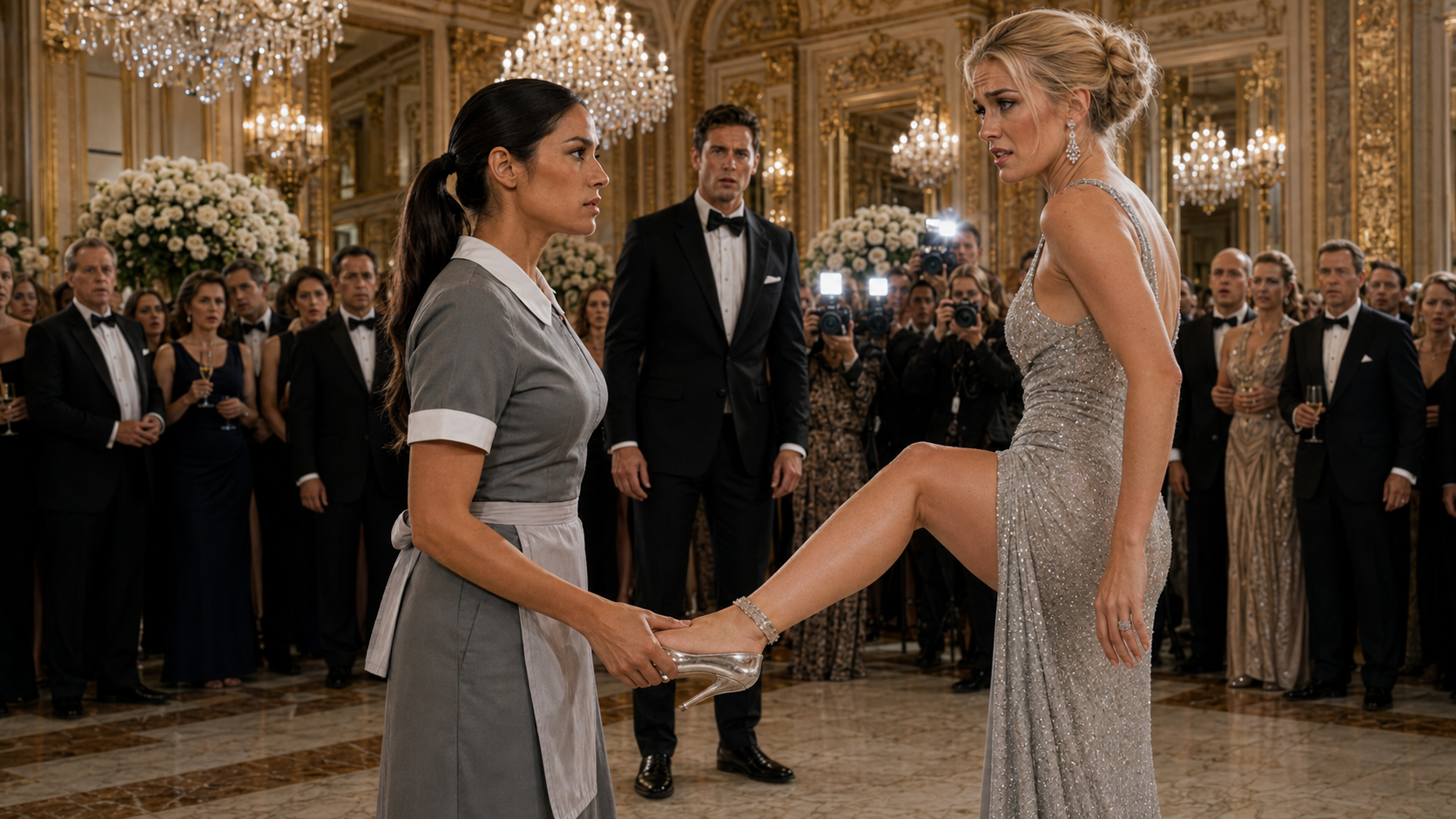
    The first thing Vanessa Sterling did after kicking me was smile for the cameras.

    The second thing she did was realize I had caught her ankle.

    For one impossible second, the entire Whitmore ballroom went silent.

    Three hundred guests froze beneath crystal chandeliers. A string quartet stopped in the middle of a song. Champagne glasses hovered halfway to painted lips. Even the photographers seemed to forget how their cameras worked.

    Vanessa stood balanced on one silver heel, her other foot locked between my hands.

    Her smile disappeared.

    I looked up at her.

    “Please,” I whispered, so quietly only she could hear me. “Don’t make me finish this.”

    Her face changed.

    Not because she understood what I meant.

    Because she didn’t.

    And for the first time since I had met Vanessa Sterling, she realized there might be something in the room she couldn’t control.

    I should tell you that I never wanted that moment.

    I had spent three years trying to make sure it never happened.

    Three years keeping my head down.

    Three years wearing plain clothes, speaking softly, taking orders, and letting people mistake silence for weakness.

    I had gotten good at being invisible.

    Before the Whitmore house, invisibility had meant survival.

    Now it meant peace.

    At least, that was what I had told myself.

    My name is Naomi Reyes.

    To most people in the Whitmore household, I was simply Naomi from staff.

    Housekeeper.

    Server.

    The woman who remembered Mr. Whitmore liked lemon in his tea but hated the peel floating in the cup.

    The woman who knew which florist Mrs. Whitmore called when she was angry because she always ordered white roses when she was trying to make the house look calm.

    The woman who knew Ethan Whitmore skipped breakfast when he was worried and pretended it was because he was running late.

    I knew where the silver was stored.

    I knew which staircase creaked.

    I knew which guests drank too much and which ones liked to wander into rooms they had not been invited into.

    I knew how to disappear against a wall.

    What nobody knew was that I also knew how to identify an exit without turning my head.

    How to tell whether a man reaching inside his jacket was nervous, cold, or armed.

    How to break a wrist.

    How to dislocate a shoulder.

    How to put a person twice my size on the floor before he realized I had decided to move.

    And most importantly, how not to do any of those things unless there was absolutely no other choice.

    Years before I polished antique tables and changed guest-room linens, I worked private protection.

    Not glamorous protection.

    Not the kind where celebrities posed beside you outside restaurants.

    I guarded executives who had received credible threats.

    I escorted witnesses between safe locations.

    I stood in hallways outside hotel rooms until dawn listening to elevators open and close.

    I memorized vehicles.

    License plates.

    Faces.

    Hands.

    Hands mattered more than faces.

    Faces lied.

    Hands told you what someone was about to do.

    I had been good.

    Very good.

    Then one assignment went wrong.

    One person I was supposed to bring home safely never made it home.

    Afterward, every room felt like that room.

    Every phone ringing after midnight sounded like that phone call.

    Every door opening too quickly made my body move before my mind could tell it not to.

    So I left.

    No heroic goodbye.

    No dramatic resignation.

    I signed papers, turned in credentials, packed one suitcase, and walked away from the only profession I had ever been truly exceptional at.

    I wanted ordinary.

    Ordinary became the Whitmore estate.

    And for a while, it worked.

    Until Vanessa.

    I met her seven months before the engagement party.

    She arrived at the estate in a white convertible with black sunglasses, an assistant carrying three garment bags, and the expression of a woman entering a hotel she had already decided to complain about.

    I was in the front hall arranging flowers.

    She glanced at me.

    Not really at me.

    Through me.

    “Where’s Ethan?”

    “In the west office, ma’am.”

    Her mouth tightened.

    “Vanessa.”

    “Of course.”

    “And don’t call me ma’am. It makes me sound forty.”

    She was thirty-two.

    I did not mention that.

    She walked away.

    That should have been the end of it.

    It wasn’t.

    Vanessa had been dating Ethan Whitmore for almost a year by then.

    Everyone knew an engagement was coming.

    She came from money, though the Sterling name had more shine than warmth. Her father had built a luxury retail empire and raised Vanessa in a world where people opened doors before she reached them.

    Ethan was different.

    Not poor.

    Not remotely.

    The Whitmores had been wealthy long enough that they no longer needed to prove it every six minutes.

    Ethan could walk into a room wearing a ten-year-old jacket and make everyone else feel overdressed.

    He remembered names.

    He thanked drivers.

    He carried his own coffee cup to the kitchen.

    And he talked to me.

    That was apparently my first mistake.

    Our friendship had formed slowly.

    I knew he had insomnia because I did too.

    At two in the morning, when the house was asleep, I sometimes found him in the kitchen staring into the refrigerator like the answers to his life had been hidden behind the orange juice.

    The first time it happened, I apologized and tried to leave.

    He stopped me.

    “Naomi.”

    I looked back.

    “Do you know how to make grilled cheese?”

    I stared at him.

    He smiled.

    “I can manage the financial operations of a company on three continents, but every time I make grilled cheese I burn one side and leave the other side cold.”

    “You’re using too much heat.”

    “That feels judgmental.”

    “It is.”

    He laughed.

    That became our thing.

    Late-night conversations in a dark kitchen.

    Nothing inappropriate.

    Nothing romantic.

    He loved Vanessa then, or believed he did.

    And I respected boundaries because boundaries were another kind of safety.

    But Ethan trusted me.

    Not because I had asked him to.

    Because I listened.

    He spoke about the pressure of taking over more responsibility from his father.

    His fear that people agreed with him because of his last name.

    His mother’s health scares.

    The engagement he knew everyone expected.

    Sometimes he asked what I thought.

    I rarely told him what he wanted to hear.

    That was why he kept asking.

    Vanessa noticed.

    At first, it was small.

    “Naomi, could you bring coffee?”

    Then, when I returned with it:

    “No. I said almond milk.”

    “You said oat milk.”

    She would stare.

    “Are you arguing with me?”

    “No.”

    The following week, she left a designer coat on the floor beside the front door.

    When I picked it up, she said, “Careful. That costs more than your car.”

    I didn’t own a car.

    I took the bus.

    There was no reason to tell her.

    Another day, I served lunch on the terrace and she watched me set down her plate.

    “Did you wash your hands?”

    “Yes.”

    “Properly?”

    I met her eyes.

    “Yes, Vanessa.”

    She smiled.

    “Just checking.”

    The cruelty was never quite large enough to make a scene.

    That was the clever part.

    People like Vanessa rarely begin by striking you.

    They begin by testing the size of the room around your dignity.

    A joke here.

    A correction there.

    A command delivered slightly too loudly in front of someone important.

    They watch what you tolerate.

    Then they move the walls inward.

    I tolerated more than I should have.

    Not because I was afraid of Vanessa.

    Because I was afraid of myself.

    There is a strange thing that happens after violence becomes part of your professional vocabulary.

    You learn how thin the line is.

    People imagine trained fighters walk around feeling powerful.

    I didn’t.

    I walked around knowing exactly how fragile bodies were.

    I knew a fall onto marble could split a skull.

    I knew an elbow held one inch differently could turn restraint into permanent damage.

    I knew anger and skill were a dangerous combination.

    So when Vanessa pushed, I stepped back.

    When she insulted me, I swallowed it.

    When she “accidentally” knocked over a glass and ordered me to clean it while her friends watched, I cleaned it.

    And when Ethan asked me once, quietly, “Is Vanessa giving you a hard time?” I lied.

    “No.”

    He studied my face.

    “You sure?”

    “I can handle her.”

    His expression sharpened.

    “That’s not what I asked.”

    I looked away.

    That should have been the moment I told him.

    Not about Vanessa.

    About me.

    About the reason I was so careful.

    About the past I had cut out of my life and buried so deeply that even the man I trusted most in that house had no idea it existed.

    Instead, I smiled.

    “I’m sure.”

    He nodded.

    But he didn’t believe me.

    Three weeks later, Ethan proposed to Vanessa.

    And that was when she stopped testing the walls.

    She started trying to crush them.

    The engagement party was scheduled for September.

    Three hundred guests.

    Press.

    Business partners.

    Family.

    Politicians.

    People whose watches cost more than my annual salary.

    For six weeks, the house became a machine designed to produce perfection.

    And Vanessa made herself queen of it.

    I was assigned to the ballroom floor.

    When Mrs. Whitmore told Vanessa, she immediately said, “No.”

    Everyone in the morning room looked at her.

    Vanessa slowly stirred her coffee.

    “I don’t want Naomi near the main guests.”

    Mrs. Whitmore raised one eyebrow.

    “Why?”

    “She makes me uncomfortable.”

    I nearly laughed.

    Instead, I stood still.

    Ethan looked up from his phone.

    “How does Naomi make you uncomfortable?”

    Vanessa’s expression softened immediately.

    “She has an attitude.”

    “I’ve never seen Naomi have an attitude.”

    “That’s because she likes you.”

    The room changed.

    Barely.

    But I felt it.

    Vanessa looked at me.

    There was triumph in her eyes.

    She had finally said aloud what she had been implying for months.

    I kept my face still.

    Ethan’s jaw tightened.

    “That was unnecessary.”

    “Was it?”

    “Vanessa.”

    She leaned back.

    “I’m just saying, your staff shouldn’t forget they’re staff.”

    Ethan pushed his chair away from the table.

    “Naomi hasn’t forgotten anything.”

    Vanessa smiled.

    “No. I suppose she hasn’t.”

    Then she looked straight at me.

    And in that moment, I knew the engagement party was going to be a problem.

    I just didn’t know how much of one.

    Not yet.

    Because the worst thing about a person who needs to humiliate you is that eventually, silence stops satisfying them.

    They need proof that they can break you.

    And Vanessa Sterling had decided she wanted that proof in front of an audience.

    PART 2: HOW FAR SHE COULD PUSH

    On the morning of the engagement party, I woke at 4:17 with my hand wrapped around a lamp.

    My heart was pounding.

    For several seconds I didn’t know where I was.

    Then I saw my small bedroom.

    The curtains.

    The chair.

    My folded gray uniform hanging on the closet door.

    No hotel corridor.

    No screaming radio.

    No blood spreading across white tile.

    I let go of the lamp.

    My fingers were shaking.

    “Not today,” I whispered.

    I sat on the edge of the bed until my breathing slowed.

    I hadn’t had the dream in months.

    That should have warned me.

    Instead, I dressed.

    By six, the estate was already alive.

    Florists moved through the halls carrying arrangements taller than children. Caterers filled the service corridors. Electricians checked temporary lighting. Security walked the exterior grounds with radios clipped to black jackets.

    I noticed their positions automatically.

    Two by the front drive.

    One near the catering entrance.

    Private detail at the east lawn.

    Camera crew through the main doors.

    Temporary badges.

    Too many contractors.

    Too many open access points.

    Old instincts started cataloguing everything before I could stop them.

    I hated that.

    I had spent years training those instincts.

    Then years trying to bury them.

    “Naomi.”

    I turned.

    Ethan stood at the far end of the hallway, already dressed in dark trousers and a white shirt with the collar open.

    “You’re here early.”

    “So are you.”

    “I live here.”

    “That’s your excuse?”

    A faint smile crossed his face, but it disappeared quickly.

    He came closer.

    “Are you okay?”

    “Yes.”

    “Bad sleep?”

    I looked at him.

    He always noticed.

    “Just a long day ahead.”

    He nodded.

    Then he leaned against the wall.

    For a moment, he looked less like the heir to the Whitmore fortune and more like the exhausted man who ruined grilled cheese at two in the morning.

    “Naomi?”

    “Yes?”

    “Can I ask you something?”

    “You usually do.”

    He ignored that.

    “Do you think people can become different versions of themselves because they want to?”

    The question hit too close.

    I folded my hands.

    “What happened?”

    “Nothing.”

    “That means something happened.”

    He exhaled.

    “Vanessa and I fought last night.”

    I said nothing.

    “She thinks I defend the staff too much.”

    “That sounds terrible. Caring whether employees are treated like human beings.”

    He almost smiled.

    “She says I embarrass her.”

    “How?”

    “By correcting her in front of people.”

    I looked toward the ballroom doors.

    “You could correct her privately.”

    “I have.”

    “And?”

    “It doesn’t stick.”

    There was frustration in his voice.

    But beneath it was something worse.

    Doubt.

    I had seen that look on clients before.

    The moment when they finally admitted the danger wasn’t where they wanted it to be.

    I wanted to tell him.

    Not simply that Vanessa was cruel.

    He knew.

    Maybe not all of it, but enough.

    I wanted to tell him that people revealed themselves under pressure.

    That apologies meant less than patterns.

    That if someone treated the powerless badly, it mattered.

    But who was I to give Ethan lectures about honesty when I had never told him the truth about myself?

    So I said only, “Pay attention tonight.”

    His eyes met mine.

    “To what?”

    “How she treats people when she believes nothing can threaten her.”

    He straightened.

    “That sounds specific.”

    “It’s good advice.”

    “Naomi—”

    A voice cut through the corridor.

    “There you are.”

    Vanessa.

    She wore a silk robe and had three people following her: her stylist, her assistant, and a makeup artist holding a case.

    Her gaze moved from Ethan to me.

    Then to the small distance between us.

    “What are you two discussing?”

    Ethan answered first.

    “Grilled cheese.”

    She didn’t laugh.

    He kissed her cheek.

    “I’ll see you later.”

    As he walked away, Vanessa watched him until he disappeared around the corner.

    Then she turned to me.

    Her face went flat.

    “Stay away from him tonight.”

    “I’m working tonight.”

    “You know what I mean.”

    “Yes.”

    “You like being necessary to him.”

    I felt something cold settle behind my ribs.

    “I do my job.”

    “No. You listen to him. You advise him. You make yourself useful.”

    “I am useful. That is part of my job.”

    Her eyes narrowed.

    There it was.

    The mistake.

    Not anger.

    Not yet.

    But I had answered.

    Vanessa stepped closer.

    “Do you know what people like you never understand?”

    I waited.

    “Rich families are polite to staff because it makes us feel decent. It doesn’t mean you’re family.”

    I could have walked away.

    I should have.

    Instead, I said, “I’ve never confused kindness with kinship.”

    The words landed.

    Her face flushed.

    “You think you’re very clever.”

    “No.”

    “You think Ethan respects you.”

    “I think Ethan respects people.”

    She stared at me.

    For one second, I thought she might slap me.

    My body reacted before my mind did.

    Weight shifted.

    Left foot half an inch back.

    Hands loose.

    Distance measured.

    I hated myself for it.

    Vanessa saw only that I had become still.

    She mistook it for fear.

    Her smile returned.

    “Good. We understand each other.”

    Then she walked away.

    I stood there after she was gone.

    My hands were cold.

    At noon, the first problem happened.

    One of the floral arches near the ballroom entrance shifted when a delivery cart clipped the base.

    I was twenty feet away.

    I heard metal scrape.

    Turned.

    Saw six hundred pounds of flowers and steel start tipping toward a young catering assistant.

    Everyone screamed.

    I moved.

    No thought.

    No plan.

    I crossed the space, grabbed the girl by the back of her jacket, and pulled her clear as the structure crashed down.

    Glass shattered.

    Flowers exploded across the floor.

    The girl hit my chest hard enough to knock the breath from me.

    For half a second, I held her there.

    “Are you hurt?”

    She shook her head.

    Security came running.

    So did Vanessa.

    She stared at the ruined arch.

    Then at me.

    “What happened?”

    The catering assistant pointed.

    “She saved me.”

    Vanessa barely looked at her.

    “Do you know how much that arrangement cost?”

    The girl went pale.

    I felt something in me harden.

    “It was unstable.”

    Vanessa turned.

    “Excuse me?”

    “The base was struck. The frame tipped.”

    “And you decided to destroy it?”

    “It was already falling.”

    “Naomi.”

    Mrs. Whitmore’s voice came from behind us.

    We both turned.

    She took in the scene.

    The bent frame.

    The shaking catering assistant.

    My torn sleeve.

    Then she looked at Vanessa.

    “Is anyone injured?”

    “No,” I said.

    Mrs. Whitmore nodded.

    “Then we are fortunate.”

    Vanessa folded her arms.

    “The entrance is ruined.”

    “It can be repaired.”

    “The photographs—”

    “Can be taken in front of flowers that did not crush a nineteen-year-old girl.”

    Vanessa went quiet.

    Mrs. Whitmore looked at me.

    “Thank you.”

    I nodded.

    As workers came to lift the arch, I noticed Ethan standing in the doorway.

    He had seen enough.

    His eyes were on me.

    Not grateful.

    Not exactly.

    Curious.

    Too curious.

    Later, while I carried fresh napkins into the dining room, he caught up to me.

    “How did you move that fast?”

    My grip tightened around the linen.

    “Adrenaline.”

    “You were across the hall before anybody else reacted.”

    “The girl was in danger.”

    “That doesn’t answer my question.”

    “I don’t have another answer.”

    He stopped walking.

    I kept going.

    “Naomi.”

    I stopped.

    His voice was quiet.

    “Sometimes I feel like I know you better than almost anyone.”

    My throat tightened.

    “And then you do something that reminds me I don’t know you at all.”

    For a moment, I couldn’t turn around.

    When I did, he was watching me.

    Not accusing.

    Hurt.

    That was worse.

    “Everybody has a past,” I said.

    “Yes.”

    He waited.

    I couldn’t give him more.

    Not there.

    Not with staff moving through the corridor.

    Not with Vanessa waiting for any sign that she had been right to distrust me.

    So I said, “Tonight is your engagement party. Go get engaged.”

    His expression flickered.

    “I already did that part.”

    “You know what I mean.”

    “Do I?”

    Before I could answer, Vanessa called his name from the ballroom.

    He looked toward her.

    Then back at me.

    “This conversation isn’t over.”

    My heart sank.

    Because I knew he was right.

    I just had no idea that, by midnight, the entire ballroom would be having that conversation with us.

    PART 3: THE KICK

    By seven thirty, the Whitmore ballroom looked like something built to make ordinary life feel embarrassing.

    Crystal chandeliers burned over long tables dressed in ivory linen.

    Silver champagne towers reflected hundreds of candle flames.

    A temporary dance floor had been laid across the center, polished so perfectly it mirrored the ceiling.

    Outside, black cars formed a glittering line down the estate drive.

    Inside, photographers gathered near the staircase.

    The guest list included business executives, old-money families, politicians, actors, and people I recognized only because their faces appeared on magazine covers in the grocery store.

    I wore gray.

    Vanessa wore silver.

    Of course she did.

    Her gown caught every flash in the room.

    She descended the staircase on Ethan’s arm while people applauded.

    He looked handsome.

    She looked triumphant.

    For a moment, watching them, I wondered whether I had been unfair to her.

    Maybe tonight would soften her.

    Maybe love, or the performance of love, would make her generous.

    Then she reached the ballroom floor.

    A server offered her champagne.

    She took one sip.

    Made a face.

    And handed the glass back.

    “This is warm.”

    The server blinked.

    “I’m sorry, Ms. Sterling.”

    “Then why are you standing there?”

    It began.

    Not loudly.

    Not enough to ruin the party.

    A thousand tiny cuts.

    She told one server his jacket looked cheap.

    She snapped at a florist because a centerpiece blocked her view.

    She ordered a bartender to remake a drink three times, then abandoned it untouched.

    Every time Ethan was near, Vanessa transformed.

    Her voice softened.

    Her hand slipped into his.

    Her smile became effortless.

    Then he would turn away and the mask dropped.

    I watched him.

    Pay attention tonight, I had told him.

    At first, I didn’t know if he was.

    Then I saw his face after Vanessa made a young server cry.

    He was paying attention.

    Around nine, I carried a tray of sparkling water toward a group near the ballroom windows.

    Vanessa’s closest friends stood there.

    Women in diamonds.

    Men in tuxedos.

    Laughter designed to travel.

    As I passed, Vanessa said my name.

    “Naomi.”

    I stopped.

    She smiled.

    “Come here.”

    Every instinct in me said no.

    I walked over.

    She held up an empty glass.

    “Get me champagne.”

    I looked at the glass.

    “You have champagne.”

    There was still half a glass in her hand.

    Her friends smiled.

    Vanessa’s eyes sharpened.

    “I don’t like this one.”

    “They’re from the same bottles.”

    Someone laughed.

    Vanessa’s cheeks colored.

    “Get me another.”

    I took her glass.

    “Of course.”

    As I turned, she added, loudly, “And try not to put your fingers in it.”

    Laughter.

    Not everyone.

    But enough.

    I kept walking.

    My face burned.

    I had been threatened by armed men without blinking.

    I had slept in chairs outside witness rooms.

    I had once driven six hours with a fractured wrist because stopping would have put a client at risk.

    Yet there is a particular humiliation in being mocked while holding a serving tray.

    Violence is simple.

    Cruelty in polite rooms is not.

    With violence, you know the rules.

    Cruelty smiles and waits to see whether you will embarrass yourself by objecting.

    I brought her another glass.

    She took it.

    Sipped.

    Then deliberately let it slip.

    It shattered at my feet.

    The people around her fell silent.

    Vanessa looked down.

    “Oh.”

    I stared at the broken crystal.

    A long time ago, one of my instructors told me that anger arrives in the body before it reaches the mind.

    Jaw.

    Hands.

    Breathing.

    Shoulders.

    Learn your warning signs, Reyes.

    Know when you’re losing yourself.

    My warning sign had always been my hands.

    When I got truly angry, they became very calm.

    Now they were perfectly still.

    Vanessa looked at me.

    “Clean that up.”

    I bent.

    Before I could reach the largest piece, Ethan appeared.

    “Leave it.”

    I looked up.

    He was staring at Vanessa.

    She blinked.

    “What?”

    “I said leave it.”

    “Ethan, somebody could step on it.”

    “Then another staff member can bring a broom.”

    Vanessa laughed uncertainly.

    “I don’t understand.”

    “I watched you drop that glass.”

    The air around us changed.

    Her friends suddenly found the floor fascinating.

    “Are you serious?”

    “Yes.”

    “It slipped.”

    “No.”

    Vanessa stared at him.

    I stood slowly.

    She looked at me.

    Then back at Ethan.

    “This is about her?”

    “No. This is about you.”

    The words were quiet.

    That made them worse.

    Vanessa’s face tightened.

    “Not here.”

    “You’re right.”

    Ethan turned to me.

    “Naomi, are you okay?”

    Vanessa’s humiliation flashed into rage.

    I saw it.

    I knew what was coming before she did.

    Not the kick.

    Not yet.

    But escalation.

    A person losing control in a room where control was their identity.

    “I’m fine,” I said.

    I picked up my tray.

    Vanessa laughed.

    A strange, sharp sound.

    “Of course she’s fine. She loves this.”

    Ethan turned back.

    “Stop.”

    “She loves you defending her.”

    “Vanessa.”

    “She looks at you like—”

    “Enough.”

    The word cracked.

    People nearby had stopped pretending not to listen.

    Vanessa noticed.

    And suddenly, this was no longer only about me.

    It was about the eyes around her.

    The cameras.

    The guests.

    The possibility that she was losing in public.

    She smiled.

    That was when I became afraid.

    Not of her.

    Of what desperation makes people do.

    She stepped toward me.

    “Naomi, forgive me.”

    Every hair on my arms lifted.

    She had never apologized to me.

    “I’ve been unfair.”

    I said nothing.

    “Tonight is supposed to be happy.”

    Her smile widened.

    “So why don’t we start again?”

    She reached out and placed one hand on my arm.

    I could feel tension in her fingers.

    “Vanessa,” Ethan said.

    She ignored him.

    “What do you say?”

    I looked into her eyes.

    “Please let go of my arm.”

    Her fingers tightened.

    “Oh, don’t be dramatic.”

    “Let go.”

    The closest conversations had stopped.

    A photographer shifted position.

    Vanessa heard the camera click.

    Her face transformed.

    She released me.

    Then she looked toward the photographers with a beautiful smile.

    And in a voice sweet enough for the cameras, she said, “See? Always so sensitive.”

    I stepped back.

    That should have ended it.

    It almost did.

    Then I turned away.

    And heard the whisper of fabric behind me.

    Movement.

    Fast.

    My body recognized it before my mind named it.

    Vanessa kicked me.

    Later, I would see the photographs.

    Her silver gown twisting.

    Her mouth curled into a smile.

    Her foot driving toward the back of my knee as though she intended to make me collapse.

    She expected me to fall.

    Maybe she expected laughter.

    Maybe she expected Ethan to see me kneeling at her feet.

    I will never know.

    Because my old training took over.

    I pivoted.

    Caught her ankle.

    And suddenly Vanessa Sterling was standing on one foot in front of three hundred people.

    Silence.

    Not ordinary silence.

    The kind that has weight.

    The kind that seems to pull air out of a room.

    Her eyes widened.

    I held her ankle securely with both hands.

    Not twisting.

    Not hurting.

    Simply controlling.

    Exactly the way I had been trained.

    I could feel her balance fighting against me.

    One motion.

    That was all it would have taken.

    Turn the leg.

    Step inside.

    Guide the knee.

    She would be on the floor.

    Another motion if she resisted.

    A third if she attacked again.

    My body knew the sequence.

    My mind knew the consequences.

    Vanessa jerked.

    “Let me go.”

    “Stop moving.”

    Her eyes flashed.

    “How dare you—”

    “Stop.”

    My voice changed.

    I heard it.

    So did Ethan.

    The softness was gone.

    The servant was gone.

    What remained was the woman I had buried.

    Vanessa tried to pull free.

    My grip adjusted.

    Her face flickered with pain.

    Not because I had injured her.

    Because she had finally discovered that strength did not belong to the person with the most money in the room.

    I looked straight at her.

    “Please don’t make me finish this.”

    She froze.

    Behind her, I heard Ethan say my name.

    “Naomi.”

    That hurt more than the kick.

    Because of how he said it.

    He knew.

    Not everything.

    But enough.

    Enough to understand that the woman holding Vanessa’s ankle had done something like this before.

    I released her carefully.

    Vanessa stumbled backward.

    Ethan caught her elbow.

    She ripped away from him.

    “She attacked me!”

    No one spoke.

    Vanessa looked around.

    “She attacked me!”

    One of the photographers lowered his camera.

    A woman near the dance floor whispered, “You kicked her.”

    Vanessa’s face went white.

    “I slipped.”

    “No, you didn’t,” Ethan said.

    She turned on him.

    “You’re taking her side?”

    “I watched you do it.”

    “She grabbed me!”

    “After you kicked her.”

    Vanessa pointed at me.

    “She threatened me.”

    All eyes shifted.

    My heart hammered.

    There it was.

    The trap.

    And she wasn’t entirely wrong.

    Those words had been a warning.

    Everyone waited.

    I could lie.

    I could say she misunderstood.

    Instead, I looked at Ethan.

    “I told her not to make me finish the restraint.”

    His face changed.

    “Restraint?”

    Vanessa heard it too.

    “What restraint?”

    I closed my eyes for half a second.

    Too late.

    The past had opened its door.

    And Ethan was standing directly in front of it.

    He stared at me.

    “Naomi.”

    I looked at him.

    “Who are you?”

    Three words.

    That was all.

    But they cut through everything.

    The ballroom.

    The cameras.

    Vanessa.

    The guests.

    Three years of friendship collapsed into that question.

    Who are you?

    I swallowed.

    “My name is Naomi Reyes.”

    “I know your name.”

    His voice was low.

    “What did you mean by restraint?”

    Vanessa laughed breathlessly.

    “Yes, Naomi. Tell us.”

    I looked at the crowd.

    At the phones now raised.

    At Mrs. Whitmore standing near the staircase, pale and confused.

    At Mr. Whitmore speaking urgently to security.

    At Ethan.

    Then I saw something else.

    A man approaching quickly from the rear of the ballroom.

    One of the Whitmore security supervisors.

    He had stopped ten feet away.

    His eyes were fixed on me.

    Not with surprise.

    With recognition.

    My stomach dropped.

    He knew.

    Not me personally.

    The stance.

    The language.

    The way I had controlled Vanessa’s leg without injuring her.

    Professional recognition.

    His gaze moved to Ethan.

    “Mr. Whitmore,” he said quietly.

    Ethan didn’t look away from me.

    “What?”

    The supervisor hesitated.

    Then said the words I had spent three years making sure Ethan would never hear.

    “That wasn’t self-defense training.”

    The ballroom seemed to tilt.

    He looked at me again.

    “That was close-protection restraint.”

    Vanessa’s mouth fell open.

    Ethan went completely still.

    And I knew my quiet life was over.

    PART 4: THE LIFE I NEVER TOLD HIM ABOUT

    Security cleared the ballroom faster than I expected.

    Not completely.

    You cannot remove three hundred wealthy people from a scandal without making the scandal larger.

    But the musicians started playing again because someone told them to.

    Drinks resumed.

    Whispers spread.

    Phones glowed beneath tables.

    The engagement party continued in the technical sense.

    In reality, it had ended the second Vanessa kicked me.

    I was taken to Mr. Whitmore’s study.

    Not arrested.

    Not detained.

    Asked.

    The distinction mattered.

    Two security officers waited outside.

    Mrs. Whitmore sat near the fireplace.

    Mr. Whitmore stood behind his desk.

    Vanessa paced.

    Ethan stood by the window with his back to me.

    Nobody spoke for almost a minute.

    Finally, Mr. Whitmore said, “Naomi, I need you to explain.”

    Vanessa spun.

    “Explain? She assaulted me.”

    Mrs. Whitmore looked at her.

    “Vanessa.”

    “She did!”

    “You kicked her.”

    “I lost my balance.”

    “Three cameras recorded it.”

    Vanessa stopped.

    For the first time that night, she seemed to understand cameras worked both ways.

    Mrs. Whitmore looked at me.

    “What happened after she kicked you?”

    “I intercepted her leg.”

    Vanessa gave a disbelieving laugh.

    “Intercepted?”

    “Yes.”

    “Normal people don’t say intercepted.”

    “No,” I said. “They usually don’t.”

    Ethan finally turned.

    His face made my chest ache.

    There was anger there.

    Confusion.

    But mostly hurt.

    “Tell me.”

    I knew what he meant.

    Everything.

    I looked at the floor.

    “I used to work in private protection.”

    Vanessa stopped breathing.

    Mr. Whitmore narrowed his eyes.

    Mrs. Whitmore leaned forward.

    Ethan said nothing.

    I continued.

    “Executive security. Witness transport. Protective assignments. Mostly high-risk clients.”

    “For who?” Mr. Whitmore asked.

    “Several contractors.”

    “How long?”

    “Eight years.”

    Ethan looked almost physically struck.

    “Eight?”

    “Yes.”

    “And you never told us?”

    I looked at him.

    “No.”

    “Why?”

    My mouth opened.

    Nothing came out.

    Because the true answer was too large.

    Because you trusted me.

    Because you saw me as peaceful.

    Because I needed someone to know me without knowing what my hands could do.

    Because if I told you, I was afraid you would look at me exactly the way you are looking at me now.

    Instead, I said, “It wasn’t relevant to my work here.”

    He laughed once.

    No humor.

    “You caught Vanessa’s leg in the middle of a ballroom before anyone even understood what was happening.”

    His voice tightened.

    “You pulled a woman out from under a collapsing steel arch this afternoon.”

    I said nothing.

    He stepped closer.

    “You always know where the exits are.”

    My chest tightened.

    “I’ve seen you do it.”

    I looked at him.

    He was remembering.

    That was the worst part of secrets.

    When they finally came out, they rewrote old memories.

    Ethan continued.

    “When we go into restaurants, you sit facing the door.”

    I looked away.

    “You never let strangers stand behind you.”

    “Ethan—”

    “You knew the security cameras had blind spots before I did.”

    His eyes were wet now.

    Not tears.

    Anger close to them.

    “How did I not see this?”

    “That was the point.”

    The room went still.

    His face changed.

    “You were hiding it from us.”

    “No.”

    He stared.

    I forced myself to say it.

    “I was hiding it from you.”

    Vanessa looked between us.

    Her humiliation suddenly turned into interest.

    Ethan’s voice dropped.

    “Why me?”

    Because your opinion mattered.

    The answer frightened me.

    I folded my hands.

    “Because you asked questions.”

    He waited.

    “You paid attention. Most people here didn’t. They saw a uniform. You saw me.”

    His jaw tightened.

    “And that made you lie?”

    “I didn’t lie about who I am.”

    “You left out eight years of your life.”

    “Yes.”

    “That’s not a small omission, Naomi.”

    “I know.”

    “Do you?”

    I flinched.

    He saw it.

    His anger softened for half a second.

    Then Vanessa spoke.

    “This is insane.”

    We all looked at her.

    She pointed at me.

    “You hired some kind of mercenary as a housekeeper?”

    “I was not a mercenary.”

    “Whatever.”

    Mr. Whitmore’s voice hardened.

    “Vanessa, enough.”

    “No. Absolutely not. She threatened me. She has violent training. She lied about her background.”

    “I did not lie on my employment application.”

    He looked at me.

    “You disclosed security work?”

    “I disclosed private security employment.”

    His brow furrowed.

    Then he remembered.

    I had known he would.

    My original application had been reviewed by the household manager, not the family.

    I had never invented jobs.

    Never falsified dates.

    I simply used the broadest accurate description available.

    Private security.

    No details.

    No assignments.

    No explanation.

    I had not hidden my past from the Whitmore hiring process.

    I had hidden it from Ethan.

    That mattered.

    Mrs. Whitmore understood first.

    “So the household office knew you had a security background.”

    “Yes.”

    “Did they know the extent?”

    “I don’t know.”

    Mr. Whitmore reached for the phone on his desk.

    Ethan stopped him.

    “Later.”

    His eyes remained on me.

    “What happened?”

    I knew which part he meant now.

    Why did you leave?

    My hands started to shake.

    I clasped them tighter.

    “An assignment went wrong.”

    His expression changed again.

    I took a breath.

    “I was assigned to protect a corporate witness who had agreed to testify against people from his company.”

    No one moved.

    “He was scared. He had a wife. Two sons. He hated every safe location we moved him to because he said every room smelled temporary.”

    My voice sounded far away.

    “One night, we had a relocation scheduled. The route changed. There were problems with the vehicle. Too many things happened too close together.”

    I stopped.

    I didn’t want to see that night.

    But memory doesn’t ask permission.

    Rain against glass.

    A hallway.

    A door that should have remained closed.

    A sound too loud to forget.

    I swallowed.

    “I made a judgment call.”

    Ethan’s voice softened.

    “What kind?”

    “I moved him.”

    Silence.

    “It was the wrong decision.”

    I stared at my hands.

    “We were hit before we reached the secondary location.”

    Mrs. Whitmore covered her mouth.

    Vanessa didn’t speak.

    “He died.”

    There it was.

    Two words.

    Years of nightmares reduced to two words.

    Ethan’s face went still.

    “I survived.”

    My throat closed.

    “I was supposed to be the reason he survived.”

    No one interrupted.

    “I replayed it for months. Every decision. Every minute. I kept thinking there had to be one moment where I could go back and choose differently.”

    My eyes burned.

    “There wasn’t.”

    I looked at Ethan.

    “Eventually, I realized I couldn’t do the job anymore. Not because I couldn’t protect people. Because I couldn’t trust myself to know when protecting someone became controlling every possible risk around them.”

    I laughed quietly.

    “It turns out you can become very afraid of making decisions when one decision is the last decision another person ever experiences.”

    Ethan’s anger was gone.

    The hurt remained.

    “Why didn’t you tell me?”

    “I wanted one person in my life who didn’t know me from that world.”

    He closed his eyes.

    That confession hurt him.

    I could see it.

    “I wanted you to think I was normal.”

    His eyes opened.

    “I did think you were normal.”

    “I know.”

    “That’s not an insult.”

    “I know.”

    “Then why did you think this would change that?”

    Because I had lived long enough among people who either feared skill or worshipped it.

    Because I hated both.

    Because Ethan’s trust had become precious without my permission.

    I whispered, “Because it changed me.”

    For a while, there was no sound except the muted music beyond the study doors.

    Then Vanessa laughed.

    It was ugly.

    “You’re all falling for this.”

    Ethan turned toward her.

    She pointed at me.

    “She’s manipulating you.”

    “No.”

    “Yes. Look at this. Tragic past. Secret protector. Noble maid. It’s perfect.”

    My stomach tightened.

    Vanessa stepped closer to Ethan.

    “She has been lying to you for years.”

    “Vanessa.”

    “She admitted she hid it specifically from you.”

    “I heard her.”

    “Then why are you looking at me like I’m the problem?”

    The room went silent.

    Ethan stared at her.

    When he answered, his voice was exhausted.

    “Because you kicked her.”

    Vanessa blinked.

    “What?”

    “You keep trying to make what Naomi hid erase what you did.”

    “I was upset.”

    “You humiliated her for months.”

    Vanessa’s face went blank.

    I looked at Ethan.

    He knew?

    His eyes flicked to mine.

    Apparently, he knew more than I thought.

    He turned back to Vanessa.

    “I asked staff.”

    Her cheeks drained of color.

    “You what?”

    “After this afternoon.”

    My heart jumped.

    “The broken glass wasn’t new. The comments weren’t new. The orders designed to embarrass her weren’t new.”

    He stepped toward Vanessa.

    “And every time I asked Naomi, she protected you.”

    Vanessa looked at me.

    I could see the calculation collapse behind her eyes.

    “You told him?”

    “No,” Ethan said. “That’s the point. She didn’t.”

    Vanessa’s mouth opened.

    Closed.

    Mrs. Whitmore stood.

    “Vanessa, I think you should leave.”

    Vanessa stared at her.

    “This is my engagement party.”

    “No,” Ethan said.

    We all looked at him.

    His face was pale.

    But certain.

    “Not anymore.”

    Vanessa’s breath caught.

    “Ethan.”

    “I can’t do this.”

    “You’re not ending our engagement over a maid.”

    The word hung there.

    A maid.

    I had heard worse.

    Yet somehow, in that room, it sounded like a confession.

    Ethan looked at her for a very long time.

    Then said, “I’m ending our engagement because I asked myself what kind of person kicks someone who can’t hit back without risking their job.”

    Vanessa recoiled.

    “She did hit back.”

    “No.”

    He glanced at me.

    “She didn’t.”

    That was the first moment anyone in that room truly understood what had happened in the ballroom.

    I had not fought Vanessa.

    I had stopped myself from fighting her.

    Ethan turned back.

    “She caught you. She could have dropped you.”

    Vanessa’s face shifted.

    “She didn’t.”

    He looked almost sad.

    “You thought she was powerless. So you hurt her.”

    Vanessa’s eyes filled.

    “You said you loved me.”

    “I do.”

    The room seemed to break around those words.

    Ethan swallowed.

    “But love isn’t a permission slip to ignore who someone chooses to be.”

    Vanessa stared at him.

    Then at me.

    Her face twisted.

    “This is what you wanted.”

    I shook my head.

    “No.”

    “You’ve been waiting for this.”

    “No.”

    “You think he’s going to choose you now?”

    My stomach dropped.

    “Vanessa.”

    Ethan’s warning came too late.

    She walked toward me.

    Fast.

    Not attacking this time.

    Just furious.

    “You ruined my life.”

    I stepped back.

    “No.”

    Her eyes glittered.

    “You did.”

    I looked at her.

    And I realized I was tired.

    Tired of swallowing truth to keep dangerous people comfortable.

    Tired of making myself smaller because strength frightened me.

    Tired of confusing silence with goodness.

    So I said, “You kicked a woman you believed couldn’t defend herself in front of three hundred witnesses.”

    Vanessa flinched.

    “That was your choice.”

    “You embarrassed me.”

    “You embarrassed yourself.”

    Her face crumpled.

    For one second, she no longer looked powerful.

    She looked terrified.

    And suddenly I understood her.

    Not enough to excuse her.

    But enough to see the machinery.

    Vanessa had built her entire identity around never being the smallest person in the room.

    Money.

    Beauty.

    Status.

    Control.

    She needed someone beneath her because she did not know who she was without the distance.

    My refusal to break had felt like rebellion.

    Ethan’s respect for me had felt like theft.

    She had tried to restore the order she understood.

    And destroyed herself doing it.

    Mr. Whitmore opened the study door.

    Security waited outside.

    Vanessa looked at Ethan one last time.

    “Are you really doing this?”

    His voice was quiet.

    “You already did.”

    She left.

    The door closed behind her.

    And suddenly the room felt too small.

    I looked at Ethan.

    Now came the part I had feared from the beginning.

    Not Vanessa.

    Not scandal.

    Not the cameras.

    His judgment.

    He stared at me.

    “I need to ask you one thing.”

    I waited.

    “Were you ever dangerous to us?”

    The question hurt.

    But it was fair.

    I answered honestly.

    “Yes.”

    Mrs. Whitmore inhaled.

    Ethan didn’t move.

    I continued.

    “I’m trained to be dangerous.”

    His eyes hardened.

    “But being capable of harm isn’t the same as wanting to cause it.”

    I looked at my hands.

    “That distinction is the reason I left.”

    Then I met his eyes.

    “And the reason Vanessa is still standing.”

    He understood.

    I saw it happen.

    Not forgiveness.

    Not yet.

    Understanding.

    Sometimes that is the first bridge.

    He looked toward the window.

    Outside, camera flashes sparked beyond the hedges as reporters gathered near the gate.

    “This is going to be everywhere tomorrow.”

    “Yes.”

    “Vanessa will say you attacked her.”

    “Yes.”

    “There are videos.”

    “Yes.”

    His mouth tightened.

    “And people will dig into your past.”

    That was the thing I had been avoiding for years.

    I felt strangely calm.

    “Yes.”

    He looked at me again.

    “What are you going to do?”

    For three years, my answer would have been disappear.

    Quit.

    Move.

    Change jobs.

    Become smaller.

    Instead, I heard myself say, “Tell the truth.”

    Ethan nodded.

    Then, after a pause:

    “So will I.”

    PART 5: WHAT THE CAMERAS REALLY SAW

    By seven the next morning, the video had been viewed four million times.

    I knew because a reporter shouted the number through the estate gates.

    I didn’t watch it.

    I didn’t need to.

    I remembered every frame from inside my own body.

    Vanessa smiling.

    Her leg moving.

    My hands catching her ankle.

    The silence.

    My warning.

    But other people watched.

    Slow-motion versions appeared.

    News programs debated it.

    People online argued about whether I had reacted “too aggressively” despite the inconvenient fact that I had not actually harmed her.

    Former security professionals recognized the technique.

    Somebody found an old photograph of me from years earlier.

    Then another.

    Nothing classified.

    Nothing dramatic.

    Just enough.

    Naomi Reyes.

    Private protective security.

    Executive details.

    Witness transport.

    Training certifications.

    The quiet housekeeper acquired a past.

    Vanessa released a statement that morning through a publicist.

    She claimed tensions had been building between us.

    She claimed she felt “provoked.”

    She said the contact had been accidental.

    Then the second video appeared.

    A guest had recorded the entire minute before the kick.

    Vanessa grabbing my arm.

    Me asking her to let go.

    Vanessa mocking me.

    Me turning away.

    Her looking toward the cameras.

    Then lifting her leg.

    Deliberate.

    Clear.

    Impossible to explain.

    After that, her publicist stopped answering questions.

    I sat in the kitchen with a cup of coffee going cold between my hands.

    The household was strangely quiet.

    No party staff.

    No flowers arriving.

    No music.

    Just cleaners removing the remains of the previous night.

    I had packed my suitcase.

    One bag.

    The same way I had left my old life.

    I heard footsteps behind me.

    Ethan.

    I didn’t turn.

    “You’re leaving.”

    It wasn’t a question.

    “Yes.”

    “Why?”

    I looked at him.

    He had not slept.

    Neither had I.

    “I created a problem for your family.”

    He stared.

    “No. Vanessa created a problem for my family.”

    “My history will keep this alive.”

    “For a week. Maybe two.”

    “People will ask questions.”

    “They always do.”

    “I don’t want to become a story attached to your name.”

    He pulled out the chair across from me.

    “You already are.”

    I looked away.

    “Ethan.”

    “No.”

    I glanced back.

    He folded his arms.

    “You don’t get to do that.”

    “Do what?”

    “Decide what’s best for everybody and disappear.”

    The accusation found its target.

    I went still.

    “That’s not fair.”

    “No?”

    “No.”

    “You spent three years deciding I was safer not knowing you.”

    “I never said safer.”

    “You didn’t have to.”

    His anger returned.

    Quieter now.

    More honest.

    “You thought if I knew, I would treat you differently.”

    “Yes.”

    “And then you made that decision for me.”

    I looked down.

    He was right.

    I hated that.

    After a moment, he said, “I’m angry with you.”

    “I know.”

    “I understand why you hid it.”

    “That doesn’t make it right.”

    “No.”

    I looked up.

    A faint smile touched his face.

    “There she is.”

    “What?”

    “The woman who always tells me the answer I don’t want.”

    Despite myself, I almost laughed.

    He leaned forward.

    “Naomi, I’m not angry because you used to protect people.”

    “I know.”

    “I’m angry because you trusted me with everything except the part of yourself you were most afraid I would judge.”

    My throat tightened.

    He looked down at the table.

    “I thought our friendship meant more than that.”

    “It did.”

    “Then why?”

    I was quiet for a long time.

    Finally, I told him the truth I had not been able to say the night before.

    “Because you mattered.”

    He looked up.

    “The more you trusted me, the harder it became to tell you.”

    “That makes no sense.”

    “I know.”

    “Try.”

    I took a breath.

    “In my old life, people looked at me in two ways. Either they saw protection and felt safe, or they saw violence and felt afraid.”

    He listened.

    “You never saw either.”

    I looked around the kitchen.

    The place where we had eaten burned sandwiches.

    Where he had told me about board meetings and family expectations.

    Where I had once laughed so hard at his attempt to make pancakes that I cried.

    “You saw Naomi.”

    My voice broke slightly.

    “I didn’t want to lose that.”

    His face softened.

    “You wouldn’t have.”

    “I didn’t know that.”

    “No.”

    He sat back.

    “But you could have given me the chance.”

    There was no defense.

    So I nodded.

    “You’re right.”

    A long silence passed.

    Then he glanced at my suitcase.

    “Stay.”

    I shook my head.

    “Ethan.”

    “Not forever.”

    He raised a hand before I could argue.

    “Stay until this settles. Don’t run because people found out something true about you.”

    I looked at the bag.

    Running had become a ritual.

    When the witness died, I left protection.

    When questions became too personal, I changed apartments.

    When friendships got too close, I let them fade.

    The Whitmore house had been the first place I had remained long enough to become known.

    And even there, I had controlled which version of me people were allowed to know.

    “I don’t know how to do this,” I admitted.

    “Do what?”

    “Stay when people know.”

    Ethan’s expression changed.

    Not pity.

    Thank God.

    He knew I hated pity.

    “Then practice.”

    I laughed quietly.

    “Is that your professional advice?”

    “No. My professional advice usually costs a lot more.”

    That time I actually smiled.

    The kitchen door opened.

    Mrs. Whitmore entered wearing a robe over silk pajamas.

    She looked at my suitcase.

    “No.”

    I blinked.

    “No?”

    “No.”

    She poured herself coffee.

    “You are not leaving before you help me choose a new household security company.”

    I stared at her.

    Ethan started laughing.

    She gave him a look.

    “I’m serious.”

    “Mother—”

    “Our security supervisor identified Naomi’s technique after she used it. Naomi identified an unstable floral structure before any of them.”

    “I didn’t identify it before it fell.”

    Mrs. Whitmore waved that away.

    “You moved first.”

    “That doesn’t qualify me to assess your entire security program.”

    “Excellent. You have already started disagreeing with me. I trust that.”

    I shook my head.

    Something warm moved through my chest.

    Dangerous.

    Hopeful.

    Then Mrs. Whitmore’s expression softened.

    “You protected one of our staff yesterday.”

    “The arch—”

    “I know.”

    She looked at me carefully.

    “And last night, strange as it may sound, you protected Vanessa too.”

    Ethan stopped smiling.

    Mrs. Whitmore continued.

    “You could have hurt her.”

    “Yes.”

    “You chose not to.”

    “Yes.”

    She nodded.

    “That tells me what I need to know.”

    I looked away because suddenly I could not trust my face.

    For years, I had believed that the worst night of my life had disqualified me from being the person I had once thought I was.

    A protector.

    The word had become unbearable.

    Too noble.

    Too clean.

    I had failed once.

    And because I could not live with the fact that good people sometimes made terrible calls, I had turned one failure into an identity.

    I was the woman who failed.

    The woman who survived.

    The woman who should have known.

    But maybe Mrs. Whitmore was right.

    Maybe protection was not about never failing.

    Maybe it was about what you chose when the next moment came.

    That afternoon, Vanessa returned.

    I saw her car from the upstairs window.

    No press.

    No assistant.

    No entourage.

    Just Vanessa.

    She asked to speak with Ethan.

    He agreed.

    I did not listen.

    I had no right to.

    Forty minutes later, I was carrying folded towels through the east hall when I found her standing alone near the staircase.

    She looked different.

    Not because she had changed.

    Because she was no longer performing.

    No makeup.

    Hair tied back.

    Eyes swollen.

    When she saw me, she stopped.

    So did I.

    For several seconds, neither of us spoke.

    Then she said, “Are you staying?”

    “I haven’t decided.”

    She nodded.

    Her gaze dropped to my hands.

    “You really could have broken my leg?”

    I considered lying.

    “No.”

    Her eyebrows lifted.

    “I could have damaged your knee.”

    Her eyes widened.

    I added, “Or put you on the floor.”

    She swallowed.

    “But you didn’t.”

    “No.”

    “Why?”

    It was the first sincere question she had ever asked me.

    I thought about it.

    “Because I wasn’t in danger.”

    She looked confused.

    “You kicked me because you thought I couldn’t do anything about it. That made what you did cruel.”

    I paused.

    “If I hurt you after I had already stopped you, I would have been proving the same thing you were trying to prove.”

    Her face tightened.

    “That I was stronger.”

    “Yes.”

    Vanessa looked toward the ballroom doors.

    The broken glass had been cleared.

    The silver decorations were disappearing.

    Workers were dismantling the stage where she and Ethan had planned to make speeches about their future.

    “I hated you,” she said.

    “I know.”

    “Do you know why?”

    “I have theories.”

    A weak, bitter laugh escaped her.

    She wrapped her arms around herself.

    “He listened to you.”

    I said nothing.

    “He respected you.”

    “Yes.”

    “You could tell him something was stupid and he would think about it.”

    “Sometimes.”

    “If I disagreed with him, it became an argument.”

    I looked at her.

    “Maybe because of how you disagreed.”

    She gave me a sharp look.

    I held it.

    After a moment, she looked away.

    “I thought you wanted him.”

    There it was.

    The jealousy beneath everything.

    Not a secret love triangle.

    Not some hidden affair.

    Something more ordinary and uglier.

    She could not understand a relationship based on trust that did not require possession.

    “I didn’t.”

    She studied my face.

    “I believe you now.”

    “That doesn’t matter much anymore.”

    “No.”

    She looked down.

    “I’m sorry.”

    The apology sat between us.

    Small.

    Late.

    Real.

    I could have told her it was fine.

    Women are trained to do that.

    We forgive quickly to make the person who hurt us comfortable.

    I didn’t.

    “Thank you for saying it.”

    Her eyes filled again.

    “You don’t forgive me.”

    “Not yet.”

    She nodded.

    “I guess that’s fair.”

    She walked toward the front door.

    Then stopped.

    “Naomi?”

    “Yes?”

    “When you caught my leg…”

    She hesitated.

    “What were you going to do if I kept fighting?”

    I remembered the ballroom.

    The weight of her ankle in my hands.

    My old training waking all at once.

    “Put you down safely.”

    She gave a small, broken laugh.

    “Of course.”

    Then she left.

    That was the last private conversation I ever had with Vanessa Sterling.

    People later asked me whether I was glad her engagement ended.

    I wasn’t.

    Justice is not always joy.

    Sometimes it is simply the moment consequences finally arrive.

    Vanessa lost Ethan because of choices she had made long before she lifted her foot toward me.

    The kick only made those choices visible.

    And me?

    I stayed.

    Not as a maid forever.

    That changed slowly.

    Mr. Whitmore asked me to review the estate’s emergency procedures.

    I told him I was not interested.

    Then I found fourteen problems in the first afternoon.

    He smiled.

    I hated that smile because it meant he knew he had me.

    For several months, I split my time between household work and security consultation.

    Eventually, the gray uniform disappeared.

    Not because the work had ever been beneath me.

    It hadn’t.

    There was dignity in caring for a place.

    There was dignity in cleaning a room.

    There was dignity in service.

    What I needed to learn was that there could also be dignity in returning to a skill without returning to the person I had been when I first learned it.

    I never went back to high-risk witness protection.

    I didn’t want to.

    But I began training household staff in emergency response.

    I taught young assistants how to recognize unsafe crowd movement.

    I showed drivers what to do when followed.

    I helped the Whitmores build better procedures around events.

    And once a month, I volunteered with a nonprofit that trained shelters and community organizations in basic safety planning.

    The first time I stood in front of a group and introduced myself as a security professional again, my voice shook.

    Nobody noticed.

    Or maybe they did and were kind enough not to say anything.

    Ethan and I repaired our friendship more slowly.

    Trust should be repaired slowly.

    Anything else is performance.

    For a while, he asked more questions than I liked.

    I answered them.

    Sometimes the answer was, “I don’t want to talk about that yet.”

    He learned to accept it.

    But I stopped lying by omission when the truth mattered.

    One night, months after the engagement party, we ended up in the kitchen at two in the morning again.

    Some things survive disasters.

    Ethan stood at the stove.

    Smoke curled toward the ceiling.

    I stared at the pan.

    “You learned nothing.”

    He looked offended.

    “This is progress.”

    “The bread is black.”

    “Caramelized.”

    “It’s bread.”

    He slid one sandwich onto a plate.

    I looked at it.

    “You expect me to eat that?”

    “You faced armed criminals.”

    “That was different.”

    “How?”

    “I was being paid.”

    He laughed.

    The sound filled the quiet kitchen.

    Then he looked at me.

    Not at the former protection specialist.

    Not at the woman from the viral video.

    Not at the maid who caught his fiancée’s ankle.

    Me.

    “Can I ask you something?”

    I groaned.

    “You always do.”

    He smiled.

    “Do you still check every exit when you enter a room?”

    I considered pretending I didn’t.

    Then I looked toward the kitchen door.

    The pantry entrance.

    The rear hall.

    The windows overlooking the garden.

    “Yes.”

    “Do you think you’ll ever stop?”

    I thought about that.

    “No.”

    He nodded.

    “Good.”

    I frowned.

    “Why good?”

    He bit into his catastrophically burned sandwich and immediately regretted it.

    Then, through a mouthful of charcoal, he said, “Because now I know why you always steal the safest chair.”

    I laughed.

    Really laughed.

    The kind that comes from somewhere below grief.

    And I realized that this was what I had feared for nothing.

    He knew.

    And I was still Naomi.

    The past had not swallowed the present.

    It had simply become part of it.

    Months later, someone showed me the photograph that had become the most famous image from the engagement party.

    Not the kick.

    Not Vanessa stumbling.

    The moment before I released her ankle.

    Vanessa was frozen on one silver heel.

    Guests stood blurred behind us.

    The chandelier light reflected off the floor.

    My face looked calm.

    Too calm.

    I remembered what I had been feeling.

    Rage.

    Shame.

    Fear.

    The old instinct to finish the movement.

    And beneath all of it, one desperate thought:

    Don’t become who you’re afraid you are.

    People online had captioned the photo a thousand ways.

    They called me dangerous.

    They called me a hero.

    They called Vanessa cruel.

    They called the whole thing justice.

    None of them knew the truth.

    The important part of that moment was not that I knew how to hurt Vanessa.

    It was that I knew how not to.

    For years, I had hidden my past because I thought strength was the thing inside me that needed to be locked away.

    I had been wrong.

    Strength was never the restraint hold.

    Never the training.

    Never the reflexes.

    Strength was standing in a ballroom with every reason to be furious and choosing where to stop.

    It was telling Ethan the truth when disappearing would have been easier.

    It was letting Vanessa walk away without pretending her apology erased what she had done.

    It was returning to a skill that frightened me and deciding I could use it differently.

    It was staying.

    That was the part Vanessa never understood when she kicked me.

    She thought power meant being able to force someone beneath you.

    She thought my uniform made me weak.

    She thought my silence meant I had no answer.

    She thought being rich meant consequences belonged to other people.

    And when she lifted her foot in front of three hundred guests, she believed she was about to remind everyone in that ballroom where I belonged.

    Instead, she reminded me of something I had spent years trying to forget.

    I was never powerless.

    I had simply chosen peace.

    And there is a difference.

    A very dangerous difference.

    Because the woman Vanessa Sterling tried to humiliate that night had spent years protecting people from men far more frightening than her.

    But the secret that changed everything was never what I could do to Vanessa.

    It was what Ethan discovered after I caught her.

    The quiet woman he trusted.

    The housekeeper who burned midnight grilled cheese with him.

    The person he thought he knew.

    She had been carrying an entire life he had never seen.

    For a while, I thought revealing that life would cost me everything.

    Instead, it forced me to stop running from it.

    I still remember Vanessa’s face when I caught her ankle.

    The shock.

    The fear.

    The first crack in her certainty.

    And sometimes I remember what I whispered.

    Please don’t make me finish this.

    At the time, I thought I was talking to her.

    Years later, I understand I was talking to myself.

    I was begging the person I used to be not to come all the way back.

    She didn’t.

    She didn’t need to.

    I had finally learned that surviving my past did not mean destroying it.

    It meant deciding what parts of it deserved to come forward with me.

    The instincts.

    The courage.

    The discipline.

    The responsibility.

    And even the regret.

    Especially the regret.

    Because regret had taught me something confidence never could:

    Power matters most at the moment you choose not to abuse it.

    Vanessa learned that lesson in front of three hundred people.

    I learned it with her ankle in my hands.

    And Ethan learned something too.

    He learned that the woman he trusted most had kept the biggest truth of her life hidden from him.

    For a little while, that nearly broke us.

    In the end, telling him the truth was what allowed him to finally know me.

    Not the maid.

    Not the protector.

    Not the woman from the photograph.

    Just Naomi.

    And for the first time in years, that was enough.
  • THE FIRST NIGHT MY HUSBAND CAME HOME, I KNEW ANOTHER WOMAN HAD TAUGHT HIM HOW TO LOVE HER

    THE FIRST NIGHT MY HUSBAND CAME HOME, I KNEW ANOTHER WOMAN HAD TAUGHT HIM HOW TO LOVE HER

    PART 1: THE HABIT HE BROUGHT HOME

    The first night my husband came home after three years away, he put his arm around my waist in his sleep.

    That was how I knew.

    Not because I found lipstick on his collar.

    Not because his phone lit up with another woman’s name.

    Not because he confessed.

    It was something smaller.

    Something almost tender.

    And somehow, that made it worse.

    Ethan had never held me that way.

    In the eight years I had known him and the five years we had been married, he had always slept flat on his back, one hand resting over his stomach, the other tucked beneath the pillow. Even during the first year of our marriage, when we could barely keep our hands off each other, Ethan slept as if affection had office hours.

    I used to tease him about it.

    “You sleep like you’re waiting for someone to put flowers on your chest.”

    He would laugh, pull me over for a kiss, and then roll right back onto his back.

    So when I woke sometime after midnight with his arm locked naturally around my waist, his chest pressed against my back, his hand resting comfortably over my stomach, I went completely still.

    There was nothing clumsy about it.

    Nothing experimental.

    His body knew exactly where to place mine.

    I stared into the darkness.

    For three years, I had imagined this night.

    Ethan had been in Chicago leading the Illinois expansion for Vance Global. At first, he came home whenever he could. Then the project grew more demanding.

    Once a month became once every two months.

    Then once every four.

    Eventually, there were video calls instead of visits.

    Apologies instead of anniversaries.

    Flowers sent by assistants instead of kisses.

    I told myself it was temporary.

    When he came home for good, we would begin again.

    We would finally have the large wedding celebration we had postponed when we married quietly at city hall. We would travel. We would stop talking about children as something that would happen “someday.”

    Three years.

    I waited three years for my husband to come home.

    And on his first night back, his body remembered another woman’s shape.

    I turned my head slightly.

    “Ethan?”

    He stirred.

    His arm tightened around me.

    The movement was so instinctive that pain went through me like a blade.

    “Who taught you to hold me like that?”

    His entire body changed.

    The warmth disappeared first.

    Then his arm.

    He pulled away so fast that the mattress shifted beneath me.

    For a few seconds, neither of us spoke.

    Then he sat up.

    “Go back to sleep, Mabel.”

    I pushed myself upright.

    “I asked you a question.”

    He rubbed a hand over his face.

    Moonlight slipped through the curtains and cut across the room, enough for me to see the hard line of his jaw.

    “It’s after midnight.”

    “And you’re holding me in a way you’ve never held me before.”

    “Mabel.”

    “Who taught you?”

    He sighed.

    Not nervously.

    Not guiltily.

    Impatiently.

    That hurt more than panic would have.

    Ethan got out of bed, pulled on his pajama pants, and walked toward the balcony.

    I followed.

    The August air was warm, but I was shivering.

    He opened the door, stepped outside, and took a cigarette from a pack I hadn’t known he carried.

    That was another new habit.

    He lit it.

    The tiny orange flame illuminated his face for half a second.

    “Since when do you smoke?”

    “Chicago was stressful.”

    I almost laughed.

    Three years apart, and apparently my husband had returned with an entirely new body.

    New habits.

    New scents.

    New ways of touching.

    He took a drag and looked out over the backyard instead of looking at me.

    I leaned against the doorway.

    “Her name is Chloe, isn’t it?”

    The cigarette stopped halfway to his mouth.

    That was my answer.

    Still, I waited.

    Eventually, Ethan exhaled.

    “Mabel, there are things I don’t tell you because you don’t need to know them.”

    I couldn’t believe the calmness in his voice.

    “You don’t think I need to know whether my husband has another woman?”

    His expression tightened.

    “Chloe isn’t like other women.”

    I almost smiled.

    It was such a ridiculous sentence.

    Such a predictable sentence.

    Every married man who betrayed his wife probably believed his mistress had been handcrafted by God and sent to Earth specifically to justify his lack of self-control.

    “What does that mean?”

    “She had a difficult few years.”

    “So did I.”

    “She needed someone.”

    “So did I.”

    His mouth flattened.

    I stepped fully onto the balcony.

    For the first time, I caught the scent on him again.

    Sweet.

    Expensive.

    Not perfume exactly.

    Body wash.

    That was why it had bothered me earlier.

    Ethan had arrived home freshly showered.

    He always showered before coming home from a trip. He hated the smell of airplanes and hotel rooms.

    But beneath his usual soap had been something sweeter.

    Something floral.

    Something that didn’t belong to him.

    He had remembered to wash another woman’s perfume from his skin.

    He hadn’t realized that whatever bathroom he had used before coming home had left its own scent behind.

    Now I knew why.

    “Does she know about me?”

    Ethan looked at me then.

    “Yes.”

    My stomach turned.

    “How long?”

    He glanced away.

    I waited.

    “How long, Ethan?”

    “Mabel—”

    “How long?”

    He dragged the cigarette between his fingers.

    “It became complicated.”

    “Three years?”

    Silence.

    That silence broke something inside me.

    I had thought discovering an affair would make me hysterical.

    I had imagined screaming.

    Throwing things.

    Slapping him.

    Instead, I felt strangely calm.

    Maybe because some part of me had already begun grieving that morning.

    Before Ethan even unpacked his suitcase, I had discovered things I could no longer explain away.

    Chloe Vance.

    Twenty-seven years old.

    An assistant attached to the international corporate office.

    I had spent most of that morning sitting at the dining room table with documents spread around me.

    A substantial investment Ethan had made in Chloe’s brother’s startup.

    Money he had never mentioned to me.

    Payments connected to the renovation of Chloe’s parents’ home in Ohio.

    Travel records showing that Ethan had crossed states to attend Chloe’s mother’s sixtieth birthday celebration.

    I had stared at that last one for a long time.

    On my birthday that same year, Ethan had sent flowers.

    White roses.

    The card had said:

    Wish I could be there. Project is insane. I’ll make it up to you.

    He never did.

    But he had managed to rearrange his impossible schedule for Chloe’s mother.

    I looked at the man standing in front of me.

    “Did you sleep with her?”

    He didn’t answer.

    I laughed once.

    There was no humor in it.

    “You know what? Don’t.”

    “Mabel.”

    “Don’t lie. I’d rather you say nothing.”

    He crushed the cigarette into the ashtray.

    Then he said the sentence I would remember long after I stopped remembering the exact sound of his voice.

    “If you pretend you don’t know anything, you can keep being my wife.”

    I stared at him.

    For a moment, I genuinely wondered if I had misunderstood.

    “What?”

    He turned toward me.

    “I came home.”

    “So?”

    “So I’m here. With you.”

    “And Chloe?”

    His jaw tightened again.

    “She’ll stay out of your way.”

    Something inside me went cold.

    He wasn’t asking forgiveness.

    He wasn’t ashamed.

    He was offering me terms.

    I could remain Mrs. Ethan Cole as long as I agreed not to examine what being his wife actually meant.

    “You think that’s enough?”

    “I think we’ve built a life together.”

    “You built another one while I was waiting for you.”

    “It’s not another life.”

    “You paid for her family’s house.”

    “I helped with renovations.”

    “You invested in her brother’s company.”

    “It was a good opportunity.”

    “You flew to Ohio for her mother’s birthday.”

    His eyes flickered.

    There it was.

    For half a second.

    Guilt.

    “You couldn’t come home for mine,” I said.

    “Mabel—”

    “No. Don’t explain that one. Please.”

    My voice cracked on the last word.

    I hated that.

    I hated giving him proof that he could still hurt me.

    Ethan stepped toward me.

    “Mabel.”

    I backed away.

    “Choose.”

    He stopped.

    “Don’t do this.”

    “Her or me.”

    His face hardened.

    “Ultimatums aren’t going to help.”

    “They’re useful when someone refuses to tell the truth.”

    “This is exactly why I didn’t tell you.”

    I almost couldn’t breathe.

    “You cheated on me because you were afraid I’d react badly to discovering you cheated on me?”

    “That’s not what I said.”

    “It might as well be.”

    He came closer.

    This time, I let him.

    He placed both hands on my shoulders.

    For one terrible second, his familiar touch weakened me.

    This was Ethan.

    The man who had once sat beside my hospital bed when my father died because I had collapsed from exhaustion.

    The man who used to leave coffee on my nightstand on Sunday mornings.

    The man who had proposed to me in our empty first apartment because we couldn’t afford furniture yet.

    My husband.

    Or at least the outline of him.

    “Give me some time,” he said quietly.

    I searched his face.

    “To do what?”

    “To handle it.”

    “You mean Chloe.”

    “Yes.”

    “And then?”

    “We fix us.”

    I almost believed him.

    That was the humiliating part.

    For one heartbeat, I wanted to.

    I wanted him to tell me it had been a terrible mistake. I wanted him to fall apart. I wanted remorse so desperately that I nearly mistook his discomfort for it.

    Then I remembered the records on the dining room table.

    Three years wasn’t a mistake.

    A hotel room could be a mistake.

    A drunken kiss could be a mistake.

    Three years of birthdays, investments, family visits, money, intimacy, secrets, and routines was a life.

    He hadn’t stumbled into Chloe.

    He had built something with her.

    “I’ll break things off,” he said.

    “When?”

    “I need to talk to her.”

    “You’ll talk to her tomorrow?”

    “Yes.”

    I looked into his eyes.

    “Fine.”

    Relief crossed his face.

    He kissed my forehead.

    The tenderness made my skin crawl.

    That night, Ethan slept in the guest room.

    I stayed awake until almost two.

    Eventually, I became thirsty and went downstairs.

    The house was dark except for a strip of light beneath the study door.

    Then I heard Ethan laugh.

    I stopped.

    It was a soft laugh.

    Warm.

    Easy.

    I hadn’t heard that version of him in years.

    I moved closer.

    The door wasn’t completely closed.

    His laptop sat open on the desk.

    Chloe’s face filled the screen.

    She was pretty in the delicate way some people spend enormous amounts of effort pretending is effortless.

    Her hair was pulled loosely over one shoulder.

    Her voice was soft.

    “Why did you tell her about me?”

    Ethan leaned back in his chair.

    “She already knew something.”

    “Now she probably hates me.”

    He rubbed his forehead.

    “Don’t worry about Mabel.”

    My nails dug into my palm.

    Chloe lowered her eyes.

    “I’m scared she’s going to make you hate me.”

    Ethan actually smiled.

    “As long as I’m here, nobody is going to touch you.”

    My stomach dropped.

    Nobody was going to touch her.

    Not even his wife.

    He paused.

    Then his voice changed again.

    Gentler.

    “Come over early tomorrow.”

    “Ethan…”

    “I want breakfast.”

    “You always complain about my cooking.”

    “I want the breakfast you make.”

    She smiled.

    I walked away before I heard anything else.

    Upstairs, I sat on the edge of my bed until dawn.

    I didn’t cry.

    By morning, something had shifted.

    Pain hadn’t disappeared.

    But underneath it, something harder had formed.

    Clarity.

    At seven-thirty, I heard the front door open.

    At seven-forty, I smelled coffee.

    At seven-fifty, I heard Ethan laugh again.

    I showered.

    Put on pajamas again deliberately.

    Then walked downstairs.

    Chloe was standing in my kitchen with her arms around my husband.

    My husband.

    In my house.

    Her cheek rested against his chest.

    His hand was at the small of her back.

    For a few seconds, neither of them saw me.

    I stood on the staircase and watched.

    That image did what three years of suspicion hadn’t managed to do.

    It killed hope.

    Chloe noticed me first.

    Her entire expression changed.

    She jumped backward.

    “Oh.”

    Ethan turned.

    Our eyes met.

    “Mabel.”

    I continued downstairs.

    Chloe moved behind him.

    Actually behind him.

    As if I had walked into the room holding a weapon.

    Her voice trembled.

    “I’m sorry. I didn’t know she would be awake.”

    I looked at the clock.

    “It is eight in the morning.”

    Ethan frowned.

    “Mabel, this is Chloe.”

    I stared at him.

    “You’re introducing me to your mistress in my kitchen?”

    Chloe flinched.

    “Please don’t call me that.”

    I looked at her.

    “What would you prefer?”

    “Mabel,” Ethan warned.

    There it was again.

    Protection.

    For her.

    Chloe picked up a plate from the counter.

    Eggs, toast, sliced fruit.

    She walked toward me.

    “I really don’t want problems between us.”

    “Then you’re three years late.”

    Her eyes widened.

    She took another step.

    I never touched her.

    Not one finger.

    But the second she came within arm’s reach, her body suddenly twisted.

    The plate flew from her hands.

    Ceramic shattered against the hardwood.

    Chloe fell with it.

    She gasped.

    Ethan moved instantly.

    “Chloe!”

    He dropped beside her.

    She clutched her wrist.

    Then looked at me with enormous, frightened eyes.

    I understood before Ethan even spoke.

    “Mabel!”

    His voice cracked through the kitchen.

    I stared at him.

    “I didn’t touch her.”

    “What the hell is wrong with you?”

    “I didn’t touch her.”

    He helped Chloe stand.

    She pressed herself against him.

    “It’s okay,” she whispered. “Please don’t fight because of me.”

    I almost admired the precision of it.

    Ethan glared at me.

    “I told you not to hurt her.”

    Something inside me went silent.

    Not broke.

    Not shattered.

    Silenced.

    I looked directly into my husband’s eyes.

    “I didn’t push her, Ethan.”

    His chest rose and fell.

    “Look at me.”

    He did.

    “Tell me you believe me.”

    For one second, he hesitated.

    One second.

    Five years of marriage.

    Eight years of knowing me.

    Three years of waiting.

    And he needed one second to decide whether I was the kind of woman who would shove someone to the floor.

    Then Chloe buried her face against his chest.

    Ethan’s arm went around her.

    His eyes left mine.

    That was the moment my marriage ended.

    Not when he slept with her.

    Not when he funded her brother.

    Not when he went to her mother’s birthday.

    Not even when he told me to pretend.

    It ended when he knew me well enough to know the truth and chose her lie anyway.

    I stepped carefully around the broken plate.

    “Mabel,” Ethan said.

    I kept walking.

    Behind me, Chloe sniffled.

    I climbed the stairs, went into the bedroom, closed the door, and took my phone from the nightstand.

    Then I called my lawyer.

    Because Ethan thought I had just discovered his affair.

    What he didn’t know was that I already had proof of what he had been doing for three years.

    And I was finished pretending.

    PART 2: THREE YEARS OF RECEIPTS

    My lawyer’s name was Rachel Dunn.

    She had handled a property issue for my father years earlier, and after he died, she had helped me settle the last of his estate.

    Rachel was not warm.

    That was precisely why I called her.

    At eight-twelve that morning, while my husband comforted his mistress downstairs, Rachel answered her phone and said, “Mabel?”

    “I need a divorce.”

    There was a brief silence.

    Then her voice became completely professional.

    “Are you safe?”

    “Yes.”

    “Is Ethan there?”

    “Downstairs.”

    “Do you expect him to become violent?”

    “No.”

    That answer came easily.

    Whatever Ethan had become, I didn’t fear him physically.

    Maybe that made the betrayal stranger.

    There was no monster hiding beneath his skin.

    No sudden evil stranger.

    He was simply a man who had grown comfortable hurting me because he assumed I would stay.

    “What happened?” Rachel asked.

    I looked toward the bedroom door.

    “My husband brought the woman he’s been having an affair with into our kitchen this morning.”

    Rachel said nothing.

    “She pretended I pushed her.”

    Still silence.

    “And Ethan believed her.”

    “Did you touch her?”

    “No.”

    “Good. Don’t touch either of them. Don’t scream. Don’t destroy property. Don’t threaten anyone.”

    Despite everything, I almost laughed.

    “You know me.”

    “I know what divorce does to people.”

    I sat on the bed.

    “I have documents.”

    “What kind?”

    “The money he put into her brother’s startup. The payments for her parents’ renovation. Travel records. Dates.”

    Rachel went quiet.

    “Send me copies. Not originals.”

    “I already made copies.”

    That was when her tone changed slightly.

    “You’ve been preparing.”

    “I didn’t know that’s what I was doing.”

    But maybe I had.

    For months, little inconsistencies had collected inside me.

    Ethan saying he was too busy to come home, then appearing rested on video calls.

    Expenses that didn’t match what he told me.

    Trips I only heard about afterward.

    The way he stopped talking about our future in specifics.

    “We’ll figure it out.”

    “Soon.”

    “After Chicago.”

    There had always been an after.

    After the expansion.

    After the quarter.

    After the next contract.

    I kept waiting for my marriage to begin again.

    Meanwhile, Ethan had apparently been living it somewhere else.

    “I’ll review everything,” Rachel said. “Until then, don’t tell him what you have.”

    I looked toward the hallway.

    “He thinks I’ll forgive him.”

    “Will you?”

    “No.”

    I said it too quickly.

    Rachel noticed.

    “You don’t have to decide every emotional question today.”

    “This one is decided.”

    A floorboard creaked outside.

    I lowered my voice.

    “I’ll send the documents.”

    “Good.”

    “And Rachel?”

    “Yes?”

    “I don’t want revenge.”

    At that moment, I believed it.

    I didn’t want to destroy Ethan.

    I didn’t want Chloe punished.

    I didn’t want a dramatic public war.

    I wanted my life back.

    Whatever pieces remained.

    “I just don’t want him to decide the terms of my marriage anymore.”

    Rachel’s voice softened.

    “Then we’re clear.”

    Someone knocked.

    “Mabel?”

    Ethan.

    “I have to go.”

    “Send me everything.”

    I ended the call.

    Ethan knocked again.

    “Can I come in?”

    I stared at the door.

    “You didn’t ask before bringing Chloe into the house.”

    Silence.

    Then the handle turned.

    I had forgotten to lock it.

    Ethan came in alone.

    “She’s leaving.”

    “How terrible.”

    His eyes narrowed.

    “You scared her.”

    I actually smiled.

    That seemed to confuse him.

    “I scared her?”

    “You were hostile.”

    “Your mistress walked into my home, hugged my husband in my kitchen, lied about me pushing her, and I’m the hostile one?”

    “She didn’t lie.”

    There it was.

    I stared at him.

    “You still believe I pushed her?”

    He rubbed both hands over his face.

    “I didn’t see exactly what happened.”

    “Neither did you when you accused me.”

    “She fell right in front of you.”

    “So?”

    “Mabel, just stop.”

    “No. Explain it.”

    He turned away.

    “She’s fragile.”

    The word made me sick.

    “Fragile.”

    “You don’t know what she’s been through.”

    “You’re right. I don’t.”

    I stood.

    “But I know what I’ve been through.”

    He looked back.

    I pointed toward the room around us.

    “You know what I did for three years?”

    “Mabel—”

    “I slept in that bed alone.”

    He closed his eyes briefly.

    “I celebrated our anniversary on video calls that lasted fifteen minutes because you had meetings.”

    “I know.”

    “You missed my birthday.”

    “I apologized.”

    “You missed Christmas.”

    “The weather—”

    “You missed the week I had to clear my father’s storage unit.”

    His face changed.

    That one landed.

    “You told me you couldn’t leave Chicago.”

    “I couldn’t.”

    “But you could leave for Chloe’s mother’s birthday.”

    The room went still.

    Ethan stared at me.

    “How do you know about that?”

    I almost answered.

    Rachel’s warning stopped me.

    “I know enough.”

    “What have you been looking through?”

    The question was so absurd that I laughed.

    There he stood, caught in a three-year affair, concerned about his privacy.

    “You think that’s the problem?”

    “I think going through my things—”

    “Stop.”

    My voice sharpened.

    He stopped.

    “For your sake, don’t finish that sentence.”

    We stared at each other.

    Something shifted in his face.

    For the first time, Ethan seemed to realize this conversation wasn’t unfolding the way he expected.

    He had come home prepared for tears.

    Anger.

    Negotiation.

    Maybe even forgiveness.

    He hadn’t prepared for me to stop asking him to choose.

    “Mabel.”

    His tone softened.

    I recognized it immediately.

    The husband voice.

    The one designed to remind me of who we had been.

    “I know I’ve handled this badly.”

    I said nothing.

    “Chicago got complicated.”

    “You keep using that word.”

    “Because it did.”

    “No. Complicated is missing a flight. Complicated is having feelings you don’t understand. Three years requires scheduling.”

    He looked away.

    That hit harder than I intended.

    “Did you love her?” I asked.

    His eyes returned to mine.

    “I love you.”

    “That isn’t what I asked.”

    “Mabel.”

    “Do you love Chloe?”

    He was silent for too long.

    I nodded.

    “Okay.”

    “I didn’t say yes.”

    “You didn’t need to.”

    He walked toward me.

    I stepped back.

    His expression hardened.

    “What do you want me to say?”

    “The truth would be exciting.”

    “I told you I’d end it.”

    “No. You told me you’d ‘handle it.’ Then at two this morning, you invited her over for breakfast.”

    His face drained.

    I watched him realize I had heard the call.

    “You were listening?”

    “I was getting water.”

    “Mabel…”

    “You told her nobody would touch her as long as you were here.”

    He said nothing.

    “I thought you were going to break things off.”

    “I was going to talk to her.”

    “You wanted eggs first?”

    His jaw tightened.

    “That isn’t fair.”

    Something hot finally rose inside me.

    “Fair?”

    I lowered my voice because if I raised it, I knew I might scream.

    “You had another woman in my kitchen eight hours after promising me you would end your affair, and you’re explaining fairness to me?”

    He sat down on the edge of the bed.

    For a second, he looked exhausted.

    “I don’t want to lose our marriage.”

    I stared at him.

    “You already made that choice.”

    “No.”

    “Yes.”

    “No, Mabel. I came back.”

    Again.

    That sentence.

    I came back.

    As if returning to the address where his clothes were stored proved devotion.

    “Do you expect a medal?”

    “I could have stayed in Chicago.”

    There was something almost threatening beneath the words.

    Not a physical threat.

    A reminder.

    You should be grateful I chose this much.

    I walked to the dresser and began removing a few pieces of jewelry.

    Ethan watched me.

    “What are you doing?”

    “Getting dressed.”

    “For what?”

    “I have things to do.”

    “Can we finish talking?”

    “You’ve had three years.”

    “Mabel.”

    I turned.

    “Where is Chloe?”

    “She left.”

    “Good.”

    “She was crying.”

    “I don’t care.”

    His eyebrows lifted.

    I had always cared.

    That was one of the things Ethan loved about me.

    I worried about waiters when restaurants were busy.

    I remembered receptionists’ names.

    I once cried because we hit a bird on a highway and Ethan wouldn’t turn around to see whether it survived.

    He had depended on my empathy so completely that my refusal to comfort his mistress seemed monstrous to him.

    “You don’t mean that.”

    “I do.”

    “She isn’t your enemy.”

    “Then why did she need to lie about me hurting her?”

    He had no answer.

    “Ask yourself that.”

    I walked into the bathroom.

    Before I shut the door, Ethan said, “I won’t let you make Chloe into some villain.”

    I turned slowly.

    There it was.

    Not remorse.

    Not fear of losing me.

    His line in the sand.

    Chloe.

    “You don’t have to worry,” I said.

    His face relaxed slightly.

    Then I finished.

    “I don’t need her to be a villain for you to be a bad husband.”

    I closed the door.

    An hour later, I emailed Rachel every document I had.

    Every record.

    Every date.

    Every dollar I could verify.

    Then I opened the drawer where I kept the wedding album from our city hall ceremony.

    There were only twelve photographs.

    In one, Ethan was looking at me as if there were no one else in the world.

    I touched his face in the picture.

    For the first time that morning, I cried.

    Not because I wanted him back.

    Because I finally understood that wanting the man in that photograph back was like wanting a dead person to walk through the door.

    Maybe he had existed once.

    Maybe he had even loved me.

    But whatever had happened in Chicago, he had learned to live without me.

    Now I had to learn to live without the version of him I had been waiting for.

    My phone vibrated.

    Rachel.

    I wiped my eyes and answered.

    “I’ve started reviewing the records,” she said.

    “And?”

    “There’s enough here that Ethan is going to have some uncomfortable questions to answer.”

    I closed the wedding album.

    For the first time since he came home, I felt something other than grief.

    Not happiness.

    Not yet.

    But control.

    And after three years of waiting for Ethan to decide what happened to my life, control felt almost like freedom.

    PART 3: THE WIFE HE EXPECTED ME TO BE

    For the next four days, Ethan behaved as though our marriage had developed a temporary fever.

    Something unpleasant.

    Something treatable.

    Something that would pass if he stayed calm long enough.

    He brought me coffee the next morning.

    I didn’t drink it.

    He ordered dinner from my favorite restaurant.

    I ate upstairs.

    He left flowers on the kitchen counter.

    White roses.

    The same flowers he had sent on the birthday he missed.

    I threw them away.

    He saw them in the trash.

    That was the first time he lost his temper.

    “Was that necessary?”

    I looked up from my laptop.

    “Was what necessary?”

    He pointed toward the trash can.

    “The flowers.”

    “You bought them for me.”

    “Yes.”

    “So I’m allowed to decide what happens to them.”

    He stared at me.

    “You’ve been acting like a stranger.”

    I closed the laptop.

    It would have been funny if it hadn’t been so painful.

    “I’ve been your wife for five years, Ethan. Apparently, being a stranger is what gets your attention.”

    His nostrils flared.

    “Chloe hasn’t been here.”

    “Congratulations.”

    “I told you I’d create distance.”

    “Distance?”

    “What do you want from me?”

    I almost said divorce.

    Rachel had advised me to wait until the paperwork was ready.

    So I asked something else.

    “Did you tell her it’s over?”

    Silence.

    I nodded slowly.

    “That’s what I thought.”

    “It’s not that simple.”

    “It is remarkably simple from this side.”

    “She works with people connected to my office.”

    “That explains why you couldn’t stop sleeping with her?”

    He lowered his voice.

    “Stop saying it like that.”

    “How would you prefer I describe it?”

    “You don’t understand.”

    “No. I understand perfectly. You just don’t like the vocabulary.”

    He paced toward the window.

    “She depends on me.”

    The answer came so naturally from him that I almost missed what it revealed.

    “She depends on you.”

    “Yes.”

    “For what?”

    “Support.”

    “What kind?”

    “Emotional. Financial sometimes.”

    I stared at him.

    He seemed to realize too late what he had admitted.

    I stood slowly.

    “You were supporting her financially.”

    “Don’t twist it.”

    “I don’t need to.”

    “The investment in her brother’s company is legitimate.”

    “I didn’t mention the investment.”

    His face changed.

    He had walked directly into that one.

    I continued.

    “And her parents?”

    His mouth closed.

    “How much, Ethan?”

    “Mabel.”

    “How much of our money did you spend making her life easier while I sat here telling everyone my husband was sacrificing for our future?”

    “It wasn’t like that.”

    “Then tell me what it was like.”

    He looked exhausted.

    For once, I didn’t care.

    He sat at the kitchen island.

    “Her parents’ house needed work.”

    “And you paid for it.”

    “I helped.”

    “Why?”

    He looked down at his hands.

    “Because she was overwhelmed.”

    I laughed softly.

    That sound seemed to offend him.

    “What’s funny?”

    “Nothing.”

    “Mabel.”

    I looked at him.

    “I was overwhelmed too.”

    He said nothing.

    “When Dad died, I was overwhelmed.”

    His eyes lowered.

    “When the basement flooded and I dealt with the insurance company alone, I was overwhelmed.”

    “I was working.”

    “When I thought the lump in my breast might be something serious, I was overwhelmed.”

    His head snapped up.

    “It wasn’t.”

    “No. It wasn’t.”

    I remembered sitting in my car outside the imaging center, shaking after the doctor told me everything looked benign.

    Ethan had known about the appointment.

    He sent a heart emoji two hours later.

    “I handled it,” I said.

    “Mabel…”

    “That’s the difference, isn’t it?”

    “What?”

    “She needed you.”

    My voice broke despite myself.

    “And I made the mistake of proving I could survive without you.”

    He looked stricken.

    Good.

    For once, I wanted him to feel it.

    “I never wanted you to think—”

    “That being strong meant I didn’t deserve care?”

    “I didn’t say that.”

    “You didn’t have to.”

    I walked away.

    Behind me, he said, “I came home because of you.”

    I stopped.

    There were those words again.

    His last defense.

    I turned.

    “No. You came home because the Chicago project ended.”

    His face went still.

    “If that expansion had lasted another two years, would you have come back?”

    He didn’t answer.

    I nodded.

    “Exactly.”

    That evening, Chloe called him six times.

    I knew because Ethan left his phone on the kitchen counter while he showered.

    I didn’t touch it.

    I didn’t need to.

    Her name flashed across the screen over and over.

    CHLOE.

    CHLOE.

    CHLOE.

    By the fifth call, I found myself staring at the phone.

    Not with jealousy.

    With fascination.

    Three days earlier, that name would have made my heart race.

    Now it looked almost ordinary.

    Just five letters.

    No woman has the power to destroy a marriage alone.

    Chloe could call.

    She could cry.

    She could lie about being pushed.

    But Ethan was the one who answered.

    The sixth call stopped.

    A message appeared.

    Please. I need you.

    I looked away.

    When Ethan came downstairs, his eyes immediately went to the phone.

    He saw the missed calls.

    Then he looked at me.

    “I didn’t touch it.”

    “I didn’t say you did.”

    “You were going to.”

    He picked up the phone.

    “Are you calling her back?”

    His thumb froze.

    “She’s upset.”

    “Of course.”

    “Mabel.”

    “Go ahead.”

    He looked suspicious.

    “You’re not going to start a fight?”

    “No.”

    That disturbed him more than anger.

    He went into the study and closed the door.

    Ten minutes later, he came back out.

    “She’s having a hard time.”

    I kept reading.

    “She thinks I abandoned her.”

    I turned a page.

    “Mabel.”

    “What?”

    “She thinks this is her fault.”

    I finally looked up.

    “That’s interesting.”

    “What is?”

    “She seems to think everything is about her.”

    His expression darkened.

    “You don’t have to be cruel.”

    “I haven’t spoken to her.”

    “You know what I mean.”

    “No, actually. I don’t.”

    I closed my book.

    “Tell me what you expect from me.”

    “I expect you to behave like an adult.”

    The audacity of it took a moment to settle.

    Then I laughed.

    Ethan frowned.

    “What?”

    “Nothing.”

    “You’ve been doing that a lot.”

    “Because I’m beginning to understand how ridiculous this is.”

    He stood straighter.

    “Explain.”

    “You cheated on me for three years. You brought her into our home. You let her lie about me. Now you’re angry because I’m not sufficiently concerned about her emotional recovery from having an affair with my husband.”

    His face hardened.

    “When you say it that way—”

    “There is no other way.”

    “Yes, there is.”

    “Then say it.”

    He opened his mouth.

    Nothing came out.

    For the first time, I saw the weakness beneath his certainty.

    Ethan had spent so long separating his choices into different boxes that he had forgotten what they looked like when placed side by side.

    Chloe was vulnerable.

    The investment was business.

    The renovation was generosity.

    The trip was friendship.

    The affair was complicated.

    Our marriage was stable.

    Every piece had its own excuse.

    Together, they formed the truth.

    I went upstairs.

    The following afternoon, Rachel called.

    “The petition is ready.”

    I gripped the phone.

    For all my certainty, my stomach dropped.

    A divorce petition was paper.

    Ink.

    Signatures.

    But signing it meant admitting that whatever Ethan and I had once been was over.

    Rachel must have heard my silence.

    “You can still take time.”

    I looked around the bedroom.

    Ethan’s suitcase was finally unpacked.

    His clothes hung beside mine again.

    For years, I had looked at that empty half of the closet and imagined this.

    His shirts.

    His suits.

    His shoes.

    Proof that he had returned.

    Now the sight made me feel trapped.

    “I don’t need more time.”

    “All right.”

    “Rachel?”

    “Yes?”

    “Do it.”

    When I hung up, I stood there for a long time.

    Then I removed my wedding ring.

    The skin beneath it was pale.

    Five years of wearing it had left a small indentation around my finger.

    I placed the ring in the velvet box where Ethan had first kept it.

    Not dramatically.

    Not angrily.

    Carefully.

    That surprised me.

    Some endings deserved gentleness even when the people involved had not been gentle.

    Ethan came home that evening carrying takeout.

    He saw my bare hand almost immediately.

    His face changed.

    “Where’s your ring?”

    I looked down as though I had forgotten.

    “In the bedroom.”

    “Why?”

    “I didn’t feel like wearing it.”

    “Mabel.”

    I continued setting the table for myself.

    “What?”

    He placed the food down.

    “You don’t just stop wearing your wedding ring.”

    I looked at him.

    “You stopped wearing the marriage.”

    That silenced him.

    He stood on the other side of the kitchen island.

    For once, he looked frightened.

    “Are you planning something?”

    My heart beat faster.

    Rachel’s instruction echoed in my mind.

    Don’t tell him until the papers are filed.

    I picked up my plate.

    “I’ve spent three years waiting for your plans, Ethan.”

    Then I walked upstairs.

    The papers were filed the next morning.

    And for the first time since he came home, my husband had no idea what was about to happen.

    PART 4: THE DAY HE REALIZED I WAS LEAVING

    Ethan was served on a Thursday.

    I wasn’t home when it happened.

    Rachel had suggested I make myself scarce, so I spent the morning at a small café twenty minutes away, pretending to work while reading the same paragraph of an email six times.

    At eleven-fourteen, my phone rang.

    Ethan.

    I watched his name flash across the screen.

    The call ended.

    Then another began.

    Then another.

    By eleven-twenty, there were nine missed calls.

    A message arrived.

    Come home.

    Another.

    Now.

    Then:

    What the hell is this?

    I stared at the words.

    For three years, Ethan had controlled information.

    What I knew.

    What I didn’t.

    What I was allowed to ask.

    What I was expected to ignore.

    Now, for the first time, he was the one discovering that decisions had been made without him.

    My hands were shaking.

    I hated that they were shaking.

    Leaving him didn’t erase the years I loved him.

    It didn’t erase the part of me that still reacted when his name appeared on my phone.

    Courage, I learned, was not the absence of that reaction.

    It was deciding what to do after it happened.

    I finished my coffee.

    Then I drove home.

    Ethan was waiting in the living room.

    The divorce papers lay on the coffee table.

    He was still wearing the suit he had put on that morning, but his tie was gone and the top buttons of his shirt were open.

    He looked furious.

    And underneath the fury, terrified.

    “You filed for divorce.”

    I set my purse down.

    “Yes.”

    “You filed without talking to me.”

    I stared at him.

    “We have done nothing but talk.”

    “Not about this.”

    “I asked you to choose.”

    “I told you I’d deal with Chloe.”

    “You didn’t.”

    “You gave me four days!”

    I laughed in disbelief.

    “You had three years.”

    He dragged both hands through his hair.

    “This is insane.”

    “No.”

    I took off my shoes.

    “This is paperwork.”

    “Mabel!”

    His voice thundered through the room.

    I stopped.

    We stared at each other.

    Ethan had raised his voice at me before.

    Arguments about money.

    Family.

    Work.

    Normal marriage things.

    But this felt different.

    He expected me to recoil.

    I didn’t.

    His anger faded first.

    “What are you doing?” he asked.

    “Leaving you.”

    “You don’t mean that.”

    “I do.”

    “You said you wanted me to choose.”

    “I did.”

    “Then give me a chance to choose.”

    The words hurt more than I expected.

    I looked at him.

    “Why do you need a chance?”

    “What?”

    “Why wasn’t I the choice before?”

    His mouth opened.

    “Why did I have to catch you?”

    “Mabel—”

    “Why did I have to find out?”

    “I made mistakes.”

    “Why did I have to threaten to leave before my marriage became important?”

    His shoulders fell slightly.

    “I lost perspective.”

    “For three years?”

    “I was alone in Chicago.”

    “So was I here.”

    “I know.”

    “No.”

    My voice softened.

    “You keep saying that. But you don’t know.”

    I walked into the living room.

    “You know what loneliness feels like when you’re unmarried?”

    He watched me.

    “You miss someone. You wish they were there.”

    I pointed toward my chest.

    “You know what loneliness feels like when you’re married?”

    He said nothing.

    “You spend every night defending the absence of someone who promised they wouldn’t leave you alone.”

    His expression broke for an instant.

    I continued before I lost my nerve.

    “People asked why you never came home. I defended you.”

    “I was working.”

    “I know.”

    “I really was working, Mabel.”

    “I believe you.”

    That seemed to surprise him.

    “I believe the project was demanding. I believe you were under pressure. I believe you were lonely.”

    I swallowed.

    “And I believe that somewhere in that loneliness, you found Chloe.”

    He looked down.

    “Maybe it started innocently.”

    His eyes closed.

    That was confirmation enough.

    “Maybe she listened when you were stressed. Maybe you helped when she had problems. Maybe helping her made you feel needed.”

    He sat slowly.

    I had spent nights imagining them together.

    Sometimes imagination is crueler than truth.

    But by then, I no longer needed every intimate detail.

    I understood the shape of it.

    “You made room for her,” I said. “That’s what matters.”

    “Mabel…”

    “You made room in your schedule. In your finances. In your emotions. In your bed.”

    He flinched.

    “And every time something had to give, it was me.”

    He stared at the floor.

    I hadn’t seen him look that ashamed since he came home.

    “I never stopped loving you.”

    Maybe he expected that sentence to save something.

    It didn’t.

    I sat across from him.

    “That’s worse.”

    He looked up.

    “What?”

    “If you stopped loving me, I could understand.”

    My eyes burned.

    “If you loved me the whole time and still did this, then what exactly was your love worth?”

    He had no answer.

    The silence stretched between us.

    Finally, he picked up the petition.

    “I saw the financial claims.”

    I said nothing.

    His eyes met mine.

    “You’ve been collecting records.”

    “I’ve been paying attention.”

    “How much do you know?”

    “Enough.”

    “About Chloe’s family?”

    “Yes.”

    “The business investment?”

    “Yes.”

    His face tightened.

    “It was my money.”

    “Rachel can discuss the details with your lawyer.”

    He stared at me.

    “Rachel.”

    “Yes.”

    “You already have an attorney.”

    “Yes.”

    “You planned all of this.”

    “No.”

    I leaned back.

    “You planned it.”

    His brow furrowed.

    “You made every decision that brought us here. I just finally stopped protecting you from the consequence.”

    His phone rang.

    We both looked at it.

    Chloe.

    Ethan stared at her name.

    For once, he didn’t answer.

    Something bitter rose in my throat.

    Four days earlier, that would have meant everything to me.

    Now it meant nothing.

    “You can answer.”

    “I don’t want to.”

    “That’s your choice.”

    “Mabel, stop talking like that.”

    “Like what?”

    “Like you don’t care.”

    I looked at him for a long time.

    Then I told him the truth.

    “I care so much that I had to leave before caring destroyed what was left of me.”

    His face crumpled slightly.

    There was the man I had loved.

    Not enough to stay.

    But enough to make leaving hurt.

    He moved to sit beside me.

    I stood before he could.

    “Don’t.”

    His hand fell.

    “Please.”

    It was the first time he had said that word since returning.

    Not give me time.

    Not don’t make a scene.

    Please.

    I hated how much I had wanted to hear it.

    “You can stop the divorce,” he said.

    “No.”

    “I’ll end things with Chloe.”

    “You should do whatever you think is right. It won’t change this.”

    “I’ll change jobs if I have to.”

    “No.”

    “We can go to counseling.”

    “No.”

    “I’ll give you access to everything. My phone. My email. Accounts. Everything.”

    I shook my head.

    “You still don’t understand.”

    “Then help me understand!”

    His voice broke.

    I looked at him.

    “The affair is not the only reason I’m leaving.”

    He stared.

    “I’m leaving because on your first night home, you told me I could stay your wife if I pretended not to know.”

    His face went pale.

    “I’m leaving because the next morning, you brought her into our house.”

    “Mabel—”

    “I’m leaving because she fell down, and you knew me well enough to know I wouldn’t push her.”

    His eyes dropped.

    “And you chose to humiliate me anyway.”

    “I panicked.”

    “For her.”

    He looked up.

    “You protected her from me when I hadn’t done anything.”

    My voice shook now.

    “You made me dangerous so she could stay innocent.”

    “I know.”

    “No.”

    I shook my head.

    “You know now because there are divorce papers on the table.”

    Tears filled my eyes.

    “You didn’t know when I asked you to look at me.”

    That destroyed him.

    I saw it.

    His head dropped.

    His hands covered his face.

    For several minutes, neither of us spoke.

    I cried quietly.

    Ethan did too.

    That was probably the strangest part of ending a marriage.

    Sometimes both people grieve.

    Even when only one of them caused the wound.

    Eventually, Ethan whispered, “I did know.”

    I froze.

    He lowered his hands.

    His eyes were red.

    “What?”

    “That morning.”

    I couldn’t breathe.

    He looked at me.

    “I knew you probably didn’t push her.”

    The room tilted.

    I had suspected it.

    But hearing him say it was different.

    “Then why?”

    His mouth twisted.

    “Because she was scared.”

    “So was I.”

    “I know.”

    “Stop saying that!”

    I stood.

    My whole body was shaking now.

    “You knew she was lying?”

    “I didn’t know for certain.”

    “You knew me.”

    He looked away.

    “You knew me, Ethan.”

    “Yes.”

    The word came out almost soundless.

    I stared at him.

    Something final settled inside me.

    Not rage.

    Peace.

    Terrible, painful peace.

    Because there was no misunderstanding left to fix.

    He hadn’t chosen Chloe because he believed I was cruel.

    He had chosen to believe the version of events that allowed him to protect her.

    Truth had been less important than her comfort.

    “You need to leave the house,” I said.

    His head lifted.

    “Mabel.”

    “Talk to your lawyer. Talk to Rachel through your lawyer. Take whatever you need for the next few weeks.”

    “This is my house too.”

    “I know.”

    I wasn’t going to invent authority I didn’t have.

    “So I’m asking.”

    He stared at me.

    Then his shoulders dropped.

    “Okay.”

    I went upstairs while he packed.

    When he finally came down, he had one suitcase.

    The same suitcase he had carried through the front door less than a week earlier.

    He stopped beside me.

    “I meant what I said.”

    “Which part?”

    “I love you.”

    My throat tightened.

    Maybe he did.

    Love doesn’t always disappear before betrayal.

    Sometimes people love you and still decide their wants matter more than your dignity.

    That was the lesson I had resisted for years.

    “I loved you too,” I said.

    His eyes closed.

    Past tense hurt him.

    I could see it.

    He picked up his suitcase.

    At the door, he turned.

    “If I had come home sooner…”

    I almost answered.

    Instead, I shook my head.

    The problem wasn’t that Ethan had come home too late.

    The problem was that he had expected me to still be waiting exactly where he left me.

    He walked outside.

    The door closed.

    I locked it.

    Then I leaned against it and cried until my knees gave out.

    Freedom did not feel triumphant that first night.

    It felt empty.

    But for the first time in three years, the emptiness belonged entirely to me.

    And that meant I could finally decide what to put inside it.

    PART 5: WHAT HE LOST WHEN I STOPPED WAITING

    Divorce did not happen the way it happens in movies.

    There was no single dramatic courtroom scene.

    No judge slamming a gavel while Ethan stared at me from across a polished room.

    There were emails.

    Documents.

    Meetings.

    Financial disclosures.

    Questions.

    Revised proposals.

    Arguments conducted through attorneys because direct conversations had become too painful.

    There were mornings when I woke convinced I had made the right decision and evenings when I sat on the floor beside the bed wondering whether I had destroyed my own life.

    There were photographs I couldn’t throw away.

    Songs I stopped listening to.

    Restaurants I avoided because the hostess might still remember us.

    There were ordinary Tuesdays that hurt more than anniversaries.

    Pain does not respect important dates.

    Sometimes grief waits until you’re folding towels.

    Ethan tried.

    For a while.

    He sent messages.

    I answered only when necessary.

    He told me he had ended his relationship with Chloe.

    I didn’t ask for proof.

    Whether he stayed with her or left her no longer changed what had happened between us.

    One evening, nearly two months after he left the house, he called.

    I almost didn’t answer.

    Then I did.

    “Mabel.”

    His voice sounded different.

    Tired.

    “Is something wrong?”

    “No.”

    “Then why are you calling?”

    He was silent.

    Finally, he said, “Do you remember our first apartment?”

    Of course I remembered.

    The windows rattled whenever trucks passed.

    The kitchen was so small that opening the refrigerator blocked the hallway.

    We ate pizza sitting on cardboard boxes because we didn’t own a dining table.

    “Yes.”

    “You said you didn’t care if we were poor as long as we were together.”

    My eyes closed.

    “I remember.”

    “I’ve been thinking about that.”

    I waited.

    “I think I spent years believing you would always be there.”

    The words hurt because they were probably the truest thing he had said.

    “You were strong,” he continued. “You never demanded much. Even when I was away, you handled everything.”

    I stared through the dark living room.

    “So I kept telling myself you were fine.”

    “I wasn’t.”

    “I know that now.”

    I said nothing.

    “And Chloe…”

    He stopped.

    I waited.

    “She needed things from me constantly.”

    There was exhaustion in his voice.

    “Her family. Her brother. Her problems at work. Everything felt urgent.”

    I almost laughed.

    Not because it was funny.

    Because there was the answer.

    Being needed had made Ethan feel important.

    I had loved him quietly.

    Trusted him.

    Given him space.

    Chloe’s dependence had felt like devotion because it required constant proof from him.

    “And you liked that,” I said.

    He was silent.

    “Yes.”

    At least he admitted it.

    “For a while.”

    I looked at my bare ring finger.

    “You should probably figure out why.”

    “I am.”

    “Good.”

    “With a counselor.”

    “That is good.”

    Another silence.

    “Mabel?”

    “Yes?”

    “Is there any chance?”

    My heart tightened.

    There are questions you think you want to hear until someone finally asks them.

    For three years, I had wanted Ethan to fight for me.

    Now he was.

    And I had learned something terrible about timing.

    Love offered after disrespect does not feel the same as love offered before it.

    “I don’t know how to be your wife anymore,” I said.

    “You don’t have to decide now.”

    “I already did.”

    His breathing changed.

    I closed my eyes.

    “You told me something the first night you came home.”

    He knew immediately.

    “Mabel…”

    “If I pretended I didn’t know, I could keep being your wife.”

    “I wish I could take that back.”

    “I know.”

    “I was scared.”

    “Of what?”

    He hesitated.

    “Losing everything.”

    A tear slipped down my cheek.

    “You thought losing everything meant losing Chloe.”

    He said nothing.

    “And now?”

    His voice broke.

    “Now I know it was you.”

    I cried after we hung up.

    Not because I wanted to reverse the divorce.

    Because once, that sentence would have saved us.

    But some truths arrive after their power expires.

    The financial records became important during the settlement.

    I never treated them as ammunition.

    They were simply facts Ethan had hoped would remain hidden inside separate explanations.

    The investment.

    The renovation payments.

    The travel.

    All the ways his private relationship had intersected with money and decisions inside our marriage.

    His attorney dealt with Rachel.

    I stayed out of the parts I didn’t need to carry emotionally.

    There was no spectacular destruction.

    No revenge fantasy.

    Ethan didn’t lose his career.

    Chloe wasn’t dragged publicly through the streets.

    I didn’t want any of that.

    I wanted acknowledgment.

    I wanted fairness.

    Most of all, I wanted distance from a life in which I had been expected to shrink myself around someone else’s choices.

    Eventually, we reached an agreement.

    The day we signed the final papers, rain covered the windows of Rachel’s office.

    Ethan and I arrived separately.

    I hadn’t seen him in almost six weeks.

    He looked thinner.

    Older.

    Not dramatically.

    Just enough that I could tell the last months had touched him too.

    For a few seconds, we stood in the hallway without speaking.

    Then he said, “You cut your hair.”

    My hand instinctively touched it.

    I had.

    Only a few inches.

    “Yeah.”

    “It looks good.”

    “Thank you.”

    That was what remained of five years of marriage in that hallway.

    You cut your hair.

    It looks good.

    Rachel called me inside.

    The final signatures took less time than I expected.

    I had imagined my hand shaking.

    It didn’t.

    I signed my name.

    Mabel Cole.

    For the final time as Ethan’s wife.

    When I came out, he was waiting.

    “Can we talk?”

    Rachel looked at me.

    I nodded.

    “I’ll be fine.”

    Ethan and I walked downstairs.

    The rain had softened to a mist.

    We stood beneath the building’s awning.

    He shoved his hands into his coat pockets.

    “I wanted to apologize again.”

    “You already have.”

    “Not for the affair.”

    I looked at him.

    “For what, then?”

    “For making you think you were the problem.”

    My throat tightened.

    He continued.

    “When Chloe fell that morning…”

    I stiffened.

    “I’ve thought about that more than almost anything.”

    I said nothing.

    “I saw your face.”

    His voice was quiet.

    “When you asked me to look at you.”

    I remembered every second.

    The broken plate.

    The eggs on the floor.

    Chloe crying against him.

    The pause.

    “I knew,” he said.

    “I know.”

    “No.”

    He shook his head.

    “I need to say this correctly.”

    I waited.

    “I knew who you were.”

    My eyes burned.

    “I knew you wouldn’t hurt someone like that.”

    He swallowed.

    “But believing her was easier than admitting what I had brought into our home.”

    That landed deeper than any apology.

    Because it was the truth.

    “I made you pay for my shame,” he said.

    For a moment, I couldn’t speak.

    Rain tapped against the pavement.

    People walked past us with umbrellas.

    The world continued.

    Eventually, I said, “Thank you for saying that.”

    His eyes searched mine.

    “Do you hate me?”

    I thought about it.

    Really thought.

    “No.”

    He looked surprised.

    “I did for a while.”

    His mouth tightened.

    “But hate still keeps someone inside you.”

    I looked out toward the rain.

    “I don’t want to carry you like that.”

    He looked down.

    “Are you happy?”

    The question caught me off guard.

    Was I?

    I lived alone now.

    Some nights were lonely.

    Some mornings were peaceful.

    I had started sleeping diagonally across the bed.

    I had started cooking things Ethan hated just because I could.

    I had repainted the study.

    The white roses had finally stopped making me angry.

    Happiness wasn’t the word yet.

    But something else was.

    “I think I’m becoming okay.”

    He nodded.

    “I hope you become more than okay.”

    I smiled faintly.

    “I will.”

    For the first time, I believed it completely.

    He stepped back.

    Then he said, “Goodbye, Mabel.”

    “Goodbye, Ethan.”

    I watched him walk into the rain.

    I didn’t know whether Chloe was waiting for him somewhere.

    I didn’t know whether they would stay together.

    I didn’t know whether he would regret losing me for the rest of his life or eventually remember our marriage as something sad that happened a long time ago.

    And for the first time, I didn’t need to know.

    That was freedom too.

    That night, I went home alone.

    I showered.

    Made tea.

    Turned off the lights.

    Then I climbed into the bed that had once belonged to both of us.

    For a while, I lay on my back.

    I thought about Ethan’s first night home.

    That unfamiliar arm around my waist.

    The instinctive intimacy of it.

    For months afterward, I had thought that moment was the cruelest part.

    Another woman had taught my husband how to hold someone while he slept.

    But lying there alone, I finally understood what had actually hurt.

    It wasn’t that Chloe had taught him a new way to sleep.

    It was that Ethan had spent three years learning how to live another life while expecting me to remain frozen inside the old one.

    Waiting.

    Faithful.

    Grateful for whatever part of him eventually came home.

    I rolled onto my side.

    The other half of the bed was empty.

    Once, that emptiness had felt like rejection.

    Now it felt like space.

    My space.

    My future.

    My life.

    I reached across and switched off the lamp.

    Then I pulled the blanket around myself.

    No arm circled my waist.

    No voice told me what I had to pretend not to know.

    No one asked me to trade my dignity for the privilege of remaining his wife.

    And for the first time in three years, I fell asleep without waiting for Ethan to come home.

  • THEY BROUGHT ME TO COURT COVERED IN BRUISES, CERTAIN I WOULD LOSE EVERYTHING. THEY DIDN’T KNOW I HAD BEEN BUILDING A CASE AGAINST THEM FOR MONTHS.

    THEY BROUGHT ME TO COURT COVERED IN BRUISES, CERTAIN I WOULD LOSE EVERYTHING. THEY DIDN’T KNOW I HAD BEEN BUILDING A CASE AGAINST THEM FOR MONTHS.

    PART 1: THE WOMAN THEY THOUGHT THEY HAD BROKEN

    My son laughed when he saw the bruises on my face.

    Not loudly.

    Daniel was too careful for that.

    It was a short, ugly sound under his breath as I entered the courtroom with a swollen wrist, a fresh scar above my right eyebrow, and a cane in my right hand.

    “There she is,” he whispered to his wife. “After today, she won’t have anything left.”

    Vanessa lowered her eyes as though she were embarrassed by his cruelty.

    But I saw the smile she was hiding.

    I had learned to recognize that smile.

    It was the same one she wore when she photographed the bruises she had helped put on my body.

    I kept walking.

    At seventy-one years old, I knew exactly what I looked like.

    My silver hair was pinned neatly at the back of my head. I wore a navy wool coat Richard had bought me during our last winter together. My steps were slow because my left hip still hurt from being thrown against the hallway wall.

    I carried no handbag.

    No briefcase.

    No attorney walked beside me.

    To anyone looking at me for the first time, I was the perfect image of the woman Daniel and Vanessa had described in their emergency guardianship petition.

    Fragile.

    Forgetful.

    Unstable.

    A grieving widow who could no longer be trusted with her own money.

    That was what they needed Judge Adrian Mercer to believe.

    Their filing claimed that my mental health had deteriorated sharply after my husband Richard’s death. According to Daniel, I had begun wandering around my house confused. I supposedly forgot conversations, misplaced documents, left doors unlocked, and fell so frequently that I had become a danger to myself.

    He had photographs to prove it.

    My bruised cheek.

    My swollen wrist.

    The cut above my eyebrow.

    The purple marks along my upper arms.

    What the photographs did not show was how those injuries had actually happened.

    I remembered every one of them.

    I remembered Vanessa trapping me against the kitchen sink after I refused to give her the password to one of my private investment accounts.

    I remembered her fingers tightening around my wrist.

    “Stop being ridiculous, Elena.”

    “It is my account.”

    “It’s family money.”

    “No,” I told her. “It is my money.”

    Her face changed.

    People reveal themselves in very small moments.

    Sometimes it happens when they think no one important is watching.

    Vanessa’s lips tightened.

    Then she twisted.

    Pain shot from my wrist to my shoulder so quickly that I cried out.

    She leaned closer.

    “You’re going to give us those passwords eventually.”

    I looked directly into her eyes.

    “No.”

    She twisted harder.

    That was the injury Daniel later described in court papers as the result of my “losing balance while attempting to carry a laundry basket.”

    Then there was Daniel.

    My only child.

    The boy whose fever I had sat beside for three nights when he was six.

    The teenager Richard taught to drive.

    The young man whose first apartment deposit we paid because he had promised us he was finally ready to become responsible.

    That same son shoved me against a hallway wall because I would not sign over the deed to my house.

    “This house should be mine,” he screamed.

    “It will belong to whoever I decide it belongs to.”

    “You’re seventy-one!”

    “And?”

    “What are you saving everything for?”

    I stared at him.

    “For myself.”

    He looked genuinely offended.

    That was the moment I finally understood him.

    Daniel did not think he was stealing from me.

    He believed I was withholding something that already belonged to him.

    After each attack, he would change his voice.

    The anger would disappear.

    His shoulders would soften.

    He would crouch beside me and speak gently.

    “You scared me, Mom.”

    I would be sitting on the floor trying to catch my breath.

    “You fell again.”

    “You pushed me.”

    His expression would become unbearably patient.

    “No, Mom. I tried to catch you.”

    Then he would touch my shoulder like a loving son.

    “You need professional help. One of these days, you’re going to kill yourself in a fall.”

    Vanessa would arrive with ice.

    And her phone.

    She always photographed everything.

    Not for my doctor.

    For their future court case.

    They wrote down imaginary dates.

    Invented episodes of confusion.

    Told neighbors I had begun forgetting where I was.

    Daniel convinced one woman two houses away that I had walked into the street wearing slippers and asked where Richard was.

    That never happened.

    But grief makes other people willing to believe almost anything about a widow.

    Richard had died suddenly eight months earlier.

    For forty-six years, he had been the first person I spoke to every morning.

    Then one morning he was gone.

    There were weeks when I barely slept.

    Weeks when I walked into his study just to smell his books.

    Weeks when I reached across our bed in the darkness before remembering there would never again be a warm shoulder beneath my hand.

    Daniel took my grief and turned it into evidence.

    That was the part I could not forgive.

    Not the money.

    Not even the house.

    He weaponized the worst pain of my life against me.

    Three weeks before the hearing, he changed my deadbolts.

    I came home from a doctor’s appointment and found that my key no longer worked.

    Daniel answered the door.

    “What did you do?”

    “You shouldn’t be staying here alone anymore.”

    “Open the door.”

    “We’re trying to help you.”

    “This is my house.”

    He sighed.

    “You always make everything difficult.”

    I slept at a hotel that night.

    At midnight, my phone lit up.

    Stop making this difficult.

    I read his message twice.

    Then I saved a screenshot.

    Daniel thought silence meant surrender.

    He had forgotten who raised him.

    And apparently he had also forgotten what I had done for a living.

    His attorney stood when the hearing began.

    Julian Vance was elegant, silver-haired, and expensive. Richard had known him professionally for years, although Julian had never been my favorite person. He possessed the kind of courtroom voice that made every sentence sound reasonable before you had time to realize what he was actually saying.

    “Your Honor,” he began, “this case is painful for everyone involved. Mr. Sterling loves his mother deeply. Unfortunately, Mrs. Sterling has suffered repeated physical injuries that demonstrate a serious decline in her ability to care for herself.”

    Daniel lowered his head.

    A grieving son.

    A concerned son.

    A son asking the state to protect his poor mother from herself.

    Julian continued.

    “My client is not requesting permanent authority today. He is simply requesting emergency temporary guardianship until qualified professionals can properly evaluate Mrs. Sterling’s condition.”

    Temporary.

    Such a comforting word.

    But if Daniel gained temporary control, he would gain immediate access to my finances.

    My accounts.

    My property.

    My records.

    And, most importantly, Richard’s estate documents.

    Julian placed several photographs on the display.

    My bruises filled the courtroom screen.

    “Mrs. Sterling has repeatedly been unable to explain how these injuries occurred.”

    That was a lie.

    I had explained.

    Daniel simply made sure my explanation never appeared in his filings.

    Julian turned toward me.

    “Her son fears that without intervention, the next fall could be fatal.”

    Daniel covered his mouth.

    I almost admired the performance.

    Then the courtroom clerk announced the judge.

    We rose.

    Judge Adrian Mercer entered, settled behind the bench, and opened the file.

    For perhaps twenty seconds, he read silently.

    Then he looked at me.

    His eyes narrowed.

    “Elena Sterling?”

    I inclined my head.

    “Good morning, Your Honor.”

    He looked again at the file.

    Then back at me.

    “The Elena Sterling who worked with the state financial crimes division?”

    The air changed.

    Daniel lifted his head.

    I saw confusion first.

    Then irritation.

    “Yes, Your Honor.”

    Judge Mercer leaned slightly forward.

    “The senior forensic accountant involved in the pension embezzlement investigation twenty-six years ago?”

    “Yes.”

    The judge removed his glasses.

    “I remember that prosecution.”

    So did half of Chicago.

    I had spent eighteen months tracing stolen pension money through shell corporations, false invoices, offshore accounts, and relatives who suddenly developed a passion for luxury real estate.

    My financial reconstruction eventually helped federal prosecutors prove exactly how the money had moved.

    Executives went to prison.

    Public officials resigned.

    After I retired from state service, I built a small private consultancy specializing in financial elder abuse, fraudulent conservatorships, hidden assets, and stolen inheritances.

    Daniel knew that.

    At least, I had thought he did.

    Apparently he had reduced my entire career to one sentence when speaking to Vanessa.

    Mom used to do bookkeeping.

    Judge Mercer glanced toward Daniel.

    “Your petition makes no mention of your mother’s professional history.”

    Daniel’s attorney answered.

    “I don’t believe her former employment is relevant to her current cognitive state, Your Honor.”

    “No. But it is certainly context.”

    The judge turned to me.

    “Mrs. Sterling, are you asserting under oath that the injuries shown in these photographs were not caused by accidental falls?”

    “Yes, Your Honor.”

    Daniel’s jaw tightened.

    Judge Mercer studied me.

    “How were they caused?”

    I reached inside my coat.

    For the first time that morning, Daniel stopped looking confident.

    I removed a small flash drive.

    “May I show you?”

    Julian stood.

    “Your Honor, we have not reviewed—”

    “You’ll have an opportunity to object once I understand what Mrs. Sterling is offering.”

    The clerk took the drive from me.

    Daniel stared.

    Vanessa stopped smiling.

    The first video opened on the courtroom monitor.

    My kitchen appeared.

    The date was visible in the corner.

    Vanessa stood between me and the doorway.

    Her recorded voice filled the courtroom.

    “Give me the password, Elena.”

    “No.”

    “You’re being childish.”

    “It is a private investment account.”

    “This money is going to end up ours anyway.”

    My recorded voice remained calm.

    “Then you should have no difficulty waiting until I’m dead.”

    Someone in the courtroom inhaled sharply.

    Vanessa grabbed my wrist.

    On the video, I tried to pull away.

    “Let go of me.”

    “Give me the password.”

    “No.”

    She twisted.

    My cry echoed through the courtroom.

    Present-day Vanessa shut her eyes.

    Daniel turned toward his attorney.

    Julian was staring at the screen as if he had never seen either of them before.

    I had installed the cameras after the first time Daniel shoved me.

    Not large cameras.

    Not obvious ones.

    Richard and I had once spent our professional lives around people who lied when money was involved. We knew the value of records.

    The next video showed my hallway.

    Daniel had been drinking.

    Richard’s good Scotch was visible in his hand.

    “You’re seventy-one years old,” he shouted at me. “What do you need all this money for?”

    “Because it belongs to me.”

    “This house should belong to me.”

    “No.”

    The shove happened quickly.

    My shoulder hit the wall.

    My head snapped sideways.

    I fell hard.

    The courtroom remained completely silent after the recording ended.

    Daniel suddenly stood.

    “She provoked me!”

    His lawyer grabbed his sleeve.

    “Sit down.”

    “She knows exactly how to push people!”

    Judge Mercer slammed his gavel.

    “Mr. Sterling.”

    Daniel froze.

    “If you offer one more spontaneous justification for assaulting your mother in my courtroom, I will have you removed.”

    Daniel sat.

    His face had turned red.

    I had one recording left.

    Richard’s study.

    Daniel and Vanessa were kneeling beside Richard’s locked desk.

    Vanessa held a small flashlight.

    Daniel held a duplicated key.

    “What exactly are we looking for?” she asked.

    “The modified trust documents.”

    “What if they’re in the bank box?”

    “Then we’ll deal with that later.”

    “And if your dad changed the beneficiaries?”

    Daniel pulled open a drawer.

    “It won’t matter once Mom is legally incompetent.”

    Vanessa looked toward him.

    “Why?”

    “Because I’ll control everything.”

    The video stopped.

    Julian Vance stepped away from his clients.

    “You told my office that every injury was accidental.”

    Daniel glared at him.

    “You told me guardianships like this get processed quickly.”

    “When legitimate incapacity exists,” Julian snapped. “Not when a petitioner assaults the alleged incapacitated person.”

    Judge Mercer denied the petition before Daniel could say another word.

    He ordered my immediate access to my home restored.

    He issued a protective order barring Daniel and Vanessa from coming within five hundred feet of me.

    He directed that the recordings and guardianship filings be forwarded for investigation of domestic violence, coercion, and attempted financial exploitation.

    Daniel looked stunned.

    Vanessa looked terrified.

    I should have felt victorious.

    Instead, I felt tired.

    A mother can win against her son and still feel like she has lost something no court can restore.

    Then the rear courtroom doors opened.

    A man in a dark suit entered beside a uniformed officer.

    “Your Honor?”

    Judge Mercer looked up.

    “Yes?”

    The man approached.

    “Detective Thomas Reed, Chicago Police.”

    Daniel stopped breathing.

    At least, that was what it looked like.

    Detective Reed placed a photograph before the judge.

    Then another copy was passed to Julian.

    A third eventually reached me.

    The image had been taken outside a private bank.

    I recognized the entrance immediately.

    Richard stood in the center.

    My dead husband.

    Alive.

    Wearing his charcoal coat.

    The photograph had been timestamped three days before his death.

    Walking beside him was Daniel.

    Daniel, who had told me repeatedly that he had not seen his father during the final three weeks of Richard’s life.

    And a few steps behind both men was Julian Vance.

    In Julian’s hand was a large manila envelope.

    The label was clearly visible.

    MODIFIED REVOCABLE TRUST — CONFIDENTIAL

    I looked up.

    Julian had gone pale.

    Daniel was worse.

    Detective Reed spoke calmly.

    “Based on newly recovered evidence and material inconsistencies regarding Mr. Richard Sterling’s final days, his death is being formally reviewed.”

    My fingers tightened around the photograph.

    Daniel stared at the floor.

    For the first time since Richard died, I felt something colder than grief move through me.

    Suspicion.

    Because three nights before my husband’s sudden death, Daniel had been with him.

    And my son had lied about it every single day since.


    PART 2: THREE DAYS BEFORE RICHARD DIED

    Detective Reed asked me not to leave immediately.

    Daniel and Vanessa were escorted from the courtroom through another exit because of the protective order.

    Watching my son disappear between two officers should have broken me.

    Maybe some part of me had already broken months earlier.

    The part that remained simply watched.

    Julian stayed behind.

    He had lost the polished certainty he carried into court.

    “Mrs. Sterling,” he began.

    I turned on him.

    “Did you meet Richard at that bank?”

    He hesitated.

    That was enough.

    “Answer me.”

    “Yes.”

    “When?”

    “The date shown in the photograph.”

    “Three days before he died.”

    “Yes.”

    My stomach tightened.

    “And Daniel was there?”

    Julian looked toward Detective Reed.

    “I think this conversation should occur formally.”

    “That’s a lawyer’s way of saying yes.”

    He exhaled.

    “Yes.”

    I nearly struck him.

    Instead, I gripped the handle of my cane until my knuckles hurt.

    “For eight months, my son told me he had not spoken to Richard.”

    Julian said nothing.

    “You represented Richard.”

    “On certain estate matters.”

    “And today you walked into court representing Daniel in an attempt to have me declared incompetent.”

    Julian looked ashamed.

    “I was told the guardianship was based on genuine cognitive decline.”

    “You still knew about the trust.”

    “Yes.”

    “Did you tell Daniel what it contained?”

    “No.”

    “Did you tell him what Richard changed?”

    “No.”

    I believed him.

    Not because I trusted Julian.

    Because Daniel’s behavior in Richard’s study made no sense otherwise.

    He had been searching for the documents.

    If Julian had already told him what they said, he would not have needed to break into Richard’s desk.

    Detective Reed stepped between us.

    “Mrs. Sterling, I need to ask you about your husband’s last days.”

    I sat.

    For eight months, I had avoided reconstructing them too carefully.

    Grief is strange.

    You think you want every memory.

    Then certain memories become knives.

    Richard’s final week had been full of small things I had replayed a thousand times.

    The way he stood too long at the kitchen window.

    The untouched coffee.

    The phone calls he ended whenever I entered the room.

    The evening he asked me, very suddenly, whether I trusted Daniel.

    I had almost laughed.

    “He’s our son.”

    Richard had looked at me.

    “That wasn’t my question.”

    Now, sitting in that courtroom, I heard the sentence again.

    That wasn’t my question.

    I closed my eyes.

    “Richard was worried about Daniel before he died.”

    Detective Reed pulled out a notebook.

    “About what?”

    “Money.”

    Julian looked down.

    I continued.

    “Daniel had become increasingly interested in our estate. He asked what the house was worth. He asked about my retirement accounts. He asked how Richard’s trust worked.”

    “Was that unusual?”

    “At first, no. Families discuss inheritance. But Daniel stopped asking like a son and started asking like a claimant.”

    One night at dinner, he had pointed toward the dining room.

    “When you two are gone, are you keeping all this stuff?”

    Richard had stared at him.

    “We won’t be doing much keeping after we’re dead.”

    Vanessa laughed.

    Daniel didn’t.

    “I mean, am I getting the house?”

    I had changed the subject.

    Richard had not.

    “This house belongs to your mother and me.”

    “Obviously.”

    “No, Daniel. Not obviously. Apparently it needs to be said.”

    That conversation had lasted less than five minutes.

    But Richard was different afterward.

    He began reviewing paperwork.

    He called Julian twice.

    He spent a Saturday morning in his study with old trust documents spread across his desk.

    I had assumed he was updating ordinary estate planning.

    I asked once.

    He kissed my forehead.

    “I’m making sure no one can bully you if I’m not here.”

    I hated when he said things like that.

    “You’re going to be here.”

    “Elena.”

    “No.”

    He smiled.

    “You’ve spent forty years preparing for everyone else’s worst-case scenario. Let me prepare for yours.”

    I looked toward Julian.

    “What did he change?”

    Julian rubbed his forehead.

    “Detective, am I permitted—”

    “You can answer questions concerning your own participation unless you’re asserting privilege.”

    Julian looked at me.

    “Richard was concerned that Daniel might attempt to exercise control over your finances after his death.”

    A cold pressure settled behind my ribs.

    “He said that?”

    “Repeatedly.”

    Julian continued carefully.

    “Richard’s previous estate structure assumed Daniel would eventually inherit a substantial portion of the remaining family wealth after your death.”

    I nodded.

    That had always been our plan.

    We were comfortable.

    More than comfortable.

    Richard had spent decades investing carefully, and my consulting work had done well. We owned our home outright. Our retirement assets were substantial.

    We had always expected Daniel to inherit.

    Julian’s next words changed everything.

    “Richard altered that plan.”

    I stared at him.

    “How?”

    “He removed Daniel’s automatic position as successor trustee. He also added specific safeguards preventing Daniel from gaining control of trust assets through any guardianship or incapacity proceeding involving you.”

    My mouth went dry.

    Judge Mercer, who had remained in chambers but returned when Reed requested permission to use a conference room, listened from the doorway.

    Julian continued.

    “Richard was very explicit. If you became incapacitated, control would pass to an independent fiduciary. Not Daniel.”

    “So today’s guardianship wouldn’t have given him the trust.”

    “Not if Richard’s amendment remained valid.”

    I suddenly understood the recording.

    What if your dad changed the beneficiaries?

    It won’t matter once Mom is declared legally incompetent.

    Daniel had not known what Richard changed.

    He had been gambling.

    He thought if he controlled me, he could somehow control everything else.

    “What happened at the bank?” I asked.

    Julian did not answer immediately.

    Detective Reed did.

    “That is exactly what we’re trying to establish.”

    I looked at the photograph again.

    Richard’s shoulders were rigid.

    Daniel was leaning toward him.

    Even in a still image, I could see tension.

    “Why was Daniel there?”

    Julian spoke quietly.

    “He wasn’t supposed to be.”

    The room went silent.

    Julian swallowed.

    “Richard asked me to meet him at the bank to complete several estate documents and place executed copies in secure storage. Daniel arrived while we were there.”

    “How did he know?”

    “I don’t know.”

    “Was there an argument?”

    “Yes.”

    I stood too quickly.

    Pain shot through my hip.

    Detective Reed reached toward me.

    I raised one hand.

    “I’m fine.”

    Then I looked at Julian.

    “What did my son say to my husband?”

    Julian seemed to understand there was no gentle version.

    “He demanded to know whether Richard was cutting him out.”

    I felt Richard’s absence as sharply as I had the morning he died.

    “What did Richard say?”

    “That his estate belonged to him and that you would be protected first.”

    I almost smiled.

    That sounded exactly like Richard.

    “And Daniel?”

    “He became angry.”

    “How angry?”

    Julian glanced at the detective.

    “He accused Richard of allowing you to turn him against his own son.”

    I laughed once.

    A bitter sound.

    Of course.

    Even Richard’s decision became my fault.

    “Did Daniel threaten him?”

    Julian was quiet.

    “Not directly.”

    “What does that mean?”

    “He said Richard would regret humiliating him.”

    My skin turned cold.

    Detective Reed looked up.

    “You didn’t tell investigators this after Richard died?”

    Julian’s expression hardened defensively.

    “At the time, Mr. Sterling’s death was medically treated as sudden but natural. I had no basis to accuse his son of involvement.”

    “You had evidence he’d lied about seeing him.”

    “I didn’t know Daniel had told police they hadn’t met.”

    That mattered.

    It didn’t absolve Julian.

    But it mattered.

    I sat again.

    A memory surfaced.

    Richard coming home the afternoon of the bank meeting.

    I was in the kitchen.

    He entered through the garage and stood for a moment without taking off his coat.

    “Everything all right?”

    “Yes.”

    “You look exhausted.”

    He smiled.

    “Long afternoon.”

    I approached him.

    There was a tiny tear along the edge of his shirt cuff.

    I remembered touching it.

    “What happened?”

    “Caught it on something.”

    Then he kissed me.

    That evening he barely ate.

    At eleven, he went into his study.

    I followed.

    He was sitting in the dark.

    “Richard?”

    He took my hand.

    “If Daniel ever asks you to sign anything quickly, don’t.”

    I frowned.

    “What happened today?”

    He looked at me for a very long time.

    Then he said something I had forgotten until that moment.

    “Promise me you won’t let guilt make your decisions.”

    My eyes burned.

    Three days later, I woke at 5:17 in the morning because Richard’s side of the bed felt too still.

    He did not respond when I touched him.

    By sunrise, my husband of forty-six years was dead.

    And by afternoon, Daniel was telling me I should not worry about paperwork.

    “I’ll take care of everything, Mom.”

    I returned my attention to Detective Reed.

    “My son began asking about Richard’s estate before the funeral.”

    Reed stopped writing.

    “How soon?”

    “The same day.”

    Julian closed his eyes.

    I continued.

    “He told me grief would make financial decisions difficult. He offered to become co-signer on my accounts.”

    “Did you agree?”

    “No.”

    “When did the physical abuse begin?”

    “About five months after Richard died.”

    “What changed?”

    I thought about it.

    Then I knew.

    “I refused to show Daniel the final trust documents.”

    Reed leaned back.

    “Did you have them?”

    “No.”

    That answer surprised Julian.

    I looked at him.

    “Richard never told me where the executed amendment was.”

    Julian’s face changed.

    “You truly didn’t know?”

    “No.”

    Daniel had searched Richard’s study because he thought I had it.

    Vanessa had demanded passwords because they could not access my accounts directly.

    They filed for guardianship because every easier route had failed.

    Detective Reed closed his notebook.

    “There is one more issue.”

    “What?”

    “The bank no longer has the envelope shown in the photograph.”

    Julian straightened.

    “What do you mean?”

    “It was removed from temporary document custody shortly after Richard’s death.”

    My heartbeat slowed.

    “By whom?”

    Reed looked directly at Julian.

    “That is what we intend to find out.”

    For the first time, I understood that the court hearing had not ended anything.

    It had only opened the door.

    And somewhere beyond that door was the truth about what Richard had been trying to protect me from.


    PART 3: THE HOUSE THEY TRIED TO STEAL

    I returned home that evening under police supervision.

    The first thing I noticed was Richard’s whiskey glass.

    It sat beside his favorite chair.

    Daniel had left it there.

    A small circle of dried amber remained at the bottom.

    I stood in the living room and stared at it.

    For three weeks, my son had occupied my house while telling everyone I was too unstable to live there.

    He had moved furniture.

    Opened drawers.

    Gone through cabinets.

    The violation was worse than I expected.

    Richard’s study had suffered the most.

    Desk drawers hung open.

    Books had been removed from shelves.

    File boxes were stacked on the carpet.

    Daniel had searched everything.

    Almost everything.

    I closed the door.

    Then I began working.

    That surprised Detective Reed when he returned the next morning.

    “You should rest.”

    “I’ve been told that too often recently.”

    He smiled slightly.

    “What are you doing?”

    “What I used to do.”

    I had spent most of my professional life reconstructing financial behavior from records.

    People lied.

    Paper rarely did.

    I made a timeline.

    Richard’s bank meeting.

    His death three days later.

    Daniel’s first questions about the estate.

    The missing trust envelope.

    The repeated demands for account access.

    The physical attacks.

    The staged photographs.

    The guardianship petition.

    Every event pointed in the same direction.

    Control.

    Daniel wanted control before he even knew precisely what he could control.

    I pulled his guardianship filing from the copy the court had provided.

    His declarations were surprisingly detailed.

    That was useful.

    Liars often believe detail makes a lie stronger.

    Sometimes it simply creates more places for the truth to contradict them.

    Daniel claimed I had become unable to manage bills in January.

    Yet in January I had refinanced nothing, missed no payment, bounced no check, and failed no obligation.

    He claimed I forgot investment decisions.

    My quarterly account records showed active trades that had performed exactly according to the strategy I had documented months earlier.

    He claimed neighbors saw me wandering confused.

    One of those supposed incidents occurred while I was in Milwaukee attending a retirement luncheon.

    I had hotel receipts.

    Photographs.

    A train ticket.

    I handed the folder to Detective Reed.

    He stared at me.

    “You were planning for this.”

    “Yes.”

    “How long?”

    “Since Vanessa twisted my wrist.”

    “Why didn’t you call police then?”

    That question hurt more than I expected.

    I looked toward Richard’s empty chair.

    “Because he was my son.”

    Reed waited.

    I continued.

    “And because I wanted to know how far they intended to go.”

    “That was dangerous.”

    “Yes.”

    “You could’ve been seriously hurt.”

    “I was seriously hurt.”

    His expression softened.

    I looked down at my hands.

    “There is something humiliating about admitting your own child is hurting you. You begin negotiating with yourself. Maybe it won’t happen again. Maybe he’s under pressure. Maybe his wife is influencing him. Maybe if you stay calm, the person you remember will come back.”

    My voice broke slightly.

    “He never did.”

    I had spent my entire career telling clients that exploitation grows in silence.

    Then when it happened to me, I learned why people stay silent.

    Love creates excuses faster than fear does.

    Detective Reed did not lecture me.

    For that, I was grateful.

    Instead he asked, “When did you install the cameras?”

    “After the hallway incident.”

    “Did Daniel know?”

    “No.”

    “Vanessa?”

    “No.”

    I showed him where one camera had been hidden inside a bookshelf sensor.

    Another near the kitchen.

    One outside Richard’s study.

    “I copied everything automatically.”

    “To where?”

    I smiled.

    Daniel had torn through my house looking for hard drives.

    He never understood that my most important records had never been stored in the house.

    “Somewhere safe.”

    That afternoon, Julian called.

    He asked to meet with Detective Reed present.

    I agreed.

    He arrived looking ten years older than he had in court.

    “I’ve withdrawn from representing Daniel.”

    “Wise.”

    “I should never have represented him.”

    “No.”

    He accepted that.

    Then he placed a thin folder on my table.

    “I want you to understand what Richard was trying to do.”

    Inside was a draft.

    Not the final trust amendment.

    But close.

    Richard had apparently instructed Julian to restructure our estate so that I remained the sole person with immediate authority over my property after his death.

    Daniel would have no managerial role.

    If I became legally incapacitated, an independent professional trustee would take over designated assets.

    Daniel would never control them.

    There was more.

    Richard had written a provision directing that Daniel’s eventual inheritance be reconsidered if he attempted to pressure, coerce, or exploit me financially.

    I read the paragraph twice.

    Richard had anticipated everything.

    Not the bruises.

    I hoped not.

    But the pressure.

    The entitlement.

    The possibility that Daniel might treat my age as an opportunity.

    My hands began trembling.

    Julian looked away.

    “He loved you very much.”

    “I know.”

    “Richard wasn’t trying to punish Daniel.”

    “I know that too.”

    “He hoped the safeguards would remove temptation.”

    I laughed quietly.

    “Then he still had more faith in our son than I did.”

    Julian did not disagree.

    “Was this final?” I asked.

    “The language changed slightly before execution.”

    “And the executed version disappeared.”

    “Yes.”

    “Who knew where it was?”

    “Richard. Me. A bank officer.”

    “Daniel?”

    “No.”

    “Then why was he searching the study?”

    Julian looked at me.

    “Because he must have known the amendment existed without knowing where Richard ultimately placed it.”

    That aligned with the recording.

    I felt the old analytical part of my brain taking control.

    “Daniel arrives unexpectedly at the bank.”

    “Yes.”

    “He argues with Richard.”

    “Yes.”

    “He knows documents are being changed.”

    “Yes.”

    “Three days later Richard dies.”

    Julian nodded reluctantly.

    “Then Daniel searches for the amendment.”

    “Yes.”

    “And when he cannot find it, he tries to gain control of me instead.”

    Silence.

    Julian finally said, “That appears to be what happened.”

    I closed the folder.

    “One thing doesn’t fit.”

    Detective Reed looked at me.

    “What?”

    “Why did Daniel think declaring me incompetent would solve the trust problem if he knew Richard had changed the documents?”

    Julian answered.

    “Because Richard never told him what the safeguards were.”

    I looked at him.

    “He only told Daniel he was changing the estate?”

    “He told him something more specific.”

    My heartbeat quickened.

    “What?”

    Julian hesitated.

    Then he said, “Richard told Daniel he had lost the right to expect an inheritance.”

    The room became perfectly still.

    I heard Richard’s voice in my memory.

    Promise me you won’t let guilt make your decisions.

    “What happened after Richard said that?”

    Julian looked genuinely uncomfortable.

    “Daniel became furious.”

    “How furious?”

    “He called Richard a selfish old man. He said you had manipulated him.”

    I closed my eyes.

    Julian continued.

    “Richard told him, ‘Your mother has spent her life protecting this family. I will not leave behind a system that allows you to destroy her because you can’t wait for her to die.’”

    I stopped breathing.

    For a moment, Richard was in the room again.

    Not as a photograph.

    Not as an empty chair.

    As himself.

    Sharp.

    Protective.

    Uncompromising.

    I covered my mouth.

    Julian lowered his voice.

    “I’m sorry, Elena.”

    I wiped my eyes.

    “What did Daniel do?”

    “He left.”

    “Before Richard?”

    “Yes.”

    “Did he touch him?”

    “I didn’t see him strike Richard.”

    “Threaten him?”

    “Not explicitly.”

    “What did he say before leaving?”

    Julian remembered.

    Then his face tightened.

    “He said, ‘You have no idea what you’ve just done.’”

    Detective Reed wrote the sentence down.

    I stared at the trust draft.

    Richard had seen the danger.

    He had tried to put walls around me before he died.

    Daniel had spent eight months trying to tear those walls down.

    My phone rang.

    The detective answered because Daniel was not legally permitted to contact me directly.

    It was an investigator from the bank.

    Reed listened.

    His eyes changed.

    “When?”

    A pause.

    “Are you certain?”

    Another pause.

    Then he looked at Julian.

    “We may have located the executed trust.”

    Julian stood.

    “Where?”

    Reed ended the call.

    “It was never removed from the bank.”

    I frowned.

    “You said the envelope disappeared.”

    “The envelope did.”

    “Then where are the documents?”

    Reed looked at me.

    “Richard apparently requested two sealed packages that day.”

    Julian went still.

    “I only prepared one.”

    “Then Richard prepared the second himself.”

    A strange chill ran through me.

    “Where is it?”

    “In a private safe-deposit compartment registered jointly to Richard and Mrs. Sterling.”

    I stared at him.

    “I have a safe-deposit box there?”

    “Yes.”

    I almost laughed.

    Richard.

    Always one more contingency.

    Reed continued.

    “The bank froze access after his death because of a documentation error. The record was only recovered during today’s internal review.”

    I remembered something.

    A key.

    For eight months, it had remained in a small ceramic bowl on my dressing table.

    Richard’s miscellaneous keys.

    I had never known what one of them opened.

    Suddenly, I did.

    I stood.

    “Take me to the bank.”


    PART 4: RICHARD’S LAST MESSAGE

    The safe-deposit room smelled exactly as I remembered banks smelling when I was young.

    Metal.

    Paper.

    Dust.

    Cold air.

    The employee placed the narrow box on the private table and left us alone.

    Detective Reed stood near the door.

    Julian remained outside.

    My fingers hovered over the lid.

    For eight months I had wanted one more conversation with my husband.

    Now I was terrified I was about to receive it.

    I opened the box.

    Inside were two envelopes.

    One contained a certified copy of Richard’s executed trust amendment.

    The other had my name written across it.

    ELENA

    Richard’s handwriting.

    My knees weakened.

    I sat.

    Detective Reed quietly moved farther away.

    I opened the trust first.

    The provisions were almost exactly as Julian had described.

    Daniel had been removed as successor trustee.

    He had no authority over my finances.

    No authority over the family trust.

    No authority triggered by my age, illness, incapacity, or guardianship.

    Richard had also altered Daniel’s future inheritance.

    The language did not completely disinherit him automatically.

    Instead, it made his interest conditional upon his conduct toward me.

    Any documented attempt to obtain family assets through coercion, abuse, fraud, or misuse of a guardianship proceeding could result in his removal as a beneficiary according to the trust’s procedures and applicable law.

    I read that section again.

    Daniel had walked into court intending to gain control of my fortune.

    Instead, the act of trying could cost him the inheritance he believed he was entitled to.

    Then I opened Richard’s letter.

    It was only two pages.

    I read every line.

    He told me that the meeting with Daniel had confirmed his fears.

    He told me Daniel had become obsessed with what he might inherit.

    He told me he did not believe Daniel was evil.

    That sentence hurt.

    Richard always searched for the remaining good in people longer than I did.

    But then he wrote that love was not the same as trust.

    And trust was not something parents owed their children regardless of behavior.

    He had changed the estate because he wanted me protected.

    Not from strangers.

    From guilt.

    He knew I would hesitate to defend myself against our son.

    He knew I would remember the child Daniel had been and ignore the man he had become.

    Near the end, Richard had written:

    If Daniel pressures you, do not confuse surrender with love.

    I had to stop reading.

    I bent forward and cried in that little private room with the cold metal box open in front of me.

    Not polite tears.

    Not widow’s tears.

    I cried with my whole body.

    For Richard.

    For Daniel.

    For myself.

    For the family I had spent decades believing would survive us.

    Detective Reed waited until I could breathe again.

    “There’s something else,” I said.

    Inside Richard’s envelope was a single folded sheet.

    It contained a brief handwritten timeline of the bank meeting.

    Richard had made notes afterward.

    Nothing dramatic.

    No accusation of violence.

    No prediction of death.

    Just details.

    Daniel had appeared unexpectedly.

    Daniel demanded information.

    Richard refused.

    Daniel became angry.

    Julian witnessed the argument.

    Then one final sentence:

    Daniel believes the money should already be his. That is the problem.

    That sentence explained everything.

    Detective Reed photographed the note.

    “Mrs. Sterling, I need to be careful about what this proves.”

    “I know.”

    “It proves conflict and motive regarding the estate. It doesn’t prove Daniel caused Richard’s death.”

    “I know that too.”

    And I did.

    I had spent a career distinguishing suspicion from evidence.

    Grief did not give me permission to abandon that discipline.

    “Do you believe he killed Richard?” Reed asked.

    I looked at my husband’s handwriting.

    “I believe my son lied.”

    “That isn’t what I asked.”

    “No.”

    I met his eyes.

    “I don’t know.”

    It was the most painful honest answer I had ever given.

    The renewed investigation continued.

    Richard’s medical records were reviewed.

    His medications were examined.

    The timeline was reconstructed.

    Julian gave a formal statement.

    Bank employees were interviewed.

    Security records confirmed Daniel’s presence.

    The investigators found no evidence strong enough to conclude that Daniel physically caused Richard’s death.

    Richard had suffered from underlying cardiovascular disease that neither of us had fully understood.

    The medical review concluded that his sudden death remained consistent with a cardiac event.

    I should have felt relief.

    Instead I felt something more complicated.

    Daniel had probably not killed his father.

    But he had lied about seeing him.

    He had hidden their final confrontation because that confrontation exposed something Daniel desperately wanted concealed.

    Motive.

    Entitlement.

    Richard’s fear of him.

    The trust amendment.

    The lie did not make Daniel a murderer.

    It did make the rest of his behavior impossible to dismiss as grief.

    Within two weeks, investigators and prosecutors had assembled the larger picture.

    The fabricated guardianship narrative.

    The false statements about my mental condition.

    The recordings of physical abuse.

    The attempt to obtain account access through coercion.

    The search of Richard’s desk.

    Daniel’s efforts to enter my home and exclude me from it.

    Vanessa’s photographs of injuries she knew were not accidental.

    The testimony they had encouraged others to provide.

    A scheme did not need a body to be devastating.

    Daniel and Vanessa had tried to erase my legal identity while I was still alive.

    I had spent years investigating cases exactly like mine.

    Adult children who convinced themselves that inheritance was delayed ownership.

    Relatives who treated aging as incompetence.

    People who used the language of care while stripping someone of control.

    I had simply never imagined seeing my son’s name on the other side of the file.

    One afternoon, Detective Reed came to my house.

    “They’re offering statements.”

    “Against each other?”

    “Yes.”

    I almost laughed.

    Of course they were.

    “How quickly did the marriage become less important than prison?”

    “Very quickly.”

    Vanessa claimed Daniel planned everything.

    Daniel claimed Vanessa encouraged him.

    Each insisted the other escalated the violence.

    Neither explanation mattered much to me.

    I had watched them work together.

    Vanessa had held my wrist.

    Daniel had shoved me.

    Vanessa had photographed the injuries.

    Daniel had described them as falls.

    One created the bruises.

    The other created the story.

    They were partners until partnership became expensive.

    “What about Julian?” I asked.

    “There’s no evidence he participated in the abuse scheme. His representation of Daniel raises other professional questions, but he cooperated once he understood the guardianship petition was based on fabricated facts.”

    I nodded.

    I was not interested in making Julian guiltier than the evidence supported.

    Justice was not revenge.

    That distinction mattered to me.

    Especially now.

    The criminal proceedings moved slowly.

    Court always does.

    But something else happened almost immediately.

    Daniel challenged Richard’s trust.

    I knew he would.

    He argued that Richard had been emotionally distressed when the amendment was signed.

    He implied I had influenced my husband.

    The same story again.

    If Daniel did not get what he wanted, some controlling woman must have caused it.

    First me.

    Then Vanessa.

    Anyone except Daniel himself.

    But the bank records showed Richard arrived independently.

    Julian confirmed his instructions had come directly from Richard.

    The draft history established that Richard had been considering protective provisions before the confrontation.

    And Richard’s handwritten letter explained his reasoning in his own words.

    Daniel had one final argument.

    He claimed the amendment had never been properly completed.

    Julian answered that one personally.

    “It was.”

    The original executed documents from the safe-deposit box were valid.

    Daniel’s challenge collapsed.

    So did his future inheritance.

    The irony was almost unbearable.

    Had Daniel done nothing, he might still have inherited something substantial eventually.

    Had he respected me, Richard’s conditional provisions might never have mattered.

    Instead, Daniel’s own conduct supplied exactly the kind of evidence Richard had feared.

    My son had not merely failed to steal my fortune.

    He had helped destroy his own claim to it.

    Still, money was not the part that kept me awake.

    One night, months after the guardianship hearing, I sat alone in Richard’s study.

    The wall Daniel had shoved me against had been repaired.

    The locks had been changed again.

    This time by me.

    The house was quiet.

    I placed Richard’s letter inside the center drawer of his desk.

    For the first time since his death, I did not lock it.

    I no longer needed to hide from Daniel.

    Then my phone rang.

    It was Detective Reed.

    “Mrs. Sterling?”

    “Yes?”

    “Daniel has asked whether you would be willing to hear a statement from him before sentencing.”

    I looked toward Richard’s photograph.

    “Is he asking to apologize?”

    “I don’t know.”

    “Then I’ll hear him.”

    Not because I hoped for reconciliation.

    Because after everything my son had done, I wanted to know whether he finally understood what he had actually lost.


    PART 5: WHAT HE HAD LEFT

    Daniel looked older when I saw him again.

    Not older in years.

    Older in defeat.

    We sat in a courthouse conference room separated by a wide wooden table.

    His lawyer sat beside him.

    Detective Reed remained near the door.

    I had been told I could leave whenever I wanted.

    Daniel could not approach me.

    He could not touch me.

    He could not turn the room into another hallway where I stood alone between him and what he wanted.

    For a few seconds, neither of us spoke.

    Then he looked at the scar above my eyebrow.

    His eyes dropped.

    “Mom.”

    I said nothing.

    “I didn’t think it would go this far.”

    There it was.

    Not I shouldn’t have done it.

    Not I hurt you.

    Not I’m sorry.

    Just surprise at the consequences.

    “How far did you think it would go?”

    He swallowed.

    “I thought they’d appoint me temporarily.”

    “And then?”

    “I would’ve handled your finances.”

    “You mean taken control of them.”

    “I was trying to protect—”

    “Don’t.”

    He stopped.

    “Do not use that word with me again.”

    His face tightened.

    For a moment, I saw the old anger.

    Then he controlled it.

    “I thought Dad had turned against me.”

    “Your father was protecting me.”

    “He changed everything.”

    “He changed what belonged to him.”

    “I was his son.”

    “And I was his wife.”

    Daniel looked away.

    “He was going to leave me with nothing.”

    “No.”

    I leaned forward.

    “You were going to leave yourself with nothing.”

    He looked at me.

    “If you had simply lived your life, treated me with dignity, and stopped counting money that wasn’t yours, none of this would have happened.”

    His eyes filled.

    I did not know whether the tears were real.

    That was another thing Daniel had taken from me.

    The ability to trust his sadness.

    “You don’t understand what it felt like,” he said.

    “What?”

    “To know everything Dad built was sitting there and I had no control over any of it.”

    I stared at him.

    Then I understood something Richard had understood before me.

    This had never been about need.

    Daniel did not need my house.

    He did not need access to all my investments.

    He needed possession.

    The existence of wealth he could not command offended him.

    “You were waiting for us to die.”

    He flinched.

    “No.”

    “You were.”

    “That isn’t fair.”

    “Neither was photographing the bruises your wife gave me and telling a judge I fell down.”

    Silence.

    His hands clenched.

    “Vanessa took things too far.”

    I almost smiled.

    “There you are.”

    “What?”

    “The same Daniel.”

    He frowned.

    “Still looking for someone else to carry your responsibility.”

    “She pushed me.”

    “So did I, apparently.”

    His face went white.

    He remembered the courtroom.

    She provoked me.

    I continued.

    “Your father didn’t remove your protections because Vanessa manipulated you. I didn’t install cameras because Vanessa manipulated you. Judge Mercer didn’t deny your petition because Vanessa manipulated you.”

    I pointed toward him.

    “You made choices.”

    He looked down.

    For a long time, the only sound in the room was the ventilation system.

    Then Daniel said, “I didn’t kill Dad.”

    I froze.

    No one had mentioned Richard.

    “I know the investigation found no evidence that you did.”

    His eyes lifted.

    “You still think I did.”

    “I think you lied.”

    “I was scared.”

    “Of what?”

    He did not answer.

    “Of being suspected?”

    “No.”

    “Then what?”

    His voice became quieter.

    “Of you finding out what he said to me.”

    I already knew.

    But I let him continue.

    “At the bank, he told me he didn’t trust me around you.”

    Something inside me tightened.

    Daniel’s eyes reddened.

    “He said I looked at you like an obstacle.”

    I could hear Richard saying it.

    Daniel continued.

    “I told him he was being dramatic. I told him you had more money than you could ever spend.”

    “And?”

    “He said that wasn’t the point.”

    “No. It wasn’t.”

    Daniel stared at the tabletop.

    “He said if I couldn’t understand that, then I didn’t understand either of you.”

    For one terrible second, my son looked like a child again.

    And I hated my heart for responding.

    He rubbed his face.

    “I left angry. I didn’t see him again. When he died three days later, I thought if I told people we’d fought, everyone would blame me.”

    “So you lied.”

    “Yes.”

    “And then you spent the next eight months proving Richard’s fears correct.”

    Daniel closed his eyes.

    “Yes.”

    It was the first answer he had given that felt honest.

    I waited for satisfaction.

    It never came.

    Truth is not always satisfying.

    Sometimes truth simply leaves fewer places to hide.

    Daniel took a breath.

    “Is there any chance you’ll change the trust?”

    I stared at him.

    Even Detective Reed shifted slightly near the door.

    Daniel realized too late what he had asked.

    “That’s not why I wanted to see you.”

    “Apparently part of you still hasn’t learned.”

    “Mom—”

    “No.”

    My voice was calm.

    “I spent months wondering what happened to my son.”

    His face crumpled.

    “The truth is nothing happened to you all at once. There was no single moment when you became this person. You made one entitled choice, then another. You told one lie. Then another. You frightened me and called it concern. You injured me and called it an accident. You tried to take my freedom and called it protection.”

    Tears ran down his face.

    I did not enjoy them.

    “You thought my age made me weak.”

    He shook his head.

    “I thought you needed me.”

    “No. You needed me to need you.”

    That landed.

    He looked at me as though I had struck him.

    I stood carefully.

    My wrist had healed.

    The bruises were gone.

    The scar above my eyebrow would probably remain forever.

    I had decided I did not mind.

    Some scars are evidence.

    Daniel stood too, but his lawyer immediately touched his arm.

    He stopped.

    “Mom.”

    I turned.

    “I am sorry.”

    I studied him.

    Maybe he meant it.

    Maybe prison frightened him.

    Maybe losing the inheritance frightened him more.

    Maybe he had finally looked at the photographs in that courtroom and understood that the elderly woman covered in bruises was still his mother.

    I did not need to decide that day.

    “Then become someone who deserves to be sorry.”

    I walked out.

    Daniel and Vanessa were ultimately held accountable through the criminal and civil proceedings that followed. Their lawyers negotiated the exact consequences, and the court considered the evidence, their separate levels of participation, and their eventual cooperation.

    I did not ask for cruelty.

    I asked for accountability.

    There is a difference.

    The attempt to place me under fraudulent guardianship failed permanently.

    My financial authority remained mine.

    My property remained mine.

    Richard’s trust remained protected.

    The house remained in my name.

    Daniel never received the control he had believed was his birthright.

    Months later, I sold none of it.

    That surprised people.

    Friends assumed the house would feel poisoned after everything that happened.

    It did, for a while.

    Then I realized something.

    Daniel had wanted the house because he saw its value.

    I wanted it because Richard’s laughter was still in the kitchen.

    Because the pencil marks where we measured Daniel’s height as a child were still inside a pantry doorway.

    Because one loose floorboard near the stairs still made the same sound it had made for thirty years.

    Because the garden outside Richard’s study window still produced terrible tomatoes no matter what I did.

    I would not allow Daniel to steal my memories simply because he had tried to steal my property.

    So I stayed.

    I returned to consulting too.

    Only part time.

    My first new case involved a sixty-eight-year-old woman whose nephew had begun insisting she could no longer manage her finances.

    When she sat across from me, embarrassed and frightened, I recognized the way she kept defending him.

    “He’s not a bad person,” she said.

    I reached across the table.

    “I didn’t ask whether he was bad.”

    She looked at me.

    “I asked what he did.”

    Her eyes filled.

    Then she began telling me the truth.

    I listened.

    Afterward, I went home and sat beside Richard’s photograph.

    For years, I had believed expertise protected people from becoming victims.

    It doesn’t.

    Knowledge helps.

    Evidence helps.

    Preparation helps.

    But love can make even intelligent people hesitate.

    That was the lesson Daniel almost made me learn too late.

    I had known what he and Vanessa were planning before they realized I knew.

    I had recorded them.

    Preserved documents.

    Tracked dates.

    Protected my accounts.

    Let them believe their story was working because I needed them to reveal how far they were willing to go.

    But there was one thing I had not known.

    Richard had been protecting me before I ever began protecting myself.

    That was the truth hidden inside the photograph Detective Reed carried into court.

    Not a murder.

    Not some secret crime more dramatic than the one already unfolding.

    Something simpler.

    My husband had seen what our son was becoming.

    He had confronted him.

    He had changed the trust.

    And three days before his death, Richard had tried one final time to make certain Daniel could never use my love for him as a weapon against me.

    On the first anniversary of Richard’s death, I visited his grave alone.

    Chicago was cold that morning.

    I placed my gloved hand against the stone.

    “I found your letter,” I whispered.

    Wind moved through the trees.

    For once, thinking about him did not feel like opening a wound.

    “I should have listened sooner.”

    I stood there for a moment.

    Then I laughed softly.

    “You were right about the safeguards.”

    Richard would have enjoyed hearing that.

    He was right so infrequently that he treasured each documented occasion.

    I smiled.

    Then my smile faded.

    “I couldn’t save Daniel from himself.”

    That was the truth I had resisted longest.

    Parents spend decades believing love means rescue.

    Sometimes it doesn’t.

    Sometimes love means refusing to help someone destroy you.

    I touched Richard’s name once more.

    Then I turned toward the path.

    My cane was no longer necessary, but I still carried it occasionally on long walks.

    The scar above my eyebrow caught the cold air.

    I did not cover it.

    Daniel had entered that courtroom believing my bruises would prove I was weak.

    He believed my age would make the judge doubt me.

    He believed my grief would make me confused.

    He believed my silence meant I was afraid.

    He believed everything I owned was already waiting for him.

    He was wrong about every single thing.

    The bruises became evidence.

    My grief became clarity.

    My silence gave him room to expose himself.

    And the fortune he tried to steal remained exactly where Richard and I had intended it to remain.

    Under my control.

    For as long as I chose.

    Because I was never the confused old woman Daniel described in those court papers.

    I was his mother.

    I was Richard Sterling’s wife.

    I was a forensic accountant who had spent a lifetime following lies until they reached the truth.

    And when my own son decided to build a legal prison around me, he made one fatal mistake.

    He assumed I did not know what he was doing.

    I had known from the beginning.

  • THE WOMAN HE LET FALL

    THE WOMAN HE LET FALL

    He Thought I Was the Wife He Could Quietly Replace. Then His Mistress Pushed Me Down the Courthouse Steps.

    PART 1: THIRTY STEPS

    The first thing I remember was not the shove.

    It was my husband’s face.

    Richard stood at the top of the Montgomery County Courthouse steps while I fell backward with our unborn daughter inside me, and he did absolutely nothing.

    For one impossible second, the whole world seemed to slow.

    Vanessa Kensington’s hands were still pressed against my shoulders.

    My heel slipped from the edge of the marble step.

    My stomach tightened beneath my navy maternity dress.

    And somewhere behind her, Richard shouted my name.

    Too late.

    The sky spun.

    Stone slammed into my back.

    Then my hip.

    Then my shoulder.

    I tried to curl around my stomach, but there was nowhere to turn and nothing to grab.

    Thirty marble steps.

    I felt almost every one.

    People screamed.

    A folder burst open beside me, papers scattering into the wind.

    Someone yelled for an ambulance.

    Someone else shouted not to move me.

    But all I could think was—

    My baby.

    Not me.

    Her.

    Please.

    Please, God.

    Not her.

    When I finally stopped falling, my cheek was pressed against freezing marble.

    For several seconds, I couldn’t understand why everyone looked so horrified.

    Then warmth spread beneath me.

    Too much warmth.

    Blood.

    My blood.

    I tried to push myself up.

    A pain so violent tore through my abdomen that darkness crowded the edges of my vision.

    “No,” I whispered.

    My hand went to my stomach.

    “Baby?”

    I waited for the familiar kick.

    Nothing.

    “Please.”

    My voice barely came out.

    “Please move.”

    Then someone dropped beside me so hard I heard skin strike stone.

    “Khloe.”

    Harry.

    My brother’s voice.

    Except it didn’t sound like Harrison Cole, the attorney who could reduce a hostile witness to silence with three questions.

    It didn’t sound like the man executives whispered about in private clubs or the lawyer corporate boards hired when they were terrified someone else might hire him first.

    It sounded like the boy who used to carry me home when I scraped my knees.

    “Khloe, look at me.”

    I tried.

    His face kept splitting into two.

    “Stay with me.”

    His hands hovered over me, terrified to touch me.

    Blood already streaked his palms where he’d hit the marble.

    “Don’t move,” he said. “Ambulance is coming. Look at me, sweetheart. Look at me.”

    I grabbed his jacket.

    My fingers left red prints across the charcoal wool.

    “Harry…”

    “I’m here.”

    “The baby.”

    His jaw tightened.

    “They’re coming.”

    “Save her.”

    “We’re going to save both of you.”

    “No.”

    Another cramp ripped through me.

    I screamed.

    Harrison leaned closer.

    “Khloe.”

    “Promise me.”

    “Don’t do this.”

    “Promise.”

    His eyes filled.

    That frightened me more than the blood.

    My brother did not cry.

    Not when our father died.

    Not when our mother spent her final three months in hospice.

    Not when Harrison walked out of court after winning cases that had consumed years of his life.

    But tears stood in his eyes now.

    “I promise,” he said.

    My fingers loosened.

    I looked past him.

    Up those thirty steps.

    Vanessa stood frozen at the top.

    Beautiful Vanessa.

    Perfect hair.

    Cream designer coat.

    Gold earrings.

    One hand covering her mouth.

    Beside her stood my husband.

    The man who had once held my face between his hands on a Nantucket beach and told me he wanted a little girl with my eyes.

    He stared down at me.

    He did not run.

    He did not kneel.

    He did not ask whether his daughter was alive.

    He simply stood beside his mistress.

    That was the last thing I saw before the world went black.

    Six years earlier, I had believed Richard Harrington was the safest decision I would ever make.

    Our wedding had been the kind of event Philadelphia society pages loved.

    White roses.

    Crystal chandeliers.

    A string quartet.

    Champagne that cost more per bottle than my first apartment’s monthly rent.

    Richard had looked almost unreal standing at the end of the aisle.

    Handsome.

    Confident.

    Polished.

    He came from a family that had been rich long enough to pretend money was never discussed, even though money shaped every choice they made.

    By thirty-eight, Richard was CEO of Harrington Commercial Group.

    His company developed luxury towers, hotels, and mixed-use properties along the East Coast.

    Banks courted him.

    Mayors returned his calls.

    Investors laughed too loudly at his jokes.

    Magazine profiles called him visionary.

    I called him my husband.

    And for a long time, I thought I knew the difference between the public man and the private one.

    On our honeymoon in Nantucket, he wrapped a blanket around both of us while we sat on the beach after midnight.

    “I don’t care about the company,” he whispered into my hair. “I don’t care about any of it.”

    I laughed.

    “You absolutely care about the company.”

    “Fine. A little.”

    “A little?”

    He kissed my temple.

    “But I want this more.”

    “This?”

    “You. A family.”

    Then he rested his hand against my stomach.

    “A little girl with your eyes.”

    I built six years around that sentence.

    Three IVF cycles.

    Two miscarriages.

    Hundreds of injections.

    Needles lined up beside alcohol pads on our bathroom counter.

    Cold exam rooms.

    Blood draws.

    Ultrasounds.

    Waiting rooms filled with women who avoided one another’s eyes because hope felt too fragile to share.

    The first miscarriage happened at nine weeks.

    Richard held me all night while I cried.

    The second came later.

    I remember sitting on the bathroom floor with a towel pressed over my mouth so the house staff wouldn’t hear me.

    Richard stood in the doorway.

    He looked devastated.

    Or maybe exhausted.

    At the time, I couldn’t tell the difference.

    After that, something shifted.

    He stopped asking whether I wanted him to come to appointments.

    Then he started forgetting them.

    Then he stopped coming home on the days he knew I had them.

    I blamed grief.

    I blamed work.

    I blamed myself.

    That is the humiliating thing about loving someone who is already leaving you.

    You keep inventing kinder explanations for their absence because the truth would destroy the life you’ve built around them.

    Then, when I was thirty-six, I bought a pregnancy test on the way home because I was six days late.

    I almost didn’t take it.

    The specialists had told us spontaneous pregnancy was extraordinarily unlikely.

    I had stopped believing in surprises.

    But ten minutes later, I sat barefoot on the bathroom floor staring at two pink lines.

    I laughed.

    Then I cried.

    Then I laughed again until I couldn’t breathe.

    No clinic.

    No injections.

    No scheduled procedure.

    Just two pink lines on a cheap drugstore test.

    I bought tiny cream-colored booties that afternoon.

    I put them in a box beside the test and waited in the kitchen of our Lower Merion estate for Richard.

    He came home after nine.

    His tie was loose.

    His phone was already in his hand.

    “I have something for you,” I said.

    He smiled distractedly.

    “Can it wait until after I shower?”

    “No.”

    Something in my voice made him stop.

    I pushed the box toward him.

    For years, I had imagined that moment.

    I imagined him laughing.

    Crying.

    Lifting me off the floor.

    Maybe dropping to his knees and kissing my stomach.

    Instead, he opened the box and stared.

    “That’s… great, Khloe.”

    Great.

    Not incredible.

    Not finally.

    Not we’re having a baby.

    Great.

    My smile trembled.

    “You’re happy?”

    “Of course.”

    His phone buzzed.

    His gaze dropped immediately.

    “I have to take this.”

    “Richard—”

    “It’s Boston.”

    He was already walking away.

    I remained at the island with one hand resting over the child we had spent years begging God for.

    And because I loved him, I explained his reaction for him.

    Shock.

    Stress.

    Fear.

    Men processed things differently.

    Once he heard the heartbeat, I told myself.

    Once he saw the ultrasound.

    Once he felt her kick.

    Once we chose a crib.

    Once she was real to him.

    Everything would change.

    I didn’t understand yet.

    Everything had changed long before I ever saw those two pink lines.

    His phone suddenly had a passcode.

    Then face recognition.

    Then a privacy screen.

    Business trips appeared without warning.

    Boston.

    Miami.

    New York.

    Sometimes all three in a month.

    He started showering immediately after coming home.

    A perfume I didn’t own clung to his jackets.

    Sharp flowers.

    Something expensive and slightly sweet.

    Once, while I was hanging his coat, I found a restaurant receipt from Manhattan.

    Two tasting menus.

    Two wine pairings.

    One room-service charge from a hotel three blocks away.

    Richard told me he’d taken a client.

    I believed him because believing him hurt less.

    Until an ordinary Tuesday afternoon ended my marriage.

    I was five months pregnant.

    My ankles had begun swelling, and the smell of most food still made me sick.

    I sat at the kitchen island trying to finish chicken soup while scrolling through nursery photographs on the family iPad.

    Then a notification appeared.

    From: V

    I still can’t stop thinking about last night. Once you finally get rid of the dead weight, the penthouse nursery will be perfect. Our baby deserves your last name, Ricky.

    My spoon slipped from my fingers.

    It struck the marble.

    I don’t remember hearing it.

    I read the message again.

    Then again.

    Our baby.

    Dead weight.

    Penthouse nursery.

    Ricky.

    No one called my husband Ricky.

    At least, no one I knew.

    My hands started shaking so violently I almost dropped the tablet.

    I should have closed it.

    Some part of me knew that.

    Once you learn the first truth, you can still pretend it was misunderstood.

    The second truth makes that harder.

    The hundredth makes denial impossible.

    I opened the conversation.

    Vanessa Kensington.

    I knew her.

    Everyone in Richard’s professional circle knew Vanessa.

    She was thirty.

    Beautiful.

    Ambitious.

    An interior designer whose firm handled several Harrington developments.

    I’d met her at two charity dinners.

    Once, she had touched my arm and told me pregnancy made me glow.

    She had been sleeping with my husband at the time.

    For nearly two years, according to the messages.

    There were photographs.

    Hotels.

    St. Barts.

    Private villas.

    Late-night calls.

    Plans for an apartment.

    Jokes about me.

    My clothes.

    My swollen ankles.

    My pregnancy weight.

    Then I found the messages about my miscarriages.

    One from Richard after the second loss.

    She barely speaks. House feels like a funeral home.

    Vanessa had replied:

    Maybe the universe is trying to tell her something.

    Three laughing emojis followed.

    I ran to the downstairs bathroom and vomited until nothing came up.

    Then I sat on the tile floor with the iPad clutched to my chest.

    I thought that was the worst of it.

    It wasn’t.

    Vanessa had written about money.

    I went back.

    There were references to accounts I didn’t recognize.

    Holding companies.

    Transfers.

    A villa.

    A trust.

    A bank in the Cayman Islands.

    One message from Richard said:

    Once she signs, she’ll be stuck with the mortgage and maybe 15% of what she thinks exists. Harrison can’t find what isn’t here.

    I stopped breathing.

    Harrison.

    My brother.

    Richard wasn’t merely cheating on me.

    He was preparing for war.

    And he’d planned it carefully enough to think about the only person he knew I would call.

    Another message appeared further down.

    Papers get served before the baby. If she delivers first, everything gets uglier.

    Vanessa responded:

    Then don’t let her drag this out.

    That sentence stayed with me.

    I took photographs of the screen.

    Then screenshots.

    Then I forwarded everything I could access to a private email address Richard didn’t know existed.

    I photographed account numbers.

    Company names.

    Dates.

    Transfer confirmations.

    I forced myself to keep working even while tears dripped onto the screen.

    I had spent years drawing architectural plans before I married Richard.

    I understood structures.

    More importantly, I understood that beautiful things could hide catastrophic weaknesses.

    You didn’t discover a failing building by staring at the marble lobby.

    You followed the cracks.

    When I had copied everything I could find, I called my brother.

    He answered after one ring.

    “Harrison Cole.”

    I opened my mouth.

    Nothing came out.

    His voice changed immediately.

    “Khloe?”

    I tried again.

    Only a sob escaped.

    “Where are you?”

    “Home.”

    “Were you hurt?”

    I looked toward the doorway as if Richard might suddenly appear.

    “…Not yet.”

    There was a pause.

    Then Harrison said, very quietly, “Do not touch anything else. Do not call Richard. Do not call anyone. I’m coming.”

    “Harry—”

    “Pack medication, identification, and anything you cannot replace.”

    I pressed a hand over my stomach.

    “What is happening?”

    “You’re leaving that house.”

    Two hours later, I sat inside Harrison’s Manhattan office while lights from the city shone through the glass walls.

    He reviewed every screenshot.

    Every account.

    Every message.

    He didn’t interrupt.

    Harrison was forty-two and had spent nearly twenty years mastering the art of frightening people without raising his voice.

    Opposing counsel called him surgical.

    Judges called him prepared.

    Clients called him when they had run out of safer options.

    To me, he was still Harry.

    The brother who had threatened a twelve-year-old boy for making me cry in seventh grade.

    The brother who mailed me groceries every week during my first year away at college because he had noticed I was losing weight.

    The brother who never told me he was worried.

    He simply appeared.

    When he finally set the tablet down, his expression was so calm it scared me.

    “You are not going back to that house to beg.”

    I wrapped both arms around my stomach.

    “What am I supposed to do?”

    His eyes met mine.

    “Nothing he expects.”

    That was the moment my marriage stopped being something happening to me.

    And became something I was finally willing to survive.


    PART 2: THE CRACK BENEATH THE MARBLE

    Harrison did not tell me to divorce Richard that night.

    That surprised me.

    I expected fury.

    Instead, he gave me instructions.

    “First, you sleep somewhere secure.”

    “Your place?”

    “No.”

    “Why?”

    “Because Richard knows where I live.”

    The calm way he said it made my stomach turn.

    “I don’t think he’d hurt me.”

    Harrison leaned back.

    “You called me and said ‘not yet.’”

    I looked away.

    He continued.

    “I’m not telling you Richard is violent. I’m telling you we don’t know what a man who has spent two years hiding a second life will do when he realizes you’ve discovered it.”

    That was Harrison’s gift.

    He didn’t need certainty to respect risk.

    A driver took me to a furnished apartment owned by one of Harrison’s partners.

    The next morning, Harrison arranged for two people from his firm to accompany me home while Richard was at work.

    I packed clothes.

    Photographs.

    My mother’s necklace.

    My medical records.

    A box containing the ultrasound images.

    I stood in the nursery doorway for a long time.

    The room was half finished.

    Soft cream walls.

    A white crib still boxed in the corner.

    Fabric samples spread across the window seat.

    I had planned everything myself after Richard stopped answering questions about it.

    I touched the doorframe.

    For months, I had imagined bringing my daughter home there.

    Now the room felt like a stage set from someone else’s life.

    I left without taking the booties.

    I don’t know why.

    Maybe some small part of me wanted Richard to see them.

    Maybe I wanted him to remember what he was destroying.

    He called that evening.

    Six times.

    I didn’t answer.

    The seventh call came from his assistant’s number.

    Harrison looked at me.

    “Your choice.”

    I answered.

    “Hello?”

    “Khloe.”

    Richard sounded breathless.

    “Where the hell are you?”

    I said nothing.

    “I came home and half your clothes are gone.”

    “Not half.”

    “What?”

    “I left quite a lot.”

    “Don’t be childish.”

    That sentence did something to me.

    All the fear inside me hardened.

    “Do you know Vanessa Kensington?”

    Silence.

    Three seconds.

    Maybe four.

    Then he sighed.

    Not shocked.

    Not confused.

    Annoyed.

    “Khloe.”

    That sigh ended whatever hope remained.

    “How long?”

    “This isn’t a conversation for the phone.”

    “How long?”

    “You’re pregnant and emotional.”

    I laughed.

    It sounded broken.

    “I’m pregnant, Richard. Not stupid.”

    He changed tactics immediately.

    “Tell me where you are.”

    “No.”

    “I am your husband.”

    “Then perhaps you should’ve behaved like one.”

    Another silence.

    Then his voice cooled.

    “You went through my private accounts.”

    “Our iPad displayed your mistress’s message.”

    “That doesn’t give you the right—”

    I hung up.

    My whole body shook afterward.

    Harrison handed me a glass of water.

    “You did fine.”

    “I feel sick.”

    “That’s also fine.”

    “No, it isn’t.”

    “Khloe, courage doesn’t feel good while you’re using it.”

    I stared at him.

    “Did you read that on a motivational poster?”

    His mouth almost moved.

    “Drink.”

    For the next several weeks, I learned what it meant to watch your marriage die by paperwork.

    Harrison filed for divorce on my behalf before Richard could serve the papers he’d already prepared.

    He requested emergency orders preventing extraordinary transfers of marital assets.

    He demanded financial disclosures.

    He subpoenaed banks.

    He requested records from corporations whose names I had photographed.

    Richard hired one of Philadelphia’s most expensive family-law firms.

    Then another financial-litigation firm.

    Then a public relations consultant.

    That was when I understood just how much he feared exposure.

    He called me constantly at first.

    When I didn’t answer, the messages began.

    We can handle this privately.

    You are overreacting.

    Vanessa means nothing.

    Two days later:

    I love you.

    Then:

    Think about what stress is doing to the baby.

    That one made me furious enough to call him.

    He answered immediately.

    “Khloe.”

    “Do not use my daughter to frighten me into silence.”

    “She’s my daughter too.”

    “You remembered?”

    “That’s cruel.”

    I closed my eyes.

    “Do you love her?”

    “Of course I do.”

    “Then why were you planning to serve me before she was born?”

    Silence.

    “You misunderstood those messages.”

    “The ones where you discussed leaving me with the mortgage?”

    “Business structures are complicated.”

    “The ones where Vanessa called me dead weight?”

    “I didn’t write that.”

    “You didn’t object.”

    “Khloe—”

    “Does Vanessa know I miscarried twice because you told her, or because she somehow obtained my medical records?”

    He said nothing.

    My throat closed.

    I whispered, “You told her.”

    “She was someone I talked to.”

    “About the children we lost.”

    “You wouldn’t talk to me.”

    I nearly threw the phone.

    Instead, I said, “Don’t call me again unless it’s through counsel.”

    Then I disconnected.

    Afterward I cried so hard I could barely stand.

    Harrison found me sitting on the office floor beside the sofa.

    He didn’t say I told you so.

    He sat down beside me.

    For ten minutes, neither of us spoke.

    Finally I whispered, “Was I really that difficult?”

    His head turned sharply.

    “Don’t.”

    “I spent years talking about fertility treatments.”

    “You were trying to have his child.”

    “I cried all the time after the second miscarriage.”

    “You lost a pregnancy.”

    “He said the house felt like a funeral.”

    “Then he should’ve been grieving with you instead of complaining about the atmosphere.”

    I looked at my brother.

    “What if I made him miserable?”

    Harrison’s expression softened.

    “Then he had choices. Counseling. Separation. Divorce. Honesty.”

    He paused.

    “Two years of deception and financial fraud were choices too.”

    Fraud.

    At first I thought Harrison was using the word emotionally.

    Then the records started arriving.

    He wasn’t.

    Richard had moved nearly eight million dollars over eighteen months through entities linked to Harrington Commercial projects.

    Some transfers were legitimate.

    Others were not.

    Money had been shifted from accounts in which I had a marital interest into newly created companies.

    One company owned a Manhattan penthouse.

    Another held title to property in St. Barts.

    A third had no apparent purpose except to send money overseas.

    Harrison brought in a forensic accountant named Miriam Cho.

    She was small, quiet, and relentless.

    The first time we met, she placed three binders on the conference table.

    “Your husband made a common mistake,” she said.

    “What mistake?”

    “He believed complicated meant invisible.”

    She opened the first binder.

    “Money hates disappearing. It leaves fingerprints.”

    Together, we traced them.

    A transfer from a marital investment account.

    A payment to a Harrington subsidiary.

    A consulting fee to a shell corporation.

    A purchase routed through an entity Vanessa partly controlled.

    One trail ended at the Manhattan penthouse she had mentioned in the message.

    The nursery wasn’t theoretical.

    It already existed.

    Richard had bought the apartment six months earlier.

    Vanessa had designed it.

    I stared at photographs from the property listing.

    There was a room painted pale green.

    A crib.

    A rocking chair.

    A changing table.

    Our nursery at home was unfinished.

    Theirs was ready.

    I left the conference room and made it to the restroom before I started crying.

    That evening, my daughter kicked hard enough to make my blouse move.

    I pressed my palm against the spot.

    “You’re not second,” I whispered.

    She kicked again.

    “You hear me?”

    Another kick.

    A laugh escaped through my tears.

    “You are not second to anybody.”

    That promise became the thing I held onto.

    Not revenge.

    Not money.

    Not humiliation.

    Her.

    I would not let my daughter enter the world believing love meant accepting whatever someone was willing to give you.

    Richard became more aggressive as discovery tightened around him.

    He stopped asking me to come home.

    He started asking me to settle.

    His first proposal was insulting.

    The mansion, heavily mortgaged.

    A lump sum.

    No claim against several disputed business holdings.

    Strict confidentiality.

    In exchange, he would “generously” cover the child’s medical insurance.

    Harrison slid the offer across the table.

    “What do you think?”

    “I think he believes I can’t count.”

    “Correct.”

    “Reject it.”

    Harrison nodded once.

    The second offer was larger.

    I rejected that too.

    Then came the threat.

    Not directly.

    Richard was too smart for that.

    His attorney sent a letter accusing me of improperly obtaining confidential business information.

    Another suggested my emotional condition during pregnancy might make shared custody “appropriate until stability could be assessed.”

    I stared at that line until I felt physically cold.

    “He is threatening to use my miscarriages and pregnancy against me.”

    Harrison’s voice went flat.

    “He’s trying to frighten you.”

    “Can he?”

    “Try? Clearly.”

    “Win?”

    “No.”

    “You’re sure?”

    “I don’t promise outcomes.”

    “Harry.”

    He leaned forward.

    “But I promise this. If he puts your mental health at issue, we get discovery on the factual basis for every claim. Every message. Every communication. Every person he discussed you with.”

    I understood.

    “Vanessa.”

    “Among others.”

    The custody threat disappeared from the next letter.

    Then Vanessa contacted me herself.

    The first message came from an unknown number.

    You need to stop making this uglier than it has to be.

    I showed Harrison.

    He told me not to answer.

    Another arrived.

    Richard stopped loving you a long time ago.

    Then:

    You are humiliating yourself.

    Then:

    He’s with me. Accept it.

    I saved every one.

    I did not respond.

    Three days later, she sent a photograph.

    Her hand resting over a visibly pregnant stomach.

    The Manhattan skyline behind her.

    No caption.

    I stared at it for a long time.

    I had already known.

    The messages had told me.

    But knowing something through words is different from seeing it.

    Vanessa was pregnant too.

    Far less pregnant than I was.

    Richard had gotten his mistress pregnant while I was carrying the miracle child he had once claimed to want more than anything.

    My phone rang.

    Richard.

    I let it ring.

    It stopped.

    Then came another message from Vanessa.

    My child won’t grow up hidden because you can’t let go.

    Something inside me became very quiet.

    I took a screenshot.

    Then I blocked the number.

    The next morning, Harrison filed Vanessa’s messages with the court as part of a request limiting direct contact and documenting harassment.

    Richard’s attorneys called it inflammatory.

    Harrison called it evidence.

    The judge called it concerning.

    Vanessa did not contact me again.

    Not by phone.

    But whenever I attended a hearing, she somehow seemed to be nearby.

    In a hallway.

    Across the street.

    Once in the courthouse cafeteria.

    She would look at my stomach, then at my face.

    I couldn’t understand why she hated me.

    She had my husband.

    She had the penthouse.

    She had his child.

    Then I finally realized.

    As long as I existed, Richard’s affair could never become the beautiful love story Vanessa wanted to tell herself.

    I was evidence.

    Evidence that their romance had required lies.

    Evidence that the home she wanted had been financed partly with money hidden from his wife.

    Evidence that the man promising her forever had once made those same promises to me.

    She didn’t just want Richard.

    She wanted my history erased.

    And I refused to disappear.

    The case moved toward a crucial hearing in Montgomery County.

    Harrison had obtained enough banking evidence to request stronger restrictions on Richard’s assets and sanctions over incomplete disclosures.

    The morning before the hearing, Richard called from a number I didn’t recognize.

    I answered because I was waiting for a call from my obstetrician.

    “Don’t hang up.”

    His voice sounded tired.

    I almost did anyway.

    “What do you want?”

    “We can end this.”

    “We are ending it.”

    “Not like this.”

    “Like what?”

    “Publicly.”

    I stared out the window.

    “Harrison is turning this into a spectacle.”

    “No. Bank records are turning it into evidence.”

    “Do you even understand what happens if these allegations get attached to the company?”

    “Do you understand what happens when you hide marital assets?”

    “I built that company.”

    “And you tried to hide money from your wife.”

    “You weren’t part of the business.”

    I nearly laughed.

    I had moved cities for him.

    Attended dinners.

    Hosted investors.

    Delayed returning to work because we were trying to have a child.

    Spent years arranging my life around his schedule.

    But I understood.

    In Richard’s mind, sacrifice counted only when it came with a balance sheet.

    He lowered his voice.

    “Sign the settlement tomorrow.”

    “No.”

    “I’ll increase it.”

    “No.”

    “Khloe, be reasonable.”

    “I was reasonable for six years.”

    “You are letting Harrison poison you.”

    That angered me more than anything else.

    “My brother didn’t sleep with Vanessa.”

    Silence.

    “My brother didn’t mock my miscarriages.”

    “Khloe—”

    “My brother didn’t build a nursery for another baby while ours was still in boxes.”

    His breath caught.

    That told me he hadn’t known I’d discovered the penthouse.

    “Where did you—”

    “I’ll see you in court.”

    I hung up.

    That night, I slept badly.

    At three in the morning, my daughter kicked.

    I lay awake with one hand over her.

    Something felt wrong.

    Not physically.

    Something in me.

    A warning without words.

    I considered telling Harrison I wanted to appear by video.

    Then I remembered the custody threat.

    The accusations that I was unstable.

    The whispers that I was allowing my brother to control me.

    No.

    I would walk into court myself.

    I would sit across from Richard.

    I would hear what he had done.

    And I would not hide.

    I didn’t know that by noon the next day, the hearing would become the least important thing that happened inside that courthouse.

    Because Vanessa was waiting for me at the top of the stairs.


    PART 3: THE WOMAN AT THE TOP OF THE STAIRS

    The hearing lasted almost three hours.

    Richard sat at one table.

    I sat at the other.

    Harrison was beside me.

    I wore the navy maternity dress because it was one of the few things that still fit.

    At eight months pregnant, sitting for that long made my back ache and my feet swell.

    But I never asked for a break.

    Miriam’s analysis showed transfers Richard had failed to disclose.

    His lawyers argued over classifications.

    Harrison asked simple questions.

    Simple questions were the ones that hurt most.

    “Mr. Harrington, did you sign this transfer authorization?”

    “Yes.”

    “Did you disclose this entity in your initial financial affidavit?”

    “I believed it was corporate property.”

    “That’s not my question.”

    A pause.

    “No.”

    “Did you authorize the purchase of the Manhattan residence held by that entity?”

    “My company—”

    “Did you authorize it?”

    “Yes.”

    “Does Vanessa Kensington reside there?”

    Richard looked toward me.

    I did not look away.

    “Sometimes.”

    “Is Ms. Kensington pregnant with your child?”

    His attorney stood.

    “Relevance—”

    The judge cut him off.

    Harrison remained still.

    Richard answered.

    “Yes.”

    The word landed differently when spoken aloud.

    I felt my daughter shift inside me.

    For one awful instant, I wondered if she could hear him.

    Harrison continued.

    “Did you purchase nursery furnishings for that residence?”

    Richard’s jaw tightened.

    “Yes.”

    “Before or after learning your wife was pregnant?”

    His attorney objected again.

    This time the judge sustained it.

    Harrison sat down.

    He had made his point.

    By the time the hearing ended, the judge expanded the restrictions on several disputed accounts and ordered additional disclosures.

    It was not a final victory.

    Nothing in divorce happened that cleanly.

    But Richard walked out furious.

    I could see it.

    His face remained composed.

    His neck did not.

    A pulse jumped beneath his jaw.

    Harrison gathered his documents.

    “You okay?”

    “I’m tired.”

    “Driver can meet us downstairs.”

    “I need air.”

    He glanced at my stomach.

    “Five minutes.”

    “Harry.”

    “Ten.”

    I smiled despite everything.

    We left the courtroom.

    Harrison was stopped almost immediately by opposing counsel, who wanted to discuss scheduling.

    “I’ll be right outside,” I told him.

    “Khloe—”

    “I’m going down thirty feet, not to Canada.”

    His eyes narrowed.

    “Stay where security can see you.”

    “I will.”

    That decision haunted him later.

    But it was mine.

    I walked toward the courthouse entrance alone.

    The doors opened.

    Cold March air brushed my face.

    The sky was pale, washed almost white above the stone buildings.

    I breathed deeply.

    For the first time all morning, I felt almost free.

    Then I heard heels behind me.

    “Khloe.”

    I knew the voice before I turned.

    Vanessa.

    She wore a cream coat over a fitted dress.

    Her pregnancy was visible now.

    Not large.

    But unmistakable.

    For a moment, neither of us spoke.

    I looked toward the entrance.

    People moved through the revolving doors.

    Lawyers.

    Clerks.

    A deputy.

    We were not alone.

    That mattered.

    I told myself it mattered.

    “Don’t contact me,” I said.

    Her mouth tightened.

    “You blocked me.”

    “That was the idea.”

    “You’ve made Richard’s life hell.”

    I almost smiled from disbelief.

    “I have?”

    “You know what I mean.”

    “No. I really don’t.”

    “His company is under scrutiny because Harrison is digging through everything.”

    “Then Richard should’ve disclosed everything.”

    “This is exactly what he said you’d do.”

    My stomach tightened, but not from labor.

    “What did he say?”

    “That you’d turn bitter.”

    “Bitter.”

    “That you couldn’t handle losing him.”

    I stared at her.

    There are moments when anger becomes so large it burns itself clean.

    I didn’t want to scream at Vanessa.

    I didn’t want to slap her.

    I almost pitied her.

    “He told you I was doing all of this because I want him back?”

    “You do.”

    “No.”

    Her expression changed.

    Just slightly.

    “No?”

    “I want my daughter safe. I want the truth documented. I want what the law says is mine.”

    I held her gaze.

    “You can keep Richard.”

    She flinched.

    I saw it.

    So I continued.

    “I mean that.”

    “You’re lying.”

    “I’m not.”

    “Then settle.”

    “Why?”

    “So everyone can move on.”

    “Everyone?”

    She placed a protective hand over her belly.

    “Our children don’t deserve this.”

    Something in me cracked.

    “Our children?”

    “Yes.”

    “You mocked the two children I lost.”

    Her face went still.

    “You read private messages.”

    “You laughed about my miscarriages.”

    “I didn’t know you then.”

    “That makes it better?”

    “I was defending someone I loved.”

    “By making jokes about dead babies?”

    Her cheeks flushed.

    “It wasn’t like that.”

    “It was exactly like that.”

    She stepped closer.

    “Richard was miserable.”

    “Then Richard could’ve left.”

    “He tried.”

    “He spent two years hiding money first.”

    “That isn’t what happened.”

    “You don’t know what happened.”

    “I know everything.”

    I almost laughed.

    “No, Vanessa. You know what he needed you to believe.”

    That sentence frightened her.

    I saw it immediately.

    Her eyes flickered.

    “You think you’re smarter than me.”

    “No.”

    “You think because your brother is Harrison Cole, you can destroy anyone you want.”

    “I haven’t destroyed anyone.”

    “You ruined his reputation.”

    “He did that.”

    “You froze our accounts.”

    “The judge did that.”

    “Our home—”

    “My money helped buy your home.”

    She went silent.

    I could see the blow land.

    I hadn’t planned to say it.

    But it was true.

    At least partly.

    The penthouse had been purchased through assets now disputed in the divorce.

    I lowered my voice.

    “Did Richard tell you that?”

    Her eyes hardened.

    “You need to stop.”

    “No. I don’t.”

    “I’m serious.”

    “So am I.”

    She took another step.

    I moved back.

    My heel reached the edge of the first stair.

    I looked behind me.

    Then back at her.

    “Stay away from me.”

    Something in my voice made a man walking past slow down.

    Vanessa noticed him too.

    She lowered her own voice.

    “You are ruining my child’s future because you’re jealous.”

    “Your child’s future is Richard’s responsibility.”

    “He can’t give us anything while you’re trying to take everything.”

    “I’m not trying to take everything.”

    “Harrison is.”

    “My brother is tracing assets Richard hid from me.”

    “You’re using him because you know everyone is terrified of him.”

    That almost made me laugh.

    Vanessa had misunderstood Harrison the same way most people did.

    They thought his power was intimidation.

    It wasn’t.

    His power was patience.

    He could wait longer than almost anyone for someone else’s lie to collapse.

    I said, “You should be more worried about why Richard needed to hide so much than about my brother finding it.”

    Her face changed again.

    There it was.

    The crack.

    For all her certainty, Vanessa was starting to wonder.

    Then Richard came through the courthouse doors.

    “Vanessa.”

    She turned.

    His face drained when he saw us.

    “What are you doing here?”

    She stared at him.

    “Why didn’t you tell me the penthouse was bought with disputed money?”

    Richard stopped.

    I watched him calculate.

    “Not here.”

    “Is it?”

    “Vanessa.”

    “Is it?”

    He looked at me.

    His eyes narrowed.

    “Khloe.”

    I almost laughed.

    That single word contained an entire accusation.

    As if I had created the truth simply by speaking it aloud.

    “Don’t,” I said.

    Vanessa turned back to me.

    “You did this.”

    “No.”

    “You can’t stand that he chose me.”

    “Vanessa, stop,” Richard snapped.

    She was breathing hard now.

    “So you freeze everything? You drag us through court? You threaten the home where my baby is supposed to live?”

    “I didn’t threaten your home.”

    “You did.”

    “Vanessa—”

    Richard reached for her arm.

    She pulled away.

    “Don’t touch me.”

    A few people had stopped now.

    I saw a deputy near the doors begin moving toward us.

    I should have walked away.

    I tried.

    “I am done with this conversation.”

    I turned slightly.

    Vanessa grabbed my wrist.

    “Don’t walk away from me.”

    “Let go.”

    “Answer me.”

    “Vanessa.”

    Richard’s voice sharpened.

    “Let her go.”

    I pulled my arm free.

    “Do not touch me.”

    For one second, Vanessa looked shocked.

    Then humiliated.

    People were watching.

    Richard was watching.

    And humiliation can be gasoline when someone has spent too long confusing possession with love.

    “I hate you,” she whispered.

    I stepped backward.

    “That is not my problem.”

    Her hands hit my shoulders.

    Hard.

    I didn’t immediately understand what she’d done.

    Then there was no ground beneath my right foot.

    I reached for something.

    Anything.

    My fingers caught the sleeve of her coat and slipped.

    I heard Richard shout.

    Then I fell.

    The world became white marble.

    Pain.

    Sky.

    Stone.

    Screaming.

    My daughter.

    Harry.

    Blood.

    Then darkness.

    I woke to sound before sight.

    A rhythmic beeping.

    Someone speaking softly.

    My mouth felt dry.

    My body felt impossibly heavy.

    I opened my eyes.

    A ceiling.

    Hospital.

    For one terrified second, I remembered nothing.

    Then I remembered everything at once.

    The stairs.

    Vanessa.

    Blood.

    My baby.

    I tried to sit up.

    Pain ripped through my abdomen.

    “Khloe.”

    Harrison appeared beside me.

    His suit was gone.

    He wore a white shirt with dried blood on one cuff.

    My blood.

    “Where is she?”

    “Don’t move.”

    “Where is my baby?”

    “She’s alive.”

    The room blurred.

    I started sobbing.

    “She’s alive?”

    “Yes.”

    His voice broke.

    “She’s alive.”

    I pressed both hands over my face.

    My abdomen hurt.

    There was a dressing.

    I understood.

    “C-section?”

    “Emergency.”

    “How bad?”

    He hesitated.

    That was enough to terrify me.

    “Harry.”

    “She was in distress. They delivered her immediately.”

    “Where is she?”

    “NICU.”

    “Why?”

    “She’s premature. She had some difficulty breathing.”

    My chest tightened.

    “Is she okay?”

    “The doctors are cautiously optimistic.”

    “Cautiously?”

    “Khloe—”

    “I need to see her.”

    “You just woke up.”

    “I need to see my daughter.”

    He looked toward the door.

    A nurse entered almost immediately.

    Twenty minutes later, I was in a wheelchair.

    Everything hurt.

    Every bump in the floor.

    Every movement.

    But then the NICU doors opened.

    I saw rows of incubators.

    Tiny bodies.

    Monitors.

    Nurses moving quietly beneath fluorescent lights.

    Harrison pushed me toward the far side.

    Then I saw her.

    My daughter.

    So small.

    Smaller than she had ever been in my imagination.

    Wires crossed her chest.

    A tiny breathing device rested beneath her nose.

    One hand was curled beside her face.

    I stopped breathing.

    “Can I touch her?”

    The nurse nodded.

    “Through the opening. Gently.”

    I slid my hand through.

    My fingertip touched her palm.

    Her fingers closed around me.

    Everything inside me broke open.

    “Hi,” I whispered.

    Tears ran down my face.

    “I’m your mom.”

    Her fingers tightened.

    “I’m sorry.”

    Harrison crouched beside the wheelchair.

    I looked at him.

    “Did I hurt her?”

    “No.”

    “If I hadn’t gone outside—”

    “No.”

    “If I’d waited for you—”

    “Stop.”

    His voice was sharper than I expected.

    He lowered it.

    “One person caused what happened on those steps.”

    I looked back at my daughter.

    “Vanessa.”

    Harrison’s face changed.

    “She was arrested.”

    “For what?”

    “Aggravated assault. Additional charges are being reviewed.”

    “And Richard?”

    A long silence.

    “He was questioned.”

    “Did he help me?”

    My brother’s silence told me before his words did.

    “No.”

    “Why?”

    “I don’t know.”

    “Did he come down the stairs?”

    “Eventually.”

    Eventually.

    I looked at my daughter again.

    Harrison continued.

    “There were witnesses.”

    “How many?”

    “A lot.”

    “Security cameras?”

    “Yes.”

    “Did they capture it?”

    “Yes.”

    I closed my eyes.

    There it was.

    The whole truth.

    Not buried in an offshore account.

    Not hidden inside a message.

    Not dependent on Richard’s explanation.

    Vanessa had put both hands on me.

    And pushed.

    My daughter made a tiny movement against my finger.

    I whispered, “What’s going to happen now?”

    Harrison looked at me.

    Years later, I would remember exactly how calm his answer sounded.

    “Now they find out you survived.”


    PART 4: WHAT THEY COULDN’T HIDE

    The attack changed everything.

    Not instantly.

    Life rarely gives you clean turning points when you’re living inside them.

    For the next two weeks, I barely thought about Richard’s money.

    I barely thought about Vanessa.

    I lived by monitors and medical updates.

    My daughter had been born at thirty-three weeks and five days.

    Four pounds, seven ounces.

    Small.

    Angry.

    Determined.

    The nurses smiled when they told me that last part.

    “She has opinions.”

    I laughed weakly.

    “That runs in the family.”

    I named her Grace.

    Not because anything about what happened felt graceful.

    Because she was alive when she should have been badly hurt.

    Because every breath she took felt like something I had no right to take for granted.

    Because I needed a word bigger than what had happened to us.

    Richard came to the hospital on the second day.

    He was not allowed into my room.

    Harrison saw to that.

    But legally, he was still Grace’s father.

    That created complications no amount of anger could erase.

    A hospital social worker spoke to me.

    My attorney spoke to me.

    A separate custody specialist from Harrison’s firm spoke to me because Harrison refused to pretend he could be emotionally objective about everything anymore.

    I appreciated him more for admitting it.

    Richard asked to see Grace.

    I said yes.

    That surprised everyone.

    Maybe even me.

    Harrison stared at me.

    “You’re certain?”

    “He is her father.”

    “That doesn’t mean you owe him access to you.”

    “I don’t want him near me.”

    “We can arrange that.”

    “Then let him see her.”

    My voice shook.

    “I won’t use her to punish him.”

    Harrison nodded.

    That was all.

    Richard visited Grace under hospital rules while I stayed away.

    He later sent me a message through counsel.

    She’s beautiful.

    I deleted it.

    A week later, another arrived.

    I am sorry for what happened.

    Not for what I did.

    For what happened.

    As though the last two years had been weather.

    As though Vanessa’s rage had appeared from nowhere.

    As though he had not stood beside her while I bled.

    I saved that message.

    Then I returned my attention to Grace.

    She improved slowly.

    Breathing support decreased.

    She learned to take milk.

    She gained ounces.

    Every ounce felt like winning a lawsuit.

    Meanwhile, outside the NICU, the world around Richard began collapsing.

    News of the courthouse attack spread quickly because too many people had witnessed it to bury.

    A pregnant woman pushed down courthouse steps by her husband’s pregnant mistress was the kind of story reporters didn’t need help sensationalizing.

    Harrison refused almost every request for comment.

    His only public statement was six sentences long.

    He did not mention Richard’s affair.

    He did not mention the divorce.

    He did not mention his own reputation.

    He said that my daughter and I were alive, that the criminal investigation should proceed without interference, and that our family requested privacy.

    Nothing else.

    Privately, he did what Harrison always did.

    He worked.

    Vanessa’s attorney initially suggested the fall had been accidental.

    That lasted less than forty-eight hours.

    Too many witnesses.

    Too many camera angles.

    One video showed her grabbing my wrist.

    Another showed me stepping away.

    A third showed both hands extending.

    The shove was unmistakable.

    Then my earlier harassment reports became important.

    The blocked messages.

    The photograph.

    The accusation that I was ruining her child’s future.

    The court filing documenting that she had contacted me despite my requests to stop.

    The truth had been there before the stairs.

    No one had taken it seriously enough to imagine where it would lead.

    Not even me.

    The prosecutor handling Vanessa’s case asked to meet.

    I agreed once I was medically able.

    Harrison offered to sit beside me.

    “No.”

    His eyebrow lifted.

    “I want to do it alone.”

    “Khloe.”

    “I need to.”

    He studied me.

    Then nodded.

    I told the prosecutor everything.

    The affair.

    The messages.

    The money.

    The courthouse conversation.

    Vanessa’s words.

    The moment her hands struck me.

    I did not exaggerate.

    I didn’t need to.

    Truth sounded terrible enough.

    “Did you threaten Ms. Kensington?” the prosecutor asked.

    “No.”

    “Did you touch her first?”

    “No.”

    “Did you tell her anything that might reasonably have made her believe you were going to harm her?”

    “No.”

    “What did you say immediately before the push?”

    I remembered.

    I hate you.

    That is not my problem.

    I repeated it.

    The prosecutor made a note.

    Then she looked at me.

    “Mrs. Harrington, there will likely be an argument that this was an impulsive act rather than a planned attack.”

    “I understand.”

    “Does that concern you?”

    I thought about it.

    “No.”

    “Why?”

    “Because she still did it.”

    That was the first moment I understood what surviving had changed in me.

    I no longer needed everyone to be monsters.

    Vanessa did not have to wake that morning planning to kill me.

    Richard did not have to plan my fall.

    People could ruin lives one selfish decision at a time.

    One lie.

    One hidden transfer.

    One cruel message.

    One refusal to walk away.

    One shove.

    Intent mattered legally.

    Choice mattered to me.

    And all of them had made choices.

    The divorce case resumed after my doctors cleared me to participate.

    This time, I joined remotely.

    Richard looked different on the screen.

    Older.

    Less polished.

    Harrington Commercial had announced an internal review after questions arose about transactions connected to his personal holdings.

    Several investors delayed new commitments.

    A lender demanded additional documentation.

    None of that was Harrison’s revenge.

    It was consequence.

    Miriam found more inconsistencies.

    Some assets Richard had characterized as corporate had been funded partly by marital money.

    There were undisclosed loans.

    Payments to entities linked to Vanessa’s design firm.

    Personal expenses routed through company accounts.

    Harrison turned the material over where required.

    He did not threaten.

    He did not shout.

    He simply stopped allowing Richard’s secrets to remain secret.

    One afternoon, Richard requested a private settlement conference.

    I agreed.

    Not because I wanted reconciliation.

    Because I wanted the case finished.

    He entered the conference room looking like a man walking into a place where he used to own the building.

    Harrison sat beside me.

    Richard’s attorneys sat across from us.

    For twenty minutes, the lawyers talked.

    Numbers.

    Properties.

    Accounts.

    Custody framework.

    Then Richard asked, “Can I speak to Khloe alone?”

    “No,” Harrison said.

    I touched my brother’s arm.

    “It’s okay.”

    His face turned toward me.

    “I’ll be outside.”

    Richard’s attorneys left too.

    For the first time since I had discovered Vanessa’s message, my husband and I were alone.

    He stared at me.

    I waited.

    “You look different.”

    “I nearly died.”

    He flinched.

    “I didn’t mean—”

    “I know.”

    Silence.

    “How is Grace?”

    “Getting stronger.”

    “I think about her constantly.”

    “You can ask for updates through the agreed channel.”

    “I don’t want a channel.”

    I almost laughed.

    “You created the need for one.”

    His eyes lowered.

    For a long time, neither of us spoke.

    Then he said, “I never wanted you hurt.”

    I studied him.

    “I believe you.”

    He looked surprised.

    “You do?”

    “Yes.”

    Relief flickered across his face.

    I destroyed it with the next sentence.

    “But that’s not the same as protecting me.”

    His mouth opened.

    I continued.

    “You didn’t push me.”

    “No.”

    “But you lied to Vanessa about me.”

    “I never told her to—”

    “You told her I was bitter. Unstable. Clinging to you.”

    “I was angry.”

    “You let her believe I was the obstacle between her and a perfect future.”

    “That doesn’t make me responsible for what she did.”

    “Legally? Maybe not.”

    I leaned back carefully.

    My incision still hurt when I moved too quickly.

    “But I’m not talking about the law.”

    His face tightened.

    “What do you want me to say?”

    “The truth would be interesting.”

    “I loved her.”

    I nodded.

    “I know.”

    “I loved you too.”

    “No.”

    His eyes flashed.

    “You don’t get to decide that.”

    “Maybe not.”

    I thought about six years.

    The beach.

    The injections.

    The hospital rooms.

    The unfinished nursery.

    The laughter emojis beneath a message about my miscarriage.

    “Then you loved me in a way I never want our daughter to mistake for love.”

    That silenced him.

    His eyes filled.

    For six years, I had wanted emotional honesty from Richard more than almost anything.

    When it finally arrived, it didn’t feel satisfying.

    It felt late.

    “I was afraid,” he said.

    “Of what?”

    “Another loss.”

    I stared at him.

    “Grace?”

    “Everything.”

    His hands folded.

    “After the second miscarriage, I couldn’t do it again. Every appointment. Every time you cried. Every time we hoped.”

    “So you had an affair.”

    “I found somewhere I didn’t feel like I was failing.”

    There it was.

    A motive.

    Human.

    Weak.

    Real.

    And still not an excuse.

    “You could’ve told me you were drowning.”

    “I know.”

    “You could’ve left.”

    “I know.”

    “You could’ve asked for counseling.”

    “I know.”

    “You could’ve done almost anything except make me grieve alone while you built another life.”

    His shoulders dropped.

    “I know.”

    For the first time, I believed that he did.

    I asked, “Why hide the money?”

    His silence stretched.

    “Richard.”

    “Because I knew Harrison would make the divorce expensive.”

    “No.”

    I shook my head.

    “You hid it before I knew about Vanessa.”

    He looked away.

    “Because you thought you deserved more than I did.”

    His jaw tightened.

    I had my answer.

    Money was the part he could not make emotional.

    He believed the company was his.

    The fortune was his.

    The houses were his.

    The fact that marriage had made some of those assets legally ours offended something fundamental in him.

    He had not merely cheated.

    He had decided the rules should not apply to him.

    I stood carefully.

    He looked up.

    “Khloe.”

    “I’m signing a fair settlement.”

    His eyes widened.

    “You’re agreeing?”

    “A fair settlement.”

    I met his gaze.

    “Not your version of fair.”

    He understood.

    “No confidentiality provision about conduct already in public records. Full disclosure. Correct valuation. Proper child support. Clear custody protections.”

    “Your brother wants to ruin me.”

    “My brother wants documentation.”

    “Same thing, with Harrison.”

    “No.”

    I looked at the man I had once planned to grow old beside.

    “What ruined you was believing nobody would ever look closely enough.”

    Then I opened the door.

    Harrison stood outside.

    I didn’t need to say anything.

    He took one look at my face and understood.

    “Done?”

    “Almost.”

    Richard called after me.

    “Khloe.”

    I turned.

    His voice broke.

    “I am sorry.”

    I waited for the feeling I had imagined.

    Vindication.

    Rage.

    Love.

    Something.

    Instead, I felt tired.

    “I know,” I said.

    Then I walked away.

    The divorce settled six weeks later.

    Not because Harrison crushed Richard.

    Because Richard finally understood that trial would expose more than settlement.

    I received my lawful share of the marital estate.

    The mansion was sold.

    Several transfers were reversed or accounted for.

    Grace’s support was secured independently of the volatility surrounding Harrington Commercial.

    Richard received structured parenting time once Grace was medically stable, subject to conditions negotiated through counsel.

    I did not erase him from her life.

    I did not forgive him either.

    Those were different things.

    Vanessa’s criminal case remained.

    And unlike the divorce, there was no agreement I could sign that would make those thirty steps disappear.

    She eventually accepted a plea that included a serious felony assault conviction.

    Before sentencing, I was given the opportunity to speak.

    For days, I couldn’t decide whether I wanted to.

    Harrison said nothing.

    He knew better.

    Finally, the night before court, I sat beside Grace’s crib.

    She had been home for almost two months.

    She slept with one fist beside her cheek.

    The NICU wires were gone.

    The oxygen was gone.

    The alarms were gone.

    A small pale scar remained on my abdomen.

    My body hurt differently now.

    But we were home.

    I looked at my daughter.

    Then I knew.

    Vanessa had tried to turn me into an obstacle.

    I would not let her final memory of me be a body at the bottom of a staircase.

    I would stand.

    And I would speak.


    PART 5: I STOOD AT THE BOTTOM ONCE

    The courtroom was full on sentencing day.

    Reporters sat in the back.

    Vanessa’s parents were there.

    Richard was not.

    I expected that.

    Harrison sat behind me instead of beside me.

    This part belonged to me.

    Vanessa looked smaller than I remembered.

    Prison clothes did that.

    So did fear.

    Her pregnancy had advanced during the case.

    She would deliver soon.

    For one painful second, I saw the absurd symmetry of us.

    Two women.

    Two babies.

    One man whose lies had helped turn us into enemies.

    But I refused to pretend we were the same.

    I had never pushed her.

    She had pushed me.

    Compassion did not require confusion.

    When the judge called my name, I stood.

    My knees shook.

    That surprised me.

    I had survived the fall.

    The surgery.

    The NICU.

    The divorce.

    Still, crossing fifteen feet of carpet felt difficult.

    I reached the lectern.

    I unfolded the statement I had written.

    Then I looked at Vanessa.

    And folded it again.

    “I thought I would talk about the stairs,” I said.

    My voice trembled.

    “So I wrote down every detail.”

    I swallowed.

    “The first impact. The blood. The emergency surgery. My daughter being born before she was ready.”

    Vanessa looked down.

    “But the truth is, those things aren’t what I remember most.”

    Her eyes lifted.

    “I remember your face before you pushed me.”

    The courtroom became very still.

    “You were angry because you believed I was taking something from you. A home. Money. A future. Richard.”

    I gripped the lectern.

    “You thought I was standing between you and the life you deserved.”

    My throat tightened.

    “But I didn’t build that conflict.”

    I looked briefly toward the judge, then back at Vanessa.

    “Richard lied to me. He lied to you. He hid money. He created promises he could not keep honestly. But when you put your hands on me, that choice belonged to you.”

    Vanessa’s face crumpled.

    I continued.

    “I was thirty-three weeks pregnant. I told you to leave me alone. You knew I was standing at the top of a stone staircase.”

    Tears rolled down her cheeks.

    “My daughter spent the first weeks of her life inside an incubator because you could not tolerate hearing the word no.”

    A sound escaped from someone behind her.

    Her mother, maybe.

    I didn’t look.

    “I don’t know what punishment will change you. That’s not my decision.”

    I glanced at the judge.

    “But I want the court to understand that this was not a moment that ended when I stopped falling.”

    I touched my abdomen unconsciously.

    “I still wake up when I dream about stairs. I still reach for a railing before I realize I’m doing it. I still remember asking my brother to save my baby because I thought I was dying.”

    Harrison lowered his head.

    My voice almost broke.

    I forced it steady.

    “But my daughter lived.”

    Vanessa cried openly now.

    “And I lived.”

    I drew a breath.

    “So I won’t stand here and tell you that you destroyed my life.”

    Her eyes met mine.

    “You didn’t.”

    Something shifted in the room.

    “You changed it. You wounded it. You took things from me that I will never get back.”

    I paused.

    “But you did not destroy it.”

    I stepped away from the lectern.

    Then I stopped.

    There was one final thing I needed to say.

    I looked at Vanessa.

    “I hope your child grows up never believing love requires another woman to disappear.”

    Her face collapsed into her hands.

    I returned to my seat.

    Harrison did not touch me until I sat down.

    Then his hand covered mine.

    “You okay?” he whispered.

    For once, I didn’t lie.

    “I think so.”

    The judge imposed a substantial prison sentence, taking into account the severity of the assault, my pregnancy, the risk to Grace, and Vanessa’s eventual guilty plea.

    It was not the maximum Harrison had once wanted in the terrible hours after my fall.

    It was not nothing.

    It was justice as the law understood justice.

    Imperfect.

    Measured.

    Final enough.

    Months later, Vanessa gave birth while serving her sentence.

    I learned that through attorneys.

    I never contacted her.

    She never contacted me.

    Richard did.

    His life after the divorce looked very different from the one he had planned.

    Harrington Commercial survived, but not untouched.

    An internal investigation resulted in governance changes.

    Richard lost significant control.

    Several transactions drew regulatory attention.

    Some matters ended in financial penalties and settlements.

    The magazines that once called him visionary began using words like embattled.

    He hated that word.

    I knew because he once complained about it during a custody exchange.

    I almost laughed.

    Grace was nearly a year old then.

    She had my eyes.

    Richard noticed first.

    We were standing in the neutral reception room used for exchanges during the early months of our parenting arrangement.

    He held her while she grabbed his tie.

    He smiled despite himself.

    “She really does.”

    “Does what?”

    “Have your eyes.”

    My chest tightened.

    Nantucket.

    A blanket.

    A promise under the stars.

    A little girl with your eyes.

    I thought the memory would destroy me.

    It didn’t.

    It simply existed.

    Sad.

    Beautiful.

    Finished.

    Richard looked at me.

    “Do you ever think about what would’ve happened if I hadn’t met Vanessa?”

    I adjusted Grace’s diaper bag.

    “No.”

    He seemed surprised.

    “Never?”

    “I used to.”

    “And now?”

    “Now I think the affair exposed what was already wrong.”

    He absorbed that.

    “You mean me.”

    “I mean us.”

    That was important.

    Not because I accepted blame for his choices.

    I didn’t.

    But I had spent years refusing to look directly at our marriage because I was afraid seeing the cracks would make them real.

    I had been lonely before Vanessa’s name ever appeared on the screen.

    I had been grieving alone before I knew why Richard stopped coming home.

    I had accepted emotional crumbs and called them patience.

    I would never do that again.

    Richard shifted Grace higher against his shoulder.

    “I did love you.”

    I looked at him.

    This time I didn’t argue.

    “I know you believe that.”

    Pain passed across his face.

    Maybe that was cruel.

    Maybe it was simply honest.

    I kissed Grace’s forehead.

    “See you Sunday, baby.”

    Her tiny hand reached toward me.

    I smiled.

    Then I walked out.

    I never returned to the Lower Merion mansion.

    After the sale, I bought a smaller house outside Philadelphia.

    Not small.

    Just human.

    No staff.

    No marble foyer.

    No rooms designed for impressing people who barely liked one another.

    I chose it because the morning light filled the kitchen.

    Because there was a garden.

    Because Grace laughed the first time I carried her through the back door.

    And because there was a spare room with large windows where I could work.

    I returned to architecture slowly.

    At first, I freelanced.

    Then I partnered with a small design studio.

    The first time someone called me “Khloe Cole” in a meeting after my divorce was finalized, I almost turned around to see who they meant.

    I had taken Richard’s surname when we married.

    For six years, people had known me as Khloe Harrington.

    Changing it back felt strange.

    Then right.

    Not because marriage had erased who I was.

    Because I wanted the name that belonged to me before I had spent years trying to fit inside someone else’s idea of a wife.

    Harrison visited every Sunday.

    He arrived with food even though I told him to stop bringing food.

    He ignored me.

    Grace adored him.

    The first time she called him something resembling “Harry,” he nearly dropped a cup of coffee.

    I laughed so hard I cried.

    “No one can know about this,” he warned.

    “About what?”

    “That I have feelings.”

    “I’m calling the newspapers.”

    “I’ll sue you.”

    “You’re my attorney.”

    “Conflict of interest. I’ll refer it.”

    Some things survived.

    That surprised me too.

    The fall had divided my life into before and after, but it hadn’t destroyed everything in between.

    There were still jokes.

    Still ordinary mornings.

    Still laundry.

    Still spilled milk.

    Still nights when Grace refused to sleep unless I walked around the living room humming badly.

    There were also scars.

    On cold days, my hip hurt.

    For months, I couldn’t stand near the top of a long staircase without feeling the marble rush beneath me again.

    The first time I returned to the Montgomery County Courthouse after Vanessa’s sentencing, I stopped at the bottom of those same steps.

    Harrison was beside me.

    “You don’t have to go this way,” he said.

    There was a ramp around the side.

    An elevator entrance elsewhere.

    I looked up.

    Thirty steps.

    People hurried past us.

    Nobody knew.

    To them, it was simply a staircase.

    To me, it was the place where one life had ended.

    Harrison waited.

    He did not tell me what courage was supposed to look like.

    He had learned better.

    I put my hand on the railing.

    Then I stepped onto the first stair.

    My pulse jumped.

    Second.

    Third.

    By the fifth, my hands were sweating.

    At ten, I almost stopped.

    At fifteen, I heard the screams again.

    At twenty, I saw Vanessa’s hands.

    At twenty-five, I remembered blood.

    At twenty-nine, my vision blurred.

    Then I reached the top.

    I stood there breathing hard.

    Harrison came up beside me.

    Neither of us spoke.

    I looked down.

    The staircase seemed smaller from above.

    That angered me somehow.

    For so long, those steps had lived in my mind like a mountain.

    But they were stone.

    Only stone.

    They had nearly killed me.

    They had not kept me.

    “I asked you to save her,” I whispered.

    Harrison knew exactly who I meant.

    “You did.”

    “I thought I was dying.”

    “I know.”

    “I remember your face.”

    He looked away.

    “I’d rather you didn’t.”

    I smiled through tears.

    “You were terrified.”

    “I was having an unusually emotional afternoon.”

    I laughed.

    Then he did too.

    People walked around us.

    Courthouse doors opened and closed.

    Cars moved along the street.

    Life continued with the almost insulting normality it always had.

    I thought about Richard standing at the top that day.

    About the second life he’d constructed.

    The money he’d hidden.

    The penthouse nursery.

    The messages.

    The woman who believed she could shove me out of the future because she’d already shoved me out of my marriage.

    For a long time, I had believed Harrison was the reason they ultimately lost.

    After all, he was the feared attorney.

    The man Richard mentioned in secret messages before I had even discovered the affair.

    The man Vanessa accused me of hiding behind.

    The man who could follow bank transfers across borders and make executives reconsider decisions they’d thought nobody would ever question.

    But Harrison had never made the first move.

    I had.

    I was the one who saw the message.

    I was the one who kept reading even when the truth hurt.

    I was the one who photographed the records instead of confronting Richard.

    I called Harrison.

    I left the house.

    I rejected the settlement.

    I walked into court.

    I survived the stairs.

    I spoke at sentencing.

    I chose the life that came afterward.

    My brother had protected me.

    He had fought for me.

    He had loved me when I could barely remember how to love myself.

    But he hadn’t saved a helpless woman.

    He had stood beside a woman who had finally decided she was worth saving.

    That difference mattered.

    A year after the fall, on Grace’s first birthday, Harrison gave me a small gift box.

    “No legal documents?” I asked.

    “Open it.”

    Inside were the cream-colored baby booties.

    I stopped breathing.

    The ones I’d left in the nursery.

    The ones I’d placed beside the positive pregnancy test the night I told Richard.

    “Where did you get these?”

    “Before the house was sold.”

    “You went back?”

    “I had someone retrieve a few things.”

    I held one tiny bootie in my palm.

    Memories came rushing back.

    The kitchen island.

    Richard opening the box.

    His empty smile.

    That’s… great, Khloe.

    For a moment, grief tightened around my throat.

    Then Grace crawled toward me across the rug, shrieking happily because Harrison had put a paper birthday crown on his head.

    I looked from the booties to my daughter.

    They were far too small now.

    She had outgrown the symbol before she’d ever worn it.

    I began to laugh.

    “What?” Harrison asked.

    “Nothing.”

    I wiped my eyes.

    “Everything.”

    I picked Grace up.

    She immediately grabbed one of the booties and tried to put it in her mouth.

    “No,” I laughed. “Absolutely not.”

    Harrison took it from her.

    She scowled at him.

    He looked offended.

    “I saved your life.”

    “Don’t use emotional blackmail on a one-year-old.”

    “She should know.”

    “You’re impossible.”

    Grace reached for him.

    He took her.

    And for one quiet moment, I stood in my own living room and looked at the two people I loved most.

    No marble.

    No chandeliers.

    No society photographers.

    No husband whose attention I had to earn.

    No mistress waiting in the shadows.

    No hidden accounts.

    No unfinished nursery.

    Just afternoon sunlight across the floor.

    A half-eaten birthday cake.

    My daughter’s laughter.

    My brother pretending he hadn’t become completely soft.

    And me.

    Still here.

    There are people who will tell you betrayal breaks your heart.

    They’re right.

    But they don’t tell you what comes after.

    They don’t tell you that sometimes the heart does not return to what it was.

    It becomes something else.

    More careful.

    Less innocent.

    Harder in some places.

    Stronger in others.

    Mine never forgot those thirty steps.

    I don’t think it ever will.

    But when I remember the woman lying at the bottom of them now, I no longer see someone weak.

    I see a woman who had already survived six years of disappointment, two miscarriages, a hidden affair, financial betrayal, humiliation, and the destruction of the future she thought she’d been promised.

    Vanessa believed one push would finish what Richard had started.

    She was wrong.

    They both were.

    Because the blood on those courthouse steps was not the end of my story.

    It was the last price I ever paid for allowing someone else to decide what my life was worth.

    And when I finally stood again, I didn’t need Richard’s love.

    I didn’t need Vanessa’s regret.

    I didn’t even need Harrison’s reputation.

    I had my daughter.

    I had the truth.

    And, at last, I had myself.

  • They Thought My New Villa Belonged to Them

    They Thought My New Villa Belonged to Them

    PART 1: THE HOUSE THEY THOUGHT WAS THEIRS

    Three weeks after my son told me I was too old to start over, he walked into my new villa, dropped his keys on my marble table, and announced I would be moving into the guesthouse.

    His wife smiled like the decision had already been made.

    My granddaughter giggled in her arms.

    And for one stunned second, I realized they were not visiting me.

    They were claiming me.

    Preston stood in my living room with the confidence of a man who had never paid a mortgage here, never signed a deed, never spent a sleepless night wondering whether he would survive another month alone.

    He looked around at the arched windows, the pale stone fireplace, the vaulted ceiling, and the bright blue stretch of Sarasota Bay beyond the terrace.

    Then he smiled.

    “You can take the guesthouse, Mom,” he said. “Kendra and I need the villa more than you do.”

    I stared at him.

    At first, I genuinely wondered whether I had heard him wrong.

    Grief did strange things to the brain. So did exhaustion.

    The past year had given me enough of both.

    Only three weeks earlier, Preston had visited the tiny rented apartment I had taken behind a laundromat after my divorce.

    The kitchen cabinets were peeling at the corners. The refrigerator hummed so loudly at night that I sometimes unplugged it just to sleep. Dryer vents rattled through the wall behind my bedroom, and every time someone opened the laundromat’s rear door, the whole apartment smelled faintly of detergent, hot metal, and fabric softener.

    It had been temporary.

    I knew that.

    But Preston had walked through it like he was inspecting the wreckage of my life.

    At sixty-one, I had already survived the end of a thirty-four-year marriage, the collapse of the consulting firm where I had worked for nearly two decades, and the quiet humiliation of watching the life I had built disappear room by room.

    The house went in the divorce.

    Most of the furniture went with it.

    Friends who had once invited us to dinner as a couple stopped calling because apparently divorce made people nervous, as if loneliness were contagious.

    I had not asked Preston for money.

    I had not asked him for pity.

    I had not asked him to rescue me.

    But he gave me both anyway.

    “Mom,” he had said, leaning against my narrow kitchen sink, “you have to be realistic. You’re not starting over from scratch at your age.”

    Kendra had been sitting at my little two-person table stirring coffee she never drank.

    “There’s nothing wrong with renting,” she added sweetly. “It’s perfectly fine for some people.”

    Some people.

    I remembered staring at her manicured hand circling that spoon.

    Some people.

    Not the mother who worked overtime when Preston was seventeen so we could afford the college preparatory program he insisted he needed.

    Not the woman who delayed replacing her own car so he could graduate without student loans.

    Not the mother who sold two gold bracelets and a sapphire ring when his first business ran into trouble and he called me at midnight saying he couldn’t make payroll.

    Not the grandmother who never missed Lila’s birthdays, pediatric appointments when Kendra needed help, fevers, emergency babysitting calls, family dinners, or those frantic messages that always seemed to begin with, Mom, are you busy?

    Just some divorced woman living behind a laundromat.

    I had smiled.

    Not because it didn’t hurt.

    Because somewhere between losing my marriage and losing my job, I had finally learned that certain people only remembered your sacrifices when they needed another one.

    What Preston did not know was that my grandmother had left me two small commercial buildings years earlier.

    Nothing glamorous.

    One was a brick storefront with a dentist downstairs and accounting offices above it. The other was an aging little retail strip my grandmother had bought when no one thought that part of town would ever be worth much.

    I had kept them separate from everything else.

    Quietly.

    Carefully.

    During my marriage, the rental income went back into repairs, taxes, maintenance, and savings. I never talked about them because they were the last thing in my life that felt entirely connected to me.

    To my grandmother.

    To the woman who had once told me, while teaching me to knead biscuit dough at her kitchen counter, “Always keep one thing in your own name, Evie. Not because you expect people to betray you. Because you should never need permission to stand on your own feet.”

    At twenty-seven, I had thought she sounded old-fashioned.

    At sixty-one, I finally understood.

    After the divorce, I sold both properties.

    Quietly.

    Then I bought the house I had admired for nearly twenty years.

    A white Mediterranean villa overlooking the bay.

    Lemon trees in the courtyard.

    Bougainvillea spilling over warm stucco garden walls.

    A marble fireplace climbing toward vaulted ceilings.

    Terracotta tiles warmed by the afternoon sun.

    Three bedrooms upstairs, a wide kitchen with windows facing the water, and a detached guesthouse large enough to become the art studio I had abandoned decades earlier because everyone else’s needs always seemed more urgent than mine.

    I paid for most of it outright and financed a manageable portion because I refused to make myself cash-poor merely to prove I could buy something.

    For three weeks, I told almost no one.

    Every morning, I drank coffee on the terrace while the bay brightened from gray to silver to blue.

    I unpacked slowly.

    I put my grandmother’s china cabinet exactly where I wanted it.

    Not where a husband wanted it.

    Not where a decorator thought it should go.

    Not where it would be easiest for Thanksgiving traffic.

    Where I wanted it.

    I painted one bedroom pale blue because the color reminded me of the sky before a summer storm.

    I bought linen curtains without asking whether beige had better resale value.

    I put a deep green chair beside the upstairs window simply because I liked reading there.

    For the first time in decades, silence did not feel empty.

    It felt like ownership.

    Then my neighbor Marianne posted photographs from my small housewarming dinner.

    Nothing extravagant.

    Eight people.

    Wine.

    Pasta.

    Flowers from the courtyard.

    Me laughing on the terrace with the sunset behind me.

    Apparently Preston saw the pictures.

    By Saturday morning, his black SUV rolled through my front gate without permission.

    Kendra stepped out with baby Lila on her hip, her eyes traveling over the balconies, the courtyard fountain, the lemon trees, the wide glass doors.

    She wasn’t looking at my house.

    She was evaluating it.

    Preston didn’t knock.

    The front door had been open because I was carrying flowerpots from the terrace.

    He walked straight inside.

    “It’s perfect,” he said.

    “Yes,” I answered. “It is.”

    He turned toward Kendra.

    “My wife is going to love living here.”

    I thought he was making some kind of joke.

    I actually laughed once.

    A short, confused sound.

    “Excuse me?”

    He removed his sunglasses.

    “Come on, Mom. This place is ridiculous for one person. Kendra and I will take the main house. You can move into the guesthouse.”

    Kendra bounced Lila gently.

    “It’ll be wonderful for the baby. She’ll have a yard. And the schools around here are much better.”

    My heart softened only for the child.

    Lila had Preston’s brown eyes and Kendra’s tiny pointed chin. She was eighteen months old and fascinated by anything shiny. At that moment she had one fist wrapped around Kendra’s necklace and was making happy little noises at the sunlight moving across the wall.

    “You’re not moving into my house,” I said.

    Preston’s smile vanished.

    Kendra’s did too.

    “Evelyn,” she said, “family helps family.”

    “How interesting.”

    I folded my arms.

    “When I lived behind a laundromat, you called that realism.”

    Preston stepped closer.

    “Don’t be dramatic.”

    Then he dropped his keys onto my marble table as if the house had already chosen him.

    “Our lease expires next month,” he said. “Renting again would be stupid when you have all this space.”

    “No.”

    It was one word.

    One word I should have learned twenty years earlier.

    Maybe thirty.

    Kendra stared at me.

    “So you’d rather your granddaughter grow up cramped while this house sits half empty?”

    I looked at Lila.

    Then at her mother.

    “I’d rather she grow up knowing someone else’s home is not an inheritance you can steal early.”

    Preston’s face turned red.

    “You think buying one fancy house suddenly makes you somebody?”

    “No,” I said softly.

    I could hear my own heartbeat.

    “I think I’m finally home.”

    That was when Preston reached into his pocket and pulled out his phone.

    For a second, I thought he was going to call someone.

    Instead, he opened his email and held the screen toward me.

    “I already notified our landlord that we won’t be renewing.”

    I stared at the message.

    There it was.

    A polite email sent two nights earlier.

    We have made alternate housing arrangements and will be vacating at the end of the lease term.

    Alternate housing arrangements.

    My house.

    Without asking me.

    I looked from the phone to my son.

    “You did this before speaking to me?”

    “We saw the pictures Wednesday.”

    “And?”

    “And obviously you had room.”

    Obviously.

    The word struck harder than I expected.

    Not we hoped.

    Not we wondered.

    Not we thought maybe you could help.

    Obviously.

    Kendra shifted Lila to her other hip.

    “We didn’t think you’d make this difficult.”

    Something inside me went perfectly still.

    “You made a decision about where I would live,” I said, “and you didn’t think I would make it difficult?”

    “You’d still be here,” Preston said impatiently. “The guesthouse is nicer than your old apartment.”

    I almost laughed.

    That was his argument.

    He was offering me a better version of being displaced from my own life.

    “I bought the guesthouse too,” I said.

    “Mom.”

    “No.”

    “Stop saying that like you’re talking to a child.”

    “Then stop behaving like one.”

    His jaw tightened.

    I had rarely spoken to Preston that way.

    Even as a teenager, I had been the parent who explained.

    Negotiated.

    Softened consequences.

    Gave one more chance.

    His father had been the hard line. I had been the bridge.

    Eventually, Preston learned that if he pushed hard enough, the bridge moved.

    Now he was thirty-five years old, standing in my living room, furious because for the first time the bridge had decided to stay where it was.

    “You know what?” he said. “Fine. Let’s talk numbers.”

    “There are no numbers.”

    He held up the phone again.

    “This house has to be worth at least two million.”

    “That is none of your business.”

    “You’re sitting on this much money while we’re paying ridiculous rent.”

    “You chose your apartment.”

    “We chose it because it was close to Kendra’s work.”

    Kendra jumped in.

    “And we need another bedroom for Lila. We were already trying to figure out what to do.”

    “I understand that.”

    “Do you?” she demanded. “Because you keep talking about ownership like we’re strangers.”

    There it was again.

    That assumption that family erased borders.

    Erased deeds.

    Erased consent.

    Erased the word no.

    “I am not treating you like strangers,” I said. “Strangers would have had the manners to knock.”

    Preston stared at me.

    Lila suddenly squealed and reached toward me.

    “Gamma.”

    The word almost broke me.

    I moved automatically.

    Kendra hesitated before letting me take her.

    That hesitation was tiny.

    Barely a second.

    But I felt it.

    I held Lila against me, breathing in the clean warm smell of her hair.

    She patted my cheek.

    “Pretty,” she said, looking toward the chandelier.

    “Yes, sweetheart.”

    My throat tightened.

    “Very pretty.”

    Over her shoulder, I saw Preston exchange a glance with Kendra.

    A glance I knew too well.

    They thought Lila would change my mind.

    Maybe once she would have.

    That was the cruelest part.

    Not that they loved their daughter.

    Of course they did.

    It was that they understood how much I loved her and had already calculated the weight of that love.

    Preston lowered his voice.

    “She could grow up here, Mom.”

    I kissed the top of Lila’s head.

    “She can visit here.”

    “And live in some cramped rental the rest of the time?”

    “You survived rentals.”

    “That isn’t the point.”

    “No,” I said.

    I handed Lila carefully back to Kendra.

    “It is exactly the point.”

    I picked up Preston’s keys from my marble table and held them out to him.

    He didn’t take them.

    “I’m not doing this with you.”

    “You came into my house and told me to move out of it.”

    “You keep saying my house like—”

    “Because it is my house.”

    Silence.

    Even Kendra had nothing ready for that.

    I placed the keys in Preston’s hand and folded his fingers around them.

    “You need to leave.”

    His eyes widened.

    “You’re throwing us out?”

    “You don’t live here.”

    The sentence landed harder than shouting could have.

    Kendra’s mouth tightened.

    “Come on, Preston.”

    He stayed where he was.

    For one moment, I saw something beneath the anger.

    Not sadness.

    Not exactly.

    Disbelief.

    My son truly had not imagined this outcome.

    That realization frightened me more than anything he had said.

    Because entitlement is most dangerous when the person carrying it believes it is love.

    Finally, Preston shoved his phone back into his pocket.

    “Fine.”

    He walked toward the door.

    Then he turned.

    “When the rest of the family hears about this, don’t expect them to understand.”

    I looked at him.

    “Understand what?”

    “That you chose a house over your own family.”

    He left before I could answer.

    Kendra followed him without saying goodbye.

    The front door slammed.

    Through the window, I watched Preston strap Lila into her car seat.

    My granddaughter kicked her little feet happily, unaware of everything.

    Then the SUV disappeared through the gate.

    I stood alone in the entryway.

    The villa seemed enormous around me.

    For the first time since I bought it, the silence didn’t feel peaceful.

    It felt like a threat.

    My phone rang less than twenty minutes later.

    And when I saw my sister’s name on the screen, I knew Preston had wasted no time.


    PART 2: THE PRICE OF SAYING NO

    My sister Diane did not say hello.

    “Tell me Preston is exaggerating.”

    I closed my eyes.

    Outside, a gull cried somewhere over the water.

    “He usually does when he’s angry.”

    “He says you bought some enormous waterfront house and won’t let them stay with you even though they’re about to lose their apartment.”

    I opened my eyes again.

    There it was.

    Already rewritten.

    Not their lease is ending.

    They were about to lose their apartment.

    Not they announced they were taking my house.

    I wouldn’t let them stay.

    I walked into the kitchen and poured myself a glass of water.

    “My son informed his landlord he wasn’t renewing because he decided he and Kendra would move into my house.”

    Diane was quiet.

    “He didn’t ask?”

    “No.”

    “Well…”

    That one word told me everything.

    I set the water down.

    “Well what?”

    “You do have the room.”

    I laughed.

    I couldn’t help it.

    It came out tired rather than amused.

    “So the size of my house determines whether I get to live in it?”

    “Don’t twist what I’m saying.”

    “I don’t need to.”

    “Evelyn, they’re young. Things are expensive. They have a baby.”

    “And?”

    “And you know how hard it is.”

    “Yes.”

    I looked through the kitchen windows toward the guesthouse.

    “I know exactly how hard it is.”

    There was a pause.

    Diane’s voice softened.

    “Maybe you could let them stay for six months.”

    “No.”

    “Three?”

    “No.”

    “Until they find somewhere else?”

    “They haven’t even looked yet.”

    “They thought they had a solution.”

    “They thought they had my solution.”

    She sighed.

    “You’re angry.”

    “I am.”

    “Maybe don’t make a permanent decision while you’re angry.”

    That sentence touched a nerve so deep I nearly dropped the phone.

    Because it sounded reasonable.

    Reasonable had been the language used against me my entire adult life.

    Be reasonable, Evelyn.

    Your husband works long hours.

    Be reasonable.

    Preston is stressed.

    Be reasonable.

    Kendra just had a baby.

    Be reasonable.

    Your boss needs you this weekend.

    Be reasonable.

    Your mother-in-law didn’t mean it like that.

    Be reasonable.

    It always seemed to mean the same thing.

    Give something up so everyone else can stay comfortable.

    “I’ve spent thirty-four years making reasonable decisions,” I said.

    Diane went quiet.

    “This one is mine.”

    I ended the call gently.

    The next one came from my cousin.

    Then an aunt.

    Then two texts from relatives who had not called me once during the worst months of my divorce.

    Heard Preston and Kendra are in a bind.

    Could be nice having family close.

    That house looks huge, Evie! Why not share?

    I watched the messages stack up.

    By afternoon, Preston had turned my refusal into a referendum on my character.

    I did not answer.

    At six that evening, Marianne appeared at my gate holding a bottle of wine.

    She lived two houses down and had been one of the few people I invited to the housewarming.

    “I’m either here to apologize,” she said, “or to hide.”

    I opened the gate.

    “For what?”

    “The photos.”

    I managed a smile.

    “You didn’t know.”

    “I tagged the neighborhood. Your son must have seen them through a mutual friend. I’m sorry.”

    “Don’t be.”

    I led her toward the terrace.

    “It would have happened eventually.”

    She studied my face.

    “Bad?”

    “My son is offended that I won’t move into my own guesthouse so he can have my bedroom.”

    Marianne stopped walking.

    “He actually said that?”

    “Almost word for word.”

    She stared at me for two seconds.

    Then she said, “I need more wine.”

    I laughed for the first time all day.

    That mattered.

    More than she knew.

    We sat outside until the sky turned dark.

    Marianne did not tell me what to do.

    She did not remind me that family was important.

    She did not ask whether I had enough bedrooms.

    She simply listened.

    When she left, she hugged me and said, “You don’t have to defend owning something you bought.”

    I stood at the gate long after she had gone.

    Such a simple sentence.

    Such an unfamiliar feeling.

    The next morning, I changed the gate code.

    Not because Preston had threatened me.

    He hadn’t.

    Not because I thought he would break in.

    I didn’t.

    I changed it because I had given him the old code months earlier when he helped me move a few boxes, and I suddenly understood that access given in one context was not permanent permission.

    At eleven, he texted.

    Seriously?

    I looked at the message.

    A second appeared.

    You changed the gate code?

    Then a third.

    This is getting ridiculous.

    I typed three different responses.

    Deleted all of them.

    Finally I sent:

    Yes. Please call before visiting.

    He answered almost immediately.

    Unbelievable.

    I put the phone facedown.

    That became the rhythm of the next week.

    Pressure.

    Silence.

    Pressure.

    Silence.

    Kendra posted nothing directly about me, but she didn’t need to.

    A photograph of Lila sitting beside half-packed moving boxes appeared online with the caption:

    Nothing more stressful than not knowing where your baby will be living next month.

    Underneath, someone commented:

    Family should be helping you.

    Kendra replied with a heart.

    That one little heart made my stomach turn.

    I shut off my phone.

    For two days, I told myself I didn’t care.

    On the third, I admitted that I did.

    Of course I cared.

    He was my son.

    She was the mother of my granddaughter.

    Those relationships didn’t stop hurting merely because I had finally identified what was wrong with them.

    Saturday was Lila’s birthday party.

    I almost didn’t go.

    Then I hated myself for considering it.

    Lila had done nothing.

    So I wrapped a wooden dollhouse I had ordered weeks earlier and drove to Preston and Kendra’s apartment.

    The party was held in the complex clubhouse.

    Pink balloons floated against the ceiling.

    A cake shaped like a rabbit sat on the table.

    Parents chased toddlers between folding chairs while someone played children’s music too loudly through a Bluetooth speaker.

    The moment I entered, conversation shifted.

    Not stopped.

    Shifted.

    That was worse.

    I saw Diane look away.

    My cousin gave me an awkward wave.

    Preston was helping a little boy with a juice box.

    He saw me.

    His expression hardened for half a second before he smiled for the room.

    “Mom.”

    “Happy birthday party.”

    I held up the gift.

    “Where’s my girl?”

    Kendra appeared beside him.

    “She’s with my mother.”

    There was no warmth in her voice.

    I nodded.

    “I’ll go say hello.”

    Kendra blocked me with one small step.

    “So you came.”

    The accusation was quiet enough that no one else heard it.

    “Of course I came.”

    She looked toward the gift.

    “That’s big.”

    “It’s a dollhouse.”

    “We don’t really have room.”

    I held her gaze.

    For a moment neither of us said anything.

    Then Kendra added, “Obviously.”

    It was deliberate.

    A tiny knife.

    I smiled.

    “You can return it.”

    Her face changed.

    She had expected me to flinch.

    I had.

    Inside.

    But I was beginning to understand that feeling pain and obeying pain were not the same thing.

    “I’ll put it by the others,” I said.

    I found Lila across the room with Kendra’s mother.

    The child saw me and immediately reached both arms out.

    “Gamma!”

    Every muscle in my body softened.

    I took her.

    She put both hands on my cheeks and laughed.

    For ten perfect minutes, nothing else existed.

    I showed her the balloons.

    She fed me frosting with her fingers.

    She tried to steal my earrings.

    Then Kendra came over.

    “Time for pictures.”

    I handed Lila back.

    Kendra took her and said, very quietly, “You know, this whole situation is going to affect how often we’re comfortable bringing her around.”

    There it was.

    The sentence I had been waiting for without admitting I was waiting for it.

    I felt the room tilt.

    “Are you threatening to keep my granddaughter from me?”

    “No one said threatening.”

    “You just did.”

    “We’re her parents.”

    “I know that.”

    “And we decide what’s healthy for our family.”

    Across the room, Preston was laughing with one of his friends.

    I looked at him.

    “Does he know you’re saying this?”

    Kendra followed my gaze.

    “We agree.”

    Something inside me cracked.

    Not loudly.

    There was no dramatic explosion.

    Just a clean internal sound.

    Like ice splitting beneath weight.

    I could have begged.

    I wanted to.

    God help me, I wanted to.

    I wanted to tell her I would reconsider.

    That maybe they could stay temporarily.

    That perhaps we could make rules.

    That they could use two bedrooms.

    That I would take the guesthouse.

    Anything to prevent that little girl from disappearing from my life.

    And that was exactly why I could not do it.

    Because if I surrendered my home to keep access to Lila, I would spend the rest of my life knowing love had been turned into currency.

    So I looked Kendra in the eye.

    “If you decide to punish Lila because I won’t surrender my house, that will be your decision.”

    Her lips parted.

    I continued before my courage failed.

    “But I won’t buy my place in her life.”

    For the first time, Kendra looked uncertain.

    I walked away before she could answer.

    I stayed through the cake.

    I sang happy birthday.

    I kissed Lila goodbye.

    I drove home with both hands tight around the steering wheel.

    And when the villa gates closed behind me, I made it halfway through the courtyard before I started crying.

    Not delicate tears.

    Not cinematic tears.

    I sat on the edge of the fountain and sobbed until my ribs hurt.

    I cried for my marriage.

    For the apartment behind the laundromat.

    For every yes I had given when I meant no.

    For the horrible possibility that my son might actually withhold his daughter because I would not give him a waterfront house.

    Then I cried for something else.

    The fact that a small part of me still wanted to surrender.

    That scared me most.

    I eventually went inside.

    On the marble table where Preston had dropped his keys, I found an old cardboard box I had carried in from storage but never opened.

    I don’t know why I opened it that night.

    Maybe because grief makes archaeologists of us.

    Inside were photographs.

    Receipts.

    School programs.

    Old birthday cards.

    A paper Father’s Day tie Preston had made when he was seven.

    And near the bottom, folded inside a yellowed envelope, was a note from my grandmother.

    Not some hidden will.

    Not money.

    Just four lines she had written in a birthday card decades earlier.

    Evie, generosity is beautiful.

    But remember that generosity offered freely is love.

    Generosity demanded is tribute.

    Know the difference.

    I sat on the floor with that card in my hand until midnight.

    And for the first time, I did know the difference.


    PART 3: WHAT THEY CALLED FAMILY

    Preston did not call for eleven days.

    I knew because I counted.

    I hated that I counted.

    Every morning, I checked my phone before coffee.

    Every evening, I told myself I wouldn’t check again.

    Then I did.

    No pictures of Lila.

    No silly videos.

    No question about whether I could babysit.

    Nothing.

    The silence was punishment.

    And the worst part was that it worked.

    By day five, I had mentally rearranged the villa a dozen times.

    They could have the upstairs bedrooms.

    Maybe I could keep the primary suite.

    Maybe the guesthouse could become theirs instead.

    Maybe—

    Each thought ended the same way.

    With me negotiating against myself.

    So I made a rule.

    Whenever I caught myself planning how to surrender, I went to the guesthouse.

    It still smelled faintly of fresh plaster and cedar from the built-in shelves.

    At first, there was almost nothing inside.

    An easel.

    Two stools.

    Boxes of art supplies I had not touched in twenty-eight years.

    I had studied illustration in college before changing majors because my father called art “a lovely hobby.”

    After Preston was born, the remaining paints had gone into storage.

    Life got busy.

    Then life got permanent.

    One Tuesday morning, I opened a box and found a set of old brushes.

    Most were ruined.

    One wasn’t.

    I drove into town, bought canvas and paint, and came home before I could talk myself out of it.

    I painted badly.

    Spectacularly badly.

    The lemon tree I attempted looked like it had survived a hurricane.

    I laughed until I cried.

    Then I painted another one.

    The second looked worse.

    But every hour I spent in that guesthouse made something clearer.

    It was not extra space.

    It was not wasted space.

    It was not a smaller place where I could be tucked away so other people could expand.

    It was mine too.

    Two days later, Diane called.

    This time she sounded uncomfortable.

    “I think you and Preston need to talk.”

    “I’ve been available.”

    “He says you won’t compromise.”

    “What compromise has he suggested?”

    Silence.

    I waited.

    Finally she said, “He told everyone you originally bought the house with family in mind.”

    I stood slowly.

    “He said what?”

    “That you wanted a place where everyone could be together.”

    “I said I wanted room for visitors.”

    “Well, maybe he misunderstood.”

    “No.”

    I walked toward the terrace.

    “That isn’t a misunderstanding.”

    I remembered the conversation.

    Months earlier, during one of the worst weeks after my divorce, Preston had called while I was walking past the bay.

    I told him that someday I wanted a place where Lila could visit.

    A garden.

    A room for her to sleep in.

    A kitchen big enough for family dinners.

    That was all.

    Somewhere in his mind, visit had turned into move in.

    Or maybe it hadn’t.

    Maybe it was simply a better story to tell relatives.

    “Diane,” I said, “did he mention that he told me I was too old to start over?”

    “No.”

    “Did he mention walking into this house and telling me I would live in the guesthouse?”

    Another silence.

    “No.”

    “Did he mention that Kendra suggested I might see Lila less if I didn’t agree?”

    This time Diane inhaled sharply.

    “She said that?”

    “Yes.”

    “I didn’t know.”

    “That’s because none of you called me to ask what happened. You called to tell me what I should give him.”

    She was quiet for a long moment.

    “You’re right.”

    I leaned against the terrace railing.

    It was the first apology anyone in the family had offered.

    Not a full one.

    But enough to let air into a room that had been sealed shut.

    “I should have asked,” she said.

    “Yes.”

    “I’m sorry.”

    I closed my eyes.

    “Thank you.”

    That afternoon, Preston finally texted.

    We need to resolve this.

    Not talk.

    Resolve.

    Like my ownership was a dispute between equal claimants.

    I wrote back:

    Come Sunday at six. You and Kendra. No one else.

    He sent a thumbs-up.

    Sunday evening, I cooked chicken piccata.

    It was Preston’s favorite.

    That wasn’t strategy.

    It was muscle memory.

    Motherhood leaves habits in the body long after the children stop being children.

    They arrived at six-fifteen.

    Without Lila.

    I noticed immediately.

    “Where is she?”

    “With Kendra’s mom,” Preston said.

    Kendra walked past me into the living room.

    Her eyes went automatically toward the windows.

    Toward the terrace.

    Toward the staircase.

    Even now, she looked at the house like it was a missed opportunity.

    We sat at the dining table.

    No one touched the food at first.

    Finally Preston said, “So what’s your proposal?”

    I almost smiled.

    “My proposal?”

    “You invited us.”

    “I invited you to talk.”

    “Okay. Talk.”

    I folded my hands.

    “I love you.”

    His face flickered.

    “This isn’t about whether I love you. It isn’t about whether I love Kendra. And it certainly isn’t about whether I love Lila.”

    Kendra looked away.

    “But you are not moving into this house.”

    Preston leaned back.

    “Then why are we here?”

    “Because I want you to understand why.”

    “We understand.”

    “No. You understand that I said no. You don’t understand that you never had the right to ask in the way you did.”

    “We didn’t exactly hold a gun to your head.”

    “No. You just decided where I would live before speaking to me.”

    “Because it made sense.”

    “To you.”

    “To anyone.”

    I looked at Kendra.

    “Does it make sense to you that the person who purchased a house should be assigned the smaller building because she lives alone?”

    She crossed her arms.

    “You keep making it sound ugly.”

    “I haven’t changed the facts.”

    “You don’t need four bedrooms.”

    “And you don’t need a waterfront villa.”

    Her cheeks flushed.

    “We need space.”

    “Then rent more space.”

    “Do you hear yourself?” Preston snapped. “You know what rent costs.”

    “Yes.”

    I leaned forward.

    “I lived behind a laundromat while you told me renting was perfectly acceptable.”

    His expression shifted.

    He remembered.

    Kendra did too.

    “That was different,” she said.

    “How?”

    “You were between things.”

    I looked around the room.

    “So are you.”

    Neither of them answered.

    I let the silence sit.

    Then I said the thing I had been afraid to say.

    “I think the two of you assumed I would always be the person who needed less.”

    Preston frowned.

    “What does that even mean?”

    “It means when you needed tuition help, I needed fewer vacations. When your business struggled, I needed less jewelry. When you needed childcare, I needed less time. When holidays came, my schedule moved. When you were upset, my feelings waited.”

    “That’s what mothers do.”

    The sentence came so quickly he clearly had not thought about it.

    I stared at him.

    Kendra stared at him too.

    He seemed to realize how it sounded.

    “That’s not what I meant.”

    “It is exactly what you meant.”

    He rubbed his forehead.

    “You’re keeping score now?”

    “No.”

    My voice shook, but I did not stop.

    “I am finally noticing the score existed.”

    His chair scraped as he leaned back.

    “This is crazy. Parents help their kids.”

    “Yes.”

    “And someday everything you have comes to me anyway.”

    There it was.

    The sentence.

    The real one.

    It entered the room so quietly that at first I wasn’t sure Kendra had heard it.

    Then I saw her face.

    Preston saw mine.

    He immediately tried to soften it.

    “You know what I mean.”

    “I do.”

    “Mom—”

    “No. I do know what you mean.”

    I stood.

    My palms were cold.

    “You are looking at me like I am the temporary custodian of things that already belong to you.”

    “That’s not fair.”

    “You just said someday everything I have comes to you anyway.”

    “I meant eventually.”

    “Eventually.”

    The word tasted bitter.

    I walked toward the windows.

    Below us, the bay was darkening.

    Lights were coming on across the water.

    “You know what I learned after the divorce?” I asked.

    Neither answered.

    “I learned how quickly people start talking about a woman’s life as though it is already over when she gets older.”

    Preston looked down.

    “People asked whether I’d move into a condo. Whether I’d downsize. Whether I’d move closer to you so I could help with Lila. Whether I really wanted to work again. Whether I needed all my furniture.”

    I turned.

    “No one asked what I wanted to build next.”

    “Mom, I didn’t mean—”

    “You told me I was too old to start over.”

    His face changed.

    For the first time since this began, he looked ashamed.

    “I was worried about you.”

    “You were dismissing me.”

    “I didn’t want you burning through your savings trying to prove something.”

    “I wasn’t proving anything.”

    “Well, how was I supposed to know you had money?”

    That hit me strangely.

    I looked at him.

    “What would have changed if you knew?”

    He opened his mouth.

    Stopped.

    I already knew.

    His eyes moved, involuntarily, around the room.

    The marble.

    The view.

    The architecture.

    The answer was everywhere.

    I nodded.

    “Exactly.”

    Kendra finally spoke.

    “Our financial situation is not terrible, Evelyn.”

    “I didn’t say it was.”

    “We just don’t want to keep throwing money away on rent.”

    “Then buy something you can afford.”

    “We can’t afford what we want.”

    I almost smiled from sadness.

    Neither could I for most of my life.

    That was adulthood.

    “We thought this could benefit everybody,” she continued. “You’d have us nearby. Lila would be here. We could help you maintain the property. You wouldn’t be alone.”

    There it was.

    The polished version.

    The one they should have brought first.

    And maybe, before everything else, it might have moved me.

    But now I could hear the hidden assumption underneath it.

    My loneliness was being offered as justification for their access.

    “I am alone,” I said. “I am not helpless.”

    Kendra looked down.

    Preston said nothing.

    “I want a relationship with you. I want Lila here. I want Sunday lunches and birthdays and Christmas mornings if that’s what we decide together.”

    I looked at both of them.

    “But I will not trade ownership of my life for family closeness.”

    Preston’s jaw flexed.

    “So that’s it.”

    “Yes.”

    “You’re really willing to let us scramble for housing.”

    “Your lease ends in three weeks. You both work. You have savings. You have options.”

    “We were counting on this.”

    “You were counting on something that was never offered.”

    He pushed his chair back.

    “This was a waste of time.”

    I followed him with my eyes.

    “No. It wasn’t.”

    “For you maybe.”

    “Preston.”

    He stopped.

    I forced myself to speak calmly.

    “If you keep Lila from me because of this, I will be devastated.”

    His expression tightened.

    “But I still won’t give you the house.”

    Something flickered across his face.

    He had not expected me to say both things.

    Pain and refusal.

    Love and boundary.

    Maybe he had always assumed one canceled the other.

    Kendra stood.

    “Come on.”

    They walked toward the door.

    Before Preston left, he turned around.

    “You’ve changed.”

    I looked at my son.

    “No.”

    I thought of my grandmother’s card upstairs.

    “I think I finally stopped disappearing.”

    The door closed behind him.

    I stood there listening to their car leave.

    Then I looked at the table.

    Three untouched plates.

    A dinner cooked from love and abandoned because love had finally come with limits.

    I carried the dishes into the kitchen.

    And when I picked up Preston’s plate, I noticed something that made me stop.

    He had taken one bite.

    Just one.

    His favorite chicken piccata.

    For some reason, that tiny detail hurt more than the shouting.

    Because no matter how angry he was, some part of him had still remembered home.


    PART 4: THE THING I ALMOST GAVE AWAY

    The week before Preston’s lease expired was the hardest.

    Not because he called.

    He didn’t.

    Because he didn’t.

    There were no more family messages either.

    Diane had apparently told people there was more to the story than they had heard, and the flood of advice stopped almost overnight.

    Silence replaced it.

    I should have been relieved.

    Instead, I woke every morning with a dull ache behind my ribs.

    I missed Lila.

    I missed Preston before he became a battle.

    I missed the version of our relationship I had believed existed.

    That was the grief no one warns you about.

    Sometimes you do not lose a person.

    You lose your interpretation of them.

    And the body mourns both.

    On Wednesday afternoon, I stood in the guesthouse with a paintbrush in my hand and seriously considered calling him.

    The lemon tree on my canvas had become almost recognizable.

    The leaves were uneven.

    The shadows were wrong.

    But it was alive.

    Through the open doors, the real lemon trees moved in the breeze.

    I put down the brush.

    I picked up my phone.

    I opened Preston’s name.

    My thumb hovered over the call button.

    I imagined saying, Let’s try three months.

    I imagined the relief in his voice.

    Kendra arriving with boxes.

    Lila running through the courtyard.

    I imagined myself waking in the guesthouse and telling myself I was lucky to have them close.

    I imagined slowly losing access to the kitchen because they had routines.

    Losing the terrace because Lila was sleeping.

    Moving my furniture because Kendra preferred something else.

    Explaining to guests that yes, technically I owned the villa, but I stayed out back.

    I imagined Preston saying, “Mom, it’s easier this way.”

    And suddenly I understood something.

    The problem was not that they would definitely become terrible tenants.

    Maybe they wouldn’t.

    Maybe we would have had lovely dinners.

    Maybe Lila would have run to see me every morning.

    Maybe Preston would have fixed the gutters and Kendra would have planted herbs in the courtyard.

    That possibility was what made surrender tempting.

    But a good outcome built on an unwilling yes would still require me to teach them that my no did not matter.

    I could not do that anymore.

    I locked my phone.

    Then I painted until sunset.

    Two days later, Preston came to the gate.

    Alone.

    I saw him through the security camera.

    For one foolish second, joy went through me.

    I pressed the intercom.

    “Hi.”

    “Can I come in?”

    No demand.

    No sarcasm.

    Just a question.

    I opened the gate.

    He drove up and parked beside the courtyard.

    When he got out, he looked exhausted.

    Not destroyed.

    Not desperate.

    Just tired.

    He was wearing an old University of Florida T-shirt and jeans. No sunglasses. No Kendra.

    He looked younger that way.

    More like the boy who used to come home from school carrying a backpack half his size.

    I resisted the urge to hug him.

    “What happened?”

    “We found a place.”

    I breathed out.

    “Good.”

    “Townhouse near Bee Ridge. Two bedrooms.”

    “That sounds nice.”

    “It is.”

    He shoved his hands into his pockets.

    “Not this.”

    I said nothing.

    He looked toward the villa.

    Then the guesthouse.

    “You really use that thing?”

    I almost laughed.

    “Come see.”

    I led him across the courtyard.

    The doors were open.

    Canvases leaned against the walls.

    Paint tubes covered one table.

    My disastrous first lemon tree was propped in a corner.

    Preston stared at it.

    “You painted that?”

    “Yes.”

    He tilted his head.

    “It’s bad.”

    I laughed.

    “It is.”

    He smiled despite himself.

    For about three seconds, my son came back.

    Then his expression changed.

    “You used to draw.”

    “I did.”

    “I remember.”

    That surprised me.

    “You were little.”

    “You drew dinosaurs for my lunch bags.”

    I had forgotten.

    The memory arrived whole.

    Brown paper bags.

    Black marker.

    A different dinosaur every morning because Preston had once declared that ordinary lunch bags were boring.

    “I did.”

    He walked farther into the studio.

    “You stopped.”

    “Yes.”

    “Why?”

    There were a hundred answers.

    Work.

    Marriage.

    Parenthood.

    Bills.

    Exhaustion.

    Choice.

    I settled for the truth.

    “Life got crowded.”

    He ran one finger along the back of a chair.

    Then he looked at me.

    “Were we that bad?”

    The question was so quiet that it stripped away my prepared defenses.

    “No.”

    I shook my head.

    “You weren’t bad.”

    “Sounds like we ruined your life.”

    “You were my life for a long time.”

    I swallowed.

    “And I loved that. But those are not the same thing.”

    He nodded slowly.

    Outside, leaves scraped softly against the courtyard wall.

    Finally he said, “Kendra’s still furious.”

    “I assumed.”

    “She thinks you embarrassed us.”

    “I didn’t tell your landlord you were moving into my home.”

    His mouth tightened.

    “I know.”

    That was new.

    Not you’re twisting this.

    Not you don’t understand.

    I know.

    I waited.

    He stared at the painting.

    “I shouldn’t have sent that email.”

    “No.”

    “I really thought you’d say yes.”

    “I know.”

    “I thought you’d be happy.”

    That surprised me enough to hurt.

    “Happy to move out of my house?”

    “When you say it like that—”

    “How else should I say it?”

    He gave a tired laugh.

    “Fair.”

    For a moment we stood side by side.

    Then he said, “I wasn’t trying to steal from you.”

    “I know.”

    His head turned quickly.

    “You do?”

    “Yes.”

    I looked at him.

    “I think that’s what has been hardest to explain. I don’t believe you woke up intending to hurt me. I think you genuinely believed what you wanted from me was reasonable.”

    He looked away.

    “That doesn’t make it better.”

    “No.”

    “No,” he repeated.

    He walked outside.

    I followed him into the courtyard.

    At the fountain, he stopped.

    “Kendra said you told her we were punishing Lila.”

    “I said if you kept her from me because I wouldn’t give you the house, that would be your choice.”

    “She shouldn’t have said that.”

    “No.”

    “She was angry.”

    “I was angry too.”

    “I know.”

    He rubbed his face.

    “We’ve been under pressure, Mom.”

    I waited.

    “Our rent jumped last year. Childcare is insane. Kendra wants another kid eventually. My commissions have been unpredictable. Every place we looked at felt like paying more for less.”

    There was the pressure.

    Not evil.

    Not conspiracy.

    Fear.

    Pride.

    Expectation.

    All ordinary things.

    That almost made what happened sadder.

    “So when you saw this…” I said.

    “I thought it solved everything.”

    “For you.”

    He nodded.

    “For me.”

    The admission sat between us.

    Then he said, “And yeah, part of me thought…”

    He stopped.

    “Thought what?”

    His eyes moved toward the house.

    “That eventually it would be mine anyway.”

    I felt the old pain.

    But this time he didn’t hide from the sentence.

    “I don’t know when I started thinking that way.”

    “You probably didn’t start all at once.”

    He looked at me.

    “I sound horrible.”

    “You sounded entitled.”

    He winced.

    I didn’t soften it.

    “But entitlement can be unlearned.”

    His eyes narrowed slightly.

    “Is that a mom lecture?”

    “Absolutely.”

    A small smile.

    Then gone again.

    “I was angry when you bought this.”

    I hadn’t expected that.

    “Why?”

    “Because you didn’t tell me.”

    “You told me not to start over.”

    “I know.”

    “Why would I tell you?”

    He swallowed.

    “I guess that’s the part I’ve been thinking about.”

    I folded my arms lightly against the evening breeze.

    “I spent my whole life thinking I was the person you called first.”

    “You were.”

    “Then suddenly you had this whole thing. The buildings. The sale. This house. And I knew nothing.”

    His voice changed.

    There it was.

    The deeper wound beneath the greed.

    Not justification.

    But motive.

    My son had discovered his mother had a private life.

    A private plan.

    A future he had not been consulted about.

    And he had mistaken exclusion from my decision for betrayal.

    “You were my child,” I said gently. “Not my financial partner.”

    “I know that now.”

    “Do you?”

    He smiled without humor.

    “I’m standing in a townhouse full of boxes paying more rent than I wanted to, so yeah. I’m learning.”

    I almost smiled.

    Then his face hardened again.

    “Kendra isn’t ready to come here.”

    “I won’t force her.”

    “She thinks you’re judging her.”

    “I am judging how she behaved.”

    “Mom.”

    “You asked.”

    He sighed.

    “I didn’t.”

    “You came here.”

    That made him laugh despite himself.

    He looked around the courtyard.

    “I don’t know how to fix this.”

    The old Evelyn rose inside me immediately.

    I knew exactly what she would have done.

    She would have hugged him.

    She would have said it was fine.

    She would have invited them for dinner that night.

    She might even have offered money for moving expenses.

    She would have rushed to erase his discomfort because his discomfort hurt her.

    Instead, I let him have it.

    Not cruelly.

    Not as punishment.

    Simply because regret is sometimes the room where people finally grow.

    “You don’t fix it in one conversation,” I said.

    His eyes dropped.

    “You start behaving differently.”

    He nodded.

    I waited.

    He took a breath.

    Then he said, “I’m sorry.”

    I had imagined those words a hundred times.

    In every version, they made everything better.

    They didn’t.

    They made something possible.

    That was different.

    “For which part?”

    He looked at me.

    “All of it.”

    “Preston.”

    “I know.”

    He rubbed the back of his neck.

    “For telling you what we’d decided instead of asking. For the landlord email. For the guesthouse thing. For saying the house would be mine someday.”

    He hesitated.

    “And for what Kendra said about Lila. I should have stopped that.”

    Tears burned my eyes.

    I did not let them fall yet.

    “Thank you.”

    “Are we okay?”

    “No.”

    His face fell.

    Then I continued.

    “But I think we can be.”

    He nodded slowly.

    That answer was harder than saying yes.

    And kinder.

    Before he left, he stood beside his SUV awkwardly.

    “Lila keeps asking for you.”

    That was when my tears came.

    Just two.

    I wiped them away quickly.

    “I keep asking for her too.”

    He looked ashamed.

    “I’ll bring her Sunday.”

    “Only if you and Kendra both agree. I don’t want Lila in the middle of this.”

    “I know.”

    He opened the driver’s door.

    Then he looked back at me.

    “Mom?”

    “Yes?”

    “The blue bedroom.”

    “What about it?”

    “Was that supposed to be hers?”

    I smiled.

    “For visits.”

    He nodded.

    “Visits.”

    “Yes.”

    He got into the SUV.

    This time, when he drove through my gate, I did not feel abandoned.

    I stood beneath the bougainvillea and watched the gate close.

    Then I went back into my studio.

    My phone rang thirty minutes later.

    Kendra.

    For several seconds, I simply stared at her name.

    Then I answered.

    “Hello?”

    Her voice was tight.

    “Preston told me he came to see you.”

    “Yes.”

    “He says Lila is visiting Sunday.”

    “He told me only if you both agreed.”

    Silence.

    Then:

    “I don’t agree.”

    My stomach dropped.

    But this time, I did not beg.

    “Okay.”

    The word startled her.

    “What?”

    “I said okay.”

    “You don’t care?”

    “I care very much.”

    My hand tightened around the phone.

    “But I’m not going to fight over Lila.”

    Another silence.

    Kendra sounded almost angry that I would not give her the resistance she had prepared for.

    “You’ve made this impossible.”

    “No, Kendra.”

    My voice stayed calm.

    “I said you couldn’t live in my house. Everything after that was a choice.”

    She inhaled sharply.

    “So you’re blaming me?”

    “I am asking you to take responsibility for what you decide next.”

    Silence.

    Longer this time.

    Then the call ended.

    I stared at the dark screen.

    My heart was pounding.

    I had no idea whether I would see Lila Sunday.

    But for the first time in my life, uncertainty did not make me abandon myself.


    PART 5: THE ROOM I KEPT

    Sunday came bright and hot.

    At nine in the morning, I was already awake, dressed, and pretending I wasn’t listening for tires on the driveway.

    At ten, nothing.

    At eleven, nothing.

    At eleven-thirty, I went to the guesthouse because otherwise I would have stood at the front window like a fool.

    I painted one leaf.

    Then another.

    At eleven-forty-seven, the gate intercom chimed.

    I dropped the brush.

    The security screen showed Preston’s SUV.

    My hands shook as I pressed the button.

    The gate opened.

    Preston climbed out first.

    Then Kendra.

    Then the back door opened, and Preston lifted Lila from her car seat.

    I had promised myself I would stay calm.

    I lasted three seconds.

    Lila saw me.

    “Gamma!”

    She kicked wildly until Preston put her down.

    She ran.

    Not gracefully.

    Toddlers do not run gracefully.

    She came at me like a tiny drunk sailor, arms wide and hair flying.

    I dropped to my knees.

    She crashed into me.

    I held her so tightly Preston laughed.

    “Mom, she needs air.”

    I loosened my arms.

    Barely.

    “You’ve grown.”

    She had not grown noticeably in three weeks.

    I didn’t care.

    She touched my face.

    “Gamma house.”

    “Yes.”

    I kissed her.

    “Grandma’s house.”

    Over her shoulder, I saw Kendra.

    She stood several feet away with a diaper bag over one shoulder.

    Her expression was guarded.

    I stood slowly with Lila in my arms.

    “Thank you for coming.”

    Kendra nodded.

    Preston took the diaper bag.

    “We brought sandwiches.”

    “I made too much food.”

    “Of course you did.”

    There was almost humor in his voice.

    We went inside.

    The first hour was awkward.

    Painfully so.

    Preston asked about the air-conditioning.

    I asked about the townhouse.

    Kendra complimented the curtains like we were strangers at a work function.

    Lila saved us.

    Children are ruthless enemies of tension.

    She demanded blueberries.

    Then dropped them.

    She discovered the echo in the foyer and shouted “HELLO!” fifteen times.

    She insisted Preston wear one of my sun hats.

    She found the blue bedroom upstairs and immediately climbed onto the bed.

    Kendra froze in the doorway.

    It was the first time she had been upstairs.

    The room was simple.

    Pale blue walls.

    White bedding.

    A small shelf of children’s books.

    A stuffed rabbit I had bought for Lila.

    Nothing extravagant.

    Kendra looked around.

    “You already made her a room.”

    “Yes.”

    “Before we came that day?”

    “Yes.”

    She touched the edge of the dresser.

    “So you did want her here.”

    I felt something inside me soften.

    “Kendra.”

    She looked at me.

    “I never said I didn’t want you in my life.”

    Her eyes dropped.

    “I know.”

    “No. I don’t think you did.”

    I sat on the edge of the bed while Lila dragged books from the shelf.

    “I wanted my granddaughter to sleep here sometimes. I wanted pancakes in the morning. I wanted toys in the courtyard and fingerprints on the glass doors.”

    My throat tightened.

    “I just didn’t want to be evicted from my own future to get those things.”

    Kendra closed her eyes for a moment.

    When she opened them again, some of the defensiveness had gone.

    “Preston said I owe you an apology.”

    I said nothing.

    Her mouth twisted.

    “I hated that he said it like that.”

    Despite everything, I understood.

    “I probably would too.”

    That surprised a small laugh out of her.

    Then she sat in the chair near the window.

    “After we saw the photos, I got carried away.”

    I waited.

    “It wasn’t just the space.”

    “I know.”

    She looked toward the bay.

    “It was this.”

    The water glittered beyond the glass.

    “The neighborhood. The garden. The whole… life.”

    She looked embarrassed.

    “I pictured Lila here. I pictured having people over. I pictured not feeling like we were falling behind.”

    There it was.

    Not need.

    Comparison.

    The quiet poison underneath so many adult decisions.

    “I’ve spent the last year watching friends buy houses,” she continued. “Bigger houses. Second babies. Vacations. Everyone seems ahead.”

    “Everyone always seems ahead from the outside.”

    She nodded.

    “When Preston said you’d bought this, I think I felt cheated.”

    I almost flinched at the word.

    She noticed.

    “I know how that sounds.”

    “Why cheated?”

    “Because you had been living in that apartment and we thought you were struggling. Then suddenly you had this. And I thought…” She stopped.

    “That I had resources I should have been using on you?”

    Her cheeks reddened.

    “Yes.”

    The honesty stunned me.

    Kendra looked toward Lila.

    “I didn’t think of it like stealing. I thought family money stayed in the family.”

    “It is staying in the family.”

    She looked at me.

    “I am the family too.”

    Her eyes filled.

    Not dramatically.

    Just enough.

    She nodded.

    “I know.”

    Lila dropped a book and shouted, “Uh-oh!”

    Both of us laughed.

    The tension cracked.

    Not disappeared.

    Cracked.

    That was enough.

    Kendra wiped beneath one eye.

    “I shouldn’t have said that thing about Lila.”

    “No.”

    “I was angry.”

    “I know.”

    “I wanted you to feel what I felt.”

    That confession hurt.

    But it also mattered.

    “What did you feel?”

    “Powerless.”

    I looked around the room.

    “And you decided to make me feel powerless too.”

    Her face crumpled slightly.

    “Yes.”

    For a moment, I saw her differently.

    Not as the woman trying to take my house.

    As a thirty-two-year-old mother afraid she wasn’t giving her child enough, measuring her life against everyone else’s, making ugly choices from fear and pride.

    Understanding was not absolution.

    But it was a door.

    “I forgive you,” I said.

    Her eyes rose.

    “But it cannot happen again.”

    She nodded quickly.

    “It won’t.”

    “If Lila is ever used as leverage between us, I will step back rather than bargain.”

    She swallowed.

    “I understand.”

    “And no one moves into the villa.”

    A laugh escaped her.

    “Preston told me you’d say that.”

    “Then he’s learning.”

    We went downstairs.

    Lunch was still awkward.

    But less.

    Afterward, Preston followed Lila into the courtyard while Kendra helped me clear plates.

    At one point I looked through the kitchen window and saw my son crouched beside the fountain, showing his daughter how to float a lemon leaf on the water.

    Something in my chest ached.

    Families rarely break in one clean motion.

    They fray.

    They pull.

    They knot themselves again.

    Sometimes the repaired place remains visible forever.

    Perhaps it should.

    A scar is not proof something failed to heal.

    It is proof healing had work to do.

    Over the next several months, Preston and Kendra settled into the townhouse.

    It was not glamorous.

    It had beige carpet.

    A tiny patio.

    The second bedroom barely fit Lila’s crib, dresser, and toy chest.

    The kitchen cabinets were builder-grade oak that Kendra hated.

    And somehow, they survived.

    The first time I visited, Preston stood in the kitchen and handed me coffee.

    “Perfectly fine for some people,” I said.

    He stared at me.

    Then groaned.

    “Oh, come on.”

    Kendra nearly choked laughing.

    I laughed too.

    That was the first time the old sentence stopped hurting.

    Not because it hadn’t been cruel.

    Because it no longer defined me.

    Preston stopped making jokes about inheritance.

    More importantly, he started asking instead of assuming.

    Are you free to watch Lila Friday?

    Not:

    We need you Friday.

    Would you like us to come for dinner?

    Not:

    We’ll be there at six.

    Small changes.

    But relationships are made of small things long before they are made of dramatic ones.

    Kendra took longer.

    She was polite before she was warm.

    Warm before she was relaxed.

    I let her take the time.

    I had learned that forcing closeness was another kind of control.

    By Christmas, we were sitting around my dining table again.

    Diane was there.

    Marianne too.

    Lila wore a red velvet dress and spent most of dinner trying to feed peas to the dog Marianne had brought.

    At one point Diane lifted her wineglass and said, “To Evelyn’s new beginning.”

    Preston looked across the table at me.

    Months earlier, he would have made some joke.

    Something about starting over at sixty-one.

    Something about how big the house was for one person.

    Instead, he raised his glass.

    “To Mom.”

    Kendra did too.

    I felt tears threaten.

    I smiled.

    “Don’t make this sentimental.”

    Preston laughed.

    “God forbid.”

    After dinner, Lila fell asleep upstairs in the pale blue bedroom.

    Not because she lived there.

    Because she was visiting.

    Exactly as I had imagined before anyone tried to turn my dream into an obligation.

    Preston stood in the doorway watching me pull the blanket over her.

    “She likes it here,” he whispered.

    “I know.”

    He looked around.

    “You were right.”

    I turned.

    “About what?”

    He leaned one shoulder against the doorframe.

    “That this wasn’t about a house.”

    My throat tightened.

    “No.”

    He stared at his daughter.

    “I think I got used to you always making room for me.”

    I said nothing.

    “And when you finally made room for yourself, I thought you were taking something away.”

    That was the closest he ever came to explaining everything.

    I touched his arm.

    “I’ll always make room for you.”

    He smiled sadly.

    “Just not your bedroom.”

    “Definitely not my bedroom.”

    We both laughed quietly so we wouldn’t wake Lila.

    Later, after everyone left, I walked across the courtyard to the guesthouse.

    My studio.

    The air was cool enough that I opened the doors.

    Moonlight touched the lemon trees.

    My grandmother’s note was framed now on the wall beside my worktable.

    Generosity offered freely is love.

    Generosity demanded is tribute.

    Know the difference.

    Below it hung my newest painting.

    A lemon tree.

    Not perfect.

    But recognizably alive.

    Its trunk bent slightly toward the water.

    Roots disappeared into dark earth.

    Branches stretched upward.

    I had painted the light carefully this time.

    For weeks I had struggled with that part.

    Too bright and the leaves looked flat.

    Too dark and the whole thing felt sad.

    Eventually I understood that light only looked real when I let the shadows remain.

    I thought families might be the same.

    Preston had hurt me.

    Kendra had hurt me.

    I had helped create some of Preston’s entitlement by making sacrifice look effortless for too many years.

    None of those truths erased the love.

    And love did not erase any of those truths.

    Both could exist.

    That had once frightened me.

    Now it felt like freedom.

    I turned off the studio lights and stood in the courtyard.

    Across from me, the villa glowed softly beneath the night sky.

    My villa.

    I still said the words sometimes.

    Not aloud.

    Just inside myself.

    Not because I was obsessed with ownership.

    Because for most of my adult life, everything I possessed had been connected to what someone else needed from me.

    My time.

    My money.

    My energy.

    My patience.

    My home.

    My silence.

    Even my forgiveness.

    I had confused being needed with being loved for so long that I did not notice the difference until people became angry when I stopped giving.

    The villa taught me something the apartment behind the laundromat never could.

    Starting over was not about proving that I could still acquire beautiful things.

    It was not marble.

    Not bay views.

    Not lemon trees.

    Not money.

    Starting over meant deciding that the years I had left were not leftovers.

    They belonged to me as completely as the years I had already spent on everyone else.

    I was sixty-one.

    Maybe I had twenty years ahead of me.

    Maybe thirty.

    Maybe five.

    No one knew.

    That was precisely why I refused to live them in a guesthouse simply because someone else had decided the main house would suit them better.

    A few days after Christmas, Lila came over while Preston and Kendra went to dinner.

    She followed me into the studio wearing tiny pink sandals and carrying the stuffed rabbit from her bedroom.

    She pointed toward the largest canvas.

    “Gamma tree.”

    “Yes.”

    “Pretty.”

    I looked at my crooked lemon tree.

    The one I had almost thrown away three times.

    “Thank you.”

    She climbed onto a stool and reached toward my brushes.

    I handed her a clean one.

    She waved it like a wand.

    I laughed.

    Then she pointed toward the villa.

    “Gamma house.”

    “Yes.”

    I crouched beside her.

    “Grandma’s house.”

    She considered that with the seriousness only a toddler can give to obvious facts.

    Then she pointed toward the guesthouse floor.

    “Gamma house too.”

    I froze.

    Then I smiled.

    “Yes, sweetheart.”

    I looked around the studio.

    At the paint.

    At the framed note.

    At the open doors.

    At the life I had almost packed away again because saying no frightened me.

    “This is Grandma’s too.”

    Lila seemed satisfied.

    She went back to waving the brush.

    And I stood there thinking about the morning Preston had dropped his keys on my marble table.

    He had walked into my home believing the biggest room should belong to the person with the biggest need.

    For most of my life, I might have agreed.

    That was how I had been trained to love.

    By subtracting myself.

    But I had finally learned something.

    Love did not require me to become smaller so someone else could feel larger.

    Family did not mean surrender.

    Generosity did not mean access without permission.

    And motherhood did not end with me handing over everything I had simply because my child had grown accustomed to receiving.

    I still loved Preston.

    I loved Kendra.

    I adored Lila.

    There would always be room for them at my table.

    There would always be a bed upstairs for my granddaughter.

    There would always be Sunday lunches, Christmas dinners, emergency phone calls, birthday cakes, babysitting afternoons, arguments, apologies, and second chances.

    But the house remained mine.

    So did the guesthouse.

    So did the years ahead of me.

    That afternoon, Lila dipped her clean brush into a cup of water and dragged it across the corner of one of my unfinished canvases.

    A clear line appeared, darkening the paint for only a moment before slowly disappearing.

    She gasped.

    “Again!”

    I laughed.

    “Again.”

    Outside, sunlight moved through the lemon leaves.

    The bay flashed blue beyond the courtyard wall.

    And in the room I had once nearly surrendered because someone else believed I needed it less, I picked up my brush and began again.

  • They Made My Dying Wife Their Servant—So I Let Them Think I Was About to Make Them Rich

    They Made My Dying Wife Their Servant—So I Let Them Think I Was About to Make Them Rich

    PART 1: THE WOMAN AT THE OUTDOOR SINK

    I came home three days early and found my wife on her knees, washing dishes for my mother.

    For a few seconds, my mind refused to understand what my eyes were seeing.

    Natalie was crouched beside the outdoor utility sink behind our house, scrubbing silver serving trays beneath a hard stream of water. The late-afternoon Arizona heat pressed down on the patio, bright enough to make the stone tiles shimmer. Her sleeves were rolled to her elbows.

    Her arms looked too thin.

    Not tired.

    Not stressed.

    Thin.

    A faded blue scarf covered her head, tied behind her neck.

    Her hands trembled as she worked.

    And from somewhere above us, my mother shouted, “Natalie! I said get those finished before the guests arrive. I don’t want you wandering around when people are here.”

    I stood just beyond the corner of the house with my duffel bag still over my shoulder.

    My first thought was that I had driven to the wrong home.

    That sounds ridiculous.

    I knew the address.

    I had paid the mortgage on that house for six years.

    I had chosen the tile Natalie was kneeling on.

    But almost everything else had changed.

    There were new stone planters along the driveway. Imported-looking patio furniture sat beneath a motorized awning I had never seen before. A pearl-white luxury SUV gleamed beside the garage.

    Through the French doors, I could see a massive new sectional sofa.

    Crystal glasses.

    Fresh flowers.

    The whole place looked like a magazine spread.

    For one brief, stupid second when I had pulled into the driveway, I had felt proud.

    I had thought, Mom really has been taking care of things.

    Then I saw Natalie.

    She must have sensed me because she turned.

    The plate in her hand slipped against the stainless-steel sink.

    Her eyes widened.

    “Ethan?”

    The way she said my name nearly broke me.

    Not joy.

    Fear.

    She looked like someone who had been caught doing something forbidden.

    I dropped my bag.

    “Natalie.”

    She stood too quickly and had to catch herself against the counter.

    I crossed the patio in three strides.

    Up close, the changes were worse.

    Her cheeks had hollowed. Her skin looked almost translucent. There were dark circles beneath her eyes. The oversized blouse she wore seemed to hang from her shoulders instead of fit them.

    “What happened to you?”

    “I—”

    The balcony doors slid open above us.

    My mother stepped outside.

    Lorraine had always known how to enter a room as though it belonged to her.

    Even when I was a kid, even when she was exhausted after ten-hour shifts at the bank, she had carried herself with the crisp confidence of someone who believed panic was a character flaw.

    Now she wore a cream silk blouse, tailored slacks, gold bracelets, and earrings I did not recognize.

    Her expression changed when she saw me.

    “Ethan?”

    I looked from her to Natalie.

    “Surprise.”

    For half a second, my mother’s face went blank.

    Then she smiled.

    “My God. You’re early.”

    “Three days.”

    “We thought you were coming Friday.”

    “I finished the site report.”

    She came down the patio stairs quickly.

    “Well, you should have called.”

    That sentence stayed with me.

    Not I’m so happy to see you.

    Not You must be exhausted.

    You should have called.

    Behind her, another figure appeared.

    My sister Brooke.

    She held a set of car keys in one hand.

    The keys had a silver emblem matching the new SUV in the driveway.

    Brooke gave me a cautious smile.

    “Hey, stranger.”

    I looked at Natalie again.

    She had lowered her eyes.

    “What is going on?”

    My mother stopped beside me.

    “What do you mean?”

    I pointed to the sink.

    “To start with, why is my wife washing serving trays outside?”

    Lorraine sighed.

    It was the exact sigh she used when a cashier made a mistake or a waiter forgot her lemon.

    “Because she insisted on helping.”

    Natalie looked up.

    My mother saw it.

    Her voice sharpened.

    “Isn’t that right?”

    Natalie swallowed.

    I saw the fear cross her face.

    That was when I noticed the bruises.

    Three dark marks around her upper arm.

    Finger-shaped.

    Something inside me went cold.

    Brooke walked onto the patio.

    “She has been difficult,” she said.

    I stared at her.

    “Difficult?”

    Brooke shrugged.

    “You’ve been gone a long time.”

    “I’ve been working.”

    “No one said you weren’t.”

    “Then explain what I’m looking at.”

    Natalie stepped toward me.

    “Ethan, maybe we should go inside.”

    Her scarf shifted slightly.

    I saw pale skin beneath it.

    No hairline.

    I reached toward the fabric.

    Natalie flinched.

    I stopped immediately.

    My hand stayed suspended between us.

    “Can I?”

    Her eyes filled.

    Then she nodded.

    I untied the scarf.

    The fabric loosened and fell into my hand.

    Her hair was gone.

    Not thinning.

    Not patchy.

    Cut nearly to the scalp.

    I stared.

    My heartbeat became so loud I could hear it.

    Natalie had always loved her hair.

    It had been long when I met her, dark brown and thick enough that she complained it took forever to dry.

    Whenever I left for a project, she used to tease me that she’d cut it short while I was gone.

    She never did.

    Now there was almost nothing left.

    “What happened?”

    My mother folded her arms.

    “Do not let her manipulate you.”

    I turned slowly.

    “What did you say?”

    “She shaved it for attention.”

    Natalie closed her eyes.

    Brooke nodded quickly.

    “She’s been impossible, Ethan. Seriously. Crying. Making accusations. Acting like we’re abusing her whenever we ask her to do anything.”

    I looked down.

    Natalie’s hands were red from hot water.

    “Ask her?”

    Neither of them answered.

    Then I noticed the corner of a medical bandage beneath Natalie’s collar.

    Everything inside me narrowed to that tiny square of white gauze.

    “What is that?”

    Natalie touched her chest.

    “Ethan—”

    “What happened?”

    My mother spoke before she could.

    “She had a minor procedure. She has exaggerated the entire situation.”

    I looked at Natalie.

    She was crying silently now.

    Not dramatically.

    Not loudly.

    Tears simply slipped down her cheeks.

    I wanted to grab my mother by the shoulders and demand the truth.

    I wanted to call Brooke every name I knew.

    I wanted to smash the champagne glasses visible through the window.

    Instead, something years of field work had taught me took over.

    When equipment failed in the desert, you did not start ripping cables out because you were angry.

    You stopped.

    You assessed.

    You found the failure.

    Then you shut the entire system down safely.

    My mother had managed my finances for years.

    Six years earlier, when I began traveling constantly for a solar engineering company, Lorraine had offered to handle the bills.

    She had spent almost thirty years in banking.

    I trusted her.

    Eventually I had signed a limited power of attorney so she could deal with the mortgage, insurance, contractors, taxes, and investment transfers while I spent weeks at a time in places where cell service sometimes vanished entirely.

    Every month, I sent money home.

    A lot of money.

    I lived cheaply in trailers and motels because I believed Natalie and I were building something secure.

    By my rough calculation, more than two hundred thousand dollars had passed through the accounts my mother supervised.

    Now there was a luxury SUV in my driveway.

    Gold on my mother’s wrists.

    And my wife was washing trays outside without any hair.

    If I exploded now, Lorraine could move money before I understood where it was.

    She could destroy records.

    She could invent a story.

    And looking at Natalie’s fear, I realized she already had.

    So I smiled.

    It may have been the hardest thing I had ever done.

    Brooke’s eyebrows rose.

    My mother relaxed slightly.

    “I think,” I said, “everyone’s emotional because I showed up unexpectedly.”

    Natalie stared at me.

    I glanced at her once.

    Just once.

    Then back at my mother.

    “I’ve had a long drive.”

    Lorraine’s mouth softened.

    “Exactly. Come inside. We’ll talk.”

    I nodded.

    “Actually, I have some good news.”

    Brooke stopped turning the SUV key around her finger.

    “What kind of good news?”

    I pretended to hesitate.

    “I wasn’t planning to say anything until Friday.”

    My mother’s interest sharpened instantly.

    “Say what?”

    “My company’s restructuring.”

    Lorraine frowned.

    “Are you losing your job?”

    “Technically.”

    Brooke’s face fell.

    I almost laughed.

    Then I added, “But they’re buying out several long-term field contracts.”

    My mother said nothing.

    I let the silence breathe.

    “The package they’re discussing for me is around nine hundred thousand dollars.”

    Brooke’s lips parted.

    My mother took one step toward me.

    “Nine hundred thousand?”

    “Before taxes.”

    The atmosphere changed.

    Instantly.

    It was almost beautiful in its ugliness.

    Brooke’s concern vanished.

    My mother’s shoulders relaxed.

    Even her voice warmed.

    “My goodness, Ethan.”

    “There is one complication.”

    “What?”

    “The company doesn’t want ownership disputes when it releases the funds. Their lawyers want confirmation that assets acquired with my employment income are properly titled.”

    Lorraine’s expression tightened.

    I continued before she could think too hard.

    “They’ll need everything purchased through my accounts transferred into my name before the package is finalized.”

    Brooke’s fingers closed around the SUV keys.

    My mother glanced at them.

    Tiny movement.

    But I saw it.

    I smiled.

    “Shouldn’t be a problem.”

    Lorraine recovered quickly.

    “Of course not.”

    “Great.”

    I picked up my duffel bag.

    “Then tomorrow we can straighten out the paperwork.”

    Natalie was still staring at me.

    She understood something was happening.

    She just didn’t know what.

    My mother reached for my arm.

    “Tonight we celebrate.”

    Behind us, Natalie quietly picked up the scarf.

    I turned toward her.

    “She celebrates too.”

    Lorraine gave a little laugh.

    “Naturally.”

    But when our eyes met, there was no warmth in hers.

    Only calculation.

    That night they opened a bottle of champagne upstairs.

    Natalie did not join us.

    After ten minutes of pretending to listen to Brooke talk about restaurants, I excused myself.

    “I need to shower.”

    My mother nodded toward the hallway.

    “Guest room is ready.”

    I stopped.

    “Guest room?”

    She smiled too quickly.

    “Natalie has been sleeping downstairs. She sleeps better alone lately.”

    My stomach twisted.

    I walked downstairs.

    Natalie was waiting at the bottom of the steps.

    She put one finger to her lips.

    Then she led me through the laundry room.

    Past shelves packed with cases of sparkling water.

    Past cardboard boxes containing serving platters and unopened appliances.

    To the storage room.

    My wife had been sleeping on a cot between Christmas decorations and bulk paper towels.

    There was a small fan on the floor.

    A lamp.

    A plastic cup.

    The only window had been painted shut.

    I stood in the doorway.

    “No.”

    Natalie looked down.

    “No.”

    My voice cracked this time.

    She closed the door behind me.

    “Please don’t yell.”

    “Why are you sleeping here?”

    She hugged herself.

    “Because your mother said I was disturbing everyone upstairs.”

    “Everyone?”

    “Brooke moved in three months ago.”

    Of course she had.

    I pointed at the cot.

    “You’ve been sleeping here?”

    Natalie nodded.

    “For how long?”

    “Almost three months.”

    My eyes burned.

    I stepped closer.

    “Nat. Tell me what happened.”

    Her hands began shaking.

    Then, slowly, she unbuttoned the top of her blouse.

    She pulled the fabric aside.

    A surgical dressing covered the upper part of her left breast.

    I stopped breathing.

    Natalie’s voice was barely audible.

    “I have breast cancer.”

    Upstairs, somebody laughed.

    The sound came through the ceiling.

    Bright.

    Careless.

    I looked at the woman I loved.

    And for the first time in my life, I understood how a person could become capable of hating their own family.

    PART 2: WHAT SHE SOLD TO STAY ALIVE

    I sat on the edge of the cot because my knees stopped working.

    Natalie remained standing for a few seconds, one hand holding her blouse closed.

    Then she sat beside me.

    “How long?”

    “I found the lump about four months ago.”

    Four months.

    I had been in New Mexico four months ago.

    Sleeping in a construction trailer beside an unfinished solar field while Natalie called me every night and told me everything at home was fine.

    “You didn’t tell me.”

    “I tried.”

    The words hit harder than if she had accused me.

    “What do you mean, you tried?”

    She looked toward the door.

    Even with it locked, she lowered her voice.

    “I called you the day after I found it.”

    I remembered the call.

    Barely.

    It had been during a site inspection.

    Natalie had sounded distracted.

    I had asked if she was okay.

    She told me she was tired.

    “You said you were fine.”

    “Your mother was standing beside me.”

    I looked at her.

    “She was listening?”

    Natalie nodded.

    “Afterward she told me there was no reason to scare you before we knew anything.”

    That sounded exactly like Lorraine.

    Practical.

    Reasonable.

    Always packaged that way.

    “So you went to a doctor?”

    “I tried to schedule a mammogram. The clinic said there was a problem with the insurance.”

    My stomach sank.

    “What problem?”

    “Your mother told me the policy had expired.”

    “That is impossible.”

    “I know that now.”

    I stared at her.

    “My company deducts the premium automatically.”

    “She said you had changed plans. She said the paperwork wasn’t complete.”

    I stood.

    Natalie grabbed my wrist.

    “Ethan.”

    I looked toward the ceiling.

    “I will kill them.”

    “No.”

    “They knew?”

    “I don’t know what Brooke knew at first.”

    “My mother knew.”

    “Yes.”

    The word was soft.

    Certain.

    I sat again.

    “Tell me everything.”

    She inhaled slowly.

    “The doctor wanted imaging. Your mother said we should wait until the insurance issue was fixed. I asked her for money.”

    “How much?”

    “At first, not much. A few hundred for the imaging.”

    “And?”

    “She said the household accounts were tight.”

    I laughed once.

    It sounded ugly.

    Above our heads sat thousands of dollars’ worth of furniture.

    The vehicle outside alone probably cost more than some people’s annual salaries.

    “What happened next?”

    “The lump got bigger.”

    Natalie stared at her hands.

    “I started getting scared.”

    “Why didn’t you call me from someone else’s phone?”

    “I did.”

    I turned.

    “What?”

    “I called from the pharmacy once. You didn’t answer.”

    I remembered a missed Arizona number.

    I had been forty miles from the nearest town.

    “I called back.”

    “Your mother answered your phone call at the house.”

    My pulse thudded.

    “She told you it was a wrong number?”

    I remembered.

    A woman had answered our home line.

    Lorraine.

    She said someone had probably misdialed.

    I had thought nothing of it.

    Natalie continued.

    “After that, she took my phone.”

    “She took it?”

    “She said I was becoming unstable.”

    My hands curled into fists.

    “She told Brooke I was panicking over nothing and obsessing about being sick. They started treating me like I couldn’t be trusted.”

    “Why would Brooke believe that?”

    Natalie hesitated.

    “Because your mother told her I wanted control of your money.”

    I looked at the boxes around us.

    Something clicked.

    “My money.”

    Natalie nodded.

    “She said you were sending everything to her because you had lost confidence in me. That I spent too much.”

    I almost choked.

    “You?”

    Natalie smiled sadly.

    “I know.”

    Natalie had argued with me for two weeks before buying a hundred-and-fifty-dollar coffee maker.

    Meanwhile Brooke was driving a pearl-white SUV.

    “Then what?”

    “I went to a women’s clinic.”

    “How?”

    “Bus.”

    Her eyes dropped.

    “I sold a few things first.”

    “What things?”

    “Jewelry.”

    “Which jewelry?”

    She did not answer.

    Then I noticed her left hand.

    Her wedding band was there.

    But the small diamond bracelet I had given her on our tenth anniversary was gone.

    So were the gold earrings her grandmother had left her.

    “What else?”

    She touched the side of her head.

    I looked at the scarf lying beside us.

    The room seemed to tilt.

    “No.”

    “The clinic needed four hundred dollars for the biopsy deposit.”

    “No.”

    “I had two hundred and thirty.”

    “Natalie.”

    She swallowed.

    “There was a wig shop near the bus station. They buy untreated hair.”

    I shut my eyes.

    “I got four hundred dollars.”

    My wife had sold her hair so she could find out if she was dying.

    And somewhere upstairs my mother was drinking champagne purchased with money I had earned while missing half my marriage.

    I put both hands over my face.

    For years I had told myself I was sacrificing for Natalie.

    That every lonely motel room, every canceled vacation, every missed birthday was building our future.

    And while I was out there congratulating myself for being a good provider, she had been trapped inside my own house.

    “I am sorry.”

    She turned toward me.

    “This isn’t—”

    “I am sorry.”

    I couldn’t stop saying it.

    She touched my wrist.

    “You didn’t know.”

    “I should have.”

    “How?”

    “I should have called more.”

    “You called every day.”

    “I should have come home.”

    “You were working.”

    “For what?”

    My voice broke.

    I gestured around the storage room.

    “For this?”

    Natalie leaned against me.

    I held her carefully.

    She felt so light.

    “When did you get the results?”

    “Three weeks ago.”

    “What stage?”

    “They don’t know everything yet. The biopsy confirmed cancer. I need more scans.”

    “Why haven’t you gotten them?”

    She looked at me.

    I already knew.

    “Money.”

    She nodded.

    I stood again.

    This time I didn’t say anything.

    I simply paced.

    My brain began assembling pieces.

    The insurance.

    The missing phone.

    The money.

    The bruises.

    “Who grabbed your arm?”

    Natalie touched the marks.

    “Brooke.”

    I froze.

    “Why?”

    “She caught me trying to use her phone.”

    “To call me?”

    “Yes.”

    “What happened?”

    “She took it. I tried to get it back.”

    “And my mother?”

    “She told Brooke to stop. Then she said if I kept behaving like that, she would call a doctor and tell them I was having some kind of breakdown.”

    Natalie laughed bitterly.

    “She said nobody would believe a sick woman who was clearly hysterical.”

    I sat beside her again.

    “Listen to me. Are you in immediate medical danger tonight?”

    “I don’t think so.”

    “Pain?”

    “Some.”

    “Fever?”

    “No.”

    “Bleeding?”

    “No.”

    “Tomorrow I am taking you to a doctor.”

    Her face tightened.

    “What about your mother?”

    “I’m going to give her exactly what she wants.”

    Natalie stared at me.

    “Why?”

    “Because I need her relaxed.”

    I explained the power of attorney.

    The accounts.

    The transfers.

    How Lorraine still had legal access she could abuse before I could revoke everything properly.

    Natalie listened in silence.

    “So the nine hundred thousand?”

    “Doesn’t exist.”

    For the first time that night, something flickered across her face.

    Not happiness.

    But recognition.

    “You lied.”

    “I lied.”

    “To your mother.”

    “Yes.”

    A faint smile touched her mouth.

    I had not realized how much I missed seeing that.

    “What are you going to do?”

    “First, tomorrow morning, I revoke the power of attorney.”

    “She’ll notice.”

    “Eventually.”

    “And the accounts?”

    “I’ll freeze what I can and document everything.”

    “Ethan, what if she has already spent it?”

    “Then we find out how much.”

    Natalie’s gaze drifted toward the ceiling.

    “You don’t understand how good she is at explaining things.”

    “I do.”

    “No.” She shook her head. “You understand her as your mother.”

    That stopped me.

    “She can make cruelty sound responsible. She can make you feel embarrassed for questioning her.”

    I remembered being fourteen and apologizing for being upset when she missed my school play because she had been working.

    I remembered being twenty-two and signing financial forms I barely read because she said she understood them better.

    Natalie continued.

    “She told me you were tired of me.”

    I felt physically sick.

    “What?”

    “She said you kept extending your assignments because being home made you unhappy.”

    “Natalie—”

    “I didn’t believe her at first.”

    “At first?”

    “She knew details.”

    Of course she did.

    My mother had access to my travel schedule.

    My work correspondence occasionally went to the house.

    She knew when I changed projects.

    When I volunteered for overtime.

    “She said you had asked her to protect your money from me.”

    “I never said that.”

    “I know.”

    “Look at me.”

    She did.

    “I never said that.”

    Her eyes filled again.

    “I know now.”

    “No. I need you to hear it from me. I did not stay away because I wanted to escape you. I thought I was helping us.”

    “I know.”

    “I was stupid.”

    “You trusted your mother.”

    “I trusted the wrong person with the right things.”

    Natalie looked down.

    Then she whispered, “She trusted you to stay gone.”

    That sentence stayed in my chest.

    Upstairs, footsteps crossed the kitchen.

    Someone opened a cabinet.

    Natalie stiffened.

    I touched her hand.

    “From now on, you don’t do anything they tell you to do unless it helps us get through tomorrow.”

    “What if they know I’ve told you?”

    “They won’t.”

    “How?”

    “Because you’re going to go upstairs with me.”

    Her fear returned.

    “Ethan—”

    “And I’m going to act like I believe them.”

    She searched my face.

    “They’ll say terrible things.”

    “I know.”

    “They’ll lie.”

    “I know.”

    “They’ll try to make you doubt me.”

    I took both her hands.

    “Then we let them.”

    “What?”

    “We let them think it’s working.”

    She stared.

    “And while they do that, we collect everything.”

    Her breathing slowed.

    I saw the moment she understood.

    Not revenge.

    Not yet.

    Something more important.

    A way out.

    “Tomorrow,” I whispered, “I will pretend I believe every lie they tell me.”

    “And then?”

    I looked toward the ceiling.

    “Then I take back everything—and make sure they can never rewrite what they did to you.”

    The floor creaked outside the storage room.

    A shadow appeared beneath the door.

    Then my mother’s voice came softly from the hallway.

    “Ethan?”

    Natalie went pale.

    My mother tried the handle.

    Locked.

    A pause.

    “What are you two doing in there?”

    I looked at Natalie.

    Then I smiled.

    The performance was about to begin.

    PART 3: THE PRICE OF BELIEVING A LIAR

    I opened the door wearing the tired expression of a husband who had just received very inconvenient news.

    My mother stood outside in her silk blouse.

    She glanced past me at Natalie.

    “What happened?”

    I rubbed my face.

    “You were right.”

    Natalie’s eyes flashed toward me.

    Lorraine tilted her head.

    “About what?”

    “This is more complicated than I realized.”

    My mother stepped closer.

    “I tried to tell you.”

    “I know.”

    Natalie looked down.

    It hurt to see her do it.

    But we had agreed.

    My mother had to believe she still controlled the story.

    I walked into the laundry room.

    Lorraine followed.

    “Natalie says she has cancer.”

    My mother released a heavy breath.

    “Yes.”

    “You knew?”

    “She had a biopsy.”

    “And you didn’t tell me?”

    “I was waiting until we had something concrete.”

    “She says the biopsy was positive.”

    My mother’s face barely changed.

    “She told us that.”

    Us.

    As though she had been part of a family council.

    I leaned against the washing machine.

    “Why is she sleeping in there?”

    Lorraine lowered her voice.

    “She has been volatile.”

    Natalie said nothing.

    My mother’s confidence grew.

    “She hardly eats, then complains she’s weak. She cries constantly. She picks fights with Brooke. She tried to steal Brooke’s phone.”

    I looked at Natalie.

    She played her role perfectly.

    Her face crumpled.

    “I wasn’t stealing—”

    “Please,” I said quietly.

    She stopped.

    My mother watched me.

    I could practically feel her relief.

    “Ethan, I know this is difficult.”

    “Was the insurance really canceled?”

    That question made her blink.

    Only once.

    Then she recovered.

    “There was a lapse.”

    “How?”

    “Administrative mistake.”

    “Whose?”

    “The insurer’s.”

    “Do you have the letters?”

    “I believe so.”

    “Good.”

    “Why?”

    “The company’s lawyers are going to need a complete financial picture.”

    The words company’s lawyers worked like magic.

    Her posture shifted.

    “Oh.”

    “They want records from the last several years. Assets, insurance, major purchases. Normal stuff.”

    Brooke appeared at the stairs.

    “How detailed?”

    I looked at her.

    “Pretty detailed.”

    Her hand went instinctively toward the SUV keys in her pocket.

    I pretended not to notice.

    “The good news is, once they confirm everything, the separation package can move quickly.”

    Lorraine smiled.

    “We’ll organize whatever you need.”

    “I knew I could count on you.”

    Her face softened with pride.

    That almost made it worse.

    I had spent my life feeding that pride.

    The next morning, I woke before sunrise.

    Natalie had slept beside me in our bedroom.

    Not the storage room.

    I had insisted.

    My mother had objected once, saying Natalie needed “quiet,” but I told her I wanted my wife with me.

    Lorraine gave in.

    At five thirty, I quietly photographed the bruises on Natalie’s arm and the room where she had been sleeping.

    The cot.

    The painted window.

    The medical paperwork hidden in a grocery bag beneath a stack of towels.

    The receipt from the wig shop.

    Four hundred dollars.

    I stared at that receipt for a long time before photographing it.

    At seven, I called the bank.

    By eight fifteen, I was sitting in a branch office with Natalie beside me.

    My mother believed we were meeting a company attorney.

    Instead, I revoked her authority.

    The bank representative was careful not to react when I explained why.

    “We can terminate access associated with the power of attorney immediately,” she said. “You’ll also want to review authorized users and linked transfers.”

    “I want copies of everything.”

    She printed records.

    Years of records.

    I watched numbers appear on paper.

    Transfers.

    Withdrawals.

    Credit-card payments.

    Vehicle payments.

    Furniture retailers.

    Jewelry stores.

    Restaurants.

    Spa charges.

    A down payment on the SUV.

    My hands went numb.

    Natalie touched my knee beneath the desk.

    The representative looked at me.

    “Mr. Carter, would you like us to freeze discretionary transfers while you review these?”

    “Yes.”

    “Your mother may receive alerts when certain privileges are removed.”

    “How soon?”

    “Potentially immediately.”

    I checked my phone.

    Nothing.

    Yet.

    We left the bank and drove directly to the hospital.

    That was the part that mattered.

    Not the money.

    Not the trap.

    Natalie.

    A patient coordinator helped restore clarity to the insurance situation within thirty minutes.

    The policy had never expired.

    There had been no lapse.

    No administrative mistake.

    It had been active the entire time.

    I sat very still in a plastic chair.

    Natalie stared at the floor.

    The coordinator said, “Your coverage shows continuous enrollment.”

    “You’re certain?”

    “Yes.”

    I looked at my wife.

    She closed her eyes.

    For four months she had believed she could not afford care.

    Because my mother told her so.

    The doctor ordered imaging and additional tests.

    I stayed through every appointment.

    When Natalie changed into a hospital gown, she started crying.

    I thought she was afraid of the scan.

    Then she whispered, “I forgot what it feels like when someone believes me.”

    I held her face in my hands.

    “That is never happening again.”

    By noon, my phone was vibrating constantly.

    MOM.

    MOM.

    BROOKE.

    MOM.

    Finally I answered.

    “Hey.”

    My mother’s voice was controlled.

    “Where are you?”

    “At the lawyer.”

    “Which lawyer?”

    “Company’s.”

    A pause.

    “I tried to access the household account.”

    “Yeah, they said that might happen.”

    “What might happen?”

    “Temporary restrictions during verification.”

    “What did you authorize?”

    “Nothing major.”

    Natalie looked at me.

    I put the call on speaker without saying so.

    My mother asked, “Why was my power of attorney revoked?”

    There it was.

    I stared at the road.

    “Because the separation agreement requires everything directly under my control.”

    Silence.

    Then, “You could have discussed that with me.”

    “Sorry. Lawyers.”

    The word annoyed her now.

    “Ethan, I have managed those accounts for years.”

    “I know.”

    “I deserve more respect than finding out through a bank notification.”

    “I said I’m sorry.”

    Another pause.

    Then her voice warmed.

    “Come home. We’ll go through the asset records together.”

    “Perfect.”

    I ended the call.

    Natalie looked at me.

    “She knows something is wrong.”

    “She suspects.”

    “What now?”

    “Now we let greed beat suspicion.”

    We went home at three.

    My mother had arranged folders across the dining-room table.

    Brooke sat nearby.

    Neither smiled.

    I placed my briefcase down.

    Lorraine tapped the documents.

    “Mortgage. Utilities. Investments. Home improvements.”

    “Great.”

    She watched me carefully.

    “Your package really is nine hundred thousand?”

    I laughed lightly.

    “Possibly more if the deferred incentive is approved.”

    Brooke sat forward.

    “How much more?”

    My mother shot her a look.

    I pretended to consider.

    “Maybe another hundred.”

    One million dollars.

    The number filled the room.

    Brooke’s suspicion disappeared first.

    My mother’s took longer.

    But not much longer.

    “What exactly needs transferring?” Lorraine asked.

    I opened my notebook.

    “Anything bought primarily using my employment income but registered under someone else’s name.”

    Brooke leaned back.

    “The SUV?”

    I shrugged.

    “Probably.”

    She looked at my mother.

    Lorraine answered quickly.

    “That’s fine.”

    Brooke stared at her.

    “What?”

    My mother smiled tightly.

    “Temporarily.”

    I almost admired the calculation.

    They believed they were giving up ownership today to receive a share of a million dollars tomorrow.

    I pushed papers across the table.

    “The attorney prepared standard transfer declarations.”

    That part was true.

    Just not the attorney they imagined.

    I had spent an hour with a lawyer recommended by the bank.

    He explained that assets purchased with funds traceable to my accounts could be documented and, depending on ownership records, recovered or transferred voluntarily.

    Voluntary was easier.

    So I offered voluntary.

    Lorraine signed first.

    Household assets.

    Certain investment interests.

    The vehicle.

    Brooke stared at the SUV transfer form.

    “You’re really going to put it back afterward?”

    I looked her directly in the eyes.

    “Why wouldn’t I?”

    She signed.

    The answer satisfied her because she still believed I was the same brother who trusted them.

    Then my mother did something I had not expected.

    She handed me another folder.

    “These are the investment statements.”

    I opened it.

    The balance was far lower than it should have been.

    I looked up.

    Lorraine spoke before I could ask.

    “The market has been rough.”

    That was almost funny.

    Not because it was remotely convincing.

    Because it showed how long she had survived by speaking confidently around people who loved her.

    I nodded.

    “Lawyers can sort it out.”

    She smiled.

    That evening my mother hosted dinner for two of her friends.

    Natalie sat beside me.

    Lorraine had apparently decided hiding her would now look suspicious.

    One of the women leaned toward Natalie.

    “Lorraine told us you’ve been unwell.”

    Natalie’s fork stopped.

    My mother answered for her.

    “Nothing we can’t handle.”

    We.

    I looked at Natalie.

    She slowly lifted her gaze.

    “Yes,” she said. “Lorraine has handled almost everything.”

    My mother’s smile froze.

    I put my hand over Natalie’s.

    “Actually, Nat has another oncology appointment tomorrow.”

    The entire table went quiet.

    Brooke’s fork clicked against her plate.

    Lorraine turned toward me.

    “Another?”

    “Yes.”

    “You didn’t mention that.”

    “I just did.”

    Her eyes hardened.

    I smiled.

    “You okay, Mom?”

    “Of course.”

    But the balance had shifted.

    She knew it.

    I knew it.

    Natalie knew it.

    And beneath the table, my wife squeezed my hand.

    Not because she was frightened.

    Because for the first time in months, somebody else was starting to feel trapped.

    PART 4: THE RECORD THEY COULDN’T ERASE

    My mother knocked on our bedroom door at midnight.

    I was awake.

    So was Natalie.

    “Ethan?”

    I opened the door halfway.

    Lorraine stood in the hallway wearing a robe.

    Her face looked older without makeup.

    “We need to talk.”

    “Tomorrow.”

    “Now.”

    I stepped outside and closed the door behind me.

    “What is it?”

    She crossed her arms.

    “You’re treating me like a criminal.”

    Interesting choice of word.

    “I haven’t accused you of anything.”

    “You froze the accounts.”

    “Standard procedure.”

    “You revoked my power of attorney.”

    “Standard procedure.”

    “You took Natalie to a doctor without telling me.”

    That one almost shattered my composure.

    “My wife doesn’t need your permission to see a doctor.”

    Lorraine’s mouth tightened.

    “I did not say she did.”

    “You sounded like it.”

    “Ethan, you have been home less than forty-eight hours. I have been dealing with this for months.”

    “With what?”

    She gestured toward the bedroom.

    “With her.”

    I felt my jaw tighten.

    “She is sick.”

    “She is also manipulative.”

    “Explain.”

    My mother looked relieved.

    She thought the opening had arrived.

    “She blames me for everything.”

    “Such as?”

    “The insurance.”

    “Was it canceled?”

    Lorraine paused.

    “I told you there was confusion.”

    “That’s not what I asked.”

    She stared at me.

    I waited.

    Finally she said, “I may have misunderstood a notice.”

    “A notice.”

    “Yes.”

    “Do you still have it?”

    “No.”

    Of course not.

    I nodded slowly.

    “What about her phone?”

    Lorraine’s eyes narrowed.

    “What about it?”

    “She says you took it.”

    “She was making hysterical calls.”

    “To who?”

    “Anyone who would listen.”

    “She says she tried calling me.”

    “That is not how I remember it.”

    “Did you take her phone?”

    “She needed rest.”

    “Yes or no?”

    My mother’s voice sharpened.

    “Do not interrogate me in my own home.”

    There it was again.

    My own home.

    I almost corrected her.

    Then decided to save it.

    “Fine.”

    I turned toward the bedroom.

    She grabbed my arm.

    “Ethan.”

    I looked down at her hand.

    She released me.

    Her voice softened.

    “I am your mother.”

    “I know.”

    “Everything I have done has been for this family.”

    “That is what I always believed.”

    The wording landed.

    Her face changed slightly.

    Before she could respond, I went inside.

    Natalie was sitting upright.

    “How much did you hear?”

    “Enough.”

    I climbed into bed beside her.

    “She’ll start destroying things.”

    “Probably.”

    “Did we get enough?”

    I looked at my phone.

    Earlier that evening, I had copied every financial statement I could find.

    I had photographed check registers.

    Transfer confirmations.

    Purchase invoices.

    I had forwarded electronic records to the lawyer.

    More importantly, Natalie had written a timeline.

    Every attempt to obtain care.

    Every request for money.

    Every threat.

    Every time Lorraine intercepted a call.

    Every time Brooke took her phone.

    We could not prove every sentence.

    But we could prove enough of them that the rest became difficult to dismiss.

    “We have enough to stop her from rewriting the financial history,” I said.

    “And what about me?”

    I turned.

    “What do you mean?”

    “What if she says I lied?”

    “She will.”

    Natalie looked away.

    “I know.”

    “Then we don’t argue with her version.”

    “What do we do?”

    “We show ours.”

    The next morning, I drove Natalie to the hospital again.

    The doctor discussed the next stages of treatment.

    There were more tests ahead.

    More waiting.

    Words like surgery, lymph nodes, treatment plan.

    I listened.

    I took notes.

    Natalie asked questions.

    That mattered to me.

    For months, other people had spoken over her.

    Now every decision was hers.

    On the drive home, she said, “I’m scared.”

    “I know.”

    “I don’t want you to keep saying everything will be okay.”

    I looked at her.

    She stared through the windshield.

    “Because you don’t know.”

    She was right.

    So I didn’t say it.

    “I am scared too.”

    She turned toward me.

    “But whatever happens next, you won’t face it alone.”

    She nodded.

    “That I believe.”

    When we reached home, the SUV was gone.

    So was Brooke.

    My mother stood in the kitchen.

    “Where is she?”

    Lorraine did not look up.

    “She went out.”

    “With a vehicle she signed over yesterday?”

    My mother set down her coffee cup.

    “Don’t be petty.”

    “Where did she go?”

    “I don’t know.”

    I took out my phone.

    “Call her.”

    “Ethan—”

    “Call her.”

    Lorraine stared at me.

    Then she laughed.

    It was a small, disbelieving sound.

    “You really are doing this.”

    “Doing what?”

    “Turning against us because your wife has filled your head with poison.”

    Natalie entered behind me.

    My mother pointed at her.

    “There. Look at her. She can barely hide how pleased she is.”

    Natalie went still.

    Lorraine continued.

    “She has resented me for years.”

    “I have never—”

    “You hated that Ethan trusted me with the finances.”

    Natalie’s face reddened.

    “You told me he didn’t trust me.”

    “Because he didn’t!”

    The room went silent.

    My mother realized what she had said.

    I looked at her.

    “Excuse me?”

    She recovered instantly.

    “I meant financially. He trusted my experience.”

    “Then why tell Natalie that meant I didn’t trust her?”

    “You’re twisting my words.”

    “No.”

    I took my phone out.

    “I am finally listening to them.”

    Lorraine stared at the screen.

    “What is that?”

    “A recording.”

    Her face drained.

    It was not a secret recording of previous conversations.

    I had simply started recording when we came through the front door.

    Arizona law allowed one-party consent, and I was part of the conversation.

    The lawyer had made sure I understood what I could document.

    My mother stepped toward me.

    “You recorded me?”

    “I documented what you said.”

    “You have no right.”

    “I have every right to record a conversation I’m part of.”

    Natalie looked at me.

    I hadn’t told her I was doing it.

    I wanted her reactions to stay natural.

    Lorraine’s eyes moved between us.

    “This is disgusting.”

    “No.”

    My voice remained calm.

    “What is disgusting is telling a sick woman her insurance is gone when it isn’t.”

    “I made a mistake.”

    “Then refusing her money for a biopsy?”

    “We didn’t know it was necessary.”

    “She found a lump.”

    “People find lumps all the time.”

    Natalie flinched.

    I stepped between them.

    “And while you were being cautious with her medical expenses, you bought jewelry.”

    My mother said nothing.

    “You paid twelve thousand dollars toward Brooke’s vehicle.”

    Silence.

    “Fourteen thousand in furniture.”

    “Those were household expenses.”

    “Spa charges?”

    “Personal care.”

    “Restaurants?”

    “Networking.”

    I almost smiled.

    “Of course.”

    She folded her arms.

    “You sent me the money.”

    “I asked you to manage it.”

    “I did.”

    “For who?”

    “For this family.”

    I pointed toward Natalie.

    “She is my family.”

    That finally cracked something.

    My mother’s face changed.

    Not remorse.

    Anger.

    “You never would have had this life without me.”

    There it was.

    The debt she had always believed I owed.

    “I sacrificed for you,” she said.

    “I know.”

    “I worked when other mothers stayed home.”

    “I know.”

    “I put you through school.”

    “With loans I paid back.”

    “I gave you everything.”

    “And because of that, you thought everything I earned belonged to you.”

    “That is not what happened.”

    “Then explain Brooke’s SUV.”

    My mother looked toward the garage.

    “She needed transportation.”

    “She had a car.”

    “It was unreliable.”

    “It was four years old.”

    “You make good money.”

    The simplicity of the answer stunned me.

    You make good money.

    So they had spent it.

    Because they believed abundance erased theft.

    I looked at Natalie.

    “You asked her for four hundred dollars.”

    Her voice shook.

    “Yes.”

    My mother scoffed.

    “You are dramatizing that.”

    I turned back.

    “She sold her hair.”

    For the first time, Lorraine said nothing.

    “She sold her hair because you would not give her four hundred dollars for a biopsy.”

    “She chose to do that.”

    I felt my vision narrow.

    “What did you just say?”

    “I didn’t cut it off.”

    Natalie stepped forward.

    Something changed in her face.

    For months, fear had kept her quiet.

    Now, finally, anger arrived.

    “No,” she said. “You just told me that if I wanted to waste money proving I was sick, I could find it myself.”

    Lorraine stared at her.

    Natalie’s voice grew stronger.

    “You told me Ethan would be furious if I touched household funds.”

    “I said—”

    “You told me he was already angry about my spending.”

    “You were spending.”

    “On groceries.”

    “You ordered things online.”

    “Medication.”

    “You were unstable.”

    “I was terrified.”

    “And you made everyone else miserable.”

    Natalie’s breathing quickened.

    I reached for her, but she shook her head.

    She wasn’t breaking.

    She was speaking.

    “You told me nobody would believe me.”

    My mother glanced at the phone recording.

    Natalie saw it.

    A terrible, almost peaceful smile appeared on her face.

    “But he does.”

    The front door opened.

    Brooke walked in.

    She saw us.

    Stopped.

    Then looked at my mother.

    “What happened?”

    “Give me the keys,” I said.

    Brooke frowned.

    “No.”

    “You signed the vehicle transfer.”

    “You said you’d transfer it back.”

    “I asked why I wouldn’t. I never promised I would.”

    “You tricked me.”

    “Yes.”

    Her mouth fell open.

    I almost regretted the satisfaction I felt.

    Almost.

    “The vehicle was purchased primarily from money taken from accounts I funded.”

    “You gave Mom access.”

    “To manage expenses.”

    “So what? You’re rich.”

    “No, Brooke.”

    I stepped toward her.

    “I worked.”

    The room went quiet.

    “I slept in construction trailers. I missed Christmas. I missed Natalie’s birthday twice. I stood in hundred-degree heat measuring land while telling myself it was worth it because I was building a life with my wife.”

    Brooke’s face changed.

    “This isn’t about your car.”

    I pointed toward Natalie.

    “It is about what you were driving while she sold her hair.”

    Brooke looked at Natalie.

    For once she had no answer.

    “Keys.”

    She looked at my mother.

    Lorraine said, “Don’t.”

    I held out my hand.

    “Then I report the vehicle as unlawfully retained after transfer and let the lawyer deal with it.”

    Brooke’s face went pale.

    She dropped the keys into my palm.

    The sound they made was tiny.

    But to me, it sounded like the first lock opening.

    PART 5: WHAT WAS LEFT WHEN THE MONEY WAS GONE

    The truth did not come out in one dramatic explosion.

    It came out in statements.

    Receipts.

    Dates.

    Forms.

    Messages.

    That was almost worse for my mother.

    She could argue with emotion.

    She could dismiss tears.

    She could call Natalie unstable.

    But numbers did not care how confidently Lorraine spoke.

    Over the next two weeks, we reconstructed as much as we could.

    I had transferred a little over two hundred and six thousand dollars into accounts my mother had access to during the years I traveled.

    Some of it had gone where it was supposed to.

    Mortgage payments.

    Taxes.

    Utilities.

    Repairs.

    But tens of thousands had been spent on things that had nothing to do with Natalie or me.

    Brooke’s vehicle.

    My mother’s jewelry.

    Trips.

    Dining.

    Furniture my mother had selected.

    Membership fees.

    Personal expenses.

    Transfers into another account.

    The lawyer explained our options carefully.

    Not every bad decision was automatically a crime.

    Not every unauthorized use would be easy to recover.

    The existence of the power of attorney complicated some transactions.

    But the documents did something more important than give me legal options.

    They destroyed Lorraine’s version of reality.

    She had spent months telling Natalie there was no money.

    There had been money.

    She had told Natalie the insurance was inactive.

    It had been active.

    She had told me Natalie was unstable.

    Hospital records showed a woman seeking medical care after finding a breast lump.

    She had told Brooke I wanted my finances protected from my wife.

    No message, email, or document supported that claim.

    And there was one thing I did not need a lawyer to resolve.

    The house.

    My name was on it.

    Natalie’s was on it.

    My mother’s was not.

    When I told Lorraine she had thirty days to leave, she stared at me as though I had struck her.

    “You’re throwing your mother out?”

    “You have thirty days.”

    “After everything I did for you?”

    I had heard that sentence enough.

    I placed the written notice on the table.

    “You keep saying that.”

    “Because it’s true.”

    “You raised me.”

    “Yes.”

    “You worked hard.”

    “Yes.”

    “You sacrificed.”

    “Yes.”

    “And somewhere along the way, you decided that bought you ownership of the rest of my life.”

    Her face tightened.

    “That is cruel.”

    “No.”

    I looked toward the hallway where Natalie was resting after another appointment.

    “Cruel is telling a woman with cancer that she can’t afford to find out if she has cancer.”

    Lorraine looked away.

    “You have reduced years of my life to one mistake.”

    “One?”

    She said nothing.

    “Was taking her phone a mistake?”

    “She was distressed.”

    “Making her sleep in a storage room?”

    “She wanted privacy.”

    “Having her serve your guests?”

    “She offered to help.”

    “Bruises?”

    Lorraine’s expression hardened.

    “Brooke grabbed her. I told her not to.”

    At least that part matched Natalie’s account.

    “You still let it continue.”

    “I was trying to maintain peace in the house.”

    “My wife was afraid to walk into her own kitchen.”

    Lorraine’s voice rose.

    “She made me the villain before you even came home.”

    “No. You did that.”

    Her eyes filled.

    For one dangerous second, I felt the old instinct return.

    Comfort Mom.

    Calm her down.

    Tell her it wasn’t that simple.

    That instinct had controlled me for most of my life.

    I let it pass.

    She wiped her cheek.

    “So that’s it?”

    “No.”

    “What else could you possibly want?”

    “I want Natalie’s phone.”

    Lorraine stared.

    Then walked to a kitchen drawer.

    She pulled it open.

    Natalie’s phone lay beneath a stack of takeout menus.

    She had kept it.

    Not lost.

    Not broken.

    Kept.

    I picked it up.

    The battery was dead.

    “You told me she misplaced it.”

    Lorraine said nothing.

    That small lie ended something in me.

    Maybe some part of me had still been waiting for an explanation big enough to make everything less ugly.

    There wasn’t one.

    The next morning, Brooke packed.

    She did not apologize.

    Not really.

    She said, “I didn’t know how serious it was.”

    Natalie answered, “You knew I was asking for help.”

    Brooke cried.

    “I thought you were trying to turn Ethan against us.”

    “Why?”

    “Mom said—”

    Natalie stopped her.

    “That is the problem. You never asked me.”

    Brooke looked at me.

    “What happens to me now?”

    I almost laughed from exhaustion.

    “You’re thirty-two.”

    She stared.

    “Figure it out.”

    She moved out that afternoon.

    My mother stayed twenty-six more days.

    Every day felt strange.

    The expensive furniture remained.

    The cabinets were full.

    The landscaping company still came on Thursdays until I canceled the service.

    But the house felt hollow.

    Lorraine barely spoke to Natalie.

    When she did, I was present.

    At night, Natalie and I went through treatment information.

    The additional scans brought cautious news.

    Her cancer was serious, but the doctors believed treatment options remained.

    There were no promises.

    There never are.

    Natalie would need surgery and additional treatment.

    We stopped pretending certainty was comfort.

    Instead, we made smaller promises.

    I would be at the next appointment.

    She would tell me when she was scared.

    I would tell her when I was scared.

    Neither of us would protect the other with silence.

    One evening, about a week before my mother’s move-out date, I found Natalie standing in front of our bathroom mirror.

    She had removed her scarf.

    Soft stubble had begun growing across her scalp.

    She ran her hand over it.

    I stood behind her.

    “You okay?”

    “I don’t know.”

    I wrapped my arms around her waist.

    She looked at us in the mirror.

    “I hated seeing myself like this.”

    I kissed her temple.

    “The hair?”

    “What it meant.”

    I waited.

    “That I had to sell something that was part of me because nobody would help.”

    My throat tightened.

    She continued.

    “And then your mother told everyone I’d shaved it for attention.”

    I rested my chin gently against her head.

    “I can’t undo that.”

    “I know.”

    “But I can make sure it is never hidden.”

    She turned toward me.

    “You still want to take them to court?”

    “If the lawyer thinks we should.”

    “What do you want?”

    That question surprised me.

    Justice had become tangled with anger.

    For two weeks I had fantasized about my mother sitting across from attorneys, being forced to explain every transaction.

    About Brooke losing the SUV.

    About every lie becoming a document.

    But looking at Natalie, I realized revenge was not the center of this story.

    She was.

    “I want you alive,” I said.

    Her face crumpled.

    I held her.

    “And after that?”

    “After that, I want our life back.”

    She laughed weakly.

    “This life?”

    “No.”

    I looked around the oversized bathroom my mother had remodeled without asking us.

    “Something smaller.”

    Natalie smiled against my chest.

    “Good.”

    “What?”

    “I always hated that sofa.”

    I started laughing.

    It came out at the wrong moment.

    Then Natalie laughed too.

    For almost a minute, we stood in the bathroom laughing at a piece of furniture while both of us cried.

    It was the first time the house sounded like ours again.

    My mother left on a Monday morning.

    She had hired movers.

    Of course she had.

    I stood in the driveway as they loaded boxes.

    Brooke came to help her.

    The pearl-white SUV stayed in my garage.

    I had already arranged to sell it.

    I wanted nothing connected to those months sitting in front of our house.

    Lorraine approached me before she left.

    She handed me a small envelope.

    “What is this?”

    “Receipts.”

    I opened it.

    Inside were a few additional financial documents.

    Nothing dramatic.

    Nothing that changed the central truth.

    Then I noticed a second piece of paper.

    A handwritten note.

    I did not read it immediately.

    My mother stood beside the moving truck.

    “I hope someday you understand that I was trying to protect you.”

    I looked at her.

    “From Natalie?”

    “From being drained financially. From chaos.”

    “My wife had cancer.”

    “I didn’t know at first.”

    “But when you did?”

    Lorraine’s mouth tightened.

    “You were away. You were under enormous pressure. I thought waiting for certainty—”

    “She had certainty after the biopsy.”

    My mother looked down.

    “And then?”

    No answer.

    “That is the part you never explain.”

    Her eyes filled again.

    Maybe the tears were real.

    It didn’t matter.

    “You could have called me.”

    “I was afraid of what you’d do.”

    “What did you think I’d do?”

    Her silence answered.

    Come home.

    Take control.

    Question the money.

    Lorraine’s face collapsed slightly.

    I finally understood.

    Natalie’s illness had not created my mother’s cruelty.

    It had threatened my mother’s arrangement.

    If I came home, I would see everything.

    So she kept me away.

    Kept Natalie quiet.

    Controlled the information flowing in both directions.

    Maybe she had convinced herself she was protecting me at first.

    People can build astonishing lies out of small pieces of self-justification.

    But at some point, she had chosen the lie over a sick woman.

    That was the line I could not cross back over with her.

    “I loved you,” Lorraine whispered.

    I looked at her.

    “I still love you.”

    She seemed surprised.

    “I just don’t trust you.”

    Her face hardened.

    “That is worse.”

    “I know.”

    I handed the note back without reading it.

    She stared at it.

    “You don’t even want to know what I wrote?”

    “No.”

    “Why?”

    “Because for once, I don’t need your explanation before I believe what I saw.”

    She left.

    Brooke did not look at me as she drove away.

    I stood in the driveway until the moving truck disappeared.

    Then I went inside.

    Natalie was at the dining-room table.

    Her medical binder lay open in front of her.

    The house seemed enormous without anyone else in it.

    “Well?” she asked.

    “She left.”

    Natalie exhaled.

    I sat across from her.

    For a moment neither of us said anything.

    Then she asked, “Do you feel better?”

    I thought about it.

    “No.”

    She nodded.

    “Me neither.”

    That was another thing we had learned.

    Justice was not always a feeling.

    Sometimes it was simply removing someone’s ability to keep hurting you.

    The lawyer continued pursuing recovery of money that had clearly been misused.

    We sold the SUV.

    We sold much of the expensive furniture.

    Some of the money went directly toward deductibles, travel for care, and the costs insurance did not cover.

    I reduced my field assignments.

    When my company objected, I told them family circumstances had changed.

    For years I had treated work like weather—something I had to endure because I had no choice.

    Now I made one.

    Less money.

    More time.

    Natalie started treatment.

    Her hair began growing back before treatment took some of it again.

    The irony almost broke her.

    This time, however, she did not sell it.

    This time, I was beside her when she chose to cut what remained.

    She handed me the scissors.

    “You do it.”

    My hand shook.

    “You sure?”

    “Yes.”

    She sat in our bathroom beneath the same light where she had once stared at herself and remembered humiliation.

    I cut carefully.

    When I finished, she looked in the mirror.

    There were tears in her eyes.

    But she was smiling.

    “Better?”

    I asked.

    She touched her scalp.

    “This time it was my choice.”

    Months later, I found the faded blue scarf in a drawer.

    I held it for a long time.

    When I came home early that afternoon, that scarf had been the first sign that something was terribly wrong.

    I used to think the most painful part of that day was seeing Natalie’s missing hair.

    It wasn’t.

    The worst part was realizing how easily love can be exploited when trust becomes automatic.

    I trusted my mother because she was my mother.

    I trusted Brooke because she was my sister.

    I believed sending money home meant I was taking care of my family.

    But money is not presence.

    And trust without attention can become permission in the hands of the wrong person.

    Natalie never asked me to choose between her and my family.

    That was another lie my mother liked to tell.

    There was no choice.

    There was only a moment when I finally saw clearly who was being harmed and who was doing the harm.

    After that, my responsibility was simple.

    Believe what was in front of me.

    Protect the person who had been silenced.

    Follow the evidence.

    And stop handing authority to people simply because I loved them.

    One evening after treatment, Natalie and I sat on the back patio.

    The outdoor sink was still there.

    I had thought about tearing it out.

    She stopped me.

    “Leave it.”

    “Why?”

    She looked toward it.

    “Because I don’t want that day erased.”

    I watched her.

    “I thought you’d hate seeing it.”

    “I do.”

    “Then why keep it?”

    She leaned against me.

    “Because I want to remember that was the day you came home.”

    I swallowed.

    Three days early.

    Three days that had changed everything.

    I took her hand.

    The bruises were gone now.

    The scars were not.

    Some wounds do not disappear because justice arrives.

    They simply stop being open.

    Natalie rested her head on my shoulder.

    “You really thought of the nine-hundred-thousand-dollar thing that fast?”

    I smiled.

    “I panicked.”

    “That was you panicking?”

    “Pretty much.”

    She laughed softly.

    “I believed you.”

    “So did they.”

    “That was the best part.”

    I looked through the glass doors at our quiet house.

    No champagne upstairs.

    No strangers on the patio.

    No one ordering my wife to hide.

    Just us.

    The future was still uncertain.

    Cancer had not become less frightening because my mother was gone.

    There were appointments ahead.

    Scans.

    Possibilities we did not discuss every night because we wanted to remain human beings, not walking medical charts.

    But the uncertainty belonged to us now.

    Not to Lorraine.

    Not to Brooke.

    Not to fear.

    Us.

    Natalie squeezed my hand.

    “What are you thinking?”

    I looked at the woman who had sold her hair for four hundred dollars because people living on my money told her she was worth less than their comfort.

    Then I looked at the house I had nearly lost without ever leaving it.

    “That I spent six years trying to build you a secure life.”

    She waited.

    “I should have been here to live it with you.”

    She leaned closer.

    “You’re here now.”

    And this time, I did not insult either of us by promising that everything would be fine.

    I simply held her.

    Because being there was finally enough to begin.

  • She Deserved the Leftovers, He Said. By Morning, We Had the Contract That Could Ruin Him.

    She Deserved the Leftovers, He Said. By Morning, We Had the Contract That Could Ruin Him.

    PART 1: THE PLATE ON THE FLOOR

    “That useless woman deserves to eat leftovers. If she can’t do her job properly, then she can learn what it feels like to go hungry.”

    My son-in-law said it while looking me straight in the eyes.

    He didn’t whisper.

    He didn’t look ashamed.

    He stood beneath the polished pendant lights of his expensive restaurant kitchen with one hand in the pocket of his tailored black trousers, as calm as if he were explaining the evening specials.

    Two yards away, my daughter was kneeling on the tile floor.

    There was rice stuck to her fingers.

    A piece of half-eaten chicken sat on a dirty plate beside her.

    And she was crying so silently that, if I hadn’t been looking directly at her, I might not have noticed.

    For several seconds, I couldn’t move.

    My name is Margaret Miller.

    I’m fifty-eight years old, and I spent thirty years teaching elementary school in Baltimore.

    I had broken up playground fights.

    I had sat with frightened children while their parents screamed at each other in hallways.

    I had reported neglect.

    I had learned to recognize the child who flinched before anyone raised a hand and the child who apologized when someone else hurt them.

    I thought I understood fear.

    I never imagined it would take me months to recognize it in my own daughter.

    “Chloe,” I whispered.

    Her head snapped up.

    The terror in her face was worse than the tears.

    “Mom.”

    She scrambled to her feet so quickly she knocked the plate sideways.

    “Mom, you shouldn’t be here.”

    That sentence broke something inside me.

    Not help me.

    Not thank God.

    Not even what are you doing here?

    You shouldn’t be here.

    As if I were the one in danger of breaking a rule.

    Behind her, Damian Prescott smiled.

    That smile had fooled me once.

    It wouldn’t fool me again.


    Chloe was thirty-two when she met Damian.

    Before him, my daughter had a life that belonged entirely to her.

    She was a graphic designer with a small studio in Atlanta’s Richmond neighborhood. Nothing glamorous. One main room, two desks, a wall covered with color samples, an old coffee machine that sounded like it was dying every morning, and a window that leaked whenever the rain came from the east.

    She loved it.

    She designed restaurant menus, small-business logos, wedding invitations, websites, packaging—whatever paid the bills.

    She had built the business herself.

    There were months when she worried about money, but there were also mornings when she called me just to say, “Mom, somebody paid me four thousand dollars for something that started as a sketch on a napkin.”

    Her father would have been proud of her.

    David died when Chloe was eleven.

    A heart attack.

    One ordinary Tuesday morning, he kissed us goodbye before work, and by that afternoon our entire world had changed.

    After that, Chloe and I became unusually close.

    Maybe too close sometimes.

    We spoke almost every day.

    Sunday dinner was sacred.

    If she was dating someone serious, I knew about him.

    If she hated a client, I knew about him too.

    Then Damian appeared.

    He was thirty-eight, handsome in a deliberate way, as if he had been assembled by someone who understood exactly what people trusted.

    Perfect haircut.

    Expensive watch.

    Soft voice.

    Excellent manners.

    He owned a restaurant called The Hearth, a sophisticated place with dark wood walls, brass fixtures, white tablecloths, and reservations that booked out weeks in advance on weekends.

    The first time Chloe brought him to dinner, he arrived carrying flowers for me.

    Not supermarket flowers.

    A large arrangement of white roses and eucalyptus.

    “You didn’t have to do that,” I told him.

    “I wanted to,” he said.

    Then he smiled at Chloe.

    “Your daughter told me you’re the reason she believes she can do anything.”

    I remember liking him for saying that.

    That memory still embarrassed me.

    Later, while Chloe was helping me clear the plates, Damian stood in my living room studying the framed photographs on the wall.

    When I returned, he was looking at one of Chloe at her college graduation.

    “You must be very proud,” he said.

    “I am.”

    “She’s incredibly talented.”

    He turned to me.

    “I want her to help me turn The Hearth into one of the best restaurants in the city.”

    At the time, it sounded like admiration.

    Months later, I would understand that Damian rarely complimented anything he didn’t intend to own.

    The changes began slowly.

    That was what made them easy to excuse.

    Chloe missed a Sunday dinner because Damian had a staffing emergency.

    Then another because he needed help redesigning the wine menu.

    Then she canceled a weekend trip with two college friends.

    “Restaurant crisis,” she said.

    She laughed when she said it.

    I did too.

    A month later, she told me she was temporarily closing her studio.

    “Just for a while.”

    “Why?”

    “The Hearth needs a complete branding overhaul, and Damian says hiring an outside agency would cost a fortune.”

    “But that’s your job.”

    “I know.”

    “So he’s hiring you?”

    A pause.

    “We’re building something together, Mom.”

    That answer bothered me.

    I didn’t know why yet.

    Whenever I called after that, Damian seemed to be nearby.

    Once Chloe answered and whispered, “Hey, Mom.”

    Before I could reply, I heard his voice.

    “Who is that?”

    “My mother.”

    “What does she want?”

    The words were casual.

    The silence afterward wasn’t.

    “I was just checking on you,” I said.

    “I’m good.”

    “You sound tired.”

    “I’m fine.”

    Then Damian’s voice came closer.

    “Tell Margaret I said hello.”

    Chloe did.

    I told myself newly serious couples became absorbed in each other.

    I told myself restaurant ownership was stressful.

    I told myself my daughter was an adult and I had to respect her choices.

    Then one afternoon, I saw a bruise on her upper arm.

    Four dark marks.

    Finger-shaped.

    “What happened?”

    She pulled down her sleeve.

    “Car door.”

    “You hit the inside of your upper arm against a car door?”

    “Yes.”

    She wouldn’t look at me.

    Every instinct I had developed over three decades in classrooms told me not to believe her.

    But she was my daughter, not one of my students.

    That distinction became my excuse for cowardice.

    A few months later, Chloe married Damian.

    The wedding was beautiful.

    Of course it was.

    Damian believed appearances mattered.

    There were candles everywhere. White flowers. Champagne. A string quartet.

    Five minutes before I was supposed to walk Chloe toward the ceremony, I found her alone in the bridal room staring at herself in the mirror.

    She looked beautiful.

    She also looked terrified.

    I closed the door behind me.

    “Chloe.”

    She turned.

    “Yeah?”

    I took both her hands.

    “Are you sure?”

    Her smile disappeared.

    For one second—only one—I saw my little girl again.

    The eleven-year-old who had gripped my fingers at her father’s funeral because the world had suddenly become too large.

    Then she looked away.

    “Yes, Mom.”

    She had taken too long.

    I knew it.

    She knew I knew it.

    But before I could say anything else, someone knocked.

    “Two minutes!”

    Chloe squeezed my hands.

    “I’m sure.”

    So I walked her down the aisle.

    After the wedding, I almost lost her completely.

    Calls became texts.

    Texts became one-word replies.

    Sunday dinners disappeared.

    She stopped seeing friends.

    Then my friend Susan called me.

    Her first words were, “Margaret, don’t panic.”

    Naturally, I panicked.

    “What happened?”

    “I saw Chloe.”

    “Where?”

    “At The Hearth.”

    Susan hesitated.

    “She doesn’t look well.”

    I gripped the phone harder.

    “What do you mean?”

    “She’s very thin. Margaret, I mean very thin. Her hair looks like it’s falling out. And when Damian came near her…”

    “What?”

    “She changed.”

    That was all Susan had to say.

    I drove to the restaurant the next afternoon.

    Damian met me near the hostess stand.

    “Margaret.”

    His smile appeared instantly.

    “What a surprise.”

    “I came to see Chloe.”

    “She’s busy.”

    “I can wait.”

    “We’re preparing for service.”

    “Then I’ll say hello and leave.”

    His smile tightened.

    “Staff only in the kitchen.”

    “She’s my daughter.”

    “And she’s working.”

    That word hit me strangely.

    Working.

    I looked past him.

    “Is she being paid?”

    For the first time, Damian’s expression changed.

    Only slightly.

    But I saw it.

    “Chloe and I are married. We don’t keep score like that.”

    “Then let me see her.”

    He opened his mouth.

    I raised my voice.

    “Chloe?”

    A few people in the dining room turned.

    Damian’s jaw tightened.

    Then the kitchen door opened.

    My daughter walked out.

    I stopped breathing.

    She had always been slim.

    Now her uniform hung from her shoulders.

    There were deep shadows beneath her eyes. Her skin looked pale and dry. Her hands trembled when she pushed a strand of hair behind her ear.

    And there was a reddish mark around her wrist.

    I walked toward her.

    “Sweetheart.”

    “I’m okay.”

    I hadn’t asked.

    That frightened me more than anything.

    I touched her face.

    “Are you eating properly?”

    “Yes.”

    “Are you sleeping?”

    “Yes.”

    “Are you happy?”

    Chloe looked at Damian.

    He walked over and placed his hand on her shoulder.

    My daughter’s entire body stiffened.

    Not dramatically.

    Barely enough for anyone else to notice.

    I noticed.

    “Tell your mother you’re fine,” he said.

    Chloe swallowed.

    “I’m fine, Mom.”

    A tear rolled down her cheek.

    Damian saw it.

    So did I.

    I should have taken her then.

    Instead, fear made me cautious.

    I worried that pushing too hard might make her defend him.

    I worried he might isolate her completely.

    I worried about doing the wrong thing.

    So I kissed her forehead and said, “Call me.”

    Then I left.

    But I didn’t go home.

    I parked across the street.

    And waited.

    One hour.

    Then two.

    The dinner crowd arrived.

    People in nice clothes went inside laughing.

    Couples stepped out of cars holding hands.

    Through the windows, I could see candles glowing on tables.

    By ten thirty, customers began leaving.

    By eleven fifteen, the dining room was empty.

    Shortly before midnight, most of the staff came out through a side entrance.

    The restaurant went dark.

    Except for the kitchen.

    I sat gripping the steering wheel.

    Then I saw the service door.

    It hadn’t closed completely.

    Maybe somebody had carried trash outside and forgotten it.

    Maybe God was finally tired of watching me make excuses.

    I crossed the street.

    The moment I stepped inside, I smelled bleach, grease, garlic and burnt oil.

    I heard scrubbing.

    I followed the sound.

    Chloe was on her knees beside the stove.

    No other employees were there.

    A bucket sat beside her.

    Her hands were red from chemicals.

    On the floor near her was a dirty dinner plate.

    Rice.

    Chicken.

    Half a roasted carrot.

    Food customers had left behind.

    Chloe picked up the chicken with her fingers.

    She took one bite.

    And started crying.

    “Chloe!”

    She spun around.

    The food fell from her hand.

    “Mom?”

    I rushed toward her.

    “Oh my God.”

    She backed away.

    “Mom, go.”

    “What?”

    “You have to go.”

    “Why are you eating that?”

    “Please.”

    “Chloe, why are you eating someone else’s leftovers?”

    Footsteps sounded behind us.

    Damian came through the office door.

    “What are you doing here?”

    There was no charm in his voice now.

    No flowers.

    No soft smile.

    Only irritation.

    I stood between him and my daughter.

    “I’m taking her home.”

    He laughed once.

    “You walked into my restaurant after hours.”

    “And found my daughter eating garbage.”

    “She’s my wife.”

    “That doesn’t answer me.”

    “She wasted food during service. She made mistakes. There are consequences.”

    I stared at him.

    “Consequences?”

    “She needs discipline.”

    “She needs dinner.”

    “She needs to stop behaving like a spoiled child.”

    Behind me, Chloe whispered, “Mom.”

    I turned.

    She was shaking.

    Damian looked at her.

    “You see what you caused?”

    She immediately lowered her head.

    That was when I understood.

    Not everything.

    Not yet.

    But enough.

    I faced him again.

    “She was somebody before she met you.”

    He smirked.

    “She was a mediocre designer with a studio that barely paid rent. I gave her a real business. I gave her purpose.”

    “She never needed you to give her a purpose.”

    His smile became colder.

    “That useless woman deserves what’s happening to her. If she can’t do her job properly, then she can learn what it feels like to go hungry.”

    For thirty years, I had told children that hitting people when you were angry solved nothing.

    That night, I discovered how much discipline teaching had given me.

    I wanted to slap him.

    Instead, I turned to Chloe.

    “We’re leaving.”

    Her eyes widened.

    “Mom, I can’t.”

    “Yes, you can.”

    “You don’t understand.”

    “Then explain it to me in the car.”

    “I can’t just leave.”

    I held out my hand.

    “You have a home.”

    Her mouth trembled.

    “You have me.”

    Damian folded his arms.

    “She’ll come back.”

    I looked at him.

    He smiled.

    “They always do.”

    Something in Chloe’s face changed when he said that.

    Maybe humiliation.

    Maybe anger.

    Maybe the smallest piece of herself remembering that she still existed.

    She put her hand in mine.

    I picked up her purse.

    We walked out.

    Damian didn’t follow us.

    He didn’t have to.

    He believed fear would bring her back.

    In the car, Chloe sat curled against the passenger door, trembling so violently her teeth clicked.

    I locked the doors.

    Then I searched my phone for a name I hadn’t called in almost three years.

    Robert Vance.

    Attorney.

    Old friend.

    And one of the few people I trusted not to mistake kindness for weakness.

    I pressed call.

    He answered on the fourth ring.

    “Margaret?”

    “Robert.”

    My voice broke.

    “I need help.”

    That night, I realized getting Chloe out of The Hearth had only been the first step.

    Because twenty minutes later, while we were driving toward my house, my daughter suddenly whispered:

    “Mom, there’s something I signed.”

    I looked at her.

    “What did you sign?”

    Her face went white.

    “I don’t know exactly.”

    And for the first time since we left the restaurant, I saw something in her eyes besides fear.

    I saw panic.


    PART 2: THE CONTRACT

    Robert arrived at my house at 1:17 in the morning.

    I remember the exact time because I was standing in the kitchen staring at the clock while Chloe sat wrapped in a blanket at my table.

    She had showered.

    The restaurant uniform was in a plastic bag by the washing machine because Robert had told me on the phone not to throw anything away.

    “Don’t clean it,” he’d said.

    “It may matter.”

    That sentence had made everything feel suddenly more serious.

    When Robert entered, he looked older than I remembered.

    More gray in his hair.

    Same calm eyes.

    He took one look at Chloe and stopped asking casual questions.

    “Do you need medical attention?”

    “No,” she whispered.

    “Are you sure?”

    She nodded.

    Robert sat across from her.

    “I’m not going to make you tell me everything tonight. But I need to know whether you’re in immediate danger.”

    Chloe looked toward the dark window.

    “I don’t know.”

    My stomach tightened.

    “What does that mean?”

    She pulled the blanket higher.

    “Damian doesn’t like losing control.”

    Robert leaned forward.

    “Has he threatened you?”

    Silence.

    “Chloe?”

    She looked at me.

    Then she began to cry.

    Not like she had in the restaurant.

    This was different.

    These were the tears of someone who had been holding a door shut for too long.

    “He said if I left, I’d owe him everything.”

    Robert didn’t react.

    “Everything meaning what?”

    “The restaurant. Lost revenue. Training. Branding costs. Legal fees.”

    “That doesn’t make sense.”

    “I signed something.”

    “When?”

    “About eight months ago.”

    The timeline struck me immediately.

    Eight months.

    That was approximately when she had closed her studio.

    Robert asked, “Do you have a copy?”

    “I think so.”

    “Where?”

    “My laptop.”

    “At the restaurant?”

    She shook her head.

    “In my bag.”

    I looked at the purse I had grabbed from the kitchen.

    For the first time that night, I was grateful Damian had been arrogant enough not to stop us.

    Chloe opened the bag.

    Inside were a laptop, charger, notebook, cosmetics, two pens, a bottle of aspirin and a granola bar crushed flat inside its wrapper.

    I stared at the granola bar.

    “You had food.”

    Chloe’s hand froze.

    “I wasn’t allowed to eat it.”

    The room went silent.

    “What do you mean, allowed?”

    Her eyes dropped.

    “Damian checks.”

    “Checks what?”

    “My bag.”

    My hands went cold.

    Robert spoke before I could.

    “Let’s deal with one thing at a time.”

    Chloe opened the laptop.

    It took her three attempts to type the password because her fingers were shaking.

    Then she searched her email.

    “There.”

    The subject line read:

    THE HEARTH FAMILY BUSINESS AGREEMENT — FINAL

    She opened the attachment.

    Twenty-three pages.

    Robert moved his chair closer.

    For several minutes, he said nothing.

    I watched his face.

    That frightened me.

    Robert was a man who could read a legal document while someone screamed beside him and still look bored.

    Halfway down page six, his eyebrows lifted.

    Page nine made him sit back.

    “What?” I asked.

    He kept reading.

    “Robert.”

    “One minute.”

    Chloe looked sick.

    Finally, he closed the document.

    “Did you have your own attorney review this before you signed?”

    “No.”

    “Did Damian tell you to get one?”

    “No.”

    “What did he tell you this was?”

    “A formality. He said investors wanted paperwork proving I was committed to the business.”

    Robert looked at me.

    Then back at her.

    “This isn’t a formality.”

    Chloe wrapped both hands around her cup.

    “What is it?”

    “It appears to classify nearly everything you do for The Hearth as a contribution to the marital business rather than compensated employment.”

    Her face fell.

    “So he doesn’t have to pay me?”

    Robert’s expression hardened.

    “That’s not what I said.”

    He opened the document again.

    “Calling something a contribution doesn’t automatically make wage laws disappear. Especially when the same agreement describes mandatory duties, required hours, performance standards and managerial authority over you.”

    I moved behind Chloe and put my hands on her shoulders.

    She didn’t tense when I touched her.

    That nearly made me cry.

    Robert continued.

    “This section says you’re responsible for brand design, menu production, scheduling support, vendor communications, social media, private events and front-of-house administrative work.”

    “I also clean.”

    “That isn’t listed.”

    “Neither is prep.”

    “How many hours a week?”

    She laughed.

    It was a terrible sound.

    “I don’t know.”

    “Estimate.”

    “Seventy?”

    I thought I had misheard.

    “Seventy hours?”

    “Sometimes more.”

    “For eight months?”

    She nodded.

    Robert became very still.

    “Were you paid?”

    “No.”

    “Any salary?”

    “No.”

    “Regular transfers?”

    “No.”

    “Tips?”

    “Damian said owners don’t take tips.”

    “Are you legally an owner?”

    “I thought I was.”

    Robert flipped through the contract.

    “You’re not.”

    Chloe stared at him.

    “What?”

    “The agreement repeatedly calls this a family enterprise, but I don’t see any ownership interest granted to you.”

    She grabbed the laptop.

    “There was supposed to be equity.”

    “I see language about possible future participation based on continued service and Damian’s approval.”

    Her face drained.

    “He told me I owned part of the restaurant.”

    “Not according to this.”

    I watched something collapse inside my daughter.

    For months, perhaps, she had survived by telling herself she was sacrificing for a future that belonged partly to her.

    Now even that was gone.

    Robert scrolled farther.

    Then he stopped.

    “And here’s the other problem.”

    “What?”

    “If you stop providing services before five years, this says the company may seek reimbursement for expenses associated with your training, replacement, lost contracts and brand redevelopment.”

    “That’s what he meant when he said I’d owe him.”

    “Yes.”

    “How much?”

    “The agreement doesn’t specify.”

    “Damian said more than a hundred thousand dollars.”

    Robert looked almost offended.

    “That doesn’t mean he can collect it.”

    “But he said—”

    “I know what he said.”

    His voice became gentler.

    “Chloe, listen to me. A frightening sentence in a contract is not the same thing as a judge ordering you to pay it.”

    She stared at him.

    “You mean I can leave?”

    I had never understood until that moment how thoroughly Damian had trapped her.

    My daughter had not believed she was unhappy but free.

    She had believed freedom itself was something she could no longer afford.

    Robert asked another question.

    “Do you still have your work emails?”

    “Most of them.”

    “Texts from Damian?”

    Her eyes flicked toward me.

    “Yes.”

    “Schedules?”

    “Yes.”

    “Anything showing your hours?”

    “I made the schedules.”

    Robert’s expression changed.

    “On this laptop?”

    “Copies are in my email.”

    “Show me.”

    For the next two hours, the shape of my daughter’s life appeared on a computer screen.

    Monday, 8:12 a.m.

    Where are you? Produce order needs correcting.

    Tuesday, 11:46 p.m.

    Do not leave until kitchen is finished.

    Thursday, 6:03 a.m.

    Private event menus need redesign before 10.

    Saturday, 1:14 a.m.

    If you had done service correctly you would have eaten with everyone else. Consider the hunger motivation.

    I read that message twice.

    Then a third time.

    My vision blurred.

    “Margaret,” Robert said quietly.

    “I’m fine.”

    I wasn’t.

    There were hundreds of messages.

    Instructions.

    Criticism.

    Threats disguised as jokes.

    Apologies demanded for things I could barely understand.

    One message said:

    No personal calls during work. That includes your mother.

    Another:

    You embarrassed me in front of staff. Dinner privileges are gone tonight.

    Another:

    If you walk out, remember the contract. I will collect every dollar you cost me.

    Then we found the spreadsheets.

    Chloe had created weekly staff schedules.

    Her own name appeared on them.

    Opening shifts.

    Closing shifts.

    Administrative blocks.

    Seven days some weeks.

    No wage beside her name.

    No payment records.

    Nothing.

    Eight months.

    Robert took off his glasses.

    “This is not one bad night.”

    “No,” Chloe said.

    Her voice was barely audible.

    “It wasn’t.”

    I sat beside her.

    “Why didn’t you tell me?”

    She began twisting her wedding ring.

    “At first, I thought I could fix it.”

    “Fix what?”

    “Me.”

    I couldn’t speak.

    She looked at the table.

    “He said I was disorganized. Too emotional. That I didn’t understand the pressure he was under. Whenever something went wrong, he could explain exactly how I had caused it.”

    Tears filled her eyes.

    “And sometimes he was right about little things. I forgot an order once. I printed an old menu file. I scheduled two people wrong.”

    “Everybody makes mistakes.”

    “He said successful people don’t.”

    I took her hand.

    “What happened to your arm?”

    She knew which bruise I meant.

    For a long moment, she didn’t answer.

    “Damian grabbed me.”

    The words were simple.

    That made them worse.

    “Because?”

    “I tried to leave during an argument.”

    I closed my eyes.

    Robert said, “Do you have photographs?”

    “No.”

    “I do.”

    Chloe looked at me.

    I reached for my phone.

    I had taken one without telling her.

    The afternoon I noticed the bruise, Chloe had fallen asleep on my sofa for twenty minutes.

    Her sleeve had moved up.

    Something inside me had told me to photograph it.

    At the time, I had felt guilty.

    Now Robert stared at the image.

    “Keep the original.”

    My daughter looked at me with an expression I couldn’t read.

    “I’m sorry,” I said.

    “No.”

    She wiped her face.

    “Don’t be.”

    At 4:23 a.m., Robert closed the laptop.

    “We need to preserve everything.”

    He looked at Chloe.

    “Do not delete texts. Do not answer Damian by phone if you can avoid it. If he sends messages, save them.”

    As if summoned by his name, Chloe’s phone vibrated.

    We all looked at it.

    Damian.

    She froze.

    The message appeared on the screen.

    You have thirty minutes to come home before I stop being patient.

    Another arrived.

    Your mother is making this worse.

    Then:

    You signed a contract.

    Robert held out his hand.

    “May I?”

    Chloe gave him the phone.

    A fourth message appeared.

    You will be back at the restaurant tomorrow. Do not make me embarrass you by involving lawyers.

    Robert looked at me.

    I almost laughed.

    “Too late,” I said.

    For the first time that night, Chloe smiled.

    Only slightly.

    But it was there.

    Then another notification appeared.

    An email.

    From Damian.

    Subject:

    NOTICE OF BREACH

    Robert opened it.

    Damian had attached the same contract.

    And in the body of the email he had written one sentence that made Robert sit back and stare at the screen.

    Your refusal to report for your scheduled duties will cause substantial financial damage to The Hearth, and you will be held personally responsible.

    “What?” I asked.

    Robert looked at Chloe.

    Then at me.

    “He just gave us something very useful.”

    Damian believed the contract would drag my daughter back to him.

    He had no idea it might be the thing that finally set her free.


    PART 3: EIGHT MONTHS

    Chloe slept until nearly noon.

    I did not.

    I sat at my kitchen table with coffee growing cold beside me and listened to every sound the house made.

    At eight, Robert called.

    He had already sent instructions for preserving Chloe’s records and was preparing a formal notice directing Damian and The Hearth not to destroy relevant documents, messages, schedules or surveillance footage.

    “Surveillance footage?” I asked.

    “You said there were cameras in the restaurant.”

    “There are.”

    “Kitchen?”

    “I think so.”

    My stomach tightened.

    “What if last night was recorded?”

    “That’s exactly why we tell them not to erase anything.”

    By ten, Robert had also advised Chloe to document her working hours as accurately as she could remember.

    That became my job.

    When she woke, I made eggs and toast.

    She stared at the plate.

    Then at me.

    “You can eat it,” I said before thinking.

    Her eyes filled instantly.

    I wanted to take the words back.

    Instead, I sat across from her.

    “Sweetheart.”

    “I’m sorry.”

    “You don’t apologize for being hungry in this house.”

    She covered her mouth and cried.

    I let her.

    Afterward, she ate every bite.

    Then we opened the laptop.

    I had spent thirty years teaching children that large problems became manageable when you broke them into small ones.

    So that was what we did.

    Week one.

    Week two.

    Week three.

    We reconstructed eight months.

    Chloe had kept more records than she realized.

    Calendar entries.

    Emails.

    Restaurant schedules.

    Design files timestamped at two in the morning.

    Vendor messages at six.

    Changes to menus sent minutes before midnight.

    Every piece showed the same pattern.

    Damian had not merely accepted help from his wife.

    He had treated her like an employee when he wanted obedience and like a wife when she asked to be paid.

    When he needed something, her work was mandatory.

    When money came up, suddenly they were partners building a marriage.

    I found one email from Chloe written five months earlier.

    Damian, I need something transferred to my account. My studio savings are almost gone and I have personal bills coming up.

    His reply came fourteen minutes later.

    We have discussed this. Stop separating “your” money from “our” future. You are being selfish.

    Another message two weeks later:

    Can I have Sunday afternoon off? Mom keeps asking to see me.

    Damian:

    You can see Margaret when your responsibilities are under control.

    I stared at that one for a long time.

    “That was my birthday,” I said.

    Chloe nodded.

    I remembered.

    She had sent flowers.

    Damian’s name had been on the card too.

    I had thanked him.

    The memory made me sick.

    Around three in the afternoon, Chloe’s phone began ringing again.

    Damian.

    Then again.

    Then again.

    We didn’t answer.

    Eventually, he switched to texts.

    We can fix this if you stop listening to your mother.

    Five minutes later:

    She has always interfered in your life.

    Then:

    Think carefully about who actually supported your career.

    Chloe stared at the screen.

    “He used to say that all the time.”

    “What?”

    “That you didn’t want me to grow up.”

    I felt something sharp in my chest.

    “Did you believe him?”

    She looked ashamed.

    “Sometimes.”

    That answer hurt.

    But the hurt belonged to me.

    Not to her.

    So I swallowed it.

    “I probably held on too tightly after your father died.”

    She looked up.

    “I was afraid of losing you too.”

    “Mom—”

    “But loving you and controlling you are not the same thing.”

    I pointed at the phone.

    “And if I ever made you feel like they were, I’m sorry.”

    For several seconds, neither of us spoke.

    Then Chloe reached across the table and took my hand.

    The phone buzzed again.

    This time the message was different.

    If you don’t return tonight, I will consider the marriage over.

    Chloe stared at it.

    I waited.

    A few months earlier, I might have said, Good.

    I might have told her what to do.

    That day, I understood something.

    Damian had made every choice for her.

    If I wanted my daughter back, I could not rescue her by becoming another person who decided her life.

    “What do you want?” I asked.

    She looked at me.

    “What?”

    “Not what Robert wants. Not what Damian wants. Not what I want.”

    I squeezed her hand.

    “What do you want?”

    The question seemed to frighten her.

    She stood and walked toward the window.

    For nearly a minute, she said nothing.

    Then she touched the ring on her finger.

    “I want to sleep without worrying that I’ll be punished tomorrow.”

    Her voice shook.

    “I want to eat when I’m hungry.”

    She pulled the ring off.

    “I want my work to belong to me again.”

    She placed it on the windowsill.

    “And I never want to go back.”

    I nodded.

    “Then we start there.”

    That afternoon, Robert came back.

    He brought a legal pad, a folder and the expression of a man who had stopped thinking of the situation as an ugly marriage and started thinking of it as a case.

    “I found something else in the agreement,” he said.

    Chloe stiffened.

    “Bad?”

    “For Damian? Potentially.”

    He put the contract on the table.

    “The agreement identifies you as the person responsible for The Hearth’s branding, digital assets, promotional materials and administrative systems. Correct?”

    “Yes.”

    “It also requires you to comply with operational schedules.”

    “Yes.”

    “And Damian’s email last night explicitly ordered you to report for scheduled duties.”

    Chloe nodded.

    Robert tapped the page.

    “He may have intended this document to prove you were obligated to him.”

    “What does it prove instead?” I asked.

    “That depends on what a court or agency ultimately decides. But it is very difficult to argue someone was merely casually helping her husband when you have twenty-three pages defining her mandatory work.”

    He opened another folder.

    “And Chloe’s records show approximately eight months without wages.”

    She stared at him.

    “Can we prove the hours?”

    “Not every minute. We don’t need to pretend we can.”

    He pointed at the schedules.

    “But we have quite a lot.”

    Then he turned to me.

    “Do you remember what Damian said last night?”

    “Every word.”

    “Exactly?”

    I repeated it.

    “That useless woman deserves what’s happening to her. If she can’t do her job properly, then she can learn what it feels like to go hungry.”

    Robert’s expression tightened.

    “Would you testify to that?”

    “Yes.”

    Chloe closed her eyes.

    “I’m sorry.”

    I turned toward her.

    “For what?”

    “That you heard it.”

    “Chloe.”

    “I didn’t want you to know.”

    That was the sentence that finally made me angry with her.

    Not because I blamed her.

    Because I understood how deeply Damian had taught her to protect him.

    “You listen to me.”

    She looked up.

    “What he did does not become your shame because somebody saw it.”

    Her mouth trembled.

    “You understand?”

    She nodded.

    Robert let the silence settle.

    Then he said, “There may be video.”

    Chloe’s face changed.

    “The kitchen cameras.”

    “Yes.”

    “He watches them.”

    “From his office?”

    “And his phone.”

    My stomach turned.

    “Could they show what happened?”

    “Probably.”

    Robert wrote something down.

    “Then the preservation notice matters.”

    Chloe suddenly leaned forward.

    “Wait.”

    “What?”

    “The cameras keep thirty days.”

    Robert stopped writing.

    “You’re sure?”

    “Damian complained about the storage cost.”

    “Good.”

    “How is that good?”

    “Because last night should still exist.”

    Damian received the legal notice at 4:38 that afternoon.

    We knew because seven minutes later he called Chloe seventeen times.

    Then came the messages.

    You brought a lawyer into our marriage?

    Are you insane?

    You think those schedules mean anything?

    Then the message that made Robert smile without humor:

    You volunteered because you are my wife. I never forced you to work.

    Chloe stared at it.

    Then another arrived.

    And whatever happened with meals was discipline for wasting restaurant resources. Don’t twist it.

    Robert quietly took a screenshot.

    “He keeps doing that,” I said.

    “Doing what?”

    “Answering questions nobody asked.”

    Robert nodded.

    “People sometimes become very helpful when they’re frightened.”

    By evening, Damian stopped texting.

    The silence was almost worse.

    Chloe checked the windows twice.

    Then three times.

    At 9:10, headlights swept across the front of my house.

    A black car stopped at the curb.

    Chloe went completely still.

    “That’s him.”

    I stood.

    Robert had already gone home.

    “Stay here.”

    “Mom, don’t.”

    “I’m not opening the door.”

    Damian stepped out of the car.

    He wore the same long dark coat he had worn to my husband’s memorial dinner years earlier.

    For one absurd second, all I could think about was how handsome I had once believed he looked.

    He walked to the porch.

    Knocked once.

    Then again.

    “Margaret.”

    I stood behind the locked door.

    “Go away.”

    “I need to speak to my wife.”

    “She doesn’t want to speak to you.”

    “That is not your decision.”

    I looked at Chloe.

    She was standing ten feet behind me.

    I forced myself to say, “He’s right about one thing.”

    Her face went pale.

    “This is your decision.”

    Damian knocked harder.

    “Chloe!”

    She closed her eyes.

    Then she walked toward the door.

    I wanted to stop her.

    I didn’t.

    She stayed behind the lock.

    “What?”

    Damian’s entire voice changed.

    Soft.

    Wounded.

    The man with roses had returned.

    “Baby, come home.”

    Chloe started crying.

    “I can’t.”

    “Yes, you can.”

    “No.”

    “We had a bad night.”

    “You made me eat leftovers from customers’ plates.”

    Silence.

    Then:

    “You are exaggerating.”

    I watched Chloe’s expression change.

    “I’m not.”

    “You were emotional.”

    “I was hungry.”

    “I told you—”

    “I was hungry, Damian.”

    His voice hardened.

    “You’re humiliating both of us.”

    “No.”

    She wiped her face.

    “I’m telling the truth.”

    Another silence.

    Then he said the one thing he still believed would control her.

    “You signed the agreement.”

    Chloe looked at me.

    Then she looked through the narrow glass panel beside the door.

    “So did you.”

    Damian didn’t answer.

    Chloe’s voice steadied.

    “And now my lawyer has it.”

    She stepped back.

    For the first time since I had known him, Damian Prescott was the one standing outside a locked door.

    And my daughter was the one who decided whether it opened.

    It didn’t.


    PART 4: WHAT THE CAMERAS SAW

    Three days later, Robert called.

    “I have the footage.”

    I was at the grocery store.

    I stopped beside a display of canned tomatoes.

    “What footage?”

    “The restaurant surveillance from the night you took Chloe out.”

    My fingers tightened around the cart.

    “Did they actually preserve it?”

    “Damian’s attorney did.”

    That surprised me.

    Robert heard it in my silence.

    “Destroying evidence after receiving a preservation notice would create a different category of problems. His lawyer appears smarter than he is.”

    “What does the video show?”

    A pause.

    “Enough.”

    I left my cart exactly where it was and drove home.

    Chloe was sitting on my sofa with her laptop open, rebuilding her design portfolio.

    That had been Robert’s suggestion too.

    Not legally.

    Emotionally.

    “Start putting your own work back in front of yourself,” he had told her.

    When I walked in, she knew something had happened.

    “What?”

    “Robert has the video.”

    Her hands froze over the keyboard.

    An hour later, we were in his office.

    He did not play it immediately.

    “I want you to understand that you do not have to watch this.”

    Chloe looked at me.

    “I do.”

    “Why?”

    “Because he keeps telling me I remember things wrong.”

    Robert nodded.

    Then he pressed play.

    There was no sound.

    The image came from a camera mounted high in the kitchen corner.

    The timestamp read 11:43 p.m.

    Chloe appeared.

    Even from above, I could see how tired she was.

    She scrubbed.

    Moved equipment.

    Carried trash.

    Scrubbed again.

    At 12:06, Damian entered.

    He pointed toward something off camera.

    Chloe shook her head.

    He stepped closer.

    She backed away.

    Then he grabbed her wrist.

    My hand went over my mouth.

    He released her after several seconds.

    She resumed cleaning.

    At 12:18, he placed a dirty plate on the lower counter near her.

    Then he walked away.

    Chloe stood staring at it.

    For almost two full minutes, she didn’t touch the food.

    Then she picked up a piece of chicken.

    She ate.

    Her shoulders began shaking.

    At 12:23, I entered the frame.

    Robert stopped the video.

    Nobody spoke.

    Chloe stared at the frozen image of herself.

    “I look so small.”

    I reached for her hand.

    She didn’t take it.

    Not because she was angry.

    Because she was staring at the screen.

    “I kept thinking maybe I made it worse in my head.”

    “You didn’t,” Robert said.

    She swallowed.

    “He always said I was dramatic.”

    Robert closed the laptop.

    “The footage doesn’t show drama.”

    He looked at her.

    “It shows conduct.”

    That video changed something in Chloe.

    Until then, every memory still passed through Damian’s voice before she trusted it.

    Maybe I misunderstood.

    Maybe I caused it.

    Maybe I deserved it.

    The camera had no opinion.

    It simply showed what happened.

    Robert also had a second discovery.

    The restaurant had produced business records in response to his initial demand.

    Among them was an internal operations file.

    Chloe’s name appeared repeatedly.

    Creative and Operations Manager: Chloe Prescott

    There were scheduled responsibilities.

    Performance notes.

    Project deadlines.

    Even a document Damian had prepared months earlier for a business insurance review describing Chloe as a “full-time operational resource.”

    Full-time.

    Unpaid.

    Robert placed that page beside the so-called family business agreement.

    “He can call you a volunteer now,” he said, “but his own records used a different description when it benefited the restaurant.”

    Chloe leaned back.

    “So what happens?”

    “We give him a chance to resolve this.”

    “And if he doesn’t?”

    “We proceed.”

    Damian’s attorney requested a meeting.

    It happened six days later.

    I wasn’t supposed to attend at first.

    Chloe asked me to.

    So I did.

    Damian sat across the conference table in a navy suit.

    He looked rested.

    Polished.

    Expensive.

    For one sickening moment, I understood exactly why people would believe him.

    Then I remembered the plate on the floor.

    His attorney, a narrow-faced woman named Evelyn Hart, did most of the speaking.

    “Mr. Prescott would like to resolve this private family disagreement without unnecessary escalation.”

    Robert replied, “Eight months of uncompensated labor documented by mandatory schedules is not merely a family disagreement.”

    Evelyn barely blinked.

    “There is substantial disagreement regarding the nature of Mrs. Prescott’s contributions.”

    Damian finally looked at Chloe.

    “You told me you wanted to build The Hearth with me.”

    She flinched.

    I felt my body prepare to intervene.

    Then I stopped myself.

    This was hers.

    Chloe took a breath.

    “I did.”

    Damian leaned back slightly, as if he had won.

    Then Chloe continued.

    “I wanted to build something with my husband.”

    Her voice shook, but she didn’t stop.

    “I did not agree to be frightened of eating.”

    Damian’s face hardened.

    “That is ridiculous.”

    “I didn’t agree to work seventy hours a week for nothing.”

    “We shared finances.”

    “No, you controlled them.”

    “That’s a lie.”

    “You checked my bank account.”

    “Because you were irresponsible.”

    “You checked my phone.”

    “We’re married.”

    “You checked my bag for food.”

    His attorney turned toward him.

    Just slightly.

    Damian noticed.

    “That is not what happened.”

    Robert opened his laptop.

    “We have video from the kitchen.”

    Damian stopped moving.

    It lasted less than a second.

    But I saw it.

    So did Chloe.

    Robert continued.

    “We also have Mr. Prescott’s messages referring to withheld meals as discipline.”

    Evelyn looked at Damian again.

    This time not subtly.

    “What messages?”

    Damian’s jaw tightened.

    Robert slid printed screenshots across the table.

    Evelyn read them.

    Her lips pressed together.

    Damian spoke sharply.

    “Those were taken out of context.”

    Robert placed the next document down.

    “Here is the contract.”

    Another.

    “Mrs. Prescott’s schedules.”

    Another.

    “The company document identifying her as a full-time operational resource.”

    Another.

    “Eight months of work records.”

    Damian looked at Chloe.

    The charm vanished.

    “You did this?”

    She stared at him.

    And there it was.

    The old reflex.

    I saw the fear return to her eyes.

    For half a second, I thought she might apologize.

    Then she looked at me.

    I didn’t speak.

    I simply nodded.

    Not say this.

    Not do that.

    Just: I’m here.

    Chloe turned back to him.

    “No.”

    Her voice was quiet.

    “You did.”

    Damian’s face flushed.

    “You think your mother saved you?”

    I started to speak.

    Chloe beat me to it.

    “She opened the door.”

    She took a breath.

    “I walked through it.”

    No one said anything.

    Damian stared at her.

    Something in his expression frightened me more than anger.

    It was disbelief.

    He genuinely could not understand how the woman he had reduced to asking permission to eat could now sit across from him and refuse to bend.

    Then he made his mistake.

    “You won’t last a month without me.”

    Chloe looked at him.

    “I lasted thirty-two years before you.”

    Robert lowered his eyes, almost hiding a smile.

    Damian’s attorney asked for a private recess.

    They left the room.

    The instant the door closed, Chloe began shaking.

    I moved my chair closer.

    “You did it.”

    “Not yet.”

    Her eyes were wet.

    “But I said it.”

    “Yes.”

    “I thought I was going to throw up.”

    “That doesn’t mean you weren’t brave.”

    She laughed through tears.

    Twenty minutes later, Evelyn returned without Damian.

    That told us everything.

    Her tone had changed.

    “My client is prepared to discuss resolution.”

    The offer was substantial.

    Payment for Chloe’s unpaid work.

    Additional compensation.

    A release from every claimed obligation under Damian’s contract.

    Recognition that the creative work Chloe had produced before joining The Hearth remained hers.

    Attorney fees.

    And confidentiality.

    Robert looked at Chloe.

    “It’s your decision.”

    She stared at the papers.

    “What happens to the video?”

    Evelyn’s expression tightened.

    “It remains confidential as part of settlement.”

    “And the messages?”

    “The same.”

    Chloe was silent.

    Damian wanted to buy back the darkness.

    He wanted the evidence locked away.

    I understood then that his restaurant mattered to him.

    His money mattered.

    But his image mattered most.

    Chloe pushed the offer back.

    “No.”

    Evelyn blinked.

    “Mrs. Prescott, I recommend you consider—”

    “I did.”

    Robert looked at her.

    “What do you want changed?”

    Chloe clasped her hands to stop them shaking.

    “I want everything I’m legally owed. I want the contract gone. I want my work back.”

    She paused.

    “And I’m not signing anything that says I have to pretend this never happened.”

    Evelyn stared at her.

    “You understand litigation may become public.”

    “Yes.”

    “Your marriage may become public.”

    Chloe’s face went still.

    “My marriage already happened to me.”

    That was the moment I knew Damian had lost.

    Not the lawsuit.

    Not the money.

    Her.

    He had lost the version of Chloe who believed his embarrassment mattered more than her pain.

    The following morning, Robert filed the first claims.

    And that was when the polished world Damian Prescott had built so carefully began to crack.


    PART 5: THE WOMAN WHO WALKED OUT

    Justice did not arrive like it does in movies.

    There was no single courtroom speech.

    No judge slammed a gavel and announced that Damian was a monster.

    No crowd applauded.

    Real consequences came more slowly.

    Paper by paper.

    Statement by statement.

    Record by record.

    The contract Damian had used to frighten Chloe became one of the strongest pieces of evidence showing how extensively her duties had been defined.

    The schedules established a pattern of work.

    Her emails established hours.

    His messages established control.

    The internal restaurant documents contradicted his claim that she had merely been a wife occasionally helping her husband.

    And the kitchen footage showed what words could not soften.

    Damian grabbed her.

    Damian left the plate.

    Chloe ate from it.

    There was no clever explanation that made those images beautiful.

    Once formal proceedings began, Damian stopped contacting Chloe directly.

    His lawyer made sure of that.

    The silence affected her in ways I hadn’t expected.

    For the first week, every time her phone buzzed she jumped.

    By the second, she slept through the night twice.

    By the third, I found her standing in front of my refrigerator at midnight eating strawberries from the container.

    She saw me.

    For a second, fear flashed across her face.

    Then she remembered where she was.

    “Couldn’t sleep,” she said.

    I took another container out.

    “Want whipped cream?”

    She laughed.

    A real laugh.

    I had almost forgotten what it sounded like.

    Healing was not a straight line.

    Some mornings she was furious.

    Other mornings she missed him.

    That was the part I struggled to understand.

    “How can I miss someone who did that to me?” she asked one afternoon.

    We were sitting on my porch.

    “Because he wasn’t cruel every minute.”

    She looked at me.

    I had thought about that a great deal.

    “If he had been, you would have left sooner.”

    Tears filled her eyes.

    “He could be wonderful.”

    “I know.”

    “He remembered everything I liked.”

    “I know.”

    “He made me feel like I was the most talented person in the room.”

    I looked toward the street.

    “Until he needed you to believe you were nothing without him.”

    Chloe wiped her cheek.

    “Yes.”

    That was the cruelty of it.

    Damian had not fallen in love with a weak woman.

    He had chosen a capable one.

    Then he spent months convincing her that her capabilities came from him.

    By the time he was finished, even hunger felt like something she had earned.

    Robert warned us not to expect immediate resolution.

    But Damian had a problem.

    The longer he fought, the more records became part of the dispute.

    The more records appeared, the harder his story became to maintain.

    A little over two months after I found Chloe in that kitchen, his attorney requested another settlement conference.

    This time, Damian did not attend.

    The new offer removed the broad confidentiality terms.

    It paid Chloe for the documented unpaid labor and additional damages negotiated through the claims.

    The contract was formally released.

    Damian abandoned every demand that Chloe compensate The Hearth for leaving.

    Her preexisting design portfolio and studio work were recognized as hers.

    Most importantly to Chloe, nothing prevented her from telling the truth about her own life.

    She signed.

    Not because Damian deserved privacy.

    Not because she was afraid.

    Because she was tired of allowing him to occupy every hour of her future.

    The divorce took longer.

    He fought over ridiculous things.

    Furniture.

    A coffee machine.

    Two pieces of art Chloe didn’t even want.

    Control, Robert told us, often became petty when it could no longer be large.

    Chloe stopped reacting.

    Eventually, the marriage ended on paper too.

    The Hearth survived for a while.

    But the lawsuit and the records surrounding it became impossible to separate from Damian’s reputation.

    People who had once described him as demanding began using different words.

    The restaurant lost key staff.

    Business declined.

    Within a year, Damian no longer ran it.

    I learned that from Susan.

    She called me one Sunday morning.

    “Have you heard?”

    “Heard what?”

    “About The Hearth.”

    I was standing in my kitchen making coffee.

    Across the room, Chloe was arguing with my printer.

    “No.”

    “Damian’s out.”

    I looked at my daughter.

    She had regained weight.

    Her hair had grown thicker.

    She was wearing an old sweatshirt covered in paint marks because she had spent the previous day preparing her new studio.

    Not Damian’s restaurant.

    Not our house.

    Hers.

    Again.

    “What happened?” I asked.

    “Does it matter?”

    Susan was quiet.

    Then she laughed.

    “No. I suppose it doesn’t.”

    After we hung up, Chloe looked at me.

    “What?”

    “Nothing.”

    “Mom.”

    I smiled.

    “Damian no longer runs The Hearth.”

    She stopped.

    For a few seconds, I searched her face for triumph.

    There wasn’t any.

    Only sadness.

    Then relief.

    “Okay,” she said.

    “That’s all?”

    She thought about it.

    Then nodded.

    “That’s all.”

    And somehow that was more satisfying than revenge.

    Damian had spent months making himself the center of her world.

    Her fear revolved around him.

    Her hunger revolved around him.

    Her schedule, money, sleep, clothes, phone calls, friendships and sense of worth all revolved around him.

    Now his downfall barely interrupted her morning.

    She went back to fighting with the printer.

    “Why is this thing saying there’s no paper when there is clearly paper?”

    I laughed so hard I had to put down my coffee.

    “What?”

    “You.”

    “What about me?”

    “Nothing.”

    I crossed the kitchen and hugged her.

    At first she protested because she was holding a stack of sample prints.

    Then she hugged me back.

    “I love you,” I said.

    “I love you too.”

    A month later, her studio opened.

    It was smaller than the old one.

    Cheaper too.

    The floor creaked.

    The front window needed replacing.

    The air conditioner sounded like a truck starting.

    Chloe adored it.

    On opening day, I brought flowers.

    White roses and eucalyptus.

    I almost chose something else when I realized what they reminded me of.

    Then I changed my mind.

    Damian did not get to own flowers.

    I placed them on her desk.

    Chloe stared at them.

    Then she looked at me.

    “You remembered.”

    “I remember everything.”

    She smiled.

    On the wall behind her desk, she had framed one piece from her old portfolio.

    A restaurant menu she had designed years before Damian.

    Underneath it, she had placed a handwritten note.

    I stepped closer.

    It read:

    I was somebody before him.

    My throat tightened.

    Chloe came beside me.

    “For the days I forget,” she said.

    “You won’t.”

    “I might.”

    I looked at her.

    “Then you’ll remember again.”

    That afternoon, customers came through the door.

    A bakery owner who needed packaging.

    A woman opening a yoga studio.

    An old client who hugged Chloe so tightly they both cried.

    Life did not return exactly as it had been before.

    I don’t believe life works that way.

    You don’t walk through something terrible and come out untouched.

    But scars are not the same thing as chains.

    Sometimes I still think about that night at The Hearth.

    The glowing kitchen.

    The smell of grease and bleach.

    My daughter on the floor.

    The dirty plate.

    Damian smiling as he told me she deserved it.

    For a long time, I tortured myself with one question.

    How did I not see it sooner?

    I was her mother.

    I knew the signs.

    The isolation.

    The excuses.

    The bruise.

    The weight loss.

    The way she looked at him before answering a question.

    I had spent my life noticing frightened children.

    Yet with my own daughter, I kept searching for reasonable explanations because the unreasonable truth was too painful to accept.

    I cannot change that.

    What I can remember is what happened when I finally stopped explaining it away.

    I did not scream.

    I did not hit him.

    I did not stand in his restaurant and beg him to become a decent man.

    I took my daughter’s hand.

    We walked out.

    Then we called someone who knew what to do with contracts, records and evidence.

    Damian had thought Chloe’s fear was permanent.

    He had thought the agreement trapped her.

    He had thought eight months without pay proved she belonged to him.

    He had thought humiliation would keep her obedient.

    He was wrong.

    The contract became evidence.

    The unpaid work became a claim.

    His messages became a record of his own cruelty.

    The cameras preserved the truth he later tried to deny.

    But none of those things was what finally destroyed his control.

    The most important moment had happened before the lawyers.

    Before the filings.

    Before anybody saw the footage.

    It happened in that kitchen when I held out my hand.

    Chloe looked at Damian.

    Then at me.

    And despite everything he had taught her to fear, she chose to take it.

    Months later, on the first Sunday after her studio opened, she came to my house for dinner.

    She arrived twenty minutes late carrying dessert.

    “Sorry,” she said as she stepped inside. “Client emergency.”

    I stared at her.

    She froze.

    Then we both started laughing.

    We ate roast chicken, potatoes and green beans at my old dining table.

    Chloe had seconds.

    Then thirds.

    When we finished, she helped me carry the dishes into the kitchen.

    I turned on the faucet.

    She reached for a plate.

    I took it away from her.

    “Sit.”

    “Mom, I can wash dishes.”

    “I know.”

    “Then why—”

    “Because I made pie.”

    Her eyes widened.

    “What kind?”

    “Apple.”

    She sat immediately.

    I cut two enormous slices.

    Chloe took one bite and closed her eyes.

    “Oh my God.”

    “Good?”

    “Ridiculous.”

    I watched her eat.

    No trembling hands.

    No checking the doorway.

    No asking permission.

    No dirty plate on the floor.

    Just my daughter at my kitchen table, eating because she was hungry.

    And for the first time in almost a year, there was nothing in her face that looked like fear.

    That was when I understood something I wish I had understood much earlier.

    Damian had believed power meant deciding when another person could eat, sleep, work, speak or leave.

    He had mistaken obedience for love.

    Fear for loyalty.

    Possession for marriage.

    But real love had never required Chloe to become smaller.

    It had only required someone to remind her there was still a door.

    And then trust her enough to let her walk through it herself.

  • THE BRUISES BENEATH THE BLANKET

    THE BRUISES BENEATH THE BLANKET

    My husband spent months teaching everyone to doubt me. He forgot my father had spent a lifetime learning how liars behave.

    PART 1: THE TRUTH BENEATH THE BLANKET

    The first thing my father noticed wasn’t my face.

    It was the bruises.

    He had been standing beside my bed for less than thirty seconds when his eyes dropped to the edge of the heavy gray blanket pulled almost to my shoulders.

    I knew the exact moment he saw my wrist.

    His expression didn’t change.

    That was what frightened Julian.

    My father didn’t gasp. He didn’t shout. He didn’t demand an explanation.

    He simply reached down and folded the blanket away from me.

    “No,” Julian said.

    Too fast.

    Too sharp.

    The room froze.

    My father stopped for half a second, then continued.

    The blanket slid down.

    My swollen wrist appeared first.

    Then the yellowing bruise on my forearm.

    Then the darker marks around my ribs where Julian’s fingers had dug into me four nights earlier.

    And finally, just above the curve of my seven-month pregnant stomach, the shadowy purple stain I had been hiding beneath oversized pajamas.

    Behind my father, a coffee mug slipped from Julian’s hand.

    Porcelain shattered across the hardwood.

    Coffee spread over the cream-colored rug in a dark, ugly bloom.

    No one moved.

    My father looked at the marks.

    Then at me.

    “Who did this to you, Vivienne?”

    His voice was so quiet that I almost started crying.

    Not because I was afraid of him.

    Because I wasn’t.

    For the first time in months, someone was looking at me as though I were a person whose answer mattered.

    Julian recovered first.

    He always did.

    That was one of the things that had made him so dangerous.

    He could go from fury to charm in the time it took another person to blink.

    “She slipped in the bathroom,” he said, already stepping closer. “I’ve told her she shouldn’t get up without calling me. The pregnancy has made her dizzy.”

    My father didn’t look at him.

    Julian tried again.

    “My wife keeps losing her balance.”

    From the doorway, Beatrice folded her arms.

    She was still dressed as though she might leave for lunch at a country club at any moment: cream slacks, pearl earrings, pale lipstick, not a hair out of place.

    She looked at my bruises with annoyance rather than horror.

    “Vivienne has become extremely emotional,” she said. “We’ve been doing everything we can to protect her from herself.”

    Protect me.

    That word.

    I had heard it so many times that it had started to feel obscene.

    We took your phone to protect you.

    We canceled that lunch because you need rest.

    We told your doctor because someone has to be honest about how unstable you’ve become.

    We locked the downstairs door because you shouldn’t be wandering outside alone.

    We didn’t invite your friends in because they upset you.

    We did this because we love you.

    We did this because you’re pregnant.

    We did this because you aren’t thinking clearly.

    Every bruise had been given a softer name.

    Every prison bar had been disguised as concern.

    My father finally turned his head.

    He looked at Beatrice once.

    Not angrily.

    Assessing.

    I knew that look.

    I had seen it when I was a child and he came home from deployment and noticed something broken in the kitchen that I hadn’t admitted breaking.

    He had never needed to accuse.

    He watched.

    He listened.

    Then he waited for the lie to collapse under its own weight.

    Beatrice’s mouth tightened.

    My father turned back to me and crouched beside the bed.

    “Look at me.”

    I did.

    His hair had gone almost completely silver over the past few years. There were deeper lines around his eyes now, and for one painful second I saw not Colonel Arthur Sterling, not the calm officer everyone else knew, but my dad.

    The man who had stood beside me at my mother’s funeral.

    The man who had called every Sunday even when I kept saying I was fine.

    The man I had lied to over and over because Julian had always been close enough to hear.

    Dad reached for my hand carefully.

    He did not touch the swollen wrist.

    “Did you fall?”

    Behind him, Julian gripped the bedpost.

    The wood gave a small creak beneath his fingers.

    I looked at my husband.

    His face was pale, but his eyes were issuing the warning I knew by heart.

    Think carefully.

    He didn’t have to say it.

    I could hear him anyway.

    Remember what happens when you embarrass me.

    Remember no one believes you.

    Remember you’re pregnant.

    Remember you’re weak.

    For six months, Julian and Beatrice had built their version of me piece by piece.

    At first, it was almost invisible.

    Julian told friends I was tired.

    Then anxious.

    Then “struggling emotionally.”

    When I canceled dinner because he had bruised my shoulder badly enough that I couldn’t wear the dress I’d planned, he told everyone I’d had a panic attack.

    When my friend Claire appeared unexpectedly one afternoon, Beatrice intercepted her on the porch and said I was sleeping under doctor’s orders.

    I had been upstairs.

    Awake.

    Standing behind the bedroom curtain.

    Watching Claire walk back to her car.

    My phone stopped working properly a week later.

    Calls disappeared from my history.

    Messages arrived hours late.

    Sometimes not at all.

    Julian said pregnancy brain was making me forget things.

    Then he began sitting in on my medical appointments.

    The first time I objected, he smiled at the nurse.

    “She’s been having some anxiety.”

    The nurse gave me a sympathetic look.

    It was such a small moment.

    But afterward, Julian repeated it for days.

    Did you see how she looked at you?

    She knows.

    They all know.

    By midsummer, I had learned to wear long sleeves despite the heat.

    I learned to stand at certain angles during video calls.

    I learned to cry into a pillow.

    I learned which floorboards creaked.

    I learned that if Julian’s mouth went completely flat before he spoke, I needed to move away from the nearest wall.

    I learned that Beatrice could hurt me while sounding perfectly reasonable.

    She rarely struck me.

    She preferred fingers around my arm.

    A hand twisted behind my back.

    A grip on the base of my neck while she murmured, “Stop making my son miserable.”

    Julian had once laughed afterward.

    “See? Even my mother knows how difficult you are.”

    And slowly, horribly, some part of me had begun to wonder whether they were right.

    Maybe I was unstable.

    Maybe I exaggerated.

    Maybe it wasn’t abuse if he apologized afterward.

    Maybe it wasn’t imprisonment if the door could technically be opened.

    Maybe it wasn’t coercion if I eventually said yes because saying no hurt more.

    Then, two weeks ago, I had found the trust documents.

    I had been searching Julian’s desk for my passport because he refused to tell me where he’d put it.

    Under a stack of insurance papers was a file with my mother’s name on it.

    STERLING FAMILY RESIDENTIAL TRUST.

    I had sat on the floor for nearly twenty minutes reading the same page over and over.

    The house belonged to the trust my mother had created before her death.

    I was the beneficiary.

    Julian was not.

    His name wasn’t on the deed.

    It wasn’t on the trust.

    It wasn’t anywhere.

    He had spent three years calling it his house.

    He had changed the locks.

    Chosen which friends were allowed inside.

    Told me where I could sleep.

    Told me what I could wear.

    Told me I would leave with nothing if I ever tried to divorce him.

    And all along, he was threatening to throw me out of a home that had never belonged to him.

    That discovery did something to me.

    It didn’t make me brave all at once.

    It made me suspicious of every other thing he had told me.

    So I started recording.

    Not dramatic recordings.

    Not traps.

    Just truth.

    I left my old tablet charging behind a row of books in the bedroom.

    I activated the voice recorder before difficult conversations.

    I photographed bruises when I could.

    I saved screenshots.

    I wrote dates in a notebook and hid it beneath the loose lining of an old maternity bag Beatrice considered too cheap to use.

    Three nights ago, I recorded Julian saying, very clearly, “Nobody is going to believe a hysterical pregnant woman over an Army officer.”

    Yesterday, Beatrice had told me, “Your father is old. Don’t drag him into this.”

    They had no idea he was already coming.

    I hadn’t known either.

    Dad had simply stopped believing my excuses.

    He had called me the previous Sunday.

    I smiled into the camera.

    Julian stood three feet away.

    “Everything’s good,” I said.

    Dad had watched me for a long time.

    Then he asked, “Why is the painting from your hallway hanging in the bedroom?”

    It was such a strange question that Julian frowned.

    I told Dad we’d redecorated.

    He nodded.

    We ended the call.

    What Julian didn’t understand was that the painting hadn’t moved.

    I had.

    They had been keeping me almost entirely in the upstairs bedroom for twelve days.

    Dad had recognized the background.

    He had realized I was no longer taking video calls in different rooms.

    He had also noticed I never turned my head fully to the left.

    The bruise beneath my hairline hurt when I did.

    The next morning, without telling Julian, my father got on a plane.

    Now he was kneeling beside me.

    Waiting.

    “Did you fall?” he repeated.

    My throat closed.

    Julian shifted behind him.

    Beatrice said, “Arthur, please don’t encourage—”

    “No.”

    The word escaped me so quietly I barely heard it myself.

    My father did.

    His hand tightened around mine.

    Not enough to hurt.

    Just enough to remind me I wasn’t alone.

    “No,” I whispered again.

    The room seemed to change shape.

    Beatrice stopped breathing.

    Julian’s grip loosened from the bedpost.

    Dad’s face remained perfectly still.

    I looked at him.

    “I didn’t fall.”

    Beatrice laughed.

    A thin, brittle sound.

    “She’s confused. The medication has been affecting her judgment.”

    “What medication?” Dad asked.

    Beatrice blinked.

    Julian stepped in quickly. “Her doctor prescribed something for anxiety.”

    “No, he didn’t,” I said.

    The words came faster now.

    Stronger.

    “My obstetrician suggested counseling. Julian told you it was medication.”

    My husband stared at me.

    I felt the old fear rise immediately.

    Hot.

    Automatic.

    My body remembered consequences before my mind did.

    But then Dad stood.

    He moved between Julian and the bed.

    “Julian.”

    My husband lifted his chin.

    “Step away from my daughter.”

    “This is my home, Colonel.”

    The title came out almost mockingly.

    Julian knew my father had served. He knew he’d been a colonel.

    What Julian had never bothered to learn was that my father wasn’t retired.

    He had simply moved after my mother’s death and stopped talking about work around people he didn’t trust.

    Dad’s current posting didn’t come up during holiday dinners.

    Julian had assumed a gray-haired widower living quietly several states away was harmless.

    “You don’t have the authority to come in here and order me around,” Julian continued.

    Dad didn’t move.

    Before he could respond, I pushed myself upright.

    The movement hurt my ribs.

    I didn’t care.

    “No.”

    Julian looked at me.

    I forced myself not to look away.

    “The house isn’t yours.”

    Silence.

    “What?”

    “It’s mine.”

    His expression changed.

    Not dramatically.

    That would have been easier.

    His face just emptied.

    I kept going.

    “My mother placed it in a protected family trust. I found the paperwork.”

    Beatrice’s arms dropped from their folded position.

    “That is family property,” she said.

    “Yes,” I replied.

    “My family.”

    Julian took one step toward me.

    My father moved faster.

    Not violently.

    Just enough to block his path.

    Julian stopped.

    I could see him calculating.

    For months, he had controlled every variable.

    The phone.

    The visitors.

    The doctor.

    The story.

    The doors.

    My fear.

    Now, one by one, those pieces were slipping out of his hands.

    “You were going through my desk?” he asked me.

    It would have sounded absurd to anyone else.

    To me, it sounded dangerous.

    Dad heard it too.

    His gaze sharpened.

    “Your desk?” I said.

    “In my house?”

    “Vivienne—”

    “And I recorded you.”

    That was the first moment Julian truly lost control of his face.

    “What did you say?”

    “Everything I could.”

    Beatrice stepped forward.

    “You had no right—”

    “I had every right.”

    My voice broke, but I kept speaking.

    “I recorded the threats. I photographed the bruises. I wrote down the dates.”

    Julian stared at me as though I had become a stranger.

    Maybe I had.

    Or maybe he was finally seeing the person he had worked so hard to erase.

    My father reached into his jacket.

    He removed a black phone.

    Not his personal phone.

    Julian recognized that immediately.

    His eyes locked onto it.

    “Who are you calling?”

    Dad looked straight at him.

    “Local law enforcement first.”

    He unlocked the screen.

    “Then the Army Family Advocacy Program.”

    Julian’s breathing changed.

    “And after that,” Dad continued, “your commanding officer.”

    The color drained from Julian’s face.

    Beatrice looked from him to my father.

    I felt my heart hammer beneath my ribs.

    Julian wasn’t simply my husband.

    He was Captain Julian Mercer.

    A company-grade officer with glowing evaluations, a carefully built reputation, and the kind of polished public image he valued more than almost anything.

    Devoted officer.

    Dedicated husband.

    Future father.

    Honorable man.

    He had spent years making sure people saw exactly what he wanted them to see.

    He had spent months making sure no one saw me at all.

    Dad raised the phone to his ear.

    Julian finally understood.

    This wasn’t going to remain inside the house.

    And for the first time since the abuse began, neither was I.


    PART 2: THE STORY THEY BUILT AROUND ME

    The police arrived before Julian had enough time to rebuild his mask.

    That mattered.

    Later, I would understand how much.

    If he had been given twenty minutes alone with me, he might have convinced me to retract everything.

    Not because his story was believable.

    Because fear is.

    Fear doesn’t need logic.

    Fear only needs memory.

    Two officers came through the front door.

    A man and a woman.

    The female officer introduced herself as Officer Ramirez.

    She took one look at the room, then at me, and asked whether I could speak to her privately.

    Julian objected immediately.

    “My wife is medically fragile.”

    Ramirez didn’t even turn toward him.

    “Sir, I’ll speak with your wife privately.”

    “She needs me with her.”

    “No.”

    One word.

    No apology.

    No negotiation.

    I almost cried again.

    I had forgotten other people could tell him no.

    Beatrice tried a different approach.

    “We’re all concerned because she’s been having episodes.”

    Officer Ramirez looked at her.

    “What kind of episodes?”

    Beatrice hesitated.

    That hesitation felt enormous.

    For months, their accusations had been vague enough to spread easily.

    Emotional.

    Unstable.

    Paranoid.

    Difficult.

    Words without measurements.

    Words that sounded serious but meant anything they needed them to mean.

    Now someone was asking for specifics.

    “Anxiety,” Beatrice said.

    “Has she been diagnosed with an anxiety disorder?”

    “Her doctor is concerned.”

    “Which doctor?”

    Beatrice looked at Julian.

    Ramirez noticed.

    So did Dad.

    So did I.

    Julian stepped forward.

    “Officer, I can provide medical information.”

    “Are you her doctor?”

    His jaw tightened.

    “No.”

    “Then I’ll speak to your wife.”

    The other officer guided Julian downstairs.

    Beatrice followed after protesting that she needed to clean the broken coffee before it stained.

    Nobody let her.

    Dad remained near the door until Officer Ramirez asked me whether I wanted him present.

    I nodded.

    Only then did he sit.

    The moment Julian disappeared down the stairs, my body began shaking.

    Not lightly.

    Violently.

    My teeth clicked together.

    My hands trembled so hard I couldn’t hold the glass of water Ramirez offered me.

    She didn’t tell me to calm down.

    She waited.

    That kindness nearly undid me.

    “I’m sorry,” I whispered.

    “For what?”

    I looked at the water sloshing against the sides of the glass.

    “I don’t know.”

    She crouched slightly so we were closer to eye level.

    “Then don’t apologize.”

    I stared at her.

    That sentence stayed with me.

    For months, I had apologized for everything.

    For making Julian angry.

    For making Beatrice worry.

    For dropping a plate.

    For asking questions.

    For crying.

    For being tired.

    For wanting to visit my father.

    For not wanting Beatrice in the delivery room.

    For getting pregnant and then somehow not being pregnant correctly.

    I had even apologized after Julian shoved me against the bathroom vanity because I had tried to retrieve my phone from his pocket.

    I’m sorry.

    I’m sorry.

    I’m sorry.

    The words had become reflexes.

    Ramirez opened a notebook.

    “Can you tell me what happened to your wrist?”

    My throat tightened.

    Dad said nothing.

    I appreciated that.

    He didn’t answer for me.

    I looked down at the swelling.

    “Julian grabbed it.”

    “When?”

    “Tuesday night.”

    “What happened before that?”

    “I asked for my passport.”

    “Why?”

    “I wanted to leave.”

    Ramirez’s pen stopped.

    “Leave the house?”

    “Leave him.”

    Dad inhaled quietly.

    I hadn’t told him that.

    I hadn’t told anyone.

    Ramirez continued.

    “What did your husband do?”

    “He said I wasn’t going anywhere.”

    My voice shook.

    “I tried to get past him. He caught my wrist and twisted it.”

    “Did you fall?”

    “No.”

    “Did he push you?”

    I nodded.

    “Into the dresser.”

    Her eyes moved to my ribs.

    “And the bruising there?”

    “That was later.”

    I hated how strange my own voice sounded.

    Flat.

    Almost embarrassed.

    “He wanted my tablet. He knew I’d been using it.”

    “For what?”

    I looked at Dad.

    Then back at her.

    “Recording him.”

    For the first time, something shifted in her expression.

    Not surprise exactly.

    Attention.

    “Do you still have those recordings?”

    “Yes.”

    “Where?”

    The question triggered panic so fast I nearly stopped breathing.

    Because the tablet was still hidden.

    In the house.

    And Julian knew now that evidence existed.

    Dad saw my face.

    “Is it somewhere he can reach?”

    I nodded.

    “Behind the books on the second shelf. In the bedroom.”

    Officer Ramirez stood immediately.

    She radioed the other officer.

    My pulse hammered while we waited.

    Every second felt like Julian’s footsteps in the hallway.

    Then the second officer returned carrying the tablet.

    He gave it to Ramirez.

    My entire body sagged with relief.

    “It’s password protected,” I said.

    “Only I know it.”

    Julian had always accused me of being incapable of keeping anything from him.

    For once, he’d been wrong.

    Ramirez asked whether there was somewhere else I could go that evening.

    I looked around my bedroom.

    My mother’s old brass lamp sat on the dresser.

    The blue chair she’d bought at an antique market was in the corner.

    A photograph of us from college graduation stood beside the window.

    For years, this had been the safest room in the world.

    Then Julian had turned it into the place where I spent most of my captivity.

    “I don’t want to go anywhere,” I said.

    Dad looked at me.

    Officer Ramirez’s expression remained neutral.

    I swallowed.

    “This is my home.”

    Saying it aloud did something inside me.

    “This house belongs to my family trust. My husband doesn’t own it.”

    Ramirez nodded slowly.

    “Property issues may need to be handled separately, but right now our priority is keeping everyone safe.”

    “I know.”

    I placed one hand protectively over my stomach.

    The baby shifted beneath my palm.

    A small rolling movement.

    I closed my eyes.

    For months, every decision had been filtered through terror.

    What if I made him angry?

    What if stress hurt the baby?

    What if people believed him?

    What if I left and had nowhere to go?

    Now another question formed.

    What if I stayed silent and my child grew up learning that love looked like this?

    My eyes opened.

    “I want him away from me.”

    Dad’s face changed then.

    Barely.

    Just a tightening around his eyes.

    But I knew him.

    That was the moment his worry became something harder.

    Not rage.

    Resolve.

    Officer Ramirez asked more questions.

    Dates.

    Incidents.

    Whether Julian had ever threatened the baby.

    “No,” I said.

    Then I stopped.

    Had he?

    Not directly.

    He never said, I’ll hurt the baby.

    He was smarter than that.

    Instead, he said things like, “A court isn’t going to give custody to someone unstable.”

    Or, “If you keep behaving like this, people are going to question whether you can be a mother.”

    Or, “You need me, Vivienne. Without me, they’ll think you’re dangerous.”

    I told Ramirez.

    She wrote every word.

    When she asked about Beatrice, shame flooded me.

    “She helped him.”

    “How?”

    “She kept people away. She took my phone sometimes. She held me when he wanted to search my things.”

    Dad’s eyes closed for a second.

    I remembered one afternoon particularly clearly.

    I had been trying to leave through the kitchen after Julian told me he had canceled another appointment with my friend Claire.

    Beatrice stood in the doorway.

    “You’re not thinking rationally.”

    “Move.”

    “You need rest.”

    “Move.”

    When I tried to get around her, she seized both my arms.

    Julian came from behind me.

    He took my keys.

    Beatrice had whispered in my ear while I struggled.

    “Stop behaving like an animal.”

    I told Officer Ramirez that too.

    By the time I finished, evening light had turned the bedroom windows gold.

    Everything looked softer.

    Nothing felt soft.

    A paramedic examined me.

    Then I was taken to the hospital for evaluation because of the pregnancy and bruising.

    Dad rode with me.

    As they wheeled me through the front door, I saw Julian near the bottom of the stairs speaking rapidly to the second officer.

    His composure had returned.

    Of course it had.

    His shoulders were straight.

    His voice controlled.

    His expression concerned.

    He looked like an officer describing an unfortunate misunderstanding.

    Then he saw me.

    For one second, the mask disappeared.

    His eyes burned.

    You did this.

    That was what his stare said.

    You ruined everything.

    I had spent months terrified of that look.

    This time, I stared back.

    “No,” I said softly.

    Dad heard me.

    “What?”

    I kept looking at Julian.

    “He did.”


    The hospital was worse than I expected.

    Not because anyone was cruel.

    Because kindness made the truth harder to avoid.

    A nurse asked me whether I felt safe at home.

    I laughed.

    Then I started crying.

    An obstetrician checked the baby.

    Strong heartbeat.

    No sign of immediate distress.

    The relief was so powerful I covered my face and sobbed until my ribs hurt.

    Dad stood beside the bed holding my hand.

    “It’s okay,” he said.

    I shook my head.

    “I should have left sooner.”

    He didn’t tell me what I wanted to hear.

    He didn’t say none of it mattered.

    Instead, he said, “You started planning when you were able to start planning.”

    I stared at him.

    “You knew something was wrong.”

    “I knew something didn’t fit.”

    “Why didn’t you come earlier?”

    The question sounded cruel the moment it left me.

    Dad flinched anyway.

    I hated myself for it.

    But he answered.

    “Because you kept telling me you were okay.”

    “I was lying.”

    “I know that now.”

    He sat down.

    “For a while, I thought you were pulling away because you were building your own family. Then the calls got shorter. You stopped mentioning Claire. You stopped driving anywhere. Every time I asked whether I could visit, there was a reason I shouldn’t.”

    “Julian made those reasons.”

    “I suspected.”

    I looked at him sharply.

    “Then why—”

    “Because suspicion isn’t the same thing as knowing, Vivienne. And every time I pushed, you defended him.”

    That hurt because it was true.

    I had defended Julian repeatedly.

    He’s under pressure.

    His training schedule is exhausting.

    His mother is only helping because I’m tired.

    We’re fine.

    I just need rest.

    Pregnancy is harder than I expected.

    Dad looked down at our joined hands.

    “Last Sunday’s call was different.”

    “The painting.”

    “The painting. And your eyes.”

    “My eyes?”

    “You kept looking slightly to your right before answering.”

    I remembered Julian standing there.

    Dad continued.

    “You’ve done it before.”

    “When?”

    “When you were seventeen and backed my car into the mailbox.”

    Despite everything, a startled laugh escaped me.

    He almost smiled.

    “Your mother knew too.”

    At the mention of her, the laugh disappeared.

    “I found her trust.”

    “I know.”

    I blinked.

    “You know?”

    “I was one of the original trustees.”

    I stared at him.

    “Why didn’t you tell me?”

    “You were given copies after your mother died.”

    “I never saw them.”

    Dad’s face went still.

    That answer opened another dark space between us.

    Julian had handled most of our financial files after we married.

    He called it efficiency.

    I thought of the documents hidden under his insurance papers.

    “Do you think he knew?”

    Dad took his time before answering.

    “I don’t know.”

    Neither of us said what I was thinking.

    If Julian had known the house wasn’t his, why had he spent years telling me it was?

    And if he hadn’t known, why were my trust documents in his desk?

    The question followed me into the night.

    Then my phone rang.

    Not the phone Julian had controlled.

    Dad had bought a temporary one from the hospital gift shop kiosk downstairs and added the few numbers I could remember.

    Claire was the first person I called.

    She answered on the second ring.

    “Vivienne?”

    I couldn’t speak.

    Her voice changed immediately.

    “Oh my God. Viv?”

    “I’m here.”

    “Where have you been?”

    My chest hurt.

    “Claire—”

    “Julian told me you didn’t want me contacting you anymore.”

    I closed my eyes.

    Of course he had.

    “When?”

    “Three months ago.”

    I gripped the phone.

    “What exactly did he say?”

    There was a pause.

    “He said my visits were worsening your anxiety. He said you asked him to tell me.”

    I looked toward Dad.

    He was watching me.

    “Claire, I never asked him that.”

    Silence.

    Then a whisper.

    “I knew something was wrong.”

    Tears filled my eyes.

    “Why didn’t you come back?”

    “I did.”

    My breath stopped.

    “What?”

    “I came twice. His mother answered once. Julian answered the other time.”

    I remembered watching Claire leave from behind the curtain.

    That had been the first time.

    I hadn’t known there was a second.

    “What happened?”

    “Julian said you were asleep. Then he told me you were having paranoid episodes and that your doctor recommended reducing stimulation.”

    The same story.

    Always the same story.

    Claire began crying.

    “I’m sorry. I thought respecting what I believed you wanted was helping.”

    “It wasn’t your fault.”

    The words felt strange coming from me after months of blaming myself for everything.

    She inhaled shakily.

    “Where are you now?”

    “Hospital.”

    Her silence turned terrified.

    “The baby is okay,” I said quickly. “I’m okay.”

    It was the first time I had said those words and meant something close to them.

    She asked whether she could come.

    I said yes.

    Then I hung up and stared at the ceiling.

    The lies were spreading backward through my memories now.

    Every canceled lunch.

    Every missed call.

    Every concerned look from someone who had heard I was “struggling.”

    Julian hadn’t just isolated me physically.

    He had built a second version of me and sent her into the world.

    Unstable Vivienne.

    Unreasonable Vivienne.

    Ungrateful Vivienne.

    The woman everyone needed to protect themselves from.

    By midnight, I understood something I should have understood much sooner.

    Leaving the house would not be enough.

    I had to destroy the lie too.

    And I already had the recordings to do it.


    PART 3: THE VOICE ON THE RECORDING

    The next morning, my father asked me a question I wasn’t prepared for.

    “What do you want to do?”

    I was sitting upright in the hospital bed, eating toast I couldn’t taste.

    “What do you mean?”

    “I mean exactly that.”

    His uniform wasn’t visible.

    His rank wasn’t visible.

    The phone calls he’d made the previous night weren’t visible.

    He was just my father, sitting near the window.

    “I can help you,” he said. “Law enforcement can investigate. The command can take appropriate action. Your lawyer can address the house and marriage. But you decide whether you cooperate. You decide what happens with your recordings. You decide what you say.”

    I stared at him.

    That shouldn’t have felt revolutionary.

    It did.

    For months, everyone had decided things for me.

    Julian decided when I slept.

    Beatrice decided who visited.

    They decided what my doctor needed to hear.

    They decided what I was feeling.

    They even decided what my own memories meant.

    Now Dad was giving the decision back.

    “I want them to hear everything.”

    He nodded once.

    “Then we’ll make sure they do.”

    The recordings were transferred from the tablet while I watched.

    I insisted on being involved.

    There were more than I remembered.

    Some were almost mundane.

    Julian complaining about dinner.

    Beatrice criticizing my clothes.

    Julian telling me I embarrassed him by disagreeing with him in front of another officer’s wife.

    But certain recordings made my skin go cold.

    In one, my own voice was trembling.

    “Give me my phone.”

    Julian answered, “When you stop behaving irrationally.”

    “It’s my phone.”

    “And you’re my wife.”

    “That doesn’t mean you can take my things.”

    Then Beatrice’s voice entered.

    “Don’t raise your voice. Think about the baby.”

    “I am thinking about the baby.”

    “No, you’re thinking about yourself.”

    The recording ended with a scraping noise.

    My chair.

    I remembered it now.

    I had tried to stand.

    Julian put his hand on my shoulder and forced me back down.

    Another recording was worse.

    “You cannot keep telling people I’m mentally ill.”

    “I’m telling people you’re having difficulties.”

    “I am not.”

    “See? This is exactly what I’m talking about.”

    “Julian—”

    “You think everyone’s against you.”

    “Because you keep lying about me.”

    A long silence.

    Then his voice, lower.

    “Nobody is going to believe a hysterical pregnant woman over an Army officer.”

    I remembered pressing the stop button after he left.

    I remembered sitting in darkness for an hour afterward.

    Hearing it now, in a hospital room with my father beside me, was different.

    The words sounded smaller.

    Crueler.

    More deliberate.

    Not the angry statement of a man losing control.

    The confident statement of a man who believed he had already won.

    Dad said nothing until the recording ended.

    Then he stood and walked toward the window.

    His shoulders were rigid.

    “Dad?”

    He looked outside.

    “I spent your whole childhood teaching you to call me if you were in trouble.”

    My chest tightened.

    “I know.”

    “And you thought you couldn’t.”

    “I didn’t want to make things worse.”

    His head bowed slightly.

    “You couldn’t make this worse.”

    “You don’t understand.”

    He turned.

    I flinched.

    Not because he had moved violently.

    Because someone moving suddenly still did that to me.

    Dad saw it.

    His entire face changed.

    I hated that more than anything.

    “Vivienne,” he said softly.

    I swallowed.

    “If Julian knew I called you, he’d become perfect for three days. Flowers. Breakfast. Apologies. Then he’d explain why what happened was partly my fault.”

    Dad remained silent.

    “And after that, it would get worse.”

    I stared at the blanket.

    “I thought I needed one perfect piece of evidence. Something nobody could explain away.”

    “You were trying to survive inside a situation designed to keep you doubting yourself.”

    I nodded.

    “It sounds stupid now.”

    “No.”

    His answer was immediate.

    “It sounds like coercion.”

    I looked at him.

    That word mattered.

    Because coercion wasn’t hysteria.

    It wasn’t oversensitivity.

    It wasn’t pregnancy hormones.

    It was something one person did to another.

    Later that afternoon, a representative from the Army Family Advocacy Program spoke with me.

    Then someone from Julian’s chain of command contacted the hospital through formal channels.

    I expected a dramatic scene.

    There wasn’t one.

    No shouting commander arrived to strip Julian of his rank in our living room.

    No cinematic arrest happened because my father made one phone call.

    Reality was slower.

    Paperwork.

    Statements.

    Medical documentation.

    Questions asked twice in slightly different ways.

    Dates verified.

    Files preserved.

    The recordings mattered.

    So did the photographs.

    So did the pattern.

    For the first time, the boring details were on my side.

    Julian’s biggest weapon had always been vagueness.

    She’s unstable.

    She’s emotional.

    She’s paranoid.

    But a date wasn’t vague.

    A bruise wasn’t vague.

    A recording wasn’t vague.

    Neither was the message Claire still had from him.

    She brought it to the hospital when she visited.

    I stared at the screen.

    Vivienne has asked for some distance. Please don’t encourage her current fears. Her medical team and I are handling things.

    Her medical team and I.

    I read it twice.

    Then again.

    “He sent this after I came to see you,” Claire said.

    “You were upstairs.”

    “I know.”

    She stared at me.

    “What?”

    “I saw you leave.”

    Her mouth opened.

    “I was standing behind the curtain.”

    Claire covered her face.

    “Oh God.”

    “Don’t.”

    “I should have—”

    “Don’t.”

    She lowered her hands.

    I took the phone from her.

    “You believed my husband was speaking for me.”

    “I shouldn’t have.”

    “He made sure it sounded reasonable.”

    I knew that better than anyone.

    Dad asked Claire to forward the message to me and preserve the original.

    I watched him closely.

    He wasn’t taking over.

    He was showing me what to save.

    The difference mattered.

    That evening, I received a call from my obstetrician.

    Not the one who had seen me at the hospital.

    My regular doctor.

    Dr. Keller sounded shaken.

    “I heard there was an incident.”

    I almost laughed at the word.

    “Yes.”

    “Vivienne, I need to apologize.”

    I sat straighter.

    “For what?”

    “For not insisting on seeing you alone.”

    The room seemed to narrow.

    “You believed him.”

    She didn’t deny it.

    “Your husband repeatedly expressed concern about anxiety, mood instability, and paranoia.”

    “I told you I was fine.”

    “You did.”

    “But you believed him.”

    A long pause.

    “I believed there might be more going on than you were willing to discuss.”

    Anger rose through me.

    Clean anger.

    Not fear.

    “Did I ever tell you I was paranoid?”

    “No.”

    “Did I ever say I was hallucinating?”

    “No.”

    “Did I ever say I was afraid I’d hurt myself?”

    “No.”

    “Did I ever tell you I needed Julian to make decisions for me?”

    “No.”

    My voice sharpened.

    “Then why did his version matter more than mine?”

    Dr. Keller was silent.

    I could hear her breathing.

    Finally she said, “It shouldn’t have.”

    That answer didn’t undo anything.

    But it mattered.

    For months, I had wondered whether there was something in my medical record proving Julian was right.

    There wasn’t.

    There was only concern built from his repeated claims and my own increasing fear.

    “Can you document that?” I asked.

    “What?”

    “That I never reported those symptoms. That the concerns came from him.”

    Another pause.

    “Yes.”

    “And I want future appointments without Julian or Beatrice present.”

    “Of course.”

    “Not because I’m emotional.”

    “No.”

    “Because I choose it.”

    “Yes.”

    My hand stopped trembling.

    After the call, Dad looked at me.

    “You did well.”

    I almost rolled my eyes.

    “I’m thirty-one.”

    “You’re still allowed to do well.”

    A laugh escaped me.

    It felt unfamiliar.

    Then my temporary phone buzzed.

    Unknown number.

    I stared at it.

    Dad did too.

    “Don’t answer if you don’t want to.”

    I nearly ignored it.

    Then a voicemail appeared.

    I listened on speaker.

    Beatrice’s voice filled the room.

    “Vivienne, I hope you’re satisfied.”

    My stomach tightened.

    “We are all extremely worried about you. Julian is devastated. Your father has turned a private marital issue into something that could destroy his career. Whatever arguments you and Julian have had, surely you understand that your child’s future depends on your husband’s livelihood.”

    I closed my eyes.

    There it was.

    Not an apology.

    Not concern about my injuries.

    His career.

    She continued.

    “You need to correct this before people make decisions that cannot be reversed. Julian loves you. I love you. Families handle problems privately.”

    The message ended.

    Dad looked at me.

    I expected him to speak.

    He didn’t.

    Instead, he handed me the phone.

    “What do you want to do?”

    Again.

    My choice.

    I stared at Beatrice’s number.

    Then I saved the voicemail.

    “Add it to the file.”

    Dad nodded.

    For the first time, I understood what resisting them actually looked like.

    It wasn’t screaming louder.

    It was refusing to erase what they had done.


    I returned home two days later.

    Julian wasn’t there.

    Under temporary restrictions and the developing investigation, he had been ordered to stay away from me while legal measures were addressed.

    Beatrice had also left.

    The house was quiet.

    Too quiet.

    I stood inside the front door and couldn’t move.

    Claire carried my hospital bag behind me.

    Dad stood to my left.

    Nobody rushed me.

    The broken mug had been cleaned up.

    The coffee stain remained.

    A dark shape on the pale rug.

    I stared at it for a long time.

    Then I walked upstairs.

    Every step felt strange.

    I reached the bedroom.

    The bed had been made.

    The blanket folded neatly at the foot.

    That blanket.

    I touched it.

    My hand started shaking.

    I pulled it off the bed and dropped it on the floor.

    Then I opened every curtain.

    Sunlight flooded the room.

    I opened the windows too.

    Hot August air rushed inside.

    For months, Beatrice had complained that outside air aggravated my allergies.

    I laughed as wind lifted the curtains.

    Claire watched me.

    “What?”

    “I forgot how loud the street is.”

    A truck passed.

    A dog barked.

    Someone’s lawn mower buzzed in the distance.

    Ordinary sounds.

    Beautiful sounds.

    Then Dad appeared in the doorway holding a file.

    “The trust attorney called.”

    My smile disappeared.

    “What did he say?”

    “Julian contacted his office this morning.”

    My stomach dropped.

    “Why?”

    Dad handed me the file.

    “He wanted information about whether the trust could be challenged.”

    The air seemed to leave the room.

    Of course.

    Even now.

    Even after the hospital.

    Even after the recordings.

    He was thinking about control.

    “What happens?”

    “That’s your attorney’s question.”

    I took the file.

    At the top was my mother’s name.

    For years, seeing her name made me ache.

    Now it gave me strength.

    Dad looked at me.

    “There’s something else.”

    I raised my eyes.

    “The attorney said Julian requested copies of the trust documents almost a year ago.”

    I went very still.

    A year.

    Long before I found the papers in his desk.

    Long before he told me the house was his.

    Long before he threatened to make me homeless if I left.

    The truth settled slowly.

    Julian had known.

    He had known exactly whose house it was.

    And he had lied anyway.

    I looked around the room.

    At the walls.

    The furniture.

    My mother’s photograph.

    A terrible clarity moved through me.

    He had never believed the house belonged to him.

    He had only needed me to believe it did.

    And suddenly, I knew exactly what I wanted to do next.

    I wanted him to hear me say the truth to his face.


    PART 4: WHAT HE COULDN’T CONTROL

    My lawyer hated the idea of me speaking to Julian.

    My father hated it more.

    Neither forbade me.

    That mattered.

    The meeting was arranged in a controlled setting with legal counsel involved and no possibility of Julian cornering me alone.

    I wanted closure.

    More importantly, there were practical matters involving the house and his belongings that had to be handled.

    For three nights, I rehearsed what I wanted to say.

    Then I threw the pages away.

    Julian had spent months making me prepare for him.

    Prepare the right answer.

    The right expression.

    The right tone.

    I was done rehearsing.

    He entered the conference room wearing civilian clothes.

    That unsettled me more than his uniform ever had.

    In uniform, Julian looked like the person the world believed him to be.

    Without it, he looked like the man who had stood in our bedroom with his fingers around my wrist.

    He saw Dad first.

    Then me.

    His gaze went to my stomach.

    For one dangerous second, tenderness appeared on his face.

    “Viv.”

    I hated that my body responded.

    My chest tightened.

    I remembered the early years.

    Our first apartment.

    Late-night takeout.

    Julian putting his coat around my shoulders when it rained.

    The way he cried at my mother’s funeral and held me when I couldn’t stand.

    Abuse hadn’t erased those memories.

    That was part of what made everything so painful.

    The man I feared had not always looked like a monster.

    Sometimes he still didn’t.

    “How are you?” he asked.

    My lawyer shifted beside me.

    I answered.

    “Better.”

    Julian’s eyes flickered.

    “I’m glad.”

    He sat.

    His attorney began discussing property retrieval, communication restrictions, and ongoing proceedings.

    I barely heard him.

    Julian kept watching me.

    Eventually, his attorney asked for a short recess.

    Julian leaned forward.

    “This has gone too far.”

    There he was.

    I looked at him.

    “Has it?”

    “You know I never wanted to hurt you.”

    My ribs almost seemed to ache at the words.

    “You did hurt me.”

    “I lost my temper.”

    “Repeatedly.”

    “You were under enormous stress.”

    I laughed once.

    He stopped.

    “What?”

    “You can’t stop doing it.”

    “Doing what?”

    “Making my reaction the problem.”

    His jaw tightened.

    “I’m trying to take responsibility.”

    “No. You’re trying to control the wording.”

    Dad remained silent across the room.

    Julian glanced at him.

    “This should never have involved your father.”

    “I involved him.”

    “You didn’t know he was coming.”

    “No. But I told him the truth when he arrived.”

    Julian’s voice dropped.

    “After he pressured you.”

    My blood went cold.

    It was almost impressive.

    Even now.

    Even here.

    He was trying to turn rescue into manipulation.

    I reached into the folder in front of me.

    My lawyer had printed the trust correspondence.

    I slid one page across the table.

    “You knew.”

    Julian looked down.

    His expression changed.

    “You knew the house belonged to the trust.”

    He didn’t answer.

    “You asked the attorney for documents last year.”

    “That doesn’t mean—”

    “You told me the house was yours.”

    “I handled the household finances.”

    “You told me you could throw me out with nothing.”

    “We were arguing.”

    “You knew it wasn’t true.”

    He leaned back.

    “Vivienne—”

    “You needed me to believe I had nowhere to go.”

    Silence.

    That was the first accusation he couldn’t easily twist.

    Because it had a date.

    A document.

    His own request.

    His own signature.

    I continued.

    “You lied to Claire.”

    His face hardened.

    “You were distressed.”

    “You told her I asked her not to visit.”

    “You needed space.”

    “I never asked for space.”

    “You complained every time she came over.”

    “I complained because your mother interrogated me after she left.”

    Julian looked toward his attorney.

    The attorney said quietly, “Julian.”

    A warning.

    But my husband had spent too long being obeyed.

    “You don’t understand what it was like living with you,” he said.

    There it was.

    The sentence I had expected.

    I felt it strike.

    For months, those words would have shattered me.

    Now I waited.

    He continued.

    “You questioned everything. You became suspicious. You turned every disagreement into evidence that I was controlling you.”

    “Because you were controlling me.”

    “You secretly recorded me.”

    “After you started hurting me.”

    His face flushed.

    “I never hit you.”

    My voice became quiet.

    “Is that your defense?”

    He stared at me.

    “You shoved me.”

    Silence.

    “You twisted my wrist.”

    Silence.

    “You pinned me against walls.”

    His nostrils flared.

    “You blocked doors.”

    No answer.

    “You took my phone.”

    He looked away.

    “You convinced people I was mentally unstable.”

    “I was worried about you.”

    “You kept me in one room for almost two weeks.”

    “For bed rest.”

    “My doctor never ordered bed rest.”

    That stopped him.

    I had requested a copy of my medical records.

    There it was.

    No bed-rest order.

    No psychiatric diagnosis.

    No prescription for the medication Beatrice had claimed was affecting my judgment.

    Just notes.

    Spouse reports increased anxiety.

    Spouse expresses concern regarding emotional volatility.

    Patient denies significant mood changes.

    The truth had been visible even there.

    Buried beneath his voice.

    I leaned forward.

    “Do you know what finally made me understand?”

    Julian said nothing.

    “It wasn’t the bruises.”

    His expression flickered.

    “I kept explaining the bruises to myself. I told myself you were stressed. I told myself you hadn’t meant to grab that hard. I told myself your mother was only trying to protect you.”

    Dad’s face tightened at that.

    “But then I found the trust documents.”

    Julian’s eyes lowered.

    “You had lied about something objective. Something written down. Something I could hold in my hands.”

    My voice shook.

    “And once I knew you lied about that, I started checking everything else.”

    He looked at me again.

    For the first time, I saw something close to regret.

    Not for what he’d done.

    For being discovered.

    “You destroyed my career,” he said.

    The room went silent.

    I stared at him.

    Then something inside me finally broke.

    Not in the way he expected.

    I started laughing.

    Quietly at first.

    Then harder.

    Tears came with it.

    Julian looked offended.

    “You think this is funny?”

    “No.”

    I wiped my eyes.

    “I think I finally understand you.”

    His expression went still.

    “Your career.”

    I shook my head.

    “Your reputation. Your evaluations. What people think when you walk into a room.”

    “Viv—”

    “You haven’t asked once what the doctors said about our baby.”

    That hit him.

    His mouth opened.

    Nothing came out.

    I hadn’t planned that sentence.

    Maybe that was why it landed so cleanly.

    He looked at my stomach.

    “The baby is fine,” I said. “In case you’re wondering.”

    “I was going to ask.”

    “When?”

    He said nothing.

    “You’ve asked about the house. Your career. My recordings. My father. The investigation.”

    My hand settled over my stomach.

    “You haven’t asked about her.”

    His eyes lifted sharply.

    “Her?”

    I hadn’t told him.

    I hadn’t told anyone except Dad and Claire after the hospital ultrasound confirmed what my obstetrician had suspected.

    A daughter.

    Julian stared.

    “We’re having a girl?”

    The word we hurt.

    But it didn’t own me anymore.

    “I am carrying a girl,” I said.

    His face changed.

    For the first time that day, the performance vanished.

    He looked stunned.

    Then wounded.

    Then angry.

    All in seconds.

    “You had no right to keep that from me.”

    My father shifted.

    I raised one hand slightly.

    Not to silence Dad.

    To tell him I had this.

    “I had no obligation to give you another piece of me while you were hurting me.”

    Julian stared.

    “I am her father.”

    “And that will be addressed legally.”

    “You can’t erase me.”

    “I know.”

    That was important.

    I wasn’t pretending the future would be simple.

    I wasn’t pretending one confrontation could fix custody issues, divorce, military proceedings, trauma, or the fact that a child connected us.

    “I can’t erase you,” I said.

    “But you don’t get to erase me either.”

    His face hardened.

    I stood.

    My lawyer stood with me.

    Dad remained seated until I reached the door.

    Then Julian spoke.

    “Vivienne.”

    I stopped.

    Every instinct told me not to turn around.

    I did anyway.

    He looked smaller from across the room than he ever had in our house.

    “What do you want from me?”

    For months, I had imagined the answer.

    An apology.

    A confession.

    Fear.

    Regret.

    I had wanted him to understand exactly how much he had hurt me.

    Now, looking at him, I realized something.

    His understanding was not required for my freedom.

    “Nothing,” I said.

    And I walked out.


    The consequences didn’t arrive all at once.

    They came in layers.

    The military process moved according to its own rules.

    The civilian investigation moved according to another.

    Attorneys handled the divorce and property issues.

    My medical care changed.

    So did my daily life.

    Some days I woke up feeling powerful.

    Other days the sound of a car door outside made me lock myself in the bathroom.

    Recovery was humiliating that way.

    I wanted freedom to feel like one dramatic breath of fresh air.

    Instead, freedom sometimes felt like standing in a grocery store unable to choose cereal because no one had asked me what I wanted for so long.

    The first time it happened, I cried between the granola and oatmeal.

    Claire found me.

    “What’s wrong?”

    “There are too many.”

    She stared at the shelves.

    “Too many what?”

    “Choices.”

    She understood.

    She took the shopping basket from me.

    “Okay.”

    I wiped my face.

    “Okay?”

    “Buy both.”

    I laughed.

    Then cried harder.

    So we bought both.

    I began therapy.

    That had an irony Julian would have enjoyed.

    After spending months convincing everyone I needed mental health treatment, he had managed to make sure I eventually did.

    But the difference was that this time, therapy was not proof that I was unstable.

    It was care after injury.

    There was no shame in it.

    At my next prenatal appointment, Dr. Keller asked Julian to be removed from my listed contact information.

    I corrected her.

    “I want him removed.”

    She nodded.

    “You want him removed.”

    Words mattered.

    I started noticing how often people accidentally took choices from vulnerable people while trying to help them.

    My father never did.

    He asked before touching my shoulder.

    Asked whether I wanted him at appointments.

    Asked whether I wanted him to stay in the house or at a hotel.

    The first week, I asked him to stay.

    The second, I told him to get a hotel for two nights because I wanted to sleep in the house alone.

    I expected him to argue.

    He packed a bag.

    “You’ll call if you need me?”

    “Yes.”

    “Promise?”

    I smiled faintly.

    “I promise.”

    That night, I walked through every room.

    I opened doors.

    Closed them.

    Opened them again.

    No one stopped me.

    I stood on the front porch at midnight wearing pajamas.

    The neighborhood was quiet.

    Warm air moved against my face.

    I could have walked down the street.

    I could have driven somewhere.

    I could have gone inside.

    I could have stayed outside.

    It sounds ridiculous until choice has been taken from you.

    Then every open door becomes sacred.

    I rested both hands over my stomach.

    My daughter kicked.

    “I know,” I whispered.

    For the first time, I wasn’t promising her everything would be perfect.

    I was promising something better.

    “We’re going to choose.”


    PART 5: THE DAY THE LIE FINALLY DIED

    Three months later, my daughter was born just after dawn.

    I named her Eleanor.

    My mother’s middle name.

    The labor lasted fourteen hours.

    At one point I became convinced I couldn’t do it.

    The nurse squeezed my hand.

    My father stood on the other side of the room because I had threatened to kill him if he came closer.

    Claire laughed so hard she nearly dropped my water cup.

    Then Eleanor arrived furious, red-faced, and screaming.

    The sound destroyed me.

    I cried before I even saw her.

    When they laid her against my chest, I stared down at a tiny face that seemed impossibly serious for someone less than a minute old.

    “Hi,” I whispered.

    Her fingers curled against my skin.

    “Hi.”

    Dad came closer only when I called him.

    He looked at his granddaughter.

    The Colonel disappeared.

    The investigator disappeared.

    The man who could sit through hours of testimony without moving wiped his face with both hands.

    “Don’t start,” I warned.

    “I’m not doing anything.”

    “You’re crying.”

    “I’m tired.”

    Claire made an offended noise from the corner.

    I laughed.

    For a few minutes, there was no investigation.

    No divorce.

    No trust.

    No Julian.

    Just Eleanor breathing against me.

    It was the first moment in nearly a year when fear was not the loudest thing in my body.


    By then, Julian’s carefully constructed image had fractured.

    Not because my father had destroyed him.

    Not because the Army automatically believed me because my father was a colonel.

    That distinction became important to me.

    Dad opened the door.

    I walked through it.

    I provided the recordings.

    I gave statements.

    I released medical documentation.

    I preserved messages.

    I corrected the lies.

    Claire provided what Julian had sent her.

    Dr. Keller documented what had actually been reported during my visits and, just as importantly, what had not.

    The trust attorney provided records showing Julian knew the house wasn’t his long before he threatened to throw me out of it.

    No single item told the entire story.

    Together, they formed the pattern he had assumed nobody would ever see.

    The military inquiry did not end in the instant punishment I had once imagined.

    Investigations rarely move at the speed of anger.

    But his command could no longer treat his private behavior as irrelevant to the image of judgment and integrity he presented professionally.

    The spotless reputation cracked.

    Formal reviews followed.

    Restrictions remained in place.

    The allegations became documented matters he could not charm away over dinner.

    His future, once something he spoke about as though promotion were a natural law, became uncertain.

    He blamed me for that.

    I knew because Beatrice told me.

    She continued leaving messages until my attorney handled communication through formal channels.

    Her final voicemail arrived a week before Eleanor’s birth.

    I almost deleted it unheard.

    Instead, I listened once.

    “You have taken everything from him.”

    Her voice sounded older.

    Not softer.

    “You have his home. You have his daughter. You have damaged his profession. I hope one day you understand what you’ve done to this family.”

    I saved the message.

    Then I sat at my kitchen table and thought about it.

    His home.

    His daughter.

    His profession.

    This family.

    Even now, she couldn’t see me anywhere in the sentence.

    That was the answer.

    I didn’t respond.

    I didn’t need to.


    The house remained mine.

    Not because I had won it from Julian.

    Because it had never been his to take.

    That difference mattered almost as much as the deed itself.

    After Eleanor was born, I changed the bedroom.

    Not everything.

    I kept my mother’s lamp.

    The blue chair.

    The graduation photograph.

    But I replaced the bed.

    I took down the curtains.

    I moved the bookshelves.

    The gray blanket went into a donation bag, then came back out because I couldn’t stand the idea of someone else sleeping under it.

    Eventually I threw it away.

    Dad found me outside beside the trash bin holding one edge of it.

    “You okay?”

    I looked at the blanket.

    “I don’t know.”

    He stood beside me.

    I laughed quietly.

    “You pulled this down and ruined everything.”

    His eyebrows rose.

    “That’s one interpretation.”

    “Their everything.”

    He understood.

    For months, Julian and Beatrice had built a world that depended on concealment.

    Keep the sleeves long.

    Keep the camera high.

    Keep the friends away.

    Keep the doctor listening to him.

    Keep my father several states away.

    Keep me under the blanket.

    The moment Dad pulled it back, their story had nowhere left to hide.

    I released the fabric.

    The blanket dropped into the bin.

    “I’m glad you came,” I said.

    Dad looked at me.

    “I wish I’d come sooner.”

    “So do I.”

    He winced slightly.

    I smiled.

    “But you came.”

    He nodded.

    “And I told you.”

    “You did.”

    We stood quietly for a while.

    Then Eleanor cried inside.

    I automatically turned toward the door.

    Dad smiled.

    “That’s your commanding officer.”

    I laughed.

    “Don’t ever say that again.”

    “No promises.”

    I went inside.


    My divorce from Julian took time.

    So did establishing safe arrangements concerning Eleanor.

    I learned quickly that escaping someone doesn’t remove every connection to them.

    There were lawyers.

    Documents.

    Negotiations.

    Rules.

    Days when I felt as though my life had become a stack of folders.

    But this time, there were witnesses to the truth.

    There were boundaries Julian did not get to define alone.

    There were people whose job was not to protect his image.

    Most importantly, there was me.

    That sounds obvious.

    It wasn’t.

    For almost a year, I had disappeared from my own life.

    Other people described me.

    Other people spoke for me.

    Other people explained what I thought.

    Now, when someone asked what happened, I answered.

    Not dramatically.

    Not apologetically.

    I answered.

    Once, during a formal meeting months after Eleanor was born, Julian sat across from me again.

    He looked tired.

    Not broken.

    Not transformed.

    Just tired.

    He spoke through his attorney for most of the meeting.

    Near the end, he looked directly at me.

    “I loved you.”

    The room became very still.

    For a second, the old Vivienne surfaced.

    The one who wanted to believe love could excuse almost anything.

    I thought about our wedding.

    About his hand on my back during the first dance.

    About the day we saw Eleanor’s first ultrasound and he cried.

    About the first time he grabbed my arm hard enough to frighten me.

    About the apology afterward.

    About the next bruise.

    And the next.

    About Beatrice standing in doorways.

    About Claire being turned away.

    About my father’s face when the blanket came down.

    “I believe you believed that,” I said.

    Julian’s eyes changed.

    It wasn’t the answer he expected.

    “But love doesn’t require someone to disappear so you can feel powerful.”

    He stared at me.

    I stood.

    There was no dramatic final insult.

    No confession.

    No begging.

    I didn’t need those things anymore.

    Outside the building, Dad was waiting.

    He had Eleanor strapped to his chest in a carrier.

    The sight was ridiculous.

    A decorated Army colonel walking carefully around the courtyard with a sleeping infant tucked against him while holding a diaper bag covered in tiny yellow ducks.

    I stopped on the steps.

    For a moment, I just watched them.

    Dad noticed me.

    “How’d it go?”

    “It’s done for today.”

    He nodded.

    “Good enough.”

    I walked toward him.

    Eleanor stirred when she heard my voice.

    Her eyes opened.

    She had my mother’s eyes.

    At least, that was what Dad insisted.

    I touched her tiny hand.

    She grabbed my finger.

    And suddenly I remembered the bedroom exactly as it had been that morning months ago.

    The heavy blanket.

    The broken coffee mug.

    Beatrice’s crossed arms.

    Julian’s hand gripping the bedpost.

    My father’s quiet question.

    Did you fall?

    At the time, saying no had felt like stepping off a cliff.

    I had thought the truth might destroy what remained of my life.

    Instead, the lie had been the thing destroying me.

    The truth hurt.

    The truth embarrassed people.

    The truth triggered investigations, arguments, legal bills, lost relationships, and consequences.

    The truth did not arrive gently.

    But it gave me something the lie never could.

    A way out.

    I lifted Eleanor from Dad’s carrier and held her against my chest.

    He adjusted the diaper bag on his shoulder.

    “Home?”

    I looked at my daughter.

    Then toward the parking lot.

    “Home.”

    That word belonged to me again.


    People later liked to tell the story as though my father had saved me.

    I understood why.

    It was dramatic.

    A military colonel walked into his pregnant daughter’s bedroom, pulled down a blanket, saw bruises, and immediately recognized what everyone else had been trained not to see.

    That version wasn’t wrong.

    It just wasn’t complete.

    My father saw the bruises.

    But I said no.

    I found the trust.

    I made the recordings.

    I kept the photographs.

    I told the officer what happened.

    I asked my doctor to correct the record.

    I chose to cooperate.

    I faced Julian.

    I stopped apologizing for surviving him.

    Dad never corrected people when they called him my rescuer.

    I did.

    “He helped me,” I would say.

    Then, if they were listening closely, I added the part I needed Eleanor to grow up knowing.

    “But I saved myself too.”

    Because someday my daughter might face a person who tells her that love requires silence.

    Someone might call control protection.

    Someone might use concern as a cage.

    Someone might tell her nobody will believe her.

    And if that day ever comes, I want one truth planted so deeply inside her that no one can dig it out.

    You do not need permission to know when you are being hurt.

    You do not need unanimous agreement to tell the truth.

    And the person who makes you afraid to speak is not entitled to your silence.

    Julian had believed his greatest advantage was that I was pregnant, isolated, frightened, and already surrounded by people who had heard his version first.

    He believed the louder story would become the true one.

    He believed my father’s distance made him irrelevant.

    He believed his uniform made him untouchable.

    He believed a locked door was enough.

    He believed a frightened woman would stay frightened forever.

    He was wrong about all of it.

    But the mistake that cost him everything was much simpler.

    He thought the blanket would stay in place.

    It didn’t.

    And once it came down, so did every lie they had built around me.

  • MOM, COME GET ME

    MOM, COME GET ME

    They Chose the Wrong Mother to Threaten

    PART 1: THE CALL

    The first thing my daughter said when I answered the phone was, “Mom, come get me.”

    The second thing she said was so quiet I almost didn’t hear it.

    “They hurt me.”

    I was still wearing my uniform when I left Fort Liberty that evening.

    My black dress jacket was perfectly pressed. The ribbons and medals on my chest caught the fading sunlight as I drove north through rush-hour traffic toward Charlotte, North Carolina.

    I don’t remember changing lanes.

    I don’t remember the radio.

    I don’t remember breathing.

    I remember Emily’s voice.

    That was all.

    “Mom, please.”

    There are sounds a mother recognizes no matter how old her child becomes.

    A hungry cry.

    A frightened cry.

    The strangled little silence that means a child is trying not to cry at all.

    Emily was thirty-one years old.

    Married.

    Educated.

    Smart.

    Independent—or at least she had been before she married Ethan Prescott.

    But when she called me that evening, she sounded six.

    I had heard that voice once before.

    She had been six years old and trapped beneath a fallen tree branch after a summer storm.

    I had lifted the branch off her with my bare hands.

    At the time, I had thought there was nothing in the world heavier than that branch.

    I was wrong.

    Mercy General Hospital rose ahead of me in glass and concrete.

    I parked crooked.

    I never parked crooked.

    I walked through the emergency room doors like a storm.

    A nurse stepped in front of me.

    “Ma’am, you can’t go back there—”

    “My daughter,” I said. “Where is Emily Hart?”

    My voice wasn’t loud.

    It didn’t need to be.

    The nurse’s eyes dropped briefly to the gold nameplate over my pocket.

    COLONEL VICTORIA HART.

    Then she looked at my face.

    Something there made her stop arguing.

    “Observation room twelve,” she said. “End of the hall, left side.”

    I was already moving.

    The hospital smelled of antiseptic and stale coffee. Somewhere a monitor beeped steadily. A child cried behind a curtain. Rubber soles squeaked across polished floor.

    Then I reached room twelve.

    And the world narrowed.

    Emily was curled beneath a thin hospital blanket.

    One eye was swollen almost shut.

    Her lower lip was split.

    Dark bruises circled one wrist.

    Finger-shaped marks covered both upper arms.

    Her white dress—an expensive dress I remembered her wearing at a Prescott Foundation dinner only weeks earlier—was torn near one shoulder and stained along the side.

    Her hair hung tangled around her face.

    For one terrible second, I simply stood there.

    My beautiful daughter.

    The same little girl who used to call me every evening when I was deployed just to tell me what color the sunset was.

    The same child who once mailed me a drawing of our house with three stick figures standing outside it beneath the words:

    COME HOME SAFE, MOM.

    The same girl who grew into a woman who insisted she didn’t need protecting.

    Now she could barely lift her head.

    “Mom.”

    I crossed the room in three strides.

    Emily reached for me.

    I wrapped both arms around her.

    Her entire body started shaking.

    Not crying.

    Shaking.

    There is a difference.

    Crying is release.

    Shaking is what happens when terror has settled so deeply into the body that the body no longer knows the danger is over.

    “I’m here,” I whispered.

    Her fingers clutched my jacket.

    “I’m here.”

    For several seconds, I forgot everything else.

    The uniform.

    The hospital.

    My rank.

    The years I had spent commanding people under pressure.

    I was only her mother.

    Then I heard laughter from the doorway.

    “She’s always been dramatic.”

    My arms tightened around Emily.

    I turned slowly.

    Ethan Prescott stood in the doorway.

    My son-in-law.

    Tall. Handsome. Expensively dressed.

    The kind of face magazines liked beside headlines about young executives and charitable foundations.

    Beside him stood his mother, Margaret Prescott, and Ethan’s older brother, Brandon.

    Designer suits.

    Luxury watches.

    Perfect grooming.

    Polished smiles.

    Money had wrapped itself around that family for so many generations it seemed to have entered their bloodstream.

    Margaret wore diamond earrings and a cream-colored coat that probably cost more than some soldiers made in a month.

    She smiled at me as if we had met at a luncheon.

    “Colonel Hart.”

    Emily stiffened in my arms.

    I felt it.

    That tiny reaction told me more than a speech could have.

    I stood, positioning myself between my daughter and the doorway.

    “What happened?”

    Ethan sighed.

    “Emily had an emotional episode.”

    My eyes moved to him.

    “An emotional episode.”

    “She was upset.”

    Margaret stepped in smoothly.

    “She fell.”

    Nobody touched her.”

    Emily’s hand shot out and caught my sleeve.

    “No.”

    Her voice cracked.

    “Mom, no.”

    I looked down.

    “They locked me in the guest house,” she whispered. “They took my phone. Ethan said if I left him they’d destroy me.”

    Ethan rolled his eyes.

    “She’s exaggerating.”

    “Did you take her phone?”

    His jaw tightened.

    “She was behaving irrationally.”

    “That wasn’t my question.”

    Margaret’s smile cooled.

    “Victoria.”

    We were not friends.

    She had never called me Victoria before.

    “Our family has spent years dealing with Emily’s sensitivity.”

    I stared at her.

    “Her sensitivity?”

    “She becomes emotional. She interprets things.”

    Brandon gave a quiet laugh.

    “Some women marry into families they aren’t prepared to handle.”

    Emily flinched.

    I saw it.

    I saw Brandon see me see it.

    His smile faded.

    I looked at Ethan.

    “Did you strike my daughter?”

    “No.”

    “Did Brandon?”

    “No.”

    “Did Margaret?”

    “No.”

    Margaret lifted her chin.

    “No one struck anyone.”

    I nodded once.

    “Then explain the bruises.”

    “She fell,” Ethan repeated.

    “Onto what?”

    Silence.

    “The floor.”

    “The floor has fingers?”

    Brandon shifted.

    Margaret’s eyes sharpened.

    Ethan looked toward his mother.

    That tiny glance mattered.

    I filed it away.

    For twenty-eight years, people had paid me to notice what happened in the second before someone answered a difficult question.

    I noticed everything.

    Margaret stepped closer.

    “Let’s not make this unpleasant.”

    I almost smiled.

    My daughter was lying in a hospital bed with her face swollen, and Margaret Prescott wanted to discuss unpleasantness.

    “Our family,” she continued, “has friends in the courts, the media, and state government.”

    Emily’s grip on my sleeve tightened.

    Margaret leaned closer.

    “Your military rank doesn’t impress us.”

    Brandon smirked.

    “Take your daughter home and be grateful we’re not suing her for defamation.”

    I looked at each of them.

    One by one.

    Silently.

    Calmly.

    Far too calmly.

    They mistook my silence for fear.

    That was their first mistake.

    My second lieutenant once told me I was most frightening when I stopped raising my voice.

    He had been joking.

    Mostly.

    I turned toward the nurse standing outside the room.

    “I want my daughter’s injuries fully documented.”

    Margaret blinked.

    I continued.

    “Photographs, physician notes, everything medically appropriate.”

    Ethan stepped forward.

    “Come on, this is ridiculous.”

    I ignored him.

    “And I want hospital security.”

    Brandon’s smile disappeared.

    “For what?”

    “So these three leave my daughter’s room.”

    Margaret stared at me.

    “You have no idea who you’re dealing with.”

    I faced her.

    “No. You have no idea what I’m dealing with.”

    I pointed toward the bed.

    “My daughter is injured. She says her husband and his family confined her, took her phone, threatened her, and assaulted her.”

    Margaret’s expression hardened.

    “You should be very careful with words like that.”

    “I am always careful with words.”

    The nurse was already moving toward the desk.

    Ethan’s face changed.

    Just slightly.

    For the first time, I saw something beneath the irritation.

    Fear.

    Not fear of me.

    Fear of losing control.

    He looked past me.

    “Emily. Tell her to stop.”

    My daughter shrank farther into the pillow.

    I turned.

    “Emily.”

    She looked at me through one swollen eye.

    “You decide,” I said.

    Everyone in the room went still.

    “If you want them here, they stay. If you want them gone, they leave. If you want to speak to police, we call the police. If you don’t, no one will force you tonight. But you decide.”

    Her mouth trembled.

    Ethan took another step.

    “Baby—”

    “No.”

    Emily’s voice was barely above a whisper.

    Then she swallowed.

    “No. Get out.”

    Ethan froze.

    Margaret’s face turned pale.

    “Emily.”

    “Get out.”

    It was stronger this time.

    Brandon shook his head.

    “You’re making a huge mistake.”

    Emily began trembling again.

    I stepped forward.

    “So are you.”

    Security arrived less than a minute later.

    Two officers.

    Margaret looked at them as if she had never imagined someone in a uniform might ask her to move.

    “This is a family matter.”

    One security officer glanced at Emily.

    “Not in this room it isn’t.”

    Ethan stared at me as they were escorted down the hall.

    He stopped at the doorway.

    “You’re going to regret turning this into something bigger than it is.”

    I held his gaze.

    “You already made it bigger than it should ever have been.”

    The door closed.

    The room fell silent.

    Emily started crying.

    Not delicately.

    Not gracefully.

    She covered her face with both hands and sobbed.

    I sat beside her and held her until the worst of it passed.

    Then a physician came in.

    Then a nurse.

    Then another staff member.

    Questions began.

    Where did the injuries come from?

    When did this happen?

    Who was present?

    Had she lost consciousness?

    Did she feel safe returning home?

    Emily kept looking at me before she answered.

    Every time, I said the same thing.

    “Tell them what happened.”

    Not what I wanted to hear.

    Not what would make a case.

    Not what would hurt the Prescotts.

    The truth.

    Only the truth.

    Eventually, she whispered, “I told Ethan I was leaving him.”

    The room seemed to become colder.

    I looked at her.

    She stared at the blanket.

    “I packed a bag yesterday morning.”

    “And?”

    “He wouldn’t let me leave.”

    Her voice broke.

    “He called Margaret.”

    I didn’t speak.

    “Then Brandon came.”

    She drew a shaking breath.

    “They took my phone.”

    My jaw tightened.

    “They said we were going to have a family conversation.”

    “What happened in that conversation?”

    Emily closed her eyes.

    For a long time, she said nothing.

    Then she whispered:

    “They showed me what kind of family I married into.”

    And for the first time that night, I understood that the bruises on my daughter were only the part I could see.


    PART 2: THE GUEST HOUSE

    Emily didn’t tell me everything at once.

    People imagine truth arriving like a confession in a movie.

    One uninterrupted speech.

    Beginning, middle, end.

    Real fear doesn’t work that way.

    It comes in fragments.

    A sentence while a nurse cleans blood from your lip.

    A memory while someone touches your wrist.

    A detail at two in the morning that makes you sit upright because suddenly the room feels too small.

    We stayed at Mercy General until after midnight.

    I took off my jacket before sitting beside Emily for the medical examination.

    Not because I was ashamed of the uniform.

    Because this was not the Army’s fight.

    It was my daughter’s.

    And mine.

    I folded the jacket carefully over the back of a chair.

    Colonel Hart could wait.

    Emily needed Mom.

    When the doctor stepped out, I asked the question I had been afraid to ask.

    “How long?”

    Emily stared at me.

    “How long has Ethan been hurting you?”

    “He hasn’t.”

    The answer came too fast.

    I waited.

    She looked away.

    “Not like this.”

    There it was.

    Not like this.

    Four words that opened a door I suddenly wished did not exist.

    “What does that mean?”

    She rubbed her fingers against the edge of the blanket.

    “He would grab my arm sometimes.”

    I looked at the bruises.

    “He’d block the door during arguments. Take my keys. Tell me I was too upset to drive.”

    My stomach turned.

    “I thought he was controlling,” she continued. “I didn’t think…”

    Her voice vanished.

    “You didn’t think it would become this.”

    She nodded.

    I remembered things then.

    Little things.

    The way Ethan answered questions for her at dinner.

    The way Emily stopped visiting without checking his schedule.

    The way she once laughed when I asked why she had changed her phone number and said, “Ethan thinks too many people have access to me.”

    The Christmas she had arrived two hours late wearing long sleeves despite the house being warm.

    I had noticed.

    I had asked.

    She had smiled.

    I had accepted the smile.

    That knowledge sat inside me like broken glass.

    “Why didn’t you tell me?”

    Emily looked at me sharply.

    Then shame filled her face.

    “I knew you’d ask that.”

    “I’m not blaming you.”

    “I know.”

    But she didn’t sound like she believed me.

    I changed the question.

    “What made you decide to leave?”

    Her eyes filled again.

    “He told me I was going to stop working.”

    Emily worked in nonprofit development.

    She loved her job.

    She loved being useful in ways that had nothing to do with the Prescott name.

    “He said it looked bad for his wife to work for someone else. Margaret agreed. They wanted me to join the family foundation.”

    “And you said no.”

    “At first.”

    She gave a bitter little laugh.

    “Then he started telling me my job was putting stress on the marriage. Every argument became about how I embarrassed him.”

    She looked toward the closed door.

    “Yesterday morning, he told me he’d already spoken to my director.”

    I went still.

    “What?”

    “He said I wouldn’t need to go back.”

    “Did he have authority to do that?”

    “No.”

    “Then what did he mean?”

    “I don’t know. I didn’t wait to find out.”

    She had packed.

    One suitcase.

    Her passport.

    Her laptop.

    A photograph of the two of us taken at my promotion ceremony.

    She had made it as far as the front stairs.

    Ethan had been waiting.

    “He asked where I was going.”

    “What did you say?”

    “That I was done.”

    For the first time, something close to anger entered her voice.

    “I told him I was tired of asking permission to see my own friends. Tired of apologizing when he screamed at me. Tired of pretending his mother didn’t run our marriage.”

    “What did he do?”

    “He grabbed the suitcase.”

    Her eyes went unfocused.

    “He threw it across the foyer.”

    I pictured the Prescott house.

    Marble floors.

    A staircase wide enough for a hotel.

    Fresh flowers replaced every morning.

    Everything gleaming.

    Everything controlled.

    “He told me to go upstairs and calm down.”

    Emily’s voice dropped.

    “I told him no.”

    A tear slid down her cheek.

    “He slapped me.”

    My hands curled.

    I forced them open.

    “What happened next?”

    “He looked shocked.”

    That surprised me.

    “Shocked?”

    “Like he hadn’t meant to do it.”

    She swallowed.

    “Then I said I was calling the police.”

    “And that’s when he took your phone.”

    She nodded.

    “Margaret came about twenty minutes later. Brandon came with her.”

    According to Emily, nobody screamed at first.

    That was what frightened her most.

    Margaret sat in the formal living room and spoke as though negotiating a business agreement.

    Marriage required maturity.

    A Prescott wife had obligations.

    Private disagreements did not leave the family home.

    If Emily walked out accusing Ethan of abuse, the Prescotts would respond.

    “They said people would believe them,” Emily whispered.

    “Why?”

    “Because they had known Ethan his whole life.”

    A humorless smile touched her split lip.

    “And because they had known me for three years.”

    I understood.

    They had already been building their version of her.

    Too emotional.

    Too sensitive.

    Unstable.

    Ungrateful.

    Not quite suited to the family.

    Margaret had used those words at the hospital because they had been practiced long before that night.

    “What happened after the living room?”

    “I tried to leave.”

    Brandon blocked the front door.

    When Emily tried another exit, Ethan caught her.

    She fought him.

    Brandon grabbed her arms.

    Finger-shaped bruises.

    “He said I was making everything worse.”

    Emily stared down.

    “Ethan kept telling me to stop fighting.”

    I couldn’t speak.

    “Margaret told them to put me somewhere private until I calmed down.”

    The guest house stood beyond the Prescotts’ pool.

    I had seen it before.

    Two bedrooms.

    A small kitchen.

    French doors overlooking the garden.

    Beautiful enough for an architectural magazine.

    Emily had spent most of a day inside it wondering whether anyone would ever hear her.

    “They locked the door?”

    “From outside.”

    “Were you injured before they put you there?”

    She nodded.

    “Some.”

    Some.

    I hated that word immediately.

    “What happened inside?”

    Her breathing changed.

    I leaned forward.

    “You don’t have to tell me all of it at once.”

    “I tried the windows.”

    I waited.

    “Ethan came back.”

    My pulse hammered.

    “He said he wanted to talk.”

    She wiped her cheek.

    “I told him I was leaving no matter what he did.”

    Ethan had tried pleading first.

    Then apologizing.

    Then blaming.

    He was under pressure.

    His family expected too much.

    Emily embarrassed him in front of his mother.

    Why couldn’t she just be reasonable?

    When she still refused, he became angry again.

    “He hit me.”

    Emily’s voice had gone flat.

    “More than once?”

    She nodded.

    “Brandon came in when I started screaming.”

    I looked at her arms.

    “He held me.”

    Another nod.

    “And Margaret?”

    Emily’s face changed.

    Not fear this time.

    Something deeper.

    Betrayal.

    “She told me I had caused it.”

    I felt cold.

    “She said Ethan loved me and I was pushing him.”

    Emily touched her split lip.

    “Then I called her a monster.”

    I already knew the rest before she said it.

    “She slapped me.”

    I closed my eyes for one second.

    Only one.

    When I opened them, I was steady again.

    “How did you get out?”

    “They thought I’d stopped fighting.”

    Late that afternoon, they had allowed her back into the main house to wash her face.

    Margaret wanted her presentable.

    Ethan had an evening event he was expected to attend, and the family had decided Emily would stay home and “rest.”

    A housekeeper had entered the laundry room.

    Emily asked for a phone.

    The woman hesitated.

    Emily begged.

    The housekeeper finally handed over her own cell.

    Emily called me first.

    Then the hospital.

    She didn’t wait for the Prescotts to discover what she’d done.

    She went out through a service entrance and walked to the road.

    A passing driver stopped when he saw her.

    That was how my daughter had escaped a mansion worth millions.

    On foot.

    In a torn white dress.

    I had spent my career studying crises.

    Supply failures.

    Personnel problems.

    Pressure points.

    The chain of events that turns a manageable situation into disaster.

    This one was painfully simple.

    Ethan believed love meant possession.

    Margaret believed the family name mattered more than the truth.

    Brandon believed loyalty to his brother excused whatever he did.

    And Emily had finally said no.

    That single word broke their entire system.

    They had answered by trying to break her.

    A hospital administrator returned.

    “Ms. Hart?”

    Emily looked up.

    “There are police officers here if you’d like to speak with them.”

    Fear crossed her face again.

    I reached for her hand.

    She whispered, “What if Margaret was telling the truth?”

    “About what?”

    “The judges. The politicians. The press.”

    I didn’t lie to her.

    “Maybe she does know powerful people.”

    Emily searched my face.

    “Then what do we do?”

    “We make them deal with facts.”

    “What if that isn’t enough?”

    I looked at the bruises on my daughter’s arms.

    “Then we keep telling the truth until it is.”

    She was silent.

    Then she nodded.

    “Okay.”

    The officers came in.

    Emily gave her statement.

    Slowly.

    Painfully.

    She never looked away when she named Ethan.

    Or Brandon.

    Or Margaret.

    Near the end, one officer asked, “Do you have somewhere safe to stay tonight?”

    “Yes,” I said.

    Emily squeezed my hand.

    “My mother’s.”

    I drove her home at two in the morning.

    Not to my quarters near Fort Liberty.

    To the small house I had bought years earlier outside Southern Pines because I wanted someplace that belonged to me and not to the Army.

    Emily slept in her old bedroom.

    I sat in the kitchen until dawn.

    At 5:17 a.m., my phone buzzed.

    A message from an unknown number.

    I opened it.

    It contained one sentence.

    You still have time to keep this private.

    No signature.

    It didn’t need one.

    I stared at the message.

    Then another appeared.

    Think carefully about your daughter’s future before you destroy it.

    I read both messages twice.

    Then I took a screenshot and set the phone facedown.

    The Prescotts still believed they were negotiating from strength.

    They had money.

    Influence.

    Reputation.

    Connections.

    I had something much simpler.

    My daughter had finally stopped being afraid to tell the truth.

    And by sunrise, I had decided I would do everything in my power to make sure she never had to be silent again.


    PART 3: THE PRESCOTT VERSION OF THE TRUTH

    By nine the next morning, the Prescotts had already started rewriting history.

    I learned that while standing at my kitchen counter making coffee.

    Emily was asleep upstairs.

    I had slept perhaps forty minutes.

    My phone rang.

    It was a friend who worked in public affairs at Fort Liberty.

    “Victoria,” she said carefully, “have you seen the news?”

    “No.”

    “Look before you come in.”

    The words told me enough.

    I opened my laptop.

    The first headline made my jaw tighten.

    PROMINENT PRESCOTT FAMILY RESPONDS TO “PRIVATE DOMESTIC DISPUTE.”

    I clicked.

    The statement was polished.

    Compassionate.

    Almost beautiful.

    The Prescott family was “deeply concerned” about Emily’s well-being.

    They asked the public to respect the privacy of “a young woman experiencing significant emotional distress.”

    They denied any violence.

    They said Ethan loved his wife and hoped she would “receive the support she needed.”

    Then came the sentence meant for me.

    The family is also troubled by attempts to use professional status and public position to exert pressure during a painful private matter.

    No name.

    No rank.

    They didn’t need one.

    I read the statement again.

    I could almost hear Margaret’s voice.

    Your military rank doesn’t impress us.

    They weren’t just defending Ethan.

    They were laying groundwork.

    Emily was unstable.

    I was abusing my position.

    They were the concerned family trying to protect everyone.

    A familiar anger rose inside me.

    Hot.

    Immediate.

    Useful only if controlled.

    I closed the laptop.

    That was something years in command had taught me.

    Anger is energy.

    Nothing more.

    Give it direction and it can move mountains.

    Let it choose the direction and it will drive you off a cliff.

    Emily appeared in the doorway in borrowed sweatpants.

    Her face looked worse in daylight.

    “What’s wrong?”

    I should have lied.

    I didn’t.

    “The Prescotts released a statement.”

    Her shoulders sagged.

    “What does it say?”

    I told her.

    Not every word.

    Enough.

    She closed her eyes.

    “I knew they would.”

    “You knew?”

    “They always do this.”

    “What do you mean?”

    “Not this exactly.”

    She sat at the kitchen table.

    “Anytime someone leaves the company or criticizes the foundation, Margaret says the same things. Concern. Disappointment. Misunderstanding.”

    She looked at me.

    “She never attacks first. She makes the other person look unstable.”

    That was useful.

    Not as proof of anything.

    As understanding.

    Margaret didn’t rage.

    She framed.

    She had tried to frame the hospital room.

    Now she was framing the public story.

    “Mom, what if this ruins your career?”

    “It won’t.”

    “You don’t know that.”

    “No, but I know what I did. I went to a hospital because my daughter called me. I asked for security. I supported your decision to speak to police.”

    “You were in uniform.”

    “I had just left duty.”

    Emily’s eyes filled.

    “They’re doing this because of me.”

    I sat across from her.

    “No.”

    She looked away.

    “Emily.”

    “No.”

    “Look at me.”

    She did.

    “This is happening because they hurt you and expected you to accept it.”

    Her mouth trembled.

    “You calling me did not create their behavior. You telling the truth did not create their behavior. The only people responsible for what they did are the people who did it.”

    She stared at me for several seconds.

    Then she nodded.

    Slowly.

    “I don’t know how to do this.”

    “You already did the hardest part.”

    “What?”

    “You left.”

    That afternoon, I formally notified my command that I was dealing with a serious family matter and requested leave.

    I also made one decision that Margaret Prescott had not anticipated.

    I refused to give her the fight she wanted.

    I did not go on television.

    I did not issue statements in uniform.

    I did not threaten anyone.

    I did not call every influential person I had met during my career.

    I did not use rank as a weapon.

    I stepped back from official duties and became exactly what I had been when Emily called.

    Her mother.

    That seemed to frustrate the Prescotts more than anything.

    By the next day, the story had spread.

    Photos of Ethan and Emily appeared online.

    Wedding pictures.

    Charity events.

    Smiling photographs beneath chandeliers.

    Commentators asked how a “perfect marriage” had collapsed.

    Anonymous people claimed Emily had always been difficult.

    Others claimed the Prescott family was protecting an abuser.

    Everyone had an opinion.

    Almost nobody knew what happened inside the guest house.

    Emily stopped looking at her phone.

    Then, on the third morning, she asked for it.

    “Are you sure?”

    “No.”

    She took it anyway.

    The fear on her face disappeared little by little.

    Then she frowned.

    “What?”

    “My friends.”

    “What about them?”

    “They’re texting me.”

    I waited.

    Her voice cracked.

    “They believe me.”

    That nearly broke her more than the insults.

    One friend wrote that she had noticed Ethan monitoring Emily’s calls.

    Another apologized for not pushing harder when Emily stopped showing up to dinners.

    A former coworker said simply:

    You don’t owe anyone silence.

    Emily pressed a fist against her mouth and cried.

    Healing does not always begin with strength.

    Sometimes it begins when someone believes you.

    The Prescotts kept applying pressure.

    The messages became more formal.

    We should meet.

    We should resolve this privately.

    Emily should consider the long-term consequences.

    A divorce did not need to become destructive.

    There were reputations on both sides.

    Then Ethan called.

    Emily stared at the screen.

    “You don’t have to answer.”

    “I want to.”

    “Then answer.”

    She put the phone on speaker.

    I stayed silent.

    “Emily?”

    His voice was soft.

    Almost tender.

    The voice of a husband checking on his wife.

    “I’m here.”

    “Thank God.”

    He exhaled.

    “I’ve been worried sick.”

    I watched my daughter’s face.

    Her expression didn’t change.

    “You hit me.”

    Silence.

    “Emily—”

    “You hit me.”

    “You were out of control.”

    I felt every muscle in my body tighten.

    Emily looked at me.

    I didn’t react.

    This was hers.

    “I was leaving,” she said.

    “You were hysterical.”

    “I packed a suitcase.”

    “You were trying to destroy our marriage.”

    “I told you I wanted a divorce.”

    His voice sharpened.

    “Because your mother puts ideas in your head.”

    That almost made me laugh.

    Until three nights ago, Emily had hidden nearly everything from me.

    “You took my phone,” she said.

    “For your own good.”

    “You locked me in the guest house.”

    A pause.

    “We needed you to calm down.”

    “We?”

    Another pause.

    Then Ethan’s breathing changed.

    “Why are you doing this?”

    Emily’s hand trembled.

    But her voice didn’t.

    “I’m asking what happened.”

    “I shouldn’t have hit you.”

    There it was.

    No shouting.

    No dramatic confession.

    Just six quiet words.

    Emily’s face went white.

    I reached toward my own phone, then stopped.

    This was not a movie.

    We had not arranged the call as a trap.

    What mattered most in that moment wasn’t how useful the sentence might become.

    What mattered was that Emily heard him say it.

    He had spent days telling her she had imagined things.

    Margaret had told a hospital she had fallen.

    A public statement had described emotional distress.

    Now Ethan himself had said:

    I shouldn’t have hit you.

    Emily’s eyes filled.

    “No,” she whispered. “You shouldn’t have.”

    “I was angry.”

    “Brandon held me.”

    “He was trying to stop you from hurting yourself.”

    “And your mother slapped me.”

    “You insulted her.”

    Emily stared at the phone.

    Something changed in her face.

    It was subtle.

    But I recognized it.

    Fear had finally collided with clarity.

    Ethan wasn’t denying the important parts anymore.

    He was just explaining why she deserved them.

    “I have to go,” she said.

    “Emily, don’t.”

    She ended the call.

    For a few seconds, neither of us moved.

    Then she whispered, “He really believes it.”

    “Yes.”

    “He thinks there was a reason.”

    “Yes.”

    She wiped her face.

    “There is no reason.”

    “No.”

    Her eyes met mine.

    And there she was.

    My daughter.

    Not the frightened woman in the hospital bed.

    Not completely.

    But enough.

    “There is no reason,” she repeated.

    That afternoon, the Prescotts announced a charity gala would proceed as scheduled that weekend.

    Margaret would be speaking.

    So would Ethan.

    The family was determined, one commentator said, to “show unity.”

    I didn’t care.

    Until a reporter called me.

    “How did you get this number?”

    “Colonel Hart, I’m calling for comment on Mrs. Prescott’s statement.”

    “What statement?”

    A pause.

    “You haven’t heard?”

    “No.”

    The reporter read it.

    Margaret planned to address “recent attacks against her family” at the gala.

    Then came the part that made my blood go cold.

    She had invited me to attend.

    Publicly.

    “Mrs. Prescott says she hopes you will come,” the reporter continued, “so both families can demonstrate that personal conflict should not be used to damage institutions or reputations.”

    I understood immediately.

    It was not an invitation.

    It was a stage.

    Margaret wanted me either absent and cowardly or present and humiliated.

    Emily stood across the room listening.

    When I ended the call, she said, “Don’t go.”

    I looked at her.

    “She’s baiting you.”

    “Yes.”

    “Then don’t give her what she wants.”

    I thought about it.

    Then I asked, “What do you want?”

    Emily hesitated.

    “I want them to stop making me sound crazy.”

    I nodded.

    “What else?”

    “I want them to stop saying nobody touched me.”

    Something in me settled.

    Not anger.

    Decision.

    “Then maybe I should go.”

    “Mom.”

    “Not to fight with her.”

    Emily stared at me.

    “Then why?”

    I looked toward the dark window.

    “Because people like Margaret spend their lives believing silence belongs to whoever can afford the best microphone.”

    I turned back to my daughter.

    “Sometimes the only way to take that power away is to stand in the room and refuse to be ashamed.”


    PART 4: THE WRONG MOTHER

    I did not wear my uniform to the Prescott gala.

    That disappointed Margaret.

    I could tell.

    The event was held in a downtown Charlotte hotel ballroom filled with donors, executives, local celebrities, politicians, and reporters.

    The Prescotts had built their reputation on charity.

    Scholarships.

    Hospital wings.

    Youth programs.

    Photographs of Margaret cutting ribbons.

    Photographs of Ethan handing oversized checks to smiling children.

    Money can do real good.

    That is one reason powerful families become difficult to confront.

    People don’t want to believe that someone who funds a shelter can create fear inside their own home.

    I wore a plain black dress.

    No medals.

    No nameplate.

    Nothing anyone could accuse me of using for intimidation.

    Emily stayed home.

    That had been her choice.

    I had asked three times whether she was certain.

    She was.

    “I don’t need to watch them,” she said. “I just need to know somebody won’t let them erase me.”

    So I went.

    Alone.

    Margaret saw me almost immediately.

    Her smile spread.

    “Victoria.”

    “Margaret.”

    Her gaze moved across my dress.

    “No uniform?”

    “No.”

    “I thought perhaps you’d prefer the symbolism.”

    “There isn’t any symbolism.”

    “Of course.”

    Ethan stood nearby.

    His face tightened when he saw me.

    Brandon didn’t smile at all.

    Interesting.

    At the hospital, he had been the loudest.

    Now, surrounded by cameras, he kept his mouth shut.

    Margaret touched my arm.

    I looked down at her hand.

    She removed it.

    “I appreciate your coming.”

    “You invited me.”

    “I hoped we could show some maturity.”

    “My daughter is home with bruises.”

    Her smile remained perfectly still.

    “And yet you came to a charity gala.”

    “You asked me to.”

    For half a second, her eyes hardened.

    Then she laughed lightly.

    “You military people are very literal.”

    “No. We just tend to remember what was said.”

    That landed.

    She walked away.

    The ballroom filled.

    Crystal glasses.

    Soft music.

    Conversations beneath giant chandeliers.

    I stood near the back.

    People looked at me.

    Some knew who I was.

    Some pretended not to.

    Several whispered.

    I let them.

    I had been stared at in much worse places.

    After dinner, Margaret took the stage.

    She began with the foundation.

    Children.

    Education.

    Community.

    Responsibility.

    She was good.

    Better than good.

    She knew exactly when to pause.

    Exactly when to lower her voice.

    Exactly how long to let applause breathe.

    Then her tone changed.

    “Families,” she said, “are also communities.”

    The room quieted.

    “And like all communities, they sometimes experience pain.”

    I felt the trap closing.

    Margaret looked toward me.

    Cameras followed her gaze.

    “Our family has recently faced a private crisis that has been transformed into a public spectacle.”

    Murmurs.

    “We have remained silent because we believe compassion should come before retaliation.”

    I almost admired the sentence.

    Almost.

    “We love Emily deeply. Ethan loves his wife. We are concerned about her.”

    Ethan lowered his head at exactly the right moment.

    “And we are saddened,” Margaret continued, “that certain individuals have chosen confrontation over healing.”

    Certain individuals.

    Another glance toward me.

    More cameras.

    “My hope tonight is that we can demonstrate something our country desperately needs.”

    Her voice warmed.

    “Restraint.”

    I knew then what she expected.

    Anger.

    A scene.

    The decorated Army colonel exploding in front of donors.

    Proof that Emily came from instability.

    Like mother, like daughter.

    Margaret lifted one hand.

    “Victoria, would you join me?”

    A ripple moved through the ballroom.

    There it was.

    The humiliation.

    Public.

    Elegant.

    Calculated.

    She expected me to refuse.

    Or rage.

    I stood.

    Then I walked to the stage.

    Every camera in the room turned toward me.

    Margaret’s smile widened.

    “Thank you.”

    She offered me a microphone.

    I took it.

    “What I hope,” she said, facing the room, “is that we can agree personal misunderstandings should not destroy families.”

    I looked at her.

    “Is that what happened?”

    The smile tightened.

    “This isn’t the place to debate details.”

    “You invited me onto the stage.”

    A few people shifted in their chairs.

    Margaret’s eyes flashed.

    “I invited you because I believe both families deserve dignity.”

    “So does Emily.”

    “Of course.”

    “Then say her injuries are real.”

    Silence.

    Ethan looked up.

    Margaret kept smiling.

    “Victoria, this is exactly the kind of escalation—”

    “I’m not escalating.”

    My voice remained calm.

    “I’m asking you to acknowledge what everyone in this room already knows from the hospital report.”

    “You are discussing private medical information.”

    “No details.”

    I turned toward the audience.

    “My daughter was injured.”

    Then back to Margaret.

    “You said she fell.”

    Margaret’s face changed.

    Only slightly.

    “She did.”

    “Your son told her on the phone that he should not have hit her.”

    Ethan stood abruptly.

    “That’s not what I said.”

    I looked at him.

    “It is.”

    “You twisted a private conversation.”

    “I didn’t say anything during that conversation.”

    His face flushed.

    Margaret stepped closer.

    “This is beneath you.”

    There it was.

    The insult she had been saving.

    She lowered her voice, but the microphones caught it.

    “For someone in your position, I expected more dignity.”

    I studied her.

    Then I understood something.

    Margaret wasn’t trying to convince me.

    She was trying to make me defend myself.

    My rank.

    My reputation.

    My parenting.

    My place in that room.

    That was how she fought.

    She made you argue for the right to stand upright.

    I stopped playing.

    “This isn’t about my position.”

    The room went silent.

    I removed the microphone slightly from my mouth, then raised it again.

    “I did not come here as Colonel Hart.”

    I looked at the cameras.

    “I came here as Emily’s mother.”

    A flash went off.

    “My daughter told her husband she wanted to leave. She says her phone was taken. She says she was prevented from leaving. She says Ethan struck her, Brandon restrained her, and Margaret struck her.”

    Brandon stood.

    “That’s a lie.”

    I turned toward him.

    “At the hospital, you said nobody touched her.”

    “I didn’t say—”

    “You said women sometimes marry into families they aren’t prepared to handle.”

    His mouth closed.

    Several reporters began writing.

    I continued.

    “The Prescotts are entitled to deny every allegation. They are entitled to lawyers. They are entitled to defend themselves through every lawful process available to them.”

    Margaret seemed surprised.

    That wasn’t the speech she expected.

    “But what they are not entitled to do,” I said, “is make my daughter ashamed for surviving them.”

    The room changed.

    You can feel it when a crowd stops watching a spectacle and starts listening.

    I felt it then.

    Margaret felt it too.

    Her smile was gone.

    I looked directly at her.

    “You told me your family had friends in the courts, the media, and state government.”

    A murmur moved through the ballroom.

    Margaret went pale.

    “I said no such thing.”

    “Yes, you did.”

    “You have no proof.”

    “Maybe not.”

    That surprised her.

    I wasn’t going to pretend.

    I wasn’t going to bluff.

    “But I remember it.”

    I stepped closer.

    “And so does my daughter.”

    Margaret stared at me.

    I lowered my voice.

    “The difference between you and me is that I don’t need anyone to be afraid of my name.”

    For the first time since I met her, Margaret Prescott had nothing to say.

    I handed the microphone back.

    Then Ethan moved.

    “Wait.”

    I turned.

    His eyes were red.

    Angry.

    Humiliated.

    “You’ve spent your whole life ordering people around.”

    I said nothing.

    “You think because you’ve got medals people have to believe you?”

    “No.”

    “You’ve hated me since Emily married me.”

    “No.”

    “You think she’s perfect?”

    “No.”

    That stopped him.

    I looked at him.

    “Emily isn’t perfect.”

    He stared.

    “Neither am I.”

    The room was absolutely silent.

    “But none of that gives you permission to hit her.”

    His face twisted.

    “She was leaving me.”

    And there it was.

    Not a confession to everything.

    Something more revealing.

    An explanation that exposed exactly how he thought.

    I heard several people inhale.

    Ethan realized it too late.

    Margaret turned sharply.

    “Ethan.”

    But he was looking only at me.

    “She was walking out after everything I gave her.”

    I felt an old, familiar sadness settle over me.

    Not sympathy.

    Sadness.

    Because suddenly Ethan seemed smaller than he had at the hospital.

    Not powerful.

    Not complicated.

    Just a man who believed giving someone beautiful things entitled him to own their choices.

    “She didn’t belong to you,” I said.

    His jaw clenched.

    “She was my wife.”

    “Yes.”

    I stepped down from the stage.

    “Not your property.”

    The first reporter shouted a question before I reached the floor.

    Then another.

    Then ten more.

    I answered none of them.

    I had not come to launch a media campaign.

    I had come because Margaret wanted to humiliate me.

    Instead, she had given Ethan a microphone.

    That was her mistake.

    Outside the ballroom, my phone rang.

    Emily.

    I answered immediately.

    “Are you okay?”

    “I’m fine.”

    Silence.

    Then:

    “I watched it.”

    My heart sank.

    “I thought you weren’t going to.”

    “I changed my mind.”

    “Emily—”

    “Mom.”

    She was crying.

    But there was something different in it.

    Something lighter.

    “He said it.”

    “Yes.”

    “He said I was leaving.”

    “Yes.”

    “He made it sound like that explained everything.”

    “I know.”

    A long breath.

    Then my daughter said something I had been waiting days to hear.

    “I want to finish this.”

    I leaned against the hallway wall.

    “What does that mean?”

    “It means I don’t want them to scare me back into silence.”

    Her voice steadied.

    “I want to cooperate with the investigation. All of it.”

    I closed my eyes.

    “Are you sure?”

    “Yes.”

    Then she added:

    “And I want a divorce.”

    I smiled for the first time in days.

    Not because my daughter’s marriage was ending.

    Because my daughter had said the words without whispering.


    PART 5: THE DOOR OPENS

    Power did not disappear overnight.

    That would have been a prettier story.

    It would also have been a lie.

    The Prescotts still had lawyers.

    Friends.

    Money.

    They still knew how to shape headlines.

    They still issued statements.

    Margaret called the gala exchange “an emotionally charged ambush.”

    Ethan claimed his words had been taken out of context.

    Brandon stopped speaking publicly altogether.

    But something had changed.

    They could no longer maintain the clean version of the story.

    Nobody touched her.

    She fell.

    She was unstable.

    It had been a private misunderstanding.

    Their own words had begun colliding with one another.

    Most importantly, Emily no longer carried their version inside her.

    That mattered more than any headline.

    The investigation continued.

    Emily answered questions.

    Again.

    And again.

    She hated it.

    There were days she came home exhausted and furious because someone had asked why she didn’t leave earlier.

    There were nights she woke convinced she heard Ethan outside.

    There were mornings when she said she wished she had never called me because disappearing would have been easier than being discussed by strangers.

    I never told her to be strong.

    She was tired of being strong.

    Instead I made coffee.

    I sat beside her.

    I drove when she didn’t want to.

    I waited outside rooms when she asked me to wait.

    I left when she asked for privacy.

    Those things were harder for me than they sound.

    I had built a career around solving problems.

    Emily was not a problem to solve.

    She was a person rebuilding a sense of choice.

    So I practiced something I had never been particularly good at.

    Following her lead.

    Weeks passed.

    Then months.

    The criminal process moved with painful slowness.

    But it moved.

    Ethan, Brandon, and Margaret were no longer treated as a family protecting its privacy.

    They were people answering serious allegations.

    The medical documentation mattered.

    Emily’s early statement mattered.

    Their conflicting explanations mattered.

    Ethan’s own words mattered.

    No single moment destroyed the Prescott wall.

    That wasn’t how it happened.

    The wall cracked piece by piece.

    One contradiction.

    One documented injury.

    One statement.

    One question they could not answer cleanly.

    Then another.

    Margaret had spent her life believing reputation was armor.

    She learned something my soldiers had always known.

    Armor fails at the seams.

    Eventually, charges were filed related to what had happened to Emily.

    I will not pretend that moment felt victorious.

    I was sitting at the kitchen table when Emily received the call.

    She listened quietly.

    Said thank you.

    Hung up.

    Then sat there.

    I waited for her to smile.

    She didn’t.

    “You okay?”

    “No.”

    I moved closer.

    “Do you want to talk?”

    “I don’t know.”

    So we sat in silence.

    After a while she said, “I thought I’d feel better.”

    “You might later.”

    “What if I don’t?”

    “Then you don’t.”

    She looked at me.

    “That’s it?”

    “That’s it.”

    A tiny smile appeared.

    “You’re getting better at this.”

    “At what?”

    “Not commanding me.”

    I laughed.

    “Don’t spread that around.”

    She smiled wider.

    It was the first smile that looked like the old Emily.

    Not exactly.

    I had learned not to expect the old Emily back.

    That was another mistake people make after something terrible happens.

    They wait for the person to become who they were before.

    But there is no before after certain things.

    There is only after.

    The question is what you build there.

    Emily filed for divorce.

    She returned to work months later, not because she needed to prove anything, but because one morning she said, “I miss being good at something Ethan doesn’t own.”

    She rented an apartment.

    Small.

    Bright.

    Nothing like the Prescott mansion.

    The first day I helped her move in, she stood in the living room surrounded by cardboard boxes.

    She looked around.

    Then she laughed.

    “What?”

    “I don’t have a dining table.”

    “We’ll buy one.”

    “I don’t have curtains.”

    “We’ll buy those too.”

    “I barely have plates.”

    I raised an eyebrow.

    “You have four.”

    “I have three. One broke.”

    “Luxury.”

    She laughed again.

    Then she walked to the front door.

    She opened it.

    Closed it.

    Opened it again.

    I watched quietly.

    She turned the lock.

    Unlocked it.

    Then locked it again.

    My throat tightened.

    “You okay?”

    She nodded.

    “I just like knowing I can open it whenever I want.”

    That sentence nearly put me on my knees.

    Instead I crossed the room and hugged her.

    Later, the public attention faded.

    It always does.

    Another scandal.

    Another headline.

    Another family.

    Another story.

    The Prescotts lost some friends and kept others.

    Money did not vanish.

    Influence did not evaporate.

    Justice did not arrive with orchestral music.

    But the thing they had valued most—the unquestioned belief that their name could define reality—was gone.

    People asked questions now.

    Ethan could no longer say Emily simply disappeared because she was unstable.

    Margaret could no longer discuss family dignity without someone remembering the hospital.

    Brandon could no longer laugh about women who weren’t prepared to handle the Prescotts without hearing his own arrogance reflected back at him.

    And Emily was free.

    Not magically healed.

    Free.

    There is a difference.

    One evening, almost a year after the night she called me from Mercy General, I was leaving Fort Liberty.

    The sun was dropping low beyond the trees.

    Orange.

    Pink.

    A streak of deep violet across the horizon.

    My phone rang.

    Emily.

    I answered through the car speakers.

    “Hey.”

    “Mom.”

    “What happened?”

    She laughed.

    “Nothing happened.”

    I realized I had responded too quickly.

    Old reflexes.

    “Okay.”

    “I just wanted to tell you something.”

    “What?”

    “The sunset is ridiculous tonight.”

    I stopped breathing for a second.

    Outside my windshield, the sky burned gold.

    I saw another sunset.

    Years earlier.

    A phone call from a little girl while I was overseas.

    Mom, you should see the sky.

    I smiled.

    “I can see it.”

    “Good.”

    We were both quiet.

    Then Emily said, “Do you remember when I used to call you about sunsets?”

    “Every single one.”

    “I thought you probably forgot.”

    “I didn’t.”

    Another silence.

    Then she said, “I never thanked you.”

    “For what?”

    “For coming.”

    My hands tightened around the steering wheel.

    “You called.”

    “I know.”

    Her voice softened.

    “But you came.”

    I pulled into a quiet parking area and stopped the car.

    “Emily.”

    “Yeah?”

    “You never have to thank me for that.”

    “I know.”

    A beat.

    “But I wanted to.”

    I looked toward the horizon.

    For months, people had told me I was powerful.

    Some admiringly.

    Some accusingly.

    Colonel.

    Commander.

    Decorated officer.

    Margaret Prescott had thought my power came from what I wore on my chest.

    Ethan thought it came from my ability to frighten him.

    Reporters thought it came from the attention attached to my name.

    They were all wrong.

    The night Emily called me, I had no army behind me.

    No special authority.

    No magic word that could make wealthy people tell the truth.

    I had a car.

    A frightened daughter.

    And a choice.

    Show up.

    Listen.

    Believe her.

    Refuse to let powerful people define what happened simply because they had louder voices.

    That was all.

    Sometimes all is enough.

    “Mom?”

    “I’m here.”

    Emily laughed softly.

    “You got quiet.”

    “Just looking at the sky.”

    “Pretty, isn’t it?”

    “Beautiful.”

    The sun disappeared slowly below the trees.

    For a few seconds, the clouds held its light.

    Then the color began to fade.

    I thought about the night I walked into that hospital.

    Margaret’s diamonds.

    Brandon’s smirk.

    Ethan’s contempt.

    Your military rank doesn’t impress us.

    They had misunderstood my silence.

    They had looked at my uniform and assumed the uniform was the dangerous thing.

    They thought power meant connections.

    Money.

    Courts.

    Media.

    A famous last name.

    They thought they could humiliate me until I backed down.

    Threaten Emily until she doubted herself.

    Repeat their version until everyone else accepted it.

    But they had chosen the wrong woman to intimidate.

    Not because I was a colonel.

    Because I was a mother who knew the difference between fear and surrender.

    And more importantly, I had raised a daughter who finally learned it too.

    Before ending the call, Emily said, “Love you, Mom.”

    “Love you too.”

    I put the car in drive.

    Then she added, “And Mom?”

    “Yes?”

    “If I ever start dating another guy who tells me I’m too emotional, you have permission to remind me of Ethan.”

    I laughed.

    “Permission to remind you?”

    “Only remind me.”

    “I’ll try.”

    “Mom.”

    “Fine.”

    She laughed again.

    That sound stayed with me all the way home.

    For nearly a year, I had remembered her voice from the hospital.

    Small.

    Broken.

    Mom, come get me.

    Now, finally, I had another voice to remember.

    Her laughter.

    Her certainty.

    Her freedom.

    And I understood something I wished I had known from the beginning.

    I had rushed to Charlotte believing my job was to rescue my daughter.

    But the final step had never belonged to me.

    I could open a door.

    I could stand beside her.

    I could refuse to let anyone close it again.

    Emily was the one who had to walk through.

    And she did.

  • They Laughed When Grandpa Left Me Only a Music Box. Then I Opened the Safe Behind His Portrait

    They Laughed When Grandpa Left Me Only a Music Box. Then I Opened the Safe Behind His Portrait

    PART 1: The Seven Words He Left Me

    My grandfather died with my hand wrapped around his and the rest of our family nowhere in sight.

    His last breath carried seven words that would soon tear them apart.

    “Look behind the family portrait after I’m gone.”

    For six months, I had watched Arthur Bennett disappear by inches.

    Cancer took his appetite first, then his strength, then the booming voice that had once filled every room he entered. By the end, he could barely sit upright without help. I fed him soup when his hands shook, changed his sheets when the medication made him sick, drove him to appointments, and slept in the faded green chair beside his bed whenever the pain was too severe for him to be alone.

    My father visited once.

    Eleven minutes.

    I knew because I watched the clock.

    Dad stood beside Grandfather’s bed in an expensive wool coat, glanced around the room as though illness might be contagious, and spent most of those eleven minutes asking whether Grandfather had “gotten his paperwork in order.”

    Grandfather stared at him.

    “What paperwork?”

    “You know. Estate stuff.”

    Dad tried to smile.

    “Just so there aren’t problems later.”

    I wanted to throw him out.

    Grandfather only said, “There are always problems later when people deserve them.”

    Dad laughed because he thought it was a joke.

    It wasn’t.

    My mother never came.

    She sent flowers once with the price sticker still stuck to the bottom of the vase.

    My younger sister, Chloe, didn’t even pretend.

    “He doesn’t recognize anyone anymore,” she told me when I asked her to visit. “Why would I drive an hour just to sit there while he sleeps?”

    “He recognizes me.”

    “Of course you think that.”

    “He asks about you.”

    That silenced her for half a second.

    Then she said, “Tell him I’m busy.”

    Grandfather heard the conversation because the phone was on speaker.

    Afterward, I sat beside him, ashamed on Chloe’s behalf.

    He looked toward the window.

    “You don’t have to apologize for other people’s choices, Jenny.”

    He was the only person still allowed to call me Jenny.

    Everyone else called me Genevieve.

    I squeezed his hand.

    “They should be here.”

    “Yes.”

    The simple way he said it hurt more than anger would have.

    He knew.

    He knew exactly who came.

    He knew who called.

    He knew who didn’t.

    And despite what Chloe told herself, he remembered everything.

    Two weeks before his death, he asked me an unusual question.

    “What exactly do you do when you find stolen money?”

    I looked up from the paperwork I was sorting beside his bed.

    “What?”

    “At work.”

    I smiled.

    “You’ve asked me that before.”

    “Tell me again.”

    I worked as a forensic accountant for a federal contractor. Most people heard the word accountant and imagined tax returns and spreadsheets. My work was different.

    I followed money people didn’t want followed.

    Hidden transfers.

    Shell companies.

    Altered expense reports.

    Forged authorizations.

    Payments disguised as gifts.

    Money moved through three accounts so nobody would ask where it started.

    I explained some of that to Grandfather.

    He listened with his eyes closed.

    “And if someone signs another person’s name?”

    “That depends on the document.”

    “What if someone uses a power of attorney after it’s revoked?”

    I stopped.

    “That could be fraud.”

    He opened his eyes.

    “What if the person says it was a gift?”

    “Then you look for evidence that the gift was actually authorized.”

    “What kind?”

    “Bank records. Emails. signatures. Timing. Witnesses. Medical records if capacity is an issue. Anything showing intent.”

    Grandfather nodded.

    At the time, I thought he was worried someone might take advantage of him after he became weaker.

    “Is something happening?” I asked.

    “No.”

    “Grandpa.”

    His mouth twitched.

    “You always did know when people were lying.”

    “That wasn’t an answer.”

    “No.”

    I leaned toward him.

    “If you’re worried about Dad handling something, tell me.”

    He reached over and patted my hand.

    “Not yet.”

    I should have pushed harder.

    For weeks after his death, that thought haunted me.

    But on his final night, I understood why he had kept quiet.

    The room was dark except for the lamp beside the bed.

    His breathing had become shallow.

    I called my parents.

    No answer.

    I called Chloe.

    She declined the call, then texted:

    At dinner. Is it urgent?

    I typed:

    He’s dying.

    Three dots appeared.

    Then vanished.

    She never replied.

    At 2:17 in the morning, Grandfather opened his eyes.

    “Jenny.”

    “I’m here.”

    He squeezed my fingers with surprising strength.

    “Listen.”

    I leaned close.

    “After I’m gone, look behind the family portrait in the living room.”

    I stared at him.

    “What?”

    “The portrait.”

    “Grandpa, what are you talking about?”

    “Don’t tell them.”

    My heartbeat changed.

    “Tell who?”

    But his eyes had already closed.

    “Grandpa?”

    He breathed once.

    Then again.

    Then he didn’t.

    I sat beside him until morning, still holding his hand.


    At the funeral, my family arrived dressed for a magazine advertisement about grief.

    My father wore a tailored black suit.

    My mother wore pearls.

    Chloe wore enormous sunglasses despite the cloudy weather and cried whenever someone hugged her.

    She had not visited Grandfather once in six months.

    Yet at the cemetery, she clutched my mother’s arm and sobbed loudly enough that several people turned to look.

    I stood three feet away thinking about the unanswered text message on my phone.

    He’s dying.

    No reply.

    After the burial, we gathered at Grandfather’s house.

    His attorney, Raymond Vance, sat at the dining-room table with a leather folder in front of him.

    I knew Raymond only vaguely. He had handled Grandfather’s legal affairs for years and had always struck me as painfully precise.

    Dad sat forward before Raymond had even opened the folder.

    Mother folded her hands.

    Chloe kept checking her phone under the table.

    Raymond began reading.

    The house went to my father.

    Dad didn’t react much, but I saw his shoulders relax.

    The investment accounts named in the will went to my mother.

    She pressed her lips together, performing appropriate sadness.

    Grandfather’s jewelry collection went to Chloe.

    Her eyebrows lifted.

    Then Raymond reached my name.

    “And to my granddaughter Genevieve Bennett, I leave my cedar music box and all contents contained therein.”

    Silence.

    Chloe blinked.

    Then she laughed.

    Actually laughed.

    “You’re kidding.”

    Raymond looked over his glasses.

    “I am reading the document.”

    Chloe turned toward me with a smile she couldn’t hide.

    “You wiped his mouth for six months and got a toy?”

    “Chloe,” Mother murmured.

    But she was smiling too.

    Mother touched my wrist with false tenderness.

    “Genevieve, don’t take it personally. Your grandfather knew who was capable of managing substantial assets.”

    I looked at her hand until she removed it.

    Dad leaned back.

    “The music box is upstairs, I think.”

    Raymond closed the folder.

    “There are still probate procedures to complete. Nothing should be sold, removed, or distributed until—”

    Dad waved a hand.

    “Obviously.”

    Then he looked at me.

    “You should get your things out tonight, though.”

    “My things?”

    “Whatever you’ve left here. Clothes, toiletries. We want to get the house photographed as soon as possible.”

    “Grandpa died three days ago.”

    “And?”

    I stared at him.

    Dad shrugged.

    “Leaving a house empty costs money. There’s no reason to be sentimental.”

    No reason to be sentimental.

    I thought about the bed upstairs.

    The medicine organizer on the kitchen counter.

    The dent in the green chair where I’d slept.

    Eleven minutes.

    That was how much time my father had found for the dying man whose house he was already preparing to sell.

    I stood.

    “I’m going home.”

    Chloe smiled.

    “Don’t forget your music box.”

    They mistook my silence for humiliation.

    That was their first mistake.


    That evening, my parents and Chloe went to dinner.

    I knew because Chloe posted a picture online.

    Three glasses of wine.

    A steakhouse.

    Her caption read:

    Grandpa would want us to celebrate his life.

    I stared at it for five seconds, then grabbed my coat.

    The house was dark when I returned.

    I used the key Grandfather had given me months earlier.

    The living room smelled faintly of his pipe tobacco even though he hadn’t smoked in years.

    The family portrait hung above the fireplace.

    I knew exactly which one he’d meant.

    It had been taken when I was twelve.

    My grandparents stood in the middle.

    Dad and Mother stood beside them.

    Chloe, nine years old and already irritated that the photographer wasn’t paying enough attention to her, stood in front.

    I was at the edge of the frame.

    I lifted the portrait carefully.

    Behind it was a steel safe recessed into the wall.

    My breath stopped.

    Grandfather had never mentioned a safe.

    There was a keypad.

    For several minutes, I had no idea what to do.

    Then I remembered the cedar music box.

    I went upstairs.

    It sat on the top shelf of Grandfather’s closet.

    Dark cedar.

    Brass hinges.

    A small carved rose on the lid.

    It had belonged to my grandmother.

    Inside were old photographs, two folded notes, and a card with six handwritten numbers.

    I returned downstairs.

    The numbers opened the safe.

    Inside were property deeds.

    Bank statements.

    Copies of canceled checks.

    A thick file labeled DANIEL—my father’s name.

    Another labeled ELAINE—my mother.

    A third labeled CHLOE.

    There were three flash drives.

    And one sealed envelope.

    GENEVIEVE

    Grandfather’s handwriting shook across the front.

    I sat on the living-room floor before opening it.

    The first line made every hair on my arms rise.

    Genevieve, everything they believe they inherited was stolen.

    I kept reading.

    Not from you. From me.

    My eyes moved faster.

    Your father began first. Your mother helped him. Chloe learned from both of them. They believe I became too sick to understand. They are wrong. I have spent the last year documenting what they did.

    My hands began to tremble.

    The next line was underlined twice.

    Do not confront them until you understand the records.

    I looked toward the safe.

    Bank records.

    Deeds.

    Canceled checks.

    Flash drives.

    Exactly the kind of evidence I traced for a living.

    Then I reached the final paragraph.

    I could have confronted them myself. Instead, I chose to let them believe greed had worked. Greedy people become careless when they think they have already won.

    I read that sentence three times.

    Then I looked at the three labeled files.

    For the first time, I understood why Grandfather had spent his final weeks asking me questions about forged signatures, hidden transfers, and financial crimes.

    He hadn’t been asking how to protect himself.

    He had been teaching me where to look.

    And when I opened my father’s file, the first document inside was a property deed bearing Grandfather’s signature.

    There was only one problem.

    The date beside that signature was from a day I had personally been sitting beside Grandfather in a hospital room while his right hand was strapped to an IV board.

    PART 2: Follow the Money

    I didn’t sleep that night.

    But I didn’t confront anyone either.

    Grandfather had known me well enough to underline that instruction.

    Do not confront them until you understand the records.

    So I did what I had been trained to do.

    I stopped being the grieving granddaughter for a few hours and became an accountant.

    First, I photographed everything exactly as I found it.

    The safe.

    The folders.

    The order of the documents.

    The flash drives.

    The envelope.

    I created a written inventory with timestamps.

    Then I called Raymond Vance at seven the next morning.

    He answered sounding irritated.

    “Genevieve?”

    “I found something in Grandfather’s house.”

    “What?”

    “I’d rather not describe it over the phone.”

    There was a pause.

    “Is it estate property?”

    “Possibly evidence.”

    That changed his voice.

    “Evidence of what?”

    “Financial exploitation.”

    Silence.

    Then Raymond said, “Don’t remove anything else.”

    “I haven’t.”

    “I’m coming.”

    He arrived forty minutes later.

    I watched him read Grandfather’s letter.

    Raymond’s expression barely changed, but the muscles around his jaw tightened.

    “Did you know?”

    “No.”

    “You prepared his will.”

    “Yes.”

    “And you didn’t know he believed his children were stealing from him?”

    “He never said that.”

    I studied him.

    Raymond noticed.

    “You’re wondering whether I’m involved.”

    “I trace financial misconduct for a living.”

    “So you’re suspicious by profession.”

    “By experience.”

    To my surprise, he nodded.

    “Good.”

    He examined the deed I’d found.

    “This isn’t something I prepared.”

    “Dad’s name is the grantee.”

    “Yes.”

    The deed appeared to transfer one of Grandfather’s rental properties to my father for ten dollars and “other valuable consideration.”

    According to the date, Grandfather had signed it eight months earlier.

    I remembered that week perfectly.

    He’d been hospitalized with pneumonia.

    I had spent four consecutive days with him.

    His dominant hand had an IV line taped across it, and he had been too weak to sign his own discharge paperwork.

    Yet this deed carried a clean, confident signature.

    Raymond looked at me.

    “Do you have proof of the hospitalization?”

    “Medical records will.”

    “Good.”

    I pointed to the safe.

    “There are more.”

    There were.

    A second deed transferred another small property.

    A home-equity line had been opened against Grandfather’s primary residence.

    Several large withdrawals followed.

    The pattern began approximately eighteen months before his death, soon after Grandfather had given Dad a limited power of attorney to handle bills while Grandfather recovered from surgery.

    At first, the payments looked legitimate.

    Utilities.

    Insurance.

    Property taxes.

    Then they changed.

    Thirty-five thousand dollars transferred into an account controlled by Dad.

    Forty-two thousand.

    Eighty thousand.

    Payments to a company called DKB Property Solutions.

    I recognized the initials immediately.

    Daniel Keith Bennett.

    My father.

    The company address was a post-office box.

    No obvious operations.

    No employees.

    No reason for my grandfather to be sending it money.

    Then I found a copy of a power-of-attorney revocation.

    Signed.

    Notarized.

    Dated eleven months before Grandfather died.

    I looked at Raymond.

    “If this is valid, Dad’s authority ended here.”

    Raymond read it carefully.

    “It appears valid.”

    “But the transfers continued.”

    “Yes.”

    “Using the old power of attorney.”

    Raymond’s face darkened.

    “Yes.”

    That was the first piece.

    My father’s.

    Mother’s file was more complicated.

    Elaine Bennett had never held power of attorney.

    She hadn’t needed it.

    Dad moved money from Grandfather’s accounts into DKB Property Solutions.

    Then DKB transferred portions of that money to a joint investment account held by my parents.

    The descriptions were almost laughably casual.

    FAMILY GIFT

    REIMBURSEMENT

    LOAN REPAYMENT

    I found no loan documents.

    No gift letters.

    Nothing signed by Grandfather.

    But there was something better.

    Grandfather had printed monthly bank statements and circled every questionable transaction in red.

    Beside one $75,000 transfer, he had written:

    I never authorized this. D confronted me when I asked. E said it was “family money.”

    E.

    Elaine.

    My mother.

    I stared at the handwriting.

    It was strange hearing his voice through notes on bank statements.

    Then I opened Chloe’s file.

    At first, the amounts were smaller.

    Four thousand dollars.

    Six thousand.

    Nine thousand.

    Payments described as:

    CARE SUPPORT

    PERSONAL ASSISTANCE

    MEDICAL TRANSPORT

    I felt sick.

    Chloe had never visited him.

    Not once.

    Yet according to the records, Grandfather had paid her nearly ninety thousand dollars over fourteen months for caregiving and transportation.

    I knew who had driven him to those appointments.

    Me.

    There were copies of checks.

    Several carried his supposed signature.

    One was dated the afternoon I had driven him to oncology.

    I remembered Chloe calling me that same day.

    She had been at a resort three states away.

    I knew because she spent twenty minutes complaining that the hotel’s pool was smaller than the pictures online.

    I sat back.

    “She billed him for caring for him while she was on vacation.”

    Raymond didn’t answer.

    He didn’t need to.

    The bank records answered for him.

    I opened one of the flash drives.

    Folders filled the screen.

    BANK

    DEEDS

    POWER OF ATTORNEY

    EMAILS

    NOTES

    Grandfather had been thorough.

    Very thorough.

    I felt a strange surge of pride beneath the horror.

    He had known enough to preserve originals and copies.

    He had saved emails Dad apparently didn’t know he’d printed.

    One message from Mother to Dad read:

    Once the house is yours, we’ll refinance properly and clean up the remaining balances.

    Another from Chloe:

    Are you sure Grandpa doesn’t check the old account? I don’t want Jenny seeing anything. She notices everything.

    My name stopped me.

    Jenny.

    They had been worried about me.

    Not because I was family.

    Because I was a risk.

    I read further.

    Dad answered:

    She thinks she’s helping with pills and groceries. Keep it that way.

    My hands went cold.

    Six months.

    I had been bathing Grandfather, feeding him, changing bedding, organizing medications, and driving him to doctors while my own family joked behind my back that I was too busy doing the physical work to notice them stealing.

    Raymond closed the laptop.

    “Enough for now.”

    “No.”

    “Genevieve.”

    “I need to know how far it goes.”

    “You need to preserve the evidence properly.”

    That stopped me.

    He was right.

    I couldn’t treat this like a private family argument.

    If these records proved what they appeared to prove, chain of custody mattered.

    Original documents mattered.

    Bank verification mattered.

    Recorded deeds mattered.

    And if I mishandled them, Dad would use that against me.

    We spent the next two hours documenting the safe.

    Raymond arranged for the original financial records to be secured through his office pending review.

    I kept Grandfather’s personal letter because it was addressed to me.

    Before leaving, Raymond paused beside the cedar music box.

    “What exactly did the will leave you?”

    “The box and its contents.”

    He nodded.

    “Then everything physically inside it belongs to you.”

    I opened it again.

    Beneath the photographs was another folded sheet I had overlooked.

    It contained three account numbers and one sentence:

    Start with the house. The public record tells the truth.

    That afternoon, I searched the county property records.

    My father had been right about one thing.

    There was a deed involving the house.

    He simply didn’t know which one.

    Fourteen months before Grandfather died, a transfer-on-death deed had been recorded.

    I read the beneficiary name twice.

    Then a third time.

    Genevieve Bennett.

    My heart pounded.

    The document meant the house was set to pass outside the will at Grandfather’s death, assuming the deed was valid.

    Dad had just spent three days telling everyone he inherited it.

    He had ordered me to remove my belongings.

    He was already planning to list it.

    But Grandfather’s note had been right.

    The public record told the truth.

    The house had never become Dad’s.

    And if the other records were genuine, losing the house was about to become the smallest of his problems.


    My phone rang that evening.

    Dad.

    I let it go to voicemail.

    He called again.

    Then Chloe.

    Then Mother.

    Finally, a message appeared in the family group chat.

    DAD: Need everyone at Grandpa’s tomorrow at 10. Realtor coming.

    I stared at it.

    Then typed:

    That’s premature.

    Dad responded immediately.

    The house is mine, Genevieve. Raymond read the will.

    I looked at the recorded transfer-on-death deed on my screen.

    For a moment, I considered telling him.

    Instead, I remembered Grandfather’s warning.

    Greedy people become careless when they think they have already won.

    So I typed only:

    Then I’m sure you have nothing to worry about.

    Three dots appeared.

    Disappeared.

    Appeared again.

    Finally Dad wrote:

    What is that supposed to mean?

    I didn’t answer.

    Because by then, I had opened the second flash drive.

    And on it was a video file recorded eleven months earlier.

    The thumbnail showed Grandfather sitting in the same chair where my father had once asked whether he’d updated his will.

    The filename was:

    IF THEY DENY EVERYTHING.

    PART 3: The Family They Thought I Couldn’t Fight

    I didn’t play the video alone.

    That decision may have saved everything.

    The next morning, I brought the flash drive to Raymond’s office.

    He invited another attorney from his firm into the room as a witness while the device was copied and preserved.

    Then we played it.

    Grandfather appeared on-screen wearing a blue cardigan.

    He looked healthier than he had during his final months, but thinner than I remembered from before the illness.

    He stared directly at the camera.

    “My name is Arthur James Bennett. I am making this recording voluntarily and while I am of sound mind.”

    My chest tightened.

    He stated the date.

    Then he began listing transactions.

    Not vaguely.

    Specifically.

    Dates.

    Amounts.

    Accounts.

    He said he had given my father limited financial authority after surgery and had revoked it after discovering unauthorized transfers.

    He said Dad had continued using copies of the revoked power of attorney.

    He said Mother knew where portions of the money came from.

    Then he spoke about Chloe.

    “I never employed my granddaughter Chloe Bennett as my caregiver.”

    I looked down.

    “She did not transport me to medical appointments. She did not provide home care. Payments marked as such were not authorized by me.”

    Raymond paused the video.

    “This is significant.”

    I barely heard him.

    Grandfather’s voice had filled the room again.

    For six months, I had wanted one more conversation with him.

    Now I had one, but he was talking about betrayal.

    Raymond continued the video.

    Grandfather described confronting Dad.

    According to him, Dad insisted he was merely “managing family assets.”

    Grandfather demanded repayment.

    Dad refused.

    Mother accused Grandfather of humiliating them and said everything would eventually belong to the family anyway.

    That explained her phrase in the bank-statement note.

    Family money.

    Then Grandfather said something I hadn’t expected.

    “I chose not to file a public accusation while I was undergoing treatment because I did not trust them to preserve records if they knew I was documenting what happened. I have therefore retained copies of every record available to me.”

    Raymond and I exchanged a look.

    Grandfather hadn’t been passive.

    He’d been building a case.

    “I also chose not to change my existing will in a way that would alert them.”

    I leaned forward.

    There it was.

    “The will they know about gives Daniel my residence, Elaine certain investment accounts, and Chloe my personal jewelry. They expect those gifts. Their expectation is useful.”

    His expression became almost amused.

    “I have made separate lawful arrangements regarding property that does not pass under that will. More importantly, no beneficiary is entitled to keep property obtained through fraud merely because he later receives a testamentary gift.”

    Raymond paused the recording again.

    “He knew exactly what he was doing.”

    “So why not just disinherit them?”

    “Because they would have known.”

    I remembered the letter.

    Greedy people become careless.

    Raymond continued.

    Grandfather’s final words on the video were for me.

    “Genevieve, if you’re watching this, I’m sorry.”

    My vision blurred.

    “You deserved a family who valued what you gave without calculating what they might receive. I couldn’t give you that. But I could leave you the truth.”

    I covered my mouth.

    “I don’t expect you to avenge me. I expect you to do what you have always done.”

    He smiled faintly.

    “Follow the numbers.”

    The video ended.

    Nobody spoke.


    Dad arrived at Grandfather’s house with a realtor at ten.

    I was already there.

    So was Raymond.

    Dad stopped when he saw both of us.

    “What is this?”

    Mother came in behind him.

    Chloe was last.

    She looked at Raymond.

    “Why is the lawyer here?”

    The realtor smiled uncertainly.

    “Should I wait outside?”

    “Yes,” Raymond and I said together.

    Dad’s eyes narrowed.

    “No. This is ridiculous. We’re photographing the house.”

    Raymond opened his briefcase.

    “No listing can proceed.”

    Dad laughed.

    “Excuse me?”

    “There is a recorded transfer-on-death deed affecting the property.”

    Silence.

    Mother looked at Dad.

    Chloe looked at me.

    Dad’s face changed.

    “What transfer-on-death deed?”

    Raymond placed a certified copy on the table.

    Dad snatched it up.

    I watched his eyes reach the beneficiary name.

    He looked at me.

    “No.”

    I said nothing.

    “This is fake.”

    “It is recorded with the county,” Raymond replied.

    “Then she manipulated him.”

    There it was.

    Instantly.

    Not grief.

    Not confusion.

    Attack.

    Dad pointed at me.

    “She lived here for months. She had access to everything.”

    Chloe stepped closer.

    “Oh my God.”

    Mother pressed a hand to her chest.

    “Genevieve, what did you do?”

    I almost admired the speed.

    Seconds earlier they had believed the house belonged to Dad.

    Now that it didn’t, I had somehow stolen it.

    “I didn’t prepare the deed.”

    “You expect us to believe that?” Chloe snapped.

    “I didn’t know it existed until yesterday.”

    Dad laughed harshly.

    “You’re a forensic accountant. You think that makes this look better? You knew exactly how to hide things.”

    Raymond interrupted.

    “The deed was recorded fourteen months ago.”

    Dad turned on him.

    “She was already taking care of him.”

    “Occasionally,” I said. “His cancer treatment hadn’t even started yet.”

    Mother shook her head.

    “He trusted you too much.”

    I felt something harden inside me.

    “Interesting choice of words.”

    “What does that mean?”

    I looked at Dad.

    “Do you still have the power of attorney Grandfather gave you after his surgery?”

    The room changed.

    Only slightly.

    But I saw it.

    Dad’s expression froze.

    Mother looked toward him.

    Chloe stopped talking.

    “Why?” Dad asked.

    “Just wondering.”

    “That’s none of your business.”

    “It became my business when Grandpa started asking me about fraud.”

    Mother’s face went white.

    Dad stepped toward me.

    “What did he tell you?”

    Grandfather had been right.

    Greedy people became careless when they thought they had won.

    And frightened when they realized they hadn’t.

    I didn’t answer.

    Dad’s voice rose.

    “What did he tell you, Genevieve?”

    Raymond stepped between us.

    “That is enough.”

    Dad ignored him.

    “Did you take documents out of this house?”

    “Any estate documents discovered here are secured.”

    “Where?”

    “My office,” Raymond said.

    Dad stared at him.

    Then at me.

    “What documents?”

    I saw Chloe glance at Mother.

    That was the moment I knew all three understood exactly what the question meant.

    Innocent people ask what happened.

    Guilty people ask what you found.

    I picked up my bag.

    “Raymond will contact you.”

    Dad moved in front of the doorway.

    “You are not walking out until you explain what you’ve done.”

    My pulse jumped.

    For half a second, I was twelve again, standing at the edge of the family portrait while Dad decided what everyone else was allowed to say.

    Then I remembered Grandfather’s video.

    Follow the numbers.

    I looked him in the eye.

    “Move.”

    He didn’t.

    Raymond took out his phone.

    “Daniel, if you prevent her from leaving, I will call the police.”

    Dad stared at him.

    Then stepped aside.

    As I passed Mother, she whispered, “You have no idea what you’re doing to this family.”

    I stopped.

    I looked at the woman who hadn’t visited her dying father once.

    “No,” I said quietly. “I’m finding out what you did to it.”


    Over the next week, the numbers got worse.

    Raymond, acting in his estate role, initiated a formal review and notified the relevant financial institutions that unauthorized transactions were being disputed.

    The distributions under the will were frozen.

    Dad called me nineteen times.

    Mother sent long messages about loyalty.

    Chloe sent one message:

    You better be very sure before you ruin people’s lives.

    I replied:

    I am.

    Then I blocked her.

    I built a timeline.

    That was my strength.

    Not shouting.

    Not threats.

    A timeline.

    Grandfather granted Dad a limited power of attorney.

    Dad began handling ordinary bills.

    Then came the first unexplained transfer.

    Then the first payment to DKB Property Solutions.

    Grandfather discovered it.

    He revoked Dad’s authority.

    After the revocation, Dad continued using the old document.

    Mother’s investment account began receiving money.

    Chloe’s fake caregiver payments accelerated.

    Two rental-property deeds appeared with suspicious signatures.

    A home-equity line was opened.

    And every time money moved, one of them benefited.

    I compared signatures from the disputed documents against verified signatures.

    Some differences were obvious.

    Others were subtle.

    But I wasn’t a handwriting expert, so I didn’t pretend to be one.

    Instead, we sought independent verification.

    Medical records established where Grandfather had been on signing dates.

    Bank logs showed which branch received documents.

    Electronic metadata showed when files had been created.

    Public records showed when deeds were submitted.

    The evidence began doing what good evidence always does.

    It stopped requiring emotion.

    It simply sat there.

    Impossible to explain away.

    Then Raymond called me on a Thursday afternoon.

    “We found the notary record for one of the deeds.”

    “And?”

    “There isn’t one.”

    I sat up.

    “What do you mean?”

    “The notary whose stamp appears on the document has no entry for Arthur Bennett on that date.”

    My heartbeat quickened.

    “Could the log be incomplete?”

    “Possible. But there’s more.”

    He paused.

    “The notary says she was out of state that week.”

    I closed my eyes.

    One more contradiction.

    One more thread.

    Then Raymond added, “Daniel has retained counsel.”

    “Of course he has.”

    “And his attorney is claiming you exerted undue influence over Arthur.”

    I laughed once.

    There it was.

    Their strategy.

    If they couldn’t explain the records, they would destroy my credibility.

    “They’re saying the deed to me proves it?”

    “Yes.”

    “Anything else?”

    Raymond hesitated.

    “They’re suggesting you isolated your grandfather while he was ill.”

    I couldn’t speak for several seconds.

    I had been the only person who came.

    Now they were going to use their own absence as evidence against me.

    The cruelty of it was almost elegant.

    They hadn’t visited.

    They hadn’t helped.

    They hadn’t held his hand.

    And now they intended to argue that I had been alone with him because I had pushed everyone else away.

    My family had stolen his money.

    But if they could make me look greedy enough, perhaps nobody would care.

    That evening, I returned to the music box.

    I needed to hear Grandmother’s old melody.

    Instead, when I lifted the velvet lining, I discovered one final folded paper trapped beneath it.

    I unfolded it carefully.

    It wasn’t another account number.

    It was a list of names.

    Doctors.

    Neighbors.

    A home-health nurse.

    Raymond Vance.

    And beside the list, Grandfather had written:

    They saw who came. They also saw who didn’t.

    For the first time since Dad accused me of isolating him, I smiled.

    He had prepared for that lie too.

    PART 4: What They Said When the Money Stopped

    My parents began telling their version of the story before the legal process had even caught up with the evidence.

    According to them, I had manipulated a sick old man.

    I had poisoned Grandfather against his children.

    I had used my financial knowledge to “confuse” him about ordinary family transactions.

    I had somehow arranged for him to secretly transfer the house to me.

    Chloe told relatives I had always resented her.

    Mother told an aunt that caring for Grandfather had “changed” me.

    Dad’s attorney suggested that months of caregiving had given me access and influence nobody else had.

    There was only one problem with their story.

    Other people had been watching.

    Grandfather’s oncologist remembered me at nearly every appointment.

    His home-health nurse documented who was present during visits.

    His neighbor, Mr. Fletcher, had seen me carrying groceries in every week.

    Raymond’s appointment calendar showed Grandfather had met him privately more than once without me present.

    And the county record proved the transfer-on-death deed had been recorded long before Grandfather became dependent on me for daily care.

    Their accusation didn’t collapse immediately.

    But it began cracking.

    Chloe called Aunt Ruth and apparently tried to convince her I had stolen the house.

    Ruth called me afterward.

    “She asked whether you’d always been jealous of her.”

    I almost laughed.

    “What did you say?”

    “I asked whether jealousy makes someone drive to chemotherapy appointments.”

    I smiled.

    “Then what?”

    “She hung up.”

    The smile disappeared quickly.

    Because beneath the satisfaction, I was exhausted.

    I had buried the man who raised me, then spent weeks proving I had not exploited him simply because I had been the one who loved him enough to stay.

    Sometimes justice feels powerful from the outside.

    From inside it, justice is paperwork.

    It is sleepless nights.

    It is rereading ugly emails.

    It is watching people you once loved invent a version of you that makes their behavior easier to survive.

    One evening, I sat alone in Grandfather’s living room beneath the empty space where the family portrait had hung.

    The portrait itself leaned against the wall.

    I looked at twelve-year-old me standing at the edge.

    Grandfather had once told me that family photographs lied.

    “They make everybody stand close together,” he said, “even when they aren’t.”

    I hadn’t understood him then.

    I did now.


    The formal estate meeting happened three weeks later.

    Dad arrived with his attorney.

    Mother came with him.

    Chloe wore a cream-colored coat and looked furious before anyone spoke.

    Raymond sat at the head of the conference table.

    I sat across from my family.

    There were additional legal representatives present because the disputed transactions had moved beyond a simple probate question.

    Raymond began calmly.

    “Distributions from Arthur Bennett’s estate remain suspended pending resolution of claims involving unauthorized transfers and possible financial exploitation.”

    Dad’s attorney objected to the language.

    Raymond continued.

    He listed the disputed transactions.

    Money transferred through DKB Property Solutions.

    Funds deposited into my parents’ account.

    Payments to Chloe.

    The two questionable property deeds.

    Use of a revoked power of attorney.

    The home-equity borrowing.

    Mother interrupted.

    “Arthur gave us money all the time.”

    Raymond looked at her.

    “Do you have documentation establishing these particular transfers were gifts?”

    “He was our father.”

    “That wasn’t my question.”

    Dad leaned forward.

    “My father wanted us taken care of.”

    “Then why use a revoked power of attorney?”

    Dad’s attorney touched his arm.

    “Daniel.”

    But Dad had never been good at being questioned.

    “He revoked it because Genevieve got into his head.”

    I looked at him.

    “When?”

    “What?”

    “When did I get into his head?”

    He glared.

    “After you started spending all your time there.”

    “The revocation was signed before I became his primary caregiver.”

    Silence.

    I slid a copy of the timeline across the table.

    Dad didn’t touch it.

    His attorney did.

    Chloe suddenly said, “What about her house?”

    I looked at her.

    “What?”

    “You all keep acting like she’s some saint. She got the house.”

    “The property passed under a recorded beneficiary deed,” Raymond said.

    “Which is incredibly convenient.”

    Raymond’s expression remained neutral.

    “The deed was signed and recorded months before the alleged period of isolation your family’s counsel has described.”

    Chloe folded her arms.

    “It still doesn’t prove she didn’t pressure him.”

    I had waited for that.

    I reached into my folder.

    “Do you remember June seventeenth?”

    She frowned.

    “No.”

    “You were in Cabo.”

    Her expression flickered.

    “So?”

    “You posted seventy-three photographs.”

    “What’s your point?”

    “Grandfather’s medical appointment was that same day.”

    “I don’t remember his appointments.”

    “I do.”

    I slid a copy of one canceled check across the table.

    It was payable to Chloe.

    $7,500.

    The memo line read:

    Transportation and home care.

    “That payment was deposited while you were in Mexico.”

    Chloe stared at it.

    Mother whispered, “That doesn’t mean anything.”

    I placed another one down.

    Then another.

    “On this date, Chloe was in Miami. On this one, she was at a wedding in Chicago. On this one, her own social-media post says she’d been in New York for five days.”

    Chloe’s face turned red.

    “Dad handled those payments.”

    I looked at Dad.

    He looked at her.

    There it was.

    The first crack inside their alliance.

    Dad said, “Don’t drag me into your paperwork.”

    Chloe stared at him.

    “You told me Grandpa approved them.”

    Mother shut her eyes.

    Nobody spoke.

    I felt no triumph.

    Only sadness.

    Grandfather had predicted this too.

    Greed held people together only until fear became stronger.

    Raymond continued.

    “We also have a recorded statement from Arthur.”

    All three of them froze.

    Dad’s attorney looked up.

    “What recorded statement?”

    Raymond glanced at me.

    I nodded.

    The video began.

    Grandfather appeared on the conference-room screen.

    For the first time since his death, my father saw his own father looking directly at him.

    Grandfather stated his name.

    The date.

    His mental clarity.

    Then he described revoking Dad’s authority.

    Mother’s lips parted.

    Chloe went pale.

    Dad did not move.

    Grandfather described the transfers.

    He denied authorizing the caregiver payments.

    He denied gifting the disputed funds.

    He stated plainly that he believed his son, daughter-in-law, and granddaughter had taken advantage of his weakened health.

    Then he said:

    “I know they may accuse Genevieve because she is the one who stayed.”

    My throat tightened.

    On-screen, Grandfather continued.

    “She did not isolate me. She was simply the person who kept coming after everyone else stopped.”

    Mother began crying.

    Not loudly.

    For once, there was no audience she could perform for.

    Grandfather named his doctors.

    His nurse.

    His attorney.

    His neighbor.

    People who could confirm his independence during the relevant period.

    Then came the final sentence.

    “If my family claims Genevieve turned me against them, ask them one question.”

    Dad stared at the screen.

    “Where were they?”

    The video ended.

    The silence afterward was absolute.

    Then my father did something I never expected.

    He looked at Chloe.

    “This is your fault.”

    She stared at him.

    “My fault?”

    “You kept taking money after I told you to stop.”

    “You told me those payments were approved!”

    “You knew what they were.”

    Mother turned toward Dad.

    “Don’t you dare put this on her.”

    His voice rose.

    “I was trying to protect this family!”

    I almost laughed.

    Protect.

    That word again.

    Raymond shut the laptop.

    “Mr. Bennett.”

    Dad ignored him.

    He pointed at me.

    “You think you’ve won?”

    I looked at my father.

    “This was never a game.”

    “You get the house and we get destroyed. Convenient.”

    “I didn’t make those transfers.”

    “You think you’re better than us because you sat beside an old man’s bed?”

    That finally hurt.

    Not because I believed him.

    Because I realized how little he understood.

    “I sat beside your father’s bed.”

    Dad stopped.

    “Your father.”

    My voice shook now.

    “He asked for you.”

    For the first time, Dad looked away.

    I continued.

    “He asked whether you had called. He asked whether Mom was coming. He asked about Chloe.”

    Chloe’s eyes filled.

    “You had six months to be his family. I never stopped any of you.”

    Nobody answered.

    Then Dad’s attorney leaned toward him and whispered something.

    Dad’s face changed.

    “What?”

    The attorney repeated it.

    I couldn’t hear every word.

    But I heard enough.

    …potential criminal referral…

    Dad went still.

    That was when the room finally understood what Grandfather had meant.

    This wasn’t an inheritance dispute anymore.

    It was evidence.

    And evidence did not care who was family.

    PART 5: What My Grandfather Actually Left Me

    The consequences did not arrive in one dramatic afternoon.

    Real consequences rarely do.

    They came slowly.

    Letters.

    Bank investigations.

    Interviews.

    Civil claims.

    Financial records requested from institutions my parents had hoped nobody would examine.

    The disputed deeds were challenged.

    The unauthorized transfers were traced.

    The fake caregiving payments were documented.

    Grandfather’s recorded statement was reviewed alongside medical records showing that he had been mentally competent during the period when he gathered the evidence and revoked Dad’s authority.

    Independent specialists examined the questionable signatures.

    The story my family had built around me became harder and harder to maintain.

    Eventually, Dad stopped saying I had manipulated Grandfather.

    Not because he apologized.

    Because his lawyer apparently convinced him it was hurting him.

    Mother stopped sending messages about family loyalty.

    Chloe deleted several old social-media posts after realizing some of them had helped establish where she had been when she supposedly provided care.

    Too late.

    Screenshots existed.

    Dates existed.

    Bank records existed.

    Numbers are stubborn things.

    People can reinterpret conversations.

    They can deny motives.

    They can cry.

    They can blame.

    They can insist everyone misunderstood.

    But $7,500 deposited into an account on June seventeenth remains $7,500 deposited on June seventeenth.

    And Cabo remains a long way from Richmond.


    The estate eventually recovered a substantial portion of the money that had been improperly transferred.

    Some funds were returned voluntarily after attorneys became involved.

    Others were recovered through formal claims.

    My father’s anticipated inheritance was reduced dramatically because of the amounts attributed to transactions he had directed or benefited from.

    My mother’s expected investment inheritance was swallowed by the financial claims surrounding the money that had already flowed into accounts she controlled.

    Chloe returned jewelry that did not properly belong to her and repaid money tied to caregiving she had never performed.

    The investigators handled the rest.

    I did not celebrate when legal consequences followed.

    That surprised people.

    Aunt Ruth once asked if I felt vindicated.

    We were sitting on Grandfather’s porch.

    The house was mine by then.

    The transfer-on-death deed had survived every challenge.

    “I feel tired,” I told her.

    She nodded.

    “That sounds more honest.”

    I looked toward Grandfather’s garden.

    “They thought I wanted them destroyed.”

    “Did you?”

    I thought about it.

    “At first, maybe.”

    “And now?”

    “I wanted them to tell the truth.”

    “Did they?”

    “No.”

    Ruth smiled sadly.

    “Sometimes consequences tell it for people.”

    That was probably the closest thing I ever received to a confession.


    Dad came to the house once after everything was settled.

    He hadn’t been there since the estate meeting.

    I saw him standing on the porch through the window.

    For a moment, I considered pretending I wasn’t home.

    Then I opened the door.

    He looked older.

    Not ruined.

    Not broken.

    Just older.

    “Can I come in?”

    I hesitated.

    “No.”

    His jaw tightened automatically.

    Then he seemed to remember that anger no longer gave him authority over me.

    He nodded.

    “This was supposed to be mine.”

    He looked past me into the hallway.

    “The house.”

    “Yes.”

    “That’s what the will said.”

    “The deed came later.”

    He stared at me.

    “Did you know he was going to do it?”

    “No.”

    “You expect me to believe that?”

    “I don’t care whether you do.”

    That silenced him.

    For most of my life, I had cared desperately what my father believed about me.

    That was another thing Grandfather had left me without putting it in a document.

    Freedom from that.

    Dad looked toward the living-room wall.

    I had rehung the family portrait.

    Not because I wanted the family in it back.

    Because I wanted to remember what had been behind it.

    “Why didn’t he just confront me?” Dad asked.

    I studied him.

    “He did.”

    “When?”

    “When he asked you to repay him.”

    Dad’s expression changed.

    So Grandfather’s account had been true.

    “He was confused.”

    “No.”

    “He was sick.”

    “Sick isn’t stupid.”

    Dad rubbed his face.

    “He was going to leave it all to us eventually.”

    There it was.

    The sentence underneath everything.

    Eventually.

    As if inheritance could travel backward through time and turn theft into permission.

    “You decided his money already belonged to you.”

    Dad didn’t answer.

    “You decided his property was yours before he died.”

    His voice sharpened.

    “We were his family.”

    “So was I.”

    “You got the house.”

    “I got the house because he recorded a deed.”

    “You also got to play hero.”

    I almost closed the door.

    Then I stopped.

    “No, Dad.”

    I looked directly at him.

    “I got six months of watching someone I loved die while wondering why his son couldn’t find more than eleven minutes for him.”

    His face tightened.

    “You remember that?”

    “I remember everything.”

    He looked down.

    For the first time, his voice lost its anger.

    “Eleven minutes?”

    “Yes.”

    He stood there quietly.

    Then he asked, “Did he really ask for me?”

    That question reached the part of me that still remembered him as my father instead of a name in a financial file.

    “Yes.”

    “When?”

    “More than once.”

    Dad’s eyes turned wet.

    I didn’t comfort him.

    Some pain belongs to the person who created it.

    “He wasn’t always easy,” Dad whispered.

    “I know.”

    “You didn’t know what it was like growing up with him.”

    “No.”

    “He expected everything.”

    “Maybe.”

    Dad looked toward the driveway.

    “I kept thinking I’d come when he got worse.”

    “He did get worse.”

    “I know.”

    “And you didn’t come.”

    His eyes closed.

    “No.”

    For the first time, he wasn’t arguing.

    That didn’t repair anything.

    But it was true.

    He nodded once and walked away.


    Mother never came.

    She sent a letter almost a year later.

    It contained no full apology.

    But she admitted she had known Dad was moving money and had chosen not to ask questions because the money benefited them.

    She wrote that she had told herself Grandfather would have given it to them eventually.

    I kept the letter because it belonged with the records.

    Chloe contacted me once.

    Her message said:

    I know you think I stole from him. Dad told me those payments were okay.

    I answered:

    You knew you weren’t caring for him.

    She never replied.

    That was enough.


    People assumed Grandfather had secretly left me a fortune.

    He hadn’t.

    The house was valuable, but it wasn’t a mansion.

    It was an old Virginia home with creaking floors, a stubborn furnace, and a porch that needed repairs every spring.

    I kept it.

    Not because I had won.

    Because it had been the last place where Grandfather and I had still been a family.

    I turned his bedroom into a study.

    I kept the green chair.

    I kept Grandmother’s cedar music box on a shelf.

    And I kept the portrait.

    Sometimes visitors asked why.

    “Bad memories?” Aunt Ruth asked once.

    “Some.”

    “Then why hang it?”

    I looked at twelve-year-old me standing at the edge of the photograph.

    “Because the picture isn’t the important part.”

    “What is?”

    I lifted it from the wall.

    The safe was still there.

    Empty now.

    The evidence had been returned or archived properly after the cases ended.

    But I had never removed the safe.

    “This.”

    Ruth laughed.

    “You kept an empty safe?”

    “I kept the place where Grandpa told me the truth.”

    She grew quiet.

    I rehung the portrait.

    For years, my family had mistaken appearances for reality.

    The photograph showed six people standing close together.

    It didn’t show resentment.

    Greed.

    Absence.

    It didn’t show who would stay beside a hospital bed or who would count someone else’s money before they were dead.

    It didn’t show my father visiting for eleven minutes.

    My mother mailing flowers.

    Chloe calling care a waste of time.

    It didn’t show me sleeping in that green chair.

    Pictures could lie.

    Records were harder.


    On the second anniversary of Grandfather’s death, I took the cedar music box to the cemetery.

    I sat beside his grave and opened it.

    The old melody played weakly.

    Grandmother had loved that song.

    For a while, I said nothing.

    Then I laughed.

    “You knew exactly what you were doing, didn’t you?”

    Wind moved through the trees.

    I imagined his crooked smile.

    The one he’d worn whenever he let someone believe they were smarter than him.

    “You let them laugh at me.”

    I could hear him answering.

    Only for a little while, Jenny.

    My eyes filled.

    “They thought you left me nothing.”

    The music slowed.

    I touched the carved rose on the lid.

    They had been wrong.

    The house mattered.

    The truth mattered.

    But neither was the greatest thing he’d left me.

    My real inheritance had begun six months before he died.

    It was every quiet afternoon beside his bed.

    Every story he told me.

    Every time he squeezed my hand.

    Every appointment I drove him to.

    Every night I stayed because he was afraid to wake up alone.

    My parents and Chloe had been so busy calculating what they might receive after his death that they missed what was still available while he was alive.

    They inherited documents.

    Then lost most of what those documents promised because of what they had done.

    I inherited time.

    No court could take that away.

    I closed the music box.

    Before leaving, I rested my hand on his headstone.

    “I followed the numbers.”

    My voice broke.

    “And you were right.”

    The truth had been there all along.

    In bank records.

    In canceled checks.

    In public deeds.

    In Chloe’s vacations.

    In a revoked power of attorney.

    In a photograph hiding a safe.

    But the simplest evidence had never been financial.

    My grandfather had spent six months dying.

    There had been four people in our family who could have come.

    Three chose not to.

    I chose to stay.

    In the end, that was why he trusted me with the truth.

    And when my family laughed because the will left me only a cedar music box, I let them laugh.

    Because Grandfather had taught me one final lesson before he died.

    The people who think they’ve won are often the easiest ones to expose.

    You just have to let them stop hiding first.