PART 1: THE WHITE URN
My husband told me to stop bothering him while I was carrying our daughter’s ashes out of the hospital.
“Stop making a scene and bring the kid home,” Julian Vance snapped over the phone. “I already authorized the money for her treatment.”
I stood beneath the awning outside Lurie Children’s Hospital with a small white urn pressed against my chest.
For several seconds, I forgot how breathing worked.
A cold Chicago drizzle blurred the streetlights and darkened the shoulders of my black coat. Cars hissed through wet pavement. Somewhere behind me, the hospital doors kept opening and closing, releasing people into the afternoon—parents holding children’s hands, nurses ending shifts, families carrying balloons.
I carried Hazel.
Or what remained of her.
She had died three days earlier.
She was three years old.
And her father still thought she was waiting to come home.
“Fine,” I whispered.
There was music behind Julian’s voice. Glasses clinked. Someone laughed.
A woman.
Victoria Hayes.
I had heard that laugh enough times to recognize it.
For months Julian had insisted Victoria was a “strategic consultant” attached to one of Vance Capital’s luxury hospitality investments. Strategic consultants, apparently, needed candlelit dinners at RPM Steak, weekends at the Peninsula, and photographs taken from balconies that Julian later forgot to remove from his shared cloud account.
I had stopped confronting him.
Not because I didn’t care.
Because Hazel had been dying.
When your child’s heart can stop because she cries too hard, infidelity becomes a distant kind of pain.
“Genevieve?” Julian said impatiently.
I stared at the urn.
“Yes?”
“The bill is already paid. Stop bothering me.”
Then he hung up.
No question about Hazel.
No question about whether she was breathing better.
No question about the seventeen calls I had made during the last week.
Nothing.
I stood beneath that hospital awning until the screen went black.
Then I put the phone into my purse.
I didn’t cry.
I had already cried until my face hurt.
I had cried beside Hazel’s bed while machines screamed around us.
I had cried in the bathroom where she couldn’t see me.
I had cried when Dr. Shah told me that he had personally paid for one dose of the imported medication because the pharmacy would not release it without payment authorization.
I had cried when I saw UNDER REVIEW beside my emergency request for the seventh consecutive day.
I had cried when my daughter looked at me with blue lips and whispered, “Mommy, home?”
And I had cried when the monitor became one long sound.
There was nothing left.
I took a cab to Lake Forest.
The Vance estate sat behind wrought-iron gates and perfectly trimmed hedges, twenty thousand square feet of limestone, glass, and quiet cruelty.
Three years earlier, people had called it my fairy-tale home.
They had seen the wedding photographs.
They had seen my Vera Wang gown, the champagne tower, Julian smiling with one hand around my waist.
They had not seen the first financial authorization form I was handed six weeks after moving in.
They had not seen Julian cancel my personal credit cards because, according to him, “married couples shouldn’t operate like separate companies.”
They had not seen me leave a career I loved because Hazel’s medical condition required constant care and Julian promised I would never have to worry about money.
I had a master’s degree in actuarial science.
Before Julian, I calculated multimillion-dollar risk exposure for insurance and investment firms.
After Julian, I had to explain why my infant daughter needed prescription formula.
The cab stopped beneath the portico.
I paid with one of the few cards still in my name.
The front door opened before I reached it.
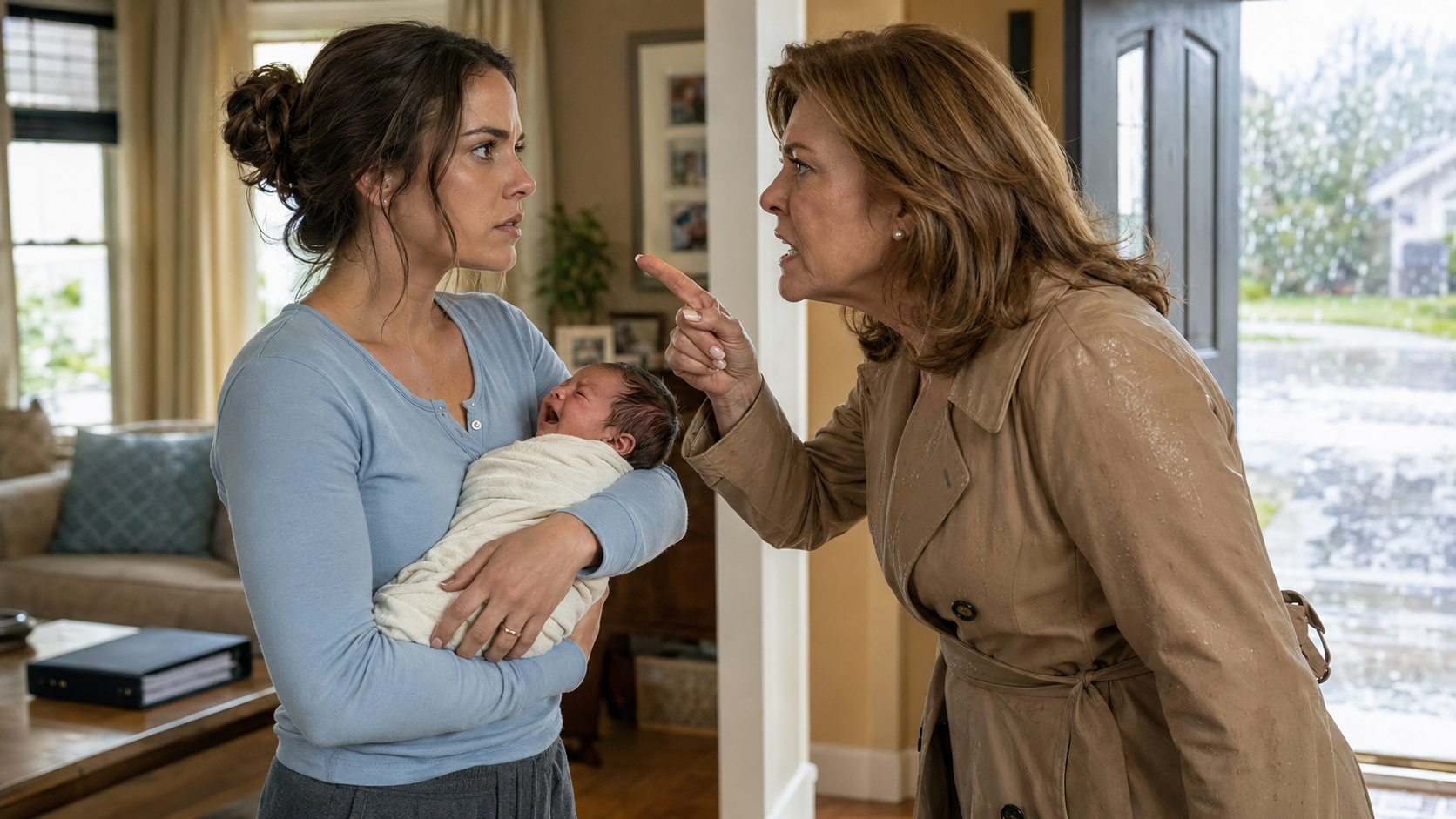
Vanessa Vance, Julian’s younger sister, stood there in cream cashmere, holding a glass of wine.
Her eyes moved over my wet hair and black coat.
“Back from the hospital again?”
Her irritation was immediate.
I stepped inside.
Vanessa sighed dramatically.
“Honestly, Genevieve, your obsession with that kid has made this whole house unbearable.”
That kid.
Her niece.
My hands tightened around the urn.
Vanessa noticed it.
“What’s that?”
I looked at her.
“Your niece.”
She gave a short laugh.
“Don’t be ridiculous.”
“It’s Hazel’s ashes.”
The smile disappeared from her face.
For the first time since I had known Vanessa Vance, she had nothing to say.
I walked past her.
The house smelled of white lilies and expensive candles. Somewhere downstairs, the staff were setting the dining room for dinner.
I climbed the main staircase, crossed the second floor, and continued toward the narrow corridor at the back of the house.
Hazel’s room had originally been beside ours.
That lasted four months.
Julian complained that the oxygen concentrator hummed at night.
Then he complained about the pulse-oximeter alarms.
Then the nurses.
Then Hazel crying after procedures.
Finally, he ordered her crib moved to the rear wing.
“You need rest too,” he told me.
What he meant was that he needed silence.
I opened Hazel’s bedroom door.
The room smelled faintly of baby lotion.
Three stuffed rabbits sat in a row near the window. Her pink blanket was folded at the end of her little bed. A sticker from the cardiology clinic—a smiling yellow star—was still stuck crookedly to the nightstand.
I put the urn inside her empty crib.
My hands lingered on it.
“I brought you home,” I whispered.
That almost broke me.
I sat on the floor.
For three years, Hazel’s illness had reduced my life to numbers.
Oxygen saturation.
Heart rate.
Medication dosages.
Weight.
Insurance limits.
Hospital balances.
And then there were the numbers Julian’s family cared about.
Quarterly dependent allowance.
Household discretionary spending.
Approved medical expenses.
Rejected medical expenses.
Every prescription, specialist consultation, home-care nurse, feeding pump accessory, and emergency clinic fee had to go through the Vance family financial portal.
Julian called it efficiency.
I called it begging.
His executive assistant, Ximena Cruz, controlled the approvals.
She wasn’t cruel by nature. At least, I had never thought so.
But Ximena followed policy with religious devotion.
Three weeks before Hazel died, her cardiologist warned us that her condition was worsening rapidly.
Then came the crisis.
The medication Dr. Shah requested was imported and expensive.
I submitted everything.
Emergency diagnosis.
Prescription.
Specialist report.
Hospital invoice.
Pharmacy quote.
I even attached Hazel’s latest cardiac imaging because I was terrified someone would accuse me of exaggerating.
Four hours later, the portal changed.
REQUEST DENIED.
Reason:
EXCEEDS QUARTERLY DEPENDENT ALLOWANCE.
I called Ximena.
She told me to resubmit it.
I called Julian.
No answer.
I called again.
And again.
Seventeen times over three days.
On the fourth day, I went downtown to his office.
I waited in the lobby for five hours while Hazel remained at the hospital with a nurse.
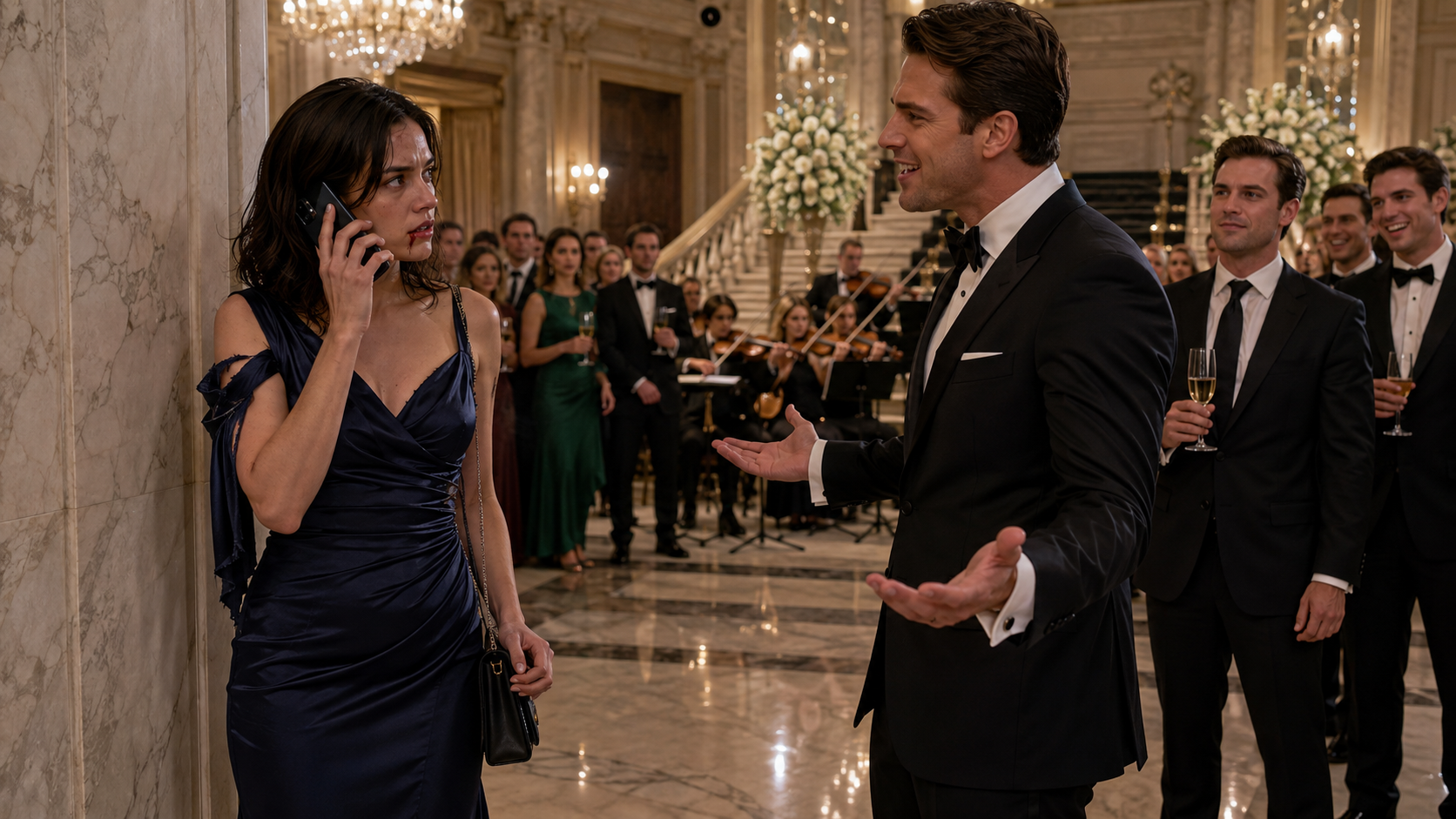
At six forty-seven that evening, the executive elevators opened.
Julian walked out.
Victoria Hayes was holding his arm.
They both stopped when they saw me.
Victoria immediately stepped away.
Julian’s face changed.
Not guilt.
Anger.
He dragged me toward a marble column.
“What are you doing here?”
“Hazel needs the medication.”
“Then talk to Ximena.”
“I did.”
“So handle it with her.”
“She rejected it.”
“You came to my office for that?”
“Our daughter could die.”
His jaw hardened.
“Do not embarrass me at my workplace again.”
I stared at him.
“Julian—”
“If you have money problems, handle them with Ximena.”
Money problems.
The medication cost less than the watch on his wrist.
I went back to the hospital alone.
Dr. Shah paid for one emergency dose himself.
It stabilized Hazel for a few days.
I resubmitted the request.
UNDER REVIEW.
For seven days.
On the seventh morning, Hazel died.
A floorboard creaked outside the room.
I wiped my face and stood.
Voices drifted down the hallway.
Julian had come home.
Victoria Hayes was apparently gone, but Vanessa was with him.
“I don’t understand why everybody keeps treating Genevieve like she’s made of glass,” Vanessa said.
Julian gave a tired laugh.
“Because she makes everything dramatic.”
“What happened at the hospital?”
“Some complication.”
I stopped breathing.
Vanessa lowered her voice.
“And the money?”
“Ximena did the right thing putting the brakes on her.”
My fingers curled around the doorframe.
Julian continued.
“Genevieve thinks she can blow through family money whenever she wants. Every time Hazel gets sick, there’s another ten thousand, twenty thousand, thirty thousand dollars.”
Vanessa made a disgusted sound.
“That child has been sick since birth.”
“Exactly.”
Exactly.
The word went through me like a knife.
I walked silently to the closet.
Behind several garment bags, beneath a box of old work files, was a phone.
Black.
Cheap.
Almost obsolete.
I had not turned it on since the week before my wedding.
My father had given it to me in his study.
At the time, I had been furious with him.
“You don’t trust Julian,” I had said.
“No.”
“He loves me.”
“I hope I’m wrong.”
“You are.”
My father had placed the phone into my hand anyway.
“There is one number saved in it.”
“For what?”
“For the day you need to leave and someone has made sure you believe you can’t.”
I had nearly thrown it back at him.
Instead, I shoved it into a suitcase.
Three years later, I sat beside my daughter’s empty crib and turned it on.
The battery somehow still held a weak charge.
One contact appeared.
MERCER.
Downstairs, Julian laughed.
I dialed.
The call rang once.
A man answered.
“Mercer.”
I swallowed.
“My name is Genevieve Vance.”
Silence.
Then his voice changed.
“Genevieve?”
“Yes.”
Another pause.
“I was beginning to hope you would never call.”
I looked at Hazel’s urn.
“My daughter is dead.”
The silence on the other end lasted longer this time.
When Elijah Mercer spoke again, every trace of softness had vanished.
“Did they deny her medical treatment?”
My eyes lifted.
“How did you know?”
“Because your father knew exactly what kind of family you were marrying into.”
My heart began to pound.
“What did he tell you?”
“Enough to prepare.”
“Prepare what?”
Mercer exhaled slowly.
“A way out.”
I looked toward the hallway where Julian’s voice still echoed through the house.
“And if I don’t just want out?”
Mercer was quiet.
Then he asked, “What do you want?”
For the first time since Hazel died, I knew the answer.
“I want them to understand what they did.”
A few seconds passed.
Then Elijah Mercer said five words that changed everything.
“Then don’t delete a thing.”
PART 2: THE FILE MY FATHER BUILT
I met Elijah Mercer at seven the next morning.
I left before Julian woke up.
Hazel’s urn came with me.
I could not leave her in that house.
Mercer’s office was nothing like Vance Capital.
No marble lobby.
No private elevator.
No assistants carrying tablets behind men in custom suits.
Just an old brick building near the river and a quiet office on the fourth floor.
Mercer himself looked to be in his late fifties. Silver hair. Dark suit. Rimless glasses.
When he saw the urn in my arms, he stood.
He didn’t ask what it was.
He knew.
“I’m sorry,” he said.
Those were the first words anyone connected to my old life had said to me since Hazel died.
My throat closed.
“Thank you.”
He gestured toward the chair opposite his desk.
I sat.
Mercer did not start with legal language.
He did not ask about Julian.
He asked about Hazel.
“What was she like?”
The question almost destroyed me.
I looked down at the urn.
“She hated peas.”
Mercer waited.
“She loved strawberries. And dogs. She called every dog ‘Milo’ because that was the name of the therapy dog at the hospital.”
A smile trembled across my mouth and vanished.
“She knew when nurses were lying about needles.”
Mercer’s expression softened.
“She sounds smart.”
“She was.”
The word came out broken.
“She was so smart.”
For a while, that was enough.
Then Mercer folded his hands.
“Genevieve, I’m going to tell you what your father asked me to do three years ago. Some of it may make you angry.”
“I’ve been angry for three days.”
“No. You’ve been grieving.”
He opened a thick folder.
“This may give you something else to be angry about.”
I stared at it.
My maiden name was printed across the tab.
GENEVIEVE MARSHALL — CONTINGENCY.
My father had always loved that word.
Contingency.
Every risk had one.
Every promise should have one.
Every disaster required one.
He had spent thirty years as an insurance executive, which meant he believed optimism was a luxury other people could afford.
Mercer slid several documents toward me.
“Before your wedding, your father asked me to make sure your personal financial independence could be restored quickly if necessary.”
I frowned.
“I signed the prenuptial agreement.”
“This has nothing to do with your prenup.”
He tapped the folder.
“He was worried Julian would isolate you.”
I almost laughed.
“He did.”
Mercer nodded as though that answer had been expected for years.
“Your father instructed me to maintain records of your premarital accounts, professional credentials, former employment agreements, personal tax filings, and any assets that remained legally yours.”
“So you can help me get divorced.”
“Yes.”
“That destroys Julian’s family?”
“No.”
My eyes narrowed.
Mercer leaned back.
“What destroys the Vance family is what they do when they believe no one can challenge them.”
I said nothing.
“Your father didn’t hire me to invent a case against them,” he continued. “He hired me so that if you ever called, they couldn’t erase you before you had time to protect yourself.”
That sounded painfully like my father.
Mercer turned a legal pad toward me.
“Tell me everything about Hazel’s treatment.”
I did.
Every request.
Every rejection.
Every call.
Every trip downtown.
Every doctor.
Every invoice.
Every humiliating explanation.
Mercer barely interrupted.
When I told him about the emergency medication, his pen stopped.
“You submitted documentation saying delay could be dangerous?”
“Yes.”
“In writing?”
“Yes.”
“The portal still has the request?”
“I think so.”
“Do you have access?”
“Yes.”
“Show me.”
I opened my laptop.
For the first time in years, I looked at the Vance family portal not as a wife begging for approval but as the analyst I used to be.
Dates.
Times.
Authorization chains.
Decision codes.
Escalation notes.
The language was clinical.
That almost made it worse.
MEDICAL REQUEST: PEDIATRIC CARDIAC SUPPORT
PRIORITY: EMERGENCY
INITIAL DECISION: DENIED
REASON: QUARTERLY DEPENDENT ALLOWANCE EXCEEDED
RESUBMISSION: PENDING EXECUTIVE REVIEW
STATUS: UNDER REVIEW
Seven days.
Mercer stared at the screen.
“Download everything.”
I did.
Then I found my call history.
Seventeen unanswered calls to Julian.
Mercer photographed it.
I showed him the email confirming my five-hour visitor registration at Vance Capital.
Then the message Julian sent afterward.
Never come to my office like that again. Use Ximena for household expenses.
Mercer read it twice.
“Household expenses,” he murmured.
“My daughter’s medication.”
“I know.”
My anger sharpened.
“What can we actually do?”
Mercer looked at me.
“That depends on what you want.”
“I told you.”
“No. Last night you told me you wanted them to understand. That’s grief speaking. Today I need Genevieve Marshall, the woman who spent six years calculating catastrophic exposure for corporations, to tell me what outcome she wants.”
I stared at him.
Something inside me shifted.
For three years, everyone in the Vance house had treated me as if I were fragile.
Emotional.
Impractical.
A mother who couldn’t be trusted with money.
But before Julian, companies paid me to identify the exact point at which risk became ruin.
I looked at the documents.
“I want a divorce.”
Mercer nodded.
“I want complete financial separation.”
Another nod.
“I want every record concerning Hazel preserved.”
“Yes.”
“I want everyone who had authority over that request required to explain what they did.”
Mercer stopped writing.
“And Julian?”
I thought about his voice.
Stop making a scene and bring the kid home.
“I want him to say her name.”
Mercer studied me.
Then he closed the folder.
“Good.”
“Good?”
“That means you haven’t lost yourself.”
I looked away.
He continued.
“The first move is boring.”
“I don’t care.”
“You go home.”
My head snapped toward him.
“No.”
“You need access.”
“To what?”
“Your belongings. Hazel’s records. Your employment files. Anything personal they control.”
My stomach turned.
“I’m not leaving her there.”
“You don’t have to.”
He glanced at the urn.
“Hazel stays with you.”
For the next two hours, Mercer and his team copied every document I could access.
Medical submissions.
Emails.
Texts.
Financial restrictions.
Household policies.
Even the monthly reports where Julian’s family office categorized Hazel’s nursing care beside landscaping and wine storage under residential expenditures.
By noon, I felt sick.
But I also felt awake.
Before I left, Mercer stopped me.
“One more thing.”
He gave me a sealed envelope.
“What is this?”
“Something your father wrote three years ago.”
I didn’t open it.
“Did he know this would happen?”
“No.”
“Then why prepare all this?”
Mercer’s expression tightened.
“Because he watched you give up your apartment, your accounts, then your career within five months of marrying Julian.”
“I chose to leave work because Hazel was sick.”
“I know.”
“Julian didn’t force me.”
“No.”
Mercer leaned forward.
“But good control doesn’t begin with force, Genevieve. It begins by making every surrender feel reasonable.”
That followed me all the way home.
Julian was waiting in the library.
He looked annoyed.
Not devastated.
Not confused.
Annoyed.
“Where were you?”
I placed my purse on the table.
“Out.”
His eyes dropped to the urn in my arms.
For the first time, I saw recognition.
“What is that?”
I didn’t answer.
His face changed.
“Genevieve.”
I carefully set Hazel on the table.
Julian stared.
“No.”
“Yes.”
He looked at me.
Then at the urn.
Then back at me.
“When?”
“Three days ago.”
His face went white.
For one second, I thought I saw grief.
Then came anger.
“Three days?”
“Yes.”
“You didn’t tell me?”
I almost laughed.
“I called you seventeen times.”
“That doesn’t mean—”
“I came to your office.”
His mouth closed.
“You told me not to embarrass you.”
Julian stared at me.
“You should have said it was that serious.”
“I said she could die.”
“You always said that.”
The room became very still.
Julian seemed to hear himself.
I stepped closer.
“What did you just say?”
He rubbed his forehead.
“That’s not what I meant.”
“No. Say it again.”
“Genevieve—”
“You always thought I was exaggerating.”
“I thought the doctors always gave worst-case scenarios.”
“You thought I wanted money.”
His eyes shifted.
“I thought you were panicking.”
“My daughter was dying.”
“Our daughter.”
“No.”
He flinched.
I had never spoken to him like that.
I pointed to the urn.
“She stopped being yours when keeping her alive became an inconvenience.”
His expression hardened.
“Don’t do this.”
“Do what?”
“Turn a tragedy into an accusation.”
My grief went cold.
A tragedy.
An unfortunate event.
An act of God.
Anything except a chain of choices.
Julian walked toward the bar and poured himself whiskey with a shaking hand.
“I authorized the payment.”
“When?”
“Yesterday.”
Hazel had already been dead for two days.
I stared at him.
“Yesterday?”
He looked down.
I understood.
“You never opened the emergency request until yesterday.”
Silence.
“Julian.”
“I was busy.”
A strange sound left my throat.
Not a sob.
Not laughter.
Something between the two.
He took a drink.
“Look, I know you’re upset—”
“Upset?”
“You’re not thinking clearly.”
There it was.
The phrase every Vance used whenever I resisted.
I wasn’t thinking clearly.
I was emotional.
I was dramatic.
I was exhausted.
I was irrational.
Julian stepped closer.
“We need to handle this privately.”
I looked at him.
“Why?”
His eyes sharpened.
“What?”
“Why privately?”
“This is our daughter.”
“Three days ago she was my money problem.”
“That’s unfair.”
“So was letting her die while you ate dinner with Victoria.”
Julian froze.
That was enough.
I had spent months wondering.
I no longer needed to.
“Genevieve—”
“I’m filing for divorce.”
His shock lasted less than a second.
Then he laughed.
“You’re grieving.”
“I know.”
“You don’t mean that.”
“I do.”
“You have no income.”
“I know.”
“You haven’t worked in three years.”
“I know.”
“You don’t even have independent access to most of your accounts.”
I looked at him.
“I know.”
The more he spoke, the calmer I became.
Because every sentence proved Mercer right.
Julian stepped closer.
“Think about what you’re doing.”
“I finally am.”
His face tightened.
Then he said the one thing that made everything afterward inevitable.
“If you try to turn Hazel’s death against this family, Genevieve, I will make sure everyone understands what kind of mother you really were.”
My blood went cold.
“What does that mean?”
He didn’t answer.
He didn’t need to.
The threat was clear.
He would blame me.
And he believed I was still too frightened to stop him.
I picked up Hazel’s urn.
As I walked past him, Julian called after me.
“Where are you going?”
I stopped at the doorway.
“Somewhere you can’t set my spending limit.”
Then I left the Vance estate for the last time.
But before my car reached the gates, my phone began ringing.
Ximena.
I watched her name flash across the screen.
Once.
Twice.
Three times.
Finally, I answered.
Her voice was barely above a whisper.
“Mrs. Vance?”
“Yes.”
“I heard about Hazel.”
I closed my eyes.
“I’m sorry.”
“Thank you.”
She inhaled shakily.
Then she said, “There’s something you need to know about that final request.”
PART 3: UNDER REVIEW
I wanted Ximena to tell me Julian had ordered the denial.
That would have been easier.
Cleaner.
I wanted one villain.
One instruction.
One moment I could point to and say, There. That killed my daughter.
Life rarely gives grief that kind of simplicity.
“I rejected the first request,” Ximena said.
We met in a coffee shop forty minutes from Julian’s office because she refused to speak anywhere near Vance Capital.
She had removed her company badge.
I had never seen her without it.
“I know,” I said.
She stared at her coffee.
“I followed the spending threshold.”
“Why?”
Her eyes lifted.
“Because that was my job.”
“My daughter was dying.”
“I know that now.”
“You knew then. The diagnosis was attached.”
She flinched.
“I read the summary.”
“Then you knew.”
“I knew it was serious.”
My hands shook beneath the table.
I wanted to scream at her.
Instead, I asked the question Mercer had taught me to ask that morning.
“What happened after I resubmitted it?”
Ximena swallowed.
“It escalated automatically.”
“To whom?”
“Mr. Vance.”
“Julian.”
“Yes.”
My heart pounded.
“You sent it to him?”
“The system did. I also flagged it manually.”
“When?”
She gave me the date.
The same day Dr. Shah paid for Hazel’s emergency dose.
Three days before I went to Julian’s office.
“He had it before I came downtown.”
“Yes.”
I stared at her.
“Did he open it?”
Ximena hesitated.
“You can see whether an executive opens a request?”
“Yes.”
“Did he?”
“Not until after you confronted him in the lobby.”
My throat tightened.
“And after he opened it?”
“He didn’t approve it.”
“Why?”
“He marked it for secondary review.”
I stared.
“For what?”
“Cost verification.”
The words were so absurd I nearly laughed.
“The prescription came from a hospital.”
“I know.”
“The pharmacy quote was attached.”
“I know.”
“The cardiologist signed it.”
“I know.”
My chair scraped backward.
I stood.
Ximena looked terrified.
“I’m sorry.”
I pressed both hands against the table.
The café blurred around me.
A mother nearby was cutting a muffin into small pieces for her toddler.
I stared at them until I could breathe again.
Then I sat.
“What happened next?”
“Secondary review meant it returned to family administration.”
“To you.”
“Yes.”
“And you left it under review.”
Her face crumpled.
“Yes.”
“For a week.”
“Yes.”
“Why?”
“Because I was waiting for Julian.”
“You just said it came back to you.”
“I could process routine expenses. Anything above the threshold still needed executive authorization.”
“So everyone waited for everyone else.”
Ximena nodded.
“And Hazel waited too.”
Tears filled her eyes.
“I am sorry.”
For a second, I hated her.
Then I saw what she really was.
Not innocent.
But not powerful either.
A woman who had spent years becoming excellent at obedience.
Like me.
The difference was that her obedience had reached my daughter.
“Why are you telling me this?”
“Because yesterday Julian called me into his office.”
My stomach tightened.
“What did he say?”
“He told me to prepare a summary showing that you repeatedly delayed submission of medical expenses and failed to follow proper procedures.”
I went completely still.
“That’s false.”
“I know.”
“He wants to blame me.”
Ximena looked ashamed.
“Yes.”
The grief inside me became something harder.
“What did you tell him?”
“That the timestamps wouldn’t support it.”
“And?”
“He told me timestamps can be contextualized.”
Of course they could.
The Vances had contextualized everything.
Infidelity became networking.
Control became efficiency.
Neglect became fiscal responsibility.
A dead child became tragedy.
I took out my phone.
“Will you tell my attorney this?”
Ximena went pale.
“I could lose my job.”
“You might.”
She looked away.
I understood her fear.
Mortgage.
Career.
Reputation.
Health insurance.
People like Julian rarely controlled others with chains.
They controlled them by attaching obedience to survival.
“I’m not asking you to lie,” I said.
She looked back at me.
“I’m asking you whether you’ll tell the truth.”
Ximena closed her eyes.
When she opened them, she nodded.
“Yes.”
That afternoon, Mercer listened to her account.
He never celebrated.
That mattered to me.
Hazel was dead.
Nothing we discovered could turn this into a victory.
But the shape of what happened was becoming clearer.
There had been no single dramatic command to let Hazel die.
There had been something uglier.
Indifference.
A system designed to protect money first.
A husband who believed his wife exaggerated.
An assistant who believed procedure protected her from responsibility.
A family that had grown so accustomed to controlling every dollar that it no longer recognized the difference between limiting luxury and delaying medicine.
And then, after Hazel died, Julian had tried to rewrite the record.
Mercer closed his notebook.
“We file today.”
The divorce petition came first.
Then requests to preserve electronic records.
Then formal notice that all documents connected to Hazel’s medical expenses were relevant to pending civil claims.
Mercer also notified Julian’s personal counsel.
By six o’clock, the Vance family knew I was no longer asking permission.
At six seventeen, Vanessa called.
I ignored her.
At six nineteen, Julian called.
I ignored him.
At six thirty-two, Julian called from another number.
I answered.
“What the hell are you doing?”
His voice shook with rage.
“Leaving you.”
“You brought lawyers into Hazel’s death?”
“You brought budgets into Hazel’s death.”
“That is not the same thing.”
“It became the same thing when she needed medication.”
“You’re trying to destroy me.”
I looked around the small furnished apartment Mercer had arranged.
Hazel’s urn rested beside the window.
“No, Julian. I’m asking questions.”
“You know what this will do to my family?”
There it was.
His family.
Always his family.
I stared at the rain moving down the glass.
“Do you know what your family did to mine?”
Silence.
Then his voice dropped.
“If you go public with this, you’ll regret it.”
“I haven’t gone public.”
“You think filings stay private forever?”
“That sounds like something you should have considered before threatening to lie about me.”
He inhaled sharply.
“Ximena talked to you.”
I said nothing.
Julian swore.
Then the line went dead.
Mercer warned me the retaliation would come quickly.
He was right.
By morning, Julian’s lawyers had sent a letter describing me as emotionally unstable and alleging that my grief made me incapable of accurately recalling Hazel’s final week.
I read the sentence three times.
Then I laughed.
Mercer watched me.
“What?”
“They’re doing exactly what they always did.”
“What’s that?”
“Explaining me to myself.”
I took out a pen.
“Let’s answer them.”
For the first time in years, I worked like an analyst again.
I built the timeline myself.
Not emotionally.
Precisely.
Day one: emergency prescription issued.
11:08 a.m.: request submitted.
3:22 p.m.: rejected.
3:31 p.m.: call to Ximena.
3:46 p.m.: resubmitted.
4:02 p.m.: escalated.
Day two: calls to Julian.
Day three: more calls.
Day four: Dr. Shah purchased emergency dose.
Day five: I appeared at Vance Capital.
6:47 p.m.: Julian exited elevator.
7:12 p.m.: Julian accessed request.
7:19 p.m.: request moved to secondary review.
Days six through twelve: no authorization.
Day twelve: Hazel died at 8:14 a.m.
Day fourteen: Julian approved payment.
The numbers did not cry.
They did not exaggerate.
They did not panic.
They simply existed.
When I finished, Mercer stared at the spreadsheet.
“Your father said you were good.”
“I used to be.”
“No.”
He slid it back to me.
“You still are.”
Something in my chest hurt.
Not grief exactly.
Memory.
The memory of the woman I had been before every decision required permission.
The Vances responded to the timeline by becoming more aggressive.
Vanessa sent me a message.
You’re sick. Using Hazel against Julian is disgusting.
I stared at it for a long time.
Then I typed:
What date did Hazel die?
The typing bubbles appeared.
Stopped.
Appeared again.
Finally:
Don’t play games.
I replied:
Tell me the date.
She never answered.
Victoria Hayes disappeared from Julian’s public life within a week.
Her social-media photographs with him vanished.
So did the restaurant sightings.
Apparently, an affair was romantic only while the married man involved remained useful.
Julian became increasingly desperate.
He sent flowers.
Then apologies.
Then threats.
Then flowers again.
One night he left a voicemail at 2:13 a.m.
His voice sounded drunk.
“I loved her too.”
I listened once.
Then deleted nothing.
Mercer had been very clear.
Preserve everything.
Two weeks later, Julian requested a private meeting.
I refused.
He requested another.
I refused again.
Then Mercer called.
“You may want to accept the third one.”
“Why?”
“Because this time his father will be there.”
Arthur Vance.
Patriarch of the family.
Chairman of Vance Capital.
The man who had barely spoken to Hazel except to complain when a nurse parked in the circular driveway.
“What do they want?”
Mercer paused.
“They want to offer you money.”
I looked at Hazel’s urn.
“How much?”
“Enough that they think you’ll forget what question you were asking.”
“And if I don’t?”
Mercer’s voice hardened.
“Then they’re about to discover your price was never the problem.”
PART 4: SAY HER NAME
Arthur Vance offered me eight million dollars to disappear quietly.
He did it over lunch.
Not because he was hungry.
Because men like Arthur Vance believed bad news became respectable when delivered over white linen.
The meeting took place in a private dining room at a downtown club where Julian’s family had held memberships for generations.
Mercer sat beside me.
Julian sat across from me.
Arthur sat at the head of the table.
No one ordered food.
Arthur looked older than I remembered.
Not weaker.
Just older.
“Genevieve,” he began, “none of us wanted this.”
I looked at him.
“Wanted what?”
His jaw tightened.
“Hazel’s passing.”
“Death.”
Julian looked down.
Arthur continued.
“This has become needlessly adversarial.”
“My daughter is dead.”
“And nothing can change that.”
I felt Mercer shift beside me.
A warning.
Not to react.
So I didn’t.
Arthur opened a folder.
“We are prepared to resolve the divorce generously.”
“How generously?”
“Eight million dollars. A residence of your choosing. Continued health coverage for a defined period.”
I almost smiled.
“You make it sound like a severance package.”
Arthur ignored that.
“In return, both parties agree not to make public statements concerning private family matters.”
There it was.
The real price.
Not eight million for my marriage.
Eight million for my silence.
I looked at Julian.
He had barely met my eyes since I entered the room.
“Do you agree with this?”
He glanced at his father.
Then at me.
“Yes.”
“You want to pay me not to talk about Hazel?”
“That’s not what this is.”
“What is it?”
“Ending unnecessary damage.”
I leaned forward.
“Who is being damaged?”
Julian’s face tightened.
“Everyone.”
“No.”
I shook my head.
“Hazel is beyond damage.”
Silence.
Arthur’s voice became colder.
“This family employs thousands of people.”
“And?”
“There are consequences when private accusations become public spectacle.”
I understood then.
Not one of them had come to talk about what happened.
They had come to discuss exposure.
Reputation.
Shareholders.
Employees.
Contracts.
Consequences.
Everything except a three-year-old girl.
I closed the folder without touching the offer.
“No.”
Arthur stared at me.
“Think carefully.”
“I have.”
“You are walking away from financial security.”
The old Genevieve might have flinched.
The woman who had checked a portal before buying prescription formula.
The woman who had believed not earning money meant she had no right to it.
But I had spent the last two weeks rebuilding my professional credentials. Two former colleagues had already offered consulting work once they learned I was returning.
I was not wealthy like the Vances.
But I could survive.
That was enough.
“I had financial security in your house,” I said. “My daughter still died waiting for approval.”
Arthur’s expression shifted.
For the first time, I hit something.
“Genevieve—”
“No.”
I looked at Julian.
“I want one answer.”
He stiffened.
“When I came to your office, I told you Hazel could die. Why didn’t you approve the request?”
His mouth opened.
Closed.
Arthur interrupted.
“This is not productive.”
“I asked Julian.”
Julian rubbed his hands together beneath the table.
“I thought the request was being handled.”
“You opened it.”
“Yes.”
“You sent it to secondary review.”
“I had questions about the amount.”
“The amount was eighteen thousand four hundred dollars.”
He said nothing.
“The dinner you had with Victoria that night was charged to your corporate entertainment account for four thousand six hundred.”
Arthur’s eyes turned sharply toward his son.
I continued.
“You spent one-quarter of Hazel’s medication cost on dinner.”
“That’s not fair.”
“There’s that word again.”
Julian’s eyes reddened.
“I didn’t know she would die.”
Neither of us moved.
Finally.
The sentence I had been waiting for.
Not the doctors failed.
Not you didn’t tell me.
Not the system failed.
He didn’t know.
Because he had not cared enough to find out.
I swallowed.
“You knew she might.”
Julian looked away.
“That’s not the same thing.”
“It was to her.”
His face twisted.
“I loved Hazel.”
“Then say her name.”
“What?”
“Say her name.”
“I just did.”
“No. Say who she was.”
Arthur stood.
“This meeting is over.”
I didn’t look at him.
I kept my eyes on Julian.
“Tell me one thing she loved.”
He stared at me.
“One food.”
Silence.
“One toy.”
His breathing changed.
“One song.”
Nothing.
“One thing that made her laugh.”
“Stop.”
“One thing she was afraid of.”
“Genevieve.”
“Her favorite animal.”
“Stop it.”
“Her middle name.”
Julian went completely still.
That was when I knew.
I had given Hazel the middle name Rose after my grandmother.
Julian had signed the birth certificate.
Three years later, he could not remember.
“Her middle name,” I repeated.
His face collapsed.
“I don’t—”
I stood.
Arthur said something.
Mercer touched my arm.
I heard neither of them clearly.
I looked at the man I had married.
The man I had once believed would be the safest place in the world for our child.
“I spent three years thinking you were a bad father because Hazel’s illness frightened you.”
Julian’s eyes filled.
“I defended you to myself. I told myself you worked too much because you couldn’t handle hospitals. I told myself you hated the machines because they reminded you she was sick.”
My voice trembled now.
“But you weren’t afraid.”
“Genevieve—”
“You were inconvenienced.”
He flinched.
And for the first time since Hazel’s death, I allowed myself to cry in front of him.
Not loudly.
Not dramatically.
Just tears I no longer cared to hide.
“She loved strawberries,” I said. “She called every dog Milo. She hated peas. She was afraid of the automatic toilet in the hospital bathroom because it flushed too loudly. Her middle name was Rose.”
Julian covered his face.
I picked up my purse.
Arthur blocked my path.
“You need to understand what happens if you continue.”
I looked at him.
“No. You do.”
His eyes narrowed.
“I am not asking for your money. I am not asking for your house. I am not asking you to like me.”
I glanced around the private room.
“I’m asking you to live with the record.”
Then I walked out.
The record became impossible to contain.
I did not leak photographs.
I did not give interviews.
I did not stand outside Vance Capital with cameras.
I simply refused to sign away my right to speak.
Court filings became known.
Questions followed.
Why did a wealthy family require approval for emergency pediatric care?
Why had an emergency request remained pending for seven days?
Why had payment been authorized after the child was already dead?
Why was the family now trying to characterize the mother as unstable?
Vance Capital’s board announced an internal review.
That frightened Arthur more than anything I could have said publicly.
Julian was placed on temporary leave.
Vanessa resigned from the charitable foundation where she served on the board after reporters discovered her message calling my grief “disgusting.”
Ximena testified truthfully.
She lost her position.
I helped Mercer connect her with an employment attorney.
I did not forgive her.
But forgiveness and fairness were not the same thing.
Dr. Shah gave his statement too.
He was careful.
He never claimed one dose would definitely have saved Hazel.
Neither did I.
That mattered.
I would not turn my daughter into a lie simply because Julian had.
The medication might not have saved her.
Her heart defect was severe.
I had always known that.
But it had been prescribed because it could have stabilized her and bought time.
She deserved that chance.
That was the wound.
Not certainty stolen.
A chance stolen.
Three months after Hazel died, Julian came to my apartment alone.
I almost didn’t open the door.
Then I saw what he carried.
Hazel’s stuffed rabbit.
The yellow one.
I let him in.
He looked thinner.
Older.
There were no photographers.
No lawyers.
No Arthur.
No Victoria Hayes.
Just Julian.
He held the rabbit awkwardly.
“I found this under her crib.”
I took it.
“Thank you.”
His eyes moved to the urn.
“Can I sit?”
I nodded.
For almost a minute, neither of us spoke.
Then he said, “Hazel Rose Vance.”
I closed my eyes.
He remembered now.
Too late.
He looked at the floor.
“I keep thinking about the lobby.”
“So do I.”
“You told me.”
“Yes.”
“I thought…”
His voice broke.
I waited.
“I thought there would always be another emergency.”
That sentence hurt more than an excuse would have.
Because I understood it.
Hazel had survived so much.
Surgeries.
Infections.
Ambulances.
Nights when doctors warned us she might not make it.
Each time, she had.
Julian had mistaken survival for inevitability.
“I thought you’d handle it,” he whispered.
“I tried.”
“I know.”
“No.”
I looked at him.
“You know now.”
He started crying.
For three years, I had imagined what it would feel like if Julian finally understood.
I thought I would feel satisfaction.
I didn’t.
I felt tired.
“I’m sorry,” he said.
I stared at him.
“That doesn’t fix anything.”
“I know.”
“It doesn’t bring her back.”
“I know.”
“It doesn’t make us married again.”
His face tightened.
“I know.”
For once, he did.
Julian stood.
At the door, he hesitated.
“Did she ask about me?”
I could have punished him.
Part of me wanted to.
Instead, I gave him the truth.
“The night before she died.”
He turned.
“What did she say?”
I gripped the rabbit.
“She asked if Daddy was working.”
Julian’s face crumpled.
I watched him leave.
That was the last private conversation we ever had.
A week later, the board removed him permanently.
And Arthur Vance finally called Mercer with a different kind of offer.
Not for silence.
For settlement.
This time, I was ready to listen.
PART 5: THE NUMBER I KEPT
The divorce became final eleven months after Hazel died.
I did not take eight million dollars.
I took what I was legally entitled to, nothing more, and insisted that the civil settlement concerning Hazel remain separate from the marriage.
The Vances fought that distinction for months.
They wanted everything wrapped together.
Money exchanged.
Confidentiality signed.
Door closed.
Mercer refused.
So did I.
Eventually, they stopped fighting.
Not because they became better people.
Because consequences are expensive.
Julian lost his executive position.
Arthur remained chairman for several more months before announcing his retirement.
Vanessa disappeared from the society pages she had once treated as proof of existence.
Vance Capital survived.
Families like that often do.
I had learned something important about destruction.
It rarely looks like buildings collapsing.
Sometimes destruction is quieter.
A name removed from an office door.
A board seat lost.
Friends who stop answering.
A father who can no longer protect his son from himself.
A family forced to hear questions it once believed money could silence.
Their fortune did not disappear.
Their certainty did.
That was enough for me.
Ximena eventually found another job.
Before starting it, she mailed me a handwritten letter.
She did not ask for forgiveness.
She wrote:
I used to believe following procedure meant I wasn’t responsible for the outcome. Hazel taught me that sometimes procedure is the decision.
I kept the letter.
Dr. Shah refused repayment for the dose he had purchased.
So I donated the same amount to the hospital’s family emergency fund.
Then I donated more.
Not Vance money.
Mine.
I returned to actuarial consulting six months after Hazel’s death.
The first morning I walked into an office again, my hands shook inside the elevator.
For three years, I had been told—in small ways, polite ways, expensive ways—that I no longer understood money.
I sat at a conference table across from six executives and explained catastrophic-loss probability for forty-five minutes without looking at my notes.
When I finished, the chief financial officer stared at me.
“That was exceptionally clear.”
I nearly laughed.
Clear.
I used to be good at clear.
Afterward, I locked myself in a bathroom stall and cried for ten minutes.
Then I washed my face and went back to work.
Grief did not leave.
That surprised me.
I had somehow imagined justice would make it lighter.
It didn’t.
Justice and grief occupied different rooms.
Winning one did not evict the other.
I still woke sometimes at 3:00 a.m. convinced I heard Hazel’s monitor.
I still reached for strawberry yogurt at the grocery store.
I still hated spring because the first warm days reminded me of pushing her stroller along the lake.
I still kept the white urn in my bedroom.
But slowly, memories stopped arriving only as wounds.
One afternoon I remembered Hazel laughing when Milo, the hospital therapy dog, stole a cracker from her hand.
I smiled before I cried.
That felt like progress.
A year after the divorce, Mercer called me.
Not the emergency phone.
My regular number.
“I have something for you.”
I met him in the same office where I had first carried Hazel’s ashes.
The contingency folder was thinner now.
Most of its purpose had been fulfilled.
Mercer placed the sealed envelope from my father on the desk.
I had never opened it.
“You ready?” he asked.
“I think so.”
I broke the seal.
My father’s handwriting covered a single page.
Gen,
If you are reading this, something happened that made you believe you needed the phone. I hope I was wrong about Julian. I hope you are angry with me for preparing this for nothing.
My vision blurred.
I kept reading.
But if I was right, remember something you knew long before you met him: dependence and love are not the same thing. Trust and surrender are not the same thing. A person who loves you may ask for compromise. They should never require your helplessness.
I pressed my lips together.
You are smarter than anyone can make you forget.
That line broke me.
I covered my face.
Mercer quietly left the room.
I cried for my daughter.
For my marriage.
For the three years I had reduced myself because I thought endurance was part of being loyal.
For every woman who had ever been told control was care.
And for the father I had dismissed because love had made me arrogant enough to believe warnings were insults.
At the bottom of the page, he had written:
If you ever make the call, don’t use what I prepared for revenge. Use it to become free. After that, let the truth decide what happens to everyone else.
I read that sentence four times.
Then I laughed through my tears.
My father had known me too well.
“Damn you, Dad,” I whispered.
Mercer came back eventually.
“He always did enjoy being right.”
“I hated that.”
“So did everyone.”
I folded the letter.
“What happens to the old phone?”
“Nothing. It’s yours.”
I looked at the black device sitting beside the file.
A ridiculous little phone.
For three years it had lived behind dresses in a closet.
Julian had never known it existed.
Vanessa had never known.
Arthur had never known.
But it had held the one number they could not control.
Not a magical number.
Not a number that summoned revenge.
A number connecting me to someone who remembered who I had been before the Vances taught me to ask permission.
I took it home.
That evening, I drove to the lake.
The wind was strong and the water dark blue beneath a pale autumn sky.
Hazel’s urn sat beside me.
For months I had been unable to decide what to do with her ashes.
Part of me wanted to keep her forever.
Another part knew Hazel had spent too much of her short life indoors.
Hospitals.
Bedrooms.
Waiting rooms.
Her happiest days had been outside.
She loved the lake.
Especially the birds.
I walked down toward the water and sat on a bench.
The urn rested in my lap.
“I’m sorry,” I whispered.
The wind carried the words away.
“I’m sorry I couldn’t save you.”
That was the sentence I had been avoiding for more than a year.
My throat closed.
“I tried, baby.”
I touched the lid.
“I really tried.”
A gull cried overhead.
I closed my eyes.
For so long, I had needed someone to tell me whether I had done enough.
Julian.
Doctors.
Lawyers.
My father.
A judge.
Anyone.
But there was only one person who had been there for every night, every alarm, every appointment, every needle, every terrifying number on every hospital monitor.
Me.
I knew what I had done.
I had stayed.
I had fought.
I had called seventeen times.
I had waited five hours in a lobby.
I had begged.
I had demanded.
I had kept trying until Hazel’s heart stopped.
The failure belonged to many people.
But loving her had never been mine.
I opened the urn.
The wind lifted strands of hair across my face.
“Remember Milo?” I whispered.
I laughed softly.
“You called every dog Milo.”
My hands trembled.
Then, slowly, I let some of Hazel go.
The wind carried her toward the water.
I cried.
Not the controlled tears I had shown Julian.
Not the silent tears I had hidden in hospital bathrooms.
I cried loudly.
Ugly.
Completely.
When it was over, I sat watching the lake until the sky turned gold.
I did not scatter everything.
Some people told me later that grief required letting go.
I never believed that.
I did not want to let Hazel go.
I wanted to learn how to carry her without disappearing beneath the weight.
So I kept a small portion of her ashes.
The white urn came home with me.
So did the old phone.
Years later, both still sit on the same shelf.
The Vances are no longer part of my life.
Sometimes their name appears in the financial news.
I feel almost nothing when I see it.
Julian never remarried while I was paying attention, though eventually I stopped paying attention.
Once every year, on Hazel’s birthday, he makes a donation to the hospital cardiac program.
He never contacts me about it.
I never thank him.
Some things do not need reconciliation to have meaning.
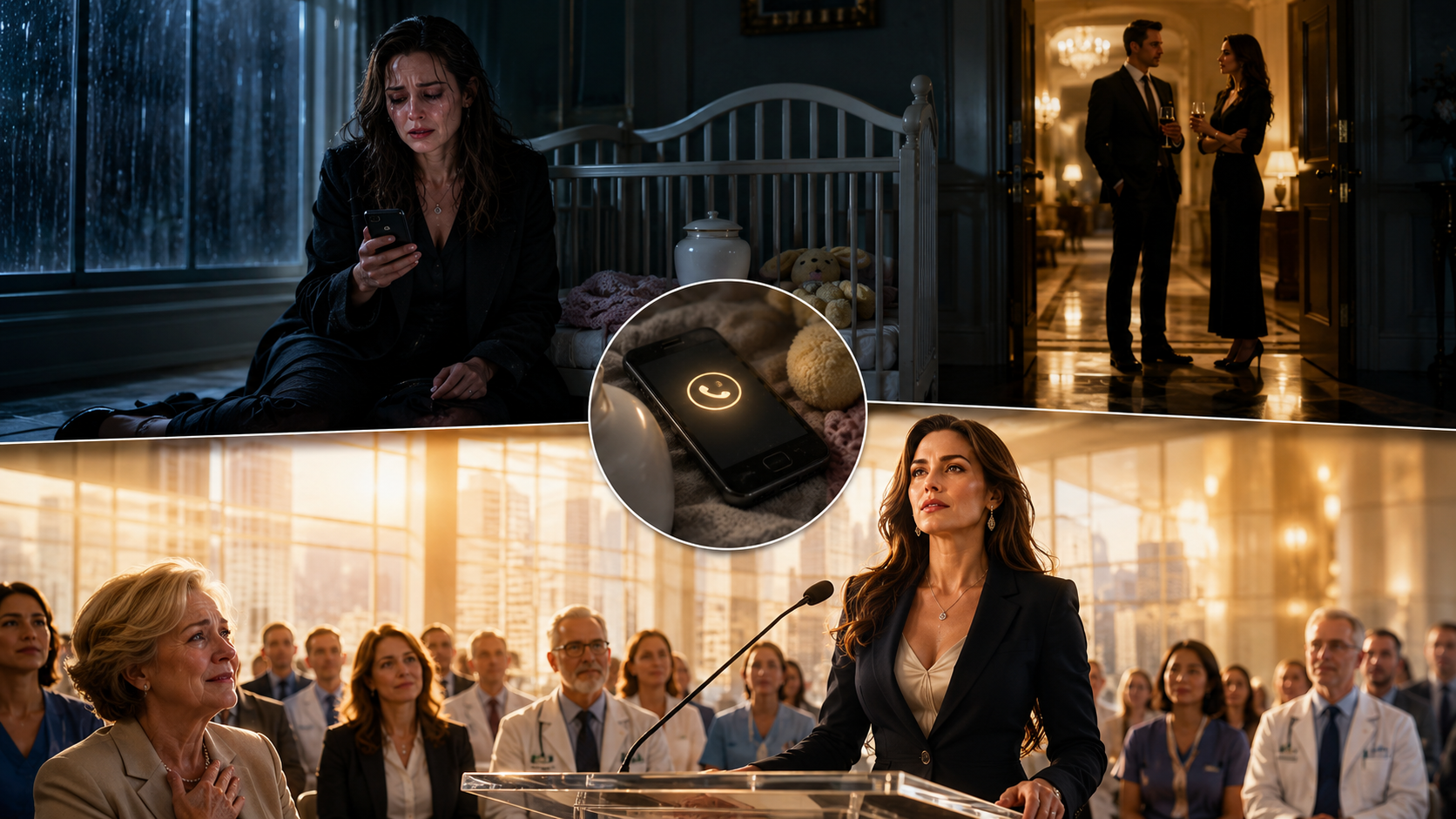
On the fifth anniversary of Hazel’s death, I stood before a room filled with hospital administrators, social workers, physicians, and financial counselors.
The emergency fund I had first supported had expanded.
Its purpose was simple.
When a critically ill child needed treatment, no parent should lose hours waiting for someone with no medical training to decide whether saving that child fit inside a quarterly budget.
I did not name Julian.
I did not name Vanessa.
I did not name Arthur.
I told them about Hazel.
“My daughter was three,” I said.
The room became quiet.
“She loved strawberries. She hated peas. She was afraid of automatic toilets. She called every dog Milo.”
A few people smiled.
I did too.
“And her middle name was Rose.”
My voice trembled.
But it did not break.
“For a long time, Hazel existed in documents as a cost. A dependent. A medical claim. A balance. A request.”
I looked across the room.
“But she was never a number.”
Afterward, an older woman approached me.
She took both my hands.
“My grandson had heart surgery last month,” she said. “This fund paid for medication while the insurance company was still reviewing it.”
I couldn’t speak.
She squeezed my fingers.
“Thank you.”
I went to my car and cried.
Not because the pain had returned.
Because, for one small moment, the pain had gone somewhere useful.
That night I came home and stood before the shelf in my bedroom.
Hazel’s photograph.
Her yellow rabbit.
The white urn.
And the old black phone.
I picked up the phone and turned it over in my hand.
Once, it had represented my father’s distrust of my marriage.
Then it became an escape route.
Then a weapon, at least in my mind.
Eventually, I understood what it really was.
A reminder.
No one can rescue the version of you that you are unwilling to remember.
Mercer had not destroyed the Vances.
My father had not destroyed them.
I had not destroyed them.
They had built a system where money mattered more than people, obedience mattered more than judgment, and appearances mattered more than truth.
I had simply stopped protecting that system.
I placed the phone back beside Hazel.
For years, I had imagined the defining moment of my life would be my wedding.
Then Hazel’s birth.
Then her death.
I was wrong every time.
The moment that changed me was smaller.
I was sitting on the floor beside an empty crib.
My daughter was inside a white urn.
My husband was downstairs complaining about how much she had cost him.
And I picked up an old phone.
I dialed one number.
Not because I knew what would happen.
Not because I was fearless.
Not because I wanted revenge.
I dialed because, for the first time in three years, I understood that nobody in that house was coming to save me.
So I decided to save myself.
And when the truth finally came for the Vance family, I did not have to destroy them.
I only had to stop standing between them and what they had done.