
Category: Entertainment

  • THE NIGHT MY HUSBAND TOLD ME TO STAY QUIET

    THE NIGHT MY HUSBAND TOLD ME TO STAY QUIET

    He Thought I Was Nobody—Until I Called the CEO “Dad”

    PART 1: THE GLASS OF CHAMPAGNE

    “Don’t make a scene, Valeria. It’s just a bag. Apologize to Renata and stop ruining my night.”

    For a few seconds, I honestly thought I had misheard my husband.

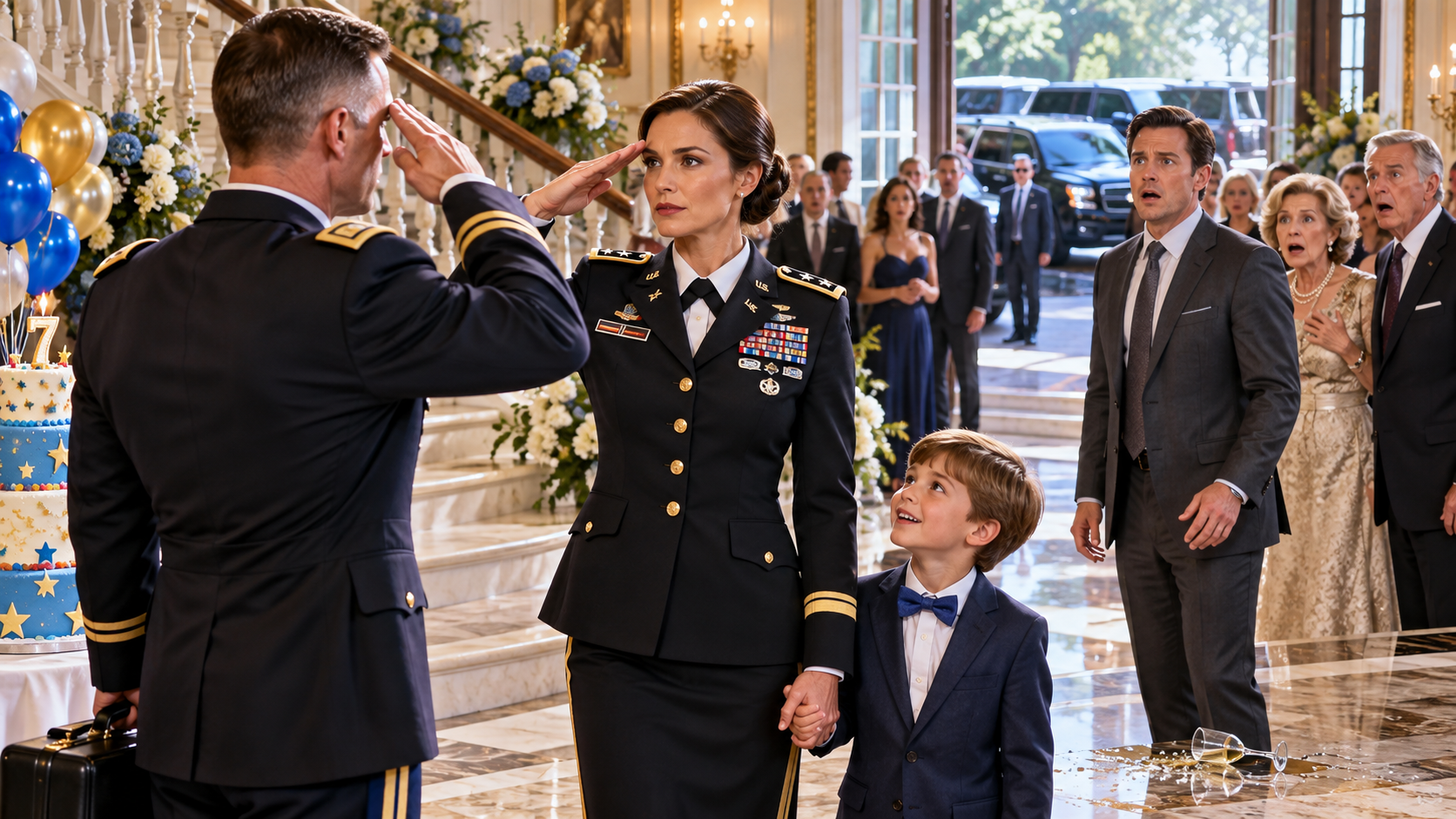
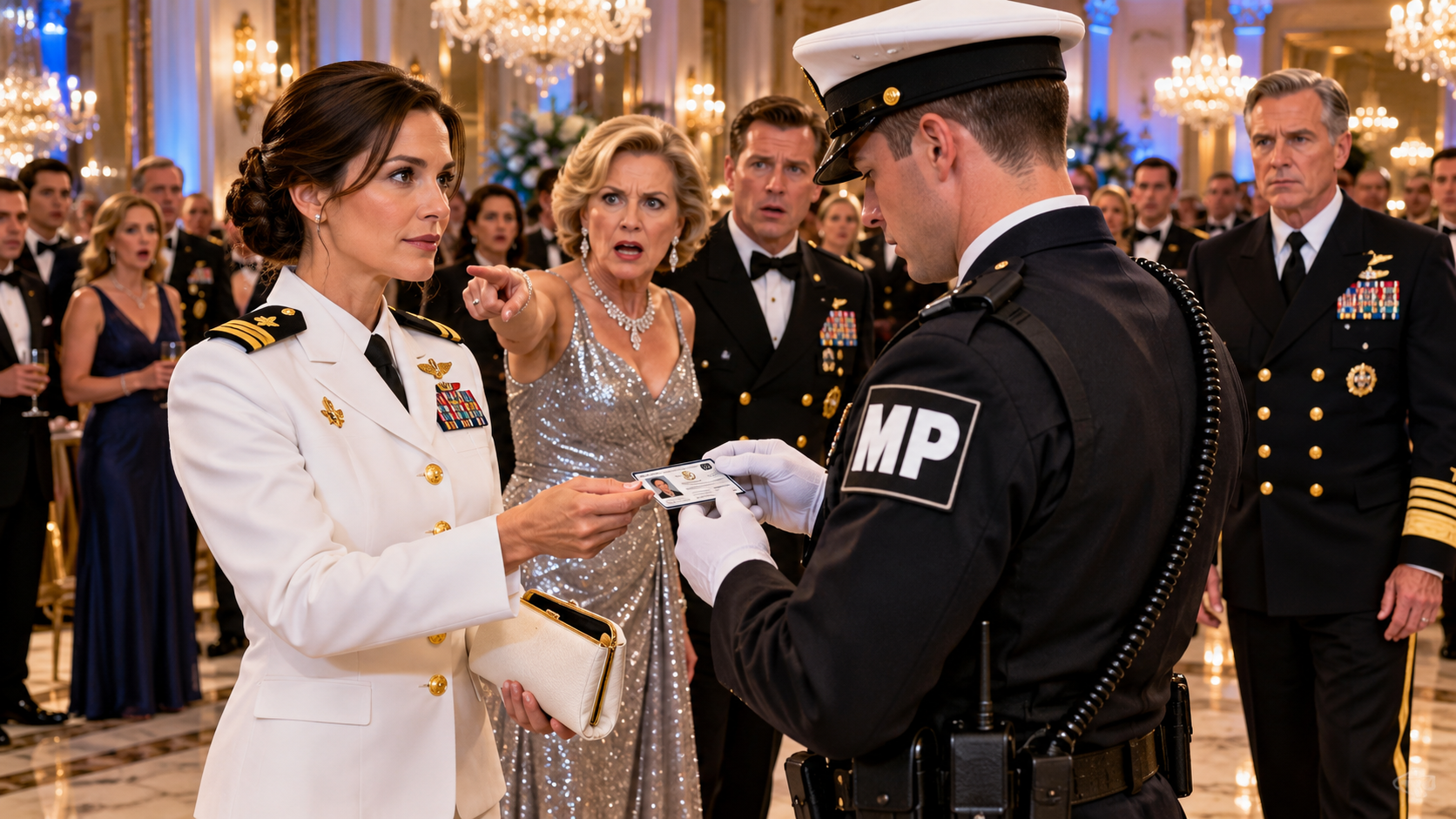
    The grand ballroom of the Langford Hotel glittered around us beneath crystal chandeliers. Outside the floor-to-ceiling windows, downtown Chicago was wrapped in December darkness, the lights along Michigan Avenue shining against streaks of snow.

    Inside, more than forty employees, executives, spouses, and clients had gone quiet.

    Not completely quiet.

    That would have been easier.

    Instead, there was that strange, suffocating silence people create when they desperately want to watch something humiliating but don’t want to admit they’re watching.

    A fork touched a plate somewhere behind me.

    Someone cleared his throat.

    A woman near the bar whispered, “Oh my God.”

    Champagne dripped from the corner of my beige leather handbag onto the white tablecloth.

    Across from me stood Renata Cruz, my husband’s executive assistant.

    She held an empty champagne flute between two manicured fingers.

    Her lips were curved into the smallest smile.

    “Marcus,” I said carefully, “she poured it on purpose.”

    Renata pressed one hand dramatically against her chest.

    “I already said it was an accident.”

    “No,” I replied. “You said, ‘Even a fake should look more expensive than that,’ and then you poured your drink over it.”

    Her smile tightened.

    Marcus looked around at the people watching us.

    That mattered more to him than anything else.

    It always had.

    Not truth.

    Not loyalty.

    Appearance.

    He stepped closer and lowered his voice.

    “Valeria, enough.”

    I stared at him.

    This was the man I had loved for five years.

    The man I had married three years ago in a tiny lakeside ceremony because he told me extravagant weddings made him uncomfortable.

    The man whose hand I had held while he worried about promotions.

    The man I had stayed awake beside at two in the morning when his projects failed.

    The man I had protected in ways he had never understood.

    And now another woman had publicly humiliated me, and his first instinct was to silence me.

    Renata reached for a cloth napkin.

    “Oh, let me help.”

    Before I could stop her, she rubbed the wet leather.

    Hard.

    The champagne spread across the surface.

    “There,” she said brightly. “Although I’m not sure it can be saved.”

    Her eyes flicked toward the women sitting nearby.

    “Cheap leather is so difficult.”

    A few people laughed nervously.

    My handbag wasn’t cheap.

    It was one of only twelve made in that color that year.

    I had bought it in Milan during a business trip I had told Marcus was a freelance consulting retreat.

    The price was more than Marcus believed I earned in several months.

    But that wasn’t why my chest hurt.

    It wasn’t about the bag.

    It was never about the bag.

    I looked at Marcus again.

    He was wearing the navy tuxedo I had paid to have tailored for him after he complained that the old one made him look junior.

    His cuff links had been my anniversary gift.

    His promotion had happened because six months earlier, when Salazar Global’s most important Midwest infrastructure project had nearly collapsed, I had quietly intervened.

    Marcus still believed he had saved that project.

    He had no idea I had spent three nights coordinating specialists from California, New York, and Toronto through one of my father’s private advisory channels.

    He had no idea I had convinced a furious client not to terminate the contract.

    He had no idea I had called two board members and asked them to give his team another chance.

    He had no idea that when his name appeared on the promotion list, it was because I had told my father not to interfere when several executives wanted him removed.

    I had never asked Dad to promote Marcus.

    But I had asked him not to destroy him.

    There was a difference.

    At least I had believed there was.

    Now I wondered if all I had really done was shield Marcus from every consequence until he began mistaking protection for superiority.

    “Apologize,” he said again.

    Something inside me became very still.

    For three years, I had worked hard to make myself smaller.

    When Marcus and I met, I was driving a silver Aston Martin.

    I told him it belonged to a client.

    Later, I sold it.

    I moved into his two-bedroom Lincoln Park apartment and acted impressed by the building’s rooftop gym.

    I stopped wearing jewelry that might make him curious.

    I avoided family events where photographers were present.

    I told him my father was a private businessman who traveled constantly.

    Technically, none of those statements had been lies.

    They simply weren’t the truth.

    My father was Alexander Salazar.

    Founder and chairman of Salazar Global.

    A man financial magazines described as ruthless, disciplined, and almost impossible to impress.

    A man whose company employed more than thirty thousand people across multiple countries.

    A man whose photograph hung in Salazar Global offices from Chicago to Singapore.

    And a man sitting less than thirty yards away at the VIP table.

    Marcus had never met him privately.

    He had only seen him at major corporate events.

    My father and I had agreed to keep our relationship hidden inside the company because I had wanted something that, in retrospect, sounded painfully naive.

    I wanted to know whether Marcus loved Valeria.

    Not Valeria Salazar.

    Not Alexander Salazar’s daughter.

    Not a woman who owned a significant block of voting shares in the company where he worked.

    Just me.

    The version of me who cooked pasta on Tuesday nights.

    The woman who folded laundry while listening to crime podcasts.

    The wife who sat in economy because Marcus hated wasting money.

    The woman who kissed him before work and told him she believed in him.

    For a while, I thought I had my answer.

    Then Marcus started climbing.

    And the higher he climbed, the more embarrassed he seemed by the woman he thought I was.

    At first, the changes were small.

    He corrected the way I pronounced the names of expensive wines.

    He told me which dresses were “appropriate” for corporate dinners.

    He joked that I was lucky I didn’t have to survive in a serious business environment.

    Then Renata became his executive assistant.

    After that, the comments stopped being jokes.

    “You wouldn’t understand the pressure.”

    “Renata knows how these things work.”

    “Maybe don’t talk too much tonight.”

    “Just smile.”

    And finally:

    Apologize to Renata.

    I slowly picked up my soaked handbag.

    Marcus exhaled as if relieved.

    “There,” he said. “Thank you.”

    He thought I was surrendering.

    Renata smiled.

    I stood.

    “You’re right, Marcus.”

    His shoulders relaxed.

    “It’s about time you understood.”

    I looked directly into his eyes.

    “What I understand is that I’ve protected you for far too long.”

    His expression flickered.

    “What does that mean?”

    I didn’t answer.

    I turned away.

    The ballroom seemed to stretch forever in front of me.

    At the far end stood the long executive table.

    Board members.

    Regional presidents.

    The chief legal officer.

    The head of human resources.

    And at the center, my father.

    Silver-haired.

    Straight-backed.

    Still terrifying people at sixty-seven without raising his voice.

    He was speaking quietly to the chief financial officer when I started walking toward him.

    Behind me, Marcus said, “Valeria?”

    I kept moving.

    My heels clicked softly against the polished marble floor bordering the dance area.

    Whispers followed me.

    “Where is she going?”

    “Is she drunk?”

    “She’s going to the chairman’s table.”

    Marcus realized it too.

    “Valeria.”

    His voice was sharper now.

    I continued.

    “Valeria, stop.”

    I didn’t.

    My father looked up when I was about ten feet away.

    At first his face showed mild surprise.

    Then he saw my handbag.

    Then he saw my expression.

    The conversation around him stopped.

    I reached the table.

    For one strange second, I was eight years old again, standing outside his office after another girl at school had torn my science project apart.

    Dad had looked at me then exactly as he looked at me now.

    Not angry.

    Not yet.

    Simply waiting for me to tell him what happened.

    I placed the wet handbag on the table.

    “Dad,” I said, loud enough for the room to hear, “I think I’m done playing this game.”

    A wine glass hit the floor somewhere behind me and shattered.

    My father’s eyes moved past my shoulder.

    I turned.

    Marcus had stopped halfway across the ballroom.

    His face had lost all color.

    Renata stood several feet behind him.

    For the first time that night, she wasn’t smiling.

    My father rose.

    The entire executive table seemed to rise emotionally with him even though no one else moved.

    He looked at the champagne soaking through the leather.

    Then at me.

    “Did someone disrespect my daughter?”

    No one breathed.

    I did.

    “Yes.”

    I could hear my heartbeat.

    I could feel years of silence pressing against my ribs.

    Then I said the words I should have said much earlier.

    “I want the gala ended. And I want HR to begin a formal review of Marcus Vance and Renata Cruz tonight.”

    Marcus stared at me.

    “Your… daughter?”

    My father didn’t look at him.

    He looked at the head of HR.

    “Elaine.”

    A woman in a black evening gown immediately stood.

    “Yes, Mr. Salazar.”

    “You heard her.”

    “I did.”

    “Begin the review.”

    Marcus finally moved.

    “Wait.”

    My father turned.

    I had seen CEOs lose confidence under that gaze.

    Marcus almost stumbled over his own words.

    “Sir, I think there’s been a misunderstanding.”

    My father’s voice remained calm.

    “Then an investigation should be excellent news for you.”

    Renata swallowed.

    Marcus looked at me again.

    There was panic in his eyes now.

    Not regret.

    Not yet.

    Panic.

    Because he finally understood that the quiet wife he had been ashamed of possessed the one thing he valued more than anything.

    Power.

    And for the first time in our marriage, I wasn’t going to use it to protect him.


    PART 2: THE WOMAN HE THOUGHT I WAS

    The gala ended twenty-three minutes later.

    My father didn’t shout.

    He didn’t threaten anyone.

    He didn’t need to.

    The announcement was simple.

    “Due to an internal matter requiring immediate attention, tonight’s event will conclude early. Transportation arrangements will remain available for all guests.”

    That was all.

    People began collecting coats and exchanging whispers.

    No music.

    No speeches.

    No final toast.

    Just nervous glances in my direction.

    Marcus tried to reach me three times.

    The first time, Dad’s chief of staff stepped between us.

    The second time, Elaine Porter from HR asked him to remain available for questions.

    The third time, I raised one hand.

    “Don’t.”

    He stopped.

    “Valeria, we need to talk.”

    “We will.”

    “Now.”

    “No.”

    His face tightened.

    I recognized that expression.

    For years, I had mistaken it for confidence.

    That night, I saw it for what it really was.

    Entitlement frustrated by resistance.

    Renata stood nearby clutching her phone.

    Her red dress, which had looked so bold an hour earlier, suddenly looked too bright beneath the ballroom lights.

    She approached me carefully.

    “Valeria, I didn’t know.”

    That sentence told me everything.

    Not I’m sorry.

    Not I was cruel.

    Not I shouldn’t have done it.

    I didn’t know.

    Meaning: I wouldn’t have treated you that way if I had known you were important.

    I almost laughed.

    “So if my father weren’t Alexander Salazar, pouring champagne over me would have been acceptable?”

    Her lips parted.

    “I didn’t say that.”

    “You didn’t have to.”

    Marcus stepped closer.

    “Valeria, please.”

    My father looked at me.

    “Do you want me here?”

    It was a quiet question.

    That mattered.

    Dad had spent most of his life commanding rooms, but he knew this was not his marriage to command.

    I shook my head.

    “I need five minutes.”

    He nodded.

    “I’ll be in the executive lounge.”

    Then he looked at Marcus.

    Nothing dramatic.

    Just a look.

    Marcus waited until Dad walked away.

    Then he turned on me.

    “What the hell is happening?”

    I stared at him.

    He was angry.

    Actually angry.

    “Interesting first question.”

    “You told me your father ran a private consulting company.”

    “He does.”

    “Salazar Global isn’t a private consulting company.”

    “I never said Salazar Global was.”

    His jaw clenched.

    “You lied to me.”

    The accusation almost impressed me.

    “I omitted my last name.”

    “You let me work here for three years without telling me the CEO was your father.”

    “Chairman.”

    “Don’t correct me.”

    Something inside me hardened.

    “You spent the entire evening correcting me.”

    Marcus dragged a hand through his hair.

    “This is insane.”

    “No. What’s insane is that your assistant poured champagne over your wife while forty people watched, and you told your wife to apologize.”

    “You humiliated me!”

    I blinked.

    “There it is.”

    “What?”

    “The truth.”

    His chest rose and fell.

    I lowered my voice.

    “You aren’t angry because I lied. You’re angry because you think this makes you look foolish.”

    “It does make me look foolish.”

    “You managed that without my help.”

    Renata shifted beside him.

    Marcus glanced at her.

    That tiny movement hurt more than I wanted it to.

    Even now, after everything, he checked her reaction.

    I looked between them.

    “How long?”

    Marcus stiffened.

    “What?”

    “How long have you been choosing her over me?”

    Renata spoke quickly.

    “There is nothing going on between us.”

    I turned to her.

    “I didn’t ask whether you were sleeping together.”

    Silence.

    Her cheeks reddened.

    I looked at Marcus again.

    “I asked how long you’ve been choosing her.”

    His voice dropped.

    “She understands my work.”

    “So do I.”

    “You don’t.”

    A sad smile touched my mouth.

    There were still moments when the old arrogance appeared automatically.

    He had not yet learned how little he knew.

    “You think I don’t understand Salazar Global?”

    “You work freelance from home.”

    “No, Marcus. I sit on two private advisory committees connected to this company, hold shares you’ve probably seen discussed in board documents, and have reviewed strategic projects your department doesn’t even know exist.”

    His expression emptied.

    Renata stared at me.

    I continued.

    “The specialists who fixed the Pacific Systems integration failure last spring?”

    Marcus said nothing.

    “I brought them in.”

    His lips parted.

    “The Carlton account?”

    I watched recognition begin.

    “The client who suddenly agreed to give you another meeting after ignoring your calls for six weeks?”

    “That was you?”

    “Yes.”

    “The funding extension?”

    “I argued for it.”

    He stepped backward.

    “No.”

    “Yes.”

    “That promotion was mine.”

    I flinched.

    Not because he denied my role.

    Because of the desperation in his voice.

    “I never said it wasn’t.”

    “You just said—”

    “I said I kept doors open. You still had to walk through them. You still did work. You still led people. I never wanted to take that away from you.”

    “Then why tell me now?”

    I looked at the wet handbag on a nearby chair.

    “Because tonight you showed me what you did with all the chances I helped you keep.”

    His face changed slightly.

    For the first time, shame appeared.

    It disappeared quickly.

    “Why hide all of this?”

    There was the question I had been waiting for.

    I could have lied.

    I didn’t.

    “Because I wanted to know whether you loved me.”

    He stared.

    “Without the money. Without the name. Without my father. Without access.”

    “That’s sick.”

    Maybe part of it was.

    I had asked myself that before.

    I had hidden a fundamental part of my life from the man I married.

    Whatever happened next, I would have to own that.

    “I should have told you sooner,” I said. “I know that.”

    “You manipulated me.”

    “I protected myself.”

    “You tested me.”

    “At first? Yes.”

    His eyes flashed.

    “And I suppose I failed?”

    I thought about every night I had defended him to my father.

    Every time I had told Dad Marcus was ambitious, not arrogant.

    Every time I had excused a cruel comment because Marcus was stressed.

    Every dinner I had spent silent because he said senior executives disliked spouses who tried too hard.

    I thought about champagne sliding down my bag while he watched.

    “You stopped taking the test a long time ago,” I said softly. “I was just too afraid to admit it.”

    A woman in black approached us.

    Elaine Porter.

    Head of human resources.

    “Mr. Vance. Ms. Cruz. I need both of you in Conference Room B.”

    Renata’s face tightened.

    “Tonight?”

    “Yes.”

    Marcus looked at me.

    “You’re actually doing this?”

    “No,” I said. “Your choices are doing this.”

    He lowered his voice.

    “Call it off.”

    I almost admired the certainty.

    He really believed I would.

    Because I always had.

    Whenever a consequence approached him, I stood between them.

    Not tonight.

    “I won’t.”

    His eyes hardened.

    “If you do this, you destroy our marriage.”

    I felt something break inside me.

    But unlike the moment at the table, this break wasn’t sharp.

    It was quiet.

    Final.

    “No, Marcus.”

    I met his gaze.

    “You destroyed our marriage when you decided my dignity was less important than your image.”

    Elaine waited.

    Marcus looked at Renata.

    Then back at me.

    Finally, they followed her out.

    I remained alone in the ballroom for several minutes after everyone else had gone.

    Staff members quietly collected glasses.

    A server approached the table where my handbag rested.

    “Ma’am?”

    I turned.

    He was young. Maybe twenty-two.

    He looked nervous.

    “I saw what happened.”

    My throat tightened.

    “You don’t have to get involved.”

    “I know.”

    He hesitated.

    “But she didn’t spill it.”

    I looked at him.

    “She looked at the bag first. Then at you. Then she poured it.”

    I nodded.

    “Thank you.”

    He gave me his name in case HR needed it.

    That tiny act of courage affected me more than he could know.

    A stranger was willing to tell the truth.

    My husband had not been willing to defend it.

    That was when I understood this night was not really about revealing who I was.

    It was about discovering who everyone else had become.


    PART 3: WHAT THE AUDIT FOUND

    I spent that night at my father’s penthouse overlooking Lake Michigan.

    Not because I needed luxury.

    Because I couldn’t go home.

    Home no longer felt like a place.

    It felt like a room filled with evidence I had refused to examine.

    Dad poured tea in the kitchen at one in the morning.

    He didn’t drink alcohol when angry.

    I had learned that as a child.

    The calmer he became, the more careful everyone else should be.

    “I told you I disliked him,” he said.

    I gave him a tired look.

    “You told me you disliked everyone I dated.”

    “That is not true.”

    “You had a background check done on Ethan Miller in college.”

    “He had three unpaid parking tickets.”

    “He was nineteen.”

    “Patterns begin early.”

    Despite everything, I laughed.

    It surprised me.

    Dad handed me a mug.

    Then his expression softened.

    “You loved him.”

    “I still do.”

    The admission hurt.

    Dad didn’t tell me that made me weak.

    He knew better.

    Love didn’t disappear just because respect had been injured.

    Sometimes that was what made betrayal unbearable.

    You could understand exactly why you needed to leave and still remember the person’s hand around yours on a hospital bed.

    “I should have told him,” I said.

    “Yes.”

    I looked up.

    Dad sat across from me.

    “You expected me to say you were right?”

    “I hoped for at least five minutes of unconditional parental support.”

    “You have that. It doesn’t require me to lie to you.”

    I looked down at my tea.

    “I thought if he knew, I’d never be sure.”

    “And now?”

    “Now I’m sure.”

    Dad said nothing.

    That was worse.

    The preliminary HR review began the next morning.

    I made one thing clear before it did.

    “I don’t want Marcus fired because he humiliated me.”

    Elaine looked surprised.

    We were sitting in Dad’s private conference room on the thirty-eighth floor of Salazar Global’s Chicago headquarters.

    Snow covered the buildings outside.

    “What do you want?” she asked.

    “The truth.”

    “About?”

    “Whether his professional behavior matches what happened last night.”

    Elaine nodded slowly.

    “And Renata?”

    “The same standard.”

    Dad remained at the opposite end of the table.

    He had wanted to suspend Marcus immediately.

    I objected.

    If Marcus lost everything simply because he had insulted the chairman’s daughter, then I would prove Renata right in a different way.

    Status would matter more than conduct.

    I didn’t want that.

    I wanted the rules applied as if my name were still just Valeria Vance.

    The review took eleven days.

    Those eleven days were worse than the gala.

    Marcus called me constantly for the first forty-eight hours.

    I didn’t answer.

    Then the messages began.

    You owe me an explanation.

    Then:

    We can fix this.

    Then:

    I’m sorry about the party.

    Then:

    Renata was drunk.

    Then:

    You know how much pressure I’ve been under.

    Then, finally:

    I miss you.

    That one almost broke me.

    Because I missed him too.

    Not the man from the gala.

    The man from the beginning.

    The Marcus who once drove across the city at midnight because I casually mentioned craving cinnamon rolls.

    The Marcus who held my mother’s photograph the first time I told him she had died when I was seventeen.

    The Marcus who cried during our vows and whispered, “I don’t care where we live as long as you’re there.”

    I wondered where that man had gone.

    Then I realized the more frightening possibility.

    Maybe he hadn’t gone anywhere.

    Maybe people were capable of tenderness and cruelty at the same time.

    Maybe love didn’t automatically cure insecurity.

    Maybe success simply gave Marcus permission to express parts of himself he had once been forced to hide.

    On the third day, he came to the penthouse.

    Security called upstairs.

    “He says he’s your husband.”

    I almost said no.

    Instead, I let him come up.

    He looked terrible.

    No tuxedo.

    No polished confidence.

    Just dark jeans, a gray coat, and exhaustion beneath his eyes.

    For several seconds, we stood facing each other in the entryway.

    “Hi,” he said.

    “Hi.”

    “Can I come in?”

    I stepped aside.

    He looked around the penthouse.

    I hated the way his eyes widened.

    Floor-to-ceiling windows.

    Art he probably recognized from auction catalogs.

    A Steinway in the corner.

    The lake spread beyond the glass.

    “So this is where you grew up?”

    “Sometimes.”

    He looked at me.

    “You had all this.”

    “Yes.”

    “And you chose that apartment with me.”

    “Yes.”

    “Why?”

    My voice was quiet.

    “Because you were there.”

    He looked away.

    For the first time since the gala, I saw something collapse inside him.

    We sat across from each other.

    He rubbed his palms together.

    “HR has gone through my emails.”

    “I know.”

    “They interviewed my team.”

    “I know.”

    “They took my company laptop.”

    “That’s standard.”

    His mouth tightened.

    “Standard.”

    “Yes.”

    He looked toward the windows.

    “I feel like I’m being dissected.”

    I almost said, Now you know how I felt at the gala.

    I didn’t.

    “What do you want from me, Marcus?”

    He looked at me.

    “My wife.”

    “Which one?”

    His brow furrowed.

    “The wife who stayed quiet? The wife who smiled when you told her to? The wife you thought wasn’t important enough to defend?”

    “That’s not fair.”

    “It’s exactly what happened.”

    “I panicked.”

    “You were embarrassed.”

    “Yes.”

    At least he admitted it.

    He leaned forward.

    “I had spent years building a reputation. Renata was drunk. Everyone was watching. I thought if you reacted—”

    “If I reacted?”

    He stopped.

    “Do you hear yourself?”

    He closed his eyes.

    “I know.”

    “No, I don’t think you do. You weren’t afraid Renata would embarrass you. She already had. You were afraid I would make it worse by defending myself.”

    He looked at me.

    “She’s been telling me for months that people judge spouses.”

    I laughed without humor.

    “And you believed her.”

    “She knows the executive culture.”

    “No. She knew your insecurity.”

    His jaw tightened.

    I saw it land.

    Then he asked the question I had been avoiding.

    “Is there any chance we survive this?”

    I looked at the man I had married.

    “Yes,” I said.

    Hope appeared instantly.

    Then I continued.

    “But not because of who my father is. Not because HR clears you. Not because you apologize.”

    His hope faded.

    “If there is any chance, it depends on whether you understand what you became.”

    He swallowed.

    “And if I do?”

    “I don’t know yet.”

    That was the truth.

    The review finished eight days later.

    Elaine presented the findings to a committee.

    I attended.

    Dad did not chair it.

    That had been my demand.

    The findings were not criminal.

    They didn’t need to be.

    They were ugly enough.

    Marcus had repeatedly allowed Renata to bypass normal approval procedures.

    He had supported unusually generous performance ratings for her despite documented complaints from two team members about belittling comments.

    He had forwarded internal work produced by junior staff under his own name without consistently crediting them.

    And in several instances, he had allowed Renata to exclude employees from client-facing opportunities based on whether she believed they were “polished enough.”

    One email made my stomach turn.

    Renata had written:

    Some people just don’t fit the image Marcus needs around him right now.

    Marcus had replied:

    Agreed. Handle it.

    That was all.

    Two words.

    Agreed.

    Handle it.

    I thought of every time he had told me not to attend.

    Every time he had criticized what I wore.

    Every time he had said I should let him handle corporate conversations.

    It wasn’t just me.

    This was who he had become at work too.

    The committee found no evidence of a romantic relationship between Marcus and Renata.

    Strangely, that almost made things worse.

    There was no affair to blame.

    No secret passion that had clouded his judgment.

    He had humiliated me soberly.

    Professionally.

    Deliberately.

    Because approval from people he admired had become more important than kindness to people he considered beneath them.

    Renata’s behavior was more direct.

    Multiple employees described mocking comments about clothing, accents, backgrounds, and perceived social status.

    She had already received one informal warning the previous year.

    Marcus knew about it.

    He had defended her.

    The committee recommended terminating Renata for repeated workplace misconduct and retaliation concerns.

    Marcus would lose his project-director position and managerial authority pending a six-month performance and leadership review.

    He would remain employed in a senior individual-contributor role if he accepted the conditions.

    Dad hated that decision.

    “He should be gone.”

    “He should face the same standards as everyone else,” I said.

    “He publicly humiliated you.”

    “That is a marriage problem.”

    “He enabled workplace misconduct.”

    “And the committee punished him for it.”

    Dad looked at me for a long time.

    “You’re protecting him again.”

    “No.”

    For once, I was certain.

    “I’m protecting the process.”

    That afternoon, Renata asked to speak with me.

    I almost refused.

    Then I agreed.

    She entered the conference room without makeup.

    She looked younger.

    Smaller.

    But I reminded myself that vulnerability after consequences was not the same thing as innocence before them.

    She sat across from me.

    “I’m being terminated.”

    “I know.”

    “You could stop it.”

    “No.”

    Her eyes flashed.

    For a moment, the woman from the gala returned.

    “You enjoy this.”

    “No.”

    “You expect me to believe that?”

    “I don’t care what you believe.”

    Her face tightened.

    “I worked for everything I had.”

    “So did the people you stepped on.”

    “I was trying to survive.”

    “So was everyone else.”

    She looked down.

    When she spoke again, her voice was lower.

    “Marcus liked having me around because I made him feel important.”

    I said nothing.

    “He wanted to become someone people noticed.”

    “I know.”

    “I didn’t create that.”

    “No.”

    Her eyes lifted.

    “But I encouraged it.”

    “Yes.”

    Silence filled the room.

    Finally she asked, “Why did you pretend to be poor?”

    “I never pretended to be poor.”

    “You know what I mean.”

    I did.

    “I wanted to know whether someone could love me without wanting what came with me.”

    Renata let out a humorless laugh.

    “And?”

    I looked through the glass wall toward the city.

    “I learned that money isn’t the only thing that changes people.”

    She waited.

    “Sometimes,” I said, “the possibility of status changes them before they ever have it.”

    Renata left without apologizing again.

    Oddly, I was glad.

    A false apology would have been easier.

    The truth was more useful.


    PART 4: THE COST OF BEING SEEN

    Marcus accepted the demotion.

    That surprised me.

    A year earlier, he would have resigned rather than suffer the humiliation.

    But when Elaine offered him the conditions, he signed.

    He lost the corner office.

    He lost his executive assistant.

    He lost control of the team he had spent years building.

    Most painfully, he lost the version of himself he had performed for everyone around him.

    For the first time, people were no longer impressed.

    They were watching.

    I moved out of our Lincoln Park apartment permanently.

    Not into Dad’s penthouse.

    Into a place of my own.

    A three-bedroom apartment overlooking the river.

    Not hidden wealth.

    Not extravagant display.

    Just mine.

    Marcus and I began marriage counseling three weeks after the gala.

    That wasn’t romantic.

    It wasn’t a sign everything would be okay.

    It was something I needed before I could decide whether our marriage deserved a funeral or a second life.

    During the second session, the therapist asked Marcus when he began feeling ashamed of me.

    He immediately protested.

    “I was never ashamed of her.”

    I looked at him.

    The therapist waited.

    Marcus sighed.

    “Fine.”

    He rubbed his face.

    “When I started getting invited into senior rooms.”

    “Why then?” she asked.

    “Everyone had these perfect lives.”

    I nearly laughed.

    Marcus continued.

    “The right schools. The right neighborhoods. Spouses with impressive careers. Connections. And I felt…”

    He stopped.

    “Poor?” I asked.

    He looked at me.

    “No.”

    “Small?”

    His eyes lowered.

    “Yes.”

    There it was.

    The thing I had spent three years protecting him from.

    Not poverty.

    Not failure.

    Smallness.

    The tragedy was that I had made myself smaller to prevent him from feeling small.

    And somehow all that shrinking had only taught him that I could be safely looked down on.

    He spoke quietly.

    “Renata knew all the rules.”

    “She knew the performance,” I said.

    “Yes.”

    He nodded.

    “She’d tell me who mattered. Who to impress. What people noticed. And when she started criticizing you…”

    “You agreed.”

    “At first I didn’t.”

    “But later?”

    He looked sick.

    “Later I liked feeling like I was the sophisticated one.”

    That hurt.

    Even after everything, it hurt.

    “So you needed me beneath you.”

    He shook his head.

    “No.”

    “You just said—”

    “I needed someone beneath me.”

    The room went quiet.

    Marcus looked at me.

    “And you were the safest person to put there because I thought you’d never leave.”

    Tears burned my eyes.

    That was the first apology that mattered.

    Not because he said sorry.

    Because he finally told the truth without trying to make himself look better.

    “You thought my love made me safe to hurt.”

    “Yes.”

    He cried then.

    Not dramatically.

    His face simply folded, and he covered his eyes with one hand.

    I didn’t move to comfort him.

    Once, I would have.

    This time, I allowed him to experience his own pain.

    He needed to.

    So did I.

    Weeks passed.

    Then months.

    Marcus changed.

    I wish I could say it transformed everything.

    It didn’t.

    Change after damage is complicated.

    Sometimes a person truly becomes better.

    That doesn’t automatically restore what they destroyed.

    He started acknowledging junior employees in meetings.

    He apologized privately to two people whose work he had taken credit for.

    He began leadership coaching.

    He stopped calling me every day.

    Instead, every Sunday evening, he sent a single message:

    I’m here if you want to talk.

    Sometimes I answered.

    Sometimes I didn’t.

    Meanwhile, I stopped hiding.

    That was my transformation.

    For years, I had believed secrecy gave me freedom.

    After the gala, I realized it had also become a cage.

    I accepted a formal advisory role with Salazar Global.

    Not because Dad wanted me to inherit his chair.

    He had been trying to persuade me to do that for years.

    I accepted because I was tired of pretending my expertise was an accident.

    My first company-wide meeting was terrifying.

    Everyone knew who I was.

    Whispers followed me through the lobby.

    Some people became overly polite.

    Others nervous.

    A few obviously wondered whether I had earned anything at all.

    That was the cost of being seen.

    But at least they were reacting to the real me.

    One afternoon, almost five months after the gala, I walked into a strategy meeting and found Marcus already seated at the table.

    It was the first time we had been in a professional meeting together since that night.

    He stood when I entered.

    Not because I was his wife.

    Because I was leading the meeting.

    “Ms. Salazar,” he said.

    I almost smiled.

    “Mr. Vance.”

    Several people glanced between us.

    We ignored them.

    Marcus gave his presentation.

    It was good.

    Very good.

    Focused.

    No theatrics.

    When a junior analyst named Priya corrected one of his projections, I watched him carefully.

    The old Marcus would have defended himself.

    This Marcus looked at the slide, then nodded.

    “You’re right. Good catch.”

    It was a small thing.

    Maybe no one else noticed.

    I did.

    After the meeting, he remained behind.

    “How was I?”

    I raised an eyebrow.

    “Asking your wife or your advisor?”

    “My advisor.”

    “Your assumptions were strong. Page fourteen needs work.”

    He smiled.

    “Still brutal.”

    “I learned from Dad.”

    The smile faded slightly.

    Then he said, “Can I ask you something personal?”

    “You just used up your professional review.”

    “Fair.”

    He picked up his laptop.

    “I got offered a position at another firm.”

    My chest tightened unexpectedly.

    “Where?”

    “Seattle.”

    “That’s far.”

    “Yes.”

    “Are you taking it?”

    “I don’t know.”

    He looked at me.

    “I don’t want you to think I’m running.”

    “Maybe running is exactly what you should avoid.”

    “That’s what I thought.”

    Silence.

    Then he said, “But staying because I hope you’ll forgive me might be another kind of manipulation.”

    I stared at him.

    Six months earlier, Marcus would never have understood that distinction.

    “What do you want?” I asked.

    “To become someone I respect again.”

    The answer was simple.

    No mention of me.

    No mention of Dad.

    No mention of his title.

    I felt something shift inside me.

    Not forgiveness.

    But respect.

    The beginning of it.

    Maybe.

    “I think you should decide based on the work,” I said.

    He nodded.

    “I will.”

    He walked toward the door.

    “Marcus.”

    He turned.

    “Whatever you choose, don’t choose it because of me.”

    A sad smile touched his face.

    “I think that was part of my problem before.”

    “What was?”

    “Too many of my choices were based on how I looked through someone else’s eyes.”

    Then he left.

    I stood alone in the conference room for several minutes.

    I thought about the gala.

    About champagne.

    About humiliation.

    About the moment I had walked toward my father’s table believing the biggest revelation of the night would be my identity.

    I had been wrong.

    The real revelation was that every one of us had been pretending.

    Marcus pretended confidence.

    Renata pretended superiority.

    I pretended simplicity.

    Dad pretended he was comfortable staying out of my life.

    We had all built versions of ourselves designed to control how other people saw us.

    Eventually, reality collected the debt.


    PART 5: THE NAME I CHOSE TO KEEP

    One year after the gala, Salazar Global held its annual winter celebration in the same ballroom.

    I almost refused to attend.

    Then I decided I would not surrender a room to a bad memory.

    The chandeliers were the same.

    The windows still overlooked Michigan Avenue.

    The orchestra played near the same stage.

    But everything felt different.

    I arrived alone.

    No modest dress chosen to avoid attention.

    No fake story about freelance consulting.

    No wedding ring.

    Marcus and I had finalized our divorce six weeks earlier.

    That decision surprised people.

    Some thought his genuine attempts to change should have earned reconciliation.

    But growth was not a transaction.

    He did not become entitled to our marriage because he became a better man.

    And I was not obligated to remain his wife in order to validate his progress.

    We had tried.

    We had spoken honestly.

    We had forgiven some things.

    But somewhere between the champagne spilling over my handbag and Marcus admitting he believed I would never leave, something essential had disappeared.

    Trust, maybe.

    Or innocence.

    Perhaps both.

    The divorce was quiet.

    No war.

    No revenge.

    No attempt by Dad to destroy Marcus.

    Marcus transferred to another division six months earlier, not Seattle but Denver, where he accepted a role with less prestige and more responsibility for rebuilding a struggling team.

    Before he left Chicago, we had coffee.

    He looked healthier.

    So did I.

    “I used to imagine meeting your father,” he told me.

    I laughed.

    “I know.”

    “In my fantasy, he was impressed by me.”

    “Of course he was.”

    “And then he’d tell you how lucky you were.”

    I shook my head.

    “You really were unbearable.”

    “I was.”

    He smiled.

    Then his expression softened.

    “I loved you, Valeria.”

    “I know.”

    “I just didn’t know how to love someone without measuring myself against them.”

    That was probably the closest we would ever come to explaining our marriage.

    I reached across the table and squeezed his hand.

    “I hope you learn.”

    “So do I.”

    “And Marcus?”

    “Yes?”

    “The next woman you love?”

    He waited.

    “Don’t make her smaller so you can feel taller.”

    His eyes filled.

    “I won’t.”

    I believed him.

    Not because I trusted him with my heart again.

    Because for the first time, he seemed to understand what the promise actually meant.

    Now, a year after the worst night of our marriage, I stood in the same ballroom holding another handbag.

    Not the champagne-soaked one.

    That bag had been cleaned and restored.

    I kept it in my closet.

    Dad hated that.

    “You should burn the thing.”

    “No.”

    “Why would you keep it?”

    “Because it reminds me.”

    “Of that woman?”

    “No.”

    “Marcus?”

    “No.”

    “Then what?”

    I smiled.

    “Of the night I stopped apologizing for existing.”

    He had no argument for that.

    At the gala, Dad approached me near the stage.

    “You’re smiling,” he said suspiciously.

    “I’m at a party.”

    “You hate corporate parties.”

    “I hate most corporate parties.”

    He handed me sparkling water.

    We stood together watching employees talk and laugh.

    After a moment, Dad said, “You know, I could have destroyed him.”

    I sighed.

    “We’ve discussed this.”

    “Several phone calls.”

    “Dad.”

    “One, perhaps.”

    “Dad.”

    He smiled.

    “I’m joking.”

    “You are absolutely not joking.”

    He looked toward the ballroom.

    “Are you happy?”

    The question caught me off guard.

    A year earlier, I would have answered automatically.

    Yes.

    That was what I always did.

    I’m fine.

    I’m happy.

    Everything’s okay.

    No scenes.

    No discomfort.

    Smile and stay quiet.

    This time, I thought about it.

    “I’m becoming happy.”

    Dad nodded.

    “That’s better.”

    Across the room, a young employee was standing alone near a table.

    I recognized her from finance.

    Emily, I thought.

    She looked nervous.

    Her dress was simple.

    Her shoes were probably uncomfortable.

    Two executives were talking near her without including her.

    For a moment, I saw myself from the previous year.

    Quiet.

    Observing.

    Trying not to take up too much space.

    I walked over.

    “Emily?”

    Her eyes widened.

    “Ms. Salazar.”

    “Valeria.”

    “I don’t think I’m supposed to call you that.”

    “Then tonight is your chance to be rebellious.”

    She laughed nervously.

    We began talking.

    Within minutes, she relaxed.

    Soon another employee joined us.

    Then another.

    Nothing dramatic happened.

    No champagne was thrown.

    No secrets were revealed.

    No one gasped.

    And somehow that felt important.

    Not every lesson needed a spectacle.

    Later that evening, Dad gave a short speech.

    He thanked employees for the year’s work.

    He talked about integrity.

    Accountability.

    Leadership.

    Then he said something I knew was meant partly for me.

    “A title tells people where you sit in an organization. It does not tell them who you are.”

    The room went quiet.

    “Character is revealed most clearly in the way we treat people who cannot advance us.”

    I looked down.

    For one second, I was back at that table.

    Renata’s empty champagne glass.

    Marcus’s cold expression.

    The wet leather beneath my hand.

    Apologize.

    Smile.

    Stay quiet.

    I had spent years believing silence proved love.

    It didn’t.

    Sometimes silence was patience.

    Sometimes it was kindness.

    But sometimes silence was simply fear wearing good manners.

    After the speech, I stepped onto the balcony.

    Chicago spread beneath me in white and gold.

    Snow drifted between the buildings.

    My phone vibrated.

    A message.

    Marcus.

    I hesitated before opening it.

    Hope tonight is better than last year.

    I smiled.

    Then another message appeared.

    For what it’s worth, I’m sorry I ever made you believe you had to hide any part of yourself to be loved.

    I stared at the screen for a long time.

    Then I typed:

    Thank you.

    Nothing more.

    Nothing was needed.

    I slipped the phone into my bag.

    Behind me, the balcony door opened.

    Dad stepped outside.

    “Everything okay?”

    “Yes.”

    He stood beside me.

    Neither of us spoke for a while.

    Finally he said, “Are you going to tell people the full story someday?”

    I laughed.

    “What full story?”

    “The secret daughter. The terrible husband. The dramatic ballroom reveal.”

    “You make it sound like a soap opera.”

    “It was extremely entertaining from my side of the room.”

    I turned toward him.

    “You looked like you wanted to have Marcus thrown through a window.”

    “I was considering options.”

    “Very mature.”

    “I’m a respected chairman.”

    “You’re impossible.”

    He smiled.

    Then I looked through the glass toward the ballroom.

    A year earlier, I had walked across that floor shaking with anger and humiliation.

    I had believed I was finally revealing the truth about my name.

    But my name had never been the most important truth.

    The most important truth was simpler.

    I deserved respect before anyone knew who my father was.

    I deserved dignity when people thought my handbag was fake.

    I deserved loyalty when Marcus believed I had no power to punish him.

    I deserved to be defended when no consequence was waiting behind me.

    And once I understood that, being Alexander Salazar’s daughter stopped feeling like my greatest source of strength.

    My strength was the moment I stood up.

    The moment I stopped making myself smaller.

    The moment I realized love that requires silence is not peace.

    It is permission.

    I looked at my father.

    “Do you remember what you asked me that night?”

    He frowned.

    “I asked several things.”

    “You asked whether someone had disrespected your daughter.”

    His expression changed.

    “I remember.”

    “I think I would answer differently now.”

    “How?”

    I smiled.

    “Yes. Someone did.”

    I looked back at the ballroom.

    “But the worst part was that I had been disrespecting myself for years by accepting it.”

    Dad was quiet.

    Then he touched my shoulder.

    “You learned.”

    “I did.”

    “Expensively.”

    I laughed.

    “Very.”

    “And the handbag?”

    “Restored.”

    “Pity.”

    I shook my head.

    Inside, the orchestra began another song.

    I opened the balcony door.

    Dad followed me.

    As I stepped back into the ballroom, people turned toward us.

    Some knew my story.

    Some knew only my name.

    Some probably still whispered.

    For once, I didn’t care.

    I had spent three years trying to discover whether a man could love me without knowing who I really was.

    In the end, that had been the wrong question.

    The question I should have asked was whether I loved myself enough to stop accepting disrespect from someone simply because I loved him.

    It took a glass of champagne, a ruined evening, a broken marriage, and one long walk across a silent ballroom to find the answer.

    But I found it.

    And this time, I didn’t need my father to say it for me.

    I already knew exactly who I was.

  • SHE LOCKED ME OUT OF MY OWN WEDDING—SO I TOOK BACK EVERYTHING I PAID FOR

    SHE LOCKED ME OUT OF MY OWN WEDDING—SO I TOOK BACK EVERYTHING I PAID FOR

    PART 1: THE GATE

    “If you want to enter this family as my son’s wife, you’ll stand out on the curb for three hours.”

    Those were the first words my future mother-in-law said to me on my wedding day.

    Not congratulations.

    Not welcome to the family.

    Not even my name.

    Just a punishment.

    I stood outside the black wrought-iron gates of Julian’s childhood home in suburban Illinois, dressed in silk and lace, holding a bouquet of pale pink peonies that suddenly felt ridiculous in my hands.

    Behind me, nearly fifty members of my family sat in a long line of cars stretching down the street.

    We had driven out from Chicago that morning expecting a small backyard wedding reception after the courthouse ceremony.

    Instead, the gates had been chained shut.

    On the other side stood Eleanor Mercer.

    My almost mother-in-law.

    She wore a fitted red dress, a string of pearls, and the expression of a woman who believed she had been waiting her entire life for this exact moment.

    She lifted her chin.

    “Let’s see if the cold air clears out your arrogance.”

    For several seconds, no one moved.

    I heard an engine idling behind me.

    A dog barked from somewhere across the street.

    One of my bridesmaids whispered, “Is she serious?”

    I was wondering the same thing.

    Then Eleanor answered the question for all of us.

    “My psychic reader warned me this morning,” she announced loudly, “that Evelyn carries an overly dominant energy. If she enters this property before cleansing herself, she’ll bring financial ruin to my son.”

    A few people behind me laughed nervously.

    Eleanor didn’t.

    She pointed toward the curb.

    “Three hours. Outside the gate. Quietly. No arguing.”

    My uncle Arthur got out of his sedan so fast the door almost slammed into the car behind him.

    Arthur Vance was my mother’s older brother, a retired union electrician with a permanent scowl whenever he saw someone being bullied.

    He had loved me like a daughter since my father died.

    “Are you out of your mind?” he called.

    Eleanor’s eyes narrowed.

    “This is family business.”

    “You invited fifty people here,” Arthur snapped. “Then locked the bride outside.”

    “In my house, my rules are respected.”

    That sentence almost made me laugh.

    Her house.

    Her rules.

    I looked past her.

    At the new front door.

    The one I had paid for.

    Behind it was the hardwood flooring I had paid for.

    Beyond that, the remodeled kitchen with quartz counters, new cabinetry, a six-burner range, and a refrigerator that had cost more than my first used car.

    Paid for by me.

    The roof above Eleanor’s head had been replaced eleven months earlier.

    Paid for by me.

    The custom windows.

    Paid for by me.

    The water heater.

    Me.

    The washer and dryer.

    Me.

    The leather sectional Eleanor had spent two weekends choosing because she said cheap furniture made her back hurt.

    Me.

    The sixty-five-inch television Julian insisted his mother needed because “she doesn’t go out much anymore.”

    Also me.

    I was twenty-nine years old and worked as a senior financial director for an international logistics company.

    I wasn’t wealthy in the way people on television were wealthy.

    I had a salary.

    A mortgage on a small condo in Chicago.

    Retirement accounts.

    Savings.

    Student loans I had already paid off.

    And the kind of financial discipline that came from watching my parents fight over bills when I was young.

    Julian worked as an administrative clerk for a local municipality.

    There was nothing wrong with his job.

    There was nothing wrong with earning less than me.

    That had never bothered me.

    What bothered me now was realizing how often he had used my income as proof that I should be the one solving every crisis in his family.

    It started eighteen months earlier with the roof.

    A leak had destroyed part of the upstairs ceiling.

    Julian had called me close to midnight.

    “My mom is crying,” he said. “Insurance isn’t covering everything.”

    I paid the contractor directly.

    Then there were electrical problems.

    Then plumbing.

    Then mold behind the downstairs bathroom wall.

    Then flooring.

    Then windows.

    Each time, there was a reason.

    Each time, Julian promised we were building a future.

    “You’re not just helping Mom,” he would tell me. “One day this place will be part of our family too.”

    I never asked for my name on the deed.

    That was my first mistake.

    My second was trusting the word family more than paperwork.

    By the time the renovation ended, I had spent a little over eighty thousand dollars.

    Some of it was direct payment.

    Some of it sat on my credit cards under zero-interest promotional plans.

    Some had been financed through retailer accounts opened in my name.

    Julian always said we would settle everything once we were married and combined finances.

    Standing outside that locked gate, I finally understood what I had actually been doing.

    I had been auditioning.

    Paying for the privilege of belonging to people who had never considered me family at all.

    I turned toward Julian.

    He was standing several feet away with two of his groomsmen.

    When our eyes met, he immediately looked down.

    That frightened me more than Eleanor’s face.

    Because his expression told me this wasn’t a surprise.

    “Julian.”

    He reluctantly approached.

    “Can we talk privately?”

    He guided me a few steps down the sidewalk.

    I stared at him.

    “Did you know about this?”

    “No.”

    He answered too quickly.

    My stomach tightened.

    “Then open the gate.”

    He glanced toward his mother.

    “Evelyn…”

    “Open. The. Gate.”

    He rubbed his forehead.

    “Please don’t make a big deal out of this.”

    I actually stopped breathing for a second.

    “A big deal?”

    “Keep your voice down.”

    “Your mother locked me out of our wedding reception.”

    “I know.”

    “My entire family is sitting in cars.”

    “I know.”

    “She wants me to stand on the curb for three hours because a psychic told her I have arrogant energy.”

    “Evelyn, you know how Mom is.”

    I stared at him.

    It was a sentence I had heard dozens of times.

    You know how Mom is.

    When Eleanor criticized the way I dressed.

    You know how Mom is.

    When she told Julian I probably worked late because I enjoyed being around male executives.

    You know how Mom is.

    When she asked how much I earned, then called my career “a hobby women use to avoid learning domestic skills.”

    You know how Mom is.

    For almost two years, that sentence had been used like a blanket thrown over every insult.

    And I had let it happen because I loved him.

    Or thought I did.

    “Tell her to unlock the gate.”

    Julian lowered his voice.

    “Just stand out here for a little while.”

    I blinked.

    “What?”

    “Not three hours.”

    He gave me a strained smile.

    “Maybe thirty minutes. Forty-five. She’ll calm down.”

    “And my family?”

    “They can wait.”

    I felt something inside me go completely still.

    “Why should they?”

    “Because today matters.”

    “To whom?”

    His face tightened.

    “Evelyn.”

    “No. Answer me.”

    The neighbors had begun gathering.

    Curtains moved in windows.

    Two teenagers stood beside bicycles near the corner.

    Eleanor remained behind the gate like a prison warden.

    Julian looked around and whispered, “I work for the town government. I can’t afford a public scene.”

    I almost laughed.

    “You think I’m causing the scene?”

    “My mother has blood pressure issues.”

    I stared at him.

    He continued.

    “If she gets worked up and suffers a stroke, who’s going to carry that guilt?”

    There it was.

    Not just weakness.

    Manipulation.

    He was making me responsible for whatever his mother chose to do.

    I looked at the man I was supposed to marry and felt the world rearrange itself.

    Then he said the sentence that finally ripped the blindfold away.

    “A good wife needs to learn how to adapt to her husband’s family.”

    For the first time all morning, I became calm.

    Not peaceful.

    Clear.

    There is a difference.

    Arthur came to stand beside me.

    He didn’t shout.

    He simply put a hand on my shoulder.

    “Evelyn,” he said quietly, “you don’t have to prove anything to these people.”

    Julian rolled his eyes.

    “Stay out of this, Arthur.”

    Arthur ignored him.

    “If you want to walk away right now, we walk.”

    I looked at the gate.

    At Eleanor.

    At Julian.

    At the house.

    And then I understood something that hurt more than the humiliation.

    This was not a test Eleanor had invented that morning.

    It was a test Julian had already failed many times.

    I had just refused to grade him.

    Julian stepped closer.

    “Evelyn, wipe that face off.”

    I frowned.

    “What?”

    “You look furious. People are watching. You’re ruining our wedding.”

    That was it.

    I dropped the bouquet.

    The peonies hit the pavement.

    Julian’s mouth opened.

    I reached behind my head and unclipped my veil.

    One pin.

    Then another.

    The lace slid from my hair into my hands.

    My bridesmaid Nina rushed forward.

    “Evelyn?”

    I handed her the veil.

    My gown had been designed with a detachable formal overskirt because we had planned to dance later.

    My fingers shook once as I released the hidden hooks at my waist.

    Then they steadied.

    I stepped out of the train and handed it to Nina too.

    Arthur took off his trench coat and draped it around my shoulders.

    Julian went pale.

    “What are you doing?”

    “What I should have done the moment your mother locked that gate.”

    “Evelyn.”

    I turned toward the cars.

    My voice carried farther than I expected.

    “The wedding is canceled.”

    Silence.

    Then Eleanor shouted, “Don’t you dare!”

    I looked at my family.

    “Everyone back in the cars. We’re leaving.”

    Doors opened.

    People started moving.

    Julian grabbed my wrist.

    I yanked my arm away so hard he stumbled.

    “Do not touch me.”

    “Are you insane?”

    “No.”

    My voice came out quiet.

    “That’s the problem. I finally understand exactly what’s happening.”

    Eleanor rattled the gate.

    “You’ll regret this! You think you can shame my son in front of everyone?”

    I looked directly at her.

    “You locked the bride outside.”

    “You needed humility.”

    “No, Eleanor. You needed control.”

    Julian stepped between us.

    “Stop it.”

    I looked at him.

    “I’m not leaving because your family has less money than mine.”

    His face reddened.

    “I never said—”

    “I’m leaving because you think humiliating a human being is tradition.”

    I pointed at him.

    “And because you’re weak enough to call obedience patience.”

    His expression hardened.

    Something ugly came through.

    “Go, then.”

    “I am.”

    “You’ll come crawling back.”

    I turned away.

    As I got into Arthur’s car, Julian slammed his fist against the window.

    “You hear me, Evelyn? You’ll regret this!”

    Arthur started the engine.

    I watched the renovated house disappear through the rear window.

    Julian thought he had lost a bride.

    Eleanor thought she had defended her territory.

    Neither of them understood what they had actually done.

    Because inside that house sat tens of thousands of dollars’ worth of property purchased under contracts, invoices, financing agreements, warranties, and delivery receipts bearing one name.

    Mine.

    And the following morning, I planned to collect every single item I legally could.

    But first, I needed to know exactly how much they still owed me.

    I opened my banking app before we had even reached the expressway.

    Then I started adding numbers.

    Roof.

    Appliances.

    Furniture.

    Cabinetry deposit.

    Windows.

    Bathroom fixtures.

    Flooring.

    Electrical.

    Plumbing.

    Retail financing.

    Credit-card balances.

    At $85,430.17, I stopped.

    Not because I had finished.

    Because my hands had begun shaking.

    PART 2: THE FOLDER

    I did not cry until I reached my condo.

    Then I cried so hard I had to sit on the kitchen floor.

    It wasn’t because the wedding had been canceled.

    That part almost felt unreal.

    The courthouse documents had never been signed.

    We had planned to complete the legal ceremony in the backyard with a licensed officiant.

    So legally, I wasn’t married.

    That fact saved me from an entirely different nightmare.

    What broke me was realizing how carefully I had trained myself to ignore disrespect.

    Every insulting dinner.

    Every time Eleanor asked Julian to make a decision for both of us because “men understand family matters better.”

    Every time Julian laughed it off.

    Every emergency payment.

    Every request.

    Every promise that after the wedding things would change.

    I sat against my cabinet in Arthur’s coat, still wearing my reception dress underneath, and replayed Julian’s words.

    A good wife needs to adapt.

    Not a good husband.

    Not a good partner.

    A good wife.

    That night my phone became a battlefield.

    Julian called twenty-three times.

    Eleanor called nine.

    I did not answer.

    Then the messages started.

    JULIAN:
    You embarrassed me.

    JULIAN:
    You need to fix this.

    JULIAN:
    Mom is hysterical.

    JULIAN:
    People are posting about what happened.

    JULIAN:
    You owe me an apology.

    I read that one twice.

    Then another arrived.

    JULIAN:
    After everything my family has done to welcome you.

    I laughed.

    It came out sharp and ugly.

    Arthur, who had stayed because he didn’t want me alone, looked up from my dining table.

    “What?”

    I handed him the phone.

    He read the message.

    Then he set it down very carefully.

    “Don’t answer.”

    “I wasn’t going to.”

    “Good.”

    My mother and two cousins were in the living room returning rented decorations and canceling the catering we could still cancel.

    Nina had hung my wedding dress in the bedroom.

    No one told me I was overreacting.

    No one told me to reconsider.

    That helped more than I could explain.

    Around ten that night, I opened my laptop.

    Work took over where grief could not.

    Numbers were clean.

    Numbers didn’t gaslight you.

    Numbers didn’t tell you humiliation was love.

    I built a spreadsheet.

    Transaction by transaction.

    Eighteen months.

    I downloaded receipts.

    Bank statements.

    Credit-card histories.

    Retail financing contracts.

    Delivery confirmations.

    Emails.

    Text messages.

    Contractor invoices.

    I created columns.

    DATE.

    ITEM.

    VENDOR.

    AMOUNT.

    PAYMENT METHOD.

    LEGAL OWNER.

    REMOVABLE?

    OUTSTANDING BALANCE.

    The house improvements were complicated.

    A roof cannot be repossessed.

    Neither can hardwood flooring already installed.

    The windows were part of the structure now.

    The kitchen cabinets were custom-built into the walls.

    Those losses would require a different route if I chose to pursue reimbursement.

    But furniture and appliances were simpler.

    Several high-value items had been purchased by me and delivered to Eleanor’s address.

    The contracts named me as the purchaser.

    Some financing agreements explicitly stated that I retained responsibility for the balance.

    That meant Eleanor had been enjoying thousands of dollars of merchandise while I remained legally obligated to pay for it.

    I found the refrigerator invoice first.

    $4,879.

    Purchaser: Evelyn Hart.

    Delivery address: Eleanor Mercer’s home.

    Then the washer and dryer.

    $3,420.

    Dining set.

    $5,600.

    Leather sectional.

    $8,200.

    Television.

    $1,899.

    Guest bedroom furniture.

    $4,300.

    Patio set.

    $2,700.

    A freestanding wine refrigerator Eleanor had insisted was necessary for entertaining.

    $1,650.

    Julian had laughed when I hesitated over that purchase.

    “Consider it part of your wedding gift to Mom.”

    At 1:30 in the morning, I sat frozen in front of the screen.

    Wedding gift.

    I had been funding the home in which she planned to teach me obedience.

    Arthur leaned over my shoulder.

    “How bad?”

    “More than eighty-five thousand paid or still owed.”

    His face changed.

    “That much?”

    “That’s what I can document so far.”

    “Can you get anything back?”

    “I think so.”

    “You think?”

    I pointed to the screen.

    “These are mine.”

    Arthur adjusted his glasses.

    “All of them?”

    “The freestanding items, definitely enough to make this worth doing.”

    He whistled.

    Then he glanced at me.

    “What are you thinking?”

    “Moving trucks.”

    His eyebrows rose.

    “What time?”

    “First thing.”

    That was why I loved Arthur.

    No lecture.

    No question about whether it would look petty.

    No suggestion I forgive people who had not asked to be forgiven.

    Just: what time?

    At 2:07 a.m., Julian sent another message.

    JULIAN:
    If you’re trying to punish Mom financially, don’t.

    I stared at it.

    How did he know?

    Then another came.

    JULIAN:
    I know how you get when you’re angry.

    My chest tightened.

    I typed a reply.

    Deleted it.

    Typed another.

    Deleted that too.

    Arthur watched me.

    “Don’t explain your next move.”

    I locked the screen.

    “You’re right.”

    At six in the morning, I called a moving company I had used through work contacts.

    By seven-thirty, two trucks were confirmed.

    I also called my attorney.

    Her name was Melissa Grant.

    I had hired her two years earlier to review an employment agreement, and she was the kind of lawyer who could make a threat sound like a weather forecast.

    I explained everything.

    Not emotionally.

    Chronologically.

    When I finished, there was a pause.

    “Do you have proof that the furniture and appliances were purchased by you?”

    “Yes.”

    “Any of them explicitly gifted in writing?”

    “No.”

    “Any texts saying they were gifts?”

    “Not that I’ve found.”

    “Are any still financed under your name?”

    “Yes.”

    “Do you have access to the property?”

    “No. They locked the gate.”

    Another pause.

    Then she said, “Do not enter by force.”

    “I wasn’t planning to.”

    “Good. Take copies of everything. Bring movers, but keep them on the public street unless you receive permission. If they refuse to release your property, we document the refusal and proceed formally.”

    “What about the renovation money?”

    “That’s more complicated.”

    “I figured.”

    “We’ll discuss unjust enrichment and reimbursement claims separately. For today, recover what is clearly yours without escalating physically.”

    “I can do that.”

    “Evelyn.”

    “Yes?”

    “Take witnesses.”

    I looked toward Arthur.

    “Already handled.”

    At eight-fifteen, I printed everything.

    By the time I finished, the folder was nearly two inches thick.

    I added a cover sheet.

    TOTAL DOCUMENTED EXPENDITURES: $85,430.17.

    TOTAL REMOVABLE PERSONAL PROPERTY IDENTIFIED: $32,648.

    OUTSTANDING CREDIT / FINANCING OBLIGATIONS IN MY NAME: $18,760.

    I added copies of photographs from deliveries.

    Serial numbers.

    Receipts.

    Texts from Julian saying things like:

    Can you order Mom the larger fridge? She hates the smaller one.

    And:

    Use your card and I’ll pay you back after the wedding.

    And:

    Mom picked the sectional. She deserves something nice after everything she’s been through.

    At 8:43, another message arrived.

    This one was from Eleanor.

    ELEANOR:
    A mature woman would apologize and come back to discuss this privately.

    I looked at it for a long time.

    Then I placed my phone face down.

    At nine o’clock sharp, two moving trucks pulled away from the curb outside my condo.

    Arthur rode with me.

    The folder rested on my lap.

    When we turned onto Eleanor’s street, I saw Julian’s car in the driveway.

    The gate was open.

    That almost made me smile.

    Yesterday, I hadn’t been worthy to enter.

    Today, apparently, they expected me.

    I parked on the street.

    The moving trucks pulled in behind me.

    Julian came out first.

    He was wearing sweatpants and a gray T-shirt.

    For a second he just stared at the trucks.

    Then his face changed.

    “What the hell is this?”

    I stepped out carrying the folder.

    Arthur got out behind me.

    The movers remained beside their vehicles.

    I looked at Julian.

    “I’m here for my property.”

    His mouth fell open.

    “What?”

    The front door swung open.

    Eleanor appeared.

    She still wore makeup, even at nine in the morning.

    Her eyes moved from me to the trucks.

    Then to the folder.

    “What are you doing?”

    “Taking back the things I paid for.”

    Eleanor laughed once.

    It was a dismissive sound.

    “You can’t be serious.”

    “I’m completely serious.”

    Julian came closer.

    “You can’t just come here and steal from my mother.”

    I opened the folder.

    “That’s why I brought receipts.”

    I removed the first page.

    “Refrigerator. Purchased by me.”

    Second.

    “Washer and dryer. Purchased by me.”

    Third.

    “Dining set.”

    Fourth.

    “Sectional.”

    Fifth.

    “Television.”

    Eleanor’s expression changed.

    Very slightly.

    That was the first moment I knew she had never expected me to keep records.

    I kept going.

    “Guest room set. Patio furniture. Wine refrigerator.”

    Julian snatched at the folder.

    Arthur stepped between us.

    “Don’t.”

    Julian backed off.

    I looked at him.

    “And before you say any of these were gifts, I suggest you read your own messages.”

    He froze.

    I held up the printed screenshots.

    Use your card and I’ll pay you back after the wedding.

    Eleanor turned toward him.

    “What messages?”

    He didn’t answer.

    Her eyes returned to me.

    “You gave us those things.”

    “No.”

    “Yes, you did.”

    “I purchased those things because Julian repeatedly told me we were building our future together.”

    “That makes them gifts.”

    “No written gift documentation exists.”

    She scoffed.

    “You think a piece of paper changes what happened?”

    I almost smiled.

    “Eleanor, yesterday you thought a locked gate changed whether I was family.”

    Her face hardened.

    I held up the folder.

    “Today, paperwork matters.”

    She looked past me.

    At the moving trucks.

    Then she saw the cover page.

    Her eyes landed on the number.

    $85,430.17.

    She went silent.

    I watched her read it twice.

    Her lips parted.

    “What is that?”

    “The documented amount I put into this property and household.”

    “That is absurd.”

    “It’s itemized.”

    “You’re lying.”

    “You’re welcome to review every receipt.”

    I handed her the cover page.

    She took it.

    Her eyes moved down the list.

    Roofing.

    Windows.

    Flooring.

    Plumbing.

    Electrical.

    Appliances.

    Furniture.

    Cabinetry.

    Bathroom fixtures.

    Eleanor’s face slowly drained of color.

    “Eighty-five thousand?”

    “Yes.”

    Julian stared at me.

    “You told me it was around fifty.”

    “I stopped updating you after you kept asking me to cover new things.”

    He looked at his mother.

    She looked back at him.

    Something passed between them.

    Fear.

    That was when I realized something else.

    They had never added it up.

    To them, every payment had been separate.

    Just one roof.

    Just one appliance.

    Just one emergency.

    Just one favor.

    No single request had looked catastrophic.

    Together, they looked like what they were.

    A financial dependency.

    Eleanor’s voice dropped.

    “You cannot dismantle my home.”

    “I am not dismantling your home.”

    I pointed toward the front door.

    “I am removing movable property legally purchased by me.”

    “You wouldn’t dare.”

    I looked at the moving trucks.

    “I already hired professionals.”

    Her hand tightened around the page.

    And for the first time since I had met her, Eleanor Mercer looked uncertain.

    PART 3: EVERYTHING WITH MY NAME ON IT

    The argument lasted twenty-seven minutes.

    I know because I checked the time afterward.

    For twenty-seven minutes, Eleanor tried every strategy she had.

    Authority.

    “You are not entering my house.”

    Victimhood.

    “How could you do this to an older woman?”

    Morality.

    “Only a cruel person takes back gifts after an argument.”

    Reputation.

    “The entire neighborhood is watching.”

    Threats.

    “I will call the police.”

    I remained calm.

    “Please do.”

    That one surprised her.

    “Excuse me?”

    “Call them.”

    I held up the folder.

    “I have documentation.”

    Julian rubbed both hands over his face.

    “Evelyn, stop.”

    “No.”

    “We can work this out.”

    “We tried working things out yesterday.”

    “That was different.”

    “Yes. Yesterday you thought I would obey.”

    His jaw tightened.

    I continued.

    “Today you understand there are consequences.”

    Eleanor pointed a trembling finger at me.

    “You planned this.”

    “No.”

    I stepped closer to the gate.

    “You gave me less than twenty-four hours.”

    “You planned to punish us financially if the wedding didn’t happen.”

    “No.”

    My voice sharpened.

    “I planned to marry your son.”

    That silenced everyone.

    Even Julian.

    I swallowed hard.

    “I planned to have dinner in the kitchen I helped pay for. I planned to sit at that dining table with my family. I planned to dance in your backyard. I planned to wake up this morning as Julian’s wife.”

    My eyes burned.

    “But you decided I needed humiliation more than I needed respect.”

    Eleanor looked away.

    I forced myself to continue.

    “So no, Eleanor. I did not plan this.”

    I lifted the folder.

    “I prepared for it after you showed me exactly what I meant to both of you.”

    Julian’s voice turned soft.

    “Evie.”

    I flinched.

    He hadn’t called me that since yesterday morning.

    “Don’t.”

    “We were both upset.”

    “No. I was humiliated. You were inconvenienced.”

    “That’s not fair.”

    “Neither was making me stand outside my own wedding.”

    He looked toward the ground.

    For a moment, the old part of me wanted to rescue him.

    To soften my voice.

    To tell him we could still fix everything.

    That instinct frightened me.

    Because it showed how close I had come to spending my life making excuses for him.

    A police cruiser arrived nine minutes later.

    One of the neighbors had called, although I never learned who.

    Two officers stepped out.

    Eleanor immediately rushed toward them.

    “This woman is attempting to rob my home.”

    The older officer glanced at the moving trucks.

    Then at me.

    “Ma’am?”

    “My name is Evelyn Hart.”

    I held out the folder.

    “I purchased multiple items currently inside the property. Several are financed in my name. I have receipts, serial numbers, delivery records, and an attorney available by phone.”

    He took the folder.

    Eleanor’s face twisted.

    “She gave them to us.”

    The officer looked at me.

    “Were they gifts?”

    “I dispute that.”

    Julian interrupted.

    “They were for the house.”

    The officer flipped through the documents.

    “These messages say you were going to reimburse her.”

    Julian went still.

    The officer looked at him.

    “You wrote these?”

    Julian glanced at the screenshot.

    “Yes, but—”

    “Then this may be a civil matter.”

    Eleanor threw up her hands.

    “I knew it!”

    The officer continued.

    “But I’m not going to stand here while anyone damages property or starts a physical fight.”

    I nodded.

    “I understand.”

    He looked at me.

    “Do you have permission to enter?”

    I looked at Eleanor.

    “No.”

    The officer handed back the folder.

    “Then don’t force entry.”

    “I won’t.”

    Eleanor smiled triumphantly.

    For about three seconds.

    Then I took out my phone.

    “What are you doing?”

    “Calling Melissa.”

    “Who?”

    “My attorney.”

    The smile vanished.

    I placed the call on speaker.

    Melissa answered almost immediately.

    “Evelyn?”

    “I’m here. Police are present. Eleanor refuses access.”

    “Good. Officer there?”

    “Yes.”

    I handed over the phone.

    The officer spoke with her for several minutes.

    I couldn’t hear everything.

    I didn’t need to.

    I watched Eleanor.

    She looked from Julian to the trucks and back again.

    Finally, the officer returned my phone.

    He looked at Eleanor.

    “Ma’am, nobody can force you to let them inside without a court order. But the property dispute isn’t disappearing because you refuse access.”

    Eleanor folded her arms.

    “Fine.”

    “Fine what?” Julian asked.

    She glared at him.

    “Let them take the furniture.”

    His head snapped toward her.

    “Mom.”

    “I said let them take it!”

    She turned to me.

    “But you don’t touch my kitchen.”

    “I have no intention of ripping out cabinetry.”

    “My television stays.”

    “Receipt number twelve.”

    Her lips tightened.

    “My washer and dryer.”

    “Receipts fourteen and fifteen.”

    “My refrigerator.”

    “Receipt nine.”

    Her face changed.

    “You’re leaving me without a refrigerator?”

    I almost answered emotionally.

    Then I remembered Melissa’s advice.

    Stick to facts.

    “The refrigerator is legally mine and has an outstanding balance in my name.”

    Eleanor looked at Julian.

    He looked helpless.

    “How much balance?” he asked.

    “On that item alone? A little over two thousand.”

    His eyes widened.

    “You’re still paying for it?”

    “Yes.”

    “You never told me.”

    I stared at him.

    “You never asked.”

    That hurt him.

    I could see it.

    Good.

    The movers came through the gate.

    For the next two hours, the house transformed.

    The leather sectional went first.

    I watched Eleanor stand in the corner of the living room as the men wrapped it in protective blankets.

    She had spent weeks choosing the exact shade.

    Deep caramel.

    She said it made the room look expensive.

    As the movers carried it out, the room suddenly looked enormous.

    The television came down from its freestanding console.

    The console was mine too.

    Then the dining set.

    Six chairs.

    Solid wood.

    Eleanor followed the table toward the door like someone watching a casket leave a funeral.

    “You don’t need to do this,” Julian said.

    I didn’t look at him.

    “Yes, I do.”

    “I’ll pay you back.”

    “When?”

    He didn’t answer.

    “When, Julian?”

    “Soon.”

    “What does soon mean?”

    “After things settle down.”

    I laughed once.

    “That’s what you told me about the roof.”

    He looked wounded.

    “I was going to repay you.”

    “With what plan?”

    Silence.

    I turned to him.

    “You never made one.”

    He looked away.

    The refrigerator was next.

    That caused the biggest scene.

    Eleanor physically placed herself in front of it.

    “You are not taking this.”

    The movers stopped.

    Arthur stood beside me but did not intervene.

    I showed Eleanor the financing agreement.

    “Outstanding balance: $2,118.62.”

    “I don’t care.”

    “You should.”

    “I need a refrigerator.”

    “So do I.”

    “You live alone!”

    “And I’m paying for this one.”

    She stared at me.

    “You’re vindictive.”

    That word almost worked.

    I felt shame flare.

    Then I remembered the curb.

    Three hours.

    Humility.

    I looked at her.

    “No. Vindictive would be damaging your home.”

    I nodded toward the appliance.

    “This is repossessing my generosity.”

    The refrigerator left.

    Then the washer and dryer.

    Then the wine cooler.

    Guest bedroom furniture.

    Patio set.

    Side tables.

    Lamps.

    A vacuum cleaner.

    Two expensive air purifiers.

    A coffee machine Julian had ordered using my account because Eleanor said she deserved café-quality espresso.

    Each time, I checked the receipt.

    Each time, I made sure it was mine.

    I did not touch anything I could not clearly prove.

    Not one picture frame.

    Not one dish.

    Not one towel.

    I wanted the line between us to be obvious.

    They had humiliated me.

    I was not there to humiliate them.

    I was there to stop paying for their lifestyle.

    By noon, the trucks were nearly full.

    The house looked different.

    Not destroyed.

    Exposed.

    Without the expensive furniture and appliances, the renovated rooms felt strangely hollow.

    All that remained were the improvements built into the structure.

    My money was still in the walls.

    In the roof.

    Under their feet.

    That hurt more than I expected.

    I walked through the kitchen one last time.

    The quartz counters gleamed.

    Eleanor stood near the sink.

    “This is what you always wanted, isn’t it?”

    I stopped.

    “What?”

    “To show us you have money.”

    I stared at her.

    Even now, she needed a story in which she was not responsible.

    “I never wanted you to know what anything cost.”

    “That’s a lie.”

    “No.”

    I shook my head.

    “I kept helping because Julian told me this house was falling apart and you were scared.”

    Her eyes flickered.

    “I believed him.”

    I looked around.

    “I thought I was making your life easier.”

    “You wanted control.”

    “No, Eleanor.”

    I looked at her directly.

    “You’re describing yourself.”

    She flinched.

    Behind us, Julian entered the kitchen.

    He looked exhausted.

    “Can we talk alone?”

    I hesitated.

    Then nodded toward the back porch.

    We stepped outside.

    The backyard still had the wedding decorations.

    White chairs.

    Flower stands.

    String lights.

    The rented arch.

    Someone had removed the cake, but the table remained.

    It was surreal.

    A wedding that had died before it began.

    Julian looked at the empty chairs.

    “I didn’t think you’d actually leave.”

    That sentence answered more questions than he realized.

    “You thought I would stand outside.”

    He said nothing.

    “You knew.”

    His eyes closed.

    My stomach dropped.

    “You knew she was going to lock the gate.”

    “No.”

    “Julian.”

    “I knew she wanted to test you.”

    I felt cold.

    “What does that mean?”

    “She told me she wanted you to show respect before the ceremony.”

    “And you said yes?”

    “I told her not to go too far.”

    I stared at him.

    “You knew.”

    “I didn’t know about three hours.”

    “But you knew there would be some kind of humiliation.”

    “I didn’t call it humiliation.”

    “What did you call it?”

    He looked ashamed.

    “A family test.”

    I laughed.

    I couldn’t help it.

    It was one short, broken laugh.

    “You agreed to let your mother test me on my wedding day.”

    “She was scared.”

    “Of what?”

    “Losing me.”

    There it was.

    The real thing underneath the psychic reader.

    Not spirits.

    Not energy.

    Not financial ruin.

    Possession.

    Eleanor believed marriage meant I was taking something that belonged to her.

    And Julian had accepted that belief.

    He looked at me.

    “I thought if you just went along with it, she would calm down.”

    “And what happened next time?”

    “There wouldn’t be a next time.”

    I stared at him.

    “You don’t believe that.”

    He didn’t answer.

    I turned away.

    “Evelyn.”

    I stopped.

    “I love you.”

    My throat tightened.

    I hated him for saying it.

    Because part of me still loved him too.

    That was the cruelest part.

    Love does not disappear the moment respect does.

    Sometimes it lingers.

    Useless.

    Painful.

    Embarrassing.

    I looked back at him.

    “If you loved me enough to marry me, why wasn’t I worth defending for thirty seconds?”

    He opened his mouth.

    Nothing came out.

    I nodded.

    “That’s what I thought.”

    I walked away.

    The movers shut the truck doors.

    Before leaving, I handed Julian a smaller envelope.

    He frowned.

    “What’s this?”

    “A copy of the expense summary.”

    “For what?”

    “For the remaining money.”

    His face changed.

    “What remaining money?”

    “The money tied to permanent improvements.”

    “You’re not serious.”

    “I am.”

    “You said you were only taking your stuff.”

    “I said I was taking my movable property today.”

    I pointed toward the house.

    “I paid tens of thousands toward improvements on a property I do not own.”

    His voice dropped.

    “Are you suing my mother?”

    “I haven’t decided the exact legal route yet.”

    “Evelyn.”

    “But I’m not pretending those payments never happened.”

    He looked panicked.

    “Mom can’t repay you.”

    “That is no longer my emergency.”

    I got into my car.

    As I pulled away, I saw Eleanor standing behind Julian.

    The empty doorway framed them both.

    For the first time since I had known her, she didn’t look powerful.

    She looked afraid.

    PART 4: THE BILL COMES DUE

    By Monday morning, the story had spread through half of Julian’s neighborhood.

    I knew because strangers found me online.

    Some messages were supportive.

    Others called me cruel.

    A few accused me of financially abusing an elderly woman.

    I deleted my social media apps before breakfast.

    Then I went to work.

    That was harder than taking the furniture.

    Work required pretending I was still the person I had been on Friday.

    I sat through meetings.

    Approved budgets.

    Reviewed forecasts.

    Answered emails.

    At lunch, I locked myself in a conference room and cried for seven minutes.

    Then I washed my face and returned to my desk.

    That became my routine for a while.

    Function.

    Break.

    Recover.

    Repeat.

    Julian emailed me on Tuesday.

    SUBJECT: PLEASE TALK TO ME.

    I stared at it for a long time before opening it.

    He wrote that his mother was devastated.

    He wrote that she had barely slept.

    He wrote that he understood I was angry.

    Then, halfway through the message, he asked me to return the refrigerator.

    That was the moment I knew we were truly finished.

    Not because he asked.

    Because even after everything, his first instinct was still to solve his mother’s discomfort with something from me.

    I closed the email.

    Two days later, Melissa called.

    “I reviewed everything.”

    “And?”

    “You have strong documentation for the personal property. On the home improvements, it’s less straightforward.”

    “I expected that.”

    “You weren’t on title.”

    “No.”

    “There was no written loan agreement for most of it.”

    “No.”

    “But.”

    I sat straighter.

    “But what?”

    “Those messages help.”

    “Which ones?”

    “Julian repeatedly refers to repayment, future shared benefit, and your contributions toward what he calls ‘our family home.’ That doesn’t automatically create a winning claim, but it gives us more than nothing.”

    “What do you recommend?”

    “Demand letter first.”

    I was quiet.

    “How much?”

    “We separate documented reimbursable claims from amounts that may legally be viewed as gifts.”

    “Meaning?”

    “Meaning we don’t pretend every dollar is recoverable.”

    I appreciated that.

    “What number?”

    “We’ll calculate a defensible amount.”

    The final demand was lower than $85,430.

    Much lower.

    The folder represented everything I had spent.

    That did not mean every expense could be recovered.

    Melissa made sure I understood the difference.

    But even after removing the items I had physically reclaimed, even after excluding weaker categories, the remaining claim was substantial.

    Enough to frighten Eleanor.

    Enough to force the family to acknowledge what they had taken for granted.

    The letter went out.

    Three days later, Julian showed up outside my office.

    Security called me downstairs.

    I almost refused.

    Then I decided I wanted to hear what he had to say.

    He was standing near the lobby windows.

    He looked terrible.

    Unshaven.

    Wrinkled shirt.

    Dark circles under his eyes.

    For one dangerous second, I wanted to hug him.

    Then I remembered the gate.

    “What are you doing here?”

    “Mom got the letter.”

    “I know.”

    “She’s terrified.”

    “I’m sorry she’s afraid.”

    He stared at me.

    “Are you?”

    “Yes.”

    That surprised him.

    “I don’t enjoy this.”

    “You could stop it.”

    “So could she.”

    “She doesn’t have that kind of money.”

    “Neither do I, anymore.”

    His expression shifted.

    “What does that mean?”

    “It means some of the balances are still mine.”

    “I thought you made a lot.”

    I laughed.

    There it was again.

    The endless belief that a good salary meant bottomless resources.

    “I earn a good living, Julian. I’m not a bank.”

    “I never said you were.”

    “You acted like it.”

    His shoulders slumped.

    “Maybe.”

    I looked at him.

    “That’s the first honest thing you’ve said.”

    He swallowed.

    “Mom says you offered the renovations willingly.”

    “I did.”

    “Then how can you ask for the money now?”

    “Because willingness changes when it was based on promises that were never real.”

    “They were real.”

    “Were they?”

    “Yes.”

    “Was I going to be treated as an equal in that family?”

    He hesitated.

    That was enough.

    I continued.

    “Was I ever going to have a say in that house?”

    “It’s Mom’s house.”

    “Exactly.”

    “Eventually—”

    “What?”

    I leaned closer.

    “What eventually, Julian?”

    He looked away.

    I suddenly understood.

    “Did she ever plan to add you to the deed?”

    His silence became strange.

    “Julian?”

    “She said she would.”

    “When?”

    “After we were married.”

    Something in his voice bothered me.

    “Why after?”

    He rubbed his jaw.

    “She wanted to make sure the marriage was stable.”

    I stared at him.

    “And whose name would be added?”

    “Mine.”

    “Only yours.”

    He didn’t answer.

    My stomach turned.

    That was the entire structure.

    I would help pay for the house.

    Julian would gain ownership.

    I would gain nothing.

    Maybe he had not consciously designed it that way.

    Maybe Eleanor had.

    Maybe neither of them had ever put it into words.

    It did not matter.

    That was where the road led.

    “You knew.”

    “No.”

    “You knew enough.”

    “I thought once we were married, everything would be shared.”

    “Then why not add both of us?”

    “It’s complicated.”

    “No. It’s actually very simple.”

    I stepped back.

    “You were willing to let my money build equity for you.”

    His face turned red.

    “That’s not fair.”

    “Then explain why my name was never part of the plan.”

    He couldn’t.

    I nodded.

    “We’re done.”

    “Evelyn.”

    “No.”

    I pressed the elevator button.

    He followed me.

    “I made a mistake.”

    “One mistake?”

    “Yes.”

    I turned around.

    “Which one?”

    He stared at me.

    “Not defending me?”

    Silence.

    “Letting your mother control our wedding?”

    Silence.

    “Allowing me to fund her house?”

    He looked miserable.

    “Agreeing to a plan where you might gain ownership of a property I helped renovate while I gained nothing?”

    “Stop.”

    “Which mistake, Julian?”

    “Stop!”

    People in the lobby turned.

    He lowered his voice.

    “I don’t know.”

    I believed him.

    That was the worst answer he could have given.

    Because it meant the problem wasn’t one mistake.

    It was the way he lived.

    The way he thought.

    The way he expected me to absorb the consequences of everyone else’s choices.

    The elevator arrived.

    Before I stepped inside, he said, “My mom might have to sell.”

    I looked at him.

    “What?”

    “She took out a home equity loan years ago. She still owes on it. She doesn’t have cash.”

    For the first time, I felt genuinely stunned.

    “I didn’t know that.”

    “She didn’t want you to.”

    “Why?”

    He laughed bitterly.

    “Because she wanted you to think she was more financially secure than she was.”

    The elevator doors waited.

    He continued.

    “She spent almost everything after Dad died. Bad investments. Psychic readers. People online. Home repairs before you came along. She’s in worse shape than she ever admitted.”

    I thought of the red dress.

    The pearls.

    The proud house.

    The rules.

    The expensive furniture she expected me to finance.

    Something clicked.

    Her psychic reader had warned her I would bring financial ruin.

    The irony was almost unbearable.

    Eleanor was already financially unstable.

    And I had been quietly holding her life together.

    Not because she respected me.

    Because my money kept the illusion alive.

    I stepped into the elevator.

    Julian put a hand against the door.

    “Please.”

    I looked at him.

    “I’ll talk to Melissa about reasonable repayment options.”

    Hope flashed in his face.

    “But I am not coming back.”

    The hope disappeared.

    “Not to the wedding. Not to you. Not to this family.”

    He removed his hand.

    The doors closed.

    PART 5: THE BIGGEST MISTAKE OF HER LIFE

    The settlement meeting happened six weeks later.

    I had not seen Eleanor since the moving trucks.

    She entered Melissa’s conference room wearing navy blue instead of red.

    She looked smaller.

    Not physically.

    Emotionally.

    Julian came with her.

    So did their attorney.

    Arthur waited in the reception area because I had asked him to come, even though he wasn’t part of the meeting.

    I needed to know someone who loved me was nearby.

    The negotiations were not dramatic in the way television makes them dramatic.

    No one slammed the table.

    No one screamed.

    Real financial consequences are often quieter than that.

    Numbers were presented.

    Receipts.

    Messages.

    Payments.

    Disputed categories.

    Undisputed categories.

    Property improvements.

    Credits for removed furniture.

    Potential litigation costs.

    Eleanor’s attorney spoke more than she did.

    For nearly an hour, she avoided looking at me.

    Then Melissa brought up the texts from Julian.

    The room changed.

    One message in particular hurt.

    It had been sent eleven months before the wedding.

    JULIAN:
    Once we’re married, Mom says the house will basically become ours anyway, so think of the renovation money as investing in our future.

    I had forgotten that message.

    Eleanor had not.

    When Melissa read it, Eleanor closed her eyes.

    Her attorney asked for a break.

    During the break, Julian stood at the far window.

    I remained seated.

    Eleanor surprised me by staying.

    For almost a minute, neither of us spoke.

    Then she said, “I never liked that you had more influence over Julian than I did.”

    There it was.

    No psychic.

    No dominant energy.

    No family tradition.

    Influence.

    I looked at her.

    “Why?”

    “Because he changed after meeting you.”

    “How?”

    “He stopped asking me before making decisions.”

    I almost smiled.

    “That’s called being an adult.”

    Her mouth tightened.

    “You encouraged him to move to the city.”

    “He wanted to.”

    “You encouraged him to save money.”

    “He needed savings.”

    “You told him he couldn’t keep paying my cable and phone bills.”

    “I told him he was allowed to say no.”

    She looked at me sharply.

    “That is exactly what I mean.”

    For a moment, I saw her clearly.

    She did not hate me because I was arrogant.

    She hated the boundary I represented.

    Julian had built his life around avoiding her disappointment.

    I had shown him another way.

    Instead of letting him choose, Eleanor had decided to defeat me.

    And on the wedding day, she had chosen the most public battlefield possible.

    “You wanted me to submit.”

    She looked away.

    “I wanted to know you respected me.”

    “No.”

    I shook my head.

    “You wanted proof that if you ordered me to do something unreasonable, I would still obey.”

    She said nothing.

    “That is not respect.”

    Her voice dropped.

    “Maybe I went too far.”

    I laughed softly.

    “Maybe?”

    Her eyes flashed.

    Then the anger faded.

    “I didn’t think you would leave.”

    I stared at her.

    Julian had said the same thing.

    Suddenly the entire relationship made sense.

    Neither of them had believed my boundaries were real.

    They thought I would complain.

    Cry.

    Argue.

    Then stay.

    Because I loved Julian.

    Because I had already invested too much.

    Because the wedding guests were there.

    Because I would be embarrassed to cancel.

    Because women are often taught that endurance is proof of love.

    Eleanor had counted on sunk cost.

    Financial.

    Emotional.

    Social.

    She thought I had too much invested to walk away.

    She had made a catastrophic miscalculation.

    “You thought I needed your family more than your family needed me.”

    Her face hardened.

    “I don’t need you.”

    I nodded.

    “Then we shouldn’t have a problem.”

    She stared at me.

    For a second, I thought she might start another fight.

    Instead, her eyes filled with tears.

    Not dramatic tears.

    Not the kind meant to manipulate a room.

    She looked tired.

    “I’m going to lose the house.”

    I sat still.

    I did not feel victorious.

    That surprised me.

    For six weeks, I had imagined this moment.

    The moment she finally understood.

    The moment she saw what her cruelty had cost her.

    I expected satisfaction.

    Instead, I felt grief.

    For her.

    For Julian.

    For myself.

    For the wedding that should have happened.

    For the family I thought I was joining.

    “I never wanted your house,” I said.

    She wiped one tear away.

    “Then why are you doing this?”

    “Because wanting repayment is not the same as wanting your destruction.”

    “You know I can’t afford it.”

    “I didn’t know that when I spent the money.”

    She looked at me.

    “What do you want from me?”

    That was the first sincere question she had ever asked.

    I answered carefully.

    “Accountability.”

    She laughed bitterly.

    “You can’t deposit accountability in a bank.”

    “No.”

    I folded my hands.

    “But you can stop expecting other people to finance your choices.”

    She flinched.

    I continued.

    “I am willing to accept a structured settlement that doesn’t force an immediate sale.”

    Her eyes widened.

    “You are?”

    “Yes.”

    “Why?”

    “Because I don’t want revenge.”

    That was when I realized it was true.

    I had wanted consequences.

    Not destruction.

    There is a difference.

    “I want the money I am reasonably owed.”

    I paused.

    “And I want to stop being responsible for this family.”

    She looked down.

    When the lawyers returned, negotiations continued.

    We settled.

    Not for the full $85,430.

    That number represented every dollar I had poured into the property and household, not a legally guaranteed debt.

    The final agreement was far lower.

    Eleanor would make monthly payments.

    Julian agreed to contribute.

    Certain disputed items were waived.

    The remaining balances on furniture and appliances stayed with me because I had reclaimed the property.

    No one lost the house that day.

    No one won either.

    But responsibility finally landed where it belonged.

    After the meeting, I stood in the lobby with Arthur.

    He studied my face.

    “How do you feel?”

    “Tired.”

    “Regret it?”

    I thought about that.

    “No.”

    He nodded.

    “Good.”

    We walked toward the elevators.

    Behind us, someone called my name.

    Julian.

    Arthur looked at me.

    I nodded.

    “I’ll be okay.”

    He stepped away.

    Julian approached slowly.

    For the first time since I had known him, he didn’t seem to be trying to convince me of anything.

    He simply stood there.

    “Mom agreed to counseling.”

    I blinked.

    “That’s good.”

    “She says it’s because her lawyer told her she needs to understand why she keeps sabotaging relationships.”

    I almost smiled.

    “That sounds like a lawyer.”

    He looked down.

    “I started too.”

    “Counseling?”

    He nodded.

    “I should have done it years ago.”

    I didn’t disagree.

    He looked at me.

    “I keep replaying the wedding.”

    “So do I.”

    “I thought I was keeping the peace.”

    “You were.”

    He frowned.

    “What?”

    “You kept her peace.”

    The words landed.

    I continued.

    “You just decided mine didn’t matter.”

    He closed his eyes.

    When he opened them again, there were tears.

    “I’m sorry.”

    I believed him.

    That did not mean I wanted him back.

    That is one of the hardest lessons I learned from Julian.

    An apology can be sincere and still arrive too late to rebuild what was broken.

    “I know.”

    “Do you hate me?”

    “No.”

    That surprised him.

    I surprised myself too.

    “I hate what you did.”

    He nodded.

    “I hate what I allowed.”

    Another nod.

    “But I don’t want to carry you around as someone I hate.”

    He wiped his face.

    “I still love you.”

    My throat tightened.

    “I know.”

    “Do you still love me?”

    I looked through the glass doors at the bright Chicago afternoon.

    “Yes.”

    He inhaled sharply.

    “But I finally love myself enough not to marry you.”

    He looked like I had struck him.

    I almost apologized.

    Then I didn’t.

    Some truths hurt because they are cruel.

    Others hurt because they are clean.

    This one was clean.

    I walked away.

    EPILOGUE: THE THING I TOOK BACK

    Eight months later, I moved into a new condo.

    Not because I needed more space.

    Because I needed different memories.

    The leather sectional went into the living room.

    The television went across from it.

    The dining table fit near the windows.

    The refrigerator was sold because it was too large for the kitchen.

    I paid off the remaining balance with the sale proceeds.

    The washer and dryer went to my cousin, who had just bought her first home.

    The patio set stayed in storage until spring.

    For months, I had thought of those objects as evidence.

    Proof of betrayal.

    Proof of foolishness.

    Proof that I had given too much.

    Eventually, they became furniture again.

    That mattered.

    One evening in early summer, Arthur came over for dinner.

    We sat at the same dining table Eleanor had once told me made her home look respectable.

    Arthur ran his hand across the wood.

    “You know what’s funny?”

    “What?”

    “This table looks better here.”

    I laughed.

    “Because you’re biased.”

    “Absolutely.”

    He lifted his glass.

    “To locked gates.”

    I stared at him.

    “That is a terrible toast.”

    “No.”

    He grinned.

    “Sometimes a locked gate saves you from walking into the wrong house.”

    I looked down at my plate.

    Then toward the windows.

    Chicago glowed below us.

    For a long time, I had thought the worst thing that happened to me was being humiliated on my wedding day.

    It wasn’t.

    The worst thing would have been if Eleanor had opened that gate.

    If she had smiled.

    If Julian had behaved just well enough.

    If I had walked inside.

    Because then I might have spent years financing a family that did not respect me.

    Years explaining away Julian’s silence.

    Years confusing endurance with loyalty.

    Years becoming smaller so Eleanor could feel larger.

    I sometimes wondered what would have happened if I had stood there for three hours.

    Would the ceremony have happened?

    Probably.

    Would everyone have pretended nothing was wrong?

    Probably.

    Would Julian have kissed me and promised things would be different?

    Almost certainly.

    And I might have believed him.

    That was the most frightening possibility of all.

    A few weeks after Arthur’s dinner, I received one final envelope from Eleanor.

    Inside was a scheduled settlement payment.

    Nothing unusual.

    But there was also a handwritten note.

    Evelyn,

    I used to believe respect meant people obeyed me.

    I am learning that fear and respect are not the same thing.

    I was afraid Julian would choose you and leave me behind.

    Instead of admitting that, I tried to make you prove I still had power.

    I understand now why you left.

    I am not asking you to forgive me.

    I only wanted you to know that I understand what I did.

    —Eleanor

    I read it twice.

    Then I folded it and put it in a drawer.

    I never wrote back.

    Not because I hated her.

    Because some chapters do not need another page.

    Julian and I never reconciled.

    I heard through mutual friends that he eventually moved into his own apartment.

    For the first time in his life, he lived more than ten minutes away from his mother.

    Maybe he changed.

    I hope he did.

    But his growth was no longer my responsibility.

    Neither was Eleanor’s.

    That was the final thing I took back.

    Not the furniture.

    Not the appliances.

    Not the money.

    My responsibility for fixing people who were willing to hurt me.

    The morning after my canceled wedding, I had arrived with two moving trucks and a folder containing more than $85,000 in documented expenses.

    When Eleanor saw that number, she thought the worst consequence was financial.

    She was wrong.

    The money could be repaid.

    Furniture could be replaced.

    A house could be refinanced.

    But the moment she locked that gate, she forced me to see the truth about the family I was about to marry into.

    And once I saw it, there was no going back.

    People later told me I had been brave to cancel the wedding in front of everyone.

    I don’t think that’s true.

    I was terrified.

    My hands shook.

    My heart broke.

    For weeks, I woke up feeling like I had destroyed my own future.

    But courage is not the absence of grief.

    Sometimes courage is understanding that the future you planned can become a prison if you refuse to let it die.

    Eleanor wanted me to stand outside for three hours and learn humility.

    Instead, I stood outside for less than fifteen minutes and learned something far more valuable.

    I learned the difference between love and submission.

    I learned that generosity without boundaries becomes permission.

    I learned that someone who refuses to defend you in a small moment will not magically become stronger in a larger one.

    And I learned that walking away from what you have invested in is not always losing.

    Sometimes it is the only way to stop losing more.

    That gate never opened for me.

    Thank God it didn’t.

  • THEY THOUGHT I COULDN’T UNDERSTAND GERMAN

    THEY THOUGHT I COULDN’T UNDERSTAND GERMAN

    My Husband Announced His Ex Was Pregnant—Then His Mother Said They’d Make Me Raise the Baby

    PART 1: THE LANGUAGE THEY THOUGHT WAS SAFE

    My husband raised his glass in front of his entire family and announced in German that his ex-girlfriend was pregnant with his child.

    He did it while I was standing ten feet away.

    I was carrying the chocolate cake I had baked that morning because his mother, Ingrid, had complained the previous Sunday that store-bought desserts were “lazy.”

    Lukas didn’t lower his voice.

    He didn’t wait until I left the room.

    He didn’t even look nervous.

    He simply smiled at his mother, lifted his glass of wine, and said, in German, “Sophia is pregnant.”

    For one terrible second, I thought I had misunderstood him.

    Then his sister Elisa gasped.

    “How far along?”

    “Almost five months.”

    The serving knife slipped slightly in my hand.

    I caught it before it hit the plate.

    No one noticed.

    Or if they did, they assumed I was clumsy.

    Lukas had always told his family that I didn’t understand German.

    For years, they had treated the language like a locked door they could close in my face whenever they wanted privacy.

    At first, the things they said had been small.

    My dress was too plain.

    My job sounded boring.

    My roast was dry.

    My hair looked better when it was shorter.

    They spoke English when they wanted to include me and German when they wanted to dissect me.

    Lukas would occasionally laugh along and then turn to me with that soft smile I once thought meant affection.

    “They’re just talking about family stuff.”

    So two years earlier, without telling any of them, I started learning.

    At first, I did it because I wanted to belong.

    I downloaded an app and practiced during my commute.

    Then I enrolled in evening classes twice a week.

    I listened to German podcasts while cooking.

    I watched television with subtitles after Lukas went to bed.

    Eventually, I began understanding conversations before I could confidently speak them.

    The first time I realized exactly how often his family insulted me, I cried in the bathroom at Ingrid’s house.

    After that, I stopped crying.

    I listened.

    And on that Sunday evening, listening changed my life.

    Lukas’s father, Dieter, leaned back in his chair.

    “Does Evelyn know?”

    Lukas looked toward me.

    I had started cutting the cake into neat slices because doing something with my hands was the only thing keeping me upright.

    “No.”

    Elisa covered her mouth, giggling.

    Not laughing because something was funny.

    Giggling because they had a secret and I was the fool standing in the middle of it.

    Ingrid waited until I returned to the dining table.

    She looked directly at me.

    Then she turned to Lukas and said in German, “Don’t worry. In the end, we’ll get Evelyn to raise that child.”

    They laughed.

    Every one of them except Dieter.

    He looked down at his plate.

    I placed the cake in front of Ingrid.

    My hands were steady now.

    That frightened me more than if I had started screaming.

    I smiled.

    “Does anyone want coffee?”

    Lukas looked at me with the expression I had spent ten years mistaking for tenderness.

    It wasn’t tenderness.

    It was condescension.

    It was the look of a man who believed his wife was too stupid to understand what was happening in her own marriage.

    He said in German, “See? She doesn’t suspect a thing.”

    I poured his coffee.

    Two sugars.

    Just the way he liked it.

    Then I sat beside him while my marriage ended in a language he thought I couldn’t understand.

    Sophia Weber.

    I knew the name.

    Of course I knew the name.

    She was the woman Lukas had dated before me.

    They had been together for almost three years in their twenties.

    Whenever her name came up, Lukas dismissed the relationship as ancient history.

    “It was never serious enough for marriage,” he once told me.

    Apparently it had become serious enough for a child.

    “How long have you been seeing her again?” Elisa asked.

    Lukas’s eyes flicked toward me.

    “Not here.”

    Ingrid rolled her eyes.

    “She can’t understand us.”

    That sentence hurt almost as much as the pregnancy.

    Not because Ingrid underestimated me.

    Because Lukas had made sure she did.

    He relaxed again.

    “It started last year.”

    Last year.

    I stared down at my untouched cake.

    Last year, I had injected hormones into my abdomen until the skin bruised.

    Last year, I had spent mornings in fertility clinics before going directly to work.

    Last year, Lukas had held my hand during ultrasound appointments while doctors counted follicles on a screen.

    Last year, after our second IVF cycle failed, I had collapsed against him in our bedroom and sobbed so hard that my ribs hurt.

    He had stroked my hair.

    “You and me,” he whispered.

    “We’re enough.”

    I had believed him.

    Three weeks before that Sunday dinner, we had celebrated our tenth wedding anniversary.

    He took me to a restaurant overlooking the Chicago River.

    He ordered champagne.

    He reached across the table and held my hand.

    When I admitted that I was afraid the fertility treatments were destroying us, his eyes had filled with something that looked like sadness.

    “We shouldn’t give up on us,” he said.

    Now his sister asked, “What are you going to tell Evelyn?”

    “Nothing yet.”

    Lukas ate a bite of cake.

    “She thinks Sophia lives in Minneapolis.”

    My stomach twisted.

    Sophia had moved to Minneapolis several years earlier.

    At least, that was what Lukas had always said.

    Dieter finally spoke.

    “She’ll find out sooner or later.”

    His voice sounded uncomfortable.

    Not outraged.

    Not disgusted.

    Just uncomfortable.

    As though infidelity were an awkward seating arrangement.

    Ingrid dismissed him with a wave.

    “By then, she’ll already be attached.”

    Elisa frowned. “Attached to what?”

    “The baby.”

    Ingrid glanced at me again.

    I was stirring cream into my coffee.

    “Evelyn wants to be a mother so badly. She’ll cry at first, obviously. But once she sees the child…”

    She smiled.

    “She’ll fall in love with it.”

    My fingers went numb around the spoon.

    This wasn’t merely an affair.

    They had discussed me.

    My infertility.

    My grief.

    My longing.

    They had taken the six most painful years of my life and turned them into a strategy.

    Lukas had conceived a child with another woman, and instead of wondering whether I would leave him, his family was discussing how to use my desperation for motherhood to make me stay.

    I wanted to throw the coffee in his face.

    I wanted to scream in German until every person at that table stopped smiling.

    Instead, I asked Ingrid whether she wanted another slice of cake.

    Lukas placed his hand on my knee beneath the table.

    I didn’t move away.

    Not yet.

    I understood something then.

    They weren’t afraid of hurting me because they didn’t believe I had any power.

    As long as they thought I knew nothing, I had the only advantage available to me.

    Information.

    So I finished dinner.

    I helped clear the table.

    I hugged Ingrid goodbye.

    I even kissed Lukas in front of his parents when he opened the car door for me.

    On the drive home, he talked about work.

    I listened.

    At one point he squeezed my hand.

    “You’re quiet tonight.”

    “Just tired.”

    He smiled.

    “You’ve been doing too much.”

    I looked out the window at the Chicago lights sliding past us.

    For ten years, I had thought marriage meant being known completely by another person.

    I realized that Lukas had never known me at all.

    He fell asleep within ten minutes of getting home.

    I lay beside him, staring at the ceiling.

    One phrase repeated in my mind.

    Not, Maybe Evelyn will agree.

    Not, I hope Evelyn can accept it.

    Ingrid had said:

    We’ll get Evelyn to raise that child.

    Around three in the morning, I quietly left the bedroom.

    I sat at the kitchen table with my laptop.

    I looked at our accounts.

    I looked at our credit cards.

    I looked at Lukas’s travel calendar.

    Twelve business trips during the past year.

    Seven had clear flight receipts or hotel confirmations.

    Five didn’t.

    One of those trips was almost exactly five months before that dinner.

    Another happened around the date of a strange transfer from our joint savings account.

    Five thousand dollars.

    When I had asked about it, Lukas had barely looked up from his phone.

    “Short-term investment.”

    I had trusted him.

    At seven the next morning, he kissed my forehead before leaving.

    “Love you.”

    I almost laughed.

    Instead I said, “Drive safely.”

    Then I called my office and took a personal day.

    It was the first time in four years I had called out without being sick.

    I went to a coffee shop three neighborhoods away.

    I chose a table in the back where no one could hear me.

    Then I opened a notebook and began writing.

    Every German sentence I remembered from dinner.

    Every strange trip.

    Every unexplained evening.

    Every time Lukas had suddenly become protective of his phone.

    Every financial transaction that didn’t make sense.

    The list grew until the page looked like evidence from someone else’s marriage.

    At 10:17, my phone rang.

    Unknown number.

    I almost ignored it.

    Something made me answer.

    “Hello?”

    A woman’s voice said, “Evelyn Vance?”

    “Yes.”

    Silence.

    Then a shaky breath.

    “This is Sophia Weber.”

    The noise of the coffee shop disappeared.

    I gripped the phone.

    Neither of us spoke for several seconds.

    Finally, Sophia said, “I think we need to talk.”

    And for the second time in less than twenty-four hours, my life divided itself into before and after.

    PART 2: THE OTHER WOMAN KNEW A DIFFERENT MARRIAGE

    I expected Sophia Weber to sound confident.

    Beautiful women from your husband’s past always sound confident in your imagination.

    I had pictured her before.

    Not often.

    But enough.

    Lukas had shown me photographs years earlier.

    Sophia had dark blond hair, sharp cheekbones, and the effortless kind of beauty that made you believe she had never once wondered whether a pair of jeans made her look heavy.

    The woman on the phone didn’t sound glamorous.

    She sounded scared.

    “I don’t know what he’s told you,” she said.

    I stared at the notes scattered across the table.

    “Why don’t you start with what he told you?”

    Another pause.

    “He said you were separated.”

    I closed my eyes.

    Of course he had.

    “He said the divorce was taking longer than expected because of finances. He said you were still living in the same house temporarily.”

    “We share a bed.”

    Sophia went silent.

    “He took me to dinner for our tenth anniversary three weeks ago.”

    “Oh my God.”

    “We’re not separated.”

    “I didn’t know.”

    “You’re five months pregnant.”

    It wasn’t a question.

    I heard her inhale sharply.

    “So he told you?”

    “Not exactly.”

    I looked through the window.

    A bus rolled past outside.

    “He announced it to his family yesterday.”

    There was something absurdly satisfying about the silence that followed.

    “He did what?”

    “They were speaking German. They thought I couldn’t understand.”

    Sophia said nothing.

    I continued.

    “Apparently the plan is for me to become emotionally attached enough to your baby that I won’t leave him.”

    “Oh my God.”

    “That seems to be everyone’s favorite phrase today.”

    “I’m sorry.”

    I almost told her not to be.

    Then I stopped myself.

    I was too angry to comfort anyone.

    “How long?”

    She knew exactly what I meant.

    “Last October.”

    Ten months.

    He had been seeing her for ten months.

    My hand tightened around the phone.

    “How did it happen?”

    “I came to Chicago for a conference. We ran into each other.”

    “Accidentally?”

    “The first time.”

    She sounded ashamed.

    “We had coffee. Then dinner the next night. He told me your marriage had been bad for years.”

    My marriage.

    The one I had been living inside while Lukas apparently described it as a corpse.

    “He said the fertility treatments had changed things between you.”

    That one hit exactly where he must have known it would.

    I stared at my reflection in the dark screen of my laptop.

    “What else?”

    “He said you barely spoke anymore. That you were planning to divorce after the holidays.”

    I laughed.

    It sounded terrible.

    “He helped me decorate the Christmas tree.”

    Sophia whispered, “I didn’t know.”

    “When did you find out?”

    “Last week.”

    My eyes opened.

    “About me?”

    “About the truth.”

    “How?”

    “Your anniversary.”

    I remembered the photograph.

    A waiter had taken it.

    Lukas and I standing near the restaurant window with the Chicago skyline behind us.

    His arm around my waist.

    My head resting against his shoulder.

    I had posted it publicly because I was trying to convince myself that ten years still meant something.

    Sophia had seen it.

    “I thought maybe it was old,” she said. “Then I saw the date.”

    “And you confronted him.”

    “Yes.”

    “What did he say?”

    “That you insisted on pretending everything was normal.”

    I let out another hollow laugh.

    The creativity of liars never ceases to amaze me.

    “He told me he was going to handle it.”

    “Meaning me.”

    “I think so.”

    The waitress approached my table.

    I waved her away.

    Sophia continued.

    “I told him I wouldn’t let him take the baby anywhere without me. That’s when he got angry.”

    Something in her voice shifted.

    “He said you’d be a good mother.”

    Cold moved through my chest.

    “He said that?”

    “Yes.”

    “What exactly did he say?”

    She hesitated.

    “He said you wanted a child more than anything. That once the baby came, everything would settle down.”

    I remembered Ingrid smiling.

    She’ll fall in love with it.

    They weren’t improvising at dinner.

    They had already discussed this.

    Possibly more than once.

    “Did he give you five thousand dollars?”

    Sophia went quiet again.

    My answer arrived before she spoke.

    “Yes.”

    “When?”

    “February.”

    “For what?”

    “Medical bills and part of my rent after I cut back my hours.”

    There was my short-term investment.

    I wrote beside the transaction in my notebook:

    SOPHIA.

    Then I underlined it.

    “Do you have messages from him?”

    “Yes.”

    “Messages where he says we’re separated?”

    “Yes.”

    “Messages about the baby?”

    “Yes.”

    “Anything about me?”

    A longer pause.

    “Yes.”

    I swallowed.

    “Send everything.”

    “Evelyn—”

    “Please.”

    Five minutes later, my phone began vibrating.

    Screenshots.

    Dozens of them.

    I opened the first.

    Lukas: Don’t worry about Evelyn. She and I are basically over.

    Another.

    Lukas: She’s obsessed with becoming a mother. I think she’ll surprise everyone when she finds out.

    Another.

    Lukas: Mom thinks once the baby is here Ev will come around.

    Ev.

    He had called me Ev in a message to the woman carrying his child.

    It felt strangely intimate.

    More intimate than the affair itself.

    Sophia had replied to that message:

    Why would Evelyn have anything to do with our child?

    Lukas:

    Because I’m not throwing away ten years if I don’t have to.

    I read that sentence three times.

    He wanted Sophia.

    He wanted the baby.

    He wanted the marriage.

    He wanted the house.

    He wanted the stability of my income.

    He wanted his family protected from scandal.

    And apparently he wanted me to perform motherhood for the child he had conceived while I was injecting hormones into my body trying to give him one.

    Sophia sent another screenshot.

    This one was recent.

    Sophia: I am not letting you use your wife as childcare.

    Lukas: You’re being dramatic.

    Sophia: I’m being serious.

    Lukas: Evelyn is kind. She’ll love the baby.

    Sophia: You don’t know what she’ll do.

    Lukas: I know her better than you do.

    For the first time that day, something inside me became calm.

    He knew me better than Sophia.

    That was what he believed.

    But he had no idea I spoke German.

    He had no idea I knew about the fake trips.

    He had no idea I had found the money.

    He had no idea I was sitting in a coffee shop speaking to his pregnant mistress.

    He didn’t know me at all.

    “How did you get my number?” I asked.

    “From his emergency contact information.”

    “Why did you call me?”

    Sophia took a long breath.

    “Because he keeps talking like this is something he can arrange.”

    “What do you mean?”

    “He told me yesterday that his mother would help smooth things over.”

    My stomach tightened.

    “When?”

    “Around four.”

    Hours before Sunday dinner.

    “He said his family understood the situation and that after the shock wore off, you would too.”

    I pictured Ingrid sitting at her dining table, already knowing.

    Already planning.

    Already deciding that my grief could be converted into obedience.

    Sophia’s voice shook.

    “I know I did something terrible, Evelyn.”

    I stared down at my wedding ring.

    “Yes.”

    She inhaled sharply.

    I didn’t soften it.

    “You had an affair with a married man.”

    “I thought he was separated.”

    “You should have verified that.”

    “I know.”

    “But the baby didn’t do anything.”

    “No.”

    “And I’m not going to punish you by pretending your child is mine.”

    She began crying quietly.

    “I don’t want that.”

    “Good.”

    “I don’t want him taking my baby and handing it to his family like this is some arrangement.”

    That sentence told me something important.

    Sophia wasn’t calling because she wanted to take my place.

    She was calling because she had begun to understand Lukas intended to control both of us.

    Different lies.

    Same man.

    “Does he know you called me?”

    “No.”

    “Don’t tell him.”

    There was silence.

    Then she said, “What are you going to do?”

    I looked at the screenshots.

    At the transaction records.

    At the list of trips.

    At the handwriting that started neat and became angrier with every line.

    “I don’t know yet.”

    That was a lie.

    I knew the first thing I was going to do.

    I was going home before Lukas did.

    And for the first time in ten years, I was going to look at my marriage like an administrator examining a failing company.

    Not emotionally.

    Financially.

    Carefully.

    Without trust.

    Because I had finally understood the mistake I had been making.

    I had spent years asking whether Lukas loved me.

    I should have been asking what he believed he could get away with.

    PART 3: THE WIFE HE THOUGHT WOULD STAY

    Our finances were not complicated.

    That was one advantage of being the person who had managed most of them.

    Lukas earned slightly more than I did, but my salary was steady and I handled the household accounts, insurance, tax documents, and savings.

    He hated paperwork.

    For years, he joked that marrying me meant never having to remember a password.

    That afternoon, I made copies of everything I legally had access to.

    Bank statements.

    Retirement accounts.

    Mortgage documents.

    Insurance policies.

    Credit card statements.

    Tax returns.

    I documented the transfer to Sophia.

    I documented suspicious hotel charges.

    I forwarded Sophia’s messages to a private email account Lukas didn’t know existed.

    Then I called a divorce attorney.

    The word divorce felt enormous when I said it aloud.

    I had imagined saying it many times during fertility treatments.

    Not because I wanted one.

    Because grief makes you imagine every possible form of loss.

    But I had never taken it seriously.

    Marriage had always been the thing I was fighting to save.

    That afternoon, for the first time, I understood that leaving could also be a way of saving something.

    Myself.

    The lawyer’s assistant scheduled a consultation the next morning.

    I returned to work afterward.

    Not because I could concentrate.

    Because routine was useful.

    My coworkers noticed I was quiet.

    I told them I had a headache.

    At five thirty, Lukas texted.

    Dinner tonight?

    I stared at the message.

    Then typed:

    Sure. What are you thinking?

    He suggested Italian.

    The same restaurant where we had gone after our first IVF retrieval.

    I nearly said no.

    Instead I agreed.

    I wanted to see him.

    I needed to know whether I could sit across from the man who had lied to my face for ten months without revealing what I knew.

    The answer was yes.

    That terrified me.

    He arrived home carrying flowers.

    Yellow tulips.

    My favorite.

    “For you.”

    I accepted them.

    “Why?”

    “Do I need a reason?”

    Once, that would have made me happy.

    Now I wondered whether Sophia had ignored one of his calls.

    At dinner, he reached across the table and took my hand.

    “How are you feeling?”

    “About what?”

    “Everything.”

    My pulse jumped.

    Then he continued.

    “The fertility stuff. Us.”

    He looked concerned.

    I realized he was testing the ground.

    Maybe he was preparing me.

    Maybe Sunday’s family discussion had convinced him it was time to begin moving pieces into place.

    “I’ve been thinking,” he said.

    “About?”

    “Maybe we should stop trying.”

    I stared at him.

    For six years, I had been the one asking whether we should stop.

    He had always encouraged one more consultation.

    One more treatment.

    One more month.

    Now he wanted to stop.

    Why?

    Because he already had a baby coming.

    “When did you decide that?”

    He shrugged.

    “Recently.”

    “Is there something you’re not telling me?”

    For half a second, fear flashed across his face.

    Then he laughed.

    “Like what?”

    I smiled.

    “I don’t know. You seem different.”

    He squeezed my fingers.

    “I’m just worried about you.”

    There it was.

    That same false tenderness.

    I wanted to ask him how Sophia was feeling.

    I wanted to ask whether his unborn child kicked yet.

    I wanted to ask whether his mother had already chosen a crib.

    Instead I said, “Maybe you’re right.”

    His shoulders relaxed.

    “Really?”

    “Maybe it’s time I start thinking about what my life looks like if I never become a mother.”

    The sentence nearly broke me.

    Not because it was true.

    Because of the expression that crossed his face.

    Relief.

    He tried to hide it quickly.

    But I saw it.

    He thought I was already being prepared.

    On Friday, Ingrid called me.

    “Sunday dinner again this week,” she said.

    “You were wonderful last time.”

    I almost laughed.

    Wonderful.

    I had served cake while her son discussed impregnating another woman.

    “What should I bring?”

    “Nothing. Just yourself.”

    Then, casually, she said, “Lukas tells me you may be reconsidering the fertility treatments.”

    My hand tightened around the phone.

    “He told you that?”

    “We talk.”

    Of course they did.

    “I think it could be healthy,” she continued. “Sometimes a family arrives in a form you don’t expect.”

    I closed my eyes.

    She was beginning.

    Carefully.

    Planting the idea.

    I wondered how many conversations they had planned in advance.

    “How philosophical of you.”

    She laughed.

    “Age gives perspective.”

    After we hung up, I wrote down the exact wording.

    Sometimes a family arrives in a form you don’t expect.

    On Saturday morning, Sophia called again.

    “I need to tell you something.”

    My stomach dropped.

    “What happened?”

    “He came over last night.”

    “To your place?”

    “Yes.”

    “He told me he was going to tell you soon.”

    “What did you say?”

    “That I wanted to be there.”

    I sat down.

    “And?”

    “He refused.”

    “Why?”

    “He said you’re emotionally fragile.”

    I laughed so hard that Sophia stopped speaking.

    “Sorry.”

    “No. I understand.”

    “No, you don’t.”

    I wiped my eyes.

    “I’ve been handling fertility appointments, a full-time job, our finances, his family, and apparently his affair. But now I’m emotionally fragile.”

    Sophia let out a small, bitter laugh.

    Then she became serious.

    “He wants to tell you himself because he thinks he can control how you react.”

    That was exactly it.

    Lukas had built our marriage around control so subtle I had mistaken it for care.

    He chose restaurants because I was “too indecisive.”

    He handled conversations with his family because they were “traditional.”

    He translated German only when he wanted me to understand.

    He reassured me instead of answering questions.

    He protected me from information.

    Even now, he believed the difference between disaster and acceptance would be how he presented the facts.

    “What are you going to do?” Sophia asked.

    This time, I told her.

    “I’m going to let him try.”

    Sunday arrived.

    I wore the navy dress Ingrid had once criticized in German for making me look “too severe.”

    I styled my hair the way Elisa had once said made me look older.

    And I brought nothing.

    When Ingrid opened the door, she looked surprised.

    “No dessert?”

    “I thought you said not to bring anything.”

    She smiled tightly.

    “Of course.”

    Everyone was already there.

    Dieter.

    Elisa.

    Her husband, Martin.

    And Lukas.

    My husband had arrived before me because he claimed he needed to help his father move something in the garage.

    The moment I entered, the conversation stopped.

    That told me everything.

    I smiled.

    “Did I interrupt something?”

    “No,” Lukas said quickly.

    He kissed my cheek.

    Dinner was roast pork, potatoes, and red cabbage.

    Ingrid kept watching me.

    Lukas barely ate.

    I almost admired how nervous he looked.

    After dessert, Ingrid poured coffee.

    Then she folded her hands.

    “Evelyn,” she said in English, “there is something Lukas needs to talk to you about.”

    I looked at him.

    “What?”

    His face changed into an expression I recognized from hospital waiting rooms.

    Gentle.

    Solemn.

    Manufactured.

    “Ev, I need you to know that I love you.”

    I said nothing.

    “There’s something that happened.”

    “Happened?”

    He swallowed.

    “With someone I knew a long time ago.”

    Elisa stared at her cup.

    Dieter looked toward the window.

    Ingrid watched me like a scientist waiting for a reaction.

    Lukas continued.

    “Sophia and I reconnected last year.”

    I let him speak.

    “I made a mistake.”

    Ten months was apparently a mistake.

    “It wasn’t planned.”

    Neither, presumably, were twelve business trips.

    “I wanted to tell you sooner.”

    He had not.

    “There’s a baby.”

    He stopped.

    The room became very still.

    “A baby,” I repeated.

    “Sophia is pregnant.”

    I looked at him.

    “How far along?”

    “About five months.”

    I counted slowly to three.

    Then I let my face collapse.

    Not entirely acting.

    The pain was real.

    I just controlled when they got to see it.

    I stood.

    “No.”

    “Evelyn—”

    “No.”

    Lukas reached for me.

    I backed away.

    Ingrid immediately rose.

    “Please sit down.”

    I stared at her.

    That was when she began the speech.

    The one I knew was coming.

    “Everyone is shocked right now.”

    Everyone.

    As if this were weather.

    “But there is an innocent child involved.”

    I looked at Lukas.

    He lowered his eyes.

    Ingrid continued.

    “You have so much love to give.”

    I felt something inside me become cold.

    “You’ve wanted to be a mother for so long.”

    There it was.

    Exactly as promised.

    “We don’t need to make decisions tonight,” she said softly. “But perhaps, with time, you may realize this child could still be part of your family.”

    My family.

    The child of my husband and his mistress.

    I looked around the table.

    Not one person told Ingrid to stop.

    Not even Dieter.

    Lukas stepped closer.

    “I would never expect anything from you right away.”

    Right away.

    Which meant eventually.

    I looked at him.

    “Have you discussed me raising this baby?”

    His face went pale.

    Ingrid interrupted.

    “No one said that.”

    “Did you?”

    “No.”

    The lie came easily.

    I nodded.

    Then I turned toward Elisa.

    “Did you?”

    Her mouth opened.

    Nothing came out.

    Lukas said, “Evelyn, you’re upset.”

    I looked at him.

    And in German, perfectly clearly, I said:

    “Not nearly as upset as I was last Sunday when your mother said you’d get me to raise Sophia’s child.”

    No one moved.

    The silence was so complete I could hear the refrigerator humming in the kitchen.

    Lukas stared at me.

    Ingrid’s face drained of color.

    Elisa dropped her spoon.

    I continued in German.

    “Or when you said I didn’t suspect anything.”

    Lukas whispered, “You speak German?”

    I smiled.

    “Better than you thought.”

    PART 4: EVERYTHING THEY SAID WHEN THEY THOUGHT I WAS STUPID

    For ten years, I had imagined what it would feel like to finally speak German in front of Lukas’s family.

    In my imagination, they were impressed.

    Maybe Ingrid laughed and hugged me.

    Maybe Dieter praised my accent.

    Maybe Lukas looked proud.

    Instead, six people sat frozen around a dining table while I repeated their secrets back to them.

    “You understood us?” Elisa whispered.

    I stayed in German.

    “For almost two years.”

    Lukas pushed his chair back.

    “Why didn’t you tell me?”

    I stared at him.

    Of all the questions he could have asked, that was the one he chose.

    “Why didn’t I tell you?”

    “You hid this.”

    I laughed.

    The sound startled everyone.

    “Yes, Lukas. Clearly secrecy is the real problem in our marriage.”

    “Speak English,” Ingrid snapped.

    Interesting.

    For years she had used German to exclude me.

    Now that I understood it, she wanted English.

    I switched.

    “Fine.”

    Lukas ran a hand through his hair.

    “How much did you hear?”

    “All of it.”

    His eyes flicked toward his mother.

    “The pregnancy.”

    “Yes.”

    “The discussion?”

    “Yes.”

    “Last Sunday?”

    “Yes.”

    “And you said nothing?”

    “No.”

    Ingrid crossed her arms.

    “So you deliberately deceived us.”

    I looked at her.

    “You discussed manipulating me into raising your son’s affair baby while I stood beside you serving cake.”

    Her face hardened.

    “I was trying to find a compassionate solution.”

    “For whom?”

    “For everyone.”

    “No. For Lukas.”

    “That child is innocent.”

    “I know.”

    “Then why are you behaving as though—”

    “Do not use that baby to shame me.”

    My voice cut through the room.

    For the first time in twelve years of knowing Ingrid, she stopped talking because I told her to.

    “The baby is innocent,” I continued. “Sophia is pregnant. Lukas is the father. Those are facts. None of them require me to remain married to him.”

    Lukas stood.

    “Ev, nobody said that.”

    I reached into my purse.

    His face changed.

    I placed printed screenshots on the table.

    The first one landed in front of him.

    Don’t worry about Evelyn.

    She and I are basically over.

    The second.

    Mom thinks once the baby is here Ev will come around.

    The third.

    I’m not throwing away ten years if I don’t have to.

    Lukas looked at them.

    Then at me.

    “Where did you get these?”

    “Sophia.”

    His face became rigid.

    “You talked to Sophia?”

    “She called me Monday.”

    Ingrid whispered something in German.

    I turned toward her.

    “I heard that too.”

    She closed her mouth.

    Lukas grabbed the screenshots.

    “What did she tell you?”

    “The truth.”

    “She doesn’t know the truth.”

    “That must be confusing for you. You’ve created so many versions.”

    He stepped away from the table.

    “She knew about you.”

    “No.”

    “Yes, she did.”

    “She thought we were separated.”

    “She’s lying.”

    “Then why did you tell her our divorce was delayed because of finances?”

    “I never said that.”

    I pulled out another screenshot.

    He stared at it.

    I watched him calculate.

    Which lies remained possible?

    Which ones had collapsed?

    For the first time since I had met him, Lukas looked at me not as his wife but as an opponent.

    And I understood why he had underestimated me for so long.

    I had never made him afraid of losing me.

    Every crisis in our marriage had taught him the same lesson.

    I stayed.

    His mother insulted me.

    I stayed.

    His sister mocked me.

    I stayed.

    Fertility treatments broke my heart.

    I stayed.

    He withdrew emotionally.

    I stayed.

    He assumed endurance meant dependence.

    He had mistaken loyalty for weakness.

    “What do you want?” he asked.

    The question almost made me smile.

    “I want you to explain the five-thousand-dollar transfer.”

    Dieter looked up sharply.

    “What transfer?”

    Lukas’s jaw tightened.

    I answered.

    “The money Lukas called a temporary short-term investment.”

    Ingrid glanced at him.

    He said nothing.

    “It went to Sophia,” I continued. “Medical expenses and rent.”

    Dieter turned toward his son.

    “You took money from joint savings?”

    Lukas snapped, “Stay out of it.”

    That was the first moment Dieter looked genuinely angry.

    “Your wife is sitting at my table describing money you took from your marriage to support another woman. I am already in it.”

    Ingrid said, “This is not helping.”

    I looked at Dieter.

    He met my eyes, ashamed.

    I appreciated the shame.

    It was too late to make him brave, but at least it meant he understood that silence had made him part of this.

    Lukas turned back to me.

    “Fine. I gave her money.”

    “While I was paying fertility clinic bills.”

    “You wanted those treatments too.”

    The room changed.

    Even Ingrid looked at him.

    I stared at the man I had loved for more than a decade.

    “What did you just say?”

    His face shifted immediately.

    “That’s not what I meant.”

    “It sounded exactly like what you meant.”

    “You’re twisting everything.”

    “No. I’m hearing everything.”

    He lowered his voice.

    “We can talk about this at home.”

    “I’m not going home with you.”

    His expression broke.

    “What?”

    “I packed a bag this afternoon.”

    He stared.

    I had left it in the trunk of my car.

    I had also given copies of our financial documents to my attorney.

    That morning, she had told me not to empty joint accounts, not to destroy anything, not to make impulsive financial moves.

    So I hadn’t.

    I was doing everything carefully.

    Legally.

    Calmly.

    Exactly the opposite of what Lukas expected.

    “Where are you going?” he asked.

    “That’s not your concern tonight.”

    “I’m your husband.”

    “For now.”

    Ingrid stood.

    “Evelyn, don’t be ridiculous.”

    I turned toward her.

    “You genuinely believed I would raise this baby, didn’t you?”

    She lifted her chin.

    “I believed you could be mature.”

    “Mature?”

    “You’ve spent years wanting a child.”

    “So you thought that made me desperate enough to accept any humiliation?”

    “No one is humiliating you.”

    I looked around the table.

    “Last Sunday, you laughed.”

    No one answered.

    “You laughed about how easy I would be to manipulate.”

    Elisa’s eyes filled with tears.

    “I’m sorry.”

    I looked at her.

    “Are you?”

    “Yes.”

    “Were you sorry when you laughed?”

    She looked down.

    I nodded.

    “That’s what I thought.”

    Lukas came closer.

    “Ev.”

    “Don’t.”

    “Please.”

    “Do not touch me.”

    He stopped.

    I removed my wedding ring.

    Ten years.

    A platinum band with tiny diamonds.

    We had chosen it together after walking through six jewelry stores because Lukas said something worn every day should be perfect.

    I set it on the table.

    His eyes fixed on it.

    “You don’t mean this.”

    Again.

    That assumption.

    That he knew my mind better than I did.

    “I’ve met with an attorney.”

    His face went blank.

    Ingrid sat down.

    Dieter exhaled slowly.

    Elisa whispered, “Oh my God.”

    Lukas stared at me.

    “You met with a divorce attorney?”

    “Yes.”

    “When?”

    “Tuesday.”

    “You planned this all week?”

    “No. You planned this for ten months. I just caught up.”

    He followed me into the hallway when I collected my coat.

    “Evelyn.”

    I kept walking.

    “You cannot throw away ten years because of one mistake.”

    I turned.

    “One mistake?”

    “I know how it sounds.”

    “Do you?”

    “Yes.”

    “No, Lukas. One mistake is kissing her once and confessing the next morning. One mistake is a night you regret. You created fake business trips. You moved money. You lied during fertility treatment. You discussed how to use my infertility to keep me from leaving.”

    “I never said that.”

    “Your mother did.”

    “And I didn’t agree.”

    “You laughed.”

    His face tightened.

    I stepped closer.

    “That may be the part I hate most.”

    “What?”

    “You laughed.”

    He looked down.

    “I was nervous.”

    “No. You were safe.”

    He raised his eyes.

    “You thought I was stupid. You thought I couldn’t understand. You thought there would never be consequences.”

    His voice broke.

    “I love you.”

    Maybe he did.

    In whatever way a man can love someone while lying to her every day.

    But I finally understood that love was not a magic word that erased behavior.

    “I loved you too.”

    His expression collapsed.

    Past tense.

    He heard it.

    I opened the front door.

    Cold Chicago air rushed inside.

    Behind me, Ingrid said, “If you walk out now, don’t expect this family to welcome you back.”

    I looked over my shoulder.

    And for once, I didn’t feel afraid of losing them.

    I answered in German.

    “I’m counting on it.”

    Then I left.

    PART 5: WHAT I REFUSED TO RAISE

    The first night away from Lukas, I slept in a hotel.

    Not because I didn’t have friends.

    Because I wasn’t ready to explain.

    I sat on the edge of a bed in a room that smelled faintly of industrial detergent and listened to my phone vibrate until midnight.

    Lukas called seventeen times.

    Ingrid called six.

    Elisa sent three messages.

    The first said:

    I’m sorry.

    The second:

    I shouldn’t have laughed.

    The third:

    I understand if you never forgive me.

    I believed the third one most.

    Sophia called once.

    I answered.

    “How did it go?”

    “They know I understand German.”

    There was silence.

    Then, very quietly:

    “Oh.”

    Despite everything, I laughed.

    She did too.

    It was the first laugh I had managed all week that didn’t feel bitter.

    “He’s calling me,” she said.

    “I assumed he would.”

    “He says you’re ending the marriage because I contacted you.”

    “No.”

    “No?”

    “I’m ending the marriage because he had an affair, got you pregnant, lied to both of us, stole trust from every room he entered, and planned to manipulate me into accepting it.”

    “I told him that.”

    “What did he say?”

    “That I ruined everything.”

    I closed my eyes.

    Of course.

    “He ruined everything.”

    “I know.”

    We were quiet.

    Then Sophia said, “I need you to know I’m not asking you for anything.”

    “I know.”

    “I don’t want you involved with the baby unless someday you choose to be.”

    “I won’t.”

    The words came out more gently than I expected.

    “This child will have a mother. You.”

    Sophia began crying.

    “And the child will have a father,” I continued. “Whatever kind Lukas decides to be.”

    “What if he isn’t a good one?”

    “That is something the two of you will have to handle.”

    It sounded cold.

    But boundaries often sound cold when you have spent your life being praised for not having any.

    Over the next several months, my marriage ended slowly on paper after ending quickly in my heart.

    There was no dramatic courtroom battle.

    No hidden fortune.

    No secret second family.

    The truth we already had was ugly enough.

    Lukas moved into an apartment after I returned to the house with my attorney’s guidance.

    We divided accounts.

    We listed assets.

    We argued about furniture.

    The ordinary mechanics of divorce were almost insulting after such extraordinary betrayal.

    One afternoon, we spent twenty minutes discussing who should keep a dining table where I had once served Thanksgiving dinner.

    There were days when I hated him.

    There were days when I missed him so badly I sat on the kitchen floor and cried.

    That surprised me.

    I had expected anger to erase love.

    It didn’t.

    Love simply became something I could no longer safely live inside.

    Sometimes I remembered the good years.

    The camping trip in Wisconsin where it rained for three days and we laughed until our stomachs hurt.

    The morning he sat beside me after my father died.

    The way he used to warm my side of the bed before I climbed in during winter.

    The first fertility appointment when he squeezed my hand and whispered, “Whatever happens, it’s us.”

    Those memories were real.

    That was the hardest part.

    A marriage can contain real love and real betrayal at the same time.

    One does not cancel the other.

    But only one of them determines whether trust survives.

    Lukas asked several times to reconcile.

    At first he promised therapy.

    Then transparency.

    Then he offered passwords.

    Then he said he would cut off Sophia except for matters involving the child.

    I asked him one question.

    “If I had never understood German, when were you going to tell me the truth?”

    He never gave the same answer twice.

    That became my answer.

    Ingrid sent me a long email.

    She said family should forgive.

    She said the baby deserved unity.

    She said I was making decisions from pain.

    She said someday I might regret losing the chance to be part of a child’s life.

    I replied with four sentences.

    I did not lose a child.

    I lost a marriage.

    The baby has a mother.

    Your son needs to learn that women are people, not positions he can assign according to his convenience.

    She never replied.

    Elisa met me for coffee once.

    She cried before we even ordered.

    “I keep thinking about that dinner.”

    “So do I.”

    “I thought it was funny.”

    “I know.”

    “I don’t know why.”

    “Yes, you do.”

    She looked at me.

    “Because you didn’t see me as a real person.”

    Tears ran down her face.

    I didn’t comfort her.

    She nodded.

    “You’re right.”

    That was the last time I saw her for almost a year.

    The divorce became final in early spring.

    Sophia gave birth shortly afterward.

    A boy.

    She sent me one message.

    He’s healthy.

    I stared at those two words for a long time.

    Then I typed:

    I’m glad.

    And I meant it.

    The baby had never been my enemy.

    Sophia sent a photograph.

    I almost didn’t open it.

    When I finally did, I saw a tiny sleeping face wrapped in a blue hospital blanket.

    For six years, a photograph like that would have destroyed me.

    I expected grief.

    Instead, what I felt was sadness mixed with something else.

    Release.

    That baby was not the answer to my infertility.

    He was not compensation.

    He was not a replacement.

    He was not an opportunity being offered to me.

    He was simply a child born into a complicated situation created by adults.

    He did not owe me motherhood.

    And I did not owe anyone motherhood simply because they knew I wanted it.

    That realization changed something inside me.

    For years, I had treated motherhood like a locked room on the other side of my life.

    I believed everything good was waiting behind that door.

    Every failed treatment made the rest of my life feel smaller.

    Lukas and his family had noticed.

    Then they had tried to use it.

    After the divorce, I stopped fertility treatments completely.

    Not forever.

    Not as a dramatic vow.

    I simply stopped making decisions while grieving.

    I traveled.

    I changed the guest bedroom into an office.

    I started taking German conversation classes instead of hiding my lessons.

    The first evening I spoke German openly with a group of strangers in a small restaurant, I nearly laughed at the absurdity of it.

    For two years, German had been the language of exclusion.

    Now it became mine.

    I kept learning.

    Sometimes I wondered what would have happened if I had interrupted that first Sunday dinner.

    What if, the moment Lukas announced Sophia’s pregnancy, I had slammed the cake onto the table and shouted that I understood?

    Maybe it would have felt satisfying.

    Maybe Ingrid would have stopped smiling.

    Maybe Lukas would have panicked.

    But I was glad I hadn’t.

    Because silence gave me something anger would not have.

    Time to see the full shape of what they believed about me.

    They didn’t merely believe I was ignorant.

    They believed I was predictable.

    They believed I would tolerate anything if motherhood was placed on the other side of the humiliation.

    That I would swallow betrayal.

    That I would accept another woman’s child.

    That I would remain married.

    That I would continue setting tables and pouring coffee while everyone decided my future in front of me.

    They were wrong.

    A year after the divorce, I ran into Lukas unexpectedly.

    It happened at a grocery store.

    I was standing near the produce section comparing avocados when I heard my name.

    “Evelyn?”

    I knew his voice immediately.

    For a second, my body remembered before my mind did.

    My chest tightened.

    Then I turned.

    He looked older.

    Not dramatically.

    Just enough.

    There were shadows beneath his eyes.

    He was holding a package of diapers under one arm.

    For a strange moment, neither of us knew what to say.

    “How are you?” he asked.

    “Good.”

    And I was.

    Not every day.

    Not perfectly.

    But honestly.

    “How’s the baby?”

    “Good.”

    He smiled a little.

    “He’s walking now.”

    “That’s nice.”

    “Sophia and I…”

    He stopped.

    I waited.

    “We’re not together.”

    I felt nothing.

    That surprised me more than if I had felt satisfaction.

    “We tried for a while,” he said. “It didn’t work.”

    “I’m sorry.”

    He looked almost irritated by my calmness.

    “I see him three days a week.”

    “That’s good.”

    Another silence.

    He studied me.

    “You look different.”

    “I cut my hair.”

    “No.”

    He shook his head.

    “Different.”

    Maybe I did.

    I no longer wore my wedding ring.

    I no longer checked my phone wondering whether he was angry.

    I no longer rehearsed conversations with Ingrid before seeing her.

    I no longer scheduled my body around injections and clinic appointments.

    Mostly, though, I no longer needed Lukas to confirm that the life I wanted was still possible.

    “I heard you’re still taking German classes,” he said.

    I raised an eyebrow.

    “Elisa mentioned it.”

    “Yes.”

    He gave a faint smile.

    “You really fooled all of us.”

    There it was.

    Even after everything.

    The story he told himself was that I had fooled them.

    I looked at him for several seconds.

    Then I answered in German.

    “No, Lukas. You fooled yourselves.”

    His smile disappeared.

    “You never asked what I understood. You just assumed.”

    He looked down at the diapers.

    “I made a lot of assumptions.”

    “Yes.”

    “I’m sorry.”

    “I know.”

    “Do you forgive me?”

    I considered lying.

    Something easy.

    Something polite.

    Instead I told the truth.

    “I don’t think about forgiveness the way I used to.”

    He frowned.

    “What does that mean?”

    “It means I stopped needing what you did to become acceptable before I could move on.”

    His eyes filled.

    For a moment, I remembered the man from our first years of marriage.

    The one who made pancakes on Saturday mornings.

    The one who held me after my father’s funeral.

    The one I thought I would grow old beside.

    I loved that man once.

    Part of me probably always would.

    But loving a memory is not the same thing as wanting a person back.

    “I hope you’re a good father,” I said.

    He swallowed.

    “I’m trying.”

    “Keep trying.”

    I turned to leave.

    “Evelyn.”

    I stopped.

    He looked at me with an expression I couldn’t read.

    “If you had never learned German…”

    He didn’t finish.

    He didn’t need to.

    If I had never learned German, would he have gotten away with it?

    Would I have raised the baby?

    Would I have believed whatever version he eventually told me?

    Would I still be married to him?

    I thought about that Sunday dinner.

    The cake knife in my hand.

    Elisa giggling.

    Ingrid smiling.

    Lukas saying, She doesn’t suspect a thing.

    Then I thought about every evening I had spent secretly studying.

    Every vocabulary exercise.

    Every pronunciation mistake.

    Every word I struggled to memorize because I had once hoped language would bring me closer to his family.

    In a way, it had.

    Just not how I expected.

    Learning German had allowed me to hear exactly who they were when they believed I couldn’t hear them.

    I looked at Lukas.

    “That’s the wrong question.”

    “What’s the right one?”

    I smiled.

    “What kind of husband only stays honest if his wife understands the language he lies in?”

    He had no answer.

    I left him standing beside the avocados.

    Outside, the air was cold and bright.

    Chicago traffic moved past in waves.

    My life was not the one I had imagined at thirty.

    I wasn’t married.

    I still didn’t know whether I would ever become a mother.

    There were no guarantees waiting for me.

    But for the first time in years, uncertainty didn’t feel like failure.

    It felt like freedom.

    I used to believe understanding German would finally make me part of Lukas’s family.

    Instead, it taught me something more important.

    You can understand every word someone says and still spend years misunderstanding who they are.

    And sometimes the moment that destroys the life you thought you wanted is the same moment that saves you from living it forever.

  • SHE THOUGHT TYING UP MY HOUSEKEEPER WOULD PROTECT HER SECRET—THEN I CAME HOME EARLY

    SHE THOUGHT TYING UP MY HOUSEKEEPER WOULD PROTECT HER SECRET—THEN I CAME HOME EARLY

    PART 1: THE WOMAN TIED TO MY MARBLE COLUMN

    I came home three days early to surprise my fiancée and found our housekeeper tied to a marble column in my foyer.

    Vanessa was standing in front of her with a lighter.

    The flame hovered inches from Teresa’s face.

    “Let’s see if this finally teaches you your place in this house,” Vanessa said.

    My suitcase slipped from my hand.

    It hit the hardwood floor with a heavy thud that echoed through the foyer.

    Vanessa spun around.

    The flame snapped out.

    For one second, nobody moved.

    Not Vanessa.

    Not Teresa.

    Not me.

    Then Vanessa’s expression changed.

    Shock first.

    Then calculation.

    “David.”

    She said my name as if I were the one who had entered at the wrong moment.

    “You weren’t supposed to be back until Thursday.”

    I stared past her.

    Teresa was sitting against the base of the marble column near the curved staircase, her arms pulled behind her and bound with white nylon cord.

    Her wrists were purple.

    One side of her face was red and swollen.

    Her lower lip was split.

    There were tear tracks down both cheeks.

    Teresa Alvarez had worked for my family for thirteen years.

    She had been there when my mother was too weak from chemotherapy to climb the stairs.

    She had learned exactly how Mom liked her tea when almost everything else made her nauseated.

    She had sat beside my father after Mom died, pretending not to notice when he stared at an untouched dinner for forty minutes.

    When my father suffered a stroke five years later, Teresa was the one who called me from the hospital because Dad had written my number on an emergency card in his wallet.

    She had seen my family at our worst.

    I had never seen her afraid like this.

    “What did you do?” I asked.

    My voice sounded strange even to me.

    Too calm.

    Vanessa slipped the lighter into the pocket of her cream-colored blouse.

    She smoothed the front of it.

    It was such a normal gesture that it made the scene worse.

    “I caught her stealing.”

    Teresa lifted her head.

    “I didn’t—”

    “Quiet,” Vanessa snapped.

    Then she looked at me again.

    “She stole my diamond bracelet. The Cartier one you gave me last Christmas. I found it hidden in her room.”

    “I didn’t put it there, Mr. David,” Teresa whispered.

    Her voice broke.

    “I swear on my life.”

    “Shut up!”

    Vanessa raised her hand.

    I crossed the space between us before she could bring it down.

    My fingers closed around Vanessa’s wrist.

    Hard.

    Her eyes widened.

    “Don’t,” I said.

    She tried to jerk free.

    “David, let go of me.”

    “Don’t you ever touch her again.”

    Her face changed.

    I had seen Vanessa angry before.

    I had seen her irritated with waiters, furious over delayed flights, offended when a boutique clerk failed to recognize her immediately.

    But I had never seen this expression directed at me.

    It was fury mixed with disbelief.

    As if I had violated an agreement I didn’t know existed.

    “Are you seriously taking the maid’s word over your future wife’s?”

    “I’m going to believe what I can verify.”

    That stopped her.

    Only for a fraction of a second.

    But I saw it.

    A flicker.

    Fear.

    I released her wrist.

    Then I crossed to Teresa.

    The cord around her wrists had been pulled so tightly that the skin beneath it had torn.

    “How long have you been like this?”

    Teresa looked toward Vanessa.

    “Teresa.”

    Her eyes came back to mine.

    “Almost two hours.”

    Something cold settled inside me.

    I stood.

    Vanessa folded her arms.

    “You’re making this dramatic.”

    I looked at her.

    “She’s tied to a column.”

    “She tried to steal from me.”

    “So you tied her up?”

    “I was waiting for you.”

    “You just said you didn’t expect me until Thursday.”

    Vanessa froze.

    That was the first contradiction.

    A small one.

    But suddenly I was listening differently.

    Watching differently.

    The entire room felt different.

    Vanessa recovered quickly.

    “I meant I was going to wait until you got back.”

    “For three days?”

    “She wasn’t going to stay there for three days.”

    “Then what exactly were you doing?”

    Her mouth tightened.

    “She needed to understand there are consequences.”

    I stared at the lighter bulging faintly beneath the fabric of her pocket.

    Then I walked to the front door.

    “Where are you going?”

    I turned the deadbolt.

    The lock clicked.

    Vanessa’s expression sharpened.

    “What are you doing?”

    I pulled out my phone.

    “Calling 911.”

    Her confidence disappeared so quickly it was almost frightening.

    “David, don’t be ridiculous.”

    I dialed.

    “David.”

    I put the phone to my ear.

    “Teresa is fine.”

    I looked down at her bleeding wrists.

    “A paramedic can make that determination.”

    Vanessa came toward me.

    I stepped away.

    “Put the phone down.”

    “No.”

    “This is a private matter.”

    “No, Vanessa. It stopped being private when you tied someone up and threatened her.”

    “I did not threaten her.”

    I looked at the lighter.

    She followed my gaze.

    Then her hand went instinctively to her pocket.

    The dispatcher answered.

    I gave the address.

    I explained that a woman had been restrained against her will and appeared injured.

    Vanessa stood in the middle of the foyer staring at me.

    Her breathing became shallow.

    She had spent seventeen months in my home.

    Six months wearing my engagement ring.

    And until that moment, I had never truly understood how much she depended on controlling the room.

    The mood.

    The story.

    The people inside it.

    Now, for the first time, she couldn’t.

    I ended the call and crouched beside Teresa.

    The small multipurpose tool on my keychain had a short blade.

    I carefully cut through the cord.

    When the final strand broke, Teresa’s arms fell forward.

    She gasped.

    Her shoulders shook.

    “I’m sorry,” she sobbed.

    I stopped.

    “What?”

    “I’m so sorry, Mr. David.”

    “You have nothing to apologize for.”

    “I should have told you before.”

    Vanessa made a short sound behind us.

    Almost a laugh.

    “Unbelievable.”

    I ignored her.

    I helped Teresa sit against the wall.

    Then I took the throw blanket from the bench near the entrance and wrapped it around her shoulders.

    “I thought maybe she would calm down,” Teresa whispered. “I didn’t think…”

    She stopped.

    Her gaze moved upward.

    Toward the ceiling.

    Then she looked at me.

    “Mr. David.”

    “Yes?”

    “She knows about the cameras.”

    Vanessa went completely still.

    I felt it before I understood it.

    That subtle shift when a confusing situation suddenly develops a center.

    “What about the cameras?”

    Teresa swallowed.

    “Last night, Miss Vanessa went into your study. She unplugged the main security box.”

    Vanessa exploded.

    “She’s lying!”

    Teresa flinched.

    I stood between them.

    “What security box?”

    “The recorder,” Teresa said. “The one in the cabinet behind your desk.”

    Vanessa shook her head.

    “This is insane.”

    I pulled out my phone again.

    Six weeks earlier, I had upgraded the house security after a series of package thefts on our block.

    The old system saved footage locally.

    The new system didn’t.

    It uploaded encrypted backups to a cloud server in real time.

    The visible hardware in my study still existed because several older cameras fed through it, but disconnecting it only killed the local display.

    The cloud recording continued.

    Vanessa had been home during the installation.

    She stayed for the first few minutes.

    Then she walked out after telling the technician that listening to him explain network redundancies was “the fastest way to die of boredom.”

    At the time, I laughed.

    Now I opened the security application.

    My hands were steady.

    My heart wasn’t.

    Vanessa watched me.

    “David.”

    I entered the authentication code.

    “Give me your phone.”

    I looked up.

    “What?”

    “You are letting an employee manipulate you.”

    “Then the footage will prove that.”

    “There is no footage.”

    She said it too quickly.

    I stared at her.

    Her lips parted.

    She realized what she had done.

    I looked back at the screen.

    The app loaded.

    A series of motion alerts appeared.

    I scrolled backward.

    11:47 a.m.

    That morning.

    Teresa usually went to the neighborhood market around eleven thirty.

    I selected the clip.

    The video opened.

    Vanessa appeared in the staff hallway.

    She was wearing the same cream blouse she had on now.

    In her right hand was a dark red velvet jewelry box.

    She stopped outside Teresa’s room.

    Looked both ways.

    Then entered.

    No one spoke.

    The footage continued.

    Forty-three seconds later, Vanessa came back out.

    Without the box.

    Teresa covered her mouth.

    Vanessa’s face turned white.

    I watched the video again.

    Then a third time.

    There was no ambiguity.

    No angle to interpret.

    No convenient explanation.

    She had planted the bracelet.

    “You put it there,” I said.

    Vanessa said nothing.

    “You put the bracelet in Teresa’s room.”

    “David, listen to me.”

    I lowered the phone.

    “Why?”

    “It isn’t what it looks like.”

    I almost laughed.

    For years, I had heard people say that phrase in movies and wondered who could possibly believe it.

    Now I understood.

    It wasn’t an explanation.

    It was something people said when the truth was so obvious they needed time to invent another one.

    Teresa suddenly reached out and touched my sleeve.

    “There’s more.”

    Vanessa moved toward her.

    I stepped in front of her again.

    “No.”

    Vanessa stopped.

    Her eyes burned into mine.

    Teresa clutched the blanket around herself.

    “She didn’t tie me up because of the bracelet.”

    I turned.

    “What do you mean?”

    “Last night, I heard her talking to someone.”

    Vanessa’s face changed again.

    Not anger this time.

    Panic.

    “Teresa.”

    The warning in her voice was unmistakable.

    Teresa shrank back.

    I looked at Vanessa.

    “Who was she talking to?”

    “David, she doesn’t know what she heard.”

    “Then you shouldn’t be worried.”

    Vanessa lunged toward Teresa.

    “You have no idea what you’re talking about!”

    I caught Vanessa by the shoulders and pushed her back.

    Not violently.

    But firmly enough that she understood I was not letting her pass.

    “Stay there.”

    For the first time since I walked in, Vanessa obeyed.

    I turned to Teresa.

    “What did you hear?”

    She took a breath.

    “She was talking to her brother.”

    I knew Vanessa’s brother.

    Evan.

    Thirty-eight.

    Charming in a way that always felt rehearsed.

    He described himself as an investment consultant, although every time I asked what type of investments he managed, his answer changed.

    Private equity.

    Real estate.

    Startups.

    Digital assets.

    I had met him perhaps eight times.

    He was always friendly.

    Always curious.

    Especially about my company.

    My family trust.

    My estate.

    My father.

    Questions I had dismissed as the natural curiosity of a future in-law.

    A memory surfaced.

    Three days earlier, while I was in Seattle, my corporate attorney, Martin Hale, had left an urgent voicemail.

    Someone close to me had contacted his office trying to obtain confidential copies of my family trust documents.

    And the draft prenuptial agreement Vanessa and I had not yet signed.

    Martin’s assistant had refused.

    The caller then claimed I had authorized the request.

    Martin asked me whether I had.

    I told him absolutely not.

    At the time, I assumed Vanessa wanted to see the prenup before our scheduled review and had gone about it badly.

    I even planned to tease her about it when I came home.

    Standing in the foyer, I remembered something else.

    Martin had used a peculiar phrase.

    He said, “David, whoever called seemed unusually interested in what happens to voting control of Vance Aeronautics if you become incapacitated.”

    My skin went cold.

    “What did Vanessa say to her brother?” I asked.

    Teresa looked at me.

    “She said after the wedding, I wouldn’t be able to warn you anymore.”

    Vanessa’s voice cracked through the room.

    “She misunderstood.”

    Teresa continued.

    “She said by then, you would have signed the papers.”

    “What papers?”

    “I don’t know.”

    Vanessa stepped forward.

    “David.”

    I ignored her.

    Teresa’s eyes filled again.

    “She told him they only needed a little more time.”

    My pulse thudded in my ears.

    “And?”

    Teresa hesitated.

    “Then her brother said something about making sure you stopped listening to people who had been around before Vanessa.”

    I looked at her.

    “What people?”

    “She said me first.”

    A silence opened in the room.

    Suddenly the comments from the past year returned one by one.

    Teresa took too many liberties.

    My driver was too comfortable.

    Martin acted like he owned me.

    My chief financial officer was old-fashioned.

    My father’s former business partner was “poisoning” me against change.

    Vanessa had not simply disliked the people around me.

    She had been categorizing them.

    People who might question her.

    People who knew me before her.

    People whose advice I trusted.

    People she needed removed.

    Sirens sounded faintly outside.

    Vanessa heard them too.

    She looked toward the door.

    Then back at me.

    “David, if the police come in here, this becomes something we can’t undo.”

    I studied the woman I had planned to marry in nine weeks.

    Her engagement ring caught the light.

    My mother’s ring.

    A three-carat diamond my father had given her on their twentieth anniversary.

    When I proposed to Vanessa, giving it to her had felt like connecting my future to the best part of my past.

    Now it looked wrong on her hand.

    “You tied Teresa to a column,” I said.

    “And you’re worried about what can’t be undone?”

    Her mouth trembled.

    For a moment she almost looked vulnerable.

    Then she whispered something that destroyed the last piece of doubt I had left.

    “You have no idea what you’re about to lose.”

    The doorbell rang.

    Police.

    Paramedics.

    And as I looked at Vanessa, I understood that whatever I had walked into was larger than a stolen bracelet.

    The bracelet had been bait.

    Teresa had been the obstacle.

    And I had been the target.

    I unlocked the front door.

    But before I opened it, I looked at Vanessa one last time.

    “What exactly was I supposed to sign?”

    She didn’t answer.

    She didn’t have to.

    Because her silence told me there was an answer.

    And I intended to find it.


    PART 2: THE FIRST LIE WAS THE SMALLEST ONE

    The next two hours passed in fragments.

    Uniformed officers filled the foyer.

    One photographed the cord.

    Another photographed Teresa’s wrists, face, and split lip.

    A paramedic cleaned the blood from her mouth and wrapped both wrists before convincing her to go to Northwestern Memorial for a full examination.

    Vanessa tried three different versions of the story in less than twenty minutes.

    First, she claimed Teresa had become violent after being confronted.

    Then she said Teresa had agreed to sit down while they waited for me.

    Then she insisted the cord had only been used because Teresa was “hysterical.”

    The officers listened.

    They took notes.

    They did not argue.

    That seemed to make Vanessa more nervous than if they had accused her outright.

    I gave them access to the camera footage.

    I also showed them the clip of Vanessa carrying the jewelry box into Teresa’s room.

    One officer, a woman named Ramirez, watched it twice.

    “Do you have any reason to believe Ms. Alvarez placed that item there herself at an earlier time?”

    “No.”

    “Any reason she’d have access to this jewelry box?”

    “No.”

    Vanessa spoke from across the foyer.

    “She cleans our bedroom.”

    Officer Ramirez looked toward her.

    “Ma’am, I’m speaking with Mr. Vance right now.”

    “I’m only correcting him.”

    I looked at Vanessa.

    “Teresa hasn’t cleaned our bedroom since you asked her not to six months ago.”

    Vanessa opened her mouth.

    Closed it again.

    That was the second contradiction.

    The bracelet itself was found where Teresa said Vanessa had claimed to discover it.

    Inside the bottom drawer of a small dresser in Teresa’s private room.

    Still inside the velvet box.

    It would have been absurd for Teresa to steal a bracelet worth tens of thousands of dollars, leave it in the original branded case, and hide it in the first drawer anyone might check.

    But absurdity had not mattered to Vanessa.

    She only needed a story long enough to frighten Teresa.

    Maybe long enough to force her out.

    Maybe long enough to make me doubt her.

    By seven that evening, Vanessa was taken from the house.

    Not in handcuffs at first.

    She was questioned.

    Then the officers informed her she would need to accompany them.

    When she realized they were serious, she looked at me.

    I expected rage.

    Instead, she tried intimacy.

    “David, please.”

    I said nothing.

    “You know me.”

    The words hit me harder than I expected.

    Because that was precisely the problem.

    I had thought I did.

    She lowered her voice.

    “We can fix this.”

    Officer Ramirez waited by the door.

    Vanessa stepped closer to me.

    “This is our life.”

    I looked at her.

    “No. This was the version of my life I believed in.”

    Her eyes filled.

    For an instant I wondered whether the tears were real.

    Then she whispered, “Don’t give Martin anything.”

    I went still.

    “What?”

    She realized immediately that she had made a mistake.

    “Nothing.”

    “What did you just say?”

    “I said don’t make this worse.”

    “No. You said Martin.”

    She turned away.

    Officer Ramirez guided her toward the door.

    I followed them onto the front steps.

    “Vanessa.”

    She looked back.

    “What does Martin have?”

    She stared at me for two long seconds.

    Then she smiled.

    Not warmly.

    Not affectionately.

    It was a small, defeated, bitter smile.

    “You always thought you were the smartest person in every room.”

    The patrol car door closed behind her.

    I stood beneath the stone archway of my house and watched the car pull away.

    Then I called Martin.

    He answered on the second ring.

    “David.”

    “Tell me everything.”

    A pause.

    “Where are you?”

    “Home.”

    “What happened?”

    “My fiancée was just taken away by the police after tying Teresa to a column and threatening her.”

    Silence.

    Then Martin said, “I’m coming over.”

    “Bring everything.”

    He arrived forty-five minutes later carrying a leather briefcase and an expression I had seen only twice before.

    Once during a federal contract dispute that almost cost my company forty million dollars.

    Once when my father’s doctors told us his stroke had been catastrophic.

    Martin Hale did not scare easily.

    That frightened me more than anything he could have said.

    We sat in my study.

    The security recorder Vanessa had unplugged sat dark inside the cabinet.

    Martin noticed it.

    “Was that her?”

    “Yes.”

    He exhaled.

    Then opened his briefcase.

    “I need to show you something.”

    He placed several printed emails on my desk.

    The first had been sent to his assistant four days earlier from an address that appeared to belong to me.

    It requested a digital copy of my family trust agreement.

    The email was convincing.

    My full name.

    My corporate signature block.

    Even the abbreviated way I referred to Martin in internal correspondence.

    But the sender address was wrong by one letter.

    davld.vance instead of david.vance.

    The second email requested the latest prenup draft.

    The third asked a question:

    Would marriage automatically create any voting rights, beneficial interests, or succession claims related to Vance Aeronautics?

    Martin tapped the page.

    “That wasn’t the question that bothered me.”

    He produced another sheet.

    “This was.”

    It asked whether a spouse could act on my behalf if I were temporarily unable to manage business affairs.

    My throat tightened.

    “Power of attorney?”

    “They asked about that too.”

    “Who?”

    “We don’t know for certain. But someone called my office afterward.”

    “Man or woman?”

    “A man.”

    “Evan?”

    “Possibly.”

    I leaned back.

    For a moment I stared at the framed photograph on my bookshelf.

    My father in the original rented hangar.

    Thirty-nine years old.

    Standing beside twelve employees and the first precision-machining unit he had purchased on credit.

    Everything I had inherited began there.

    Not the money.

    The responsibility.

    Dad had spent forty years building a company whose contracts put parts inside commercial aircraft, medical evacuation helicopters, and military systems.

    I had spent nearly half my adult life protecting it.

    “What could Vanessa gain through marriage that she couldn’t gain now?”

    Martin shook his head.

    “Not what she seems to think.”

    “There’s a prenup.”

    “An unsigned draft.”

    “And the trust?”

    “Strong.”

    “Then what was she after?”

    “I don’t know yet.”

    I remembered Teresa’s words.

    You will already have signed the papers.

    “There are other documents.”

    Martin looked at me.

    “What documents?”

    “That’s what we need to find.”

    I went upstairs.

    Entering the bedroom Vanessa and I had shared felt like trespassing.

    Her perfume lingered in the air.

    A silk robe hung across the chair.

    Two wedding magazines lay open on the sofa beneath the windows.

    One showed a photograph of the ballroom we had booked.

    Another had Vanessa’s handwriting in the margin.

    Candles higher.

    More orchids.

    No white roses.

    I stood there wondering how two realities could occupy the same room.

    The woman planning flower arrangements.

    The woman holding a lighter near Teresa’s face.

    I searched the desk.

    Nothing unusual.

    The bedside drawers.

    Nothing.

    Her dressing room.

    Nothing but clothes, receipts, cosmetics, jewelry boxes.

    Then I remembered something.

    Two months earlier, Vanessa had insisted on buying a new document case.

    Italian leather.

    Black.

    She said it was for wedding contracts because she was tired of papers “floating everywhere.”

    I found it on the top shelf of her closet.

    Locked.

    I took it downstairs.

    Martin looked at it.

    “You want to wait for the police?”

    “Yes.”

    It was the first sensible decision I had made in the last ten minutes.

    I called Officer Ramirez.

    She told me not to open it.

    An investigator returned to the house later that night.

    I turned over the case voluntarily.

    By then, Teresa had been discharged from the hospital.

    I offered to send my driver for her.

    She refused to return to the house that night.

    I didn’t blame her.

    She stayed with her sister.

    Before we hung up, she said something quietly.

    “Mr. David, please be careful.”

    “With Vanessa?”

    “With her brother.”

    “What about him?”

    “I saw him here last week.”

    I straightened.

    “At the house?”

    “Yes.”

    “When?”

    “Tuesday. You were at the office.”

    “Vanessa told me he was in Miami.”

    Teresa hesitated.

    “He came through the side entrance.”

    “Why?”

    “I don’t know. Miss Vanessa told me to take the afternoon off.”

    “Did you?”

    “I went upstairs to get my purse. When I came down, I heard them arguing.”

    “About what?”

    “The wedding.”

    I closed my eyes.

    “What exactly?”

    “I only heard Mr. Evan say, ‘If he reads the final version, we’re finished.’”

    My hand tightened around the phone.

    “And Vanessa?”

    “She told him you never read documents from people you trusted.”

    That sentence stayed with me.

    Long after I hung up.

    Because it contained one truth and one mistake.

    I did read documents.

    Every contract.

    Every acquisition proposal.

    Every employment agreement.

    Every document involving my company.

    But Vanessa had been right about something else.

    Trust did make me less suspicious.

    Not professionally.

    Personally.

    She had learned where my guard came down.

    Then built her plan there.

    At 11:18 that night, Martin received an email from the investigator.

    The police had opened the leather document case.

    Inside were wedding vendor contracts.

    A copy of our guest list.

    Three financial forms.

    And a draft of a document I had never seen before.

    Martin read the title aloud.

    “Durable Financial Power of Attorney.”

    My mouth went dry.

    “Who prepared it?”

    He scanned the page.

    “No law firm listed.”

    “Who does it appoint?”

    He looked at me.

    Then his face hardened.

    “Vanessa.”

    There were sticky notes attached to the signature pages.

    One note was written in Vanessa’s handwriting.

    SIGN WITH TRUST UPDATE.

    Another said:

    Same night. Don’t separate.

    And on the last page, beneath the place where my signature was supposed to go, someone had written a date.

    Three days after our wedding.

    I stared at it.

    Then Martin turned to another document.

    His expression changed.

    “What?”

    He didn’t answer immediately.

    “Martin.”

    “This one is worse.”

    He pushed the copy across the desk.

    It was an amendment.

    Not to the family trust.

    To a private holding company I owned separately from Vance Aeronautics.

    It would have granted Vanessa broad authority over certain investment accounts if I became “unavailable or medically impaired.”

    The terminology was vague.

    Too vague.

    “This wouldn’t transfer the company,” Martin said. “Not even close. But if executed together with the power of attorney, it could create chaos. She could access liquidity. Interfere with private investments. Represent herself as authorized to act for you until challenged.”

    “And I’d challenge it.”

    “If you knew.”

    I looked at him.

    He held my gaze.

    “That’s the point, David.”

    A cold weight settled in my chest.

    They had not built a perfect legal trap.

    They had built something messier.

    Something designed to exploit confusion.

    Documents slipped into a stack I trusted.

    Authorities broad enough to create damage before anyone stopped them.

    People close to me gradually pushed away.

    Teresa discredited.

    Martin bypassed.

    Others around me made to look greedy, old-fashioned, disloyal, intrusive.

    Vanessa didn’t need permanent control.

    She needed temporary access.

    Sometimes temporary access was enough.

    I thought of her words before the police took her.

    You have no idea what you’re about to lose.

    For the first time, I understood.

    She hadn’t been threatening the wedding.

    She had been talking about everything attached to me.

    At 11:43 p.m., my phone rang.

    Unknown number.

    I answered.

    A man said, “You need to stop digging.”

    I recognized the voice immediately.

    Evan.

    “You were at my house Tuesday.”

    Silence.

    Then he laughed softly.

    “Teresa talks too much.”

    My blood went cold.

    “Stay away from her.”

    “You think this is about her?”

    “No. I think she heard something you didn’t want me to know.”

    “You don’t know anything.”

    “I know enough.”

    “You know what Vanessa let you see.”

    I stood slowly.

    Martin watched me.

    “What does that mean?”

    Another quiet laugh.

    “You’re the genius, David. Figure it out.”

    The line went dead.

    I lowered the phone.

    Martin asked, “Evan?”

    “Yes.”

    “What did he say?”

    I looked at the disconnected security box.

    The leather case.

    The forged email.

    The hidden documents.

    And suddenly something struck me.

    “Vanessa thought turning off the recorder stopped the cameras.”

    Martin nodded.

    “So?”

    “So she thought she was invisible inside this house.”

    I opened the security application again.

    Not the staff hallway this time.

    The study.

    The kitchen.

    The rear entrance.

    The upstairs landing.

    Six weeks of cloud footage.

    Martin understood before I said another word.

    “If Evan came here,” he said, “the cameras may have recorded him.”

    I opened Tuesday.

    And there he was.

    At 2:16 p.m.

    Entering my house through the side door.

    Carrying a laptop bag.

    Vanessa greeted him.

    Then led him directly toward my study.


    PART 3: THE HOUSE REMEMBERED EVERYTHING

    There is a difference between suspecting betrayal and watching it happen.

    Suspicion still leaves room for hope.

    Video does not.

    Martin and I sat in my study until nearly three in the morning.

    We watched Vanessa and Evan move through my home while I had been at work.

    They entered my study at 2:19 p.m.

    The camera inside had no audio because I had disabled it years earlier for privacy, but we could see everything.

    Evan sat at my desk.

    Vanessa stood beside him.

    He opened my computer.

    He tried several passwords.

    Failed.

    Vanessa became visibly frustrated.

    Then she crossed to the filing cabinet.

    The important legal originals were not kept there, but correspondence, tax summaries, old shareholder reports, insurance records, and archived financial statements were.

    She opened drawers.

    Removed folders.

    Photographed pages with her phone.

    Evan did the same.

    At one point he held up a file.

    Vanessa laughed.

    Then she kissed him on the cheek.

    Not romantic.

    Celebratory.

    That almost made it worse.

    They were happy.

    Happy inside my home while violating every boundary I had assumed did not need to be spoken.

    The footage from later that evening showed Vanessa alone.

    She entered the kitchen carrying a folder.

    She burned several sheets of paper over the sink.

    We could not see what they were.

    The next morning she met Evan at the rear gate.

    He handed her the leather document case.

    The same one now sitting in police custody.

    “She was preparing everything here,” I said.

    Martin nodded.

    “And she believed there would be no record.”

    We kept searching.

    That was when I found the clip that changed my anger into something closer to grief.

    It was from three weeks earlier.

    Teresa stood in the breakfast room folding linen napkins.

    Vanessa entered.

    They spoke.

    The hallway microphone caught only part of it.

    Vanessa said, “You’re too familiar with him.”

    Teresa replied, “I have known Mr. David since before his mother passed.”

    “That’s exactly the problem.”

    Then Vanessa lowered her voice.

    The rest was difficult to hear.

    I increased the volume.

    “…when we’re married, things change.”

    Teresa answered, “A wedding does not change whether I care about him.”

    Vanessa laughed.

    “You work here.”

    “Yes.”

    “You don’t matter.”

    Teresa stopped folding.

    Then she looked directly at Vanessa.

    “I matter to him.”

    Vanessa’s face hardened.

    Teresa continued.

    “And that bothers you.”

    The clip ended thirty seconds later when both women walked out of range.

    I stared at the empty screen.

    Martin said nothing.

    I remembered every time Vanessa had complained about Teresa.

    She doesn’t respect me.

    She judges me.

    She acts like she owns the place.

    I had assumed the tension came from two strong personalities adjusting to each other.

    But Teresa had identified the truth in one sentence.

    I matter to him.

    That bothered Vanessa.

    Not because Vanessa was jealous of affection.

    Because trust was an obstacle.

    I thought about all the people she had criticized.

    My driver, Sam.

    My CFO, Rachel.

    Martin.

    Two longtime executives.

    My father’s old friend Leonard.

    Even my sister Claire, who lived in Boston and had openly told me she didn’t trust Vanessa.

    At the time, I had accused Claire of being territorial.

    Now I opened my messages and found our last argument.

    Claire had written:

    I’m not telling you not to marry her. I’m telling you I don’t like how everyone who disagrees with Vanessa somehow becomes your enemy.

    I had replied:

    You’re overreacting.

    At 3:07 in the morning, I called my sister.

    She answered on the fourth ring.

    “David?”

    “I owe you an apology.”

    Silence.

    Then her voice became alert.

    “What happened?”

    I told her.

    Not everything.

    There was too much.

    But enough.

    When I finished, Claire said something that hurt because I deserved it.

    “I was scared this would happen.”

    “What did you see?”

    “She tested people.”

    “What does that mean?”

    “When we were all together at Christmas, she’d say something slightly cruel about somebody and watch whether you corrected her.”

    I closed my eyes.

    “If you did, she softened it into a joke. If you didn’t, she went further next time.”

    I remembered.

    A comment about Teresa’s accent.

    A joke about Sam’s old car.

    A remark about Claire marrying “a schoolteacher with no ambition.”

    Each incident had seemed small.

    Taken separately, small things are easy to excuse.

    Together, they form a pattern.

    Claire continued.

    “And whenever somebody pushed back, she later told you they had disrespected her.”

    “She did.”

    “I know.”

    “How?”

    “She tried it with me.”

    I rubbed my forehead.

    “What happened?”

    “She told you I insulted her engagement ring.”

    I remembered that argument.

    Claire had supposedly told Vanessa that wearing Mom’s ring was inappropriate.

    I had been furious.

    Claire had denied saying it.

    I chose to believe Vanessa.

    “Did you?”

    “No.”

    My stomach twisted.

    “What did you say?”

    “I told her Mom would have wanted you to be happy.”

    I didn’t answer.

    “David?”

    “I’m here.”

    “You don’t need to apologize tonight.”

    “Yes, I do.”

    “You can do that later. Right now, protect Teresa and protect yourself.”

    That was Claire.

    No victory.

    No I told you so.

    Just the next necessary thing.

    By sunrise, I had canceled every joint wedding account I legally controlled.

    Martin contacted the bank’s fraud department.

    My company’s general counsel was notified.

    Information security began reviewing whether anyone had accessed corporate systems through my home network or credentials.

    I changed every password.

    Revoked every authorization Vanessa held.

    Canceled cards linked to accounts in my name.

    Instructed the wedding planner that all activity was suspended.

    Then I did the thing that hurt most.

    I called the jeweler.

    My mother’s ring had been inventoried when Vanessa was taken into custody.

    I asked that once released by police, it be returned to me.

    At eight thirty, I drove to Teresa’s sister’s apartment.

    She opened the door herself.

    Her wrists were bandaged.

    Her cheek was bruised.

    When she saw me, she immediately tried to apologize again.

    I stopped her.

    “No.”

    She looked down.

    “Teresa, look at me.”

    She did.

    “You warned me.”

    “I tried.”

    “I didn’t listen soon enough.”

    “You didn’t know.”

    “I knew enough to ask questions.”

    She shook her head.

    “Miss Vanessa was careful around you.”

    “That doesn’t excuse me.”

    I sat at the small kitchen table while Teresa’s sister made coffee.

    For the next hour, Teresa told me what she had noticed over the previous four months.

    Vanessa asking where I kept legal files.

    Vanessa searching my desk when I was at the office.

    Vanessa photographing envelopes from Martin’s firm.

    Vanessa asking whether my father had ever left Teresa money.

    Vanessa asking if Teresa was mentioned in my will.

    That question made me stop.

    “She asked that?”

    “Twice.”

    “What did you say?”

    “That it was none of my business.”

    “Then?”

    “She said loyal employees sometimes become greedy when wealthy people die.”

    The cruelty of it landed slowly.

    Vanessa had been mapping relationships.

    Not just assets.

    Who might inherit.

    Who might object.

    Who might notice.

    “Why didn’t you tell me?”

    Teresa looked ashamed.

    “Because you loved her.”

    “That shouldn’t have mattered.”

    “It did to me.”

    “Why?”

    “Your mother was sick for a long time. Your father was never the same afterward. Then he died too. You spent years with nobody in this house except work.”

    She looked toward the window.

    “When Miss Vanessa came, you laughed more.”

    My throat tightened.

    “I didn’t want to take that away from you because she asked nosy questions.”

    “And last night?”

    “She was on the phone in the library.”

    “What did you hear exactly?”

    Teresa closed her eyes, remembering.

    “She said, ‘Once he signs, he won’t know what happened until everything is already moved.’”

    I felt my shoulders stiffen.

    “Moved?”

    “Yes.”

    “Money?”

    “I don’t know.”

    “What did Evan say?”

    “I could only hear her side clearly. She said, ‘Evan, stop panicking. The trust isn’t the part we need.’”

    I looked at her.

    “The trust isn’t the part we need.”

    “Yes.”

    That matched Martin’s assessment.

    They knew they could not take Vance Aeronautics.

    Not directly.

    Whatever they were planning relied on other assets.

    Access.

    Authority.

    Liquidity.

    Confusion.

    “What else?”

    “She said, ‘The investment accounts are enough to start.’”

    I exhaled slowly.

    “And then?”

    “I dropped a tray.”

    “You think she knew you heard?”

    “She came out of the library.”

    Teresa’s hands tightened in her lap.

    “She asked how long I had been standing there.”

    “What did you say?”

    “That I just arrived.”

    “Did she believe you?”

    “No.”

    The following morning, Vanessa told Teresa she had misplaced her bracelet.

    Then demanded to search Teresa’s room.

    When Teresa refused, Vanessa threatened to call the police.

    Eventually Vanessa entered anyway.

    Minutes later she came out holding the red jewelry box.

    She accused Teresa of stealing.

    Teresa protested.

    Vanessa said there was only one way Teresa could avoid prosecution.

    She had to resign immediately.

    Leave the house.

    Sign a statement admitting theft.

    And agree never to contact me again.

    When Teresa refused, Vanessa struck her.

    Teresa tried to reach the front door.

    Vanessa grabbed her.

    The struggle moved into the foyer.

    Vanessa retrieved cord from a utility drawer.

    Somehow, through shock and fear, Teresa still remembered one detail that later mattered enormously.

    “She kept asking me what I heard.”

    Not where the bracelet came from.

    Not why Teresa supposedly stole it.

    What did you hear?

    “What did you tell her?”

    “That I heard nothing.”

    “And she didn’t believe you.”

    “No.”

    I looked at Teresa’s bandaged wrists.

    I imagined Vanessa holding the lighter.

    For the first time in my life, I understood why rage could feel physically hot.

    But anger was not useful yet.

    Evidence was.

    “Would you tell all of this to the police?”

    Teresa looked frightened.

    Then she nodded.

    “Yes.”

    I covered her hand with mine.

    “You won’t do it alone.”

    That afternoon, Evan was located.

    He had not gone to Miami.

    He had checked into a hotel near O’Hare under his own name.

    Which suggested either arrogance or panic.

    The police questioned him.

    He denied everything.

    The forged emails.

    The documents.

    The call to me.

    The visit to my home.

    Until investigators informed him they had video of the visit.

    Then his story changed.

    He claimed Vanessa had asked him to help organize wedding finances.

    He claimed he believed I had authorized access.

    He claimed the legal documents were “estate-planning drafts.”

    He claimed he had no knowledge of Teresa being restrained.

    Some of that might even have been true.

    But the call he made to me after Vanessa’s arrest was not.

    Neither was the recording the investigators obtained two days later.

    Evan had left me a voicemail without realizing he had failed to disconnect before speaking to someone beside him.

    Only nine seconds were usable.

    But nine seconds were enough.

    A woman asked, “Did he buy it?”

    Evan answered:

    “No. Teresa screwed everything up.”

    The woman was not Vanessa.

    She was an assistant who worked at a document-preparation company Evan had used.

    The company itself was legitimate.

    The way Evan had used it was not.

    Investigators found draft forms matching those in Vanessa’s leather case.

    And then they found the detail Martin had been looking for.

    One instruction from Evan read:

    Bundle all signature pages together. Client does not want principal reviewing individually.

    The “principal” was me.

    The plan had never required me to knowingly sign away my life.

    It required me to trust Vanessa enough not to inspect a stack of documents she placed in front of me.

    That was their entire strategy.

    Not brilliance.

    Not sophisticated financial engineering.

    Trust.

    My trust.

    Weaponized against me.

    And suddenly I understood why Teresa had frightened Vanessa so much.

    Teresa was the kind of person who noticed details.

    She remembered which shirts I sent to which cleaner.

    She knew when a contractor entered the house and when he left.

    She recognized unfamiliar envelopes.

    She noticed when drawers were slightly open.

    She noticed when people lied.

    And unlike Vanessa, Teresa had nothing to gain from me except the continued dignity of being treated like a human being.

    That evening, Martin called.

    “We found something else.”

    I was in the library.

    “What?”

    “The prenup.”

    “What about it?”

    “The copy in Vanessa’s case wasn’t our draft.”

    I stood.

    “What do you mean?”

    “She created another version.”

    My heart began pounding.

    “How different?”

    “Different enough.”

    “Tell me.”

    “She removed several protections from the marital property language.”

    “Would it be enforceable?”

    “Very questionable. Especially if you were misled about what you were signing.”

    “So why do it?”

    “Because enforcement comes later.”

    I closed my eyes.

    Again.

    Chaos first.

    Litigation later.

    Temporary leverage.

    Temporary access.

    Enough time to move money.

    Enough time to create competing claims.

    Enough time to make recovering assets expensive and slow.

    Martin continued.

    “There’s one more thing.”

    “What?”

    “A handwritten note was attached.”

    “Vanessa’s?”

    “Looks like it.”

    “What does it say?”

    He was silent for a second.

    Then read it.

    “After D signs, T goes.”

    I didn’t need him to tell me who T was.

    Teresa.

    I looked out through the library windows into the dark garden.

    Vanessa had not lost control and attacked Teresa.

    Not entirely.

    She had already planned to remove her.

    The bracelet was not improvised.

    It was part of the plan.

    The only thing Vanessa had not planned…

    was me coming home early.


    PART 4: THE WOMAN I ALMOST MARRIED

    Vanessa called me from jail on the fourth day.

    Her attorney had advised her not to contact me.

    She did it anyway.

    I nearly declined.

    Then I answered.

    Neither of us spoke at first.

    Finally she said, “I need you to hear me.”

    “I’ve heard enough.”

    “No, you haven’t.”

    “Then talk.”

    She inhaled.

    “You think I’m some monster.”

    “I watched you plant jewelry in Teresa’s room.”

    Silence.

    “I watched you search my study with Evan.”

    Nothing.

    “I saw the documents.”

    Still nothing.

    “And I heard what Teresa heard.”

    Her voice finally came.

    “You were never going to lose the company.”

    The sentence stunned me.

    Not because it defended her.

    Because it confirmed everything else.

    “So there was a plan.”

    “That isn’t what I said.”

    “Yes, it is.”

    “David—”

    “You were never going to lose the company.”

    I repeated it slowly.

    “What was I going to lose instead?”

    She began crying.

    For months, that sound would have made me want to fix whatever hurt her.

    Now I waited.

    Eventually she said, “You don’t understand what it’s like being with you.”

    I almost laughed.

    “You’re going to explain this as pressure?”

    “You control everything.”

    “My own finances?”

    “Everything.”

    “My company?”

    “Our life.”

    “We weren’t married.”

    “Exactly.”

    There it was.

    A resentment I had heard in fragments but never understood.

    Vanessa hated the fact that engagement did not automatically make everything mine become ours.

    I had paid household expenses.

    Travel.

    Wedding costs.

    She lived in a home she did not own.

    Drove a car I purchased for her.

    Used a card linked to an account I funded.

    None of that had made her feel secure.

    Because security was not what she wanted.

    Control was.

    “You wanted access.”

    “I wanted protection.”

    “You forged requests to my attorney.”

    “I didn’t forge anything.”

    “Evan did?”

    “I’m not discussing Evan.”

    “You planted a bracelet.”

    “I panicked.”

    “You tied Teresa to a column.”

    “She was going to ruin everything.”

    I went quiet.

    On the other end, Vanessa realized what she had just said.

    “What was everything?”

    She breathed rapidly.

    “Our future.”

    “No.”

    “Yes.”

    “No, Vanessa. Teresa was going to expose your plan.”

    “You don’t know what you’re talking about.”

    “Then explain the documents.”

    “I wanted you to take care of me.”

    “The power of attorney?”

    “You travel constantly.”

    “The investment authorization?”

    “In case something happened to you.”

    “The altered prenup?”

    Silence.

    “The forged email to Martin?”

    Silence.

    “Evan photographing my financial records?”

    “Stop.”

    “The note that said, ‘After D signs, T goes’?”

    Her breath caught.

    That one she had not known police recovered.

    I leaned back in my chair.

    “You were going to fire Teresa after the wedding.”

    “She hates me.”

    “She saw you.”

    “She judged me from the day I walked into that house.”

    “No. She saw you.”

    Vanessa’s voice hardened.

    “And what about you?”

    “What about me?”

    “You liked being worshipped.”

    The accusation surprised me.

    “What?”

    “All those people around you. Teresa. Martin. Your employees. Everyone treating David Vance like he’s the great responsible son carrying his father’s legacy.”

    I almost answered defensively.

    Then stopped.

    Maybe there was truth buried inside her anger.

    Maybe my wealth insulated me.

    Maybe people deferred to me.

    Maybe I had blind spots.

    None of that explained what she had done.

    A true criticism does not erase a crime committed by the person delivering it.

    “You could have left me,” I said.

    She laughed bitterly.

    “With what?”

    I stared at the phone.

    “With your own life.”

    “You have no idea what starting over at thirty-seven looks like.”

    “So you decided I owed you mine?”

    “No.”

    “That’s what you’re saying.”

    “I gave you almost two years.”

    “Gave me?”

    “Yes.”

    The word told me more about our relationship than seventeen months of living together had.

    To Vanessa, love had been an investment.

    Time deposited.

    Luxury expected as the return.

    Marriage was not commitment.

    It was acquisition.

    I thought of the first night we met.

    A charity gala at the Field Museum.

    She wore a dark green dress.

    She made me laugh within three minutes.

    I remember thinking how refreshing it felt to meet someone who seemed unimpressed by my company.

    Now I wondered whether she had simply been better than most people at pretending.

    “Did you ever love me?”

    I hated myself a little for asking.

    Her voice softened.

    “Yes.”

    I closed my eyes.

    “I did, David.”

    “Then why?”

    “Because loving you wasn’t enough.”

    That answer was probably the most truthful thing she ever said to me.

    I ended the call.

    The criminal case moved forward.

    The exact charges were not mine to determine, and I made a deliberate decision not to use my money or influence to turn the prosecution into personal revenge.

    I gave investigators what I had.

    Teresa gave her statement.

    The footage spoke for itself.

    The documents spoke for themselves.

    The rest belonged to the legal system.

    Vanessa’s family called me repeatedly.

    Her mother said Vanessa had experienced “an emotional episode.”

    Her father told me criminal prosecution would “destroy her future.”

    A cousin accused Teresa of manipulating me for money.

    That call lasted fourteen seconds.

    Then I blocked the number.

    Evan’s position deteriorated when investigators obtained records connecting him to the false email account used to contact Martin’s office.

    He maintained that the documents were meant to help Vanessa understand her future rights.

    But messages between him and Vanessa suggested otherwise.

    Martin showed me only the communications investigators said I was permitted to review.

    One exchange occurred a month before my Seattle trip.

    EVAN: He reads everything.

    VANESSA: Not from me.

    EVAN: You sure?

    VANESSA: He trusts me.

    EVAN: That’s not an answer.

    VANESSA: It’s the only answer that matters.

    I read those four lines several times.

    He trusts me.

    For months afterward, those words bothered me more than the money.

    The money could be protected.

    Accounts frozen.

    Authorities revoked.

    Documents challenged.

    But I had given Vanessa something harder to rebuild.

    Unquestioned access to my private life.

    And she had interpreted trust not as something to honor, but as an opening.

    A week after her arrest, I finally returned to the office.

    My executive team already knew a sanitized version of what had happened.

    I told them enough to explain the security review.

    Rachel, my CFO, stayed behind after the meeting.

    “You okay?”

    “No.”

    She nodded.

    “Good answer.”

    I almost smiled.

    Then I remembered how many times Vanessa had complained about Rachel.

    Too controlling.

    Too suspicious.

    Too invested in my father’s way of running things.

    “Did Vanessa ever ask you for financial information?”

    Rachel’s expression changed.

    “Twice.”

    “What kind?”

    “Your personal ownership structure.”

    “When?”

    “Once last fall. Once in March.”

    “And?”

    “I told her to ask you.”

    “Did she?”

    “I don’t know.”

    “Why didn’t you tell me?”

    Rachel folded her arms.

    “I did.”

    I stared at her.

    “When?”

    “At dinner after the board retreat.”

    Memory returned slowly.

    Rachel had said Vanessa seemed “very interested in capitalization.”

    I had laughed.

    Said Vanessa was trying to understand my work.

    Rachel had not pushed.

    Another warning.

    Another one I translated into something easier to live with.

    “I’m sorry.”

    Rachel shrugged.

    “You were in love.”

    “That’s not an excuse.”

    “No.”

    I looked at her.

    She continued.

    “But it’s an explanation.”

    That distinction mattered.

    Over the next month, I started repairing things.

    Not the wedding.

    That was dead.

    The ballroom was canceled.

    The florist returned part of the deposit.

    The invitations were never mailed.

    A guest list of one hundred eighty-six people became irrelevant overnight.

    What I repaired instead were relationships.

    I flew to Boston to see Claire.

    I apologized in person.

    Not just for Vanessa.

    For making my sister feel that protecting me required risking our relationship.

    Claire cried.

    Then she hugged me.

    Then she called me an idiot.

    That felt more like home than anything had in months.

    I sat down with Sam, my driver, and asked whether Vanessa had mistreated him.

    He hesitated so long I already knew the answer.

    She had once ordered him to wait six hours in a parking garage because she did not want him sitting inside a restaurant where her friends might see him.

    Another time, she told him employees should use service entrances when accompanying her to private events.

    I asked why he never told me.

    He gave me almost the same answer Teresa had.

    “You seemed happy.”

    I went home that night and sat alone in the foyer.

    The marble column had been cleaned.

    No cord.

    No blood.

    No trace of what happened.

    But I could still see Teresa there.

    I could still hear Vanessa.

    She needed to learn her place.

    That sentence haunted me.

    Because Vanessa believed place was something wealth assigned to people.

    Employer.

    Employee.

    Owner.

    Servant.

    Important.

    Unimportant.

    She had misunderstood my father.

    He was a hard man in many ways.

    Demanding.

    Impatient.

    Obsessed with work.

    But there was one thing he repeated throughout my childhood.

    “Money changes what people tolerate from you. Don’t let that confuse you into thinking it changes what you’re allowed to do to them.”

    I hadn’t thought about that sentence in years.

    Now I understood why.

    Power does not reveal itself when everyone obeys.

    It reveals itself when someone believes obedience is owed.

    Three months later, Vanessa agreed to a negotiated resolution in the criminal case after the video evidence and Teresa’s medical documentation made the restraint and assault allegations difficult to contest.

    The financial investigation involving Evan continued longer.

    I did not attend every hearing.

    I did not need to.

    Justice was not watching Vanessa suffer.

    Justice was Teresa being believed.

    Justice was the truth becoming part of the record.

    Justice was no one being able to call what happened a misunderstanding.

    But there was one final thing I needed to do.

    It involved the bracelet.

    The one Vanessa had planted in Teresa’s room.

    The one that started the lie.

    Once investigators released it, I placed the red velvet box in my desk drawer.

    For weeks, I did not know what to do with it.

    Then Teresa returned to the house.

    Not to work.

    Not yet.

    She came because I asked if she would meet me.

    She entered slowly.

    Her wrists had healed, though faint marks remained.

    She looked at the marble column.

    I saw her shoulders tighten.

    “We can go somewhere else,” I said immediately.

    She shook her head.

    “No.”

    “You sure?”

    “Yes.”

    We sat in the breakfast room.

    I placed an envelope on the table.

    She frowned.

    “What is this?”

    “A severance agreement.”

    Her face fell.

    I realized how that sounded.

    “No. Not because I’m firing you.”

    “Then?”

    “Because you should never have to work here again unless you choose to.”

    She stared at me.

    The agreement included two years of salary.

    Full health coverage during that period.

    And a retirement contribution reflecting the years she had spent taking care of my family.

    Teresa pushed the envelope back.

    “No.”

    “Please read it.”

    “I don’t want money because she hurt me.”

    “That’s not what this is.”

    “Then what is it?”

    I thought about my mother.

    My father.

    The countless invisible things Teresa had done over thirteen years.

    Then I said, “It’s me finally acknowledging that loyalty should never mean being trapped by somebody else’s household.”

    Her eyes filled.

    “I was paid for my work.”

    “You were.”

    “You don’t owe me.”

    “Maybe not.”

    I smiled faintly.

    “But I can still choose what kind of man I want to be after all this.”

    She eventually accepted.

    Not immediately.

    Teresa never made anything easy when pride was involved.

    But she accepted on one condition.

    “If I come back sometimes, I’m allowed to cook.”

    I laughed for the first time in weeks.

    “You hate my cooking that much?”

    “Yes.”

    It was the quickest answer she had given me all afternoon.

    Then her smile faded.

    “Mr. David?”

    “Yes?”

    “Why did you come home early?”

    The question surprised me.

    “I wanted to surprise Vanessa.”

    “Why?”

    I looked away.

    “I bought concert tickets.”

    Teresa blinked.

    “Concert tickets?”

    “She loved this singer. The show was supposed to be sold out. Somebody canceled. I managed to get two seats.”

    I shook my head.

    “I rearranged the trip. Flew home early. I thought I’d walk in and surprise her.”

    Teresa was quiet.

    Then she said, “You did surprise her.”

    I laughed despite myself.

    So did she.

    It felt strange.

    Almost disloyal to laugh in the same house where she had been terrorized.

    But maybe healing begins with ordinary sounds returning to places where something terrible happened.

    Before Teresa left, I took the red jewelry box from the study.

    I opened it.

    The diamond bracelet lay inside.

    She stiffened.

    “I don’t want to see that.”

    “I know.”

    I closed the box.

    “I’m selling it.”

    She looked confused.

    “The bracelet?”

    “Yes.”

    “What will you do with the money?”

    “I thought maybe the domestic violence shelter your sister mentioned could use it.”

    Teresa stared at me.

    Then slowly nodded.

    “Yes.”

    I sold it the following week.

    Every dollar went to the shelter.

    I never told Vanessa.

    It wasn’t for her.


    PART 5: THE PLACE SHE CHOSE FOR HERSELF

    Six months after the night I came home early, I stood in the same foyer waiting for a real estate agent.

    I had decided to sell the house.

    Not because Vanessa had ruined it.

    I refused to give her that much power.

    But the place had become too large for the life I wanted.

    Five bedrooms.

    Two dining rooms.

    A formal library.

    A marble foyer designed to impress people the moment they entered.

    My father had purchased the property near the end of his career.

    After he died, I kept it because selling felt like erasing him.

    Then I filled it with someone who valued exactly the wrong things about it.

    The size.

    The neighborhood.

    The name attached to the deed.

    The illusion of status.

    I finally understood that preserving my father’s life did not require preserving his house.

    Claire arrived ten minutes before the agent.

    She walked inside carrying coffee.

    “You really selling it?”

    “Yes.”

    “Mom would’ve hated the marble anyway.”

    I looked at the column.

    “You think?”

    “She called this foyer an Italian bank lobby.”

    I laughed.

    I had forgotten that.

    Claire handed me the coffee.

    “You found another place?”

    “A condo.”

    “Smaller?”

    “Much.”

    “Good.”

    “You haven’t seen it.”

    “I don’t care. If it has fewer rooms for psychopaths to hide legal documents in, I approve.”

    “Claire.”

    “What? Too soon?”

    “Probably.”

    She smiled.

    I did too.

    Then my phone buzzed.

    A message from Martin.

    The final civil matter involving Vanessa’s unauthorized access to my records had been resolved.

    There would be no claim against my assets.

    No dispute over the house.

    No argument over engagement-related property beyond what attorneys had already settled.

    The financial authorities connected to the unsigned documents were void because I had never executed them.

    The false prenup had no effect.

    The attempted scheme had failed at the exact point it depended on most:

    My signature.

    I never gave it.

    Sometimes the difference between catastrophe and survival is not genius.

    Sometimes it is simply arriving home on the wrong day.

    Or the right one.

    Vanessa sent me one letter after everything ended.

    It arrived through her attorney.

    I nearly threw it away.

    Eventually I read it.

    She wrote that she hated what she had become.

    That Evan had convinced her she would always be vulnerable unless she had independent control of money.

    That she had become obsessed with ensuring she could never be “thrown away.”

    She said the more afraid she became of losing the life we were building, the more she tried to secure it.

    She claimed she never intended to destroy me.

    She claimed she only wanted leverage.

    Protection.

    Equality.

    She apologized for Teresa.

    She wrote that tying her up was “the worst moment of my life.”

    I read that sentence three times.

    Not because it moved me.

    Because it revealed the same blindness that had existed from the beginning.

    For Vanessa, the worst moment was the moment she committed the act.

    For Teresa, it was the moment she endured it.

    Those were not the same thing.

    Vanessa ended the letter with:

    I hope one day you remember there was something real between us.

    I folded it.

    There had been something real.

    My love was real.

    My trust was real.

    My plans were real.

    The fact that the person receiving those things misused them did not make my side of them imaginary.

    That was one of the hardest lessons to accept.

    Betrayal does not mean you were foolish to feel.

    It means someone chose to exploit what you felt.

    But I had another responsibility too.

    I had overlooked warning signs because acknowledging them would have threatened a future I wanted.

    Vanessa had shown me pieces of herself long before that afternoon.

    The contempt toward staff.

    The obsession with status.

    The way every disagreement became disloyalty.

    The slow campaign against people I trusted.

    I had objected sometimes.

    But not enough.

    I kept calling each incident isolated because the alternative was admitting they formed a picture.

    Now I knew better.

    Kindness to people who can do nothing for you is not a decorative trait.

    It is evidence.

    So is contempt.

    The real estate agent arrived.

    We toured the house.

    She talked about natural light, ceiling height, historical details, resale positioning.

    When we reached the foyer, she touched the marble column.

    “Beautiful feature.”

    I looked at it.

    “Yes.”

    “Imported?”

    “Italian.”

    She smiled.

    “This entrance makes a statement.”

    She had no idea how true that was.

    The house sold seven weeks later.

    I moved into a three-bedroom condo overlooking the lake.

    Teresa never returned as my housekeeper.

    I made sure she understood there was no expectation that she would.

    She took nearly four months off.

    Then, to my surprise, she started a small household-management service with her sister.

    Apparently thirteen years of keeping the Vance family functioning had given her more practical business knowledge than most consultants I had ever hired.

    I invested nothing.

    She refused.

    She did, however, allow me to become her first referral source.

    Within a year, she employed nine people.

    Every time I told someone about her company, she reminded me not to exaggerate.

    “I don’t need charity.”

    “You run half the city better than its owners do.”

    “That is exaggerating.”

    “Barely.”

    Sam stayed with me.

    Rachel remained CFO.

    Martin continued charging me outrageous hourly rates for telling me things I did not want to hear.

    Claire visited more often.

    And I changed.

    Not dramatically.

    There was no movie montage where betrayal transformed me overnight into a wiser man.

    Real change was smaller.

    I listened longer.

    I stopped dismissing discomfort simply because addressing it was inconvenient.

    I paid more attention to how people treated those beneath them in a hierarchy.

    I became less impressed by charm and more interested in consistency.

    Most of all, I learned that trust should be generous but not blind.

    A year after that afternoon, Teresa invited me to the anniversary dinner for her company.

    Nothing formal.

    Twenty people crowded into the back room of a neighborhood restaurant.

    Her employees.

    Her sister.

    Two cousins.

    Sam.

    Even Claire flew in.

    Halfway through dinner, Teresa tapped her glass.

    “I am not making a speech.”

    Everyone laughed because that obviously meant she was about to make a speech.

    She glared at them.

    “I said I am not.”

    Her sister called out, “Then sit down.”

    Teresa ignored her.

    She looked at me.

    “One year ago, I thought my life was over.”

    The room became quiet.

    “I thought somebody with more money than me, more power than me, and more confidence than me could say I was a thief, and that would become the truth.”

    My throat tightened.

    Teresa continued.

    “But truth is stubborn.”

    She smiled faintly.

    “It survives people.”

    Her eyes met mine.

    “And sometimes it survives because one person decides to look instead of assuming.”

    I shook my head.

    “You saved me too.”

    She frowned.

    “This is my speech.”

    Everyone laughed.

    I raised both hands in surrender.

    She continued.

    After dinner, we stood outside beneath the restaurant awning.

    Chicago wind cut down the street.

    Teresa pulled her coat tighter.

    “Are you happy, Mr. David?”

    I considered the question.

    A year earlier, I would have answered automatically.

    Yes.

    Successful company.

    Beautiful house.

    Fiancée.

    Wedding.

    Future.

    All the visible evidence of happiness.

    Now I thought about it properly.

    “I think I’m getting there.”

    She nodded.

    “That is better.”

    “Better than what?”

    “Pretending you are already there.”

    She walked toward her sister’s car.

    Then stopped.

    “Oh.”

    “What?”

    “I saw Miss Vanessa.”

    My body went still.

    “Where?”

    “Not in person. Online.”

    I waited.

    “She moved away.”

    I knew that.

    My attorneys had informed me only because certain documents required an updated address.

    “I hope she leaves you alone,” Teresa said.

    “She has.”

    “Good.”

    She opened the car door.

    Then looked back.

    “You know what I kept thinking about after that day?”

    “What?”

    “When you came inside.”

    I remembered my suitcase hitting the floor.

    Vanessa turning.

    The lighter going dark.

    “What about it?”

    “You locked the door.”

    I almost smiled.

    “Yes.”

    “I thought you were stopping her from leaving.”

    “At first, I was.”

    Teresa studied me.

    “But I think you locked yourself in too.”

    “With what?”

    “The truth.”

    She got into the car before I could answer.

    I stood there for a long time.

    She was right.

    The moment I turned that deadbolt, I had trapped all of us inside one room with a reality I could no longer avoid.

    Teresa’s injuries.

    Vanessa’s cruelty.

    My blindness.

    The planted bracelet.

    The cameras.

    The documents.

    The scheme.

    Every excuse I might have made disappeared one piece at a time.

    People sometimes ask whether I regret coming home early.

    I understand why they ask.

    If I had stayed in Seattle, maybe Vanessa would have released Teresa.

    Maybe Teresa would have escaped.

    Maybe she would have called me.

    Maybe Vanessa would have convinced me the bracelet was stolen.

    Maybe Teresa would have been gone before I returned.

    Maybe, exhausted from travel and distracted by wedding plans, I would have signed a stack of documents without reading every page.

    Maybe Vanessa would have gained temporary control over accounts worth millions.

    Maybe Evan would have moved money.

    Maybe lawsuits would have followed.

    Maybe I would have spent years discovering just how much damage two people could do with a few signatures and misplaced trust.

    There are hundreds of possible versions of what might have happened.

    I stopped living inside them.

    Because only one version did happen.

    I came home early.

    I opened my front door.

    I saw the woman I intended to marry holding a flame inches from the face of a terrified employee.

    And for once, there was no charming explanation.

    No subtle insult to dismiss.

    No misunderstanding to smooth over.

    No warning sign small enough to ignore.

    I saw Vanessa clearly.

    She had wanted Teresa to learn her place.

    Instead, Teresa exposed hers.

    Not servant.

    Not disposable.

    Not invisible.

    Witness.

    Friend.

    Family, in every way that mattered.

    And Vanessa?

    She had spent months trying to secure her place in my life through documents, control, intimidation, and fear.

    In the end, she chose her place herself.

    Outside it.

    Sometimes I still think about the exact moment she turned and saw me standing in the foyer.

    The shock in her eyes.

    The dead lighter in her hand.

    The way she said:

    “You weren’t supposed to be back until Thursday.”

    She believed my early return destroyed her plan.

    But that was not quite true.

    Her plan had already destroyed itself.

    Every lie had created another contradiction.

    Every attempt to isolate me had created another witness.

    Every act of contempt had left another person remembering.

    Every secret search had been captured by cameras she assumed were dead.

    Every forged request had created a digital record.

    Every document had fingerprints of intention all over it.

    The truth had been there from the beginning.

    I simply had not been looking at all of it at once.

    That is what I remember now.

    Not the lighter.

    Not the bracelet.

    Not even the wedding that never happened.

    I remember Teresa sitting at my kitchen table months later, refusing money because she believed dignity required independence.

    I remember Claire forgiving me before I finished apologizing.

    I remember Rachel telling me love was an explanation, not an excuse.

    I remember my father’s voice telling me that wealth changes what people tolerate, not what you are entitled to do.

    And I remember locking the front door.

    At the time, Vanessa thought I was trapping her inside.

    Maybe I was.

    But more importantly, I was shutting the door on the version of myself that kept looking away.

    That man had loved peace more than truth.

    I don’t anymore.

    Because peace built on ignored cruelty is not peace.

    Trust without attention is not wisdom.

    And love that requires everyone around you to become smaller is not love.

    Vanessa had tried to teach Teresa her place.

    Instead, Teresa taught me something far more important.

    No human being’s place is beneath another person’s dignity.

    And anyone who needs you to forget that in order to love them was never safe to build a life with in the first place.

  • HE ASKED ME TO MISS OUR SON’S BIRTHDAY BECAUSE HIS RICH FAMILY WAS ASHAMED OF ME

    HE ASKED ME TO MISS OUR SON’S BIRTHDAY BECAUSE HIS RICH FAMILY WAS ASHAMED OF ME

    By Sunrise, They Learned Who Really Owned Their Mansion

    PART 1: THE MESSAGE AT 2:07 A.M.

    At 2:07 in the morning, my husband asked me to disappear from my own son’s birthday party.

    The light from my phone cut across the darkness of our bedroom.

    I had been half asleep when the vibration rattled against the walnut nightstand.

    For one foolish second, I thought it might be an emergency from the Pentagon.

    Those calls came at bad hours.

    Wars did not care about sleep.

    Intelligence threats did not check the clock.

    Men and women under my command knew that if my secure line rang at two in the morning, I would answer before the second vibration.

    But this wasn’t my secure phone.

    It was my personal one.

    And the message wasn’t from an operations center.

    It was from Ethan.

    My husband.

    He was sleeping in the guest suite at the other end of the mansion because his parents had arrived three days early for Noah’s seventh birthday and had somehow managed to turn our home into their private hotel.

    I unlocked the screen.

    Claire, please don’t come down for Noah’s party tomorrow. Mom thinks the way you dress and speak will embarrass us in front of the investors. There will be important people there. Just tell Noah you’re sick or busy with paperwork. I’ll explain later.

    I read it once.

    Then again.

    Then a third time.

    The words did not change.

    Outside the tall bedroom windows, the Virginia countryside was black and silent. Moonlight touched the stone terrace below. Beyond it, ancient oak trees lined the long driveway leading to the road.

    A driveway that would be packed with Porsches, Mercedes, BMWs and Range Rovers in less than ten hours.

    A driveway on property the Vance family still referred to as the family estate.

    A property that legally belonged to me.

    Only me.

    I sat up slowly.

    The sheet slipped from my shoulder.

    My hands were perfectly still.

    That was something I had learned long ago.

    When the world tried to shake you, you did not always have to shake with it.

    Sometimes stillness frightened people more.

    I opened Ethan’s message again.

    The way you dress and speak.

    I almost laughed.

    Not because it was funny.

    Because there are moments when pain becomes so absurd that the mind searches desperately for somewhere else to put it.

    Ten years.

    For ten years, I had tolerated the Vance family.

    Ten years of Margaret Vance looking at my clothes before she looked at my face.

    Ten years of Charles Vance introducing me at charity dinners as, “Ethan’s sweet little wife. She handles government paperwork.”

    Technically, there had been paperwork.

    There was paperwork attached to almost everything in government.

    Orders.

    Threat assessments.

    Authorization packages.

    Deployment directives.

    Eyes-only intelligence reports.

    Casualty notifications.

    The Vances had simply never wondered why some of my paperwork arrived in locked cases carried by uniformed couriers.

    They saw what they wanted to see.

    A quiet woman.

    A woman who did not wear diamonds to breakfast.

    A woman who drove the same dark sedan for six years.

    A woman who occasionally disappeared for “work travel.”

    A woman who knew how to sit through dinner while wealthy men talked over her.

    They had mistaken discipline for weakness.

    That had always been their favorite mistake.

    I lowered my feet to the carpet.

    On the chair beside the window hung the simple navy dress I had planned to wear to Noah’s birthday.

    He had picked it.

    “Makes you look like the night sky,” he had said two days earlier.

    Seven-year-olds did not care whether a dress came from Paris or a department store.

    They cared whether their mother knelt down when they spoke.

    They cared whether you remembered the name of the dinosaur they were obsessed with that week.

    They cared whether you showed up.

    And twelve hours earlier, Noah had stood in this very room in rocket-ship pajamas, his arms locked around my waist.

    “Front row, Mom?”

    I had looked down.

    “Front row for what?”

    He had rolled his eyes with exaggerated patience.

    “For the magician. And the cake. And when they sing.”

    “Oh. That front row.”

    “Mom.”

    I smiled and touched the tip of his nose.

    “I’ll be right there.”

    He tightened his arms.

    “Promise?”

    “Promise.”

    Now Ethan wanted me to tell our son I was busy with paperwork.

    I stared at the phone until the screen dimmed.

    Then another message arrived.

    Please don’t make this difficult. Dad finally got Richardson Capital interested. Mom invited people who matter. We need tomorrow to go perfectly.

    People who matter.

    I looked toward the hallway.

    Noah’s room was two doors down.

    He mattered.

    That should have been the end of the discussion.

    Instead, I typed:

    Does Noah know you’re asking me not to attend?

    The typing dots appeared.

    Disappeared.

    Appeared again.

    Finally:

    No. And there’s no reason to upset him tonight.

    I let out a slow breath.

    The one thing that kept me from walking down the hall and waking Ethan immediately was Noah.

    He deserved a birthday.

    Not a screaming match.

    Not shattered glasses and family accusations.

    Not his parents tearing each other apart over a dinosaur cake.

    So I sent only four words.

    We’ll talk in morning.

    Then I put the phone facedown.

    For several minutes, I remained on the edge of the bed.

    Memories came without invitation.

    Margaret at our engagement dinner, smiling at my thrift-store coat.

    “Oh, Claire, you are wonderfully unconcerned with appearances.”

    Charles at a country club reception, placing one hand between my shoulder blades as if steering a child.

    “Claire wouldn’t understand the acquisition. Government administration isn’t exactly finance.”

    Ethan’s sister once asking whether I had ever considered “finishing my education,” because I never discussed my graduate degrees.

    And Ethan.

    Always Ethan.

    At first he had defended me.

    “Mom, leave her alone.”

    “Dad, Claire has a real career.”

    Then slowly, quietly, those defenses had weakened.

    “Just ignore them.”

    “You know how Mom is.”

    “Wear something nicer tonight. It matters to her.”

    “Could you not talk about work? Dad’s friends won’t understand.”

    Until eventually, sometime during our marriage, he had stopped asking his family to respect me and started asking me to make their disrespect easier.

    I walked to the window.

    Below me, the mansion rested under the moon like a monument.

    Twenty-two thousand square feet.

    Limestone walls.

    Slate roof.

    A ballroom Margaret called the south salon.

    A library Charles claimed his grandfather had built, although records showed it was added in 1988.

    An indoor pool.

    Stables.

    Forty-three acres.

    Estimated value: just under ten million dollars.

    Five years earlier, it had been three weeks from foreclosure.

    The Vances never knew how close they came to losing it.

    Ethan knew there had been a “financial restructuring,” but Charles handled the paperwork. Margaret avoided financial details because she considered money something that appeared when necessary.

    The truth was simpler.

    The bank had been finished waiting.

    Charles had overextended himself through a series of investments and loans. The estate had been used as collateral.

    When repayment failed, the property was headed toward auction.

    I intervened.

    Quietly.

    Legally.

    Completely.

    By the time the debt was settled and title transferred, the estate had one owner.

    Me.

    I had allowed Charles and Margaret to continue treating it as the ancestral Vance home because Ethan begged me not to humiliate his father.

    “Give him time,” he had said.

    That was five years ago.

    Apparently, I had given him enough.

    I crossed the room to a locked cabinet concealed behind a paneled wall.

    Inside were several things Ethan had never bothered to ask about.

    A secure communications device.

    A ceremonial saber.

    A sealed document case.

    And my formal dress uniform.

    I rested my fingertips on the dark fabric.

    I had not planned to wear it tomorrow.

    Noah knew I was in the Army.

    He knew I worked in “big planning meetings.”

    He knew sometimes I went away because “Mom helps keep people safe.”

    That was enough for a child.

    Ethan knew more, but not much.

    He knew I was an officer.

    He knew parts of my service were classified.

    Years earlier, when we met, I had been a major.

    Then assignments changed.

    Commands changed.

    My clearance changed.

    My responsibilities expanded.

    For security reasons, I did not discuss operational details at home.

    For reasons I now understood were less innocent, Ethan had stopped asking.

    He cared more about being seen beside important people than understanding the woman beside him.

    I closed the cabinet.

    My phone vibrated again.

    This time the message came from Colonel Daniel Mercer, my executive officer.

    Ma’am, updated materials on tomorrow’s briefing require hand delivery. Security team can deliver to residence at 1300 unless you prefer alternate location.

    I looked at the time.

    Then at Ethan’s message.

    Then toward the hallway where my son slept, expecting his mother in the front row.

    I typed back.

    Residence is fine. Full protocol. 1300.

    A moment later:

    Understood, Ma’am.

    I set down the phone.

    I felt no satisfaction.

    Not yet.

    Only clarity.

    They wanted important people?

    Fine.

    Tomorrow, the Vances were going to learn a lesson about importance.

    But before any rank, any deed, any title or truth mattered, I was going downstairs for one reason.

    My son had asked me to be there.

    And I had promised.


    Morning arrived disguised as perfection.

    By eight, florists were carrying white hydrangeas through the foyer.

    By nine, caterers were arranging silver trays beneath crystal chandeliers.

    By ten, Margaret had rejected two table arrangements and made one server cry.

    By eleven, the driveway resembled the valet line at a luxury hotel.

    I stood behind the upstairs railing wearing a simple robe, watching the invasion.

    Margaret floated below in cream silk.

    “Move the champagne away from the children’s area,” she snapped. “Honestly, must I think of everything?”

    The birthday party was supposed to be for a seven-year-old.

    Margaret had somehow transformed it into an investor reception with balloons.

    I found Noah in his room trying to fasten a tiny blue bow tie.

    “Mom!”

    He ran into me.

    I knelt.

    “Happy birthday again.”

    “You already said it.”

    “I’m allowed to say it all day.”

    He grinned.

    Then his face changed.

    “Grandma said you might have work.”

    There it was.

    I kept my expression calm.

    “Did she?”

    “She said maybe you were too busy.”

    I fixed his bow tie.

    “Noah, look at me.”

    He did.

    “I made you a promise.”

    His eyes searched mine.

    “Front row?”

    “Front row.”

    His smile returned.

    That smile settled everything.

    At 11:18, Ethan finally cornered me in the upstairs hallway.

    He wore a custom charcoal suit and the expression of a man hoping a problem might solve itself if spoken to softly enough.

    “Claire.”

    I kept walking.

    He followed.

    “Did you get my messages?”

    “Yes.”

    “And?”

    “And Noah wants me at his birthday.”

    He lowered his voice.

    “This is bigger than a birthday party.”

    I stopped.

    For a second, I honestly wondered whether he heard himself.

    “Say that again.”

    He glanced downstairs.

    “Richardson Capital is sending two senior partners. Dad needs them. If they come in, this could stabilize everything.”

    “Everything?”

    “The company. The family holdings. You know what I mean.”

    “No, Ethan. Apparently I don’t.”

    He rubbed his forehead.

    “You know Mom gets anxious about presentation.”

    “Presentation.”

    “Please.”

    “What exactly about me is unacceptable today?”

    He hesitated.

    That hesitation hurt more than a cruel answer.

    Finally he said, “You don’t fit with these people.”

    I stared at my husband.

    Not my mother-in-law.

    Not my father-in-law.

    My husband.

    He continued before I could speak.

    “And that isn’t an insult. You don’t care about status. You hate those conversations. You barely dress up. Sometimes you say things too directly—”

    “Like what?”

    “Claire.”

    “No. Give me an example.”

    His jaw tightened.

    “At Dad’s dinner last year, you contradicted Senator Wallace about military procurement.”

    “He was wrong.”

    “That’s not the point.”

    A laugh escaped me.

    Quiet.

    Disbelieving.

    Ethan stepped closer.

    “I am asking you for one afternoon.”

    “No.”

    His face hardened.

    “Why do you always have to turn everything into a principle?”

    I leaned toward him.

    “Because some things are principles.”

    From downstairs came Margaret’s voice.

    “Ethan!”

    He looked over the railing.

    Then back at me.

    “Please stay upstairs until the important guests leave.”

    Something inside me went cold.

    I nodded once.

    “Go downstairs.”

    “Claire—”

    “Your mother is calling.”

    He searched my face as if trying to determine whether he had won.

    Then he exhaled.

    “Thank you.”

    That was his second mistake.

    He thought my calm meant surrender.

    I went back into the bedroom.

    And opened the cabinet.

    PART 2: THE WOMAN THEY THOUGHT THEY KNEW

    There are uniforms that make you look important.

    And there are uniforms that remind you what responsibility costs.

    Mine did the second.

    As I dressed, each piece carried a memory.

    The dark jacket.

    The polished buttons.

    The insignia.

    The ribbons earned over years Ethan’s family had summarized as “government paperwork.”

    Deployments I could not discuss.

    Operations whose names would never appear in family conversation.

    People I had sent into danger.

    People I had brought home.

    People I had failed to bring home.

    Leadership looks glamorous only from a distance.

    Up close, it is mostly responsibility.

    I fastened the last button.

    Then I stood in front of the mirror.

    The woman looking back at me did not resemble the invisible wife Margaret preferred.

    But she was not new.

    That was the part the Vances had never understood.

    I had always been this woman.

    The uniform merely made it harder for them to pretend otherwise.

    I checked the time.

    12:21.

    Downstairs, laughter floated upward.

    I could hear a string quartet Margaret had hired for a child’s birthday party.

    Somewhere in the ballroom, Noah was probably showing his friends the enormous model rocket I had helped him build.

    My phone rang.

    Ethan.

    I let it ring twice before answering.

    “Where are you?”

    “Upstairs.”

    “Good. Richardson just arrived.”

    I looked at myself in the mirror.

    “Congratulations.”

    “Claire, I mean it. Thank you for understanding.”

    I closed my eyes for half a second.

    When we had first married, Ethan had been different.

    Or maybe I had believed he was.

    He liked that I was unimpressed by money.

    He liked eating takeout with me in tiny apartments.

    He liked telling his friends that I had more discipline than anyone he knew.

    Then his father began grooming him for leadership in the family business.

    The dinners became more expensive.

    The guest lists became more strategic.

    The clothes became more important.

    And little by little, the qualities Ethan once admired in me became inconveniences.

    My independence embarrassed Margaret.

    My directness irritated Charles.

    My secrecy about work frustrated Ethan.

    Instead of asking why they judged me, he had started wondering why I could not simply become easier to display.

    “Claire?”

    “I’m here.”

    “Just give me an hour.”

    I looked at the clock again.

    “Enjoy your guests, Ethan.”

    I ended the call.

    At 12:37, Margaret sent a housekeeper upstairs with a plate of food.

    I recognized the gesture immediately.

    Feed the embarrassing relative in private.

    The housekeeper, Rosa, looked mortified.

    “Mrs. Vance, I’m sorry.”

    “You didn’t do anything.”

    “She told me to say the kitchen made extra.”

    I smiled.

    “Thank you, Rosa.”

    Her eyes moved over my uniform.

    They widened.

    “Oh.”

    I raised one eyebrow.

    She straightened automatically.

    I laughed softly.

    “You don’t have to stand like that.”

    “I didn’t know.”

    “No one downstairs does.”

    Rosa looked toward the hallway.

    Then back at me.

    “Are you going down?”

    “Yes.”

    A smile began at one corner of her mouth.

    “Good.”

    I ate nothing.

    At 12:50, I stepped into the hall.

    Voices echoed from the ballroom below.

    The mansion had a sweeping central staircase built for dramatic entrances.

    Margaret loved that staircase.

    She descended it at Christmas parties as if cameras were waiting.

    For years, I had taken the side stairs because it was faster.

    Today I stopped at the top.

    No one noticed me.

    Not yet.

    Below, approximately eighty people crowded the grand foyer and ballroom.

    Men in tailored suits.

    Women wearing jewelry worth more than houses.

    Executives.

    Investors.

    Local philanthropists.

    Two retired politicians.

    The sort of people Margaret called “our circle.”

    Near the enormous birthday cake stood Noah.

    He wore his little blue bow tie.

    He was looking for me.

    I knew the moment he realized I was not there.

    His smile faded.

    His eyes moved from face to face.

    Then upward.

    Toward the balcony.

    I almost stepped forward.

    But Margaret reached him first.

    She put both hands on his shoulders.

    “Sweetheart, everyone is ready to sing.”

    “Where’s Mom?”

    The musicians stopped.

    Several guests turned.

    Margaret bent slightly.

    “Oh, darling. Mommy is upstairs doing boring paperwork.”

    My fingers tightened around the railing.

    Noah frowned.

    “She promised.”

    Margaret laughed lightly for the guests.

    “You know how work can be.”

    “No.”

    His voice cracked.

    The room seemed suddenly too quiet.

    “She said front row.”

    I saw Ethan.

    He stood twenty feet away holding a champagne flute.

    He looked at our son.

    Then at his mother.

    For one second, I gave him the chance.

    All he had to do was tell the truth.

    All he had to say was, Your mother is coming.

    Instead, he looked away.

    That hurt more than the text message.

    My seven-year-old son blinked rapidly.

    Tears gathered in his eyes.

    “Mom doesn’t break promises.”

    Something inside me broke instead.

    I stepped forward.

    My shoes struck the marble.

    Once.

    Twice.

    Three times.

    Noah looked up first.

    His face transformed.

    “Mom!”

    Heads turned.

    The room went silent in pieces.

    A conversation died near the piano.

    Then another.

    A champagne flute stopped halfway to someone’s mouth.

    Margaret followed Noah’s stare.

    Color drained from her face.

    I began descending the staircase.

    I had attended military ceremonies in front of generals, cabinet officials, foreign ministers and heads of state.

    I had walked into command centers where decisions affected thousands of lives.

    I had never felt anything quite like those forty steps.

    Every pair of eyes moved over my uniform.

    The ribbons.

    The badges.

    The insignia on my shoulders.

    The unmistakable authority of rank.

    Someone whispered, “My God.”

    Another guest murmured, “Is that—?”

    Charles stared at me as if I had become a stranger inside his home.

    His home.

    That thought almost made me smile.

    Ethan’s champagne glass slipped from his fingers.

    It hit the marble.

    Shattered.

    The sound cracked through the silence.

    I reached the bottom step.

    Then a deep mechanical rumble rolled through the front windows.

    Several guests turned.

    Three matte-black government SUVs came up the circular drive.

    Fast.

    They stopped directly outside the entrance, temporarily boxing in a row of luxury cars.

    Margaret’s mouth fell open.

    The oak doors opened.

    Security personnel entered first.

    Behind them came Colonel Daniel Mercer carrying a locked case.

    He crossed the foyer without looking left or right.

    Stopped six feet in front of me.

    Snapped to attention.

    And saluted.

    “Ma’am.”

    The silence became absolute.

    I returned the salute.

    “At ease, Colonel.”

    “Yes, Ma’am.”

    Ethan looked from Mercer to me.

    Then to the stars on my uniform.

    His mouth opened.

    Nothing came out.

    Finally, barely above a whisper, he said, “Claire…”

    I turned toward him.

    His face had gone white.

    “What… what rank are you?”

    Noah slipped his hand into mine.

    I closed my fingers around his.

    Then I looked directly at my husband.

    “Major General.”

    A woman near the champagne table gasped.

    Ethan stared.

    “Major… General?”

    “Yes.”

    Charles spoke from behind him.

    “That’s impossible.”

    I looked at my father-in-law.

    For ten years, that man had explained government policy to me at dinner.

    For ten years, he had introduced me as a glorified clerk.

    “For you,” I said quietly, “apparently it was.”

    Margaret found her voice.

    “This is completely inappropriate.”

    Several people turned toward her.

    She seemed to realize too late that she had spoken loudly.

    I tilted my head.

    “What is?”

    “This… spectacle.”

    I looked at Mercer.

    He was still holding the locked case.

    Then I looked back at her.

    “My staff is delivering classified briefing materials because I have an operational meeting this afternoon.”

    Margaret’s lips parted.

    I continued.

    “You invited investors to my son’s birthday. I invited no one.”

    The words landed harder than shouting could have.

    Noah squeezed my hand.

    “Mom?”

    I looked down immediately.

    “Yes, baby?”

    His eyes were huge.

    “Are you really a general?”

    A laugh rippled nervously through the room.

    For the first time all day, I smiled.

    “Yes.”

    “Like… an actual general?”

    “An actual one.”

    His mouth opened in amazement.

    “Do you have a tank?”

    That broke the tension.

    A few guests laughed.

    Even Mercer’s mouth twitched.

    “No tank,” I said. “Sorry.”

    Noah considered this.

    “Still cool.”

    I knelt beside him.

    “And I’m sorry I wasn’t standing here when they started.”

    “You came.”

    “I promised.”

    He threw his arms around my neck.

    I held him.

    In that moment, the room disappeared.

    So did Margaret.

    So did Ethan.

    So did every judgment I had swallowed for ten years.

    There was only my son.

    When I stood again, several guests were looking at Ethan differently.

    That mattered to him.

    I could tell.

    Suddenly he was aware that the people he had tried to impress had watched him fail to recognize the significance of his own wife.

    Ethan approached carefully.

    “Claire, can we talk privately?”

    “No.”

    His eyes flickered toward the guests.

    “Please.”

    “Noah’s birthday party is happening.”

    “Exactly. This isn’t the place.”

    I looked around.

    “You made it the place at 2:07 this morning.”

    His face tightened.

    Margaret stepped between us.

    “Whatever marital misunderstanding is happening, it should not ruin Noah’s birthday.”

    I stared at her.

    A few hours earlier, she had told my child his mother was too busy to attend.

    Now she wanted to protect his birthday.

    “No,” I said. “It shouldn’t.”

    I turned toward the cake.

    “Everyone, I believe there was a song?”

    Nobody moved.

    Then Noah tugged my sleeve.

    “Front row.”

    I stepped beside him.

    “Front row.”

    The pianist began playing.

    People joined uncertainly.

    “Happy birthday to you…”

    Noah beamed.

    I sang louder than anyone.

    And while the entire Vance family stood frozen behind us, my son leaned against my side and blew out seven candles.

    That should have been the end of it.

    If Ethan had apologized.

    If Margaret had stayed quiet.

    If Charles had understood that some humiliations cannot be repaired by pretending they never happened.

    But people who spend their lives believing they control every room rarely surrender control gracefully.

    And twenty minutes later, my father-in-law made the mistake that changed everything.

    PART 3: THE HOUSE THEY CALLED THEIRS

    After the cake, I changed nothing.

    That unsettled them more than anger would have.

    I spoke with Noah’s friends.

    I thanked the magician.

    I helped a little girl whose balloon string had wrapped around a chair.

    I allowed two guests to ask polite questions about my service and declined anything I could not discuss.

    Colonel Mercer left the secure case in my study and departed with the security detail.

    The armored SUVs rolled away.

    But the damage—to the Vances’ illusion—remained.

    Everywhere I looked, people were whispering.

    Not maliciously.

    Curiously.

    “Did you know?”

    “No.”

    “Ethan never mentioned…”

    “She’s a major general?”

    “Margaret said she was administrative.”

    I watched Ethan hear each fragment.

    His embarrassment grew with every one.

    That was the cruelty of social status.

    If you built your identity on other people’s approval, eventually those people owned you.

    At 1:42, I found myself near the library doors.

    Charles appeared beside me.

    “Inside.”

    Not please.

    Not may we speak?

    Just a command.

    I looked at him.

    “No.”

    His jaw flexed.

    “We need to discuss what you just did.”

    “What I did?”

    He lowered his voice.

    “Do not play games with me, Claire.”

    I almost admired the confidence.

    He had just discovered his daughter-in-law was a two-star general, and somehow he still thought volume determined authority.

    Ethan came toward us.

    “Dad, not here.”

    Charles ignored him.

    “You deliberately humiliated this family.”

    I looked over his shoulder.

    Several guests were close enough to hear.

    “So you think the humiliating part is my rank?”

    “You know exactly what I mean.”

    “No. Explain it.”

    Margaret joined us.

    “Claire, stop.”

    “Stop what?”

    “This performance.”

    I smiled without warmth.

    “I came to my son’s birthday party.”

    “In military dress.”

    “You asked me not to attend because my normal clothes embarrassed you.”

    Her face flushed.

    “That message was between you and Ethan.”

    “No. That message was about you.”

    Ethan stepped closer.

    “I shouldn’t have sent it.”

    I looked at him.

    “No, you shouldn’t have believed it.”

    He flinched.

    Charles moved in front of him.

    “This family has spent decades building a reputation.”

    “And I threatened it by being seen?”

    “You could have handled the situation privately.”

    I felt something finally sharpen in me.

    “I did.”

    He blinked.

    “For ten years.”

    Silence.

    I continued.

    “I handled every insult privately. Every dinner where Margaret mocked my clothes. Every introduction where you reduced my career to paperwork. Every time someone asked a question about defense policy and you interrupted me because you assumed you understood it better. Every time Ethan asked me to swallow an insult because challenging his parents would create tension.”

    “Claire—” Ethan began.

    I raised one hand.

    “No. You asked for privacy for ten years. You received it.”

    Charles glanced toward the party.

    “Investors are here.”

    “Yes. I noticed.”

    “You have no idea what is at stake.”

    That sentence almost impressed me.

    “No idea?”

    “No.”

    He gestured toward the windows.

    “This estate. The company. Hundreds of employees. Our family legacy.”

    I studied him.

    Five years.

    He had spent five years living under this roof without ever asking why the foreclosure disappeared.

    Five years assuming some last-minute miracle had occurred because men like Charles Vance always believed the world eventually corrected itself in their favor.

    “What about the estate?” I asked.

    Ethan’s eyes moved to me.

    Something in my tone must have frightened him.

    Charles frowned.

    “What do you mean?”

    “You mentioned the estate.”

    “Yes.”

    “What exactly is at stake?”

    “This property is part of the family’s reputation. You know that.”

    “I know what you call it.”

    Margaret gave a short, offended laugh.

    “What we call it? Claire, Vance Hall has belonged to this family for generations.”

    “Not anymore.”

    The words were quiet.

    Charles stared at me.

    Margaret stopped breathing.

    Ethan whispered, “Claire.”

    I looked at him.

    His expression had changed.

    Maybe some old conversation was finally returning to him.

    The foreclosure.

    The documents.

    My insistence that the financial problem had been resolved.

    His signature on several acknowledgments he apparently never bothered to understand.

    Charles narrowed his eyes.

    “What did you say?”

    I folded my hands.

    “This estate does not belong to the Vance family.”

    Margaret shook her head immediately.

    “Nonsense.”

    “It belongs to me.”

    No one spoke.

    Then Charles laughed.

    A single dismissive sound.

    “That is absurd.”

    I nodded toward the library.

    “You wanted privacy.”

    His smile vanished.

    This time, I walked inside.

    They followed.

    Ethan closed the doors.

    The library smelled of leather, old paper and cedar.

    Portraits of dead Vances watched from the walls.

    Charles used to love standing beneath those portraits when discussing legacy.

    I crossed to the desk.

    Opened the lower drawer.

    Removed a folder.

    I had kept a certified copy there for years.

    Not because I expected this day.

    Because I believed important documents should be kept where they mattered.

    I placed the folder on the desk.

    Charles looked at it but did not touch it.

    “What is that?”

    “The deed.”

    Margaret rolled her eyes.

    “Charles, this is ridiculous.”

    He opened the folder.

    I watched his expression.

    Confidence disappeared first.

    Then irritation.

    Then color.

    His eyes moved rapidly over the pages.

    “No.”

    Ethan came beside him.

    “Dad?”

    Charles turned another page.

    “This cannot be correct.”

    “It is.”

    He looked at me.

    “How?”

    “Five years ago, the estate was headed into foreclosure.”

    Margaret stiffened.

    “What?”

    I glanced at Charles.

    “You never told her?”

    “Claire.”

    Interesting.

    Even now, his first instinct was to silence me.

    I looked at Margaret.

    “The loans secured against the property were in default.”

    She turned to her husband.

    “Charles?”

    He said nothing.

    I continued.

    “The bank was preparing to take possession. The situation was worse than Ethan understood.”

    Ethan looked stricken.

    “You told me you negotiated an extension.”

    Charles snapped, “I was handling it.”

    “No,” I said. “I handled it.”

    His eyes burned.

    I remembered those weeks clearly.

    The phone calls.

    The late meetings.

    The financial documents spread across the same desk where the deed now rested.

    Charles had refused help until refusal was no longer possible.

    Finally, through gritted teeth, he had accepted one condition.

    Discretion.

    I had given him more than that.

    I had given him dignity.

    “The debt was settled,” I said. “The liens were cleared. Ownership transferred.”

    Margaret pointed at me.

    “You stole our house?”

    My voice hardened.

    “No.”

    That word filled the room.

    “I saved it.”

    She recoiled.

    “I did not steal anything. No one forged a signature. No one was deceived. Your husband knew exactly what occurred.”

    Her eyes flew toward Charles.

    He looked away.

    That told her everything.

    Ethan picked up the deed.

    His hand trembled.

    “Why is only your name here?”

    “Because I assumed the liabilities.”

    “You never told me.”

    “I told you the estate had been saved.”

    “You didn’t tell me you owned it.”

    “I tried.”

    He frowned.

    “When?”

    “The night the transfer closed.”

    His face remained blank.

    So I reminded him.

    “You had just come back from New York. Your father was drinking in this room. You told me not to discuss the details because he felt humiliated. You said, ‘Whatever papers you signed, I trust you.’”

    Recognition arrived slowly.

    “I thought…”

    “I know what you thought.”

    He lowered the deed.

    “You should have told me again.”

    I stared at him.

    “I am finished being blamed for truths you never cared enough to hear.”

    His mouth closed.

    Margaret sank into a chair.

    For the first time since I had known her, she looked small.

    Not poor.

    Not powerless.

    Small.

    Charles gripped the edge of the desk.

    “So this was your plan?”

    “What plan?”

    “To wait until today. Parade around in uniform. Reveal this in front of my business partners.”

    I laughed softly.

    “You asked me into the library.”

    “You knew I would react.”

    “Charles, at two o’clock this morning, I planned to attend a seven-year-old’s birthday in a navy dress.”

    He stared.

    “You created everything that happened after that.”

    The door opened.

    All four of us turned.

    A man stood there.

    Robert Richardson.

    Founder of Richardson Capital.

    One of the people Ethan had been desperate to impress.

    “I’m sorry,” he said. “I was looking for the restroom.”

    Nobody believed him.

    His gaze moved to the deed in Ethan’s hand.

    Then to Charles.

    “I can come back.”

    Charles straightened immediately.

    “Robert.”

    Richardson paused.

    Charles forced a smile.

    “Just a family discussion.”

    Richardson looked at me.

    “General.”

    I nodded.

    “Mr. Richardson.”

    He hesitated.

    Then said, “For what it’s worth, General, my father served thirty-two years. He would have been honored to meet you.”

    “Thank you.”

    Charles looked sick.

    Richardson excused himself.

    The door closed.

    Ethan rubbed both hands over his face.

    “This is a disaster.”

    I turned slowly.

    There it was.

    Not I hurt you.

    Not Noah cried.

    Not My mother lied to our son.

    A disaster.

    Because an investor had heard.

    “What exactly is the disaster, Ethan?”

    He looked at me.

    “All of this.”

    I waited.

    He struggled for words.

    “People are talking.”

    “About what?”

    “You know what.”

    “My rank?”

    “Our marriage.”

    “Maybe they should.”

    His eyes widened.

    “Claire.”

    I felt remarkably calm.

    “Do you understand what happened today?”

    “Yes.”

    “No. You understand that you are embarrassed. That is not the same thing.”

    His shoulders dropped.

    “Then tell me.”

    So I did.

    “You asked your wife to hide in an upstairs bedroom because your mother was ashamed of her.”

    He closed his eyes.

    “You lied to your son.”

    “I didn’t—”

    “You stood in that ballroom while your mother lied to him. You watched him look for me. You watched him almost cry.”

    His face broke.

    “I know.”

    “And you said nothing.”

    “I panicked.”

    “You made a choice.”

    “I was trying to protect Dad’s deal.”

    I nodded.

    “Exactly.”

    He stared at me.

    I continued.

    “When the moment came, you decided an investor’s opinion mattered more than our son’s trust.”

    “That is not fair.”

    “It is exactly what happened.”

    Margaret stood.

    “Enough. Ethan has apologized.”

    “No,” I said. “He admitted the situation became uncomfortable.”

    Her eyes hardened.

    “You are enjoying this.”

    I looked at her.

    “No, Margaret.”

    And I meant it.

    “I would have enjoyed watching my son blow out his candles without wondering why his mother abandoned him.”

    That silenced her.

    Outside the library, children laughed.

    A balloon popped.

    Life continued.

    I turned toward the door.

    Charles spoke behind me.

    “What happens now?”

    I stopped.

    For years, he had spoken to me as though I were lucky to be allowed inside his world.

    Now he finally understood that the floor beneath him belonged to me.

    I looked back.

    “Now we finish Noah’s birthday.”

    “And after?”

    I met Ethan’s eyes.

    “After, this family changes.”

    PART 4: THE PRICE OF BEING INVISIBLE

    The party continued for another two hours.

    But it was not the party Margaret had planned.

    The investors stopped being the center of attention.

    The champagne became background decoration.

    The conversations loosened.

    Noah ran through the garden with frosting on his cheek, entirely uninterested in the collapse of Vance family mythology.

    That was the most beautiful part.

    Children have a talent for identifying what matters.

    At three, he dragged me toward the lawn.

    “Mom, watch!”

    A group of children were preparing to launch foam rockets from plastic air pumps.

    I stood where he told me.

    Front row.

    He jumped on the launcher.

    The rocket shot into a hydrangea.

    He screamed with delight.

    I clapped.

    For those few seconds, I was not a general.

    Not a property owner.

    Not a humiliated wife.

    Just Mom.

    Ethan stood thirty feet away watching us.

    He looked lost.

    I did not rescue him from that feeling.

    At 3:30, most of the business guests began leaving.

    Richardson shook Charles’s hand politely.

    Then he came to me.

    “General.”

    “Mr. Richardson.”

    He smiled.

    “Your son throws a memorable birthday.”

    I almost smiled.

    “That he does.”

    His expression grew more serious.

    “I hope I didn’t intrude earlier.”

    “You opened a door.”

    He nodded.

    Then he said carefully, “Our discussions with Vance Holdings will continue through the proper process. Today does not decide anything.”

    I appreciated the professionalism.

    “Your business is your business.”

    “Exactly.”

    That was all.

    No dramatic cancellation.

    No public destruction.

    No investor announcing Charles had lost millions because his daughter-in-law was secretly important.

    Real consequences were rarely that convenient.

    Richardson was going to evaluate the business.

    And Charles was going to have to survive the humiliation of knowing his treatment of me had been witnessed.

    Sometimes that was enough.

    By four, only family remained.

    Margaret sat in the morning room staring at untouched coffee.

    Charles had disappeared into the library.

    Ethan found me helping Noah open presents.

    He hovered in the doorway.

    “Buddy?”

    Noah held up a remote-control helicopter.

    “Look!”

    “Wow.”

    “Mom says we can fly it outside tomorrow.”

    Ethan looked at me.

    “Can I talk to Mom for a minute?”

    Noah shrugged.

    “Okay.”

    I followed Ethan into the hallway.

    He closed the door behind us.

    For once, he did not begin by defending himself.

    “I’m sorry.”

    I waited.

    He swallowed.

    “I’m not going to explain it away.”

    Good.

    Because I was tired of explanations.

    “I sent the message,” he continued. “I knew it was wrong when I sent it.”

    “Then why did you?”

    He looked toward the window.

    “Because I have spent my entire life trying to make my parents think I’m good enough.”

    There it was.

    Not an excuse.

    But finally something true.

    “My father measures everything. Schools. Jobs. Friends. Money. Who calls you back. Who sits beside you at dinner.”

    His mouth twisted.

    “My mother does the same thing with appearance.”

    “I know.”

    “I thought if I could make the Richardson deal work, Dad would finally…”

    He stopped.

    “Finally what?”

    “Respect me.”

    I watched him.

    “And the cost was me?”

    His eyes filled.

    “I didn’t think of it that way.”

    “That’s the problem.”

    He nodded.

    “I know.”

    I leaned against the wall.

    For years, I had been angry at Margaret and Charles.

    But standing there, I realized the person who had hurt me most was Ethan.

    His parents had never promised to love me.

    He had.

    “You know why I kept my rank separate from your family?”

    “Security?”

    “Partly.”

    He looked at me.

    “At first, because I had to. Later…”

    I paused.

    “Later I wanted to know whether they could respect me without knowing.”

    His face tightened.

    “They failed.”

    “Yes.”

    “And I failed too.”

    I did not answer.

    Because he had.

    He stepped closer.

    “When did you become a general?”

    “Fourteen months ago.”

    His shock was painful to watch.

    “Fourteen months?”

    “Yes.”

    “And you didn’t tell me?”

    “I told you I had been promoted.”

    He stared.

    A memory surfaced.

    “You said there was a ceremony.”

    “Yes.”

    “I was in Dallas.”

    “You said the meeting couldn’t be moved.”

    His shoulders sagged.

    God, that memory hurt.

    Not because he had missed the ceremony.

    Military spouses missed ceremonies.

    Life happened.

    What hurt was that he had never asked what rank I had been promoted to.

    “You said it was a promotion,” he whispered.

    “Yes.”

    “I thought colonel.”

    “You didn’t ask.”

    He sat on the hallway bench.

    For a moment, he looked younger.

    “I don’t know you.”

    The sentence could have angered me.

    Instead, it made me sad.

    “You knew me.”

    He looked up.

    “You stopped looking.”

    His eyes dropped.

    We sat in silence.

    Eventually he said, “What happens to us?”

    I thought about giving him the answer he wanted.

    A punishment.

    A verdict.

    Something clean.

    But marriages do not collapse in one sentence.

    They erode.

    Choice by choice.

    Silence by silence.

    And sometimes one terrible night simply turns on the lights.

    “I don’t know yet,” I said.

    He nodded.

    “That’s fair.”

    “But I know what happens in this house.”

    He looked at me.

    I stood.

    “Your parents are moving out.”

    His mouth opened.

    “Claire—”

    “No.”

    He stopped.

    “I am not throwing them into the street tonight. I am not humiliating them in front of staff. They will have time to arrange somewhere else to live.”

    “How much time?”

    “Thirty days.”

    He ran a hand through his hair.

    “My father is going to lose his mind.”

    “Then he can do it somewhere else.”

    Despite everything, Ethan almost smiled.

    It vanished quickly.

    “What about me?”

    That question carried more than one meaning.

    I answered only the one I was ready to answer.

    “You live here because you are my husband and Noah’s father.”

    “For now.”

    “For now.”

    He absorbed that.

    Then he nodded.

    No argument.

    No demand.

    That mattered, though not enough.

    That evening, after the last guests left, Margaret requested a “family meeting.”

    I nearly refused.

    Then I saw Noah asleep on the sofa, still wearing one sock and clutching a plastic astronaut.

    I carried him upstairs.

    Tucked him into bed.

    Kissed his forehead.

    Then went downstairs.

    Margaret, Charles and Ethan sat in the library.

    I remained standing.

    Margaret began.

    “I want to apologize.”

    I nearly checked behind me to see whether another woman had entered.

    She clasped her hands tightly.

    “I handled today poorly.”

    Poorly.

    A fascinating word.

    “You told my son I chose paperwork over him.”

    Her jaw tightened.

    “Yes.”

    “Why?”

    “I thought it would avoid questions.”

    “Whose questions?”

    “The guests.”

    “No. Noah’s.”

    She looked down.

    I waited.

    Finally, she whispered, “Yes.”

    That admission was the first honest thing I had heard from her all day.

    I sat across from her.

    “You dislike me.”

    Her eyes rose.

    “I don’t dislike you.”

    “Margaret.”

    She exhaled.

    “Fine. I never understood you.”

    “That is different.”

    “You refused help.”

    “With what?”

    “Clothes. Social events. Introductions.”

    “You mean correction.”

    Her lips pressed together.

    “I thought Ethan needed a wife who understood his world.”

    “And you decided I didn’t.”

    “Yes.”

    Charles shifted.

    Margaret looked at my uniform jacket, which I had not yet changed out of.

    Then at my face.

    “I was wrong about your career.”

    I almost laughed.

    “My career was never the issue.”

    She frowned.

    “It wasn’t?”

    “No. If I actually filed paperwork for a living, would that justify how you treated me?”

    She stared.

    The question had never occurred to her.

    I leaned forward.

    “What if I worked at a grocery store?”

    Silence.

    “What if I cleaned this house?”

    Margaret’s face changed.

    “What if I had no medals? No rank? No important people saluting me?”

    She looked down.

    “Would I deserve a seat at my son’s birthday then?”

    Her eyes filled unexpectedly.

    “Yes.”

    “Then why didn’t I deserve it this morning?”

    She had no answer.

    Charles finally spoke.

    “You’ve made your point.”

    I turned to him.

    “No, Charles. I don’t think I have.”

    He glared.

    “Must we continue humiliating ourselves?”

    The word struck me.

    “Your humiliation is still all you understand.”

    He stood.

    “I spent my life protecting this family.”

    “So did I.”

    “You have no idea what it takes to preserve a name like ours.”

    I looked around the library.

    At the portraits.

    The books.

    The dark wood.

    Then back at him.

    “I preserved your house.”

    His face reddened.

    “I preserved your dignity when the bank was preparing to take it. I let your wife believe you solved the problem. I let your friends believe this remained your estate. I never once corrected you when you stood in my living room and called it yours.”

    Margaret looked sharply at him.

    Charles remained silent.

    “I protected your name better than you protected mine.”

    His anger disappeared.

    That sentence found him.

    I continued more quietly.

    “And I asked for nothing except basic respect.”

    Charles lowered himself back into the chair.

    For the first time, he looked old.

    “I was ashamed.”

    Margaret turned.

    “Charles?”

    He stared at the floor.

    “When the company started failing, I borrowed against the property. Then again. I kept thinking I could recover.”

    Ethan sat completely still.

    “I could not tell anyone.”

    He looked at me.

    “She found out.”

    I remembered that night.

    Charles alone in this library.

    A glass of whiskey shaking in his hand.

    For all his arrogance, he had looked terrified.

    “You could have ruined me,” he said.

    “I could have.”

    “You didn’t.”

    “No.”

    “Why?”

    I glanced at Ethan.

    “Because I loved your son.”

    Loved.

    Past tense slipped out before I could stop it.

    Ethan heard.

    His face changed.

    I continued.

    “And because I believed family meant helping people without turning their worst moment into a weapon.”

    Charles looked away.

    The irony was too obvious to explain.

    Margaret’s voice came softly.

    “What do you want from us?”

    Finally.

    Not what will people think?

    Not how do we fix appearances?

    What do you want?

    “Respect,” I said.

    She nodded rapidly.

    I held up one hand.

    “I am not finished.”

    Her mouth closed.

    “Respect is not calling me General at breakfast. It is not telling your friends what I do so you can borrow status from me.”

    Margaret’s cheeks colored.

    “It is respecting me when I wear a twenty-dollar shirt. It is respecting Rosa when she clears your plate. It is respecting a receptionist, a driver, a soldier, a waiter, a woman you think cannot help you.”

    Nobody spoke.

    “If learning my rank is the only reason you change, then you have learned nothing.”

    Charles rubbed his palms together.

    “And the house?”

    “You have thirty days.”

    Margaret inhaled sharply.

    Ethan stared at the floor.

    Charles asked, “Is that punishment?”

    “No.”

    “What is it, then?”

    “A boundary.”

    He laughed bitterly.

    “It has been my home for thirty-four years.”

    “And mine for ten.”

    His eyes flashed.

    “You cannot erase our history.”

    “I’m not trying to.”

    I stood.

    “But history is not ownership.”

    That sentence ended the meeting.

    Or it should have.

    As I reached the door, Charles said my name.

    “Claire.”

    I turned.

    He swallowed.

    It seemed physically painful for him to form the words.

    “Thank you for saving the house.”

    Five years late.

    But honest.

    I nodded once.

    “You’re welcome.”

    Then I left.

    PART 5: WHAT RANK ARE YOU?

    The next thirty days changed the Vance family more than the previous ten years had.

    Not dramatically.

    Not all at once.

    Real change rarely arrives with music.

    Charles stopped calling the estate “my house.”

    The first time I heard him correct himself, he looked physically ill.

    Margaret became quieter.

    One morning, I walked into the kitchen and found her talking with Rosa.

    Not ordering.

    Talking.

    She asked about Rosa’s daughter’s nursing program.

    It was such a small thing that nobody else would have noticed.

    I did.

    I did not reward Margaret.

    She was not a child.

    Basic decency did not earn applause.

    But I noticed.

    Ethan moved into the guest room permanently.

    That had been his choice.

    “I think you need space,” he said.

    He was right.

    For the first time in our marriage, he began attending counseling without asking me to join him.

    He did not announce it.

    Did not use it as proof he had changed.

    He simply went.

    That mattered more.

    He also began asking questions.

    Real ones.

    Not about classified operations.

    About me.

    “When did you know you wanted command?”

    “What did the promotion mean to you?”

    “Were you scared before your first deployment?”

    “What have I missed?”

    The last question was the hardest.

    “A lot.”

    He nodded.

    “I know.”

    Noah, meanwhile, told everyone at school that his mother was “basically in charge of the Army.”

    I corrected him.

    Repeatedly.

    It did not help.

    At bedtime, he sometimes asked to see my medals.

    I showed him a few.

    He wanted stories.

    I gave him the ones I could.

    Mostly, I told him about people.

    A sergeant who could repair almost anything.

    A medic who sang terribly.

    A young lieutenant who once stayed awake thirty-six hours making sure everyone else ate before she did.

    “What makes someone brave?” Noah asked me one night.

    I thought about it.

    “Doing the right thing when doing something easier would feel better.”

    He nodded solemnly.

    Then asked, “Like eating broccoli?”

    “Exactly like broccoli.”

    He seemed satisfied.

    Three weeks after the party, I came home early and found Ethan sitting on the back steps.

    No expensive suit.

    No phone in his hand.

    Just jeans and a gray sweater.

    I almost walked past him.

    “Claire?”

    I stopped.

    “Can I ask you something?”

    “Yes.”

    “Why didn’t you tell my parents who you were years ago?”

    I leaned against the stone railing.

    “I did tell them who I was.”

    He frowned.

    “No, I mean—”

    “I know what you mean.”

    I watched the autumn wind move through the trees.

    “They knew I was your wife. They knew I was Noah’s mother. They knew I served my country. They knew I treated them respectfully.”

    I looked at him.

    “That should have been enough.”

    He lowered his eyes.

    “You’re right.”

    “I didn’t want my résumé to force people to treat me like a human being.”

    He nodded slowly.

    Then he said, “I think I used to understand that.”

    “Maybe.”

    “And then I became like them.”

    I said nothing.

    “I’m sorry,” he continued. “Not just for the text.”

    His voice shook.

    “I’m sorry for every time I watched them make you smaller because it made my life easier.”

    That was the apology I had been waiting for.

    Not because it fixed anything.

    It didn’t.

    But because he finally understood the crime.

    Not the party.

    Not the uniform.

    Not the embarrassment.

    The shrinking.

    I sat beside him.

    We remained there in silence.

    After a while, he said, “Do you still love me?”

    Pain moved through my chest.

    “Yes.”

    He closed his eyes.

    “But love isn’t the same as trust,” I added.

    “I know.”

    “And I don’t know whether the trust comes back.”

    “I know.”

    For once, he did not ask me to make him feel better.

    That mattered too.

    Charles and Margaret moved into a townhouse fifteen minutes away.

    It was still luxurious.

    Margaret complained about the closets.

    Charles told her to stop complaining.

    I nearly laughed when Ethan told me.

    They did not become saints.

    Margaret still cared too much about appearances.

    Charles still lectured people.

    But something fundamental had cracked.

    Their certainty.

    They could no longer assume that wealth made them the most important people in every room.

    And once that certainty breaks, humility finally has somewhere to enter.

    Months later, Margaret invited me to lunch.

    Just me.

    No Ethan.

    No Charles.

    We sat at a small restaurant in Alexandria.

    She arrived wearing pearls.

    Of course.

    I wore a plain black sweater.

    She looked at it.

    I saw the old instinct flash across her face.

    Then she looked at my eyes instead.

    Progress.

    “I owe you an apology,” she said.

    “You already apologized.”

    “No.”

    She folded her napkin.

    “I apologized because I was embarrassed.”

    I waited.

    She swallowed.

    “I have had time to think.”

    “That sounds dangerous.”

    To my surprise, she laughed.

    Then her expression turned serious.

    “I was cruel to you.”

    I said nothing.

    “I thought refinement was something you could see.”

    She touched one pearl.

    “Clothes. Speech. Schools. Names.”

    Her mouth tightened.

    “And I spent ten years behaving without refinement.”

    That was probably the most self-aware sentence Margaret Vance had ever spoken.

    “I won’t pretend I’m suddenly a different person,” she said.

    “Good.”

    “But I am trying.”

    I believed her.

    That did not erase the past.

    Forgiveness and amnesia are not the same thing.

    “I appreciate that.”

    Her eyes lowered.

    “And Noah?”

    “What about him?”

    “Does he hate me?”

    “No.”

    Tears gathered in her eyes.

    “I lied to him.”

    “Yes.”

    “I’ve never stopped thinking about his face.”

    “Good.”

    She blinked.

    My tone surprised her.

    I leaned forward.

    “Guilt can be useful if it changes what you do next.”

    She nodded slowly.

    Then smiled through tears.

    “You really are frightening.”

    “So I’ve been told.”

    We finished lunch.

    When the check came, Margaret reached for it.

    I reached too.

    She froze.

    For a moment, we stared at each other.

    Then we both laughed.

    It was the first genuine laugh we had shared in ten years.

    I did not become her best friend.

    She did not transform into the mother-in-law I had always wanted.

    But sometimes healing does not look like becoming close.

    Sometimes it means becoming honest.

    As for Ethan and me, there was no grand reconciliation.

    No rain-soaked speech.

    No diamond ring.

    No magical sentence that repaired ten years of small betrayals.

    We worked.

    He changed.

    Then I waited to see whether the change remained when nobody was watching.

    That was important.

    Anyone can apologize after public humiliation.

    Character is what happens after the audience leaves.

    Six months after Noah’s birthday, Ethan came with me to a military ceremony.

    He sat in the second row.

    Quiet.

    Proud.

    When the ceremony ended, several officers approached.

    One saluted.

    Another shook my hand.

    Ethan did not try to insert himself.

    Did not brag.

    Did not tell anyone he was my husband until asked.

    On the drive home, he said, “I used to think important people were the ones everyone watched when they entered a room.”

    I looked out the window.

    “And now?”

    “I think they’re the people who know what matters when nobody’s watching.”

    I turned toward him.

    That was the first moment I believed our marriage might survive.

    Not because he had said something beautiful.

    Because he had finally understood.

    A year after the birthday party, we held Noah’s eighth birthday at the estate.

    His request.

    This time there were no investors.

    No politicians.

    No champagne.

    No string quartet.

    Twenty children ran across the lawn wearing astronaut helmets made from cardboard.

    Rosa’s daughter came.

    Several neighbors came.

    Charles and Margaret arrived carrying presents.

    Margaret wore linen pants and spent half the afternoon helping children decorate cookies.

    At one point, frosting got on her blouse.

    She stared at it.

    I waited for disaster.

    Then she shrugged.

    I nearly applauded.

    Ethan grilled hamburgers.

    Badly.

    Noah launched a model rocket from the field.

    And when it was time for cake, he came running toward me.

    “Mom!”

    “I’m here.”

    “Front row.”

    I smiled.

    “Always.”

    Everyone gathered around the table.

    Eight candles.

    Noah looked at us.

    His father.

    His grandparents.

    Me.

    Then he grinned.

    “Ready?”

    “Ready.”

    We sang.

    When he blew out the candles, cheers filled the garden.

    For a second, I remembered the year before.

    The marble ballroom.

    The shattered champagne glass.

    The silence as I walked down the staircase.

    Ethan’s terrified expression.

    Claire… what rank are you?

    It seemed almost funny now.

    Because that had never been the real question.

    My rank had shocked them.

    My ownership of the estate had humbled them.

    But neither fact was what gave me worth.

    I had possessed that long before a uniform displayed it.

    Long before a deed proved it.

    Long before wealthy strangers recognized it.

    The mistake the Vances made was believing dignity had to be verified by status.

    They thought respect was something you earned through money, bloodlines, titles and influence.

    They were wrong.

    Respect is what you owe people before you know what they can do for you.

    Noah ran over with frosting on his nose.

    “Mom, come outside! We’re doing rockets again!”

    I let him pull me toward the garden.

    Behind me, Ethan called, “Don’t launch one into the roof!”

    Noah shouted, “No promises!”

    I laughed.

    The estate glowed beneath the afternoon sun.

    For years, I had allowed other people to make me feel like a guest there.

    Never again.

    Not because my name was on the deed.

    Because I finally understood something I should have understood long before that text arrived at 2:07 in the morning.

    Silence can be strength.

    Patience can be strength.

    Privacy can be strength.

    But allowing people to erase you is not.

    Sometimes the bravest thing you can do is step out of the shadows and let the truth stand in the light.

    That morning, I descended a marble staircase in full military dress while an entire room stared at me as if I had transformed into someone else.

    I hadn’t.

    I was still Claire.

    Still Noah’s mother.

    Still the woman they had mocked for wearing simple clothes.

    Still the woman who had quietly saved their home.

    Still the wife Ethan had stopped seeing.

    Still the officer who had spent years learning that leadership begins with responsibility, not applause.

    The only thing that changed was that I stopped hiding myself to make smaller people comfortable.

    And after that day, no one in the Vance family ever asked me to disappear again.

  • HE WALKED INTO OUR DIVORCE HEARING WITH HIS MISTRESS—BUT HE COULDN’T ERASE THE EVIDENCE WRITTEN ON MY BODY

    HE WALKED INTO OUR DIVORCE HEARING WITH HIS MISTRESS—BUT HE COULDN’T ERASE THE EVIDENCE WRITTEN ON MY BODY

    PART 1: THE THING HE COULDN’T ERASE

    My husband walked into our divorce hearing holding his mistress’s hand, certain that before the day was over, he would take every last dollar from me and leave me with nowhere to sleep.

    He smiled like the case had already been won.

    What Richard didn’t know was that I had walked into that courtroom carrying the one piece of evidence he had never managed to erase.

    My name is Emily Vance.

    For years, I confused fear with patience and silence with prudence.

    I told myself that keeping quiet was maturity.

    That avoiding arguments was wisdom.

    That protecting my husband’s reputation was the same thing as protecting my marriage.

    By the time I understood the difference, Richard had already emptied our joint accounts, transferred our investments into shell companies he controlled, and filed legal documents bearing signatures that looked almost exactly like mine.

    Almost.

    The family court in Chicago was colder than I expected.

    Not emotionally.

    Literally.

    The air-conditioning blew across my hands until my fingers felt stiff against the polished wooden table.

    My attorney, Arthur Collins, sat beside me with a weathered brown leather binder resting in front of him.

    He had brought it into the building tucked beneath his arm.

    He had placed it on the table.

    And since then, he had not opened it once.

    Across the aisle sat Richard.

    My husband of twenty-two years.

    The man who used to kiss my forehead before work.

    The man who had stood beside me at my mother’s funeral and promised, while I was shaking in his arms, that I would never have to face anything alone.

    The man who had spent the final years of our marriage making sure I was alone whenever it mattered.

    He wore a charcoal suit that morning.

    Custom tailored.

    Silver cuff links.

    Perfectly knotted tie.

    Richard had always understood presentation.

    He believed appearance could become truth if you spent enough money polishing it.

    Three attorneys sat beside him.

    And Chloe sat behind them.

    I knew she would be there.

    Arthur had warned me.

    Knowing didn’t make it easier.

    She walked into the courtroom with her chin lifted, one hand resting lightly inside Richard’s.

    But that wasn’t what stopped my breath.

    It was the necklace around her throat.

    A dull gold chain.

    A small oval locket.

    My grandmother’s locket.

    My mother had given it to me three weeks before she died.

    She had been too weak to fasten it herself, so I leaned close to her hospital bed while she pressed the little velvet box into my palm.

    “It belonged to my mother,” she whispered. “Now it belongs to you.”

    For twenty years, I had kept it in the top drawer of the walnut dresser in our bedroom.

    Not because it was expensive.

    It wasn’t.

    Because it was one of the few things I had left that still seemed to carry the warmth of my mother’s hands.

    Now it rested against Chloe’s skin.

    She caught me staring.

    So did Richard.

    His mouth curved.

    “It looks better on you,” he told her.

    Loud enough for me to hear.

    Chloe touched the locket with two manicured fingers.

    “Some things just need a new owner.”

    Something sharp moved under my ribs.

    For one terrible second, I was back in our bedroom three months earlier, standing in front of the open drawer.

    The velvet box had been empty.

    I had asked Richard whether he had seen the necklace.

    He had looked at me as though I were stupid.

    “You probably misplaced it.”

    “I never take it out of the house.”

    “That’s what you always say when you lose something.”

    “I didn’t lose it.”

    He sighed dramatically.

    “Emily, this paranoia is exactly what I’m talking about.”

    That word.

    Paranoia.

    He had used it so often that eventually I began checking my own memories before I questioned his lies.

    I looked away from Chloe.

    Arthur leaned closer.

    “Do not react.”

    “I’m not going to.”

    “He wants you emotional.”

    “I know.”

    Arthur studied my face.

    “Do you?”

    I looked at Richard again.

    This time, I smiled.

    Barely.

    “Yes.”

    Before the judge entered, Richard leaned across the aisle.

    “When the judge is finished with you today,” he whispered, “you’re going to be begging for change just to afford a cheap motel.”

    I met his eyes.

    “Good morning to you too, Richard.”

    His smile widened.

    He had been waiting for tears.

    Richard understood my tears better than he understood me.

    He knew when they would come.

    He knew how to cause them.

    He knew how to point at them afterward and say, See? This is what I deal with.

    Chloe gave a little laugh behind him.

    Then the bailiff called the room to order.

    Judge Miriam Caldwell entered.

    Everyone stood.

    My knees felt weak, but I stood with everyone else.

    The hearing began.

    Richard’s attorneys went first.

    They were excellent.

    I can admit that now.

    They spoke calmly.

    Precisely.

    They never called me crazy.

    That would have sounded cruel.

    Instead, they called me emotionally distressed.

    They called me unreliable.

    They said my accusations arose from the understandable psychological pain associated with marital dissolution.

    They presented evaluations portraying Richard as controlled and cooperative and me as suspicious, volatile, and unable to accept the end of my marriage.

    They introduced bank statements.

    Business documents.

    Property records.

    Contracts.

    Affidavits.

    One page after another.

    According to the version of my life stacked neatly in front of Judge Caldwell, I had voluntarily surrendered almost everything I owned.

    Our house had been placed inside an LLC controlled by Richard.

    Investment accounts that once contained both our names now appeared to belong to entities I had supposedly approved.

    Even Vance Manufacturing—the business my father had spent thirty-two years building before leaving his interest to me—was suddenly listed as Richard’s sole property.

    The documents said I had authorized it.

    I recognized my name.

    I did not recognize the signatures.

    Richard watched me while his attorney spoke.

    Not the judge.

    Me.

    Every few minutes, he shifted in his seat impatiently.

    He had the expression of a man waiting for an administrative inconvenience to end.

    “Nothing to say?” he whispered during a pause.

    I kept facing forward.

    “You were always so good at playing the helpless victim.”

    Chloe murmured from behind him, “Maybe she doesn’t realize how completely ruined she is.”

    Arthur placed one hand over the brown binder.

    “Don’t give them what they want.”

    I nodded.

    Because for the first time in many years, Richard was completely wrong about me.

    Judge Caldwell reviewed several pages.

    She asked questions about dates.

    About transfers.

    About signatures.

    Then she adjusted her glasses and looked toward our table.

    “Mrs. Vance, the court is prepared to hear your statement.”

    Arthur looked at me.

    “You remember what we discussed?”

    “Yes.”

    “Take your time.”

    I stood.

    The courtroom suddenly seemed impossibly quiet.

    I heard the low hum of the ventilation system.

    Someone shifted in the gallery.

    Leather shoes creaked against the floor.

    My palms were cold.

    My legs felt strangely distant from the rest of my body.

    But my voice did not shake.

    “Thank you, Your Honor.”

    Richard leaned back.

    Chloe crossed her legs.

    I lifted my hands to the top button of my ivory silk blouse.

    Richard’s smile disappeared.

    I unfastened the first button.

    Then the second.

    A murmur moved through the room.

    One of Richard’s attorneys half rose.

    “Your Honor—”

    Judge Caldwell lifted one hand.

    “Let her continue.”

    I pulled the collar aside.

    Just enough.

    A thick jagged scar crossed beneath my collarbone.

    Another disappeared beneath the fabric.

    I rolled up my left sleeve.

    Then my right.

    Old marks covered my arms.

    Some had faded until they were nearly white.

    Others remained raised and uneven.

    They weren’t theatrical.

    They weren’t neat.

    They were simply there.

    Permanent.

    A history written in tissue.

    Judge Caldwell leaned forward.

    “Mrs. Vance…”

    Richard had gone pale.

    Not angry yet.

    Pale.

    That was when I knew I had finally shown him something he couldn’t intimidate into changing.

    I placed both hands on the wooden rail.

    Then I looked directly at him.

    “Your Honor,” I said, “this isn’t just a divorce hearing anymore.”

    Richard shot to his feet.

    “This is absurd.”

    His attorney grabbed his arm.

    “Sit down.”

    “She is staging this!”

    Judge Caldwell’s expression hardened.

    “Mr. Vance, sit down.”

    Richard obeyed.

    But his eyes never left mine.

    I saw the message inside them.

    You will pay for this.

    For years, that look had been enough.

    That morning, it wasn’t.

    Arthur finally opened the brown leather binder.

    And Richard stopped breathing.

    Because whatever confidence remained in his face disappeared when he saw what was inside.

    Not photographs taken yesterday.

    Not accusations typed for court.

    Records.

    Dates.

    Names.

    Hospital visits he had insisted never happened.

    Copies of reports he believed I had withdrawn.

    Descriptions of injuries.

    My own handwritten notes made years earlier, when I was still too frightened to leave but frightened enough to start recording the truth.

    Arthur rose.

    “Your Honor, we ask permission to address a pattern directly relevant to Mrs. Vance’s allegations that financial documents were executed under coercion or without her authorization.”

    Richard’s lead attorney stood immediately.

    “We object to counsel attempting to transform an asset dispute into a theatrical accusation of criminal conduct.”

    Arthur remained calm.

    “These records predate the divorce filing by years.”

    Silence.

    That mattered.

    I watched Judge Caldwell look down at the binder.

    Then at Richard.

    Then at me.

    “When were these injuries sustained, Mrs. Vance?”

    My mouth went dry.

    I could feel Richard staring at me.

    My body still remembered that stare even if my mind had finally learned to resist it.

    “Over several years.”

    “By whom?”

    Richard whispered, “Emily.”

    Just my name.

    Nothing else.

    But I heard the threat buried inside it.

    For twenty-two years, he had trained me to hear entire sentences inside one word.

    Don’t embarrass me.

    Don’t contradict me.

    Don’t make me angry.

    Don’t make me show everyone what happens when you push too far.

    I looked at Judge Caldwell.

    “By my husband.”

    Chloe stopped smiling.

    And the hearing Richard had entered expecting to win was suddenly no longer moving according to his script.

    PART 2: HOW A MARRIAGE DISAPPEARS

    Richard had not always hurt me.

    That was the part people never understood.

    If he had slapped me on our first date, I would not have married him.

    If he had emptied my bank account during our first year together, I would have left.

    If he had called me unstable before I loved him, I would have laughed in his face.

    Men like Richard don’t introduce themselves as monsters.

    They introduce themselves as answers.

    When I met him, I was twenty-eight and working alongside my father at Vance Manufacturing.

    Richard was ambitious, attentive, and charming without seeming desperate to prove it.

    He remembered small things.

    How I took my coffee.

    Which books I liked.

    That I hated carnations because the smell reminded me of funeral homes.

    My father distrusted him immediately.

    “You know what bothers me about that boy?” he asked once.

    I rolled my eyes.

    “He’s thirty-four, Dad.”

    “He watches every room before he decides who he is in it.”

    At the time, I thought that was unfair.

    Later, I understood exactly what he meant.

    Richard could become whatever the person in front of him most wanted to see.

    With my father, he was industrious.

    With my mother, respectful.

    With me, gentle.

    After we married, nothing changed all at once.

    It happened in inches.

    He started handling our investments because, he said, it made sense.

    He suggested I reduce my hours at the company because he wanted us to travel more.

    He complained that my friends filled my head with negativity.

    He said my father never respected him.

    He said married couples shouldn’t keep secrets, so he needed my passwords.

    When I objected, he looked wounded.

    “Why would you need privacy from your husband?”

    The first time he shoved me, he cried afterward.

    Not immediately.

    At first he blamed me.

    “You cornered me.”

    Then, when he realized I was frightened, he broke down.

    He knelt on the kitchen floor and pressed his forehead against my hands.

    “I don’t know what came over me.”

    I forgave him.

    The second time, there were no tears.

    Only flowers.

    The third time, he didn’t apologize at all.

    He simply said, “You know how far you push people.”

    By then, I had already learned to hide bruises.

    Long sleeves in summer.

    Scarves indoors.

    Makeup around my wrist where his fingers had left purple crescents.

    But physical violence was only part of it.

    The rest was quieter.

    More effective.

    Richard learned that if he denied something confidently enough, I would eventually question whether I remembered it correctly.

    He moved objects and said I had misplaced them.

    He made purchases and insisted I had approved them.

    He told friends I had become forgetful.

    He took over correspondence with our accountants.

    He began bringing me documents when I was tired and saying, “Just sign. It’s routine.”

    Eventually, I stopped signing anything without reading it.

    That was when the forged signatures began.

    I didn’t know that yet.

    Not fully.

    I only knew things were changing around me faster than I could understand.

    The first undeniable clue came when I received a tax document addressed to an LLC I had never heard of.

    I asked Richard.

    He took the envelope from my hand.

    “You worry about things you don’t understand.”

    “Then explain it.”

    “It’s restructuring.”

    “Of what?”

    “Our assets.”

    “Our assets?”

    He smiled.

    “See? This is why I handle it.”

    I reached for the envelope.

    He didn’t give it back.

    That night was the first time I wrote something down.

    March 14.

    Richard received document for company called North Harbor Holdings. Says assets are being restructured. Would not explain.

    I hid the note inside an old recipe book.

    It felt ridiculous.

    Dramatic.

    Paranoid.

    Exactly what he would have called it.

    So I nearly threw it away.

    I didn’t.

    That small decision became one of the most important choices of my life.

    The binder Arthur opened in court contained years of those notes.

    Not because I had been planning revenge.

    Because there came a point when I needed proof for myself that events had actually happened.

    April 2.

    Richard says I agreed to refinance. I did not.

    June 18.

    He grabbed my arm during argument about company records.

    September 7.

    Hospital. Told nurse I fell.

    November 23.

    Mom’s necklace still in bedroom drawer.

    January 11.

    Investment statement no longer lists my name.

    Small sentences.

    A frightened woman’s attempt to preserve reality.

    In court, Arthur did not read them theatrically.

    He didn’t have to.

    Dates were more powerful than speeches.

    Some of my notes corresponded with medical visits.

    Others aligned with financial transfers.

    That was the point.

    My injuries had not appeared after the divorce.

    My concerns about our assets had not appeared after the divorce.

    My fear had not appeared after the divorce.

    They had been there years earlier.

    Richard’s attorney stood.

    “Mrs. Vance kept private notes. That does not prove Mr. Vance caused her injuries.”

    “No,” Arthur said. “It establishes contemporaneous documentation. The medical records establish injuries. The financial records establish timing. We are asking the court to consider the pattern.”

    Judge Caldwell looked at me.

    “Why did you not pursue charges?”

    The shame came automatically.

    Even after everything.

    I looked down.

    “Because I kept believing the next apology.”

    Richard made a disgusted sound.

    I continued.

    “And because every time I thought about leaving, Richard reminded me that he controlled the money, the house, the lawyers, and eventually even the story people believed about me.”

    His attorney objected.

    The judge allowed me to finish.

    I turned toward the documents Richard’s team had submitted.

    “When I finally told him I wanted a divorce, he said I would leave with nothing.”

    Richard stared at me.

    “He told me I would never prove what belonged to me because according to the paperwork, I had already given it away.”

    Arthur walked to the evidence table.

    “Mrs. Vance, did you sign the equity transfer regarding Vance Manufacturing?”

    “No.”

    “Did you authorize the transfer of the marital residence into the LLC identified in these documents?”

    “No.”

    “Did you approve the removal of your name from the investment accounts listed?”

    “No.”

    Richard suddenly laughed.

    It was short and sharp.

    “This is insane.”

    Judge Caldwell looked at him.

    “Mr. Vance.”

    “She signed everything.”

    Arthur turned.

    “Then you should have no objection to examination of the originals.”

    That stopped him.

    Only for a second.

    But I saw it.

    So did Arthur.

    Richard’s attorney stood.

    “My client has already provided the relevant documents.”

    “Copies,” Arthur said.

    “Legally valid copies.”

    Arthur nodded.

    “Then producing the originals should present no difficulty.”

    Richard leaned toward his lawyer.

    They whispered.

    I couldn’t hear the words.

    I didn’t need to.

    For the first time that morning, Richard was not looking at me.

    He was looking at the exit.

    Judge Caldwell ordered preservation of the disputed financial records and original executed documents pending further examination.

    Richard’s attorneys immediately began arguing procedural details.

    But I barely heard them.

    Because behind Richard, Chloe was touching my mother’s necklace again.

    And suddenly another memory returned.

    A small one.

    Months earlier, Richard had insisted that I was becoming forgetful.

    He cited the missing locket as an example.

    “You accused me of taking jewelry you probably lost yourself.”

    Now the necklace sat less than twenty feet from the judge.

    Proof of something small.

    But important.

    Proof that Richard had lied when lying seemed easier than admitting the truth.

    During recess, I walked toward the hallway.

    Chloe stepped into my path.

    Richard was speaking with his lawyers several yards away.

    She smiled.

    Not as confidently now.

    “You think showing everyone a few scars changes everything?”

    I looked at the locket.

    “Where did you get that?”

    She glanced down.

    “This?”

    “Yes.”

    “Richard gave it to me.”

    “When?”

    Her smile returned.

    “Does it matter?”

    “Yes.”

    She moved closer.

    “He said it belonged to his family.”

    For a moment, neither of us spoke.

    Then I said, “He lied.”

    Something shifted in her face.

    Only briefly.

    I continued.

    “My mother gave that to me before she died.”

    Chloe swallowed.

    “He said—”

    “I know what he said.”

    Richard saw us talking and hurried over.

    “Chloe.”

    She turned.

    “Is this hers?”

    He froze.

    A beautiful, tiny fracture appeared in the world he had built.

    “Don’t listen to her.”

    “Richard, is this hers?”

    He looked at me.

    And I saw hatred.

    Pure and undisguised.

    “You always did know how to poison everything.”

    Chloe slowly removed the necklace.

    Richard reached for her wrist.

    “Put it back on.”

    She pulled away.

    Arthur appeared beside me.

    “Emily.”

    I didn’t take the necklace.

    Not yet.

    Instead, I looked at Richard.

    “You told me I lost it.”

    He lowered his voice.

    “No one is going to care about a worthless old necklace.”

    Maybe he was right about its monetary value.

    But Judge Caldwell had just stepped into the hallway.

    And judging from the look on her face, she had heard enough to care very much about what the necklace represented.

    PART 3: THE STORY HE BUILT ABOUT ME

    The next stage of the hearing no longer felt like a performance Richard controlled.

    That made him dangerous.

    I knew him well enough to recognize the signs.

    The tightness in his jaw.

    The tapping finger.

    The way he stopped smiling entirely.

    Richard was most frightening when charm failed him.

    Judge Caldwell questioned Chloe about the necklace.

    She was not under oath as part of the central proceeding yet, but the incident was recorded and the locket was identified as disputed personal property.

    Chloe kept glancing at Richard.

    He stopped looking back.

    That frightened her more than anything I could have said.

    Later, when proceedings resumed, Richard’s team changed strategy.

    If they could not make my injuries disappear, they would make me responsible for them.

    His attorney stood.

    “Mrs. Vance, is it true you remained married to my client for more than two decades?”

    “Yes.”

    “You traveled socially with him?”

    “Yes.”

    “You attended business events together?”

    “Yes.”

    “You sent messages expressing affection?”

    My throat tightened.

    “Yes.”

    “So despite what you describe as years of terror, you continued to publicly present a loving marriage.”

    Arthur started to rise.

    I touched his sleeve.

    “I can answer.”

    Judge Caldwell nodded.

    I looked at Richard’s attorney.

    “Yes.”

    “Why?”

    “Because I was trying to survive inside it.”

    The attorney paused.

    I continued.

    “People think fear always looks like running. Sometimes fear looks like making dinner because you know what happens if dinner isn’t ready. Sometimes it looks like smiling at a charity event because you know the argument waiting in the car afterward will be worse if people notice something is wrong.”

    Richard looked away.

    The attorney tried again.

    “You never told your closest friends?”

    “Not everything.”

    “Your business associates?”

    “No.”

    “Your employees?”

    “No.”

    “Your family?”

    “My parents were dead by the time it became worst.”

    “So no one can independently verify the private version of your marriage you’re presenting today.”

    That word again.

    Version.

    I had spent years living inside Richard’s version.

    Unstable Emily.

    Forgetful Emily.

    Oversensitive Emily.

    Emily who couldn’t manage money.

    Emily who misplaced jewelry.

    Emily who signed documents and then forgot.

    Emily who bruised herself by falling.

    Emily who needed Richard to explain reality to her.

    For the first time, I understood that defeating him did not mean proving every memory.

    It meant refusing to let him define me.

    “My silence doesn’t mean it didn’t happen.”

    The attorney opened his mouth.

    I kept speaking.

    “My silence is one of the reasons it continued.”

    Judge Caldwell watched me for a long moment.

    Richard’s lawyer sat down.

    Then Arthur rose.

    He did not ask me whether Richard was cruel.

    He asked about documents.

    Dates.

    Procedures.

    The things Richard had assumed were too boring for me to remember.

    “Mrs. Vance, before your marriage, who owned the controlling interest in Vance Manufacturing?”

    “My father.”

    “And after his death?”

    “His interest passed to me.”

    “Did you ever intend to give the company to your husband?”

    “No.”

    “Did Richard work with the company?”

    “Yes.”

    “In what capacity?”

    “Initially in business development. Later, he managed more of the financial side.”

    “Why?”

    I almost laughed.

    “Because I trusted him.”

    There it was.

    The entire marriage reduced to four words.

    Because I trusted him.

    Arthur held up one disputed transfer.

    “This document indicates you transferred your ownership interest. Do you recall signing it?”

    “No.”

    “Do you remember where you were on the date listed?”

    I looked at the date.

    And something inside me went still.

    “Yes.”

    Richard’s head lifted.

    “I was in the hospital.”

    The courtroom became silent again.

    Arthur did not smile.

    He never smiled when something mattered.

    “Why?”

    I looked at the scar crossing my collarbone.

    “An injury.”

    Richard’s attorney stood.

    “Your Honor, this is prejudicial.”

    Judge Caldwell looked at the date.

    “Counsel, if Mrs. Vance was hospitalized on the date an allegedly executed document shows her participating in a transfer elsewhere, it is relevant.”

    Arthur handed over the record already contained in the binder.

    Same date.

    Same day.

    Richard whispered something to his attorney.

    Too late.

    That was the first crack in the financial story.

    Not proof of everything.

    But a contradiction.

    Richard’s documents placed me in one location signing away my father’s company while medical records placed me somewhere else receiving treatment.

    I had never noticed the date before Arthur did.

    That was why I hired him.

    Not to rescue me.

    To help me see clearly what fear had made impossible to organize.

    The second contradiction involved a transfer supposedly executed weeks later.

    Arthur asked whether I recognized the signature.

    “No.”

    “Does it resemble yours?”

    “Yes.”

    “What is different?”

    I studied it.

    For years, Richard had made me afraid of my own certainty.

    Now I forced myself to look.

    “The E.”

    “The E?”

    “When I sign quickly, the bottom stroke crosses back under the rest of my name. It always has.”

    I pointed.

    “This one doesn’t.”

    Richard scoffed.

    Arthur turned toward him.

    “Then examination of the original should resolve the disagreement.”

    Again, silence.

    By the end of the day, Judge Caldwell had not declared me the winner.

    Real courtrooms do not transform lives in a single dramatic sentence.

    But she did something Richard feared almost as much.

    She stopped accepting his paperwork at face value.

    She ordered deeper examination of the disputed transactions.

    Restrictions were placed on further movement of contested marital assets while ownership and authenticity were reviewed.

    The shell companies that had looked so impressive that morning now had to be explained.

    So did the signatures.

    So did the missing originals.

    So did the necklace.

    So did the timing.

    Richard walked out of the courtroom without Chloe’s hand in his.

    I noticed that.

    Of course I noticed.

    He caught up with me near the elevators.

    Arthur was a few steps ahead.

    “Emily.”

    I kept walking.

    “Emily.”

    His hand closed around my elbow.

    My entire body reacted before my mind did.

    I jerked away so hard I nearly hit the wall.

    Arthur turned instantly.

    “Do not touch my client.”

    Richard raised both hands.

    “Relax.”

    I hated that word almost as much as paranoia.

    People like Richard used calm language after creating chaos, then pointed to your reaction as evidence that you were the problem.

    “I need five minutes with my wife.”

    “Ex-wife soon,” I said.

    His face hardened.

    Chloe stood near the courtroom doors.

    She looked uncertain whether she should approach.

    Richard lowered his voice.

    “You don’t understand what you’ve started.”

    “No.”

    I looked at him.

    “I understand exactly what I stopped.”

    His eyes narrowed.

    “You think Arthur cares about you? You think the judge cares? Everyone goes home at the end of the day, Emily. Eventually you’re alone.”

    That sentence used to terrify me.

    Now it sounded almost childish.

    A bully discovering that his favorite weapon had stopped working.

    “I’ve been alone for years, Richard.”

    For the first time, I saw that the truth hurt him.

    Not because he loved me.

    Because it meant his power had never been the same thing as companionship.

    The elevator doors opened.

    Arthur and I stepped inside.

    Just before they closed, Chloe called my name.

    “Emily.”

    Richard turned toward her.

    She held the necklace in her hand.

    “I think this belongs to you.”

    Richard’s face became stone.

    I walked out of the elevator before the doors could close.

    Chloe extended her hand.

    The locket lay in her palm.

    I stared at it.

    Twenty years in a drawer.

    Months missing.

    One morning around another woman’s neck.

    I picked it up carefully.

    The metal was warm from her skin.

    “My mother gave me this,” I said.

    Chloe nodded.

    “I didn’t know.”

    I believed her.

    At least about that.

    Richard said, “Don’t do this.”

    She looked at him.

    “What else did you lie about?”

    He glanced around the hallway.

    People were watching.

    That mattered to him.

    It had always mattered.

    “Not here.”

    She laughed once.

    A stunned, humorless sound.

    “Of course. Not where anyone can see.”

    Then she walked away.

    Richard did not follow her.

    He looked at me instead.

    As if somehow I had caused this too.

    I closed my fingers around my mother’s locket.

    And for the first time since the divorce began, I felt something I had almost forgotten.

    Not victory.

    Ownership.

    Of my past.

    Of my memory.

    Of myself.

    PART 4: WHEN PAPER STARTED TELLING THE TRUTH

    Richard spent years teaching me that documents were stronger than memory.

    He was partly right.

    He just never imagined the documents might turn against him.

    The financial review did not produce one magical page labeled RICHARD LIED.

    It happened slowly.

    That made it more devastating.

    One transfer could be explained as an administrative error.

    A questionable signature could be disputed.

    A strange ownership structure could be described as tax planning.

    But together, patterns began forming.

    The more closely the disputed transactions were examined, the less natural they looked.

    Assets moved in one direction.

    Away from me.

    Companies controlled by Richard appeared repeatedly.

    Authorizations benefited him almost exclusively.

    And the signatures he insisted were mine required more scrutiny than his lawyers had expected.

    There were originals he could not immediately produce.

    There were copies where originals should have existed.

    There were dates that conflicted with other records.

    There were transactions Richard had described to me as routine restructuring that carried consequences I had never knowingly accepted.

    The man who had built his case around paperwork now found himself buried beneath it.

    Arthur never celebrated.

    Every time I asked whether this was enough, he gave me the same answer.

    “We don’t need drama. We need consistency.”

    “What does that mean?”

    “It means you tell the truth the same way tomorrow that you told it yesterday.”

    Richard could perform.

    But performance required constant adjustment.

    Truth did not.

    Weeks later, we returned to court.

    This time, Richard arrived without Chloe.

    He also looked older.

    Not dramatically.

    Just enough.

    His tie was slightly crooked.

    There were faint shadows under his eyes.

    He did not look at me when he sat down.

    I wore my mother’s locket.

    Not to provoke him.

    I had considered leaving it at home.

    Then I realized that would mean Richard was still deciding when I was allowed to wear my own property.

    So I fastened it around my neck.

    Arthur noticed.

    He said nothing.

    Richard noticed too.

    His jaw tightened.

    The disputed asset transfers had become the center of the proceedings.

    His attorneys argued that sophisticated financial arrangements were common in high-value marriages.

    Arthur agreed.

    Then he asked the question that mattered.

    “Were they authorized?”

    One by one, the easy assumptions underneath Richard’s case disappeared.

    The house was no longer simply “his” because an LLC name appeared on a page.

    The investments were no longer unquestionably separate because he had transferred them before filing.

    My father’s company did not become his because a photocopied signature said so.

    Each claim had to survive scrutiny.

    Richard hated scrutiny.

    He thrived on certainty delivered quickly.

    He liked saying, “That’s handled.”

    He liked saying, “You signed it.”

    He liked saying, “It’s already done.”

    Now every one of those sentences was followed by another question.

    Show us.

    Explain.

    When?

    Where is the original?

    Who prepared this?

    Why was she removed?

    Why did control transfer solely to you?

    For years, I had been ashamed that I hadn’t understood our finances.

    Now I watched trained professionals untangle structures Richard had designed partly to make them difficult to follow.

    My ignorance had helped him.

    But it had not made his actions legitimate.

    When Richard finally testified at length, he became the version of himself I knew best.

    Calm.

    Reasonable.

    Injured by the very suggestion that he might have behaved improperly.

    He said I had always relied on him financially.

    True.

    He said I disliked complicated paperwork.

    True.

    He said I frequently asked him to handle matters without bothering me with details.

    Sometimes true.

    Then came the leap.

    Therefore, according to Richard, I must have knowingly approved everything.

    Arthur approached carefully.

    “Mr. Vance, your wife trusted you?”

    “At one point.”

    “She allowed you significant control over family finances?”

    “Yes.”

    “She sometimes signed documents you presented?”

    “Yes.”

    “So you were in a position where she relied on your explanation of what she was signing.”

    Richard sensed the trap.

    “She was an adult.”

    “That wasn’t my question.”

    “Yes.”

    “And if she refused?”

    “She didn’t.”

    Arthur opened the binder.

    Richard’s eyes flicked toward it.

    That tiny movement told me more than his answer.

    Arthur referred to one of my notes.

    Not to prove the entire marriage.

    Only to establish that on at least one occasion, I had recorded refusing to sign a document Richard brought me.

    Then he showed the corresponding transaction completed later anyway.

    Richard shifted in his chair.

    “I don’t remember every conversation from years ago.”

    Arthur nodded.

    “Yet you are certain Mrs. Vance authorized the transaction.”

    “Yes.”

    “You remember the authorization but not the conversation?”

    “My business office handled paperwork.”

    “Then who witnessed her signature?”

    Richard paused.

    His attorney objected.

    The question was rephrased.

    Again.

    And again.

    The confident story began to fray.

    No dramatic confession came.

    Richard never stood up and shouted that he had forged my name.

    That would have been too easy.

    What happened was quieter.

    He ran out of believable explanations.

    By late afternoon, Judge Caldwell removed her glasses and rubbed the bridge of her nose.

    Then she looked toward Richard’s table.

    “The court has substantial concerns regarding the reliability of several documents submitted as evidence of voluntary transfer and ownership.”

    Richard sat perfectly still.

    My pulse thundered.

    The judge continued.

    “Until the authenticity and circumstances of those transfers are satisfactorily established, the court will not treat them as dispositive of Mrs. Vance’s property rights.”

    I closed my eyes for one second.

    That was all.

    One second.

    Arthur touched my hand.

    “Stay with me.”

    I opened my eyes.

    Judge Caldwell continued addressing the financial issues.

    The marital residence.

    Investment accounts.

    Business equity.

    Property removed during separation.

    My mother’s necklace was specifically recognized as my personal property based on its history and Richard’s lack of any credible ownership claim.

    I almost laughed when I heard that.

    Not because it was funny.

    Because Richard had called it worthless.

    Yet somehow, hearing a judge say it belonged to me nearly broke me more than hearing arguments over millions.

    Afterward, outside the courtroom, Richard approached me again.

    This time he did not touch me.

    “Are you happy?”

    I looked at him.

    “No.”

    That answer surprised him.

    He laughed bitterly.

    “You’ve destroyed everything and you’re not even happy?”

    “I didn’t destroy it.”

    “Don’t.”

    “You moved our money.”

    “Emily—”

    “You took my father’s company.”

    “I built that company with you.”

    “You forged my name.”

    His eyes flashed.

    “Careful.”

    There it was.

    The old Richard.

    The warning.

    I felt fear rise in my stomach.

    For a second I hated myself for still feeling it.

    Then I understood something.

    Courage was not the disappearance of that feeling.

    Courage was refusing to obey it.

    “You told everyone I was confused because you needed me to be confused.”

    He stared at me.

    “You wouldn’t have survived without me.”

    “Maybe.”

    He blinked.

    That answer confused him.

    So I stepped closer.

    “But surviving with you almost killed the part of me that knew who I was.”

    His face changed.

    Not remorse.

    Never that.

    Something closer to offense.

    As though my recovery were an accusation.

    Then he said the cruelest thing he could think of.

    “Your father would be ashamed of what you’ve done to the company.”

    For years, that sentence would have shattered me.

    Instead, I looked at him and remembered my father saying:

    He watches every room before he decides who he is in it.

    I smiled sadly.

    “My father saw you before I did.”

    Richard had no answer.

    PART 5: THE DAY HE FINALLY HAD NOTHING TO HOLD OVER ME

    The final ruling came months after the morning Richard walked into court holding Chloe’s hand.

    By then, nothing looked the same.

    Including me.

    The court did not simply hand me every dollar.

    That isn’t how life works.

    Assets had to be traced.

    Transactions had to be unwound where appropriate.

    Ownership had to be determined.

    Claims had to be separated from evidence.

    But Richard’s original fantasy—the one where I walked away penniless while he kept the house, the investments, and my father’s company—collapsed.

    The disputed documents did not give him the clean ownership he had claimed.

    The financial maneuvering he had treated as irreversible was examined instead of accepted.

    My interest in the family business was recognized rather than erased by the papers he had produced.

    Marital property was divided under the law instead of according to Richard’s private version of reality.

    And the court’s findings made one thing devastatingly clear:

    Richard’s control of the paperwork did not make the paperwork truthful.

    I sat beside Arthur as Judge Caldwell delivered the ruling.

    Richard sat across from us.

    Alone.

    Chloe had disappeared from the hearings weeks earlier.

    I never asked where she went.

    She was not the reason my marriage ended.

    She was a symptom of a man who believed everything could be replaced once it stopped serving him.

    A wife.

    A signature.

    A memory.

    An owner.

    Even a dead woman’s necklace.

    Richard stared at the table while the judge spoke.

    There were no smirks now.

    No whispers about motels.

    No jokes about spare change.

    When Judge Caldwell finished, Arthur exhaled beside me.

    I did not.

    Not immediately.

    I was waiting.

    For what, I don’t know.

    Thunder.

    Relief.

    Some huge cinematic feeling telling me it was over.

    Instead, I felt tired.

    So tired that for a moment I thought I might fall asleep sitting upright.

    Then the judge looked at me.

    “Mrs. Vance.”

    I lifted my head.

    “I hope you understand that being heard and being made whole are not always the same thing.”

    My throat tightened.

    “Yes, Your Honor.”

    She nodded once.

    “But today, the record will reflect what the evidence supports.”

    The record.

    Such a cold phrase.

    Yet it meant more to me than she could have known.

    For years, Richard had rewritten the record.

    Every bruise became clumsiness.

    Every threat became concern.

    Every missing asset became restructuring.

    Every objection became instability.

    Every lie became my faulty memory.

    Now there was finally a record he did not control.

    Outside the courtroom, reporters and strangers moved through the hallway around us.

    Arthur began talking about next steps.

    Paperwork.

    Implementation.

    Business governance.

    Practical things.

    I listened.

    I understood most of it.

    Six months earlier, I would have let Richard handle those details.

    That thought almost made me laugh.

    Arthur noticed.

    “What?”

    “Nothing.”

    “That wasn’t a nothing laugh.”

    I looked at the binder beneath his arm.

    “Do you remember the first day I came to your office?”

    “Yes.”

    “What did I say?”

    He thought for a moment.

    “You said, ‘I’m probably wasting your time.’”

    “I said that?”

    “Three times.”

    I smiled.

    “I thought no one would believe me.”

    Arthur’s expression softened.

    “You barely believed yourself.”

    That was true.

    The hardest part of leaving Richard had not been losing money.

    It had been discovering how thoroughly he had trained me to distrust my own perception.

    I touched the locket at my throat.

    “He told me I lost this.”

    Arthur nodded.

    “I remember.”

    “And when I saw it on Chloe, for one second I still wondered whether maybe I had given it to him and forgotten.”

    Arthur said nothing.

    He didn’t need to.

    “That’s what he did to me.”

    “No,” Arthur said quietly. “That’s what he tried to do.”

    I looked at him.

    The distinction mattered.

    At the far end of the hallway, Richard emerged from the courtroom with his attorneys.

    He saw us.

    Then he walked over.

    His lawyers continued toward the elevators.

    He stopped several feet away.

    For a long moment, neither of us spoke.

    I had imagined this moment many times.

    In some versions, Richard apologized.

    In others, he begged.

    Sometimes I imagined delivering a perfect speech that reduced him to silence.

    Reality gave me something smaller.

    He looked tired.

    And angry.

    And ordinary.

    That last part shocked me most.

    For years, Richard had seemed enormous inside my life.

    His moods decided the temperature of every room.

    His approval felt like shelter.

    His anger felt like weather.

    Now he was simply a man standing in a courthouse hallway.

    “You got what you wanted,” he said.

    “No.”

    His mouth tightened.

    “What more could you possibly want?”

    “I wanted you to stop.”

    He laughed bitterly.

    “Congratulations.”

    I studied him.

    “You still don’t understand.”

    “Understand what?”

    “I didn’t do this to beat you.”

    “Of course you did.”

    “No. That’s how you think. Everything is winning or losing.”

    His eyes hardened.

    “So now you’re above all that?”

    “No.”

    I touched the necklace again.

    “I’m just done letting you decide who I am.”

    He looked at Arthur.

    “This lawyer filled your head with nonsense.”

    Arthur started to respond.

    I stopped him.

    “I found Arthur after I decided to leave you.”

    Richard looked back at me.

    “I made that choice.”

    “You couldn’t make a decision without someone pushing you.”

    There it was again.

    The old script.

    Weak Emily.

    Confused Emily.

    Emily who belonged to whichever stronger person stood nearest.

    A year earlier, I would have defended myself.

    Listed examples.

    Argued.

    Begged him to acknowledge my strength.

    Now I realized I did not need Richard’s agreement.

    So I smiled.

    “Believe whatever makes this easier for you.”

    His expression changed.

    He had said versions of that sentence to me dozens of times.

    Hearing it returned without anger unsettled him.

    He stepped closer.

    “You’ll regret this.”

    My body reacted.

    A small tightening in my chest.

    A flicker of old fear.

    I didn’t hide from it.

    I looked directly at him.

    “No, Richard.”

    My voice was quiet.

    “You’re confusing me with the woman who used to believe your threats.”

    For once, he had nothing to say.

    I turned away.

    Arthur and I reached the elevator.

    The doors opened.

    Before I stepped inside, Richard called after me.

    “Emily.”

    I looked back.

    His expression had changed again.

    Something almost human had entered it.

    Not remorse.

    Perhaps disbelief.

    “You really think you can just walk away?”

    I looked at the man I had loved.

    The man I had feared.

    The man who had stolen my money, my certainty, and for a while, my ability to trust my own mind.

    Then I thought about the scars beneath my blouse.

    The scars he had expected me to hide forever.

    That had been his greatest mistake.

    Richard believed evidence only mattered if it existed on paper.

    But paper could be altered.

    Accounts could be moved.

    Companies could be renamed.

    Signatures could be copied.

    Stories could be manipulated.

    My body had kept a record too.

    And once I stopped being ashamed of that record, he could no longer use my silence against me.

    “Yes,” I said.

    “I do.”

    The elevator doors closed.

    Three months later, I moved into a smaller house.

    Not a mansion.

    Not a dramatic estate overlooking Lake Michigan.

    A house.

    Mine.

    The first night, I sat on the floor because my furniture had not arrived yet.

    I ate takeout from the carton.

    There was no one asking where I had been.

    No one checking my phone.

    No one sighing when I asked a question.

    No one telling me I had remembered something wrong.

    The silence felt strange.

    For years, silence had meant danger.

    Richard getting quiet before exploding.

    Richard refusing to speak until I apologized.

    Richard closing a door too carefully.

    That night, silence meant something else.

    Peace.

    I walked upstairs.

    In the bathroom mirror, I unbuttoned my blouse.

    The scars were still there.

    Of course they were.

    Winning a court case did not erase them.

    Leaving did not erase them.

    Justice did not erase them.

    For years, I had hated those marks.

    I thought they made me ugly.

    Weak.

    Damaged.

    I traced the largest scar beneath my collarbone.

    Then I remembered the moment Richard’s smile vanished in court.

    He had spent years making me hide the evidence of what he had done.

    Long sleeves.

    High collars.

    Excuses.

    Shame.

    He had hidden assets in companies.

    Hidden betrayal behind paperwork.

    Hidden cruelty behind charm.

    But the one thing he had never successfully hidden was the truth written across my skin.

    The next morning, I drove to Vance Manufacturing.

    The receptionist stood when she saw me.

    So did two employees behind the front desk.

    They had known me for years.

    Some looked uncertain.

    They had heard rumors.

    Of course they had.

    Richard had made sure of that.

    I walked through the building slowly.

    Past the photographs of old production lines.

    Past the framed certificate my father had hung crookedly because he refused to measure anything twice unless it was part of a machine.

    Past the office that had once been his.

    I stopped there.

    For years, I had thought taking the company back meant reclaiming property.

    Standing in the doorway, I understood it differently.

    It meant reclaiming responsibility.

    My father had built something.

    Richard had taught me to believe I was incapable of protecting it.

    Now I had to prove that belief wrong through work, not anger.

    I opened the blinds.

    Chicago morning light poured across the desk.

    For the first time in years, I did not ask myself what Richard would think.

    I did not wonder whether I was making a mistake.

    I did not hear his voice telling me that complicated things should be left to him.

    I sat down.

    Opened the first file.

    And began.

    I still have the brown binder.

    Arthur offered to have everything copied and stored professionally after the case ended.

    I agreed.

    But I kept the original.

    Not because I enjoy remembering those years.

    I don’t.

    I kept it because every page reminds me of something I once nearly forgot.

    The woman writing those frightened little notes was not weak.

    She was leaving breadcrumbs for the woman she hoped she might someday become.

    March 14.

    June 18.

    September 7.

    November 23.

    At the time, they were just dates.

    Now I see them differently.

    They were proof that some part of me had never surrendered.

    Some part had been watching.

    Remembering.

    Waiting.

    Richard believed he could take everything because he had confused control with ownership.

    He controlled the accounts.

    So he thought he owned the money.

    He controlled the paperwork.

    So he thought he owned the company.

    He controlled the story.

    So he thought he owned the truth.

    He controlled my fear.

    So he thought he owned me.

    He was wrong about all of it.

    The last time I saw Richard, months later, we passed each other outside an attorney’s office.

    He looked at me.

    Then at the locket around my neck.

    Neither of us spoke.

    There was nothing left to say.

    He had once promised that after the judge finished with me, I would be begging for enough change to afford a cheap motel.

    Instead, I walked past him carrying my own keys.

    My own name.

    My father’s legacy.

    My mother’s necklace.

    And the scars he had spent years teaching me to hide.

    I used to think those scars were proof of everything he had taken from me.

    Now I know better.

    They are proof of something else.

    I survived long enough to tell the truth.

    And in the end, the one piece of evidence Richard could never erase was the one I had been carrying all along.

  • THE EMPTY CHAIR BESIDE THE STAGE

    THE EMPTY CHAIR BESIDE THE STAGE

    My family said I wasn’t important enough to sit near the front at my brother’s Navy ceremony. They didn’t know the empty reserved chair beside the stage had my last name on it.

    PART 1: SHE’S JUST HIS SISTER

    My mother told security I wasn’t important enough to sit near the front at my brother’s Navy SEAL Trident ceremony.

    Twenty minutes later, my brother warned me not to embarrass him.

    Then several members of my own family laughed when I quietly took a seat behind them.

    None of them knew there was an empty reserved chair beside the stage with my last name on it.

    I had driven almost six hours through the night to reach Naval Amphibious Base Coronado because I refused to miss the proudest day of my brother Ryan’s life.

    My flight out of Phoenix had been canceled after midnight because of a mechanical problem. The airline offered to put me on a flight the following afternoon.

    Ryan’s ceremony started at nine.

    So at one in the morning, I rented the last midsize sedan available, threw my bag into the passenger seat, bought the worst gas-station coffee I had ever tasted, and started driving west.

    I crossed into California while the sky was still black.

    By the time I reached San Diego, my eyes burned from exhaustion and my shoulders felt like stone.

    I changed clothes in the restroom of a twenty-four-hour diner because there wasn’t time to check into my hotel. I splashed cold water on my face, pulled my hair back, and put on the only dress I had packed—a simple black knee-length dress with long sleeves.

    It wasn’t festive.

    It wasn’t glamorous.

    It was clean, conservative, and appropriate.

    More importantly, I was there.

    That should have been enough.

    I arrived at the base with thirteen minutes to spare.

    Ryan was standing less than twenty feet away in dress whites when I first saw him.

    For a second, everything else disappeared.

    The years of training.

    The injuries.

    The phone calls where he sounded so exhausted he could barely finish sentences.

    The times he had wanted to quit and pretended he didn’t.

    The Thanksgiving dinner when our father had raised a glass and announced to everyone that Ryan was going to become “the first real hero in the Carter family.”

    All of it narrowed into one image.

    My little brother standing straight beneath the California morning sun, shoulders squared, face serious, waiting for the gold Trident he had fought so hard to earn.

    I felt something tighten in my throat.

    Whatever existed between Ryan and me, I was proud of him.

    I was genuinely, painfully proud.

    He looked older than the boy I remembered.

    Harder around the eyes.

    Lean.

    Controlled.

    But for just a moment, when he turned his head and saw me, I thought I caught the younger Ryan underneath all of it.

    The kid who used to bang on my bedroom door during thunderstorms.

    The twelve-year-old who once made me promise that if he joined the military someday, I would come to his graduation.

    I had promised.

    That promise was the reason I had spent the night behind the wheel.

    Ryan walked toward me.

    I smiled.

    “Hey.”

    He didn’t smile back.

    His eyes moved over my black dress, my plain shoes, the overnight bag strap still leaving a mark across my shoulder.

    Then he leaned closer.

    “Don’t embarrass me today, Emily.”

    For a second, I honestly thought I had misheard him.

    “What?”

    “You heard me.”

    His voice was low enough that nobody else could hear.

    I stared at him.

    There were a dozen things I could have said.

    I could have asked him what exactly he imagined I planned to do.

    I could have reminded him that I had driven all night to be there.

    I could have asked why my presence, by itself, seemed to embarrass him.

    Instead, I folded my hands in front of me.

    “Congratulations, Ryan.”

    Something flashed across his face.

    I couldn’t tell whether it was guilt or irritation.

    Then my mother called his name, and he turned away.

    That was when I knew how the morning was going to go.

    My silence had always bothered my family more than anger.

    Anger gave them something to fight.

    Silence gave them nothing.

    When I was younger, I used to defend myself.

    I explained.

    Argued.

    Corrected.

    I tried to make them understand why I missed holidays, why I couldn’t always answer questions about work, why there were months when I came home exhausted and distant.

    Eventually, I learned the truth.

    People who had already decided what you were rarely listened when you told them who you actually were.

    So I stopped explaining.

    My mother noticed my dress almost immediately.

    She was standing beside Aunt Patricia and my cousin Madison near the family seating section.

    Her eyes dropped from my face to my shoes.

    “You wore black?”

    I looked down at myself.

    “Yes.”

    “To your brother’s Trident ceremony?”

    “My flight was canceled. I drove.”

    “That isn’t what I asked.”

    Aunt Patricia made a sympathetic little sound.

    “Oh, Linda. Leave her alone.”

    Then she looked at me and added, “I’m sure Emily didn’t realize how important today was.”

    They both laughed.

    Not loudly.

    That almost made it worse.

    I looked toward my father.

    He had heard them.

    I knew because his jaw tightened.

    But he stared toward the stage and pretended he hadn’t.

    My father had spent most of my adult life pretending not to notice things that would have required him to choose a side.

    When Ryan won something, Dad was loud.

    When Ryan succeeded, Dad made speeches.

    When I was hurt, exhausted, absent, or struggling, Dad became very interested in the television, his phone, or whatever happened to be outside the nearest window.

    To my family, Ryan had always been easy to understand.

    Football captain.

    Popular.

    Disciplined.

    Navy.

    SEAL candidate.

    Now, SEAL.

    Every stage of his life could be explained in one sentence.

    Mine couldn’t.

    I had left college before finishing my degree.

    At least, that was the version they knew.

    I disappeared for months at a time.

    I missed Christmas twice.

    One year, I arrived at Thanksgiving with a healing cut above my eyebrow and bruising along my ribs.

    When my mother asked what happened, I told her there had been an accident at work.

    She assumed I had fallen down stairs.

    I let her.

    My father loved introducing us.

    “This is Ryan. He serves the country.”

    Then he would gesture toward me.

    “And this is Emily. She’s still figuring things out.”

    The first few times, it hurt.

    After a while, it became almost interesting.

    I started watching how strangers reacted.

    Nobody ever asked what “figuring things out” meant.

    They simply looked at Ryan with admiration and at me with polite uncertainty.

    My father never knew that years earlier, when I had told him I was thinking about joining the Navy, he had laughed.

    Not cruelly.

    That might have been easier.

    He laughed because he genuinely thought the idea was ridiculous.

    “You?” he asked. “Emily, you can barely decide what you want for dinner.”

    I was twenty at the time.

    I smiled.

    Then I never brought it up again.

    By the time they realized I had taken “some government job,” the details were already none of their business.

    Eventually, the details became things I wasn’t always allowed to discuss anyway.

    That morning, all those years of assumptions followed me straight to the security checkpoint.

    A young petty officer sat behind a folding table checking identification against a tablet.

    My father went through first.

    Then my mother.

    Patricia and Madison.

    When it was my turn, I handed over my ID.

    The petty officer glanced at it.

    Then at me.

    Then back at the screen.

    His expression changed.

    “Ma’am, are you—”

    My mother stepped back toward us.

    “She’s with us.”

    The petty officer looked at her.

    Then at me.

    “Yes, ma’am, but I have—”

    “She’s just his sister,” Mom said.

    I felt my stomach tighten.

    “Linda,” my father murmured.

    But she continued.

    “She doesn’t need any special seating. She’s not important.”

    The petty officer froze.

    His eyes flicked toward mine.

    I almost laughed.

    Not because it was funny.

    Because I knew exactly what he had just seen.

    There were two seating rosters.

    One for family members and ordinary guests.

    Another for official invitees.

    My family expected my name to appear on the first.

    It didn’t.

    Because my name was on the second.

    I had received the invitation three weeks earlier.

    Heavy cream paper.

    Official letterhead.

    Lieutenant Commander Emily Carter.

    Naval Special Warfare Command.

    I had stared at it for a long time after opening it.

    Ryan had never told me I was being invited officially.

    I doubted he even knew.

    The invitation had come from the command.

    And when I walked toward the seating area that morning, I noticed something else.

    A chair near the stage.

    Not in the family rows.

    Beside them.

    Reserved.

    A small white card was fixed neatly to the back.

    CARTER.

    The petty officer lowered his voice.

    “Ma’am, Commander Hayes has you listed—”

    “It’s fine,” I said.

    He stopped.

    I gave him a small nod.

    “The family section is fine.”

    He hesitated.

    That hesitation told me he understood exactly what I was asking.

    Not to announce me.

    Not to correct my mother.

    Not to turn Ryan’s ceremony into something else.

    Finally, his posture straightened.

    “Yes, ma’am.”

    My mother was already walking away.

    She didn’t notice his tone.

    She didn’t notice the way he stood a little straighter when I passed.

    She didn’t notice him glance toward the empty reserved chair.

    She was too busy fixing Ryan’s collar for photographs.

    I took my seat with the family.

    Because I had not driven through the night to compete with my brother.

    I had come to watch him earn his Trident.

    I wanted the day to belong to Ryan.

    Unfortunately, my family seemed determined to make my presence the most interesting thing about it.

    My cousin Madison twisted around from the row in front of me.

    She was twenty-six, perfectly dressed, perfectly made up, and had inherited Aunt Patricia’s talent for turning insults into questions.

    “Emily?”

    “Yes?”

    “Why are you even here?”

    I looked at her.

    “I’m family.”

    She smiled.

    “I said this section was for supportive family.”

    Patricia laughed.

    My mother tried to hide a smile.

    And then I saw Ryan.

    He had heard.

    He was standing several feet away talking to another candidate.

    His eyes met mine.

    I waited.

    One sentence.

    That was all it would have taken.

    Knock it off.

    She’s my sister.

    I’m glad she came.

    Anything.

    Instead, the corner of Ryan’s mouth moved.

    Barely.

    But it was there.

    A smile.

    I don’t think he even meant to be cruel.

    Somehow, that made it worse.

    He had spent so long absorbing my parents’ version of me that my humiliation had become normal to him.

    Maybe even deserved.

    I looked down at my hands.

    My father sat beside me.

    A moment later, he leaned closer.

    “Emily.”

    “What?”

    “You probably shouldn’t come to the reception afterward.”

    I slowly turned my head.

    “Why?”

    He sighed like I was making things difficult.

    “It’s going to be a military crowd.”

    “So?”

    “People will ask questions.”

    “About?”

    “You.”

    I almost smiled.

    “Why would they ask about me?”

    Dad’s face tightened.

    “Where you work. Where you’ve been. Why you never talk about anything. Your mother doesn’t want this turning into one of those awkward situations.”

    “One of what situations?”

    “You know what I mean.”

    I did.

    He meant situations where my life failed to fit into the explanation he preferred.

    Mom leaned over from his other side.

    “Today is about Ryan, Emily. Don’t make it strange.”

    I looked at my brother.

    “I drove here for Ryan.”

    Ryan had heard that too.

    He turned around.

    His face was expressionless.

    “No,” he said.

    The people closest to us went quiet.

    “You drove here to be seen.”

    For one ugly second, I almost reached into my purse.

    The invitation was still inside.

    Heavy cream paper.

    Official seal.

    My full name.

    My rank.

    My command.

    A reception invitation.

    And a handwritten note from Commander Nathaniel Hayes.

    I hope you’ll allow us to recognize you properly this time.

    I could have taken it out.

    I could have placed it in my father’s lap.

    I could have watched my mother’s face change.

    But Ryan’s Trident ceremony would forever become the day his sister humiliated the family.

    So I left the invitation in my purse.

    “Okay,” I said.

    Ryan stared at me.

    Then he turned away.

    The ceremony began.

    Commander Nathaniel Hayes stepped behind the podium.

    I focused on Ryan.

    On the rows of men who had endured something most people could barely imagine.

    On the families wiping away tears.

    On the Tridents waiting to be pinned.

    Commander Hayes spoke about duty.

    Sacrifice.

    Humility.

    Responsibility.

    He reminded the new SEALs that the insignia they were about to receive did not make them better than anyone else.

    It made them responsible for more than themselves.

    I remember thinking Ryan needed to hear that.

    Then Commander Hayes stopped in the middle of a sentence.

    At first, I thought something was wrong with the microphone.

    His eyes moved toward the empty chair beside the stage.

    Then toward the security officer.

    Then across the family section.

    Until they found me.

    Nathaniel Hayes and I had not seen each other in almost eighteen months.

    But I recognized the exact second he realized where I was sitting.

    His entire expression changed.

    My mother noticed.

    Ryan followed the commander’s stare.

    Slowly, my brother turned toward me.

    Commander Hayes stepped away from the microphone.

    Walked down from the stage.

    And started coming directly toward the woman my family had spent all morning calling unimportant.

    PART 2: THE WOMAN IN THE WRONG SEAT

    The strangest thing about public humiliation is how loud silence becomes when the direction of it changes.

    Two minutes earlier, nobody near us had cared whether I existed.

    Now every head in the section turned as Commander Hayes walked down the aisle.

    My mother straightened.

    Aunt Patricia stopped smiling.

    Madison looked over her shoulder.

    My father whispered, “What’s happening?”

    I knew.

    I wished I didn’t.

    Hayes stopped at the end of our row.

    For one second, neither of us spoke.

    He was taller than I remembered, though maybe it was the uniform. The last time I had seen him, both of us had been wearing dusty clothes under bad fluorescent lights while a medic argued with me about whether I needed stitches.

    His eyes dropped to my dress.

    Then to the row.

    Then to me.

    “Lieutenant Commander Carter.”

    My mother inhaled.

    Not loudly.

    But I heard it.

    I stood.

    “Commander.”

    Hayes looked at the empty chair beside the stage.

    Then back at me.

    “I was wondering whether you’d decided not to attend.”

    “I’m here.”

    “I can see that.”

    A tiny line formed between his eyebrows.

    “Why are you sitting back here?”

    Nobody in my family moved.

    I could feel their eyes on me.

    There was still a chance to keep this quiet.

    “Personal choice.”

    Hayes understood immediately.

    That was one thing I had always respected about him.

    He knew when not to ask unnecessary questions.

    His gaze briefly passed over my mother, father, Ryan, and the other relatives.

    Then it returned to me.

    “We reserved a seat for you.”

    “I saw it.”

    “And you decided not to use it.”

    “Yes, sir.”

    He was silent for half a second.

    Then he smiled.

    “Still stubborn.”

    Despite myself, I smiled back.

    “Occasionally.”

    That broke something in the tension.

    A few people nearby laughed softly.

    Hayes nodded toward the front.

    “Come sit where you belong.”

    My mother found her voice.

    “I’m sorry.”

    Hayes turned toward her.

    She looked pale.

    “Are you… are you talking about Emily?”

    His expression remained polite.

    “Yes, ma’am.”

    “My daughter Emily?”

    I wanted to disappear.

    Hayes glanced at me.

    I gave him the smallest shake of my head.

    Don’t.

    He understood that too.

    But some truths were already impossible to put back.

    “Lieutenant Commander Carter is an official guest of the command.”

    My father stared at me.

    “Lieutenant Commander?”

    The words sounded foreign in his mouth.

    I had imagined that moment before.

    Not at Ryan’s ceremony.

    Not in public.

    But sometimes, on difficult nights, I had wondered what my father’s face would look like if he ever learned the truth.

    I expected satisfaction.

    Vindication.

    Maybe anger.

    Instead, I felt tired.

    “Dad,” I said quietly. “Not now.”

    Commander Hayes gestured toward the front.

    I could have refused again.

    But at that point, refusing would have created more attention than accepting.

    I stepped out of the row.

    As I passed Ryan, our eyes met.

    His face had gone completely still.

    I couldn’t tell what he was thinking.

    I walked toward the reserved seat.

    Every step felt too loud.

    The white card seemed almost ridiculous when I reached it.

    CARTER.

    No rank.

    No title.

    Just the same last name all of us shared.

    I sat.

    Commander Hayes returned to the podium.

    For the first time that morning, my family had nothing to say.

    Hayes did not explain who I was.

    He didn’t pause the ceremony to introduce me.

    I was grateful for that.

    He simply continued his speech.

    “Humility,” he said after a moment, “is not thinking less of yourself. It is understanding that service is larger than recognition.”

    His eyes moved briefly toward the candidates.

    “Some of the finest people I’ve served with have done work their own families will never fully understand.”

    My throat tightened.

    I didn’t know whether he had added that line because of me.

    I hoped he hadn’t.

    Ryan’s face was unreadable.

    One by one, the candidates stepped forward.

    Families cheered.

    People cried.

    Then Ryan’s name was called.

    Everything inside me softened.

    Whatever he had said to me twenty minutes earlier no longer mattered in that moment.

    He walked toward the stage.

    Straight.

    Controlled.

    Proud.

    I remembered him at seventeen, standing in our parents’ driveway after breaking his collarbone during a football game, furious because the doctor said he couldn’t play for eight weeks.

    “I hate being told I can’t do something,” he had said.

    “You’re going to have a difficult life,” I told him.

    He laughed.

    “Good.”

    That stubbornness had taken him here.

    When the gold Trident was pinned to his chest, my eyes filled before I could stop them.

    I clapped harder than anyone.

    Ryan looked toward our parents first.

    Mom was crying openly.

    Dad looked like he might burst with pride.

    Then Ryan’s gaze moved toward me.

    I expected him to look away.

    He didn’t.

    For several seconds, my brother stared at me sitting in the chair beside the stage.

    And I watched the first crack appear in the story he had been told about me.

    After the ceremony, I stayed seated until the crowd started moving.

    Families rushed forward for pictures.

    Ryan was swallowed by hugs.

    I intended to leave quietly.

    That had been my plan from the beginning.

    Show up.

    Watch.

    Congratulate him.

    Disappear.

    I had almost reached the edge of the seating area when someone called my name.

    “Commander Carter.”

    I stopped.

    One of the instructors was approaching me.

    Behind him were two men I vaguely recognized and one I didn’t.

    The instructor extended his hand.

    “Ma’am. Good to see you.”

    “You too.”

    “You remember Chief Lawson?”

    I did.

    We shook hands.

    Then another man stepped forward.

    “You probably don’t remember me.”

    I studied his face.

    Something about the eyes.

    Then it clicked.

    “Ramirez?”

    His grin widened.

    “Yes, ma’am.”

    I smiled.

    “You grew a beard.”

    “My wife hates it.”

    “She has good judgment.”

    He laughed.

    From the corner of my eye, I could see my family watching.

    Madison whispered something to Patricia.

    Ryan stood motionless.

    Ramirez shook his head.

    “I heard you were coming.”

    “Apparently everyone knew except my family.”

    The words slipped out before I could stop them.

    His smile faded slightly.

    I immediately regretted saying it.

    “Forget that.”

    He nodded.

    Then his expression changed.

    More serious.

    “I never got to thank you.”

    I knew what he meant.

    “You don’t need to.”

    “Yes, ma’am. I do.”

    “No.”

    His jaw tightened.

    “Commander—”

    “You came home. That’s enough.”

    Behind him, my father had stepped closer.

    So had Ryan.

    I saw the question forming on Ryan’s face.

    Ramirez followed my gaze.

    He looked at my brother.

    Then at the Trident on his uniform.

    “Your brother?”

    “Yes.”

    Ramirez smiled and held out a hand.

    “Congratulations.”

    Ryan shook it automatically.

    “Thank you.”

    Ramirez glanced between us.

    “You’ve got a hell of a standard to live up to.”

    The words landed like a dropped weight.

    Ryan blinked.

    I closed my eyes for half a second.

    “Ramirez.”

    “What?”

    “Go find your wife.”

    He understood.

    “Yes, ma’am.”

    He walked away.

    Ryan looked at me.

    “What did he mean?”

    “Not today.”

    His eyes narrowed.

    “Emily.”

    “Today is yours.”

    “Why did he say that?”

    I could hear the edge in his voice.

    Not anger.

    Something closer to fear.

    Fear that an entire version of reality might be breaking apart.

    I took a breath.

    “We can talk later.”

    My mother appeared beside him.

    “No. We can talk now.”

    I looked at her.

    She was staring at me as if I had become a stranger in the last twenty minutes.

    “What is going on?”

    “Mom.”

    “Lieutenant Commander?”

    “Yes.”

    “You’re in the Navy?”

    I almost laughed.

    “You knew I worked for the Navy.”

    “No, you said you worked with the Navy.”

    “I said I worked for the Department of the Navy.”

    “That’s not the same thing.”

    “It is literally what I told you.”

    My father’s face changed.

    A memory.

    Years old.

    “You said you were considering enlisting.”

    “I was.”

    “And then?”

    “And then I did something else.”

    “What?”

    I looked around.

    People were everywhere.

    New SEALs.

    Families.

    Instructors.

    Photographers.

    “This isn’t the place.”

    Mom folded her arms.

    “Why not?”

    “Because this is Ryan’s ceremony.”

    Ryan let out a short breath.

    “That didn’t seem to bother you when you took the commander’s reserved seat.”

    I stared at him.

    “I didn’t take his seat.”

    “You know what I mean.”

    “No, actually, I don’t.”

    His face flushed.

    “You show up, sit with us like nothing is going on, then suddenly the commanding officer walks into the crowd to escort you to the front.”

    “I tried not to sit there.”

    Ryan went quiet.

    My mother looked confused.

    I continued.

    “The security officer tried to tell you.”

    Her face changed.

    I saw her remember.

    She’s just his sister. She’s not important.

    For the first time all morning, my mother looked ashamed.

    Only for a moment.

    Then pride rushed in to protect her.

    “Well, how were we supposed to know?”

    I stared at her.

    “You could have asked.”

    That silenced her.

    Ryan looked away.

    And then Commander Hayes called to him.

    “Carter.”

    Both Ryan and I turned.

    Hayes was standing beside the stage.

    His eyes moved between us.

    “Reception starts in twenty.”

    Ryan nodded.

    “Yes, sir.”

    Hayes looked at me.

    “You’re staying.”

    It wasn’t a question.

    My father started to speak.

    I beat him to it.

    “I wasn’t planning to.”

    Hayes raised one eyebrow.

    “Then change your plan.”

    I almost smiled.

    Ryan didn’t.

    Hayes walked away.

    My father stared after him.

    Then at me.

    The irony was impossible to miss.

    An hour earlier, he had told me not to attend the reception because the military crowd might ask embarrassing questions about what I did.

    Now the commander himself had just ordered me to come.

    Ryan’s jaw tightened.

    “Fine.”

    He turned away.

    “Come to the reception.”

    There was no warmth in the invitation.

    Only confusion.

    And something else.

    Something I recognized because I had felt it many times myself.

    Humiliation.

    Ryan had spent years believing he was the only person in our family connected to that world.

    Now he had discovered that everyone around him seemed to know his sister except him.

    I could have enjoyed that.

    Part of me wanted to.

    Instead, I felt sorry for him.

    Because I knew the worst part was still coming.

    Ryan hadn’t yet learned why Commander Hayes had reserved that chair.

    PART 3: WHAT THEY NEVER ASKED

    The reception was held in a nearby hall overlooking the water.

    By the time I arrived, the room was full of white uniforms, proud families, cameras, laughter, and the kind of exhausted happiness that comes after surviving something brutal.

    I stood near the back with a glass of water.

    My family formed a small island twenty feet away.

    Nobody came to stand beside me.

    That wasn’t surprising.

    What surprised me was that my mother kept looking over.

    Not angry anymore.

    Watching.

    Studying.

    As if she could solve me by staring long enough.

    My father had gone quiet.

    Madison and Patricia whispered to each other.

    Ryan was moving through the room accepting congratulations, but every few minutes his eyes found me.

    I knew what he wanted.

    Answers.

    I also knew he didn’t want to ask for them.

    That was a Carter family trait.

    We would rather bleed quietly than admit there was something we didn’t know.

    “Emily.”

    I turned.

    Commander Hayes held two cups of coffee.

    He handed one to me.

    “You look terrible.”

    I took it.

    “Thank you.”

    “I mean exhausted.”

    “That improves it.”

    “You drove?”

    “My flight got canceled.”

    “From Phoenix?”

    “Yes.”

    He shook his head.

    “Still stubborn.”

    “So I’ve been told.”

    We stood in silence for a moment.

    Then he looked toward my family.

    “You never told them.”

    “Not much.”

    “Clearly.”

    I drank the coffee.

    It was terrible.

    Military coffee had always tasted as if someone made it from burned rope and resentment.

    Hayes lowered his voice.

    “You okay?”

    “I’m fine.”

    “That answer still means no.”

    “I’m fine enough.”

    He nodded.

    I appreciated that he didn’t push.

    We had learned long ago that there were questions you asked once.

    Then you waited.

    Across the room, Ryan was watching us.

    Hayes noticed.

    “Your brother looks angry.”

    “He’s confused.”

    “Same face?”

    “In this family, yes.”

    Hayes smiled.

    Then his expression softened.

    “I didn’t invite you to make things difficult.”

    “I know.”

    “I invited you because you belong here.”

    I looked down at the coffee.

    “That’s what made it difficult.”

    He understood.

    A few seconds later, Ryan approached.

    “Sir.”

    Hayes turned.

    “Carter.”

    Ryan’s eyes flicked toward me.

    “Can I ask you something?”

    “You just did.”

    Ryan almost smiled.

    Almost.

    Hayes waited.

    “My sister.”

    “Yes?”

    “How do you know her?”

    I closed my eyes.

    “Ryan.”

    “No. I want to know.”

    Hayes looked at me.

    Not asking permission exactly.

    Giving me the choice.

    I stared at Ryan.

    His Trident gleamed under the lights.

    He looked proud.

    Young.

    Wounded.

    And suddenly I understood that protecting him from the truth was no longer kindness.

    It was just another form of silence.

    “You know Naval intelligence supports special operations,” I said.

    Ryan nodded cautiously.

    “Yes.”

    “That’s what I do.”

    His brow furrowed.

    “You’re intelligence?”

    “Yes.”

    “For Naval Special Warfare?”

    “Among other assignments.”

    “How long?”

    “Twelve years.”

    He stared at me.

    “Twelve?”

    “Yes.”

    “That’s impossible.”

    “Why?”

    “Because you were twenty-three when you—”

    “When I stopped coming home regularly?”

    He went silent.

    I nodded.

    “Yes.”

    Ryan looked at Hayes.

    “Sir?”

    Hayes folded his arms.

    “Your sister is very good at her job.”

    “That doesn’t explain the chair.”

    “No.”

    Ryan swallowed.

    “What does?”

    Hayes looked at me again.

    I shook my head.

    He sighed.

    “You two really are related.”

    Then he looked at Ryan.

    “A few years ago, I commanded a team during an operation overseas. Your sister was assigned to the intelligence cell supporting us.”

    Ryan’s posture changed.

    I stared into my coffee.

    Hayes continued.

    “We received information suggesting our planned approach was compromised.”

    Ryan looked at me.

    “Emily caught it?”

    Hayes nodded.

    “She found inconsistencies in the reporting.”

    “That was my job.”

    Hayes ignored me.

    “She pushed for the route to be changed.”

    Ryan’s expression hardened with concentration.

    “What happened?”

    “The original route was hit.”

    The room seemed to disappear around me.

    I hated that memory.

    Even after all those years.

    Hayes’s voice became quieter.

    “We still took contact. Things went bad.”

    I could smell dust again.

    Metal.

    Smoke.

    A medic shouting.

    Someone bleeding through a bandage that wouldn’t stay white.

    I forced myself back into the room.

    Ryan was staring at the thin scar near my wrist.

    He had seen it dozens of times.

    He had never asked.

    Hayes said, “Your sister wasn’t supposed to leave the operations center.”

    “Hayes.”

    “She did.”

    Ryan’s eyes moved to mine.

    “Why?”

    “Because people were hurt.”

    Hayes answered before I could.

    “Because our extraction plan broke down.”

    “That is not the whole story.”

    “It’s enough.”

    Ryan looked from Hayes to me.

    “You were out there?”

    “For part of it.”

    “You told Mom you got hurt in a car accident.”

    “I said there had been an accident.”

    “That’s not the same thing.”

    “No.”

    “What happened?”

    I hesitated.

    Then I gave him the simplest version.

    “A vehicle was damaged during the extraction. I was close to it.”

    “How close?”

    “Too close.”

    His face drained.

    The bruise across my ribs.

    The cut above my eyebrow.

    Thanksgiving.

    Suddenly Ryan remembered.

    I could see it.

    “You came home two weeks after that.”

    “Yes.”

    “You could barely sit down.”

    “Yes.”

    “And Dad made jokes because you wouldn’t help move the table.”

    I didn’t answer.

    Ryan looked toward our father.

    Then back at me.

    “Why didn’t you say anything?”

    “Because I couldn’t.”

    “You could have said something.”

    “I said I was injured at work.”

    “You let us think—”

    “I didn’t let you do anything.”

    My voice sharpened.

    Ryan went still.

    I took a breath.

    “I told you what I was allowed to tell you. All of you decided the rest.”

    That sentence reached farther than Ryan.

    My mother was standing several feet away.

    So was Dad.

    They had moved close enough to hear.

    Patricia and Madison hovered behind them.

    My father looked older than he had that morning.

    Mom’s eyes were wet.

    “You could have trusted us,” she said.

    I turned toward her.

    “I tried.”

    “With what?”

    I laughed once.

    Not because it was funny.

    “Do you remember when I told Dad I was considering the Navy?”

    Dad closed his eyes.

    Mom looked at him.

    I continued.

    “He laughed.”

    My father’s voice was barely audible.

    “I thought you were joking.”

    “I wasn’t.”

    “I didn’t know.”

    “That was the point.”

    He flinched.

    I hated that.

    I didn’t want revenge.

    I wanted them to understand the difference between not knowing and never bothering to ask.

    Ryan looked at Hayes.

    “So the chair was because she helped your team?”

    Hayes considered his answer.

    “Partly.”

    “Partly?”

    I knew where this was going.

    “Nathaniel.”

    His eyes moved to mine.

    “You asked me to invite you. You didn’t ask me to pretend.”

    Ryan’s brow tightened.

    “Pretend what?”

    Hayes set his coffee down.

    “That your sister is respected here.”

    The words were simple.

    That was why they landed so hard.

    No medals.

    No dramatic titles.

    No exaggerated praise.

    Just respected.

    My mother covered her mouth.

    Hayes continued.

    “Carter, today is yours. Nobody is taking that from you.”

    Ryan stared at him.

    “Yes, sir.”

    “But one of the things you need to understand about the community you just joined is that you will rarely know every person who made your mission possible.”

    Ryan nodded slowly.

    “You won’t know who found the pattern that kept you off a compromised road. You won’t know who stayed up thirty hours checking information everyone else dismissed. You won’t always know whose name belongs to the voice that tells you the threat is real.”

    My throat tightened.

    Hayes looked toward me.

    “Sometimes that person is your sister.”

    Ryan lowered his eyes.

    Hayes picked up his coffee.

    “I’m going to leave before this becomes a family therapy session.”

    Despite everything, I laughed.

    He looked at Ryan.

    “Congratulations.”

    “Thank you, sir.”

    Hayes walked away.

    For several seconds, none of us spoke.

    Madison was the first to break.

    “I had no idea.”

    I looked at her.

    “That was obvious.”

    She flushed.

    Patricia looked offended on her daughter’s behalf, but for once she had enough sense not to say anything.

    My mother stared at my dress.

    The black dress she had mocked.

    Then at my face.

    “Why black?”

    It was such an absurd question that I nearly laughed.

    “My flight was canceled. This was in my bag.”

    “That’s all?”

    “That’s all.”

    She looked down.

    Dad rubbed his jaw.

    “Emily.”

    I waited.

    He seemed to search for words.

    “I’m sorry.”

    I had imagined hearing that for years.

    It should have felt better.

    Instead, I realized apologies could arrive too late to repair things instantly.

    But late was not the same as worthless.

    I nodded.

    “Okay.”

    His face fell slightly.

    Maybe he expected more.

    Forgiveness on command.

    Relief.

    A hug.

    I couldn’t give him that yet.

    Ryan still hadn’t looked at me.

    Finally, he said, “Can we talk?”

    I looked around.

    “Now?”

    “Outside.”

    Something in his voice made me follow.

    We walked through the side doors toward a quiet stretch overlooking the water.

    For a while, Ryan said nothing.

    The wind moved off the bay.

    He stood with both hands at his sides, staring ahead.

    Then he asked the question that had been waiting all day.

    “Why didn’t you tell me?”

    I could have answered with policy.

    Classification.

    Assignments.

    Operational security.

    All of that was true.

    But it wasn’t the entire truth.

    So I told him the part that hurt.

    “Because you stopped asking.”

    PART 4: MY BROTHER FINALLY ASKED

    Ryan turned toward me.

    “That’s not fair.”

    “No?”

    “No.”

    I leaned against the railing.

    “When was the last time you asked me what I did?”

    He opened his mouth.

    Nothing came out.

    “That doesn’t mean I didn’t care.”

    “Maybe not.”

    “You always changed the subject.”

    “Because there were things I couldn’t talk about.”

    “Exactly.”

    “So eventually you decided there was nothing worth asking.”

    Ryan looked away.

    I could see anger rising in him.

    Not at me.

    At himself.

    At our parents.

    At the gap between what he remembered and what had actually happened.

    “You knew I was trying for the teams,” he said.

    “Yes.”

    “You knew what it meant.”

    “Yes.”

    “And you still never told me you worked with Naval Special Warfare?”

    “I told you I worked in defense.”

    “That could mean anything.”

    “Yes.”

    “Why not tell me more once I was cleared?”

    “Because your clearance doesn’t entitle you to my assignments.”

    “I don’t mean classified details.”

    I studied him.

    His voice dropped.

    “I mean you.”

    That stopped me.

    Ryan swallowed.

    “You could have told me you understood.”

    I looked out at the water.

    “I tried.”

    “When?”

    “Do you remember the night you called me after Hell Week?”

    His face changed.

    “I barely remember anything from that week.”

    “You called at three in the morning.”

    He nodded slowly.

    “You told me you didn’t know if you were good enough.”

    Ryan stared at me.

    Memory returned.

    I continued.

    “I told you nobody earns difficult things by feeling ready. You earn them by showing up after the part of you that wanted applause has already quit.”

    His eyes narrowed.

    “You said that.”

    “Yes.”

    “I thought you read it somewhere.”

    Despite myself, I laughed.

    “So did I, after I said it.”

    He almost smiled.

    Then the expression disappeared.

    “I was awful to you today.”

    “Yes.”

    He flinched.

    I could have softened it.

    I didn’t.

    “You let Madison humiliate me.”

    “I know.”

    “You smiled.”

    “I know.”

    “You told me I came here to be seen.”

    His jaw tightened.

    “I know.”

    “And the worst part is I still sat there because I didn’t want to take one second of this from you.”

    Ryan looked down at the Trident on his chest.

    For the first time that morning, he didn’t look proud of it.

    I reached out.

    Touched his arm.

    “Don’t.”

    He looked at me.

    “Don’t what?”

    “Don’t turn this into something ugly.”

    His brow tightened.

    “You earned that.”

    I pointed to the insignia.

    “You suffered for it. You worked for it. Today matters.”

    “I acted like an ass.”

    “Yes.”

    That almost made him laugh.

    I continued.

    “But you being wrong about me doesn’t erase what you accomplished.”

    He stared at me for a long time.

    “You really mean that?”

    “Yes.”

    He rubbed his face.

    “God.”

    I waited.

    Then he said, “Mom told me you almost weren’t coming.”

    “My flight got canceled.”

    “No. Before that.”

    I frowned.

    “What?”

    “She said you were probably too busy.”

    “I never said that.”

    “She said you hadn’t even confirmed.”

    “I confirmed with the command.”

    Ryan looked confused.

    “You didn’t RSVP to Mom?”

    “The invitation didn’t come from Mom.”

    Silence.

    Then his eyes widened.

    “Commander Hayes invited you?”

    “Yes.”

    “Personally?”

    “He wrote a note.”

    Ryan laughed once in disbelief.

    “That’s insane.”

    “It’s paper.”

    “You know what I mean.”

    I smiled.

    For the first time all day, he smiled back.

    It vanished quickly.

    “Was I the reason?”

    “For the invitation?”

    “Yes.”

    “Partly.”

    “What was the other part?”

    I hesitated.

    Ryan’s gaze sharpened.

    “What?”

    “Hayes wanted me here because this is the first Trident ceremony I’ve attended since the operation he told you about.”

    Ryan’s expression changed.

    “You don’t like these?”

    “It’s complicated.”

    “Because of what happened?”

    “Yes.”

    The wind moved between us.

    After a moment, Ryan asked, “Did anyone die?”

    I looked at him.

    He saw the answer before I gave it.

    “Yes.”

    His face tightened.

    “How many?”

    “That part isn’t something I want to discuss today.”

    He nodded.

    No argument.

    No demand.

    Just acceptance.

    For the first time, my brother understood that a boundary wasn’t the same thing as a secret designed to insult him.

    He looked toward the reception hall.

    “Do Mom and Dad know?”

    “No.”

    “About any of it?”

    “Pieces.”

    Ryan shook his head.

    “How did we get this wrong?”

    I thought about it.

    Then answered carefully.

    “Because the version of me you all believed was convenient.”

    He winced.

    I continued.

    “Dad liked having one child he could understand. Mom liked having one child she could brag about without explaining anything. You liked being the successful one.”

    “That sounds horrible.”

    “It’s also human.”

    He looked at me.

    “You’re defending us?”

    “No.”

    I smiled sadly.

    “I’m explaining why I stayed away.”

    Ryan leaned against the railing beside me.

    “When Dad said you were still figuring things out, I believed him.”

    “I know.”

    “You never corrected him.”

    “I did. At first.”

    “What happened?”

    “He didn’t listen.”

    Ryan looked down.

    “I should have.”

    “Yes.”

    Another direct answer.

    Another flinch.

    But this time, Ryan didn’t retreat.

    “I’m sorry.”

    I breathed in slowly.

    There it was.

    Not shouted.

    Not dramatic.

    Not performed in front of the family.

    Just my brother looking at the ground and admitting he had hurt me.

    “I’m sorry I laughed,” he said. “I’m sorry I let them talk to you like that. And I’m sorry I made you feel like you didn’t belong here.”

    I stared at the water.

    “Thank you.”

    “That’s it?”

    I looked at him.

    “What do you want?”

    “I don’t know. Yell at me.”

    “I’m tired.”

    “Emily.”

    “I drove all night.”

    That finally made him laugh.

    A real laugh.

    I smiled.

    Then his expression softened.

    “You really drove six hours?”

    “Five hours and forty-three minutes.”

    “You timed it?”

    “I was angry.”

    He laughed again.

    Then he became serious.

    “You could have called me.”

    “At two in the morning on your Trident day?”

    “Yes.”

    “You needed sleep.”

    “So did you.”

    “I wasn’t receiving a Trident.”

    Ryan looked at me.

    “You would have come if you had to drive ten hours, wouldn’t you?”

    I shrugged.

    “Probably.”

    “Why?”

    The question surprised me.

    “Because you’re my brother.”

    He looked away fast.

    I realized he was trying not to cry.

    That nearly broke me.

    The little boy from the thunderstorms was suddenly visible again.

    Ryan cleared his throat.

    “Do you remember when I was twelve?”

    “Unfortunately.”

    “I told you I wanted to join the Navy.”

    “You also wanted to be an astronaut.”

    “I was twelve.”

    “You wanted to be a Navy SEAL astronaut.”

    “That would have been impressive.”

    “It would have been medically concerning.”

    He smiled.

    Then he said, “You promised you’d come.”

    I nodded.

    “I remember.”

    He looked at me.

    “So do I.”

    For a while, neither of us spoke.

    Then the door behind us opened.

    Dad stepped outside.

    He stopped when he saw us.

    “Am I interrupting?”

    Ryan glanced at me.

    I shook my head.

    Dad came closer.

    He looked uncomfortable.

    My father was comfortable giving speeches.

    Apologies were harder.

    “I owe you one,” he said.

    “You already apologized.”

    “No.”

    He shook his head.

    “That was for this morning.”

    I waited.

    He looked toward the water.

    “When you were twenty, you told me you wanted to join the Navy.”

    “Yes.”

    “I laughed.”

    “Yes.”

    “I remember exactly where I was sitting.”

    That surprised me.

    Dad swallowed.

    “You were standing by the kitchen counter. You had that blue sweatshirt from college.”

    I remembered it too.

    “I thought you were drifting. You’d changed majors twice. You seemed unhappy.”

    “I was.”

    “I mistook unhappy for incapable.”

    The words settled between us.

    I didn’t know what to say.

    Dad continued.

    “Then Ryan came along with this clear plan. Football. Navy. SEALs. Everything had a label.”

    He looked at me.

    “You didn’t.”

    “No.”

    “And instead of admitting I didn’t understand your life, I treated your life like there was nothing to understand.”

    My throat tightened.

    Dad’s eyes were wet.

    “I’m sorry, Em.”

    He hadn’t called me Em in years.

    I looked away.

    “I needed you to be proud of me before you knew what my rank was.”

    “I know.”

    “That’s the problem.”

    “I know.”

    There was no defense in his voice.

    That mattered.

    I looked at him again.

    He nodded slowly.

    “I can’t fix that today.”

    “No.”

    “But maybe I can stop making it worse.”

    It wasn’t a perfect apology.

    Perfect apologies don’t exist.

    But it was honest.

    I reached out.

    Dad hugged me.

    It was awkward.

    Too tight.

    A little late.

    I hugged him anyway.

    When we pulled apart, Ryan was pretending to study the ocean.

    Dad wiped his face.

    “Your mother wants to talk to you.”

    I sighed.

    Dad almost smiled.

    “She’s having a harder time with humility.”

    “That does run in the family.”

    Ryan coughed.

    Dad glanced at him.

    “So does arrogance.”

    Ryan raised both hands.

    “I already apologized.”

    Dad actually laughed.

    For a moment, we were almost normal.

    Then my mother appeared in the doorway.

    She looked at Dad.

    Then Ryan.

    Then me.

    “I suppose everyone has had their turn except me.”

    I folded my arms.

    “Apparently.”

    Mom walked outside.

    Her makeup was still perfect except around her eyes.

    She stopped in front of me.

    “I told that security officer you weren’t important.”

    “Yes.”

    Her mouth tightened.

    “I keep hearing it in my head.”

    I said nothing.

    “You could have corrected me.”

    “I know.”

    “Why didn’t you?”

    I thought about the answer.

    “Because I wanted to know if it bothered you to say it.”

    She stared at me.

    That hurt her.

    I saw it.

    Good.

    Not because I wanted revenge.

    Because some pain teaches.

    Her eyes filled.

    “It didn’t.”

    “No.”

    “I didn’t even think about it.”

    “I know.”

    She looked down.

    “That might be worse.”

    “It is.”

    Ryan shifted uncomfortably.

    Dad touched his arm.

    “Come on.”

    They went back inside.

    Mom and I were alone.

    She looked suddenly smaller.

    “You always seemed so distant.”

    I shook my head.

    “No, Mom. I became distant.”

    “What’s the difference?”

    “One is who I am. The other is what happened.”

    She looked at me for a long time.

    Then she nodded.

    “I suppose I deserved that.”

    “I’m not trying to punish you.”

    “I know.”

    Her voice broke.

    “I think that makes it worse.”

    I looked away.

    Mom reached for my hand.

    Then stopped before touching me.

    For once, she waited.

    I closed the distance myself.

    She held my hand.

    “I’m sorry,” she whispered.

    I believed her.

    That didn’t erase the morning.

    It didn’t erase years.

    But belief was a beginning.

    Inside the hall, someone called Ryan’s name for photographs.

    Mom wiped her eyes.

    “You should be in them.”

    I almost said no.

    Then Ryan opened the door.

    “Emily.”

    I looked at him.

    He pointed inside.

    “Family photo.”

    I hesitated.

    His eyes held mine.

    “Supportive family,” he said.

    It took me half a second to understand.

    Then I laughed.

    “You’re terrible.”

    “I learned from Madison.”

    From inside the room, Madison shouted, “I heard that.”

    Ryan grinned.

    And for the first time that day, I followed my brother back inside without feeling like I had to prove I belonged there.

    PART 5: THE NAME ON THE CHAIR

    The photographer arranged us in front of a Navy backdrop.

    Mom wanted Ryan in the center.

    Of course she did.

    Dad stood on one side.

    Mom on the other.

    Patricia and Madison moved toward the edge.

    I started to do the same.

    Ryan caught my wrist.

    “No.”

    I looked at him.

    He moved me beside him.

    “Here.”

    Mom watched.

    She didn’t argue.

    The photographer lifted his camera.

    “Everyone ready?”

    Ryan leaned closer.

    “You still look terrible.”

    I smiled.

    “I’ve been awake thirty hours.”

    “Your dress is depressing.”

    “You sound like Mom.”

    “That’s horrifying.”

    The camera flashed while I was laughing.

    It became my favorite picture from that day.

    Not because I looked good.

    I didn’t.

    My hair was messy.

    My eyes were exhausted.

    Ryan looked like he hadn’t slept in a year.

    Dad was blinking.

    Mom was halfway between crying and smiling.

    But it was real.

    No one was performing.

    After the pictures, several people approached Ryan.

    He introduced me differently each time.

    At first, awkwardly.

    “This is my sister, Emily.”

    Then, after a pause:

    “She works with Naval Special Warfare.”

    The third time, he stopped himself.

    He looked at me.

    “What am I allowed to say?”

    I smiled.

    “That I’m your sister works.”

    He nodded.

    Then he introduced me again.

    “This is my sister.”

    Nothing more.

    I realized that was the introduction I had wanted all along.

    Not Commander Carter.

    Not intelligence officer.

    Not official guest.

    Not the woman with the reserved chair.

    His sister.

    Enough by itself.

    Near the end of the reception, Commander Hayes found me one last time.

    “You leaving?”

    “Yes.”

    “Hotel?”

    “Eventually.”

    He looked at me.

    “Do not drive back tonight.”

    “I wasn’t planning to.”

    “That means you were considering it.”

    “Possibly.”

    He shook his head.

    Then he glanced toward Ryan.

    “He’ll be okay.”

    “I know.”

    “Good kid.”

    “He is.”

    “Needs work.”

    “So do most men who just got handed a Trident.”

    Hayes smiled.

    “You keeping the invitation?”

    “I haven’t decided.”

    “Keep it.”

    “Why?”

    He looked toward the seating area outside.

    “Because one day you may need proof that there was always a chair for you.”

    That sounded suspiciously poetic coming from Nathaniel Hayes.

    I stared at him.

    “Did somebody write that for you?”

    “Get out.”

    I laughed.

    He shook my hand.

    Then, more quietly, he said, “I’m glad you came.”

    “So am I.”

    Before I left, I walked back toward the ceremony area.

    Most of the chairs had already been folded.

    A few sailors were cleaning up.

    The reserved row was nearly empty.

    One chair remained.

    Mine.

    The white card was still attached.

    CARTER.

    I stood in front of it.

    That name had meant so many different things throughout my life.

    To my father, it had meant expectations.

    To my mother, appearances.

    To Ryan, competition.

    To me, for years, it had meant a family I loved from a distance because being close hurt too much.

    But looking at that chair, I realized something.

    The seat had never been the point.

    I could have sat there from the beginning.

    I had the rank.

    The invitation.

    The official reason.

    The commander’s respect.

    I had every right to walk past my family and take the place that had been reserved for me.

    I chose not to.

    Not because I believed what my mother said.

    Not because I thought I was unimportant.

    Because I knew exactly who I was.

    I didn’t need to ruin Ryan’s moment to prove it.

    That distinction mattered.

    For years, my family mistook my silence for shame.

    They mistook privacy for failure.

    Absence for selfishness.

    Exhaustion for aimlessness.

    And I had spent too much of my life quietly hoping they would someday realize they were wrong.

    That morning, they finally did.

    But the strangest part was that by then, I no longer needed the victory the way I once had.

    I was proud of my brother.

    I was proud of myself.

    Those two things could exist in the same room.

    One did not diminish the other.

    I reached for the name card.

    “Ma’am?”

    I turned.

    It was the young petty officer from security.

    He stood several feet away.

    “Yes?”

    “We’re cleaning up.”

    “Sorry.”

    “No problem.”

    His eyes moved toward the card in my hand.

    Then he smiled slightly.

    “For what it’s worth, Commander, I tried to tell her.”

    I laughed.

    “I know.”

    He hesitated.

    “Your mother is…”

    I waited.

    He clearly reconsidered several career-ending adjectives.

    “…very confident.”

    I laughed harder.

    “That is an excellent survival instinct, Petty Officer.”

    “Yes, ma’am.”

    He walked away.

    I slipped the name card into my purse beside the cream invitation.

    When I reached the parking area, Ryan was leaning against my rental car.

    I stopped.

    “Aren’t you supposed to be celebrating?”

    “I am.”

    “With my car?”

    “I wanted to make sure you didn’t disappear.”

    The words hit harder than he meant them to.

    He saw it immediately.

    “I didn’t mean—”

    “I know.”

    He shoved his hands into his pockets.

    “Dinner tonight?”

    I raised an eyebrow.

    “I thought I was banned from military gatherings.”

    Ryan grimaced.

    “Dad told you that?”

    “He was very concerned people might ask what I do.”

    Ryan closed his eyes.

    “Oh God.”

    “He had a difficult morning.”

    “We all did.”

    He looked at me.

    “Dinner?”

    I pretended to consider it.

    “Depends.”

    “On what?”

    “Will Madison be there?”

    “Yes.”

    “I’ll come.”

    He frowned.

    “Why does Madison make you more likely to come?”

    “I enjoy watching her suffer.”

    Ryan laughed.

    Then he stepped forward and hugged me.

    No warning.

    No hesitation.

    I froze for half a second.

    Then wrapped my arms around him.

    His voice was quiet beside my ear.

    “Thank you for coming.”

    I closed my eyes.

    “You’re welcome.”

    “I mean it.”

    “I know.”

    He pulled back.

    Then, almost shyly, he touched the gold Trident on his chest.

    “Are you proud of me?”

    The question broke my heart.

    After everything.

    All the arrogance.

    All the cruelty.

    All the assumptions.

    Underneath it was still my little brother asking the same question people spend their whole lives asking the people they love.

    Do you see me?

    Does this matter?

    Am I enough?

    I reached up and straightened his collar.

    “Ryan, I drove through the night because my plane got canceled.”

    He smiled.

    “That’s not an answer.”

    “Yes, I’m proud of you.”

    His eyes turned glassy.

    I smiled.

    “Extremely.”

    He nodded.

    “Good.”

    Then he looked embarrassed.

    I laughed.

    “Now go before your new SEAL friends see you having emotions.”

    “Shut up.”

    “Very elite.”

    “Emily.”

    “Highly classified feelings.”

    He pointed at me.

    “This is why nobody invited you.”

    I reached into my purse.

    Pulled out the official cream invitation.

    Held it up.

    Ryan stared at it.

    Then he started laughing.

    I laughed with him.

    That night, I went to dinner.

    Nobody asked why I was there.

    Nobody asked me to explain my life.

    Aunt Patricia barely spoke to me.

    Madison apologized twice, once sincerely and once because her mother was watching.

    Dad spent most of dinner listening instead of talking.

    Mom asked whether I wanted to sit beside her.

    And Ryan, still wearing the pride of the day in the way he carried himself, made a toast.

    Not to me.

    I was grateful for that.

    He raised his glass to the men he had trained with.

    To the instructors who had pushed them.

    To the families who had supported them.

    Then, at the end, his eyes found mine.

    “And to the people who show up,” he said, “even when we don’t make it easy for them.”

    Nobody laughed.

    Nobody needed an explanation.

    I raised my glass.

    Ryan gave me the smallest nod.

    That was enough.

    Much later, alone in my hotel room, I emptied my purse onto the desk.

    Wallet.

    Keys.

    Phone.

    Official invitation.

    And the small white card from the chair beside the stage.

    CARTER.

    I stared at it for a long time.

    Then I placed the invitation and the card together inside my suitcase.

    Not because they proved I was important.

    I had spent years learning that importance was a dangerous thing to let other people define.

    I kept them because they reminded me of something else.

    That morning, my mother had told security I did not belong near the front.

    My father had asked me to stay away from the reception.

    My cousin had questioned whether I belonged with the family.

    And my own brother had accused me of showing up only because I wanted to be seen.

    Twenty minutes later, a commander walked off the stage to find me.

    But that wasn’t the moment that mattered most.

    The moment that mattered came hours later in a parking lot, when Ryan asked me not to disappear.

    Because recognition from strangers can feel good.

    Respect from colleagues can keep you standing.

    A rank can open doors.

    A reserved chair can prove somebody expected you.

    But none of those things can repair a family.

    People have to do that themselves.

    Slowly.

    Awkwardly.

    Sometimes years too late.

    My family did not become perfect after that day.

    My mother still worried too much about appearances.

    My father still sometimes spoke before listening.

    Ryan and I still fought.

    I still couldn’t tell them everything.

    There were assignments I never discussed, places I never named, memories I kept locked behind answers like I’m fine and work was busy.

    The difference was that they stopped assuming silence meant there was nothing behind it.

    Dad never again introduced me as the daughter who was “still figuring things out.”

    Mom stopped apologizing for me before I entered a room.

    And Ryan?

    Ryan started calling.

    Not because he needed advice.

    Not because something had gone wrong.

    Sometimes he simply asked, “Where are you?”

    If I could answer, I did.

    If I couldn’t, he would say, “Okay. Call when you can.”

    Then, after a pause:

    “Be safe.”

    Months after his ceremony, Ryan sent me a photograph.

    He had framed a picture from that day.

    The terrible one.

    My messy hair.

    Dad blinking.

    Mom crying.

    Ryan with his new Trident.

    Me laughing beside him.

    Underneath, he had written one sentence.

    Supportive family.

    I stared at the message until my vision blurred.

    Then I sent him a picture of the little white card I had kept.

    CARTER.

    His reply came seconds later.

    You should’ve taken the seat.

    I smiled.

    Then I wrote back:

    I was exactly where I needed to be.

    And this time, when my brother replied, there was no argument.

    Only three words.

    I know now.

  • HE TOLD ME “REAL OFFICERS DON’T LOOK LIKE YOU”

    HE TOLD ME “REAL OFFICERS DON’T LOOK LIKE YOU”

    Then the Major General Behind Him Stepped Out of Line

    PART 1: GATE C27

    The young Marine flicked the sleeve of my Army uniform and said, “Real officers don’t look like you.”

    He had no idea a major general was standing a few yards behind him.

    He had no idea that general had heard almost everything.

    And he definitely had no idea I had been ordered to make that trip in full uniform for a reason I had not explained to anyone at Gate C27.

    The moment Major General Thomas Avery stepped out of the boarding line and started walking toward us, I knew Lance Corporal Evan Carter’s little joke had just become something much bigger.

    But ten minutes earlier, none of that had seemed inevitable.

    I had been sitting near the windows with a garment bag beside my chair, a paperback open across one knee, and a paper cup of airport coffee cooling near my boot.

    Four hours remained in my layover.

    I was tired.

    Not exhausted in the dramatic sense people use after a long workweek. Military tiredness was different. It accumulated quietly. Early formations. Red-eye flights. Briefings that stretched past midnight. Years of sleeping lightly because some part of your mind never stopped waiting for a phone to ring.

    After twenty-three years in the Army, I had learned how to rest almost anywhere.

    I had also learned how to ignore people.

    That skill mattered more than most civilians realized.

    The uniform attracted attention.

    Sometimes it was kind.

    A nod.

    A whispered thank you.

    A little boy staring at my ribbons while his embarrassed mother tried to pull him away.

    Sometimes people asked questions about places I had served.

    Sometimes they asked questions they shouldn’t.

    That morning, I wanted none of it.

    I was traveling in my Army service uniform because my orders required it. The flight schedule left almost no time between landing and a formal rehearsal that evening, so the directive had been simple: travel ready.

    I didn’t love the idea.

    Uniforms and airports created complications.

    But orders were orders.

    So there I was.

    Service coat.

    Gold oak leaves.

    Ribbons aligned.

    Shoes polished.

    Everything where it belonged.

    And across the aisle, three young Marines had noticed me.

    I became aware of them the way you become aware of a mosquito in a dark room.

    Not because I was listening for it.

    Because eventually the sound became impossible not to hear.

    The first thing I noticed was the glancing.

    One of them would look over.

    Then another.

    Then they’d lean together.

    Then somebody would smile.

    I kept reading.

    The loudest one looked twenty-one or twenty-two.

    Later I would learn his name was Lance Corporal Evan Carter.

    At that moment he was just a young Marine with close-cut hair, restless energy, and the unmistakable expression of someone trying to make his friends laugh.

    His friend Mason Reid sat beside him.

    Mason laughed at first.

    Not much.

    Just enough.

    The third Marine mostly stared at his phone.

    I turned a page.

    Then Carter said, “Guess costume shops are getting realistic these days.”

    He spoke loudly enough for me to hear.

    More importantly, he spoke loudly enough for everyone else to hear.

    A small laugh came from his side of the gate.

    I didn’t look up.

    My first instinct wasn’t anger.

    It was disappointment.

    There’s a difference.

    Anger burns hot and fast.

    Disappointment settles deeper.

    I had spent enough years around young service members to recognize insecurity disguised as confidence. I had seen privates act tough because they were terrified. I had seen lieutenants talk too much because silence made them feel exposed. I had seen junior NCOs confuse aggression with authority.

    Carter was performing.

    That was obvious.

    And every performance needed an audience.

    I decided not to give him one.

    I read another paragraph.

    “I’m serious,” he said to his friends. “Look at those ribbons.”

    Mason shifted.

    “Evan.”

    “What?”

    “Just leave it.”

    “I’m just saying.”

    His voice grew louder.

    “I’ve seen Army officers.”

    I almost smiled at that.

    Twenty-three years in uniform had taught me that whenever someone began a sentence with I’ve seen, what usually followed was much less impressive than they imagined.

    I turned another page.

    Carter kept talking.

    At first, I thought he would get bored.

    Most people did when provocation failed.

    But my silence irritated him.

    I could feel it.

    When he made another comment and I didn’t respond, he leaned forward.

    When I continued reading, he whispered something to Mason.

    Mason didn’t laugh that time.

    That should have ended it.

    Instead, Carter got up.

    I heard his boots before I saw him.

    He crossed the aisle and dropped into the chair one seat away from me.

    I kept my eyes on the page.

    He leaned forward.

    “Hey.”

    I said nothing.

    “That’s a costume, right?”

    I finished the sentence I was reading.

    Then the next one.

    It wasn’t because I was afraid to answer.

    It was because experience had taught me something Carter hadn’t learned yet.

    You do not owe every provocation a response.

    Sometimes the most disciplined thing you can do is deny foolishness the attention it is begging for.

    Carter apparently considered discipline a challenge.

    His eyes moved over my uniform.

    He stared at the gold oak leaves on my shoulders.

    Then at my ribbons.

    Then at the service coat itself.

    “I’ve seen Army officers before,” he said.

    His tone had changed.

    There was less humor now.

    More certainty.

    “That isn’t right.”

    Mason spoke from across the aisle.

    “Evan.”

    Carter ignored him.

    I looked at the paragraph again, although I was no longer reading it.

    “Man,” Mason said, “come back over here.”

    Carter grinned.

    Then he reached out with two fingers.

    And flicked my sleeve.

    Not hard.

    Not enough to hurt.

    That wasn’t the point.

    The point was that he had decided I was an object in his performance.

    Something he could touch.

    Something he could mock.

    Something he could reduce to a joke because he had already decided I didn’t belong in the uniform I had spent more than two decades earning the right to wear.

    “Real officers don’t look like you,” he said.

    That was when I closed my book.

    The sound wasn’t loud.

    But the gate seemed to become silent around it.

    A tired mother holding a sleeping child looked over.

    An elderly couple stopped reading.

    A businessman lowered the screen of his laptop slightly.

    Mason’s face went pale.

    Even Carter’s third friend finally put his phone down.

    I placed the paperback on my lap and looked directly at Carter.

    For the first time, his grin weakened.

    I wasn’t thinking about myself.

    That surprised me.

    The insult should have made me angry.

    Instead, what bothered me most was the confidence behind it.

    Carter knew nothing about me.

    He didn’t know where I had served.

    He didn’t know the commands I had held.

    He didn’t know the people who had trusted me with decisions I still occasionally revisited at three in the morning.

    He didn’t know the soldiers whose faces returned whenever somebody spoke carelessly about sacrifice.

    He didn’t know the letters I had written.

    The families I had called.

    The young officers I had mentored.

    The mistakes I had made.

    The lessons I had paid for.

    He didn’t know the reason I was flying in uniform that day.

    He knew nothing.

    And yet he had needed less than ten minutes to decide what a “real” officer was supposed to look like.

    Then he had measured me against the picture in his head.

    And because I didn’t match it, he decided I was fake.

    I had opened my mouth to answer when I noticed movement behind him.

    A silver-haired man stepped out of the boarding line.

    He placed his leather bag beside an empty chair.

    No uniform.

    No visible rank.

    No entourage.

    Just a dark jacket, gray slacks, polished shoes, and the kind of controlled posture that decades of military service never completely leave behind.

    I recognized him immediately.

    Major General Thomas Avery.

    I had seen him earlier but had made no attempt to approach him.

    There was an unwritten mercy among senior officers in civilian airports.

    If nobody needed anything, sometimes you let each other be anonymous.

    Apparently anonymity had ended.

    General Avery looked at me.

    Then at Carter.

    Then at the hand that had just touched my sleeve.

    Carter followed my eyes.

    He turned.

    And his entire face changed.

    “Lance Corporal.”

    General Avery didn’t raise his voice.

    He didn’t need to.

    Carter shot to his feet so quickly that his knee hit the chair.

    “Yes, sir.”

    The confidence vanished.

    The grin disappeared.

    Even his shoulders seemed to shrink.

    General Avery stopped directly in front of him.

    “Would you care to repeat what you just said?”

    Carter swallowed.

    “No, sir.”

    The general held his eyes for a second.

    “I didn’t ask whether you wanted to.”

    Nobody at Gate C27 moved.

    Carter stared straight ahead.

    The airport suddenly seemed too bright.

    Too quiet.

    Too public.

    Exactly the way Carter had wanted it to be five minutes earlier.

    Only now he no longer controlled the room.

    General Avery took one step closer.

    “Go ahead, Marine.”

    Carter’s jaw tightened.

    General Avery’s voice stayed calm.

    “Tell me what a real officer looks like.”

    And for the first time since Carter had started talking, he had absolutely nothing to say.


    PART 2: THE QUESTION HE COULDN’T ANSWER

    Silence does strange things to people.

    When Carter had been making jokes, the gate felt crowded.

    Now it felt enormous.

    I could hear announcements from two concourses away.

    A rolling suitcase rattled over tile somewhere behind us.

    The coffee machine at the kiosk hissed.

    Carter stood rigidly in front of General Avery, looking as if movement itself might make things worse.

    The general waited.

    He had always been good at that.

    I’d attended two briefings with him years earlier.

    Avery was not the kind of leader who rescued people from their own words.

    If you said something foolish in his presence, he had a habit of leaving enough silence afterward for you to hear exactly how foolish it sounded.

    Carter finally spoke.

    “I didn’t mean anything by it, sir.”

    General Avery’s expression didn’t change.

    “That wasn’t my question.”

    “No, sir.”

    “What does a real officer look like?”

    Carter’s eyes shifted.

    For half a second, they moved toward me.

    Then immediately forward again.

    “I don’t know, sir.”

    “You seemed remarkably certain thirty seconds ago.”

    Carter said nothing.

    General Avery glanced toward Mason.

    “You.”

    Mason stood.

    “Yes, sir.”

    “Was your friend uncertain?”

    Mason looked miserable.

    “No, sir.”

    “Did you hear what he said?”

    “Yes, sir.”

    “Did you hear him say it more than once?”

    Mason hesitated.

    “Yes, sir.”

    Carter’s face tightened.

    I watched Mason struggle between loyalty to his friend and the understanding that lying now would create a much larger problem.

    General Avery saw it too.

    “How many times?”

    “I don’t know exactly, sir.”

    “Was it once?”

    “No, sir.”

    “Twice?”

    Mason swallowed.

    “More than twice, sir.”

    Avery nodded.

    Then he looked back at Carter.

    “So this wasn’t a misunderstanding.”

    “No, sir.”

    “It wasn’t a sentence that accidentally came out wrong.”

    “No, sir.”

    “You spent several minutes discussing this officer loudly enough for half the gate to hear you.”

    Carter’s ears had turned red.

    “Yes, sir.”

    “Then you crossed the aisle.”

    “Yes, sir.”

    “You sat beside her.”

    There it was.

    The first public acknowledgment of something Carter had apparently failed to process from the beginning.

    Not my rank.

    Not my decorations.

    Not even my branch.

    Me.

    A woman in senior-officer rank.

    Carter looked at me again.

    Only briefly.

    But something in his expression told me I finally understood what had bothered him.

    It had not been one detail on my uniform.

    It had been the entire picture.

    He had seen the oak leaves.

    Seen the ribbons.

    Seen the years suggested by the uniform.

    Then looked at the person wearing them.

    And somewhere in his mind those things had not matched.

    General Avery continued.

    “You then touched a stranger without permission.”

    “Yes, sir.”

    “You touched a uniformed officer.”

    Carter’s voice dropped.

    “Yes, sir.”

    “And while doing so, you informed a lieutenant colonel that real officers do not look like her.”

    “Yes, sir.”

    The words seemed heavier when someone else said them.

    I saw Mason close his eyes for half a second.

    The third Marine stared at the floor.

    Carter looked as though he wished the terminal would open beneath him.

    General Avery turned to me.

    “Colonel?”

    “Sir.”

    “Do you know this Marine?”

    “No, sir.”

    “Have you spoken to him before today?”

    “No.”

    “Did you initiate this conversation?”

    “No, sir.”

    Avery nodded once.

    Then he faced Carter again.

    “Identification.”

    Carter immediately reached for his wallet.

    His hands weren’t steady anymore.

    The general didn’t snatch it.

    He simply held out his hand.

    Carter placed his military identification into it.

    Avery studied the card.

    “Unit?”

    Carter answered.

    “Travel status?”

    “Official, sir.”

    “Destination?”

    Carter named the same city I was flying to.

    That caught my attention.

    So did General Avery’s.

    “You’re traveling for the joint-service ceremonial support detail?”

    “Yes, sir.”

    The irony landed so cleanly that I almost believed I had misheard him.

    General Avery looked toward me.

    I saw the faintest change in his expression.

    Not amusement.

    Something closer to disbelief.

    Then he looked back at Carter.

    “You are traveling to support tonight’s rehearsal?”

    “Yes, sir.”

    I sat very still.

    Of all the flights.

    Of all the gates.

    Of all the people Carter could have chosen to humiliate.

    He was headed to the same rehearsal I had been ordered to attend.

    The reason I wore that uniform suddenly mattered much more.

    General Avery returned Carter’s identification.

    “Sit down.”

    Carter hesitated.

    “Sir?”

    “That was not unclear.”

    “No, sir.”

    He sat.

    General Avery looked at Mason and the third Marine.

    “You too.”

    They obeyed.

    Then he surprised everyone by sitting across from them.

    Not beside me.

    Across from them.

    That changed the atmosphere completely.

    He was no longer simply a general correcting a junior Marine.

    He was a commander preparing to understand exactly what had happened.

    I knew the difference.

    “Colonel,” he said, “would you join us?”

    I picked up my coffee, moved across the aisle, and sat one chair away.

    My drink was completely cold.

    General Avery glanced toward the civilians watching.

    “Show’s over, folks.”

    A few people looked away.

    Most pretended they had never been watching.

    The businessman reopened his laptop.

    The elderly couple returned to their newspaper.

    But I noticed nearly everyone still listening.

    Avery leaned forward slightly.

    “Lance Corporal Carter, we’re going to try something difficult.”

    “Yes, sir.”

    “You’re going to tell the truth.”

    Carter stared at him.

    “Yes, sir.”

    “Why did you believe her uniform was fake?”

    Carter’s mouth opened.

    Closed.

    He looked at me.

    This time General Avery didn’t stop him.

    Finally Carter said, “It just didn’t look right, sir.”

    “What didn’t?”

    “The uniform.”

    General Avery looked at me.

    Then back to him.

    “Be specific.”

    Carter swallowed.

    “The rank, sir.”

    “What about it?”

    “I don’t know.”

    “You have strong opinions for a man who knows very little.”

    “Yes, sir.”

    The words came out barely audible.

    Avery leaned back.

    “Did you think an Army lieutenant colonel would be older?”

    “No, sir.”

    “Larger?”

    Carter didn’t answer.

    “Male?”

    There it was.

    Carter stared at the floor.

    The truth arrived through his silence.

    Not all of it.

    Maybe even Carter didn’t completely understand all of it.

    But enough.

    General Avery spoke carefully.

    “Look at the officer sitting across from you.”

    Carter raised his eyes.

    He looked at me.

    For the first time since he had approached me, the mockery was gone.

    Now he actually looked.

    Not at the ribbons as decorations.

    Not at the oak leaves as something to challenge.

    At me.

    “Lieutenant Colonel,” General Avery said, “twenty-three years of service.”

    Carter’s expression changed.

    I had not told the general that number.

    Then I remembered.

    Of course he knew.

    The ceremony packet.

    My biography.

    The rehearsal list.

    The reason we were all going to the same place.

    General Avery continued.

    “Multiple leadership assignments. Joint-service experience. More years in uniform than you’ve been alive.”

    Carter’s jaw tightened.

    “You saw none of that,” Avery said. “You saw a person who failed to match your expectation. Then instead of asking yourself whether your expectation might be wrong, you decided she was fraudulent.”

    Carter stared ahead.

    “Yes, sir.”

    “No. Don’t give me ‘yes, sir’ because you think it ends the conversation.”

    Avery’s voice was still quiet.

    That made it sharper.

    “I want you to understand something. Confidence without knowledge is not courage. It is not leadership. And when you put a uniform behind it, it becomes dangerous.”

    Nobody moved.

    General Avery looked toward Mason.

    “And laughter is participation.”

    Mason’s face fell.

    “Yes, sir.”

    “You knew he was going too far.”

    “Yes, sir.”

    “You told him once to stop.”

    “Yes, sir.”

    “Then what?”

    “I didn’t do anything else, sir.”

    “Why?”

    Mason’s eyes moved toward Carter.

    “He’s my friend.”

    General Avery nodded.

    “Then you owed him more than laughter.”

    That sentence hit Mason harder than the others.

    I could see it.

    Avery looked at me.

    “Colonel, anything you’d like to add?”

    For the first time since Carter touched my sleeve, everyone was waiting for me to speak.

    I could have embarrassed him.

    Part of me wanted to.

    I am not proud of that, but I won’t lie about it.

    Twenty-three years of service did not make me immune to anger.

    Rank did not make insults painless.

    Discipline simply taught me not to let the first emotion make the final decision.

    I set the coffee on the floor.

    “Lance Corporal Carter.”

    His posture straightened.

    “Ma’am.”

    “You said you’d seen Army officers before.”

    “Yes, ma’am.”

    “How many?”

    “I don’t know, ma’am.”

    “Enough to know every possible version of one?”

    His face reddened again.

    “No, ma’am.”

    “Enough to know what twenty-three years of service looks like on every person who has lived it?”

    “No, ma’am.”

    I nodded.

    “Then what exactly were you defending when you came over here?”

    He seemed confused by the question.

    “I don’t understand, ma’am.”

    “Yes, you do.”

    I kept my voice level.

    “You weren’t protecting the Marine Corps. You weren’t protecting uniform standards. You weren’t correcting a safety issue. You weren’t reporting suspected impersonation to airport security.”

    His eyes dropped.

    “You wanted your friends to laugh.”

    Carter said nothing.

    “So say that.”

    His face tightened.

    General Avery watched him.

    Mason watched him.

    The entire world seemed to wait again.

    Finally Carter whispered, “I wanted them to laugh, ma’am.”

    I held his gaze.

    “And was it worth it?”

    “No, ma’am.”

    I believed that answer.

    But regret after consequences is easy.

    The harder question is what someone does after embarrassment stops being fresh.

    General Avery checked his watch.

    “We have a flight in forty minutes.”

    He stood.

    Carter immediately stood with him.

    “You will remain at this gate. You will board when instructed. You will not approach the colonel unless she speaks to you first.”

    “Yes, sir.”

    “I’ll notify your chain of command before departure.”

    Carter’s face drained.

    “Yes, sir.”

    “And Lance Corporal?”

    “Yes, sir?”

    General Avery picked up his leather bag.

    “The consequences will not be determined by how embarrassed you feel right now.”

    Carter looked straight ahead.

    “They’ll be determined by what you chose to do.”

    Then Avery walked away.

    Carter remained standing.

    So did Mason.

    I picked up my book.

    But when I opened it again, I realized I was still staring at the same page.

    And the day was nowhere close to finished.


    PART 3: THE FLIGHT

    People imagine that once someone powerful intervenes, humiliation disappears.

    It doesn’t.

    It changes shape.

    When boarding began, Carter looked like a man trying to occupy as little physical space as possible.

    He no longer joked.

    He no longer looked toward me.

    Mason sat quietly beside him.

    Their third friend disappeared twice to get water, probably because standing near Carter felt unbearable.

    General Avery made a phone call near the windows.

    I didn’t hear most of it.

    I wasn’t trying to.

    But military conversations develop a recognizable rhythm.

    Unit.

    Rank.

    Location.

    Incident.

    Witnesses.

    Arrival time.

    Then a phrase no junior service member ever wants associated with his name:

    “We’ll discuss this when we land.”

    A few minutes later, Avery ended the call and approached me.

    “Walk with me?”

    I stood.

    We moved several yards away.

    “How are you?”

    It was such an ordinary question that I almost laughed.

    “Fine, sir.”

    He raised an eyebrow.

    I had seen that eyebrow in briefings.

    It meant Try again.

    So I did.

    “Annoyed.”

    “That sounds more accurate.”

    “I’ve had worse.”

    “That isn’t the same as acceptable.”

    “No, sir.”

    He glanced toward Carter.

    “I know.”

    I followed his eyes.

    “He’s young.”

    “So were you once.”

    “I did stupid things.”

    “So did I.”

    Avery adjusted the strap on his bag.

    “But neither youth nor stupidity creates immunity from accountability.”

    “I agree.”

    “You seem like you’re about to ask me not to end his career.”

    I smiled despite myself.

    “Am I that predictable?”

    “Only after twenty years.”

    I looked through the windows at the aircraft waiting outside.

    “I don’t want one stupid airport incident to define him forever.”

    Avery nodded.

    “Neither do I.”

    “But?”

    “But consequences and destruction are not the same thing.”

    I thought about that.

    It was easy, especially after being publicly disrespected, to imagine justice as pain transferred from one person to another.

    You embarrassed me.

    Now I’ll embarrass you.

    You hurt me.

    Now I’ll hurt you.

    Command taught a harsher and more complicated lesson.

    Real discipline wasn’t revenge.

    It had to serve a purpose.

    “What did his unit say?” I asked.

    “Their staff duty officer notified his first sergeant. Somebody will meet him on arrival.”

    I nodded.

    “He’s already scheduled for tonight’s ceremonial support rehearsal.”

    “Yes.”

    “And so am I.”

    Avery looked at me.

    “Still want him there?”

    I knew what he was asking.

    He could remove Carter.

    Probably should, from one perspective.

    The safest answer would be yes.

    Remove him.

    Keep him away from me.

    Keep the problem contained.

    Instead I said, “Is his behavior a safety concern?”

    “No.”

    “Is he incapable of performing the detail?”

    “Not that I know of.”

    “Then removing him teaches him that the consequence of disrespect is getting out of an uncomfortable duty.”

    Avery smiled slightly.

    “There she is.”

    I ignored that.

    “Keep him on the detail.”

    “Your choice.”

    “No, sir. His command’s choice.”

    “Fair correction.”

    “And if they ask my view, that’s it.”

    He nodded.

    “I’ll pass it along.”

    We boarded ten minutes later.

    I was in an aisle seat several rows ahead of Carter.

    General Avery sat farther forward.

    For the first hour, I tried to sleep.

    Instead my mind kept returning to one sentence.

    Real officers don’t look like you.

    At twenty-two, I might have obsessed over it.

    At thirty-two, I might have become angry enough to confront him immediately.

    At that point in my career, the words themselves were almost less important than what they revealed.

    Every organization had pictures in its head.

    What leadership looked like.

    What competence sounded like.

    Who seemed authoritative before speaking.

    Who had to prove everything first.

    Most of those assumptions survived not because people openly defended them, but because they rarely examined them.

    Carter had simply been foolish enough to say his assumption out loud.

    Then foolish enough to put his hand on my uniform.

    I stared through the window across the aisle.

    Clouds covered the ground below us.

    I thought about all the people who had underestimated me over the years.

    Some had apologized.

    Some never knew they had done it.

    Some had become mentors after discovering they were wrong.

    Others spent years searching for different explanations every time I succeeded.

    Eventually you learn not to build your identity out of other people’s expectations.

    If somebody thinks you cannot lead, you lead anyway.

    If somebody thinks you don’t belong, you do the work anyway.

    If somebody refuses to respect what you’ve earned, you don’t get to control their mind.

    You control your conduct.

    That sounds noble when written on a poster.

    In real life, it is exhausting.

    A flight attendant stopped beside me.

    “Coffee?”

    I looked at the cup on my tray.

    I had forgotten I’d ordered one.

    “Yes, please.”

    She poured.

    Then she hesitated.

    “I saw what happened at the gate.”

    I gave her a small smile.

    “Airports are public places.”

    “He was out of line.”

    “He was.”

    She looked as if she expected something more.

    Maybe a joke.

    Maybe anger.

    Maybe a dramatic comment about young people.

    I offered none.

    Finally she said, “For what it’s worth, you handled it better than I would’ve.”

    “I had twenty-three years of practice.”

    She smiled.

    “That’ll do it.”

    Then she moved on.

    When we landed, I stayed seated until most passengers had left.

    Not because of Carter.

    Because rushing to stand in an aircraft aisle only to wait ten minutes had never made sense to me.

    As I eventually walked toward the exit, I noticed Carter waiting near the jet bridge.

    Not alone.

    Mason was beside him.

    And at the end of the corridor stood a Marine first sergeant.

    I knew immediately who he was there for.

    Carter did too.

    The first sergeant’s face was unreadable.

    General Avery approached him first.

    They spoke quietly.

    Then the first sergeant looked past him at me.

    He walked over.

    “Lieutenant Colonel.”

    “First Sergeant.”

    “First Sergeant Marcus Bell, ma’am.”

    We shook hands.

    “I understand one of my Marines behaved inappropriately toward you.”

    “He did.”

    “I’d like to apologize on behalf of the command.”

    “I appreciate it, but you don’t owe me an apology for his behavior.”

    Bell’s eyes hardened slightly.

    “No, ma’am. But I’m responsible for what happens next.”

    That, I respected.

    He glanced toward Carter.

    “He’s scheduled on ceremonial support tonight.”

    “I know.”

    “General Avery said you recommended we not remove him.”

    “I recommended that you decide based on the needs of the detail, not my comfort.”

    Bell studied me.

    “You comfortable seeing him there?”

    “That isn’t the question.”

    His mouth almost became a smile.

    “No, ma’am.”

    “He made himself uncomfortable. That’s not the same thing as making me unsafe.”

    Bell nodded.

    “He’ll report.”

    Then he stepped away.

    I collected my garment bag.

    A driver was waiting outside to take several of us to the installation.

    As I reached the sliding doors, Mason called behind me.

    “Ma’am?”

    I stopped.

    Carter stood several yards away with First Sergeant Bell.

    Mason approached alone.

    His expression had changed since the gate.

    Less frightened.

    More ashamed.

    “Can I say something?”

    “You’re saying it.”

    He nodded nervously.

    “I should’ve stopped him.”

    “You tried once.”

    “Not enough.”

    I waited.

    He looked toward Carter.

    “I laughed before that.”

    “Yes.”

    Mason’s face tightened.

    “I knew it wasn’t right.”

    “Then why did you laugh?”

    He took a long breath.

    “Because everybody else was.”

    I looked at him for several seconds.

    “That answer causes more damage in military organizations than people realize.”

    He nodded.

    “Yes, ma’am.”

    “Don’t apologize because you got caught beside the wrong person.”

    His eyes returned to me.

    “Decide what you’re going to do the next time your friend starts walking toward a bad decision.”

    “I will.”

    I picked up my garment bag.

    Then I stopped.

    “Mason.”

    “Ma’am?”

    “If he’s really your friend, don’t help him become worse just because stopping him feels awkward.”

    His face changed.

    That line stayed with him.

    I could tell.

    “Yes, ma’am.”

    I left him there.

    Three hours later, I walked into the rehearsal hall.

    Carter was already inside.

    And when he saw where I was headed, his face went completely still.


    PART 4: THE REHEARSAL

    The rehearsal took place in a large ceremonial hall on the installation.

    Rows of chairs had been arranged in precise blocks.

    Service flags stood behind the stage.

    Army.

    Marine Corps.

    Navy.

    Air Force.

    Space Force.

    Coast Guard.

    Every branch represented.

    Every detail measured.

    Lighting technicians adjusted fixtures above us.

    An honor guard practiced entrances along the center aisle.

    Junior service members moved programs, checked seating cards, and rehearsed escort routes.

    That was why I’d been ordered to travel in uniform.

    There would have been no time to change.

    The ceremony the following morning was a joint-service leadership commemoration honoring decades of service across multiple commands, including personnel who had carried responsibilities in combat, training, logistics, medicine, and family support.

    It wasn’t about one person.

    That mattered to me.

    Ceremonies sometimes looked like polished speeches and shiny shoes from the audience.

    Behind them were hundreds of quiet acts of preparation.

    Carter was part of that preparation.

    His job was simple.

    Escort support.

    Seating coordination.

    Movement cues.

    Nothing glamorous.

    Exactly the kind of responsibility that revealed whether someone could perform professionally even when nobody was applauding.

    I entered with my folder under one arm.

    A civilian coordinator met me near the stage.

    “Colonel, General Avery wants senior principals in the first two rows for the walk-through.”

    “Understood.”

    She handed me a revised sequence.

    I looked over it.

    My name appeared midway down the page.

    Nothing unusual.

    I had a speaking role and an official part in the rehearsal.

    Carter stood near the aisle holding a stack of seating cards.

    He saw the folder.

    Then the stage.

    Then me.

    I watched realization move across his face.

    At Gate C27, I had simply been a stranger in a uniform he doubted.

    Here, there was no ambiguity.

    People approached me for decisions.

    A captain asked about timing.

    A senior NCO confirmed movement order.

    A civilian coordinator requested approval for a sequence change.

    Nobody questioned why I was there.

    Nobody examined my oak leaves.

    Nobody asked whether the uniform was real.

    They already knew.

    And Carter was forced to stand twenty feet away watching reality dismantle the version of me he had invented in his head.

    I could have enjoyed that.

    For a moment, I did.

    I’m human.

    But satisfaction faded faster than I expected.

    Watching someone realize he had made himself foolish is less entertaining when you’ve commanded enough young people to know how easily shame can become defensiveness.

    Humiliation rarely teaches by itself.

    Sometimes it makes people better.

    Sometimes it simply makes them bitter.

    What mattered was what Carter did next.

    First Sergeant Bell called his name.

    “Carter.”

    “First Sergeant.”

    “Center aisle. Escort sequence.”

    “Yes, First Sergeant.”

    Carter moved immediately.

    Professional.

    Focused.

    No complaint.

    During the first walk-through, he missed a cue because he was looking at me instead of the coordinator.

    Bell stopped everything.

    “Carter.”

    “First Sergeant.”

    “Where are your eyes?”

    “On my responsibility, First Sergeant.”

    “They were not.”

    “No, First Sergeant.”

    “Try again.”

    “Yes, First Sergeant.”

    Nobody yelled.

    Nobody needed to.

    We reset.

    The second time, Carter hit the cue exactly.

    During a break, General Avery approached me near the stage.

    “How’s our traveler?”

    “Which one?”

    He glanced toward Carter.

    I smiled.

    “He’s doing his job.”

    “Bell says he’s been quiet.”

    “That might be the wisest decision he’s made today.”

    Avery almost laughed.

    Then his expression became serious.

    “His command is documenting the incident.”

    I nodded.

    “They asked whether you want to make a formal complaint.”

    I looked toward Carter.

    He was helping Mason align cards on a row of reserved seats.

    “What happens if I do?”

    “That’s their process. Not mine.”

    “That wasn’t what I asked.”

    Avery knew me well enough not to pretend otherwise.

    “It becomes one more formal element in whatever action his command takes.”

    “And if I don’t?”

    “The witnessed conduct still exists.”

    I nodded.

    People often imagine rank means enjoying punishment.

    Anyone who does probably shouldn’t have much rank.

    I had signed counseling statements.

    Recommended adverse action.

    Removed people from positions.

    I had also argued for second chances.

    Both can be leadership.

    The difficult part is knowing which one the situation requires.

    “I’m not filing a separate complaint,” I said.

    Avery studied me.

    “You sure?”

    “Yes.”

    “Why?”

    “Because the facts aren’t disputed. There are witnesses. His leadership knows. Adding my personal complaint doesn’t make the behavior more wrong.”

    Avery nodded.

    “And if somebody thinks you’re going easy on him?”

    “They can think whatever they want.”

    A slight smile appeared.

    “Twenty-three years finally taught you something.”

    “About time.”

    He walked away.

    Ten minutes later, the rehearsal resumed.

    We moved through the ceremony from beginning to end.

    Introductions.

    Entrances.

    Seating.

    Music.

    Speeches.

    Transitions.

    One section included a moment of recognition for those who had served and never returned.

    The hall changed during that portion.

    Even in rehearsal.

    No audience.

    No families.

    No formal lighting.

    Just names on a screen and empty chairs representing absence.

    I felt the familiar tightening in my chest.

    Twenty-three years creates ghosts.

    Not supernatural ones.

    Ordinary ghosts.

    Voices you remember.

    Laughs.

    Bad jokes.

    Arguments.

    People leaning over maps.

    People complaining about coffee.

    People promising to call home.

    People whose families keep getting older while they remain frozen at the age you last saw them.

    I looked down at the rehearsal script until the feeling passed.

    When I raised my eyes, I noticed Carter watching the screen.

    He was no longer watching me.

    That mattered.

    The rehearsal director called a break.

    I walked toward a side hallway for water.

    Behind me, I heard footsteps.

    Then they stopped.

    “Ma’am?”

    I recognized the voice.

    I turned.

    Carter stood several feet away.

    Not close enough to invade space this time.

    His hands were at his sides.

    “First Sergeant Bell gave me permission to speak with you.”

    I glanced past him.

    Bell stood near the door.

    He gave a slight nod.

    I looked back at Carter.

    “All right.”

    Carter swallowed.

    “I owe you an apology.”

    “Yes.”

    He hadn’t expected that answer.

    Most people say, You don’t have to.

    I wasn’t going to rescue him.

    He did have to.

    Carter took a breath.

    “What I said at the airport was disrespectful.”

    I waited.

    “And touching your uniform was worse.”

    I waited again.

    He looked at the floor.

    “I was trying to be funny.”

    “You told me that already.”

    “Yes, ma’am.”

    “So what’s different now?”

    He looked up.

    For several seconds, he struggled.

    Then he said, “I think I had already decided you were fake before I even looked carefully.”

    That was the first honest thing he had said without being pushed.

    “Why?”

    He hesitated.

    “I don’t know.”

    “Try.”

    His jaw tightened.

    “I had an idea of what somebody with that rank was supposed to look like.”

    “What idea?”

    He took another breath.

    “Not you, ma’am.”

    It was uncomfortable.

    Good.

    Some truths should be.

    “And because I didn’t match it?”

    “I figured something must be wrong.”

    “With the uniform.”

    “Yes, ma’am.”

    “Not with your assumption.”

    His eyes dropped.

    “No, ma’am.”

    There it was.

    The center of it.

    Not evil.

    Not conspiracy.

    Not some grand hatred.

    Something more common and therefore, in its own way, more dangerous.

    An assumption that had never been challenged.

    Until it was.

    Carter continued.

    “When you ignored me, I got mad.”

    “Why?”

    “Because I felt stupid.”

    “You hadn’t been corrected yet.”

    “I know.”

    “So you felt stupid because I didn’t react?”

    “Yes, ma’am.”

    I understood.

    His friends had been watching.

    Every joke that failed needed a bigger one.

    Every attempt to get my attention raised the stakes.

    By the time he crossed the aisle, he was no longer trying to discover whether my uniform was legitimate.

    He was trying to win.

    “That is something you need to remember,” I said.

    “Yes, ma’am.”

    “Sometimes when people feel embarrassed, they attack the person who made them feel that way even when that person did nothing.”

    Carter nodded.

    “I did that.”

    “You did.”

    His eyes moved toward the memorial screen.

    “I heard what General Avery said.”

    “About what?”

    “Confidence without knowledge.”

    I said nothing.

    “I thought I knew.”

    “Yes.”

    “And I didn’t.”

    “No.”

    He swallowed.

    “I’m sorry.”

    This time the apology sounded different.

    No performance.

    No audience.

    No general behind him.

    No expectation that the words would erase consequences.

    That made it worth hearing.

    “I accept that you’re sorry,” I said.

    His face shifted slightly.

    I had chosen the wording carefully.

    Not I forgive everything.

    Not we’re good.

    Not forget it.

    “I accept that you’re sorry.”

    “Yes, ma’am.”

    “Now decide whether this becomes the worst story people tell about you or the story you learned from.”

    Carter looked directly at me.

    “Yes, ma’am.”

    I started to leave.

    “Colonel?”

    I stopped.

    He glanced toward the screen again.

    “Can I ask you something?”

    “What?”

    “Why didn’t you say anything at the airport?”

    I thought about that.

    Because I knew men like you?

    Because I was tired?

    Because I had learned that dignity doesn’t require a defense every time someone questions it?

    All of those were true.

    But none were complete.

    “Because I didn’t need you to believe me for my service to be real.”

    Carter stared at me.

    I let the sentence sit between us.

    Then I walked back into the hall.

    The rehearsal resumed five minutes later.

    Carter never missed another cue.


    PART 5: WHAT A REAL OFFICER LOOKS LIKE

    The next morning, the hall looked completely different.

    Every seat was filled.

    Families lined the center rows.

    Uniforms from every service branch moved through the lobby.

    Medals caught the light.

    Programs rustled.

    Quiet conversations blended beneath the music.

    The empty ceremonial space from the night before had become something alive.

    I stood backstage reviewing my remarks.

    General Avery entered.

    “Ready?”

    “Too late to say no.”

    “That has never stopped people before.”

    I closed the folder.

    “Carter?”

    “Working.”

    “Consequences?”

    Avery nodded toward the stage entrance.

    “Formal counseling. Additional corrective instruction through his chain. His leadership will make the rest of the determination after they return.”

    “Reasonable.”

    “No dramatic firing squad.”

    “Disappointing.”

    Avery smiled.

    “Thought you’d appreciate restraint.”

    “I’ve been practicing.”

    An aide signaled that we had two minutes.

    Before Avery moved toward the stage, he stopped.

    “One thing.”

    “Sir?”

    “You handled yesterday correctly.”

    I disliked compliments from generals almost as much as criticism.

    Both usually meant more work.

    “I sat in a chair while you did most of the talking.”

    “No.”

    He looked at me.

    “You had the opportunity to turn embarrassment into revenge.”

    I said nothing.

    “You didn’t.”

    Then he walked away.

    The ceremony began.

    I took my assigned seat.

    From where I sat, I could see Carter along the side aisle.

    He stood at his position in dress uniform.

    Straight.

    Focused.

    Invisible in the way good ceremonial support personnel are supposed to be.

    Mason stood farther back.

    Once, their eyes met.

    Mason gave him the smallest nod.

    Carter returned it.

    That was all.

    The program continued.

    Speeches.

    Recognition.

    Music.

    The kind of carefully organized dignity that looked effortless only because dozens of people had spent hours making sure it would.

    Then came the memorial portion.

    The names appeared.

    The room became silent.

    Families held hands.

    A senior chaplain spoke briefly.

    No theatrics.

    No long speech.

    Just remembrance.

    As I listened, I thought again about Carter’s hand flicking my sleeve.

    A uniform is fabric.

    Thread.

    Buttons.

    Metal insignia.

    Measured placements.

    Regulations.

    On a hanger, it is only an object.

    What gives it meaning is everything people carry while wearing it.

    Responsibility.

    Fear.

    Mistakes.

    Service.

    Loss.

    Friendship.

    Long absences.

    Missed birthdays.

    Decisions that never leave you.

    Promises made to people who trusted you.

    Carter had seen fabric.

    He had assumed the rest.

    That had been his mistake.

    At the end of the ceremony, people began leaving slowly.

    I spoke with several families.

    Shook hands.

    Answered questions.

    Thanked the support staff.

    By the time the hall emptied, almost an hour had passed.

    I was heading toward the side exit when I saw Carter and Mason helping collect programs.

    First Sergeant Bell stood nearby.

    He saw me and walked over.

    “Ma’am.”

    “First Sergeant.”

    “Wanted to thank you for yesterday.”

    “You don’t need to.”

    “I do.”

    He looked toward Carter.

    “He needed correction.”

    I followed his eyes.

    “Yes.”

    Bell folded his arms.

    “Been a decent Marine up until now.”

    “I assumed he had more to him than one bad afternoon.”

    “He does.”

    “Then make sure he remembers it.”

    Bell smiled slightly.

    “Oh, he will.”

    Carter noticed us.

    He approached.

    This time he stopped at a respectful distance.

    “Ma’am.”

    “Lance Corporal.”

    He seemed nervous, but different from yesterday.

    Yesterday’s nervousness had been fear.

    Today there was thought behind it.

    “First Sergeant said we’re leaving in twenty minutes.”

    “All right.”

    “I just wanted to thank you.”

    “For what?”

    That question caught him.

    He glanced at Bell.

    Bell offered no help.

    Carter looked back at me.

    “For not trying to ruin me.”

    I studied him.

    “Don’t thank me for that.”

    His eyebrows drew together.

    “You’re responsible for what happens to your career, Carter. Not me.”

    “Yes, ma’am.”

    “And don’t turn this into a story where some colonel saved you.”

    He straightened slightly.

    “Yes, ma’am.”

    “You behaved badly. Your chain addressed it. What happens next depends on what you do after everybody stops watching.”

    Carter nodded.

    “I understand.”

    “I hope so.”

    There was a pause.

    Then Mason approached.

    He looked at me.

    “Ma’am.”

    “Mason.”

    He seemed surprised I remembered his name.

    “I wanted to say something too.”

    I waited.

    “You were right.”

    “That narrows it down very little.”

    A nervous smile appeared.

    “About friends.”

    I understood.

    “If I had shut it down harder at the beginning, maybe he wouldn’t have crossed the aisle.”

    Carter looked at him.

    For a second I worried he might resent that.

    Instead Carter said, “He’s right.”

    Mason continued.

    “I thought loyalty meant not embarrassing him.”

    “And now?”

    Mason looked at Carter.

    “Maybe sometimes you have to.”

    Carter gave him a tired smile.

    “Preferably before a major general does it.”

    I almost laughed.

    Even First Sergeant Bell looked away to hide a grin.

    It was the first joke Carter had made in my presence that didn’t require somebody else’s humiliation.

    Progress can be small.

    I adjusted the folder under my arm.

    “You both have somewhere to be.”

    “Yes, ma’am.”

    They turned.

    Then General Avery’s voice came from behind us.

    “Lance Corporal Carter.”

    Carter stopped.

    His expression suggested that life had just betrayed him again.

    He turned.

    “Sir.”

    Avery approached.

    Unlike at Gate C27, no crowd gathered.

    No passengers stared.

    No one held up a phone.

    Just two Marines, a first sergeant, a lieutenant colonel, and a major general in an almost-empty hall.

    General Avery stopped in front of Carter.

    “I asked you a question yesterday.”

    Carter swallowed.

    “Yes, sir.”

    “Remember it?”

    “Yes, sir.”

    “What was it?”

    Carter glanced at me.

    Then back at him.

    “You asked what a real officer looks like, sir.”

    Avery nodded.

    “So?”

    Carter stood quietly.

    Nobody rushed him.

    Finally he answered.

    “I don’t think you can tell by looking, sir.”

    General Avery said nothing.

    Carter continued.

    “You’d have to know how they serve.”

    Avery’s expression didn’t change, but I saw approval in his eyes.

    “And?”

    Carter took another breath.

    “You’d probably need to stop assuming you know before you actually know.”

    General Avery nodded once.

    “Better answer.”

    “Yes, sir.”

    Avery looked at Mason.

    “And what does a real friend look like?”

    Mason froze.

    Carter nearly smiled.

    Mason thought about it.

    “Somebody who stops you before you make yourself an idiot in an airport, sir.”

    This time I did laugh.

    So did Bell.

    Even Avery smiled.

    “Also acceptable.”

    The tension finally broke.

    General Avery walked toward the exit.

    Bell followed.

    Mason started after them.

    Carter remained for another moment.

    He looked at my uniform.

    Not suspiciously.

    Not skeptically.

    Just looking.

    Then his eyes came back to mine.

    “Have a good day, Colonel.”

    “You too, Marine.”

    He turned and left.

    I watched him go.

    I never saw Evan Carter again.

    At least not in person.

    Months later, Mason sent a brief note through official channels after receiving my contact information from the ceremony staff.

    Carter was doing fine.

    Nothing dramatic.

    No miraculous transformation.

    No sudden promotion.

    No heroic act designed to prove that one airport confrontation had changed his entire life.

    I was glad.

    Real change rarely announces itself with music.

    According to Mason, Carter had become annoyingly quick to shut down careless jokes.

    Especially when younger Marines made assumptions about people they didn’t know.

    Mason added one line at the bottom.

    He still hates airports.

    That made me smile.

    I kept the note for a while.

    Not as a trophy.

    Not because I believed I had taught Carter some profound lesson.

    Mostly because it reminded me of something I had spent twenty-three years learning myself.

    People are going to look at you and decide things.

    Sometimes instantly.

    They will decide you’re too young.

    Too old.

    Too quiet.

    Too aggressive.

    Too soft.

    Too small.

    Too different from whatever image they have built in their head.

    They will mistake familiarity for truth.

    They will mistake confidence for knowledge.

    And occasionally, one of them will be foolish enough to walk across an airport gate and announce his assumptions in front of a major general.

    But leadership cannot depend on being correctly perceived.

    If I had needed Carter to believe I was a lieutenant colonel before I could act like one, then perhaps he would have been right about me.

    My uniform did not become legitimate when General Avery defended it.

    My rank did not become real when Carter finally understood it.

    My service had existed before Gate C27.

    It existed while Carter laughed.

    It existed while I stayed silent.

    And it still existed after he apologized.

    That was the part I hoped he eventually understood.

    Years in uniform had taught me that rank can force obedience for a moment.

    Fear can create silence.

    Embarrassment can create an apology.

    But none of those things necessarily create respect.

    Respect begins when people learn to see beyond their assumptions.

    Sometimes they learn gently.

    Sometimes experience teaches them.

    And sometimes experience arrives in civilian clothes, carrying a leather bag, after hearing a lance corporal say something he desperately wishes he could take back.

    I still remember Carter’s face when General Avery stepped out of that boarding line.

    But what I remember more clearly is his face the next morning.

    No swagger.

    No audience.

    No joke.

    Just a young Marine who finally understood how little he had known when he was most certain.

    He had wanted everyone at Gate C27 to know that I didn’t look like a real officer.

    By the end, he had discovered something more useful.

    Real officers do not have one face.

    Neither do real leaders.

    The uniform tells you the rank.

    The record tells you some of the history.

    But character?

    You usually discover that only when something goes wrong.

    At Gate C27, Evan Carter showed us his worst moment.

    What happened afterward showed me something else.

    A bad moment did not have to become a permanent identity.

    Not if he was willing to own it.

    Not if his leaders were willing to correct instead of simply destroy.

    Not if his friends learned that loyalty sometimes meant saying stop.

    And not if I remembered that justice was supposed to build better service members, not merely satisfy my anger.

    That lesson belonged to me as much as it belonged to him.

    Because when General Avery asked Carter what a real officer looked like, the young Marine couldn’t answer.

    By the next morning, he finally could.

    You couldn’t tell by looking.

    You had to watch what they did when it mattered.

  • SHE ORDERED THE MPs TO ARREST ME AT THE ADMIRAL’S BALL. THEN THEY CHECKED MY ID

    SHE ORDERED THE MPs TO ARREST ME AT THE ADMIRAL’S BALL. THEN THEY CHECKED MY ID

    PART 1: THE ACCUSATION

    My mother-in-law pointed at me across a ballroom filled with admirals, senators, decorated commanders, and military families and said, “Arrest her. She’s impersonating an officer.”

    The words carried farther than they should have.

    Maybe it was because the quartet near the far wall had just finished a song. Maybe it was because Helen Whitmore had the kind of voice that had never learned how to enter a room quietly. Or maybe it was because people instinctively understood when something ugly was happening and went still before they even knew why.

    Whatever the reason, the ballroom seemed to stop breathing.

    A Military Police officer standing near the entrance turned.

    Helen pointed again.

    “At that woman,” she said. “She is not a captain.”

    The MP looked toward me.

    Then he started walking.

    I stood beneath a chandelier the size of a small car, dressed in my Navy dinner dress whites, one hand resting lightly at my side.

    Beside me, my husband, Frank, went pale.

    Not because he believed his mother.

    Not because he was afraid I was about to be exposed.

    He went pale because after seven years of warning her, correcting her, defending me, arguing with her, and finally begging her to stop, he knew exactly what she had just done.

    There are mistakes you can apologize for privately.

    Then there are mistakes you make in a ballroom full of flag officers.

    Helen had just chosen the second kind.

    She stood near the entrance in a silver gown with diamonds around her throat, looking almost triumphant. Her chin was raised. Her shoulders were straight. Her eyes were fixed on me with the satisfaction of someone who believed she had finally caught a liar.

    That expression hurt more than I expected.

    Not because I doubted myself.

    I had stopped needing Helen Whitmore’s approval years ago.

    What hurt was realizing that after everything Frank had told her, after every correction, after every opportunity she had been given to reconsider, she had not merely misunderstood me.

    She had wanted me to be lying.

    She needed it.

    Because if I was telling the truth, then the story she had built around her son—and around me—collapsed.

    The MP crossed the polished floor.

    Behind him, heads turned.

    A two-star admiral stopped speaking.

    A congressional staffer lowered his champagne glass.

    Several officers I knew exchanged looks.

    Frank leaned toward me.

    “Evie,” he whispered.

    I touched his wrist.

    “Don’t.”

    His jaw tightened.

    “My mother just accused you of a federal crime.”

    “I noticed.”

    “I’m going to—”

    “No.”

    The MP reached us.

    He was young, maybe late twenties, with the controlled expression of someone who understood that everyone in the room was watching him.

    “Ma’am,” he said.

    “Captain,” Frank corrected automatically.

    The MP’s eyes flicked to him, then back to me.

    I almost smiled.

    “Sir,” I said calmly, “you’re responding to an allegation. Do what you need to do.”

    That seemed to steady him.

    “Yes, ma’am.”

    Across the ballroom, Helen folded her arms.

    “She isn’t Navy,” she called.

    Frank closed his eyes.

    I heard someone inhale sharply behind me.

    The MP glanced toward Helen, then back at me.

    “Ma’am, may I see identification?”

    “Of course.”

    My wallet was inside the small white clutch I had placed on a nearby cocktail table.

    I reached for it slowly, deliberately, because I was very aware that the worst thing I could do was make the officer uncomfortable while he was trying to handle an absurd situation professionally.

    I opened the clutch.

    Helen smiled.

    That smile transported me seven years backward.

    Back to the first time Frank took me home to meet her.

    Back before I understood that Helen did not insult people impulsively.

    She categorized them.

    And once she had put you into a category, she would defend that version of you against reality itself.

    Frank and I had been dating six months when he introduced me to his parents.

    His father, Richard, had died several years earlier, and Frank warned me beforehand that his mother could be “a little intense.”

    That phrase turned out to be an impressive understatement.

    Helen lived in a large colonial outside Annapolis filled with framed photographs of Frank in uniform. Frank at commissioning. Frank aboard his first ship. Frank receiving a commendation. Frank shaking hands with an admiral.

    I remember standing in the foyer the first time and realizing there were more photographs of Frank’s Navy career in Helen’s house than in our apartment.

    She hugged him for a full ten seconds.

    Then she looked at me.

    “So,” she said, “Frank tells me you’re Navy too.”

    “I am.”

    “What do you do?”

    “Operations.”

    Her expression brightened in a way I would later learn meant she had just decided something for me.

    “Oh, administrative work.”

    I could have corrected her immediately.

    Technically, I tried.

    “Not exactly.”

    But Helen had already turned toward Frank.

    “He always needed organized people around him. Even as a child.”

    Frank frowned.

    “Mom, Evelyn is an officer.”

    Helen glanced at me again.

    “How nice.”

    Then she asked me whether I enjoyed living near the base.

    That was the beginning.

    A tiny misunderstanding.

    An assumption so small it would have been ridiculous to fight over.

    So I didn’t.

    I had no idea then that Helen would spend the next seven years feeding that assumption until it became an entire alternate biography.

    In Helen’s version of my life, I worked behind a desk.

    I answered phones.

    I scheduled meetings.

    I sometimes traveled to conferences.

    I wore what she called “one of those office uniforms.”

    And, most importantly, I existed somewhere below Frank.

    Frank was a commander.

    Helen treated that rank like a family heirloom.

    Every promotion became a story she told at dinner. Every assignment became proof that her son was extraordinary. Every new responsibility became evidence that the Whitmores had produced a man destined for important things.

    There was nothing wrong with being proud of him.

    I was proud of him too.

    Frank was talented, disciplined, and deeply committed to the people he led.

    But Helen’s pride came with a requirement I didn’t understand at first.

    For Frank to remain impressive in her mind, I apparently had to remain small.

    At our first Thanksgiving together, she asked whether my “little desk job” came with free parking.

    At Christmas, she gave Frank antique gold cufflinks in a velvet box and handed me a clearance candle with the orange price sticker still attached.

    I thanked her.

    Later, Frank found me washing dishes.

    He stood beside me, furious.

    “You know she does that on purpose.”

    “Yes.”

    “Why didn’t you say something?”

    “Because yelling at your mother over a candle on Christmas seems excessive.”

    “It isn’t about the candle.”

    “I know.”

    That became our pattern.

    Helen would say something.

    Frank would get angry.

    I would stop him from turning dinner into a war.

    For years, I thought I was protecting him.

    Then I began to wonder whether I was protecting Helen.

    At our wedding, she gave a speech about Frank’s demanding career.

    She talked about sacrifice, leadership, long deployments, and the strength required to support a man with “a real military career.”

    That tiny word landed harder than almost anything else she said.

    Real.

    I looked at Frank.

    He had heard it too.

    His hand tightened around mine beneath the table.

    Later that night, he asked me to let him confront her.

    I told him no.

    Not at our wedding.

    Not when everyone was celebrating.

    Not when I wanted to remember the evening for something other than Helen.

    So once again, I made myself smaller to keep the peace.

    And Helen learned the wrong lesson.

    She learned there would never be a consequence.

    Now, seven years later, inside the Admiral’s Winter Ball, the Military Police officer waited while I removed my identification card from my wallet.

    Helen’s smile widened.

    I held the card between two fingers.

    And for the first time that night, I looked directly at her.

    She had absolutely no idea what was about to happen.

    PART 2: THE VERSION OF ME SHE NEEDED

    The strangest part about Helen’s refusal to believe me was that the truth had never been hidden.

    Frank told her.

    I told her.

    Invitations told her.

    Programs told her.

    People addressed me by rank in front of her.

    Reality had been practically shouting at Helen Whitmore for years.

    She simply kept translating it into a language she preferred.

    After Frank and I married, he tried being more direct.

    We were having dinner at Helen’s house when she asked whether I could help organize a charity luncheon because, as she put it, “You’re good with schedules.”

    I said I was leaving for several weeks and probably wouldn’t have time.

    Helen looked disappointed.

    “A work conference?”

    “Operational travel,” I said.

    “Where?”

    “I can’t discuss it.”

    She laughed.

    Not cruelly, exactly.

    Worse.

    Dismissively.

    “Oh, Evelyn. You make your office sound very mysterious.”

    Frank put his fork down.

    “Mom.”

    “What?”

    “She is not an administrative assistant.”

    “I never said she was.”

    “You constantly imply it.”

    Helen looked at me.

    “Well, what exactly are you?”

    I answered carefully.

    “A Navy officer.”

    “Yes, dear. We established that.”

    “I’m in command.”

    “Of what?”

    There were questions I could answer and questions I could not.

    That was something Helen never respected.

    If I declined to discuss an assignment, she treated the absence of detail as proof there was nothing important to tell.

    “I have command responsibilities,” I said.

    She waved one hand.

    “So does everyone these days. Department heads, office managers…”

    Frank stared at her.

    “She commands sailors.”

    Helen smiled.

    “I’m sure they appreciate her organizational skills.”

    “Mom, Evelyn outranks me.”

    Silence.

    Helen blinked.

    Then she laughed.

    It was not a nervous laugh.

    It was a laugh of genuine disbelief.

    “Oh, Frank.”

    “I’m serious.”

    “You don’t have to exaggerate your wife’s position to protect her feelings.”

    My husband’s face changed.

    I remember that clearly.

    Frank was not a man who lost his temper easily. At work, he had the kind of patience that made people straighten themselves out without needing to be shouted at.

    But that night, his expression went cold.

    “I am not exaggerating anything.”

    Helen looked at me.

    Then back at him.

    “Well, perhaps in her specialty they use different titles.”

    I stared at her.

    Even now, years later, I can almost admire the flexibility of that denial.

    Frank could have brought out my records and laid them next to the mashed potatoes, and I suspect Helen would have decided the Navy had made a clerical error.

    On the drive home, Frank apologized.

    Again.

    I watched streetlights slide across the windshield.

    “You don’t have to apologize for your mother.”

    “I brought you into this.”

    “You married me. You didn’t invent Helen.”

    He almost smiled.

    Then his hands tightened on the steering wheel.

    “I hate the way she talks to you.”

    “So do I.”

    That surprised him.

    I usually brushed Helen off.

    That night, I was tired.

    Not physically.

    I knew physical exhaustion. I knew twelve-hour watches, long flights, nights where coffee stopped tasting like anything and became simply another piece of equipment.

    This was different.

    This was the exhaustion of repeatedly being told that your life did not count because someone had decided it would be more convenient if it didn’t.

    “I’m not made of steel, Frank,” I said quietly.

    His eyes moved toward me.

    “I know.”

    “No, I don’t think you do. You think because I don’t react, it doesn’t bother me.”

    “I never thought that.”

    “Sometimes I think I did.”

    He was silent.

    I looked out the passenger window.

    “I kept telling myself she was your mother. I kept telling myself it wasn’t worth a fight. But every time I swallow it, she thinks she was right.”

    Frank said nothing for a long moment.

    Then he reached across the console and took my hand.

    “You never have to make yourself smaller for me.”

    I turned toward him.

    That sentence stayed with me.

    Because until then, I had not realized that was exactly what I had been doing.

    Not for Frank.

    For peace.

    There is a kind of pride in restraint.

    It can be noble.

    It can also become a trap.

    You tell yourself you are choosing your battles.

    Then one day you look back and realize the other person believes there was never a battle to begin with.

    The years passed.

    My career advanced.

    So did Frank’s.

    His mother celebrated every one of his achievements with increasingly elaborate dinners.

    When I was promoted, Frank sent her a photograph.

    She responded with a thumbs-up emoji.

    Later, at dinner, she asked whether the promotion came with a better office.

    Frank nearly choked on his wine.

    I told her, “Not exactly.”

    That was the point when the situation became almost surreal.

    She did not know my pay grade.

    She did not know my responsibilities.

    She did not know what I had done for twenty-two years.

    Yet she spoke about my career with absolute confidence.

    I had completed two combat deployments.

    I had spent months separated from people I loved.

    I had stood in rooms where decisions had consequences far beyond anyone at Helen’s dinner table.

    I had written letters to families.

    I had watched young officers grow into leaders.

    I had made mistakes, learned from them, carried them with me, and kept going.

    I had earned every stripe I wore.

    None of that required Helen’s permission to be real.

    But I would be lying if I said her words never hurt.

    The hardest insults are not always the loud ones.

    Sometimes they arrive disguised as jokes.

    Sometimes they come wrapped in family tradition.

    Sometimes they sit beside you at Thanksgiving and ask whether you still “play Navy.”

    Frank confronted her more than once.

    Each time, Helen found another exit from reality.

    When he told her I supervised senior personnel, she decided that meant clerical staff.

    When he said I had spent time overseas, she said conferences were exhausting.

    When he mentioned that I had responsibility for operational planning, she called me “Frank’s little strategist.”

    Eventually Frank asked why I never gave her the entire résumé.

    I knew he was frustrated, not accusing me.

    Still, the question stayed with me.

    Why didn’t I?

    I could have printed my service history.

    I could have shown her promotion orders.

    I could have listed commands, awards, assignments, schools, responsibilities.

    I could have buried her in documentation.

    The answer embarrassed me at first because it sounded almost childish.

    I didn’t want to prove that I deserved basic respect.

    Not to family.

    Not after seven years.

    If someone needs your résumé before they decide whether to treat you with dignity, the résumé is not the real problem.

    Then the invitation arrived.

    Heavy cream paper.

    Embossed lettering.

    A formal envelope addressed to our home.

    Frank opened it at the kitchen counter.

    I was pouring coffee when he stopped moving.

    “What?”

    He handed me the card.

    Across the front, in dark formal lettering, were the words:

    Captain Evelyn Whitmore, United States Navy, and Commander Frank Whitmore, United States Navy.

    I looked at it.

    Then I looked at Frank.

    His mouth tightened.

    “My mother will be there.”

    “I know.”

    The Admiral’s Winter Ball was one of those events that combined ceremony with networking, tradition with pageantry.

    Senior officers.

    Civilian leadership.

    Military families.

    Retired commanders.

    People who understood uniforms, rank, protocol, and the difference between a captain in the Navy and a captain in other branches without needing an explanation.

    Frank leaned both hands on the counter.

    “I’m calling her.”

    “No.”

    He looked at me sharply.

    “Evie.”

    “No.”

    “I’m going to tell her exactly what your rank is, exactly what you’ll be wearing, and exactly what she is not going to say.”

    I slipped the invitation back into its envelope.

    “You’ve told her for seven years.”

    “This is different.”

    “No. This is exactly the same.”

    “She could embarrass you.”

    I gave him a tired smile.

    “She can only embarrass herself.”

    He watched me.

    I knew him well enough to see the concern behind his anger.

    “What are you planning?”

    “Nothing.”

    “That answer worries me.”

    “I’m serious. I’m not setting a trap.”

    “Then what are you doing?”

    I considered the question.

    “Giving her one last chance.”

    Frank frowned.

    “To do what?”

    “To believe me without being forced.”

    He understood then.

    At least part of it.

    The plan was simple.

    I would arrive in a civilian evening gown.

    My dress whites would be upstairs for the formal procession later.

    Helen would have an hour.

    One hour in which she could choose not to belittle me.

    One hour in which she could accept what Frank had told her.

    One hour in which she could decide that being family mattered more than preserving her version of the hierarchy.

    Frank sighed.

    “This is going to go badly.”

    “Maybe.”

    “You know it will.”

    I looked down at the invitation.

    “Then at least I’ll stop wondering.”

    That was how I walked into the Admiral’s Winter Ball wearing a midnight-blue gown while my uniform waited upstairs.

    And Helen, given one final opportunity to be kind, looked at me and smiled.

    “How nice they let civilian spouses arrive early.”

    Frank stiffened.

    I felt something inside me go very quiet.

    Helen looked over my shoulder toward the officers entering the ballroom.

    “At least you didn’t wear one of those little office uniforms.”

    “Mom,” Frank snapped.

    I touched his sleeve.

    “Not yet.”

    Helen raised her eyebrows.

    “Not yet what?”

    “Nothing.”

    She smiled.

    Then she walked into the ballroom and spent the next forty minutes proving that I had made the right decision.

    PART 3: THE UNIFORM SHE CALLED A COSTUME

    Helen knew people.

    That was part of the problem.

    She had spent decades orbiting military social circles through her late husband and then through Frank.

    She understood enough of the culture to sound authoritative to outsiders.

    But she had also developed a dangerous habit of believing proximity to service was the same thing as understanding it.

    That evening, she moved through the ballroom as though hosting it.

    Frank and I stayed close at first.

    Helen made that difficult.

    She introduced Frank enthusiastically.

    “My son, Commander Whitmore.”

    She would touch his arm when she said it.

    Then she would gesture toward me.

    “And this is Evelyn.”

    Sometimes she added, “She works in scheduling.”

    Once she said, “She does something administrative.”

    Frank corrected her.

    Every time.

    Helen ignored him.

    I watched the reactions around us.

    Most people were too polite to intervene.

    A few people already knew me.

    Those were the uncomfortable moments.

    One retired rear admiral stared at Helen as though waiting for the punchline.

    A captain from another command started to say, “Actually, Evelyn—”

    I shook my head.

    He stopped.

    Frank saw.

    “You’re enjoying this,” he murmured.

    “No.”

    “You have a strange expression.”

    “I’m watching how far she’ll go.”

    “That is not reassuring.”

    Helen went farther.

    Of course she did.

    A senator’s wife whom I had met at a defense policy dinner several months earlier approached us.

    Helen immediately took control of the introduction.

    “Margaret, this is my son Frank. Commander Frank Whitmore.”

    The woman smiled.

    “We’ve met.”

    “And his wife, Evelyn.”

    Margaret looked directly at me.

    “Yes. Captain Whitmore and I—”

    Helen laughed.

    “No, no, Frank is the career officer. Evelyn avoids discussing her job because it isn’t terribly impressive.”

    There are moments when embarrassment becomes so intense it almost circles back into comedy.

    Margaret’s expression went blank.

    Frank made a sound under his breath that I had never heard before.

    I stepped in.

    “Helen.”

    She turned.

    “Yes?”

    “Why don’t you get something to drink?”

    She blinked.

    It was the first time that evening I had spoken to her in a tone that sounded less like a daughter-in-law and more like the officer I was everywhere else.

    Something in my voice made her pause.

    Then she smiled tightly.

    “Of course.”

    She walked away.

    Margaret watched her go.

    Then she looked at me.

    “I’m going to assume there is a story.”

    “A long one.”

    “Do you want me to say something?”

    “No.”

    Her eyebrows rose.

    “Are you sure?”

    “I am.”

    Frank was not.

    The second Margaret left, he turned to me.

    “Enough.”

    “Almost.”

    “Evelyn.”

    “She has twenty minutes.”

    “To what?”

    “To surprise me.”

    Frank stared at me.

    Then he looked toward his mother, who was already talking animatedly to another couple.

    “She won’t.”

    “I know.”

    That was the moment I realized the final piece of hope was gone.

    Not hope that Helen would suddenly become warm or humble.

    I had stopped expecting miracles.

    I had hoped, perhaps foolishly, that confronted by an environment where rank was visible and formal, she might finally question herself.

    She didn’t.

    Instead, she became more confident.

    At exactly 7:20, an admiral’s aide approached.

    Lieutenant Avery.

    Young, efficient, impossible to rattle.

    He stopped beside us.

    “Captain Whitmore.”

    I turned.

    “Lieutenant.”

    “Admiral Hargrove is ready for the formal procession.”

    “Thank you. I’ll be upstairs in five minutes.”

    Before he could leave, Helen stepped back toward us.

    “Captain?”

    Avery looked at her.

    Helen actually laughed.

    It was a light laugh.

    The kind people use when they believe everyone else is in on the joke.

    “Do they call every wife captain at these events?”

    Avery’s face became professionally empty.

    “No, ma’am.”

    Helen looked at me.

    Then at Frank.

    I expected hesitation.

    Instead, her mouth tightened.

    “Frank.”

    My husband looked exhausted.

    “Mom, she is telling you the truth.”

    “About what?”

    “Everything.”

    Helen stared at him.

    Then at me.

    For one second, I saw uncertainty.

    It was there.

    A crack.

    She could have stopped.

    She could have asked.

    She could have said, Evelyn, have I misunderstood?

    Instead she shook her head.

    “This is ridiculous.”

    Avery wisely excused himself.

    I looked at Frank.

    “I need to change.”

    “I’m coming with you.”

    “No. Stay.”

    “Why?”

    I glanced at Helen.

    “Because I think your mother needs someone nearby when she realizes the world is not rearranging itself for her.”

    I walked away.

    Upstairs, the noise from the ballroom softened behind thick carpet and closed doors.

    My uniform was hanging where I had left it.

    White jacket.

    White trousers.

    Black shoulder boards.

    Ribbons.

    Insignia.

    The uniform looked ordinary to me because uniforms become ordinary after enough years.

    That does not mean they become meaningless.

    I closed the door.

    For several seconds, I stood there looking at it.

    Then I thought about every time Helen had called it a costume without using the word.

    Every time she had dismissed an assignment.

    Every time she had reduced twenty-two years to paperwork because that version made her more comfortable.

    I thought about all the times I had chosen silence.

    Not because I was weak.

    Because I believed restraint was strength.

    Sometimes it is.

    Sometimes strength is refusing to enter a pointless fight.

    But there is another kind of strength in finally refusing to surrender the truth simply because someone else finds it inconvenient.

    I changed slowly.

    Button by button.

    I secured my insignia.

    Checked my ribbons.

    Smoothed the jacket.

    Then I opened my wallet and looked at my military identification card.

    Captain Evelyn Whitmore.

    United States Navy.

    O-6.

    The same information Frank had told his mother.

    The same reality she had rejected.

    I put the card away.

    When I looked into the mirror, I did not see Helen’s daughter-in-law.

    I did not see Frank’s wife.

    Not first.

    I saw myself.

    Twenty-two years.

    Thousands of hours.

    Mistakes.

    Losses.

    Promotions.

    Deployments.

    People I had led.

    People who had led me.

    Moments when I had been afraid and acted anyway.

    Moments when I had doubted myself and kept moving.

    The woman in the mirror did not need to convince Helen Whitmore of anything.

    That was the strangest comfort of all.

    I went downstairs.

    The ballroom doors were open.

    As I approached, conversations near the entrance quieted.

    People noticed uniforms.

    They noticed rank.

    They noticed the gold eagle.

    I saw Frank first.

    His back was toward me.

    Helen faced him.

    She was angry.

    I could tell from twenty feet away.

    “You expect me to believe she’s a captain?”

    Frank’s shoulders stiffened.

    “She is a captain.”

    “She would have told me.”

    “She did.”

    Helen shook her head.

    “No. She said she was in operations.”

    “She said a lot more than that. You refused to hear it.”

    Then Frank saw me.

    He stopped speaking.

    Helen followed his gaze.

    I will remember her expression for the rest of my life.

    Confusion first.

    Then surprise.

    Then anger.

    Not embarrassment.

    Not yet.

    Anger.

    Because I was standing in front of her in the truth she had spent seven years refusing.

    She stared at my uniform.

    Her eyes moved over the shoulder boards.

    The ribbons.

    The insignia.

    The name.

    “Where did you get that?”

    I almost laughed.

    Not because it was funny.

    Because after seven years, she had somehow found one more exit.

    “I was issued it.”

    Her face hardened.

    “No.”

    Frank stepped forward.

    “Mom.”

    Helen ignored him.

    “You can’t just put on a uniform.”

    The first people nearby began to turn.

    “Helen,” I said quietly.

    “Take that off.”

    Frank looked stunned.

    I did too.

    She took another step toward me.

    “You are embarrassing my son.”

    That sentence changed something.

    Not in me.

    In Frank.

    His expression went still.

    “My wife is embarrassing me?”

    Helen gestured toward me.

    “Look at her.”

    “I am.”

    “She is pretending to be a captain.”

    “No, Mom. She is a captain.”

    “I know Navy ranks.”

    “Apparently not.”

    Her face flushed.

    “Don’t speak to me that way.”

    “Then stop accusing my wife of lying.”

    More people were watching now.

    I hated that.

    Despite everything, I did not want a spectacle.

    I lowered my voice.

    “Helen. Stop.”

    She looked at me.

    “If you leave this alone right now, this ends here.”

    I meant it.

    She had one last exit.

    A graceful one, if she chose to take it.

    Walk away.

    Ask Frank privately.

    Check the program.

    Ask literally anyone in the room.

    But Helen was not interested in the truth anymore.

    She was interested in winning.

    She looked toward the entrance.

    There were two Military Police personnel near the doors.

    And before Frank or I understood what she intended, she lifted her hand.

    “Officer!”

    One of them turned.

    Helen pointed at me.

    “Arrest her.”

    The room went silent.

    “She’s impersonating an officer.”

    That was how we arrived at the moment I had never imagined possible.

    A ballroom full of military leaders watching an MP cross the floor toward me.

    Frank pale beside me.

    Helen smiling.

    And my identification card waiting in my clutch.

    PART 4: CHECK HER ID

    The MP stood in front of me.

    “Ma’am, may I see identification?”

    I opened my clutch.

    Across the room, Helen said, “You need to check whether it’s real.”

    Frank whispered, “Oh my God.”

    I removed the card.

    The MP took it.

    He looked down.

    His eyes moved once across the front.

    Then again.

    His posture changed.

    It was subtle.

    Most civilians would not have noticed.

    I did.

    So did every senior officer within ten feet.

    He looked up at me.

    Then back at the card.

    “Captain Whitmore.”

    “Yes.”

    He handed it back.

    “Thank you, ma’am.”

    Helen’s smile disappeared.

    “That’s it?”

    The MP turned toward her.

    “Ma’am?”

    “You looked at it for two seconds.”

    “It is a valid military identification card.”

    “How do you know?”

    Frank made a strangled sound.

    The MP remained polite.

    “Because checking identification is part of my job, ma’am.”

    Helen looked around as though someone else might support her.

    No one did.

    She pointed at my uniform.

    “But she’s wearing captain’s insignia.”

    “Yes, ma’am.”

    “She isn’t a captain.”

    The MP paused.

    Then said, “Her identification indicates that she is.”

    Helen stared at him.

    “No.”

    I watched the word fall out of her with less confidence than before.

    For seven years, no had been enough.

    No, Evelyn did not outrank Frank.

    No, Evelyn did not command anyone important.

    No, Evelyn’s travel was not operational.

    No, Evelyn’s career was not demanding.

    No, Evelyn had not earned the title people used.

    Helen had built an entire reality out of that word.

    But now there were too many witnesses.

    And too many facts.

    A voice came from behind me.

    “Is there a problem here?”

    I recognized it immediately.

    Admiral Thomas Hargrove approached in full dress uniform, accompanied by his aide.

    Several people shifted instinctively.

    The MP straightened.

    “Sir.”

    Hargrove looked from him to me.

    Then to Helen.

    “Captain?”

    I took a breath.

    “A misunderstanding, sir.”

    Helen interrupted.

    “This woman is claiming to be a captain.”

    Hargrove looked at me.

    Then back at Helen.

    For a moment, his expression was so unreadable I could almost hear Frank praying for the floor to open.

    Finally Hargrove said, “She is a captain.”

    Helen’s face went white.

    Not pale.

    White.

    Hargrove continued.

    “Captain Whitmore has been on my operational planning staff for the last eighteen months.”

    I felt every pair of eyes turn toward Helen.

    She opened her mouth.

    Nothing came out.

    Hargrove looked at me.

    “You’re due in the procession.”

    “Yes, sir.”

    His gaze shifted to the MP.

    “Anything else required?”

    “No, sir. Identity confirmed.”

    Hargrove nodded.

    Then he looked at Helen once more.

    There was no anger in his expression.

    That would have been easier for her.

    There was simply certainty.

    “Then I suggest we continue with the evening.”

    “Yes, sir,” I said.

    He walked away.

    The MP returned to his position.

    And Helen stood beneath the chandeliers with the entire story she had told about me lying broken at her feet.

    Nobody applauded.

    I was grateful for that.

    Real life rarely needs the theatrical things people imagine.

    No one laughed at her.

    No one shouted.

    No one pointed.

    The silence was worse.

    Helen looked at Frank.

    “Why didn’t you tell me?”

    For the first time all evening, my husband actually recoiled.

    “What?”

    “Why didn’t you tell me?”

    His face changed from disbelief to something much sadder.

    “I did.”

    “No, you didn’t.”

    “I told you for seven years.”

    “You never said—”

    “I told you she outranked me.”

    Helen glanced around.

    People were pretending not to listen.

    They were failing.

    “I thought you meant…”

    “What?”

    She said nothing.

    Frank stepped closer.

    “What did you think I meant?”

    Her eyes filled with anger again because anger was safer than shame.

    “You could have explained it better.”

    I watched something break inside my husband.

    Not loudly.

    There was no dramatic collapse.

    Just a final piece of patience disappearing.

    “I explained it every possible way.”

    “Frank—”

    “I told you she commanded sailors.”

    “I thought—”

    “I told you she had operational responsibilities.”

    “You never gave me details.”

    “Because some details were none of your business.”

    Helen flinched.

    Frank continued.

    “I told you she had senior rank. I told you she had deployed. I told you she had twenty years of service. I told you she was not administrative support. I told you tonight, five minutes ago, standing right there, that she was telling the truth.”

    Helen turned toward me.

    “You let me embarrass myself.”

    There it was.

    For one ridiculous second, I almost admired the escape attempt.

    I looked at her.

    “No.”

    “Yes, you did. You knew.”

    “I knew what?”

    “That I didn’t understand.”

    “I corrected you for years.”

    “You could have shown me proof.”

    “I am not a defendant in your courtroom.”

    Her eyes flashed.

    “You made a fool of me.”

    “No, Helen.”

    My voice was quieter than hers.

    That made the words land harder.

    “I gave you seven years not to do this.”

    She stared at me.

    “I never wanted tonight to happen.”

    “Then why did you wear the gown first?”

    Frank looked at me.

    It was a fair question.

    Not kind.

    But fair.

    I answered it.

    “Because I wanted to know whether you could treat me with respect before you were forced to.”

    Helen’s face tightened.

    I continued.

    “I wanted one hour where you didn’t have visible rank in front of you. One hour where you had to decide whether my word mattered. Whether Frank’s word mattered. Whether I deserved basic dignity even if I were exactly what you believed I was.”

    Helen looked away.

    “You failed.”

    The words escaped before I could soften them.

    I did not take them back.

    “You called my career unimpressive. You told people I was administrative staff. You mocked the idea that I could be a captain. Then when I appeared in uniform, you did not ask one question. You accused me of committing a crime.”

    Her lower lip trembled.

    I felt no triumph.

    That surprised me.

    For years, in my darker moments, I imagined Helen finally learning the truth.

    I imagined satisfaction.

    Vindication.

    Some clean, bright sense of justice.

    Instead I felt tired.

    Deeply tired.

    Because humiliation does not become pleasant merely because the other person earned it.

    Frank reached for my hand.

    I took it.

    Helen noticed.

    That seemed to hurt her more than anything else.

    “The procession,” I said.

    Frank nodded.

    “I’m coming.”

    “You’re part of it.”

    “I know.”

    We turned.

    Helen spoke behind us.

    “Frank.”

    He stopped.

    I felt his hand tighten around mine.

    For a moment, I wondered whether he would turn.

    He did.

    Helen stood alone beside the cocktail table.

    Her diamonds glittered.

    Her makeup was perfect.

    Her posture had collapsed.

    “What?” he asked.

    She looked at him with an expression I had seen many times.

    The expression she used when she expected her son to rescue her.

    “Are you just going to leave me standing here?”

    Frank’s eyes moved briefly toward me.

    Then back to his mother.

    “Yes.”

    The word was quiet.

    Helen flinched.

    “Tonight, yes.”

    And we walked away.

    The formal procession began six minutes later.

    When my name was announced, I stepped forward.

    “Captain Evelyn Whitmore, United States Navy.”

    I did not look toward Helen.

    I did not need to.

    For the first time in seven years, the room knew exactly who I was.

    More importantly, so did I.

    PART 5: WHAT THE UNIFORM COULD NOT FIX

    The ball did not end after Helen’s accusation.

    That would have been easier.

    Ceremonies continued.

    Speeches were given.

    Dinner was served.

    Music resumed.

    People danced.

    That is one of the strange things about public disaster.

    The world does not always stop just because your family has detonated itself beside the champagne table.

    For the next two hours, I performed the social version of damage control.

    People asked whether I was all right.

    I told them I was.

    Some meant well.

    Some were curious.

    A few senior officers looked furious on my behalf.

    Admiral Hargrove approached once after dinner.

    “Captain.”

    “Sir.”

    “You need anything?”

    “No, sir.”

    He studied me.

    “I’ve met difficult family members before.”

    Despite everything, I laughed.

    “Yes, sir.”

    His expression softened.

    “For what it’s worth, you handled it professionally.”

    “Thank you.”

    Then he changed the subject.

    That kindness mattered.

    He did not make me relive it.

    Helen stayed for another forty minutes.

    I do not know why.

    Pride, probably.

    Leaving immediately would have meant admitting defeat.

    She sat at a table near the back and spoke to almost no one.

    Frank did not go to her.

    Neither did I.

    When she finally left, she walked past us without saying goodbye.

    I watched her disappear through the ballroom doors.

    Frank exhaled.

    “I’m sorry.”

    I turned.

    “For what?”

    He looked at me as if the answer were obvious.

    “For all of it.”

    “You didn’t accuse me.”

    “She’s my mother.”

    “That doesn’t make her behavior your responsibility.”

    He looked away.

    For years, Helen had made him responsible for her emotions.

    I could see that now more clearly than ever.

    Her pride.

    Her disappointments.

    Her expectations.

    Her version of his life.

    Maybe that was why he had fought so hard to correct her about me.

    It was not only about defending his wife.

    It was about trying to make his mother accept that he belonged to a life larger than the one she had designed for him.

    I squeezed his hand.

    “You warned her.”

    “I should’ve done more.”

    “You tried.”

    “I should’ve stopped dinners. Holidays. All of it.”

    “Maybe.”

    He looked at me.

    I let the word sit between us.

    Because he was not completely wrong.

    I had tolerated too much.

    So had he.

    We had both believed patience would eventually produce insight.

    Instead, it had produced permission.

    Frank nodded slowly.

    “No more.”

    I knew what he meant.

    No more pretending an insult was a misunderstanding.

    No more asking me to endure something because confronting it would be uncomfortable.

    No more sacrificing my dignity to preserve Helen’s mood.

    “Okay,” I said.

    “No more.”

    We stayed until the ball ended.

    Not because we wanted to prove anything.

    Because I refused to let Helen take the evening too.

    I danced with my husband.

    I spoke with colleagues.

    I laughed.

    At one point, I caught my reflection in a window.

    The uniform looked bright against the dark glass.

    For years, I thought the climax of this story would be Helen finally seeing me in it.

    It wasn’t.

    A uniform cannot fix a relationship.

    An identification card can prove rank.

    It cannot force respect.

    The truth can defeat a lie without healing the person who believed it.

    I learned that in the weeks that followed.

    Helen called Frank the next morning.

    He did not answer.

    She called again.

    Then she sent a message.

    I think everyone overreacted.

    Frank showed it to me.

    I handed his phone back.

    Three hours later, another arrived.

    I was humiliated in front of people I have known for years.

    Frank stared at the screen.

    Still no apology.

    That evening:

    Evelyn could have handled things differently.

    Frank finally responded.

    I did not ask what he wrote.

    He showed me anyway.

    You accused my wife of impersonating a Navy officer and tried to have her arrested after I told you repeatedly that she was a captain. We will speak when you are ready to take responsibility for that.

    Helen did not reply for four days.

    When she did, she asked whether Frank was really willing to destroy their relationship “over one misunderstanding.”

    He read the message at the kitchen table.

    I was across from him with coffee.

    “Do you want to call her?” I asked.

    “No.”

    “You sure?”

    “Yes.”

    He put the phone facedown.

    “She still thinks the problem is the ball.”

    I knew what he meant.

    The ball was not the problem.

    The ball was merely the first time Helen’s behavior became impossible to hide.

    The real problem was seven years of choices.

    Seven years of needing me to be lesser.

    Seven years of treating Frank’s corrections as exaggerations because accepting them threatened the hierarchy she preferred.

    Seven years of believing respect was something she could ration according to status.

    A week later, an envelope arrived.

    My name was written on the front.

    Not Captain Whitmore.

    Not Commander Frank Whitmore’s wife.

    Just Evelyn.

    Inside was a handwritten letter from Helen.

    It began badly.

    She explained that she had been confused.

    That military ranks were complicated.

    That Frank had never made my position “fully clear.”

    That the lighting in the ballroom had made the insignia hard to see.

    I almost stopped reading.

    Then halfway down the second page, something changed.

    The sentences became shorter.

    The excuses disappeared.

    She wrote:

    I have been trying to find a way to explain what I did that does not make me ashamed of myself, and I cannot.

    I read that sentence twice.

    Then continued.

    She admitted she had always imagined Frank as the military success in the family.

    She admitted that when he married me, she initially liked the idea that I would understand his career without competing with it.

    The word competing made my jaw tighten.

    But I kept reading.

    She said that once she had decided my career was minor, every correction felt like a challenge to the picture she had built of her son.

    So she dismissed the corrections.

    Then she dismissed me.

    The final paragraph was the first real apology I had ever received from her.

    Not perfect.

    Not enough to erase seven years.

    But real.

    You should not have needed a rank, a uniform, an admiral, or an identification card for me to treat you with respect. I understand that now. I am sorry.

    I placed the letter on the table.

    Frank was watching me.

    “Well?”

    “She apologized.”

    His shoulders dropped slightly.

    “Actually apologized?”

    “Yes.”

    “Do you believe her?”

    That question was harder.

    I looked at the pages.

    “I believe she’s ashamed.”

    “That’s not what I asked.”

    “I know.”

    I folded the letter.

    “I don’t know yet.”

    And that was the truth.

    People sometimes imagine forgiveness as a door.

    Someone apologizes.

    You open it.

    Everything returns.

    But relationships are rarely that simple.

    Sometimes trust is a staircase.

    You rebuild it one step at a time.

    Sometimes you discover there is no reason to climb at all.

    I did not know which one Helen and I had.

    Not yet.

    A month passed before I saw her.

    Frank invited her to our house for dinner under one condition.

    No excuses.

    No rewriting what happened.

    No blaming me for embarrassing her.

    Helen agreed.

    I almost canceled twice.

    When the doorbell rang, I felt more nervous than I had standing in front of the MP.

    Frank opened the door.

    Helen stood outside holding flowers.

    For one absurd second, I remembered the clearance candle.

    I nearly laughed.

    She stepped inside.

    Her eyes found mine.

    “Evelyn.”

    “Helen.”

    Silence.

    Then she held out the flowers.

    “These are for you.”

    “Thank you.”

    We moved into the living room.

    Nobody sat.

    Finally Helen spoke.

    “I owe you an apology in person.”

    I said nothing.

    She took a breath.

    “What I did at the ball was wrong.”

    Frank remained beside me.

    Helen looked at him, then deliberately returned her attention to me.

    “I did not believe you because I did not want to believe you.”

    That was the sentence I had been waiting seven years to hear.

    Not that she was confused.

    Not that rank was complicated.

    Not that Frank had failed to explain.

    The truth.

    She had not wanted to believe me.

    “Why?” I asked.

    Helen’s face tightened.

    “I was proud of Frank.”

    “You can be proud of your son without diminishing his wife.”

    “I know that now.”

    “Didn’t you know it then?”

    She looked down.

    “I should have.”

    “That isn’t an answer.”

    Frank shifted slightly.

    I could tell he was uncomfortable.

    I did not rescue him.

    I had spent seven years rescuing people from discomfort.

    Not anymore.

    Helen finally looked at me.

    “When Richard died, Frank became the center of everything for me.”

    Her voice was quieter.

    “He was already grown, but I think I started treating his accomplishments as if they were… mine too.”

    I listened.

    “When he brought you home, and you were Navy, I thought that was good. You would understand him. Support him.”

    “And when you found out I had my own career?”

    “I felt foolish.”

    I frowned.

    “Why?”

    “Because I had already told people about Frank. About his future. About how important his work was. And then every time he told me you were senior to him…”

    She stopped.

    I finished for her.

    “You thought it made him smaller.”

    “Yes.”

    Frank’s face changed.

    Helen turned toward him.

    “I know how terrible that sounds.”

    “It sounds terrible because it is terrible,” he said.

    “I know.”

    He shook his head.

    “You thought my wife succeeding somehow diminished me?”

    “I didn’t think of it that clearly.”

    “You didn’t have to.”

    His voice was controlled.

    “That’s what you acted like.”

    Helen’s eyes filled.

    Frank did not stop.

    “I’m proud of her.”

    “I know.”

    “No. I don’t think you do.”

    He took my hand.

    “I have always been proud of her. Her rank never threatened me. Her experience never threatened me. Her accomplishments never took anything away from mine. You were the only person turning our marriage into a competition.”

    Helen looked at our joined hands.

    “I understand.”

    I spoke.

    “Understanding it tonight is not the same as changing.”

    “No.”

    “If you want a relationship with us, I need you to understand something.”

    She nodded.

    “I am not going to prove myself to you again.”

    Her eyes returned to mine.

    “I will not explain whether my work is important enough. I will not list my deployments. I will not show you my résumé. I will not use my rank to justify why I deserve respect.”

    “I understand.”

    “And if you belittle me again, we leave.”

    Helen swallowed.

    “Okay.”

    “If you undermine Frank because you’re angry with me, we leave.”

    “Okay.”

    “If you tell people a false story about my career because the truth makes you uncomfortable, we leave.”

    She nodded.

    “Okay.”

    I waited.

    Then added the most important part.

    “And if I were a secretary, an assistant, a scheduler, a civilian spouse, or unemployed, none of what you did would have been acceptable.”

    Helen looked at me.

    That landed.

    I saw it.

    The final misconception.

    For weeks, she had probably been thinking she was wrong because she underestimated someone important.

    But that was not the lesson.

    The lesson was that she had decided importance determined dignity.

    “I know,” she said softly.

    I studied her.

    Then nodded.

    Dinner was awkward.

    Of course it was.

    Real reconciliation is less cinematic than public humiliation.

    There was no swelling music.

    No sudden hug.

    No perfect speech that erased the past.

    Helen asked about my work once.

    Then stopped herself.

    “What can you tell me?” she asked instead.

    That small correction mattered.

    I answered.

    Not everything.

    Just what I chose.

    Later, she asked Frank about an upcoming assignment.

    For the first time I could remember, she listened without turning the conversation into a monument to him.

    When she left, she hugged her son.

    Then she looked at me.

    I could see her wondering whether a hug would be welcome.

    I extended my hand.

    She shook it.

    That was enough.

    Months later, I stood in another formal reception wearing the same dress whites.

    Frank was beside me.

    Helen attended too.

    She did not introduce me as a captain.

    I noticed that immediately.

    Instead she said, “This is my daughter-in-law, Evelyn.”

    Nothing else.

    No résumé.

    No explanation.

    No comparison.

    No hierarchy.

    Just my name.

    And strangely, that felt better than hearing the rank.

    At one point, a woman asked Helen whether Frank was the only one in the family serving.

    Helen paused.

    I saw the old habit flicker across her face.

    Then she glanced at me.

    “No,” she said. “Evelyn serves too.”

    The woman smiled.

    “How wonderful. What do you do?”

    Helen did not answer for me.

    She turned toward me.

    And waited.

    It was such a small thing that nobody else noticed.

    I did.

    “I’m in operations,” I said.

    Helen smiled.

    This time she did not translate it.

    That night, on the drive home, Frank looked over at me.

    “I saw that.”

    “So did I.”

    “You okay?”

    I looked out the window.

    Streetlights passed across the glass.

    Seven years earlier, I had sat in another car with him after another dinner, trying to convince both of us that Helen’s behavior did not matter.

    I would not say that anymore.

    It had mattered.

    It had hurt.

    It had damaged things.

    Pretending otherwise would only repeat the same mistake in a different direction.

    But something had changed.

    Not because Helen finally discovered I was a Navy captain.

    The identification card had settled that question in seconds.

    The more important change came later, when she finally understood that my worth had never depended on what was printed on it.

    I reached across the console and took Frank’s hand.

    “Yeah,” I said. “I’m okay.”

    And I meant it.

    For years, Helen believed the truth would make her son smaller.

    Instead, the truth did something else.

    It forced all of us to stop living inside the roles she had assigned.

    Frank did not need to be the most important person in the room to be worthy of pride.

    I did not need to display my rank to deserve respect.

    And Helen could no longer call cruelty a misunderstanding simply because admitting the truth was uncomfortable.

    I still have the identification card that ended the argument.

    Of course I do.

    It expired eventually, like all of them do.

    The Navy issued me another.

    But I kept the old one tucked into a box with a few photographs and pieces of my career I could not quite bring myself to throw away.

    Sometimes I think about that ballroom.

    The silver gown.

    The chandeliers.

    The silence.

    The MP walking toward me.

    Helen smiling because she believed, for one final moment, that reality was about to prove her right.

    She had pointed at me and demanded that someone expose who I really was.

    In a way, that was exactly what happened.

    Just not to me.

  • WHAT MY FATHER LEFT IN THE GREEN ARMY BOX

    WHAT MY FATHER LEFT IN THE GREEN ARMY BOX

    PART 1: THE DOOR MY MOTHER WOULD NOT LET ME CROSS

    My mother stopped me at the doors of First Baptist Church with one hand pressed flat against my Navy dress uniform.

    “Your father’s memorial is not about you.”

    She did not whisper it.

    That was the first thing I remember clearly.

    Not the church bells.

    Not the smell of lilies drifting out from the sanctuary.

    Not the photograph of my father in his Army dress uniform standing beside the guest book.

    I remember my mother’s palm against my chest and her voice carrying through the lobby.

    Nearly two hundred people were already inside.

    Enough of them heard her that the room went silent.

    I saw heads turn.

    Faces I had known since childhood.

    Mr. Dillard, who used to coach my softball team.

    Mrs. Patterson from the pharmacy.

    The Carters, who had lived three houses down from us for twenty years.

    Men from Dad’s veterans group.

    Women from Mom’s Bible study.

    People who had brought casseroles when my grandfather died and sent graduation cards when Emily and I finished high school.

    For twelve years, most of those people had believed I had abandoned my family.

    My mother had made sure of it.

    She had never stood at a podium and announced that her oldest daughter was selfish. She was too careful for that.

    Mom did things softly.

    Painfully.

    Effectively.

    She would sigh when people asked about me.

    “She’s very busy.”

    Or:

    “The Navy comes first for Sarah.”

    Or:

    “We don’t hear from her much anymore.”

    None of those sentences was technically a lie by itself.

    That was what made them powerful.

    Mom understood that if you gave people enough pieces of a story, they would assemble the accusation for you.

    Eventually, Cedar Creek stopped asking where I was.

    They decided they knew.

    And when I missed my father’s funeral six weeks before his memorial, the last pieces fell into place.

    The daughter who had chosen the military over her family had not even come home to bury her father.

    Standing in that church lobby, I could feel twelve years of judgment looking at me.

    Mom’s gaze dropped to the ribbons above my left breast.

    Her mouth tightened.

    “You should have worn black.”

    “I’m wearing what Dad asked me to wear.”

    Her eyes snapped back to mine.

    For one second, something moved behind them.

    Not grief.

    Not anger.

    Fear.

    Then it disappeared.

    “If that were true,” she said, “you would have been here six weeks ago.”

    That hurt more than I expected.

    Maybe because part of me had been saying the same thing to myself every night since I woke up in Germany.

    You should have been there.

    You should have known.

    You should have found a way.

    I looked past Mom into the sanctuary.

    At the front, next to the pulpit, was the large photograph of Colonel James Mitchell that Emily had texted me three days earlier.

    Dad was sixty-two in the picture.

    Gray at his temples.

    Army dress uniform immaculate.

    The half smile he always gave photographers because he hated having his picture taken.

    Underneath the photograph was a wooden plaque.

    JAMES EDWARD MITCHELL

    HUSBAND. FATHER. SOLDIER. SERVANT.

    I nearly laughed when I saw the word father.

    Not because it was wrong.

    Because there were mornings when I still could not believe I would never hear him answer the phone again.

    Six weeks earlier, while my family stood in a cemetery under Tennessee rain, I had been unconscious in a military hospital in Germany.

    I had no memory of the explosion itself.

    Only pieces.

    Dust.

    A pressure wave.

    Someone shouting my last name.

    The metallic taste of blood.

    Then nothing.

    Shrapnel had entered through my right side, fractured two ribs, punctured my lung, and torn enough tissue that the surgeons spent hours deciding what they could save.

    For three days, I did not know what country I was in.

    For another two, I barely knew what day it was.

    On the sixth day, a nurse placed my phone in my hand after I asked for it for the third time.

    There were seventy-two unread messages.

    The first one I opened was from my sister.

    SARAH, PLEASE CALL ME WHEN YOU WAKE UP.

    The second one was shorter.

    DAD DIED.

    I had stared at those two words until they stopped looking like language.

    Dad died.

    Not Dad is sick.

    Not Dad had another episode.

    Not Dad is in the hospital.

    Died.

    I learned later that he had suffered a massive cerebral hemorrhage at home. He had been conscious only briefly. By the time the ambulance reached Nashville, he was gone.

    My family had known I was injured.

    A military liaison had notified them.

    Emily had asked whether the funeral could be delayed.

    Mom had said no.

    “The whole town is expecting Saturday,” she told her.

    I knew because Emily confessed it to me after I returned to the United States.

    Mom had never called my command.

    Never contacted the liaison.

    Never asked when I might be stable enough to know what had happened.

    And Cedar Creek never heard I was lying in intensive care.

    They heard only that Sarah Mitchell had not come home.

    I should have been angry about that.

    I was.

    But grief had a way of making anger feel selfish.

    So when Dad’s veterans organization arranged a larger public memorial six weeks later, I almost did not come.

    Then I found the letter.

    Dad had mailed it nine days before he died.

    It had been sitting with forwarded mail in Virginia while I was overseas.

    I opened it the first night I could sleep without medication.

    Most of it was ordinary Dad.

    The neighbor’s dog had dug under the fence again.

    Emily was thinking about changing jobs.

    The Vols were going to disappoint him for another season.

    Then, near the end, he wrote:

    Sarah,

    Your mother and I still disagree about more things than I know how to explain. One of them is you.

    Do not let her disappointment become your shame.

    If there ever comes a day when they honor me and you are there, wear what you earned. Don’t wear it for them.

    Wear it for me.

    Love,
    Dad

    That letter was folded in the inside pocket of my uniform.

    I could feel its edge against my ribs.

    “I couldn’t be here six weeks ago,” I told Mom.

    Her expression hardened.

    “You always have a reason.”

    The old instinct rose inside me.

    Leave.

    That was how I had survived my mother for most of my adult life.

    Leave before the argument.

    End the phone call.

    Change the subject.

    Deploy.

    Volunteer.

    Tell yourself peace is more important than being understood.

    There were church doors five feet behind me.

    I could have turned around.

    Driven back to Nashville.

    Changed out of the uniform.

    Taken the first flight east.

    Mom would have told people I had made a scene.

    Someone would have said I looked angry.

    Someone else would have said grief affected everyone differently.

    By Thanksgiving, Cedar Creek would have one more story about Sarah Mitchell.

    For one painful second, I nearly let them have it.

    Then I heard wood scrape against tile.

    A chair.

    Someone had stood up inside the sanctuary.

    People turned.

    A tall elderly man in a dark suit stepped into the center aisle.

    Command Sergeant Major Thomas Reed, United States Army, retired.

    Dad’s oldest friend.

    When I was little, I thought Uncle Tom was actually my uncle because he was in our kitchen so often. He and Dad had served together early in their careers. They had argued about football, politics, coffee, trucks, and which one of them had been responsible for getting a Humvee stuck in mud somewhere in Germany in 1987.

    I had not seen him in almost seven years.

    He looked smaller now.

    Age had bent his shoulders slightly.

    But as he walked toward us, I saw the same deliberate expression I remembered from childhood.

    His eyes went first to my face.

    Then to the ribbons on my uniform.

    They paused on one.

    The Purple Heart.

    I had not wanted to wear it.

    My commanding officer had told me I was being ridiculous.

    “You earned it whether you like how you earned it or not.”

    Reed looked at that ribbon for a long second.

    Then he looked at Mom.

    “Elaine.”

    Mom’s hand dropped from my chest.

    “Tom, this is family.”

    His jaw tightened.

    “Yes,” he said. “That’s why I’m standing.”

    A murmur moved through the church.

    Reed stopped beside me and reached inside his jacket.

    When his hand came out, he was holding a cream-colored envelope.

    Three words were written across the front.

    FOR SARAH MITCHELL.

    I knew the handwriting before I could breathe.

    Dad’s.

    My fingers went numb.

    “Your father gave me this three months ago,” Reed said.

    I looked from the envelope to him.

    “Three months?”

    “He gave me instructions.”

    Mom went pale.

    “Tom.”

    He ignored her.

    “He said I was not to hand this to you unless two things happened. First, he had to be gone.”

    My throat closed.

    “And second?”

    Reed looked directly at my mother.

    “Someone had to try to make you ashamed of doing exactly what he asked you to do.”

    Nobody spoke.

    Not Mom.

    Not Emily.

    Not the people packed inside the sanctuary.

    Dad had known.

    The realization frightened me more than I expected.

    He had not merely worried that Mom might disapprove.

    He had anticipated this moment closely enough to prepare for it.

    Mom stepped toward Reed.

    “You promised James.”

    Reed’s expression did not change.

    “I am keeping my promise.”

    He held the envelope toward me.

    I reached for it.

    Then he pulled it back.

    “Sarah.”

    I looked at him.

    “This isn’t the only letter.”

    He turned toward the front pew.

    That was when I saw the box.

    An old green Army field box sat beside the seat Reed had left.

    Scratched metal.

    Faded stenciling.

    Two dented corners.

    A black combination lock.

    I recognized it instantly.

    Dad had kept that box in the bottom of his study closet for most of my childhood.

    Emily and I used to joke that it held classified government secrets.

    Once, when I was fourteen, I asked him what was inside.

    He had smiled.

    “Things a man doesn’t want to lose.”

    Mom followed my gaze.

    Her face changed.

    There was no hiding it this time.

    She was afraid.

    Reed saw it too.

    “James gave me that as well,” he said.

    And suddenly I understood that my uniform had never been the real reason Mom tried to stop me at the door.

    Something was inside that box.

    Something my father had protected.

    Something my mother desperately did not want me to see.

    I looked at Reed.

    “Open it.”

    Mom whispered my name.

    “Sarah.”

    For once, I did not turn toward her.

    “Open the box.”

    PART 2: THE THINGS MY FATHER DIDN’T WANT TO LOSE

    The memorial did not begin on time.

    Nobody seemed to know what to do.

    Pastor Harlan stood near the pulpit holding his service folder against his chest. Emily had moved beside me. Mom remained near the doors.

    And two hundred mourners waited while Thomas Reed carried my father’s old field box down the aisle.

    I followed him.

    Every step felt unreal.

    The last time I had walked through that sanctuary, I was nineteen years old and leaving for officer training.

    Dad had sat in the third pew.

    Mom had not come.

    She had told people she had a migraine.

    Later, Dad admitted she had stayed home because she was angry.

    At the time, I believed she would get over it.

    Twelve years taught me otherwise.

    Reed placed the field box on a small table normally used for communion trays.

    “Your father gave me the combination,” he said.

    Mom had followed us.

    “You cannot do this here.”

    Reed looked at her.

    “Where would you suggest?”

    “This is James’s memorial.”

    “Exactly.”

    She glanced at the crowd.

    “This is private.”

    That word almost made me laugh.

    Private.

    For twelve years, Mom had discussed my absence with anyone willing to listen.

    My failures were apparently public.

    Only the reasons for them were private.

    I turned to Pastor Harlan.

    “Did my father tell you anything about this?”

    His eyes moved toward Mom before returning to me.

    “Your father asked me to let Sergeant Major Reed speak during the service if necessary.”

    “If necessary?”

    “That was his phrase.”

    Mom closed her eyes.

    That was when I knew Dad had not improvised.

    Whatever he had done, he had planned it carefully.

    I looked at Reed.

    “Open it.”

    The lock clicked after four turns.

    He lifted the lid.

    For years I had imagined old medals, classified papers, maybe photographs Dad did not want Mom throwing away.

    Instead, I saw folders.

    Letters.

    Dozens of them.

    Some were tied with string.

    Some were sealed in plastic sleeves.

    There was a small digital recorder.

    A leather notebook.

    A thick brown envelope.

    And one photograph.

    Reed lifted the photograph first.

    It showed Dad and me standing outside my commissioning ceremony.

    I was twenty-two.

    My uniform looked too new.

    Dad was grinning so hard his eyes were almost closed.

    On the back, in his handwriting, he had written:

    PROUDEST DAY OF MY LIFE.

    I had never seen those words.

    Mom turned away.

    I touched the edge of the photograph.

    “Why was this in here?”

    Reed said nothing.

    Instead, he handed me the envelope marked with my name.

    My hands shook as I opened it.

    Inside were four pages.

    Dad’s handwriting started neat and became less steady toward the end.

    Sarah,

    If Tom is giving you this, then I am gone, and something I hoped would never happen has happened anyway.

    Your mother tried to make you believe you failed me.

    Before you read anything else, understand this:

    You did not.

    I had to stop.

    I pressed the paper against my mouth.

    Emily took my arm.

    Mom said quietly, “James was sick when he wrote that.”

    Reed turned on her.

    “He was not confused.”

    “I didn’t say confused.”

    “You were going to.”

    Her face hardened.

    I continued reading.

    I know the story people in this town have been told about you.

    I also know I allowed too much of it to stand.

    For that, I owe you an apology I should have given while I was alive.

    I kept telling myself I was protecting the family.

    Sometimes silence protects nothing except the person telling the lie.

    My heart started pounding.

    I looked at Mom.

    She stared at the floor.

    Dad’s letter continued.

    Your mother loves you.

    I believe that, even if you do not.

    But love and fear can live in the same house, and fear can turn cruel when nobody names it.

    She hated the military long before you joined it.

    Not because she hated service.

    Because she spent twenty-eight years waiting for uniforms to take someone from her.

    First me.

    Then you.

    When you chose the Navy, she did not see your future.

    She saw every goodbye she had survived starting again.

    That explains some things.

    It excuses fewer than she thinks.

    I swallowed.

    That sounded exactly like Dad.

    Fair even when he was angry.

    Careful even when someone had hurt him.

    My mother’s eyes were wet now, but I could not tell whether she was grieving Dad or the fact that his words were being heard.

    I read on.

    The box contains copies of the letters you sent me, copies of the letters I sent you, and notes I kept because your mother and I disagreed about what people were being told.

    You did not abandon me.

    You never stopped being my daughter.

    If there is ever a question about why you missed my funeral, Tom knows where the final document is.

    My hands stopped shaking.

    The final document.

    I looked at Reed.

    He reached into the field box and removed the brown envelope.

    Mom moved so quickly that Emily flinched.

    “No.”

    One word.

    Sharp.

    Desperate.

    Reed held the envelope against his chest.

    “What is it?” I asked.

    Mom answered before he could.

    “Nothing that belongs in front of all these people.”

    I stared at her.

    “Does it concern me?”

    Silence.

    “Mom.”

    She lifted her chin.

    “You were injured. We know that now.”

    My skin went cold.

    Now.

    Not then.

    I stepped closer.

    “You knew then.”

    Her face tightened.

    “Sarah—”

    “You knew before Dad’s funeral.”

    Emily whispered, “Mom.”

    Mom looked at my sister.

    “Not here.”

    Reed opened the brown envelope.

    Inside was a printed military casualty notification summary, a copy of the liaison officer’s contact record, and three pages of handwritten notes.

    I recognized the date immediately.

    The notification had been made forty-eight hours before my father’s funeral.

    The contact section listed next of kin notified.

    ELAINE MITCHELL.

    There were notes underneath.

    LT CMDR MITCHELL REMAINS HOSPITALIZED FOLLOWING OPERATIONAL INJURY.

    UNABLE TO TRAVEL.

    FAMILY ADVISED CONDITION SERIOUS BUT STABLE FOLLOWING SURGERY.

    My vision blurred.

    I knew Mom had been notified.

    Emily had told me.

    But knowing something privately was different from holding proof while half the town watched.

    Reed pointed to another line.

    FOLLOW-UP REQUEST FROM FAMILY REGARDING EXPECTED RECOVERY / TRAVEL CAPABILITY.

    I looked at Emily.

    “Was that you?”

    She nodded, crying now.

    “I called them.”

    I continued reading.

    PATIENT NOT MEDICALLY CLEARED FOR TRANSATLANTIC TRAVEL.

    The date.

    The time.

    The liaison officer’s name.

    All of it.

    Everything necessary to destroy the story Cedar Creek had believed for six weeks.

    Mom had known I could not attend the funeral.

    Not chose not to.

    Could not.

    And she had let everyone believe otherwise.

    Mrs. Patterson began crying somewhere behind me.

    A man muttered, “Good Lord.”

    I wanted to turn around.

    I wanted to see every face.

    Instead, I looked at my mother.

    “Why?”

    Her eyes flashed.

    “You don’t understand.”

    “Then explain it.”

    “Not like this.”

    “You explained me to this town for twelve years.”

    Her face crumpled for half a second.

    Then anger rebuilt it.

    “You left.”

    There it was.

    Not the funeral.

    Not Dad.

    Not the uniform.

    Twelve years collapsed into two words.

    You left.

    “I joined the Navy.”

    “You left.”

    “I was twenty-two.”

    “You had choices.”

    “So did Dad.”

    “That was different.”

    “Why?”

    Her voice rose.

    “Because I knew what I was marrying!”

    The sanctuary went still again.

    Mom seemed shocked by her own volume.

    I stared at her.

    Then the answer arrived.

    Not all at once.

    In pieces.

    The missed commissioning.

    The clipped phone calls.

    The way she changed the subject whenever Dad asked about my promotions.

    The Christmas she refused to display my photograph in uniform because she said it made the living room “look political.”

    Her anger had never really been about patriotism.

    It was about abandonment.

    Or what she considered abandonment.

    For decades, she had waited through Dad’s deployments.

    Then her oldest daughter chose a life that required the same goodbyes.

    And instead of admitting she was terrified, she punished me for becoming someone she could not keep close.

    Reed reached into the box again.

    “James wrote about this too.”

    Mom closed her eyes.

    “Please.”

    I had rarely heard my mother say that word.

    Not to me.

    Not like that.

    I looked down at the field box.

    There were dozens of letters inside.

    My letters.

    Dad’s letters.

    Years of a relationship my mother had told people barely existed.

    Reed touched the leather notebook.

    “Your father kept dates.”

    “What kind of dates?”

    “Phone calls. Letters. Visits. Things he thought might matter someday.”

    I stared at him.

    Dad had built a record.

    Not because he wanted to prosecute someone.

    Not because he wanted revenge.

    Because he knew memory could be rewritten.

    And he wanted the truth to survive him.

    Pastor Harlan stepped forward carefully.

    “Sarah.”

    I looked at him.

    “We can postpone the service.”

    I turned toward Dad’s photograph.

    No.

    Dad had planned this for his memorial.

    Maybe not the humiliation.

    Maybe not the exact confrontation.

    But he wanted the truth told here if necessary.

    I folded his letter.

    “No.”

    Mom stared at me.

    I looked toward the sanctuary full of people who had come to honor my father.

    “We’re going to have the memorial.”

    Then I picked up Dad’s notebook.

    “And after that, nobody in this room is going home with the wrong story.”

    PART 3: THE STORY MY MOTHER TOLD FOR TWELVE YEARS

    I sat in the front row beside Emily.

    Mom sat three seats away.

    There was an empty space between us that felt wider than the Atlantic.

    Thomas Reed took the seat on my other side.

    Dad’s field box remained at his feet.

    Pastor Harlan walked to the pulpit.

    For the first several minutes, I barely heard him.

    He spoke about service.

    Duty.

    Faith.

    Community.

    He talked about Dad repairing the roof of the American Legion building himself because he refused to let the younger veterans climb a ladder in August heat.

    People laughed.

    I did too.

    That hurt.

    Grief is strange that way.

    You think tears are the worst part.

    Sometimes laughter is worse.

    Because for half a second you forget the person is dead.

    Then the memory finishes arriving.

    Emily squeezed my hand.

    The memorial continued.

    A retired captain told a story about Dad getting his soldiers home before Christmas.

    Mrs. Carter talked about him bringing groceries after her husband’s stroke.

    A young former soldier I did not recognize stood and said Dad had talked him out of quitting school.

    With every story, my anger became more complicated.

    Dad had been so many things to so many people.

    And yet he had failed at one thing that mattered deeply to me.

    He had allowed Mom’s version of me to stand.

    He had known.

    His letter admitted that.

    I loved him.

    I was furious with him.

    Both feelings existed together.

    Maybe that was adulthood.

    Realizing love did not erase failure.

    It simply made failure hurt more.

    Then Pastor Harlan introduced Thomas Reed.

    Reed rose slowly.

    He did not take the field box with him.

    Instead, he carried one folded sheet of paper.

    When he reached the pulpit, he looked toward me.

    Then toward Mom.

    “James Mitchell was my friend for forty-one years,” he began.

    His voice was rough.

    “We served together when we were young enough to believe our backs would never hurt and dumb enough to think getting shot at made for good stories.”

    Soft laughter.

    “He was stubborn.”

    More laughter.

    “He was occasionally arrogant.”

    Someone said, “Amen.”

    Even Mom smiled.

    “And he was one of the most loyal men I ever knew.”

    Reed looked down at the paper.

    “Three months before James died, he asked me to do something I did not want to do.”

    The room quieted.

    “He asked me to keep a box.”

    My pulse increased.

    “He told me there had been a misunderstanding in his family that had gone on so long it had become something worse than a misunderstanding.”

    Mom stared straight ahead.

    Reed continued.

    “I told him if he had something to say, he should say it himself.”

    My throat tightened.

    “He told me, ‘I’m trying.’”

    Reed paused.

    “I wish now that I had pushed him harder.”

    Then he unfolded the paper.

    “This is a statement James asked me to read only if circumstances required it.”

    Mom whispered, “Tom.”

    He looked at her.

    There was sadness in his face.

    Not triumph.

    That mattered.

    Then he read.

    If you are hearing this, then apparently I died before I managed to clean up a mess I helped make.

    A few people smiled faintly.

    That was Dad.

    He could make an apology sound like an after-action report.

    Reed continued.

    There is a story in Cedar Creek that my oldest daughter, Sarah, walked away from her family when she joined the United States Navy.

    That story is false.

    Sarah and I wrote each other throughout her service. We spoke when we could. She visited when duty allowed. There were periods when we could not communicate because of the nature of her assignments, and there were periods when tension between Sarah and Elaine made coming home difficult.

    I knew people were being allowed to believe Sarah simply did not care.

    I should have corrected that publicly.

    I did not.

    I thought doing so would embarrass my wife and worsen the conflict between mother and daughter.

    Instead, my silence embarrassed my daughter and strengthened a lie.

    That was my failure.

    I stared at my hands.

    For twelve years, I had wanted someone to say exactly that.

    Now that Dad had, I would have traded every word for five minutes with him.

    Reed’s voice shook slightly.

    My daughter chose a difficult profession.

    I know something about difficult professions.

    I was proud when she earned her commission.

    I was proud when she qualified.

    I was proud when she was promoted.

    I was proud when she received assignments she was not permitted to discuss with me.

    And if she is standing in my memorial wearing her uniform, understand that she is doing so because I asked her to.

    Nobody should shame her for honoring the request of her father.

    A sob escaped someone behind me.

    I did not turn.

    I could not.

    Reed folded the page.

    Then he added, in his own voice, “James also knew Sarah might not be present at his funeral.”

    Mom’s head snapped toward him.

    This part had not been in the statement.

    Reed looked at me.

    “Your father knew you were deployed.”

    I nodded.

    “He told me three weeks before he died, ‘If something happens to me while Sarah’s gone, don’t let anybody say she chose not to come.’”

    I stopped breathing.

    Three weeks before he died.

    He had thought about it.

    Maybe because he had been feeling unwell.

    Maybe because soldiers spend their lives imagining contingencies.

    Maybe because he knew my mother.

    Reed stepped down.

    The memorial continued, but something had changed in the church.

    People no longer looked at me the same way.

    That should have felt satisfying.

    Instead, I felt exposed.

    I had spent years pretending I no longer cared what Cedar Creek thought.

    Now I discovered I had lied to myself too.

    I cared.

    Not because I needed their approval.

    Because false judgment leaves a bruise even when you tell yourself you are too strong to feel it.

    After the closing prayer, people did not immediately leave.

    They gathered slowly.

    Uncertain.

    Some approached Mom.

    Others approached me.

    Mr. Dillard was first.

    He removed his glasses and rubbed them against his tie.

    “Sarah.”

    “Coach.”

    “I owe you an apology.”

    I almost told him he did not.

    That was another old habit.

    Making other people comfortable when they hurt me.

    Instead, I waited.

    He swallowed.

    “I believed what I heard.”

    “Why didn’t you ask me?”

    His face fell.

    “That is exactly what I’ve been asking myself for the last twenty minutes.”

    I nodded.

    “Thank you.”

    Mrs. Patterson hugged me without asking.

    Then three men from Dad’s veterans group shook my hand.

    A woman I barely remembered whispered, “We didn’t know.”

    I heard that sentence over and over.

    We didn’t know.

    By the tenth time, I wanted to scream.

    Of course they didn’t know.

    People rarely know anything about a family except what the loudest person is willing to repeat.

    But I also understood something Dad had understood too late.

    A lie does not always require invention.

    Sometimes it survives because good people never check.

    Mom stood near the front pew.

    Almost nobody approached her.

    That was painful to watch too.

    I had imagined vindication for years.

    In my imagination, it felt warm.

    Clean.

    Justice arriving like sunlight.

    Reality was uglier.

    My mother looked sixty-three years old and suddenly very small.

    Emily went to her.

    They spoke quietly.

    I could not hear.

    Then Mom looked at me.

    “Sarah.”

    I walked toward her.

    She glanced at the field box.

    “Are you going to read everything?”

    “I don’t know.”

    “That notebook is private.”

    “So were my letters.”

    Her mouth tightened.

    “I never opened your letters.”

    “I didn’t say you did.”

    She looked wounded.

    I was too tired to care.

    Not because I hated her.

    Because I had spent most of my life managing the distance between what she did and what she was willing to call it.

    She lowered her voice.

    “You are enjoying this.”

    That stopped me.

    “What?”

    “People apologizing to you.”

    I stared at her.

    “You think I wanted this?”

    “You came in uniform.”

    “Dad asked me to.”

    “You knew what people would think.”

    “I knew what you would think.”

    She flinched.

    I stepped closer.

    “You want to know what I wanted? I wanted to walk into this church, sit beside my mother, listen to people talk about Dad, and go home.”

    “You could have.”

    “No.”

    My voice remained quiet.

    “You would not let me through the door.”

    Emily whispered, “Mom, she’s right.”

    Mom looked at her as if betrayed.

    “I was trying to protect your father’s memory.”

    “From what?” I asked. “Me?”

    She did not answer.

    I felt something inside me settle.

    For years, I had believed there had to be a perfect sentence that would make my mother understand me.

    A correct combination of words.

    A better explanation.

    A softer tone.

    A less threatening success.

    A smaller life.

    Maybe there wasn’t.

    “Dad wrote that you loved me,” I said.

    Her face changed.

    “He was right.”

    “Maybe.”

    “Sarah.”

    “But love doesn’t make what you did harmless.”

    Tears filled her eyes.

    “You have no idea what it was like.”

    I knew immediately what she meant.

    Dad’s career.

    The deployments.

    Waiting.

    “I know what it was like for you,” I said. “You told us our whole childhood.”

    “You don’t.”

    “Then tell me.”

    She looked toward the remaining people.

    “Not here.”

    I almost refused.

    Then I remembered Dad’s letter.

    Love and fear can live in the same house.

    “Fine.”

    I picked up the field box.

    It was heavier than I expected.

    Reed tried to take it from me.

    I shook my head.

    “No. I’ve got it.”

    Mom watched me carry it toward the side hallway.

    For the first time that day, I understood why Dad had left the box to me instead of letting Reed reveal everything himself.

    The evidence could clear my name.

    But it could not fix my family.

    That part, if it was going to happen at all, was mine.

    PART 4: WHAT FEAR DID TO MY MOTHER

    The Sunday school classroom smelled like coffee, crayons, and old carpet.

    Someone had decorated one wall with construction-paper sheep.

    It was possibly the least dignified place imaginable for a twelve-year family confrontation.

    Maybe that helped.

    Mom sat at a child-sized table.

    Emily remained near the door.

    I put Dad’s field box between us.

    For several seconds, no one spoke.

    Then Mom said, “Your father should not have kept records.”

    I almost smiled.

    “That is what bothers you?”

    “It makes everything sound calculated.”

    “It was calculated.”

    “Not the way you think.”

    “Then tell me what I think.”

    She looked tired.

    “You think I hated your career.”

    “You did.”

    “I hated what it did to you.”

    “It gave me a life.”

    “It took you away.”

    There it was again.

    I leaned back.

    “Mom, I was going to leave Cedar Creek regardless.”

    Her eyes filled.

    “That is easy for you to say.”

    “It’s true.”

    “I gave up everything for this family.”

    The words sounded rehearsed because they were.

    I had heard versions of them since I was fifteen.

    She continued.

    “When your father was gone, who was home? Me. When you had pneumonia in second grade, me. When Emily broke her arm, me. When the water heater exploded while James was in Korea, me.”

    “No one is denying that.”

    “But it never counted.”

    “Yes, it did.”

    “No.”

    Her voice cracked.

    “Because he came home in uniform and everybody stood up straighter. He had medals. Ceremonies. Promotions. People called him Colonel. Nobody gave me a ribbon for raising two girls alone half the time.”

    For the first time, I heard the wound underneath the anger.

    It did not excuse her.

    But it made sense.

    “You resented Dad.”

    She immediately shook her head.

    “I loved your father.”

    “That wasn’t my question.”

    Silence.

    Emily stared at the floor.

    Mom wiped her face.

    “There were years I hated the Army.”

    “Dad knew.”

    “Of course he knew.”

    “And when I joined the Navy?”

    She laughed once, bitterly.

    “I thought God had a sense of humor.”

    I almost laughed too.

    Almost.

    “You had spent your childhood waiting for him. You knew what deployments did to families. You knew exactly what it did to me.”

    “So you wanted me to choose differently.”

    “I wanted you to choose us.”

    “No. You wanted me to prove that your sacrifice had been a warning.”

    She stared at me.

    Maybe that was cruel.

    Maybe it was also true.

    I opened Dad’s notebook.

    The first pages were ordinary notes.

    Dates.

    Names.

    Phone numbers.

    Then I found my name.

    SARAH — CALLED FROM NORFOLK. 23 MINUTES. ELAINE LEFT ROOM.

    Three pages later:

    SARAH HOME FOR 4 DAYS. ELAINE REFUSED DINNER FIRST NIGHT. BETTER SATURDAY.

    Then:

    SARAH PROMOTED. VERY PROUD. ELAINE SAID NOT TO TELL CHURCH BECAUSE PEOPLE WILL ASK QUESTIONS.

    My throat tightened.

    I looked up.

    “What questions?”

    Mom looked away.

    “What questions, Mom?”

    “About where you were.”

    “I was in San Diego.”

    “That time.”

    I understood.

    My assignments had become inconvenient for her story.

    If people knew I called Dad regularly, visited when I could, sent gifts, remembered birthdays, and came home between deployments, then I could not easily be described as a daughter who had simply walked away.

    “You needed me to be absent.”

    “No.”

    “Yes.”

    “I needed people to stop asking.”

    “Why?”

    “Because every time someone asked about you, I had to explain why you weren’t here.”

    “You could have said I was serving.”

    “And hear them tell me how proud I should be?”

    Her voice snapped.

    “That was what your father said. Be proud. Be grateful. She’s doing important work.”

    She laughed bitterly.

    “Do you know what nobody ever said? Elaine, are you afraid?”

    The anger left me for one second.

    Mom looked down.

    “When James deployed the first time after you were born, you were eight months old. Every car that slowed in front of the house made me sick.”

    Her hands were trembling.

    “Later there were phone calls in the middle of the night. News reports. Casualty numbers. Years when I slept with the television on because silence was worse.”

    She looked at me.

    “Then you stood in our kitchen and told us you had signed papers.”

    I remembered.

    Dad had hugged me.

    Mom had left the room.

    “I heard your father congratulating you,” she said. “And all I could think was, I have to do this again.”

    The room seemed smaller.

    Emily was crying quietly.

    I said, “You could have told me.”

    “I tried.”

    “No. You punished me.”

    Mom recoiled.

    “That is not fair.”

    “It is exactly fair.”

    I pointed at the field box.

    “When I came home, you froze me out. When I left, you told people I chose the Navy over all of you. When I called Dad, you acted like I was interrupting your life. When I got promoted, you barely spoke to me for three months.”

    “You became just like him.”

    “Is that supposed to be an insult?”

    Her face collapsed.

    “No.”

    For a while, nobody spoke.

    Then I asked the question I had been afraid to ask.

    “Why didn’t you tell people I was injured?”

    Mom went still.

    That was the deepest wound.

    Not twelve years of gossip.

    Not the church door.

    That.

    She knew I was in a hospital.

    She knew I had almost died.

    She knew I physically could not attend Dad’s funeral.

    And she let Cedar Creek believe I could not be bothered.

    “I was angry,” she whispered.

    Emily covered her mouth.

    I stared at Mom.

    “About what?”

    “Everything.”

    “That’s not an answer.”

    Her voice became smaller.

    “Your father had been asking for you.”

    I froze.

    “What?”

    “The week before he died.”

    The floor seemed to move under me.

    Mom continued.

    “He had headaches. He said they were nothing. Then that Thursday, he said he wanted you home.”

    My eyes burned.

    “Did he call me?”

    “He said he couldn’t reach you.”

    Of course he couldn’t.

    We had been operating under communications restrictions.

    “He asked me whether there was a way to contact your command.”

    My hands went cold.

    “And?”

    “I told him no.”

    Emily said, “Mom.”

    Mom began crying.

    “I did not know he was going to die.”

    I could not speak.

    “I thought it was another headache. He had appointments. He was supposed to see the neurologist.”

    “Did you try to reach me?”

    “No.”

    My chair scraped backward.

    I stood.

    The room tilted.

    For one terrible second, anger became something physically hot.

    “You had a way.”

    “I didn’t—”

    “There was an emergency contact number.”

    “Yes.”

    “You had it.”

    She nodded.

    “And you didn’t use it.”

    “I thought he wanted you because he was being sentimental.”

    I laughed.

    The sound scared me.

    “Sentimental?”

    “Sarah, please.”

    “My father asked for me.”

    “I know.”

    “You knew how to reach me.”

    “I know.”

    “And you didn’t.”

    Tears ran down her face.

    “I was angry that even when you were thousands of miles away, everything was still about whether you could come home.”

    I could not look at her.

    I walked to the other side of the classroom.

    Construction-paper sheep smiled down at me.

    It would have been funny if I had not wanted to break something.

    Emily came closer.

    “Sarah.”

    I held up a hand.

    “No.”

    Dad had asked for me.

    That knowledge hurt more than missing the funeral.

    I had always believed he died suddenly.

    That there was no chance.

    Now I knew there had been a window.

    Maybe small.

    Maybe impossible.

    But a window.

    And Mom had closed it because she was angry.

    Then another thought came.

    I turned around.

    “You said the liaison called you after I was injured.”

    She nodded.

    “Did you tell Dad?”

    Silence.

    My stomach dropped.

    “Mom.”

    “He was dead by then.”

    “When exactly did they call?”

    She looked at Emily.

    Emily answered.

    “The afternoon before Dad collapsed.”

    I stared at my mother.

    “You knew I had been injured while Dad was still alive.”

    “He was at the hospital for testing that afternoon.”

    “That is not what I asked.”

    Mom’s face crumpled.

    “Yes.”

    I could barely hear her.

    “Yes.”

    “Did you tell him?”

    “No.”

    The room disappeared.

    I gripped the back of a chair.

    “Why?”

    “Because they said you were stable.”

    “After surgery.”

    “I didn’t understand how serious it was.”

    “The liaison called because I was a casualty.”

    “I know that now.”

    “You knew then.”

    Her voice broke.

    “I thought if I told James, he would panic. His blood pressure was already high. He had been having headaches. I thought I was protecting him.”

    I wanted to hate her.

    Hatred would have been easier.

    But looking at her, I saw what Dad had written.

    Fear.

    Fear turned into control.

    Control turned into secrecy.

    Secrecy turned into cruelty.

    And every step probably felt reasonable to the person taking it.

    That was the terrifying part.

    Not that my mother had become some monster.

    That she had remained herself.

    A frightened woman making one defensive choice after another until the total of those choices became something monstrous.

    I returned to the table.

    “Dad knew.”

    Mom looked confused.

    “What?”

    “He knew something was wrong between us. That’s why he made the box.”

    She wiped her face.

    “He started keeping those notes after we had a terrible fight.”

    “About me?”

    “Yes.”

    “When?”

    “Three years ago.”

    I remembered the period.

    I had returned from a deployment and discovered two family friends believed I had not spoken to Dad in nearly a year.

    I confronted Mom.

    She denied saying it directly.

    Technically, she was probably telling the truth.

    Dad and I argued because I wanted him to correct her publicly.

    He said family problems should stay inside the family.

    I told him that stopped being possible once the family problem became public gossip.

    We did not speak for almost a month.

    Dad had called me first.

    I opened the notebook again.

    Near the back, I found an entry dated the day after our reconciliation.

    SARAH IS RIGHT.

    Four words.

    Underneath:

    MY DESIRE FOR PEACE HAS BECOME PARTICIPATION.

    I pressed my fingers against my eyes.

    Dad had known.

    Maybe too late.

    But he knew.

    Mom saw the page.

    “He apologized to me for writing that.”

    “Did he say it was wrong?”

    She did not answer.

    I closed the notebook.

    “I’m taking the box.”

    Her head lifted.

    “All of it?”

    “Yes.”

    “Those letters involve me too.”

    “Some probably do.”

    “You cannot just take our marriage apart and decide what everything meant.”

    I looked at her.

    “I’m not trying to judge your marriage.”

    “Then what are you doing?”

    “Finding out what my father wanted me to know.”

    She stared at me.

    I lifted the box.

    At the door, she said my name.

    I stopped.

    “I am sorry.”

    I had imagined hearing those words from her for years.

    They should have changed something immediately.

    They did not.

    “I believe you’re sorry right now,” I said.

    Her face twisted.

    “What does that mean?”

    “It means I don’t know what happens next.”

    “Sarah—”

    “I almost died.”

    “I know.”

    “No. Listen to me.”

    She did.

    “I almost died. Dad died before I woke up. And while I was lying unconscious, you let people believe I had simply decided not to come home.”

    Tears ran down her cheeks.

    “I cannot make that small enough for you to feel forgiven today.”

    She nodded.

    Barely.

    I looked at Emily.

    “Can you take Mom home?”

    Emily nodded.

    Then I left the classroom carrying my father’s field box.

    For once, I did not leave because I was afraid to fight.

    I left because I had said what needed to be said.

    PART 5: WEAR WHAT YOU EARNED

    I stayed in Cedar Creek three more days.

    That surprised everyone, including me.

    I checked out of the hotel near Nashville and moved into Dad’s house.

    Mom stayed with Emily.

    I slept in my old bedroom.

    The wallpaper had been changed years earlier, but the closet door still had a small dent where Emily threw a hairbrush at me when we were thirteen and eleven.

    Dad’s study looked almost untouched.

    His reading glasses were beside the lamp.

    A yellow legal pad contained a grocery list.

    Coffee.

    Batteries.

    Cinnamon.

    That one broke me.

    Dad put cinnamon in pancake batter.

    Too much, according to Mom.

    Exactly enough, according to him.

    I sat in his chair and cried until my ribs hurt.

    Then I opened the field box.

    It took two days to read everything.

    Dad had kept letters going back eleven years.

    Mine.

    His.

    Christmas cards.

    Printed emails.

    Photographs.

    Notes.

    Nothing inside changed the basic truth.

    That mattered.

    There was no secret second life.

    No hidden fortune.

    No crime.

    No shocking betrayal beyond the one I already knew.

    The box contained something simpler.

    A record.

    Proof that love had existed even while the story of our family became distorted.

    One envelope contained every birthday card I had sent him.

    Another held photographs from my visits.

    There was a napkin from a diner in Virginia where Dad and I had eaten breakfast when he came to see me after my first major promotion.

    On it, he had written:

    SARAH MADE O-4. PRETENDED NOT TO BE PROUD. TERRIBLE ACTRESS.

    I laughed so loudly in the empty study that I startled myself.

    Then I cried again.

    The recorder was the last thing I touched.

    It held only one file.

    Recorded four months before Dad died.

    For nearly an hour, I stared at it.

    Finally, I pressed play.

    There was static.

    Dad cleared his throat.

    Then his voice filled the room.

    “Sarah, if you’re listening to this, Tom ignored at least one of my instructions because I told him the recording was optional.”

    I laughed through tears.

    Dad continued.

    “I don’t like talking into machines. Makes a man feel ridiculous.”

    A pause.

    “I owe you an apology.”

    I closed my eyes.

    “I spent years telling myself your mother would come around. Then I spent more years telling myself correcting her would humiliate her. Somewhere in there, I forgot that allowing another person to be falsely blamed is not neutrality.”

    I pressed my fist against my mouth.

    “I should have stood up sooner.”

    His voice sounded tired.

    Older than I remembered.

    “You and your mother are alike in one unfortunate respect. Neither of you knows what to do with fear except turn it into stubbornness.”

    I smiled.

    “That probably includes me too.”

    Another pause.

    “You may learn things after I’m gone that make you angry. Be angry. You are entitled to the truth.”

    My eyes opened.

    “But do not confuse truth with punishment.”

    I stared at the recorder.

    “Your mother has spent much of her life afraid of losing people. Fear does not excuse what she has done. I want that understood. But if you decide what comes next, decide based on who you want to be, not based on what will hurt her most.”

    I bowed my head.

    That was such a Dad thing to do.

    Clear my name and then assign me homework.

    His voice softened.

    “And for the record, if you are still carrying guilt because you weren’t here when I died, stop.”

    I stopped breathing.

    “You have missed enough birthdays, holidays, funerals, weddings, and ordinary Tuesdays because duty put you somewhere else. I knew what your service required when I encouraged you to go.”

    A long silence.

    “I never once believed you abandoned me.”

    I started crying again.

    “If I go before you get home, then I went knowing my daughter loved me.”

    The recording ended a minute later.

    I sat alone in Dad’s study until sunset.

    That was the moment something shifted.

    Not forgiveness.

    Not yet.

    Something more basic.

    For six weeks, I had carried the belief that Dad died wondering why I was not there.

    Now I knew he had not.

    My mother could not take that from me.

    Death could not take it either.

    The next morning, I put on civilian clothes.

    Jeans.

    Boots.

    Dad’s old University of Tennessee sweatshirt.

    Then I drove to Emily’s house.

    Mom was sitting on the back porch.

    She looked nervous when she saw me.

    “I listened to Dad’s recording.”

    She closed her eyes.

    “I wondered if he left one.”

    “He did.”

    “Was it awful?”

    “No.”

    That seemed to hurt her more.

    I sat across from her.

    For a while, we listened to wind move through the trees.

    Finally, Mom said, “People are calling.”

    “I imagine.”

    “Some angry.”

    “At me?”

    She gave me a tired smile.

    “No.”

    I waited.

    “I deserve some of it.”

    “That’s not why I came.”

    She looked at me.

    “I’m going back to Virginia tomorrow.”

    Her face fell.

    Old Sarah would have immediately softened the sentence.

    Added assurances.

    Promised a Christmas visit.

    Made leaving sound temporary enough not to trigger her.

    I did not.

    “But before I go, I need you to understand what happens now.”

    She folded her hands.

    “I’m listening.”

    “You do not tell people what I feel.”

    She nodded.

    “You do not explain why I’m absent.”

    Another nod.

    “If somebody asks about me, and you don’t know the answer, you say you don’t know.”

    “All right.”

    “You do not tell Emily she has to choose sides.”

    “I wouldn’t.”

    I gave her a look.

    She lowered her eyes.

    “Okay.”

    “And you do not use Dad’s death to punish me.”

    Her chin trembled.

    “I won’t.”

    I believed she meant it.

    Whether she could live it was another question.

    Mom looked toward the yard.

    “Are you going to forgive me?”

    There it was.

    The question everybody asks because forgiveness sounds like a finish line.

    “I don’t know.”

    She began crying.

    I let her.

    Not to punish her.

    Because comforting her too quickly would turn her pain into my responsibility again.

    After a moment, I said, “I want to try to have a relationship with you.”

    She looked up.

    “That’s more than I deserve.”

    “Maybe.”

    I almost apologized for the word.

    I did not.

    “But it cannot be the old relationship.”

    She nodded.

    “No.”

    “And I’m not leaving the Navy to make you feel safe.”

    A sad smile appeared.

    “I assumed not.”

    “Good.”

    She wiped her eyes.

    “Your father would be proud of you.”

    I felt the old resistance rise.

    “You don’t have to speak for him anymore.”

    She flinched.

    Then nodded.

    “You’re right.”

    That sentence was small.

    But it was new.

    Before I left, Mom went inside and returned carrying something wrapped in a dish towel.

    She placed it on the table.

    Dad’s old pancake pan.

    I stared at it.

    “He always said you were the only one who understood the cinnamon.”

    I laughed.

    “So now it’s mine?”

    “I thought it should be.”

    I took it.

    It was not forgiveness.

    But it was something.

    Three months later, Cedar Creek held a Veterans Day ceremony.

    I almost declined the invitation.

    Thomas Reed had apparently nominated me to speak without asking.

    When I called him to complain, he said, “Your father would find this funny.”

    “Dad is dead. Stop recruiting him into your arguments.”

    Reed laughed for nearly a minute.

    I eventually agreed.

    Mom came.

    That mattered too.

    I wore my Navy dress uniform.

    Not because I was making a statement.

    Not because I wanted Cedar Creek to see my ribbons.

    Not because I had anything left to prove.

    I wore it because it was appropriate.

    And because I was finally tired of calculating whether other people were comfortable with what I had earned.

    Mom sat beside Emily in the second row.

    When I entered the community hall, she looked at the uniform.

    For an instant, I saw the old fear in her face.

    Then she stood.

    That was all.

    She stood.

    I gave my speech.

    I talked about Dad.

    About service.

    About families who serve in ways uniforms never show.

    I talked about the danger of assuming absence means indifference.

    I did not mention Mom.

    I did not need to.

    Afterward, an elderly woman approached me.

    Her husband had served with Dad years earlier.

    “I knew your father,” she said.

    “I know.”

    “He talked about you.”

    I smiled carefully.

    “Good things, I hope.”

    “All the time.”

    The answer struck deeper than she could have known.

    She squeezed my hand and walked away.

    Reed appeared beside me.

    “Your speech was too short.”

    “Your speeches are too long.”

    “That is because I have more wisdom.”

    “That is because nobody can get you away from a microphone.”

    He laughed.

    Then his expression softened.

    “You all right?”

    I looked across the room.

    Mom was talking to Emily.

    She caught my eye.

    For years, whenever she looked at me in uniform, I had seen accusation.

    That day, I saw discomfort.

    Grief.

    Pride, maybe.

    Fear certainly.

    But she did not look away.

    “I think so,” I said.

    Reed nodded.

    “James would have liked today.”

    This time, I let him say it.

    When I returned to Virginia that night, Dad’s green Army box was in the trunk of my car.

    It now sat in my apartment beneath a bookshelf.

    I kept the letters inside.

    The photograph from my commissioning.

    The notebook.

    The military notification.

    Even the record of Mom’s worst choices.

    Not because I needed evidence anymore.

    Cedar Creek knew.

    Emily knew.

    Mom knew that I knew.

    I kept the box because Dad had been right about what it contained.

    Things a man did not want to lose.

    Years later, when I thought about that morning at First Baptist Church, I rarely remembered the apologies.

    I did not remember the whispers.

    I barely remembered who looked embarrassed when the truth came out.

    I remembered my mother’s hand against my uniform.

    I remembered the church falling silent.

    I remembered Thomas Reed standing.

    I remembered Dad’s handwriting on the envelope.

    Most of all, I remembered the moment I almost turned around and left.

    That was the real choice.

    Nobody could control the story people had told about my past.

    But I could decide whether I would keep letting that story choose my future.

    For twelve years, I had believed walking away made me the stronger person.

    Sometimes it had.

    Sometimes leaving was survival.

    But sometimes silence simply gave the loudest person permission to become the historian.

    My father understood that too late.

    So did I.

    A few weeks after the Veterans Day ceremony, I made pancakes in my apartment.

    I used Dad’s old pan.

    I called Emily while I cooked.

    Mom happened to be at her house.

    There was an awkward pause when Emily told me.

    Then I heard Mom in the background.

    “Ask her if she remembered the cinnamon.”

    I smiled.

    “Tell her I use more than Dad did.”

    Emily relayed the message.

    Mom said something I could not hear.

    “What did she say?”

    Emily laughed.

    “She said that’s impossible.”

    For a second, the three of us laughed together.

    Nothing was repaired completely.

    Maybe some things never are.

    Forgiveness, I learned, was not pretending the wound never happened.

    It was not giving the person who hurt you unlimited access to do it again.

    It was not erasing records.

    It was not destroying the box.

    For me, it was simply refusing to spend the rest of my life standing at the same church door.

    Dad’s last letter remained in my uniform pocket for years.

    The fold eventually tore.

    The ink faded slightly.

    But I never needed to read the final lines again.

    I knew them by heart.

    Wear what you earned.

    Don’t wear it for them.

    Wear it for me.

    For a long time, I thought Dad meant the uniform.

    Eventually, I understood he meant something bigger.

    My life.

    My choices.

    My truth.

    I had earned all of them.

    And nobody—not my mother, not my hometown, not twelve years of whispers—had the right to stand in a doorway and tell me I could not walk through.