Category: Entertainment

  • You Told Me to Clear Out My Farmhouse. So I Did.

    You Told Me to Clear Out My Farmhouse. So I Did.

    PART 1: THEN KEEP HER UPSTAIRS

    My mother told me to lock my twelve-year-old daughter upstairs so forty people could celebrate an anniversary in my house.

    I said, “All right.”

    She heard surrender.

    What she didn’t know was that by Saturday morning, the gate code would be changed, every box she considered hers would be six miles away, and a man in uniform would be standing beside my driveway with a notarized blue folder in his hands.

    Friday morning, Maya’s discharge folder was still sitting beside the sanitizer on my kitchen island.

    Eleven days.

    That was how long she had been home after the bone marrow transplant.

    Eleven days of taking her temperature twice a day.

    Eleven days of wiping down groceries before they crossed the kitchen.

    Eleven days of watching every cough, every shadow beneath her eyes, every half-finished glass of water as if it might contain a message I needed to decode.

    Eleven days of waking in the dark and walking barefoot down the hall just to stand outside her bedroom door and listen to her breathe.

    Her doctors had been very clear.

    Quiet.

    Clean air.

    No crowds.

    No sick visitors.

    No unnecessary exposure.

    Her immune system was rebuilding itself from almost nothing, and the ordinary world—the world of handshakes, sneezes, flowers, buffets, children with runny noses, adults who insisted they were “just getting over something”—had become dangerous.

    We had turned the farmhouse into a recovery zone.

    I had the HVAC professionally cleaned before she came home. New filters had gone in the morning of her discharge. Her bedroom windows were sealed. There was a thermometer on her nightstand and a tray outside her door for anything that needed to be disinfected before it came in.

    Nobody came over without asking.

    Nobody came over sick.

    Nobody touched Maya without washing their hands.

    For once, every decision in my life had become wonderfully simple.

    Did it protect Maya?

    If yes, we did it.

    If no, we didn’t.

    I had spent months in hospitals learning that simplicity.

    Then my mother called.

    I saw her name flashing across the phone while I was making oatmeal.

    Maya was sitting at the end of the island in pajamas and a soft gray knit cap, pushing blueberries around with her spoon.

    “You going to answer Grandma?” she asked.

    I hesitated.

    My mother had visited twice since Maya came home.

    Both times, she had complained about the mask I asked her to wear.

    Not refused exactly.

    My mother was too polished to refuse something when she could make you miserable for requesting it instead.

    She would sigh.

    She would adjust the mask dramatically.

    She would make jokes about feeling like she was entering a laboratory.

    Then she would tell Maya how lovely she looked and act as though the entire performance had never happened.

    I wiped my hands and answered.

    “Hi, Mom.”

    “Sienna, thank God.”

    Not hello.

    Not how is Maya?

    Not did either of you sleep?

    Thank God.

    I knew that tone.

    It meant something had inconvenienced her.

    “What happened?”

    “The club has a plumbing problem.”

    I glanced at Maya.

    She had stopped eating.

    “What club?”

    My mother made an impatient sound.

    “The country club, obviously. There was some kind of pipe failure overnight. The ballroom bathrooms are affected, part of the kitchen ceiling is open, and apparently they can’t guarantee everything will be repaired by tomorrow.”

    Tomorrow.

    My stomach tightened.

    Saturday was my parents’ fortieth wedding anniversary.

    For six months, my mother had been planning the party as if she were arranging a minor royal wedding.

    Forty guests.

    Two charter buses from the city.

    A string quartet.

    A florist.

    A caterer.

    Custom menus.

    A photographer.

    My father had commissioned some kind of champagne display.

    I had been invited, technically, but nobody expected me to attend after Maya’s transplant.

    At least, I had believed nobody expected me to attend.

    “I’m sorry,” I said carefully. “That’s awful timing.”

    “It is, but I’ve solved it.”

    Of course she had.

    There was a pause.

    Then she said, “We’re moving it to the farmhouse.”

    I thought I had heard her wrong.

    “What?”

    “The anniversary. We’ll hold it there. Honestly, it may be prettier anyway. The buses can bring everyone up from the city. We’ll put cocktails in the sunroom, dinner in the main room, and the quartet can set up near the windows.”

    She was speaking faster now.

    Her crisis had transformed into excitement.

    “The caterer can use your kitchen. We can move the long table in from storage. Your father thinks the lawn might be too damp for drinks, but we can use the terrace if the weather holds. I’ll call Louise about flowers. We’ll need to shift the timing slightly—”

    “Mom.”

    She kept talking.

    “—and I think the musicians could park near the equipment barn, so the buses have enough room—”

    “Mom.”

    Silence.

    I pressed one palm against the cool marble island.

    “Forty people are not coming into this house.”

    Her answer came instantly.

    “Sienna.”

    “No.”

    “For heaven’s sake.”

    “Maya came home eleven days ago.”

    “I know that.”

    “Then you know why forty people can’t be here.”

    My mother exhaled.

    It was the same exhale she used when a waiter misunderstood a wine order.

    “Sienna, it’s four hours.”

    I looked at my daughter.

    Maya stared down at the oatmeal.

    Her shoulders had gone slightly stiff.

    I hated that she could hear us.

    I hated more that she understood.

    “It doesn’t matter if it’s four hours,” I said. “Her immune system doesn’t work on a party schedule.”

    “Nobody will bother her.”

    “They don’t have to bother her. They breathe. They touch things. The catering staff will be in my kitchen. People will use the bathrooms. They’ll walk through the halls. Someone always shows up sick because they decide it’s allergies.”

    “You are catastrophizing.”

    “I am repeating her transplant team’s instructions.”

    “We’ll tell people to be careful.”

    “No.”

    Another silence.

    Then she tried a softer voice.

    The dangerous one.

    “Sienna, your father and I only celebrate forty years once.”

    I closed my eyes.

    There it was.

    The weight.

    The obligation.

    The invisible scale my mother had carried through my entire childhood, on which her wants always arrived dressed as family duties.

    “I understand that,” I said.

    “Do you?”

    “Yes.”

    “Because right now you’re acting as though we asked you to host strangers off the street.”

    “You’re asking me to expose Maya to forty guests, catering staff, musicians, florists, bus drivers—”

    “They won’t all be around Maya.”

    “No one needs to be around Maya.”

    “Well, obviously.”

    Her tone sharpened.

    “So there is no problem.”

    I laughed once.

    I couldn’t help it.

    “No problem?”

    “She can stay in her room.”

    I went still.

    My mother must have mistaken my silence for hesitation because she continued.

    “You can put a note on the stairs if it makes you feel better.”

    My fingers tightened around the phone.

    “Mom.”

    “What?”

    “She is twelve years old. She has been through months of chemotherapy, conditioning, transplant, isolation, fevers, blood draws, medications that make her sick, and nights where she was scared to fall asleep because she thought something might happen while she was unconscious.”

    Maya looked up.

    I immediately regretted saying so much in front of her.

    Her eyes met mine.

    She gave me the smallest nod.

    Keep going.

    So I did.

    “This house is the first place where she has felt safe in months,” I said. “I am not turning it into an event venue.”

    My mother sighed.

    Then she said the sentence I still hear clearly.

    “Then keep her upstairs.”

    Nothing in her voice suggested she thought she had said something cruel.

    That was almost worse.

    She said it practically.

    Efficiently.

    As if Maya were a stack of boxes that could be moved out of sight until the photographs were finished.

    Some people tell you exactly how much they value you by what they expect you to sacrifice for their convenience.

    I looked at the call timer.

    Eight minutes and forty-three seconds.

    For most of my life, I would have spent another twenty minutes explaining.

    I would have softened my voice.

    I would have listed medical facts.

    I would have tried to make my mother understand me.

    I would have tried to find the magical combination of words that could turn basic human consideration into an idea she believed she had reached on her own.

    That morning, something in me simply stopped.

    Maybe it was exhaustion.

    Maybe it was the memory of holding Maya’s hand while a transplant nurse hung a bag of cells beside her hospital bed.

    Maybe it was the fact that Maya had heard her grandmother reduce her recovery to an upstairs inconvenience.

    Whatever it was, I no longer felt the need to convince my mother of anything.

    “All right,” I said.

    Her voice brightened instantly.

    “Good. I knew you’d be reasonable.”

    I looked at my daughter.

    Maya looked back at me.

    “Send me whatever you need,” I said.

    “I will. And Sienna?”

    “Yes?”

    “Please clear out the farmhouse before tomorrow. I don’t want all that clutter from the mudroom and hallway showing in photographs.”

    I almost smiled.

    “Clear it out?”

    “Yes. The folding tables, old boxes, garment bags, whatever’s around. Just make it presentable.”

    “All right.”

    “Wonderful. I knew you’d come through.”

    She hung up.

    For three seconds, the kitchen was silent.

    Then Maya said, “You’re not really doing it.”

    I put the phone down.

    “Doing what?”

    “Letting them have the party.”

    I looked at her pale face, her knit cap, the thin wrists extending from the sleeves of her pajamas.

    “No.”

    She studied me.

    “Then why did you say all right?”

    Because for the first time in my life, I had understood something my mother had never learned.

    Agreement and obedience were not always the same thing.

    I touched Maya’s cheek.

    “Because I’m done arguing.”

    My phone started vibrating.

    The family group chat.

    My father had posted:

    NEW VENUE CONFIRMED. SIENNA’S FARM. SAME BUS TIMES.

    A minute later came a photo.

    It was a floor plan of my first floor.

    Someone—my father, judging by the block lettering—had written:

    KITCHEN ISLAND — BAR

    SUNROOM — QUARTET

    DINING ROOM — DINNER

    My mother added:

    Everything is handled.

    Then my cousin Beth sent three champagne emojis.

    My uncle wrote that he had always loved “the family farmhouse.”

    The family farmhouse.

    I stared at those words for a long time.

    Then another message appeared.

    Not in the group chat.

    From the caterer.

    Good morning, Ms. Hale. Your mother gave me this number. Kitchen access needed by 7:30 a.m. tomorrow. We’ll have two prep vehicles and six staff. Please confirm gate instructions.

    I read it twice.

    Then I stopped explaining.

    I started saving evidence.

    Screenshots.

    Messages.

    The floor plan.

    The caterer’s request.

    My mother’s instructions.

    Every assumption that my home belonged to them simply because I had once allowed them to behave as though it did.

    At 10:14, a voicemail arrived from my mother.

    “Just make sure someone leaves the kitchen entrance open. I told the caterer to use that door if the gate sticks. And please don’t create some elaborate system everyone has to follow. We’re trying to make tomorrow pleasant.”

    I saved that too.

    Then I walked down the hall to my home office, closed the door, and pulled an old leather binder from the bottom drawer of my desk.

    My grandmother’s estate binder.

    The leather had cracked along the spine.

    Inside were documents I had not needed to look at in years.

    The deed.

    The appraisal.

    The bill of sale.

    Recorded transfer papers.

    Notarized signatures.

    Receipts.

    A letter in my grandmother’s handwriting.

    And the page that mattered most.

    I stared at it for a full minute.

    Then I scanned everything.

    The originals went into a blue legal folder.

    The scans went into an email.

    And at 10:36 Friday morning, I sent one message to Daniel Brooks.

    I need you at the gate tomorrow morning.

    His reply came less than five minutes later.

    Send me the documents. I’ll be there.

    I looked through the office window toward the long gravel drive and the iron gate at the road.

    For the first time all morning, my hands were completely steady.

    My mother had told me to clear out the farmhouse.

    So I was going to clear it out.

    I was just going to be much more thorough than she expected.


    PART 2: EVERYTHING IS HANDLED

    The farmhouse had belonged to my grandmother before it belonged to me.

    That distinction mattered.

    My parents had spent years pretending it didn’t.

    Grandma Evelyn bought the property when I was little, back when the town was smaller and the road out front was narrow enough that two trucks had to slow down to pass each other.

    She loved the house because it was old without being grand.

    Wide porch.

    Deep windows.

    Uneven original floors.

    A kitchen that faced east.

    Three bedrooms upstairs.

    A barn that leaned slightly no matter how many times someone tried to straighten it.

    My mother never understood why Grandma loved it.

    Too remote.

    Too much upkeep.

    Too quiet.

    But my parents enjoyed using it.

    Birthdays.

    Holiday lunches.

    Summer weekends.

    Storage whenever their city house overflowed with furniture, decorations, clothing, or things they were not ready to throw away.

    After my grandmother’s health began failing, my parents started calling it “our country place.”

    Grandma noticed.

    She noticed everything.

    I remembered sitting with her on the back porch one autumn afternoon while leaves scraped across the boards.

    My parents had left after another weekend gathering.

    Grandma watched their car disappear down the drive.

    Then she said, “People get very comfortable with things that don’t belong to them.”

    At twenty-seven, I had thought she was talking about a serving platter my mother had accidentally packed in the car.

    Years later, I knew better.

    When Grandma decided she could no longer maintain the property, she did not leave the decision vague.

    She had the farmhouse formally appraised.

    She offered it to me.

    Not as a secret inheritance.

    Not as a trick.

    Not as something hidden from the world.

    I bought it from her through a documented family sale structured by her attorney. The deed was recorded. Funds changed hands. Taxes were paid. Every signature was witnessed and notarized.

    My parents knew.

    At the time, my father had even congratulated me.

    My mother had said, “Well, at least it stays in the family.”

    That sentence became the problem.

    Over the years, “stays in the family” quietly turned into “belongs to the family.”

    They kept things there because I allowed it.

    They hosted the occasional lunch because I allowed it.

    They knew the old gate code because I gave it to them.

    They had never paid the mortgage.

    Never paid the property taxes.

    Never paid the insurance.

    Never paid for the new roof after the storm.

    Never paid for the septic work.

    Never paid for the rebuilt porch steps.

    But familiarity had done what familiarity sometimes does.

    It had made permission feel like ownership.

    And I had helped.

    That part was mine to admit.

    For years, letting my parents use the farmhouse had seemed easier than confronting them.

    When they dropped off boxes, I found space.

    When my mother left garment bags in the upstairs closet, I moved my things over.

    When my father stored folding tables in the mudroom, I stepped around them.

    When they told relatives, “We’re having Easter at the farmhouse,” before asking me, I sighed and made dinner anyway.

    Each time, I told myself it wasn’t worth a fight.

    Until the cost of avoiding the fight was my daughter.

    Then suddenly it was worth everything.

    At noon, Daniel called.

    “I reviewed what you sent.”

    “And?”

    “You own the property.”

    “I know.”

    “I’m saying it because I want you to hear it from someone who isn’t your mother.”

    Despite everything, I laughed.

    Daniel had been a deputy in our county for nearly seventeen years.

    We were not close friends, exactly, but we had known each other since his wife and I served on a school fundraiser committee when Maya was in first grade.

    He was calm in a way that made other people lower their voices without realizing it.

    He had also been at the farmhouse once before, years earlier, when an intoxicated driver took out part of my fence.

    He knew the gate.

    He knew the drive.

    And most importantly, after reading the documents, he knew there was no ownership dispute.

    My parents had no lease.

    No tenancy agreement.

    No recorded interest.

    No right to enter once I withdrew permission.

    “I don’t want a scene,” I said.

    “I understand.”

    “I mean that.”

    “I know.”

    “I don’t want anyone arrested. I don’t want my parents humiliated for sport. I just need them to understand they cannot come in.”

    “Then that’s what we’ll do.”

    “What if they refuse?”

    “Then I explain it again.”

    “And if they still refuse?”

    His voice remained level.

    “Sienna, is this your home?”

    “Yes.”

    “Is your daughter recovering there under medical restrictions?”

    “Yes.”

    “Have you withdrawn permission for this event?”

    “Yes.”

    “Then stop talking as if you are doing something wrong.”

    That landed harder than I expected.

    I looked toward the hallway.

    Maya had gone upstairs to rest.

    “I’ve spent a lot of years being told I’m difficult whenever I say no.”

    Daniel was quiet for a moment.

    Then he said, “Tomorrow isn’t about whether they think you’re difficult. It’s about whether they enter private property without permission.”

    That was exactly why I had called him.

    Not because I wanted a threat.

    Because I needed one boundary that could not be talked into changing shape.

    “Be here at eight-thirty,” I said.

    “I will.”

    The moving company arrived at four.

    Two men and a woman stepped out of the truck carrying tablets, labels, blankets, and plastic bins.

    I had hired them that afternoon after explaining that I needed a documented removal of items belonging to relatives.

    Nothing thrown out.

    Nothing damaged.

    Everything inventoried.

    Everything stored.

    The crew leader, Rosa, looked around the mudroom.

    “This all theirs?”

    “Yes.”

    “And you want photos before removal?”

    “Yes.”

    “Smart.”

    I didn’t tell her I had learned to be smart the hard way.

    We started with the folding tables.

    Then six garment bags.

    Three sealed cases of anniversary decorations.

    Two boxes of my father’s old records.

    A trunk of table linens.

    Framed photographs my mother had brought over for “temporary storage” three years earlier.

    An unused wine rack.

    A box labeled CHRISTMAS FORMAL.

    Four bins of silver serving pieces.

    An antique side chair my mother had insisted was too delicate for her basement.

    Every item was photographed.

    Every item was numbered.

    Every number went onto the inventory.

    When Rosa found something that belonged to me mixed into one of their boxes, she stopped and asked.

    When we weren’t certain, we left it.

    There would be no accusations that I had stolen anything.

    No missing heirlooms.

    No broken keepsakes.

    No chaos.

    By six-thirty, the truck doors closed.

    I followed them to a climate-controlled storage facility six miles away.

    I rented a unit in my parents’ names with me as the person paying the initial term.

    Three months.

    Paid in advance.

    I placed one key into a cream envelope with the storage address, unit information, itemized inventory, and payment receipt.

    They would have plenty of time to collect their property.

    They just wouldn’t be storing it in my house anymore.

    When I returned home, the mudroom looked strange.

    Empty.

    Not sterile.

    Not bare.

    Mine.

    I stood there for a while.

    It was amazing how much physical space resentment occupied.

    At seven, a locksmith replaced the exterior locks.

    At seven-thirty, I changed the gate code.

    At eight, Daniel sent me a property notice drafted in plain language.

    I printed it.

    Signed it.

    Attached a copy to the iron gate inside a clear weatherproof sleeve.

    PRIVATE PROPERTY. PERMISSION TO ENTER FOR THE EVENT SCHEDULED ON SATURDAY HAS BEEN WITHDRAWN. NO EVENT STAFF, VENDORS, GUESTS, OR OTHER PERSONS MAY ENTER WITHOUT EXPRESS AUTHORIZATION FROM THE PROPERTY OWNER.

    I read it twice.

    Then I closed the gate.

    My mother called at 8:17.

    I did not answer.

    8:23.

    Again.

    8:41.

    Again.

    9:05.

    Again.

    By ten-thirty, she had called seven times.

    At 10:47, the eighth call went to voicemail.

    I listened from Maya’s doorway while she slept.

    My mother’s voice was cold.

    Controlled.

    “Sienna, I don’t know what you think you’re doing, but the caterer says the gate information you gave him doesn’t work. Your father also says you changed something with the side entrance. Call me tonight. Do not create confusion in front of our guests tomorrow. We have put too much time and money into this celebration for one of your moods.”

    One of your moods.

    I saved the voicemail.

    Then I looked at my sleeping daughter.

    There were still faint shadows beneath her eyes.

    Her hair was only beginning to return.

    On the nightstand sat six medication bottles, a digital thermometer, and the little stuffed fox she had carried through every hospital admission.

    I remembered the first night after her transplant when she whispered, “Mom, what if it doesn’t work?”

    I had lied.

    Not because I wanted to deceive her.

    Because mothers sometimes build bridges out of words when there is nothing solid beneath their feet.

    “It’s going to work,” I had told her.

    She had stared at me.

    “You don’t know that.”

    “No.”

    “Then why did you say it?”

    “Because I know we’re going to get to tomorrow. And then we’re going to get to the tomorrow after that.”

    She had squeezed my hand.

    One tomorrow at a time.

    That had become our rule.

    My parents were worried about one anniversary dinner.

    I was worried about my daughter reaching thirteen.

    There was no scale on which those things weighed the same.

    Maya stirred.

    Her eyes opened.

    “Mom?”

    “I’m here.”

    “What time is it?”

    “Almost eleven.”

    She blinked.

    Then she saw my phone.

    “Grandma?”

    “Yes.”

    “Is she mad?”

    “Yes.”

    “Are you?”

    I thought about it.

    “Not anymore.”

    That surprised even me.

    I was hurt.

    I was tired.

    I was disgusted.

    But anger had cooled into something harder.

    Clarity.

    Maya shifted beneath the blanket.

    “What happens tomorrow?”

    I sat on the edge of the bed.

    “They arrive.”

    “And?”

    “And they don’t come in.”

    “Really?”

    “Really.”

    She looked worried.

    Not relieved.

    Worried.

    Years of family conditioning had reached her too.

    “But there are forty people.”

    “That doesn’t make them right.”

    “Grandma’s going to freak out.”

    “Probably.”

    “And Grandpa?”

    “Probably.”

    “Are they going to blame me?”

    The question hit me in the chest.

    I took her hand.

    “No.”

    “But this is because I’m sick.”

    “No.”

    Her fingers were cold.

    I rubbed them between mine.

    “This is because I said no and they decided my no didn’t matter.”

    She watched me.

    “That’s different?”

    “Very.”

    I leaned closer.

    “You are the reason I finally stopped letting them ignore me. You are not the cause of what happens next.”

    Maya considered that.

    Then she whispered, “Can I watch?”

    I almost said no.

    Then I realized I had spent months protecting her from infection.

    I did not need to protect her from seeing her mother stand up for her.

    “From upstairs,” I said.

    A tiny smile appeared.

    “Exactly where Grandma said I should be?”

    I smiled too.

    “Exactly.”

    Downstairs, my phone buzzed again.

    This time it was a text from my father.

    Whatever game you’re playing, end it before morning.

    I read it once.

    Then I locked my phone.

    There would be no more explanations.

    Morning could explain everything for me.


    PART 3: THE LOCKED GATE

    Daniel arrived at 8:28 Saturday morning.

    He was in uniform.

    Not ceremonial.

    Not theatrical.

    Just his ordinary county deputy’s uniform, clean and pressed, radio clipped at his shoulder.

    He parked near the gate but inside the property.

    When I walked down to meet him, he was holding the blue folder I had given him copies for the night before.

    “You sleep?” he asked.

    “About forty minutes.”

    “That much?”

    “Maybe thirty.”

    He almost smiled.

    Then he looked toward the house.

    “How’s Maya?”

    “Good this morning. Temperature normal.”

    “Good.”

    I handed him the original blue folder.

    He opened it long enough to verify the documents.

    Then he closed it.

    “You still want to handle most of the talking?”

    “Yes.”

    “I’ll step in if necessary.”

    “Thank you.”

    He nodded toward the cream envelope in my hand.

    “That their storage information?”

    “Yes.”

    “Everything documented?”

    “Photographs, inventory, receipt.”

    “You’ve been thorough.”

    “I’ve been raised by people who rewrite history when it becomes inconvenient.”

    This time he did smile.

    “Then thorough is useful.”

    At 8:52, the florist arrived.

    A small white delivery van slowed at the locked gate.

    The driver read the notice.

    Then she called the number my mother had given her.

    A moment later, my phone rang.

    “Ms. Hale? This is Wren Floral. We’re at the gate for the anniversary event.”

    “I’m sorry,” I said. “The event is not taking place on this property. You won’t be permitted inside.”

    “Oh.”

    The woman sounded bewildered.

    “Mrs. Hale confirmed yesterday.”

    “She did not have authorization to do that.”

    Another pause.

    “I understand.”

    “I’m sorry you were put in this position.”

    “That’s all right. I’ll call her.”

    The florist van pulled to the side of the road.

    At 8:57, two cars carrying musicians arrived.

    They parked behind the florist.

    One of the men got out holding a violin case.

    He looked at the gate.

    Then at Daniel.

    Then at me.

    He wisely got back into his car.

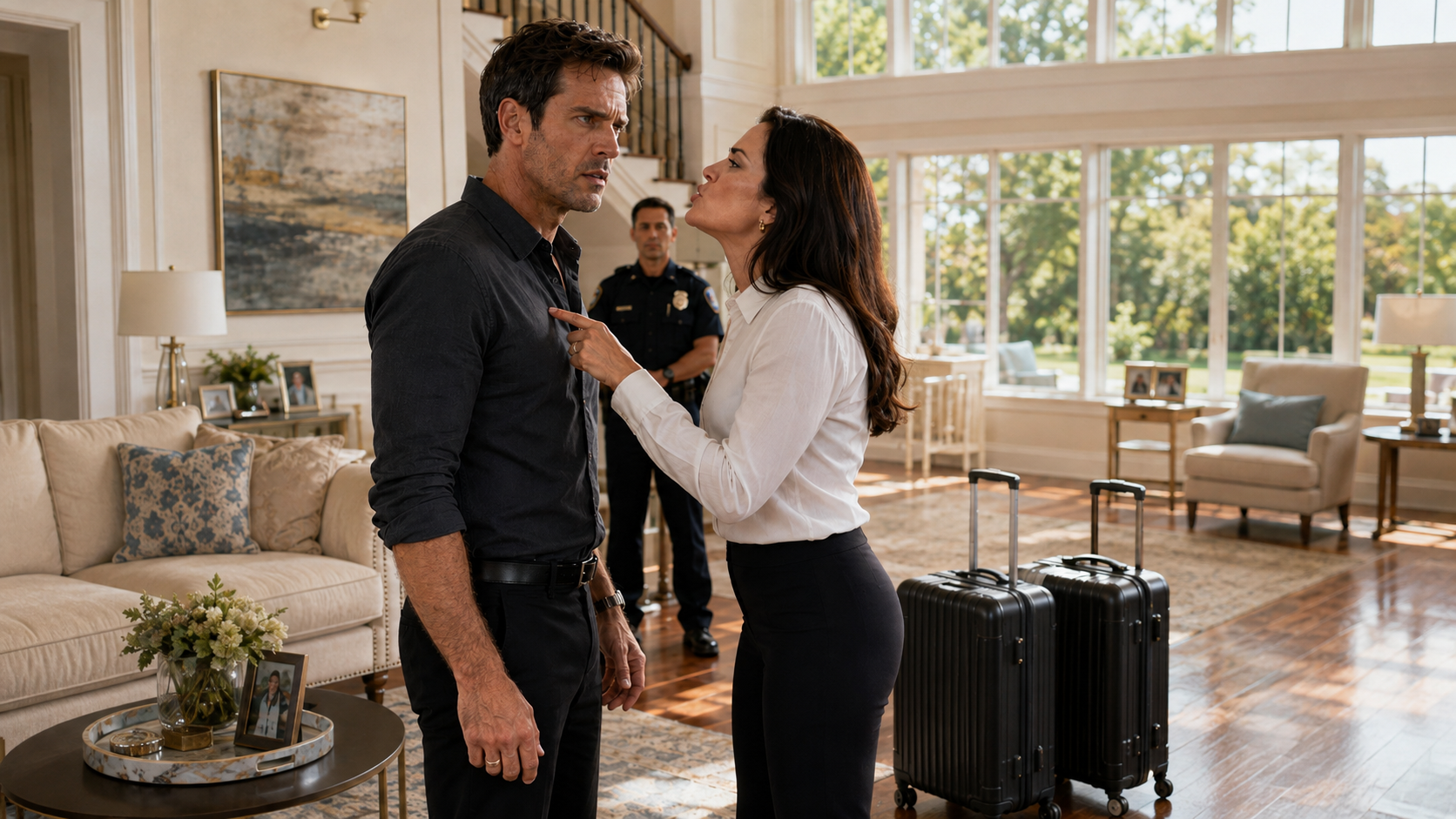
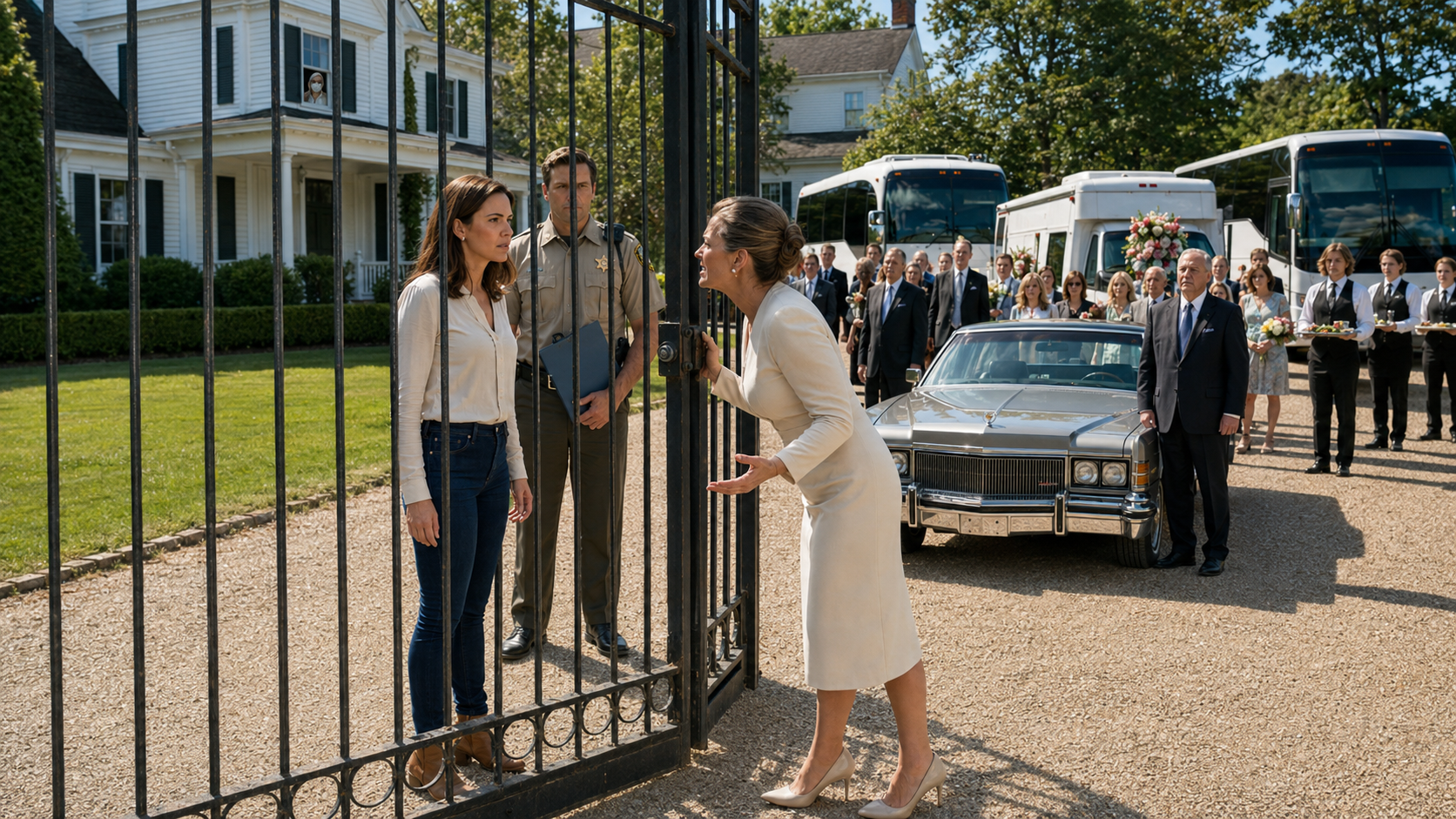
    At 9:00 exactly, my parents’ silver Cadillac appeared at the bend in the road.

    Behind it came the first charter bus.

    Then the second.

    Then the third.

    Then the catering van.

    For one strange second, I saw the scene through my mother’s eyes.

    It was beautiful.

    Late morning sun.

    The farmhouse visible beyond the trees.

    Guests in formal clothes.

    Musicians arriving.

    Florists waiting with pale arrangements stacked behind van windows.

    Forty years of marriage being delivered to the gate right on schedule.

    Then the Cadillac stopped.

    Because the gate did not open.

    My father honked once.

    A short, irritated tap.

    Then again.

    Longer.

    My mother got out.

    She wore an ivory dress and low pearl-colored heels, her hair pinned neatly at the back.

    For one painful second, she looked exactly like the mother from my childhood.

    Elegant.

    Composed.

    Certain that any room would reorganize itself around her arrival.

    Then she saw me.

    Then Daniel.

    Then the notice on the gate.

    Her face changed.

    Not completely.

    My mother had too much practice for that.

    But I saw the moment beneath the surface.

    Confusion first.

    Then disbelief.

    Then rage trying to disguise itself as dignity.

    She walked toward the gate.

    “Sienna.”

    I said nothing.

    Her eyes flicked toward Daniel.

    Then back to me.

    “Open this.”

    Daniel moved closer to the gate.

    Not aggressively.

    Just enough to make his presence part of the conversation.

    My mother pointed toward the keypad.

    “The code isn’t working.”

    “I changed it.”

    She stared at me.

    “Why?”

    “Because the party isn’t happening here.”

    For half a second, there was no sound except the engine of the bus idling behind them.

    Then my mother laughed.

    It was short and sharp.

    “You cannot be serious.”

    “I am.”

    She lowered her voice.

    “Sienna, there are guests behind us.”

    “I can see them.”

    “The caterer is here.”

    “I know.”

    “The musicians are here.”

    “I know.”

    Her eyes widened.

    “You knew they were coming?”

    “Yes.”

    “And you let everyone drive all the way up here?”

    “I told you yesterday there would be no party in this house.”

    “No, you didn’t.”

    “I told you forty guests were not coming here.”

    “And then you said all right.”

    “Yes.”

    “You agreed.”

    “I said all right after you told me to keep my recovering child upstairs.”

    Her face tightened.

    “That is a grotesque distortion of what I said.”

    “No, Mom. It is exactly what you said.”

    My father got out of the Cadillac.

    He slammed the door harder than necessary.

    “What is going on?”

    My mother turned.

    “She changed the gate code.”

    My father looked at me.

    “Open it.”

    “No.”

    He stared as if the word itself offended him.

    “What?”

    “No.”

    Behind him, the first bus door opened.

    Guests began stepping down.

    I recognized relatives.

    Family friends.

    People I had known since childhood.

    Aunt Elaine.

    Cousin Beth.

    My father’s old business partner.

    My mother’s college roommate.

    A few people I barely knew.

    They looked around with the confused excitement of people who had just realized the entertainment might not be the quartet.

    My father walked toward the gate.

    “Sienna, enough.”

    Daniel lifted the laminated copy of the signed notice.

    “Sir, permission to enter this property for today’s event has been withdrawn.”

    My father looked at him.

    “Excuse me?”

    Daniel’s voice remained calm.

    “No event staff, guests, or vendors are authorized to enter.”

    My mother gave him a dismissive smile.

    “I’m her mother.”

    “That does not change the paperwork.”

    Her smile disappeared.

    I almost heard the shift in the crowd.

    Someone behind the buses whispered.

    My father stepped closer.

    “We had an agreement.”

    I lifted the cream envelope.

    “You told me to clear out the farmhouse.”

    My mother’s eyes narrowed.

    “What are you talking about?”

    “I did.”

    I slid the envelope through the bars.

    My father caught it automatically.

    “What is this?”

    “The address and key for the storage unit.”

    He looked at me.

    “What storage unit?”

    “The one holding your things.”

    My mother went completely still.

    “What things?”

    “Everything you had stored in my house.”

    Her mouth opened.

    I continued before she could speak.

    “The folding tables. Garment bags. sealed cases from the mudroom. linens. records. framed photos. decorations. Everything was photographed, inventoried, and moved to climate-controlled storage yesterday. I paid three months in advance.”

    My father tore open the envelope.

    My mother stared through the gate at me as though I had slapped her.

    “You moved my belongings?”

    “Yes.”

    “You had no right.”

    The irony was so perfect it almost hurt.

    I kept my voice even.

    “They were in my house.”

    “This is a family property.”

    “No. It isn’t.”

    Something flickered in my father’s face.

    My mother either didn’t notice or chose not to.

    “Open the gate,” she said again.

    “No.”

    “Sienna.”

    “No.”

    “You are humiliating us.”

    I looked past her.

    Forty guests stood near three buses.

    The florist was pretending to check something in her van.

    One violinist had stepped out again but remained wisely silent.

    The catering manager stood with his phone against his chest.

    I looked back at my mother.

    “You planned a party at my home after I told you my daughter’s doctors prohibited crowds. You gave vendors instructions to enter through my kitchen. You told me to keep Maya upstairs so you wouldn’t have to change your celebration. You did all of that. I changed a lock.”

    Her cheeks flushed.

    “This was supposed to be a family celebration.”

    “My daughter is family.”

    “She wouldn’t even have needed to come downstairs!”

    I heard the words before I fully understood that she had actually said them.

    So did everyone else.

    The conversations behind her stopped.

    My father closed his eyes briefly.

    My mother seemed to realize too late that her voice had carried.

    I looked toward the farmhouse.

    Upstairs, behind the glass of the front bedroom window, Maya stood wearing her mask.

    She was small at that distance.

    Too small.

    One hand rested against the window frame.

    My mother followed my gaze.

    “There,” she said, frustrated, pointing. “She’s upstairs, exactly where I said she should be.”

    Even the florist stopped moving.

    I will remember that silence for the rest of my life.

    Not because it was dramatic.

    Because it was clean.

    Nothing left to interpret.

    No private conversation my mother could later describe differently.

    No tone she could deny.

    No context she could rearrange.

    Forty guests had just heard her say it.

    My twelve-year-old granddaughter recovering from a bone marrow transplant is upstairs.

    So what is the problem?

    I looked at my mother.

    Her hand slowly lowered.

    Then Daniel opened the blue folder.

    My father saw it first.

    I knew because the anger in his face changed.

    Not vanished.

    Changed.

    He knew that folder.

    Or at least what kind of documents were inside.

    Daniel removed the first notarized page.

    He placed it flat across the hood of his car.

    My mother frowned.

    “What is that?”

    Daniel pointed to the county recording stamp.

    “The deed.”

    Her face drained.

    For the first time that morning, the locked gate was no longer the thing my parents needed to worry about.


    PART 4: THE FACT THEY FORGOT

    My mother looked at the deed as if recognizing it might somehow make it less real.

    Daniel placed one finger beside the recorded owner’s name.

    Mine.

    “Sienna Hale acquired the property through a documented sale from Evelyn Mercer,” he said. “The deed was recorded with the county. The supporting documents include the appraisal, bill of sale, transfer records, and notarized signatures.”

    My mother looked at me.

    “I know what happened with the house.”

    “Do you?”

    Her eyes flashed.

    “Of course I do.”

    “Then why are you standing outside it insisting I have no right to move your belongings or decide who enters?”

    She ignored that.

    Instead she turned toward Daniel.

    “This is a family matter.”

    Daniel nodded.

    “It can remain one as long as nobody attempts to enter after permission has been withdrawn.”

    My father stepped toward the paperwork.

    “Let me see that.”

    Daniel let him.

    Dad read the first page.

    Then the second.

    His jaw tightened.

    There was no surprise in his eyes.

    That mattered.

    He remembered.

    I watched him scan my grandmother’s signature, mine, the legal description of the property, the county stamp.

    My mother looked from him to me.

    “Richard?”

    He did not answer.

    “Richard.”

    My father handed the page back to Daniel.

    “It’s hers.”

    Three words.

    That was all.

    But they passed through the gate like a gust of wind.

    My mother stared at him.

    “What?”

    “You know that.”

    Her voice dropped.

    “She bought it from Evelyn.”

    “Yes.”

    “But Evelyn sold it to her because she wanted it kept for the family.”

    “No,” I said. “Grandma sold it to me because I wanted the property and agreed to take responsibility for it.”

    “You knew what she meant.”

    “I knew exactly what she meant.”

    I reached through the gate and tapped the blue folder.

    “She made sure I did.”

    There was a letter in that binder.

    Not a secret document.

    Not a hidden condition.

    Just a letter Grandma wrote after closing because she knew our family.

    I had read it the night before.

    For the first time in years.

    A home stays yours only if you are willing to decide what happens inside it.

    Grandma had known me too.

    She knew how easily I surrendered space to avoid conflict.

    At the time, I had thought her advice sounded unnecessarily severe.

    Now I understood it was a warning.

    My mother stepped closer to the bars.

    “We have used this property for years.”

    “With my permission.”

    “We stored things here.”

    “With my permission.”

    “We hosted holidays here.”

    “With my permission.”

    “You gave us the gate code.”

    “With my permission.”

    Her lips parted.

    I watched realization arrive.

    Not the realization that she had hurt Maya.

    That would come later, if it came at all.

    The first realization was simpler.

    Permission could be withdrawn.

    My father rubbed one hand across his face.

    “Can we discuss this privately?”

    “We tried privately yesterday.”

    “Sienna.”

    “I said no.”

    “You said all right.”

    “I stopped arguing. That was not consent.”

    My mother looked toward the guests.

    The crowd had become painfully quiet.

    Some people pretended to be occupied with their phones.

    Aunt Elaine was staring directly at my mother.

    Cousin Beth had moved back toward the bus.

    The catering staff had gathered beside their van.

    This was my mother’s nightmare.

    Not merely losing control.

    Losing control in public.

    She leaned toward me and lowered her voice.

    “You are enjoying this.”

    “No.”

    “Yes, you are.”

    I shook my head.

    “If I wanted to humiliate you, I could have posted every message you sent me in the family chat last night.”

    Her eyes hardened.

    “I didn’t.”

    That made her pause.

    “I could have sent everyone the voicemail where you told the caterer to use my kitchen entrance without asking me.”

    Another pause.

    “I didn’t.”

    I nodded toward the buses.

    “I could have called all your guests and explained exactly why they were being uninvited.”

    She said nothing.

    “I didn’t do that either.”

    “Then what do you call this?”

    “A locked gate.”

    My voice cracked slightly.

    I hated that.

    I had wanted to remain perfectly calm.

    But emotion had finally reached the surface.

    “I call this the first no you couldn’t talk over.”

    My father looked at me.

    Something shifted in his expression.

    I had spent years thinking Dad was different from Mom because he was quieter.

    That morning I finally understood the flaw in that logic.

    Silence was not opposition.

    He had watched her override me for years.

    He had benefited from it.

    He had helped plan a forty-person party in my home.

    He had posted my floor plan in the family chat.

    He had labeled my kitchen island a bar.

    Quiet did not make him innocent.

    “You posted a floor plan of my house,” I said to him.

    His face reddened.

    “I was trying to organize things.”

    “You never asked.”

    “Your mother said you agreed.”

    “You heard me explain Maya’s restrictions last week.”

    He looked away.

    There.

    That was the part that hurt.

    My mother could tell herself any story she needed.

    My father had understood perfectly well.

    He had simply chosen the easier side.

    “You knew,” I said.

    Dad’s shoulders lowered.

    “Sienna…”

    “You knew forty people should not be inside the house.”

    “I thought we could keep them downstairs.”

    I laughed, but there was no humor in it.

    “So you both had the same solution.”

    He did not answer.

    “Put Maya away.”

    “That’s not fair.”

    “Isn’t it?”

    I pointed toward the upstairs window.

    “My daughter has spent months being separated from normal life because she was fighting to stay alive. She came home eleven days ago. Eleven. And your solution was to confine her to one room in her own home so your party wouldn’t be inconvenienced.”

    My father looked at the ground.

    My mother’s eyes filled.

    I had seen those tears before.

    They did not always mean remorse.

    Sometimes they meant she was losing.

    “You have no idea what this anniversary means to us,” she whispered.

    I looked at her ivory dress.

    At the flowers waiting in a van.

    At the charter buses.

    At people who had traveled to celebrate forty years of her marriage.

    “I do know.”

    “No, you don’t.”

    “Then tell me.”

    “This year has been horrible.”

    That surprised me.

    Not because it was untrue.

    Because it was the first honest sentence she had said.

    Her voice shook.

    “Your father and I spent months watching you and Maya go through this. Every conversation was hospitals. Blood counts. Donors. Infections. Whether she could eat. Whether she could go home. Whether the transplant would happen on schedule.”

    I stared at her.

    She wiped under one eye carefully.

    “We needed one good day.”

    For one dangerous second, guilt moved through me.

    It was an old reflex.

    Fast.

    Familiar.

    My mother was hurt.

    Therefore I must fix it.

    Then I looked at Maya’s window.

    “You could have had one.”

    Mom’s brow furrowed.

    “At the club. Or another venue. Or next month. Or with fewer people somewhere else.”

    “The club canceled.”

    “The club had a plumbing problem.”

    “Exactly.”

    “And somehow that became Maya’s problem.”

    She looked away.

    “You needed one good day,” I continued. “I understand that. But you decided you were entitled to take hers.”

    My mother looked back at me.

    “What does that even mean?”

    “It means she finally feels safe here.”

    My throat tightened.

    “She finally sleeps longer than two hours at a time. She finally eats without a nurse measuring everything. She finally goes a whole afternoon without hearing alarms from the hallway. She finally has a door she can open when she wants instead of one people enter wearing gloves.”

    I wiped my cheek.

    I had not realized I was crying.

    “You looked at all of that and decided it was less important than your flowers.”

    Nobody spoke.

    Aunt Elaine began walking toward us.

    My mother stiffened.

    “Elaine, please.”

    My aunt stopped several feet away.

    She looked embarrassed.

    Not for herself.

    For my mother.

    “Margaret,” she said quietly, “we should go.”

    Mom stared at her.

    “Go where?”

    “Anywhere else.”

    “It’s our anniversary.”

    “I know.”

    “We have forty people.”

    “I can count.”

    My mother’s eyes narrowed.

    Aunt Elaine lowered her voice.

    “But the child just had a transplant.”

    That sentence did what nothing I had said could.

    My mother heard it from someone whose approval she cared about.

    Her face changed.

    She glanced back toward the guests.

    For the first time, I saw the scene through their eyes.

    Not a daughter ruining a celebration.

    A grandmother demanding entrance to the home of an immunocompromised child.

    There was no version of that story my mother could polish quickly enough.

    The catering manager approached.

    “Mrs. Hale?”

    My mother turned sharply.

    “Yes?”

    “We need to know whether we should leave.”

    Mom looked at me.

    I did not move.

    She looked at Daniel.

    He did not move.

    Then she looked at my father.

    He folded the storage papers back into the cream envelope.

    “Tell them to go,” he said.

    My mother’s mouth opened.

    “Richard.”

    “We’re not getting in.”

    “We could move the dinner somewhere else.”

    “Yes.”

    “Where?”

    “I don’t know.”

    “You don’t know?”

    “No.”

    For forty years, my father had allowed my mother to believe that enough certainty could force reality to cooperate.

    That morning, reality finally declined.

    One by one, vendors began leaving.

    The musicians first.

    Then the florist.

    Then the catering van.

    Guests returned slowly to the buses.

    Some hugged my parents.

    Some avoided looking at me.

    A few looked toward Maya’s upstairs window.

    Aunt Elaine remained.

    Before returning to her bus, she came to the gate.

    “Sienna.”

    I looked at her.

    “You did the right thing.”

    I almost cried again.

    Instead I nodded.

    “Thank you.”

    My mother heard her.

    I knew because her shoulders went rigid.

    The buses began turning around carefully on the road.

    My mother watched them leave.

    Then she faced me.

    “You have destroyed this day.”

    “No.”

    My voice was tired now.

    “You tried to hold it somewhere you had no right to use.”

    She stared at me for a long moment.

    Then her gaze shifted toward the blue folder.

    “What else is in there?”

    That was when I understood she was still afraid of another surprise.

    There wasn’t one.

    I had no hidden lawsuit.

    No inheritance trap.

    No secret eviction waiting.

    The truth was powerful enough.

    “Nothing you don’t already know,” I said.

    That answer unsettled her more than any threat could have.

    Daniel closed the folder.

    “The property is hers,” he said simply. “That’s the fact you need to remember.”

    My father touched my mother’s elbow.

    “Come on.”

    She pulled away.

    Then she looked through the gate at me.

    Not angry this time.

    Not exactly.

    Wounded.

    “You would choose this house over your own parents?”

    I looked at her.

    “No.”

    Then I looked toward Maya’s window.

    “I chose my daughter.”

    My mother flinched.

    My father opened the passenger door of the Cadillac.

    For once, she had no answer.

    She got in.

    The car drove away.

    I stood at the gate until the silver disappeared around the bend.

    Then the road became quiet.

    Really quiet.

    No buses.

    No caterer.

    No quartet.

    No forty-person anniversary celebration.

    Only wind moving through the trees.

    Daniel handed me the blue folder.

    “You okay?”

    I looked at the empty road.

    “No.”

    He nodded.

    “Good answer.”

    I smiled weakly.

    “Was that terrible?”

    “Yes.”

    “Was I terrible?”

    “No.”

    I held the folder against my chest.

    Behind us, the farmhouse waited.

    Safe.

    Quiet.

    Still ours.

    I turned toward it.

    Upstairs, Maya was no longer at the window.

    For one terrifying second, my heart jumped.

    Then the front door opened.

    She stood inside the screened entry wearing her mask.

    I hurried toward her.

    “What are you doing downstairs?”

    She lifted both hands.

    “I didn’t go outside.”

    “You’re supposed to be resting.”

    “I was.”

    “That was not resting.”

    She pulled the mask down just enough to grin.

    “Did Grandma freak out?”

    I stared at her.

    Then I laughed.

    A real laugh.

    The first one in months that did not feel borrowed.

    “Put your mask back on.”

    She did.

    “Did she?”

    “Yes.”

    Maya’s eyes crinkled.

    “Good.”

    Then her expression changed.

    “Is that mean?”

    I stopped in front of her.

    “No.”

    I thought about it.

    “Maybe a little.”

    She laughed behind the mask.

    I opened the door.

    “Come on. Inside.”

    As she stepped back, she glanced at the empty mudroom.

    “Where did all the stuff go?”

    “Storage.”

    “All of Grandma’s giant boxes?”

    “Storage.”

    “The weird silver punch bowl?”

    “Storage.”

    “The folding tables Grandpa always leaves in the way?”

    “Storage.”

    She stared at me with open admiration.

    “You really cleared out the farmhouse.”

    I kissed the top of her knit cap.

    “Yes.”

    “I think Great-Grandma would’ve liked that.”

    I looked down at the blue folder.

    So did I.


    PART 5: WHAT BELONGED TO US

    The anniversary party still happened.

    Just not at my house.

    I learned later that my father called three hotels from the car.

    The third had a private dining room available for the evening.

    Not all forty guests stayed.

    Some returned to the city.

    Others checked into rooms and waited while my mother’s carefully planned afternoon event became an improvised dinner several hours later.

    The quartet was unavailable by then.

    The florist managed to redirect some arrangements.

    The caterer charged a cancellation fee.

    Nothing was ruined beyond repair.

    Which mattered to me.

    Because despite what my mother claimed, I had never wanted to destroy their anniversary.

    I simply refused to let them use Maya’s recovery as the price of saving it.

    The family group chat went silent for two days.

    Then, on Monday morning, Aunt Elaine posted one message.

    How is Maya feeling today?

    Not the party.

    Not the gate.

    Not the embarrassment.

    Maya.

    I replied:

    Temperature normal. Eating better. Doctors are pleased so far.

    Cousin Beth sent a heart.

    My father’s business partner wrote:

    Good news.

    Then other messages followed.

    Small ones.

    Ordinary ones.

    For the first time in days, Maya was the center of the conversation for the right reason.

    My parents said nothing.

    On Tuesday, my father texted asking whether the storage facility allowed weekend pickup.

    I sent him the hours.

    He replied:

    Thank you.

    That was all.

    On Thursday, he came alone.

    Not to the house.

    To the gate.

    He called from his car.

    I stood at the kitchen window looking down the drive.

    Maya was upstairs doing schoolwork remotely.

    Her numbers were improving slowly.

    Everything was still fragile.

    I answered.

    “Yes?”

    “I’m at the gate.”

    “I know.”

    “I’d like to talk.”

    I did not open it immediately.

    That felt important.

    “What about?”

    He sighed.

    “Saturday.”

    I looked at the keypad monitor.

    My father sat in the Cadillac with both hands on the steering wheel.

    No mother beside him.

    No audience.

    No buses.

    “Are you sick?” I asked.

    “What?”

    “Cold, cough, fever, sore throat?”

    “No.”

    “Have you been around anyone sick?”

    “No.”

    “Then I’ll meet you on the porch. You wear a mask.”

    A pause.

    “All right.”

    I opened the gate remotely.

    He parked near the barn.

    By the time he reached the porch, I had placed two chairs six feet apart.

    There were masks on the small table.

    He put one on without comment.

    That alone told me something had changed.

    Not enough.

    But something.

    For a moment, neither of us spoke.

    Then my father looked toward the upstairs windows.

    “How is she?”

    “Better.”

    “I mean really.”

    “She’s exhausted. Her appetite changes by the hour. She hates her medications. She misses school. She misses her friends. Every time her temperature goes up half a degree, I stop breathing.”

    He nodded.

    “I should’ve asked.”

    “Yes.”

    He looked down.

    A long silence.

    “I knew the house was yours.”

    “I know.”

    His head came up.

    I held his gaze.

    “You recognized those documents before Mom did.”

    He exhaled.

    “I remembered the closing.”

    “You were there.”

    “I was.”

    “You helped Grandma find the appraiser.”

    “I did.”

    “So when Mom said I had no right to stop the party—”

    “I knew she was wrong.”

    “But you said nothing.”

    His eyes closed for a second.

    “No.”

    “Why?”

    The old version of my father might have said he was trying to keep the peace.

    This time, maybe because the gate had already stripped away our usual lies, he gave me a better answer.

    “Because disagreeing with your mother is exhausting.”

    I stared at him.

    He rubbed his hands together.

    “That sounds pathetic when I say it out loud.”

    “Yes.”

    He almost smiled.

    Then the smile disappeared.

    “I spent years telling myself that if something mattered enough, I’d step in.”

    My chest tightened.

    “And did this not matter enough?”

    “It should have.”

    Not good enough.

    But honest.

    I looked toward the yard.

    “Do you know what Maya asked me Friday night?”

    He shook his head.

    “She asked whether you would blame her.”

    His face changed.

    “She thought forty people losing a party venue might be her fault because she was sick.”

    My father leaned back in the chair.

    “Oh, God.”

    “That is what all of this did to her.”

    “I never wanted that.”

    “Intent doesn’t undo it.”

    “I know.”

    “Do you?”

    He nodded slowly.

    “I’m starting to.”

    We sat in silence.

    A bird landed on the porch rail.

    For weeks, I had imagined what I would say if one of my parents finally apologized.

    I thought I would have a speech.

    Instead I mostly felt tired.

    Dad looked at the front door.

    “I went to the storage unit yesterday.”

    “Everything there?”

    “Yes.”

    “Nothing damaged?”

    “No.”

    “Good.”

    He gave me a strange look.

    “You paid three months.”

    “Yes.”

    “You didn’t have to do that.”

    “I wasn’t trying to punish you.”

    He nodded.

    “I know.”

    That seemed to be the hardest part for him.

    If I had thrown their things into the road, they could have made me the villain.

    If I had damaged something, they could have focused on that.

    If I had screamed at the guests, they could have spent years telling the story of my instability.

    Instead, I had moved every item carefully.

    Stored it safely.

    Paid the bill.

    Documented everything.

    Locked the gate.

    There was nothing to argue with except the boundary itself.

    Dad cleared his throat.

    “Your mother is having a harder time.”

    “I assumed.”

    “She feels betrayed.”

    I almost laughed.

    “Of course she does.”

    “I told her she can’t call this betrayal.”

    “Thank you.”

    “She isn’t ready to agree.”

    “That’s not my problem.”

    The words came easily.

    I noticed that.

    Two weeks earlier, I might have softened them.

    Added an apology.

    Explained what I meant.

    I didn’t.

    Dad studied me.

    “You’re different.”

    “No.”

    I thought about it.

    “Maybe I’m just tired of performing the version of me that made everyone else comfortable.”

    He looked toward the trees.

    “That sounds like something your grandmother would say.”

    “It’s not.”

    “What did she say?”

    I hesitated.

    Then I told him.

    “A home stays yours only if you are willing to decide what happens inside it.”

    Dad was quiet.

    “She wrote that?”

    “Yes.”

    He shook his head and laughed softly.

    “That sounds like her.”

    “It does.”

    Another silence.

    Then he said, “I’m sorry.”

    I looked at him.

    He did not add a qualification.

    No but.

    No explanation.

    No request that I understand his position.

    So I let the words remain what they were.

    “I’m sorry I helped plan the party here after you said no,” he continued. “I’m sorry I treated the house like something I could use without asking. And I’m sorry I let your mother talk about Maya as if she could just be put away upstairs.”

    My throat tightened.

    “Thank you.”

    “I should’ve protected you both.”

    I looked at him for a long time.

    “I didn’t need you to protect me.”

    He nodded.

    “No.”

    “I needed you not to help her push past me.”

    “I know.”

    That was as far as we got.

    It was enough for one afternoon.

    Before he left, he asked whether he could see Maya.

    I said no.

    He flinched.

    I continued.

    “Not yet. Her doctors want visitors very limited.”

    He nodded.

    “Of course.”

    No sigh.

    No complaint.

    No wounded performance.

    Just of course.

    I walked him to the gate.

    He paused beside the car.

    “Your mother wants to call.”

    “I’m not ready.”

    “I told her.”

    “Thank you.”

    “When you are?”

    “I’ll decide.”

    He nodded.

    Then he left.

    The gate closed behind him.

    And for once, I did not feel guilty watching it happen.

    My mother waited eleven more days.

    Then a letter arrived.

    Not a text.

    Not a voicemail.

    A letter.

    Her handwriting covered three pages.

    The first page was mostly about the anniversary.

    The expense.

    The embarrassment.

    The guests.

    The shock of finding the gate locked.

    I nearly stopped reading.

    Then I turned the page.

    The second page was different.

    She wrote that she had replayed what she said.

    Then keep her upstairs.

    She had heard it repeated back to her by my aunt.

    By my father.

    And, apparently, inside her own head.

    She wrote that in the moment she had been thinking only about logistics.

    As if that made it better.

    Then she wrote something I did not expect.

    I think I have spent a great deal of my life believing that if I can solve the practical problem, I do not have to examine the emotional one.

    I read that sentence three times.

    She did not ask me to excuse her.

    She did not say I misunderstood.

    She did not say she had only meant well.

    On the third page, she wrote:

    I treated your home as mine because you had allowed me to use it for so long that I stopped recognizing the difference between generosity and entitlement.

    My eyes blurred.

    Then:

    I treated Maya’s isolation as an obstacle to my celebration instead of recognizing that her recovery was the only event in our family that truly mattered that weekend.

    I stopped reading.

    I sat at the kitchen island with the letter in front of me and cried.

    Not because everything was fixed.

    It wasn’t.

    One letter could not repair years.

    But for the first time, my mother had named what she had done without asking me to carry half the blame.

    At the bottom was one final line.

    I will not come to the farmhouse unless you invite me.

    No demand.

    No timetable.

    No guilt.

    I folded the letter.

    Then I carried it upstairs.

    Maya was sitting in bed with her laptop open.

    “How bad?” she asked.

    “What?”

    “Grandma’s letter.”

    I laughed.

    “How did you know?”

    “You have your Grandma Face.”

    “My what?”

    “The face you make when you’re talking to Grandma but she isn’t there.”

    “That is not a thing.”

    “It absolutely is.”

    I sat beside her.

    “She apologized.”

    Maya looked suspicious.

    “Like apologized-apologized?”

    “I think so.”

    “For the party?”

    “For the party. The house. What she said about you.”

    Maya was quiet.

    “Does that mean she’s coming over?”

    “No.”

    “Oh.”

    “Not unless we invite her.”

    Maya looked at me.

    “Do we have to?”

    There it was.

    The question beneath everything.

    Did an apology create an obligation?

    Did regret erase the boundary?

    Did love require immediate access?

    “No,” I said.

    Maya relaxed.

    “We can forgive someone and still take our time.”

    She nodded.

    Then she looked at the letter.

    “Can I read it?”

    “Some of it.”

    I read her the paragraph about the anniversary.

    Then the paragraph about treating her recovery as an obstacle.

    Maya listened quietly.

    When I finished, she said, “That was pretty bad.”

    “Yes.”

    “At least she knows.”

    “I think she does.”

    Maya pulled the blanket higher.

    “Maybe she can visit when my doctor says I can have more people.”

    “Maybe.”

    “And she wears a mask.”

    “Yes.”

    “And she doesn’t complain.”

    “Absolutely.”

    Maya smiled.

    “And no quartet.”

    I laughed.

    “No quartet.”

    “Good.”

    Summer moved slowly after that.

    Maya’s recovery did not become miraculous just because the family drama ended.

    Some days were good.

    Some were frightening.

    There were blood tests.

    Medication adjustments.

    One fever that sent us back to the hospital for twelve terrifying hours.

    A rash that turned out to be manageable.

    Weeks when she hated food.

    Days when she wanted nothing more than to run outside and couldn’t.

    Her hair came back slowly.

    Her strength returned even more slowly.

    But she returned.

    Piece by piece.

    In September, her doctor finally loosened some restrictions.

    In October, she sat on the porch wrapped in a blanket and watched leaves fall from the maple trees.

    My father visited twice, always asking first.

    My mother did not come until November.

    She texted me three days beforehand.

    Would it be all right if I visited Maya for thirty minutes Sunday? I will follow whatever precautions you want. If not, I understand.

    I stared at the message.

    Then I showed Maya.

    “What do you think?”

    She read it.

    “Thirty minutes?”

    “That’s what she asked.”

    “Can she bring those lemon cookies?”

    I smiled.

    “If they’re sealed.”

    “Then okay.”

    Sunday afternoon, my mother arrived alone.

    She stopped at the gate.

    She did not enter the old code.

    She called.

    That detail nearly broke my heart.

    Not because I wanted her to feel small.

    Because she finally understood that asking was not humiliation.

    I opened the gate.

    She parked beside the barn.

    When she reached the porch, she was already wearing a mask.

    No complaints.

    No jokes.

    No dramatic sighs.

    She held a sealed bakery box.

    I opened the door.

    For a second, neither of us spoke.

    Then she said, “Thank you for letting me come.”

    Not my farmhouse.

    Not our place.

    Not I’m your mother.

    Thank you.

    “You’re welcome.”

    Maya called from the living room.

    “Grandma?”

    My mother’s eyes filled immediately.

    She stepped inside.

    Then stopped.

    “Shoes?”

    “Off.”

    She removed them.

    “Hands?”

    “Sink.”

    She washed them.

    “Where should I sit?”

    I pointed to the chair we had prepared.

    She sat there.

    Maya came in wearing a mask but no longer a knit cap.

    Her hair was short and soft and uneven.

    My mother stared at her.

    Maya touched her head self-consciously.

    “It looks weird.”

    “No,” Mom said.

    Her voice broke.

    “It looks beautiful.”

    Maya rolled her eyes.

    “That’s such a grandma thing to say.”

    Mom laughed.

    Then cried.

    Then laughed again.

    I stood in the kitchen doorway and watched them.

    Nothing had returned to normal.

    That was the point.

    Normal had included too many things I should never have accepted.

    What we were building now was different.

    Smaller.

    Slower.

    Asked for instead of assumed.

    Thirty minutes later, my mother stood.

    “I should go.”

    Maya looked surprised.

    “You don’t have to leave exactly at thirty.”

    Mom looked at me.

    Not Maya.

    Me.

    The homeowner.

    The mother.

    The person whose answer mattered.

    I nodded.

    “You can stay another fifteen.”

    “Thank you.”

    It was such a tiny thing.

    But sometimes healing is made of tiny things done correctly.

    The following spring, Maya turned thirteen.

    We celebrated at the farmhouse.

    Eight people.

    All invited.

    Every one of them healthy.

    The windows were open because her doctors finally allowed it.

    There were balloons in the sunroom.

    Cake on the kitchen island.

    No bar.

    No seating chart.

    No quartet.

    My father grilled outside.

    Aunt Elaine brought flowers.

    My mother arrived with lemon cookies and asked where I wanted them.

    At one point, I stood alone in the mudroom.

    Sunlight stretched across the floorboards.

    The room was still mostly empty.

    My parents had collected everything from storage months earlier.

    We never filled the space again.

    I liked it that way.

    Maya ran through the hallway laughing at something her cousin had said.

    Running.

    Actually running.

    For a moment, I had to grip the edge of the doorway.

    A year earlier, I had been afraid to imagine that sound.

    I closed my eyes and listened.

    Her feet on the floor.

    Her laugh.

    My father calling after her not to knock over the cake.

    My mother telling him to leave her alone.

    Ordinary noise.

    The most beautiful sound in the world.

    Then Maya appeared.

    “Mom, come on.”

    “I’m coming.”

    “You’re doing the staring thing.”

    “What staring thing?”

    “The emotional-mom staring thing.”

    “That is also not a thing.”

    “It is absolutely a thing.”

    She took my hand.

    I let her pull me toward the kitchen.

    As we passed the front window, I could see the iron gate far down the drive.

    The same gate my mother had once stood outside demanding I open.

    For years, I thought boundaries were cruel because people became angry when I set them.

    I thought saying no meant I had failed to explain myself properly.

    I thought love required endless access.

    Then my daughter got sick.

    And I learned something simple.

    A locked door is not an act of cruelty when the person outside refuses to respect the people inside.

    That Saturday morning had looked, from the road, like a family falling apart.

    Three buses turning around.

    An anniversary celebration collapsing.

    My mother crying beside a silver Cadillac.

    A deputy holding a notarized deed.

    But from where I stood now, I understood what had really happened.

    Nothing valuable had been destroyed.

    A dangerous assumption had.

    My parents had believed the farmhouse was theirs because I had spent years letting them forget it belonged to me.

    I had believed keeping the peace meant surrendering whatever space they demanded.

    Maya had believed her illness made her a burden.

    All three beliefs ended at the same locked gate.

    I squeezed my daughter’s hand.

    She looked up.

    “What?”

    “Nothing.”

    She narrowed her eyes.

    “You’re being weird.”

    “I know.”

    “Are you going to cry?”

    “Probably.”

    “Oh my God, Mom.”

    She dragged me into the kitchen.

    Everyone laughed when they saw my face.

    I laughed too.

    Then Maya stood in front of thirteen candles while the people we had chosen gathered around her.

    My mother stayed back until Maya waved her closer.

    My father turned off the lights.

    The room glowed.

    For one second, I remembered another morning when this kitchen island had been labeled BAR on a floor plan I never approved.

    Then Maya took a breath.

    A deep one.

    Strong enough to blow out every candle.

    Everyone cheered.

    I watched smoke curl upward.

    One year.

    One impossible, precious year.

    My mother touched my arm.

    Only lightly.

    Only after checking my face first.

    “She looks happy,” she whispered.

    “She is.”

    Mom nodded.

    Then, almost too softly to hear, she said, “You were right to lock the gate.”

    I looked at her.

    A year earlier, I might have rushed to make the admission easier for her.

    I might have said we all made mistakes.

    I might have told her not to think about it.

    I didn’t.

    I simply said, “I know.”

    And then I turned back to my daughter.

    Because that was the truth beneath all of it.

    The deed.

    The blue folder.

    The storage key.

    The forty stranded guests.

    The anniversary.

    The locked gate.

    My grandmother had made sure the farmhouse legally belonged to me.

    But it took Maya for me to understand what ownership actually meant.

    It meant deciding what I would protect.

    It meant knowing when explanation had become permission for someone to keep pushing.

    It meant opening the door for people who respected it.

    And closing it for people who didn’t.

    My parents told me to clear out my farmhouse.

    So I did.

    I cleared out their boxes.

    Their tables.

    Their decorations.

    Their assumption that my home existed for their convenience.

    And, finally, the part of me that still believed I needed their permission to say no.

    Everything that mattered stayed inside.

    Especially Maya.
  • He Told Me to Leave Everything He Paid For. So I Left Him the Bills.

    He Told Me to Leave Everything He Paid For. So I Left Him the Bills.

    PART 1: The Slap Beneath the Chandelier

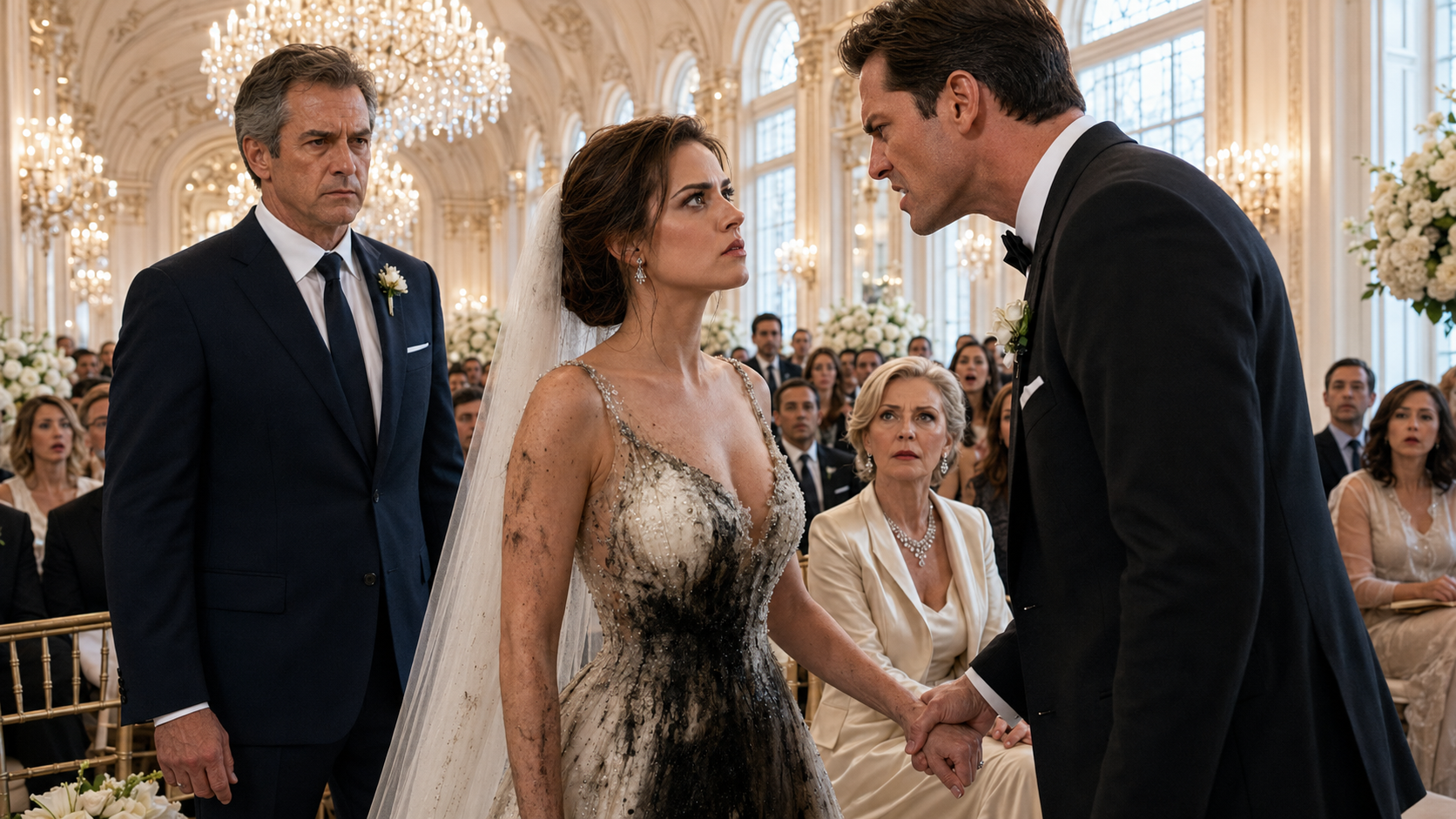
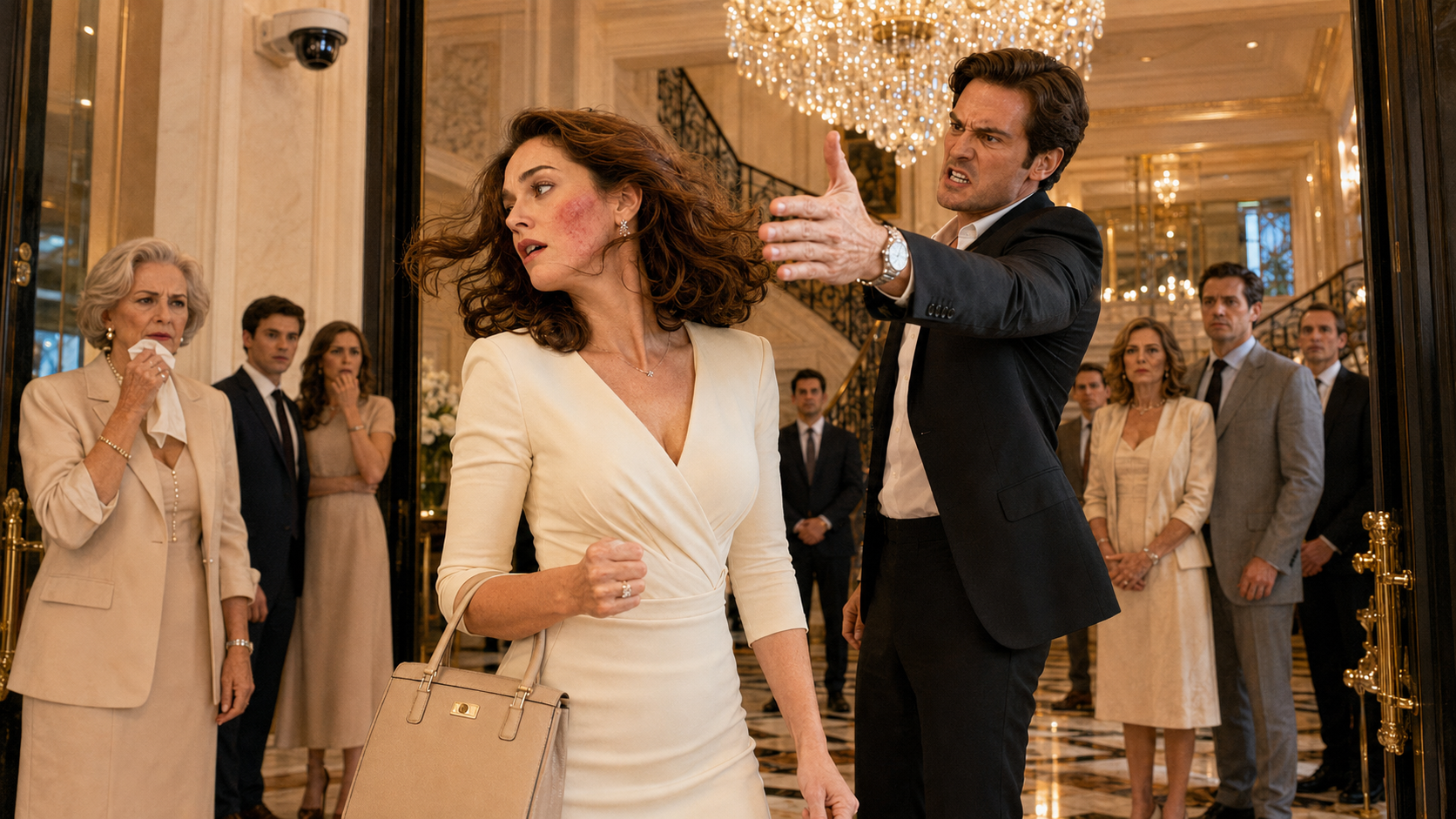
    Daniel’s open hand struck me across the left cheek before anyone in the foyer had finished pretending the evening was civilized.

    The sound cracked beneath the crystal chandelier and came back from the marble walls smaller but sharper, an echo with nowhere to go.

    My head turned.

    One of the controlled curls over my shoulder loosened and brushed my mouth. My right hand closed so hard around my wedding ring that the diamond cut a thin line into my palm.

    For a second, nobody moved.

    Six members of the Brooks family stood behind Daniel near the staircase and sitting room.

    Margaret’s teacup stopped halfway to her lips.

    Peter stared down into his saucer as if something fascinating had appeared in the porcelain.

    Nolan and Reed looked toward the floor.

    Grace held both hands around a cup she had not touched.

    Daniel’s sister, Caroline, inhaled slowly through her nose and stayed exactly where she was.

    No one stepped forward.

    No one said my name.

    No one told him he had crossed a line.

    Daniel pointed toward the front doors.

    “Get out of my house!”

    His voice filled the foyer more completely than the slap had. It climbed the stone columns and trembled among the chandelier crystals.

    He wore the black suit I had ordered for him in Milan after he complained that American tailoring made his shoulders look narrow. His white shirt was open at the collar. A silver watch flashed at his wrist as he pointed at me.

    I had bought that too.

    Not as a gift, technically. Daniel had put it on a card linked to one of my accounts and called it “our money.”

    He had never once asked where the money came from.

    Behind him, his mother, Evelyn Brooks, touched a cream silk handkerchief to eyes that were entirely dry.

    “Leave everything my son paid for.”

    The low strings playing through the hidden speakers had stopped when Daniel struck me. Someone—probably Peter—had paused the music from his phone.

    The resulting silence was so complete that I could hear the faint mechanical hum of the security camera above the foyer doorway.

    I looked up.

    Then at the chandelier.

    Then at the imported cream-and-black marble flooring.

    Then across the sitting room to the family portrait above the fireplace.

    Daniel and Evelyn occupied the center of it, both facing forward, both painted taller than they were. I stood behind Daniel’s right shoulder, one pale hand resting on the back of his chair, as though I had wandered into the composition after the important people had already been arranged.

    I had paid for the chandelier.

    I had paid for the marble.

    I had paid the portrait artist’s second invoice after Evelyn decided the first version made her appear tired.

    Daniel stepped toward me.

    “Why are you still standing here?”

    I opened my injured hand.

    A dark-red line crossed my palm beneath the wedding band.

    For almost eight years, I had convinced myself there was dignity in endurance.

    That was the word I had used.

    Not fear.

    Not humiliation.

    Not denial.

    Endurance.

    I had endured his temper because he had never hit me.

    I had endured his mother because she was “difficult with everyone.”

    I had endured the jokes about my work because Daniel said successful men needed wives who understood when not to compete with them.

    I had endured the family using our house as a private club because family mattered to him.

    I had endured him throwing glasses.

    Punching doors.

    Standing inches from my face.

    Calling me cold when I refused to scream back.

    Telling me I was lucky he loved me when I questioned purchases he had made without asking.

    He had never hit me.

    That distinction had once seemed important.

    Now my face burned beneath the exact shape of his hand.

    I closed my fingers again.

    My breathing slowed.

    On the console table beside a bronze lamp and a porcelain bowl nobody used rested my structured beige handbag.

    I walked toward it.

    My heels made two clean sounds against the marble.

    Daniel shifted as though he might block me, but Caroline moved half an inch.

    Not enough to intervene.

    Only enough to make him aware that somebody was watching.

    I lifted my handbag.

    The metal clasp clicked.

    Then I looked directly into my husband’s eyes.

    “I wanted to remember this exactly.”

    Evelyn gave a soft laugh.

    “For your diary?”

    “No,” I said.

    My cheek throbbed.

    My palm stung.

    My voice did not shake.

    “For court.”

    Something passed through Daniel’s expression.

    It lasted less than a second.

    The rage remained, but underneath it came uncertainty, brief as a shadow crossing water.

    Then it was gone.

    “You’re threatening me now?”

    I almost smiled.

    He still thought everything was a threat because he had never understood the difference between a threat and a consequence.

    I turned toward the doors.

    “Emily,” Caroline said.

    It was the first time anyone had spoken my name.

    I stopped.

    Not because I expected courage from her. I had stopped expecting things from the Brooks family years before.

    Caroline’s lips parted.

    She looked at her brother.

    Then at Evelyn.

    Then back at me.

    Whatever she had intended to say died before it reached the room.

    I nodded once.

    That was enough.

    I crossed the foyer.

    I did not look back at the relatives, the untouched teacups, or the portrait above the fireplace.

    I passed beneath the security camera and stepped outside.

    Behind me, Daniel stood under my chandelier, on my marble, inside a house maintained through accounts he had never bothered to understand, still believing the mansion belonged to him.

    The night air struck my cheek and made the swelling feel larger.

    I crossed the circular drive without putting on my coat.

    Gravel pressed through the thin soles of my cream heels. At the edge of the property, beyond the stone gateposts, a dark sedan waited beneath a sycamore tree with its lights off.

    I opened the rear door and sat down.

    My attorney, Claire Mendoza, turned from the passenger seat.

    She had removed her blazer and folded it beside her. Her dark hair was clipped at the back of her neck, and a paper cup of coffee sat between her knees.

    She looked first at my cheek.

    Then at the hand gripping my handbag.

    “Did he do that?”

    I tried to answer.

    My jaw trembled once, unexpectedly, and I looked down.

    Claire waited.

    The driver, Sam Barlow, kept his eyes on the road.

    Sam was a retired police officer Claire trusted for difficult domestic cases. She had hired him because she believed Daniel might follow me when I finally left.

    Not because either of us expected physical violence.

    Daniel threw glasses.

    Daniel punched doors.

    Daniel came close enough during arguments that I could feel his breath.

    But he had never struck me.

    I opened my hand.

    Blood had gathered along the narrow cut.

    “The ring did this.”

    Claire reached into the glove compartment for a clean napkin.

    “We need photographs before you wash anything.”

    “I know.”

    “Urgent care after that. Then the police.”

    “I know.”

    “Emily.”

    “I heard you.”

    The sharpness in my voice filled the sedan.

    Claire stopped moving.

    Almost immediately, shame followed.

    Not shame for what Daniel had done.

    Something more complicated.

    The anger that had steadied me inside the mansion was breaking apart, and behind it were smaller things I had spent years keeping organized: embarrassment, disbelief, a childish wish to return to five minutes earlier, and the ridiculous concern that I had left a cream wool coat on the back of a dining chair.

    “I’m sorry,” I whispered.

    Claire handed me the napkin.

    “You don’t have to apologize to me.”

    “I wasn’t apologizing for him.”

    Her eyes softened.

    “I know.”

    I pressed the napkin into my palm.

    For a while, none of us spoke.

    Then Claire asked, “Did he say it clearly?”

    I looked at her.

    “What?”

    “That it was his house. That you should leave everything he paid for.”

    A strange laugh escaped me. It hurt my cheek.

    “His mother said the second part.”

    “Good.”

    I stared at her.

    Claire’s expression remained calm.

    “Not good that it happened. Good that they said it. The foyer camera records audio, correct?”

    “Yes.”

    “And he hasn’t disabled the security system?”

    “He doesn’t know the password.”

    Claire looked at me for a long second.

    That was when the first real piece of calm returned.

    Three weeks earlier, after Daniel had told me that if I ever left him I would walk away “with whatever fit in a suitcase,” Claire had asked me a question.

    Who legally controls the house security account?

    I had checked.

    I did.

    The cameras automatically backed up to encrypted storage under a corporate plan I had established during the renovation.

    Daniel knew how to see the live feed on his phone.

    He did not know where the recordings went.

    Claire took out her phone.

    “Do not log into anything from your device tonight unless we discuss it first. We preserve everything properly.”

    I nodded.

    She looked at my cheek again.

    “Are you ready to go?”

    I glanced through the rear window.

    From where we sat, only the upper windows of the house were visible through the trees.

    Golden squares in the darkness.

    Warm.

    Expensive.

    Deceptive.

    “Yes.”

    Sam started the engine.

    As we pulled away, my phone began vibrating inside my handbag.

    Once.

    Twice.

    Again.

    Daniel.

    I did not answer.

    Another call.

    Then a message.

    You embarrassed me in front of my family.

    I stared at the words.

    Not Are you hurt?

    Not I’m sorry.

    Not even Come back.

    You embarrassed me.

    A second message appeared.

    If you make this ugly, you’ll regret it.

    Claire saw my face.

    “What did he write?”

    I handed her the phone.

    She read the messages.

    Then she returned it without comment.

    A minute later, another message arrived.

    This one was from Caroline.

    Don’t delete anything from tonight.

    I stared at it until the letters blurred.

    Then another followed.

    He thinks you won’t actually leave.

    I looked back at the disappearing house.

    For the first time that evening, I understood something that frightened me more than the slap.

    Caroline was right.

    Daniel did not believe I would leave.

    Because for eight years, every time he crossed a line, I had moved the line for him.

    Tonight, he had finally crossed one I could no longer redraw.

    And he still had no idea what stood on the other side.


    PART 2: The Things He Thought Were His

    At urgent care, the nurse asked me whether I felt safe going home.

    The question was printed on a tablet.

    A checkbox.

    Yes or no.

    It should have been easy.

    Instead, I stared at it until the letters became shapes.

    For years, I had thought safety meant Daniel had not broken a bone.

    Safety meant he had punched the wall beside me instead of my face.

    Safety meant I knew when to stop arguing.

    Safety meant I could tell from the way he dropped his keys onto the kitchen island whether I should wait until morning to bring up a problem.

    I pressed No.

    The nurse looked at the screen, then at me.

    “All right.”

    She did not sound shocked.

    That was somehow worse.

    They photographed the swelling, checked my jaw, cleaned the cut in my palm, and documented the tenderness beneath my left eye.

    At the police station, I repeated everything.

    The dinner.

    The argument.

    The slap.

    The threat afterward.

    When the officer asked what the argument had been about, I almost laughed again.

    Money.

    Of course.

    It had always been money, even when Daniel insisted it was respect.

    The dinner had begun at seven.

    Evelyn had arrived at six twenty with Caroline, despite being told seven, because Evelyn considered punctuality an insult if it prevented her from inspecting the flowers.

    Margaret and Peter came next.

    Then Nolan, Reed, and Grace.

    Daniel had poured wine.

    I had not.

    That alone irritated him.

    For nearly a month, Claire had instructed me not to drink around him, not because I had a problem with alcohol, but because we were preparing to separate and she wanted my memory clear if anything happened.

    Everything had become preparation.

    Copies of statements.

    Copies of tax records.

    Photographs of valuables.

    Inventories.

    Passwords.

    An overnight bag in Claire’s office.

    Documents removed gradually enough that Daniel would not notice.

    He noticed very little that did not reflect him.

    The argument began when Daniel announced that he intended to use the house as collateral for an expansion of Brooks Development Group.

    His company.

    Or, more accurately, the company he called his.

    I had been sitting near the end of the dining table when he said it.

    Evelyn smiled before I answered.

    “That won’t be possible.”

    Daniel looked at me.

    “What won’t?”

    “The house can’t be used for that loan.”

    He laughed.

    “Emily, we’ve discussed this.”

    “No. You discussed it. I told you no.”

    Peter lowered his wineglass.

    Nolan became interested in his plate.

    Evelyn’s smile disappeared.

    Daniel leaned back in his chair.

    “I don’t need permission to make decisions about my own property.”

    There it was.

    The phrase I had heard in smaller forms for years.

    My house.

    My company.

    My family.

    My money.

    My wife.

    I put down my fork.

    “The house isn’t available as collateral.”

    “Why?”

    “Because I won’t authorize it.”

    Evelyn’s voice cut across the table.

    “Daniel, why are you allowing her to speak to you this way in your own home?”

    I remember looking at her.

    Not angrily.

    Almost curiously.

    Because Claire had told me not to reveal anything yet unless I had to.

    Let them keep talking, she had said.

    People who believe they are unquestionably entitled to something tend to become very informative when they think it is being taken away.

    So I said only, “This is between Daniel and me.”

    That was what started the rest.

    By the time we reached the foyer, Daniel was shouting.

    By the time he hit me, the family had arranged themselves behind him like witnesses who had already chosen a side.

    At the station, the officer stopped writing.

    “What was your reason for refusing the collateral?”

    I looked at Claire.

    She gave me the smallest nod.

    “Because Daniel does not own the house.”

    The officer looked up.

    “Do you?”

    “Yes.”

    That answer required explanation.

    The mansion had never been some secret inheritance, hidden trust, or surprise fortune.

    Nothing that dramatic.

    It was simply the part of our marriage Daniel had found too boring to understand.

    Before I married him, I had built a financial consulting firm with two partners. I worked quietly, almost invisibly by Daniel’s standards. My name was not on billboards. I did not give television interviews. I did not arrive at restaurants expecting people to recognize me.

    But my work paid well.

    Very well.

    The house had been purchased four years into our marriage after my firm completed the largest transaction we had handled at the time.

    Daniel had wanted the property immediately.

    Twelve acres.

    Old stone.

    A neglected main house with enough structural damage to terrify every sensible buyer.

    He saw status.

    I saw columns of numbers.

    We bought it through a property company established on the advice of our accountants, using funds traceable to my premarital assets and later distributions from my business.

    Daniel knew I had handled the paperwork.

    He knew I had paid for the renovations.

    He knew, technically, that his name was not on certain documents.

    But he had converted that knowledge into something more comfortable.

    Emily handles financial details.

    Daniel owns the life.

    For years, I had let that fiction stand.

    At first because it seemed harmless.

    Then because challenging him became exhausting.

    Then because admitting how much I had allowed him to misunderstand meant admitting what our marriage had become.

    After the statement, Claire took me to a hotel under my company’s reservation.

    I woke at four in the morning.

    For several seconds I did not know where I was.

    Then my cheek touched the pillow.

    Pain reminded me.

    My phone was filled with messages.

    Daniel had moved from anger to persuasion sometime after midnight.

    Come home.

    We were both upset.

    Mom shouldn’t have gotten involved.

    I shouldn’t have lost my temper.

    Then:

    You know I would never hurt you.

    I touched my face.

    That sentence made something inside me go completely still.

    At five twelve, another message arrived.

    I love you.

    At five fourteen:

    Don’t let Claire destroy our marriage.

    At five seventeen:

    You need to call me before lawyers turn this into something it isn’t.

    I put the phone facedown.

    By seven, Claire was knocking on my hotel door.

    She carried two coffees and a legal pad.

    “Sleep?”

    “No.”

    “Eat?”

    “No.”

    She handed me coffee anyway.

    Then she sat across from me.

    “There’s something you need to understand before today begins.”

    I waited.

    “He may be sorry.”

    I stared at her.

    She continued.

    “He may genuinely feel fear, remorse, shame, even love. Those emotions can be real. They do not erase what he did.”

    I looked toward the window.

    Below us, traffic moved through the city like nothing had happened.

    “I keep trying to figure out when he became this person.”

    Claire was quiet.

    Finally she said, “Maybe the more useful question is when you stopped making excuses for the person he already was.”

    It hurt because it was true.

    The first year of our marriage had not looked like the eighth.

    Daniel had once been charming in ways that felt effortless.

    He remembered how I took my coffee.

    He called me after difficult meetings.

    He once drove three hours because I mentioned during a phone call that I was sick and alone.

    But there had always been a second Daniel.

    One who became cold when contradicted.

    One who needed every room to tilt toward him.

    One who interpreted generosity as proof of his worth rather than someone else’s love.

    When my company grew faster than his, he stopped asking about my work.

    Then he began joking about it.

    “You move numbers around for rich people.”

    When I corrected him once at dinner, he did not speak to me for two days.

    After that, I stopped correcting him.

    Evelyn helped.

    She came from a family that had once had more money than it currently possessed and treated appearances like oxygen. She praised Daniel’s ambition and referred to my career as “your little financial world.”

    When I paid for the renovation, she told visitors Daniel had restored the family estate.

    It had never belonged to the Brooks family.

    That did not matter.

    The story sounded better.

    Claire opened her folder.

    “Daniel’s attorney contacted my office at six thirty.”

    “That was fast.”

    “He’s afraid.”

    “Of the assault charge?”

    “Partly.”

    She slid a sheet toward me.

    “Mostly of this.”

    It was a copy of a message from Daniel’s lawyer.

    They were requesting immediate access to “the marital residence,” business accounts, household funds, vehicles, and shared financial instruments.

    I read it twice.

    Then looked up.

    “He thinks I’m going to freeze him out.”

    “Will you?”

    “No.”

    Claire nodded.

    “Good.”

    That surprised me.

    She must have seen it.

    “We don’t punish him financially. We separate what is legally his from what he has simply been using.”

    My phone rang.

    Daniel.

    I ignored it.

    Claire continued.

    “The difference is going to feel like punishment to him.”

    I knew exactly what she meant.

    Daniel’s company credit card had a limit he constantly exceeded.

    The card he used for most personal expenses was an authorized-user card on one of my accounts.

    The household staff was paid through the property company.

    So were the utilities.

    The landscaping.

    Insurance.

    Maintenance.

    His car lease had been guaranteed using financial information from our joint filings.

    The club membership Evelyn treated as a Brooks family birthright had been paid from an account I funded.

    I had not built a trap.

    That was important.

    I had built a life.

    Daniel had simply spent years walking through it without asking who paid for the floor.

    “We do everything by the book,” I said.

    “Exactly.”

    Claire reached for her coffee.

    Then her phone buzzed.

    She checked the screen and frowned.

    “What?”

    She turned the phone toward me.

    It was a still image captured from the house security system at 8:43 that morning.

    Daniel stood in the foyer with a technician.

    A ladder had been placed beneath the camera.

    My heart started beating faster.

    “He’s trying to remove it.”

    Claire was already standing.

    “Then we preserve the cloud recording now.”

    She made one call.

    Then another.

    I watched the image on her screen.

    Daniel stood beneath the camera, looking up.

    Less than twelve hours earlier, he had hit me in that exact place.

    Now he was trying to reach the eye that had seen it.

    For the first time since leaving the house, fear sharpened into something cleaner.

    Resolve.

    “He knows,” I said.

    Claire looked at me.

    “He knows what?”

    “That I meant it.”


    PART 3: The Family Story

    The video survived.

    Daniel got the camera off the wall.

    It did not matter.

    The recording had already uploaded.

    By noon, Claire had secured a preserved copy through the proper process. The footage showed the entire foyer.

    No missing seconds.

    No strange angle.

    No uncertainty.

    Daniel shouting.

    Me standing several feet away.

    His hand rising.

    The impact.

    My head turning.

    Evelyn telling me to leave everything her son paid for.

    My answer.

    “For court.”

    Then me walking out.

    It was almost worse to watch than to live through it.

    Living through something forces you to occupy your own body.

    Watching it lets you see how everybody else behaved.

    Peter did not flinch until after Daniel’s hand connected with my face.

    Nolan glanced at Evelyn before looking down.

    Grace’s eyes widened, then immediately dropped to her cup.

    Margaret froze.

    Reed shifted his weight backward, physically moving away from Daniel without coming toward me.

    And Caroline—

    Caroline looked directly at the camera.

    Not for long.

    Just a fraction of a second.

    But she knew it was there.

    I replayed that moment twice.

    Claire stopped me before the third.

    “You don’t need to punish yourself with this.”

    “I’m not.”

    I wasn’t sure that was true.

    By afternoon, Daniel’s attorney changed tone.

    They stopped demanding access to everything and began using words like misunderstanding, private marital conflict, and de-escalation.

    Daniel sent flowers to Claire’s office.

    White roses.

    The card read:

    I am sorry for everything. Please come home so we can talk privately. D.

    Claire’s receptionist stared at them.

    “Do you want these?”

    “No.”

    “Should I throw them out?”

    I considered it.

    “No. Photograph the card first.”

    That was who I had become in forty-eight hours.

    A woman who preserved flowers as evidence.

    The temporary court orders came quickly enough to prevent Daniel from entering certain accounts or disposing of disputed property while things were being sorted out.

    He was permitted to remain at the house temporarily under carefully defined conditions because the legal process did not transform instantly simply because the title favored me.

    Claire warned me about that.

    “Ownership is one question. Possession during proceedings is another. We do this correctly.”

    I agreed.

    I did not want revenge disguised as law.

    I wanted clarity.

    Apparently, clarity was more devastating to the Brooks family than revenge could have been.

    The first crack came through Evelyn.

    She called me from a number I did not recognize.

    I answered because I thought it was my doctor.

    “Emily.”

    I nearly hung up.

    Her voice had changed.

    No silk.

    No amused superiority.

    Just strain.

    “We need to discuss what you’ve done.”

    I sat in Claire’s conference room and put the phone on speaker after signaling to her.

    “What have I done?”

    “You’ve cut Daniel off.”

    “No.”

    “Don’t play games with me.”

    “I haven’t cut him off from anything that belongs to him.”

    Silence.

    Then, sharply, “His cards are being declined.”

    “The authorized-user card on my personal account was canceled.”

    “He uses that card.”

    “I know.”

    “How is he supposed to pay for things?”

    I almost closed my eyes.

    There it was.

    Years of entitlement reduced to one astonishing question.

    “How did he pay for things before he met me?”

    Evelyn inhaled.

    “This vindictiveness is exactly why he lost his temper.”

    Claire’s head snapped toward the phone.

    I felt the old reflex immediately.

    Explain yourself.

    Calm her down.

    Make her see reason.

    Then another voice rose inside me.

    No.

    “He hit me because he chose to hit me.”

    “You provoked him in front of his family.”

    “He hit me.”

    “You humiliated him over his business.”

    “He hit me.”

    “A wife does not undermine her husband publicly and then—”

    “He hit me.”

    Evelyn stopped.

    My hands were shaking, but my voice was not.

    Finally she said, “You always thought you were better than us.”

    For a moment I could not speak.

    Because that accusation reached somewhere old.

    Somewhere she had pressed many times.

    I had spent years making myself smaller around the Brooks family so no one could accuse me of using money as power.

    I never corrected Evelyn when she implied Daniel had paid for trips.

    I never told Margaret who covered the cottage rental each summer.

    I never mentioned that Peter’s temporary consulting position had been arranged through one of my business contacts after Daniel begged me to help him.

    I never corrected the portrait.

    I had confused silence with grace.

    People who benefited from my silence had confused it with agreement.

    “No,” I said. “I thought I loved you.”

    That silenced her more completely than anything else.

    I continued.

    “I paid for things because I thought we were family. I never asked anyone to kneel. I never asked Daniel to be grateful every morning. I never announced every check I wrote. I wanted a marriage, not an accounting exercise.”

    “Then why are you making one now?”

    “Because your son hit me and told me to leave his house.”

    The call ended thirty seconds later.

    I sat very still.

    Claire gave me a minute.

    Then she said, “That was important.”

    “It felt terrible.”

    “Important things often do.”

    The second crack came from Caroline.

    She asked to meet.

    Not at Claire’s office.

    Not at my hotel.

    At a quiet coffee shop three neighborhoods away.

    Claire did not like it.

    I went anyway, with Sam seated near the front window.

    Caroline arrived ten minutes early.

    She looked exhausted.

    Without the Brooks house around her, she seemed younger than I remembered.

    She sat across from me and wrapped both hands around a cup.

    Exactly as Grace had done the night Daniel hit me.

    “I should have stopped him,” she said.

    I did not rescue her from the sentence.

    “Yes.”

    She swallowed.

    “I knew he was angry.”

    “So did I.”

    “I didn’t know he would hit you.”

    “Neither did I.”

    Her eyes filled.

    “I’m sorry.”

    That word had become strange to me.

    People kept offering it after the damage.

    Daniel.

    Caroline.

    Even Margaret, through a message that somehow apologized for “how uncomfortable the evening became.”

    I looked at Caroline.

    “Why did you tell me not to delete anything?”

    She stared at the table.

    “Because after you left, he said he was going to have the cameras wiped.”

    I said nothing.

    “He told Peter it would be better if there wasn’t a recording because you would make it look worse than it was.”

    My stomach tightened.

    “What did everyone say?”

    “Nothing at first.”

    “Of course.”

    Caroline flinched.

    I did not apologize.

    She continued.

    “Then Mom said you wouldn’t go to the police because you cared too much about appearances.”

    I almost laughed.

    Evelyn had believed my silence came from vanity.

    She had never understood that the family’s appearances were the ones I had spent years protecting.

    “What did Daniel say?”

    “That Claire had been poisoning you against him.”

    “And?”

    “He said you’d be back by morning.”

    The words hurt more than I expected.

    Not because I wanted him to believe I would return.

    Because I understood what they meant.

    He knew my pattern.

    He knew I absorbed pain quietly.

    He knew I cleaned up after his rage.

    He knew the morning after every terrible night I still answered emails, spoke politely to staff, and asked whether he wanted coffee.

    He had mistaken my discipline for captivity.

    Caroline reached into her handbag.

    “I brought something.”

    My body went tense.

    I did not want surprises.

    She placed nothing dramatic on the table.

    No secret recording.

    No hidden contract.

    Just her phone.

    On the screen was a family group conversation from the weeks before the dinner.

    Daniel had complained repeatedly about my refusal to support the business loan.

    Evelyn had responded:

    She’ll come around. She always does.

    Another message from Daniel:

    She’s acting like it’s her house because her people handled the purchase.

    Evelyn:

    Then remind her who she married.

    I stared at the messages.

    They were not evidence of some new crime.

    They were worse in a quieter way.

    They were evidence of the story they had all agreed to tell themselves.

    I had been reduced to a stubborn gatekeeper standing between Daniel and something he deserved.

    “Why are you showing me this?”

    Caroline looked at me.

    “Because he still doesn’t understand.”

    “Understand what?”

    “That you weren’t trying to take anything from him.”

    My throat tightened.

    She continued.

    “You were trying to stop him from taking something from you.”

    That was the first time anyone in his family had said it.

    I looked out the window until the pressure behind my eyes eased.

    Caroline wiped her cheek.

    “He’s furious with me.”

    “Because you came here?”

    “Because I told his lawyer I wouldn’t say you hit him first.”

    I turned back.

    “He asked you to say that?”

    “He didn’t say it exactly like that.”

    Of course he hadn’t.

    “He said everyone needed to be very careful about how we remembered the argument. He said you grabbed him.”

    “I didn’t.”

    “I know.”

    “Did anyone agree?”

    Caroline hesitated.

    That hesitation told me enough.

    “Who?”

    “I don’t know what they’ll say officially.”

    “Caroline.”

    “Mom keeps saying family protects family.”

    I sat back.

    There it was again.

    Family.

    The word they used whenever they wanted loyalty without responsibility.

    “What are you going to say?”

    “The truth.”

    “For me?”

    She shook her head.

    “No.”

    Then she looked directly at me.

    “For myself.”

    I believed her.

    Not completely.

    Not yet.

    But enough.

    Before she left, she said something that stayed with me.

    “Daniel keeps asking how much you’re trying to get from him.”

    I stared at her.

    She gave a small, bitter laugh.

    “He genuinely thinks this is about you taking his money.”

    “What did you tell him?”

    “That he should probably figure out which money is actually his before asking that question.”

    For the first time since the slap, I smiled without pain.

    But the smile disappeared when I returned to Claire’s office.

    A courier was waiting.

    Daniel had filed his formal response.

    He disputed my characterization of the assault.

    He accused me of using financial control to destabilize the marriage.

    And he claimed an ownership interest in virtually everything connected to the life we had built.

    Claire read the documents beside me.

    At the bottom of the last page, my husband had signed his name with the same bold stroke he used on restaurant checks.

    “He’s going to fight,” I said.

    “Yes.”

    I touched the fading bruise on my cheek.

    “Good.”

    Claire raised an eyebrow.

    I looked down at Daniel’s signature.

    Until then, some part of me had still been waiting for him to understand what he had done.

    To be ashamed enough to stop.

    He had chosen something else.

    He wanted the family story preserved.

    The successful husband.

    The difficult wife.

    The house he provided.

    The life he built.

    The woman who pushed him too far.

    If he wanted that story examined under oath, I would let him tell it.

    Then I would tell mine.


    PART 4: What the Numbers Remembered

    Daniel had always hated spreadsheets.

    He called them “Emily’s little grids.”

    In court, the little grids became very difficult for him.

    Nothing happened as dramatically as television would have suggested.

    There was no single afternoon when someone shouted a confession and the entire room gasped.

    Truth arrived in invoices.

    Statements.

    Signatures.

    Wire records.

    Property documents.

    Tax filings.

    Insurance policies.

    Renovation contracts.

    One page at a time.

    That was almost poetic.

    Daniel had built his identity out of appearances.

    I dismantled the appearance with bookkeeping.

    The first major hearing concerned financial arrangements while the divorce proceeded.

    Daniel sat across the room in a dark navy suit.

    Not the Milan one.

    I wondered if he had learned why wearing something I had paid for might look unfortunate.

    His attorney described him as a successful developer whose wife had abruptly restricted access to marital resources after “an emotionally charged domestic dispute.”

    Emotionally charged.

    That was the phrase they used for the night he slapped me.

    Claire did not react.

    She simply began asking questions.

    The property records showed the residence had been purchased through Carter House Holdings, an entity funded using traceable assets from my business interests and structured under agreements Daniel had signed during the purchase.

    Daniel’s lawyer argued he had contributed through oversight of renovations.

    Invoices showed the architect, contractors, designers, engineers, and consultants had all been paid through accounts funded by me.

    That did not mean Daniel had contributed nothing to our marriage.

    I never claimed that.

    I refused to lie in the opposite direction merely because he had lied first.

    He had built a company.

    He had worked.

    He had paid certain expenses.

    He had contributed to portions of our shared life.

    But contribution and mythology were not the same thing.

    Then came the household spending.

    The watch.

    The club dues.

    The vehicles.

    Travel.

    Furniture.

    Staff.

    Even some business-related entertainment Daniel had described to his family as evidence that Brooks Development was flourishing.

    Again and again, the records led back to accounts I funded.

    I watched Daniel’s face change slowly over several days.

    Not surprise exactly.

    Recognition.

    He had known pieces of the truth.

    What he had never done was place them beside each other.

    Neither had I.

    That was my part in it.

    Every time Daniel used my card and called it ours, I had let it pass.

    Every time Evelyn told someone her son bought the house, I had looked away.

    Every time Daniel introduced himself as the person who had “restored” the estate, I had smiled.

    I had thought correcting him would embarrass him.

    So instead, I had participated in the construction of his illusion.

    The illusion became dangerous only when he began treating it as law.

    During a break, Daniel approached me in the corridor.

    Claire immediately stepped closer.

    Daniel stopped several feet away.

    The bruise had faded from my face by then.

    Apparently, seeing no visible evidence made him brave again.

    “Can we talk for one minute without her?” he asked.

    “No.”

    His jaw tightened.

    “You’re enjoying this.”

    I almost did not recognize the accusation.

    “Enjoying what?”

    “Making me look like some parasite.”

    “I haven’t called you a parasite.”

    “You don’t have to. You parade every receipt in there like I never did anything.”

    “That’s not what the records show.”

    “You know what I mean.”

    “Yes,” I said. “I do.”

    He stared at me.

    Then lowered his voice.

    “You let me believe those things were ours.”

    “They were part of our life.”

    “Exactly.”

    “That didn’t make them yours to leverage without my consent.”

    His eyes flashed.

    “There. That. You always do that.”

    “Do what?”

    “Talk to me like I’m stupid.”

    The old instinct returned.

    Soften.

    Reassure.

    Tell him he was not stupid.

    Tell him I loved his ambition.

    Tell him his business mattered.

    Tell him I respected him.

    Repair the injury to his pride before it became my problem.

    Instead, I said, “I’m explaining something you refused to understand.”

    His face changed.

    For half a second, I saw the man from the foyer.

    Claire saw him too.

    She stepped between us.

    “That’s enough.”

    Daniel looked at her with naked hatred.

    “You’ve wanted this from the beginning.”

    Claire did not blink.

    “I met your wife because she called my office after you threatened to leave her with whatever fit in a suitcase.”

    His attention snapped back to me.

    “You told her that?”

    “Yes.”

    “That was private.”

    “So was the slap.”

    He stepped back as if I had struck him.

    Maybe that was the moment our marriage truly ended.

    Not when his hand hit my face.

    Not when I got into the car.

    But there, in the courthouse corridor, when I realized Daniel still believed privacy meant protection from consequences.

    He had never thought privacy should protect me from him.

    Only him from everybody else.

    The assault case and divorce proceedings moved on different tracks, but the security footage mattered in both contexts.

    Daniel’s version weakened the moment the recording was authenticated.

    He had claimed I moved toward him aggressively.

    The video showed me standing still.

    He claimed I grabbed his arm.

    The video showed my hands down until after the slap.

    He claimed he reacted instinctively during a mutual physical confrontation.

    There was no mutual physical confrontation.

    Then Caroline gave her statement.

    She did not exaggerate.

    That made her credible.

    She said Daniel had been angry about the house and business financing.

    She said I had refused to authorize the property as collateral.

    She said he followed me into the foyer.

    She said I did not strike him.

    She said he struck me.

    She also described what happened afterward, including the discussion about removing the camera.

    When Evelyn learned Caroline had refused to protect Daniel, she stopped speaking to her daughter.

    Caroline told me that once.

    She did not ask for sympathy.

    I understood anyway.

    Leaving a family story can cost almost as much as leaving a marriage.

    The near-breaking point came not in court, but at the house.

    Weeks after the separation, arrangements were made for me to collect personal belongings while Daniel was elsewhere.

    Sam came with me.

    So did a neutral third party.

    I had thought I was ready.

    I was not.

    The foyer looked exactly the same.

    The chandelier.

    The marble.

    The console table.

    The blank space above the doorway where Daniel had removed the camera.

    I stood beneath it and could not breathe.

    “Emily?”

    Sam’s voice sounded far away.

    “I’m fine.”

    “No, you’re not.”

    I hated the kindness in his voice because it made my eyes burn.

    I walked into the sitting room.

    The family portrait still hung above the fireplace.

    Daniel in the center.

    Evelyn beside him.

    Me behind his shoulder.

    For eight years, that position had explained more than I knew.

    I went upstairs.

    My clothing remained in the closet, but drawers had been opened.

    Boxes moved.

    Nothing important seemed missing.

    Then I saw my cream wool coat hanging from the back of a chair.

    The one I had thought about in the car after being hit.

    I touched the sleeve.

    Suddenly I was crying.

    Not beautifully.

    Not quietly.

    I pressed the coat against my face and folded over as if something inside me had finally lost its shape.

    I cried for the woman who had chosen table linens while her marriage decayed.

    For every dinner I had smoothed over.

    Every insult I had translated into stress.

    Every door Daniel had punched that I later had repaired.

    Every morning I had looked into a mirror and told myself I was lucky because he had never actually hit me.

    Sam stood in the doorway and looked away, giving me privacy without leaving me alone.

    When I could breathe again, I lowered the coat.

    Across the bedroom, the wedding photograph still sat on the dresser.

    Daniel and I were laughing in it.

    Really laughing.

    That was what hurt most.

    There had been love.

    Or something close enough to love that I had built years around it.

    People liked simple stories.

    Monster.

    Victim.

    Lie.

    Truth.

    But Daniel had once held me all night in a hospital waiting room when my father had surgery.

    He had once remembered the anniversary of my first business deal when I had forgotten it myself.

    He had once loved the parts of me he later resented.

    None of that changed what he became willing to do.

    And what he did did not retroactively make every earlier moment false.

    That complexity had kept me trapped longer than fear ever could.

    I picked up the wedding photograph.

    For a moment, I considered taking it.

    Then I put it back.

    The woman in that picture already knew how the story began.

    She did not need to know how it ended.

    Downstairs, I stopped before the family portrait.

    The neutral observer asked, “Is this one of the items you’re taking?”

    I studied it.

    Then shook my head.

    “No.”

    I left Daniel the portrait.

    Not because it belonged to him.

    Because I no longer wanted to live inside the version of myself it contained.

    That evening, Claire called.

    “I have an update.”

    I sat on the edge of my hotel bed.

    “What happened?”

    “Daniel’s side wants to discuss settlement.”

    I looked at the cream coat folded across the chair.

    “Why now?”

    Claire paused.

    “Because the court has ruled against the position that he can treat the house as if it were exclusively his asset to use as he pleases, the video destroyed most of his credibility on the assault narrative, and the financial disclosures are not supporting the picture his side initially presented.”

    I closed my eyes.

    “So he finally understands.”

    “No,” Claire said.

    “What?”

    “He understands he might lose.”

    That was different.

    I knew it immediately.

    And I knew something else.

    I was done waiting for Daniel Brooks to understand me.


    PART 5: Leave Everything My Son Paid For

    The settlement meeting took place on a gray morning in early winter.

    Daniel arrived first.

    I knew because I saw him through the conference-room glass before Claire and I entered.

    He looked older.

    Not dramatically.

    There were simply places where confidence used to sit that now appeared empty.

    Evelyn was not there.

    Neither was any other member of the Brooks family.

    For most of our marriage, Daniel had never entered a difficult room without family positioned somewhere behind him.

    That morning, he sat beside his attorney alone.

    Claire and I took the opposite side.

    The terms had been discussed for weeks.

    There would be no theatrical destruction.

    I was not taking his company.

    I was not trying to leave him penniless.

    The assets would be classified and divided according to the agreements, records, contributions, and applicable law.

    He would retain what was his.

    I would retain what was mine.

    Shared property would be handled as shared property.

    The house would remain under my ownership subject to the final legal arrangements already established.

    Daniel would vacate.

    The authorized-user cards were gone.

    The household accounts would no longer support his personal spending.

    The club membership he had treated as hereditary nobility would become his responsibility if he wished to keep it.

    The Milan suits were his.

    So was the silver watch.

    I did not want them.

    His car arrangements were separated from mine.

    His company remained his company.

    Its debts remained where they legally belonged.

    No revenge.

    No secret trap.

    Just division.

    For Daniel, division felt like collapse because he had spent years confusing access with ownership.

    We worked through the documents.

    He said little.

    Then we reached the house.

    His attorney spoke first.

    “Mr. Brooks is requesting additional time to vacate.”

    Claire looked at me.

    I had the right to resist.

    I also knew the house required careful transition.

    “How much?”

    “Thirty days.”

    Daniel finally looked at me.

    I studied his face.

    This man had struck me beneath a chandelier I purchased and ordered me out of a house he did not own.

    Part of me wanted to say no simply because he wanted yes.

    That frightened me.

    I had spent too many years letting his emotions determine my choices.

    I would not start doing it in reverse.

    “Twenty-one,” I said.

    Claire noted it.

    Daniel’s mouth tightened.

    “Fine.”

    The meeting continued.

    Near the end, while the attorneys were reviewing language, Daniel spoke.

    “Can I ask her something?”

    Claire looked at me.

    I nodded.

    Daniel’s fingers were clasped on the table.

    “Was this planned?”

    I knew what he meant.

    “Leaving you?”

    “All of it.”

    His eyes moved around the room.

    “The lawyer. The car outside. The documents. The cameras. Were you setting me up?”

    “No.”

    “You had Claire waiting outside my house.”

    “Yes.”

    “So you expected something.”

    “I expected an argument when I told you I was leaving.”

    His face went still.

    That was the first time I had said it to him so plainly.

    “I had planned to tell you after dinner that I wanted a separation. Claire advised me not to stay there afterward.”

    “You were leaving before I hit you?”

    “Yes.”

    His eyes lowered.

    For the first time, I saw genuine shock.

    Not legal fear.

    Not wounded pride.

    Shock.

    “Why?”

    The question almost broke my heart.

    Not because I wanted to stay.

    Because he truly did not know.

    I leaned back.

    “Do you remember the blue vase in the library?”

    He frowned.

    “What?”

    “The blue Venetian vase.”

    “I guess.”

    “You threw it against the wall last spring because I told you I wouldn’t cancel a work trip.”

    He looked toward his attorney.

    “It slipped.”

    “No. It didn’t.”

    He said nothing.

    “The month after that, you punched the pantry door because I moved money out of an account after you exceeded the spending limit.”

    “I never touched you.”

    “I know.”

    He swallowed.

    I continued.

    “At Caroline’s birthday dinner, you called me an ungrateful bitch in the car because I corrected you about a client.”

    His attorney looked down.

    “Emily—”

    “You asked why.”

    Daniel stopped.

    “I started keeping notes after that. Not because I wanted to use them against you. Because you would tell me things never happened, or that they happened differently, and I started wondering whether I was losing perspective.”

    Something shifted in his eyes.

    I had never told him that.

    “I went to Claire after you told me that if I ever left, I would walk out with whatever fit in a suitcase.”

    “You knew I was angry.”

    “Yes.”

    “I didn’t mean it literally.”

    “I know.”

    “Then—”

    “That was the problem, Daniel. Nothing counted because you didn’t mean it the next morning.”

    His face tightened.

    “The broken glass didn’t count. The screaming didn’t count. The threats didn’t count. The holes in doors didn’t count. Humiliating me didn’t count. Standing over me didn’t count. Nothing counted until the moment you felt better.”

    He looked away.

    I could hear the ventilation system above us.

    The hum reminded me of the foyer camera.

    “You think I’m a monster,” he said.

    “No.”

    He looked at me again.

    That seemed to hurt him more than if I had said yes.

    “I think you became a man who believed loving me gave you the right to frighten me. And because I kept staying, you decided I agreed.”

    His eyes reddened.

    I did not look away.

    “The car was there because I had already decided not to stay anymore. The camera was there because it had always been there. The financial records exist because transactions leave records. You weren’t set up.”

    I paused.

    “You were finally observed.”

    No one spoke for several seconds.

    Daniel rubbed both hands over his face.

    Then he asked the question I had been expecting since the beginning.

    “Did you ever love me?”

    I felt the room disappear around us.

    Eight years compressed into that sentence.

    Coffee on rainy mornings.

    His hand at the small of my back.

    Hospital waiting rooms.

    Fights.

    Apologies.

    Birthdays.

    Doors slamming.

    Trips.

    Silences.

    That terrible portrait.

    The slap.

    “Yes,” I said.

    His eyes closed.

    “That’s why this took me so long.”

    He nodded once.

    After that, there was nothing left to say.

    The papers were signed.

    The divorce did not make me feel victorious.

    I had once thought justice would feel like triumph.

    It did not.

    Justice felt like unlocking a door and realizing I still had to walk through it.

    Daniel faced the consequences of the assault through the legal process. I did not ask for special cruelty, and I did not interfere to protect him.

    That mattered to me.

    For years, I had believed love meant reducing consequences for someone.

    Covering.

    Explaining.

    Absorbing.

    Repairing.

    I no longer believed that.

    Caroline testified truthfully when required.

    Evelyn never forgave her.

    Perhaps she never forgave me either.

    That stopped mattering.

    Margaret sent one final note saying she wished things had been handled “within the family.”

    I did not respond.

    Peter disappeared from my life.

    Nolan and Reed did the same.

    Grace sent a short message months later.

    I’m sorry I didn’t get up.

    I read it several times.

    Then I wrote back:

    I hope if you ever see it happen again, you do.

    Nothing more.

    The day Daniel moved out, I did not go to the house until after he left.

    Claire offered to come.

    I told her I wanted to enter alone.

    Sam waited outside anyway.

    The winter sun was low behind the trees when I stepped through the front doors.

    The foyer felt enormous without voices inside it.

    For several minutes, I simply stood there.

    The blank space above the doorway had been repaired where Daniel removed the camera.

    The chandelier glowed overhead.

    The cream-and-black floor reflected it.

    The family portrait was gone.

    Daniel had taken it.

    I laughed softly when I saw the empty wall.

    Of course he had.

    Maybe he needed it.

    Maybe Evelyn did.

    Maybe somewhere, they would hang it again and continue believing the arrangement in the painting had always been real.

    Daniel in the center.

    Evelyn beside him.

    Me behind his shoulder.

    That was no longer my concern.

    I walked through the rooms slowly.

    The house carried the strange silence of a theater after the audience leaves.

    There were marks where furniture had been moved.

    Empty spaces in closets.

    A square of lighter paint where a photograph had hung.

    Evidence that a life had been removed.

    In the dining room, my cream wool coat was no longer on the chair.

    I had taken it weeks earlier.

    I remembered thinking about that coat immediately after Daniel hit me.

    Of all things.

    Not money.

    Not court.

    Not the house.

    A coat.

    Trauma was ridiculous that way.

    The mind grabbed the smallest safe object while the world broke apart.

    I went upstairs.

    In the bedroom, Daniel had taken the wedding photograph from the dresser.

    I was glad.

    Not because I hated it.

    Because I did not.

    I still remembered the people in it with tenderness.

    I had learned I could mourn something without returning to it.

    Downstairs again, I stood beneath the chandelier.

    That was where it had happened.

    I lifted my left hand.

    The bruise had vanished long ago.

    The cut in my palm had healed into a faint pale line.

    My wedding ring was gone.

    I had removed it after the settlement meeting.

    For months, the small scar beneath it remained hidden.

    Now I could see it clearly.

    I thought about Evelyn’s voice.

    Leave everything my son paid for.

    In the first weeks, I had replayed that line with bitter satisfaction.

    I imagined answering with a ledger.

    A stack of invoices.

    The deed.

    Bank statements.

    Receipts.

    I imagined telling her the chandelier was mine.

    The marble was mine.

    The furniture was mine.

    The security system was mine.

    The card Daniel used was mine.

    The account paying half the life he bragged about was mine.

    But standing there months later, I understood that none of that had been the real answer.

    The most valuable thing I owned was not the house.

    It was not my company.

    It was not the money Daniel had mistaken for background scenery.

    It was the part of myself I had almost surrendered while trying to keep our marriage peaceful.

    My judgment.

    My voice.

    My ability to say no without apologizing for the discomfort it caused.

    My certainty that love was not measured by how much humiliation I could survive.

    I crossed the foyer and opened the front doors.

    Cold air moved through the house.

    Behind me, the chandelier trembled slightly in the draft, scattering light over the marble.

    For the first time, I did not see the place as proof that I had won.

    There had been no winner.

    There was simply a woman who had finally stopped helping other people erase her.

    Claire called while I stood on the front steps.

    “How does it feel?”

    I looked back through the open doors.

    “Quiet.”

    “Good quiet?”

    I thought about it.

    “Yes.”

    Then I smiled.

    “Expensive quiet.”

    Claire laughed.

    It was the first joke either of us had made about the house.

    “What are you going to do with it?”

    “I don’t know.”

    Sell it, perhaps.

    Keep it.

    Change everything.

    Change nothing.

    For once, I did not need an immediate answer.

    That felt like freedom too.

    I walked down the steps toward Sam’s car.

    Halfway across the circular drive, I stopped and turned.

    From outside, the mansion looked almost exactly as it had the night Daniel threw me out.

    Stone walls.

    Tall windows.

    Warm light.

    Sycamore branches dark against the sky.

    But the illusion was gone.

    Daniel had stood beneath that chandelier believing ownership came from speaking loudly enough.

    Evelyn had believed repetition could turn her son into the provider and me into the dependent wife.

    The rest of the family had believed silence protected them from choosing a side.

    I had believed endurance could save a marriage.

    We had all been wrong about something.

    The difference was that I finally stopped needing the lie.

    I got into the car.

    Sam glanced at me through the mirror.

    “Ready?”

    I looked once more at the house.

    The first time I had driven away from it, my face had been swollen, my palm bleeding, my wedding ring cutting into my skin.

    I had thought I was losing my home.

    Now I understood.

    I had been leaving the place where I disappeared.

    “Yes,” I said.

    Sam put the car in gear.

    We drove through the stone gates.

    This time, I did not look back.

  • I WORE THE DRESS SHE RUINED

    I WORE THE DRESS SHE RUINED

    My Mother-in-Law Tried to Humiliate Me at the Altar. She Didn’t Know I Had Adam’s Confession.

    PART 1: KNOW YOUR PLACE

    Three hours before I married her son, my mother-in-law poured foul black garbage water over my wedding dress and tucked a note into the lace.

    Know your place.

    She expected me to run from the chapel in tears.

    Instead, I wore the ruined gown in front of two hundred guests—because Charlotte Vane did not know a sealed evidence folder was already inside the building.

    And her son’s voice was inside it.

    The dress hung from the bridal-suite door like something wounded.

    Black liquid soaked the silk bodice, crawled through the hand-sewn pearls, and gathered at the hem before dripping onto the polished hardwood floor. The smell was worse than the sight of it—sour coffee, rotting flowers, old food, something chemical beneath it all.

    My mother’s veil lay folded on the chair beside the dress.

    Untouched.

    That detail told me the damage had not been random.

    Whoever had done this had wanted the dress ruined and the veil spared.

    They wanted me to understand that the message was for me.

    Jade, my maid of honor, stood frozen behind me.

    For several seconds, neither of us spoke.

    Then she whispered, “Bella… who did this?”

    I reached toward the lace.

    There was a cream-colored card tucked beneath one of the pearl-covered buttons.

    I pulled it loose with two fingers.

    The handwriting was elegant enough to belong on a wedding invitation.

    Charlotte could make an insult look like a thank-you card.

    Know your place.

    Jade read it over my shoulder.

    Her face changed.

    “Oh, no.”

    I said nothing.

    “Oh, absolutely not.”

    She spun toward the door.

    “Jade.”

    “I’m calling security.”

    “No.”

    She stopped so quickly the skirt of her bridesmaid dress twisted around her legs.

    “No?”

    I folded the note once.

    Carefully.

    Not because I was afraid of damaging it.

    Because I had spent two years learning that when dealing with the Vanes, you never threw away anything that proved what they were willing to do when they thought nobody important was watching.

    Jade stared at me.

    “Bella, someone dumped garbage water over a twelve-thousand-dollar wedding dress.”

    “It was eight.”

    “That is not helping.”

    “I know.”

    “And you know who did it.”

    “Yes.”

    “Then why are you standing there like this is a seating-chart problem?”

    Because if I let myself feel everything at once, I was afraid I would shatter.

    Because somewhere downstairs, a string quartet was rehearsing beneath crystal chandeliers while caterers carried champagne through a marble foyer and men who controlled hospitals, banks, charities, construction contracts, and political campaigns shook Adam Vane’s hand.

    Because Charlotte had spent eleven months arranging this wedding as if it were a coronation.

    And because for the first time since I had met her, I knew something she did not.

    Something that frightened me far more than a ruined dress.

    I knew what she and Adam had planned for after the vows.

    A knock sounded at the open door.

    The wedding coordinator appeared.

    Her name was Marissa. She had been smiling every time I had seen her for the past forty-eight hours.

    She was not smiling now.

    Behind her stood a woman in a charcoal suit.

    Charlotte’s personal assistant, Elise.

    Elise’s gaze dropped immediately to the floor.

    Marissa swallowed.

    “Bella, I’m so sorry.”

    Jade crossed her arms.

    “That’s a promising start.”

    Marissa looked at the dress, then at me.

    “Mrs. Vane asked me to remind you that the ceremony begins at four. She said the schedule cannot be altered.”

    My grip tightened around the note.

    Marissa continued, each word becoming more painful for her.

    “She also said there is a service exit at the back of the building if you are… too embarrassed to continue.”

    Jade made a furious sound beside me.

    I barely heard it.

    I was watching Elise.

    “Elise.”

    She looked up.

    “Did you see Charlotte come in here?”

    Her face went still.

    I knew Elise reasonably well.

    Not personally. Charlotte did not permit employees to become personal.

    But I had seen her enough to recognize her normal expression: efficient, polite, invisible.

    Now her lips parted.

    No sound came out.

    Her eyes moved toward Marissa.

    Then toward the ruined dress.

    Then away from me.

    That silence told me everything.

    “Thank you,” I said.

    Elise flinched.

    I did not know whether she thought I was thanking her for confirming it or forgiving her for not stopping it.

    I was doing neither.

    My phone rang.

    Jade glanced at the screen on the vanity.

    “Adam.”

    For one irrational second, some old part of me still hoped.

    Maybe he had found out.

    Maybe he was calling because he was horrified.

    Maybe he had finally reached the limit of what he would allow his mother to do.

    I answered on speaker.

    “Bella?”

    “I’m here.”

    “Mom told me there was a little accident.”

    A little accident.

    I stared at the black liquid dripping from the hem.

    He did not ask if I was hurt.

    He did not ask if I was crying.

    He did not ask what happened.

    Instead, he said, “Please don’t make a scene. There are important people downstairs.”

    Jade’s mouth fell open.

    I looked at my reflection in the mirror.

    My hair had already been pinned.

    My makeup was finished.

    From the shoulders up, I looked exactly like the bride Charlotte had approved.

    From the neck down, my wedding dress looked as if someone had dragged it through an alley.

    “Important to whom?” I asked.

    Adam exhaled hard enough for me to hear it.

    “Bella, not today.”

    “Not today what?”

    “Don’t turn everything into an argument.”

    My hand went cold around the phone.

    There had been a time when those words could make me question myself.

    Charlotte insults you because she’s protective.

    Charlotte excludes your father because the table is complicated.

    Charlotte asked about your salary because finances matter in our family.

    Charlotte introduced you as Adam’s charity project because she has a strange sense of humor.

    And when I objected?

    Don’t make this into something bigger than it is.

    Adam’s favorite sentence.

    His safest weapon.

    He never needed to defend cruelty if he could convince me I was unreasonable for noticing it.

    “This day affects my family’s reputation,” he said. “Put on something else and come downstairs smiling.”

    His family’s reputation.

    Not our wedding.

    Not my feelings.

    Not our marriage.

    His family.

    Then his voice dropped.

    “And don’t forget the foundation papers we need you to sign at the reception.”

    There it was.

    Not concern.

    Not love.

    The papers.

    For six months, Adam and Charlotte had believed I knew nothing about Bellrose Consulting.

    They believed I had never seen the incorporation documents created using a copy of my identification.

    They believed I had never compared the signature on those documents with my actual signature.

    They believed I did not know that $4.8 million meant for a children’s rehabilitation wing had vanished through a series of transfers connected to the Vane Family Foundation.

    Most of all, they believed that after I became Adam’s wife, I would sign the “routine family documents” waiting at the reception.

    Documents designed to make Bellrose look like my company.

    Documents that would turn forged paperwork into something that appeared legitimate.

    Documents that would make every missing dollar point toward me.

    The woman Charlotte described as unsuitable would become useful at exactly the moment the Vane name needed somewhere else to put the blame.

    I closed my eyes for half a second.

    Six months earlier, if someone had told me that Adam was capable of this, I would have defended him.

    Even three months earlier, I might have said there had to be an explanation.

    Now I only felt tired.

    Not weak.

    Not uncertain.

    Just tired of pretending that the man I loved and the man standing behind the lies were still two different people.

    “Bella?” Adam said.

    “I heard you.”

    “So we’re fine?”

    I almost laughed.

    He genuinely believed that was possible.

    “Adam.”

    “What?”

    “When you see me downstairs, don’t look surprised.”

    There was a pause.

    “What does that mean?”

    “You’ll understand.”

    “Bella—”

    I ended the call.

    Jade’s face had gone pale.

    She stared at me for a long moment.

    Then she asked quietly, “Those papers are the ones you told me about?”

    I nodded.

    “The foundation?”

    “Yes.”

    “The missing money?”

    “Yes.”

    “And they still think you’re going to sign?”

    “Yes.”

    She looked toward the dress.

    Then toward the door.

    Then back at me.

    “And you’re still walking down there?”

    “Yes.”

    “Bella.”

    “I’m walking down there.”

    “Why?”

    Because Charlotte had made one mistake.

    She had spent two years teaching me exactly how much appearance mattered to her.

    The Vane family did not merely value reputation.

    They worshipped it.

    Their charity galas had custom floral walls.

    Their Christmas photographs were coordinated by a stylist.

    When the foundation opened a pediatric therapy center, Charlotte spent longer discussing the plaque than the equipment.

    Adam understood the same language.

    Privacy meant power.

    Embarrassment meant danger.

    And shame only mattered if other people could see it.

    If I disappeared through the service entrance, Charlotte would control the story before dessert.

    Poor Bella had a breakdown.

    Bella became unstable.

    Bella panicked about the wedding.

    Bella ran.

    Bella had financial problems.

    Bella had always been overwhelmed by the Vane family’s world.

    And after the story was softened, polished, and repeated by people who trusted the name Vane more than they trusted me, the forged documents would surface.

    By then, I would already look guilty.

    No.

    If they wanted a spectacle, I would give them one.

    But I would choose the ending.

    My father appeared in the doorway several minutes later.

    He had been downstairs with the officiant.

    He stopped when he saw the dress.

    His face emptied of color.

    Then his jaw tightened.

    My father, Daniel Mercer, was not a man who shouted easily.

    He owned a small accounting firm forty minutes outside the city. He had worn the same watch for twenty years. When my mother died, he learned to braid my hair badly because I refused to let anyone else touch it for months.

    Charlotte had dismissed him from the moment they met.

    She had asked him once, at Thanksgiving dinner, whether bookkeeping was “still a viable profession.”

    He had smiled and said, “It has its moments.”

    Those moments were the reason the sealed blue folder existed.

    “Bella,” he said.

    I held up the note.

    He read it.

    His eyes darkened.

    “I’m wearing it,” I said.

    He looked at the ruined gown.

    “No, sweetheart.”

    “I am.”

    “You don’t have to prove anything to them.”

    “I’m not proving anything.”

    I reached for my mother’s veil.

    “I’m giving them one final chance to reveal exactly who they are.”

    Dad’s expression changed.

    He understood.

    He had understood before Jade did.

    That was why he had not asked me to cancel the wedding the moment we uncovered the first document.

    He had wanted to.

    God, he had wanted to.

    But he understood why I had waited.

    The first time I had shown him the Bellrose paperwork, he had gone silent for nearly a minute.

    Then he had asked, “Did you sign this?”

    “No.”

    “Are you certain?”

    “Dad.”

    “I need you to answer like I’m your accountant, not your father.”

    “No. I did not sign it.”

    He had looked at me then.

    Not frightened.

    Not yet.

    Just very, very focused.

    “Then somebody wants the world to believe you did.”

    That sentence had changed everything.

    Jade zipped the plastic garment bag away from the ruined dress.

    The smell filled the room again.

    She looked at me.

    “If we’re really doing this, at least let me find another gown.”

    “No.”

    “Bella.”

    “If I change, Charlotte gets to hide what she did.”

    “She also gets photographed next to you while you smell like a dumpster.”

    I looked at my reflection.

    “That’s going to bother her more than it bothers me.”

    Jade stared at me.

    Then, slowly, she smiled.

    It was not a happy smile.

    It was the smile of someone who had decided to stop arguing and start helping.

    “All right,” she said. “Sit down.”

    She reinforced the inside of the bodice where the fabric had become heavy. She dried what she could without lifting the stain. She sprayed perfume onto the underside of the skirt and then gave up because nothing was going to defeat the smell completely.

    Dad stepped outside while Jade helped me into it.

    The wet silk touched my skin like ice.

    For one second, I nearly broke.

    Not because the dress was ruined.

    Because my mother should have been there.

    She had died when I was twenty-three.

    She had left me the veil but had never seen Adam.

    Sometimes I wondered what she would have noticed that I did not.

    Would she have disliked the way he spoke for me at restaurants?

    Would she have caught the irritation on his face whenever I disagreed with Charlotte?

    Would she have recognized that his tenderness often arrived after he had failed to defend me?

    I fastened the final pearl button at my wrist.

    Jade adjusted the veil.

    “You okay?”

    “No.”

    “Good answer.”

    I laughed once.

    It came out shaky.

    She squeezed my hand.

    Outside, the string quartet began to play.

    The sound drifted faintly through the floor.

    Judges.

    Bankers.

    Politicians.

    Hospital administrators.

    Major donors.

    Foundation board members.

    People Charlotte had spent months placing in exact seats beneath exact chandeliers.

    They had come to watch a Vane wedding.

    A spotless performance by a spotless family.

    I picked up the small cream card again.

    Know your place.

    I slipped it into Jade’s clutch.

    “Keep that.”

    “With pleasure.”

    Dad returned.

    He offered me his arm.

    His voice was low.

    “What do you need me to do?”

    I looked toward the hallway.

    “Walk slowly.”

    We reached the chapel doors.

    On the other side, two hundred people were waiting.

    The coordinator stood beside us.

    Her hands trembled around her clipboard.

    “Bella,” she whispered, “I can delay if you want.”

    Earlier, she had repeated Charlotte’s message.

    Now she could barely look at me.

    I wondered what she had heard downstairs since then.

    “No delay.”

    The music changed.

    Dad leaned close.

    “You can still leave.”

    “I know.”

    “That wouldn’t be losing.”

    “I know.”

    “If you walk in there, there’s no going back.”

    I looked at him.

    “That’s the point.”

    The chapel doors opened.

    The music faltered.

    Not stopped.

    Faltered.

    One violinist actually missed a note.

    Two hundred faces turned toward me.

    The reaction moved through the room like wind through grass.

    Shock.

    Confusion.

    Whispers.

    A woman in the front row covered her mouth.

    Someone farther back said, “Oh my God.”

    A camera flashed before the photographer seemed to realize what she had captured.

    Then the smell reached the first rows.

    People shifted.

    Charlotte sat beside the aisle in ivory silk and diamonds.

    She had always claimed wearing white to another woman’s wedding was “an outdated thing to worry about.”

    For one second, pure satisfaction flickered across her face.

    She had expected swollen eyes.

    A shaking bride.

    Maybe an empty aisle.

    Instead, I smiled at her.

    Not broadly.

    Just enough.

    Her satisfaction disappeared.

    I watched her eyes move over me.

    The stained dress.

    My mother’s veil.

    My father’s steady arm.

    My face.

    Then she noticed something else.

    I was not ashamed.

    Charlotte’s expression sharpened.

    That frightened her.

    Good.

    We kept walking.

    Slowly.

    Exactly as I had asked.

    Every person in that chapel had time to see the black stains.

    Every person had time to wonder what happened.

    Every person had time to look from me to Charlotte and then toward Adam.

    He stood at the altar in a black tuxedo.

    For the first ten steps, he looked confused.

    By the time I reached the front, he was angry.

    My father stopped beside him.

    Adam leaned toward me.

    “What are you doing?” he hissed.

    “Getting married.”

    “Bella.”

    Dad placed my hand in his.

    Adam’s fingers closed around mine.

    “You’re humiliating me.”

    I looked directly into his eyes.

    For two years, I had searched those eyes for reassurance every time Charlotte hurt me.

    Now I saw something I should have recognized much sooner.

    Fear disguised as irritation.

    “Your mother forgot one thing,” I whispered.

    His fingers tightened.

    “What?”

    “I know the secret that will destroy you both.”

    The color left his face.

    Not slowly.

    All at once.

    Behind him, Charlotte straightened in her chair.

    The officiant began speaking.

    Adam barely heard a word.

    Neither did I.

    His eyes kept moving toward his mother.

    Charlotte gave him a tiny shake of her head.

    Stay calm.

    Stay still.

    Do not react.

    The same silent command she had probably been giving him his entire life.

    The officiant spoke about trust.

    Commitment.

    Truth.

    The irony was almost unbearable.

    Then he reached the question everyone had heard a hundred times.

    “If anyone present knows of any reason why these two should not be joined—”

    “I do,” I said.

    The room became completely still.

    Adam stared at me.

    “Bella.”

    I took my hand from his.

    My father stepped into the aisle.

    He was carrying a sealed blue folder.

    And for the first time that day, Charlotte Vane looked afraid.


    PART 2: THE PAPER BRIDE

    Adam’s eyes locked on the folder.

    “Bella, don’t.”

    He whispered it.

    That mattered.

    An innocent man would have asked what was inside.

    Adam knew.

    Maybe not exactly which documents we had.

    Maybe not how much we had found.

    But he knew enough to be afraid before the folder was even opened.

    I turned toward the projection screen mounted behind the altar.

    The screen had been intended for a slideshow during the ceremony—childhood photos, family pictures, all the polished history Charlotte believed suitable for public consumption.

    Instead, the lights dimmed.

    There was a murmur from the guests.

    Charlotte rose.

    “What is this?”

    I looked toward Jade.

    She stood near the front pew holding the remote we had arranged earlier.

    She pressed a button.

    The screen flickered.

    For a moment there was only a date and timestamp.

    Then the image appeared.

    The executive conference room inside the Vane Family Foundation offices.

    Adam stood near the windows.

    Charlotte sat at the end of the table.

    Even from the security footage, I recognized the blue folder in front of her.

    I had seen it once on her desk.

    At the time, I had assumed it contained wedding contracts.

    The room watched.

    The recording had no sound for the first few seconds.

    Then audio began.

    Adam’s voice filled the chapel.

    “After the ceremony, she signs. By Monday, the missing $4.8 million belongs to Bella.”

    Charlotte went pale.

    Someone in the audience gasped.

    The video continued.

    Charlotte’s recorded voice answered.

    “She won’t read every page.”

    “She might.”

    “She trusts you.”

    Adam laughed softly.

    “Exactly.”

    My throat tightened.

    I had already heard the recording.

    Twice.

    The first time, I had thrown up.

    The second time, I had sat beside my father in his office and forced myself to listen to every word.

    Hearing it in the chapel was different.

    Hearing that laugh while standing three feet from the man I had once intended to spend my life with made something inside me finally settle.

    There was no misunderstanding left to protect.

    On the screen, Charlotte tapped the folder.

    “The amended disclosures go beneath the foundation acknowledgment. You tell her it’s necessary because she’ll be part of the family.”

    “And if she notices Bellrose?”

    “She won’t.”

    “She’s not stupid.”

    “No,” Charlotte said. “But she’s sentimental. There’s a difference.”

    A nervous murmur moved through the chapel.

    Beside me, Adam suddenly stepped toward Jade.

    “Turn that off.”

    I moved between them.

    “Don’t touch her.”

    His face hardened.

    “This is private foundation material.”

    “Interesting choice of words.”

    “Bella, you don’t understand what you’re showing.”

    “I understand exactly what I’m showing.”

    Charlotte came forward.

    Her heels struck the chapel floor sharply.

    “Enough.”

    Nobody moved.

    She looked toward Marissa.

    “Turn off the equipment.”

    Marissa did not.

    Charlotte’s voice sharpened.

    “I said turn it off.”

    The wedding coordinator looked terrified.

    But she shook her head.

    “I’m sorry, Mrs. Vane.”

    Charlotte stared at her as if the concept of refusal was foreign.

    Then the recording continued.

    Adam’s voice again.

    “What happens if someone audits Bellrose before the wedding?”

    “They won’t.”

    “You don’t know that.”

    “We control the foundation records.”

    My father’s jaw clenched beside me.

    Onscreen, Charlotte leaned back.

    “The exposure is temporary. Once Bella signs, the consulting approvals are hers. Her identification is attached. Her address is attached. Her signature is attached.”

    Adam said, “The old signature.”

    “The one nobody questioned.”

    My stomach turned.

    That was the forged one.

    I remembered exactly where they had obtained the real signature used as the model.

    Two Christmases earlier, Charlotte had asked me to sign a stack of thank-you cards for foundation donors because my handwriting was “warmer than Adam’s.”

    At the time, I had been flattered.

    I had wanted desperately to belong.

    I had sat at Charlotte’s kitchen island for three hours, signing my name while she drank tea and corrected the placement of place cards for a luncheon.

    I had not known she was studying the shape of every letter.

    The footage stopped.

    The chapel remained dark.

    Nobody spoke.

    Then Adam grabbed my arm.

    Not hard enough to bruise immediately.

    Hard enough to tell me the version of him that cared about appearances was losing control.

    “Where did you get that?”

    I looked down at his hand.

    “Take your hand off me.”

    His grip loosened.

    He glanced around.

    Two hundred witnesses.

    He released me.

    Charlotte recovered faster.

    Of course she did.

    Her face became smooth again.

    “This is ridiculous.”

    My father stepped forward.

    “Is it?”

    She looked at him.

    The contempt I had seen for two years returned almost automatically.

    “This is a family matter, Mr. Mercer.”

    Dad held the blue folder against his chest.

    “No. Four-point-eight million dollars from a charitable foundation is not a family matter.”

    A man in the second row stood.

    I recognized him as one of the foundation board members.

    “Charlotte?”

    Her eyes flashed toward him.

    “Sit down, Richard.”

    He did not.

    “What does Bellrose Consulting have to do with Bella?”

    “Nothing.”

    That was the first direct lie she made after the recording.

    And it was a bad one.

    Because my father opened the folder.

    He removed the first document.

    A copy of Bellrose Consulting’s registration paperwork.

    He handed it to the board member.

    “According to this, everything.”

    Richard looked down.

    His face changed.

    I continued before Charlotte could regain control of the room.

    “Bellrose Consulting was registered using a copy of my identification. The company’s documents carry a signature that looks like mine.”

    Adam spoke quickly.

    “Because you signed them.”

    I had known he might say it.

    Even expecting the accusation did not stop the pain.

    The room seemed to tilt for a second.

    I looked at him.

    “Say that again.”

    His jaw tightened.

    “You signed them.”

    Charlotte closed her eyes briefly.

    Not because she regretted the lie.

    Because Adam had delivered it too soon.

    I saw that.

    So did my father.

    I stepped closer to Adam.

    “When?”

    “What?”

    “When did I sign them?”

    He hesitated.

    “Last year.”

    “Where?”

    “At the house.”

    “Which house?”

    His face changed.

    “Our house.”

    “We didn’t live together when Bellrose was created.”

    The first real wave of whispers moved through the guests.

    Adam looked toward Charlotte.

    There it was.

    The reflex.

    Mom, fix it.

    Charlotte stepped forward.

    “Bella is clearly emotional.”

    I laughed.

    It surprised even me.

    “Emotional?”

    She gestured toward my dress.

    “You have turned a private family disagreement into a public circus.”

    I stared at her.

    “You poured garbage over my wedding gown.”

    “I did no such thing.”

    I pulled the cream note from Jade’s clutch.

    Elise made a small sound from the back of the chapel.

    Charlotte’s eyes moved toward her.

    Only for a fraction of a second.

    But I saw it.

    So did Jade.

    I held up the note.

    “This was tucked into the lace.”

    Charlotte’s expression did not change.

    “Anyone could have written that.”

    “You’re right.”

    For the first time, she seemed uncertain.

    I looked toward Elise.

    “Elise.”

    The assistant stood near the chapel doors.

    Every eye turned toward her.

    She looked as if she wanted the floor to open.

    I hated what I was about to ask.

    Not because I was protecting Charlotte.

    Because I knew what it meant to be afraid of her.

    “Did you see Charlotte enter my bridal suite?”

    Elise looked at Charlotte.

    Charlotte did not speak.

    She did not have to.

    The warning was in her face.

    Elise’s hands began to shake.

    Then she looked at me.

    “Yes.”

    Charlotte’s head snapped toward her.

    Elise continued before she could lose her nerve.

    “I saw Mrs. Vane go upstairs carrying a metal pitcher from the catering service. I asked whether she needed help. She told me to go downstairs.”

    Charlotte’s voice became ice.

    “You should be very careful.”

    Elise swallowed.

    “So should you.”

    That sentence changed the room.

    Not because it proved the fraud.

    Because everyone who knew Charlotte understood how much courage it had taken.

    I folded the note again.

    “This dress is not the reason we are here,” I said. “It’s just the reason none of you can pretend this is a misunderstanding.”

    I turned toward the guests.

    My heart hammered so hard I could hear it.

    For months, I had imagined this moment.

    In every version, I sounded calm.

    In reality, my mouth was dry and my knees felt weak.

    But I kept going.

    “Six months ago, I found a foundation envelope in Adam’s home office. It had my name on it.”

    Adam stared at me.

    That was the first thing he genuinely had not known.

    Good.

    “I wasn’t searching his things. He asked me to find a copy of our venue contract. The envelope was underneath it.”

    Inside had been a tax form.

    Bellrose Consulting.

    My name.

    An address I had never used.

    A payment I had never received.

    At first, I had assumed there was a clerical error.

    That was how deep my trust had gone.

    I had taken the document to Adam.

    He barely looked at it.

    He told me foundation accounting sometimes used preliminary vendor records.

    I asked why my name was on it.

    He kissed my forehead.

    “Mom’s team probably mixed up something from the wedding paperwork.”

    Mom’s team.

    A harmless mistake.

    Go to sleep.

    Stop worrying.

    I had believed him for exactly three days.

    Then I found a second reference to Bellrose while looking through documents Charlotte had sent me to sign.

    This one listed me as managing member.

    That night, I called my father.

    Not Adam.

    My father.

    Something inside me already knew.

    Dad had asked me to send him copies.

    He spent two days reviewing them.

    Then he called and told me to come to his office alone.

    I remembered sitting across from him beneath fluorescent lights while rain tapped against the windows.

    He had three papers arranged on the desk.

    “Bella,” he said, “I need you to think carefully. Did you ever authorize a company called Bellrose Consulting?”

    “No.”

    “Did you ever open a business account using that name?”

    “No.”

    “Did you ever receive money from the Vane Family Foundation?”

    “No.”

    He pushed the documents toward me.

    “Then somebody has created a paper trail that says you did.”

    I had stared at my own forged signature until the lines blurred.

    My first instinct was still to protect Adam.

    “There has to be an explanation.”

    Dad did not argue.

    He only said, “Then let him explain it.”

    I tried.

    Adam became defensive.

    Charlotte became offended.

    They flooded me with enough indignation that for forty-eight hours I wondered if I had embarrassed myself by asking.

    Then Charlotte made her second mistake.

    She started pushing the reception papers.

    Routine documents.

    Family governance.

    Spousal acknowledgments.

    She talked about them constantly.

    Too constantly.

    That was when Dad said, “They need something from you they don’t have yet.”

    A real signature.

    A real acknowledgment.

    A bridge between their forged history and my legal responsibility.

    From that moment, I stopped confronting them.

    I smiled.

    I planned the wedding.

    I attended dress fittings with Charlotte.

    I let Adam believe his explanations had worked.

    And quietly, with my father’s help, I began preserving everything they sent me.

    Emails.

    Draft agreements.

    Copies of the Bellrose documents.

    Dates.

    Transfer references already contained in the foundation paperwork.

    I did not hack accounts.

    I did not steal records.

    I kept what they put in front of me.

    And the more comfortable they became, the more careless they were.

    The final piece arrived one week before the wedding.

    The security recording.

    The foundation board had recently upgraded the conference-room system after a dispute over missing meeting notes. The recordings were retained automatically for internal governance purposes.

    Richard, the board member now standing in the aisle, had access.

    My father had gone to him with enough documents to make ignoring us impossible.

    Richard had reviewed the relevant dates.

    And he found Adam and Charlotte discussing me.

    Discussing Bellrose.

    Discussing the missing $4.8 million.

    Discussing what would happen after I signed.

    That was the evidence folder my father carried.

    Copies had already been preserved elsewhere.

    Charlotte could not make it disappear by taking it from him.

    Adam looked at Richard.

    “You gave them internal footage?”

    Richard’s expression hardened.

    “I gave evidence of suspected fraud to counsel.”

    The word counsel moved through the room.

    Charlotte’s posture changed.

    Not dramatically.

    But enough.

    The performance was beginning to crack.

    “Where is counsel?” she asked.

    A woman near the rear stood.

    I had met her only once.

    Outside Dad’s office.

    She represented several members of the foundation board independently from the Vane family.

    She did not smile.

    “Here.”

    Charlotte looked around the chapel.

    For the first time that day, she seemed to understand the scale of her mistake.

    She had filled the room herself.

    Board members.

    Donors.

    Hospital representatives connected to the rehabilitation project.

    People whose money had been entrusted to the foundation.

    People whose reputations were now sitting beside hers.

    She had invited every witness.

    I looked at Adam.

    He stared at me as if I had become a stranger.

    Maybe I had.

    Or maybe for the first time he was seeing the part of me he had spent years assuming did not exist.

    The part that could stop asking to be believed.

    The part that could walk straight into the room where he held the most power and tell the truth.

    He lowered his voice.

    “Come with me.”

    “No.”

    “Bella, please.”

    The word please almost hurt more than the insults.

    He had finally found it.

    Only now.

    Only when he needed something.

    “We can talk privately.”

    “I tried that.”

    His face tightened.

    “This is our wedding.”

    “No.”

    I looked around the chapel.

    “This was your trap.”

    Silence.

    Then I removed the engagement ring from my finger.

    Adam watched it slide free.

    “No.”

    I placed it in his palm.

    He closed his hand automatically.

    “You don’t get to say no.”

    His eyes flashed.

    “You’re making a mistake.”

    I looked at the black stain across my dress.

    “No, Adam.”

    My voice was steady.

    “I almost made one.”

    Behind us, Charlotte said, “If you walk away now, Bella, you will regret it for the rest of your life.”

    I turned toward her.

    There she was.

    Still trying.

    Even with the recording played.

    Even with the documents open.

    Even with Elise trembling near the doors and board members whispering in shock.

    She still believed fear could put me back in place.

    I smiled.

    Then I repeated the words she had left in my dress.

    “I finally know my place, Charlotte.”

    Her face hardened.

    I took my father’s arm.

    “It isn’t under your shoe.”

    And I walked away from the altar.

    I thought that would be the hardest part.

    I was wrong.

    Because before I reached the chapel doors, Adam said something that stopped me cold.

    “Tell her, Mom.”

    I turned.

    Charlotte did not move.

    Adam’s face had changed.

    He was no longer looking at me.

    He was looking at her.

    “Tell her whose idea Bellrose was.”


    PART 3: THE MAN I ALMOST MARRIED

    The chapel doors were ten steps away.

    Freedom was ten steps away.

    I could have kept walking.

    For one second, I wanted to.

    I had already exposed enough.

    I had stopped the wedding.

    I had protected myself from signing the papers.

    The board knew.

    The recording existed.

    Whatever happened next no longer needed to happen in front of me.

    Then Adam said it again.

    “Tell her.”

    Charlotte’s face went perfectly still.

    I had seen that expression before.

    Not often.

    Usually when someone in a restaurant gave her a table she had not requested or when a donor challenged her decision during a board dinner.

    It meant she was furious enough to become careful.

    “Adam,” she said softly, “this is neither the time nor the place.”

    He laughed.

    There was nothing amused in it.

    “When would be better?”

    My father touched my elbow.

    “You don’t owe them another minute.”

    He was right.

    But I stayed.

    Not because Adam deserved the chance to explain.

    Because the answer mattered to me.

    For six months, one question had kept me awake more than any other.

    When had he joined the plan?

    Had Charlotte built Bellrose first and pulled him in later?

    Had he known from the beginning?

    Had he resisted?

    Had there been a moment when the man I loved still existed and chose not to warn me?

    Or had every tender thing between us been contaminated long before I knew?

    Adam looked at me.

    His anger had changed into desperation.

    “It was her idea.”

    Charlotte’s eyes closed briefly.

    “Do not do this.”

    “You created Bellrose.”

    “You participated.”

    “You told me nobody would ever know.”

    “You were happy enough when it benefited you.”

    The room erupted into whispers.

    I stared at Adam.

    He stepped toward me.

    “I didn’t know everything at first.”

    I almost smiled at how predictable that sentence was.

    “What didn’t you know?”

    “The amount.”

    “Which amount?”

    “The full amount.”

    “Four-point-eight million?”

    He looked down.

    “Yes.”

    “But you knew money was being moved.”

    A pause.

    “Yes.”

    My stomach tightened.

    “And you knew my name was being used.”

    Another pause.

    “Yes.”

    The truth was coming in pieces now.

    Each one smaller than the whole so he could pretend confession was the same as innocence.

    I had watched him do that before with Charlotte.

    He never admitted a full wrong when three partial admissions would sound less ugly.

    “Why me?” I asked.

    He looked up.

    “Bella—”

    “No. I want to hear you say it.”

    His throat moved.

    Charlotte spoke behind him.

    “She was convenient.”

    My father made a low sound.

    Adam turned sharply.

    “Stop.”

    But Charlotte had crossed some internal line.

    Maybe humiliation had finally stripped away the need to pretend.

    Maybe she thought nothing could save her, so cruelty no longer needed perfume.

    She looked at me with the same cold assessment she had shown the first night we met.

    I remembered that dinner.

    Adam had taken me to the Vane townhouse.

    I wore a navy dress I had bought specifically for the occasion.

    Charlotte had looked me over and said, “You’re much prettier than I expected.”

    At twenty-eight, I had still been naive enough to call that a compliment.

    Now she said, “You had no connection to the foundation before Adam. No history with our donors. No family influence. No independent wealth capable of creating questions.”

    Every word landed cleanly.

    “You were perfect.”

    Adam stepped between us.

    “That’s enough.”

    I looked around him.

    “Perfect for what?”

    Charlotte answered.

    “To absorb the damage.”

    My father moved before I did.

    He took one step forward.

    I caught his sleeve.

    “Dad.”

    He stopped.

    Barely.

    I wanted to hear the rest.

    Charlotte folded her hands.

    She looked almost composed again.

    “You want honesty? Fine. The rehabilitation project exceeded its early projections. Funding became complicated. Money was moved temporarily.”

    Richard interrupted.

    “Four-point-eight million dollars does not become ‘complicated.’”

    She ignored him.

    “There were obligations.”

    “What obligations?” I asked.

    Her eyes flicked toward me.

    “That is not relevant.”

    It was not part of the evidence we had.

    And I refused to let her turn vagueness into another story.

    “So you moved foundation money.”

    She said nothing.

    “You created Bellrose using my identity.”

    Nothing.

    “You forged my signature.”

    Her mouth tightened.

    “And you intended to use my real signature after the wedding to make it look as though I had authorized the company.”

    Still nothing.

    I looked at Adam.

    “And you agreed.”

    He shook his head.

    “Not like that.”

    A laugh escaped me.

    “How many different ways are there to agree to frame your wife?”

    “We weren’t married yet.”

    The entire chapel seemed to inhale.

    Adam froze.

    Even he realized what he had said.

    Jade whispered, “Wow.”

    I stared at him.

    He looked sick.

    “I didn’t mean—”

    “No.”

    For the first time, tears burned my eyes.

    Not because I was weak.

    Because there it was.

    The ugliest truth in one careless sentence.

    We weren’t married yet.

    As if betrayal had a calendar.

    As if he had been waiting until after the vows for hurting me to count.

    I shook my head.

    “You’re right.”

    “Bella.”

    “We weren’t.”

    “I meant legally. I meant—”

    “I know exactly what you meant.”

    I looked at the altar.

    White flowers climbed around the columns.

    Candles flickered.

    Behind Adam, the projection screen still showed a frozen image of him and Charlotte in the foundation conference room.

    The perfect wedding and the truth occupying the same frame.

    It looked almost absurd.

    For months, I had grieved our relationship privately while pretending to plan its future.

    I had smiled through menu tastings.

    Chosen music.

    Approved invitations.

    Listened while Charlotte complained about the cost of flowers my father had offered to pay for until she told him his budget would be “awkward.”

    Every time Adam touched me, I wondered which version of him was real.

    Now I understood.

    Both.

    That was the cruelest part.

    The man who had brought soup when I had the flu was real.

    The man who remembered my mother’s birthday because he knew I became quiet every year was real.

    The man who once drove two hours because I called him crying after my father’s minor car accident was real.

    And so was this man.

    Love had not prevented him from betraying me.

    It had simply made him believe I would be easier to use.

    Because I loved him.

    Because I trusted him.

    Because Charlotte was right about one thing.

    I was sentimental.

    Adam took another step toward me.

    “I can fix this.”

    “No.”

    “I can.”

    “How?”

    He opened his mouth.

    Nothing came out.

    I waited.

    “How exactly do you fix using my identity to hide millions of dollars?”

    “I’ll tell them you weren’t involved.”

    “You were going to tell them I was.”

    “I won’t now.”

    I stared at him.

    He genuinely thought that was an offer.

    Somewhere behind me, a chair scraped.

    Guests were beginning to stand.

    The spectacle had changed into something heavier.

    People were checking phones.

    Foundation board members clustered together.

    The independent counsel was speaking quietly to Richard.

    Charlotte saw it too.

    “Everyone needs to stop,” she said.

    Nobody did.

    “Richard, you do not have authority to suspend anything without a vote.”

    He looked at her.

    “We’re having one.”

    “Not here.”

    “Why not? You brought most of the board.”

    For one second, despite everything, I almost admired the irony.

    Charlotte’s obsession with filling the wedding with important people had trapped her more efficiently than anything I could have arranged myself.

    She turned toward him.

    “You will not destroy this foundation because of a hysterical bride and a selectively edited recording.”

    That word.

    Hysterical.

    It used to work on me.

    Not anymore.

    “The recording is longer,” I said.

    Charlotte’s head turned.

    I watched the knowledge land.

    Of course it was longer.

    We had shown enough to establish the point.

    We had not shown everything.

    Her face changed.

    Adam looked at me.

    “How much do you have?”

    I did not answer.

    That scared him more.

    Dad closed the blue folder.

    “Enough.”

    Adam stared at him.

    “You’ve hated me from the beginning.”

    My father’s expression barely changed.

    “No.”

    “You never thought I was good enough for her.”

    Dad looked almost sad.

    “I thought you were.”

    That hurt Adam.

    I saw it.

    Maybe because contempt could have been dismissed.

    Disappointment could not.

    Dad continued.

    “That’s why I kept my mouth shut every time your mother treated my daughter like she should apologize for being loved by you.”

    Charlotte scoffed.

    Dad looked at her.

    “And you mistook restraint for inferiority.”

    Her face tightened.

    He turned back to Adam.

    “I kept hoping you’d defend Bella without being told.”

    Adam looked away.

    “You never did.”

    Silence.

    My father was not dramatic.

    He did not raise his voice.

    That made every word heavier.

    “And when she came to me with those documents, the first thing she did was try to find a reason you couldn’t have known.”

    I closed my eyes.

    I had not wanted that said aloud.

    Adam looked at me.

    “You did?”

    I opened my eyes again.

    “It doesn’t matter.”

    “It matters to me.”

    “No. What mattered was what you did with my trust.”

    He reached for me.

    I stepped back.

    He stopped.

    I had never done that before.

    Not once in our relationship.

    The recognition on his face was almost worse than anger.

    Charlotte suddenly moved toward the aisle.

    Independent counsel stepped in front of her.

    “Mrs. Vane.”

    “Move.”

    “I strongly recommend that you remain available to the board.”

    “This is my son’s wedding.”

    “No,” I said.

    Everyone looked at me.

    I took off the veil.

    My mother’s veil.

    The only white thing in the chapel Charlotte had not managed to touch.

    I folded it carefully over my arm.

    “There is no wedding.”

    The sentence felt strange.

    Clean.

    Terrifying.

    True.

    Adam’s face crumpled for half a second before he controlled it.

    “Bella, don’t decide this right now.”

    “I decided it the moment I heard you say my name on that recording.”

    “You came here anyway.”

    “Yes.”

    “Why?”

    I looked around.

    “At first?”

    He nodded.

    “I wanted everyone to know the truth.”

    “And now?”

    I looked at the dress.

    At the black stains.

    At Charlotte.

    At him.

    “Now I needed to see whether either of you would tell it without being forced.”

    He said nothing.

    That was my answer.

    I turned away.

    This time I reached the chapel doors.

    Jade followed me.

    Dad followed.

    Behind us, voices rose.

    Charlotte demanding phones be put away.

    Richard calling board members forward.

    Adam saying my name.

    Again.

    Again.

    Again.

    I did not turn around.

    The hallway outside the chapel felt shockingly bright.

    I walked ten feet.

    Then twenty.

    My legs began to shake.

    By the time we reached the bridal suite, I could barely breathe.

    Jade shut the door.

    I stood in the center of the room and stared at the mirror.

    The bride looking back at me was filthy.

    Her mascara had begun to run.

    Her veil was gone.

    Her engagement ring was gone.

    There was no husband waiting downstairs.

    For months, survival had given me something to do.

    Collect the documents.

    Do not react.

    Preserve the emails.

    Let them believe you know nothing.

    Get to the wedding.

    Do not sign.

    Show the recording.

    Tell the truth.

    Now the plan was over.

    And all the grief I had postponed arrived at once.

    I bent forward.

    A sound came out of me that I did not recognize.

    Jade caught me before I hit the floor.

    She held me while I sobbed.

    Not elegantly.

    Not quietly.

    I cried for the wedding that had never existed.

    For the man Adam sometimes was.

    For the woman I had been when I thought patience could turn disrespect into acceptance.

    For my mother, whose veil I had carried into a chapel where another woman tried to teach me my place.

    For the months I had lain beside Adam knowing he might be preparing to destroy me and still remembering what it felt like to love him.

    At some point, my father sat beside us.

    He did not tell me I had done the right thing.

    He did not say Adam never deserved me.

    He did not try to make the pain smaller.

    He simply held my hand.

    Eventually, Jade’s phone began vibrating nonstop.

    Then mine.

    Messages.

    Calls.

    Guests.

    Unknown numbers.

    I turned mine facedown.

    A few minutes later, someone knocked.

    Jade stiffened.

    “Who is it?”

    “Elise.”

    I looked at Dad.

    He nodded.

    Jade opened the door a few inches.

    Elise stood outside.

    Her face was pale.

    “Can I speak to Bella?”

    Jade looked at me.

    I nodded.

    Elise entered.

    For the first time since I had known her, she looked like a person instead of an extension of Charlotte’s schedule.

    Her eyes went to the ruined dress.

    “I’m sorry.”

    “You didn’t pour it.”

    “I knew she was angry when she went upstairs.”

    “You couldn’t have known.”

    “I knew enough.”

    I said nothing.

    She swallowed.

    “Mrs. Vane told me this morning that if you became emotional, I was to make sure no guests came upstairs.”

    Jade muttered something under her breath.

    Elise continued.

    “She said there might be a problem with your dress.”

    My father leaned forward.

    “She told you that before she entered the suite?”

    “Yes.”

    “Would you be willing to repeat that to counsel?”

    Elise’s hands clenched.

    She looked toward the door.

    Then at me.

    “I already did.”

    Something in my chest loosened.

    Not joy.

    Just relief.

    “Thank you.”

    She nodded.

    Then she hesitated.

    “There’s something else.”

    Every muscle in my body tightened.

    I did not want another twist.

    I did not want another secret.

    I wanted this day to stop producing new ways to hurt me.

    Elise reached into her jacket.

    She did not pull out evidence.

    She pulled out a folded seating chart.

    Charlotte’s seating chart.

    One name had been circled in red.

    Mine.

    Beside it, in Charlotte’s handwriting, were three words.

    Papers after speeches.

    I stared at it.

    Elise said quietly, “She had me move your father’s table farther from the head table yesterday.”

    Dad looked at her.

    “Why?”

    “So you wouldn’t be beside Bella when the documents were brought out.”

    The cruelty of it was almost boring now.

    Everything had been arranged.

    The dress.

    The humiliation.

    The service exit.

    The papers after the speeches.

    My father at the other side of the ballroom.

    They had not merely hoped I would sign.

    They had choreographed the pressure.

    Hundreds of guests.

    Champagne.

    Applause.

    A new husband beside me.

    Charlotte smiling.

    A stack of documents placed beneath my hand when refusing would look awkward.

    Sentiment.

    That was what Charlotte had called my weakness.

    She had been counting on me to protect everyone else from discomfort.

    I looked at Elise.

    “Keep that.”

    She blinked.

    “You don’t want it?”

    “Give it to counsel.”

    She nodded.

    Then someone knocked again.

    This time Adam’s voice came through the door.

    “Bella.”

    Jade’s expression hardened.

    “No.”

    “Please.”

    I closed my eyes.

    He knocked again.

    “Bella, I know you’re in there.”

    Jade walked toward the door.

    I caught her hand.

    “I’ll do it.”

    “Are you sure?”

    No.

    But there are moments when being ready has nothing to do with whether something needs to happen.

    I opened the door.

    Adam stood alone.

    His tie was gone.

    His face looked gray.

    For the first time in all the years I had known him, Adam Vane looked like a man without a plan.

    He looked at me.

    Then at the dress.

    Then behind me, where my father stood.

    “Five minutes.”

    Dad did not move.

    “It’s okay,” I said.

    He looked at me.

    I nodded.

    Jade and Dad stepped into the adjoining room but left the door open.

    Adam noticed.

    He almost smiled.

    “You think I’m dangerous?”

    “No.”

    That was true.

    I was no longer afraid he would hit me.

    I was afraid of something that had always worked much better.

    His voice.

    His memories.

    His ability to sound like the man I had fallen in love with.

    He looked at me for a long moment.

    Then he said, “I’m sorry.”

    My eyes burned again.

    I hated him for making those words still matter.

    “Which part?”

    “All of it.”

    “That’s not an answer.”

    He ran a hand over his face.

    “I should have told you.”

    “Yes.”

    “I should have stopped it.”

    “Yes.”

    “I thought I could control what happened.”

    “You planned to make me responsible for missing foundation money.”

    “I told myself you’d never actually be charged with anything.”

    I stared at him.

    “What?”

    He spoke faster.

    “I thought once the records pointed away from the foundation, we’d have time to correct it. Quietly. There were people who could—”

    “Stop.”

    He did.

    My stomach turned.

    “You were going to destroy my life temporarily?”

    His eyes filled.

    “Bella.”

    “Just until your family was safe?”

    “That’s not what I’m saying.”

    “It is exactly what you’re saying.”

    “I was under pressure.”

    “From your mother?”

    “Yes.”

    “And?”

    He looked away.

    “And the foundation.”

    “And?”

    “My name.”

    There it was.

    Finally.

    Not a new crime.

    Not a hidden villain.

    Just the same thing that had been present from the beginning.

    The Vane name.

    I whispered, “You chose it.”

    His eyes came back to mine.

    “I thought I could choose both.”

    “You couldn’t.”

    “I know that now.”

    “No.”

    I shook my head.

    “You know you got caught now.”

    His face flinched.

    “That’s different.”

    For several seconds, neither of us spoke.

    Then he looked at me in a way that dragged me backward through two years.

    Coffee on Sunday mornings.

    His hand on the small of my back.

    The night he proposed.

    The way he had cried when I said yes.

    “I loved you,” he said.

    The past tense almost broke me.

    I swallowed.

    “I know.”

    “You believe that?”

    “Yes.”

    His expression twisted.

    “Then how can you do this?”

    That question killed whatever softness remained.

    I stared at him.

    “Because loving me did not stop you from using me.”

    He looked down.

    “And loving you cannot require me to let you.”

    Silence.

    A voice called his name from the hallway.

    Richard.

    Adam’s shoulders stiffened.

    I stepped back toward the door.

    He looked at me urgently.

    “What happens now?”

    “I don’t know.”

    “Bella.”

    “I really don’t.”

    “Will you tell them I never meant to hurt you?”

    I almost could not believe it.

    Even now.

    He wanted help with the story.

    I opened the door wider.

    “You can tell them whatever you want.”

    He stared at me.

    “I’m done explaining you.”

    He left.

    And this time, when he said my name behind me, I closed the door.


    PART 4: THE RECEPTION WITHOUT A BRIDE

    The reception still happened.

    Not as a wedding reception.

    As a room full of expensive food nobody knew whether they were supposed to eat.

    By six o’clock, the chapel had emptied into the ballroom.

    Some guests left immediately.

    Others stayed because they were foundation members, board members, donors, attorneys, or simply incapable of walking away from the most dramatic afternoon of their lives.

    The five-tier wedding cake stood beneath a chandelier.

    Our names were still written in gold script across the front table.

    BELLA & ADAM.

    Someone had removed the champagne glasses from our places.

    I changed nothing about my dress.

    Jade offered again.

    There were emergency clothes upstairs.

    A robe.

    A bridesmaid’s spare outfit.

    The hotel could probably find me something.

    I said no.

    The gown had become evidence of a different kind.

    Not legal evidence, necessarily.

    Evidence for me.

    I had spent too much of my relationship cleaning up Charlotte’s behavior so other people would not feel uncomfortable.

    Not this time.

    If anyone wanted to speak to me, they could look at what she had done.

    Dad found me near the ballroom entrance.

    “You don’t have to go in.”

    “I know.”

    “You’ve done enough.”

    “I know.”

    He smiled faintly.

    “You’ve been saying that a lot today.”

    “Because everyone keeps telling me I can leave.”

    “You can.”

    “I don’t want to.”

    That surprised him.

    Maybe it surprised me too.

    I looked through the open doors.

    The ruined ceremony had turned into clusters of urgent conversation.

    Richard stood with three other board members.

    Independent counsel had claimed a table near the wall and was reviewing copies from the blue folder.

    Elise sat alone for a moment before Marissa joined her.

    Charlotte was nowhere in sight.

    Neither was Adam.

    I had spent the entire day being positioned.

    At the altar.

    At the head table.

    On forged documents.

    In Charlotte’s version of the Vane family.

    I wanted, for once, to choose where I stood.

    So I entered.

    Conversation dropped almost immediately.

    I hated that.

    I hated every face turning toward me again.

    But I kept walking.

    A woman approached first.

    Her name was Dr. Miriam Hall.

    She had spoken at the foundation’s groundbreaking ceremony for the children’s rehabilitation wing.

    I had met her twice.

    Charlotte once described her as “difficult” because she kept asking for detailed project budgets.

    Now I understood why Charlotte disliked her.

    Dr. Hall stopped in front of me.

    Her gaze flicked toward the stained gown but did not linger.

    “I’m sorry.”

    I had heard that sentence so many times that day it had begun to lose meaning.

    Then she added, “Not only for what they tried to do to you. For the fact that people like me trusted the foundation enough that you were forced to prove this publicly.”

    That was different.

    “Thank you.”

    Her jaw tightened.

    “That rehabilitation wing was supposed to expand physical therapy and long-term recovery services for children who couldn’t travel to the larger hospital.”

    “I know.”

    “I know you do.”

    She looked toward the board.

    “They kept telling us delays were due to construction costs.”

    Something inside me hurt.

    That was the part easy to lose in the spectacle.

    Four-point-eight million dollars was not simply a number inside a folder.

    The money had been meant for something.

    Children.

    Families.

    Treatment rooms.

    Equipment.

    Time.

    I had focused so intensely on surviving what Adam and Charlotte planned for me that I had not let myself feel the entire weight of where the money came from.

    “I hope you get it back,” I said.

    “So do I.”

    She looked toward my dress.

    Then back at me.

    “And for whatever it’s worth, I’m glad you walked down that aisle.”

    My throat tightened.

    “So am I.”

    At the far end of the ballroom, Charlotte appeared.

    The room changed again.

    She had removed nothing.

    Still ivory silk.

    Still diamonds.

    Still perfect hair.

    But her face looked older.

    Not because shame had transformed her.

    Because control had abandoned her.

    Two board members followed her.

    Richard met them halfway across the room.

    Their conversation became heated.

    I could not hear every word.

    I did hear Charlotte say, “You cannot remove me based on allegations presented by a vindictive woman on her wedding day.”

    Then Richard answered loudly enough that several nearby guests turned.

    “We’re not acting based on the wedding.”

    He lifted the folder.

    “We’re acting based on this.”

    Charlotte saw me.

    Her eyes narrowed.

    For one second, the ballroom disappeared.

    We were back at her dining table.

    Her townhouse.

    Her charity luncheon.

    Her kitchen.

    Every quiet correction.

    Every amused smile.

    Every time she had looked at me and communicated the same thing without ever writing it down.

    You are temporary.

    You are lucky.

    You are beneath us.

    Know your place.

    She walked toward me.

    People moved out of her path.

    Jade appeared at my side instantly.

    Dad came from the other direction.

    I lifted one hand.

    Not because I wanted to face Charlotte alone.

    Because I wanted her to know I could.

    She stopped several feet away.

    “Are you satisfied?”

    I looked at her.

    “With what?”

    “This.”

    She gestured around the room.

    “My family humiliated. The foundation thrown into chaos. My son destroyed.”

    I almost laughed.

    The astonishing thing about Charlotte was not that she lied.

    It was that she could rearrange reality so quickly that I suspected she believed parts of it while speaking.

    “You poured garbage over my dress three hours before the ceremony.”

    Her mouth tightened.

    “That was a mistake.”

    The admission was so unexpected Jade inhaled sharply beside me.

    “A mistake?”

    Charlotte glanced around.

    For the first time, I understood.

    The ruined dress had become indefensible.

    The financial allegations were complicated enough for her to dispute.

    The recording could be called incomplete.

    The documents could be blamed on accounting.

    But the dress?

    Too simple.

    Too visible.

    Too petty.

    Too obviously cruel.

    And people who might tolerate complicated corruption often recoiled from simple cruelty because they understood it immediately.

    Charlotte lowered her voice.

    “I was angry.”

    “Why?”

    “Because you had become difficult.”

    “Meaning?”

    “You kept asking questions about foundation documents.”

    So that was why today.

    Not just humiliation for pleasure.

    Pressure.

    She had sensed me pulling away.

    Maybe not enough to realize I knew everything.

    Enough to punish me before the papers arrived.

    Enough to make me emotionally unstable.

    Enough to remind me who held the power.

    “What did you think would happen?” I asked.

    “You would change.”

    “Into another dress?”

    “Into someone capable of understanding the consequences of embarrassing this family.”

    I stared at her.

    Even now, she could not say sorry without converting it into an accusation.

    “You wanted me frightened before I signed.”

    Her eyes moved slightly.

    Confirmation.

    “I wanted you to stop behaving recklessly.”

    “By asking why my name was on a company I didn’t create?”

    “By assuming you understood matters far larger than you.”

    “There it is.”

    “What?”

    “The part where you still think this happened because I didn’t know my place.”

    Charlotte’s expression hardened.

    “You have no idea what it takes to protect something that generations built.”

    I thought about my father’s accounting office.

    My mother’s veil.

    The house my parents paid off twenty years before my mother died.

    Ordinary things.

    Small things by Charlotte’s standards.

    Built without stolen identities.

    Built without sacrificing someone who trusted them.

    “Yes,” I said. “I do.”

    “No, you don’t.”

    “My father built his business.”

    She scoffed.

    “That is not remotely comparable.”

    “He never needed me to take the blame for him.”

    Her face changed.

    I continued.

    “My mother built a family where I didn’t have to earn the right to be treated decently.”

    Charlotte looked toward Dad.

    “My parents built things too. You just don’t respect anything you can’t put your name on.”

    That hit her.

    I saw it.

    So I let the silence stay.

    Then Adam entered the ballroom.

    His jacket was gone.

    His shirt collar was open.

    Several guests immediately looked away.

    He saw Charlotte first.

    Then me.

    He came toward us.

    “Mom.”

    Charlotte did not turn.

    “We are leaving.”

    “No.”

    That made her look at him.

    “What?”

    “I said no.”

    A tiny fracture appeared in her expression.

    Adam had probably obeyed that tone his entire life.

    Not today.

    “They’re voting to suspend us from foundation operations pending review,” he said.

    Charlotte’s voice dropped.

    “You should not be discussing that here.”

    “It’s already being discussed here.”

    “Adam.”

    “They have the records.”

    Her face became furious.

    “They have copies.”

    He looked at her.

    “What does that mean?”

    Nothing.

    Just two words.

    But Charlotte went still.

    So did I.

    Adam stared.

    “You said the records were clean.”

    “Not here.”

    “You said everything would reconcile.”

    “Stop.”

    “You said Bella signing was the last step.”

    “Adam.”

    His voice rose.

    “You told me this could be fixed.”

    Guests had begun listening again.

    Charlotte stepped toward him.

    “Lower your voice.”

    He actually laughed.

    “Why? Reputation?”

    Her face went white.

    For one second, I saw the child inside the man.

    The son who had spent his entire life measuring himself against his mother’s approval.

    It did not excuse him.

    But it explained the reflex I had witnessed for two years.

    Look at Charlotte before answering.

    Let Charlotte redefine the problem.

    Protect the family.

    Protect the name.

    Protect the story.

    I had once thought Adam’s weakness was that he could not stand up to his mother.

    The truth was worse.

    He had stood beside her willingly until standing beside her became dangerous.

    He looked at me.

    “I told them I knew.”

    Charlotte turned.

    “What?”

    Adam continued.

    “I told Richard I knew about Bellrose before the wedding.”

    Charlotte’s face transformed.

    “You idiot.”

    The word cracked across the ballroom.

    Adam flinched.

    Then something in him hardened.

    “No. I’m done letting you tell me what to say.”

    “You think confession makes you noble?”

    “No.”

    For once, he sounded honest.

    “It makes me guilty.”

    Silence.

    That sentence did not redeem him.

    It did not repair anything.

    But it was the first thing he had said all day without trying to reduce his responsibility.

    Charlotte stared at him.

    Then at me.

    “This is what you wanted.”

    I shook my head.

    “No.”

    “You turned my son against me.”

    “No.”

    I looked at Adam.

    “He finally stopped asking you what version of the truth he was allowed to say.”

    Adam looked down.

    Charlotte’s hand trembled.

    Only once.

    Then she straightened.

    “You think you’ve won because a room full of cowards has panicked.”

    I looked around the ballroom.

    At the cake.

    At the flowers.

    At the untouched champagne.

    At the foundation members reviewing documents.

    At my father.

    At Jade.

    At Elise.

    At the dress Charlotte had ruined to make me disappear.

    “I’m not trying to win.”

    “Then what do you call this?”

    I thought about it.

    “Surviving the plan you made for me.”

    She had no answer.

    Not a useful one.

    Richard approached.

    “Charlotte.”

    She did not look at him.

    “The board has voted.”

    The room became silent again.

    “Effective immediately, you and Adam are suspended from all foundation authority pending an independent review. Access to foundation financial systems and records is being restricted.”

    Charlotte’s face barely moved.

    Richard continued.

    “The rehabilitation project accounts will be reviewed first.”

    Good.

    That mattered more than the wedding.

    More than the dress.

    More than whether Charlotte ever admitted what she was.

    Her eyes remained on mine.

    “This will follow you too.”

    Maybe she meant scandal.

    Maybe gossip.

    Maybe the fact that photographs of me in a ruined wedding dress would exist forever.

    Maybe she simply needed to believe she could still threaten me with something.

    I nodded.

    “I know.”

    She seemed surprised.

    “I’m sure people will talk about me.”

    “They will.”

    “Some of them will probably believe you.”

    “They might.”

    “They’ll say I wanted money. Or attention. Or revenge.”

    Her mouth tightened.

    I stepped closer.

    “But you made one mistake when you chose me.”

    She waited.

    “You thought I was afraid of being embarrassed.”

    I looked down at the black stain.

    Then back at her.

    “I was.”

    That seemed to confuse her.

    I smiled faintly.

    “Until you gave me something more important to be afraid of.”

    Becoming her scapegoat.

    Losing my name.

    Losing my father’s faith in me.

    Watching stolen money disappear while I remained silent because speaking would be uncomfortable.

    Once I understood what silence would cost, humiliation became cheap.

    Charlotte walked away from me.

    No dramatic breakdown.

    No screaming confession.

    That would not have been her.

    She simply turned and left the ballroom alone.

    People moved aside.

    Nobody followed.

    Adam remained.

    For a few seconds, he and I looked at each other across the space she left behind.

    Then his gaze dropped to my dress.

    “I’m sorry about that.”

    I almost said, It wasn’t you.

    But that was the old instinct.

    Separate Adam from Charlotte’s cruelty.

    Pretend his failure to stop it made him neutral.

    So instead I said, “You knew what she was capable of.”

    He nodded.

    “Yes.”

    “And you kept asking me to smile.”

    His eyes closed.

    “Yes.”

    That was enough.

    I turned toward my father.

    “I want to go home.”

    Dad smiled.

    “That I can do.”

    Jade grabbed two unopened bottles of champagne from a server’s tray.

    “One is for tonight.”

    She took the second.

    “And one is for when somebody tells us what to do with the first one.”

    Despite everything, I laughed.

    Actually laughed.

    It hurt.

    It also felt incredible.

    We left through the front entrance.

    Not the service exit Charlotte had offered me.

    The front.

    Photographers were already outside.

    I had not known they would be.

    Some had been hired for the wedding. Others had apparently arrived after guests began calling people.

    For half a second, I froze.

    Flashes went off.

    Jade cursed.

    Dad stepped closer.

    Then I looked down at my dress.

    Three hours earlier, Charlotte had expected me to hide because of it.

    I straightened.

    And I kept walking.


    PART 5: THE NAME ON THE DOCUMENTS

    The first morning after I did not become Mrs. Adam Vane, I woke at 5:17 and forgot what had happened.

    For three peaceful seconds, I lay in my childhood bedroom at my father’s house and wondered why my muscles ached.

    Then I smelled the dress.

    It hung inside a garment bag across the room.

    We had sealed it after we got home.

    The memory returned all at once.

    The chapel.

    The recording.

    Adam.

    Charlotte.

    Four-point-eight million dollars.

    I stared at the ceiling.

    Then I started crying.

    Justice, I learned, did not erase grief.

    Truth did not make betrayal painless.

    Walking away from the altar had saved me from marrying Adam.

    It did not erase the fact that until six months earlier, I had wanted that marriage with my whole heart.

    For the next several weeks, my life became smaller and louder at the same time.

    Small because I stayed mostly with Dad.

    Loud because everyone else had an opinion.

    The wedding photographs spread first.

    Not official ones.

    Guest photos.

    Me entering the chapel in a black-stained gown.

    Adam staring at me at the altar.

    Charlotte watching from the front row.

    I refused interview requests.

    I refused offers to “tell my side.”

    My side existed in documents and recordings.

    I did not want to turn the worst day of my life into entertainment.

    The foundation board announced an independent review.

    The rehabilitation project finances were separated from the rest of the foundation’s operations while the records were examined.

    Donors demanded answers.

    The board’s counsel contacted me repeatedly, but only for information connected to documents I had already preserved.

    My father came with me every time.

    I answered what I knew.

    I did not guess about what I didn’t.

    That became important.

    Charlotte had spent years making certainty sound like authority.

    I learned there was power in saying, “I don’t know.”

    I did not know where every missing dollar had gone.

    I did not know which transfer had been authorized by whom beyond what the documents showed.

    I did not know what Charlotte had told other foundation employees.

    I knew Bellrose had been created using my identity.

    I knew I had not authorized it.

    I knew Adam had admitted knowing about it before the wedding.

    I knew the recording showed both of them discussing plans for me to sign documents after the ceremony.

    That was enough for the truth to begin moving without me.

    Elise resigned from Charlotte’s office.

    Marissa sent me a handwritten apology for repeating the service-exit message.

    I wrote back that she had not ruined my dress.

    She replied with one sentence.

    No, but I almost helped her hide it.

    I understood what she meant.

    So did I.

    For two years.

    Not the dress.

    Charlotte.

    Every time I laughed off a cruel remark, I helped make the next one easier.

    Every time Adam asked me to let something go and I did, I taught him that my discomfort was cheaper than confronting his mother.

    I did not blame myself for what they did.

    But I refused to pretend I had learned nothing.

    The person I had been at the beginning of the relationship believed endurance was proof of love.

    The person who left the chapel knew love that demanded constant endurance had already become something else.

    Adam called twice the first week.

    I did not answer.

    Then he sent a message.

    I don’t expect forgiveness. I need to return some of your things. Tell me how.

    That was the first communication from him that did not contain an argument disguised as an apology.

    I asked Jade to collect the boxes.

    She returned with four.

    Clothes.

    Books.

    A framed photograph of my mother I had kept in his apartment.

    The chipped ceramic mug Dad bought me when I graduated college.

    My running shoes.

    A sweater.

    Ordinary pieces of a life that had almost become permanent.

    At the bottom of the final box was a photograph of Adam and me taken the night we became engaged.

    We were standing beneath lights strung across a restaurant terrace.

    I was looking at the ring.

    Adam was looking at me.

    For a long time, I sat on the floor holding that picture.

    There was love on his face.

    I still believed that.

    People expected me to decide the entire relationship had been fake.

    That would have been easier.

    Fake love could be discarded.

    Real love that became corrupted had to be mourned.

    I placed the photograph inside a drawer.

    Not because I wanted him back.

    Because healing did not require me to rewrite my own memories.

    I had loved him.

    He had loved me in the limited, frightened, selfish way he was capable of loving someone while still worshipping his family’s approval.

    And when forced to choose between my safety and the Vane name, he chose the name.

    That was the truth.

    Months passed.

    The foundation review became formal enough that I stopped trying to follow every development.

    Dad followed more than I did.

    He never volunteered updates unless they affected me.

    I appreciated that.

    One afternoon, I came into his office and found him staring at the old copy of Bellrose’s registration papers.

    The forged signature was visible at the bottom.

    My name.

    Or someone’s attempt at it.

    He looked up.

    “Do you ever think about how close this came?”

    “Yes.”

    “So do I.”

    I sat across from him.

    “If I hadn’t found that envelope…”

    “You might have signed the reception papers.”

    I nodded.

    He looked at me for a long moment.

    “Or you might not have.”

    “Dad.”

    “You were already unhappy.”

    “I was still planning to marry him.”

    “That doesn’t mean you were blind.”

    I looked down.

    He continued.

    “You noticed enough to ask questions.”

    “Eventually.”

    “Eventually counts.”

    That stayed with me.

    Eventually counts.

    I had spent so much time being ashamed that I did not recognize Adam sooner.

    That I let Charlotte humiliate me for two years.

    That I accepted explanations I would have questioned immediately if they concerned a friend instead of myself.

    But shame was just another form of looking backward and demanding that an earlier version of me know what only the later version had learned.

    Eventually, I asked.

    Eventually, I stopped accepting the answer.

    Eventually, I walked.

    Eventually counts.

    The first time I saw Adam after the wedding was nearly four months later.

    It happened outside a meeting connected to the foundation review.

    I was leaving with Dad.

    Adam stood at the end of the corridor alone.

    He looked thinner.

    No expensive suit.

    No careful smile.

    Just a dark jacket and tired eyes.

    Dad saw him.

    “I’ll be by the elevator.”

    I looked at him.

    “You don’t have to.”

    “I know.”

    He walked away anyway.

    Adam approached slowly.

    “Hi.”

    “Hi.”

    For several seconds, neither of us knew what to do with our hands.

    Finally, he said, “How are you?”

    “Better.”

    He nodded.

    “I’m glad.”

    I believed him.

    That was the strange thing.

    “I heard the rehabilitation project is moving forward again,” I said.

    His face tightened.

    “Yes.”

    The board had reorganized funding and begun restoring the project from unaffected accounts and recovered resources under review.

    That mattered to me more than what happened to the ballroom deposits or who kept the wedding gifts.

    “I’m glad,” I said.

    “So am I.”

    Silence again.

    Then Adam looked at me.

    “I keep thinking about the dress.”

    I almost smiled.

    “Of everything that happened?”

    “I know.”

    He rubbed his thumb against his palm.

    “I keep seeing you walk in.”

    “I almost didn’t.”

    His eyes lifted.

    “Really?”

    “Of course.”

    “You looked so calm.”

    “I was terrified.”

    He gave a short, sad laugh.

    “I had no idea.”

    “That was the problem.”

    His smile disappeared.

    He nodded.

    “Yes.”

    For once, neither of us softened the truth.

    He looked toward the windows at the end of the corridor.

    “I spent my whole life learning that if something looked controlled, it was controlled.”

    I said nothing.

    “And if something looked respectable, it was respectable.”

    Still nothing.

    “My mother was good at that.”

    “She was.”

    “So was I.”

    “Yes.”

    He flinched but nodded.

    “I’m trying not to be.”

    I hoped he meant it.

    Not for me.

    For himself.

    For whoever existed around him in the future.

    But hope was not the same thing as invitation.

    He looked at me again.

    “I know there’s no way back.”

    “There isn’t.”

    “I know.”

    His eyes reddened.

    “I am sorry, Bella.”

    This time he did not add pressure.

    Or explanation.

    Or his mother.

    Or his reputation.

    Just the words.

    I let them exist.

    “Thank you.”

    He seemed almost surprised.

    Then he nodded.

    “That’s all I wanted to say.”

    He turned.

    “Adam.”

    He looked back.

    For one moment, I saw the man from the engagement photograph.

    And the man from the conference-room recording.

    Both.

    That was who he was.

    I said, “I hope you learn the difference between loving someone and asking them to pay for your fear.”

    His face crumpled slightly.

    “So do I.”

    Then he walked away.

    I never spoke to Charlotte again.

    I saw her once.

    Across a parking lot.

    She saw me too.

    No diamonds that day.

    No audience.

    No reason to perform.

    For a moment, we simply looked at each other.

    I wondered whether she hated me.

    Probably.

    I wondered whether she regretted the note.

    Maybe.

    Not because it was cruel.

    Because it became visible.

    But I no longer needed Charlotte to understand me.

    That may have been the final thing she lost.

    Not her authority over the foundation.

    Not the wedding.

    Not the carefully controlled story.

    Me.

    She lost the ability to define myself back to me.

    Nearly a year after the wedding, Jade came to my apartment with a bottle of champagne.

    The second one she had stolen from the reception.

    Apparently she had kept it.

    “You said this one was for when someone figured out what we were doing with it,” I reminded her.

    “I figured it out.”

    She carried it into my kitchen.

    “What are we celebrating?”

    She looked offended.

    “You.”

    “That seems vague.”

    “It’s elegantly vague.”

    Dad arrived twenty minutes later carrying takeout.

    We ate on my living-room floor because I still had not bought a proper dining table.

    At some point, Jade asked about the dress.

    I had kept it.

    Not because I wanted the memory.

    Not because I planned to restore it.

    It sat sealed in a preservation box at the back of my closet.

    Dad looked at me.

    “You ever going to throw it out?”

    I thought about the silk.

    The pearls.

    The stain.

    The cream note.

    The smell.

    The chapel doors opening.

    For months, I had imagined that someday I would hate the dress.

    I didn’t.

    I hated what was done to it.

    There was a difference.

    “No,” I said.

    Jade smiled.

    “Good.”

    Dad raised an eyebrow.

    “Why good?”

    “Because one day Bella’s going to be eighty, and some grandkid or neighbor or terrified young woman is going to ask why she has a disgusting wedding dress in a box.”

    I laughed.

    “And what exactly am I supposed to tell them?”

    Jade lifted her glass.

    “The truth.”

    The truth.

    That a woman once tried to humiliate me because she believed shame would make me obedient.

    That the man I loved asked me to smile because my pain was inconvenient to his reputation.

    That millions of missing dollars were almost attached to my name because people who considered themselves powerful mistook trust for stupidity.

    That I walked down the aisle anyway.

    Not because I was fearless.

    Because I finally understood fear could point in two directions.

    I could be afraid of humiliation.

    Or I could be afraid of what would happen if I stayed silent.

    I chose the fear I could live with.

    A week later, I opened the preservation box for the first time.

    The smell had faded.

    The stains had not.

    Black marks spread across the ivory silk like smoke trapped beneath glass.

    I found the cream note inside a clear evidence sleeve.

    Charlotte’s handwriting was still beautiful.

    Know your place.

    I stared at it for a long time.

    Then I laughed.

    Quietly.

    Not because it was funny.

    Because after everything, she had accidentally given me the best advice of my life.

    I had spent two years trying to find my place inside the Vane family.

    At Charlotte’s table.

    Beside Adam.

    Inside photographs.

    At foundation dinners.

    In rooms where I lowered my voice so nobody would call me difficult.

    I thought belonging meant being accepted by people who kept moving the line.

    But my place had never been something Charlotte could assign.

    It was not beneath her.

    It was not behind Adam.

    It was not at a reception table with fraudulent papers hidden beneath flowers.

    It was not inside a shell company bearing a stolen version of my name.

    My place was wherever I could stand without making myself smaller so someone else could feel powerful.

    That afternoon, I folded the stained dress again.

    I placed my mother’s veil on top of it.

    Clean white lace against ruined silk.

    Then I closed the box.

    I did not hide it at the back of the closet this time.

    I placed it on the top shelf.

    Where I could see it.

    Not as a monument to the wedding I lost.

    As proof of the moment I stopped running from embarrassment and started running toward the truth.

    Charlotte Vane wanted me to leave through the service exit.

    Instead, I walked through the chapel in the dress she destroyed, stood in front of everyone whose opinion she valued, and let her hear her own son explain exactly what they intended to do to me.

    She wanted to teach me my place.

    She did.

    Just not the one she intended.

    My place was in my own name.

    And this time, nobody else was ever going to sign it for me.

  • THE BABY WASN’T MY WEAKNESS. HE WAS THE PROOF

    THE BABY WASN’T MY WEAKNESS. HE WAS THE PROOF

    PART 1: THE RED FOLDER

    I walked into family court six days after giving birth with my son sleeping against my chest and my husband’s lawyer already smiling like I’d lost.

    Marcus Vail leaned toward Evan and whispered, “She brought the baby for sympathy.”

    He didn’t whisper quietly enough.

    Maybe he wanted me to hear.

    Maybe humiliation was part of the strategy.

    For the last three years, everything with the Reed family had been a strategy.

    I adjusted the blanket around my son’s head and kept walking.

    Noah made one soft sound against me, more sigh than cry, and his tiny fist tightened against the cream cardigan I had chosen because it covered the yellowing bruise on my shoulder.

    The cardigan was too warm for the courthouse.

    I wore it anyway.

    In my right hand was a thick red folder.

    Marcus looked at that folder and smiled again.

    He thought it was desperation.

    He thought I had printed articles about postpartum depression. He thought I had gathered sentimental photographs. He thought I was going to stand in front of a judge and cry about how much I loved my baby while he explained, patiently and professionally, why love did not make a woman stable.

    He didn’t know the first tab carried a hospital seal.

    He didn’t know the last tab carried Evan’s signature.

    And he definitely didn’t know the dates.

    Evan sat at the front table in a navy suit I used to iron before every board meeting.

    That detail hurt more than it should have.

    I knew the crease in those trousers.

    I knew the faint line near the left cuff where the fabric had caught on a metal chair in Zurich two years earlier.

    I knew the tie.

    Dark gray. Italian silk.

    I had given it to him on our second anniversary.

    He wore it when he wanted people to believe he was calm.

    Beside him sat his mother, Claudia Reed, glittering in pearls like family court was a luncheon at the country club.

    Claudia’s spine was perfectly straight. Her silver-blond hair did not move. She had spent my entire marriage speaking softly enough that people mistook cruelty for manners.

    On Evan’s other side sat Vanessa, his older sister.

    She was wearing my wedding bracelet.

    Not my ring.

    That was still on my finger, though I had spent the entire drive to the courthouse wondering why.

    The bracelet had been Claudia’s gift to me on the morning of my wedding—a slim antique band of diamonds and sapphires that Reed women had supposedly worn for three generations.

    “You’re family now,” Claudia had told me as she fastened it around my wrist.

    Vanessa wore it now like the family had already voted me out.

    Like my place had passed back to its rightful owner.

    She saw me looking at it.

    Her mouth curved.

    Then her eyes dropped to Noah.

    That smile disappeared.

    For months, Vanessa had been decorating the nursery at the Reed estate as though I were carrying a baby for all of them.

    She chose the wallpaper.

    She rejected the crib I wanted.

    She told the decorator the room needed to feel “timeless, not maternal.”

    I had laughed the first time she said it.

    I hadn’t understood yet.

    Six days earlier, I had given birth alone.

    Not technically alone.

    There had been a nurse named Tessa who held my hand while the contractions came hard enough to turn the ceiling lights white around the edges.

    There had been an obstetrician.

    There had been two residents.

    There had been a hospital social worker who came in after a nurse noticed the bruising near my shoulder blade.

    But my husband had not been there.

    Evan knew I was in labor.

    He knew I had been admitted.

    He knew Noah was coming early.

    He knew I was afraid.

    And he refused to come unless I signed a custody agreement.

    The first message arrived when I was four centimeters dilated.

    Marcus is bringing documents. Sign them and I’ll come.

    I had stared at my phone through a contraction, certain I was misunderstanding.

    Then another message appeared.

    It’s temporary care until you’re emotionally stable. Don’t make this dramatic.

    Temporary care.

    That was their phrase.

    Not custody.

    Not taking my child.

    Temporary care.

    The same way Claudia called firing household staff “restructuring.”

    The same way Evan called locking my credit cards after an argument “protecting our finances.”

    The same way Vanessa called taking over my nursery “helping.”

    At six centimeters, Marcus Vail walked into my recovery room wearing a charcoal suit and carrying a leather briefcase.

    I was sweating.

    My hands were shaking.

    There was an IV taped to my wrist.

    He set a stack of papers beside it.

    “Evan wants to be here,” he said.

    I looked at the door behind him.

    “Then where is he?”

    Marcus didn’t answer.

    He turned the papers so the signature lines faced me.

    The words blurred.

    Temporary physical custody.

    Exclusive decision-making authority.

    Residence at the Reed estate.

    Supervised maternal contact as recommended by treating professionals.

    Treating professionals.

    I didn’t have treating professionals.

    I had seen a therapist twice after Evan shoved me backward into the pantry door during an argument and I started waking up with my heart hammering at three in the morning.

    At the time, Evan had gone with me to the doctor.

    He had sat beside me while the doctor examined the swelling on my shoulder.

    “What happened?” she asked.

    I opened my mouth.

    Evan put his hand over mine.

    “She slipped.”

    He smiled when he said it.

    I said nothing.

    Two weeks later, when I admitted to a therapist that I couldn’t breathe whenever I heard Evan’s key in the front door, he started calling me unstable.

    Now Marcus tapped the hospital papers with one manicured finger.

    “Judges don’t trust unstable women with panic attacks, Mara.”

    I still remember how calm he sounded.

    I remember the monitor beside me.

    The thin green line.

    The steady beat of my son’s heart.

    I remember looking at the signature page.

    “My son isn’t even born.”

    “Which is why this is the best time to make sensible arrangements.”

    Best time.

    I was in labor.

    I had to grip the bed rail because another contraction was tearing through me.

    Marcus waited for it to end.

    Then he offered me a pen.

    “Sign, and Evan comes upstairs.”

    I looked at him.

    “You’re bargaining my husband against my baby.”

    His expression changed.

    Just slightly.

    “You’re being emotional.”

    A nurse walked in then.

    Tessa.

    She took one look at my face, one look at Marcus, and one look at the documents beside my IV.

    “Sir,” she said, “you need to leave.”

    “I represent the patient’s husband.”

    “You don’t represent the patient.”

    “I have authorization to—”

    “You need to leave.”

    Marcus gathered most of the papers.

    Most.

    That mattered later.

    At the time, I didn’t notice.

    I was too busy trying not to scream.

    Noah was born at 11:43 that night.

    Evan never came.

    At 12:06 a.m., I received a message.

    You chose this.

    I read it while my son slept beneath a warming blanket three feet away.

    Something inside me became very quiet.

    Not peaceful.

    Quiet.

    The kind of quiet that comes when fear has finally repeated itself so many times it stops sounding like a warning and starts sounding like an answer.

    The next morning, the hospital social worker came back.

    This time, when she asked about my bruises, I did not say I slipped.

    I told her the truth.

    Not all at once.

    I couldn’t.

    Truth, after years of living with Evan, came out of me in pieces.

    The pantry door.

    His hand around my upper arm.

    The nights he stood between me and the bedroom door until I apologized.

    The bank card that stopped working after I contradicted Claudia at dinner.

    The therapist.

    The nursery.

    Vanessa telling me, when I was thirty-four weeks pregnant, “You should be grateful Noah will have all of us if motherhood becomes too much for you.”

    The custody documents.

    Marcus.

    Evan’s ultimatum.

    The social worker listened without interrupting.

    Then she said, “Would you like the hospital to document this formally?”

    My first instinct was to say no.

    That was how deep the training went.

    Protect Evan.

    Protect the family.

    Protect the name.

    Protect everyone except myself.

    Then Noah moved in his bassinet.

    His face turned toward me even though his eyes were closed.

    “Yes,” I said.

    That single word was the beginning.

    By afternoon, I had spoken to a patient advocate.

    A doctor documented the bruising.

    A psychiatric clinician evaluated me because Marcus had already begun calling the hospital demanding information about my “mental condition.”

    I answered every question.

    Did I know where I was?

    Yes.

    Did I know the date?

    Yes.

    Did I understand I had just delivered a child?

    Yes.

    Did I have thoughts of harming myself?

    No.

    Did I have thoughts of harming my baby?

    No.

    Was I frightened?

    “Yes.”

    “Of whom?”

    I looked through the glass panel in the door.

    No one was there.

    I whispered anyway.

    “My husband.”

    The clinician wrote it down.

    That report became Tab One.

    But it wasn’t the only thing the hospital gave me.

    When Tessa helped gather my belongings, she found several pages wedged beneath the chair where Marcus had placed his paperwork.

    “Are these yours?”

    I almost told her to throw them away.

    Then I saw Evan’s name.

    I took them.

    I didn’t read them until the following afternoon.

    When I did, I had to read the first paragraph three times.

    It was an affidavit.

    Evan’s affidavit.

    The language was almost identical to the emergency custody petition Marcus filed two days later.

    My husband claimed I had become unstable after giving birth.

    He claimed I had refused reasonable requests to let him see our son.

    He claimed I had threatened to leave the Reed estate with Noah.

    He claimed I had become “irrationally fearful” of him during the postpartum period.

    He claimed he feared I would remove our child from the jurisdiction.

    At the bottom was his signature.

    Evan Reed.

    Below that was a notary stamp.

    I stared at the date.

    Then I looked at Noah.

    Then I looked at the date again.

    Evan had signed it four days before Noah was born.

    Four days before I became “unstable after giving birth.”

    Four days before I supposedly refused to let him see a baby who had not yet taken his first breath.

    Four days before I supposedly threatened to run away with my newborn.

    They had written my breakdown before I had one.

    They had written my kidnapping before there was a child to kidnap.

    They had prepared my guilt in advance.

    And then they had tried to make me sign away my son while I was in labor.

    That affidavit became the last tab in the red folder.

    Now, six days after Noah’s birth, I stood in family court while the people who had planned my disappearance waited for a judge to complete it.

    The clerk called our case.

    “Reed versus Reed.”

    Judge Helen Marlowe entered.

    Everyone rose.

    Noah stirred.

    I kissed his head.

    “It’s okay,” I whispered, though I wasn’t sure which of us I was talking to.

    We sat.

    The judge reviewed several papers.

    Then she looked at Marcus.

    “Mr. Vail, this is your emergency application?”

    “Yes, Your Honor.”

    “And you’re requesting immediate temporary physical custody of the minor child to the father?”

    “Yes.”

    “Based on concerns regarding the mother’s mental stability, alleged threats to abscond with the child, and refusal to allow contact?”

    “That is correct.”

    Marcus’s voice was smooth.

    Practiced.

    Then the judge looked at me.

    “Mrs. Reed, do you have counsel?”

    Marcus smiled wider.

    Evan laughed under his breath.

    Claudia didn’t move.

    Vanessa touched my bracelet.

    “No, Your Honor,” I said. “Not today.”

    The judge studied me for a moment.

    “You understand the seriousness of these proceedings?”

    “Yes.”

    “And you’re prepared to respond?”

    My heart was pounding so hard I could feel it in the incision-deep soreness still running through my body from labor.

    “Yes.”

    I stepped forward.

    Marcus stood.

    “Your Honor, I object to Mrs. Reed approaching the bench without—”

    “Sit down, Mr. Vail.”

    I placed the red folder in front of the clerk.

    My hands did not shake.

    That surprised me.

    The clerk passed it to the judge.

    Evan looked at me for the first time.

    Not past me.

    Not through me.

    At me.

    I met his eyes.

    “Your Honor,” I said, “this baby is not the reason I’m asking for protection.”

    The courtroom went silent.

    I put one hand over Noah’s back.

    “He is the proof.”

    Judge Marlowe opened the folder.

    She lifted the first page.

    The hospital seal was printed at the top.

    Marcus stopped smiling.

    Evan half rose from his chair.

    “Your Honor—”

    The judge’s eyes moved down the page.

    Then to the next.

    Then the next.

    She looked up.

    “Mr. Reed.”

    Evan froze.

    Very quietly, Judge Marlowe said, “Sit down.”

    He did.

    And for the first time since I married him, Evan Reed looked afraid.


    PART 2: WHAT THEY HAD WRITTEN BEFORE NOAH WAS BORN

    Judge Marlowe read in silence.

    No one in the courtroom moved.

    Noah’s breathing was the loudest thing I could hear.

    The first section of the hospital report documented when I had arrived, when labor began progressing, and when Noah had been born.

    11:43 p.m.

    That time mattered.

    So did the date.

    The next pages documented my mental-status evaluation.

    Alert.

    Oriented.

    Coherent.

    Appropriate bonding with infant.

    No evidence of psychosis.

    No suicidal ideation.

    No homicidal ideation.

    No observed behavior suggesting risk to newborn.

    I had stared at those words for nearly an hour the first time I received the report.

    Not because I believed a piece of paper could define whether I was a good mother.

    Because I knew exactly what Evan planned to do with the absence of one.

    He had money.

    He had Marcus.

    He had Claudia’s certainty.

    He had a surname printed on hospitals and university wings.

    I had six hours of sleep spread across nearly a week and a newborn who needed to eat every two hours.

    Without documentation, my tears became instability.

    My fear became paranoia.

    My exhaustion became proof.

    With documentation, they were forced to call things by their names.

    Judge Marlowe turned another page.

    The bruising photographs were not dramatic.

    That was almost worse.

    There was no movie-perfect handprint.

    No blood.

    No broken bone.

    Just bruises in different stages of healing along my shoulder and upper arm.

    The kind easily hidden beneath silk blouses and cardigans.

    The kind I had spent years telling myself did not count because I could still move my arm afterward.

    Judge Marlowe looked up.

    “When were these taken?”

    “The morning after my son was born.”

    “And according to the hospital note, you reported they were caused by your husband?”

    “Yes.”

    Marcus rose.

    “Your Honor, these allegations were made only after my client expressed concerns about her mental health. There is no independent evidence connecting Mr. Reed to any injury.”

    The judge looked at him.

    “I did not ask you a question, Mr. Vail.”

    He sat.

    Evan’s jaw tightened.

    I knew that expression.

    At home, it meant I would pay later.

    For one terrible second, my body forgot we were in a courtroom.

    My stomach clenched.

    My fingers went cold.

    I could see the pantry again.

    The narrow strip of light beneath the door.

    Evan blocking the exit while saying, Look at what you make me do when you won’t stop.

    Noah shifted.

    I felt the weight of him against me.

    The courtroom returned.

    Judge Marlowe kept reading.

    Her eyes narrowed.

    “What is this notation from hospital security?”

    I swallowed.

    “Mr. Vail contacted the hospital several times asking whether I had been evaluated for postpartum psychiatric symptoms.”

    Marcus stood immediately.

    “As counsel for the child’s father, I was attempting to understand a potentially dangerous situation.”

    “Before or after the child was born?”

    He hesitated.

    “Your Honor?”

    “The first call listed here is at 8:12 p.m.”

    She looked at the hospital record.

    “The child was born at 11:43 p.m.”

    No one spoke.

    The judge continued.

    “The second call is at 9:37 p.m. According to this note, you specifically asked whether the patient had been diagnosed with postpartum depression.”

    Marcus’s face changed.

    Barely.

    But I saw it.

    The judge looked directly at him.

    “Mr. Vail, how exactly did you expect the hospital to diagnose postpartum depression in a woman who had not yet delivered?”

    Claudia shifted in her seat.

    Vanessa looked at Marcus.

    Evan stared at the table.

    Marcus cleared his throat.

    “It may have been a general inquiry regarding anticipated concerns.”

    “Anticipated.”

    “Yes, Your Honor.”

    The judge made a note.

    I felt something loosen in my chest.

    Not relief.

    Not yet.

    But the first small crack in the wall they had built around me.

    Judge Marlowe moved deeper into the folder.

    Text messages.

    I had printed them at the hospital business center with shaking hands while Noah slept beside me.

    Sign the agreement and I’ll come.

    This is temporary care until you’re emotionally stable.

    Don’t make this dramatic.

    If you leave the hospital without agreeing to the plan, you’re proving our point.

    Vanessa already has the nursery ready.

    That last message made the judge stop.

    She looked toward Vanessa.

    “Who is Vanessa?”

    Vanessa straightened.

    “I am.”

    “Relationship?”

    “Mr. Reed’s sister.”

    “And you prepared a nursery for the child?”

    Vanessa glanced at Claudia.

    “It was already part of the family residence.”

    That was a lie.

    I spoke before fear could stop me.

    “She finished it three weeks before my delivery date.”

    Vanessa’s eyes flashed.

    “I helped decorate.”

    “You replaced everything I chose.”

    “This isn’t relevant.”

    Judge Marlowe looked at her.

    “I’ll determine relevance.”

    Vanessa’s mouth closed.

    I could almost hear Claudia’s voice in her head.

    Don’t argue with the judge.

    Claudia had taught all of us how to behave in public.

    Some of us had learned too well.

    The judge turned another page.

    The original temporary-care agreement.

    My name printed at the top.

    Evan’s name beside it.

    A section stating that because of my “documented history of acute anxiety,” our child’s primary residence would remain at the Reed estate under Evan’s control until a treating psychiatrist approved unsupervised maternal care.

    I had never been treated by a psychiatrist.

    I had never been diagnosed with an acute disorder.

    I had attended two therapy sessions.

    Two.

    The first after Evan shoved me.

    The second after he convinced me the first therapist was “too eager to blame spouses.”

    Then he canceled the third appointment.

    At the time, I told myself he was embarrassed.

    Now I understood.

    He hadn’t wanted me getting better.

    He had wanted a record thin enough to distort.

    Judge Marlowe lifted her eyes.

    “This agreement was presented to you while you were in active labor?”

    “Yes.”

    “You were represented by counsel?”

    “No.”

    “Did anyone advise you not to sign?”

    “A nurse asked Mr. Vail to leave.”

    “Did your husband come to the hospital?”

    “No.”

    Evan finally spoke.

    “I was trying to protect my son.”

    His voice was controlled, but I could hear strain under it.

    Judge Marlowe turned toward him.

    “From what?”

    “From her.”

    The word landed exactly where he intended it to.

    I looked at him.

    For five years, I had loved that face.

    I had learned every version of it.

    The laughing version.

    The exhausted version.

    The version that pressed against my neck in bed and said he couldn’t sleep unless I was touching him.

    The version that cried when his father died.

    The version that apologized after the pantry incident and held an ice pack against my shoulder.

    The version that whispered, “You know I would never actually hurt you.”

    And now there was this one.

    The man asking a stranger in a robe to protect my newborn from me.

    Judge Marlowe said, “What specific conduct by your wife after the child’s birth caused you to believe the child was in immediate danger?”

    Evan glanced at Marcus.

    The judge noticed.

    “Mr. Reed, I’m asking you.”

    He looked back at her.

    “She refused to let me take him.”

    “That is not what I asked.”

    “She was erratic.”

    “How?”

    “She was accusing me of abuse.”

    My breath caught.

    Judge Marlowe’s face became unreadable.

    “You consider the allegation itself evidence of instability?”

    “No. That’s not what I meant.”

    “Then what did you mean?”

    Evan’s composure slipped.

    Only for a second.

    “She was making things up. She suddenly decided everyone was against her. My mother. My sister. Me. She said we’d been planning to take the baby.”

    I almost laughed.

    Not because it was funny.

    Because the last tab in the folder suddenly felt hot in my mind.

    Judge Marlowe asked, “Had you been planning to seek custody before the birth?”

    “No.”

    Marcus turned toward him.

    Evan didn’t see it.

    I did.

    A warning.

    Too late.

    The judge’s pen stopped.

    “You had not discussed seeking custody?”

    “We discussed precautions.”

    “Did you authorize Mr. Vail to prepare documents before the birth?”

    “Standard contingency documents.”

    “Did you sign any sworn statement concerning your wife’s behavior after delivery before the baby was delivered?”

    Evan looked at me.

    That was the moment he understood.

    Not when he saw the hospital seal.

    Not when the judge read the security calls.

    Now.

    His eyes dropped to the red folder.

    To the unopened section near the back.

    I watched the blood leave his face.

    “Mara,” he said.

    It was the first time he had spoken my name all day.

    Not Mrs. Reed.

    Not she.

    Mara.

    Marcus stood so quickly his chair scraped the floor.

    “Your Honor, before we proceed further, I would request a brief recess to review any materials my client may not have previously—”

    “No.”

    “Your Honor, procedural fairness requires—”

    “Mr. Vail, you filed an emergency petition asking me to remove a six-day-old infant from his mother today.”

    The judge’s voice remained level.

    “You represented that delay would expose this child to immediate danger. We are not delaying now because the documents are inconvenient.”

    Marcus went still.

    Judge Marlowe turned the pages.

    One.

    Two.

    Three.

    I knew exactly where she was.

    The petition they filed said I had threatened to flee with Noah on the second day after his birth.

    The abandoned draft used almost the same sentence.

    Only it had been signed four days before his birth.

    I had circled both passages.

    The same strange phrase appeared in each:

    Increasingly irrational intent to abscond.

    Not normal language.

    Marcus’s language.

    Prepared language.

    Copied language.

    Judge Marlowe reached the last tab.

    She removed the affidavit.

    I watched her read the first paragraph.

    Then the second.

    She looked at the signature.

    Then the notary stamp.

    Then the date.

    Her face changed.

    “Mr. Vail.”

    Marcus didn’t answer immediately.

    “Mr. Vail.”

    “Yes, Your Honor.”

    “What date was Noah Reed born?”

    His throat moved.

    “August ninth.”

    Judge Marlowe held up the affidavit.

    “What date is this document notarized?”

    Silence.

    Evan stared at him.

    Claudia’s fingers tightened around her handbag.

    Vanessa whispered, “What document?”

    The judge’s voice hardened.

    “Answer me.”

    Marcus looked down.

    “August fifth.”

    A sound came from somewhere behind me.

    Someone in the gallery inhaling sharply.

    Judge Marlowe looked at Evan.

    “This affidavit, bearing your signature, states that your wife displayed severe postpartum instability, refused access to your newborn son, and threatened to leave the jurisdiction with him.”

    She paused.

    “It was sworn and notarized four days before the child was born.”

    Evan said nothing.

    The judge placed the hospital birth record beside his affidavit.

    The seal on one page.

    His signature on the other.

    There it was.

    The collision.

    “You swore,” Judge Marlowe said slowly, “that events had already occurred when they had not yet happened.”

    Evan’s mouth opened.

    “Mara was already threatening—”

    “No.”

    The judge’s voice cracked through the courtroom.

    “No, Mr. Reed. This affidavit does not say she was threatening hypothetical conduct. It describes postpartum behavior. It describes denial of access to a newborn. It describes statements allegedly made concerning a child who had not yet been delivered.”

    Marcus stepped forward.

    “Your Honor, this may have been a drafting error.”

    I finally looked at him.

    “A drafting error?”

    My voice surprised even me.

    Marcus turned.

    “You should address the court, Mrs. Reed.”

    “I am.”

    I faced the judge.

    “They didn’t predict my breakdown.”

    My throat tightened.

    I forced the words through.

    “They wrote it.”

    Nobody moved.

    “They wrote what I was supposed to do after Noah was born. Then they came to my hospital room and tried to force me into signing away custody. When I refused, they used the story they’d already prepared.”

    Evan leaned forward.

    “Mara, that’s insane.”

    There it was.

    The word.

    The weapon he always reached for when facts stopped obeying him.

    Insane.

    I looked at him.

    “No, Evan.”

    My voice shook now.

    I let it.

    “I was scared when you shoved me.”

    His face darkened.

    “I was scared when you controlled the money.”

    “Mara—”

    “I was scared when your sister decorated my child’s room without asking me.”

    Vanessa stood.

    “You asked for help!”

    “I asked you to help choose a rocking chair. You removed my crib.”

    “That is not—”

    Judge Marlowe struck the desk once with her palm.

    “Sit down.”

    Vanessa sat.

    I looked back at Evan.

    “I was scared when Marcus put custody papers beside my IV and told me judges don’t trust women with panic attacks.”

    Marcus’s expression hardened.

    “That characterization is—”

    “I was scared when you refused to come while I gave birth to your son.”

    My voice broke.

    For six days, I had been trying not to cry because every tear felt like evidence they could use against me.

    This time, I didn’t stop it.

    One tear ran down my face.

    Then another.

    Noah stirred against my chest.

    I held him closer.

    “But fear isn’t insanity.”

    I wiped my cheek.

    “And refusing to give you my baby isn’t kidnapping.”

    Evan stared at me.

    I could see fury building behind his eyes.

    The judge could see it too.

    Because when Evan pushed back his chair, Judge Marlowe immediately said, “Mr. Reed, remain seated.”

    He froze.

    “I was trying to save my son from a woman who was falling apart.”

    I heard the old certainty in his voice.

    The certainty that had controlled every room in our house.

    Then the judge lifted the affidavit bearing his signature.

    “Four days before his birth?”

    Evan had no answer.

    For once, nobody gave him one.


    PART 3: THE FAMILY PLAN

    The judge called a twenty-minute recess.

    I didn’t feel relief when she left the bench.

    I felt terror.

    Because the second Judge Marlowe disappeared through the side door, Evan stood.

    Not slowly.

    Not calmly.

    He came toward me.

    The bailiff stepped between us before he reached the aisle.

    “Sir.”

    “I need to speak to my wife.”

    “No.”

    “Mara.”

    I backed away.

    Noah started crying.

    The sound went straight through me.

    I turned my body so Evan couldn’t see his face.

    “Don’t,” I said.

    Evan stopped.

    Maybe it was the baby.

    Maybe it was the bailiff.

    Maybe it was the fact that, for the first time, I had said the word where other people could hear it.

    Don’t.

    Marcus grabbed Evan’s arm.

    “Not here.”

    Not don’t threaten her.

    Not leave her alone.

    Not here.

    That told me everything.

    Claudia approached next.

    She moved with the careful dignity of someone crossing a ballroom.

    “Mara.”

    I almost laughed at the performance.

    Six days ago, she hadn’t answered when I texted her from the hospital.

    Now she wanted a private conversation.

    “No.”

    Her expression chilled.

    “Don’t be childish.”

    The bailiff looked at her.

    Claudia lowered her voice.

    “This can still be handled within the family.”

    “The family filed an emergency petition to take my child.”

    “Because you forced everyone’s hand.”

    I stared at her.

    There were sentences that clarified an entire marriage.

    That was one.

    You forced everyone’s hand.

    Evan shoved me.

    I forced his hand.

    Marcus threatened me during labor.

    I forced his hand.

    Vanessa built a nursery for my son as if I were temporary.

    I forced her hand.

    They prepared a false affidavit before Noah’s birth.

    Somehow, if Claudia talked long enough, I knew she would explain how I had forced that too.

    “I want you away from me.”

    Her mouth tightened.

    “You are exhausted.”

    “No.”

    “Mara—”

    “I said no.”

    Claudia’s eyes flicked toward the bailiff.

    Public rules.

    She understood those.

    So she stepped back.

    Vanessa remained near the counsel table.

    Her fingers touched the bracelet again.

    I looked down at Noah.

    He was fussing now, rooting weakly against my cardigan.

    My body answered with an ache.

    I had spent the entire morning terrified he would need to eat during the hearing.

    Now I no longer cared.

    I went to a bench near the back wall and covered myself with a muslin wrap from the diaper bag.

    The courthouse could wait.

    The Reeds could wait.

    My son could not.

    That realization steadied me more than anything Judge Marlowe had said.

    For years, I had lived according to the urgency of other people.

    Evan needed a suit pressed.

    Claudia needed me at a benefit.

    Vanessa needed access to the house.

    The family needed photographs.

    The foundation needed a smiling wife.

    Evan needed silence.

    Everyone always needed something immediately.

    I learned to delay myself.

    Hunger.

    Sleep.

    Anger.

    Fear.

    Medical appointments.

    Phone calls to friends I slowly stopped making because Evan said they made me “agitated.”

    Noah didn’t care about Reed urgency.

    He was hungry.

    So I fed him.

    Simple.

    Necessary.

    True.

    I was burping him when Vanessa came over.

    She stopped several feet away.

    “I didn’t know about the affidavit.”

    I looked at her.

    She sounded different.

    Not kind.

    Just less certain.

    “Okay.”

    “I didn’t.”

    “Then why are you here?”

    Her face tightened.

    “To support my brother.”

    “In taking my baby.”

    “Our baby.”

    The words left her mouth before she could stop them.

    Everything inside me went cold.

    Vanessa blinked.

    I stared at her.

    “What did you say?”

    “I meant the family’s baby.”

    Noah was asleep again against my shoulder.

    I held him tighter.

    “He’s not the family baby.”

    “Mara, that’s not what I—”

    “He’s my son.”

    “And Evan’s.”

    “Yes.”

    “And he’s a Reed.”

    There it was again.

    The surname.

    The inheritance of entitlement.

    I understood something then that I should have understood when Vanessa rejected the crib I chose.

    They didn’t think they were stealing Noah.

    They thought I was refusing to return something that belonged to them.

    Claudia joined us.

    “Vanessa.”

    A warning.

    Vanessa looked away.

    I studied both women.

    “When did you decide I wasn’t going to raise him?”

    Claudia’s expression barely shifted.

    “Don’t be melodramatic.”

    “When?”

    “No one decided that.”

    “The agreement put him at the estate.”

    “His home.”

    “It required supervised contact for me.”

    “Temporarily.”

    “Based on a diagnosis I don’t have.”

    Claudia sighed.

    It was the same sigh she used with waiters who misunderstood her wine order.

    “Mara, you have always been sensitive.”

    I felt an old instinct rise.

    Defend myself.

    Explain.

    Prove I was reasonable.

    I pushed it down.

    “Did you know?”

    She glanced toward Marcus.

    That was answer enough.

    “Did you know Evan signed the affidavit before Noah was born?”

    Her eyes came back to mine.

    “I knew counsel was preparing for contingencies.”

    I stopped breathing for a second.

    Vanessa turned toward her mother.

    “What?”

    Claudia’s face hardened.

    “This is not the place.”

    Vanessa stared.

    “You knew?”

    “Lower your voice.”

    “You said the documents were because she panicked at the hospital.”

    “I said lower your voice.”

    A strange feeling went through me.

    It wasn’t satisfaction.

    It wasn’t even anger.

    It was recognition.

    Claudia had lied to Vanessa too.

    Not because Vanessa mattered less.

    Because truth mattered less.

    The plan was what mattered.

    The family.

    The estate.

    Control.

    Vanessa looked at me.

    For the first time all morning, she seemed unsure what role she was supposed to play.

    I looked at the bracelet on her wrist.

    “When did you take that?”

    Her hand immediately covered it.

    “Evan gave it to me.”

    “From my jewelry box?”

    “It belongs to the Reed family.”

    “Claudia gave it to me at my wedding.”

    Claudia said, “Under circumstances that no longer apply.”

    Six days after childbirth.

    Before a divorce had been filed.

    Before a judge had made a custody ruling.

    Before my stitches had healed.

    The circumstances no longer applied.

    I almost admired the efficiency.

    “Keep it,” I said.

    Vanessa stared at me.

    “What?”

    “The bracelet.”

    I looked at Claudia.

    “The estate. The portraits. The china. The nursery wallpaper. Keep all of it.”

    Claudia’s face sharpened.

    I kissed Noah’s head.

    “But you don’t get him.”

    Claudia took one step closer.

    Her voice dropped.

    “You need to think very carefully before you burn your life down over one emotional week.”

    Something inside me snapped cleanly into place.

    “My life?”

    “Yes.”

    “You mean the life where I ask permission before spending money?”

    Her eyes flicked toward the bailiff.

    I continued.

    “The life where your son can put his hands on me and then tell doctors I fell?”

    “Mara.”

    “The life where your daughter plans my baby’s nursery while a lawyer writes an affidavit describing the breakdown I’m supposedly going to have?”

    Claudia’s lips went white.

    “You are making allegations you may regret.”

    “No.”

    I looked at her.

    “I regret not making them sooner.”

    The bailiff announced that court would resume in five minutes.

    Marcus pulled Claudia aside.

    Evan stood near the counsel table, staring at me.

    He looked furious.

    But beneath the fury was something I had almost never seen in him.

    Confusion.

    He could not understand why I wasn’t coming back under control.

    He had seen me cry before.

    He had seen me frightened.

    He had seen me apologetic.

    He had seen me exhausted and desperate to make peace.

    He had never seen me done.

    I returned to my seat.

    Judge Marlowe came back.

    We rose.

    When everyone sat, she didn’t touch the emergency petition immediately.

    Instead, she looked at Marcus.

    “Mr. Vail, during the recess I compared the signed affidavit provided by Mrs. Reed with the affidavit filed in support of your emergency application.”

    Marcus’s face gave nothing away.

    “They contain extensive identical language.”

    “Yes, Your Honor. Templates are often—”

    “Including descriptions of specific alleged incidents.”

    Marcus stopped.

    The judge continued.

    “The dates were changed. Certain verb tenses were changed. But the allegations are substantially the same.”

    Evan whispered something.

    Marcus ignored him.

    Judge Marlowe held up the earlier affidavit.

    “I want a clear answer. Was this document prepared in anticipation of removing the child from his mother’s care before the child was born?”

    “No, Your Honor.”

    “Then why does it describe events that could only occur after birth?”

    “It was a working draft.”

    “A notarized working draft signed under oath?”

    Marcus had no good answer.

    Neither did Evan.

    The judge turned to me.

    “Mrs. Reed, did you ever tell your husband before delivery that you intended to deny him all access to his son?”

    “No.”

    “Did you threaten to leave the state?”

    “No.”

    “Did you tell anyone you intended to harm the child?”

    “No.”

    “Did you leave the hospital against medical advice?”

    “No.”

    “Where have you been since discharge?”

    I hesitated.

    I had not wanted Evan to know.

    Judge Marlowe noticed.

    “You may write the location for the court if there is a safety concern.”

    “I’ve been at a confidential temporary residence arranged after the hospital assessment.”

    Evan surged upright.

    “You hid my son!”

    The bailiff stepped toward him.

    Judge Marlowe’s expression hardened.

    “Mr. Reed.”

    “She took him!”

    “There was no custody order prohibiting her from leaving the marital residence.”

    “She disappeared!”

    I stared at Evan.

    He had not come to the hospital.

    He had not held Noah.

    He had made his presence conditional on my surrender.

    Now he was enraged that I had gone somewhere he couldn’t reach.

    The judge said, “Sit down.”

    “This is exactly what I warned about.”

    “No,” I said.

    Everyone looked at me.

    I hadn’t meant to interrupt.

    But the words were out.

    I stood.

    “This is exactly what you wrote before it happened.”

    Evan froze.

    My fear disappeared.

    Just for that moment.

    “You said I would run.”

    “Mara—”

    “So you made home unsafe.”

    “You said I would keep Noah from you.”

    “You wouldn’t come unless I signed custody away.”

    “You said I’d become afraid of you.”

    My voice dropped.

    “You made sure I had a reason.”

    Evan’s face changed.

    The mask slipped.

    “You ungrateful—”

    He stopped himself.

    Too late.

    Judge Marlowe had heard.

    So had everyone else.

    For years, Evan’s greatest talent had been knowing exactly how far he could go when someone else was watching.

    But anger is greedy.

    Once it starts losing control, it wants all of it.

    Judge Marlowe folded her hands.

    “Mr. Reed, I have one more question.”

    He sat slowly.

    “Did you tell your wife that you would refuse to attend the birth unless she signed the temporary custody agreement?”

    Evan looked at Marcus.

    “Answer the question.”

    “I was trying to get her to cooperate.”

    “That is not an answer.”

    He breathed through his nose.

    “Yes.”

    My chest tightened.

    Even after everything, hearing him admit it hurt.

    Judge Marlowe looked down at the petition.

    Then at Noah.

    Then at me.

    “I am prepared to rule on the emergency request.”

    Marcus stood.

    “Your Honor—”

    “No.”

    She looked directly at him.

    “I have heard enough.”

    Noah stirred beneath my hand.

    Judge Marlowe picked up the petition Evan had used to try to erase me.

    And began tearing their story apart.


    PART 4: THE THING EVAN NEVER EXPECTED ME TO DO

    “The petition for immediate transfer of physical custody to Mr. Reed is denied.”

    For several seconds, I did not understand the sentence.

    Denied.

    The word floated somewhere outside me.

    Then Noah moved against my chest.

    My knees almost gave out.

    Judge Marlowe continued before anyone could react.

    “Based on the evidence presented today, I find no credible basis for concluding that Mrs. Reed presently poses an immediate danger to the child.”

    I closed my eyes.

    One second.

    That was all I allowed myself.

    One second to feel it.

    Then I opened them again.

    Because the judge wasn’t finished.

    “I do, however, have significant concerns regarding coercive conduct directed toward Mrs. Reed during labor, the documented allegations of physical abuse, and apparent inconsistencies in sworn materials submitted to this court.”

    Evan leaned toward Marcus.

    Marcus whispered something back.

    Judge Marlowe continued.

    “Pending a full evidentiary hearing, the child’s primary physical residence will remain with Mrs. Reed.”

    Claudia’s head snapped up.

    Vanessa went pale.

    Evan stood.

    “This is insane.”

    The courtroom froze.

    Judge Marlowe stared at him.

    His face changed when he realized what he had said.

    “I apologize, Your Honor.”

    “Sit down.”

    He sat.

    I felt something almost like laughter trying to rise in my throat.

    Not because anything was funny.

    Because for years, insane had been Evan’s word for every woman who refused him.

    Me.

    An assistant who quit.

    A former girlfriend who blocked him.

    A board member who questioned his spending.

    Now he had used it on a judge.

    And it didn’t work.

    Judge Marlowe addressed him.

    “Mr. Reed, you will have no unsupervised contact with the child until the court conducts further review.”

    His face went rigid.

    “I am his father.”

    “Yes.”

    “You can’t keep me from him based on accusations.”

    “I am not making a final custody determination today. I am setting temporary conditions based on the record before me.”

    “This is my son.”

    The possessive sounded different now.

    Not love.

    Ownership.

    Judge Marlowe’s gaze did not move.

    “And he is a six-day-old infant whose stability and care are my primary concern in this proceeding.”

    Evan looked at me.

    There was a promise in his eyes.

    Not a legal one.

    The old one.

    This isn’t over.

    My body recognized it immediately.

    My heartbeat accelerated.

    My shoulder began aching even though he hadn’t touched me.

    Then I remembered the red folder.

    The hospital report.

    His affidavit.

    The bailiff.

    The judge.

    The room.

    I was not standing in the pantry anymore.

    I looked back at him.

    For the first time, I didn’t lower my eyes.

    Judge Marlowe issued a temporary protective order covering me and Noah.

    Evan was not to approach my temporary residence.

    He was not to contact me directly except through approved channels regarding Noah.

    He was not to remove Noah from my care.

    Any visitation before the next hearing would be professionally supervised.

    The court ordered preservation of relevant communications and documents.

    Then Judge Marlowe looked at Marcus.

    Her voice became colder.

    “As to the inconsistencies between the pre-birth sworn affidavit and the materials filed in this matter, the original document will be marked and preserved.”

    Marcus’s expression finally cracked.

    “Your Honor, I would renew my concern that Mrs. Reed came into possession of privileged—”

    “Your concern is noted.”

    “It appears the document was inadvertently left—”

    “Then perhaps greater care should have been taken when counsel entered a laboring woman’s hospital room to seek her signature on custody documents.”

    Silence.

    Marcus stopped speaking.

    Judge Marlowe made another notation.

    “The court will determine what additional referral or review, if any, is appropriate after the record is developed.”

    That was all she said.

    No dramatic arrest.

    No handcuffs.

    No instant destruction of Marcus’s career.

    Real consequences did not arrive like thunder.

    Sometimes they arrived as a clerk taking a document from a judge and placing an evidence sticker across the bottom.

    Sometimes they looked like a lawyer who had entered smiling refusing to look at anyone while his own paperwork was preserved against him.

    The hearing ended.

    The judge scheduled the next one.

    The clerk gave me copies of the temporary orders.

    I held them with one hand because Noah had started waking in the other.

    People stood.

    Chairs moved.

    Paper shuffled.

    The room became ordinary again.

    Except my life wasn’t.

    I had won the morning.

    Not the war.

    I knew that.

    Evan knew it too.

    As the bailiff escorted me toward the side exit, Claudia called my name.

    “Mara.”

    I stopped.

    I shouldn’t have.

    But I did.

    Claudia stood beside the counsel table.

    For the first time since I met her, she looked old.

    Not weak.

    Never that.

    But old.

    The pearls suddenly looked heavy.

    “This didn’t need to happen,” she said.

    I stared at her.

    She still believed that.

    After everything, she still believed the problem was that it had happened publicly.

    “You’re right.”

    Her expression shifted.

    I continued.

    “Evan could have come to the hospital.”

    Silence.

    “He could have held my hand.”

    Evan looked away.

    “He could have met his son.”

    My throat tightened.

    “He could have apologized for hurting me. He could have told Marcus not to come near me. You could have told Vanessa that Noah already had a mother.”

    Vanessa flinched.

    Claudia’s face hardened again.

    “But none of you did.”

    “This family gave you everything.”

    There it was.

    The invoice.

    The estate.

    The vacations.

    The jewelry.

    The surname.

    Every gift retroactively converted into permission.

    I looked at Vanessa’s wrist.

    She followed my gaze.

    Slowly, she unfastened the bracelet.

    For one second, I thought she was going to give it back.

    Instead she placed it on the counsel table between us.

    “I don’t want it,” she said.

    Claudia turned.

    “Vanessa.”

    Her daughter’s voice shook.

    “You told me Mara agreed Noah would spend most of his time at the estate.”

    “I said—”

    “You told me she was overwhelmed.”

    “She was.”

    “You told me the nursery was because we were helping.”

    Claudia’s nostrils flared.

    “This is not the time.”

    Vanessa looked at me.

    There was shame in her face now.

    Not enough to undo what she had done.

    But real.

    “I didn’t know they wrote that before.”

    I believed her.

    It changed less than she wanted it to.

    “You still knew I didn’t want you taking over my nursery.”

    Her eyes dropped.

    “Yes.”

    “You knew I asked for my bracelet back.”

    “Yes.”

    “You knew Evan wasn’t at the hospital.”

    She swallowed.

    “Yes.”

    “Then you knew enough.”

    Her eyes filled.

    I felt no triumph.

    Only exhaustion.

    “I’m sorry,” she whispered.

    I nodded once.

    Not forgiveness.

    Acknowledgment.

    Then Evan laughed.

    Low.

    Bitter.

    “You’re all acting like she’s won something.”

    He looked at me.

    “You think that piece of paper changes anything?”

    The bailiff took a step toward him.

    Evan ignored him.

    “The house is mine.”

    I said nothing.

    “The accounts are mine.”

    Still nothing.

    “The people you know are people you know because of me.”

    My heart beat steadily.

    “You have no idea what you’ve done.”

    He wanted me frightened.

    So badly.

    He needed fear to put the old order back in place.

    I looked down at Noah.

    His eyes were open.

    Dark blue-gray newborn eyes that couldn’t focus properly yet.

    He didn’t know about houses.

    Accounts.

    Reputation.

    He only knew warmth.

    Milk.

    Heartbeat.

    Voice.

    I looked back at Evan.

    “I know exactly what I did.”

    His mouth twisted.

    “Oh?”

    “Yes.”

    I held up the temporary protection order.

    “I said no where you couldn’t punish me for it in private.”

    For once, Evan Reed had nothing to say.

    I walked out.

    The courthouse hallway was bright with afternoon sun.

    I made it twelve steps.

    Then my legs started shaking.

    I sat on the nearest bench before I fell.

    Noah began crying.

    So did I.

    Not quietly.

    Not elegantly.

    Not in the careful way I had cried during our marriage, face buried in a towel so no one would hear.

    I cried until my ribs hurt.

    A woman passing with a stack of files glanced at me and then politely looked away.

    The bailiff stood far enough back to give me privacy.

    I pressed my lips against Noah’s forehead.

    “I’m sorry,” I whispered.

    He cried louder.

    “I know.”

    My tears fell onto his blanket.

    “I know.”

    I had spent the entire hearing proving I was stable.

    But stability wasn’t the absence of tears.

    It wasn’t silence.

    It wasn’t smiling while someone hurt you.

    It wasn’t making other people comfortable.

    I had misunderstood that for years.

    Stable did not mean unbreakable.

    Sometimes it meant knowing what mattered after you broke.

    I opened my cardigan enough to check Noah’s face.

    He was red and furious.

    Alive.

    Mine to protect.

    Not mine to own.

    There was a difference.

    The Reeds had never understood it.

    I was learning.


    PART 5: MY SON’S FIRST HOME

    The full hearing took place seven weeks later.

    By then, Noah had changed so much I sometimes stared at photographs from his first week and barely recognized him.

    His cheeks had filled out.

    His eyes stayed open longer.

    He had developed a habit of gripping one of my fingers while he ate.

    I had changed too.

    Not in the clean, inspirational way people like to describe after something terrible happens.

    I was still afraid.

    I still checked the lock twice before sleeping.

    Sometimes three times.

    I still woke when footsteps passed outside my apartment.

    I still had panic attacks.

    That turned out to be one of the hardest things to accept.

    Evan had spent years using my fear as proof that something was wrong with me.

    Part of me believed I had to stop being afraid in order to prove him wrong.

    My new therapist corrected me.

    “Fear after being threatened does not prove the threat was imaginary.”

    I wrote that sentence down.

    I kept it beside Noah’s feeding schedule.

    The temporary apartment was small.

    There was no marble staircase.

    No staff.

    No heated bathroom floors.

    No rose garden.

    No east wing.

    The refrigerator made an irritating clicking noise at night.

    The bedroom barely fit my bed and Noah’s bassinet.

    I loved it.

    Every object inside it stayed where I put it.

    No one entered without knocking.

    No one took my phone.

    No one asked why I had spent twenty-seven dollars at a pharmacy.

    No one told me my feelings were embarrassing the family.

    The first night there after court, I had sat on the floor beside Noah’s bassinet because I didn’t own a chair yet.

    I ate takeout noodles from the carton.

    I was exhausted.

    My breasts hurt.

    My shoulder hurt.

    My entire life fit inside four suitcases and a diaper bag.

    And I had never felt so rich.

    A lawyer took my case the week after the emergency hearing.

    I chose her carefully.

    Her name was Diana Hale.

    She did not promise to destroy Evan.

    That was one of the reasons I trusted her.

    She said, “My job is not revenge. My job is to make the court see the pattern clearly enough that it cannot be rewritten.”

    Pattern.

    That word mattered.

    Because a shove by itself could be explained.

    A bruise could be explained.

    A canceled therapy appointment could be explained.

    A locked credit card could be explained.

    A controlling mother-in-law could be explained.

    An overbearing sister could be explained.

    A husband missing a birth could be explained.

    A lawyer appearing with custody papers during labor could be called bad judgment.

    A false affidavit could be called a drafting mistake.

    Evan had survived for years by separating every piece.

    Nothing was ever connected.

    Diana connected them.

    Not with invented evidence.

    Not with dramatic accusations.

    With dates.

    Messages.

    Records.

    The things they themselves had already written.

    At the full hearing, Marcus no longer represented Evan.

    He had withdrawn.

    Evan arrived with two new attorneys.

    Claudia came.

    Vanessa did not.

    Three days before the hearing, I received a letter from her through Diana.

    I almost refused to read it.

    Then I did.

    Vanessa did not ask me to forgive her.

    That helped.

    She admitted Claudia had told her months before Noah was born that I was “too emotionally fragile” to manage a Reed heir without family supervision.

    She admitted she participated in planning how Noah would spend his first months at the estate.

    She admitted she believed I would eventually accept it because, in her words, everyone eventually accepts how our family works.

    That sentence made me sit down.

    Because I had.

    For years.

    Until I didn’t.

    Vanessa also confirmed that the nursery plan had been completed before the hospital.

    She confirmed Claudia repeatedly referred to Noah’s first months as a “transition period.”

    Transition from what to what, Vanessa said she had never asked.

    I believed that too.

    Families built on control survive partly because people learn not to finish certain questions.

    At the hearing, Evan’s attorneys tried a different strategy.

    They stopped calling me unstable.

    Instead, they called the situation a marital misunderstanding.

    They said the pre-birth affidavit was a poorly prepared contingency document.

    They said Marcus had acted too aggressively at the hospital without Evan fully appreciating the manner in which the papers would be presented.

    That almost made me angry enough to laugh.

    Evan had texted me himself.

    Sign and I’ll come.

    No lawyer had typed that for him.

    Diana showed the message.

    Then she asked Evan a simple question.

    “Why didn’t you go to the hospital?”

    He looked at me before answering.

    “I believed Mara needed to understand the seriousness of the situation.”

    “What situation?”

    “Her resistance to making a safe plan.”

    “For a child who was being born?”

    “Yes.”

    “And your way of communicating that seriousness was to withhold your presence during labor unless she transferred temporary custody?”

    His jaw tightened.

    “I wouldn’t characterize it that way.”

    “How would you characterize it?”

    He paused.

    Diana waited.

    The courtroom waited.

    Finally Evan said, “Leverage.”

    Something went through the room.

    Tiny.

    Almost invisible.

    But even Evan’s attorney shifted.

    Diana did not react.

    “You used your presence at the birth of your son as leverage?”

    Evan realized too late what he had said.

    “I meant—”

    “Thank you.”

    She sat down.

    That was Evan’s problem.

    He had spent his entire life in rooms where leverage was an acceptable word.

    Contracts.

    Acquisitions.

    Board votes.

    Employment negotiations.

    Family dinners.

    He had never understood that marriage wasn’t supposed to be one of those rooms.

    Neither was childbirth.

    Neither was love.

    The court did not grant Evan what he wanted.

    The temporary arrangement remained in place while longer-term custody was evaluated.

    I remained Noah’s primary residential parent.

    Evan’s contact increased gradually only under structured conditions.

    The protective provisions concerning me stayed.

    The court made clear that future decisions would depend on conduct, honesty, and Noah’s welfare—not the Reed family’s preferences.

    It wasn’t the cinematic ending Claudia feared.

    The Reed name did not collapse.

    The estate did not burn.

    Evan did not leave the courthouse in handcuffs.

    Marcus did not disappear in disgrace before my eyes.

    Real life was slower.

    Messier.

    Evan still had money.

    Still had lawyers.

    Still had a family name people recognized.

    But he no longer had something more important.

    Control of the story.

    The affidavit did that.

    One signed page.

    Four impossible days.

    The truth was there before Noah ever opened his eyes.

    They had accused me of becoming exactly what they had already decided to call me.

    Unstable.

    Dangerous.

    Vindictive.

    A kidnapper.

    They had expected me to fight the labels emotionally.

    To scream.

    To plead.

    To become so frightened that I performed the version of me they had written.

    Instead, I brought dates.

    At the end of the final hearing, Evan caught me in the corridor.

    He was not supposed to approach me directly, and his attorney immediately called his name.

    But he stopped several yards away.

    “Mara.”

    I turned.

    Noah was sleeping in a carrier against my chest.

    He was almost two months old now.

    Bigger.

    Stronger.

    Evan looked at him.

    For a moment, all the anger disappeared.

    I saw grief.

    Real grief.

    That was harder than hatred.

    Because some part of Evan loved Noah.

    I believed that.

    I also believed he had loved me, in whatever way he understood love.

    That had been one of the hardest truths to accept.

    People can love you and still hurt you.

    They can love you and still believe they own you.

    Love without respect does not become safe merely because the feeling is sincere.

    Evan’s eyes lifted to mine.

    “You’re really doing this.”

    “Yes.”

    “You’re ending our marriage.”

    “Yes.”

    His throat moved.

    “You could come home.”

    For half a second, I saw it.

    The estate at dusk.

    The huge front windows glowing gold.

    My clothes in the dressing room.

    The nursery I had never slept beside.

    The kitchen where someone else made coffee before I woke.

    The life everyone told me I was lucky to have.

    Then I remembered the pantry door.

    The hospital room.

    Marcus’s pen.

    Evan’s empty chair while Noah entered the world.

    I remembered his affidavit.

    I remembered the date.

    “No,” I said.

    His face tightened.

    “I can change.”

    Maybe he could.

    I hoped he did.

    For Noah’s sake, I genuinely hoped he did.

    But change was not a password back into my life.

    “I hope you do.”

    He stared at me.

    “That doesn’t mean I come back.”

    Pain crossed his face.

    Then anger rushed in to cover it.

    The old pattern.

    But this time, it no longer belonged to me.

    His attorney approached and touched his arm.

    Evan let her lead him away.

    I watched him go.

    Then I walked in the opposite direction.

    That night, I laid Noah in his bassinet in our little apartment.

    Rain tapped softly against the windows.

    The refrigerator clicked.

    A neighbor upstairs dropped something heavy and cursed.

    Noah opened his eyes.

    I leaned over him.

    His fingers stretched toward nothing.

    I offered mine.

    He wrapped his hand around it.

    I thought about the first thing Marcus had said when I entered court.

    She brought the baby for sympathy.

    They had misunderstood everything.

    I had not brought Noah because I was weak.

    I had not brought him because I wanted anyone to pity me.

    I brought him because six days earlier, the people across that courtroom had claimed I became dangerous after he was born.

    And hidden inside the papers they tried to force beside my IV was proof that they had written that story before his first breath.

    Noah had not caused my instability.

    His birth exposed their plan.

    He had given the lie a timestamp.

    11:43 p.m.

    A tiny fact they could not intimidate.

    Could not rewrite.

    Could not buy.

    I had spent years thinking power looked like the Reed estate.

    Money.

    Lawyers.

    Boardrooms.

    A husband whose name opened doors.

    A mother-in-law who could silence a table with one glance.

    I knew better now.

    Sometimes power was much smaller.

    A hospital seal.

    A forgotten piece of paper.

    A date.

    A woman saying no.

    A six-day-old baby breathing against his mother’s chest while the truth was finally read aloud.

    I bent over Noah and kissed his forehead.

    “You weren’t my weakness,” I whispered.

    His eyes slowly closed.

    “You never were.”

    Outside, the rain kept falling.

    Inside, no one raised their voice.

    No one controlled the door.

    No one told me what I remembered.

    No one told me what I felt.

    No one had written tomorrow for me.

    For the first time in years, tomorrow belonged to us.

  • THE CAMERAS SHE NEVER FOUND

    THE CAMERAS SHE NEVER FOUND

    My Wife Thought Eight Months Away Had Made Me Blind

    PART 1: THE SCREAM BEHIND MY FRONT DOOR

    The first sound I heard inside my house was my mother’s scream.

    Not a startled cry. Not the confused call of an elderly woman waking from a bad dream.

    A scream.

    Raw. Terrified. Desperate.

    I dropped my suitcase in the foyer so hard that one of the wheels cracked against the marble and rushed toward the kitchen.

    I had been awake for nearly twenty hours. My shirt still smelled faintly of airplane cabin air and the industrial dust that seemed to follow me everywhere after eight months managing a refinery project in Saudi Arabia. I had imagined coming home a hundred different ways during the flight.

    My mother crying because she was happy to see me.

    My wife, Vanessa, pretending to be annoyed that I had arrived two days early before throwing her arms around me.

    Maybe dinner together.

    Maybe sleep.

    Instead, I found my seventy-eight-year-old mother on the floor beside her overturned wheelchair.

    Vanessa stood over her with a wooden spoon raised like a weapon.

    And between them crouched Elena, our twenty-six-year-old housekeeper, shielding my mother with her own body.

    Blood streamed from a cut above Elena’s eyebrow.

    For one second, nobody moved.

    My brain rejected what my eyes were telling me.

    Then Vanessa lifted the spoon again.

    “Stop!”

    My voice exploded through the kitchen.

    Vanessa froze.

    Elena twisted around, one arm still wrapped protectively around my mother.

    Mom looked at me.

    I will never forget her face.

    Relief came first.

    Then shame.

    My mother—the woman who had raised me after my father died, who had worked two jobs so I could finish engineering school, who had once faced down a hospital administrator because they tried to discharge me too early after an accident—looked ashamed that I had found her helpless on my kitchen floor.

    “Daniel,” she whispered.

    Vanessa slowly turned.

    For a fraction of a second, fear crossed her face.

    It disappeared almost immediately.

    She lowered the spoon and smiled.

    “Daniel, darling.” Her voice became warm, almost amused. “You’re home early.”

    I stared at her.

    “What happened?”

    She glanced at Mom as though my mother were an inconvenience somebody had spilled onto the floor.

    “Your mother had another outburst.”

    Elena’s breathing became sharper.

    Vanessa continued, “She threw her food. Then she tried to hit me. I was only teaching her a lesson.”

    Teaching her a lesson.

    I looked at the overturned wheelchair.

    At the red mark forming across my mother’s forearm.

    At Elena’s bleeding forehead.

    Something inside me wanted to cross the room and put my hands around Vanessa’s throat.

    Instead, I walked past her.

    That decision probably saved my life from becoming as ruined as hers was about to become.

    I knelt beside Mom.

    “Can you move your fingers?”

    She nodded weakly.

    “Does your neck hurt?”

    “No.”

    “Your head?”

    “No.”

    Her hands trembled as she caught Elena’s sleeve.

    Then she whispered four words.

    “She locks me in.”

    I leaned closer.

    “What?”

    “In my room.”

    Vanessa laughed.

    It was a small sound.

    Almost dismissive.

    “She’s confused, Daniel. You know how elderly people become after strokes.”

    Mom’s fingers tightened.

    “I am not confused.”

    Vanessa’s smile thinned.

    I reached into my pocket and pulled out my phone.

    “What are you doing?”

    “Calling an ambulance.”

    “You don’t need an ambulance.”

    I dialed emergency services.

    Vanessa stepped toward me.

    “Daniel.”

    I gave the dispatcher our address.

    “Daniel, hang up.”

    I explained that my elderly mother had fallen from her wheelchair and appeared injured. I added that another woman had a head wound.

    Vanessa’s face changed.

    “You’re humiliating me.”

    I ended the call.

    “No,” I said. “You did that yourself.”

    She stared at me as if she no longer recognized the man standing in front of her.

    Maybe she didn’t.

    For most of our seven-year marriage, I had avoided conflict whenever I could. Vanessa called it maturity. My mother sometimes called it patience.

    Looking back, I think Vanessa had mistaken restraint for weakness.

    The paramedics arrived in less than ten minutes.

    Those ten minutes felt like an hour.

    Vanessa followed me through the house while I got Mom a blanket.

    “You have no idea what I’ve been dealing with.”

    I ignored her.

    “You’ve been gone eight months.”

    I helped Elena press a clean towel against her forehead.

    “Your mother is impossible,” Vanessa continued.

    Elena flinched.

    Vanessa saw it.

    “And that girl has been filling her head with lies.”

    Elena looked up.

    For the first time since I had come through the door, there was anger in her face instead of fear.

    “I didn’t have to fill anyone’s head with anything.”

    “Elena,” Vanessa snapped.

    “No.”

    The word came quietly.

    But Elena did not look away.

    “Not anymore.”

    The paramedics came through the kitchen doorway.

    Everything became movement after that.

    Questions.

    Blood pressure cuffs.

    A neck brace they eventually decided Mom did not need.

    A stretcher.

    One of the paramedics examined Elena’s forehead and told her she would need stitches.

    Vanessa hovered near me, performing concern.

    “She falls sometimes,” she said.

    Mom turned her face away.

    One paramedic gave Vanessa a long look.

    As they prepared to take Mom out, Elena caught my wrist.

    “Mr. Reed.”

    Her fingers were cold.

    “Please check the blue sewing box in your mother’s closet.”

    Vanessa heard her.

    She moved so quickly that I almost missed it.

    “Elena, shut your mouth.”

    She lunged toward us.

    A paramedic stepped between them.

    “Ma’am, back up.”

    Vanessa stopped.

    And I saw it.

    Not irritation.

    Not embarrassment.

    Panic.

    Real panic.

    That was the moment I understood that what I had walked into was not one terrible afternoon.

    It was a system.

    Something had been happening in my house while I was gone.

    Something Vanessa believed she had successfully hidden.

    I looked at Elena.

    “The blue sewing box?”

    She nodded.

    “Please.”

    Vanessa’s voice sharpened.

    “She’s lying.”

    I said nothing.

    I watched Mom being wheeled toward the ambulance.

    Eight months earlier, before I left for Saudi Arabia, my mother had moved into our home after a minor stroke affected her balance and weakened her left leg. Her mind was clear, but she needed help bathing, preparing meals, and moving safely around the house.

    Vanessa had insisted she could handle it.

    “We don’t need a stranger living here,” she had told me.

    I hired Elena anyway.

    Elena had been recommended by the rehabilitation clinic. She had experience caring for elderly patients, although we technically hired her as a live-in housekeeper because Mom already had visiting nurses twice a week.

    Vanessa called Elena’s salary “an insulting waste of money.”

    At the time, I thought she was simply frustrated about losing privacy.

    Now I understood why she had wanted no witness.

    I followed the ambulance to the hospital.

    Vanessa tried to get into my car.

    I locked the door.

    She slapped her palm against the window.

    “Daniel!”

    I lowered it two inches.

    “I’ll call you.”

    “I’m your wife.”

    “And that was my mother on the floor.”

    Her expression hardened.

    “So you’re choosing her?”

    The question stunned me.

    As though love were a courtroom where only one person was allowed to survive.

    “I’m choosing the truth.”

    Then I drove away.

    At the hospital, the truth became uglier.

    Mom had bruises on both upper arms.

    Her lips were cracked from dehydration.

    She had lost almost fourteen pounds since my last visit home.

    The doctor found an untreated fracture in her right wrist.

    Not fresh.

    At least several weeks old.

    “Did she fall recently?” he asked me.

    I looked at Mom.

    She looked toward the window.

    “Mom.”

    Silence.

    “Please.”

    Her eyes filled.

    “Vanessa said if I told you, you’d put me in a nursing home.”

    I felt something cold move through my chest.

    “She told you that?”

    “She said you were tired of paying for me.”

    My mouth went dry.

    I had sent thousands of dollars each month specifically for Mom’s care.

    I sat beside her bed.

    “Look at me.”

    She did.

    “I never said that.”

    “I know now.”

    “No. I need you to really hear me. I never said that. I never thought it. I never wanted you gone.”

    Her chin trembled.

    Then, to my horror, she apologized.

    “I’m sorry I caused trouble in your marriage.”

    I had to stand up because I could not breathe sitting down.

    “You didn’t cause this.”

    Elena needed six stitches.

    When she came back from treatment, she stood awkwardly near the hospital room door.

    “I should go,” she said.

    “No.”

    Her gaze flicked toward Mom.

    “I mean—I can find somewhere.”

    “You’re hurt.”

    “Mrs. Reed will not want me in the house.”

    I almost laughed.

    Not because anything was funny.

    Because it suddenly seemed insane that any of us were still considering what Vanessa wanted.

    “She won’t be deciding that.”

    Elena said nothing.

    I waited until Mom fell asleep.

    Then I opened my laptop.

    For fifteen years, I had worked with industrial surveillance and automated monitoring systems. Refineries were filled with places where one unseen failure could become a catastrophe. I had learned long ago that the obvious camera was often the least useful one.

    Before leaving for Saudi Arabia, I had upgraded our home security.

    Vanessa knew about the visible cameras.

    What she did not know was that the system also contained compact backup units integrated into smoke detectors, motion sensors, and two hallway fixtures.

    Not because I distrusted her.

    Because I distrusted systems that depended on a single point of failure.

    Three months after I left, Vanessa complained that the cameras made her feel watched.

    She had the visible ones removed.

    She sent me a picture of the empty mounting brackets with a laughing emoji.

    Now I can finally walk around my own home without Big Brother staring at me.

    I had told her it was fine.

    The hidden cameras kept recording.

    Every file was encrypted.

    Every recording uploaded automatically to a private server only I controlled.

    I logged in.

    The archive loaded.

    One hundred and twelve days of footage.

    I stared at the number.

    Then I opened the first file.

    Twenty minutes later, I understood why Elena had been afraid to speak above a whisper.

    And after forty minutes, I stopped seeing Vanessa as my wife.

    PART 2: ONE HUNDRED AND TWELVE DAYS

    The first recording I watched looked harmless.

    Vanessa entered Mom’s bedroom carrying a breakfast tray.

    The timestamp showed 8:12 a.m.

    Mom smiled.

    Even through the laptop speakers, I could hear her thanking Vanessa.

    Vanessa set down the tray.

    Then she held out her hand.

    “Phone.”

    Mom looked confused.

    “Why?”

    “Because you called Daniel yesterday.”

    “He’s my son.”

    “You upset him while he’s working.”

    “I told him I missed him.”

    “You complained about being tired.”

    “I was tired.”

    Vanessa’s face changed.

    It was subtle.

    I had seen that look before.

    Usually at restaurants when a waiter made a mistake.

    At parties when somebody disagreed with her.

    A tiny tightening around the mouth.

    “I said give me the phone.”

    Mom hesitated.

    Vanessa snatched it from the nightstand.

    “You can have it back when you learn not to create problems.”

    The footage ended twenty-three minutes later.

    I sat completely still.

    Then I opened another.

    Vanessa wheeled Mom into her bedroom.

    “You stay here until Elena stops acting like she works for you.”

    “I need the bathroom.”

    “You should have gone earlier.”

    “Vanessa.”

    The door slammed.

    A moment later came the sound of a lock turning from the outside.

    I paused the video.

    My hands were shaking.

    I remembered asking Mom during one of our video calls why she always seemed to be in bed.

    Vanessa had answered for her.

    “She tires easily now.”

    Mom had smiled.

    Too quickly.

    I had believed them.

    I opened another recording.

    Elena was in the kitchen.

    Vanessa stood inches from her face.

    “If you ever call Daniel behind my back again, you’re done.”

    “Mrs. Reed needs a doctor.”

    “She has nurses.”

    “Her wrist is swollen.”

    “She fell.”

    “She cannot hold a cup.”

    Vanessa leaned closer.

    “You are a housekeeper. Do you understand me?”

    “I take care of her.”

    “You do what I pay you to do.”

    “Mr. Reed pays me.”

    The slap came so suddenly that I almost missed it.

    Elena staggered backward.

    Vanessa pointed toward her.

    “Try saying that again.”

    Elena’s hand rose slowly to her cheek.

    But she did not cry.

    She looked directly at Vanessa.

    “Mr. Reed hired me to help his mother.”

    For the first time that night, I noticed something I would later understand mattered more than I could explain.

    Elena had been afraid.

    But fear had never made her cruel.

    It had never made her abandon Mom.

    I opened file after file.

    Vanessa withholding meals after Mom complained.

    Vanessa locking the bedroom door.

    Vanessa mocking her limp.

    Vanessa taking away her phone.

    Vanessa screaming because Mom had spilled tea.

    Elena secretly carrying food upstairs after midnight.

    Elena helping Mom exercise her damaged leg.

    Elena slipping ice onto Mom’s wrist.

    Elena standing in doorways.

    Arguing.

    Deflecting.

    Absorbing Vanessa’s anger whenever she could.

    Once, Vanessa grabbed Elena by the arm and said, “You think Daniel will believe some hired girl over his wife?”

    Elena answered, “I think the truth doesn’t care who he believes first.”

    I replayed that sentence.

    The date was nearly two months earlier.

    Why hadn’t Elena called me?

    Then another recording answered the question.

    Vanessa held Elena’s passport in one hand.

    I leaned closer to the screen.

    My stomach dropped.

    Elena’s voice trembled.

    “Give it back.”

    “You’ll get it when I know I can trust you.”

    “You have no right.”

    “You live under my roof.”

    “This is Mr. Reed’s house too.”

    Vanessa smiled.

    “You think Daniel is coming to rescue you?”

    She tucked the passport into her purse.

    “He barely has time to call his own mother.”

    That sentence hit harder than I expected.

    Because it was partly true.

    I had called.

    But not enough.

    I had asked questions.

    But not enough.

    I had believed the easy answers because I was thousands of miles away and exhausted, and because believing my wife was simpler than imagining she might be tormenting the woman who raised me.

    There are moments when guilt is useful.

    It tells you where you failed.

    Then there are moments when guilt becomes vanity—when you make somebody else’s suffering about your own pain.

    I could regret my blindness later.

    For now, I needed facts.

    I opened my banking records.

    Vanessa had always handled household spending while I was overseas.

    I had questioned the increases.

    Groceries had doubled.

    “Special food for your mother,” she had told me.

    Medical expenses appeared every month.

    “Extra therapy.”

    Cash withdrawals.

    “Emergencies.”

    I had called once after seeing a particularly large charge at a luxury department store.

    Vanessa laughed.

    “Daniel, do you want me to photograph every receipt now?”

    I apologized.

    Sitting in the hospital at three in the morning, I stopped apologizing.

    The money I had transferred for home nursing visits had been moved repeatedly into our general household account.

    The expensive “mobility equipment” charge was followed two days later by a designer handbag purchase for almost the exact amount.

    Some of the therapy appointments never appeared on the calendar.

    Meanwhile, my mother had an untreated broken wrist.

    I closed the bank screen before rage overruled judgment.

    The sewing box.

    I looked toward Mom.

    She was sleeping.

    Elena sat in the chair by the window, holding an ice pack against her swollen forehead.

    “I need to go back to the house.”

    Her eyes widened.

    “Not alone.”

    “I’m not confronting her.”

    “She may destroy it.”

    That possibility had already occurred to me.

    I called the police.

    By sunrise, an officer had taken initial statements from Mom and Elena. I told them I had video evidence and showed them several clips.

    The officer’s expression changed before the second one ended.

    “Do not edit these,” he said.

    “I won’t.”

    “Preserve the originals.”

    “They already exist redundantly.”

    He glanced at me.

    “What do you do for work?”

    “Surveillance systems.”

    For the first time all night, something almost resembling satisfaction moved through me.

    We returned to the house with officers present.

    Vanessa was gone.

    Her car was missing.

    The kitchen had been cleaned.

    The wooden spoon was gone too.

    But blood remained between two floor tiles where Elena had fallen.

    One officer photographed it.

    I went upstairs.

    Mom’s bedroom smelled wrong.

    Closed.

    Stale.

    There was a glass on the nightstand with a thin film of dust on the rim.

    I opened her closet.

    Behind a stack of folded blankets sat a blue sewing box I remembered from childhood.

    My mother had owned it for at least forty years.

    The brass latch stuck before it opened.

    Inside were needles.

    Thread.

    Buttons.

    And beneath the removable tray, a folded notebook.

    Receipts.

    Photocopies.

    A small envelope.

    I opened the notebook first.

    The handwriting changed after the first few pages.

    At the beginning, it was Mom’s.

    June 4 — Vanessa took my phone again. Said Daniel does not want complaints.

    June 8 — locked door after lunch until Elena returned.

    June 11 — fell near bathroom. Wrist very painful.

    Later, the handwriting became Elena’s.

    June 14 — asked Mrs. Reed to allow doctor visit. Vanessa refused.

    June 20 — food withheld after argument.

    June 23 — Vanessa took Mrs. Reed’s phone and my passport.

    July 2 — told me Daniel would fire me if I contacted him.

    The entries continued.

    Dates.

    Times.

    What happened.

    Who said what.

    No dramatic language.

    No exaggeration.

    Just documentation.

    Elena had been building a record.

    The receipts were copies of charges from the household account, matched with notes about what Mom had actually received.

    The envelope contained a spare memory card.

    I stared at it.

    Elena explained later.

    She had bought a small audio recorder after Vanessa ordered the visible security cameras removed.

    She had hidden it when she could.

    Not every day.

    Not enough to capture everything.

    But enough.

    Vanessa had believed she controlled the house because she controlled the phones, the keys, the money, the locks, and the story.

    She had never considered that the two women she considered weak might start collecting the truth.

    An officer looked through the notebook.

    “Who wrote these later entries?”

    “Elena.”

    “Where is she?”

    “At the hospital.”

    He nodded.

    “We’ll need her statement.”

    Downstairs, my phone rang.

    Vanessa.

    I answered.

    “Where are you?” she demanded.

    “At home.”

    Silence.

    Then her voice softened.

    “Daniel, I think we both got emotional.”

    I looked at the bloodstain on the kitchen floor.

    “We?”

    “You walked into a stressful situation without context.”

    “I have context now.”

    “What does that mean?”

    I walked toward the hallway camera hidden inside a smoke detector.

    I looked directly at it.

    “You removed the cameras three months ago.”

    Another silence.

    Longer this time.

    “Yes.”

    “No, Vanessa.”

    My voice stayed quiet.

    “You removed the cameras you could see.”

    She stopped breathing for a second.

    I heard it.

    Then—

    “You recorded me?”

    “Our security system recorded my home.”

    “You had no right to spy on me!”

    Behind me, one of the officers slowly raised his eyebrows.

    I almost admired Vanessa’s instinct.

    Even now, she believed she could become the victim if she said it confidently enough.

    “You fractured my mother’s wrist.”

    “She fell.”

    “You locked her in her room.”

    “For her safety.”

    “You withheld food.”

    “That’s a lie.”

    “You hit Elena.”

    “She attacked me.”

    “I watched it.”

    Nothing.

    I continued.

    “I watched you take Elena’s passport. I watched you threaten my mother. I watched you slap Elena. I watched you lock doors. I watched you take Mom’s phone.”

    Her breathing changed.

    “Daniel.”

    “There are one hundred and twelve days of recordings.”

    “Listen to me.”

    “And I haven’t finished watching them.”

    “Daniel.”

    Her voice cracked.

    That was when I knew she finally understood.

    This was not an argument she could win by exhausting me.

    There was a record.

    A timeline.

    A witness.

    More than one witness.

    “Where are you?” I asked.

    She hung up.

    Ten minutes later, I called our bank.

    I did not touch money that legally belonged solely to Vanessa.

    I froze the joint credit lines I was authorized to control, removed her access to the household management card linked to my business-funded account, and placed fraud alerts on accounts that had been used for Mom’s care.

    Then I called a lawyer.

    By noon, I had begun two processes I never imagined starting on the day I came home.

    One was protecting my mother.

    The other was ending my marriage.

    But Vanessa was not finished.

    At 2:17 that afternoon, she sent me a message.

    You’re making the biggest mistake of your life.

    A second message appeared.

    That girl is using you.

    Then a third.

    Ask her why she stayed if things were so terrible.

    I stared at the screen.

    For the first time since opening the archive, doubt tried to slip through the cracks.

    Not doubt about what Vanessa had done.

    The videos had destroyed that possibility.

    Something else.

    Why had Elena stayed?

    Why had she risked herself for months instead of leaving?

    And why had she hidden the sewing box in my mother’s closet instead of taking it somewhere safer?

    When I returned to the hospital, I intended to ask her.

    Instead, Elena handed me a resignation letter.

    And what she said next made me understand exactly why Vanessa had been so afraid of her.

    PART 3: THE WOMAN WHO STAYED

    “I can’t work for you anymore.”

    Elena held the envelope with both hands.

    I did not take it immediately.

    “Because of Vanessa?”

    “Because of everything.”

    Mom was sleeping again. The medication had finally eased the pain in her wrist.

    I looked at Elena.

    The swelling around her stitches had turned purple.

    “You don’t have to make any decisions today.”

    “I already made this one.”

    “Elena—”

    “Please.”

    Something in her voice stopped me.

    I took the envelope.

    “You asked why I stayed.”

    I had not asked yet.

    She gave me a tired smile.

    “Your face asks loud questions.”

    I pulled the chair closer.

    “Then tell me.”

    She glanced at Mom.

    “When I first realized what Vanessa was doing, I thought I could manage it.”

    “Manage abuse?”

    “I thought I could keep Mrs. Reed from being alone with her.”

    I almost corrected her—Mom, not Mrs. Reed—but I let her continue.

    “Vanessa was different when anyone else was around. The nurse came, and she became kind. Neighbors came, she became kind. On video calls with you, she became kind.”

    I remembered those calls.

    Vanessa adjusting Mom’s blanket.

    Vanessa bringing tea.

    Vanessa smiling into the camera.

    My stomach turned.

    Elena continued.

    “I tried telling your mother we should call you.”

    “Why didn’t you?”

    “She begged me not to.”

    I looked toward the bed.

    “She was scared I’d put her in a nursing home.”

    “Yes.”

    “And when you tried anyway?”

    “Vanessa took my passport.”

    I nodded.

    “I saw.”

    Elena looked down.

    “She also told me she would accuse me of stealing.”

    “Did you believe her?”

    “Yes.”

    The answer came without hesitation.

    “She controlled the house. She was your wife. I was an employee. If she told police I stole jewelry or money, who would you have believed?”

    The question hurt because I could not answer it quickly enough.

    Elena noticed.

    “That is why I stayed.”

    “To prove it?”

    “To protect her until I could.”

    She nodded toward Mom.

    “I started writing everything down. Mrs. Reed started first. Then her hand hurt too much.”

    “The sewing box.”

    “She said you would recognize it.”

    I swallowed.

    Of course I would.

    When I was a boy, Mom kept rent money in that sewing box during the worst months after Dad died. She used to joke that nobody would steal from a container full of needles.

    Why had she chosen it now?

    Because she knew if I ever looked seriously, I would open it.

    The truth had been hidden inside something I had known my entire life.

    Elena continued.

    “I was trying to get enough evidence that Vanessa could not simply say we were both lying.”

    “You already had the notebook.”

    “Words can be denied.”

    “The audio card?”

    “I bought the recorder with my own money.”

    “And then?”

    “Then Vanessa became worse.”

    Her voice grew quieter.

    “Your mother tried to call you one night. Vanessa found out. After that, she started locking the bedroom more often.”

    I closed my eyes.

    “When?”

    “Three weeks ago.”

    I remembered Vanessa calling me three weeks earlier.

    She had been affectionate.

    Playful.

    She had asked whether I could extend my project by another month because the travel would be “too exhausting” for me.

    At the time, I had thought she missed me enough to worry about me.

    Now the memory felt poisonous.

    “She wanted me to stay away.”

    Elena did not answer.

    She did not need to.

    I looked at her resignation letter.

    “If you leave, where will you go?”

    “I have a friend.”

    “Do you have your passport?”

    “No.”

    Of course Vanessa still had it.

    “We’ll recover it.”

    “I know.”

    “And your medical costs—”

    “I don’t want money for what happened.”

    “This isn’t payment.”

    “I know.”

    She met my eyes.

    “I just need to stop being your employee.”

    There was dignity in the way she said it.

    Not anger.

    A boundary.

    Only later did I understand how important that moment would become.

    At the time, I simply nodded.

    “All right.”

    Relief softened her face.

    “But I’m paying every dollar of wages you’re owed.”

    “That is different.”

    “And the hospital bill.”

    “Mr. Reed—”

    “Daniel.”

    She hesitated.

    “Daniel.”

    It was the first time she called me by my first name.

    There was nothing romantic about it.

    Not then.

    Only two exhausted people in a hospital room surrounded by the consequences of somebody else’s cruelty.

    But I remembered it.

    The police located Vanessa that evening at her sister’s house.

    Her first attorney advised her not to speak.

    For once, she listened.

    A protective order barred her from contacting Mom or Elena and restricted her access to the house while the investigation continued.

    With an officer present, Vanessa returned two days later to collect clothes and personal items.

    I stood in the living room while she packed.

    She looked immaculate.

    White blouse.

    Hair perfect.

    Makeup flawless.

    If I had not seen the footage, I might have wondered whether I had imagined the kitchen.

    She came down carrying two suitcases.

    “Are you really doing this?”

    “Yes.”

    “Seven years.”

    I said nothing.

    “You’re throwing away seven years because of one bad period.”

    “One hundred and twelve days.”

    Her face tightened.

    “You keep saying that like you understand what it was like.”

    “I watched it.”

    “Clips.”

    “All of it will be reviewed.”

    “Your mother hated me from the beginning.”

    “That’s not true.”

    “She judged me.”

    “She questioned you.”

    “Same thing.”

    “No.”

    I finally understood something about Vanessa that I should have understood years earlier.

    To her, disagreement felt like betrayal.

    A boundary felt like rejection.

    Accountability felt like humiliation.

    And anybody who refused to confirm the version of herself she wanted to believe became an enemy.

    She stepped closer.

    “You’re letting a maid destroy your marriage.”

    “Elena didn’t raise that spoon.”

    Vanessa’s nostrils flared.

    “You think she’s some saint?”

    “No.”

    “You think she protected your mother because she cares about her?”

    “I know she did.”

    “She wants something from you.”

    I looked at her.

    “What?”

    “She wants this house. Your money. Maybe you.”

    The accusation was so transparent I almost pitied her.

    Almost.

    “Elena resigned.”

    Vanessa blinked.

    “What?”

    “She resigned before she ever asked me for anything.”

    For the first time, Vanessa looked uncertain.

    I continued.

    “She asked for nothing. Mom asked for nothing. You’re the only person in this room who keeps talking about money.”

    That landed.

    Her gaze hardened.

    “You’ll regret humiliating me.”

    “You keep using that word.”

    “Because that’s what you’ve done.”

    “No.”

    I stepped aside and opened the front door.

    “Accountability isn’t humiliation.”

    She stared at me.

    “Where am I supposed to go?”

    “You were staying with your sister.”

    “And my cards?”

    “Your personal accounts are yours. The joint household and care accounts you were misusing are restricted while everything is reviewed.”

    “Misusing?”

    “You charged luxury purchases against money I transferred for my mother’s care.”

    Her face went pale.

    “I was reimbursing myself.”

    “For what?”

    “For taking care of her!”

    “You didn’t take care of her.”

    The words came harder than I intended.

    “You starved her. Locked her up. Left her wrist broken. Then you charged me for doing it.”

    She slapped me.

    The sound cracked across the living room.

    An officer standing ten feet away immediately stepped forward.

    Vanessa realized what she had done.

    Again.

    In front of a witness.

    She stared at her own hand.

    Then at me.

    I did not touch my cheek.

    I did not raise my voice.

    “Are you finished?”

    Her eyes filled with tears.

    “You used to love me.”

    That sentence hurt more than the slap.

    Because I had.

    I had loved her laugh.

    Her ambition.

    Her confidence.

    The way she entered every room as if she had been expected.

    I had loved the woman I thought she was.

    Maybe parts of that woman had been real.

    Maybe not.

    But love did not erase what I knew.

    “I loved you enough to trust you with my mother.”

    Her face collapsed.

    “And you used that trust to hurt her.”

    She picked up her suitcases.

    At the door, she turned.

    “What happens when your mother dies, Daniel?”

    My blood went cold.

    She smiled through her tears.

    “You’ll be alone.”

    The officer stepped closer.

    “Ma’am, leave.”

    Vanessa did.

    I locked the door behind her.

    Then I leaned against it and finally let myself shake.

    Over the next several weeks, my life became interviews, medical reports, statements, lawyers, financial records, and video files.

    The district attorney’s office reviewed the recordings.

    The footage was not a single explosive moment.

    It was worse.

    It was a pattern.

    A pattern of intimidation.

    Isolation.

    Physical aggression.

    Neglect.

    Control.

    The final kitchen attack became only the last visible piece.

    Elena gave her statement.

    Mom gave hers.

    I gave mine.

    The doctor documented the age of the fracture and the dehydration.

    Financial records showed that money intended for care had repeatedly been redirected while actual care was denied.

    My lawyer filed for divorce.

    Vanessa fought everything.

    First, she claimed Mom was mentally confused.

    A neurological evaluation destroyed that argument.

    Then she claimed Elena had manipulated Mom.

    The videos showed Vanessa threatening Elena months before Elena began documenting anything.

    Then she claimed the recordings were misleading.

    The timestamps showed continuous sequences.

    Then she claimed she had been under extraordinary stress.

    That part, at least, I believed.

    Caring for an elderly parent can be exhausting.

    Living with somebody after a stroke can test patience.

    Being alone while your spouse works overseas can create anger and resentment.

    But pressure can explain cruelty.

    It cannot excuse it.

    Vanessa had choices.

    She could have told me she could not cope.

    She could have asked me to come home.

    She could have requested additional help.

    She could have moved out.

    She could have left my mother alone.

    Instead, she chose somebody weaker than herself and made that person pay for her unhappiness.

    Elena later told me the hardest part of testifying was not describing the violence.

    It was hearing Vanessa’s attorney ask why she had stayed.

    “As if staying means you wanted it,” she said.

    We were sitting in the courthouse cafeteria.

    By then she had found another job assisting at a physical therapy clinic.

    She looked healthier.

    The scar above her eyebrow had faded to a thin line.

    “What did you want to say?” I asked.

    “The same thing I said before.”

    “To protect Mom.”

    She smiled.

    “You call her Mom when you talk to me now.”

    “She told me to stop letting you call her Mrs. Reed.”

    Elena laughed.

    It surprised me.

    I had never heard her laugh freely before.

    The sound made something in my chest loosen.

    Then I remembered where we were and why.

    I looked away.

    Months passed.

    Mom improved slowly.

    Her wrist healed badly enough that she needed therapy, but she recovered more movement than the doctor initially expected.

    The first time she walked six steps with her cane, she cried.

    So did I.

    She moved into a bright ground-floor apartment near me because she told me she never wanted to sleep behind a locked bedroom door again.

    I offered to modify my house.

    She refused.

    “This isn’t punishment,” she told me. “I need something that is mine.”

    I understood.

    Vanessa had not only injured her body.

    She had made home itself feel unsafe.

    Giving Mom choices became part of giving her life back.

    Then, one rainy Thursday, my lawyer called.

    “Vanessa wants to discuss a plea.”

    I looked through my office window.

    “For what?”

    “She knows the footage is devastating.”

    “What does the prosecutor want?”

    “A guilty plea on the strongest charges they believe they can sustain, plus restitution and a custodial sentence.”

    I said nothing.

    “You don’t have to decide anything,” he reminded me. “This isn’t your plea to offer.”

    “I know.”

    “Daniel?”

    “Yes?”

    “There’s something else.”

    I waited.

    “They recovered additional messages from Vanessa’s phone during discovery.”

    My stomach tightened.

    I had promised myself I would stop being surprised.

    I was wrong.

    “What messages?”

    “Messages about getting you to extend the Saudi project.”

    I closed my eyes.

    And suddenly I was back three months earlier, listening to my wife tell me how dangerous international travel was, how tired I sounded, how much easier it would be if I stayed away a little longer.

    I had thought she was worried about me.

    She had simply wanted more time.

    PART 4: WHEN THE TRUTH SPOKE FOR ITSELF

    The messages did not reveal a new crime.

    They revealed intent.

    That was somehow worse.

    Vanessa had complained to her sister that Mom was “becoming impossible.”

    She wrote that I was asking too many questions about the bank charges.

    Then, days before she encouraged me to extend my assignment, she wrote:

    If Daniel comes home early, everything becomes complicated.

    Everything.

    My mother’s bruises.

    The missing appointments.

    The money.

    Elena.

    The locked doors.

    Everything.

    I read the message once.

    Then I stopped.

    There are truths that need detail.

    Others need only one sentence.

    Vanessa eventually entered a plea rather than force Mom and Elena through a full trial on every charge.

    At sentencing, I sat beside my mother.

    Elena sat on Mom’s other side.

    Vanessa wore navy blue.

    She looked smaller than I remembered.

    Her attorney spoke about stress.

    Isolation.

    The collapse of a marriage.

    A lack of previous convictions.

    Then Vanessa stood.

    For one moment, I wondered whether she would apologize.

    She looked directly at me.

    “I made mistakes.”

    Mom’s hand tightened around mine.

    Vanessa continued.

    “I was overwhelmed. I felt abandoned. Daniel was overseas for months, and I became responsible for a situation I never agreed to.”

    I felt Mom stiffen.

    “I am sorry that things went too far.”

    Things.

    Not I.

    Not what I did.

    Things.

    The judge noticed too.

    He asked Vanessa whether she accepted responsibility for her conduct.

    “Yes.”

    “Then describe the conduct.”

    Her lawyer shifted.

    Vanessa swallowed.

    “I lost my temper.”

    “Repeatedly?”

    Silence.

    “Yes.”

    “With an elderly woman recovering from a stroke?”

    “Yes.”

    “And with an employee attempting to assist her?”

    “Yes.”

    The courtroom felt completely still.

    The judge looked down at the file.

    “Stress is not a license to terrorize vulnerable people.”

    Vanessa’s face crumpled.

    I did not feel victory.

    That surprised me.

    For months, I had imagined that moment.

    I thought I would feel satisfaction when somebody with authority finally said what she had done.

    Instead, I felt grief.

    Grief for Mom.

    For Elena.

    For myself.

    Even for the marriage I had once believed I had.

    Justice does not restore the past.

    It simply refuses to let the person who destroyed it rewrite what happened.

    Vanessa received a prison sentence.

    Not forever.

    Long enough.

    There were also protective orders, restitution requirements, and conditions that would follow her after release.

    When officers moved to take her away, she turned toward me.

    “Daniel.”

    I looked up.

    “Please.”

    It was the first time she had sounded like the woman I remembered from years earlier.

    Not powerful.

    Not cruel.

    Just afraid.

    I hated that part of me still recognized her.

    She whispered, “Don’t let this be the only thing you remember about me.”

    I considered lying.

    I could have said I wouldn’t.

    Instead, I told her the truth.

    “It won’t be.”

    She stared at me.

    “I’ll remember the good things too.”

    Her eyes filled.

    “But they don’t erase this.”

    She nodded once.

    Then she was taken away.

    Outside the courthouse, reporters waited near the stairs because the case had attracted local attention.

    I hated that.

    Mom hated it more.

    Elena looked ready to disappear.

    I stepped between them and the cameras.

    “No statements.”

    We walked toward the parking garage.

    Halfway there, Mom stopped.

    “Elena.”

    Elena turned.

    Mom opened her arms.

    It was awkward because one wrist was still stiff.

    Elena went to her anyway.

    My mother hugged her.

    “You saved me.”

    Elena shook her head.

    “We saved each other.”

    Mom smiled.

    “No. I was scared.”

    “So was I.”

    “You stayed.”

    Elena’s eyes filled.

    “So did you.”

    I looked away because suddenly I felt like I was watching something private.

    The divorce became final several months later.

    Vanessa contested property issues until her own attorneys persuaded her there was little benefit in dragging things out.

    I sold the house.

    People were surprised.

    It was a beautiful place.

    Large kitchen.

    High ceilings.

    Pool.

    The kind of home Vanessa had once spent entire weekends decorating.

    But every time I entered the kitchen, I saw Mom on the floor.

    Every time I passed the hallway, I thought of the locked bedroom.

    So I sold it.

    I bought a smaller place twenty minutes from Mom’s apartment.

    For the first time in years, I cooked for myself.

    Badly.

    Mom complained.

    “You make too much money to treat vegetables this way.”

    “I’m learning.”

    “You’re committing crimes against broccoli.”

    Elena, who had come by to check on Mom after work, laughed so hard she nearly dropped her glass.

    By then she visited often.

    Not because I asked.

    Mom did.

    They had built something together during those terrible months that existed independently of me.

    Sometimes I would arrive at Mom’s apartment and find them watching game shows.

    Sometimes Elena brought food.

    Sometimes Mom gave her unsolicited advice.

    Mostly about men.

    I learned this when I walked in one evening and heard Mom say, “Anyone who makes you cry more than twice should need an appointment to see you again.”

    Elena noticed me.

    “Your mother is giving relationship advice.”

    Mom corrected her.

    “I am giving civilization advice.”

    I set down the groceries.

    “Should I leave?”

    “Yes,” Mom said.

    “No,” Elena said at the same time.

    We all laughed.

    Something had changed.

    I felt it.

    I think Elena did too.

    That frightened me more than I expected.

    She had been my employee.

    She had been trapped in my house because of my wife.

    She had been injured protecting my mother.

    I refused to let gratitude become pressure.

    So I did nothing.

    Months passed.

    I returned to work, but I refused another long overseas posting.

    Not because Mom demanded it.

    She actually told me I was being ridiculous.

    “You cannot spend the rest of my life proving you love me.”

    “I’m not.”

    “You are.”

    “I like working here.”

    “You complained about your office yesterday for forty minutes.”

    “I can like something and complain about it.”

    She smiled.

    “You learned that from your ex-wife.”

    “Mom.”

    “Too soon?”

    “Very.”

    She patted my hand.

    But she was right about something.

    I could not build my future entirely around guilt.

    Neither could Elena.

    So we lived.

    Separately.

    Slowly.

    Normally.

    Until almost a year after the day I came home early.

    Mom invited both of us to dinner for her birthday.

    Afterward, Elena and I walked toward our cars.

    The night was warm.

    She stopped beneath a streetlight.

    “Can I ask you something?”

    “Sure.”

    “Why have you been avoiding being alone with me?”

    My heart stopped.

    “I haven’t.”

    She gave me a look.

    “You are not a good liar.”

    “I design surveillance systems. Lying isn’t normally part of the job.”

    “Daniel.”

    I exhaled.

    “I don’t want you to ever wonder whether you owed me something.”

    Her expression changed.

    “Owed you?”

    “For helping Mom. For testifying. For everything.”

    She stared at me.

    Then she almost looked offended.

    “You think that’s why I spend time with you?”

    “No.”

    “You do.”

    “I’m afraid you might think it someday.”

    She folded her arms.

    “I resigned.”

    “I know.”

    “I found my own job.”

    “I know.”

    “I have my own apartment.”

    “I know.”

    “I paid you back for the hospital bill.”

    “I told you not to.”

    “You tore up the check.”

    “I did.”

    “I sent another.”

    “I tore up that one too.”

    Her mouth twitched.

    “That was annoying.”

    “I was making a point.”

    “So am I.”

    I looked at her.

    Elena stepped closer.

    “What happened in that house belongs to my past too.”

    I said nothing.

    “I don’t want Vanessa choosing my future.”

    The words landed softly.

    Powerfully.

    She looked up at me.

    “And I don’t want your guilt choosing yours.”

    My pulse hammered.

    “Elena…”

    “Ask me.”

    “Ask you what?”

    She smiled.

    “Whatever you’ve been too afraid to ask.”

    For months, I had controlled every word around her.

    For once, I stopped.

    “Would you have dinner with me?”

    She pretended to consider it.

    “Your cooking?”

    “No.”

    “Then yes.”

    And just like that, the next part of my life began.

    PART 5: WHAT REMAINED AFTER THE DOOR OPENED

    Our first date was terrible.

    The restaurant lost our reservation.

    It started raining while we waited outside.

    My car battery died.

    Elena laughed through almost all of it.

    “This is your idea of romance?” she asked while we sat in the dead car waiting for roadside assistance.

    “I had a reservation.”

    “Had.”

    “And a functioning vehicle.”

    “Past tense again.”

    “I’m sensing judgment.”

    “Observation.”

    I looked at her.

    She smiled.

    Then the smile slowly faded.

    “You’re nervous.”

    “Yes.”

    “Why?”

    “Because this matters.”

    She looked down at her hands.

    “Good.”

    “Good?”

    “I’m nervous too.”

    That was how we began.

    Not dramatically.

    Not because she had saved Mom and I decided she deserved a reward.

    Not because tragedy magically turned into romance.

    We began because after everything was over, after she was no longer dependent on me, after the case was finished and the divorce was final, we discovered we liked each other when nobody needed saving.

    Elena was stubborn.

    Funniest when she did not try to be.

    Terrible at answering texts.

    Protective of people she loved.

    She hated being called courageous.

    “Courage sounds like I wasn’t terrified,” she once told me.

    “You can be both.”

    “No. I was terrified every day.”

    “That’s what makes it courage.”

    She rolled her eyes.

    But she took my hand.

    Dating after Vanessa was difficult.

    I mistrusted easy answers.

    I checked tones of voice.

    I overanalyzed silence.

    Once, Elena became angry because I apologized three times for working late.

    “You told me you were working.”

    “I know.”

    “Then why do you keep apologizing?”

    “Because I don’t want you to think—”

    “That you abandoned me?”

    I went quiet.

    She understood immediately.

    “This is not your old marriage.”

    “I know.”

    “Do you?”

    I wanted to say yes.

    Instead, I told the truth.

    “I’m learning.”

    She squeezed my hand.

    “So am I.”

    Mom watched everything with shameless satisfaction.

    Six months into our relationship, she asked Elena when we were getting married.

    I nearly choked.

    “Mom.”

    “What?”

    “We’ve been dating six months.”

    “I am seventy-nine. My scheduling concerns are different.”

    Elena laughed until she cried.

    But we did not rush.

    That mattered to both of us.

    The proposal came another year later.

    No restaurant.

    No audience.

    No hidden photographer.

    We were at Mom’s apartment helping her sort old boxes.

    Elena opened a cardboard container and found the blue sewing box.

    Nobody spoke.

    For months, it had been kept in evidence.

    After the case ended, it was returned to Mom.

    She had not opened it since.

    Elena ran her fingertips over the scratched lid.

    “I hated this thing for a while,” she said.

    Mom nodded.

    “So did I.”

    I sat beside them.

    The box had once held rent money when I was a child.

    Then evidence when my mother was trapped.

    Now it was simply a sewing box again.

    Mom opened it.

    The notebook was gone, stored safely with her legal records.

    Inside were needles, buttons, thread, and a faded photograph of me as a boy.

    Mom laughed.

    “Look at your hair.”

    “Close it.”

    Elena grabbed the picture.

    “Oh, no.”

    “Elena.”

    “You had a bowl cut.”

    “I was eight.”

    “This is incredible.”

    I tried to take the photograph.

    She held it away.

    That was when I realized I was laughing.

    Not remembering.

    Not replaying security footage.

    Not imagining locked doors.

    Just laughing.

    The house was gone.

    The case was over.

    The marriage was over.

    The fear was not completely gone, but it no longer controlled every room we entered.

    I looked at Elena.

    She was still laughing at my childhood picture.

    And suddenly the proposal I had been rehearsing for three weeks seemed stupid.

    Too polished.

    Too planned.

    Life had taught me enough about performances.

    So I reached into my jacket pocket.

    “Elena.”

    She looked up.

    Then she saw the box in my hand.

    Her mouth opened.

    Mom gasped.

    “You’re doing it now?”

    I looked at her.

    “Mom.”

    “What? I need warning.”

    Elena started crying and laughing at the same time.

    I knelt.

    “I had a speech.”

    “Of course you did.”

    “It was good.”

    “How many pages?”

    “Two.”

    She laughed harder.

    I took her hand.

    “So I’m not using it.”

    Her eyes shone.

    I swallowed.

    “You met me during the worst chapter of my life.”

    Her fingers tightened around mine.

    “And I met you during one of the worst chapters of yours.”

    She nodded.

    “I don’t love you because you saved my mother.”

    A tear slipped down her cheek.

    “I love you because after you were free to leave, you kept choosing kindness. You kept choosing your own life. And somehow, when you didn’t need anything from me, you chose me too.”

    Elena covered her mouth.

    “I don’t want a debt between us. I don’t want a rescue. I don’t want gratitude pretending to be love.”

    I opened the ring box.

    “I want a life where every door opens from the inside.”

    Mom started crying.

    That nearly destroyed me.

    “Elena, will you marry me?”

    She looked at the ring.

    Then at me.

    “Yes.”

    I exhaled so hard she laughed again.

    “Yes?”

    “Yes, Daniel.”

    She pulled me up and kissed me.

    Behind us, Mom was openly sobbing.

    “I knew it,” she said.

    I turned.

    “You asked us every month.”

    “Persistence is not the same as interference.”

    “It absolutely is.”

    Elena hugged her.

    Our wedding was small.

    Mom sat in the front row wearing blue.

    Not because of the sewing box.

    She claimed the color made her look younger.

    Elena wore a simple dress and the thin scar above her eyebrow was barely visible.

    I noticed it anyway.

    I always would.

    Some marks should not control us.

    But neither should we pretend they were never there.

    Before the ceremony, Mom took my hand.

    “You happy?”

    “Yes.”

    “You sure?”

    I smiled.

    “Very.”

    She looked toward Elena.

    “She saved my life.”

    “I know.”

    Mom shook her head.

    “No.”

    I waited.

    “She protected me when she thought nobody was coming.”

    My throat tightened.

    “I know.”

    “And you came.”

    “Late.”

    Mom gave me the look she had used since I was a child whenever I said something foolish.

    “But you came.”

    I looked away.

    For a long time, I had tortured myself with the question of what would have happened if I had arrived two days later as scheduled.

    Another injury?

    Something worse?

    I could never know.

    That question had no useful answer.

    The useful questions were different.

    What did I do when I saw the truth?

    What did Mom do once she knew I believed her?

    What did Elena do when fear told her to run?

    What did all of us do afterward?

    We chose.

    Again and again.

    Mom chose to speak.

    Elena chose to document.

    I chose not to look away.

    The doctors chose to record what they saw.

    The investigators chose to follow the evidence.

    And eventually, a court refused to let Vanessa’s excuses replace what had happened.

    People later asked whether I had suspected anything before I came home.

    That question bothered me.

    Because the answer was complicated.

    I had noticed things.

    Mom spoke less during calls.

    Vanessa answered for her.

    Expenses rose.

    Elena stopped appearing in the background.

    Visible cameras disappeared.

    Mom always seemed tired.

    Every clue had an explanation.

    Individually.

    Together, they formed a warning I had failed to recognize.

    I cannot change that.

    What I can do is never again confuse trust with refusing to see.

    Months after our wedding, Elena and I visited Mom one Sunday afternoon.

    She had made coffee.

    I was in the kitchen when I heard her complain from the living room.

    “Elena, stop treating me like I’m made of glass.”

    “I’m helping you stand.”

    “I can stand.”

    “You almost fell yesterday.”

    “I did not fall.”

    “You grabbed the table.”

    “That table was there for a reason.”

    I smiled.

    Some arguments were signs of life.

    Then Mom called, “Daniel!”

    I walked in.

    “What?”

    “Tell your wife I can walk to the balcony alone.”

    I looked at Elena.

    She raised one eyebrow.

    I looked at Mom.

    She raised both.

    “I’m staying out of this.”

    “Coward,” Mom said.

    “Smart man,” Elena corrected.

    I laughed.

    Sunlight poured through the balcony doors.

    Mom stood beside her cane.

    Elena stood close enough to catch her but far enough to let her decide.

    And suddenly I remembered another room.

    Another day.

    My mother on the floor.

    Elena bleeding.

    Vanessa holding that wooden spoon.

    For years, I had believed the worst moment of my life was the moment I opened my front door and heard Mom scream.

    I was wrong.

    That scream was terrible.

    But it was also the end of silence.

    Everything Vanessa had built depended on silence.

    On distance.

    On fear.

    On the belief that nobody would listen to an elderly woman.

    That nobody would believe a young employee over a wealthy homeowner.

    That a husband far away would accept whatever explanation his wife gave him.

    She almost succeeded.

    What she never understood was that truth does not need to be stronger than a lie every single day.

    It only needs one day when somebody finally sees it clearly.

    She removed the cameras she could see.

    She controlled the phones she could reach.

    She locked doors.

    She hid injuries.

    She spent money meant for care and assumed the numbers would disappear inside a comfortable life.

    She frightened two women and believed fear would make them silent.

    But Mom kept notes.

    Elena kept records.

    And the cameras Vanessa never found kept watching.

    The footage did not save my mother by itself.

    Technology never does that.

    People do.

    Elena put her body between Mom and a weapon.

    Mom found the courage to whisper four words when I finally came home.

    She locks me in.

    And I believed her.

    That was the beginning.

    Not the cameras.

    Not the police.

    Not the divorce.

    Belief.

    Years later, I still have the original archive.

    I have never watched it again.

    I do not need to.

    The evidence served its purpose.

    Vanessa faced the consequences of what she did.

    My mother recovered what mattered most to her: not perfect health, but choice.

    Elena built a life that belonged completely to her before choosing to share it with me.

    And I learned something I wish I had understood before any of us needed to suffer for it.

    Love is not proved by how much cruelty you tolerate.

    Family is not protected by keeping ugly truths private.

    Trust is not closing your eyes.

    And kindness without boundaries can become permission for the wrong person.

    That Sunday, Mom finally walked to the balcony.

    Elena hovered behind her.

    Mom turned.

    “Stop following me.”

    “I’m not following you.”

    “You are six inches away.”

    “I enjoy this part of the room.”

    “You are impossible.”

    “So I’ve been told.”

    Mom reached the balcony doors.

    She stepped into the sunlight.

    Alone.

    No locked door behind her.

    No one telling her where she could go.

    No one controlling her phone.

    No one deciding whether she deserved food, dignity, or freedom.

    She sat in her chair and looked back at us.

    “Well?” she called. “Are you two coming?”

    Elena slipped her hand into mine.

    I looked at my wife.

    At the woman who had once been called that girl as if her courage could be reduced to her job title.

    Then I looked at my mother.

    Two women Vanessa had considered powerless.

    Both standing on the other side of everything she had done.

    “Yes, Mom,” I said.

    “We’re coming.”

    And together, we walked through the open door.

  • My Husband Slapped Me in Front of His Mistress and Ordered Me to Kneel—He Never Knew His Entire Fortune Was Mine

    My Husband Slapped Me in Front of His Mistress and Ordered Me to Kneel—He Never Knew His Entire Fortune Was Mine

    PART 1: THE NIGHT I STOPPED PROTECTING HIM

    The sound of my husband’s hand striking my face echoed through the marble mansion before the pain reached me.

    For one impossible second, I heard everything except my own breathing.

    The faint music drifting from the grand piano.

    The soft clink of crystal glasses.

    A woman’s startled inhale.

    The little pieces of shattered glass still rolling beneath the coffee table.

    Then the heat exploded across my cheek.

    My head had snapped so violently to the side that one of my earrings came loose and fell to the floor.

    I stared at it.

    A tiny diamond lying beside a streak of my blood.

    My right palm was already bleeding from the broken coffee table. I had cut it when Brenda knocked into me and sent the antique centerpiece crashing down.

    At least, that was what she wanted everyone to believe had happened.

    The truth was that Brenda had stepped directly into my path.

    Deliberately.

    I had seen the satisfaction in her eyes half a second before the collision.

    But none of that mattered anymore.

    Not after the slap.

    Not after the room went silent.

    Not after Andrew slowly lowered his hand and looked at me with something far worse than regret.

    Pride.

    My husband was proud of himself.

    The realization cut deeper than the glass in my palm.

    Around us, nearly thirty guests pretended not to stare.

    Some were business partners.

    Some were family friends.

    Some had eaten at my table dozens of times.

    Two of our housekeepers stood near the dining room entrance, frozen in place.

    No one moved.

    No one spoke.

    Everyone understood the rules of Andrew Whitmore’s world.

    When a Whitmore humiliated someone, polite people looked away.

    Beside him stood Brenda Collins.

    His mistress.

    She wore a crimson dress with a neckline Margaret would have called vulgar if I had worn it. But on Brenda, apparently, it was elegant.

    Her manicured fingers were wrapped around Andrew’s arm.

    Not loosely.

    Possessively.

    As if she had spent months waiting for the moment when she could hold him openly in front of me.

    Her eyes widened with perfect innocence.

    “Andrew,” she whispered. “Please. Don’t.”

    But her mouth was fighting a smile.

    Across the room, my mother-in-law, Margaret Whitmore, held an empty velvet jewelry box.

    Her expression was colder than the marble beneath my feet.

    “The emerald necklace belonged to my mother,” she said. “It has been in this family for seventy-three years.”

    She turned the empty box toward the guests as though she were presenting evidence at a trial.

    “Something that precious should never have been left in the hands of someone like you.”

    My cheek burned.

    My palm dripped blood onto the Persian rug Margaret had spent three months importing from Italy.

    I looked directly at her.

    “I didn’t steal your necklace.”

    Andrew hit me again.

    Harder.

    This time I saw it coming.

    That somehow made it worse.

    My vision flashed white.

    A metallic taste filled my mouth where my teeth cut the inside of my cheek.

    Someone gasped.

    Andrew stepped closer.

    “Don’t you dare disrespect my mother.”

    His voice was low.

    Controlled.

    He always sounded controlled when he was most dangerous.

    “We gave you everything, Mariana.”

    I slowly turned my face back toward him.

    “Our name,” he continued. “Our home. Our lifestyle. A place in rooms you never would’ve entered without me.”

    I watched his jaw tighten.

    “And this is how you repay us?”

    I raised my injured hand and touched my cheek.

    Blood from my palm marked my skin.

    For four years, I had believed there was a limit.

    A line Andrew might approach but never cross.

    He had mocked me.

    Ignored me.

    Allowed his mother to humiliate me.

    He had become colder every year.

    And recently, he had stopped pretending his relationship with Brenda was innocent.

    But somewhere in the most foolish corner of my heart, I had believed the man who once held my hand through an entire night when I had pneumonia still existed beneath everything he had become.

    That man vanished when he raised his hand the second time.

    Brenda pressed herself against him.

    “Andrew, don’t waste your time,” she murmured. “She’s not worth ruining your evening.”

    Then she looked at me.

    “Some people forget where they came from after they get a taste of luxury.”

    Margaret smiled.

    “I warned you from the beginning.”

    She approached me slowly.

    “You can dress someone in designer clothes. You can teach her which fork to use and how to behave at charity dinners.”

    Her eyes moved over me.

    “But you can never change blood.”

    Something inside me became very still.

    For four years, I had endured that sentence in a hundred different forms.

    Too ordinary.

    Too unsophisticated.

    Too grateful.

    Not grateful enough.

    My clothes were either too plain or trying too hard.

    My voice was too soft.

    My family was apparently too unimportant to discuss.

    My old brown leather purse became a running joke at Margaret’s lunches because I refused to replace it with whatever handbag she considered socially acceptable that season.

    Andrew used to defend me.

    At first.

    “Mariana doesn’t care about labels.”

    That was what he had once said proudly.

    Later it became:

    “Why can’t you make an effort for my mother?”

    Then:

    “You’re embarrassing me.”

    And eventually:

    “Just don’t come tonight.”

    The cruelty had not arrived all at once.

    It never does.

    It came one compromise at a time.

    One swallowed insult.

    One dinner where I told myself silence was maturity.

    One morning when I convinced myself Andrew was under too much pressure.

    One night when I noticed Brenda’s perfume on his jacket and accepted the first lie he gave me because the truth would have forced me to make a decision.

    They mistook my patience for dependence.

    That was their first mistake.

    They mistook my silence for ignorance.

    That was their second.

    Their final mistake was believing everything surrounding them belonged to Andrew.

    I looked around the mansion.

    The custom chandelier above us.

    The paintings.

    The restored staircase.

    The west wing renovation.

    The guesthouse.

    The underground wine cellar Andrew loved showing investors.

    Everything looked like proof of Whitmore wealth.

    Almost nothing was.

    Three years earlier, Whitmore Dynamics had been seventy-two hours away from missing payroll.

    Andrew never knew that.

    Margaret certainly didn’t.

    They knew the company had gone through a “difficult quarter.”

    They knew new investors had appeared.

    They knew several loans had mysteriously been refinanced on better terms.

    They knew a private holding company had purchased enough distressed debt to prevent creditors from tearing Whitmore Dynamics apart.

    What they did not know was who controlled that holding company.

    Me.

    When two major investors threatened to leave after Andrew mishandled a product expansion, I persuaded them to stay.

    When an embarrassing executive dispute nearly reached the press, I contained it.

    When Margaret’s extravagant charity foundation accumulated obligations it could not cover, I quietly settled them through an Escalante family vehicle and allowed her to believe Andrew had handled everything.

    When Andrew wanted to purchase this mansion, the bank refused the structure his advisors proposed.

    The financing eventually came through a private property company.

    Mine.

    The vehicles?

    Leased through entities ultimately controlled by my family’s investment group.

    The shares Andrew boasted about?

    A considerable portion had been pledged years earlier, then acquired during the company’s crisis by an investment structure he never bothered to investigate because he was too relieved someone had saved him.

    Every time I tried to talk to him about the details, he waved me away.

    “Mariana, please. Leave business to people who understand it.”

    So I did.

    I left him to understand exactly as much as he wanted to.

    And I kept saving him anyway.

    Not because he deserved it.

    Because once, I loved him.

    Because hundreds of employees depended on Whitmore Dynamics.

    Because I refused to destroy people’s livelihoods simply because my husband was arrogant.

    And because I had spent most of my adult life trying to prove to my father that I could build and protect something without hiding behind the Escalante name.

    Andrew knew I came from a “comfortable” family.

    That was the word I used when we met.

    Comfortable.

    I had never lied.

    I simply refused to decorate my identity with my father’s fortune.

    Andrew had never asked many questions until money became important to him.

    By then he had already decided what I was.

    Ordinary.

    Lucky to have married him.

    Easy to control.

    The irony would have been almost funny if my face hadn’t been throbbing.

    “Say something,” Andrew demanded.

    I looked at him.

    Then at Brenda.

    Her gaze flickered briefly toward the corridor leading to Margaret’s private sitting room.

    It lasted less than a second.

    But I noticed.

    I noticed because Brenda had disappeared down that corridor earlier that evening.

    She claimed she needed the restroom.

    The guest restroom was in the opposite direction.

    I remembered her returning seven minutes later.

    I remembered her adjusting the clasp of her purse.

    I remembered thinking nothing of it.

    Until now.

    Margaret lifted the empty jewelry box.

    “This was found open in my room. And according to Brenda, you came out of the corridor shortly before I discovered it missing.”

    There it was.

    The story.

    Prepared in advance.

    I almost admired the neatness of it.

    I looked at Brenda.

    “You saw me?”

    She hesitated.

    Only for a fraction.

    “Yes.”

    “At what time?”

    Andrew slammed his palm onto the console table.

    “Stop interrogating her!”

    Brenda squeezed his arm.

    “I don’t remember exactly,” she said. “Maybe nine? A little after?”

    Interesting.

    At nine, I had been in the kitchen speaking to the caterer because Margaret had complained that the champagne tower wasn’t being refilled quickly enough.

    At least six members of staff had seen me.

    So had Andrew’s CFO.

    Brenda didn’t know that.

    A month earlier, I might have immediately defended myself.

    I would have found witnesses.

    Requested security footage.

    Proved the timeline.

    Protected Andrew from the humiliation of discovering, in front of his guests, that his mistress was lying.

    That woman no longer existed.

    Instead, I bent down.

    I picked up my brown leather purse.

    Margaret stared at it with familiar disgust.

    “How appropriate,” she muttered.

    I almost laughed.

    That purse had been my mother’s.

    She had carried it when she helped my father sign the papers for the first Escalante manufacturing plant.

    After she died, I restored it instead of replacing it.

    Margaret had spent four years mocking an object worth more to me than every designer bag in her closet.

    I slipped the strap over my shoulder.

    Then I turned toward the front door.

    Andrew laughed.

    Loudly.

    Cruelly.

    “Where do you think you’re going?”

    I stopped.

    My hand rested on the door handle.

    I didn’t turn around.

    “Tomorrow morning,” I said, “every single one of you will be begging for my forgiveness.”

    Silence.

    Then laughter erupted behind me.

    Margaret actually covered her mouth.

    “She’s lost her mind.”

    One of the guests gave an uncomfortable chuckle.

    Brenda whispered, “How pathetic.”

    Andrew came toward me.

    I heard his shoes on the marble.

    He stopped inches behind me.

    “You want an apology?”

    I turned.

    He leaned close enough that I could smell the whiskey on his breath.

    “Kneel.”

    The room became silent again.

    My stomach tightened.

    Not from fear.

    From disbelief.

    Andrew pointed at the floor.

    “Get on your knees. Admit you stole the necklace. Apologize to my mother and Brenda. Then crawl out of this house before I call the police.”

    I stared at the man I had married.

    There are moments when love does not break.

    It evaporates.

    You look at someone you once knew better than anyone and realize that the person standing in front of you is a stranger wearing familiar eyes.

    I looked past him at Brenda.

    She was already imagining the rooms she would redecorate.

    Margaret was staring at me as though she had finally removed a stain from the family carpet.

    For the first time that evening, I smiled.

    Not because I was happy.

    Because I was done.

    “Remember everything you said tonight, Andrew.”

    His expression changed slightly.

    I looked around the mansion.

    “This house. Your company. Your cars. Your investments. The fortune you think belongs to you.”

    I let the silence stretch.

    “They all exist because of me.”

    Andrew stared at me.

    Then he laughed.

    “You actually expect us to believe that?”

    “No.”

    I opened the door.

    “I expect you to understand it tomorrow.”

    Cold night air touched my burning face.

    I walked down the front steps.

    No coat.

    Blood on my hand.

    Two red fingerprints already forming on my cheek.

    Behind me, laughter slowly returned.

    I crossed the circular drive toward the gates.

    Then headlights appeared.

    A black SUV stopped outside.

    The rear door opened.

    A man in a dark tailored suit stepped out.

    Daniel Mercer.

    Senior counsel for Escalante Capital.

    He had known me since I was nineteen.

    His expression changed when he saw my face.

    For one brief moment, the polished attorney disappeared.

    “Mariana?”

    “I’m fine.”

    His eyes dropped to my bleeding palm.

    “You are very obviously not fine.”

    “Later.”

    He glanced toward the mansion.

    Andrew had stepped onto the front porch.

    Brenda and Margaret were behind him.

    Daniel straightened.

    His professional expression returned.

    He opened the car door for me.

    “Mrs. Mariana Escalante,” he said formally, loud enough for the people on the steps to hear. “Your father is waiting at headquarters. The legal team has activated every clause you authorized.”

    Behind me, the laughter stopped.

    I did not turn around.

    I entered the SUV.

    Daniel got in beside me.

    The moment the door closed, he handed me a clean handkerchief.

    “What happened?”

    I pressed it against my palm.

    “Andrew made his choice.”

    Daniel went very still.

    “Are we proceeding?”

    I looked through the dark glass at the mansion.

    For four years, I had used every resource I possessed to keep Andrew standing.

    Tonight he had ordered me to kneel.

    I took out my phone.

    There was one call I had spent years hoping I would never need to make.

    My father answered on the first ring.

    “Mariana.”

    His voice was calm.

    He already knew something was wrong.

    “Freeze every discretionary account connected to Whitmore.”

    Daniel opened his tablet.

    My father said nothing.

    I continued.

    “Stop nonessential extensions. Suspend access to Escalante-controlled credit lines. Notify the board that I will exercise my voting rights at eight tomorrow morning.”

    Daniel’s fingers moved rapidly.

    “And the property?” my father asked.

    I looked back once.

    Only once.

    Andrew was standing beneath the chandelier visible through the mansion windows.

    Brenda held his arm.

    Margaret stood beside them.

    All three were staring at the departing SUV.

    “Begin enforcement of the occupancy provisions.”

    My father’s voice softened.

    “Are you certain?”

    I touched my swollen cheek.

    “Completely.”

    The mansion disappeared behind the trees.

    “And Dad?”

    “Yes?”

    “Preserve all security footage from tonight. Interior and exterior. No one touches it.”

    Daniel looked at me.

    I saw approval in his eyes.

    My father asked, “Why?”

    “Because Margaret’s necklace is missing.”

    A pause.

    “And they accused you?”

    “They did more than accuse me.”

    My father breathed once through his nose.

    The sound was quiet.

    Dangerously quiet.

    “I’ll see you when you arrive.”

    The call ended.

    I leaned back against the leather seat.

    For the first time all night, my hands began to shake.

    Not because I regretted what I had done.

    Because my body finally understood that I was safe enough to feel what had happened.

    Daniel quietly opened the medical kit kept in the vehicle.

    As he cleaned the cut on my hand, my phone lit up.

    Andrew.

    I watched it ring.

    Then stop.

    Again.

    Andrew.

    Again.

    Then Margaret.

    Then Andrew.

    The fourth time, a message appeared.

    What exactly did you do?

    I stared at those words.

    Ten minutes ago, he had told me to crawl out of his house.

    Now he wanted answers.

    I locked the screen.

    Because the next answer he received would not come from his wife.

    It would come from the people who owned his debt.

    And by sunrise, Andrew Whitmore was going to learn something he should have learned years ago.

    Never humiliate the person holding up your entire world.


    PART 2: BY MORNING, HIS EMPIRE WAS BLEEDING

    I did not sleep.

    At 2:17 in the morning, I was sitting inside my father’s headquarters forty-two floors above downtown, holding an ice pack against my cheek while a legal team dismantled the illusion I had spent four years protecting.

    Escalante Capital occupied the upper floors of a building Andrew had driven past hundreds of times.

    He knew the name.

    Everyone in his industry knew the name.

    He just never connected it to me.

    Partly because I had asked my father to keep my role private.

    Partly because our family holdings were spread across dozens of entities.

    Mostly because Andrew never imagined that the quiet wife he corrected at dinner could have authority over men he begged for meetings.

    My father stood by the window.

    Alejandro Escalante had built his first company with my mother and turned it into an international investment group over three decades.

    He had silver at his temples now, but age had not softened him.

    When I entered his office and he saw my face, I thought he might personally drive back to the mansion.

    Instead, he hugged me.

    That was worse.

    My father almost never hugged me first.

    “I’m sorry,” he said.

    I closed my eyes.

    “For what?”

    “For respecting your request not to interfere.”

    I pulled back.

    “You did exactly what I asked.”

    “And I hated every minute of it.”

    I gave a tired laugh.

    “I know.”

    He touched my chin gently, turning my face toward the light.

    His expression hardened at the marks on my cheek.

    “I can tolerate arrogance, Mariana. I can tolerate stupidity. I can even tolerate a man wasting money that technically belongs to us.”

    “That technically?”

    He gave me a look.

    “Fine. Legally, economically, structurally, and spiritually belongs to us.”

    Despite everything, I smiled.

    His expression did not change.

    “But I will not tolerate this.”

    “Dad.”

    “No.”

    “I don’t need you to fight Andrew for me.”

    His eyes met mine.

    “Good.”

    He pointed at the conference room.

    “Because you are about to fight him yourself.”

    That was my father.

    He knew the difference between protecting me and replacing me.

    Daniel entered carrying three folders.

    “The first notices are out.”

    I sat at the head of the conference table.

    “Walk me through exposure.”

    He opened the first folder.

    “Whitmore Dynamics currently relies on three major facilities. Two are controlled by Escalante affiliates. The third is technically independent, but we hold the majority of the underlying debt.”

    “Do not call anything early if it threatens payroll.”

    Daniel nodded.

    “I assumed you’d say that.”

    “My problem is Andrew. Not six hundred employees.”

    My father sat opposite me.

    I continued.

    “Maintain operating liquidity necessary for salaries, health obligations, and vendor payments. Freeze executive discretionary spending.”

    “Done.”

    “The vehicles?”

    “Two corporate vehicles and the Bentley are held through Whitmore Executive Mobility.”

    “Which we own.”

    “Correct.”

    “Retrieve anything assigned personally to Andrew or Margaret. Leave operational fleet vehicles alone.”

    Daniel made a note.

    “The mansion is owned by ECE Residential Holdings. The Whitmores have occupancy rights tied to Andrew’s executive status and the financing agreement.”

    I remembered Margaret telling me I was lucky she “allowed” me to live there.

    “Send notice.”

    “The artwork?”

    “Inventory anything owned by the holding company. Don’t remove personal family items.”

    Daniel nodded again.

    My father watched me carefully.

    “What about the company?”

    That was the real question.

    Whitmore Dynamics had once belonged mostly to Andrew’s family.

    Years of bad decisions had changed that.

    The company had diluted shares during its crisis.

    Debt had been converted.

    Assets had been pledged.

    Escalante-controlled companies had purchased distressed positions.

    Several outside investors had granted voting proxies through agreements I negotiated personally.

    Andrew remained CEO because I had allowed him to remain CEO.

    Because replacing him during the crisis might have destroyed confidence.

    Because he had promised me he would change.

    Because I loved him.

    The worst financial decision I ever made had nothing to do with numbers.

    It was believing gratitude could turn into character.

    “I want an emergency board meeting at eight.”

    Daniel closed the folder.

    “Removal?”

    I thought of Andrew’s hand.

    Then I thought of hundreds of employees.

    “Temporary suspension pending governance review.”

    My father raised an eyebrow.

    “Still protecting him?”

    “No. Protecting the company from appearing unstable.”

    That answer satisfied him.

    At 3:06, another call came from Andrew.

    At 3:12, Brenda called.

    That surprised me.

    I let it go unanswered.

    At 3:19, Margaret sent me a message.

    Whatever childish stunt you’re attempting, stop now. You have embarrassed this family enough.

    I read it twice.

    Then forwarded it to Daniel.

    “For the file.”

    He looked amused.

    “Gladly.”

    At 4:40, we received the first report from mansion security.

    The house used an integrated camera system, but Margaret had demanded that no cameras be installed inside private bedrooms or dressing rooms.

    The corridor outside her sitting room was covered.

    So was the service hall.

    So was the main staircase.

    Daniel placed still frames on the conference screen.

    8:41 p.m.

    Brenda entering the west corridor.

    Red dress.

    Small black clutch.

    8:48 p.m.

    Brenda leaving.

    Her clutch looked slightly different.

    Fuller.

    At 8:57 p.m., I was visible in the kitchen on another camera.

    Talking to the catering manager.

    At 9:02, I was still there.

    At 9:06, Margaret entered her sitting room.

    At 9:09, she came out carrying the empty jewelry box.

    Brenda had lied.

    I stared at the images.

    My father said, “That should be enough to establish you weren’t where she claimed.”

    “Enough to clear me.”

    “Isn’t that the point?”

    “No.”

    I enlarged the image of Brenda leaving the corridor.

    “I want to know where the necklace went.”

    Daniel leaned forward.

    “There are cameras at the exits.”

    “Check them.”

    At 5:15, we found something else.

    Brenda never left the mansion between entering Margaret’s corridor and accusing me.

    She had gone upstairs twice.

    Once to the guest suite she frequently used during parties.

    Once to Andrew’s private office.

    The second visit lasted four minutes.

    I remembered something.

    “Andrew’s office safe.”

    Daniel looked at me.

    “What about it?”

    “He changed the code last month.”

    “Do you know the new one?”

    “No.”

    That hurt in a way I hadn’t expected.

    For years, I knew everything in that house.

    Not because I controlled Andrew.

    Because we had been married.

    Then Brenda began appearing more frequently, and Andrew became protective of small things.

    His phone.

    His office.

    His schedule.

    His anger.

    A new safe code should have been nothing.

    Now it felt like a timestamp marking the moment he decided I was no longer his partner.

    My father interrupted my thoughts.

    “We can preserve the office and allow law enforcement to examine it if necessary.”

    “I don’t want to accuse Brenda of theft without proof.”

    “She didn’t offer you the same courtesy.”

    “I’m not her.”

    That ended the discussion.

    At 6:30, the first executive spending cards stopped working.

    I knew because Andrew called eleven seconds later.

    This time, I answered.

    “What the hell did you do?”

    No greeting.

    No apology.

    I leaned back in my chair.

    “Good morning, Andrew.”

    “My corporate card just declined.”

    “Then I suggest you use your own money.”

    “This is my money!”

    “No. It isn’t.”

    A pause.

    He lowered his voice.

    “Where are you?”

    “At work.”

    “Don’t play games with me.”

    “I’m not playing anymore.”

    “You somehow got access to company accounts?”

    I closed my eyes.

    Even now.

    Even with everything happening around him, his first assumption was that I had hacked my way into authority.

    “You have an emergency board meeting at eight.”

    Silence.

    Then a laugh.

    Not confident this time.

    “What are you talking about?”

    “Check your email.”

    I heard movement.

    A door opening.

    His footsteps.

    Then nothing.

    For nearly twenty seconds, he was silent.

    When he spoke again, his voice had changed.

    “Escalante Capital.”

    “Yes.”

    “Why is Escalante Capital calling my board?”

    “Because it controls enough voting power to do so.”

    “That’s impossible.”

    “No, Andrew. It’s documented.”

    “Who are you with?”

    I looked across the table at my father.

    “People who understand business.”

    The same words Andrew had once used to dismiss me.

    My father almost smiled.

    Andrew inhaled sharply.

    “Mariana, come home.”

    It was the first time his tone softened.

    Not because he was sorry.

    Because he was afraid.

    “No.”

    “We need to talk.”

    “We had an opportunity to talk last night.”

    “You were upset.”

    I looked at Daniel.

    He stopped typing.

    Even my father slowly turned his head.

    “I was upset?”

    “That’s not what I meant.”

    “You hit me twice.”

    His voice dropped.

    “You embarrassed my mother.”

    There it was.

    I actually felt something inside me release.

    A final thread breaking.

    “And you still think that’s why this is happening.”

    “Listen to me. Whatever influence your father has—”

    “My father?”

    Silence.

    I could almost see Andrew standing in his office, staring at my full legal name on the board notice.

    Mariana Isabel Escalante.

    For years, professionally, I had used Mariana E. Whitmore or simply Mariana Whitmore when dealing with his social world.

    My connection to Escalante Capital had been deliberately separated.

    Now it was written in front of him.

    He whispered, “Your father is Alejandro Escalante?”

    “Yes.”

    “Why didn’t you tell me?”

    I almost laughed.

    “I did.”

    “What?”

    “The second week we dated. You asked what my father did. I told you his name and said he worked in investment.”

    “You never said—”

    “You didn’t ask.”

    “You let me believe—”

    “I let you believe I was a woman you loved.”

    My voice cracked despite my effort to keep it steady.

    “That should have been enough.”

    He said nothing.

    I continued.

    “You decided everything else.”

    That silence lasted longer.

    Then, quietly:

    “Come home.”

    “No.”

    “Mariana.”

    “Eight o’clock, Andrew.”

    I ended the call.

    My hands were shaking again.

    My father reached across the table and placed his hand over mine.

    “You loved him.”

    Past tense.

    I looked toward the windows.

    Morning was beginning to turn the horizon gray.

    “Yes.”

    At 7:11, mansion security called Daniel.

    He listened.

    His expression sharpened.

    “You’re certain?”

    He put the call on speaker.

    The head of security spoke.

    “Mrs. Whitmore, Mr. Whitmore is attempting to remove items from his office.”

    My father gave a humorless smile.

    “Of course he is.”

    I stood.

    “Stop him from removing anything belonging to the holding company. Do not physically restrain him. Document everything.”

    “Understood.”

    “And Brenda?”

    A pause.

    “She left the property ten minutes ago.”

    My stomach tightened.

    “With what?”

    “A handbag and one suitcase.”

    “Where is she going?”

    “We don’t know.”

    I thought of the necklace.

    The fuller clutch.

    The office.

    Then I made the decision Andrew had never expected me to be capable of making.

    “Send me every camera angle covering her departure.”

    I grabbed my purse.

    Daniel looked up.

    “Where are you going?”

    “To my board meeting.”

    “And after?”

    I stared at the image of Brenda walking away from Margaret’s corridor.

    “After that, I’m going to find out exactly how far they were willing to go to get rid of me.”


    PART 3: THE WIFE HE THOUGHT HE OWNED

    At 7:58 a.m., Andrew entered the executive conference room of Whitmore Dynamics and stopped so abruptly that the attorney behind him nearly walked into his back.

    I was sitting in his chair.

    Not because I needed to prove something.

    Because the chair at the head of the table belonged to the person presiding over the meeting.

    That morning, it was me.

    Andrew looked terrible.

    His tie was crooked.

    His shirt had not been pressed.

    His eyes were bloodshot.

    He looked like a man who had spent the night discovering that walls he thought were concrete were actually paper.

    He stared at me.

    Then at my father.

    Then at Daniel.

    Then at the board members seated around the long glass table.

    “What’s going on?”

    One of the independent directors, Helen Price, looked uncomfortable.

    “Andrew, sit down.”

    He ignored her.

    His gaze remained on me.

    My cheek was still swollen.

    The bruise was darker now.

    There was no hiding it.

    For the first time since entering the room, Andrew looked directly at the marks he had left.

    His face changed.

    Not enough.

    But something moved.

    “Mariana—”

    “Sit down.”

    He stared at me.

    I had never spoken to him like that.

    Not in public.

    Not in private.

    “You’re not humiliating me in front of my board.”

    I almost smiled.

    “Your board?”

    I slid the voting summary across the table.

    “Sit.”

    He looked at the paper.

    Then sat.

    For the next twenty minutes, Daniel explained the ownership structure Andrew should have understood years earlier.

    Escalante-affiliated entities controlled a large enough block of shares to determine the outcome of major governance votes when combined with existing proxy agreements.

    Andrew’s personal stake was far smaller than the lifestyle built around his title suggested.

    His family’s historical ownership had been diluted long before our marriage.

    Most importantly, Escalante-controlled debt had kept Whitmore Dynamics alive during its crisis.

    Andrew looked increasingly pale.

    Finally, he turned to me.

    “You did this behind my back.”

    “No.”

    I folded my hands.

    “I did it while you were sitting beside me.”

    “Bullshit.”

    “Three years ago, I asked you to review the restructuring documents with me.”

    “I thought you were helping with administration.”

    “You signed them.”

    His mouth opened.

    Then closed.

    I remembered that night clearly.

    He had been on the phone with Brenda.

    I didn’t know the nature of their relationship then.

    He had walked into the kitchen, dropped a folder beside me, signed where counsel had marked, and said, “Handle it, sweetheart. You’re better at boring things.”

    Boring things.

    Debt covenants.

    Voting rights.

    Share conversions.

    Asset security.

    The structure preserving his family company.

    I had explained it anyway.

    He had kissed my forehead halfway through and left.

    Now the details were swallowing him alive.

    Helen cleared her throat.

    “The motion before us concerns temporary suspension of the chief executive pending review of financial management, executive conduct, and governance concerns.”

    Andrew pushed back from the table.

    “Executive conduct?”

    His eyes shot toward me.

    “You brought our marriage into my company?”

    “No.”

    I kept my voice steady.

    “Your personal spending, misuse of corporate assets, and undisclosed relationship with an employee-connected consultant brought your private decisions into the company.”

    Brenda had received consulting fees from an agency used by Whitmore Dynamics.

    Nothing illegal was established.

    But the conflict should have been disclosed.

    Andrew knew it.

    That was why his face hardened.

    “This is revenge.”

    “No.”

    “It obviously is!”

    I leaned forward.

    “Revenge would be destroying the company because you hurt me. I am doing the opposite.”

    I slid another folder toward him.

    “Payroll has been protected. Operating credit remains available. Vendor facilities remain active. I have not called the debt. I have not forced liquidation. I have not touched employee benefits.”

    I held his gaze.

    “The only accounts restricted are executive discretionary accounts and facilities tied specifically to you and your family.”

    He looked down.

    “You froze my money.”

    “I stopped you from spending ours.”

    His jaw tightened.

    The vote proceeded.

    Andrew was suspended.

    He lost overwhelmingly.

    When it was done, everyone left except Andrew, my father, Daniel, and me.

    Andrew stood at the windows with his back to us.

    “I want five minutes alone with my wife.”

    My father did not move.

    I said, “You can speak in front of them.”

    Andrew turned.

    “Mariana, please.”

    The word please should have meant something.

    It didn’t.

    I looked at my father and Daniel.

    “I’ll be fine.”

    My father hesitated.

    Then left with Daniel.

    The door closed.

    Andrew and I were alone.

    For years, I had imagined how we would talk if I ever discovered proof of Brenda.

    I imagined screaming.

    Crying.

    Throwing something.

    Demanding to know why.

    Instead, I felt exhausted.

    Andrew came toward me slowly.

    “I didn’t know.”

    “About what?”

    “Your family.”

    I laughed once.

    “Of course.”

    “I’m serious.”

    “So am I.”

    “You should have told me who you were.”

    I looked at him.

    “Why?”

    “Because I’m your husband.”

    “And if I had told you that my father was Alejandro Escalante before our first date, would you have treated me differently?”

    He hesitated.

    That was answer enough.

    “I wanted one thing in my life that had nothing to do with my family’s money,” I said.

    My voice became quieter.

    “I wanted someone to meet me and decide I mattered before they knew what my last name could buy.”

    “Mariana—”

    “You did.”

    His face shifted.

    “At first.”

    I hated the tremor in my voice.

    “Do you remember the apartment where we met?”

    He nodded.

    I had been living in a small rented place while completing a consulting project independently from my father’s company.

    Andrew used to bring takeout because neither of us could cook.

    He used to laugh when I worked barefoot at the kitchen table.

    The first Christmas we spent together, he bought me a scarf because he couldn’t afford the necklace he wanted to give me.

    I still had that scarf.

    Somewhere.

    Or maybe Margaret had thrown it away.

    Andrew stepped closer.

    “I loved you.”

    “I know.”

    His eyes widened slightly.

    Past tense again.

    “Then why did you hide all this?”

    “I didn’t hide myself from you. You stopped looking.”

    He flinched.

    I continued.

    “When your company started failing, I told you I knew people who could help.”

    “You said contacts.”

    “Yes.”

    “You didn’t say you controlled the money.”

    “You never cared who controlled it as long as it arrived.”

    He looked away.

    That was true too.

    I stood.

    “Where’s Brenda?”

    His eyes snapped back to mine.

    “I don’t know.”

    “She left the mansion this morning.”

    “So?”

    “Your mother’s necklace is still missing.”

    “Mariana, don’t start.”

    I stared at him.

    He realized too late what he had said.

    “Don’t start?”

    “I mean—”

    “You watched her lie about seeing me outside Margaret’s sitting room.”

    “You don’t know she lied.”

    “Yes, I do.”

    I pulled out my phone and played the security sequence.

    8:57.

    Me in the kitchen.

    9:02.

    Still in the kitchen.

    Brenda had claimed she saw me in the west corridor around nine.

    Andrew watched.

    His face went blank.

    I showed him Brenda entering the corridor at 8:41.

    Leaving at 8:48.

    “What was she doing there?”

    He didn’t answer.

    “Andrew.”

    “I don’t know.”

    “Did your mother invite her into the sitting room?”

    “No.”

    “Did Brenda know where Margaret kept the necklace?”

    He swallowed.

    “I don’t know.”

    But there was something in his eyes now.

    Something familiar.

    A hesitation.

    “What?”

    “Nothing.”

    “Andrew.”

    He looked toward the door.

    “Two weeks ago, Brenda was asking about family jewelry.”

    My heartbeat slowed.

    “Why?”

    “She said she liked the emerald necklace. She saw Mother wear it at the winter benefit.”

    “And?”

    “I told her it was kept at the house.”

    “Where?”

    “I don’t remember.”

    I stared at him.

    He remembered.

    “Where?”

    He rubbed both hands over his face.

    “I might have said Mother kept it in the blue velvet box in her sitting room.”

    The room felt colder.

    “Why would you tell your mistress where your mother keeps an heirloom?”

    “She wasn’t asking like that.”

    “How was she asking?”

    “Jesus, Mariana, I don’t know!”

    His voice rose.

    Then his gaze moved to my face.

    He stopped.

    The bruise did what my words could not.

    He lowered his voice.

    “I’m sorry.”

    I stood completely still.

    There it was.

    The apology I had wanted last night.

    It sounded smaller than I imagined.

    “I’m sorry I hit you.”

    I waited.

    “I’m sorry I lost control.”

    “No.”

    He looked confused.

    “You didn’t lose control.”

    “Mariana—”

    “You hit me once.”

    I stepped toward him.

    “Then you looked at me. You listened to me deny stealing the necklace.”

    My voice shook.

    “And you decided to hit me again.”

    His face tightened.

    “You had time to choose.”

    He whispered, “I was angry.”

    “And you enjoyed making me afraid.”

    “No.”

    “Yes.”

    He looked away.

    I knew him well enough to see shame when it finally arrived.

    But shame was not repair.

    I picked up my folder.

    “The mansion must be vacated by Friday unless the legal team extends the deadline for personal property removal.”

    His head snapped up.

    “You can’t throw my mother out.”

    “It isn’t her house.”

    “It’s our family home.”

    “No. It’s owned by ECE Residential Holdings.”

    His face drained.

    “ECE.”

    “Escalante Capital Enterprises.”

    He stared at me.

    I almost felt sorry for him.

    Almost.

    “The house too?”

    “The financing was never yours.”

    He lowered himself into a chair.

    “The cars?”

    “Mostly.”

    “The investment portfolio?”

    “Depends which part.”

    His voice turned hollow.

    “How much of my life belongs to you?”

    I thought about that.

    Then gave him the answer that mattered.

    “None of your life belongs to me.”

    I moved toward the door.

    “But almost everything you used to make me feel small was paid for by something I built, negotiated, protected, or controlled.”

    I opened the door.

    Andrew’s voice stopped me.

    “Did you ever plan to tell me?”

    I looked back.

    “On our fifth anniversary.”

    His face changed.

    I had planned it for months.

    I wanted to take him to my father’s original factory.

    Show him the brown leather purse my mother carried.

    Tell him everything.

    Ask him to join the family investment committee.

    Give him the trust I had withheld because I was terrified money would change how he looked at me.

    Our fifth anniversary was six weeks away.

    He sat completely still.

    Then his phone rang.

    Margaret.

    He answered.

    “Mother?”

    Her voice was loud enough for me to hear.

    “Andrew! There are men at the house photographing everything! They’re saying the property belongs to some Escalante company, and they’ve taken the Bentley!”

    Andrew looked at me.

    I said nothing.

    Margaret continued shrieking.

    “And Brenda won’t answer her phone!”

    That caught my attention.

    Andrew ended the call.

    I opened the door.

    “Where are you going?”

    “Back to the mansion.”

    “Why?”

    I looked at the security footage on my phone.

    “Because if Brenda framed me, I want Margaret to see who she invited into her family.”


    PART 4: THE NECKLACE, THE MISTRESS, AND THE LIE

    Margaret was standing in the center of the foyer when I returned.

    She looked smaller than she had the night before.

    Not physically.

    Socially.

    There were no guests now.

    No champagne.

    No audience.

    No son standing proudly at her side.

    Only lawyers, inventory staff, security personnel, and labels being placed discreetly on property belonging to the holding company.

    Margaret had always treated wealth like a costume that proved superiority.

    Without the costume, I could finally see the frightened woman underneath.

    She turned when I entered.

    Her face hardened immediately.

    “You.”

    “Good morning, Margaret.”

    “Get these people out of my house.”

    I looked around.

    “Which part is yours?”

    She went silent.

    It was cruel.

    I knew it was cruel.

    I also knew she had ordered me to apologize while blood ran down my hand.

    My sympathy had limits now.

    She came toward me.

    “You deceived us.”

    “No.”

    “You pretended to be poor.”

    “I never told you I was poor.”

    “You let us believe it!”

    “Because you never asked.”

    “I asked about your family constantly.”

    “No. You insulted my family constantly.”

    Her lips parted.

    I continued.

    “You said my father was probably some small-time businessman embarrassed by his daughter’s manners.”

    Margaret looked away.

    “You said my mother must never have taught me how wealthy families behave.”

    Her eyes returned to mine.

    “My mother was Sofia Escalante.”

    Something flickered in her face.

    She knew the name.

    Most people in philanthropic circles did.

    My mother had funded hospitals, scholarship programs, and cultural restoration projects before cancer took her.

    Margaret sank slightly against the stair rail.

    “Sofia Escalante was your mother?”

    “Yes.”

    “But you—”

    “Carry her purse.”

    I touched the brown leather bag hanging from my shoulder.

    “Because it was hers.”

    Margaret stared at it.

    The same purse she had mocked at least twenty times.

    I watched recognition slowly turn into humiliation.

    Good.

    Then I remembered why I had come.

    “Where is your necklace?”

    Her expression hardened.

    “Don’t pretend you care.”

    “I care that you accused me of stealing it.”

    “You were the obvious suspect.”

    “Why?”

    She said nothing.

    “Because Brenda told you I was?”

    “She saw you near my room.”

    “No, she didn’t.”

    I showed her the footage.

    Margaret watched me standing in the kitchen while Brenda’s claimed timeline collapsed in front of her.

    Her face changed.

    “That doesn’t prove you didn’t take it earlier.”

    “No.”

    I changed the video.

    Brenda entered the west corridor.

    Margaret froze.

    “What was she doing there?”

    “That’s what I’m trying to determine.”

    “She had no reason to be near my sitting room.”

    “Apparently she did.”

    Andrew entered behind us.

    Margaret turned on him.

    “You told her where I kept the necklace?”

    His face tightened.

    “I didn’t tell her to take it.”

    “You told that woman about my mother’s jewelry?”

    “She asked.”

    Margaret slapped him.

    The sound echoed through the foyer.

    For one strange second, no one moved.

    Andrew stared at his mother.

    I stared too.

    Margaret’s hand trembled.

    “You idiot.”

    I felt no satisfaction.

    Only exhaustion.

    “Enough,” I said.

    Both turned toward me.

    “Security is reviewing Brenda’s movements. We don’t know she took it.”

    Margaret looked furious.

    “Who else?”

    I almost smiled at the irony.

    “Interesting how quickly certainty becomes dangerous when it points at someone you like.”

    She looked away.

    At 10:23, the security team found the break we needed.

    Not the necklace.

    A timeline.

    After leaving Margaret’s corridor, Brenda went to Andrew’s office.

    Then later, shortly before the accusation, she entered the downstairs powder room.

    She emerged without her clutch.

    Ten minutes later, one of the housekeepers entered to clean.

    The housekeeper, Rosa, was called into the foyer.

    She looked terrified.

    I softened my voice.

    “Rosa, you’re not in trouble.”

    Her eyes moved to Margaret.

    That told me enough about why she was afraid.

    “Do you remember finding a black purse in the powder room last night?”

    She nodded.

    “Miss Brenda’s.”

    “What did you do with it?”

    “I brought it upstairs.”

    “To her guest room?”

    “Yes.”

    “Did you open it?”

    “No, ma’am.”

    “Did it seem unusual?”

    Rosa hesitated.

    Margaret snapped, “Answer her.”

    I turned sharply.

    “Do not speak to her like that.”

    Margaret stared at me.

    Then, incredibly, obeyed.

    Rosa looked at me.

    “It was heavy.”

    “Heavy?”

    “Yes.”

    “Anything else?”

    She thought.

    “When I put it on the table, I heard something inside. Like metal.”

    Andrew closed his eyes.

    Margaret whispered, “Oh my God.”

    Still not proof.

    But enough to justify asking Brenda to return the necklace.

    Andrew called her.

    Straight to voicemail.

    Again.

    Voicemail.

    Margaret called.

    Nothing.

    I sent one message.

    Brenda, the security footage shows you entering Margaret’s private corridor before the necklace disappeared. Return the necklace voluntarily. If there is an explanation, now is the time to give it.

    We waited.

    Seven minutes.

    Nothing.

    Then my phone rang.

    Brenda.

    I answered on speaker.

    “Mariana.”

    Her voice was different.

    No sweetness.

    No fake concern.

    Just anger.

    “Where are you?”

    “Why?”

    “We need to talk.”

    “Then talk.”

    “Alone.”

    “No.”

    Silence.

    Then:

    “You think you’ve won because your daddy owns everything?”

    Andrew flinched.

    I stayed calm.

    “Where’s Margaret’s necklace?”

    “I don’t know.”

    “Then why did you lie about seeing me outside her sitting room?”

    “I got the time wrong.”

    “You weren’t confused. You gave a specific accusation.”

    “I saw you there.”

    “No, you didn’t.”

    “You can’t prove that.”

    “I can prove where I was.”

    She went silent.

    I continued.

    “And I can prove where you were.”

    Margaret stepped closer to the phone.

    “You little thief.”

    “Margaret, shut up!”

    The hatred in Brenda’s voice stunned even Andrew.

    Margaret went white.

    Brenda continued.

    “You spent months telling me Mariana was trash. You said Andrew deserved someone who understood his world. You begged him to stop letting her embarrass your family.”

    Margaret looked at me.

    I said nothing.

    I had heard variations of those words before.

    But hearing Brenda say them stripped away whatever denial remained.

    Andrew said, “Brenda, where are you?”

    She laughed.

    “You too?”

    “Where’s the necklace?”

    “So now you believe her?”

    “I believe the cameras.”

    A long silence.

    Then Brenda said something I will never forget.

    “You were supposed to make her leave.”

    Andrew stared at the phone.

    “What?”

    “That was the point.”

    My blood ran cold.

    Margaret whispered, “What point?”

    Brenda exhaled sharply.

    “She wouldn’t leave him. He wouldn’t divorce her. Everyone kept complaining about her, but nobody did anything.”

    Andrew looked sick.

    “I never told you to frame her.”

    “No, you just spent months telling me how miserable she made you.”

    He looked at me.

    I looked away.

    Brenda continued.

    “You told me once that if Mariana ever publicly humiliated your mother, you’d throw her out yourself.”

    Andrew’s breathing changed.

    I remembered that evening.

    Three months earlier.

    Margaret had accused me of embarrassing her at a charity luncheon because I corrected a donation figure in front of a committee.

    Andrew drank too much that night.

    He told me I should learn to respect his mother before she decided I didn’t belong in the family.

    Apparently, he had complained to Brenda afterward.

    She had listened.

    And built a plan.

    “You planted the necklace,” I said.

    Silence.

    “Brenda.”

    She laughed once.

    “You know what’s funny? I didn’t even need the necklace to disappear forever. I just needed Margaret to notice it was gone.”

    Margaret covered her mouth.

    I felt suddenly nauseated.

    “Where is it?”

    Another pause.

    “In Andrew’s office.”

    Andrew stared toward the staircase.

    “Where?”

    “Behind the books on the second shelf of the cabinet.”

    Security went upstairs.

    No one spoke while we waited.

    Three minutes later, the head of security returned carrying a sealed evidence bag.

    Inside it was Margaret’s emerald necklace.

    Her mother’s necklace.

    The necklace I had been slapped twice for supposedly stealing.

    Margaret made a broken sound.

    Andrew sank onto the bottom stair.

    I stared at the emeralds.

    The truth had been there from the beginning.

    Brenda’s trip down the corridor.

    The fuller purse.

    The four minutes inside Andrew’s office.

    The false timeline.

    Her performance beside my husband.

    All of it.

    “You wanted me arrested,” I said.

    Brenda was still on the phone.

    “I wanted you gone.”

    “Why?”

    “You had everything and acted like you had nothing.”

    I almost laughed.

    “You thought I had nothing.”

    “No. I knew there was something about you.”

    That surprised me.

    She continued.

    “People listened when you spoke. Investors returned your calls. Problems disappeared when you got involved. Andrew never noticed because he was too busy believing he was the smartest person in every room.”

    Andrew lowered his head.

    “But I noticed.”

    “So you knew?”

    “Not everything.”

    Her voice became bitter.

    “But enough to know you were the only thing between me and the life I wanted.”

    There it was.

    Not a new mystery.

    Not love.

    Not even Andrew, really.

    Access.

    Status.

    The mansion.

    The name.

    The life she had been circling for months.

    “And you thought humiliating me would give it to you.”

    “I thought you were too proud to stay.”

    She had been right about one thing.

    I was too proud to stay.

    Just not for the reason she expected.

    Margaret spoke.

    “You used my mother’s necklace.”

    Brenda laughed bitterly.

    “You used me first.”

    Margaret recoiled.

    “You kept inviting me here. You kept telling me how much better I was for Andrew. You showed me which rooms Mariana decorated badly. You told me which charities she’d embarrassed you at. You practically handed me a crown and asked why I wasn’t wearing it yet.”

    Margaret looked as if someone had slapped her.

    Maybe, in a way, they had.

    Brenda’s voice softened.

    “You all wanted Mariana gone.”

    I looked at Andrew.

    He couldn’t meet my eyes.

    “Don’t pretend I’m the monster because I was the only one willing to do what the rest of you kept wishing for.”

    The line went dead.

    Silence filled the foyer.

    Margaret stared at the necklace.

    Andrew stared at the floor.

    I stared at both of them.

    Four years.

    Four years of trying to earn a place at a table I had quietly paid to keep standing.

    Four years of shrinking parts of myself so Andrew would never wonder whether my achievements threatened him.

    Four years of protecting Margaret from financial embarrassment because I thought one day she might stop seeing me as an intruder.

    And this was where it had led.

    An empty jewelry box.

    Two slaps.

    An order to kneel.

    I looked at Andrew.

    “You believed her.”

    He raised his head.

    “I was angry.”

    “You believed her because believing the worst about me was convenient.”

    “That’s not fair.”

    I actually laughed.

    “Fair?”

    I stepped closer.

    “Last night, I was bleeding in this room. I told you I didn’t steal anything. You did not ask one question.”

    His eyes filled with something I had once desperately wanted to see.

    Regret.

    “You didn’t ask where I had been. You didn’t check the cameras. You didn’t talk to the staff. You didn’t even look at me.”

    My voice broke.

    “You just hit me.”

    “I’m sorry.”

    “I know.”

    “I mean it.”

    “I know.”

    His face crumpled.

    And that was the hardest part.

    He meant it now.

    Now that the necklace had been found.

    Now that the money was frozen.

    Now that the board had removed him.

    Now that he knew who my father was.

    Now that he understood what he had lost.

    I would spend a long time wondering whether he was sorry for hurting me or sorry that hurting me had consequences.

    In the end, it didn’t matter.

    Some doors close because you finally understand that the answer on the other side cannot save you.

    Margaret held the necklace with shaking fingers.

    “Mariana.”

    I turned toward her.

    She swallowed.

    “I…”

    For once, the woman who always knew exactly how to insult me could not find words.

    “I’m sorry.”

    I waited.

    She looked at my face.

    “For accusing you.”

    I said nothing.

    “And for…last night.”

    Still not enough.

    She knew it.

    Her shoulders lowered.

    “For all of it.”

    There were tears in her eyes.

    Four years ago, I would have done almost anything to hear Margaret Whitmore say those words.

    That morning they felt like flowers brought to a grave.

    Beautiful.

    Late.

    Useless.

    “I accept that you said it,” I replied.

    Her face changed.

    Not forgiveness.

    Not absolution.

    Only acknowledgment.

    It was all I had to give.

    Andrew stood.

    “Can we talk?”

    “We’ve talked.”

    “Not about us.”

    I looked at him.

    “There is no us.”

    His face went white.

    “Mariana.”

    “I will have divorce documents sent through counsel.”

    Margaret inhaled.

    Andrew stepped toward me.

    “No.”

    It was instinctive.

    Almost childlike.

    “No, we can fix this.”

    I shook my head.

    “I can’t fix what happened last night.”

    “I’ll go to counseling. I’ll step away from the company. I’ll do anything.”

    “You should do those things.”

    Hope flickered in his eyes.

    I killed it gently.

    “But not for me.”

    His mouth tightened.

    “You’re really leaving?”

    I thought of the front door.

    The cold air.

    The laughter behind me.

    The order to kneel.

    “I left last night.”

    Then I turned and walked out of the mansion.

    This time, nobody laughed.


    PART 5: WHAT WAS LEFT WHEN THE LUXURY DISAPPEARED

    The next six weeks were quieter than anyone expected.

    There was no dramatic collapse of Whitmore Dynamics.

    I refused to allow one.

    That surprised people who assumed revenge meant destruction.

    I did not want destruction.

    I wanted truth.

    Andrew remained suspended while the board completed its review.

    Several executive expenses were found to be inappropriate, though not catastrophic.

    His relationship with Brenda had created conflicts he should have disclosed.

    More importantly, his management had become reckless long before our marriage broke apart.

    The board eventually accepted his resignation.

    I voted in favor.

    Not because I enjoyed watching him lose the position.

    Because Whitmore Dynamics deserved leadership that understood responsibility.

    Andrew retained a minority shareholding.

    I did not strip him of every dollar he legally owned.

    That would have made me exactly what he accused me of being.

    Vindictive.

    Instead, I stopped using my resources to create the illusion that he possessed more than he did.

    The distinction changed everything.

    The mansion was transferred back to full corporate control after the occupancy period ended.

    Margaret moved into a property she personally owned.

    It was still beautiful.

    Just smaller.

    She called it humiliating.

    I considered reminding her of the word she had used for my mother’s purse.

    I didn’t.

    Some victories become smaller if you announce them.

    The Bentley disappeared from her driveway.

    So did the household staff paid through company accounts.

    Her charity foundation was forced to operate within an actual budget.

    For the first time in years, Margaret Whitmore had to distinguish between wealth and access.

    I heard she learned quickly.

    Pain has a way of improving financial literacy.

    Brenda returned the necklace because it had never actually left the house.

    Whether Margaret pursued the matter further was her decision.

    I did not involve myself.

    Brenda vanished from our social circle almost overnight.

    The same people who once accepted her invitations suddenly forgot her number.

    I found that hypocrisy almost as ugly as what she had done.

    They had loved watching her replace me when they believed Andrew held the power.

    The moment the power changed, they changed too.

    I learned something from that.

    Never confuse attention with loyalty.

    Never confuse access with friendship.

    And never judge your worth by the behavior of people who worship whoever appears strongest.

    My father offered me a permanent executive role at Escalante Capital.

    This time, I accepted.

    Not because I wanted his name to protect me.

    Because I had finally stopped treating my own inheritance like something I needed to apologize for.

    For years, I had believed independence required hiding every advantage I was born with.

    I understand now that privilege is not erased by pretending it does not exist.

    Character is determined by what you do with it.

    I had used mine to save a company.

    Protect jobs.

    Pay debts no one knew existed.

    Keep a husband standing long after he stopped deserving my loyalty.

    Now I would use it differently.

    Three days before the divorce was finalized, Andrew asked to see me.

    I almost refused.

    Then I agreed.

    Not at the mansion.

    Not at headquarters.

    At the little café where we had once spent Sunday mornings before everything became expensive.

    He was already sitting near the window when I arrived.

    No driver.

    No designer suit.

    No executive assistant calling every ten minutes.

    Just Andrew.

    For a second, I saw the man I had met years ago.

    That hurt more than I expected.

    I sat across from him.

    He looked at my purse.

    My mother’s brown leather purse.

    A sad smile touched his mouth.

    “Your mother carried that?”

    “Yes.”

    “I used to like it.”

    “I remember.”

    “Then I started letting my mother make fun of it.”

    “Yes.”

    He looked down.

    “I became someone I don’t recognize.”

    I didn’t answer.

    He didn’t deserve comfort simply because he had learned to name what he became.

    “I keep replaying that night,” he said.

    “So do I.”

    His face tightened.

    “I wish I could take it back.”

    “You can’t.”

    “I know.”

    He took a breath.

    “I’ve started therapy.”

    “I’m glad.”

    “I resigned officially yesterday.”

    “I heard.”

    “I didn’t come here to ask you for money.”

    “I didn’t think you did.”

    He smiled bitterly.

    “Six weeks ago, I’m not sure I could’ve said that.”

    He looked through the window.

    “Do you know what the worst part is?”

    I waited.

    “I actually believed I gave you everything.”

    His voice broke slightly.

    “The house. The parties. The lifestyle.”

    He shook his head.

    “And the whole time, every time things got bad, you were the person fixing them.”

    “Yes.”

    “I never noticed.”

    “No.”

    “I thought you were lucky to have me.”

    He looked at me.

    “But I was the lucky one.”

    That sentence landed somewhere deep.

    Not because I still loved him the way I once had.

    Because a younger version of me had spent years hoping he would understand exactly that.

    I wished she could have heard it.

    I wished it hadn’t cost her so much.

    Andrew reached into his jacket and placed something on the table.

    My diamond earring.

    The one that fell when he slapped me.

    “I found it under the table the next morning.”

    I stared at it.

    He pushed it toward me.

    “I couldn’t throw it away.”

    I picked it up.

    The tiny diamond caught the afternoon light.

    “Thank you.”

    “Mariana.”

    I looked at him.

    “If I’d known who you were, I would’ve—”

    I raised a hand.

    He stopped.

    “Don’t.”

    His eyes filled.

    “Don’t say you would have treated me better if you’d known I was rich.”

    He closed his mouth.

    “That is not the apology you think it is.”

    He nodded slowly.

    “You’re right.”

    “The whole point is that I shouldn’t have needed to be Mariana Escalante for you to respect me.”

    “I know.”

    “I should’ve been enough when I was just Mariana.”

    His eyes dropped.

    “Yes.”

    That was the truth.

    Not the company.

    Not the mansion.

    Not the accounts.

    Not my father.

    That was the real betrayal.

    Andrew had believed kindness meant weakness because he thought I lacked power.

    Once he discovered I had power, respect arrived immediately.

    But respect that depends on power is not respect.

    It is fear.

    And I refused to build another marriage on fear.

    He looked at me one final time.

    “Is there any chance?”

    I thought carefully before answering.

    “No.”

    His eyes closed.

    I continued.

    “I hope you become the man you were before all of this.”

    He opened his eyes.

    “For someone else?”

    “For yourself.”

    He nodded.

    A tear slipped down his cheek.

    I felt grief.

    Real grief.

    Leaving someone does not erase every good memory.

    Justice does not mean your heart becomes stone.

    I remembered the cheap takeout.

    The Christmas scarf.

    The man who once stayed awake all night because I was sick.

    I could mourn that man without returning to the one who hit me.

    I stood.

    Andrew did too.

    For a moment, neither of us knew how to end four years of marriage.

    Then he whispered, “I’m sorry.”

    I looked at him.

    This time there was no mansion behind him.

    No mistress.

    No mother.

    No board.

    No frozen account.

    Nothing he could gain.

    Maybe, for the first time, the apology belonged only to me.

    “I know.”

    Then I walked away.

    Six months later, I stood in the atrium of Escalante Capital as hundreds of employees gathered for the announcement of a new investment fund.

    I had designed it.

    The fund would focus on rescuing companies with valuable operations but poor leadership—without sacrificing ordinary workers for executive mistakes.

    My father claimed the concept sounded familiar.

    I told him experience was expensive and I intended to get my money’s worth.

    After the announcement, Daniel handed me a folder.

    “Whitmore Dynamics quarterly report.”

    “How bad?”

    “Better.”

    I opened it.

    The new management team had stabilized operations.

    Revenue was recovering.

    Employee retention had improved.

    The company did not need me to secretly save it anymore.

    That felt like victory.

    Not owning it.

    Not controlling Andrew.

    Not taking away cars.

    Building something that could survive without deception.

    I closed the folder.

    Daniel glanced at the purse on my shoulder.

    “Still carrying that thing?”

    I gave him a dangerous look.

    He raised both hands.

    “I mean priceless family heirloom.”

    “Better.”

    I walked toward the elevators.

    My phone vibrated.

    A message from Margaret.

    We had not spoken in almost two months.

    I attended the Sofia Escalante scholarship dinner last night. I didn’t know how much your mother did. I’m ashamed I spoke about her the way I did. I don’t expect forgiveness. I only wanted you to know that.

    I read it once.

    Then again.

    I didn’t reply immediately.

    Maybe one day I would.

    Maybe I wouldn’t.

    Forgiveness was no longer something people could demand from me because they finally discovered I was worth respecting.

    The elevator doors opened.

    I stepped inside.

    In the mirrored wall, I caught my reflection.

    For years, I had seen myself through the Whitmores’ eyes without realizing it.

    Too ordinary.

    Too quiet.

    Too plain.

    Too grateful.

    Too lucky.

    Now I saw the woman who had actually been there all along.

    A woman who negotiated millions while being told she didn’t understand business.

    A woman who protected hundreds of jobs while being mocked for carrying an old purse.

    A woman who saved a husband who mistook rescue for proof of his own greatness.

    A woman who stood bleeding in a marble mansion and finally decided she would never kneel for people who survived because she remained standing.

    The elevator began to rise.

    My phone rang.

    My father.

    “Are you coming upstairs?”

    “I’m on my way.”

    “We have the Boston team waiting.”

    “I know.”

    “And Mariana?”

    “Yes?”

    He paused.

    “I’m proud of you.”

    I smiled.

    “For taking everything back?”

    “No.”

    His answer came immediately.

    “For knowing what not to destroy.”

    The doors opened onto the executive floor.

    I stepped out.

    That was when I finally understood what taking everything back really meant.

    It was never about Andrew’s fortune.

    The mansion had never mattered.

    Neither had the cars.

    Or the jewelry.

    Or the accounts.

    Those things were easy to reclaim.

    The harder things had been taken from me gradually.

    My confidence.

    My voice.

    My certainty.

    My belief that love should feel safe.

    My right to walk into a room without wondering who had already decided I was beneath them.

    Those were what I had truly taken back.

    Andrew once believed he had given me a life.

    Margaret believed her family name had elevated me.

    Brenda believed replacing me would make her powerful.

    All three were wrong.

    The power had never been in the mansion.

    It had never been in Andrew’s title.

    It had never been in Margaret’s emerald necklace.

    It had never even been in my father’s fortune.

    It was in the choice I made when Andrew ordered me to kneel.

    I walked away.

    And the moment I stopped holding their world together, they finally saw who had been carrying it.

    That night, Andrew thought he had thrown a powerless wife out of his mansion.

    By morning, he learned the mansion was never his.

    But the most important thing he learned came much later.

    I had never needed his name.

    I had never needed his money.

    I had never needed permission to stand beside him.

    I had stood there because I loved him.

    And once he made that love impossible, there was nothing left keeping me small.

    He told me to kneel.

    Instead, I walked out.

    And I never lowered myself for him again.

  • I CAME HOME TWO DAYS EARLY—AND FOUND OUT WHAT MY MOTHER HAD BEEN DOING TO MY WIFE AND DAUGHTER

    I CAME HOME TWO DAYS EARLY—AND FOUND OUT WHAT MY MOTHER HAD BEEN DOING TO MY WIFE AND DAUGHTER

    PART 1: THE PARTY I WAS NEVER SUPPOSED TO SEE

    “If your daughter doesn’t finish washing those dishes, neither of you is eating dinner tonight.”

    My mother said it with the same calm tone someone might use to ask for more coffee.

    She had no idea I was standing less than thirty feet away.

    Listening.

    I had come home to Chicago two days earlier than planned.

    The logistics conference I was supposed to attend in Seattle had been canceled because of an emergency issue with the venue. I could have stayed in the hotel. My company had already paid for the room through Friday.

    Instead, I changed my flight.

    I wanted to surprise my wife, Maya, and our five-year-old daughter, Chloe.

    For most of the flight, I pictured Chloe racing toward me the second I opened the door.

    She always did that.

    “Daddy!”

    Then she would launch herself at my knees so hard I nearly lost my balance.

    Maya would stand behind her, smiling in that tired, beautiful way she had, pretending to be annoyed that I had forgotten to text before leaving the airport.

    I had even bought Chloe a ridiculous stuffed salmon from the Seattle airport because she had recently become obsessed with sea animals.

    It was sticking out of my duffel bag when I unlocked my front door.

    I remember that detail because afterward I kept thinking about how ordinary everything still seemed at that exact second.

    One key turning.

    One door opening.

    One life ending.

    Another beginning.

    The first thing that hit me was the smell.

    Roasted meat.

    Deep-fried appetizers.

    Garlic.

    Stale grease.

    Wine.

    And enough perfume to make the hallway smell like the cosmetics section of a department store.

    Then I heard laughter.

    Not three or four people.

    A crowd.

    Glasses clinked somewhere inside my condo. Women talked over one another. Music played from the speakers I had installed in the living room.

    I stood in the entryway, confused.

    There were shoes everywhere.

    Heels, designer flats, boots, expensive leather loafers.

    At least twenty pairs.

    I slowly closed the door behind me.

    Our condo had four bedrooms and an open living area overlooking downtown Chicago. Maya and I had bought it three years earlier after I received a promotion to senior project manager at a logistics firm.

    I was thirty-four.

    I worked too much.

    I traveled more than I liked.

    But I had always told myself I was doing it for my family.

    That sentence would become almost unbearable to remember.

    I moved quietly down the hallway.

    Then I heard my mother.

    “My son bought me this designer dress, you know.”

    Laughter followed.

    “He says that now that he’s doing so well, his mother deserves to look like royalty too.”

    I stopped.

    I had not bought my mother a designer dress.

    “He spoils you, Evelyn,” another woman said.

    “Well, I sacrificed everything for him. It’s only right.”

    More laughter.

    My jaw tightened.

    My mother, Evelyn Vance, had moved in with us a year earlier.

    She was sixty-two and had chronic knee pain that made stairs difficult. Her house in Ohio had become too much for her to maintain, and after months of phone calls about loneliness, medical appointments, and how frightened she was of falling with no one around, she finally asked whether she could move in.

    I hesitated.

    Maya didn’t.

    “She’s your mother,” she had told me. “We have the room.”

    I kissed her forehead.

    “You sure?”

    “Of course.”

    God.

    That memory still hurts.

    Because Maya had opened our home to the woman who would eventually make her afraid to live in it.

    At first, everything seemed manageable.

    Then things changed.

    Not dramatically.

    That was why I missed it.

    Maya began losing weight.

    She started wearing long sleeves in July.

    She stopped joining Chloe and me on our Saturday walks along the river because she was “tired.”

    Chloe stopped running through the hallway.

    Whenever my mother entered a room, my daughter would suddenly become very interested in whatever toy was in front of her.

    At dinner, Maya would barely speak.

    I noticed.

    I asked.

    But I never asked hard enough.

    “Everything okay?”

    Maya would open her mouth.

    And my mother would answer.

    “Your wife is just exhausted again.”

    Or:

    “She takes everything personally.”

    Or:

    “Alex, don’t interrogate her. You work all day. She has a comfortable life. Let the woman be moody.”

    Sometimes Maya would look at me.

    Just look.

    I had mistaken that look for fatigue.

    Now I know it was a question.

    Are you going to believe me if I tell you?

    And every time, without knowing it, I had answered.

    No.

    I walked farther toward the living room.

    Nearly twenty women sat around two folding tables covered with food.

    Food from my kitchen.

    Wine from the cabinet.

    Serving trays Maya and I received as wedding gifts.

    My mother sat at the head of the larger table wearing a red dress I had never seen.

    She looked completely at home.

    More at home than my wife had looked in months.

    One of the guests lifted her glass.

    “This place is gorgeous, Evelyn.”

    My mother smiled.

    “Living here is like staying at a five-star resort.”

    “And where is your daughter-in-law?”

    Evelyn’s expression changed.

    It was small.

    A little curl at the corner of her mouth.

    “In the kitchen, right where she belongs.”

    Several women laughed politely.

    My hands went cold.

    “And the little girl is helping too,” Evelyn continued. “You have to teach them discipline while they’re young, or they grow up lazy.”

    I turned toward the kitchen.

    For one second, I didn’t want to walk in there.

    Some instinct was warning me that whatever I saw would divide my life into before and after.

    Then I heard running water.

    I moved.

    Maya stood at our deep kitchen sink.

    Her hair was stuck to her forehead with sweat.

    A pile of dirty plates rose beside her.

    Pots.

    Serving platters.

    Glasses.

    Silverware.

    Grease-covered roasting pans.

    And beside her stood Chloe.

    My five-year-old daughter.

    She was on a plastic stepping stool.

    Standing on her toes.

    Holding a ceramic platter almost as wide as her torso.

    Hot water poured over her hands.

    Her fingers were red and wrinkled.

    Dish soap covered her wrists.

    She wasn’t crying.

    That was what frightened me most.

    Chloe cried when she scraped her knee.

    She cried when a cartoon fox lost its mother.

    She cried once because she thought the moon was lonely.

    But standing over a sink of scalding water, her arms shaking beneath a dish that was too heavy for her, she made no sound.

    She had learned not to.

    A woman came into the kitchen behind me without noticing I was there.

    She placed a dirty glass beside Maya.

    “Fetch me another iced tea with extra ice.”

    Maya lowered her head.

    “Yes.”

    “And slice some watermelon while you’re at it.”

    “Yes. Right away.”

    The woman walked out.

    Maya reached for a knife.

    That was when I saw the bandage around her thumb.

    Then another strip of gauze around her wrist.

    Her sleeve shifted.

    More white fabric disappeared beneath it.

    “Maya.”

    She froze.

    The knife slipped from her fingers and struck the cutting board.

    Chloe turned.

    Her face changed when she saw me.

    Not relief.

    Fear.

    She grabbed the platter harder.

    “Daddy…”

    I stepped forward.

    Her lower lip trembled.

    “Please hurry up and help us, because if we don’t finish washing all of these, Grandma said you’re going to be mad and Mommy and I won’t get any dinner.”

    Something inside me went completely still.

    Behind me, the living room had gone silent.

    I looked at Maya.

    She couldn’t meet my eyes.

    “Why would Grandma tell you I’d be mad?”

    Chloe looked toward the doorway.

    My mother was standing there now.

    Her face had lost all its color.

    “Alex.”

    I held up one hand.

    She stopped.

    I took the platter from Chloe.

    Her arms stayed raised for a second afterward, as if her body didn’t understand yet that she was allowed to put them down.

    I lifted her off the stool.

    The second her feet hit the floor, she reached for me.

    I picked her up.

    She buried her face in my neck.

    She was shaking.

    Not crying.

    Shaking.

    My mother finally found her voice.

    “Alex, this looks much worse than it is.”

    I looked at Maya again.

    “Show me your hands.”

    She didn’t move.

    “Maya.”

    Slowly, she rolled her sleeves back.

    Both hands were bandaged.

    Her palms.

    Her wrists.

    Several fingers.

    Some of the gauze was damp.

    My stomach dropped.

    “What happened?”

    Maya whispered, “I burned them.”

    My mother spoke immediately.

    “She was careless while cooking.”

    I turned toward her.

    She smiled too quickly.

    “It was an accident.”

    I had heard that sentence before.

    Three days earlier, while I was in Seattle, my mother had called.

    “Maya had a little kitchen accident,” she’d told me. “Nothing serious. I told her not to bother you because you were working.”

    I had texted Maya.

    Mom says you burned yourself. You okay?

    She had replied:

    I’m okay. Focus on work. Love you.

    That was all.

    I looked at her now.

    At both bandaged hands.

    Then at the sink.

    Then at our daughter’s bright red fingers.

    “Why are you washing dishes?”

    Maya swallowed.

    My mother sighed dramatically.

    “Because we have guests, Alex. Somebody has to clean.”

    I stared at her.

    “You invited twenty people into my home while Maya has burns on both hands.”

    “They’re minor.”

    “And Chloe?”

    “She wanted to help.”

    Chloe’s fingers tightened around my shirt.

    “No, I didn’t.”

    The words were barely audible.

    But I heard them.

    Everyone did.

    My mother’s face hardened.

    “Chloe.”

    My daughter flinched in my arms.

    That single movement told me more than any explanation could have.

    I turned toward the living room.

    Twenty women stared at me.

    Some looked embarrassed.

    Some annoyed.

    Two were still holding forks.

    I walked into the center of the room with Chloe against my chest.

    “My daughter is five.”

    Nobody spoke.

    “My wife has burns on both hands.”

    One woman slowly set down her wine glass.

    I looked at every person in the room.

    “You have five minutes to leave.”

    My mother laughed nervously.

    “Oh, Alex, don’t be ridiculous.”

    “Four minutes and fifty seconds.”

    “Alex!”

    I faced her.

    “My house.”

    Her mouth fell open.

    “My wife.”

    She glanced toward the kitchen.

    “My daughter.”

    Then I lowered my voice.

    “And whatever has been happening here stops now.”

    Nobody argued after that.

    Chairs scraped.

    Women began collecting purses.

    One woman muttered, “We didn’t know.”

    Another wouldn’t look at me.

    The guest who had ordered Maya to fetch iced tea rushed past without saying anything.

    My mother followed me down the hallway.

    “You are humiliating me.”

    I stopped.

    Those words were so absurd I almost laughed.

    “You’re humiliated?”

    “Those are my friends!”

    “My daughter thought I was going to starve her.”

    “I never said starve.”

    Chloe pressed closer to me.

    I felt her heartbeat against my chest.

    My mother lowered her voice.

    “She’s exaggerating.”

    I looked at Chloe.

    Then at Maya standing in the kitchen doorway.

    Maya was staring toward the top of the cabinets.

    Just for a second.

    A strange look crossed her face.

    Fear.

    Decision.

    Then she looked away.

    I noticed.

    I didn’t understand it yet.

    But I noticed.

    Five minutes later, the front door closed behind the final guest.

    The condo became quiet.

    No laughter.

    No clinking glasses.

    No music.

    Only Chloe’s breathing.

    I locked the door.

    My mother stood behind me with her arms crossed.

    “You owe me an apology.”

    I turned.

    “No.”

    “Then you need to hear my side.”

    “I’m going to hear everyone’s side.”

    She looked satisfied, as if she thought that meant she had regained control.

    I set Chloe down.

    She immediately grabbed my hand.

    I crouched in front of her.

    “Sweetheart, listen to me.”

    Her eyes filled.

    “You are never going to lose dinner because dishes aren’t washed.”

    She stared at me.

    “Never.”

    A tear slipped down her cheek.

    “And Mommy?”

    “Mommy too.”

    Another tear.

    “Even if Grandma says you told her?”

    My blood ran cold.

    I looked up.

    My mother was suddenly very interested in adjusting the sleeve of her red dress.

    “What else did Grandma say I told her?”

    Chloe looked terrified.

    Maya stepped forward.

    “Alex…”

    My mother cut her off.

    “This is inappropriate. She’s five. She gets confused.”

    I stood.

    “No. She answers.”

    Chloe looked at me.

    Then whispered the sentence that made my knees feel weak.

    “Grandma said you know everything.”

    Silence.

    “She said you told her to make Mommy behave when you’re gone.”

    I looked at Maya.

    Her eyes filled with tears.

    And that was the moment I understood something far worse than what I had walked into.

    My mother hadn’t only been hurting my family.

    She had been using me to do it.

    And somehow, for months, she had convinced my wife and daughter that I was part of it.


    PART 2: WHAT THEY THOUGHT I KNEW

    I sent my mother to her bedroom.

    She refused at first.

    “This is my home too.”

    “No,” I said. “It isn’t.”

    Her face tightened.

    “You begged me to move here.”

    “I offered you a place to stay.”

    “You wouldn’t speak to your mother this way if your father were alive.”

    There it was.

    Guilt.

    Her favorite weapon.

    My father had died when I was twenty-three.

    For years afterward, whenever my mother wanted something, his memory appeared in the conversation.

    Your father would be ashamed.

    Your father would never let me struggle.

    Your father would expect you to take care of me.

    Sometimes I wondered whether she remembered him as a husband or simply as an argument she could still win.

    That night, for the first time in my life, the weapon didn’t work.

    “Go to your room.”

    Her eyes narrowed.

    “You’re choosing her over your own mother.”

    I looked toward Maya.

    My wife stood with both hands wrapped in gauze because my mother had apparently decided a woman with burns should cater a luncheon.

    “Yes.”

    Evelyn stared at me.

    I had never answered that quickly before.

    Something shifted in her face.

    Then she walked away.

    I heard her bedroom door slam.

    Chloe jumped.

    I immediately regretted not taking my mother out of the condo right then.

    But Maya was pale.

    Chloe’s hands were red.

    I needed to understand what had happened before I made another move.

    I filled a bowl with cool water and sat Chloe at the kitchen table.

    “Hands in here.”

    She obeyed instantly.

    Too instantly.

    “Sweetheart, you don’t have to move that fast.”

    She looked confused.

    I crouched beside her.

    “You’re not in trouble.”

    “Okay.”

    “You don’t have to say okay either.”

    “Okay.”

    Then she realized what she had done.

    Her mouth twitched.

    Mine did too.

    For half a second, I saw my daughter again.

    Then her smile disappeared.

    I called our pediatrician’s after-hours line. A nurse asked questions about the temperature of the water, how long Chloe’s hands had been exposed, whether there were blisters.

    Fortunately, the redness appeared superficial, but we were instructed to monitor her carefully and bring her in the following morning.

    Then I turned to Maya.

    “We’re going to urgent care.”

    “I already went.”

    “When?”

    “Two days ago.”

    “What did they say?”

    She hesitated.

    “Second-degree burns.”

    My chest tightened.

    “Both hands?”

    She nodded.

    “How?”

    Her eyes moved toward the hallway.

    “Not here.”

    That answer terrified me.

    I took Chloe into our bedroom.

    “Can you watch a movie in here for a little while?”

    “Is Grandma coming?”

    “No.”

    “Promise?”

    “Promise.”

    She climbed onto the bed.

    I handed her the stuffed salmon from my duffel.

    She stared at it.

    “What’s his name?”

    Her face softened.

    “Mr. Bubbles.”

    “Excellent name.”

    “He’s not a bubble.”

    “I know.”

    “He’s a fish.”

    “I know.”

    “Salmon.”

    “Very specific.”

    That almost earned another smile.

    I kissed her forehead.

    When I returned to the kitchen, Maya was attempting to wipe the counter with the side of her wrist.

    I gently took the cloth away.

    “Stop.”

    Her whole body stiffened.

    Not because I had yelled.

    I hadn’t.

    Because I had told her to stop.

    Like an order.

    I saw the reaction.

    And I hated myself for not seeing all the others.

    “Maya.”

    “I’m sorry.”

    “Why are you apologizing?”

    “I don’t know.”

    That answer almost broke me.

    I pulled out a chair.

    “Sit.”

    She sat slowly.

    I sat opposite her.

    For several seconds, neither of us spoke.

    Finally, I said, “Tell me.”

    She stared at her bandaged hands.

    “It didn’t start like this.”

    “I know.”

    “She was difficult sometimes, but I thought I could handle difficult.”

    “What did she do?”

    “She criticized everything.”

    Maya gave a weak laugh.

    “The laundry. My cooking. How I dressed Chloe. How much money groceries cost. How late I slept.”

    “You wake up before six.”

    “She said mothers shouldn’t need alarms.”

    I closed my eyes briefly.

    “Then what?”

    “When you were home, she was different.”

    That was the first major piece.

    “What do you mean?”

    “She’d complain, but lightly. Like jokes. If you were in the room, she would ask before taking things. She’d play with Chloe. She’d tell me to rest.”

    “And when I left?”

    Maya looked up.

    “She changed.”

    “How?”

    “She started giving me lists.”

    “What kind of lists?”

    “Cleaning. Cooking. Errands.”

    “You’re not her employee.”

    “I know.”

    “Why did you do them?”

    Her expression changed.

    Not anger exactly.

    Something deeper.

    “Because she told me you wanted me to.”

    I stared at her.

    “What?”

    “She said you were frustrated.”

    “With you?”

    Maya nodded.

    “She said you complained to her that the condo was always messy. That I spent too much money. That Chloe was becoming spoiled.”

    “I never said any of that.”

    “I know that now.”

    “No. Maya, I have never—”

    “I know.”

    I stopped.

    “Now?”

    She swallowed.

    “At first I didn’t believe her.”

    “Then why—”

    “She knew things.”

    My mouth went dry.

    “What things?”

    “Things you had told her.”

    Of course.

    I had complained to my mother.

    Not about Maya.

    About ordinary life.

    The dryer breaking.

    A grocery bill.

    Chloe refusing bedtime.

    A delivery arriving late.

    Tiny frustrations.

    My mother had taken each piece and sharpened it.

    Maya continued.

    “She’d say, ‘Alex told me he’s embarrassed by how much you spend on groceries.’ Or, ‘Alex says Chloe has no discipline.’”

    “I never—”

    “I know.”

    Her voice broke.

    “But you were always traveling. And when you came home, you looked tired.”

    I remembered those nights.

    Me walking through the door after twelve-hour days.

    Maya trying to tell me something.

    My mother interrupting.

    And me saying the words I would probably regret forever.

    Can we not do this tonight?

    I put my elbows on the table and covered my face.

    “Maya…”

    “She would tell me you didn’t want more stress.”

    I lowered my hands.

    “So you stopped telling me.”

    She nodded.

    “How long?”

    “Months.”

    I felt sick.

    “What about Chloe?”

    Maya’s eyes hardened.

    That frightened me more than her tears.

    “She started using you against her too.”

    I couldn’t speak.

    “She’d tell Chloe that Daddy wanted her room perfect. Daddy didn’t like whining. Daddy would be disappointed if she didn’t obey Grandma.”

    My stomach twisted.

    “And food?”

    Maya stared down.

    “What about food?”

    “She started saying Chloe couldn’t have snacks until chores were finished.”

    “Chores?”

    “Picking up toys at first.”

    “For a five-year-old, fine.”

    “I thought so too.”

    “Then?”

    “Making her bed. Folding towels. Putting away dishes.”

    I looked toward the kitchen stool.

    “And eventually washing them.”

    Maya nodded.

    “Why didn’t you stop her?”

    The second the words left my mouth, I wanted them back.

    Maya’s face closed.

    I heard what I had actually asked.

    Why didn’t you protect our daughter?

    When I had not protected either of them.

    “I did.”

    Her voice was flat.

    “I stopped her every time I could.”

    “Maya, I didn’t mean—”

    “She started punishing me when I interfered.”

    I froze.

    “What does that mean?”

    “She’d hide my phone.”

    “What?”

    “She’d take the charger. Change the Wi-Fi password. Cancel groceries I ordered and tell me you said I was spending too much.”

    I stood so fast the chair scraped backward.

    “She did what?”

    Maya flinched.

    I immediately lowered my voice.

    “Sorry.”

    She stared at the table.

    “I found ways around it.”

    “How?”

    “I started keeping cash.”

    “For what?”

    “Food.”

    I couldn’t process that.

    Food.

    In my condo.

    With my salary.

    My wife had hidden cash to make sure she and our daughter could eat.

    “And the long sleeves?” I asked.

    Maya didn’t answer.

    I looked at her.

    “Maya.”

    “She grabbed me.”

    My hands curled into fists.

    “When?”

    “Different times.”

    “Where?”

    “Arms mostly.”

    “Did she hit you?”

    “No.”

    The answer came quickly.

    Too quickly.

    “No?”

    “She never punched me.”

    I understood the distinction.

    “What did she do?”

    “Grabbed me. Shoved past me. Once she pulled my hair when I tried to take Chloe out of the room.”

    I stood and walked to the window because if I stayed seated, I might go down the hallway and do something I would regret.

    Chicago glowed beneath us.

    Traffic moved normally.

    People crossed sidewalks.

    The world had not changed.

    Mine had.

    “When did the burns happen?”

    Maya became silent.

    I turned.

    “Tell me.”

    “She had friends coming.”

    “The party?”

    “She started preparing days ago.”

    “Why were you cooking?”

    “She told me you had approved it.”

    I laughed once.

    There was nothing funny in it.

    “She said you told her she should entertain more because she was lonely.”

    I had told my mother she needed friends in Chicago.

    That was all.

    Another sentence turned into a weapon.

    Maya rubbed her wrists.

    “Two nights ago, she wanted me to make soup.”

    “For twenty people?”

    “And pasta. She kept changing the menu.”

    “What happened?”

    “The pot was full.”

    Her breathing changed.

    “I told her it was too heavy.”

    I sat again.

    “She said I was being dramatic.”

    I waited.

    “She told me to move it.”

    “Maya…”

    “I tried.”

    Her eyes fixed on something behind me.

    Not the kitchen.

    The memory.

    “The handles were hot. I put towels around them. I lifted it from the stove.”

    Her voice became smaller.

    “She was angry because I was moving too slowly.”

    I could hear my heartbeat.

    “What did she do?”

    “She grabbed the other handle.”

    “And?”

    “I told her not to.”

    Maya looked at me.

    “She pulled.”

    I stopped breathing.

    “The pot tilted.”

    Her eyes filled.

    “Boiling water went over both my hands.”

    For a moment, everything in the kitchen blurred.

    “She caused this.”

    “She said she was trying to help.”

    “Did she call an ambulance?”

    “No.”

    “Urgent care?”

    “No.”

    “She told me to put ice on it.”

    My voice rose.

    “You don’t put ice on burns like that.”

    “I know.”

    “Then how did you get treatment?”

    “After she went to bed, I took Chloe and drove myself.”

    “With your hands like that?”

    “I wrapped them in towels.”

    I stared at my wife.

    I imagined her driving through Chicago at night with burned hands while our child sat in the back seat.

    And where was I?

    In a Seattle hotel.

    Answering work emails.

    Ordering room service.

    Believing everything was fine.

    “Why didn’t you call me?”

    Maya looked away.

    “She told me if I ruined your conference over an accident, you would finally get tired of me.”

    I whispered, “Jesus.”

    “She said you already thought I was weak.”

    “I don’t.”

    “She said you told her.”

    “I didn’t.”

    “I know.”

    “But you believed her.”

    Maya looked directly at me.

    “I believed your silence.”

    That sentence landed harder than anything my mother could have said.

    Because she was right.

    I hadn’t abused my wife.

    I hadn’t threatened her.

    I hadn’t starved her.

    But I had seen enough to know something was wrong.

    And every time the truth tried to reach me, I had chosen peace over questions.

    I reached across the table.

    Then stopped.

    Her hands were injured.

    So I placed mine palms-up between us.

    “I am sorry.”

    Maya’s mouth trembled.

    “I should have seen it.”

    She began crying.

    Quietly.

    “I should have listened.”

    “I should have told you.”

    “You tried.”

    She shook her head.

    “You tried.”

    I remembered every interrupted conversation.

    Every strange look.

    Every time she had gone silent after my mother walked into the room.

    “You tried,” I repeated.

    Then I noticed her eyes move upward again.

    Toward the cabinets.

    The same place she had looked earlier.

    “What’s up there?”

    Maya went still.

    “What?”

    “You keep looking over there.”

    Her face changed.

    For the first time that evening, I saw something other than fear.

    Resolve.

    “There’s something I need to show you.”

    She stood.

    Then we heard my mother’s bedroom door open.

    Maya’s entire body stiffened.

    Footsteps came down the hallway.

    Evelyn appeared in the kitchen.

    She had changed out of the red dress.

    She looked tired now.

    Older.

    Almost fragile.

    For most of my life, that appearance would have been enough.

    Not anymore.

    “I think we’ve all had time to calm down,” she said.

    I stood between her and Maya.

    “No.”

    She frowned.

    “Alex—”

    “You’re leaving tomorrow.”

    Her face went blank.

    “Excuse me?”

    “You heard me.”

    “This is ridiculous.”

    “You burned Maya.”

    “It was an accident.”

    “She says you pulled the pot.”

    My mother’s eyes flicked toward Maya.

    There it was.

    Not shock.

    Not confusion.

    A warning.

    Maya saw it too.

    “She’s lying,” my mother said.

    My wife took one step backward.

    I stepped forward.

    “Look at me.”

    My mother did.

    “You do not look at my wife like that again.”

    “Your wife has been poisoning you against me since the day I moved in.”

    “No.”

    “She resents me.”

    “No.”

    “She wants me gone.”

    “Yes.”

    The answer surprised even her.

    I continued.

    “And so do I.”

    Her eyes filled instantly.

    She was good.

    Very good.

    “After everything I did for you?”

    I felt the old guilt rise.

    Then I looked at Maya’s bandages.

    It disappeared.

    “You have until tomorrow morning to pack.”

    My mother’s tears stopped.

    Just like that.

    Her voice turned cold.

    “You’re going to regret humiliating me.”

    “No.”

    I glanced at Maya.

    “I already know what I regret.”

    Then my mother said something strange.

    Something I didn’t understand until ten minutes later.

    “You think her version is the truth because she cried first?”

    Maya stared at her.

    Evelyn pointed at my wife.

    “Ask her what she’s been doing behind your back.”

    My stomach dropped.

    Maya whispered, “Don’t.”

    My mother smiled.

    “What?”

    I looked between them.

    “What is she talking about?”

    Maya’s face drained.

    Evelyn folded her arms.

    “Yes, Maya.”

    Her smile widened.

    “Why don’t you show him?”

    I turned toward my wife.

    Maya looked at the top of the kitchen cabinets.

    Then at me.

    Finally, she said:

    “I was going to.”

    And she reached for a chair.


    PART 3: THE CAMERA ABOVE THE CABINETS

    I steadied the chair while Maya climbed carefully.

    “Let me.”

    “No.”

    Her voice was quiet but firm.

    “I need to do this.”

    I understood.

    So I stayed beside her.

    She reached behind a decorative basket above the cabinets and pulled out something black.

    Small.

    A camera.

    I recognized it immediately.

    We had bought it years ago when Chloe was a baby.

    A little Wi-Fi camera that had once sat on a shelf in her nursery.

    We stopped using it when she turned three.

    I thought it was in storage.

    My mother laughed from the doorway.

    “You’ve been secretly recording me?”

    Maya climbed down.

    Her face was pale.

    “Yes.”

    “For how long?”

    “Two weeks.”

    Evelyn looked at me.

    “Do you understand how insane that is?”

    I didn’t answer.

    Maya carried the camera to the table.

    “The recordings save to an account on my phone.”

    My mother’s expression changed.

    Only slightly.

    But I saw it.

    “What exactly did you record?” I asked.

    Maya looked at me.

    “Enough.”

    Evelyn stepped forward.

    “Alex, before you watch anything, remember that recordings can be taken out of context.”

    I turned.

    “Go to your room.”

    “This concerns me.”

    “Go.”

    “I’m not a child.”

    “No. You’re a sixty-two-year-old woman who made a five-year-old wash dishes while threatening to withhold food.”

    “I was teaching discipline.”

    “Go.”

    She didn’t.

    Maya took her phone from a drawer.

    I stared at it.

    “You said she hid your phone.”

    “This is my old one.”

    Of course.

    Another thing she had been forced to hide.

    “I charged it during the day and kept it in the kitchen.”

    My mother scoffed.

    “So calculating.”

    Maya ignored her.

    Her fingers shook too badly to type.

    “Here.”

    She pushed the phone toward me.

    “I can’t.”

    “You want me to open it?”

    She nodded.

    I entered the passcode she gave me.

    There were dozens of clips.

    Motion activated.

    Different dates.

    Different times.

    My stomach tightened.

    I tapped the oldest.

    The kitchen appeared.

    Maya stood at the counter preparing breakfast.

    My mother entered.

    Even through a tiny speaker, her voice was clear.

    “Why is she still asleep?”

    Maya answered, “It’s six fifteen.”

    “So?”

    “She’s five.”

    “She needs structure.”

    “She needs sleep.”

    My mother stepped closer.

    “You argue about everything.”

    “I’m not arguing.”

    “Alex says she’s becoming spoiled.”

    Maya’s shoulders fell.

    I paused the video.

    “He never said that,” Maya whispered.

    “I know.”

    I started it again.

    The recording continued.

    My mother opened the refrigerator.

    “What is this?”

    “Yogurt.”

    “I can see that.”

    “For Chloe.”

    “Too much sugar.”

    “It’s plain yogurt.”

    “Don’t be smart with me.”

    I watched my mother take the container and throw it into the trash.

    Maya stared at her.

    “That was her breakfast.”

    “She can have eggs.”

    “She doesn’t like eggs.”

    “She’ll eat them when she’s hungry.”

    The clip ended.

    My hands were shaking.

    I opened another.

    Chloe was coloring at the table.

    My mother walked in.

    “Toys away.”

    “I’m coloring.”

    “Toys away.”

    “Mommy said I can finish.”

    My mother bent until her face was inches from Chloe’s.

    “Your father owns this home.”

    Chloe stopped coloring.

    “And your father says children obey adults.”

    My daughter whispered, “Okay.”

    “Good.”

    Then my mother pointed at a basket of laundry.

    “Fold the towels.”

    Chloe looked confused.

    “I don’t know how.”

    “Then learn.”

    The clip ended.

    I heard myself say, “Stop.”

    No one had spoken.

    The word came from me.

    I put the phone down.

    My mother seized the opportunity.

    “You see? Nothing abusive. Rules. Structure.”

    I looked at her.

    “Get away from me.”

    Her eyes widened.

    “Alex.”

    “Get away from me.”

    She stepped back.

    I played another.

    Maya was sweeping.

    My mother sat at the table drinking coffee.

    “You missed under the island.”

    “I’ll get it.”

    “And the guest bathroom smells.”

    “I cleaned it.”

    “Then clean it again.”

    “I have to take Chloe to preschool.”

    “I’ll take her.”

    “No.”

    My mother’s head snapped up.

    “What did you say?”

    “I said no.”

    My chest tightened.

    Maya continued.

    “She told me yesterday you said I’m confusing her.”

    “I said no such thing.”

    “I’m her mother.”

    Evelyn stood.

    “And I am Alex’s mother.”

    “That doesn’t make you Chloe’s parent.”

    My mother walked toward her.

    Even watching through the screen, I felt the temperature in the room change.

    “You should be very careful.”

    Maya didn’t move.

    “About what?”

    “About making my son choose.”

    The recording ended.

    I looked at Maya.

    “You told her.”

    “I tried.”

    “You stood up to her.”

    “I tried.”

    My mother made an irritated sound.

    “Oh, for God’s sake. Are we going to watch every petty disagreement?”

    I opened another.

    This one was three days old.

    I saw Chloe sitting at the table after preschool.

    There was a plate in front of her.

    Apple slices.

    Maya stood near the sink.

    My mother entered and picked up the plate.

    “No.”

    Maya turned.

    “She hasn’t eaten since lunch.”

    “She didn’t put away her shoes.”

    “Give it back.”

    “When the shoes are put away.”

    “She’s hungry.”

    “She won’t die.”

    Maya grabbed for the plate.

    My mother pulled it away.

    “Evelyn.”

    “What?”

    “Give my daughter her food.”

    “Your daughter is lazy.”

    “She is five.”

    “And already manipulative.”

    Chloe began crying.

    My mother looked at her.

    “Stop.”

    The crying became quieter.

    “Stop it.”

    Chloe covered her mouth.

    That was when Maya lost control.

    “Do not speak to her like that.”

    My mother spun around.

    “Excuse me?”

    “You heard me.”

    “I am helping you.”

    “No. You’re frightening her.”

    My mother stepped closer.

    “You’re becoming very brave.”

    “I’m calling Alex.”

    Maya moved toward the counter.

    The camera caught my mother grabbing her wrist.

    Hard.

    Maya gasped.

    “Let go.”

    “You’re not bothering him over this.”

    “Let go.”

    “Stop acting insane.”

    “I said let go.”

    Maya pulled back.

    My mother shoved her arm away.

    Maya struck the edge of the counter.

    The clip ended.

    I sat motionless.

    The condo seemed unnaturally quiet.

    My mother finally spoke.

    “She was hysterical.”

    I looked at her.

    “She said she was going to call you while you were working. I was trying to calm her down.”

    “You grabbed her.”

    “She was emotional.”

    “You grabbed her.”

    “She twists everything.”

    I opened another recording.

    My mother stopped talking.

    This one was from two nights earlier.

    9:17 p.m.

    The kitchen lights were bright.

    A large stockpot sat on the stove.

    Steam rolled upward.

    Maya stood beside it.

    Even before anything happened, I knew.

    This was it.

    The pot.

    The burns.

    The story my mother had already called an accident.

    My stomach tightened until it hurt.

    On the video, Maya turned off the burner.

    “I’m leaving it here to cool.”

    My mother entered.

    “No. I need the stove.”

    “Use the other burner.”

    “I need space.”

    “It’s too heavy.”

    My mother scoffed.

    “You carried it there.”

    “It wasn’t full.”

    “Move it.”

    “No.”

    My mother stopped.

    It was the first time I had heard Maya say that word so firmly.

    “No?”

    “I’m not lifting boiling water across the kitchen.”

    “Don’t be dramatic.”

    “I’ll move it when it cools.”

    “You always have an excuse.”

    Maya took a step away.

    My mother moved toward the stove.

    “I’ll help you.”

    “No.”

    She grabbed one handle.

    Maya immediately grabbed the other.

    “Evelyn, stop.”

    “Lift.”

    “Stop.”

    “Lift it.”

    “You’re going to spill—”

    My mother jerked her side of the pot.

    The video became chaos.

    A metallic crash.

    Maya screaming.

    The pot tipped against the edge of the stove before hitting the floor.

    Water spread everywhere.

    Maya stumbled backward clutching both hands.

    My mother stared.

    For three full seconds she did nothing.

    Then Chloe appeared at the hallway entrance.

    “Mommy!”

    “Stay back!” Maya screamed.

    My daughter began crying.

    My mother finally moved.

    Not toward Maya.

    Toward Chloe.

    “Stop screaming.”

    I paused the video.

    My vision had gone blurry.

    I realized I was crying.

    I wiped my face.

    Maya stood beside me silently.

    “Did she help you?”

    “No.”

    I looked at my mother.

    She had no answer.

    “What happened after this?”

    Maya whispered, “Keep watching.”

    I pressed play.

    Maya was leaning over the sink with water running over her hands.

    She was sobbing.

    My mother picked up a towel.

    “You should have listened.”

    Maya stared at her.

    “What?”

    “I told you to lift.”

    “You pulled the pot.”

    “Because you weren’t cooperating.”

    “You burned me.”

    “Don’t be ridiculous. You dropped it.”

    “I didn’t drop it.”

    “Alex will hear that you did.”

    Maya froze.

    So did I.

    My mother continued.

    “And if you call him during an important work trip and turn this into some dramatic emergency, maybe he’ll finally understand what I’ve been telling him.”

    “What have you been telling him?”

    “That you can’t handle this family.”

    Maya’s face changed.

    “That’s a lie.”

    “Is it?”

    “Yes.”

    “Then why does he believe me every time?”

    I stopped the video.

    Nobody moved.

    My mother whispered, “Alex…”

    I held up my hand.

    She went silent.

    I started the video again.

    Maya’s breathing was ragged.

    My mother picked up the fallen pot.

    “Clean this before Chloe slips.”

    Maya stared at her.

    “My hands are burned.”

    “You made the mess.”

    Then my mother walked out.

    The recording continued for another minute.

    Maya stood alone at the sink.

    Crying.

    Trying to turn off the faucet with her forearm.

    I couldn’t watch anymore.

    I put the phone down.

    For several seconds, all I could hear was the refrigerator humming.

    Then my mother began.

    “I can explain—”

    “No.”

    “You saw one angle.”

    “No.”

    “She resisted me.”

    “No.”

    “I lost my grip.”

    “You said she dropped it.”

    “I was upset.”

    “You told me she was careless.”

    “She was!”

    I stood.

    My mother stepped backward.

    “You lied to me.”

    “Because I knew you would overreact.”

    “You lied to me about my wife.”

    “I was protecting you.”

    “You used my name to threaten my daughter.”

    “I was disciplining her.”

    “You withheld food.”

    “Don’t use dramatic words.”

    “You grabbed Maya.”

    “She provoked me.”

    “You burned her.”

    “It was an accident!”

    I slammed my palm against the table.

    Chloe cried out from the bedroom.

    Instantly, I stopped.

    My chest heaved.

    Maya looked toward the hallway.

    I lowered my voice.

    “Get out.”

    My mother stared at me.

    “What?”

    “Tonight.”

    “You said morning.”

    “I changed my mind.”

    “Alex, it’s late.”

    “I don’t care.”

    “I have nowhere to go.”

    “You have twenty friends who were just sitting in my living room.”

    Her face hardened.

    “You would throw your own mother onto the street?”

    “I am removing you from the home where my wife and child are afraid of you.”

    “That’s not the same thing.”

    “You’re right.”

    I walked toward the hallway.

    “It should have happened sooner.”

    She followed.

    “You’ll regret this.”

    I turned.

    “No.”

    For the first time, I knew that with absolute certainty.

    “I’ll regret that I didn’t do it months ago.”

    Then Chloe appeared in the bedroom doorway holding Mr. Bubbles against her chest.

    She looked from me to my mother.

    “Daddy?”

    I crouched.

    “Yes?”

    “Is Grandma mad?”

    My mother opened her mouth.

    I pointed at her without looking away from Chloe.

    “Do not speak.”

    She stopped.

    Chloe stared at me.

    “Is she going to make Mommy clean?”

    “No.”

    “Me?”

    “No.”

    “Is she staying?”

    I looked at my daughter.

    “No.”

    Chloe’s shoulders dropped.

    Not from sadness.

    Relief.

    My mother saw it.

    So did I.

    And whatever argument she had planned died on her face.

    Thirty minutes later, she walked out of my condo with two suitcases.

    I locked the door.

    Then I changed the code.


    PART 4: THE THINGS I HAD REFUSED TO SEE

    I thought removing my mother would make the condo feel safe again.

    It didn’t.

    Not immediately.

    The silence itself felt dangerous.

    Every sound made Chloe look toward the hallway.

    When the elevator dinged outside our front door, Maya went rigid.

    That night, Chloe refused to sleep alone.

    She climbed between us with Mr. Bubbles under one arm and held onto Maya’s shirt with the other.

    Around two in the morning, she woke crying.

    “No, Grandma. I’m doing it.”

    Maya and I both sat up.

    Chloe was still asleep.

    “I’m doing it,” she whimpered. “Don’t tell Daddy.”

    My heart cracked open.

    I gathered her into my arms.

    “Chloe.”

    She woke with a gasp.

    “It’s me.”

    Her eyes searched the room.

    “Daddy?”

    “Yes.”

    “Grandma said—”

    “Grandma isn’t here.”

    She blinked.

    “She’s gone?”

    “Yes.”

    “For tomorrow?”

    “No.”

    She stared at me.

    “For always?”

    I looked at Maya.

    Maya gave a small nod.

    “She won’t live here anymore.”

    Chloe began crying.

    Not loudly.

    The sound came from somewhere deep inside her.

    I held her.

    Maya put one bandaged arm around us.

    For a long time, none of us spoke.

    Then Chloe asked the question I had been dreading.

    “Did you really tell Grandma I’m bad?”

    “No.”

    She looked at me.

    “I never told her that.”

    “She said you did.”

    “I know.”

    “Did you tell her Mommy is lazy?”

    “No.”

    “Did you tell her Mommy doesn’t deserve food when she’s mean?”

    My throat closed.

    “No.”

    “Did you tell her Mommy makes you sorry you married her?”

    Maya turned away.

    I stared at Chloe.

    “No.”

    My daughter watched my face carefully.

    Children learn adults the way adults learn weather.

    They notice changes before storms.

    “Then Grandma lied?”

    “Yes.”

    The word came out rough.

    “Yes. Grandma lied.”

    Chloe was quiet.

    Then she turned to Maya.

    “Mommy?”

    “Yes, baby?”

    “You weren’t bad?”

    Maya began crying.

    “No.”

    Chloe leaned into her.

    “Me neither?”

    “No.”

    My wife’s voice broke completely.

    “You neither.”

    I didn’t sleep again.

    The next morning, I took Chloe to her pediatrician.

    Maya came too.

    The doctor examined Chloe’s hands, asked careful questions, then asked to speak to us without Chloe in the room for a few minutes.

    A nurse took her to choose stickers.

    The doctor looked at Maya’s bandages.

    Then at me.

    “Has the person responsible for this been removed from the home?”

    “Yes.”

    “Does she have access?”

    “No. I changed the locks and entry code.”

    “Good.”

    The word felt enormous.

    Good.

    One good decision after months of bad ones.

    We documented everything.

    Maya’s burns.

    Chloe’s hands.

    The recordings.

    The food restriction.

    The threats.

    The grabbing.

    The lies.

    I made the report myself.

    Maya sat beside me while I did it.

    I wanted her to see that I wasn’t going to hide from what had happened.

    My mother called seventeen times that morning.

    I didn’t answer.

    Then came messages.

    You have completely misunderstood the situation.

    Maya has always hated me.

    That video doesn’t show everything.

    Your father would be ashamed of you.

    I gave you my entire life.

    You are abandoning your mother because your wife manipulated you.

    Then:

    If you continue spreading lies about me, I will tell everyone what kind of son you really are.

    I stared at that message.

    Something inside me almost laughed.

    For years, fear of being a bad son had controlled me.

    I had never realized how much power disappeared the moment I became more afraid of being a bad husband and father.

    I blocked her.

    Then I called my company.

    My director answered.

    “Alex? Everything okay?”

    “No.”

    I told him I had a family emergency and needed time.

    I expected questions.

    Maybe resistance.

    Instead he said, “Take the week.”

    That simple response made me realize another lie I had told myself.

    That work required every sacrifice I made.

    Sometimes I had been hiding there too.

    Over the next several days, our home began revealing its history.

    Not through dramatic evidence.

    Through habits.

    Maya asked permission before ordering groceries.

    “Do you think sixty dollars is too much?”

    “No.”

    “For everything?”

    “Maya, buy food.”

    She stared at me.

    I softened my voice.

    “Please. Buy whatever we need.”

    Chloe hid crackers in her bedroom.

    I found three packages behind her stuffed animals.

    When I asked why, she burst into tears.

    “Don’t throw them away.”

    I sat on the floor.

    “I won’t.”

    “Grandma said snacks make me greedy.”

    I looked at the crackers.

    Then at my daughter.

    “Can I tell you something?”

    She nodded.

    “Food isn’t something you earn by being good.”

    She frowned.

    “Really?”

    “Really.”

    “What if my room is messy?”

    “You still eat.”

    “What if I don’t finish dishes?”

    “You still eat.”

    “What if I cry?”

    “You definitely still eat.”

    That earned a tiny smile.

    “What if I’m mad?”

    “Still eat.”

    “What if you’re mad?”

    I swallowed.

    “Still eat.”

    She thought about it.

    Then gave me one cracker.

    I ate it.

    It was the most important meal I had ever shared with anyone.

    Maya was harder.

    Not because she didn’t believe me.

    Because trust doesn’t come back just because the danger leaves.

    One evening, I reached over her in the kitchen to take a mug from the cabinet.

    She ducked.

    A tiny movement.

    Instinctive.

    I stepped back.

    She froze.

    “I’m sorry.”

    “No.”

    She looked down.

    “Maya, look at me.”

    Slowly, she did.

    “You never have to apologize for that.”

    “I know you weren’t—”

    “I know.”

    I hated the expression on her face.

    Embarrassment.

    As if fear were something she had done wrong.

    I kept my distance.

    “Do you want me to leave the kitchen?”

    “No.”

    “Want me to stay?”

    She nodded.

    So I stayed.

    Not touching her.

    Not trying to fix anything.

    Just there.

    A week after my mother left, one of the party guests called.

    I almost ignored the number.

    Then I recognized the name from the building’s visitor log.

    Linda Mercer.

    She had been at the table.

    I answered.

    “Alex?”

    “Yes.”

    “I’m sorry to bother you.”

    “What do you want?”

    Silence.

    Then she said, “I owe your wife an apology.”

    My anger rose immediately.

    “Then tell her.”

    “I will, if she lets me.”

    I waited.

    Linda continued.

    “Your mother told us Maya liked hosting.”

    I laughed bitterly.

    “She told us Maya was shy and didn’t enjoy sitting with older women, so she preferred staying in the kitchen.”

    I closed my eyes.

    “She told us Chloe begged to help.”

    I said nothing.

    “I ordered iced tea.”

    I remembered her.

    She was the woman who had dropped the glass beside Maya.

    “I’m ashamed.”

    “Good.”

    She accepted that.

    “I should have seen it.”

    “Yes.”

    Another silence.

    Then Linda said, “There’s something else.”

    I sat straighter.

    “What?”

    “Your mother talked about you all the time.”

    “That doesn’t surprise me.”

    “No, I mean…”

    Linda hesitated.

    “She said you were strict with Maya.”

    My chest tightened.

    “What exactly did she say?”

    “That Maya was irresponsible with money. That you asked your mother to help manage the household because Maya couldn’t handle it.”

    I gripped the phone.

    “She told people this?”

    “Yes.”

    “Anything else?”

    “She said you agreed Maya needed structure.”

    The pattern became complete.

    My mother had built two versions of me.

    For Maya and Chloe, I was the unseen authority behind every punishment.

    For her friends, I was the successful son who had placed his mother in charge.

    And for me, Maya was fragile, emotional, disorganized.

    She had isolated each of us inside a different lie.

    “I’m sorry,” Linda said.

    I looked through the living room.

    Maya sat on the couch beside Chloe, helping her fit pieces into a puzzle.

    “Apologize to Maya.”

    “I will.”

    “And if my mother tells you another story about my family?”

    “I won’t believe it.”

    “That’s not enough.”

    “What do you mean?”

    “Tell the truth.”

    Linda was quiet.

    Then she said, “I will.”

    After I hung up, Maya looked at me.

    “Who was it?”

    “Linda.”

    Her expression tightened.

    “The iced tea woman?”

    “Yes.”

    “What did she want?”

    “To apologize.”

    Maya looked back at the puzzle.

    “I don’t want to talk to her.”

    “You don’t have to.”

    She studied me.

    It was such a simple answer.

    But she seemed surprised by it.

    Then my phone rang again.

    Unknown number.

    I answered.

    My mother’s voice came through.

    She had found another phone.

    “Alex.”

    I stood and walked toward the office.

    “What do you want?”

    “I want my things.”

    “You can arrange a time through me. You are not coming here without notice.”

    “This is still legally my residence.”

    “You left voluntarily.”

    “Because you threatened me.”

    “I told you to leave after watching you abuse my wife.”

    “She is destroying this family.”

    “No.”

    “You think you’re protecting her.”

    “I am.”

    “You’re going to wake up one day and realize what she did.”

    I almost hung up.

    Then she said:

    “You have no idea what she says about you when you aren’t there.”

    I stopped.

    Old Alex would have asked.

    What does she say?

    Old Alex would have felt doubt.

    Instead, I looked through the glass office door at Maya.

    She was laughing softly because Chloe had put a puzzle piece upside down on purpose.

    “What does that have to do with you burning her?”

    Silence.

    My mother hadn’t expected that.

    “She hates me.”

    “What does that have to do with you withholding food from Chloe?”

    “I never withheld—”

    “What does that have to do with you telling my daughter I wanted her punished?”

    “You’re twisting—”

    “What does any of it have to do with what you did?”

    She went quiet.

    For the first time in my life, she had nowhere to move the argument.

    I had spent years letting her change the subject from her actions to her feelings.

    Now I refused.

    Finally she whispered, “I’m your mother.”

    “I know.”

    “I made you who you are.”

    I looked at Maya.

    Then at Chloe.

    “No.”

    My voice was calm.

    “You taught me what I never want to become.”

    I ended the call.

    That night, there was a knock at our door.

    Chloe froze.

    Maya went pale.

    I checked the camera.

    My mother stood outside.

    Two suitcases beside her.

    She was crying.

    And she was pounding on the door hard enough to shake the frame.

    “Alex!”

    Chloe ran to me.

    “Daddy.”

    “I’ve got you.”

    “Alex, open this door!”

    I didn’t.

    My mother kept pounding.

    “Please!”

    Maya came into the hallway.

    We looked at each other.

    For once, neither of us needed words.

    I called building security.

    When my mother realized I truly wasn’t going to open the door, her crying stopped.

    Her face changed.

    She looked directly into the doorbell camera.

    “You’re going to pay for this.”

    Chloe heard her.

    I felt my daughter grip my leg.

    I crouched beside her.

    “No.”

    She looked at me.

    “Grandma is angry.”

    “I know.”

    “She said you’re going to pay.”

    “She can say whatever she wants.”

    “Is it true?”

    I looked directly into Chloe’s eyes.

    “No.”

    Then the security guards arrived.

    My mother was escorted away.

    And for the first time since I had returned from Seattle, Chloe walked through the living room without looking over her shoulder.


    PART 5: THE FIVE MINUTES THAT CHANGED OUR HOME

    Healing didn’t arrive all at once.

    It came in ordinary pieces.

    A bowl of cereal at ten at night because Chloe said she was hungry.

    Maya leaving dirty dishes in the sink until morning.

    The first time she did that, I woke before her and found them there.

    For months, the sight of dirty dishes had apparently meant danger.

    Now they meant something else.

    Nobody had been forced to clean them.

    I made coffee.

    I left the dishes.

    When Maya came downstairs, she stopped in the kitchen doorway.

    Her eyes went to the sink.

    Then to me.

    “You didn’t wash those?”

    “No.”

    “Why?”

    I shrugged.

    “Because I didn’t feel like it.”

    She stared at me.

    Then laughed.

    It started quietly.

    Then she covered her mouth with one bandaged hand.

    I began laughing too.

    Chloe wandered in wearing dinosaur pajamas.

    “What’s funny?”

    “Dishes,” Maya said.

    Chloe looked suspicious.

    “Dishes aren’t funny.”

    “They are today.”

    Chloe considered this.

    Then announced, “I’m not washing them.”

    My heart tightened.

    I smiled.

    “Excellent decision.”

    “I’m five.”

    “You certainly are.”

    She climbed onto a chair.

    “I want pancakes.”

    Maya looked at me.

    I looked at her.

    “Pancakes.”

    She nodded.

    “Pancakes.”

    We made them together.

    Badly.

    Maya still couldn’t grip utensils properly, so I flipped them.

    The first one landed half outside the pan.

    Chloe laughed so hard milk came out of her nose.

    For the first time in months, our kitchen sounded like ours.

    The recording mattered.

    Not because it magically repaired us.

    Nothing could do that.

    But it ended the argument over reality.

    My mother could deny.

    She could minimize.

    She could call Maya dramatic.

    She could tell her friends she had been misunderstood.

    But there was a camera above the cabinets.

    There was the pot.

    There was the boiling water.

    There was her voice telling my burned wife to clean the floor.

    There was her voice telling Chloe that I wanted her punished.

    There was her hand around Maya’s wrist.

    There was the truth.

    A truth that had existed long before I was willing to see it.

    The authorities took the recordings seriously.

    So did the doctors.

    So did the people who needed to.

    I didn’t allow my mother back into our home.

    For the immediate future, all communication went through formal channels and only when necessary.

    Some relatives called me.

    A cousin from Ohio said, “She’s still your mother.”

    I answered, “And Maya is still my wife.”

    An aunt said, “Families forgive.”

    I said, “Forgiveness and access are not the same thing.”

    Another relative told me my mother was devastated.

    I looked across the room at Chloe sleeping with a bag of crackers tucked beneath her pillow because some part of her still feared food could disappear.

    “So are we.”

    That ended the conversation.

    Maya’s bandages eventually came off.

    The skin beneath was pink and sensitive.

    For a while, she hated looking at her hands.

    One night I found her standing over the kitchen sink staring at them.

    I walked in slowly.

    “You okay?”

    She nodded.

    Then shook her head.

    “I don’t know.”

    I stood beside her.

    Not too close.

    “I keep thinking about the pot.”

    I waited.

    “I knew it was dangerous.”

    “You said no.”

    “I should’ve walked away.”

    “Maya.”

    “If I had just—”

    “No.”

    She looked at me.

    “No more finishing her sentences for her.”

    Her eyes filled.

    “She pulled it.”

    “Yes.”

    “She burned you.”

    Maya breathed out.

    “Yes.”

    “You told her to stop.”

    “Yes.”

    “You protected Chloe.”

    Her face crumpled.

    “I tried.”

    “You did.”

    She cried then.

    I didn’t tell her not to.

    I didn’t tell her everything would be fine.

    I had learned that sometimes promises become another way of ignoring reality.

    So I simply stayed.

    After a while, she said, “I was angry with you.”

    “I know.”

    “I still am sometimes.”

    “I know.”

    “You were here, Alex.”

    The words hurt.

    “I know.”

    “You were in this house. You saw pieces of it.”

    “I know.”

    “And you believed her.”

    I swallowed.

    “Yes.”

    Maya looked at me.

    I could have defended myself.

    I could have explained the travel.

    The pressure.

    My mother’s manipulation.

    The way she had spent my entire childhood making guilt feel like love.

    All of it was true.

    None of it erased what Maya had experienced.

    “I’m sorry,” I said.

    She wiped her face.

    “I don’t know when I’ll stop being angry.”

    “You don’t have to decide.”

    That surprised her.

    I continued.

    “I’m not asking you to make me feel better about what I missed.”

    She stared at me for a long time.

    Then she slowly leaned her shoulder against mine.

    Not forgiveness.

    Not yet.

    But trust doesn’t always return as a grand gesture.

    Sometimes it comes back as an inch.

    I took the inch.

    Months passed.

    Chloe started laughing loudly again.

    The first few times, she would stop herself.

    Look around.

    Wait.

    Then realize nobody was coming to silence her.

    Eventually she stopped checking.

    We developed a new rule in our house.

    Actually, Chloe developed it.

    One night she was building a tower of blocks in the living room.

    Maya called, “Dinner!”

    Chloe came running.

    Then stopped.

    “Wait.”

    “What?” I asked.

    “We need a house rule.”

    I raised an eyebrow.

    “What kind?”

    She climbed into her chair.

    “Nobody has to be hungry because somebody is mad.”

    Maya went still.

    I felt something tighten in my chest.

    “That’s a very good rule.”

    Chloe nodded seriously.

    “And nobody says Daddy said something unless Daddy said it.”

    I smiled.

    “Also excellent.”

    “And Mommy.”

    “Absolutely.”

    “And me.”

    Maya laughed softly.

    “Yes. You too.”

    Chloe held up three fingers.

    “And if somebody says stop, you stop.”

    I looked at Maya.

    Her eyes were shining.

    “That might be the most important one,” she said.

    We wrote all three rules on a piece of paper.

    Chloe decorated it with stars.

    I taped it to the refrigerator.

    Months later, it was still there.

    One Saturday afternoon, I stood in the same kitchen where everything had finally come apart.

    Sunlight poured through the windows.

    Maya was cutting strawberries.

    Her hands had healed enough that only faint discoloration remained around two fingers and one wrist.

    Chloe sat on the counter telling an elaborate story about a mermaid who ran a pizza restaurant.

    The sink was full of dishes.

    Nobody cared.

    Then Chloe pointed toward the top of the cabinets.

    “Daddy?”

    “Yeah?”

    “What’s that?”

    I followed her finger.

    The camera.

    We had never taken it down.

    For a second, I couldn’t speak.

    Maya followed my gaze.

    Our eyes met.

    “Do we still need it?” I asked.

    Maya looked around the kitchen.

    At Chloe.

    At me.

    At the dishes.

    At the refrigerator with our rules taped to it.

    Then she shook her head.

    “No.”

    I got a chair.

    This time I climbed.

    I reached behind the decorative basket and took down the little black camera.

    It felt heavier than it should have.

    That object had recorded the worst moments of my family’s life.

    It had shown me a version of my mother I had refused to believe existed.

    But more painfully, it had shown me a version of myself I needed to change.

    A man who thought providing money meant he was providing safety.

    A husband who asked whether everything was okay but accepted the easiest answer.

    A father who assumed love could never be impersonated by fear.

    I set the camera on the table.

    Chloe poked it.

    “Is it broken?”

    “No.”

    “Why was it up there?”

    Maya and I looked at each other.

    Then Maya said, “It helped Daddy learn something important.”

    Chloe looked at me.

    “What?”

    I picked her up.

    “That when people you love are scared, you don’t just ask once if they’re okay.”

    She wrapped her arms around my neck.

    “What do you do?”

    “You listen.”

    She thought about it.

    “Even if they whisper?”

    “Especially then.”

    Maya looked away, blinking quickly.

    I reached for her hand.

    This time she let me take it.

    The last time my mother had stood in that kitchen, she had believed everything in our home belonged to her.

    The food.

    The space.

    My wife’s labor.

    My daughter’s obedience.

    Even my voice.

    She had spoken for me so often that eventually Maya and Chloe stopped believing I had a voice of my own.

    Coming home two days early changed that.

    People sometimes ask whether I regret not warning my family that I was coming back from Seattle.

    No.

    If I had called, the dishes would have been gone.

    The guests might have been gone.

    Chloe’s hands would have been dry.

    My mother would have been waiting in the living room wearing the face I knew.

    Maya would have said she was tired.

    I would have believed it.

    And I might have left again.

    Instead, I walked through that door while the truth was still standing in my kitchen.

    My wife with bandaged hands.

    My daughter crying over a sink.

    My mother at the head of a table acting like a queen.

    Twenty guests eating food prepared by a woman in pain.

    I gave them five minutes to leave.

    At the time, I thought I was clearing strangers out of my home.

    I understand now that I was doing something much bigger.

    I was finally choosing who my home belonged to.

    Not the loudest person.

    Not the person who could make me feel the most guilty.

    Not the person who insisted that being family gave her unlimited access to us.

    It belonged to the people who were supposed to feel safe inside it.

    Maya.

    Chloe.

    And me.

    The pot of boiling water showed me what my mother had done.

    The hidden recording proved how long she had been doing it.

    But neither one was the most painful truth.

    The most painful truth was that Maya had hidden a camera because she no longer believed her own words would be enough for me.

    That was the part I had to live with.

    And it was also the part I could change.

    So now, when Maya says something is wrong, I listen.

    When Chloe says no, I pay attention.

    When someone uses love as an excuse to control, threaten, humiliate, or hurt the people in my home, I do not negotiate with the word family.

    And every evening, no matter what happened that day, Chloe eats dinner.

    Sometimes the dishes sit in the sink afterward.

    Sometimes they sit there all night.

    Nobody goes hungry.

    Nobody is punished.

    Nobody is afraid of footsteps coming down the hall.

    And when my daughter laughs, she doesn’t lower her voice anymore.

  • THEY LAUGHED WHEN I WALKED INTO COURT—THEN THE JUDGE RECOGNIZED MY NAME

    THEY LAUGHED WHEN I WALKED INTO COURT—THEN THE JUDGE RECOGNIZED MY NAME

    PART 1: THE LAUGH BEFORE THE FALL

    The moment my son laughed in court, I knew he had forgotten who taught him how to recognize a lie.

    Daniel leaned toward his wife as I entered the courtroom and whispered loudly enough for half the gallery to hear.

    “Ha-ha. Now we’re going to leave her with nothing.”

    Vanessa covered her mouth as though she were embarrassed by him, but I saw the shine in her eyes.

    Victory.

    That was what she thought this was.

    A victory lap.

    I kept walking.

    My navy coat was plain. My shoes had low heels. My silver hair was pinned back the way I had worn it for twenty years. I carried a thin folder under one arm and used my cane in the other hand, though I only really needed the cane on stairs.

    At seventy-one, I looked exactly like the woman they had described in their petition.

    Old.

    Grieving.

    Alone.

    Confused.

    Financially incompetent.

    The petition was thirty-eight pages long.

    I had read every line of it three times.

    According to Daniel and Vanessa, the death of my husband, Robert, had left me unable to manage my own affairs. I was supposedly forgetting appointments, misunderstanding bills, becoming suspicious of people who were trying to help me, and making “uncharacteristic financial accusations” against my family.

    They wanted emergency guardianship.

    Not someday.

    Immediately.

    They wanted control of my accounts, authority to make financial decisions for me, the right to determine where I lived, and eventually the power to sell the house Robert and I had built forty years earlier.

    The house where I had raised Daniel.

    The house where Robert had died.

    The house Daniel had changed the locks on three weeks before the hearing.

    That detail had been strangely absent from his petition.

    So had several others.

    He had emptied my emergency savings account.

    He had forged my signature on a loan application.

    He had moved Vanessa’s brother into my guesthouse without asking me.

    And when I objected to any of it, they had begun using one particular word.

    Confused.

    At first, I thought they were only trying to avoid admitting what they had done.

    Then I realized something worse.

    They were building a record.

    Every objection I made became evidence of paranoia.

    Every question I asked became evidence of forgetfulness.

    Every refusal became proof that I was “difficult.”

    Every time I demanded my own money back, Vanessa would lower her voice and look at me with exaggerated sympathy.

    “Eleanor, we already discussed this.”

    Sometimes we had.

    Usually we had not.

    That was the cleverness of it.

    They were not trying to convince me I was losing my mind.

    They were trying to convince everyone around me.

    The first time Vanessa used that tone in front of Daniel, I watched my son carefully.

    He looked down at the kitchen table.

    That was when I knew he understood what she was doing.

    He simply did not stop her.

    I can forgive many things.

    Cowardice is difficult.

    Betrayal is harder.

    But calculated betrayal from your own child has a texture all its own. It does not arrive like a knife. A knife is honest.

    It arrives like a hand on your shoulder.

    Let me help you, Mom.

    You shouldn’t worry about this, Mom.

    You’re tired.

    You’re grieving.

    You don’t remember.

    Robert had been dead five months when Daniel first suggested taking over some of my finances.

    I had not objected.

    That fact would later be used against me.

    During the final year of Robert’s illness, Daniel had occasionally helped with ordinary tasks. I had allowed him access to one household account so he could pay utility bills if I was at the hospital.

    He knew where statements were kept.

    He knew which bank I used.

    He knew my routines.

    He knew, more than anything, that I trusted him.

    After Robert died, I left that arrangement untouched for longer than I should have.

    Grief makes you careless in strange ways.

    I could still review a complicated financial statement and find a discrepancy in minutes, but I could stand in the grocery store staring at Robert’s favorite coffee and forget why I had come down the aisle.

    Daniel saw that grief.

    He mistook it for weakness.

    Perhaps that was my mistake too.

    I believed my son understood the difference between grief and incapacity.

    One afternoon, I opened my emergency account online and found the balance almost gone.

    At first I assumed I was looking at the wrong account.

    Then I saw the transfers.

    I printed the page.

    When Daniel came over that evening, I put it in front of him.

    “What is this?”

    He glanced at it.

    Too quickly.

    “It’s handled.”

    That answer bothered me more than an immediate lie would have.

    “What is handled?”

    “The money.”

    “I can see that the money has been moved. I am asking where it went.”

    He rubbed his forehead.

    Vanessa was standing near the kitchen doorway.

    She answered for him.

    “We reorganized some things.”

    I looked at her.

    “My things?”

    “Family things.”

    “No. My money.”

    “Eleanor,” she said, and there it was.

    That careful voice.

    “You’ve been under enormous stress.”

    “Don’t change the subject.”

    Daniel sighed.

    “Mom, nobody’s stealing from you.”

    “I didn’t use the word stealing.”

    His eyes lifted.

    A tiny mistake.

    A revealing one.

    I folded my hands on the table.

    “Put the money back.”

    Vanessa sat down across from me.

    “You should be grateful. Most mothers your age would love having family manage things.”

    I remember looking at her face and feeling something inside me become very still.

    People often think anger is loud.

    Mine rarely is.

    “What exactly,” I asked, “do you believe ‘my age’ has to do with ownership?”

    Daniel pushed his chair back.

    “Can we not do this tonight?”

    “We’re doing it tonight.”

    “Mom.”

    “Where is the money?”

    He would not meet my eyes.

    That was the beginning.

    The guesthouse came next.

    Vanessa’s brother arrived with boxes and the vague explanation that he would be staying “for a little while.”

    Nobody had asked me.

    When I told him the arrangement had not been approved, Vanessa acted offended.

    “He’s family.”

    “He is your family.”

    “And I’m Daniel’s wife.”

    “Yes.”

    Her mouth tightened.

    “And this is Daniel’s childhood home.”

    “No,” I said. “This is my home.”

    She stared at me as if I had said something cruel.

    Three days later, I discovered the loan application.

    My name.

    My information.

    My signature.

    Except it wasn’t my signature.

    Whoever had copied it understood the shape but not the rhythm.

    People don’t realize signatures have rhythm.

    A forgery often looks too careful.

    Mine was no exception.

    I had signed my name tens of thousands of times over a professional lifetime. My real signature leaned forward. The capital E came quickly. The final stroke of Vance almost always lifted at the same point because of an old injury in my wrist.

    The signature on the application was a drawing.

    A good drawing.

    But still a drawing.

    I called Daniel.

    He denied knowing anything about it.

    Vanessa called me ten minutes later.

    “You really need to stop accusing people.”

    “I asked Daniel a question.”

    “You’re upsetting him.”

    “Then he can answer the question.”

    “This is what I’m talking about. You’re getting obsessive.”

    “About someone signing my name?”

    Silence.

    Then she said, “Maybe you signed something and don’t remember.”

    That sentence told me almost everything I needed to know.

    I didn’t argue.

    I simply wrote down the time of the call.

    That evening, I began a chronology.

    Old habits do not disappear just because your husband dies.

    For nearly three decades, my work had begun the same way.

    Do not start with what people say happened.

    Start with what can be proven happened.

    Dates.

    Amounts.

    Signatures.

    Access.

    Statements.

    Contradictions.

    Patterns.

    Daniel knew I had worked in accounting.

    What he apparently did not remember was what kind.

    Or perhaps he had never cared enough to understand.

    To him, I was Mom.

    Then I became the old woman who lived alone in the valuable house.

    Vanessa once described me at dinner as “basically a retired bookkeeper.”

    I did not correct her.

    There are moments in life when being underestimated is worth more than being admired.

    Three weeks before the guardianship hearing, I came home from the grocery store and my key would not fit the front door.

    I tried it twice.

    Then I stood on my own porch staring at the lock.

    A new lock.

    I called Daniel.

    He answered on the fourth ring.

    “Did you change my locks?”

    “Mom, don’t get upset.”

    “Did you change my locks?”

    “We think you should stay somewhere else for a few days.”

    “Who is we?”

    “You know who.”

    “No. Say it.”

    He exhaled sharply.

    “Vanessa and me.”

    “Open my door.”

    “Not tonight.”

    “Daniel.”

    “We’re trying to keep this from becoming ugly.”

    I looked through the glass beside the front door.

    I could see Robert’s coat still hanging in the entryway.

    For one terrible second, grief overwhelmed anger.

    It had been his favorite brown wool coat.

    I had not moved it after the funeral.

    I had not been ready.

    Now I was standing outside my own house looking at my dead husband’s coat while my living son refused to let me inside.

    “Open the door,” I said again.

    “No.”

    “On whose authority?”

    Another silence.

    Then Daniel spoke more softly.

    “Stop making this difficult.”

    The line went dead.

    I spent that night at a motel six miles away.

    Room 214.

    I remember the number because I wrote it on the receipt before putting it into my file.

    Sometime after eleven, a friend forwarded me a photograph Daniel had posted online.

    There he was in my living room.

    Vanessa beside him.

    Glasses raised.

    Robert’s bourbon open on the table beneath our wedding portrait.

    I stared at the photograph for a long time.

    Then at midnight, my phone lit up.

    A message from Daniel.

    Stop making this difficult.

    I took a screenshot.

    Then another.

    Then I powered off my phone and cried for the first time since the locks had changed.

    Not because of the house.

    Not because of the money.

    Not even because of the forged signature.

    I cried because I could still remember the little boy who used to crawl into my bed during thunderstorms.

    I remembered teaching him to ride a bicycle.

    I remembered Robert running behind him down the sidewalk while I shouted, “Don’t let go yet!”

    And then Daniel rode by himself.

    That was motherhood.

    Holding on until they could go without you.

    I had never imagined my son would one day decide independence was something I no longer deserved.

    The next morning, I stopped crying.

    I began preparing.

    And now, three weeks later, Daniel was laughing as I entered court.

    “Ha-ha. Now we’re going to leave her with nothing.”

    I walked past him without turning my head.

    Their attorney, Curtis Hale, rose from the petitioner’s table.

    He was younger than Daniel by perhaps five years, polished and narrow-faced, with the restless confidence of a man who had been told a story he preferred not to examine too closely.

    “Mrs. Vance appears without counsel,” he said, addressing the clerk before I had even taken my seat, “which further demonstrates her inability to understand the seriousness of these proceedings.”

    Daniel smirked.

    I placed my folder on the respondent’s table.

    Curtis glanced at it.

    Then at me.

    I said nothing.

    A door opened behind the bench.

    “All rise.”

    The courtroom stood.

    Judge Adrian Mercer entered, adjusted his robe, and took his seat.

    I had not seen him in years.

    I was not certain he would remember me.

    He opened the file.

    “Petition for emergency guardianship in the matter of Eleanor Rebecca Vance.”

    He looked toward Daniel.

    Toward Curtis.

    Then toward me.

    His expression changed.

    “Mrs. Eleanor Vance?” he asked.

    “Yes, Your Honor.”

    “Is that you?”

    The courtroom went silent.

    I inclined my head.

    “Good morning, Your Honor.”

    He stared at me for another second.

    Then he removed his glasses.

    “The Eleanor Vance who uncovered the Bellweather pension fraud?”

    Vanessa’s hand dropped from Daniel’s arm.

    Curtis Hale stopped breathing.

    Twenty-six years earlier, I had been the forensic accountant whose testimony helped send three executives and a state treasurer to prison after millions disappeared from a public pension fund.

    It had been the case reporters remembered.

    It was not even the hardest case I had ever worked.

    After Bellweather, I founded Vance Fiduciary Group.

    For the next twenty-one years, my firm investigated stolen inheritances, manipulated trusts, fiduciary fraud, unauthorized transfers, and, increasingly, financial exploitation of elderly clients.

    Including fraudulent guardianship cases.

    Daniel knew the name of my company.

    He had attended its twentieth-anniversary dinner.

    Apparently, he had never understood what we did there.

    I sat down carefully.

    Judge Mercer looked at the petition again.

    Then at Curtis Hale.

    His voice was no longer casual.

    “Mr. Hale.”

    “Yes, Your Honor?”

    “Choose your next words with exceptional care.”

    For the first time that morning, my son stopped smiling.

    And I had not shown the court a single piece of evidence yet.

    PART 2: A WOMAN WHO COULD NOT MANAGE HER MONEY

    Curtis recovered quickly.

    I gave him credit for that.

    Good attorneys learn how to continue speaking after the floor disappears beneath them.

    “Your Honor,” he said, “Mrs. Vance’s professional history is certainly notable, but the issue before the court is her present condition.”

    “That is correct,” Judge Mercer replied.

    Curtis straightened.

    “And cognitive decline does not discriminate based on education or former occupation.”

    “Also correct.”

    Daniel’s shoulders relaxed slightly.

    Vanessa leaned closer to him again.

    I understood the calculation.

    If they could turn my own career into something irrelevant—something finished—then I was only an old woman with an impressive résumé.

    Curtis continued.

    “The petitioners are not here because they disrespect Mrs. Vance. Quite the opposite. Mr. Vance is deeply concerned about his mother after the death of his father.”

    I watched Daniel.

    His face rearranged itself into sorrow.

    I had seen that expression at Robert’s funeral.

    Then it had been real.

    Now it was performance.

    Curtis went on.

    “Mrs. Vance has become increasingly suspicious of family members, has accused them of financial misconduct, has resisted reasonable assistance, and has demonstrated confusion concerning her own financial arrangements.”

    That last sentence almost made me smile.

    Confusion concerning my own financial arrangements.

    He had chosen those words carefully.

    So had I.

    Judge Mercer glanced toward me.

    “Mrs. Vance, you understand the petition seeks an emergency determination that you lack capacity to manage your financial affairs?”

    “I do.”

    “You understand that if I grant the relief requested, substantial control over your property and finances could be transferred to a guardian?”

    “Yes.”

    “You understand that your son is asking to serve in that role?”

    “Yes.”

    “And you have chosen to appear without an attorney?”

    “I have.”

    Curtis immediately stood.

    “Your Honor, I would ask the court to note that—”

    Judge Mercer lifted one hand.

    “I heard you the first time, Mr. Hale.”

    Curtis sat.

    The judge looked back at me.

    “Why?”

    “Why am I representing myself?”

    “Yes.”

    “Because the principal facts are documentary, I understand the proceeding, and I wanted the court to hear certain answers directly from me rather than filtered through counsel.”

    Curtis shifted in his chair.

    Judge Mercer nodded once.

    “Did you file a response?”

    “Yes, Your Honor. Three days ago.”

    A faint line appeared between Curtis’s eyebrows.

    Judge Mercer turned to the clerk.

    The clerk handed him another file.

    It was thinner than Daniel’s petition.

    I had never believed in burying a judge beneath paper when ten pages would do the work of fifty.

    Judge Mercer opened it.

    Curtis rose again.

    “Your Honor, I don’t believe petitioners received—”

    “You did,” I said.

    He looked at me.

    I continued, “Electronic service was recorded at 9:17 a.m. Tuesday. Your office acknowledged receipt at 9:23.”

    Curtis’s jaw tightened.

    Judge Mercer glanced at him.

    “Did your office receive it?”

    A pause.

    “Yes.”

    “Did you review it?”

    Another pause.

    “Not personally in full.”

    Judge Mercer’s eyes sharpened.

    “Perhaps you should have.”

    The judge turned several pages.

    Daniel looked at Curtis.

    Vanessa whispered something to my son.

    I could not hear her.

    But I could read panic.

    The response contained a simple timeline.

    No accusations in capital letters.

    No emotional language.

    No speculation.

    Just dates.

    The date Robert died.

    The date Daniel continued accessing the household account.

    The date money left my emergency savings.

    The dates I asked for an explanation.

    The date I discovered the loan application carrying a signature I denied making.

    The date Vanessa’s brother moved into my guesthouse.

    The date I demanded that he leave.

    The date my locks were changed.

    The date I spent the night in a motel.

    The date Daniel sent the message telling me to stop making things difficult.

    And the date—two days after the locks were changed—that Daniel and Vanessa filed the emergency petition describing my anger over those events as evidence of mental deterioration.

    Sequence matters.

    It always matters.

    Judge Mercer closed the response.

    “Mr. Hale, call your first witness.”

    Curtis called Daniel.

    My son walked to the witness stand.

    I had watched him graduate from high school.

    I had watched him stand beside Robert on his wedding day.

    I had watched him hold his father’s hand in the hospital during the final week of his life.

    Now I watched him swear to tell the truth about me.

    His voice did not shake.

    Curtis approached him gently.

    “Mr. Vance, why did you file this petition?”

    Daniel swallowed.

    “Because I’m worried about my mother.”

    “What changed?”

    “After Dad died, she wasn’t herself.”

    That was true.

    I wasn’t.

    For forty-six years, Robert had slept beside me.

    After he died, I sometimes woke at two in the morning and reached across the bed before remembering.

    Grief had changed me.

    But grief is not incompetence.

    “How was she different?” Curtis asked.

    “She got suspicious.”

    “Of whom?”

    “Me. Vanessa. People trying to help.”

    “What did she accuse you of?”

    Daniel looked down.

    “Taking money.”

    “Had you stolen money from your mother?”

    “No.”

    The lie came smoothly.

    I felt something cold move through me.

    Not surprise.

    Confirmation.

    Curtis continued.

    “Why did you access her accounts?”

    “To help her.”

    “Did you have permission?”

    “Yes.”

    That answer was more complicated.

    He had permission to access one account for limited household expenses.

    He was hoping complexity would protect him.

    It often does.

    Until someone separates the pieces.

    “What happened when you tried to help?”

    “She got angry. She started saying I was trying to control her.”

    “Did she understand why you were concerned?”

    “No.”

    “Did you believe she was safe living alone?”

    Daniel paused.

    “No.”

    “Why?”

    “She was grieving. Forgetful. Angry. She would fixate on things.”

    Curtis looked toward the judge.

    “And because of that concern, did you and your wife take steps to protect her?”

    “Yes.”

    “What steps?”

    Daniel hesitated.

    There it was.

    The locks.

    Curtis knew about them.

    He would have preferred not to reach that part.

    But Judge Mercer had already read my chronology.

    Daniel said, “We changed the locks temporarily.”

    A murmur went through the gallery.

    Judge Mercer looked up.

    “You locked your mother out of her house?”

    Daniel’s face flushed.

    “Temporarily, Your Honor.”

    “On what legal authority?”

    “We were afraid she would make a bad decision.”

    “What decision?”

    Daniel looked toward Curtis.

    Curtis said, “Your Honor, my client is not a lawyer.”

    “I didn’t ask whether he was a lawyer.”

    Daniel rubbed his palms against his trousers.

    “We just thought she needed some space.”

    Judge Mercer stared at him.

    “You gave her space by preventing her from entering her own residence?”

    “It wasn’t supposed to be like that.”

    I looked at Daniel.

    That was perhaps the truest thing he had said all morning.

    People often imagine wrongdoing as a plan made in a dark room.

    Sometimes it begins with something much smaller.

    A justification.

    A little control.

    A little money.

    A little trespass.

    A belief that the person being harmed will eventually stop resisting.

    And then every next step becomes necessary to defend the previous one.

    Curtis asked a few more questions before sitting down.

    Judge Mercer turned toward me.

    “Mrs. Vance, do you wish to question the witness?”

    “Yes, Your Honor.”

    I stood.

    Daniel looked at me for the first time since entering the witness box.

    For a moment, he looked like my son again.

    Not the petitioner.

    Not the man who changed my locks.

    Just Daniel.

    I hated that part most.

    Love does not disappear simply because someone becomes undeserving of your trust.

    It only becomes painful.

    I approached the lectern.

    “Daniel, when your father was ill, did I give you access to one household account?”

    “Yes.”

    “For what purpose?”

    “To help with bills.”

    “Utilities?”

    “Yes.”

    “Groceries when necessary?”

    “Yes.”

    “Medical expenses related to your father if I asked?”

    “Yes.”

    “Did I give you unrestricted authority over every account in my name?”

    He hesitated.

    “No.”

    “Did I authorize you to remove money from my emergency savings?”

    “We talked about finances.”

    “That wasn’t my question.”

    Curtis rose.

    “Argumentative.”

    Judge Mercer looked at Daniel.

    “Answer the question asked.”

    Daniel’s lips tightened.

    “No.”

    “Did I authorize you to remove the balance?”

    “No.”

    Vanessa stopped moving.

    I continued.

    “Did you remove it?”

    Daniel looked at Curtis.

    “Mr. Vance,” the judge said.

    Daniel’s face reddened.

    “I transferred it.”

    “Yes or no?”

    “Yes.”

    The courtroom became very quiet.

    “Where did I tell you to transfer it?”

    “You didn’t.”

    “Did I ask you to return it?”

    “Yes.”

    “Did you?”

    “No.”

    Curtis stood.

    “Your Honor, this is becoming a financial dispute between family members, not evidence concerning capacity.”

    I turned toward him.

    “That’s precisely the point.”

    Judge Mercer held up a hand before Curtis could answer.

    “Continue, Mrs. Vance.”

    I looked at my son again.

    “Daniel, did you tell Mr. Hale in preparing this petition that my accusation that you had taken money was evidence that I had become suspicious?”

    Daniel’s throat moved.

    “Yes.”

    “Did you tell him you had actually transferred the money without my authorization?”

    Curtis stood immediately.

    “Attorney-client privilege.”

    “I am not asking what he told you in confidence concerning legal advice,” I said. “I am asking whether the factual basis of the petition included the transfer.”

    Judge Mercer considered the question.

    Then he said, “Mr. Vance may answer whether he disclosed the underlying transfer as a factual matter. He need not describe legal advice.”

    Daniel stared at his hands.

    “I don’t remember.”

    It was the first time anyone in that courtroom used those words.

    And it was not me.

    I let the silence sit.

    Then I asked, “Do you remember changing the locks on my house?”

    “Yes.”

    “Did you have a court order?”

    “No.”

    “Power of attorney authorizing you to exclude me from my own home?”

    “No.”

    “Ownership interest allowing you to do it?”

    “No.”

    “Did I ask you to unlock the door?”

    “Yes.”

    “Did you?”

    “No.”

    “Where did I sleep that night?”

    “I don’t know.”

    “You didn’t ask?”

    He looked up.

    I should have stopped there.

    Professionally, I knew I had the answer I needed.

    But I was not only a forensic accountant standing at a lectern.

    I was his mother.

    “You didn’t ask where I slept?”

    His face changed.

    “Mom—”

    “Mrs. Vance,” Judge Mercer said softly.

    I closed my eyes for half a second.

    Then nodded.

    “No further questions on that point.”

    I returned to my folder.

    “One last subject, Your Honor.”

    I took out a copy of the loan application.

    Curtis’s chair scraped slightly.

    I saw it.

    Small reactions matter.

    I handed the document to the clerk.

    The judge reviewed it.

    I faced Daniel.

    “Do you recognize this?”

    “Yes.”

    “What is it?”

    “A loan application.”

    “Whose name appears on it?”

    “Yours.”

    “Whose signature?”

    He stared at the page.

    “Yours.”

    “No.”

    I let the word fall quietly.

    “Look again.”

    Daniel’s eyes flicked toward Vanessa.

    That movement lasted less than a second.

    It was enough.

    “Did you watch me sign that document?”

    “No.”

    “Did I tell you I signed it?”

    “No.”

    “Did I authorize you to sign my name?”

    “No.”

    “Did you submit or assist with the submission of that application?”

    Curtis was on his feet before I finished.

    “Your Honor, I advise the witness may need separate counsel if we’re moving into allegations of forgery.”

    Judge Mercer looked at him for a long moment.

    Then he looked at Daniel.

    “I agree.”

    The judge turned toward me.

    “Mrs. Vance, do not ask your son further questions that may implicate criminal exposure without allowing him an opportunity to consult counsel.”

    “Understood.”

    Daniel looked stunned.

    Vanessa looked furious.

    And Curtis Hale looked as though, for the first time, he had begun wondering whether his own clients had told him the truth.

    Judge Mercer recessed the hearing for twenty minutes.

    As I returned to my table, Daniel stepped down from the witness stand.

    He passed close enough to whisper.

    “You’re trying to destroy me.”

    I looked into my son’s eyes.

    “No, Daniel.”

    My voice was low.

    “You came into court asking for legal authority to control my life.”

    I picked up my cane.

    “I am stopping you.”

    Behind him, Vanessa had gone pale.

    Because Daniel was no longer the only person who had questions to answer.

    PART 3: THE STORY VANESSA COULD NOT KEEP STRAIGHT

    During the recess, I stayed in the courtroom.

    Daniel and Vanessa disappeared into the hallway with Curtis Hale.

    I could imagine the conversation.

    What else didn’t you tell me?

    Attorneys dislike surprises.

    Judges dislike them more.

    Forensic accountants make careers out of them.

    I sat alone at the respondent’s table and looked at my hands.

    They were trembling.

    That annoyed me.

    Not because I was ashamed of fear.

    Because Daniel would have interpreted the trembling as weakness if he saw it.

    My hands had begun shaking occasionally after Robert died.

    It happened when I was angry or exhausted.

    There are changes that come with age.

    I knew that better than most.

    The arrogance of youth is believing that admitting one limitation means surrendering every right.

    I was seventy-one.

    I used a cane.

    I sometimes forgot where I put my reading glasses.

    I had once searched half the house for my phone while speaking to my sister on it.

    None of those things gave my son ownership of me.

    That distinction was the entire case.

    Judge Mercer returned.

    Daniel came back with Curtis.

    Vanessa followed.

    Her expression had changed.

    No triumph now.

    Only calculation.

    Curtis stood.

    “Your Honor, after consulting with my client, Mr. Vance will invoke his rights concerning any questioning related to the loan application.”

    Judge Mercer nodded.

    “Understandable.”

    Curtis continued, “We maintain, however, that the guardianship petition should be evaluated independently from any disputed financial transaction.”

    I heard the shift.

    Twenty minutes earlier, Daniel had not stolen anything.

    Now there was a disputed financial transaction.

    Language often reveals where the truth is moving.

    Judge Mercer said, “Call your next witness.”

    Curtis looked uncomfortable.

    “Vanessa Vance.”

    She walked to the stand.

    Vanessa had always been good in rooms.

    Beautiful without appearing to work at it.

    Warm when warmth benefited her.

    Attentive.

    Charming.

    She remembered birthdays.

    She brought flowers to hospitals.

    She knew exactly when to touch someone’s arm during a conversation.

    I had liked her when Daniel first brought her home.

    That was another thing I refused to rewrite simply because I knew more now.

    There had been good years.

    Real ones.

    At Christmas, she used to help Robert carve the turkey while Daniel and I argued about whether the potatoes needed more salt.

    She sat beside me at the hospital.

    She cried at Robert’s funeral.

    Human beings become easier to hate when we pretend they were monsters from the beginning.

    Most are not.

    Vanessa’s flaw was not that she had never cared.

    It was that entitlement gradually became stronger than care.

    And once she decided my resistance was unreasonable, almost anything could be justified as management.

    Curtis began carefully.

    “Mrs. Vance, were you concerned about Eleanor after her husband’s death?”

    “Very.”

    Her voice trembled beautifully.

    “Why?”

    “She was devastated.”

    That much was true.

    “She stopped trusting people. She became fixated on money. She thought people were taking things.”

    “Was anyone taking things?”

    A dangerous question.

    Vanessa looked toward Curtis.

    He seemed to realize it too late.

    She said, “Not the way she thought.”

    I almost smiled.

    Judge Mercer leaned back slightly.

    Curtis tried another direction.

    “Why was your brother staying in the guesthouse?”

    “To help.”

    “Help whom?”

    “Eleanor. Us. The family.”

    I wrote three words on my notepad.

    Help doing what?

    Curtis continued.

    “Did you believe Eleanor had agreed to the arrangement?”

    Vanessa hesitated.

    “We believed she understood.”

    Not yes.

    Another useful answer.

    When Curtis finished, I stood.

    Judge Mercer nodded to me.

    I approached.

    “Vanessa, when did your brother move into my guesthouse?”

    She gave the approximate date.

    It matched mine.

    “Did you ask me beforehand whether he could live there?”

    “We discussed family helping.”

    “Did you ask me whether your brother could move into the guesthouse?”

    Her mouth tightened.

    “I believed Daniel had discussed it with you.”

    “That wasn’t my question.”

    “No.”

    “Did I tell you after he arrived that I had not agreed?”

    “Yes.”

    “Did I ask that he leave?”

    “You were upset.”

    “Did I ask that he leave?”

    “Yes.”

    “Did he?”

    “No.”

    “Why not?”

    “We were concerned about you being alone.”

    “Was your brother staying in my house?”

    “The guesthouse.”

    “Was I staying in the guesthouse?”

    “No.”

    “Then how did placing your brother there prevent me from being alone inside my main residence?”

    Vanessa blinked.

    Curtis rose.

    “Argumentative.”

    Judge Mercer said, “Overruled. The witness may answer.”

    Vanessa shifted.

    “He was nearby.”

    “Did he have caregiving responsibilities?”

    “He checked on things.”

    “What things?”

    “Anything that needed attention.”

    “Did he administer medication?”

    “No.”

    “Prepare my meals?”

    “No.”

    “Drive me to medical appointments?”

    “No.”

    “Manage any medical treatment?”

    “No.”

    “Did I ask him to perform maintenance?”

    “No.”

    “Then what exactly was the help?”

    She stared at me.

    Finally she said, “He was there if something happened.”

    “Something did happen.”

    Her eyes narrowed.

    “My locks were changed.”

    Curtis objected again.

    Judge Mercer allowed me to continue.

    I took out the motel receipt.

    “Do you recognize the date?”

    Vanessa looked at it.

    “Yes.”

    “That was the night Daniel and I changed the locks,” she said.

    I heard Curtis exhale.

    Daniel turned toward her sharply.

    It was the first time she had admitted her direct role.

    I nodded.

    “Thank you.”

    She realized too late what she had done.

    “Why did you change them?”

    “To protect you.”

    “From whom?”

    “From yourself.”

    There it was.

    Not from an intruder.

    Not from some external danger.

    From myself.

    “How?”

    “You were irrational.”

    “Give the court one example from that day.”

    “You were threatening people.”

    “Whom did I threaten?”

    “My brother.”

    “What did I say?”

    “You told him he had to leave.”

    “That was the threat?”

    “You were angry.”

    “Did I threaten to physically harm him?”

    “No.”

    “Call the police on him?”

    “No.”

    “Damage his property?”

    “No.”

    “Did I tell him he was living on my property without permission and had to leave?”

    “Yes.”

    I turned slightly toward Judge Mercer.

    Then back to Vanessa.

    “After you locked me out, did you contact a physician?”

    “No.”

    “Adult protective services?”

    “No.”

    “The police because you believed I was an immediate danger to myself?”

    “No.”

    “An emergency mental health service?”

    “No.”

    “Any professional at all?”

    “No.”

    “Did you know where I slept?”

    She stared at me.

    “No.”

    “So after deciding I was too impaired to enter my own home safely, you left me outside that home without knowing where I went.”

    Vanessa’s composure cracked.

    “We knew you’d get a hotel.”

    “How?”

    “Because you always handle things.”

    Silence.

    It was not the answer she meant to give.

    I saw Judge Mercer stop writing.

    Curtis went still.

    Daniel closed his eyes.

    I spoke softly.

    “Because I always handle things?”

    Vanessa’s face changed.

    “I mean—”

    “You believed that even while claiming I could no longer handle my own affairs?”

    “I didn’t mean it like that.”

    “How did you mean it?”

    She had no answer.

    The contradiction sat in the courtroom larger than any speech I could have made.

    I moved on.

    “Did you tell me I may have signed the loan application and forgotten?”

    “Yes.”

    “Had you seen me sign it?”

    “No.”

    “Did Daniel tell you he had seen me sign it?”

    “I don’t remember.”

    Now Vanessa was the second person in the courtroom suffering convenient memory loss.

    I opened my folder.

    “Did you receive a text from me asking whether either of you had submitted paperwork in my name?”

    Curtis stood.

    “What text?”

    I looked at him.

    “It is Exhibit Seven in the response your office received Tuesday.”

    His face tightened.

    Judge Mercer located the page.

    He read it.

    Then looked toward Vanessa.

    I remembered writing the message.

    I have obtained a copy of a loan application bearing a signature that is not mine. Before I contact the lender further, I am asking both of you directly: did either of you submit or assist in submitting this document?

    Vanessa had replied:

    This is exactly the paranoia we’re worried about.

    No denial.

    I asked, “Did you answer my question?”

    “I responded.”

    “Did you answer yes or no?”

    “No.”

    “Why?”

    “I didn’t want to encourage you.”

    “Encourage me to do what?”

    “To obsess.”

    “Over a signature falsely appearing on a loan application?”

    “We didn’t know it was false.”

    “You knew I said it was.”

    “You were saying a lot of things.”

    I felt anger rise.

    I kept my voice level.

    “That is how this worked, isn’t it?”

    Curtis rose.

    “Mrs. Vance is testifying.”

    Judge Mercer looked toward me.

    “Ask a question.”

    I nodded.

    “Vanessa, whenever I challenged a financial decision you and Daniel made without me, did you characterize my objection as confusion?”

    “No.”

    “Never?”

    “Not every time.”

    “Whenever I asked about the missing money?”

    “We were worried about how focused you were on it.”

    “My own missing money.”

    “Yes.”

    “Whenever I objected to your brother living on my property?”

    “You were overreacting.”

    “Whenever I objected to being locked out?”

    “You became extremely angry.”

    I stared at her.

    “What emotion did you expect from me?”

    She said nothing.

    I continued.

    “If someone took your money, moved a relative onto your property without permission, then changed your locks, would you be calm?”

    Curtis objected.

    “Sustained,” Judge Mercer said.

    I nodded.

    “No further questions.”

    But the damage had been done.

    Vanessa stepped down.

    As she passed Daniel, she whispered harshly, “You should have told him.”

    I did not know whether she meant Curtis.

    Or whether she meant something else.

    I did not need to know.

    Their alliance was beginning to fracture under the weight of facts they had once carried together easily.

    Curtis asked for another brief recess.

    Judge Mercer denied it.

    “No, Mr. Hale. I would like to move this proceeding forward.”

    He turned to me.

    “Mrs. Vance, do you intend to testify?”

    “Yes, Your Honor.”

    I took the oath.

    Then sat in the witness chair.

    It felt strange.

    I had testified in courtrooms across the country.

    I had explained offshore accounts, falsified books, layered transfers, forged instruments, fiduciary duties, and concealed assets.

    I had faced defense lawyers who spent weeks preparing to tear apart my work.

    But I had never testified about whether I deserved ownership of my own life.

    Judge Mercer said, “You may proceed in narrative form within reason.”

    I looked at Daniel.

    Then I looked at the judge.

    “My husband died five months ago. I am grieving him. I sometimes sleep poorly. I have cried in grocery stores. I once drove halfway to his doctor’s office before remembering there was no appointment because there is no longer a patient.”

    My voice caught.

    I let it.

    “I am not ashamed of that.”

    The room was silent.

    “I am seventy-one years old. I use a cane on stairs because my left knee has arthritis. I write reminders to myself because I have always written reminders to myself. I do not claim to be thirty-five. I do not claim to be untouched by age or grief.”

    I looked directly at Daniel.

    “But I know where my money is supposed to be.”

    His eyes dropped.

    “I know who owns my house.”

    Vanessa looked away.

    “And I know my own signature.”

    Judge Mercer did not interrupt.

    I continued.

    “What happened here is simple. My son had legitimate, limited access to one account during my husband’s illness. After my husband’s death, that boundary expanded without my permission. When I objected, my objections were treated as evidence that I was incapable of making them.”

    My throat tightened.

    I forced myself to continue.

    “I am not asking this court to punish Daniel because I am angry. I am asking the court not to reward conduct that is being used as proof of my incapacity.”

    Judge Mercer leaned forward.

    “What do you mean by that?”

    “If someone removes money without my permission and I notice, that is not confusion.”

    I paused.

    “If someone signs my name and I recognize the signature is not mine, that is not paranoia.”

    Another pause.

    “If someone moves into my property without permission and I tell him to leave, that is not irrational hostility.”

    I looked toward Daniel.

    “And if my son changes my locks and I become angry, that anger is not evidence that I need him to control me.”

    Nobody moved.

    Then I said the sentence I had been preparing since Room 214.

    “If this petition succeeds, Your Honor, then every act I correctly identified becomes retroactive proof that I was wrong to identify it.”

    Judge Mercer stared at me.

    Curtis looked down at his notes.

    I knew then that the case had changed.

    But I also knew it was not finished.

    Because Curtis Hale still had one argument left.

    And it was the most dangerous one.

    PART 4: THE LAST ARGUMENT

    Curtis stood for closing argument with a different posture than he had used that morning.

    The confidence was gone.

    What remained was caution.

    “Your Honor, there are plainly serious disagreements within this family.”

    Judge Mercer said nothing.

    “There are also financial issues that may require investigation outside this proceeding. Petitioners acknowledge that certain decisions were made imperfectly.”

    Imperfectly.

    That was one way to describe locking an elderly widow out of her own home.

    “But,” Curtis continued, “the existence of poor family decisions does not automatically establish Mrs. Vance’s capacity.”

    That was legally fair.

    I knew it.

    He knew it.

    Judge Mercer knew it.

    Curtis looked toward me.

    “Mrs. Vance is articulate. She is accomplished. She has clearly prepared extensively.”

    He paused.

    “However, highly intelligent individuals can still suffer decline. A single strong courtroom presentation should not cause the court to ignore genuine concerns simply because those concerns have become entangled with family conflict.”

    It was the best argument available to him.

    And if he had stopped there, I would have respected it.

    Then he made his mistake.

    “Indeed, Mrs. Vance’s intense focus on relatively minor financial disagreements may itself demonstrate the fixation described by her family.”

    I heard a quiet sound from the gallery.

    Judge Mercer frowned.

    “Relatively minor?”

    Curtis seemed to realize the words had escaped before he could catch them.

    “I mean in the broader context of her overall estate.”

    I looked at him.

    There are few phrases more revealing than relative to her overall estate.

    The money mattered less, according to him, because I had more.

    The violation mattered less because I could afford it.

    Judge Mercer spoke slowly.

    “Counsel, unauthorized transfers, a disputed signature, an unauthorized occupant, and exclusion from one’s residence are not rendered minor because the owner possesses other assets.”

    “No, Your Honor. I didn’t intend—”

    “I understand.”

    Curtis sat.

    Judge Mercer turned to me.

    “Mrs. Vance, do you wish to make a closing statement?”

    “Yes.”

    I stood.

    My knee hurt now.

    I used the cane.

    I did not hide it.

    I no longer cared whether anyone thought it made me look old.

    I was old.

    That was not a confession.

    I walked to the lectern.

    “When Daniel was nine,” I began, “he broke a neighbor’s window with a baseball.”

    Daniel’s head lifted.

    Vanessa looked confused.

    “I asked him what happened. He told me the ball had slipped.”

    A few people in the gallery smiled faintly.

    “It had not slipped. He had been trying to hit the neighbor’s roof.”

    Daniel looked down.

    “I knew he was lying because I knew my son. I told him something that day that he apparently forgot.”

    I turned toward him.

    “I told him the truth usually becomes easier to see when you stop arguing with the story and start looking at what happened before and after it.”

    The courtroom was still.

    “The story here is that I became confused, suspicious, and financially incompetent after my husband’s death.”

    I opened my folder.

    “But look at what happened before each accusation.”

    I lifted the first document.

    “Money left my account without my authorization.”

    Another.

    “I objected.”

    Another.

    “A loan application appeared with a signature I deny making.”

    Another.

    “I questioned it.”

    Another.

    “An unapproved occupant moved onto my property.”

    Another.

    “I demanded that he leave.”

    Another.

    “My locks were changed.”

    Then I held up the motel receipt.

    “I protested.”

    Finally, I raised the screenshot of Daniel’s message.

    “After each act, my reaction became evidence against me.”

    I placed everything down.

    “That is not a capacity assessment.”

    I looked at my son.

    “That is a method of control.”

    Daniel’s face folded for half a second.

    Pain.

    Real pain.

    I almost hated myself for seeing it.

    Then I remembered standing outside my own front door.

    My voice softened.

    “I do not know exactly when Daniel decided that helping me and controlling me were the same thing.”

    His eyes filled.

    Vanessa touched his arm.

    He pulled away.

    “I do not know when he decided my money was available to him because he expected to inherit from me someday.”

    Curtis stood.

    “Objection. Speculation.”

    “Sustained.”

    I nodded.

    “I withdraw that.”

    I looked at the judge.

    “I know only what he did.”

    That was better anyway.

    Facts.

    Always facts.

    “I am capable of hiring help when I need it. I am capable of asking family for assistance. I am capable of making mistakes. I am also entitled to make decisions Daniel dislikes.”

    I paused.

    “Capacity does not mean perfection.”

    Judge Mercer watched me closely.

    I continued.

    “If growing older means every disagreement with your adult child can become proof that the child should control you, then age itself becomes a legal disability.”

    My voice shook again.

    This time, I let it.

    “I loved my husband for forty-six years. I loved raising my son. I believed family was the place where age would make me safer.”

    Daniel began crying silently.

    I did not stop.

    “But the most frightening part of this experience was not the missing money.”

    I looked down at my hands.

    “It was realizing that every protest I made could be rewritten as a symptom.”

    I looked up.

    “That is why I am here without counsel.”

    Curtis frowned slightly.

    I continued.

    “I did not come alone because I failed to understand the seriousness of this proceeding.”

    I looked toward him.

    “I came alone because I understood it completely.”

    Silence.

    “I wanted the court to see whether I could read the documents. Whether I could understand the allegations. Whether I could organize evidence. Whether I could answer questions. Whether I could examine witnesses. Whether I could recognize contradictions.”

    I turned toward the judge.

    “And most importantly, whether the people asking to control me had presented clear evidence that I could no longer control myself.”

    Judge Mercer leaned back.

    I finished with the simplest sentence I had.

    “They have not.”

    Then I returned to my seat.

    The judge did not rule immediately.

    He reviewed the petition.

    My response.

    The exhibits.

    His notes.

    Five minutes can be an eternity when the decision concerns ownership of your own name.

    I did not look at Daniel.

    I looked at the wedding ring I still wore.

    Robert used to tell me that patience and passivity were not the same thing.

    He had learned that after thirty years of marriage to me.

    I wished he could have been there.

    Then again, if Robert had been alive, none of this would have happened.

    Or perhaps Daniel had only waited because he knew his father would never allow it.

    That thought hurt enough that I pushed it away.

    Judge Mercer finally looked up.

    “This court is being asked for extraordinary relief.”

    His voice was measured.

    “A guardianship removes or substantially restricts fundamental rights. It is not a tool for resolving ordinary family disagreement, nor is it a mechanism by which relatives may obtain control because they believe they would make better decisions.”

    Daniel sat rigidly.

    Judge Mercer continued.

    “I am particularly troubled by the sequence of events presented here.”

    He looked toward Daniel and Vanessa.

    “The petition characterizes Mrs. Vance’s accusations of unauthorized financial conduct as evidence of paranoia. Yet testimony today confirms that her son did transfer funds without her express authorization.”

    Curtis started to rise.

    Judge Mercer lifted a hand.

    “I am making no criminal finding regarding that transfer.”

    Curtis sat again.

    “The petition characterizes her hostility regarding another family member as irrational. Testimony establishes that the individual moved into her guesthouse without her permission and remained after she asked him to leave.”

    Vanessa stared straight ahead.

    “The petition describes increasing agitation and unsafe behavior around the time her residence became an issue. Testimony establishes that petitioners changed her locks without court authority and left Mrs. Vance unable to enter her own home.”

    Judge Mercer removed his glasses.

    “And the court has been presented with a loan application bearing a signature Mrs. Vance denies making. That issue falls well beyond what I intend to determine in this guardianship proceeding, but it is serious.”

    Daniel’s face drained of color.

    Judge Mercer looked at him.

    “Mr. Vance, you came before this court asking for fiduciary authority over your mother.”

    Daniel swallowed.

    “Yes, Your Honor.”

    “A fiduciary is held to one of the highest standards of loyalty recognized by law.”

    Daniel said nothing.

    “The evidence presented today does not persuade me that granting you greater control would protect her.”

    The words landed like a door slamming shut.

    Vanessa gripped the table.

    Curtis closed his file.

    Judge Mercer continued.

    “More importantly, I find no sufficient evidence before me that Eleanor Vance presently lacks capacity to manage her financial affairs.”

    I felt air leave my lungs.

    I had known where the evidence pointed.

    But knowledge and relief are not the same thing.

    “The petition for emergency guardianship is denied.”

    Daniel closed his eyes.

    Vanessa whispered, “No.”

    Judge Mercer heard her.

    His gaze moved toward her.

    “Mrs. Vance, you will maintain decorum.”

    She went silent.

    The judge turned to the clerk.

    “Further, because Mrs. Eleanor Vance has testified that she has been excluded from her own residence, and the petitioners have acknowledged changing the locks without authority, I am directing that no petitioner interfere with her immediate access to the property.”

    My fingers tightened around the handle of my cane.

    “As to the financial transfer and disputed loan application, this court makes no criminal determination. However, the relevant exhibits will be preserved with the record, and Mrs. Vance remains free to pursue all remedies available to her. Given the allegations concerning possible financial exploitation and a disputed signature, the appropriate authorities may be notified in accordance with applicable procedure.”

    Daniel turned to me.

    His eyes were wide.

    Not angry anymore.

    Afraid.

    Judge Mercer was not finished.

    “Mr. Hale.”

    Curtis stood.

    “Yes, Your Honor.”

    “I assume that after today’s testimony you will advise your clients regarding preservation of all relevant financial records, communications, and property.”

    “I will.”

    “No documents deleted.”

    “Understood.”

    “No funds moved in response to this proceeding.”

    “Understood.”

    “And no further interference with Mrs. Vance’s access to her residence or accounts absent lawful authority.”

    “Yes, Your Honor.”

    Judge Mercer looked toward me.

    “Mrs. Vance.”

    “Yes?”

    “For the record, I do remember the Bellweather case.”

    A faint smile touched his face.

    “I was a young assistant prosecutor watching from the back row during part of your testimony.”

    I had not known that.

    “You taught everyone in that courtroom something about following a paper trail.”

    A murmur moved through the gallery.

    Then his expression became serious again.

    “But my ruling today is not based on who you were twenty-six years ago.”

    I nodded.

    “I understand.”

    “It is based on the evidence of who you are today.”

    That sentence nearly broke me.

    I blinked hard.

    “Thank you, Your Honor.”

    He nodded.

    “Petition denied.”

    The gavel struck once.

    Daniel had walked into that courtroom laughing.

    He did not make a sound when he left his chair.

    PART 5: WHAT HE COULD NOT TAKE

    I thought I would feel triumphant.

    I didn’t.

    That surprised me.

    I had won cases before.

    Large ones.

    Cases where guilty people were exposed, stolen funds traced, trustees removed, families restored to property they thought they would never see again.

    There was usually a moment after a favorable ruling when the body released everything it had been holding.

    Relief.

    Satisfaction.

    Sometimes joy.

    This time I felt mostly tired.

    I gathered my papers.

    My hands were steady now.

    Curtis approached before I could leave.

    “Mrs. Vance.”

    I looked up.

    He appeared several years older than he had that morning.

    “I want to say something.”

    I waited.

    He lowered his voice.

    “I was not given the complete picture.”

    “I assumed as much.”

    His eyes flicked toward Daniel.

    “That does not excuse my failure to review your response before this morning.”

    “No.”

    He seemed surprised by the answer.

    I was too tired to make him feel better.

    He nodded.

    “No, it doesn’t.”

    Then he left.

    Vanessa went into the hallway first.

    Daniel stayed behind.

    He stood twenty feet away from me as the courtroom emptied.

    For the first time since Robert’s funeral, we were alone in a room together.

    “Mom.”

    I continued stacking my exhibits.

    “Mom, please.”

    I looked at him.

    His eyes were red.

    He took one step closer.

    “I didn’t think it would go this far.”

    The words were so inadequate that I almost laughed.

    Instead I said, “You filed a petition asking a judge to give you control of my life.”

    “I know.”

    “You changed my locks.”

    “I know.”

    “You took my money.”

    “I was going to put it back.”

    “When?”

    He rubbed his face.

    “I don’t know.”

    “Before or after you became my guardian?”

    He flinched.

    “That’s not fair.”

    I stared at him.

    “Do you hear yourself?”

    He looked away.

    “I was trying to keep things together.”

    “What things?”

    “Everything.”

    “That is not an answer.”

    His frustration surfaced.

    “You have no idea what it was like after Dad died.”

    I almost could not believe it.

    “No idea?”

    “That’s not what I meant.”

    “You lost your father, Daniel. I lost my husband.”

    He shut his eyes.

    “I know.”

    “No. I don’t think you do.”

    My voice lowered.

    “I was sleeping beside that man before you existed.”

    Daniel began crying again.

    I had seen my son cry many times.

    As a child.

    As a teenager.

    At Robert’s bedside.

    At the funeral.

    Every instinct I had as his mother told me to reach for him.

    I did not.

    There are moments when comforting someone becomes another way of protecting them from consequences.

    He said, “Vanessa thought—”

    “No.”

    His head lifted.

    “Do not do that.”

    “Do what?”

    “Put this entirely on your wife.”

    His face changed.

    I continued.

    “She did not sign the petition alone. She did not change my locks alone. You transferred the money.”

    He swallowed.

    “She pushed everything.”

    “And you let her.”

    I stepped closer.

    “You’re fifty years old, Daniel. I will not insult you by pretending you are a child who was led somewhere against his will.”

    He stared at me.

    That sentence hurt him.

    It was meant to.

    Not because I wanted revenge.

    Because adulthood includes ownership of harm.

    He whispered, “I thought you weren’t thinking clearly.”

    “Did you?”

    “At first.”

    “And after I showed you the transfers?”

    Silence.

    “After I demanded the money back?”

    Silence.

    “After I identified the signature?”

    His jaw tightened.

    “After I told you I had nowhere to sleep because you changed the locks?”

    His shoulders sagged.

    I finally understood something.

    The guardianship had not begun as a belief that I was incompetent.

    Maybe they had convinced themselves of pieces of it.

    Maybe Vanessa truly interpreted my grief as decline.

    Maybe Daniel had seen me cry over Robert’s coffee and thought I was more fragile than I was.

    But by the time they changed my locks, it was no longer confusion.

    It was strategy.

    He had needed me to be incapable because if I was capable, then what he had done had no excuse.

    “Mom,” he said, “what happens now?”

    There was fear in his voice.

    Years earlier, if Daniel had asked me that question after a mistake, I would have solved the problem for him.

    I had helped pay his college tuition.

    Helped him through a divorce before Vanessa.

    Loaned him money after a failed business venture.

    Taken his calls at midnight.

    Told Robert not to be too hard on him.

    Perhaps I had done too much.

    I looked at my son.

    “What happens now depends on what you do.”

    “Are you going to the police?”

    “The loan application will be investigated.”

    His face tightened.

    “Please.”

    “I am not destroying evidence to protect you.”

    “I didn’t ask you to.”

    “You’re asking me not to let consequences reach you.”

    He looked down.

    “I can fix the money.”

    “You will return anything that belongs to me.”

    “Yes.”

    “That is not a favor.”

    “I know.”

    “Your brother-in-law leaves my property.”

    “Yes.”

    “You and Vanessa return every key.”

    “Yes.”

    “You do not access any account, record, document, or property of mine unless I give written permission.”

    His eyes filled again.

    “Yes.”

    “And you do not call me confused again simply because I tell you no.”

    That one made him look at me.

    For a long time, neither of us spoke.

    Finally he whispered, “Okay.”

    I picked up my folder.

    He moved as though he wanted to hug me.

    I stepped back.

    The movement hurt him more than anything I had said.

    I saw it immediately.

    I almost changed my mind.

    Then I remembered the lock refusing my key.

    “No,” I said.

    His arms dropped.

    “Not today.”

    He nodded.

    I walked past him.

    Vanessa was waiting near the elevators.

    When she saw me, her expression hardened.

    “So this is what you wanted?”

    I stopped.

    “What do you believe I wanted?”

    “To humiliate us.”

    I studied her.

    She still did not understand.

    “You laughed when I came into court.”

    Her face changed slightly.

    “I didn’t.”

    “You covered your mouth. You thought I couldn’t see your eyes.”

    She crossed her arms.

    “Daniel made a stupid joke.”

    “He made it because both of you believed I had already lost.”

    Her voice sharpened.

    “You’re acting like we were trying to throw you into an institution.”

    “You asked for authority to decide where I lived.”

    “We wouldn’t have done that.”

    “You asked for the power.”

    She opened her mouth.

    Nothing came out.

    “That is the problem, Vanessa.”

    I stepped closer.

    “You keep explaining what you wouldn’t have done after asking a court for permission to do it.”

    Her eyes watered, but her anger remained.

    “We were trying to protect the family.”

    “From me?”

    She did not answer.

    I looked toward Daniel behind us.

    Then back at her.

    “My home is not a family asset while I am alive.”

    Vanessa’s jaw tightened.

    “My accounts are not an early inheritance.”

    She flinched.

    “My age is not permission.”

    The elevator doors opened.

    I stepped inside.

    Daniel called, “Mom.”

    I held the door with one hand.

    He stood beside Vanessa.

    They looked smaller than they had that morning.

    Not because I had become larger.

    Because the authority they expected had disappeared.

    “You said you were going to leave me with nothing,” I told him.

    His face went pale.

    Vanessa looked at him.

    So she had heard the joke.

    Daniel whispered, “I’m sorry.”

    I believed he was.

    Sorry for the courtroom.

    Sorry for being exposed.

    Sorry I was hurt.

    Perhaps even sorry for what he had done.

    But remorse is not the same thing as repair.

    “We’ll see,” I said.

    Then I let the elevator doors close.


    Two hours later, I stood in front of my house.

    This time, I was not alone.

    I had a locksmith with me.

    The old replacement lock came off first.

    I watched him remove it.

    Such a small piece of metal.

    It had kept me outside for one night.

    Yet in my mind it had become larger than the door itself.

    When the locksmith handed me the new keys, I held them tightly.

    “Want me to check the back entrance too?” he asked.

    “Yes.”

    “And the guesthouse?”

    “Yes.”

    He noticed my expression and wisely asked nothing else.

    Vanessa’s brother was gone by the time I arrived.

    His boxes were gone.

    The guesthouse was empty.

    Inside the main house, there were signs Daniel and Vanessa had been staying there.

    Two wineglasses near the sink.

    A jacket over a dining chair.

    Food I would never buy in the refrigerator.

    Robert’s bourbon still sat in the living room.

    I stared at the bottle.

    Then at our wedding portrait.

    The photograph had been taken in 1974.

    Robert was twenty-eight.

    I was twenty-nine.

    He looked terrified.

    I looked delighted.

    He always claimed the photographer had caught us right after I whispered, “There’s still time to run.”

    I touched the frame.

    “I didn’t let them take it,” I whispered.

    The house answered with silence.

    And for the first time since Robert died, the silence did not feel empty.

    It felt mine.

    I walked slowly from room to room.

    Bedroom.

    Study.

    Kitchen.

    Living room.

    I checked drawers.

    Cabinets.

    Files.

    Not because I expected another discovery.

    Because after someone violates the boundary of your life, ordinary objects become uncertain.

    I needed to touch things.

    To confirm.

    Still here.

    Still mine.

    At the kitchen table, I opened my folder and removed the motel receipt from Room 214.

    I nearly threw it away.

    Instead I kept it.

    Not as evidence anymore.

    As a reminder.

    I had spent one night locked out of my own home because my son believed I would eventually stop fighting.

    I never wanted to forget how close he came to being right.

    The investigation into the loan application did not disappear simply because the guardianship petition failed.

    Neither did the questions surrounding the transferred money.

    I did not control where those inquiries would lead.

    For once, I did not try to.

    Daniel returned what he could immediately and provided records regarding the rest.

    I reviewed every page.

    Not because he was my son.

    Because he was my son and I could no longer afford to treat trust as a substitute for verification.

    Vanessa’s brother never returned to the guesthouse.

    Daniel and Vanessa stayed away from the property.

    They gave back the keys.

    For almost six weeks, Daniel did not call.

    I did not call either.

    People asked whether that hurt.

    Of course it hurt.

    The idea that enforcing a boundary eliminates grief is nonsense.

    Sometimes the right decision hurts every day.

    I missed him.

    I missed who I thought he was.

    I missed Robert, because if Robert had been alive I could have sat beside him at night and said, “Tell me what to do with our son.”

    And Robert, who had always been quieter than me, would probably have thought for a long time before saying, “Don’t confuse loving him with rescuing him.”

    At least that is what I imagine he would have said.

    Seven weeks after the hearing, Daniel came to my house.

    He did not use a key.

    He rang the bell.

    That mattered.

    I opened the door but did not invite him in immediately.

    He looked exhausted.

    “Can we talk?”

    I studied him.

    “Yes.”

    I stepped aside.

    He entered slowly.

    His eyes went toward his father’s coat in the hallway.

    Neither of us spoke about it.

    We sat at the kitchen table.

    The same table where I had first confronted him about the money.

    He placed a folder between us.

    “Everything I have.”

    I opened it.

    Records.

    Transfer confirmations.

    Copies of correspondence.

    A written accounting.

    No speeches.

    No excuses.

    Good.

    I read.

    Daniel sat silently.

    When I finished, I closed the folder.

    “Thank you.”

    He nodded.

    “I should’ve done this the first day you asked.”

    “Yes.”

    He looked down.

    “I kept thinking I could fix each thing before you found out how bad it looked.”

    “That is how people make bad situations worse.”

    “I know.”

    “And when I found out?”

    He rubbed his hands together.

    “I panicked.”

    “So you tried to convince a court I was incompetent.”

    His face tightened.

    “Yes.”

    There it was.

    No euphemism.

    No we were concerned.

    No you weren’t yourself.

    Just yes.

    It was the first honest sentence he had given me about the petition.

    I sat back.

    “Why?”

    He breathed out slowly.

    “Because if you were right about everything, then I had to admit what I’d done.”

    That answer hurt.

    But it also made sense.

    He continued.

    “Every time you asked another question, Vanessa would say you were spiraling. At first, I think I wanted to believe it. Then…”

    He stopped.

    “Then what?”

    “Then it became convenient.”

    I said nothing.

    He looked at me.

    “I know how awful that sounds.”

    “It sounds accurate.”

    He nodded.

    “I don’t expect you to forgive me.”

    “Good.”

    That surprised him.

    I continued.

    “Forgiveness demanded on schedule is only another form of control.”

    He looked down.

    “I want to fix things.”

    “You cannot fix all of it.”

    “I know.”

    “You can repay what you owe.”

    “Yes.”

    “You can cooperate with whatever process follows.”

    “Yes.”

    “You can stop lying.”

    “Yes.”

    “You can respect my boundaries.”

    “Yes.”

    “And perhaps eventually we find out what remains after that.”

    His eyes filled.

    “Do you still love me?”

    There are questions that make seventy-one years disappear.

    For a second, the man across from me was nine years old again.

    Baseball in his hands.

    Broken glass behind him.

    Afraid of losing something bigger than punishment.

    I reached across the table.

    Not to rescue him.

    Not to erase anything.

    I placed my hand over his.

    “Yes.”

    He began to cry.

    I let him.

    “But loving you,” I said, “does not mean giving you the power to hurt me again.”

    He nodded.

    “I understand.”

    “I hope you do.”

    We sat there for a long time.

    There was no dramatic embrace.

    No magical restoration.

    No promise that Christmas would be normal.

    Some betrayals do not end with everything returning to the way it was.

    Sometimes justice is not restoration.

    Sometimes justice is the right to decide what happens next.

    Months later, I stood in the same hallway where I had once been able to see Robert’s coat through locked glass.

    My cane rested near the stairs.

    My new keys were in the bowl beside the door.

    The house was quiet.

    My accounts were mine.

    My decisions were mine.

    My name was mine.

    Daniel had once believed my greatest weakness was that I was old, grieving, and alone.

    He was wrong.

    My weakness had been believing that because he was my son, he would never require the same scrutiny I had applied to strangers my entire career.

    I would carry that wound for the rest of my life.

    But it would be mine to carry.

    Nobody else’s to define.

    Nobody else’s to diagnose.

    Nobody else’s to use as evidence against me.

    I often thought about the sentence Daniel whispered when I entered the courtroom.

    Now we’re going to leave her with nothing.

    He had expected me to lose the house.

    The money.

    The authority to make my own decisions.

    Perhaps even my credibility.

    Instead, he left that courtroom without the one thing he had assumed would always protect him.

    My unquestioning trust.

    And I walked out with what mattered most.

    Not money.

    Not reputation.

    Not even victory.

    Myself.

    The judge had recognized my name that morning.

    By the end of the hearing, I had remembered something more important.

    So had I.

  • THE CRY BEHIND THE WALL

    THE CRY BEHIND THE WALL

    The night I found the billionaire’s missing son, his new wife was smiling beneath a chandelier thirty feet away.

    PART 1: THE SOUND NO ONE ELSE HEARD

    The first time I heard Ethan Sterling cry from behind a wall, I was carrying eleven champagne glasses and pretending not to exist.

    That was what people like the Sterlings paid people like me to do.

    Move quietly.

    See everything.

    Repeat nothing.

    The ballroom glittered behind me as I slipped through the staff door with a silver tray balanced against my hip. Crystal chandeliers threw light over polished marble. A string quartet played something soft and expensive near the windows. Women in silk gowns laughed into their champagne while men who owned half the skyline spoke about money as if it were weather.

    And at the center of all of it stood William Sterling.

    My employer.

    A real-estate billionaire whose name hung on buildings across Manhattan.

    Beside him was his new wife, Isabella.

    She wore ivory satin that night.

    Not white exactly.

    Something softer. More elegant.

    The kind of dress that made people turn when she entered a room.

    She had one hand resting lightly on William’s arm, her posture perfect, her smile calm.

    Too calm.

    I’d worked in the Sterling house for six years. Long enough to remember William before his wife’s death. Long enough to remember when there were family photographs on the piano and toys under the library table and muddy sneakers abandoned near the back stairs.

    Long enough to remember Ethan laughing.

    He had been nine when Isabella moved into the house and nine when the photographs of his mother began disappearing.

    Not all at once.

    That would’ve been obvious.

    One frame from the entrance table.

    Two from the upstairs hall.

    The wedding portrait from the library.

    Then his mother’s blue porcelain vase vanished from the dining room.

    Then her books disappeared from the sitting room.

    Each time, Isabella had an explanation.

    “We’re refreshing the space.”

    “William needs to move forward.”

    “Children shouldn’t grow up surrounded by grief.”

    No one argued with her.

    Especially not William.

    He loved Ethan. I never doubted that.

    But grief had hollowed him out after his wife died, and Isabella had arrived when he was exhausted from being both father and widower. She was organized where he was distracted. Controlled where he was wounded.

    At first, even I had been relieved.

    The house felt alive again.

    Then Ethan stopped laughing.

    Five days before the party, he disappeared.

    When I asked where he was, Isabella had smiled.

    “Maine.”

    She said it as though I’d asked where she’d sent a package.

    “He’s spending a little time with family. William and I thought it would be healthy. Ethan and I need some space before we settle properly into our new family dynamic.”

    I had hesitated.

    Ethan hated Maine in winter.

    He’d once told me the old family house there smelled like wet wood and loneliness.

    But I hadn’t questioned her.

    She was Mrs. Sterling.

    I was the woman paid to polish the silver.

    So I carried my tray into the staff hallway that night and tried not to think about him.

    Then I heard it.

    A tiny sound.

    I stopped walking.

    Behind me, muffled music pulsed through the ballroom doors.

    Ahead of me, the service corridor was empty.

    I listened.

    Nothing.

    I took another step.

    Then it came again.

    A weak, broken sob.

    My hands tightened around the tray.

    Every glass trembled.

    I knew that sound.

    “Ethan?”

    I barely whispered his name.

    No answer.

    I set the tray on a narrow table.

    My heart was suddenly beating hard enough to make my throat hurt.

    I’d heard Ethan cry before.

    After his mother died, nightmares sometimes woke him around two or three in the morning. He would sit at the top of the servant staircase with his blanket wrapped around his shoulders because he didn’t want to wake his father.

    I had found him there more than once.

    He never screamed.

    He tried too hard not to.

    He cried exactly the way the sound in that hallway sounded.

    Quietly.

    As though he were ashamed of needing help.

    Another sob slipped through the corridor.

    This time I knew where it came from.

    The wall.

    I stared at it.

    Exposed brick ran the length of the staff passage, broken only by a massive baroque painting in a thick gold frame.

    I had hated that painting since Isabella had ordered it hung there two weeks earlier.

    It was too large.

    Too dramatic.

    And completely wrong for a service corridor no guest ever saw.

    A dark landscape covered most of the canvas—twisted trees, storm clouds, a little stone house beneath a moon.

    I stepped toward it.

    “Ethan?”

    Silence.

    Then something scraped faintly.

    Not inside the hallway.

    Behind it.

    Cold spread through me.

    I gripped the frame.

    It barely moved.

    I pushed harder.

    The painting shifted perhaps half an inch.

    My breath caught.

    There was no brick behind the frame.

    Only darkness.

    I pulled instead.

    One side of the frame swung toward me.

    It wasn’t hanging on the wall.

    It was attached to it.

    A concealed door.

    For several seconds I couldn’t move.

    The music from the party continued behind me.

    Laughter.

    Violins.

    Champagne.

    And in front of me was a narrow opening filled with blackness.

    I took my phone from my pocket and turned on the flashlight.

    Stone steps descended sharply.

    I could smell damp concrete.

    Dust.

    Something stale.

    I should have called security.

    I should have called William.

    Maybe I should have called the police before taking another step.

    But then I heard it again.

    “Please…”

    A child’s voice.

    Barely there.

    I went down.

    The stairs ended in an older section of the basement I’d never seen.

    The Sterling mansion had been rebuilt and expanded so many times that parts of it didn’t match. Marble upstairs. Brick downstairs. Old service tunnels behind newer walls.

    My phone light swept across pipes, wooden shelves and covered furniture.

    “Ethan?”

    I heard quick movement.

    Then:

    “Emma?”

    My knees almost buckled.

    I followed his voice toward the far wall.

    At first it looked solid.

    Then my light caught a thin vertical line.

    A panel.

    I pushed.

    Locked.

    “Ethan.”

    I pressed both hands against it.

    “Sweetheart, I’m here.”

    Something hit the other side.

    “Emma?”

    His voice cracked.

    “It’s me.”

    “Don’t leave.”

    “I won’t.”

    “Please don’t leave me.”

    “I won’t.”

    I meant it before I knew what I was promising.

    I ran my fingers over the panel until I found the lock.

    A simple brass latch had been installed on the outside.

    The outside.

    For one strange second, my mind refused to understand what that meant.

    Then it did.

    Ethan hadn’t locked himself in.

    Someone had locked him in.

    I lifted the latch.

    The panel opened inward.

    My flashlight illuminated a room that was barely a room at all.

    Maybe it had once been used for storing wine.

    There was no window.

    No proper bed.

    Just an old mattress pushed against one wall.

    A blanket.

    A plastic bottle of water.

    An empty plate.

    And Ethan.

    He sat curled against the mattress with his knees pulled to his chest.

    He wore gray pajama pants and a navy sweater.

    The same sweater I’d seen him wearing six days earlier.

    His hair was dirty.

    His skin looked pale beneath the harsh light.

    And when he saw me, his face crumpled.

    I dropped to my knees.

    “Oh, God.”

    He threw himself at me.

    I caught him.

    He was shaking so badly I could feel it through both our clothes.

    “Emma.”

    “I’m here.”

    I held the back of his head.

    “I’m here, baby.”

    “She said nobody would hear me.”

    Every muscle in my body went still.

    I knew who he meant.

    I didn’t want to know.

    But I did.

    “Who said that?”

    Ethan pulled back.

    His eyes were huge.

    Terrified.

    “Isabella.”

    The name seemed to change the temperature of the room.

    I looked toward the open panel.

    Then at the lock.

    Then back at Ethan.

    “How long have you been down here?”

    “I don’t know.”

    “Five days?”

    His lips trembled.

    “I think.”

    Five days.

    Maine.

    Five days while trays of champagne passed through the ballroom and florists filled the house with white roses.

    Five days while his father slept two floors above him.

    Rage came so quickly it frightened me.

    I had to swallow before I could speak.

    “Did she hurt you?”

    Ethan looked down.

    “She grabbed me.”

    “Anywhere else?”

    He shook his head.

    Then nodded.

    Then shook his head again.

    I understood.

    He was too frightened to organize it.

    I took off my housekeeping jacket and wrapped it around him.

    “We’re leaving.”

    His head snapped up.

    “No.”

    “Ethan—”

    “No, she’ll see.”

    “That’s all right.”

    “You don’t understand.”

    His fingers dug into my wrist.

    “She told Dad I went away. She said if I told anybody she’d say I was lying again.”

    “Again?”

    His eyes filled.

    “She says I’m confused.”

    A memory flashed through me.

    Three weeks earlier.

    Ethan standing in the kitchen doorway while Isabella told William he’d misplaced one of his mother’s photographs.

    Ethan insisting Isabella had taken it.

    Isabella smiling patiently.

    William rubbing his forehead.

    “Buddy, Isabella says she didn’t.”

    “I saw her!”

    “Ethan.”

    “I saw her put it in a box!”

    “Enough.”

    The boy had looked at me then.

    Not angry.

    Desperate.

    And I had looked away.

    That memory hurt more now than it had any right to.

    I reached into my pocket and started recording video.

    First Ethan.

    Then the mattress.

    The bottle.

    The plate.

    The lock on the outside.

    I didn’t know what would happen next.

    But I knew one thing.

    I was done looking away.

    “Tell me what happened,” I said softly.

    Ethan stared at my phone.

    “Right now?”

    “Only if you can.”

    His voice shook.

    “I heard her talking to Dad.”

    “About what?”

    “Me.”

    I waited.

    “She wanted me to go to another school.”

    That didn’t surprise me. Isabella had mentioned boarding school more than once.

    Ethan continued.

    “Dad said no.”

    Something tightened in my chest.

    “What happened after that?”

    “She got mad.”

    “At you?”

    “Later.”

    He rubbed his hands together.

    “I told her I heard them. I said Dad wasn’t going to send me away.”

    His eyes dropped.

    “She said I didn’t understand grown-up decisions.”

    Then his face changed.

    Not fear this time.

    Something older.

    Something worse.

    “Then I asked where Mom’s things were.”

    I felt cold.

    “What things?”

    “Her pictures. Her letters. The music box from my room.”

    I’d wondered where that music box went.

    His mother had given it to him when he was five.

    “He said she didn’t take them.”

    “Who?”

    “Dad.”

    “But she did.”

    “How do you know?”

    “I found them.”

    My heart kicked.

    “Where?”

    “Boxes. Down here.”

    I looked around.

    The old shelves.

    Covered furniture.

    Dark corners.

    “She saw me.”

    His breath hitched.

    “She said I was sneaking. I tried to run upstairs. She grabbed me and put me in here.”

    “Ethan…”

    “She said I had to calm down.”

    He began crying again.

    “Then she came back and said I was going to stay until I understood that she was my family now.”

    I closed my eyes for one second.

    Just one.

    Because if I gave myself more than that, I was going to fall apart.

    When I opened them, Ethan was watching me.

    “What did your dad say?”

    “She said he knows.”

    That hurt too.

    But something about it felt wrong.

    “Did you hear him say that?”

    “No.”

    “Did he come down here?”

    “No.”

    “Did you hear him?”

    “No.”

    “Then we don’t know what he knows.”

    Ethan looked toward the doorway.

    “She’ll come back.”

    “Then we need to move.”

    I stood.

    He grabbed my hand.

    I squeezed his fingers.

    “Stay behind me.”

    We made it only six steps into the basement before I heard a sound overhead.

    A hinge.

    Then footsteps.

    Slow.

    Precise.

    Coming down the hidden staircase.

    Ethan stopped breathing.

    I knew those footsteps too.

    Isabella Sterling never hurried.

    Not even when she was angry.

    Especially when she was angry.

    Her voice floated down through the dark.

    “Emma?”

    Ethan’s hand became ice inside mine.

    Then Isabella appeared at the bottom of the stairs.

    Still wearing ivory satin.

    Still wearing diamonds.

    Still perfectly composed.

    She looked first at me.

    Then at Ethan.

    And her beautiful face went completely empty.

    “Well,” she said.

    “You’ve made a terrible mistake.”


    PART 2: THE WOMAN IN IVORY

    I had watched Isabella Sterling charm senators, investors, designers, actresses and women who seemed professionally incapable of being impressed.

    Until that night, I had never understood how she did it.

    Then she found me standing beside the child she’d locked behind a wall, and she smiled.

    Not because she was happy.

    Because smiling was how Isabella controlled rooms.

    “Emma,” she said quietly, “step away from Ethan.”

    I tightened my grip on his hand.

    “No.”

    Something flickered in her eyes.

    Tiny.

    Gone almost instantly.

    Behind us, the hidden room stood open.

    The latch was visible.

    So was the thin mattress.

    There was no way for her to pretend it didn’t exist.

    So she didn’t try.

    “Ethan has been having an extremely difficult time,” she said.

    The same tone someone might use to explain a delayed dinner reservation.

    “He became agitated several days ago.”

    Ethan moved closer to me.

    “You’re lying.”

    Her eyes shifted to him.

    “Sweetheart—”

    “Don’t call me that.”

    The words burst out of him.

    Isabella’s jaw tightened.

    She looked back at me.

    “This is exactly what I mean.”

    I almost laughed.

    Not because anything was funny.

    Because the alternative was screaming.

    “You locked him in a basement.”

    “For his safety.”

    “Behind a wall.”

    “He was hysterical.”

    “For five days?”

    Her expression changed again.

    “You don’t understand the situation.”

    “Then explain it.”

    “Not here.”

    “Here seems appropriate.”

    She glanced toward the stairs.

    The party continued above us.

    That was when I realized something important.

    Isabella wasn’t afraid of me.

    She was afraid of the ballroom.

    The guests.

    The witnesses.

    William.

    I took one step toward the stairs.

    She moved in front of them.

    “Emma.”

    For the first time, the softness left her voice.

    “Think very carefully.”

    “I am.”

    “You are an employee in my husband’s home.”

    “Ethan is his son.”

    “And I am his wife.”

    “That doesn’t answer anything.”

    Her eyes narrowed.

    “You have always been too attached to the boy.”

    My stomach turned.

    “Excuse me?”

    “He trusts you. You encourage that dependency.”

    Ethan squeezed my hand.

    I said nothing.

    Isabella continued.

    “His mother died. His father has struggled to discipline him because of guilt. Ethan learned very quickly that if he cried, somebody would rescue him.”

    The boy beside me flinched.

    I hated her for noticing.

    I hated her more for using it.

    “He needed boundaries,” she said.

    “You call this a boundary?”

    “I call it an emergency measure.”

    “There is a lock on the outside.”

    “He was attempting to run.”

    “From you.”

    Her lips pressed together.

    “You have no idea what has been happening in this family.”

    “You’re right.”

    I lifted my phone slightly.

    “But I’m learning.”

    Her gaze dropped.

    She saw it.

    “What are you doing?”

    “Documenting what I found.”

    “Give me the phone.”

    “No.”

    “Emma.”

    “No.”

    She stepped toward me.

    Ethan recoiled.

    That movement changed everything.

    I had seen children afraid before.

    Afraid of thunderstorms.

    Afraid of needles.

    Afraid of disappointing adults.

    This was different.

    Ethan’s entire body reacted to Isabella before she even touched him.

    William needed to see that.

    Not tomorrow.

    Not after Isabella had time to explain.

    Now.

    I slipped my phone into my uniform pocket.

    “We’re going upstairs.”

    “No.”

    “Move.”

    “Do not speak to me like that.”

    “Then stop standing between a child and the stairs.”

    Her face flushed.

    Only slightly.

    But I’d finally cracked the marble.

    “Do you have any idea what William will do when you storm into that ballroom with his son looking like this?”

    I stared at her.

    “Yes.”

    That answer bothered her.

    She leaned closer.

    “Think.”

    Her voice dropped to a whisper.

    “Do you think a man like William Sterling wants his private life turned into entertainment for two hundred people?”

    There it was.

    Not concern for Ethan.

    Concern for the image.

    The Sterling name.

    The photographs tomorrow morning.

    The whispers.

    The headlines.

    “Maybe you should have thought of that before you locked his son behind a wall.”

    Her nostrils flared.

    Ethan tugged my sleeve.

    “Emma.”

    I looked down.

    He was staring past Isabella.

    At something near the shelves.

    Boxes.

    Half-hidden beneath a dust sheet.

    One had fallen partly open.

    I could see the corner of a silver frame.

    Ethan’s mother’s photograph.

    I understood.

    Those were the boxes he’d found.

    Isabella saw me looking.

    She stepped sideways, blocking them.

    Too late.

    Another piece clicked into place.

    She hadn’t just been redecorating.

    She had removed everything that reminded William and Ethan of the woman who came before her.

    Maybe she told herself it was necessary.

    Maybe she believed a dead woman had too much power in a living house.

    But Ethan had caught her.

    And instead of admitting it, she’d turned the child into the problem.

    “You told William Ethan misplaced those photographs,” I said.

    Isabella didn’t answer.

    “You told him he was confused.”

    “He is grieving.”

    “And the music box?”

    Silence.

    Ethan whispered, “It’s in there.”

    Isabella looked at him sharply.

    “Enough.”

    He flinched.

    I stepped between them.

    “Don’t.”

    “Emma, I am warning you.”

    “No. You’re finished warning people.”

    For one moment, I thought she might hit me.

    Instead she smiled again.

    But it wasn’t convincing anymore.

    “Do you think William is going to believe a housekeeper over his wife?”

    That landed.

    Not because I thought she was right.

    Because I knew she might be.

    Money changed the weight of people’s words.

    I’d learned that years ago.

    In houses like that, wealthy people called their anger “standards.”

    Employees called theirs unemployment.

    Isabella knew exactly where I stood in the hierarchy.

    She knew I had a uniform on while she wore diamonds.

    She knew which one of us belonged in the family photographs.

    But she had forgotten something.

    Ethan was still holding my hand.

    And William might doubt me.

    He might doubt a video.

    He might even doubt his own eyes for a moment because believing the truth would mean admitting something monstrous had happened beneath his roof.

    But he would have to look at his son.

    “Maybe he won’t believe me,” I said.

    “Then Ethan can tell him himself.”

    Her eyes went flat.

    “Ethan is a child.”

    “So?”

    “An emotional child.”

    I stared at her.

    “That’s your plan?”

    She said nothing.

    “You erase his mother’s things. He catches you. You tell his father he’s confused. Then you lock him down here, and if he talks, you say he’s emotional.”

    “I did not lock him here because of photographs.”

    “Then why?”

    “Because he was impossible.”

    Ethan made a small sound.

    Isabella heard herself too late.

    I saw it.

    A crack.

    A flash of panic.

    She recovered quickly.

    But not quickly enough.

    My phone was still recording inside my pocket.

    I prayed the microphone could hear her.

    “Move,” I said again.

    She didn’t.

    So I did the one thing she never expected from the help.

    I raised my voice.

    “Mr. Sterling!”

    Her face changed.

    “Stop.”

    I shouted louder.

    “MR. STERLING!”

    She lunged forward and grabbed my arm.

    Ethan screamed.

    I pulled free.

    Footsteps sounded above us.

    Not William.

    Someone else.

    One of the staff.

    “Hello?” a man’s voice called.

    Isabella’s eyes flew toward the staircase.

    I recognized Thomas, one of the evening servers.

    “Get Mr. Sterling!” I yelled.

    “Emma!” Isabella snapped.

    Thomas appeared at the top of the stairs.

    He stared.

    First at Isabella.

    Then at me.

    Then at Ethan.

    His face drained of color.

    “Get Mr. Sterling,” I repeated.

    Isabella lifted a hand.

    “Thomas, don’t.”

    Poor Thomas froze.

    I couldn’t blame him.

    He’d worked there four months.

    Probably made less in a year than Isabella had spent on flowers that evening.

    She spoke slowly.

    “Ethan had an episode. Emma is making matters worse.”

    Thomas’s eyes moved to the hidden room.

    The mattress.

    The outside lock.

    He swallowed.

    Then he turned.

    And ran upstairs.

    Isabella cursed.

    It was the first ugly word I’d ever heard from her.

    The sound shocked Ethan so badly he almost jumped.

    Then she followed Thomas.

    For half a second, I considered staying hidden downstairs until William came.

    Then I remembered who controlled the story if we stayed out of sight.

    Isabella.

    No.

    I knelt in front of Ethan.

    “Listen to me.”

    His face was wet.

    “I want to go to my room.”

    “I know.”

    “I don’t want everybody looking at me.”

    “I know.”

    “I look disgusting.”

    That nearly broke me.

    “You look like someone who survived something.”

    His mouth trembled.

    “That’s different.”

    I brushed dirty hair from his forehead.

    “There are a lot of people upstairs.”

    “I know.”

    “That scares me too.”

    He looked surprised.

    Adults often forget children need to know fear isn’t something only they feel.

    “But right now,” I continued, “those people can protect you because Isabella can’t pretend you aren’t here if everyone sees you.”

    He understood.

    Slowly.

    “Will Dad be there?”

    “Yes.”

    “What if he believes her?”

    The question was so quiet I almost missed it.

    I took his face gently between my hands.

    “Then we keep telling the truth.”

    He stared at me.

    “Even if he gets mad?”

    “Especially then.”

    He nodded.

    I stood.

    Together, we climbed the hidden stairs.

    Behind us, the concealed room remained open.

    I deliberately left it that way.

    The painting hung crookedly against the brick when we stepped into the service corridor.

    Music still played.

    Somewhere beyond the double doors, a hundred people were enjoying the most glamorous party in Manhattan.

    I took Ethan’s hand.

    Then I opened the ballroom door.

    The light hit us first.

    Then the silence.

    It moved across the room in waves.

    One conversation stopped.

    Then another.

    Then another.

    Heads turned.

    A woman near the bar lowered her glass.

    One of the musicians stopped playing.

    The violin beside him faltered.

    William stood near the center of the ballroom.

    Isabella had reached him first.

    She was whispering furiously into his ear.

    Then he saw Ethan.

    I watched a billionaire become nothing but a father.

    His face went white.

    The champagne glass slipped from his hand.

    It shattered across the marble.

    “Ethan?”

    The boy beside me stopped walking.

    “Dad.”

    William ran.

    Not walked.

    Ran.

    People moved out of his way.

    He reached us and dropped to his knees in a thousand-dollar tuxedo without even noticing the broken glass nearby.

    He grabbed Ethan’s shoulders.

    “Jesus Christ.”

    His voice broke.

    “Ethan.”

    Then he pulled him against his chest.

    For several seconds, neither of them spoke.

    William held him.

    Ethan stood stiffly at first.

    Then his hands grabbed the back of his father’s jacket.

    “Dad.”

    “I’m here.”

    “Dad.”

    “I’m here.”

    William looked at me over his son’s shoulder.

    There was terror in his eyes.

    “Where was he?”

    Before I could answer, Isabella arrived.

    “William, listen to me.”

    He stood slowly.

    One hand remained on Ethan.

    “Where,” he repeated, “was my son?”

    No one in the ballroom moved.

    I looked directly at Isabella.

    “Behind the wall.”

    William stared at me.

    “What?”

    “In the basement.”

    Isabella stepped in.

    “William—”

    I didn’t look away from him.

    “There is a hidden staircase behind the painting in the staff corridor. It leads to a basement storage area. Ethan was locked inside a room.”

    William’s face seemed to collapse inward.

    “Locked?”

    “Yes.”

    He looked at Isabella.

    She reached for him.

    “Please. This isn’t what it looks like.”

    Ethan buried his face against his father.

    And William whispered:

    “Then tell me what it is.”


    PART 3: WHAT WILLIAM REFUSED TO SEE

    No one remembers the music stopping.

    People remember the broken champagne glass.

    They remember Ethan’s bare feet against the marble.

    They remember William Sterling staring at his new wife as though he’d never seen her before.

    But I remember the silence.

    There are different kinds of silence.

    Polite silence.

    Angry silence.

    Awkward silence.

    Then there is the silence that comes when everybody in a room knows a life has just split into before and after.

    Isabella looked around the ballroom.

    Two hundred witnesses.

    Phones were beginning to appear.

    William noticed.

    “Put them away.”

    He didn’t shout.

    He didn’t need to.

    “Everyone.”

    Several hands dropped.

    Then he looked at the head of household security.

    “Close the doors.”

    Isabella stiffened.

    “William.”

    “Close them.”

    The security man obeyed.

    William turned to me.

    “Show me.”

    Ethan grabbed his sleeve.

    “No.”

    His father looked down.

    “I need to see it.”

    “No, Dad.”

    “You don’t have to go back,” I said.

    William looked at me.

    “I’ll show you.”

    Ethan’s fingers remained twisted in his jacket.

    William hesitated.

    Then he knelt again.

    “I’m not leaving you.”

    “You did.”

    The words were barely audible.

    But William reacted like he’d been hit.

    Ethan started crying.

    “You left me.”

    William closed his eyes.

    “I thought you were in Maine.”

    “She said you knew.”

    He looked at Isabella.

    She didn’t speak.

    William’s face changed.

    Not rage.

    Not yet.

    Something worse.

    Understanding.

    “What did she tell you?” he asked Ethan.

    “That you wanted me gone.”

    William shook his head immediately.

    “No.”

    “She said you were tired of me being angry.”

    “No.”

    “She said you wanted a new family.”

    “No.”

    His voice cracked.

    “I never said that.”

    Ethan stared at him.

    “Promise?”

    William pressed both hands against his son’s face.

    “I swear to you.”

    The boy’s knees seemed to give slightly.

    William caught him.

    For a moment they simply held each other.

    Then Isabella spoke.

    “He was out of control.”

    William looked up.

    She continued too quickly.

    “He was breaking things. Screaming. Running through the house. I was trying to stop him from hurting himself.”

    “Five days?” I asked.

    She shot me a look.

    William heard.

    “Five days?”

    “He wasn’t down there the entire—”

    “I was,” Ethan whispered.

    Isabella’s face tightened.

    “Ethan, you know that isn’t true.”

    The boy stopped crying.

    His expression became strangely blank.

    I’d seen that expression before.

    The moment a child begins questioning his own memory because an adult is telling him it never happened.

    I stepped forward.

    “It is true.”

    Isabella snapped, “Stay out of this.”

    “No.”

    William turned toward me.

    “What did you find?”

    I took out my phone.

    “Everything I could record.”

    I showed him.

    The basement.

    The narrow room.

    The mattress.

    The water bottle.

    The plate.

    The lock on the outside.

    William watched without speaking.

    The muscles in his jaw moved.

    Then Ethan’s voice came through the recording.

    She said nobody would hear me.

    William shut his eyes.

    I kept the video playing.

    She said he knows.

    Did you hear him say that?

    No.

    Then:

    I found Mom’s things.

    William opened his eyes.

    “What?”

    I stopped the video.

    “There are boxes in the basement.”

    Isabella stepped forward.

    “William, for God’s sake, they are household items.”

    “His mother’s?”

    “We discussed clearing the house.”

    “No.”

    He said it quietly.

    She blinked.

    “No?”

    “We discussed changing some rooms.”

    “Which is what I did.”

    “You said Ethan had misplaced the wedding photograph.”

    She looked around.

    People were watching.

    She lowered her voice.

    “This is not the place.”

    William laughed once.

    There was no humor in it.

    “No, apparently the place is behind a wall.”

    Her face hardened.

    “You’re humiliating me.”

    Something moved through the guests at that.

    Not a sound exactly.

    A reaction.

    William stared at her.

    “My son walked into this room after being locked in a basement for five days, and you’re worried about humiliation?”

    “I am worried about what this looks like.”

    “What does it look like?”

    “You know how people twist things.”

    “Then untwist it.”

    She opened her mouth.

    Nothing came out.

    William looked at me.

    “Take me down there.”

    This time Ethan allowed him to stand.

    William whispered something to the security man, who moved closer to the boy.

    I didn’t like leaving Ethan.

    He caught my hand.

    “You’re coming back?”

    “Yes.”

    “Promise?”

    “I promise.”

    I followed William into the staff corridor.

    Isabella followed us.

    Of course she did.

    William stopped when he saw the painting.

    He looked at it for several seconds.

    “I didn’t know this opened.”

    “Neither did I.”

    “I own this house.”

    The words weren’t prideful.

    They sounded sick.

    I pushed the frame.

    The hidden stairway opened.

    He stared into the darkness.

    Behind us, Isabella exhaled.

    “William, please don’t do this while you’re angry.”

    He didn’t even turn around.

    “I’m not angry yet.”

    We went down.

    I had never understood how frightening William Sterling could be until then.

    He wasn’t loud.

    He didn’t threaten.

    He simply became very still.

    He reached the bottom of the stairs.

    I pointed.

    “There.”

    The hidden panel remained open.

    He walked toward it.

    Then stopped at the threshold.

    I watched him take in the mattress.

    The blanket.

    The empty bottle.

    The outside latch.

    His hand closed around the doorframe.

    For a long time, no one spoke.

    Finally William asked, “Who installed the latch?”

    Isabella answered.

    “I did.”

    He turned.

    At least she didn’t lie.

    “Why?”

    “I told you.”

    “Tell me again.”

    “Ethan was acting dangerously.”

    “So you locked him in a room?”

    “Temporarily.”

    “Five days isn’t temporary.”

    “I brought him food.”

    My stomach turned.

    William stared at her.

    “You brought him food.”

    “He wasn’t starving.”

    I heard the change in William’s breathing.

    Isabella heard it too.

    She rushed on.

    “I was trying to make him understand consequences.”

    “For what?”

    “He broke into private storage.”

    I looked toward the boxes.

    William followed my gaze.

    He crossed the room.

    Isabella moved.

    “William.”

    He pulled away the dust sheet.

    There were six boxes.

    Maybe seven.

    He opened the first.

    A framed photograph lay on top.

    His wedding day.

    His late wife laughing as she turned toward the camera.

    William didn’t touch it.

    His face went gray.

    He opened another box.

    Books.

    A blue vase.

    Children’s drawings.

    A scarf.

    The silver music box.

    He picked that up.

    His thumb brushed the lid.

    “Ethan asked me about this.”

    Isabella crossed her arms.

    “I was reorganizing.”

    “He told me you took it.”

    “I told you—”

    “And I told him he was wrong.”

    William looked at her.

    “I made him apologize to you.”

    Silence.

    “I made my son apologize for telling the truth.”

    Isabella’s voice softened.

    “William, this obsession with your first wife has been unhealthy for both of you.”

    I stared at her.

    There it was.

    Not grief.

    Competition.

    With a dead woman.

    William’s face became unreadable.

    “You boxed up her things without asking me.”

    “I was helping you move forward.”

    “You lied about it.”

    “I knew you’d become sentimental.”

    “Ethan saw you.”

    “He was snooping.”

    “So you told me he was confused.”

    “He is confused!”

    Her voice finally rose.

    It echoed off the concrete.

    Isabella seemed shocked by her own volume.

    Then the truth began coming out.

    Not as a confession.

    People like Isabella don’t confess.

    They justify.

    “He has never accepted me.”

    “He’s nine,” William said.

    “He treats me like an intruder.”

    “You entered his mother’s house less than a year after she died.”

    “Our house.”

    William stared at her.

    She corrected herself.

    “This house.”

    But it was too late.

    “He undermines me constantly,” she continued. “He watches me. He questions every decision. Every time I move a vase, every time I change a room, every time I try to build a life with you, he drags her into it.”

    William’s face tightened.

    “His mother?”

    “Yes.”

    “He’s a child grieving his mother.”

    “And I’m supposed to live with a ghost forever?”

    No one answered.

    Isabella’s eyes shone.

    For the first time that night, I saw real emotion.

    Not remorse.

    Resentment.

    “He wants me gone.”

    William said, “So you locked him up.”

    “I needed him to stop.”

    “Stop what?”

    “Fighting me.”

    “He’s nine.”

    “Stop saying that!”

    Her scream hit the walls.

    There it was.

    The woman behind the smile.

    Ethan had seen her long before the rest of us.

    William stepped toward her.

    She backed away.

    “I wanted him to calm down,” she said. “I wanted him to understand that things were changing.”

    “You told him I wanted him gone.”

    “I told him boarding school might be better.”

    “I said no.”

    “You weren’t thinking rationally.”

    “He is my son.”

    “And I am your wife!”

    “Not after tonight.”

    The words landed without drama.

    That made them heavier.

    Isabella stared at him.

    “You don’t mean that.”

    William looked toward the little room.

    “I do.”

    Her face changed.

    Not sadness.

    Panic.

    “William.”

    He pulled out his phone.

    She reached for his wrist.

    “What are you doing?”

    “Calling the police.”

    Her composure shattered.

    “No.”

    He stepped away.

    “William, wait.”

    “You locked my son in a basement.”

    “I was trying to protect this family.”

    “From a nine-year-old?”

    She looked at me.

    Hatred filled her face.

    “This is because of her.”

    I almost laughed again.

    “Of course.”

    “You always encouraged him to resist me.”

    “Emma,” William warned softly.

    Not because he disagreed.

    Because he saw what Isabella was doing.

    She wanted another target.

    Another argument.

    Anything except the truth.

    Isabella pointed at me.

    “She has hated me from the beginning.”

    I stared at her.

    “No.”

    She blinked.

    “I barely thought about you.”

    That hurt her more than anger would have.

    “I noticed Ethan was unhappy,” I continued. “I noticed his mother’s things disappearing. I noticed he was afraid to contradict you.”

    I swallowed.

    “And I should have noticed sooner.”

    William’s eyes shifted toward me.

    So did Isabella’s.

    I wasn’t going to pretend I had been perfect.

    That mattered too.

    “I believed you when you said Maine,” I said. “I heard Ethan tell the truth about those photographs, and I let myself believe it wasn’t my business.”

    My voice shook.

    “That was my mistake.”

    Then I looked at the hidden room.

    “But putting him in there was yours.”

    Isabella said nothing.

    William finished making the call.

    When he lowered the phone, Isabella seemed to finally understand.

    This wasn’t a marital disagreement.

    There would be no private agreement before breakfast.

    No quiet transfer to a country house.

    No family statement drafted by lawyers before anyone heard the truth.

    There were too many witnesses upstairs.

    And there was a child who had spent five days behind a wall.

    She looked toward the stairs.

    William noticed.

    “Don’t.”

    She stopped.

    “I need air.”

    “You need to stay here.”

    “You can’t imprison me.”

    The irony was so ugly that even she heard it.

    William’s face twisted.

    Then footsteps sounded above us.

    Security.

    Two men descended.

    William pointed toward Isabella.

    “Stay with her.”

    She stared at him.

    “You would have your employees guard your wife?”

    William didn’t answer.

    He turned to me instead.

    “Take me to Ethan.”

    We climbed the stairs together.

    Halfway up, William stopped.

    His hand gripped the railing.

    “Emma.”

    I turned.

    He looked older than he had an hour earlier.

    “What if he never forgives me?”

    There are moments when people with enormous power ask questions money cannot touch.

    I thought of Ethan in the dark.

    I thought of all the nights William had been twenty feet away.

    “I don’t know.”

    He closed his eyes.

    I continued.

    “But don’t ask him for forgiveness tonight.”

    His eyes opened.

    “Ask him what he needs.”

    William nodded.

    Then we went back to his son.


    PART 4: THE TRUTH IN THE BALLROOM

    By the time we returned, someone had found Ethan shoes.

    Someone else had brought him water.

    A woman I recognized as William’s sister had wrapped a blanket around his shoulders and was sitting beside him near the fireplace.

    The party was over.

    No one had formally announced it.

    There was simply no celebration left.

    Some guests had quietly departed.

    Others remained because the doors had been closed and statements would need to be taken.

    The flowers still smelled sweet.

    Champagne still sparkled in abandoned glasses.

    It all looked obscene now.

    Ethan saw his father and stood.

    William stopped a few feet away.

    He didn’t rush him this time.

    That mattered.

    “Can I come closer?” he asked.

    Ethan hesitated.

    Then nodded.

    William sat beside him.

    I stayed nearby.

    Not because anyone asked me to.

    Because Ethan kept checking to make sure I hadn’t disappeared.

    Police arrived minutes later.

    The house changed again.

    No longer a billionaire’s mansion.

    A scene.

    Questions.

    Names.

    Times.

    People moving through the staff corridor.

    Photographs being taken of the hidden staircase and the room below.

    Isabella came upstairs between two security employees.

    She was no longer composed.

    Her satin dress had dirt along the hem.

    A strand of dark hair had come loose near her cheek.

    She looked human for the first time.

    That should have made me feel pity.

    It didn’t.

    She saw Ethan.

    Then William.

    “Can we speak privately?”

    William shook his head.

    “Please.”

    “No.”

    “I made a mistake.”

    Ethan stared at the floor.

    William noticed.

    “Don’t.”

    Isabella followed his gaze.

    Her expression softened.

    “Ethan.”

    He recoiled.

    William stood.

    “Do not address him.”

    “I need to apologize.”

    “No. You want him to make you feel better.”

    Her face crumpled.

    “That’s not fair.”

    William looked almost stunned.

    “Fair?”

    One of the officers approached.

    He asked Isabella to come with him.

    She hesitated.

    Then she turned toward William.

    “I love you.”

    He didn’t answer.

    That was the last thing she said before they took her from the ballroom.

    No grand speech.

    No dramatic confession.

    Just three words nobody in that room believed anymore.

    The front doors closed behind her.

    And suddenly it was quiet.

    Ethan started shaking.

    William knelt.

    “Hey.”

    He reached out.

    Then stopped before touching him.

    Ethan noticed.

    After a moment, the boy leaned forward on his own.

    William wrapped his arms around him.

    This time Ethan cried loudly.

    Maybe because he finally could.

    Maybe because there was no wall between him and anyone who might hear.

    I turned away.

    Not because I wanted to leave.

    Because some moments belonged to them.

    Later, I gave my statement.

    I told the police exactly what I’d heard.

    Exactly where I’d found the painting.

    Exactly how the latch looked.

    I gave them the video from my phone.

    They listened to Isabella’s voice from my pocket recording.

    He was impossible.

    I wanted him to understand consequences.

    He has never accepted me.

    Words that had sounded like threats in the basement became evidence under fluorescent light.

    But the most important evidence wasn’t mine.

    It was Ethan.

    Not because a child should ever have to prove his suffering.

    But because when he was ready, he told them what happened in his own words.

    He told them Isabella had become angry after he found his mother’s belongings boxed away.

    He told them she’d grabbed him when he tried to go upstairs.

    He told them she pushed him into the little room.

    He told them she’d returned with food and water but refused to let him leave.

    He told them she said he would stay until he “stopped trying to ruin the family.”

    He told them she said his father knew.

    When he said that, William left the room.

    I found him twenty minutes later in the kitchen.

    Of all places.

    The enormous catering staff had cleared out.

    Trays sat half-washed near the sinks.

    William stood alone beside the island where Ethan used to do homework.

    His tuxedo jacket was gone.

    His tie hung loose.

    He held a photograph.

    His late wife.

    The one from the basement.

    I almost left.

    He heard me.

    “Emma.”

    I stopped.

    He stared at the picture.

    “Do you know what the worst part is?”

    I didn’t answer.

    “There were signs.”

    His voice was flat.

    “Yes.”

    He looked at me then.

    Most people would have lied.

    They would have told a billionaire he couldn’t have known.

    That Isabella had fooled everybody.

    That evil was impossible to recognize until it revealed itself.

    But that wasn’t true.

    And William didn’t need comfort more than Ethan needed accountability.

    “There were signs,” I repeated.

    He nodded slowly.

    “I saw some.”

    I waited.

    “Ethan complained about her.”

    “Yes.”

    “I thought he was jealous.”

    “Maybe part of him was.”

    William flinched.

    “But jealous children still tell the truth.”

    He looked back at the photograph.

    “I kept telling myself he needed stability.”

    “He did.”

    “I thought that meant supporting my wife.”

    “You thought it meant ending conflict.”

    He stared at me.

    I chose my words carefully.

    “Those aren’t always the same thing.”

    For a long moment, he said nothing.

    Then he nodded.

    “I wanted peace.”

    That was the first completely honest thing I’d heard about what had happened.

    William hadn’t stopped loving Ethan.

    He hadn’t wanted him hurt.

    He hadn’t knowingly abandoned him.

    But he had wanted peace so badly that whenever Ethan and Isabella disagreed, he chose the explanation requiring the least from him.

    Ethan was grieving.

    Ethan was adjusting.

    Ethan had misplaced something.

    Ethan misunderstood.

    Isabella was helping.

    Isabella knew what she was doing.

    Every small surrender had made the next one easier.

    Until five days passed and he accepted that his son was hundreds of miles away because the woman he trusted said so.

    “Why didn’t you call him?” I asked.

    William looked ashamed.

    “I texted.”

    My heart sank.

    “What did the messages say?”

    He pulled out his phone.

    He showed me.

    Hope you’re having fun, buddy.

    Call me when you get a chance.

    Love you.

    No replies.

    Then one message from Isabella’s phone to William two days earlier.

    Spoke with Ethan. He’s still angry. Give him time. This is good for him.

    William looked sick.

    “I accepted that.”

    “You trusted your wife.”

    “I trusted the easier answer.”

    That was different.

    And he knew it.

    I didn’t have anything to say.

    So I stood there.

    Eventually he asked, “Is he going to be okay?”

    “I don’t know.”

    He nodded.

    Another honest answer.

    “But he has you now,” I said.

    His eyes filled.

    “Does he?”

    “That depends on what you do next.”

    He looked at me.

    “I don’t know what to do.”

    “Start by believing him.”

    William wiped his face with one hand.

    “Even when it’s difficult?”

    “Especially then.”

    Footsteps sounded behind us.

    Ethan stood in the doorway.

    He looked small inside the oversized blanket.

    William immediately straightened.

    “Hey.”

    Ethan stared at the photograph in his father’s hand.

    “Mom.”

    William looked down.

    “Yeah.”

    “She put that away.”

    “I know.”

    “Are you going to put it back?”

    The question was simple.

    The answer wasn’t.

    William walked to the kitchen shelf.

    There had once been a small framed photograph there.

    Isabella had replaced it with a ceramic bowl.

    William moved the bowl.

    Then set the photograph in its place.

    Ethan watched.

    “So I can keep Mom’s stuff?”

    William’s face broke.

    “All of it.”

    “Even if it makes you sad?”

    William crossed the kitchen.

    He stopped before him.

    “Being sad because I miss her doesn’t mean I want to forget her.”

    Ethan’s chin trembled.

    William continued.

    “And loving someone new should never have required either of us to pretend she didn’t exist.”

    Ethan stared at him.

    Then asked the question I knew was coming.

    “Why didn’t you believe me?”

    William’s eyes closed briefly.

    Because there was no good answer.

    When he opened them, he didn’t make excuses.

    “I should have.”

    “Why didn’t you?”

    “I thought I understood what was happening.”

    “You didn’t.”

    “No.”

    “I told you.”

    “You did.”

    “You made me say sorry.”

    William swallowed.

    “I did.”

    “To her.”

    “I know.”

    Ethan’s voice rose.

    “I wasn’t lying!”

    “I know.”

    “You said I was.”

    “I was wrong.”

    The kitchen seemed to shrink around them.

    Ethan was crying now.

    So was William.

    “I was wrong,” William said again. “And I am so sorry.”

    “She said you didn’t want me anymore.”

    William sank to his knees.

    “Ethan.”

    “She said you wanted her.”

    “I wanted both of you.”

    “She said I was ruining it.”

    “No.”

    “She said you picked her.”

    William’s face twisted.

    “No.”

    “You did.”

    The words were brutal because they were true in the way children measure truth.

    Not by intention.

    By what happened.

    William didn’t defend himself.

    He simply nodded.

    “I made choices that made it feel that way.”

    Ethan stared at him.

    “And I will regret that for the rest of my life.”

    His voice cracked.

    “But I did not stop wanting you. Not for one second.”

    Ethan wiped his nose on the blanket.

    William almost smiled.

    Almost.

    Then Ethan stepped toward him.

    Not all the way.

    Just one step.

    William stayed where he was.

    That mattered too.

    Healing wasn’t going to happen because a billionaire said the right thing in a kitchen.

    It wasn’t going to happen in one night.

    But it started there.

    Not with forgiveness.

    With truth.

    Later, shortly before dawn, William’s sister took Ethan upstairs to shower and change.

    He refused to sleep in his old bedroom.

    Too close to Isabella’s room.

    So they prepared one of the guest suites near William’s.

    Before Ethan went upstairs, he came to me.

    “Emma?”

    “Yeah?”

    “Are you going home?”

    I looked at the clock.

    It was nearly four in the morning.

    Eventually I would.

    But not yet.

    “Not until you fall asleep.”

    He nodded.

    Then he surprised me by hugging me.

    “Thank you for hearing me.”

    I couldn’t answer for a second.

    I bent and held him.

    “Thank you for calling.”

    He pulled back.

    “I didn’t think anybody could.”

    “Could what?”

    “Hear me.”

    I looked toward the distant staff hallway.

    Toward the crooked painting.

    “I almost didn’t.”

    He frowned.

    “But you did.”

    Yes.

    I did.

    And for the rest of my life, I would wonder what would’ve happened if the orchestra had been louder.

    If I’d taken another corridor.

    If I’d dismissed the sound as plumbing.

    If I’d remembered my place.

    Then I realized something.

    That was exactly what Isabella had counted on.

    Not that the walls were thick enough.

    That everyone around her had been trained not to question what happened behind them.


    PART 5: AFTER THE WALL CAME DOWN

    Three months later, William had the hidden wall demolished.

    Not repaired.

    Not sealed.

    Demolished.

    I watched workers carry chunks of plaster and brick through the service entrance until nothing remained of the narrow room where Ethan had been kept.

    William could have hidden it.

    People with his money were very good at removing unpleasant things.

    Instead he wanted it gone because Ethan asked him to make sure nobody could ever be locked there again.

    So he did.

    The painting disappeared too.

    I never asked where it went.

    I didn’t care.

    The house changed slowly after that.

    Not magically.

    Slowly.

    That was important.

    Ethan didn’t wake up one morning happy.

    He had nightmares.

    For weeks he refused to close his bedroom door.

    If a room locked from the outside, he wouldn’t enter it.

    He couldn’t stand hearing footsteps on stairs when he couldn’t see who was coming.

    Sometimes he became furious with William for reasons that seemed small until you understood they weren’t small at all.

    If William was late coming home, Ethan panicked.

    If a text went unanswered, Ethan assumed something bad had happened.

    If his father made a decision without explaining it, Ethan heard Isabella’s voice again.

    Grown-up decisions.

    William learned.

    He stopped telling Ethan to calm down.

    He stopped saying, “Trust me,” as though trust were something a parent could demand.

    Instead he explained.

    He showed up.

    He listened.

    And when he got it wrong, he apologized without adding excuses afterward.

    That was harder for him than buying skyscrapers.

    I respected him more for doing it.

    Isabella never returned to the house.

    There were lawyers.

    Court dates.

    Statements.

    A lot of things I wasn’t part of and didn’t want to be.

    The only thing that mattered to me was that Ethan never had to see her unless people whose job it was to protect him decided it was safe and necessary.

    For a long time, he didn’t want to hear her name.

    So we didn’t say it.

    The boxes from the basement came upstairs one by one.

    Not all at once.

    Ethan chose where everything went.

    His mother’s books returned to the sitting room.

    The blue vase went back to the dining room.

    The wedding photograph returned to the entrance hall.

    The silver music box went beside Ethan’s bed.

    William didn’t turn the house into a shrine.

    That wasn’t what Ethan wanted.

    He simply stopped pretending love had to be erased before life could continue.

    One afternoon, I found father and son sitting together on the floor of the library surrounded by photographs.

    Ethan held one up.

    “Look at your hair.”

    William groaned.

    “Put that away.”

    “You had so much.”

    “I still have hair.”

    “Not like that.”

    “Emma, help me.”

    I kept dusting the bookshelf.

    “I don’t get involved in family disputes.”

    Ethan stared at me.

    Then we both burst out laughing.

    William pointed.

    “That’s not funny.”

    Which made it worse.

    That was the first time I heard Ethan laugh in that room after Isabella left.

    A real laugh.

    Not polite.

    Not careful.

    I had to turn toward the shelves because my eyes filled.

    Some sounds stay with you.

    So does the absence of them.

    A week later, William called me into his office.

    I’d been expecting it.

    People had treated me differently since the night of the party.

    Some staff looked at me like I’d become important.

    I hated that.

    I was still Emma.

    I still hated ironing formal linen.

    I still drank too much coffee.

    I still had to remind Thomas not to stack crystal glasses where they could fall.

    William stood when I entered.

    “Sit.”

    “I’m fine.”

    “Emma.”

    I sat.

    He looked uncomfortable.

    That was almost entertaining.

    Men who negotiated billion-dollar deals apparently found conversations with housekeepers intimidating.

    “I owe you something,” he said.

    “No.”

    “You don’t know what I’m going to say.”

    “If it’s money, no.”

    His eyebrows lifted.

    “It was money.”

    “I figured.”

    “You saved my son’s life.”

    I shook my head.

    “I opened a door.”

    “You opened a door everyone else walked past.”

    That silenced me.

    He placed an envelope on the desk.

    I didn’t touch it.

    “William.”

    It was the first time I’d used his first name while employed in his house.

    He noticed.

    “If you want to thank me,” I said, “don’t turn what happened into a story about me being brave.”

    He frowned.

    “Why?”

    “Because then you get to tell yourself Ethan was saved by some extraordinary act.”

    I leaned forward.

    “It shouldn’t take an extraordinary act to believe a frightened child.”

    His expression changed.

    I continued.

    “I want you to remember how ordinary that night was.”

    The party.

    The trays.

    The hallway.

    The faint sound.

    “Remember that all I really did was stop when I heard him.”

    William looked at the envelope.

    Then moved it aside.

    “What do you want?”

    I thought about it.

    “Make sure every person working in this house knows they can come to you if they’re worried about Ethan.”

    “Done.”

    “Not through Isabella. Not through a manager. Directly.”

    “Done.”

    “And don’t punish somebody for being wrong.”

    He frowned.

    “If they have a concern, they need to be able to say it without being afraid they’ll lose their job.”

    He nodded slowly.

    “Done.”

    “And Ethan should have people outside this house he can talk to.”

    “He does now.”

    “Good.”

    William leaned back.

    “Anything else?”

    “Yes.”

    He waited.

    “Stop calling me into your office when I’m supposed to be supervising lunch.”

    For one stunned second he stared.

    Then he laughed.

    I smiled.

    The envelope remained on his desk when I left.

    Two days later, I found out he’d put the money into an account for Ethan’s future charity work instead.

    I didn’t argue with that.

    Spring came.

    The house opened its windows again.

    The first warm afternoon of the year, I was in the staff corridor when I stopped in front of the place where the painting had once hung.

    The wall was gone.

    In its place was a wide opening leading to a renovated storage room.

    Bright lights.

    No hidden panels.

    No locks.

    No darkness.

    I heard footsteps behind me.

    Ethan.

    He stood beside me.

    We looked at the opening together.

    “Do you still hear it?” he asked.

    “Hear what?”

    He pointed.

    “Me.”

    I knew what he meant.

    Sometimes memory has sound.

    I nodded.

    “Sometimes.”

    “Me too.”

    We stood quietly.

    Then he said, “I screamed the first day.”

    I looked at him.

    “I screamed really loud.”

    My throat tightened.

    “But nobody came.”

    “I’m sorry.”

    “The next day I screamed less.”

    He stared into the renovated room.

    “Then I stopped because she said nobody could hear.”

    I didn’t know what to say.

    He looked at me.

    “But you heard me when I wasn’t even loud.”

    “Yes.”

    “How?”

    I thought about that for a long time.

    Maybe because I’d heard him cry after his mother died.

    Maybe because I’d known him since he was small.

    Maybe because some part of me had already sensed something wrong.

    But none of those answers felt complete.

    So I told him the truth.

    “I was listening.”

    He considered that.

    Then nodded as though the answer made perfect sense.

    We walked back toward the main house.

    At the end of the corridor, Ethan stopped.

    “Emma?”

    “Yeah?”

    “Do you think she hated me?”

    The question came without warning.

    I looked at him.

    I could have given him something easy.

    I could have said no.

    I could have told him Isabella had been sick or confused or unhappy.

    Maybe some of those things were true.

    But I had learned what happens when adults soften reality until children can no longer trust their own memory.

    “I don’t know what she felt,” I said.

    “But I know what she did was wrong.”

    He waited.

    “And none of it happened because there was something wrong with you.”

    His eyes dropped.

    “Even when I was mean to her?”

    “Even then.”

    “I told her I wished Dad never married her.”

    “That probably hurt.”

    “So…”

    “So adults are still responsible for what they do when they’re hurt.”

    He looked at me again.

    “You can be angry at somebody without locking them behind a wall.”

    A tiny smile appeared.

    “Obviously.”

    I raised an eyebrow.

    “Obviously.”

    He grinned.

    Then he ran toward the kitchen because the cook had promised him chocolate cake.

    I stayed in the corridor for another moment.

    Sunlight poured through the far window.

    Dust floated inside it.

    Nothing looked frightening anymore.

    But I knew better now.

    Terrible things do not always happen in frightening places.

    Sometimes they happen inside mansions filled with flowers.

    Behind paintings worth more than houses.

    While an orchestra plays twenty yards away.

    Sometimes the dangerous person isn’t the stranger outside the gate.

    Sometimes she’s standing beneath a chandelier in an ivory dress, smiling beside the man who trusts her.

    And sometimes cruelty survives not because nobody cares, but because everyone assumes someone more important will notice.

    That was the part I never forgot.

    People later asked how I’d known something was wrong.

    I hadn’t.

    Not at first.

    I had believed the Maine story.

    I had accepted Isabella’s explanations.

    I had watched Ethan become quieter and told myself families were complicated.

    I wasn’t the brilliant detective people wanted me to be afterward.

    I was a housekeeper carrying dirty champagne glasses.

    The only difference was that when I heard a child crying where no child was supposed to be, I stopped.

    I listened again.

    Then I moved the painting.

    For five days, Isabella Sterling had trusted a hidden wall to keep her secret.

    She had trusted money.

    Silence.

    Status.

    A grieving husband’s desire for peace.

    A child’s fear that nobody would believe him.

    And the invisible line separating the people who owned the house from the people who cleaned it.

    She had been right about almost all of those things.

    But she had been wrong about one.

    A wall only keeps a secret as long as nobody is willing to push it.

    And once I did, the whole house finally heard Ethan cry.

  • She Tried to Destroy My Marriage in a Hospital Suite—But the Cameras Saw Everything

    She Tried to Destroy My Marriage in a Hospital Suite—But the Cameras Saw Everything

    PART 1: THE WOMAN IN RED

    The first thing I thought when Isabella Rossi kicked me was not that she hated me.

    It was not that my husband had been right to warn me about her.

    It was not even that I might die.

    My first thought was, Please, God. Not my baby.

    Pain exploded through my side.

    My knees hit the marble floor of the private hospital suite so hard that I barely felt the impact. My arms closed around my seven-month-pregnant stomach before I consciously told them to move.

    For a few seconds, I couldn’t breathe.

    The chandelier above me blurred into streaks of gold.

    Something warm slid down my cheek.

    I didn’t know whether it was sweat or tears.

    Across the room, Isabella stood over me in a deep crimson evening gown, one hand clenched at her side.

    She looked beautiful.

    That was the horrible thing about Isabella.

    She always looked beautiful.

    Perfect dark hair. Perfect makeup. Perfect posture. The kind of woman photographers noticed before she even entered a room.

    And as I curled around my unborn child on the floor, the expression on her face was almost peaceful.

    Like she had finally done something she’d been waiting months to do.

    “You’re insane,” I managed to whisper.

    Her mouth curved slightly.

    “No, Khloe.”

    She stepped closer.

    “I’m tired.”

    I stared up at her.

    Twenty minutes earlier, we’d both been downstairs at the Thorne Foundation charity gala, smiling beneath crystal chandeliers while photographers shouted our names.

    Marcus had spent most of the night being pulled from donor to donor.

    I had spent most of mine pretending I wasn’t exhausted.

    Pregnancy had turned even simple things into negotiations with my own body. My back hurt. My ankles were swollen. The baby had apparently decided my ribs were furniture. I had smiled anyway because the gala funded pediatric cardiac care, and Marcus cared deeply about the program.

    So did I.

    By ten-thirty, I could barely remain standing.

    Elaine Parker, the event coordinator, noticed before Marcus did.

    “You need ten minutes upstairs,” she’d whispered.

    The hospital had opened one of its luxury private suites for me to rest.

    I had resisted at first.

    Marcus was still giving a speech.

    There were cameras everywhere.

    Half the city’s business press seemed to be downstairs.

    But eventually, I surrendered.

    I came upstairs alone.

    I thought privacy was what I needed.

    Instead, Isabella followed me.

    At first, she had pretended she only wanted to talk.

    That was how Isabella always did things.

    Softly.

    Politely.

    With a smile.

    For months, she had never given me anything obvious enough to confront.

    Only little cuts.

    At a museum fundraiser, she’d leaned toward me and murmured, “Pregnancy has changed you so much,” before turning to Marcus and saying loudly enough for three photographers to hear, “You always did like dramatic transformations.”

    At a private dinner, she’d touched his sleeve while laughing about some old business trip they had taken before Marcus and I were married.

    At another event, she’d looked directly at my stomach and said, “Some women are lucky. Once they give a man a child, they don’t have to work nearly as hard to keep him.”

    Every time I challenged her, she made me sound insecure.

    Every time Marcus noticed tension, Isabella laughed.

    “Khloe misunderstands me.”

    That became her favorite sentence.

    I had started to hate it.

    Worse, I had started to hate myself for caring.

    Marcus and Isabella had known each other for years.

    Their families moved through the same wealthy circles. She had consulted on several Thorne Group luxury developments. They shared friends, business contacts, old stories.

    I had never believed Marcus was cheating on me.

    But Isabella wanted me to wonder.

    That was the poison.

    Not enough to kill.

    Just enough to weaken.

    Standing in the hospital suite that night, she finally stopped pretending.

    “You were never supposed to stand beside him,” she had said.

    I remember staring at her.

    “What?”

    “You heard me.”

    Her voice was frighteningly calm.

    I placed one hand on the edge of the table because the baby had shifted hard against my ribs.

    “Isabella, whatever you came here to say, tonight isn’t the night.”

    She laughed once.

    There was no humor in it.

    “You think tonight belongs to you?”

    “I think you’re in a private room I came to because I’m tired, and I want you to leave.”

    Her eyes hardened.

    “You really believe you won.”

    Something cold moved through me.

    “This isn’t a competition.”

    “It was always a competition.”

    “For you, maybe.”

    That struck her harder than I expected.

    Her face changed.

    Only for a second.

    But I saw it.

    The hatred.

    Raw and humiliating.

    “You don’t belong in his world,” she said.

    I’d heard versions of that before.

    From gossip sites.

    From women who had known Marcus since boarding school.

    From men who thought marrying into money was the only explanation for why a billionaire might love someone whose family wasn’t printed in financial magazines.

    Normally, I could ignore it.

    But Isabella wasn’t finished.

    “You were supposed to be temporary.”

    I stared at her.

    She moved closer.

    “You were supposed to smile for the cameras, give him the child he wanted…and disappear.”

    My stomach tightened.

    “Get out.”

    “Do you think a baby makes you permanent?”

    “Leave.”

    “You think because he married you—”

    “Leave this room.”

    My voice shook, but I didn’t lower my eyes.

    That infuriated her.

    I saw the decision happen before she moved.

    Her jaw tightened.

    Her shoulders went rigid.

    And suddenly her hands slammed into me.

    I stumbled backward.

    My back struck the edge of the marble table.

    Pain shot through me.

    A champagne flute fell.

    It shattered.

    I reached for the table to stay upright.

    “Stop.”

    She didn’t.

    She shoved me again.

    Then came the kick.

    And now I was on the floor, barely able to breathe.

    Isabella looked down at me.

    “You should have listened.”

    My fear became something else.

    Not courage exactly.

    Something more primitive.

    I was a mother with both arms around her child.

    “You need to go,” I whispered.

    She took another step toward me.

    Then the door flew open.

    “Khloe!”

    Marcus’s voice split the room.

    Isabella froze.

    I closed my eyes for half a second.

    Relief hit me so violently it hurt.

    When I looked up, my husband was standing in the doorway in the black tuxedo he’d worn downstairs.

    Elaine stood behind him.

    Marcus didn’t look like a billionaire then.

    He didn’t look like the controlled businessman newspapers loved to describe as ruthless and impossible to read.

    He looked terrified.

    His face drained of color.

    His eyes found me on the floor.

    Then they moved to Isabella.

    Then to the shattered glass.

    Then back to me.

    “Khloe.”

    He crossed the room so fast that Elaine shouted, “Watch the glass!”

    Marcus barely seemed to hear her.

    He dropped beside me.

    “Don’t move.”

    His hands hovered over me as if he was afraid touching me might cause more damage.

    “Where are you hurt?”

    “My side.”

    “What happened?”

    Before I could answer, Isabella spoke.

    “She attacked me.”

    The room went silent.

    I looked at her.

    I will never forget how quickly she changed.

    One second earlier, her face had been cold.

    Now her eyes filled with tears.

    Her lower lip trembled.

    Her hands shook.

    She looked small.

    Frightened.

    Victimized.

    “I came up here because I was worried about her,” she whispered. “She started screaming at me. She grabbed me. I pushed her away because she wouldn’t stop.”

    For a moment, I honestly couldn’t process the audacity of it.

    Marcus slowly turned his head toward her.

    “You pushed my pregnant wife?”

    “She was attacking me.”

    “I didn’t touch her,” I said.

    My voice sounded weak even to me.

    Isabella’s tears fell.

    “Khloe, please. Don’t do this.”

    Something inside me went absolutely still.

    Don’t do this.

    As if I were the liar.

    As if I were the danger.

    Elaine stared between us.

    “Ms. Rossi,” she said carefully, “when Mr. Thorne and I opened the door, you were standing over her.”

    “Because I was trying to help her.”

    “You were nowhere near helping me,” I said.

    Marcus’s hand closed around mine.

    “Enough.”

    He wasn’t speaking to me.

    Isabella wiped beneath one eye.

    “Marcus, please listen. You know me.”

    His expression changed.

    The sentence hung between us.

    You know me.

    It carried years inside it.

    History.

    Access.

    Familiarity.

    Exactly the things she had used to make me question my place beside him.

    I looked at Marcus.

    For the first time since he entered, fear of losing the baby was joined by another fear.

    A smaller fear.

    A crueler one.

    What if he believed her?

    His eyes met mine.

    I hated that I even had to wonder.

    Then hurried footsteps sounded in the hallway.

    A man’s voice barked, “Clear the corridor.”

    The door opened wider.

    My uncle walked in.

    Dr. Adrian Mercer stopped the moment he saw me.

    Everyone in that hospital knew Adrian Mercer as the chairman of its executive medical board and one of the men responsible for turning the private institution into one of the most respected hospitals in the state.

    I knew him as Uncle Adrian.

    The man who had taught me to ride a bicycle.

    The man who had sat beside my mother during chemotherapy.

    The man who still sent me a birthday card every year even though he saw me regularly.

    He looked at me on the floor.

    Then at Isabella.

    His expression became colder than anything I had ever seen.

    “Medical team,” he called.

    Two nurses and a physician rushed in behind him.

    Isabella took a step back.

    Adrian noticed.

    His eyes dropped to the broken crystal.

    Then to her shoes.

    Then to the room.

    “Nobody leaves,” he said.

    Isabella blinked.

    “Excuse me?”

    Adrian looked directly at her.

    “This is a monitored medical facility.”

    The color disappeared from her face.

    I saw it.

    Just a flicker.

    But I saw it.

    Adrian continued.

    “The security system in this wing records every entrance, every corridor, and every private-suite common area unless patient procedure privacy requires otherwise.”

    Isabella stopped crying.

    Only for a second.

    But it was enough.

    I knew then.

    She hadn’t thought about the cameras.

    And for the first time that night, I saw fear in her face that wasn’t fake.


    PART 2: THE LIE SHE BUILT

    Doctors moved around me while Marcus stayed at my side.

    Someone asked me questions.

    My name.

    How far along I was.

    Where the pain was.

    Whether I’d felt the baby move.

    That last question nearly broke me.

    “I don’t know.”

    My voice cracked.

    “I don’t know. I was scared. I couldn’t—”

    Then I felt it.

    A movement.

    Small.

    Firm.

    A kick from inside me.

    I burst into tears.

    Marcus dropped his forehead against my hand.

    “Oh, thank God.”

    One of the nurses gave me a reassuring smile.

    “That’s good. Very good. But we’re still examining you.”

    They transferred me carefully onto a bed.

    I kept asking if the baby was all right.

    Nobody promised me anything too soon.

    I respected them for that.

    I hated them for it too.

    Fear makes you unreasonable.

    You don’t want professionalism.

    You want certainty.

    You want someone to look you in the eyes and swear nothing terrible will happen.

    But medicine doesn’t work that way.

    Life doesn’t either.

    Through all of it, Isabella remained near the door.

    She had stopped crying.

    Not entirely.

    Just enough.

    Her face looked strained now.

    Calculating.

    Adrian spoke quietly to hospital security.

    Marcus never looked at her.

    That seemed to bother her more than anger would have.

    Finally, she said, “Marcus.”

    He didn’t respond.

    “Marcus, please.”

    His hand tightened around mine.

    “Don’t.”

    She swallowed.

    “You need to hear my side before they turn this into something it wasn’t.”

    He finally looked at her.

    I had seen Marcus angry before.

    In business negotiations.

    During arguments.

    Once when a drunk photographer had tried to force his way into our car.

    But this was different.

    His anger had gone past heat.

    It was quiet now.

    “Something it wasn’t?”

    Isabella took a breath.

    “Khloe has been hostile toward me for months.”

    I almost laughed.

    The sound came out like a broken exhale.

    She continued quickly.

    “She’s been jealous of our friendship. She’s accused me of wanting you. She’s confronted me at events.”

    “Because you did want him,” I said.

    She looked at me with wounded disbelief.

    “There. You see?”

    Marcus stood.

    I reached for him instinctively.

    He squeezed my fingers once before stepping away.

    “She is seven months pregnant,” he said.

    Isabella’s chin lifted.

    “That doesn’t mean she can’t become aggressive.”

    “Did she attack you?”

    “Yes.”

    “How?”

    Isabella hesitated.

    Only a fraction.

    But Marcus noticed.

    “She grabbed my arm.”

    “Which arm?”

    Another pause.

    “My right one.”

    Marcus looked at it.

    There were no visible marks.

    “I pushed her off me,” Isabella continued. “She lost her balance.”

    “And the second impact?”

    Her eyes flicked toward me.

    “What second impact?”

    Elaine spoke from near the wall.

    “We heard two separate noises before entering.”

    Isabella turned sharply toward her.

    Elaine’s face was pale, but steady.

    “The glass broke after the first impact,” she said. “Then there was another sound.”

    “You were outside the room.”

    “Yes.”

    “So you didn’t see anything.”

    “No. But I heard it.”

    Isabella’s eyes hardened.

    There it was again.

    That brief flash.

    The real woman beneath the performance.

    I realized something then.

    For months, I had been trying to understand why her behavior bothered me so much.

    It wasn’t simply jealousy.

    It wasn’t because she flirted with Marcus.

    It was because every interaction with Isabella had two versions.

    The public one and the private one.

    The smile and the insult.

    The concern and the threat.

    The touch that looked innocent in photographs and territorial when you were close enough to see her eyes.

    She lived in the space between what happened and what could be proven.

    Tonight, for once, she’d lost control of that space.

    Adrian approached my bed.

    “We’re moving you for monitoring.”

    I nodded.

    “Uncle Adrian—”

    “The baby has a strong heartbeat.”

    I closed my eyes.

    He placed a hand over mine.

    “That is good news. We still need to monitor for contractions, placental injury, bleeding, and other complications.”

    “Okay.”

    “You’re staying tonight.”

    “I don’t care how long.”

    “I know.”

    I looked toward Isabella.

    “Check the cameras.”

    Adrian’s expression barely changed.

    “I already ordered the footage preserved.”

    Isabella spoke instantly.

    “Surely this should be handled privately.”

    Everyone looked at her.

    She seemed to realize how that sounded.

    “I mean for Khloe’s sake,” she added. “She’s been through enough. Do we really need security staff passing around footage of her during a medical emergency?”

    Adrian’s gaze sharpened.

    “No footage will be ‘passed around.’ It will be secured as potential evidence.”

    “Evidence?”

    “Yes.”

    “This was an argument.”

    I stared at her.

    “An argument?”

    Her eyes met mine.

    I saw the warning there.

    Not fear.

    Not yet.

    A warning.

    Like she still believed she could frighten me into silence.

    Marcus saw it too.

    He stepped between us.

    “Don’t look at her like that.”

    Isabella’s face softened immediately.

    “Like what?”

    “You know exactly what I mean.”

    For the first time, Marcus sounded disgusted.

    Her composure cracked.

    Just slightly.

    “This is unbelievable.”

    “No,” I whispered. “What’s unbelievable is that you still think you can lie your way out of this.”

    She looked at me.

    “Be careful, Khloe.”

    Marcus turned.

    “What did you just say?”

    Isabella blinked.

    “I said she needs to be careful about making accusations while she’s upset.”

    “No,” Marcus said. “You told her to be careful.”

    “You’re twisting my words.”

    “No. I’m finally listening to them.”

    That sentence silenced everyone.

    Something passed through me.

    Painful.

    Necessary.

    Because I understood he wasn’t only talking about that room.

    He was thinking about every dinner where Isabella had made a comment and he’d brushed it off.

    Every time I had told him she was deliberately humiliating me.

    Every time he’d said, “That’s just Isabella.”

    I could see memory moving through his face.

    And I could see Isabella watching him realize it.

    That frightened her.

    “Marcus,” she said softly, “I’ve known you for twelve years.”

    He looked at her.

    “And I’ve been married to Khloe for four.”

    Her eyes flashed.

    Exactly.

    There it was.

    The insult she couldn’t hide.

    As if four years of marriage should matter less than twelve years of access.

    As if history gave her ownership.

    Doctors began wheeling me toward the door.

    As I passed Isabella, she lowered her voice.

    “This isn’t over.”

    I stopped.

    The nurse pushing my bed glanced down.

    Marcus stiffened beside me.

    I looked directly at Isabella.

    “No,” I said. “It isn’t.”

    That was the moment something changed inside me.

    Until then, I had been surviving.

    Protecting my child.

    Trying to understand what had happened.

    But Isabella had spent months depending on my silence.

    My discomfort.

    My fear of looking jealous.

    My fear of embarrassing Marcus.

    My fear of creating a scandal.

    She had mistaken restraint for weakness.

    I wasn’t going to make that mistake again.

    “Uncle Adrian,” I said.

    He stepped closer.

    “Yes?”

    “I want the footage reviewed.”

    “It will be.”

    “With me present.”

    Marcus looked at me.

    “You don’t have to watch it.”

    “I do.”

    “Khloe—”

    “I need to see exactly what she did.”

    My voice shook, but I didn’t look away from Isabella.

    “And I want to hear exactly what she said.”

    Because suddenly I remembered something.

    During the confrontation, Isabella had spoken as if she had said some of those things before.

    As if tonight wasn’t a sudden explosion.

    It was the end of a pattern.

    And patterns mattered.

    Especially when people lied.

    The doors closed between us.

    The last thing I saw was Isabella standing alone in her red gown while two security officers waited nearby.

    For the first time since I’d met her, nobody was smiling at her.


    PART 3: WHAT THE CAMERA REMEMBERED

    The baby was stable.

    Those four words became the center of my world.

    I was bruised.

    My side hurt badly.

    My back had taken a heavy impact.

    Doctors detected mild uterine irritability, which was enough to keep me terrified even after they explained there was no immediate sign of labor.

    I was placed under continuous monitoring.

    Marcus stayed beside me.

    He took off his tuxedo jacket sometime after midnight, rolled up his sleeves, and sat in the chair next to my bed like he planned to remain there forever.

    For a long time, neither of us spoke.

    The silence between us wasn’t angry.

    It was heavier than that.

    Finally, Marcus said, “I should have believed you sooner.”

    I stared at the monitor beside my bed.

    “You believed me.”

    “Not enough.”

    I didn’t answer.

    He leaned forward, elbows on his knees.

    “You told me she was doing this deliberately.”

    “Yes.”

    “I told you she was provocative with everyone.”

    “Yes.”

    “You said she was worse when I wasn’t there.”

    “Yes.”

    Each answer hurt him.

    I could tell.

    “I thought I was calming things down,” he said.

    “You were.”

    He looked surprised.

    I turned toward him.

    “You were calming me down. That’s not the same as stopping her.”

    He closed his eyes briefly.

    That was the truth neither of us had wanted to name.

    Marcus had never sided with Isabella against me.

    But he had kept looking for innocent explanations.

    Maybe because it was easier.

    Maybe because admitting the truth meant admitting someone he’d trusted for years had been deliberately tormenting his wife.

    “I made you feel like you had to prove it,” he said.

    “Sometimes.”

    His jaw tightened.

    “I’m sorry.”

    I watched him.

    Part of me wanted to comfort him.

    I loved him.

    But I had spent months swallowing discomfort so everyone else could remain comfortable.

    I couldn’t do that anymore.

    “Don’t apologize because I’m in a hospital bed,” I said.

    “I’m not.”

    “Then don’t promise me you’ll destroy her either.”

    His eyes sharpened.

    “I wasn’t going to—”

    “You were thinking it.”

    He almost smiled, but there was nothing funny in the room.

    “What do you want me to do?”

    I looked down at my stomach.

    The baby shifted beneath the blanket.

    “I want the truth.”

    He nodded.

    “Then that’s what we’ll get.”

    At one in the morning, Uncle Adrian came in.

    He wasn’t alone.

    A hospital security director accompanied him, carrying a tablet.

    Adrian looked at me.

    “You sure?”

    “Yes.”

    Marcus stood.

    “Show us.”

    The security director pulled a chair closer.

    “The suite has one fixed camera covering the main sitting area and entrance. It does not cover the adjoining examination alcove or bathroom.”

    My heartbeat quickened.

    “Does it show the table?”

    “Yes.”

    “Does it have audio?”

    “Yes.”

    Isabella had known about hospital hallway cameras.

    I learned later she’d claimed that was why she thought nothing could prove what happened inside.

    She had assumed a luxury patient suite would have privacy protections preventing recording.

    But the room I had been resting in wasn’t being used for medical examination at the time. It was part of the monitored executive recovery wing, with notices posted at the private elevators and entrances.

    She had walked past one.

    The camera remembered what she wanted everyone else to forget.

    The video began.

    There I was.

    Entering the suite alone.

    Tired.

    Slow.

    One hand pressed against my lower back.

    I watched myself remove my shoes and sit for less than two minutes.

    Then the door opened.

    Isabella entered.

    My stomach turned.

    I hated watching it.

    Not because I didn’t know what was coming.

    Because I did.

    Every quiet second felt like a countdown.

    On the recording, I stood.

    “Why are you here?”

    Isabella smiled.

    “I thought you might want company.”

    “No, thank you.”

    “Still angry with me?”

    “I’m tired, Isabella.”

    “You always are lately.”

    Marcus flinched beside me.

    The conversation continued.

    Some of it I had forgotten.

    Shock does strange things to memory.

    The camera gave it back.

    Isabella circling the room.

    Me asking her twice to leave before the confrontation truly started.

    Her mentioning Marcus.

    Me refusing to engage.

    Then her voice changing.

    “You know he was happier before you.”

    On the bed, my hands went cold.

    Marcus whispered, “Jesus.”

    The recording continued.

    “He had freedom. He had ambition. Then you came along and suddenly everything became domestic.”

    I heard my recorded voice answer.

    “You mean he got married?”

    Isabella laughed.

    “I mean he lowered his standards.”

    Marcus reached for my hand.

    I let him take it.

    Then came the sentence I remembered perfectly.

    “You were never supposed to stand beside him. You were supposed to smile for the cameras, give him the child he wanted…and disappear.”

    Nobody in the hospital room moved.

    The security director stared at the screen.

    Adrian’s face became stone.

    Then I watched myself order her out.

    Once.

    Twice.

    Three times.

    Isabella moved closer.

    I stepped away.

    She followed.

    There was no ambiguity.

    No argument anyone could creatively reinterpret.

    My hands never touched her.

    Not once.

    Then she shoved me.

    My back hit the table.

    The glass fell.

    Shattered.

    On the video, Isabella looked down at the broken crystal.

    For a second, she appeared shocked by what she’d done.

    That was important.

    Because she still could have stopped.

    She could have stepped away.

    Called for help.

    Apologized.

    She had time to choose.

    Instead, she looked at me.

    And attacked again.

    Her hands struck my shoulders.

    I stumbled.

    Then came the kick.

    Marcus stood so suddenly his chair fell backward.

    “Turn it off.”

    I flinched.

    He immediately looked at me.

    “Sorry.”

    “No.”

    My voice was barely audible.

    “Keep playing.”

    “Khloe.”

    “Keep playing.”

    The security director did.

    On the recording, I collapsed.

    Isabella stood above me.

    “You should have listened.”

    Then the door opened.

    Marcus entered with Elaine.

    We watched Isabella transform.

    It was almost more disturbing on video than it had been in person.

    Her face changed within seconds.

    Her shoulders rounded.

    Her hand flew to her chest.

    Tears appeared.

    Then:

    “She attacked me.”

    Marcus swore under his breath.

    Adrian looked at the security director.

    “Preserve multiple encrypted copies.”

    “Already done.”

    “Restrict access.”

    “Done.”

    I kept watching.

    Something else bothered me.

    “Go back.”

    The security director paused.

    “To where?”

    “Before she pushed me.”

    He rewound.

    “Stop.”

    Isabella was standing near the table.

    “Play.”

    “You were never supposed to stand beside him…”

    “Stop.”

    I stared.

    Marcus leaned closer.

    “What?”

    “Her purse.”

    Isabella’s small clutch sat on the table.

    “What about it?”

    “She put it there when she came in.”

    The security director rewound further.

    Yes.

    Isabella entered holding her phone and purse.

    She set the purse on the table.

    Then she placed her phone beside it.

    Screen down.

    After a minute, she picked up the phone.

    Tapped something.

    Placed it back down.

    Marcus frowned.

    “She was recording.”

    I looked at him.

    “Maybe.”

    Adrian’s eyes narrowed.

    “Why?”

    The answer came quickly.

    Because I’d lived with her psychological games for months.

    “Because she expected me to say something.”

    Marcus looked at me.

    “Something she could use.”

    I nodded.

    That was the pattern.

    Provocation.

    Reaction.

    Selective evidence.

    Isabella hadn’t followed me upstairs simply because she’d lost control.

    She had probably gone there planning to provoke me.

    Maybe she wanted audio of me threatening her.

    Maybe she wanted proof that Marcus’s “jealous pregnant wife” was unstable.

    Maybe she thought she could embarrass me.

    Then I refused to play the role she’d written for me.

    And she became violent.

    The video didn’t prove what was on her phone.

    We didn’t need it to.

    The camera had captured enough.

    Still, the possibility explained why she’d been so confident at first.

    She had expected to control the story.

    She hadn’t expected another recording to exist.

    Adrian’s phone vibrated.

    He looked at the screen.

    Then at me.

    “Security says Ms. Rossi is demanding to leave.”

    “Can she?”

    “Hospital security isn’t law enforcement. We can’t detain her indefinitely.”

    Marcus’s voice was flat.

    “But?”

    Adrian looked at him.

    “Police are downstairs.”

    I swallowed.

    The word made everything suddenly real.

    Police.

    Statements.

    Evidence.

    Charges.

    Public scandal.

    This was no longer a private nightmare.

    Marcus sat beside me.

    “You decide.”

    I looked at him.

    “What?”

    “How we proceed publicly.”

    “Publicly?”

    “The gala had hundreds of guests. People saw me leave. People have already noticed Isabella hasn’t returned.”

    My chest tightened.

    He continued.

    “We can’t control whether rumors start. But I will not say anything about you without your permission.”

    I looked at the monitor displaying our baby’s heartbeat.

    Months earlier, I might have said no statement.

    No scandal.

    Keep everything quiet.

    Protect the Thorne name.

    Protect the foundation.

    Protect Marcus’s business.

    Protect everyone.

    But silence was the weapon Isabella had expected me to use against myself.

    “No lies,” I said.

    Marcus waited.

    “No dramatic press conference. No revenge campaign. No leaking the video.”

    He nodded.

    “But if someone asks what happened, we don’t protect her by pretending nothing happened.”

    Something fierce moved through his expression.

    “Agreed.”

    Adrian turned toward the door.

    “I’ll speak to the officers.”

    “Uncle Adrian.”

    He stopped.

    “Thank you.”

    His expression softened.

    Then he looked at Marcus.

    “Take care of her.”

    Marcus nodded.

    “I will.”

    After Adrian left, Marcus picked up his fallen chair.

    For a while, we listened to the steady electronic rhythm of our baby’s heart.

    Then his phone lit up.

    He looked at it.

    His expression darkened.

    “What?”

    He turned the screen toward me.

    A gossip account had already posted a photograph from the gala.

    Isabella in red.

    Marcus beside me.

    The caption read:

    TENSION AT THE THORNE FOUNDATION GALA? Sources say longtime Thorne confidante Isabella Rossi left after a private confrontation with pregnant wife Khloe Thorne.

    Another post appeared beneath it.

    Then another.

    And another.

    Someone had already begun telling a story.

    I looked at Marcus.

    “She’s moving fast.”

    He nodded.

    My phone buzzed on the table.

    Unknown number.

    A message.

    You have no idea what you’ve started.

    I stared at it.

    Marcus read over my shoulder.

    His face hardened.

    “Don’t answer.”

    I thought of Isabella standing over me.

    Be careful, Khloe.

    This isn’t over.

    I deleted nothing.

    “Screenshot it,” I said.

    Marcus looked at me.

    “Then send it to the police.”

    For months, I’d been collecting wounds in silence.

    That night, I started collecting evidence.


    PART 4: THE STORY SHE COULDN’T CONTROL

    By morning, I hadn’t slept.

    Neither had Marcus.

    The baby’s condition remained stable, but I was still being monitored, and every unfamiliar sensation sent panic through me.

    At six-thirty, Elaine came to see me.

    She looked exhausted.

    Her gala dress had been replaced by hospital scrubs someone had loaned her because she’d apparently spilled coffee on herself sometime during the night.

    “I look glamorous,” she said weakly.

    I laughed for the first time since the attack.

    It hurt my ribs.

    “Don’t make me laugh.”

    “Sorry.”

    She stopped near the bed.

    “Can I hug you?”

    I nodded.

    Carefully, she did.

    Then she started crying.

    That surprised both of us.

    “I should’ve gone upstairs with you.”

    “No.”

    “I sent you alone.”

    “You sent me to rest, Elaine. You didn’t send Isabella after me.”

    She wiped her eyes.

    “I heard the glass. Then another impact. I told Marcus something was wrong.”

    “You brought him.”

    “I almost talked myself out of it. I thought maybe someone dropped something.”

    “But you didn’t.”

    She shook her head.

    “No.”

    “Then thank you.”

    She looked relieved and devastated at the same time.

    Before she left, she hesitated.

    “There is something else.”

    Marcus straightened.

    “What?”

    “Isabella spoke to me before she went upstairs.”

    My attention sharpened.

    “What did she say?”

    “She asked which suite you’d been taken to.”

    A chill moved through me.

    “She asked specifically?”

    Elaine nodded.

    “I didn’t tell her at first. She said Marcus had asked her to bring you something.”

    Marcus’s expression turned murderous.

    “I never spoke to her about Khloe going upstairs.”

    “I know that now.”

    Elaine looked ashamed.

    “She saw the private-elevator keycard on my clipboard. I was distracted. One of the caterers needed me. I don’t know if she took the number from it or followed one of the staff.”

    “It’s not your fault,” I said quietly.

    She swallowed.

    “I’ve already told security and the police.”

    After she left, I lay back against the pillows.

    Marcus stared at the closed door.

    “She planned to follow you.”

    “At least enough to lie about why she was looking for me.”

    His phone rang.

    He checked it.

    His public relations director.

    He declined the call.

    “Marcus.”

    “No.”

    “You should answer.”

    “Not while you’re—”

    “Answer it.”

    He looked at me.

    “Our silence won’t stop this.”

    He finally accepted.

    I listened to one side of the conversation.

    “Yes.”

    “No.”

    “She’s stable.”

    Pause.

    “No, you are not giving anonymous background to anyone.”

    Longer pause.

    “Because she’s my wife, not a communications problem.”

    Something inside me warmed despite everything.

    Then his expression changed.

    “What statement?”

    He stood.

    “Send it to me.”

    He hung up.

    “What happened?”

    Marcus handed me his phone.

    A journalist had received a statement from “a representative familiar with Ms. Rossi’s account.”

    I read it twice.

    According to the statement, Isabella had been “physically confronted during a private conversation” by a “distressed and emotionally volatile” pregnant woman.

    It didn’t use my name in the first paragraph.

    It didn’t need to.

    Later, it claimed Isabella had attempted to de-escalate the situation and was “deeply concerned for everyone involved.”

    I stared at the words.

    Emotionally volatile.

    The phrase cut deeper than I expected.

    Months of Isabella’s comments suddenly rearranged themselves in my mind.

    Every time she’d implied pregnancy had made me irrational.

    Every time she’d asked Marcus whether I was “handling the hormones well.”

    Every time she’d provoked me in public while remaining perfectly calm.

    She had been preparing the ground.

    Not necessarily for violence.

    But for disbelief.

    “She built this before last night,” I said.

    Marcus was silent.

    “She kept calling me emotional. Jealous. Sensitive.”

    “Khloe—”

    “She wasn’t just insulting me. She was creating a version of me.”

    His face changed as he understood.

    A woman whose accusations could be dismissed.

    A pregnant wife threatened by her husband’s beautiful old friend.

    An outsider who didn’t belong among the wealthy people around her.

    And Isabella?

    Elegant.

    Established.

    Controlled.

    Concerned.

    She had built the perfect contrast.

    Until a camera showed the truth.

    I looked at Marcus.

    “We don’t release the video.”

    His eyebrows rose.

    “Not yet.”

    “Why?”

    “Because if we release it immediately, she’ll say it’s edited. Or that we’re using your money to destroy her.”

    “My money?”

    “Our money,” I corrected automatically, then almost smiled despite myself. “You know what I mean.”

    He did.

    I continued.

    “Let the police handle the original. Let the hospital authenticate it. Let Elaine give her statement. Let Uncle Adrian preserve the records. Everything clean.”

    Marcus watched me for a moment.

    “You’ve thought about this.”

    “All night.”

    “You shouldn’t have had to.”

    “No. But I do.”

    I looked again at Isabella’s statement.

    “She spent months making me doubt my own reactions. I’m not giving her another chance to make this look emotional.”

    Marcus nodded slowly.

    “What do you want me to say?”

    “Only what you know.”

    He called his PR director back.

    Less than an hour later, Marcus Thorne issued a statement.

    It was short.

    There had been an incident involving his wife inside a private hospital suite.

    Khloe was receiving medical care.

    The incident had been reported to authorities.

    Security evidence existed and had been preserved.

    The family would not speculate further while the matter was under investigation.

    No insults.

    No threats.

    No mention of Isabella’s motive.

    Just facts.

    It changed everything.

    Because Isabella had already claimed there was no evidence.

    By noon, journalists were asking why she had publicly characterized me as the aggressor before investigators had reviewed surveillance footage.

    Her representative issued another statement.

    Then another.

    Each one contradicted something in the previous one.

    First, Isabella had entered because I invited her.

    Elaine’s statement contradicted that.

    Then Isabella said she’d gone upstairs because Marcus asked her to check on me.

    Marcus contradicted that.

    Then she said she’d only touched me once.

    The footage showed otherwise.

    She didn’t know yet that officials had viewed the entire video.

    She kept lying into a trap she couldn’t see.

    That afternoon, two detectives came to my room.

    Marcus offered to leave.

    I asked him to stay.

    I told them everything.

    The comments.

    The months of pressure.

    The confrontation.

    The shove.

    The second shove.

    The kick.

    The threat afterward.

    The message from the unknown number.

    I was careful about what I knew and what I only suspected.

    When they asked whether I believed Isabella had intended to harm the baby, I stopped.

    That question frightened me.

    “I don’t know what she intended,” I said. “I know she knew I was pregnant. I know I was visibly pregnant. And I know she kicked me after I had already fallen.”

    The detective nodded.

    That was enough.

    Facts.

    Not exaggeration.

    Not revenge.

    When they finished, I felt emptied out.

    Marcus walked them to the door.

    Then he came back and sat beside me.

    “My board called an emergency meeting.”

    I looked at him.

    “Because of Isabella?”

    “Her consulting company has active contracts with two Thorne Group subsidiaries.”

    I hadn’t known that.

    I felt tension rise again.

    “What are you going to do?”

    “Recuse myself from any decision connected to the investigation.”

    That surprised me.

    He continued.

    “If I personally cancel everything today, she says I retaliated because of my wife. Legal will suspend relevant work according to contract provisions and conduct review.”

    I studied him.

    Months earlier, I might have thought that wasn’t enough.

    Now I understood.

    He was doing exactly what I had asked.

    Not rage.

    Process.

    Evidence.

    Truth that couldn’t be dismissed as a billionaire husband’s vengeance.

    “Okay,” I said.

    He took my hand.

    “I also found something.”

    My stomach tightened.

    “What?”

    “Emails.”

    I immediately shook my head.

    “Marcus—”

    “Nothing illegal. Nothing stolen. Company correspondence.”

    He unlocked his phone.

    “Isabella sent multiple complaints about you to my executive office over the past six months.”

    “What?”

    “I never saw them. My chief of staff treated them as personal-event issues and didn’t escalate them.”

    He showed me.

    They weren’t dramatic.

    That was what made them disturbing.

    One described me as “increasingly uncomfortable with Isabella’s professional proximity to Marcus.”

    Another suggested my “personal sensitivities” were making foundation events difficult.

    Another mentioned that pregnancy had “understandably increased emotional strain.”

    I felt sick.

    “She was putting it in writing.”

    “Yes.”

    Creating a record.

    A history.

    A version of me that could later be pointed to.

    “Did you know?”

    “No.”

    I believed him.

    But it still hurt.

    “Someone should have told me.”

    “Yes.”

    “Someone should have told you.”

    “Yes.”

    He looked furious with himself.

    I handed the phone back.

    “Preserve them.”

    “They’re already being preserved.”

    Another clue.

    Another piece.

    Not a new crime.

    Not a secret conspiracy.

    Just the architecture of a lie.

    Built slowly.

    Professionally.

    Patiently.

    That evening, Uncle Adrian entered my room with a look I couldn’t read.

    “What happened?”

    He closed the door.

    “The hospital completed an initial internal authentication of the footage.”

    “And?”

    “It is continuous. No evidence of alteration. Time stamps match access records.”

    I let out a breath.

    Marcus stood.

    Adrian wasn’t finished.

    “Police have obtained the original through proper process.”

    “Good.”

    “They also asked Isabella to return for further questioning.”

    My pulse quickened.

    “Did she?”

    Adrian looked at me.

    “She arrived with an attorney.”

    I waited.

    “And?”

    “For the first time since this started, she isn’t talking to the press.”

    I looked toward the darkening window.

    That was when I knew she finally understood.

    She could manipulate people.

    She could manipulate headlines.

    She could manipulate old friendships.

    She could make tears appear at exactly the right moment.

    But she couldn’t manipulate a recording that had begun before she entered the room and continued after Marcus opened the door.

    She had created an entire strategy around making everyone doubt me.

    And then she had chosen the one place where the truth had been watching.


    PART 5: EVERYTHING SHE LOST

    I stayed in the hospital for two nights.

    The baby remained stable.

    No premature labor.

    No placental abruption.

    No worsening complications.

    When the doctor finally told me I could go home under strict instructions to rest and return immediately if anything changed, I cried harder than I had when I first felt the baby kick after the attack.

    Marcus packed my things himself.

    He forgot half of them.

    Normally I would have laughed.

    Instead, I watched him fold the same sweater three times before I said his name.

    He looked at me.

    “I’m scared,” he admitted.

    “So am I.”

    That honesty helped more than pretending we were fine.

    We weren’t fine.

    I jumped when doors opened suddenly.

    I woke from dreams where I couldn’t move fast enough to protect my stomach.

    For days, I replayed Isabella’s heel coming toward me.

    But fear wasn’t the only thing left behind.

    Something else had changed.

    I no longer questioned whether I had imagined her cruelty.

    I no longer softened my memories to make them easier for other people to accept.

    And Marcus no longer told me Isabella “probably didn’t mean it that way.”

    Four days after the attack, Isabella’s attorney released a statement saying she would cooperate fully with authorities and that previous comments attributed to representatives had been issued during “a period of confusion.”

    Confusion.

    That word almost impressed me.

    There was nothing confusing on the video.

    By then, investigators had collected Elaine’s testimony, the hospital access records, authenticated security footage, my medical records documenting the injuries, the threatening message, and company emails showing Isabella had spent months characterizing me as unstable and jealous.

    None of those things alone told the whole story.

    Together, they did.

    Her attorney tried to argue that the assault had occurred during a heated personal dispute.

    The video showed me repeatedly telling her to leave.

    Her publicist suggested I’d escalated the confrontation.

    The video showed I never touched her.

    One rumor claimed I had insulted her before the recorded segment.

    The footage began before Isabella entered.

    Every escape route led back to the same place.

    The truth.

    Then the video became public.

    Not because Marcus released it.

    Not because I did.

    Its existence became part of the legal proceedings, and eventually portions verified through official channels reached the press as the case moved forward.

    I watched it once after that.

    Never again.

    The clip spread everywhere.

    Millions of strangers saw the moment Isabella’s face changed after Marcus entered.

    That transformation became the part people talked about most.

    Not the shove.

    Not even the kick.

    The lie.

    “She attacked me.”

    Three words.

    Three words that had probably saved Isabella many times in smaller ways.

    Change the story quickly enough.

    Cry first.

    Sound calm.

    Make the other person defend themselves.

    This time, the camera answered for me.

    Companies severed ties with Isabella’s consulting firm.

    Invitations disappeared.

    Boards on which she’d served asked for resignations.

    People who had once repeated her comments about me suddenly remembered other things she’d said.

    I refused almost every interview request.

    I didn’t want to become famous for being attacked.

    I didn’t want my daughter—because we’d learned weeks earlier we were having a girl—to someday search my name and find a hundred interviews where I relived the worst night of my pregnancy for strangers.

    I released one statement.

    Only one.

    I wrote it myself.

    I said that what happened to me was not a “catfight,” a society feud, or a dramatic disagreement between two women.

    I said I had asked Isabella to leave.

    I said she chose violence.

    I said I was grateful my child survived.

    And I said the truth should not require a victim to be perfect before she is believed.

    Marcus read it before I released it.

    He didn’t change a word.

    The legal consequences took longer than the headlines.

    Real life usually does.

    There were hearings.

    Statements.

    Attorneys.

    Medical documentation.

    Negotiations I hated hearing about.

    But Isabella could no longer pretend nothing happened.

    The recording eliminated that possibility.

    She eventually faced criminal consequences for the assault under a plea agreement that required her to accept responsibility rather than continue publicly portraying me as the aggressor.

    There were court restrictions.

    Financial consequences.

    Professional consequences.

    And something Isabella valued more than any of those things.

    Her reputation for perfect control was gone.

    I saw her one final time months later.

    Not at a party.

    Not at a gala.

    Not beneath flattering light.

    In a courthouse corridor.

    I was nearly nine months pregnant by then.

    Marcus stood beside me.

    Uncle Adrian had come too, though I told him he didn’t need to.

    “I know,” he said. “That’s why I’m here.”

    Isabella walked out with her attorney.

    For the first time since I’d known her, she looked ordinary.

    Not ugly.

    Not ruined beyond recognition.

    Just human.

    Tired.

    Smaller somehow.

    The performance had disappeared.

    Her eyes found mine.

    She stopped.

    Her attorney said something quietly to her.

    She ignored him.

    Marcus moved slightly closer to me.

    I touched his arm.

    “I’m fine.”

    Isabella stared at my stomach.

    Then at my face.

    “You got what you wanted.”

    I almost couldn’t believe it.

    Even now.

    Even after everything.

    She still needed the story to be about victory.

    About competition.

    “You still don’t understand,” I said.

    Her jaw tightened.

    “I never wanted your life destroyed.”

    She laughed bitterly.

    “Of course you did.”

    “No.”

    I looked directly at her.

    “I wanted you to stop trying to destroy mine.”

    That silenced her.

    She looked at Marcus.

    I felt his body tense.

    “Marcus—”

    “No,” he said.

    One word.

    Nothing more.

    Her eyes filled with tears.

    Maybe real ones this time.

    I couldn’t tell.

    And for once, I didn’t care.

    “You knew me before her,” she whispered.

    Marcus looked at her for a long moment.

    Then he said the sentence that ended whatever fantasy she had been protecting.

    “I knew the person you wanted me to see.”

    Isabella flinched.

    Marcus continued.

    “The camera showed me the person Khloe had been seeing all along.”

    She went pale.

    Nobody raised their voice.

    Nobody threatened her.

    Nobody humiliated her for entertainment.

    There was no dramatic revenge.

    She simply had to stand there in the truth she’d spent months trying to bury.

    Her lawyer touched her elbow.

    This time, she let him guide her away.

    She didn’t look back.

    Three weeks later, my daughter was born.

    Healthy.

    Loud.

    Furious at the world.

    Perfect.

    We named her Grace.

    The first time the nurse placed her against my chest, I cried so hard Marcus had to wipe my face because I refused to let go of her long enough to do it myself.

    She was warm.

    Tiny.

    Alive.

    That was all that mattered.

    Marcus kissed my forehead.

    Then hers.

    “I almost lost both of you.”

    I looked at him.

    “But you didn’t.”

    His eyes filled.

    “No.”

    We stayed like that for a long time.

    Months later, people still occasionally asked me whether I hated Isabella.

    I never knew how to answer.

    Hate would have tied me to her.

    I had already given her enough space inside my head.

    What I felt was simpler.

    I remembered.

    I remembered every polite insult I had dismissed.

    Every instinct I had questioned.

    Every moment I had stayed silent because I didn’t want to look jealous or difficult.

    And I remembered the sound of that champagne glass hitting the marble.

    Sometimes truth arrives quietly.

    A strange expression.

    A sentence that doesn’t quite fit.

    A warning you tell yourself you’re overthinking.

    And sometimes truth shatters across the floor so loudly that nobody can pretend they didn’t hear it.

    Isabella thought one violent attack would destroy my marriage.

    She thought Marcus would see two women in a room and choose the version he had known longer.

    She thought tears would create doubt.

    She thought wealth, reputation, history, and confidence could turn guilt into innocence.

    Instead, she gave us the one thing she’d spent months making sure I never had.

    Proof.

    The camera caught her following me into that room.

    It caught me asking her to leave.

    It caught her hatred.

    It caught the first shove.

    The second.

    The kick.

    The threat.

    And finally, it caught the lie.

    For months, Isabella had been writing a story in which I was unstable, jealous, temporary, and easy to remove.

    All she needed was one final scene.

    She chose a private hospital suite because she believed no one was watching.

    She was wrong.

    And in the end, I didn’t destroy Isabella Rossi.

    Marcus didn’t destroy her.

    My uncle didn’t.

    The hospital didn’t.

    Even the camera didn’t.

    The camera only remembered.

    Isabella destroyed herself the moment she believed the truth would have no witness.